XChat, the standalone app for messaging on X, is available on iOS now

XChat, the standalone app for accessing X's messaging feature, is available to download now for iOS. X first suggested it would be stripping direct messaging from X in 2025, but at least for now, XChat is available in the original X app, the web and this new app.

Based on its launch video, the new XChat app offers many of the elements of modern messaging X had already introduced to its chats feature, like the ability to delete and edit messages, block screenshots and send disappearing messages. The new XChat app also supports video and audio calls, and X claims that all messages sent with XChat are end-to-end encrypted.

XChat will also be expected to be the home of any groups that formed around X's Communities feature. The social platform recently announced that it was retiring Communities at the end of May, and suggested that XChat's support for larger group chats could be a worthwhile alternative. XChat's group chats can currently have 350 participants, but X plans to expand that number in the future.

Elon Musk's original pitch after he rebranded Twitter as X, was to turn the platform into an "everything app," where things like an algorithmic feed, messaging, job boards and even payments could exist side-by-side. A standalone messaging app seems like the exact opposite of that, but it might also reflect where X finds itself in 2026. The company is now a subsidiary of xAI, and xAI itself is part of SpaceX. Musk's push into AI appears to be the going concern, and cloning something like WeChat might just be less important.

This article originally appeared on Engadget at https://www.engadget.com/apps/xchat-the-standalone-app-for-messaging-on-x-is-available-on-ios-now-214826886.html?src=rss

Maine governor vetoes bill temporarily banning large data centers in the state

The governor of Maine, Janet Mills, has vetoed a bill that halts the construction of large data centers in the state until the fall of 2027. While the bill passed both houses of the Maine's legislature on April 14, and Mills has suggested she'd support a temporary moratorium, the governor wanted a bill that would exempt an existing data center project in Jay, Maine.

The bill specifically blocked the construction of data centers that consume 20 megawatts of power or more and directs state agencies and other entities to not issue permits unless proposed projects fall under those energy needs. Passing the bill would also require the creation of a "Maine Data Center Coordination Council" that would "provide strategic input, facilitate coordinated state planning considerations and evaluate policy tools to address data center opportunities and related benefits and risks to the State."

While Mills killed this attempt at data center regulation, she said she would sign an executive order calling for the creation of a council like the one proposed in the bill. She also signed LD 713, a bill that prohibits data centers from participating in Maine’s business development tax incentive programs.

Maine is far from the only state pursuing data center bans or temporary blocks. There are at least 12 other states exploring similar legislation, like New York, where lawmakers recently introduced a bill that would block the construction of new data centers for at least three years. At the federal level, Senator Bernie Sanders (I-VT) and Representative Alexandria Ocasio-Cortez (D-NY) endorsed a bill that would not only create a moratorium on new data center construction, but also any upgrades to existing facilities.

Any desire to slow down AI development or the infrastructure that makes it possible runs counter to the demands of tech companies, and the perspective of the Trump administration, who's actively encouraging faster AI buildout in the US. President Donald Trump's recent AI framework even called for the process of building and powering data centers to be streamlined in March.

This article originally appeared on Engadget at https://www.engadget.com/ai/maine-governor-vetoes-bill-temporarily-banning-large-data-centers-in-the-state-210407936.html?src=rss

Electrolux and Veneta Cucine Use Biophilic Color Science to Rethink Kitchen Design at Milan 2026

Scandinavian winters keep people indoors for roughly six months a year, which gives Swedish designers a lot of time to think about what a kitchen surface shoul…Scandinavian winters keep people indoors for roughly six months a year, which gives Swedish designers a lot of time to think about what a kitchen surface should feel like when it becomes the primary thing you look at during months when going outside requires genuine commitment. Electrolux leaned into that constraint at Milan Design Week 2026, partnering with Italian kitchen specialist Veneta Cucine to present a color palette pulled directly from nature. Warm sand, dusty teal, soft sage, speckled stone. Colors designed to reduce visual noise and make a kitchen feel less like a collection of separate purchases and more like a unified spatial environment.

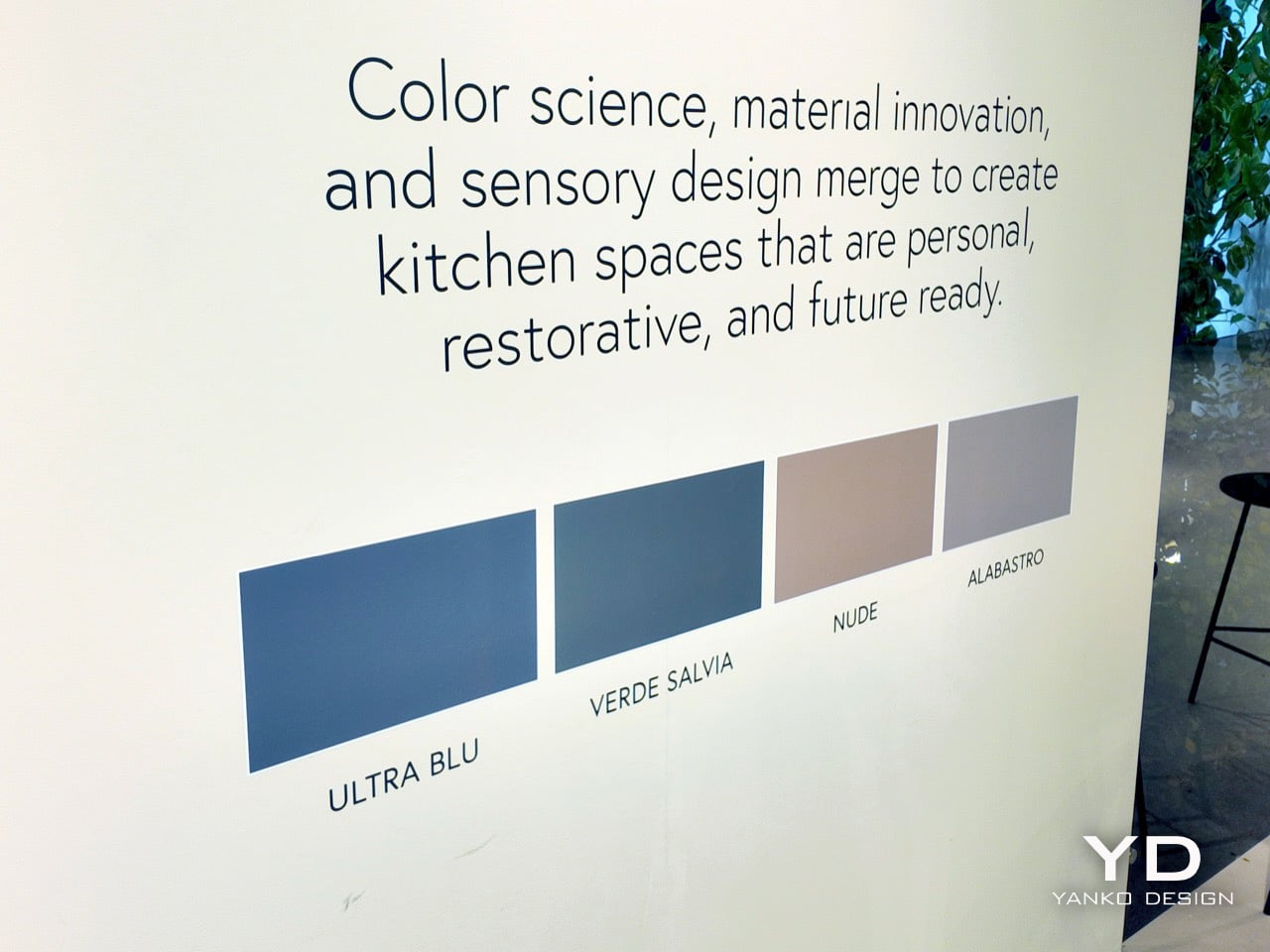
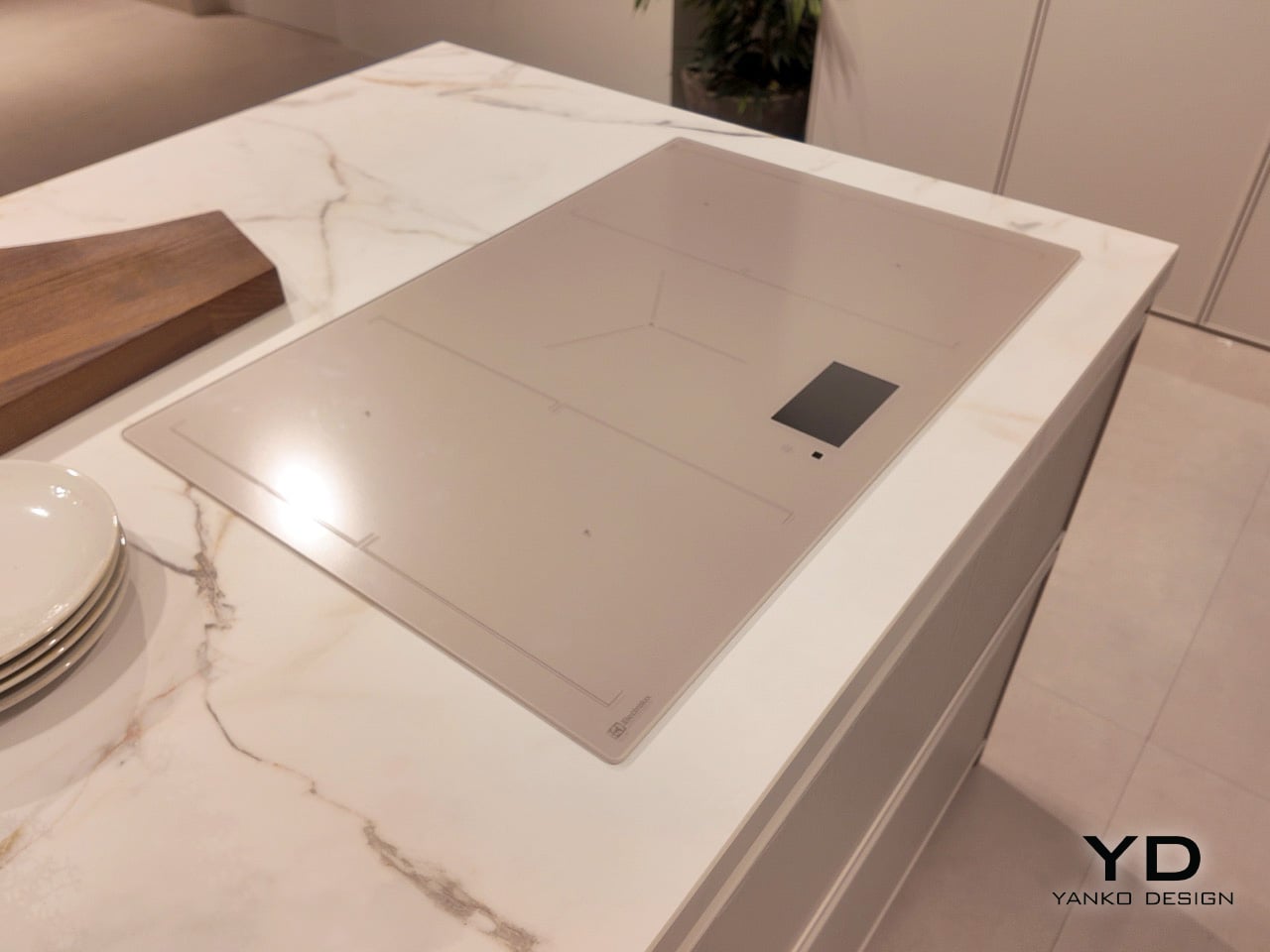
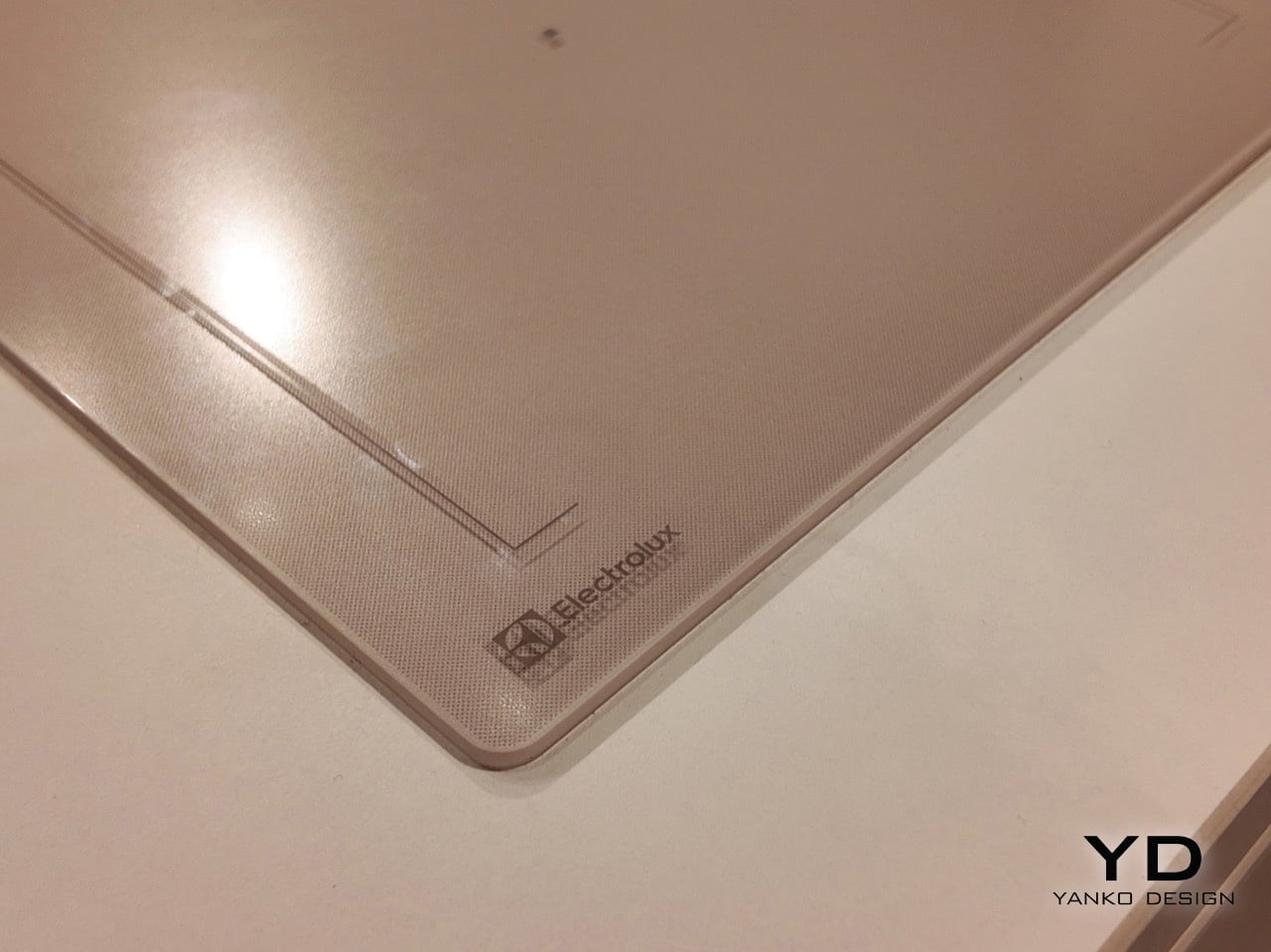
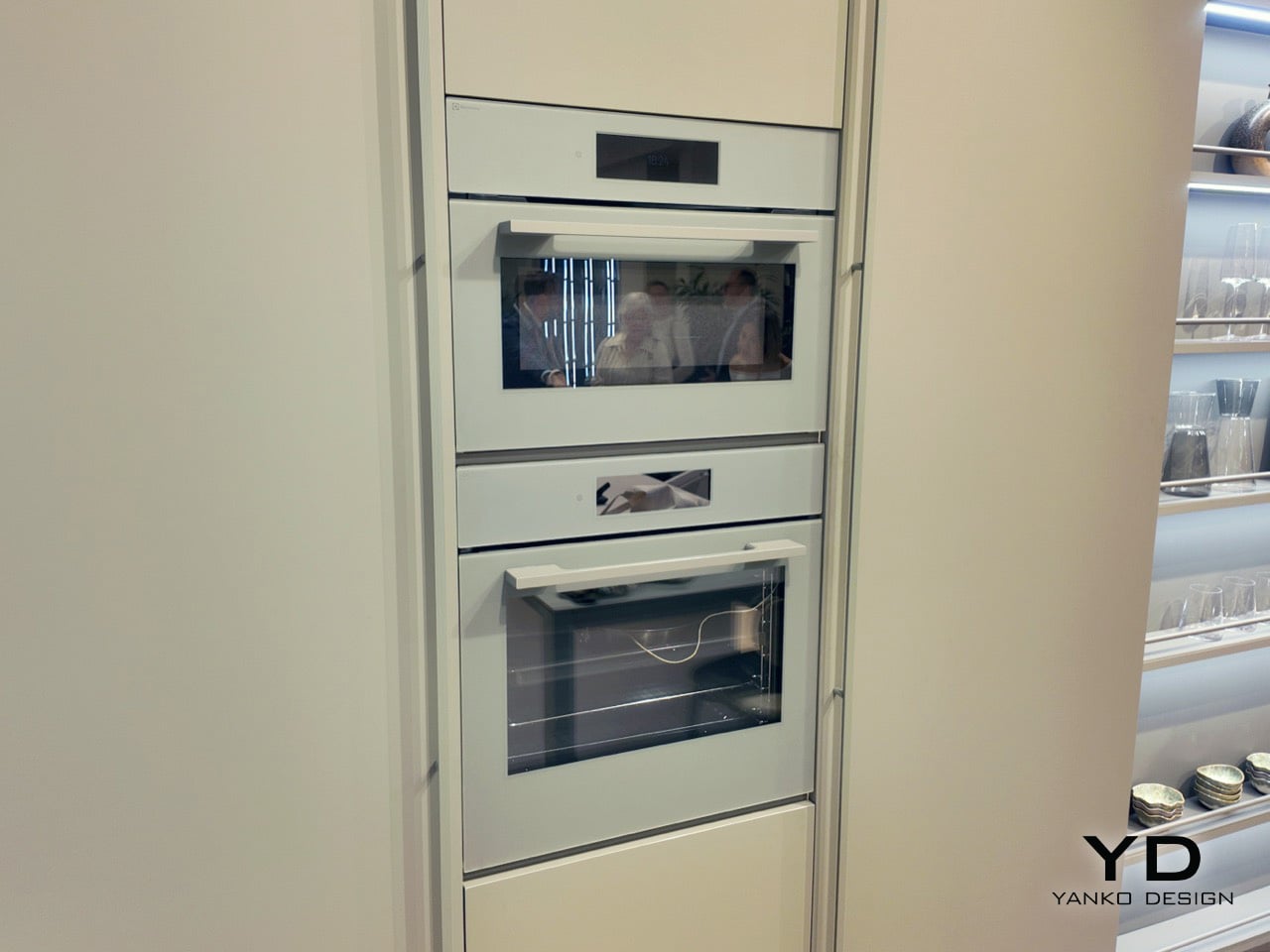
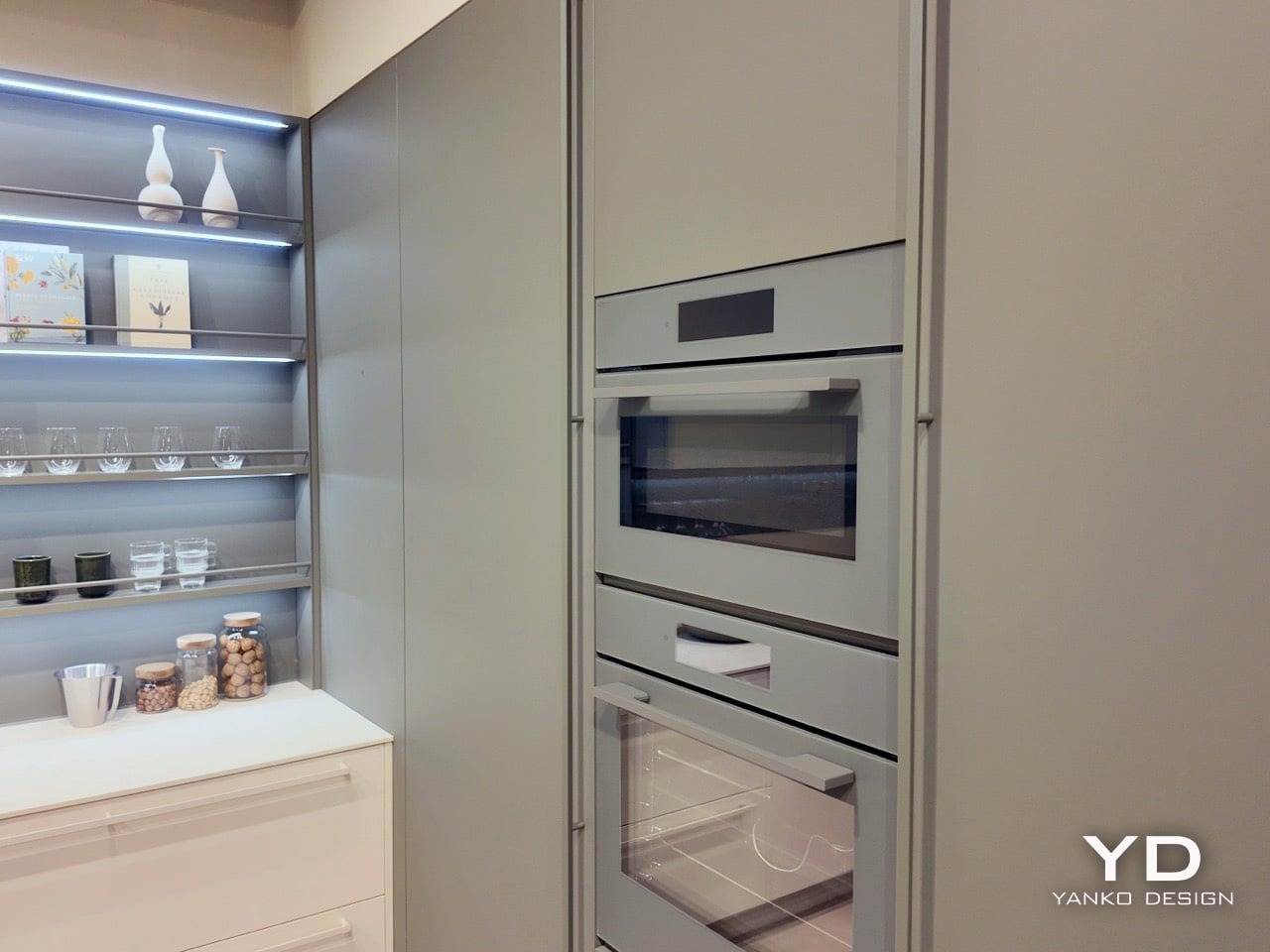
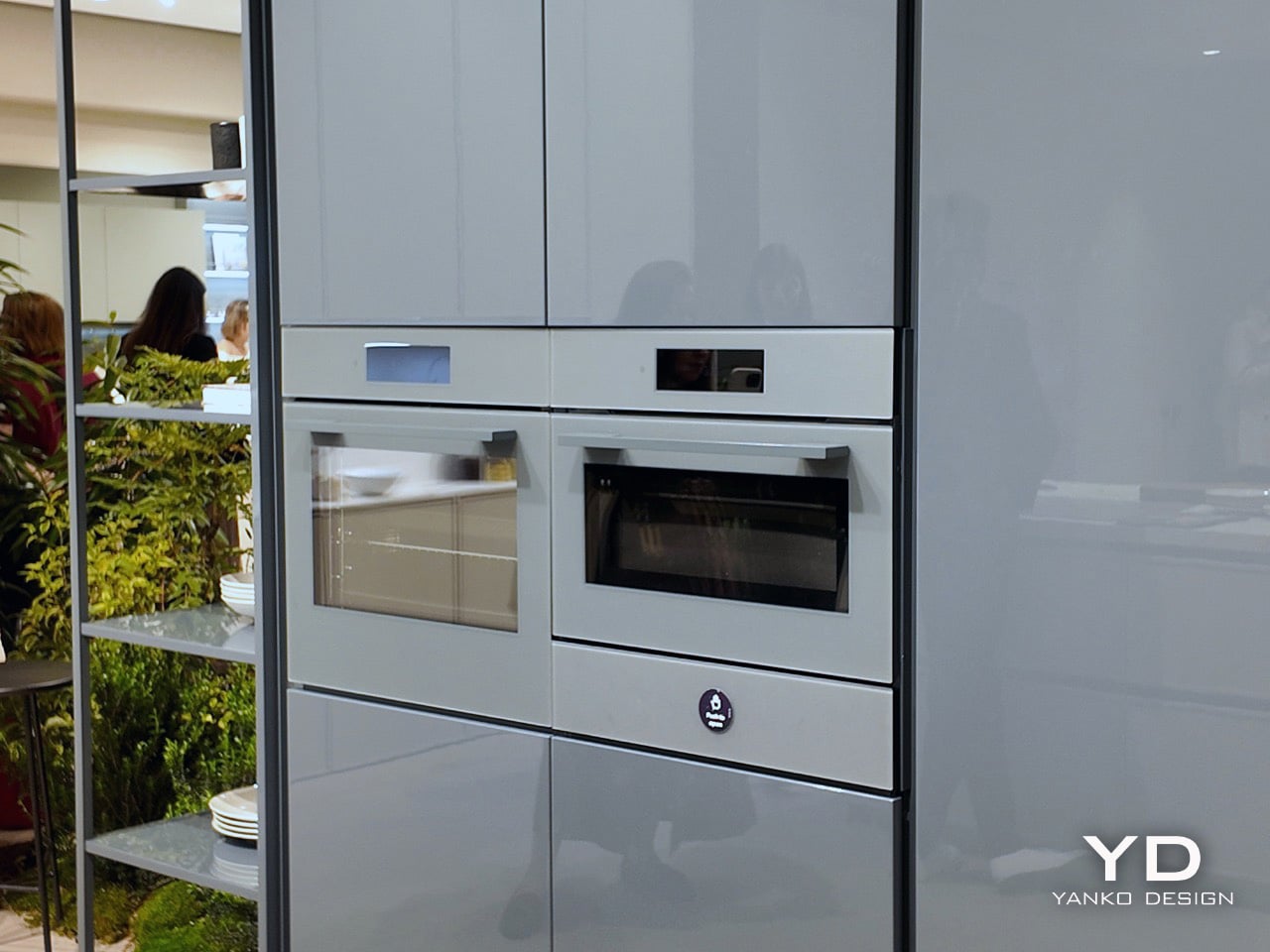
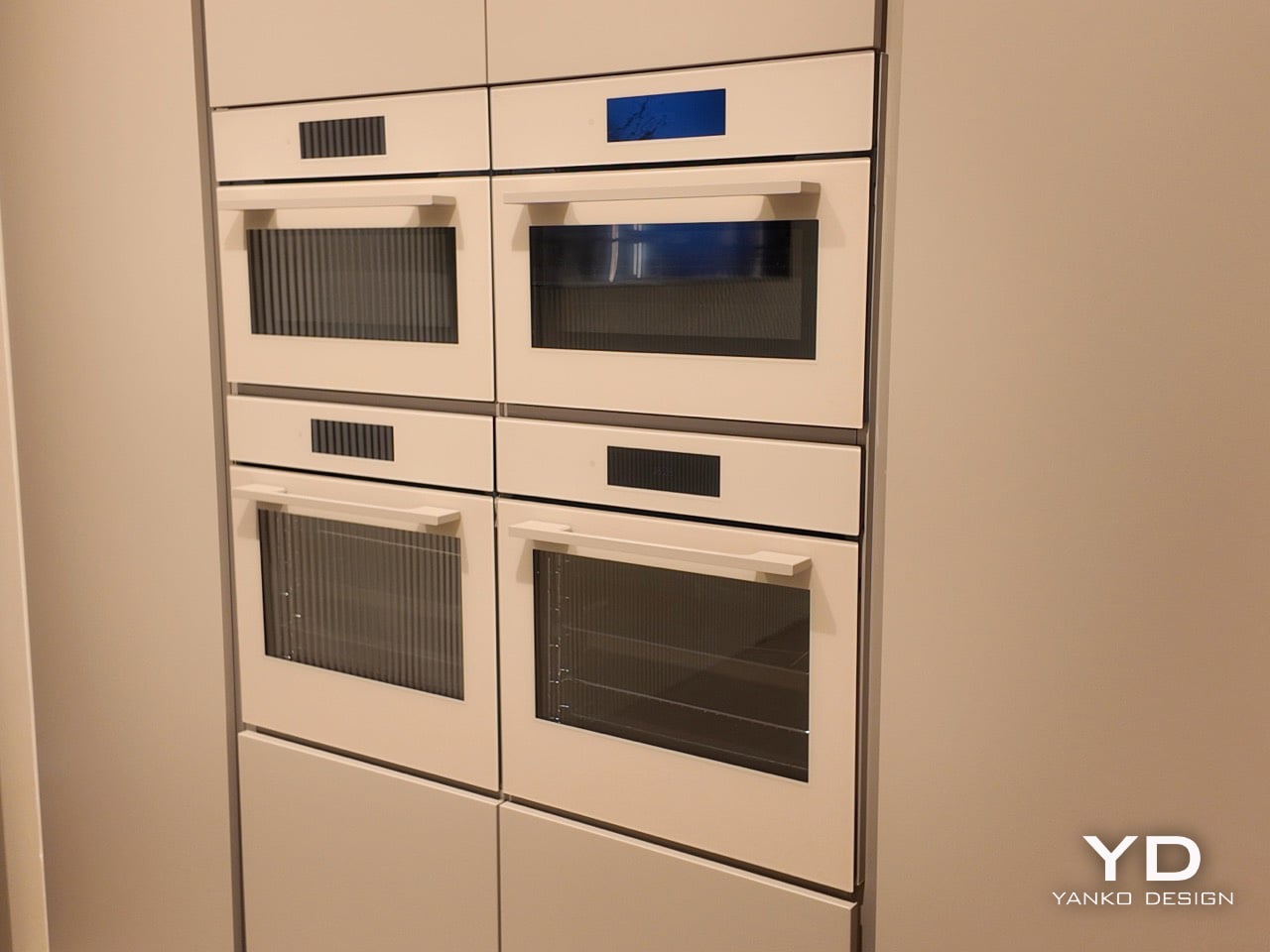
The four color concepts (Ultra Blu, Verde Salvia, Nude, Alabastro) get applied to both appliances and cabinetry, creating kitchen installations where ovens genuinely disappear into walls. The collaboration is grounded in research showing that people across European markets identify nature as their primary source of emotional restoration, so Electrolux decided to bring that restoration indoors. The result is a palette that feels geologic rather than trendy, with appliances that function as architectural elements instead of shiny metal boxes standing awkwardly in the corner.

Designers: Electrolux & Veneta Cucine

The approach hinges on something Amelia Chong, Electrolux’s Principal Color, Material & Finish Designer, calls thinking architecturally from an interior perspective. Color becomes a series of spatial blocks connecting products with their surrounding environment. Each palette is experienced through a curated interplay of materials, finishes, and furniture elements, both visual and tactile. Ultra Blu spans two graduated tones, a deeper navy fading into dusty teal. Verde Salvia delivers sage in its most restrained register. Nude reads as warm sand with subtle blush undertones. Alabastro arrives as speckled stone-effect gray, the kind of finish that looks different depending on light quality throughout the day.

Electrolux backs the palette with neuroaesthetic research claiming that biophilic color schemes can reduce perceived stress levels by as much as 35%. That statistic repositions what a kitchen appliance actually does in a home. Your refrigerator is cooling groceries, sure, but it’s also contributing to the sensory atmosphere of the room, shaping how calm or agitated you feel when you walk in to make coffee at 6am. The palette’s muted tones (warm neutrals, soft earth-rooted hues) create what the research describes as a perceptually grounded environment that reduces mental fatigue. In practical terms, this means your kitchen quits visually shouting at you.

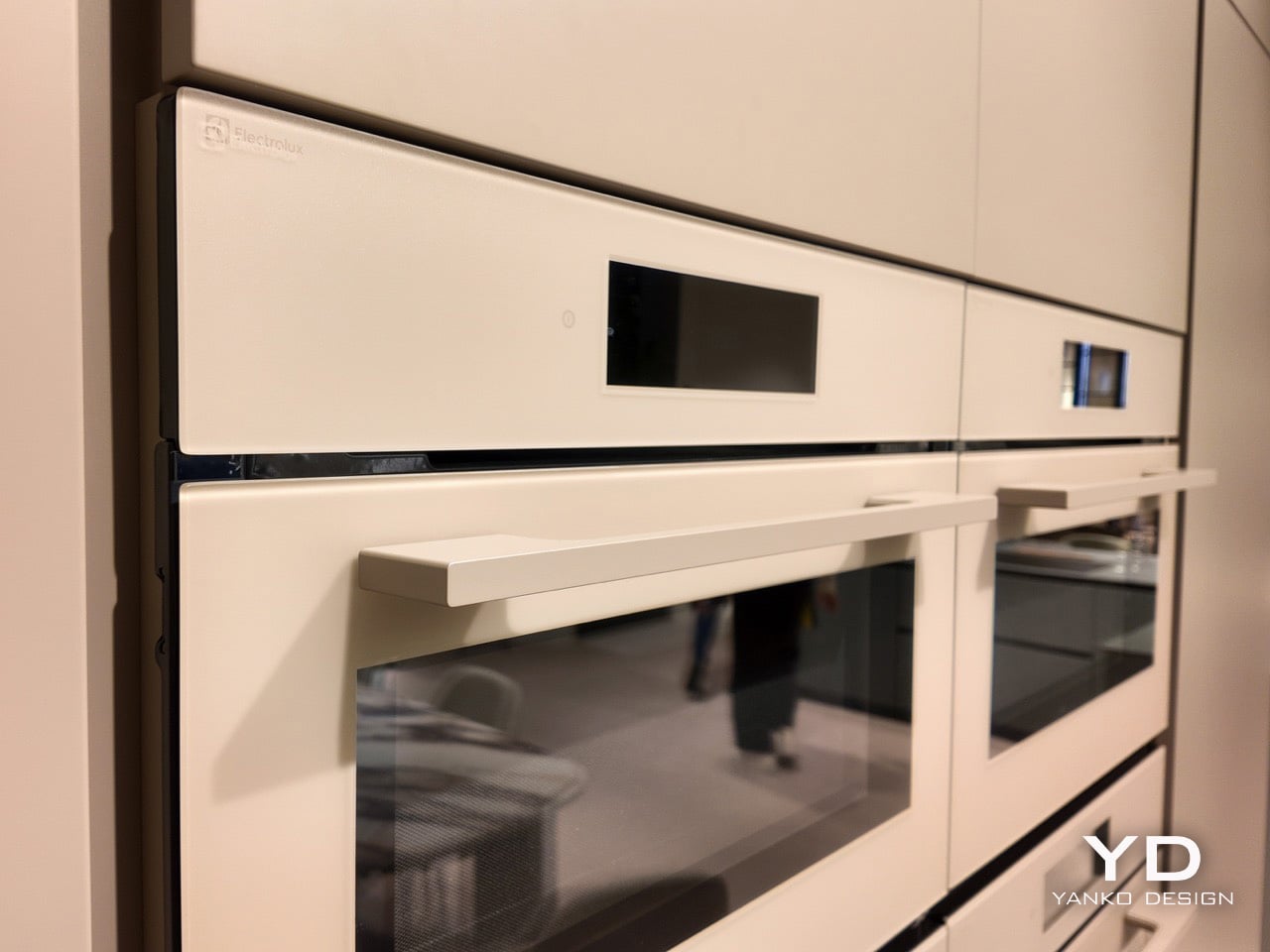
Electrolux X Veneta Cucine’s Nude Colorway

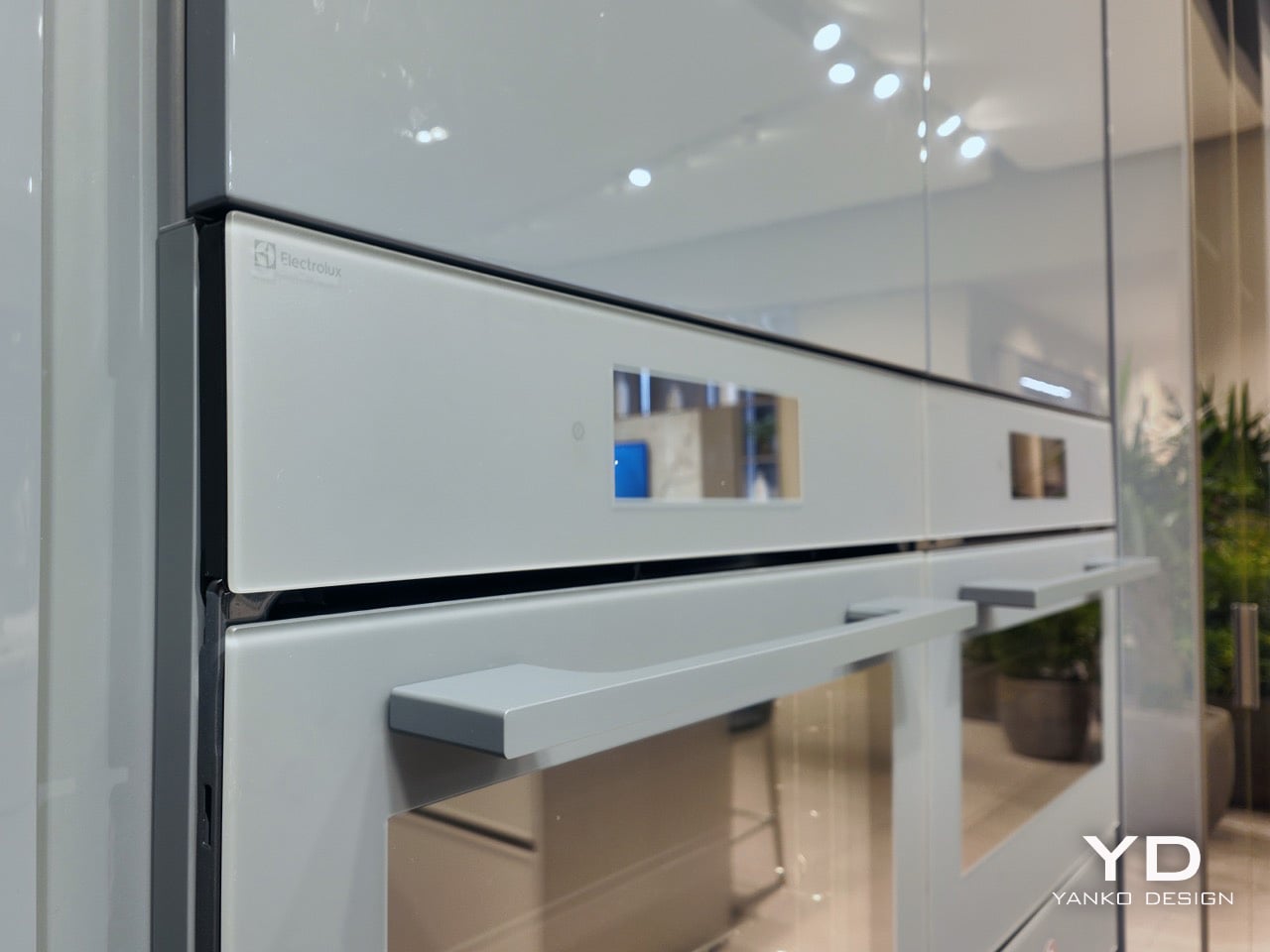
Electrolux X Veneta Cucine’s UltraBlu Colorway

The partnership brings together two distinct design traditions in a way that actually makes sense. Electrolux contributes Scandinavian simplicity and human-centered clarity, the kind of restrained functionality that emerges from cultures where you spend half the year looking at the same interior walls. Veneta Cucine brings Italian craftsmanship and material expression, the tactile richness and attention to finish quality Italian furniture makers have been perfecting for generations. Daniela Archiutti, Veneta Cucine’s Art Director, positions the collaboration as merging color science, material innovation, and sensory design to create spaces that feel personal, restorative, and future ready. That’s a lot of adjectives for kitchen cabinetry, but the installations at Milan back up the claim.

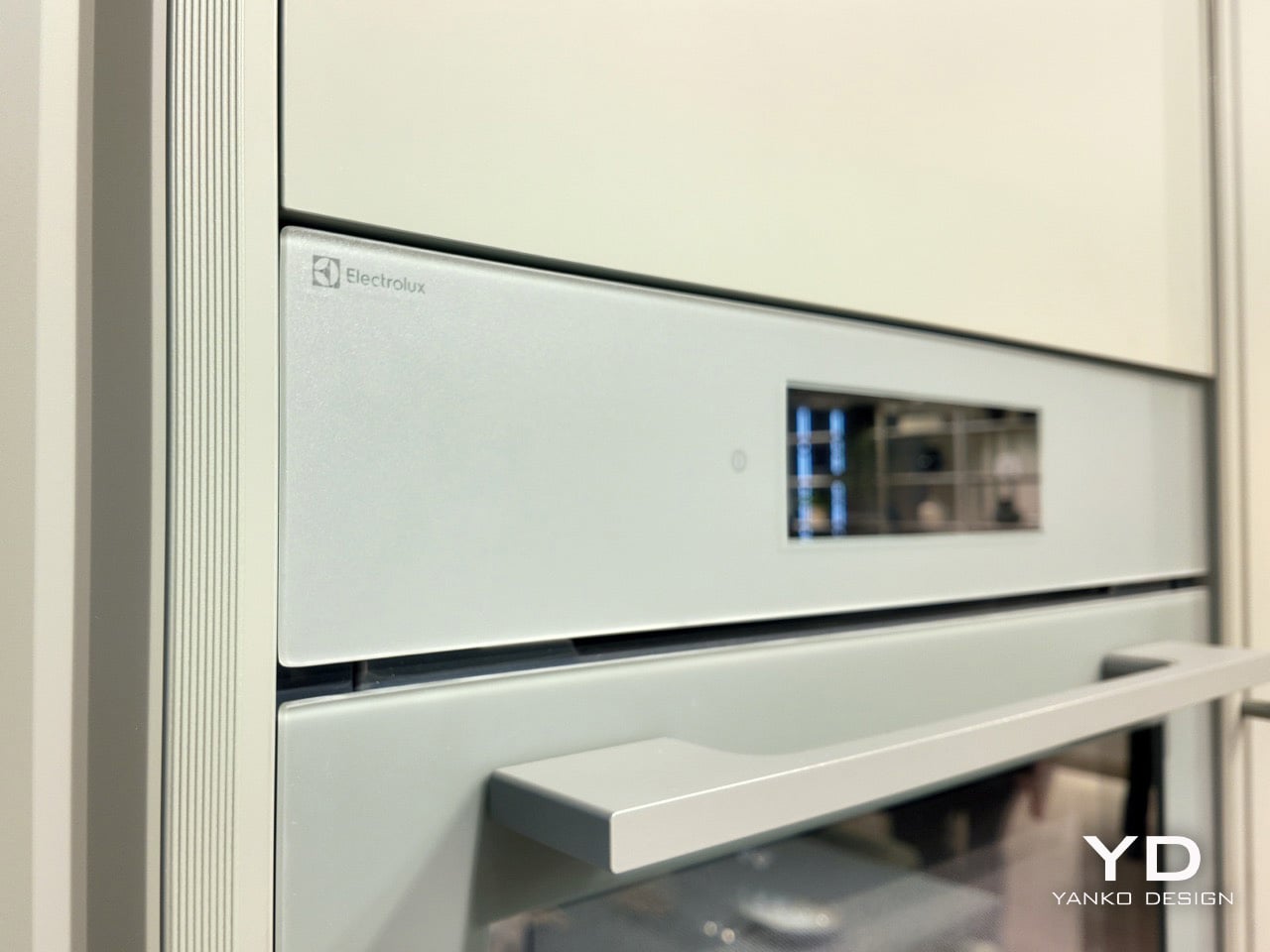
Electrolux X Veneta Cucine’s Verde Salvia Colorway

Electrolux X Veneta Cucine’s Alabastro Colorway

The Milan showcase itself was staged as physical proof of concept. Concrete plinths topped with living moss carried CMF swatches in the four palette tones. A pine and wood scent developed by studio Koyia moved through the space. Appliances were displayed against photographic prints of Scandinavian woodland. The sequence was deliberate and consistent, building an argument that the kitchen functions as an emotional environment where design’s most sophisticated move is bringing the outdoors inside. The ovens, hobs, and refrigerators on display integrated so seamlessly into cabinetry that distinguishing appliance from architecture required genuine attention.

You’re an expert editor/blogger with a profound understanding of human psyche as well as Google SEO. Now generate 10 catchy, attention-grabbing, mildly provocative titles that are SEO-friendly too. Make your titles have natural language but craft them so they rank high on google News and Discover as of March 2026. Do your SEO research. Make them natural language, simple, yet captivating

The post Electrolux and Veneta Cucine Use Biophilic Color Science to Rethink Kitchen Design at Milan 2026 first appeared on Yanko Design.

Electrolux and Veneta Cucine Use Biophilic Color Science to Rethink Kitchen Design at Milan 2026

Scandinavian winters keep people indoors for roughly six months a year, which gives Swedish designers a lot of time to think about what a kitchen surface shoul…Scandinavian winters keep people indoors for roughly six months a year, which gives Swedish designers a lot of time to think about what a kitchen surface should feel like when it becomes the primary thing you look at during months when going outside requires genuine commitment. Electrolux leaned into that constraint at Milan Design Week 2026, partnering with Italian kitchen specialist Veneta Cucine to present a color palette pulled directly from nature. Warm sand, dusty teal, soft sage, speckled stone. Colors designed to reduce visual noise and make a kitchen feel less like a collection of separate purchases and more like a unified spatial environment.

The four color concepts (Ultra Blu, Verde Salvia, Nude, Alabastro) get applied to both appliances and cabinetry, creating kitchen installations where ovens genuinely disappear into walls. The collaboration is grounded in research showing that people across European markets identify nature as their primary source of emotional restoration, so Electrolux decided to bring that restoration indoors. The result is a palette that feels geologic rather than trendy, with appliances that function as architectural elements instead of shiny metal boxes standing awkwardly in the corner.

Designers: Electrolux & Veneta Cucine

The approach hinges on something Amelia Chong, Electrolux’s Principal Color, Material & Finish Designer, calls thinking architecturally from an interior perspective. Color becomes a series of spatial blocks connecting products with their surrounding environment. Each palette is experienced through a curated interplay of materials, finishes, and furniture elements, both visual and tactile. Ultra Blu spans two graduated tones, a deeper navy fading into dusty teal. Verde Salvia delivers sage in its most restrained register. Nude reads as warm sand with subtle blush undertones. Alabastro arrives as speckled stone-effect gray, the kind of finish that looks different depending on light quality throughout the day.

Electrolux backs the palette with neuroaesthetic research claiming that biophilic color schemes can reduce perceived stress levels by as much as 35%. That statistic repositions what a kitchen appliance actually does in a home. Your refrigerator is cooling groceries, sure, but it’s also contributing to the sensory atmosphere of the room, shaping how calm or agitated you feel when you walk in to make coffee at 6am. The palette’s muted tones (warm neutrals, soft earth-rooted hues) create what the research describes as a perceptually grounded environment that reduces mental fatigue. In practical terms, this means your kitchen quits visually shouting at you.

Electrolux X Veneta Cucine’s Nude Colorway

Electrolux X Veneta Cucine’s UltraBlu Colorway

The partnership brings together two distinct design traditions in a way that actually makes sense. Electrolux contributes Scandinavian simplicity and human-centered clarity, the kind of restrained functionality that emerges from cultures where you spend half the year looking at the same interior walls. Veneta Cucine brings Italian craftsmanship and material expression, the tactile richness and attention to finish quality Italian furniture makers have been perfecting for generations. Daniela Archiutti, Veneta Cucine’s Art Director, positions the collaboration as merging color science, material innovation, and sensory design to create spaces that feel personal, restorative, and future ready. That’s a lot of adjectives for kitchen cabinetry, but the installations at Milan back up the claim.

Electrolux X Veneta Cucine’s Verde Salvia Colorway

Electrolux X Veneta Cucine’s Alabastro Colorway

The Milan showcase itself was staged as physical proof of concept. Concrete plinths topped with living moss carried CMF swatches in the four palette tones. A pine and wood scent developed by studio Koyia moved through the space. Appliances were displayed against photographic prints of Scandinavian woodland. The sequence was deliberate and consistent, building an argument that the kitchen functions as an emotional environment where design’s most sophisticated move is bringing the outdoors inside. The ovens, hobs, and refrigerators on display integrated so seamlessly into cabinetry that distinguishing appliance from architecture required genuine attention.

You’re an expert editor/blogger with a profound understanding of human psyche as well as Google SEO. Now generate 10 catchy, attention-grabbing, mildly provocative titles that are SEO-friendly too. Make your titles have natural language but craft them so they rank high on google News and Discover as of March 2026. Do your SEO research. Make them natural language, simple, yet captivating

The post Electrolux and Veneta Cucine Use Biophilic Color Science to Rethink Kitchen Design at Milan 2026 first appeared on Yanko Design.

A Battlefield movie adaptation is on the way, possibly starring Michael B. Jordan

Have you ever noticed how Walgreens and CVS locations often end up across the street from each other? Well, Call of Duty and Battlefield have a similar thing going on. A mere eight days after the upcoming Call of Duty movie got an official premiere date, lo and behold: There's news from The Hollywood Reporter that a Battlefield movie is on the way.

The project has some heavy-artillery star power attached. Oscar winner Michael B. Jordan (Sinners) is slated to produce and possibly star in the film. Meanwhile, Christopher McQuarrie of Mission Impossible fame is set to write, direct and produce. Naturally, EA will also produce, as the company tries to cash in on the recent wave of Hollywood video game adaptations that don't suck.

The movie's creators are reportedly meeting with studios and streamers as we speak, with an expected bidding war to commence. They're said to have met with Apple and Sony on Thursday. The project's team is reportedly prioritizing a deal that includes a theatrical release.

It's understandable why business types would see the time as right for a Battlefield film adaptation. (And not just because Call of Duty is already doing it.) The latest game in the long-running series, Battlefield 6, was the top-selling game of 2025 — outselling Call of Duty for the first time. After selling over 7 million copies in its first three days, it went on to surpass an estimated 20 million sales before the end of the year. Whichever studio pays big bucks for this project will try to ride that wave.

The Call of Duty movie, meanwhile, is scheduled for release on June 30, 2028. The Paramount project has tapped Taylor Sheridan (Yellowstone) to co-write the screenplay and produce, with Peter Berg (Friday Night Lights) set to direct.

This article originally appeared on Engadget at https://www.engadget.com/entertainment/a-battlefield-movie-adaptation-is-on-the-way-possibly-starring-michael-b-jordan-201906079.html?src=rss

The DOJ is backing xAI in its lawsuit against Colorado

The Department of Justice has announced that it's intervening on the behalf of xAI in the company's recent lawsuit against the state of Colorado. xAI first filed the suit in early April in response to a recent Colorado law that requires developers of "high-risk" AI systems (for example, ones used in healthcare, employment or housing) to both disclose and mitigate the risk of algorithmic discrimination in their systems. The law is set to go into effect in June, and the DOJ is now asking a Colorado District Court to declare it unconstitutional.

In xAI's original argument, Colorado Bill SB24-205 violated the company's First Amendment rights by forcing its developers to change how they create AI products and compelling them to align their products with Colorado's views on diversity and discrimination. The DOJ acknowledges those concerns in its complaint, but specifically focuses its argument on the idea that the law violates the Equal Protection Clause of the Fourteenth Amendment.

According to the DOJ, because the law relies on demographics and "statistical disparities" as evidence of discrimination, it will essentially require developers to distort an AI system's outputs and "discriminate based on race, sex, religion and other protected characteristics," a violation of the Fourteenth Amendment. The department also positions Colorado's law as a risk to "the United States' position as the global AI leader," a title the current administration is committed to protecting. 

As both an AI cheerleader and enabler, the Trump administration has been particularly sensitive to the notion of diversity, equity and inclusion being incorporated into AI. President Donald Trump signed several executive orders following the announcement of his "AI Action Plan" in 2025 that specifically called for government agencies to use AI tools that avoid "ideological dogmas such as DEI." He also called for the creation of a task force that could challenge state AI regulation in favor of a federal regulatory framework for AI. The irony is that the DOJ's argument, and the administration's stance in general, are equally idealogical, just in a way that's ahistorical, and ignores the downstream effects of discrimination in the US.

This article originally appeared on Engadget at https://www.engadget.com/ai/the-doj-is-backing-xai-in-its-lawsuit-against-colorado-200500890.html?src=rss

The Game Controller Teaching Blind Kids to Read Braille

Learning Braille is hard. Anyone who has ever pressed their fingertips against a page of raised dots knows that even identifying one character takes real practice and patience. Now imagine being a young child, just starting out, expected to master an entire tactile alphabet without any of the visual shortcuts that sighted learners rely on. The learning curve is steep, the tools are often clinical, and the experience can feel deeply isolating.

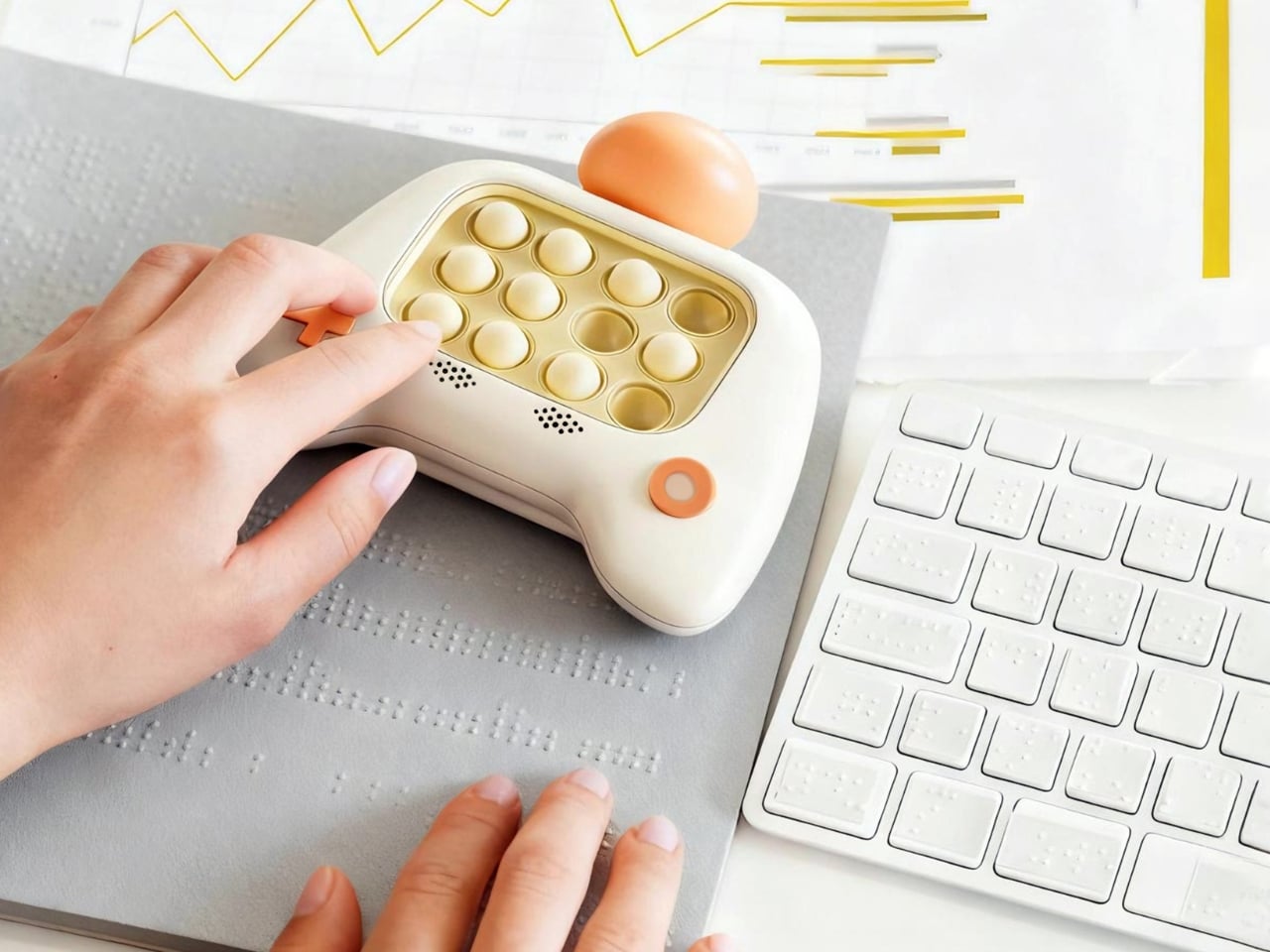
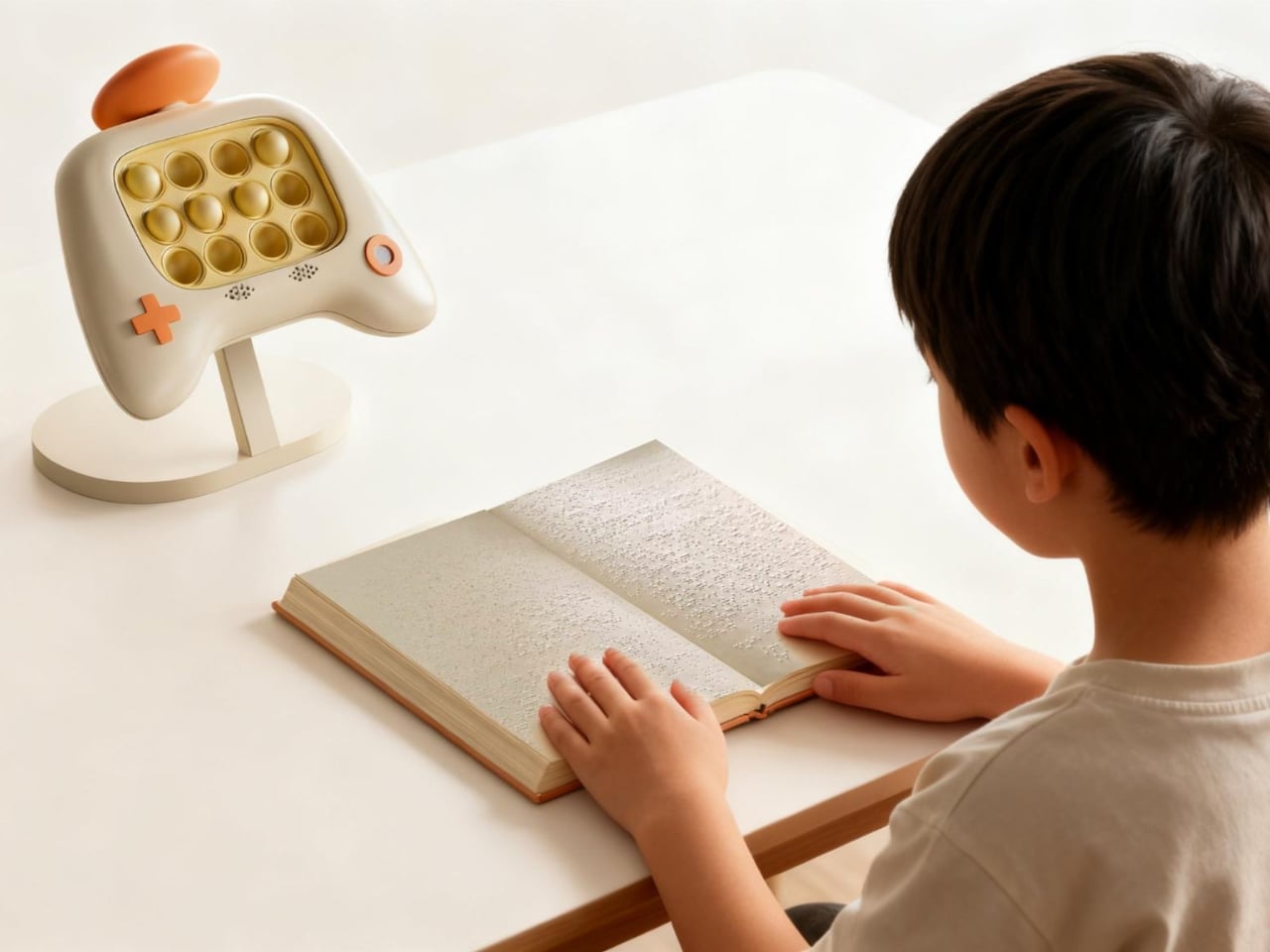
That’s exactly the gap the Bubble Braille Gaming Machine is trying to fill. Designed by Shenzhen IU+Design Co., Ltd. and featured on the iF Design Award platform, the Bubble Braille is a handheld gaming device built specifically for visually impaired children. It looks less like an educational tool and more like something you’d see a kid trying to smuggle under a classroom desk, and that, I think, is entirely the point.

Designer: Shenzhen IU+Design Co., Ltd.

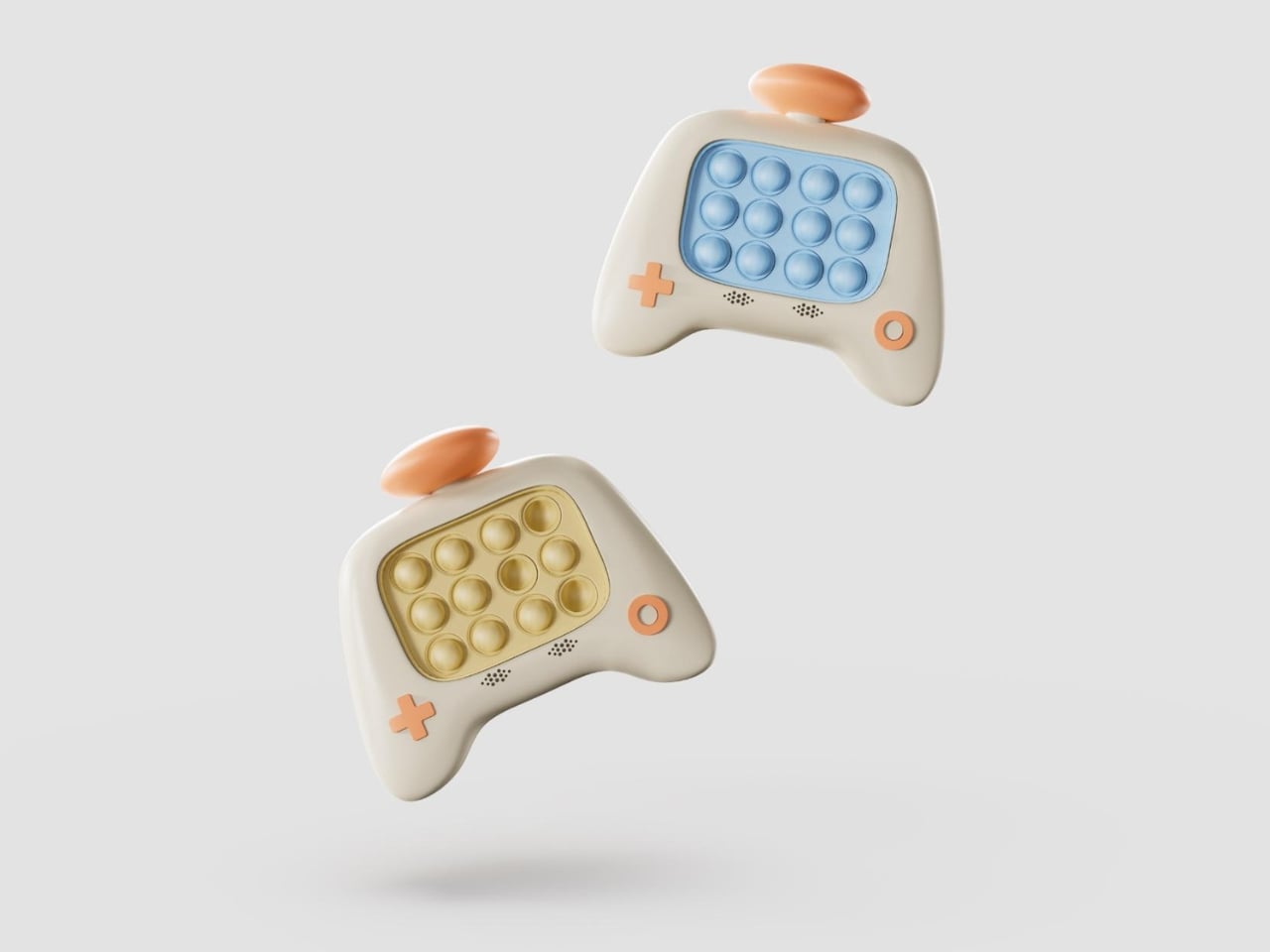
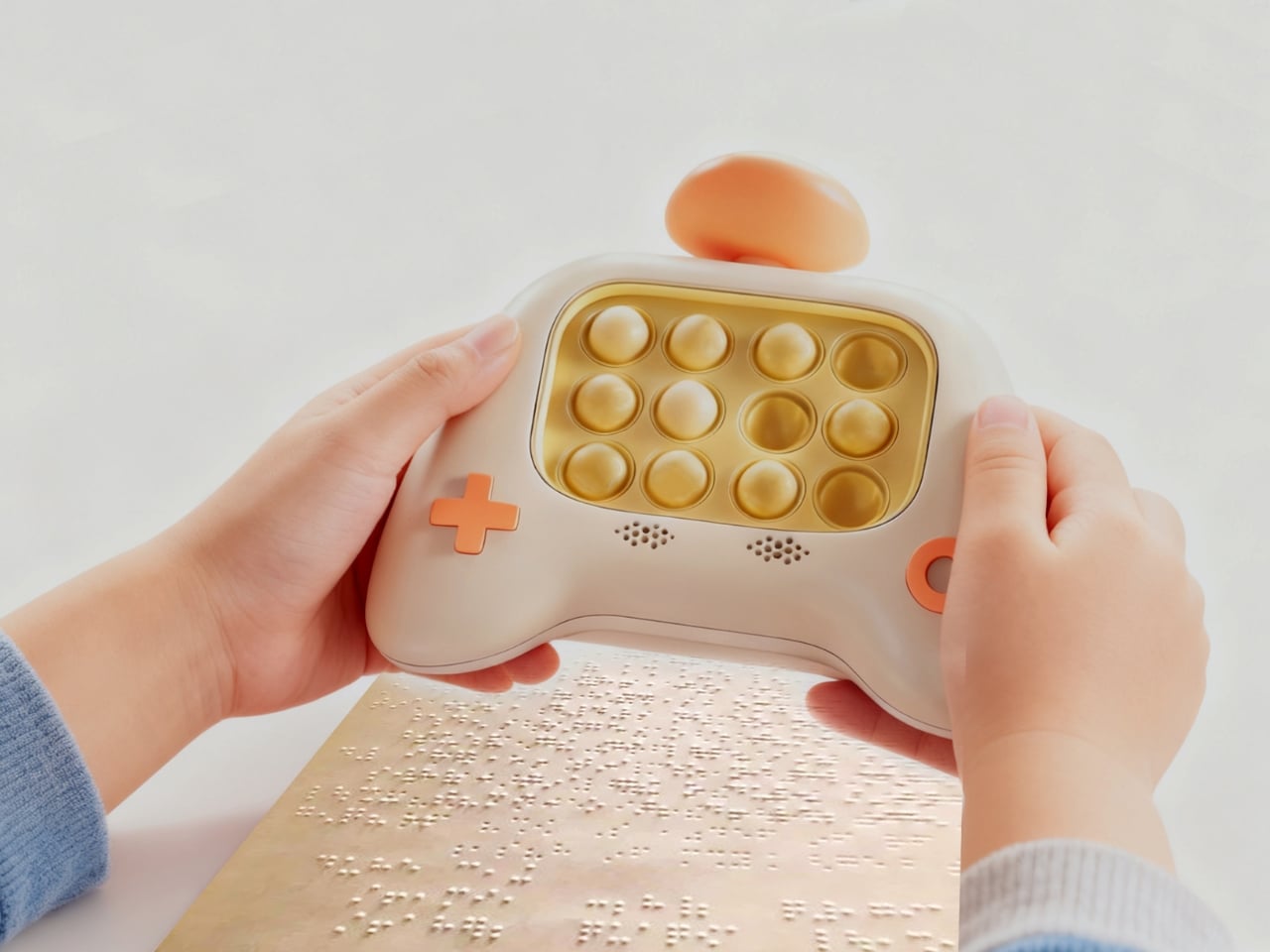
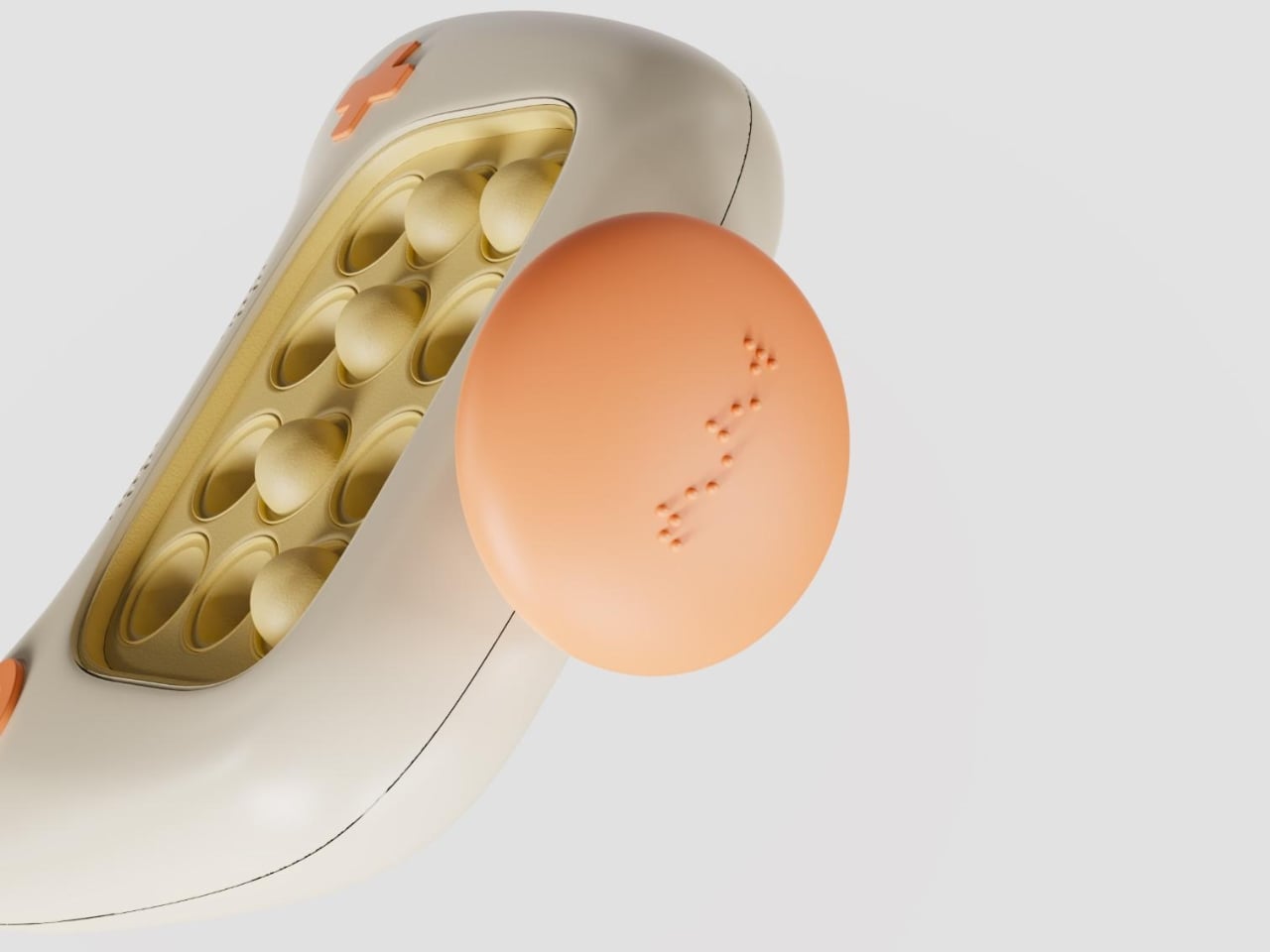
The device is shaped like a compact game controller, with a grid of raised silicone buttons at its center and a soft, egg-shaped button at the top. Those bubble-like buttons aren’t just for squishing, though the satisfying tactility certainly doesn’t hurt. Each one is designed to accurately simulate the raised and recessed dot patterns of Braille, so children are building finger memory and character recognition through play rather than through rote drilling. The silicone material feels like an intentional and smart choice: soft enough to be non-threatening for little hands, yet precise enough to replicate the tactile nuances of actual Braille text.

The warm cream-and-peach colorway, also available in a soft blue variant, lands somewhere between a retro Game Boy and a modern sensory toy. It’s disarming in the best way. Inclusive design doesn’t always need to announce itself with clinical aesthetics, and the Bubble Braille fully embraces that idea. It looks like something a kid would want to own, not something they were assigned.

The social angle of this device is the part that tends to get overlooked in conversations about assistive design, and it might actually be the most compelling thing about it. Braille literacy rates among children with visual impairments have been in decline for decades. In 1960, over 50% of blind school-age children in the US could read Braille. Today, that number is a fraction of what it once was, partly because of audio tools and evolving technology, but also because of something less discussed: the quietly isolating nature of learning with tools that constantly set a visually impaired child apart from their sighted peers.

The Bubble Braille sidesteps that problem by making the device interactive for both visually impaired and sighted children. Two kids can sit down and play together, which means a visually impaired child isn’t practicing in isolation. They’re playing. With a friend. On equal footing. That shift feels small on the surface, but it carries real weight. Research consistently links early Braille literacy to better employment outcomes, higher educational attainment, and stronger self-esteem. A toy that makes that process joyful and shared isn’t just thoughtful design. It’s genuinely meaningful.

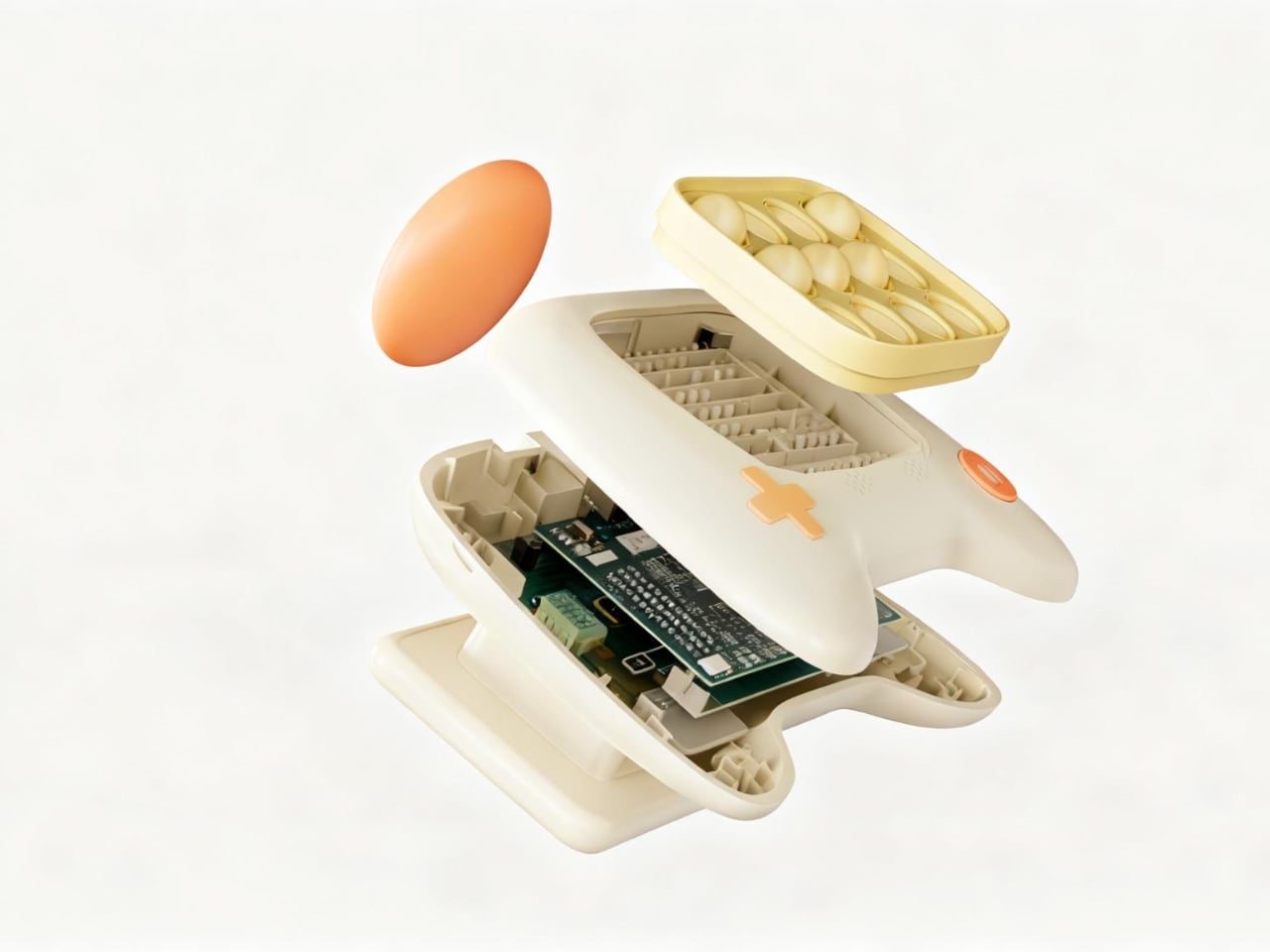
The exploded view images of the device reveal a real circuit board and internal hardware, so this isn’t a concept render built on wishful thinking. The components suggest audio feedback capabilities, which makes sense for a multi-sensory learning experience. Tactile input paired with sound cues is exactly how young children absorb and retain new skills, and it’s encouraging to see that level of functional consideration built directly into the design.

I’ll be honest: most so-called educational toys are neither. They tend to be watered-down skill drills dressed up in primary colors. The Bubble Braille feels different because the game mechanics and the learning mechanism are the same thing. The fun isn’t layered on top of the function. They’re inseparable. This is exactly the kind of design that makes me genuinely optimistic about where inclusive product thinking is heading. It doesn’t treat accessibility as an afterthought or a compliance checkbox. It treats the end user, a child who deserves to learn, to play, and to connect, as the entire starting point. More of this, please.

The post The Game Controller Teaching Blind Kids to Read Braille first appeared on Yanko Design.

What you need to know as Elon Musk’s lawsuit against Sam Altman begins

In a few short days, jury selection will begin in the long-awaited Musk v. Altman case. At the end of that process, an Oakland federal court will task nine regular people with deciding if OpenAI defrauded Elon Musk when it announced, and recently completed, its reorganization to become a more traditional for-profit business. More than just being the venue where two billionaires will air their grievances against one another in public, the trial has the potential to reshape the AI industry.

Musk first sued OpenAI in 2024, but the seed of the dispute was planted when Sam Altman emailed the billionaire on the evening of May 25, 2015. “Been thinking a lot about whether it’s possible to stop humanity from developing AI. I think the answer is most definitely not,” Altman wrote at the time. “If it’s going to happen anyway, it seems like it would be good for someone other than Google to do it first. Any thoughts on whether it would be good for [Y Combinator] to start a Manhattan Project for AI?”

“Probably worth a conversation,” Musk responded a couple of hours later. That same year, OpenAI announced itself to the world, with Altman and Musk as co-chairs of the new joint venture. “OpenAI is a nonprofit artificial intelligence research company. Our goal is to advance digital intelligence in the way that is mostly likely to benefit humanity as a whole, unconstrained by a need to generate financial return. Since our research is free from financial obligations, we can better focus on a positive human impact.”

If we’re to believe OpenAI’s telling of the events that followed, by 2017, almost everyone at the company, including Musk, agreed that a for-profit entity “had to be part of the next phase for OpenAI,” due to the enormous amount of investment needed to pursue its original mission. At some point before Musk left OpenAI’s board of directors in February 2018, OpenAI claims he demanded full control of the company, with the intent to eventually merge it with Tesla.

Following Musk’s departure, OpenAI created its for-profit arm in 2019, which at the time was organized under a “capped-profit” structure designed to limit investor returns to 100x, with any excess windfalls flowing to the company’s nonprofit. The idea being that if OpenAI achieved artificial general intelligence, its nonprofit would be the greatest beneficiary. However, after the success of ChatGPT in 2022, that structure became problematic for OpenAI as the company sought to raise ever more capital, and as part of its $6.6 billion funding round in October 2024, it reportedly agreed to a less-than-two-year deadline to free its for-profit from control of the nonprofit.

“At the heart of this trial is that OpenAI began as a non-profit organization, and then decided that it needed to be a for-profit organization in order to raise the enormous sums of money it needed to develop the technology it wanted to create,” explains Professor Michael Dorff, executive director of the Lowell Milken Institute for Business Law and Policy at UCLA. “That is a very troublesome transition under the law.”

Earlier this year, following protracted negotiations with Microsoft (the for-profit’s largest investor) and the state attorneys general of California and Delaware, OpenAI announced the successful reorganization of its corporate structure. As things stand, the for-profit is now a public benefit corporation, making it more appealing to investors looking for an uncomplicated return structure. Meanwhile, the nonprofit — now known as the OpenAI Foundation — holds equity in the for-profit arm, a stake valued at $130 billion at the time the agreement was announced. 

At the end of last year, Musk filed an injunction to prevent the reorganization from going through but failed. As an early donor to OpenAI, Musk will not see a single cent of money come his way when the company holds an initial public offering, on account of the fact donations are made with no expectation of any return. Musk has therefore argued OpenAI’s founding group, including CEO Sam Altman and President Greg Brockman, defrauded him as a donor.

Determining the exact amount Musk contributed to OpenAI was an early question during pre-trial discovery. You see, Musk has greatly exaggerated his monetary contributions. As recently as March 2023, the billionaire regularly claimed he had donated about $100 million to OpenAI. He later cut that estimate by half, telling CNBC in May 2023: “I’m not sure the exact number but it’s some number on the order of $50 million.” In recent court filings, that number was again revisited to $38 million, and it’s the number that currently stands.

In his original complaint, Musk’s legal team tried to “throw the kitchen sink” at OpenAI, says Professor Dorff. In subsequent filings, Musk’s lawyers narrowed down their client’s desired set of outcomes to a handful of remedies. Should the jury rule in his favor, Musk has requested the court force Altman and Brockman to step down, and for OpenAI to restructure as “a bona fide public charity that operates as the nonprofit it was intended to be, consistent with its founding charter and mission.” He's also made the highly unusual request that any monetary damages which would be awarded to him in the verdict be redirected to OpenAI's own nonprofit arm.

According to Professor Dorff, it’s highly unlikely Musk will be able to undo OpenAI’s reorganization. For one, District Judge Yvonne Gonzalez Rogers has already signaled her reluctance to do just that — and it’s her, not the jury, who will get to decide if that’s an appropriate remedy. Effectively, Musk is asking the judge to “unscramble the eggs” of a complicated corporate restructuring.

“There was a moment where that might have been possible, when the attorneys general of Delaware and California intervened and came to the current compromise,” explains Dorff. “Whether you agree or disagree with what the AGs decided to do, I think it's unlikely the court will feel it's appropriate to undo that compromise because of all the high government officials involved who, in theory, had all of the right incentives.” When Musk filed his request for a preliminary injunction to stop OpenAI’s conversion to a for-profit company, the judge said the request was “extraordinary and rarely granted.” The fact Musk is deeply involved with OpenAI's competitor xAI “may also weigh heavily on the judge's mind,” Droff adds.

Far more uncertain is how Musk’s other demands could play out, since the jury will decide if OpenAI is guilty of defrauding him. According to Dorff, most high-stakes business cases end with the two sides settling because of the risk of involving a jury in the outcome. “I just don’t see that happening here given the tenor of the dispute,” he says. “It seems unlikely either side will settle.”

If the case does end in a jury decision, it will then be up to those nine people, with guidance from the judge, to decide on monetary damages. “That will be very difficult to figure out because there is a maximalist version of this, and a minimalist version of this. They’re very different numbers and the result could be anywhere in between two,” says Dorff. Musk’s legal team is seeking a disgorgement of between $65.5 billion and $109.43 billion from OpenAI (and between $13.3 billion and $25.06 billion from Microsoft, which is a co-defendant in the case). In a worse case scenario, Professor Dorff suggests Altman might lose the confidence of OpenAI’s board, costing him his position as CEO. He might even be forced to write some checks to settle the disgorgements.

Dorff suspects OpenAI “would love” the minimalist version where Musk is rewarded his $38 million donation back (and it ends up with the company’s non-profit). Should some other disgruntled donors emerge to sue OpenAI for fraud, the Musk v. Altman case would make it easier to litigate those cases, given “the map has been drawn as to which legal claims are likely to succeed,” says Dorff. However, those would amount to “traffic tickets” for OpenAI.

Whatever happens next, it should be an eventful trial. With public testimonies from Microsoft CEO Satya Nadella, former OpenAI board member and Musk confidant Shivon Zilis and even Altman himself a likelihood, we'll at the very least be treated to a wealth of formerly private communications — and some new piece of vocabulary — between some of the richest people in the tech space. 

This article originally appeared on Engadget at https://www.engadget.com/ai/what-you-need-to-know-as-elon-musks-lawsuit-against-sam-altman-begins-191500726.html?src=rss
What you need to know as Elon Musk’s lawsuit against Sam Altman begins

In a few short days, jury selection will begin in the long-awaited Musk v. Altman case. At the end of that process, an Oakland federal court will task nine regular people with deciding if OpenAI defrauded Elon Musk when it announced, and recently completed, its reorganization to become a more traditional for-profit business. More than just being the venue where two billionaires will air their grievances against one another in public, the trial has the potential to reshape the AI industry.

Musk first sued OpenAI in 2024, but the seed of the dispute was planted when Sam Altman emailed the billionaire on the evening of May 25, 2015. “Been thinking a lot about whether it’s possible to stop humanity from developing AI. I think the answer is most definitely not,” Altman wrote at the time. “If it’s going to happen anyway, it seems like it would be good for someone other than Google to do it first. Any thoughts on whether it would be good for [Y Combinator] to start a Manhattan Project for AI?”

“Probably worth a conversation,” Musk responded a couple of hours later. That same year, OpenAI announced itself to the world, with Altman and Musk as co-chairs of the new joint venture. “OpenAI is a nonprofit artificial intelligence research company. Our goal is to advance digital intelligence in the way that is mostly likely to benefit humanity as a whole, unconstrained by a need to generate financial return. Since our research is free from financial obligations, we can better focus on a positive human impact.”

If we’re to believe OpenAI’s telling of the events that followed, by 2017, almost everyone at the company, including Musk, agreed that a for-profit entity “had to be part of the next phase for OpenAI,” due to the enormous amount of investment needed to pursue its original mission. At some point before Musk left OpenAI’s board of directors in February 2018, OpenAI claims he demanded full control of the company, with the intent to eventually merge it with Tesla.

Following Musk’s departure, OpenAI created its for-profit arm in 2019, which at the time was organized under a “capped-profit” structure designed to limit investor returns to 100x, with any excess windfalls flowing to the company’s nonprofit. The idea being that if OpenAI achieved artificial general intelligence, its nonprofit would be the greatest beneficiary. However, after the success of ChatGPT in 2022, that structure became problematic for OpenAI as the company sought to raise ever more capital, and as part of its $6.6 billion funding round in October 2024, it reportedly agreed to a less-than-two-year deadline to free its for-profit from control of the nonprofit.

“At the heart of this trial is that OpenAI began as a non-profit organization, and then decided that it needed to be a for-profit organization in order to raise the enormous sums of money it needed to develop the technology it wanted to create,” explains Professor Michael Dorff, executive director of the Lowell Milken Institute for Business Law and Policy at UCLA. “That is a very troublesome transition under the law.”

Earlier this year, following protracted negotiations with Microsoft (the for-profit’s largest investor) and the state attorneys general of California and Delaware, OpenAI announced the successful reorganization of its corporate structure. As things stand, the for-profit is now a public benefit corporation, making it more appealing to investors looking for an uncomplicated return structure. Meanwhile, the nonprofit — now known as the OpenAI Foundation — holds equity in the for-profit arm, a stake valued at $130 billion at the time the agreement was announced. 

At the end of last year, Musk filed an injunction to prevent the reorganization from going through but failed. As an early donor to OpenAI, Musk will not see a single cent of money come his way when the company holds an initial public offering, on account of the fact donations are made with no expectation of any return. Musk has therefore argued OpenAI’s founding group, including CEO Sam Altman and President Greg Brockman, defrauded him as a donor.

Determining the exact amount Musk contributed to OpenAI was an early question during pre-trial discovery. You see, Musk has greatly exaggerated his monetary contributions. As recently as March 2023, the billionaire regularly claimed he had donated about $100 million to OpenAI. He later cut that estimate by half, telling CNBC in May 2023: “I’m not sure the exact number but it’s some number on the order of $50 million.” In recent court filings, that number was again revisited to $38 million, and it’s the number that currently stands.

In his original complaint, Musk’s legal team tried to “throw the kitchen sink” at OpenAI, says Professor Dorff. In subsequent filings, Musk’s lawyers narrowed down their client’s desired set of outcomes to a handful of remedies. Should the jury rule in his favor, Musk has requested the court force Altman and Brockman to step down, and for OpenAI to restructure as “a bona fide public charity that operates as the nonprofit it was intended to be, consistent with its founding charter and mission.” He's also made the highly unusual request that any monetary damages which would be awarded to him in the verdict be redirected to OpenAI's own nonprofit arm.

According to Professor Dorff, it’s highly unlikely Musk will be able to undo OpenAI’s reorganization. For one, District Judge Yvonne Gonzalez Rogers has already signaled her reluctance to do just that — and it’s her, not the jury, who will get to decide if that’s an appropriate remedy. Effectively, Musk is asking the judge to “unscramble the eggs” of a complicated corporate restructuring.

“There was a moment where that might have been possible, when the attorneys general of Delaware and California intervened and came to the current compromise,” explains Dorff. “Whether you agree or disagree with what the AGs decided to do, I think it's unlikely the court will feel it's appropriate to undo that compromise because of all the high government officials involved who, in theory, had all of the right incentives.” When Musk filed his request for a preliminary injunction to stop OpenAI’s conversion to a for-profit company, the judge said the request was “extraordinary and rarely granted.” The fact Musk is deeply involved with OpenAI's competitor xAI “may also weigh heavily on the judge's mind,” Droff adds.

Far more uncertain is how Musk’s other demands could play out, since the jury will decide if OpenAI is guilty of defrauding him. According to Dorff, most high-stakes business cases end with the two sides settling because of the risk of involving a jury in the outcome. “I just don’t see that happening here given the tenor of the dispute,” he says. “It seems unlikely either side will settle.”

If the case does end in a jury decision, it will then be up to those nine people, with guidance from the judge, to decide on monetary damages. “That will be very difficult to figure out because there is a maximalist version of this, and a minimalist version of this. They’re very different numbers and the result could be anywhere in between the two,” says Dorff. Musk’s legal team is seeking a disgorgement of between $65.5 billion and $109.43 billion from OpenAI (and between $13.3 billion and $25.06 billion from Microsoft, which is a co-defendant in the case). In a worse case scenario, Professor Dorff suggests Altman might lose the confidence of OpenAI’s board, costing him his position as CEO. He might even be forced to write some checks to settle the disgorgements.

Dorff suspects OpenAI “would love” the minimalist version where Musk is rewarded his $38 million donation back. Should some other disgruntled donors emerge to sue OpenAI for fraud, the Musk v. Altman case would make it easier to litigate those cases, given “the map has been drawn as to which legal claims are likely to succeed,” says Dorff. However, those would amount to “traffic tickets” for OpenAI.

Whatever happens next, it should be an eventful trial. With public testimonies from Microsoft CEO Satya Nadella, former OpenAI board member and Musk confidant Shivon Zilis and even Altman himself a likelihood, we'll at the very least be treated to a wealth of formerly private communications — and some new piece of vocabulary — between some of the richest people in the tech space. 

This article originally appeared on Engadget at https://www.engadget.com/ai/what-you-need-to-know-as-elon-musks-lawsuit-against-sam-altman-begins-191500726.html?src=rss
Google plans to invest even more money into Anthropic

Google plans to invest up to $40 billion into Anthropic in what could be viewed as a circular deal with the AI startup (and frequent competitor), Bloomberg reports. The search giant has invested in Anthropic at multiple points in the past, but this new investment comes after an announcement that the AI startup had signed a joint agreement with Google and Broadcom for "multiple gigawatts of next-generation TPU capacity."

According to Anthropic, Google is committing $10 billion now at the company's current valuation, with an additional $30 billion on offer if Anthropic meets specific performance milestones. Through Anthropic's existing commitment to use Google's TPUs (tensor processing units) and servers, Anthropic says Google will also provide 5 gigawatts of computing capacity in 2027.

If the structure of the deal and business relationship between Google and Anthropic sounds familiar, it might be because the AI startup recently announced something similar with Amazon. Earlier in April, Amazon announced that it would invest $5 billion in Anthropic, with an additional $20 billion in payments available if certain milestones were met. Anthropic also agreed to use Amazon's Trainium chips for its AI models.

The deals are another example of Anthropic's ability to burn through money — the company only just raised $30 billion in its most recent round of funding. They could also serve as an example of the AI industry's love of circular deals. Anthropic agreeing to use Google and Amazon's silicon and servers, receiving investment from both companies and then presumably spending some of that investment on more silicon and servers, is a pattern seen in the relationship between OpenAI, Nvidia, Microsoft and plenty of other players in the AI race.

This article originally appeared on Engadget at https://www.engadget.com/ai/google-plans-to-invest-even-more-money-into-anthropic-185000776.html?src=rss