Opera is offering a new choice for looping in an AI assistant during browsing. Today, the company introduced Browser Connector, which allows Opera One and Opera GX users to integrate either ChatGPT or Claude into the platform. The chatbots will be able to access page content while a person is browsing and will draw context for queries from the information in your open tabs. The free new feature can be enabled through the AI Services section of the Settings menu.
Opera is one of the many browser companies that has been experimenting with an AI-focused service. It began rolling out the $20-a-month Opera Neon agentic AI browser last year. The benefit of something like Browser Connector means you aren't limited to a single brand's product offerings and can switch things up at will.
This article originally appeared on Engadget at https://www.engadget.com/ai/opera-adds-browser-connector-for-integrating-ai-chatbots-080000153.html?src=rss
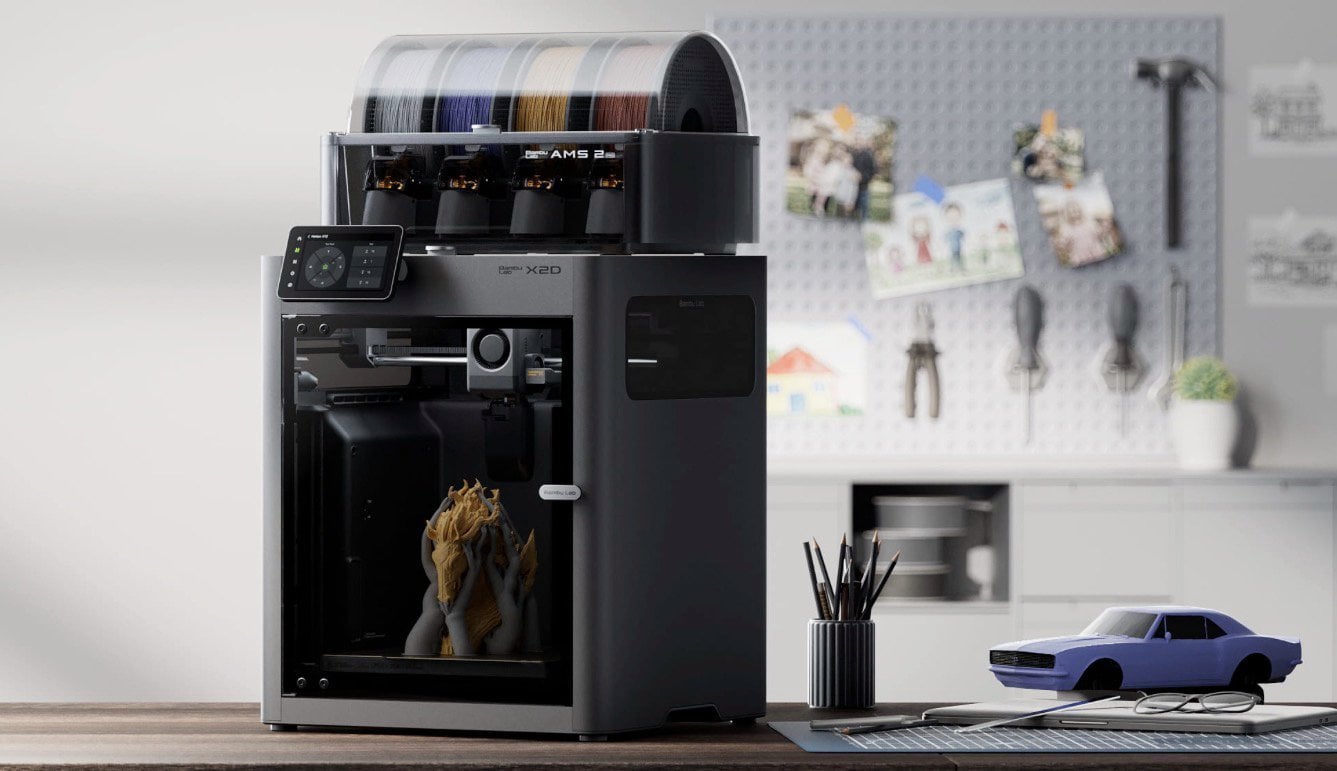
The Bambu X2D 3D printer expands on the P2S model by introducing features such as active chamber heating and a dual extrusion system, which enhance its capabilities for multi-material printing. With a 60°C heated chamber, it handles temperature-sensitive materials like ABS and nylon more effectively. Made with Layers (Thomas Sanladerer) notes that the Bowden hotend […]
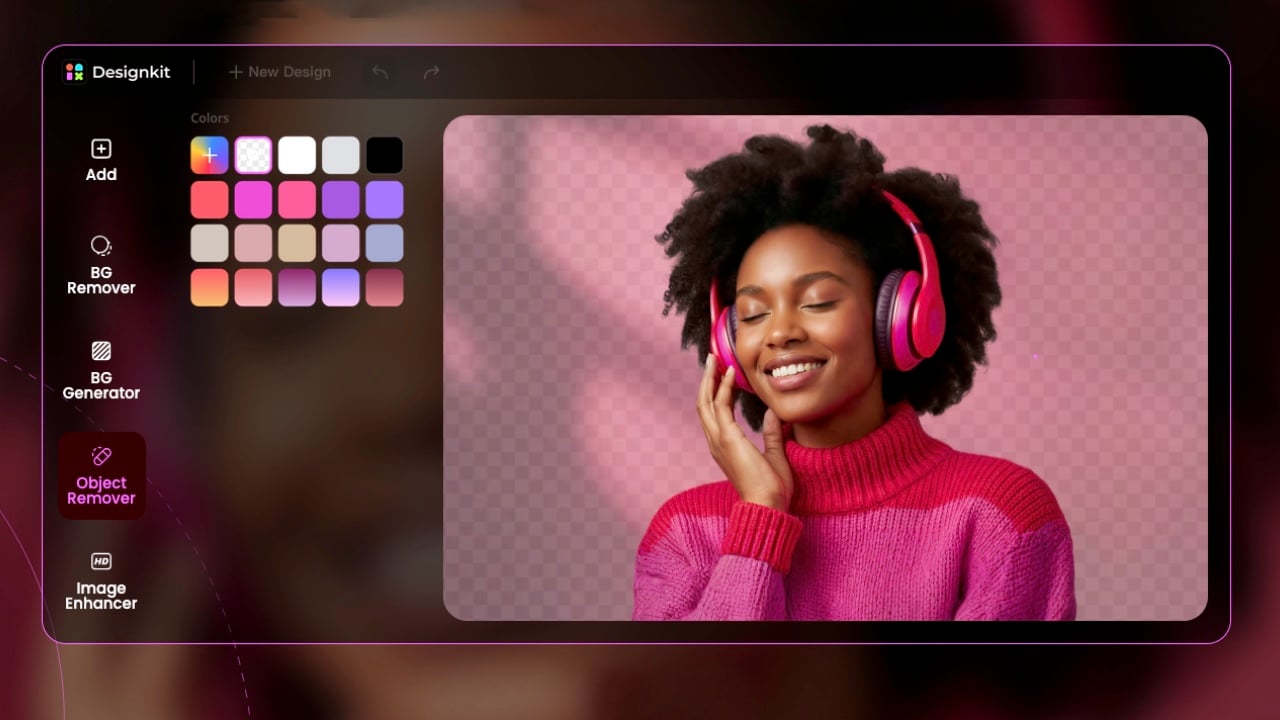
In the high-stakes world of global e-commerce, the quality of a product image is often the single greatest factor in a customer’s decision to click “buy.” For years, digital merchants have been caught in a persistent squeeze: the demand for high-quality, diverse visual content is exploding, yet the traditional methods for producing that content remain […]
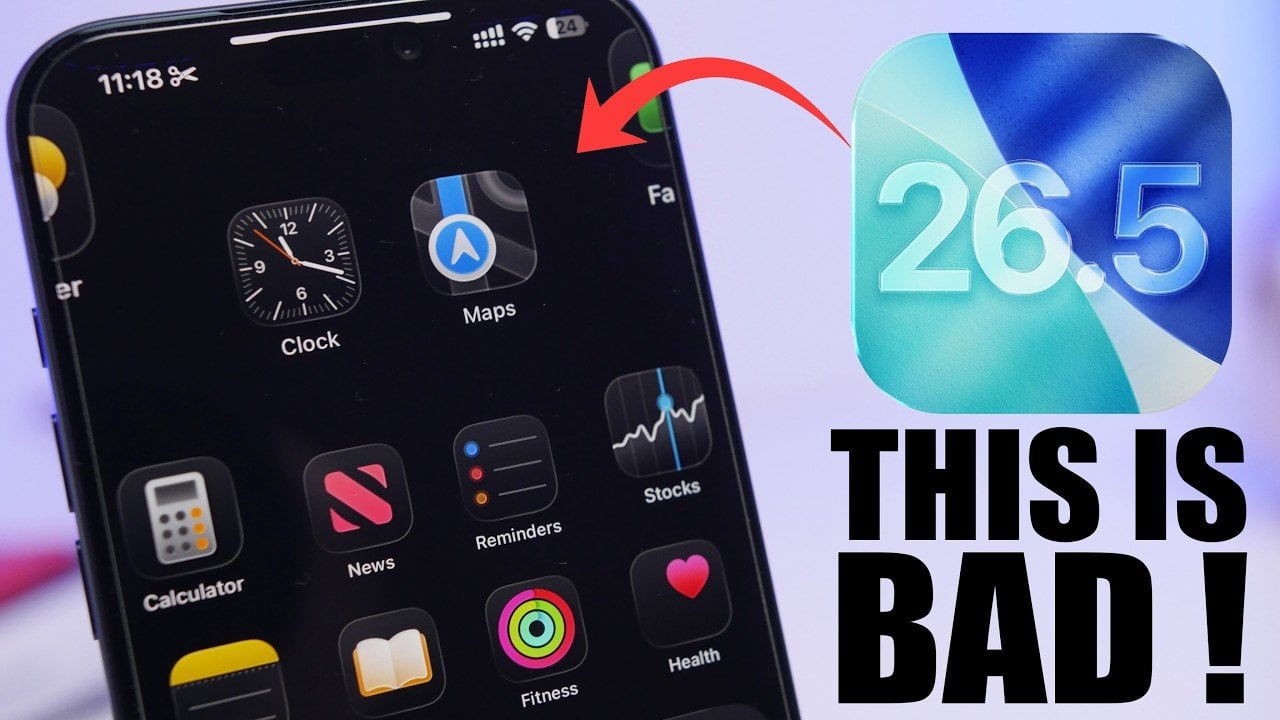
Apple has released the second beta of iOS 26.5, but instead of enhancing the stability and performance seen in iOS 26.4, this update introduces several challenges. While it includes minor feature updates, these improvements are overshadowed by significant performance regressions and battery life issues. If you are currently using iOS 26.4 or the first beta […]
Comparing Excel sheets is a common task in data management, yet it often becomes tedious without the right approach. My Online Training Hub explores three practical methods to simplify this process, including a lesser-known technique for advanced users. For instance, using Excel’s “New Window” and “Arrange All” features allows you to view two sheets side-by-side, […]
Earlier this year it was revealed that Apple and Google were offering "nudify" apps on their stores despite having clear policies barring such content. Nearly three months later, such apps are not only still available, but being actively promoted on the iOS App Store and Google Play, according to a new report from the Tech Transparency Project(TTP). Many of those were labeled "E" for Everyone, meaning they can be downloaded by children.
Searching for "nudify," "undress" and other terms in those stores gives users access to apps that can make real people nude or put them into pornographic videos. The new report alleges that "the platforms are key participants in the spread of AI tools that can turn real people into sexualized images," TTP wrote. The app stores even ran ads for similar nudifying apps in the search results. (Engadget has reached out to Apple and Google for comment.)
The group identified 18 nudify apps in Apple's App Store and 20 in Google Play. Some were marketed with sexual images, while others weren't advertised as such but could still be used for deepfakes. Those apps have collectively generated around $122 million in revenue and been downloaded 483 million times, according to the report.
"It’s not just that the companies are failing to actually appropriately review these apps and continue to approve them and profit from them," TTP director Katie Paul told Bloomberg. "They are actually directing users to the apps themselves."
Apple and Google both have policies banning sexual or pornographic material, and Google has a specific policy against nudifying apps. Apple told Bloomberg that it removed 15 apps identified by the group, while Google said that it suspended a number of them. One of the apps cited in the report called Video Face Swap AI: DeepFace, advertises itself by showing an actress's face swapped onto another actress's body and allows users to put a real person's face on the bodies of partially undressed women. The app was rated "E" for Everyone.
The proliferation of nudify and deepfake apps has pushed some governments to propose laws against them. The UK's Children's Commissioner recently called for a ban on AI deepfake apps that create nude or sexual images of children. The US and other countries have proposed or created laws banning explicit deepfakes, and the California Attorney General recently sent Elon Musk's X a cease and desist order over Grok's explicit deepfakes.
Update April 16 at 3:42 AM ET: Google gave Engadget the following comment:
"Google Play does not allow apps that contain sexual content.
When violations of our policies are reported to us, we investigate and take appropriate action.
Many of the apps referenced in this report have been suspended from Google Play for violations of our policies.
Our investigation and enforcement process is ongoing."
This article originally appeared on Engadget at https://www.engadget.com/apps/apple-and-google-are-reportedly-pointing-users-to-nudify-apps-065144277.html?src=rss
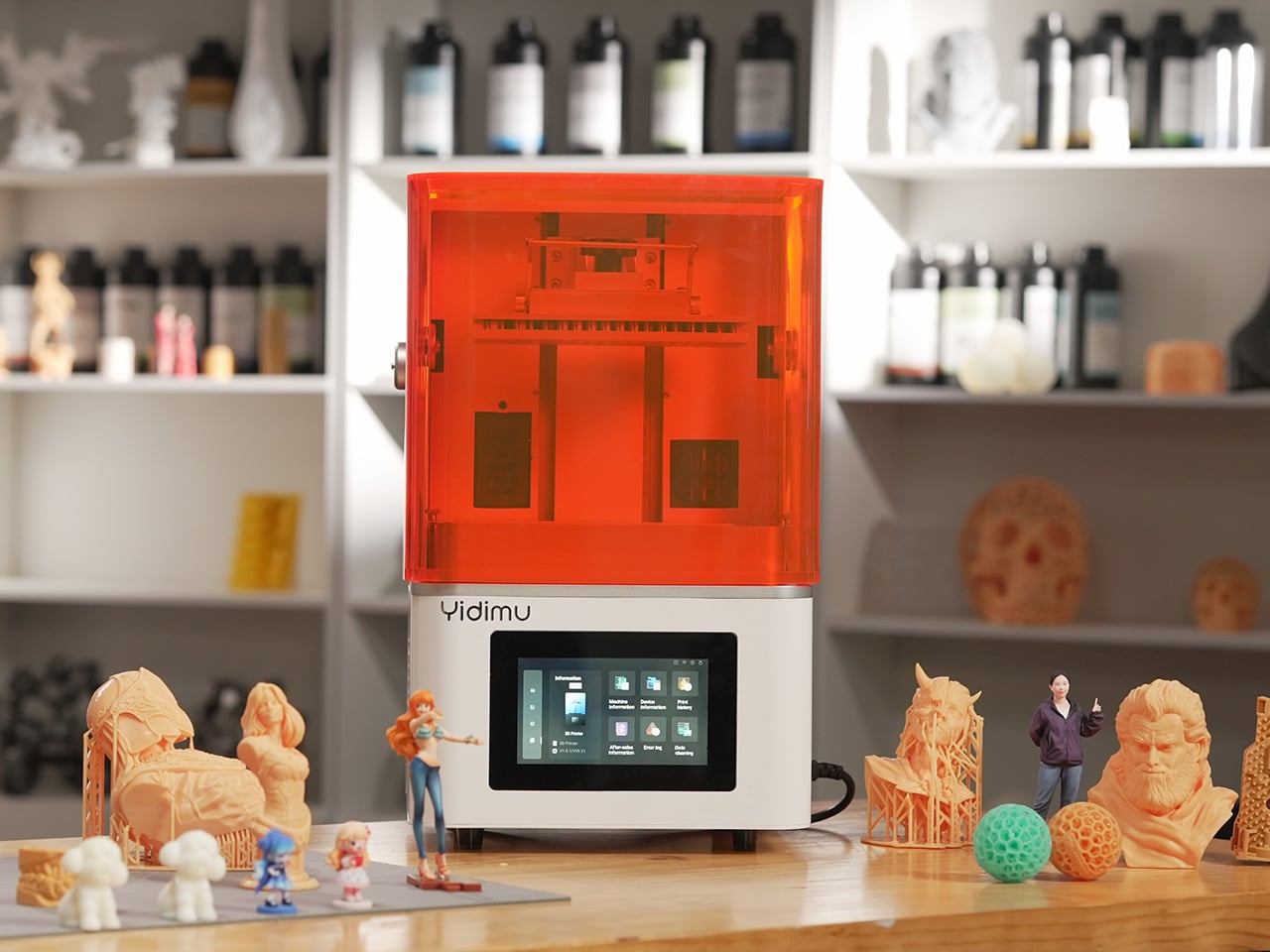
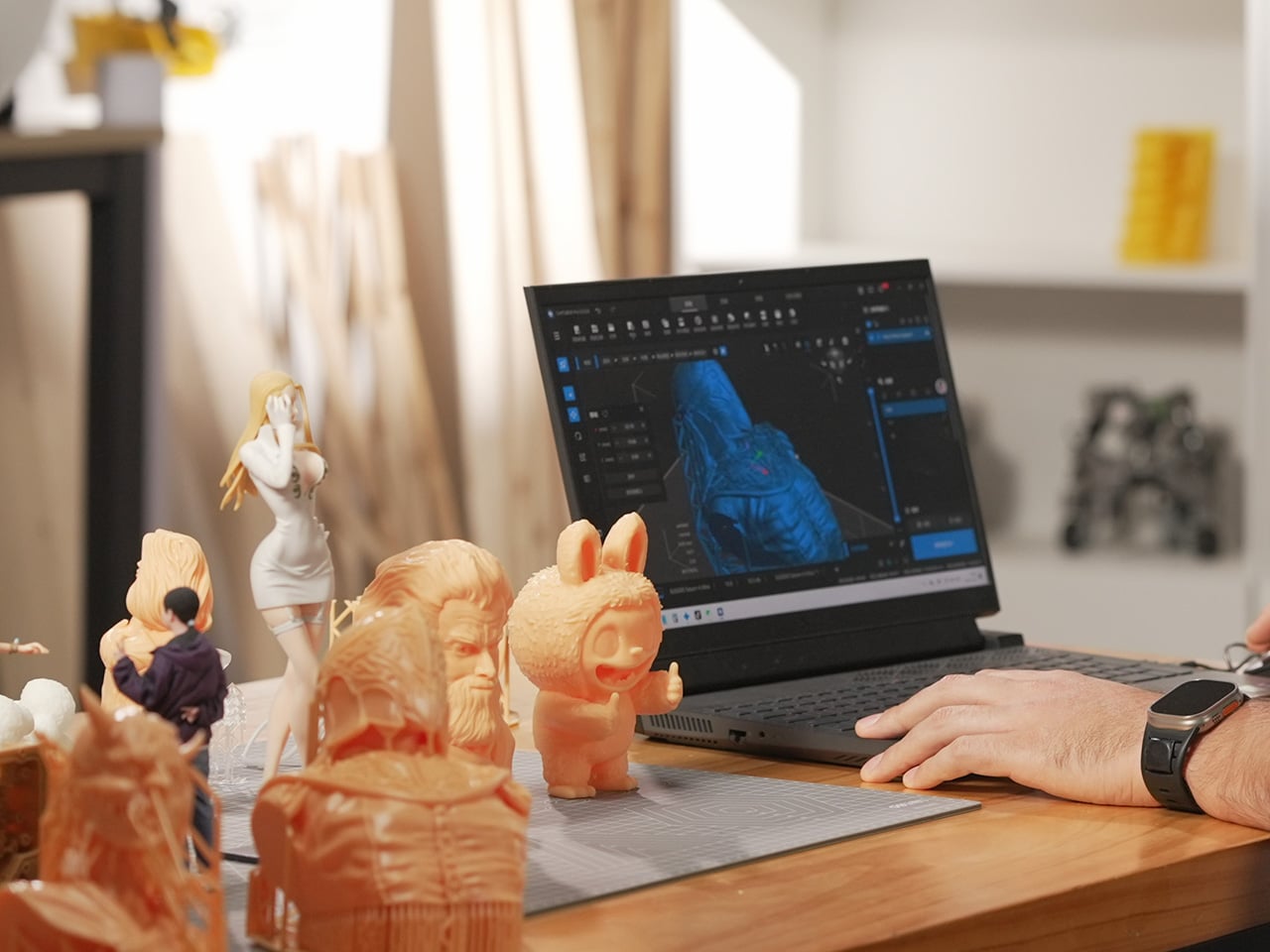
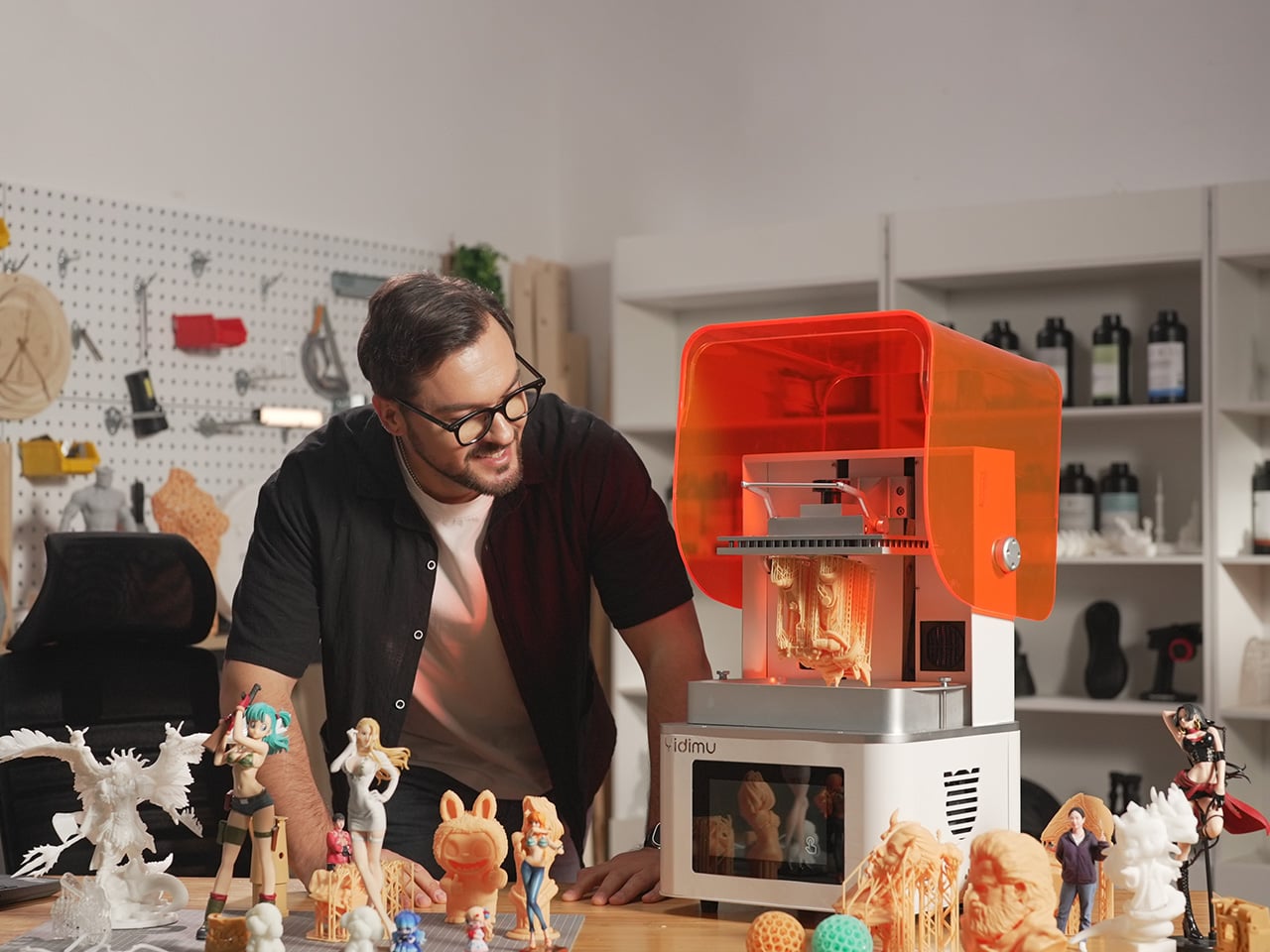
Anyone who has spent three hours printing a delicate miniature only to snap off an arm while scraping it from the build plate knows the frustration intimately. Resin 3D printing has always delivered stunning detail at the cost of a genuinely messy, nerve-wracking post-processing workflow. Metal spatulas, damaged models, scratched build plates, and the occasional profanity have been the price of admission. YIDIMU, a manufacturer with years of experience building professional-grade printers for dental labs and jewelry studios, watched creators tolerate this workflow and decided the entire premise was broken. The company’s solution is the MagPro, a 14K resin printer built around a one-click auto-release mechanism that eliminates scrapers entirely.
This printer is built around a philosophy of overkill, starting with a jaw-dropping 14K resolution screen that renders details with microscopic precision. But pixels are only part of the story. YIDIMU paired that screen with a custom optical engine that guarantees over 90% light uniformity, solving the problem of uneven curing that often leads to warped prints and failed jobs. The entire system is anchored by an industrial-grade ball screw Z-axis and a full aluminum chassis, providing the stability needed to ensure that every one of the screen’s 68 million pixels translates into a perfectly formed voxel of cured resin. The result is a printer that feels less like a consumer gadget and more like a dependable piece of professional manufacturing equipment.
Traditional resin printers require a messy, often destructive, surgical procedure with a metal scraper to remove finished prints. YIDIMU’s auto-release mechanism, however, works with a simple click that loosens the build platform, allowing finished models to pop off cleanly without any tools. This completely eliminates the risk of scratching the build plate or breaking delicate parts, turning what used to be a moment of anxiety into a satisfying part of the process. For anyone running iterative prototypes or small-batch production, this convenience shaves valuable minutes off each print cycle. The system delivers a simple, elegant operation that makes the entire workflow smoother and safer than ever before.
Most desktop printers struggle with uneven light distribution, which leads to inconsistent curing, warped models, and lost details. YIDIMU’s custom optical system delivers over 90% light uniformity, ensuring that every pixel of the massive 14K screen cures the resin with perfect consistency. That 13320 x 5120 resolution is so sharp it can reproduce details smaller than a human hair, meaning your miniatures will have crisp textures and your prototypes will have surgically precise edges. The company also includes a grayscale mask calibration tool, allowing users to fine-tune the light distribution for their specific needs. This perfectly even light brings digital blueprints to life flawlessly, delivering a perfect print on the very first try, no matter how complex the design.
YIDIMU has also introduced its Photocatalytic Growth Technology, a proprietary process where advanced light and chemistry create objects with zero layer stacking. Instead of building models slice by slice, which creates visible lines and weak points, this approach allows complex designs to materialize from the liquid as a single, continuous structure. This eliminates the stress points and optical variations typical of layered prints, resulting in unparalleled isotropic strength and a finish so smooth it looks like it was grown organically. For intricate geometries, fine textures, and industrial prototypes that need to be strong in all directions, this represents a fundamental shift in how resin printing produces finished parts.
A solid, all-aluminum chassis with a professional-grade ball screw Z-axis mechanism separates the MagPro from the flimsy plastic construction of most desktop printers. Ball screws provide incredibly tight tolerances and consistent layer accuracy, which is crucial when running massive, multi-day prints. The rock-solid internal structure also eliminates any Z-axis wobble, a common failure point that ruins tall prints on lesser machines. The printer weighs a substantial 29 kg, signaling the kind of robust engineering you would find in high-end industrial equipment. Its large 223 x 126 x 290 mm build volume and fast 6 cm/h print speed mean you can tackle ambitious projects with confidence.
Resin viscosity changes with temperature, often causing failed prints in cold climates, and YIDIMU’s dynamic heating system solves this by keeping the resin in its sweet spot regardless of the weather outside. The oversized 2kg+ resin vat allows for huge, uninterrupted prints without pausing to refill, while the active air purification system silently filters fumes, making your workspace healthier and more comfortable. A large 5-inch touchscreen running CHITUBOX software, along with USB and 6GB of internal storage, makes file management a breeze. The machine supports standard 405nm UV resin, accepts common STL and OBJ files, and includes auto-leveling for a hassle-free setup. The quick-release build platform can be removed with a single knob, further streamlining the post-processing workflow.
YIDIMU’s background in professional 3D printing for digital dentistry, jewelry design, and industrial prototyping informs the entire design philosophy, bringing industrial-grade engineering to a desktop form factor. The company has spent years building machines that run reliably 24/7 in demanding production environments where accuracy, surface quality, and repeatability directly impact client deliveries. That experience translates to a machine designed to reduce cognitive load and increase creative output, feeling less like an experimental device and more like a dependable production tool. The MagPro bridges the gap between hobby-grade machines and industrial systems, delivering measurable productivity gains for jewelry designers, product designers, R&D teams, and advanced makers who need professional-grade performance without the learning curve or price tag of five-figure industrial hardware.
The MagPro is available for $3,499 as a limited early bird tier (52% off the $7,299 MSRP), for the first 100 backers. Estimated delivery is July 2026. The printer ships anywhere in the world, and the package includes the YIDIMU 14K Resin 3D Printer as a single unit. YIDIMU is positioning this squarely in the gap between hobby-grade desktop machines and industrial systems, targeting semi-professional users who need reliable repeatability, minimal calibration, and professional surface finish.
Anyone who has spent three hours printing a delicate miniature only to snap off an arm while scraping it from the build plate knows the frustration intimately. Resin 3D printing has always delivered stunning detail at the cost of a genuinely messy, nerve-wracking post-processing workflow. Metal spatulas, damaged models, scratched build plates, and the occasional profanity have been the price of admission. YIDIMU, a manufacturer with years of experience building professional-grade printers for dental labs and jewelry studios, watched creators tolerate this workflow and decided the entire premise was broken. The company’s solution is the MagPro, a 14K resin printer built around a one-click auto-release mechanism that eliminates scrapers entirely.
This printer is built around a philosophy of overkill, starting with a jaw-dropping 14K resolution screen that renders details with microscopic precision. But pixels are only part of the story. YIDIMU paired that screen with a custom optical engine that guarantees over 90% light uniformity, solving the problem of uneven curing that often leads to warped prints and failed jobs. The entire system is anchored by an industrial-grade ball screw Z-axis and a full aluminum chassis, providing the stability needed to ensure that every one of the screen’s 68 million pixels translates into a perfectly formed voxel of cured resin. The result is a printer that feels less like a consumer gadget and more like a dependable piece of professional manufacturing equipment.
Traditional resin printers require a messy, often destructive, surgical procedure with a metal scraper to remove finished prints. YIDIMU’s auto-release mechanism, however, works with a simple click that loosens the build platform, allowing finished models to pop off cleanly without any tools. This completely eliminates the risk of scratching the build plate or breaking delicate parts, turning what used to be a moment of anxiety into a satisfying part of the process. For anyone running iterative prototypes or small-batch production, this convenience shaves valuable minutes off each print cycle. The system delivers a simple, elegant operation that makes the entire workflow smoother and safer than ever before.
Most desktop printers struggle with uneven light distribution, which leads to inconsistent curing, warped models, and lost details. YIDIMU’s custom optical system delivers over 90% light uniformity, ensuring that every pixel of the massive 14K screen cures the resin with perfect consistency. That 13320 x 5120 resolution is so sharp it can reproduce details smaller than a human hair, meaning your miniatures will have crisp textures and your prototypes will have surgically precise edges. The company also includes a grayscale mask calibration tool, allowing users to fine-tune the light distribution for their specific needs. This perfectly even light brings digital blueprints to life flawlessly, delivering a perfect print on the very first try, no matter how complex the design.
YIDIMU has also introduced its Photocatalytic Growth Technology, a proprietary process where advanced light and chemistry create objects with zero layer stacking. Instead of building models slice by slice, which creates visible lines and weak points, this approach allows complex designs to materialize from the liquid as a single, continuous structure. This eliminates the stress points and optical variations typical of layered prints, resulting in unparalleled isotropic strength and a finish so smooth it looks like it was grown organically. For intricate geometries, fine textures, and industrial prototypes that need to be strong in all directions, this represents a fundamental shift in how resin printing produces finished parts.
A solid, all-aluminum chassis with a professional-grade ball screw Z-axis mechanism separates the MagPro from the flimsy plastic construction of most desktop printers. Ball screws provide incredibly tight tolerances and consistent layer accuracy, which is crucial when running massive, multi-day prints. The rock-solid internal structure also eliminates any Z-axis wobble, a common failure point that ruins tall prints on lesser machines. The printer weighs a substantial 29 kg, signaling the kind of robust engineering you would find in high-end industrial equipment. Its large 223 x 126 x 290 mm build volume and fast 6 cm/h print speed mean you can tackle ambitious projects with confidence.
Resin viscosity changes with temperature, often causing failed prints in cold climates, and YIDIMU’s dynamic heating system solves this by keeping the resin in its sweet spot regardless of the weather outside. The oversized 2kg+ resin vat allows for huge, uninterrupted prints without pausing to refill, while the active air purification system silently filters fumes, making your workspace healthier and more comfortable. A large 5-inch touchscreen running CHITUBOX software, along with USB and 6GB of internal storage, makes file management a breeze. The machine supports standard 405nm UV resin, accepts common STL and OBJ files, and includes auto-leveling for a hassle-free setup. The quick-release build platform can be removed with a single knob, further streamlining the post-processing workflow.
YIDIMU’s background in professional 3D printing for digital dentistry, jewelry design, and industrial prototyping informs the entire design philosophy, bringing industrial-grade engineering to a desktop form factor. The company has spent years building machines that run reliably 24/7 in demanding production environments where accuracy, surface quality, and repeatability directly impact client deliveries. That experience translates to a machine designed to reduce cognitive load and increase creative output, feeling less like an experimental device and more like a dependable production tool. The MagPro bridges the gap between hobby-grade machines and industrial systems, delivering measurable productivity gains for jewelry designers, product designers, R&D teams, and advanced makers who need professional-grade performance without the learning curve or price tag of five-figure industrial hardware.
The MagPro is available for $3,499 as a limited early bird tier (52% off the $7,299 MSRP), for the first 100 backers. Estimated delivery is July 2026. The printer ships anywhere in the world, and the package includes the YIDIMU 14K Resin 3D Printer as a single unit. YIDIMU is positioning this squarely in the gap between hobby-grade desktop machines and industrial systems, targeting semi-professional users who need reliable repeatability, minimal calibration, and professional surface finish.
There’s a reason every retro emulation console of the last decade keeps cribbing from the same 1980s Japanese design playbook. The Famicom and the original SNES established a visual grammar for home gaming hardware that has never really been improved upon, just iterated, simplified, or fetishized. Cream-colored ABS plastic, primary-red accents, ribbed black ventilation grilles borrowed from HiFi separates, and chunky cross d-pads big enough to register through a winter glove. Analogue has built an entire premium business on faithfully reissuing this language. Anbernic and Miyoo have built equally large businesses on cheaply approximating it. What nobody has really done is take that grammar and warp it through a fashion-house sensibility.
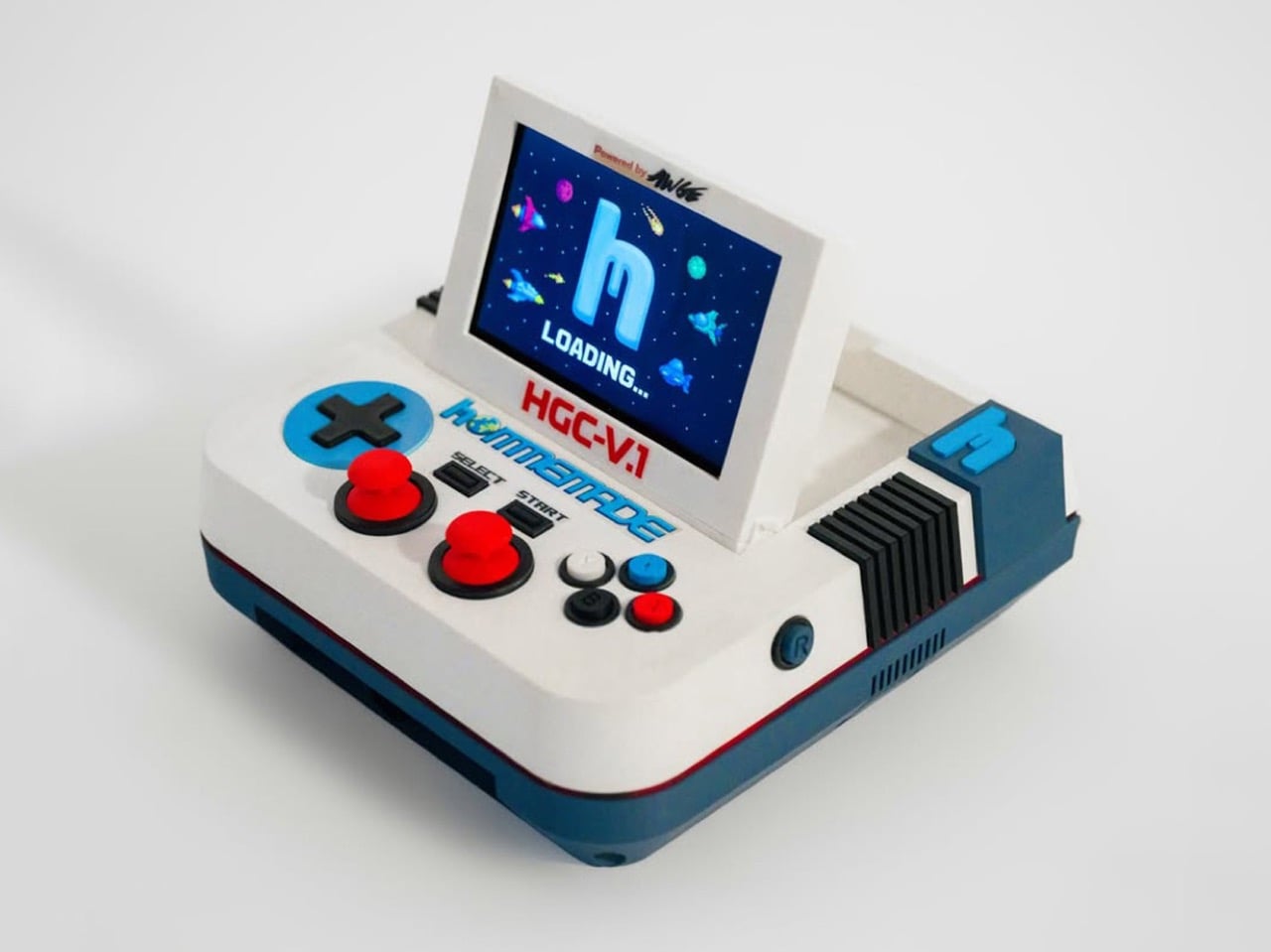
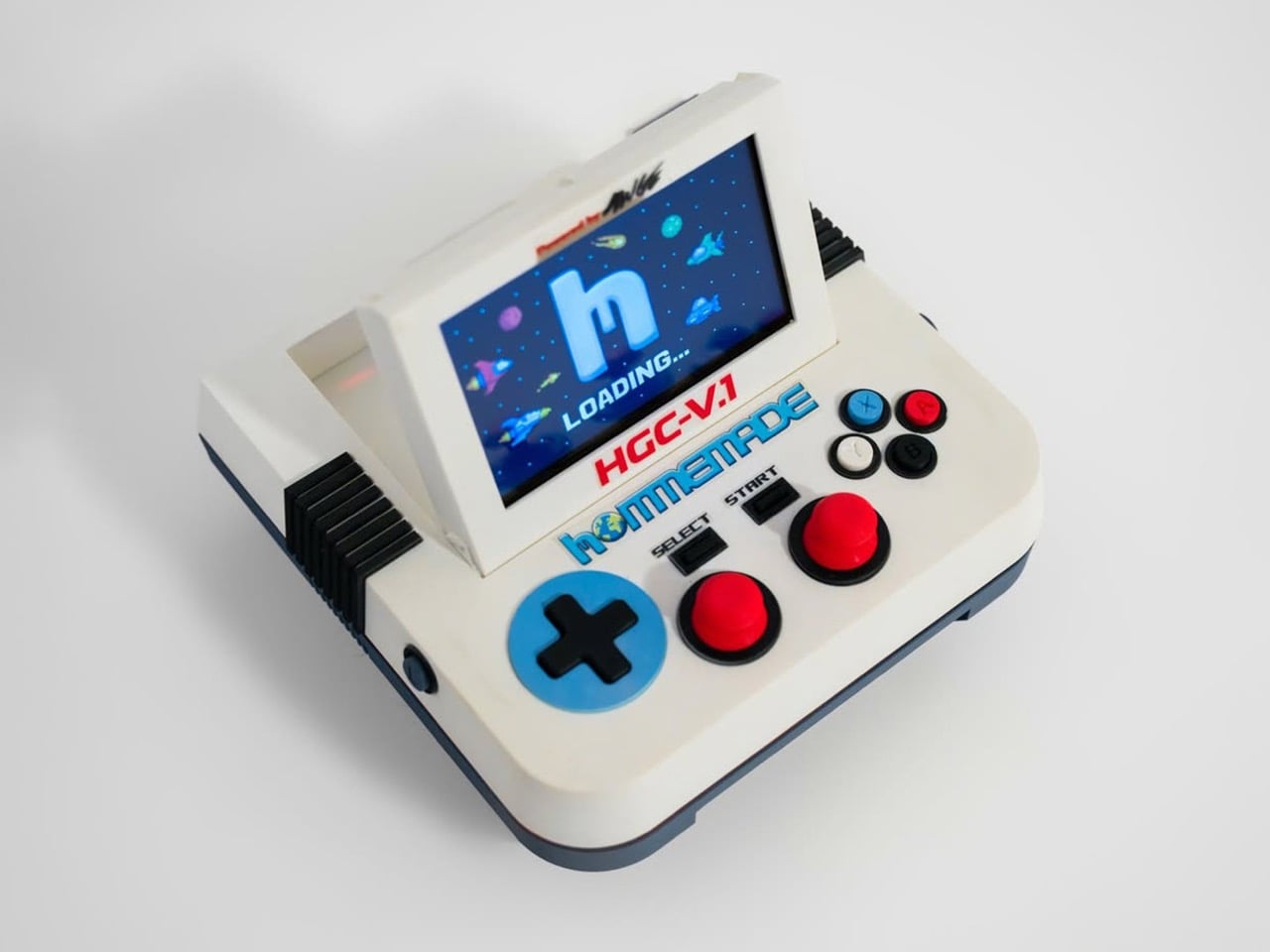
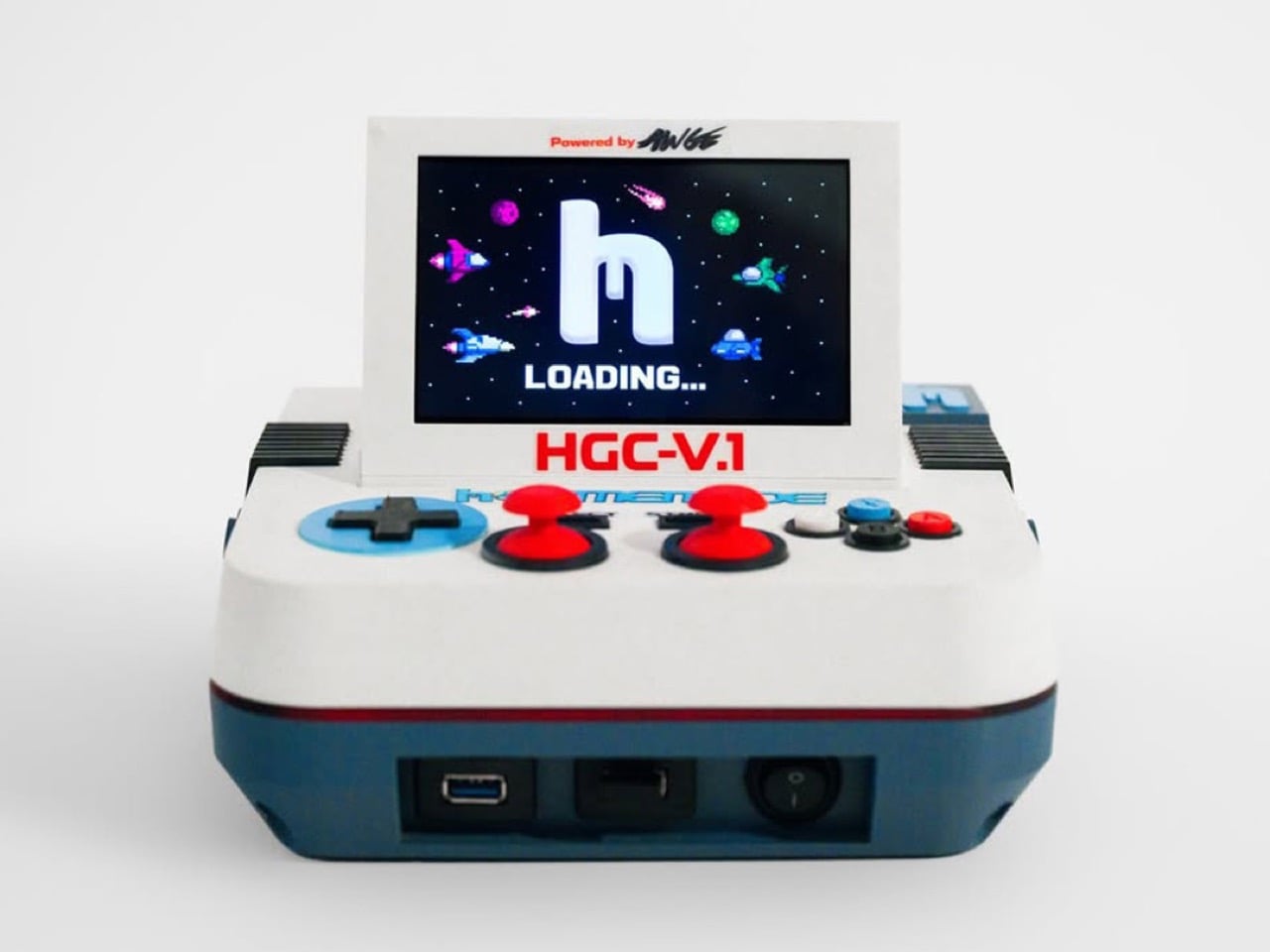
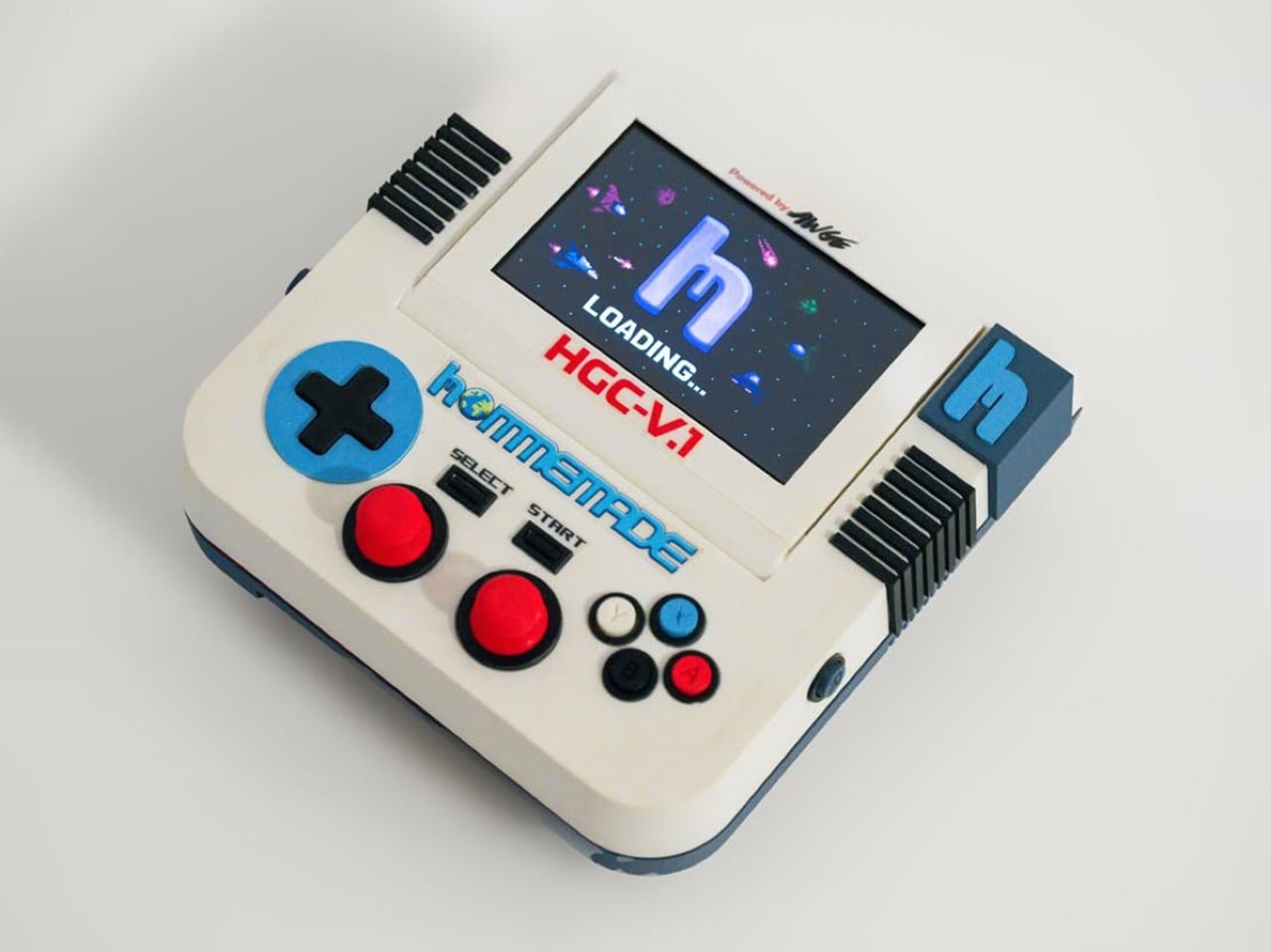
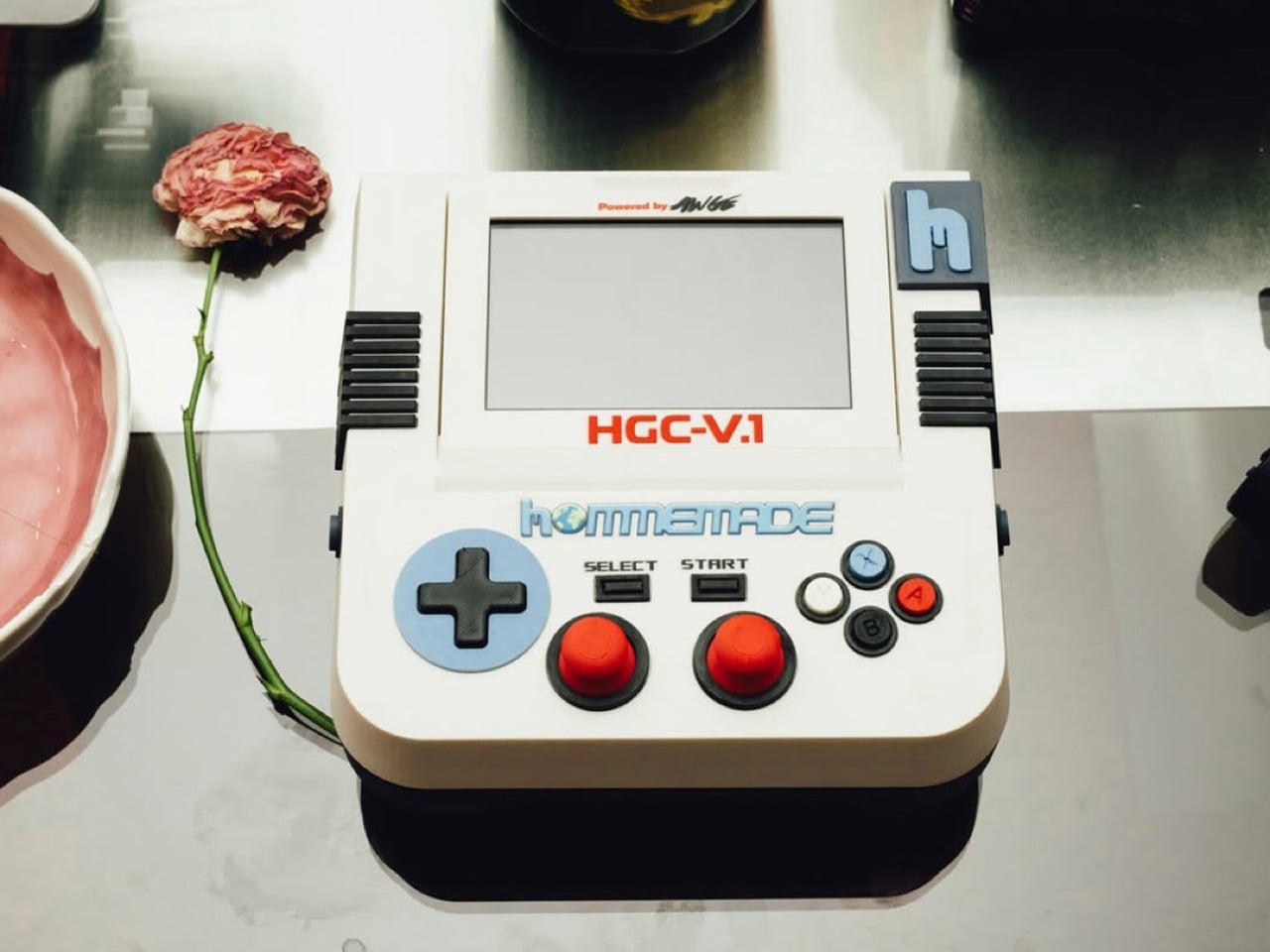
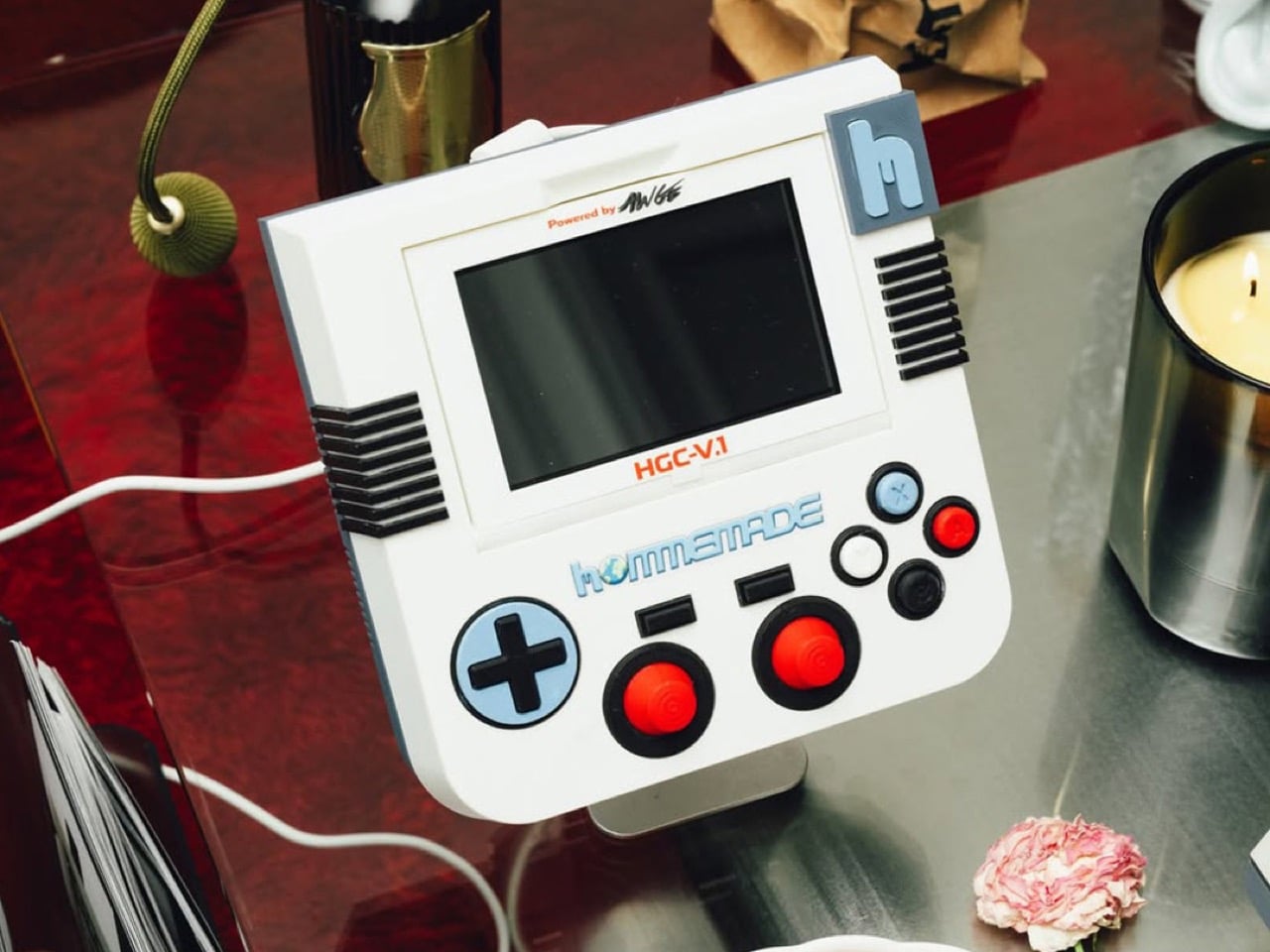
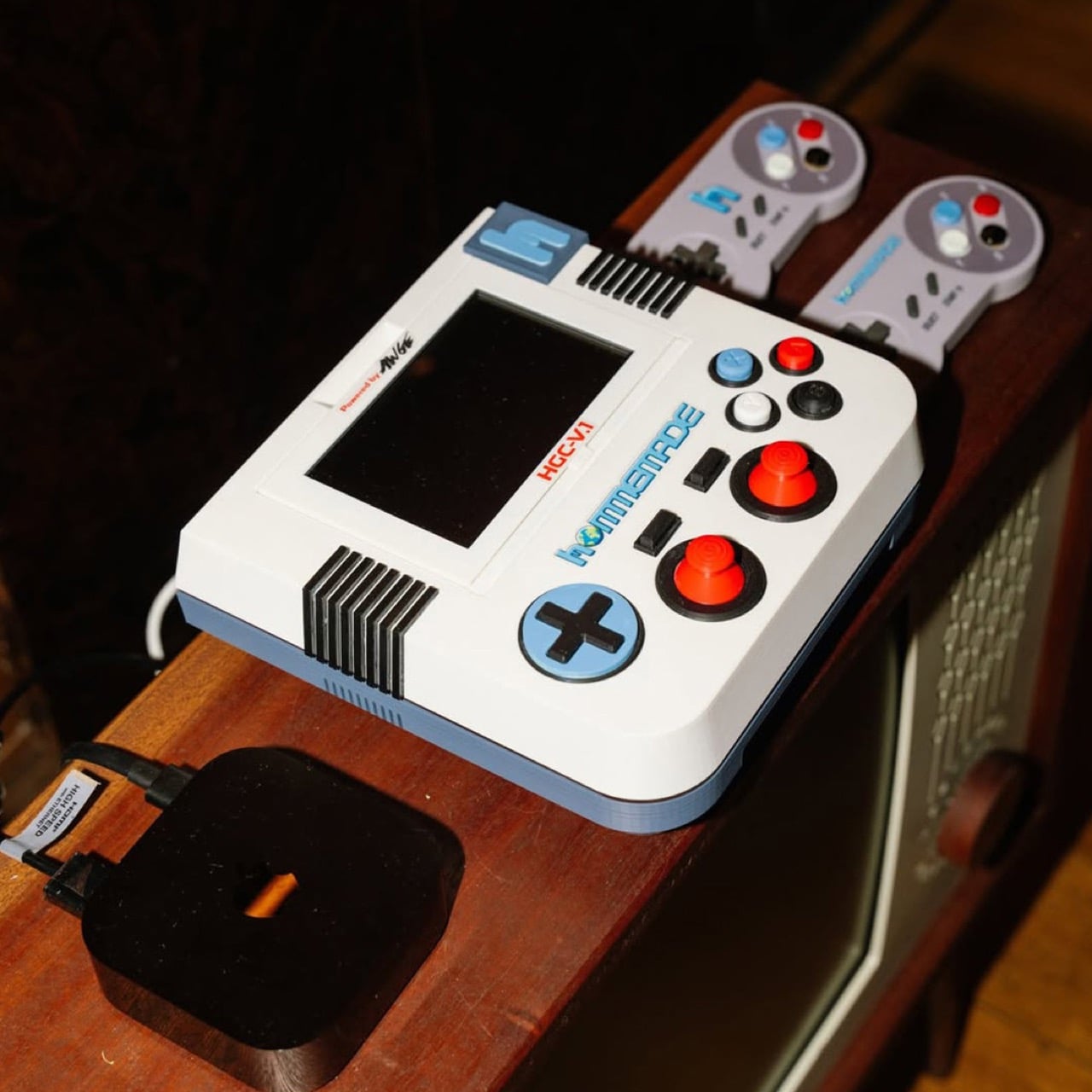
A$AP Rocky’s Hommemade studio just gave it a shot. The HGC-V.1, or Hommemade Gaming Console Version One, is a flip-screen retro emulation system designed in-house at AWGE and built around a chunky, almost cartoonishly oversized form factor that reads like a Famicom rendered as a desk sculpture. Cream and slate-blue body panels, two red arcade-style thumbsticks, a cobalt cross d-pad, SNES-coded face buttons, and black ribbed heat sinks flanking a flip-up LCD that boots into a pixelated starfield with the Hommemade “h” logo glowing front and center. It’s a console designed to be looked at as much as played.
Designer: AWGE / Hommemade
The form language here rewards a closer look. Most retro consoles fall into one of two camps, the faithful reissue (Analogue Pocket, Mega Sg) or the all-in-one emulation handheld (the entire Anbernic catalog), and both prioritize either accuracy or portability. The HGC-V.1 ignores both briefs. It’s a tabletop unit, roughly the proportions of a 1980s portable TV, with a flip-up screen that gives it a clamshell silhouette closer to a Game Boy Advance SP scaled up to coffee-table size. The d-pad, joysticks, and face buttons are all deliberately oversized, pushing past ergonomic logic into something more sculptural. You don’t pick this up the way you’d pick up an Anbernic RG35XX. You sit at it.
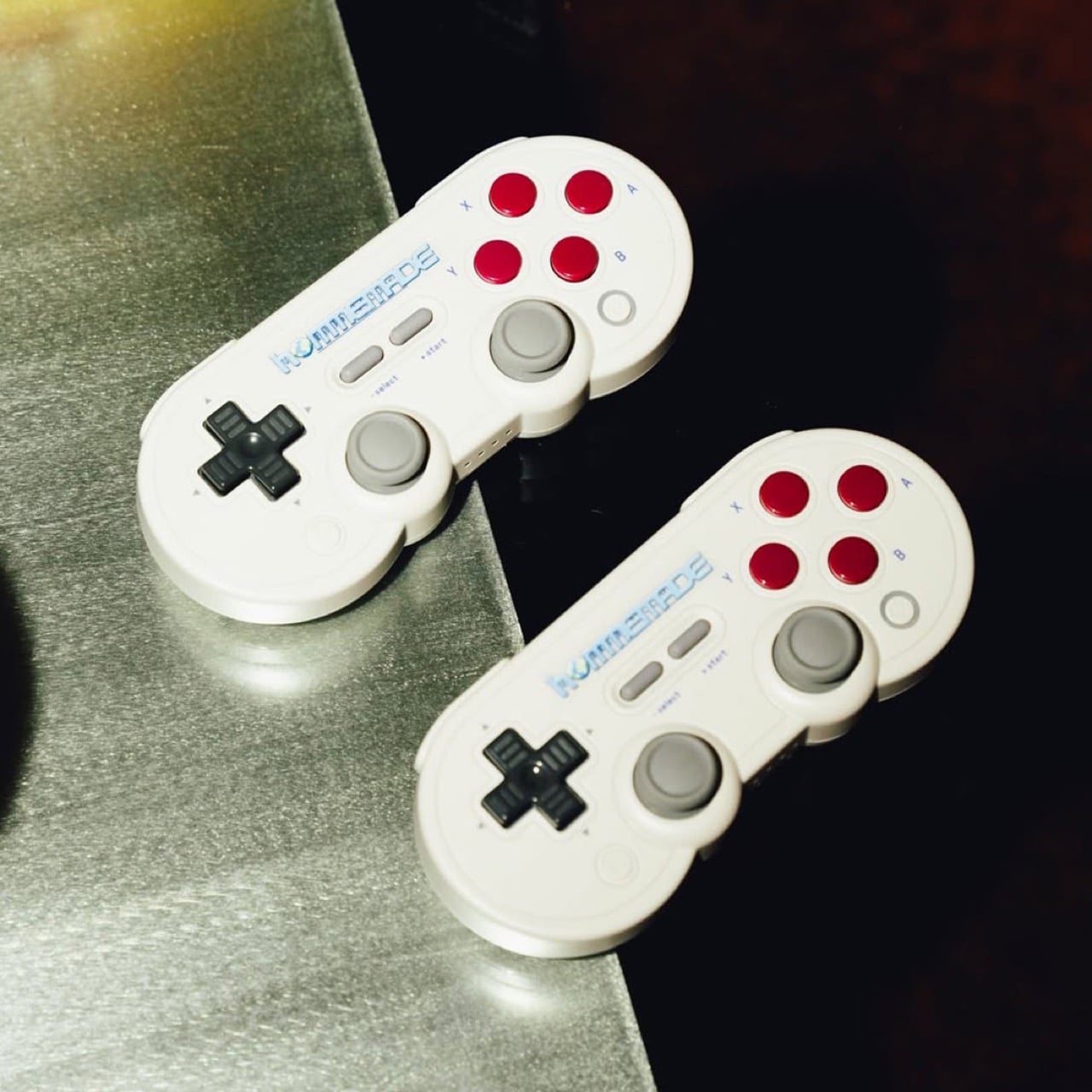
The detailing is where the AWGE handprint gets loud. “HGC-V.1” sits in red Famicom-style lettering across the bezel, “Powered by AWGE” gets stamped in that scrappy hand-drawn type Rocky has used across his whole creative universe, and the chunky blue “h” logo on the right shoulder behaves less like a brand mark and more like a structural element, almost a handle. Around the back you get USB, what looks like HDMI out, and a physical toggle switch with the satisfying mechanical heft those late-90s appliances always had. The package ships with two wireless gamepads that crib NES proportions while smuggling in twin analog sticks and a four-button face cluster, essentially a hybrid retro-modern pad capable of running anything from NES ROMs through to early PS1 emulation.
No public price has been announced, which fits the Hommemade pattern. The label operates on a made-to-order basis through a single email address (hommemade@awge.com if you’re interested), and the rest of the Galaxy Collection ranges from $13,500 dividers to the $300,000 CBNT.V1 entertainment console covered by Hypebeast last week. Expect this to land somewhere in art-object territory rather than competing with the upcoming Steam Machine. The HGC-V.1 isn’t trying to win on specs or library size. It’s trying to win on the simpler proposition that gaming hardware can be a piece of furniture worth designing properly, and on that front, it makes a genuinely compelling case.
There’s a philosophy embedded in the Shoji tiny home that goes beyond architecture. “Enjoy, sleep, relax, cook, work, connect, disconnect. Do only what truly matters.” That’s the ethos of Bulgarian firm Koleliba, the award-winning tiny living brand behind one of the most quietly striking small homes to come out of Europe in recent years.
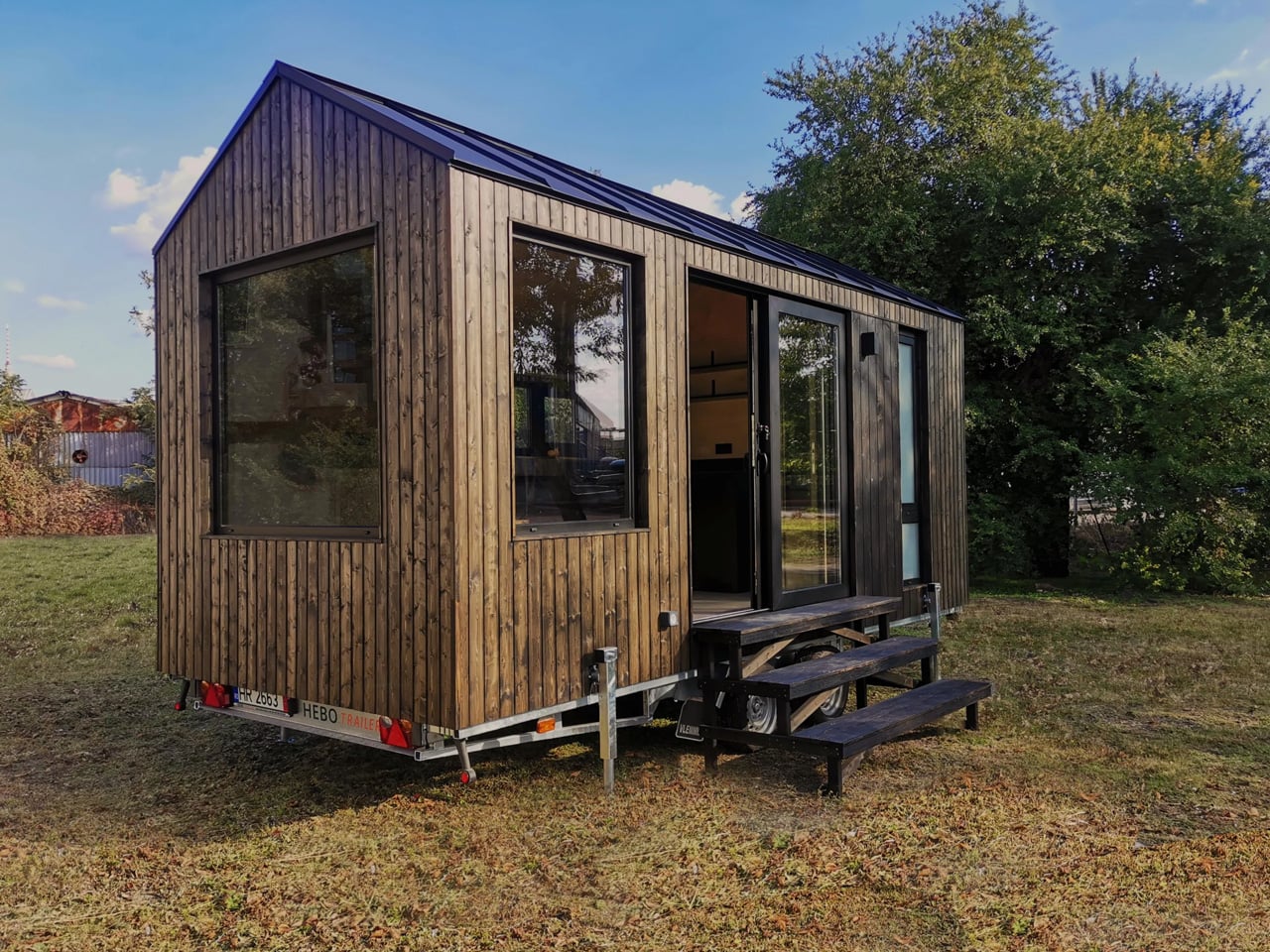
Completed in November 2022 and sited in Brittany, France, the Shoji is Koleliba’s S Tiny model, measuring just 130 sq ft (12 sq m) and stretching only 5.5 meters (18 ft) in length. Designed alongside architect Hristina Hristova, the home sits on a double-axle trailer, making it fully mobile without sacrificing an ounce of intention. The name itself is a nod to the Japanese aesthetic: clean lines, natural materials, and a deep respect for negative space.
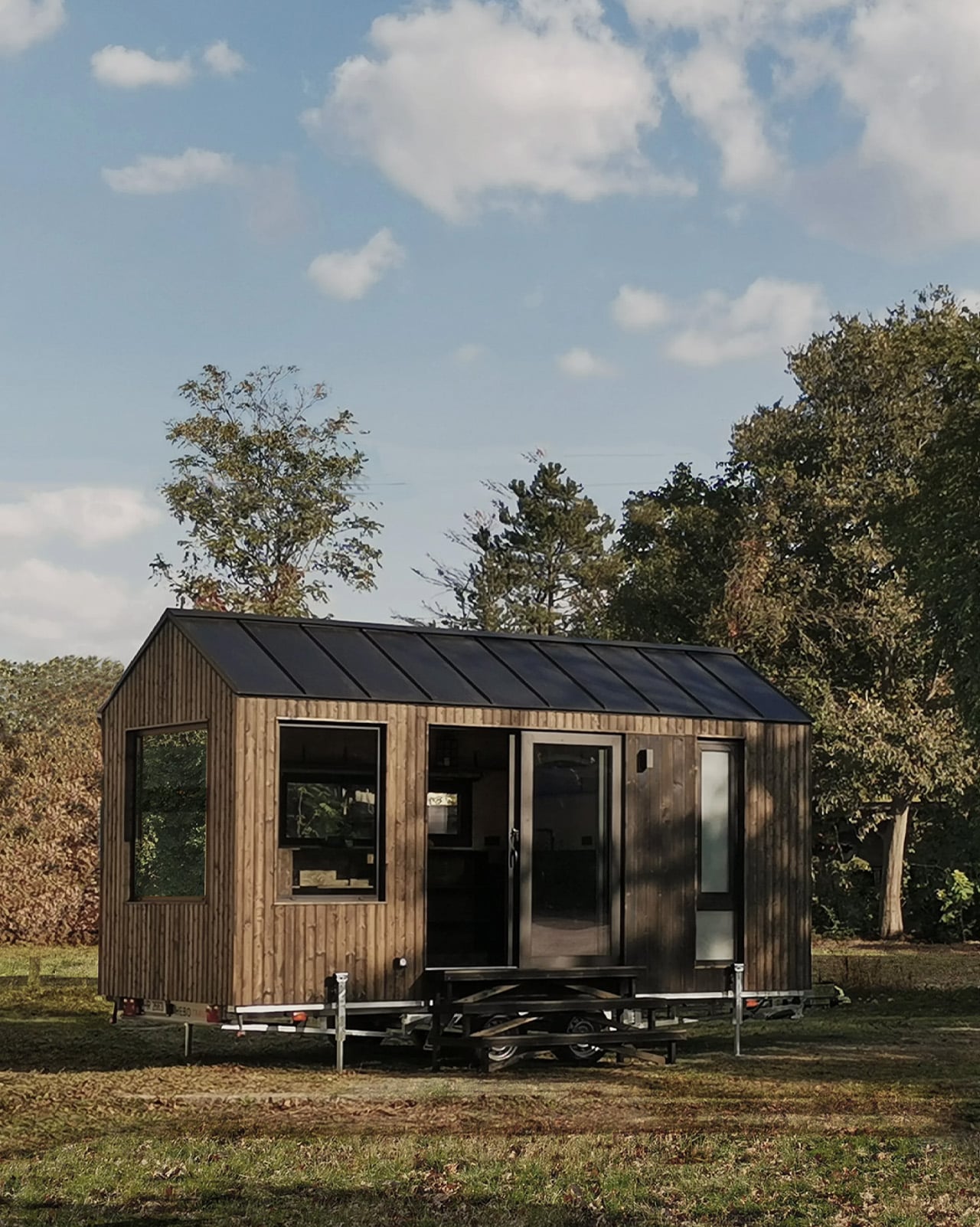
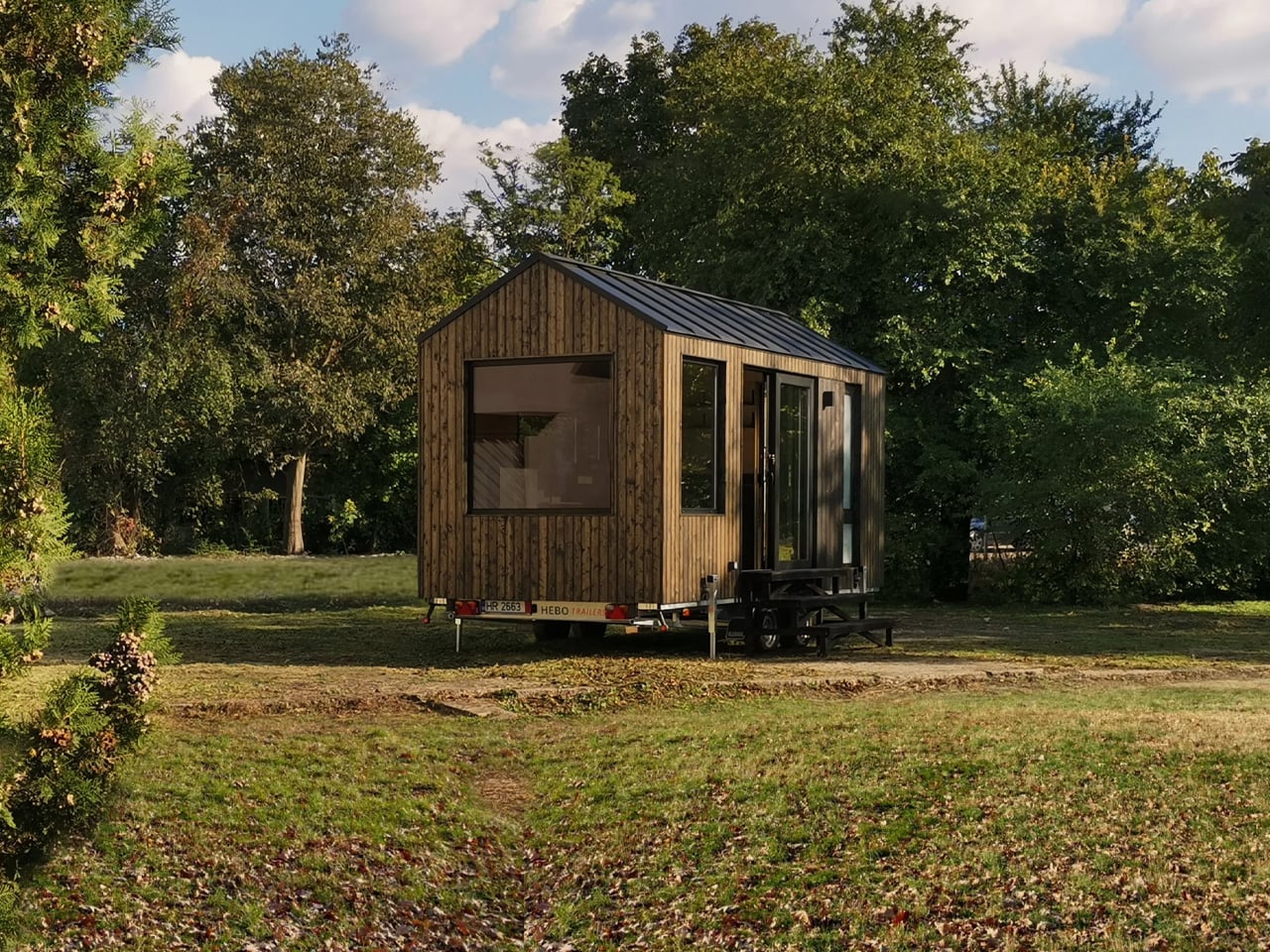
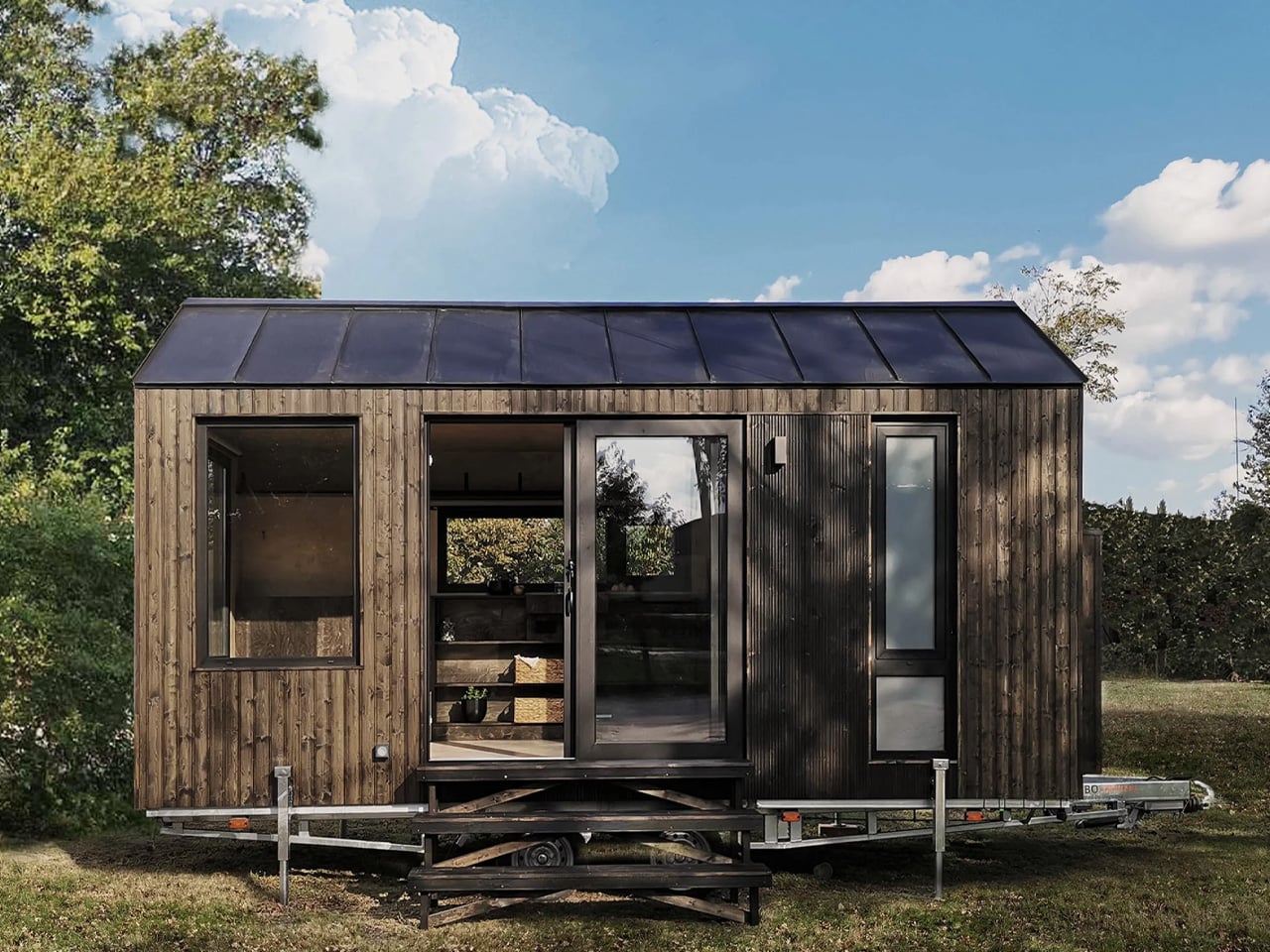
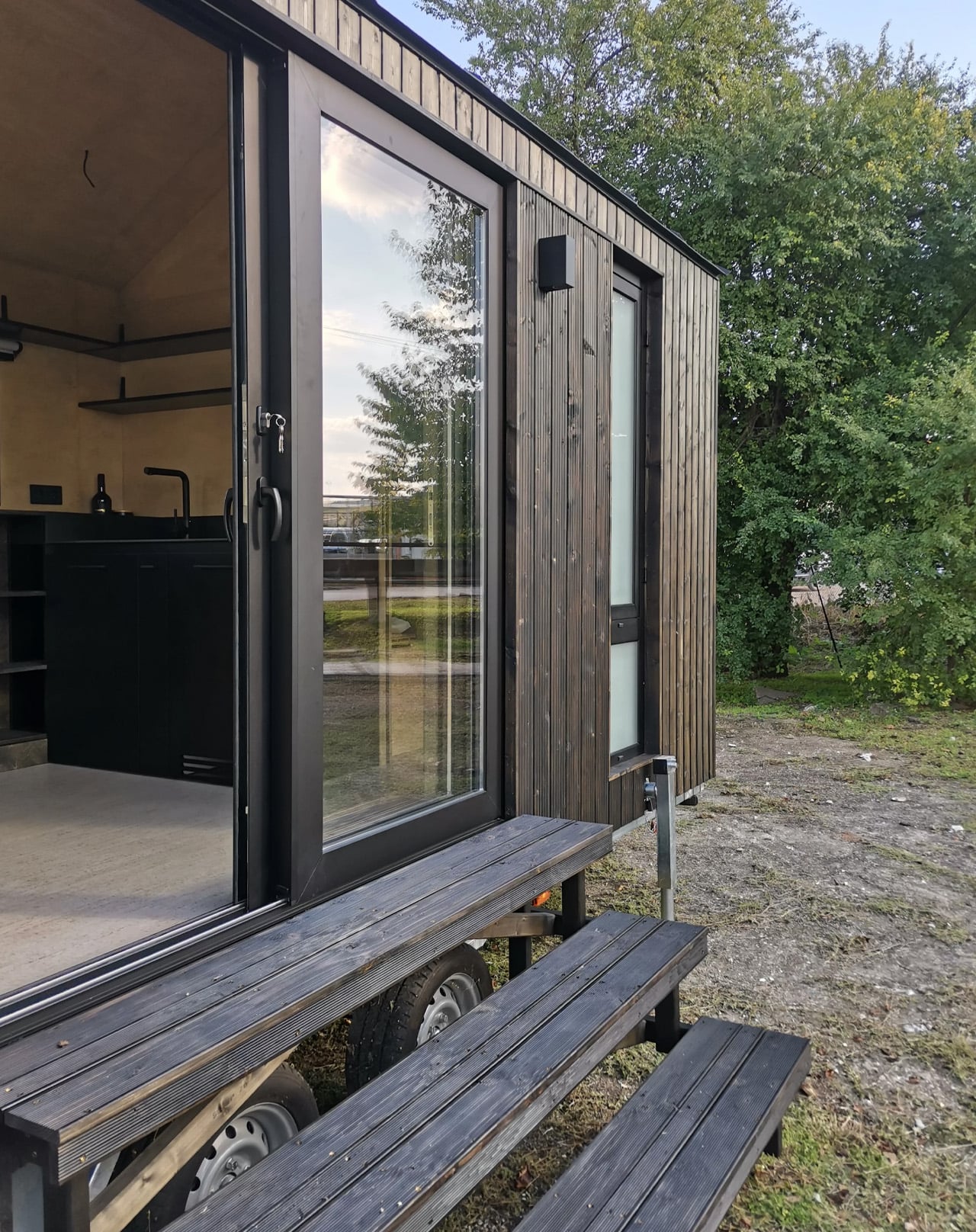
From the outside, the Shoji is finished in vertical timber siding topped with a metal roof, punctuated by expansive windows and sliding glass doors that dissolve the boundary between inside and out. It’s the kind of exterior that looks equally at home in a forest clearing or a countryside field, modest at first glance but considered in every detail.
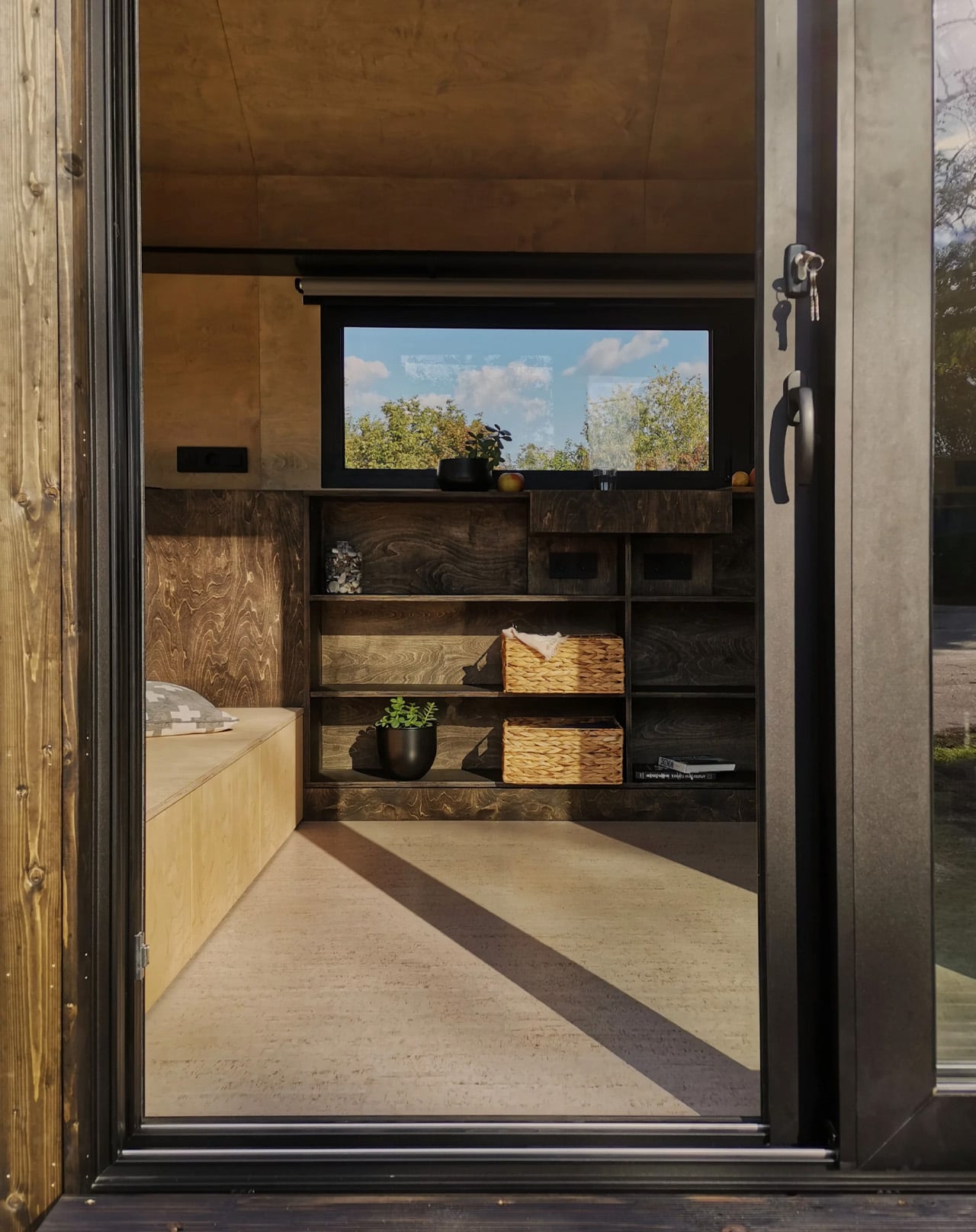
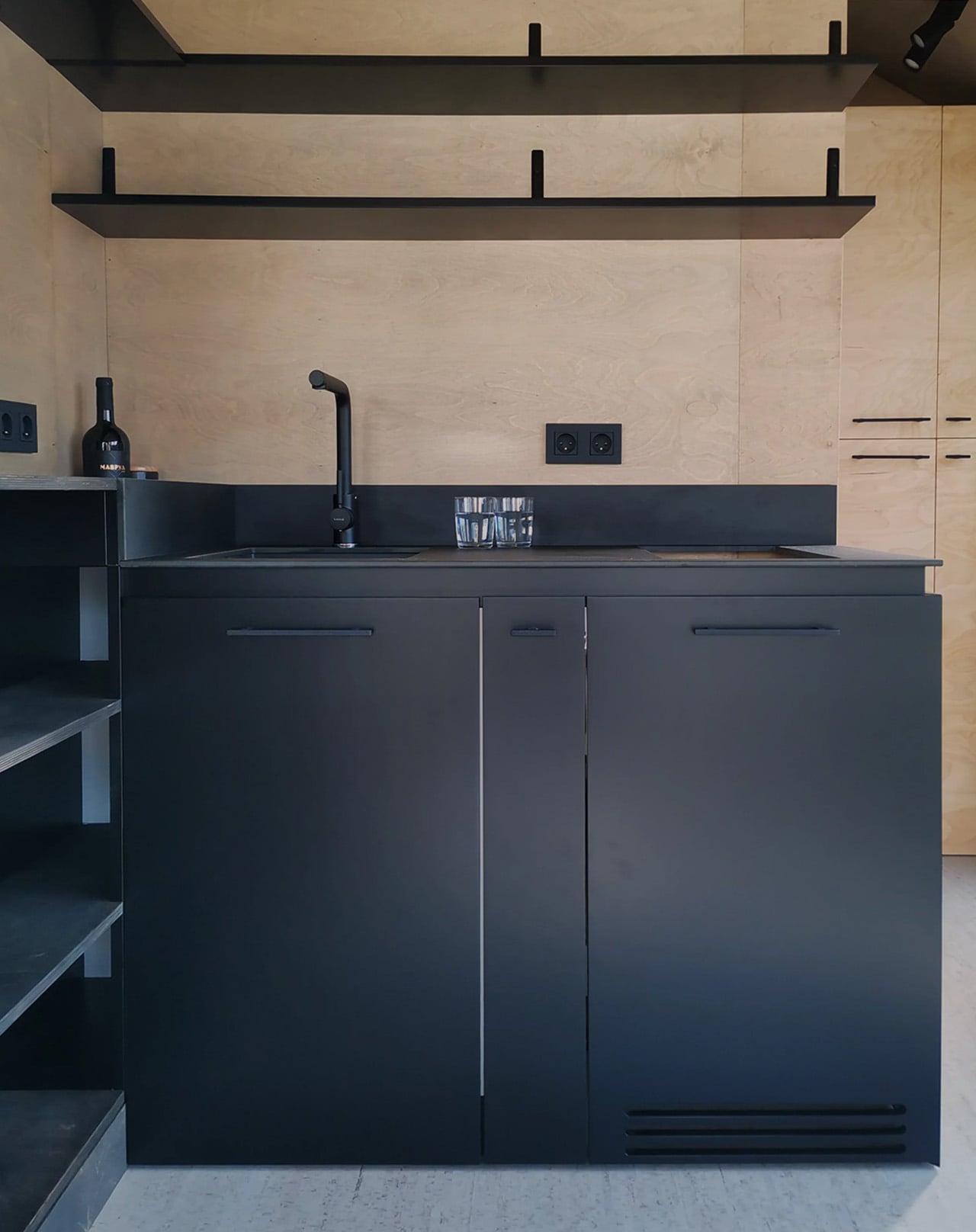
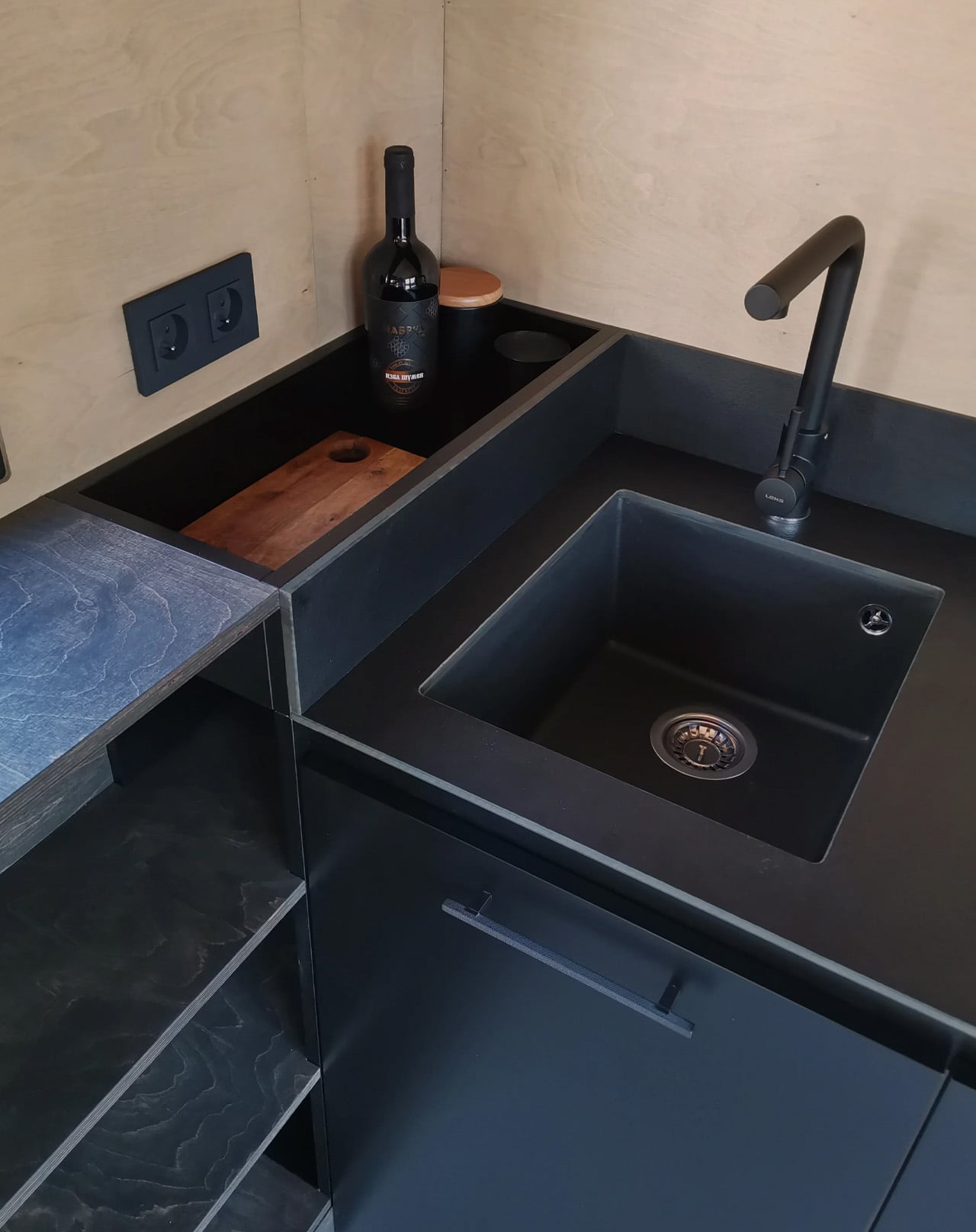
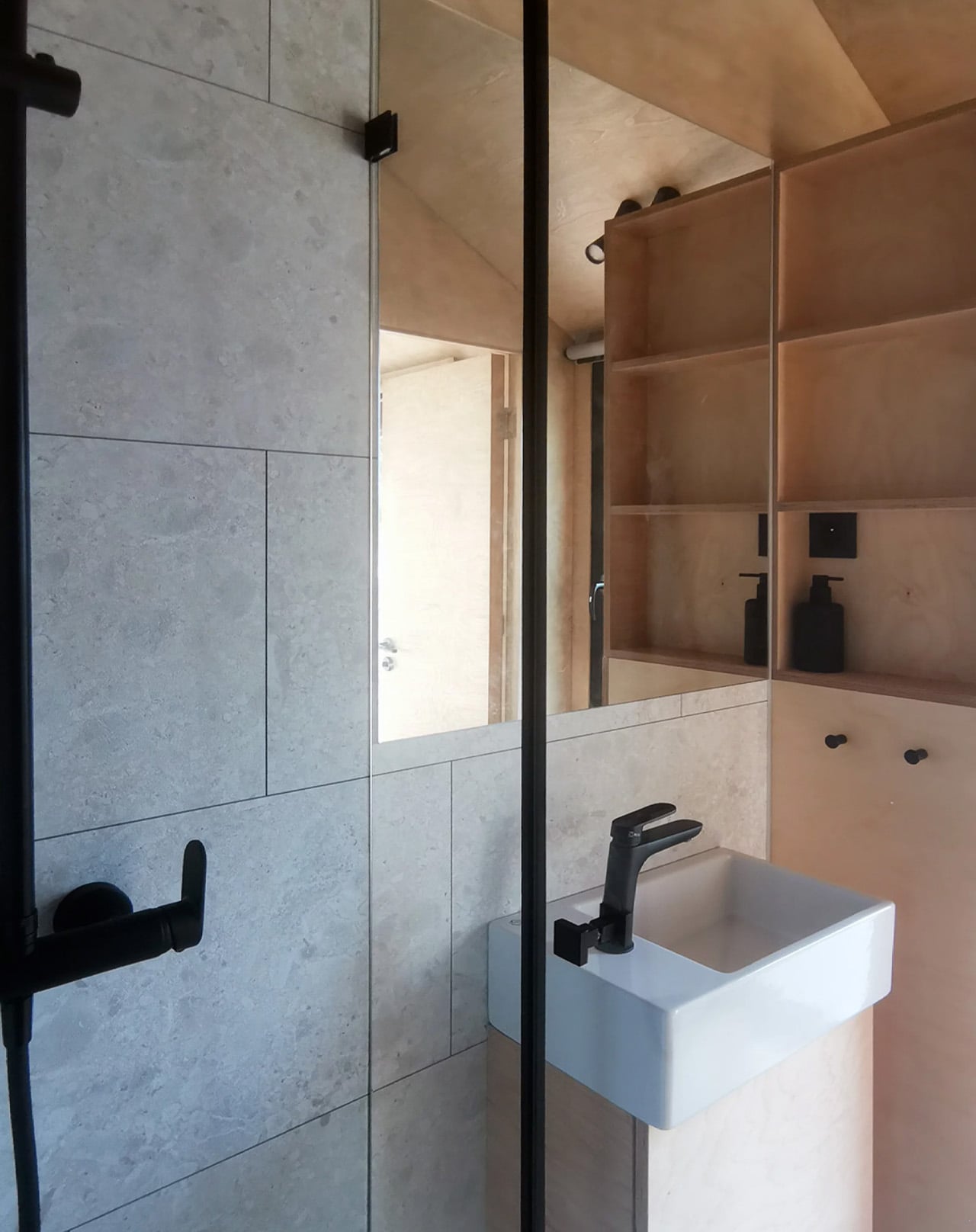
Step inside, and the birch plywood interior wraps the space in warmth. One of Koleliba’s defining signatures is designing furniture as a seamless continuation of the interior itself, so the Shoji never feels like a box stuffed with objects. A U-shaped couch converts into a queen-size bed. There’s a dedicated home office desk, essential kitchen appliances, a washing machine, and a roomy shower, all packed into a footprint that defies logic. Electric floor heating and solid winter insulation mean the home is genuinely livable year-round, not just a warm-weather escape.
A full-length black floating shelf runs the length of one wall, the kind of detail that could easily overwhelm a small space but instead anchors it, giving the interior a gallery-like calm. Everything here feels deliberate, placed without excess. The Shoji’s owner, Jonathan Guennoc, put it best: “Our SHOJI home is the most spacious not spacious space.” That contradiction is exactly the point. Koleliba didn’t design a house with things left out. They designed a home where nothing is missing.
The Shoji has since inspired a follow-up, the Shoji 2, building on the original with improved features and a lighter design. But the original remains a benchmark, proof that at 130 square feet, the right design doesn’t ask you to compromise. It asks you to reconsider what you actually need.