ChatGPT for Work introduces advanced capabilities designed to support marketing and productivity tasks with greater efficiency. Grace Leung highlights features like the Skills System, which enables users to build reusable workflows for tasks such as generating consistent weekly marketing reports. This approach not only reduces manual effort but also ensures accuracy in recurring processes, making […]
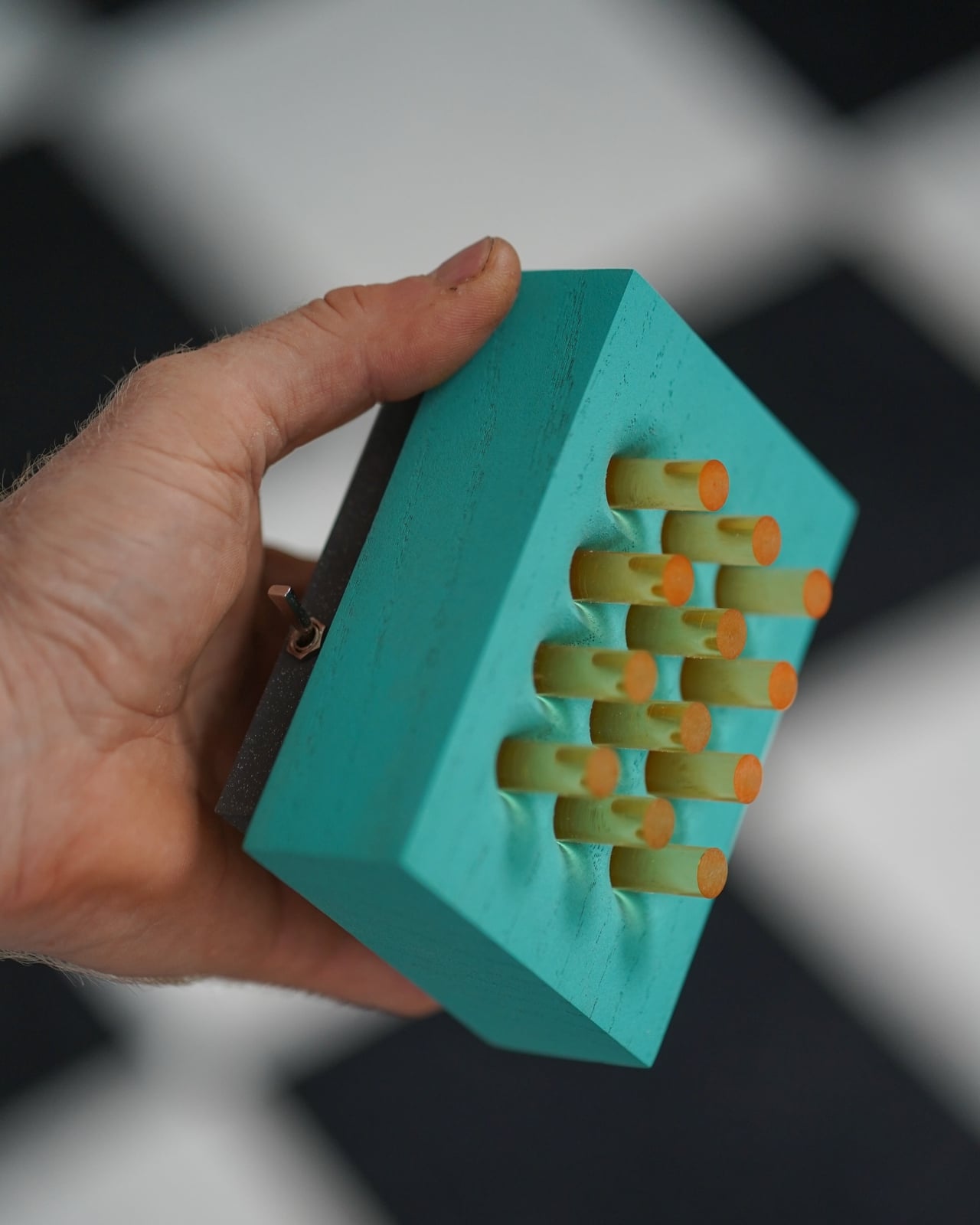
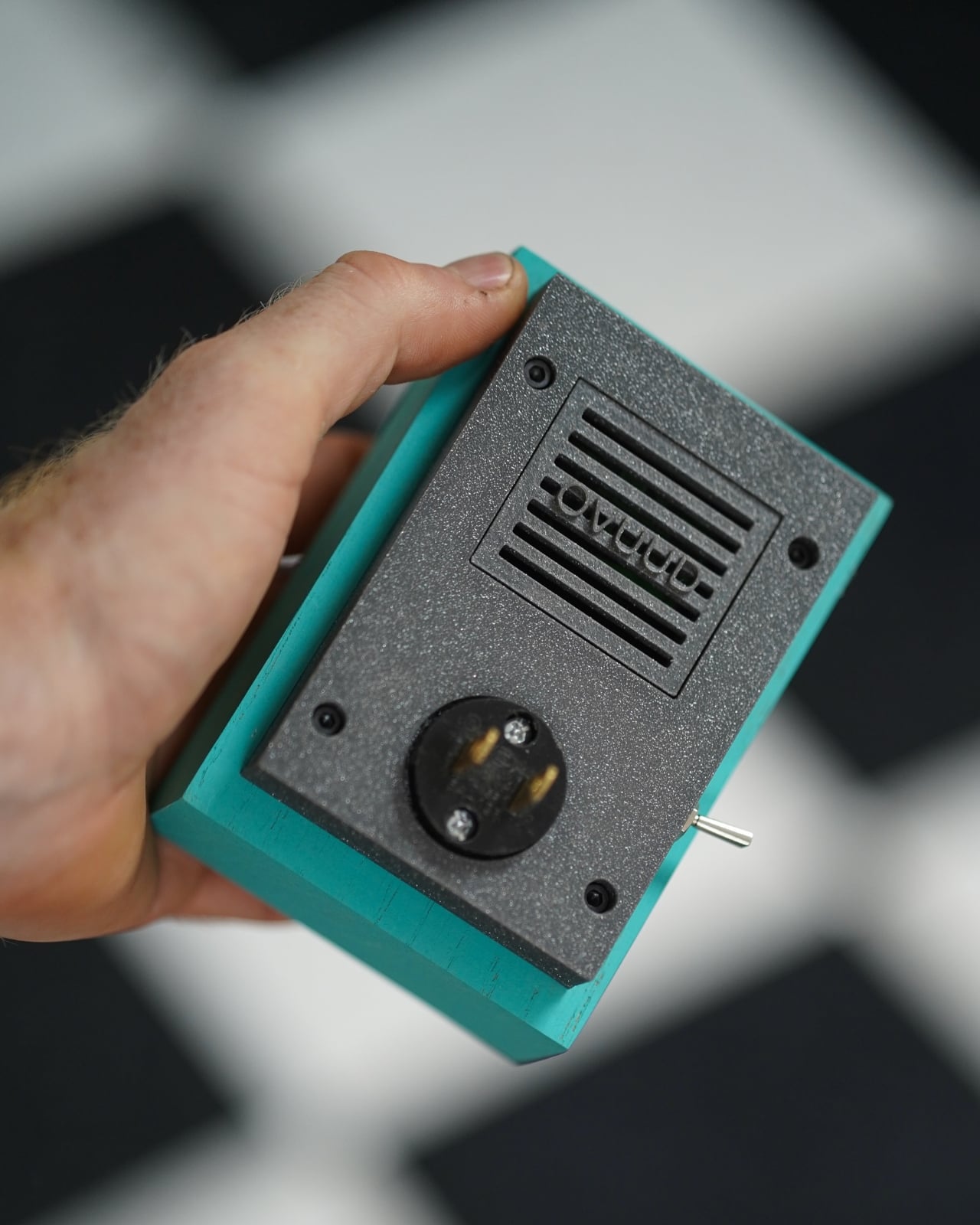
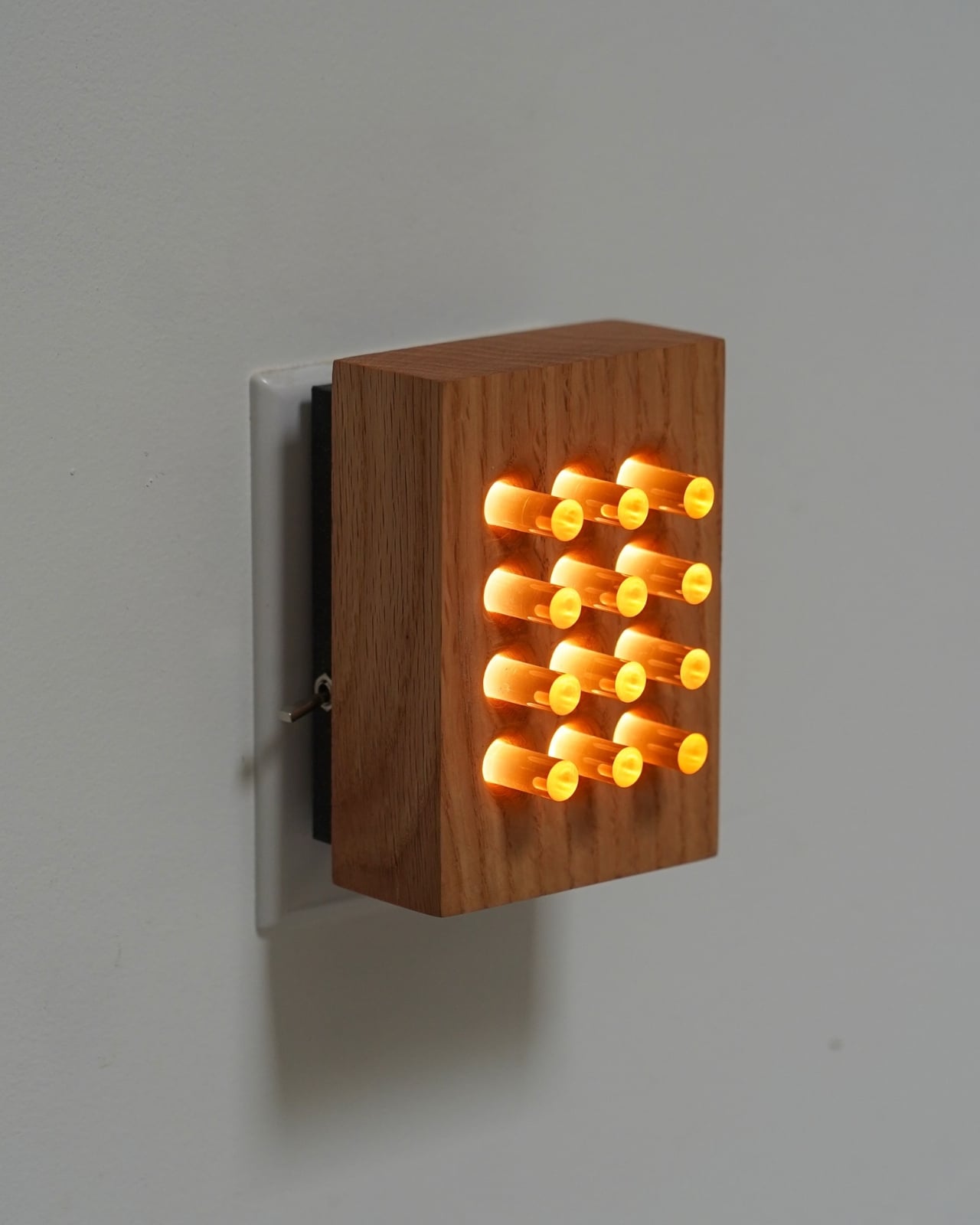
Most nightlights are afterthoughts. A dim plug-in tucked behind a dresser, maybe something shaped like a mushroom from a big-box store. They exist to serve a single function: keep you from stubbing your toe at 2 a.m. Nobody really talks about them. Nobody really considers them. That changed for me when I came across Benjamin Gillespie’s latest from his Philadelphia-based studio, Ovuud, and suddenly I found myself genuinely excited about a nightlight.
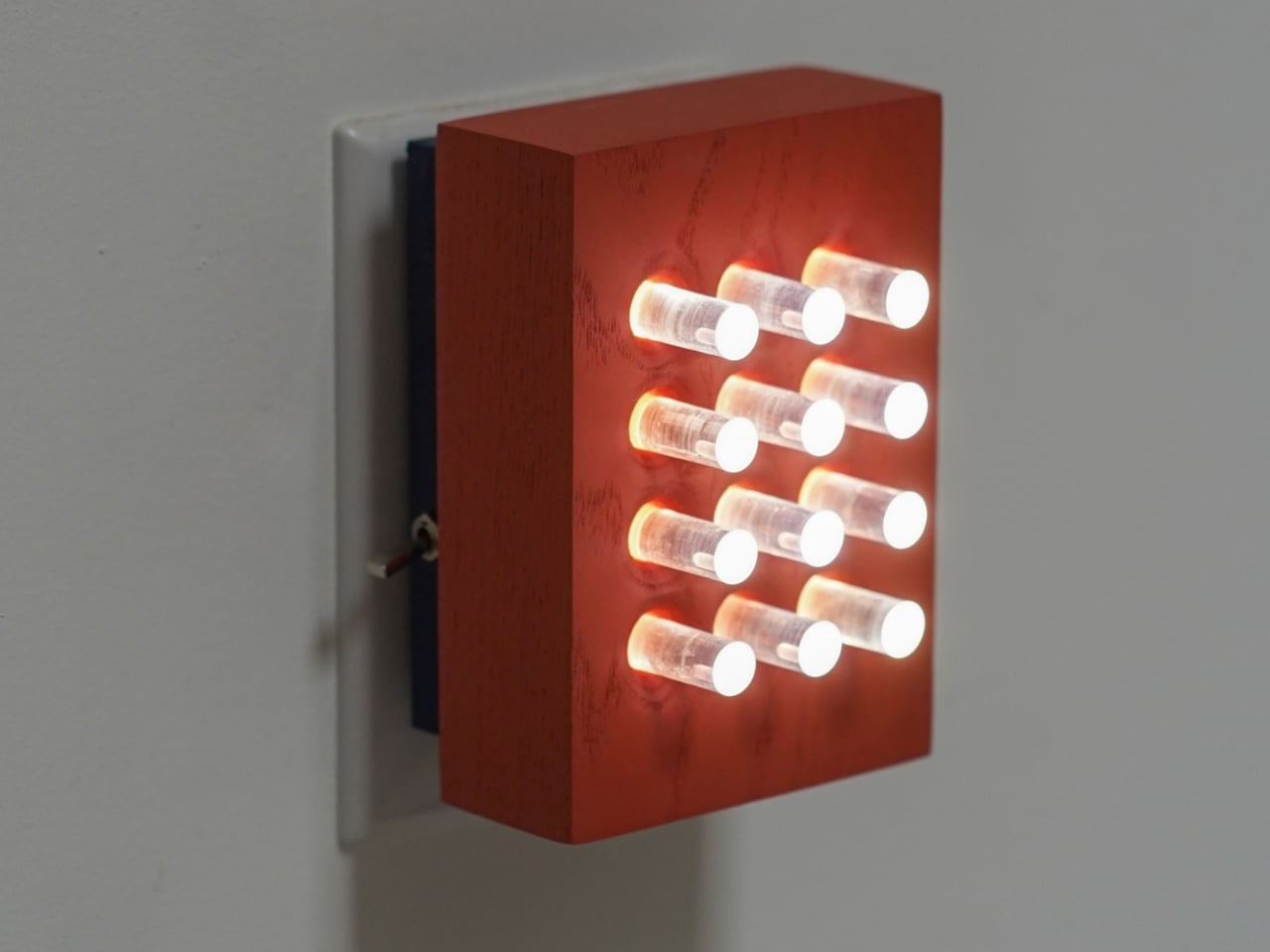
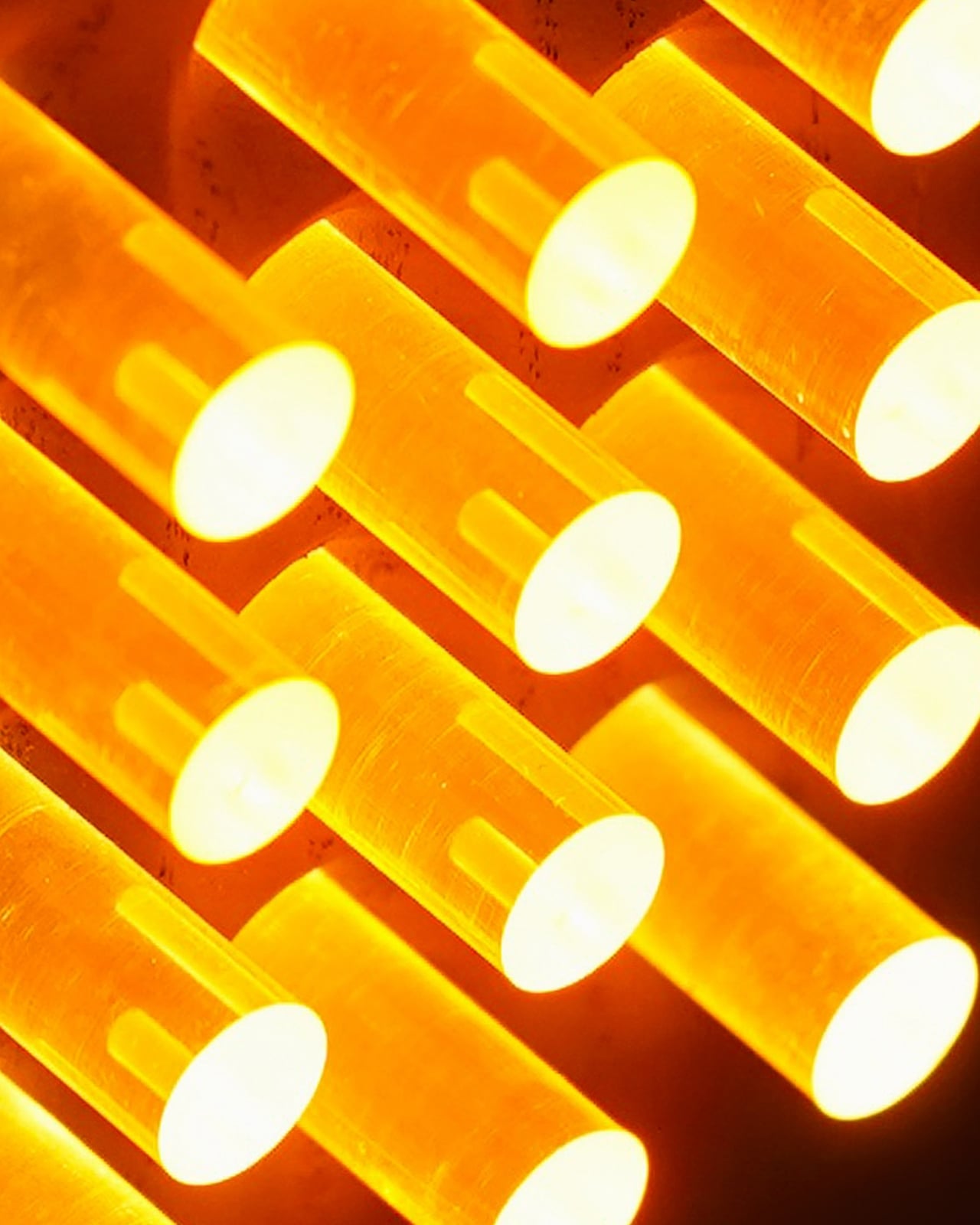
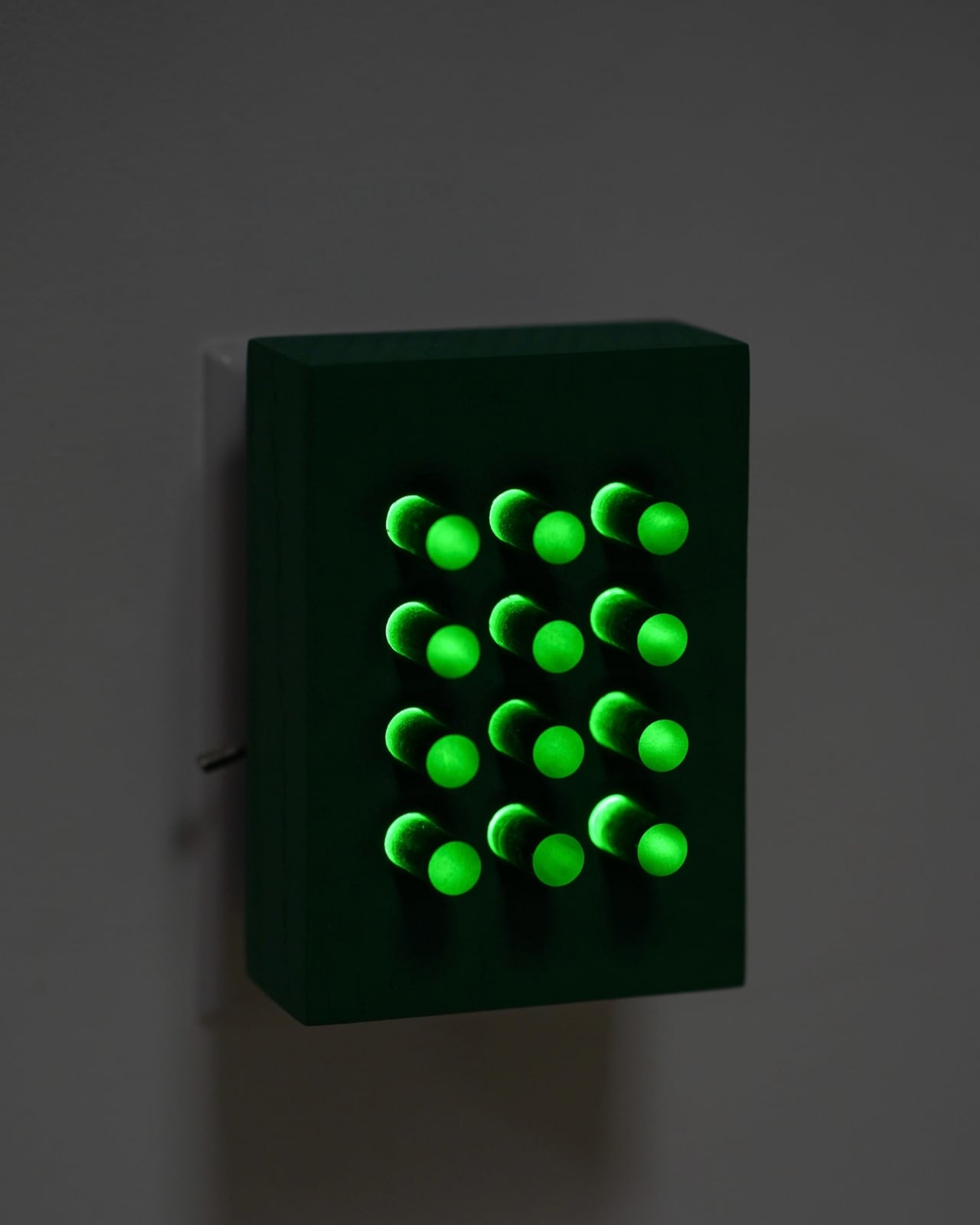
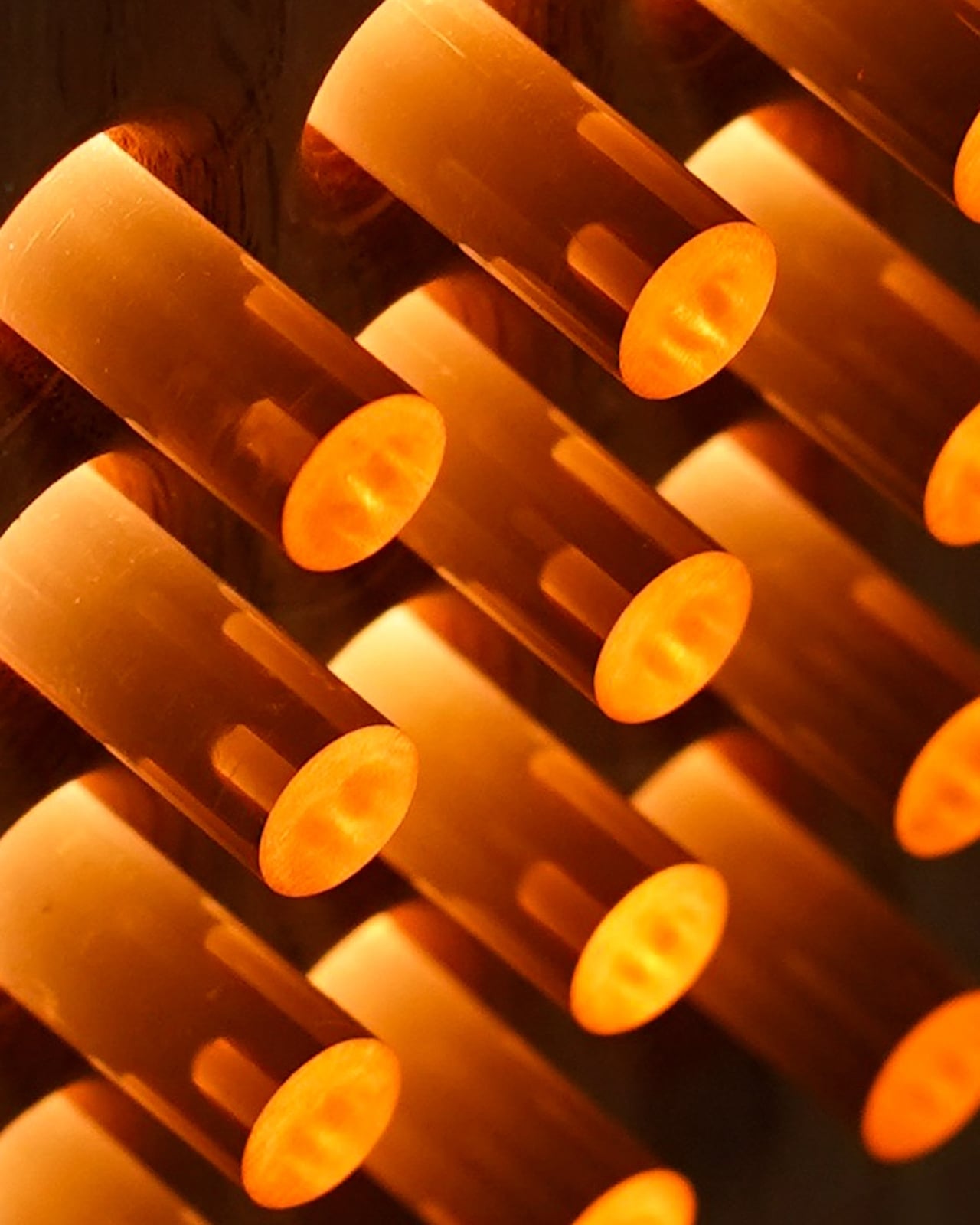
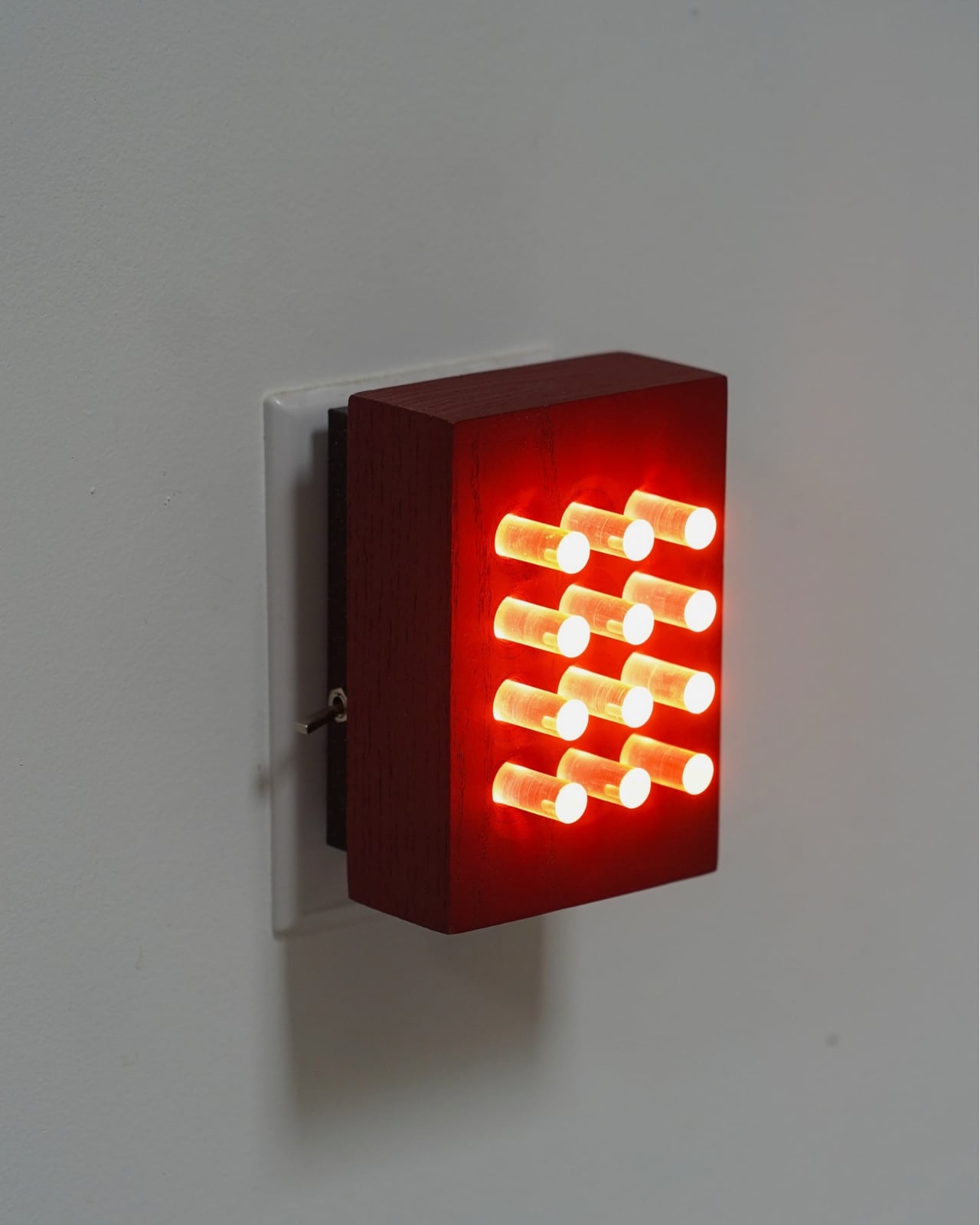
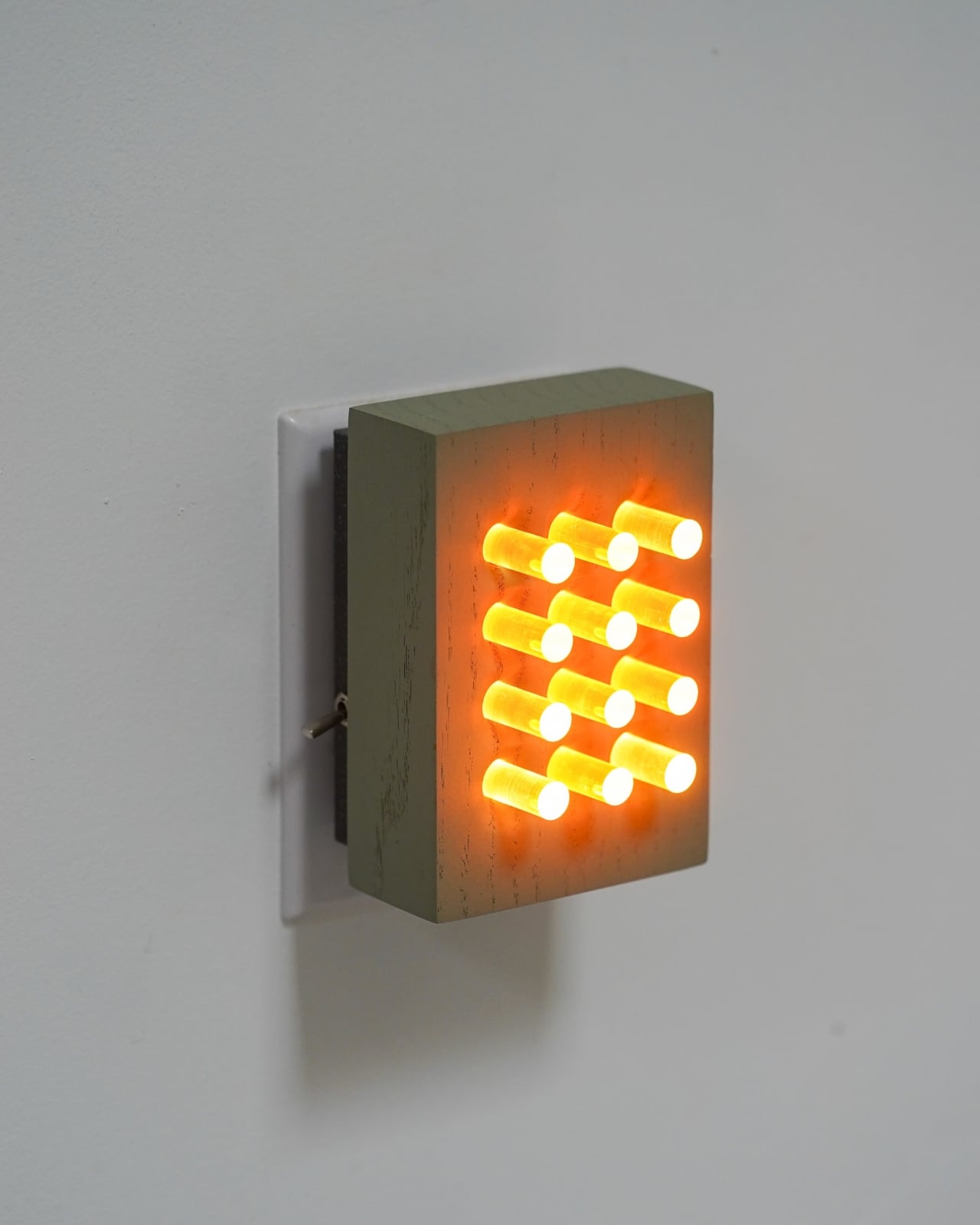
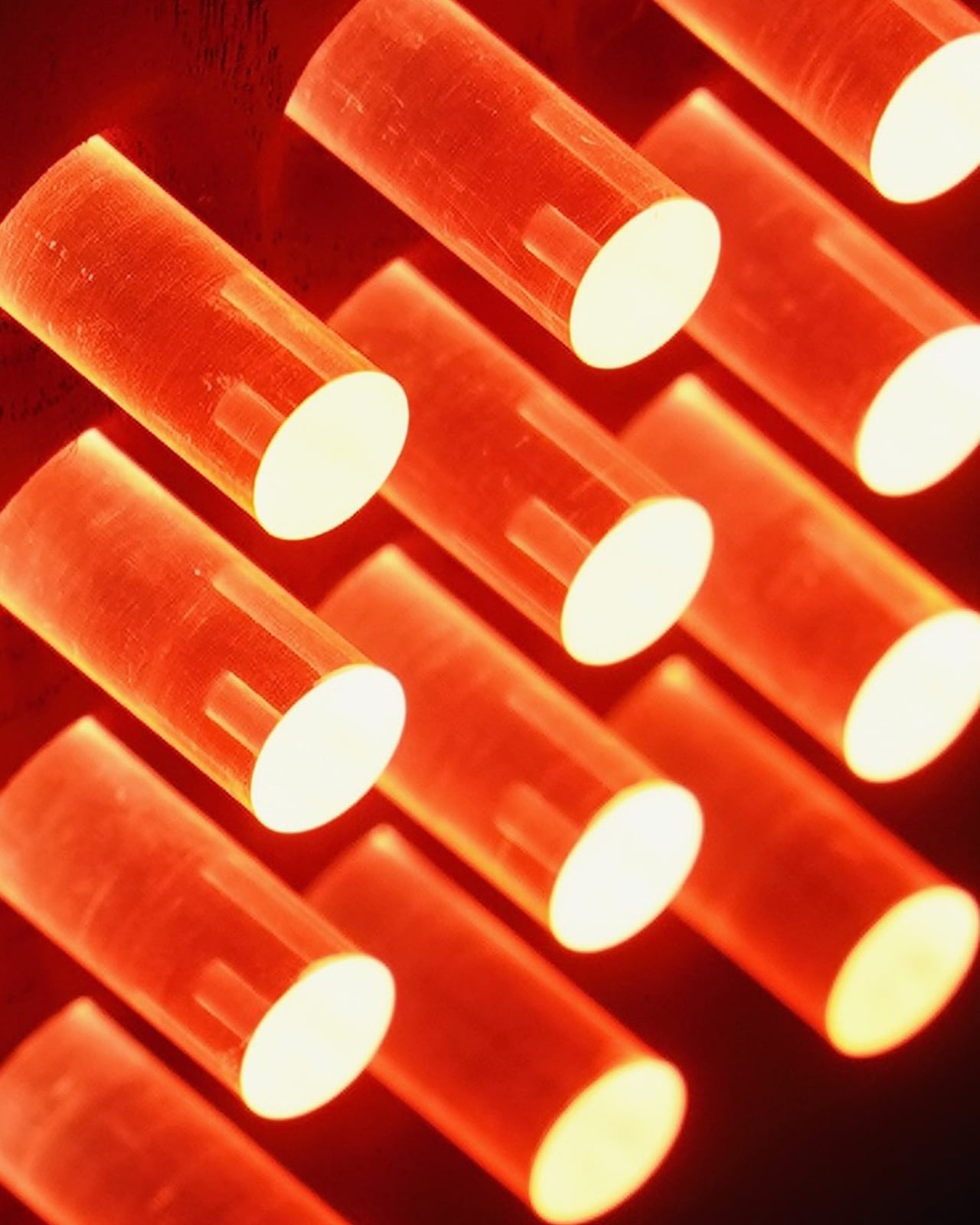
The piece is called Reactor, and it’s now available in a color series that’s worth paying attention to. Gillespie, who runs Ovuud as a one-man operation out of Philadelphia, designs and builds every piece by hand using locally sourced wood. His background is an unusual combination of engineering, woodworking, and a deep architectural sensibility, and you can feel all three of those things at once when you look at his work. The LED is hidden, the wood glows, and everything feels considered without feeling precious.
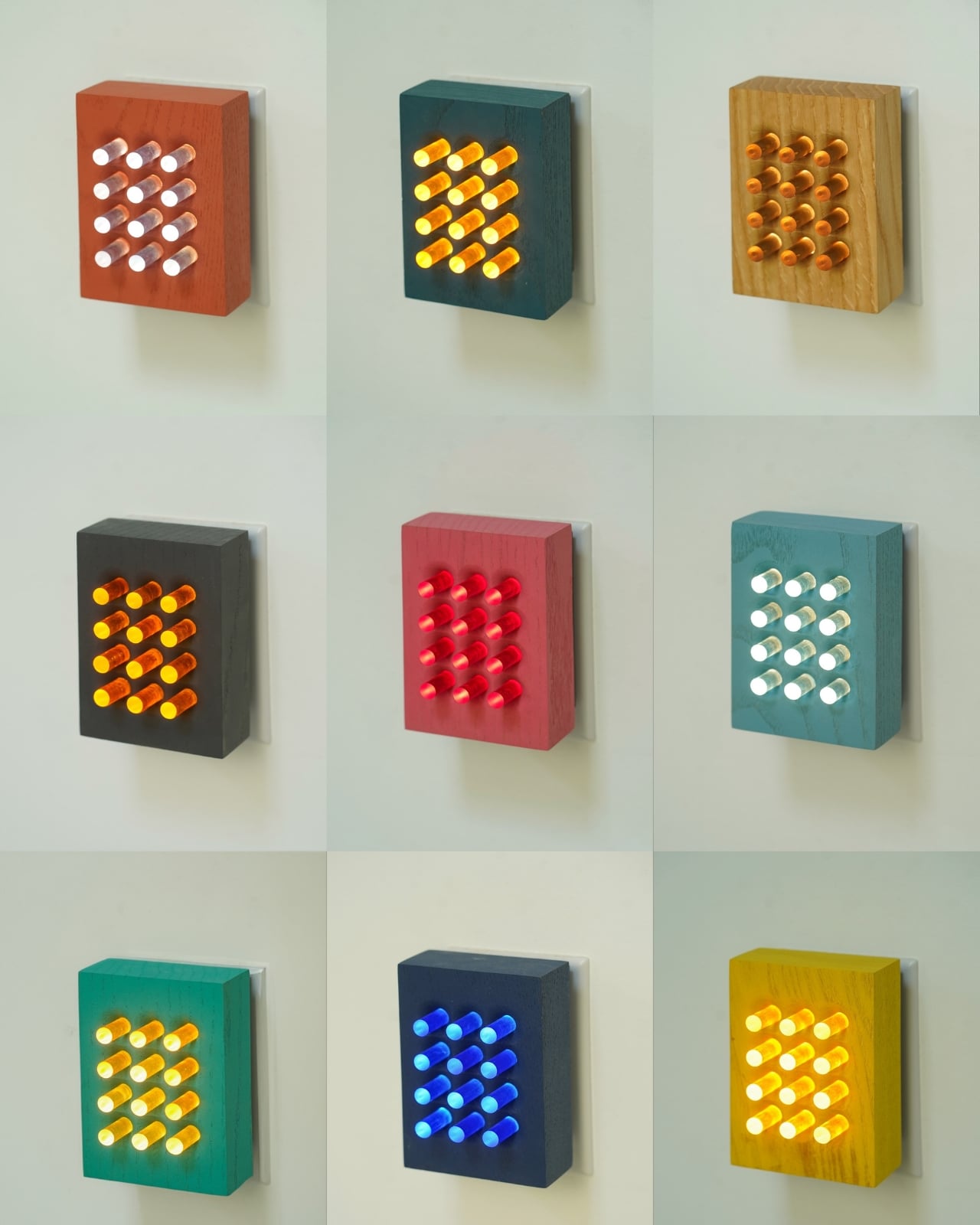
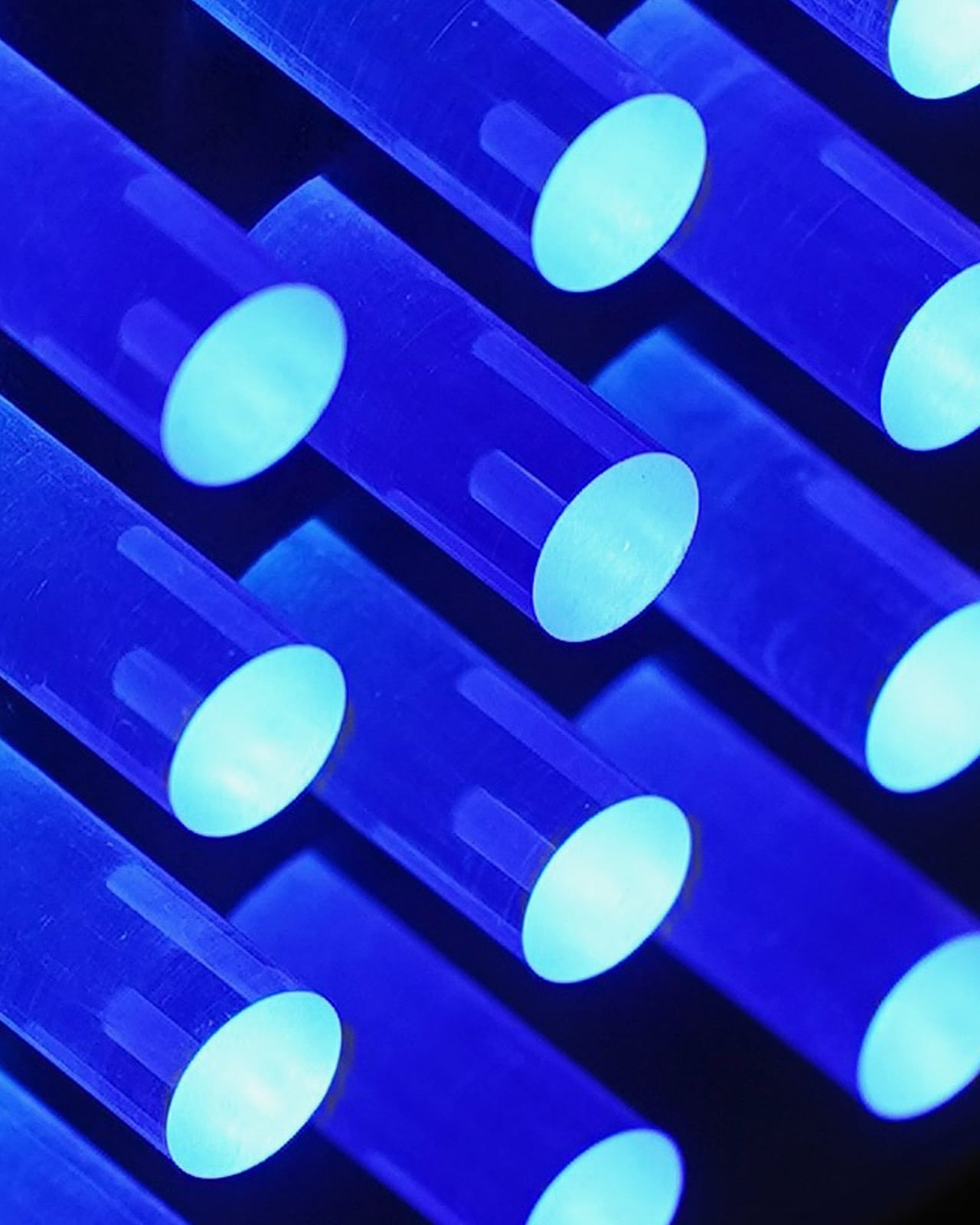
What the Reactor does differently is how it handles the relationship between function and mood. It pairs a warm white task light with a mood light, and the two can be independently controlled depending on what you need at any given moment. The color series expands on this by offering different colored light options, each creating a distinct atmosphere from the same compact wooden form. A pink glow reads like warmth. A deeper red reads like atmosphere. The shift from one to the other is not dramatic in the way smart bulb color changes tend to be. It’s quieter than that, and more intentional.
I keep thinking about the name. Reactor. It’s not passive. A nightlight is usually passive by definition. It just sits there. But a reactor implies a response, a relationship between the object and whoever is using it. Gillespie even described the pink version as “a hug in the dark,” which is such a specific and unexpectedly tender way to talk about a light source. That sensibility carries through the design. These are not decorative pieces pretending to be functional. They’re functional pieces that happen to be beautiful.
Ovuud has been building a quiet reputation in design circles for a while now. Featured in Dwell Magazine’s 2022 list of rising international designers, Gillespie’s work has always been about finding that balance between material limits, desired function, and aesthetic harmony. The Reactor color series feels like that philosophy at its most distilled. The form is small enough to sit on a nightstand without demanding attention during the day. At night, it changes the temperature of the entire room without you having to do anything complicated.
The wood-and-plexiglass combination Gillespie uses throughout his work is particularly effective here. The wood grounds it, gives it warmth and texture and the kind of object permanence that makes you want to keep a thing rather than replace it. The plexi diffuses the light in a way that feels organic, not clinical. Together, they make something that feels genuinely handmade without looking rustic or unfinished. That’s harder to achieve than it sounds.
A design object like the Reactor matters because it doesn’t ask you to choose between living well and buying well. A lot of design right now sits in one of two camps: either it’s priced and positioned for collectors, beautiful but untouchable, or it’s mass-produced and optimized for a market that doesn’t particularly care about craft. Gillespie exists somewhere outside both of those camps, making things by hand in his studio that are accessible enough to actually use and thoughtful enough to actually keep.
The Reactor color series is the kind of thing you discover on Instagram and then find yourself thinking about for days. Not because it’s flashy or trend-driven or algorithmically designed to stop your scroll, but because it’s quietly doing something right. It’s a nightlight. It lights up your night. And somehow, against all odds, it makes that feel like enough.
Architecture has always had to reckon with the sun. Buildings are oriented, shaded, and glazed in response to it, and solar panels are bolted onto them afterward. In most cases, the sun’s behavior is accommodated rather than consulted. The resulting forms come from a designer’s intentions and a structural engineer’s calculations, with sunlight as something to manage rather than the thing that generates the shape itself.
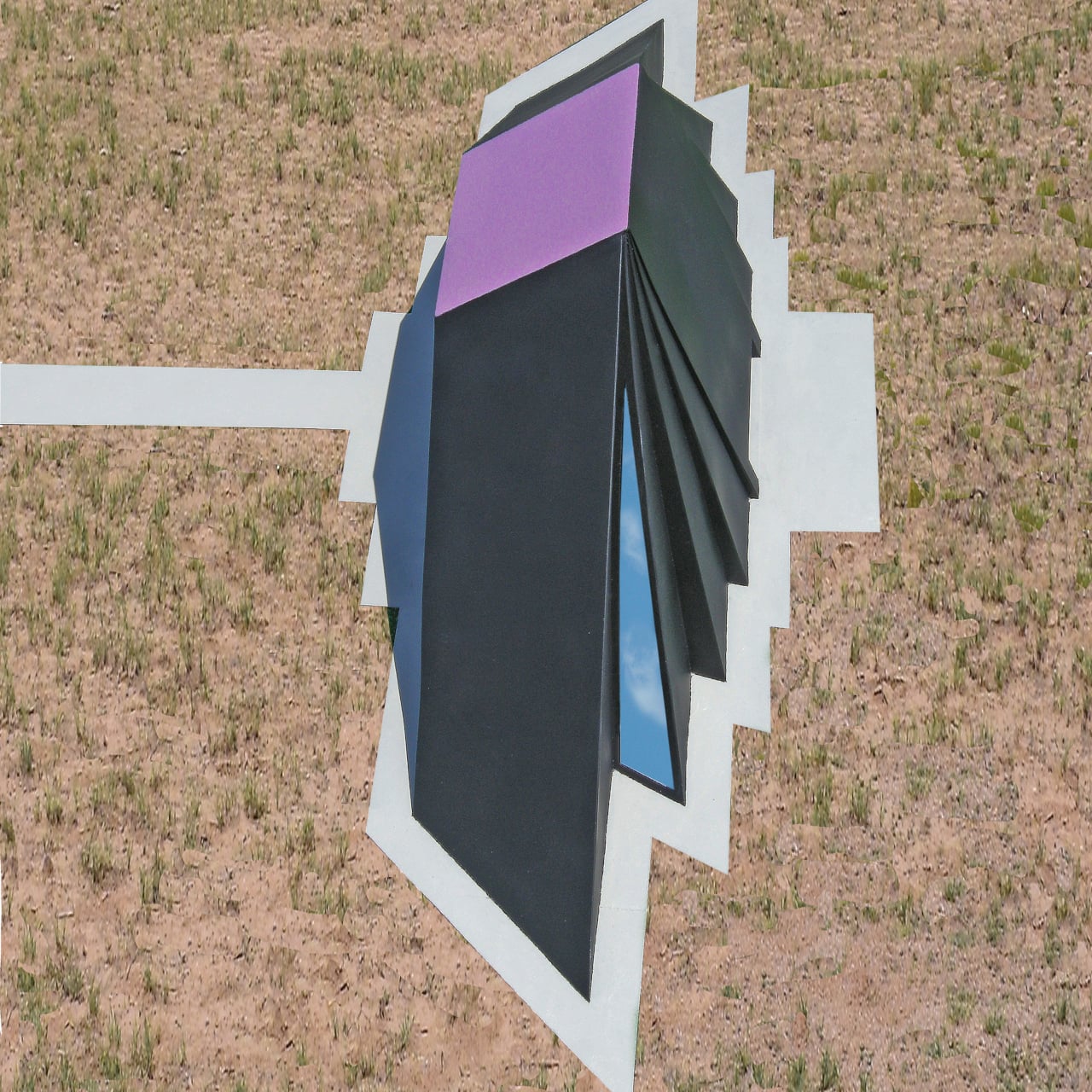
The Sun Shadow Pavilion starts from a different premise. Before any walls were drawn or a floor plan drafted, a scale model of a large square array of photovoltaic solar panels was placed above a flat white surface facing south. The sun then did the rest. The shadows it cast on that surface, traced every hour for eight hours as it crossed the sky, became the raw material for the entire structure.
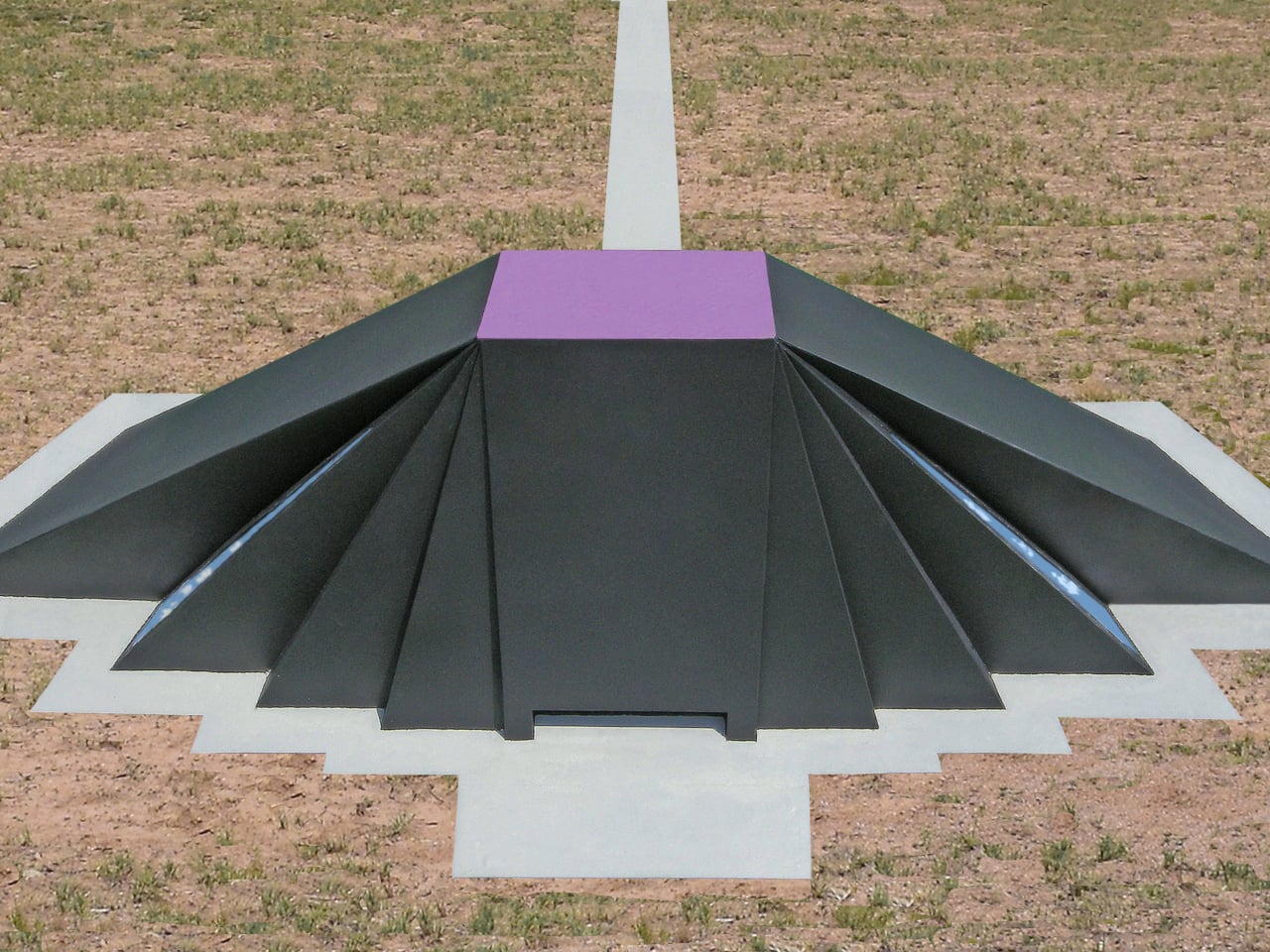
Eight shadow outlines, each representing a different hour of the day, were converted into three-dimensional forms. Solid planes were inserted from the edges of each shadow up to the edges of the solar panels above, creating a set of inclined surfaces that defined the interior volume. That enclosed space, shaped by accumulated light and time rather than a stylist’s instinct, became the pavilion.
The design is also inherently site-specific and date-specific. If built, the shadows used to generate its form would be traced on the actual opening day, at the exact build location. A pavilion in the American Southwest, traced on a different opening date, would look different from one in northern Europe, or from the same structure inaugurated a decade earlier or later. Each built version would be unrepeatable.
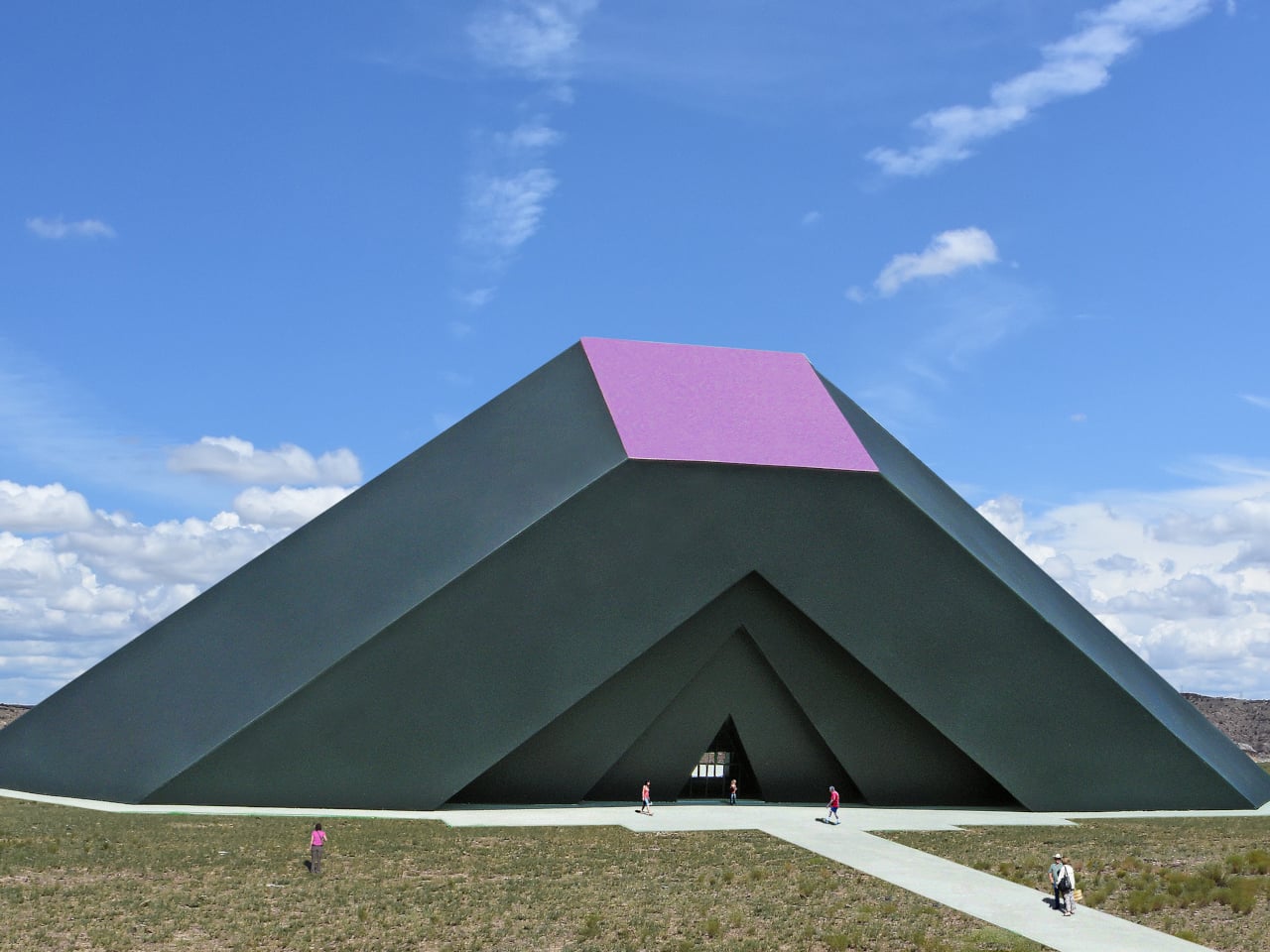
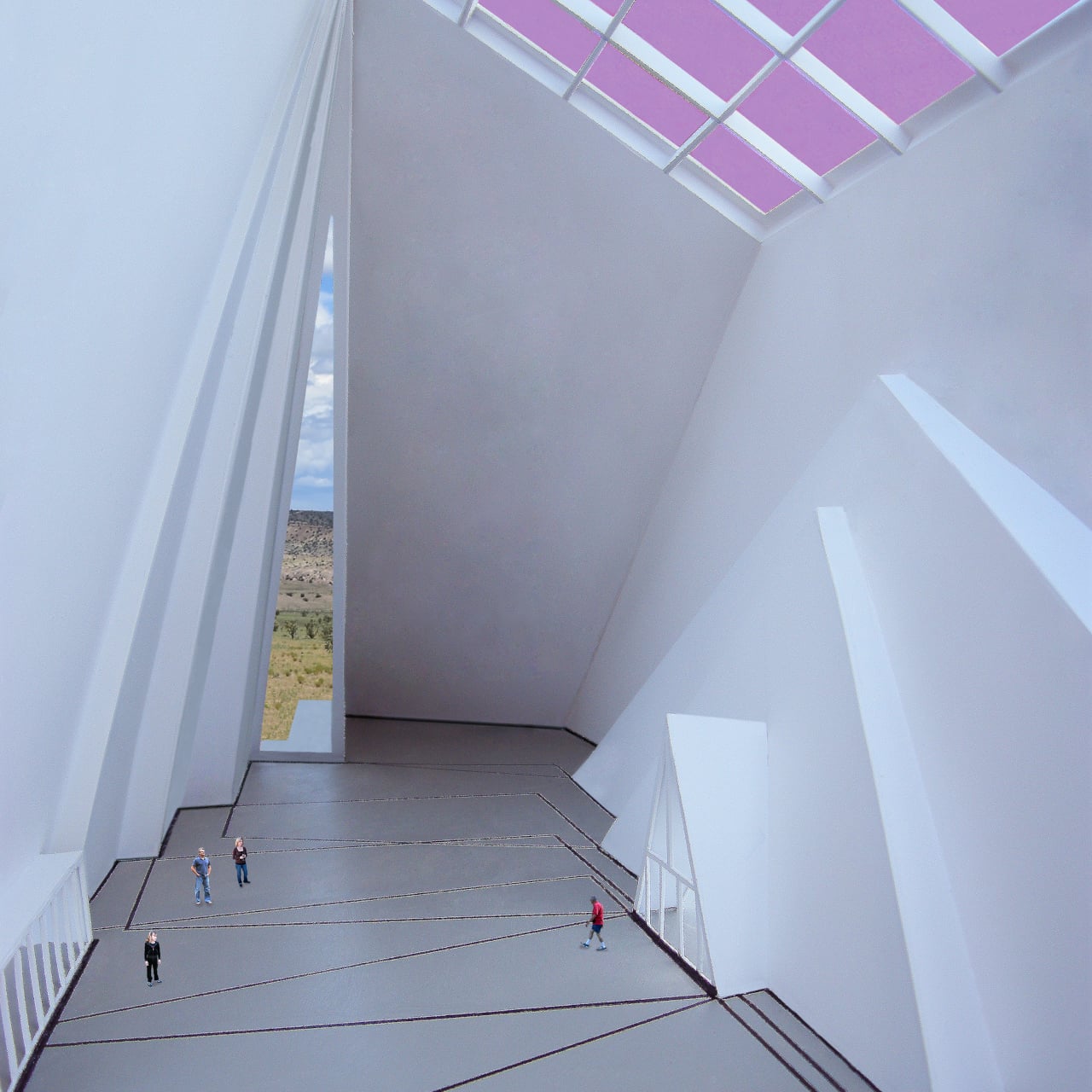
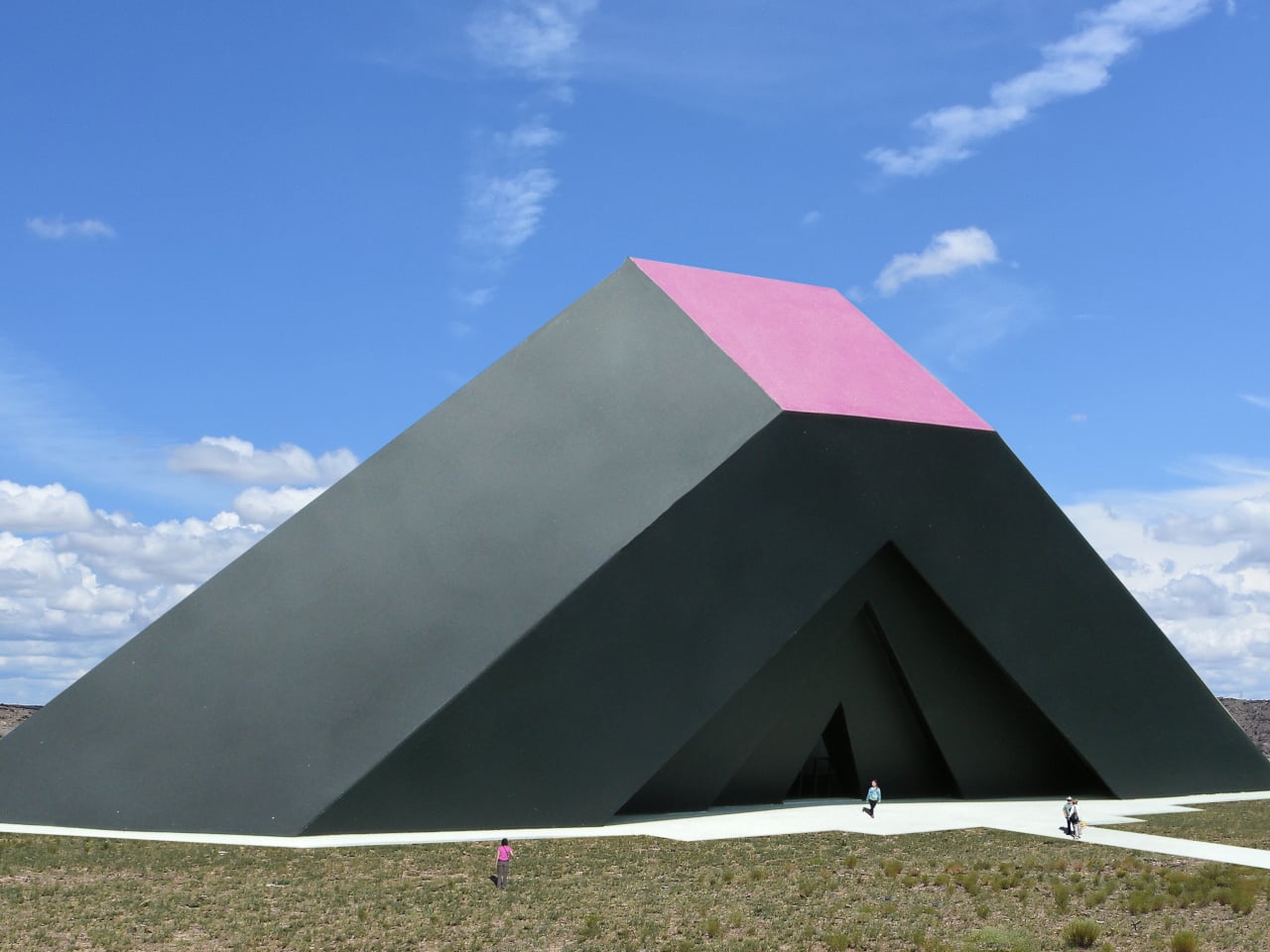
The exterior form that results from this particular study is dramatic and unmistakably asymmetric, a cluster of dark, angled, sloping planes radiating outward from the flat solar array at the top. The interior is a complete reversal. The translucent solar cells that generate all of the pavilion’s power also filter light through the roof, keeping the space naturally bright during the public hours the shadow tracings were drawn to represent.
Walking through, the floor carries painted outlines of all eight shadow positions, so the exact geometry that produced the walls above can be read directly underfoot. The building’s origin story isn’t hidden in a design brief or a notebook; it’s painted on the ground you’re standing on. The structure explains itself to anyone willing to look down as well as up.
Beyond the solar panels, the structure handles its own climate without mechanical systems. The dark outer surface absorbs heat, and a double-skin wall construction moves warm or cool air into and away from the interior as needed. Rainwater collected from the exterior surfaces feeds underground storage tanks for use on-site. The pavilion’s stated purpose, to display advances in alternative energy technology, is also its operating model.
There’s an honesty to the whole approach that’s relatively rare in landmark building design. Most structures acquire their form through aesthetic decisions, historical references, or personal sensibility. This one derived its shape from a physical process that would have happened regardless of any design intention. The sun was going to cast those shadows anyway. The design simply had the sense to use them.
ChatGPT 5.6 Sol has entered the AI field as a competitor to established models like Fable 5, emphasizing cost efficiency and performance. Prompt Engineering highlights its ability to optimize token utilization, which reduces operational costs while maintaining fast processing speeds. This makes it an attractive option for businesses and developers handling complex tasks. At the […]
The release of iOS 27 introduces a range of new features and performance upgrades, making it a significant update for Apple users. Whether you’re currently using iOS 26, an earlier version of the iOS 27 beta, or the latest developer beta, transitioning to the iOS 27 public beta requires a clear understanding of the process. […]
Apple’s iOS 27 Beta 3 introduces a range of updates designed to improve usability, performance, and functionality. With features like faster search indexing, refined animations, enhanced Siri integration, and improved AirPods controls, this beta version focuses on delivering a more seamless and responsive user experience. Below, we explore the most notable updates and their practical […]
After roughly 14 years at Samsung and then more than 20 years engineering Bluetooth audio, much of it developing products for and alongside Samsung’s ecosystem, Juwon Heo began asking a new kind of question. He had dedicated his career to making earphones sound clearer and connect more reliably. He helped perfect the technology that allows people to fill their world with music and podcasts. He then wondered if that same small device could do something more, something to help people quiet their inner world, too.
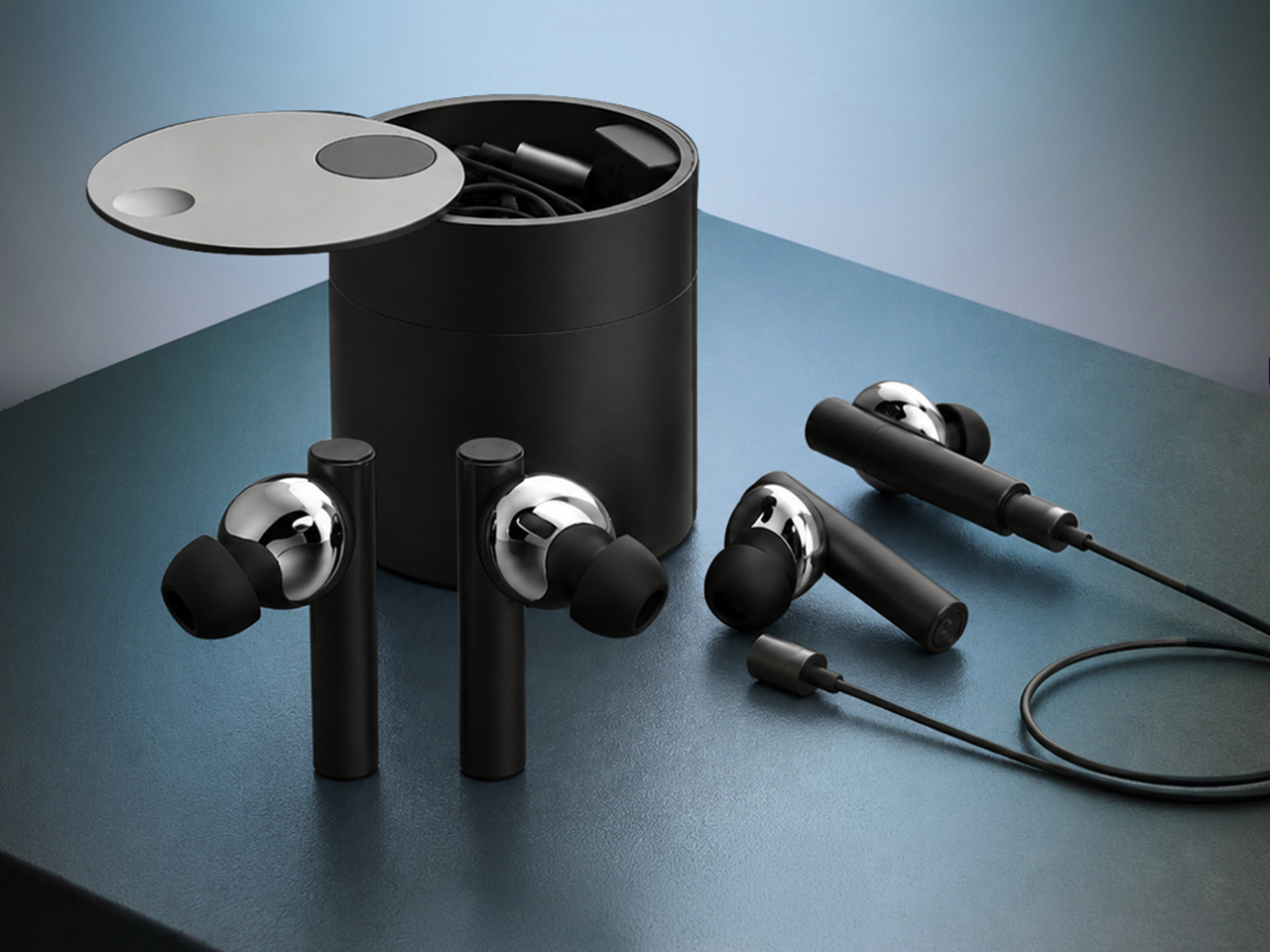
The result of that inquiry is the HealingFit TWS, a product that reflects its creator’s deep background in audio hardware. Heo’s company, MobiFren, developed a unique system in which premium true wireless earbuds transform, through a single magnetic link-cable connection, into a wellness device for better sleep, stress relief, and improved focus and memory, whenever the user needs it. It represents a seasoned engineer’s attempt to evolve the earbud’s purpose, from a simple listening tool into a versatile daily companion.
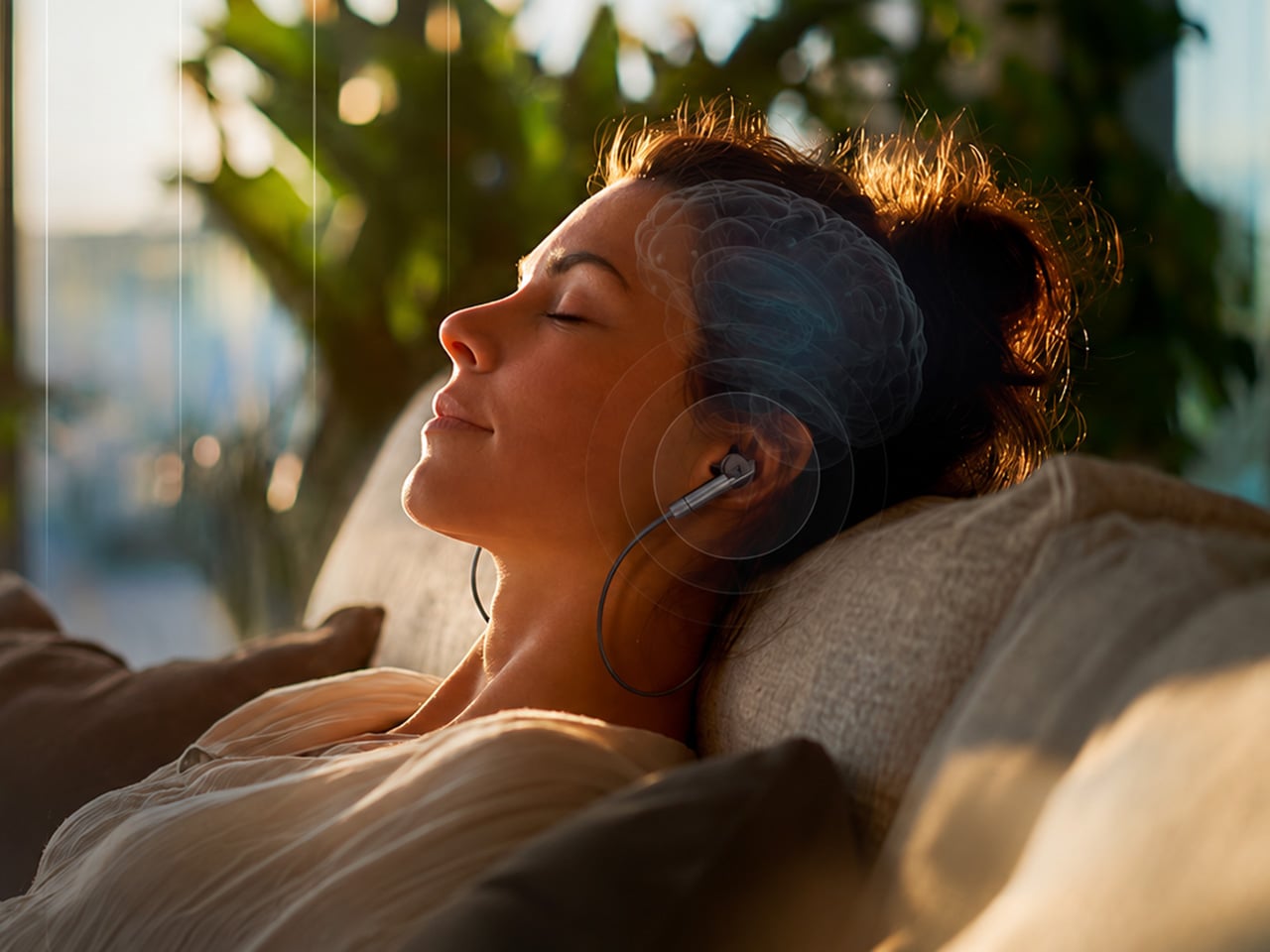
The core innovation lies in the product’s dual-mode architecture. HealingFit TWS operates as fully independent wireless earbuds most of the time, handling calls, music streaming, and podcast listening without any cable or physical link. The moment a user wants to engage the wellness features, they snap on the Magnetic TES Link, a slender cable that magnetically attaches to both earbuds. During a session, it provides the pathway for the TES microcurrent signal between the two earbuds. If you detach the cable or remove the earbuds from your ears, the microcurrent is immediately cut off, just like turning off a light switch. This connection enables bilateral TES (Transcranial Electrical Stimulation) microcurrent delivery paired with binaural soundscapes. The design allows the product to preserve the freedom of true wireless audio while activating a wellness mode only when deliberately chosen. The architecture has received a U.S. patent application allowance and is proceeding to registration, signaling that the concept offers technical novelty beyond typical wellness add-ons.
Personal audio has followed a clear trajectory over the past two decades. Wired earphones removed the need for bulky speakers but kept listeners tethered to their devices. The first wireless models cut the cord, but still linked the two earbuds together with a neck cable. True wireless earbuds eliminated that last physical connection, turning a pair of earphones into two independent modules that communicate through Bluetooth alone. Each leap reduced constraints and simplified the user experience. Heo views HealingFit TWS as the next logical step in that evolution, a category he refers to as TES wellness earbuds. The product builds on the independence of TWS but reintroduces connectivity selectively, for a functional purpose rather than a technical limitation.
MobiFren began in 2002 as a contract-development business working on feature phones for Samsung Electronics. Around 2005, while continuing that Samsung feature-phone development work, the company moved into Bluetooth audio development in parallel. By 2006, it brought its first Bluetooth earphones to market. That two-decade stretch gave Heo and his team fluency in hardware miniaturization, acoustic tuning, and wireless protocol integration. HealingFit TWS draws on that accumulated expertise, especially in balancing audio fidelity with the demands of compact electronics.
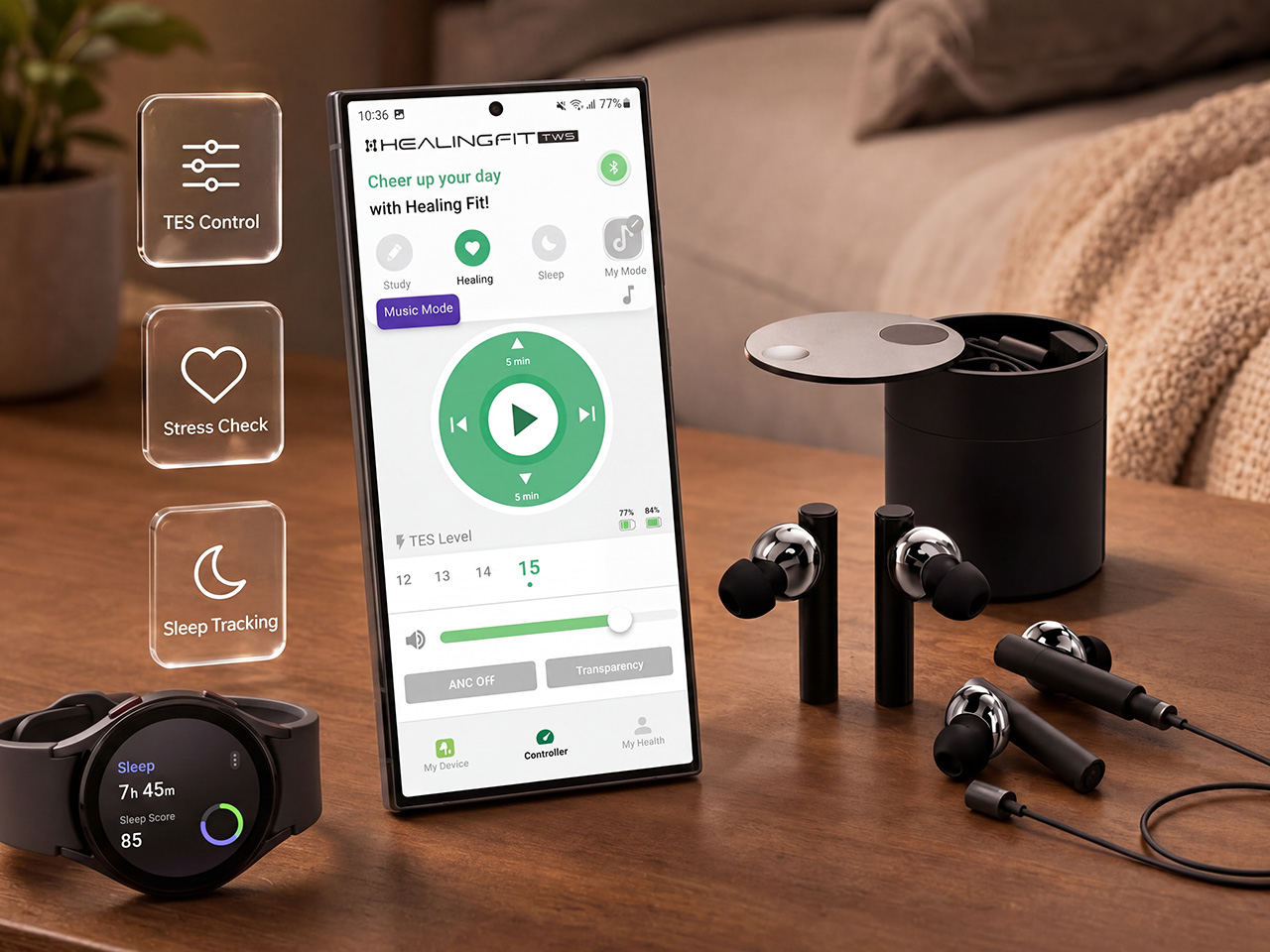
The earbuds use the MobiFren Sound Tuning System (MSTS), a proprietary approach to acoustic profiling. Everyone hears differently, so the My HealingFit app provides five fully tuned MSTS sound modes, like five great earphones in one pair. MobiFren Mode delivers clean, natural, and balanced sound. BassBoost Mode offers richer low-end energy. Enhance Mode adds clarity for vocals, podcasts, and acoustic detail. Tender Mode provides soft, gentle sound for calm listening. Space Mode creates a wider, more immersive soundstage. Rather than forcing one fixed sound on everyone, Heo built the equivalent of five separate high-end, high-fidelity earphones into a single device, so each listener can choose the one that matches their taste. At CES 2015, in a blind listening comparison against Westone’s W60, more than 92% of listeners preferred MobiFren’s tuning. Sound tuning is the founder’s life’s work, and this audio foundation is what the entire product is built on.
The physical design is built around everyday portability and comfort. The earbuds feature an anodized aluminum body with an in-ear fit, a form factor intended to remain stable during commutes, calls, and general daily wear. The charging case uses a cylindrical design with a magnetic docking mechanism, sized to fit comfortably in a pocket or bag. The TES Link cable stores inside the case alongside the earbuds, avoiding the need for separate accessories or additional carrying solutions. The entire system is engineered to minimize friction in both modes, whether the user is moving through the day untethered or settling in for a focused wellness session at night.
HealingFit TWS recently passed another technical milestone. The device has received FCC certification, a regulatory requirement that confirms compliance with electromagnetic interference and radio frequency standards in the United States. This approval follows the U.S. patent application allowance and a CES 2026 Innovation Awards Honoree designation in the Headphones & Personal Audio category. These markers suggest that the product has moved well beyond concept-stage validation and into formal manufacturing readiness. For a crowdfunding campaign, these certifications provide a measure of reassurance that the hardware is real, tested, and legally cleared for production distribution.
The wellness component of the system centers on user control and choice. The app, My HealingFit, offers three routine modes: Sleep, Healing, and Study. Each mode delivers a combination of gentle microcurrent and binaural audio designed to support a specific mental state. Users can adjust the TES intensity across 15 levels, tailoring the experience to their own comfort threshold. The device is designed as a wellness tool, explicitly disclaiming any medical diagnosis or treatment function. That distinction is important. It positions HealingFit TWS as a personal relaxation and focus aid, not a therapeutic device subject to medical regulatory oversight.
Heo’s question from the beginning was simple. Could earbuds designed for the noise and motion of the day also serve the stillness and quiet that follows? HealingFit TWS is his answer, a product that tries to bridge those two states without forcing the user to own two separate devices. Earbuds have already become an everyday essential of the smartphone era, worn for hours at a time by millions. What Heo proposes is that they are evolving from a device we listen with into a device we also heal with. Whether that vision takes hold will depend on how users experience the transition between modes, and whether the wellness routines prove meaningful enough to justify the added capability. For now, HealingFit TWS stands as a milestone in that shift, a thoughtful industrial design experiment from a team that understands audio hardware deeply and believes the next chapter of personal audio is about versatility across the full rhythm of modern life.







 , a slender cable that magnetically attaches to both earbuds. During a session, it provides the pathway for the TES microcurrent signal between the two earbuds. If you detach the cable or remove the earbuds from your ears, the microcurrent is immediately cut off, just like turning off a light switch. This connection enables bilateral TES (Transcranial Electrical Stimulation) microcurrent delivery paired with binaural soundscapes. The design allows the product to preserve the freedom of true wireless audio while activating a wellness mode only when deliberately chosen. The architecture has received a U.S. patent application allowance and is proceeding to registration, signaling that the concept offers technical novelty beyond typical wellness add-ons.