Why Microsoft is ditching a few of its 365 companion apps in 2026
These apps are being shut down after just 14 months.

The BMW i3 represents a pivotal moment for Munich, successfully transitioning its iconic 3 Series into the electric era. Built on the advanced “Neue Klasse” platform, this electric sports saloon seamlessly blends luxury, high-end performance, and disruptive technology. With a jaw-dropping WLTP-certified range of up to 566 miles, the i3 comfortably outpaces established competitors like […]
The post Did BMW Just Out-Tesla Tesla With the 566-Mile i3 Saloon? appeared first on Geeky Gadgets.


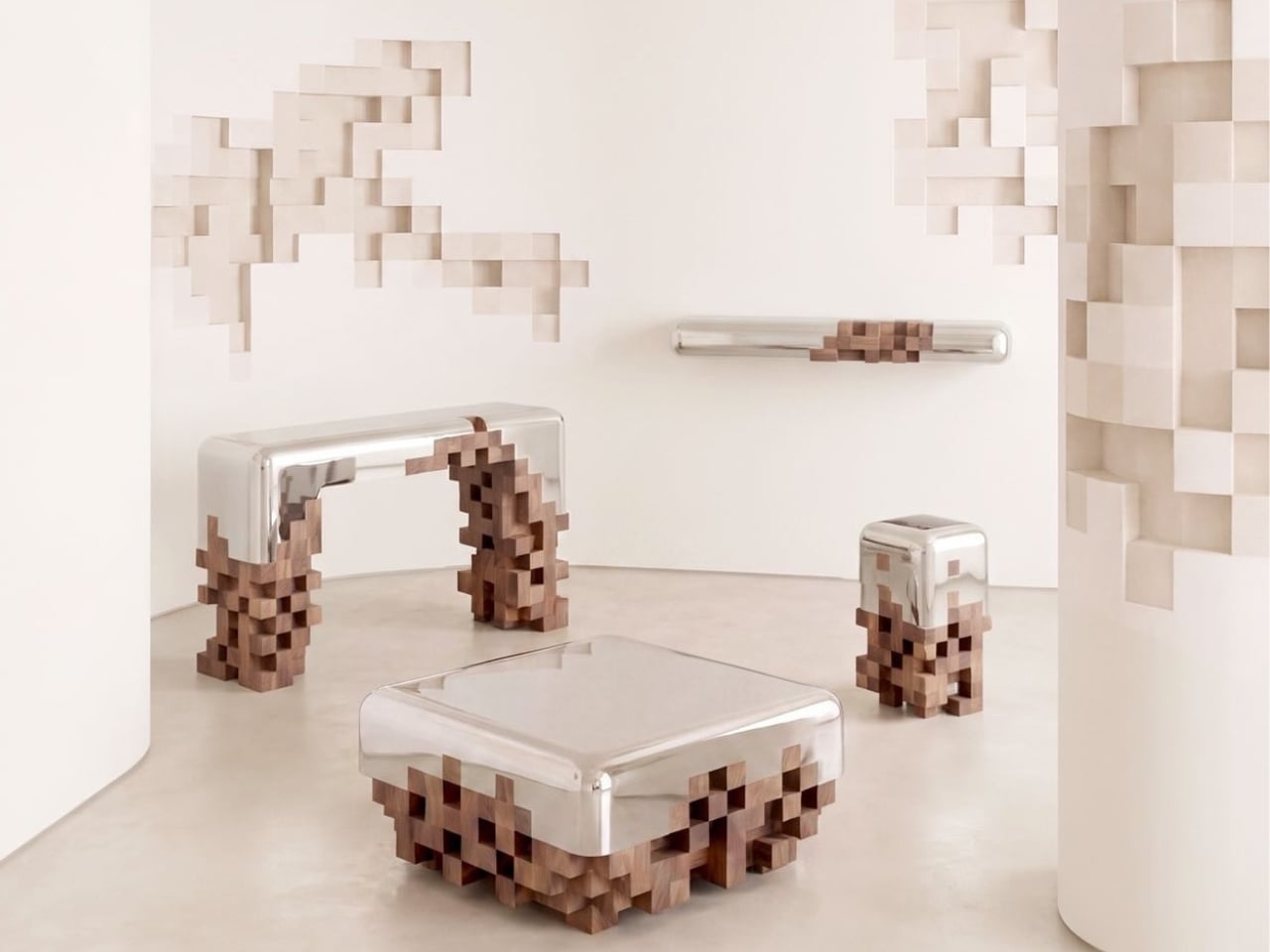
A wooden furniture base, a mechanical clock, and a camera can all look pixelated without working anything alike. These five designs explore that distinction through block-like geometry, moving panels, screen graphics, and deliberately low-resolution photographs.
Instead of hiding digital influences, designers are using different methods to transform pixel-inspired aesthetics into physical objects that celebrate nostalgia and innovation. As a result, Pixels have evolved into one of contemporary design’s most exciting creative trends.
Pixel-inspired design has moved beyond computer screens to become a tangible design language across furniture, lighting, home décor, and collectible objects. Designers are translating digital grids, square forms, and fragmented surfaces into physical creations that celebrate the visual identity of early computing while combining contemporary materials and craftsmanship.
As digital culture continues to shape everyday life, pixel-inspired forms offer a playful way to bring screen-based aesthetics into homes, workplaces, and public spaces.
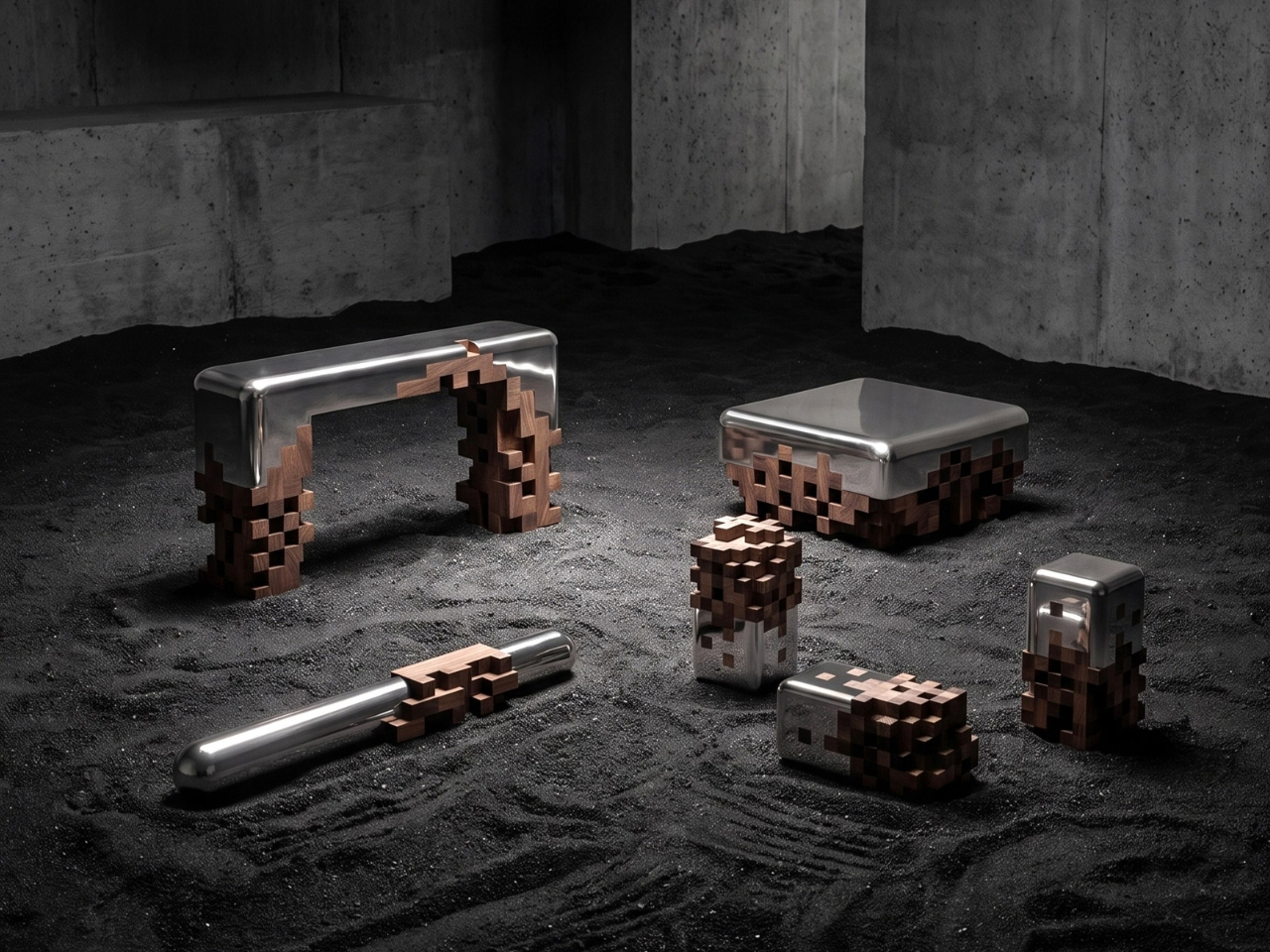
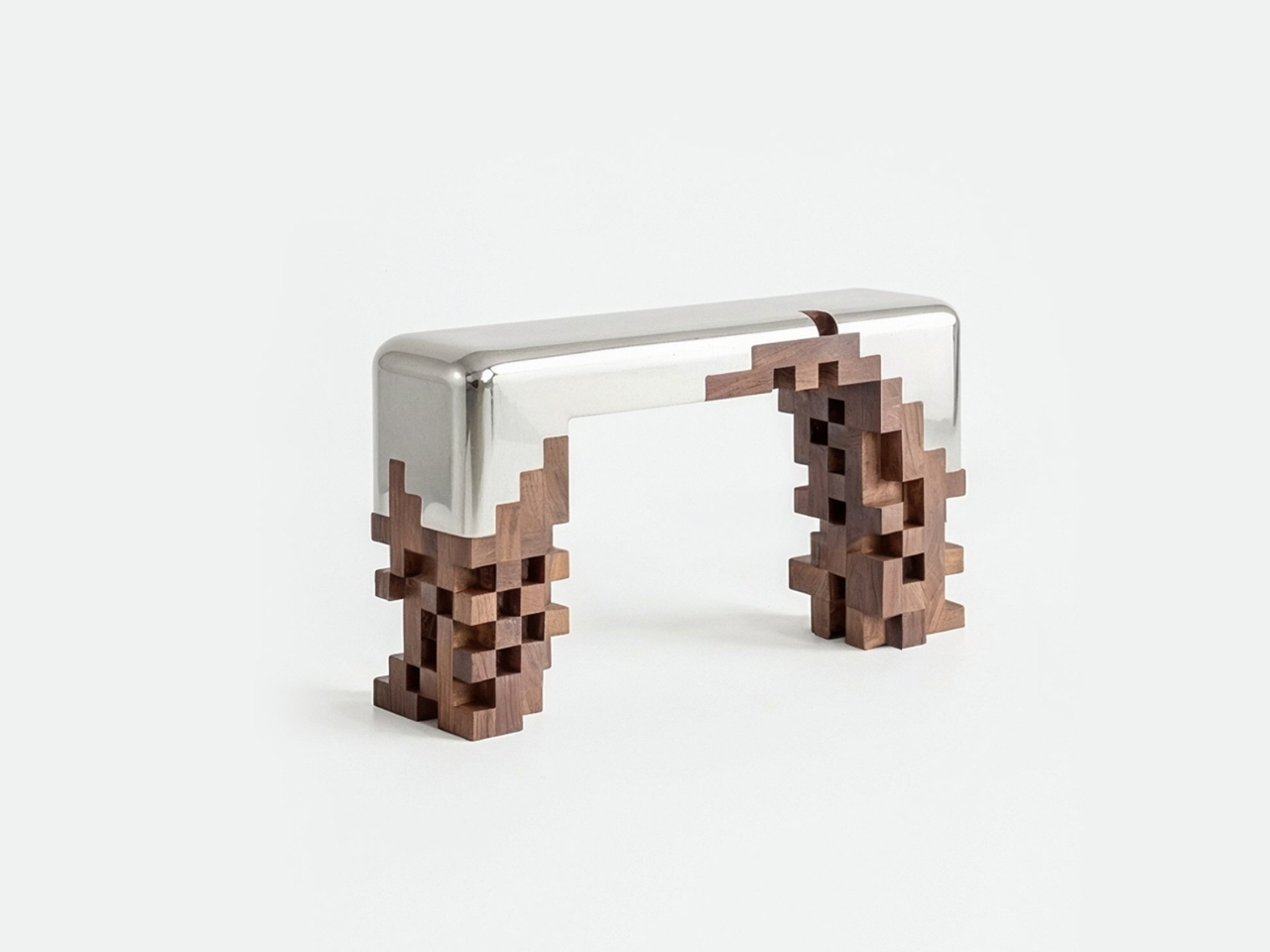
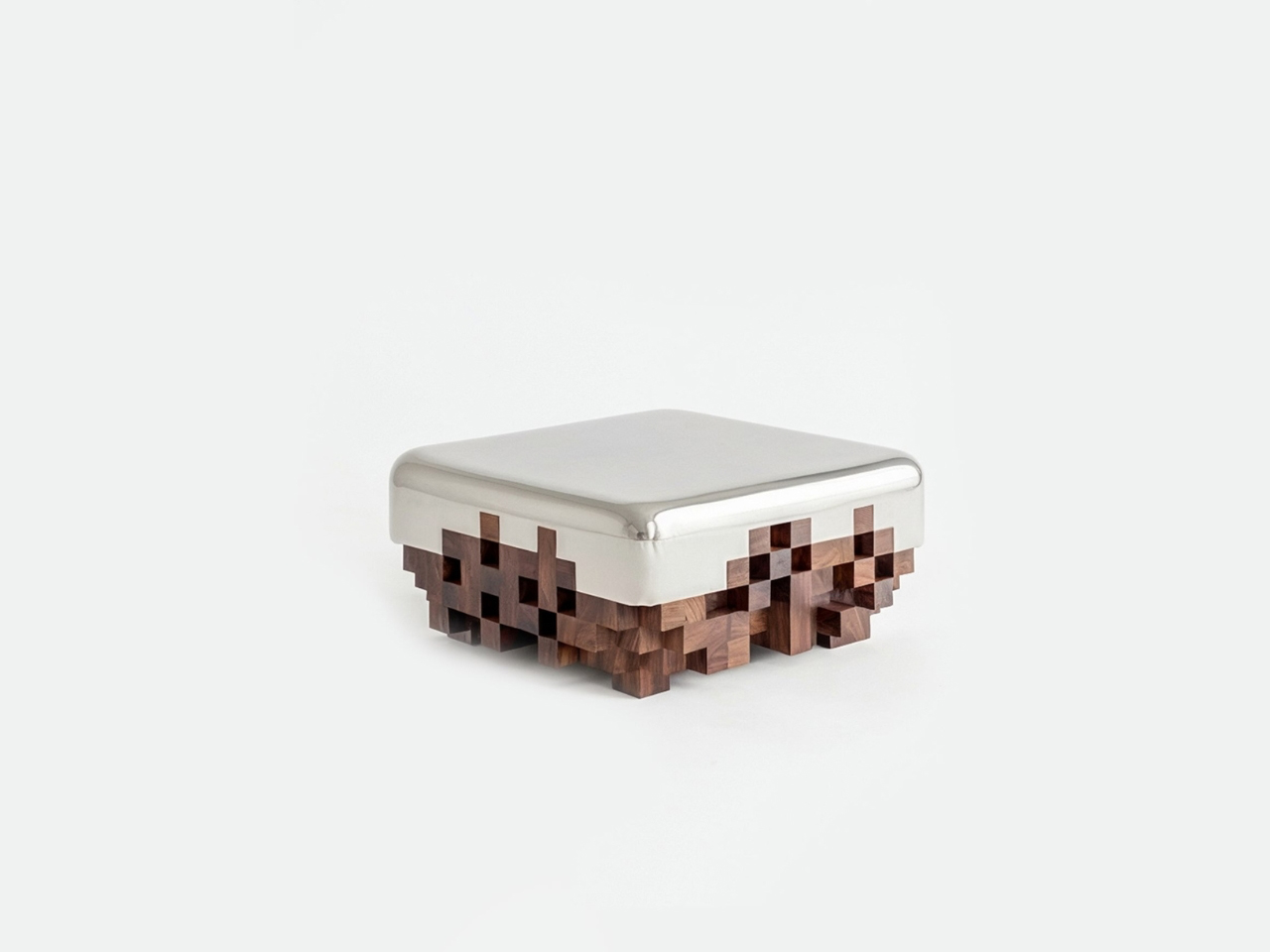
The Ghost Collection by Alberto Essesi transforms pixelation into a refined furniture design language. Mirror-polished aluminum is paired with solid walnut to create pieces that transition from smooth, reflective surfaces to deliberately blocky, pixel-inspired forms. Console tables, ottomans, and sculptural accessories recreate enlarged digital pixels through carefully stacked wooden modules, giving each object the appearance of existing between a virtual rendering and a handcrafted creation.
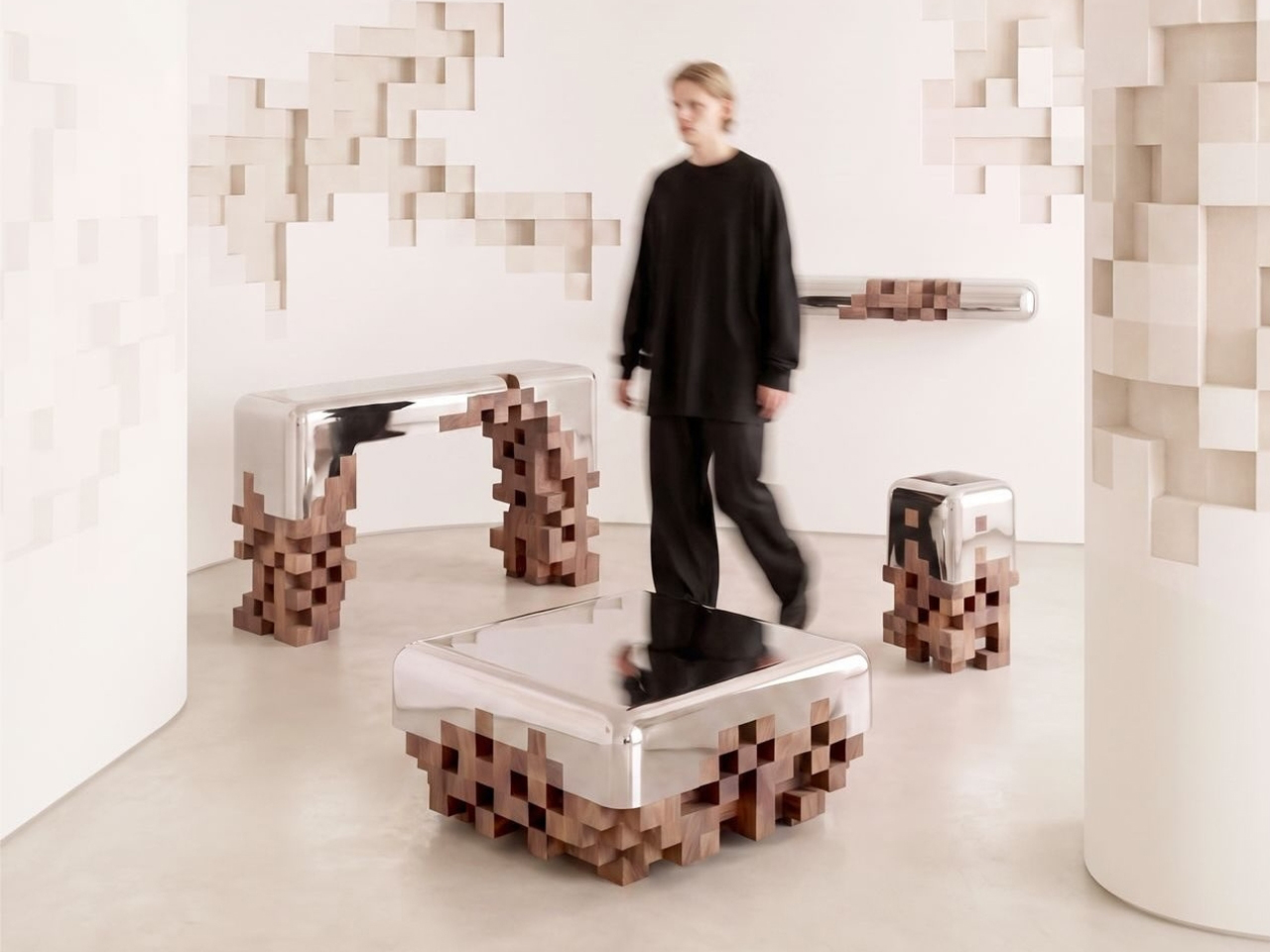
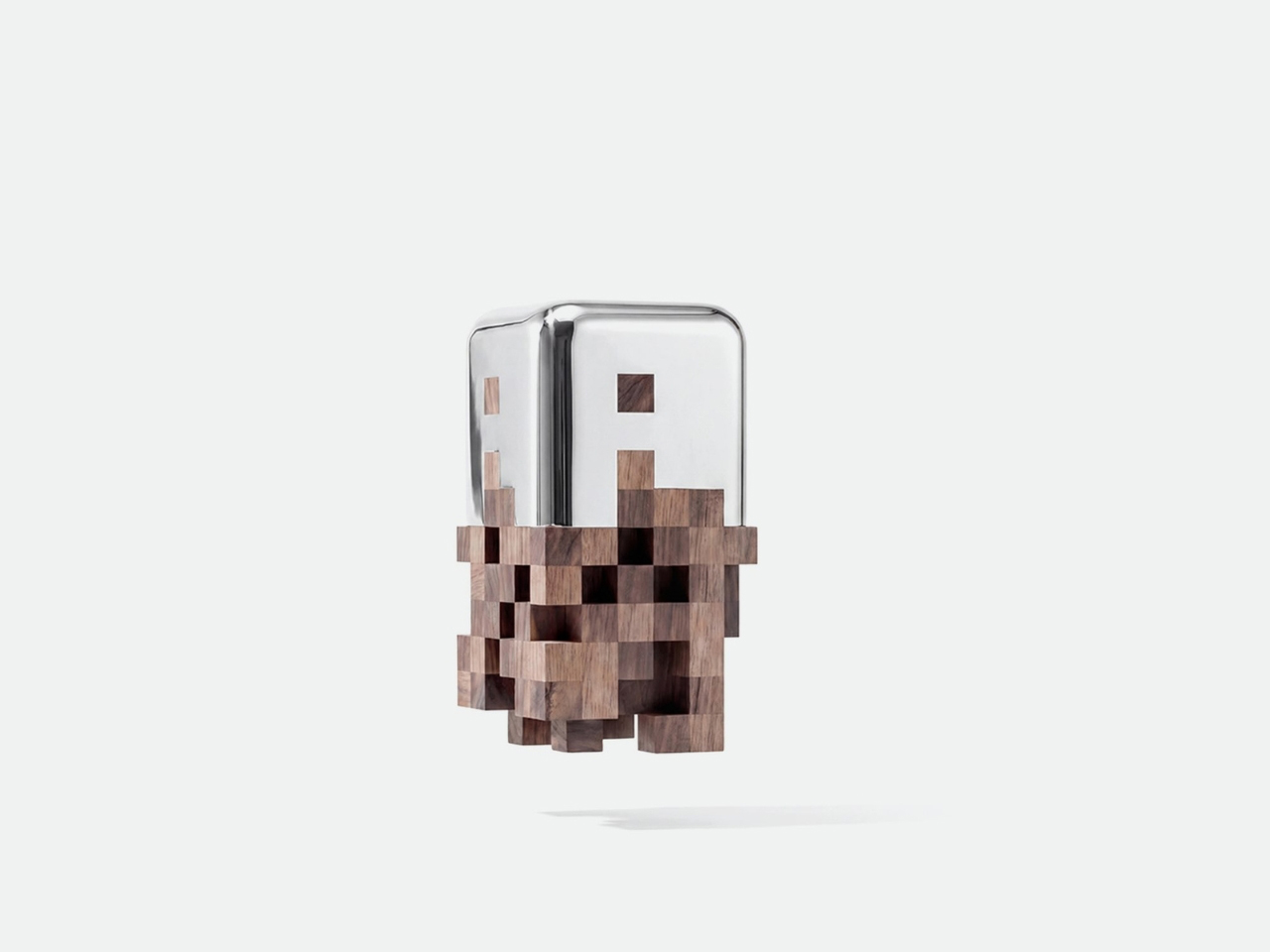
Every piece balances clean lines, natural materials, and geometric forms to create furniture that feels sculptural yet functional. Depending on its setting, the collection can appear as gallery-worthy art, a statement furnishing, or a conversation piece inspired by digital culture. It reflects how pixelation has evolved into a contemporary design language that seamlessly connects technology, materiality, and everyday living.
Retro pixel graphics are no longer limited to gaming nostalgia. Designers are combining classic 8-bit aesthetics with smart technology to create products that are interactive, customizable, and highly functional. Pixel displays now serve as communication tools, displaying animations, notifications, artwork, and personalized visuals that adapt to users’ preferences.
This fusion of vintage inspiration and modern innovation allows everyday products to feel emotionally familiar and technologically advanced, proving that nostalgic design can evolve into meaningful and practical user experiences.
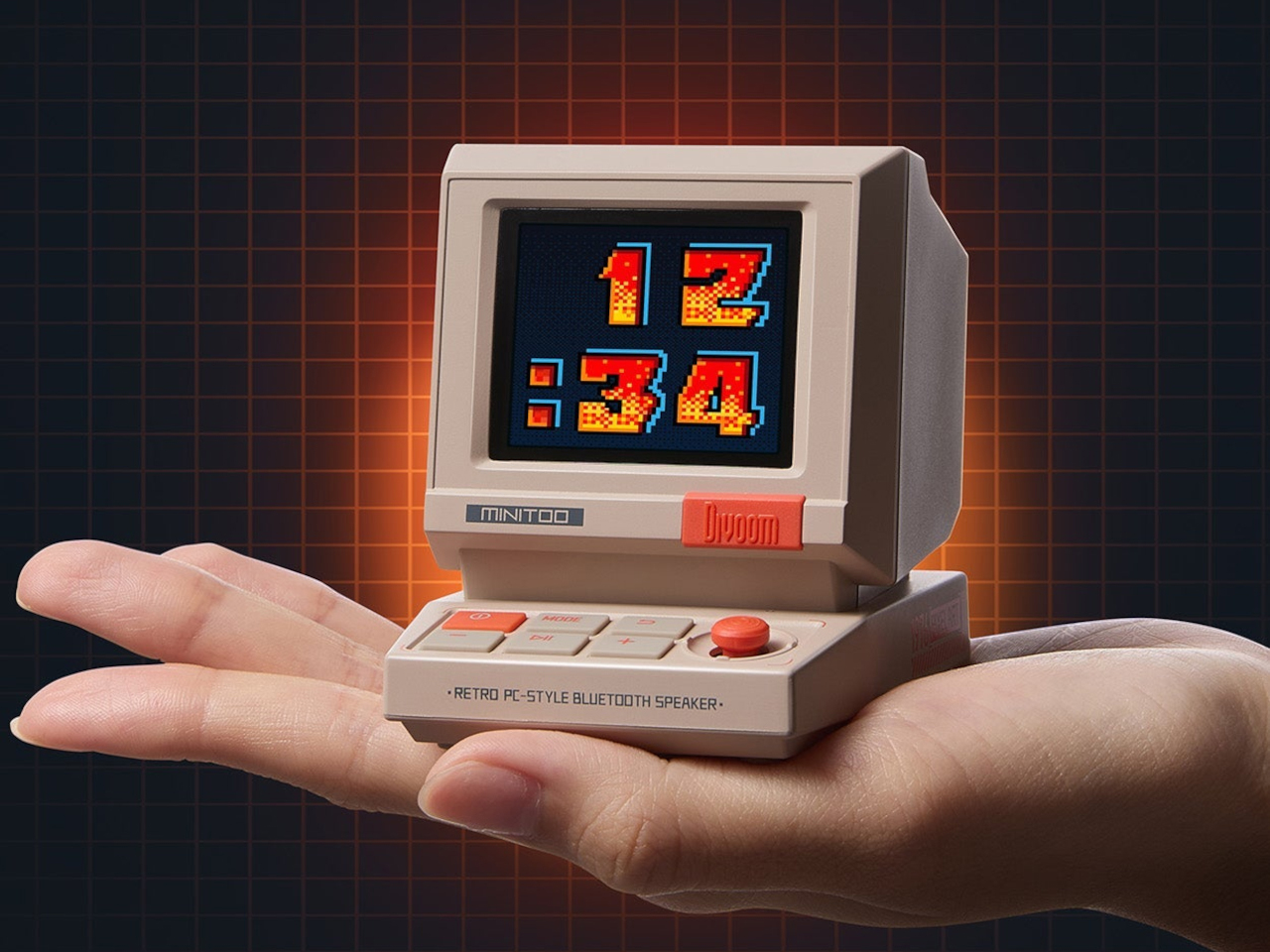
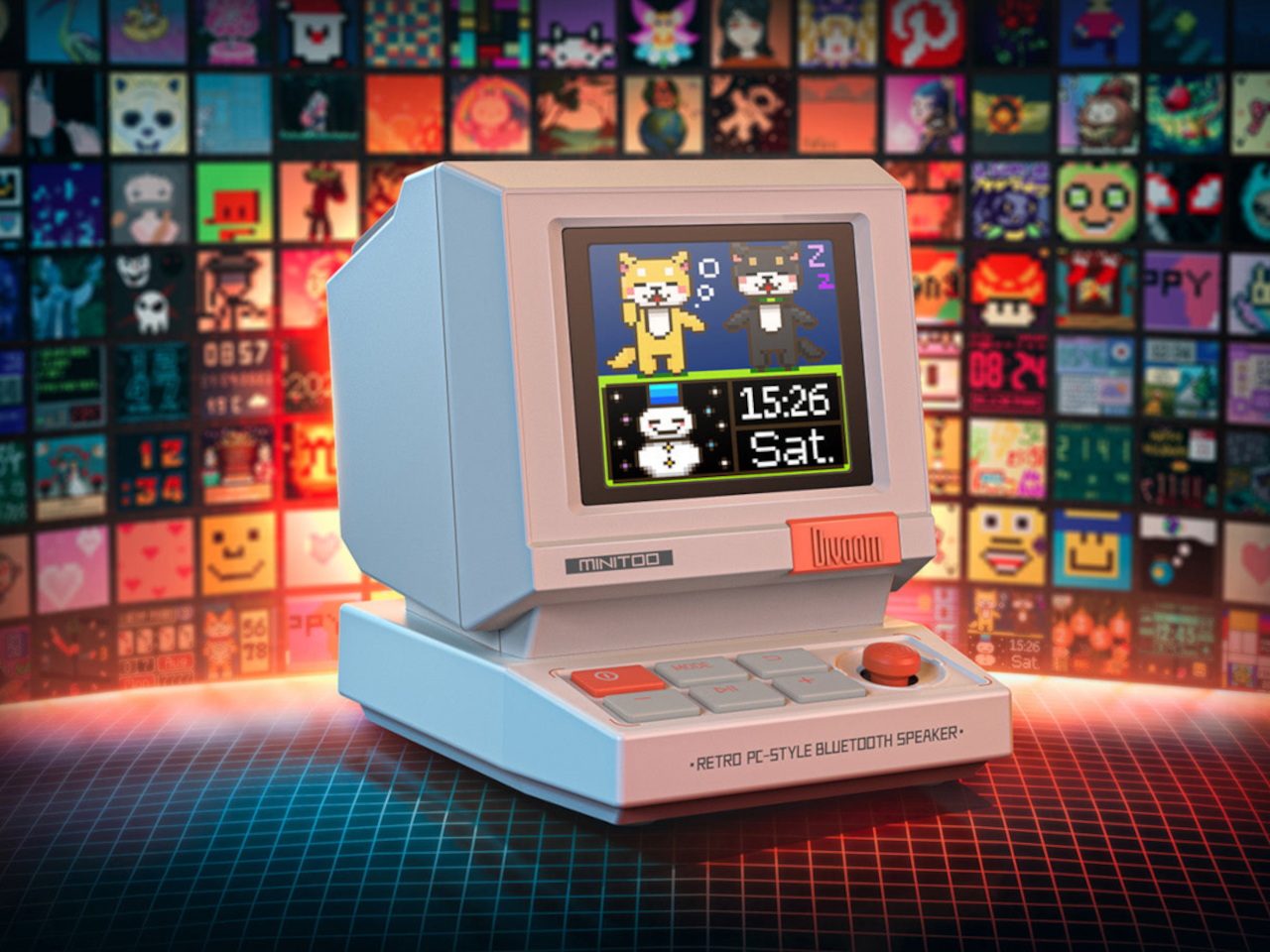
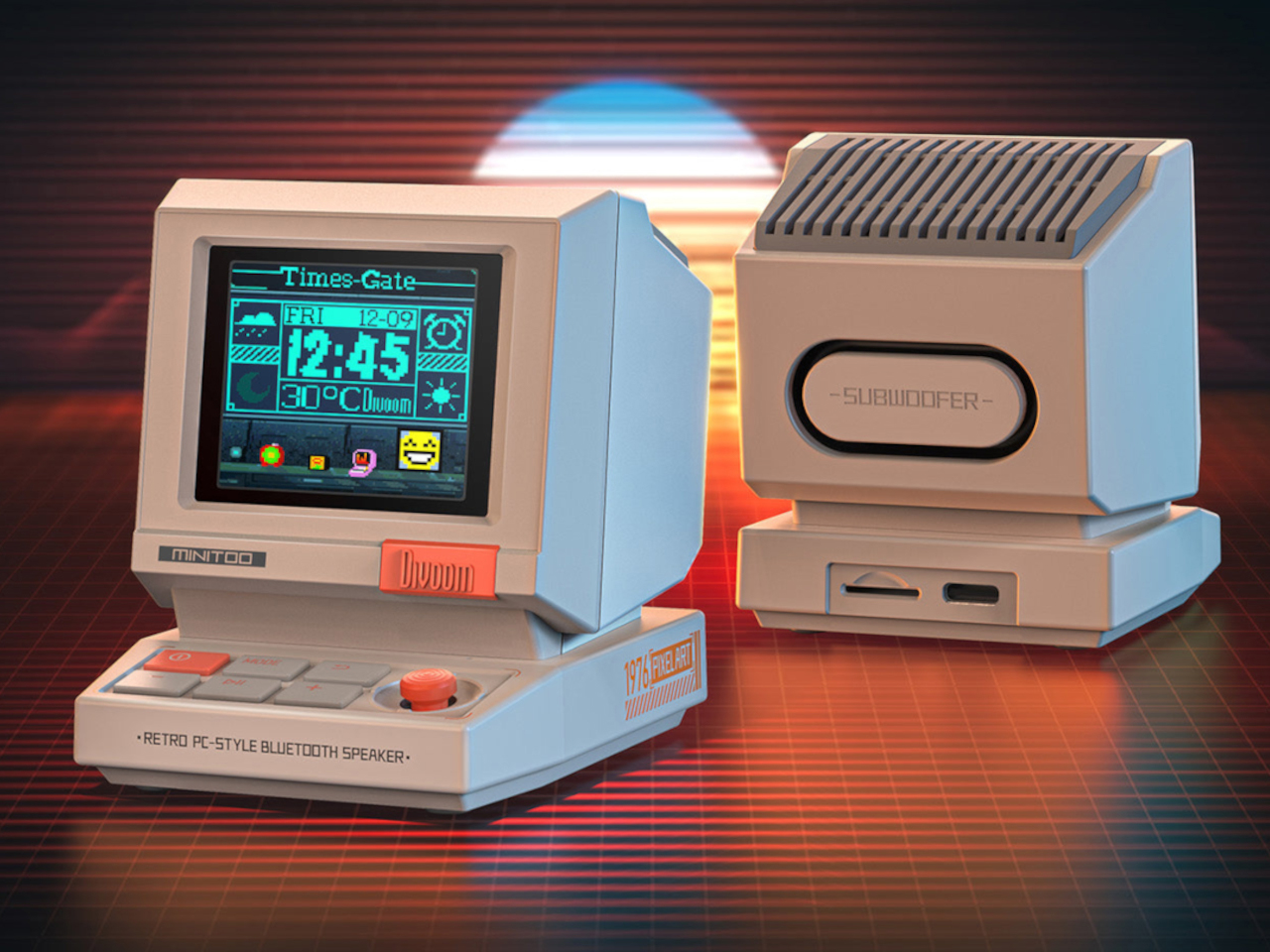
The MiniToo Retro PC-Style Pixel Bluetooth Speaker & Alarm Clock reimagines the classic desktop computer as a compact multifunctional device for modern workspaces. Inspired by 1980s PCs, it features a miniature CRT-style display, oversized keyboard-like buttons, and a signature beige finish. Its customizable pixel screen displays animated clock faces, digital artwork, text, and photos, allowing users to personalize their desks while bringing the charm of retro graphics into a contemporary setting with everyday practicality.
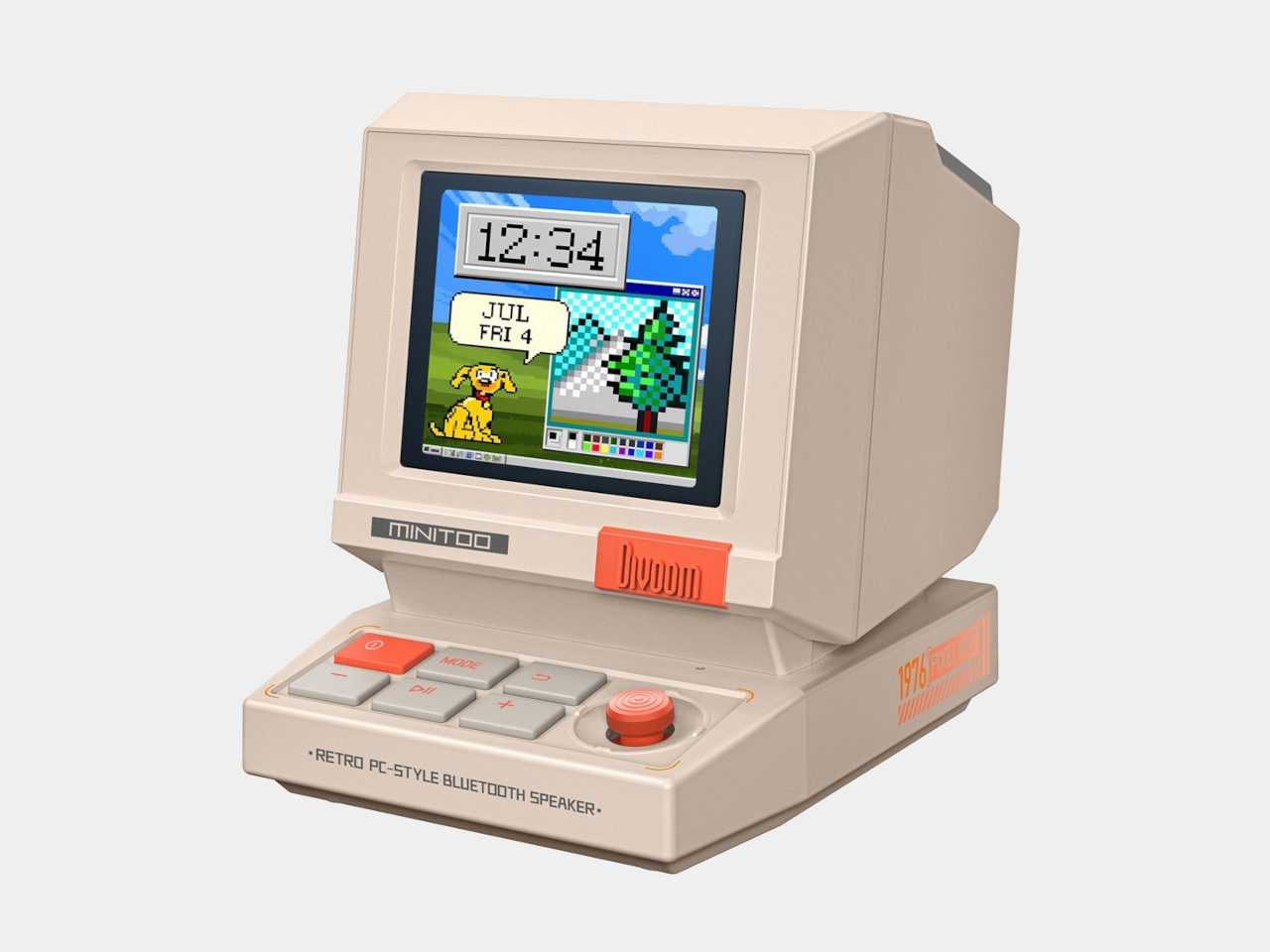
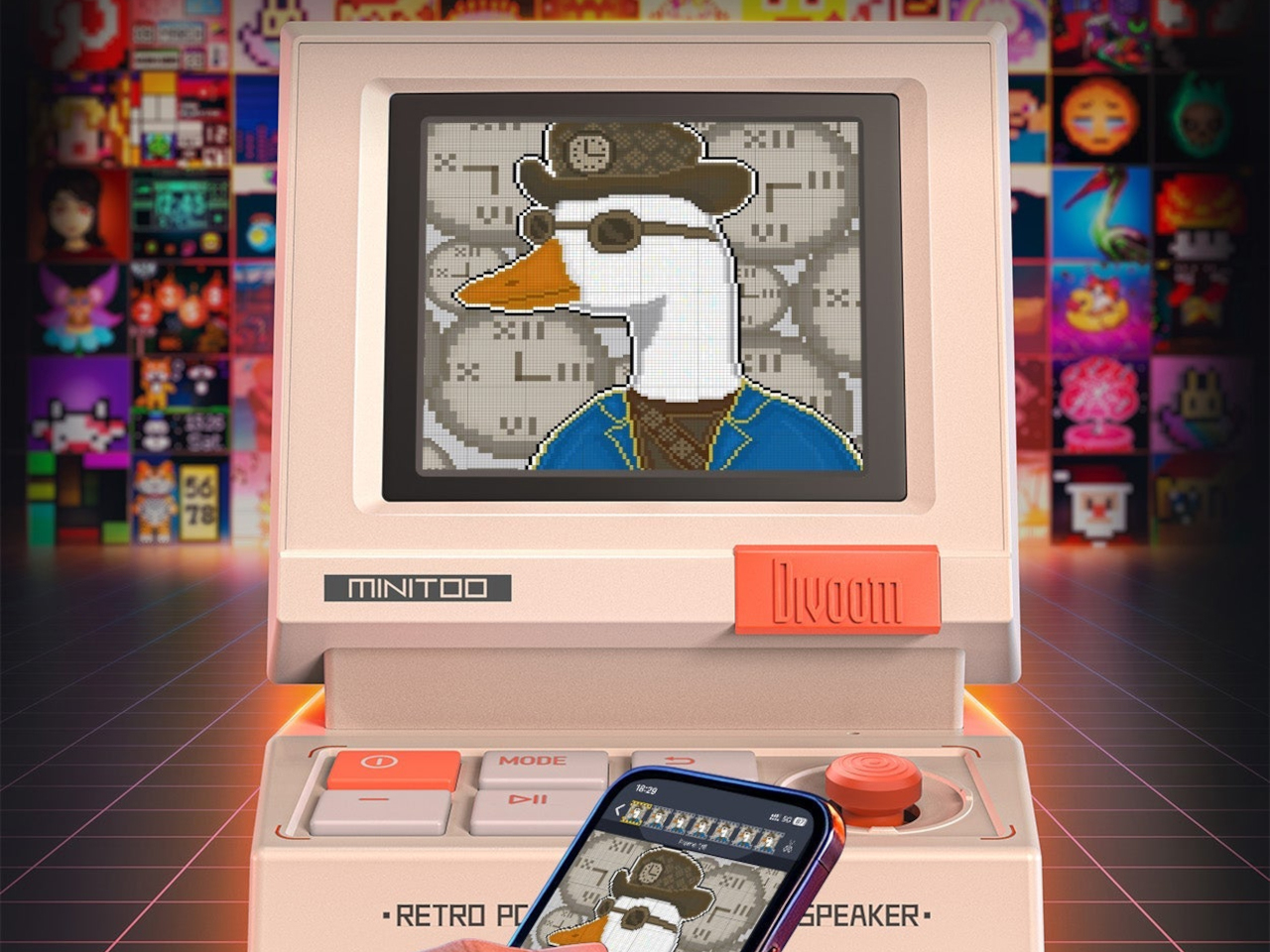

Designed as an all-in-one desktop companion, the MiniToo combines a Bluetooth speaker,
alarm clock, white noise machine, focus timer, reminders, and interactive pixel features in a single compact unit. Tactile buttons and a rotary volume knob provide intuitive controls, while wireless connectivity ensures seamless operation. By blending nostalgic styling with practical functionality, the product turns pixel-inspired design into an engaging everyday experience.
Instead of simply borrowing inspiration from digital graphics, some designers are transforming the way people experience the physical world through pixelation. By intentionally reducing visual detail and using blocky aesthetics, these products encourage creativity over technical perfection.
They remind users that storytelling, emotion, and artistic expression often matter more than ultra-high resolution. This playful reinterpretation of reality offers a refreshing alternative to today’s pursuit of flawless digital imagery while celebrating the charm of classic pixel art.
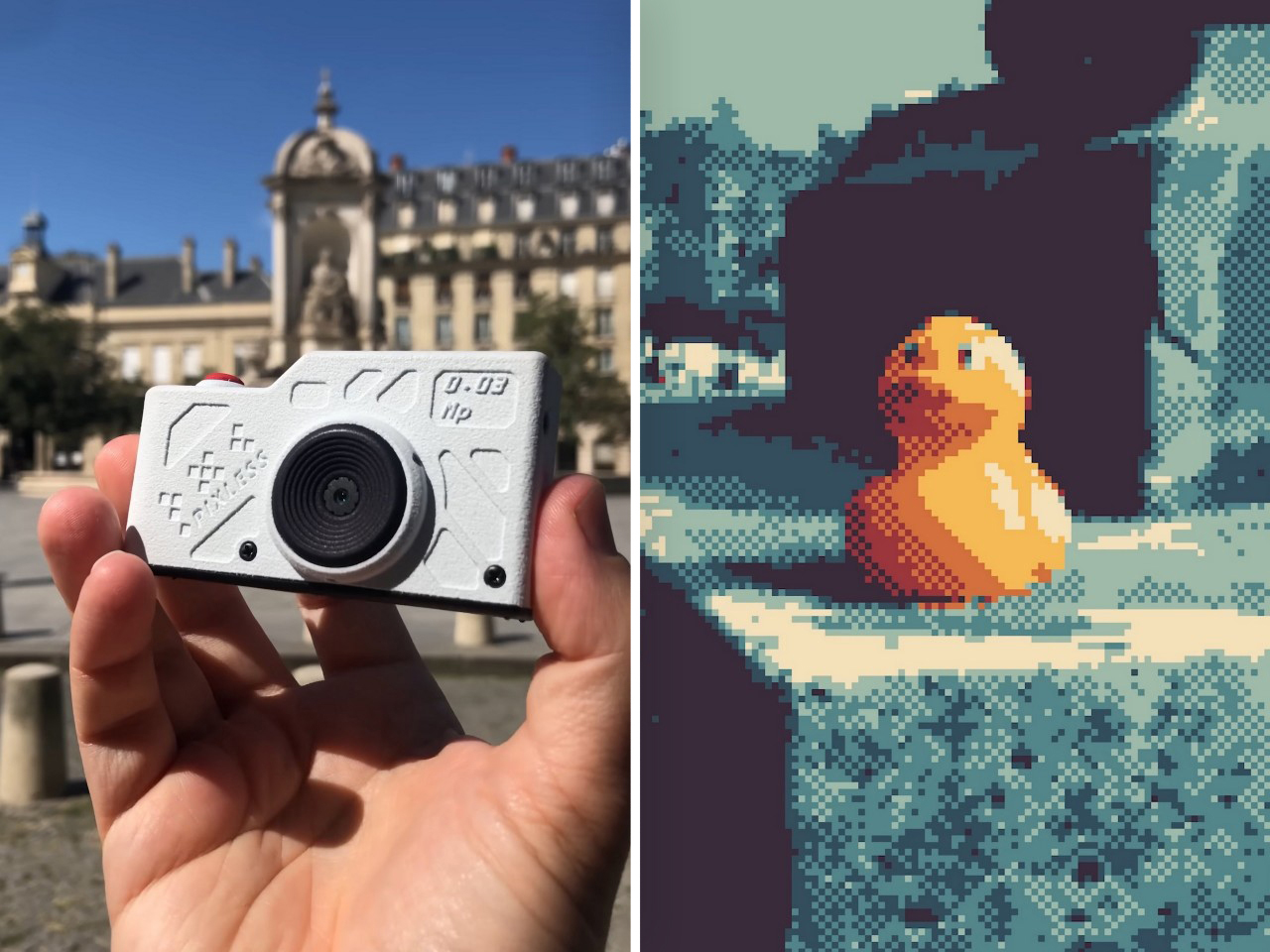
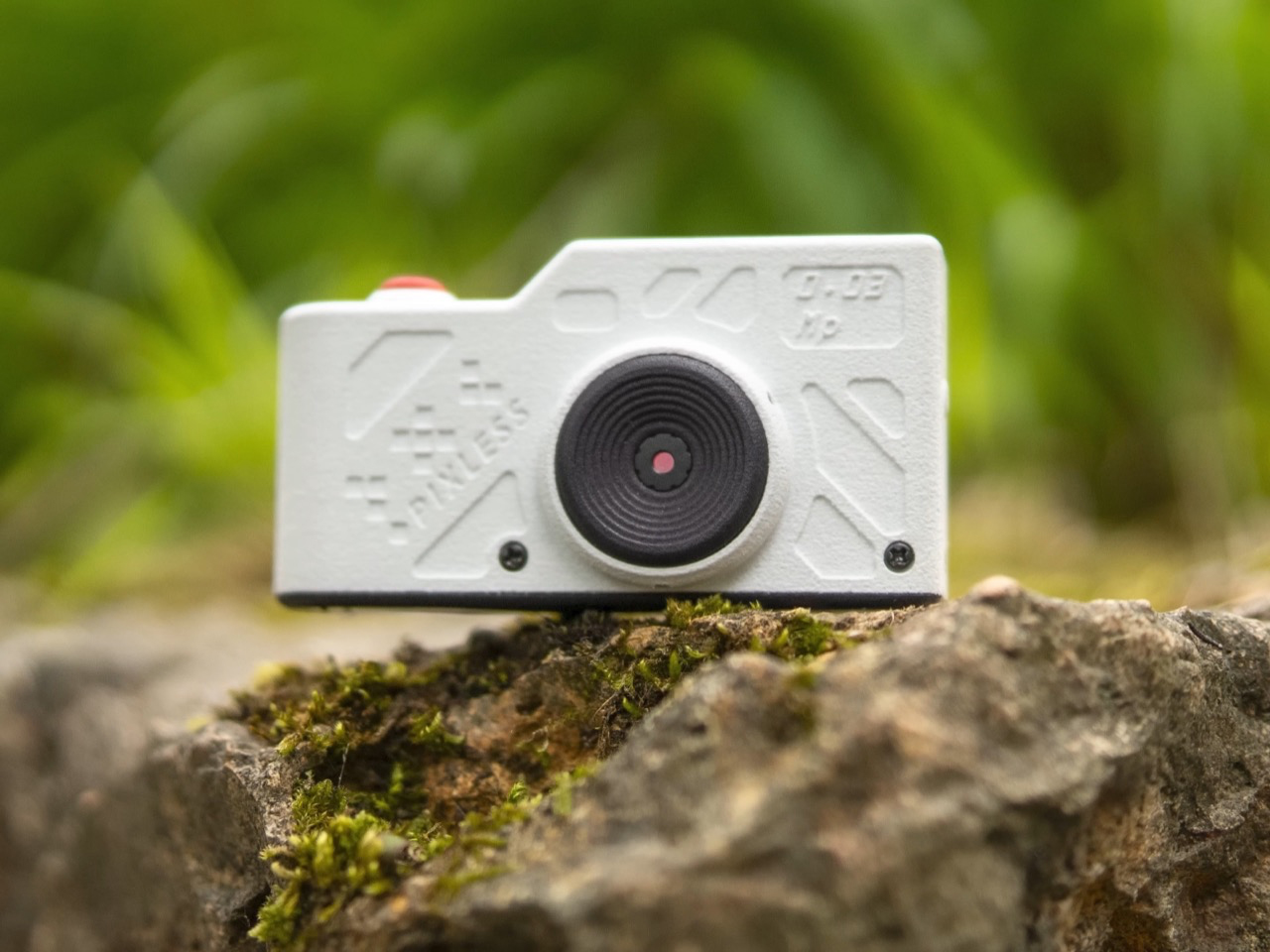
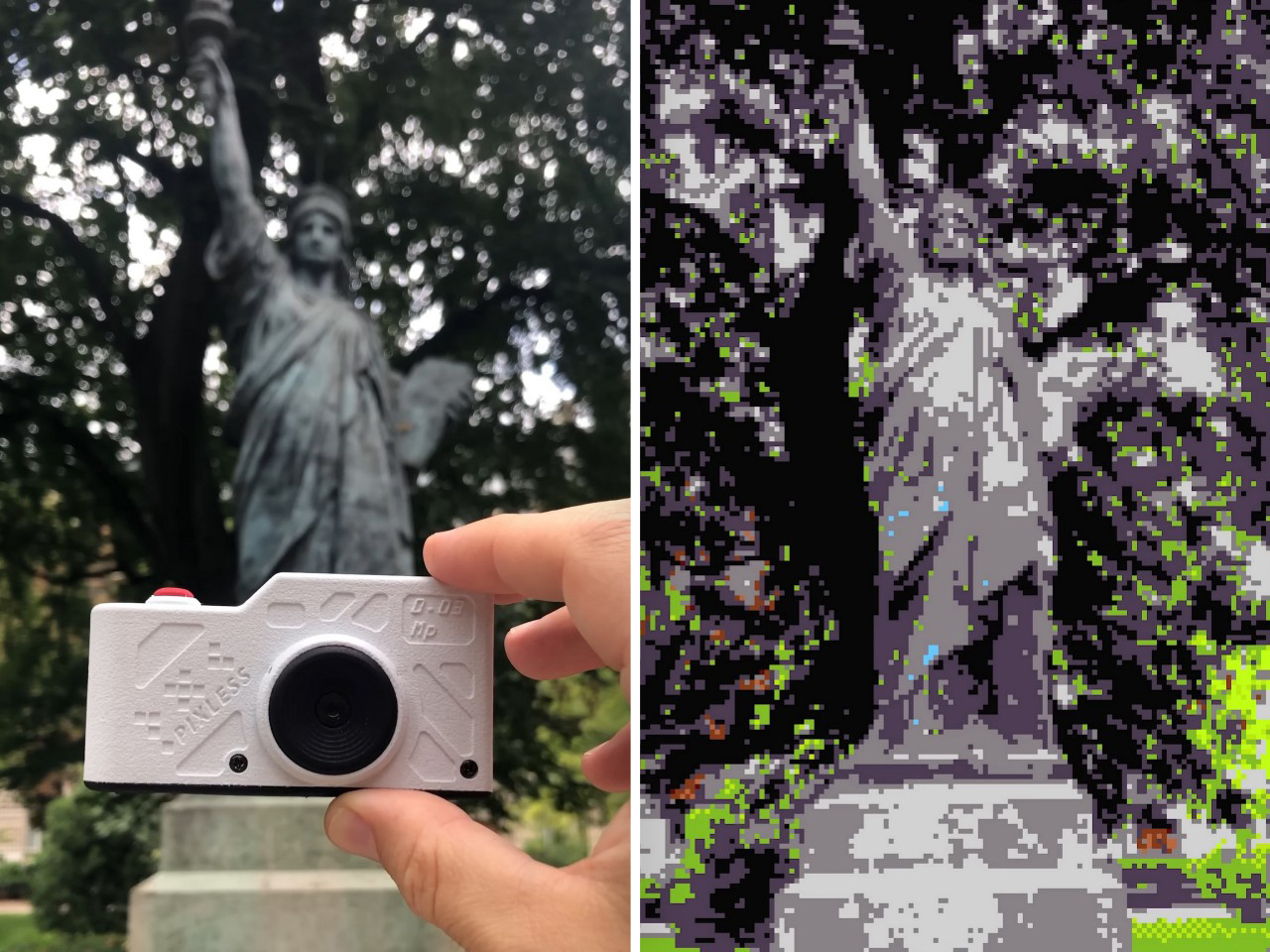
The Pixless Camera redefines digital photography by using pixelation instead of ultra-high resolution. Designed by Carlo Andreini, the compact camera intentionally captures images in a low-resolution, 16-bit-inspired format reminiscent of classic video games. Housed in a lightweight 3D-printed body with USB-C connectivity and micro-SD storage, it combines modern hardware with nostalgic aesthetics. Its software intentionally produces bold, blocky visuals, encouraging users to focus on creativity, composition, and artistic expression.
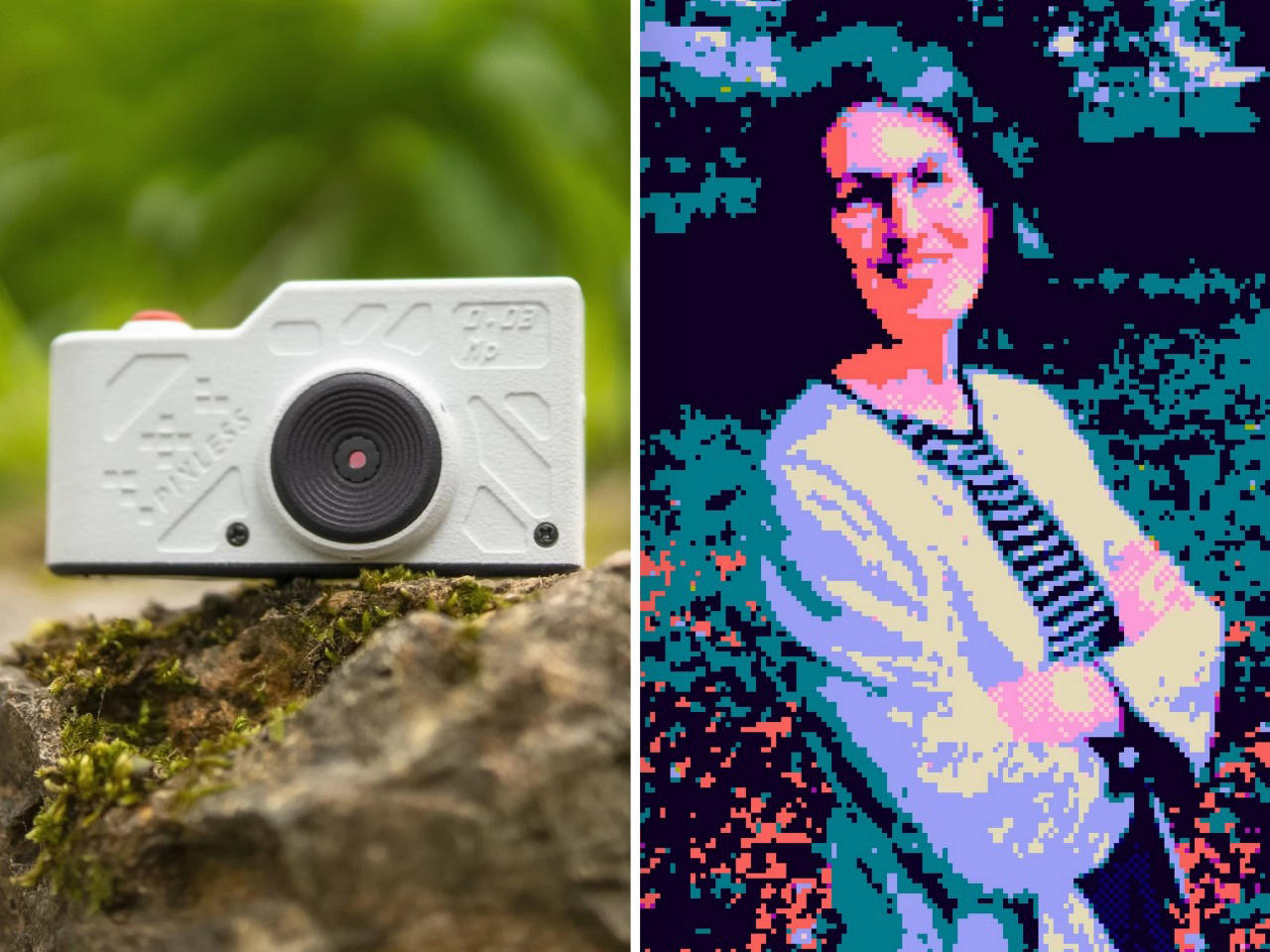
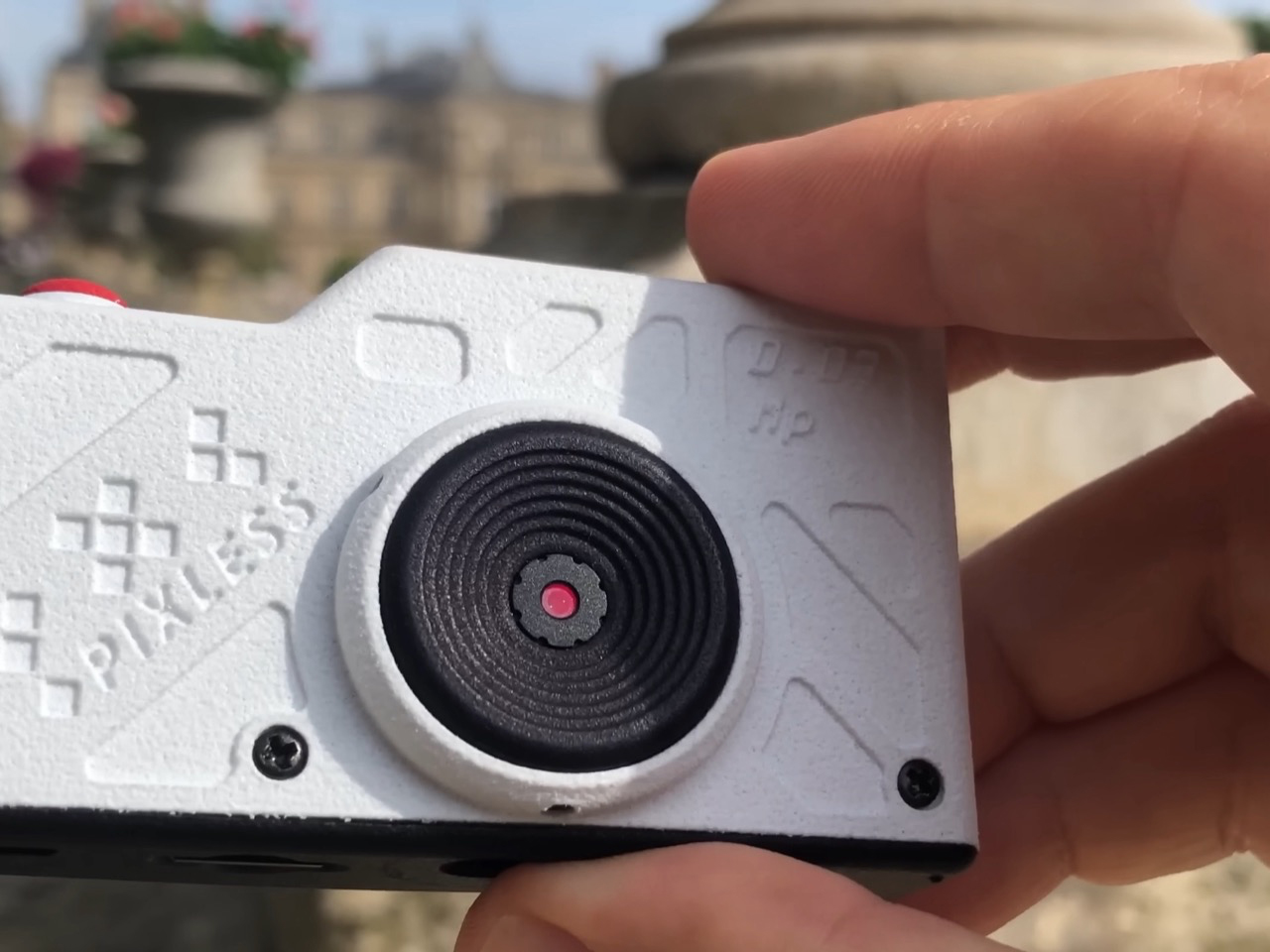

The Pixless Camera expands creative possibilities with customizable colour palettes inspired by classic gaming consoles, allowing every image to adopt a distinct retro aesthetic. A browser-based interface lets users preview photos, adjust settings, and switch between pixel-art styles without requiring a dedicated mobile app. By pairing simple hardware with software-driven creativity, the camera becomes more than a photography tool. It offers a fresh way to capture everyday moments through playful, stylized visuals inspired by early digital graphics.
Pixel-inspired design has evolved from static geometry into dynamic, moving experiences. Advances in mechanical engineering and programmable systems allow designers to create products that continuously shift and animate using modular pixel-like components.
These kinetic designs blur the line between sculpture, technology, and functional objects, creating visual performances that change throughout the day. These new generation of products bring movement, interaction, and storytelling into everyday environments while showcasing the beauty of physical mechanics.
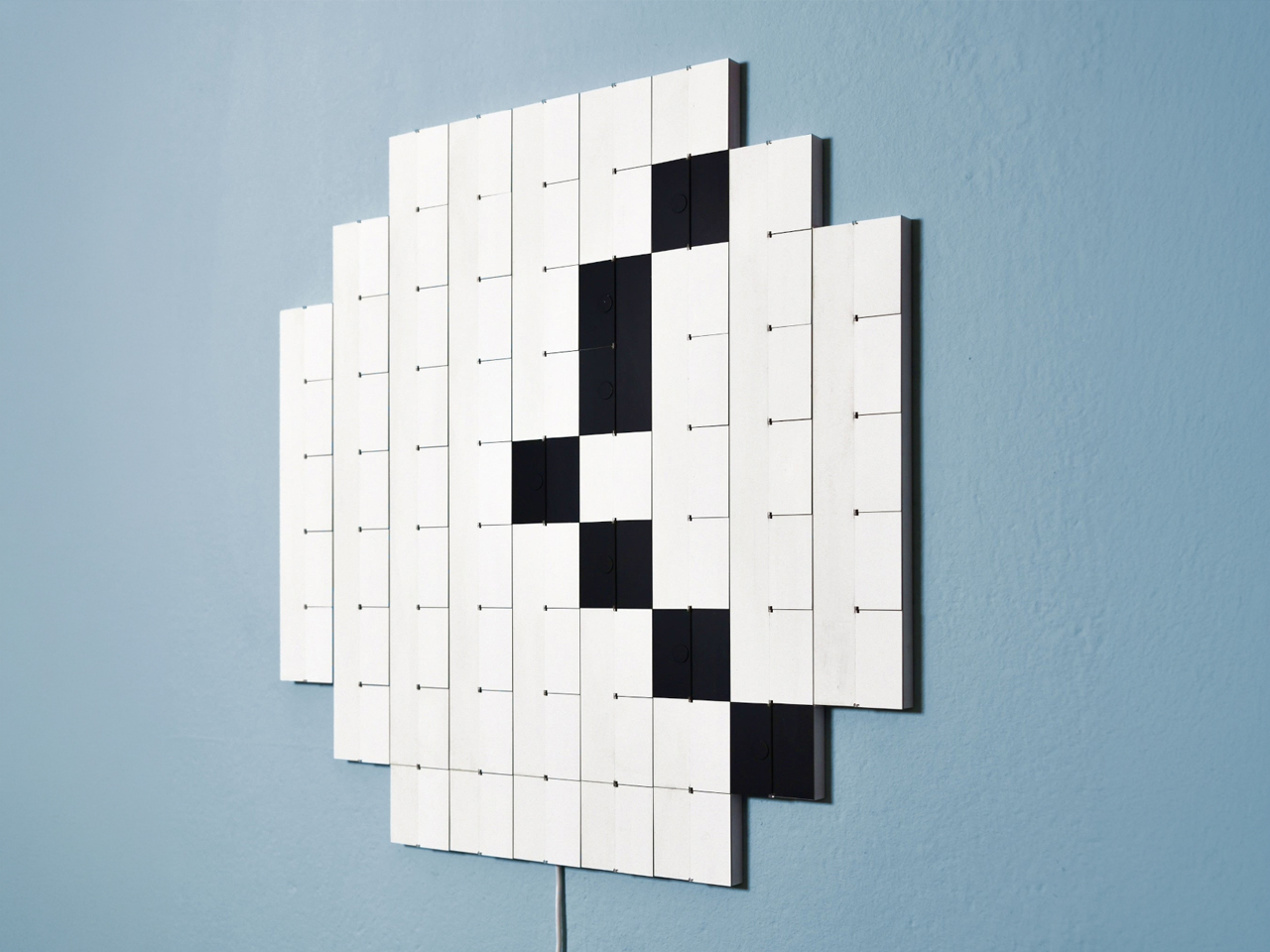
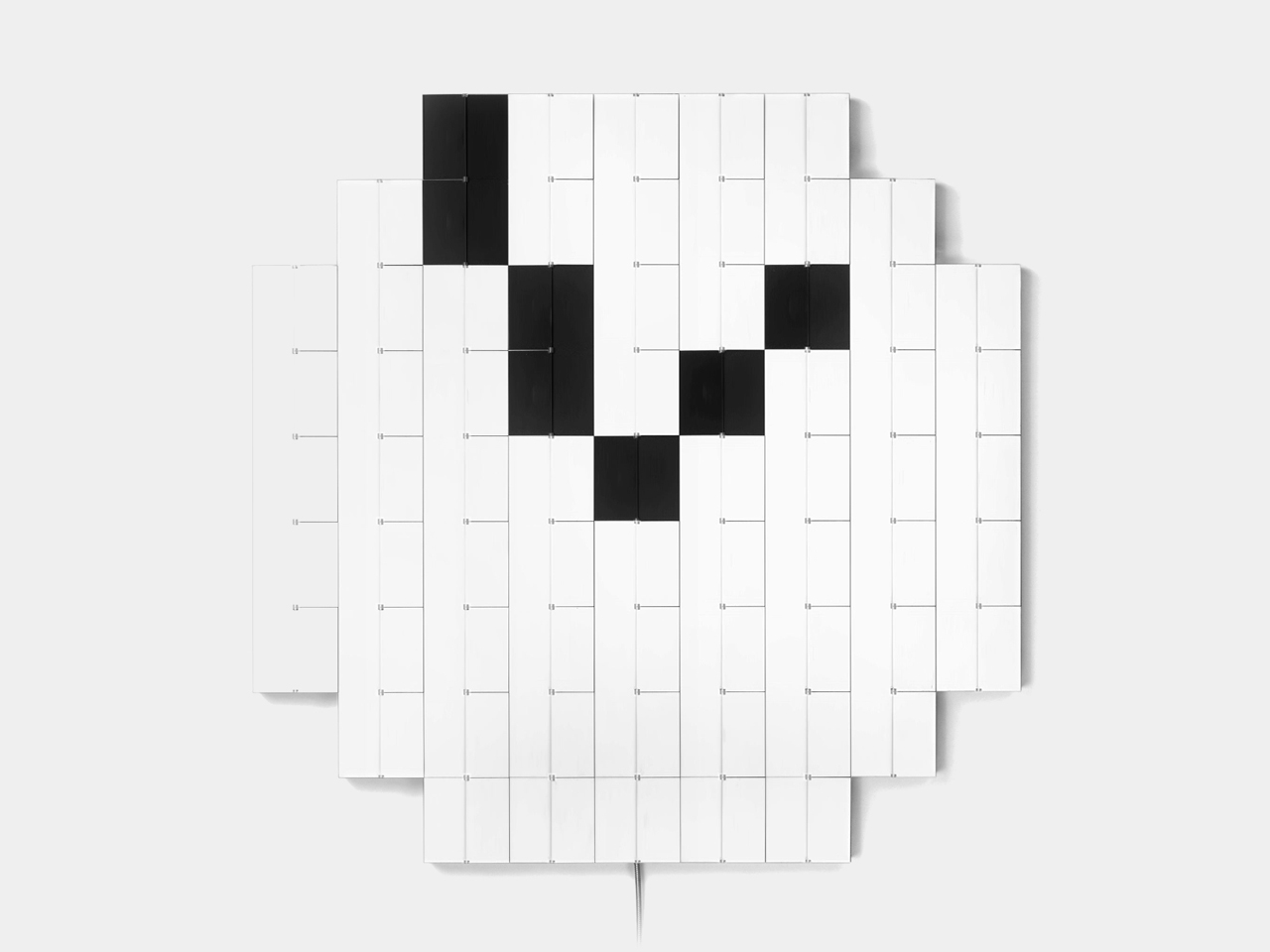
The Klapklok reimagines traditional timekeeping through a kinetic display inspired by vintage split-flap clocks and retro pixel graphics. The handcrafted clock features 69 individually moving panels that form a rounded pixel grid, replacing conventional clock hands with animated mechanical movement. Every few minutes, the panels shift to display the time, while each hour the entire grid transforms into a numerical display. Soft rhythmic sounds accompany the motion, creating a calming and immersive experience.
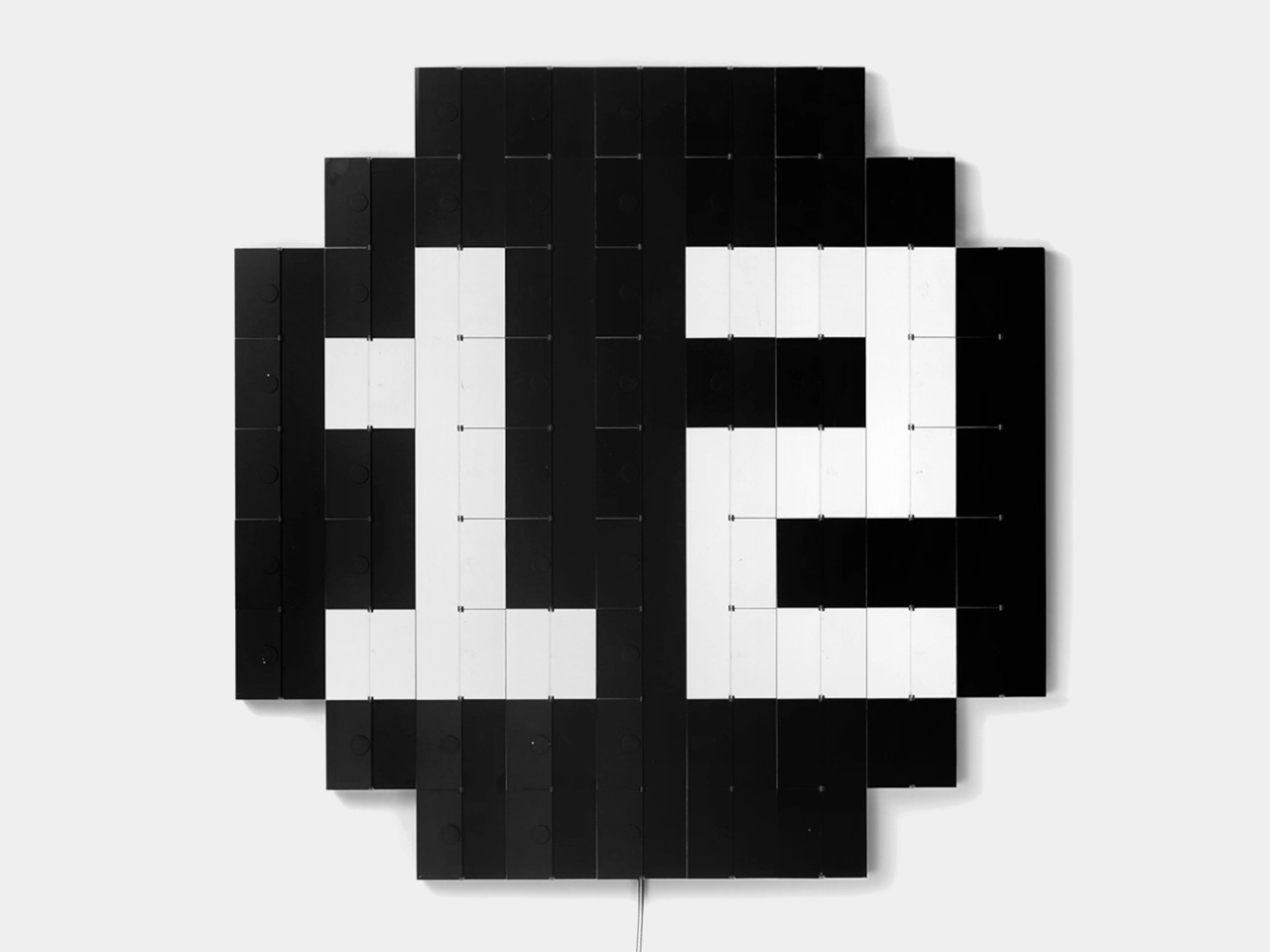

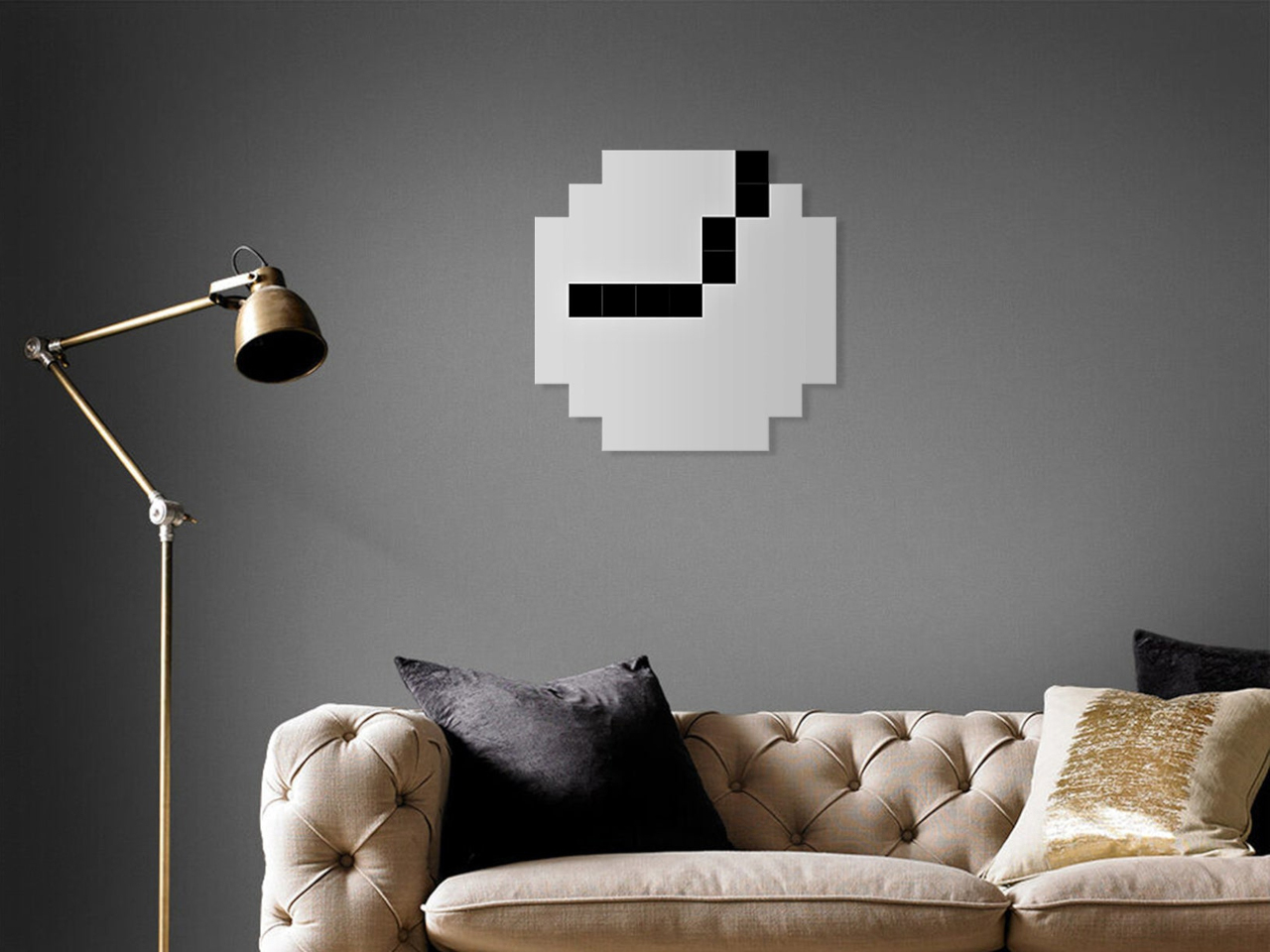
Designed as a functional clock and an interactive décor piece, the Klapklok is crafted from premium materials, including a bio-polyurethane frame and durable composite flaps. A companion smartphone app allows users to create pixel art, icons, and text on the mechanical display, adding a personalized touch. By combining precision engineering with pixel-inspired design, the clock turns a familiar household object into a dynamic centrepiece that blends craftsmanship, movement, and nostalgic digital aesthetics.
The influence of pixelation now extends to architecture, where modular grids and block-like volumes are reshaping contemporary buildings. Architects use pixel-inspired compositions to create façades with greater depth, improve environmental performance, and break down the visual scale of large developments.
These geometric arrangements produce striking urban landmarks while responding to practical needs such as shading, ventilation, and mixed-use planning. By translating digital thinking into architectural form, pixelated buildings show how virtual aesthetics can inspire functional and visually engaging spaces.
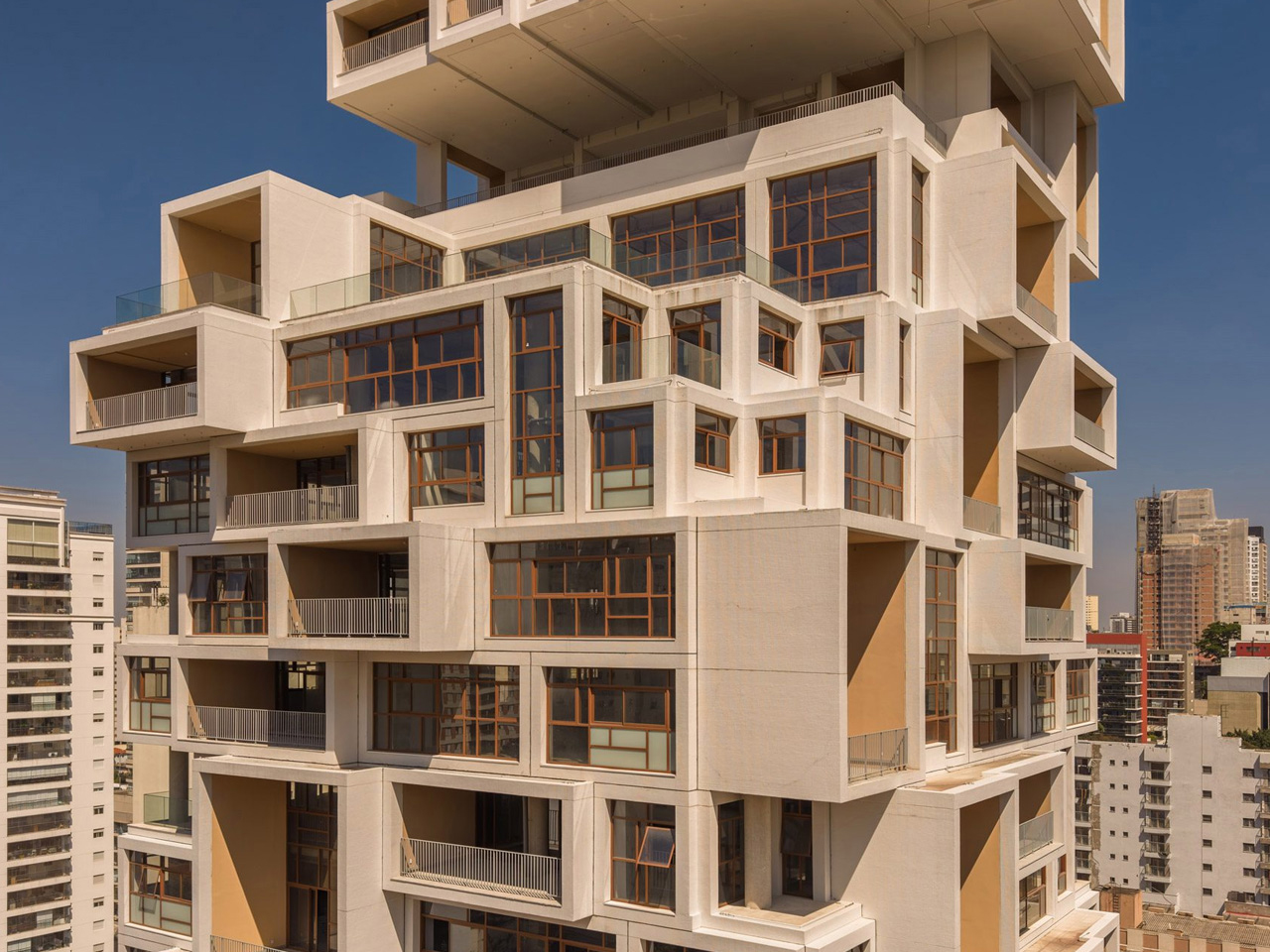
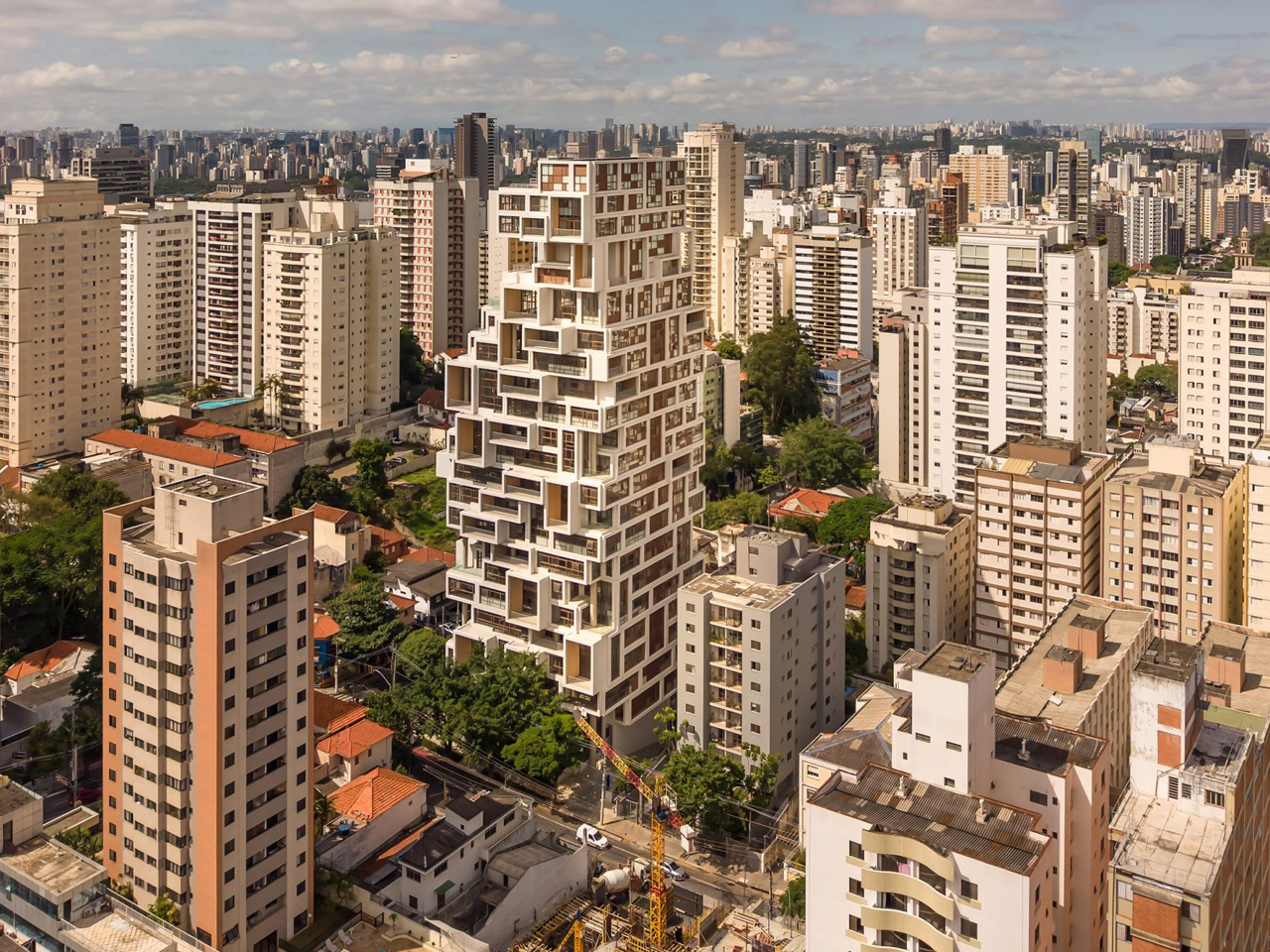
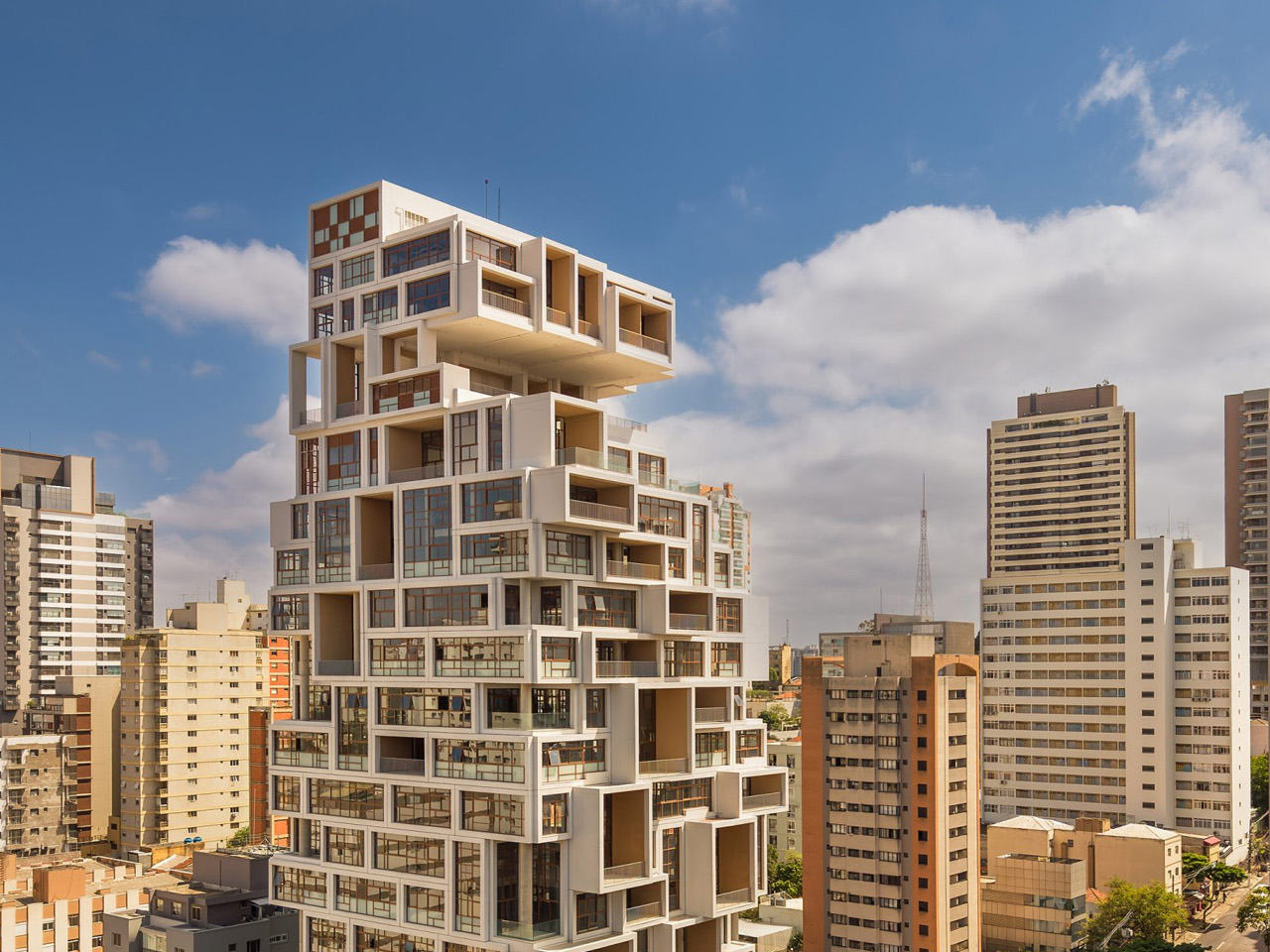
The Valente Building by FGMF Arquitetos brings pixel-inspired design to the urban skyline through a façade of stacked rectangular volumes that resemble enlarged digital pixels. Rising 21 storeys in São Paulo’s Pinheiros district, the mixed-use tower uses modular forms to create depth, shifting shadows, and a bold architectural identity. The geometric composition gives the building a distinctive appearance while allowing it to blend naturally into its vibrant urban context.
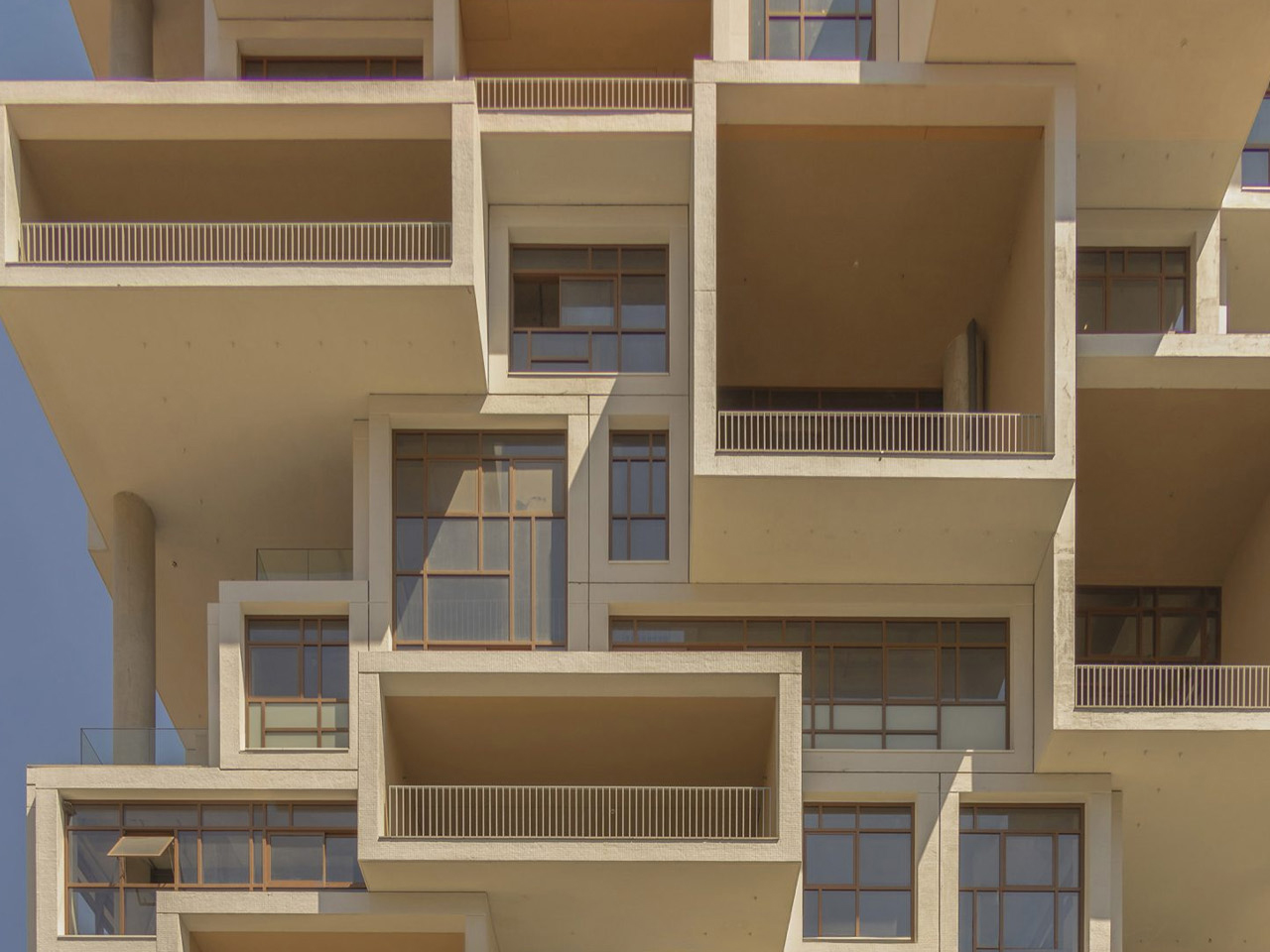
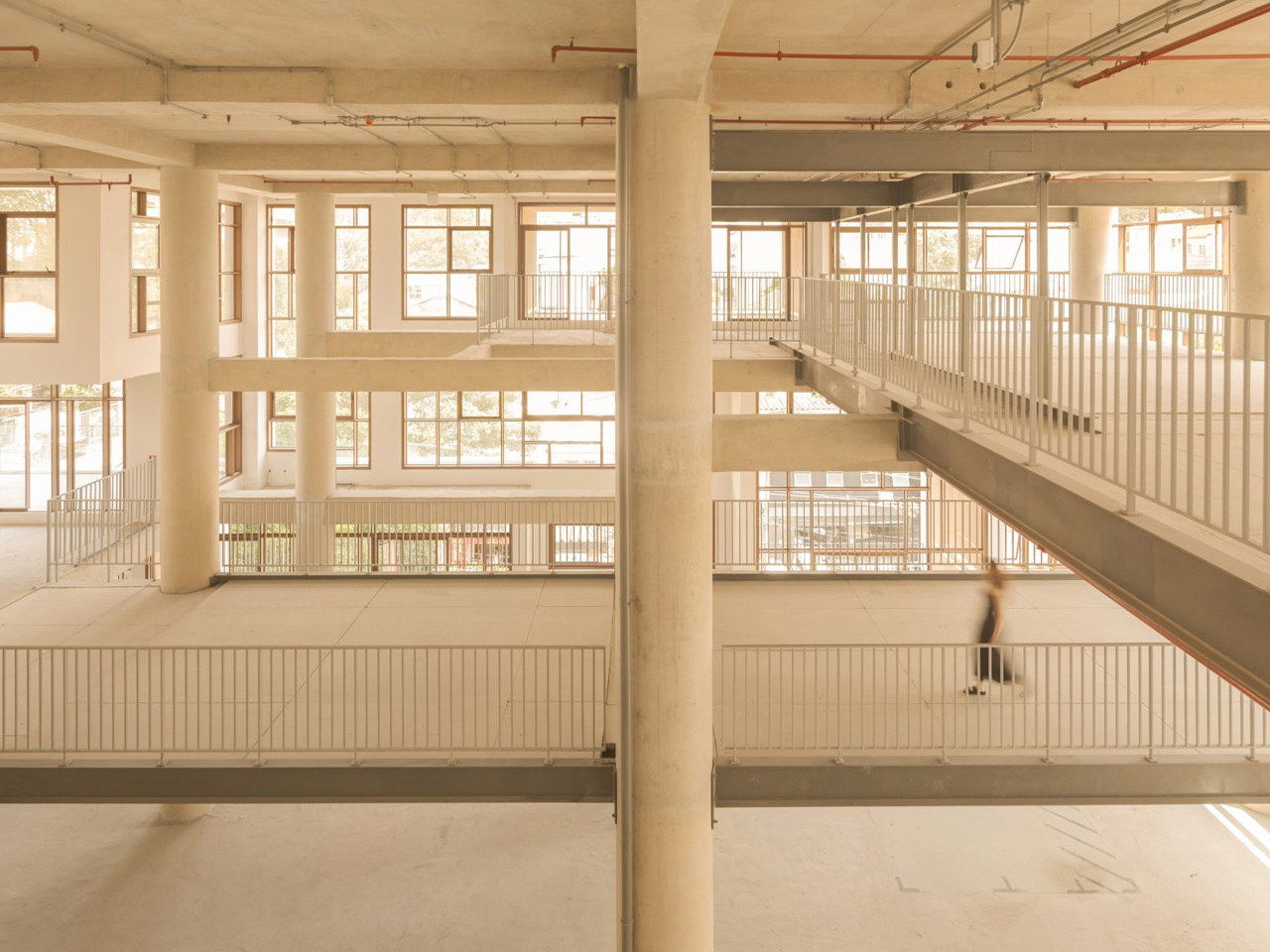
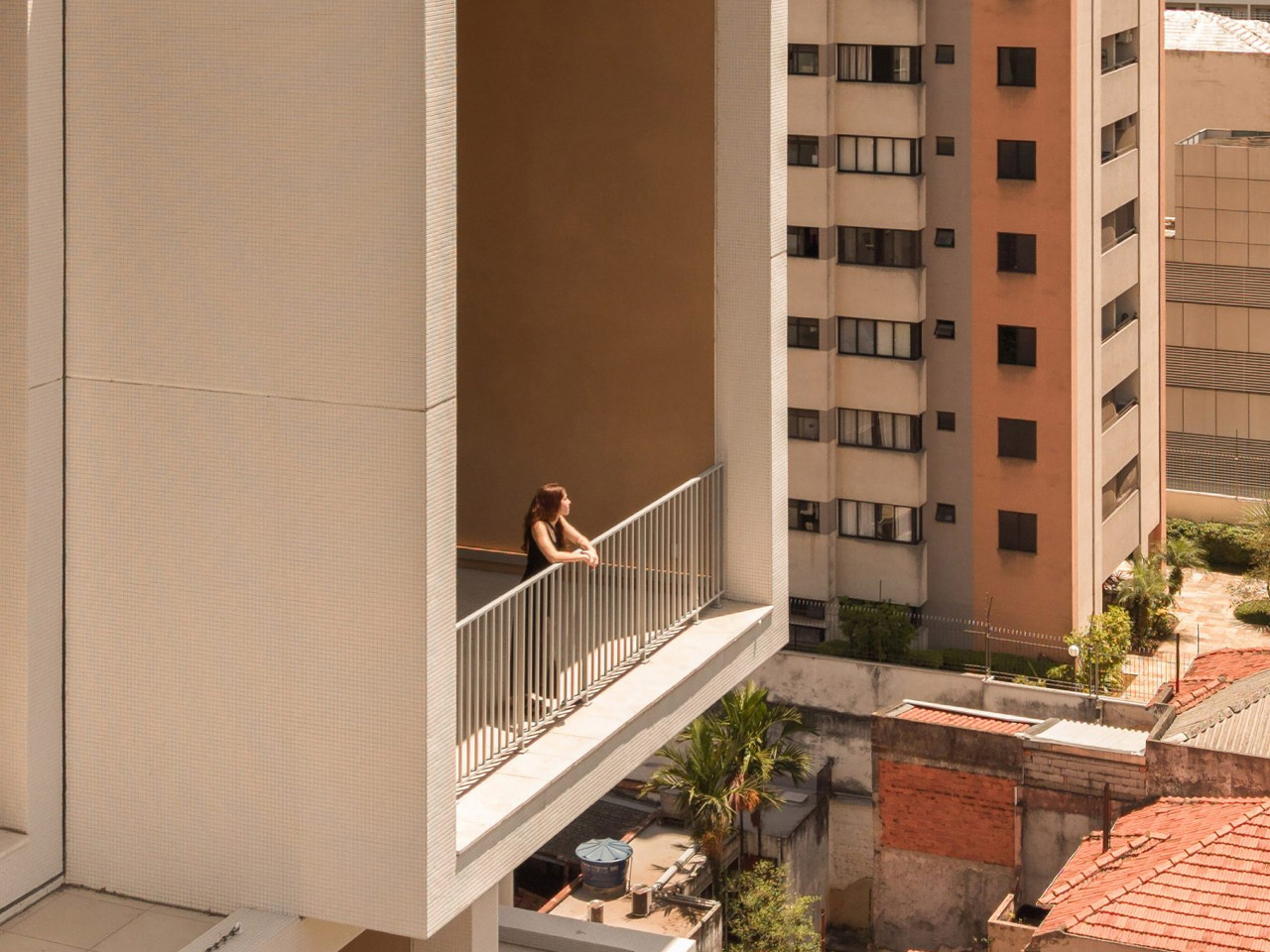
Designed from the inside out, each projecting volume corresponds to functional interior spaces, creating flexible duplex and triplex layouts that maximize natural light, ventilation, and city views. The pixelated geometry is more than a visual feature, as it shapes the user experience while supporting adaptable living and working environments. The project reflects how digital-inspired forms are influencing contemporary architecture with designs that balance visual impact, functionality, and urban integration.
Pixelated design is no longer just a nostalgic reference to early technology. It has evolved into a versatile creative language that connects digital culture with physical craftsmanship, inspiring products, interiors, and architecture that feel innovative, playful, and deeply connected to the way we experience virtual and real worlds
The post From Walnut Furniture to a São Paulo Tower: 5 Takes on Pixelated Design first appeared on Yanko Design.

Samsung is poised to transform the smartphone industry with its rumored Galaxy Z Slide, a device that introduces rollable display technology. This innovative concept combines portability with functionality, offering a compact design that expands into a larger screen when needed. By addressing the limitations of current foldable devices, the Galaxy Z Slide could set a […]
The post What We Know About the Samsung Galaxy Z Slide Ahead of Its Rumored Debut appeared first on Geeky Gadgets.

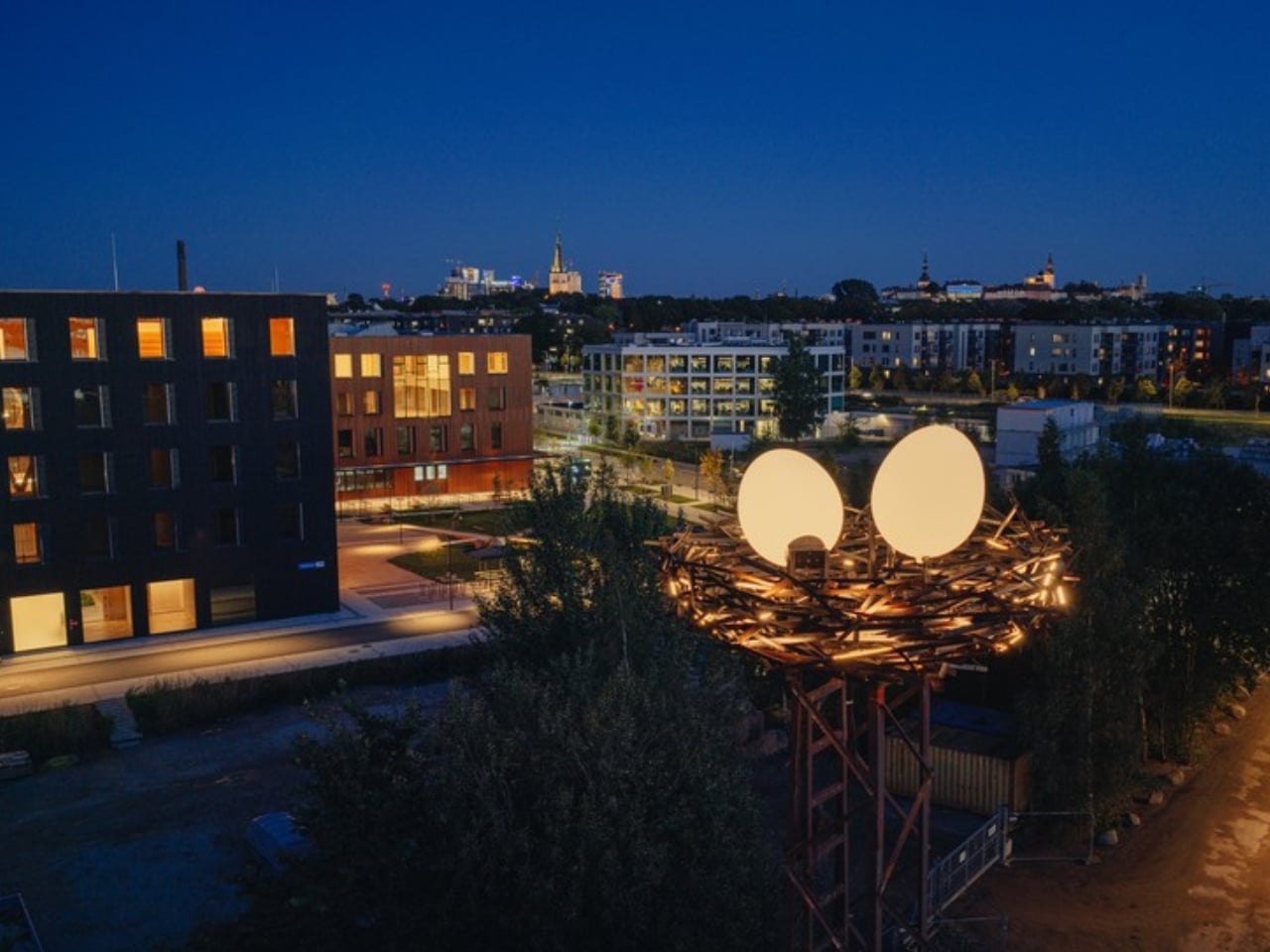
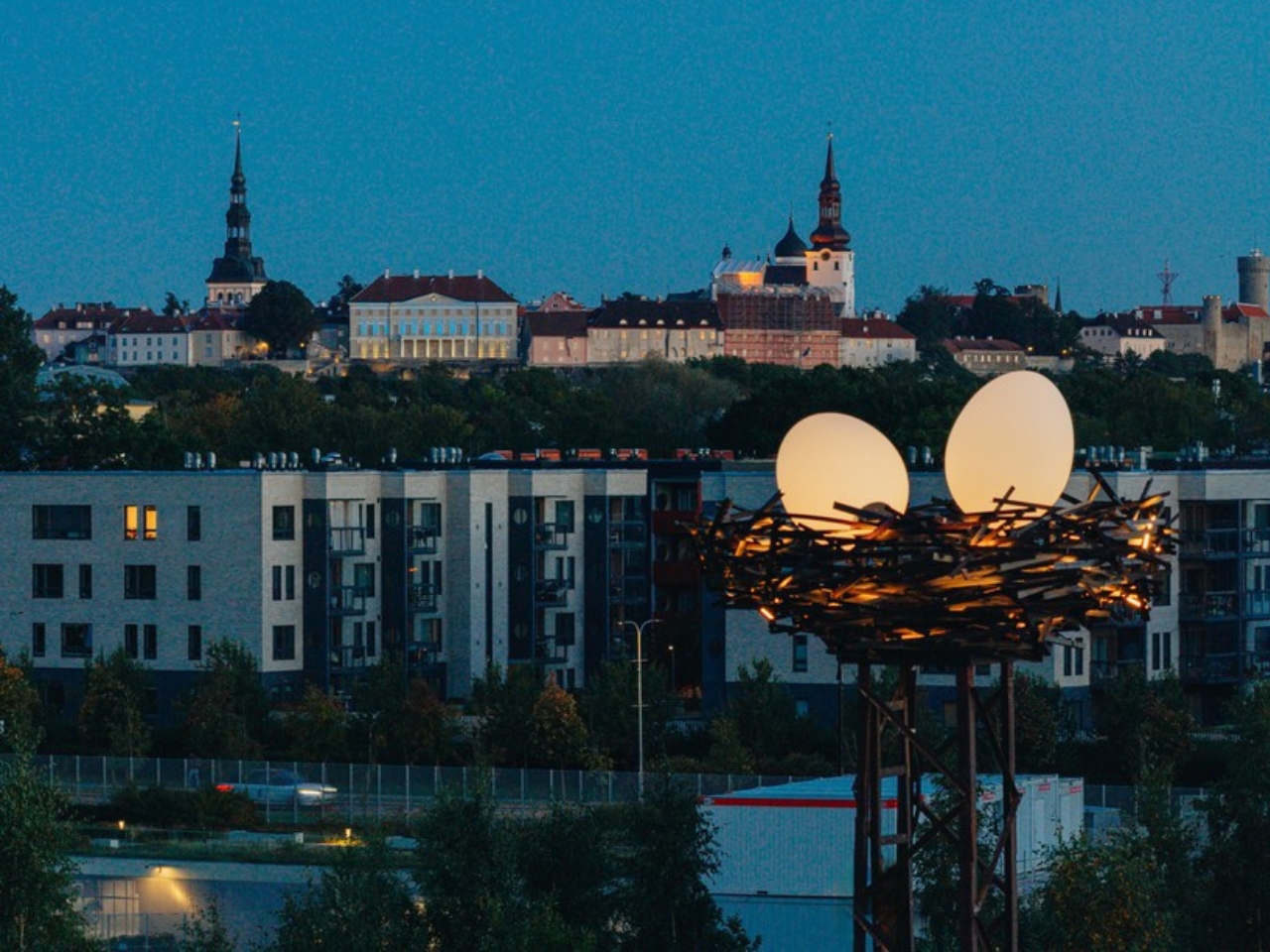
Two giant eggs glowing nearly 65 feet above the ground is a wonderfully odd assignment for an old lighting mast. In Tallinn, Estonia, Nest 2 gives a leftover piece of shipyard infrastructure a second job as public art. Designed by spatial design studio Inimruum with lighting studio un-like, the completed installation tackles a familiar redevelopment problem: how to give obsolete industrial structures a purpose while keeping their history legible. Apparently, a very large bird’s nest is one answer.
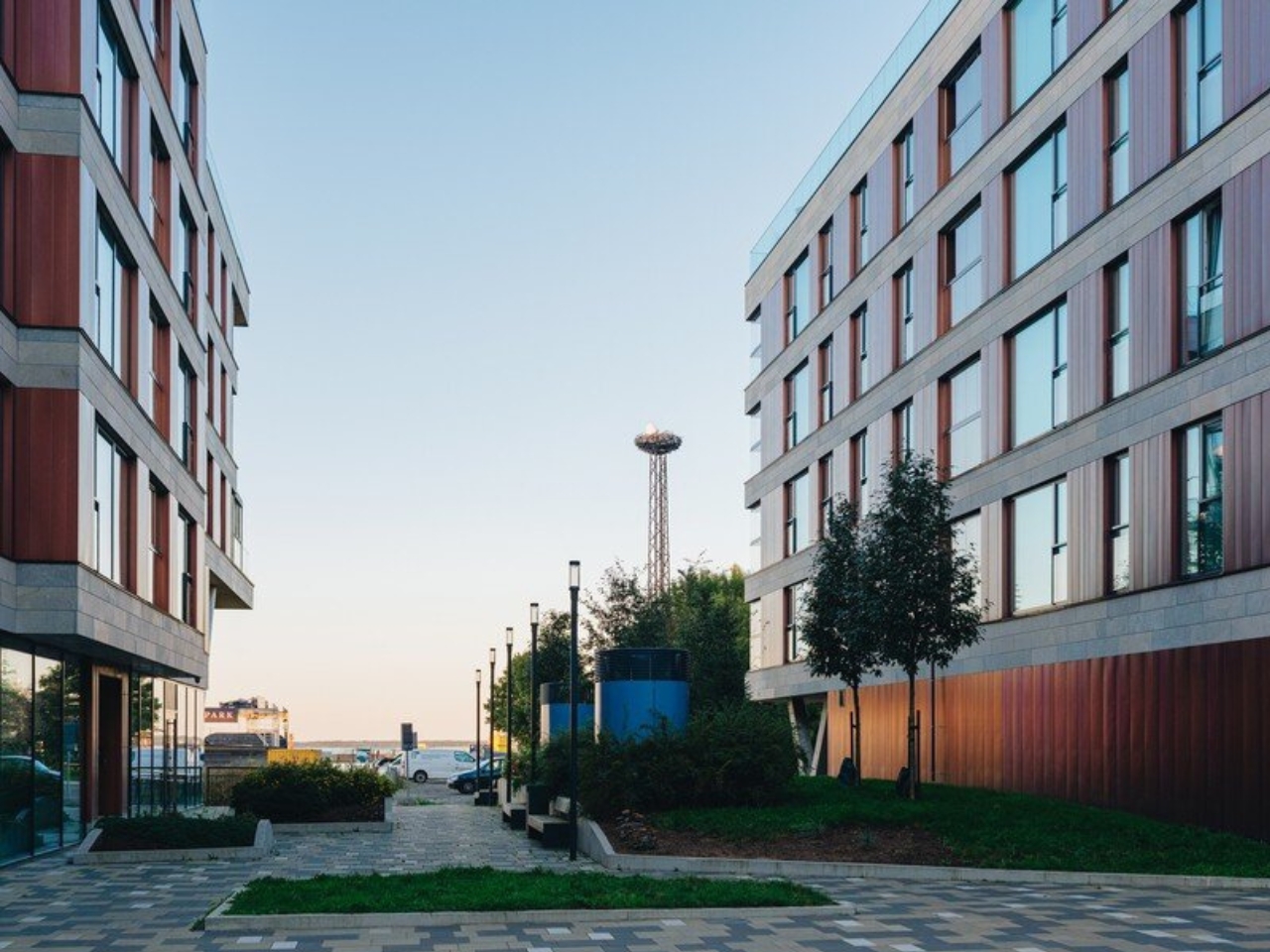
The setting makes that answer more interesting. Noblessner is a former submarine shipyard that has become a mixed-use waterfront neighborhood. The installation occupies a decommissioned lighting mast on Lennusadama Street, carrying a piece of that industrial landscape into its next chapter. I like the restraint of keeping such an awkward, specific object in the picture. A mast has a different kind of presence from a commemorative plaque. It takes up space, interrupts the skyline, and makes the neighborhood’s earlier life harder to treat as background information.
Designer: Inimruum
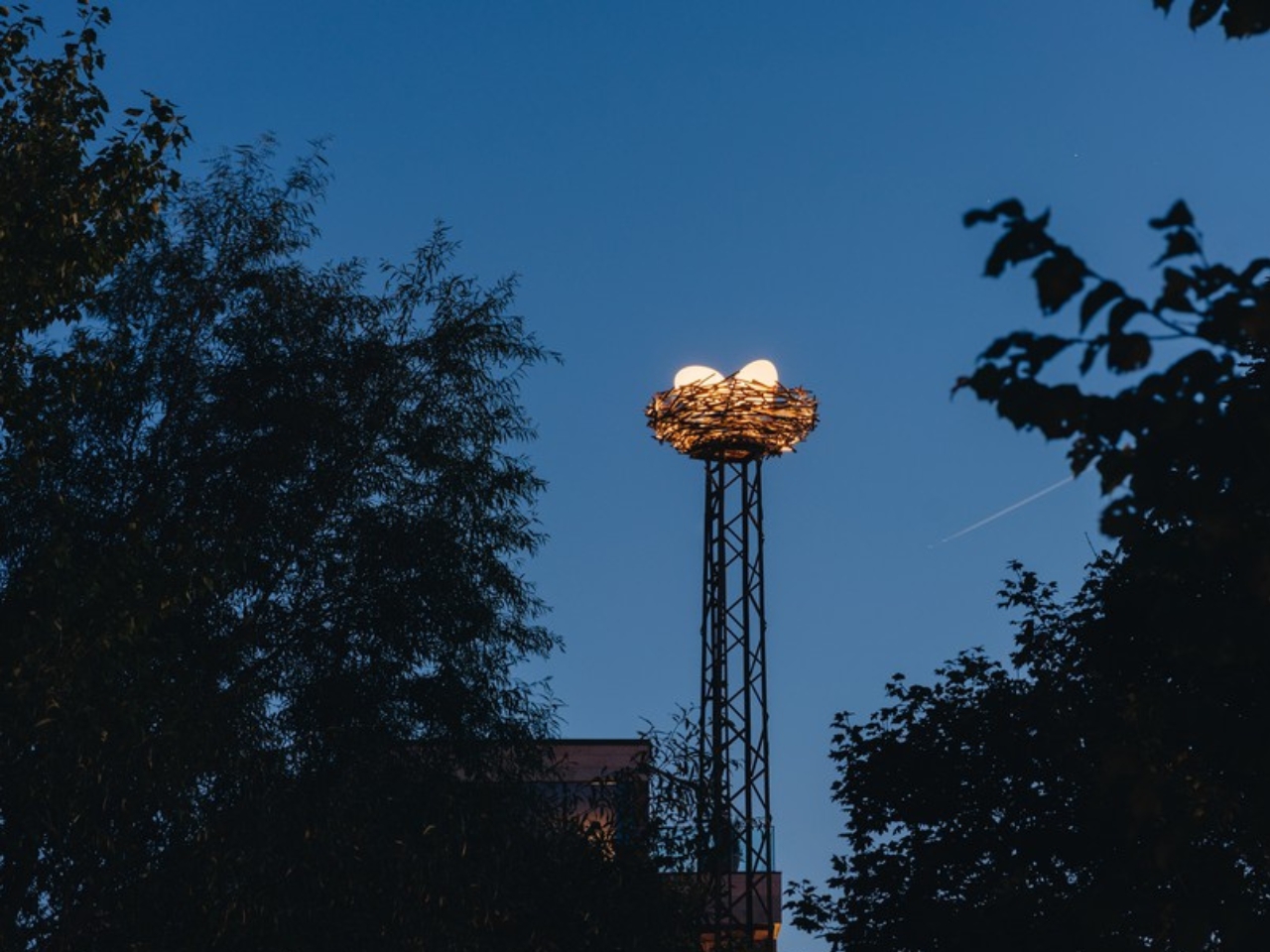
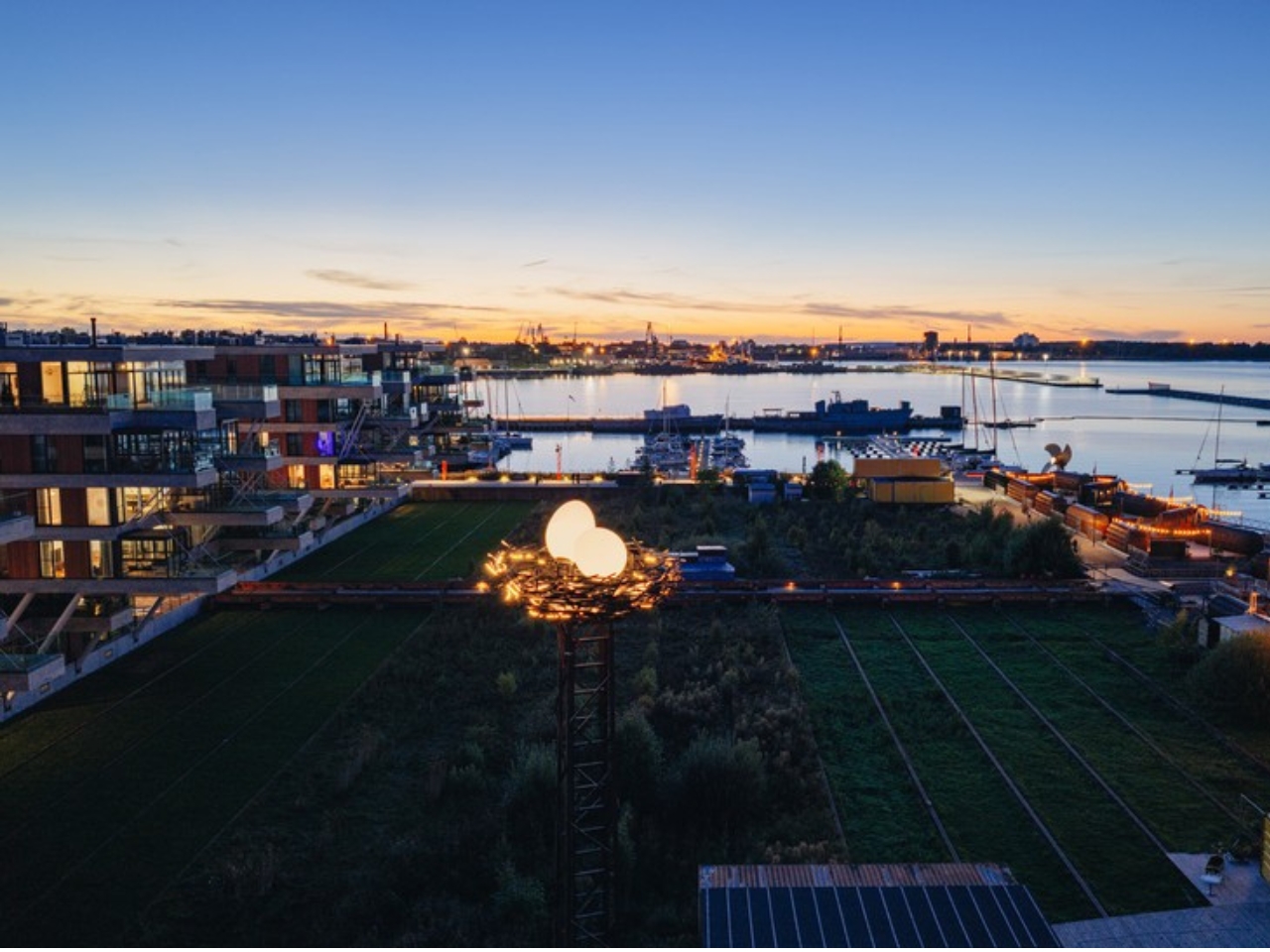
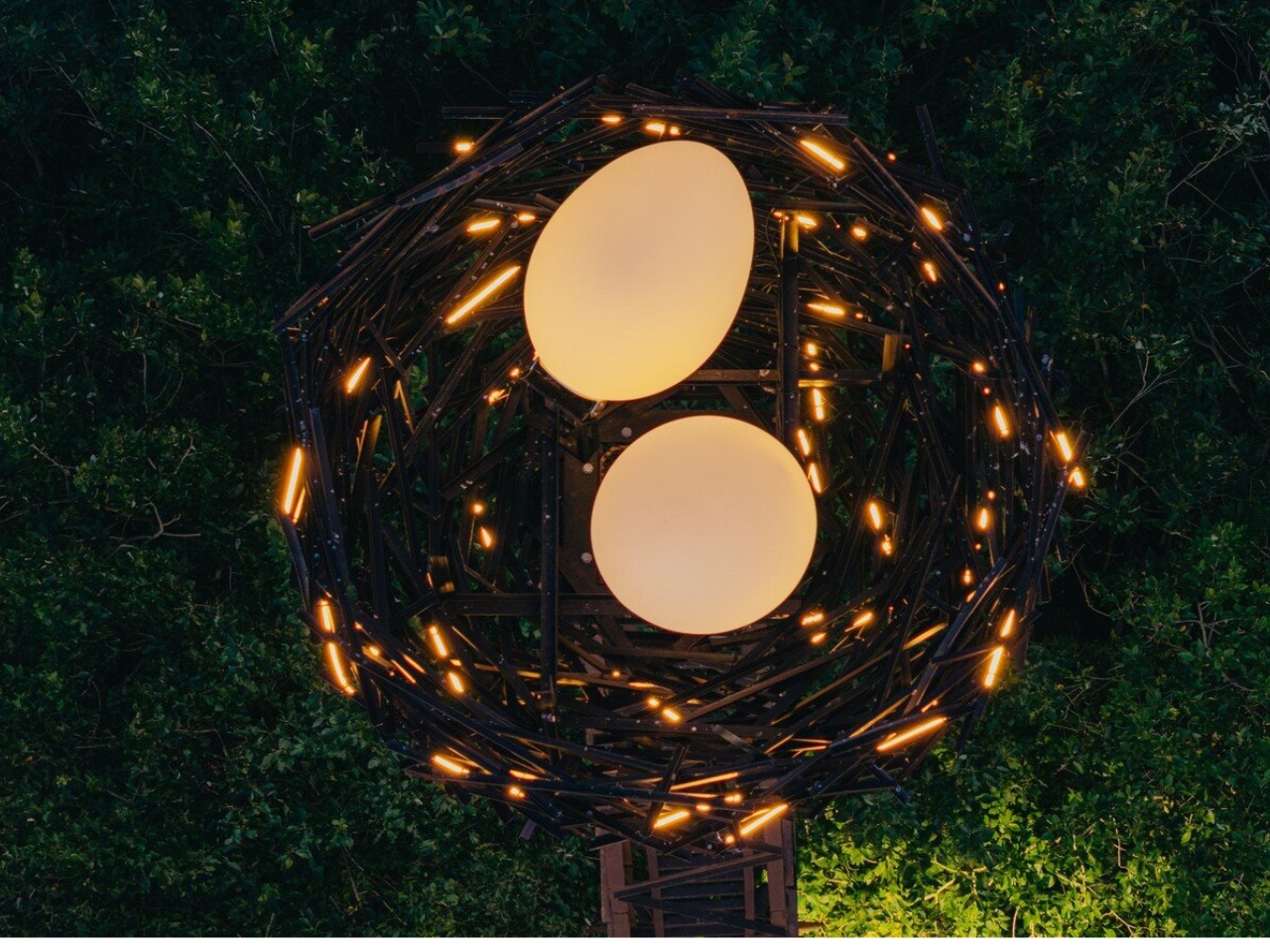
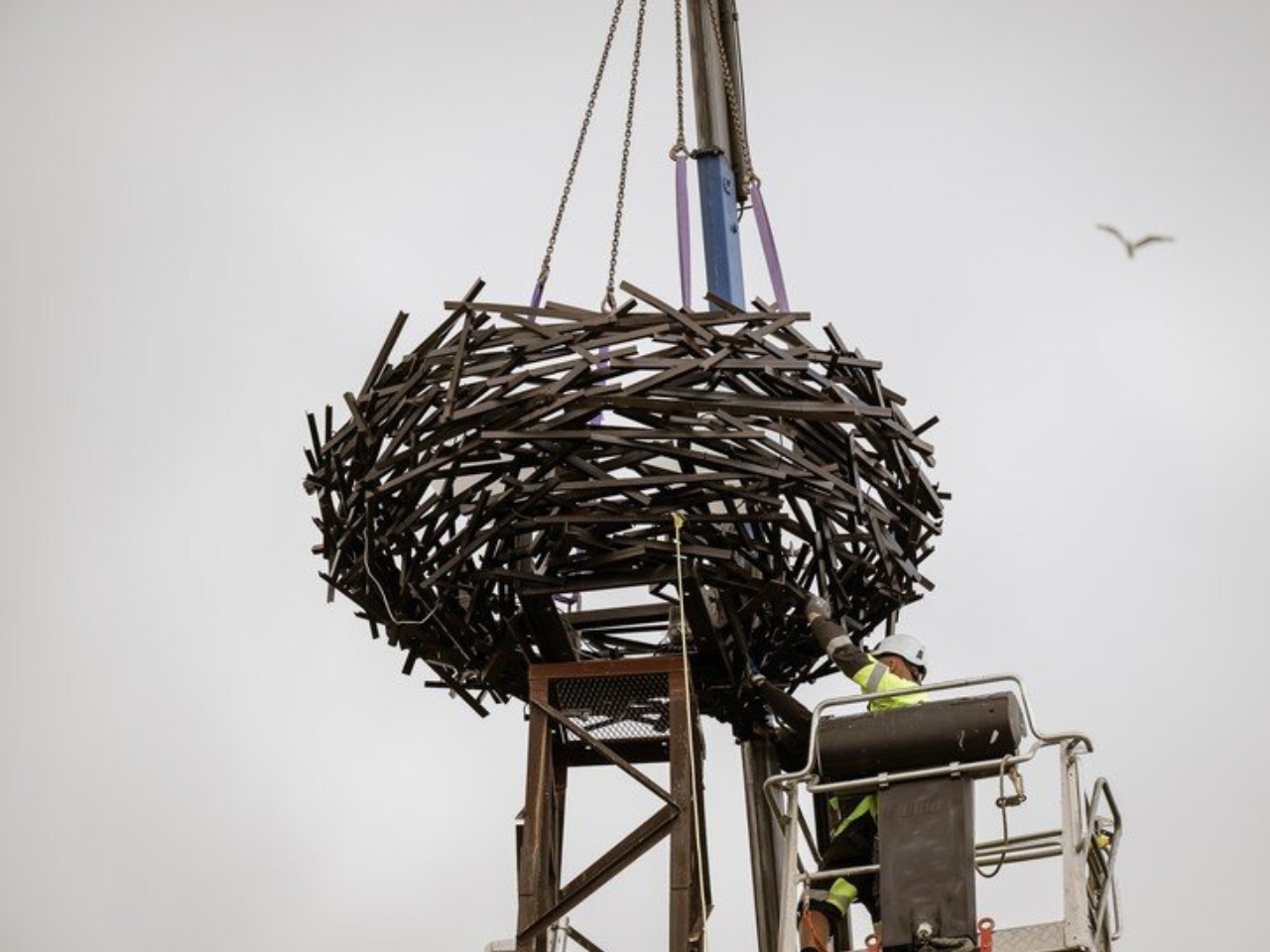
Nest 2’s construction follows that thinking. Its branches are structural angle iron, hand-woven by metal artist Heigo Jelle into a nest more than eight feet across. The material echoes the mast’s own legs, connecting the sculpture to its support. That’s a satisfying choice. A smoother, more polished nest might have looked like an accessory dropped onto the tower. Using an industrial profile to imitate gathered twigs gives the playful subject some visual weight. The bird reference stays easy to understand without requiring the structure underneath to disappear.
The eggs introduce a different material and a gentler shape. Both are rotomolded polyethylene, with internal LEDs that can illuminate them separately and change their colors. Smaller lights among the metal branches pick out the nest after dark. One egg is positioned almost on its side. To me, that last decision carries as much personality as the lighting technology. A perfectly balanced pair could feel like a formal display. A tilted egg suggests a nest assembled by an animal with priorities other than symmetry, even at this improbably oversized scale.

The premise also has a genuinely charming origin. The first Nest, installed in 2024, grew from a five-year-old’s drawing of eggs on a rusty mast. That earlier work held three eggs, and un-like developed it with design agency Velvet. Knowing that history makes the sequel feel less like a committee searching for an approachable public-art symbol. A child saw a tall, unused structure and imagined somewhere for a bird to live. I appreciate that the adults involved let the simplicity of that thought survive the engineering.
There’s a practical continuity between the two projects, too. Nest 2’s eggs were produced using the same mold as the original installation’s, while its heavier-looking angle-iron branches establish a different character closer to the sea. Reusing the tooling is a modest detail, but an appealing one. It gives the series a recognizable family resemblance without demanding that every component be redesigned. I wouldn’t turn that decision into a sweeping environmental claim. It’s enough to recognize a sensible production choice alongside the reuse of the mast itself.
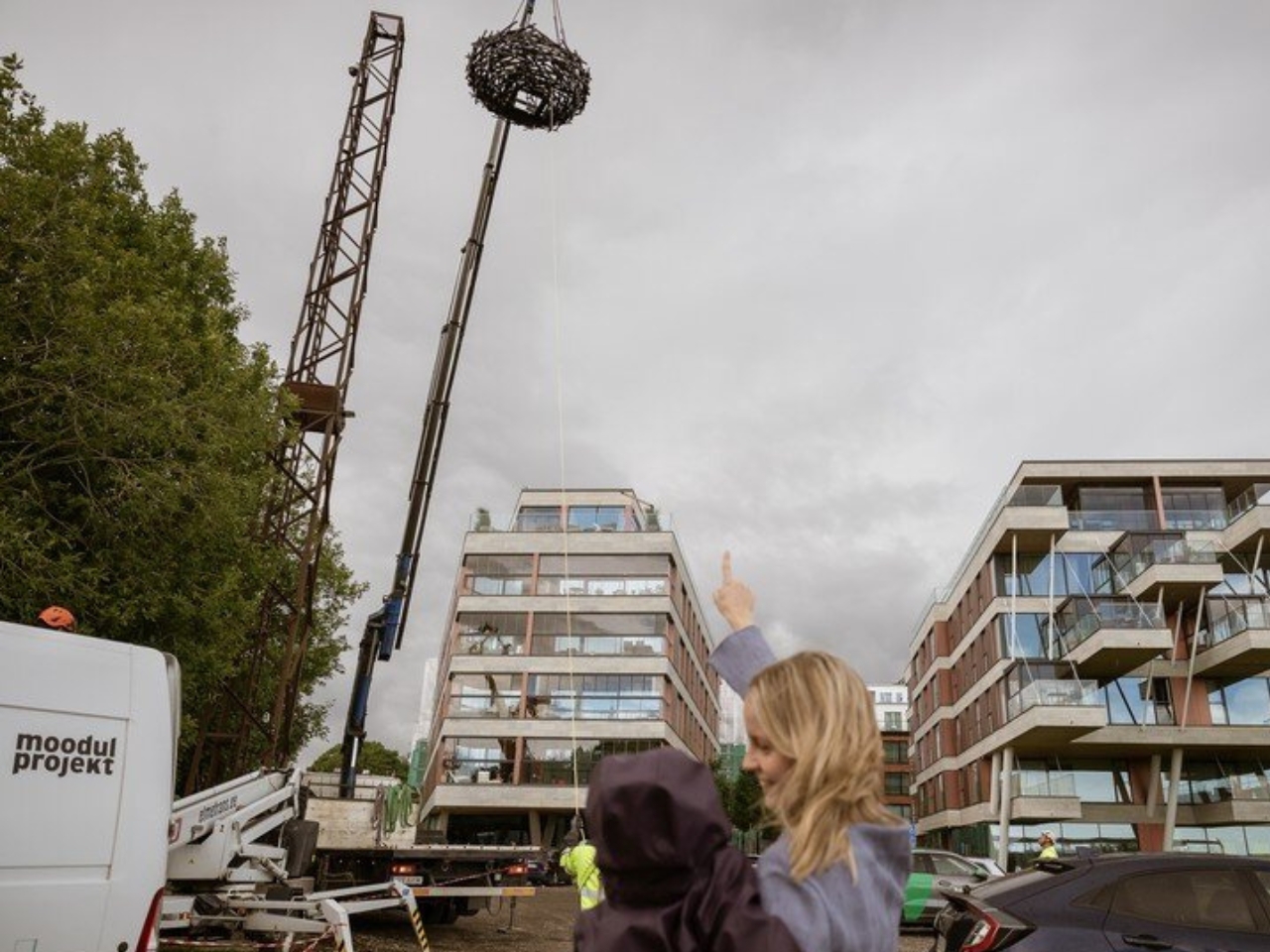
Developer Merko commissioned the installation, so the work also belongs to the broader business of making a residential neighborhood appealing. That context doesn’t diminish it for me, though it keeps the assessment grounded. A glowing nest cannot tell us whether the surrounding development is accessible, affordable, or pleasant to navigate. What it can offer is a specific image attached to a specific place. “Meet near the giant eggs” has a clarity that a tasteful abstract sculpture might struggle to match.
My favorite decision here is leaving the old mast recognizable beneath its unlikely new occupants. The nest needs that height and industrial framework to make the joke work. Remove them, and you’d still have a large illuminated sculpture, but a less particular one. Nest 2 gives the inherited structure an active role in the composition. The useful takeaway is refreshingly small: before treating an obsolete object as clutter, it’s worth asking what its existing shape might already be suggesting.

The post Giant Glowing Eggs Revive a Shipyard Mast Without Hiding Its Past first appeared on Yanko Design.