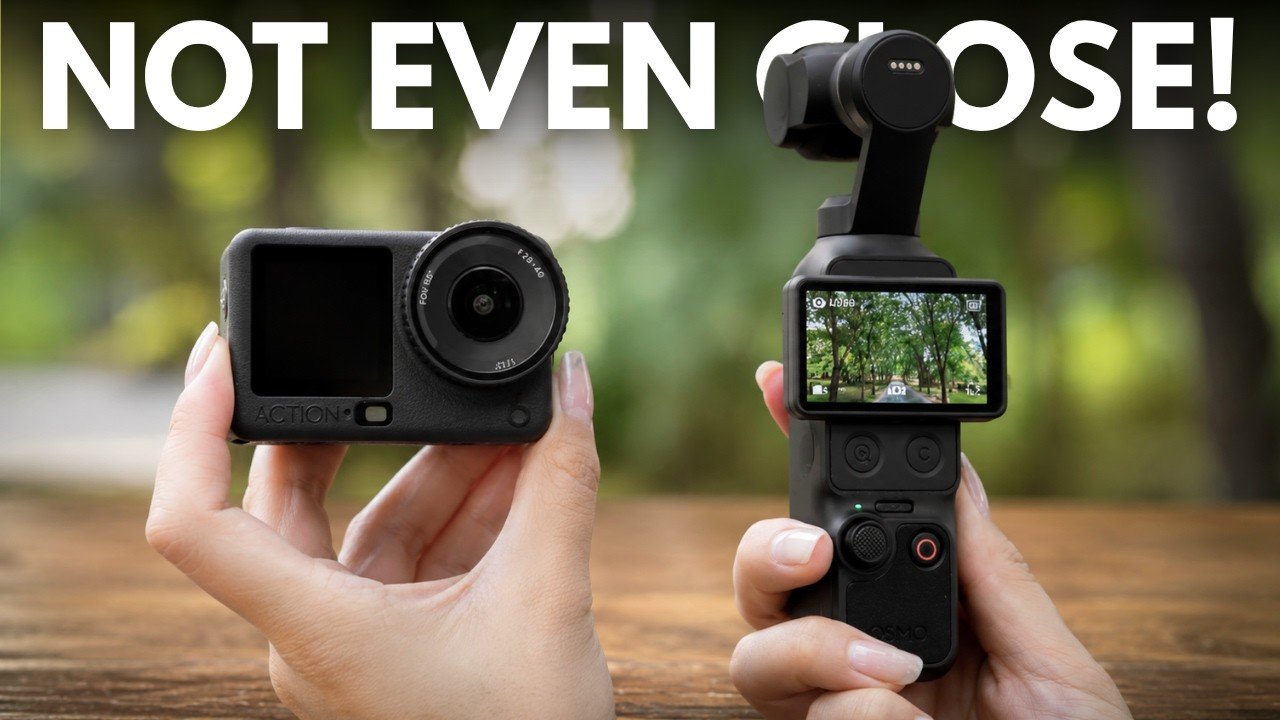
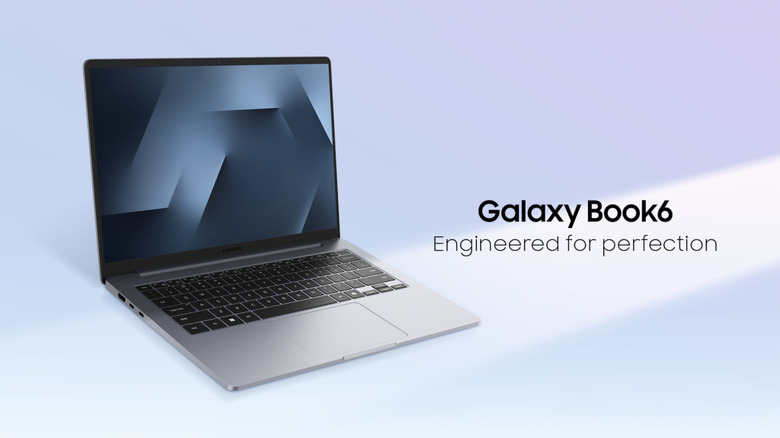
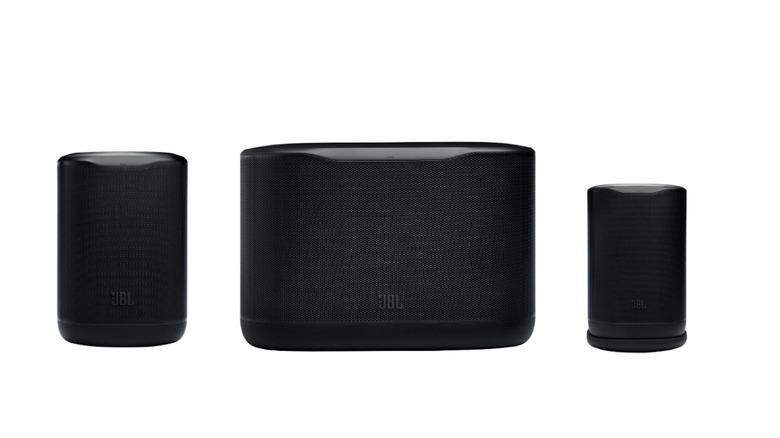
When deciding between the DJI Pocket 4 and the DJI Osmo Action 6, it’s essential to consider how and where you plan to use your camera. As highlighted by Tech Court, these two devices cater to distinct creative needs. The Pocket 4, with its 1-inch sensor and mechanical gimbal, is tailored for creators seeking cinematic […]
Apple’s iOS 27 is set to redefine the mobile experience with a focus on enhanced performance, advanced AI integration, and user-centric features. Scheduled for release in mid-September 2026, this update promises faster system responsiveness, smarter functionality, and greater customization options. While it will support all devices currently running iOS 26, select features will be exclusive […]
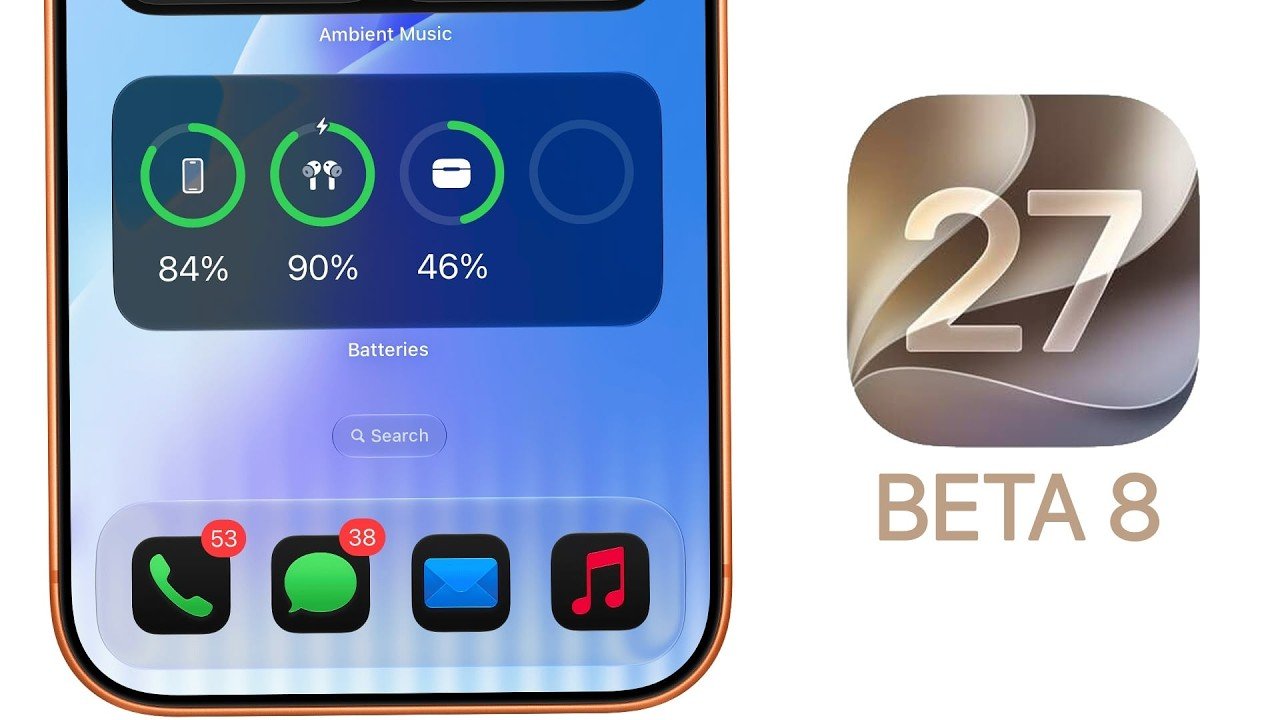
Apple has officially rolled out iOS 27 Beta 8, which is likely the final developer beta before the Release Candidate (RC). This update focuses on refining the user experience through bug fixes and performance enhancements, paving the way for the public release of iOS 27. While it doesn’t introduce major new features, it plays a […]
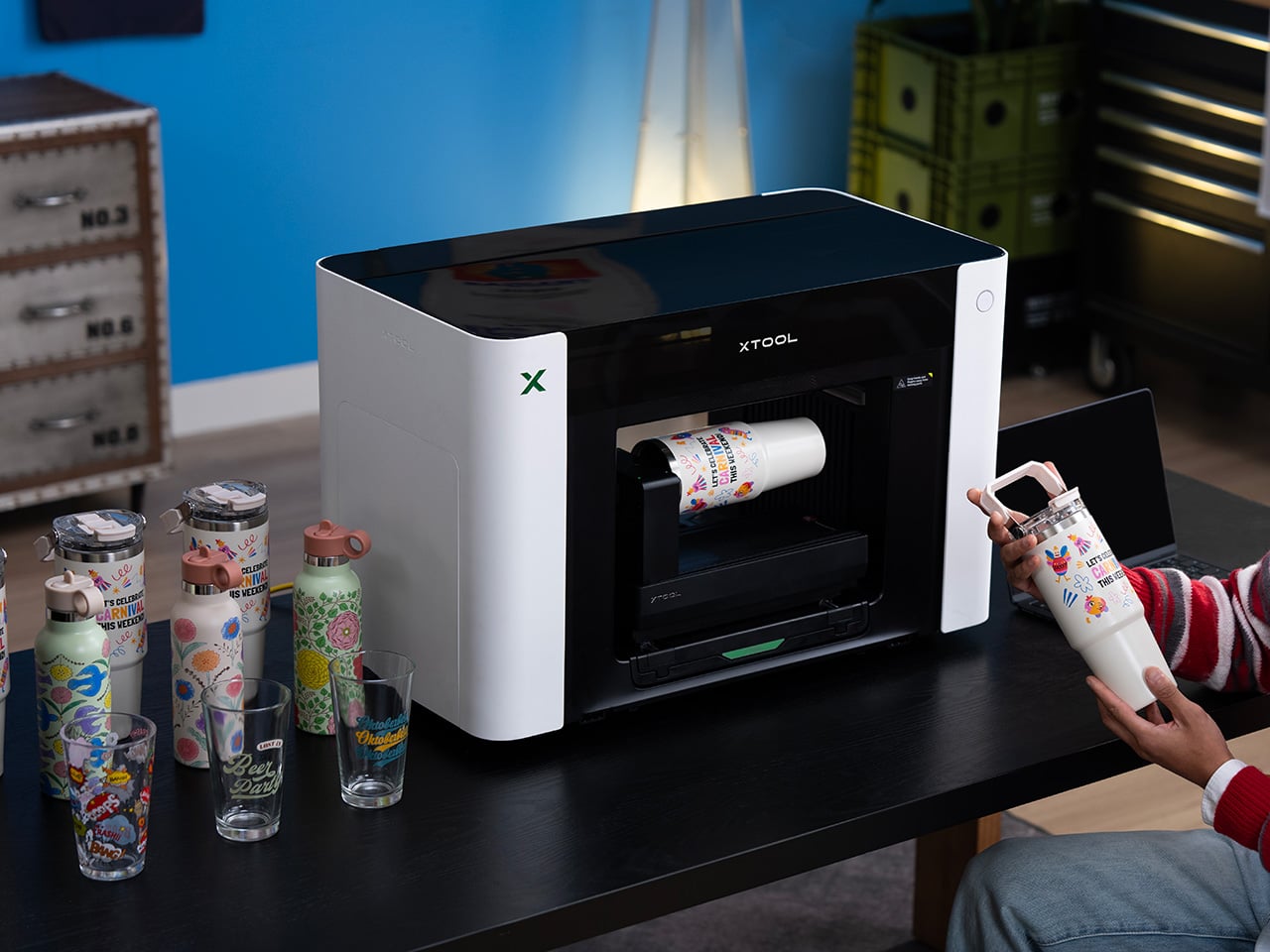
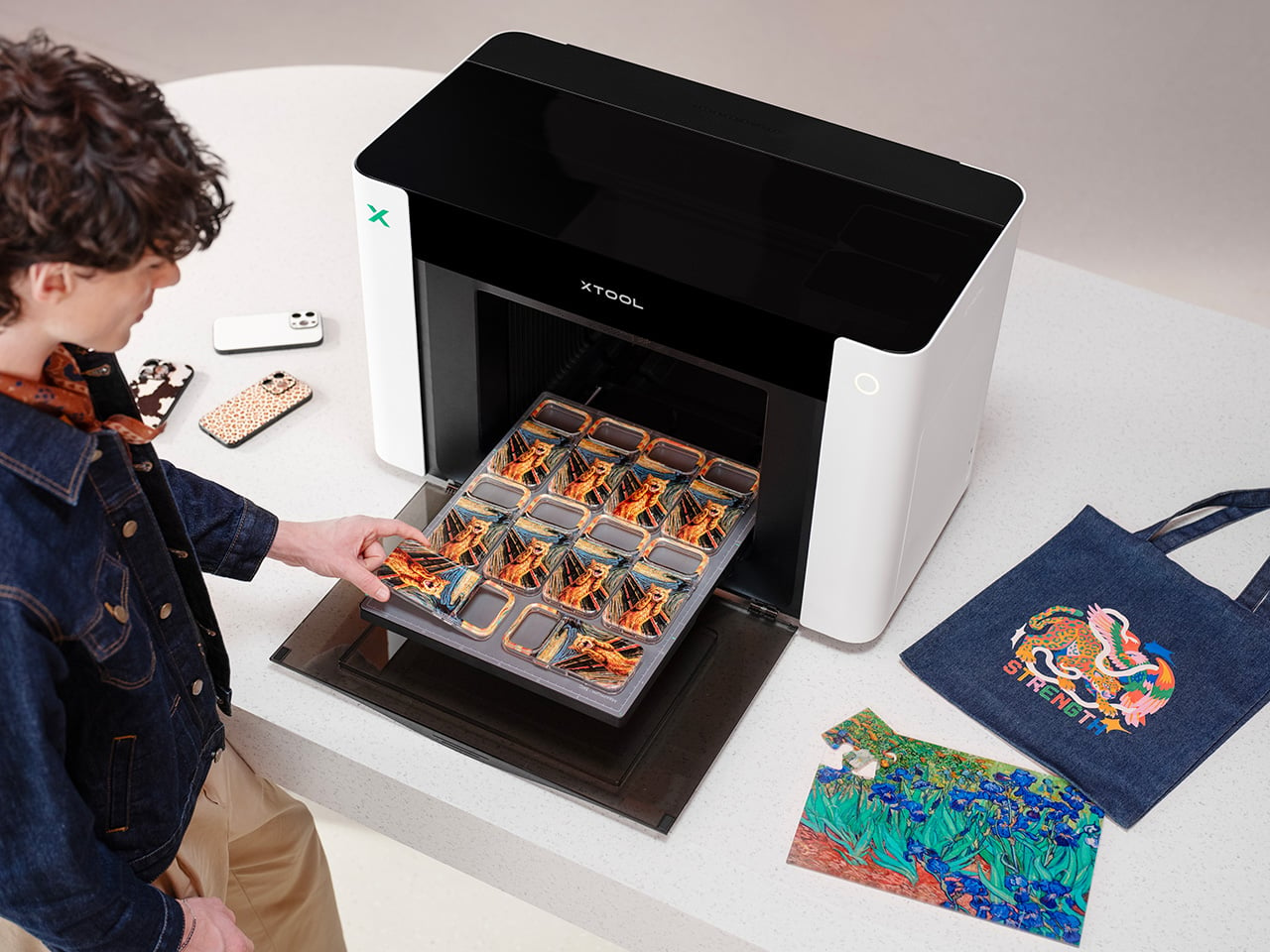
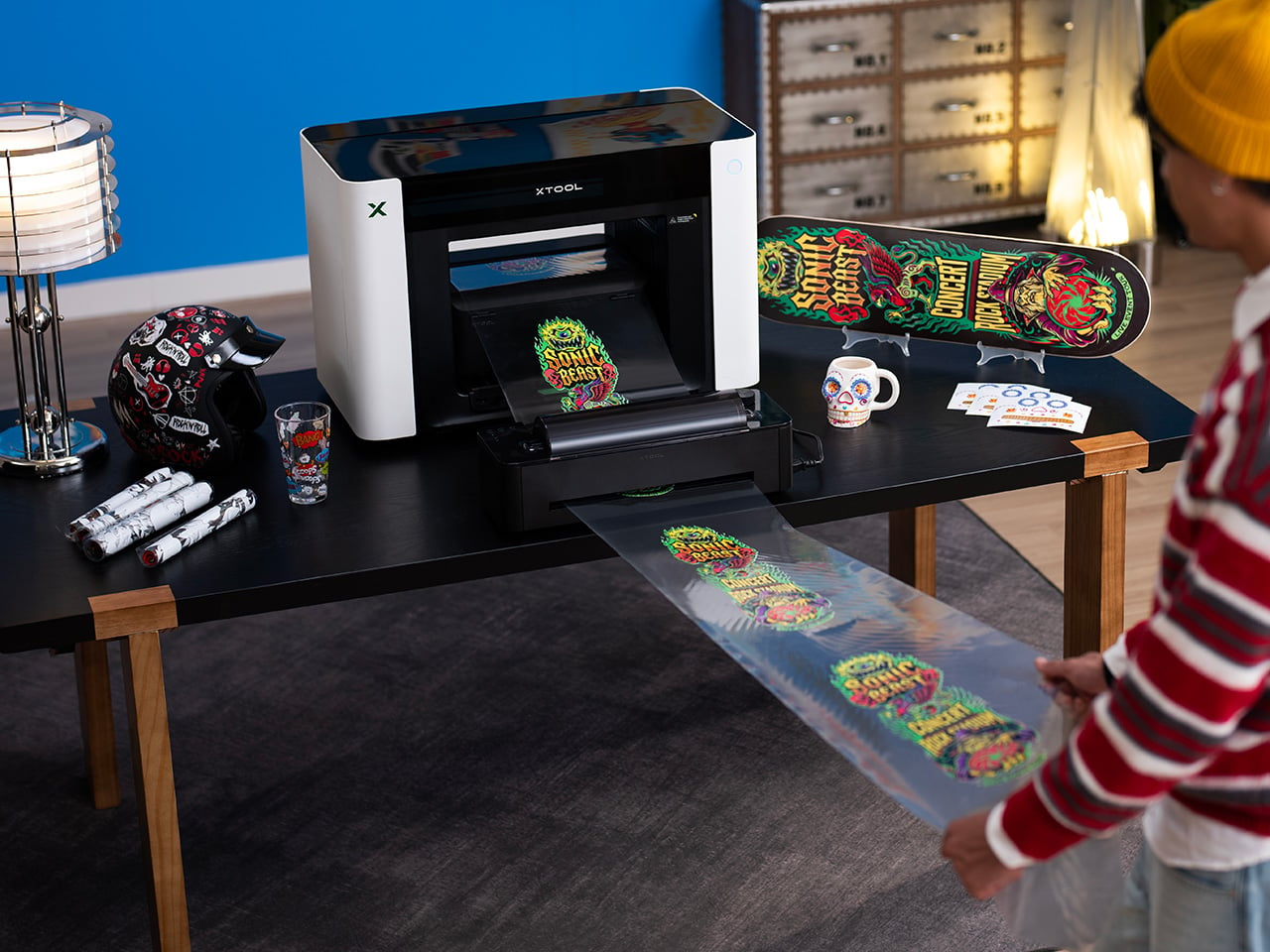
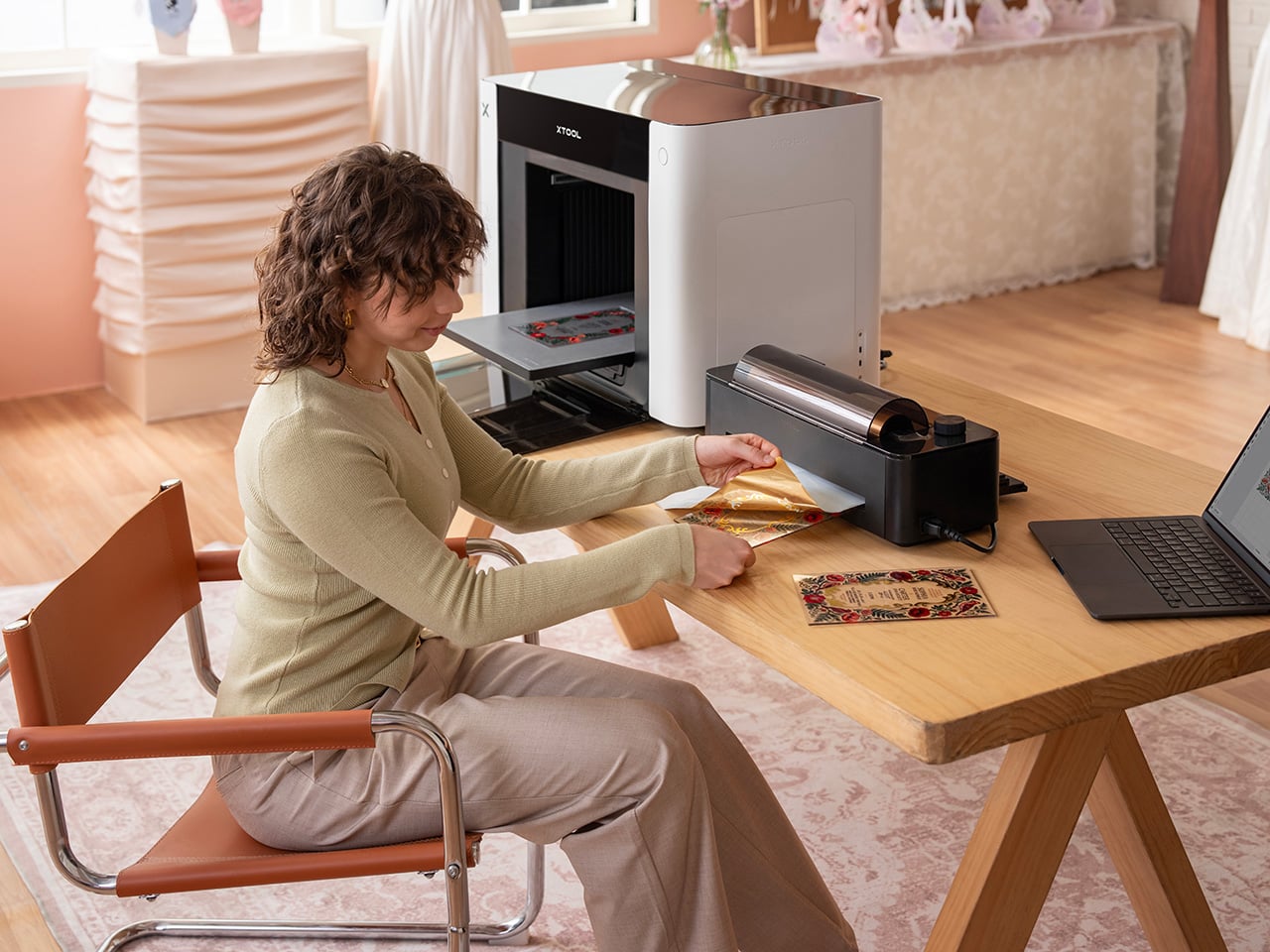
When a desktop printer moves 6,000 units and clears $20 million in revenue on day one, something is clearly going on beyond the usual pre-launch hype cycle. The xTool O1 Omni Printer is a 4-in-1 desktop system merging UV, DTG, DTF, and UV DTF printing in one modular machine, a combination that previously required four separate devices and considerable floor space. For years, creators have been burdened by fragmented workflows, forced to buy separate, single-purpose machines for rigid substrates and textiles. Desktop UV printing has been one of the more notable maker-market stories of 2026, and the O1 is making a clear bid for category leadership. The central design proposition is capability consolidation, and day-one sales suggest it landed with the right people.
Units have already begun shipping, turning pre-order momentum into machines arriving at actual studios and workshops. On August 27, the first offline debut of the O1 Embroidery happened at the Next Level Conference x xTool SMB Summit, where live demos will give attendees their first hands-on encounter with the platform’s textile and dimensional output. That event was a deliberate venue choice: the Summit brings together the small business creative community the O1 is built for, and debuting the embroidery capability there sends a clear signal about where xTool sees the product’s core application. Three editions run from $1,899 for the Single UV configuration to $2,999 for the full UV + Fabric hybrid. The modular dual-printhead system is the engineering decision that holds the entire consolidation promise together.
The dual-printhead architecture is what separates the O1 from every desktop printer in its class, operating more like a configurable platform than a fixed device. Users can run dual UV printheads for layered effects and accelerated throughput, or swap in a fabric printhead to shift between hard goods and garment workflows on the same machine. UV output covers wood, acrylic, glass, and metal with raised 3D texture effects up to 7mm deep, supported by a 2,000-plus texture library. The fabric side handles DTG and DTF workflows, including on curved and irregular surfaces, with an OEKO-TEX certified system that survives 50-plus washes without fading. A Rotary Attachment extends the platform to cylindrical objects like tumblers, with Automated 3D Modeling covering 90% of mainstream shapes for a 1:1 design preview before printing.
Positioning accuracy is delivered by xTool’s Pixel-Scan Vision System, combining Line Laser Altimetry and CIS Scanning. A Laser-Guided Auto-Focus detects each object’s highest point before printing, eliminating printhead collisions on uneven surfaces. Unlike traditional distorted fish-eye cameras, the 1:1 Distortion-Free CIS Scanning offers close-range, high-definition scans with zero dead zones, powering a jigless “Drop & Print” workflow that removes alignment jigs from the equation, which is a more meaningful time-saver than it sounds in an actual production environment. xTool Studio’s AI Contour Recognition instantly identifies irregular shapes to fill designs perfectly while automatically avoiding holes like camera cutouts. The Laser + UV Seamless Workflow lets users laser-cut a workpiece and move it to the O1, where the software automatically recognizes and aligns the print with zero manual recalibration.
Three editions cover the full range from single-mode UV to full hybrid, priced between $1,899 and $2,999, with each tier differentiated by workflow rather than arbitrary specs. The entry-level UV Edition at $1,899 targets rigid material personalization across wood, acrylic, glass, and metal. The Dual-Head UV Edition at $2,899 adds fluorescent neon inks for blacklight effects and specialized soft and hard white inks for materials like leather. The UV + Fabric Edition at $2,999 is the full cross-category hybrid, covering both hard goods and garment workflows through the OEKO-TEX certified fabric system. All three share the Pixel-Scan Vision System and xTool Studio, keeping the intelligence layer consistent across the lineup.
UV printing at the studio scale has historically required dedicated ventilation and careful ink handling, which kept the workflow inside commercial print shops. The O1 uses GREENGUARD-certified, non-reprotoxic inks and an advanced built-in air filtration system to eliminate odors in home studios. SmartCycle 2.0 automates routine care to prevent clogging, offering 14-day vacation-ready support that lets users step away with confidence and return to a machine that is ready to run. The Dual-Head UV Edition adds specialized flexible white inks, expanding the material list to leather goods and flexible substrates. Taken together, these decisions position the O1 as a machine built to live in a real creative workspace, not parked in the back corner of a commercial print shop.
The O1 Embroidery made its first public hands-on appearance at the Next Level Conference x xTool SMB Summit on August 27, putting the platform’s most dimensional textile output in front of the small business creators it is built for. Desktop UV printing has heated up considerably in 2026, with machines like the eufyMake E1 generating real market attention, and the O1 is making a clear bid for the consolidation position in that category. The 6,000-unit, $20 million day-one performance signals the market was ready for this hardware category long before the product arrived. Explore the full xTool O1 Omni Printer lineup and configure your edition at xTool’s website.
Back in 2015, Ferrari’s own Centro Stile design studio floated a wild pitch: what if F1 cars actually looked cool again, without breaking a single technical regulation? They called it the F1 Concept, gave it a twin deck front wing and bodywork wrapped around the wheels like a second skin, and then, predictably, nothing happened with it. Formula 1 kept getting bigger, heavier, and angrier looking, right up until the FIA finally admitted the cars needed a diet for 2026. A decade later, an Italian designer working out of Modena picked that argument back up and ran with it, and honestly, he might have done Ferrari’s own studio one better.
The car comes from Luca Serafini, who runs LS Design and has spent years building a body of work out of asking what Ferrari would look like if the brand trusted its instincts a little more. He is the same designer behind last year’s alternative take on the 849 Testarossa, done with 3D modeler Aldo Russo, where he argued the goal was updating a heritage cue’s logic rather than copying its shape. That same instinct shows up here. This single seater takes the open wheel racer silhouette everyone knows from Sunday afternoons and smooths it into something closer to sculpture, ditching the sponsor decals and the visual noise of a modern grid car entirely.
Designer: Luca Serafini, LS Design
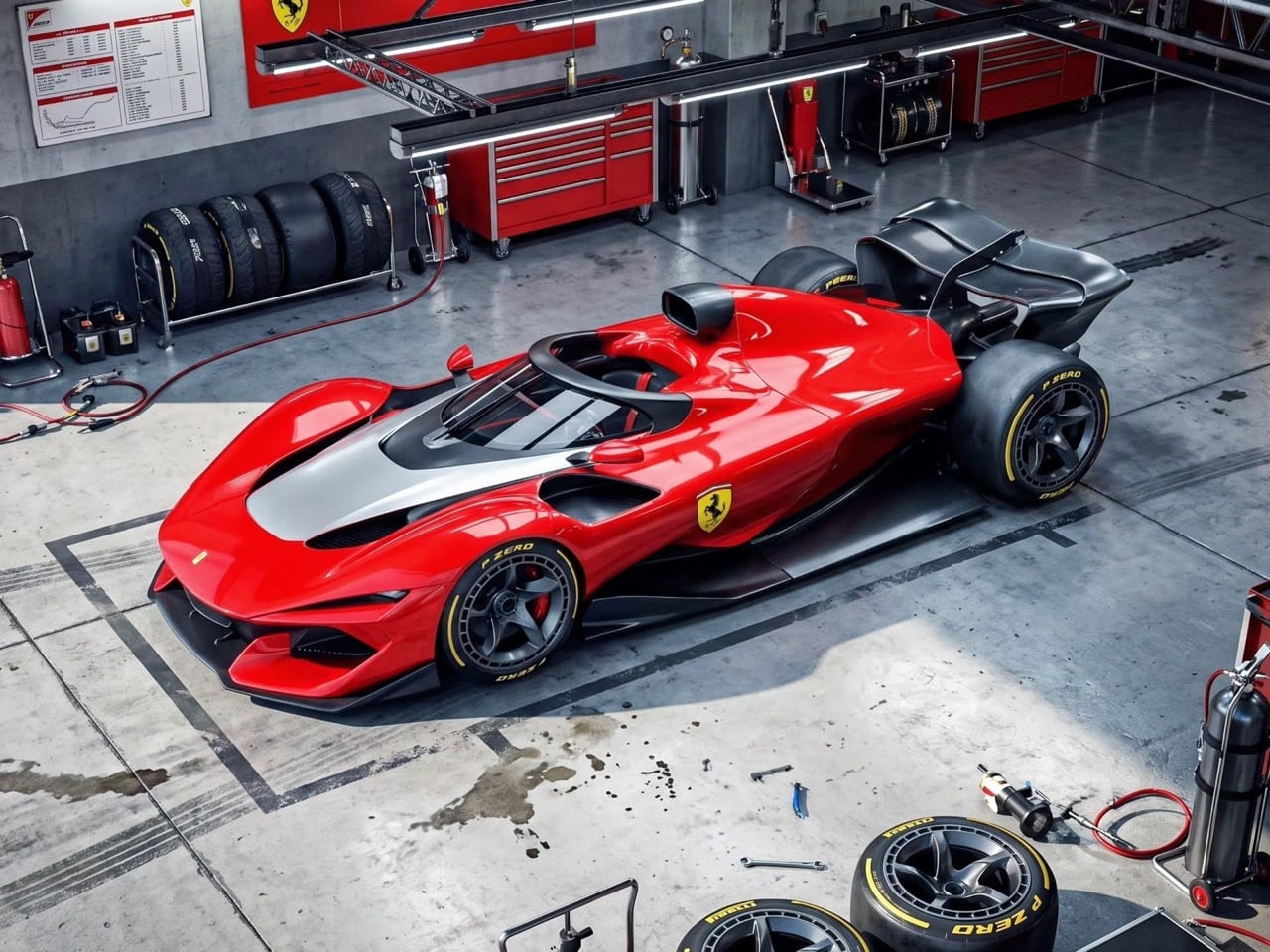
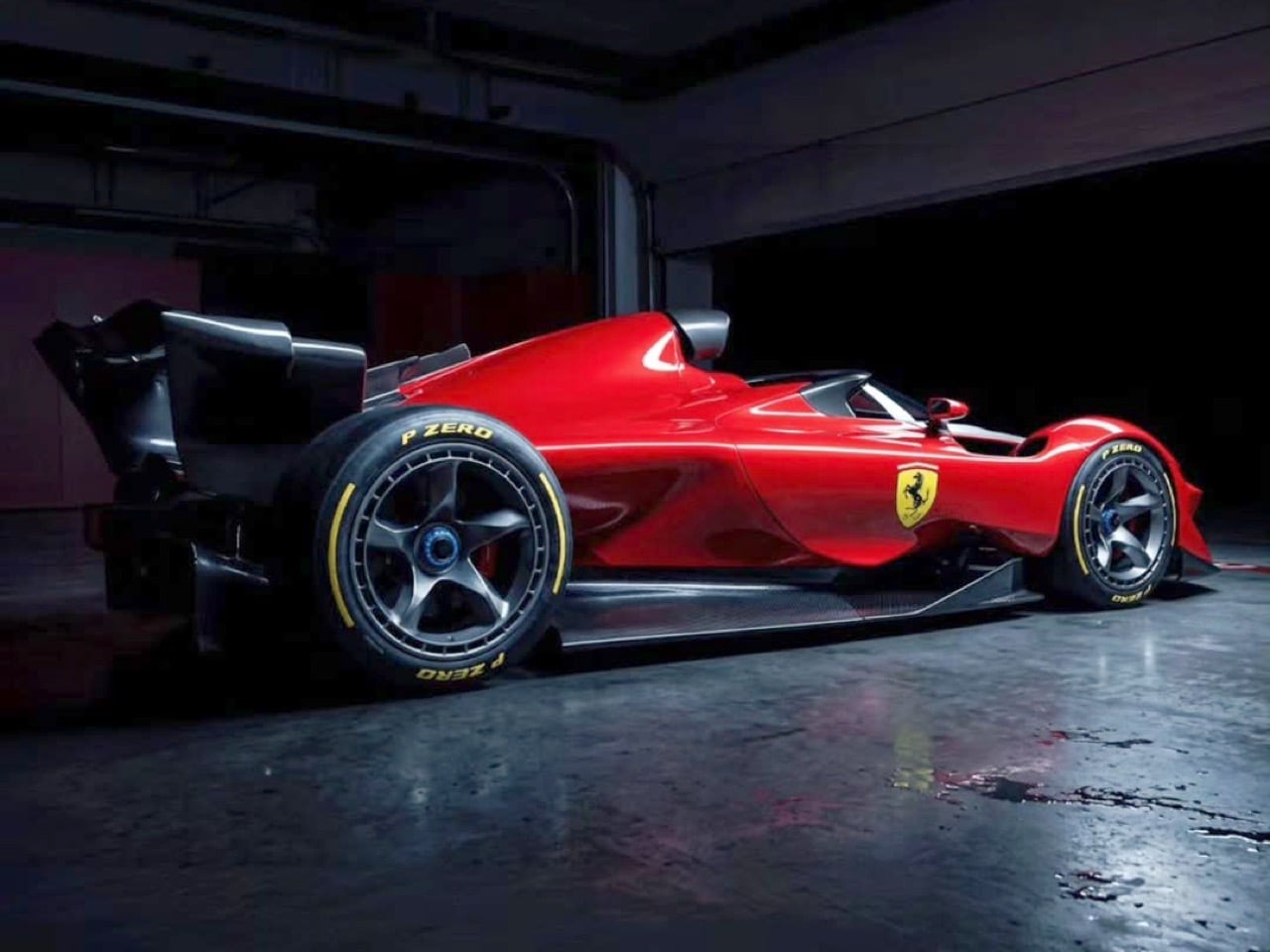
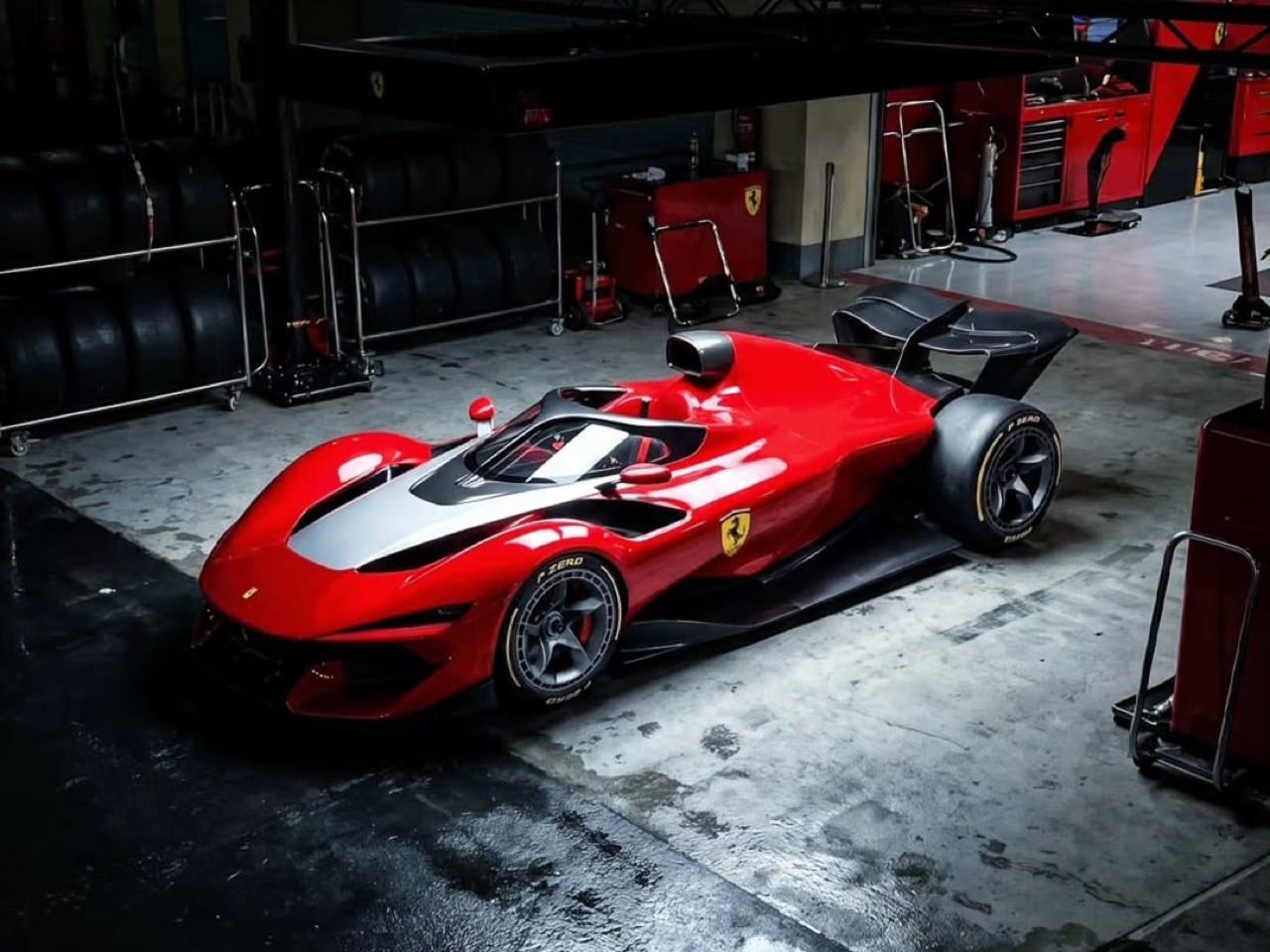
The front wheels get faired into flowing bodywork that flows straight back into the sidepods, while the rears stay fully exposed on yellow banded slicks, which is the whole thesis of the car in one glance. Everywhere else, the surfacing does something almost nobody in real motorsport bothers with anymore. Instead of vanes, barge boards, and serrated flics doing the aerodynamic talking, one unbroken red volume falls from the nose through a soft shoulder into the rear haunch, like the whole car got poured rather than assembled from a parts bin. The black splitter, floor, and rear wing sit underneath like a visible chassis holding the sculpture up.
There is no halo here, which will be the first thing any F1 fan notices. In its place sits a swept structural screen bridging the cockpit opening, more IndyCar aeroscreen than F1 safety cage, with a periscope style airbox scoop rising behind the driver’s head that feels pulled straight out of the 1970s. It is a gorgeous solution and also the most fragile part of the whole pitch, since real single seater regulations exist specifically because open cockpits keep taking hits from flying debris.
Every render is staged inside an actual Ferrari garage, wet pit apron and all, with mechanics crouched over tire guns and Pirelli racks lined up against the wall like this car is minutes from a real session. The Rosso Corsa paint carries a white central spine from nose to airbox, reading more like a 1960s prototype stripe than anything you would see sponsored on a modern grid. Five spoke centerlock wheels, blue center nuts, a swan neck rear wing. It is close enough to real that you start forgetting it was never built to survive contact with the actual rulebook.
That rulebook, as it happens, just got rewritten against this exact silhouette. The 2026 regulations specifically remove the wheel arch fairings that curved over the front tires on recent cars, bringing barge boards back to manage the wake those fairings used to hide. Minimum weight drops thirty kilograms, wheelbase shrinks two hundred millimeters, and every gram of that smooth, appendage free bodywork Serafini drew would cost real lap time on a real circuit. None of that makes the car worse to look at. It just means this is a styling argument dressed up as a race car, not the other way around, and it happens to be a better looking argument than anything currently sitting on the actual 2026 grid.
We have seen designers wrestle with cockpit safety before, including Olcay Tuncay Karabulut’s closed canopy F1 concept we covered a while back, which tackled the same halo problem from the opposite direction. Serafini’s screen splits the difference between that fully enclosed canopy and the open halo drivers race with today, and it does not fully solve either car’s problem. What it does is remind you how much personality F1 gave up chasing regulation compliance, one flap and winglet at a time.
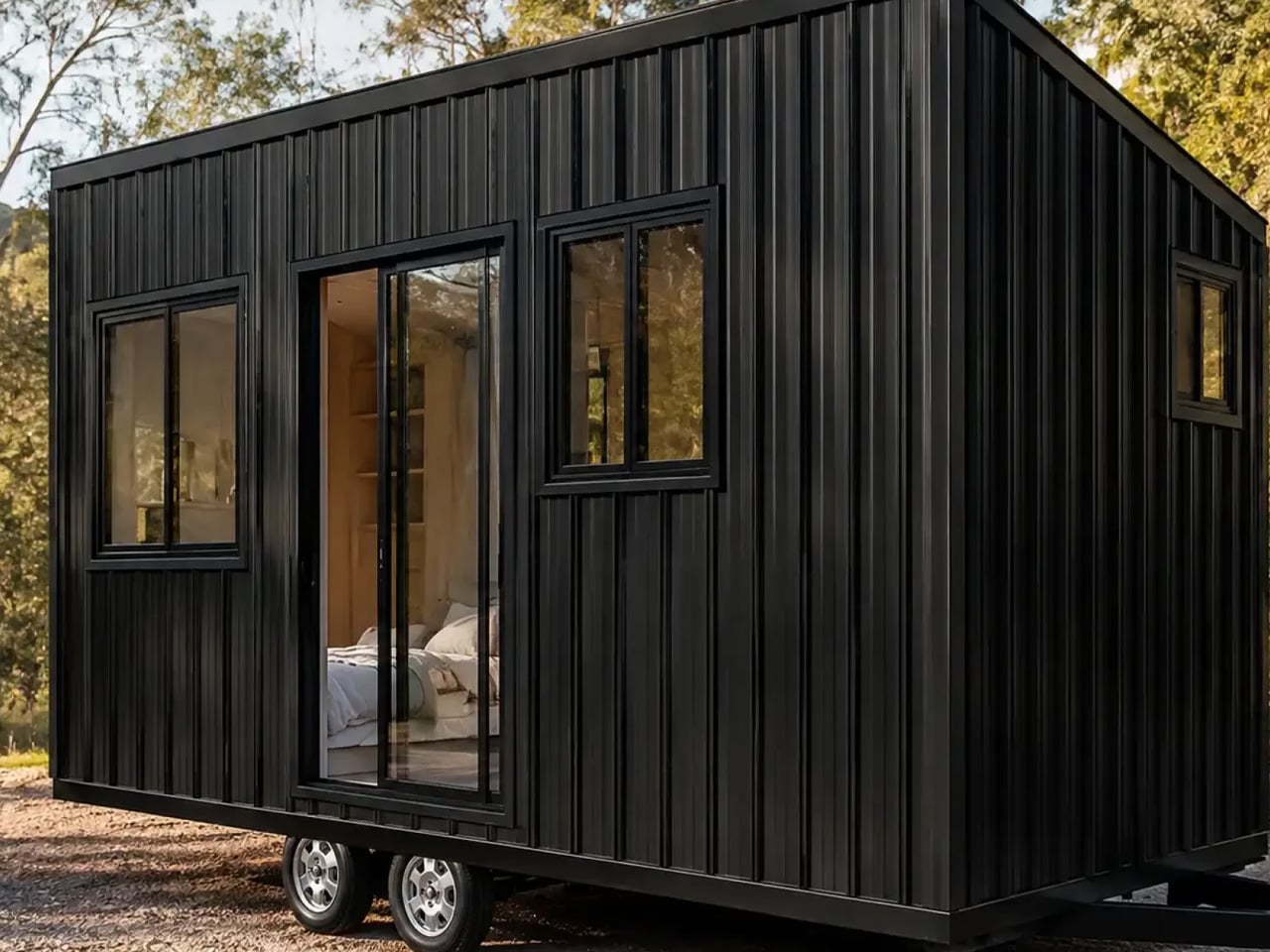
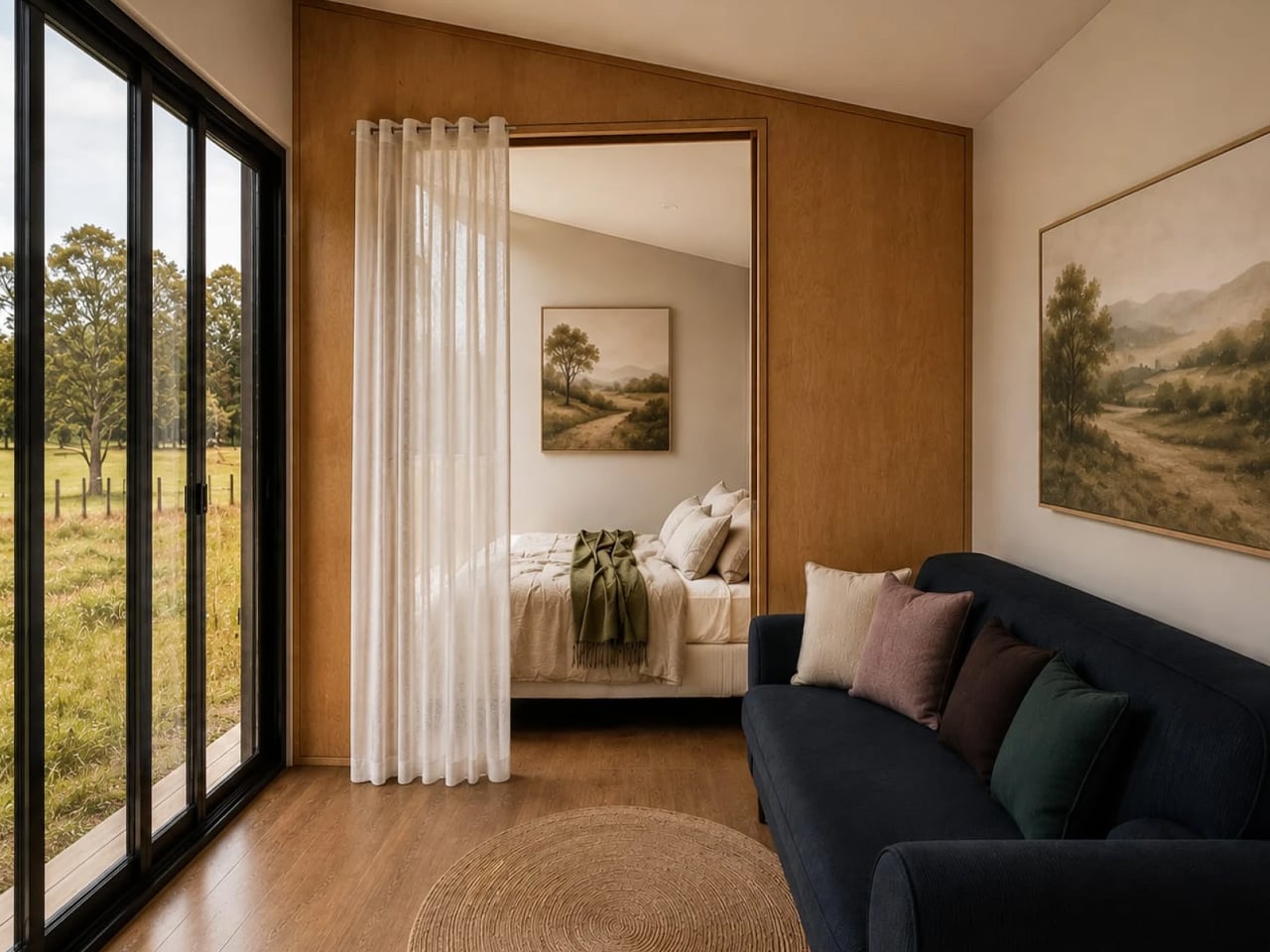
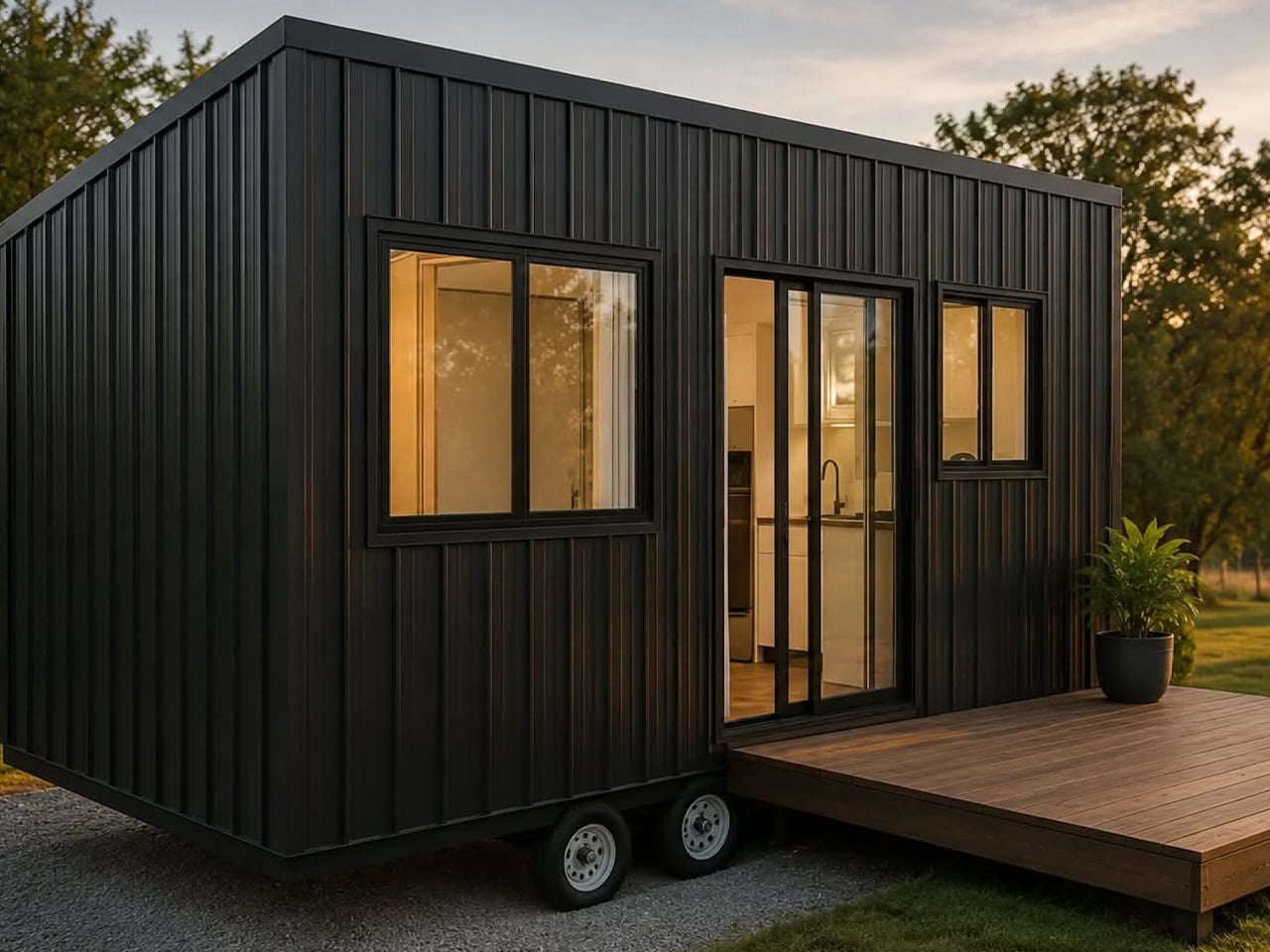
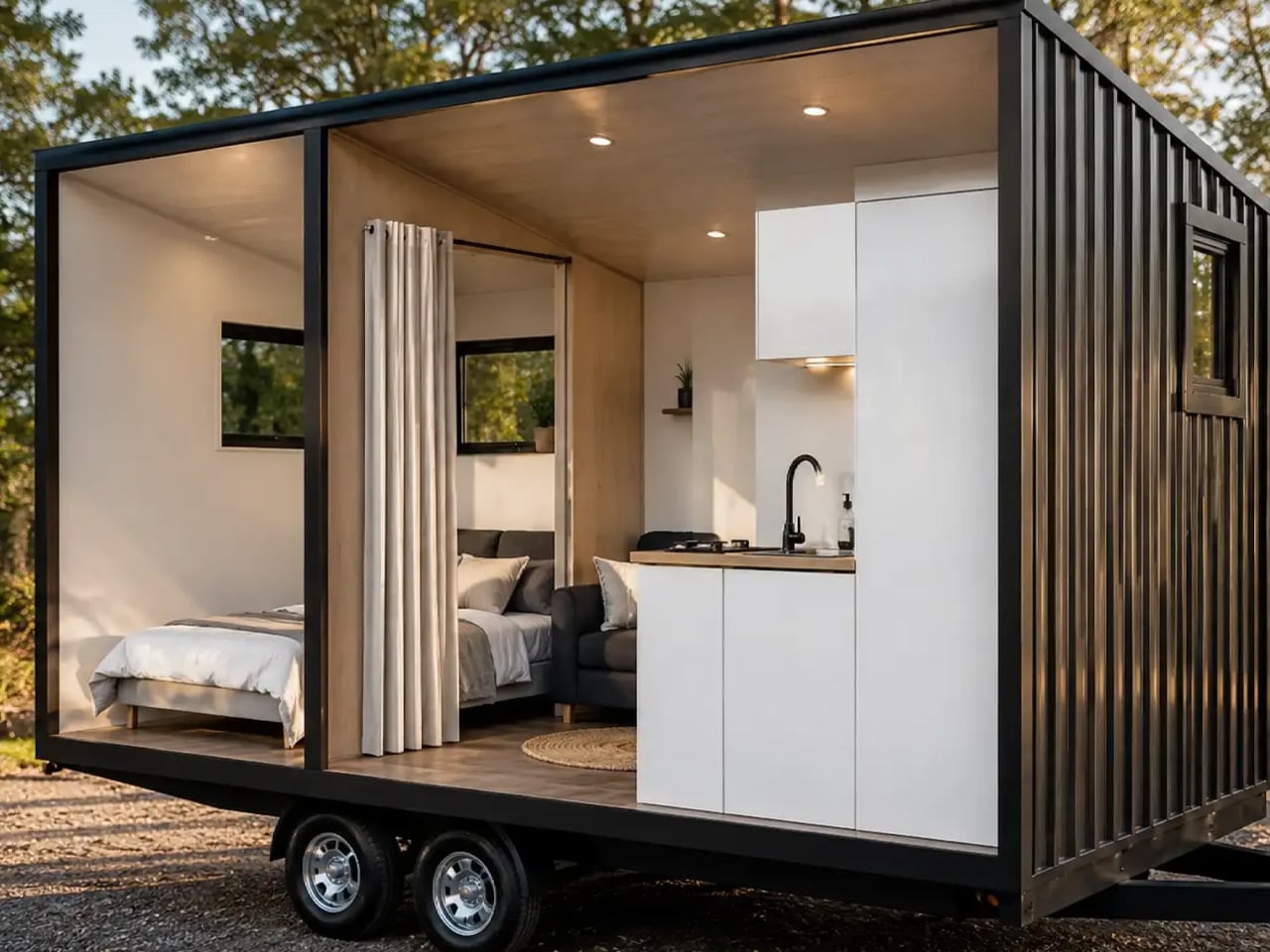
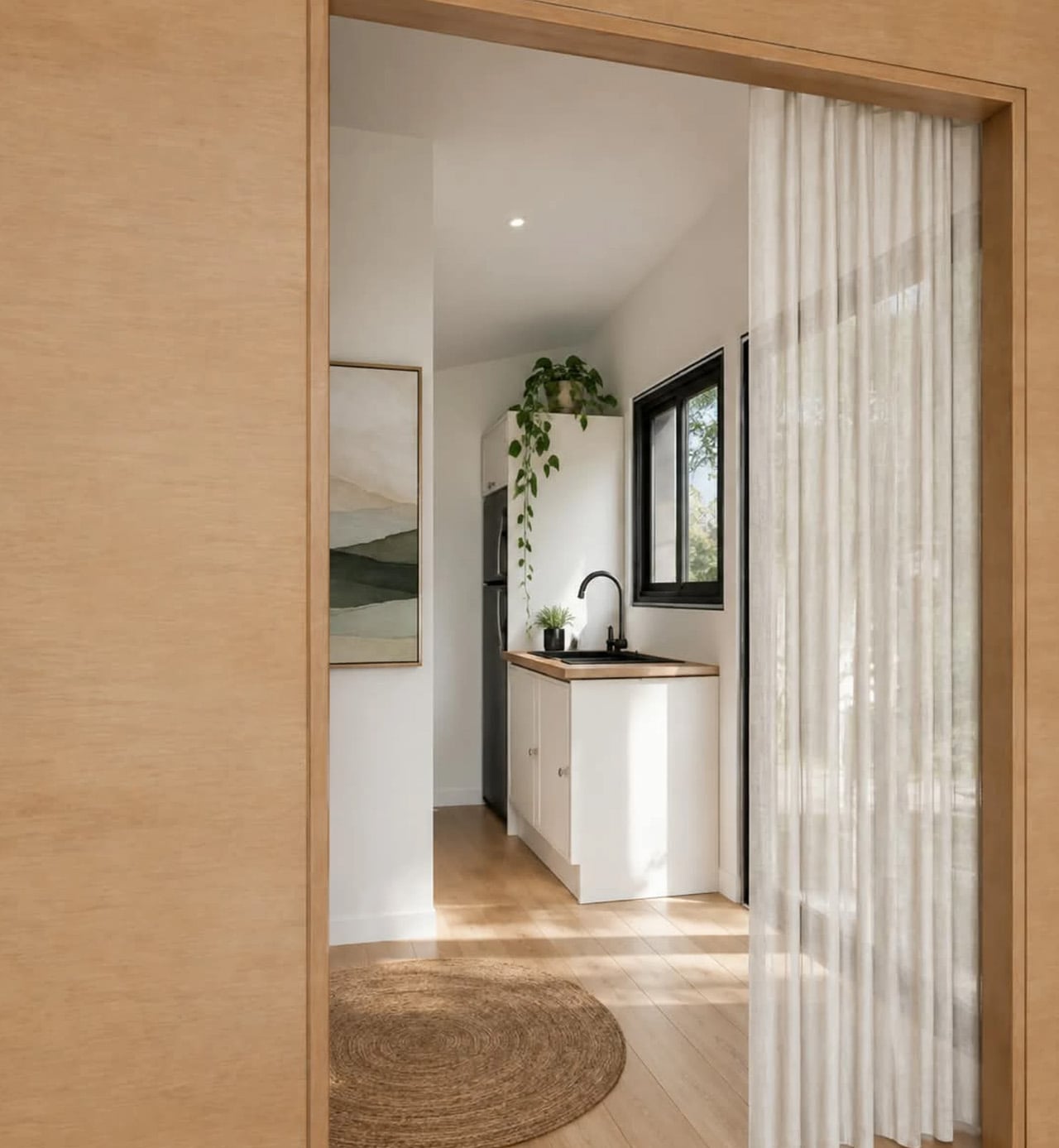
Tiny Tect Tiny Houses, the Queensland-based builder run by husband-and-wife team Ben and Alison, has a new model rolling toward completion, and it’s the smallest one yet in its Nido lineup. Designed by Australia’s Tiny Tect Tiny Houses, the model shown is finished in black metal and based on a double-axle trailer, and though its name references its length, for the metric-averse this shakes out at just 18 feet. That’s the Nido 5.5, and it’s the compact entry point into a family of homes that has already built a reputation for turning small footprints into livable, design-forward spaces.
The Nido 5.5 m model is currently under construction and is due to be completed in October. The moody black exterior is a signature move for the brand. Its larger sibling, the Nido 7m, wears the same shadowclad cladding, the kind of finish that reads industrial from the street and warm once you’re inside, a trick a lot of tiny home builders reach for but few pull off with this much restraint. On an 18-foot chassis, that finish does a lot of work. It makes the home look substantial in photos while keeping the actual build light enough to tow.
Pricing is where the Nido 5.5 separates itself from the rest of the range. It’s available for AUD 89,700 (around US$64,000), but for those who need something larger and more practical for full-time living, Tiny Tect Tiny Houses also offers an expanded version of the Nido, which has a length of 7 m (23 ft). That structure, a compact entry model with a roomier upgrade path, is smart product design as much as it is architecture. It gives buyers a reason to start small and scale up without switching builders or aesthetics.
The Nido name itself is doing quiet marketing work too. Tiny Tect built its following on the 7m Nido, a model praised for fitting a genuinely flexible floorplan and space for up to four people into a footprint most people would assume only works for one. The 5.5 doesn’t promise that same capacity, and it shouldn’t try to. It reads more like a weekender or a first foray into tiny living, a smaller bet on the same design language that made the original Nido a standout.
What makes the 5.5 worth watching isn’t a single headline feature. It’s the fact that a two-person architecture studio in Australia keeps finding new ways to compress the same idea- comfortable, good-looking, livable- without repeating itself. October will tell us whether the smallest Nido yet lives up to the name.