This Ceramic Bowl Has Secret Compartments for Pistachio Shells

Eating pistachios or olives usually means improvising a discard situation. Shells end up on napkins, side plates, or scattered across the coffee table, and by the time the bowl is empty, there’s a mess to clean up. Shared snack bowls at parties have the same problem: fresh food mixed with scraps, and everyone reaches in with uncertain hands trying to avoid the pile of pits someone left on the edge.

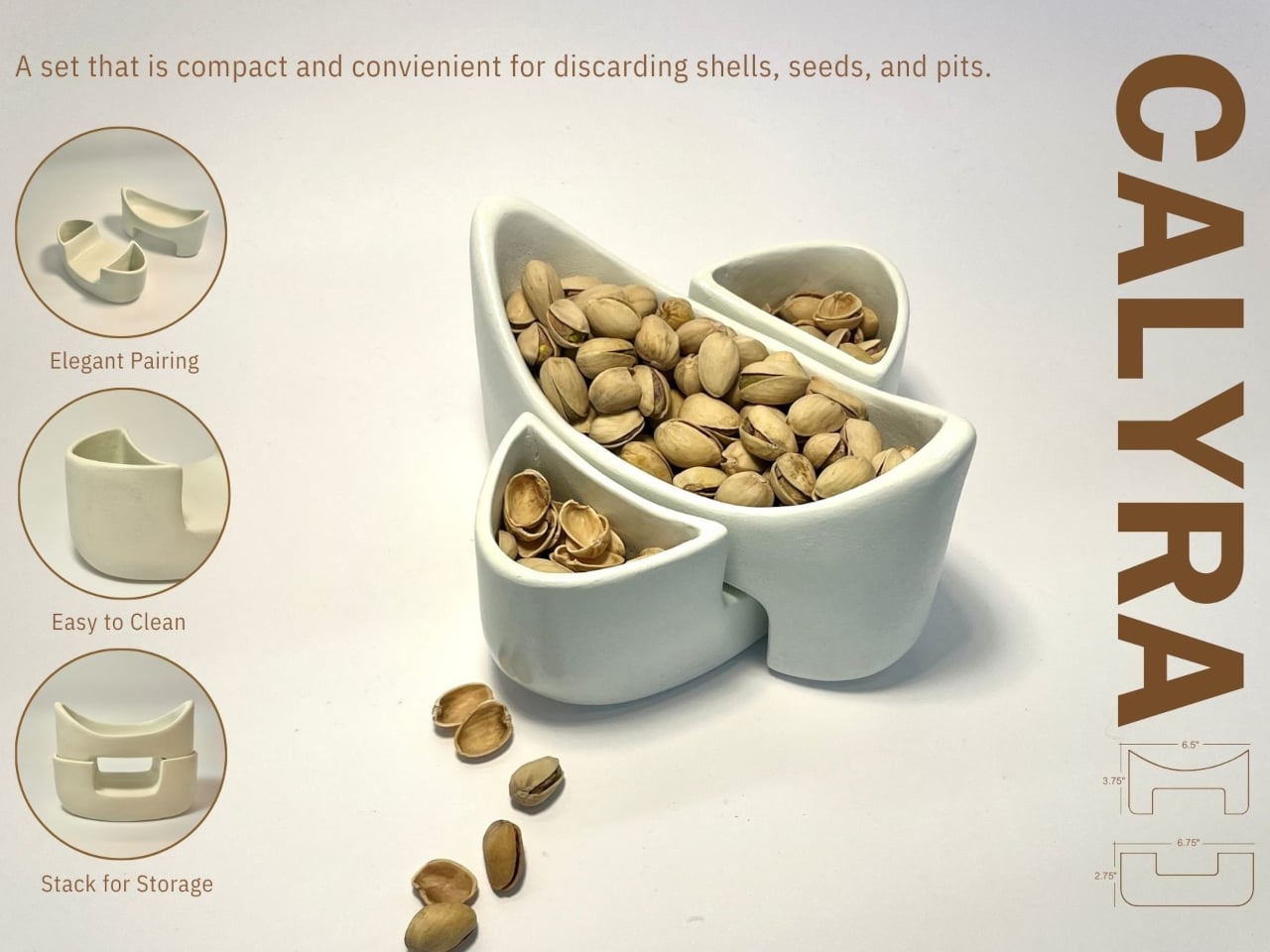
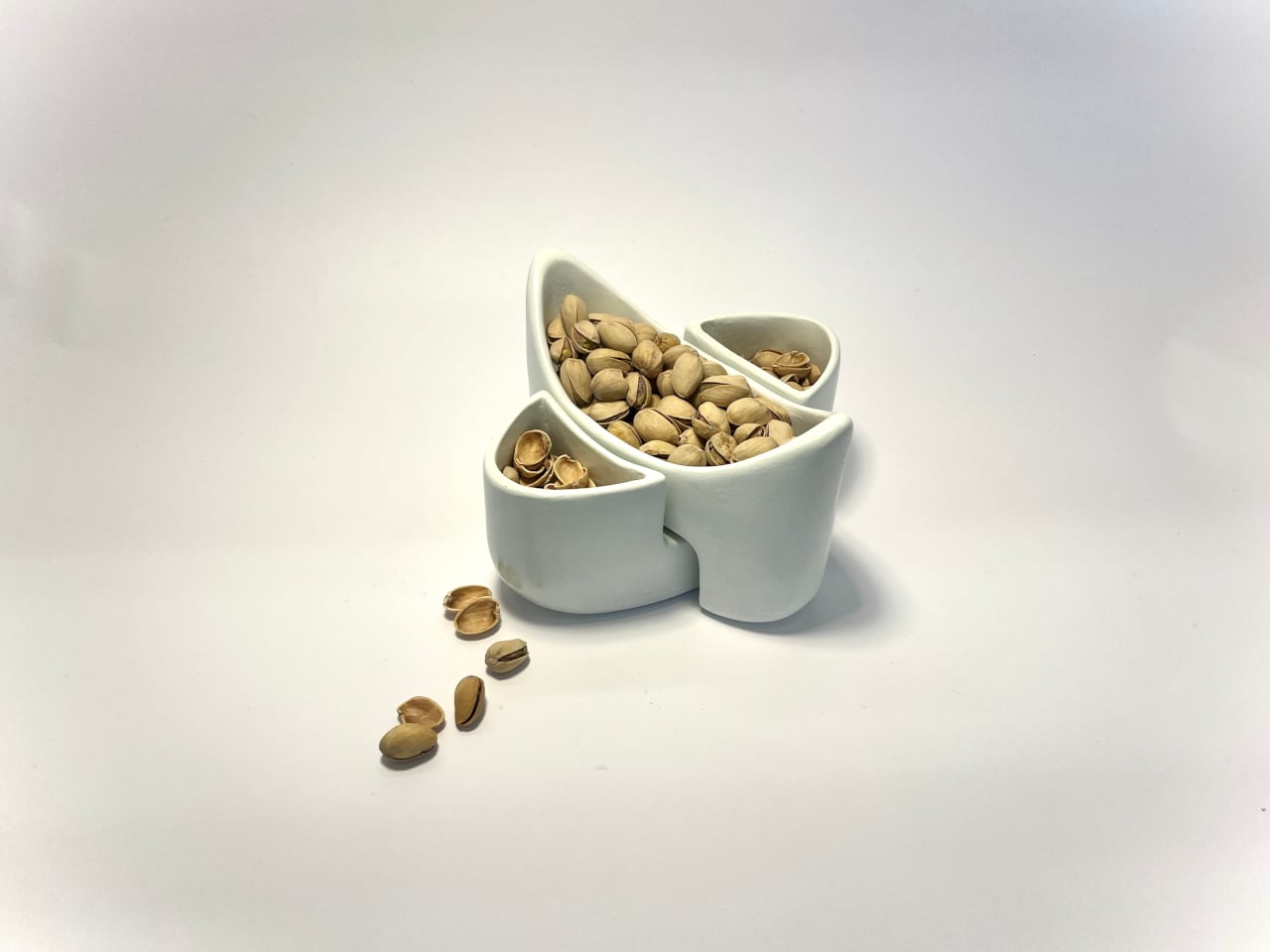
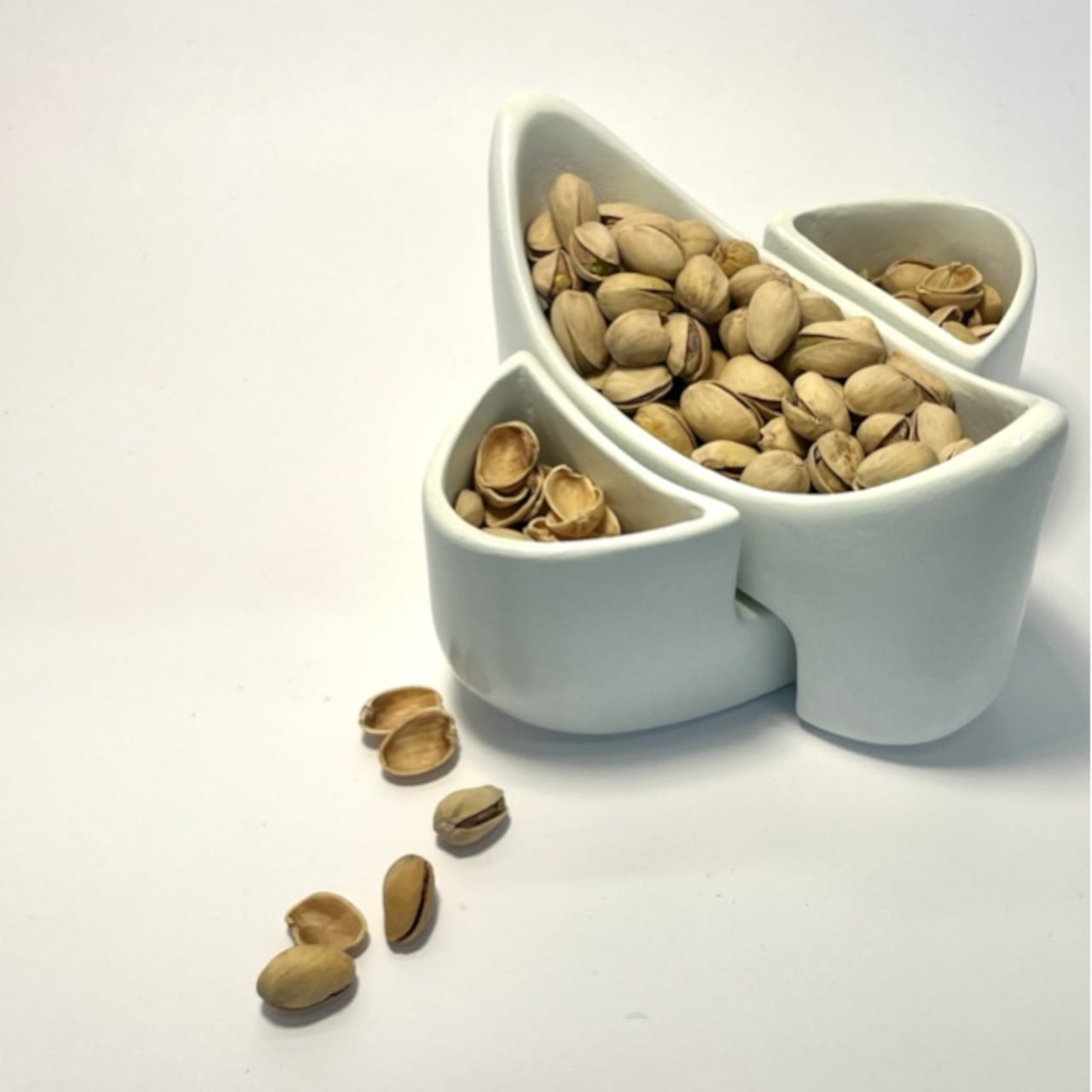
CALYRA treats that mess as part of the design brief rather than an afterthought. It’s a ceramic food and waste server that combines a main serving space with dedicated discard areas in a single form. The two pieces nest together symmetrically, both during use and when tucked away in a cupboard, so pits and shells have an obvious home from the start instead of wandering around the table.

Designer: Christina Tran

Picture a casual evening with pistachios on the coffee table. CALYRA’s larger basin holds the fresh snacks, while two smaller cavities collect empty shells and pits as you work through the bowl. Instead of juggling an extra plate or folding a napkin into an improvised waste pouch, everything stays within one footprint. When you’re done, you can carry the whole situation to the sink in one trip.


Once the food is gone, the two pieces nest into a compact stack. The cut-out legs and curved profiles lock into a stable shape that’s easy to store in a small cabinet. That symmetry means you can carry it as a single object from the cupboard to the table and back again, even when your hands are already full with wine glasses or a tray of something else that needs attention.

CALYRA’s smooth ceramic surfaces and rounded interiors make it simple to rinse or wipe clean, with no tight corners for residue to hide in. The neutral form and color let it move between different foods and settings, from solo snacks at a desk to shared tapas at dinner. It behaves like regular tableware, just with the added intelligence of a built-in waste plan that most bowls quietly ignore.

The concept focuses on the unglamorous part of eating, the shells, seeds, and pits that usually get handled as an afterthought. By folding that step into the serving piece itself, CALYRA turns a small annoyance into a smoother gesture. It’s the kind of quiet improvement that makes you wonder why most snack bowls still pretend the messy part doesn’t exist, as if ignoring it makes it less of a problem when you’re trying to enjoy pistachios without turning your table into a shell graveyard.
The post This Ceramic Bowl Has Secret Compartments for Pistachio Shells first appeared on Yanko Design.


The Animal Crossing: New Horizons 3.0 expansion has arrived earlier than expected

For a number of very obvious reasons, we don’t want to roll back the clock to early 2020. No thank you. But if there was a feel-good lockdown story, it was the perfectly timed arrival of Animal Crossing: New Horizons, which allowed friends who could no longer meet up IRL to do so virtually on their carefully pruned islands.

The game will almost certainly never be as popular as it was back then again, but Nintendo is hoping a good chunk of lapsed islanders will return for its latest DLC drop, which arrived on January 14, a day earlier than planned. The Switch 2 update went live as expected on January 15. As spotted by

, the free Animal Crossing: New Horizons 3.0update is available to download now and, as previously announced, brings a host of new features to the cozy life sim, including a brand new resort hotel on the pier that you can help decorate.

There are new items and quality-of-life additions too, as well as the ability to build fresh islands with your friends and family in the “Slumber Island” dream world. All you need to do is go to the New Horizons game icon on your Switch’s home screen and download the software update.

Nintendo also announced last year that New Horizons would be coming to Switch 2 on January 15, improving the visuals, unlocking mouse controls and GameChat functionality, and expanding the online multiplayer capacity from eight players to 12. As of now, the Switch 2 edition is live, as well as the 3.0 update. Upgrading costs $5, while first-time players can purchase the Switch 2 version of Animal Crossing: New Horizons for $65.

Update, January 15, 2026, 12:20PM ET: Updated to note that the Switch 2 edition is live.

This article originally appeared on Engadget at https://www.engadget.com/gaming/nintendo/the-animal-crossing-new-horizons-30-expansion-has-arrived-earlier-than-expected-160739394.html?src=rss

Gemini can now pull context the rest of your Google apps, if you let it

Gemini is adding a feature that’s designed to feel more tailored to individual users. Once enabled, "Personal Intelligence" can pull context from across your Google ecosystem, including Gmail, Google Photos, Search and YouTube History, to gain specific insight that will shape its answers and recommendations. Personal Intelligence is available starting today in the US for Google AI Pro and Ultra subscribers. The feature is opt-in only and is off by default.

Gemini Personal Intelligence
Google

Google says users will have the ability to control what apps Gemini pulls from and, in the future, which chats it uses Personal Intelligence for. The company says this new feature might still make some mistakes, such as “over-personalization” where it draws connections between unrelated things.

According to Google, Gemini will not train directly on the data it pulls for personalization like your photos and emails, but will instead train on your prompts and its responses. Users can also prompt Gemini to "try again" without personalization and will have the option to delete chat histories.

For now, Personal Intelligence works in the Gemini app across web, Android and iOS for personal Google accounts. Google says it’s coming to Search’s AI Mode soon, with plans to expand to more countries and the free tier down the line.

Google has been on a tear integrating Gemini into everything, including Gmail, TVs and Chrome on mobile. This week, Apple announced that Siri AI will be powered by Gemini as part of a multi-year collaboration. AI remains an imperfect tool, and Google's AI has a long history of malfunctions like explaining made-up idioms, calling itself a "failure" in a depressing doom loop and generating images of the Founding Fathers as people of color.

This article originally appeared on Engadget at https://www.engadget.com/ai/gemini-can-now-pull-context-the-rest-of-your-google-apps-if-you-let-it-160039468.html?src=rss

The Most Powerful GTI Ever: Golf GTI Edition 50 Lands in the UK

The Most Powerful GTI Ever: Golf GTI Edition 50 Lands in the UK

The Volkswagen Golf GTI Edition 50, heralded as the most powerful GTI ever produced, is set to make its debut on UK roads in January 2026. This exclusive model commemorates the 50th anniversary of the iconic GTI, blending high-performance engineering, innovative driving technology, and distinctive design elements. With a starting price of £47,995, it promises […]

The post The Most Powerful GTI Ever: Golf GTI Edition 50 Lands in the UK appeared first on Geeky Gadgets.

Posted in Uncategorized

Persistent DIYer creates autonomous flying umbrella despite years of struggle

Back in early 2024, John Tse designed a flying umbrella controlled by a remote, which seemed a completely out-of-the-box idea. However, some users pointed out that the umbrella should follow the person using it, to make it more practical, come rain or shine. The hands-free option of using a flying umbrella is far more exciting than maneuvering it while walking.

Months later, John set out to design an upgraded version of the project. The thing is essentially an autonomous drone shading you from wet or dry weather on demand. The vital addition to the rig is a tracking system loaded with a camera that comes from drone parts. That said, the build was not a cakewalk, and it took him a couple of years to achieve the intended version.

Designer: John Tse

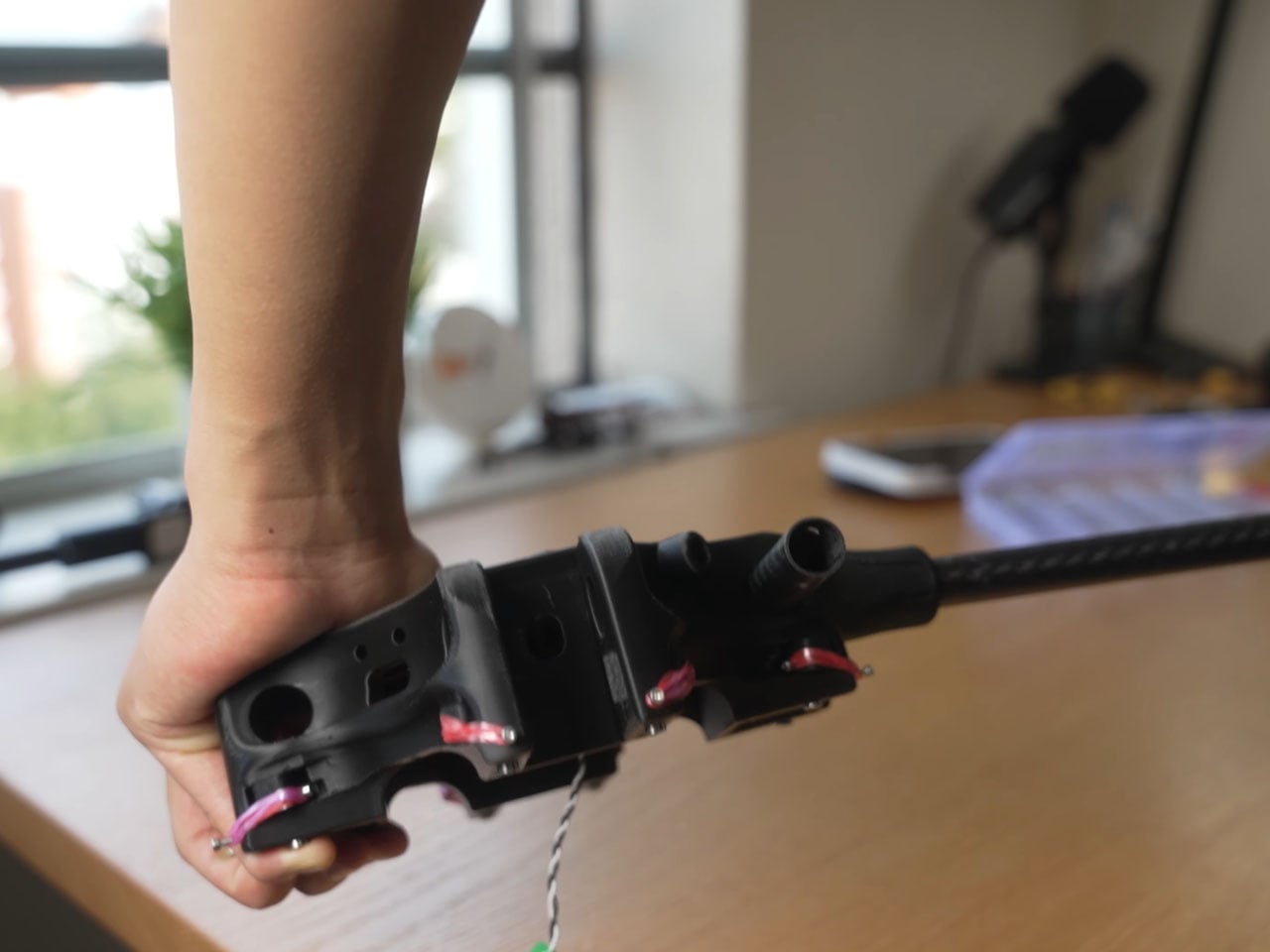
Things started off by creating a custom frame with a central hub for the umbrella, the locking mechanism, and the hinges to have a solid structure for the camera and sensors to mount on. Most of the components are 3D printed, either made out of carbon fiber or nylon. Once the design materialized, an ordinary umbrella was mounted onto the frame, and the arms attached to the mechanism, just like a tripod. After figuring out the GPS, flight controller, Raspberry Pi function, and other electronics, it was time for the first test flight. After a few glitches with the rotational direction and the flight anomalies, the troubleshooting mode kicked on. The rig finally held stable in flight, and John attached the umbrella housing to the thing.

The next step was to align the camera, sensors, and GPS function to make the autonomous flight possible, so that the umbrella doesn’t bump into the person it’s hovering over, or other people on the street. With help from his buddy Hinsen, the idea of creating a 3D map of the people nearby, even in low light, using complex light reflection tech, came to life.  Somehow, the thing didn’t work after replacing all the old components with the new ones. Eventually, after a lot of tinkering and tuning, the flying umbrella finally moved from the initial stage to the concrete prototype stage. A project that was meant to be just a few weeks finally took more than a couple of years.

Finally, the day arrived when the project materialized, and the floating umbrella hovered over John. Even when the sun went down, the thing managed to hover over him. Thereafter, it was time for the rain to come down and test the flying umbrella in wet weather. In heavy rain, the umbrella had zero glitches, and the painstaking ritual of going through numerous roadblocks felt sweet for him. The design of the umbrella doesn’t feel like there’s something off; it just feels like an everyday object. Sure, the high-tech accessory is heavy due to all the components, still it manages to do what it was intended for. In the end, a shout out to John for his patience and persistence that ultimately materialized this project.

The post Persistent DIYer creates autonomous flying umbrella despite years of struggle first appeared on Yanko Design.

YouTube adds more parental controls, including a way to block teens from watching Shorts

YouTube is rolling out some additional parental controls, including a way to set time limits for viewing Shorts on teen accounts. In the near future, parents and guardians will be able to set the Shorts timer to zero on supervised accounts. "This is an industry-first feature that puts parents firmly in control of the amount of short-form content their kids watch," Jennifer Flannery O'Connor, YouTube's vice president of product management, wrote in a blog post. Along with that, take-a-break and bedtime reminders are now enabled by default for users aged 13-17. 

The platform is also bringing in new principles, under which it will recommend more age-appropriate and "enriching" videos to teens. For instance, YouTube will suggest videos from the likes of Khan Academy, CrashCourse and TED-Ed to them more often. It said it developed these principles (and a guide for creators to make teen-friendly videos) with help from its youth advisory committee, the Center for Scholars and Storytellers at UCLA, the American Psychological Association, the Digital Wellness Lab at Boston Children’s Hospital and other organizations.

Moreover, an updated sign-up process for kid accounts will be available in the coming weeks. Kid accounts are tied to parental ones, and don't have their own associated email address or a password. YouTube says users will be able to switch between accounts in the mobile app with just a few taps. "This makes it easier to ensure that everyone in the family is in the right viewing experience with the content settings and recommendations of age-appropriate content they actually want to watch," O'Connor wrote.

This article originally appeared on Engadget at https://www.engadget.com/entertainment/youtube/youtube-adds-more-parental-controls-including-a-way-to-block-teens-from-watching-shorts-151329673.html?src=rss

Samsung Galaxy S26 Ultra: Why This Year’s AI Upgrade Might Actually Be Worth the Hype

Samsung Galaxy S26 Ultra: Why This Year’s AI Upgrade Might Actually Be Worth the Hype

Samsung’s Galaxy S26 series introduces a suite of advanced technologies that elevate the smartphone experience to new heights. With significant strides in artificial intelligence (AI), camera systems, and processing power, the S26 lineup delivers a seamless, feature-rich experience tailored to modern users. Meanwhile, early insights into the Galaxy S27 Ultra suggest that Samsung is preparing […]

The post Samsung Galaxy S26 Ultra: Why This Year’s AI Upgrade Might Actually Be Worth the Hype appeared first on Geeky Gadgets.

Posted in Uncategorized

The Nintendo Switch 2025 year in review is finally here

We’re almost exactly halfway through January, but Nintendo has clearly taken a better-late-than-never approach to its 2025 year in review feature, which finally went live this week for Switch and Switch 2 users. All you need to do is head here and sign into your Nintendo account to see your 2025 breakdown.

Like most annual gaming wrap-ups, Nintendo's shows how many games you played over the calendar year, as well as your total playtime. It also shows you your most-played titles for each month, your preferred genres by percentage, and if you scroll all the way to the bottom you can choose your favorite game of the year. You can also download a shareable image that shows off your taste, but there’s no way to directly share your results on social media through the website.

2025 was a massive year for Nintendo, with the Switch 2 launching in early June. If you bought one, the year in review site will naturally congratulate you for doing so, but it doesn’t separate your results by games you played on the original Switch versus its successor.

Nintendo’s rivals went live with their own 2025 recap features in December. First came Sony’s, which is unfortunately no longer live, and Steam followed shortly after. That one is still available to view if you want to see how your Switch 2 playtime stacks up against your Steam Deck hours. Microsoft decided to skip a 2025 wrap-up altogether, which Windows Central’s Jez Corden previously suggested could be due to a reallocation of marketing budget towards a number of significant anniversaries happening this year, including the 25th anniversary of Xbox.

This article originally appeared on Engadget at https://www.engadget.com/gaming/nintendo/the-nintendo-switch-2025-year-in-review-is-finally-here-145810913.html?src=rss

Apple’s 2026 Roadmap: From the Budget iPhone 17e to the Ultra-Thin iPhone Fold

Apple’s 2026 Roadmap: From the Budget iPhone 17e to the Ultra-Thin iPhone Fold

Apple is gearing up for an ambitious year in 2026, with plans to release over 20 new products spanning iPhones, Macs, iPads, wearables, and entirely new product categories. The company is focusing on innovations such as foldable devices, advanced chips, and innovative features designed to enhance user experiences and redefine the tech landscape. Below is […]

The post Apple’s 2026 Roadmap: From the Budget iPhone 17e to the Ultra-Thin iPhone Fold appeared first on Geeky Gadgets.

Posted in Uncategorized

A Granny Cart That Looks Like Luggage: Someone Actually Built It

Walking to the grocery store with a wire granny cart has always been practical but never particularly pleasant. The wheels rattle over every sidewalk crack, the wire basket looks like it escaped from a hardware aisle, and your tomatoes inevitably get crushed under a bag of potatoes. As more people ditch cars for walkable neighborhoods, the tools for hauling groceries haven’t really kept up with how design-conscious those people actually are.

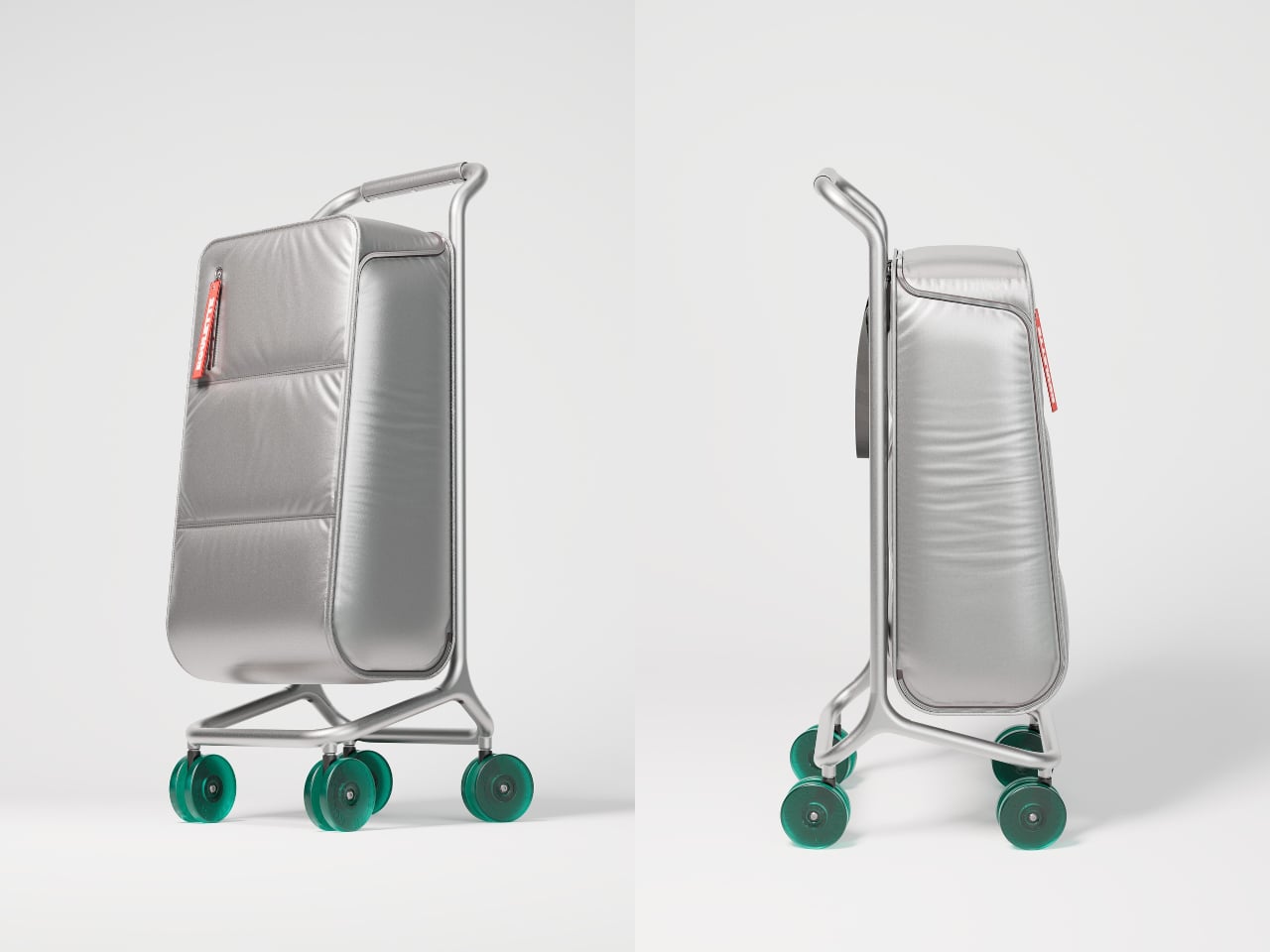
That’s where Roulette Cart comes in. The Manhattan Blue version looks less like something you hide in a closet and more like a piece of luggage you wouldn’t mind leaving in your entryway. A padded navy bag sits on a slim aluminum frame with four small translucent wheels, the whole thing reading as upright and intentional. It’s built for people who walk to the store regularly and want something that feels considered, not just functional.

Designer: Futurewave for Roulette Carts

The interior actually makes a bigger difference than you’d think. Unzip the front, and the bag opens into a bright orange compartment with vertical bottle sleeves, small pockets for eggs or berries, and a wide cavity for everything else. You can slide wine upright without worrying it’ll tip, tuck leafy greens into their own space, and stack cans without turning your bread into a pancake. The 40-liter capacity feels more like organizing a rolling pantry than just dumping bags into a void.

Of course, none of that matters if the cart falls apart on cracked sidewalks. The lightweight powder-coated aluminum frame stays rigid when loaded, while the skateboard-style TPU wheels roll more quietly than cheap plastic ones that sound like you’re dragging a shopping cart through a parking garage. The four-wheel stance lets you push it like a stroller instead of tilting and dragging behind you, which helps when you’re navigating crowded aisles with 15kg of groceries.

Living with it in a small apartment feels surprisingly well thought out. The slim footprint and upright posture make it easy to park in a hallway without it sprawling into your living space, the way folding chairs tend to. The padded handle sits at a comfortable height so you’re not hunching on the walk back, and the detachable bag means you can lift just the soft part up a few stairs without wrestling the entire frame into a narrow elevator.

The materials are chosen for durability without shouting about it. The bag uses tough nylon, the frame is aluminum, and the wheels are high-quality TPU, the same stuff in skateboard wheels. These feel less like features to brag about and more like insurance against wet sidewalks, weekly grocery runs, and those trips where you bought way more than you planned and need everything to survive another six blocks home without collapsing.

Roulette Cart doesn’t reinvent walking or shopping, but it does make the annoying parts less annoying. The hauling, the packing, and the storing all get a little easier, and the whole thing looks deliberate enough that you’re not embarrassed rolling it through your neighborhood. It treats a routine errand with a bit more respect than a wire basket ever could, which turns out to matter more than you’d expect.

The post A Granny Cart That Looks Like Luggage: Someone Actually Built It first appeared on Yanko Design.