DJI Neo 2 is Ideal for Beginners: Palm Launch, 12-Minute Flight Time and More

DJI Neo 2 is Ideal for Beginners: Palm Launch, 12-Minute Flight Time and More A user performing a palm launch with the compact DJI Neo 2.

The DJI Neo 2 has gained attention for its beginner-friendly design and practical features, making it an appealing choice for those new to drone flying. As highlighted by Tech Court, one standout feature is the Palm Launch, which allows users to take off with a simple hand gesture, eliminating the need for complex controls. This, […]

The post DJI Neo 2 is Ideal for Beginners: Palm Launch, 12-Minute Flight Time and More appeared first on Geeky Gadgets.

Posted in Uncategorized

What We Know About Apple’s Highly Anticipated Foldable iPhone

What We Know About Apple’s Highly Anticipated Foldable iPhone iPhone Fold

Apple is poised to create a significant impact in the tech industry with the anticipated launch of its first foldable iPhone, tentatively named the “iPhone Fold.” This highly awaited device is rumored to debut during the Apple September event, speculated to occur on September 8th, 2026. With its innovative design and advanced features, the iPhone […]

The post What We Know About Apple’s Highly Anticipated Foldable iPhone appeared first on Geeky Gadgets.

Posted in Uncategorized

Samsung Galaxy S27 Ultra Leaks: 16GB of RAM is Reportedly Becoming the New Standard

Samsung Galaxy S27 Ultra Leaks: 16GB of RAM is Reportedly Becoming the New Standard Comparison of Samsung Galaxy S27 base and Ultra models

The Samsung Galaxy S27 Ultra is at the center of widespread anticipation, with rumors suggesting fantastic updates across the entire lineup. If these reports prove accurate, Samsung could be redefining its flagship strategy in a highly competitive market. However, such ambitious changes raise critical questions about pricing, regional disparities, and the feasibility of delivering on […]

The post Samsung Galaxy S27 Ultra Leaks: 16GB of RAM is Reportedly Becoming the New Standard appeared first on Geeky Gadgets.

Posted in Uncategorized

Samsung Galaxy Z Fold 8 Size Comparison: Wide vs Ultra Models

Samsung Galaxy Z Fold 8 Size Comparison: Wide vs Ultra Models Samsung Galaxy Z Fold 8 Wide

The Galaxy Z Fold 8 represents a significant evolution in the foldable smartphone market, offering a wider yet more compact design that enhances both usability and functionality. With upgrades spanning its display, camera, and performance, the device aims to redefine expectations for premium foldable phones. This article explores its standout features, size comparisons, and the […]

The post Samsung Galaxy Z Fold 8 Size Comparison: Wide vs Ultra Models appeared first on Geeky Gadgets.

Posted in Uncategorized

Should You Install iOS 27 Beta 3 or Wait for the Public Beta?

Should You Install iOS 27 Beta 3 or Wait for the Public Beta? The real-time scam detection alert interface on an iPhone running iOS 27.

Apple’s iOS 27 is shaping up to be one of the most noteworthy updates in recent years, combining enhanced security, improved usability, and greater convenience. With the second developer beta already available, the public beta is anticipated to launch soon, offering a range of features designed to elevate your daily interactions with your device. Below […]

The post Should You Install iOS 27 Beta 3 or Wait for the Public Beta? appeared first on Geeky Gadgets.

Posted in Uncategorized

Samsung Galaxy Z Fold 8 Wide Teased: Why This Year’s Upgrades Change the Entire Shape

Samsung Galaxy Z Fold 8 Wide Teased: Why This Year’s Upgrades Change the Entire Shape Fold 8 Wide

Samsung is poised to elevate the foldable smartphone market with the highly anticipated launch of its Galaxy Z Fold 8 series, which includes the Fold 8 and Fold 8 Wide. With a scheduled release date of July 22nd, 2026, these devices promise to deliver significant advancements in battery performance, processing power, display technology, and design. […]

The post Samsung Galaxy Z Fold 8 Wide Teased: Why This Year’s Upgrades Change the Entire Shape appeared first on Geeky Gadgets.

Posted in Uncategorized

Moon-Inspired Japanese Knife Blends Damascus Steel With Gallery-Worthy Material Design

At a glance, TSUKI feels like the kind of knife made for close-ups. The blade has a dark, hammered finish near the spine that transitions into a bright Damascus wave pattern near the cutting edge. The handle shifts from warm Sakura-birch grain into a cloudy, translucent resin block that catches light like polished stone. Together, those details give the knife a strong visual identity shaped around the moon without turning into costume design. The hammered texture recalls lunar craters, the Damascus layers evoke ripples of moonlight on water, and the resin handle is meant to mimic the serene shimmer of a moon’s reflection. It’s a cohesive design language applied across every surface of the knife.

The craftsmanship behind it is just as deliberate as the aesthetic. The blade is built around VG-10 steel from Fukui, a high-hardness material known for edge retention and corrosion resistance, wrapped in 67 layers of Damascus for both strength and visual drama. Sharpening happens in Sakai, Osaka, a city with a 600-year legacy in Japanese cutlery production, which means the edge work benefits from generations of specialized technique. The knife arrives in a custom paulownia wood box from Yamaguchi, secured with a Mizuhiki plum knot tied using traditional Nagano cordwork. Even the interior label uses Echizen washi, a handmade paper with a 1,500-year lineage. What makes TSUKI compelling for a design audience is that it doesn’t just invoke Japanese craft as a branding layer. It assembles contributions from five distinct regional traditions into a single kitchen tool, each one adding material credibility and cultural weight to the final product.

Designer: JP-crafts

Click Here to Buy Now: $142 $219 (35% off) Hurry! Only 14 days left.

The blade profile is a 210mm gyuto, which translates to a versatile all-purpose chef’s knife in Western kitchen terms. At 150 grams and 1.7mm thick, it sits on the lighter, more agile end of the spectrum. The hammered finish does double duty, giving the blade its crater-like visual signature while creating micro air pockets that help food release cleanly during slicing. The Damascus layering wraps the VG-10 core in alternating steel alloys, which gives the blade that flowing, organic pattern and adds structural integrity. The edge is double-beveled, so it works equally well for left- and right-handed users. JP-crafts, the brand behind TSUKI, positions this as a knife built for daily prep work, something that holds up to routine vegetable chopping, protein breakdown, and general kitchen tasks without losing its sharpness or requiring constant maintenance.

The Sakura-birch section offers a natural, tactile warmth, while the resin component brings a sculptural, almost translucent quality that sets the knife apart from traditional wa-handle designs. The resin comes in black or white variants, and in photos it reads as cloudy, marbled, and faintly luminous. That material transition from wood to resin gives the handle a hybrid identity, part craft object, part industrial design experiment. The shape itself is contoured for grip, with a slight taper that’s meant to feel secure during extended use. It’s a detail that matters because this kind of knife is meant to live on a magnetic strip or in daily rotation, not tucked away in a drawer.

The paulownia box is lightweight and fine-grained, a traditional material used in Japan for storing valuable items because it resists moisture and insect damage. The Mizuhiki plum knot is a small but culturally legible gesture, a symbol of strong bonds often used in ceremonial gift-giving. Opening the box reveals the knife nestled in a custom-fitted interior, with calligraphy labels and thoughtful staging that makes the unboxing experience feel like part of the product itself. For someone buying this as a gift or as a self-purchase with emotional weight attached, that kind of care in presentation elevates the entire interaction.

Early Bird pricing for a single gyuto starts at $142, with the regular MSRP landing at $219. A two-knife set that includes a petty knife is available for $226. The Kickstarter campaign also offers add-ons including a Nakiri vegetable knife, a Sujihiki slicing knife, whetstones, and a leather strop. Estimated delivery is slated for later this year, with shipping available worldwide.

Click Here to Buy Now: $142 $219 (35% off) Hurry! Only 14 days left.

The post Moon-Inspired Japanese Knife Blends Damascus Steel With Gallery-Worthy Material Design first appeared on Yanko Design.

This Pure 3D Relief Map Sees America as Land First, Borders and Politics Later

What is a country? The question usually leads to answers about people, laws, culture, and shared history. We define nations by their political structures and the lines we draw to contain them. These are human constructions, frameworks built to organize society and create a sense of collective identity. A country becomes a set of agreements, a shared story we tell ourselves about who we are. But underneath all of that lies a more fundamental truth, an identity that is millions of years older than any government.

This is the truth captured by Muir Way’s 3D Raised Relief Map. It answers the question by presenting the United States as a physical entity, a vast and intricate piece of the Earth’s crust. The map argues that the country’s primary identity is its terrain. The story of America is inseparable from the formidable barrier of the Rockies, the fertile plains of the Midwest, and the strategic harbors of its coasts. It is a beautiful and potent reminder that a nation is, before anything else, a piece of land.

Designer: Muir Way

Rendered entirely in white, the piece hangs on the wall more like a sculpture than a conventional map. There are no colors to decode, no labels to parse, and no political borders to trace. Shadow does all the work instead. Light raking across the surface reveals the Rockies as a mass of jagged, compressed ridges, the Appalachians as a quieter but persistent ripple running along the eastern flank, and the Great Plains as a kind of vast, deliberate calm between them. The Great Lakes read as deep, smooth voids, which gives the northeastern quadrant an almost architectural quality. The effect is genuinely striking, the kind of thing that looks like it belongs in a museum dedicated to geography rather than a shop dedicated to maps.

Muir Way, a San Diego-based map studio, builds each piece by digitally scanning and georeferencing source map data, then aligning it with modern elevation data to cut a precise three-dimensional mold. The surface is then printed on durable plastic and vacuum-formed over that mold, a process that translates topographic information into physical depth with real fidelity. The finished piece is mounted to foamboard and hand-finished. NASA elevation data underpins the accuracy of the terrain, which means the relief is cartographically honest rather than decoratively approximated. Muir Way works primarily with materials made in the USA, and a portion of the proceeds from each sale goes to outdoor-related charities including the Sierra Club Foundation, Leave No Trace, and the Waterkeeper Alliance.

The map is priced at $199, with a sale price currently from $169.15 through the Muir Way website. A solid walnut frame, visible in most of the product photography and providing a warm contrast to the stark white surface, is available separately. As a July 4 gift, a housewarming piece, or simply an object for someone who takes their walls seriously, it holds up.

The post This Pure 3D Relief Map Sees America as Land First, Borders and Politics Later first appeared on Yanko Design.

Escape’s Shoreline Is a Tiny Home That Doesn’t Ask You to Compromise

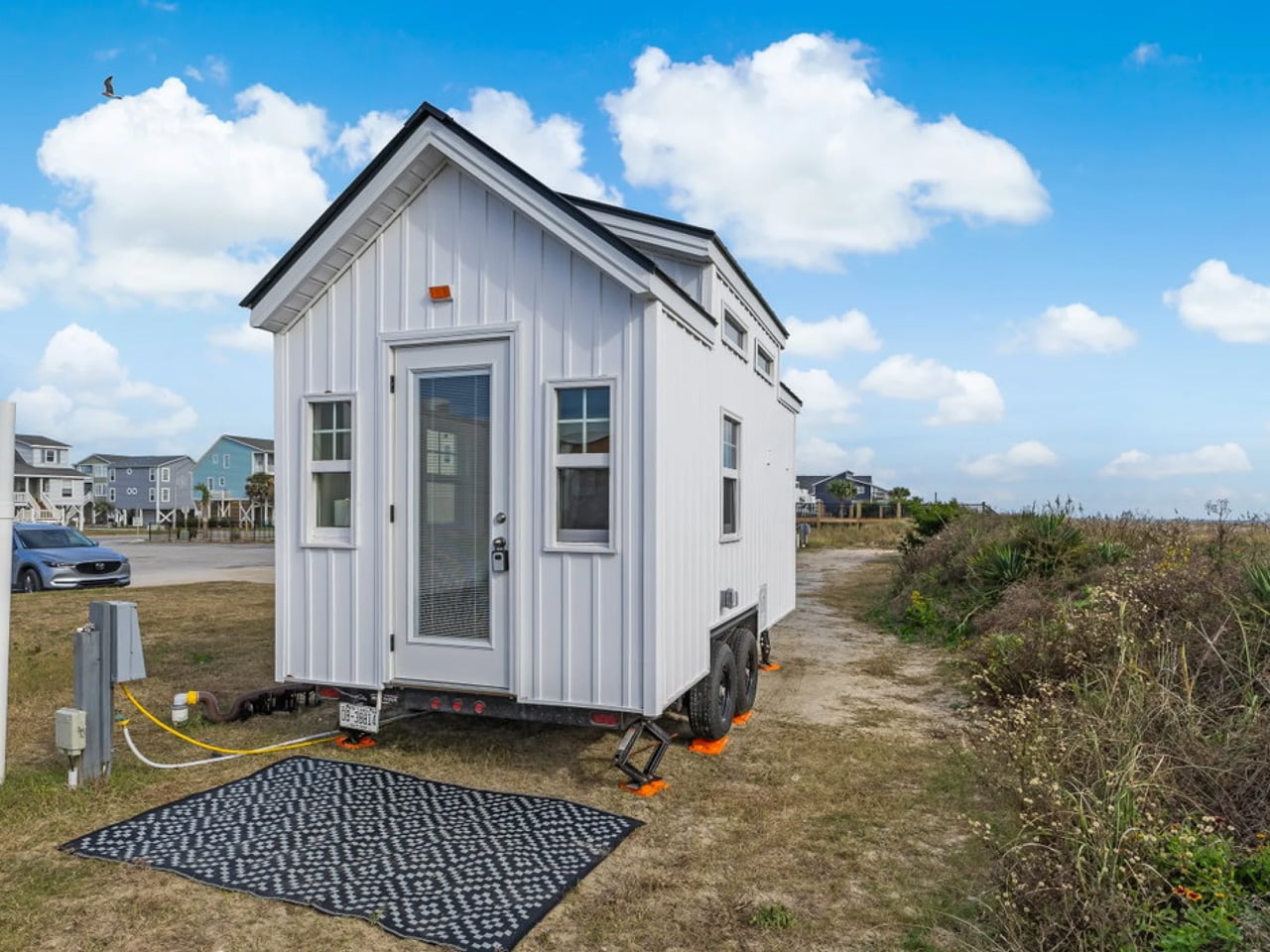
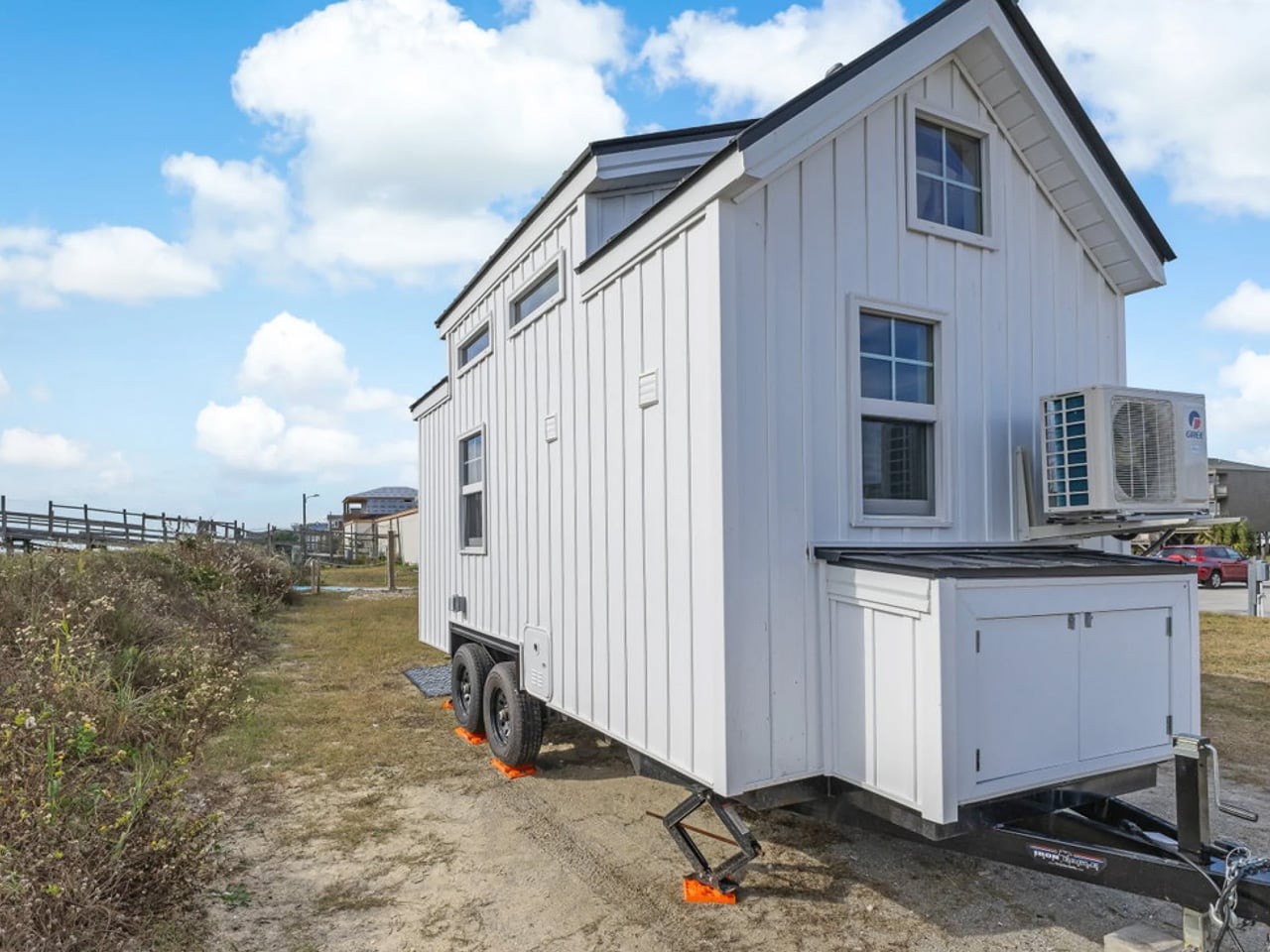
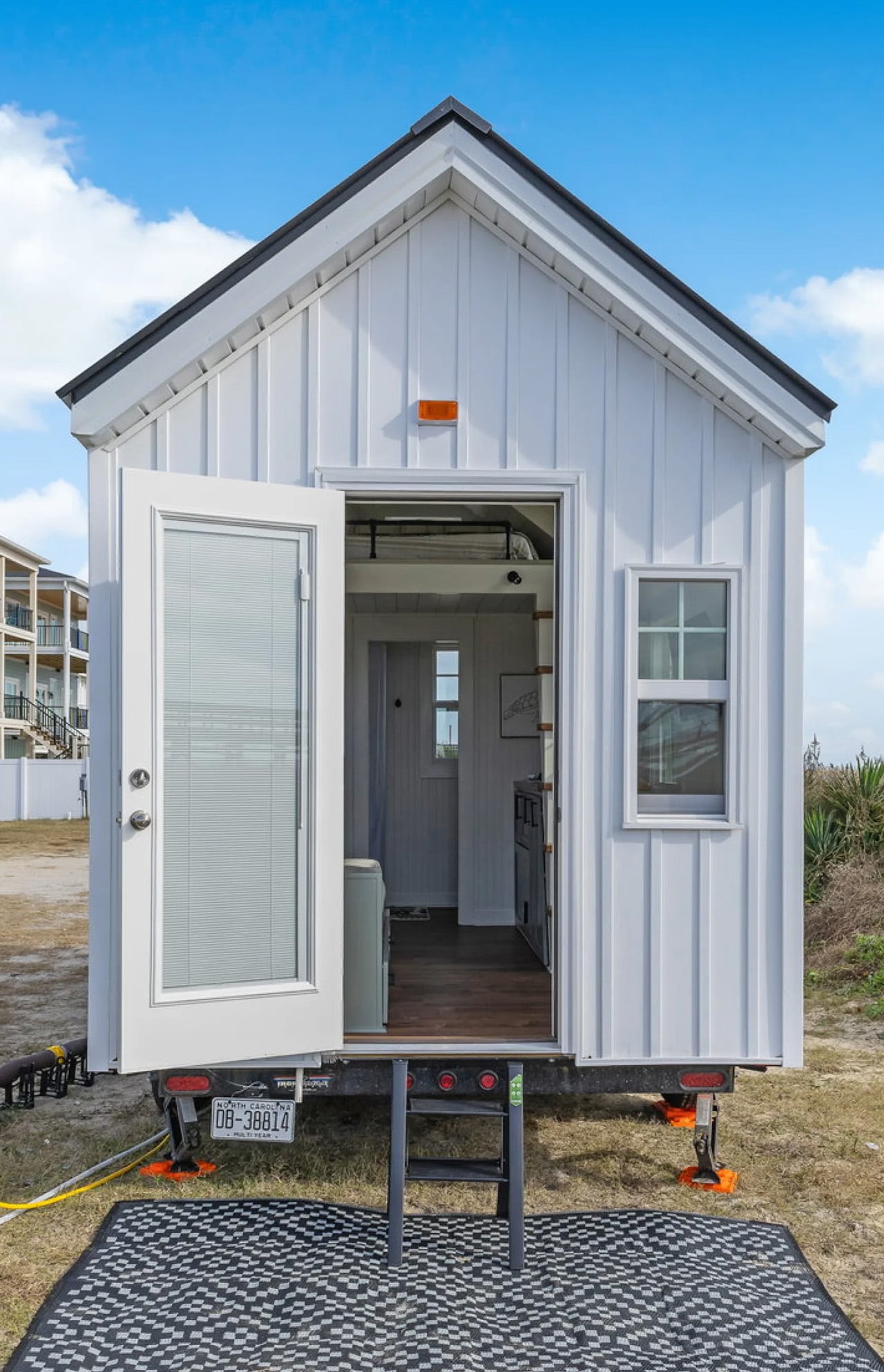
Most tiny homes make you work for it. The Shoreline doesn’t. Escape’s Shoreline sits firmly on that side of the line. Permanently installed at the builder’s own Canoe Bay Village community in Wisconsin, it’s a non-towable park model that measures 47 feet long and a generous 17 feet wide — nearly double the standard tiny house width. That extra real estate changes everything about how the space feels.

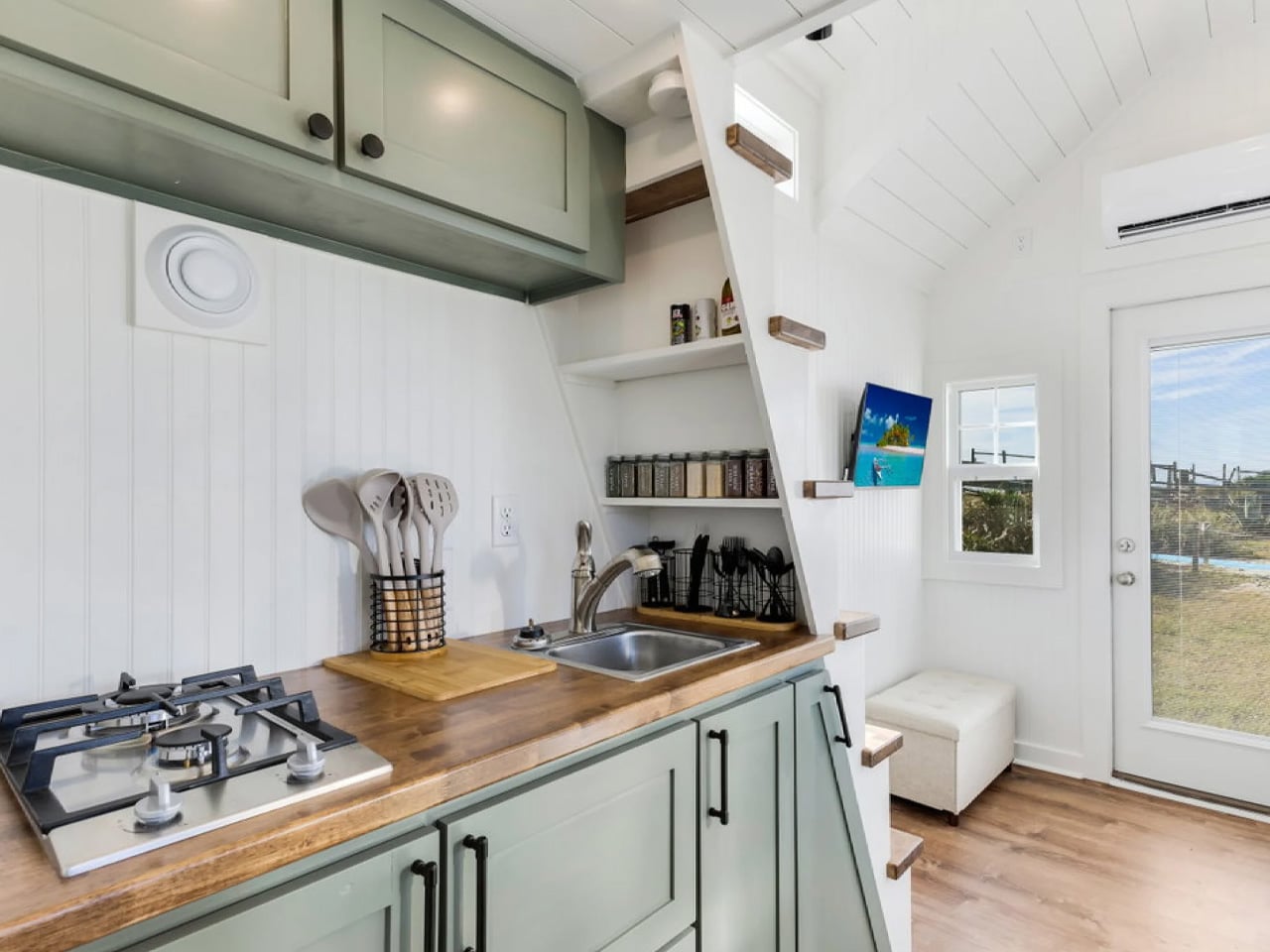
The exterior reads like a Scandinavian chalet that wandered into the Wisconsin woods. Timber cladding, a metal roof, and a screened front porch give it a grounded, architectural presence rather than the prefab anonymity of most park models. Step through the double glass doors and the interior opens up into something that genuinely competes with a modest apartment — wood walls, wood floors, and a layout that keeps everything on one level.

Designer: Escape

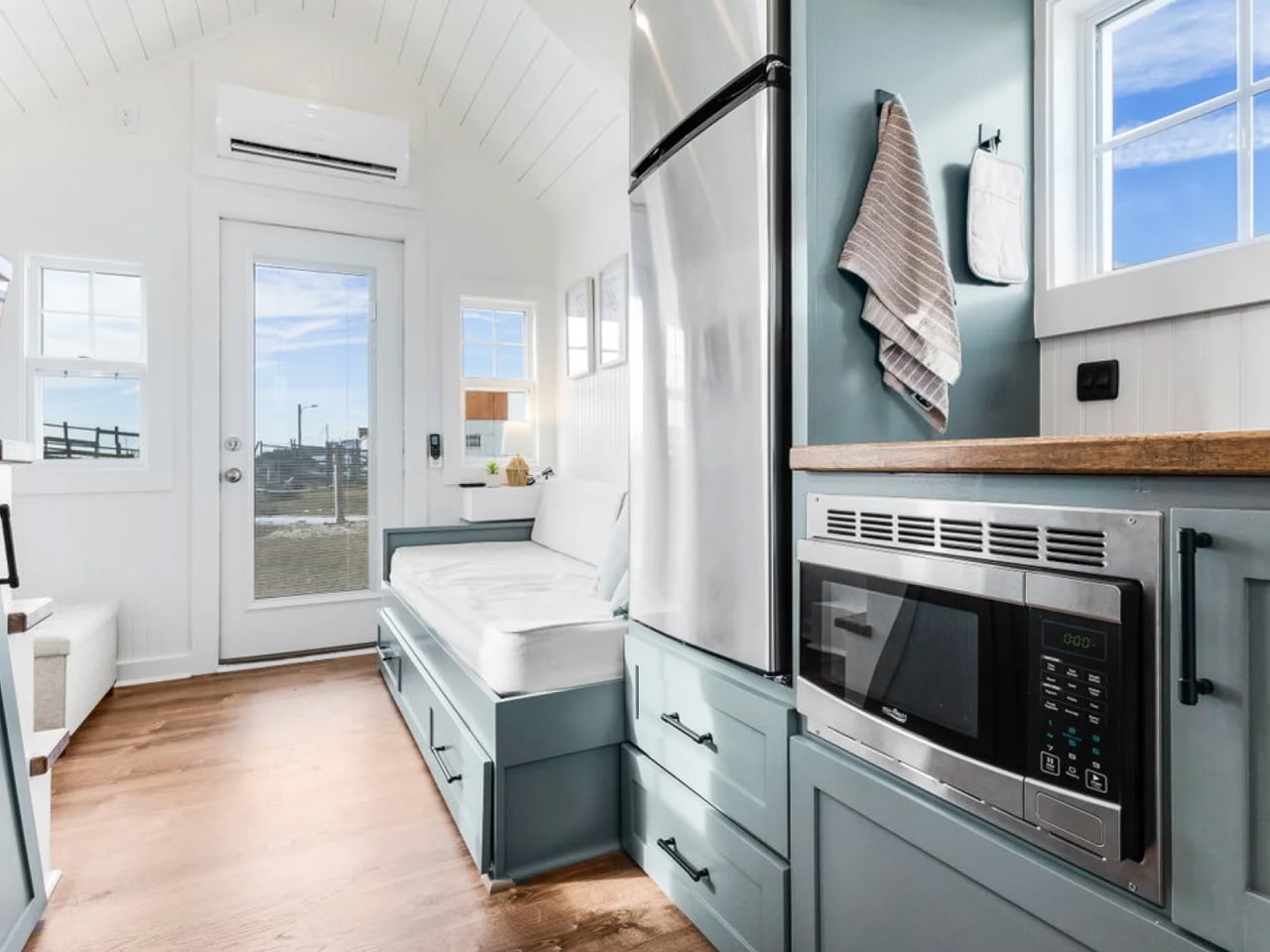
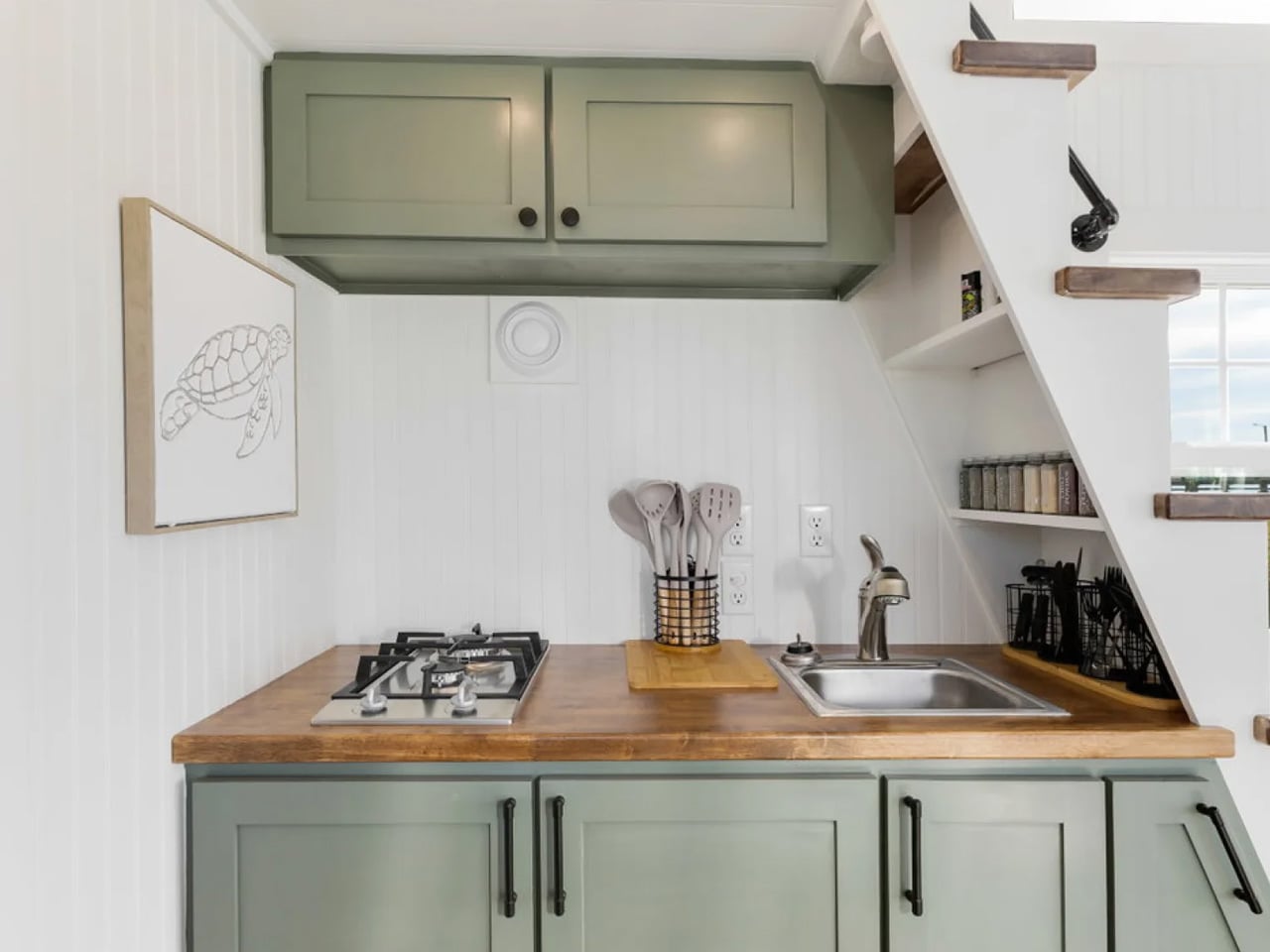
The living room is the first thing that earns its keep. A full sofa, a coffee table, an entertainment center, and an electric fireplace fill the space comfortably, while a mini-split unit and ceiling fan handle the temperature. Large windows push natural light deep into the interior, making the room feel bigger than the square footage suggests. The kitchen sits just beyond — and this is where Escape earns real points. A four-burner propane cooktop, an oven, a microwave, a fridge/freezer, a dishwasher, a pull-out pantry, and a dining table make it a kitchen you’d actually cook in. Dishwashers in tiny homes are rare. This one has one.

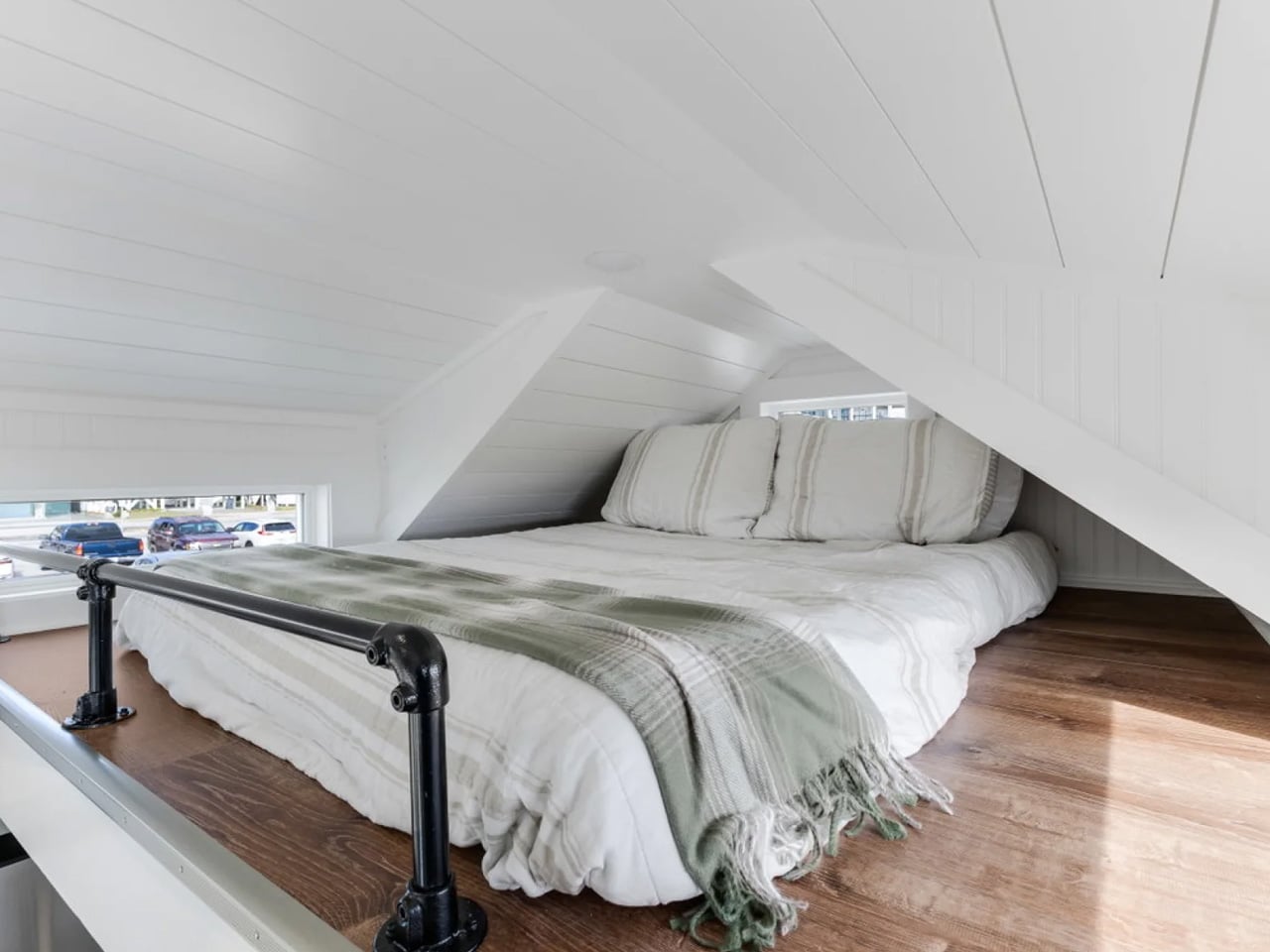
The bathroom continues the pattern of refusing to underprovide. There’s a bathtub and shower — another genuine rarity at this scale — alongside a vanity sink with stone countertop, a flushing toilet, and a washer/dryer stacked neatly into the space. The bedroom, reached from the kitchen through a wooden door, holds a king-sized bed, built-in wardrobes, a closet, a TV, and a picture window that frames the outdoors like a painting.

The Shoreline is priced at $199,360. Buyers own the home and pay $680 per month for the plot and services at Canoe Bay Village. It’s not cheap, but for a single-level home built with this much care and this much genuine liveability, the math holds up. Escape has been building tiny homes for over 30 years, and the Shoreline shows exactly what that experience looks like when the brief is comfort without compromise.

The post Escape’s Shoreline Is a Tiny Home That Doesn’t Ask You to Compromise first appeared on Yanko Design.
These Ceramics Look Hand-Drawn in Black Ink, but They’re Actually Porcelain Pretending to be Paper

The potter’s wheel is the oldest mass-production machine humanity ever built, a spinning disc that let a single craftsman turn out dozens of near-identical bowls before lunch. That gift arrived with a tax written into physics, because anything formed on a wheel is a profile revolved around a central axis, exactly like a shape cut on a lathe. Bowls, cups, vases, and plates all inherit the same radial DNA, which is why round has quietly ruled tableware across every civilization that ever touched clay. Serax’s Carte Blanche collection abandons the axis completely, swapping revolved curves for faceted, folded geometry that no wheel could ever spin. It then pulls a second trick, flattening the porcelain visually until a solid cup reads as a drawing of one.

Dutch designer Annebet Philips developed the range with Belgian brand Serax, and she began the whole thing in cardboard rather than clay. She cut childlike shapes with deliberately uneven edges, treating the blank page and the humble cutout as her starting brief, which the name Carte Blanche translates almost literally. Those paper prototypes became the design language itself, their creases and wobble carried into glazed porcelain instead of being sanded into anonymity. Hand-painted black lines trace every fold and seam, lending each cup, saucer, and teapot the flattened quality of ink on paper. The collection opened as a coffee and tea service, espresso through milk jug, before expanding into plates, a breakfast bowl, an egg cup, and a salt and pepper set.

Designers: Annebet Philips and Serax

Ceramics is the most stubbornly three-dimensional of the applied arts, since clay has mass and casts a shadow no matter how thin you throw it. Carte Blanche fights that condition with pure graphic force, using a heavy black outline to convince your eye it is reading a two-dimensional sketch rather than a glazed object with genuine volume. The octagonal facets do half the work, catching light in flat planes that refuse the soft gradient a rounded surface would hand you. Photographed straight on, a cup collapses into what looks like a cartoonist’s line drawing, the handle reading as a doodled loop rather than a fired ceramic ear. Philips is forcing a volumetric craft to impersonate the flat page it was first sketched on.

Trompe-l’œil (or ‘deceives the eye’ in French) ceramics have a rich recent lineage, and French artist Jacques Monneraud has built a following throwing porcelain so convincingly corrugated that studio visitors ask whether he has switched to actual cardboard. Monneraud freezes the material itself, pressing a handmade wooden tool into leather-hard clay to fake corrugation and mixing glaze to imitate strips of packing tape. Philips chases something else, freezing the gesture rather than the substance, the outline and the fold instead of the fibrous grain. Where Monneraud wants you fooled until you lift the piece, Philips wants you to register the drawing instantly and enjoy the contradiction. Both approaches prove that a black line, correctly placed, reshapes how we read an object more than any amount of sculpted volume.

YD watched the same optical idea scale up to 1,578 horsepower a few days ago, when Bugatti unveiled the one-off W16 Mistral “Blanc Éternel” wrapped in hand-painted black linework. That car traces the NURBS surface patches from its own digital model across a porcelain-white body, exposing the CAD wireframe that normally stays hidden inside the software. The effect is identical in spirit to Carte Blanche, a three-dimensional object drawn back down into black lines on white, geometry converted into graphic. One costs somewhere north of five million dollars and eulogizes a dying engine, the other holds your morning espresso and survives a dishwasher cycle. Both understand that a contour line is the fastest way to make a solid thing look like an idea of itself.

The illusion grows directly from how the objects were designed, the paper maquette preserved in glaze rather than discarded once the shape was set. Every line being painted by hand means no two pieces match exactly, so the industrial porcelain underneath still carries a one-off wobble. The pieces stay microwave and dishwasher safe, which keeps the concept from retreating into the vitrine where most trompe-l’œil ceramics eventually go to die. Philips has taken the two assumptions a potter’s wheel hardwired into the craft, that vessels are round and that vessels look solid, and quietly canceled both in a set you can actually eat off. That is a rarer achievement than the cheerful, cartoonish surface first lets on.

The post These Ceramics Look Hand-Drawn in Black Ink, but They’re Actually Porcelain Pretending to be Paper first appeared on Yanko Design.