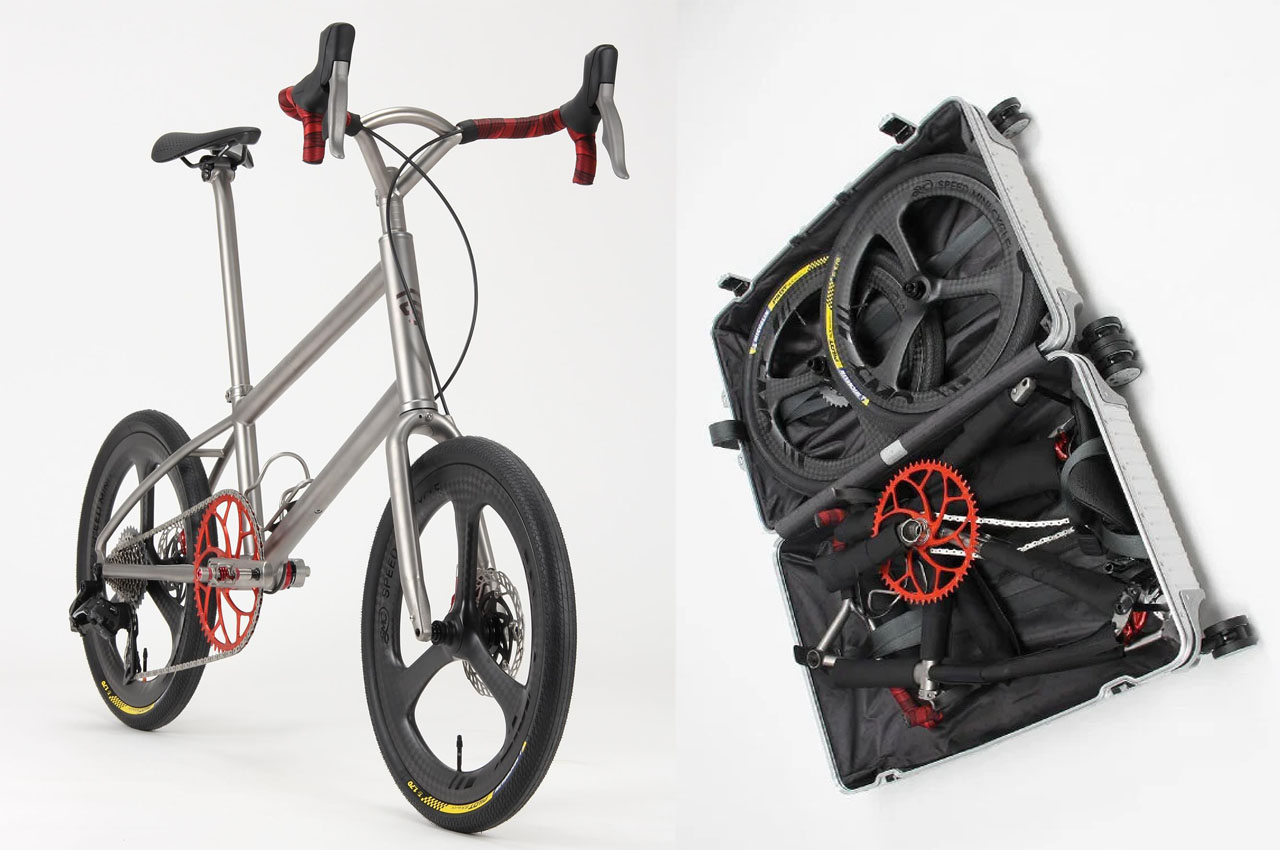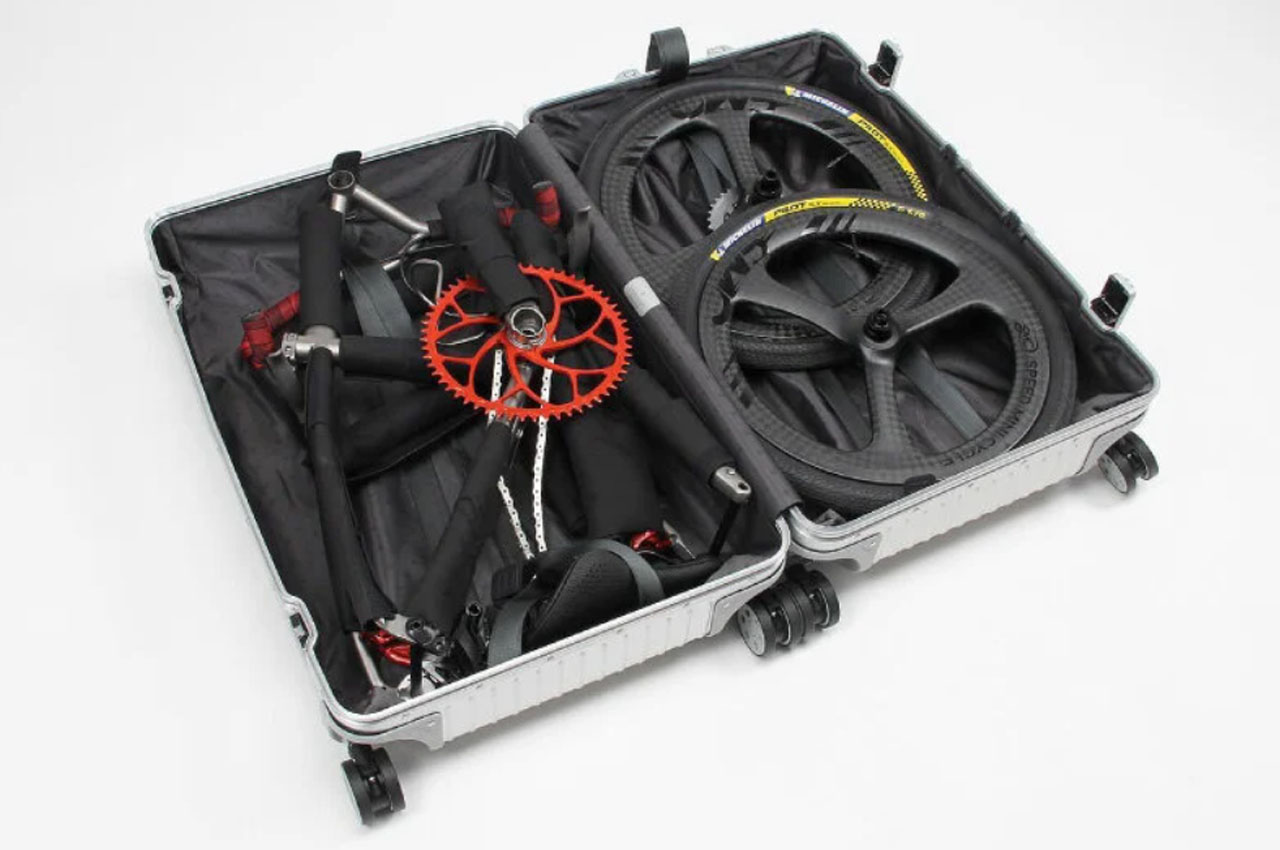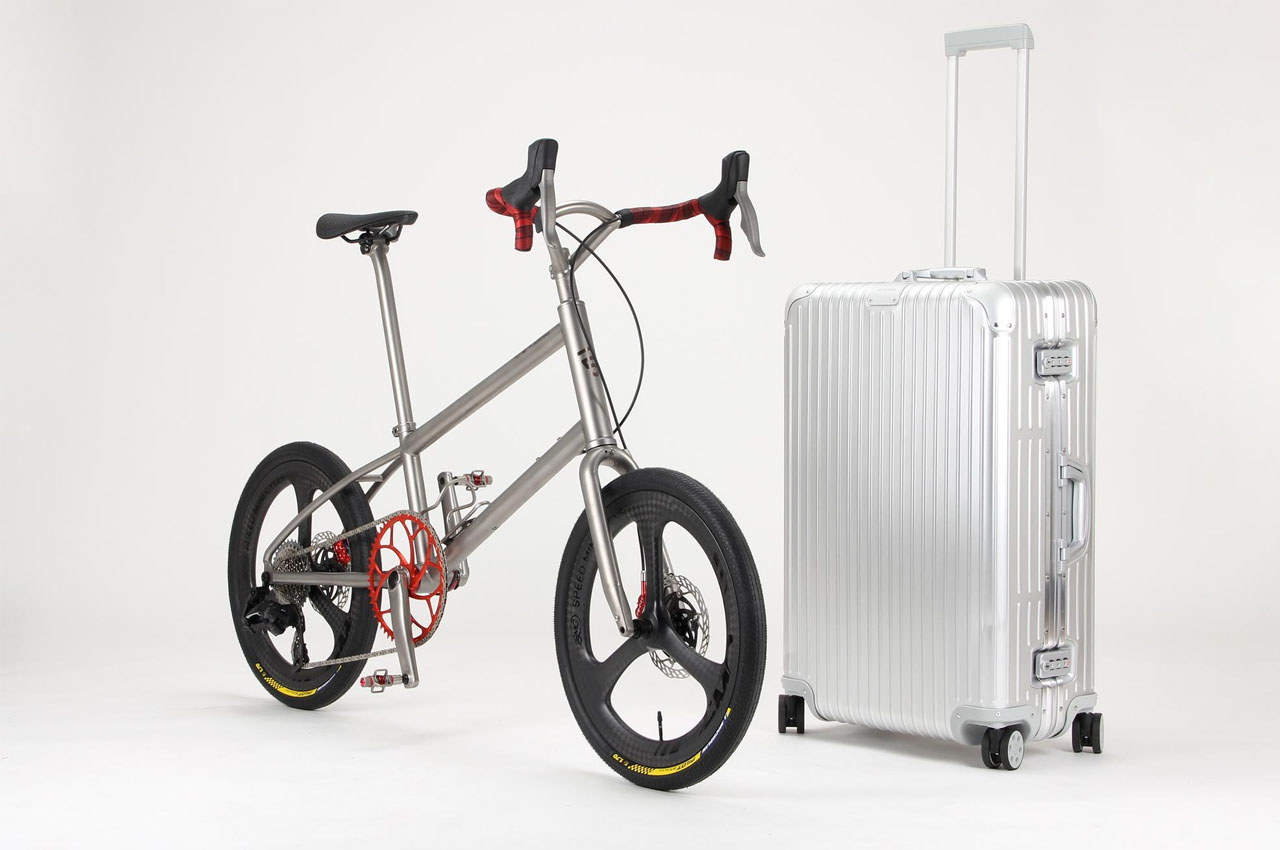
Firefly’s custom-built foldable titanium-frame bicycle fits perfectly into this Rimowa travel Case

Ming watches exist for a clock enthusiast like me. No wonder then, I knew a thing or two about the lead founder and designer Ming Thein. I was aware that he is an avid photographer and a horologist, but honestly, I didn’t know he is also big enough a cycling buff to get Firefly to customize him an everyday bike that could fold to fit into his Rimowa luggage for easy travel.

Firefly Bicycles needs no introductions. It is known for customizing bikes to order whether you need a racer, a durable one for off-roading, or something “totally different,” in the case of Ming, a truly foldable commuter with all the bells and whistles.

Designer: Firefly

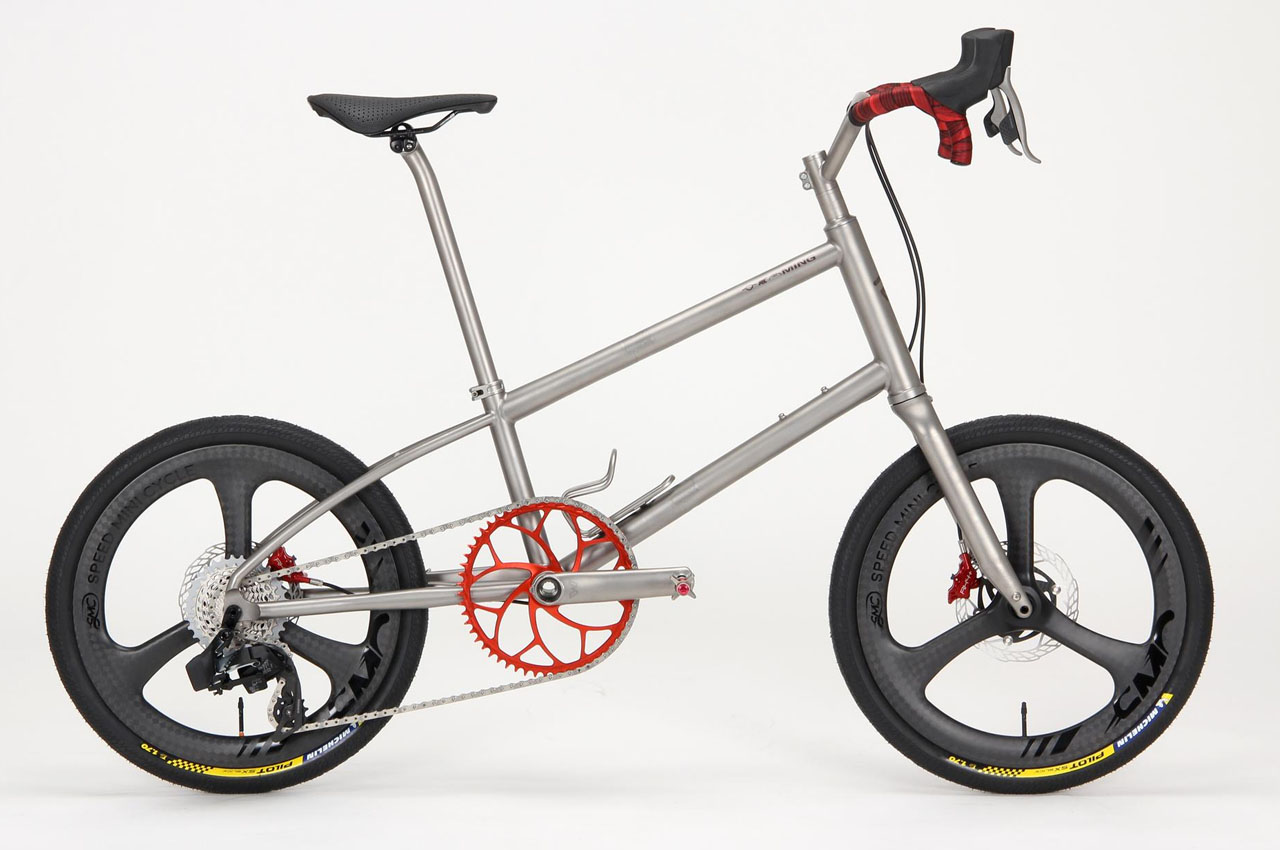
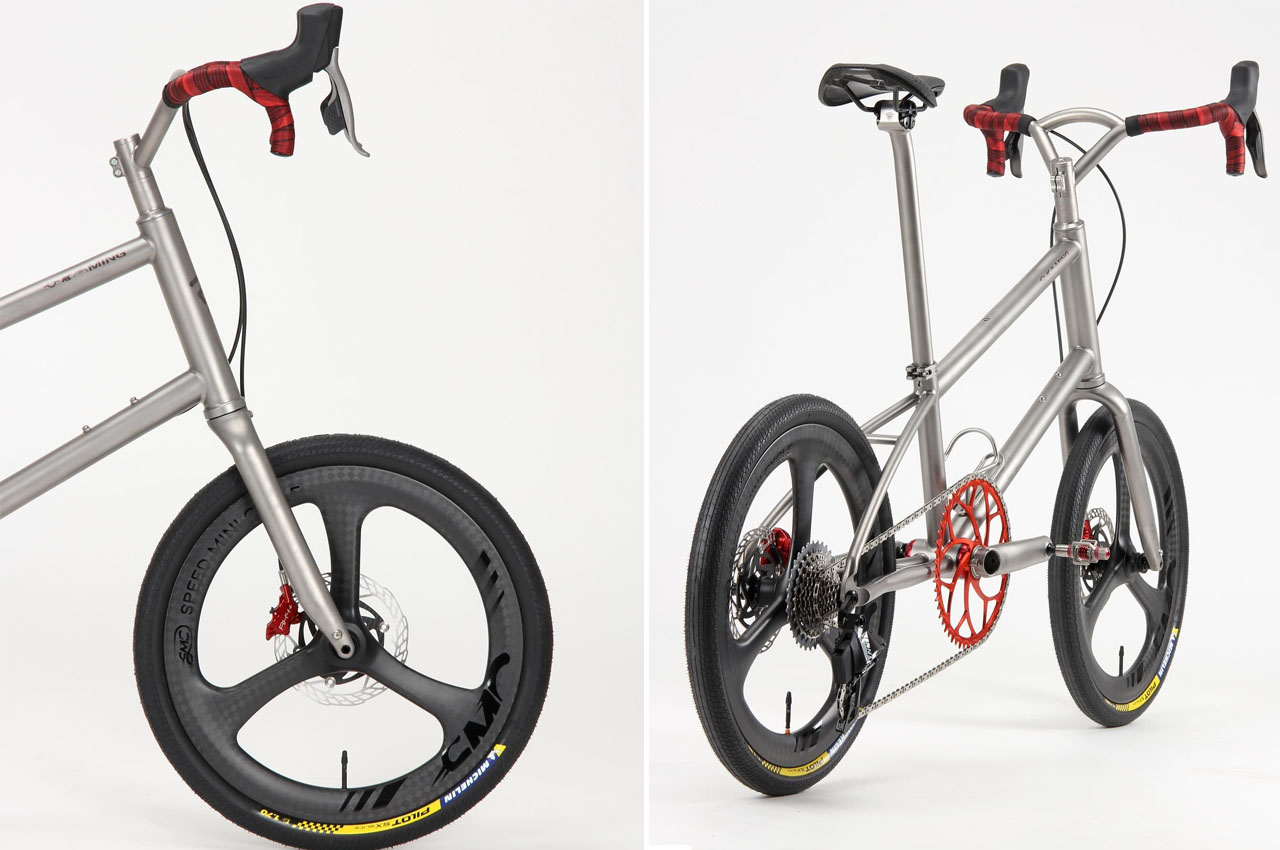
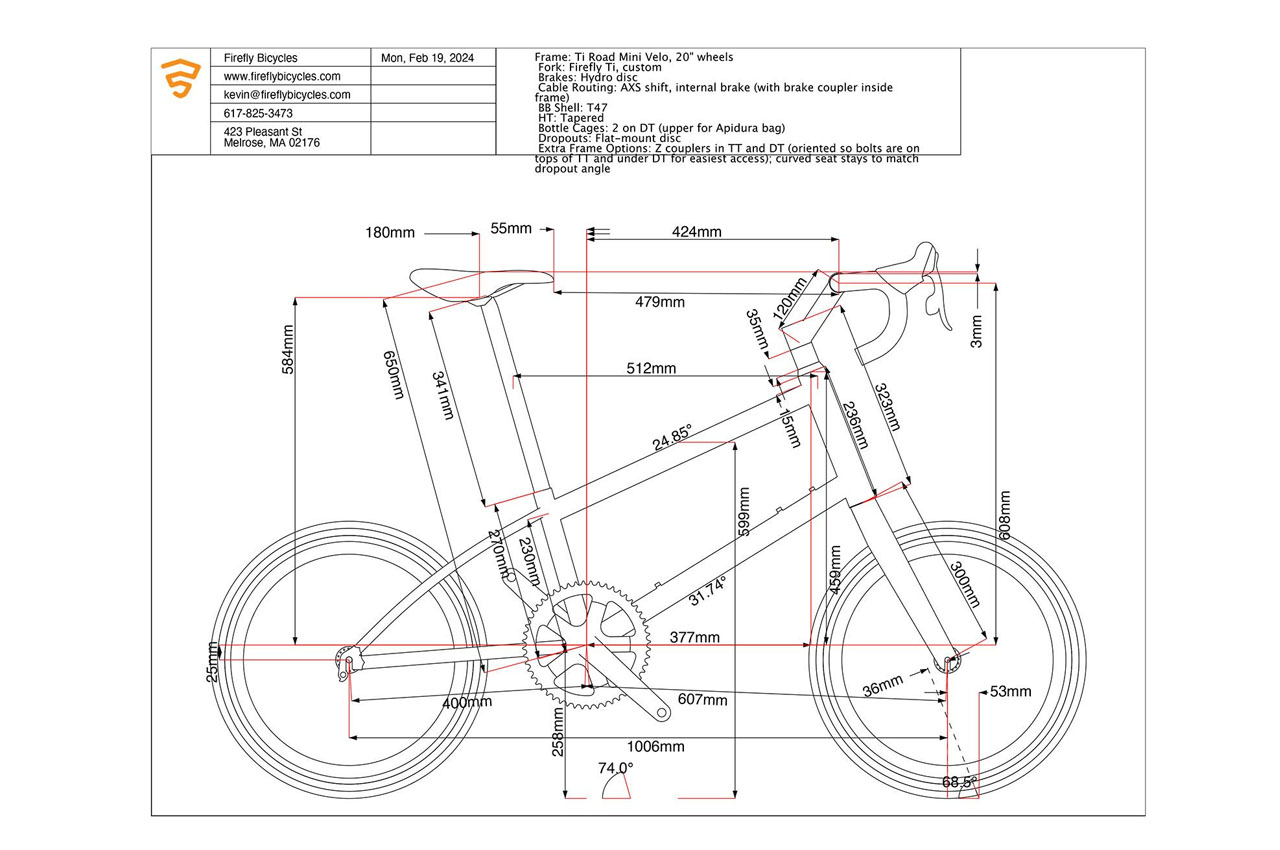
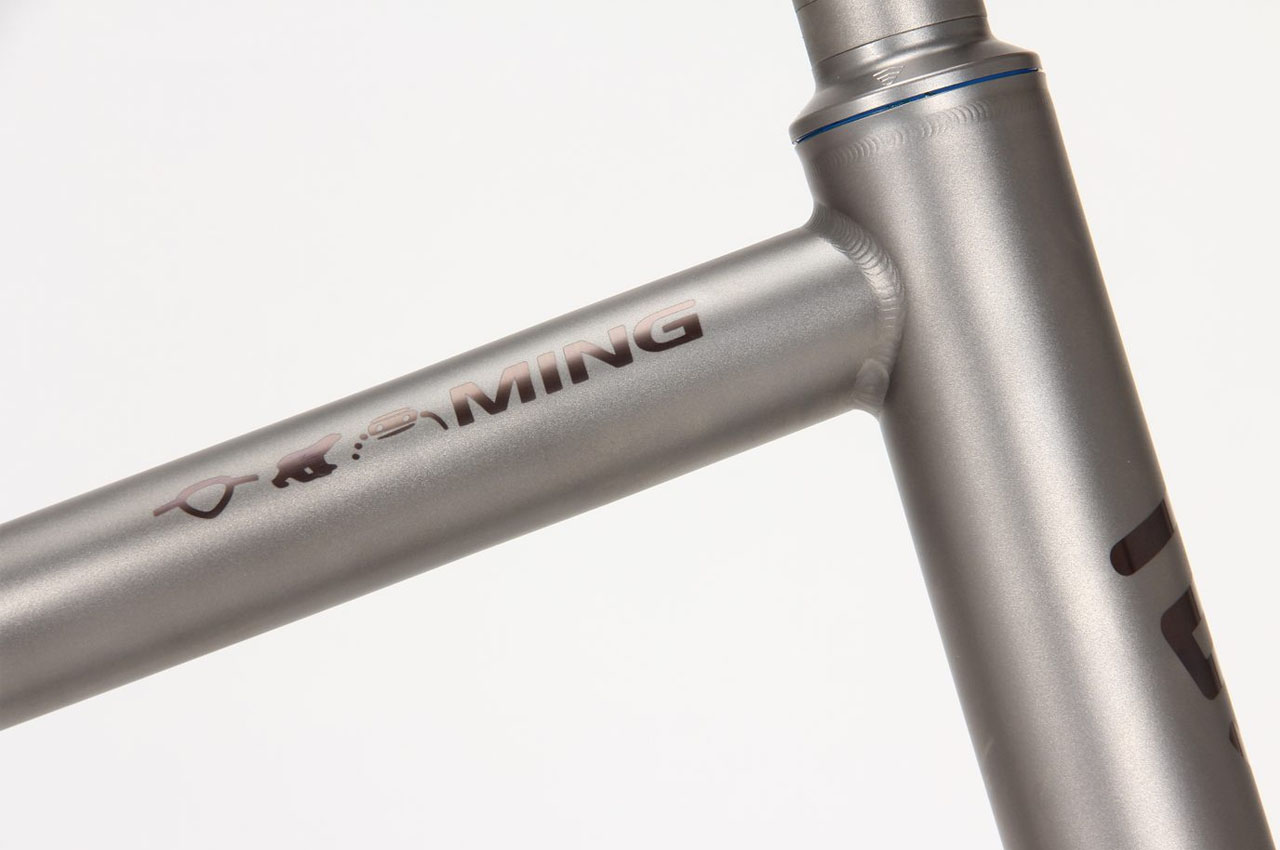
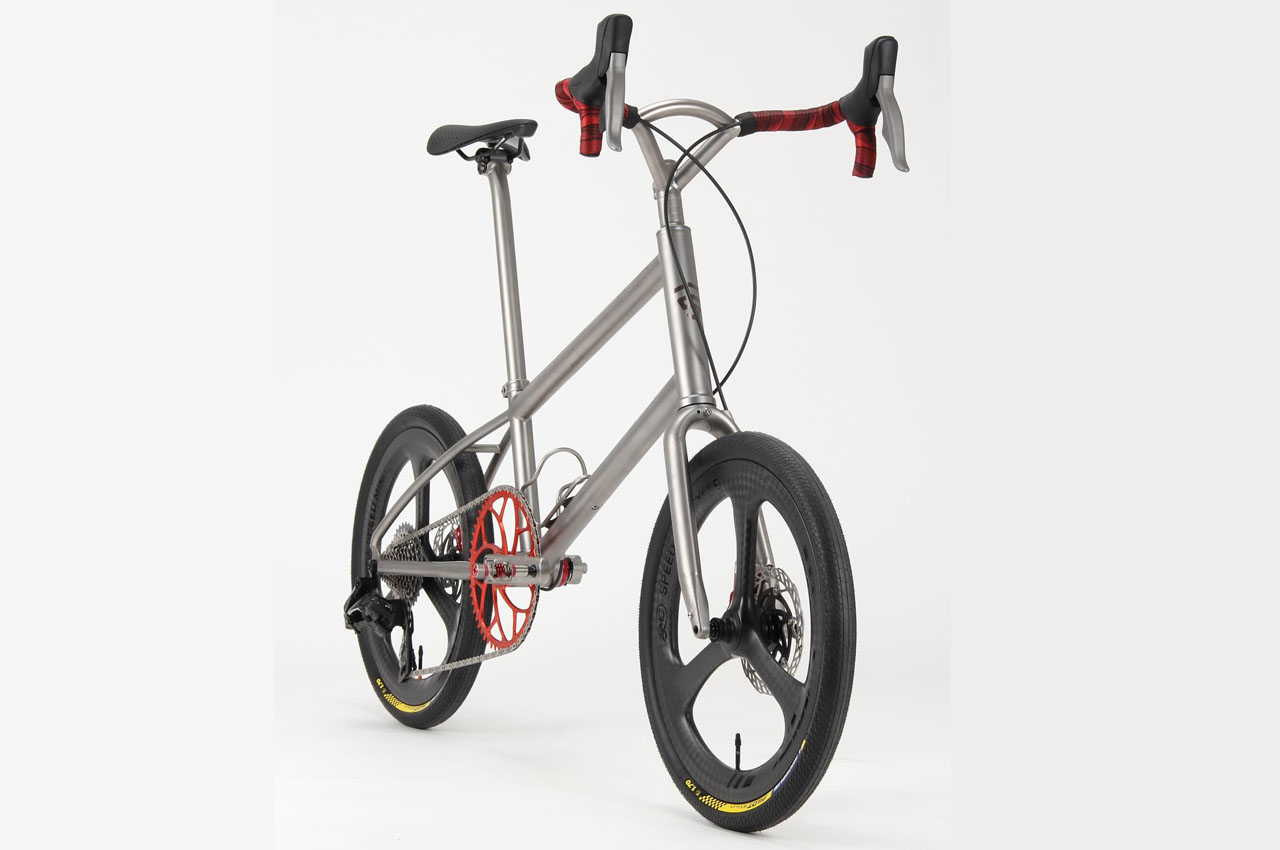
Tailored to Ming Thein, is the pictured Firefly MiniVelo travel bike. It is by virtue a titanium bicycle designed to fit perfectly inside a Rimowa travel case. The custom-made bike has been specially designed to disassemble and assemble like a puzzle to fit into a briefcase and back to ride without a flinch.

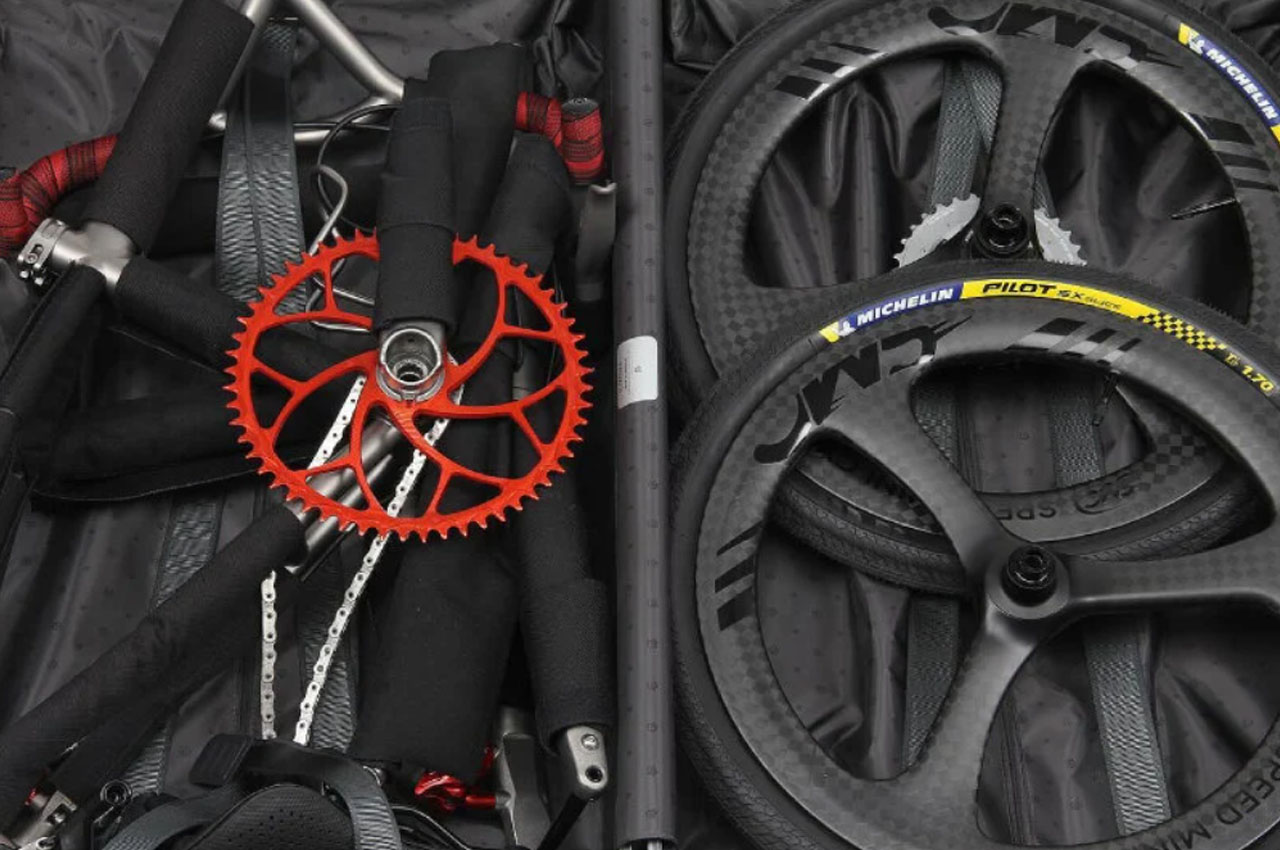
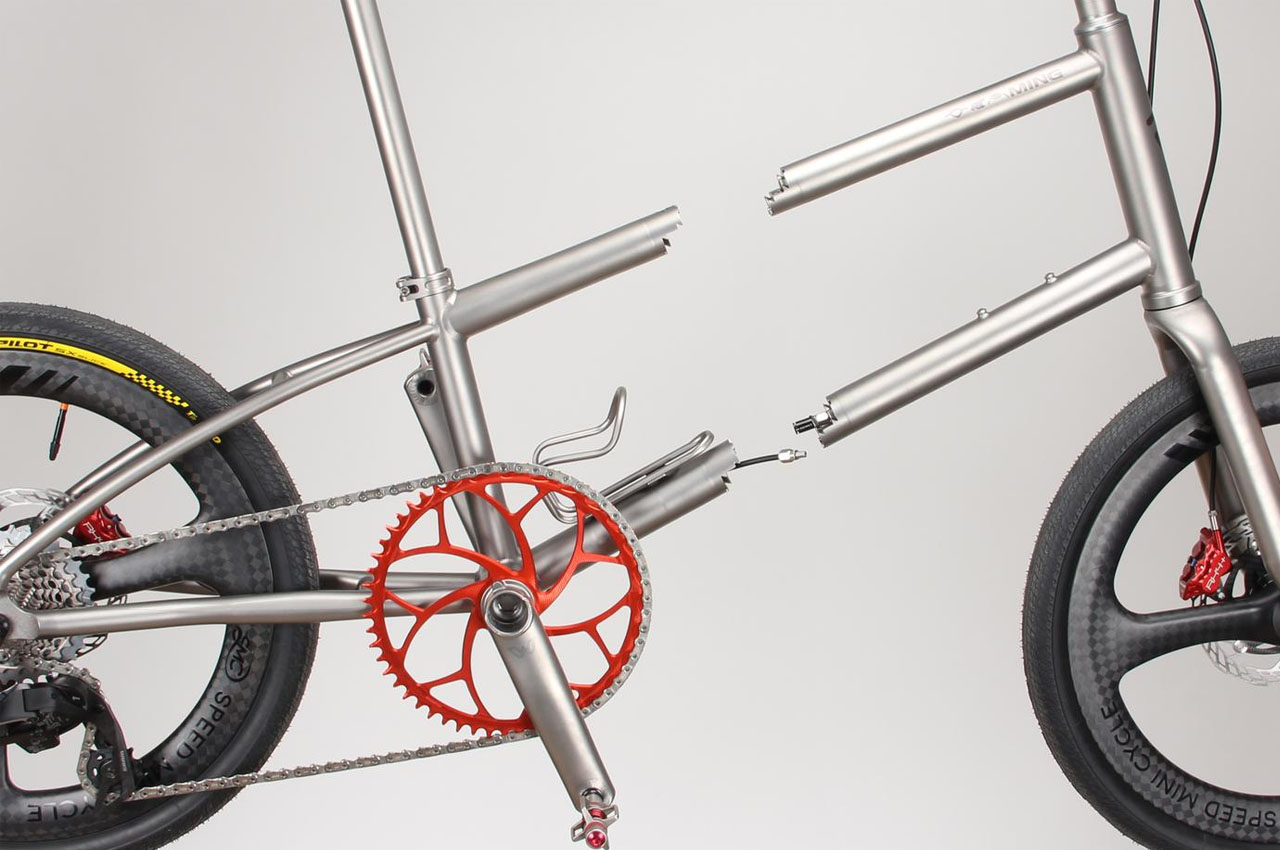
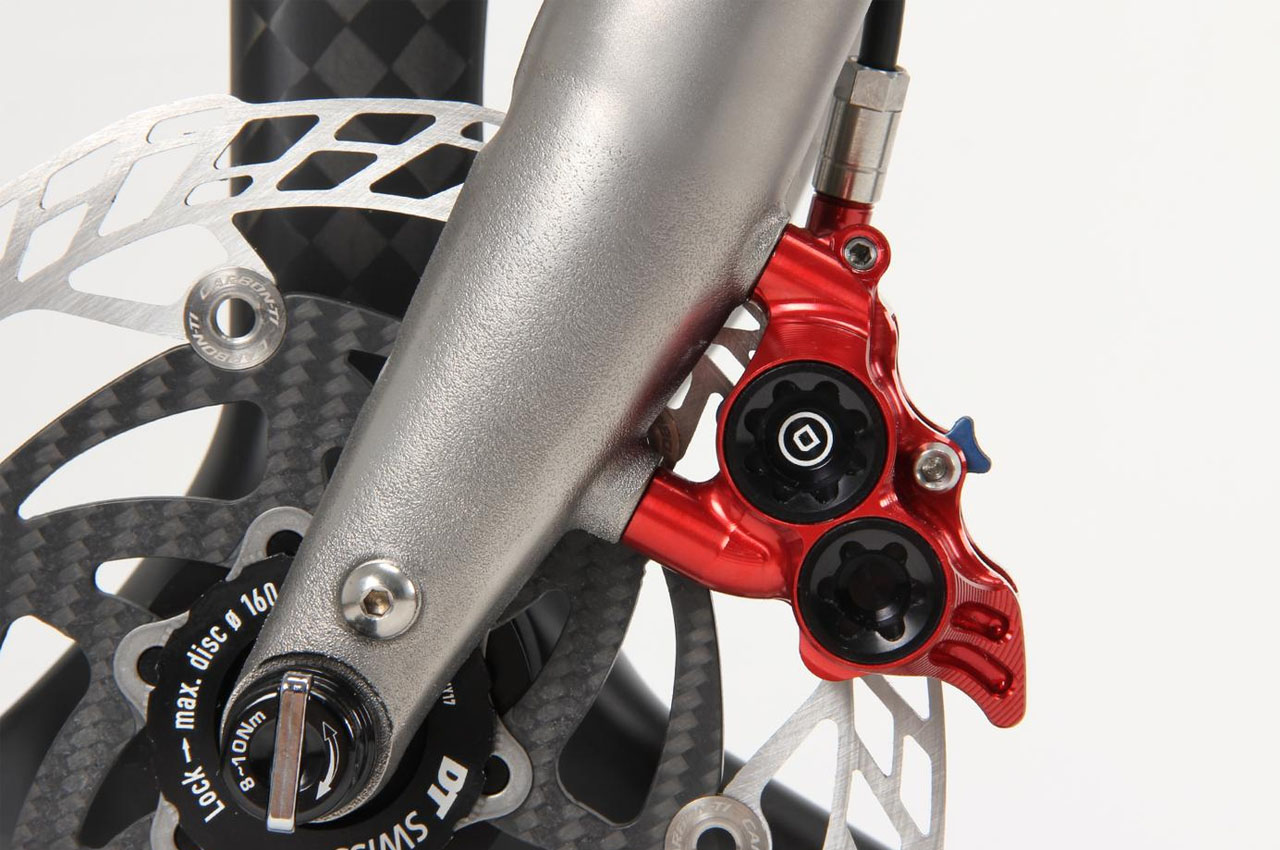
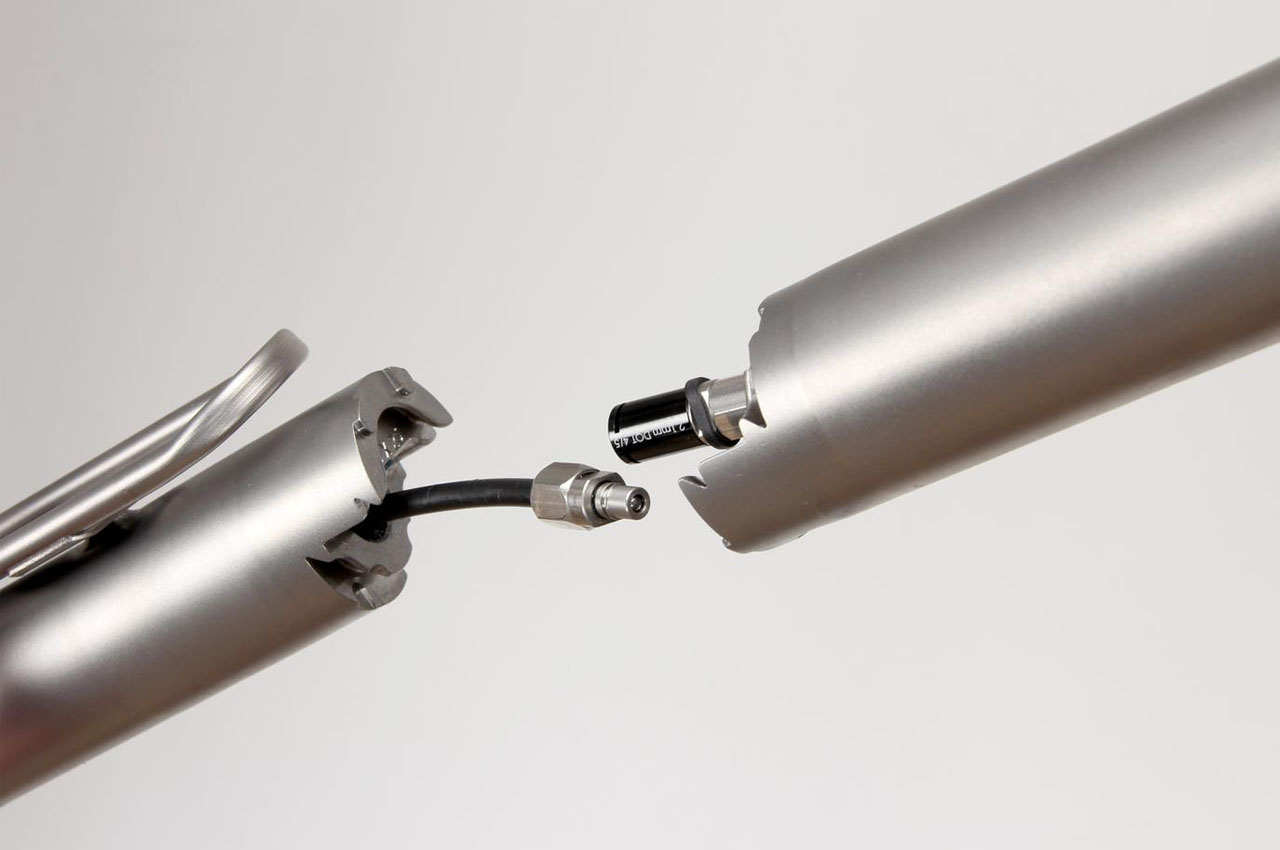
The MiniVelo thrives on its lightweight and durable chassis that can be unfastened into two halves, with other parts following suit, disassembling to fit into a piece of compact luggage. The main highlight here, which makes the entire assembly and disassembly routine interesting, is the hydraulic line couplers built into the bike frame.

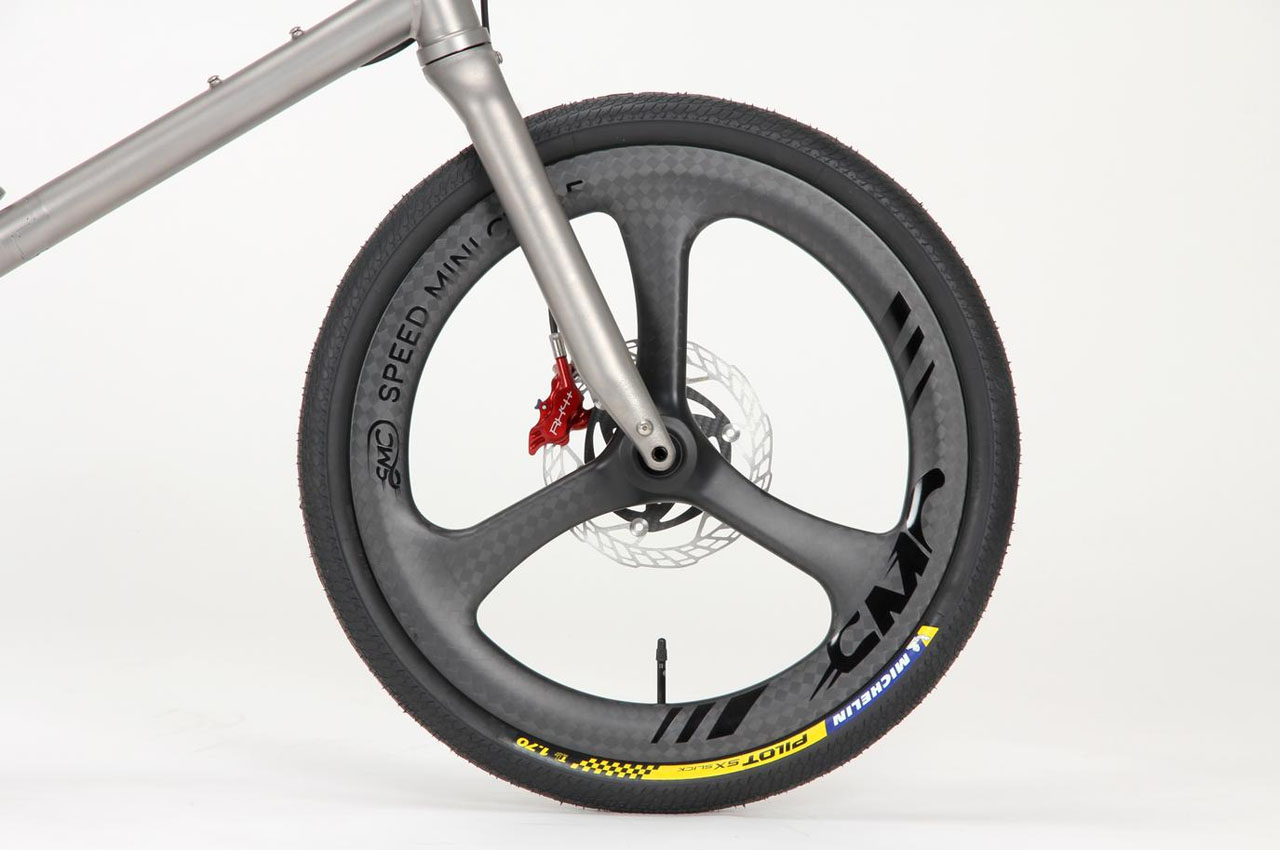
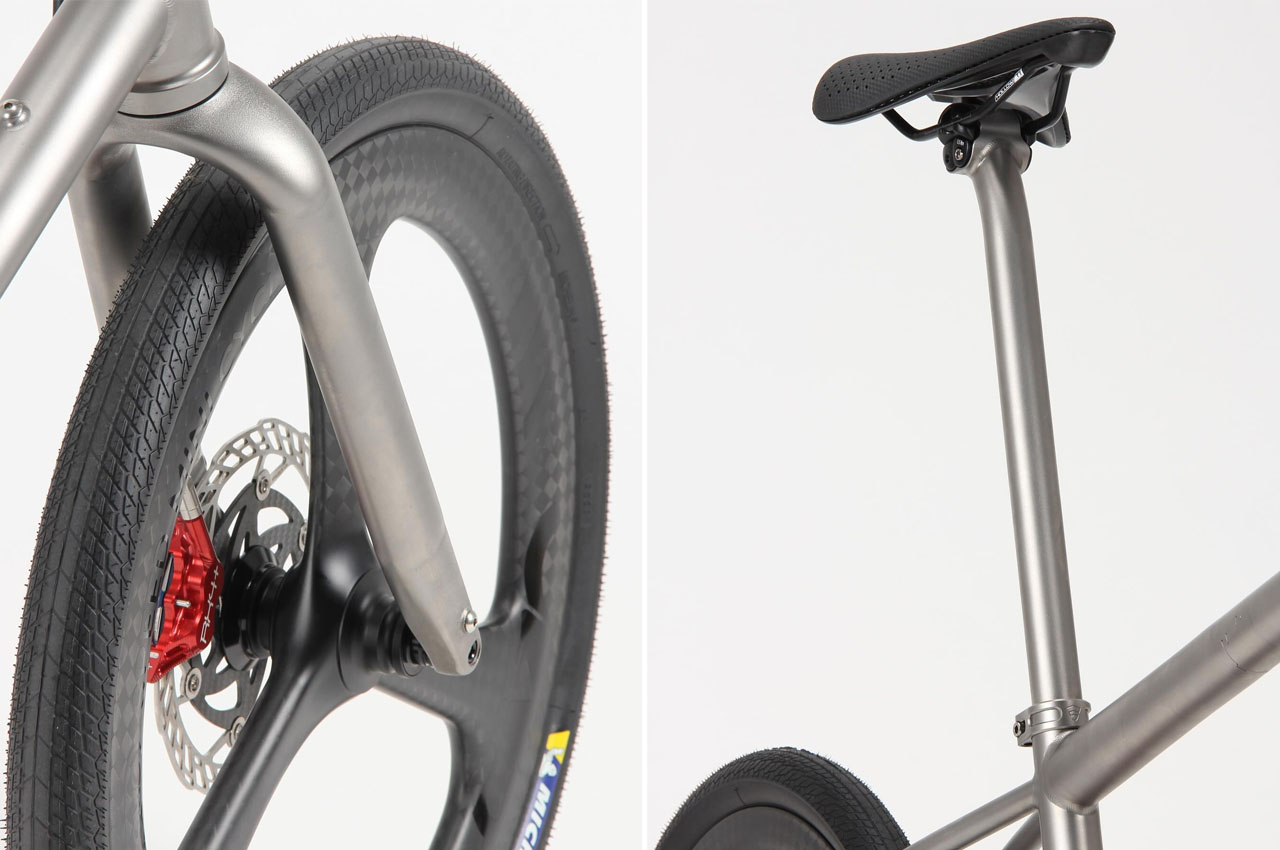
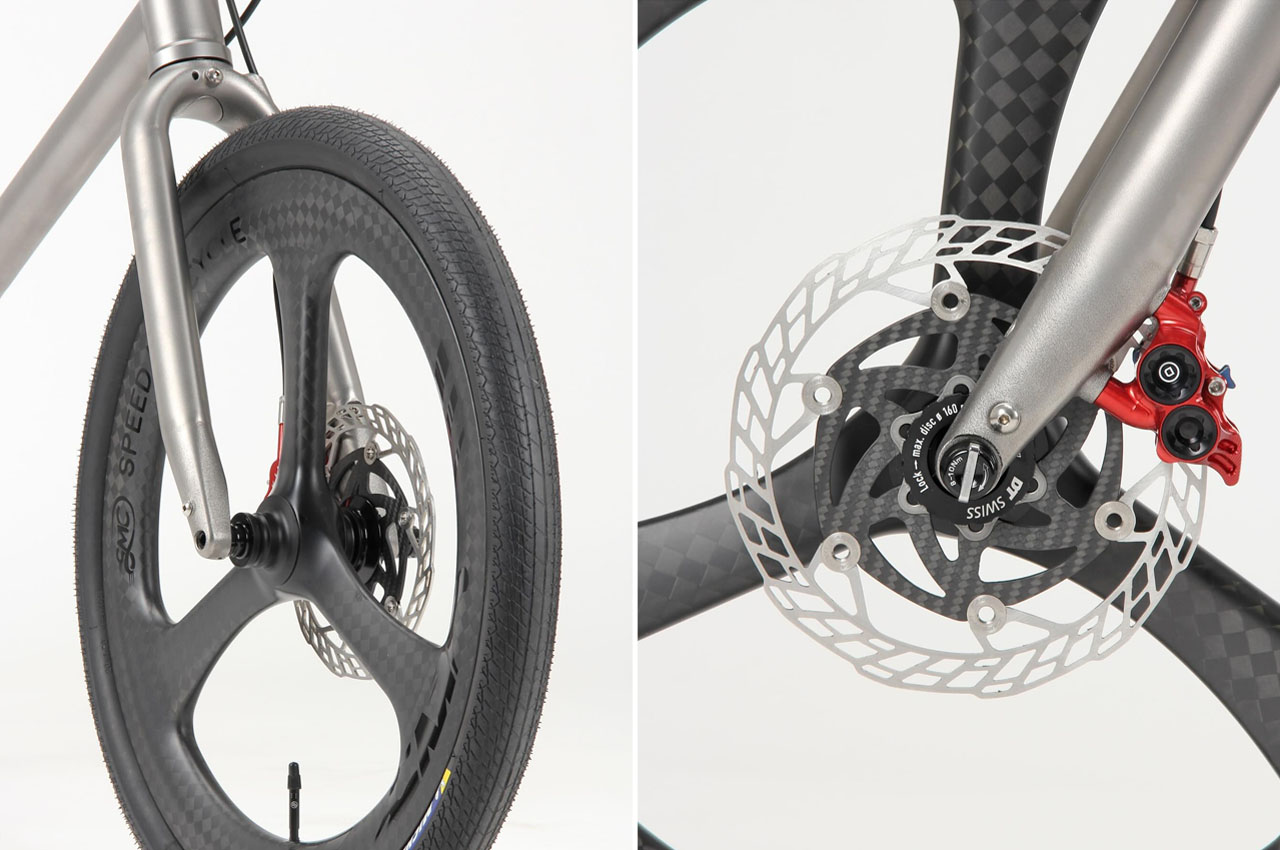
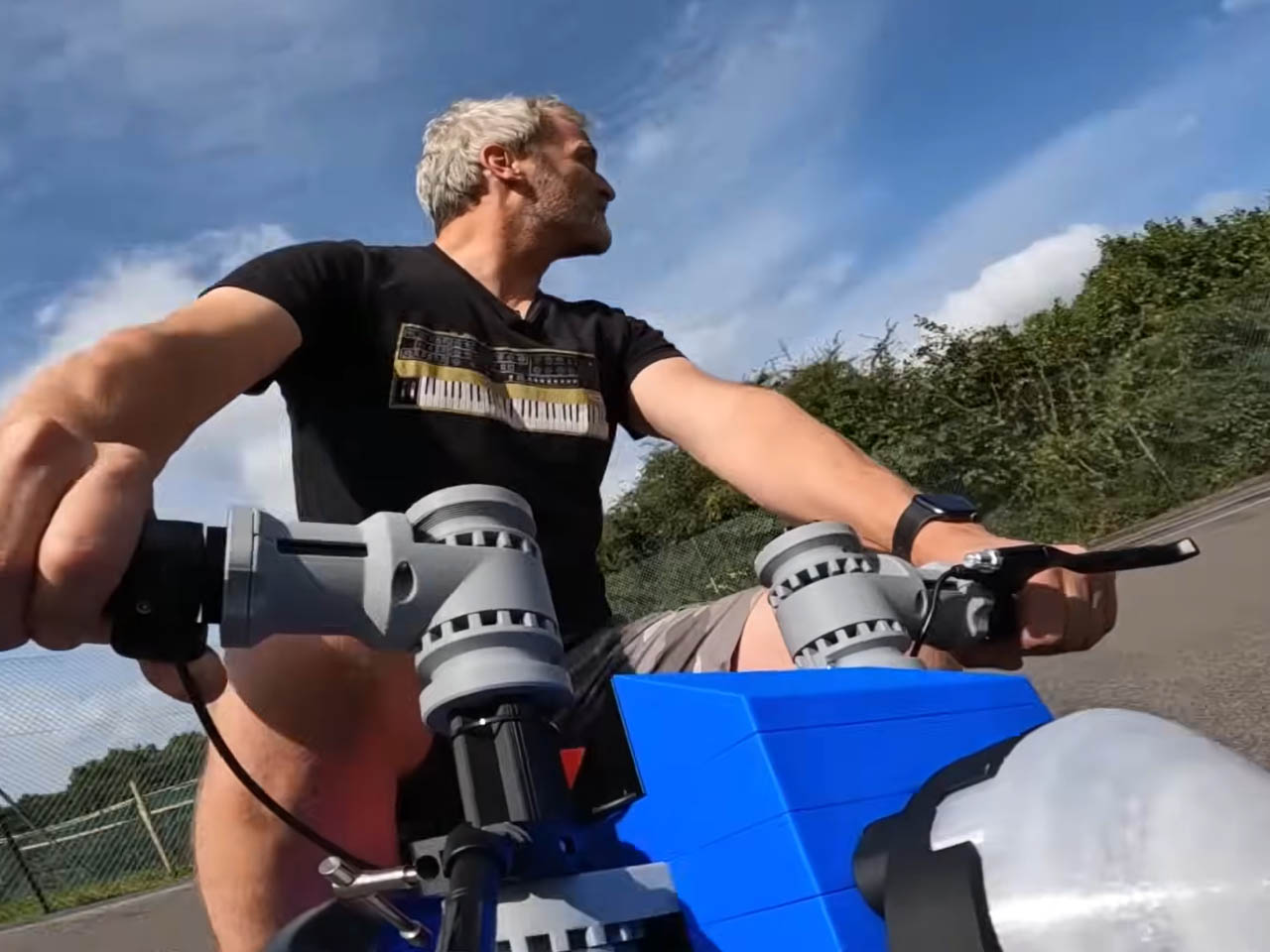
The innovation of this bike design extends to the 3D printed forks, SMC Govan tri-spoke wheels, and seat post made of carbon fiber, which together contribute to the lightweight of the MiniVelo travel bike. Furthering the idea of unique travel customized to user style, Firefly allows the titanium frame to be a canvas for anodizing.

The MiniVelo, as mentioned, is made to order for a horologist with a love for travel and cycling. Firefly is not likely to, at least at the time of writing, replicate the idea for mass production. But if you are fascinated by the idea of a titanium mini bicycle, you can fit in Rimowa luggage, head over to Firefly Bicycles, and request a customized option right away.

The post Firefly’s custom-built foldable titanium-frame bicycle fits perfectly into this Rimowa travel Case first appeared on Yanko Design.

Zero DSR/X Long-Term Review

PROS:


  • Capable in all conditions

  • Comfortable and easy to ride

  • Practical layout

CONS:


  • Lacking range

  • Expensive

  • Confusing interface

RATINGS:

AESTHETICS
ERGONOMICS
PERFORMANCE
VALUE FOR MONEY

EDITOR'S QUOTE:

“In my initial review I called this bike a masterpiece, and now, at the end of this extended loan, I feel much the same way -- but with some important caveats.”

It’s been an up-and-down year for riding where I live on the East Coast of the United States. We’ve had good weather and bad, repeated wind storms and record-breaking amounts of rain. That’s the kind of unpredictability that keeps many motorcycles sitting inside the garage, sipping slowly from trickle chargers.

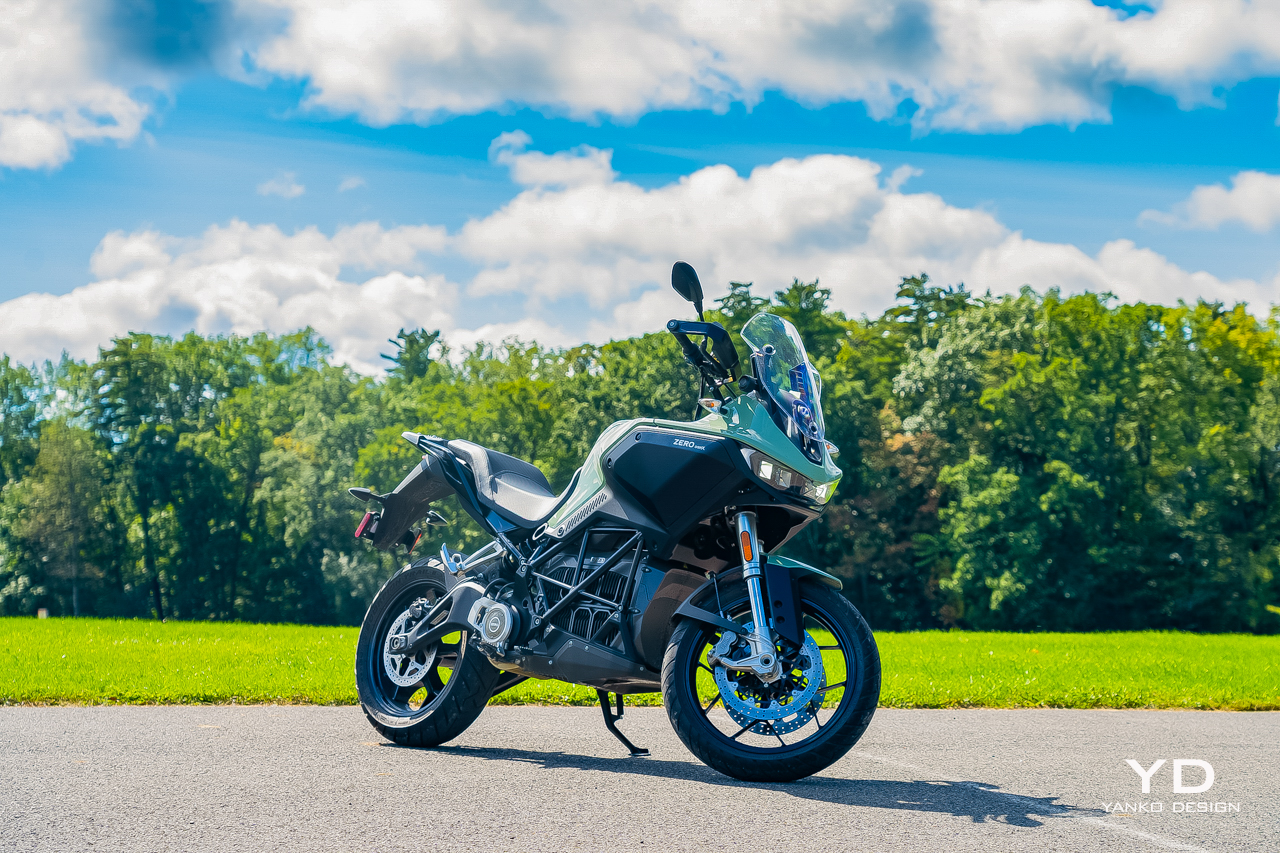
It’s also the kind of conditions that are absolutely perfect for the Zero DSR-X. I’ve now spent a full year living with this dual-sport electric motorcycle, covering miles through all seasons to find out just what this bike is all about. After the first few months, I called this bike a masterpiece, and now, at the end of this extended loan, I feel much the same way — but with some important caveats.
Design

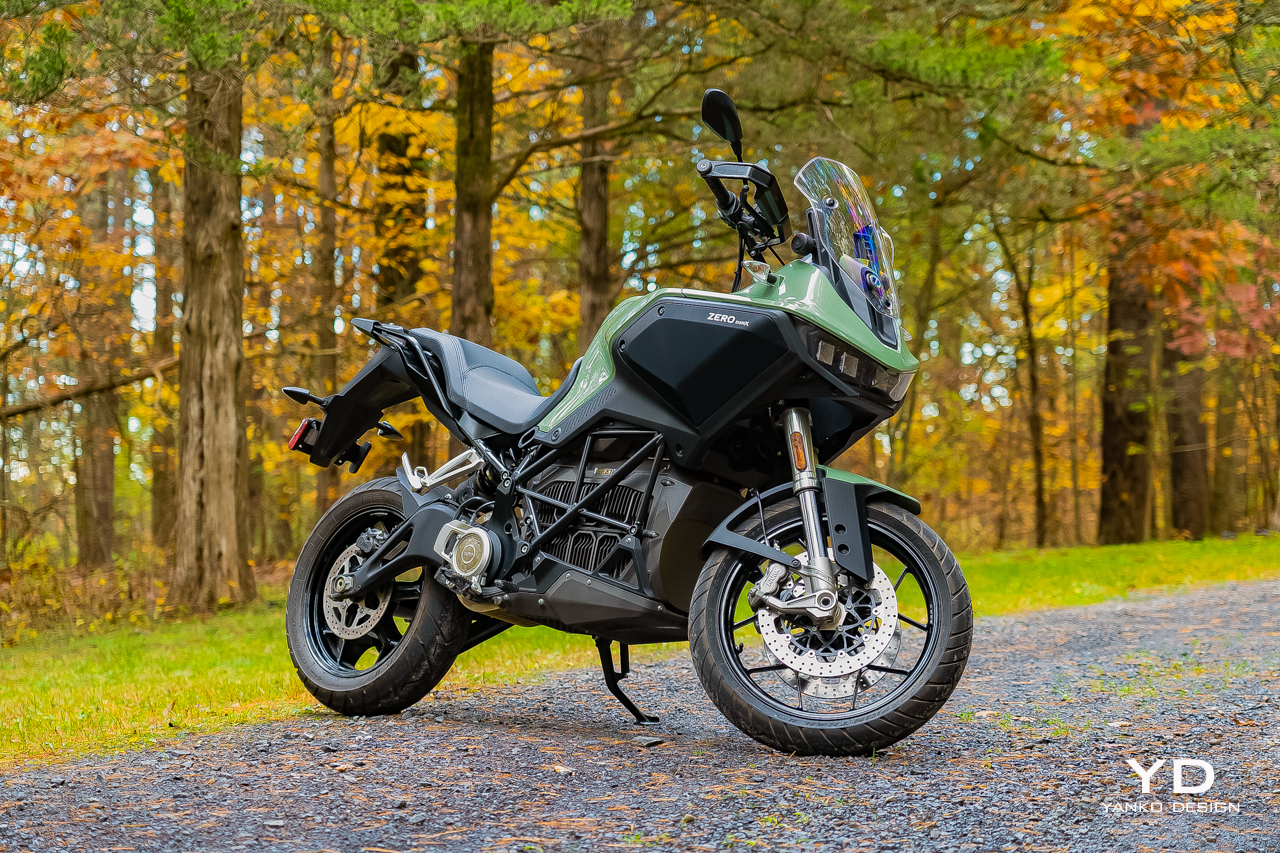
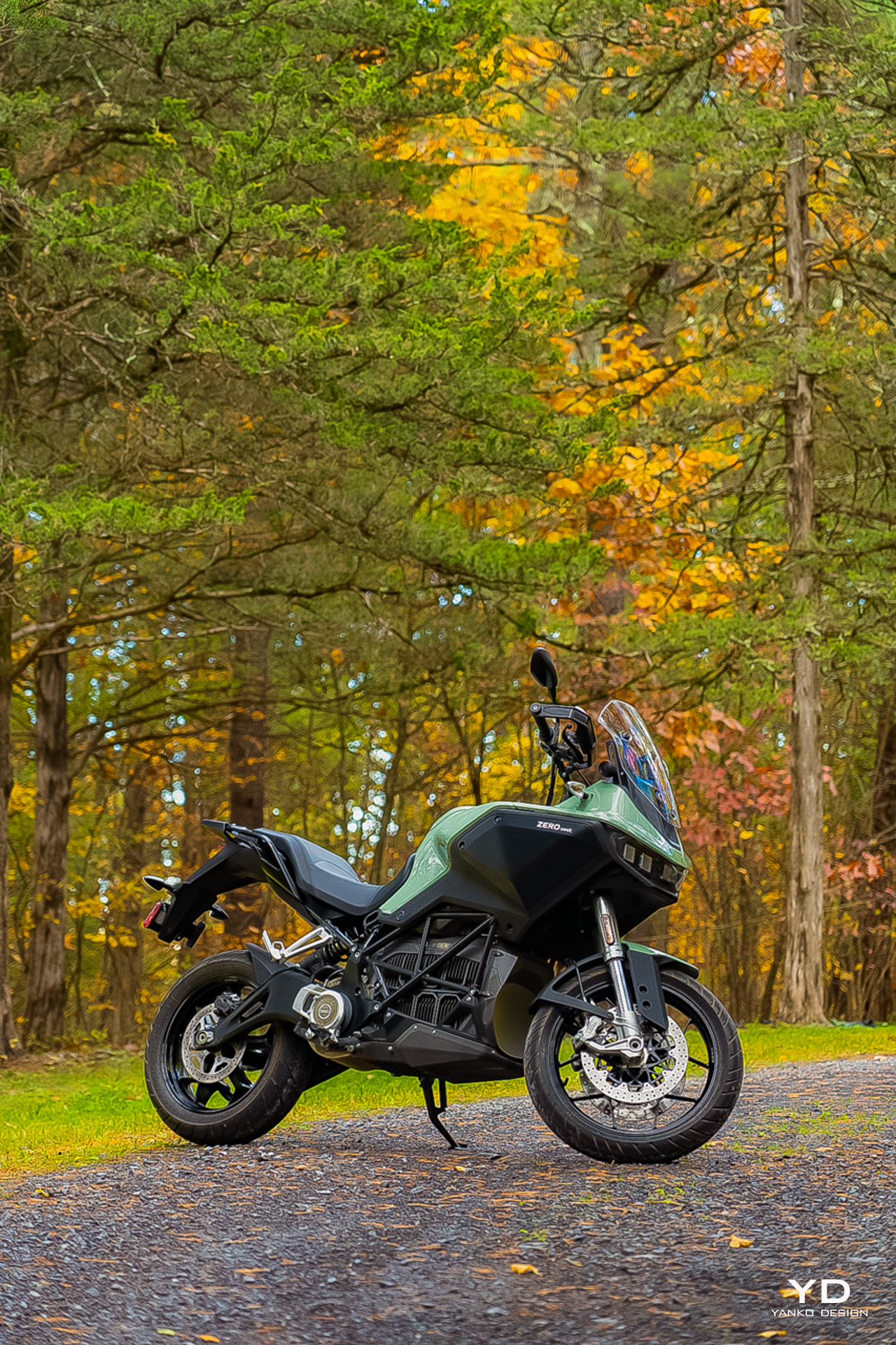
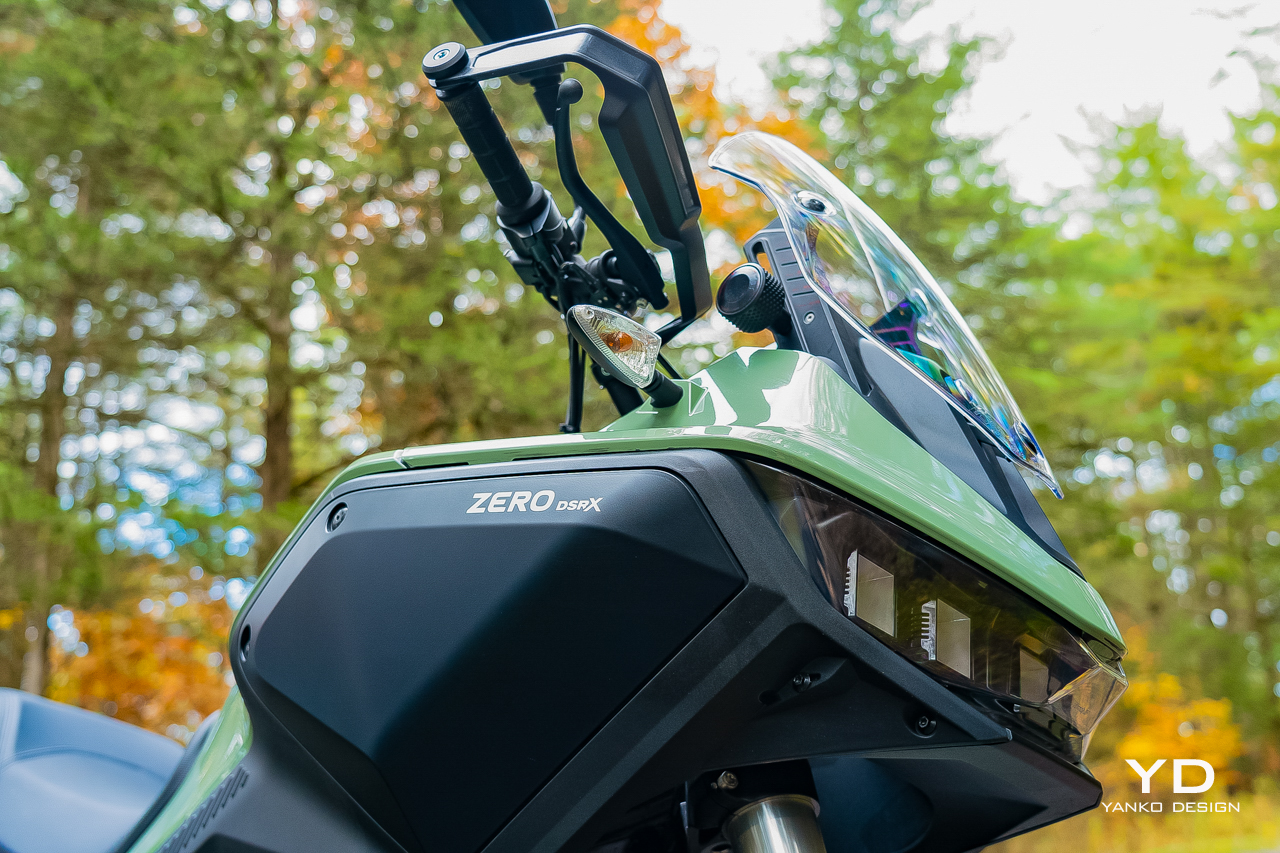
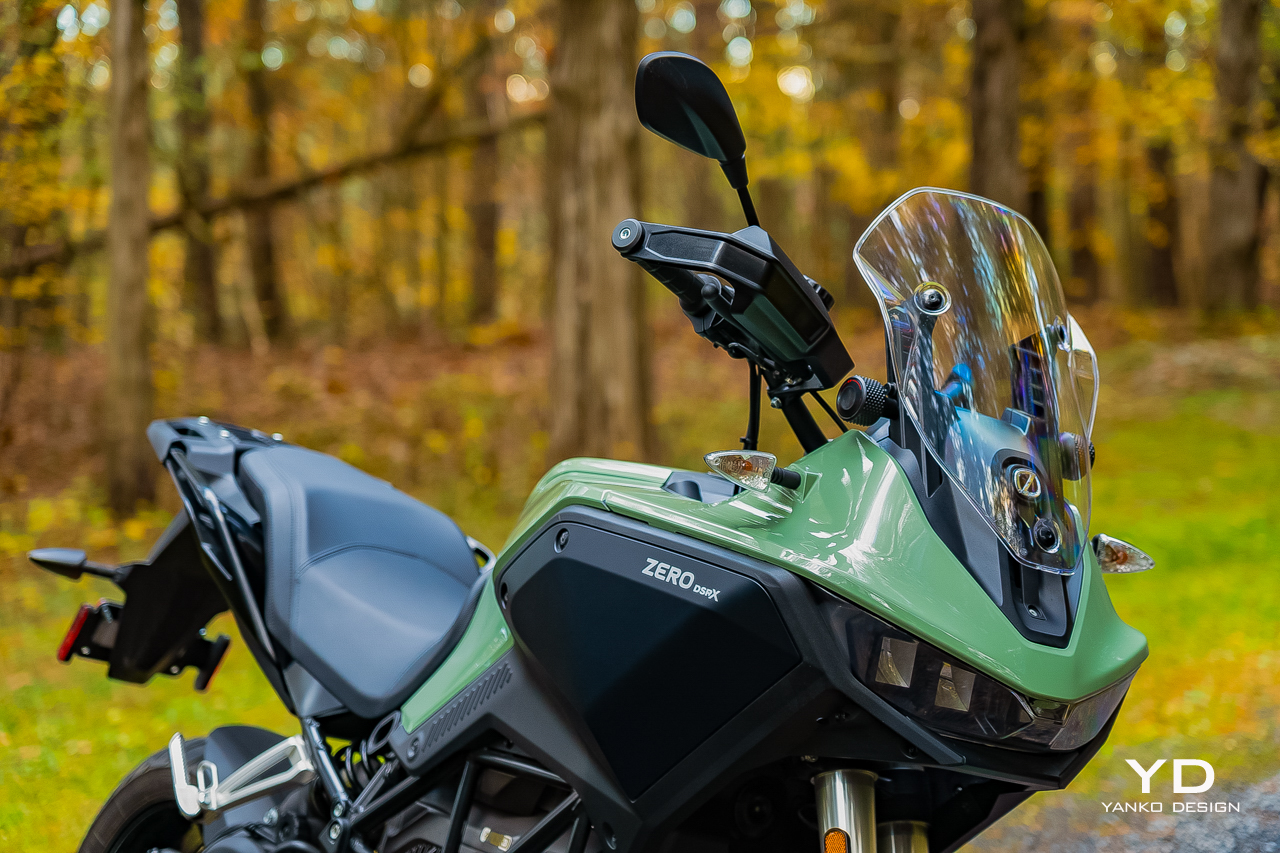
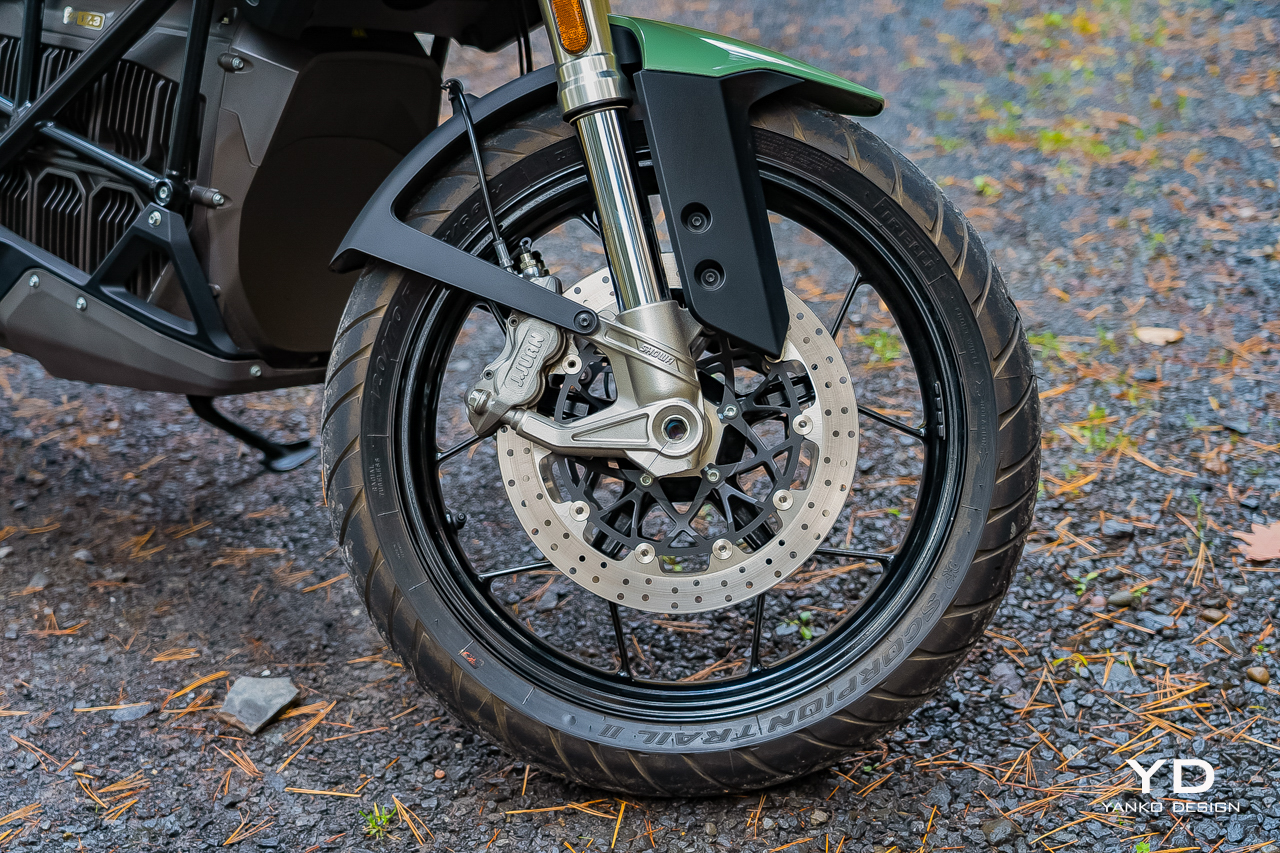
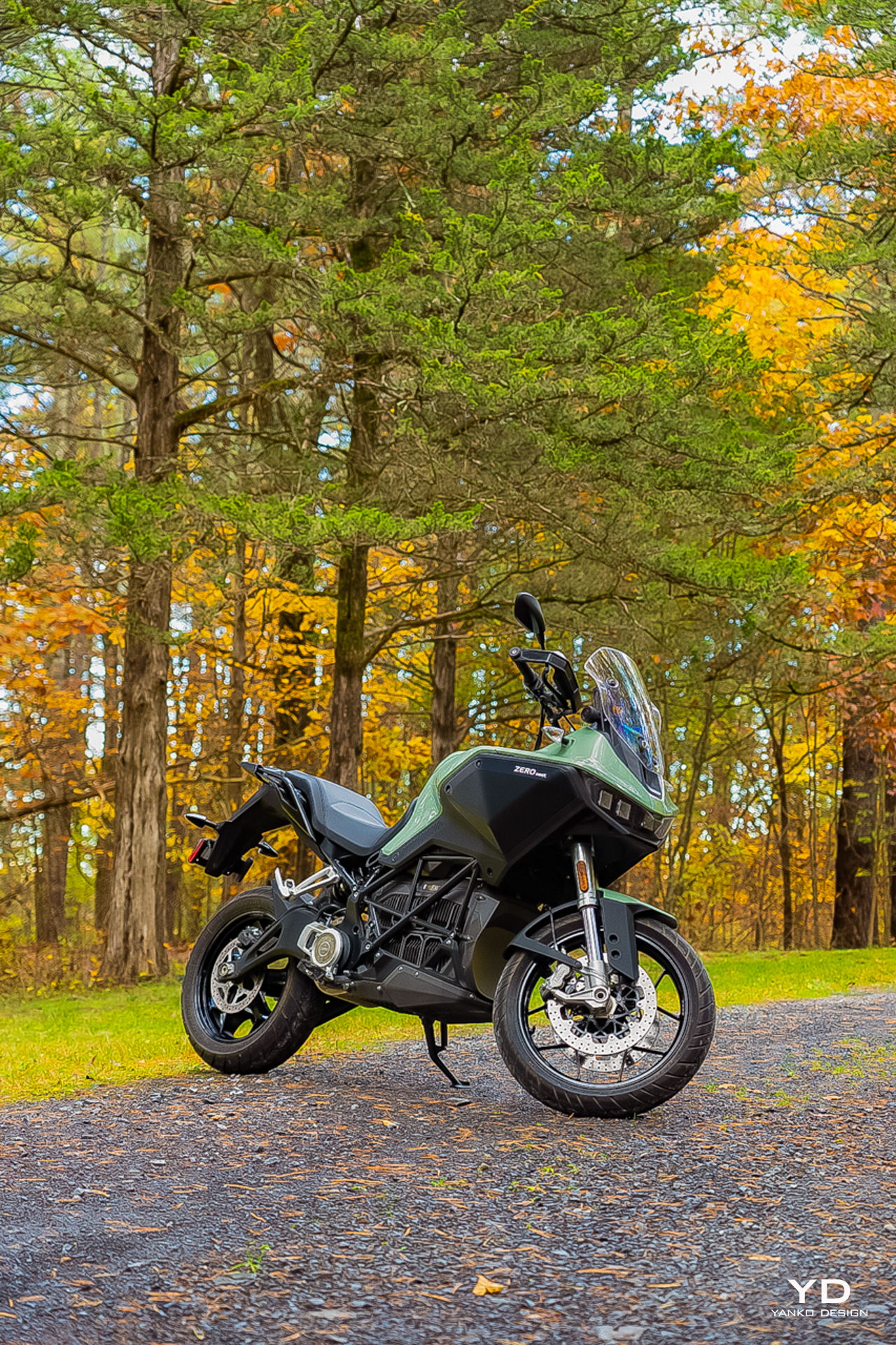
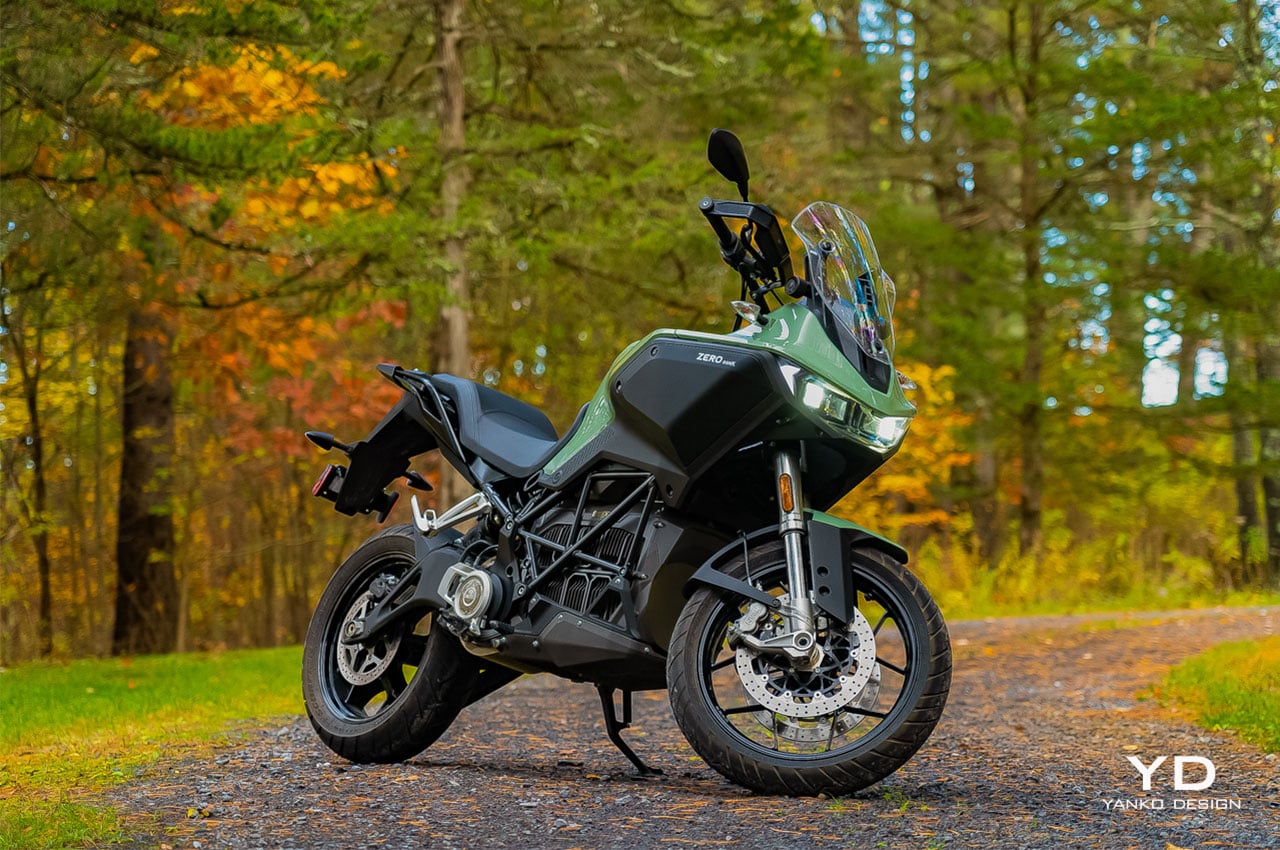
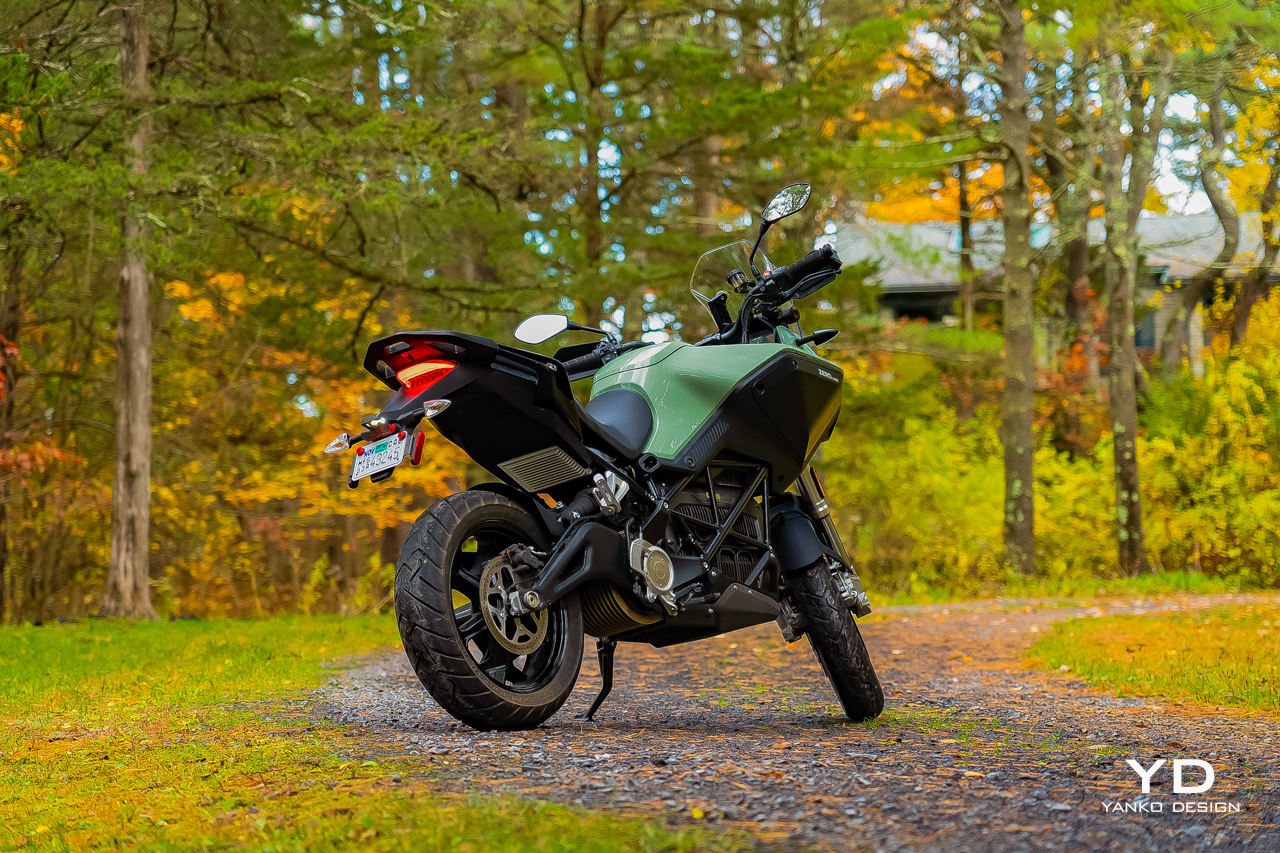
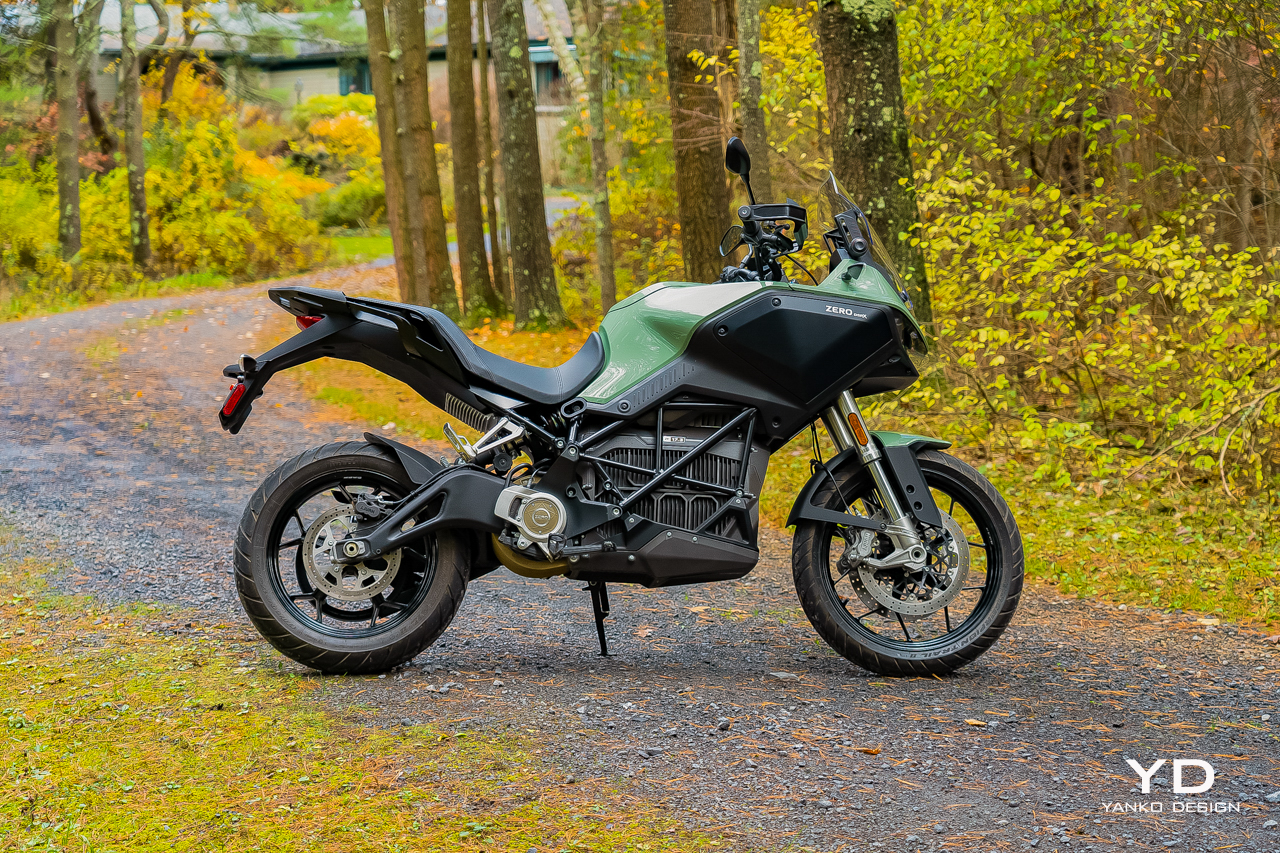
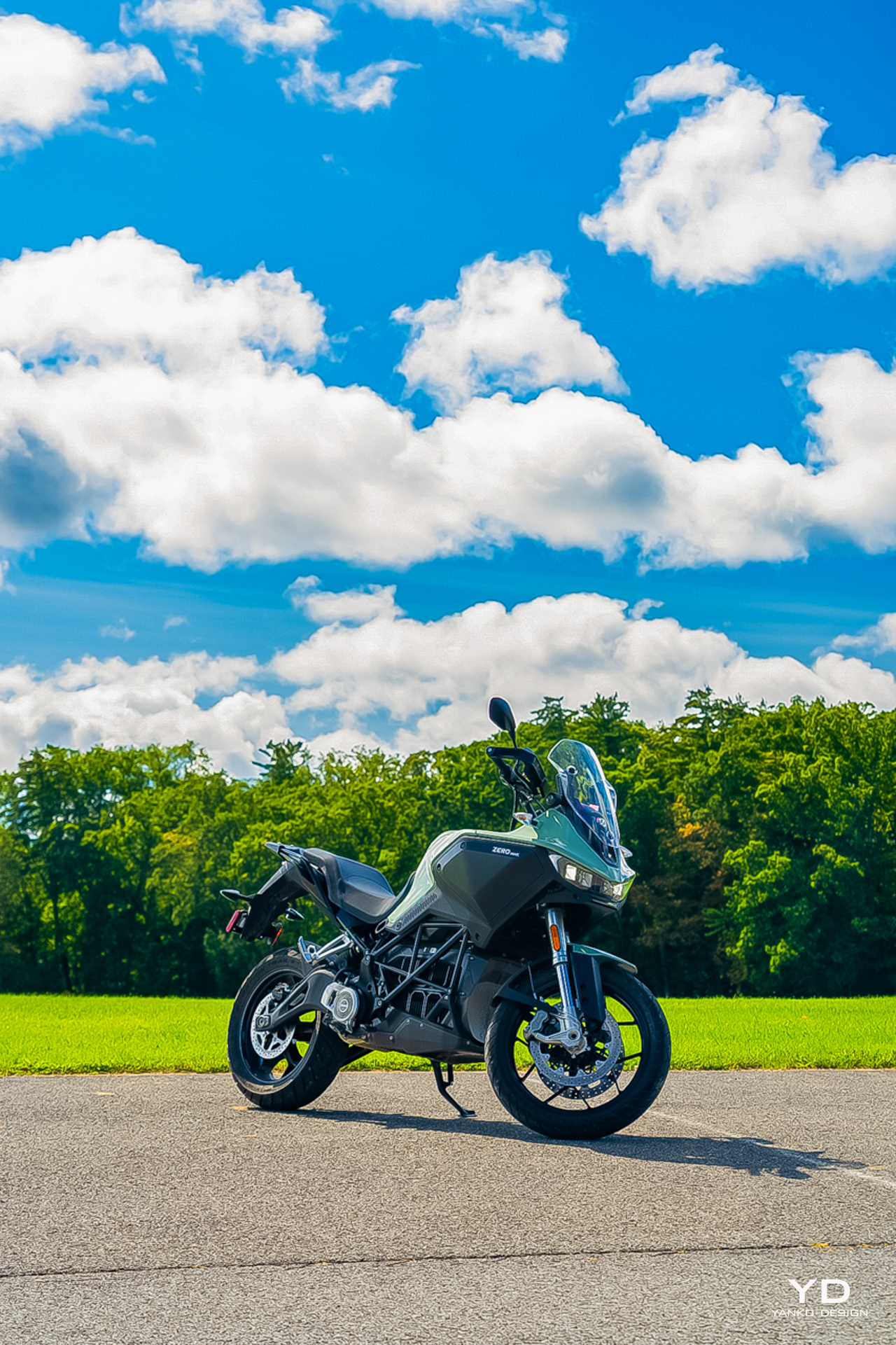
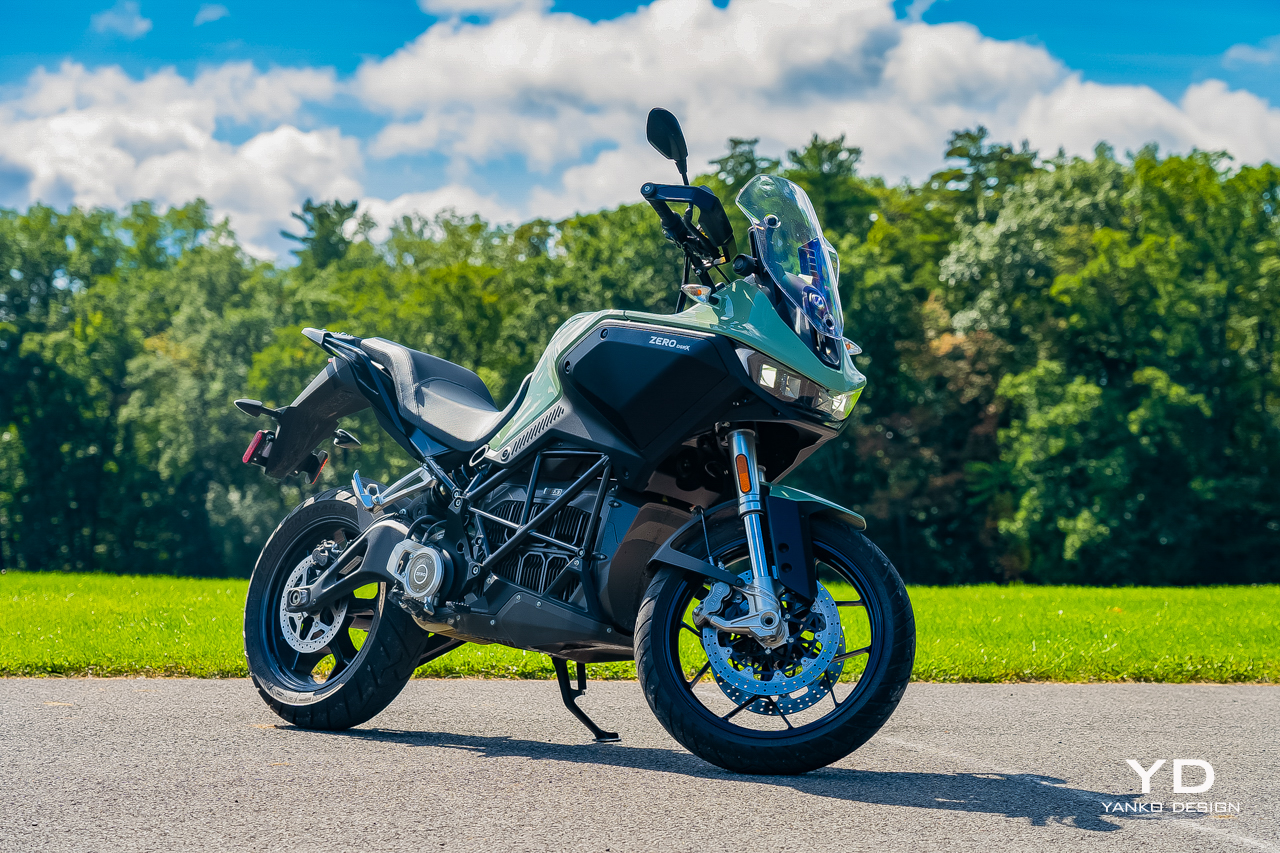
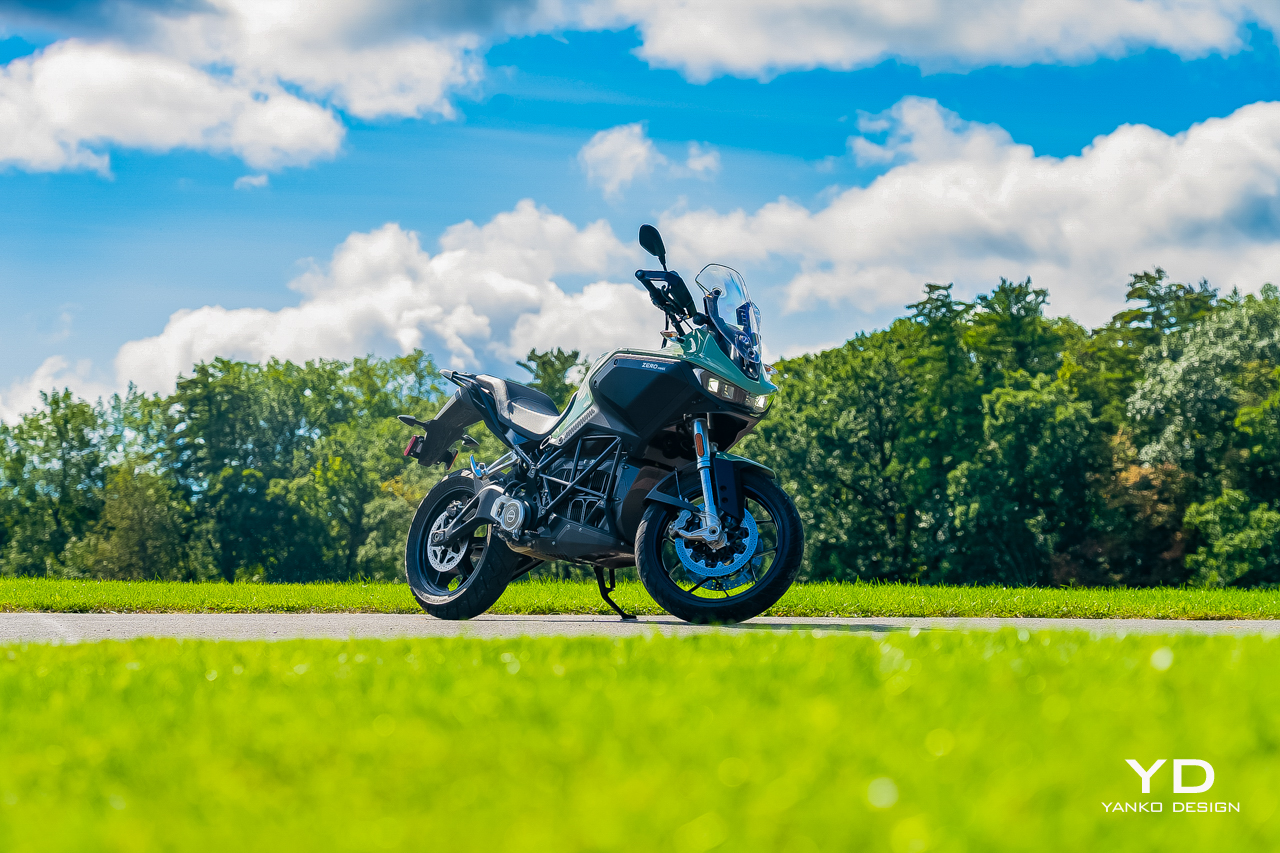
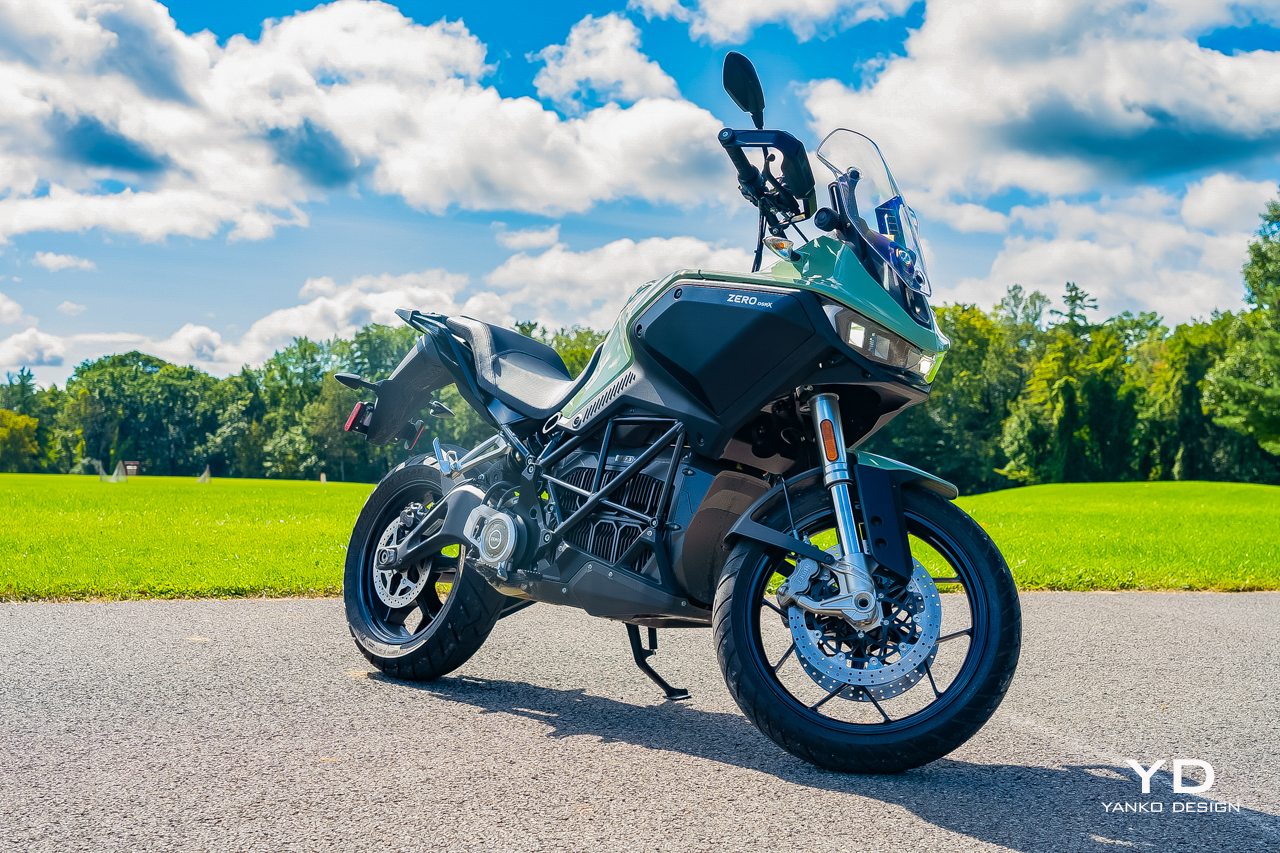
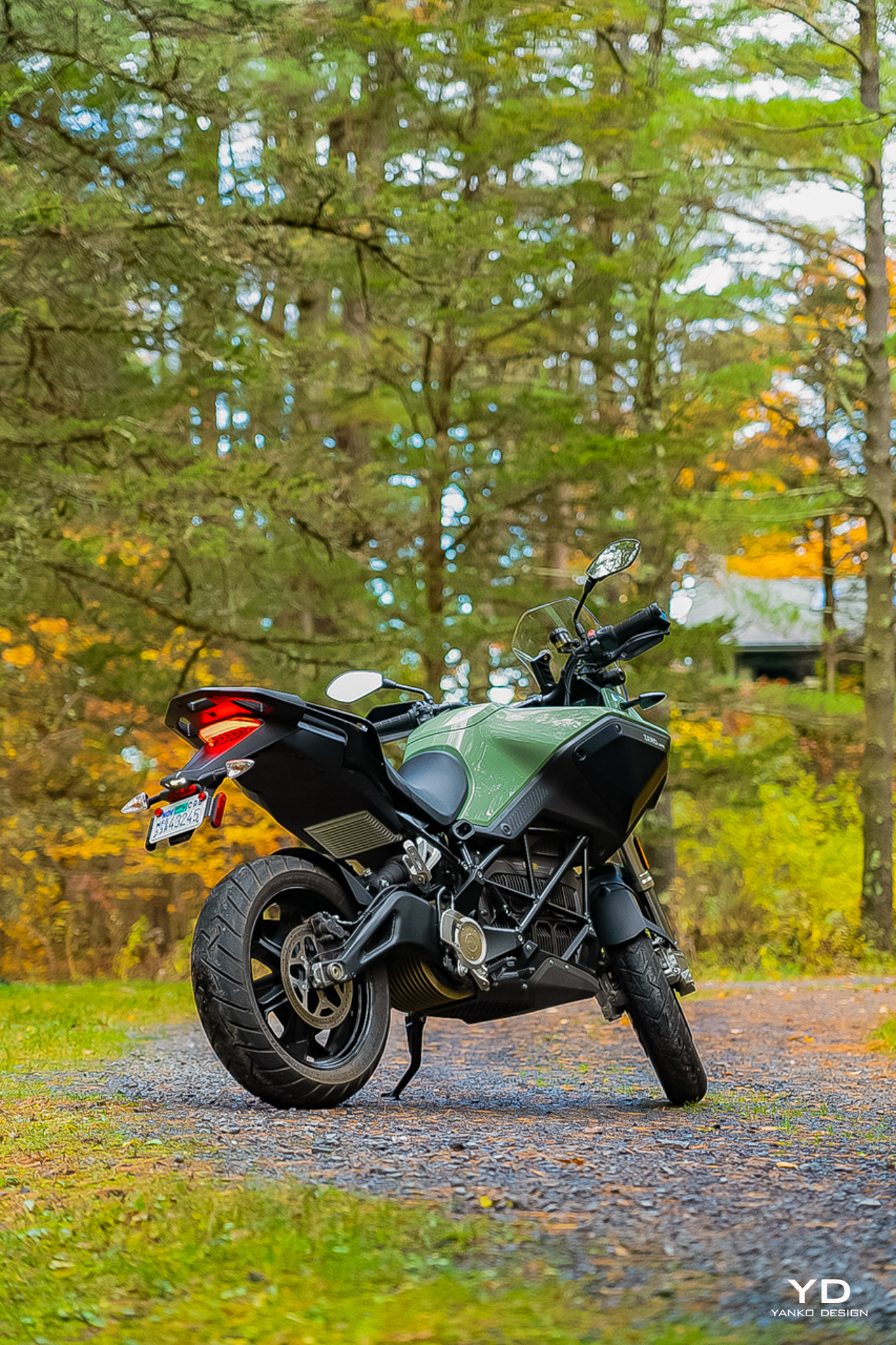
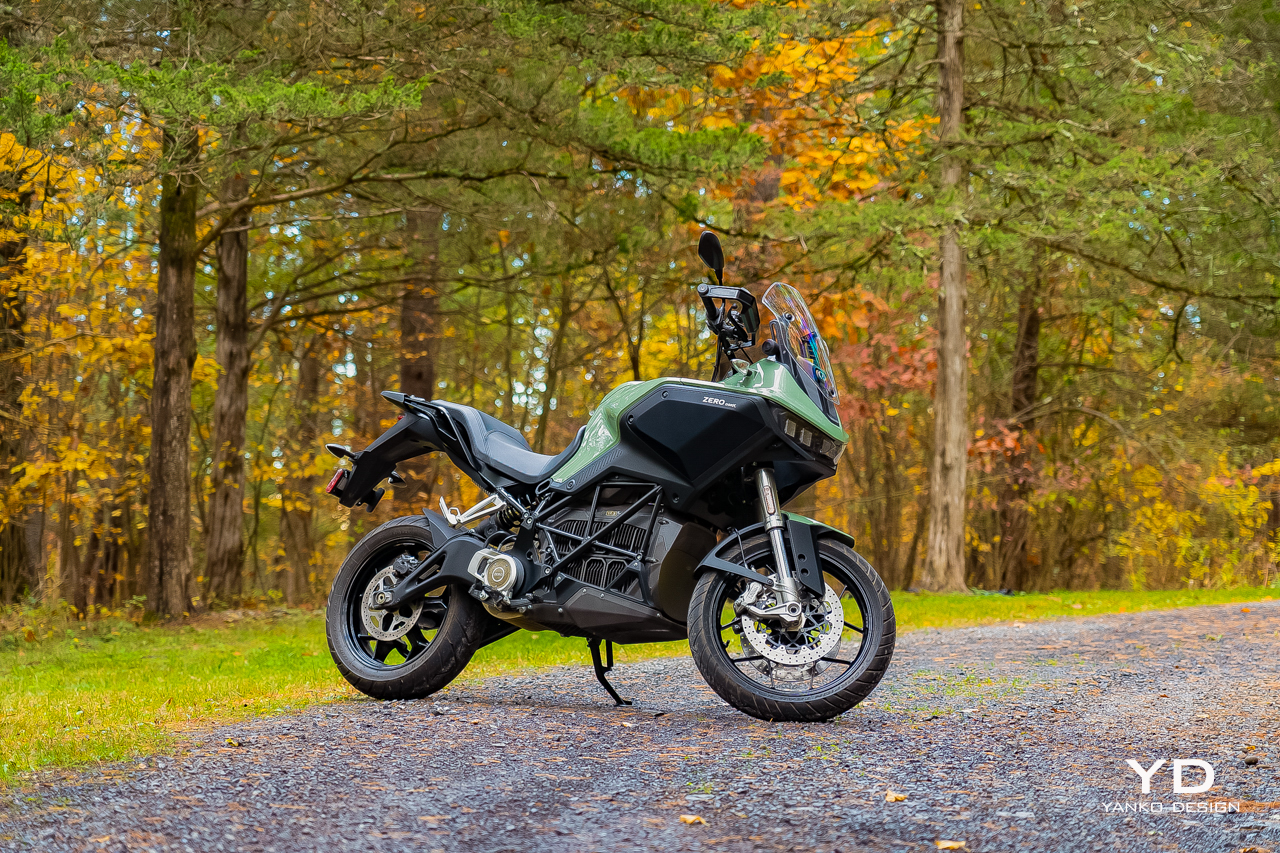
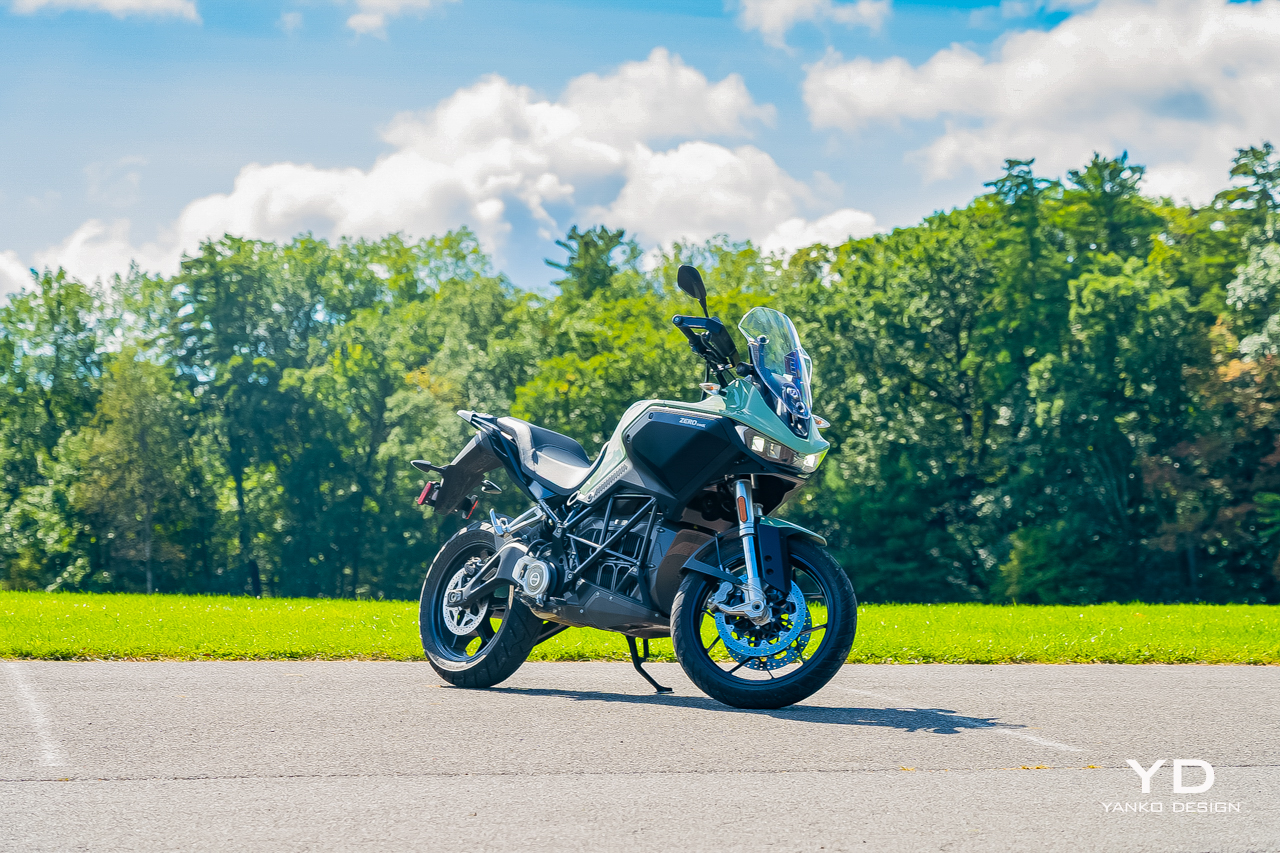
It’s admittedly only been a year, but I find the look of the DSR-X just as appealing as I did 12 months ago. Maybe even more so. Its upright, organic shape is still a welcome sight to me as I approach it in a parking lot. Far from the razor-thin shapes most commonly seen on sportbikes, the somewhat bulbous fairing of the Zero gives it a more friendly appearance.

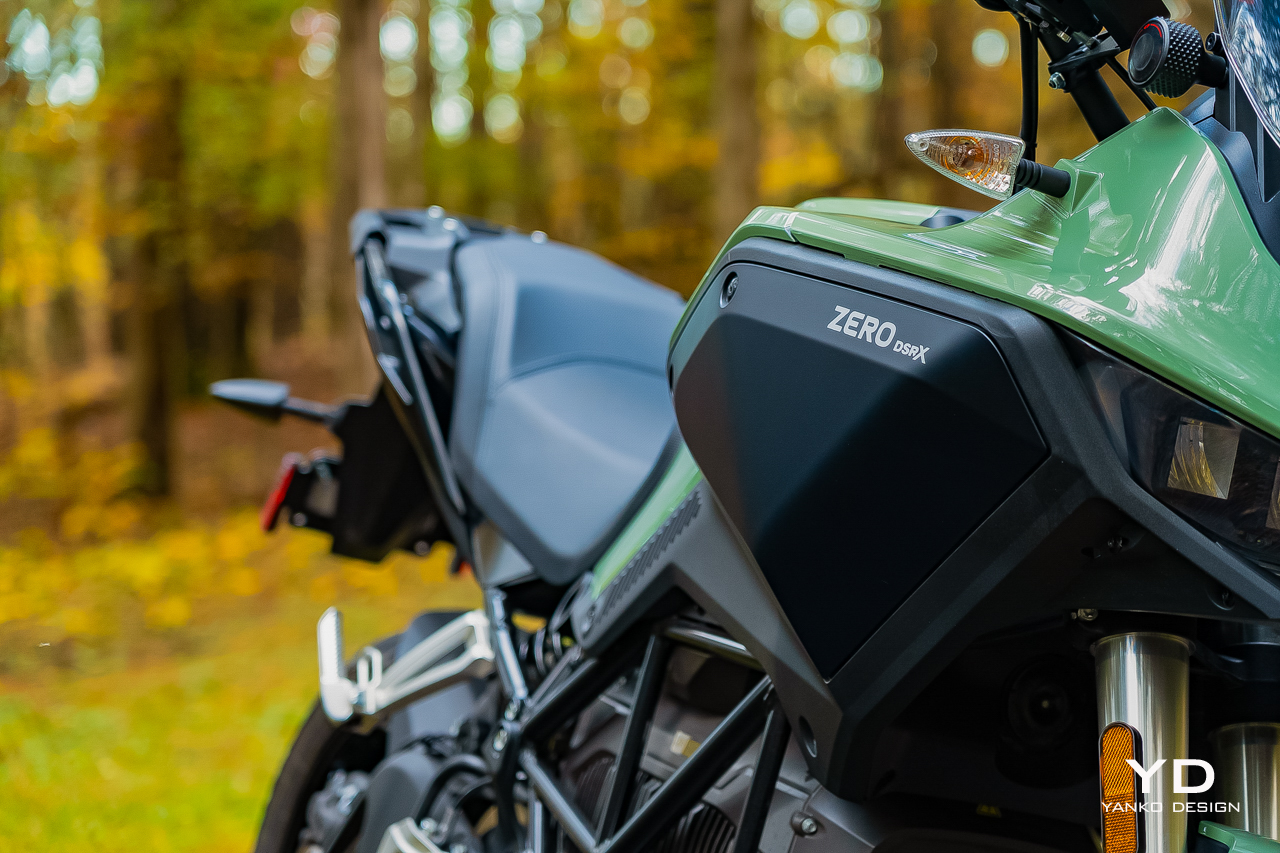
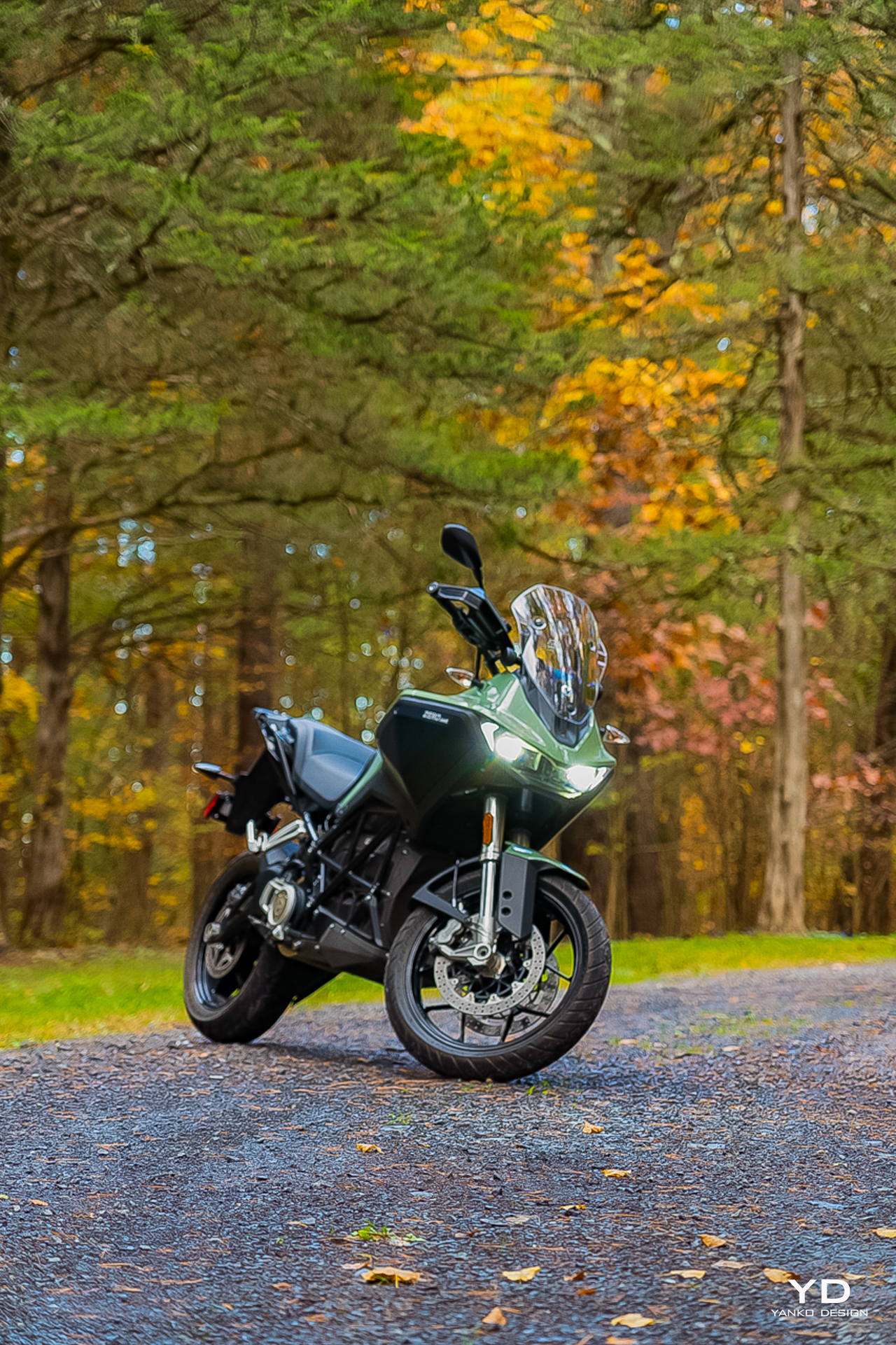
I still love the green, too, a somewhat muted hue that feels like a nod to the nature that this bike craves getting out and into.

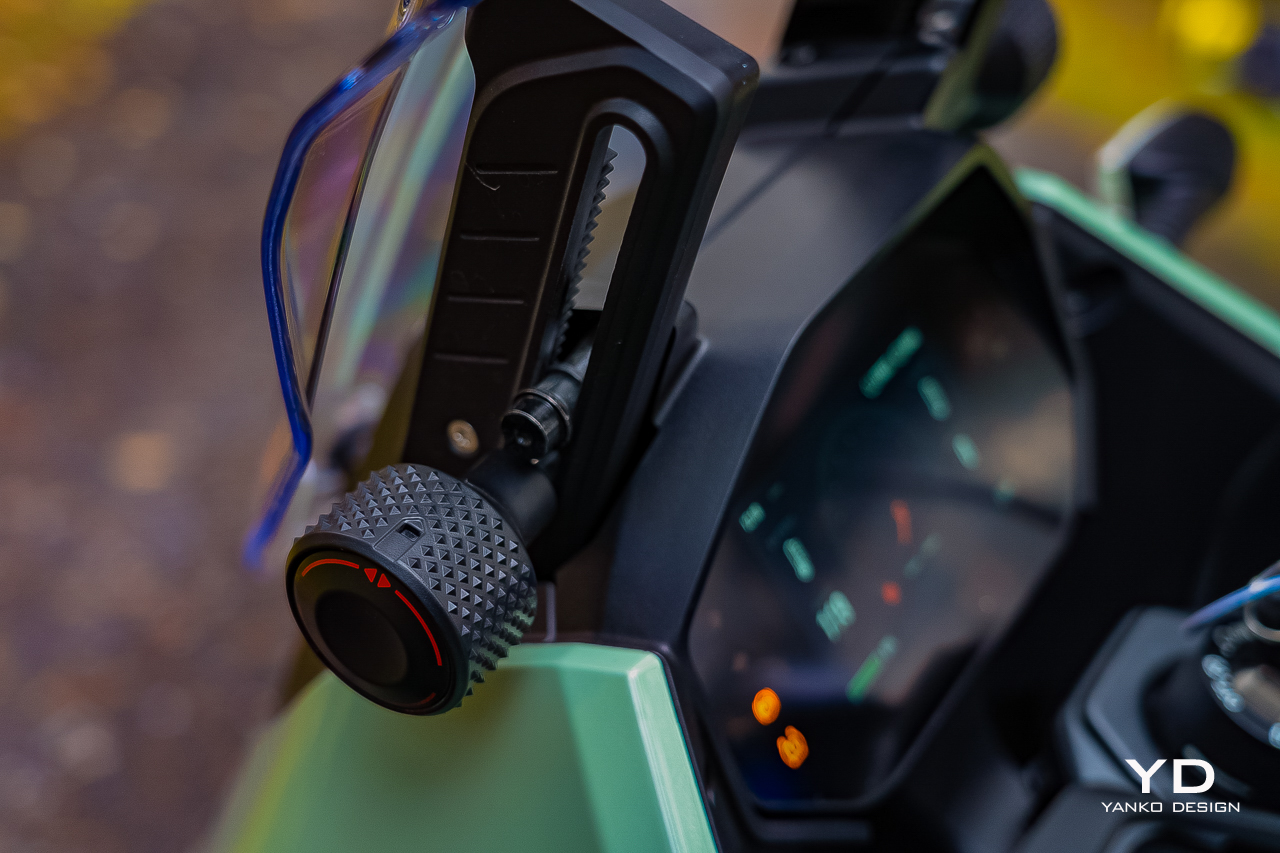
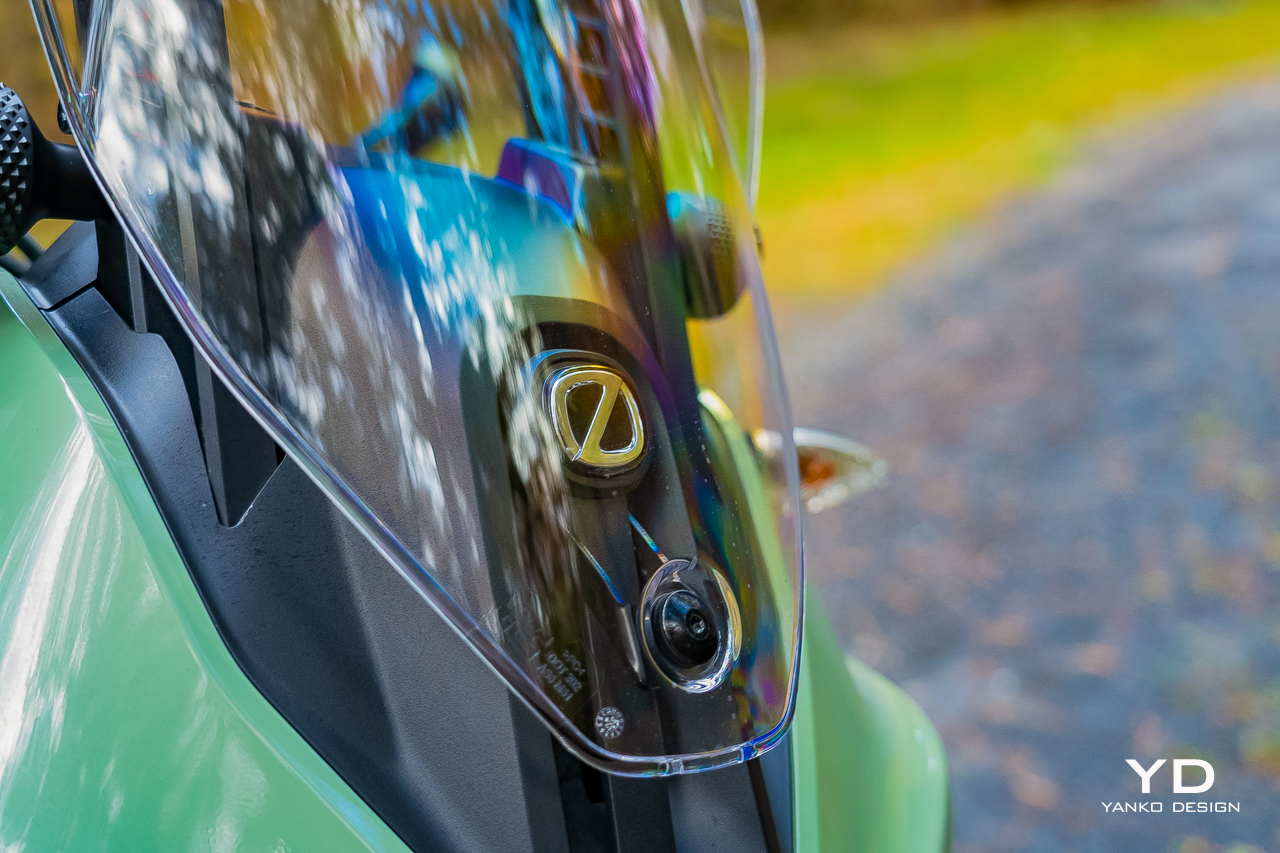
Beyond the visual appeal, there’s a lot of practicality here, too. The generous front windscreen lacks power but is so easy to adjust with its pair of chunky knobs that you won’t mind the absence. At its maximum extent, the windscreen was a bit too short for me, causing buffetting on the top of my helmet, but I sit rather tall, so this won’t be an issue for most folks.
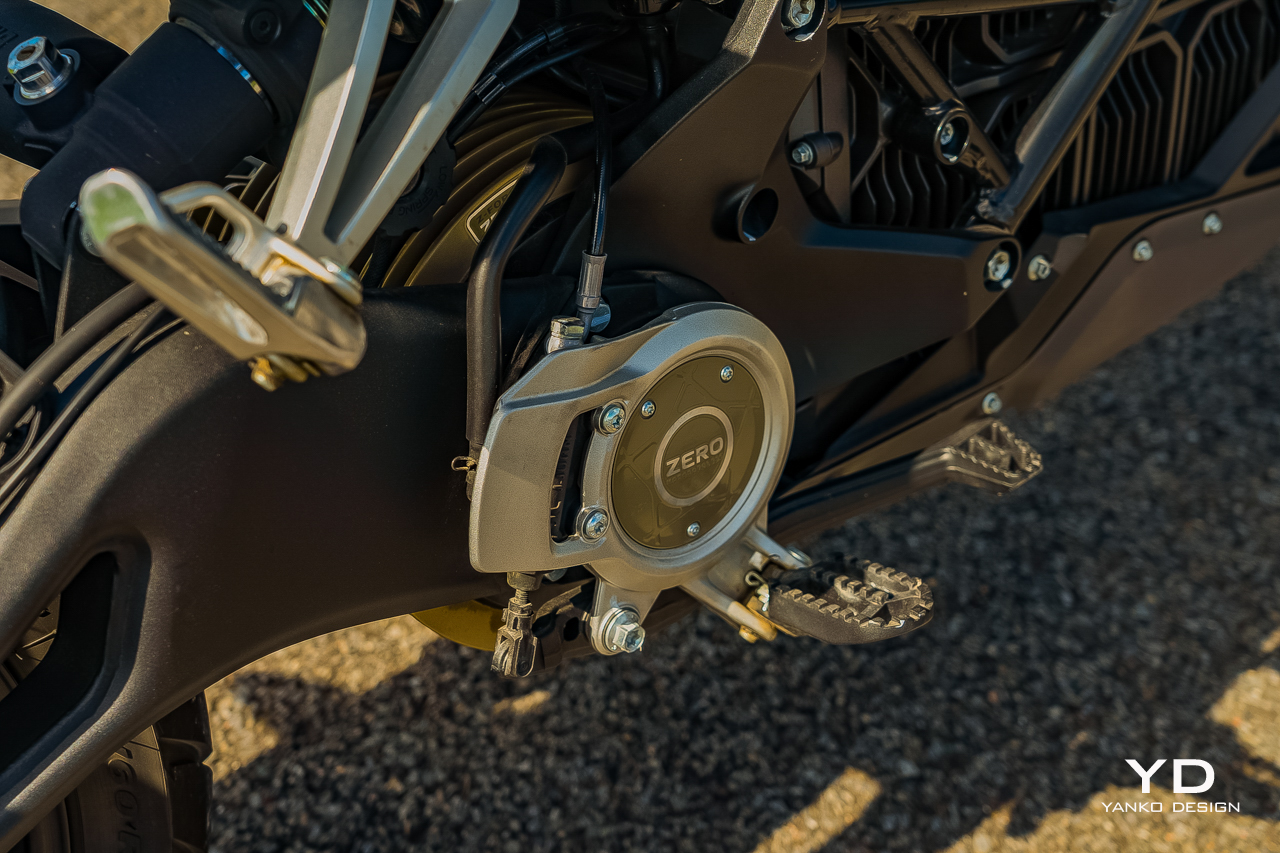
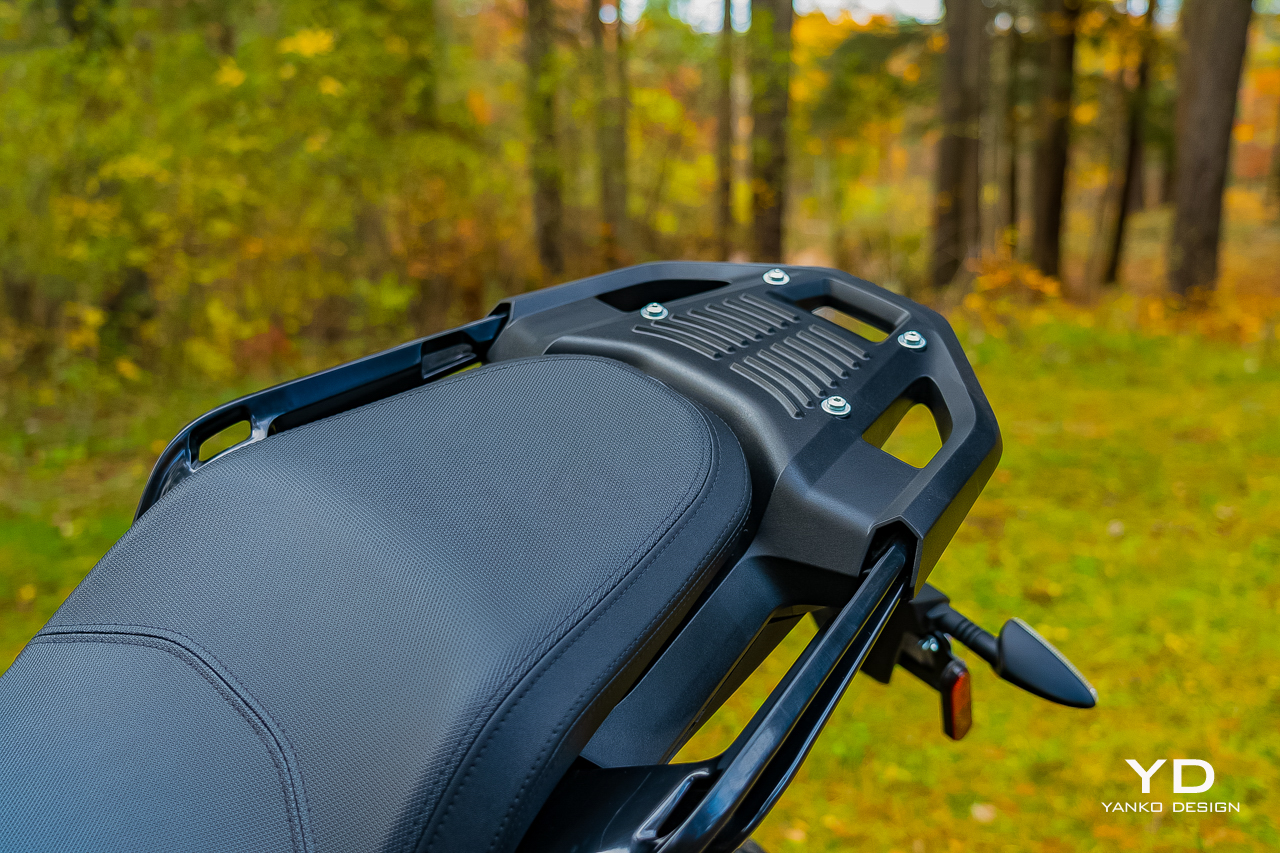
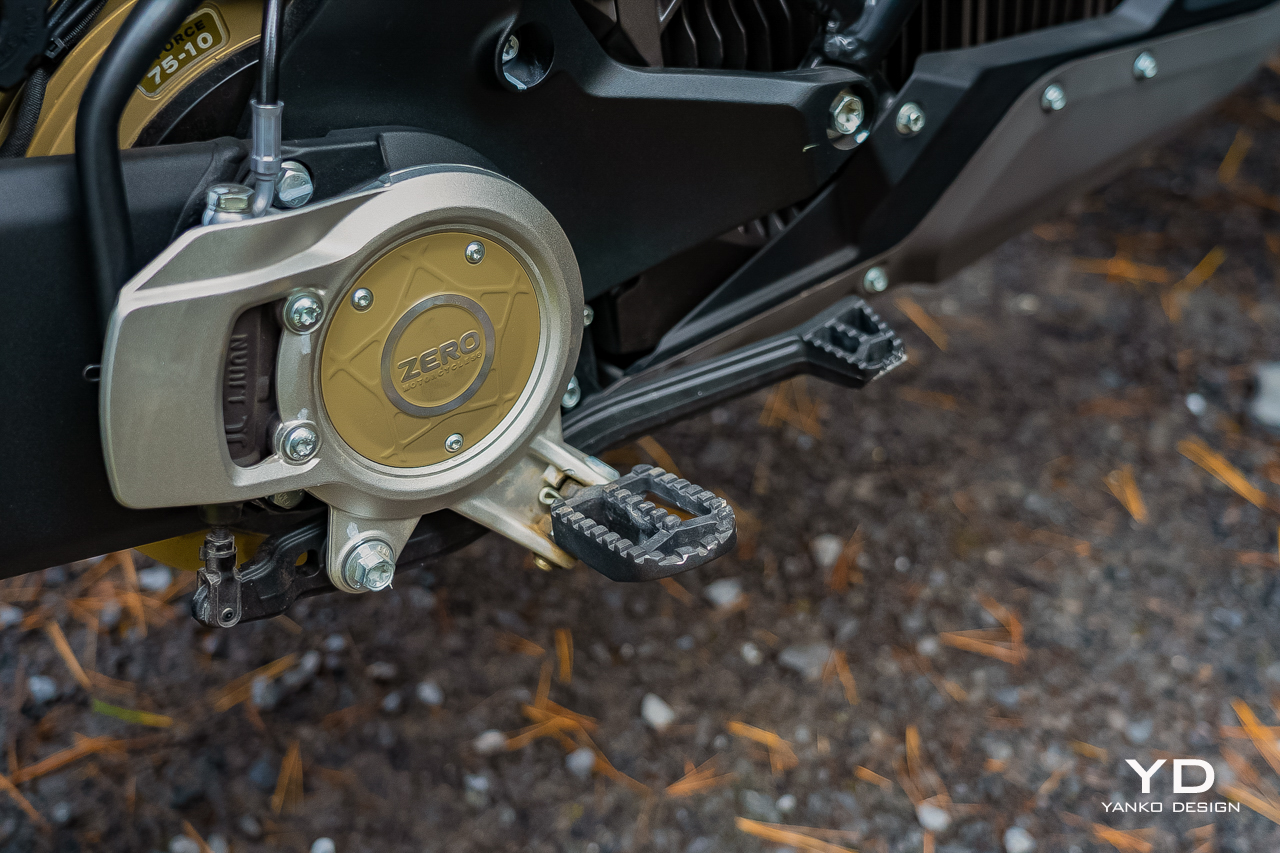
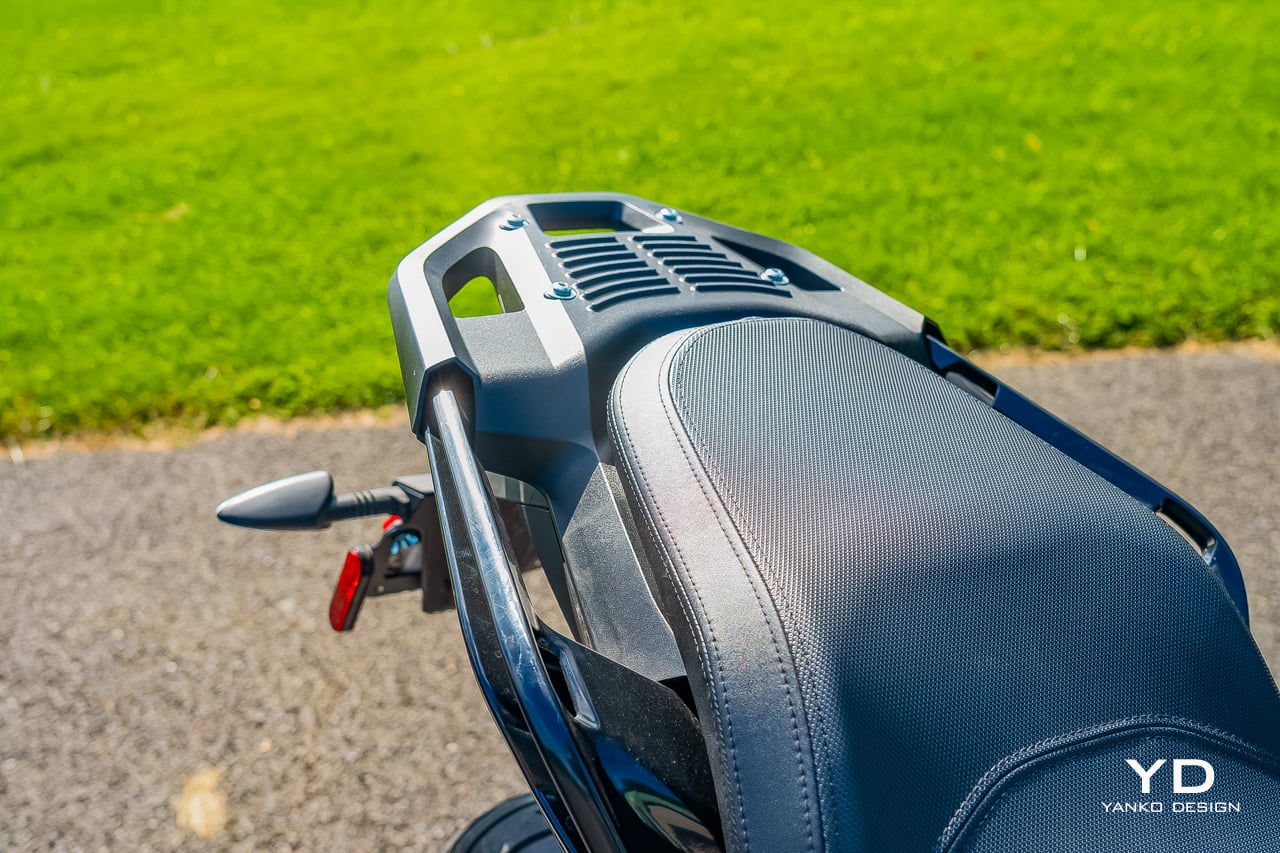
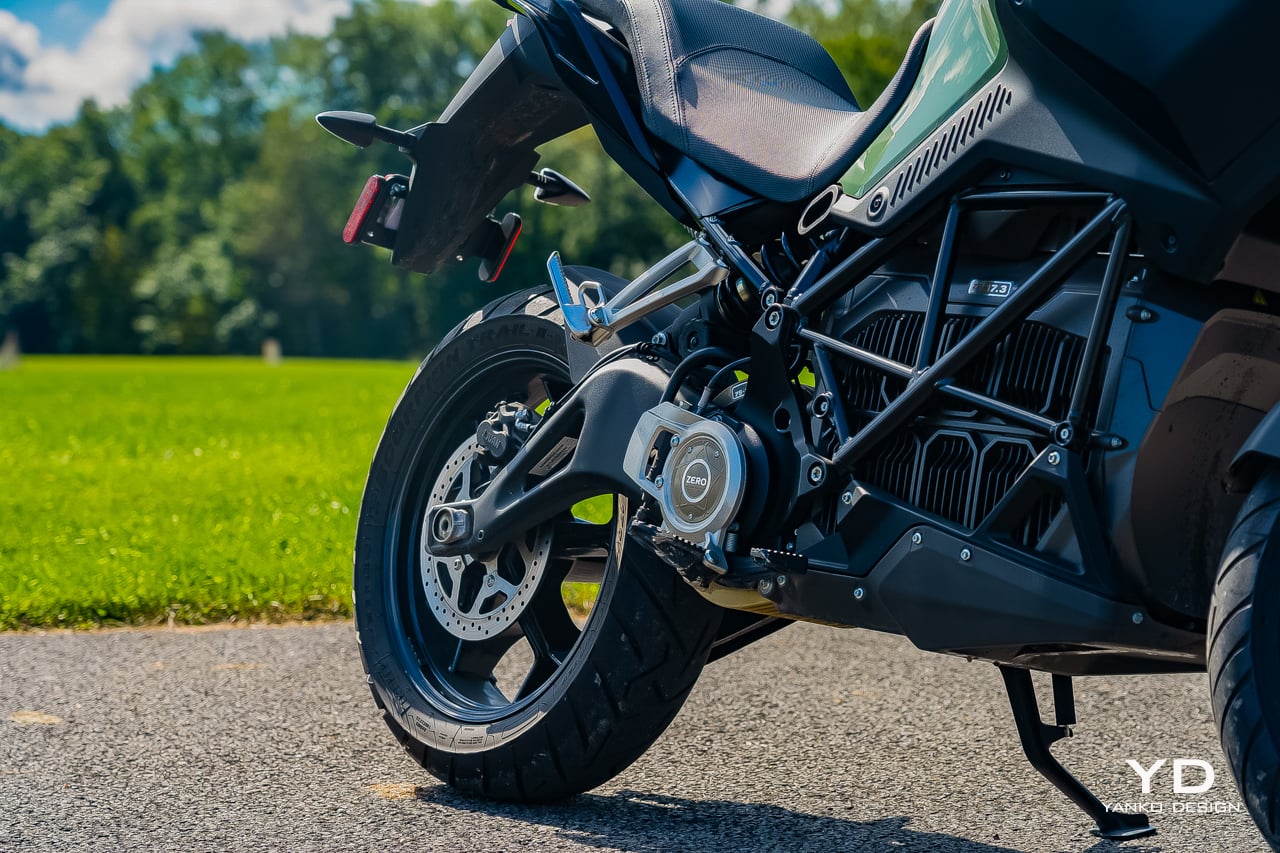
The saddle, at 32.6 inches in height, felt a bit tall at first, but I quickly got comfortable. It’s far wider and softer than most bikes with dual sport aspirations, making it a treat for longer days in the saddle. And, when you need to stretch those legs or get some extra airflow between them, wide and grippy pegs make it easy to stand up, even in the rain and the mud.

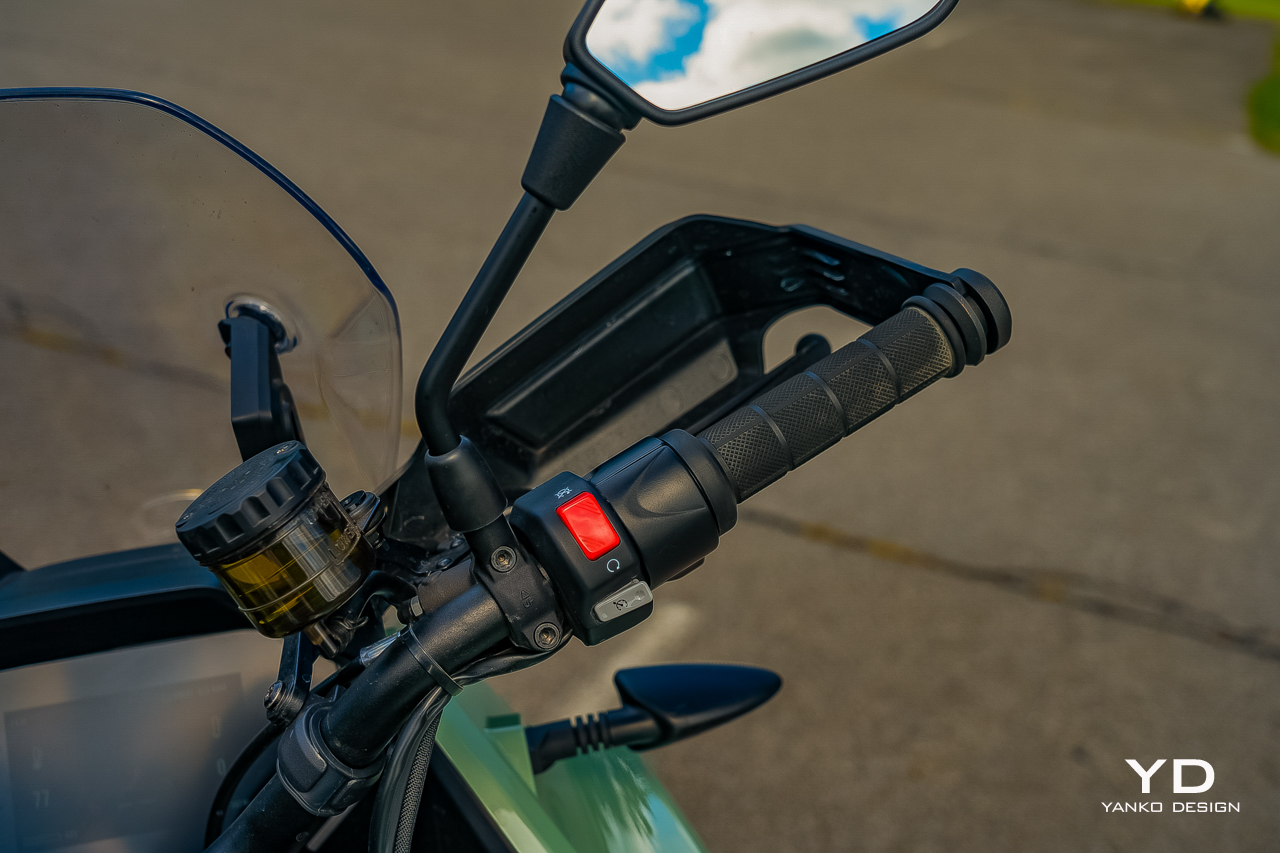
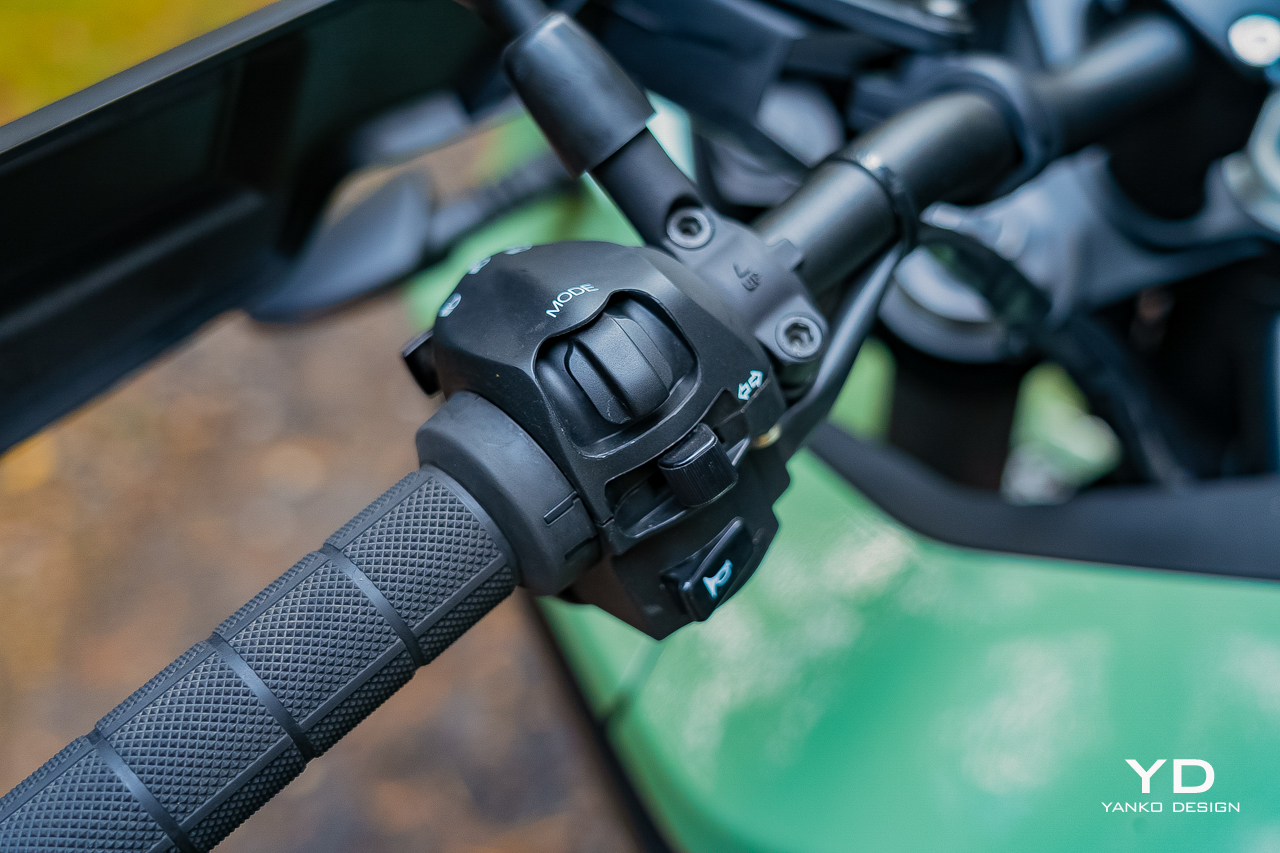
The high positioning of the grips, too, makes it easy to operate the bike while standing. It helps for keeping good posture while seated, too. My only complaint with the controls is the rocker switch on the left. It’s used for controlling so many functions — toggling drive modes, heated grips, resetting the trip meter, etc. — that it’s easy to forget what to tap or press and when. A four-way rocker would have been less confusing and more intuitive.
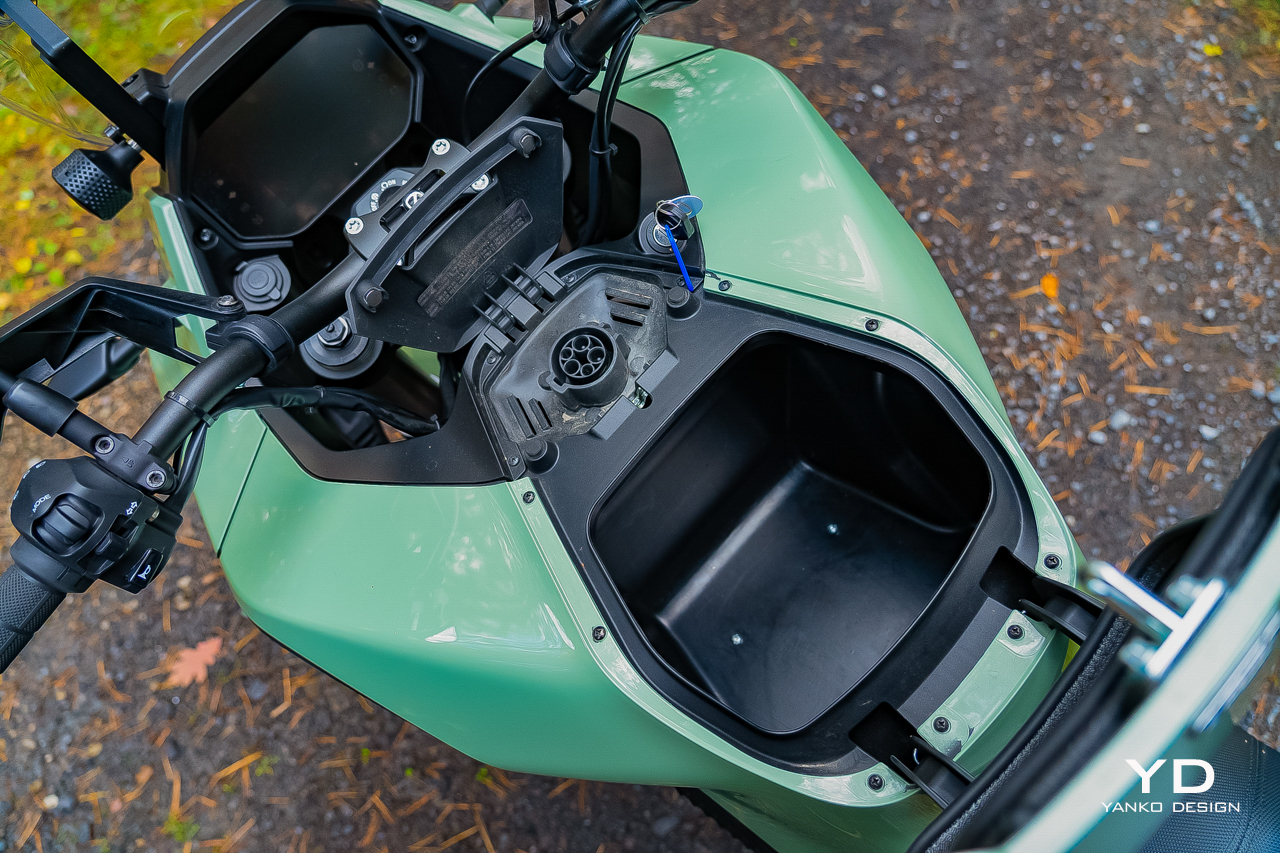
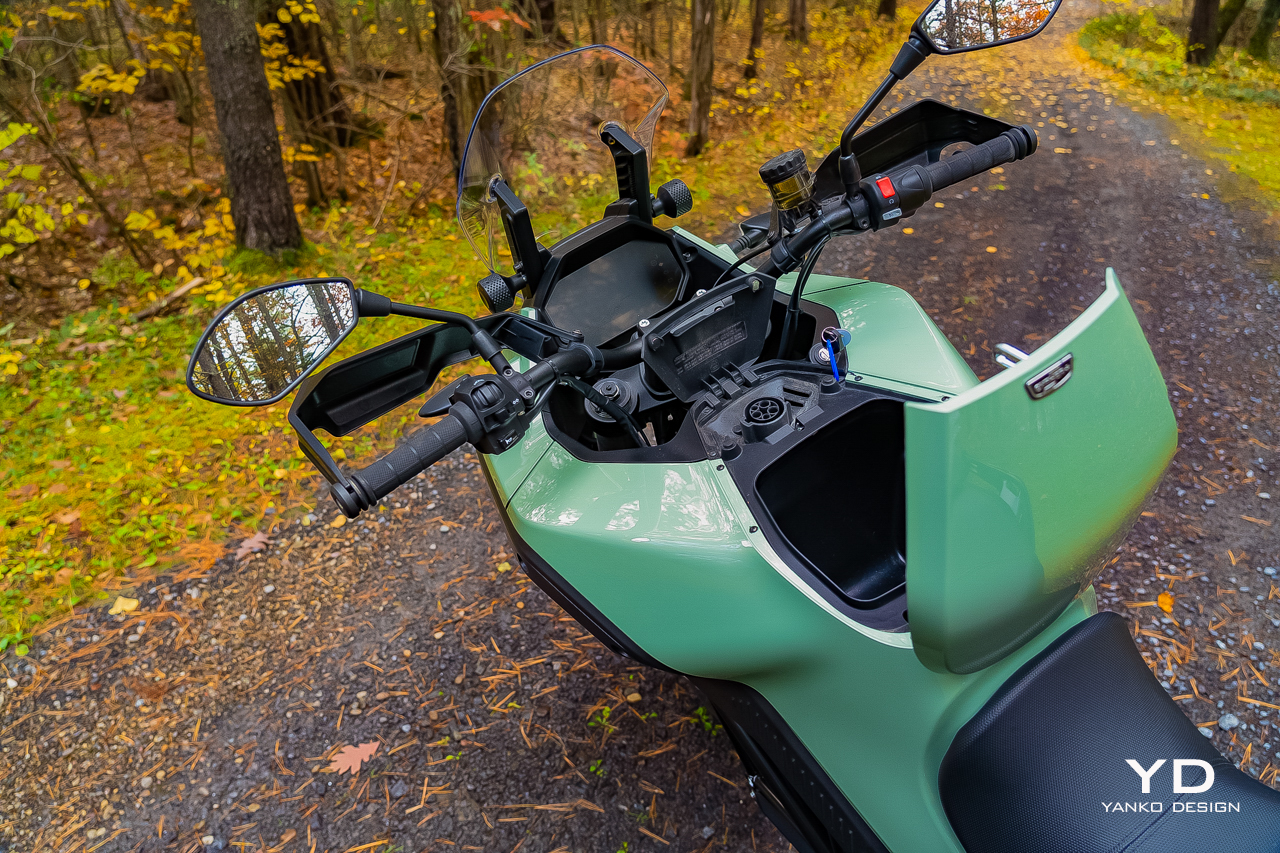
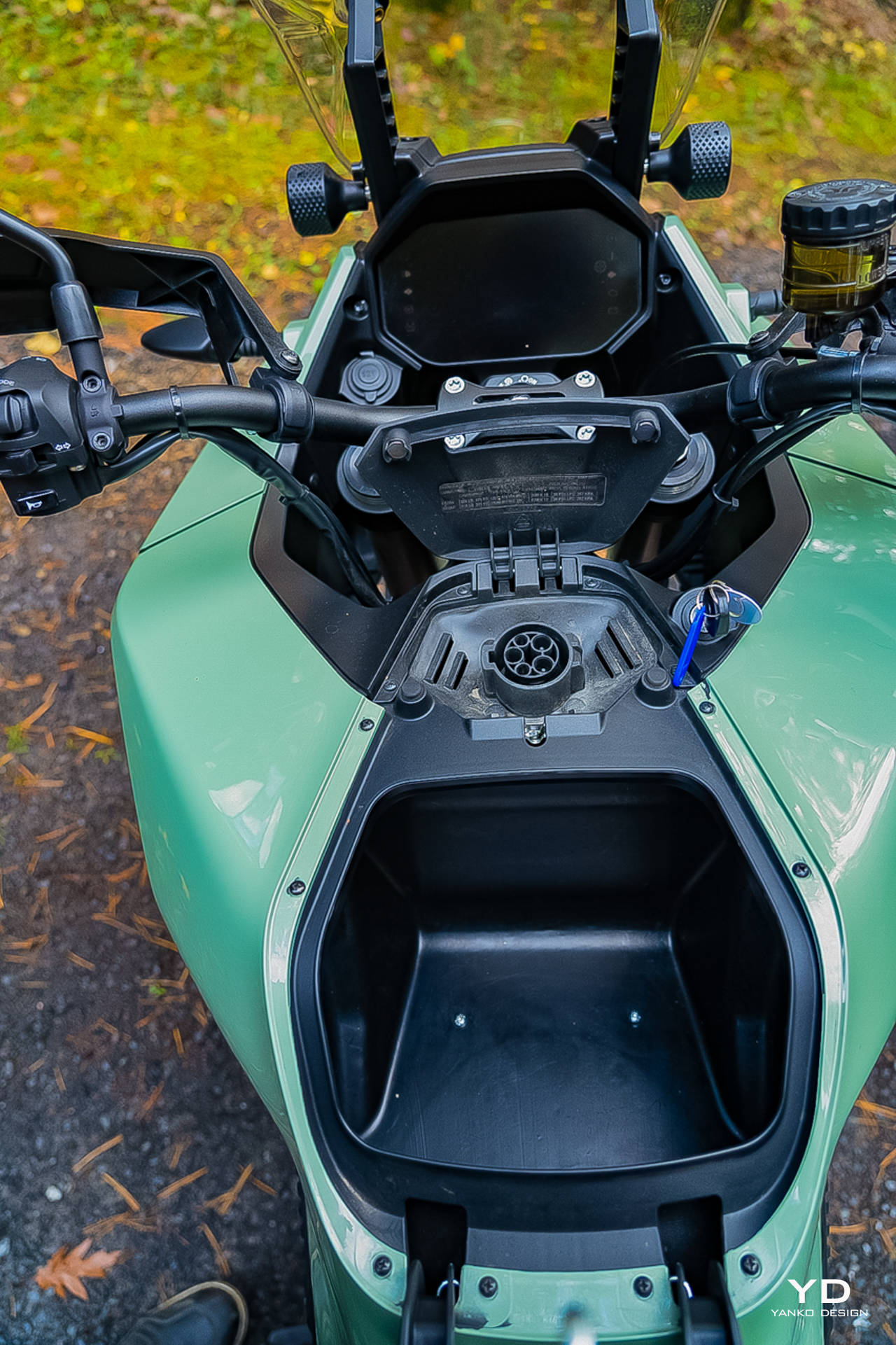
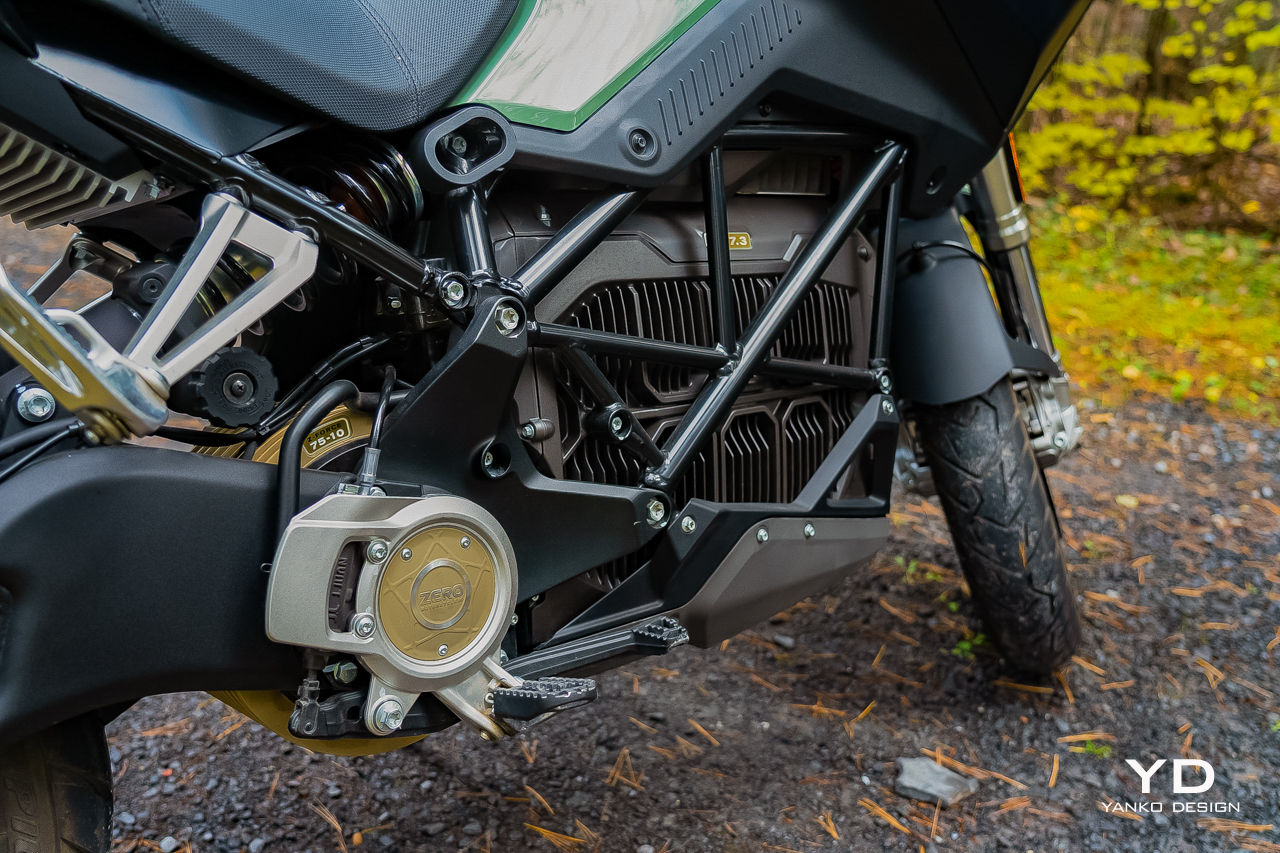
My favorite part of the design can’t even be seen. It’s the cavernous storage compartment built into the tank. Though sadly not quite big enough for a helmet (at least, not one my size), it easily swallows all sorts of things. In my time with it, I’ve used it to carry food and drinks for meals on the go, a gallon of almond milk home from the shops, even a flower bouquet.

It also makes for a great place to keep your rain gear when not needed or to toss your gloves when the bike is parked up waiting for you. I only wish the cubby featured the kind of central locking you find on the Honda Goldwing or other high-end touring bikes. It must be unlocked with the ignition key, which often left me shutting the bike down, using the key to open the storage compartment, and then powering the bike back up again.
On the road

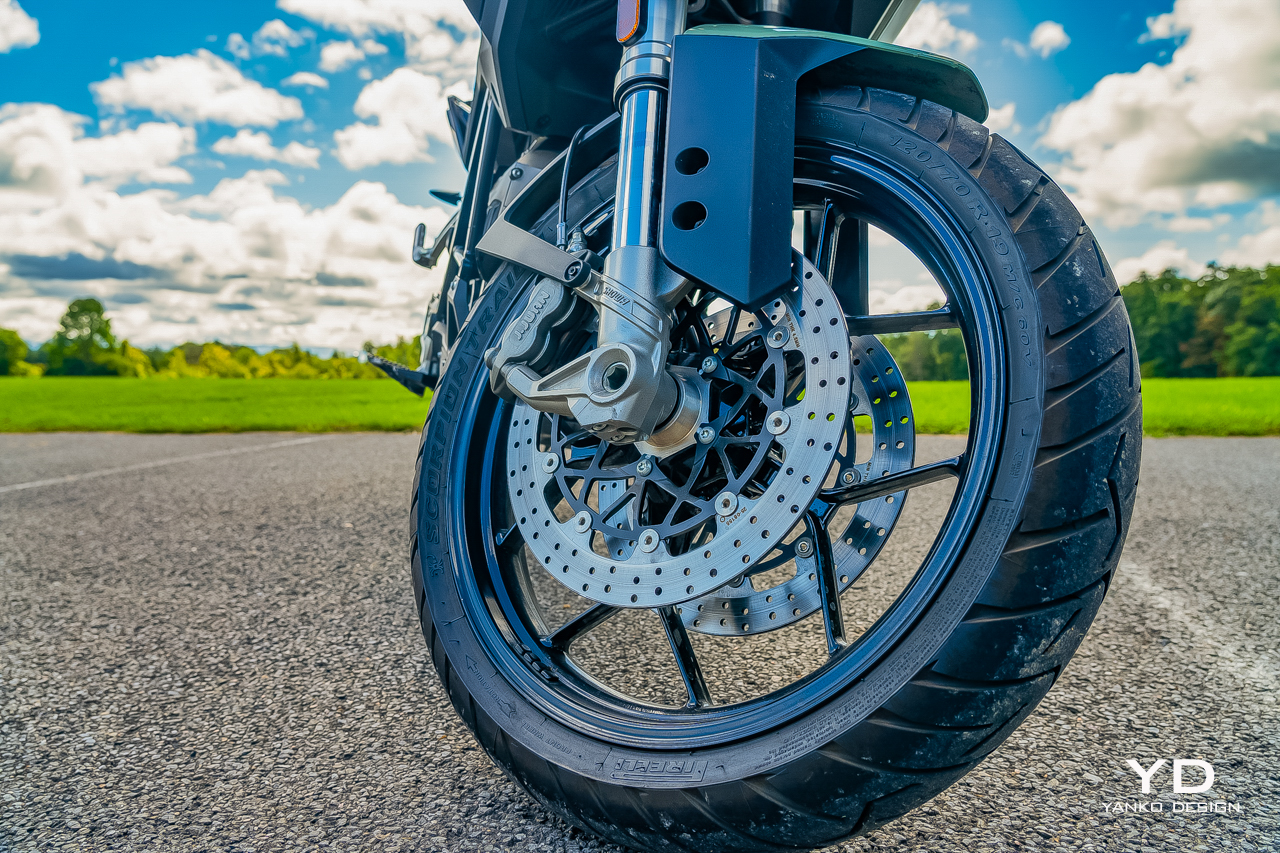
While I only spent a little bit of time trail-hopping this Zero, it proved itself to be an compliant and capable ride on loose gravel and dirt. That’s despite a set of tires that offer little in the way of tread for that kind of terrain.

It’s also despite a prodigious weight but the refinement of the controls in the DSR-X are what make it so sweet to cruise up a trail. Without a clutch to slip or a gearbox to manage, you simply worry about throttle and brake. More importantly, you’re free to enjoy the ride a bit more.

I confess I’m not much of a trail rider, so I didn’t get into too much trouble on the Zero, but it always felt willing and able to go adventuring.
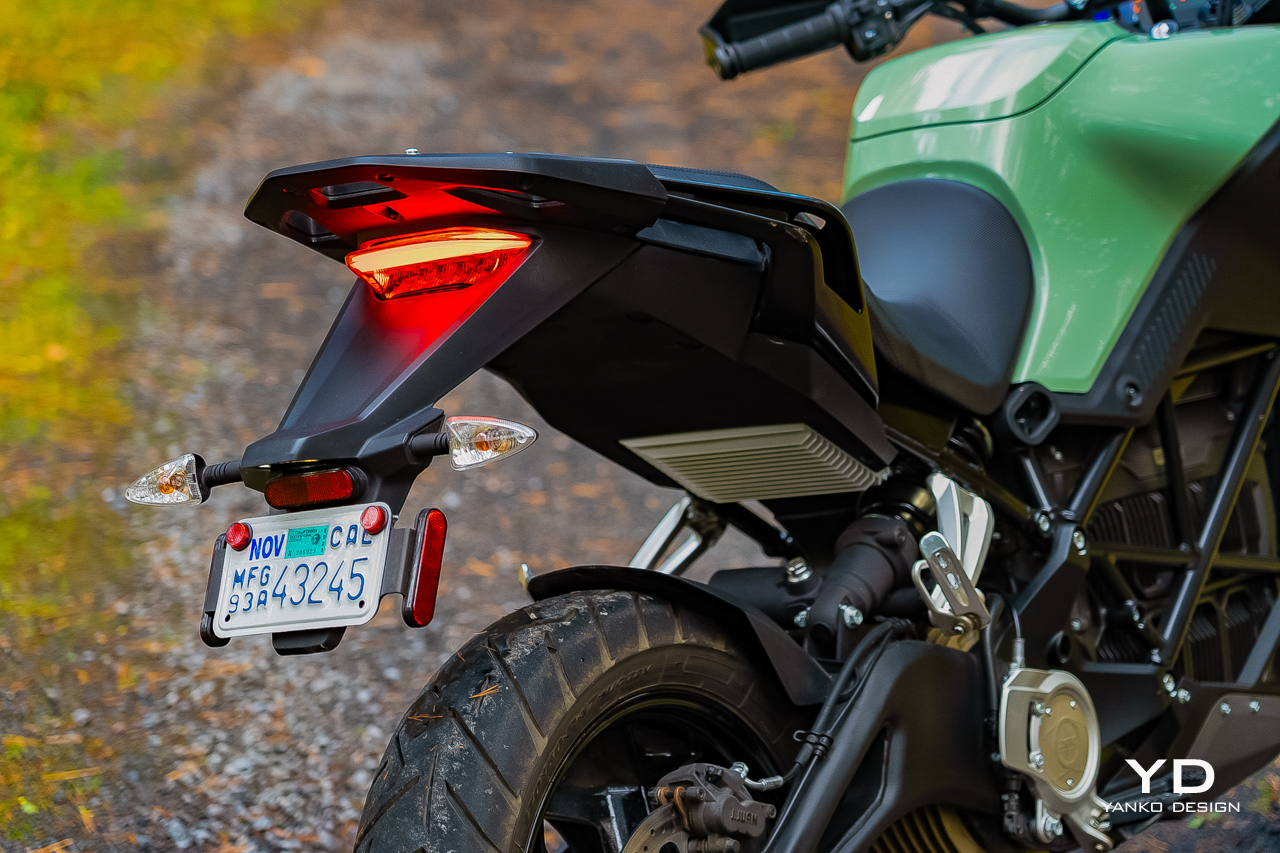
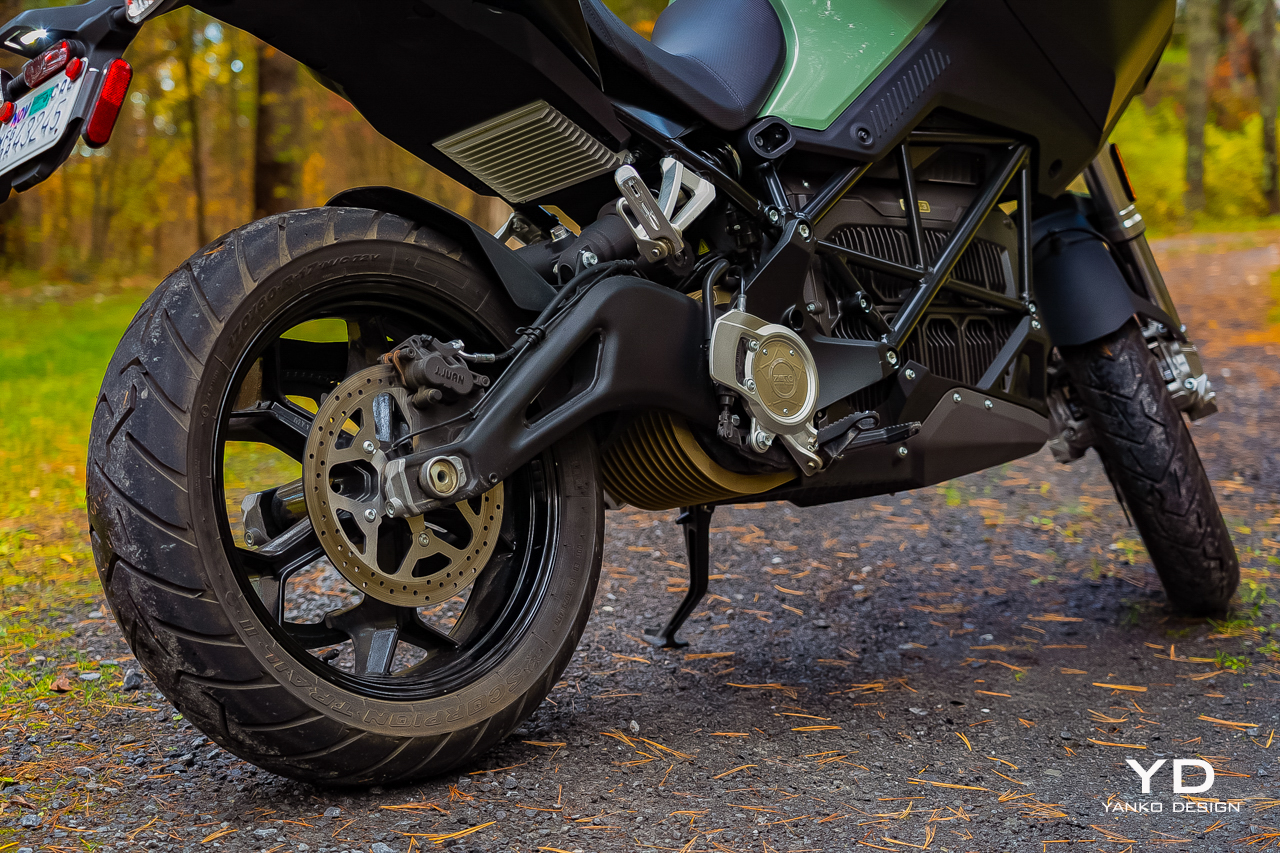
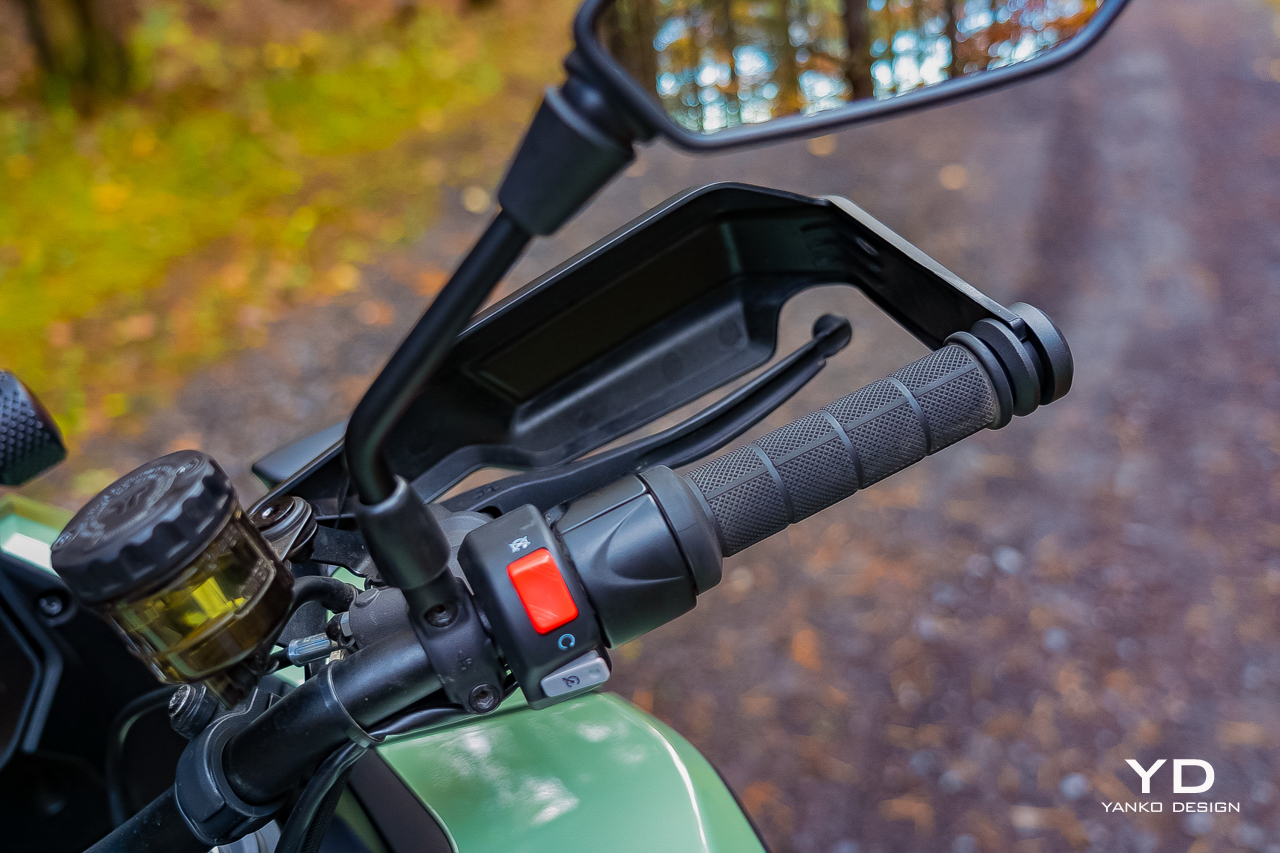
That continued as the temperatures dropped. The standard heated grips are a delight on chilly mornings, helped by the brush guards that keep most of the wind from your knuckles. Meanwhile, that windscreen and fairing do a great job of keeping the worst of the weather from the rest of you, such that riding through the rain isn’t as soaking an event as it might be on other bikes.

Even so, much of my riding was in the dry on asphalt in various states of disrepair, ideal conditions for this bike. I found the traction control system subtle enough not to be a restriction, yet it smoothly and reassuringly cut power when needed to mitigate unwanted wheelspin on the road.

Likewise, I only experienced the ABS a few times, but it too smoothly kept the wheels turning and kept me upright during a few panic stops over the year, avoiding wildlife and wild drivers.

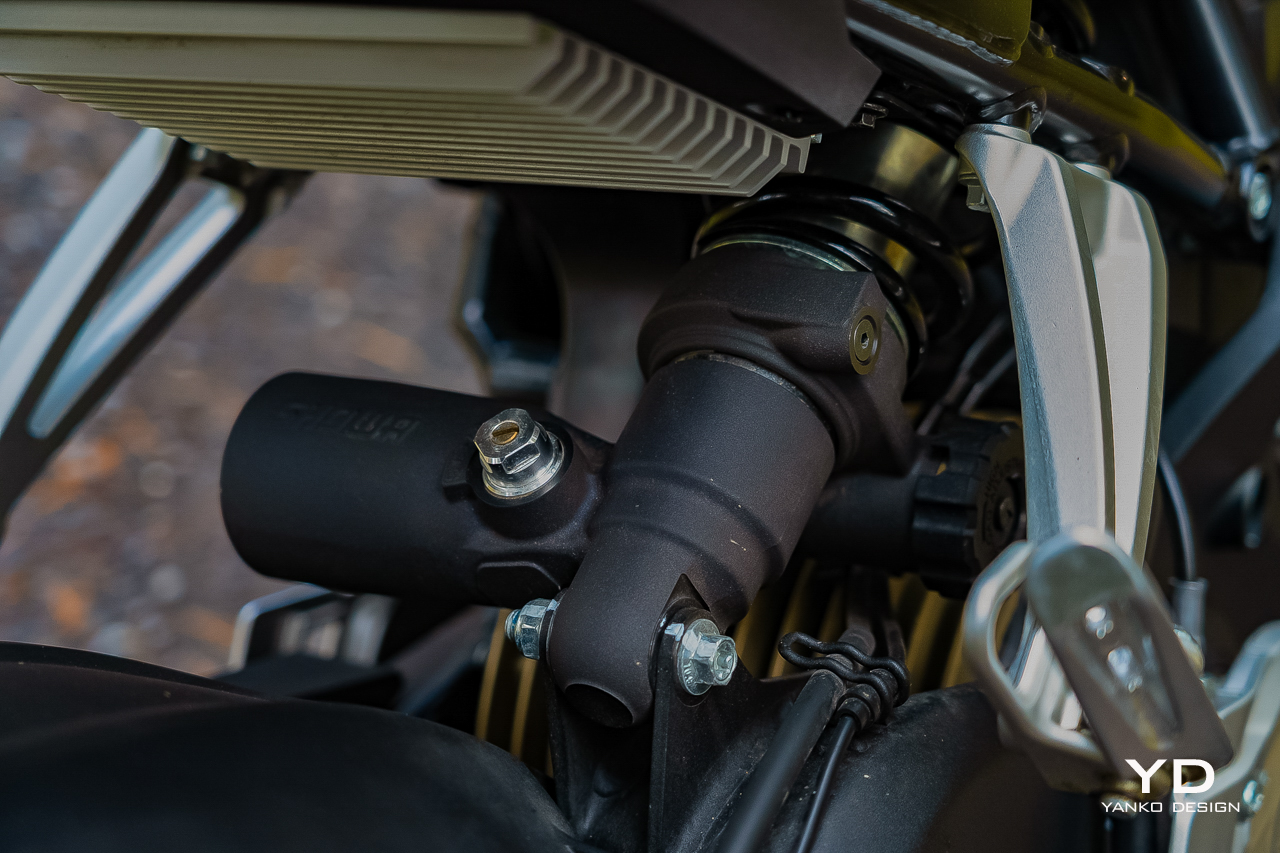
Bumpy roads did little to unsettle the DSR-X. At least, they didn’t once I got the suspension dialed in properly. The bike came to me with too much compression damping at the rear, which left everything feeling a bit too nervous over every little bump. But, after a quick consultation with the online manual, I had the rear shock dialed in for my weight. Everything was smooth from there.

Smooth is when I had the most fun on the DSR-X. Yes, it’s excellent in rough conditions, but Zero’s biggest bike is still a great corner carver on a freshly paved, twisty piece of asphalt. In these conditions, the Canyon riding mode is easily my favorite. That mode not only gives you the maximum throttle response with your wrist, but the maximum regen too. This means that you rarely need to reach for the brake lever. You can just roll the throttle on and off and swing through the twists and turns.

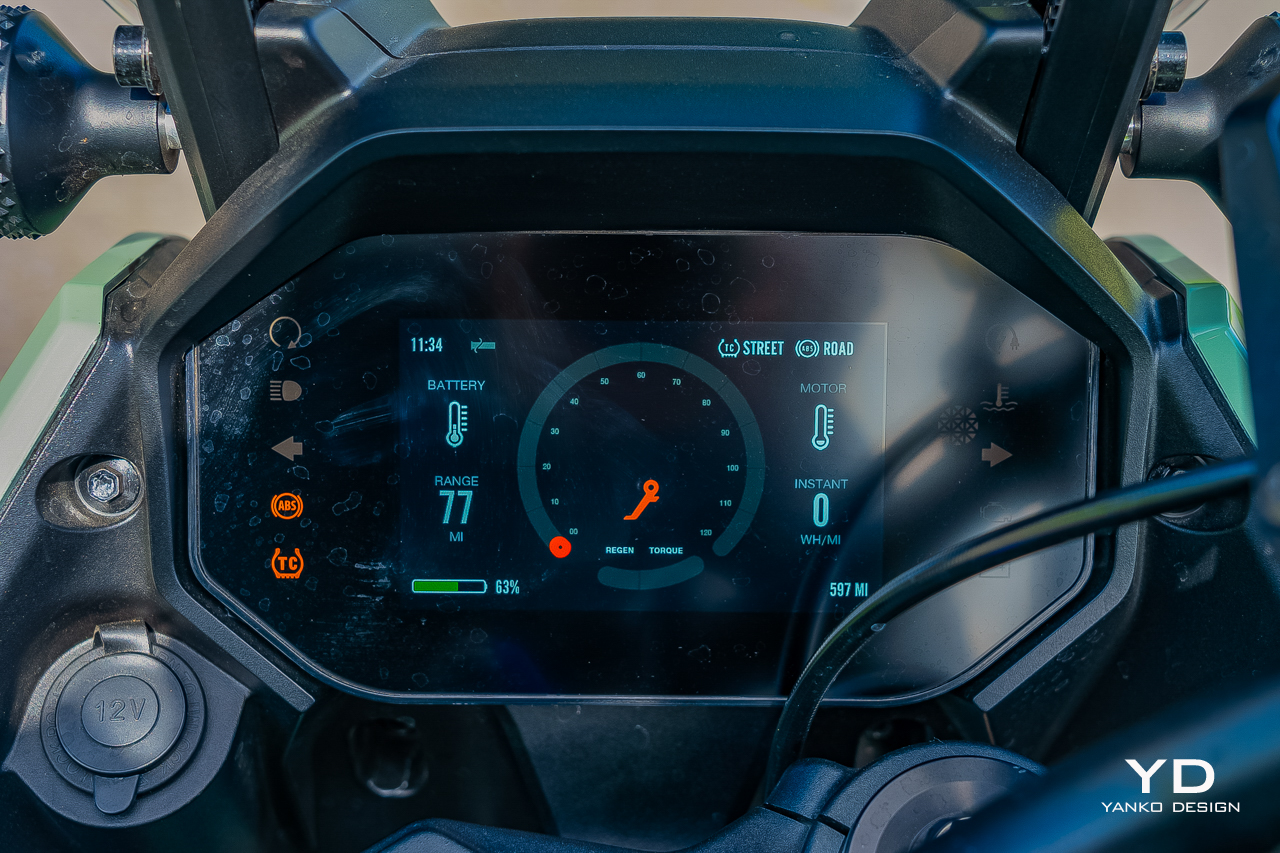
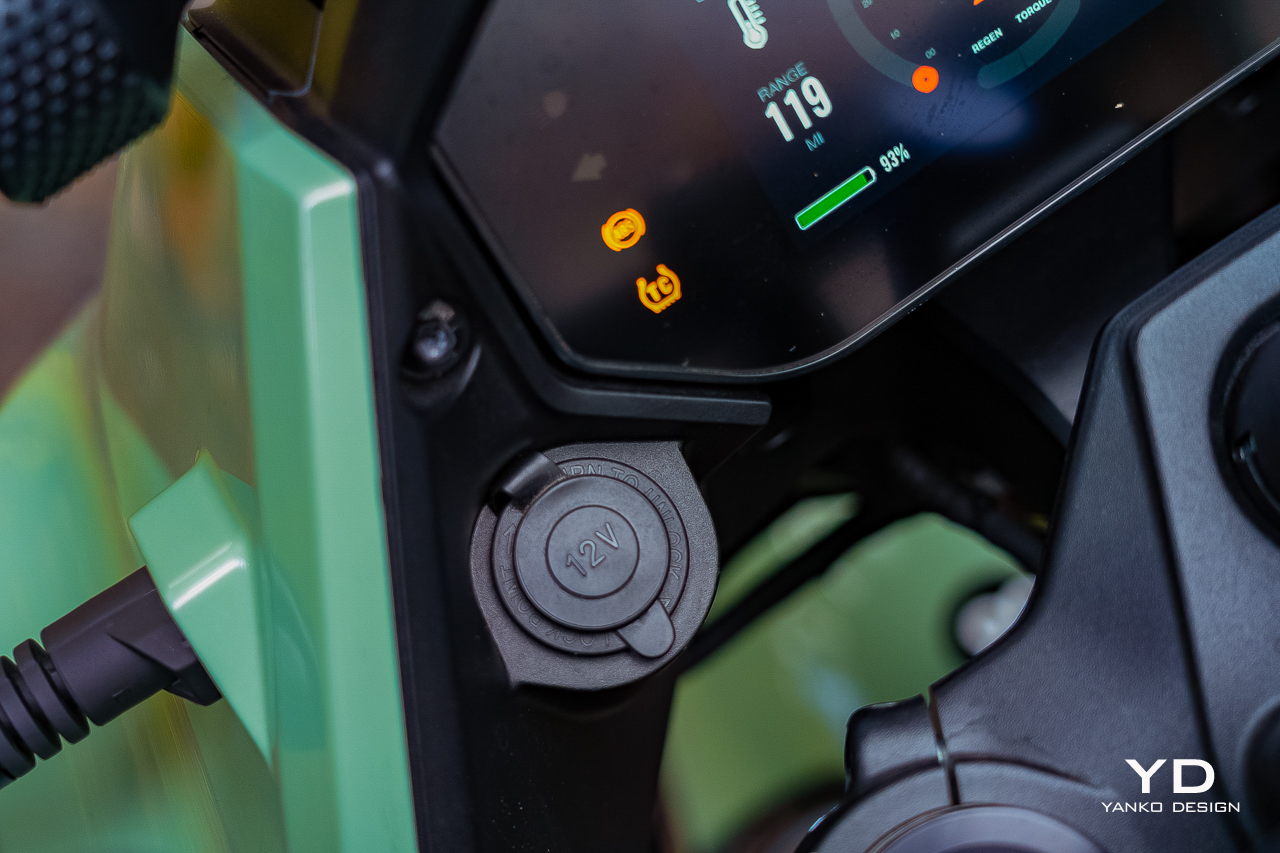
There are five separate on-road modes and five more off-road modes, plus a custom mode, all editable through Zero’s app. There’s an absolute wealth of configurability here, plus data management, making this among the most intelligent, most connected bikes out there. Data fiends will love the ability to download details from every ride. Perfectionists, meanwhile, will love being able to create a custom layout on the five-inch LCD gauge cluster.
Range and charging

If there’s one fly in this ointment, it’s the range. Though the DSR-X is rated for a maximum of 180 miles in the city, you’d have to rely on the most economical riding modes and keep your speed very low to manage it. I tried and couldn’t quite get there myself, at least not without feeling like a rolling traffic obstruction. If you’re exclusively riding on low-speed urban streets or crawling over trails, you might be able to manage that.
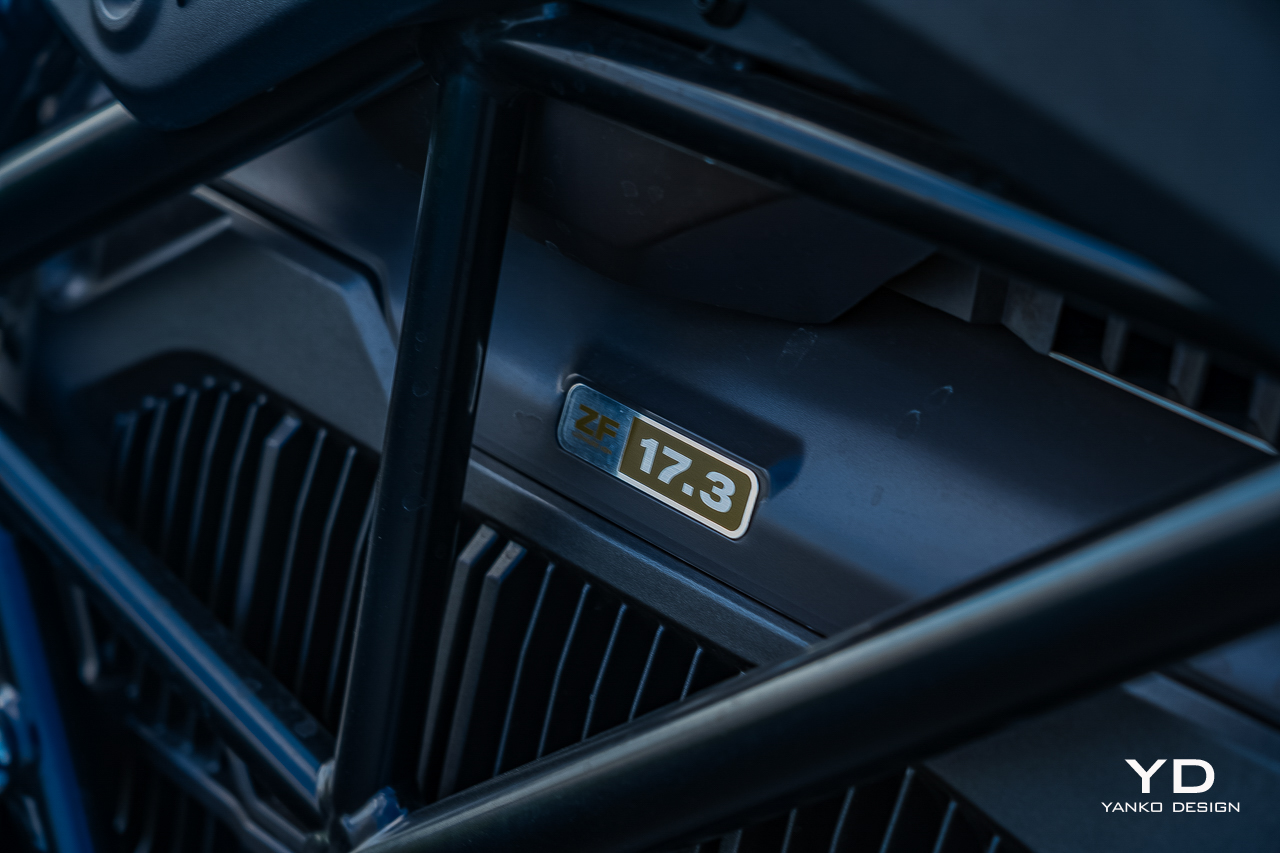
Me? I more often saw range estimates around 140 miles, but when I was feeling sporty (which, let’s be honest, was most of the time), I struggled to manage 120 miles on a charge. That is not a lot. Even if you exclusively head out on sunny Sundays for an afternoon cruise to your favorite taco shop, you may find yourself sweating that remaining range indicator on the return trip.

I never had any particularly close calls, but neither did I feel like pushing things. While charging is reasonably quick, the bike usually takes fewer than two hours to top up, that’s still too long to reasonably ride somewhere, enjoy lunch near a charger, and head home. You’ll need to do some serious route planning and budget lots of time for activities near plugs if you want to road trip one of these.
Pricing and Options

The bike you see here was priced at $24,495, with no options, and seemingly none needed.

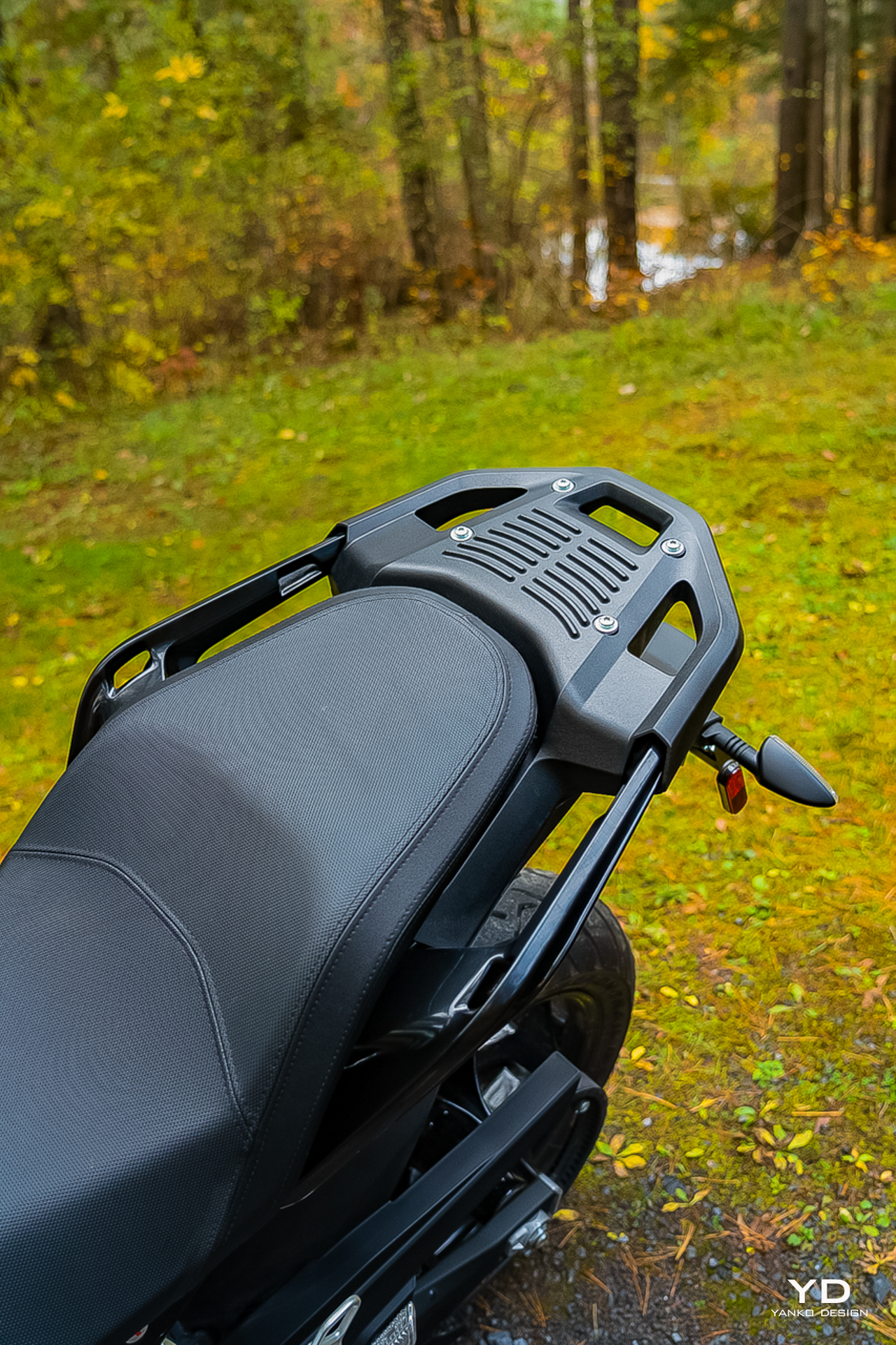
However, were I buying one now, knowing what I know, I’d be tempted by either the faster charger or the bigger battery pack. Being able to charge faster or go farther would open this bike up to be the truly comfortable touring bike it’s otherwise capable of being. The only problem is that selecting either of those options fills up that tank storage compartment that proved so useful, but with generous mounting points on the back of the saddle, fitting a set of boxes wouldn’t be much of a chore.
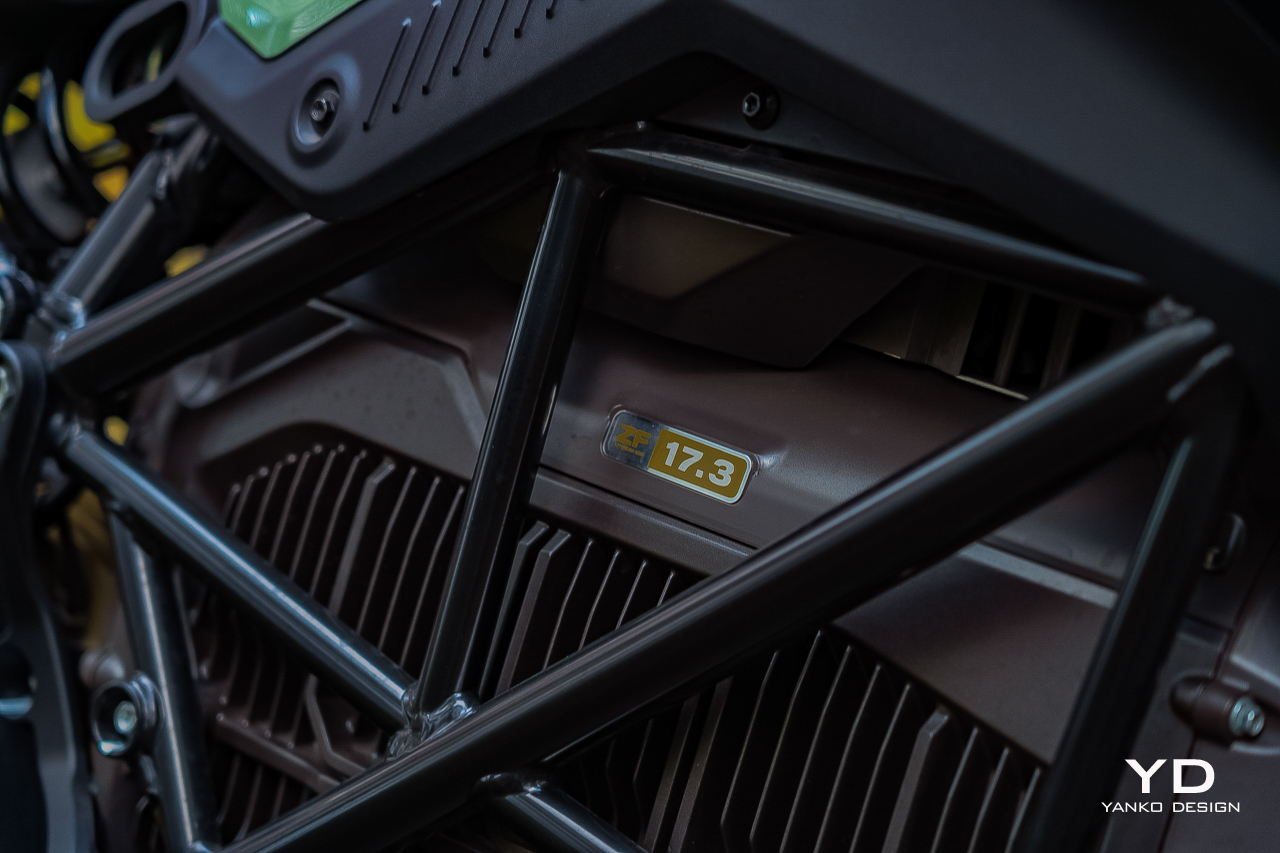
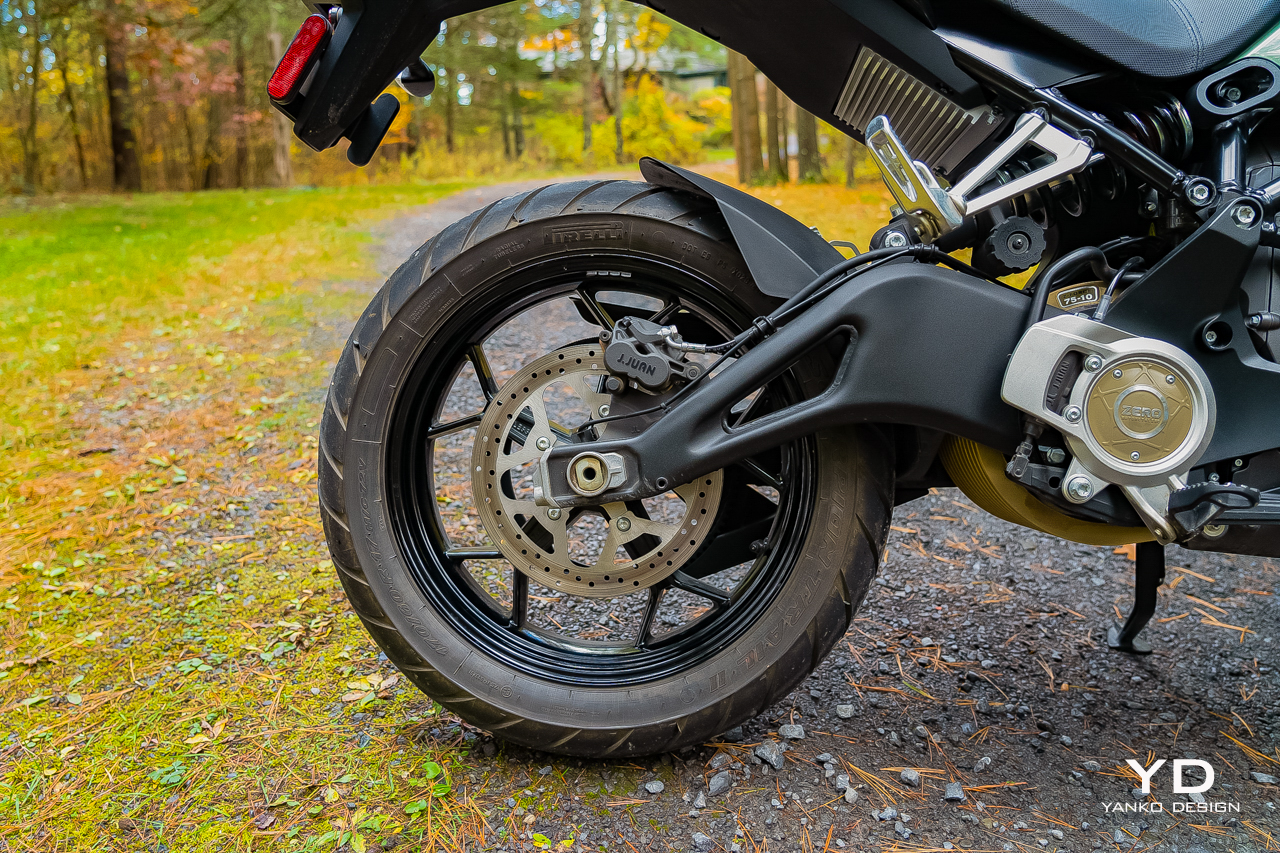
For the 2024 model, the DSR/X actually becomes more attainable, with a starting price of $22,995. But there’s an even more affordable version with a smaller, 15.6-kwh battery and a starting price of $19,995.

At the end of 12 months, I’m still left enamored of the DSR-X. Its range meant my adventures were limited to those close to home, but then I live where I live because it’s an area full of adventure, and this Zero was always ready.
The post Zero DSR/X Long-Term Review first appeared on Yanko Design.
Cork bike saddle amplifies the eco-friendly quotient of your ride

There was a huge increase in bicycles and all biking accessories during the pandemic as people tried to find alternative means of transportation. Now that we’re almost back to whatever normal is, bikers are still a huge segment of the transportation market for a lot of reasons. One of these is that it’s more eco-friendly that cars since it does not use any fuel. But there has also been an interest in making the bicycles themselves even more eco-friendly.

Designer: Frame Cycles

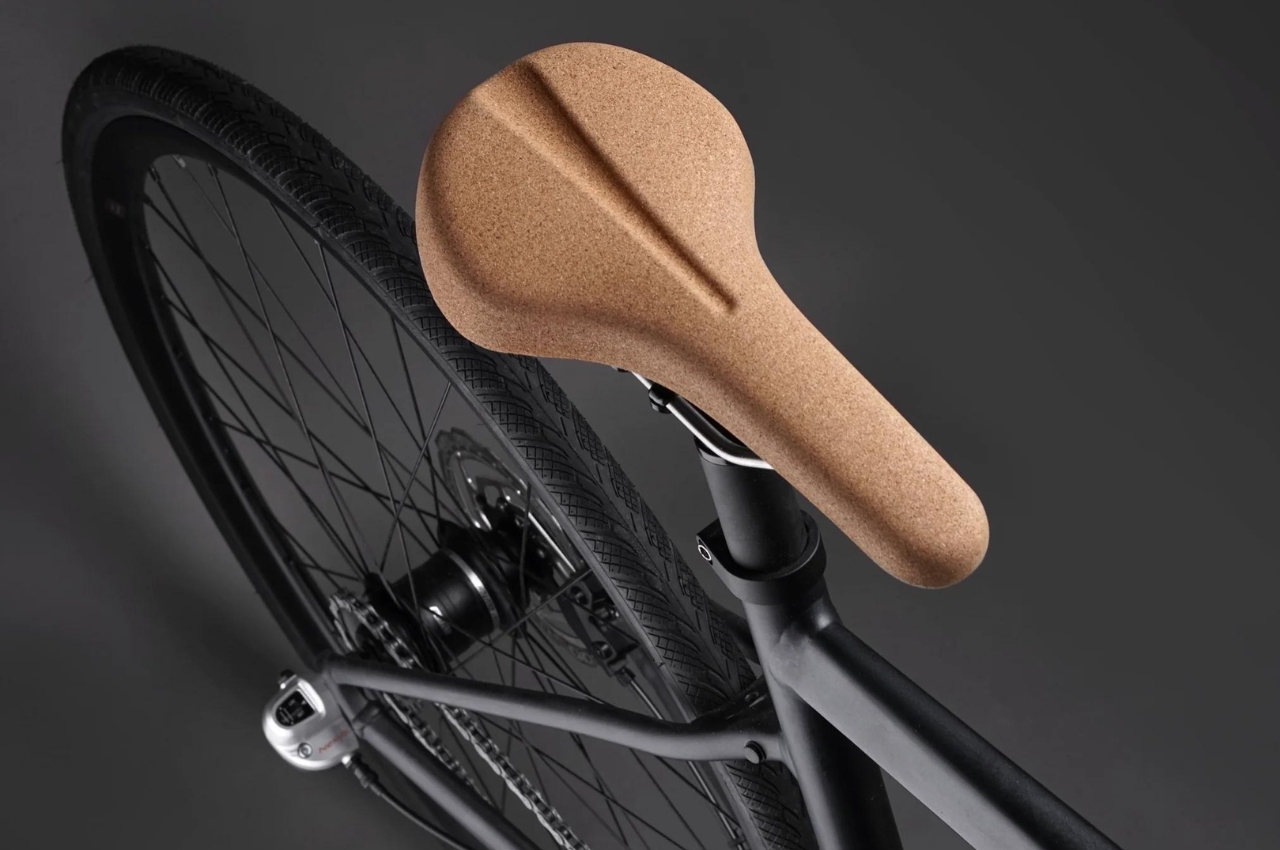
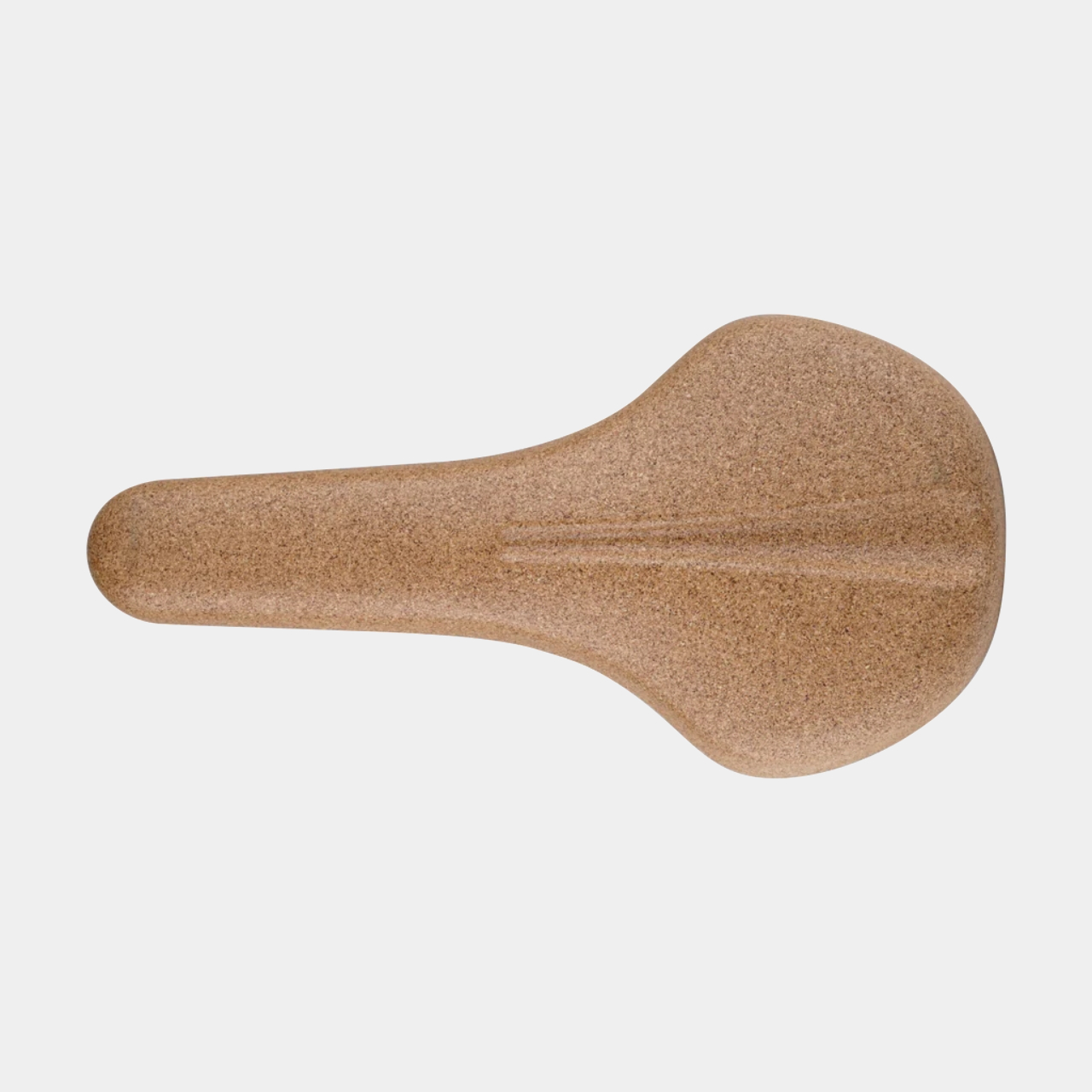
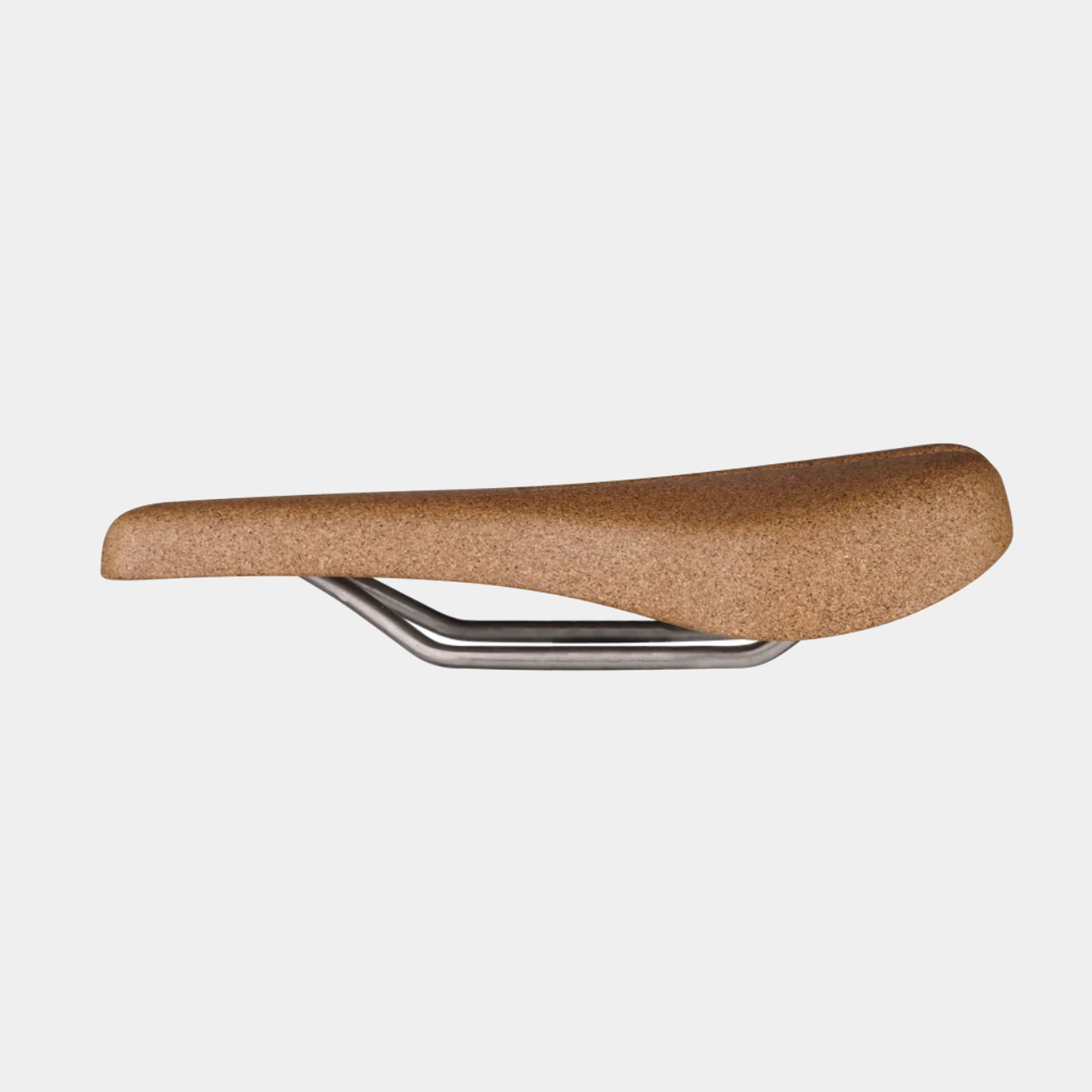
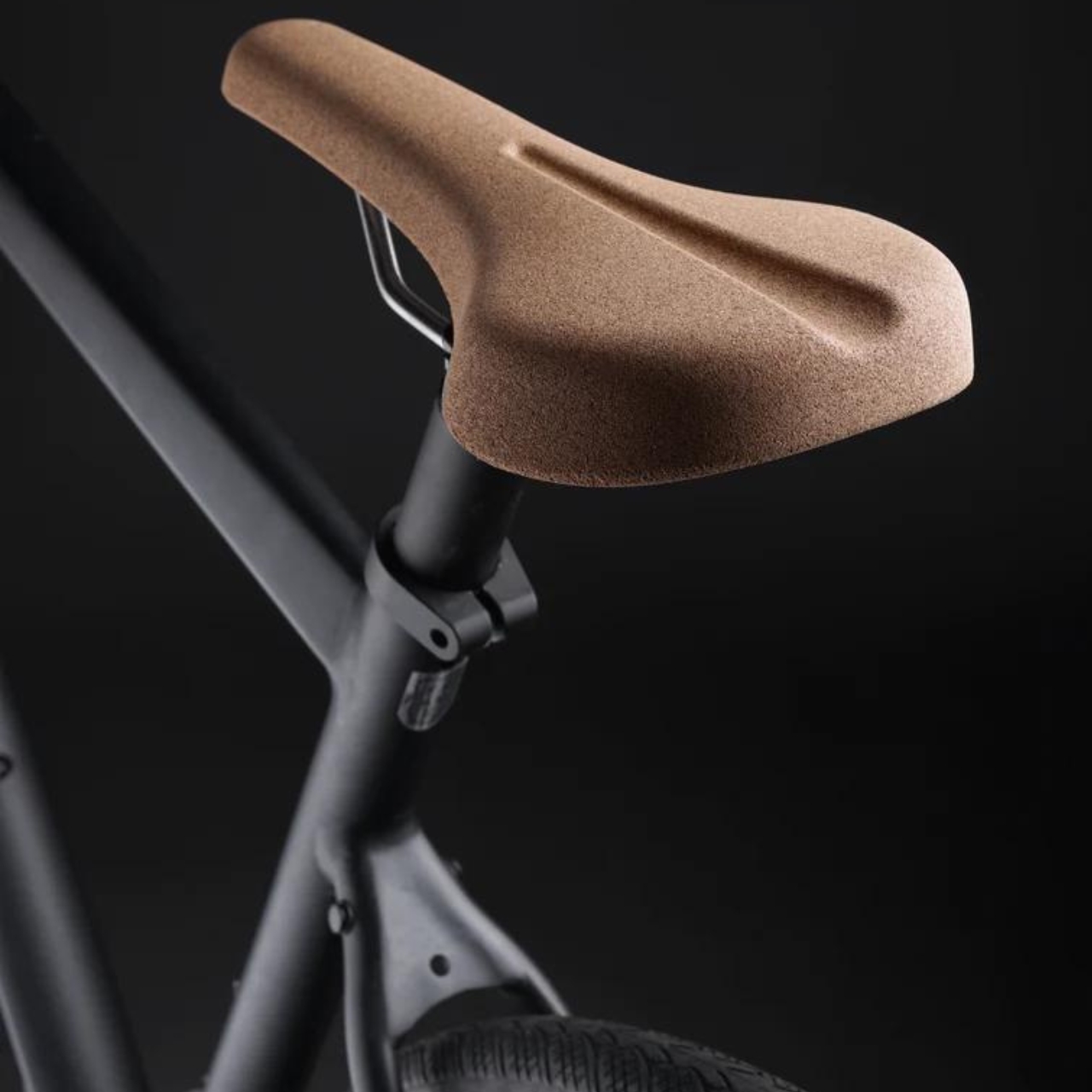
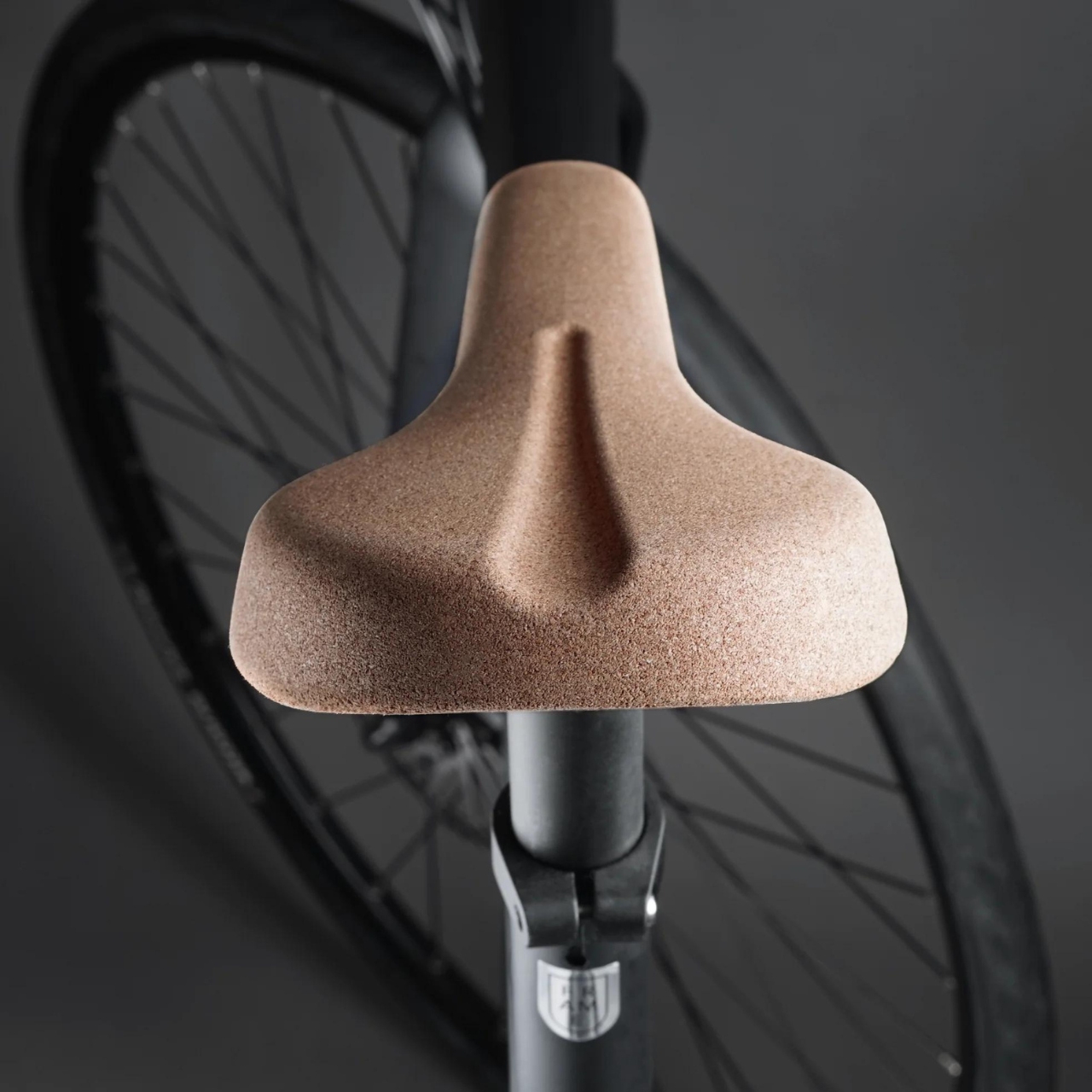
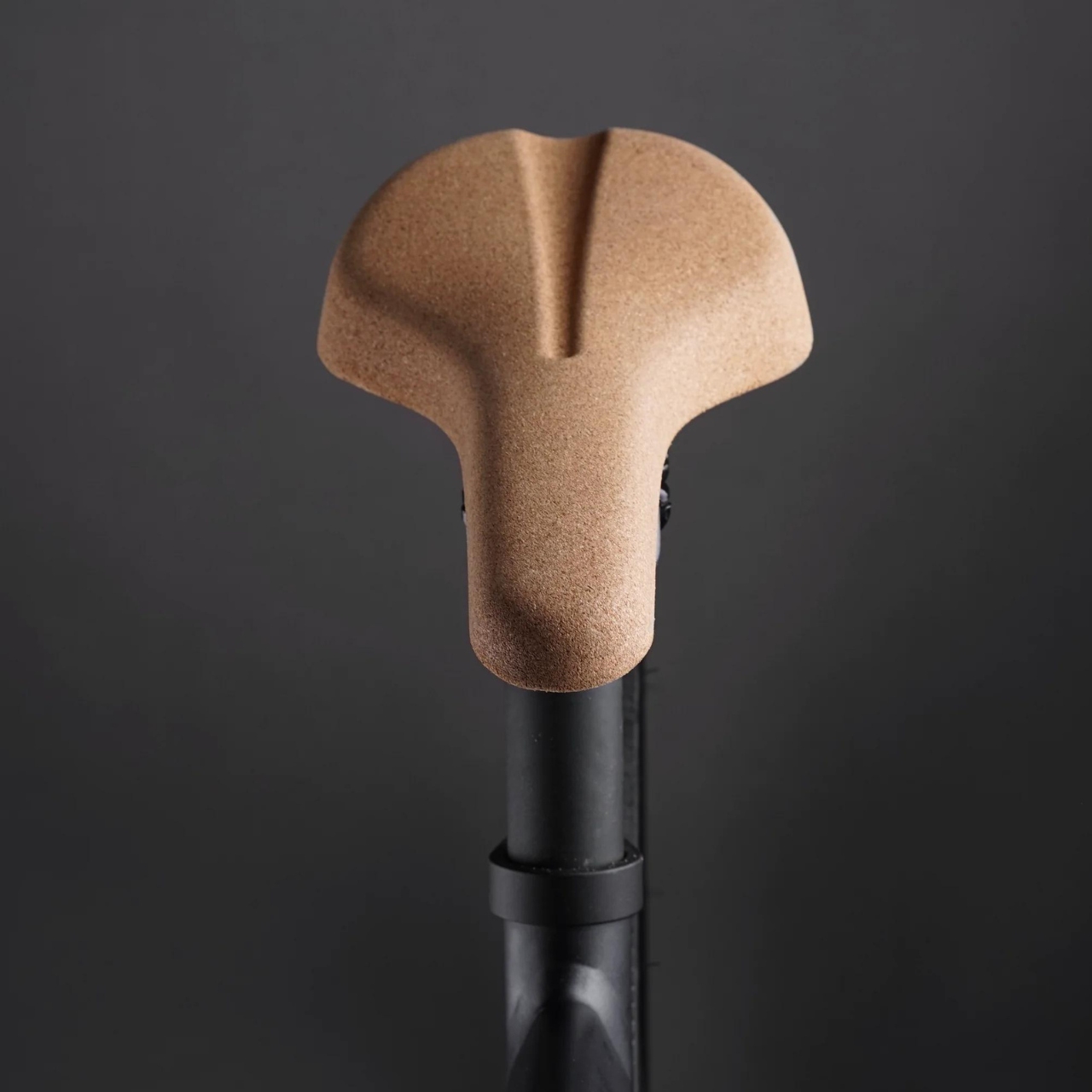
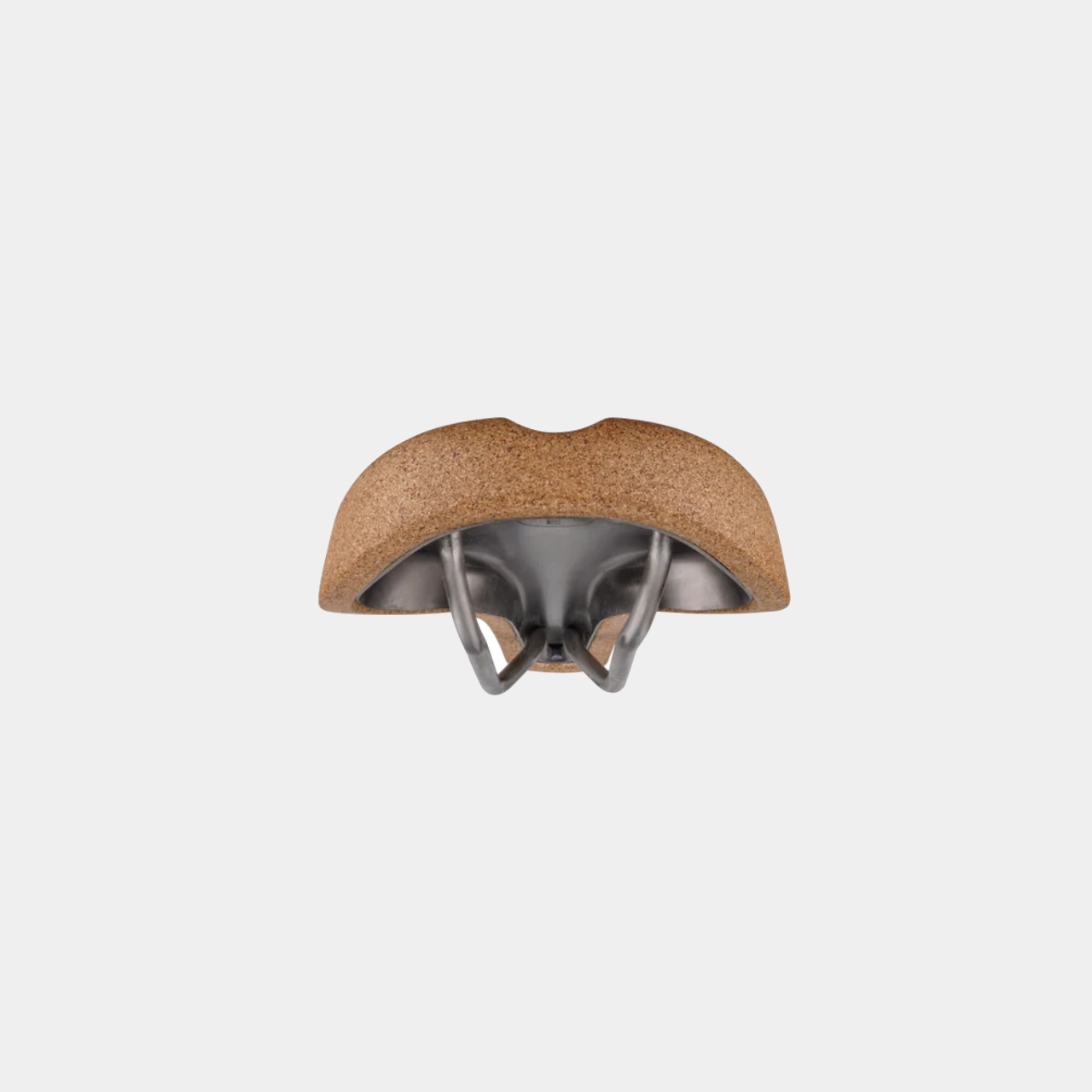
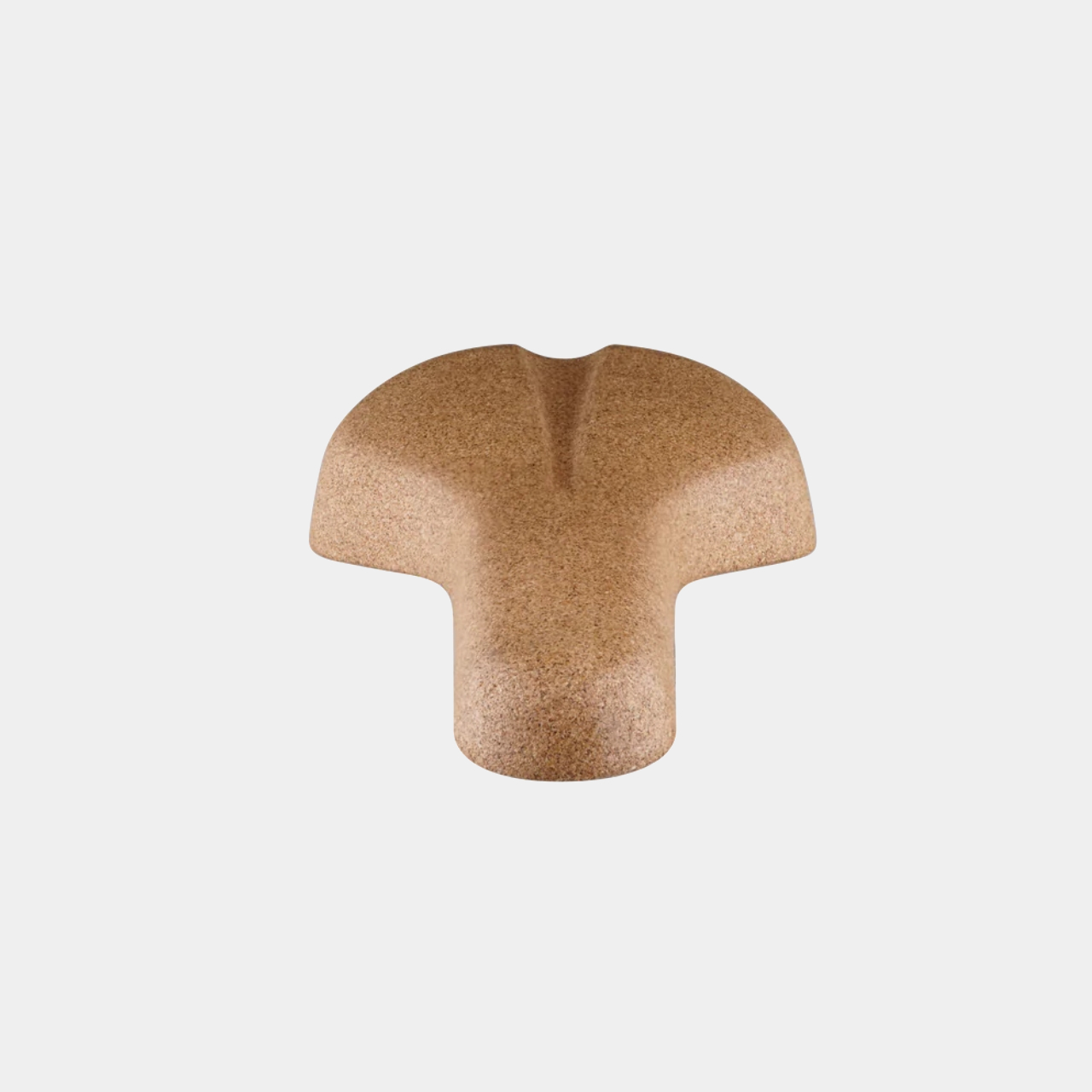
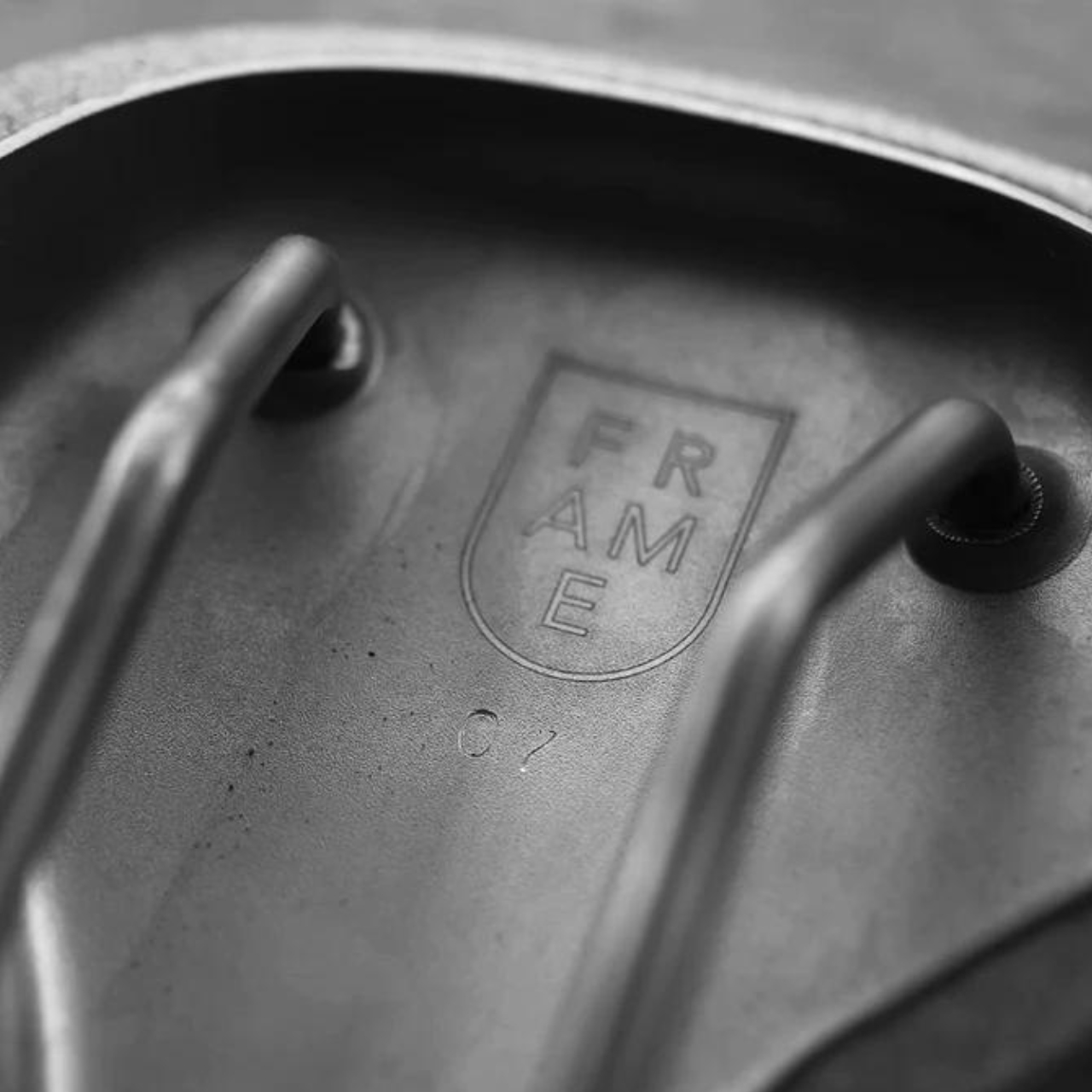
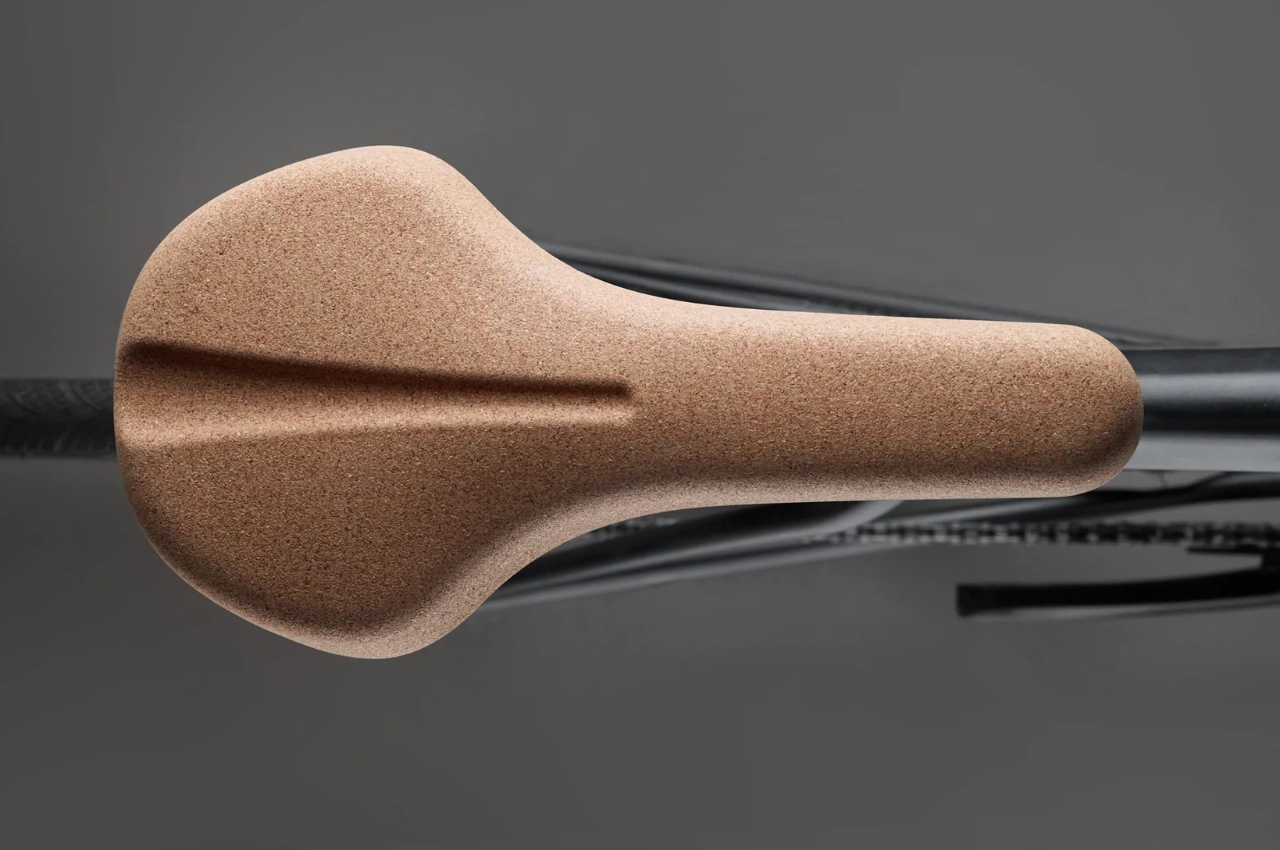
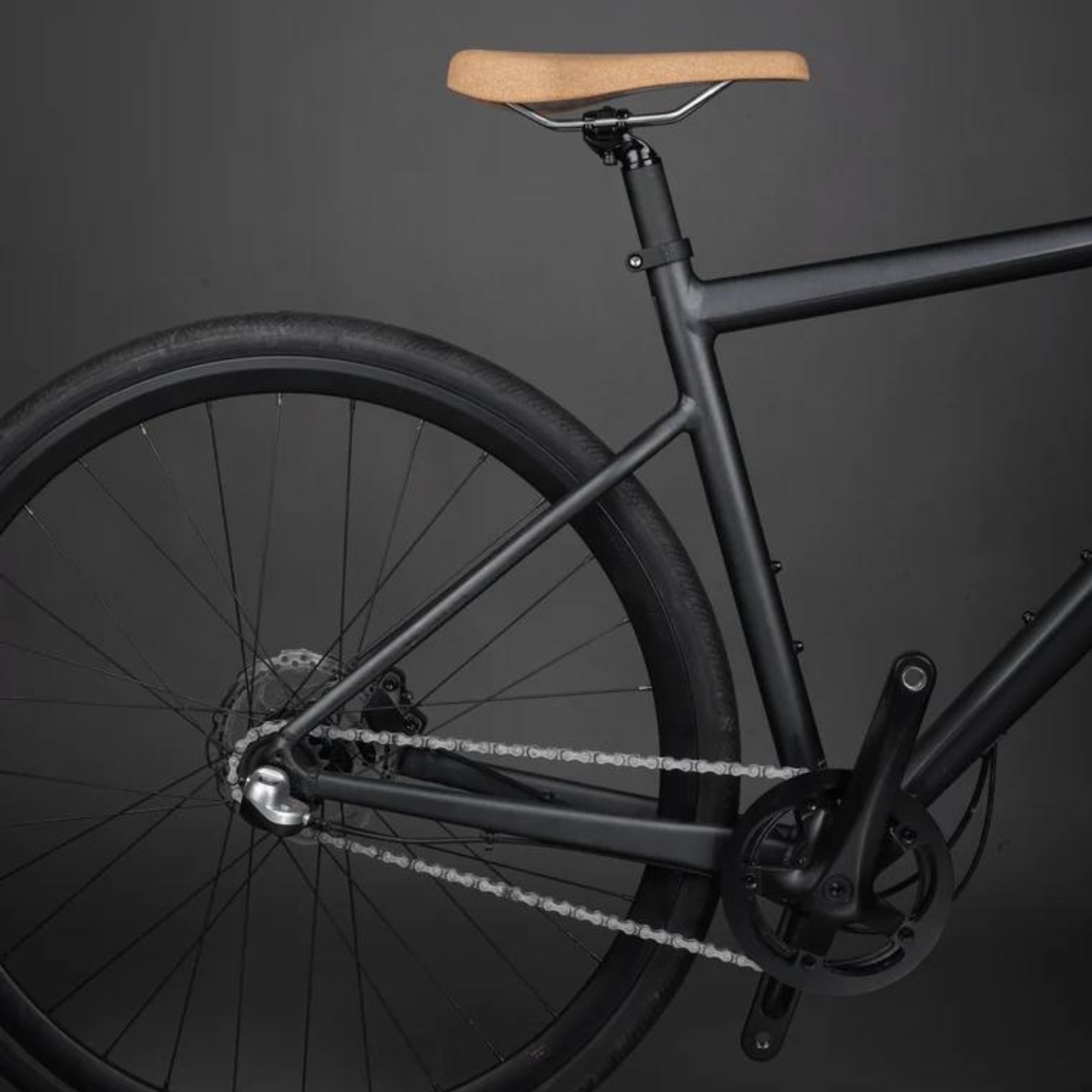
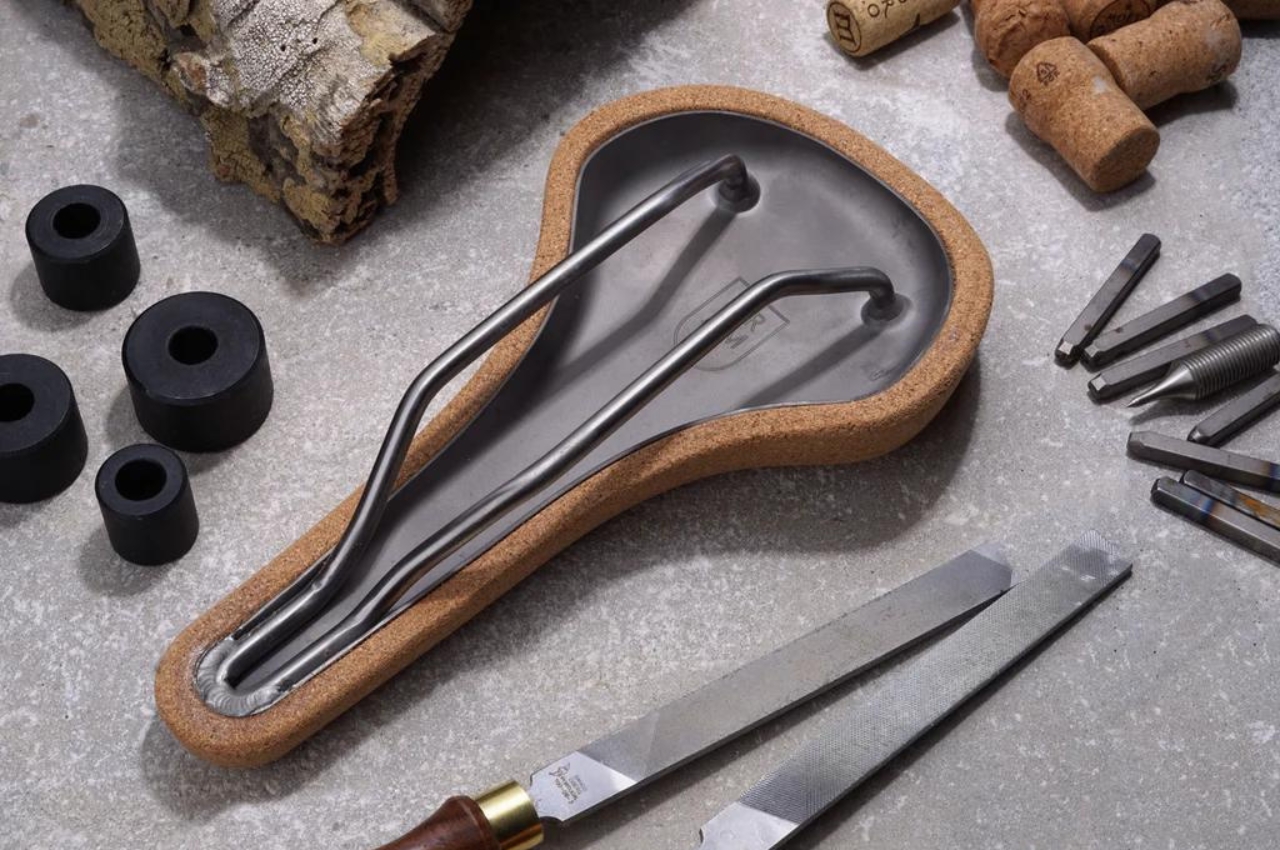
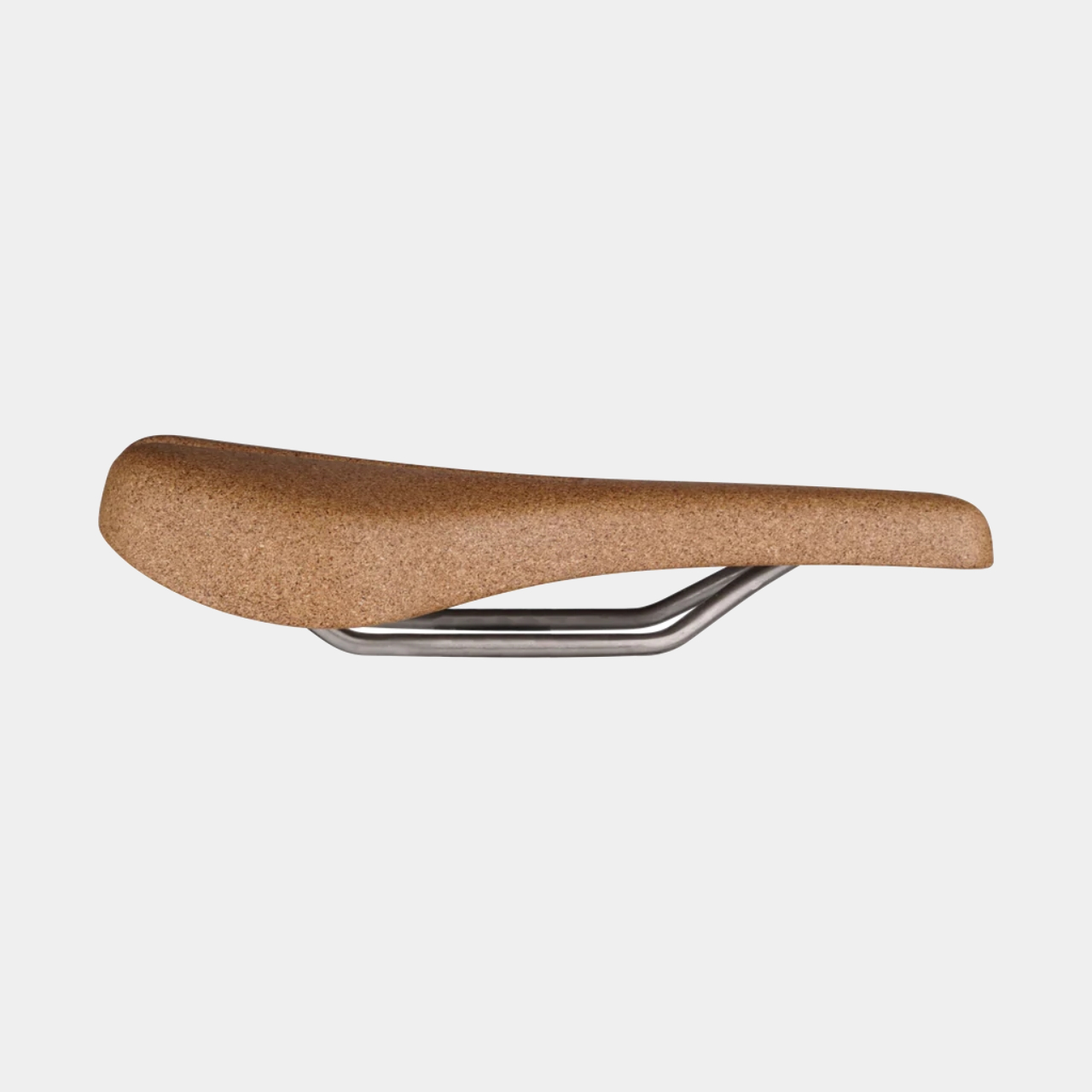
One new product that can make your bike more sustainable is the FR-1 Bike Saddle since it is made from reconstituted cork and grade 5 titanium. It was able to do away with the usual three plastic layers of the bike saddle and replace it with the single piece of cork. What’s more, this cork is able to have all the properties of those plastic layers: structural rigidity, foam comfort, and weather resistance.

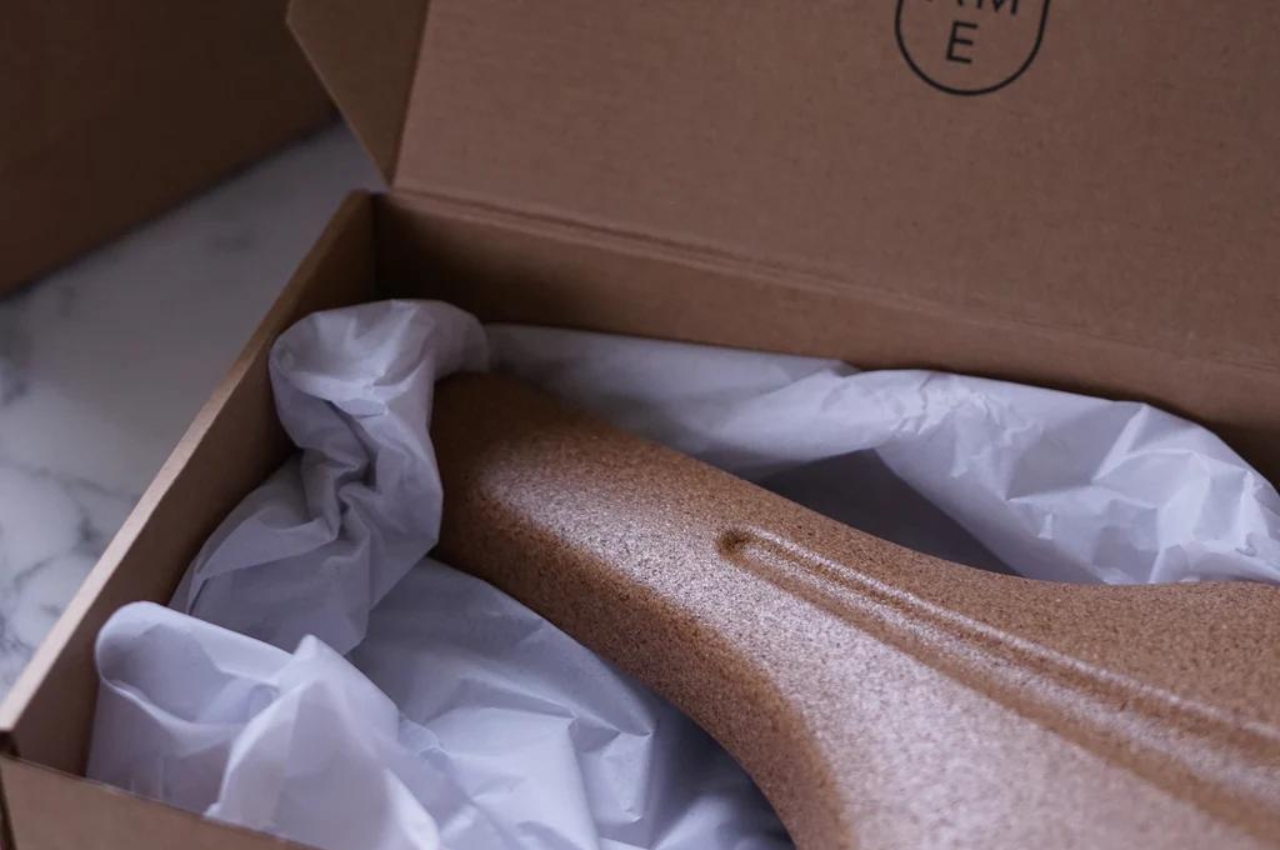
According to Frame Cycles, they were able to create the first batch of these cork saddles by using a firm grade of reconstituted cork so it has the similar hardness to the usual leather bike saddle. This also means that you will have to spend at least two weeks for the cork saddle to break in and start to soften. They will eventually release variants with different grades of cork. The process of sourcing the materials from the cork trees is also less harmful as stripping the bark every 8-10 years boosts the carbon consumption 3-5 times.

Before the cork saddle gets to you, the components are harvested in Portugal and then molded when it reaches Glasgow, Scotland. This is also where the parts are treated with water-based lacquer and then integrated into the welded titanium substructure. Knowing this entire process, it will not surprise you that the FR-1 Bike Saddle is a bit expensive at around $130. But of course, it’s a small (expensive) price to pay if you want a more eco-friendly bike to accompany your sustainable lifestyle.

The post Cork bike saddle amplifies the eco-friendly quotient of your ride first appeared on Yanko Design.

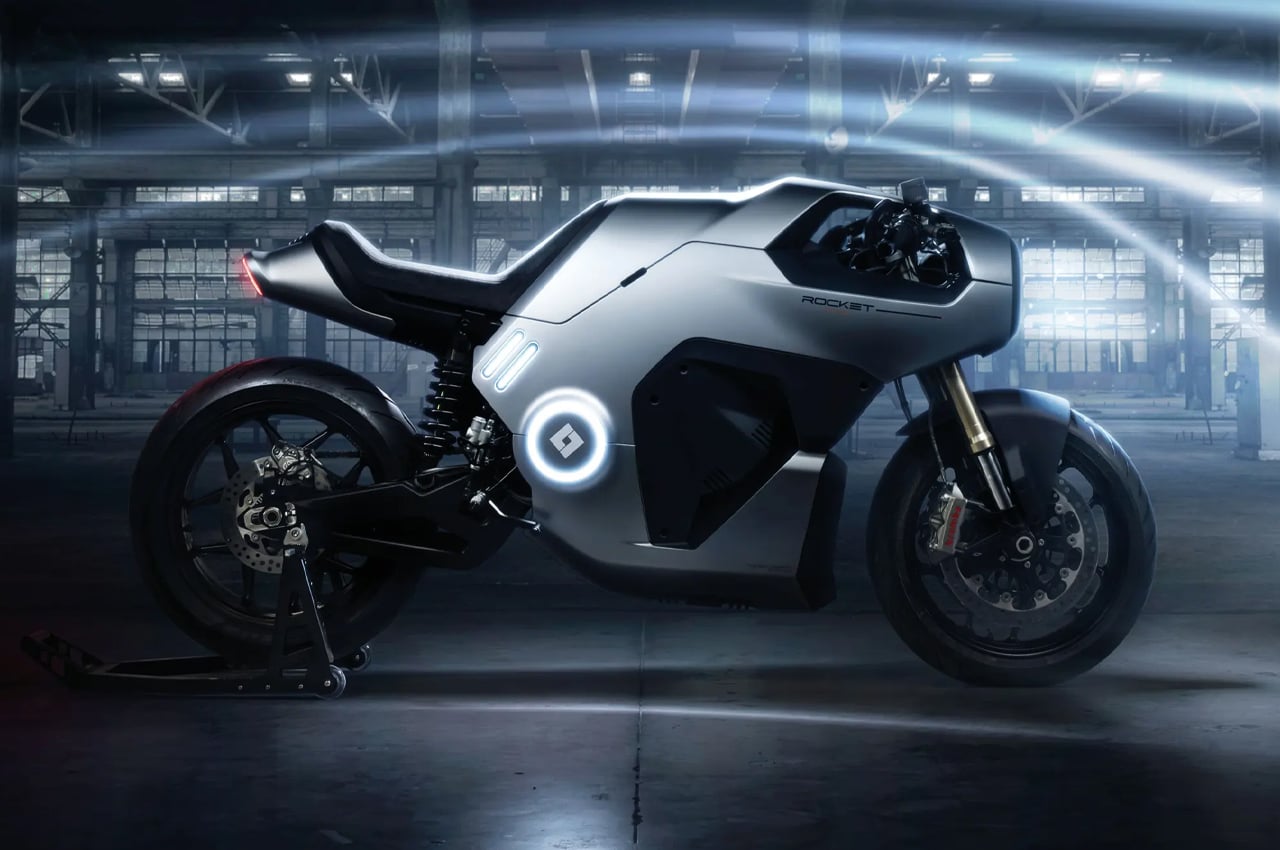
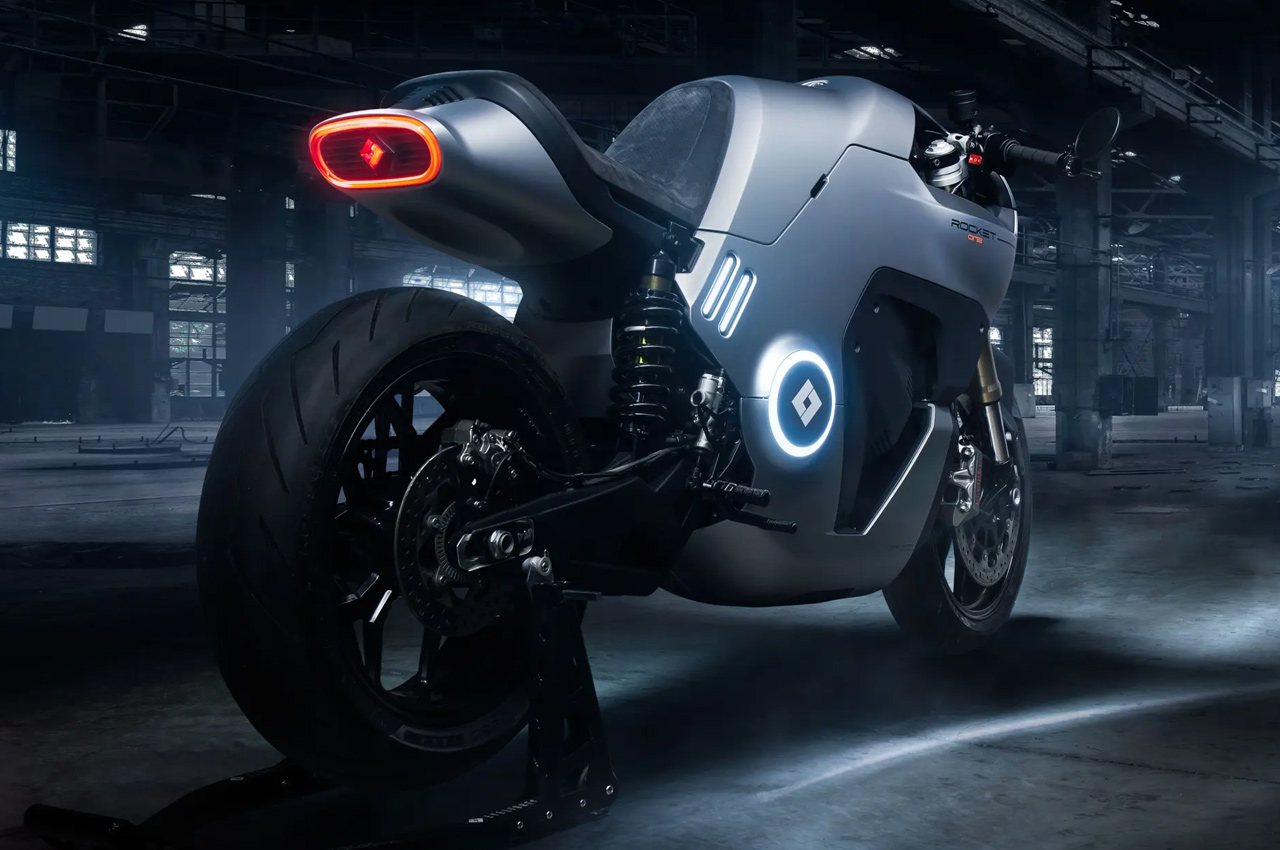
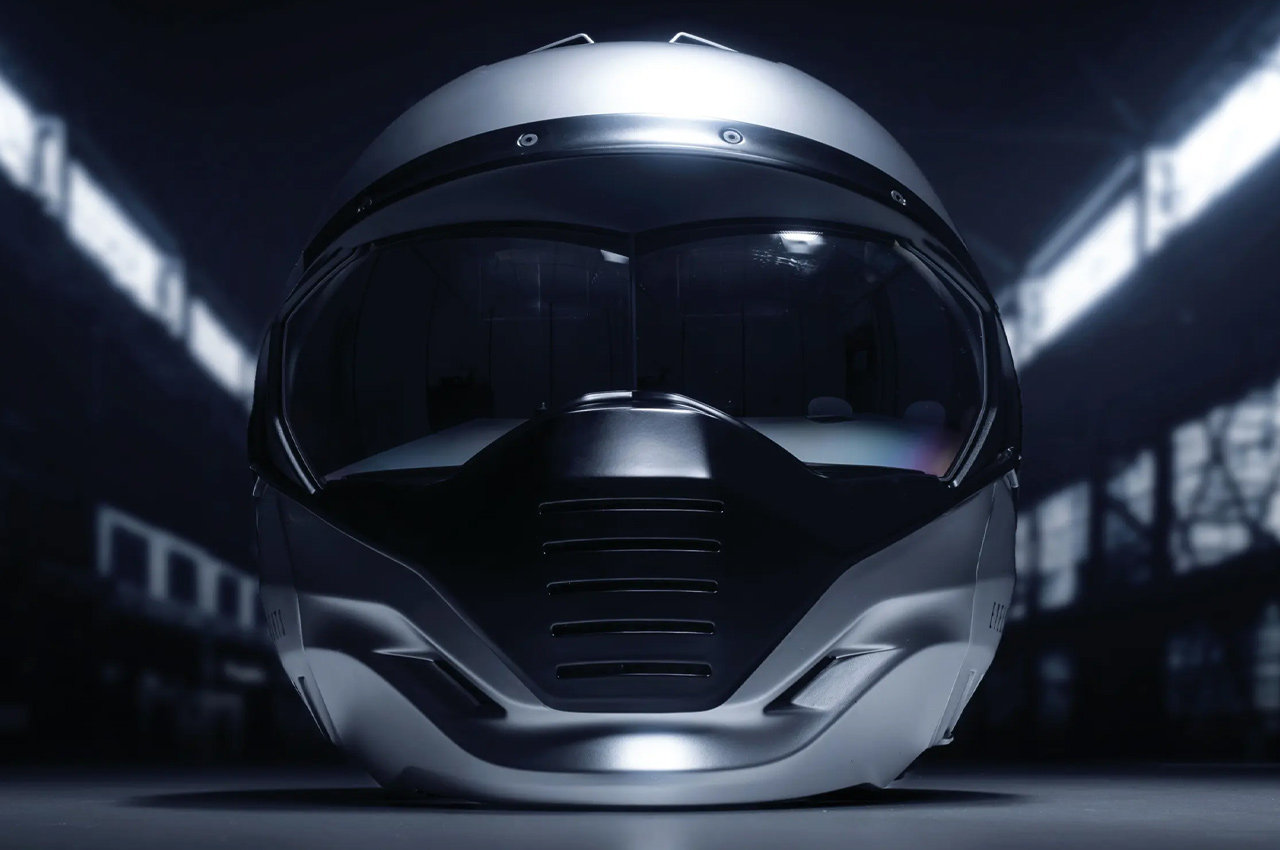
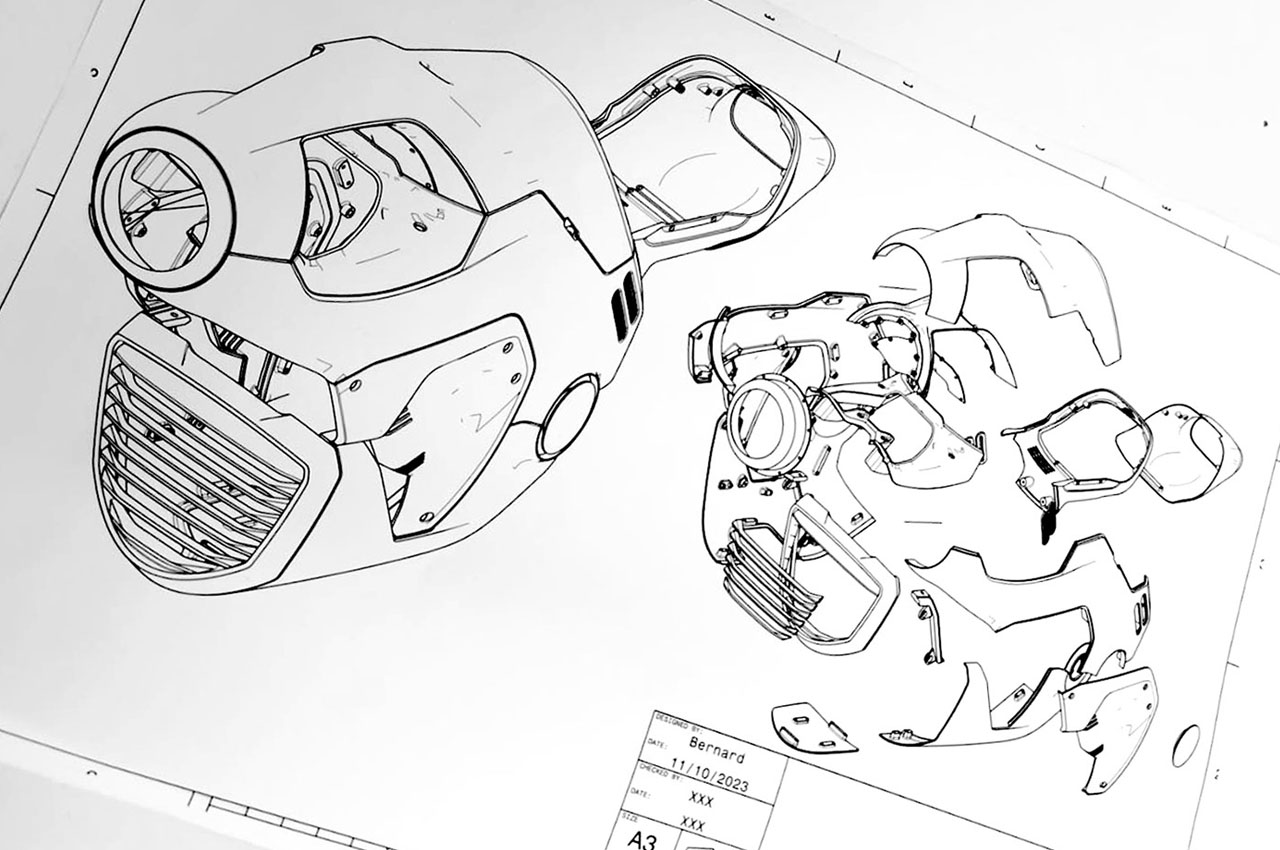
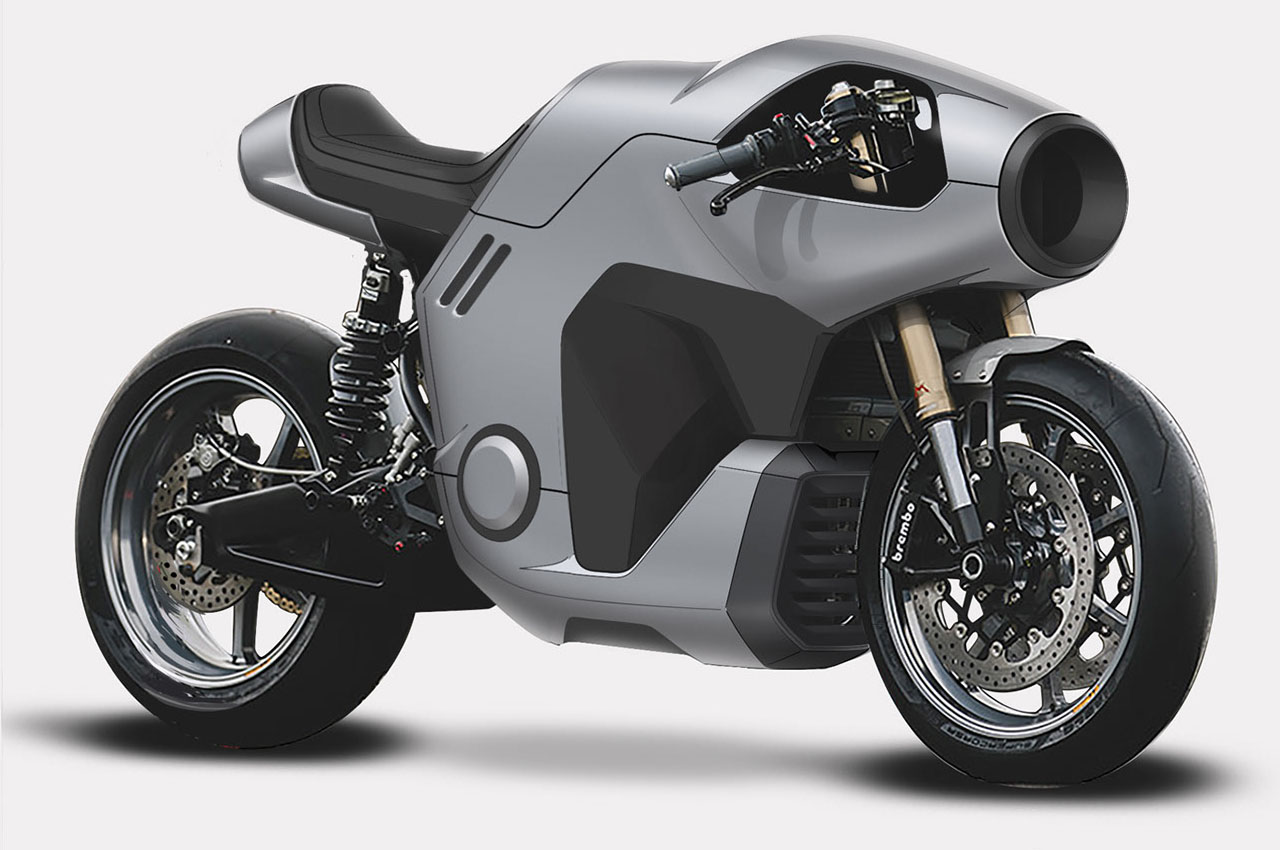
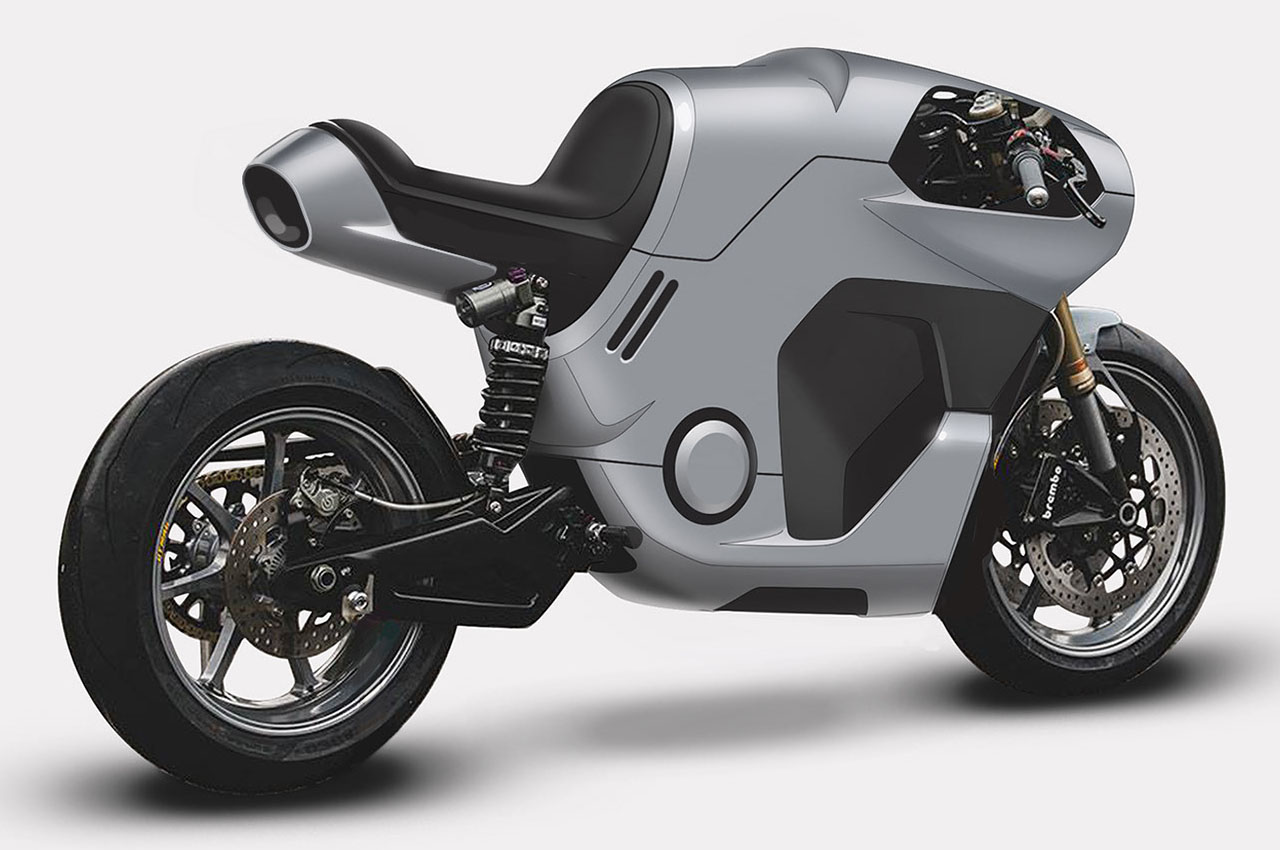
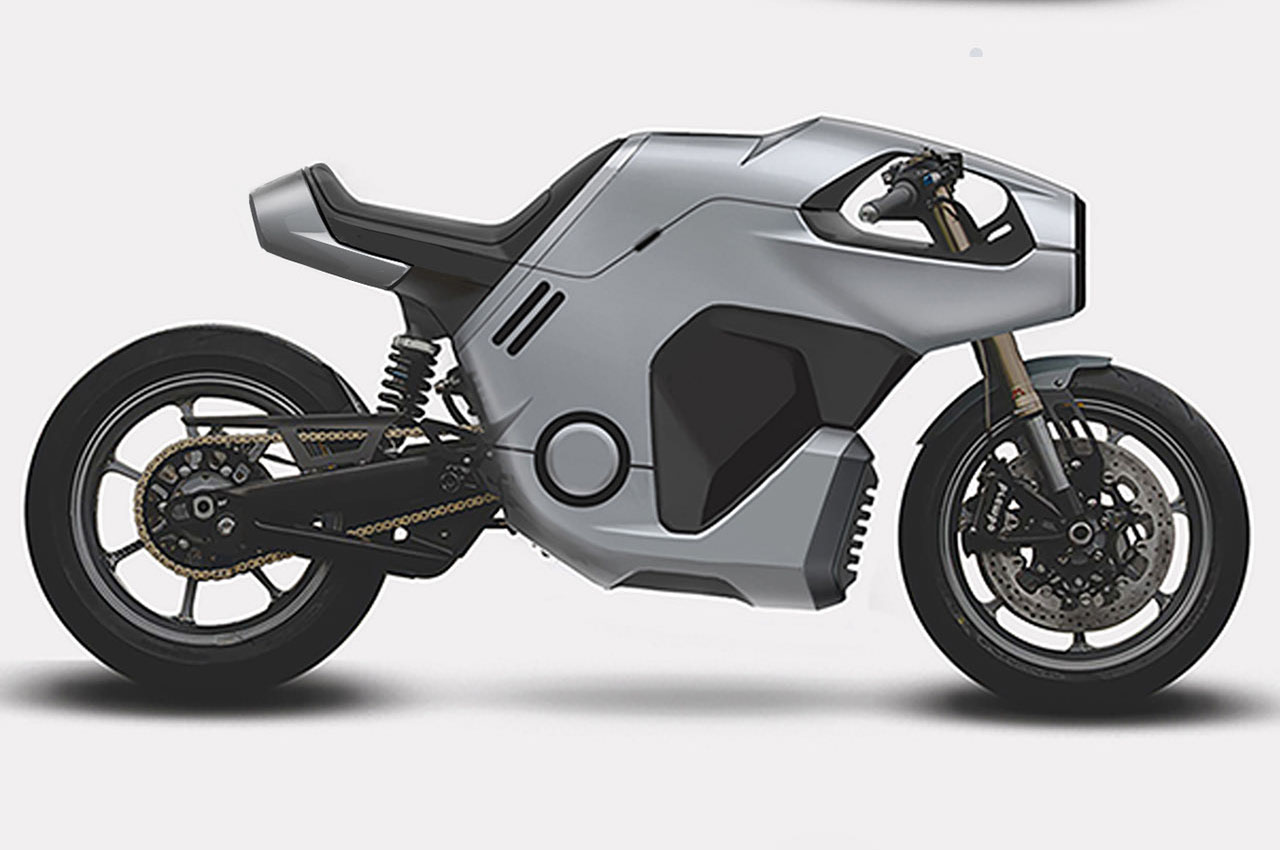
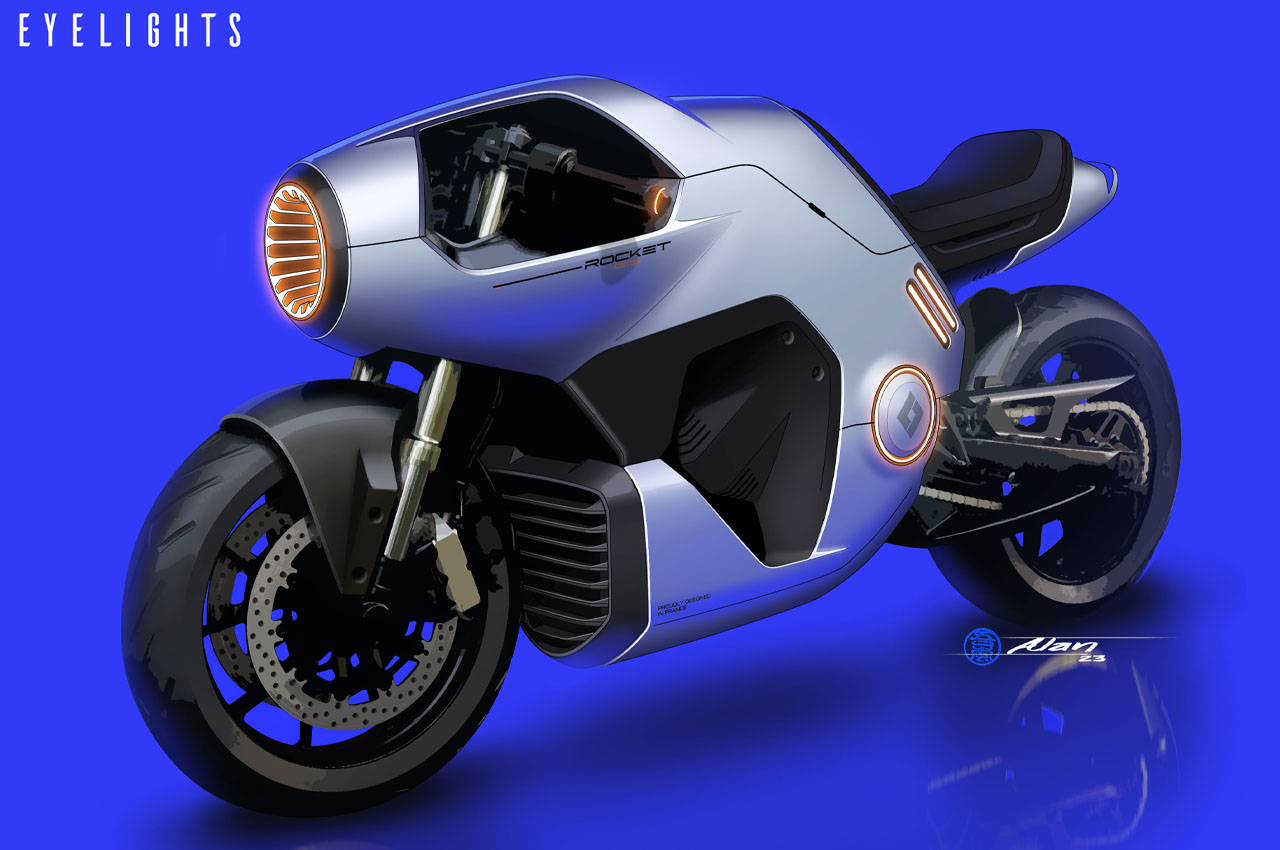
EyeLights Rocket One is a futuristic high-performance electric motorcycle with a fighter jet-like HUD

Building a winning motorbike design pretty much always starts off with a well-thought-out concept blueprint. However, taking it to the prototyping stage takes a lot of input. After all, barely a handful of concept designs make it past the blueprint stage and onto to the real deal.

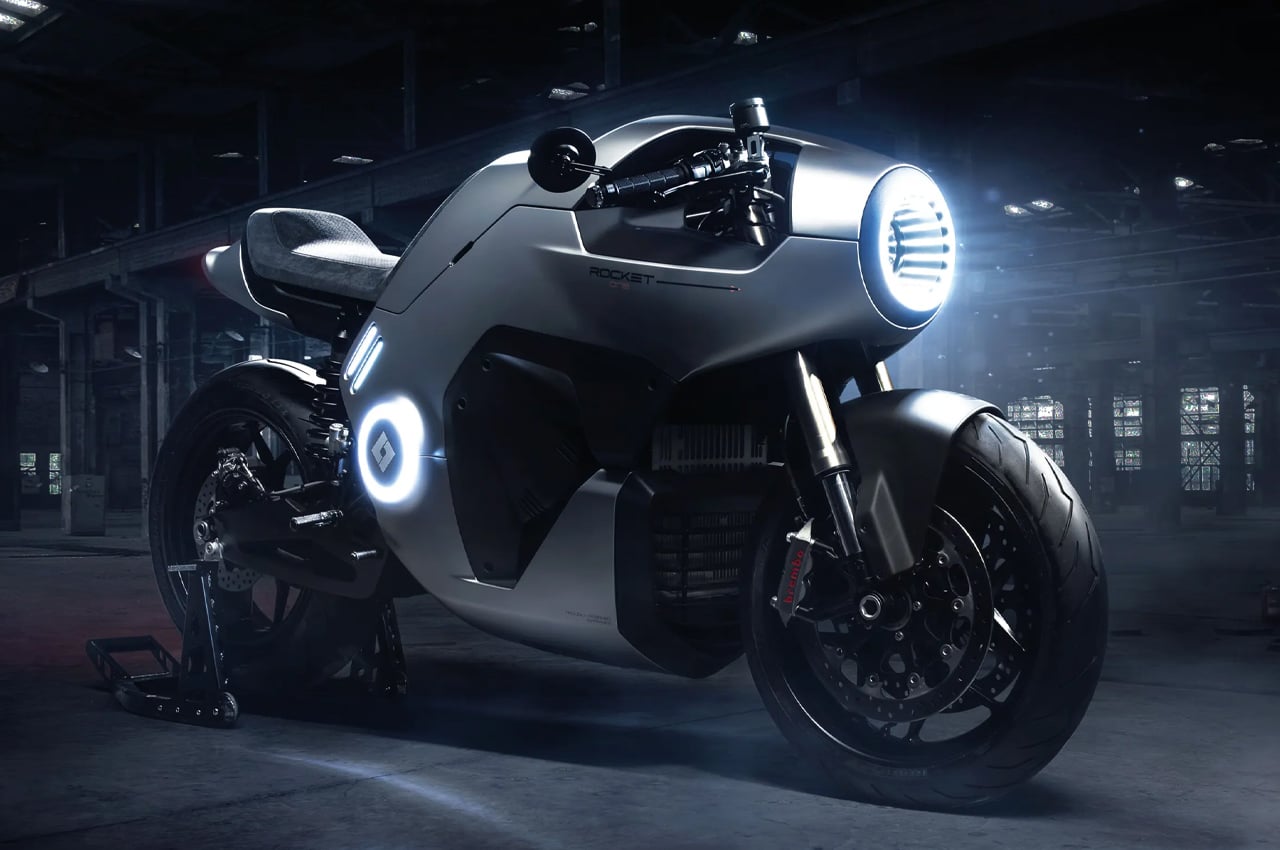
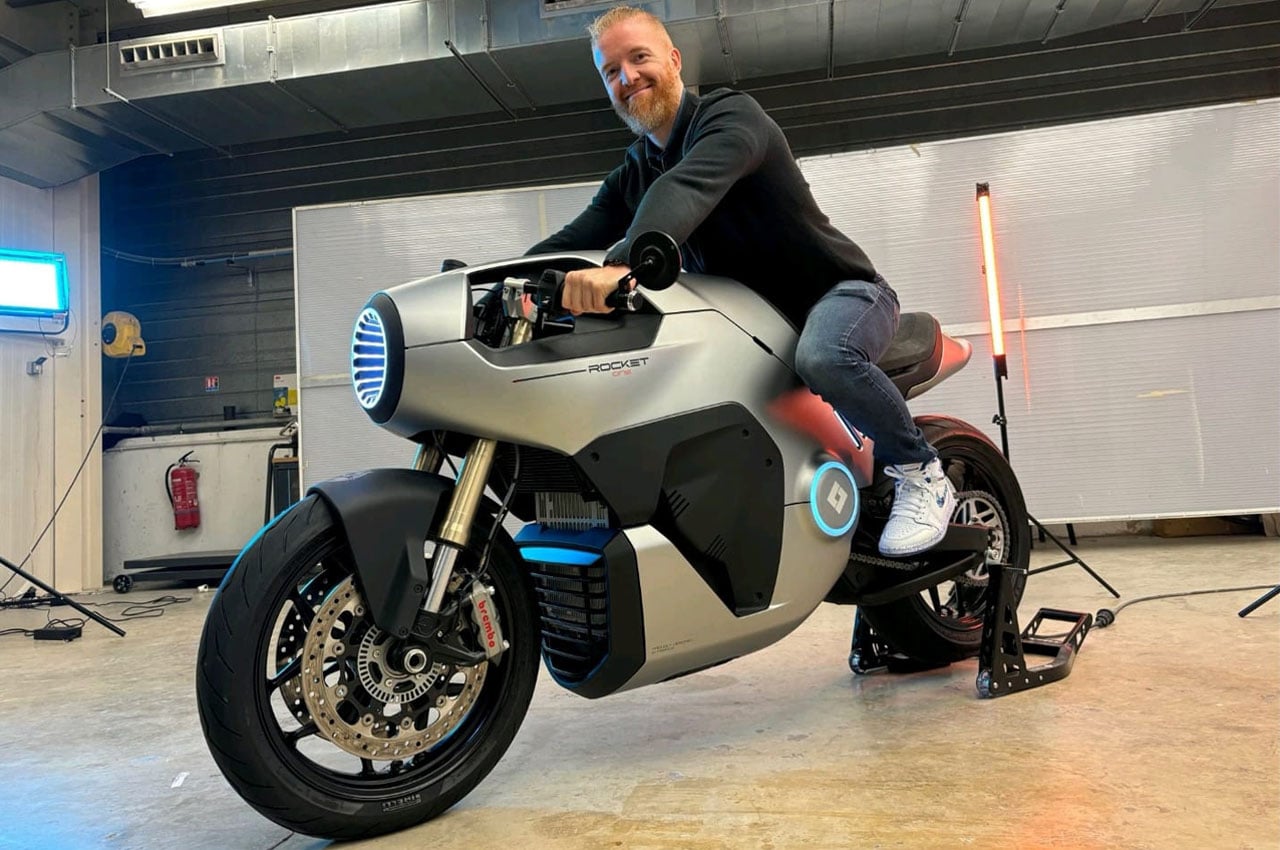
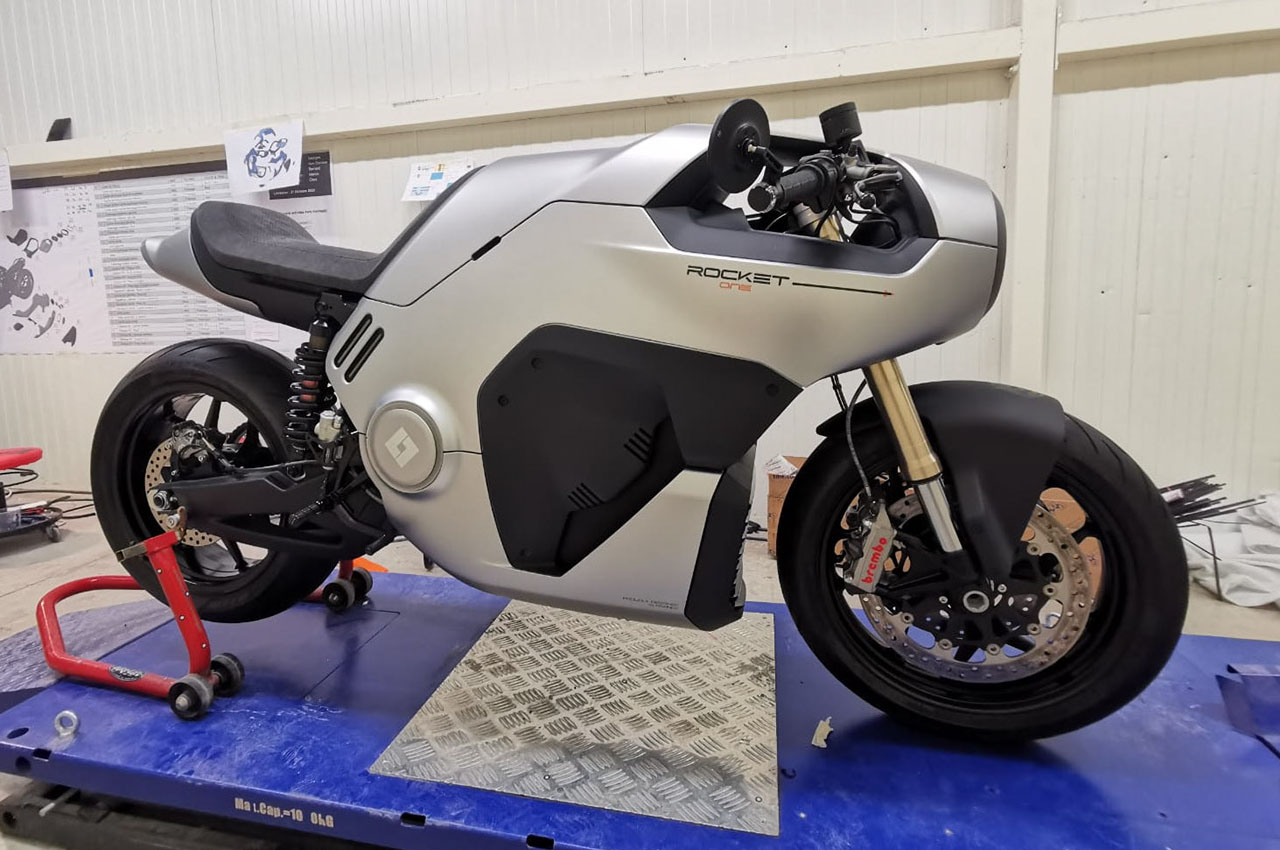
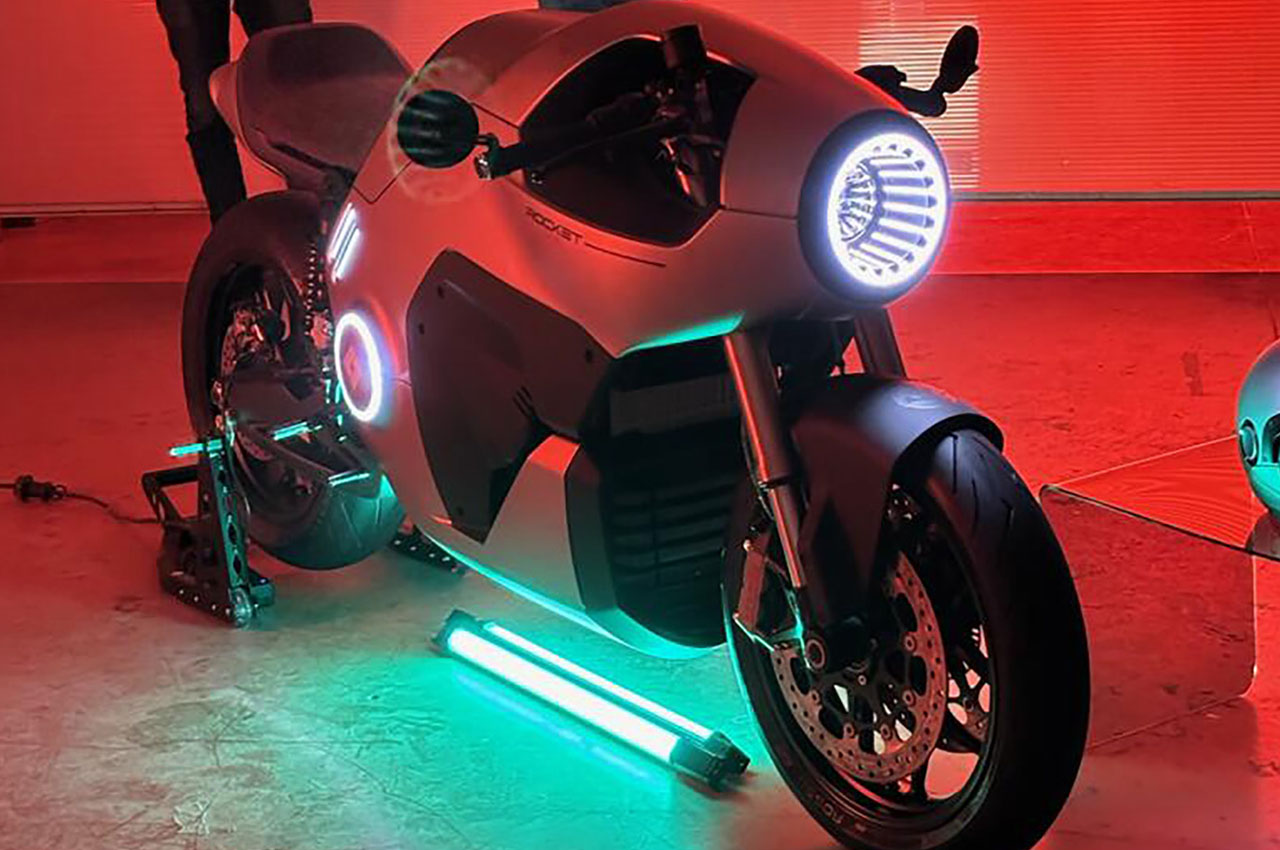
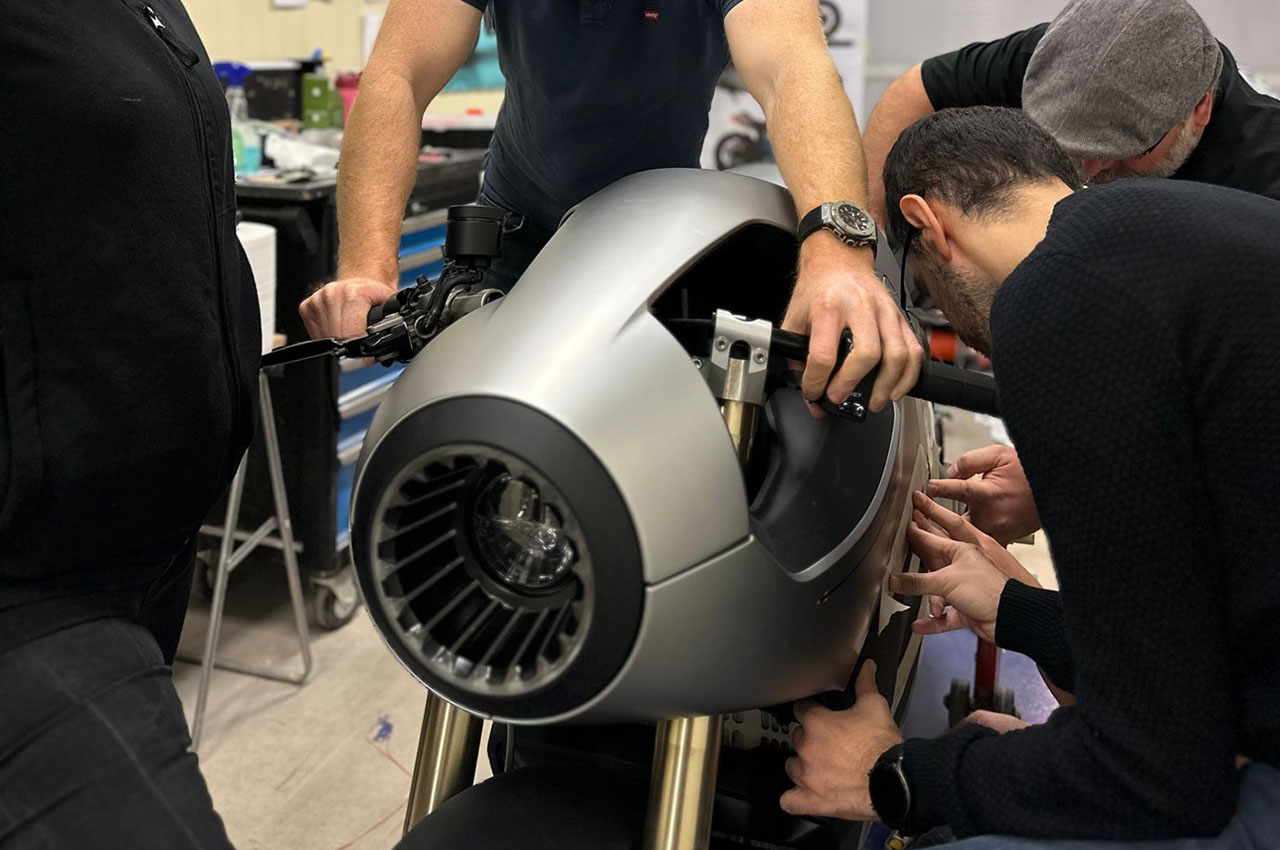
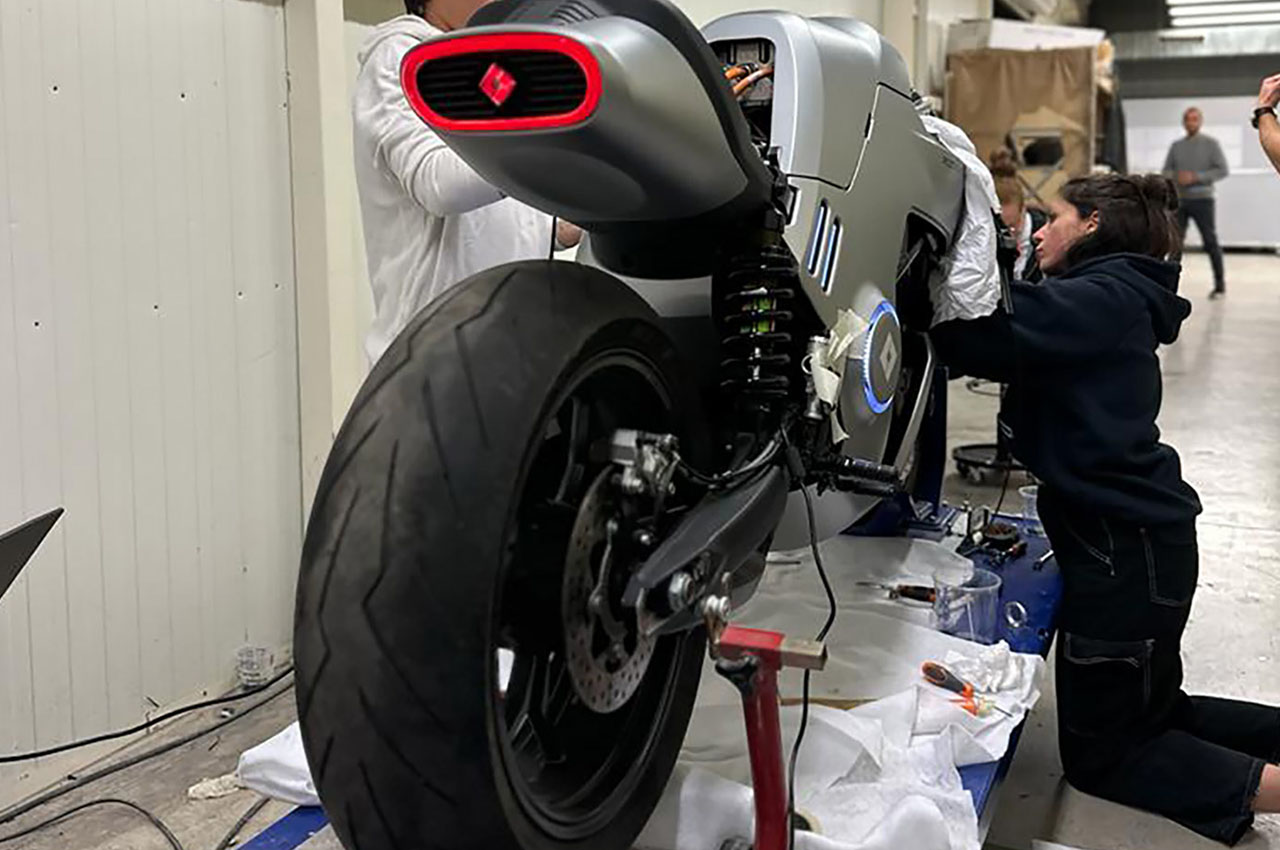
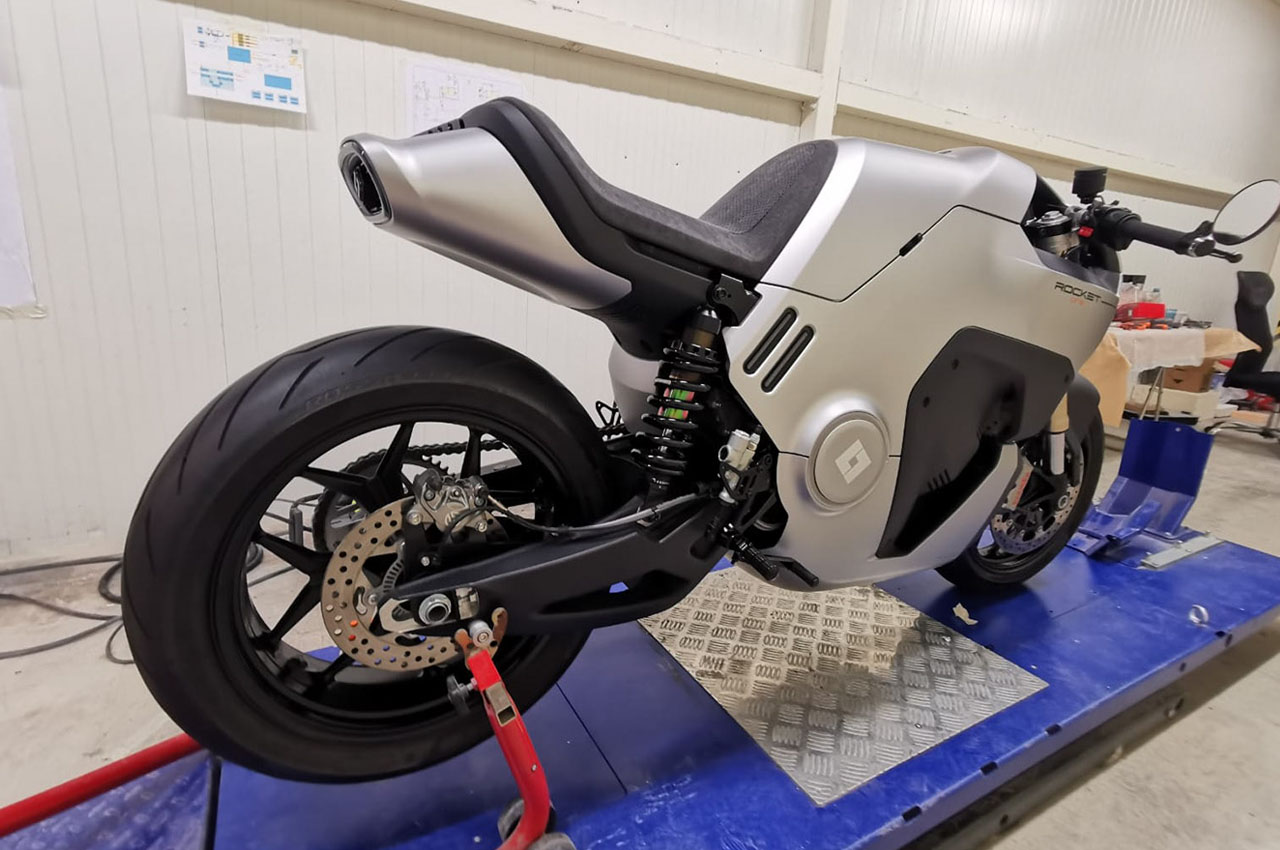
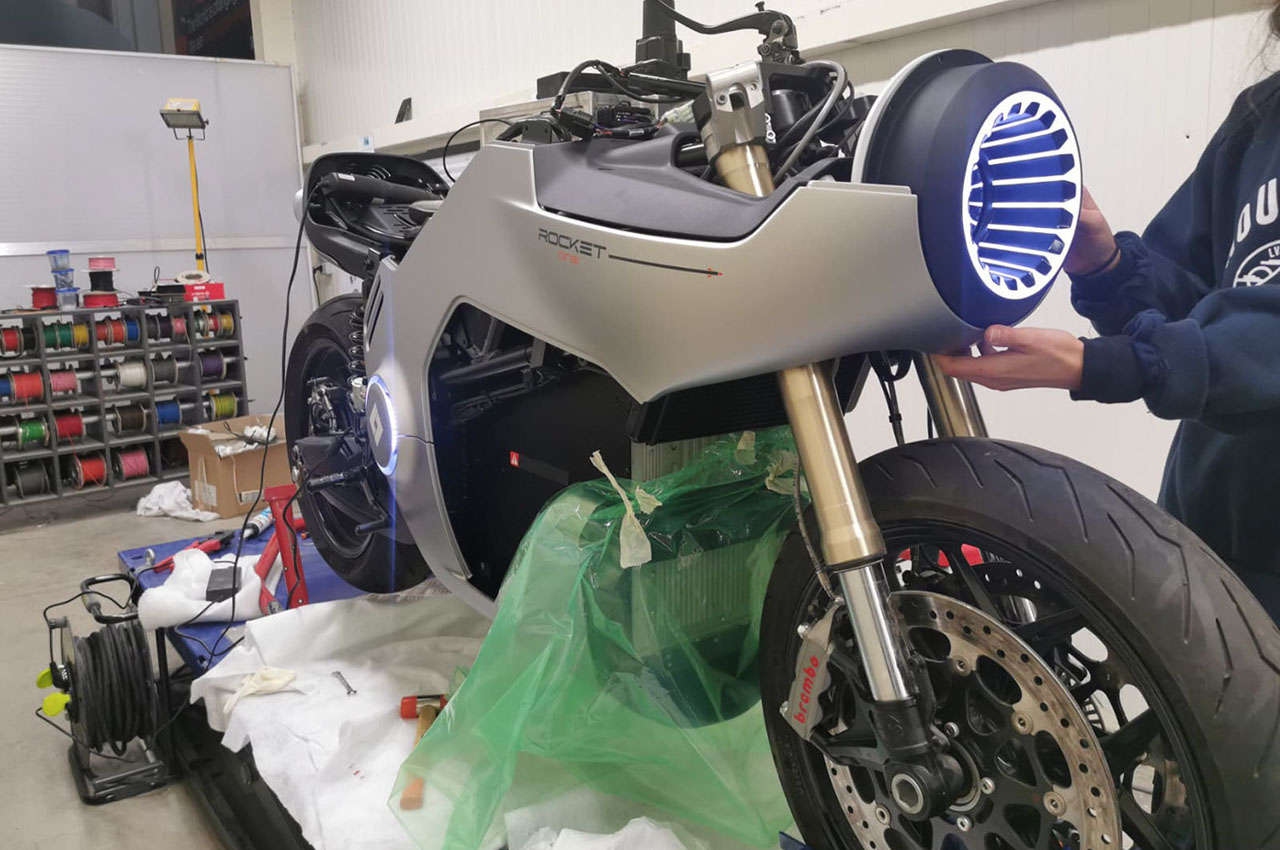
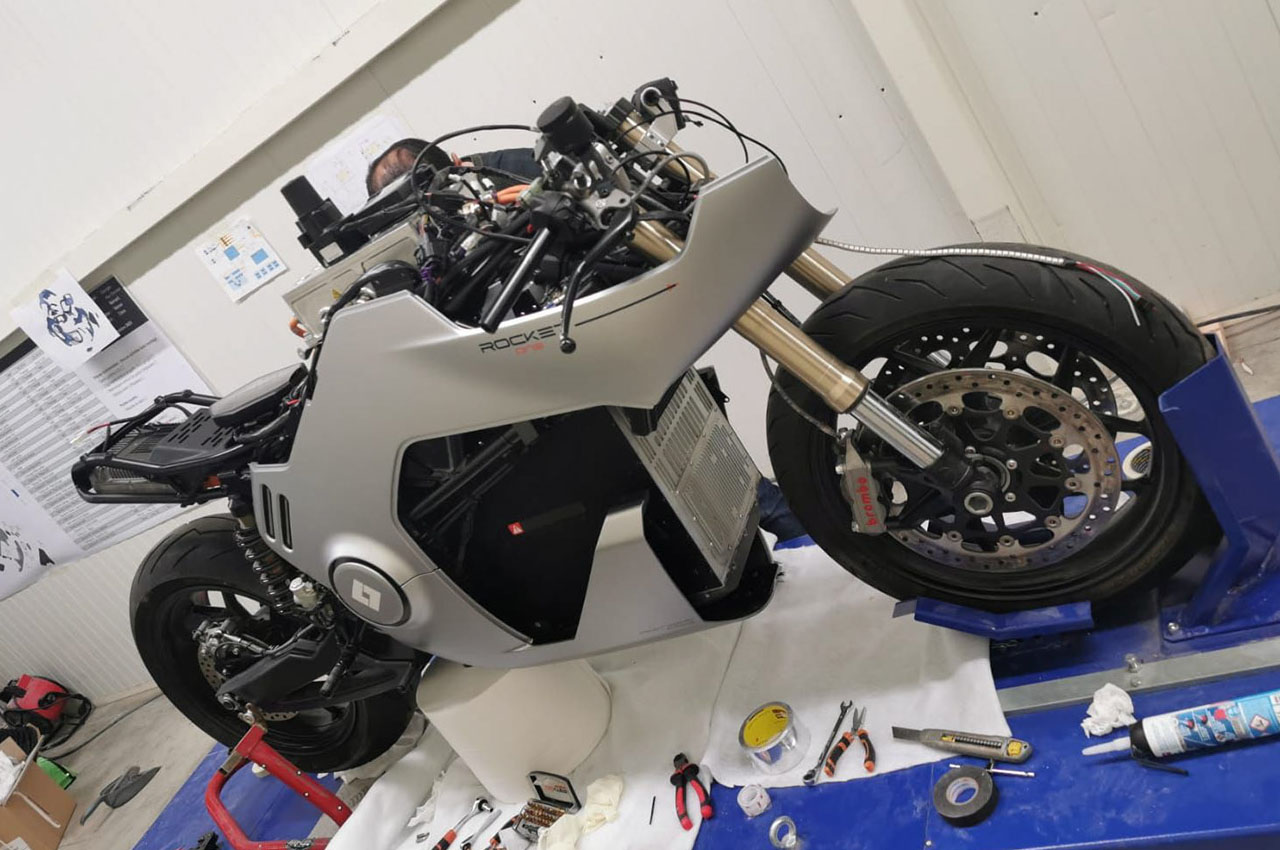
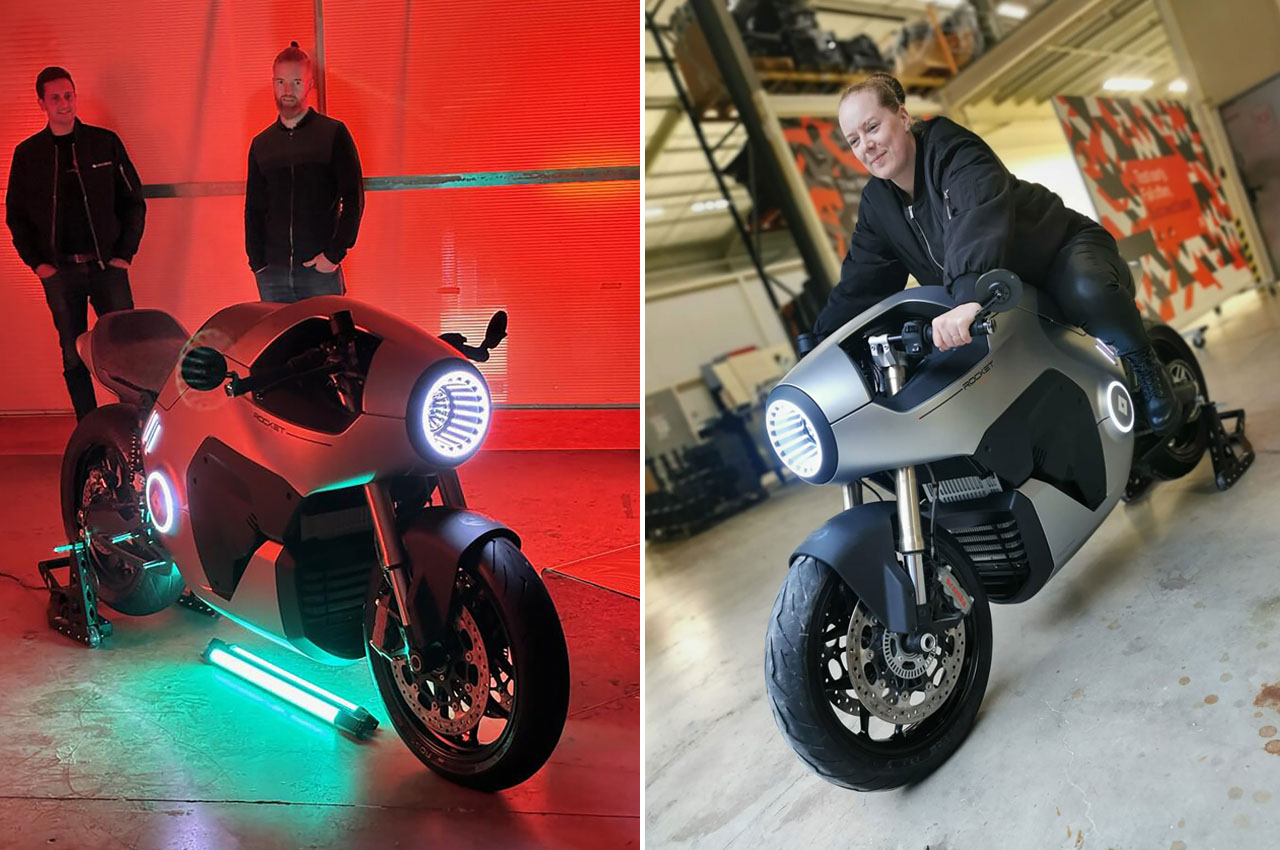
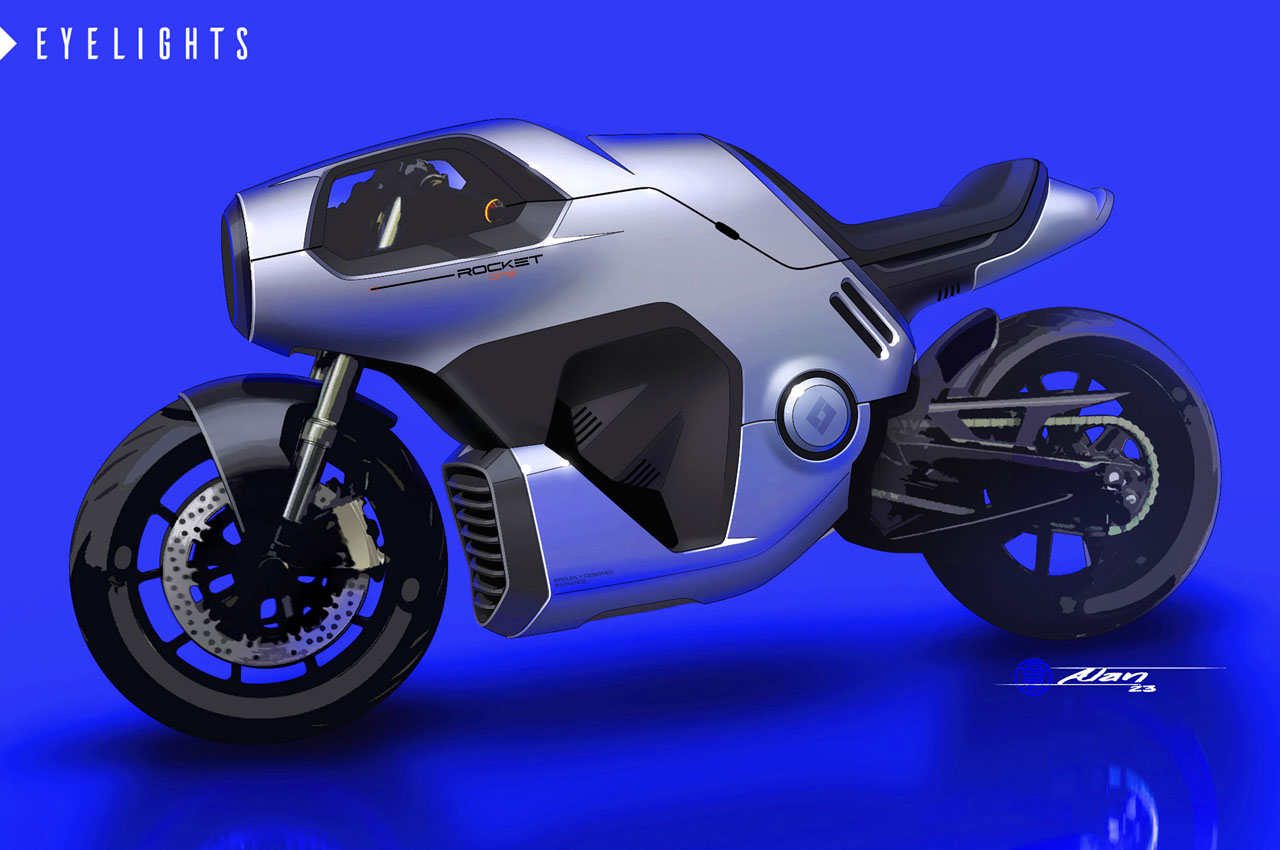
The EyeLights Rocket One is one such successful example of a bike design done right. In fact, it took just three months to take it from a mere sketch to a working prototype. Alan Derosier, the lead designer of this augmented reality-assisted motorbike created for EyeLights SAS, managed to strike the right balance between form and function.

Designer: Alan Derosier

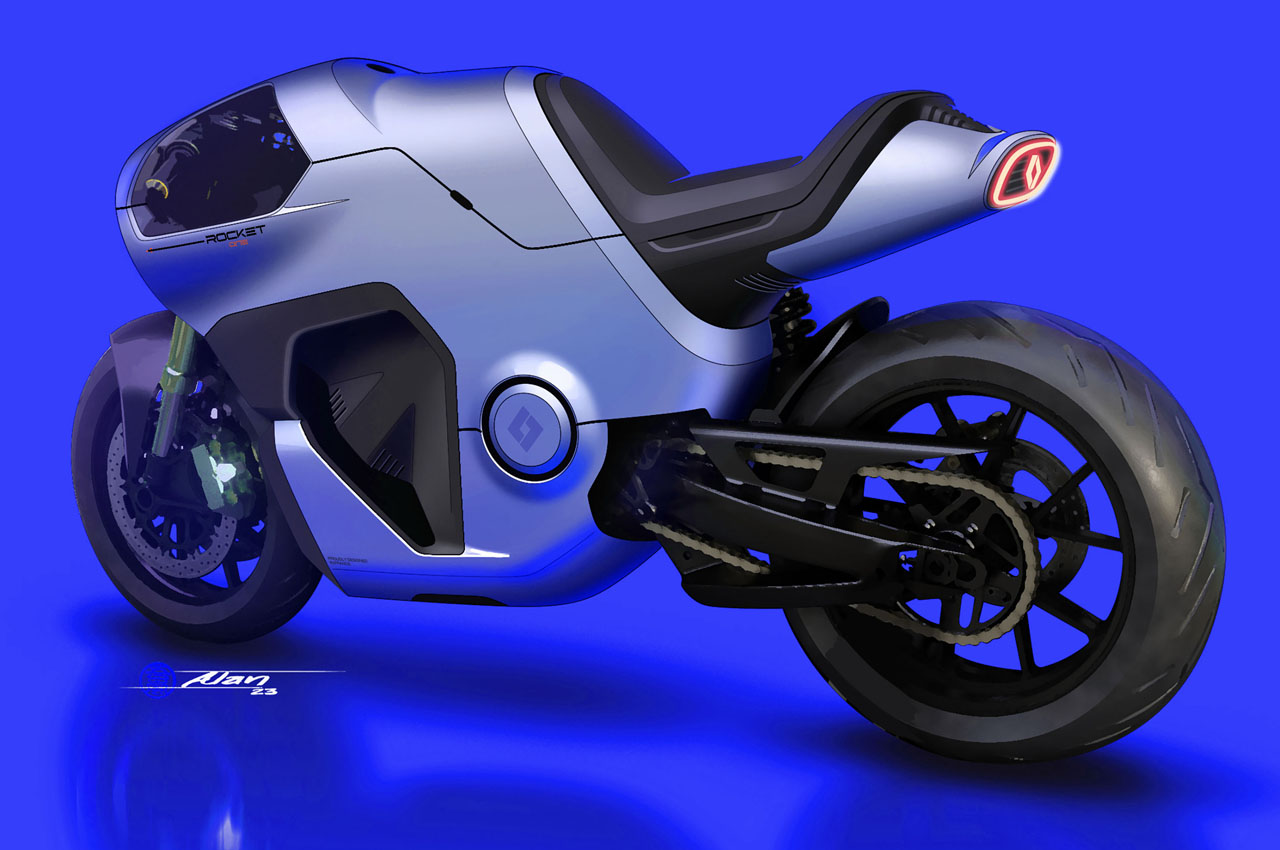
The Rocket One electric bike made its inaugural real-life presence at EICMA 2023 which is not surprising. According to Alan, the bike’s initial design revolved around fine-tuning the proportions and silhouettes. Then the masses and refining of the surfaces was done. That approach is pretty similar to how cars are designed. The result is a performance-oriented ride that houses huge batteries for power delivery and a respectable range.

This powerful bike has the apparent influences of the Lotus bikes, but we dare not call it a copy by any stretch of the imagination. The bike can go from 0-100km/h in just 2.6 seconds, and 1200 Nm of torque on the rear wheel produces 180 horsepower for stunning performance for an electric bike. Add to the mix a more than 400 km of range on a single charge. That is attributed to the large batteries hiding in that sleek body.

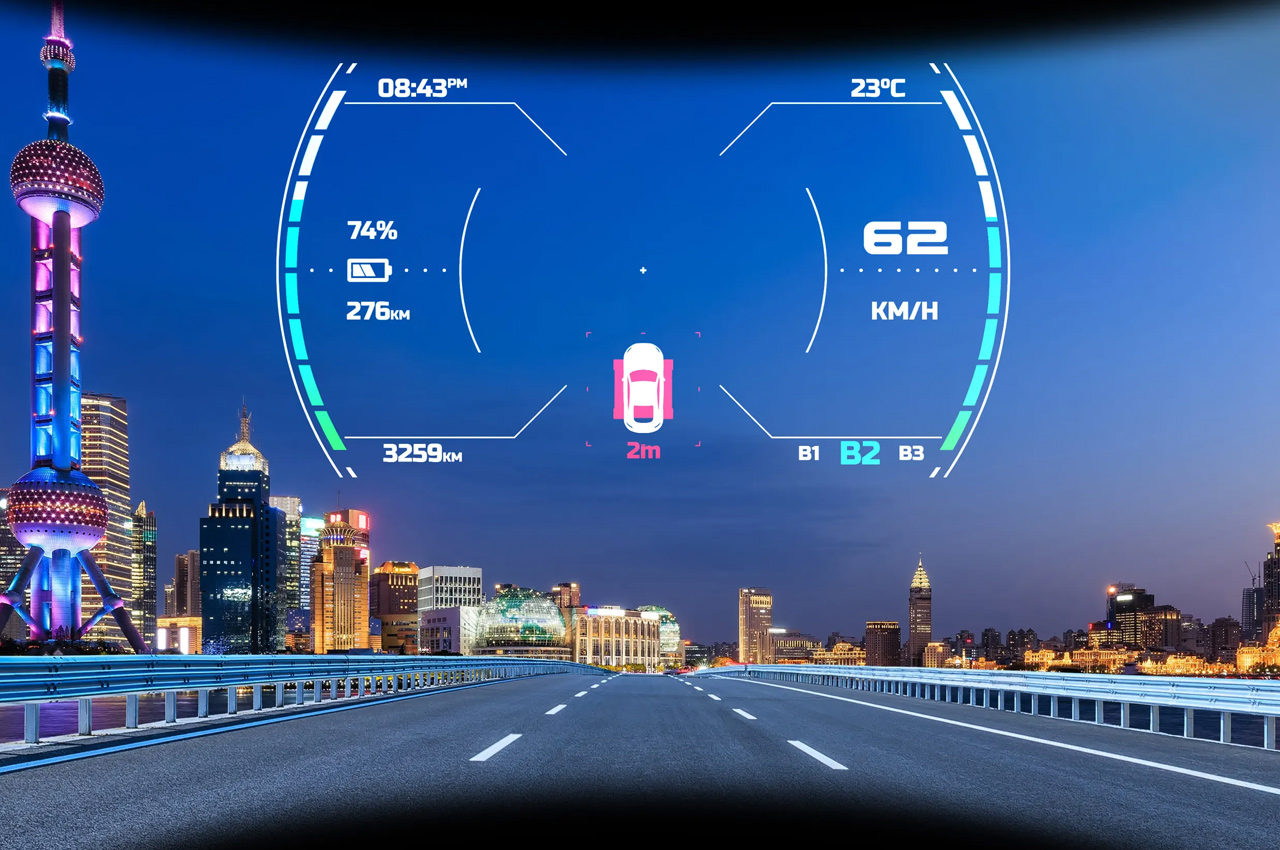
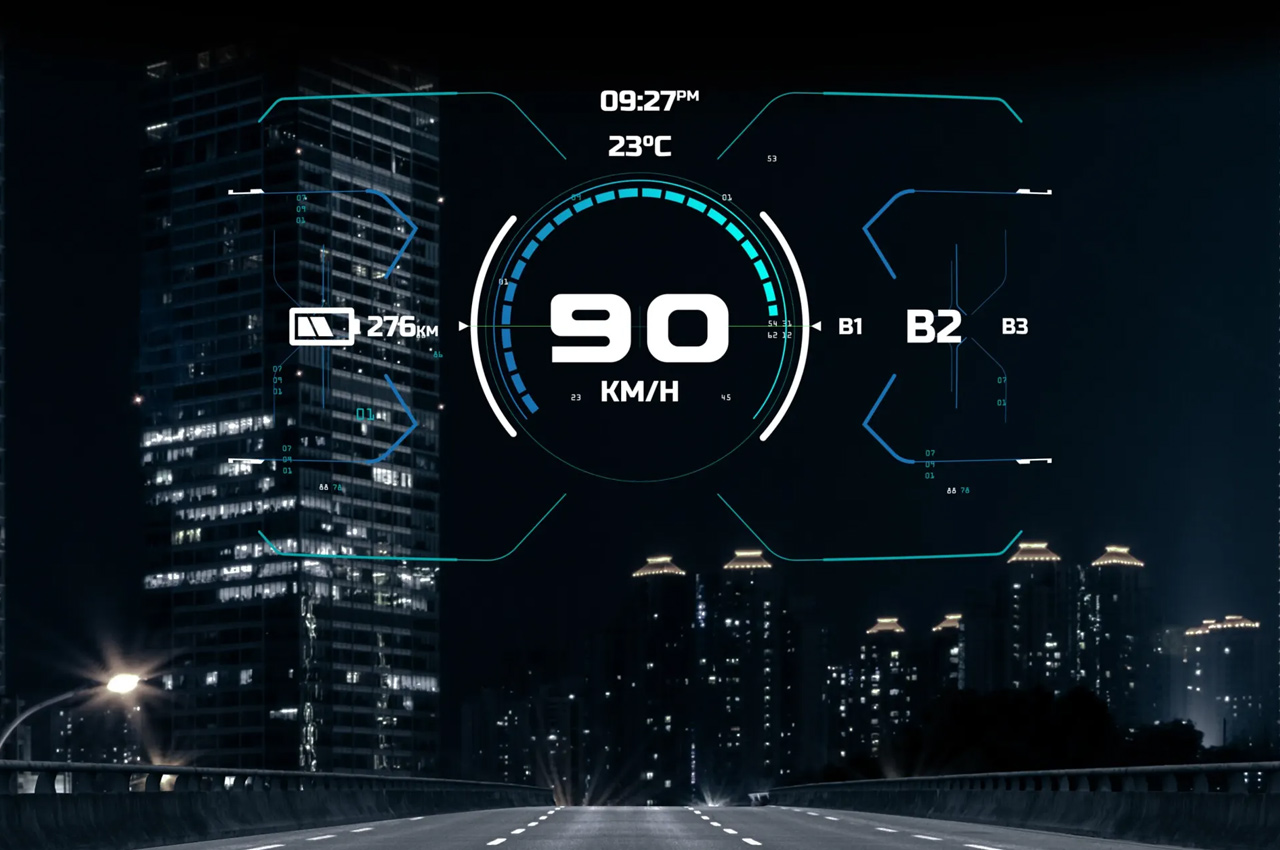
While the form factor is something to behold, the real deal is its futuristic augmented reality-aided navigation system. That comes as no surprise as EyeLights specializes in AR applications, and the Rocket One adapts its technologies from what fighter jet pilots use. The HUD of the accompanying helmet has a cluster of vital information displayed in the field of view of the rider.

For now, the bike is on the waiting list for interested buyers and we hope it doesn’t take forever to actually be available for purchase.

The post EyeLights Rocket One is a futuristic high-performance electric motorcycle with a fighter jet-like HUD first appeared on Yanko Design.
J.Laverack’s Limited-Edition Aston Martin .1R Bicycle Uses the Same Process as an Actual Aston Martin

What happens when one of the most luxurious automotive brands in the world teams up with one of the most luxurious bicycle brands in the world? That would be the J.Laverick Aston Martin .1R — the direct offspring of a fruitful partnership between the two high-flying British luxury brands, who are jointly calling it the “world’s most bespoke, advanced and meticulously engineered road bicycle”. This design is definitely bespoke, considering that no two Aston Martin .1R bikes will be created the same —and it isn’t exactly clear how many will be constructed in total — seeing as how every purchaser who orders from Aston Martin’s “multi-award-winning” online configurator will receive a personal invitation to get their own unique Aston Martin .1R fitted at Aston Martin’s HQ in Gaydon, UK.

Designer: J.Laverack x Aston Martin

Evidently, Aston Martin’s Gaydon HQ is where a new owner can individually select and install their bells and whistles (literally) after mixing and matching Aston Martin’s signature color schemes — which mirror those of the prestige British auto designer’s most popular luxury vehicles — on the tubes, lugs, forks, stem, seat post, and handlebar drops via the aforementioned configurator. For what it’s worth, yes, you can also choose between saddle and handlebar type. Right now, it’s not clear how much this will all cost, but it makes sense to expect a higher price than most other J.Laverack bicycles, which start at around $5,000.

This advanced titanium road bike design uses a mixture of 3D-printed titanium lugs and sculpted carbon fiber tubes for a lightweight yet sturdy build without any exposed bolts on the outer body. Aston Martin’s designers call this a world first, and I can’t deny it looks like a cross between a bike and a sports car. Though, calling it a “sports bike” would be redundant. That said, Aston Martin’s Executive VP and Chief Creative Officer, Marek Reichman, dug into this idea even further in an official press release, calling the Aston Martin .1R a “titanium hypercar on two wheels.”

Its max speed probably doesn’t equal that of a shiny new Aston Martin supercar, but it’s likely the speediest (and sturdiest) bicycle we’ve ever seen. Several elements of the ($3 million) Aston Martin Valkyrie’s engineering and design process made their way over to the .1R, including the bicycle’s 40-micron badges. The wheels themselves, plus the stem, also use similar processes. According to Aston Martin, “The hypercar’s wheel design can be glimpsed in miniature in the titanium piston caps of the brakes on the bike, while if you inspect the beautifully machined cups on the threaded bottom bracket of the .1R and you will notice parallels with the central wheel nuts on an Aston Martin Valkyrie.”
The post J.Laverack’s Limited-Edition Aston Martin .1R Bicycle Uses the Same Process as an Actual Aston Martin first appeared on Yanko Design.