5 Best Retro Handhelds That Play PS1 Classics for Under $130

Sony’s next console is on the horizon, but a growing number of gamers are looking backward instead. The PS6 will almost certainly launch north of $500, and for that price, entire libraries of PlayStation classics remain locked behind aging hardware, digital storefronts, or subscription tiers that rotate titles in and out on a whim. Meanwhile, a parallel market of pocket-sized emulation handhelds has quietly exploded over the past two years, putting decades of retro gaming into devices that cost less than a single DualSense controller.

These handhelds won’t run God of War Ragnarök, and nobody is pretending they will. What they can do is play through Final Fantasy VII, Castlevania: Symphony of the Night, Crash Bandicoot, and thousands of other PS1 titles at full speed, often with save states, fast-forward, and display filters that the original hardware never offered. Search interest in retro gaming handhelds has grown 173% year over year, and the devices fueling that demand sit at a price under $130. Five of them stand out from the flood.

Miyoo Mini Plus

The device that started the modern budget handheld craze still holds its own, even two years after launch. The Miyoo Mini Plus runs on a Sigmastar SSD202D processor with just 128MB of RAM, specs that sound laughable on paper but prove more than sufficient for everything up to and including PS1. Its 3.5-inch IPS display at 640×480 fills a vertical body small enough to disappear into a jacket pocket, and the 3000mAh battery stretches to seven hours with the right custom firmware installed.

Designer: Miyoo

That firmware, OnionOS, is the real reason this device remains so widely recommended. Built and maintained by a dedicated community of developers, OnionOS transforms the Miyoo Mini Plus from a competent emulator into one of the most polished retro gaming experiences available at any price. Features like automatic save-on-shutdown, RetroAchievements integration, and a game switcher that lets you hop between titles without returning to the menu give it a level of software refinement that devices costing three times as much still struggle to match.

What we like

  • OnionOS custom firmware with a polished, intuitive interface
  • Genuinely pocketable
  • Strong PS1 performance despite modest hardware

What we dislike

  • Extended sessions can cause hand cramps
  • No Bluetooth audio, no HDMI output

Anbernic RG35XX Plus

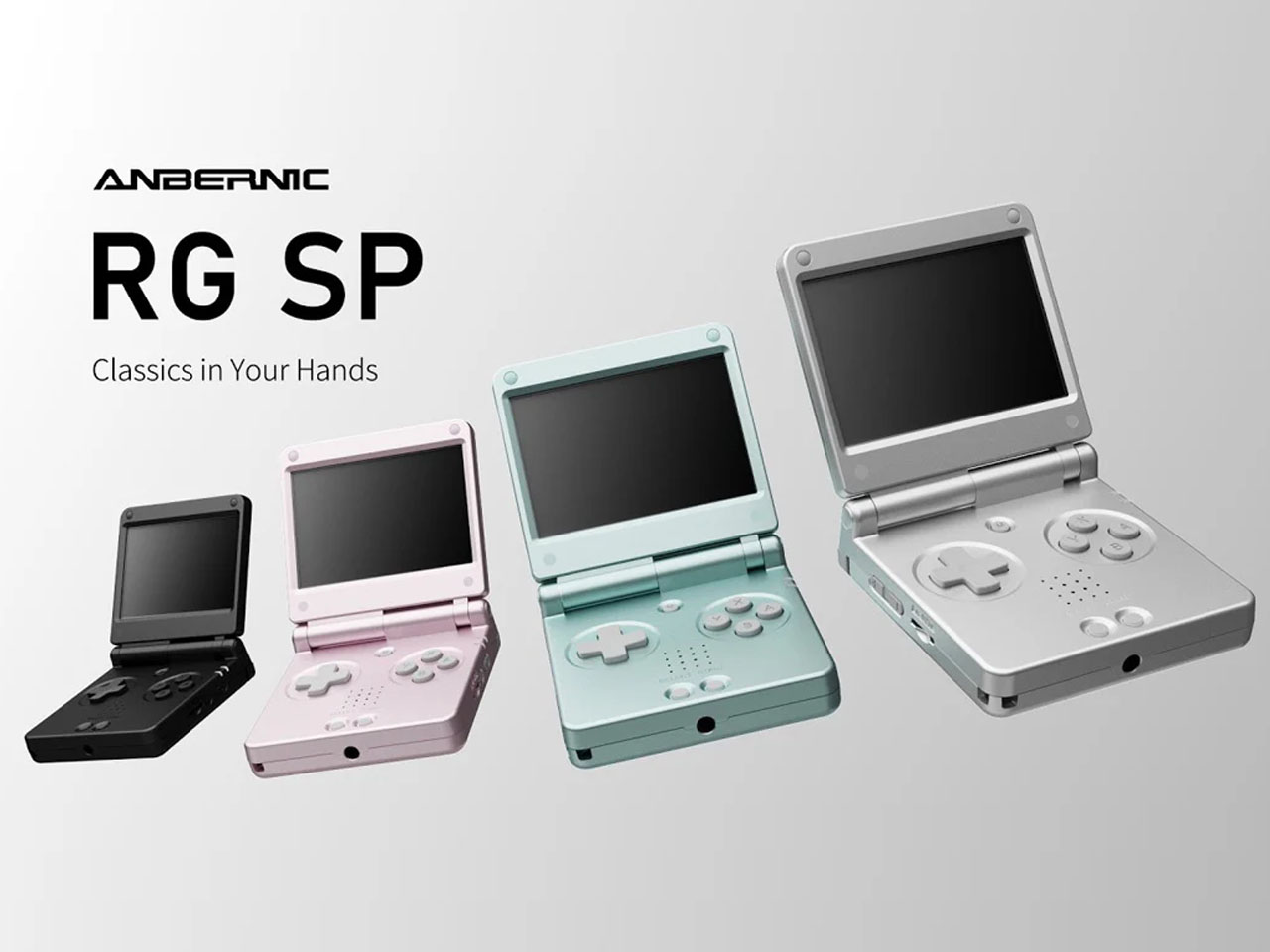
Anbernic’s answer to the Miyoo Mini Plus arrived with a meaningful hardware advantage and a familiar form factor. The RG35XX Plus swaps in an Allwinner H700 quad-core Cortex-A53 processor with 1GB of LPDDR4 RAM, a substantial leap over the Miyoo. That additional horsepower translates directly into smoother PS1 emulation and opens the door to Dreamcast and Nintendo DS titles that the Miyoo simply cannot handle, all wrapped in a horizontal Game Boy-inspired shell.

Designer: ANBERNIC

Connectivity is where the RG35XX Plus pulls further ahead. Wi-Fi 5, Bluetooth 4.2, and a mini HDMI port come standard, which means this handheld can double as a TV-connected retro console when paired with a wireless controller. Dual microSD card slots support up to 512GB each, and the 3300mAh battery delivers around eight hours of play. The trade-off is software: the stock firmware is rough enough that most owners immediately replace it with GarlicOS, a community-built alternative that requires sideloading via SD card.

What we like

  • Best price-to-performance, handling PS1, Dreamcast, and DS titles
  • Mini HDMI output and Bluetooth

What we dislike

  • Stock firmware can be a bit clunky

Powkiddy RGB30

Most handhelds in this price bracket borrow their proportions from the Game Boy or the PS Vita, but the Powkiddy RGB30 charts its own course with a 4.0-inch square IPS display running at 720×720. That 1:1 aspect ratio is a deliberate choice, not a gimmick. Retro games from the NES through the PS1 era were designed for 4:3 screens, and a square panel accommodates that ratio with minimal letterboxing while giving Game Boy titles a perfect native fit. The taller body this requires also gives the D-pad and dual analog sticks room to breathe.

Designer: POWKIDDY

Under the hood, a Rockchip RK3566 quad-core processor clocked at 1.8GHz, and 1GB of LPDDR4 RAM keep things moving. PS1 games run without issue, and the device extends into Dreamcast, some N64, and limited PSP territory. The 4100mAh battery is the largest on this list, rated for eight hours. Stereo speakers and Wi-Fi round out a feature set that punches above its $70 price point. Build quality, though, remains a step behind Anbernic’s hardware, with a plastic shell that feels lighter and less refined than the competition.

What we like

  • The 1:1 square screen is a thoughtful design decision for retro titles
  • Large battery at 4100mAh

What we dislike

  • Unremarkable build quality

Trimui Smart Pro S

The Trimui Smart Pro S occupies the top of the sub-$100 bracket and makes a strong case for spending the extra money. It packs an Allwinner A133P processor and a Mali-G57 GPU that Trimui claims delivers 2.5 times the graphics performance of the original Smart Pro. In practice, this means PS1 runs flawlessly, Dreamcast and N64 titles play at full speed, and most PSP games are smooth enough to enjoy without constant tweaking. A 4.96-inch IPS display at 1280×720 presents all of it on the largest screen in this roundup.

Designer: Trimui

The hardware refinements extend beyond the processor. TMR hall-effect analog sticks eliminate drift concerns and support L3/R3 clicks, larger trigger buttons improve ergonomics over the predecessor, and an active cooling fan prevents thermal throttling during extended sessions. A 5000mAh battery provides around five hours of play, and stereo speakers with a vibration motor round out a surprisingly complete package. The PS Vita-inspired form factor is comfortable for long stretches but makes the device less pocketable than smaller alternatives, and the 16:9 widescreen wastes real estate when displaying 4:3 retro content.

What we like

  • Powerful hardware
  • Hall-effect analog sticks and active cooling
  • Large 4.96-inch screen

What we dislike

  • The 16:9 widescreen aspect ratio isn’t good for retro gaming
  • Bulky and heavy

Retroid Pocket Classic

The Retroid Pocket Classic pushes past the $100 mark at $129 for the current available model, but it earns its place on this list by being the only device here running Android and the only one with an AMOLED screen. That 3.92-inch panel at 1240×1080 delivers deeper blacks and more saturated colors than any IPS display in this bracket, and the Snapdragon G1 Gen 2 processor paired with up to 6GB of RAM puts it in a different performance class entirely. PS1 is effortless here. GameCube, PS2, and Saturn emulation become viable options.

Designer: Retroid

Running Android 14 with Google Play Store access means the Retroid Pocket Classic can function as more than a dedicated emulator. Streaming apps, cloud gaming services, and native Android titles all run alongside the retro emulation suite. A 5000mAh battery with 27W fast charging, active cooling, and Bluetooth 5.1 complete the picture. The vertical Game Boy-inspired body lacks analog sticks, which limits comfort with 3D-heavy titles from later console generations. Unlike the Linux devices on this list, the Retroid Pocket Classic ships without any pre-loaded games, requiring users to supply their own ROMs from the start.

What we like

  • 3.92-inch AMOLED display
  • Android 14 with Google Play Store access
  • Powerful Snapdragon G1 Gen 2 processor

What we dislike

  • A bit costly for a retro gaming handheld
  • No analog sticks

The post 5 Best Retro Handhelds That Play PS1 Classics for Under $130 first appeared on Yanko Design.
GameMT Pocket Super Knob 5000 handheld sacrifices joystick for a dial knob

Gaming handhelds and controllers for mobile devices have had so much innovation lately, it seems there’s not much more left to explore. We’ve seen controllers with a steering wheel, handhelds with dual screens, or one with a 3D display, and controllers with dual-orientation mode support. Now, there’s a handheld by GameMT with a knob for the second analog joystick, because why not?

The Android gaming handheld dubbed Pocket Super Knob 5000 has a knob that can be turned to select from one of the four performance profiles in games where the function is supported. One advantage that dedicated gaming handhelds have over a phone-controller setup is the freedom of a full-blown set of physical controls. This handheld is another example of a gaming console with a specific set of control inputs targeted at a niche set of gamers.

Designer: GameMT

GameMT’s super-thin handheld has been teased on X by user Retro Gaming With Deadfred, hinting at the most important specs and details that would pique the interest of gamers. Pocket Super Knob 5000 has a 5-inch display and is powered by the MediaTek Helio G85 processor. Definitely not the most powerful processing power in there, but it should be suited to play arcade titles and RPGs that are not demanding. On the left, there is the Hall Effect thumbstick for the customary control input for movement. On the right is where things get a little interesting, as the handheld has a twistable knob that can be cranked for linear game input to choose the options. By our assumption, it cannot be used for actual game input because it would be highly impractical and ergonomically challenging.

If we go by what they’ve released last year (the EX5 handheld), the Super Knob 5000 should have the same functionality. Having the freedom to toggle the power and performance balance with the twist of a knob should come in handy for gamers who love to change the settings frequently. However, this should sacrifice the input of directional panning in first person shooter or 3D games. Meaning, the handheld should only be good for playing a specific set of titles that don’t require the second thumbstick input for the major in-game controls.

Other than this novelty, the handheld has the other control inputs, like the shoulder buttons and triggers. GameMT claims the handheld has 5-8 hours of extra battery life when the battery saving mode is turned on. The metal backplate should keep things cool, and the lightweight form of 13.2mm thickness and 200 grams weight should make it an interesting buy.

For us, replacing the second thumbstick with a limited functionality knob doesn’t make much sense unless GameMT has a hidden feature that they’ll reveal when the handheld is launched in April.

The post GameMT Pocket Super Knob 5000 handheld sacrifices joystick for a dial knob first appeared on Yanko Design.
Flagship Ayaneo Pocket S Mini handheld is tailored for retro game fanatics

Current-generation handhelds have a much wider 16:9 screen ratio than older ones, and Ayaneo wants to get that right. Unlike the Pocket PLAY or the Pocket Fit Elite, which are intended for playing modern titles, the newly launched Pocket Mini S handheld targets the more novel 4:3 aspect ratio, which fits well with older titles from PlayStation 1 and Nintendo 64 that are emulated on modern devices. So, retro gamer lovers will not freak about those thick black bands on either side of the screen to make up for the aspect ratio adjustment.

For gamers who prefer the horizontal orientation for playing titles like Stardew Valley, Ayaneo has brought this handheld alongside the affordable Pocket Air Mini and the Pocket VERT, which has a more retro handheld feel to it with the 4:3 aspect ratio. The new handheld brings more meat to the equation for gamers who want better performance, compared to the Pocket VERT. This gives gamers more options to choose from the Ayaneo line-up.

Designer: Ayaneo

Pocker Mini S comes with a 4.2-inch LCD screen having 1280×960 resolution for rendering classic games that hardcore gamers like to play now and then. The ideal aspect ratio means there is no cropping or stretching of the in-game elements. This flagship gaming device is powered by the Snapdragon G3x Gen 2 SoC, and the graphics are handled by the 8-core CPU and 4nm technology Adreno A32 graphics card. The top variant of the handheld comes with 16GB of ultra-fast LPDDR5x RAM and UFS 4.0 storage for enjoying demanding emulated games without any lag or overheating. To keep the latter at bay, Ayaneo has a built-in active cooling fan and the biomimetic fishbone design to ensure maximum frame rates are sustained over long gaming sessions.

Buttons on the handheld follow the Pocket VERT’s trail with crystal-texture, and two small Hall Effect RGB joysticks adopting the Pocket ACE’s design aesthetics. The D-pad with conductive rubber internals adds to the premium feel of the Pocker S Mini. Weighing a respectable 305 grams, the unibody metal body handheld is CNC-milled and measures a comfortable 167.1 x 77.85 x 18.5mm with flat aesthetics and contoured edges for better ergonomic grip and reach of the shoulder buttons. The Android 14-powered device has a 6,000mAh high-density battery that supports PD fast charging.

Ayaneo Pocket S Mini is available in three color variants – Ice Soul White, Obsidian Black, and Retro Power (available in the top variant). The handheld can be preordered from the official website for early bird pricing of $319 for the 8GB+128GB model and $479 for the 16GB+512GB Retro Power edition model. Early buyers will also get the exclusive accessory bundle. Later on, the retail prices will jump to $399 and $599, respectively.

The post Flagship Ayaneo Pocket S Mini handheld is tailored for retro game fanatics first appeared on Yanko Design.
ONEXSUGAR Wallet Gaming Handheld Looks Like a Clutch When Closed

Most gaming handhelds today, from Steam Deck to ROG Ally, are big, loud slabs that look like shrunken consoles. They are great for playing, less great for slipping into a bag without announcing themselves. The category has settled into a familiar silhouette, thick bezels, and aggressive angles that scream gaming from across the room. ONEXSUGAR’s Wallet asks what happens if a handheld tries to look more like something you would quietly carry every day.

The ONEXSUGAR Wallet is a foldable-screen gaming handheld that, when closed, looks like an oversized wallet or clutch, a long, rounded rectangle with almost no visible tech. The name comes from this closed state, where it reads more like a personal object than a console. You can hold or pocket it without broadcasting that you are carrying a gaming PC, treating discretion as a core part of the design rather than an afterthought.

Designer: One-Netbook (via ITHome)

The Wallet uses a clamshell design with a flexible display inside. When you open it, the screen unfolds into a single large canvas, one continuous display bending at the hinge like a foldable phone scaled up to handheld size. That lets ONEXSUGAR keep the closed footprint small while giving games and media more room to breathe when you flip it open, reconciling portability with a genuinely usable screen.

Once open, the Wallet reveals a familiar handheld layout, a central screen flanked by controls on the left and right. Each side has an analog stick, a D-pad or face buttons, and additional inputs and speaker grilles. The controls are baked into the chassis, not detachable, so the whole thing feels like a single, unified object rather than a tablet with clip-on gamepads, which should help with rigidity and ergonomics.

The aesthetic language leans soft and minimal, with heavily rounded corners, smooth surfaces, and almost no branding. Early shots show at least white and dark grey versions, with small gold accents and a subtle logo. It looks more like lifestyle tech than aggressive gamer gear, the kind of device that would not look out of place next to a phone and earbuds on a table, which is an unusual stance for a gaming product.

The wallet-like shape and clamshell closure change the relationship between device and user. Closed, it protects the screen and hides the controls, making it easier to toss into a bag or carry in hand without worrying about sticks catching or buttons being pressed. Opened, and it becomes a full-fledged handheld. That duality could make it more practical for people who want serious gaming hardware that does not dominate their everyday carry.

The ONEXSUGAR Wallet hints at a future where foldable screens reconcile big displays with discreet objects, and where handhelds borrow cues from wallets and clutches instead of only from consoles. It is still a tease rather than a shipping product, but as a piece of industrial design thinking, it suggests that gaming hardware can afford to be softer, quieter, and a bit more playful about how it shows up in the world.

The post ONEXSUGAR Wallet Gaming Handheld Looks Like a Clutch When Closed first appeared on Yanko Design.
Miyoo Mini Flip Shrinks Retro Gaming into a 2.8-Inch Folding Square

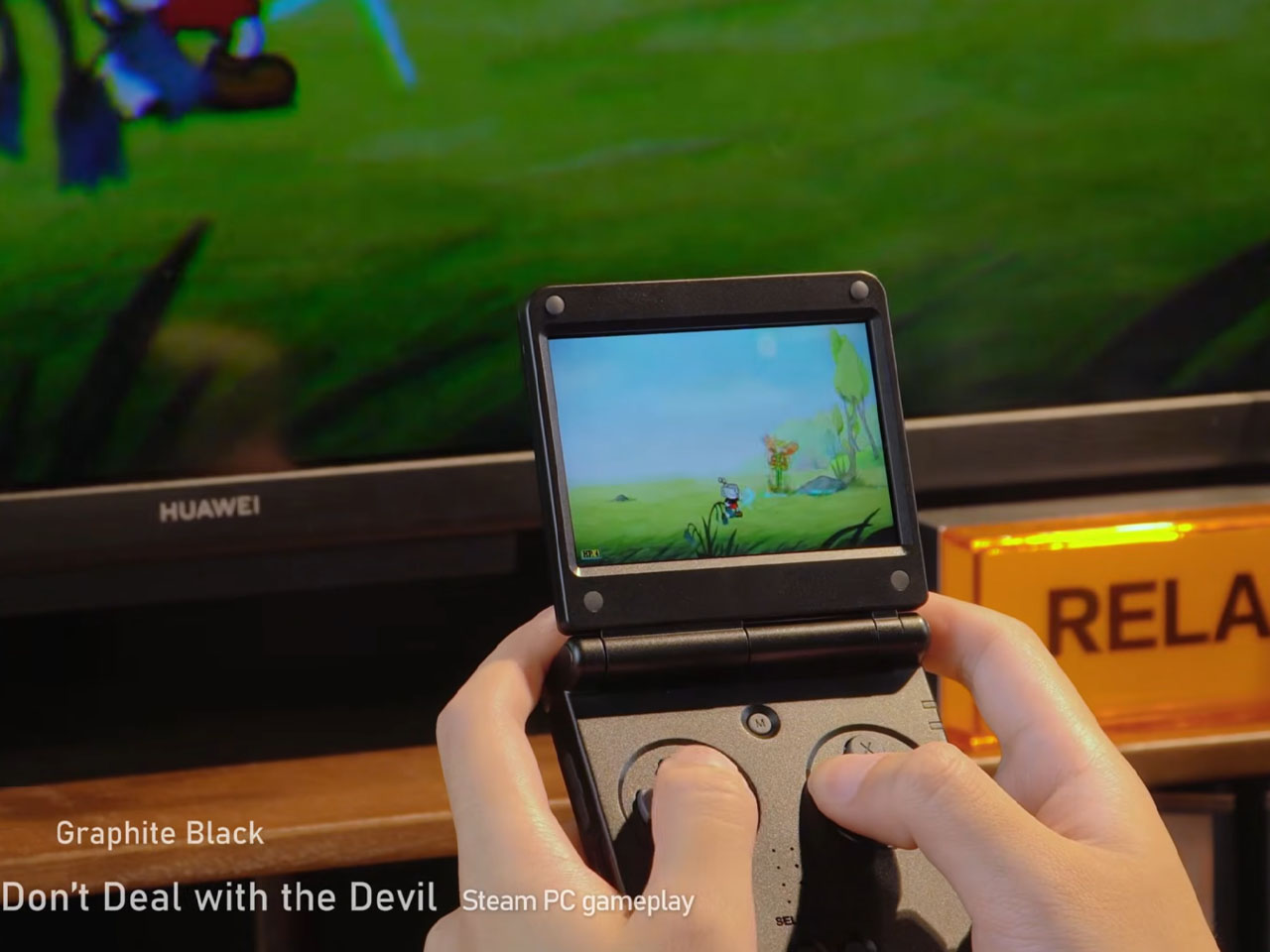
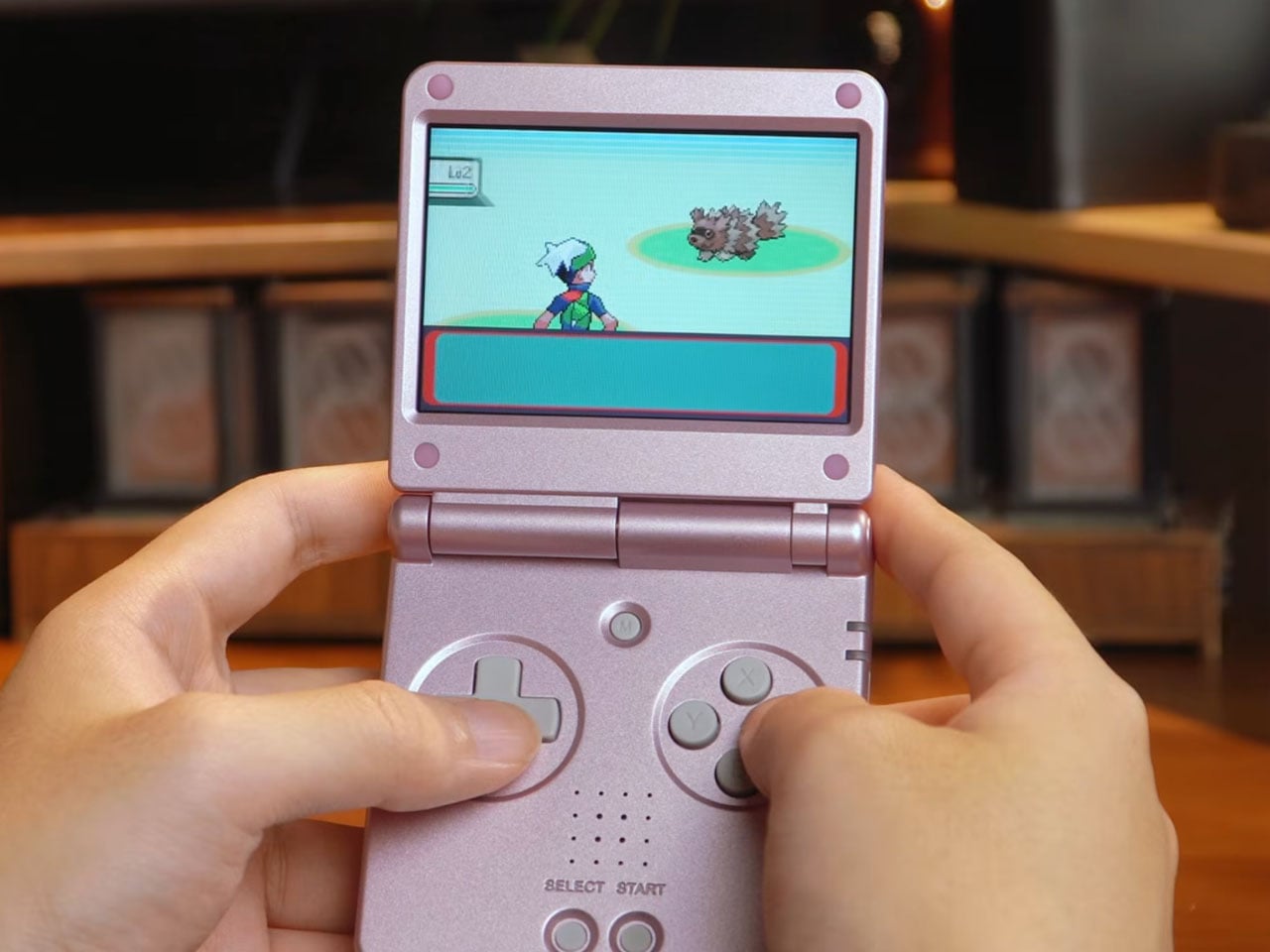
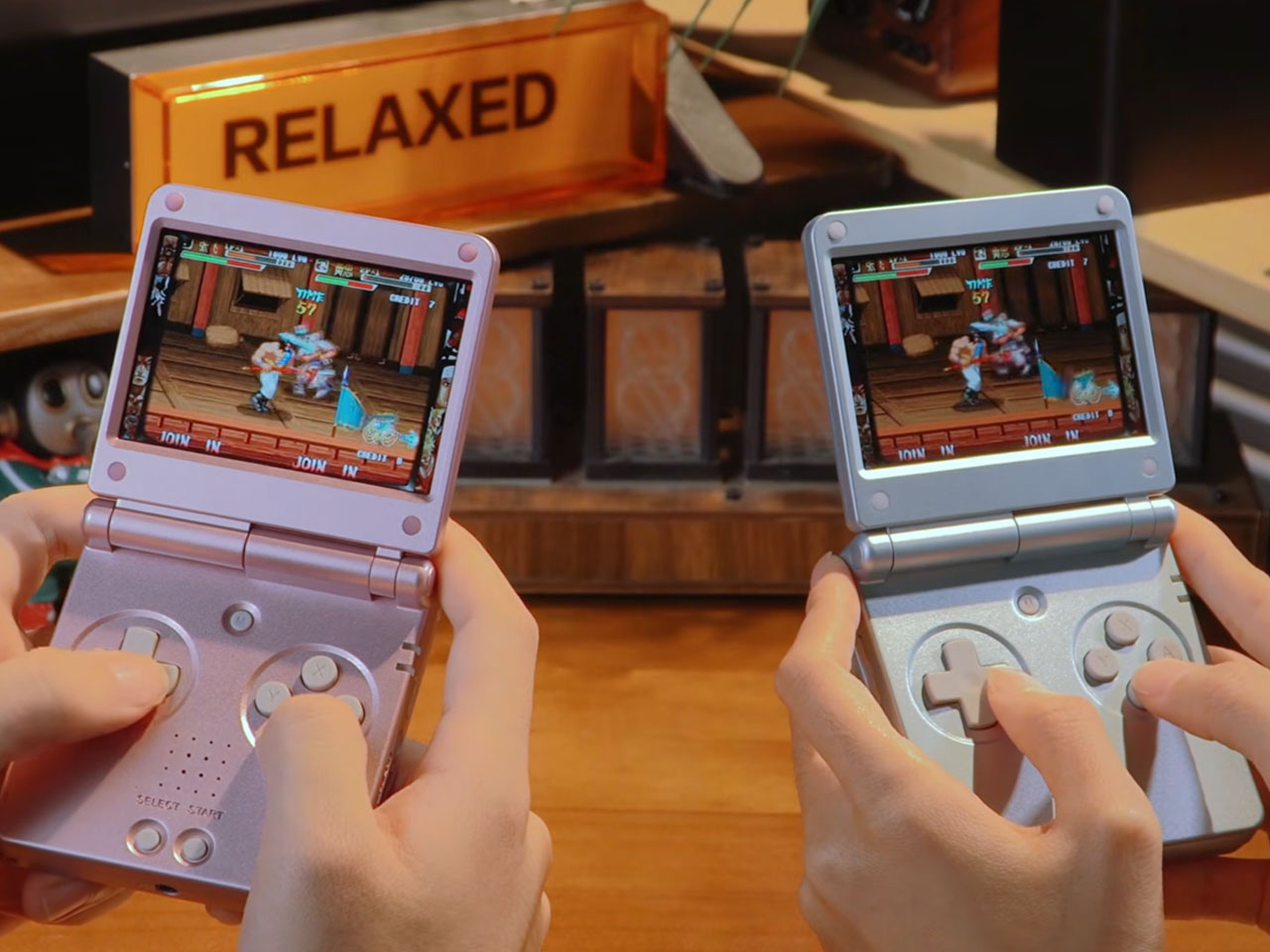
Retro handhelds have exploded in the last few years, from chunky bricks to tiny keychain consoles, and a lot of them still feel like little Linux boxes with buttons bolted on. The Game Boy Advance SP’s clamshell still lives rent-free in people’s heads, that satisfying snap when you close it, and the way it fits into a pocket without scratching the screen. The Miyoo Mini Flip is a modern answer to that memory, scaled for pockets and commutes.

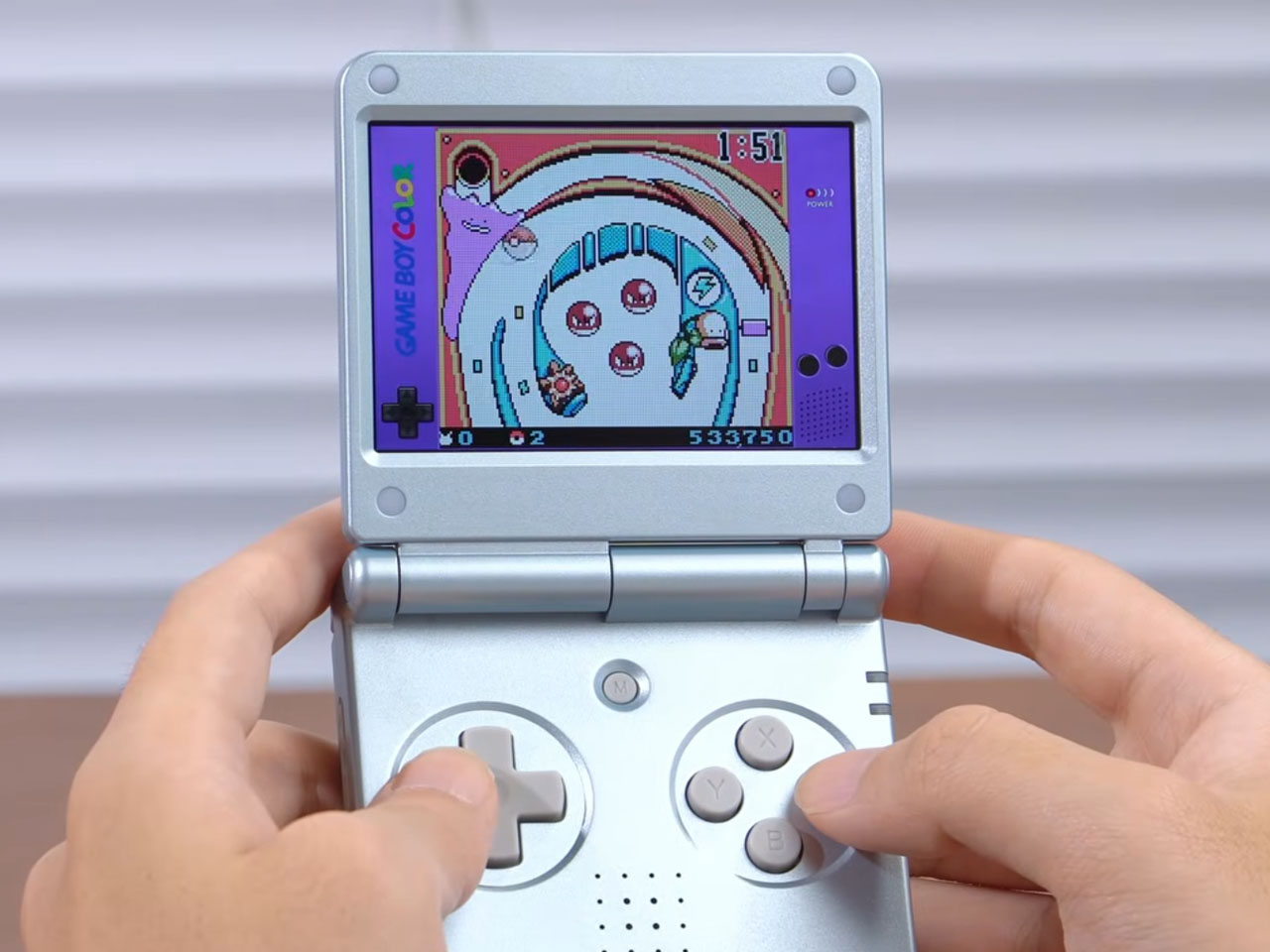
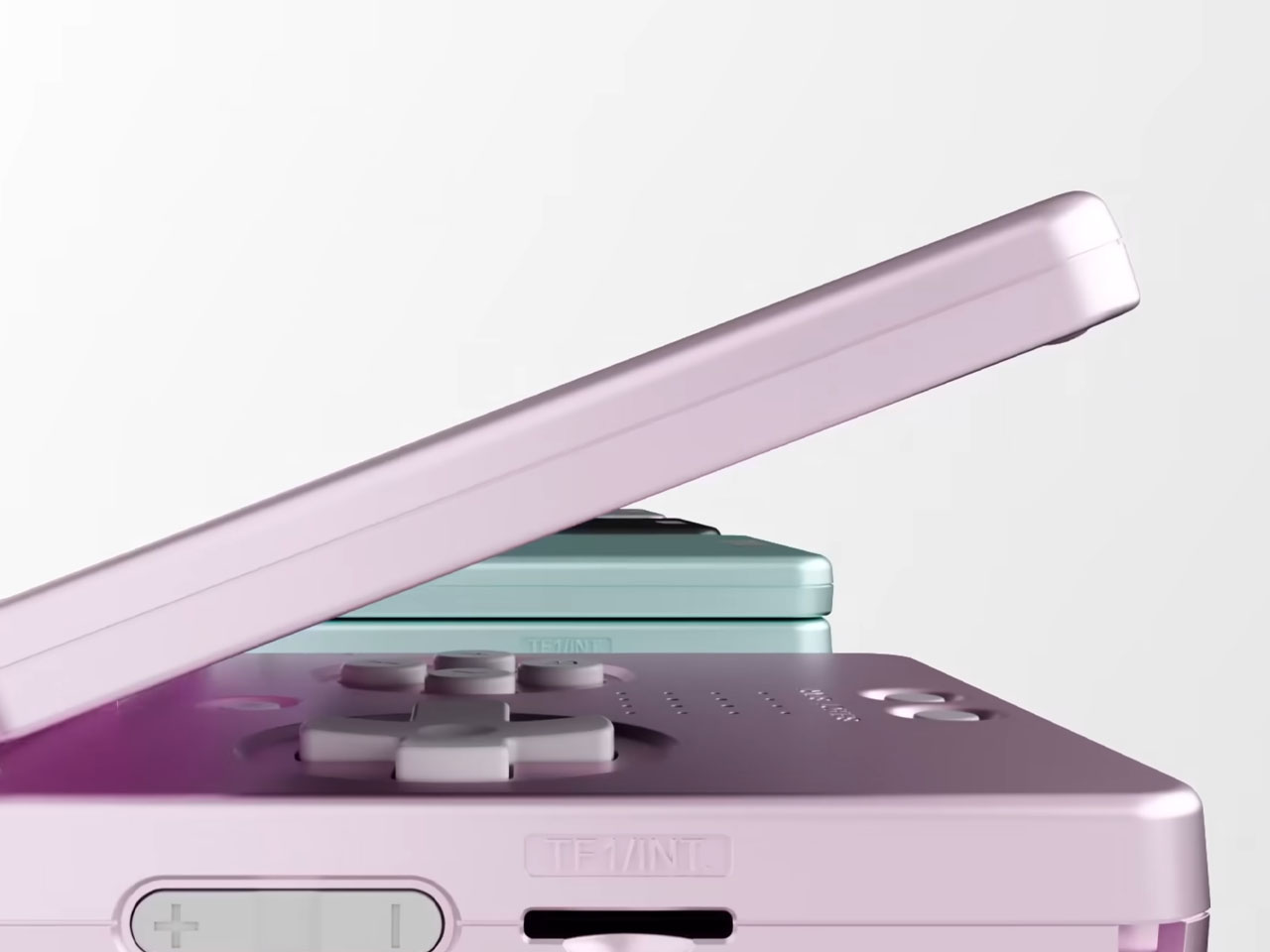
The Miyoo Mini Flip is a folding version of Miyoo’s tiny emulation handheld, now with an upgraded hinge for better durability. Closed, it is a 2.68‑inch square about 0.79 inch thick, small enough to disappear into a jeans pocket or bag. Open it up, and you get a full control deck and a 2.8‑inch screen, turning idle minutes into quick sessions of 8‑bit and 16‑bit comfort food without needing to commit to a full setup.

Designer: Miyoo

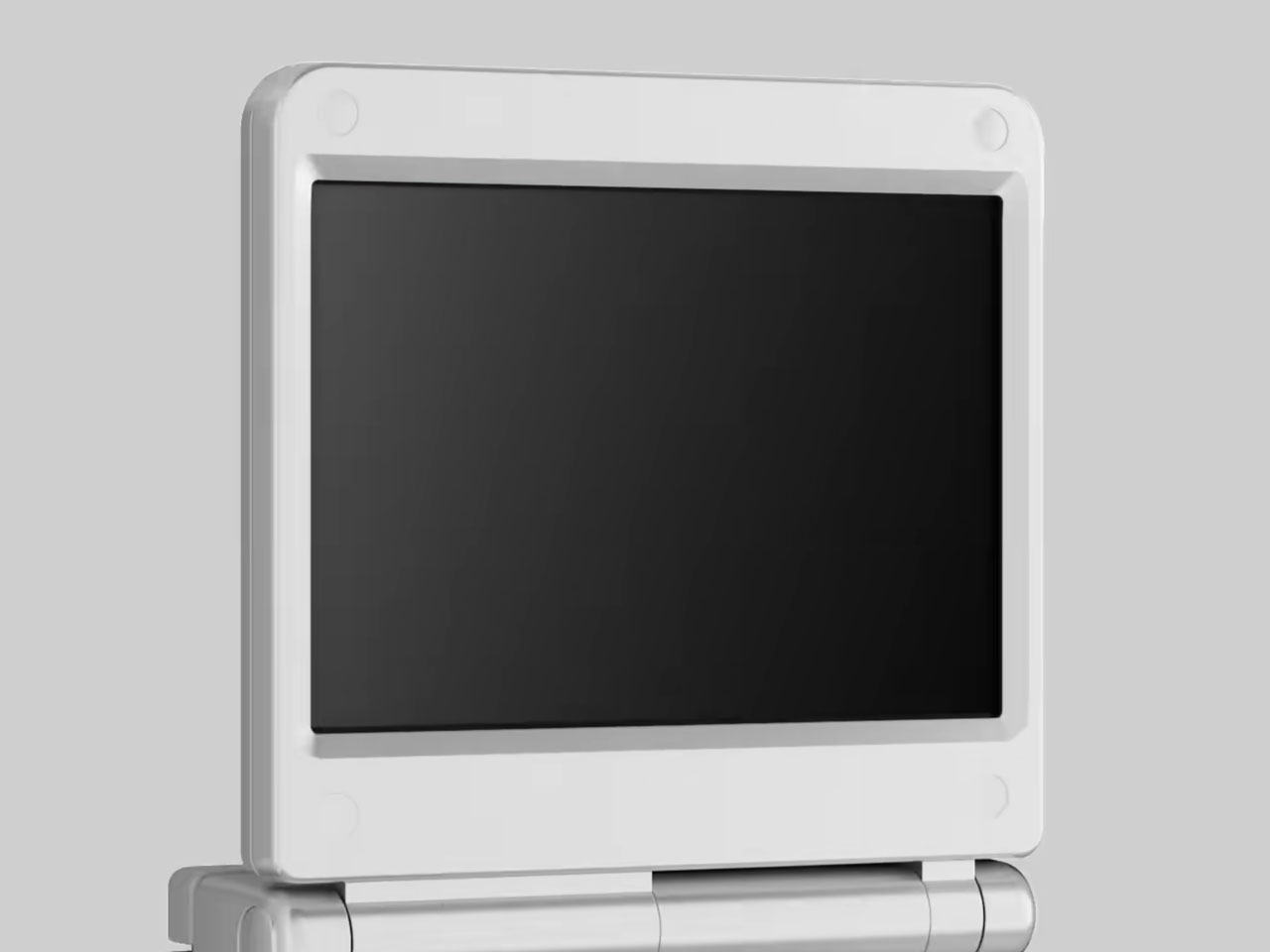
The 2.8‑inch IPS panel runs at 750 × 560 with a 4:3 aspect ratio, which lines up nicely with most classic consoles. The marketing calls it “3× pixel perfect,” hinting at clean integer scaling for certain systems, so sprites and tiles look crisp instead of smeared. Wide viewing angles and decent colour make pixel art and old racing games feel surprisingly alive on such a small canvas, bright enough to play outdoors or on a dimly lit train.

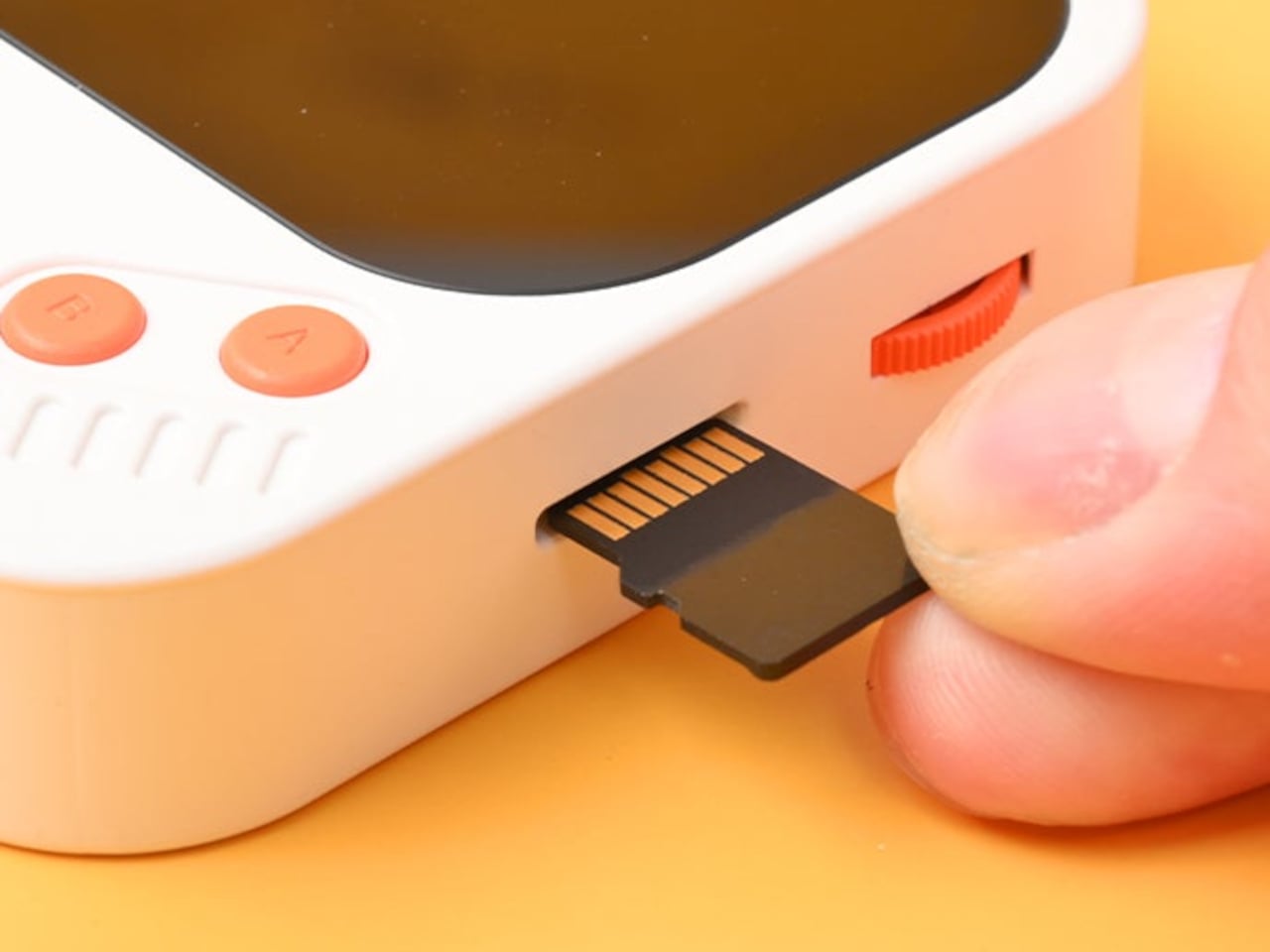
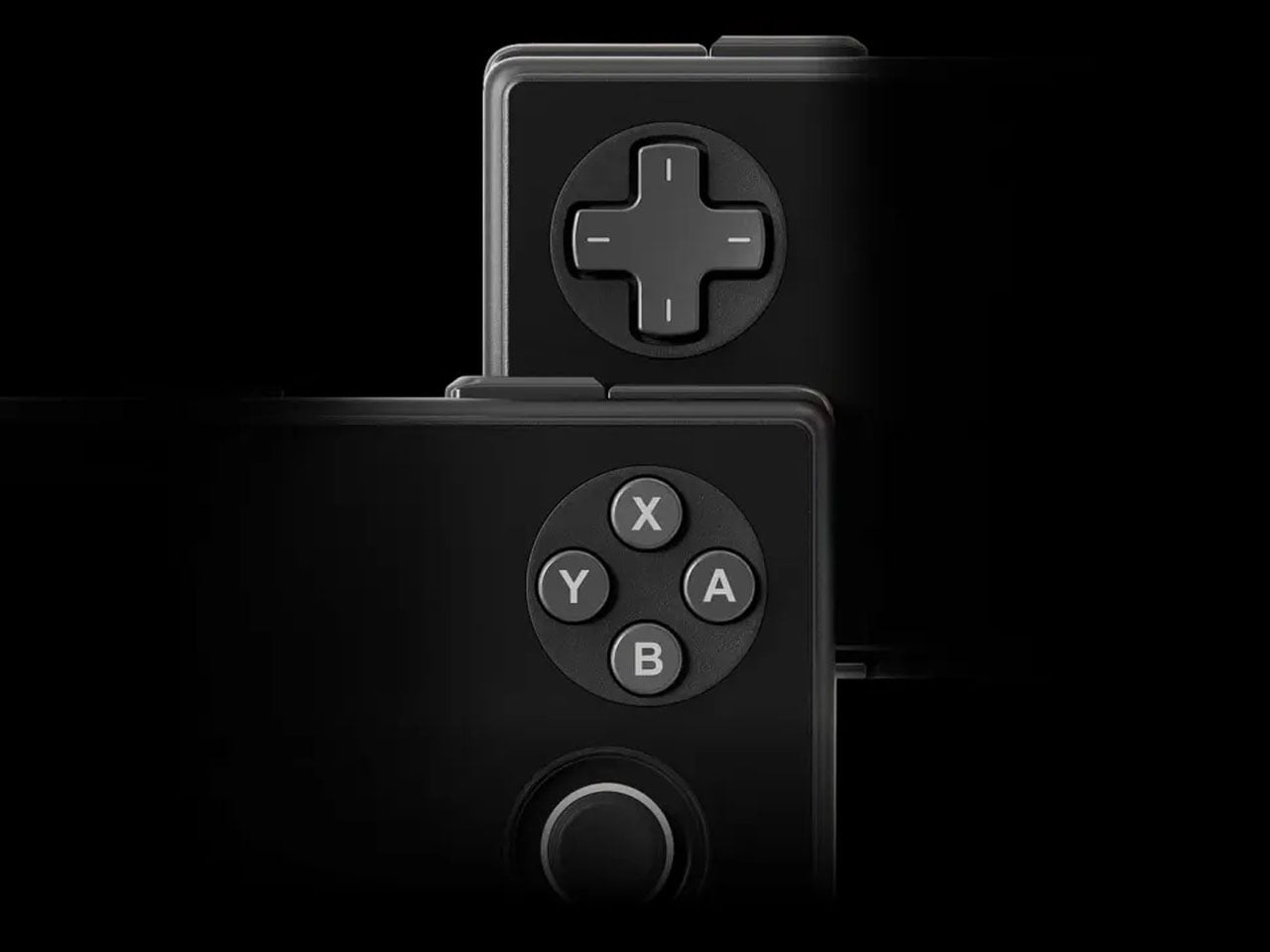
The control scheme mixes classic D-pad, ABXY face buttons, Select and Start, a Menu key, and L/L2 and R/R2 shoulder buttons tucked along the back edge. Volume and power live on the sides, with a front speaker and a TF card slot underneath. The layout feels like a mashup of modern controllers and old handhelds, giving thumbs familiar landmarks without overcomplicating a device that is meant to be grabbed and played.

The hardware is a Cortex‑A7 at 1.2 GHz, 128 MB of RAM, Linux under the hood, 2.4 GHz Wi‑Fi, and a 3.7 V 2500 mAh battery. It is tuned for NES, SNES, GBA, PS1, and similar eras, not chasing Switch-level performance. The bundle usually includes a 64 GB microSD card and USB‑C cable, so you are not hunting for storage or adapters before you can start tinkering with ROMs and emulator settings.

The hinge‑enhanced durability callout addresses early batches where people worried about wobble and wear. Closed, the Flip feels like a small, dense square you can toss into a pocket, backpack, or travel pouch without babying it. Marketing leans into travel, outdoor, waiting, and “back childhood” scenarios, which is exactly where a device like this shines, filling dead time with a few more runs of your favourite platformer or racer.

The Miyoo Mini Flip stands out beyond the emulator list. The clamshell form, upgraded hinge, sharp 4:3 IPS screen, and toy-like colours make it feel like a considered object, not another PCB in a shell. Retro games live as a small ritual in a pocket rather than a full setup on a desk, and this little folding square hits a very specific, very charming note without demanding much more than a microSD card and a willingness to revisit Super Mario World one more time.

The post Miyoo Mini Flip Shrinks Retro Gaming into a 2.8-Inch Folding Square first appeared on Yanko Design.
DeckTop Makes the Steam Deck and ROG Ally Feel Like Tiny Laptops

The Steam Deck, ROG Ally, and Legion Go are powerful little PCs that still behave like oversized controllers when you actually need to type, browse, or use desktop mode. Most people end up juggling a separate keyboard, mouse, and stand. DeckTop by Invensic takes a different approach, a clamp-on keyboard and trackpad that tries to give these handhelds a laptop posture without turning them into dock-only machines stuck next to a monitor.

Invensic frames DeckTop as a Bluetooth keyboard and trackpad you can mount to your Steam Deck, with a 360-degree swivel and multicolor LED backlighting. It is sold as a Steam Deck accessory but is also designed to work with Steam Deck OLED, Killswitch cases, ROG Ally, and Legion Go, so it is really a general handheld shell that treats all of them like screens on a tiny notebook.

Designer: Invensic

The folding clip has spring-loaded arms that grab onto the handheld and connect to the keyboard via a swivel hinge. The hinge lets you tilt and rotate the device through a full circle, so you can find a comfortable viewing angle on a desk, on a tray table, or on a couch. When you are done, the clip folds flat over the keyboard, bringing the whole thing down to about 1 inch thick, so it actually fits in a bag.

The low-profile keyboard has multicolor backlighting, and the integrated trackpad sits below the space bar. Brightness and color can be changed with simple key combos, and the trackpad supports single-finger tap for left-click and two-finger tap for right-click, just like a laptop. The idea is to give you a familiar input surface for desktop mode, emulators, and web browsing without reaching for a separate mouse.

DeckTop connects over Bluetooth, so there is no cable between the keyboard and the handheld, only whatever USB-C cable you are already using for power or docking. Invensic calls out low latency, which is fine for typing, navigation, and most games, but serious competitive players will still prefer a wired or 2.4 GHz setup. For travel and couch use, though, the wireless link keeps the whole rig clean and portable.

The spring-loaded arms are wide enough to handle bare devices and chunky cases like Killswitch, and the same deck can be swapped between different handhelds. The dual cinch straps on the back let you mount a power bank, turning the whole thing into a self-contained clamshell with extra runtime. It is a small detail, but it acknowledges that these devices burn through batteries fast when you treat them like laptops.

DeckTop does not magically transform a Steam Deck into a MacBook, but it does make writing, modding, remote desktop, and light productivity feel less like a hack and more like a supported mode. Whether or not you use it every day, it sits in a useful middle ground between treating a handheld as a pure gaming device and wishing you had brought a laptop instead.

The post DeckTop Makes the Steam Deck and ROG Ally Feel Like Tiny Laptops first appeared on Yanko Design.
AYANEO Just Built a 115Wh Strix Halo Handheld and Killed Portability

Gaming handhelds are supposed to fit in your hands, but AMD’s new Strix Halo processors generate serious heat and drain batteries faster than you can finish a boss fight. The GPD Win 5 and OneXFly Apex responded by strapping external battery packs to their backs, which works, but looks like your handheld is wearing a fanny pack in the wrong spot. It’s practical but awkward, and it raises an obvious question: if you’re adding external batteries anyway, why not just make the whole device bigger?

AYANEO apparently asked that same question and decided to run with it. The AYANEO NEXT II skips external packs entirely, hiding a massive 115Wh battery and a 9.06-inch OLED inside a thick, sculpted body that feels more like a portable gaming monitor with grips than something you’d slip into a backpack. It’s AYANEO’s answer to Strix Halo’s power demands, and the solution involves simply accepting that this thing was never going to be pocketable in the first place.

Designer: AYANEO

The design doesn’t apologize for its size. Deep grips flare outward like a proper gamepad, and the body is thick enough to house dual cooling fans without turning into a space heater. Hall effect sticks sit where your thumbs expect them, surrounded by a floating D-pad, dual touchpads, and speakers that actually face you instead of firing sound into your lap. It looks less like a Switch rival and more like someone decided gaming monitors needed handles attached.

That 9.06-inch screen uses an unusual 3:2 aspect ratio instead of the typical widescreen shape most games expect. You get a gorgeous OLED panel with refresh rates up to 165Hz and brightness that peaks at 1100 nits, which sounds fantastic until you realize most games will either add black bars or run nowhere near 165 frames per second at this resolution anyway. Still, it’s lovely for desktop windows and emulators that appreciate the extra vertical space.

The 115Wh battery is where things get complicated. Everything stays hidden inside for a cleaner look and more console-like feel, but that capacity might cause questions at airport security since many airlines cap carry-on batteries at 100Wh. You also can’t swap batteries when one dies, and constantly feeding an 85-watt processor means faster charge cycles and potential long-term wear. You’re looking at two to three hours of heavy gaming before hunting for an outlet.

The dual cooling fans work hard to keep Strix Halo from overheating, and you’ll definitely hear them during intense sessions. AYANEO claims it can sustain up to 85 watts, which should let the integrated Radeon graphics handle modern games at respectable settings, though you’ll also feel warmth radiating from the vents. This is less a grab-and-go portable and more something you carry from the couch to the desk when you need a scenery change.

AYANEO loaded the NEXT II with premium controls that enthusiasts will genuinely appreciate. Hall effect sticks and triggers promise zero drift, dual-stage trigger locks switch between smooth analog and clicky digital modes, and rear buttons plus dual touchpads give you more inputs than a standard controller. A magnetic haptic motor adds feedback that tries to mimic console vibration, and the AYASpace software hides Windows behind a console-style launcher with performance tuning options built in.

The AYANEO NEXT II essentially stops pretending to be portable. It won’t fit in a jacket pocket, might get flagged at airport security, and is almost certainly too heavy for comfortable one-handed play in bed. But if you want something that feels more like a small gaming monitor with built-in controls rather than a device you’d actually carry around town, this oversized approach makes a strange kind of sense. You just have to accept that portability took a back seat to screen size and battery capacity.

The post AYANEO Just Built a 115Wh Strix Halo Handheld and Killed Portability first appeared on Yanko Design.
Credit Card-Thin Handheld Has 300 Games and A Multiplayer Cable

There’s something magical about pocket-sized gaming that never gets old for those who grew up with handhelds in their backpacks and pockets. The thrill of squeezing a whole arcade into your palm, the nostalgia of pixel art and chiptunes, and the joy of discovering new games on the go bring genuine smiles that modern mobile gaming just can’t replicate. Most modern handhelds chase power and graphics, but sometimes it’s the simplicity and creativity of 8-bit gaming.

The Arduboy FX-C is a new take on that classic formula with a modern twist for contemporary gamers who appreciate retro aesthetics. It’s slim, open-source, and loaded with over 300 homebrew games, all ready to play on a device that’s barely thicker than a credit card you carry daily in your wallet. With USB-C charging and multiplayer support via link cable, it’s a retro playground for your pocket.

Designer: Kevin Bates

The FX-C is built specifically for portability, with a polycarbonate front, stamped aluminum back, and a transparent shell that shows off the ultra-thin circuit board inside for tech enthusiasts. At just 5mm thick, it slips into your wallet or pocket with room to spare for other essentials like keys and cards. The tactile buttons and crisp black-and-white 128 by 64 OLED screen channel the spirit of classic Game Boy handhelds.

Limited editions add a splash of color and personality to the minimalist design that collectors will appreciate. Purple buttons mark the Founders Edition, while electric green branding distinguishes the Standard Edition produced by Seeed Studio for wider distribution. The robust construction shrugs off daily bumps and scratches without showing wear, while the slim profile means you can carry it everywhere without thinking twice about added bulk.
The big upgrade is USB-C, making charging and programming easier than ever before for users who’ve moved to modern cables. But the real fun starts with the included USB-C link cable that enables local multiplayer battles. Connect two FX-Cs together and you unlock head-to-head multiplayer action, from classic Pong to new homebrew duels created by the passionate community. The same port supports external sensors and future mods for experimenters.

Inside, the ATmega32u4 chip and 16MB flash storage hold over 300 games, with instant switching between titles and no need to reflash the device constantly like earlier models. The 180mAh battery delivers over 8 hours of continuous play on a single charge, and the 4-channel piezo speaker brings retro soundtracks and sound effects to life. The entire system runs on open-source hardware and software that anyone can modify.

The FX-C comes preloaded with a sprawling library of platformers, shooters, puzzles, and more titles spanning every retro genre imaginable, each one crafted by a global community of open-source developers who contribute freely without commercial motivation. If you’ve ever wanted to build your own game or learn to code in a friendly environment, free tutorials and a thriving forum make it easy to get started without prior experience.

Whether you’re commuting on crowded trains, waiting in line at the coffee shop, or just need a break from your phone’s endless notifications and social media, the Arduboy FX-C delivers a burst of retro fun wherever you are throughout the day. For anyone who loves the spirit of classic gaming with a modern twist and open-source freedom, it’s proof that sometimes less really is more.

The post Credit Card-Thin Handheld Has 300 Games and A Multiplayer Cable first appeared on Yanko Design.