Zomato Food Delivery Riders Benefit from This Clever Folding Backrest Accessory

Zomato, one of India’s largest and most internationally recognized food delivery companies, owes much of its success to dedicated riders who navigate various terrains and weather conditions to ensure timely deliveries. These riders spend countless hours on their motorcycles, which have become indispensable companions in their daily lives. However, the motorcycles used are often purely utilitarian, lacking the comfort features that could make these long hours more bearable. Recognizing this gap, a group of designers embarked on a mission to redesign these motorcycles, focusing on enhancing the rider’s experience through basic yet impactful upgrades.

Designers: Pankhuri Wanjari and Rohan Passi

The initiative began with a thorough analysis of the pain points experienced by riders during extended periods on their bikes. The goal was to enhance the food delivery experience by identifying sources of discomfort and providing ergonomic solutions. This redesign was not just about minor tweaks but involved a comprehensive rethinking of the rider’s journey, addressing key areas that affect comfort and functionality.

Traditional motorcycle seats tend to become squeezed and ripped over time, causing discomfort. To address this, the new design incorporates improved cushioning to ensure long-lasting comfort. Riders often rely on the storage box for back support, leading to improper posture and discomfort. The redesigned motorcycle features a collapsible backrest that provides adequate support during breaks or long waits in traffic which aligns with the large Zomato delivery boxes. This addition provides much-needed support during traffic halts or short breaks. It can also collapse down to act as a seat for a second passenger if and when required.

Additionally, the absence of adequate storage for personal belongings has been addressed by creating designated storage areas, allowing riders to keep their essentials secure and accessible. Another key issue is the sudden break between the seat and the fuel tank, creating an uncomfortable riding position. The new design extends the seat cushioning towards the tank, ensuring a smoother transition and better support.

The redesign process also involved analyzing the comfort levels of riders of extreme heights and weights. For a rider who is taller than usual, the handlebar was found to be too low, causing the rider to lean forward and touch the handlebar with their legs while turning, and the footrest was positioned too upright. For a rider with an average height but a slightly healthier side of the scale, the handlebar and footrest positions were appropriate but the seat cushioning needed improvement.

By addressing these critical design gaps, the GlideRide project aims to make the lives of food delivery riders more comfortable and enjoyable. These basic upgrades are not just about improving physical comfort but are also a step towards acknowledging and valuing the hard work and dedication of these riders who play a pivotal role in delivering happiness to our doorsteps.

The post Zomato Food Delivery Riders Benefit from This Clever Folding Backrest Accessory first appeared on Yanko Design.
Nissan Interstar converted into comfortable camper van with adaptable living module from PlugVan

Camper vans have come of age. There are liveable vans for all types of adventure and camping enthusiasts, but do not have much for the tradesmen. Nissan is breaking the norm with the introduction of the Interstar converted into a camper van using a slide-in conversion module from its new partner, PlugVan based out of Germany, which allows the Nissan van to be used as a camper over the weekend and turned effortlessly into a commercial cargo van over the weekdays.

Interstar is one of the larger vans from Japanese automobile manufacturer that is easily customizable to user requirements thanks to its availability in different range of wheelbases, body sizes, and payload capacities. Now at the Caravan Salon 2024 in Düsseldorf, Germany, Nissan is not going to just reveal the Interstar, but will show its camper van abilities using the new PlugVan camping module.

Designer: Nissan

From how it appears, the PlugVan camper-in-a-box for the Nissan Interstar can be installed and removed from the vehicle in minutes. With the camper module onboard, it is ready for a tiresome adventure, and when you take it down it is your everyday back-to-work van. The cleaver conversion module therefore transforms the Interstar in a few steps thanks to its detachable and height-adjustable form factor.

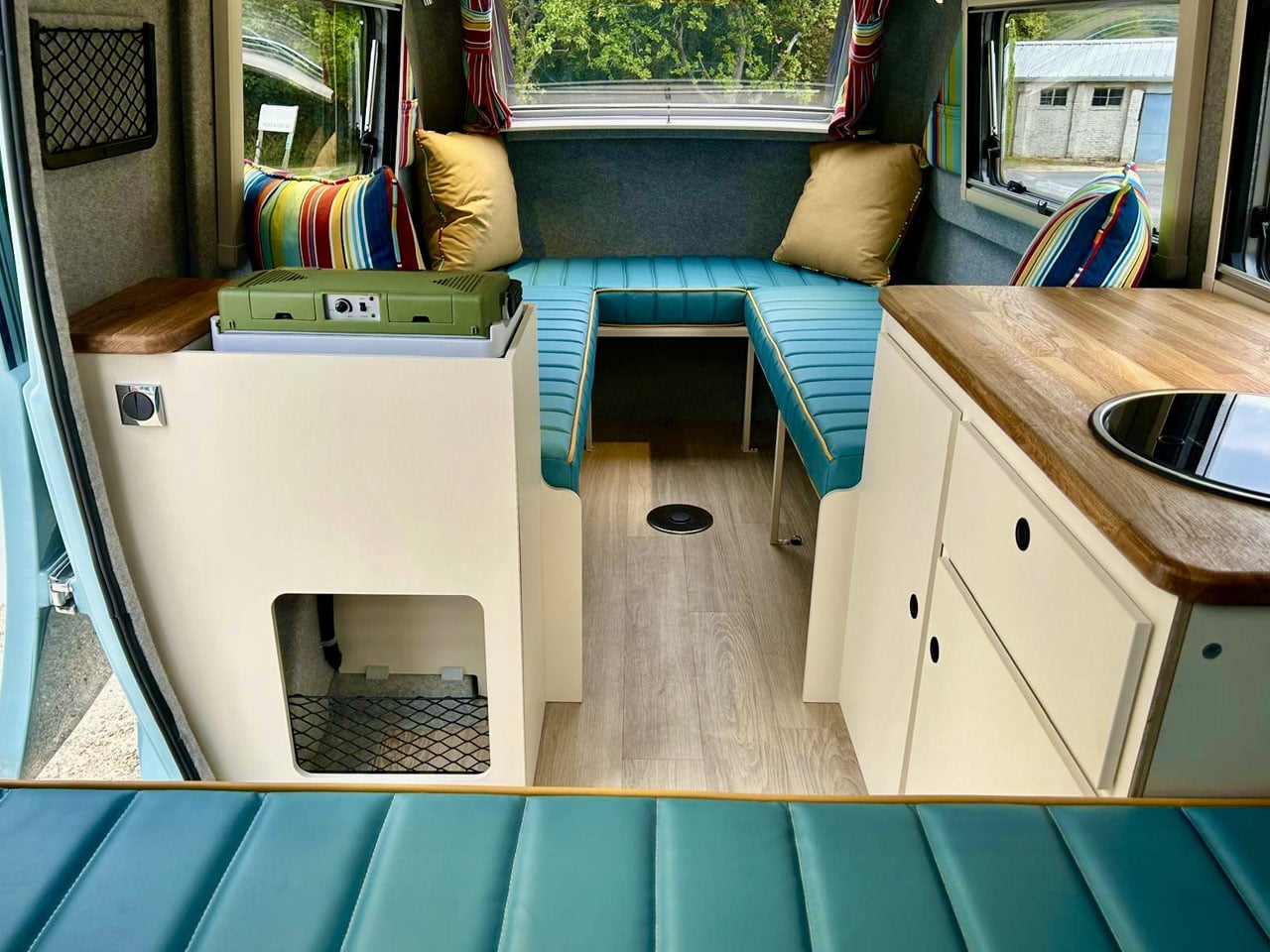
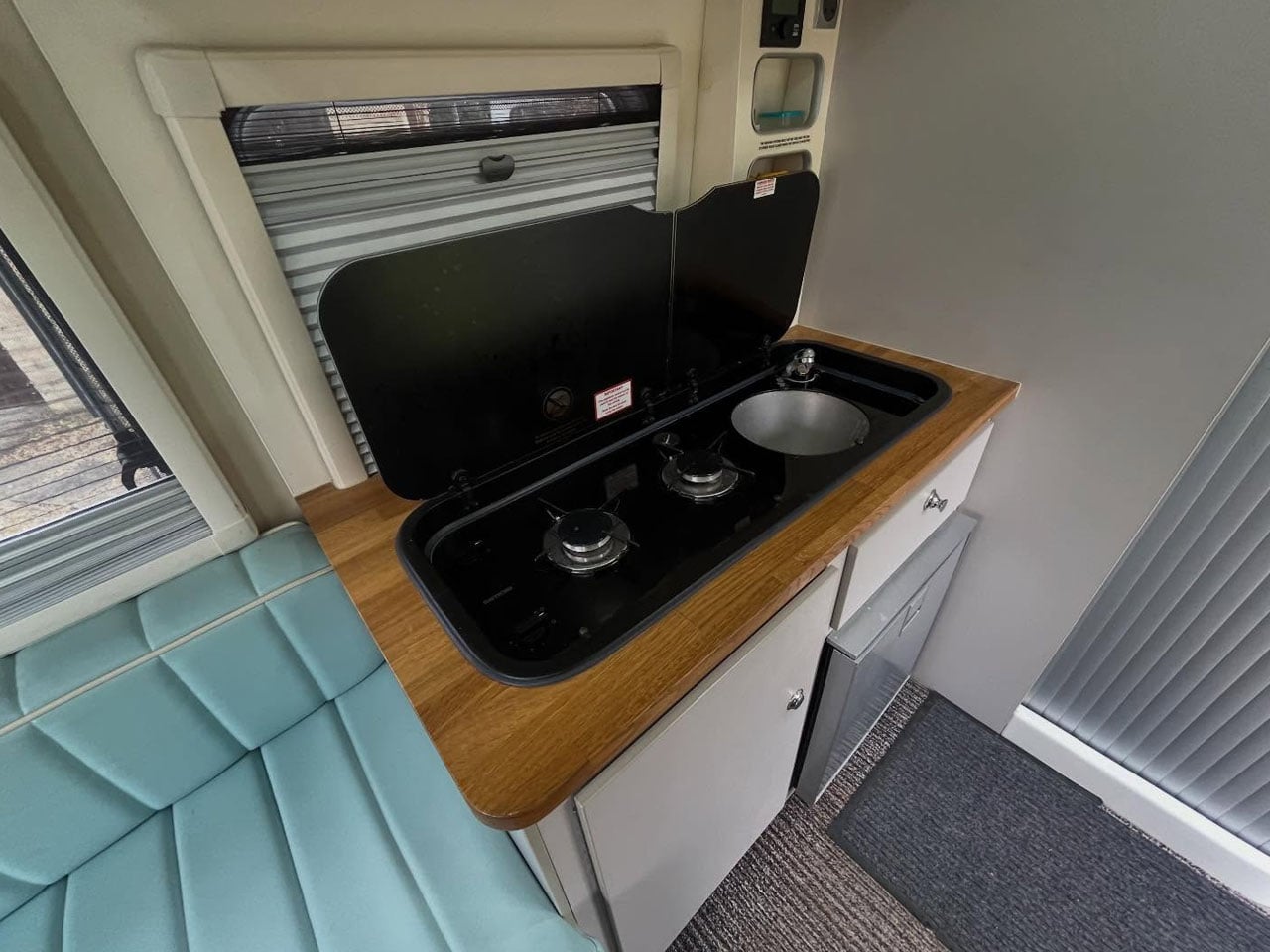
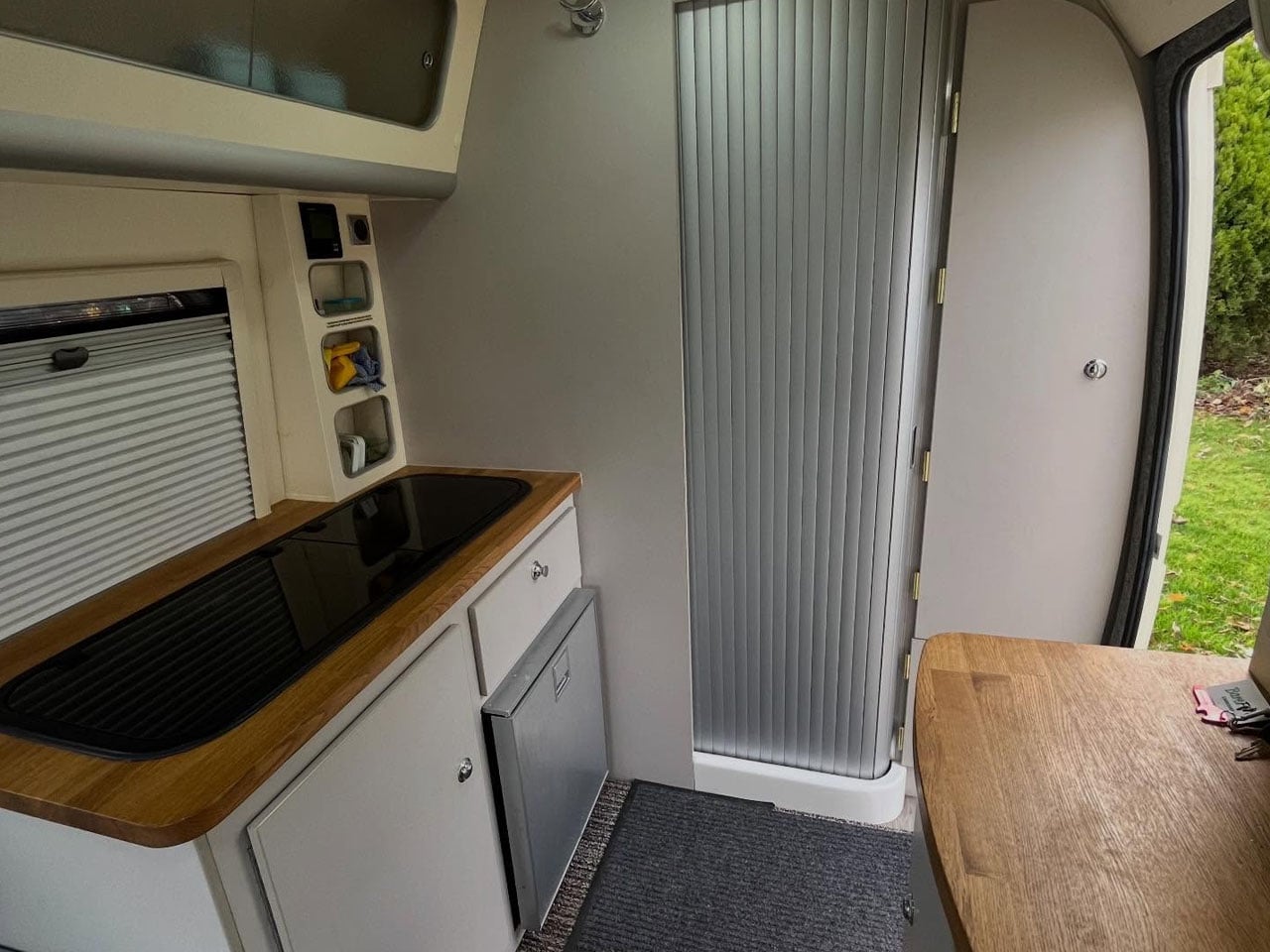
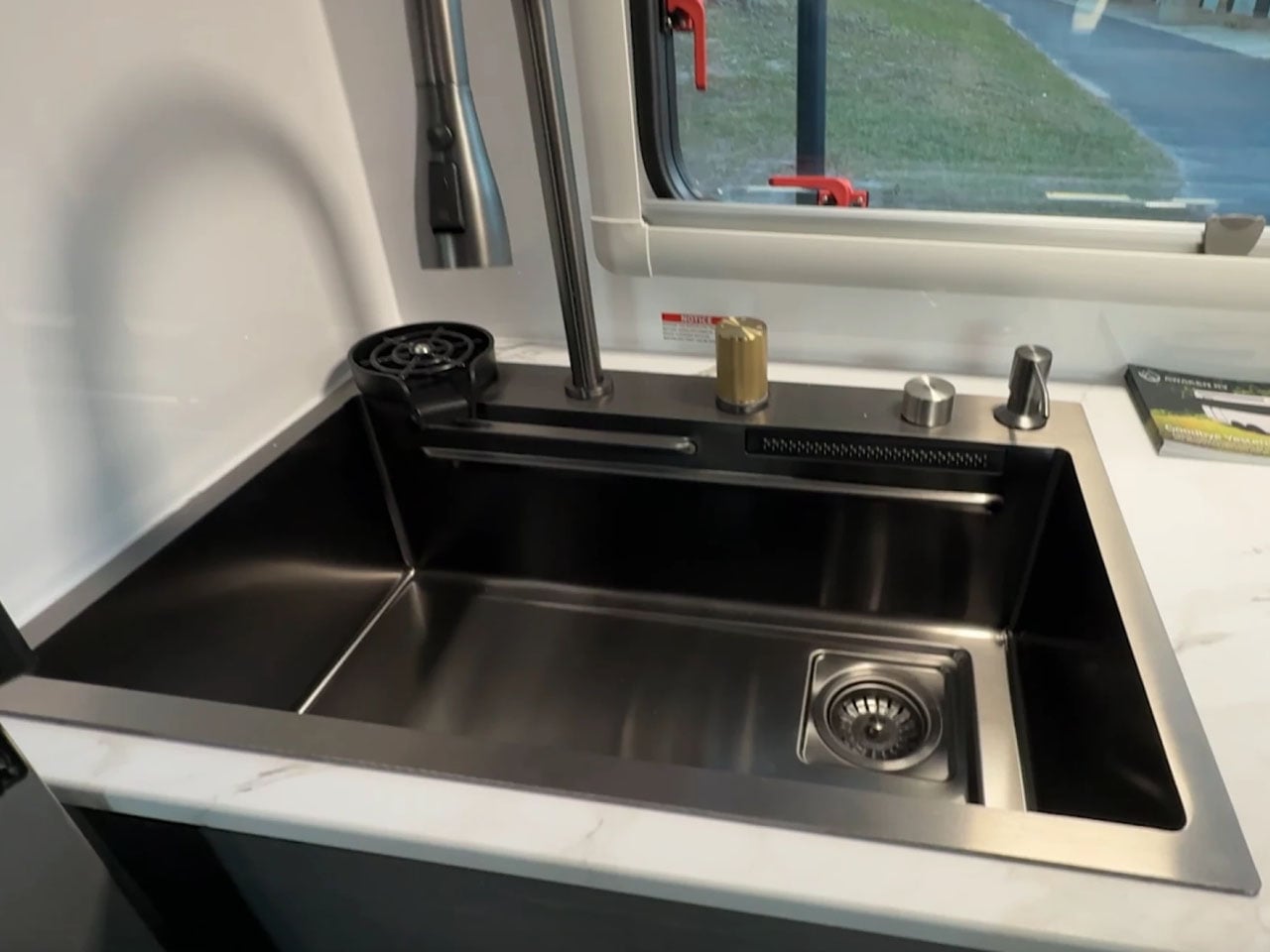
Perhaps the slightly foldable roof of the PlugVan unit allows it to fit through the Interstar doorway and expand inside into a full-blown home facility with pop-up roof, full kitchen, and a sleeping zone for a couple. The kitchen is erected behind the driver and is meant to slide, lift and expand depending on the user’s requirements. It comes with a portable single-burner stove, slide-out fridge box, an integrated sink and a faucet connected to 43l gray and freshwater tanks (also connected to the outdoor shower) onboard, respectively.

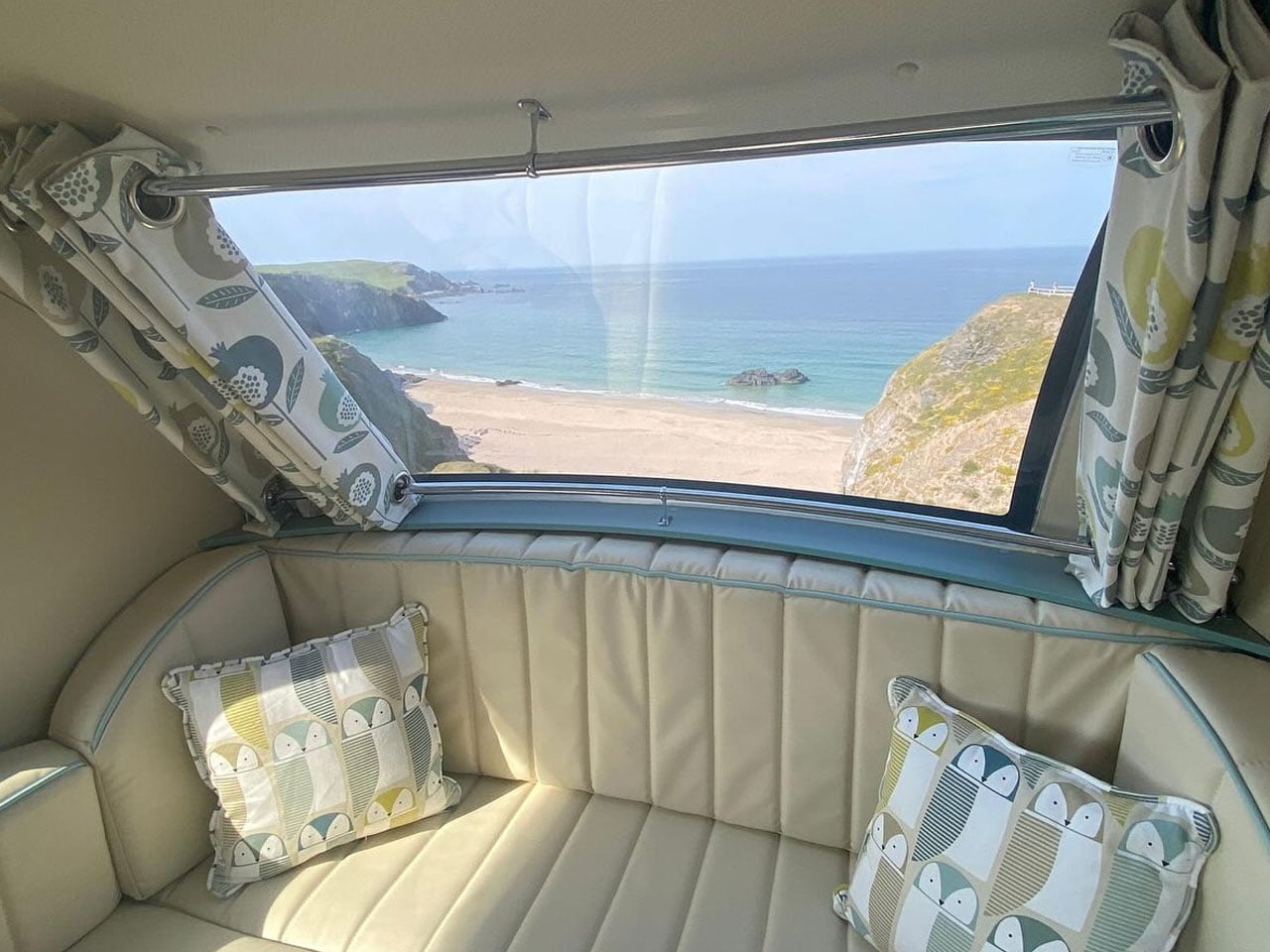
The kitchen has slide-out drawers and a retractable dining table accessible from the sofa on the opposite side of the kitchen unit that lifts upward to clear room below for the convertible sofa bed at night. The PlugVan unit does not fill up the entire space of the full-size Interstar, so a bathroom (that packs down into a suitcase) with fabric walls, portable dry toilet, and a water heater is provided alongside. The interesting camper van with an interesting exterior colorway is accessible through the side door, while the large rear window provides amazing views of the surroundings while you drive to your halt by the evening.

The post Nissan Interstar converted into comfortable camper van with adaptable living module from PlugVan first appeared on Yanko Design.
This Totaled “Not Wheels” by MSCHF is an unexpected addition to the Hot Wheels universe

Ever since its inception, Hot Wheels changed the dynamics of toy car models that were cooler and performed better than any other toy back in the late 1960s. Even after more than six decades, the iconic brand has the same enthusiasm for a set of Hot Wheels.

Some early models are now prized collectibles since they were created only in a handful of units. While every car lover has had his/her collection of Hot Wheels cars ranging from hot rods to supercars, the brand has thought out of the box this time to create a Not Wheels sedan.

Designer: MSCHF and Mattel Creations

The idea comes from the creative pool of MSCHF, a streetwear brand known for its off-the-wall designs. It’s their first-ever Hot Wheels collectible, and going by the packing labels and text, it seems this is certainly not their last. The beat-up car inside the clear packaging carries the label “HW Normal Cars” on the front, hinting there could be more coming. This heavily used car look is inspired by the 1990s Japanese import scenario when worn-out cars were the norm.

This “Not Wheels” car has a missing wheel and two Real Riders classic tires, ensuring it doesn’t roll like any other Hot Wheels. To complete the busted look, the car has a yellow spare and a rusted hub. The rugged look continues onto the body with dents, incomplete repairs and dents scarring the exterior. MSCHF wasn’t going to stop there and went all in with a cracked windshield, hanging seat belts and dirty-fogged rear window with “WASH ME” finger inscribed to complete the theme.

There are cheap fix-ups dotting the bodywork including, mismatched doors and taped-on taillights. If you look closely, the cracked windshield has a yellow parking ticket hooked onto the wipers. Definitely, this car has been ditched for a long as the headlights are all fogged up. The $30 totaled vehicle scale model is all set to be released for buying on August 30 and this one will sell like hotcakes for its exclusivity. You could sport it in your post-apocalyptic diorama, industrial-themed desk or even shoot a short movie with a couple of these Hot Wheels mixed along with the more exotic ones.


The post This Totaled “Not Wheels” by MSCHF is an unexpected addition to the Hot Wheels universe first appeared on Yanko Design.
Handmade EVE Odyssey motorcycle aces its predecessor with stellar performance and sniper bullet-like profile

Bandit9 Motors’ EVE Odyssey motorcycle stunned us last year with a bullet-shaped spacecraft-grade aluminum body straight out of the Star Wars universe. The Vietnam-based company incepted by Daryl Villanueva is in a league of its own with futuristic builds that have an element of industrial influence.

The latest from their workshop is the improved version of the EVE Odyssey. Daryl and his team have facelifted the bullet-shaped bike into one that is more like a 9mm sniper rifle bullet. To top it all, the new version is bigger, lighter, faster and more durable than its predecessor. The EVE Odyssey is a huge team effort, and I could not be more proud of the people who made it possible. My only wish is that they’re equally proud of the work they’ve done. In my opinion, this is the best piece we’ve ever done, and I think it’s just the beginning,’ Daryl says.

Designer: Bandit Motors

Now the fuel tank of the peculiar motorbike is fused to the high-strength 7075 aluminum frame with a flowing single-sided swingarm originating from the body. For a minimalistic form, the exhaust system is hidden in the body frame. The new EVE Odyssey model gets a hand-brushed steel emblem crafted out of a single billet. Better stability in the new version comes with the monoshock upgrade. That makes this mean machine more agile while taking corners. The front fork which is a part of the suspension system is something out of a modern art sculpture. Not only is it eye candy but also functional since bumps and rough roads are much more comfortable to navigate now.

EVE Odyssey 2.0 version is powered by a 125cc engine mated to a four-speed manual transmission, hurling it to a top speed of 68 mph. Bandit promises a range of 156 mpg which is impressive but driving conditions will play a part in tweaking this value. Just like the predecessor, the new model has a lot of custom parts that make up the final build. It’s got aluminum grips, levers and switches, steel clip-on handlebar, wide rear-view mirrors and LED headlights. For ease of use, the conventional gas cap is replaced with a magnetic one.

This time around the design team has ditched the traditional dials with digital speedometer for showing all the vital riding information. The control switches get a swanky upgrade as they seem more like a bracelet. Truly handmade, the motorcycle takes 3 months to craft from scratch to the brilliant final form. EVE Odyssey is now available to order with shipping worldwide.

The post Handmade EVE Odyssey motorcycle aces its predecessor with stellar performance and sniper bullet-like profile first appeared on Yanko Design.
The New Ford Nugget Camper-Van boasts a Wardrobe, Bathroom, L-Shaped Kitchen, and a Hybrid Powertrain

The Ford Nugget camper van lineup just got a significant upgrade, perfect for those embracing the #VanLife trend or looking to dip their toes into the nomadic lifestyle. Building on last year’s redesign at the Düsseldorf Caravan Salon, Ford introduces new models to the Nugget family, including a long-wheelbase version with more kitchen and storage space and an Active trim that’s sportier and offers all-wheel drive. The long-wheelbase version stretches the camper from 505 cm to 545 cm, making room for a larger wardrobe and an L-shaped kitchen, ideal for those who love to cook more elaborate meals on the road. Additionally, the much-anticipated plug-in hybrid version arrives with 56 km of all-electric range, combining eco-friendliness with practicality for European roads. With options for both diesel and hybrid powertrains, the Nugget series caters to different travel styles while ensuring you have the space and features needed to make van life enjoyable and stress-free.

Designer: Ford

The new long-wheelbase Nugget model expands the van’s functionality by increasing its overall length from 505 to 545 cm. This added space is put to practical use, enhancing storage options with a larger wardrobe and a more expansive L-shaped kitchen. The extended countertop is ideal for those who like to prepare meals with more complexity or simply need extra room for their cooking essentials. Storage is a critical factor in the success of any camper van setup, and Ford’s design ensures that the additional space serves both convenience and comfort. The larger kitchen area is designed to house more cookware and utensils, ensuring that everything remains within easy reach while traveling.

Beyond just extra storage, the long-wheelbase version is also set to feature a bathroom in future iterations. While details on the layout remain under wraps, the bathroom will likely be a significant draw for those who prioritize a fully self-contained living space on the road. In earlier models like the Nugget Plus, Ford offered a compact bathroom solution in the tailgate area, complete with a privacy screen and foldaway sink. Whether or not this layout remains unchanged, it’s clear that the addition of a bathroom reflects Ford’s understanding of customer needs in this growing market segment.

The Active trim introduces a more rugged design to the Nugget lineup. It features SUV-inspired styling and durable materials suitable for more challenging environments. With water-resistant seat fabric and advanced driver assistance systems like adaptive cruise control and pre-collision assist, the Active trim blends comfort with safety. The inclusion of AWD further broadens the van’s capabilities, making it more versatile for trips that involve uneven terrain or inclement weather. The powertrain options for this model include a 168-hp EcoBlue diesel engine paired with an eight-speed automatic transmission, offering reliable performance for both highway cruising and countryside exploration.

Perhaps the most significant update is the introduction of a plug-in hybrid (PHEV) variant. Ford delivers on its promise from last year, launching the PHEV just in time for the 2024 season. The hybrid powertrain combines a 2.5-liter Atkinson-cycle petrol engine with an electric motor, providing a combined output of 230 hp. The 11.8 kWh battery enables up to 56 km of all-electric driving, a feature particularly appealing for eco-conscious travelers or those navigating emission-restricted urban areas. This hybrid setup strikes a balance between efficiency and range, allowing users to enjoy quieter, cleaner drives without sacrificing the practicality of traditional fuel options.

Ford has also integrated the Smart Camper Touchscreen system, allowing centralized control of the van’s features like lighting, heating, and even leveling with the built-in inclinometer. This feature is particularly useful for ensuring a stable and comfortable setup at campsites. The van’s three-room layout—comprising a dining area, kitchen, and pop-up bedroom—remains consistent with previous models but benefits from the increased length and added storage, making longer trips more feasible.

With a base price of €73,126 in Germany, the updated Nugget series remains a premium option within the camper van market. However, the expanded features, enhanced powertrain options, and thoughtful design refinements make it a strong contender for anyone serious about the van life experience. As Ford continues to innovate in this space, the Nugget series evolves from a compact camper into a more comprehensive travel solution, meeting the needs of today’s increasingly diverse group of road adventurers.


The post The New Ford Nugget Camper-Van boasts a Wardrobe, Bathroom, L-Shaped Kitchen, and a Hybrid Powertrain first appeared on Yanko Design.
BMW is bringing a dedicated UNO Gaming App to over 500,000 existing car infotainment systems

With an announcement from BMW dropping shortly after the Concours d’Elegance event at Pebble Beach, you’d probably think we’ve got some interesting car news or some automotive updates, but you’d be wrong. Instead, BMW threw quite the curveball by announcing a dedicated version of the hit card game UNO, designed specifically for in-car gaming. Dubbed the “UNO Car Party!”, this collaboration between BMW, Mattel, and AirConsole rolled out at Gamescom 2024, where it was introduced as the next evolution of in-car entertainment. With over 500,000 BMW and MINI vehicles set to feature this, you can now settle all your family’s backseat rivalries with a virtual card match that no one saw coming.

Designers: BMW & Mattel

The setup is surprisingly slick for a car game. AirConsole’s tech lets up to four players use their phones as controllers—no shuffling required, just a quick QR code scan on the car’s display. Each player’s hand remains secret on their phone while the main screen shows the game’s progress, meaning you can still side-eye your opponents and snoop on their hand. Given how hands-on and intense UNO can be, the game is only playable when the vehicle is in park mode. That’s BMW’s subtle way of saying, “Hey, safety first.” But once the car’s stationary, it’s game on, transforming your car into a temporary game room that’s perfect for killing time while charging your EV or waiting for that friend who’s always late.

In terms of gameplay, it’s pretty much the UNO you know and love (or dread). Same rules, same chance to ruin friendships, but now with digital flair—automated scoring, snazzy graphics, and a setup that doesn’t involve losing cards under the seat. It’s straightforward, easy to get into, and definitely beats staring out the window. The concept is clever in its simplicity, merging retro card game vibes with modern tech. Plus, it’s a nice break from doomscrolling or listening to the same playlist on repeat.

This move from BMW is part of a bigger trend where cars are becoming more than just vehicles—they’re turning into mobile entertainment hubs. And while “UNO Car Party!” might not be a game-changer (pun intended), it’s a fun little feature that adds personality to your car. Sure, it’s no substitute for a full-fledged console, but it’s a step toward making your vehicle a bit more interesting when you’re not actually driving it. Whether it’s a quick match during a pit stop or a way to pass the time while you’re stuck waiting for someone, it’s clear that BMW is leaning into the idea that cars can be places for more than just commuting.

So, if you’ve ever found yourself thinking, “I wish I could play UNO in my car,” your oddly specific wish has just come true. Whether you’re ready to embrace it or just find it amusing, BMW’s latest innovation proves that even the most unexpected ideas can have a place in the future of driving—or at least parking.

The post BMW is bringing a dedicated UNO Gaming App to over 500,000 existing car infotainment systems first appeared on Yanko Design.
Living Vehicle GT39 rival’s interiors of luxury yachts, offers freedom of off-grid living on the road

Before the pandemic, we lived in a generously simple world with mobile homes catering to the bare minimum needs on the road. A bedroom, convertible living room, kitchenette, dry bathroom, and that was almost it. Most of the interior was paneled with wood and the exterior was done in aluminum for durability. Now, with the likes of Living Vehicle, a Santa Barbara, CA-based boutique travel trailer builder – that has been marrying luxury and sustainability over the years – is redefining the word: luxury mobile living with the new GT series.

Electric trailers by Living Vehicle have been close competitors to the Airstreams. These models are designed to sell a way of life that in Living Vehicle’s ideology is “sustainable, off-grid, and luxurious.” The company has ventured into a new category with the GT series fifth wheelers. These models: the flagship GT39 and the smaller-sized GT32, combine off-grid fierceness with luxury that matches the feel of a yacht on land.

Designer: Living Vehicle

Living Vehicle has always focused on developing off-grid mobile trailers that can be used for full-time living, the Cyber Trailer for instance. The GT39 may be a different unit in approach, but its fundamentals are aligned with the company’s signature style. The fifth wheeler measures 39-foot long and features an architecturally designed interior. It fits the master bedroom – with a king-size bed and panoramic windows – in the gooseneck and is apt for sleeping four to six people with a living room that transforms into a guest sleeper.

The Living Vehicle GT39 model tips the scale at 16000 lbs but has, and we cannot iterate enough, a motor yacht-style luxurious interior comprising 8-foot ceilings, hardwood flooring, powder-coated aluminum cabinets, and top-of-the-line appliances. The living room with reclining seats has a 70-inch home theater system and fireplace, just adjacent is a chef’s kitchen attached to a bar that doubles as a workspace. Next up with the bathroom with a composting toilet and a teak-paneled shower.

Stretching the interior luxury into the exterior landscapes is the fold-down deck of the GT39, which is spacious enough to be used as an outdoor dining space or an outdoor kitchen at the campsite. The fold-down deck is covered with a folding awning. The interesting element of this yacht for the road is the option of installing anywhere between 2.2 and 5 kilowatts of solar panels on the roof. Stretching the entire length and breadth of the LV model, the solar cells can extend onto the awnings for additional coverage. To enhance the self-sustaining capability, this fifth-wheeler’s solar system is supported by a hybrid backup power generator and complemented by a battery pack of 72kWh.

Since the GT39 is meant for permanent, long-term living on the road, it comes with four-season climate control, along with smart home technology, and Starlink connectivity. Living Vehicle is now taking orders for the new GT39, but the pricing for the model is undisclosed. If interested, you would have to get in touch with the company for a quote.

The post Living Vehicle GT39 rival’s interiors of luxury yachts, offers freedom of off-grid living on the road first appeared on Yanko Design.
Jet-Fueled Cybertruck kit turns the EV into apocalypse ready off-roader fullproof against IEDs

The cold-rolled stainless steel alloy gives the Cybertruck resistance against any bumps, furious kicks, or stone pelting that would bust any other vehicle. That makes the futureproof truck the perfect candidate for a military-grade upgrade. Archimedes Defense has these ambitions for Tesla’s tough EV off-roader as they have teamed up with Unplugged Performance (upgrade kit and component maker for law enforcement agencies) to create the aftermarket Sting kit to bump up the durability and functionality of Cybertruck.

Archimedes Defense supplies American agencies with high-performance generators, and it’s not surprising the kit comes with a front-mounted Genset generator capable of running on diesel, biodiesel and even jet fuel. The single-piston generator has a charging rate of 125 kW, so that the EV can be fully topped up anywhere, anytime.

Designer: Archimedes Defense and Unplugged Performance

This wild modification for the Cybertruck will come in three variants – Sting Baja, Sting Protector and Sting APC tailored for intense off-roading, a heightened level of protection from gunshots, or defense against IED and mine protection respectively. Thus, making the Hunk tailored for a civilian or military upgrade with incremental levels of modifications. What’s common to all these versions are large off-road tires, large antennas mounted on the rear and fog lamps. The doors have been reinforced which reduces the size of the windows.

First up the sting Baja version adds the Up Invincible off-road package for improved performance with the lightweight aviation-derived 800V Genset that charges the truck, as well, as any other vehicle in need. It is equipped with Tesla’s Starlink connectivity and a receiver mounted on the bed.

Then there’s the Sting Protector version suited for the wealthy that adds to the Baja’s capabilities for moderate threat environments. The bolt-on package of the Sting Protector adds an extra layer of steel so that it can even take on 7.62mm assault rifle rounds. It can be bought with or without the Genset depending on the needs.

The best out of them all is the Sting APC variant with the armored protection for defense. It gets upgraded bolt-on, bolt-off external offset steel and ceramic plating for protection against 14.5 mm machine gun rounds, IEDs and mines. It also gives the buyer the option to mount the add-on generator for doubling the range.

According to Archimedes Defense, the aftermarket kit is available for $500 reservations and the actual price of the base variants is speculated to be $40,000. The APC version will be available in late 2025, while the Baja variant will be available a little earlier.

The post Jet-Fueled Cybertruck kit turns the EV into apocalypse ready off-roader fullproof against IEDs first appeared on Yanko Design.
Tuthill Porsche GT ONE restomod is a perfect fusion of past racing history and modern street culture

Tuthill Porsche, a UK-based renowned rally and restoration shop is setting the pace in the restomod industry with the recent collaboration with Singer. They’ve recently turned eyeballs at the 2024 Monterey Car Week with the Porsche GT ONE. The restomod inspired by the famous 1990s 911 GT1 race car that featured in the BPR Global GT Series. This later took shape as the road-legal 911 GT1 Straßenversion which was limited to 21 units for the passionate buyers.

Well known for modifying Porsche 911’s, the company wanted to commemorate the homologation special Straßenversion with its version that we see here. The performance car is fully optimized for road use, unlike the Straßenversion. As per Richard Tuthill, CEO, Tuthill Porsche, “We have taken the best bits but focused on producing a wonderful road car. The inspiration from all that we have done in the past and have been inspired by what others have done before us and continue to do.”

Designer: Tuthill Porsche and Florian Flatau

Just like the 911 GT1 Straßenversion, the GT One has the striking styling of the 993-generation 911. The company commissioned designer Florian Flatau for this amazing race car tailored for the streets. The ride’s body is made out of carbon fiber that brings the total weight down to 2,645 pounds. The limited edition car will have a 4.0L flat-six engine under the hood in two configurations. One will be a 493 hp naturally aspired version and the other a forced induction version churning out 593 hp. The gearbox will also be offered in a choice of 7-speed dual-clutch transmission or a manual gearbox.

The impressive specifications don’t end there, as the GT ONE boasts a double wishbone suspension, bespoke calipers and carbon ceramic brakes. For those who want to take advantage of every ounce of the engine power, the car has advanced aerodynamic tuning courtesy of the CFD analysis. Tuthill is also considering an add-on aero package for enthusiasts who want to test it out on the freeway or the race tracks.

According to Richard, this masterpiece takes around 3,500 hours to finish which in itself is a testament to the effort put into the making. Only 22 production examples of the GT ONE will be made and there’s no word on the pricing yet.  That said, the makers believe the car is a piece of art and a machine to be enjoyed while driving.

The post Tuthill Porsche GT ONE restomod is a perfect fusion of past racing history and modern street culture first appeared on Yanko Design.
2024 Toyota RAV4 Woodland Edition Review : A True Adventure Upgrade or Just a Facelift

PROS:


  • Green and bronze looks great

  • Subtly improved off-road capability

  • Typical RAV4 utility

CONS:


  • Reduced fuel economy

  • Worse on-road manners

RATINGS:

AESTHETICS
ERGONOMICS
PERFORMANCE
VALUE FOR MONEY

EDITOR'S QUOTE:

The Woodland Edition adds a strong dose of rugged style and a bit of extra capability, but the return may not be worth the efficiency and financial cost.

The auto market is being flooded with semi-rugged, lightly off-road editions of everyday SUVs, and Toyota’s getting in on the game with this. It’s the RAV4 Woodland Edition, a version of its ubiquitous and perpetually popular SUV that looks a little more ready for adventure than its lesser versions.

But is it actually a functional upgrade, and is it worth the roughly $3,000 over a base RAV4 Hybrid LE? That’s what I aimed to find out in my week with this green and gold hybrid.

Design

Before we even get into the functional upgrades on the Woodland Edition, I’m tempted to say this flavor of Toyota’s RAV4 SUV is worth the extra cost for the color scheme alone. That color, which Toyota calls Army Green, works remarkably well on this car. It’s not quite a military olive drab in that it definitely has a glossy hue to it, but it’s certainly in the same chromatic family.

Pairing that with a set of satin bronze wheels is an act of genius, resulting in an SUV with far more presence than any of the dozen other RAV4s you’ll likely find in the average parking lot. This is the best color combination available in Toyota’s crossover at the moment, and you can only get it in the Woodland edition.

That said, even the base RAV4 is not a bad-looking machine. Though its facelift is getting a bit familiar at this point, its angular styling cues and the dramatic, downward sweep of the lines running from the rear fenders all the way to the front grille give it an active stance that works perfectly with the attitude of the Woodland Edition.
Pick the Woodland, and you get the roof rack with rails standard, plus those 18-inch wheels and the all-terrain tires they’re covered in.
Things are less dramatic on the inside. Where that green and cold combo dominates your view as you approach, the only special touches on the inside are on the floor: a set of all-weather floor mats with Woodland Edition embossed on them, plus a few pine trees emblems. Those mats provide a functional upgrade for sure, but hardly a striking one visually.

The rest of the interior is standard stuff, thoughtfully laid out and featuring durable materials, but not much to look at. The RAV4 seats five maximum, with rear seats ample for two but only passable for three passengers. A separate heating vent plus a pair of USB-C ports are the only creature comforts available to those in the back.

The two front seats feature prodigious heating, toggled with chunky physical switches that stay in whatever position you left them last.So, if you’re the sort who wants a perpetually warm backside, you won’t have to reach for that button every time you start up this SUV. The steering wheel heating is less effective, but it too at least stays enabled between car starts.

Seat upholstery is of a basic fabric embossed with a geometric pattern that adds just a bit of visual appeal to an otherwise dark interior, though the light headliner helps. The dashboard, door cards, and center console are a mixture of leather-textured black vinyl and hard black plastics, with a few slashes and hints of matte silver plastic throughout.

Again, it’s not much to look at on the inside, but the numerous pockets and storage compartments leave ample opportunity for stashing stuff, while the cargo net out back in the hatch ensures that whatever you put in the 37.6 cubic feet of cargo space will stay put. The rear seats fold down with a 60/40 split, expanding that cargo volume to 69.8. 

Other than those seat heaters, tactile controls are limited to the HVAC system, which features some oversized, chunky knobs that are a pleasure to spin. There’s a smaller volume knob as well and a small knob for cycling between Eco and Sport modes, but that’s about it. 

Software and safety

Most interior controls are available through the eight-inch touchscreen running Toyota’s Drive Connect system, which offers integrated navigation and a voice assistant. Android Auto and Apple CarPlay are also available, which I found to be a far more appealing option. 

The gauge cluster features a series of traditional analog gauges with a digital, virtual gauge system in the center. This display is customizable to cycle through a series of vehicle settings, parameters, or navigation prompts if you like. There’s nothing particularly notable here, but it’s all perfectly functional.

In terms of active safety, the Woodland Edition features Toyota’s Safety Sense 2.5 system, which includes features like automatic emergency braking with pedestrian detection, roadside sign detection, lane-keep assist, and adaptive cruise control. The adaptive cruise worked well, but the lane-keep assist was a little less reliable in my testing. It often struggled to detect road markings and only made very late, very indistinct corrections to keep the car centered.

On (and off) the road

The RAV4 is a simple, pleasant SUV to drive in most situations. The Woodland Edition doesn’t do much to change that formula, but it does add just a hint of additional capability. The suspension in this version has been retuned, slightly stiffer with up-rated bump stops, capable of handling the trails that Toyota apparently thinks people will be hitting in this thing.

Additionally, there’s a Trail drive mode, which Toyota says helps to maximize grip, but in my testing in slippery conditions, I couldn’t detect any difference. The front wheels always seemed to break loose first and most significantly before the rears got much in the way of power from the hybrid system out back.

The Woodland Edition’s biggest change, regardless, is what it rolls on. 18-inch Falken Wildpeak A/T Trail tires have been mounted on all four corners, far chunkier and more aggressive than the usual all-seasons found fitted on the RAV4.

Does any of it make a difference in terms of off-road performance? The suspension upgrade should make the Woodland Edition survive slightly harder stuff offroad, and there’s no doubt the tires will provide more grip on loose surfaces. 

On-road, the changes are definitely noticeable, with some increased road noise and a slight decrease in everyday ride quality. While far short of harsh, the Woodland Edition was less pleasant over the bumps and frost heaves that plague the roads near me as we come out of an extended winter season. Whether it’s the tires, suspension, or some combination of the two, I can’t say for sure, but if on-road poise and comfort is your priority, you might want to go for an XLE instead.

In terms of power, as in any other RAV4 hybrid, the 219 horsepower hybrid system in the Woodland Edition is more than adequate but far from breathtaking. The car accelerates cleanly and has plenty of power to keep up with traffic, plus reasonable throttle response, largely thanks to the hybrid system. However, when most people are shopping for Toyota Hybrids, their top priority is fuel economy, and I wasn’t blown away there. 

The Woodland Edition is rated for 38 mpg in the city, 35 on the highway, and 37 combined. In my mixed testing, I did substantially worse, coming in at 32.3 mpg. An XSE, meanwhile, is rated for 39 mpg combined. Those all-terrain tires here surely don’t help, nor does the roof rack up top.

Options and pricing

The 2024 Toyota RAV4 starts at $28,675 for a base LE edition. For a Woodland Edition, you’re looking at a minimum of $34,695. My model included the $925 Weather Package, which adds on heated seats and steering wheel, plus $500 for that exterior color, which brought the total price to $37,470 after a $1,350 destination charge. That compares favorably to its most direct competitor, a Subaru Forester Wilderness Edition, which starts at $34,920.  

Is it worth the extra $3,000 over a RAV4 LE hybrid? I don’t know if it is. While I appreciate the desire for something with more off-road capability and love the look and color scheme here, I can’t say that I’m convinced the on-road penalty combined with the extra cost is worthwhile. The mpg hit also doesn’t seem worthwhile unless you’re frequently going to be making use of those all-terrain tires or that roof rack.

In general, I’d recommend sticking with the RAV4 XLE hybrid, which is an excellent SUV and continues to be a value leader and saves. But, if you want something with a smidge more attitude and have a bit more to spend, I don’t blame you for being tempted by this green and bronze charmer.

The post 2024 Toyota RAV4 Woodland Edition Review : A True Adventure Upgrade or Just a Facelift first appeared on Yanko Design.