Google’s Pixel Tablet is up to $110 off right now

Update 10/26/24 9am ET: The deal below has expired, but you can get a similar deal on the Pixel Tablet at Wellbots right now. The Pixel Tablet with its charging speaker dock is $110 off and down to $489 when you use the code ENGPIX110 at checkout. You can use the same code to get $110 off the 256GB Pixel Tablet on its own, bringing the final price down to $389.


Tablets might be a cheaper alternative to laptops but they can still cost a good chunk of money. Sales make all the difference and, right now, the 128GB Google Pixel Tablet is available for $275, down from $399. The 31 percent discount brings this tablet to a new all-time low price. The sale is only available if you get the tablet in Porcelain and doesn't come with the speaker dock (though that combo is 11 percent off). 

Google released this Pixel Tablet in summer 2023 and gave us things we really liked and others we weren't wowed with. We gave it an 84 in our review thanks, in large part, to its smart home features. Our reviewer, Cherlynn Low, already had a Nest Mini in her room, but was impressed with how much better the tablet worked. The sound is great — though that was thanks to the Speaker Dock — and its Hub Mode is very useful. It shows you all the devices throughout your home, including camera feeds and switch lamps. 

If you want this device for entertainment and ease then it could be great. However, there were a few aspects that we weren't as keen on. Some of the movements aren't very intuitive and we didn't use it much without the stand. But, it has great battery if you do get it without a dock, lasting 21 and a half hours with 50 percent brightness on our test.

Follow @EngadgetDeals on Twitter and subscribe to the Engadget Deals newsletter for the latest tech deals and buying advice.

This article originally appeared on Engadget at https://www.engadget.com/deals/googles-pixel-tablet-is-cheaper-than-ever-right-now-132239944.html?src=rss



Leftover date seeds become 3D printer filaments to enable sustainable creations

3D printers revolutionized the manufacturing and design industries, enabling almost anyone to bring their ideas to life and iterate over designs quickly. Unfortunately, this flood of creativity also resulted in a surge in the use of plastic, specifically the thermoplastics used as filaments for fused deposit modeling or FDM 3D printers. Even the more sustainable PLA type of filament is only biodegradable under very specific conditions, so there is a dire need for more eco-friendly but accessible alternatives. This particular idea tries to harness and reuse the equally growing volume of food waste that we throw away, particularly fruit seeds that really serve no other purpose unless they’re planted again.

Designer: Nawa Tek

Dates are a very popular fruit, especially in Middle Eastern countries like Oman that produce and process tonnes of the fruit yearly. But like many fruits, only the flesh of dates is consumed, and the seeds or pits are simply discarded. These are biodegradable, of course, but they only decompose after a certain period of time, resulting in tonnes of garbage taking up space and potentially polluting waters as well. You can also plant some of the seeds but not all can be used this way.

Playing on the word for date pits and “repeat,” RePit is an emerging technology that puts these previously unusable food waste to better use. Rather than simply reusing the pits as they are, which could bring other complications like longevity and durability, the seeds instead becoming the foundations for a completely new material, one that can be woven into 3D printed products. In other words, what would have become garbage is ultimately transformed into art object, machine parts, and more.

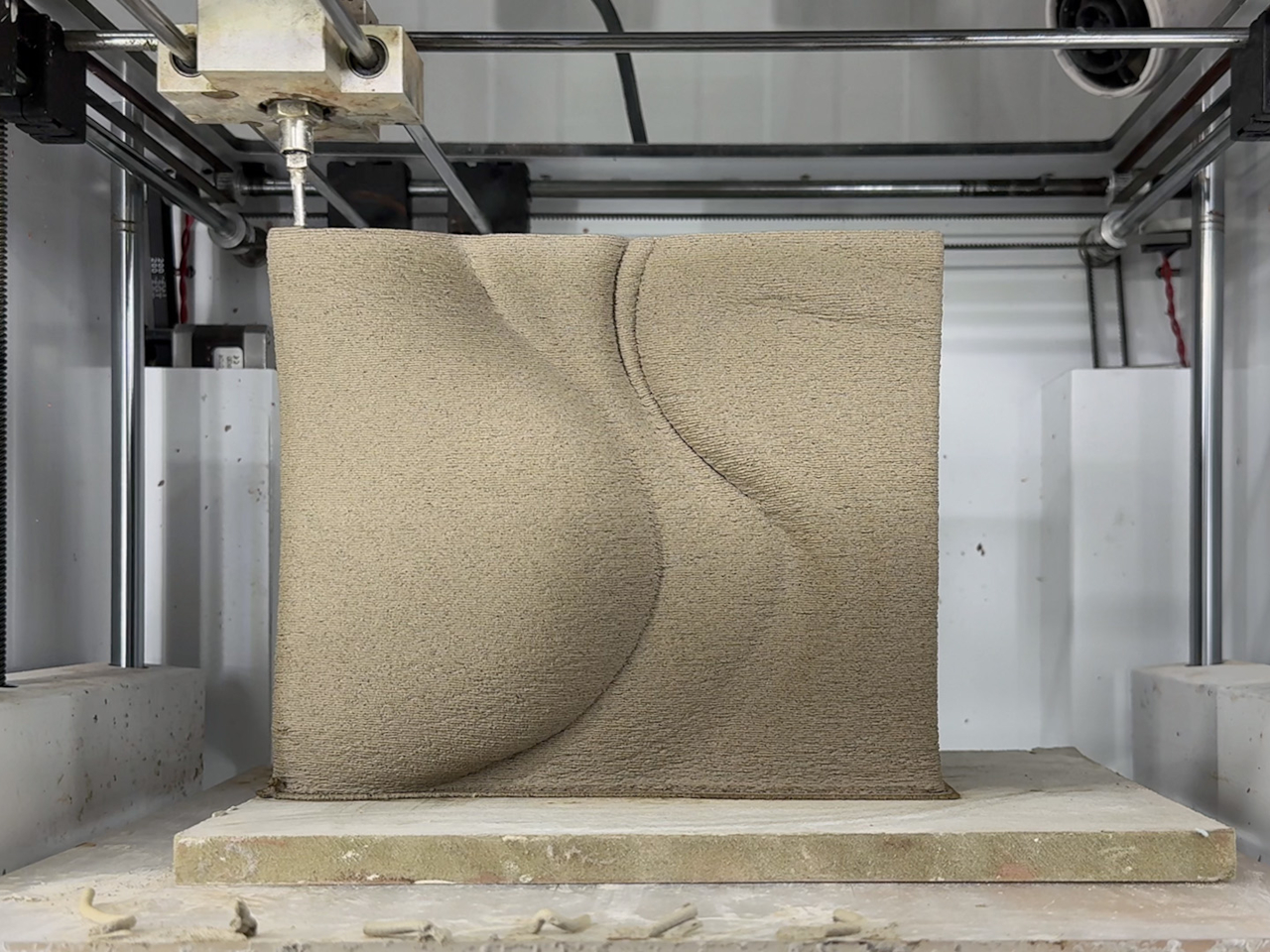
In a nutshell, crushed date pits are mixed with limestone and clay to create a water-resistant composite material that is not unlike traditional Iranian “sarooj” that’s used for building houses. The composite is then transformed into filaments compatible with FDM 3D printers to create any shape imaginable, at least in theory. For a demonstration, decorative tiles were 3D printed and then fired and glazed to give them a ceramic-like appearance.

RePit is still a work in progress and it’s one of the growing number of sustainable 3D printing filaments being researched and developed today. The 3D printing industry has already expanded to support materials like metal, wood, and even chocolate, so it’s only proper that a more environment-friendly and long-lasting option is also developed, preferably one that embraces a circular economy that also reduces the waste we heap on landfills.

The post Leftover date seeds become 3D printer filaments to enable sustainable creations first appeared on Yanko Design.

The Ultimate Guide to Free Android Customization

Android Customization

Android customization is a powerful feature that allows you to transform your smartphone’s interface into a personalized masterpiece. With the right tools and techniques, you can create a unique home screen setup that reflects your style and enhances your user experience. The video below from Parker Burton will lead you through the essential steps to […]

The post The Ultimate Guide to Free Android Customization appeared first on Geeky Gadgets.

No Man’s Sky just got a creepy Lovecraftian update in time for Halloween

There is no greater advertisement for the virtues of patience than No Man’s Sky. The game was an underwhelming fart when it first released back in 2016. Now it’s one of the best titles around, thanks to continuing support by developer Hello Games. The company just dropped a surprise Halloween-themed update and it’s pretty darned cool.

The latest release is called The Cursed and it’s filled to the brim with creepy stuff to experience. There’s a whole new “twilight universe” where “players will fight to keep a grip on reality while haunted by visions and voices from another dimension.” Time can shift unexpectedly and players could encounter “spectral anomalies.” There’s also no FTL in this twisted realm, forcing players to strategically use the ancient portal network.

This kind of reality-bending nonsense seems plucked straight out of the Gamecube classic Eternal Darkness or, more recently, the horror fishing sim Dredge. I’m very much here for it.

To navigate this cursed space, there’s a new ship to pilot. The Boundary Herald Starship is a legitimate flying saucer, made from a “Giger-esque coil of tubes, pipeworks and engines.” It’s a real beauty and the developer’s first attempt at designing a retro-style spaceship. The update also includes bioluminescent pets and a new exosuit.

A flying saucer.
Hello Games

This is a limited-time event, as players will only have around three weeks to explore this twilight universe. However, the glow-in-the-dark pets, updated exosuit and, thankfully, the flying saucer are here to stay.

This is just the latest gameplay update for No Man’s Sky. So far, there have been over 35 major named updates and many more medium-sized patches and the like. In recent months, the developers added the ability to fish and integrated new weather systems.

This article originally appeared on Engadget at https://www.engadget.com/gaming/no-mans-sky-just-got-a-creepy-lovecraftian-update-in-time-for-halloween-130020444.html?src=rss

TSMC has reportedly cut off a company that sent its chips to Huawei

Chipmaking giant Taiwan Semiconductor Manufacturing Co. (TSMC) halted semiconductor shipments to a client that may have illegally sent the chips on to Huawei, according to Bloomberg. That follows reports that TSMC had informed the US government that its chips appeared in one of Huawei's AI accelerators. There's no confirmation on whether the company was acting on Huawei's behalf or where it's based. 

TSMC cut off shipments to the entity in mid-October after it noticed that the same chips had appeared in Huawei products. It notified the US and Taiwanese governments of this latest development and is further probing the matter, Bloomberg's sources said. They asked not to be identified given the sensitive nature of the matter. 

Yesterday, Bloomberg and The Financial Times reported that Canadian research firm TechInsights had spotted TSMC chips in a Huawei AI accelerator, a clear violation of US sanctions. That brought into question how Huawei had obtained those chips, with a third-party company being a strong possibility. 

In 2020, the US Commerce Department implemented trade restrictions against Huawei that barred the company from obtaining chips made by foreign firms. Earlier this year, the US government further tightened restrictions by revoking its licenses with Intel and Qualcomm to produce chips for its devices.

In a previous statement provided to the Commerce Department, TSMC denied any working relationship with Huawei since mid-September of 2020. TSMC also told Bloomberg that it hasn’t produced any chips for Huawei due to the amended restrictions. For its part, Huawei said in a statement yesterday that it hasn't used any chips sourced from TSMC since the 2020 restrictions were enacted. 

Rather than using TSMC, Huawei was supposedly obtaining chips from a local partner, China's Semiconductor Manufacturing International Corp. (SMIC) — including a 7-nanometer processor for Huawei smartphones. However, US officials doubted that SMIC could build such chips at sufficient scale to meet market demand. 

This article originally appeared on Engadget at https://www.engadget.com/mobile/smartphones/tsmc-has-reportedly-cut-off-a-company-that-sent-its-chips-to-huawei-124900342.html?src=rss

Claude 3.5 Haiku : The Future of AI Coding

Claude 3.5 Haiku language model

Anthropic has this week updated it’s Claude 3.5 Haiku AI model refining its processing powers to offer a blend of speed, accuracy, and affordability that sets a new standard in the industry. It’s clear that Claude 3.5 Haiku is more than just an upgrade; With its unparalleled efficiency in handling complex coding tasks and multilingual […]

The post Claude 3.5 Haiku : The Future of AI Coding appeared first on Geeky Gadgets.

Vimeo brings spatial videos to the Apple Vision Pro

The Apple Vision Pro has experienced a few new perks since its February release, and the latest comes via Vimeo. The video platform has launched an app for Apple's Vision Pro that allows users to view, create and share spatial videos. "The launch of our Apple Vision Pro app marks a significant milestone in our ongoing mission to push the boundaries of video experiences," said Vimeo CEO Philip Moyer. "This kind of spatial content is the future of storytelling, and we’re proud to be at the forefront of this revolution." Content can be sent privately or shared publicly from the iOS and visionOS apps or Vimeo's website.

Users can also capture spatial videos with Vimeo on the iPhone 16 series, iPhone 15 Pro and iPhone 15 Pro Max. Apple is also planning to introduce a Final Cut Pro update by the end of 2024 that lets users edit spatial videos on their Macs. 

We had very mixed feelings when Apple released the Vision Pro. We gave it a 74 in our original review as its immersive video and and micro-OLED screens were very impressive, but its weight and lack of native apps, among other issues, led to us calling it, "a beta product aimed at developers." Two months and a few updates later and we were more impressed thanks to features like Spatial Personas, which makes it feel like avatars are right in your home. Plus, it offers some 3D films for Apple TV+ subscribers and more games. 

This article originally appeared on Engadget at https://www.engadget.com/ar-vr/vimeo-brings-spatial-videos-to-the-apple-vision-pro-123046749.html?src=rss

Arm cancels Qualcomm’s license to use its chip design standards

Arm has taken its feud with Qualcomm to the next level, two years after filing a lawsuit against its former close partner. According to Bloomberg, the British semiconductor company has canceled the architecture license allowing Qualcomm to use its intellectual property and standards for chip design. As the news organization notes, Qualcomm, like many other chipmakers, uses Arm's computer code that chips need to run software, such as operating systems. Arm has reportedly sent Qualcomm a 60-day notice of cancelation — if they don't get to an agreement by then, it could have a huge impact on both companies' finances and on Qualcomm's operations. 

The SoftBank-backed chipmaker sued Qualcomm in 2022 after the latter purchased a company called Nuvia, which is one of its other licensees. Arm argued that the US company didn't obtain the necessary permits to transfer Nuvia's licenses. As such, Nuvia breached their contract and it had terminated its licenses, Arm explained in its lawsuit. Qualcomm has been using Nuvia-developed technology in the chips designed for AI PCs, such as those from Microsoft and HP. But Arm wants the company to stop using Nuvia-developed tech and to destroy any Arm-based technology developed prior to the acquisition. 

Qualcomm will have to stop selling most of the chips that account for its $39 billion in revenue, Bloomberg says, if the companies don't resolve the issue within the next 60 days. It seems the US chipmaker believes this is a tactic by Arm to threaten its business and to get higher royalties, because its spokesperson told Bloomberg and the Financial Times: "This is more of the same from Arm — more unfounded threats designed to strong-arm a longtime partner, interfere with our performance-leading CPUs, and increase royalty rates regardless of the broad rights under our architecture license." Qualcomm also accused Arm of attempting to disrupt the legal process, called its grounds for licensing termination "completely baseless" and said that it's confident its "rights under its agreement with Arm will be affirmed."

Meanwhile, an Arm spokesperson told us: "Following Qualcomm’s repeated material breaches of Arm’s license agreement, Arm is left with no choice but to take formal action requiring Qualcomm to remedy its breach or face termination of the agreement. This is necessary to protect the unparalleled ecosystem that Arm and its highly valued partners have built over more than 30 years. Arm is fully prepared for the trial in December and remains confident that the Court will find in Arm’s favor."

Update, October 23, 2024, 11:33PM ET: This story has been updated to add Arm's statement.

This article originally appeared on Engadget at https://www.engadget.com/big-tech/arm-cancels-qualcomms-license-to-use-its-chip-design-standards-123031968.html?src=rss

iPhone 15 vs. iPhone 16: Is the A18 Chip Worth It?

iPhone 16

As you contemplate upgrading from the iPhone 15 to the iPhone 16, it’s crucial to assess the technological advancements and new features, especially the A18 chip. The video below from iDeviceHelp delves into the key differences and enhancements that might influence your decision, providing an in-depth analysis of the software enhancements, photo editing capabilities, performance, […]

The post iPhone 15 vs. iPhone 16: Is the A18 Chip Worth It? appeared first on Geeky Gadgets.

Meet the LincStation N1: SSD NAS Energy-Efficient Home Servers

LincStation N1 home server

The LincStation N1 represents a significant leap forward in Network Attached Storage (NAS) technology, offering a perfect blend of high performance and energy efficiency . This compact SSD NAS powerhouse is designed to transform home server solutions by providing robust capabilities while maintaining an impressively low power footprint. If you’ve ever felt the frustration of […]

The post Meet the LincStation N1: SSD NAS Energy-Efficient Home Servers appeared first on Geeky Gadgets.