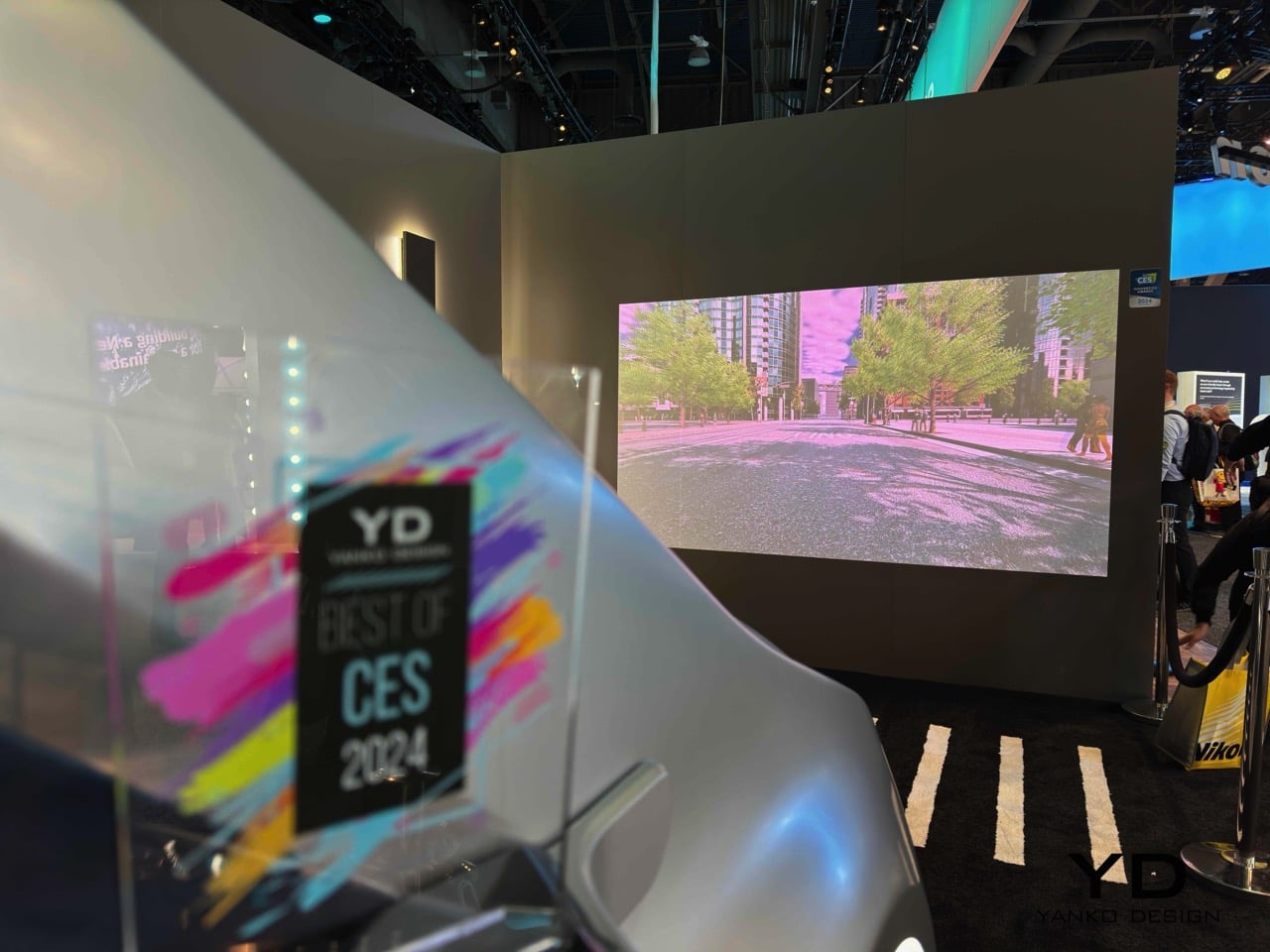
Hisense recently unveiled its latest products at CES 2024. The company’s array of state-of-the-art technologies, including automobile laser displays and rollable laser TVs, sets new industry standards, offering consumers unparalleled visual experiences.
Designer: Hisense
Automobile Laser Display: A New Era in Vehicle Technology
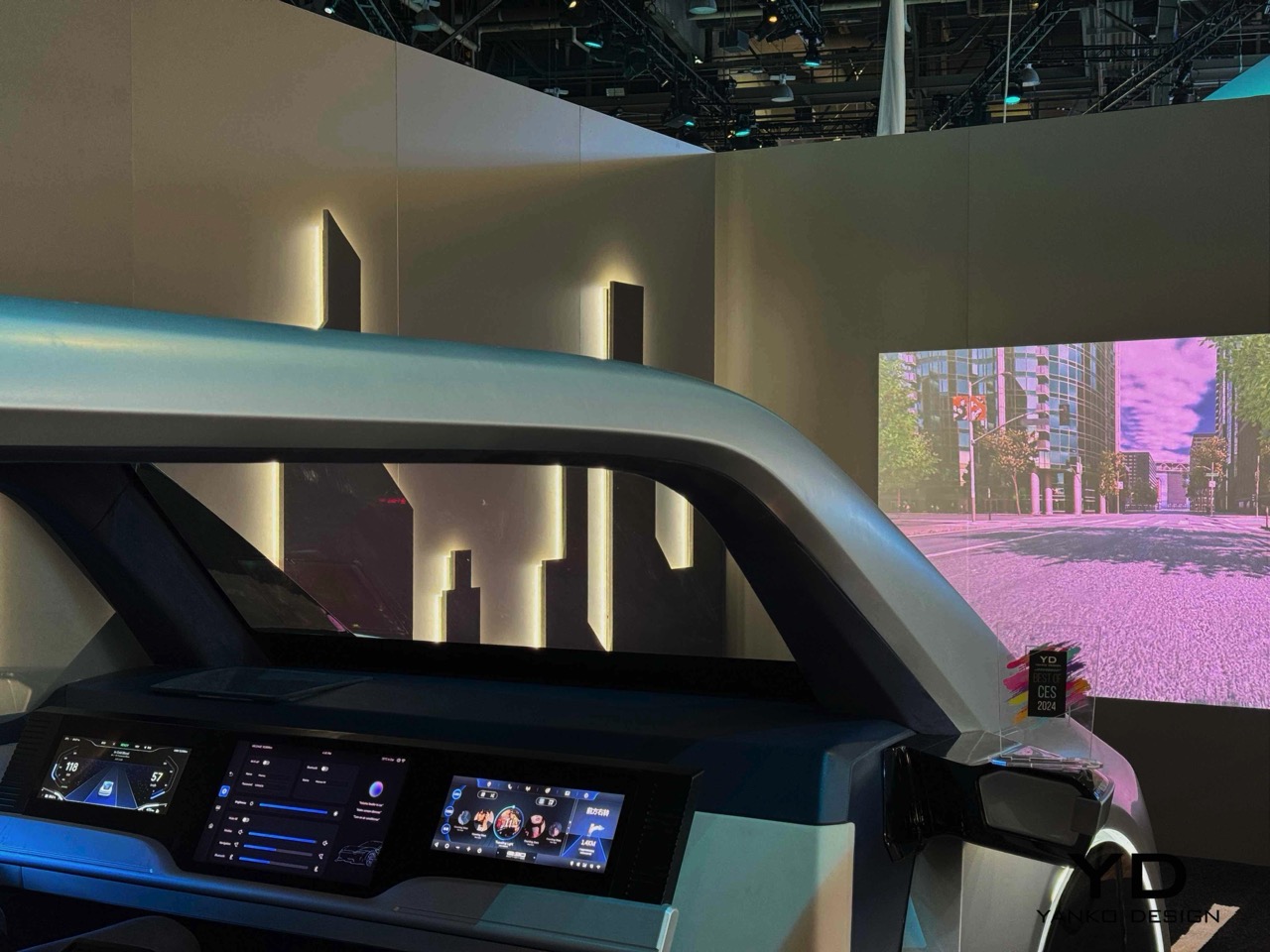
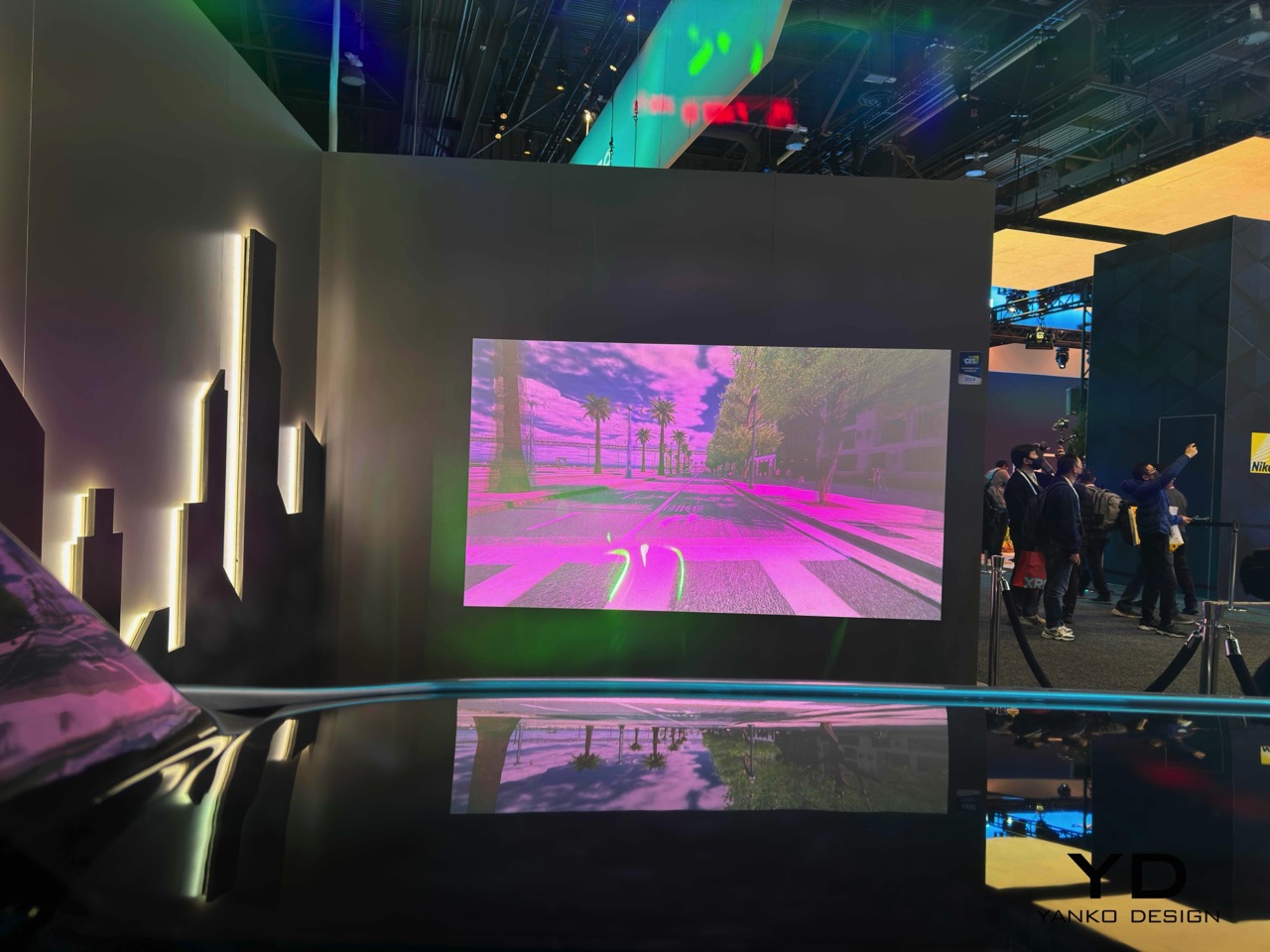
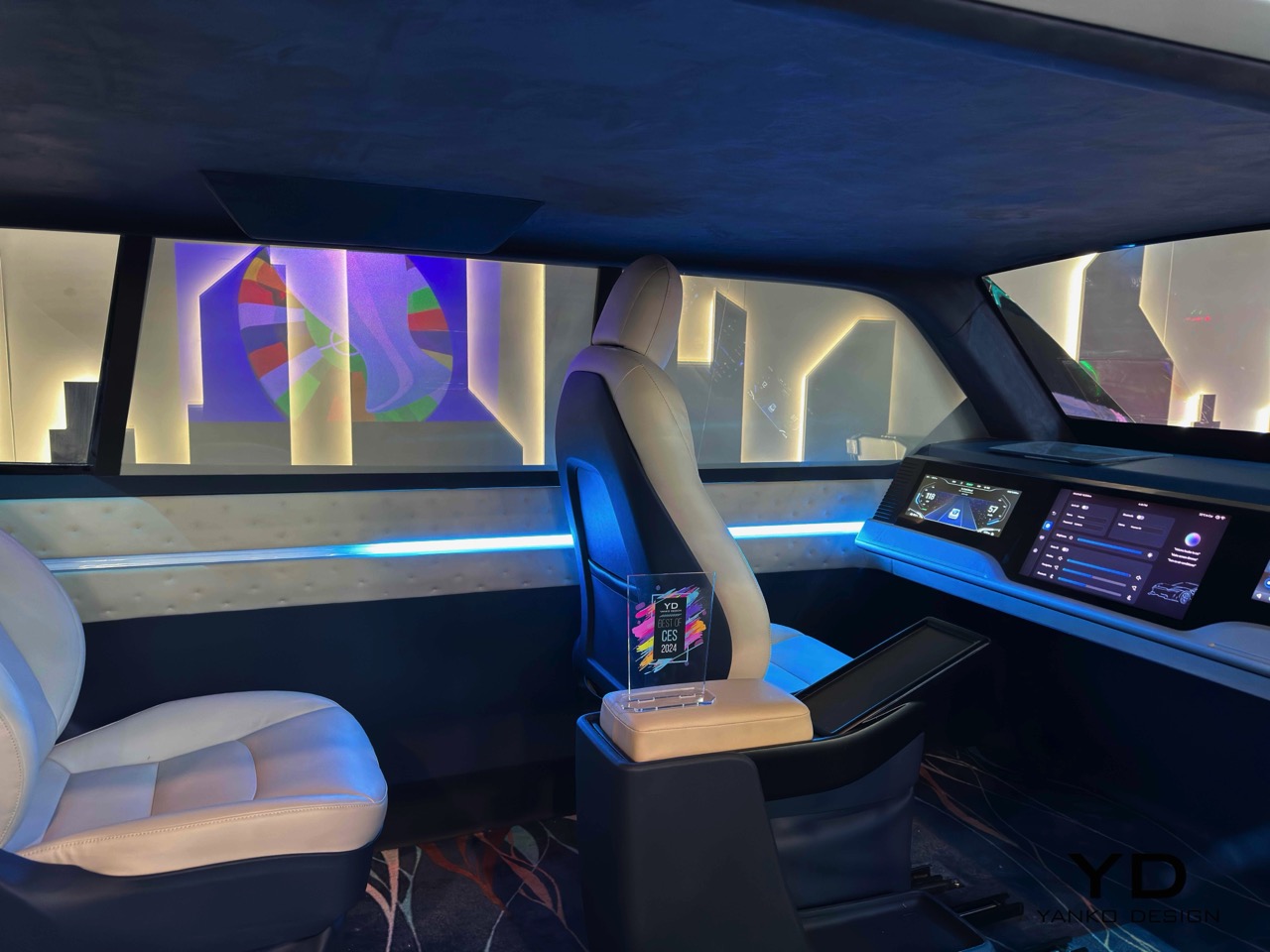
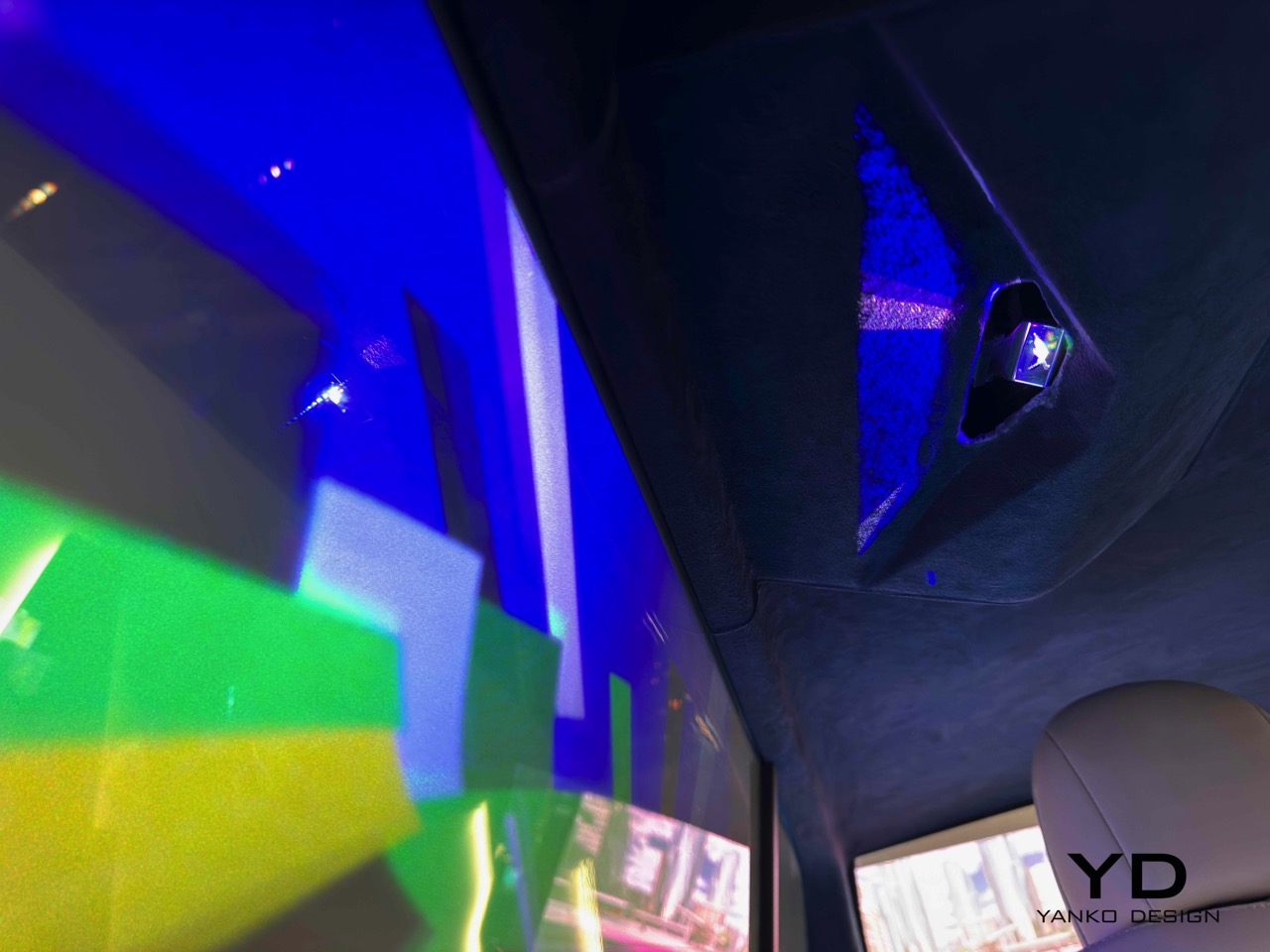
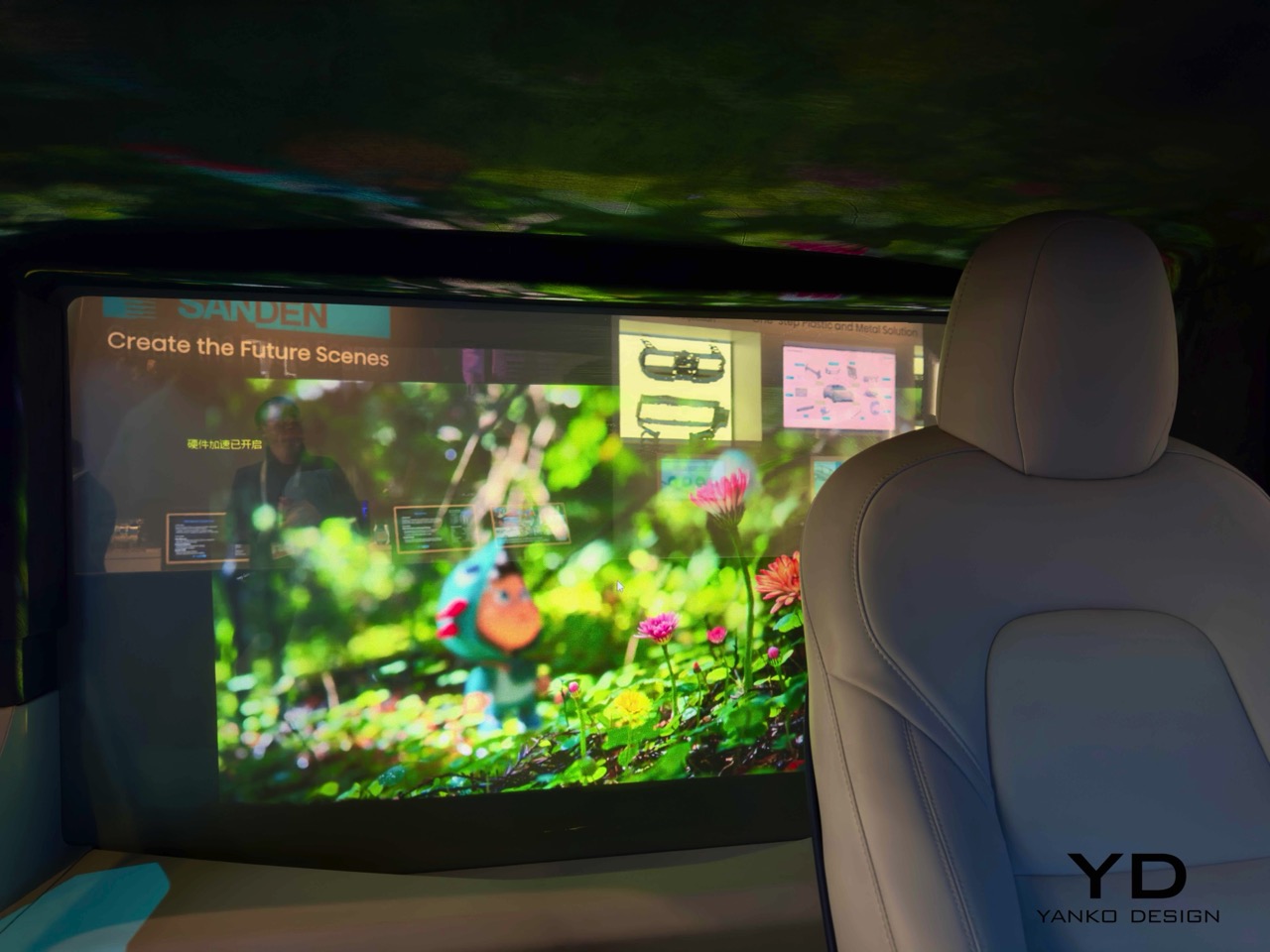
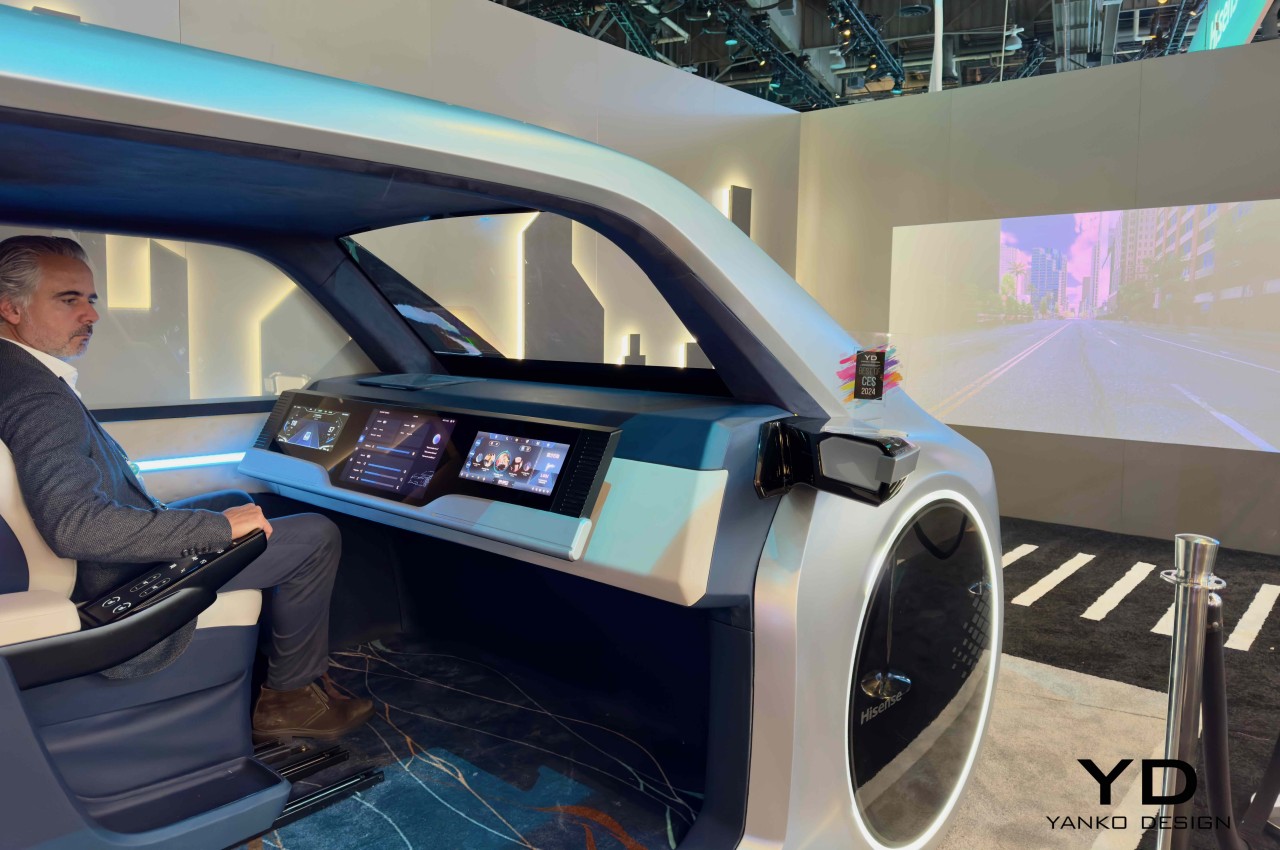
The Automobile Laser Display, honored with the CES 2024 Innovation Award, is revolutionizing the in-vehicle experience. It features the TriChroma triple-laser projection system, delivering a color performance 48% superior to traditional LEDs while maintaining a compact form, 80% smaller than conventional optical solutions. Its 200% luminous efficiency makes it the premier choice for automotive displays. The Laser Holographic AR-HUD transforms the windshield into an expansive holographic screen, merging virtual and real-world elements for safer driving. Advanced optical technology further converts side and rear windows into immersive displays, enhancing navigation and entertainment while focusing on safety and compact design.
Hisense Automotive Laser Display: Eyes on
The display of Hisense’s Automotive Laser at CES 2024 made a lasting impression on spectators. With its remarkable features, this cutting-edge technology is poised to revolutionize the automotive industry. Let’s delve into the details.
Starting from the driver’s cockpit, the heads-up display (HUD) offers an immersive experience by providing turn-by-turn directions, speed, and other essential vehicle information. While the exact resolution and size dimensions are yet to be finalized, the preliminary concept promises a screen size ranging from 13 to 15 inches, ensuring optimal visibility for drivers.
But it doesn’t end there. Rear passengers are also in for a treat with two additional laser projectors, one on each side, and another centrally located in the rear where the traditional glass would typically be. The idea is that when cars are capable of autonomous driving, the rear passenger seats will swivel around. These laser displays, measuring approximately 30 to 40 inches, create a captivating visual experience for passengers, whether they’re embarking on a road trip or enjoying a romantic date night.
One of the most impressive aspects of Hisense’s Automotive Laser Display is its adaptability to the surrounding environment. According to a representative from Hisense, this technology boasts a 200-percent luminous display, surpassing the brightness of conventional LEDs. This feature ensures exceptional picture quality regardless of external conditions, providing an enhanced viewing experience for all passengers.
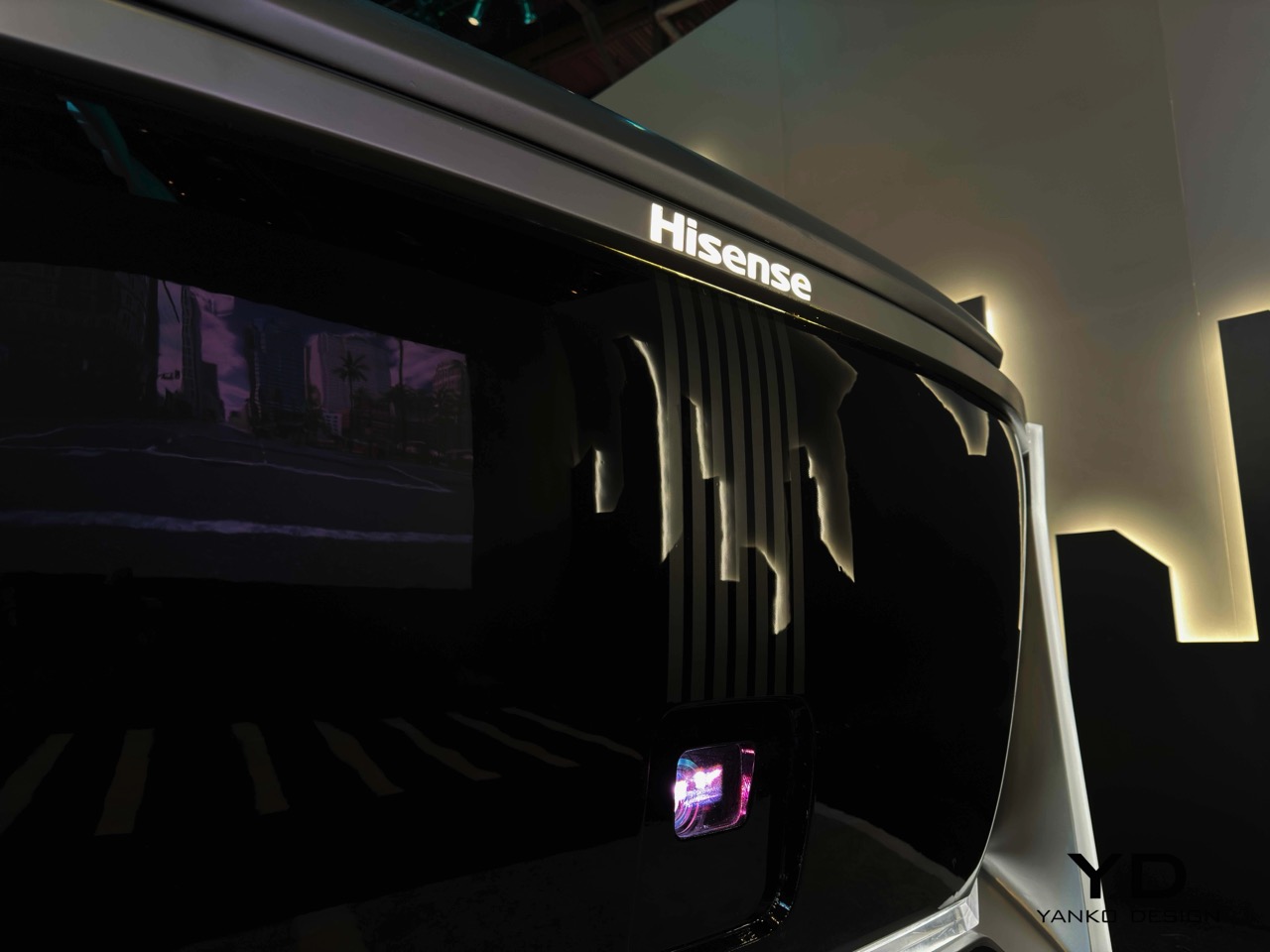
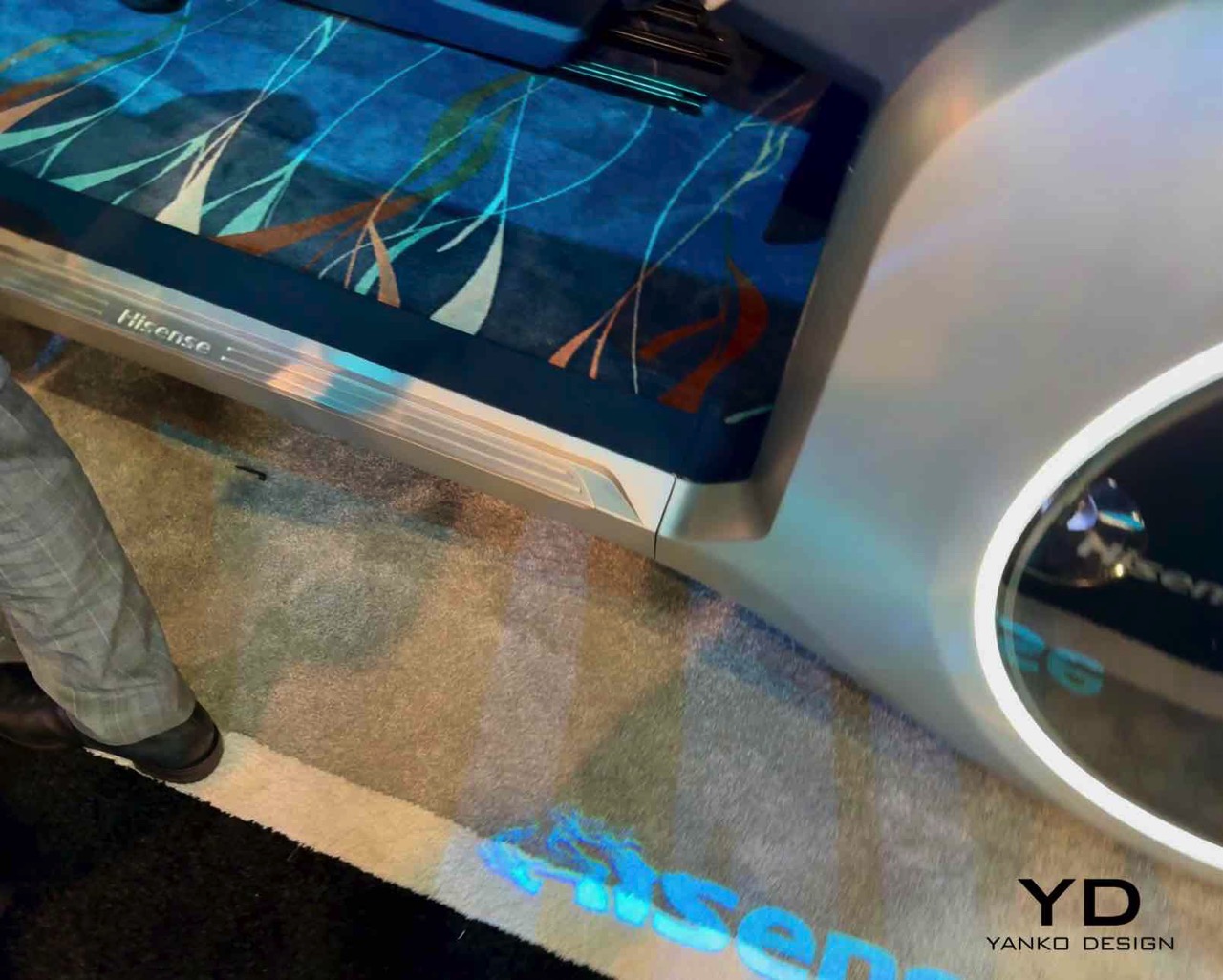
Moreover, the possibilities of this innovative technology extend beyond the confines of the car. Imagine transforming any flat surface into a drive-in theater with a built-in movie projector in the front bumper of your vehicle. While this incredible feature is only functional when the car is parked, it opens up a world of entertainment possibilities. Tailgate parties, camping trips, or even impromptu movie nights become even more exciting with this cinema-quality experience. Of course, you may need to find suitable surfaces, such as a garage door, for an optimal projection experience.
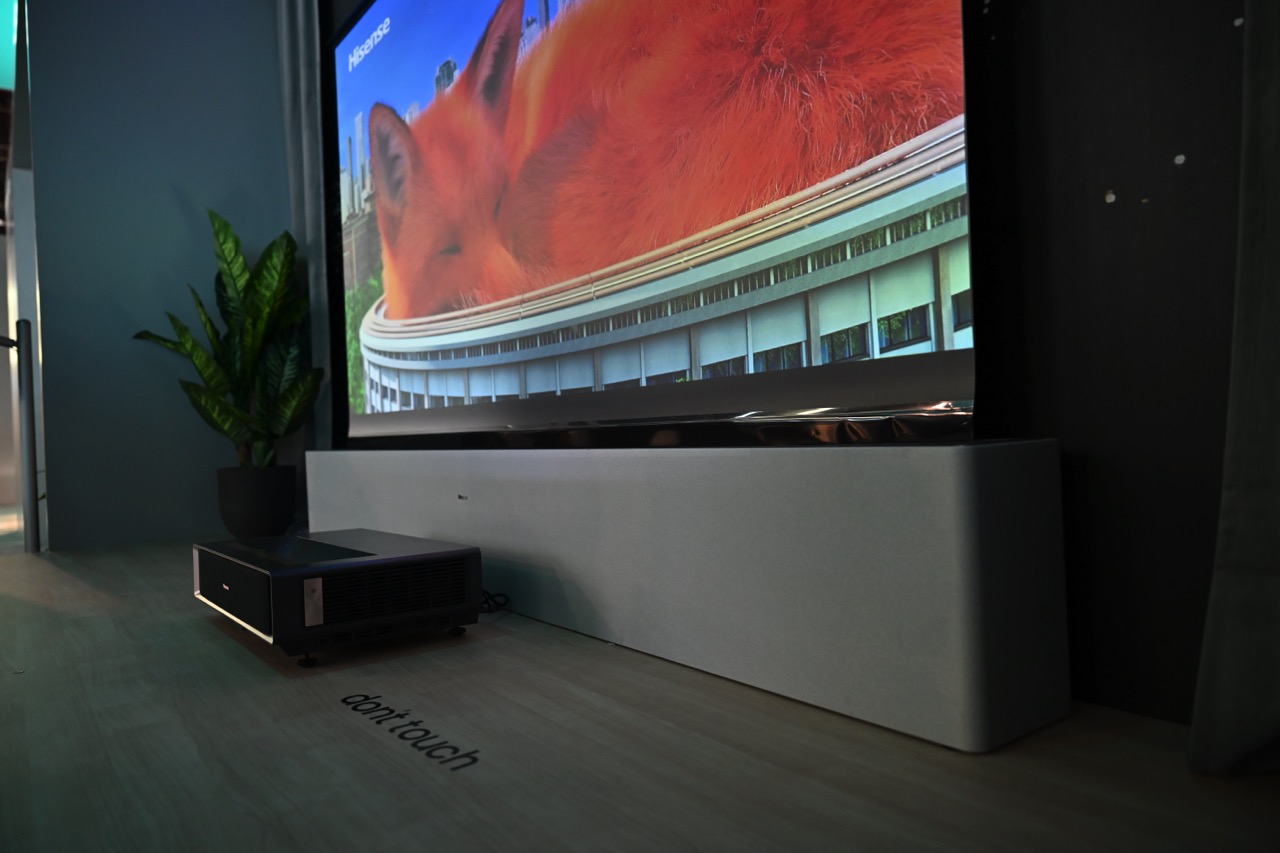
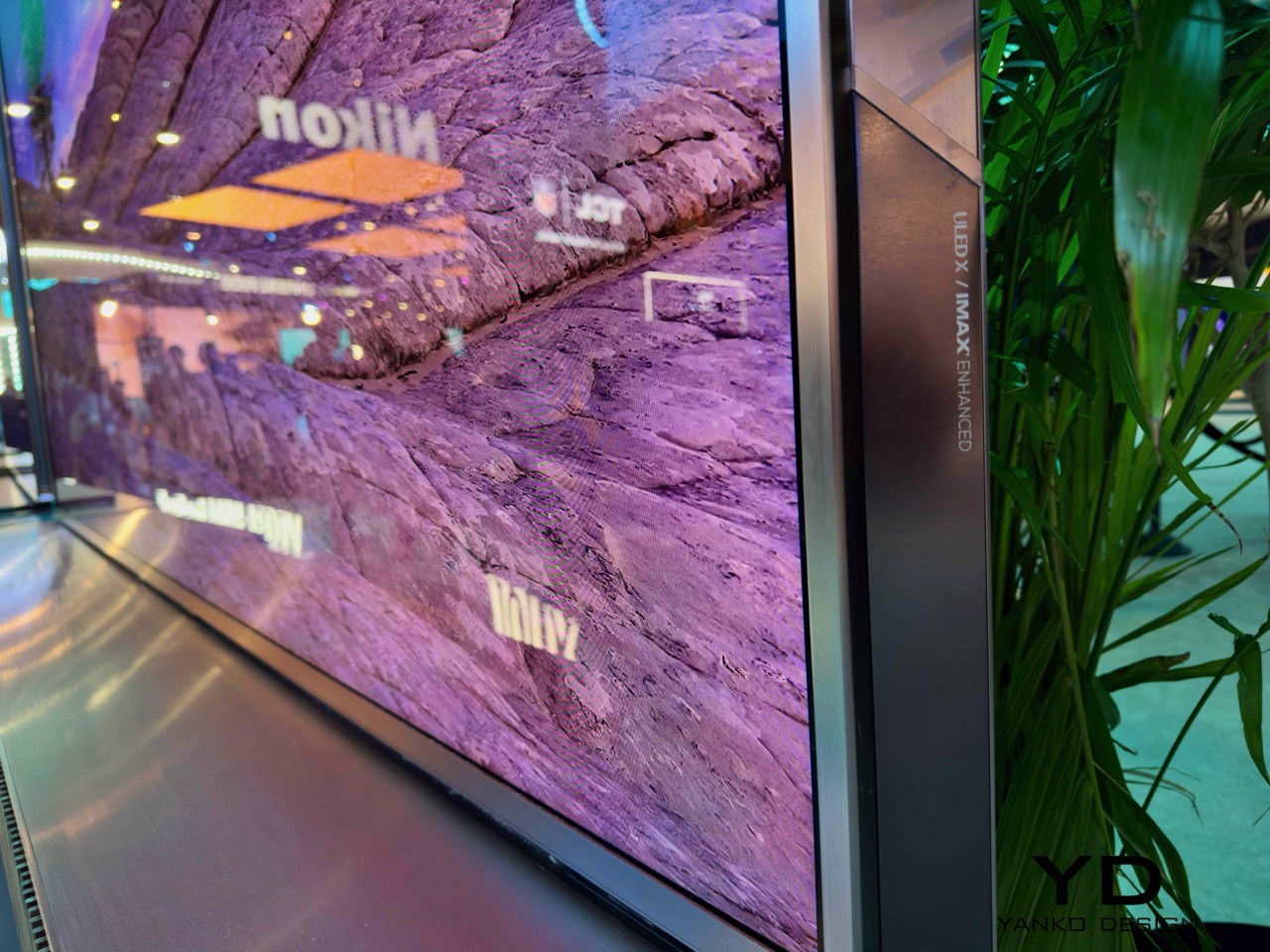
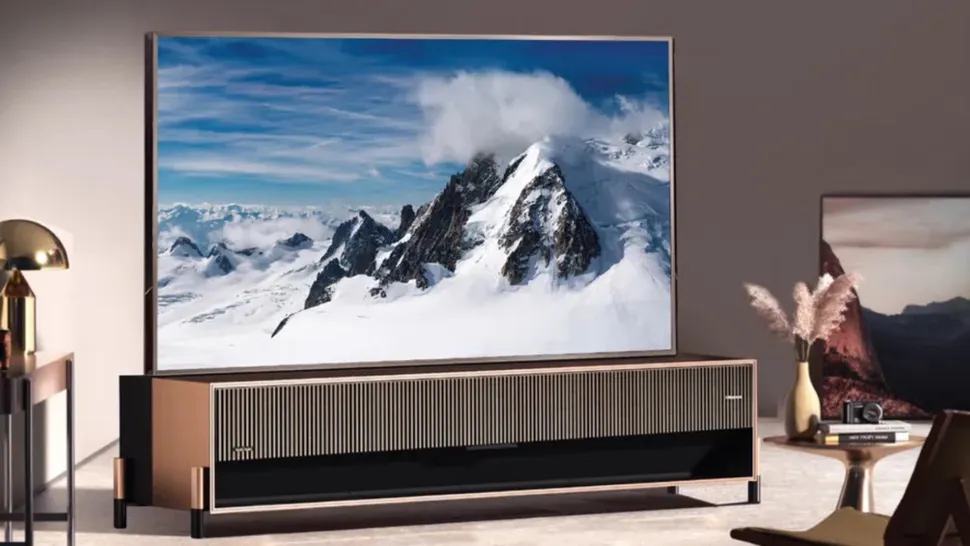
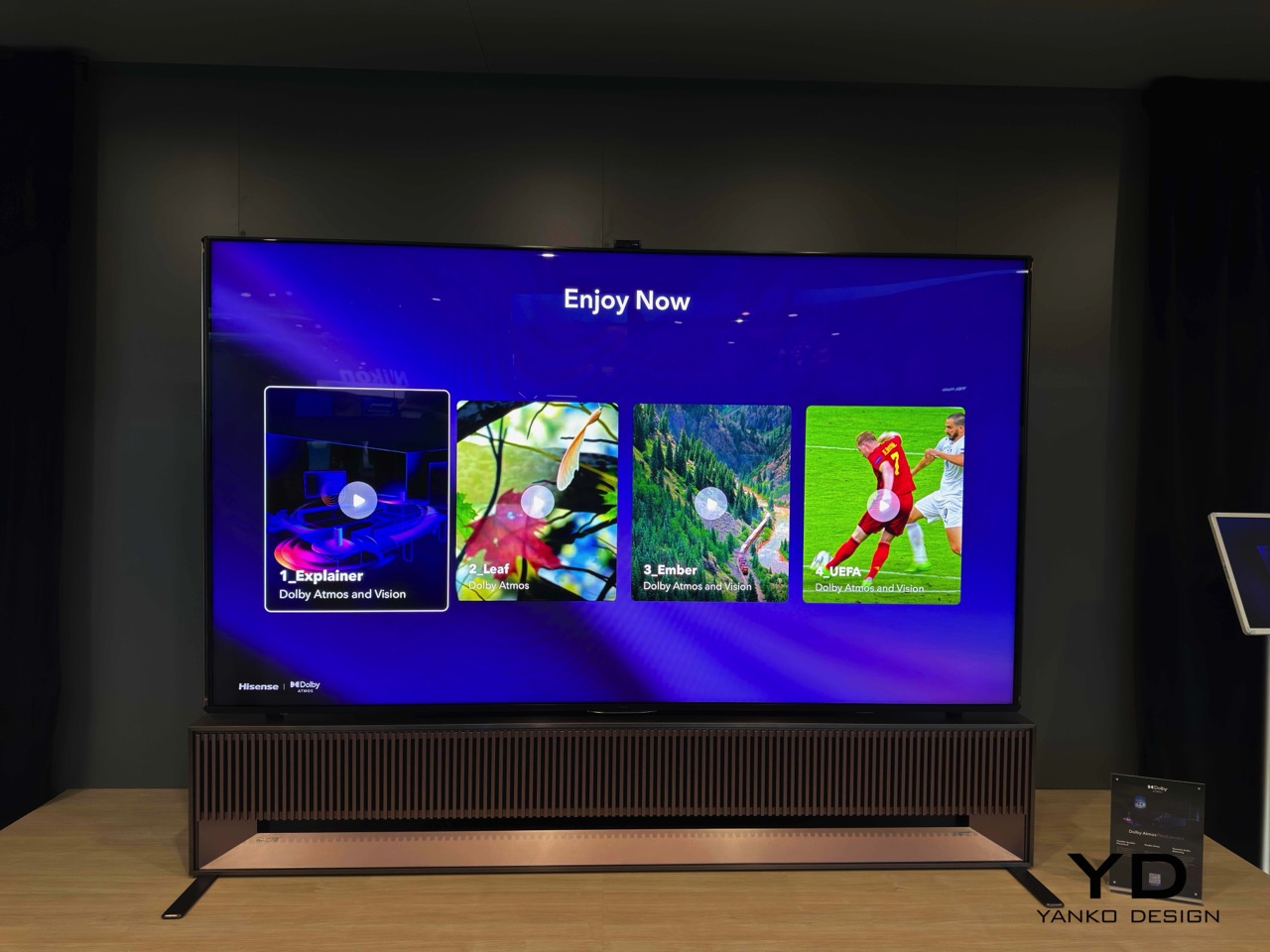
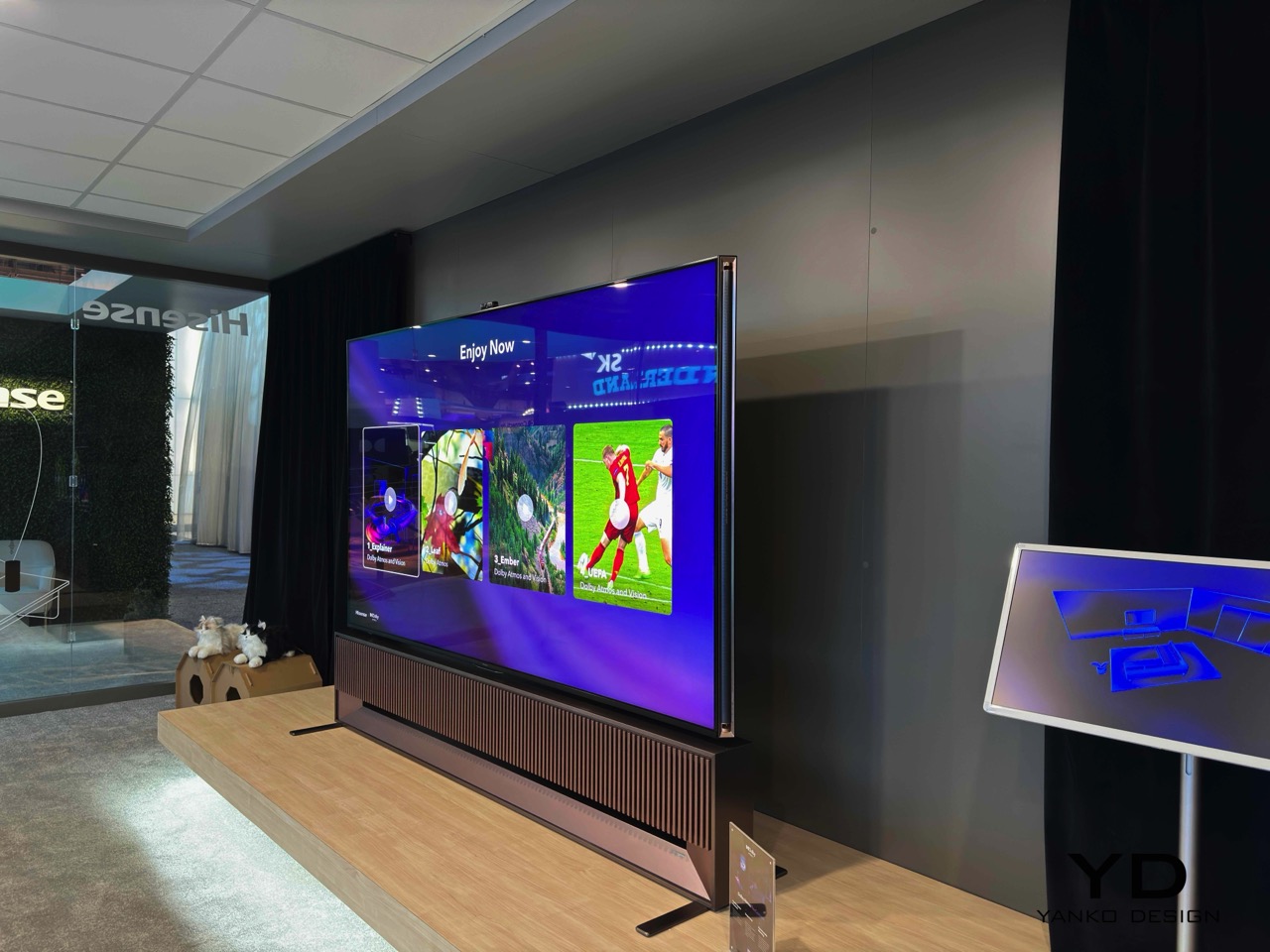
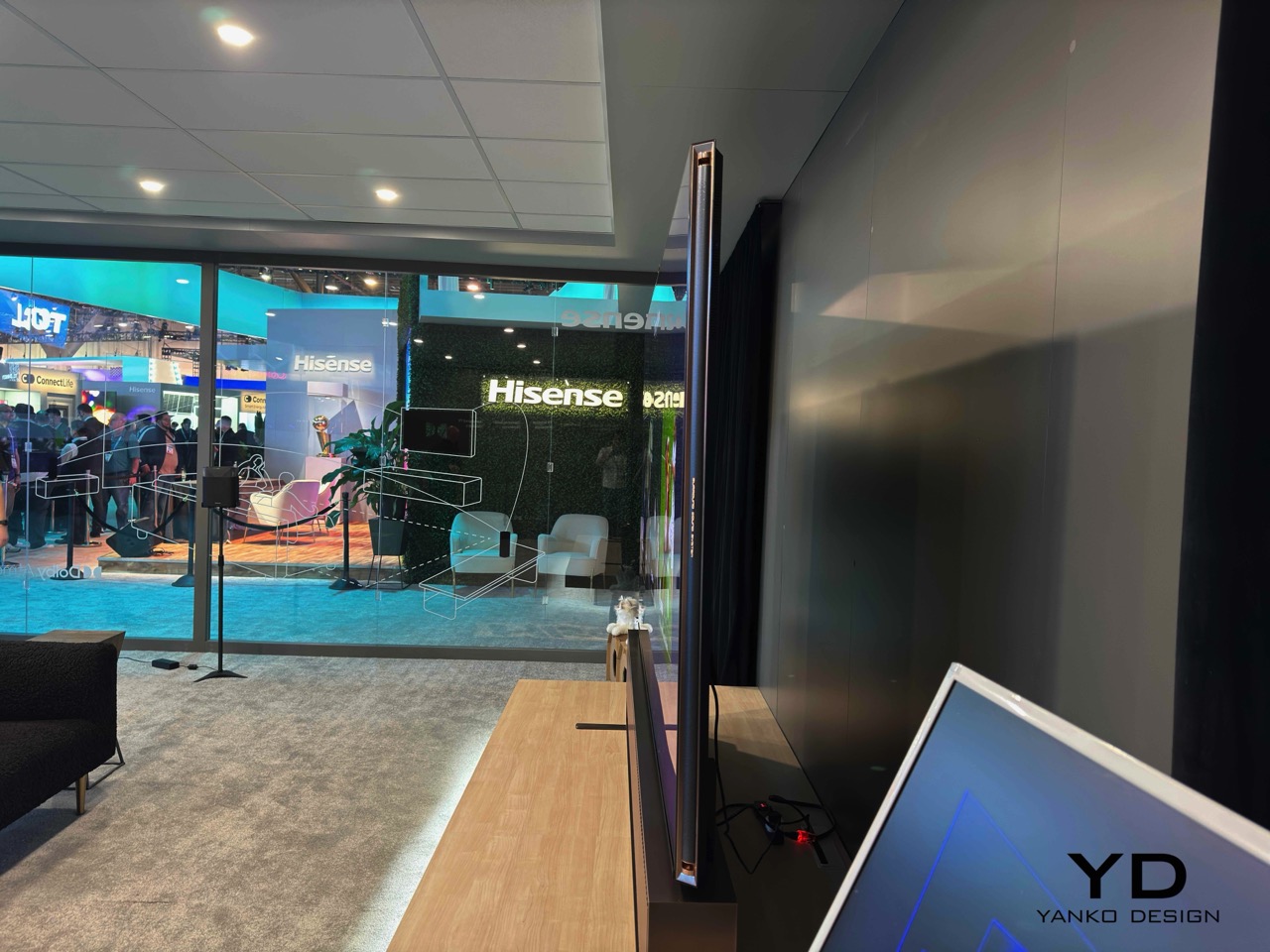
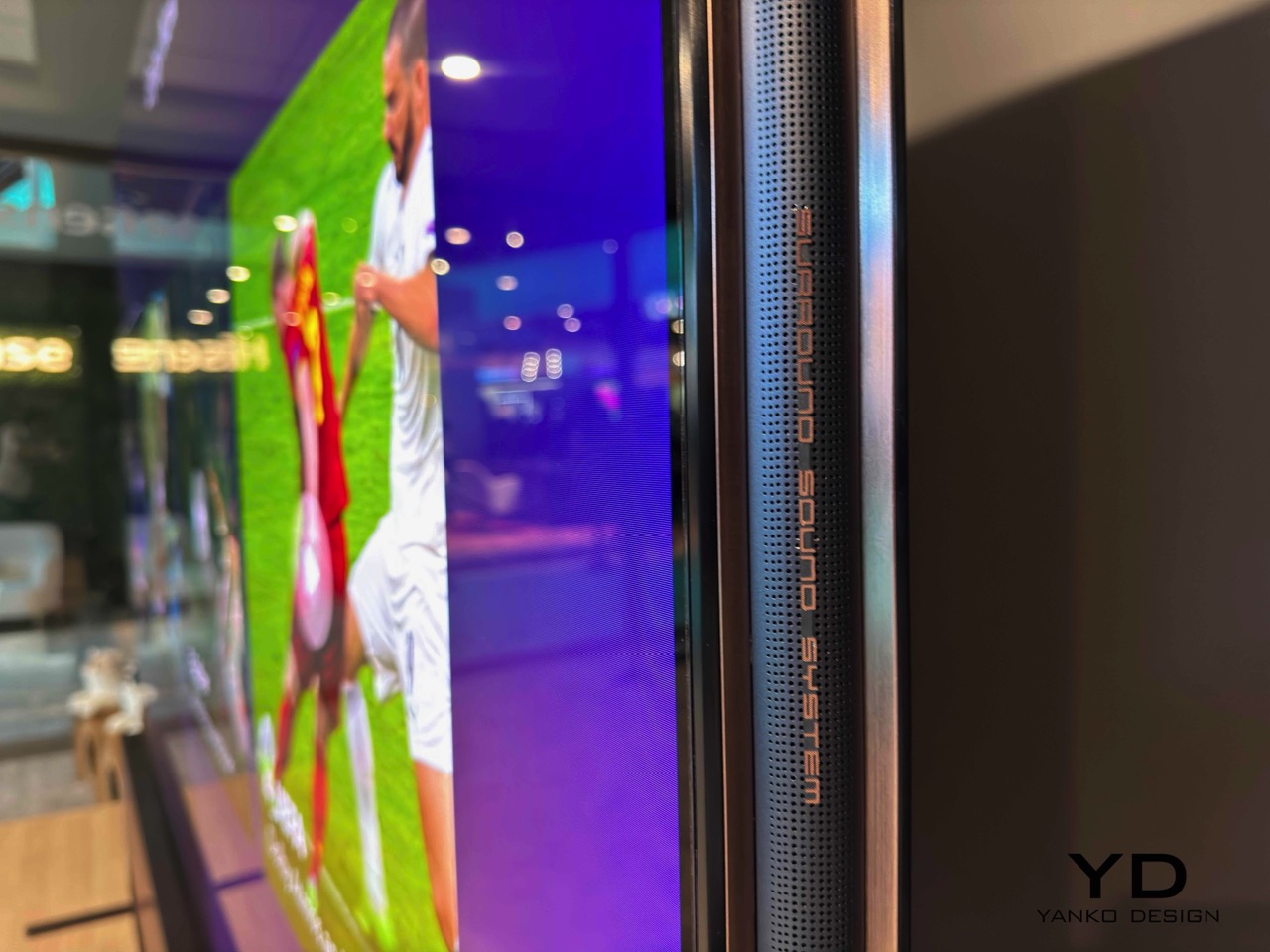
And that’s not all! Hisense also showcased a rollable laser display TV, further expanding its range of state-of-the-art products. The colors, clarity, and brightness of this TV are truly mesmerizing, captivating viewers and immersing them in a stunning visual display.
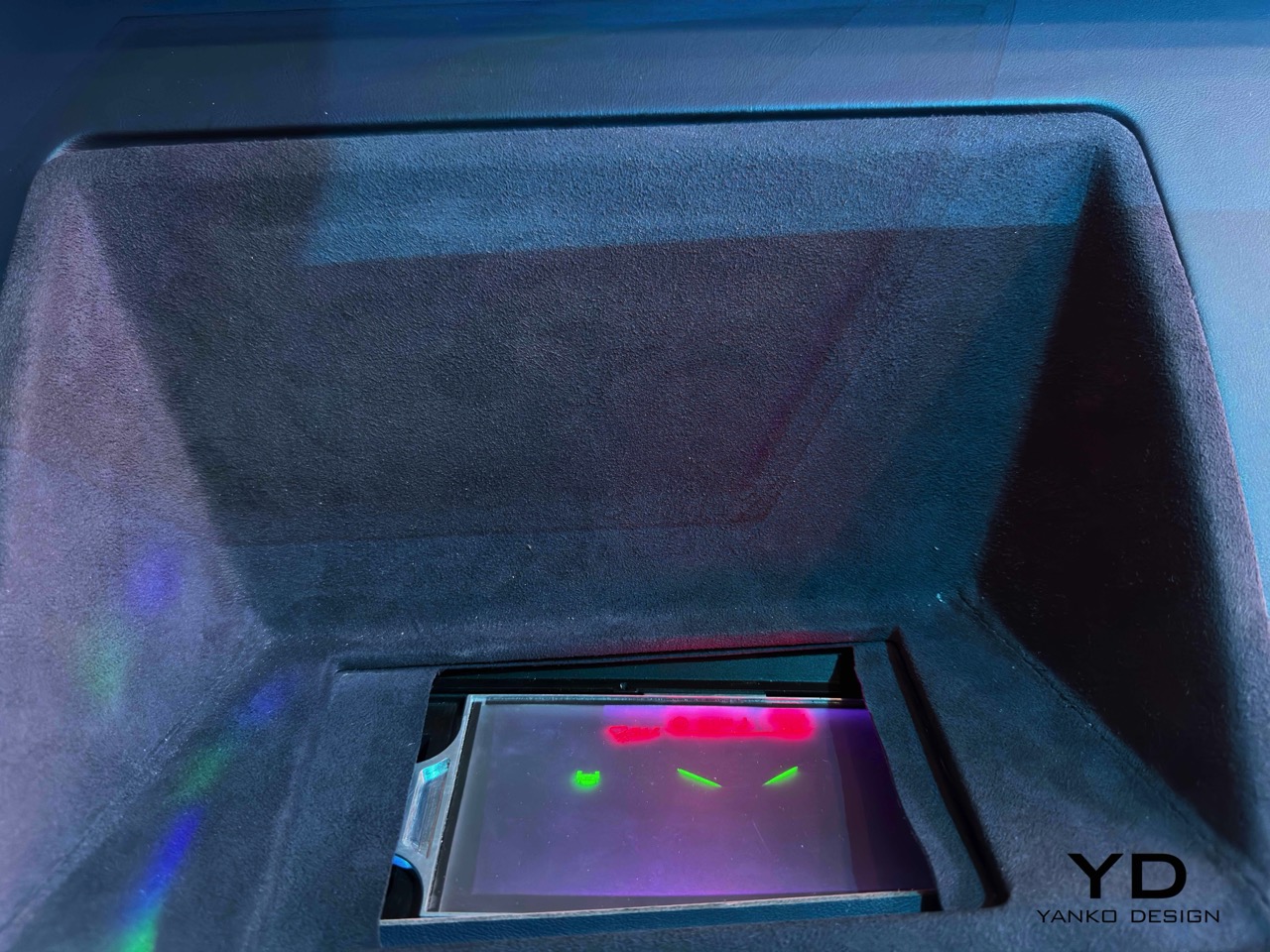
Lastly, a mini-laser projector is located directly under the rearview mirror, providing a luminous projection of the name of the car you are driving.
While Hisense’s Automotive Laser Display is currently in the concept stage, reliable sources have disclosed that leading automakers are actively considering adopting this groundbreaking technology. With its potential to redefine the future of automotive displays, it’s no wonder that industry insiders are closely monitoring the progress of Hisense’s Automotive Laser Display.
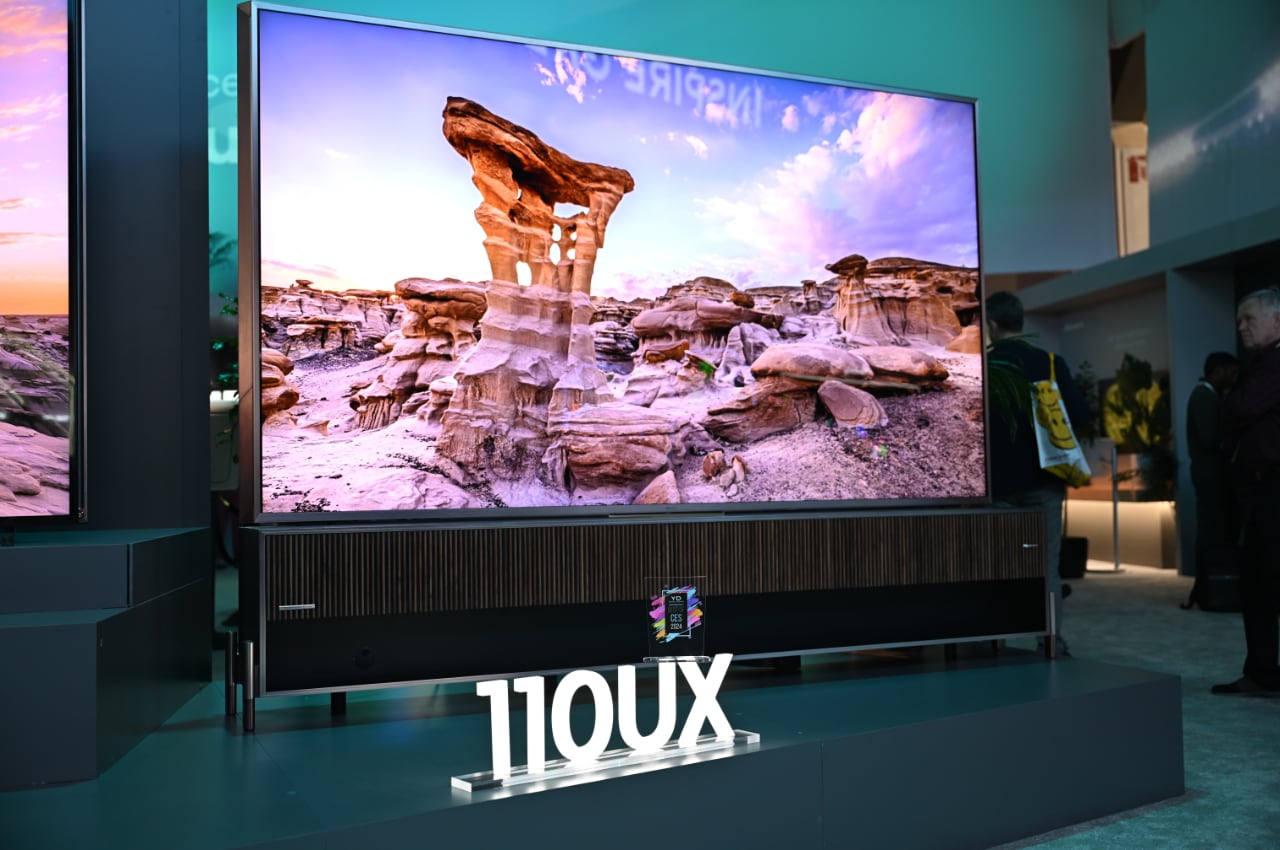
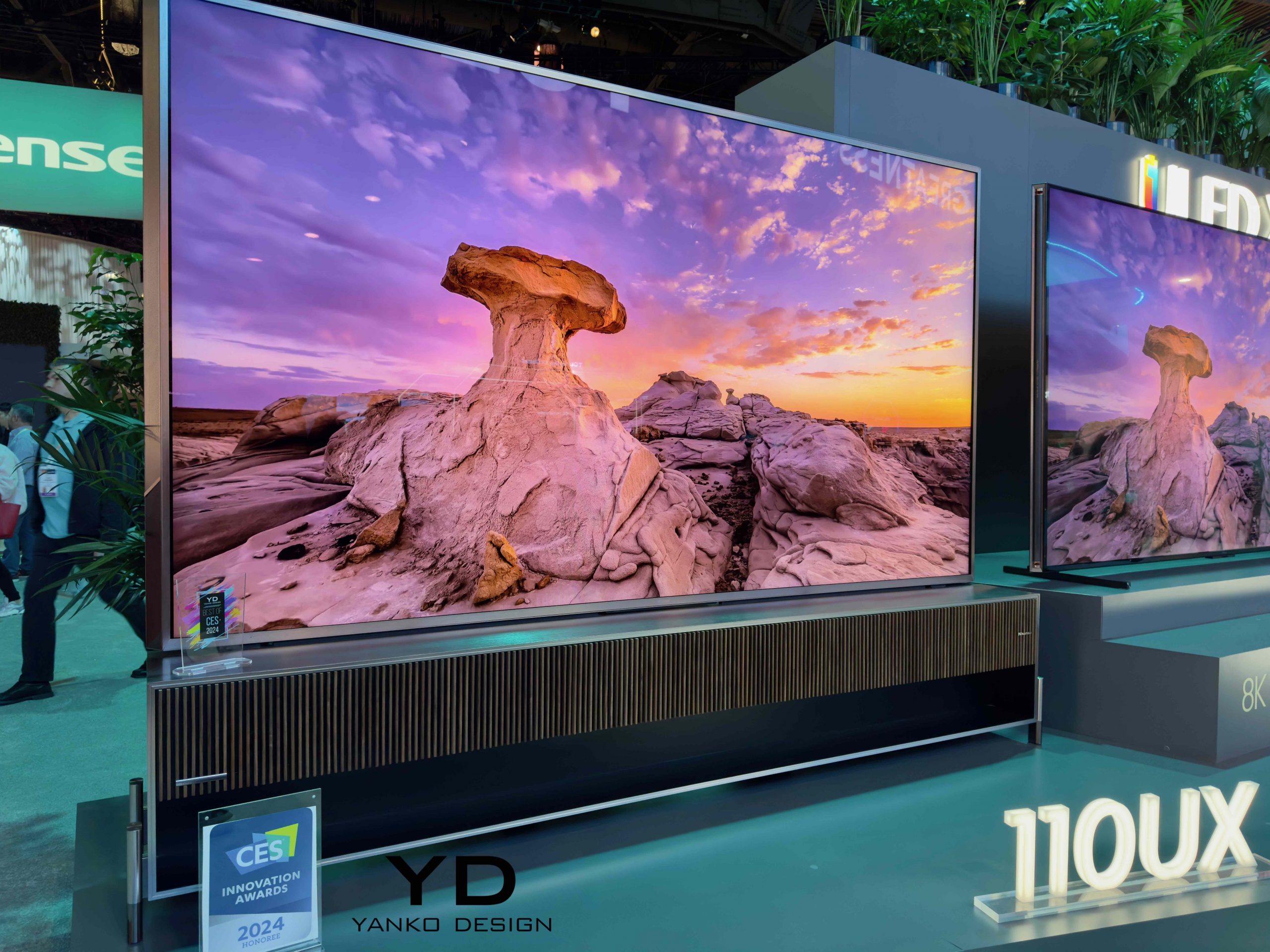
The 110UX, a flagship model in Hisense’s ULED X lineup, showcases the company’s advanced engineering capabilities. This 110-inch giant transforms the living room into a cinematic experience, transcending the traditional role of a TV. The 110UX features an impressive 40,000+ backlight zone, significantly reducing blooming and enhancing contrast to levels not seen before in the LED TV market. With its high-output Mini LED technology, the 110UX achieves an extraordinary brightness of up to 10,000 nits.
However, the 110UX’s appeal extends beyond brightness; its color accuracy is equally impressive. Covering 95% of the BT.2020 color palette, the 110UX surpasses competitors who only reach 80%. This superior color coverage ensures viewers experience the most realistic and vibrant visuals.
The Genius Behind the Screen: AI-Enhanced Viewing
Hisense goes beyond mere hardware prowess. The 110UX includes advanced AI-driven features such as AI contrast and AI depth. These intelligent systems dynamically adjust picture quality, clarity, and immersion based on the content, elevating the viewing experience to new heights. Furthermore, integrating cutting-edge, color-resistant panel materials and QLED-Quantum Dot technology, powered by the Hi-View Engine X chipset, takes color reproduction and image clarity to the next level.
Audio quality is also a major focus. Equipped with 4.2.2 channel audio and Dolby Atmos FlexConnect, the 110UX offers an auditory experience as immersive as its visual counterpart. This harmonious blend of sight and sound creates a captivating entertainment experience.
As a CES Innovation Award Honoree, the 110UX exemplifies Hisense’s dedication to excellence and innovation in display technology.
Comparing the 110UX to Previous Models and Competitors
When compared to previous ULED models, the 110UX represents a significant advancement. Its high-output Mini LED technology generates an extraordinary brightness level, greatly enhancing contrast and dynamic range. Coupled with its impressive 95% BT.2020 color palette coverage, the 110UX stands apart from both its predecessors and competitors, offering a viewing experience that is vibrant, lifelike, and deeply immersive.
What Sets the 110UX Apart in the Mini LED TV Market?
In the Mini LED TV market, the 110UX distinguishes itself through a combination of ultra-high brightness and extensive color palette coverage. These features work in tandem to produce images that are not only bright and clear but also rich and lifelike. This makes the 110UX an ideal choice for movie enthusiasts, gamers, and anyone seeking a premium TV viewing experience.
98UX: Bigger, Brighter, Faster
The 98UX and 110UX represent an evolution in Hisense’s innovative lineup. This 98-inch Mini LED TV matches its predecessors in quality and significantly enhances brightness, contrast, and motion handling.
The 98UX stands out with its extraordinary peak brightness of up to 5,000 nits, almost double that of last year’s models. This remarkable brightness level, combined with over 10,000 local dimming zones, brings unparalleled depth, detail, and contrast to the screen. The result is a picture quality that delivers realism and clarity on a grand scale, especially on its massive 98-inch display.
This TV offers more than just stunning visuals; it delivers a comprehensive sensory experience. The enhanced native refresh rate of 144Hz positions the 98UX as an ideal choice for movie buffs who value smooth motion and avid gamers who require high-performance displays. The increased refresh rate ensures that every frame is rendered with precision, making fast-paced scenes and gaming environments appear exceptionally fluid and lifelike.
A Sound Experience to Match
Complementing its visual clarity, the 98UX also features 4.2.2 channel audio, creating an immersive soundscape. This audio technology ensures that the sound quality matches the exceptional visuals, providing a complete and enveloping entertainment experience.
With these advancements, Hisense’s 98UX is set to be a standout product in the ULED X lineup. It displays Hisense’s commitment to innovation and its ability to deliver cutting-edge technology in its products. The 98UX is not just a television; it’s a gateway to an unprecedented viewing experience, setting new benchmarks in the industry and offering consumers a glimpse into the future of home entertainment.
Conclusion: Hisense’s Vision for the Future of Home Entertainment
Hisense’s 2024 ULED and ULED X lineups, particularly the 110UX, herald a transformative era in home entertainment. With these offerings, Hisense isn’t merely selling TVs; it provides a gateway to an unparalleled entertainment experience. The brand’s commitment to innovation, value, and understanding consumer needs is evident in these products, ensuring Hisense’s continued prominence in the global market.
The home entertainment landscape is constantly evolving, and Hisense’s latest offerings exemplify this progression, showcasing what is possible when technology and creativity converge. With its commitment to innovation, quality, and an unmatched viewing experience, Hisense is leading the way in shaping a bright future for home entertainment.
At YD, we live by the fundamental belief that there’s nothing more powerful than an idea. Concepts have always enthralled us, because they represent what our future could look like, and that’s where designers come in with their unique skill – imagining this conceptual alternate reality on behalf of all of us. As we come to a grand close to 2023, we look back at some of the concepts that we (and you, surely) loved. These concepts represent some of the most intriguing ideas and visions of the year, like imagining what a proper PlayStation Portable in the modern age would look like, or even the Gen-2 CyberTruck for instance. We’re even crowning one of these concepts as our “Best Concept Design of 2023” for its sheer vision, attention to detail, and the fact that it just ever so slightly made us want to throw money at our screens. Want to know what it was? Want to also see the other concepts that made it to this ‘Best of’ list? Scroll down to find out!
1. MOI3D Gaming Console by Vadim Danilkov (Best Concept Design of 2023)
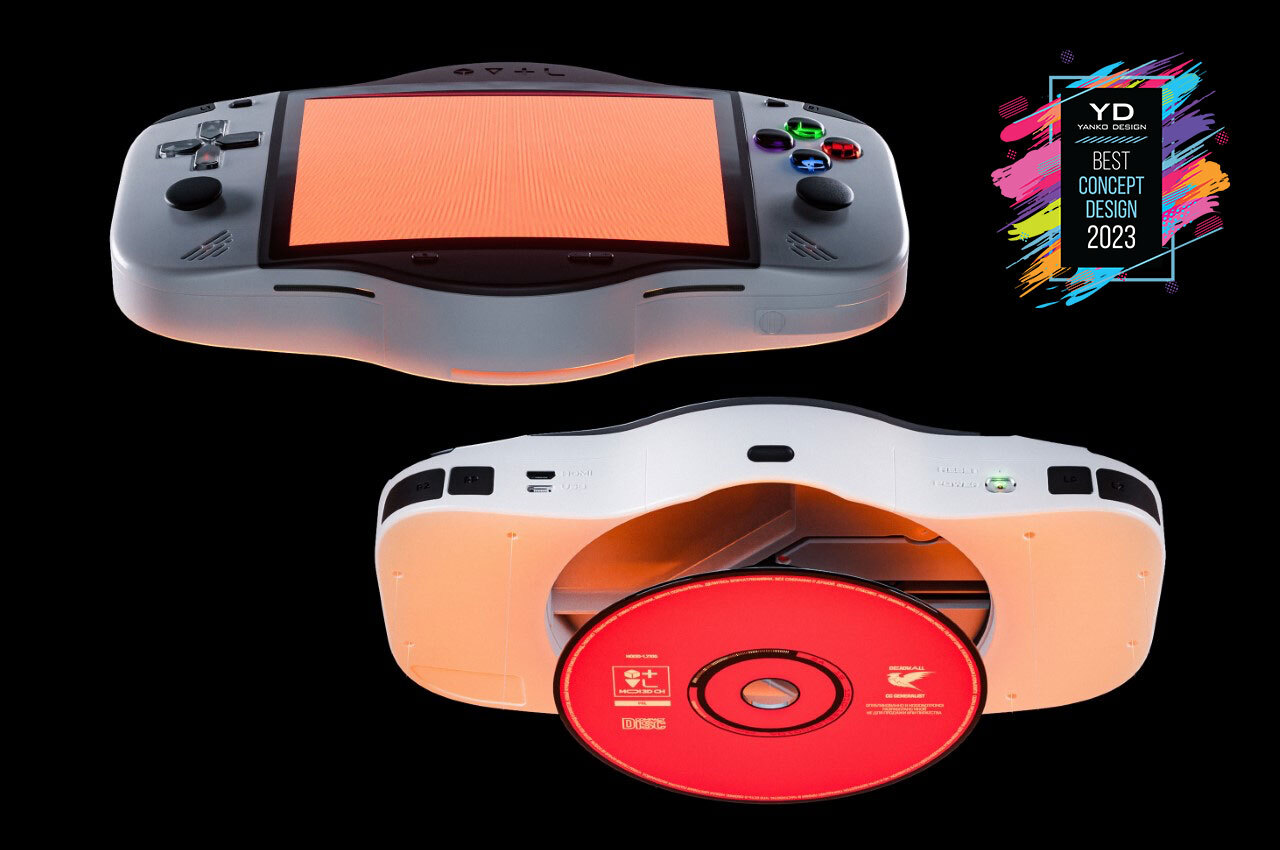
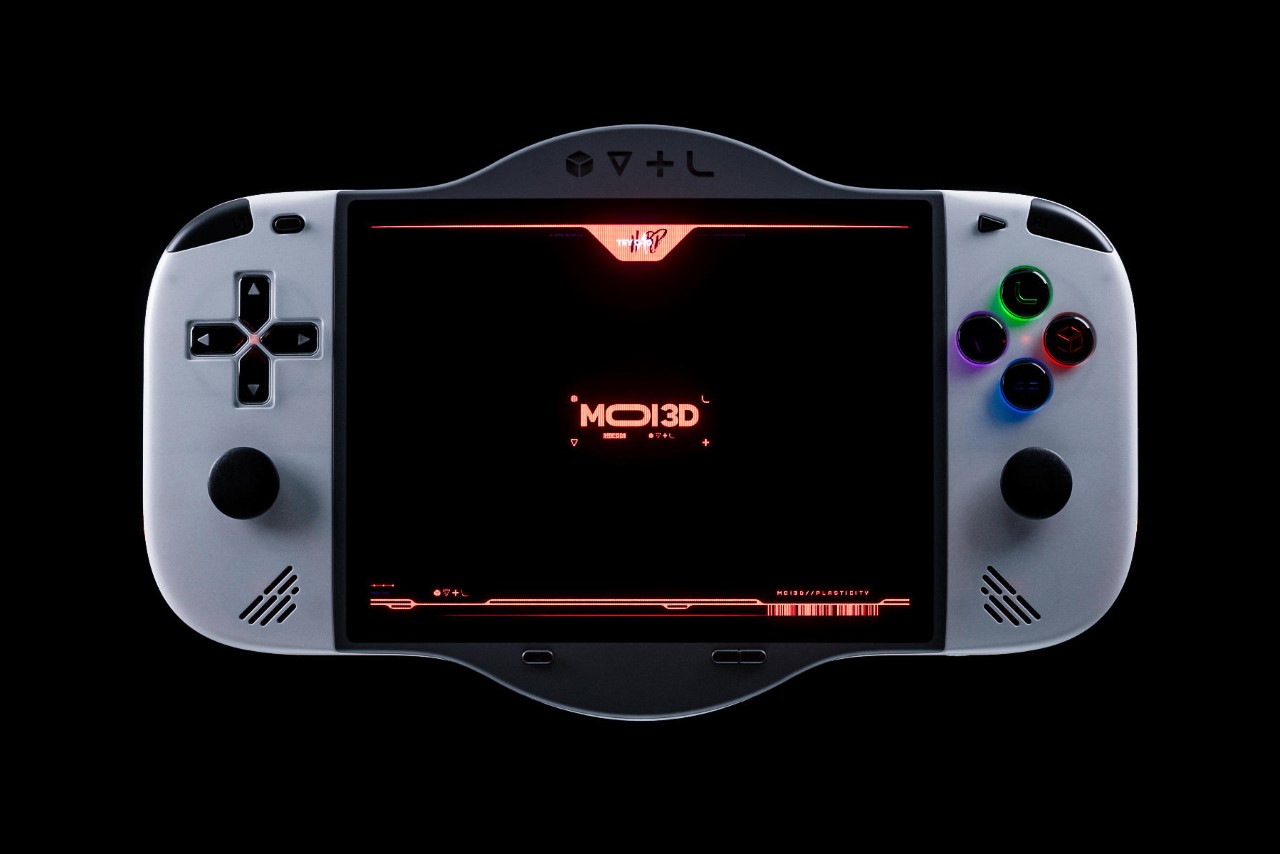
We loved this console for a few reasons. Aside from the fact that it’s detailed down to the last screw and capacitor (check the video), it’s also a tsunami of absolute nostalgia. The MOI3D is a handheld console concept that’s designed to run any PlayStation CD right back to the 1994 PS One. It comes with all the bells and whistles, starting from a screen on the front and a CD-reader on the bottom to action buttons (including L1/L2 and R1/R2), HDMI out, USB-C charging, a CD tray button, and front-firing speakers. Notably, it lacks a 3.5mm audio jack but more than makes up for it with backward compatibility with games from as long as 30 years ago when the PlayStation first debuted!
Why it’s noteworthy?
The Best Design title doesn’t come easy. We rate our designs on their brief, their output, the level of detail, their originality, and their overall appeal and the MOI3D smashed it out of the park on all levels. The amount of detail is dizzying, and the prospect of being able to play all your favorite PS games on one handheld console is even more exciting!
2. Tesla Cybertruck 2.0 by Dejan Hristov
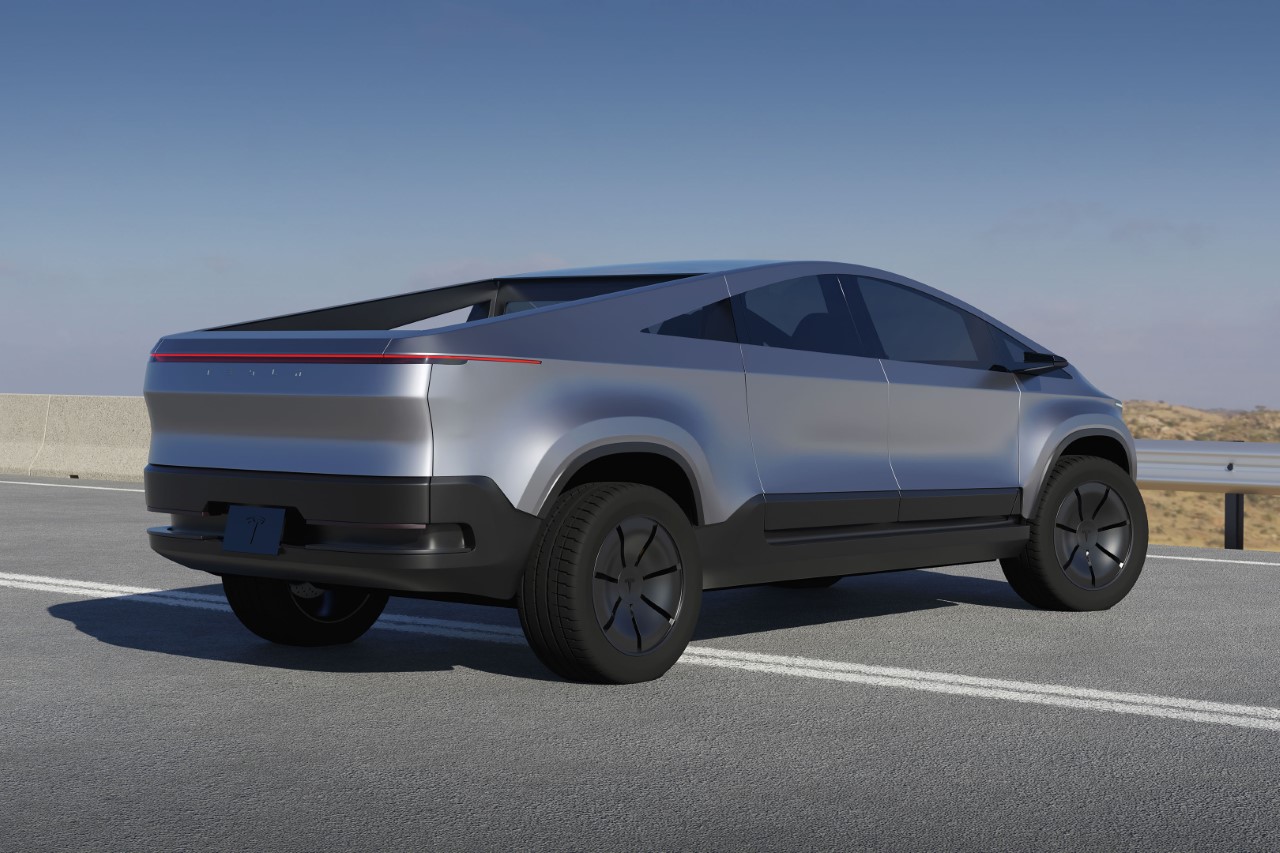
As the Cybertruck FINALLY begins delivering to customers who first ordered it back in 2019 (if they were ready to pay that tear-jerking new price), we decided it was time to plan for the next big thing. Dejan Hristov’s Cybertruck 2.0 really caught our fancy for its unique design. It was eye-catching and iconic without being polarizing, and still somehow stuck to the Cybertruck’s design language without looking like it was made using origami. The gentle curves do a wonderful job of reflecting light and the world around it, creating the truck’s overall appeal, and if that rear truck bed wasn’t enough storage, this one also sports a frunk that opens like a drawer cabinet!
Why is it noteworthy?
Hristov’s design paints an arguably less polarizing picture of the Cybertruck but retains its overall soul. When Musk made a point that all pickup trucks looked the same, he wasn’t wrong. Hristov carries that torch but creates an EV that looks different without looking ugly.
03. Apple iPhone Ultra by Jimmy Huynh
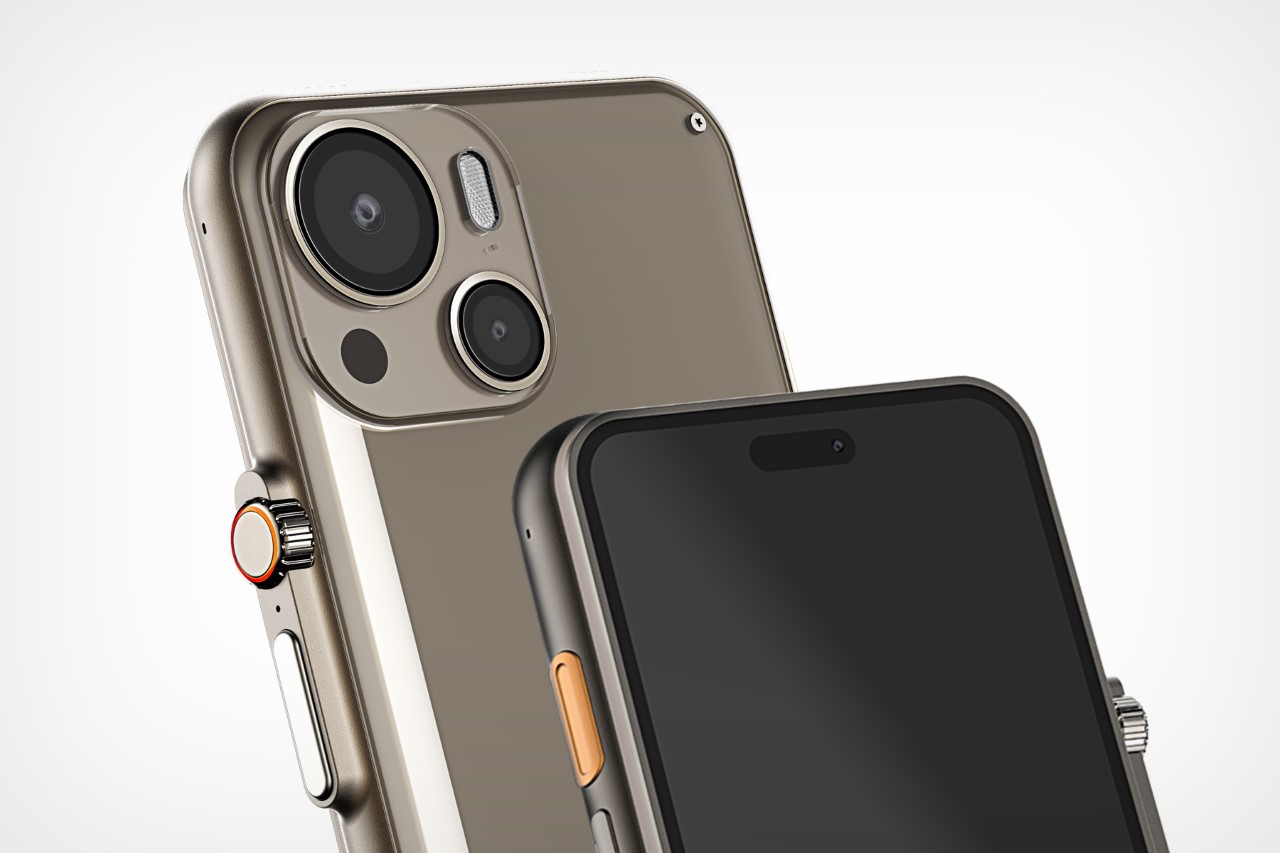
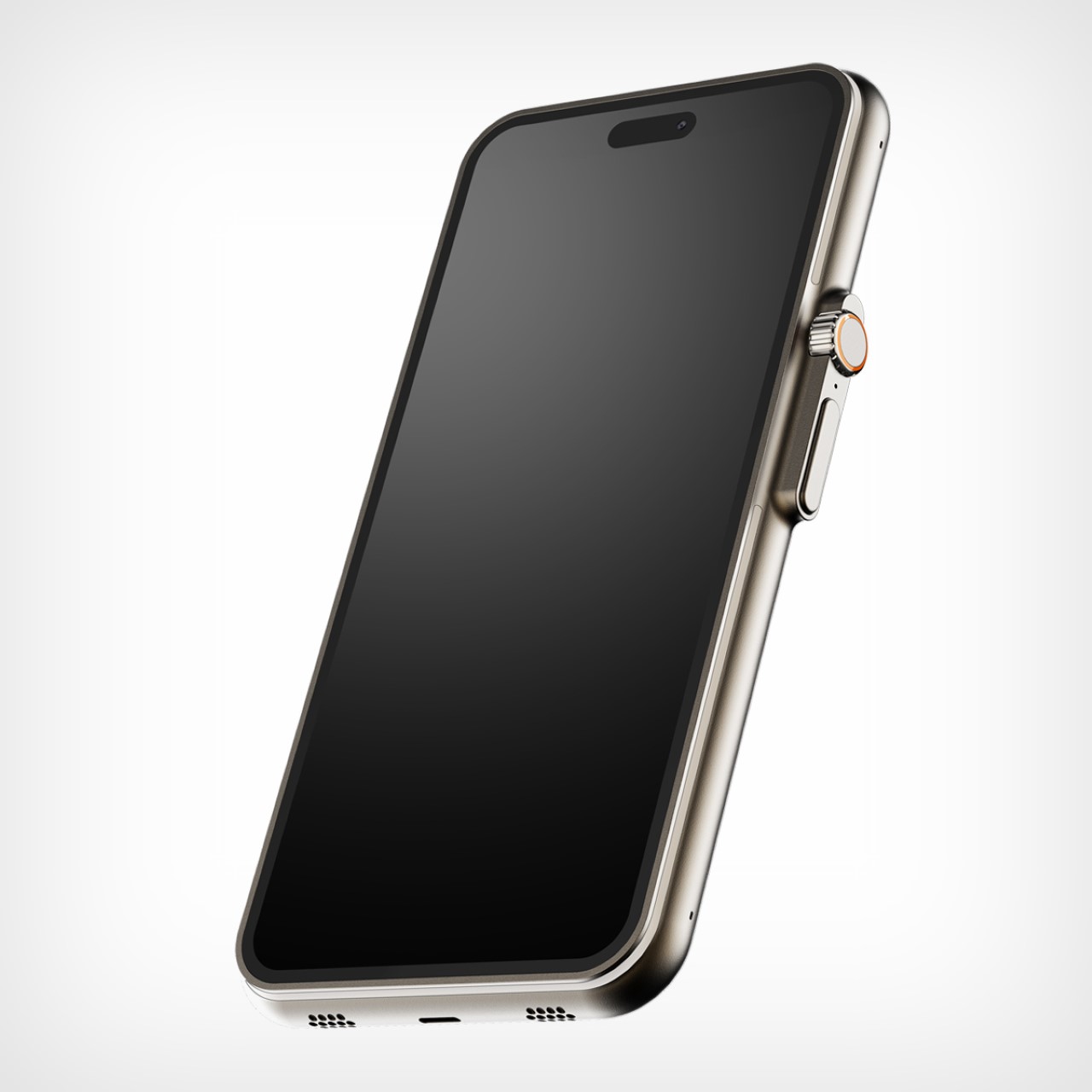
We all thought Apple would drop an iPhone Ultra this year, but the company delivered something just as good – an iPhone Pro series made from titanium, with USB-C, and an Action button. Sure, it doesn’t look as captivating as this particular concept by Jimmy Huynh, but we love it all the same. As far as this iPhone Ultra concept goes, Huynh retained the Watch Ultra’s aesthetic beautifully, with a gorgeous crown, orange action button, and that nude titanium finish that culminates in those speaker grills at the bottom. Sure, some might find that odd bump on the side unappealing, but we appreciate anything we can rest our fingers against as we hold this phone up.
Why is it noteworthy?
It’s been a hot minute since Apple announced any new iPhone range. The Watch got an Ultra debut last year, but Apple’s stuck to the iPhone, SE, and Pro range for years now. Although some say there wouldn’t be much difference between the Pro and the Ultra, we disagree. The Ultra isn’t a creative-aligned iPhone. It’s an iPhone that’s built like a brick. Incredible sturdiness, game-changing resilience, and the kind of software security that would make it perfect for government officials (perhaps even the ones in the CCP)!
04. Nothing Power Bank by Subhav Menon Srivastava
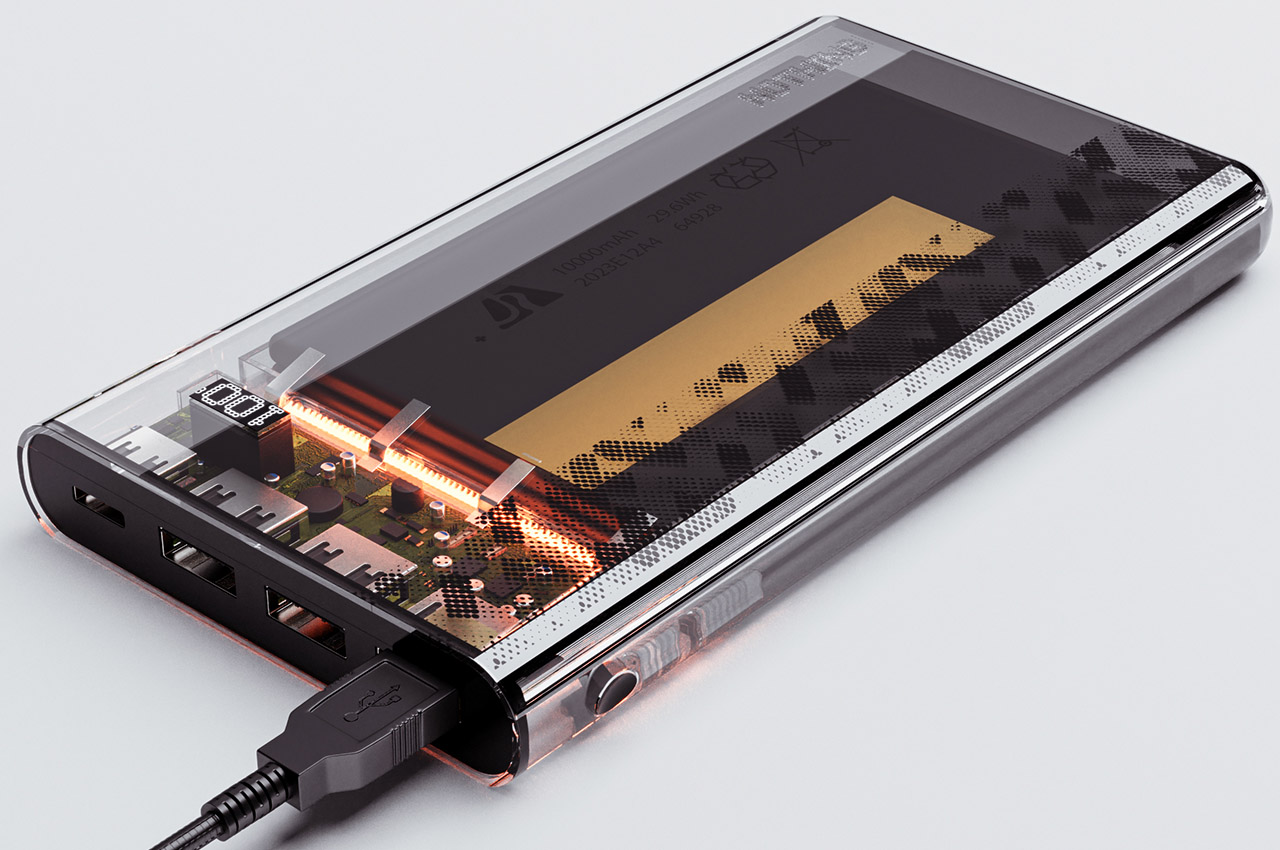
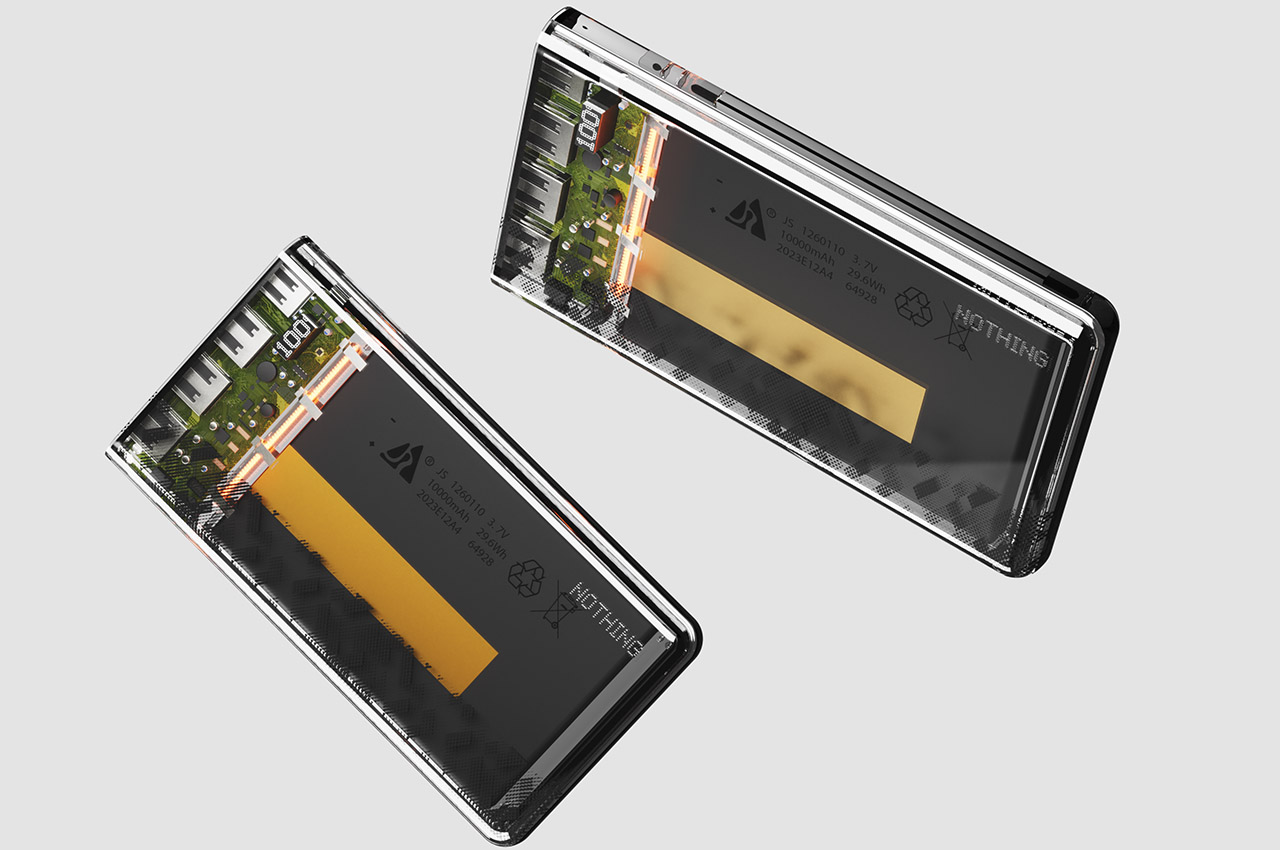
Last year Nothing created waves with its first transparent-bodied smartphone, and while we got the Nothing Phone (2) this year, we were hoping for a few phone-adjacent accessories. A Nothing Power Bank, for example. This transparent portable charger from the mind of Subhav Menon Srivastava has us drooling because of how gorgeous it looks. While most power banks have nothing more than an Li-ion battery and a PCB, Srivastava makes things interesting with printed elements on the outer glass, and an LED display that shows the battery percentage of the power bank. You’ve also got a whopping 10,000 mAh battery on the inside, and a few LED lights that bring the power bank to life when plugged in.
Why is it noteworthy?
Our readers certainly loved the Nothing Power Bank, with 60,000 views on the concept. That pretty much affirms that there’s public demand for the Nothing Power Bank, so if Carl Pei is reading this…
05. Apple Mac Nano by Le KBM
Sometime in 2022 (or probably earlier) a patent surfaced for an Apple keyboard with its own Mac computer built into it. Given that Apple was developing its own silicone line, at the time this made absolute sense. Fit an entire Mac into a keyboard and you had yourself a makeshift Mac Mini with you! Plug a display in and you were ready to go (maybe you’d need a trackpad or mouse too, but you get my drift). Designer Le KBM decided to build out this vision, creating the Mac Nano concept. The concept features a rejuvenated Magic Keyboard with a touchbar on top and an M-series chip inside, giving it laptop-worthy computing power in the format of a keyboard. Hook an iPad or an iPhone to it and you have yourself a renegade Mac with a touchscreen. What’s not to love?!
Why is it noteworthy?
Conceptually, the Mac Nano seems somewhat strange but then again, the Mac Mini was an odd concept too. Why create a portable Mac when the MacBook Pro was already a thing? Well, the Mac Mini sort of found its own place in the Apple ecosystem, and for people looking for an ‘Air’ version of that, the Mac Nano is the perfect choice! Plus, we haven’t seen a ‘nano’ Apple product in a while!
06. PocketMan P1 Handheld Console by Grzegorz Rozwadowski (Twig Studio)
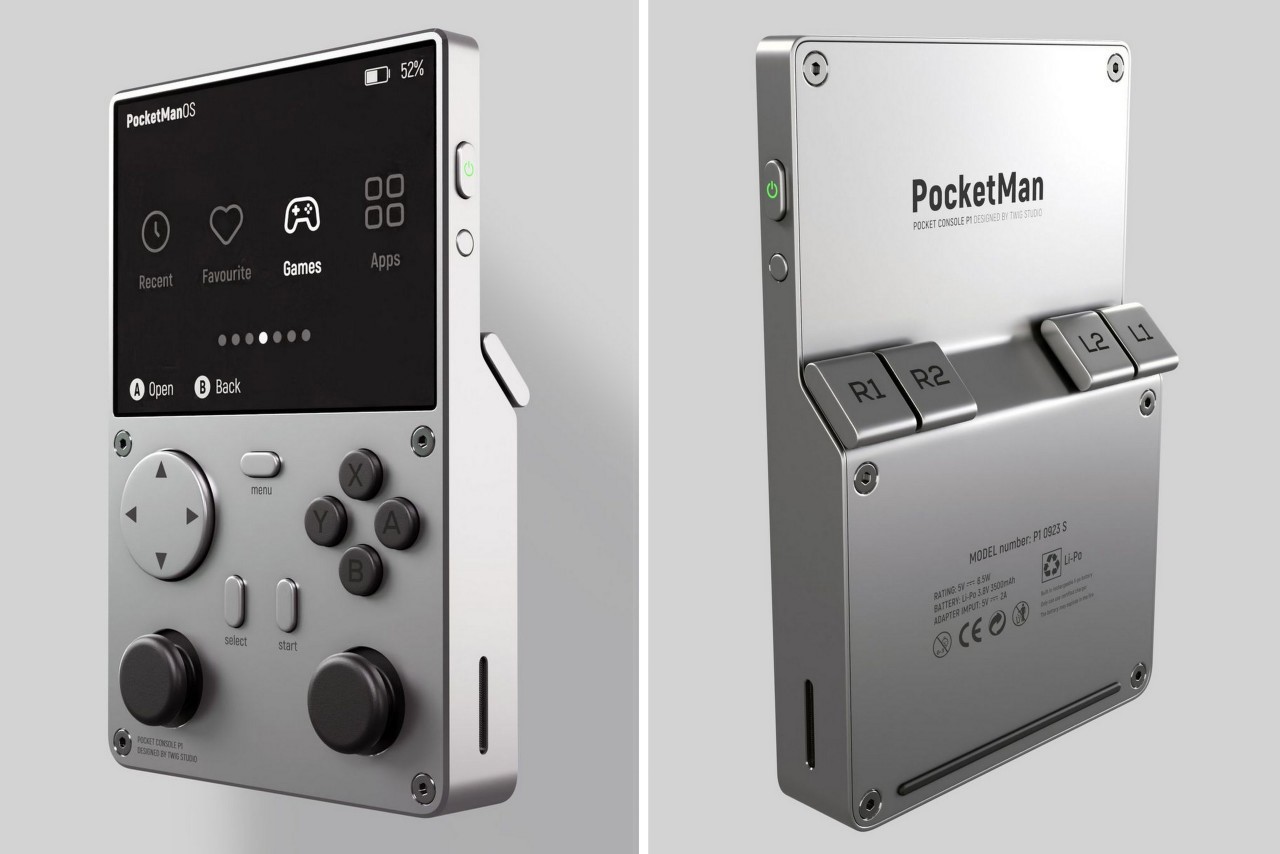
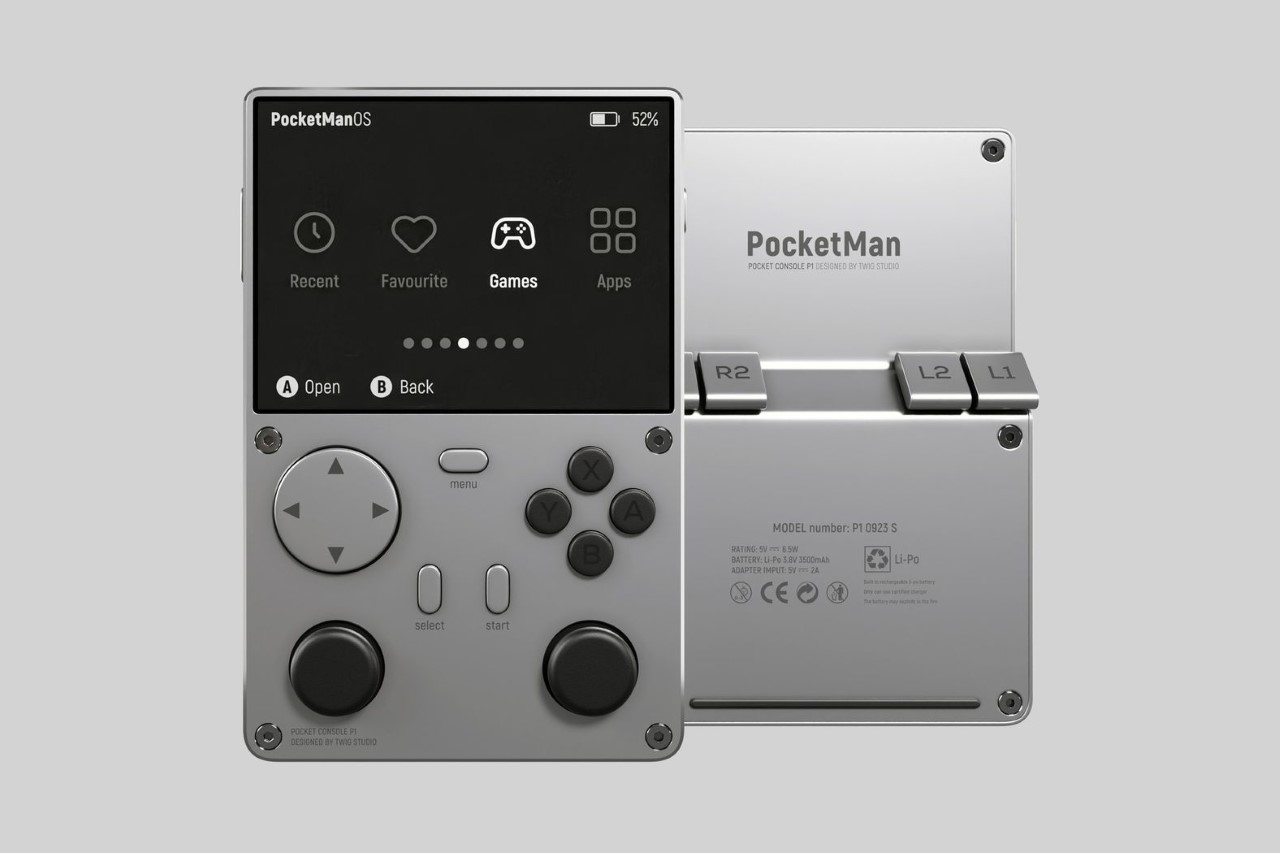
The PocketMan P1, inspired by Teenage Engineering’s raw, industrial design, boasts a sleek metal-first aesthetic with exposed screws. It features essential controls like a D-pad, action buttons, multiple joysticks, and four shoulder buttons. It also offers a USB-C port, a 3.5mm aux jack, and card readers on both sides for game loading. The black-and-white screen gives it a retro touch, possibly with an option for a color display. While currently a concept, the P1 showcases minimalist metallic design, rejecting the need for excessive ergonomics and RGB lighting in gaming hardware.
Why is it noteworthy?
Aside from that nostalgic handheld form factor, there’s a lot to be appreciated about how wonderfully cyberpunk the PocketManP1 looks. When your eyes aren’t immersed in the game, they’ll probably be admiring every inch of the P1’s metallic design while your hands familiarize themselves with every single button, trigger, and joystick.
07. Note Digital+Analog Desk Accessory by Harshit Sahu
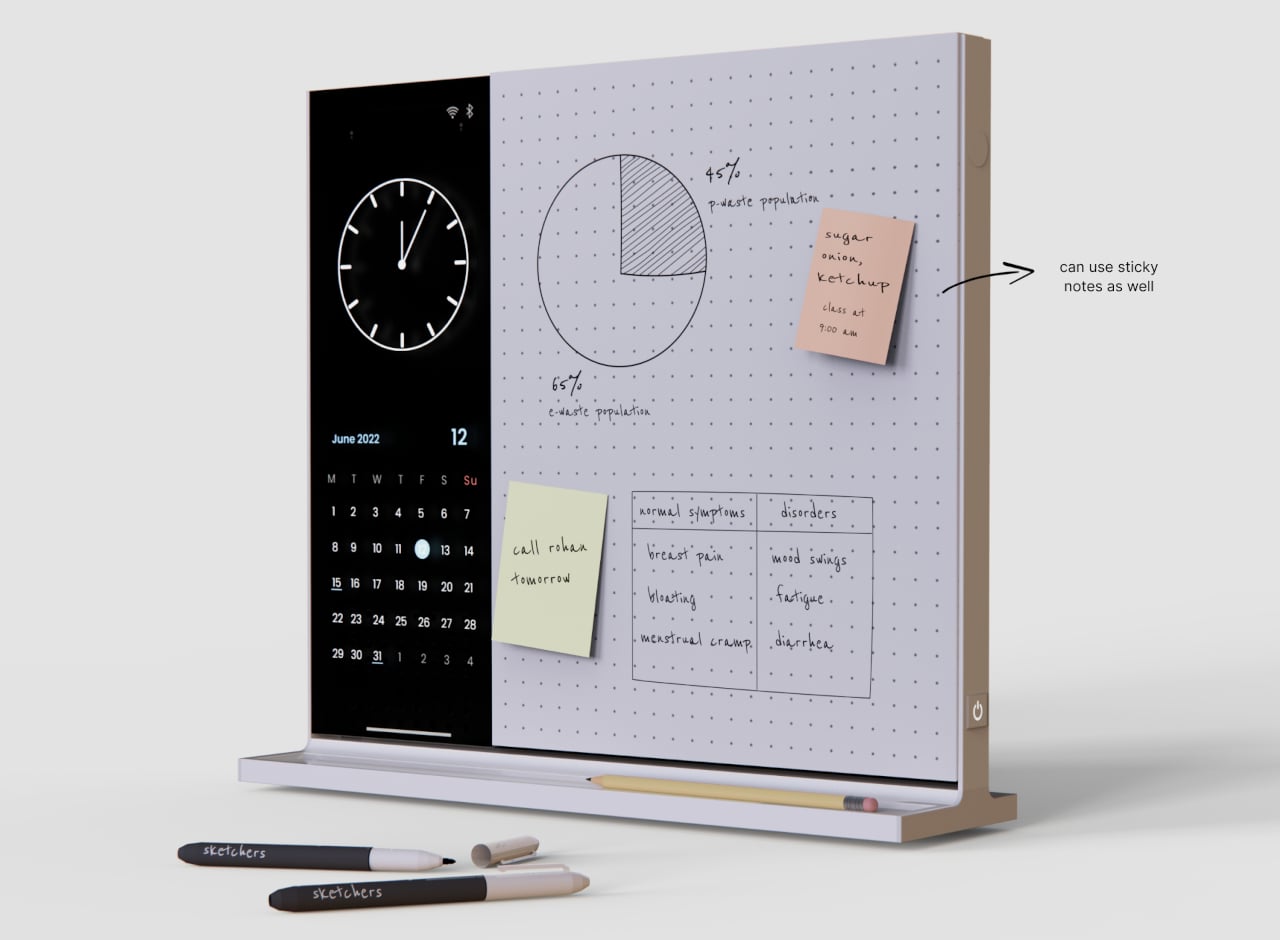
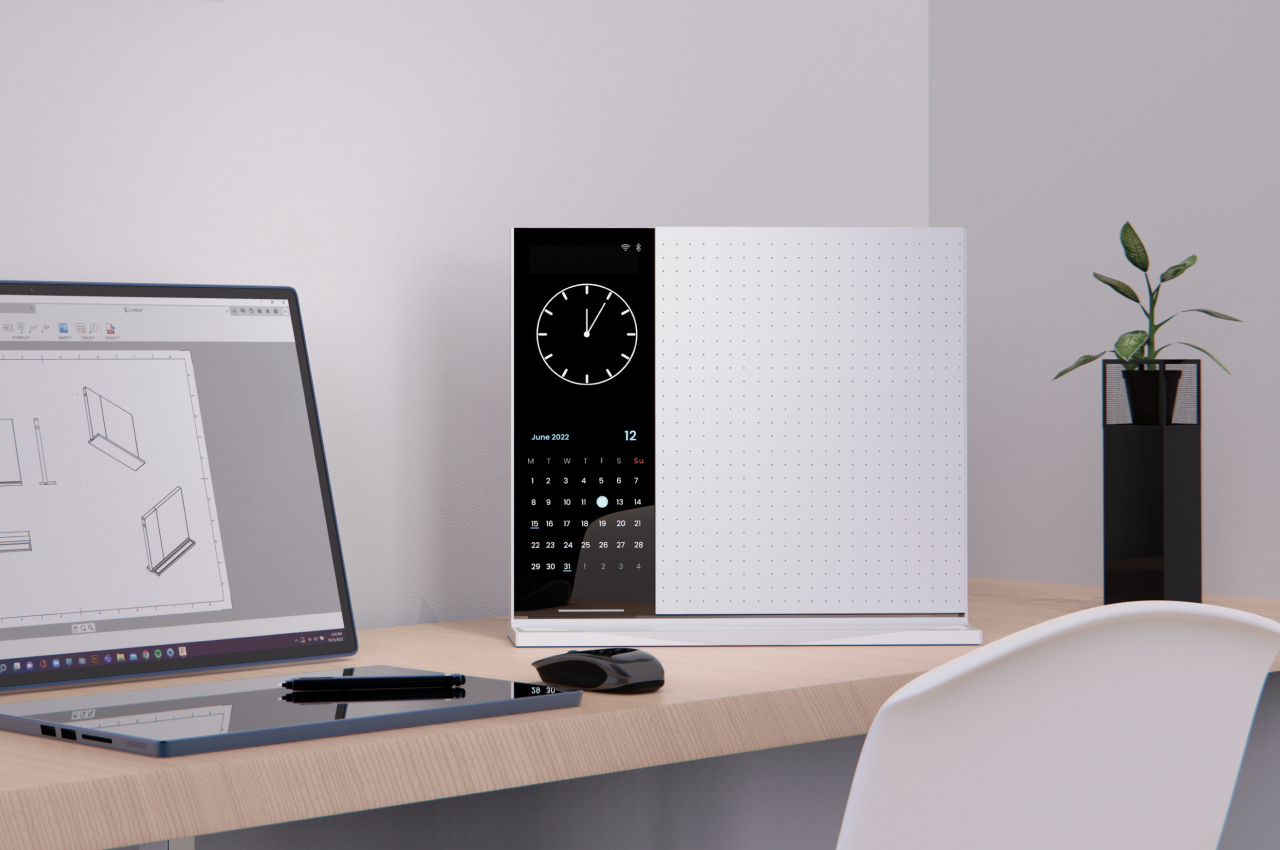
Part digital clock/calendar, part whiteboard, and part pinboard, this Note-taking desk accessory has the best of all worlds. It’s essentially a compact whiteboard that can flip over, doubling your writing space. One side features a dotted grid for diagrams, while the other can be plain or carry the same design. Sticky notes can also find their place on this versatile board. What sets Note apart is the addition of a multi-purpose vertical screen on the left side, displaying the time, calendar, and synced appointments from your phone. It even offers functions like a timer, world clock, and music player.
Why is it noteworthy?
“Paper can be simple, and apps can be quick, but not everyone needs all the commitment that these two different note-taking methods sometimes require,” says our Co-Editor-in-Chief JC Torres. This piece of digital stationery may not be a revolutionary device, but its creative integration of analog and digital concepts makes it a focused and efficient tool for specific needs. It simplifies your workflow without overwhelming you with unnecessary features, ensuring that your productivity remains the top priority.
08. Sony Playstation XPERIA by Santosh Palaniappan
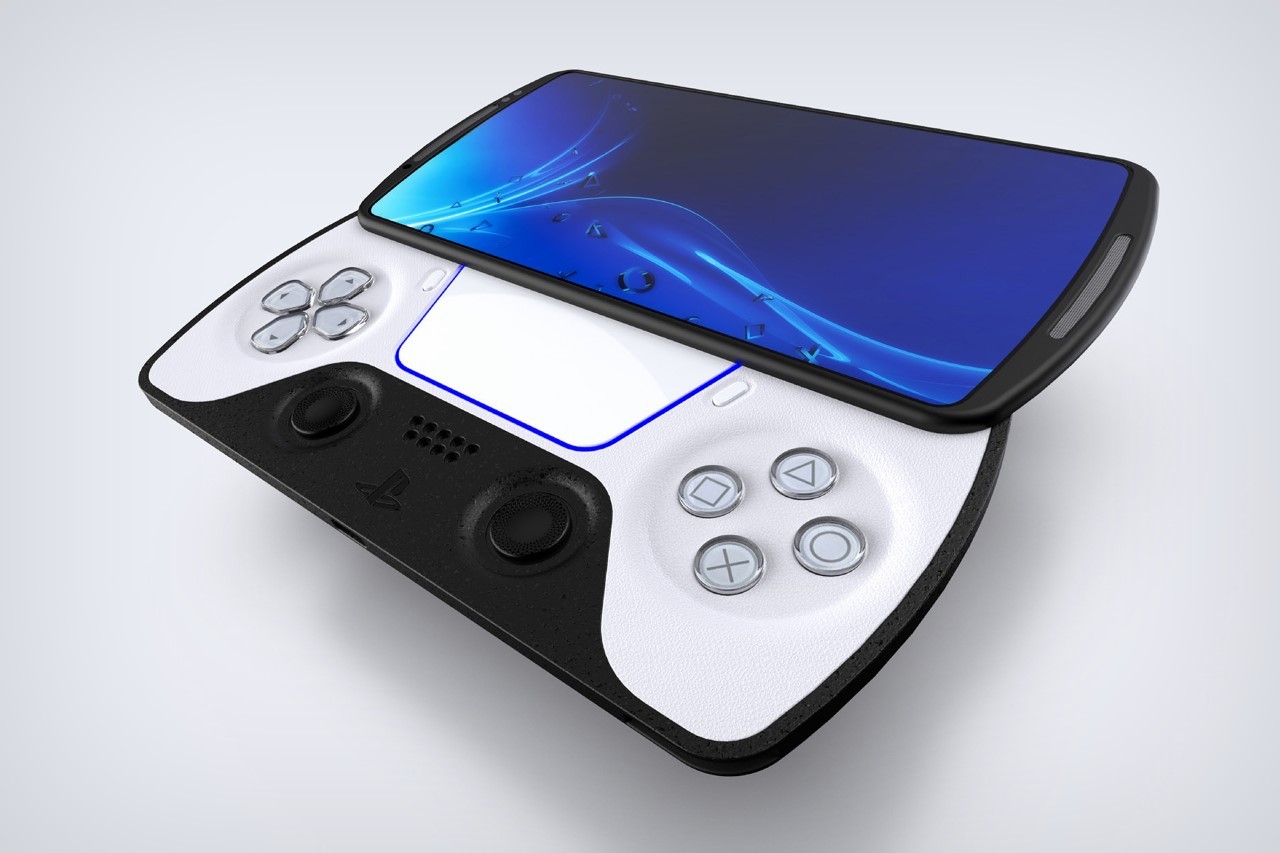
This one’s a classic case of “what could have been”. Designed by Santosh Palaniappan, the PlayStation XPERIA is the perfect hybrid between a smartphone and a gaming device, combining the company’s two successful product lines. Featuring a sliding display that reveals gaming controls underneath, along with a triple-camera setup, it offers versatility beyond gaming. Messaging, internet browsing, selfies, movie watching, and social media game streaming become seamless possibilities. The PlayStation Xperia strikes a balance between smartphone and gaming device aesthetics, combining the functionality of a smartphone with the visual appeal of the PS5. Its white and black design with textured grips and the iconic PlayStation symbol microtexture on the rear exudes elegance. Front-facing speakers enhance the media and gaming experience, and sliding the screen transforms it into a handheld console.
Why is it noteworthy?
With a focus on both gaming and smartphone capabilities, the PlayStation Xperia concept offers a promising vision for Sony’s future product lineup, blending the best of both worlds for tech enthusiasts and gamers alike. It doesn’t compromise on anything a gamer would want in their phone or their handheld console, and let’s be absolutely honest, it looks positively drool-worthy!
09. Ford Mini Bronco by Naoto Kobayashi
Ever seen an off-roader coupe? Well, feast your eyes on the Ford Mini Bronco, a two-door off-roader that we absolutely wish was real. Crafted by designer Naoto Kobayashi, the Ford Mini Bronco boasts a unique design with distinctive pixel-inspired headlights in the front and dynamic taillights at the rear. It’s ideal for a group of two or three adventurers looking to hit the off-road and embrace an eco-friendly lifestyle. This compact EV offers SUV-like excitement without the fuel consumption of larger Ford vehicles. However, it’s important to note that the Ford Mini Bronco is currently just a concept, a vision of what the future of transportation could hold. We can only hope that one day, this remarkable concept will become a reality.
Why is it noteworthy?
The Mini Bronco is a small-format-large-ambitions car that really doesn’t compromise on space or features. The lack of two extra passenger seats means the Mini Bronco has a spacious rear, perfect for storing your outdoor gear. Its short wheelbase and minimal overhangs (on the front and rear) promise enhanced off-road capabilities, and Kobayashi even managed to fit a large-size tent on the top that people can sleep in!
10. Google G Spot Tracking Device by Obi Fidler
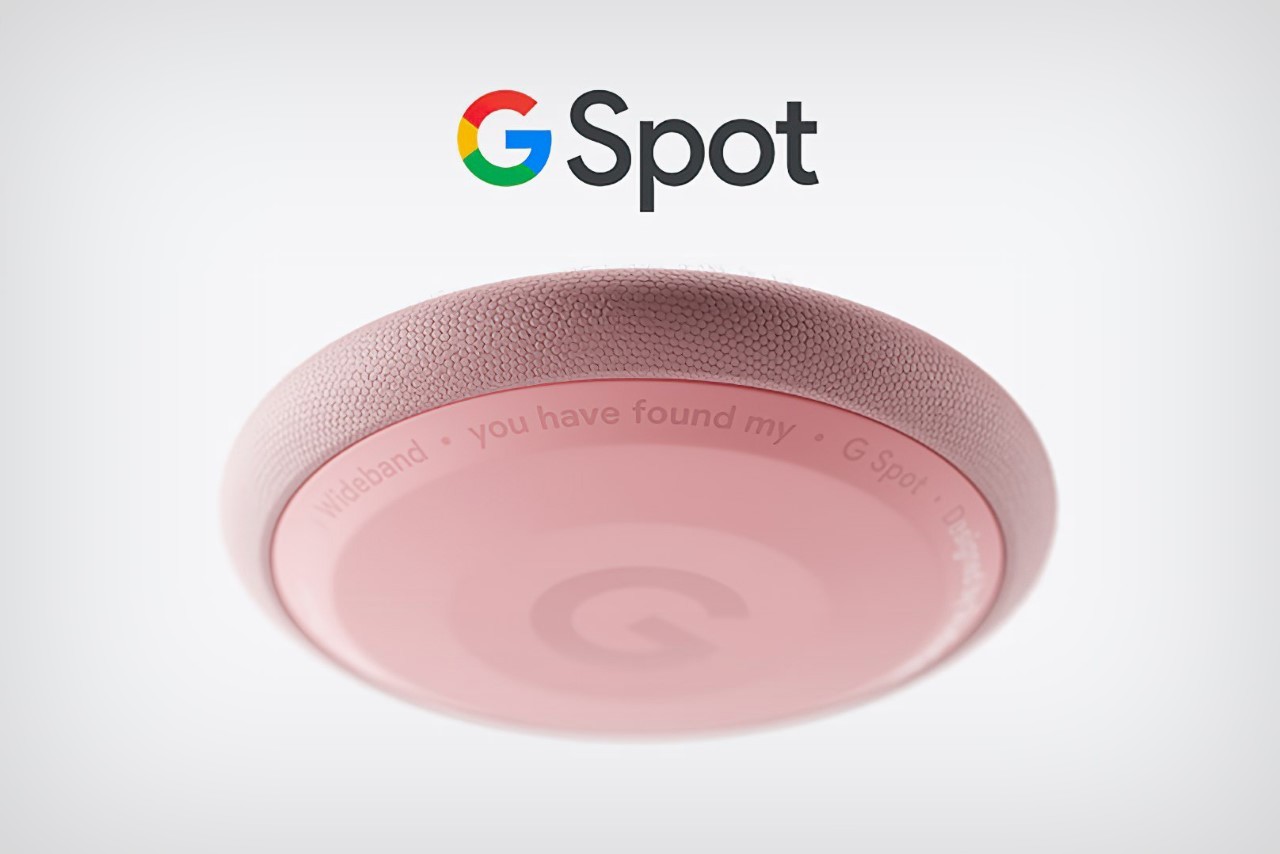
Google will help you search for a lot of things, but this is a first! Meet the G Spot, an audacious concept from the mind of Obi Fidler that doubles as Google’s first-ever tracking device. The G Spot is a sleek and compact GPS smart tracker that takes inspiration from Apple’s popular AirTag. This innovative device boasts a conveniently small form factor, making it a breeze to carry around discreetly. What sets it apart is its seamless integration with Google’s robust ecosystem, allowing you to effortlessly track its whereabouts through the Find My Device and Google Maps services… and obviously that name, which I will never tire of saying!
Why is it noteworthy?
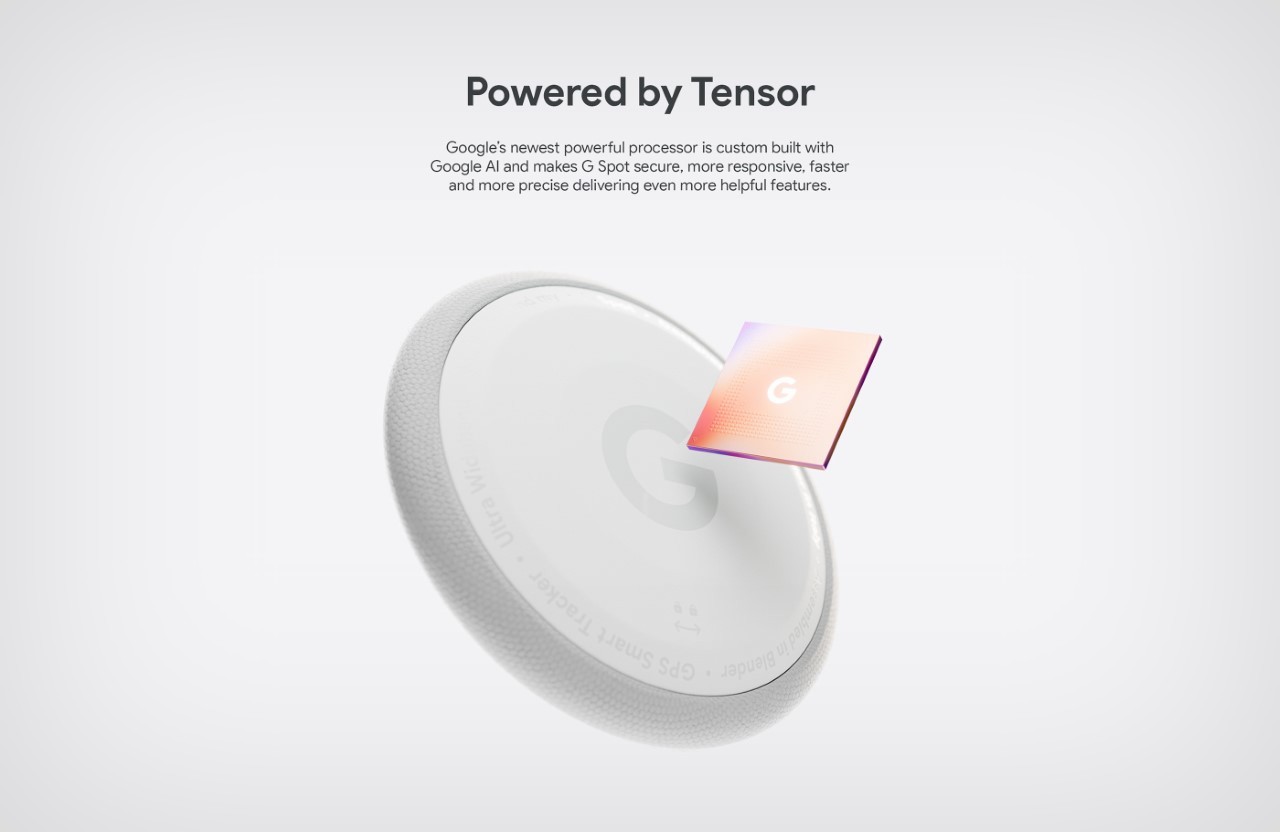
This one makes the list just for how much of a belly laugh it gave us as we first saw it online. The entire project is an absolute riot, making fun of what could be Google’s tracking device. Hilariously named the G Spot, this tracking device comes equipped with a tensor chip and a whole lot of double entendres!
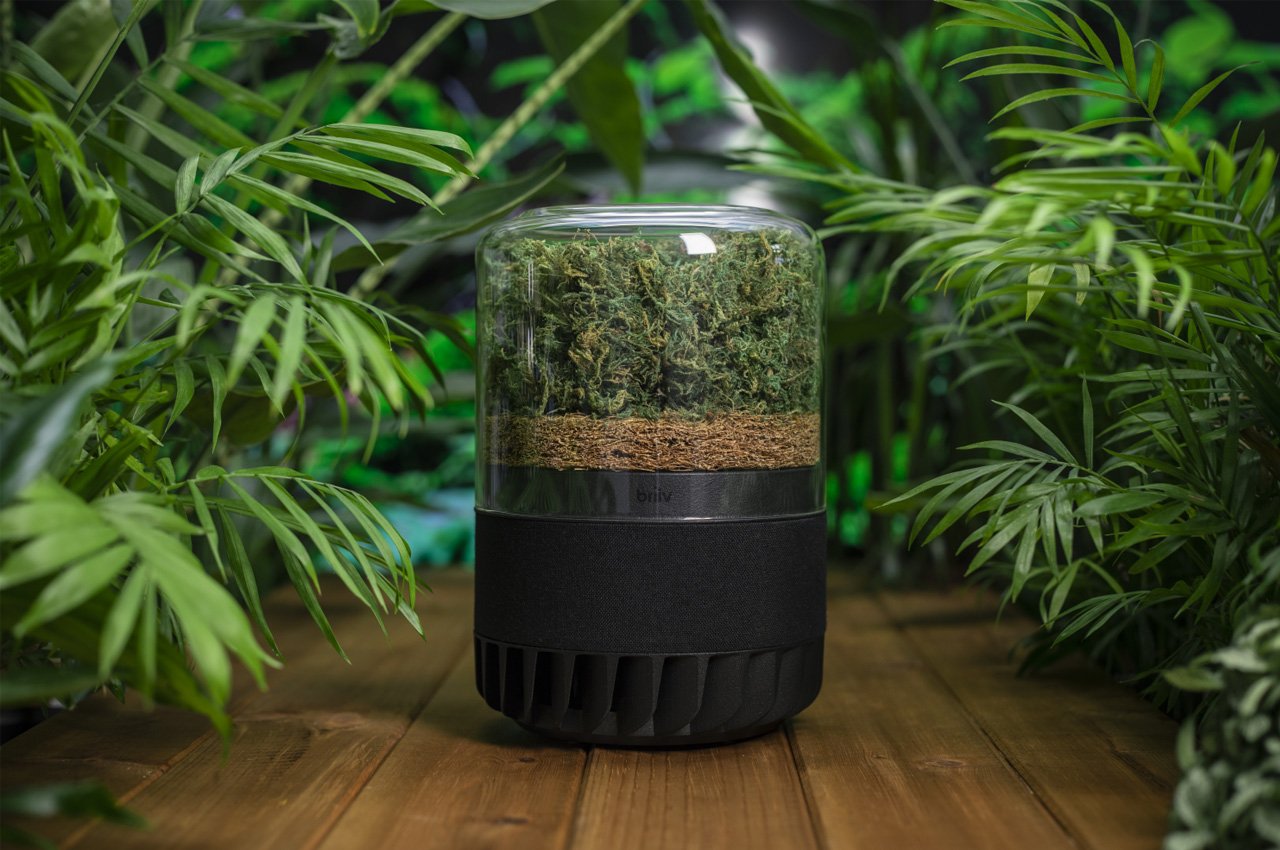
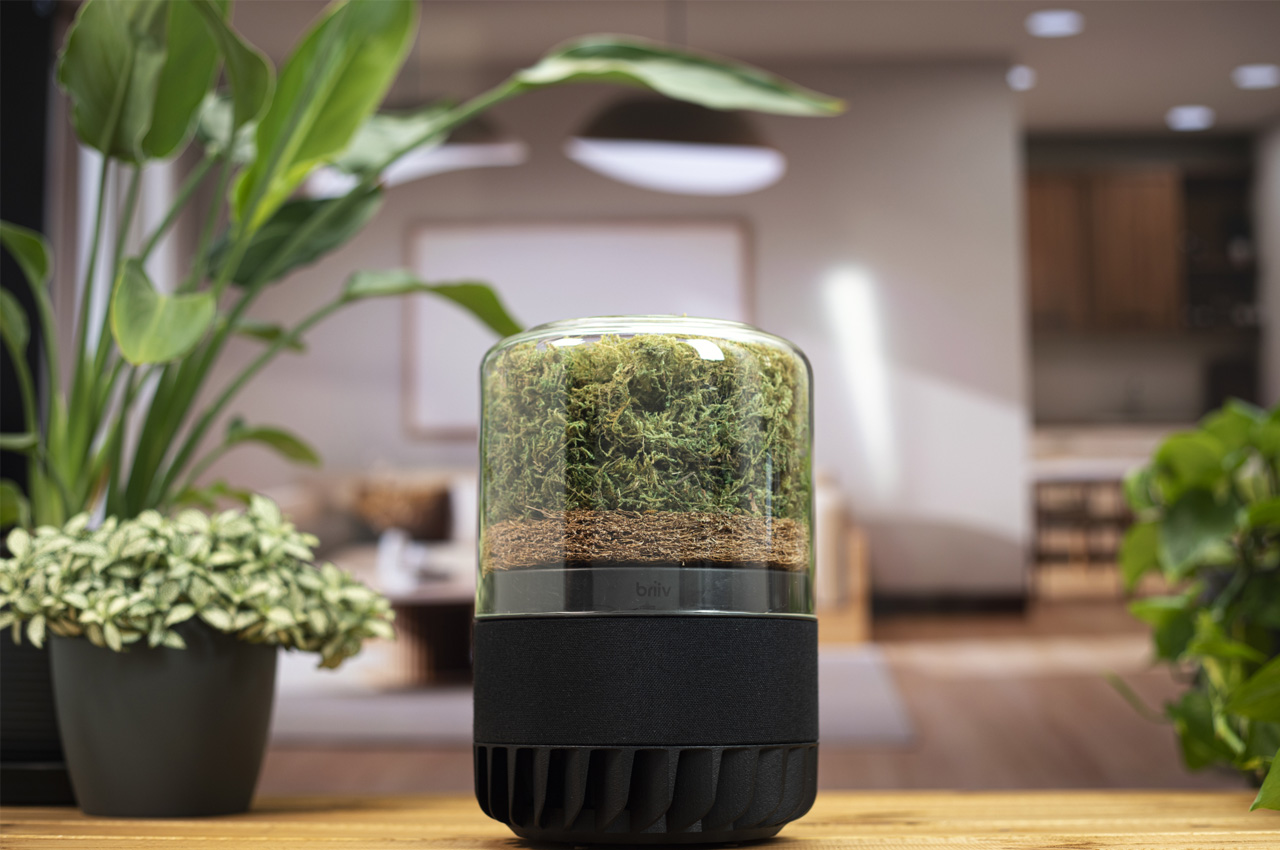
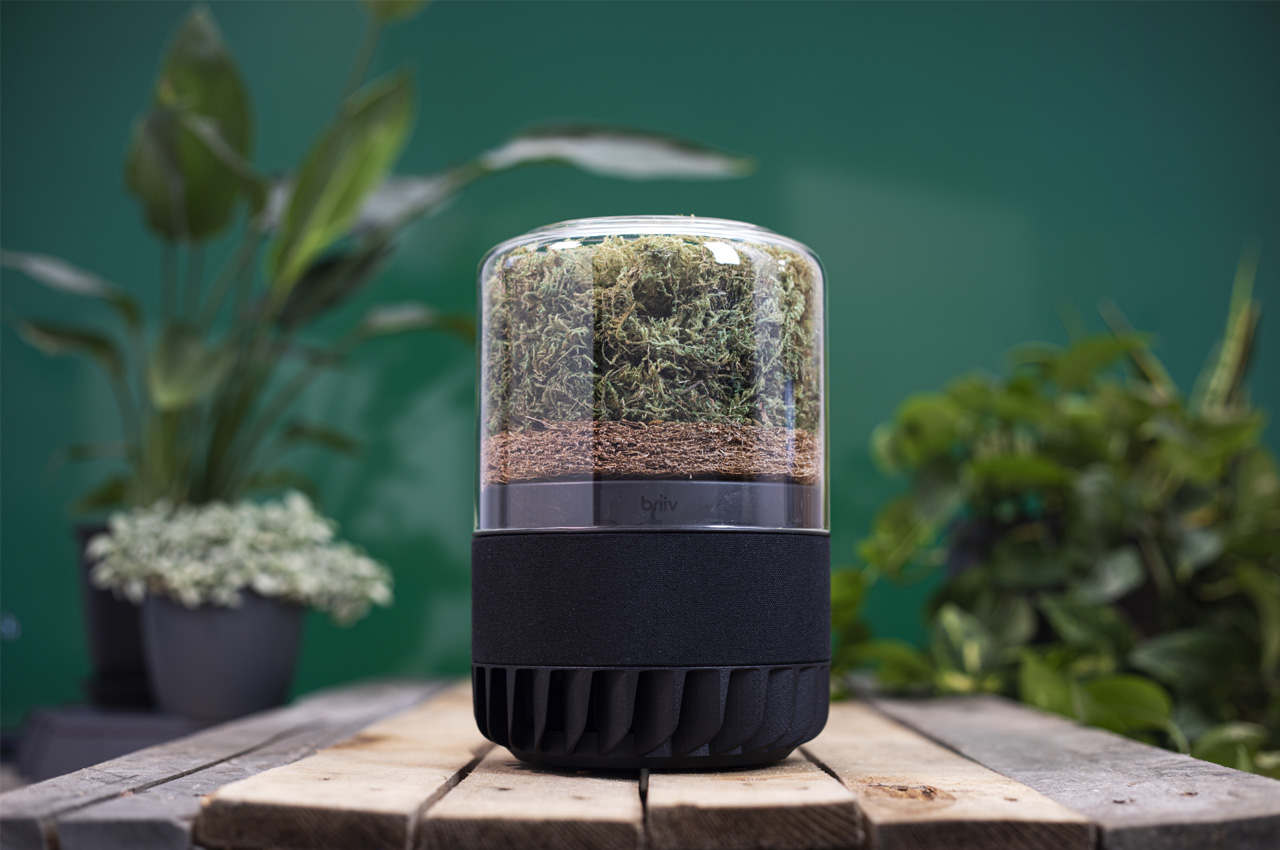
When Briiv debuted in 2020, little did they know the importance of air quality would skyrocket in the three years to come. The pandemic aside, we’ve seen a consistent deterioration in the air quality of our cities in the past three years with really no improvement. For the people who think being indoors is safer, research shows the absolute opposite. While traditionally ‘pollution’ comes from the outdoors, it gets trapped in stale indoor air which can be bad for your health. This is compounded by the fact that cooking food, burning candles, and even having pets around can affect air quality significantly. To counter this, people choose to either rely on air purifiers or on house plants… but the Briiv Pro combines them both into an eco-friendly purifier that simultaneously uses nature and technology to cleanse indoor air. Now more powerful than before, the Briiv Pro relies on what it calls a ‘mini forest’ to purify a 16 sq.m. room (172 sq.ft.) in just 21 minutes. That’s roughly 6900% more effective than house plants, which is remarkable for a purifier that size. It also has the added benefit of looking like a gorgeous tabletop terrarium, unlike those ugly appliances that get passed off as air purifiers these days.
Live healthier, sleep better and breathe as nature intended with AI-powered Briiv Pro
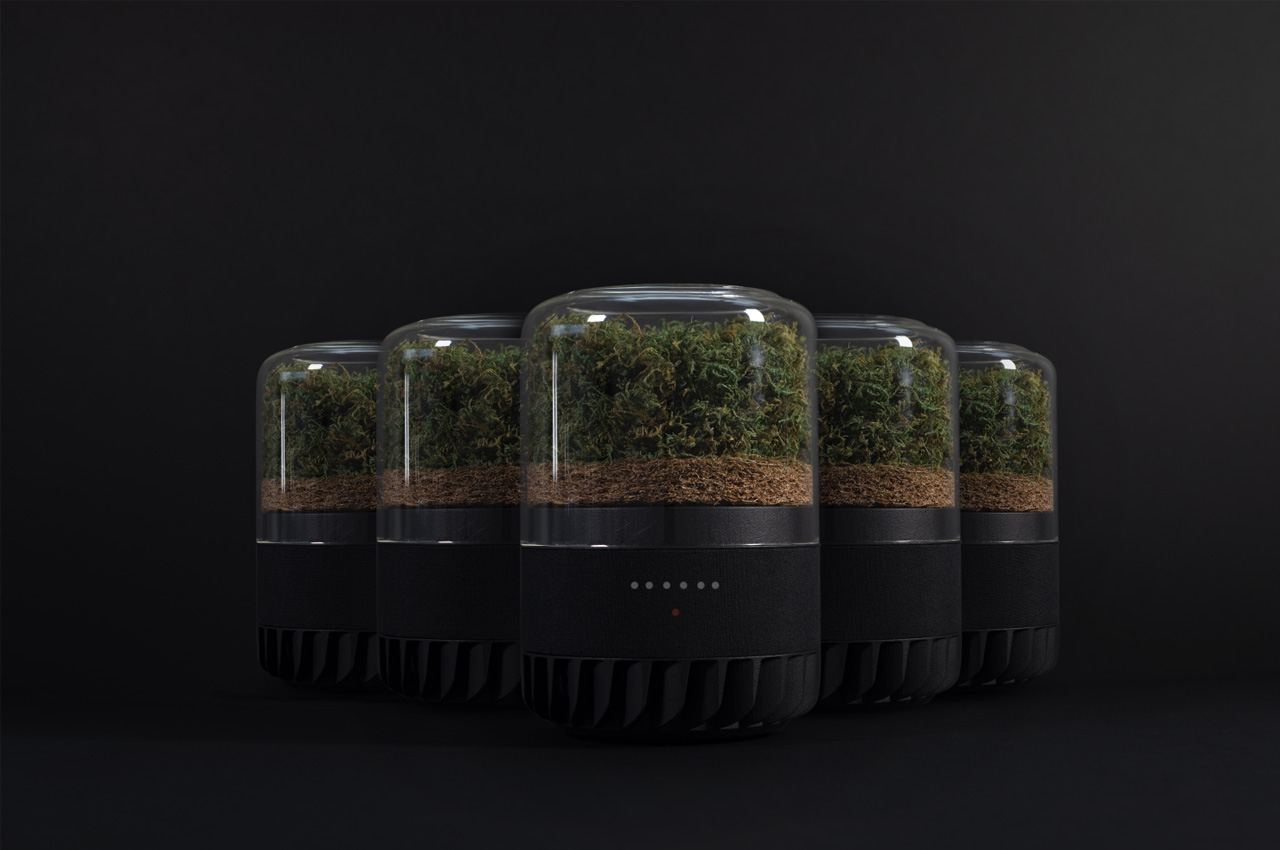
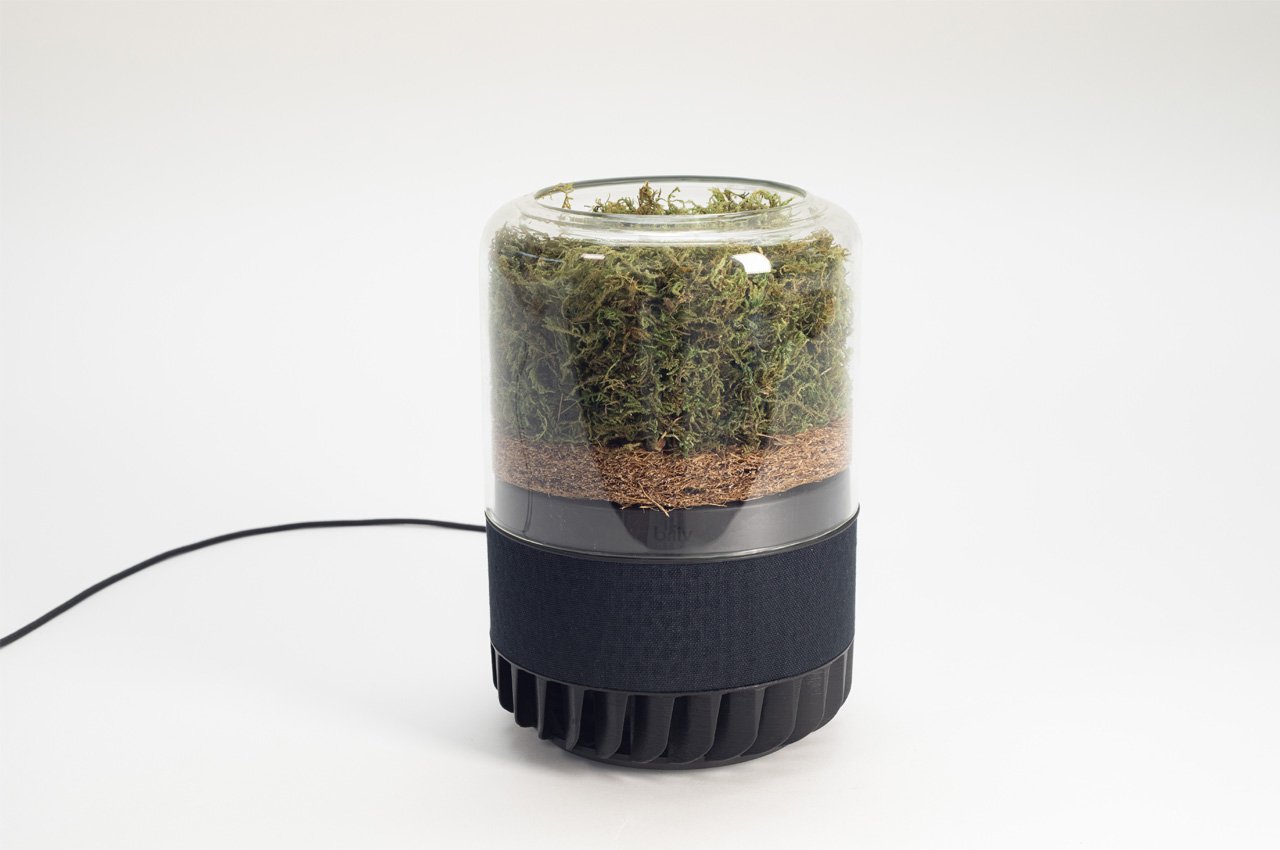
The visual highlight of the Briiv Pro is also its secret sauce. The terrarium-inspired tabletop purifier sports a glass container on its top that reveals its micro-forest filtration system underneath. Unlike most purifiers that use disposable HEPA filters to catch particulate matter, the Briiv Pro relies on a layered trifecta of moss, coconut fiber, and a silk nanofiber matrix with activated carbon. This trio tackles pollutants ranging from pet dander and pollen to dirt, dust, smoke, and volatile organic compounds (VOCs) caused during cooking, etc. In essence, it works exactly how a forest does to purify the atmosphere. Leaves help absorb harmful gases and carbon, while also catching dust. The soil, on the other hand, purifies toxins – a natural process that the Briiv Pro borrows from and miniaturizes into a device no larger than an Apple Homepod.
Briiv Pro is 6900% more effective than house plants at cleaning your air
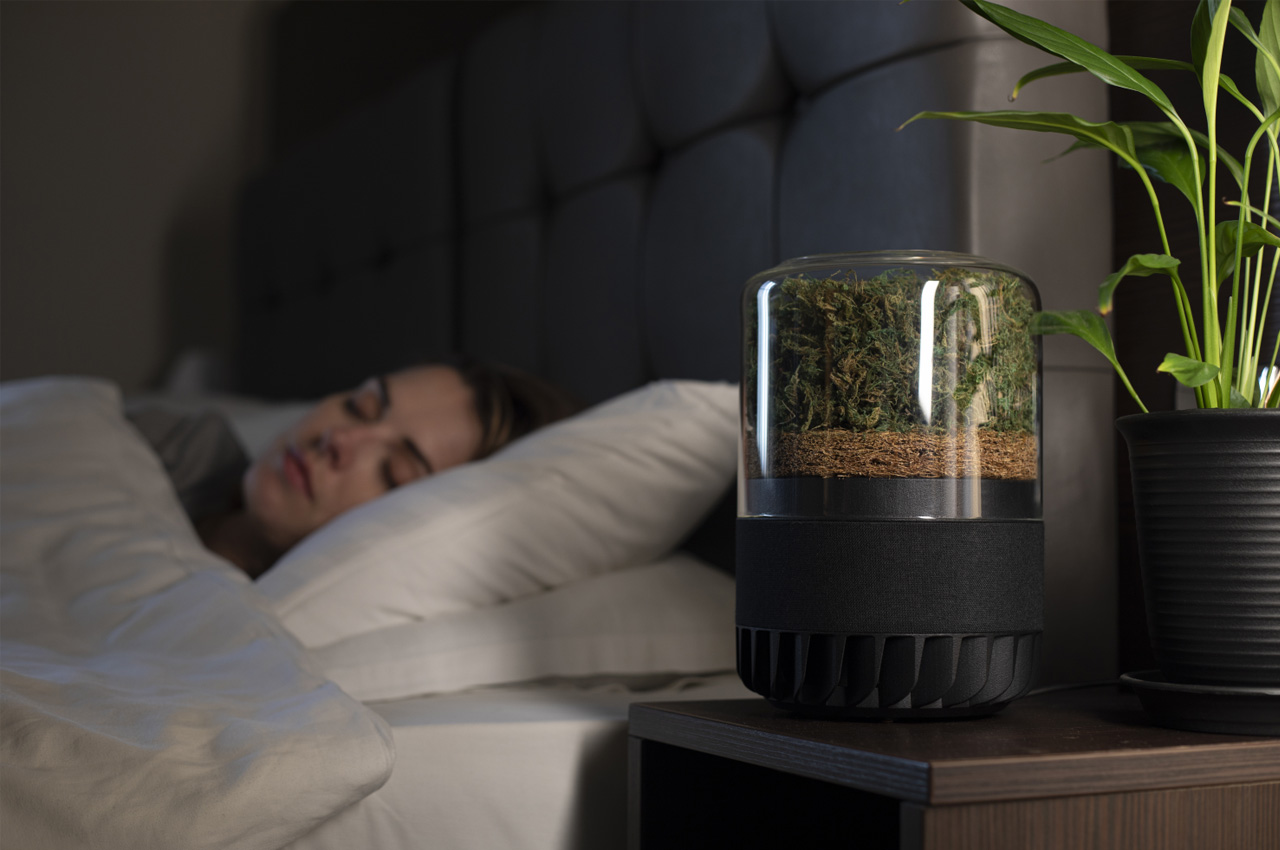
The way the Briiv Pro works is similar to its predecessor, albeit with a few upgrades. Air makes its way through the top of the purifier, passing through the moss and coco fiber where pollen, pet fur, and dust/smoke get trapped and VOCs and odors get neutralized. The air then goes through a medical-grade 98% plastic-free silk nanofiber filter that catches the remaining particles, filtering up to PM2.5 or fine particulate matter. Purified air makes its way out of the bottom of the Briiv Pro, where it gets spread in a 360° radius. The Briiv Pro works at a whisper-soft noise level, purifying 68 cubic feet of air per minute, which means an hour’s worth of use should cleanse an entire bedroom of bad air.
Replace the Moss with Activated Carbon to Remove Bad Smells
The Briiv Pro, however, has two pretty noticeable upgrades from its 2020 version. For starters, it comes with AI-based sensors that allow the purifier to activate the second it detects a drop in air quality. Dubbed the Canary Mode, this feature gives the Briiv Pro air-monitoring features that let it run autonomously so you don’t need to worry about switching your purifier on after checking the air quality on your smart home dashboard. Moreover, a Zen Mode lets multiple Briiv Pro units communicate with each other, so when one switches on, it alerts other purifiers around it to switch on too, ensuring you have clean air in every corner of your house. The second upgrade comes in the form of a tiny chamber where you can add a few drops of an essential oil of your choice; allowing your advanced nature-inspired air purifier to also double as a fragrance diffuser.
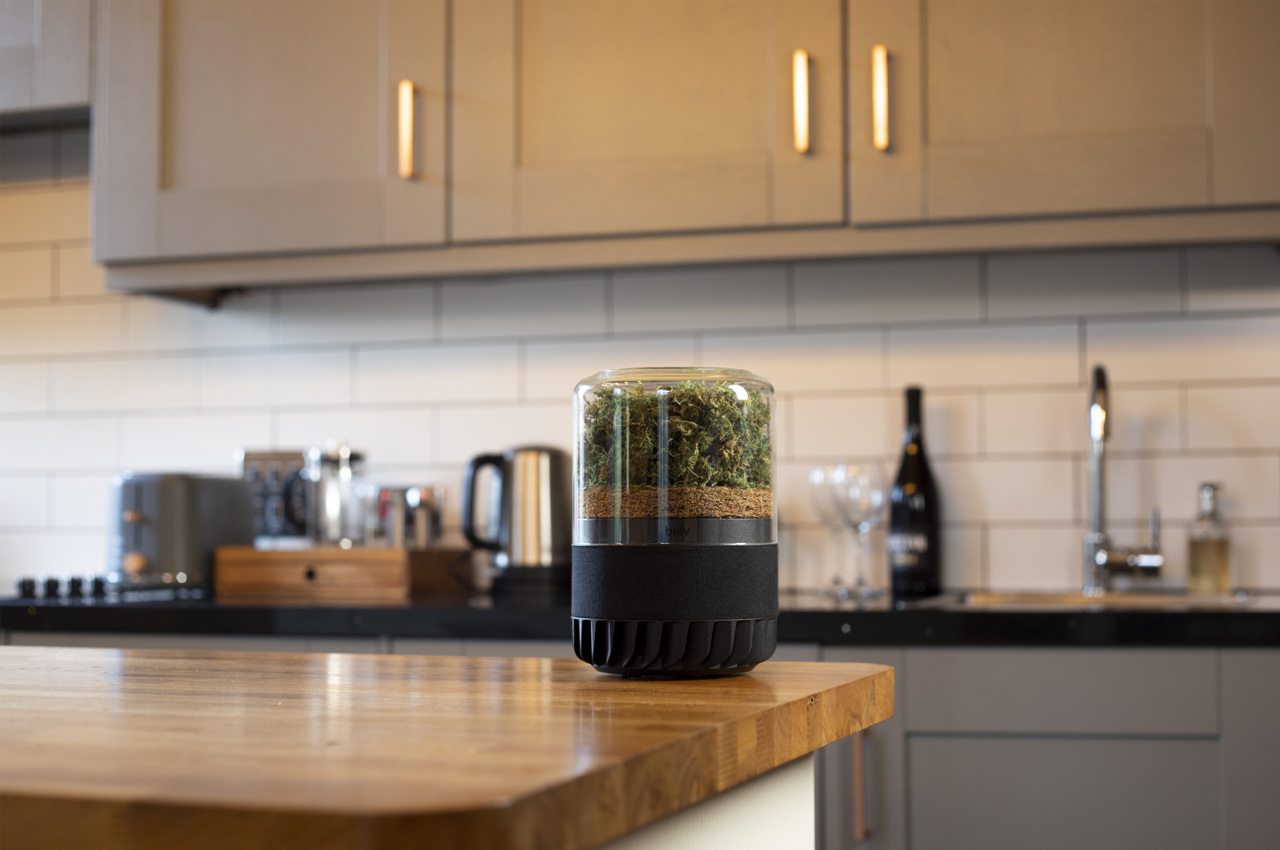
A different approach to design. Briiv blends beautifully into your interior
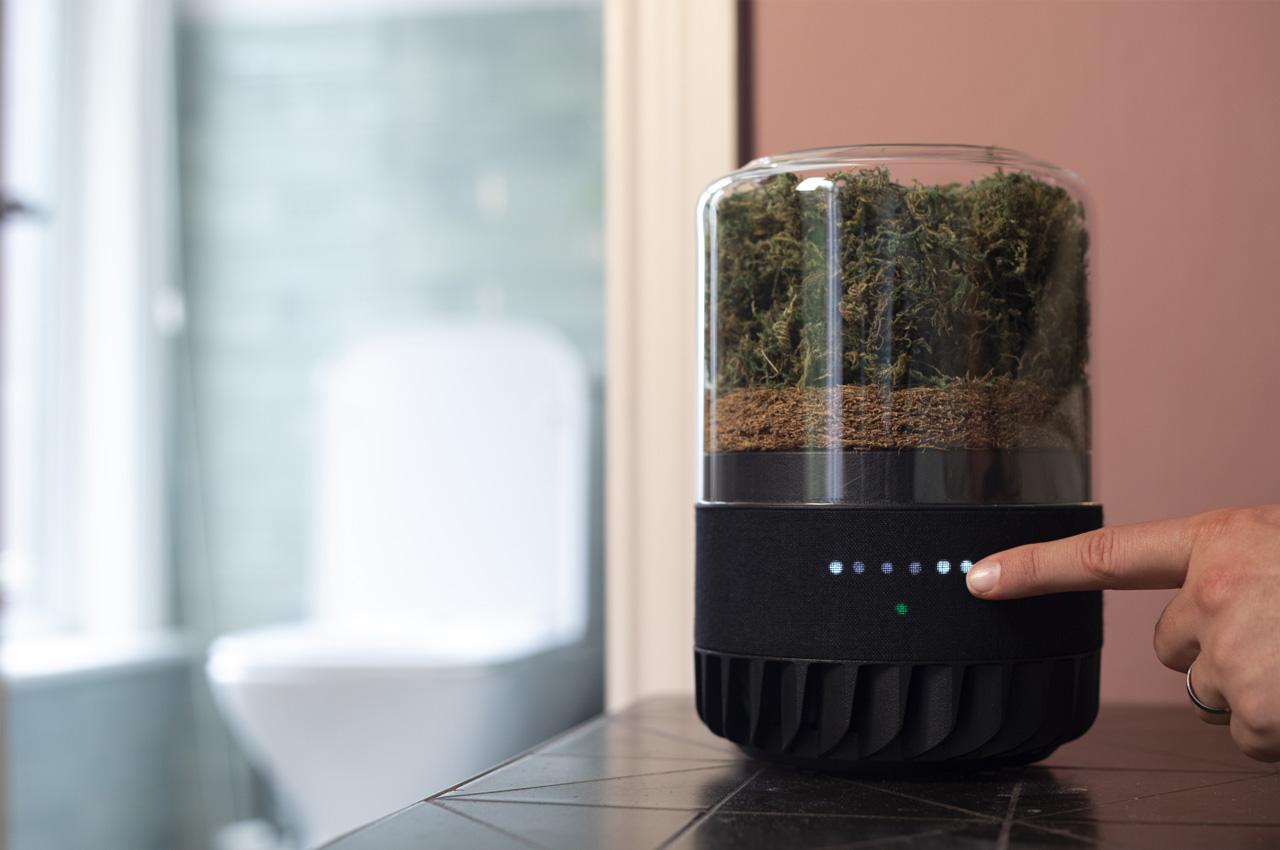
If you want to manually operate your Briiv Pro (rather than relying on AI-powered sensors), it’s as simple as tapping on its side and intuitively reading the LEDs to know what level your purifier is operating at. Alternatively, the Briiv Pro also comes with a free smartphone app that lets you activate your purifier and select its fan speed, and there’s even Alexa integration that lets your purifier connect to your broader smart home network.
Build a network of Briiv Pro air purifiers that work in unison to automatically improve air quality.
When Sean Sykes and James Whitfield set out to design the Briiv, their vision was to condense the effects of a forest into as small a footprint as possible, while testing the theory of building a ‘sustainable’ eco-friendly air purifier. 3 years after the Briiv launched as a crowdfunding campaign (gathering over $1 million USD) in funding, the Briiv Pro pushes that theory to its limits. The Pro variant is just as sustainable as its regular counterpart, with the fact that its filters are entirely compostable/recyclable. The moss filter (which sits right on top) can be washed and reused indefinitely, and Briiv also offers the option of choosing between different moss types to harness different natural properties. Conversely, you can use your own dry moss in the Briiv Pro, allowing you to customize your terrarium/purifier. The silk nanofiber filter that sits within the Briiv Pro is the only filter that really needs replacing (every 3-ish months), and the fact that it’s 98% plastic-free puts it miles ahead of most standard HEPA filters that are manufactured almost entirely out of polymer fibers, making them difficult to recycle.
With built-in sensors you can use the Briiv app to track your air quality in real-time
In the end, the payoff is easy to see. Not only does the Briiv Pro look like a gorgeous terrarium that you’d be proud to keep by your bedside or on your coffee table, it’s designed to be eco-friendly, and as its makers say, 6900% more effective than having house plants. The Briiv Pro comes with multiple design awards under its belt, while also boasting of the smart features you’d expect from leading air purifiers on the market, and a low hourly power consumption of 0.005kWh. Each Briiv Pro is made in the UK and starts at a discounted £349 (roughly $440), which may seem pricey until you realize the roughly hundreds of dollars you save per year on filter replacements. Plus, do I need to remind you of how incredibly gorgeous the Briiv Pro looks in comparison?!
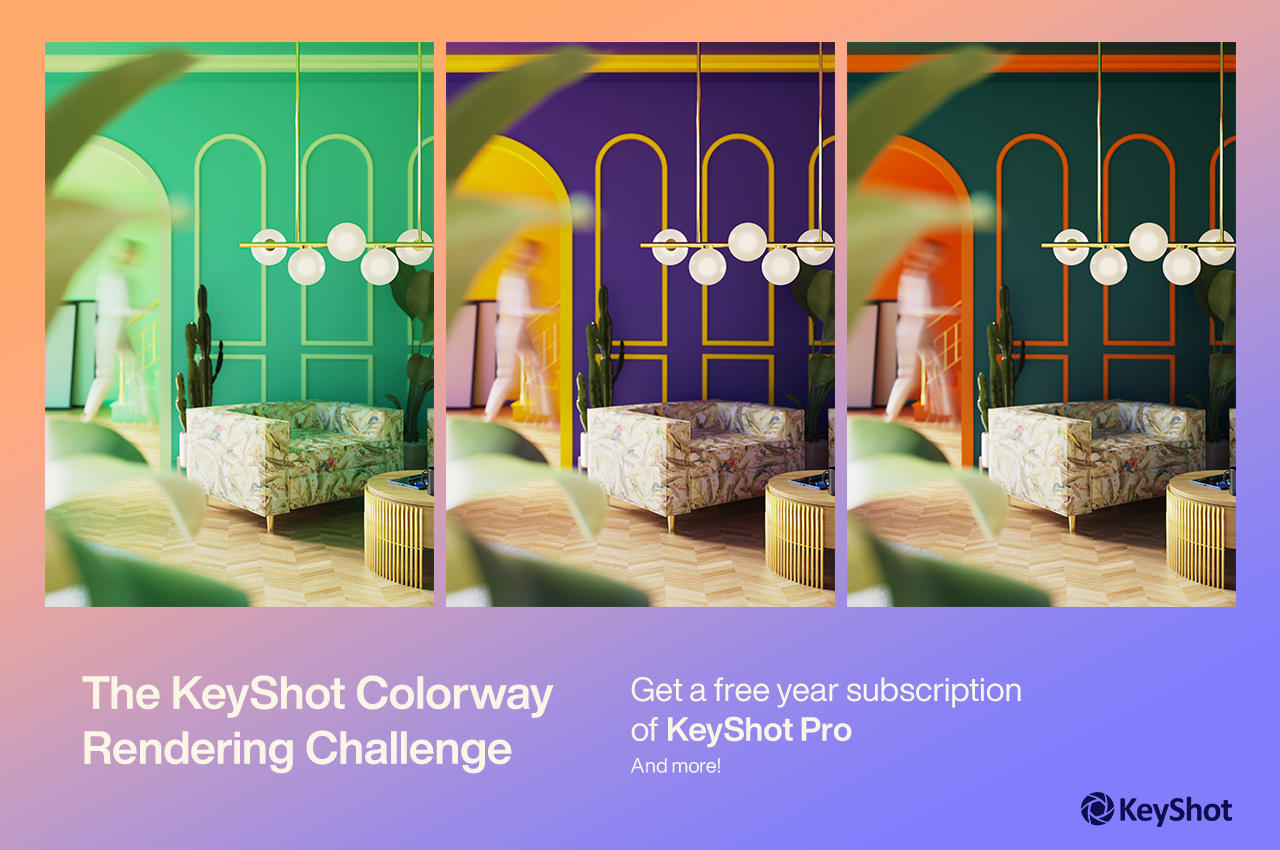
An indomitable force in the 3D Rendering space, KeyShot has announced “The KeyShot Colorway Rendering Challenge”, inviting designers to participate and win a free year of KeyShot Pro, Rendering Masterclasses from Will Gibbons, and many more prizes. The challenge is simple – explore KeyShot’s vast color library and render a product (any product of your choice) in multiple color variants. The contest, being held on Instagram, is open to all designers and is free to enter. Participants can download a free trial of KeyShot’s latest 2023 software, exploring its myriad of rendering features including the upgraded color library, 3D Paint, CMF Documentation, etc.
Download and Install KeyShot and use the trial code KSCOLOR23 to get free access
Render your product in multiple color variants
Submit your entry by uploading and sharing your visuals on Instagram. Use the hashtag #KeyShotColorway
The competition, which ends on December 8th 2023, will be judged by Karim Merchant (KeyShot Senior Industrial Design & Creative Specialist), Saskia Failla (KeyShot Creative Specialist), and Jan Simon (KeyShot Product Manager). Winners will be entitled to a free 1-year subscription to KeyShot Pro and KeyShot Web, free 1-week access to KeyShot Farms cloud rendering (64-cores), access to a Will Gibbons Rendering Masterclass, and have their winning designs showcased on KeyShot’s Blog, Social Media, Newsletter, as well as the KeyShot Startup Window for the tens of thousands of people using KeyShot every day.
Benoit Fraylon takes the Revuelto for a visual spin with his color explorations on the car’s angular body. Here we look at a matte-finish silver Revuelto, but Fraylon’s Instagram Post also explores chrome, electric blue, and a rather oddly appealing granite pattern!
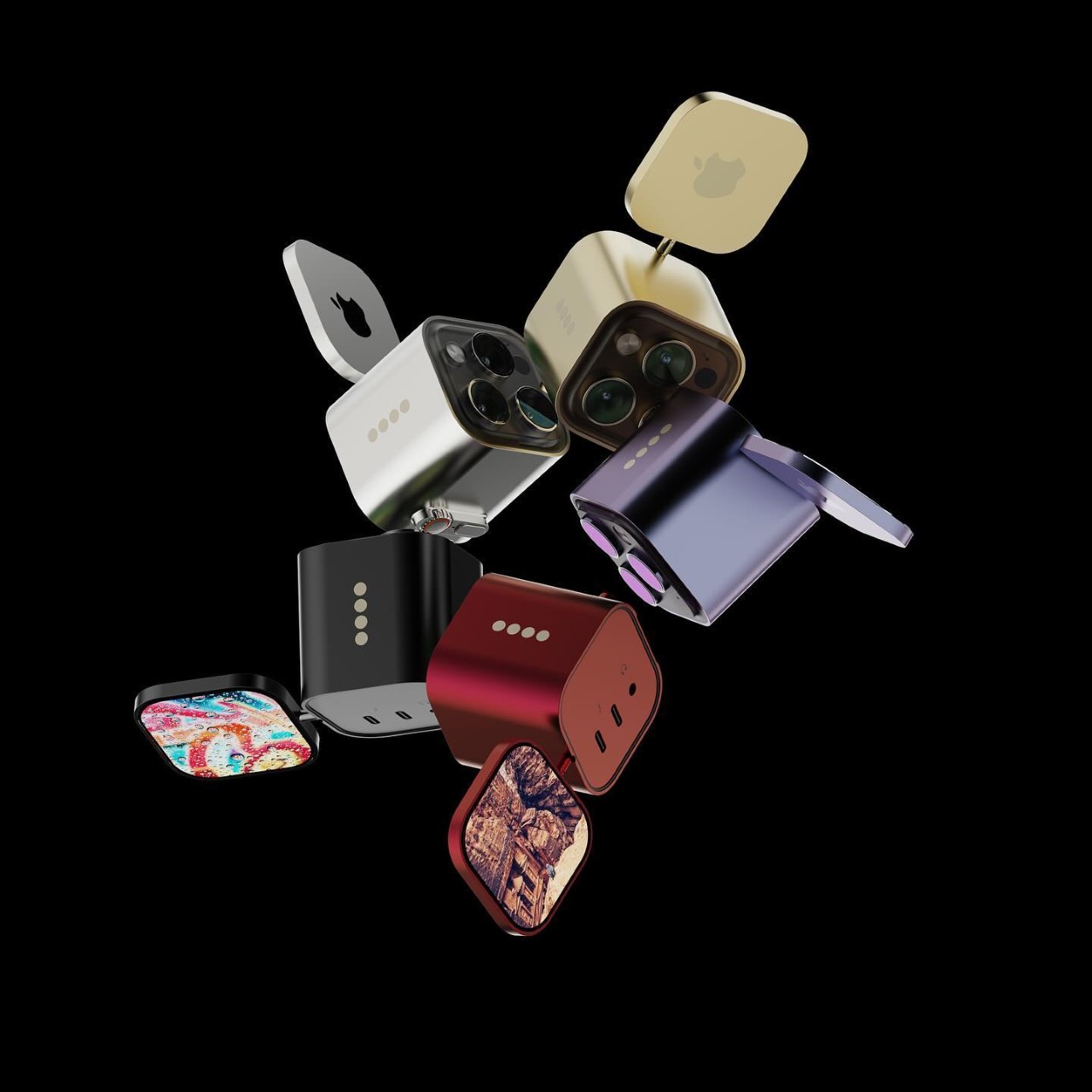
Apple QuickTake 2024 by Caleb Taylor
I was today years old when I learnt that Apple actually designed (and sold) a point-and-shoot camera back in 1994. Dubbed the QuickTake, it is believed to be the first step in Apple’s digital photography dominance, and a spiritual successor to the iPhone. Caleb reinvented that point-and-shoot camera into a tiny iPhone-inspired action cam, giving it an adjustable screen, three lenses, and a few gorgeous color options in his IG post.
Meindl Boots by Bradley Brister
Bradley’s Instagram Post puts Meindl’s outdoor boots in their right setting. Nestled in a forest setting amidst some tufts of grass and rocky terrain, the boots look rather inviting with their vibrant yet outdoor-friendly color schemes. The red might be a little too eye-catching amidst the wilderness, but that yellow ocher looks absolutely divine, and for the more visually conservative, the olive green makes for a great pick.
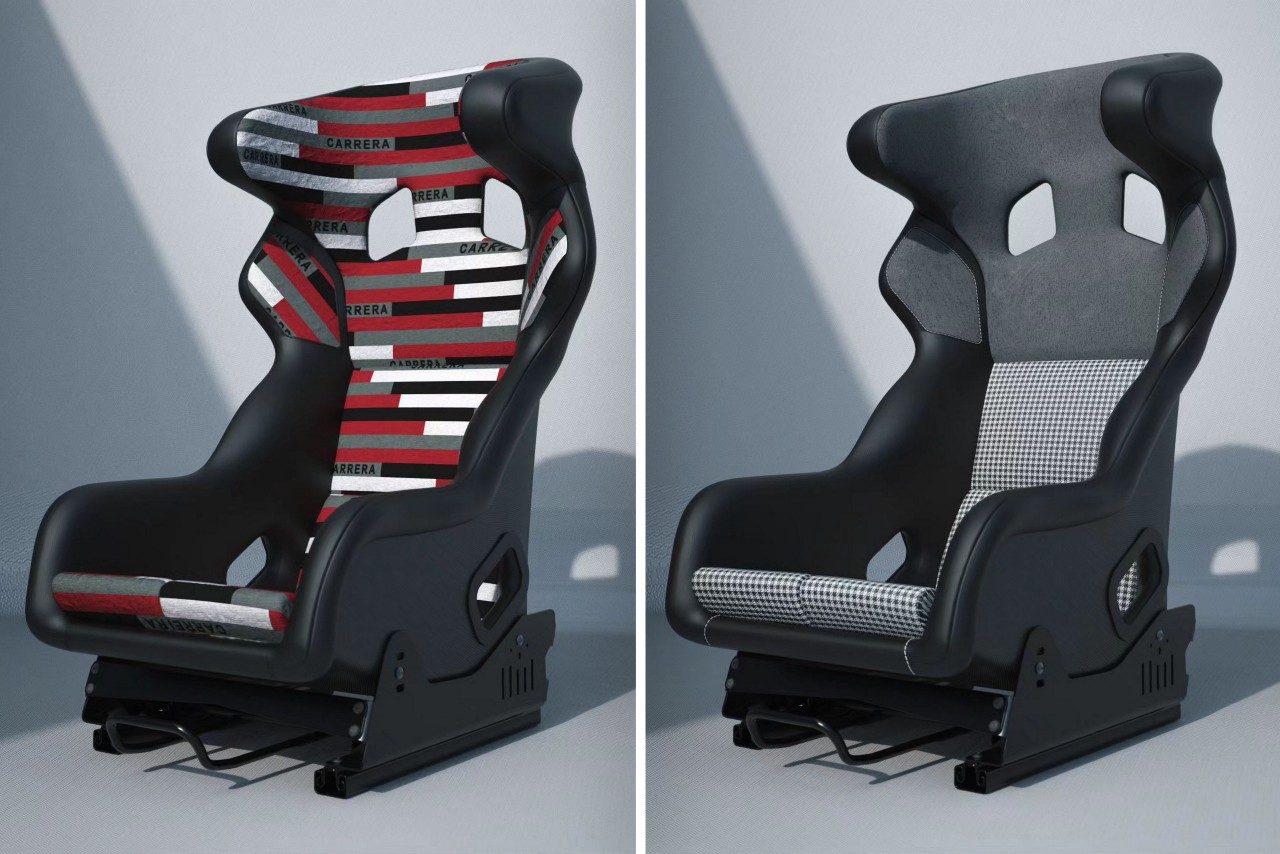
Porsche Carrera Recaro Seat by Glen Cordle
Most sportscar interiors try to mimic the edginess of the car’s exteriors, but Glen Cordle wants variety. His Instagram Post highlights a few neat CMF options for the Porsche Carrera’s seat (manufactured by Recaro), ranging from a racy red black and white, to a rather classic houndstooth and suede variant that I honestly can’t get my eyes off of!
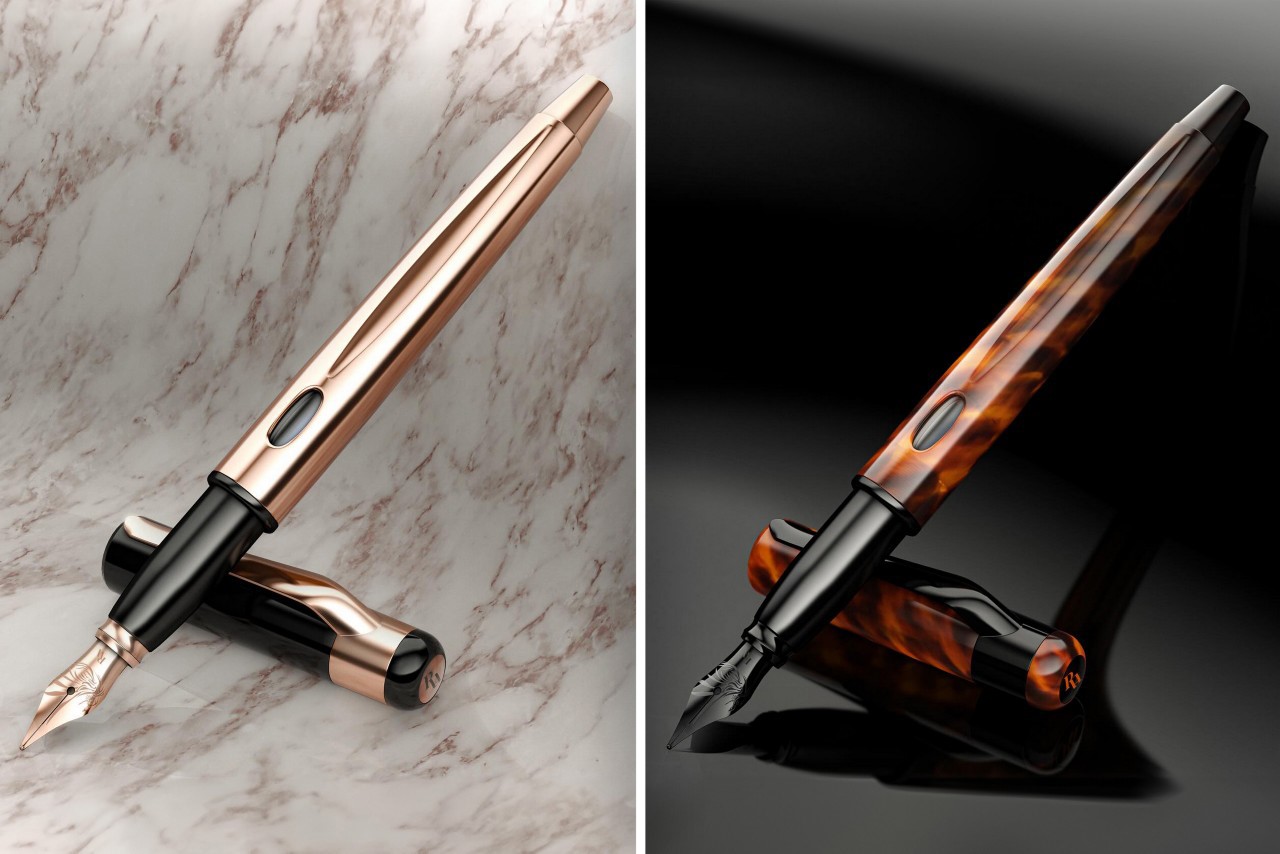
Fountain Pen by Rob Adams
There will come a time in our lifetimes when the fountain pen becomes as unrecognizable to younger generations as the audio cassette or floppy disk… but until then, it deserves every bit of spotlight possible. A successor to the quill, the fountain pen has remained one of the most powerful symbols of literature and even of leadership, given the fact that almost every law, treaty, and bill has been signed using a fountain pen. Rob Adams adds a bit of CMF exploration to the almighty pen in his, experimenting with classic colors like rose gold, but even pushing the boundaries with this fire-inspired variant, and even a transparent version, visible in his Instagram Post!
Built-in basic thermostat for automatic temperature adjustment
Great safety features for households with children and pets
CONS:
Needs to be plugged directly into a wall socket
Touch buttons provide no tactile feedback
RATINGS:
AESTHETICS
ERGONOMICS
PERFORMANCE
SUSTAINABILITY / REPAIRABILITY
VALUE FOR MONEY
EDITOR'S QUOTE:
The GoveeLife Smart Space Heater Lite delivers quick, efficient, and safe heating wrapped in a compact and stylish package.
The holidays usually mean colder days, at least for those living in the northern part of the world, which also means rising costs in order to keep oneself warm and toasty. Fireplaces might sound and look romantic, but they’re not efficient, sustainable, or even safe. The same goes for gasoline-powered heaters, which also add an element of risk to people’s health. In this day and age, smart appliances play an important role in living a life of comfort without the downsides and expenses of traditional products, so it’s not really surprising that GoveeLife has launched a number of new smart space heaters for that very purpose. While Govee is probably best known for its smart lighting solutions, it established GoveeLife this year to focus on smart home appliances like heaters, humidifiers, smart kitchen appliances, and sensors, aiming to enhance convenience, optimize efficiency, and improve overall quality of life. In particular, the compact GoveeLife Smart Space Heater Lite piqued our interest, so we took it to the test to see if it’s really such a hot product or just hot air.
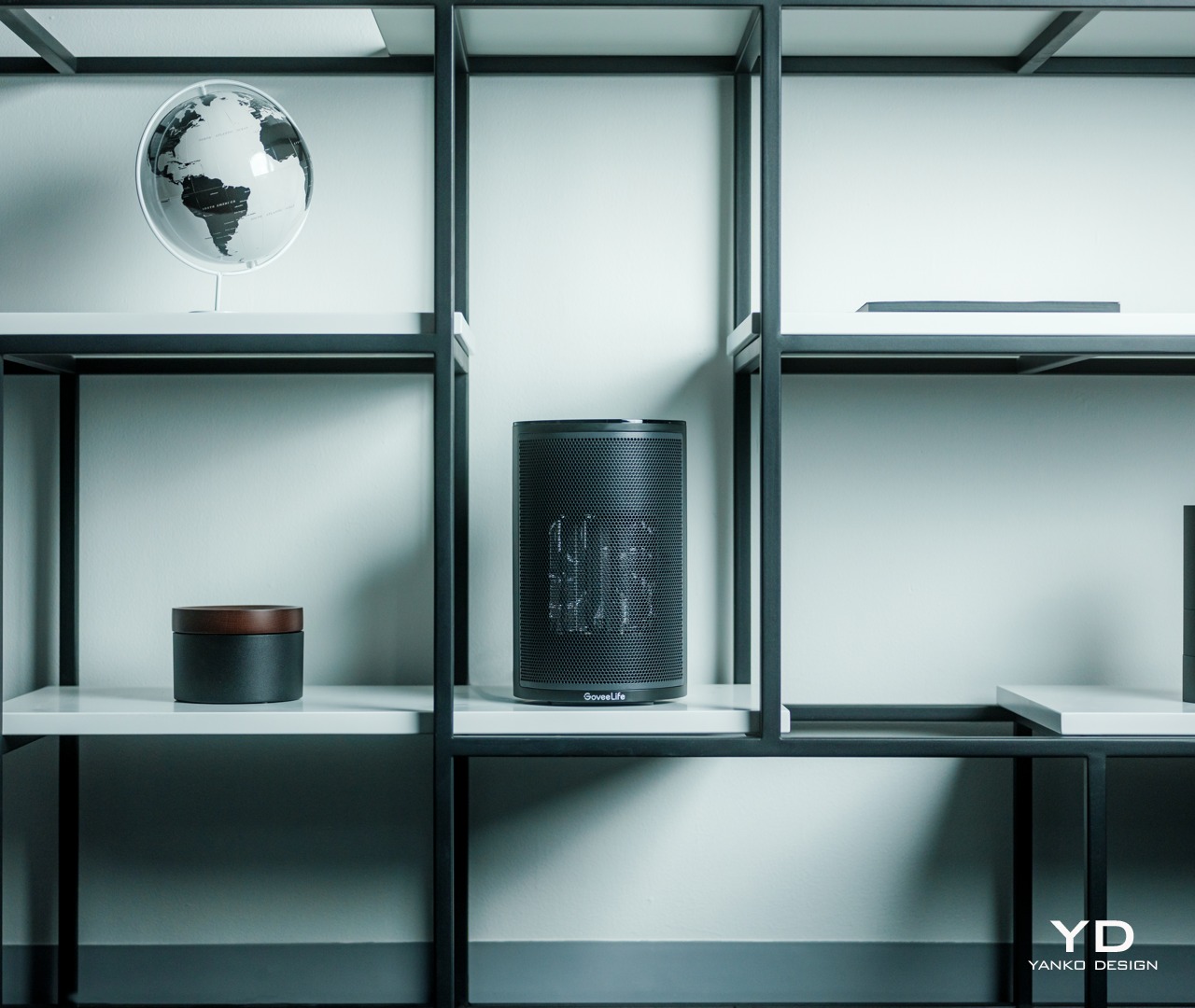
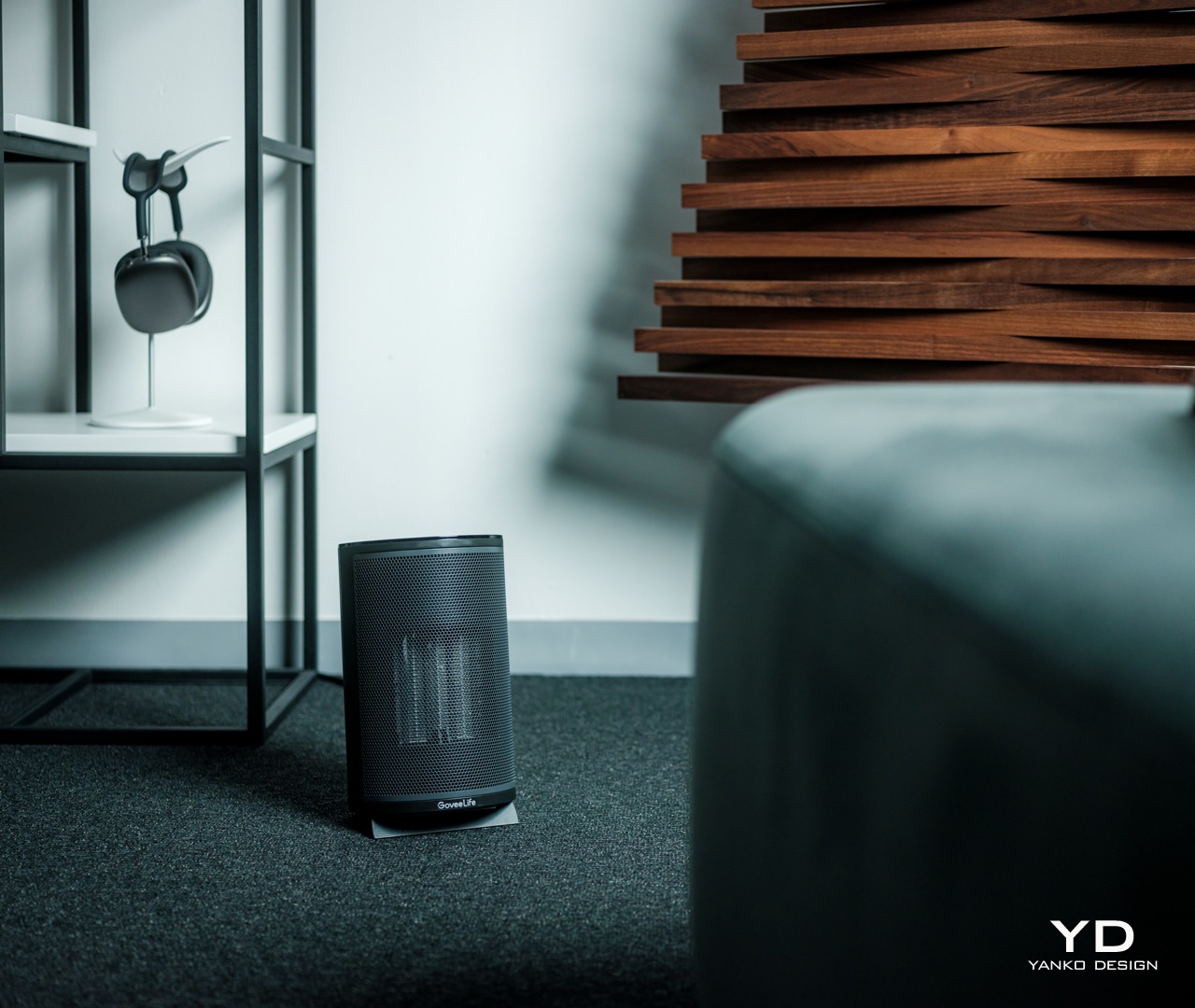
Air coolers, purifiers, and humidifiers have started to dress up and look more at home in our living spaces, taking on designs that blend well with the rest of the furniture or stand out in a pleasing way. Most space heaters, in comparison, look utilitarian and uninspired, making you think of them more like movable ovens or furnaces than a distinct class of their own. In that sense, the GoveeLife Smart Space Heater Lite sets itself apart with a design that is discreet and stylish, making it a fine addition to your room, no matter the motif you have going.
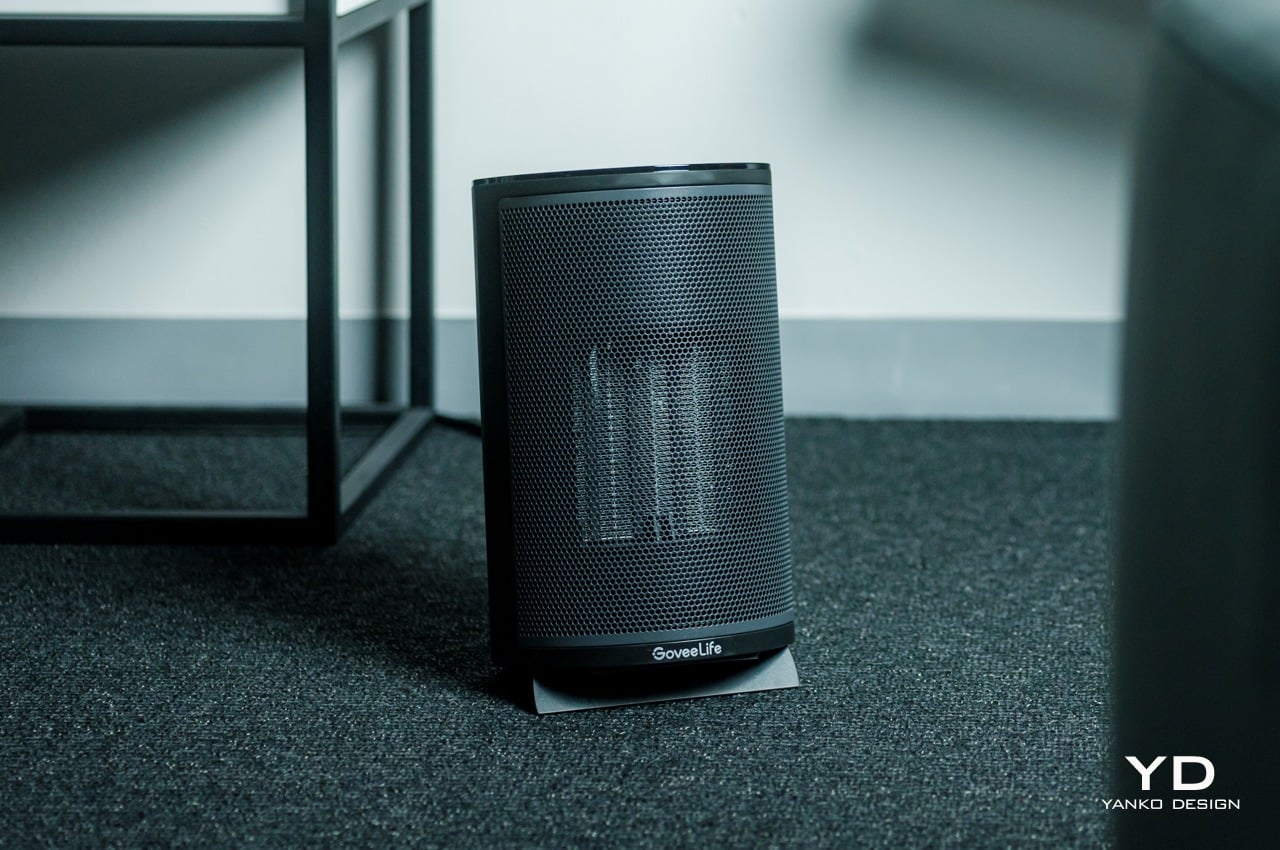
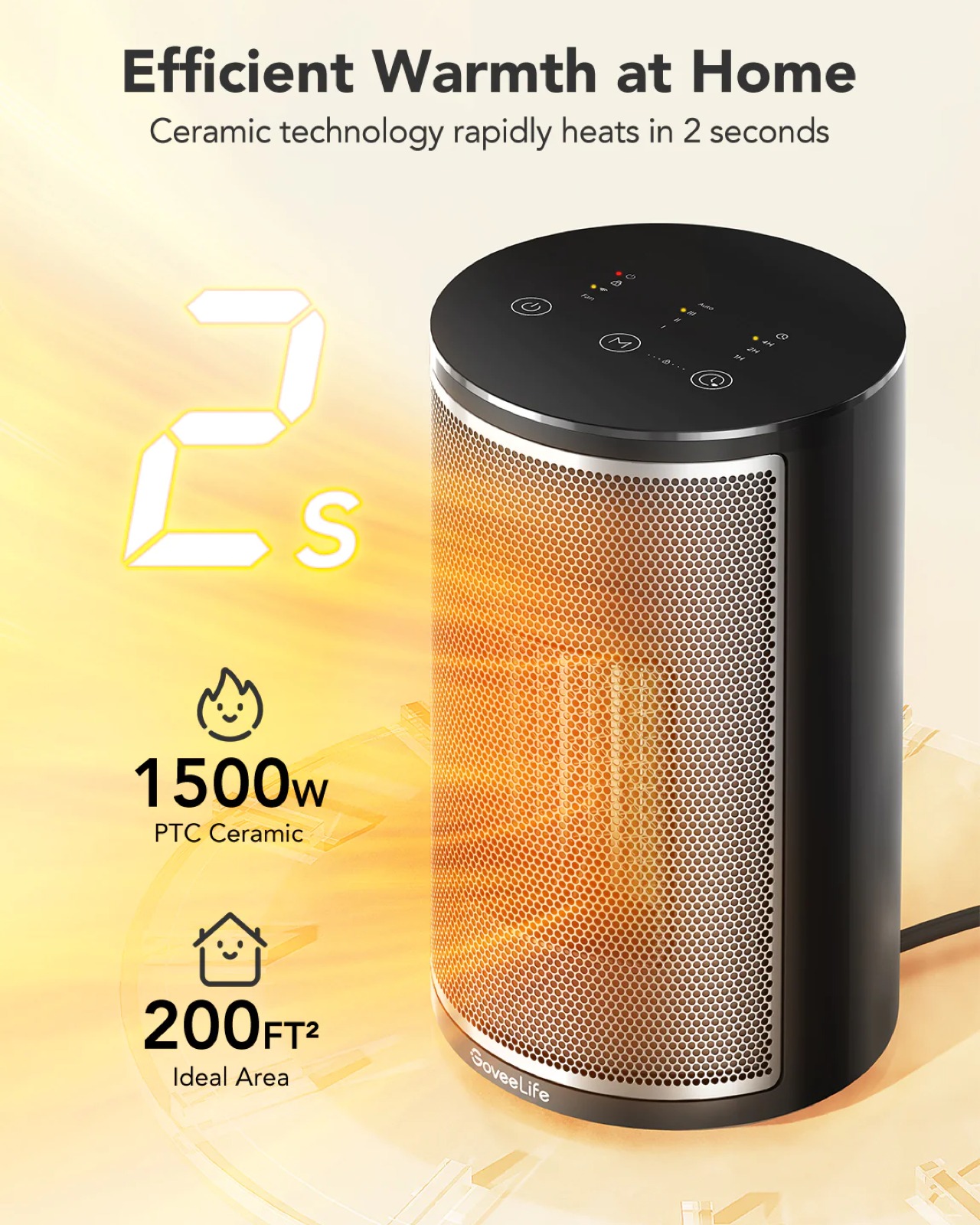
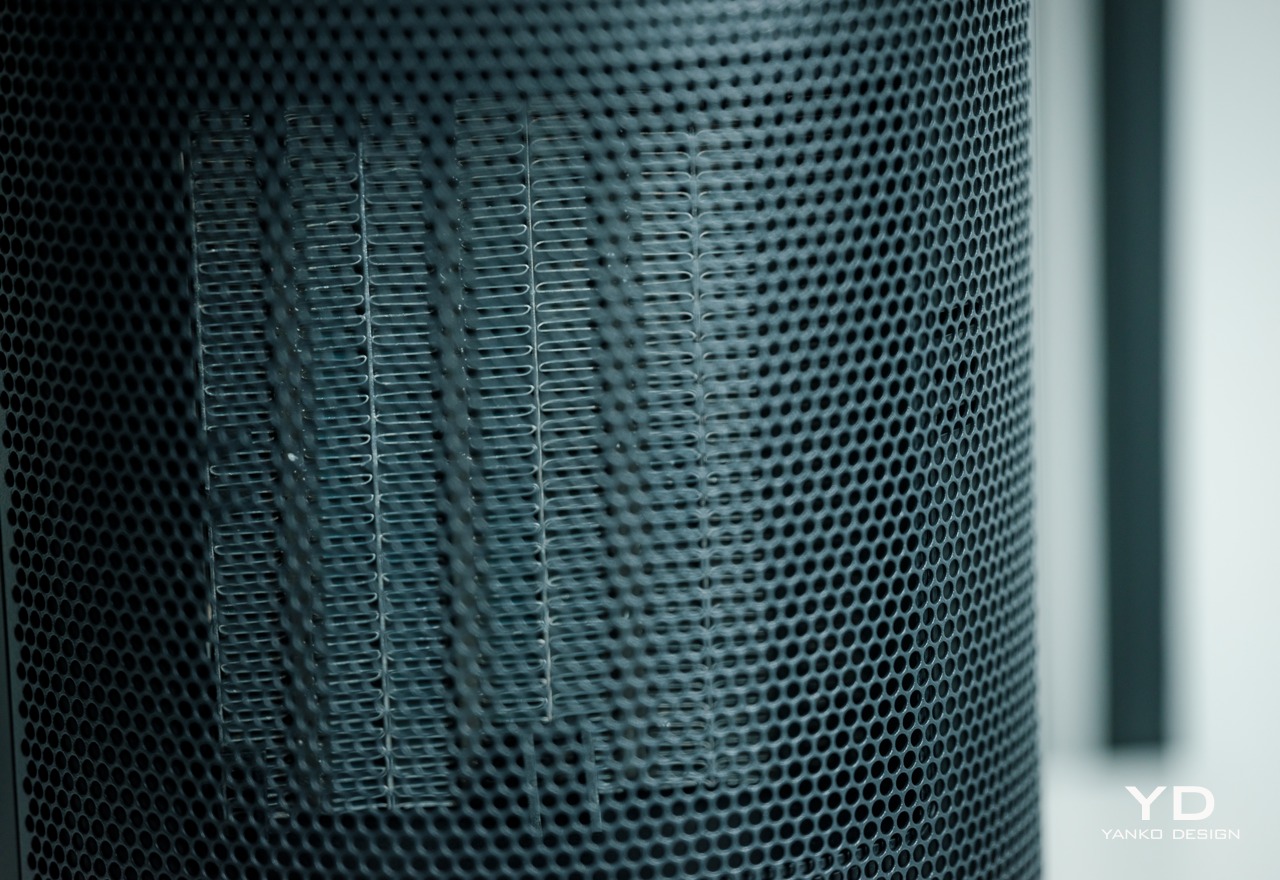
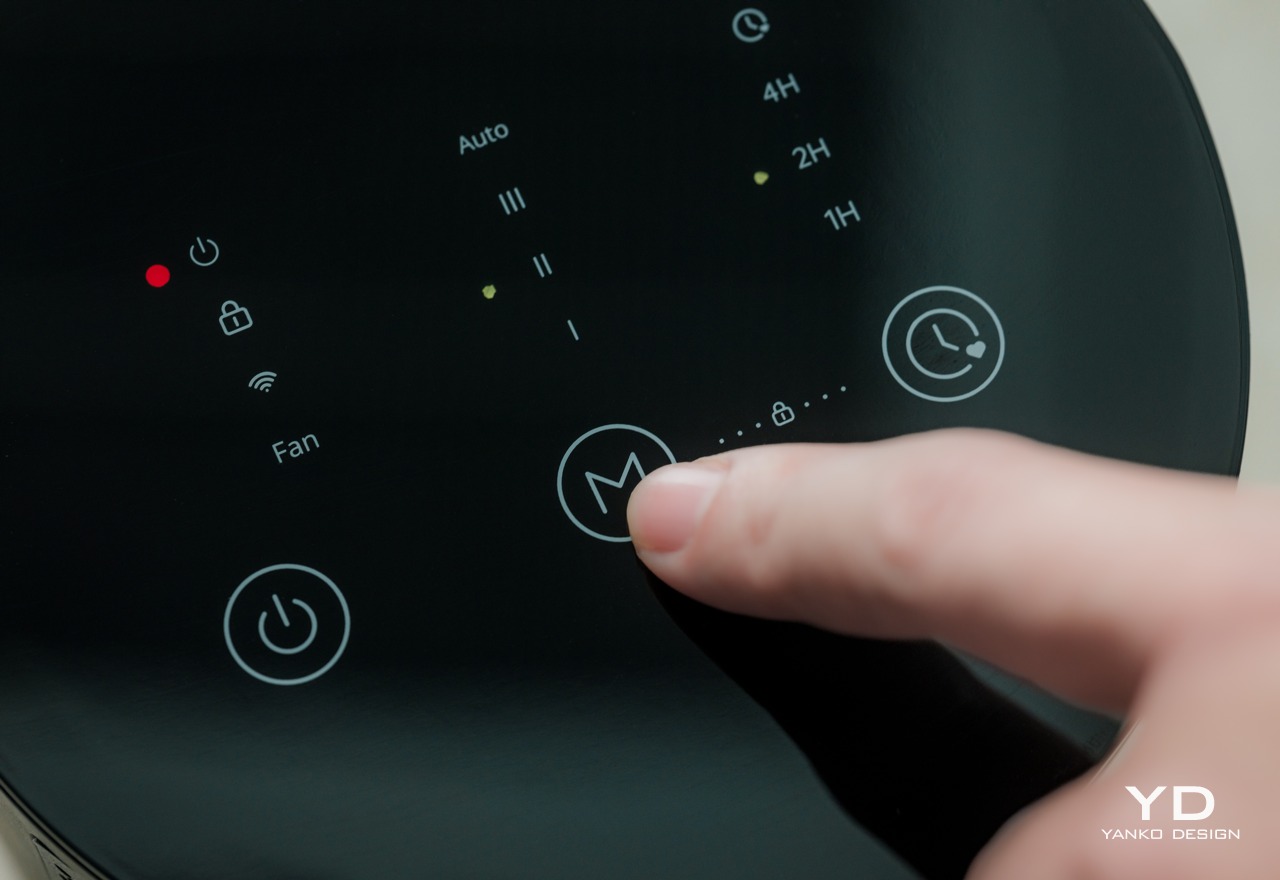
For starters, the smart space heater takes on a cylindrical shape with very minimal markings all around. The most distinctive part of the product is the silver grille in front where hot air blows out. It’s a perfect match for the black colorway, which is the review unit that we got, though the white version isn’t bad either, even if the grille does stand out more. The top holds the capacitive touch buttons and LED status indicators, though you might not look at those that much if you’ll be controlling the heater mostly through the Govee Home app.
The GoveeLife Smart Space Heater Lite, which is the smallest of its siblings, is only 9.1 inches tall and 5.9 inches in diameter. This compact size makes it ideal for any space, even in cramped corners or shelves. It’s also lightweight at only 3.63lbs, which means you can easily take it anywhere around the house. For bigger rooms and spaces, GoveeLife also offers the Smart Heater Pro and Smart Heater Pro Max. The only consideration you need to have is that the appliance has to be plugged in directly to a wall outlet, now through some power cord. That might be limiting for some, but the included 5ft power cable does address that issue to some extent.
Ergonomics
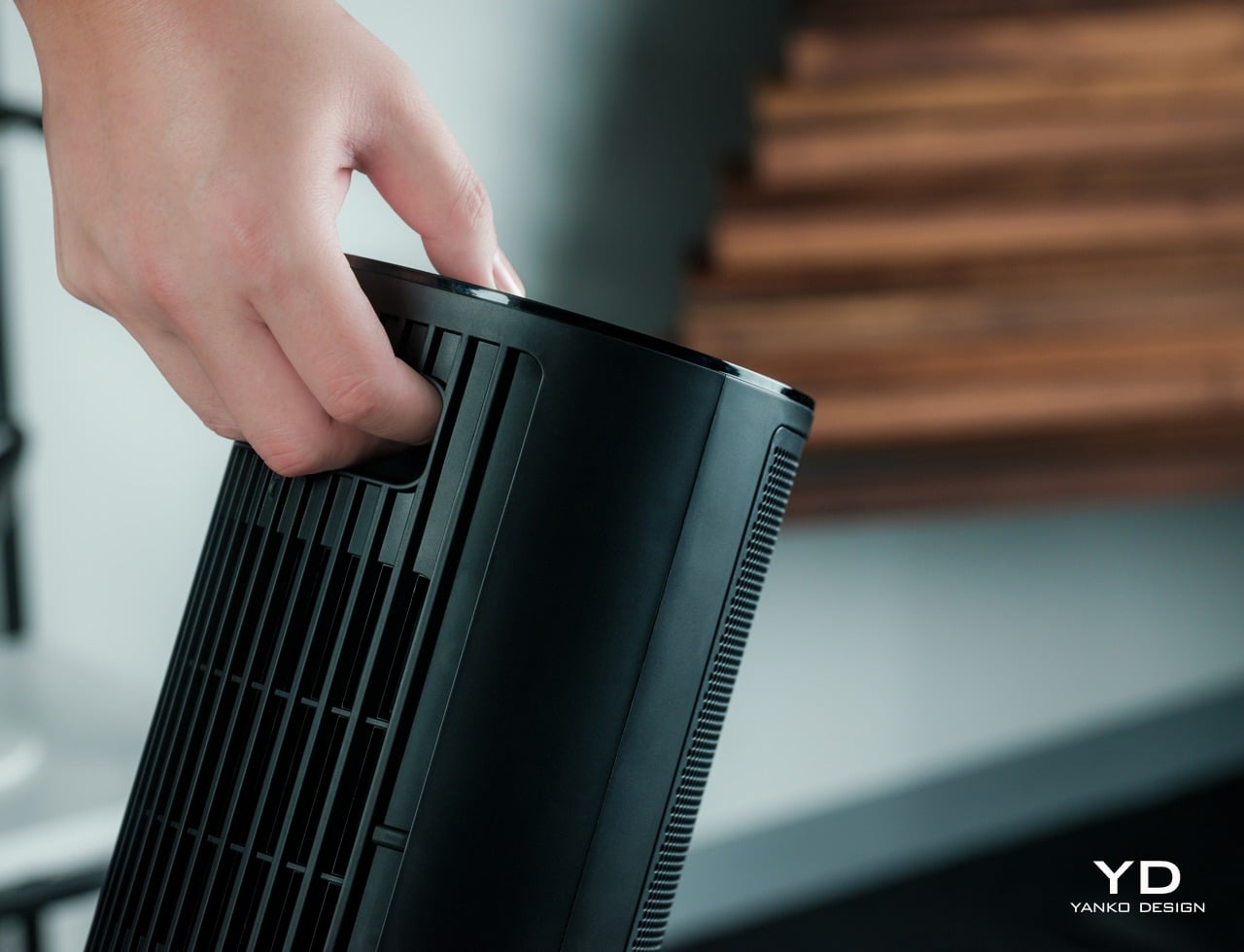
As mentioned above, the GoveeLife Smart Space Heater Lite is truly light on weight, so there will be no problem where you want to set it up. It doesn’t require a permanent installation either, so you can just lift it up and put it somewhere else if you’re not happy with the heat distribution. The integrated carrying handle on the back makes that easy, a clear sign that the heater isn’t meant to stay put in a single place forever. Of course, you’ll have to consider the airflow in the room and place the heater where it will have the best effect.
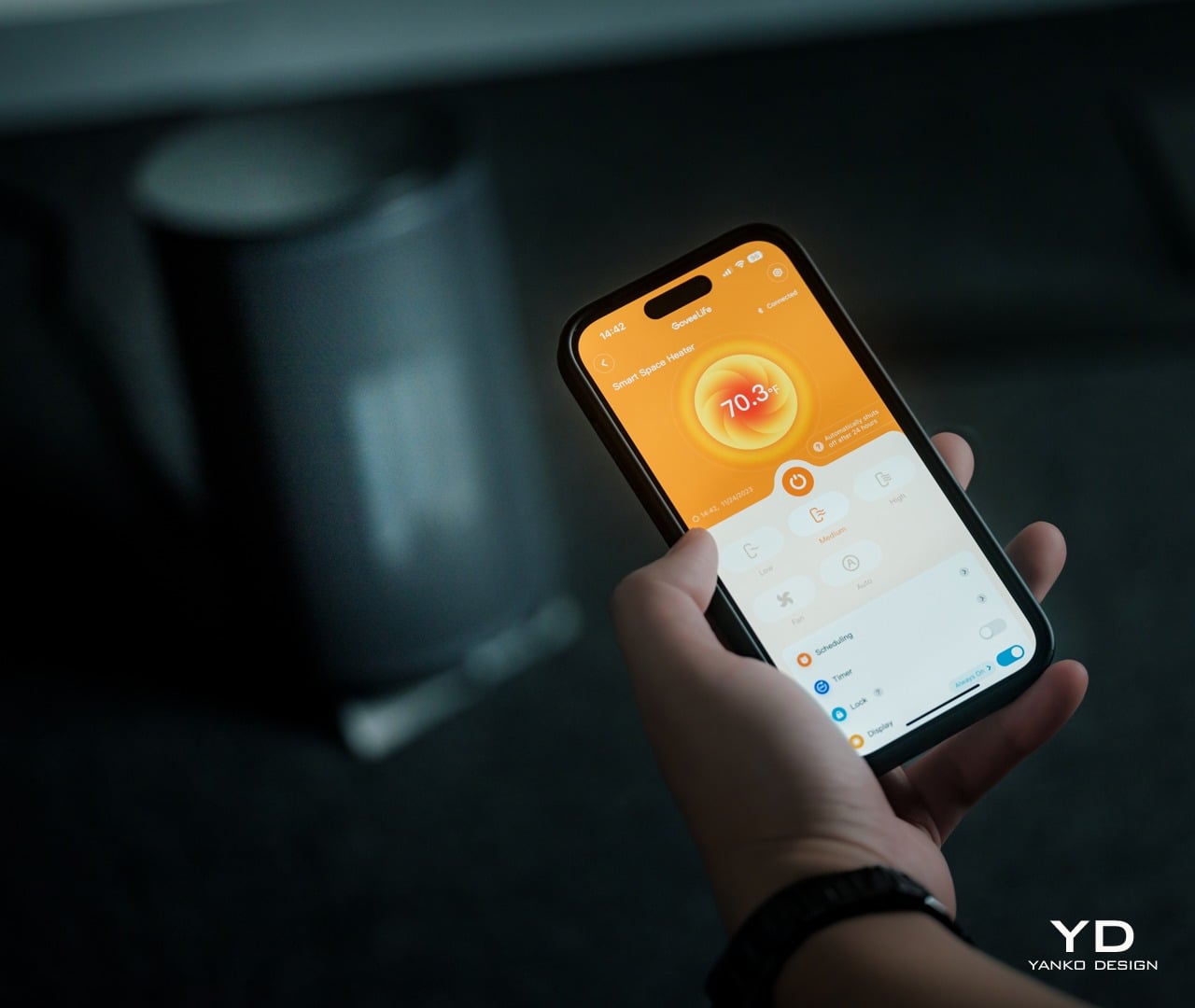
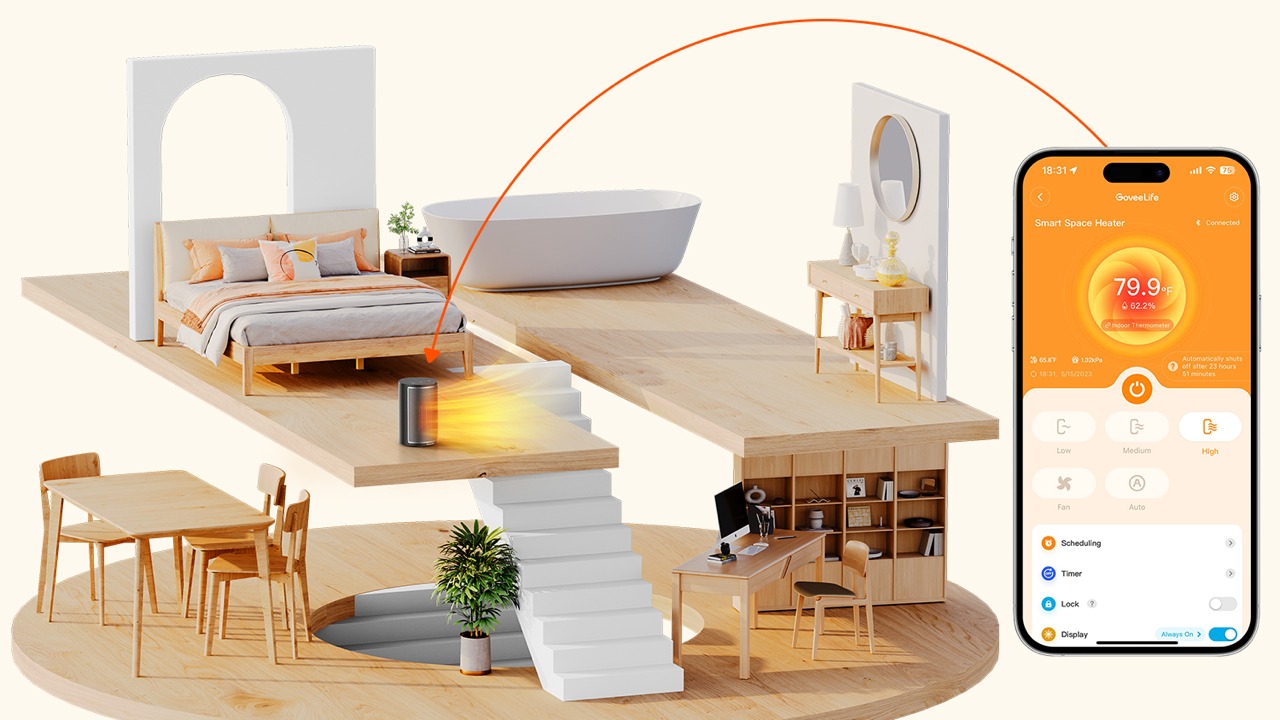
Setting up the appliance is just as easy as well, and all you need to do is connect the Smart Space Heater Lite to your phone via Wi-Fi or Bluetooth. The Govee Home mobile app has all the functions you need to control the heater, some of which won’t be available via the physical controls. Those controls come in the form of very flat, capacitive buttons on the top of the device. This kind of control definitely looks elegant and minimalist, but it lacks the tactile haptic feedback that our fingers and brains need to register that we’ve pushed a button. That might throw a few people off, but not enough to make it a huge issue, especially if you’ll be using the mobile app or voice control most of the time anyway.
Performance
For such a small thing, the Smart Space Heater Lite packs quite a punch when it comes to heating. It uses a 1500W PTC (Positive Temperature Coefficient) ceramic heating element that only takes 2 seconds to rapidly heat an area. It works best for closed spaces under 200 square feet, so large living rooms might be a bit more difficult to heat up. The heater blasts hot air from the front, but its swivel feature allows that heat to spread across a wider range. You can even tilt the heater up so that it can reach higher areas.
Like air coolers, the GoveeLife Smart Space Heater Lite has four modes, five if you count “Auto.” These modes, which include fan, low, mid, and high, can easily be set with a single button that cycles through the modes or directly via the app. The more interesting mode, however, is “Auto,” which utilizes the heater’s built-in thermostat. To use it, you set the desired temperature in the app and the Smart Space Heater Lite will heat the room up to that temperature and then automatically switch off once it reaches that point. While you can switch to Auto mode using the heater’s buttons, you can only set the temperature through the app.
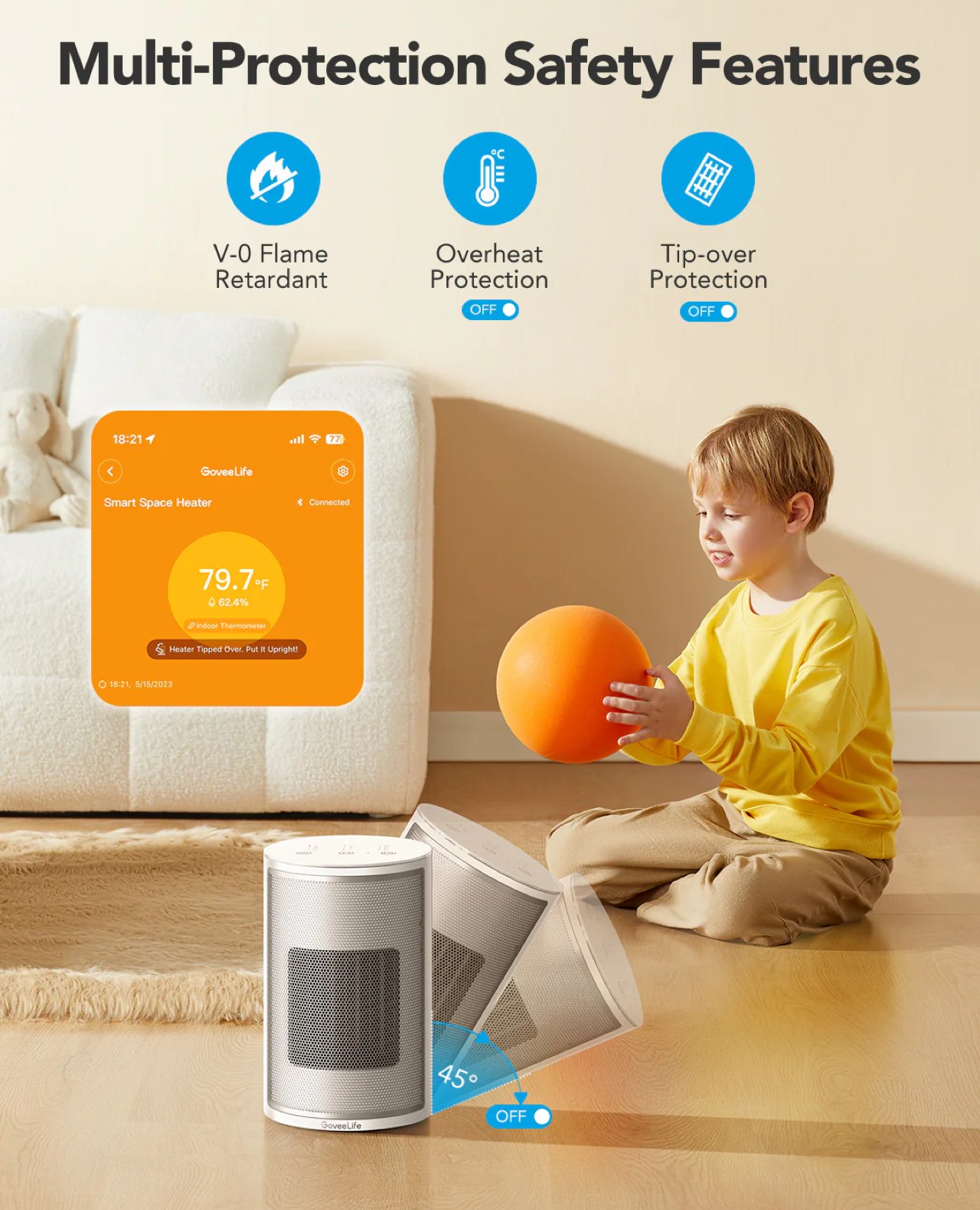
Since we’re dealing with heating elements and hot surfaces, it’s no surprise that GoveeLife loaded the heater with a lot of safety features, including a timer. For starters, the product itself is V-0 flame retardant to reduce the risks of fire and burning. There’s a control lock feature in the app that disables the on-device buttons, preventing anyone, especially children, from accidentally operating the heater. One of the best features, however, is the tip-over notification, which immediately alerts you through the app if the heater is knocked over by a person or a pet.
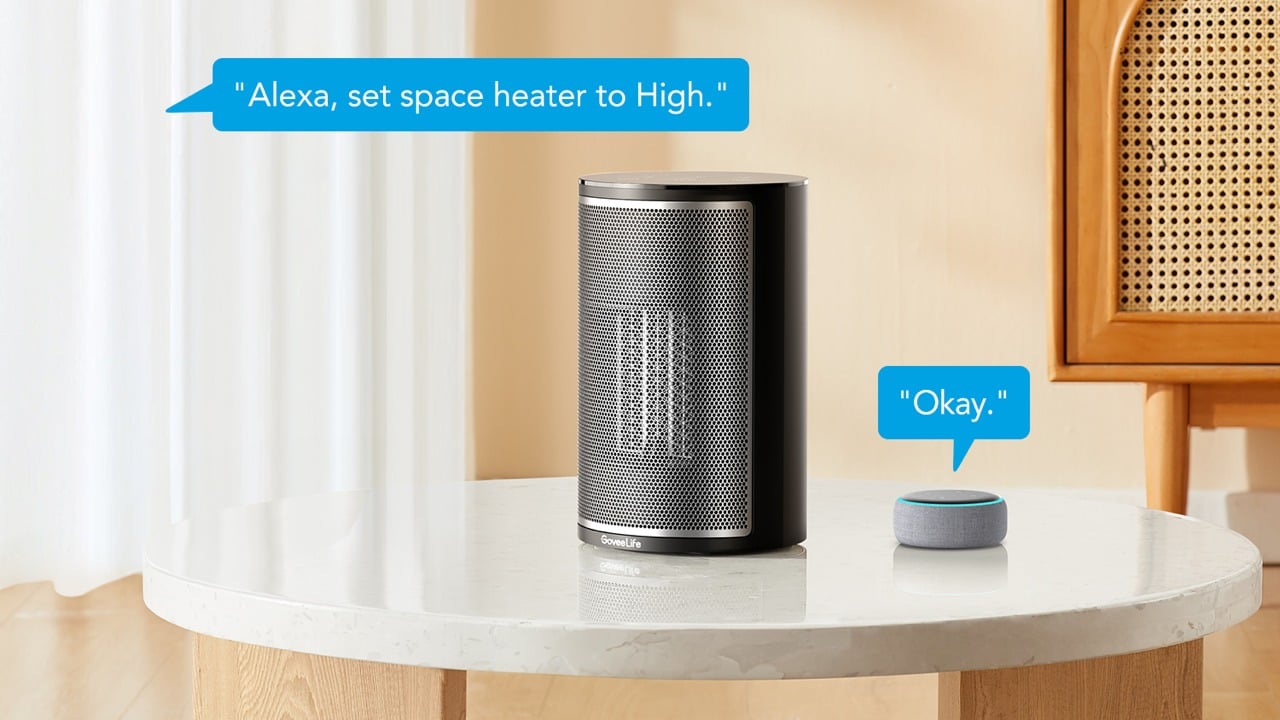
Of course, the Smart Space Heater Lite is “smart” for a reason, and it can integrate well with existing smart home platforms, including Apple Home, Google Home, and Amazon Alexa. That means convenient voice control, regardless of which platform you’re using. Not only that, but you can also add the heater to programmed scenes so that you can make sure your home is warm and toasty by the time you get home from work.
Sustainability
Unlike mobile devices and some gadgets, you’d expect appliances to be designed for the long haul. The choice of materials and their designs are made based on durability and longevity, though no device is immortal. Sooner or later, they get damaged or even broken beyond repair, which means a trip either to a service center or to a landfill. When this happens, the use of sustainable materials and the application of repairable designs play important roles in helping minimize their damage to the environment.
The GoveeLife Smart Space Heater Lite isn’t exactly an outlier in that regard, made from the typical mixture of plastics and metal. Self-repair is also out of the question, and you might find yourself striking out in finding a nearby service center, depending on where you live. Maybe the day will come when GoveeLife will be making easy-to-repair products that use recycled materials, and we’ll be keeping a close eye on this rapidly growing brand for that day.
Value
Space heaters are a bit less common than coolers and humidifiers, but they’re numbers are definitely rising. That’s especially true for smart heaters that are trying to ride on the smart home train. With so many to choose from, including from GoveeLife’s own catalogue, it’s only natural to ask what makes this Smart Space Heater Lite desirable enough to be worth your hard-earned cash.
In a nutshell, the GoveeLife Smart Space Heater Lite checks all the right boxes without going overboard with unnecessary features. The thermostat-driven Auto mode is a great money and power saver, and the rapid heating technology makes sure you get the desired warmth sooner rather than later. Its lightweight and attractive design makes it easy to place the appliance anywhere in the house, while excellent safety features ensure your kids and furry friends are out of harm’s way. Best of all, the $49.99 price tag isn’t too much to ask especially for something you’ll be using for a very long time.
Verdict
There has been a lot of focus on air coolers, purifiers, and humidifiers in the past year or so, but unpredictable weather and freak blizzards remind us that the other extreme is just as bad. Not many people give much thought to their heaters, at least until the electricity bill arrives. That’s when they need a smarter and more cost-efficient way to stay farm.
The GoveeLife Smart Space Heater Lite definitely fits the bill in that regard. It might not be sufficient for very large areas, but it’s more than enough for the majority of households and rooms. Smart and safety features take away most of the worry involved with appliances that generate heat, and integration with major smart home platforms means that you can be even more energy-efficient by only using the heater when it’s actually needed. More importantly, the Smart Space Heater Lite looks quite elegant in any setting, making it a potential centerpiece for your smart home decor.
Tons of fun and dynamic smart features for any holiday or occasion
Simple discreet design is perfect for installing anywhere, whether indoors or outdoors
Very affordable price tag
CONS:
No dedicated pure white color
Silver cable stands out against some colors and trees
Adapter only has IP44 dust and water resistance
RATINGS:
AESTHETICS
ERGONOMICS
PERFORMANCE
SUSTAINABILITY / REPAIRABILITY
VALUE FOR MONEY
EDITOR'S QUOTE:
The Govee Christmas String Lights offer delightful light shows, smart features, and great value all year round.
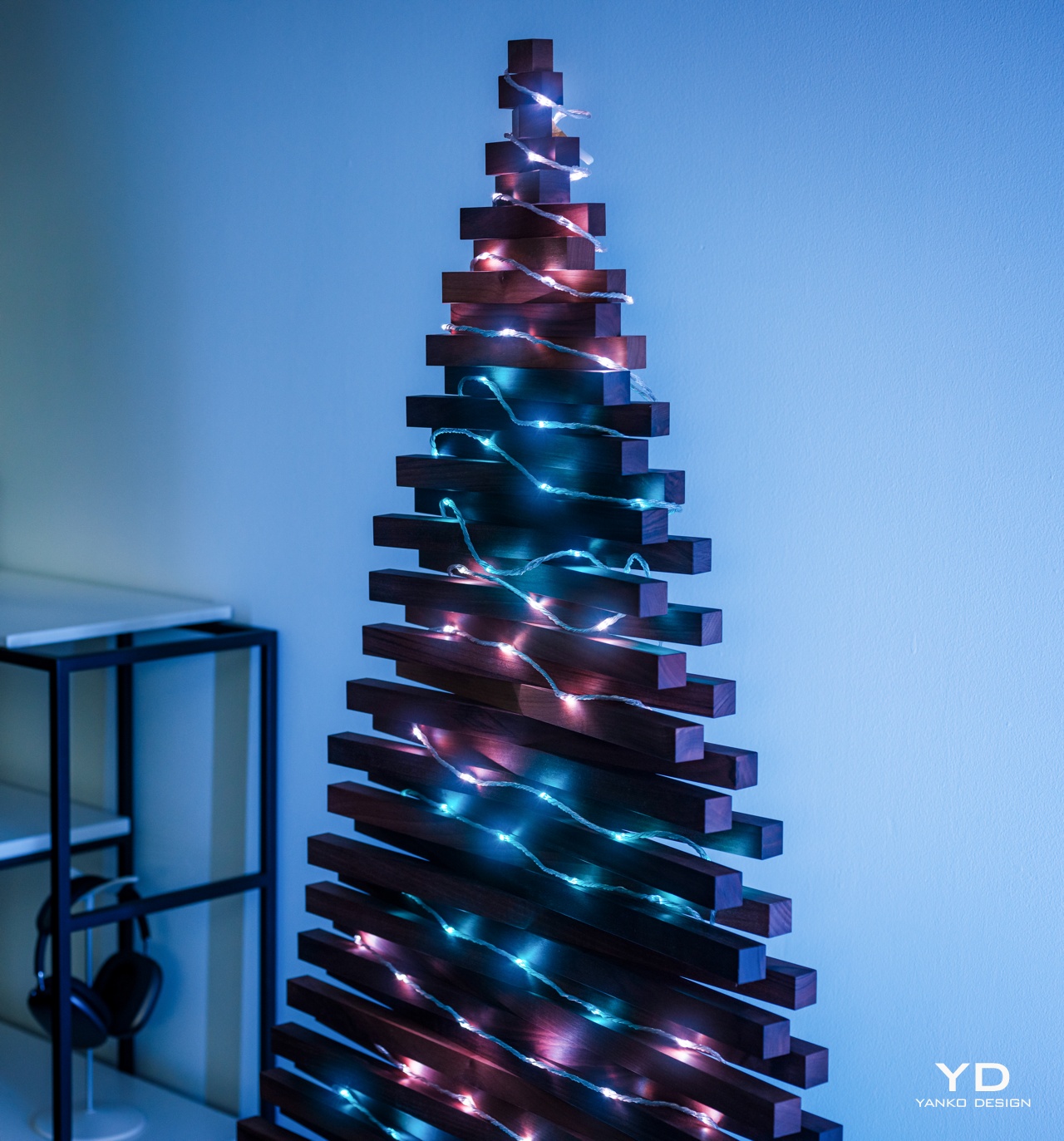
It’s that most wonderful time of the year again, and if you haven’t already set up some lights before Halloween, you are most likely already planning how you’d decorate your homes for the holidays. There is no shortage of lighting options available, both smart and traditional, but the majority of them have one flaw in common. They lose their appeal after the holiday season has come and gone, making their setup and cleanup feel a little more work than they’re worth. The new Govee Christmas String Lights clearly have “Christmas” in their name, but their design and functions make them sound appealing no matter the season. That’s why we took these colorful lights for a spin to check if they check all the right boxes not just for a festive Christmas atmosphere but also for all-year-round smart lighting.
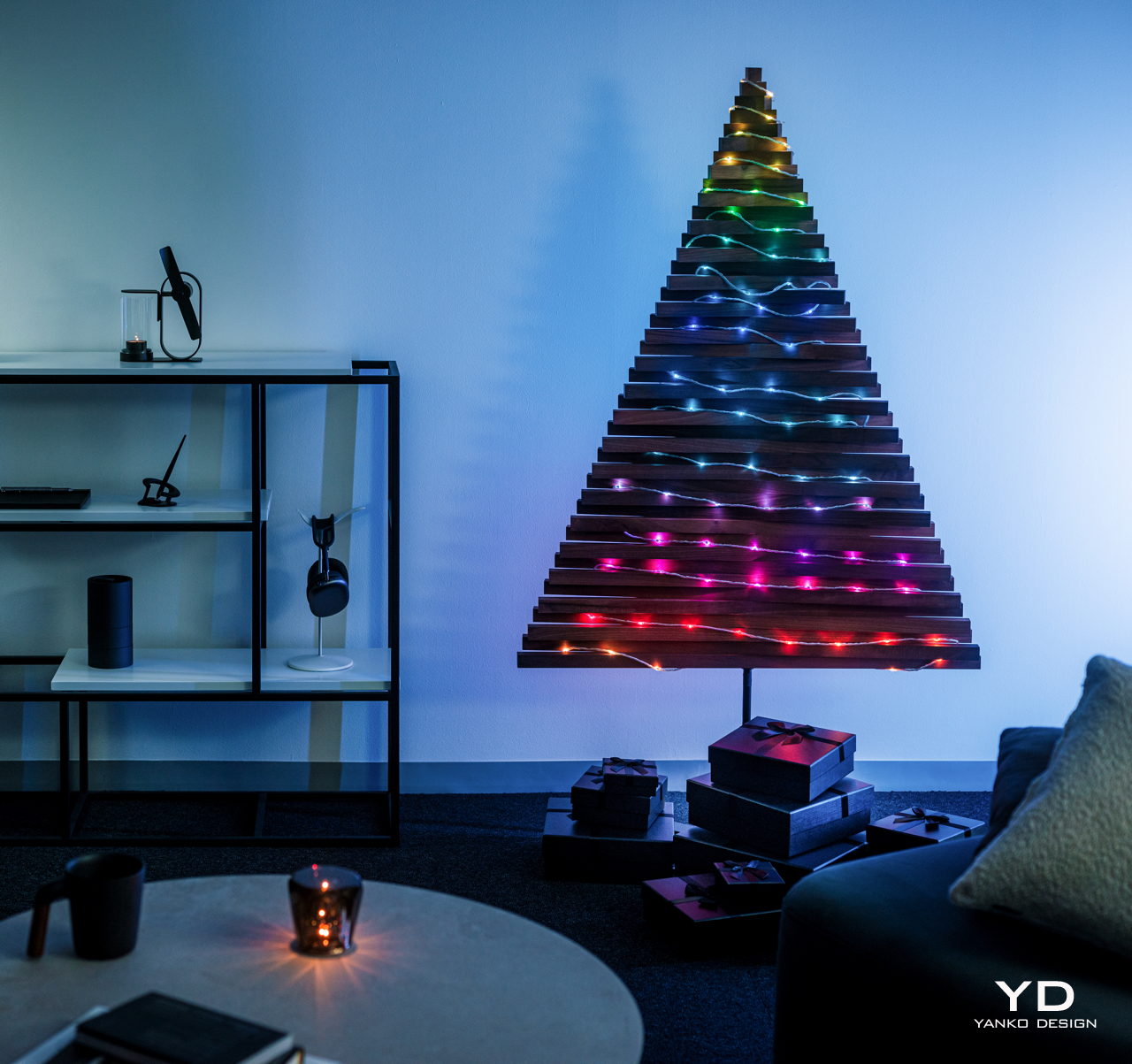
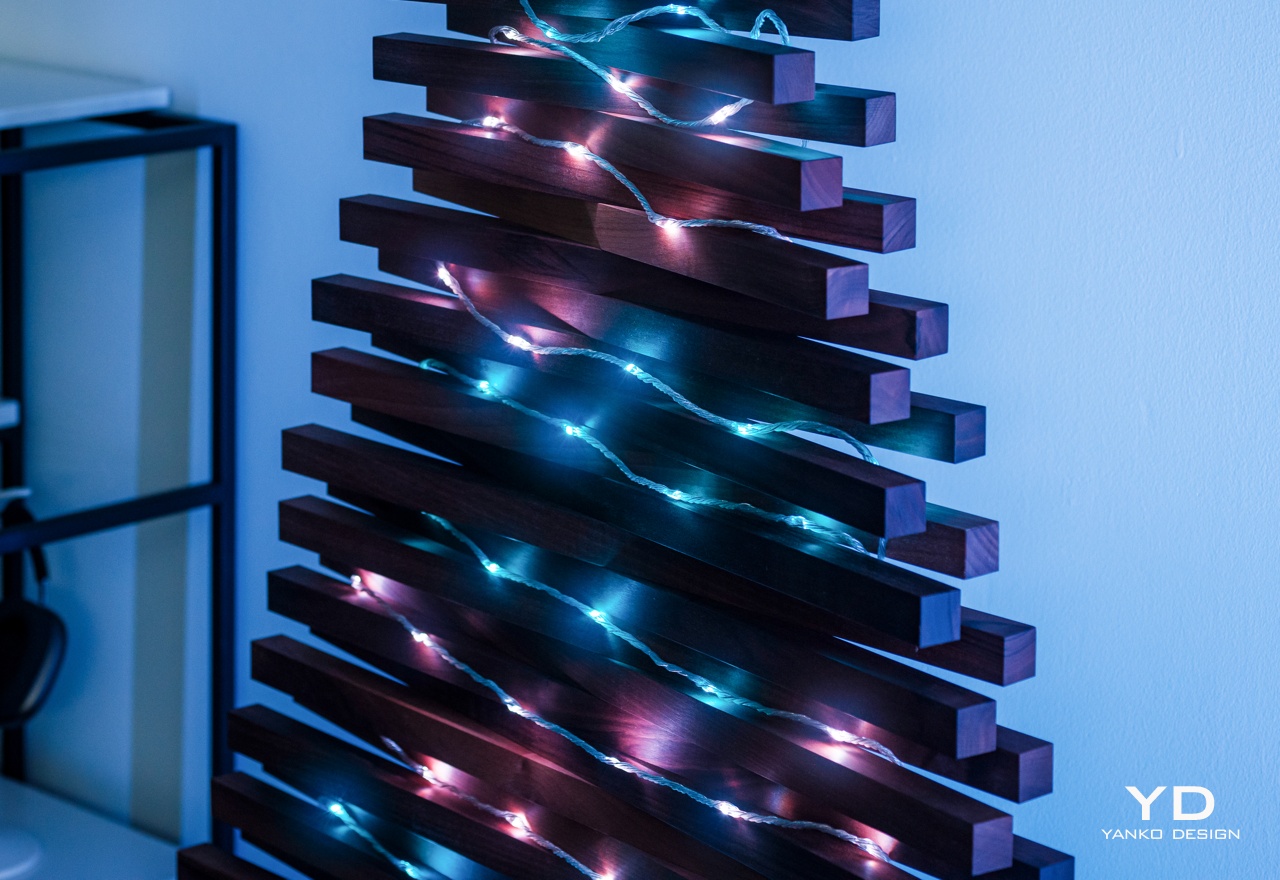
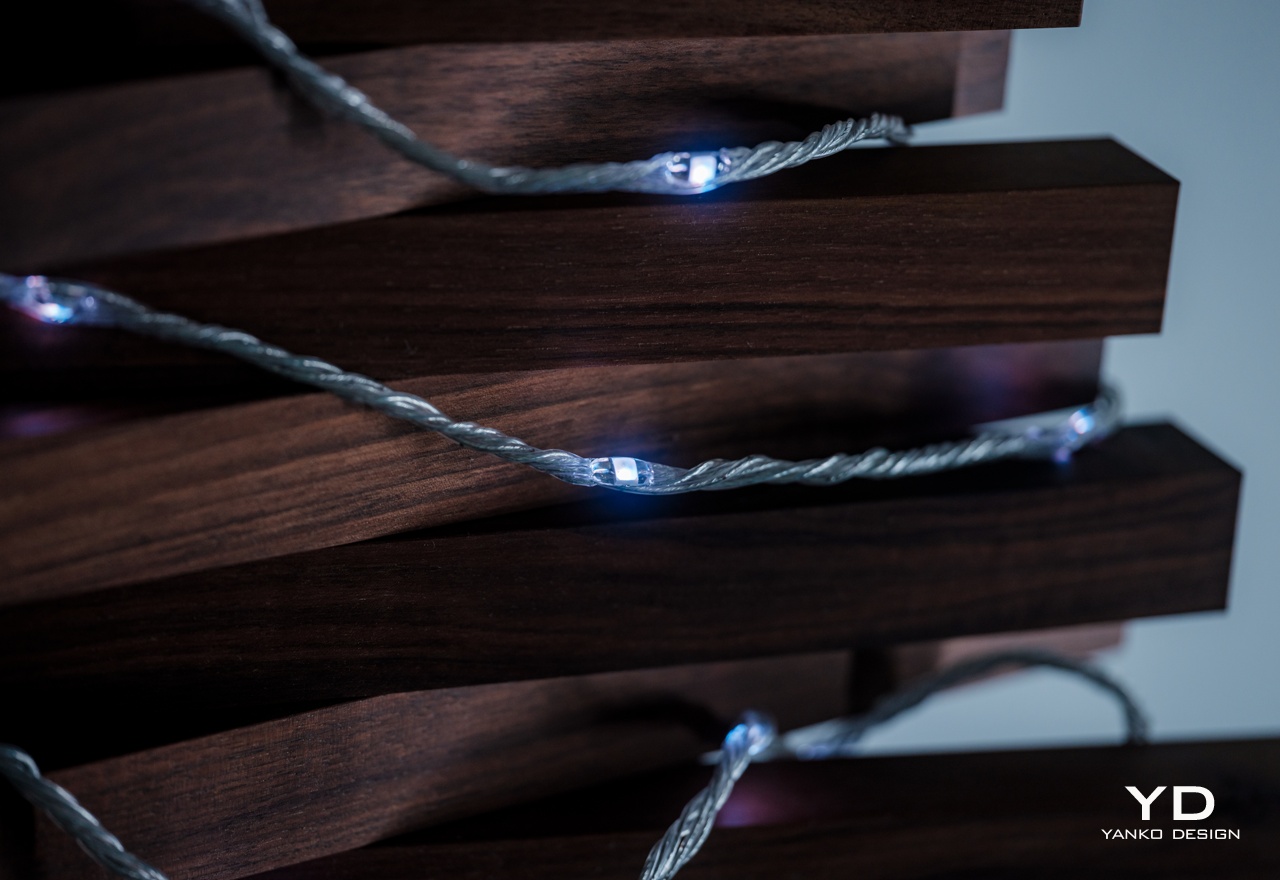
Traditional Christmas lights come in fairy or rice light designs, which are great for spinning around trees or hanging from windows and roofs, but not much else. The very visible bulbs that protrude from the main cord make them look too conspicuous and difficult to hide in plain sight. In contrast, the 100 or 200 lamp beads (depending on which length you purchase) that make up the Govee Christmas String Lights are almost integrated with the braided cable, making them almost invisible unless you take a closer look. That cable’s design is also quite discrete and plain, making it easier to install the lights almost anywhere.
That said, the Govee Christmas String Lights cable comes in only a single white or silver color. That means it will be able to match many walls or backdrops, and it looks great on a white Christmas tree. A black cable might actually be easier to hide in most contexts, but black doesn’t really come off as a festive color, which is why most Christmas lights go for either green or white.
When the lights are off, the Govee Christmas String Lights are admittedly a rather plain and boring sight, indistinguishable from others of its kind. Fortunately, that perception immediately disappears once the lights are turned on, thanks to each bead’s ability to display one of 16 million possible colors courtesy of Govee’s RGBIC and Uni-IC Control Technology. That already makes these lights give a dazzling display of colors from the get-go, but no owner is going to be satisfied with just displaying static colors. Fortunately, Govee’s true strength lies not just in the quality of the lights themselves but in the smart and fun controls they offer, as we’ll soon see.
Ergonomics
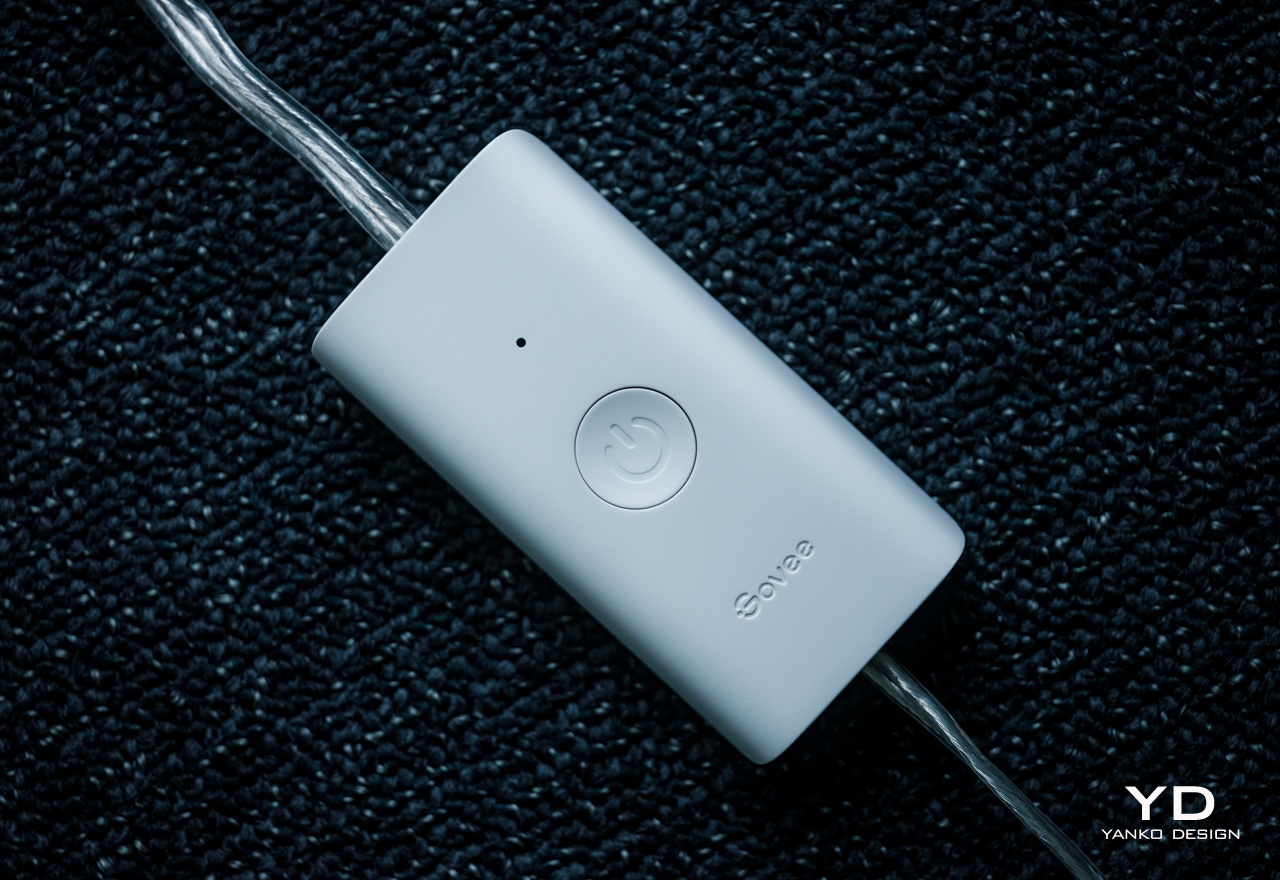
Before you’re able to enjoy the light show, however, you have to set them up first, and we’re happy to report that handling the Govee Christmas String Lights is as easy as pie. There’s almost no effort involved if you’ll just be coiling it around a Christmas tree, but you’ll have to do a bit of planning if you’ll be hanging them elsewhere. Unlike Govee’s other string or rice lights, these don’t come with hooks or mounts for walls or ceilings, so you’ll have to take care of those yourself. The control box does have a pre-installed adhesive for quickly sticking it to flat surfaces.
If there’s one important factor you’ll have to consider, it would be the fixed length of the lights, which come in 33ft or 66ft variants. There’s no way to physically connect two or more string lights into a single unit, so you’ll want to make sure before you buy what length you’ll be needing for your installation. The 66ft length, for example, is good enough to cover a Christmas tree 5-6ft in height, or 7ft at most.
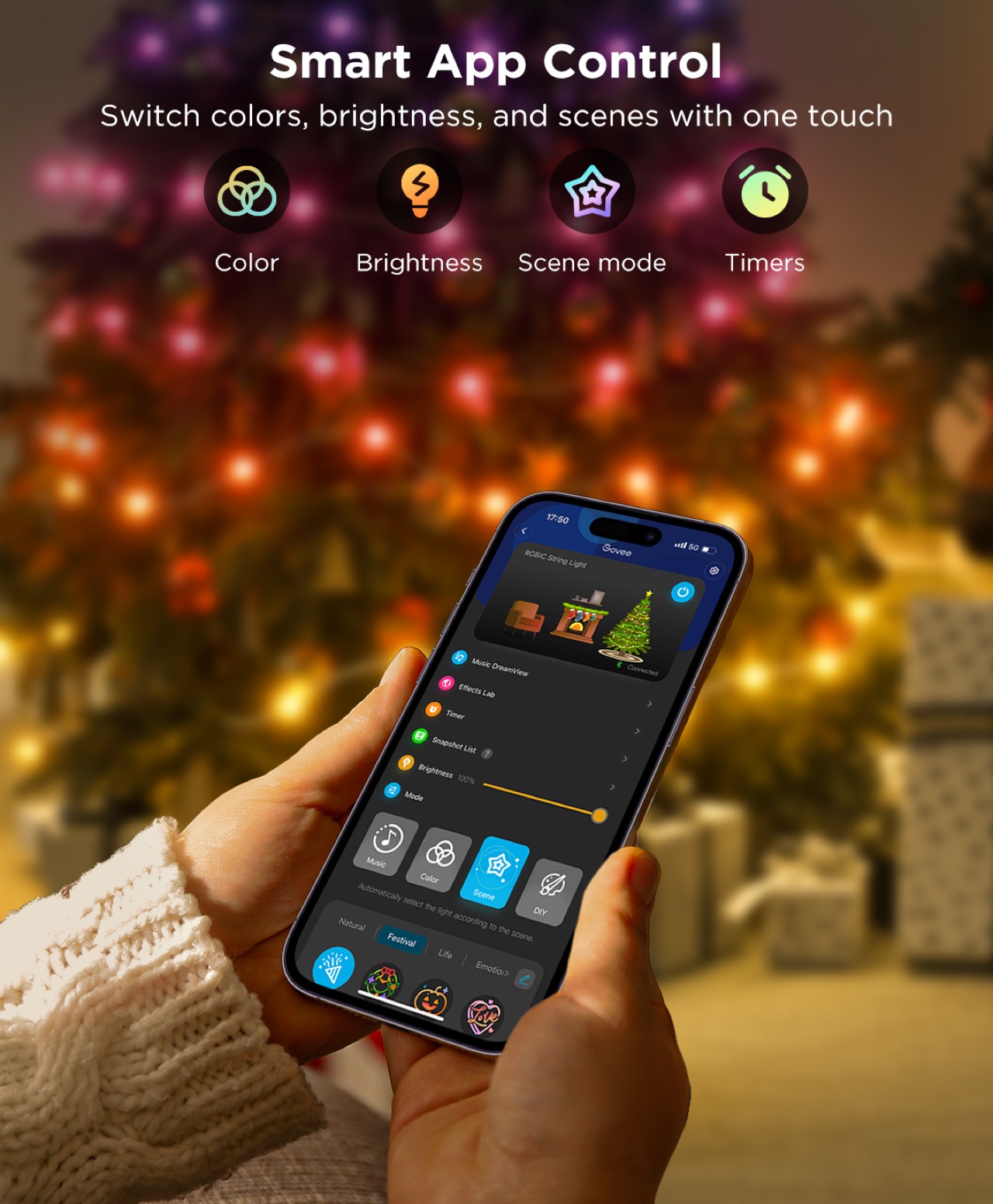
Once the physical labor is done, all that’s left is connecting the lights to your home network, which is what opens the door to all of the lights’ nifty features. If you’ve had any sort of experience setting up smart lights and smart speakers, this process will be familiar and easy. The Govee Home app itself, which acts as your remote control, is easy to use and intuitive, making the use of the lights just as enjoyable as watching them.
Performance
The Govee Christmas String Lights’ strengths come from two areas. The first is the bright and colorful lights that the beads give off, so bright that even the lowest intensity can still be a bit uncomfortable if you put it around your bed’s headrest. Govee’s RGBIC technology shows off millions of colors, except perhaps pure white. Without a dedicated white chip, the lights can only make do with an approximation of white mixed from RGB colors, which results in off-white or even warm white hues. It’s not exactly a deal-breaker unless you’re aiming for a pure white Christmas kind of theme.
Admittedly, a lot of Christmas lights can boast those same colorful feats, but where the Govee Christmas String Lights really shine (pardon the pun) is in the smart features. You can connect it to Amazon Alexa and Google Assistant for completely hands-free voice-controlled operations, but that’s really just scratching the surface of what the lights are capable of. The Govee Home app reveals the full breadth of features available in every string of light, features that take it beyond being a seasonal decoration.
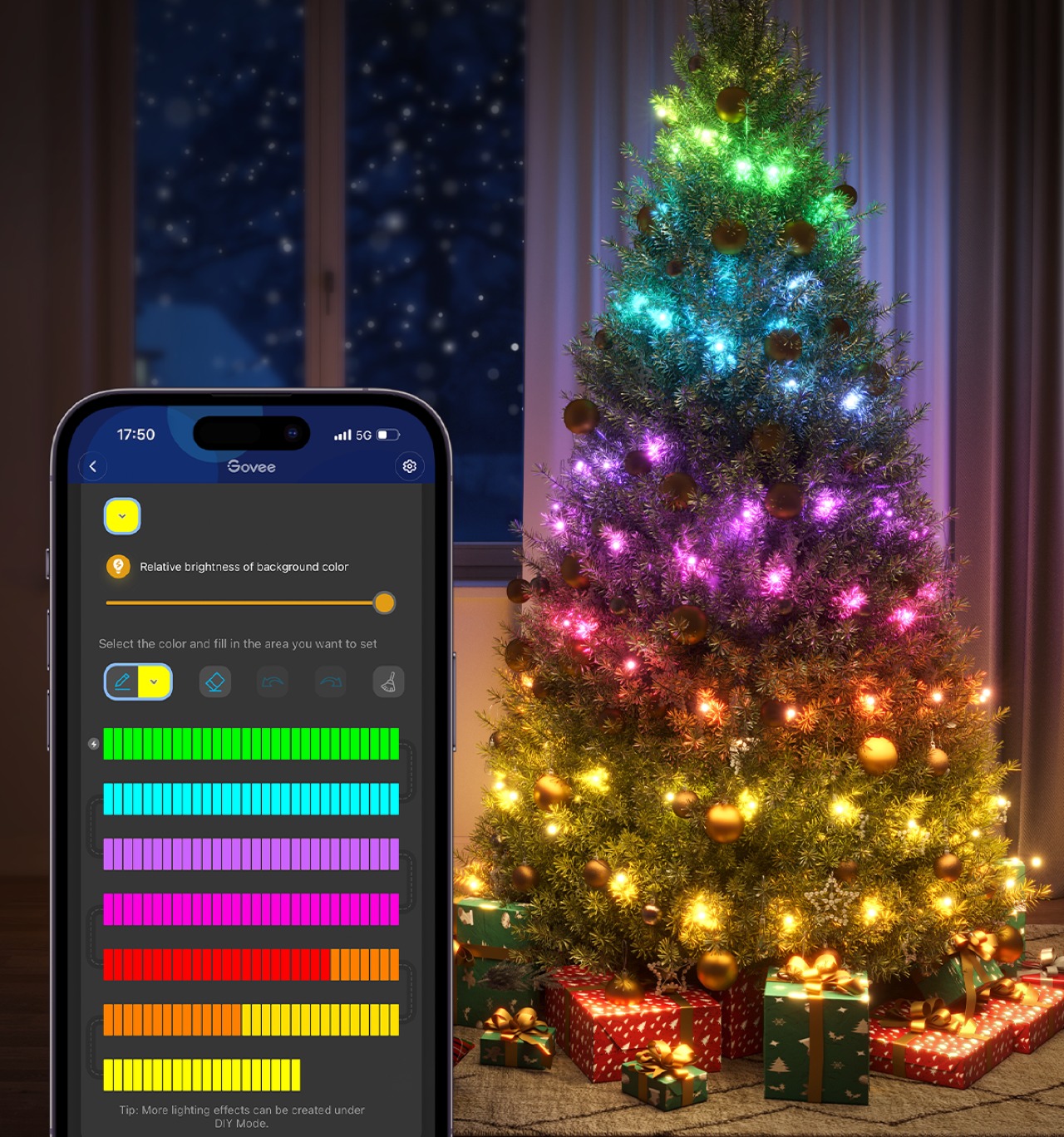
For example, there are more than 99 preset scene modes that apply dynamic effects to make sure the patterns and rhythms never go stale, whether it’s Christmas, Halloween, or even Valentine’s. The built-in mic in the control box enables Music and Game modes that make the lights sync to the beat or react to children’s clapping, turning the light show into an interactive experience. There’s even DreamView, that makes different Govee lights operate in unison without any extra accessory.
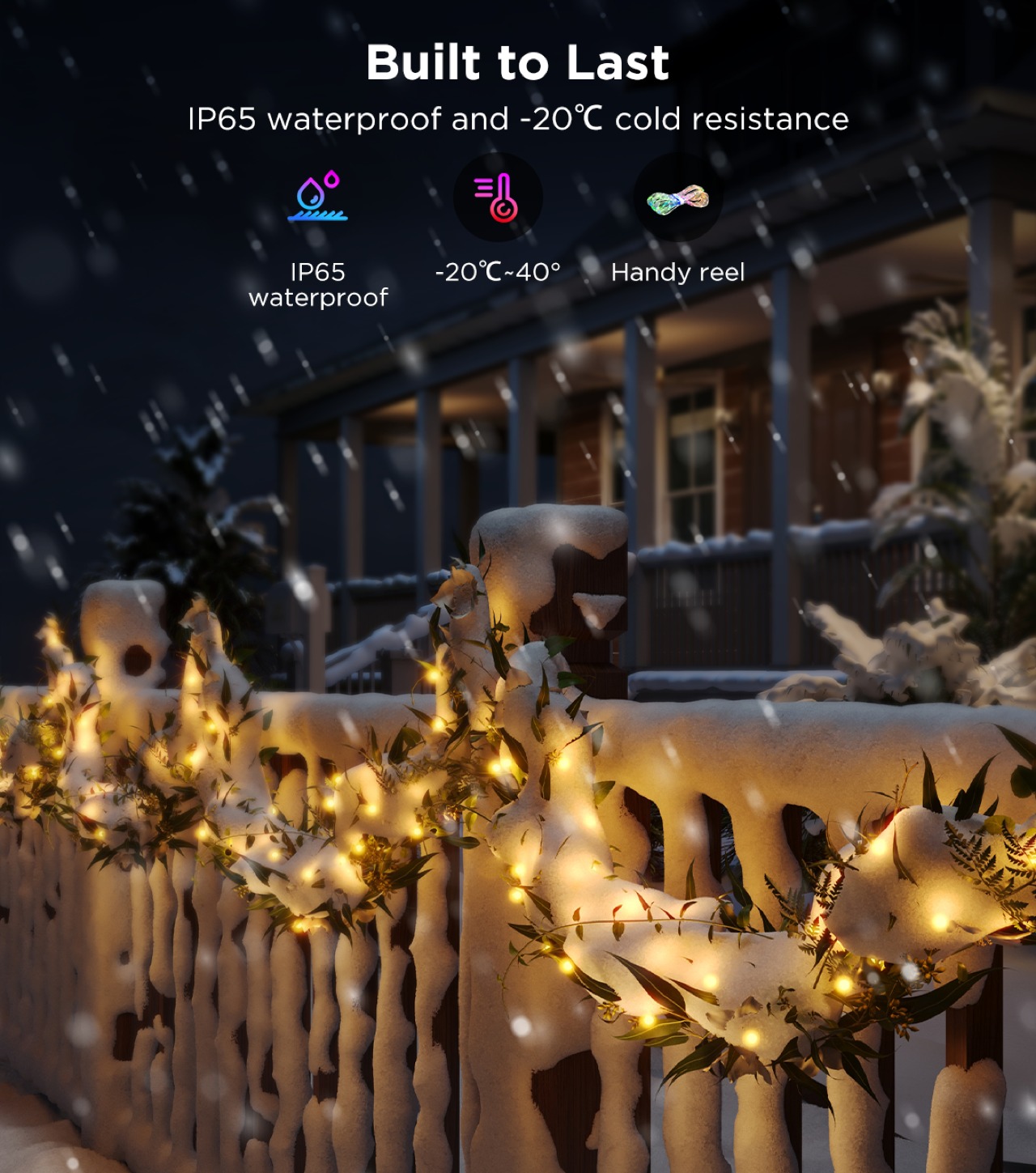
The string lights as well as the control box are also IP65 rated, which means they’re also fit for outdoor use. The adapter, however, isn’t waterproof, so you’ll have to make sure to keep it tucked away safely. With all these smart features, the Govee Christmas String Lights have something to offer any time of the year, whether it’s lighting up parties or simply jazzing up your house to make you the envy of the neighborhood.
Sustainability
The Govee Christmas String Lights are made from your typical collection of plastic and other synthetic materials, not unlike any other string lights in the market. And like any LED lamp, once busted there is no way to replace it, especially with the cable’s design. That doesn’t bode well when it comes to sustainability, but the product does have one saving grace in this regard: its longevity.
Despite its name, Govee made these string lights fit for use in all seasons and under many weather conditions. That IP65 dust and water resistance rating helps it survive downpours, and the simple design makes it easy to hide the lights underneath some cover or protection. And thanks to its versatile functions, its use extends beyond just one or two seasons, so you are really getting your money’s worth.
Value
With so many Christmas lights to choose from, it can be a daunting experience looking for that elusive perfect one. You might be tempted to just grab any box off the shelf until you remember that the last one barely lasted a year. And then there are those fascinating smart lights that promise dozens of enticing features but then slap you with a three-digit price tag.
Like many of Govee’s products, the Govee Christmas String Lights buck the trend to deliver a product that is not only talented but also accessible to everyone. The lights sell for only $59.99 and $89.99, for the 33ft and 66ft lengths, respectively, and that’s without discounts and sales that happen quite frequently. But even at full price, you’re getting a bright, colorful, and smart lighting solution that goes beyond just a single holiday, making that amount an investment that will last you for years.
Verdict
The holiday season is the best time to throw a splash of colors both outside and inside your house, but that doesn’t have to be the only time either. Sure, you only bring out the Christmas tree once a year, but your walls, windows, and room could also use a bit of lively lights any night. Most Christmas lights, unfortunately, look awkward outside of the holidays, presuming they even last that long. The Govee Christmas String Lights is clearly an outlier, and one that bears noting this time of the year and beyond.
Of course, it is designed with Christmas festivities in mind, and it definitely excels in that regard. The bright, colorful LED beads deliver an unparalleled number of colors that really paint your tree, your room, or your house with the colors of the season. Smart features not only make controlling the lights easier, but they also make them fun with the likes of Music Mode and Game Mode. What makes these lights truly noteworthy, however, is how both its design and its features can fit any occasion, holiday, or setting. Whether you’re dressing up the living room for Christmas, giving the lawn a spooky atmosphere for Halloween, or simply giving your house a colorful makeover each night, the Govee Christmas String Lights has got you covered all year round.
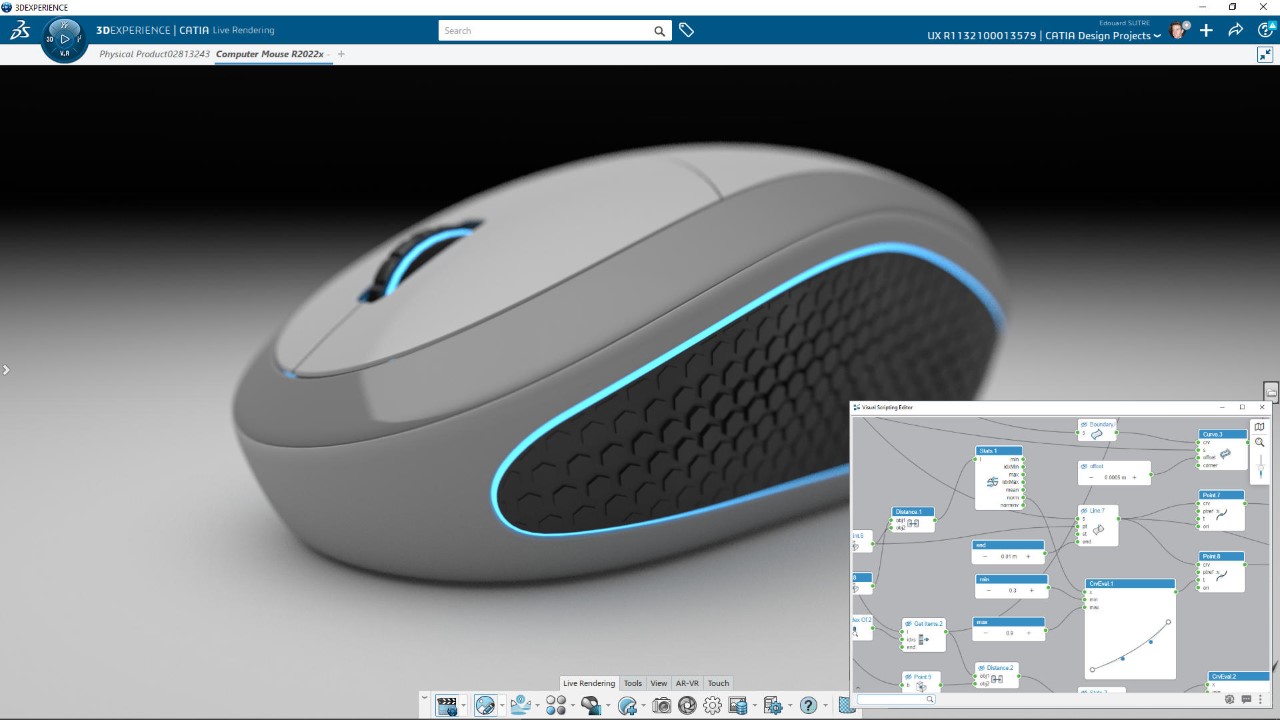
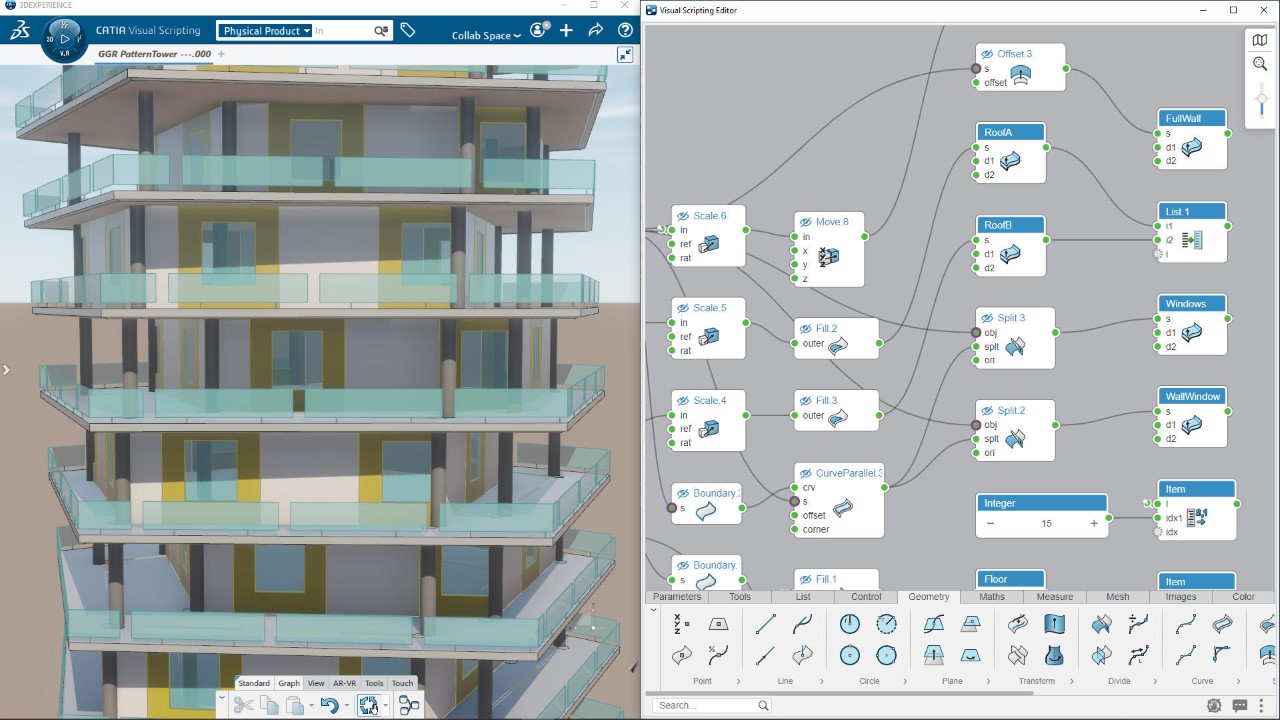
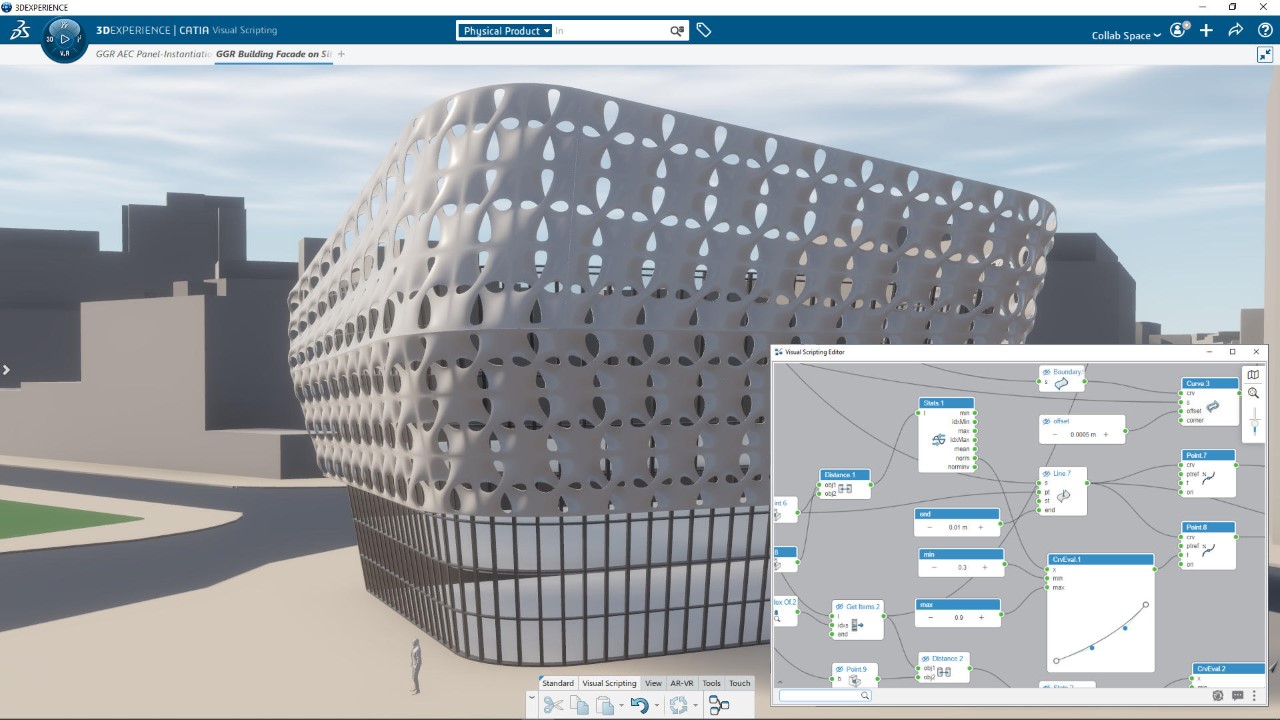
Arguably the best thing to ever happen to computing was the Graphical User Interface or the GUI. It took away the massive lines of code that you previously had to deal with while computing and replaced it with the windows and folders and files we see today. This new interface made it easy to interact with the computer, allowing pretty much everyone to jump on board the new technology at the time. CATIA is doing the same for parametric designing. Equipped with an intuitive no-code and algorithmic approach, the new CATIA Visual Scripting app within 3DEXPERIENCE Platform empowers its hardcore users even more with an easier, more visual way to build out their complex designs.
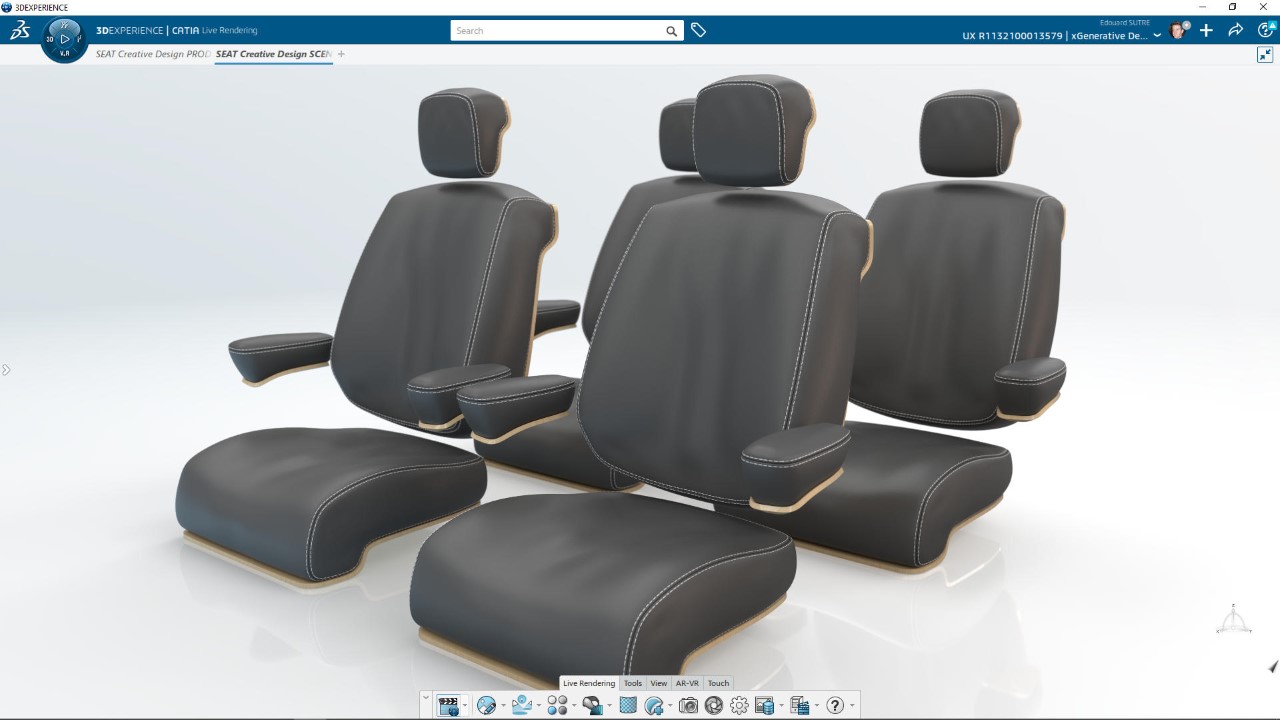
Visual Scripting isn’t completely new to the design community, with software like Grasshopper being in the mainstream. However, CATIA’s sheer power as an industry-leading all-round CAD software combined with its new no-code visual approach to parametric/generative modeling really alters the landscape for designers, engineers, architects, etc. looking to push their creative boundaries. The company did launch a similar web-app named xGenerative Design, but with Visual Scripting, algorithmic design becomes a native part of the 3DEXPERIENCE, and seamlessly integrated into the rest of CATIA applications.
CATIA Visual Scripting provides an intuitive no-code approach to generative modeling
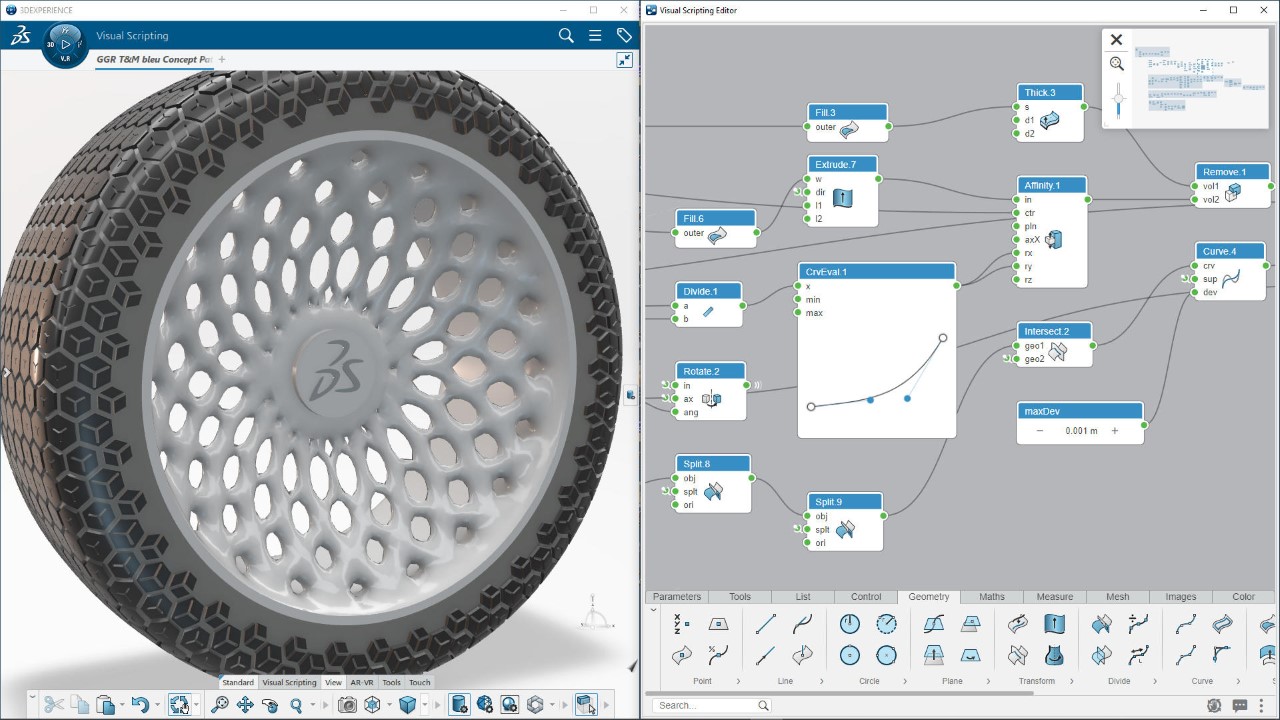
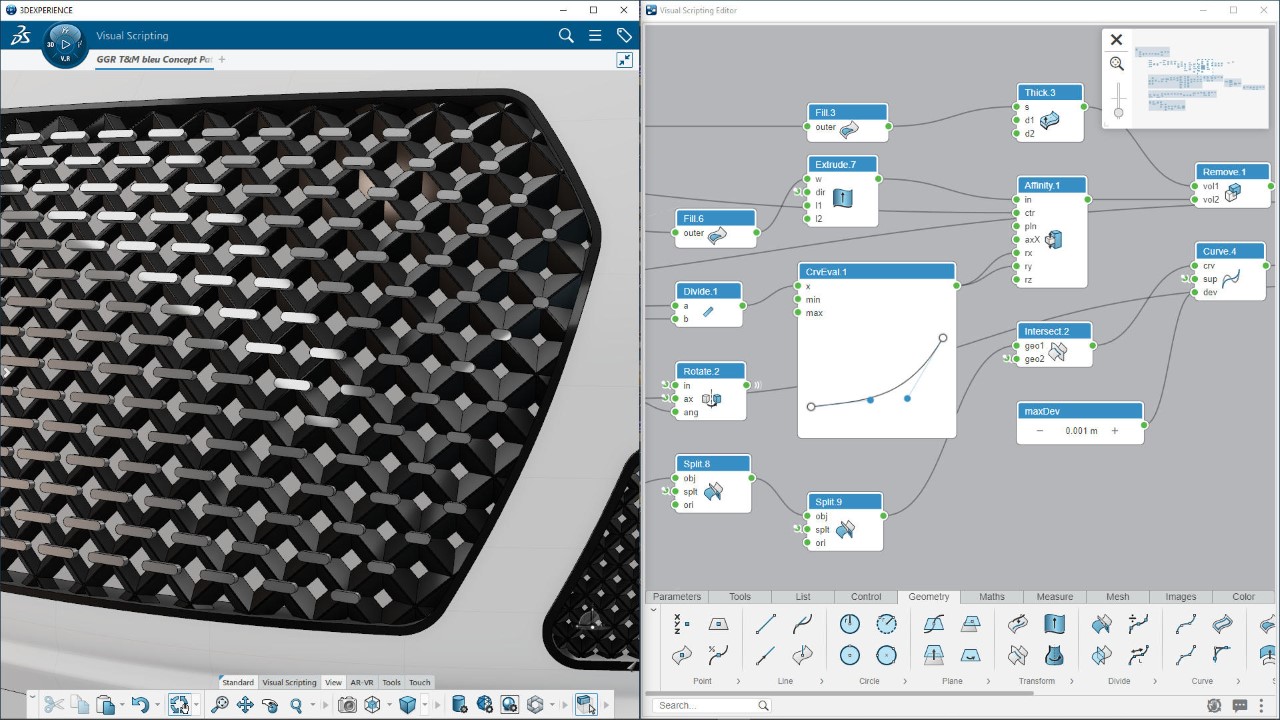
What sets CATIA Visual Scripting apart is its capacity to empower creators. Through a series of building blocks, designers can craft their own scripts, which in turn generate intricate 3D geometries autonomously. The interface takes on a familiar Node-based approach that most designers will find incredibly intuitive. With the tool’s Capture & Reuse feature, these algorithms become shareable and reusable assets, markedly enhancing both efficiency and collaboration across projects.
Instant parametric adjustments and design exploration in Visual Scripting
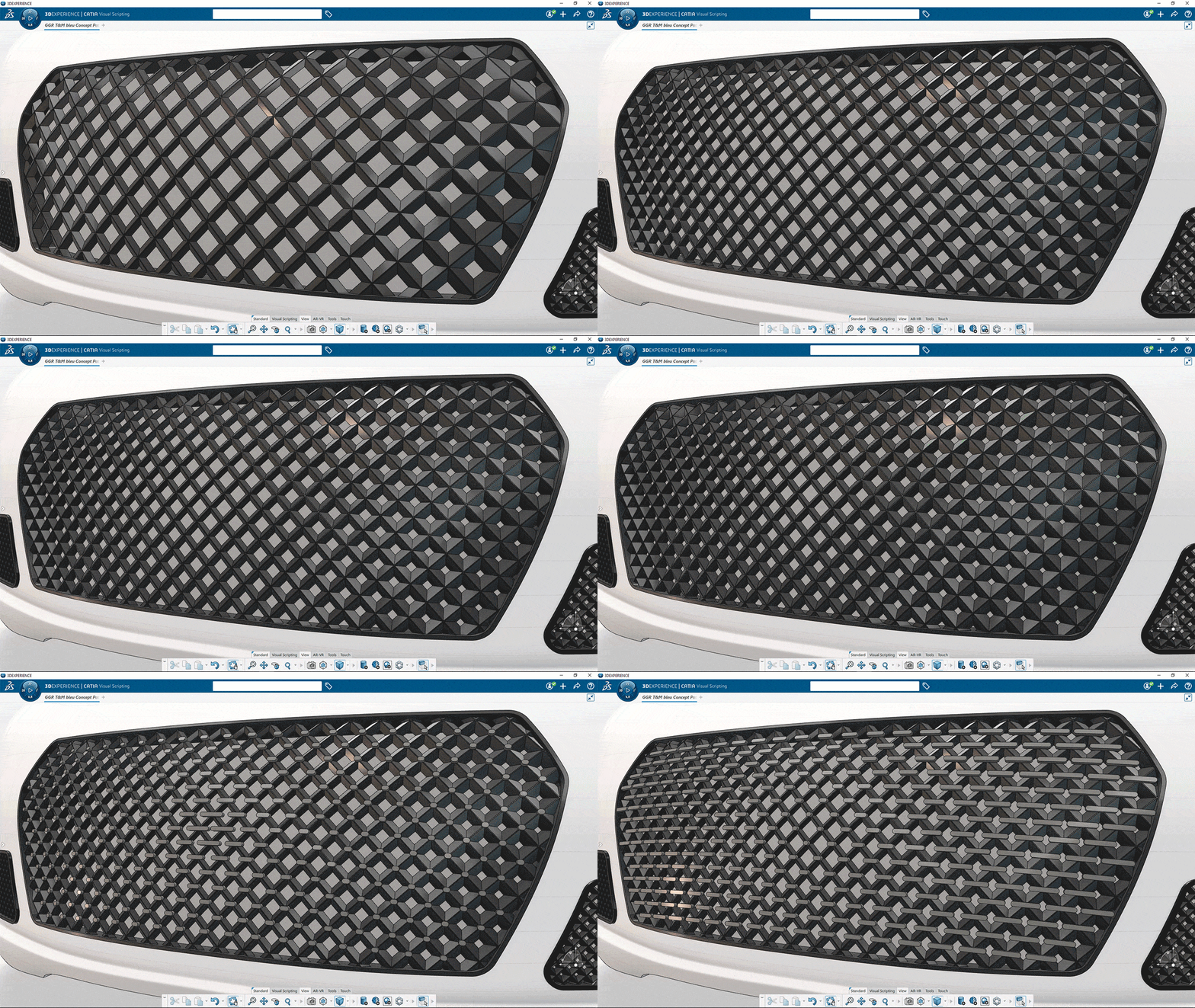
Users can intuitively link parameter blocks, defining and generating designs without writing a single line of code. The user interface is accessible to those without any programming knowledge, making complex design creation more comfortable and attainable. It also makes rapid conceptualization much easier, allowing you to quickly adjust parameters and alter your design/pattern on the fly, without editing code or rebuilding your model. It’s also the best way to rapidly generate tons of design alternatives and it’s natively built to serve the MODSIM approach, combining modeling and simulation in an integrated loop.
“CATIA Visual Scripting is not only a really powerful tool to quickly add a lot of details to designs. Its capabilities push the limits of traditional modeling with a suite of specialized operators to offer new possibilities for highly detailed and innovative designs. Creators can now also manipulate and deform meshes directly in the application, to find new interesting shapes without any sculpting interaction” mentions Edouard Sutre, CATIA Design R&D. Yet another example of the specialized operator is that the algorithm can create the architecture of lines used for complex, customized and non-regular lattice generation for 3D printing.
“CATIA Visual Scripting aids creators in all industries, not only for aerospace, architecture, or transportation”, Edouard adds. “We are empowering those in the shoe, furniture and product industries as well, for example. The tool can extend from designing buildings and huge city plans to smartphones and even jewelry.”
AC coupling capabilities make the Anker Solix F3800 a revolutionary next step in sustainable home power, but paired with its massive 6,000W output, wide range of connections, and expandable capacity, this power station is the most future-proofed on the market.
Almost three years ago, a winter storm blew through my town, knocking out power lines and rendering roads impossible to navigate. As a result, my family and I spent a full week (well, five days) rummaging around for crackers and water, lighting candles, and wrapping ourselves in blankets for simple warmth through the duration of the total blackout. Despite keeping a decent fire going in our backyard for a couple of days, it was impossible to stay focused on anything, and working in those conditions wasn’t viable. Enduring those freezing temperatures would’ve been far more convenient with a backup power source, and I wish I’d had Anker’s newest portable power station: the Anker SOLIX F3800, which — despite being the very first of its kind I’ve ever owned — is clearly a revolutionary next step in the growing landscape of backup power solutions. It features a maximum 6000W AC output, 120V/240V dual-voltage (meaning it can do what a gas generator does, power several appliances at the same time, and even power a house!). It even supports AC coupling when pairing with the Anker SOLIX Home Power Panel, and, used sparingly, its 3.8kWh (expandable up to 53.8kWh) capacity would’ve been just enough to sustain a handful of comforts through the winter freeze.
Before we get started with the nitty gritty details about the Anker SOLIX F3800, it’s worth mentioning Anker provided a functional prototype to Yanko Design for the purpose of this review. It includes all the features of the official launch product, but its appearance and craftsmanship does not reflect the final build quality, which is supposed to be much better than the prototype shown in this review.
For a modular power station designed to provide backup power storage for homes and RVs, make solar power more accessible for all, and potentially replace gas generators — the Anker SOLIX F3800 is relatively compact. It’s also quieter than any regular gas generator, and since it doesn’t emit any smoke, you can safely run it indoors. Because of a sizable but effective fan system, you’re going to hear a little noise, around 45dB if you’re standing within a meter, but it’s no louder than a PlayStation 4 running on full blast. YMMV, but I imagine it’ll be a better fit for regular outdoor use during non-emergency situations — particularly, once summer rolls back around and I can use it to power indoor gadgets like musical instruments and gaming consoles underneath the patio rather than inside the house.
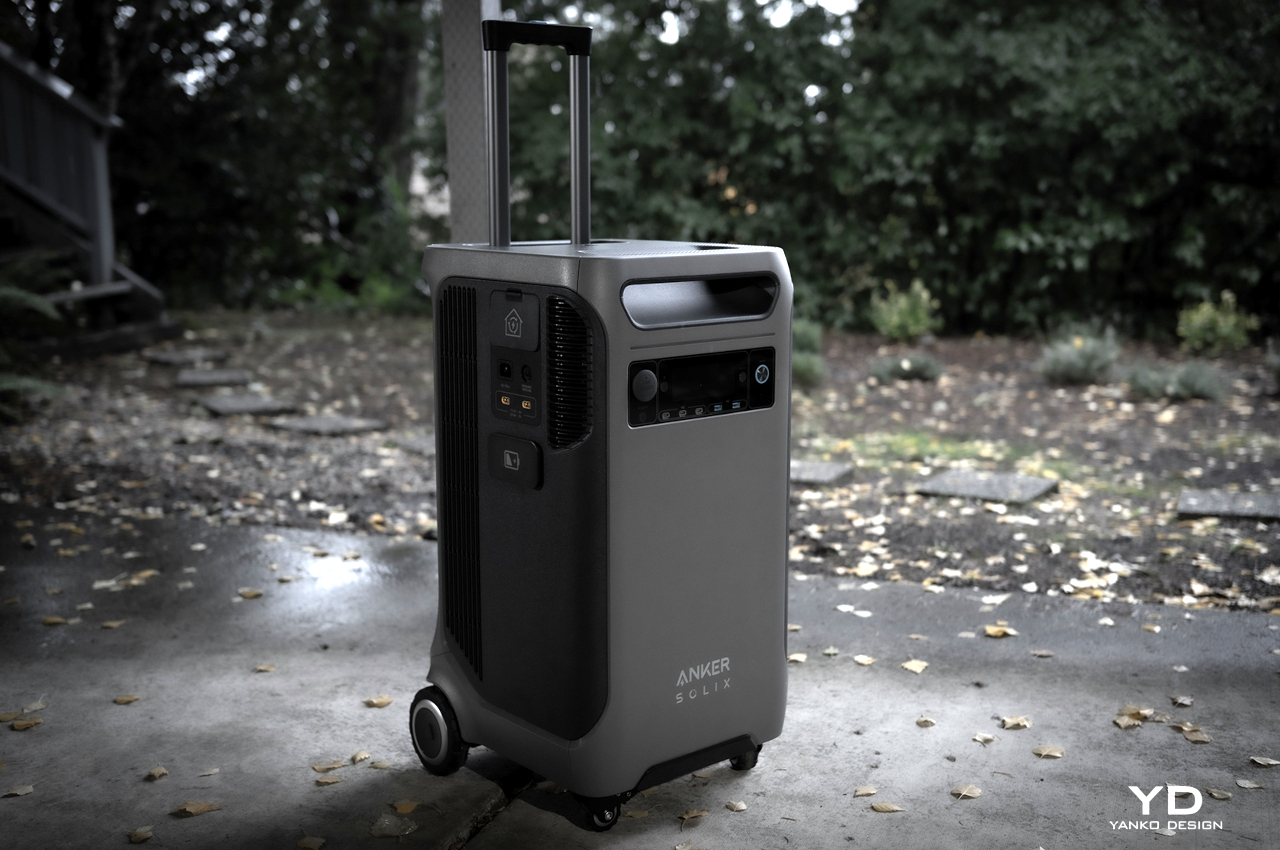
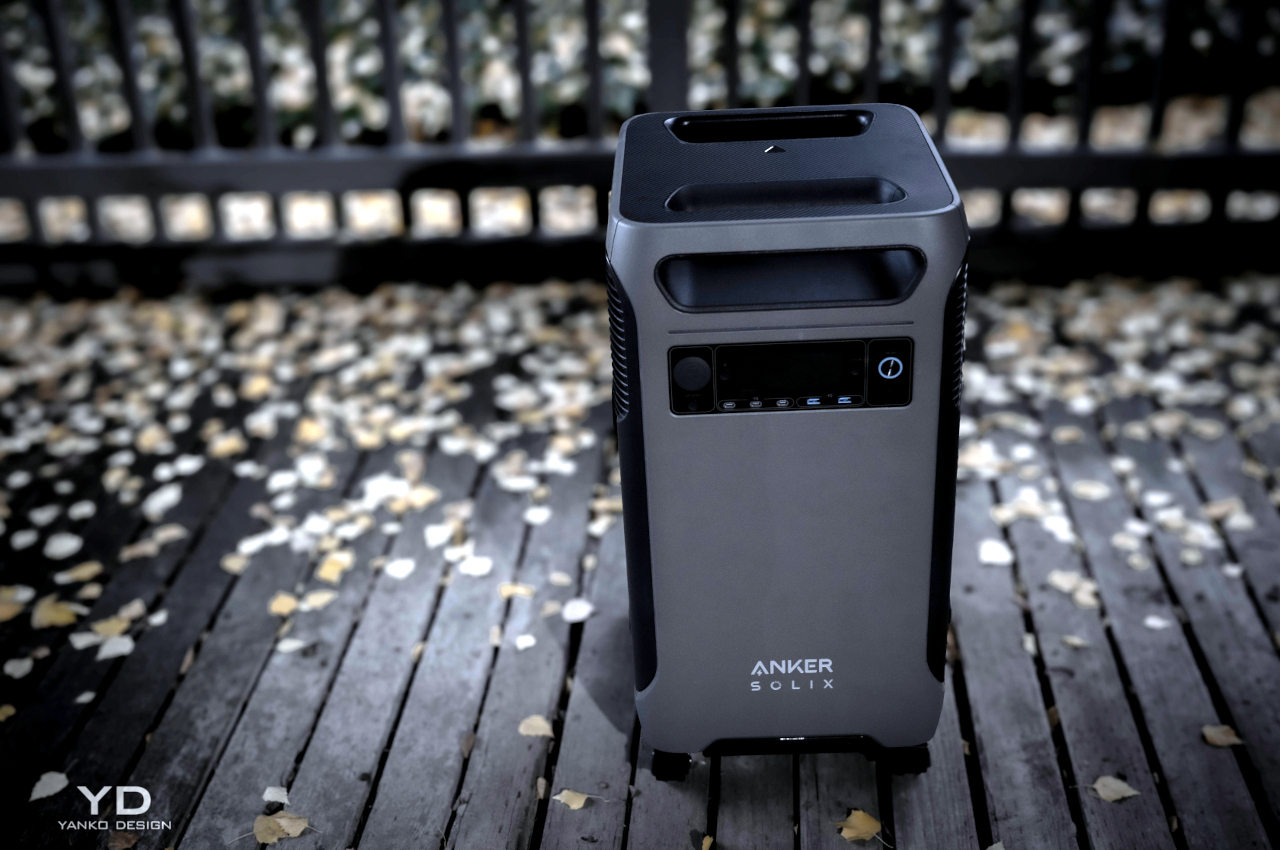
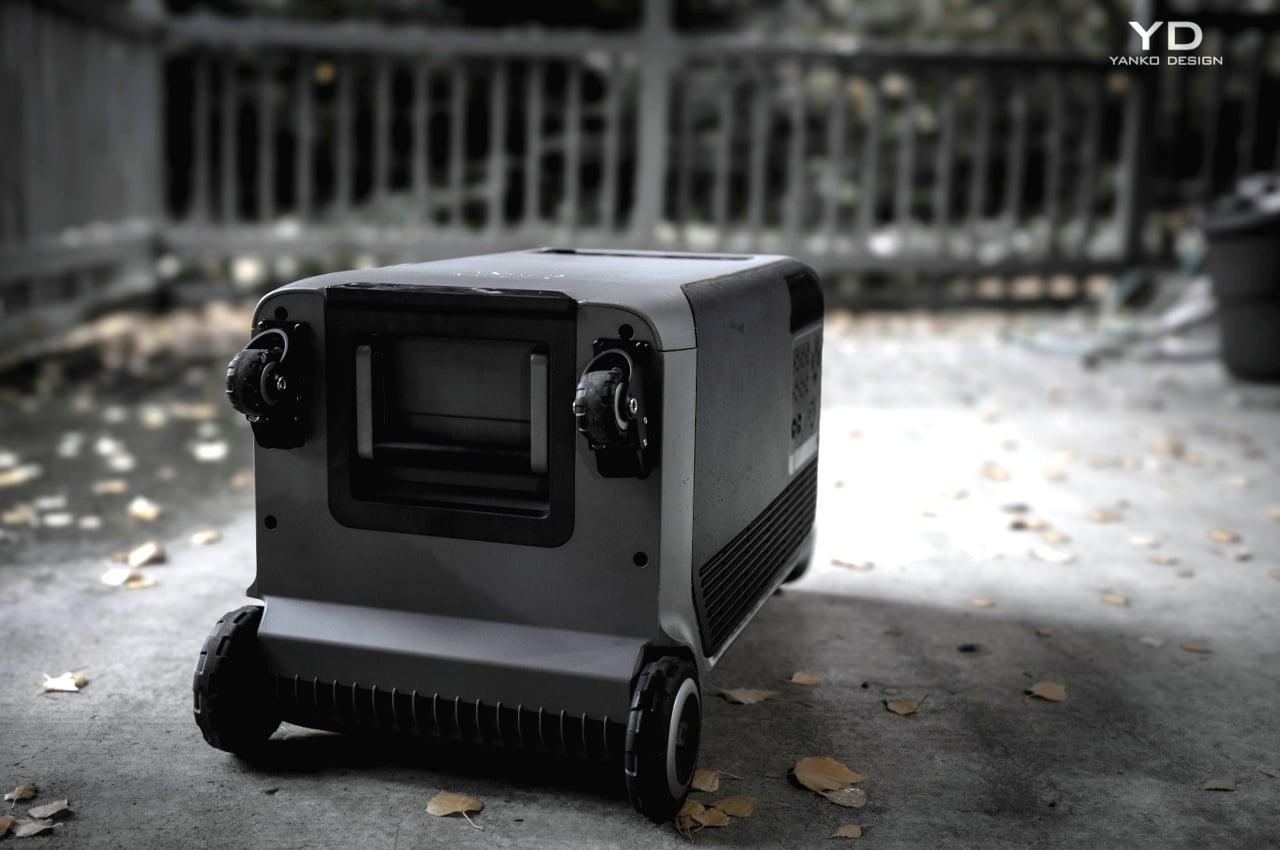
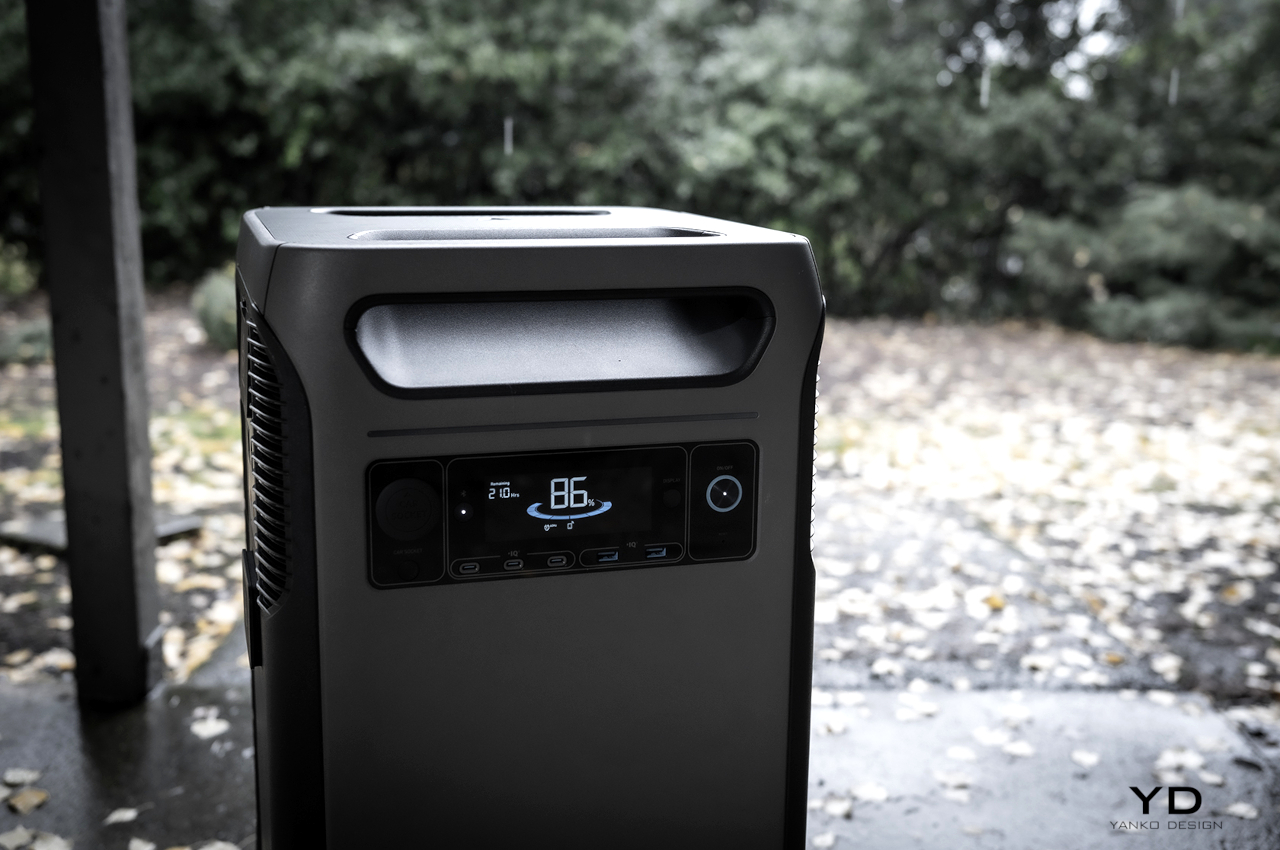
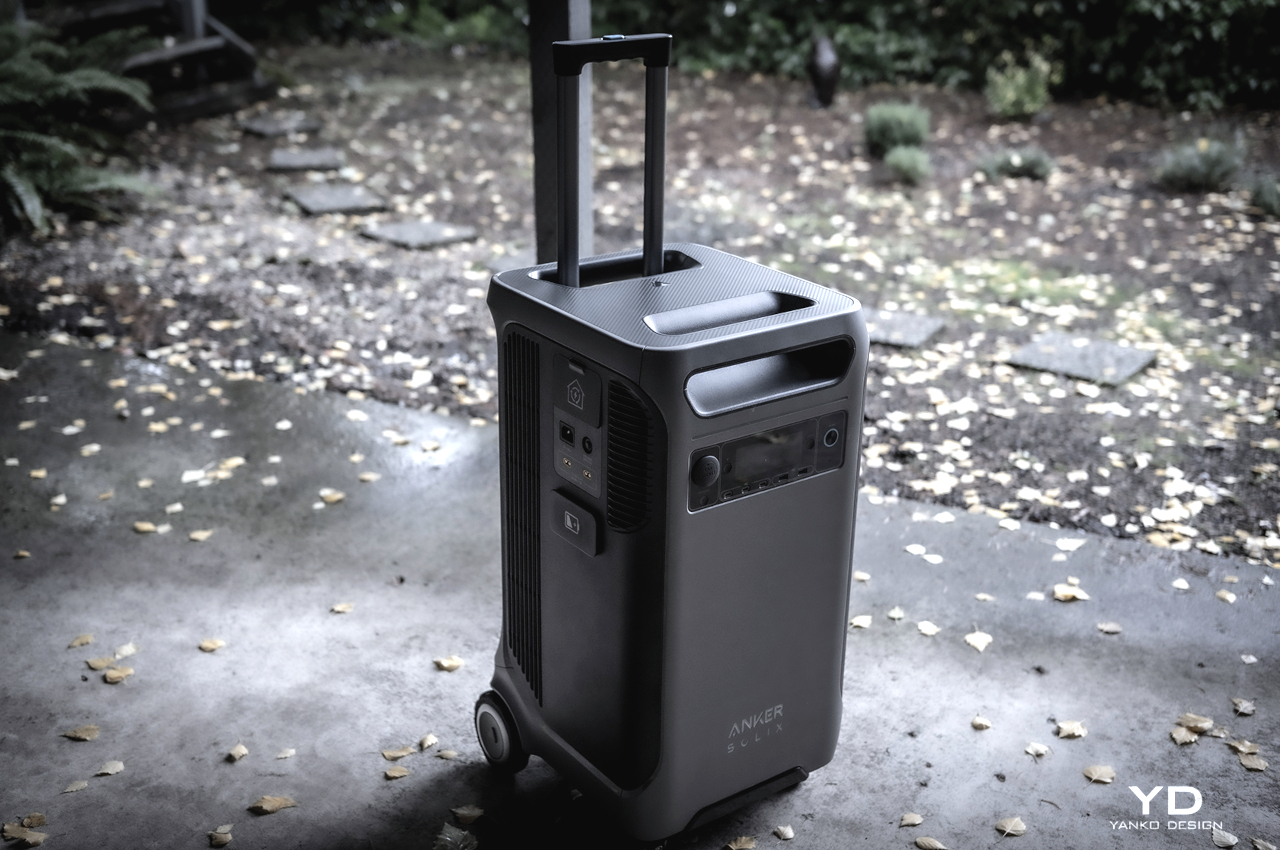
The F3800’s subdued aesthetic style — it being a big gray rectangular box on wheels with an LCD display, a pull-out handle, and visible outlets on the front and both sides — allows it to blend in naturally with other electrical equipment, but it may get in the way of any aesthetic style not complementary to dark gray. I wouldn’t stick it in a kitchen, though it’s an attractive addition to a garage, and you might get away with planting it in your office.
After all, it’s essentially a big suitcase full of electrical equipment. No, it’s not as compact as, say, the Anker 767 Portable Power Station. But it still gets the job done, and it doesn’t take up all that much space. Right now, my SOLIX F3800 is tucked in-between a coat rack and a couple of shelves in my office, where it’ll stay until I need to stroll it back out again, and I genuinely love how easy it is to set up.
Utilitarian design pervades the layout of the Anker SOLIX F3800, and, I mean, yeah — you’re definitely not getting a $3,999 power station to make a fashion statement — but what it lacks in artistic appeal, it more than makes up for in functional design. Its predominantly matte finish, easy-to-navigate exterior, exposed fan grills, and conveniently-placed handles and wheels make it exude a sense of durability and reliability.
Ergonomics/Comfort
I had a rough time getting the SOLIX F3800 off my porch and into an area where I could comfortably unbox it, set it upright, and wheel it around. Granted, I’ve been needing to hit the gym lately so my inability to carry it around without immediately wanting to place it back on the ground again could be a “me” issue. But, just so you know, this thing is an absolute unit. It’s rated to weigh 132 lbs, though the package mine arrived in was a bit heavier than that — around 143 lbs in total. If you’re planning to order one of these to your house from Anker’s online store, make sure you have a pallet or some sort of luggage dolly on standby, as well as a second pair of hands to help you transport/set it up.
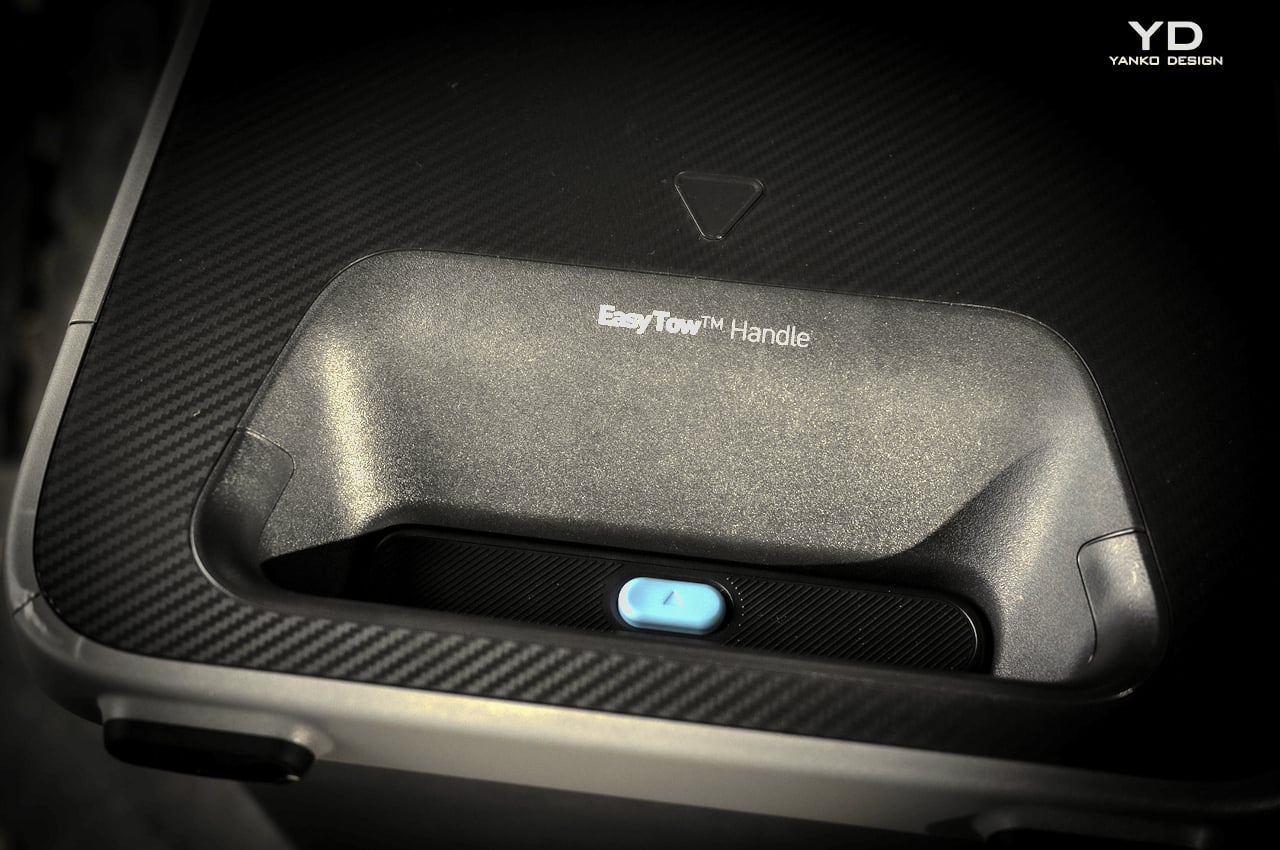
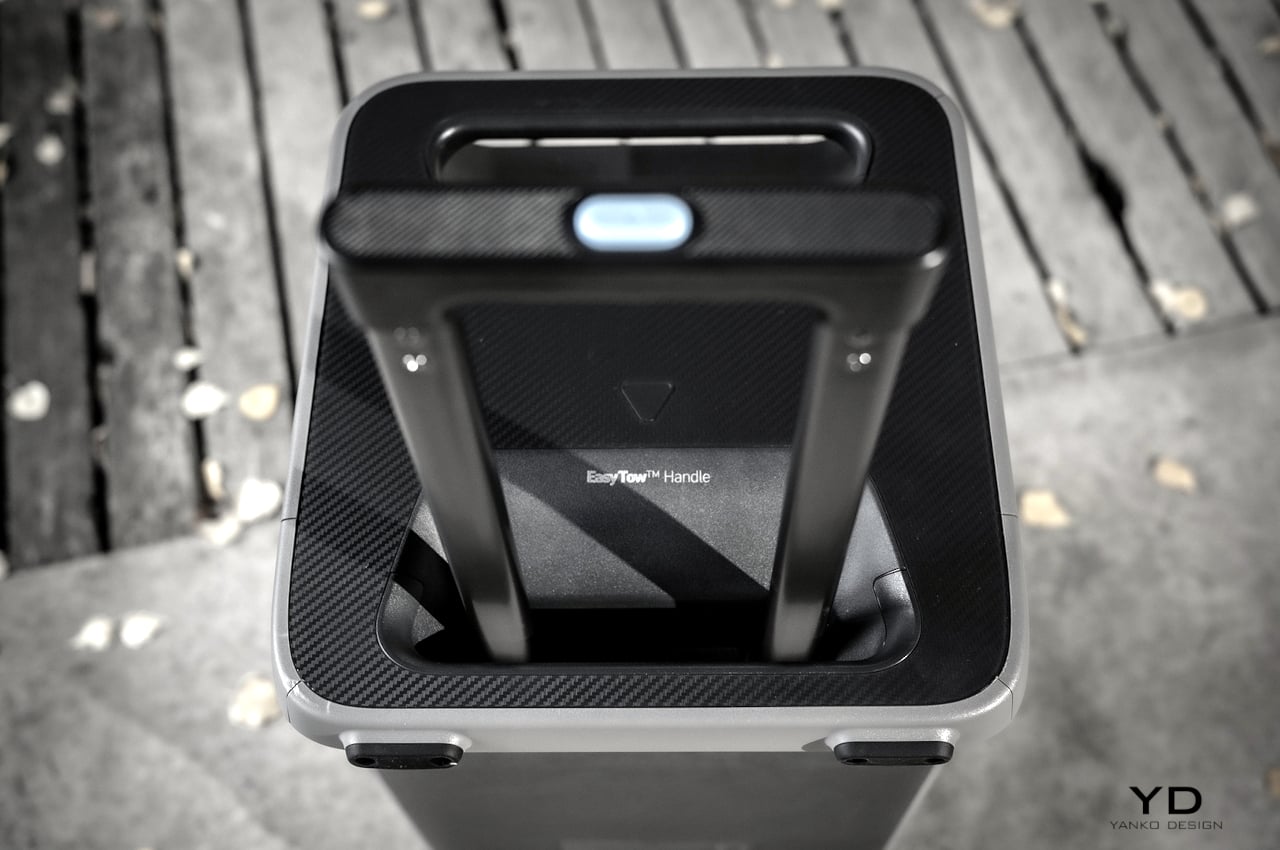
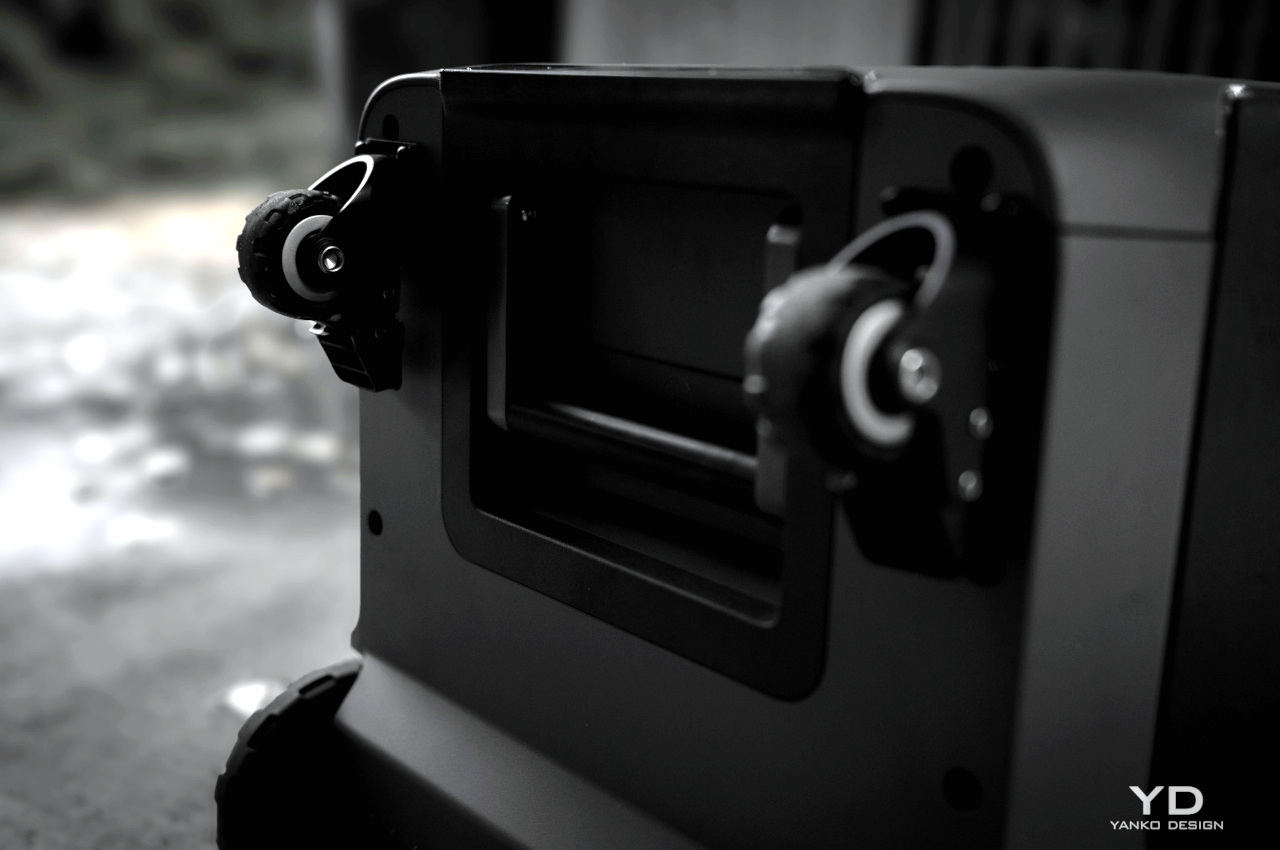
At least there’s a solid handle built into the SOLIX F3800’s chassis, as well as a pull-out trolley handle that unfolds with the tap of a bright blue button. Once the pull-out trolley handle came out, this thing suddenly became a lot easier to maneuver around. This is because its 65 mm back wheels and additional front wheels are more than sufficient to push and pull the thing around on smooth surfaces, and it even seemed to have no trouble with some rocky terrain as well. If you wanted to carry the Anker SOLIX F3800 around like a cooler (if you have the physical strength, that is), you’d be in luck; there is an additional handle located on the bottom, allowing you to two-hand-carry it.
Everything important information-wise is located on the front LCD panel, though you can also connect your smartphone to the device via the Anker App. It’s a simple enough process getting it set up; all you need is an Anker account and a smartphone with Bluetooth, and you can tell the app to sync with the SOLIX F3800 as long as it’s powered on, and as long the Bluetooth mode is activated. You can do that by tapping the Bluetooth button on the front of the device itself, neatly located right next to the display. Once it’s all set up, you can watch the flow of energy coming into and going out of the SOLIX F3800 directly from the Anker App. This is a neat and convenient way to stay on top of your energy usage, especially when you need to conserve energy during a blackout.
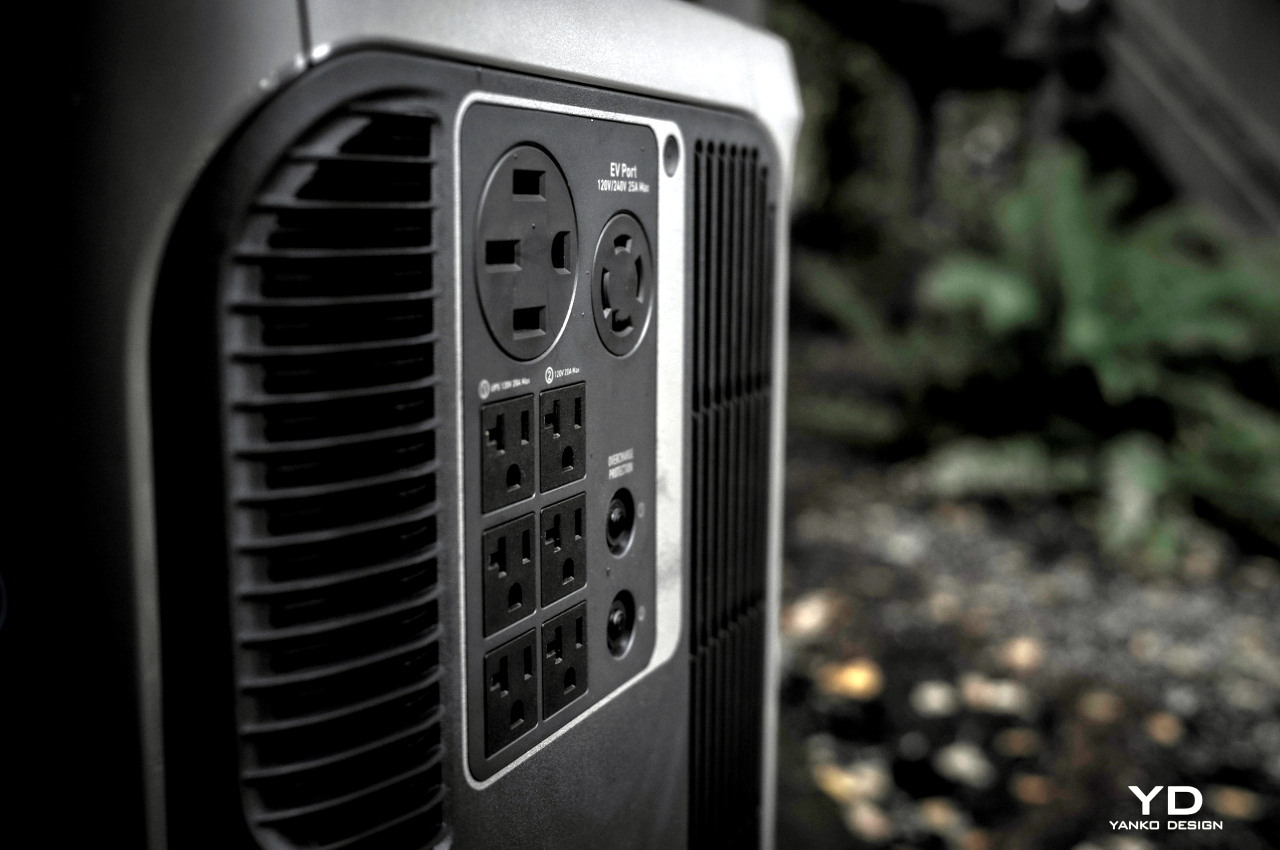
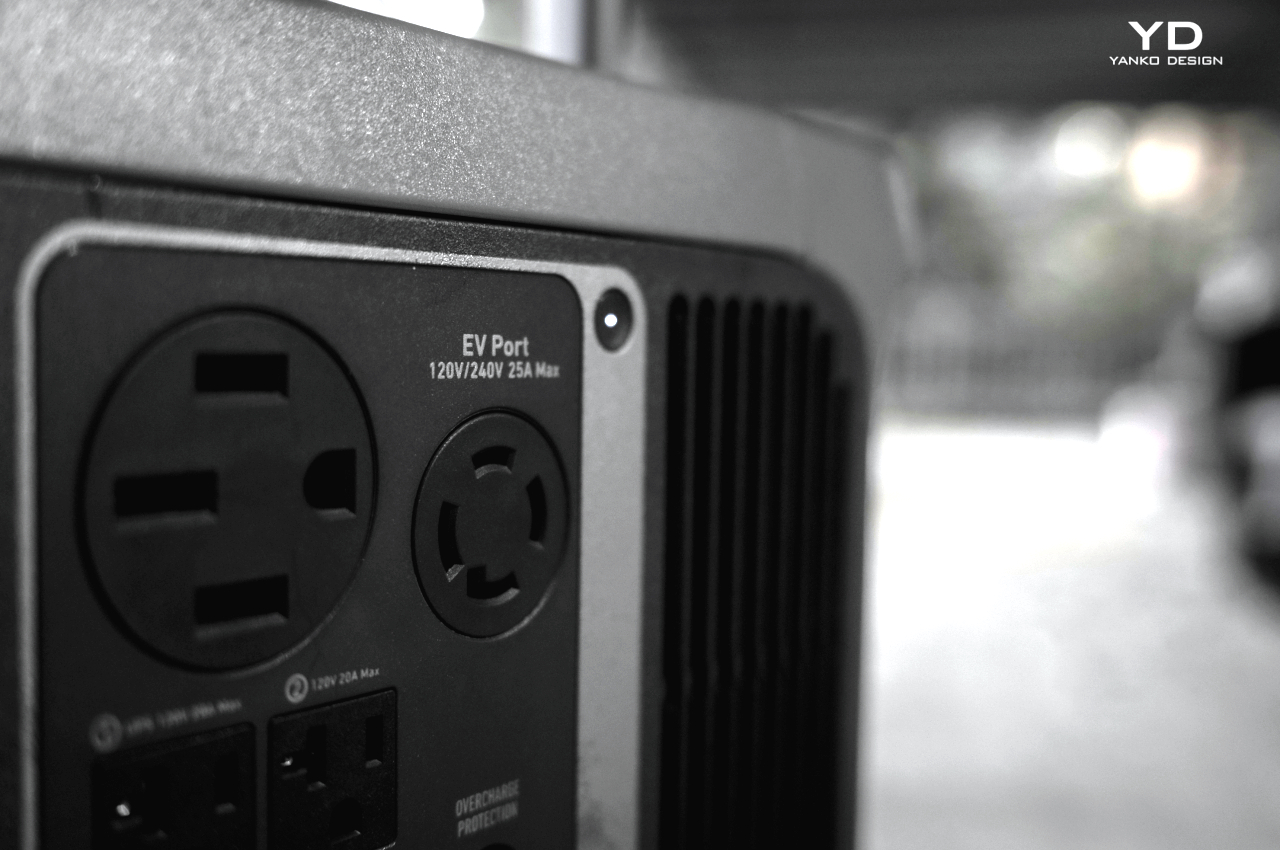
One thing I love is how easy it is to get the Anker SOLIX F3800 set up and going as a portable generator. Plugging it into my wall outlet, getting it fully charged, and powering on the unit itself was a really simple and rather quick process. On paper, it will take less than 3 hours to charge the power station to full from a wall outlet, as long as it is getting full power and not charging under extreme temperatures. Once I was ready to use it, I only had to tap two buttons: the power button on the front of the power station next to the display, and a separate AC outlet button on its right side (conveniently located next to its array of six 120V 20A outlets and two 240V 25A plugs).
Performance
From a performance standpoint, the Anker SOLIX F3800 breaks through the ceiling and into a whole new tier. Electric portable power stations simply don’t do what the Anker SOLIX F3800 does, and before now, there’s been little reason to get rid of the gas generator altogether. If you want to use it as a backup generator, you can. If you want to expand it with the Solix Home Power Panel and make it the storage battery in a far more sophisticated power setup that balances grid and rooftop solar power through the main electrical panel, you can set it up that way as well; and it’s made even easier to manage if you use the Anker App.
Boasting a power load capacity ranging from 6,000 to 12,000 watts (the latter is only possible if you hook up a second F3800), it flies high above other portable power stations from EcoFlow or Jackery — as well as anything Anker has ever placed onto the market previously. Its 240V 25A NEMA 15-40 outlets grant it the ability to power RVs and recharge electric vehicles, making it extraordinarily versatile, and common sense indicates that if you need to power something, you probably can. This alone makes the SOLIX F3800 the heaviest-hitting portable electric power station around. The question is whether or not you can power something for a long time.
Luckily, the Anker SOLIX F3800 is also one of the most scalable power stations in existence. It comes with a base storage capacity of 3.8kWh, which is generally enough to power a 1500W space heater for about two and a half hours. Of course, that’s not enough to sustain heat throughout a multiple-day blackout like the one I experienced, but unlike other power stations, this device can be upgraded to 26.880kWh with all six expansion batteries installed. That’s at least enough to power the same heater for over a day.
If you wanna go even further and reach a staggering 53.8kWh of power storage capacity, you can go all-in and connect a second Anker SOLIX F3800 via the Anker SOLIX Double Power Hub. Alternatively, you can link two F3800 units together via the Home Power Panel. That sets the F3800 apart from its predecessor, the F2000, which had a comparatively meager capacity of 2kWh with only one slot for an expansion battery, totaling 4.09kWh. Just note you’ll need to invest in 12 expansion batteries to make the most of this system, and that could run you well into the tens of thousands.
Sustainability/Repairability/Durability
Anker is a respectable brand with a lot going for it, and that’s because it’s constantly pushing out high-quality, durable power banks and power stations. Its LiFePO4 (lithium iron phosphate) battery makes it notably longer-lasting than conventional lithium ion-based batteries used in older portable power tech; Anker promises at least 3,000 charge cycles up to 80% before this thing starts to die. That also enhances its sustainability rating by avoiding the use of cobalt and nickel. Plus, when you compare it to much larger and more expensive home power systems, it’s obviously a far more sustainable choice.
The need for separate hardware and additional batteries to get the absolute best utility out of the F3800 could absolutely be considered a drawback in terms of sustainability. But again, that’s not such a big deal when you realize a fully-upgraded Anker SOLIX F3800 system wouldn’t do nearly as much harm to the environment as legacy solutions with the same power output.
In terms of repairability, the F3800’s construction is complex and full of parts I don’t understand, and so I wouldn’t attempt to service it myself during a system failure. There are a few silver linings here: it comes with a 5-year warranty and is rated to work for 10 years or longer. Plus, it’s advertised as being simple for an electrician to set up and work with when coupling it with a house.
Value for Money
I’m iffy about making a hard call on the SOLIX’s value for its $3,999 MSRP (though there is currently a substantial discount of up to 35% off on Kickstarter on a number of Anker SOLIX F3800 deals — dropping the price of the standalone unit to $2,599, and giving excellent value on bundles including Anker’s 200W and 400W solar panels). On one hand, it’s pricier than the smaller generators, even though having the Anker SOLIX F3800 in my possession opens up more lifestyle options. The other reason is solar panels are still not widespread enough, even though you don’t really need solar panels to get the maximum value out of the F3800. Going in on an Anker SOLIX F3800 is making an investment into the future — especially since its heaviest-hitting feature is its ability to store a large quantity of solar power and convert that power into 240V AC output for home, RV, and EV usage.
While its initial price is eye-watering (at least, for me), the potential benefit of saving money over a much longer time with a fully-equipped SOLIX system, solar panels and all, could make the expenditure worthwhile. Especially for those actually living in RVs and tiny homes where utilities are significantly more important to stretch out. And, even in the much shorter term for a suburban house dweller like myself, the SOLIX F3800 is a sturdy backup power source — its base 3.8kWh storage capacity and 6,000W AC output are enough to make camping trips and natural disasters more bearable.
Even if there’s no emergency need for power, and even if you don’t plan to upgrade your Anker SOLIX F3800 with all the extra bells and whistles, you can still roll it outside during a sunny day and use it like any portable generator. Plus, you don’t necessarily need a fully-equipped SOLIX system (with the home power panel and all) to recharge the F3800 with solar energy either. The home power panel is just a tool to help the F3800 access larger rooftop solar panels, and you don’t even need that to make good use of the SOLIX system. In fact, if you bring the F3800 outdoors, as long as you also bring a portable solar panel to recharge it, you can have sustainable green power to do virtually anything you’d use power for. This is because the F3800 can be recharged by connecting to almost any rigid or portable solar panel available on the market.
Verdict
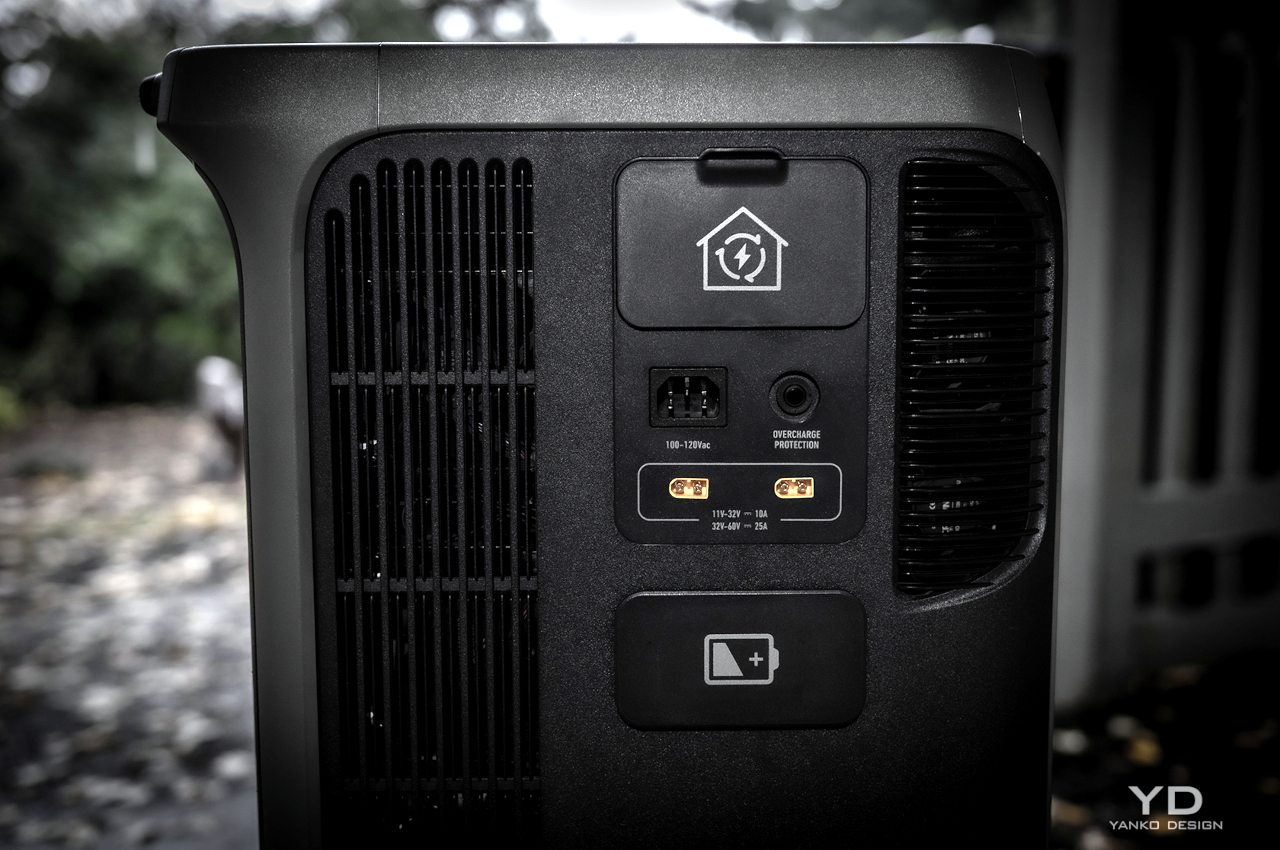
The Anker Solix F3800 is a revolutionary next step in sustainable home power, though it may not become a daily power source until you start buying solar panels. Thankfully solar is getting cheaper, and that’s certainly not the only reason you’d want to get one. This is the most future-proofed portable power station on the market right now, thanks both to its incredible portability for a home power system as well as its overwhelmingly strong performance. I love its 6,000W~12,000 and 120/240V AC output capabilities, its 53.8kWh maximum power capacity, and its ability to recharge itself via solar panels (up to 2,400W via XT-60 input) and then channel that same power into a house, an RV, an electric vehicle, or just about any appliance I can think of. That all means it meets the electricity needs of many day-to-day users, and its ability to provide a large dose of backup power during a disaster makes it a critical piece of equipment to have around. Plus, it’s simple and easy to use — requiring zero technical knowledge to charge it from a wall outlet or begin using it as a portable backup power generator. That all represents a meaningful push into the future, especially considering its first-in-class 240V AC power coupling makes it a direct competitor to home power systems that weigh significantly more and are significantly less portable. But when you want to use it like a portable backup generator, you can power it with any electricity source and it produces no emissions. That makes it a standout choice for homeowners seeking a reliable backup power source that’s both portable and versatile.
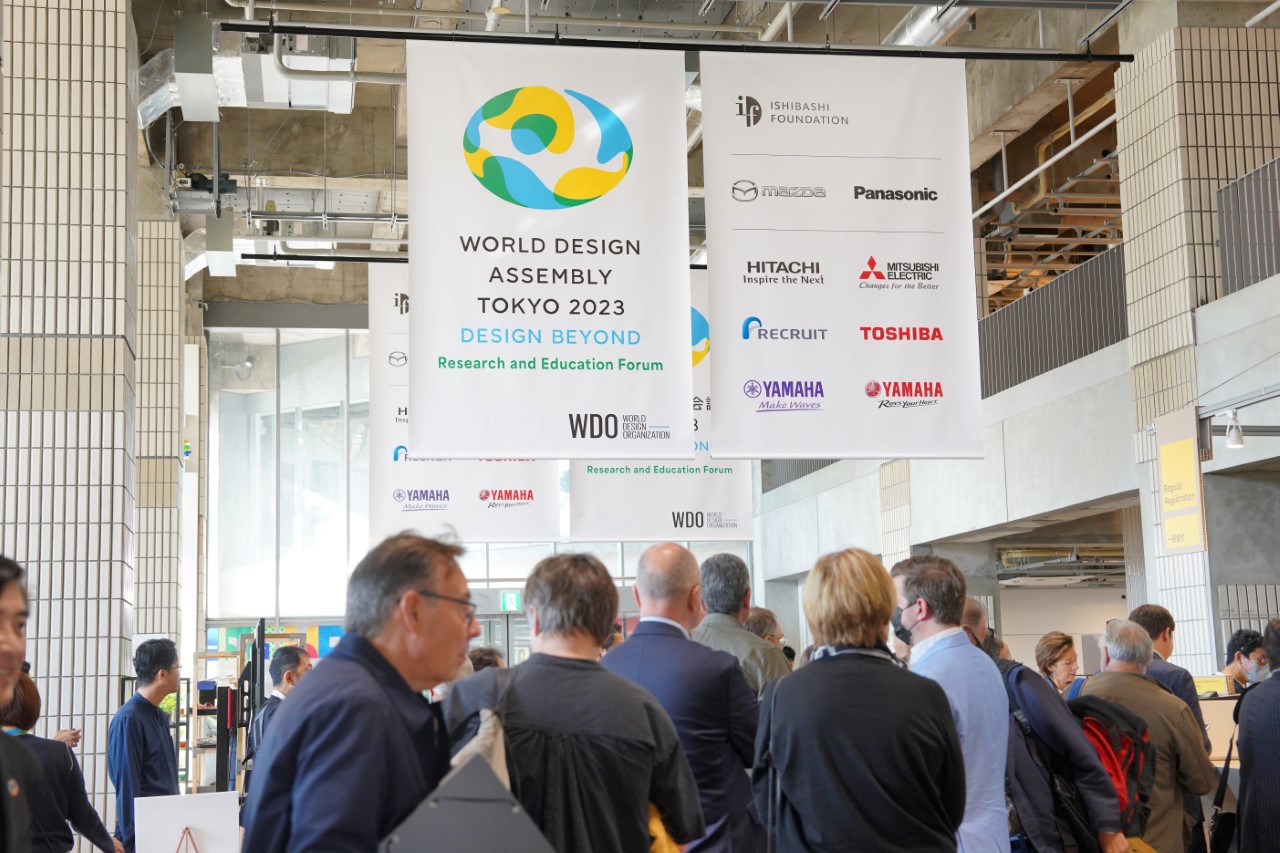
Every two years, the World Design Organization (WDO), an international powerhouse committed to “Design for a better world,” convenes the WDO World Design Assembly. This year, Tokyo took the spotlight as the World Design Capital, marking the third time Japan has had the honor of hosting this prestigious gathering, following a 34-year wait since the event was held in Nagoya in 1989. The three-day event was held between October 27th and 29th (Friday-Sunday) at the Chiba University Design Research Institute, and the Roppongi Academy Hills in Tokyo.
In a world still grappling with the effects of the COVID pandemic, this assembly aims to engage the global design community in discussions that transcend boundaries. WDO seeks to reaffirm design’s role as a catalyst for a more humane way of life, moving beyond its traditional identity as a driver of innovation and economic growth. Under the theme of “Design Beyond,” the assembly hosted multiple discussions ranging from perceptions of the new individual to environmental issues, digital transformation, policy, etc.
Kazuo Tanaka (WDO World Design Assembly Tokyo 2023 Executive Committee Chairperson) addressing the guests.
The World Design Assembly commenced on Friday, October 27, with a vibrant forum featuring a panel discussion, paper presentations, and a poster exhibition. The WDA also awarded the World Design Medal to Dr. Patricia A. Moore for her overwhelming contribution to the design field. The event saw eminent design scholars, representatives from companies and government agencies, and even students, bringing a large gamut of people across all professional spectrums under one umbrella to highlight the broad appeal and relevance of design in today’s world. The day’s event was specifically geared toward students and researchers who are interested in learning about design. It aimed to align with the themes established by WDO and provide the next generation of designers and young researchers with opportunities and perspectives to explore the future of design and discover upcoming trends.
Dr. Patricia Moore awarded the World Design Medal for the year 2022
On Saturday, October 28, global experts delved deep into the theme of “Design Beyond” and its four intriguing sub-themes: “Humanity,” “The Planet,” “Technology,” and “Policy.” These discussions, led by researchers, activists, and designers invited from Japan and abroad, explored the intricate relationship between design and pressing societal issues, as well as the potential design holds for shaping our future. The theme on Humanity discussed what it specifically meant to be a new kind of individual (i.e., autonomously decentralized, digitally networked, committed to the life of the planet, etc.) and the role design played in this context. A common topic for the past few years, The Planet (theme 2) pondered on how society can be incentivized into tangibly shifting to a circular economy, and more importantly, what would be society’s goal BEYOND a circular economy. Given the rise of AI, the theme of Technology focused on what kind of changes the impending digital transformation will bring to humanity, and specific cases cited to provide thought about what design will be capable of. The last theme, Policy, was unlike any of the other breakout sessions, in that it focused on how suggestions from the previous three themes would effectively be implemented. Discussions were had around the two perspectives of “policies for the promotion of design” and “social policies that leverage the power of design.” The crowning moment of the day was the unveiling of the WDA Declaration during the Afternoon Plenary Session. Frankfurt RheinMain (Germany) was declared the capital for the year 2026.
Tadanori Nagasawa (Professor, Former President of Musashino Art University) taking the stage at the Panel Discussion

 triple-laser projection system, delivering a color performance 48% superior to traditional LEDs while maintaining a compact form, 80% smaller than conventional optical solutions. Its 200% luminous efficiency makes it the premier choice for automotive displays. The Laser Holographic AR-HUD transforms the windshield into an expansive holographic screen, merging virtual and real-world elements for safer driving. Advanced optical technology further converts side and rear windows into immersive displays, enhancing navigation and entertainment while focusing on safety and compact design.