Mac mini M5 May Get Skipped Entirely as Apple Tests M6 and M5 Pro Combo

Feeling like you’ve heard this before? You sort of have. Last year Apple quietly shipped a Mac Studio with mismatched M4 Max and M3 Ultra chips, and buyers barely blinked, since Studio shoppers expect spec weirdness. Now the same move looks headed for the Mac mini, the one Mac people buy precisely because it is simple, affordable, and predictable. According to Bloomberg’s Mark Gurman, Apple is testing units that pair a new M6 chip with a carried over M5 Pro.

That is an odd combination to put inside Apple’s most straightforward computer. The Mac mini has never asked buyers to think twice about chip lineage, and now it may become the clearest example yet of how messy Apple’s silicon strategy has gotten.

Design: Apple

The mismatch traces back to a decision Apple made months earlier, and it has nothing to do with the Mac mini specifically. Apple canceled the M6 Pro and M6 Max outright, choosing to fast track the AI focused M7 lineup instead of building a Pro tier that would have been outdated within months of shipping. That leaves a gap in the middle of the chip family, and the Mac mini’s step up configuration is the one stuck filling it with last year’s silicon. I get the engineering logic. I still think it is a rough position to put a customer in.

Here is the part that will annoy anyone who buys on spec sheets alone. An M5 Pro comfortably beats a base M6 on the multi core and graphics work that Pro tier buyers actually care about, so the generation label is closer to marketing noise than a real downgrade. Performance wise, the pricier mini still wins. But nobody wants to spend more money and watch the box on the shelf next to it wear a newer number. Apple has spent a decade training customers to read chip generations as a shorthand for how current a machine is, and this configuration quietly breaks that shorthand.

There is a supply chain story sitting underneath all of this too, and it is worth naming. The global memory shortage that pushed MacBook Pro prices up by three hundred dollars in June is the same pressure shaping this roadmap. Apple already pulled higher RAM configurations from some Mac mini and Mac Studio models earlier this year, and Gurman’s own reporting notes the mismatched mini’s exact chip and memory setup still depends on how memory supply plays out. None of this is locked in yet. Testing configurations shift constantly, and Apple has not committed to a release window.

What makes this genuinely interesting from a design standpoint is the mini’s shell. That aluminum box has not changed since the M4 redesign in 2024, and it may end up carrying three chip generations without a single exterior update. Apple has effectively split the Mac mini’s identity in two, treating the outside as a fixed platform and the inside as a variable it can rearrange however the roadmap demands. That is a different kind of product thinking than the tidy, synchronized launches Apple built its reputation on.

Whether that flexibility reads as smart engineering or a confusing shopping experience will depend entirely on how Apple prices and markets the two configurations when they actually arrive. For now, anyone holding out for a clean M5 Mac mini should probably let that expectation go. The machine that shows up later this year might carry a name nobody predicted, wrapped in a body nobody will notice changed at all.


The post Mac mini M5 May Get Skipped Entirely as Apple Tests M6 and M5 Pro Combo first appeared on Yanko Design.


4 Ancient Japanese Crafts Reborn as Furniture You Can Actually Own

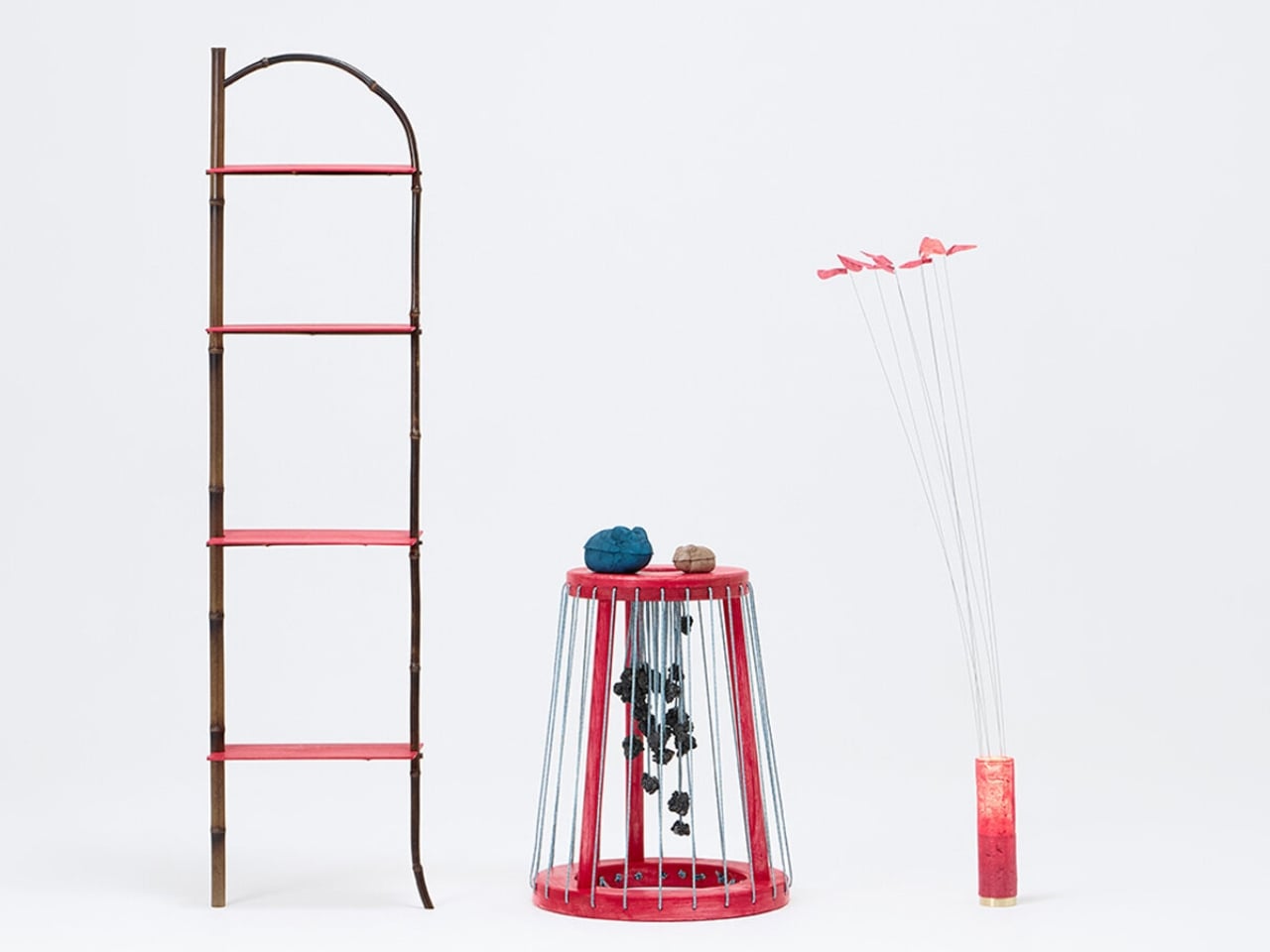
Japan has always had a complicated relationship with the new. On one hand, the country gave us bullet trains, robot hotels, and vending machines that sell everything from hot soup to umbrellas. On the other hand, it is also home to some of the world’s most painstakingly preserved craft traditions, techniques passed down through generations with almost stubborn devotion. What Kyoto-based designer Kenta Yoshizawa has done with his Red Craft collection, known in Japanese as Akai Kogei, is sit right in the middle of that tension and make it look beautiful.

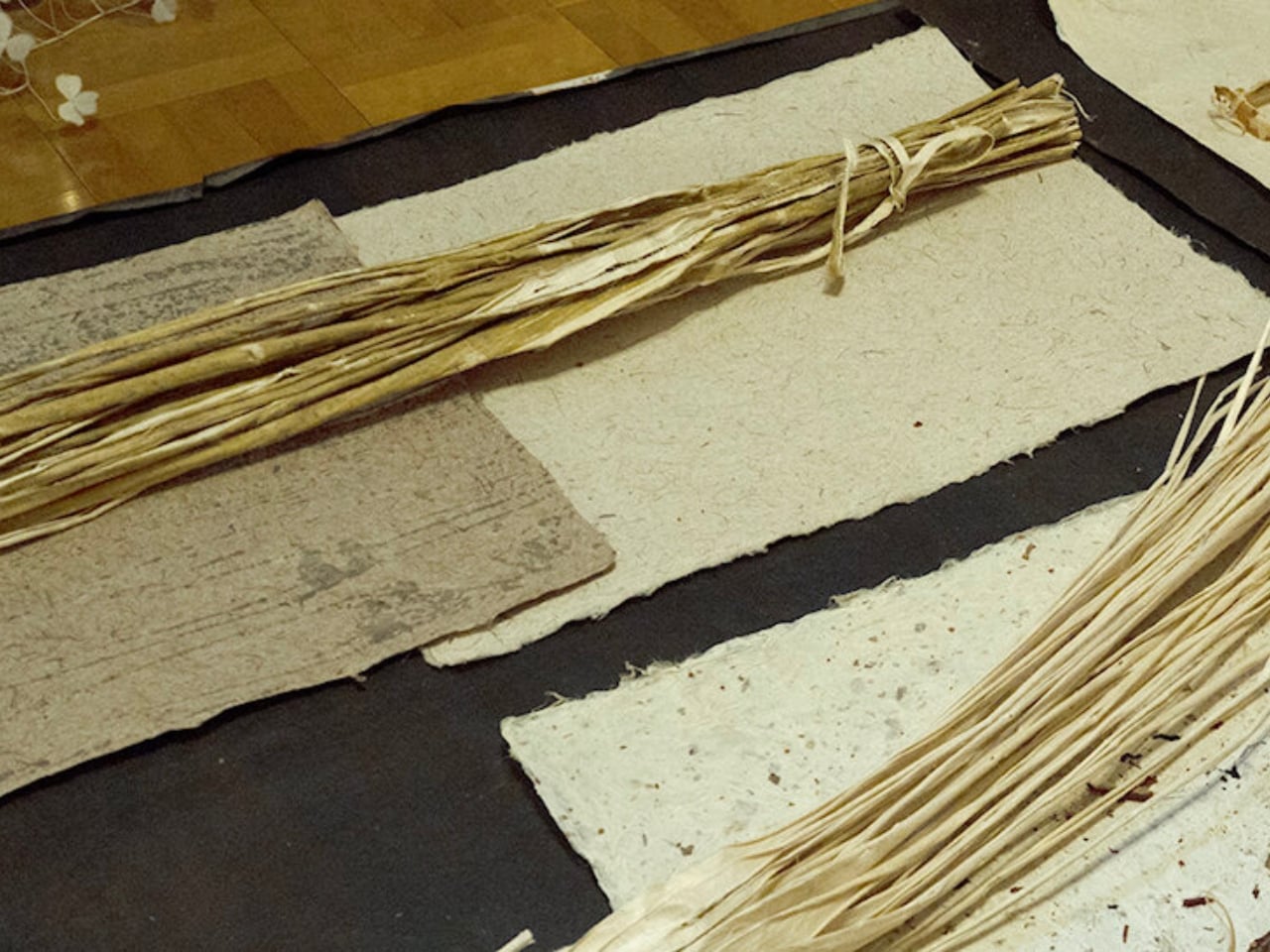
The collection pulls from four traditional Japanese craft practices: bamboo fencing, kumihimo braided cord, washi paper, and urushi lacquer. These are not fringe techniques or obscure hobbies. Kumihimo dates back centuries and was once used to lace samurai armor. Urushi lacquer has been found on artifacts over 9,000 years old. Washi paper holds UNESCO Intangible Cultural Heritage status. Yoshizawa is not working with forgotten relics. He is working with the spine of Japanese material culture, and the result is a set of objects that feel both deeply rooted and genuinely fresh.

Designer: Kenta Yoshizawa

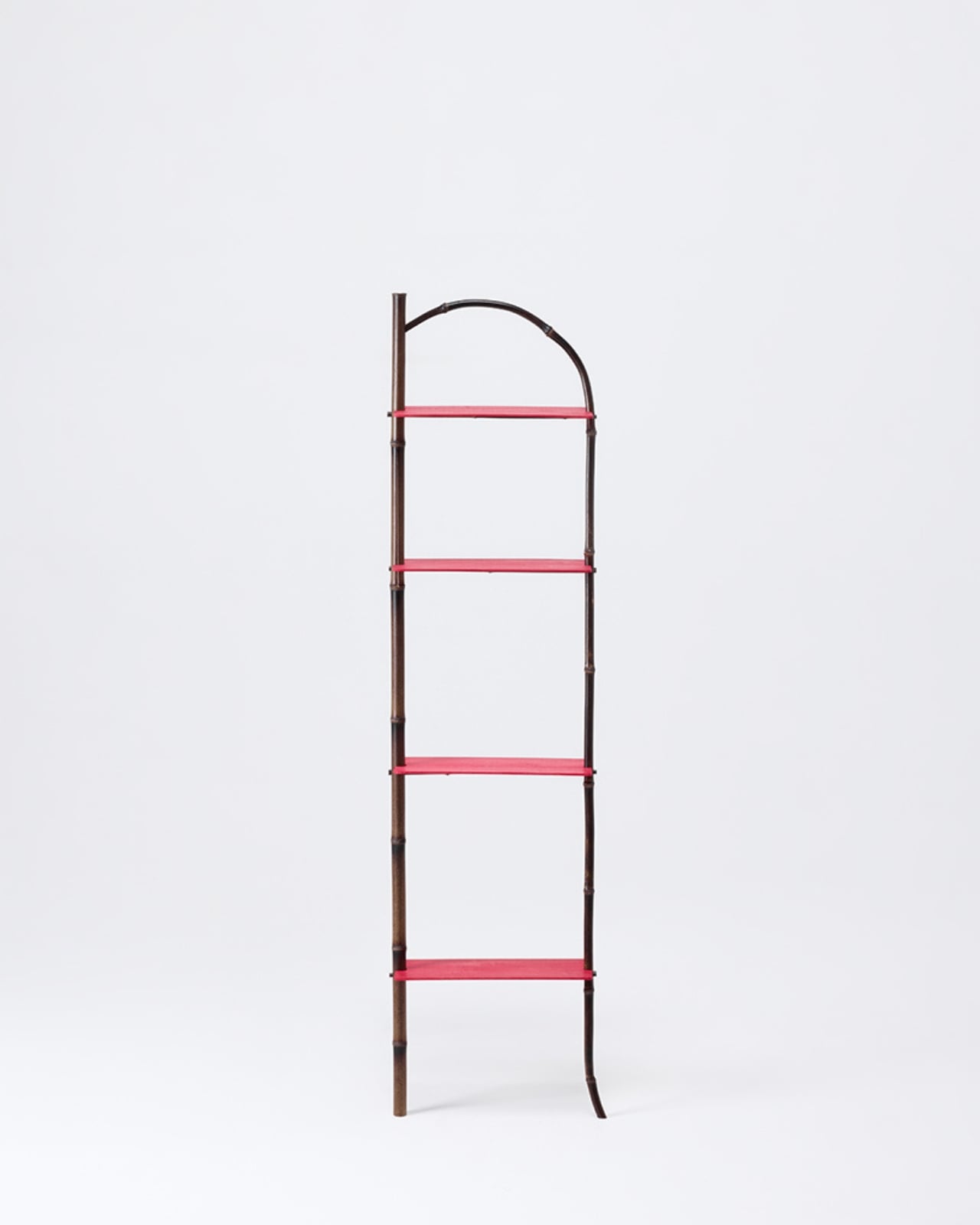
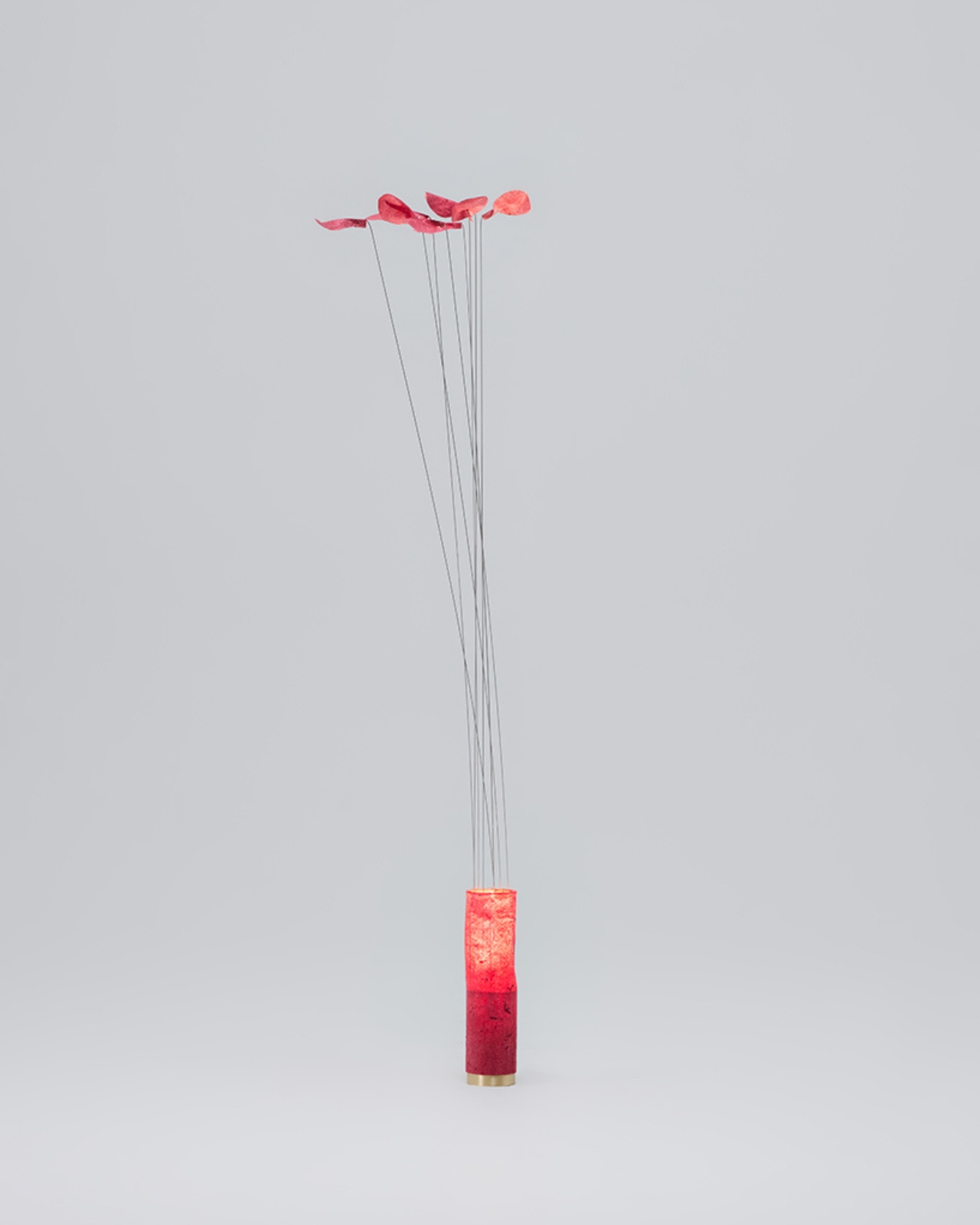
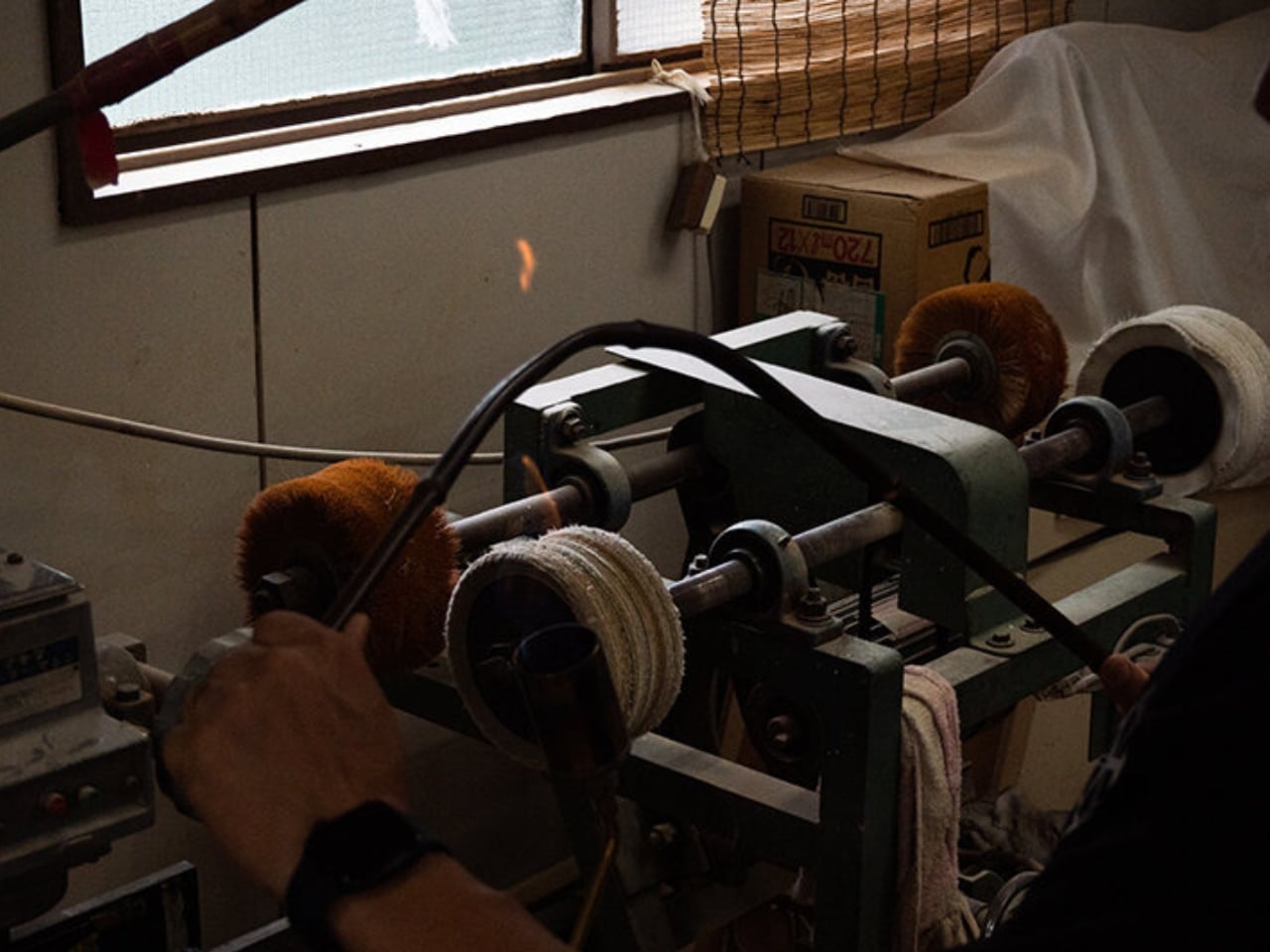
Each piece in the collection has a name that reflects its origins without being heavy-handed about it. The “n shelf” is a leaning shelf that takes the n-shaped profile of a Sodegaki, a traditional bamboo screen, and translates it into a freestanding furniture piece. The bamboo is shaped by hand using a gas burner to heat and bend the material, a process that is as physical and present as any studio practice can get. It is not mimicking the past. It is using the past as a blueprint, then deciding where to go from there.

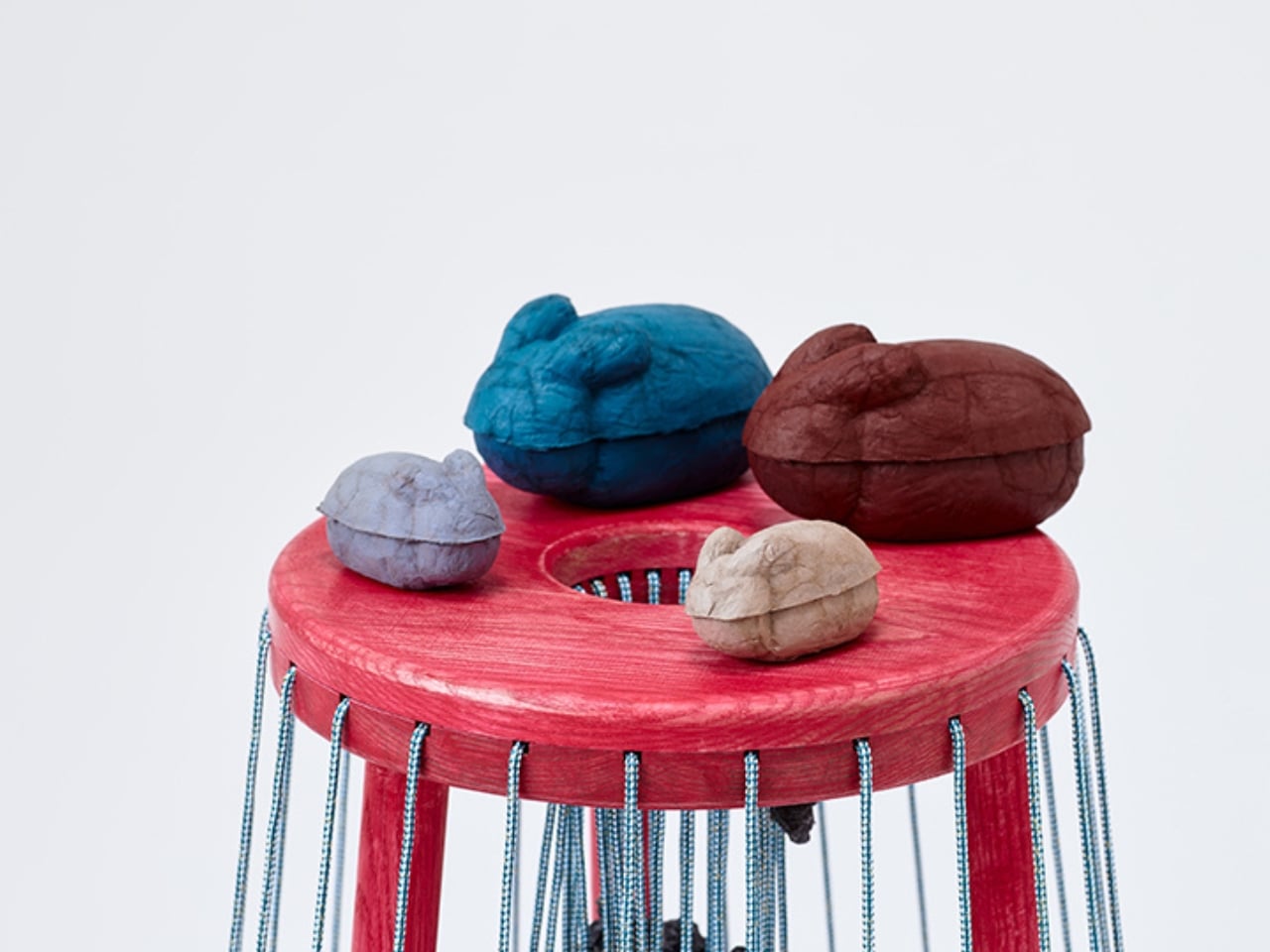
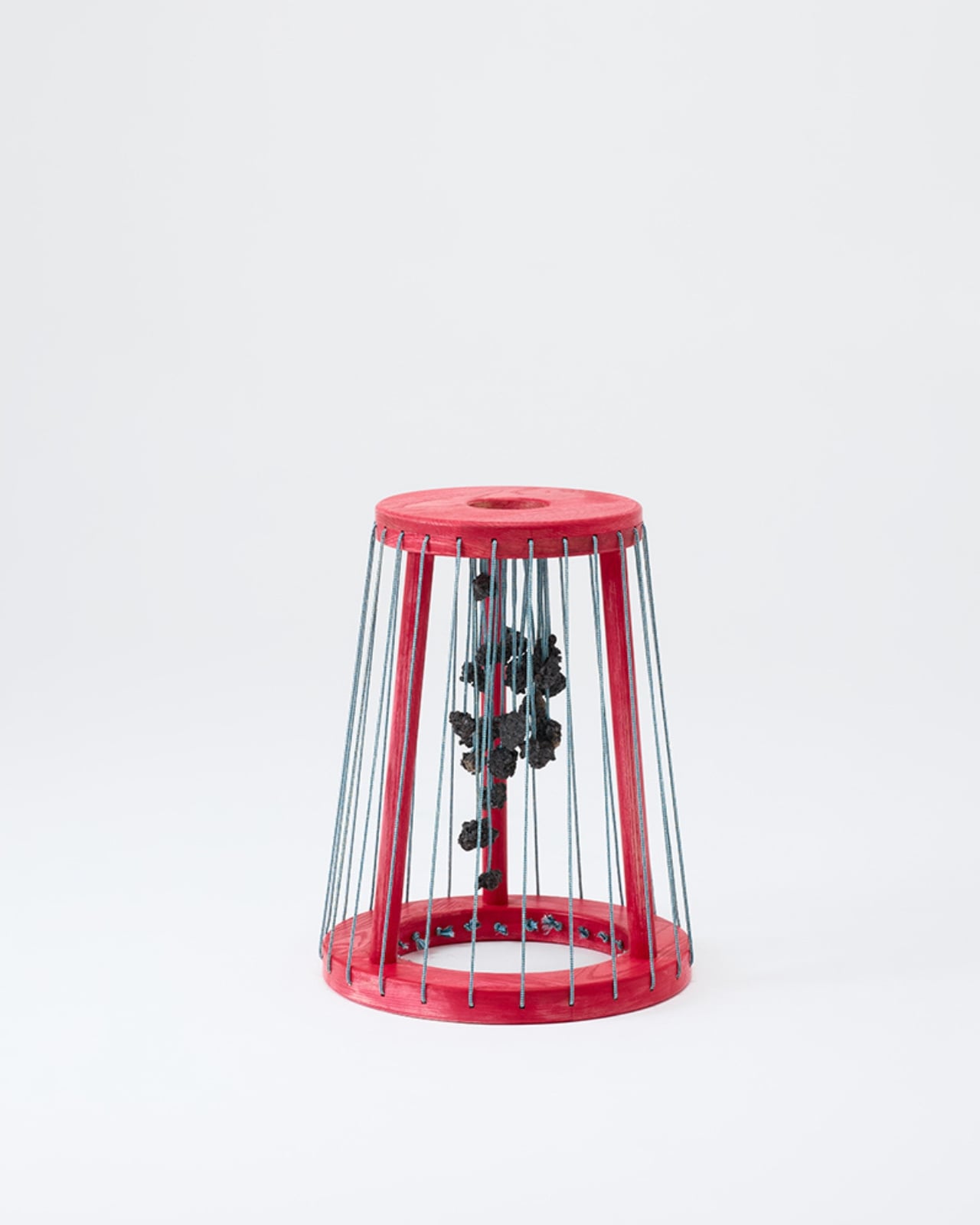
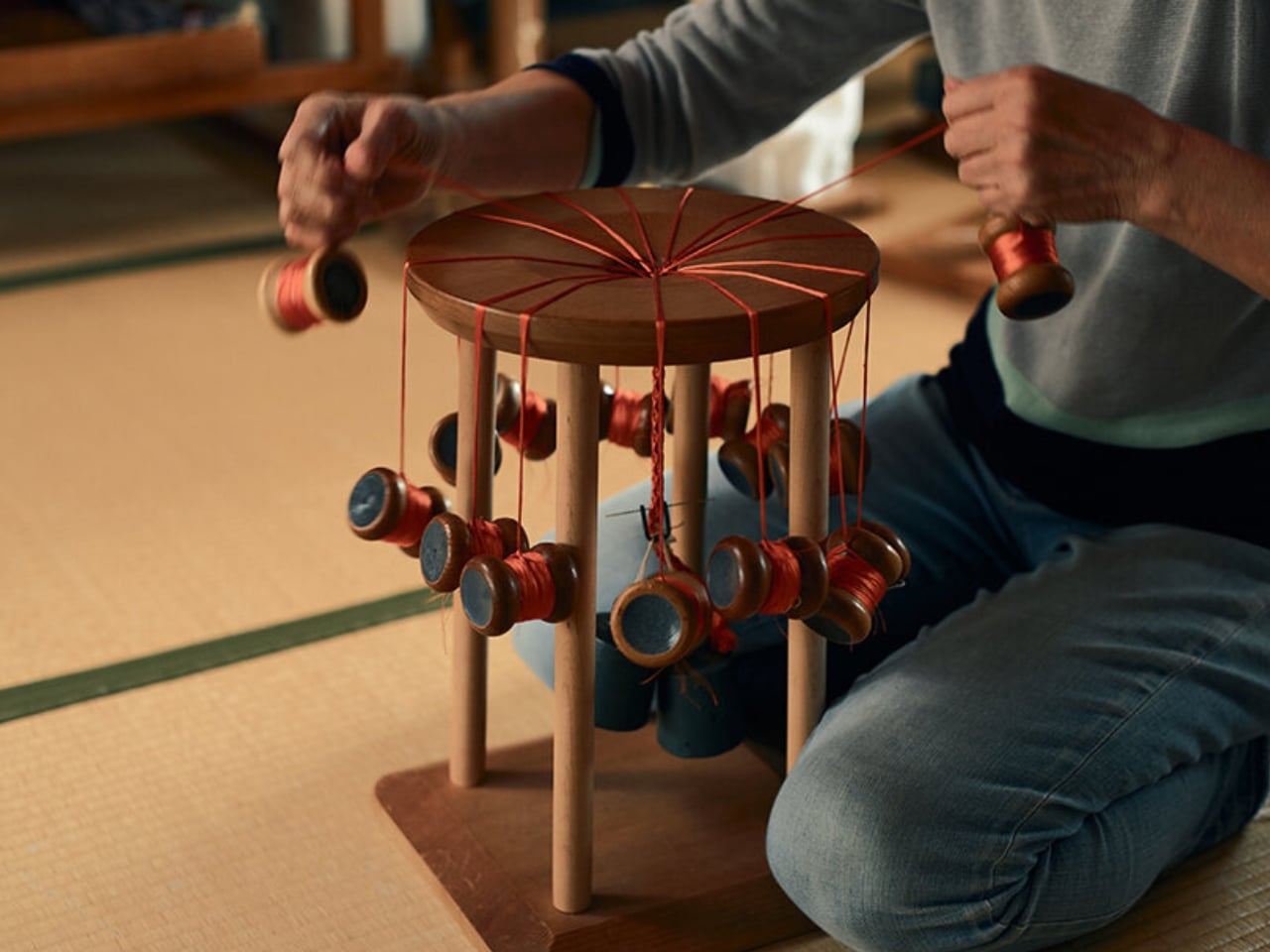
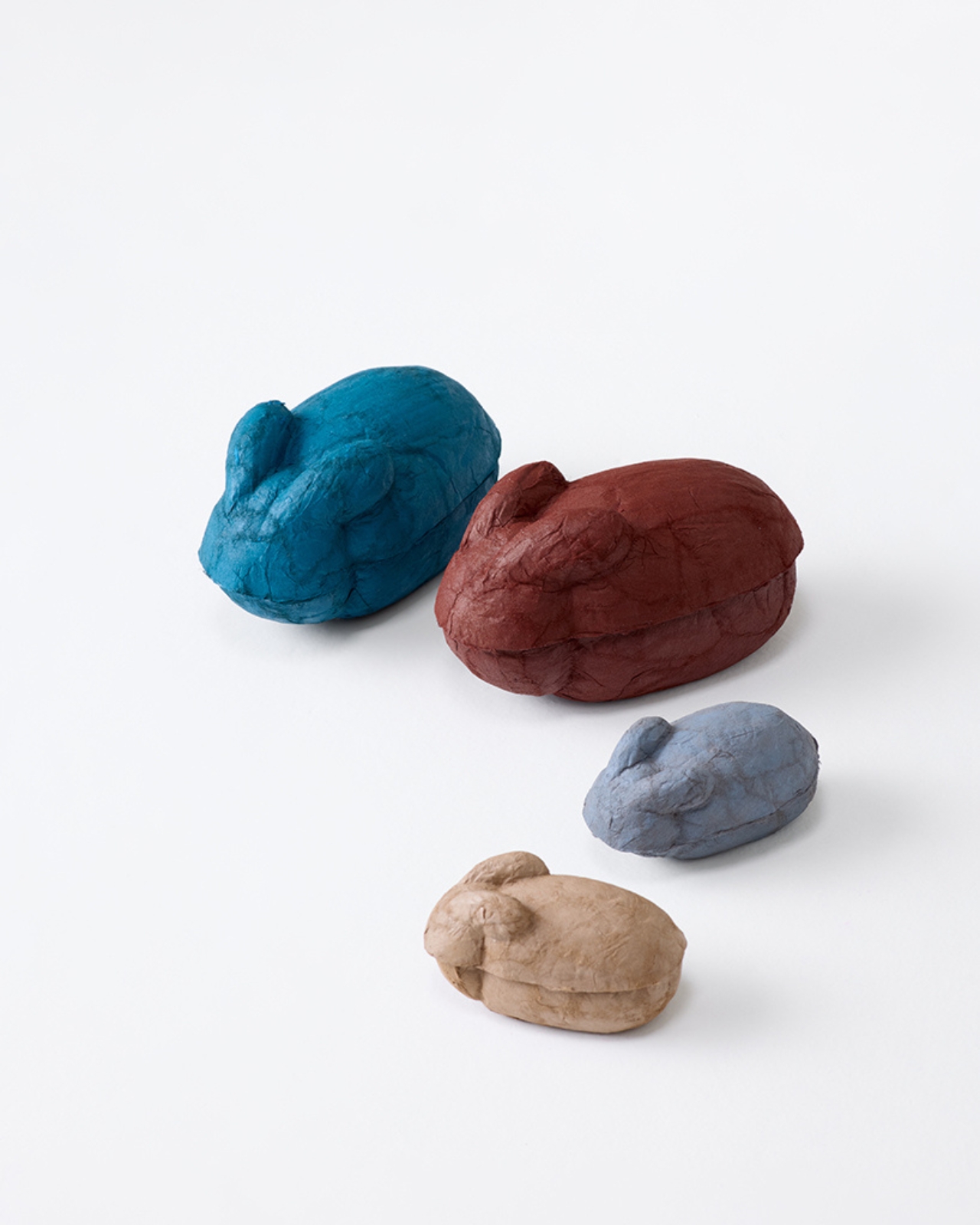
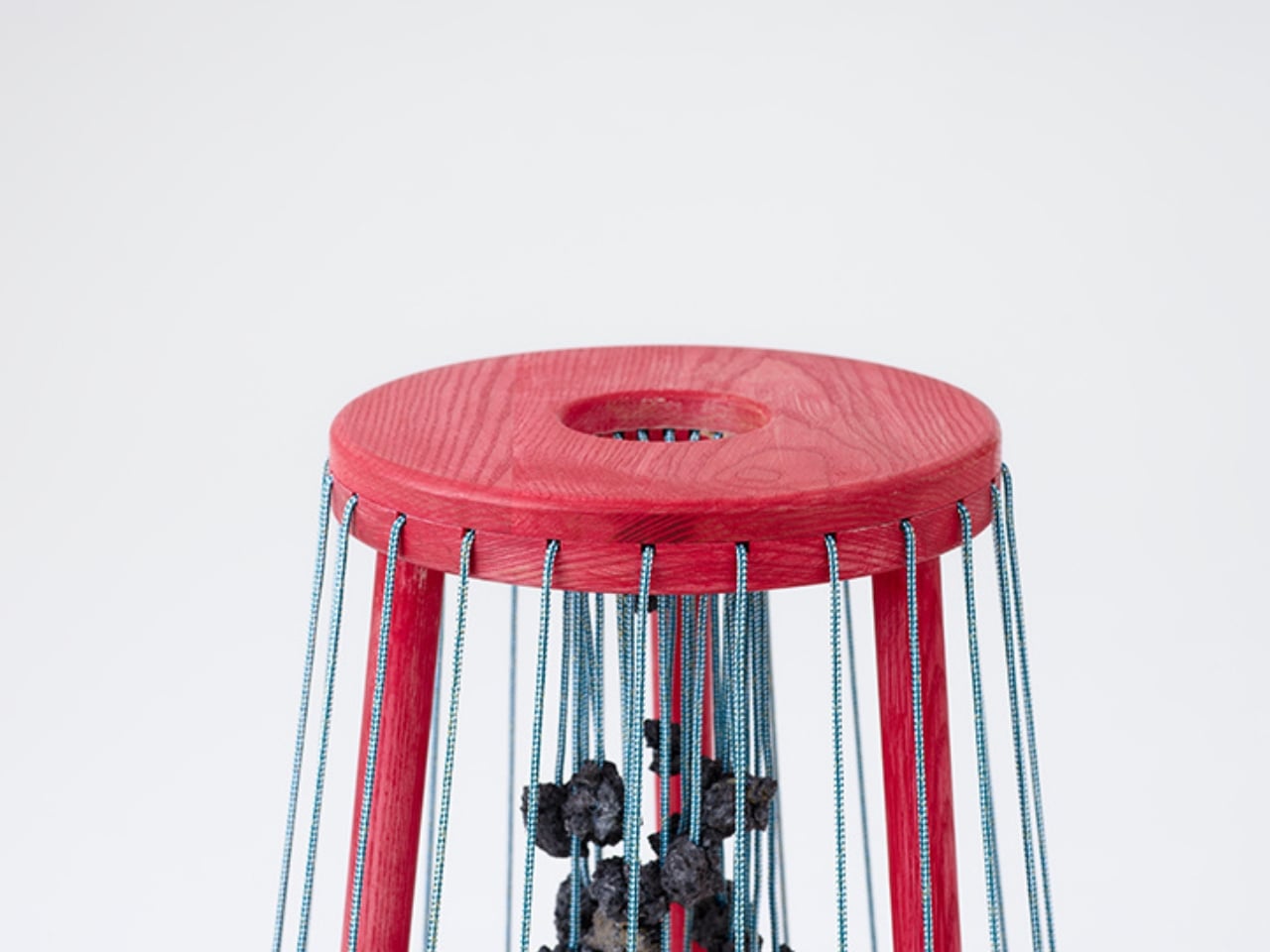
The kumino piece works with braided cord in a way that makes you see kumihimo differently, less as decoration and more as structure with genuine weight and tension. The stickstick and usahako round out the series, incorporating washi paper and urushi lacquer into objects designed for everyday domestic use. All four pieces share the same vibrant red palette, which is both a visual signature and a quiet conceptual statement. Red in Japan carries layered meaning, connected to protection, vitality, and ceremony. Painting an entire collection in it is not an accident.

To pull this off with integrity, Yoshizawa worked with actual craft specialists, including Nagaoka Meichiku for the bamboo shelf and Shoen Kumihimo for the braided cord work. That collaboration matters more than it might seem. So much design that attempts to “revive” traditional craft ends up looking like a tribute act, aesthetically referencing a process without truly engaging with it. Having the masters involved, having people who have spent their lives learning these techniques actually make the objects, keeps Red Craft honest. The craft is not a veneer. It is the point.

My honest take is that Red Craft is exactly the kind of design we need more of right now. Not because it is nostalgic, but because it refuses to treat tradition as a museum piece. Yoshizawa’s collection asks what these techniques become when they are not preserved behind glass but allowed to do actual work in a contemporary home. The answer, as it turns out, is that they become furniture, lighting, storage. Objects you actually live with.

The things we choose to put in our homes say something about what we value, what we want near us. Choosing an object made with a centuries-old technique, shaped by hand, infused with craft that requires skill and time and human attention, is a different kind of choice than clicking “add to cart” on something designed, manufactured, and shipped in six weeks. That difference matters, even if we do not always articulate why.

Red Craft does not ask you to choose the past over the present. It asks whether there is a version of the present that makes room for both. Given how much of contemporary design feels disposable, the answer Yoshizawa offers feels like a small but genuine relief.

The post 4 Ancient Japanese Crafts Reborn as Furniture You Can Actually Own first appeared on Yanko Design.
The $171 Vest Worn by F1 Drivers Hit the World Cup

Heat has always been part of the game. Whether you’re a footballer running laps before a match, a Formula 1 driver crammed into a cockpit where temperatures can soar to 55-60°C, or a cyclist grinding through the Tour de France in July, managing your body temperature isn’t just about comfort. It’s about survival and, more specifically, performance.

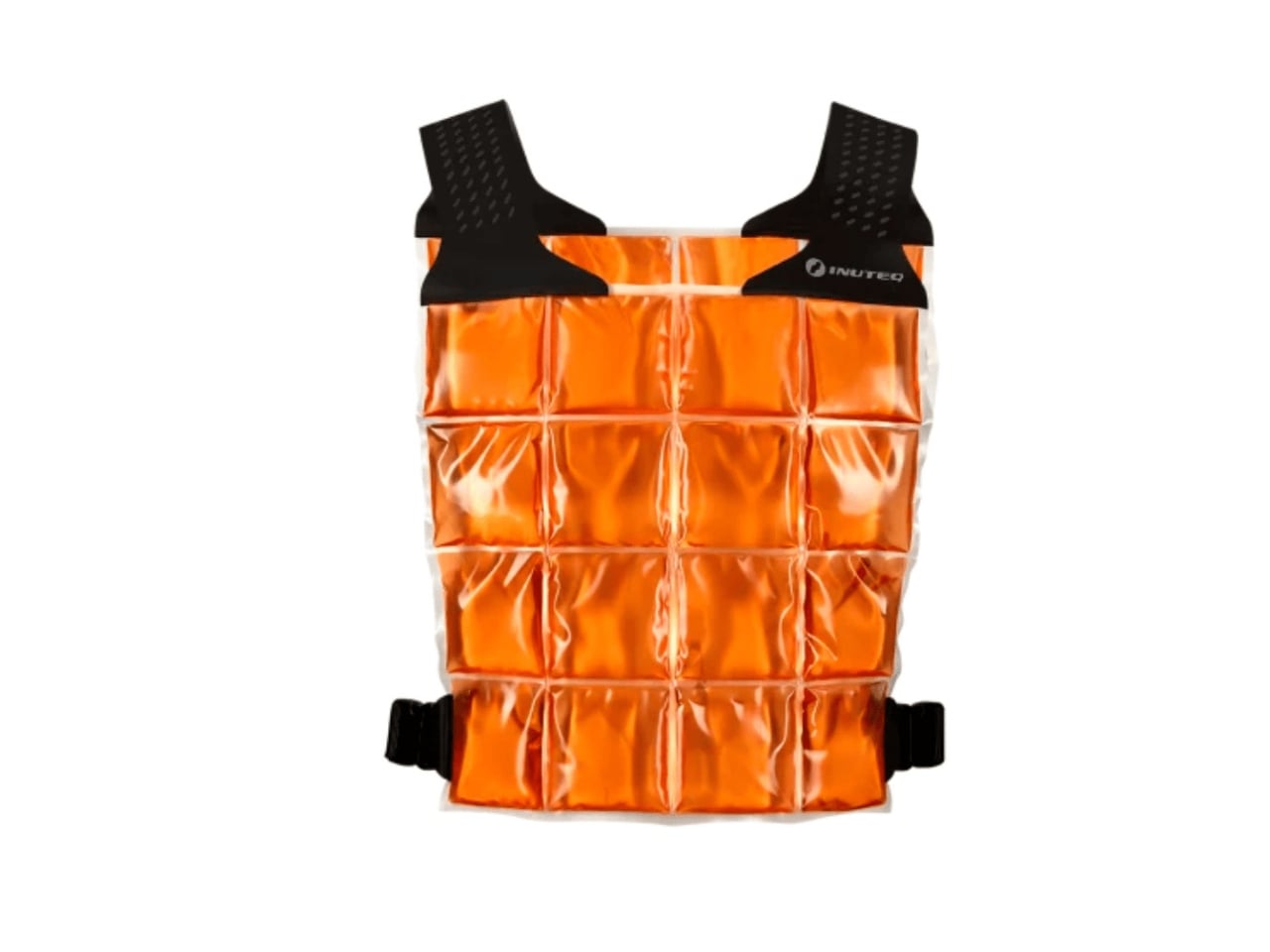
That’s exactly what Dutch company Inuteq has been working on for years, quietly and without much fanfare, until now. Their PCM CoolOver, a cooling vest built on phase-change material technology, has found its way into one of the most high-profile collaborations in sportswear: the adidas CLIMACOOL System, officially unveiled for the FIFA World Cup 2026.

Designers: adidas x Inuteq

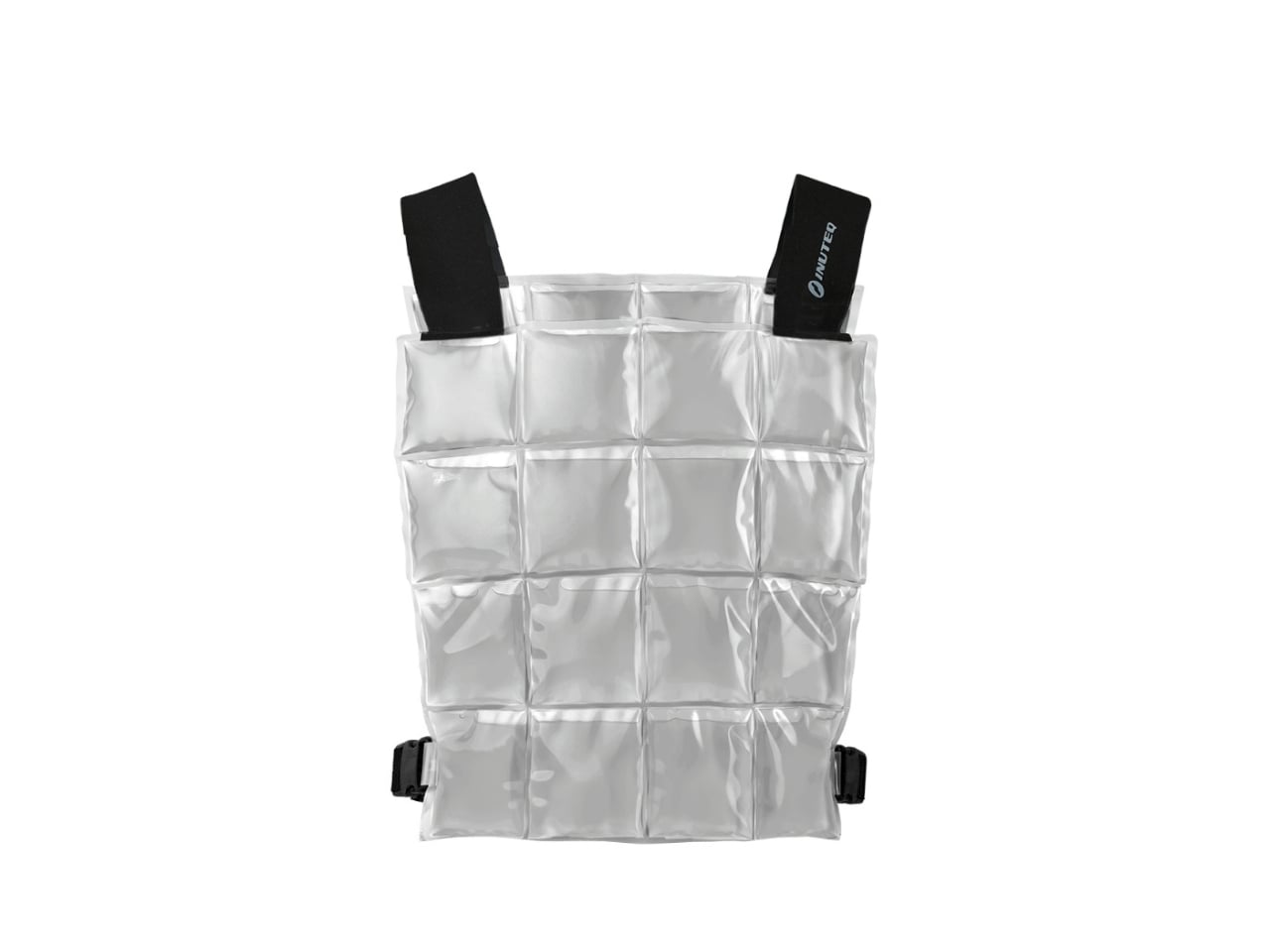
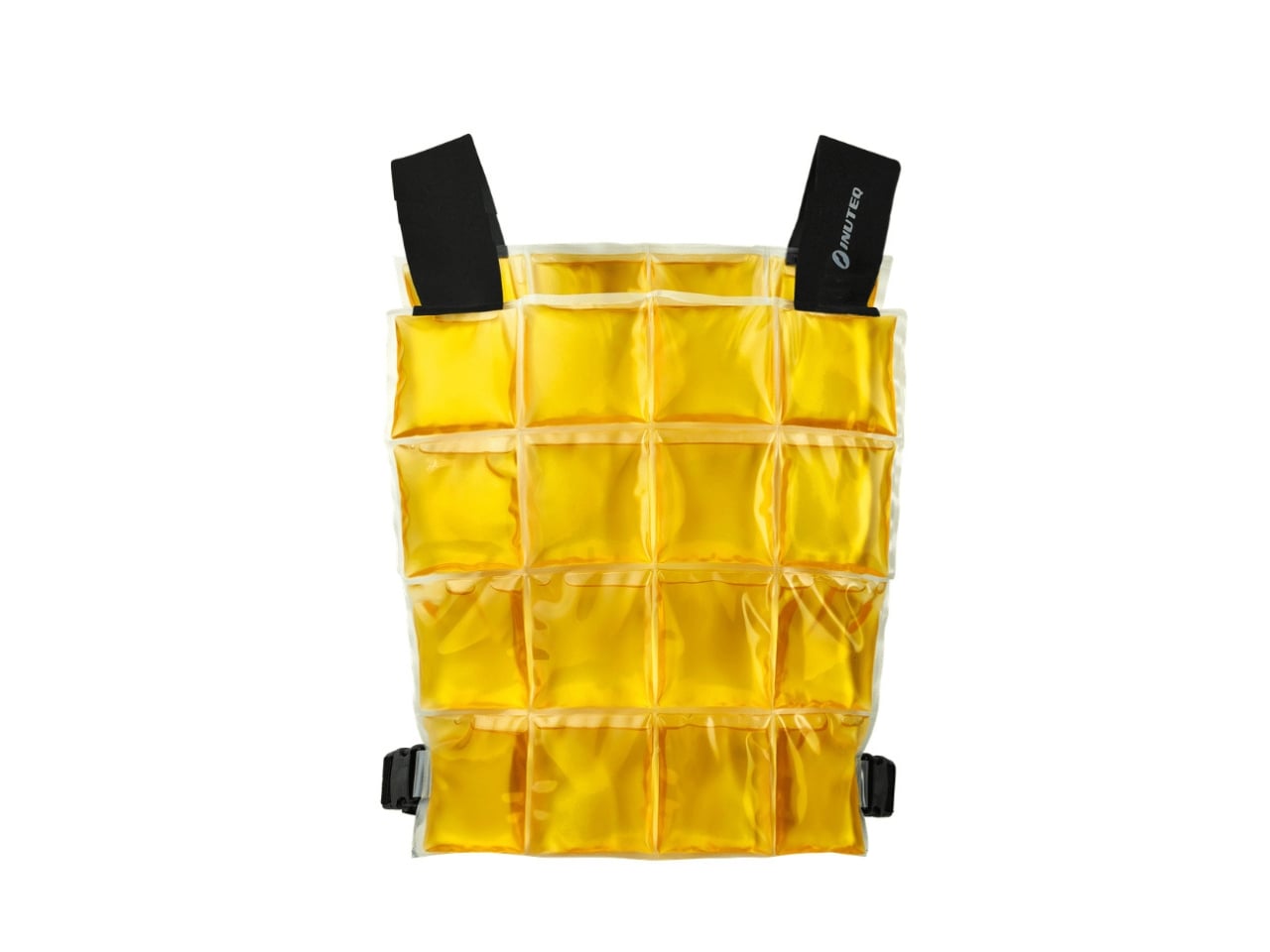
The way phase-change material works is genuinely clever. The vest contains PCM cells made from 100% biobased materials that absorb heat from the body as they gradually transition from solid to liquid state, keeping the surface at a consistent, controlled temperature. The 15°C version, the one widely used by athletes in sport and recovery, delivers up to 2.5 hours of constant cooling. No batteries, no electricity, no complicated mechanics. Just material science doing what it’s supposed to do.

I’ll admit that I didn’t expect to find myself genuinely excited about a vest. But when you look at what this collaboration actually represents, it shifts the conversation in interesting ways. Cooling technology has been operating in the background of elite sport for a long time. Ice towels, cold baths, fans on the sideline. These solutions work well enough, but they’re reactive. The PCM CoolOver feels like a proper design response to a problem that deserves one. It’s specific, engineered, wearable, and built on science rather than just intuition.

The adidas partnership started in motorsport. The CLIMACOOL System was originally developed to help Mercedes-AMG Petronas F1 Team drivers, including George Russell and Kimi Antonelli, cope with extreme cockpit heat. From there, it was adapted, tested, and refined alongside football clubs including Manchester United, Juventus, and Arsenal, before being made available to all adidas partner federations at the 2026 World Cup. That’s a journey from one of the most technically demanding environments in sport to one of the most globally watched. Not a bad trajectory for what is, at its core, a vest.

The numbers are worth sitting with for a moment. The system reduces core body temperature by up to 0.5°C and skin temperature by up to 13°C, with a complementary overshoe that brings foot temperature down by up to 2°C in minutes. The Spanish Football Federation was quick to point out how they’ve been using the vest before matches, after training, and at half-time to support player recovery and readiness. When a federation is publicly crediting a vest as part of their performance strategy, that tells you something.

What also deserves attention here is the sustainability angle. Inuteq’s PCM technology is USDA-certified 100% biobased and REACH compliant, which makes it one of the only cooling vests on the market that can make those claims. In a category that could easily lean on synthetic chemicals and disposable components, the fact that this product is also biodegradable and fabric-free, easy to clean and even sterilize, puts it in a different class. Good design shouldn’t have to compromise on this, and here, it doesn’t.

The PCM CoolOver comes in multiple temperature variants: 6.5°C, 15°C, 21°C, 24°C, and 29°C, each calibrated for different conditions and use cases, from elite athletic performance to industrial and medical settings. The range feels thoughtful, like a product family that was designed to solve real problems across real environments rather than chase a single use case.

Cooling as a design challenge might not carry the aesthetic glamour of, say, a new sneaker drop or a conceptual chair. But the PCM CoolOver is proof that genuinely functional design, the kind that solves a physical human problem with precision and care, is just as compelling, and arguably more necessary. The fact that it has quietly traveled from Dutch labs to Formula 1 cockpits to World Cup pitches says more about its value than any product launch ever could.

The post The $171 Vest Worn by F1 Drivers Hit the World Cup first appeared on Yanko Design.