Motorola’s Swarovski Razr Was Designed to Be Seen, Not Hidden

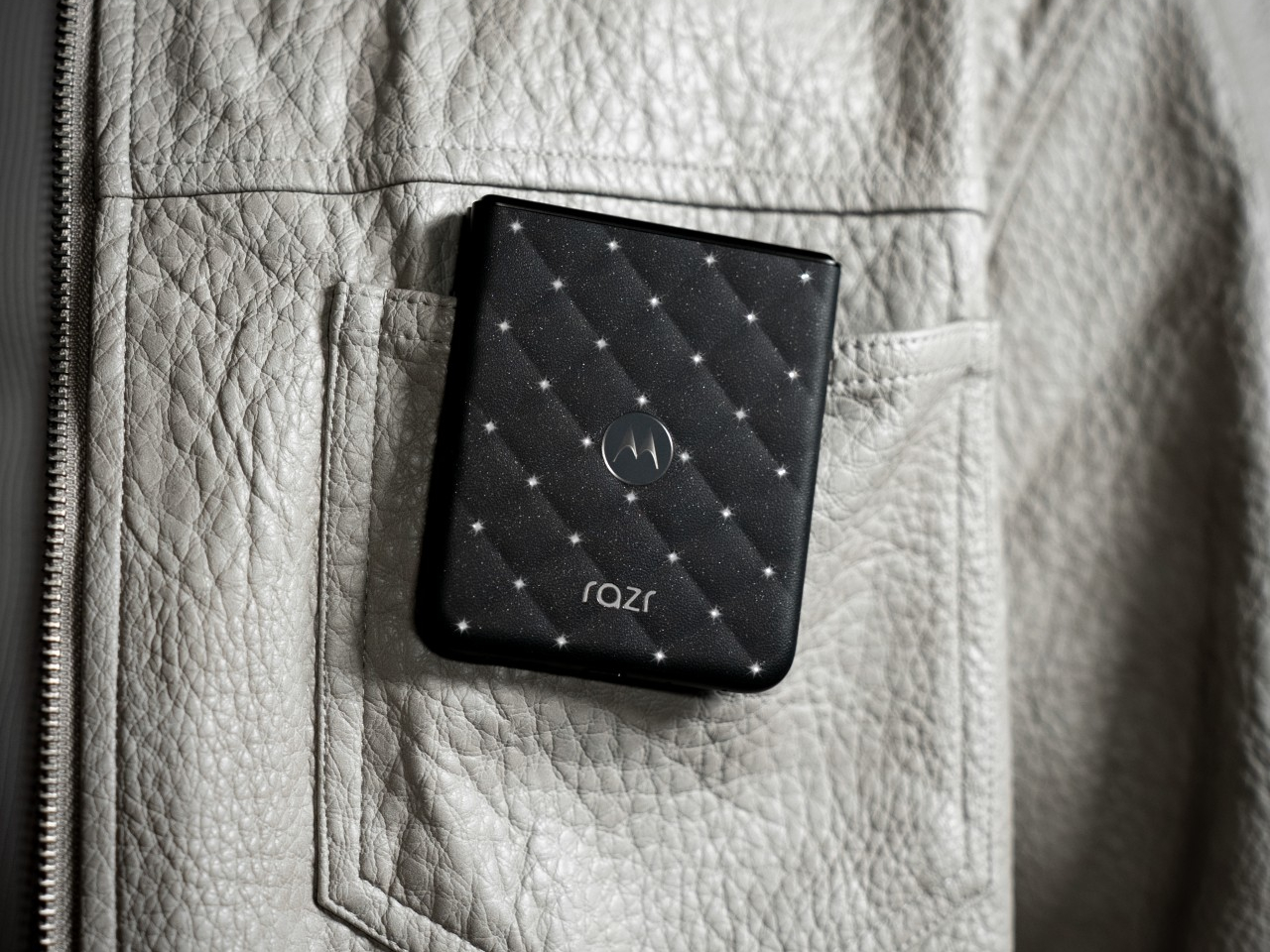
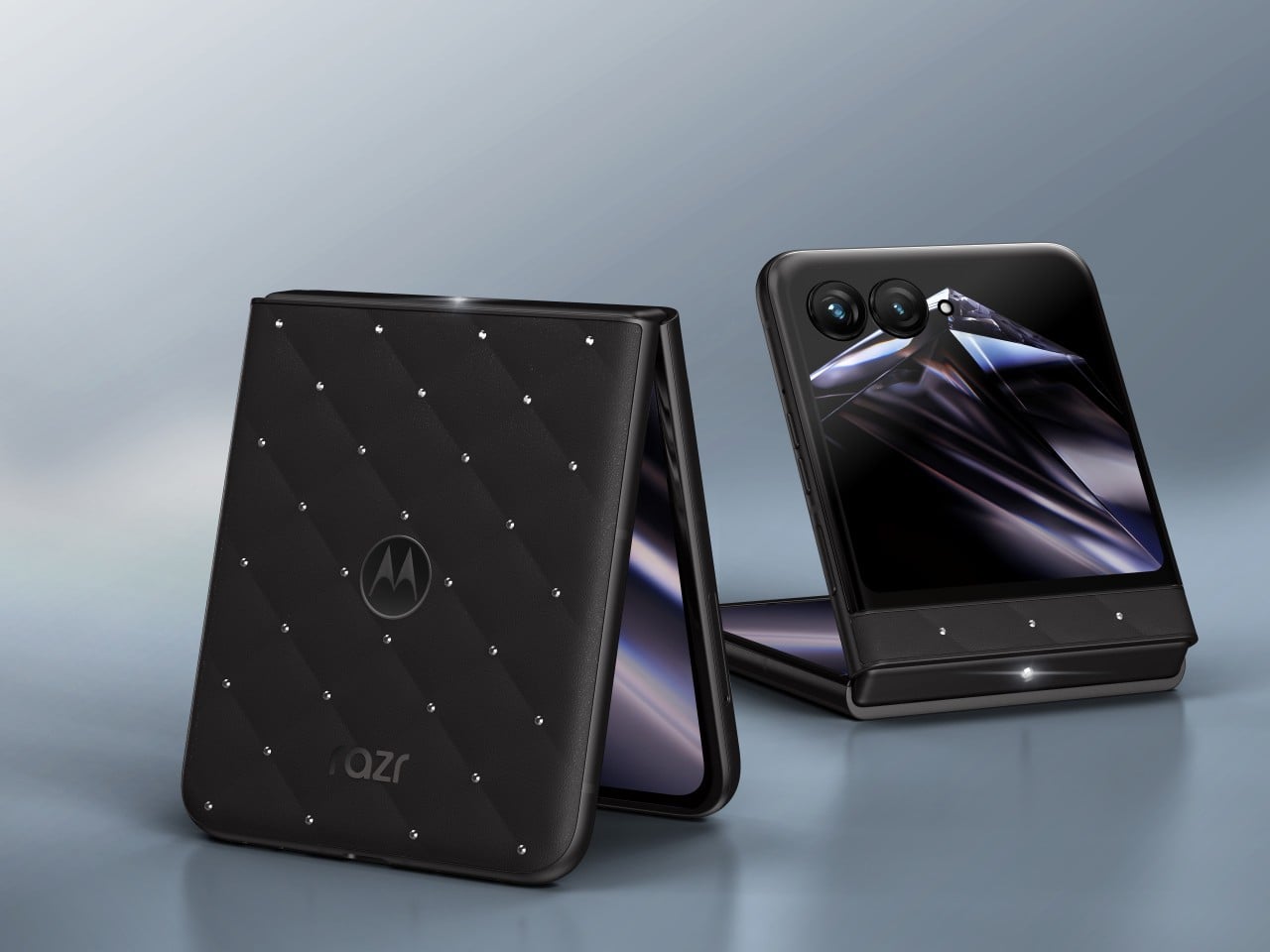
Motorola built a phone that asks to be noticed before it’s even unfolded. The 2026 motorola razr with Crystals by Swarovski joins the Brilliant Collection at IFA 2026, pairing Pantone’s color expertise with Swarovski’s craftsmanship on a foldable that reads less like consumer electronics and more like a clutch bag someone forgot was also a smartphone. It’s Motorola’s clearest statement yet that a phone’s exterior deserves as much attention as its chipset.

That statement starts with PANTONE Meteorite, a deep, understated shade that never competes for attention against the crystals resting on top of it. Instead, the finish creates contrast, revealing different dimensions of light and sparkle as the phone moves, so a simple pocket check under a restaurant table catches light differently than the same motion under office fluorescents. Color, in this case, does the quiet work of making everything layered on top of it shine harder.

Designer: Motorola x Swarovski
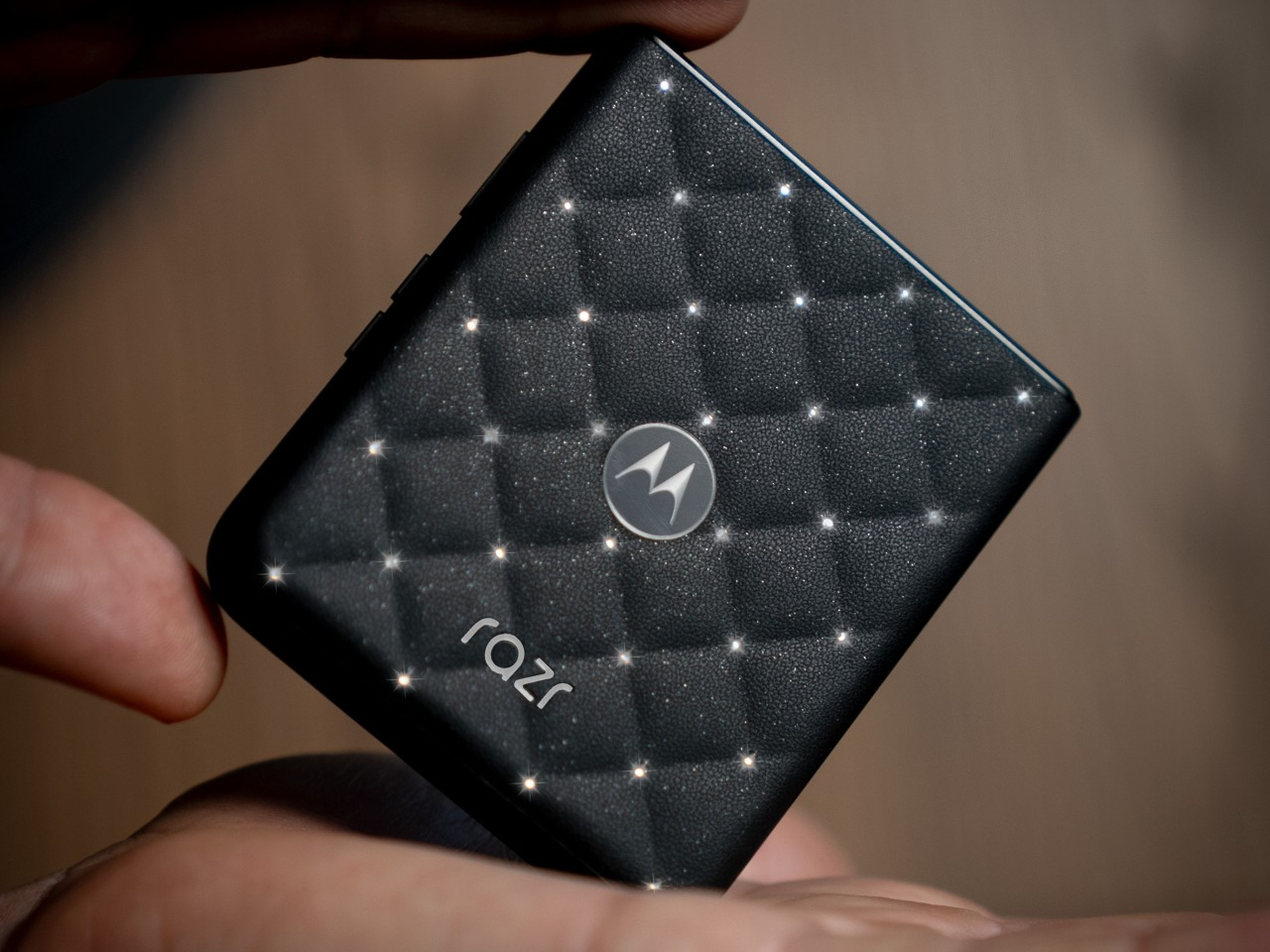
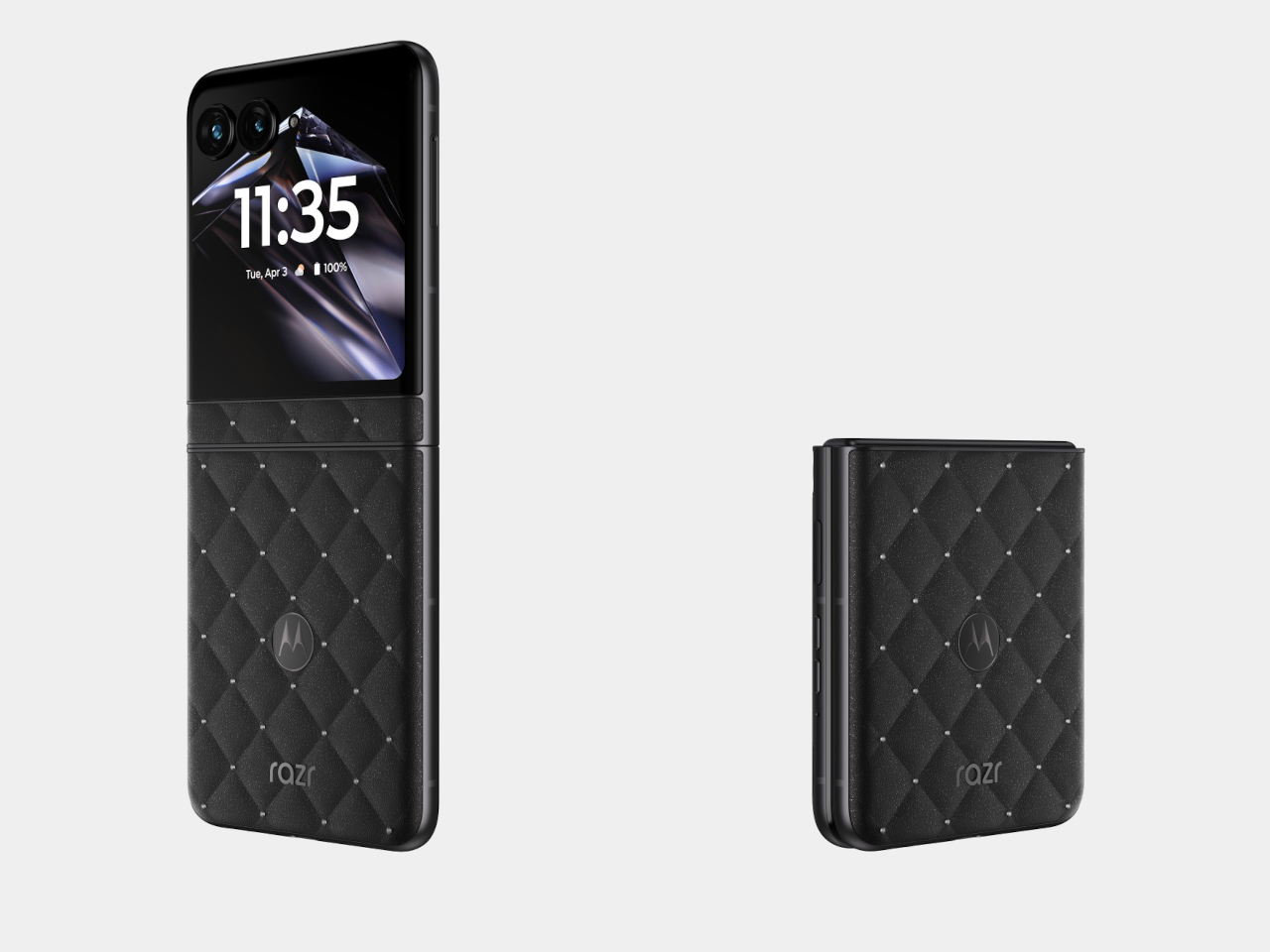
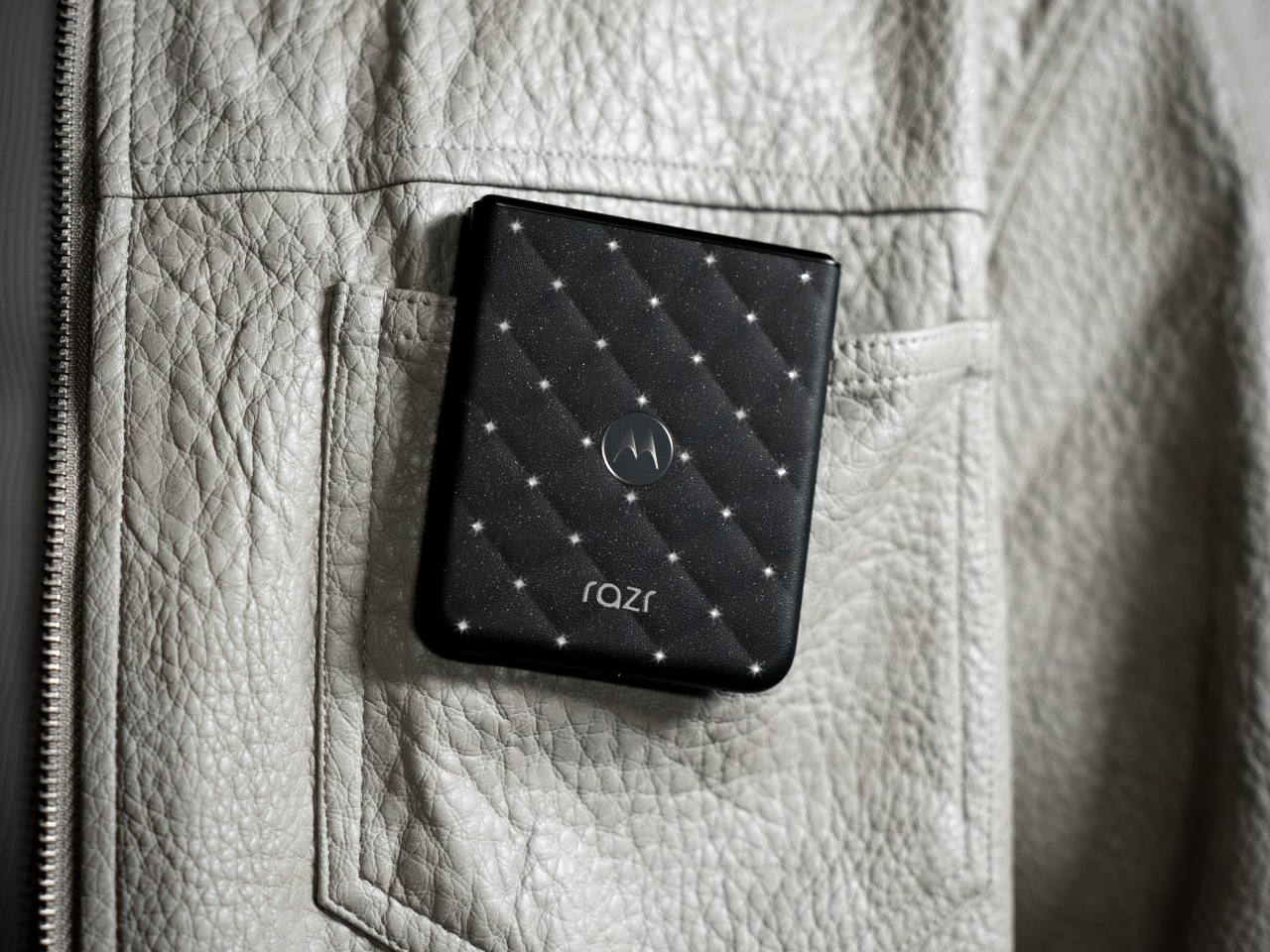
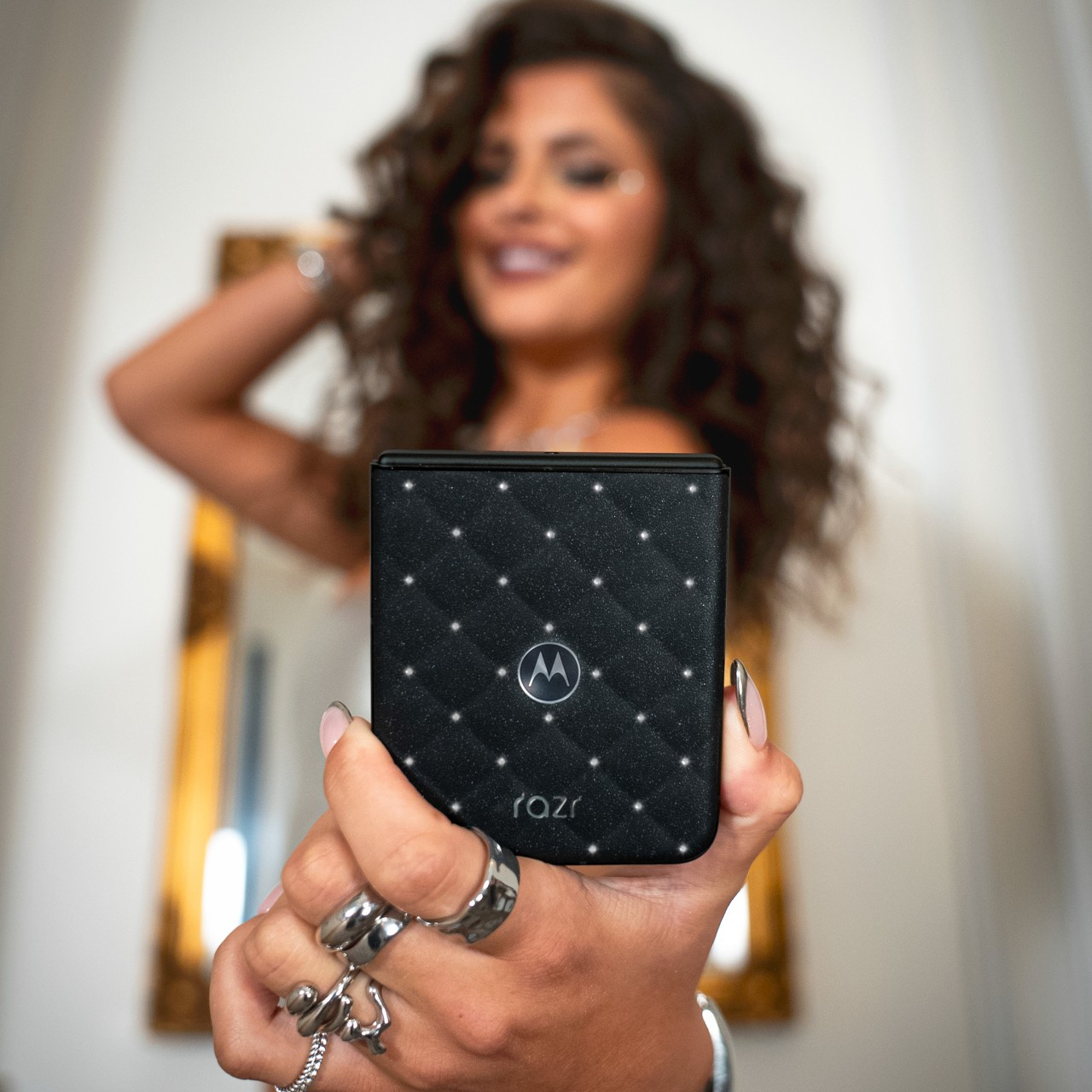
That layering happens across a quilted, leather-inspired texture that already feels premium before a single crystal enters the picture. Set against that padded surface, 35 hand-positioned Swarovski Crystals in Silver Night catch light from nearly any angle, each one placed with enough precision that the pattern reads as intentional rather than scattered. It’s the kind of detail that rewards a second glance rather than exhausting itself after the first one.
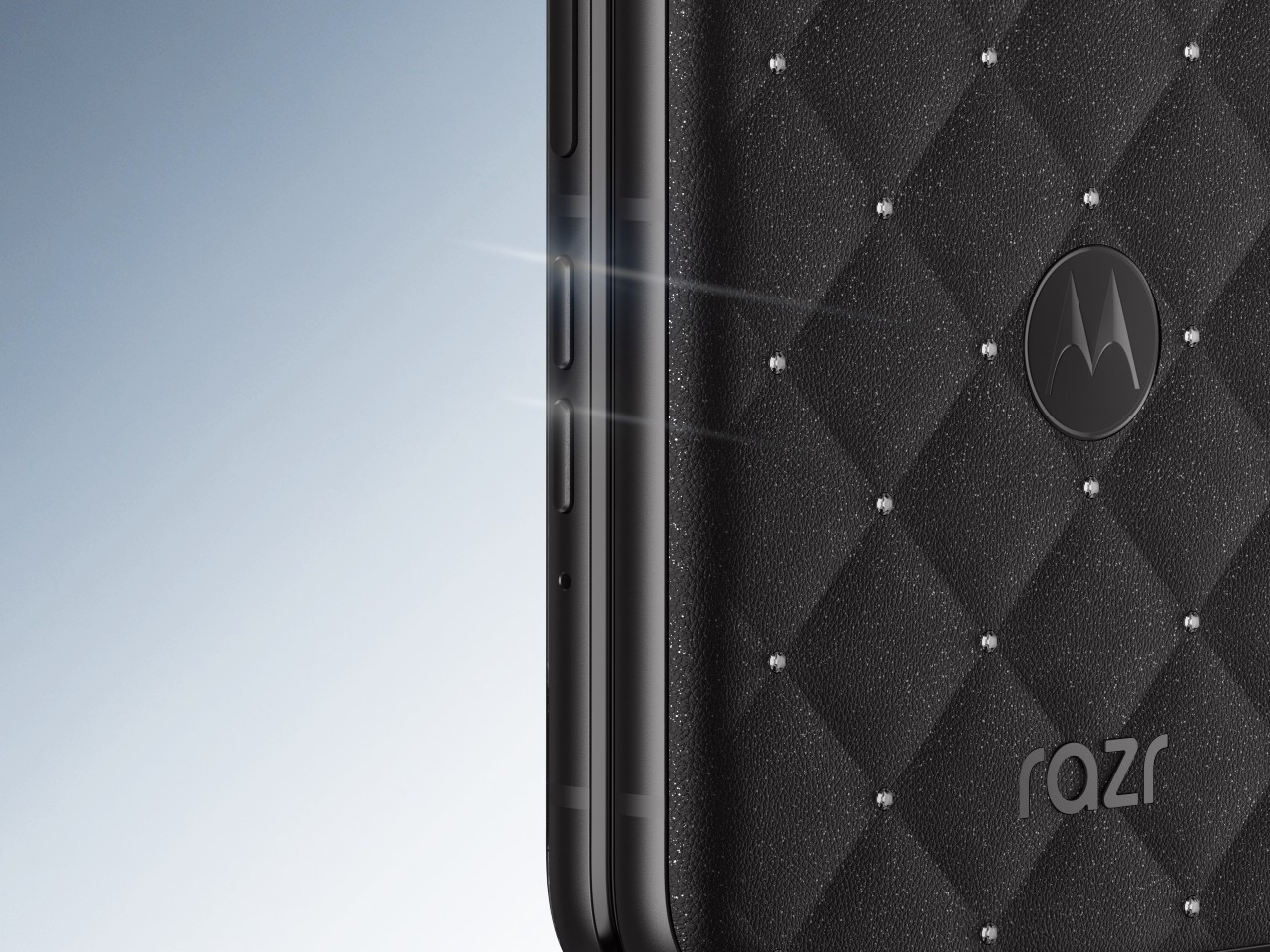
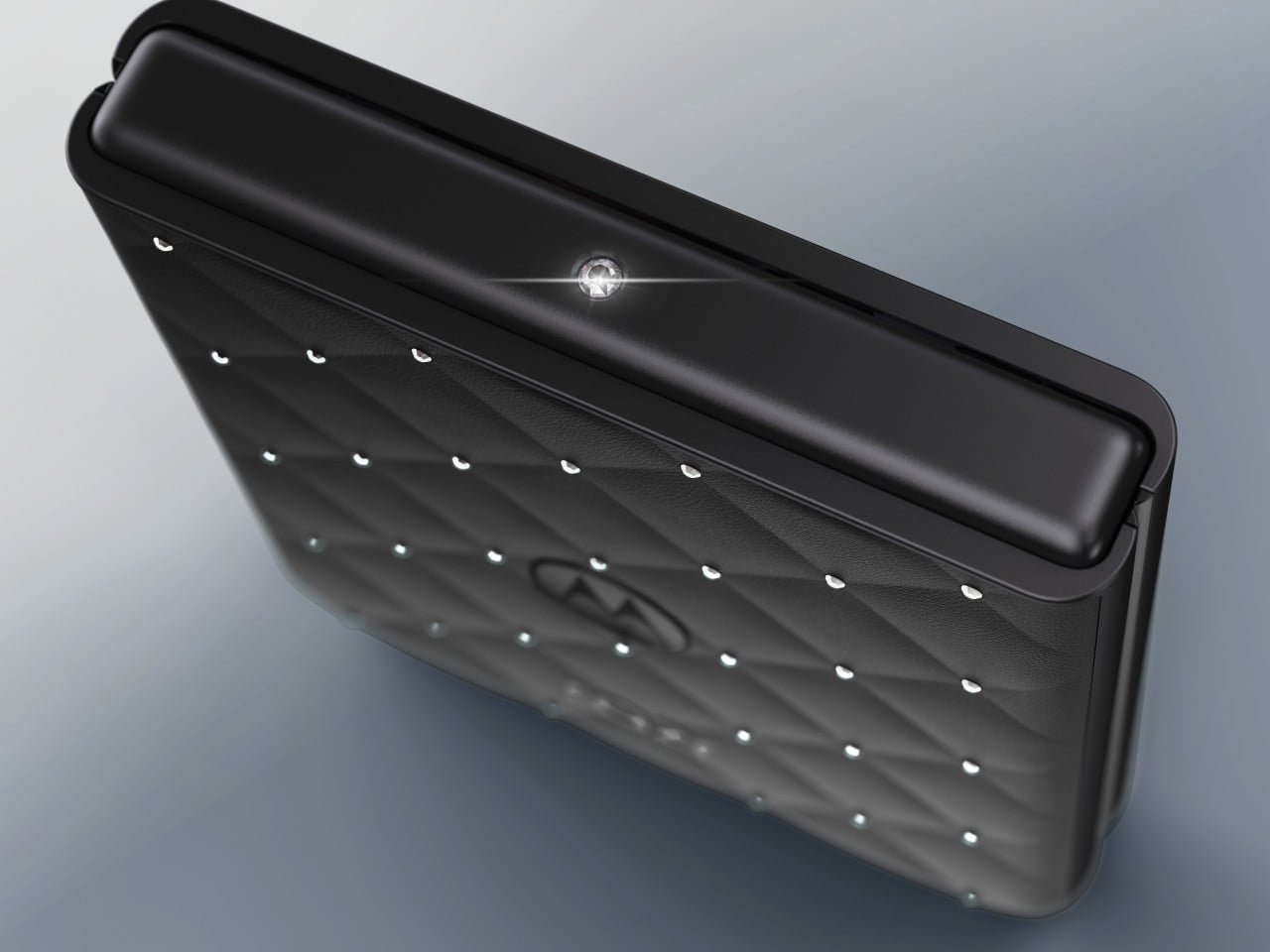
One crystal earns special treatment. A signature 32-facet Swarovski Crystal sits directly on the hinge, catching light with every flip in a way that turns the phone’s most mechanical motion into its most theatrical one. Razr’s flip has always been a small performance, and Motorola clearly understood that placing its biggest crystal exactly where the hinge pivots would turn an everyday gesture into something worth watching happen.
Motorola ships the device with a clear protective case built to frame the design without hiding it, a detail that matters more than it initially sounds. Plenty of phone cases exist purely to protect a device at the cost of concealing whatever made it desirable in the first place. Here, the case reads more like a museum vitrine than a rubber shell, letting the crystal work stay visible through daily handling.
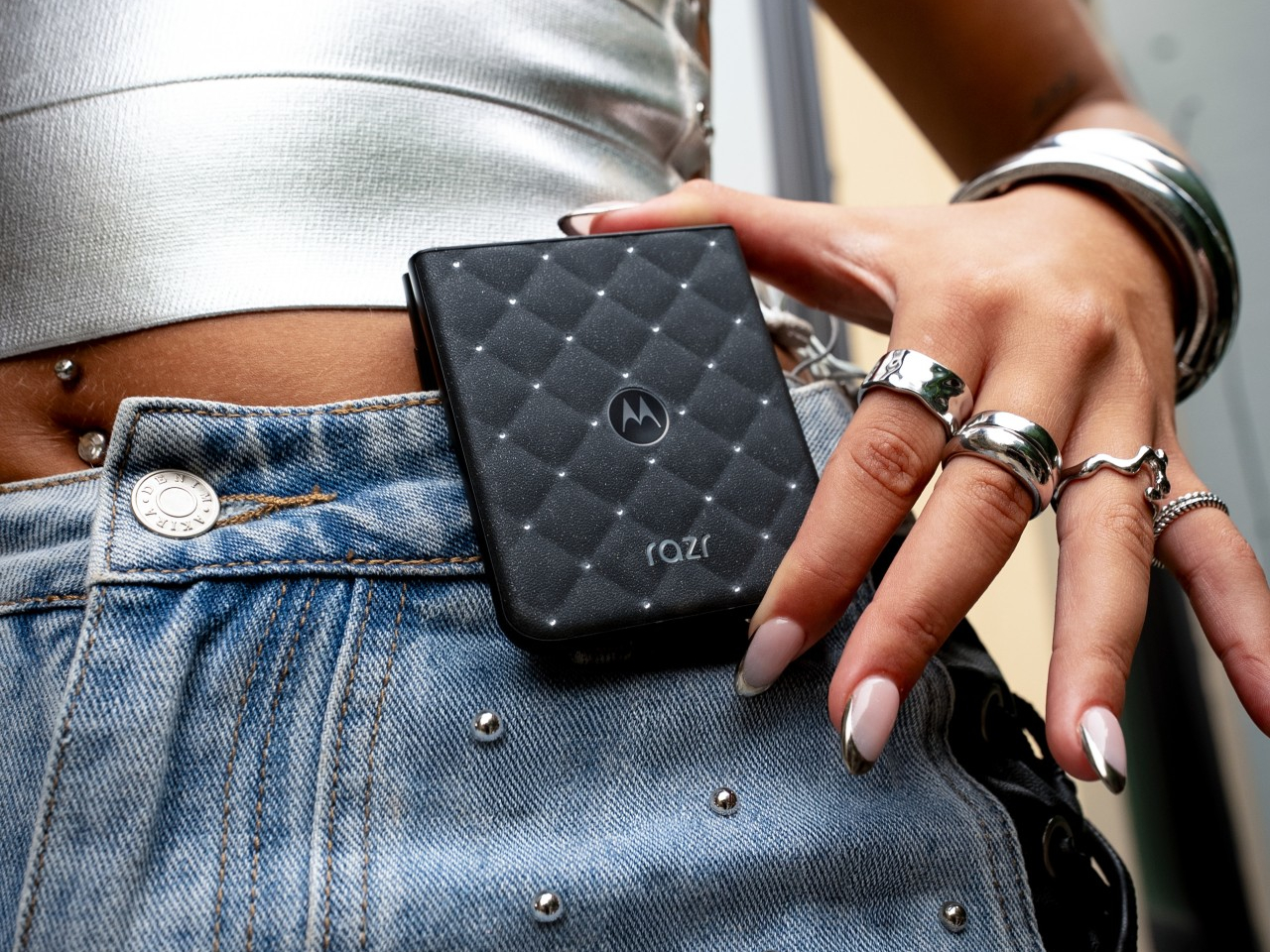
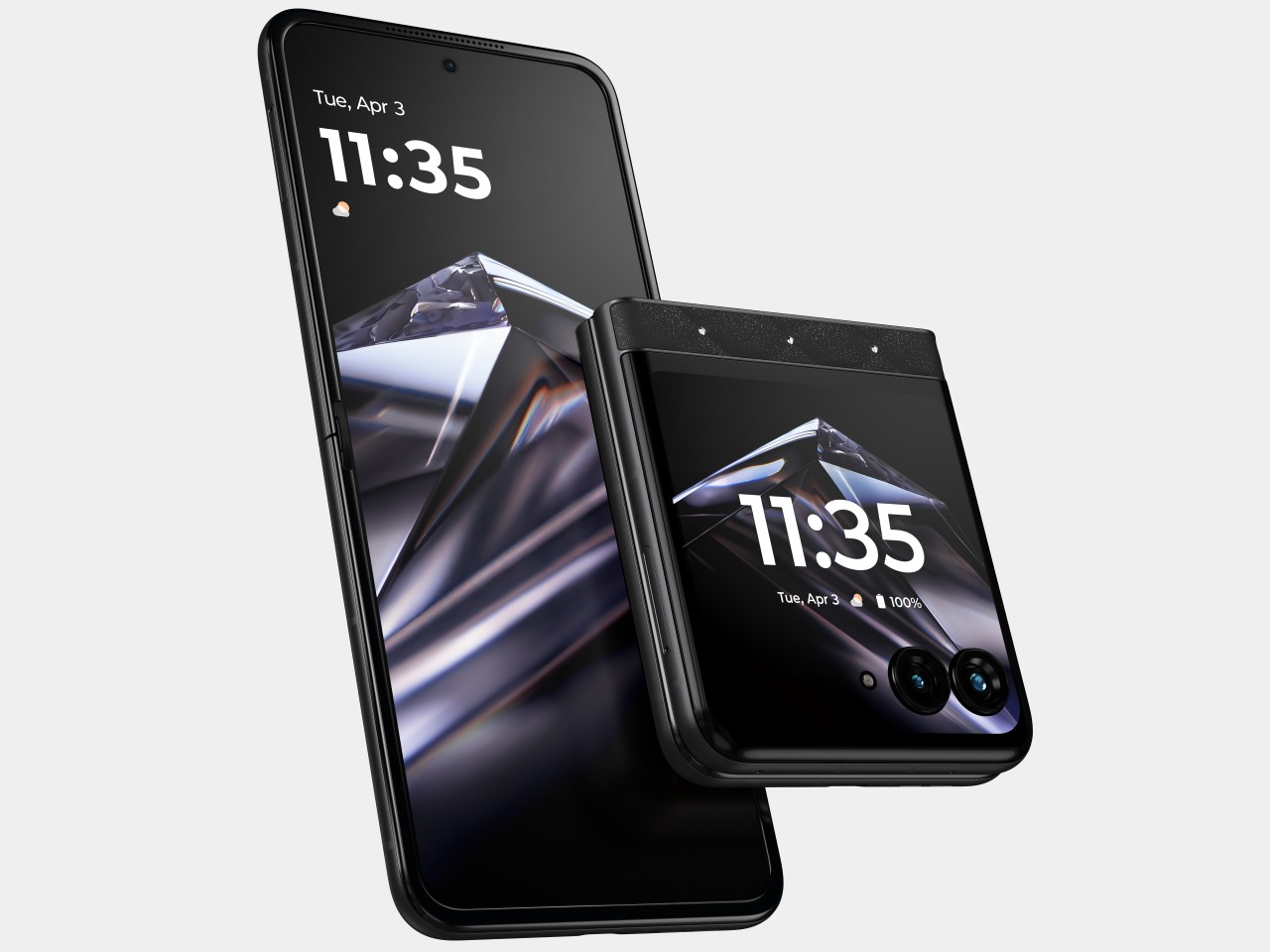
None of that styling comes at the expense of the hardware underneath. A 6.9-inch Extreme AMOLED display unfolds for daily use, backed by a dual 50MP main camera system and a 4800mAh battery rated for more than 36 hours on a single charge. The external 3.6-inch display still runs full apps and handles notifications without requiring an unfold, keeping the phone functional even when someone’s more focused on how it catches light in a bag.

Motorola frames the Brilliant Collection as proof that technology can be both beautiful and intelligent, and this razr backs that framing with hardware that would hold its own even without a single crystal attached. Pricing lands at $899.99 when the phone arrives on Motorola.com and Amazon on September 10, with Verizon carrying it starting September 24, putting genuine jewelry-adjacent design within reach of anyone willing to treat a phone as an actual accessory.
The post Motorola’s Swarovski Razr Was Designed to Be Seen, Not Hidden first appeared on Yanko Design.
Sweden Built a Pink Crystal Sauna on a Toxic Wasteland

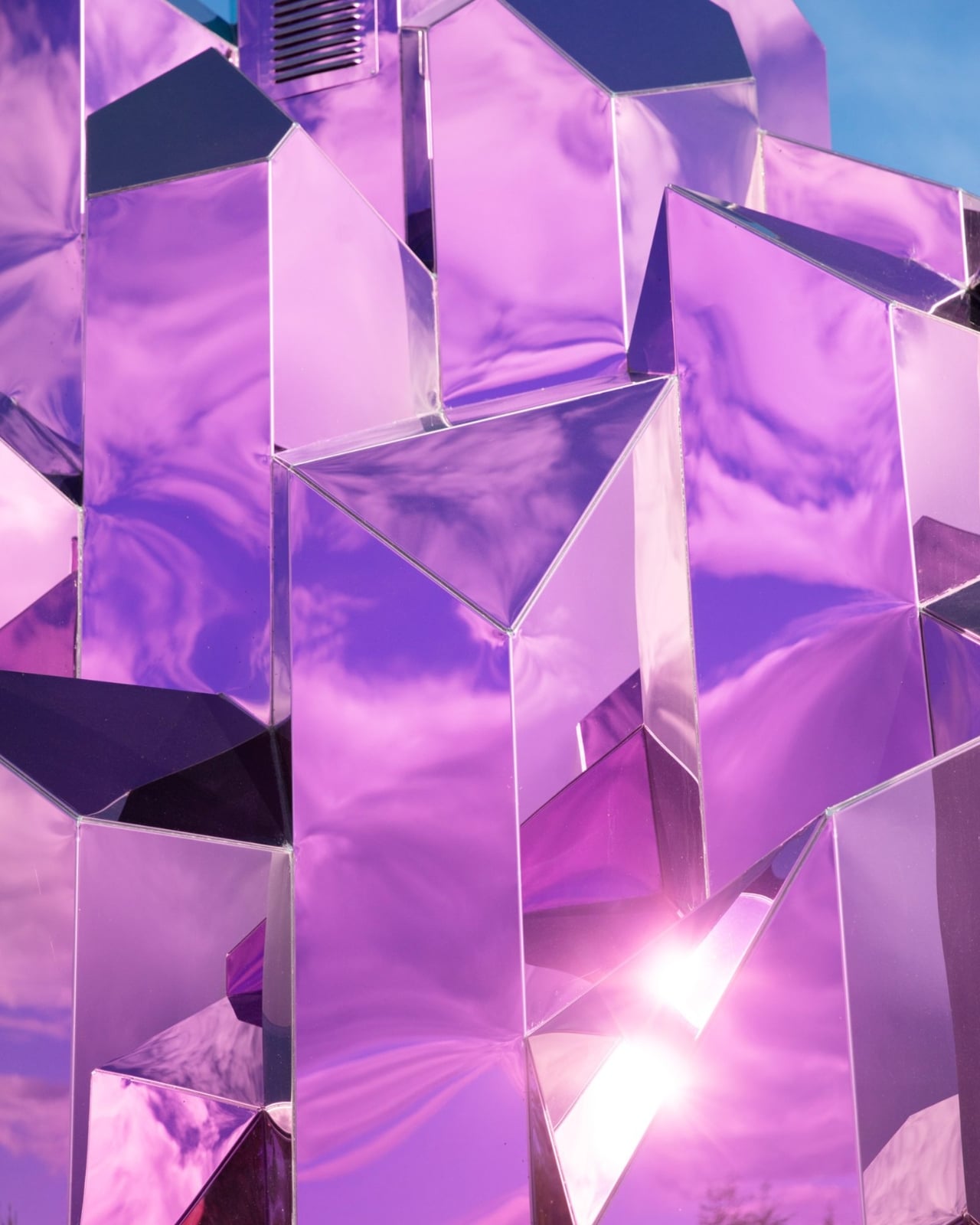
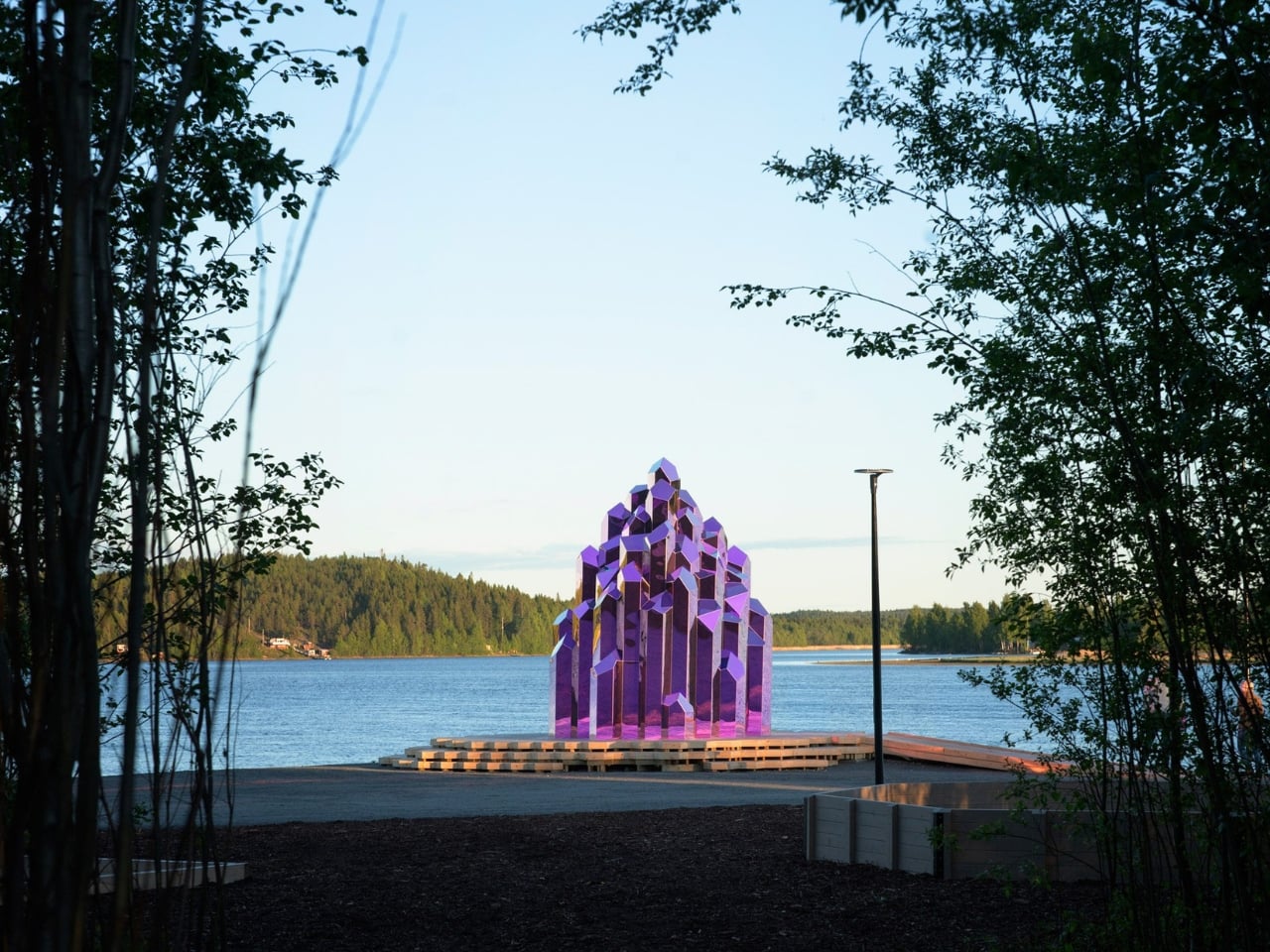
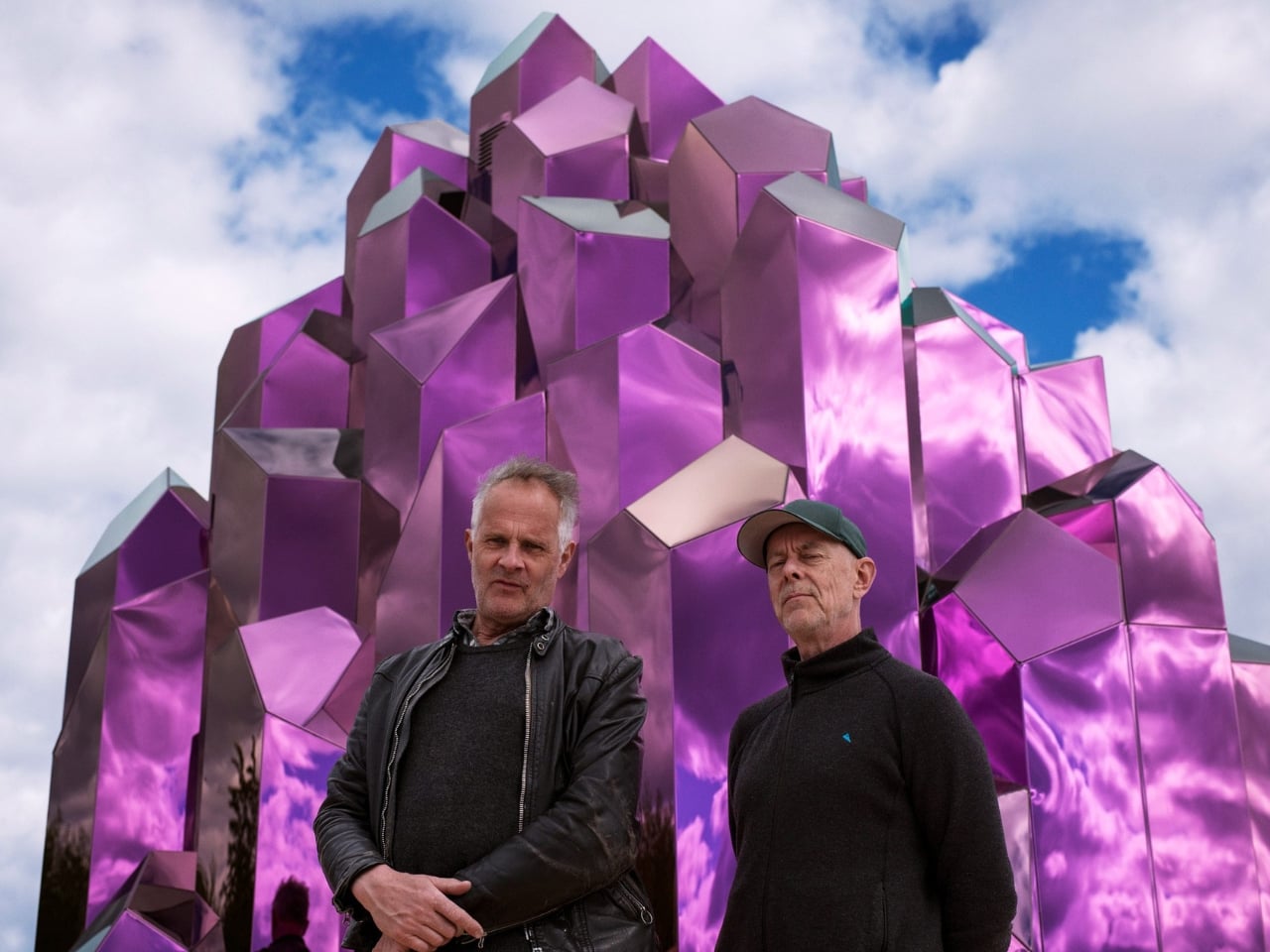
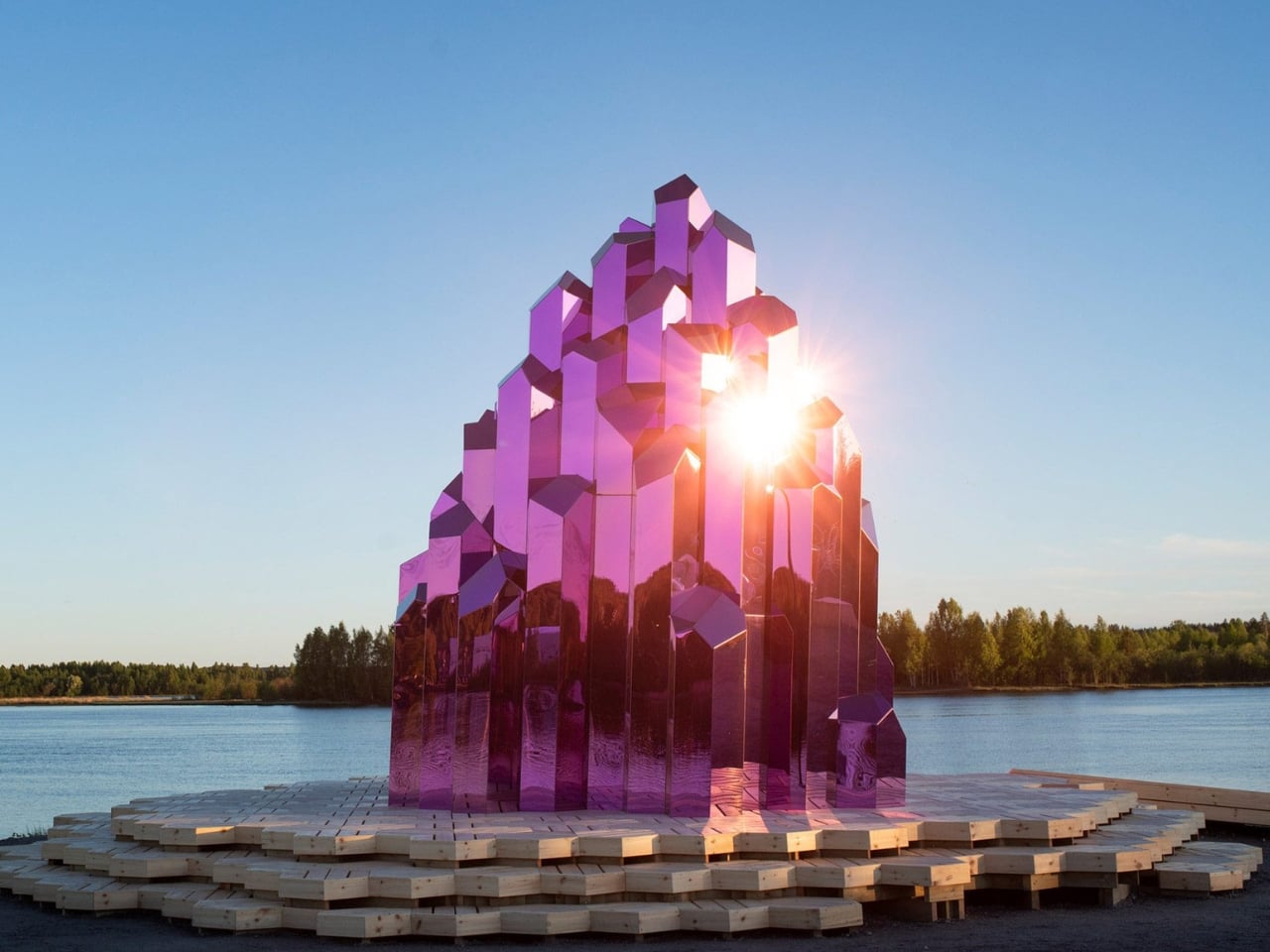
A pink, faceted sculpture sits on the edge of a former industrial wasteland in northern Sweden, catching the river and forest across its mirrored steel skin. It looks like something that fell from a fever dream. Or like a prop someone left behind after filming a sci-fi movie. Look closer and you’ll realize it’s a sauna. A fully functioning, publicly accessible sauna shaped like a giant lithium crystal. And it’s one of the most quietly radical things built in 2026.

The Lithium Crystal Sauna is the work of Stockholm-based artist duo Bigert & Bergström, installed at WasteLand, a newly inaugurated climate action park in Skellefteå, Sweden. The park sits on land that was, not long ago, a polluted industrial site, a place shaped by a century of extraction, production, and environmental consequence. That context is not incidental to the work. It’s the entire point.

Designer: Bigert & Bergström

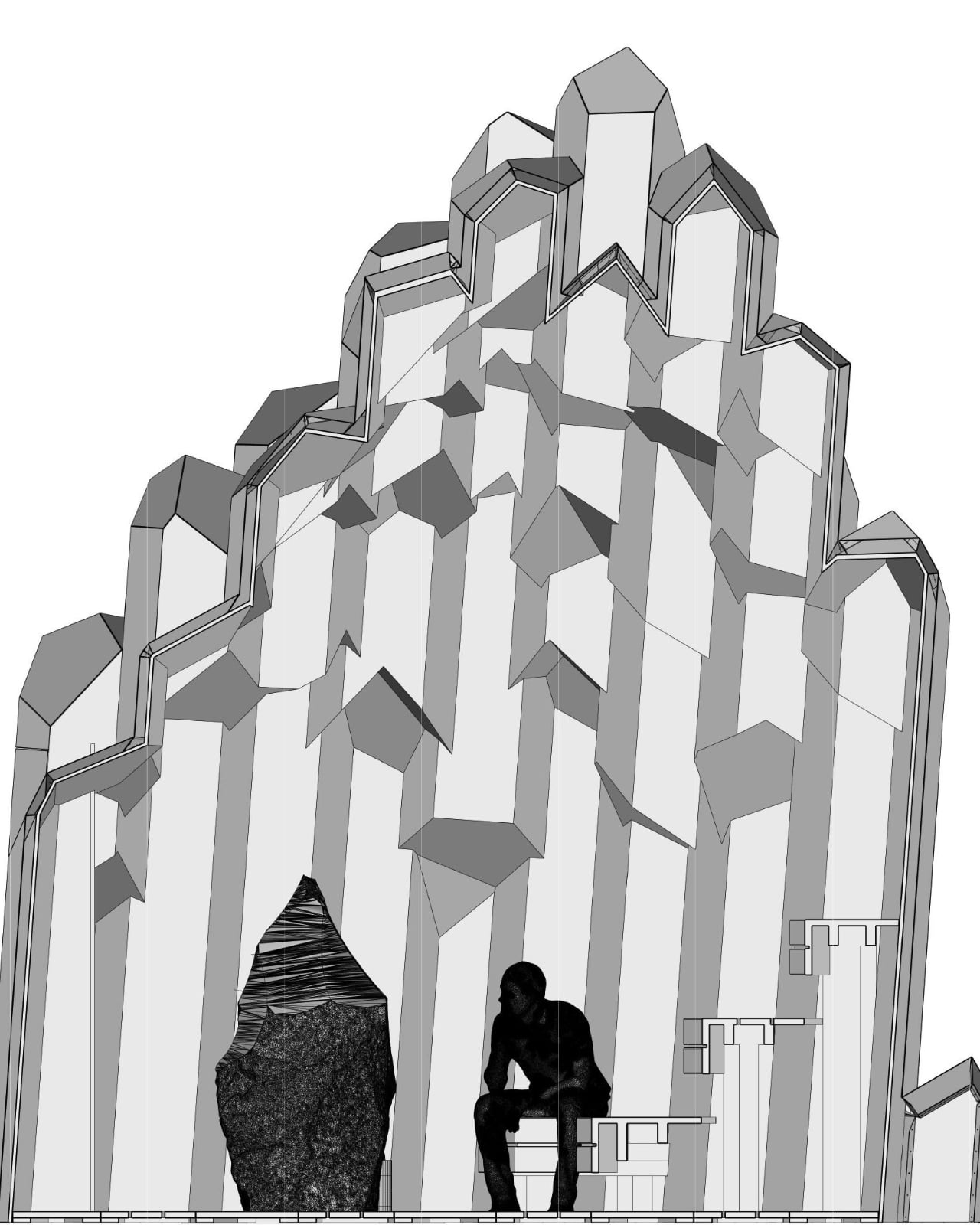
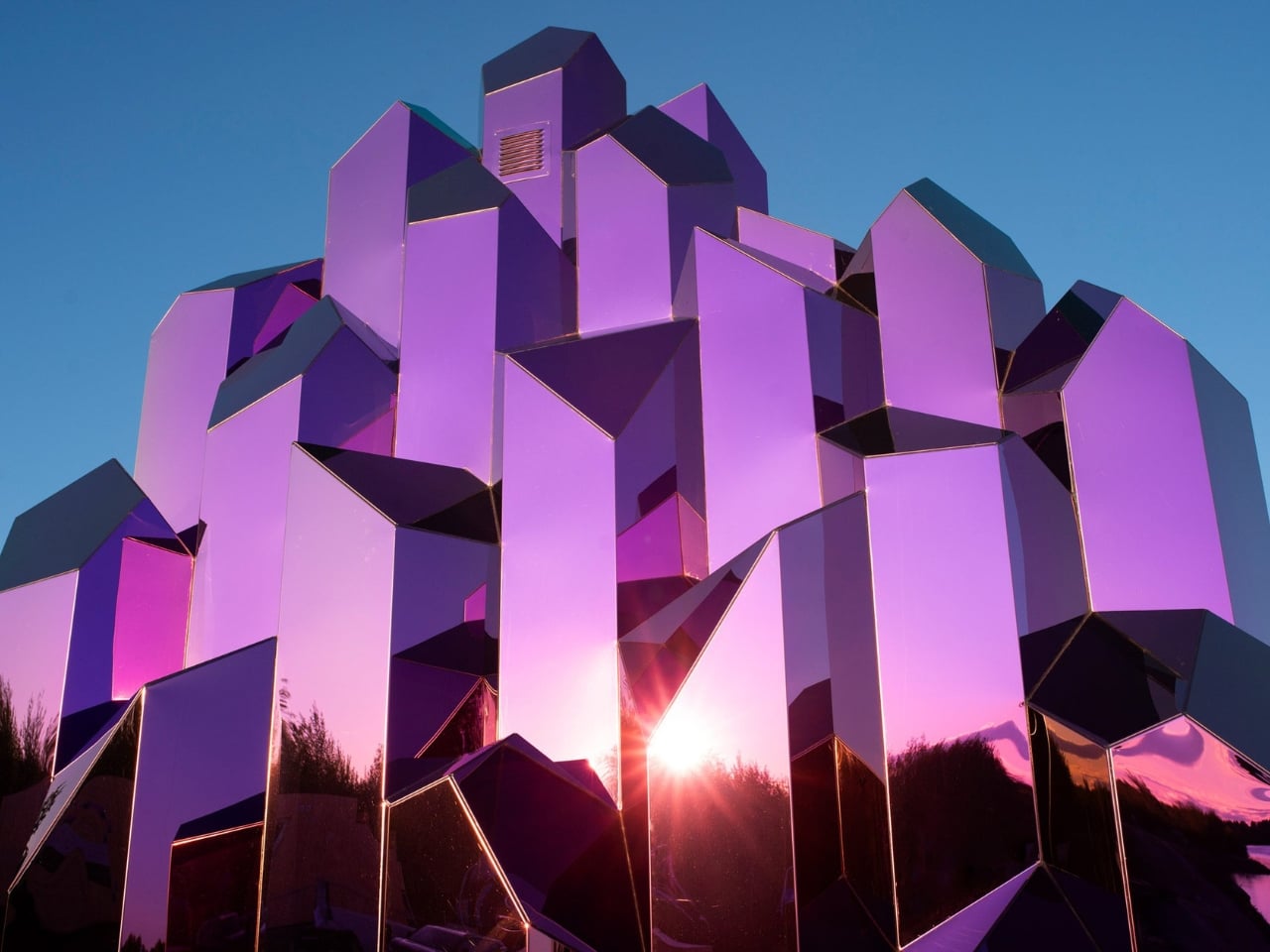
From the outside, the sauna is clad in pink titanium-coated mirror steel, its asymmetrical facets borrowing their geometry from the structure of an actual lithium crystal. It doesn’t blend into the landscape. It confronts it. The mirrored panels throw back whatever surrounds it: the recovering forest, the river, the sky, and presumably your own reflection looking slightly baffled and very impressed. As a sculptural object, it earns its place on a shortlist of the most visually arresting public art installations of recent memory.

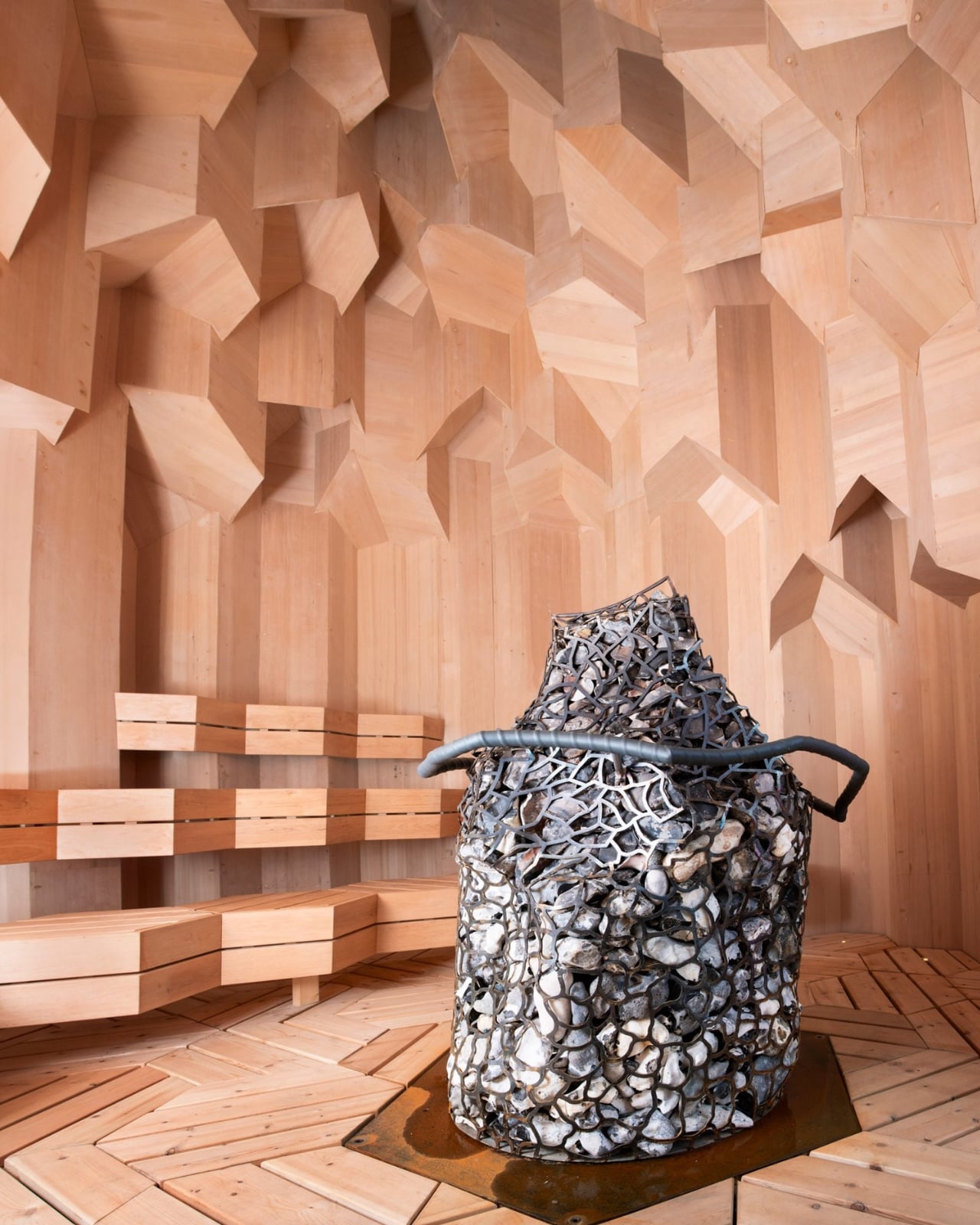
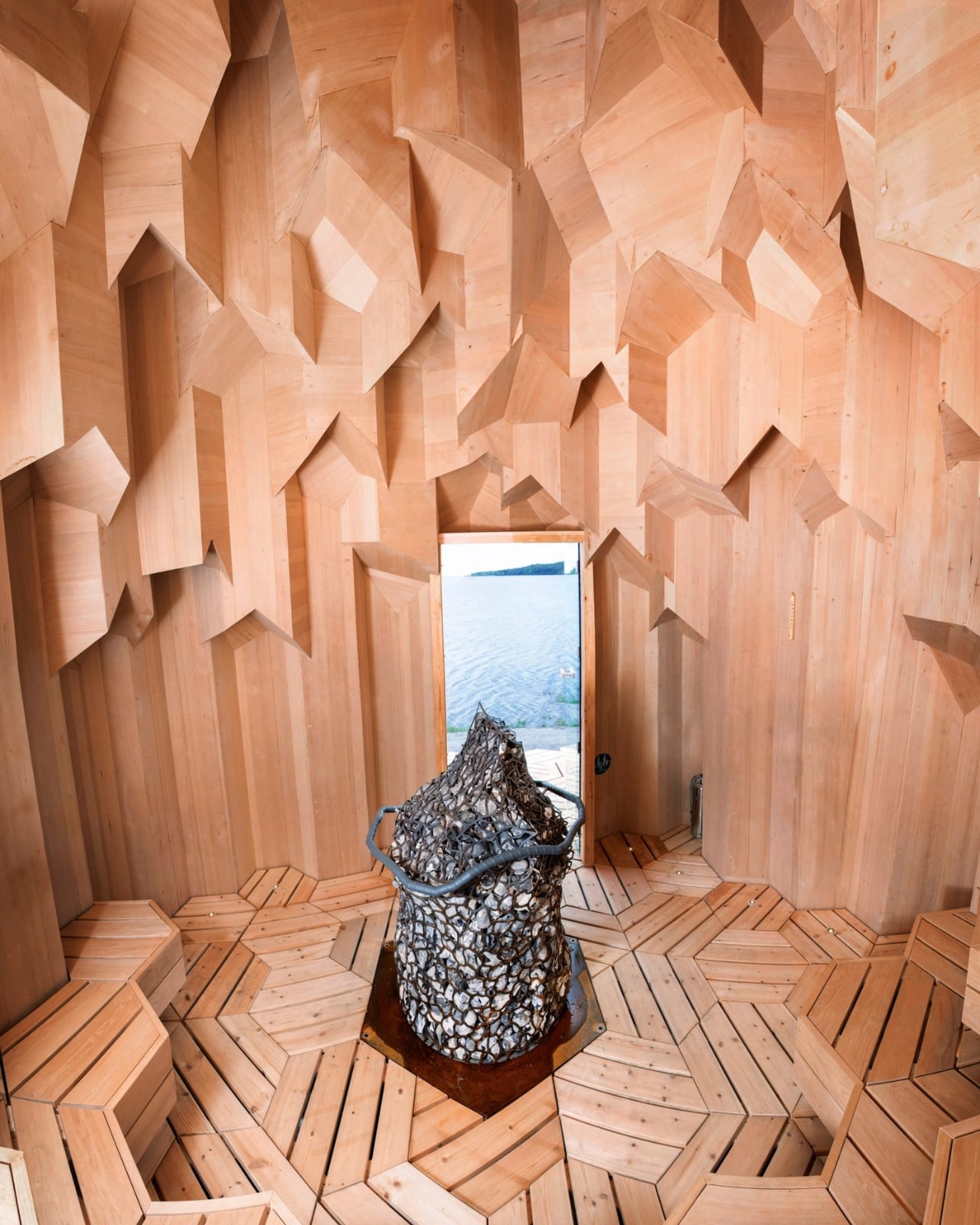
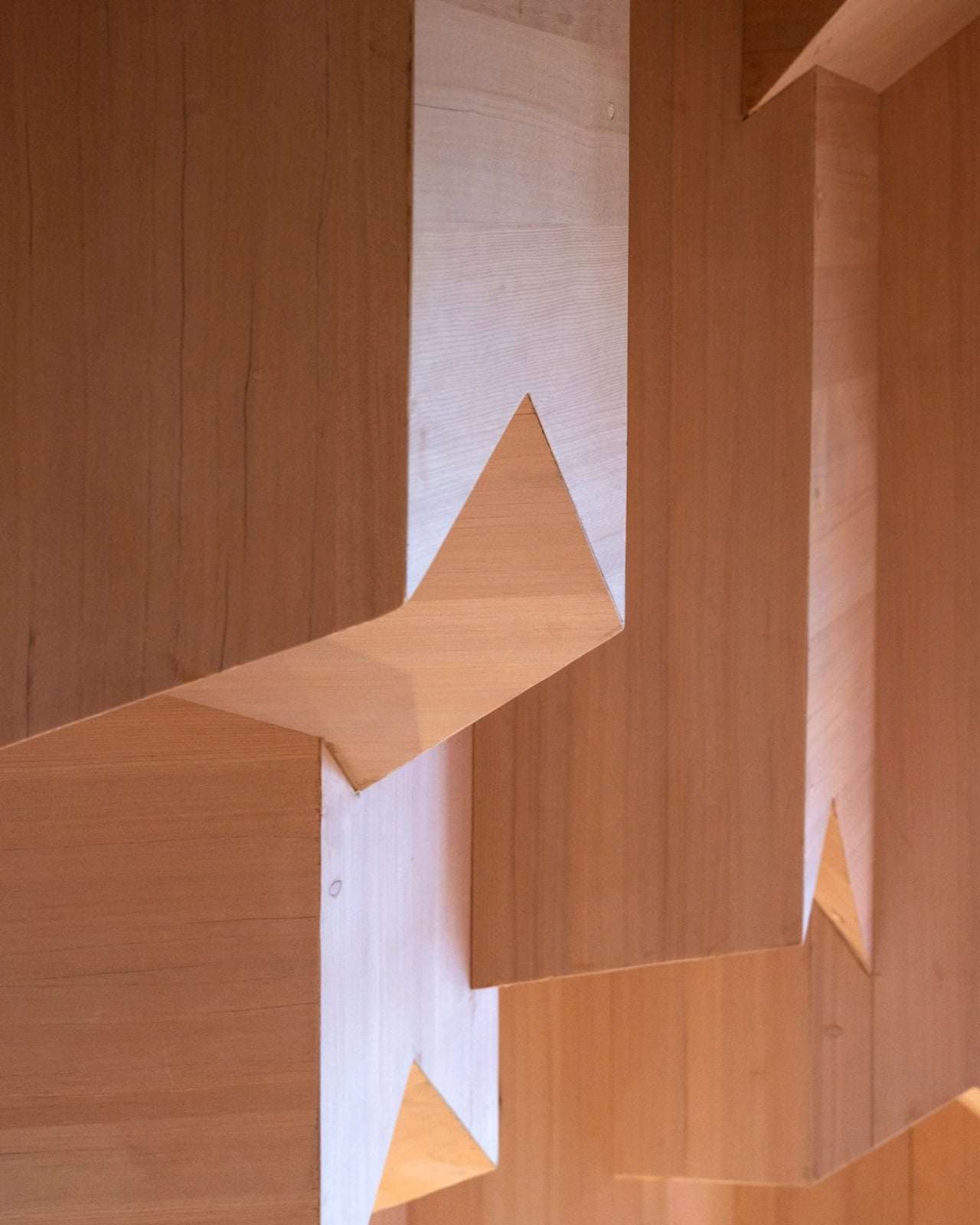
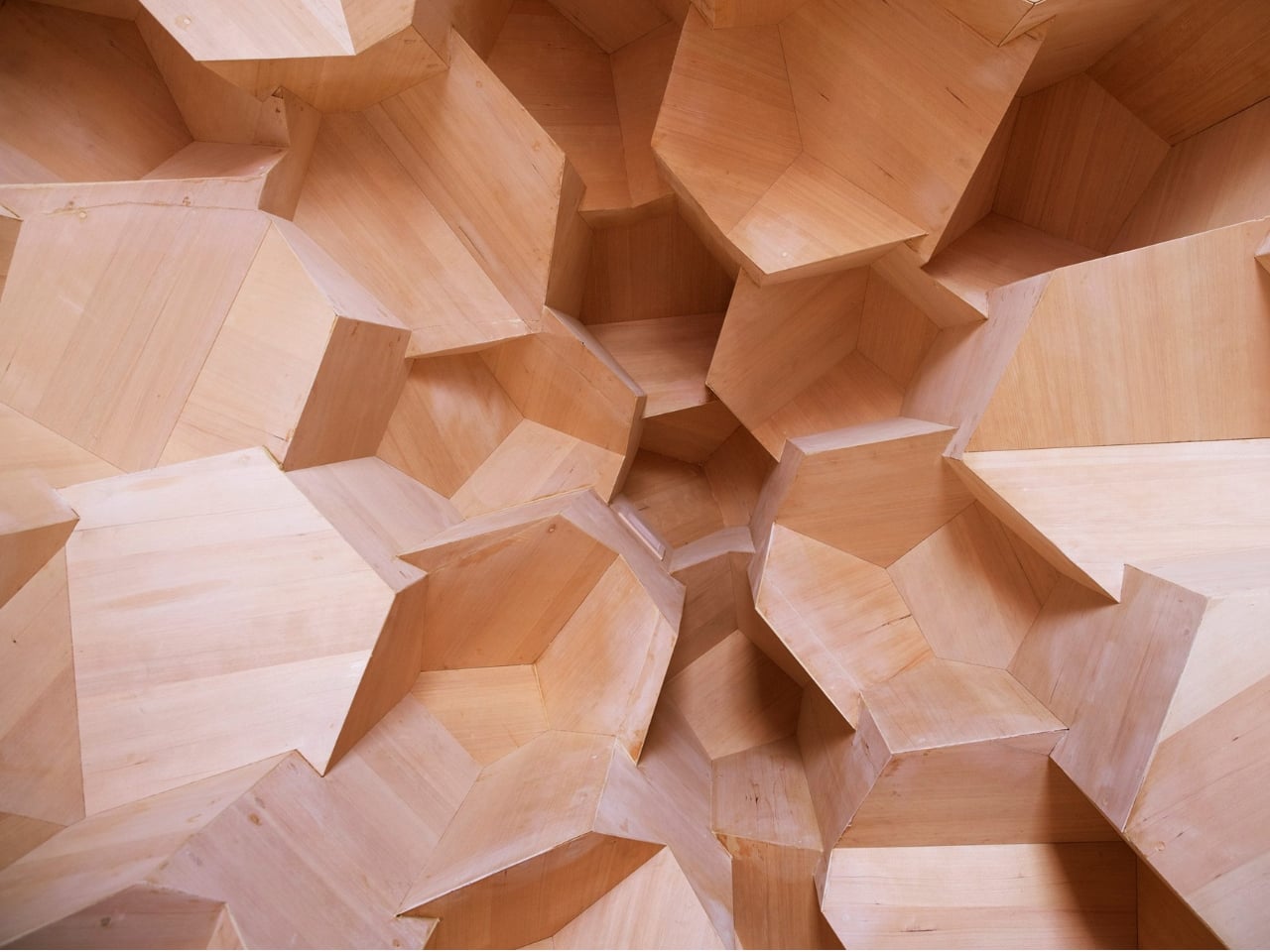
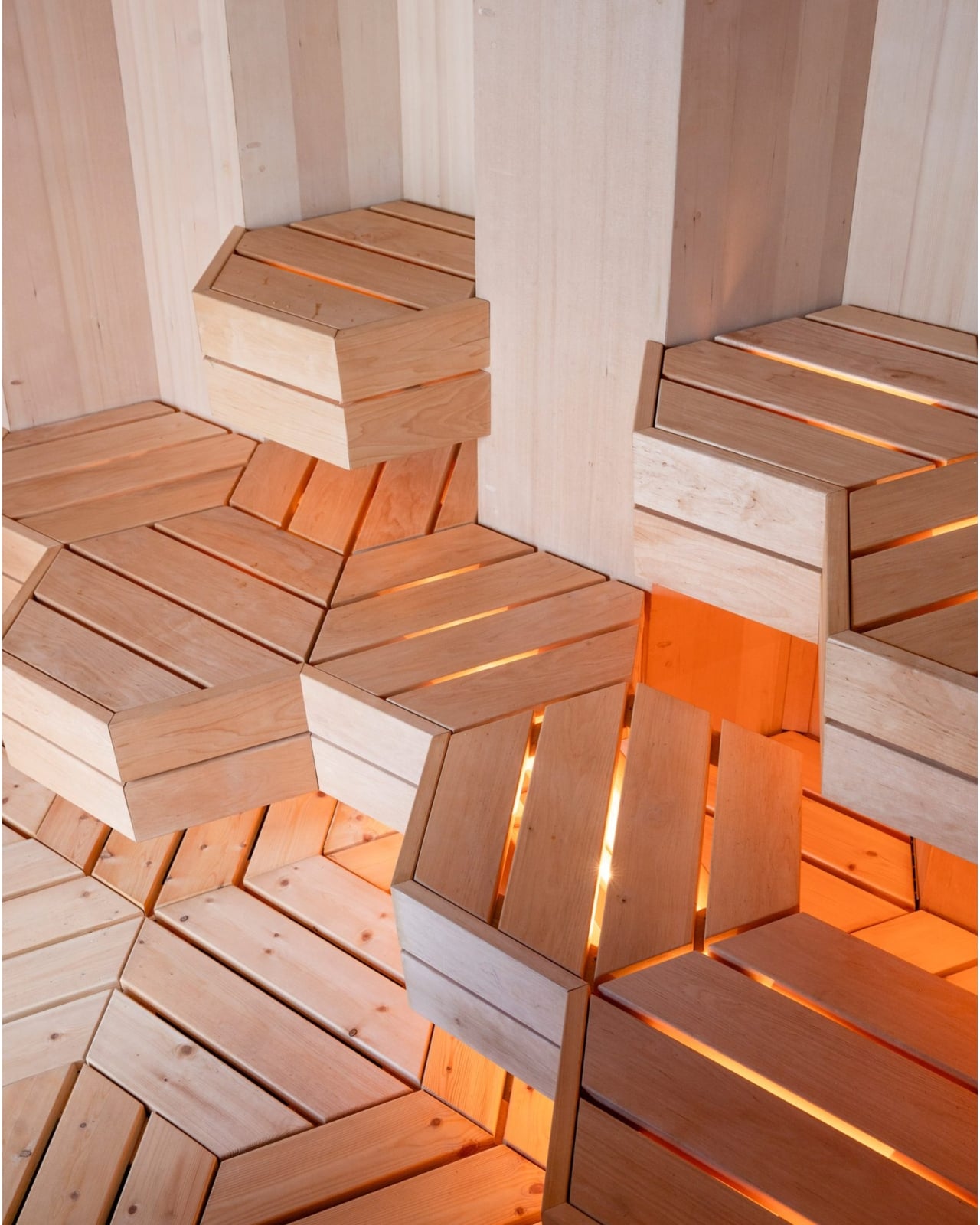
But walking through the door changes everything. Inside, the industrial exterior gives way completely to a warm wooden grotto lined with alder and heartwood pine. Flint and olivine stones sit around the heater. Copper, glass, and LEDs complete the interior. The hexagonal seating echoes the crystal geometry of the outer shell, a small detail that rewards anyone paying attention. The whole space is built to create what the designers describe as a contrasting sensory experience, and the contrast delivers. Going from a mirrored shell to a wood cave is as disorienting as it is beautiful, and I mean that as a compliment.

The material choice of lithium is pointed. Lithium is the mineral at the center of the global battery economy, the thing inside electric vehicles and renewable energy storage systems, and also the driver of a new wave of mining pressure on landscapes not unlike the one WasteLand now occupies. By building a sauna in the shape of a lithium crystal and powering it with a battery, Bigert & Bergström make an argument without saying a word. The Lithium Crystal Sauna is the world’s first battery-powered sauna, running on electricity from standalone batteries and electric vehicles. Through the “Vehicle-to-Sauna” project, Swedish energy company Skellefteå Kraft is developing technology that allows an electric vehicle battery to power both the sauna and the surrounding park. It is, depending on your disposition, either delightfully clever or almost too on-the-nose. Possibly both.

For those familiar with Bigert & Bergström’s earlier work, the Solar Egg, a golden egg-shaped sauna installed in Kiruna where mining had literally forced the city to relocate, this feels like a continuation of a practice that consistently uses warmth, community, and the ritual of the sauna to process what we do to the land we live on. Both works are beautiful. Both carry weight. The difference is that Lithium Crystal Sauna arrives at a moment when the conversation around the green transition has grown more complicated, when the environmental cost of the technologies we’re counting on to save us is harder to look away from.

That’s the tension the piece holds without resolving. It doesn’t tell you how to feel about lithium mining or energy transition or the long afterlife of industrial landscapes. It puts you inside all of that, quite literally, makes it warm, and lets you sweat. Good art makes you sit with the uncomfortable question. Great art makes that sitting feel almost pleasant. This one heats you up and lets you figure out the rest.

The post Sweden Built a Pink Crystal Sauna on a Toxic Wasteland first appeared on Yanko Design.
Moser’s New Aura Collection Captures the Northern Lights in Crystal

Some things in design need no justification. They exist purely to be beautiful, and you either feel it or you don’t. Moser’s new Aura collection is one of those things, and I’ve been thinking about it since I first came across it.

If you’re not familiar with Moser, let me fix that. Founded in 1857 in Karlovy Vary, Czech Republic, this is one of the most quietly prestigious names in the world of luxury glassmaking. The brand has been handcrafting lead-free crystal for 169 years, and that’s not a marketing angle; it’s a genuine legacy. Their work has graced the tables of royalty, filled the shelves of serious collectors, and caught the eye of names you’d recognize. The Kardashians are fans. Dan Brown, while promoting his Prague-set novel in the city itself, received his own engraved Magnus vase. It’s that kind of brand.

Designer: Moser

Moser occupies a specific and fascinating space in design. It’s neither ostentatious nor understated. It has weight to it, not just physically, but culturally. When you hold a piece of Moser crystal, you’re holding something shaped entirely by human hands, and that distinction matters more than ever in a market flooded with mass production.

The Aura collection, their newest release, is inspired by the north. Not the idea of Scandinavia as an aesthetic trend, because we’ve all seen enough of that, but the raw, atmospheric reality of it. The icy cold. The depth of a darkened sky. The specific, almost spiritual moment when the aurora borealis ignites across the horizon. It’s an ephemeral experience most of us will only ever see in photographs, and somehow Moser has managed to capture it in glass.

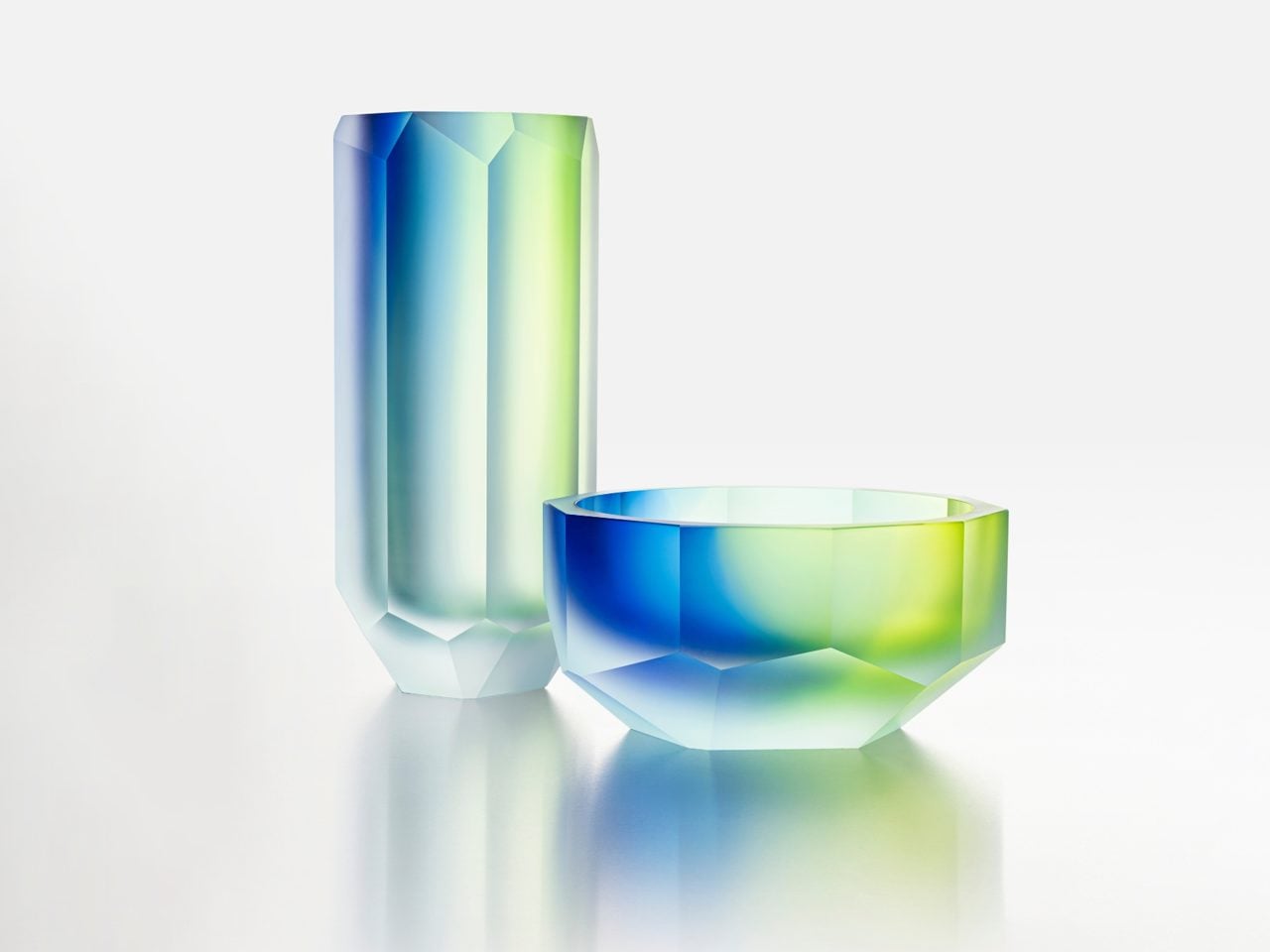
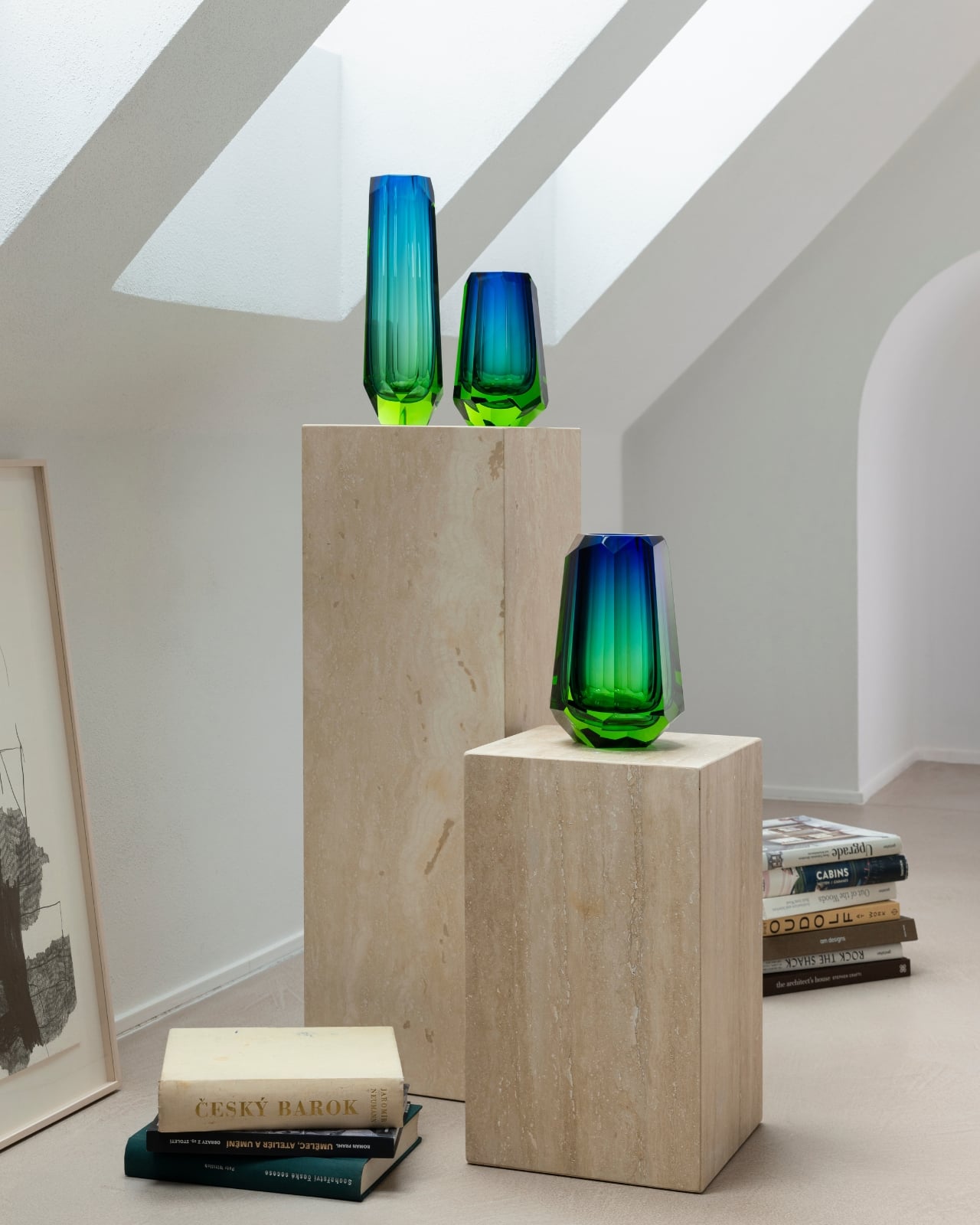
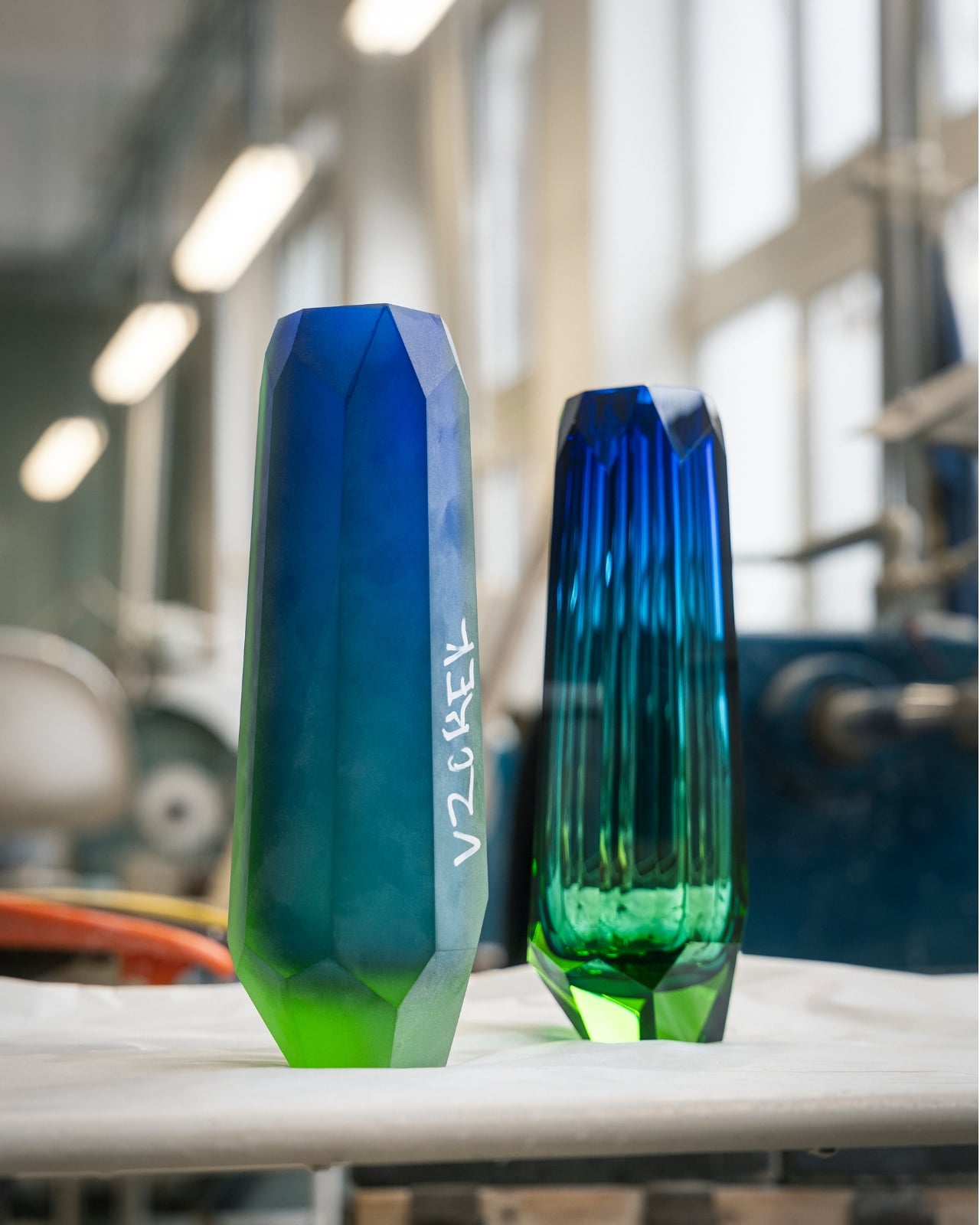
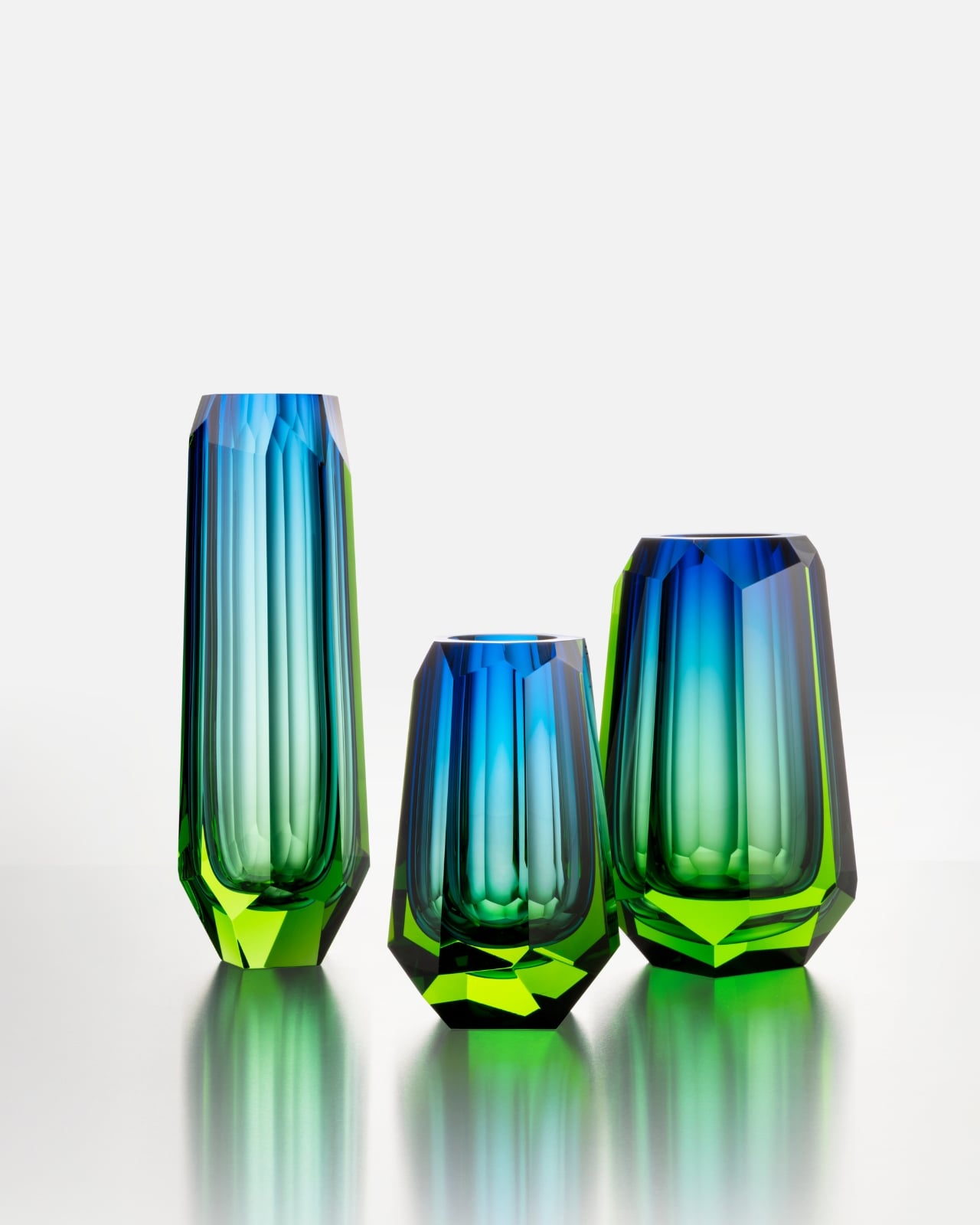
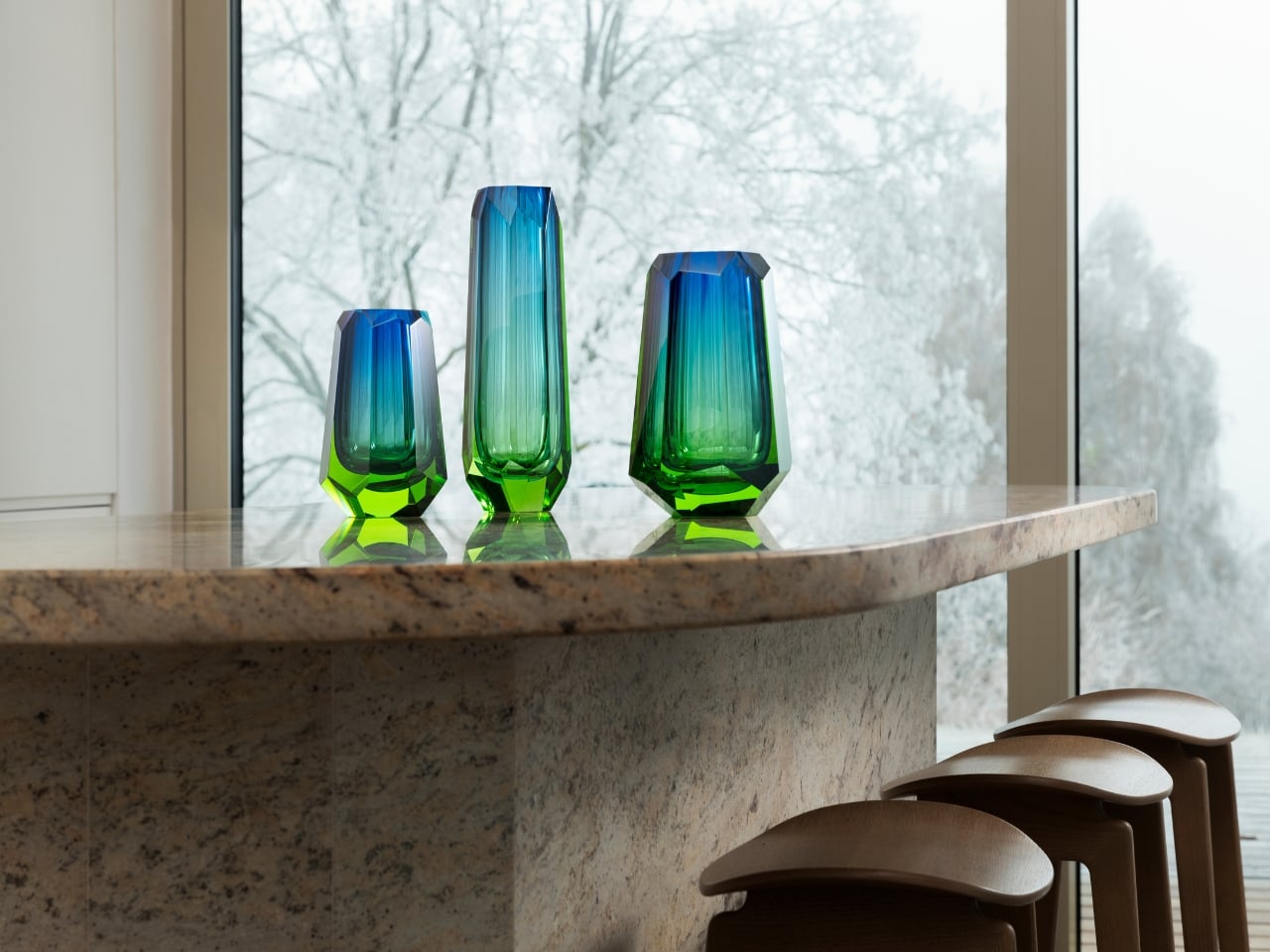
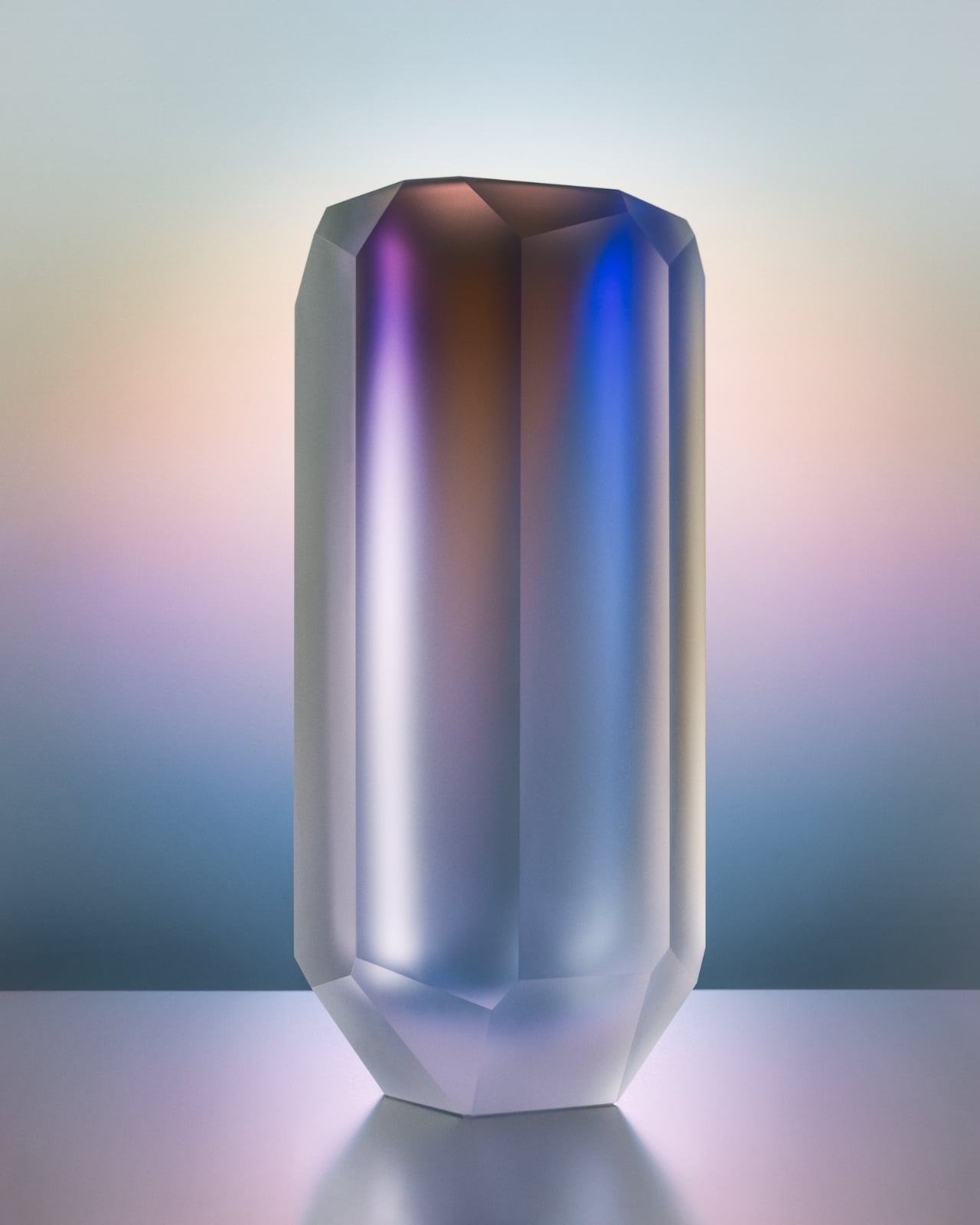
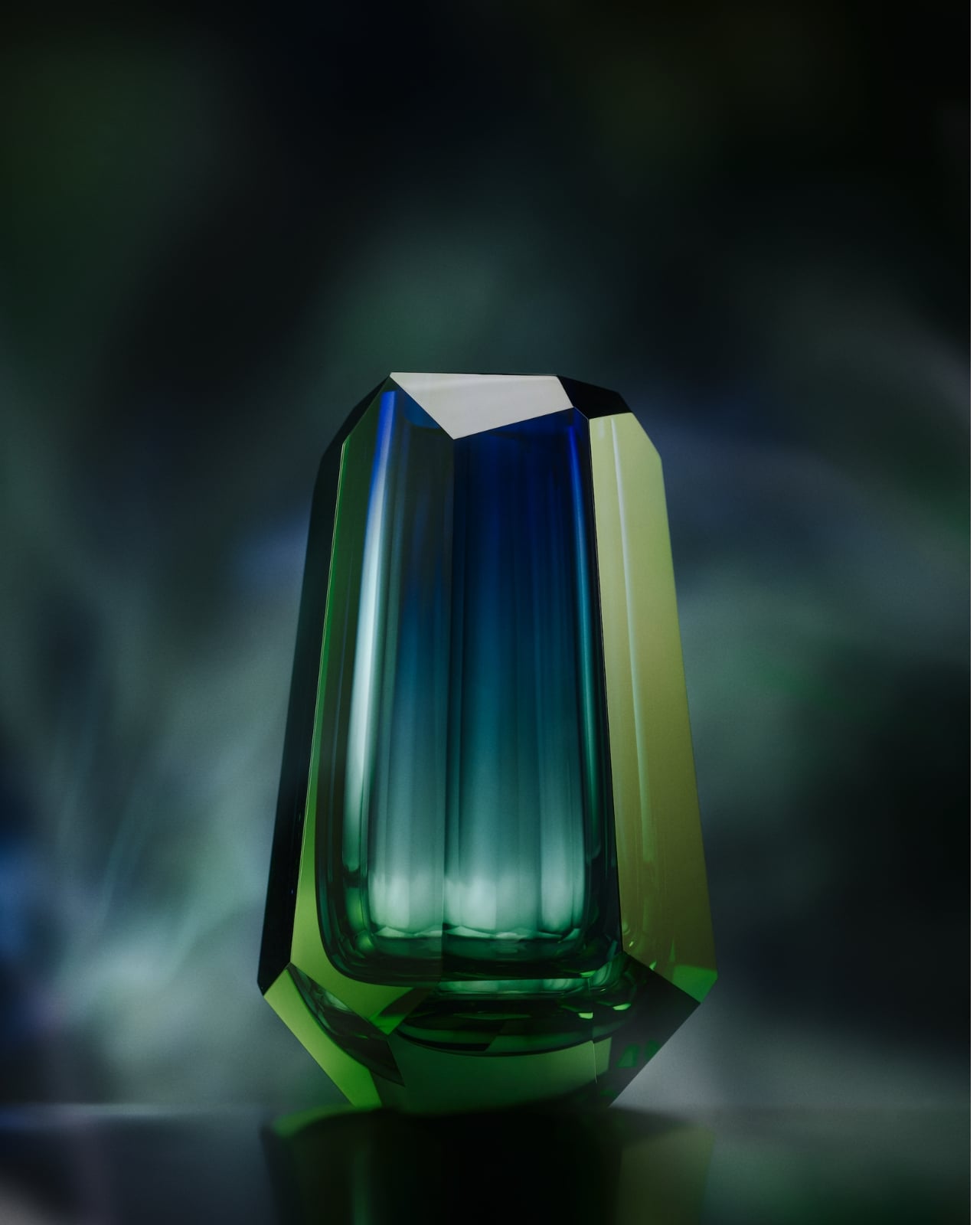
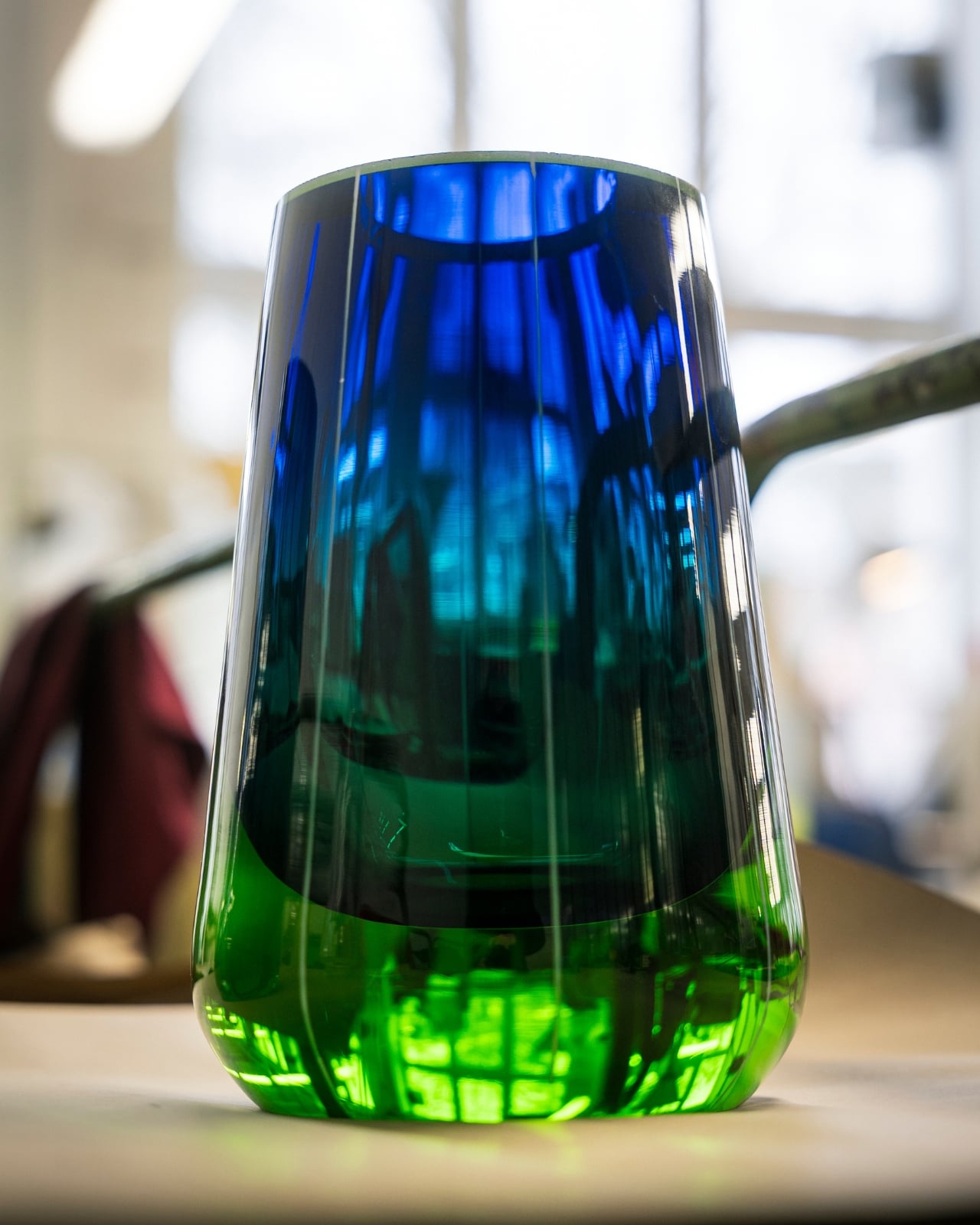
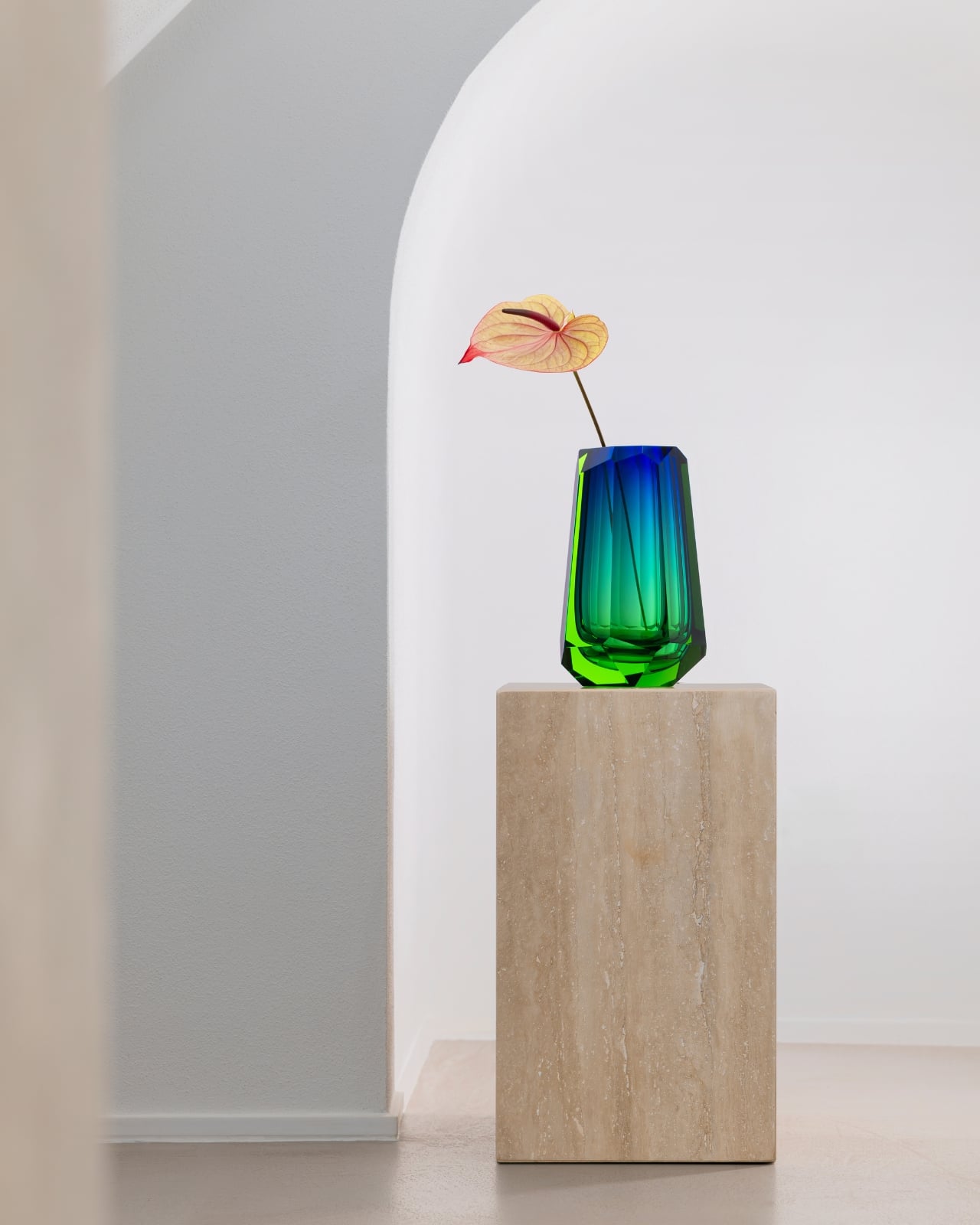
The collection’s standout pieces are the crystal vases, available in three heights: 21 cm, 26 cm, and 35 cm. Each captures the shifting color palette of the Northern Lights, that slow bleed from icy white into deep, oceanic blue, with striking cut edges that echo the geometry of the landscape itself. They’re atmospheric without being theatrical, and they carry the kind of quiet confidence that only comes from serious craftsmanship. These are objects you place in a room and simply let do the talking.

It’s rare to encounter a design that genuinely earns its inspiration. The aurora borealis is one of the most over-referenced phenomena in the aesthetics world. It shows up on wallpaper, yoga mats, screensavers. Moser’s version feels different because the glass actually does what the inspiration promises. The light moves through it. It shifts depending on the angle, the time of day, the room. It behaves like something alive, which is a strange thing to say about crystal, but it’s accurate.

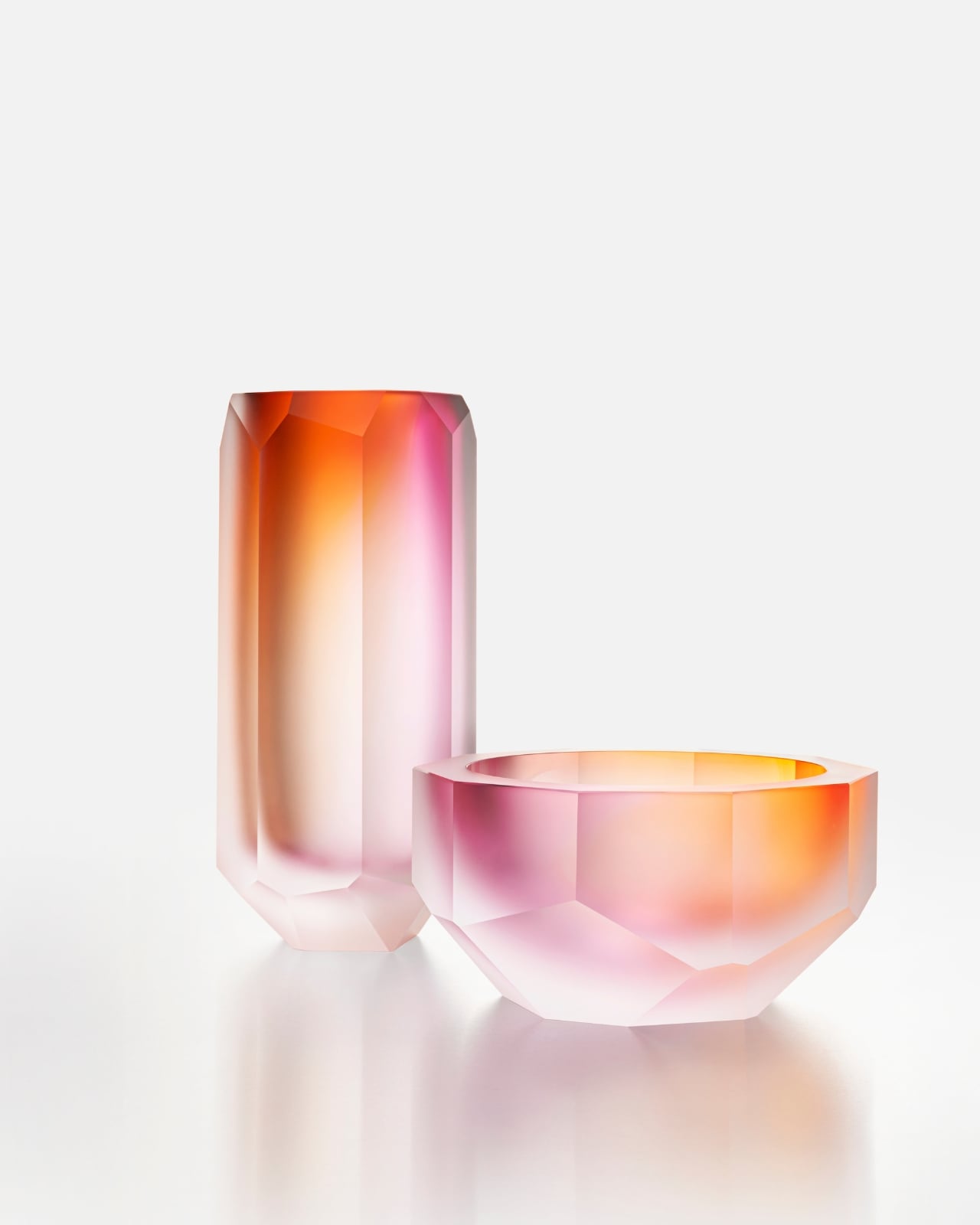
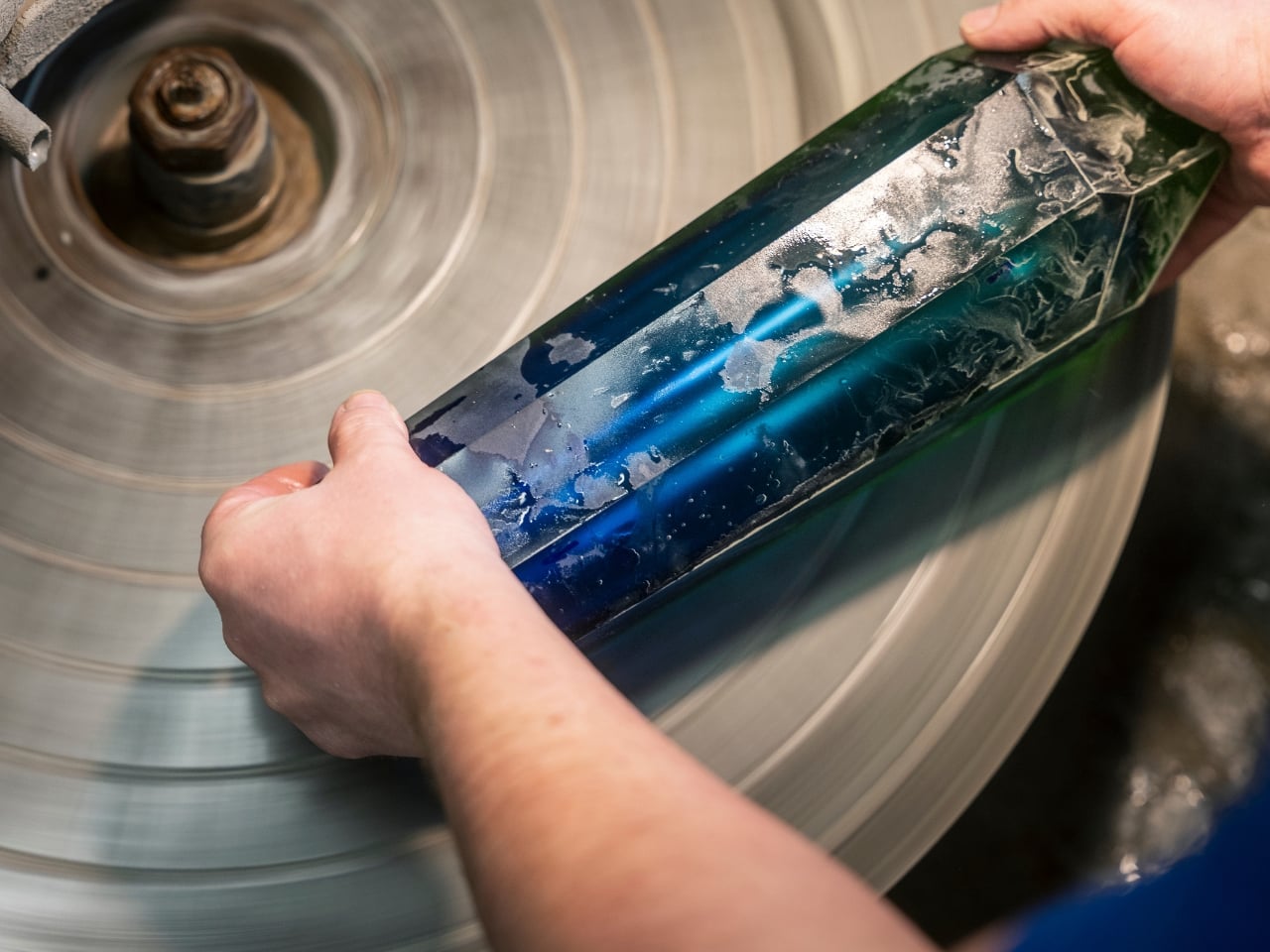
The matte vases and bowls in the collection deserve their own moment. These pieces feature a frosted surface that softens the drama and brings the aurora-inspired hues into something more intimate, like watching the lights through a quiet fog. The catch is that Moser’s masters can only produce 12 pieces of each type per year. Not 12 per collection. 12 total. That’s not scarcity as a marketing strategy. That’s simply the honest ceiling of human skill and time, and there’s a kind of integrity in that.

I’ve covered a lot of design collections, and “limited edition” has largely become white noise at this point. But this is genuinely different. These pieces take what they take to make, and no amount of consumer demand changes that. It’s a refreshing constraint in an industry that too often prioritizes volume over meaning. For anyone building a home with intention, collecting pieces that actually hold value, or just looking for something beautiful that won’t feel dated in five years, the Aura collection deserves your attention. It sits at the intersection of art, craft, and a deep reverence for the natural world, and it earns every bit of that description. Moser has been doing this for 169 years. At this point, they clearly know something the rest of us are still working out.

The post Moser’s New Aura Collection Captures the Northern Lights in Crystal first appeared on Yanko Design.