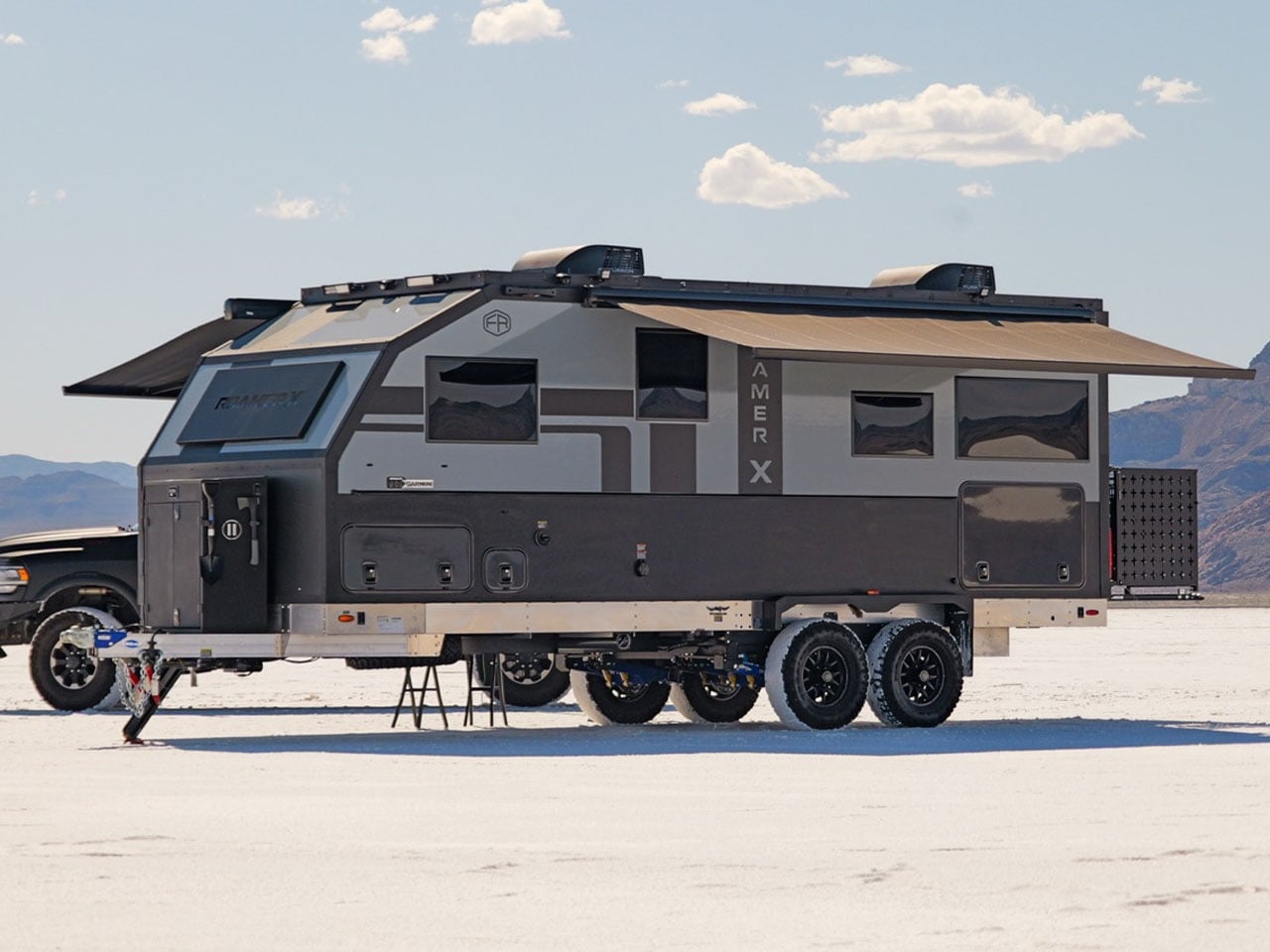
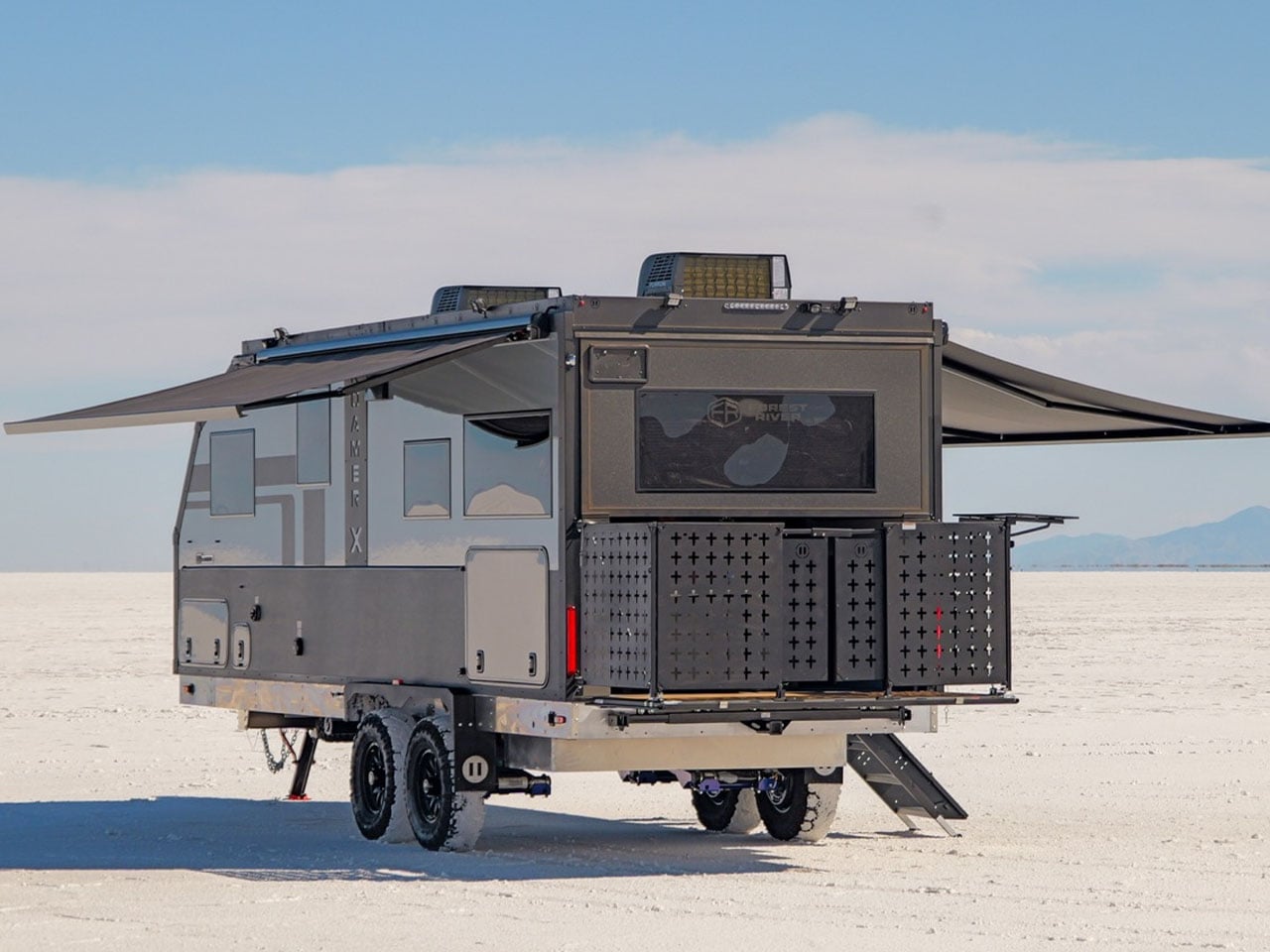
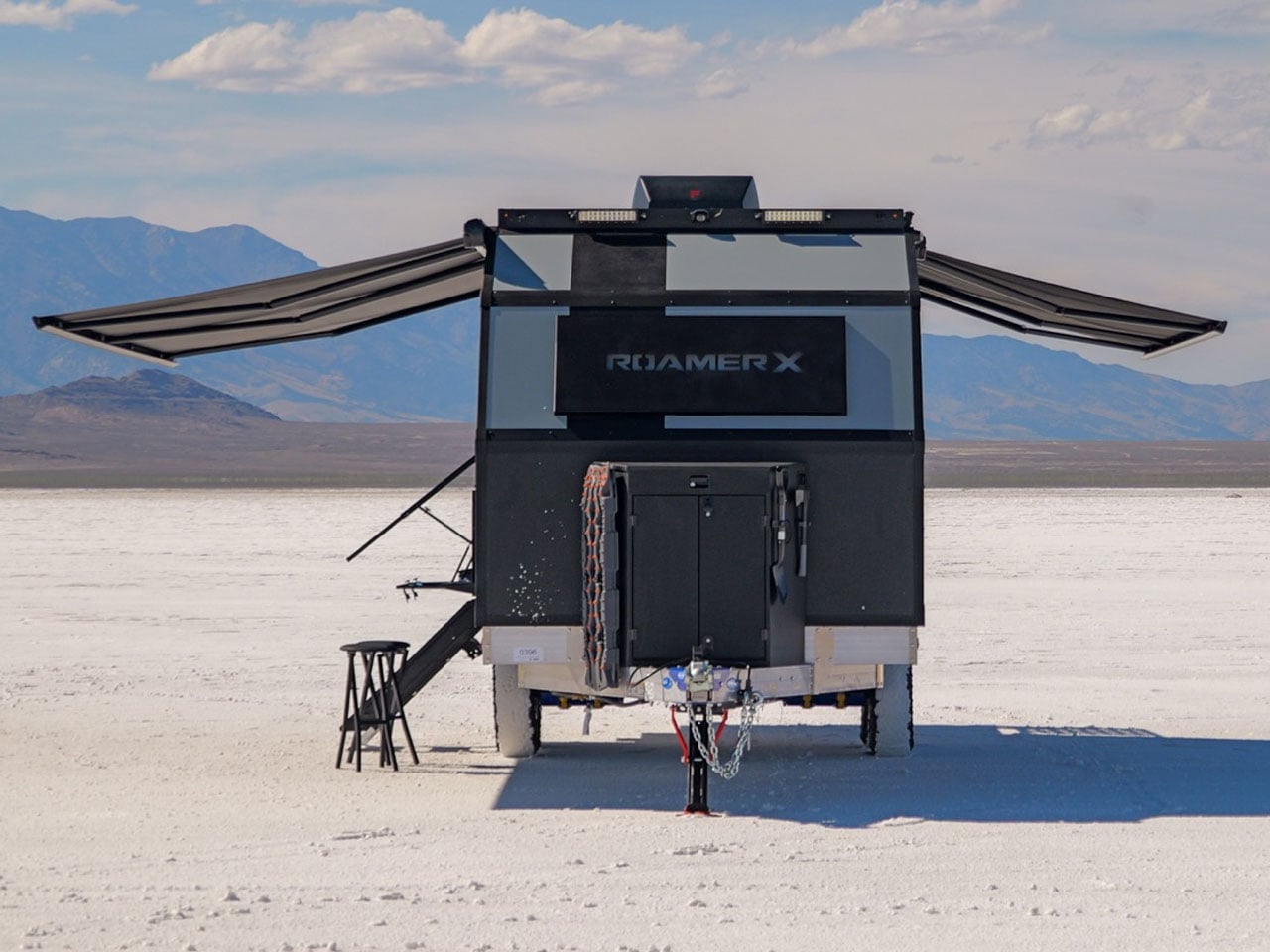
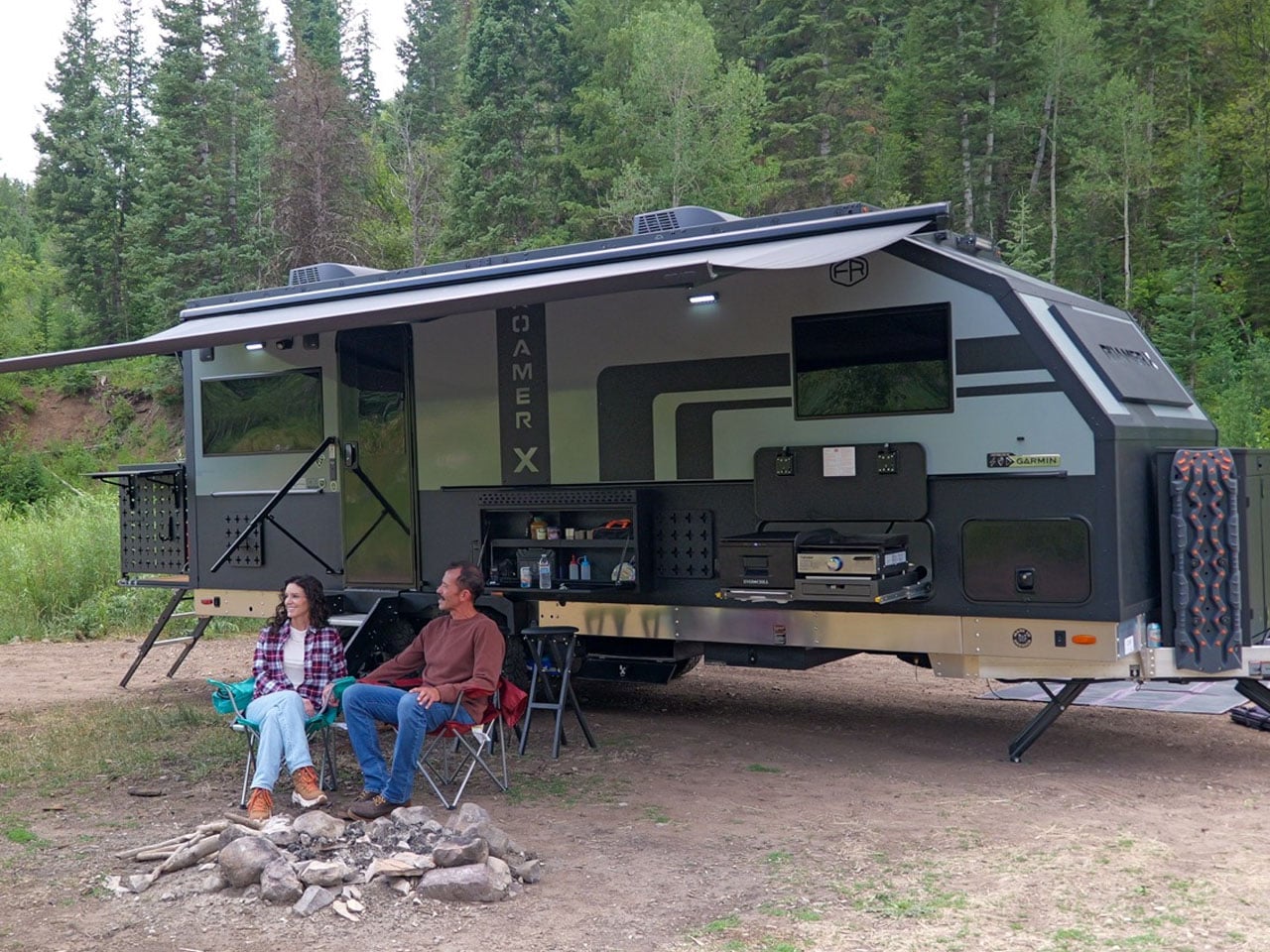
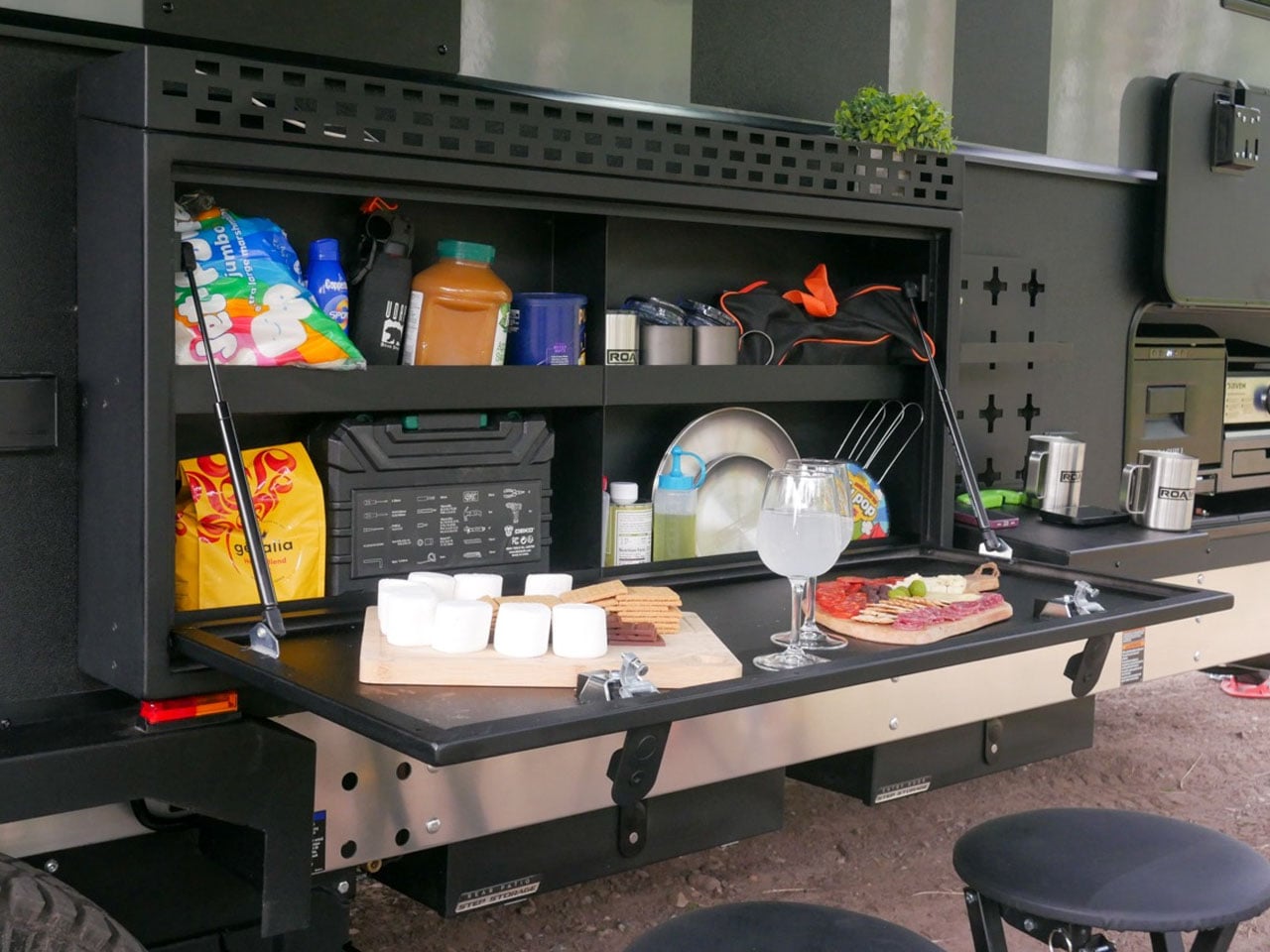
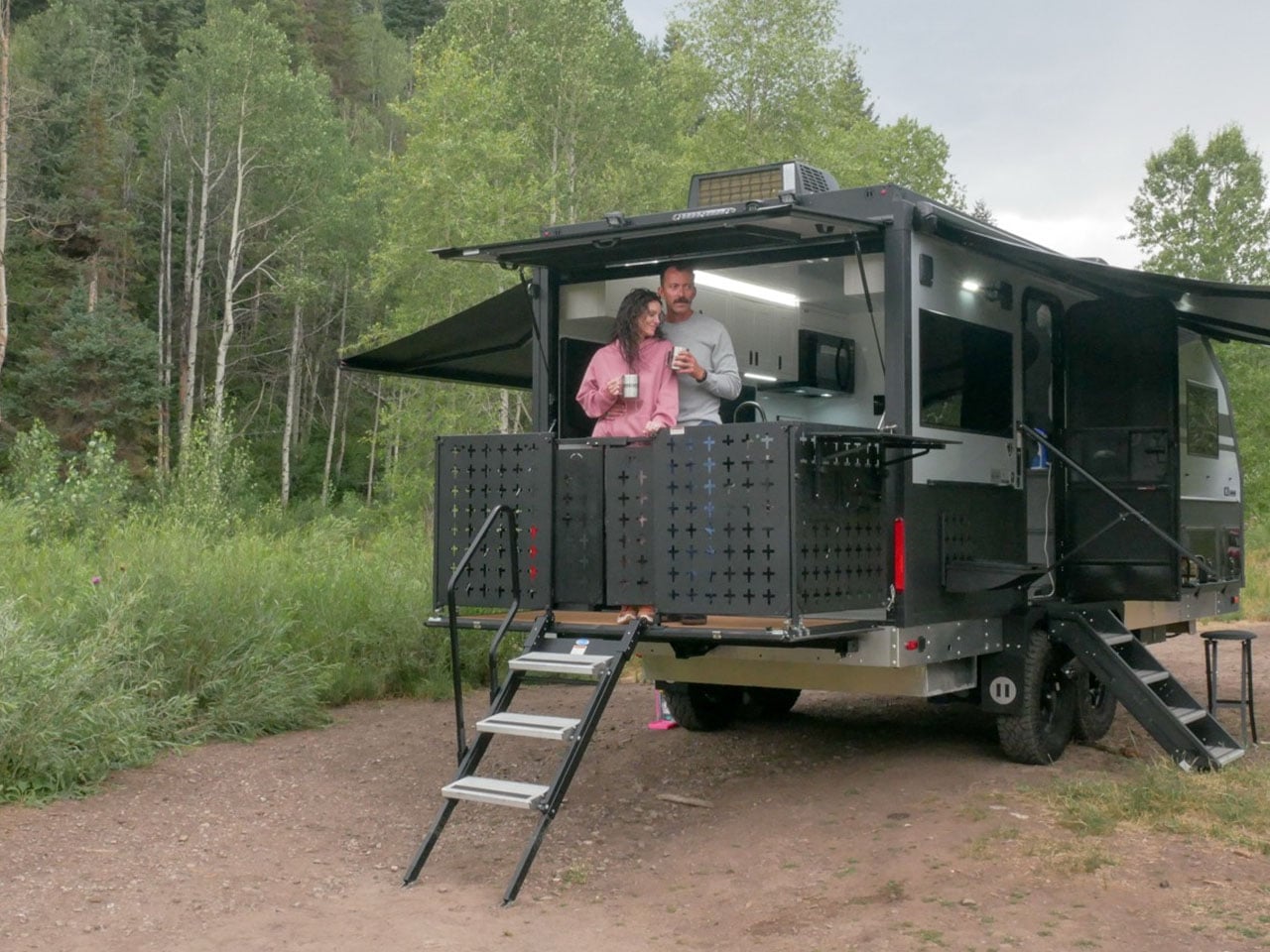
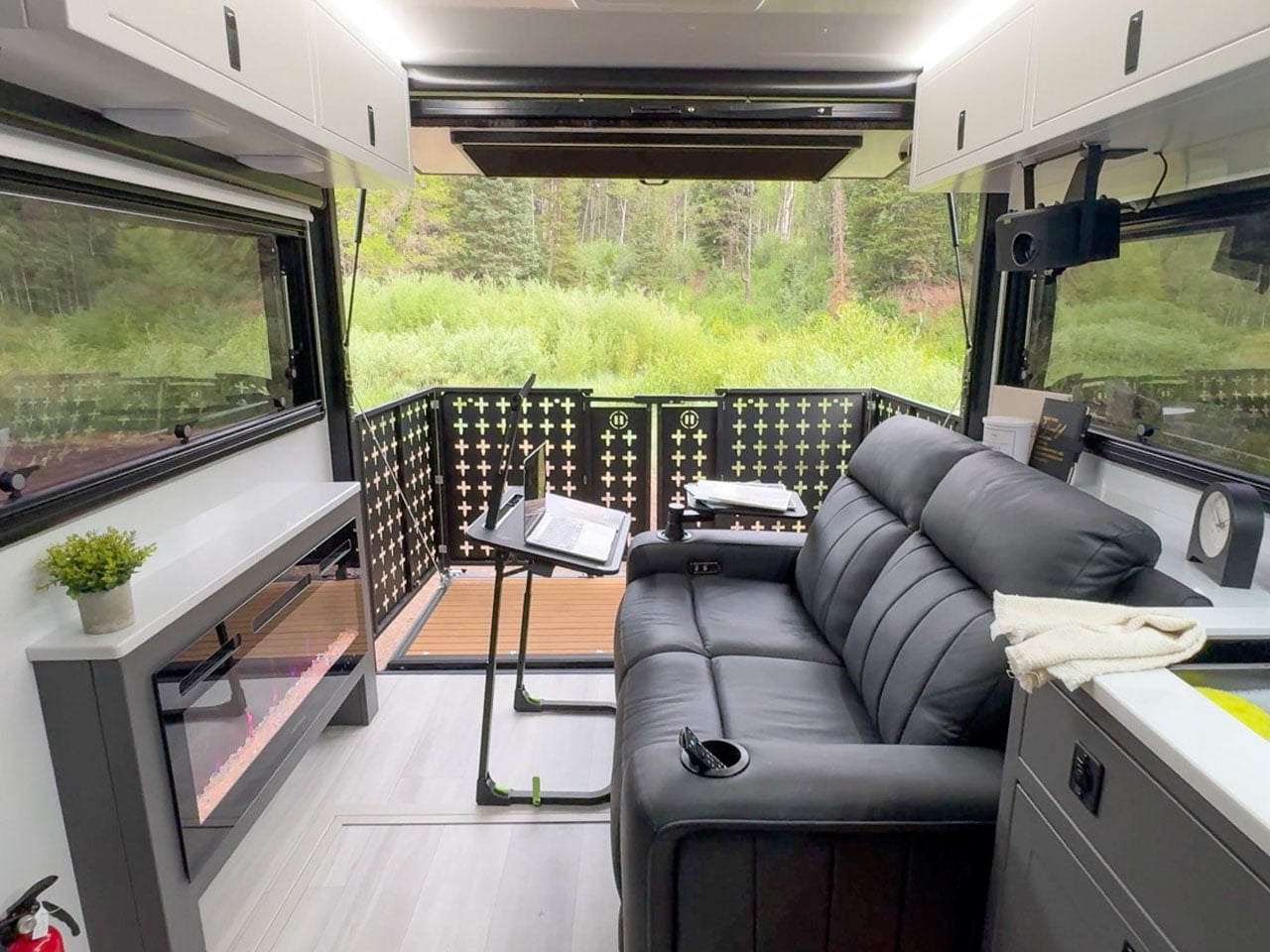
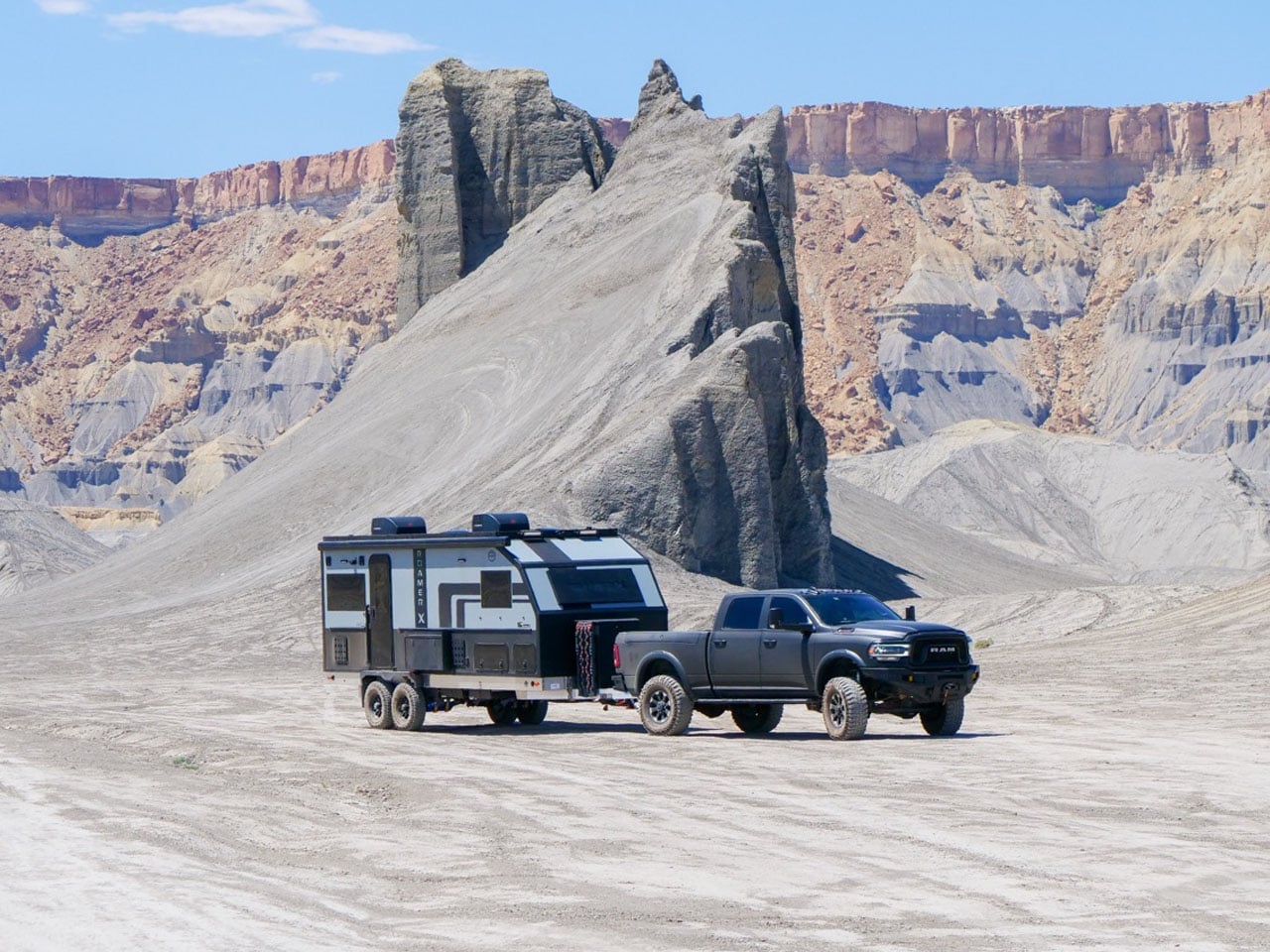
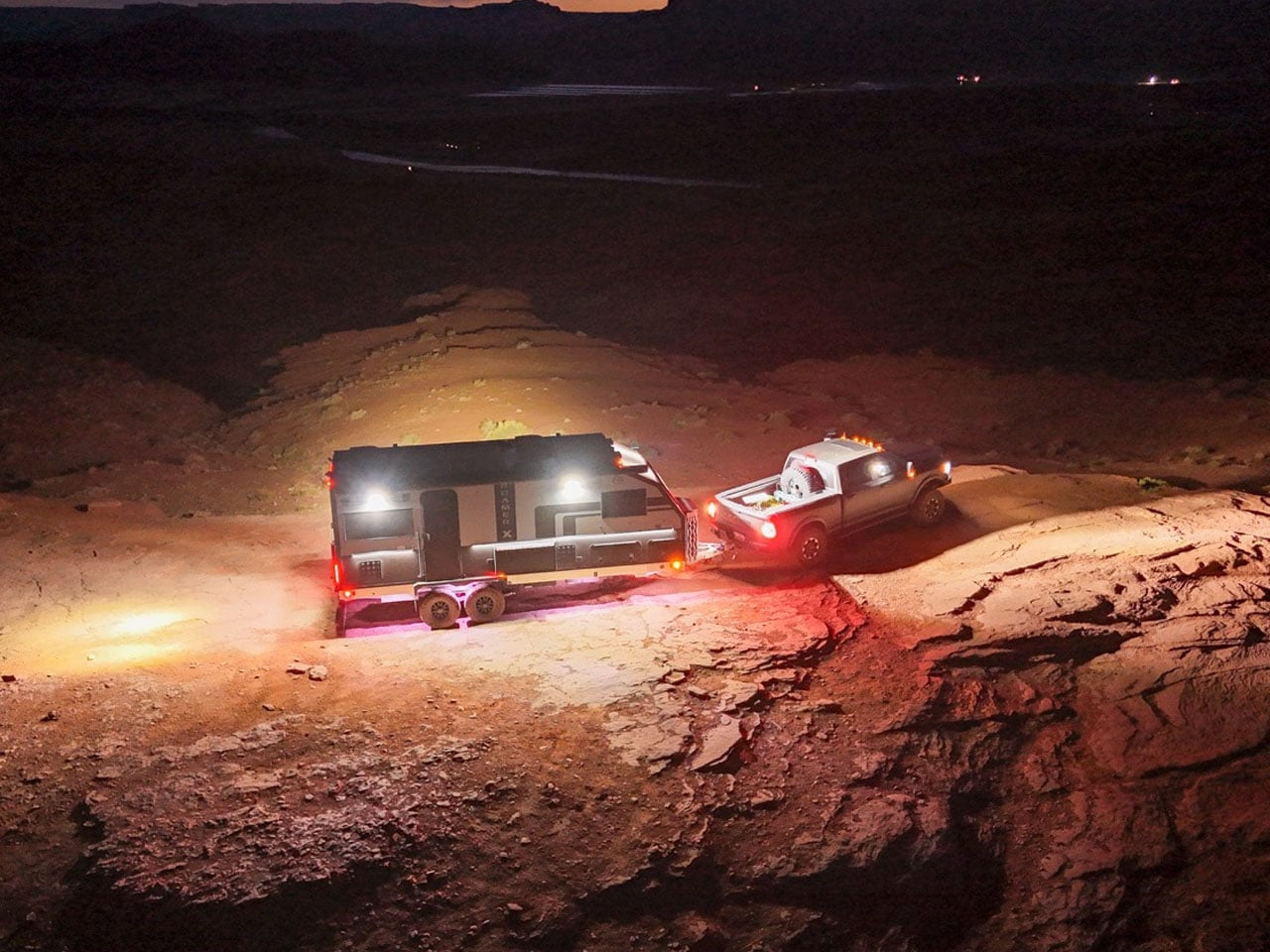
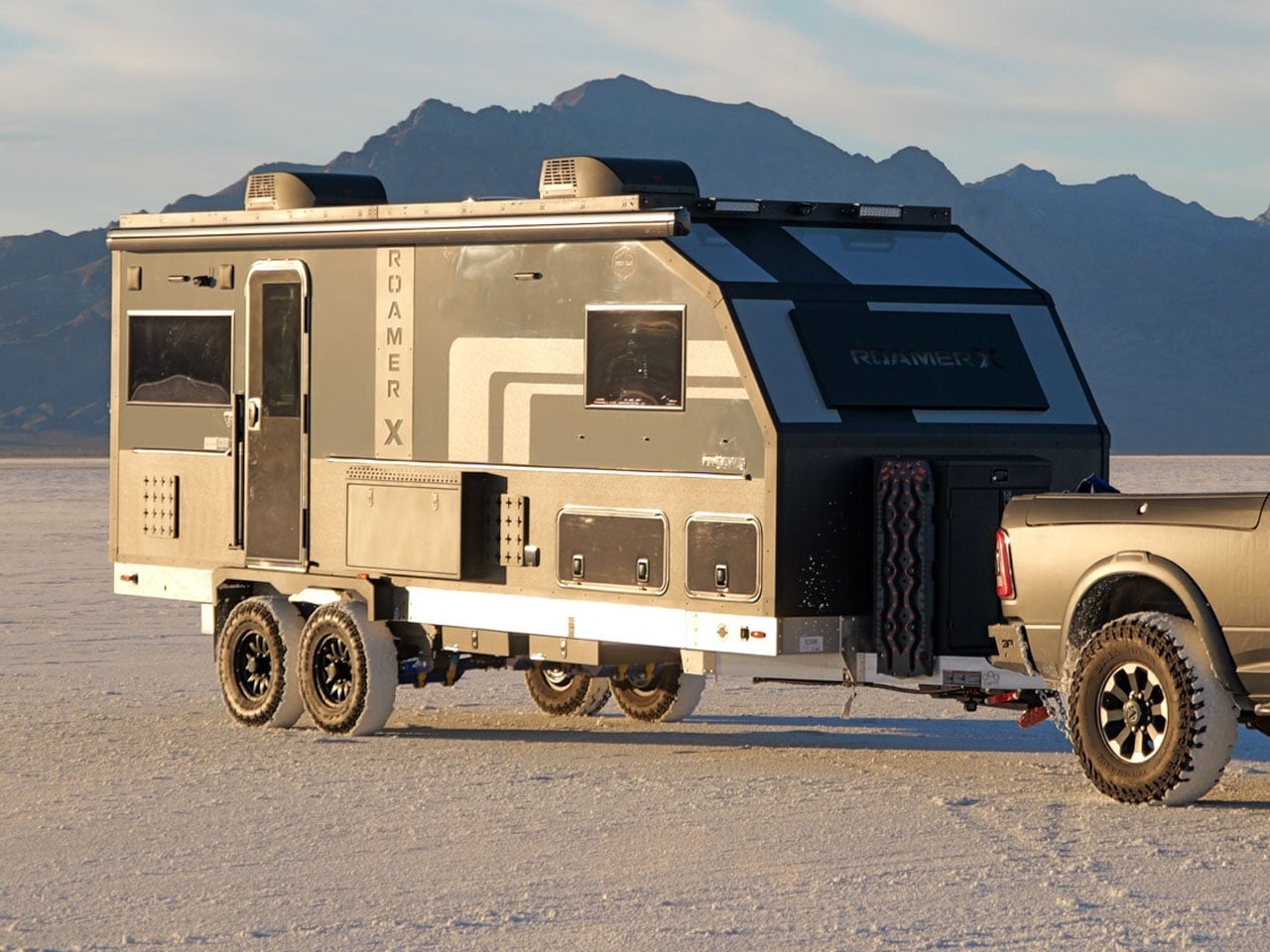
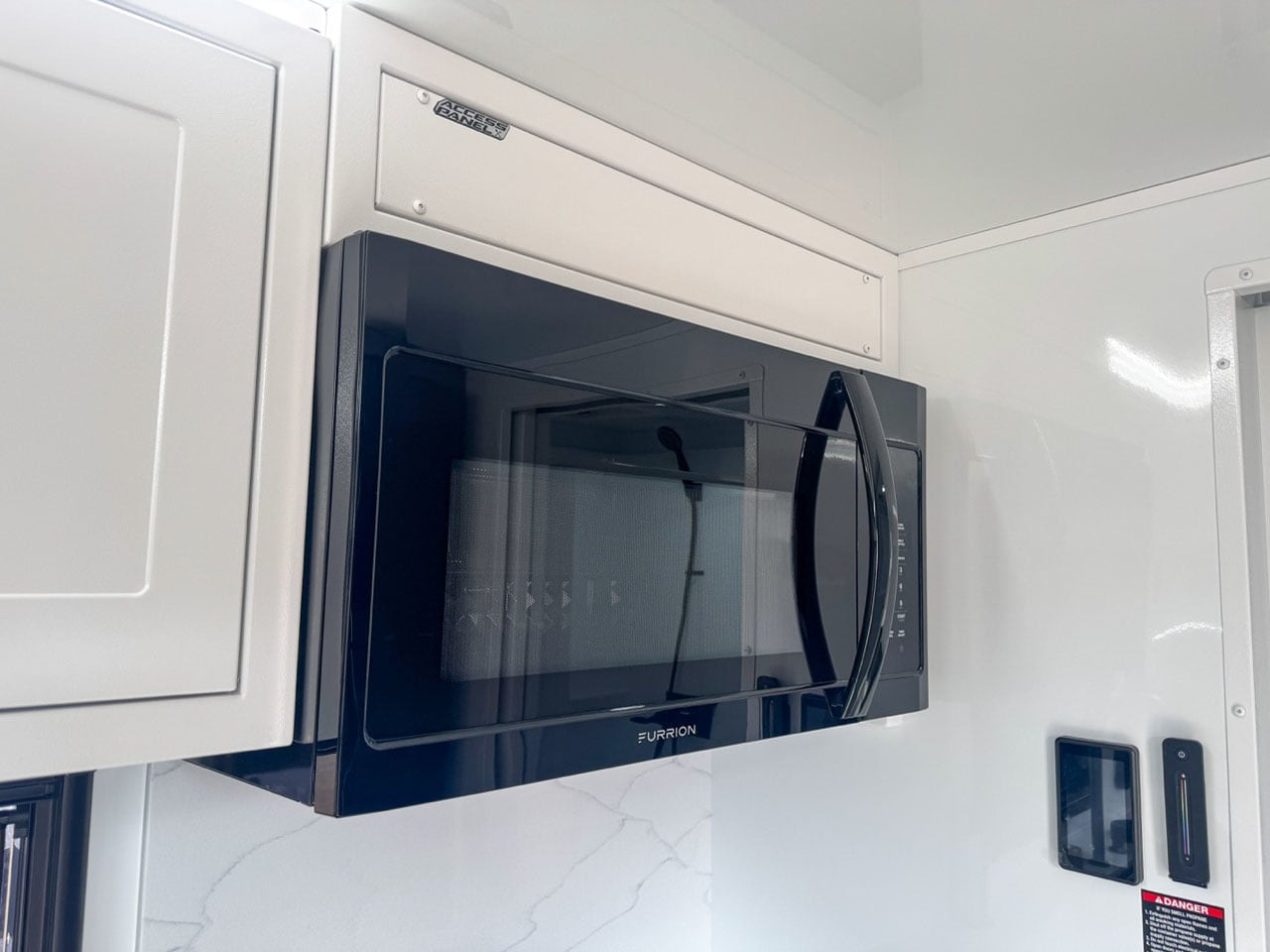
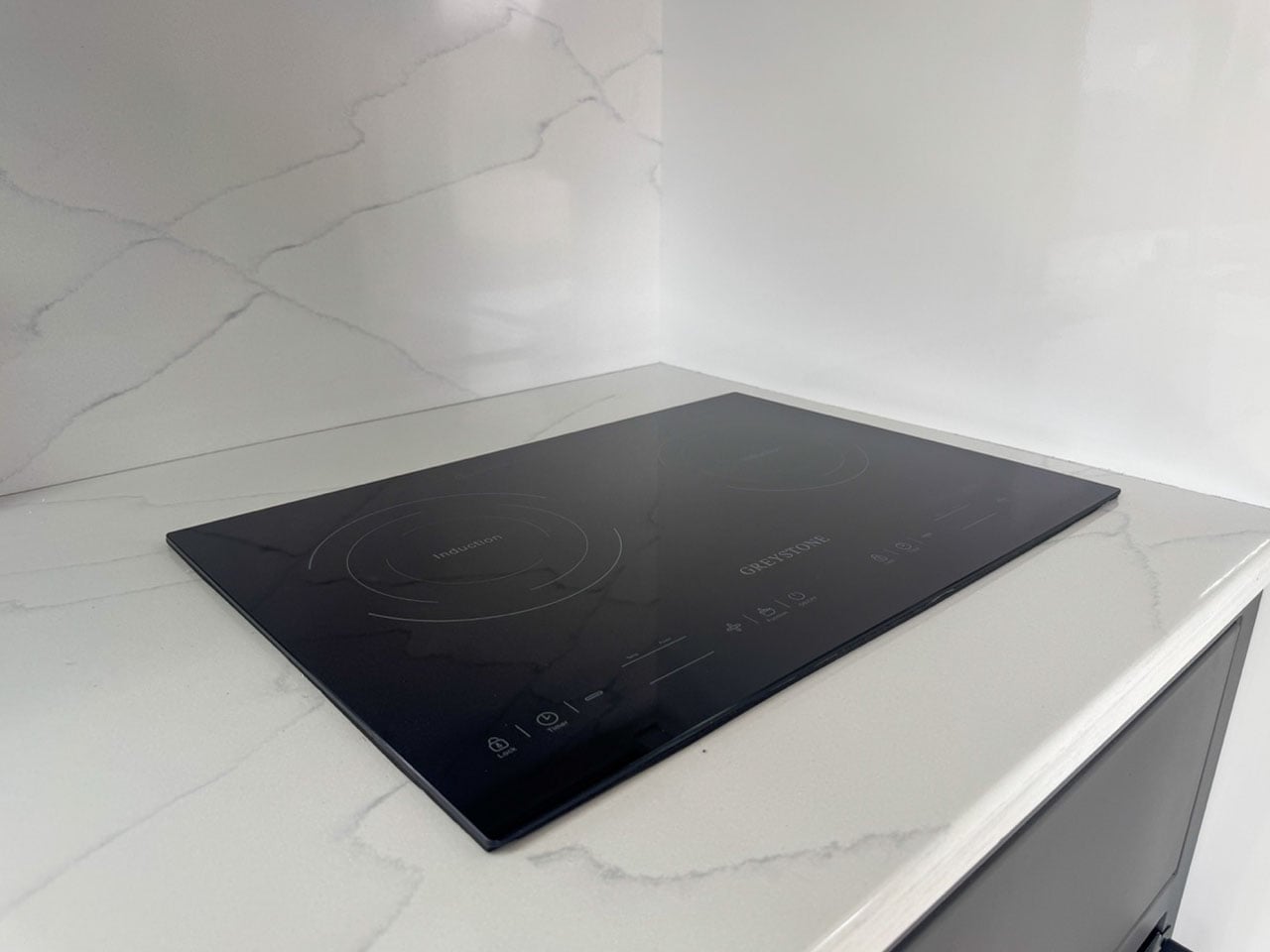
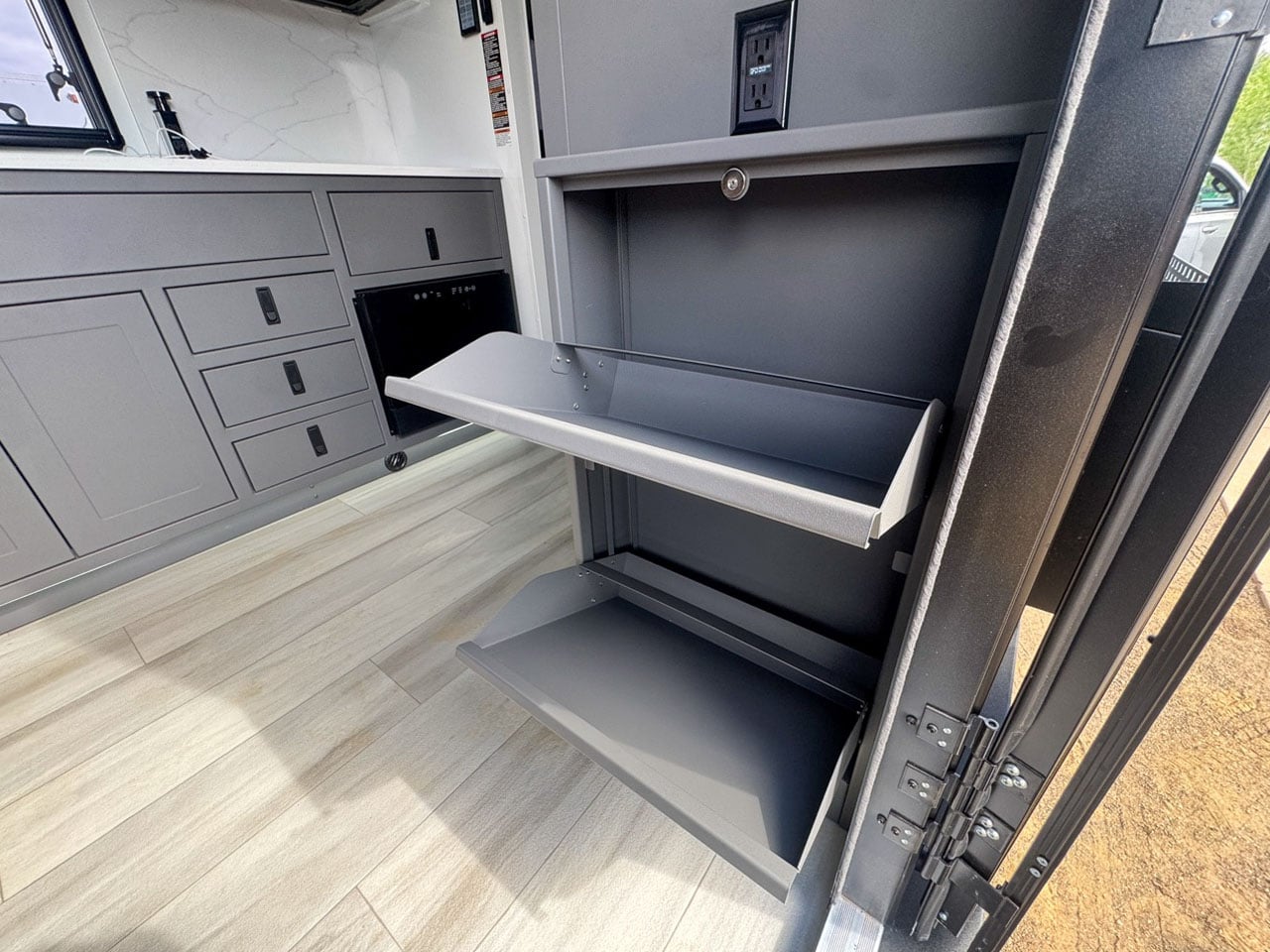
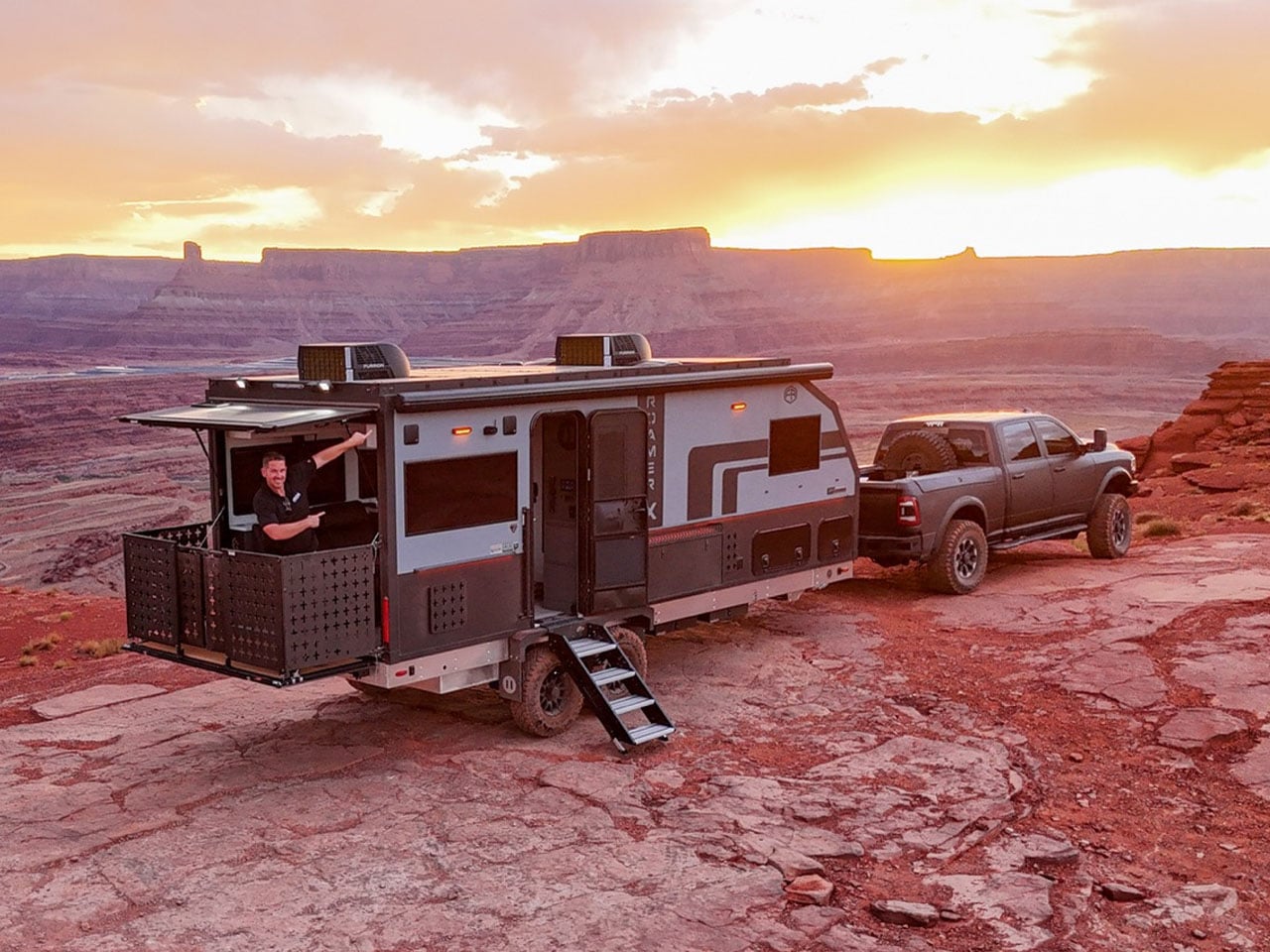
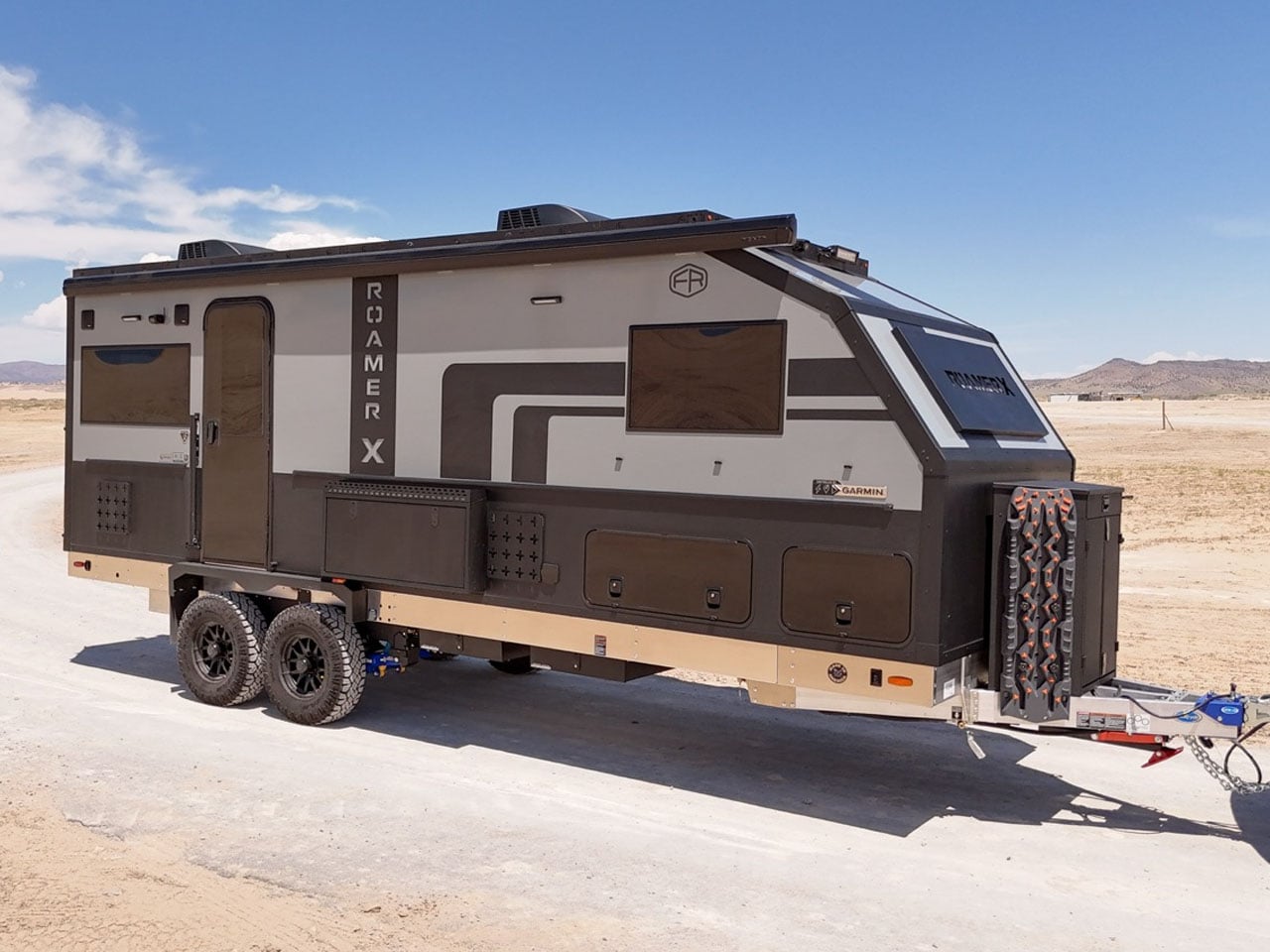
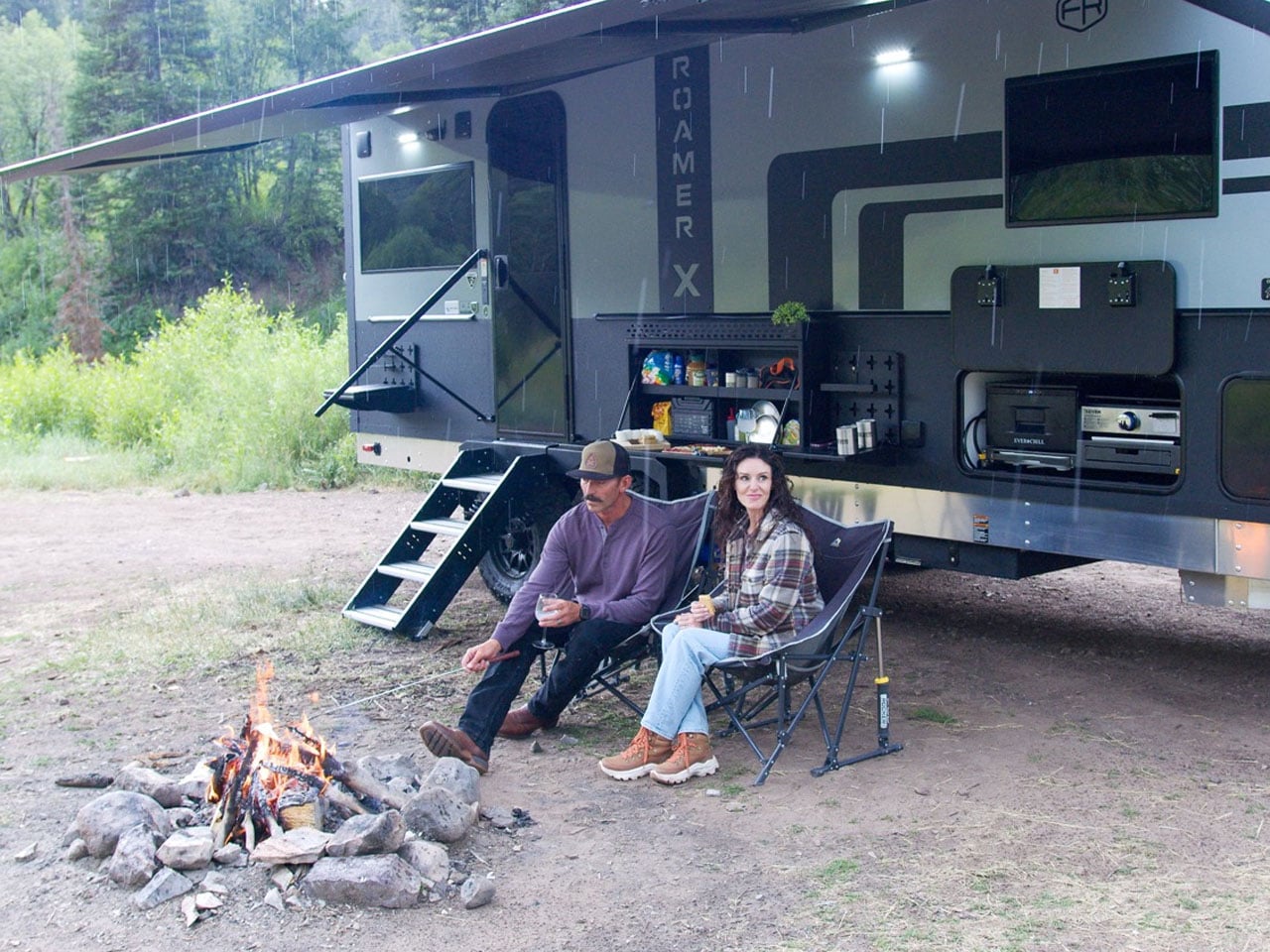
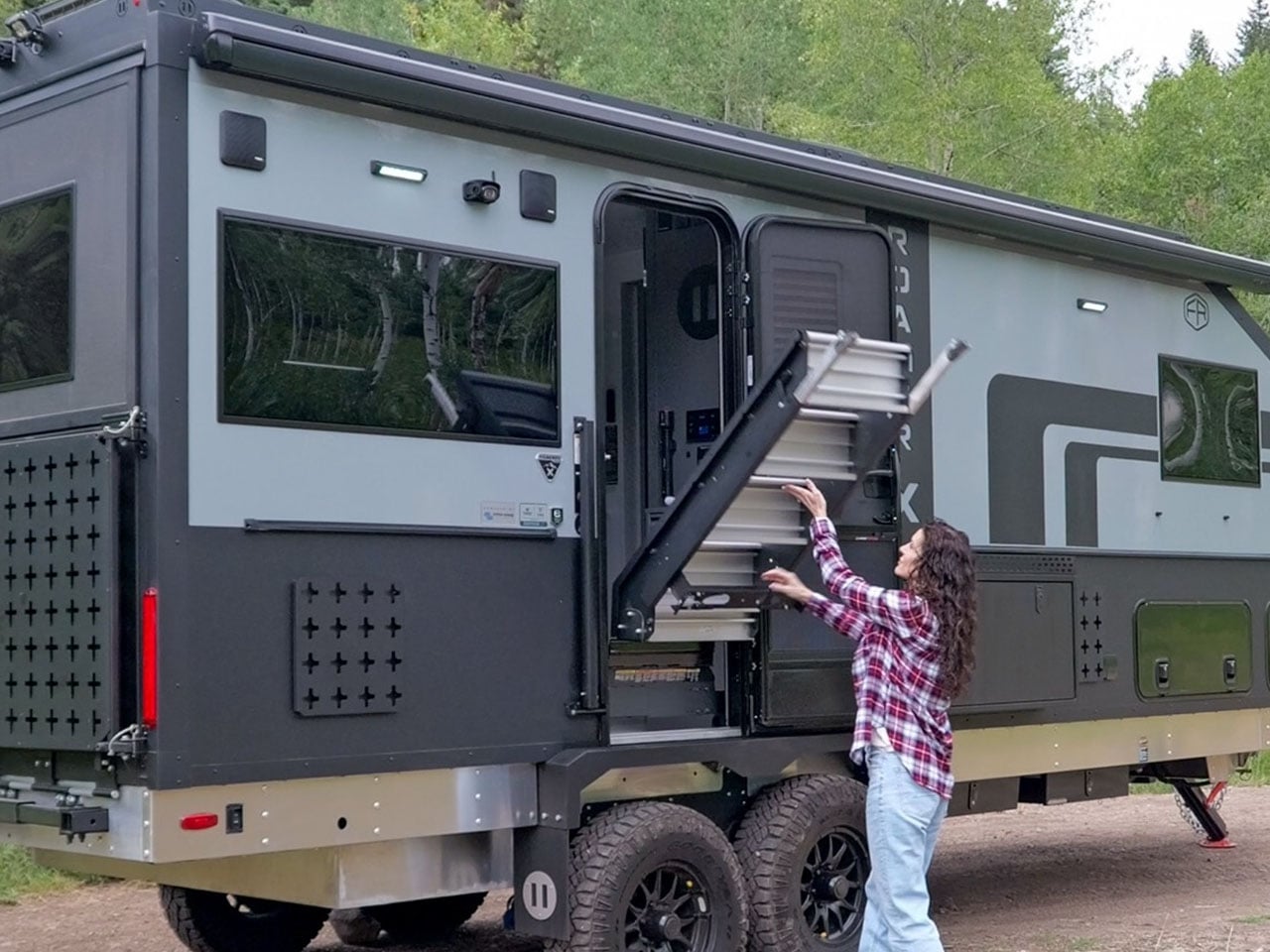
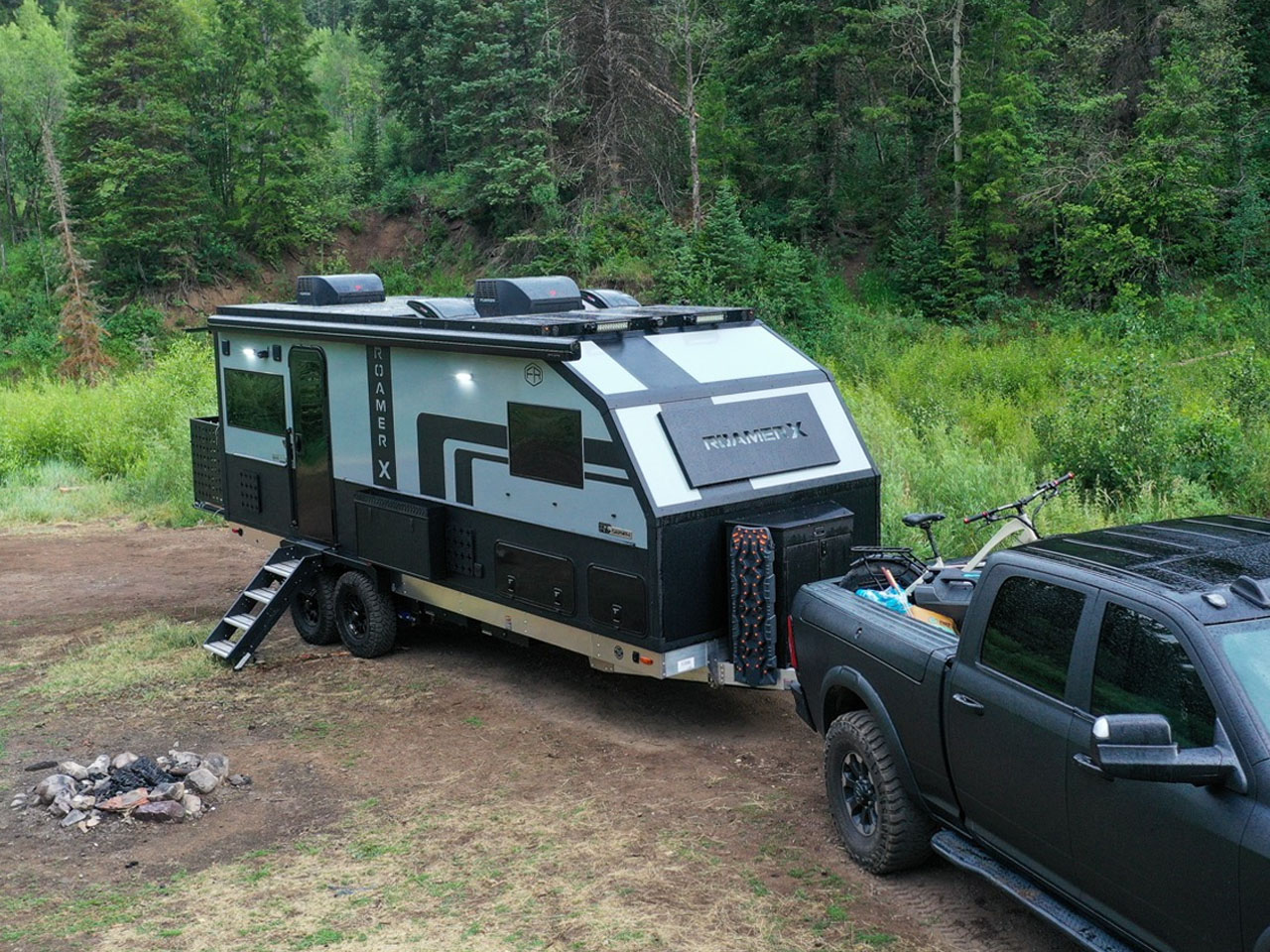
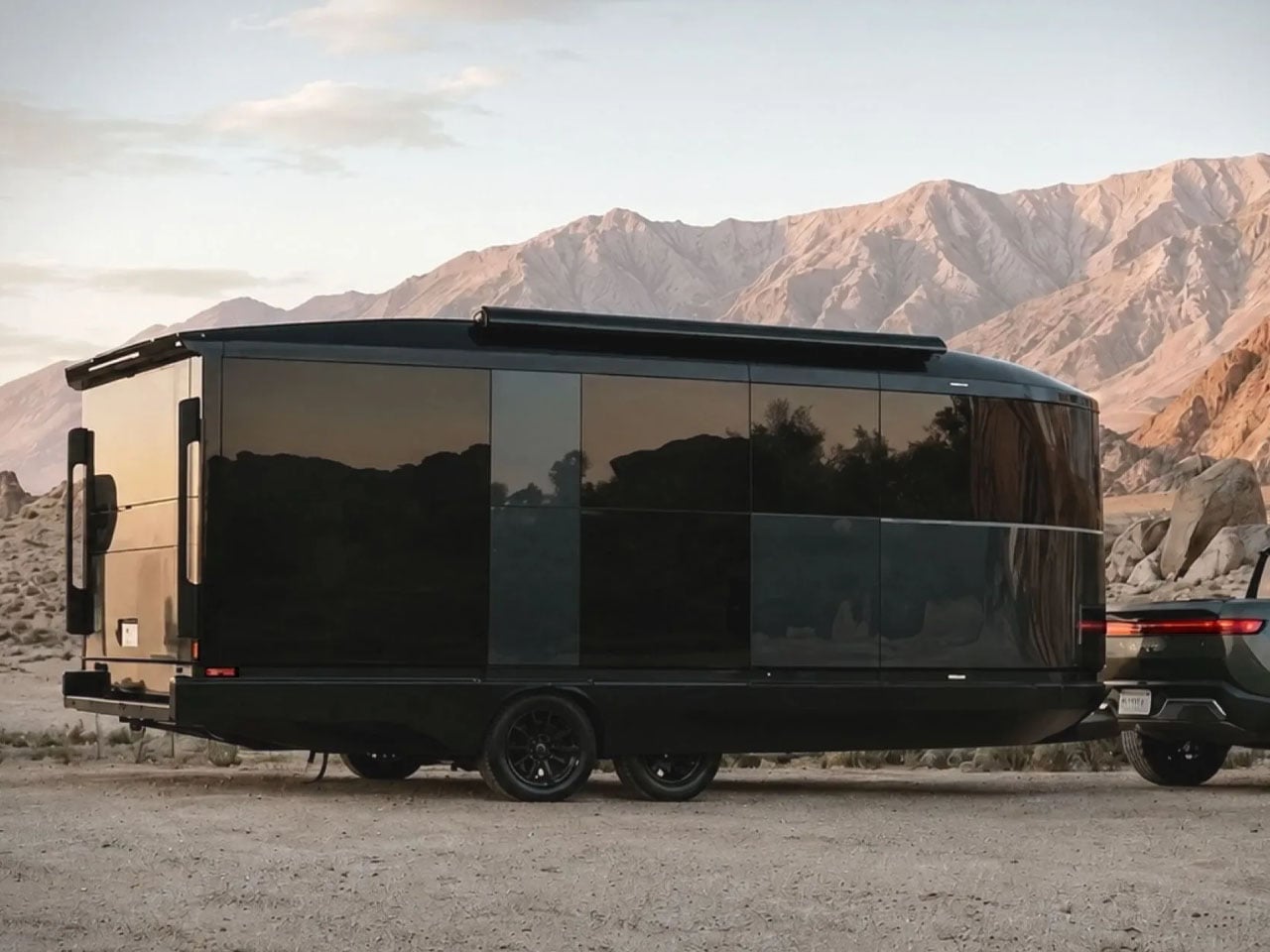
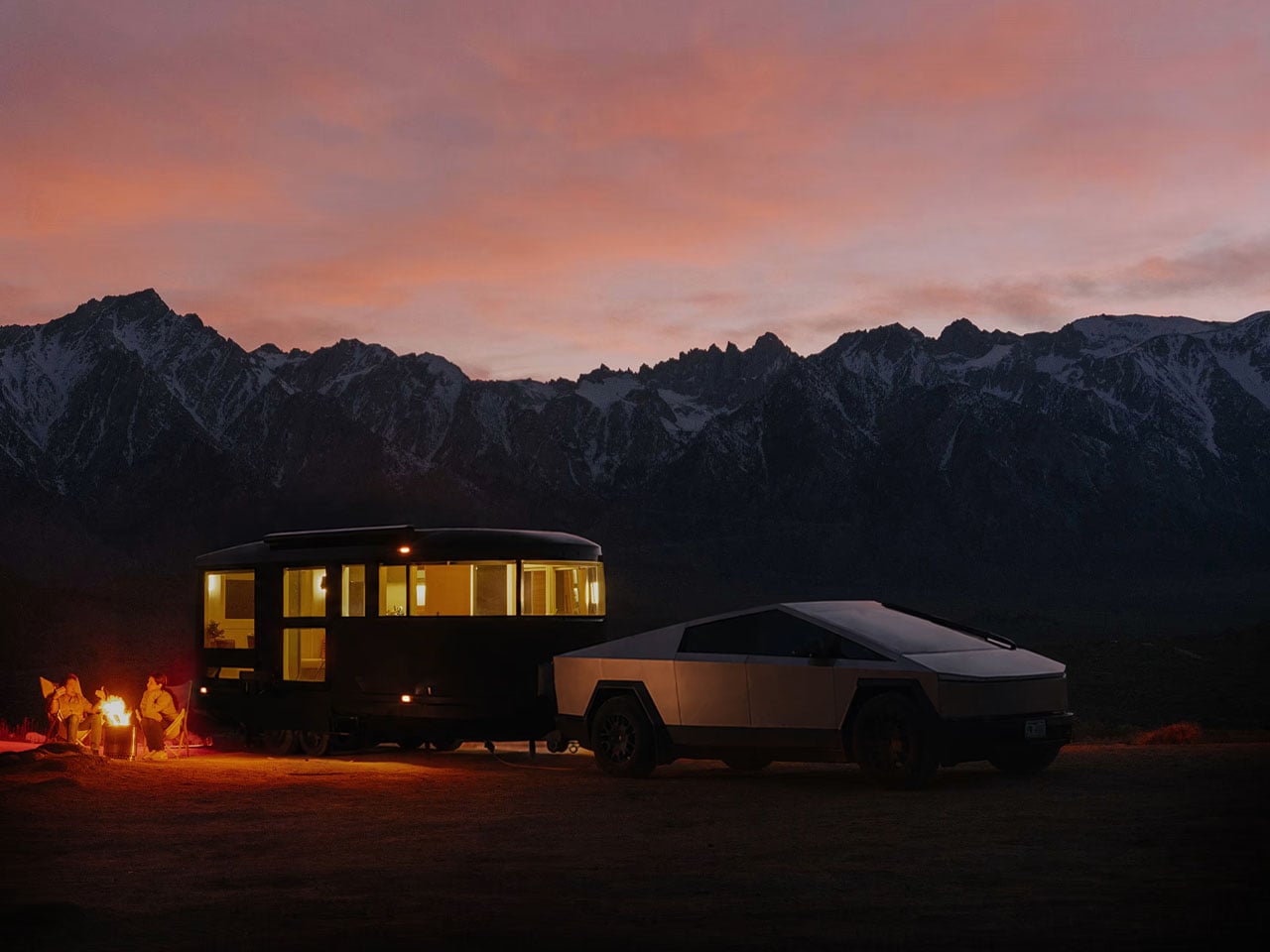
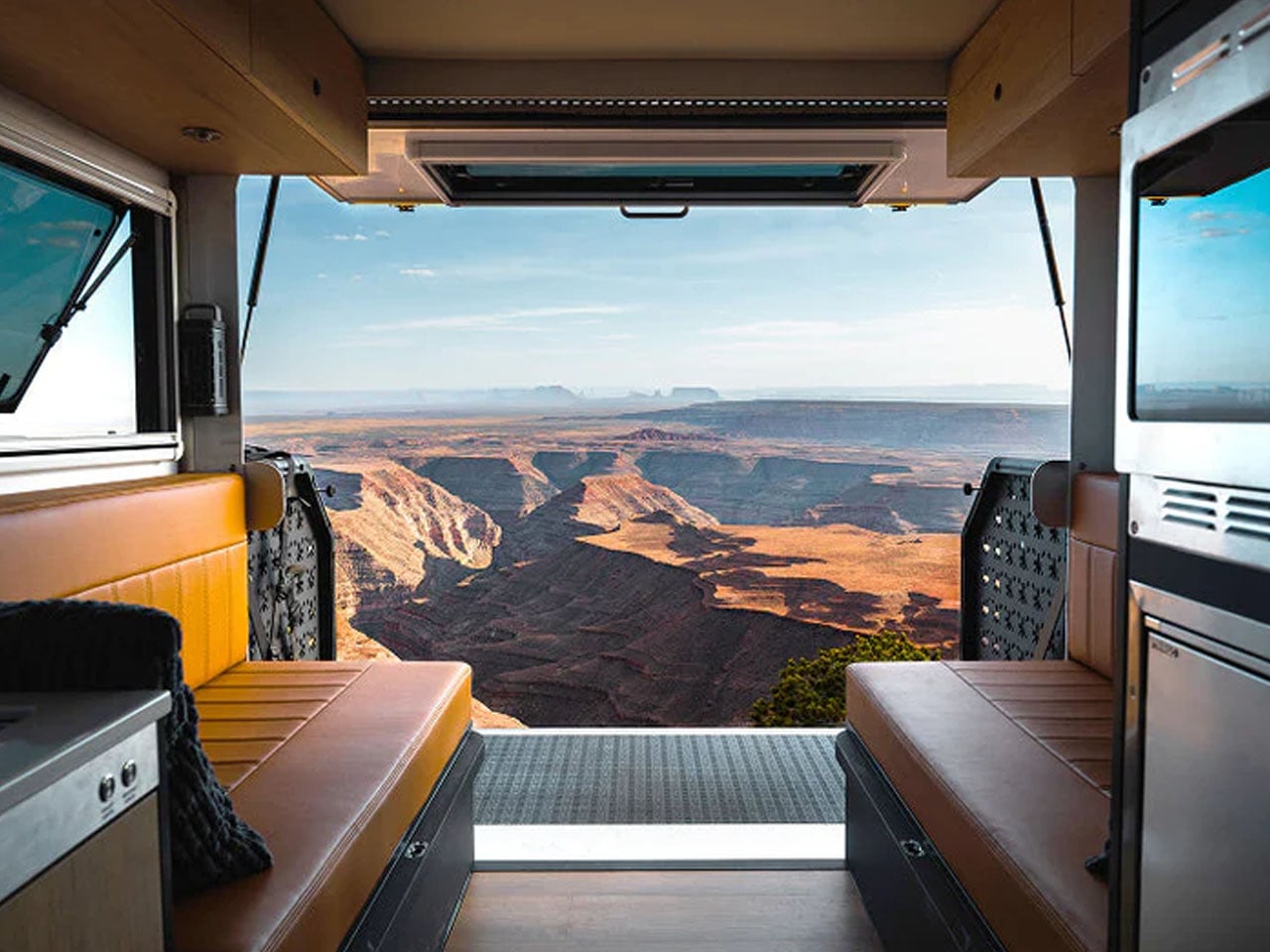
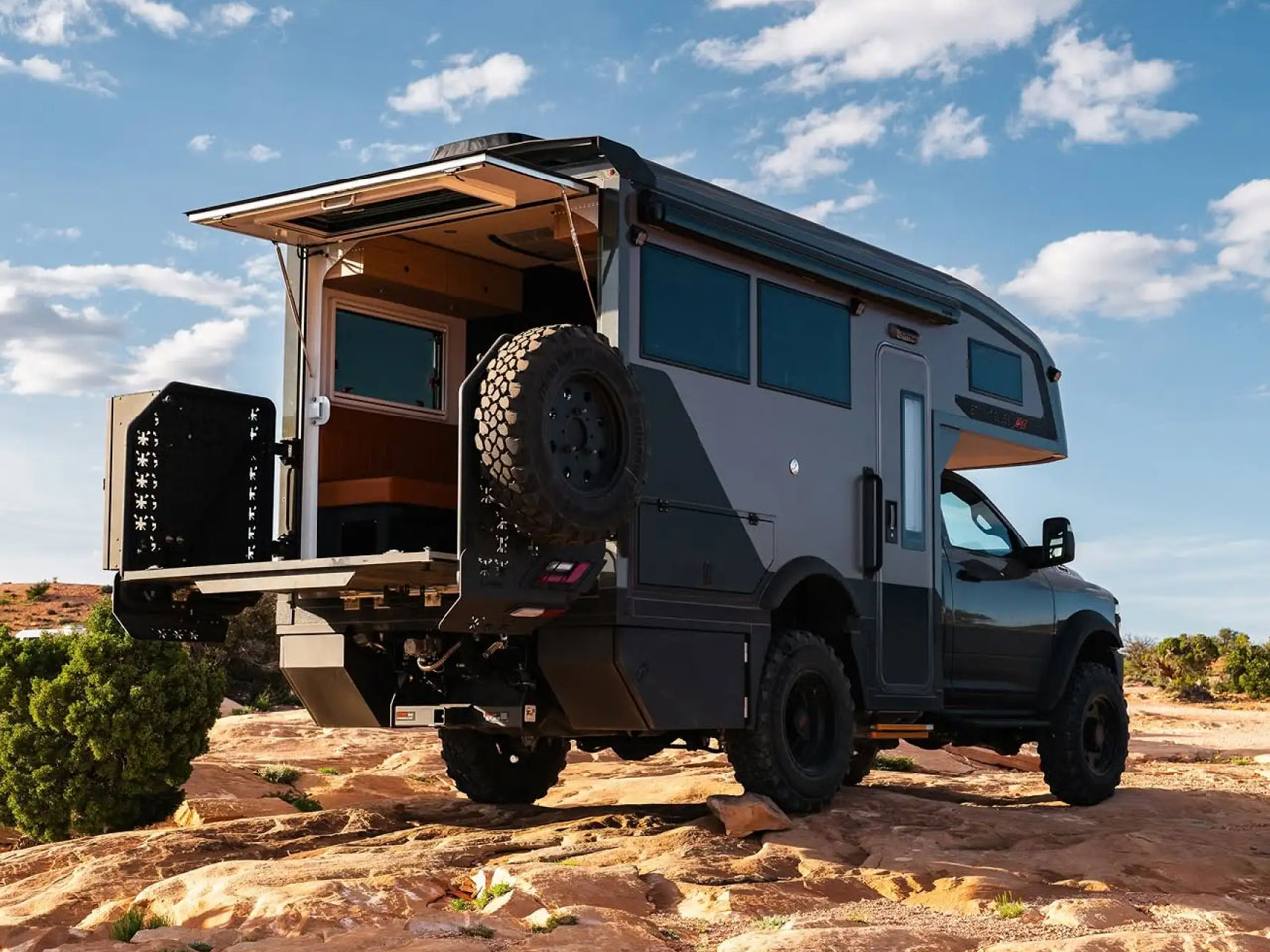
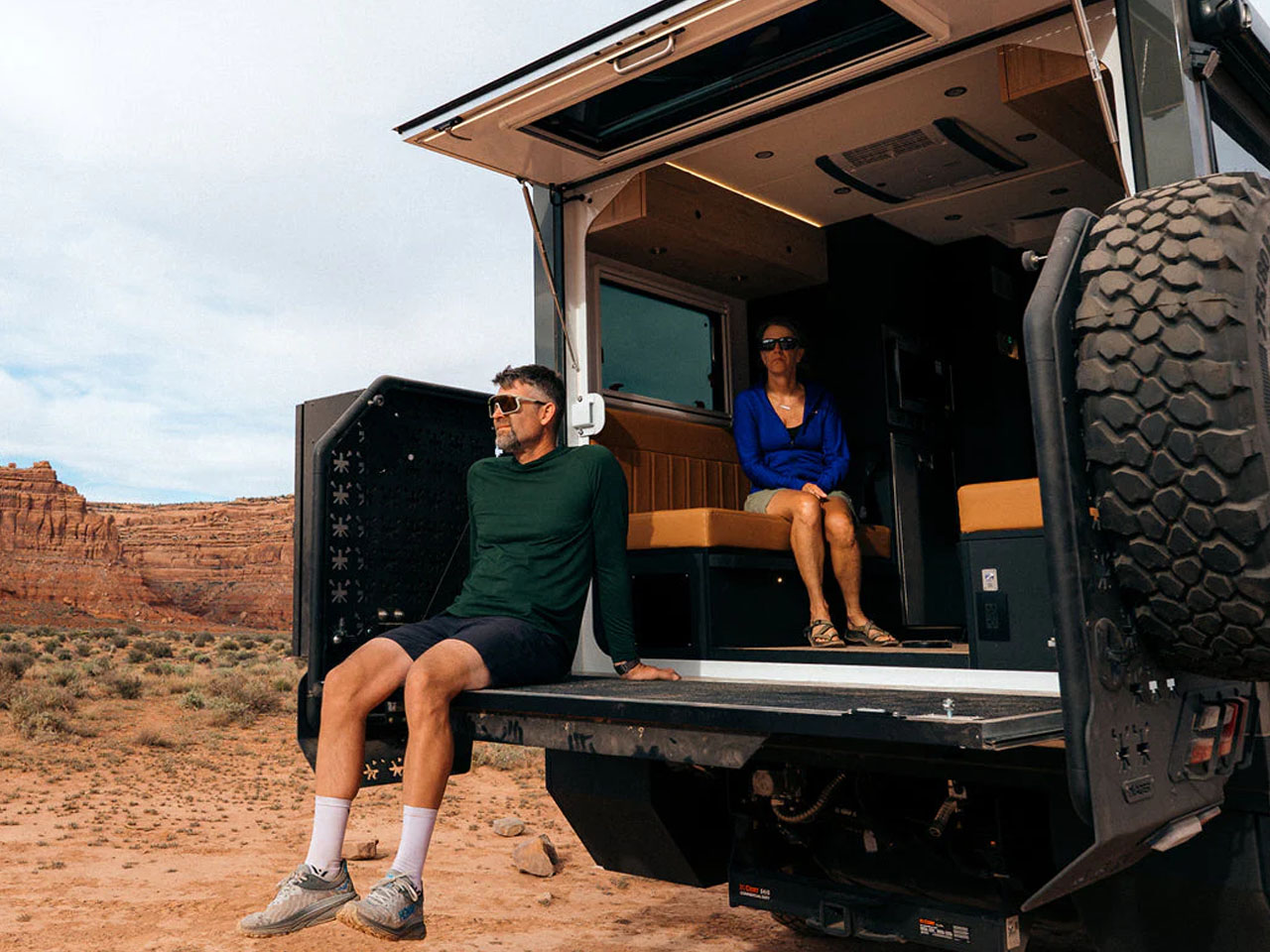
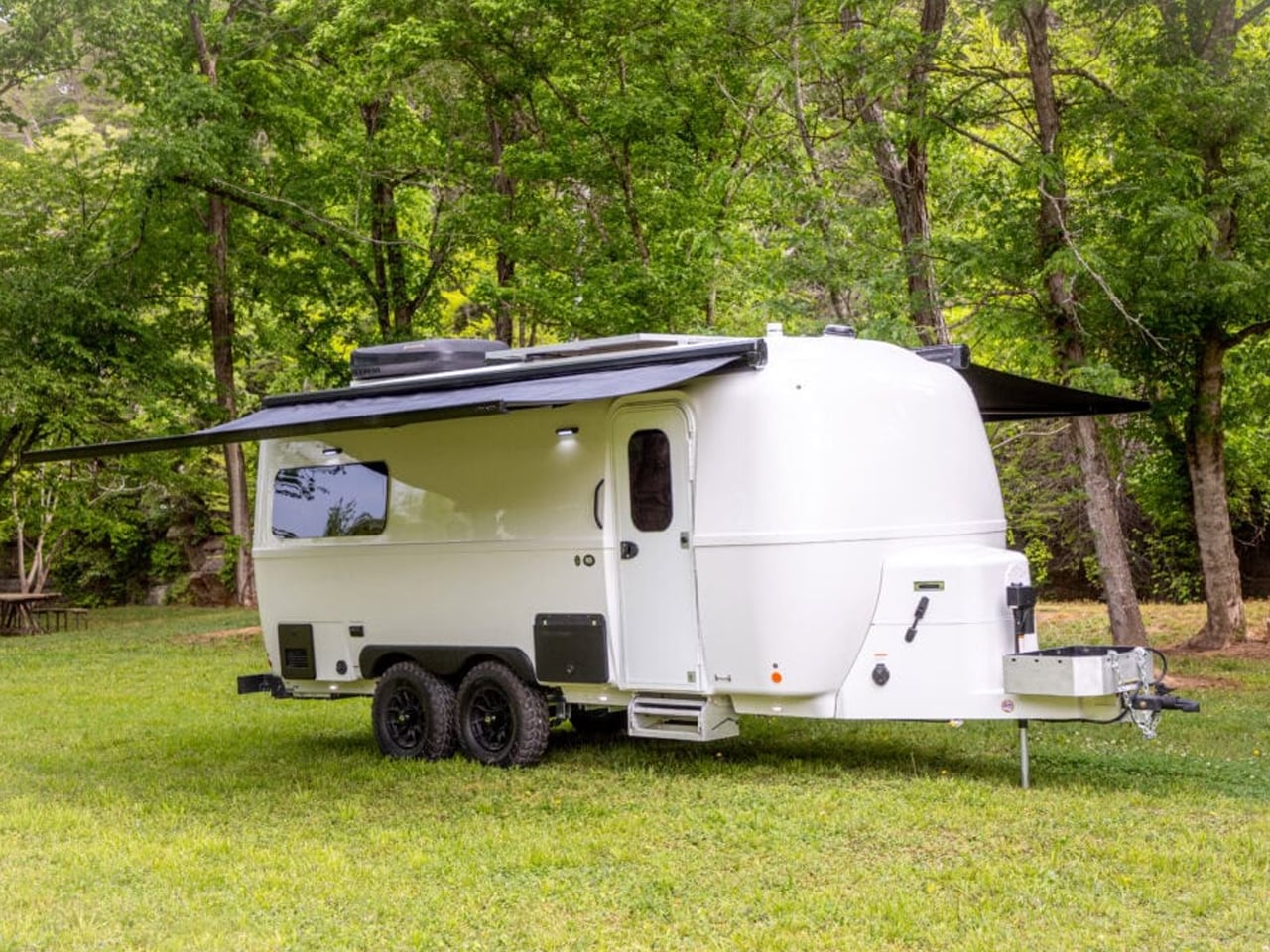
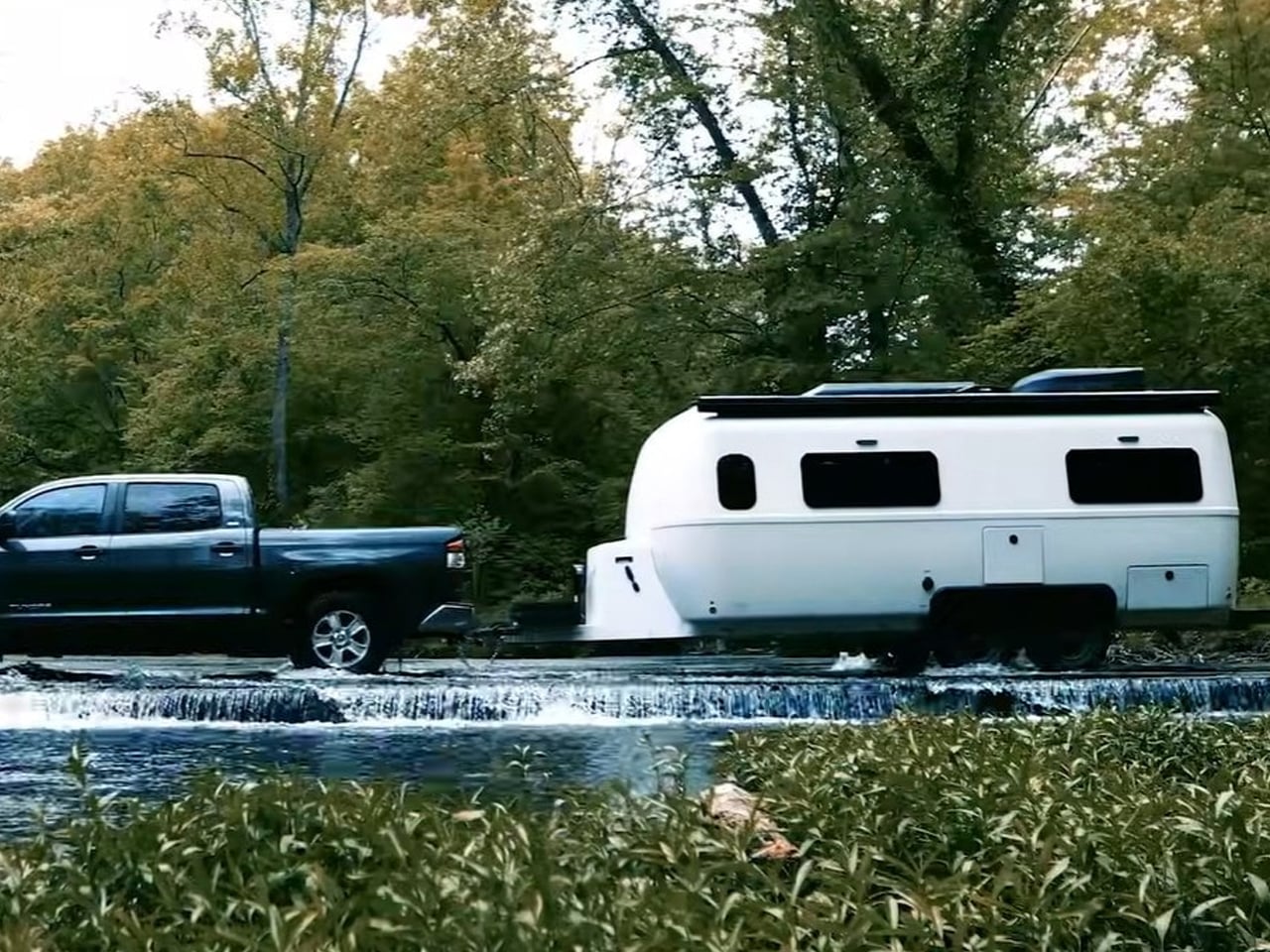
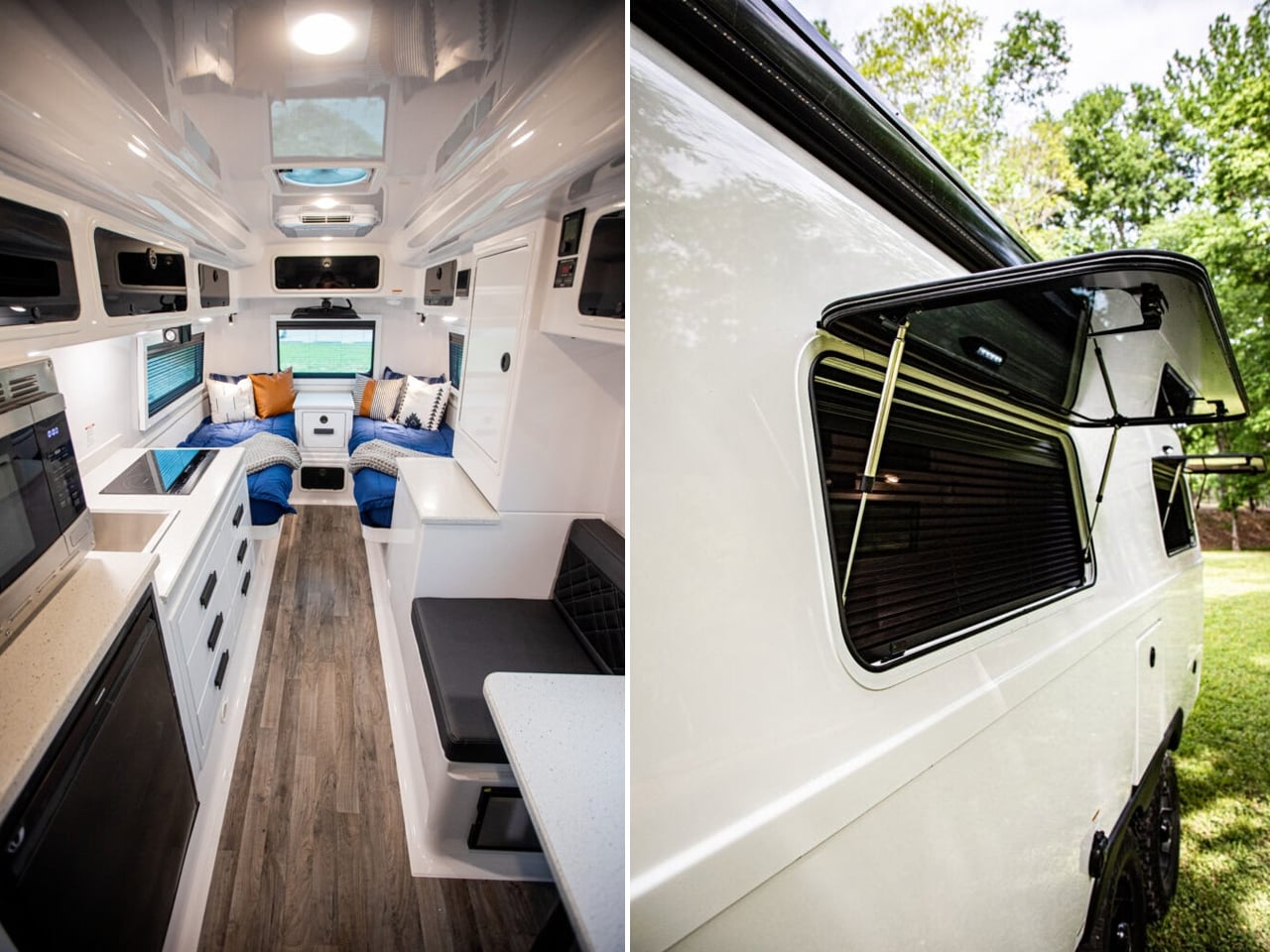
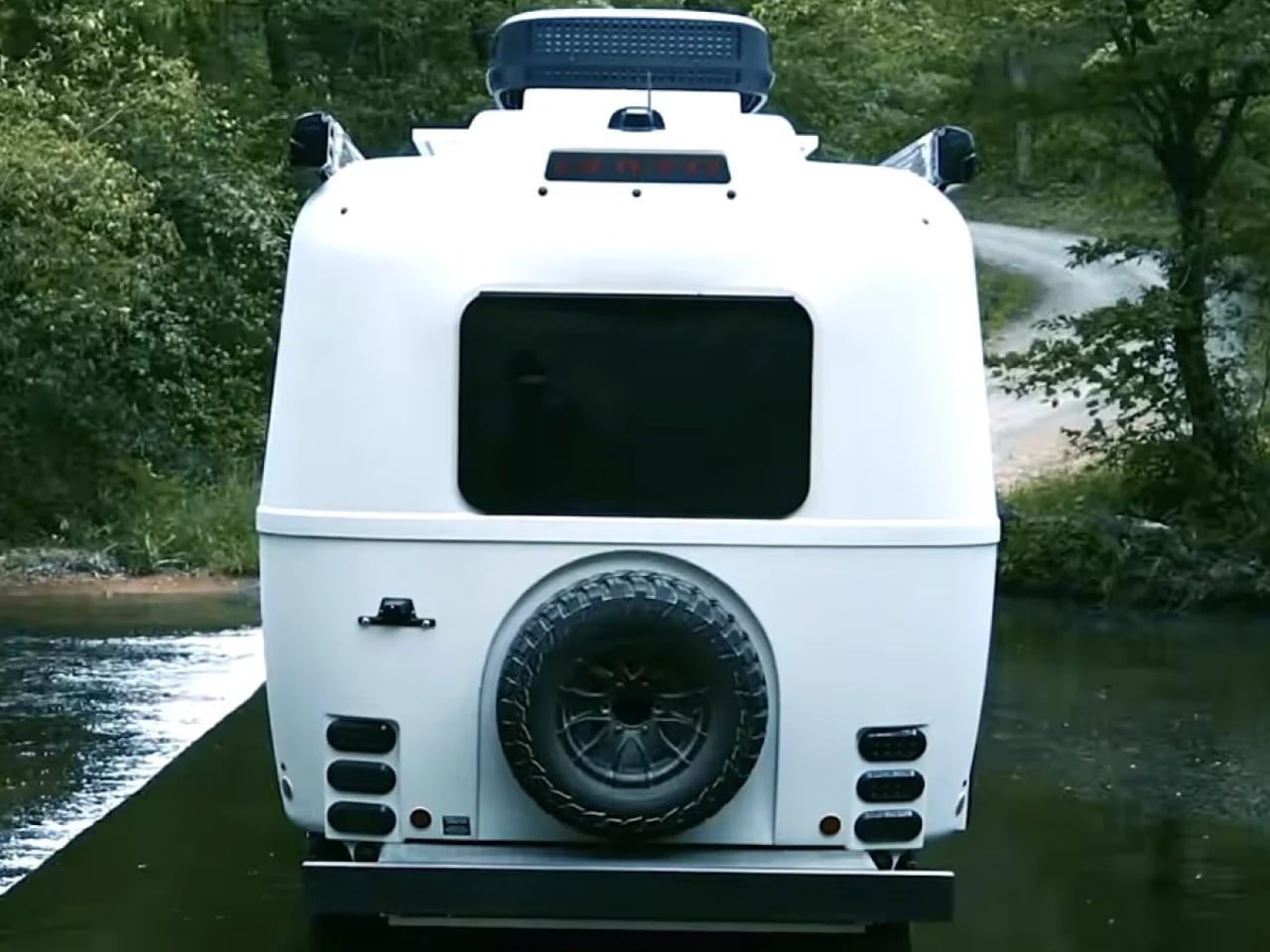
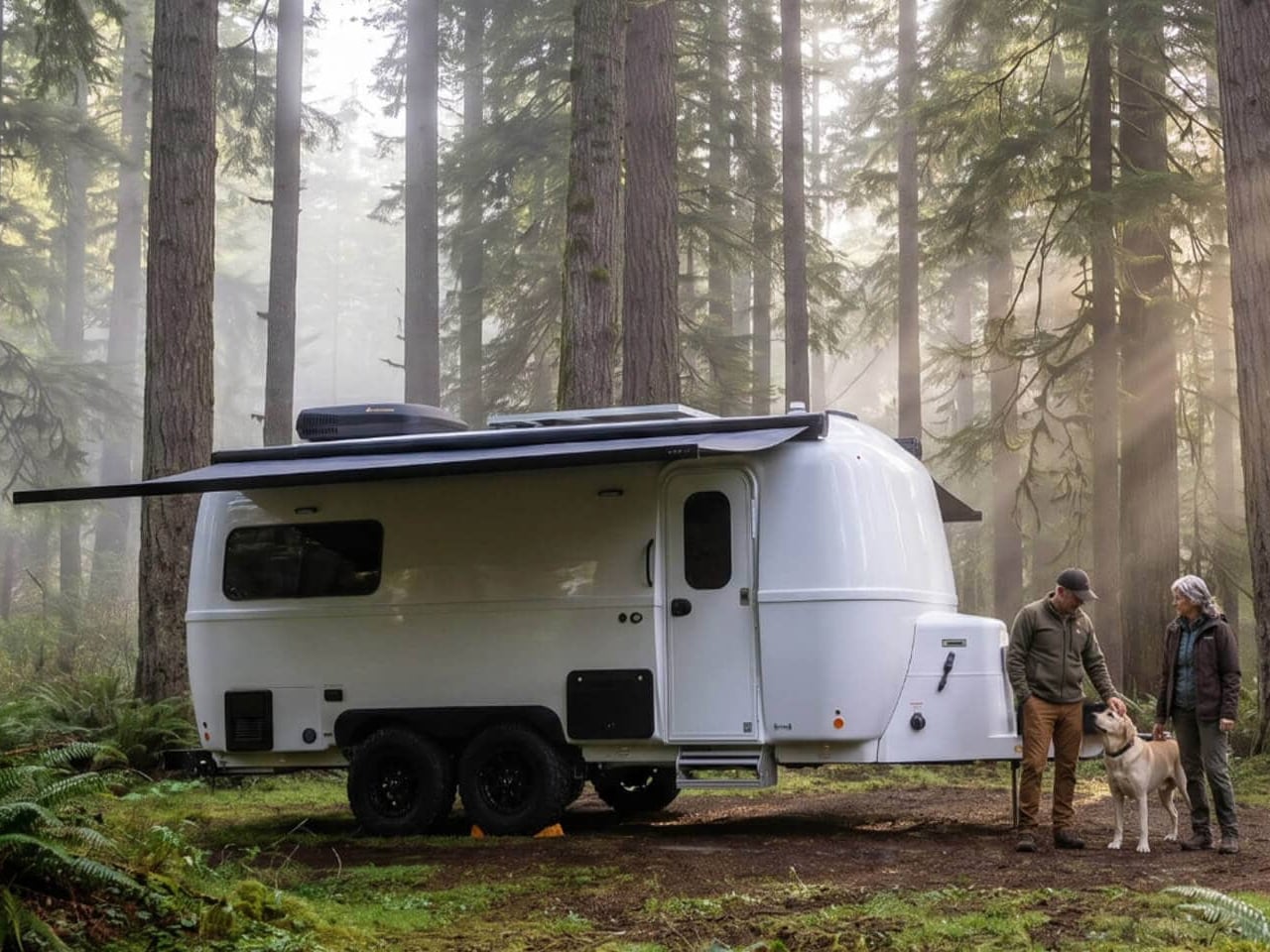
When the pavement ends, the fun begins! That is a bold statement. For a camping trailer designed for all terrain types, that can be more challenging. But not in the case of the Roamer X. Homegrown in the US under the ROA Off-Road umbrella, this is a serious off-road rig, designed to make off-grid travel and living fun.
Developed from the ground up in collaboration with Pause, the Roamer X is a full-fledged, all-terrain camping trailer that comes with a mind-blowing $200,000 price tag. For serious rigs, that is not an extraordinary amount, but when you consider the fact that the luxury and durability Roamer X offers has to be towed behind a capable vehicle, you suddenly realize the magnitude of the tag.
If price is not a deterrent, you are actually going to love what this rig with a cozy fireplace and an elaborate solar setup has to offer at the campground. Built to let you explore the wilderness in all four seasons, the trailer comes onboard with a 34,000-BTU Aqua-Hot heating system and an interior that offers residential comforts.
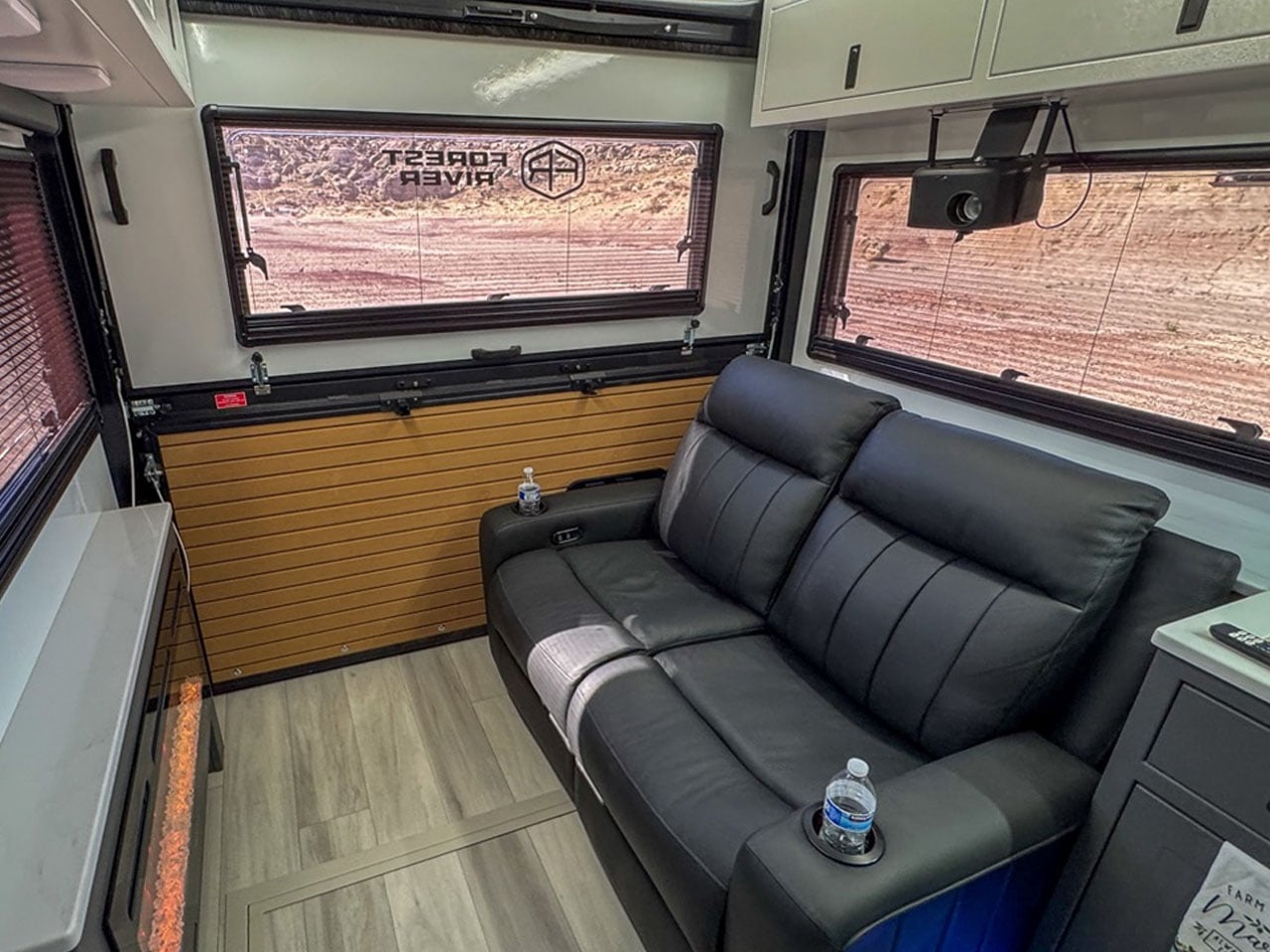
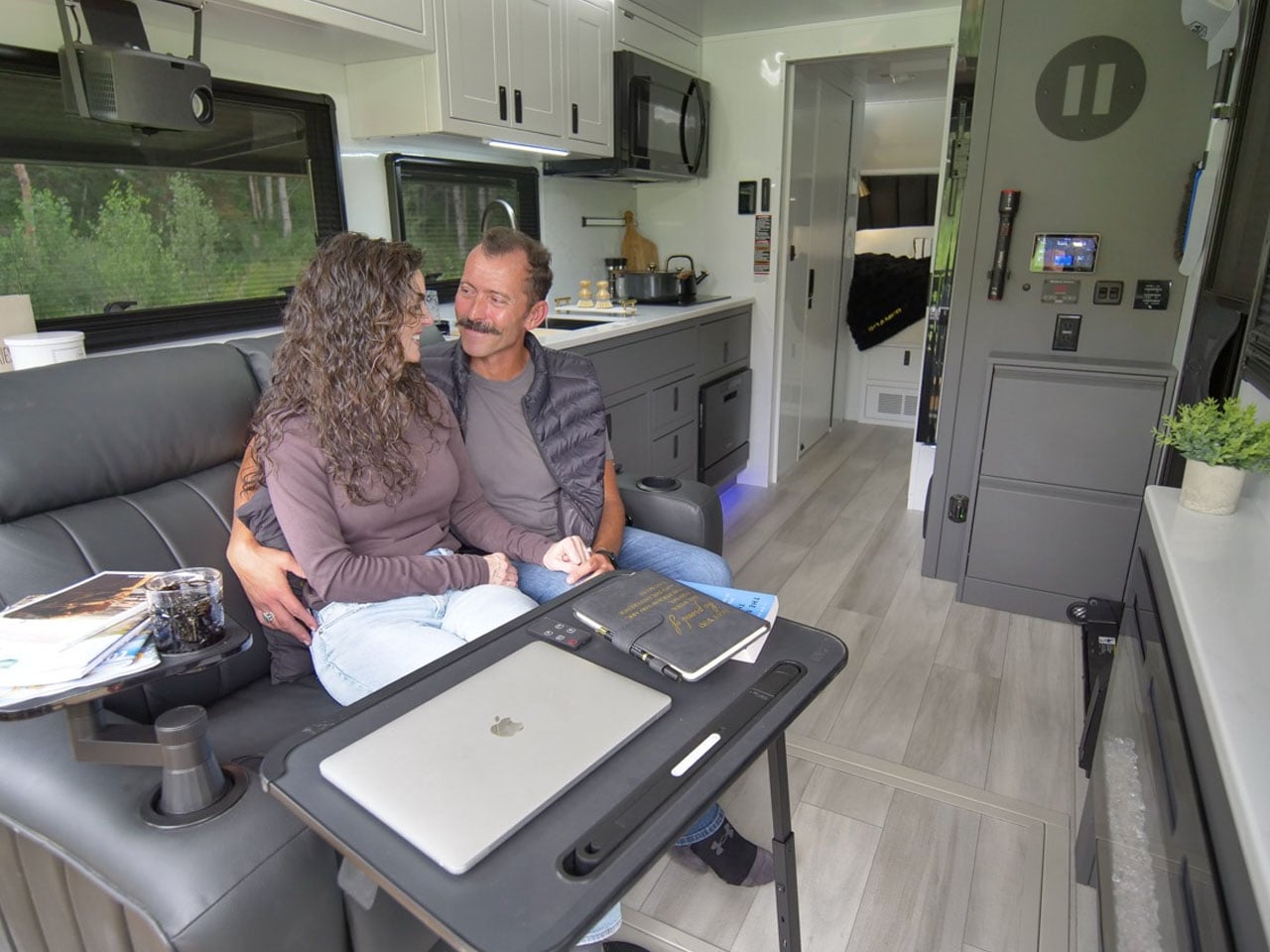
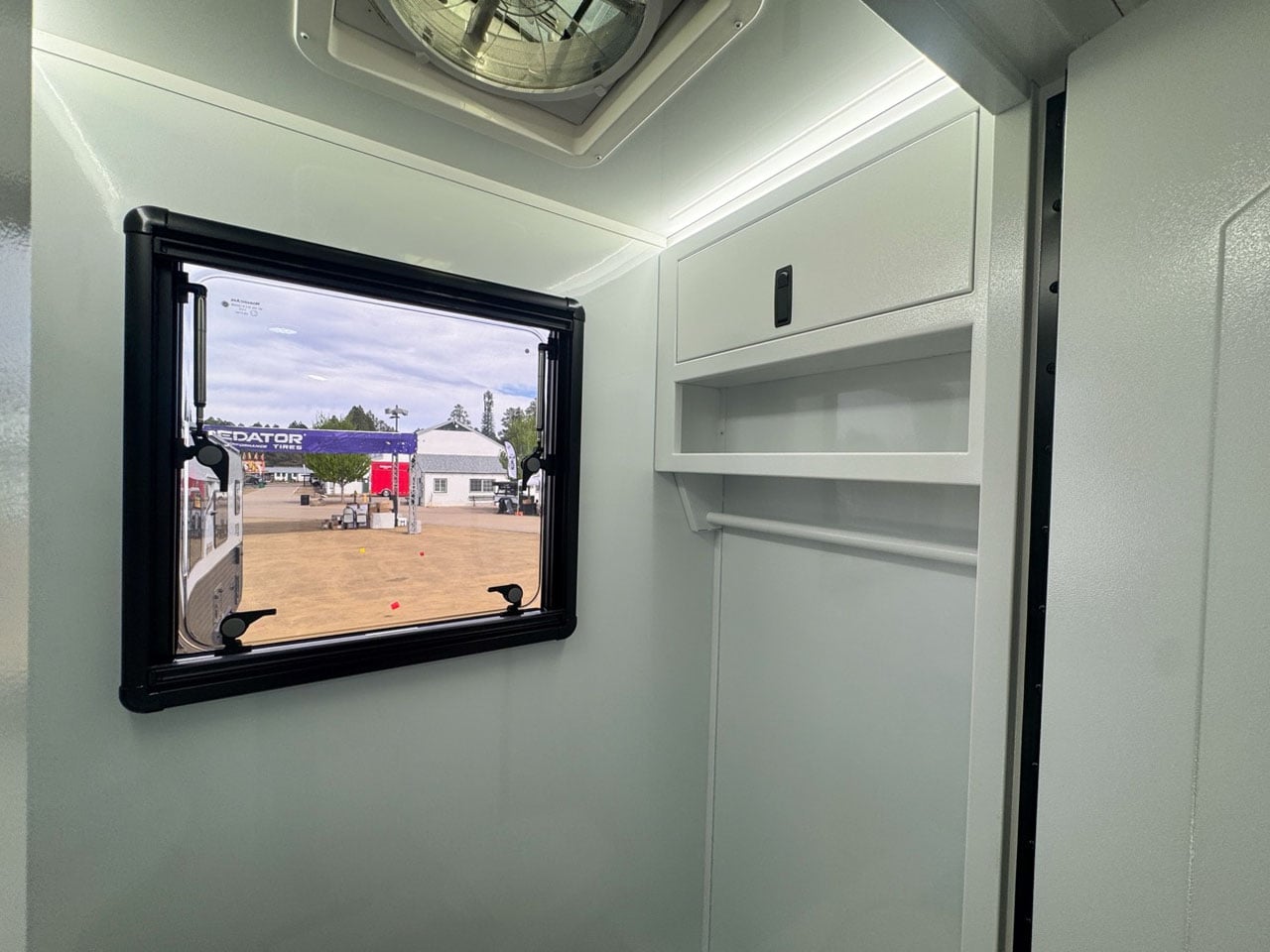
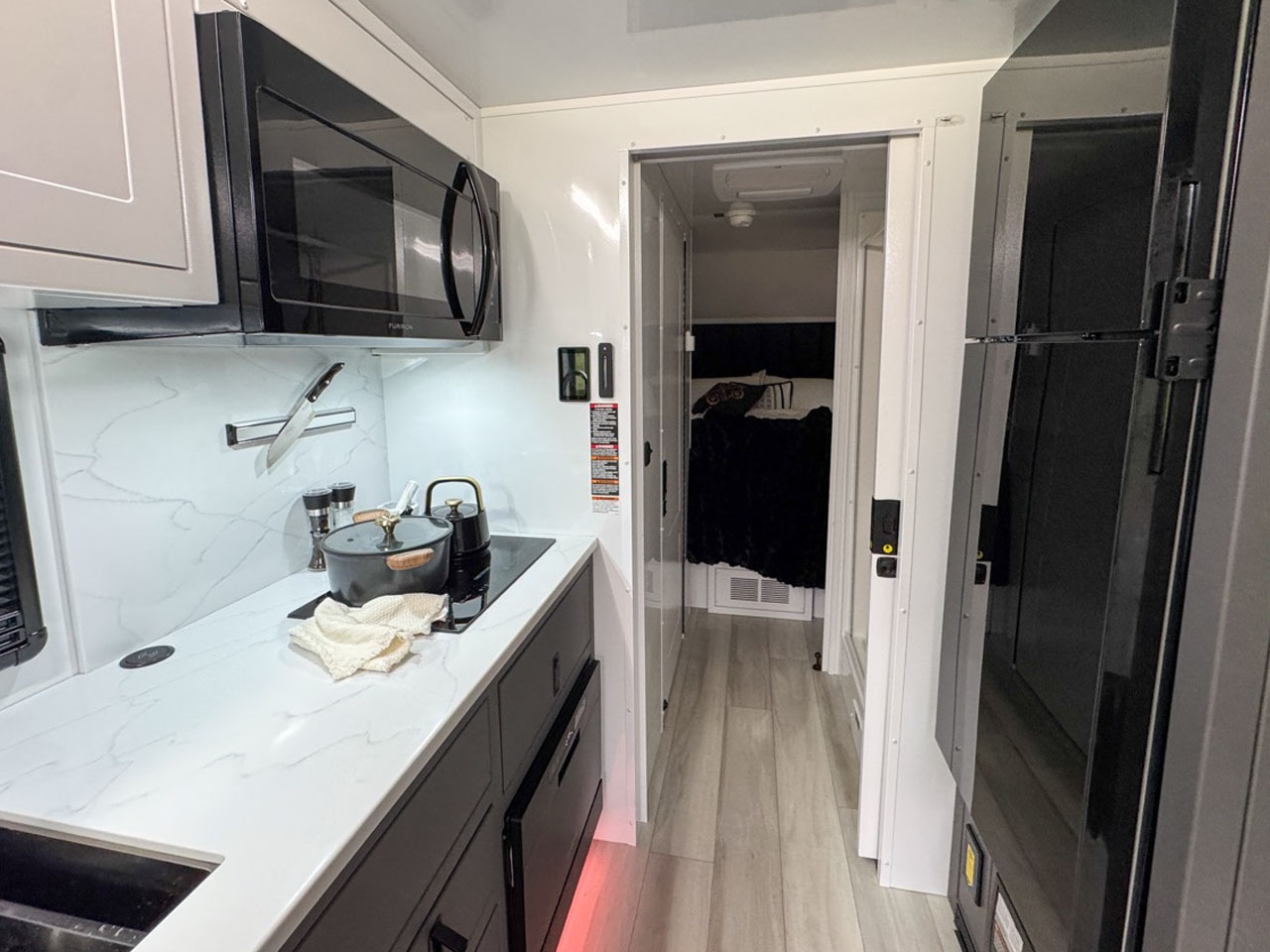
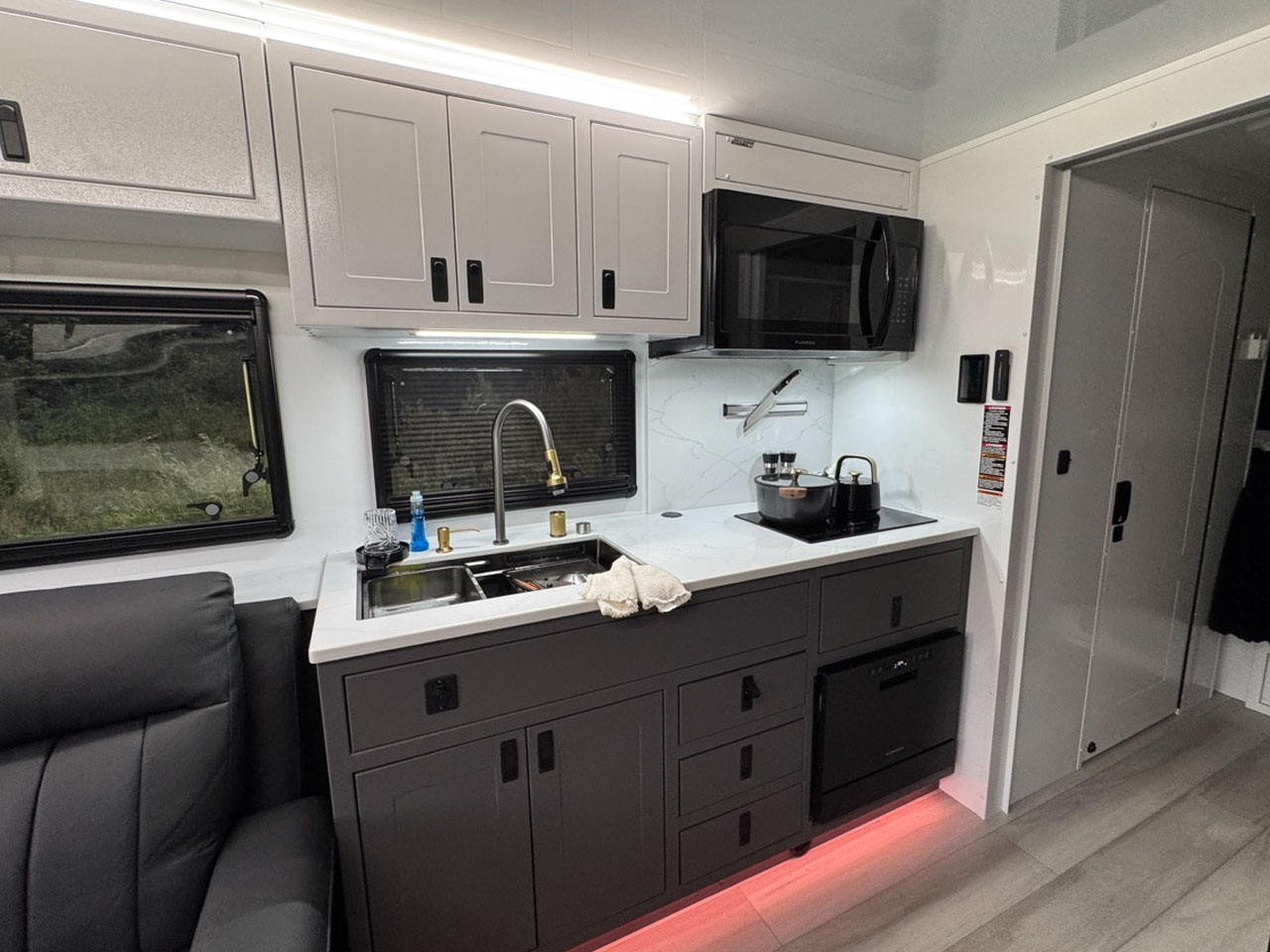
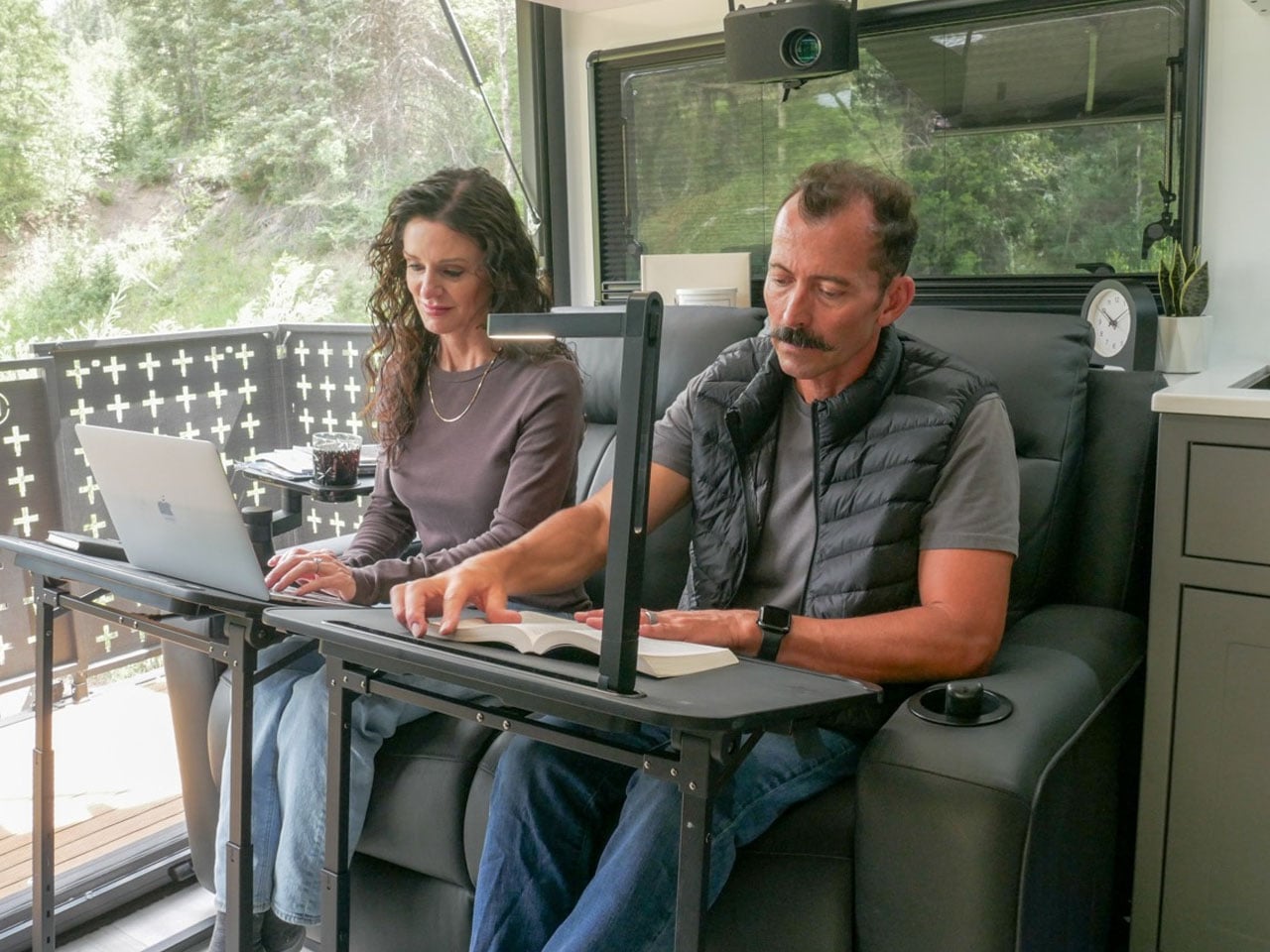
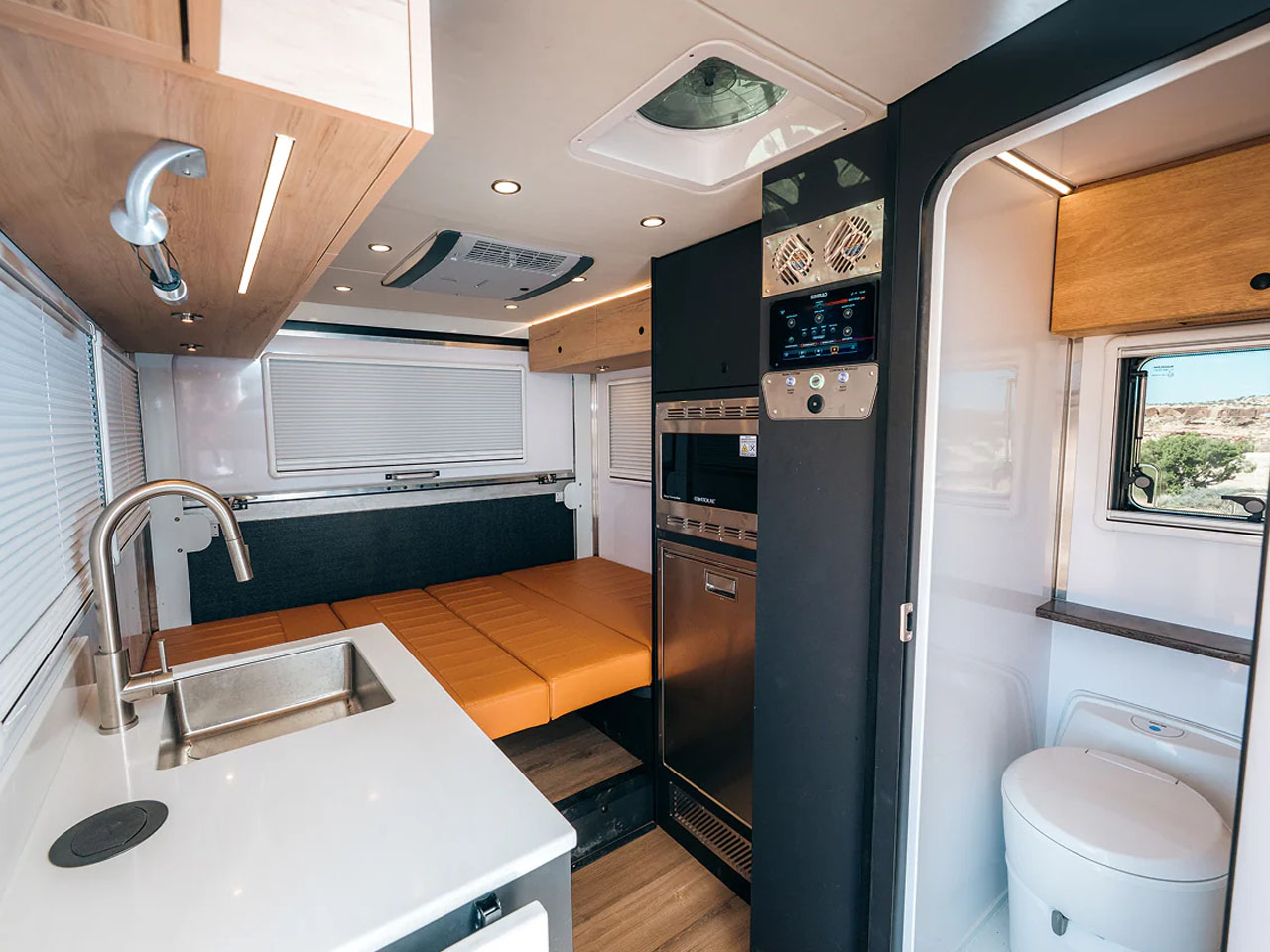
Coming to the inside, the interior has been designed for luxury living and comfort with an electric fireplace and leather recliners in the vicinity. When it’s raining or snowing outside, and you can’t do much outdoors, you can entertain yourself with the ceiling-mounted projector firing content on a retractable screen placed right above the fireplace.
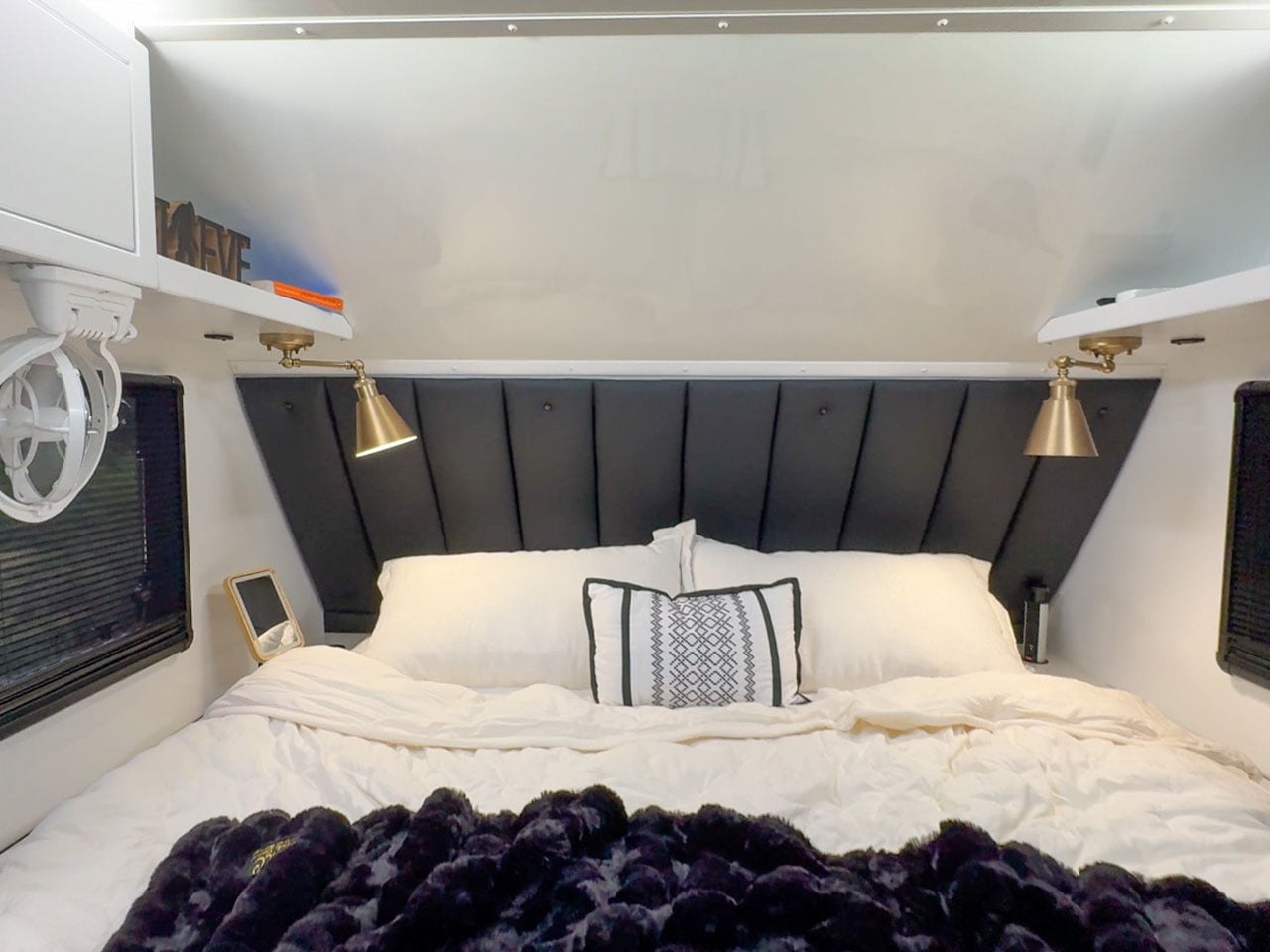
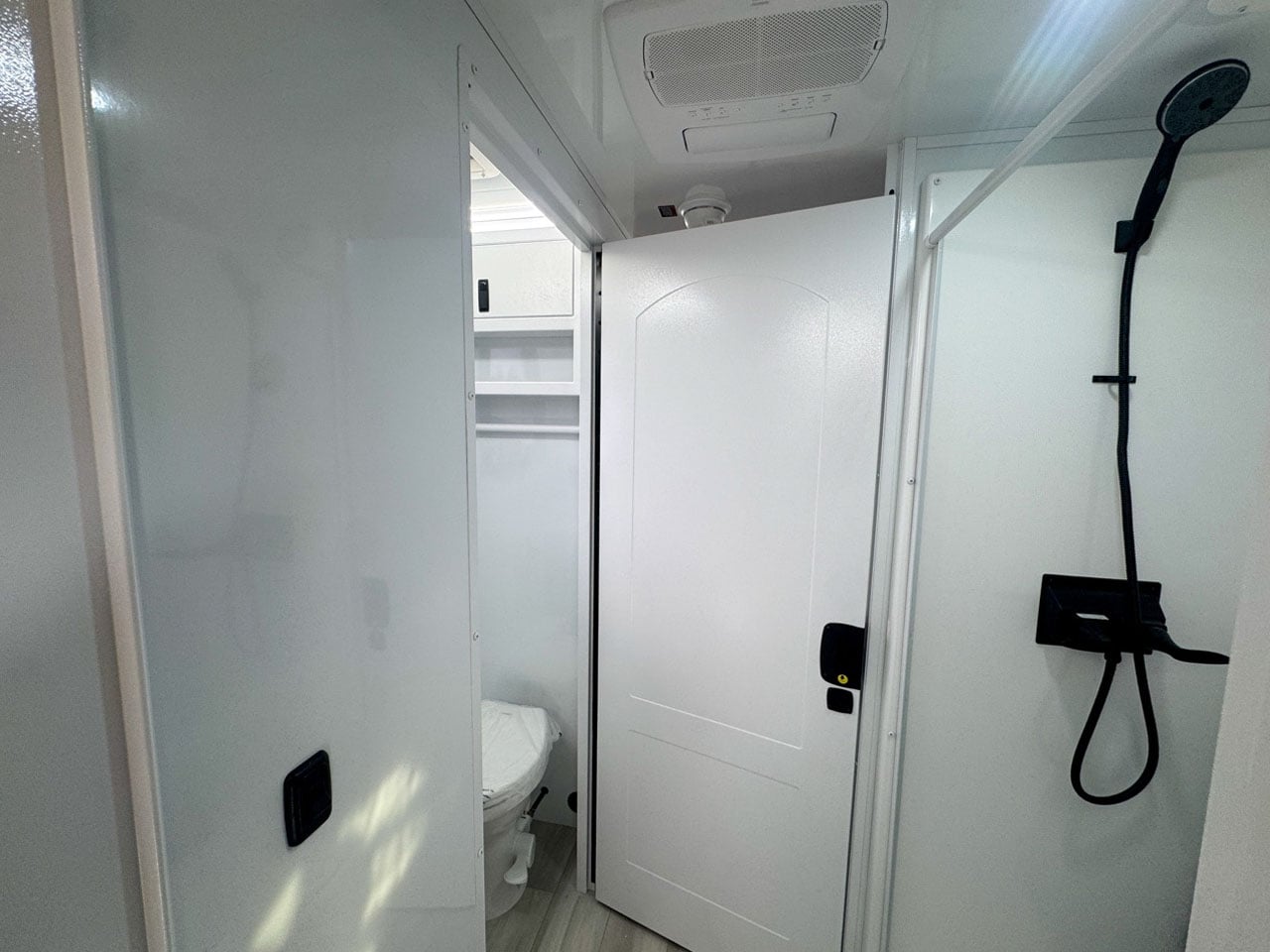
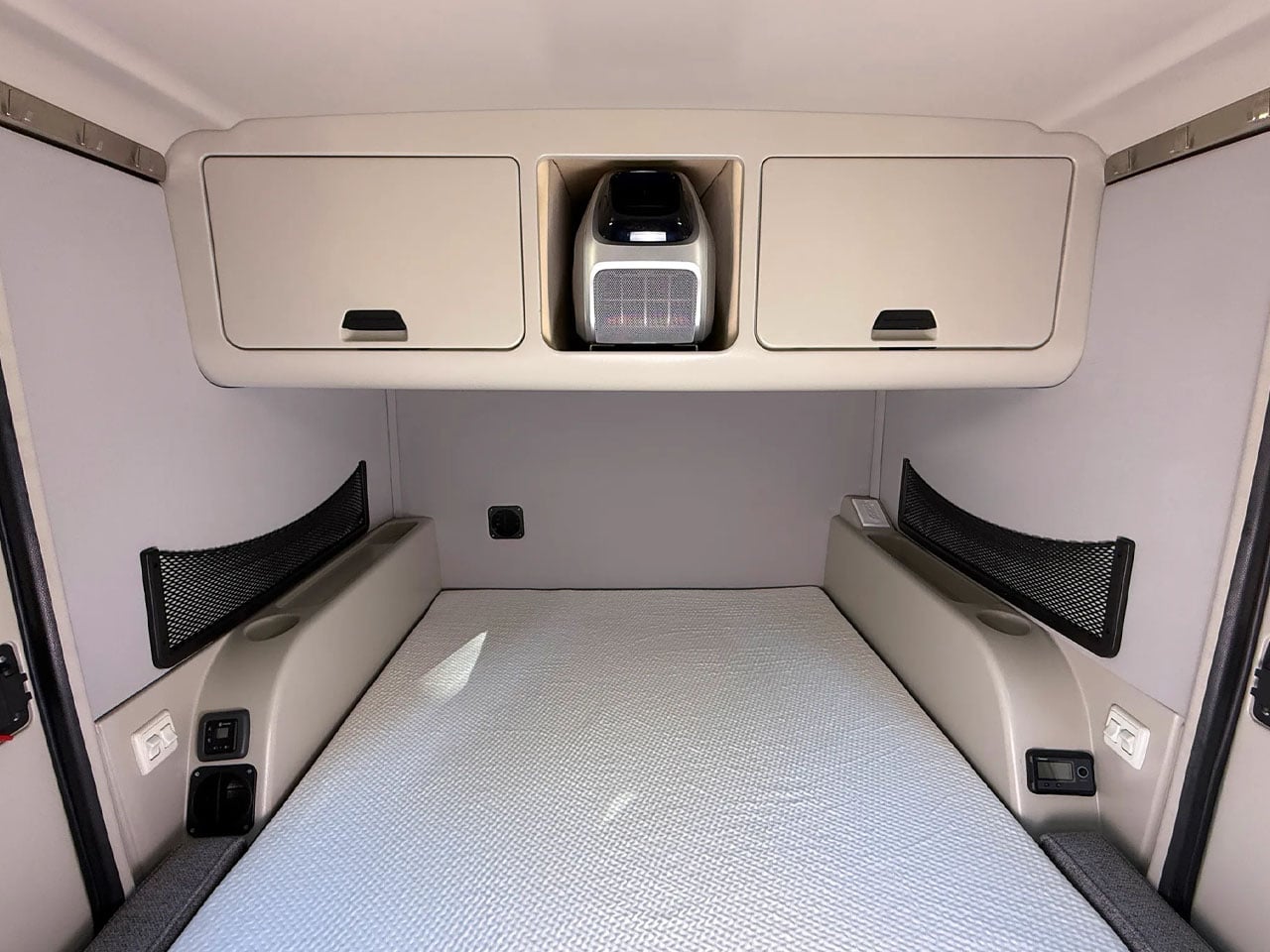
After the entertainment, when you feel hungry, you can prepare a meal in the fully equipped kitchen or run for a quick shower in the wet bath. When it’s time to retire for the day, hop into the sleeping area provided with either a twin or a king-size bed. This convenience and the all-weather durability of the rig are further enhanced by its massive rooftop solar array (more on it after we have got the Roamer X’s weight and towing convenience out of the way).
Roamer X measures 27 feet long and has an approximately 9,800 pounds of dry weight. The average Gross Vehicle Weight Rating (GVWR) of this camping trailer is roughly 11,000 pounds, which can feel like too much, but in comparison to the average GVWR of larger motorhomes, it is still closer to a standard travel trailer, which the Roamer X essentially is.
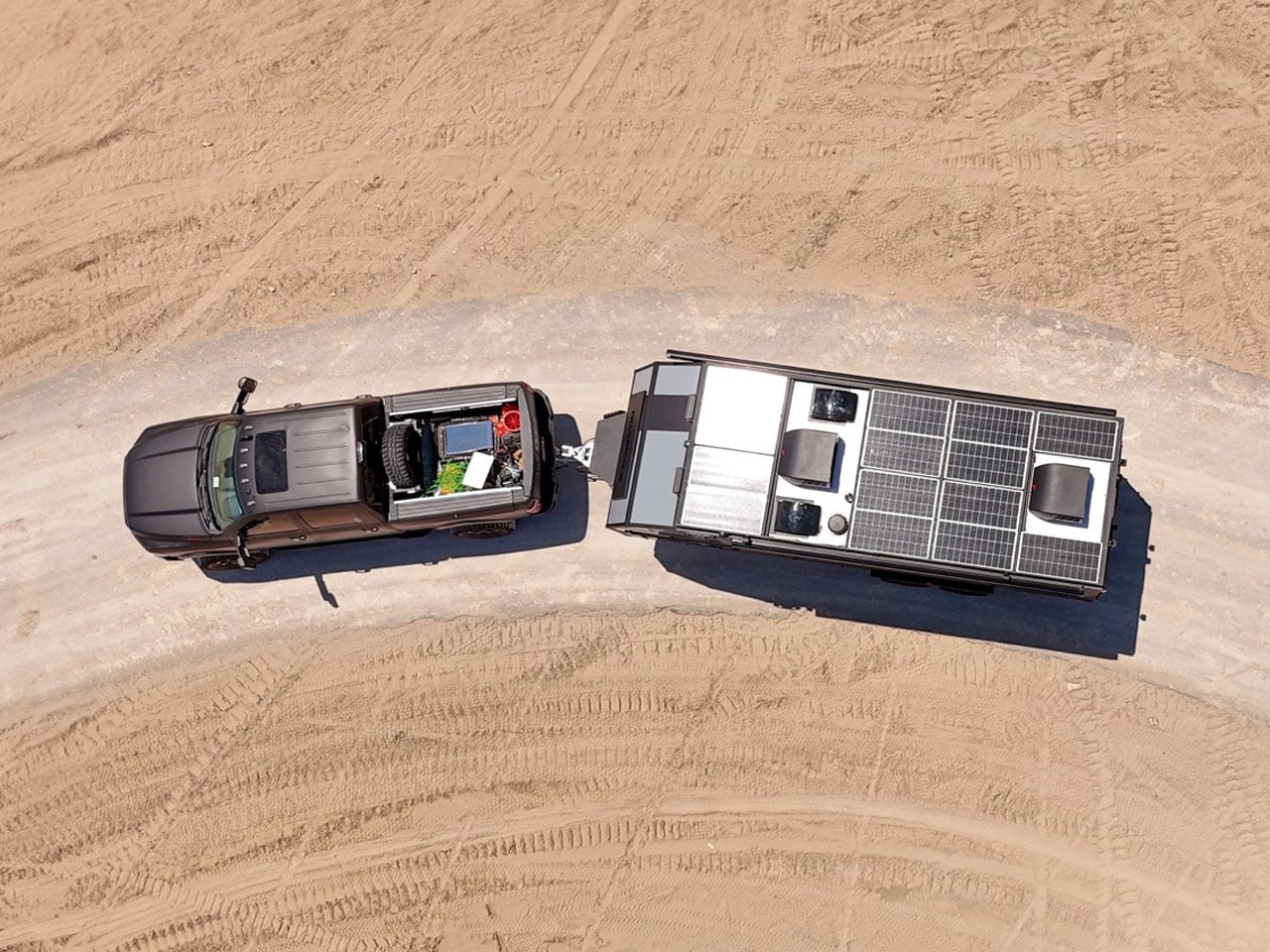
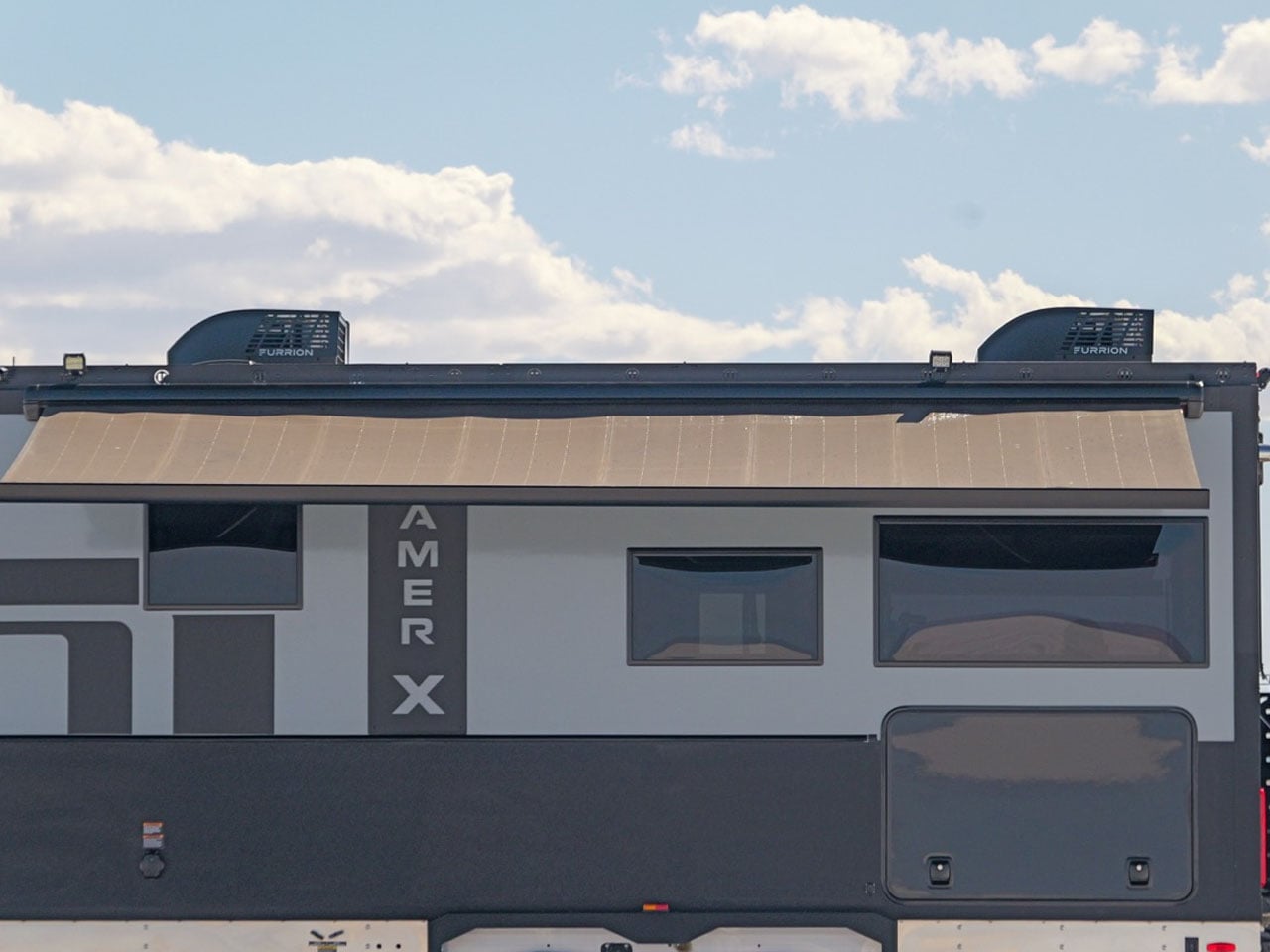
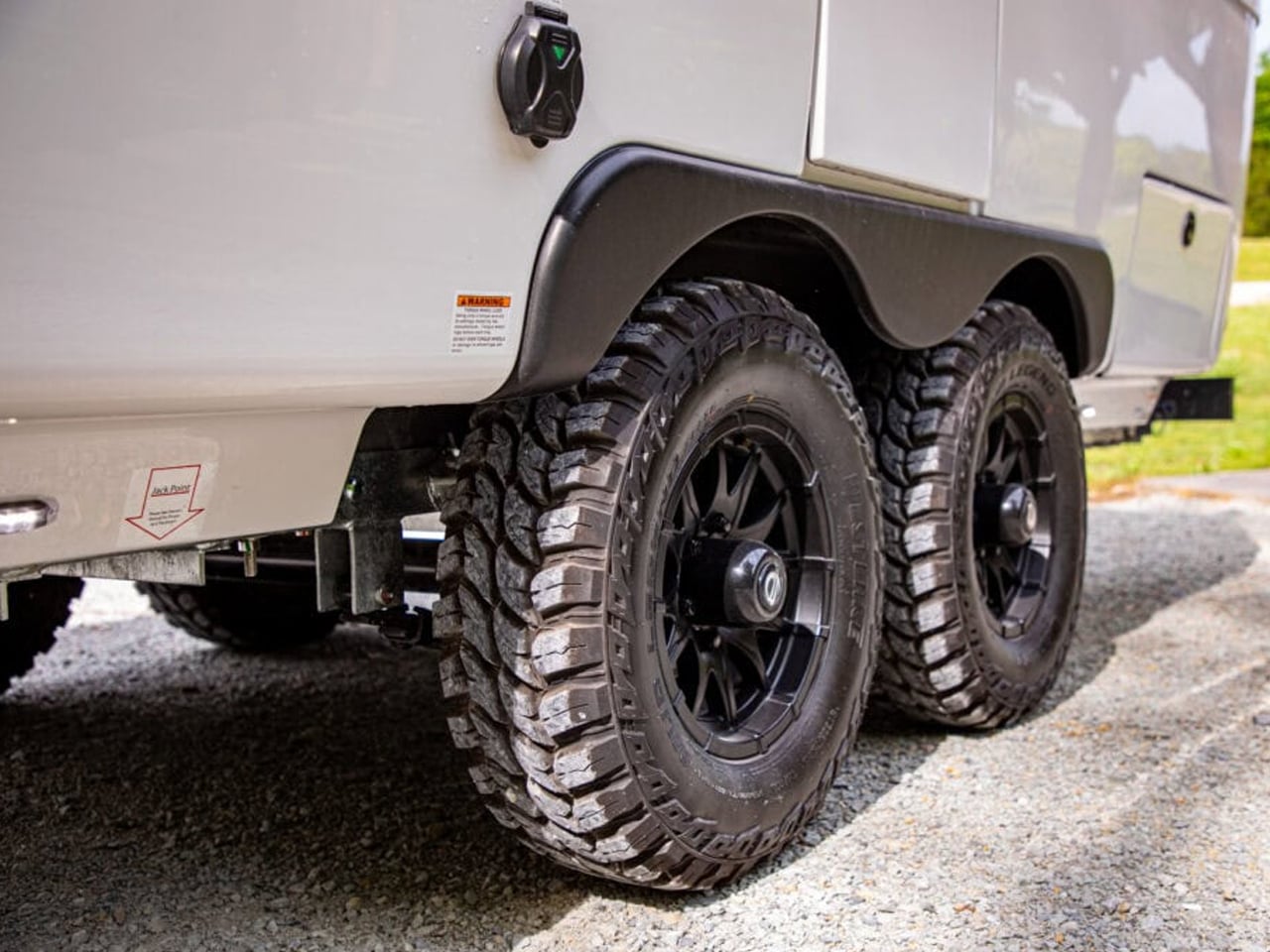
For its off-roading durability, the Roamer X supports heavy-duty tires, a reinforced chassis, and a MORryde air suspension, offering the camping trailer a smooth glide over uneven terrain. And for a comfortable time even when camped away from an electrical hookup, the Roamer X features 3,160 watts of rooftop solar panels. ROA Off-Road extends the solar capacity with awning-mounted solar panels and a portable array. It also features onboard 65 gallons of fresh water, a 2,100 Ah lithium battery, and a pair of 3,000-watt Victron inverters to keep all the appliances and light fixtures going even when there is no sun for days.
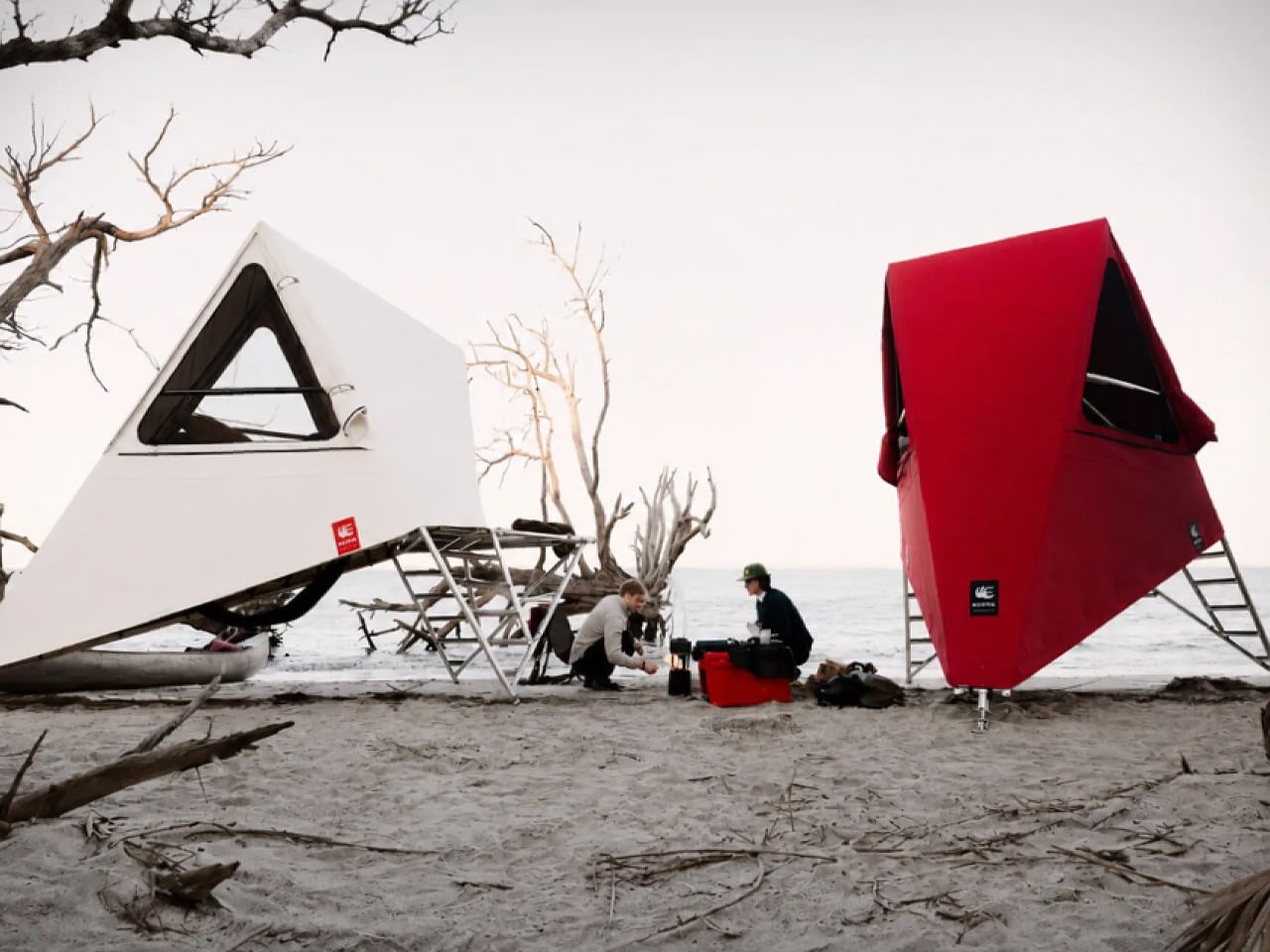
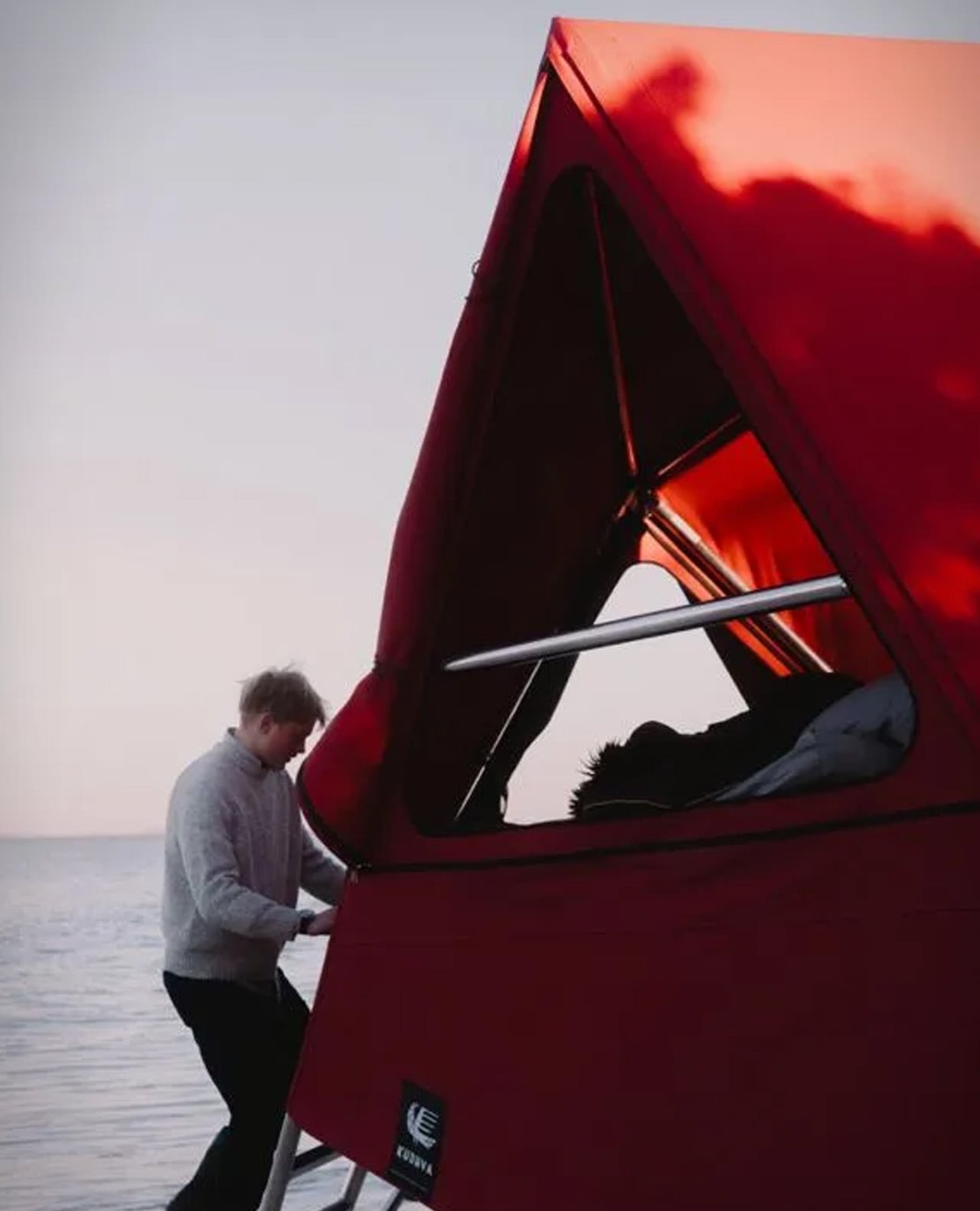
You’ve seen a building so good you immediately wanted to live in it. Ben Huggins built one you can actually move. His latest project, the Kudhva K1, is a portable elevated cabin that somehow manages to feel both seriously considered and completely untethered from the ground beneath it. Huggins is co-founder of Sandford-based New British Design, and the K1 is the kind of thing you design when you love architecture but have no patience for permanence.
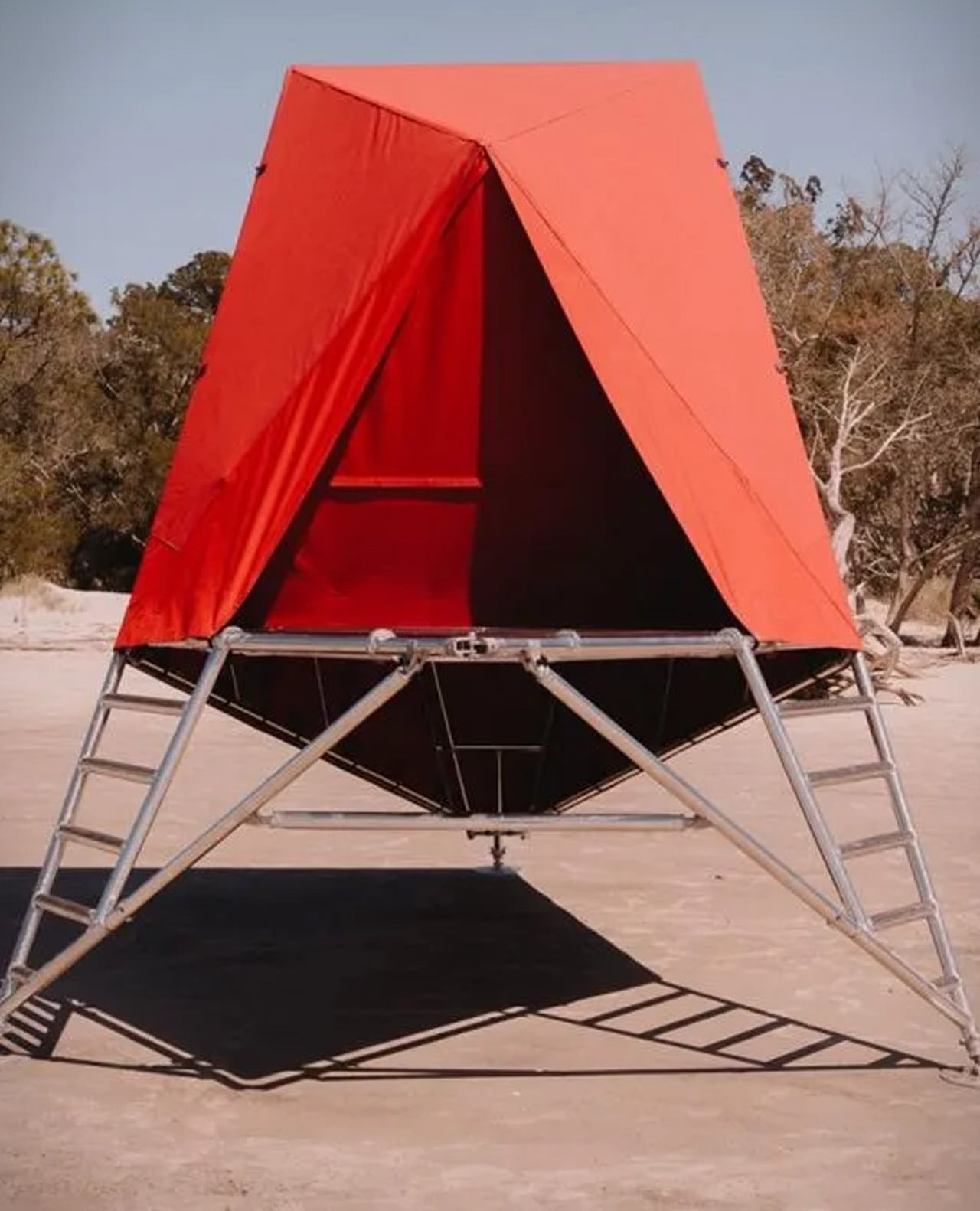
The K1 grew directly out of Kudhva, the beloved off-grid retreat carved into a disused slate quarry on the north coast of Cornwall. The original cabins, perched above the landscape on angular stilts, became something of a cult object in British architectural circles. Huggins, working alongside co-designer Hannah Huggins, took that angular, treehouse-like geometry and asked a simple but ambitious question: what if you could move it?
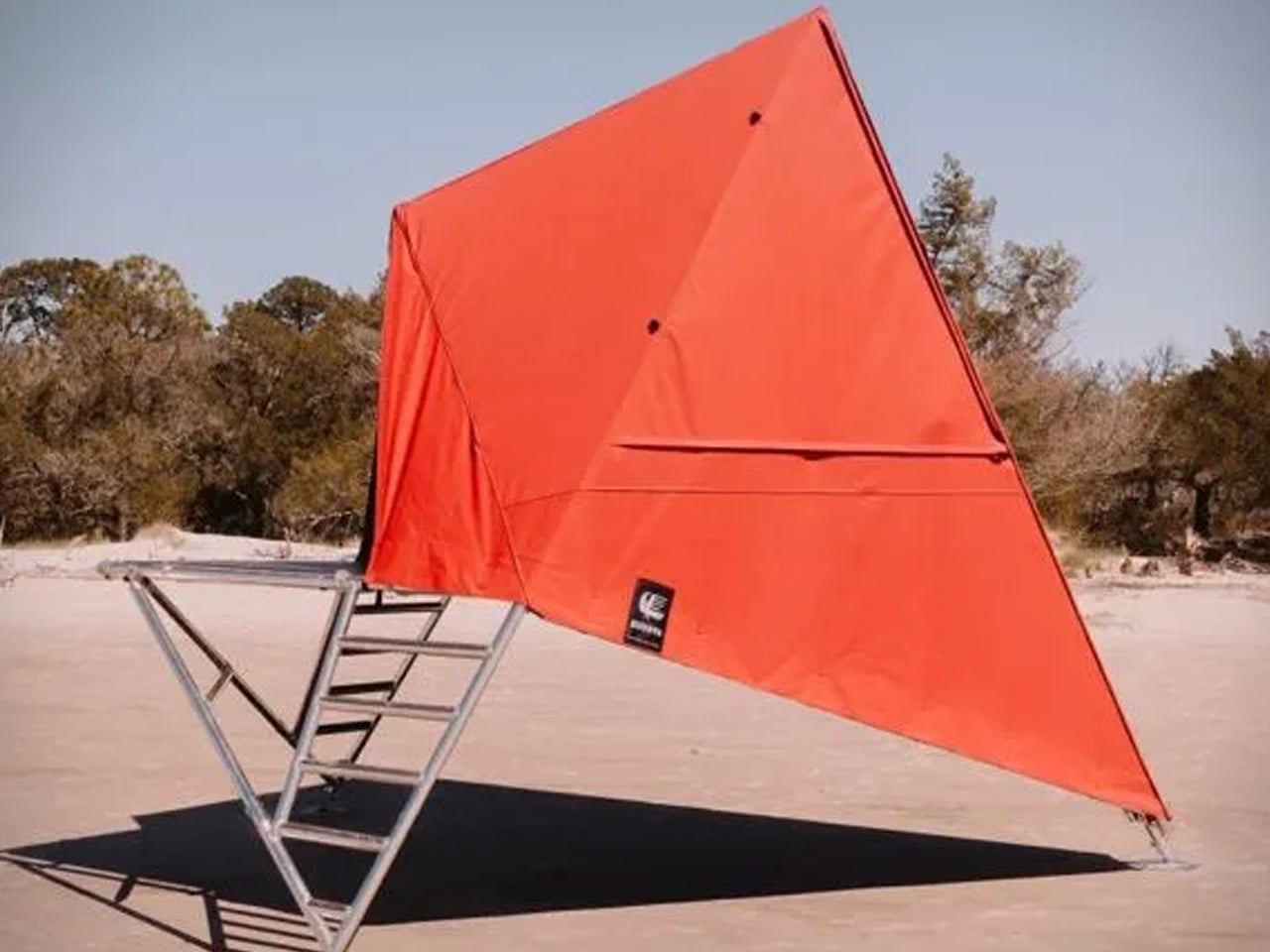
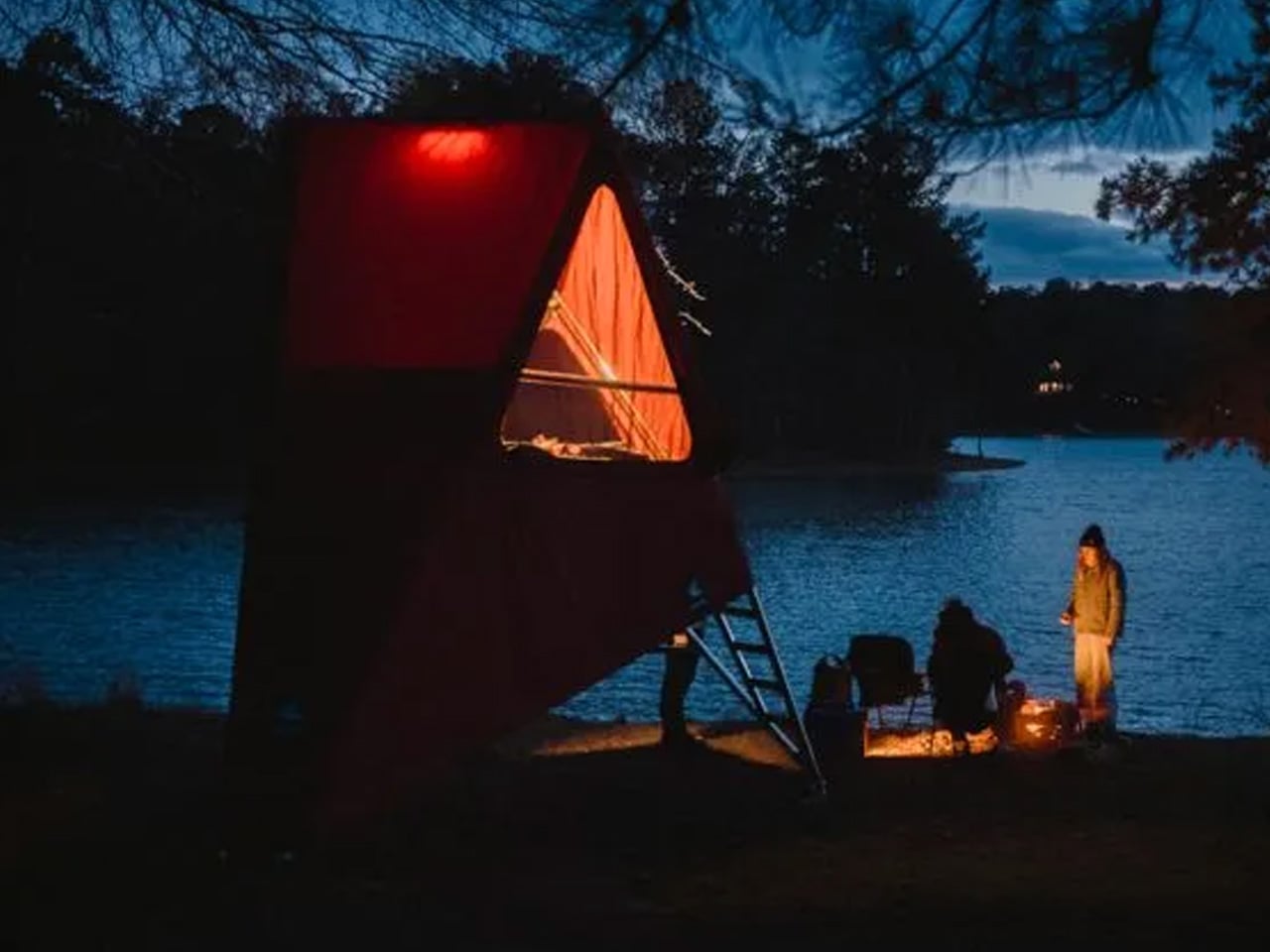
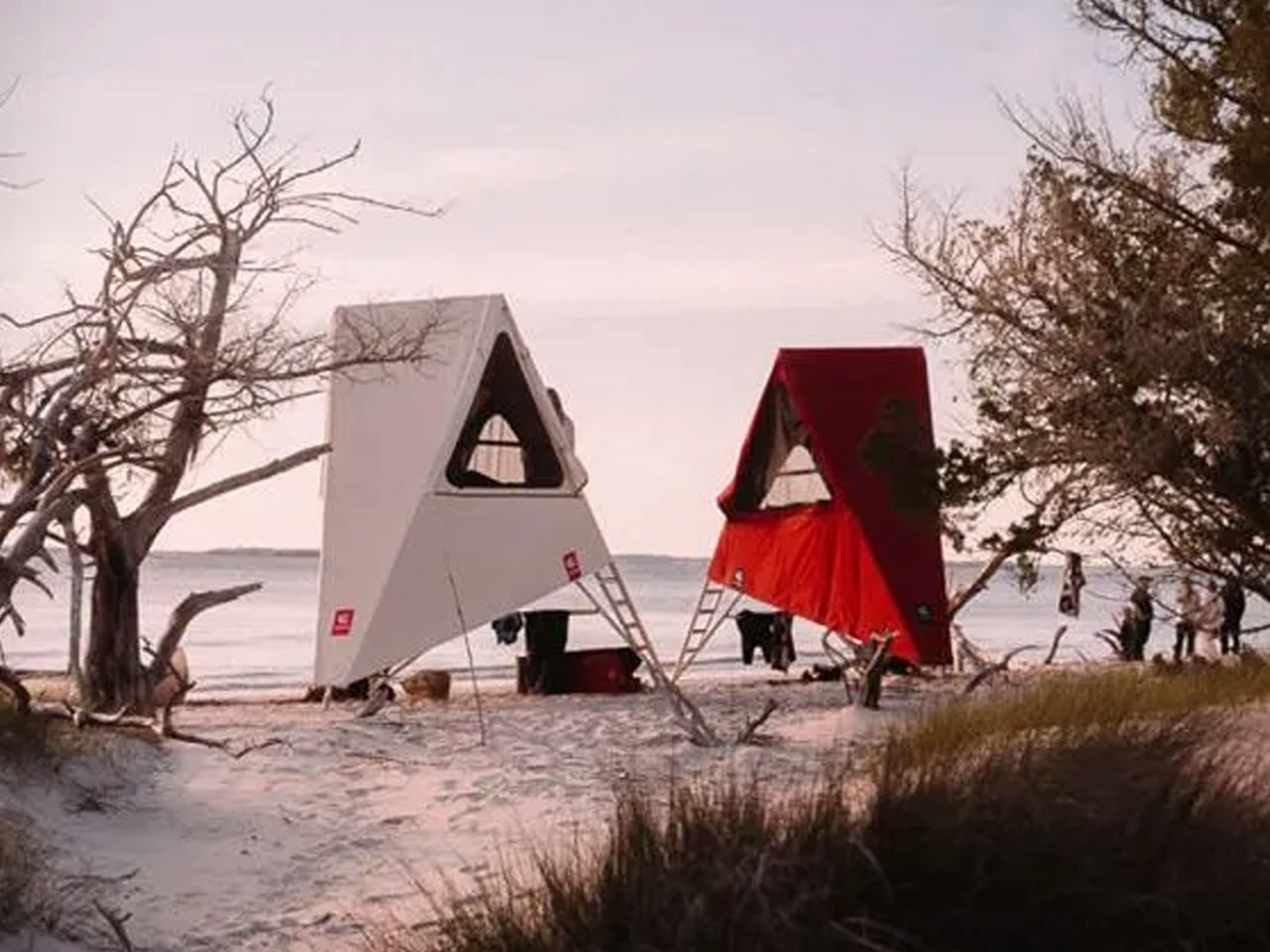
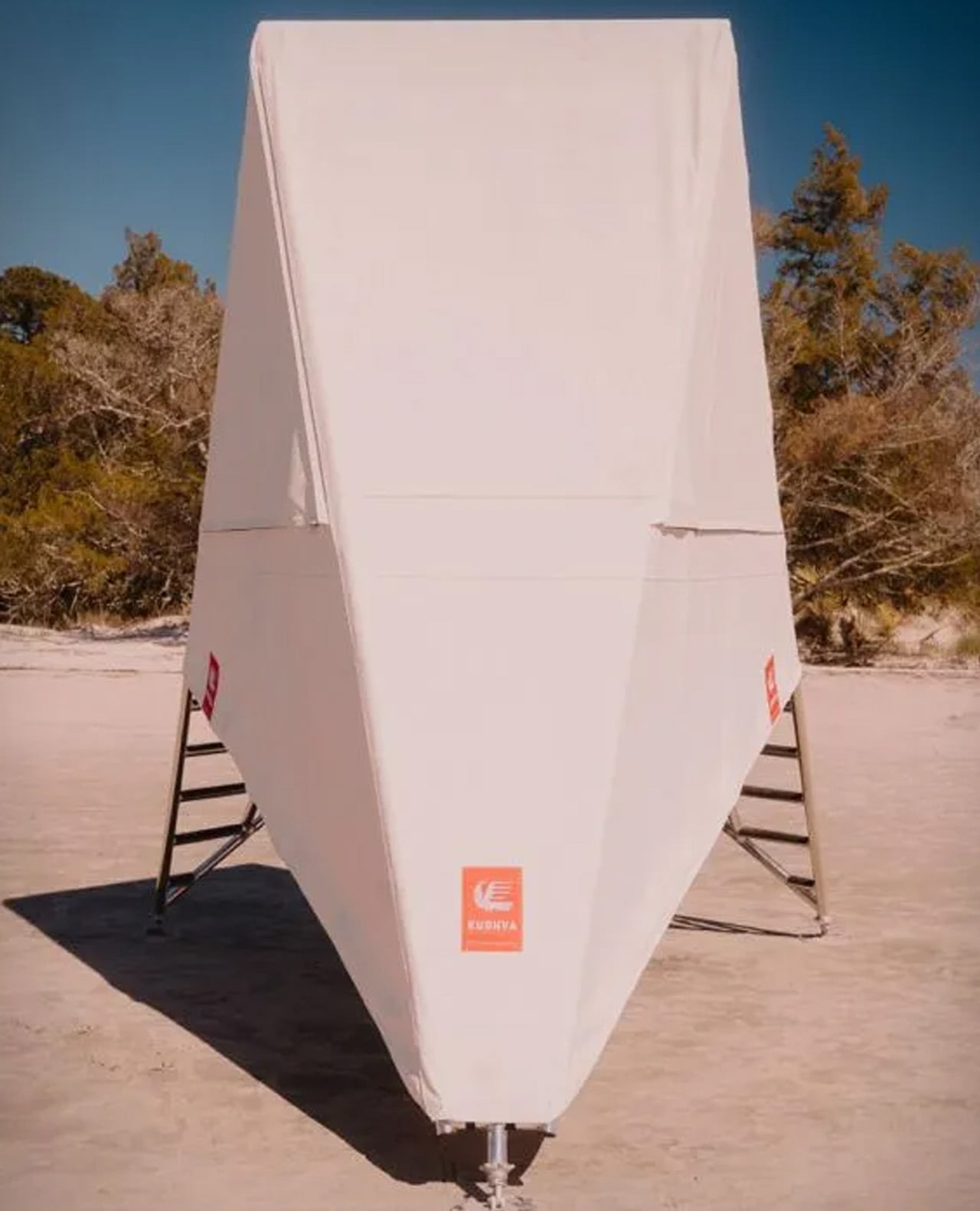
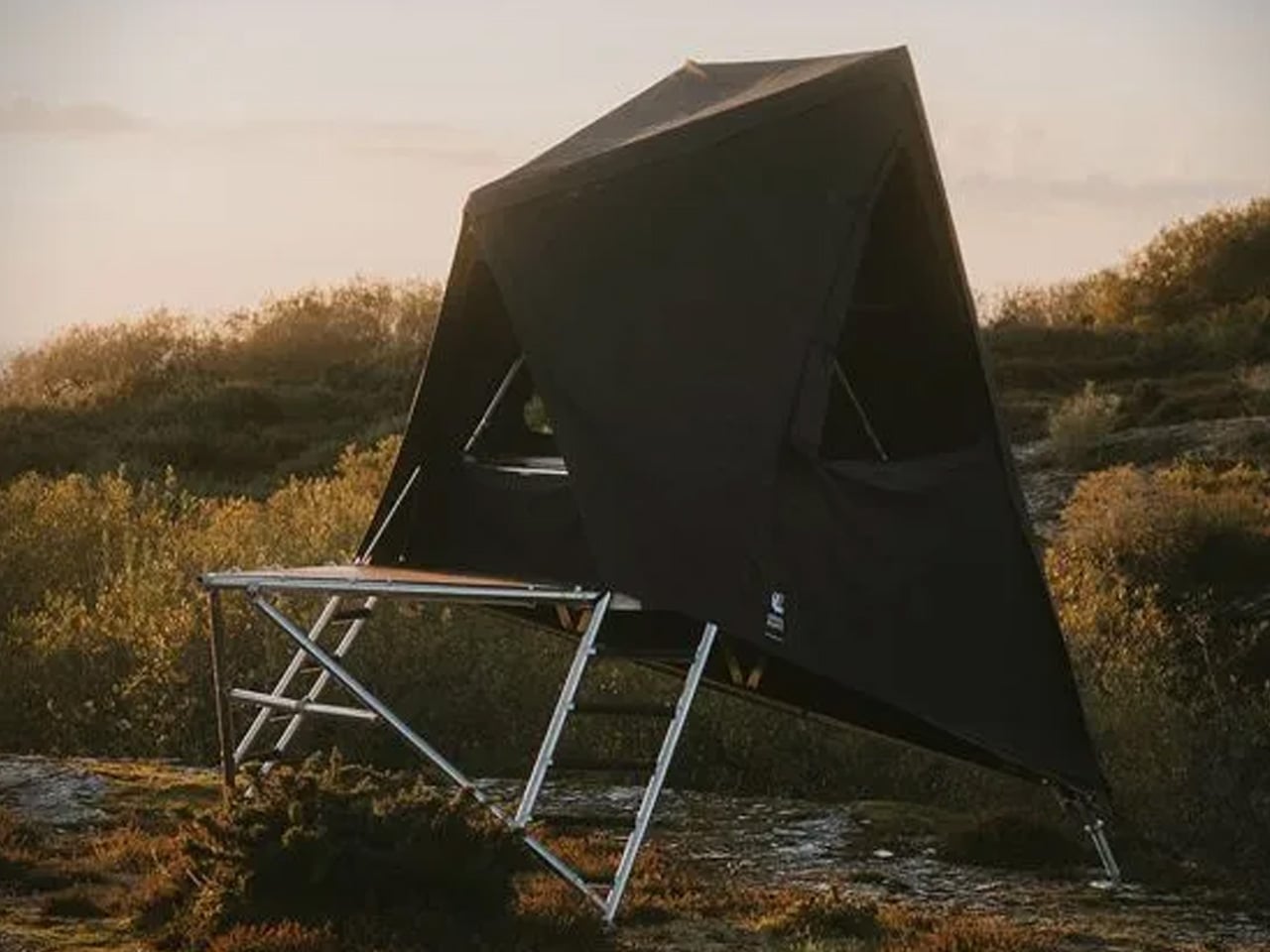
The answer is a structure built around a recyclable aluminum frame wrapped in heavy-duty British Millerain Regentex poly-cotton canvas, rated at 407g/m2. Standing 3.6 meters tall, 3.3 meters wide, and 4.9 meters deep, the K1 isn’t small. An elevated deck extends beyond the entrance, accessed by integrated ladders, giving it a genuinely architectural presence that photographs like a building and packs down like equipment. The tripod leg system adjusts independently, meaning it can sit perfectly level on rocky, sloped, or otherwise uncooperative ground without disturbing a single blade of grass below it.
That relationship with the land matters. The K1 requires no foundation, no planning permission, and leaves no trace when it leaves. Two people can have it standing in 30 to 45 minutes. At 320 kilograms, it isn’t light, but it is relocatable, which places it in a category almost entirely its own: too architectural to call a tent, too mobile to call a cabin.
The canvas shell is built to withstand winds up to 80 mph, suggesting a product designed for real weather rather than curated glamping conditions. Inside, the two-person sleeping space carries the same minimal, considered proportions as the original Kudhva structures. The frame is described as infinitely recyclable, which fits neatly within the retreat’s broader ethos of leaving places better than you found them.
Priced at around $15,500, the K1 is now making its way to the United States through British American Camping, with initial deployments planned across glamping destinations in Georgia. The price puts it squarely in the commercial hospitality bracket, though nothing about the design reads like a product built for budget corners. It reads like a building that decided to keep its options open.
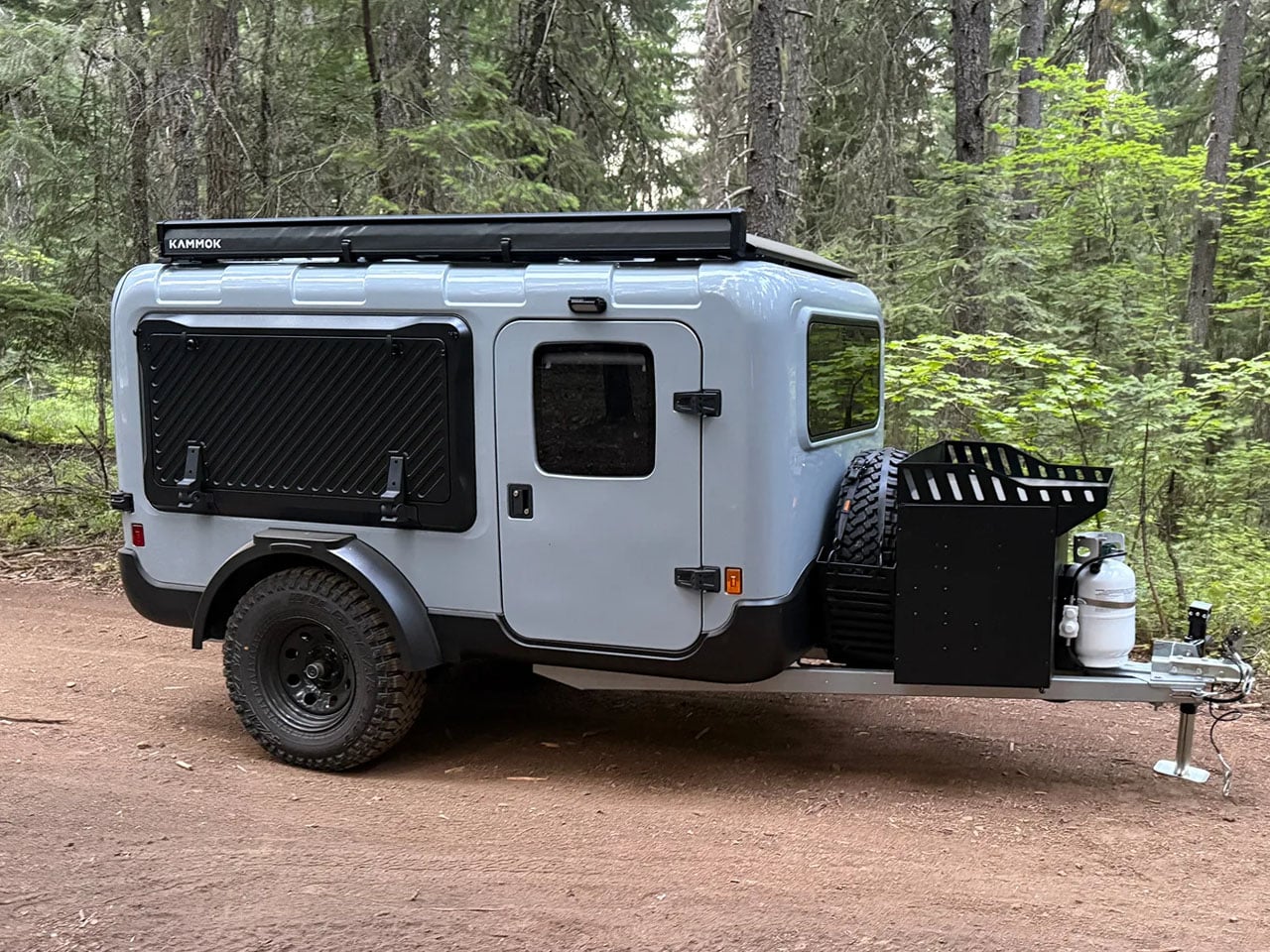
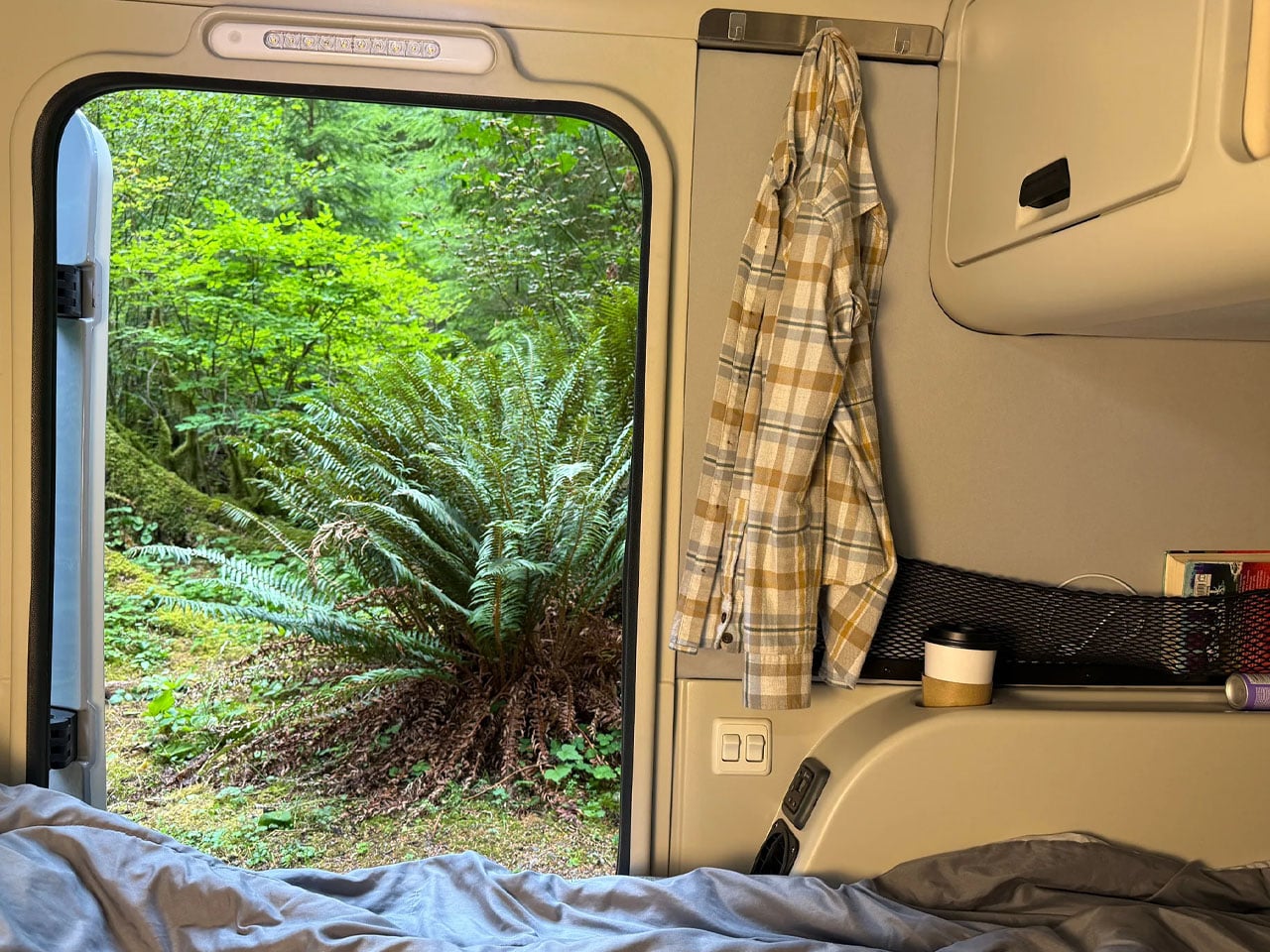
Camping has a way of making us rethink how much we actually need. A tent can be wonderfully simple, but inclement weather, uneven ground, and the lack of a comfortable place to sleep can quickly make the romance of sleeping outdoors wear thin. Larger RVs solve those problems, but they also bring more complexity and restrictions to the journey. The Motsmann Outranger is different, as it packs the essentials for a comfortable two-person escape into a compact trailer that can venture well beyond paved roads.
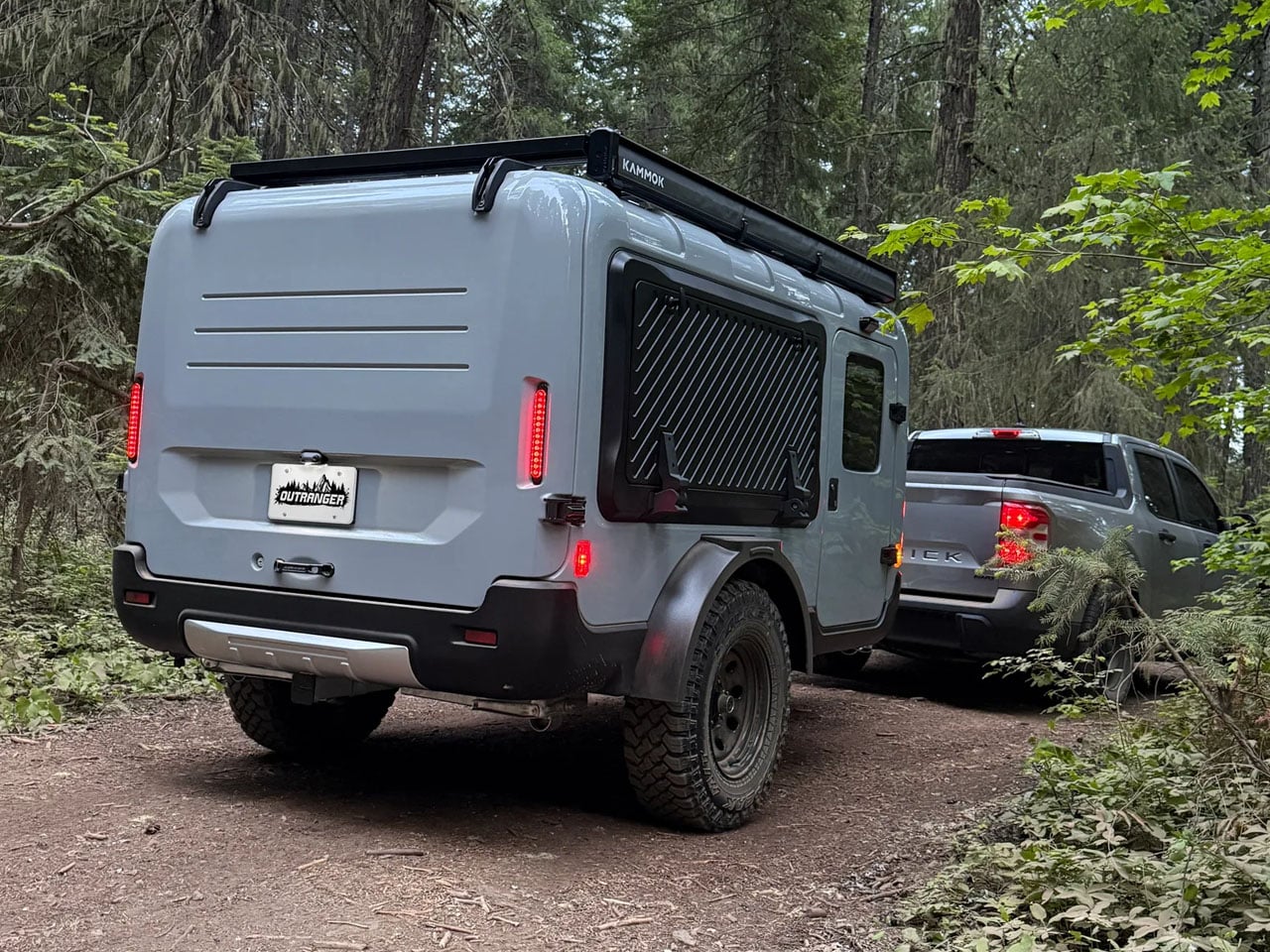
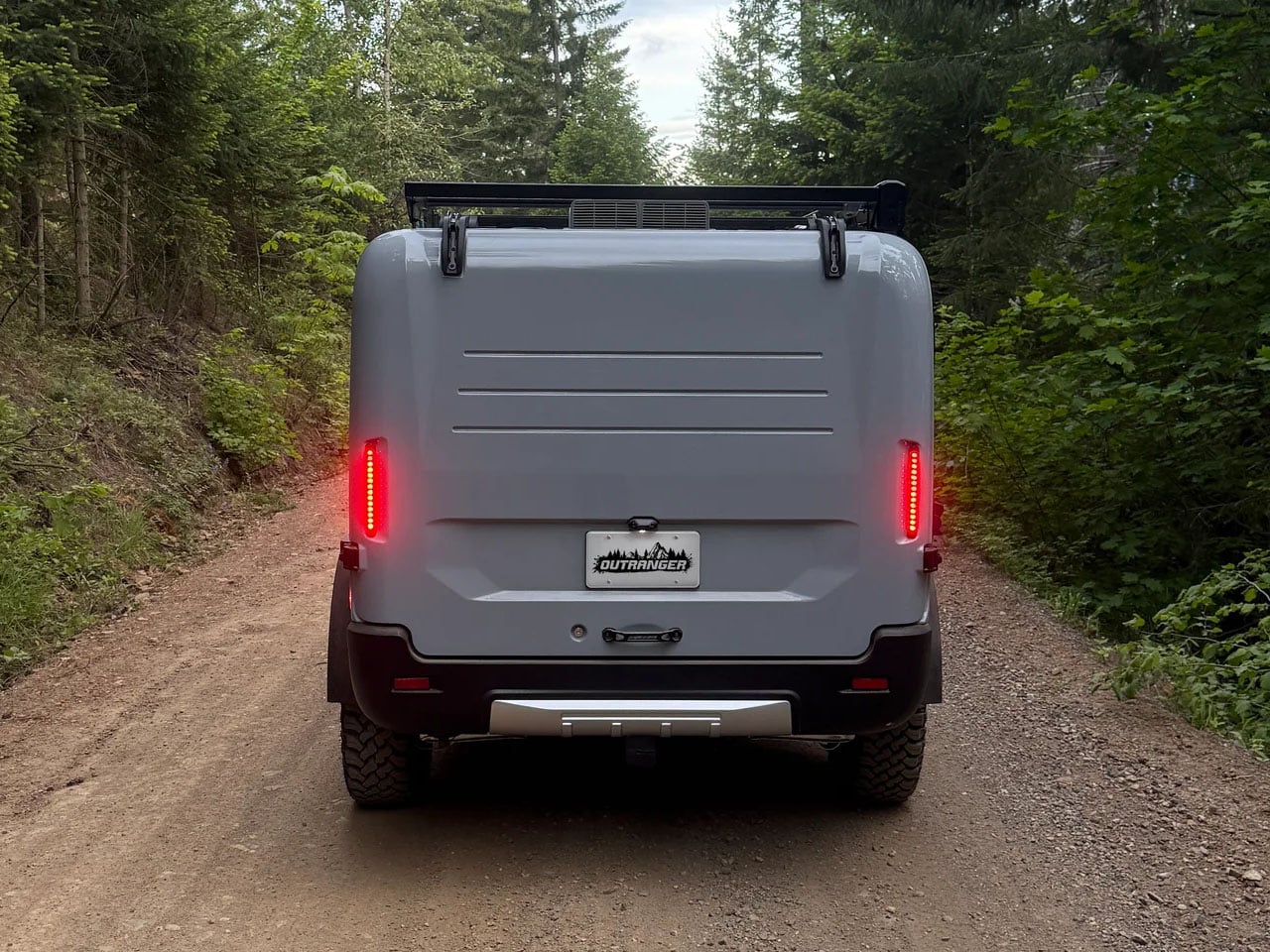
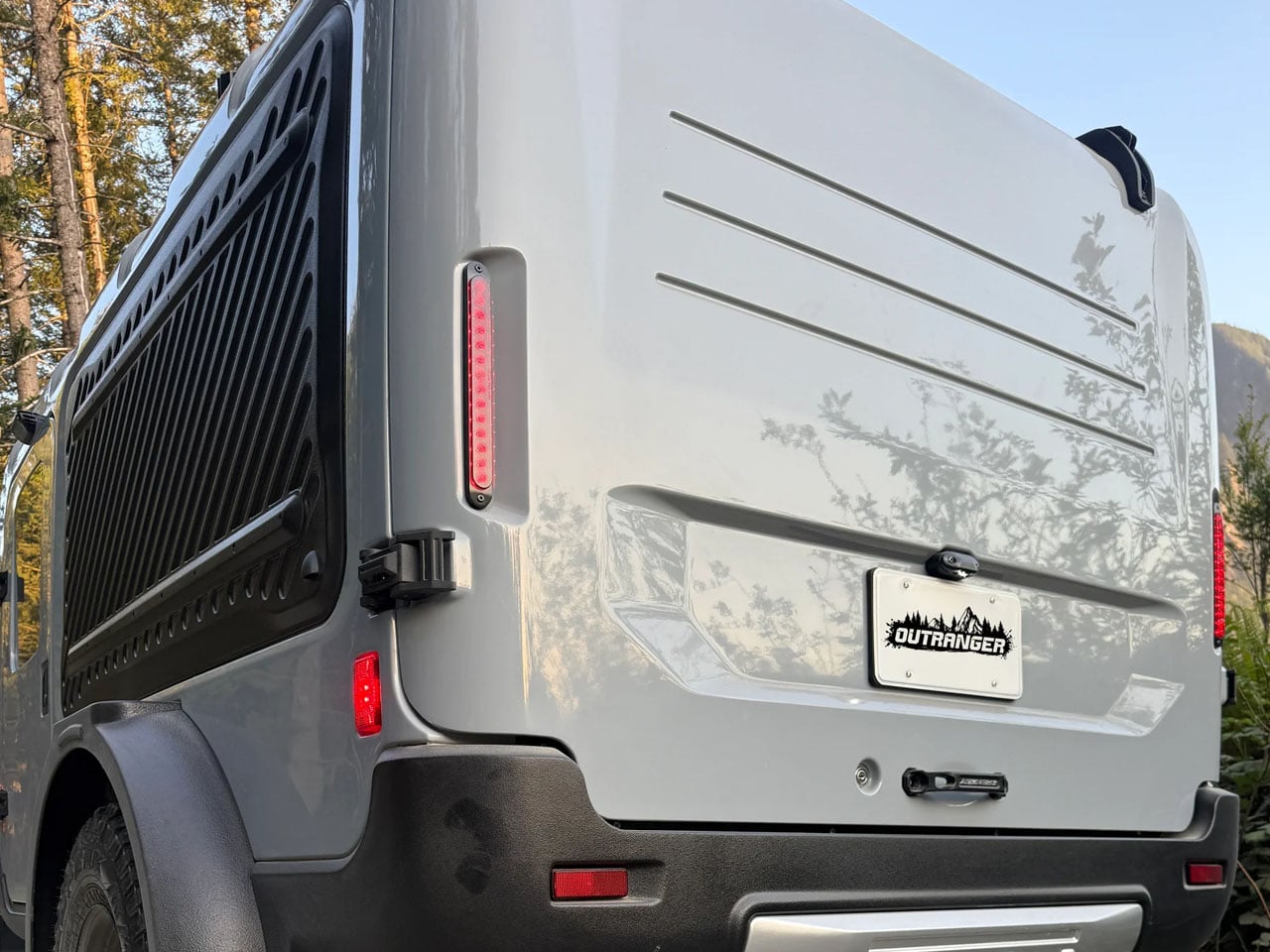
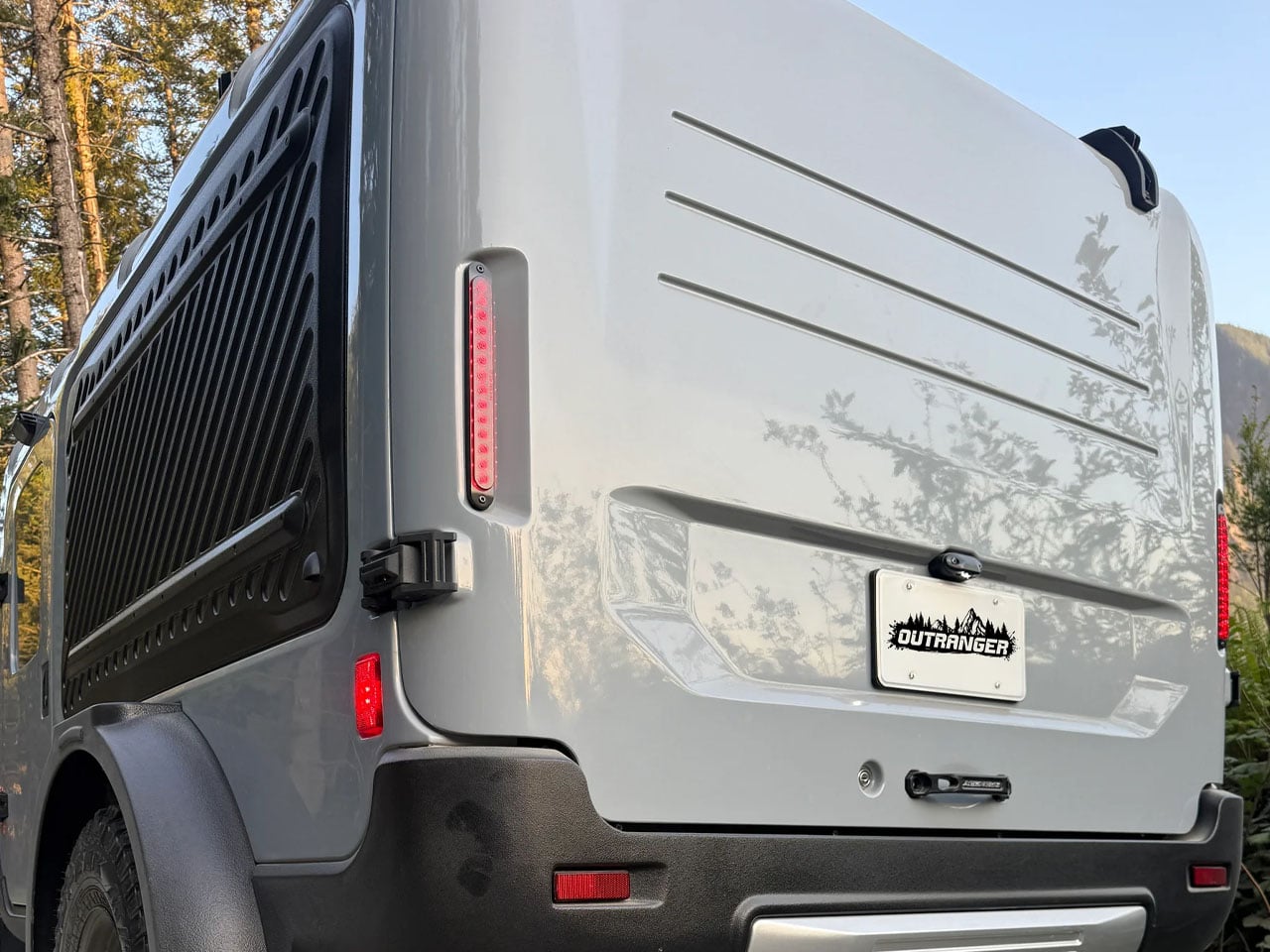
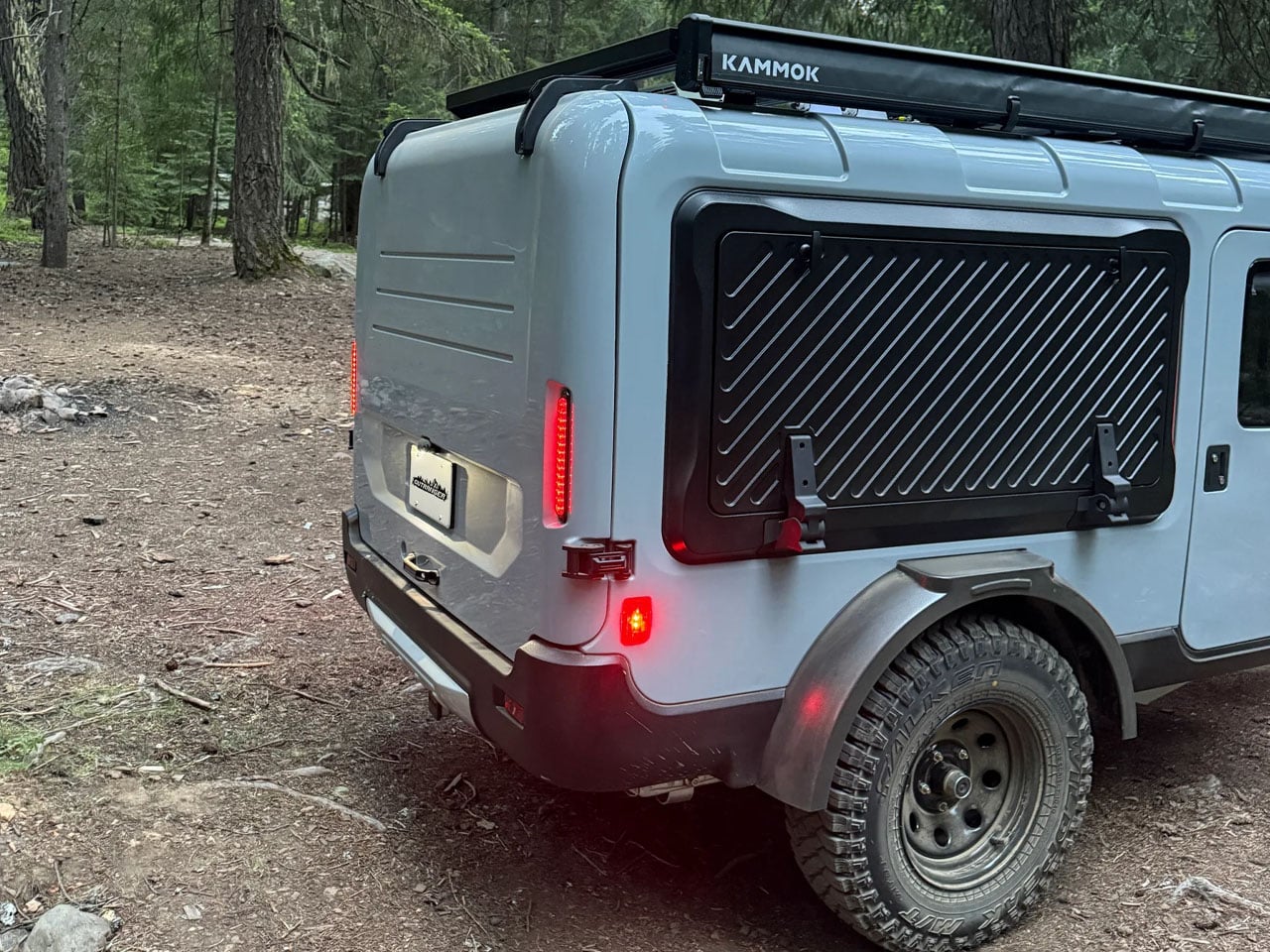
At first glance, the Outranger looks like an unusually squared-off interpretation of the classic teardrop trailers. That shape is deliberate, though, as Oregon-based Motsmann Engineering combines the compact footprint of a teardrop with the more upright proportions of a squaredrop, then wraps it in a molded composite body. The result is a camper trailer that feels familiar yet distinctly modern, with smooth exterior surfaces and a slightly automotive character. Measuring 13.5 feet from hitch to rear bumper, the Outranger is small enough to remain manageable behind a pickup, SUV, 4×4, or crossover. It weighs 1,450 pounds dry in the base configuration, making the relatively low weight one of its biggest advantages for off-grid travel.
Motsmann has also taken an unusually durable approach to construction, with the body assembled from six molded composite structural panels rather than traditional wood-based construction. Beneath the rig sits a bolted, fully galvanized 3-mm steel chassis. The bolted frame is intended to make repairs and future upgrades easier, while the absence of wood throughout the camper eliminates concerns about swelling and warping from moisture. The lower body receives a Raptor polyurethane coating for additional protection. Underneath, a Timbren 2000 HD independent suspension and 15-inch wheels wrapped in 30-inch Falken Wildpeak tires give the little trailer considerably more confidence away from smooth roads. It is still a compact camper rather than a full-size expedition rig, but its proportions and hardware are clearly designed with rougher terrain in mind.
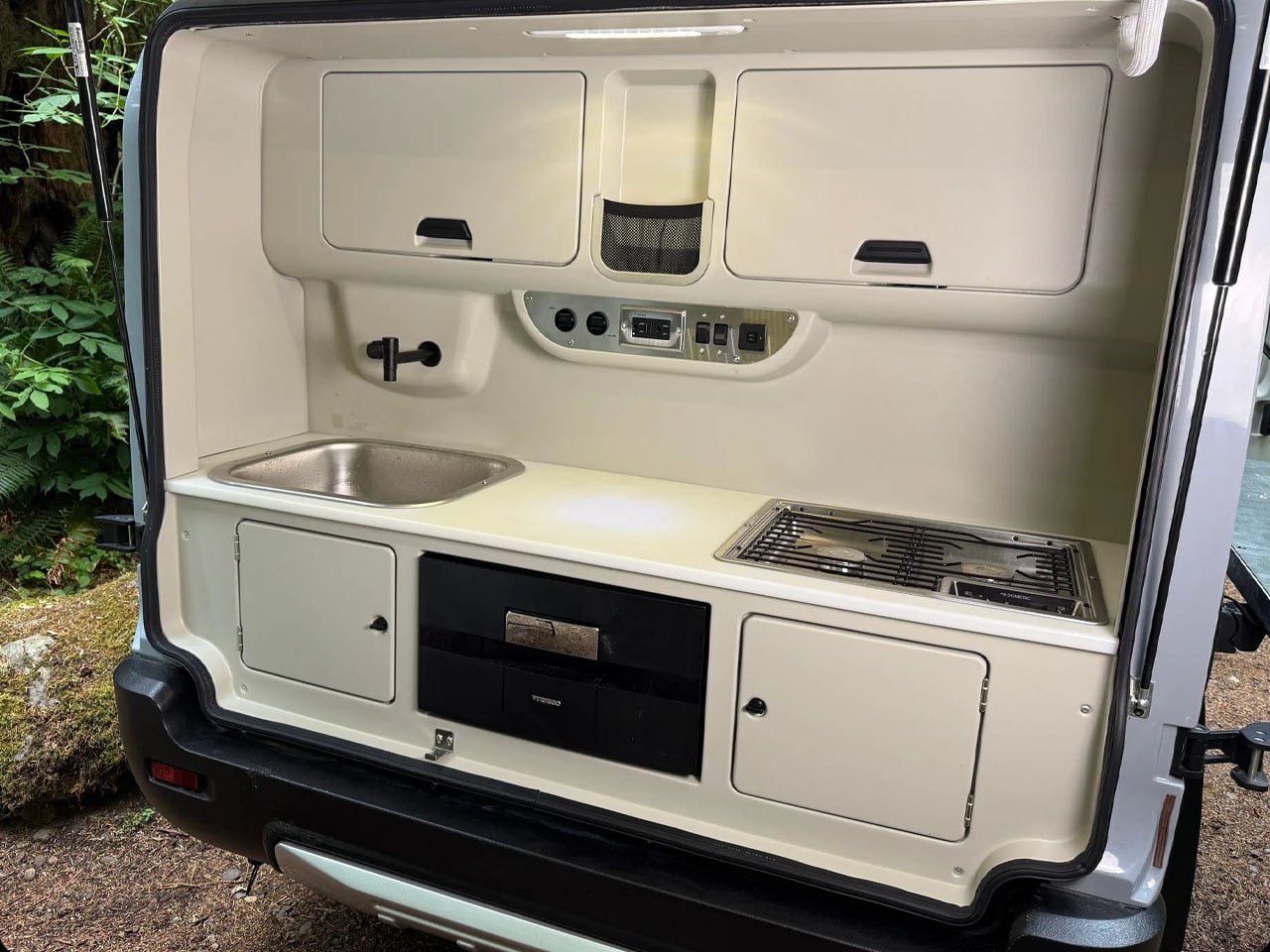
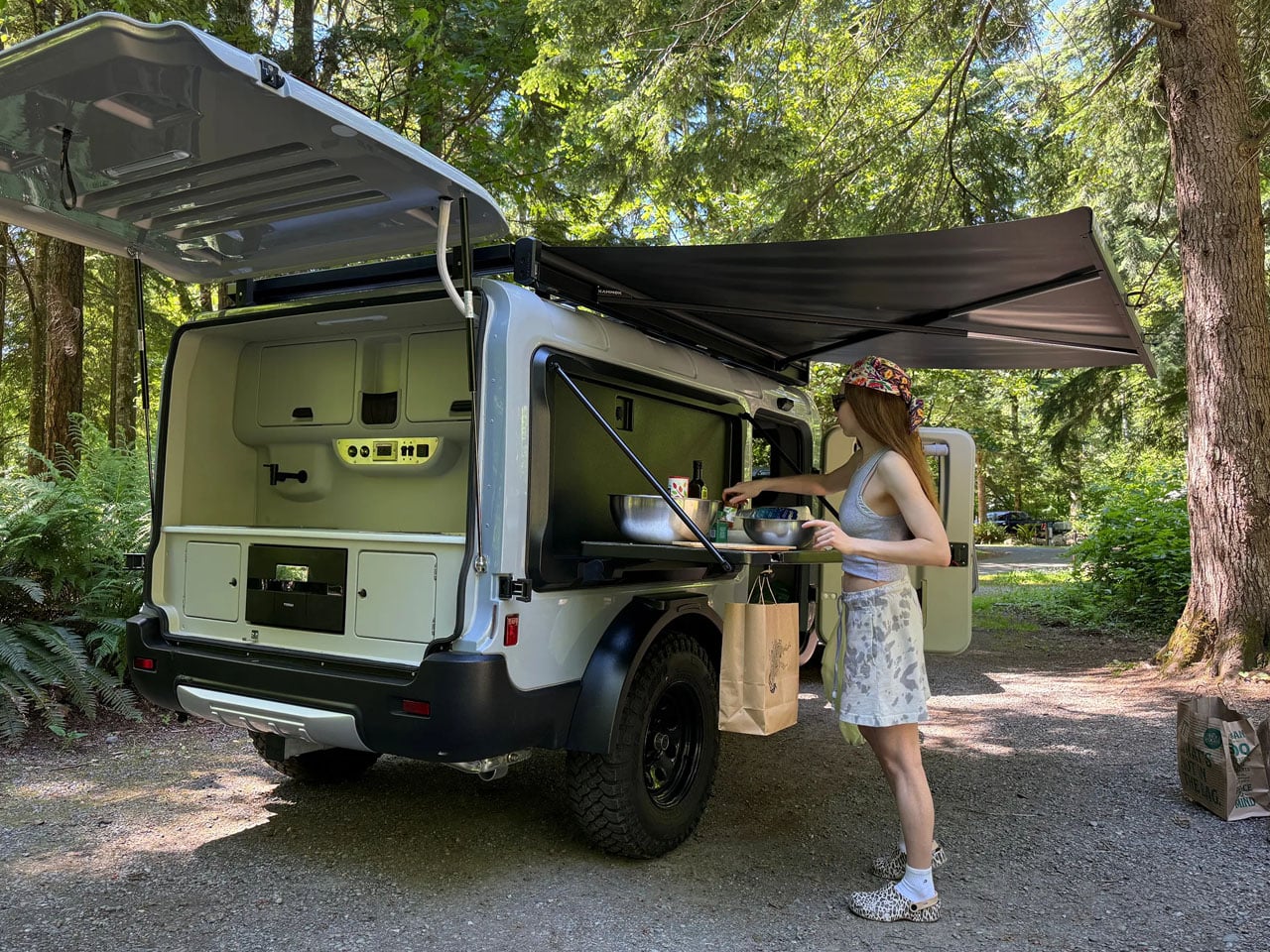
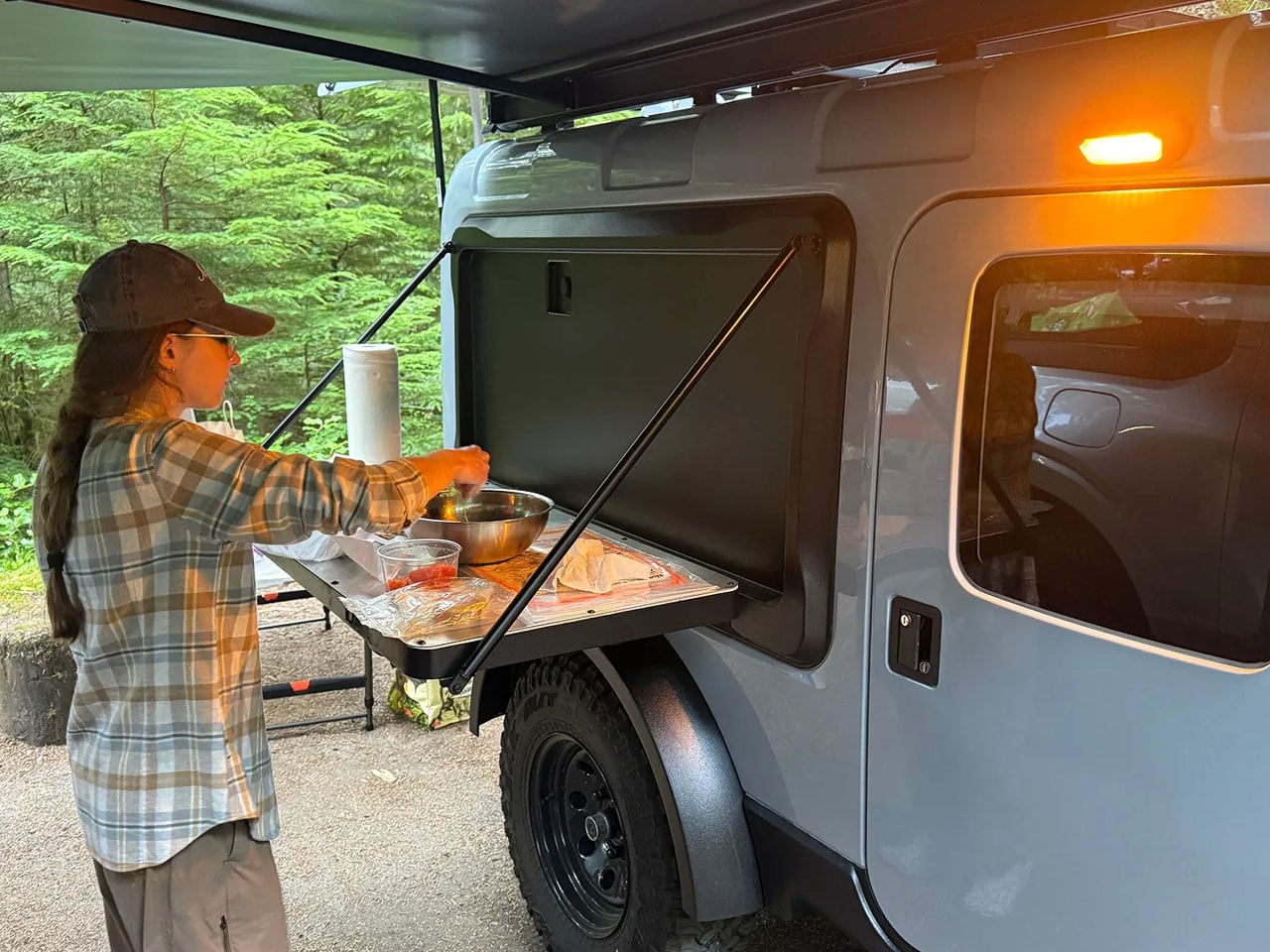
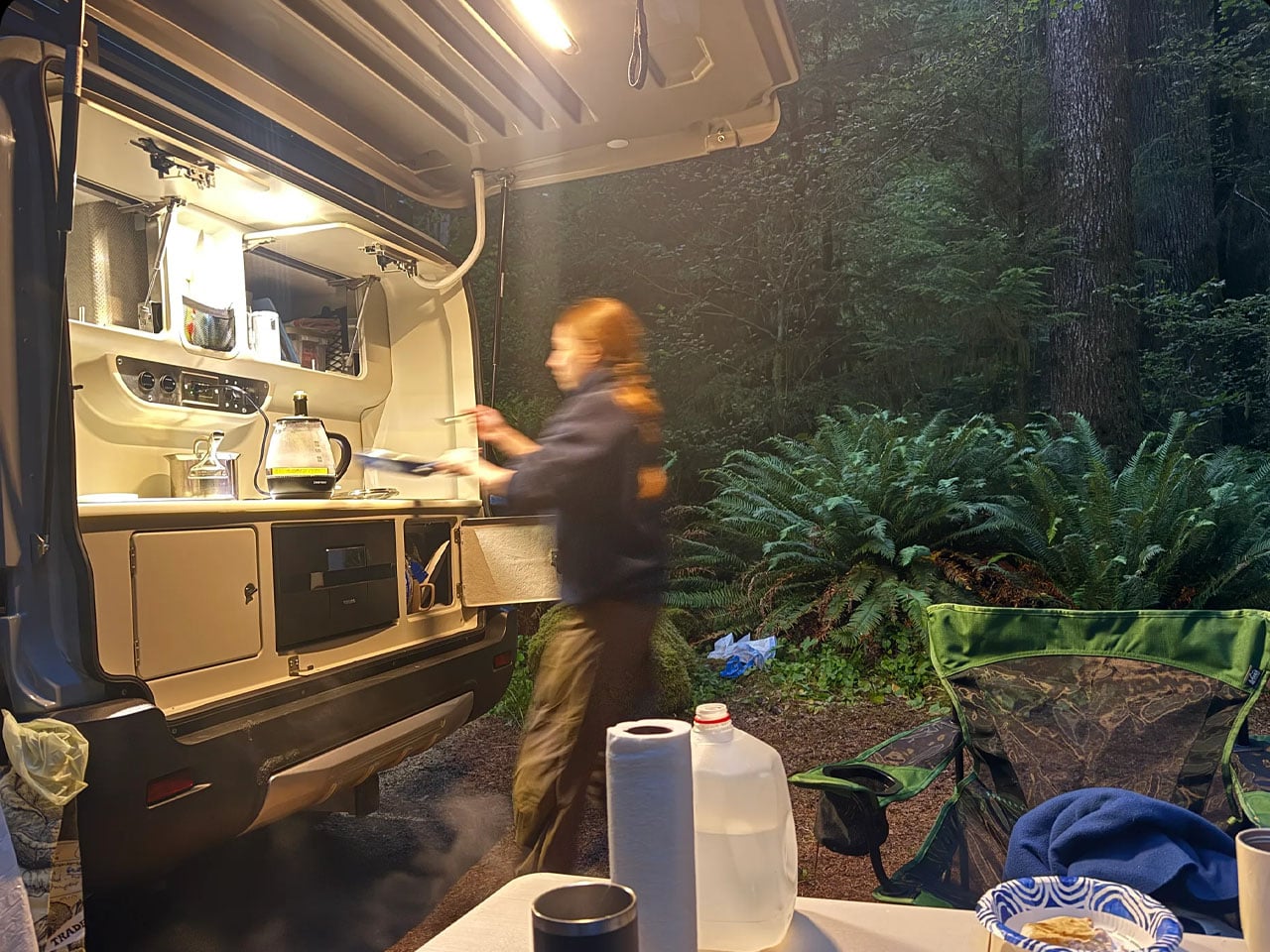
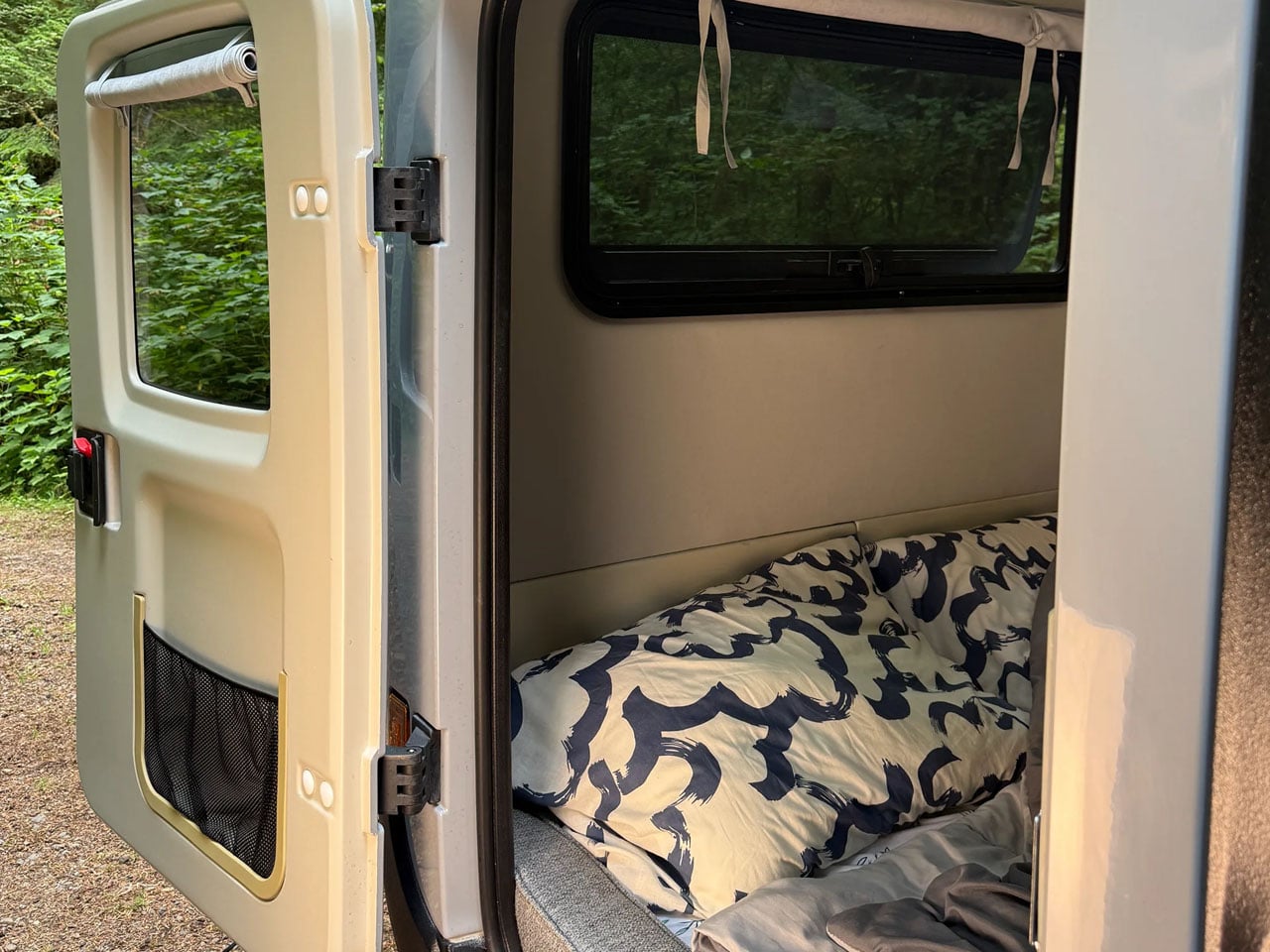
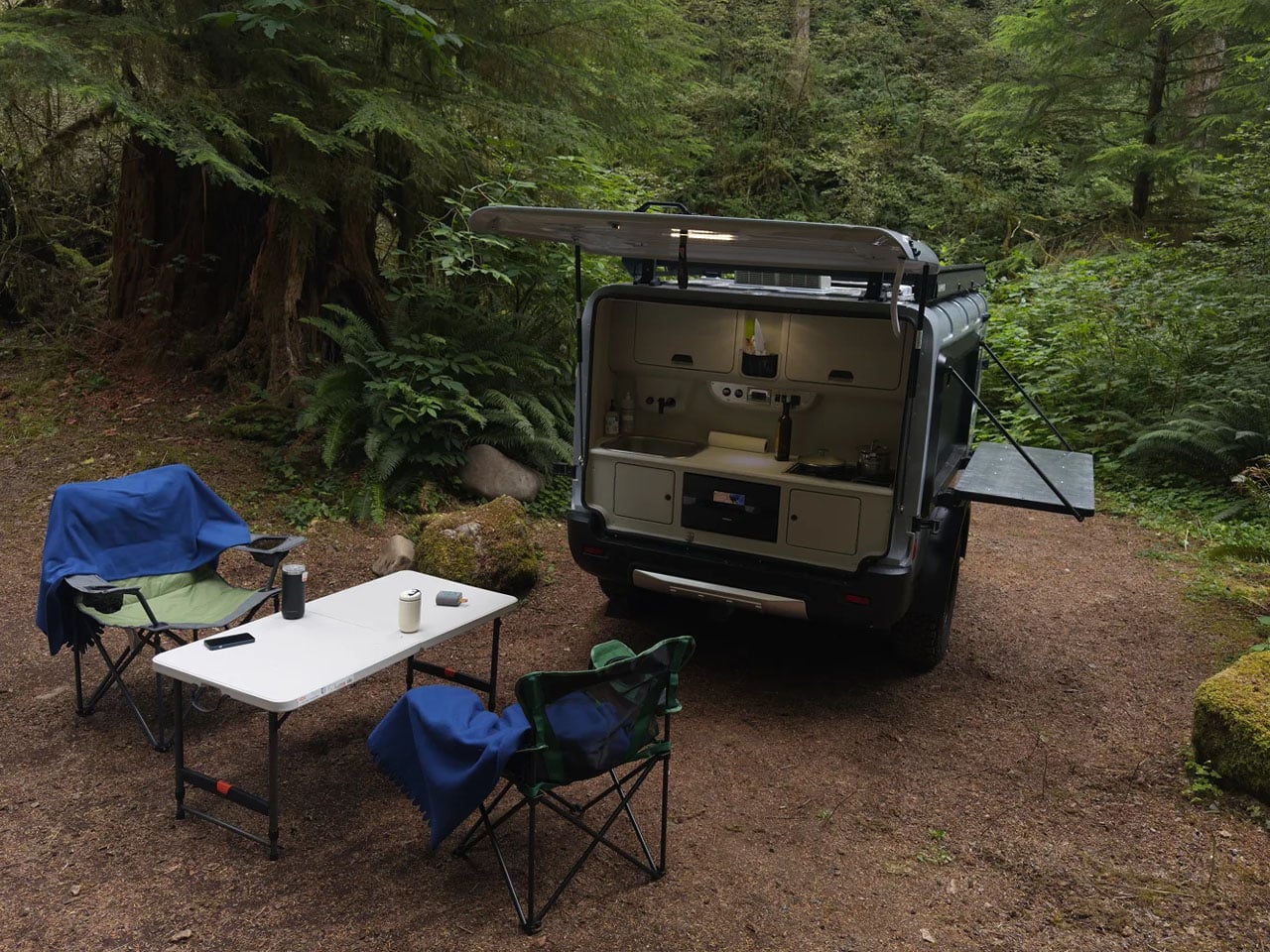
Inside, the Outranger keeps things intentionally simple. The cabin is only 50 inches high, so standing isn’t possible, but there is enough room to sit comfortably on the 82-inch memory-foam mattress. The sleeping area widens from 50 inches at the feet to 57 inches at the head, making the compact interior feel less restrictive than its exterior dimensions suggest. Two large side doors with opening windows also bring ventilation and easier access. The rear hatch opens onto a full-width galley that can be left largely empty for owners who already have their own camping equipment. Those wanting a more complete setup can add a two-burner Dometic cooktop, drawer refrigerator, sink, and water system. A fold-down side table extends the countertop outdoors, creating additional space for food preparation or serving.
Power comes from a 12-volt electrical system with a 200-Ah Renogy lithium battery, LED lighting, USB charging, and shore power. The battery can be upgraded to 600 Ah, while optional solar charging, a 2,000-watt inverter, and tow-vehicle charging make the Outranger better suited to longer stretches away from campsites. A roof rack can carry up to 200 pounds dynamically, with a 650-pound static capacity, adding another layer of utility for outdoor gear.
Motsmann will open preorders for the Outranger on September 1, with the starting price of $25,950 before options. Rather than forcing every buyer into the same fully equipped package, the company lets owners add equipment according to how they actually camp. For just under US$2,450, you can get a sink basin with a gravity faucet, an inset Dometic dual-burner gas stove, a 53-L fresh water tank, a 30-L waste water tank, and a Vitrifrigo drawer fridge. Those needing extra refrigeration can also add a second 30-L drawer fridge for US$494, tucked neatly into the compartment behind the fold-down side table.
Going off-grid used to mean a specific kind of bargain. You traded reliability for freedom, comfort for silence, and convenience for open space. That trade felt reasonable for a long weekend and increasingly difficult to justify for anything longer. The gear didn’t match the ambition. People who wanted to live this way, genuinely and for extended periods, were left assembling systems that weren’t built to work together and hoping the result held.
In 2026, that bargain no longer applies. A small number of products have quietly redefined what off-grid living can actually look like, and none of them ask you to accept a trade you’d regret by the third day. The five here represent a complete kit. From the base you sleep in to the water you drink to the wrist you wear when your phone goes silent, this is how you leave the grid and mean it.
1. Aboard T4 Electric Travel Trailer
The Aboard T4 is the most capable piece of mobile living infrastructure available at a consumer level. Developed by California-based Aboard RV, it is a 24-foot self-propelled travel trailer built around a hybrid electric drivetrain with more than 200kWh of onboard power. A 41kWh LFP battery handles the daily load. At the same time, a 60kW range-extending generator recharges in under 30 minutes, stretching off-grid capability well beyond a long weekend without requiring any active energy management on your part.
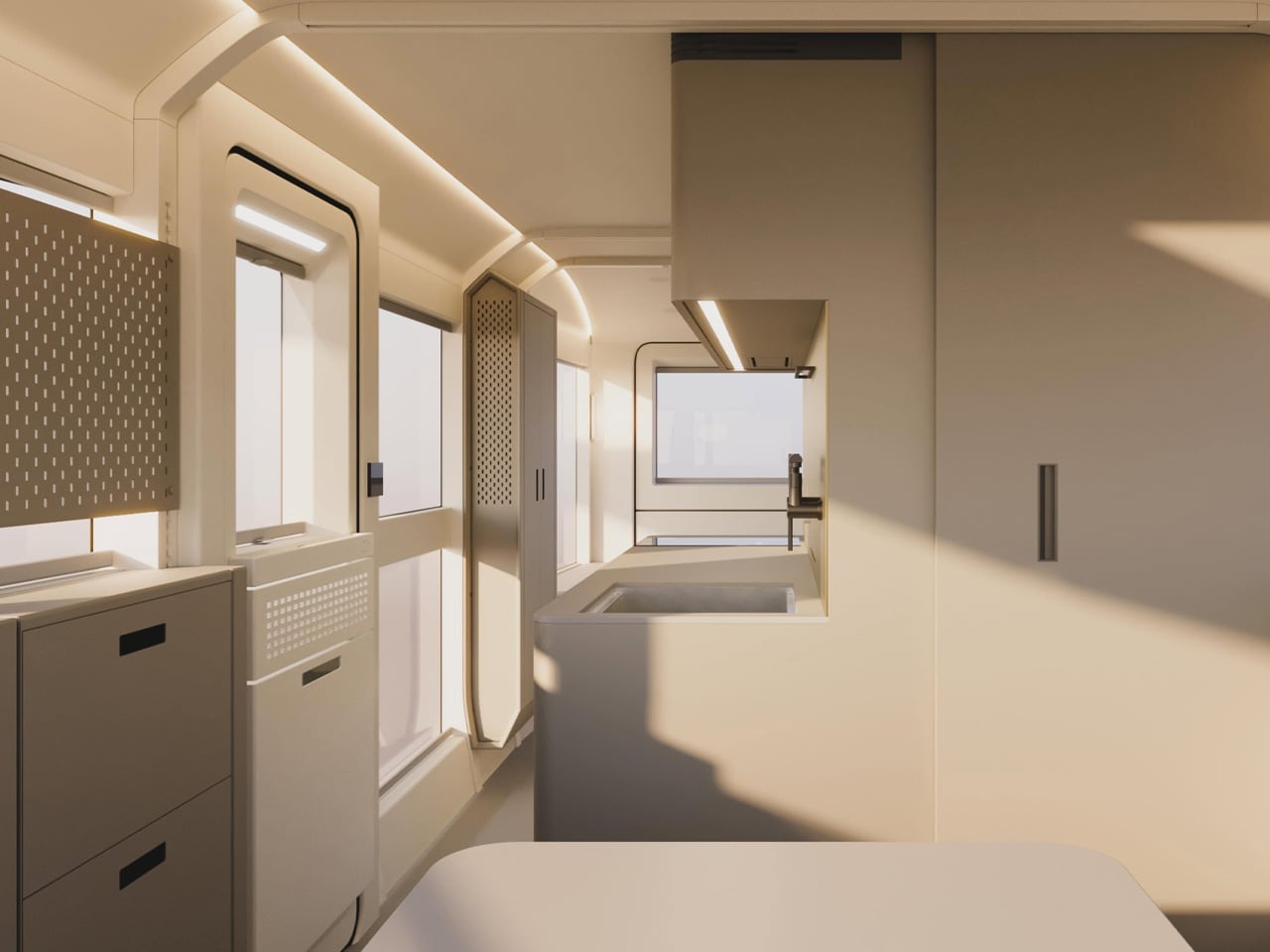
What separates the T4 from anything else in its category is how completely it covers the stack of problems extended off-grid living creates. A 52-gallon fresh water tank, a 35-gallon grey water tank, and a 30-gallon black water tank manage water independently. An induction cooktop, refrigerator, and microwave give the kitchen real function. Two convertible lounges sleep four, a bathroom doubles as a mudroom with two separate entries, and 270-degree panoramic glazing brings the landscape into the interior without asking you to step outside to see it.
What we like
200kWh+ onboard power with a range-extending generator that recharges in under 30 minutes
Fully integrated three-tank water system handles fresh supply and waste without any external hookup
What we dislike
$80,000 starting price places this well outside casual off-grid use
No confirmed release date, with reservations open now via a $100 fully refundable deposit
2. Airflow 8-Panel Fire Pit
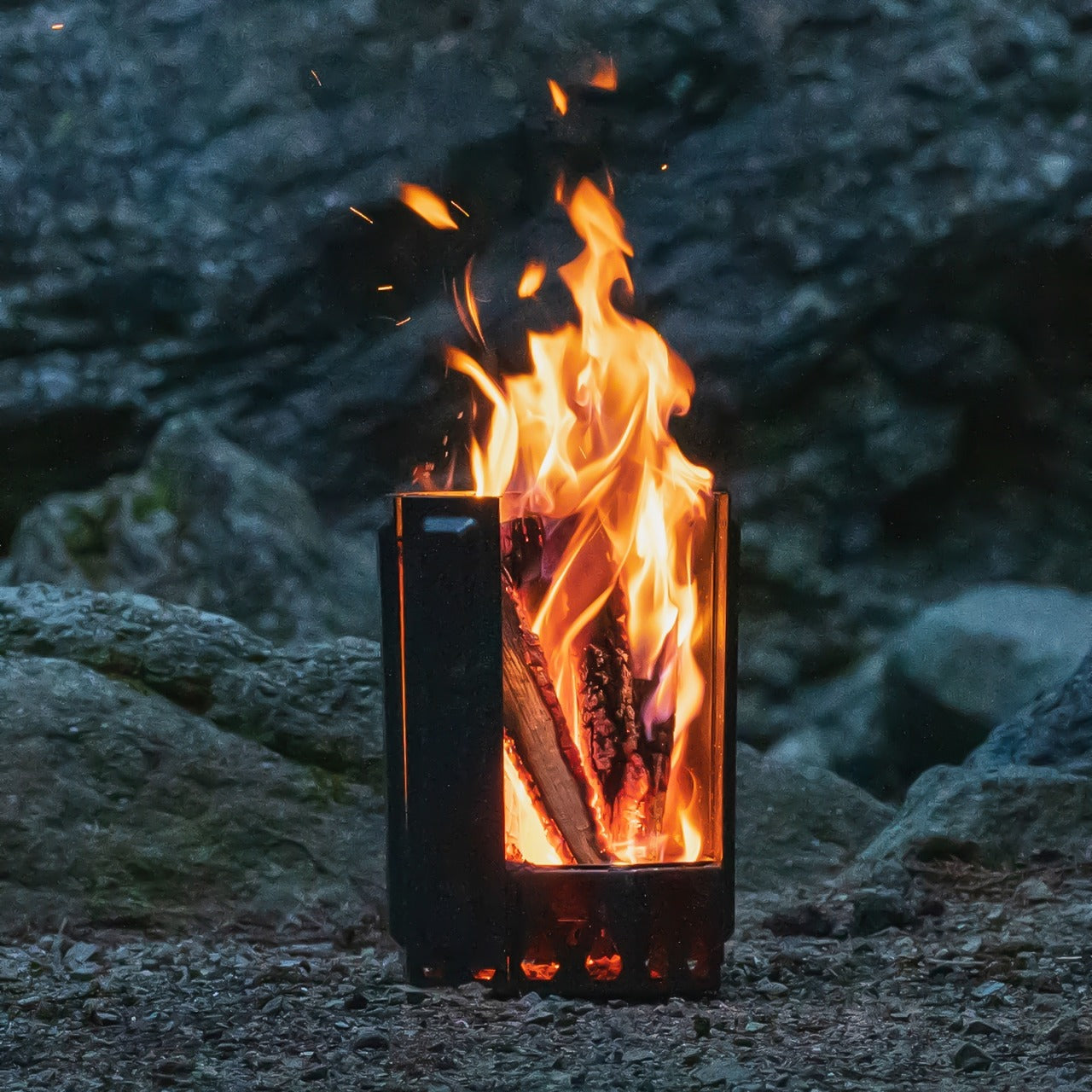
A fire at the end of a day off-grid is not optional. It is the thing the day builds toward. The Airflow 8-Panel Fire Pit from Sanyo Works takes that seriously. Holes at the base of each panel channel primary airflow upward through double-walled cavities, triggering a secondary burn that produces a cleaner and more efficient fire than a conventional ring. The result is minimal smoke and a flame that sustains itself with less wood, which means you sit closer and stay out longer.
The eight removable panels give you control that fixed fire pits never offer. Opening or closing sections adjusts how the combustion chamber breathes, letting you dial intensity up or down without constant attention. Sanyo Works brings deep metal processing expertise to this design, and the precision of the airflow mechanics reflects that background in every use rather than in any surface flourish. For a product in a category full of objects that warp and degrade after a season, the Airflow is built to earn its place as permanent kit rather than a single-summer purchase.
Secondary combustion system produces minimal smoke for a noticeably cleaner and more efficient burn
Adjustable 8-panel design gives real control over fire intensity without constant management
What we dislike
Eight individual panels mean more components to account for when packing down at the end of a trip
Wood-only combustion with no gas compatibility
3. GoSun Flow Solar Water Purifier
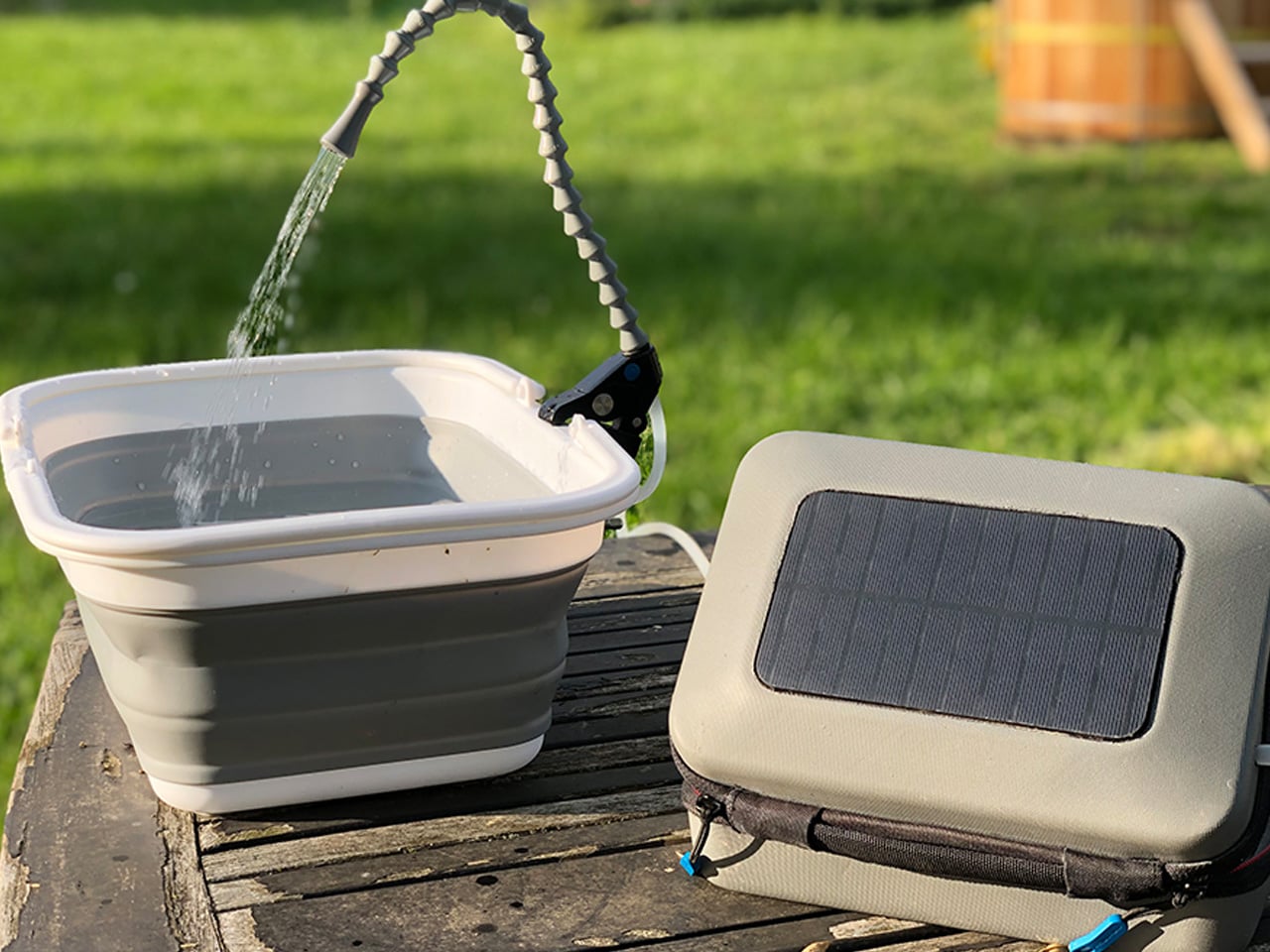
The T4 carries 52 gallons of fresh water, which handles the first stretch of serious off-grid living without a second thought. Extended stays ask for more. The GoSun Flow is a solar-powered water purifier and pump that compresses into a backpack and turns any freshwater source into potable water at one liter per minute, eliminating 99.99 percent of pathogens through a three-stage filtration system. A flexible faucet clamps to branches, tables, or tailgates, turning a stream bank or a riverside clearing into a fully functioning water station.
The detail that changes the conversation entirely is the solar-heated shower. After the integrated solar panel charges the pump’s power bank, the GoSun Flow delivers warm water from whatever source you fed it. On a multi-day off-grid stay, that is not a comfort feature. It is the difference between feeling like you chose this life and merely tolerating it. The filter manages up to 1,000 liters before replacement, USB power covers days when solar input is limited, and the entire system packs back into the bag you arrived with.
What we like
Three-stage filtration eliminates 99.99% of pathogens at one litre per minute from virtually any freshwater source
Solar-heated shower capability from a system compact enough to carry in a standard backpack
What we dislike
Cannot process saltwater, which limits utility at coastal campsites
Multiple components mean more parts to track and potentially leave behind in the field
4. Blackout Beam Tactical Flashlight
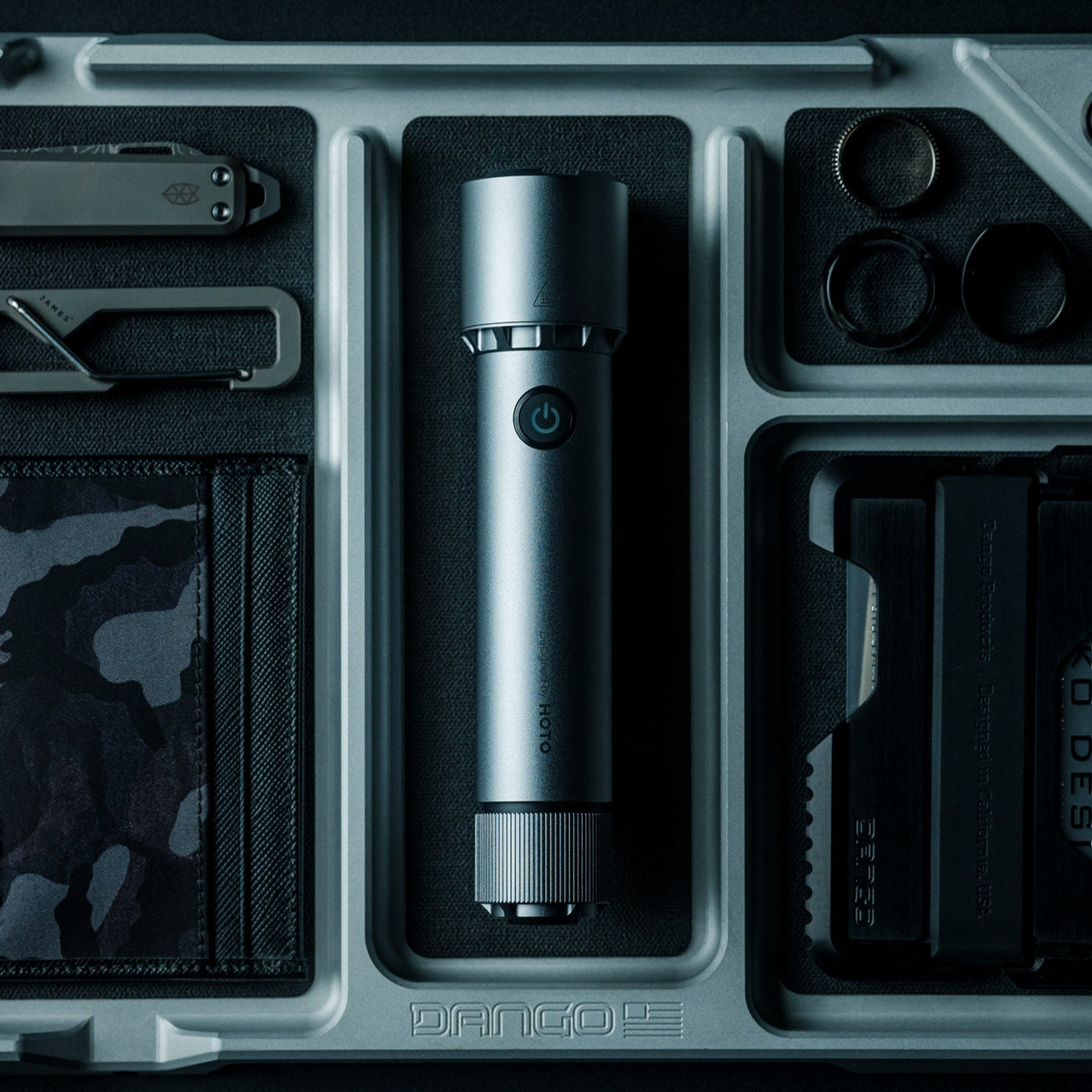
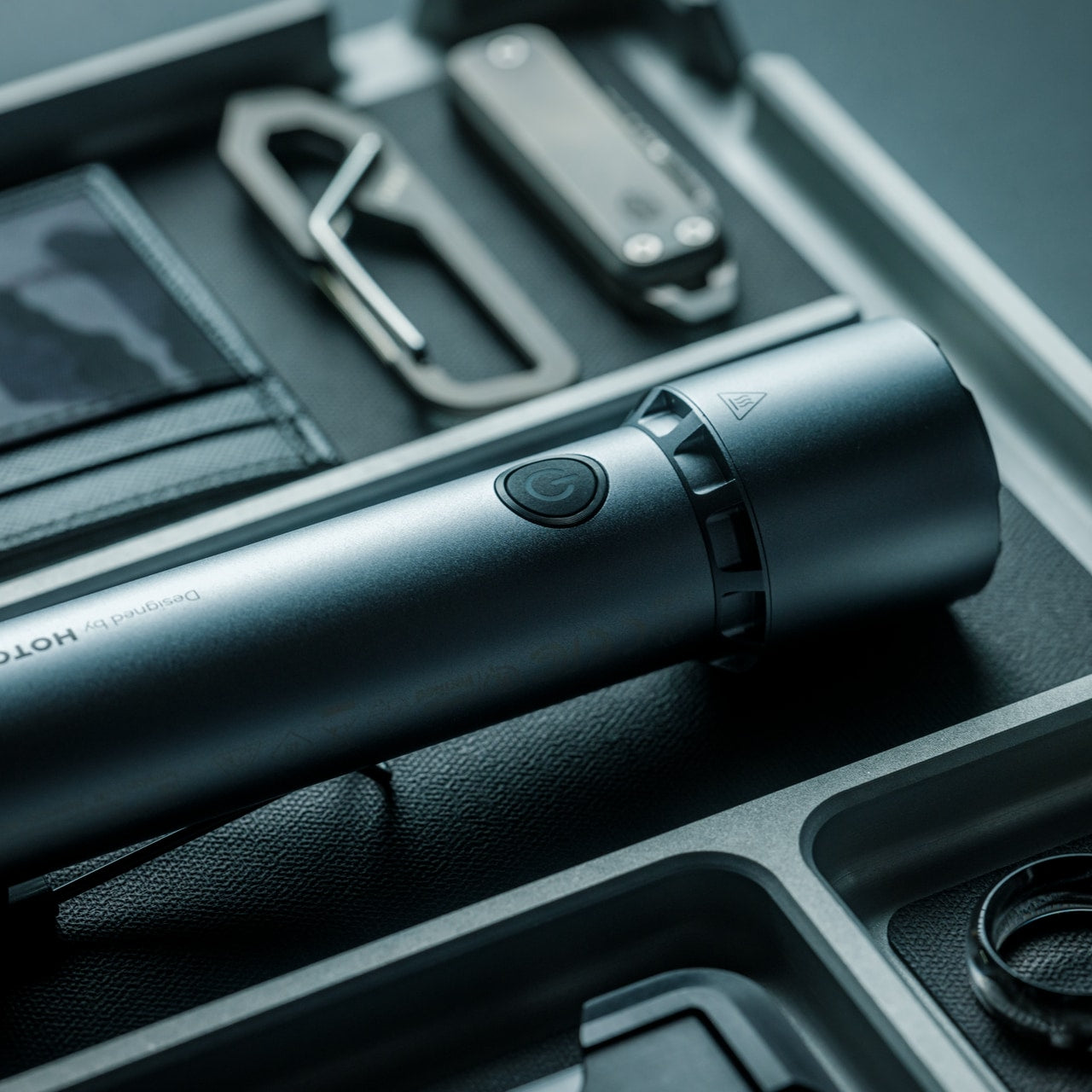
Darkness at a remote campsite is a different quality of dark than anything urban life prepares you for. The Blackout Beam handles that gap with 2,300 lumens of output, a 300-meter beam throw, and a 0.2-second response time that puts light in your hand before your eyes have finished adjusting to reaching for it. The aluminum body carries an IP68 rating for complete water and dust resistance. In a wildlife encounter, a navigation situation after sundown, or a power failure inside the T4, the speed of that response matters more than the lumen count.
What separates the Blackout Beam from a high-output flashlight you’d pick up at a hardware store is the combination of instant response and a design language that earns daily carry well before any emergency arrives. It fits cleanly in a jacket pocket, sits without drama on a surface inside the T4’s interior, and reads as a considered object rather than declared emergency equipment. Off-grid gear that actually gets packed is gear that doesn’t announce its purpose before it’s needed. The Blackout Beam earns that carry without making any demands.
2,300-lumen output with a 300-meter beam reach and 0.2-second response built for real outdoor conditions
IP68-rated aluminum body handles water, dust, and impact without any concession to portability
What we dislike
Maximum lumen output draws battery faster during extended use
Tactical aesthetic doesn’t integrate seamlessly into every EDC or interior setup
5. O-Boy Satellite Smartwatch
Everything else on this list extends how long you can stay off-grid and how well you live while you’re there. The O-Boy addresses the one scenario none of the others touch. Developed by Brussels-based studio Futurewave, it is a satellite-connected smartwatch built for environments where mobile networks simply do not reach. In those places- mountains, open water, remote work sites- it transmits an emergency alert directly via satellite regardless of what infrastructure exists beneath your feet. No carrier plan covers this. O-Boy does.
What Futurewave got right beyond the technology is the design brief. O-Boy does not read as tactical or survival-coded. It does not look like something that belongs exclusively to alpinists or emergency response professionals. It looks like something a person who spends real time in remote environments would wear on an ordinary day, which is the only design decision that makes its safety layer genuinely accessible. The people who most need satellite-backed coverage are not always those who identify with extreme sport. O-Boy is built for anyone who travels further than their phone can follow them.
What we like
Satellite connectivity transmits emergency alerts from locations with zero mobile network coverage
Utilitarian design reads as wearable well beyond strictly tactical or adventure-specific contexts
What we dislike
Satellite communication functionality typically requires an ongoing subscription service
Smartwatch form factor means battery management becomes a daily consideration in the field
The Grid Was Always Optional
These five cover the full range of what off-grid living actually asks of you. The T4 provides the foundation. The GoSun Flow extends it to wherever fresh water runs. The Airflow firepit anchors the evening. The Blackout Beam handles the dark. The O-Boy covers the distance your phone cannot. Each product solves a specific problem this life has always created, with enough design intelligence that the solution feels like an upgrade rather than a workaround.
That is the shift that defines where off-grid living stands in 2026. The gear has finally caught up to the ambition. Staying further out, for longer, without giving anything meaningful up is no longer a matter of tolerance or planning around known deficiencies. It is a matter of choosing the right five things. The grid was always optional. These are the five that make leaving it feel like the obvious call.
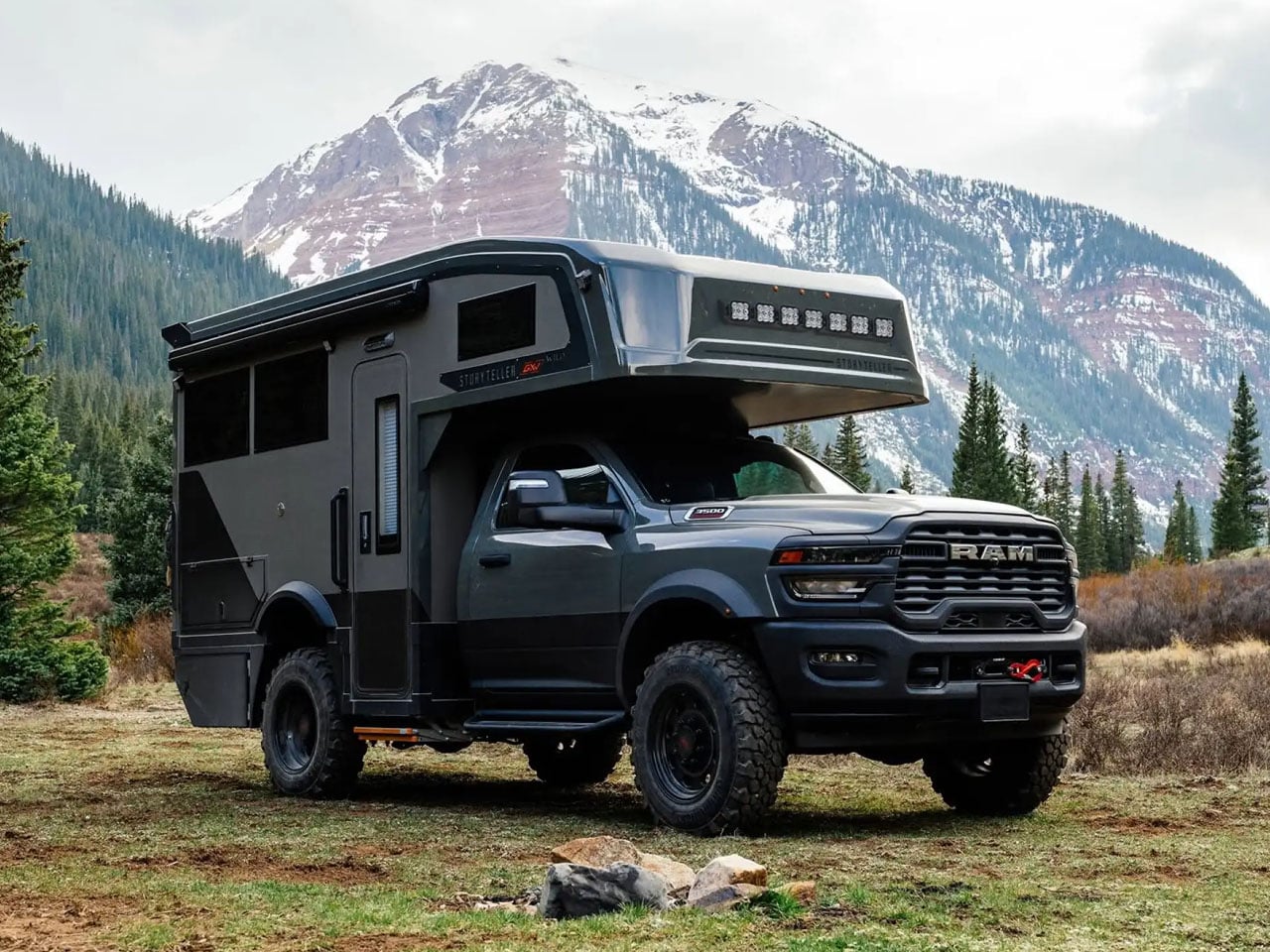
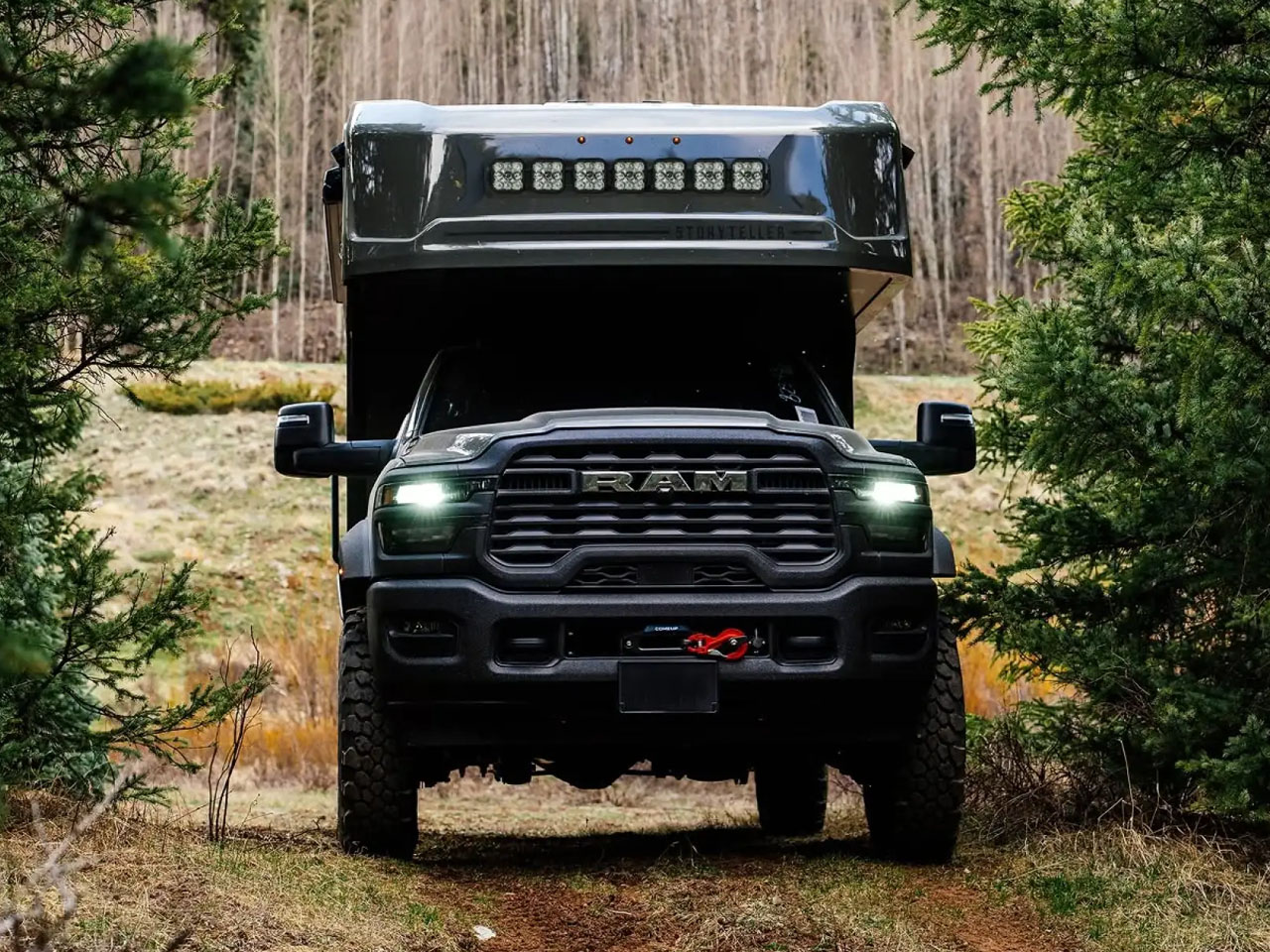
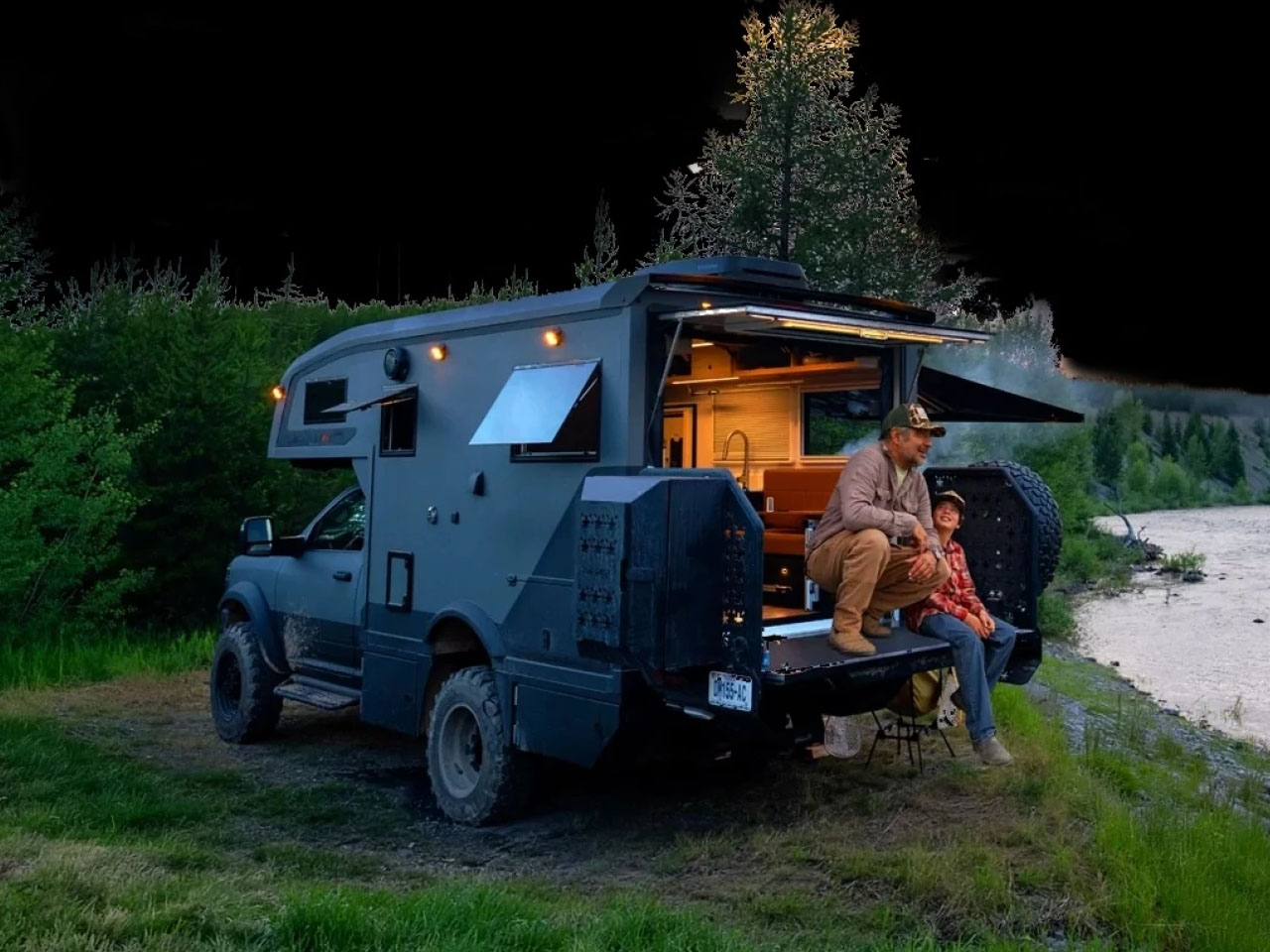
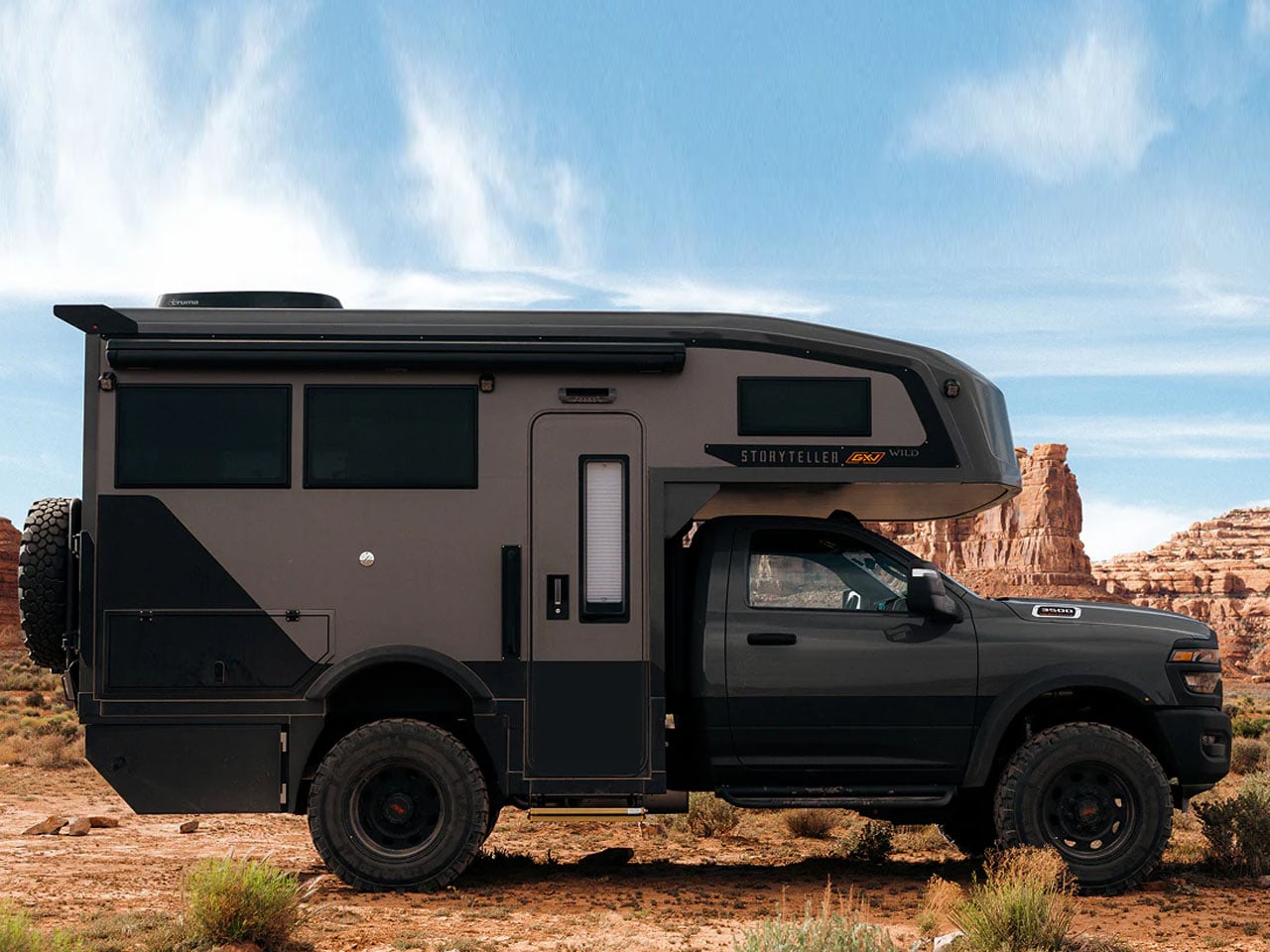
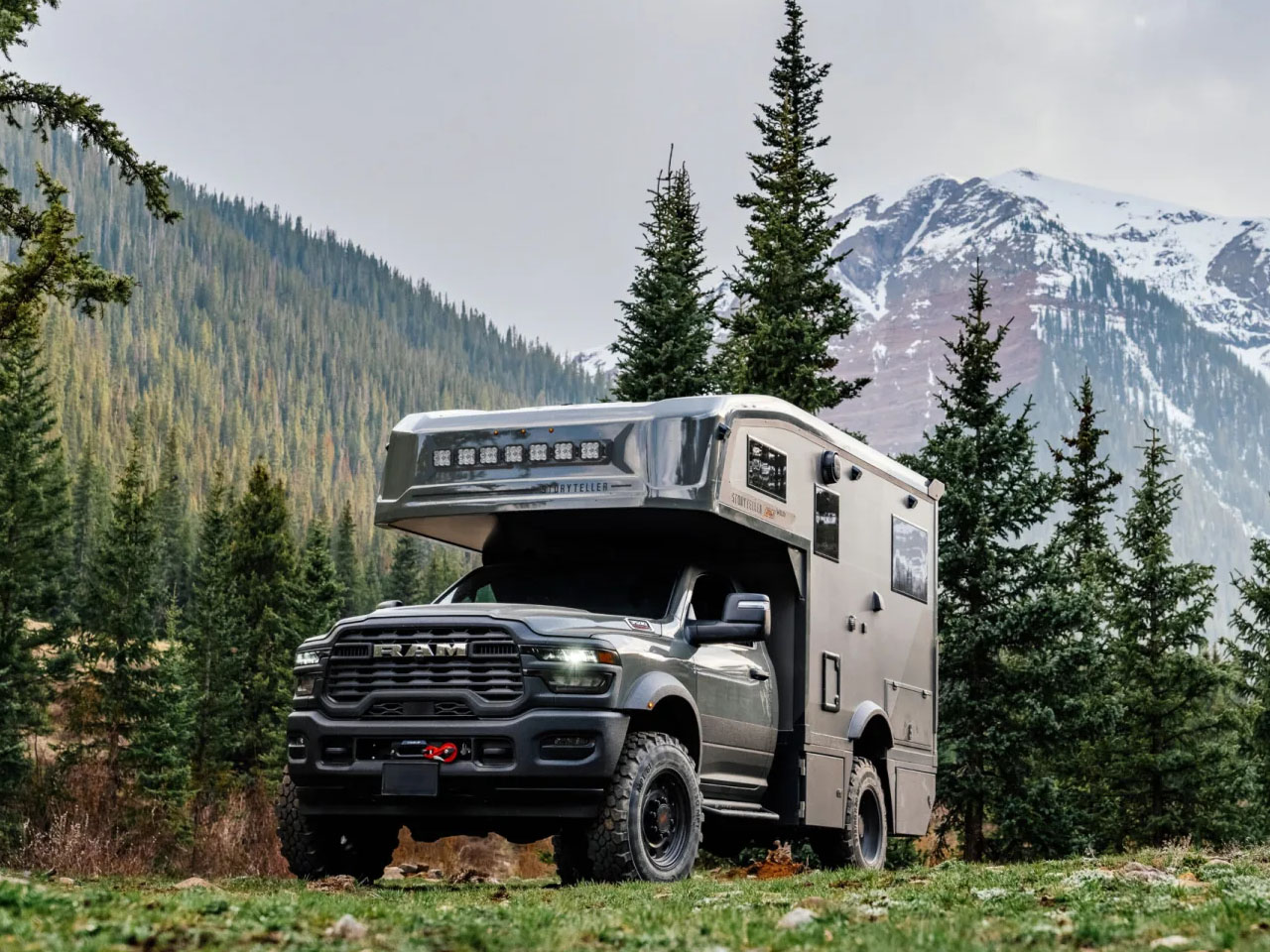
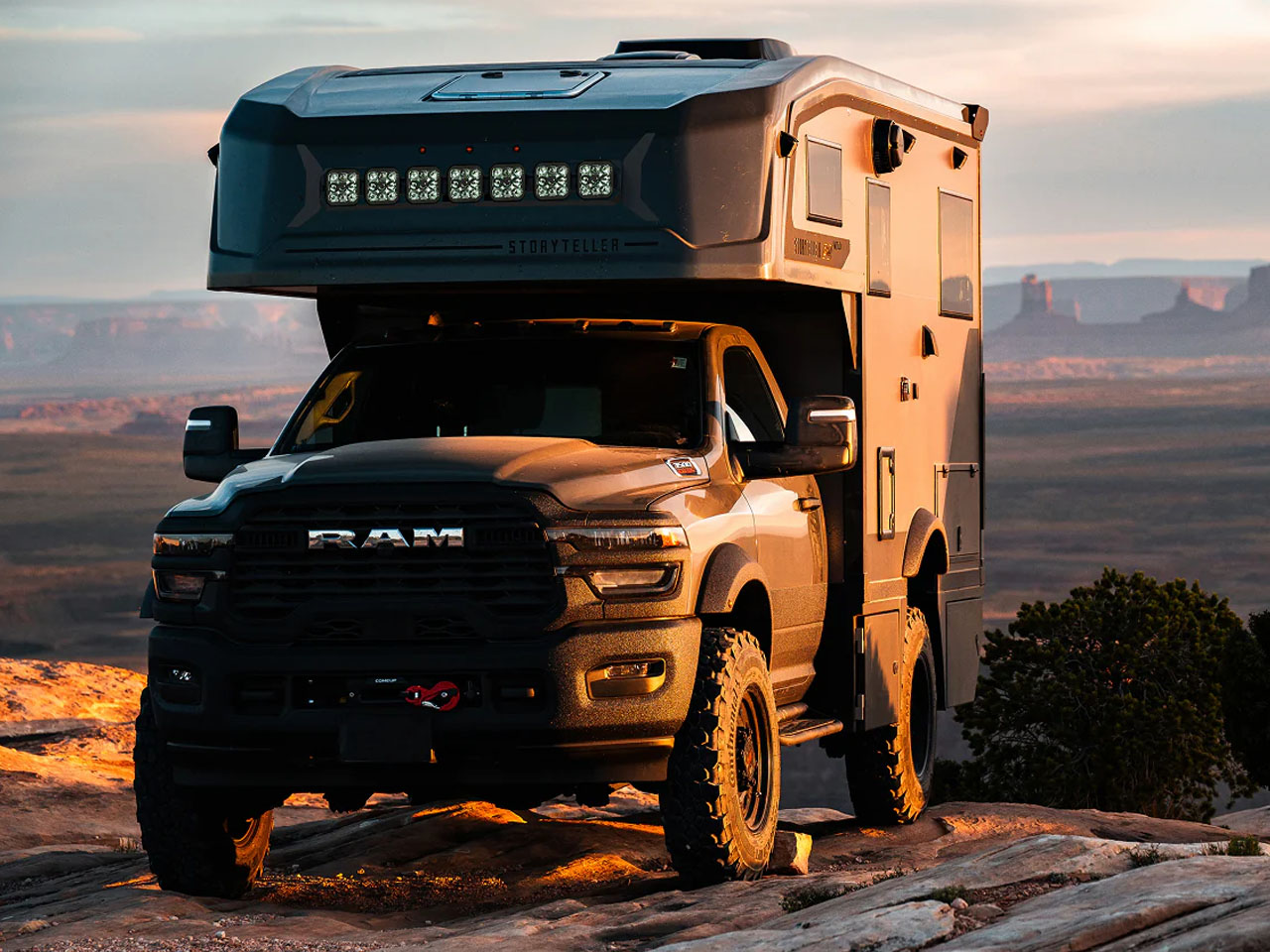
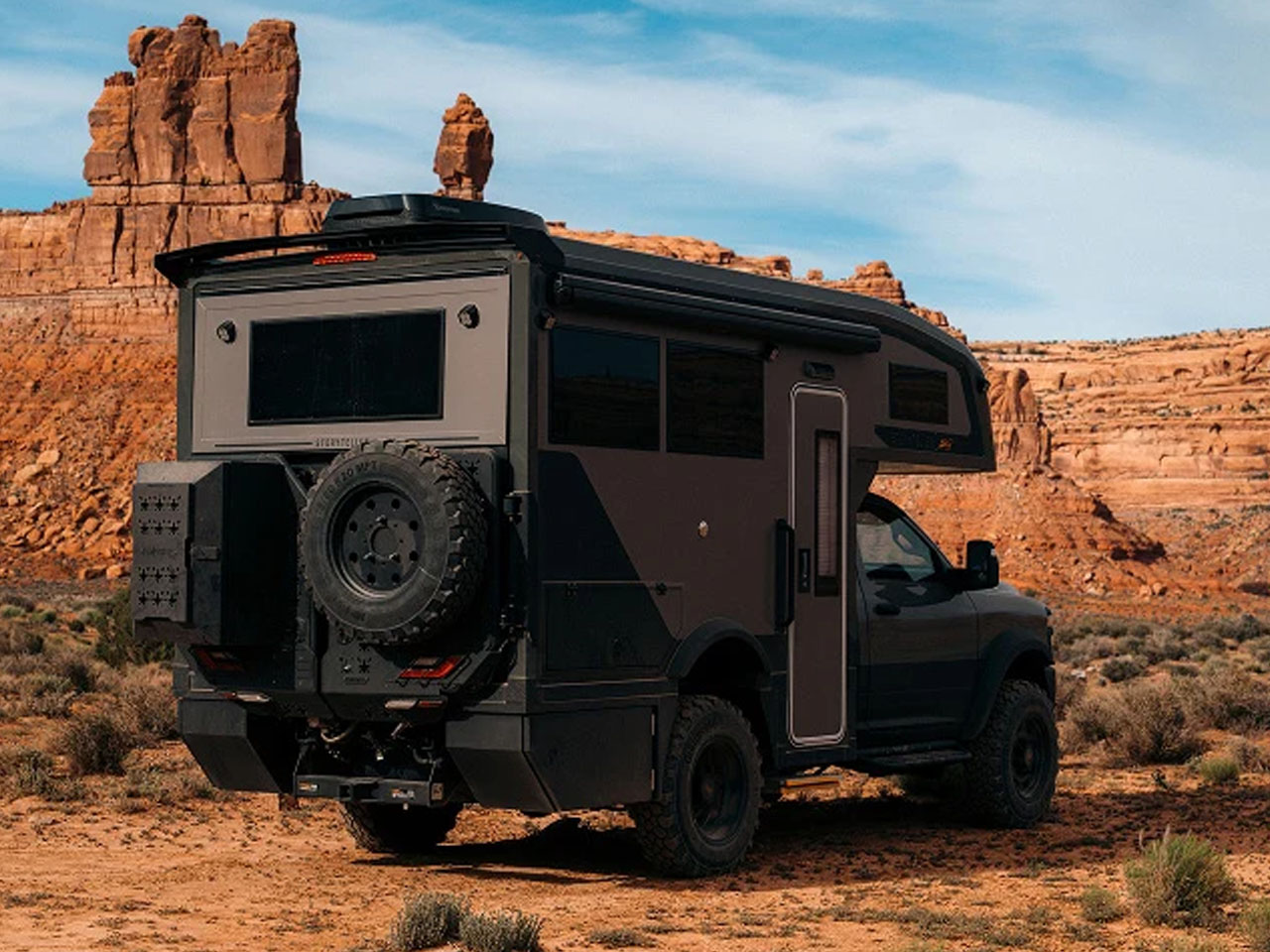
Storyteller Overland added Global Expedition Vehicles (GXV) under its umbrella in 2022. The tale for the two adventure camper and overland rig manufacturers, respectively, has been around about on the same lines. Continuing in a combined form factor now, the new 2027 GXV Wild is introduced to upscale the idea of overland living from Storyteller’s lens.
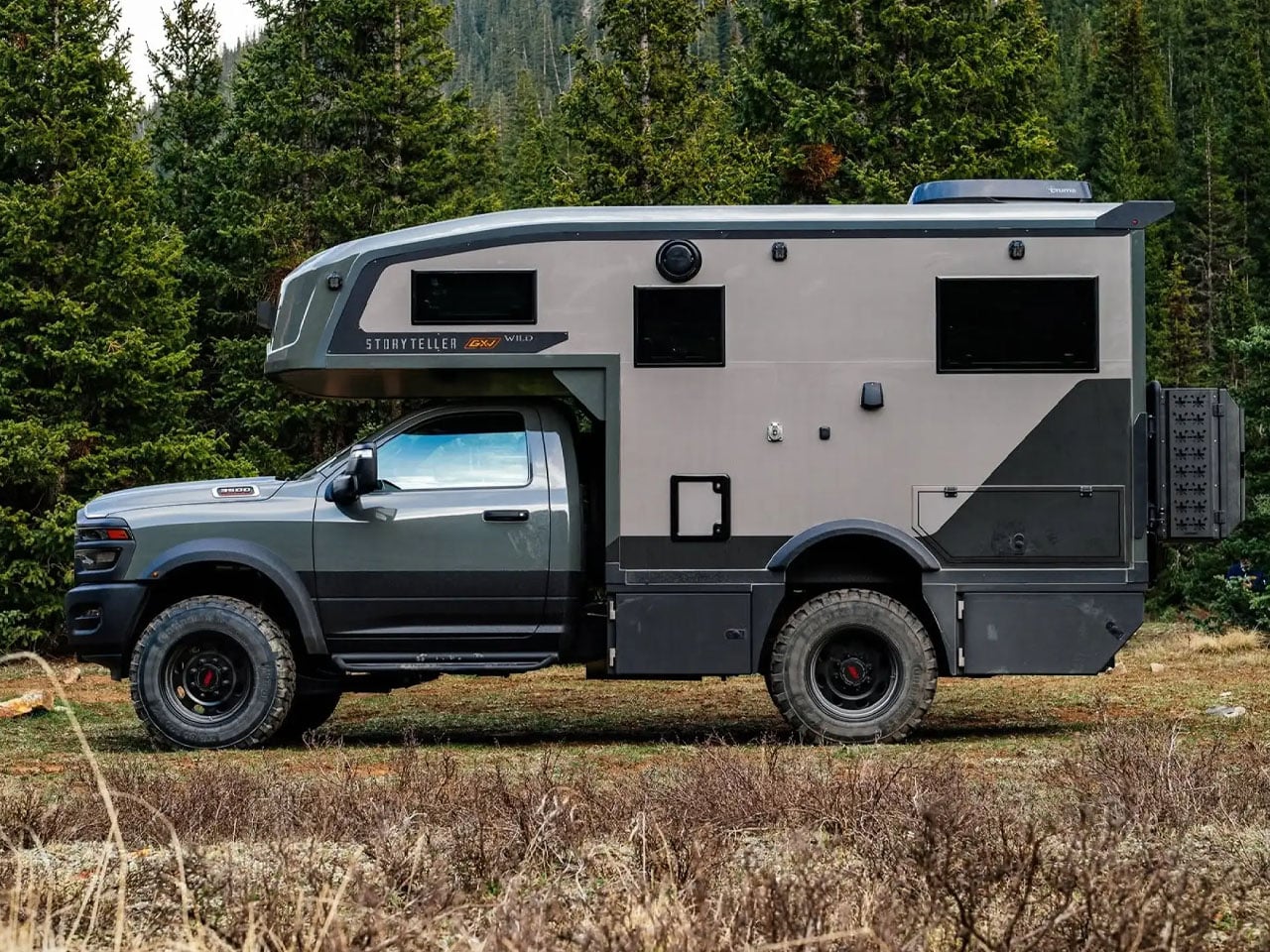
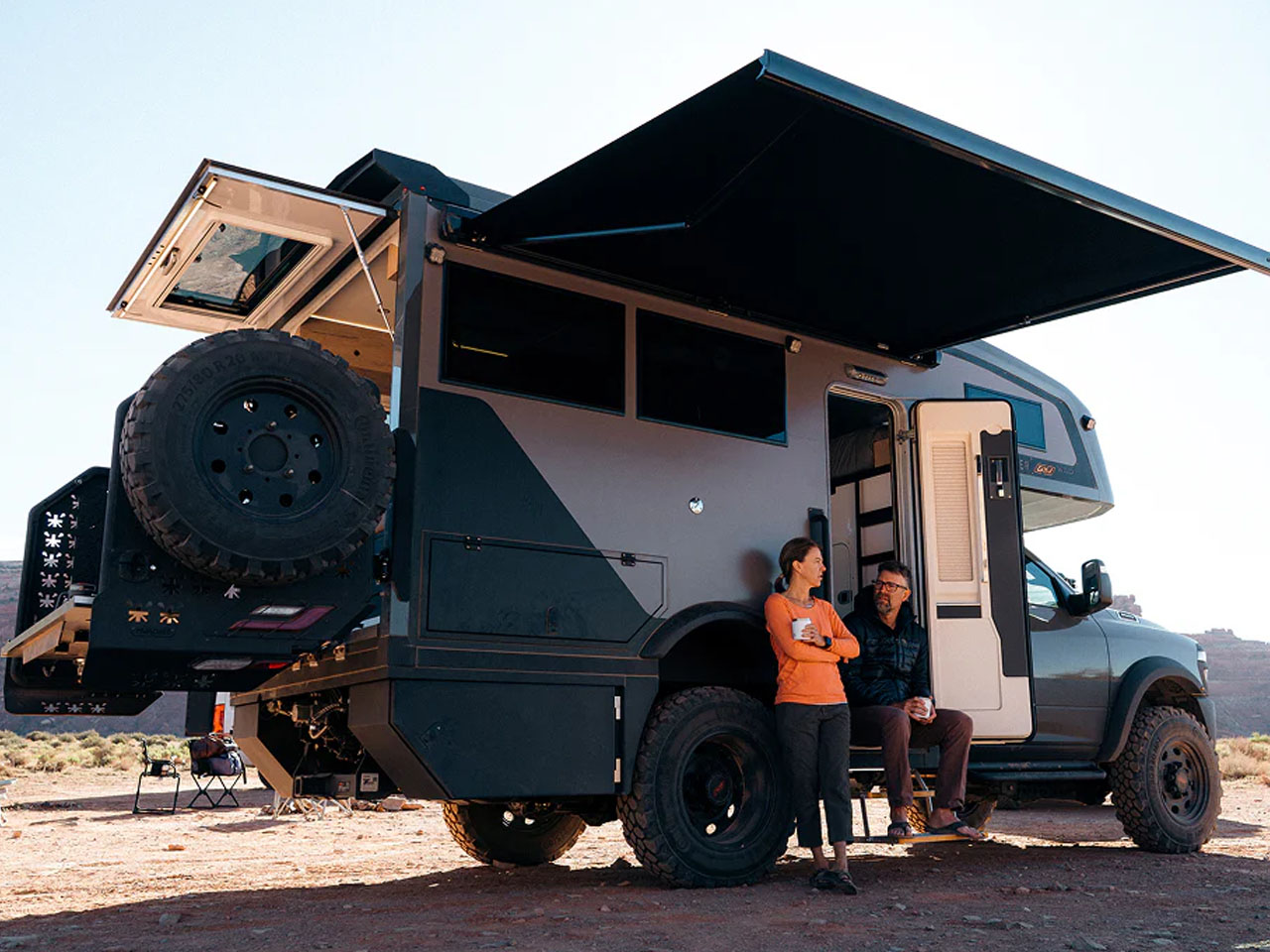
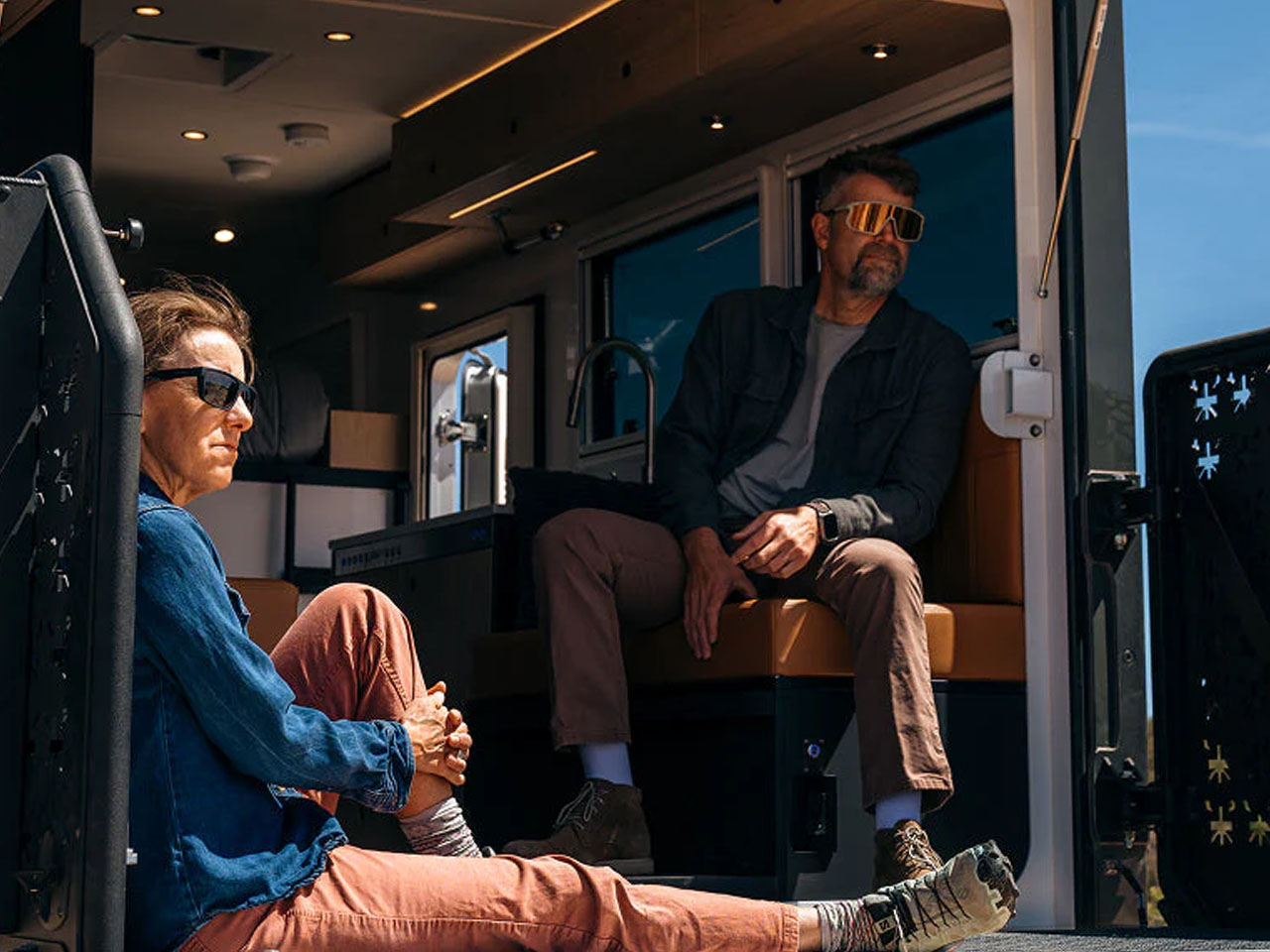
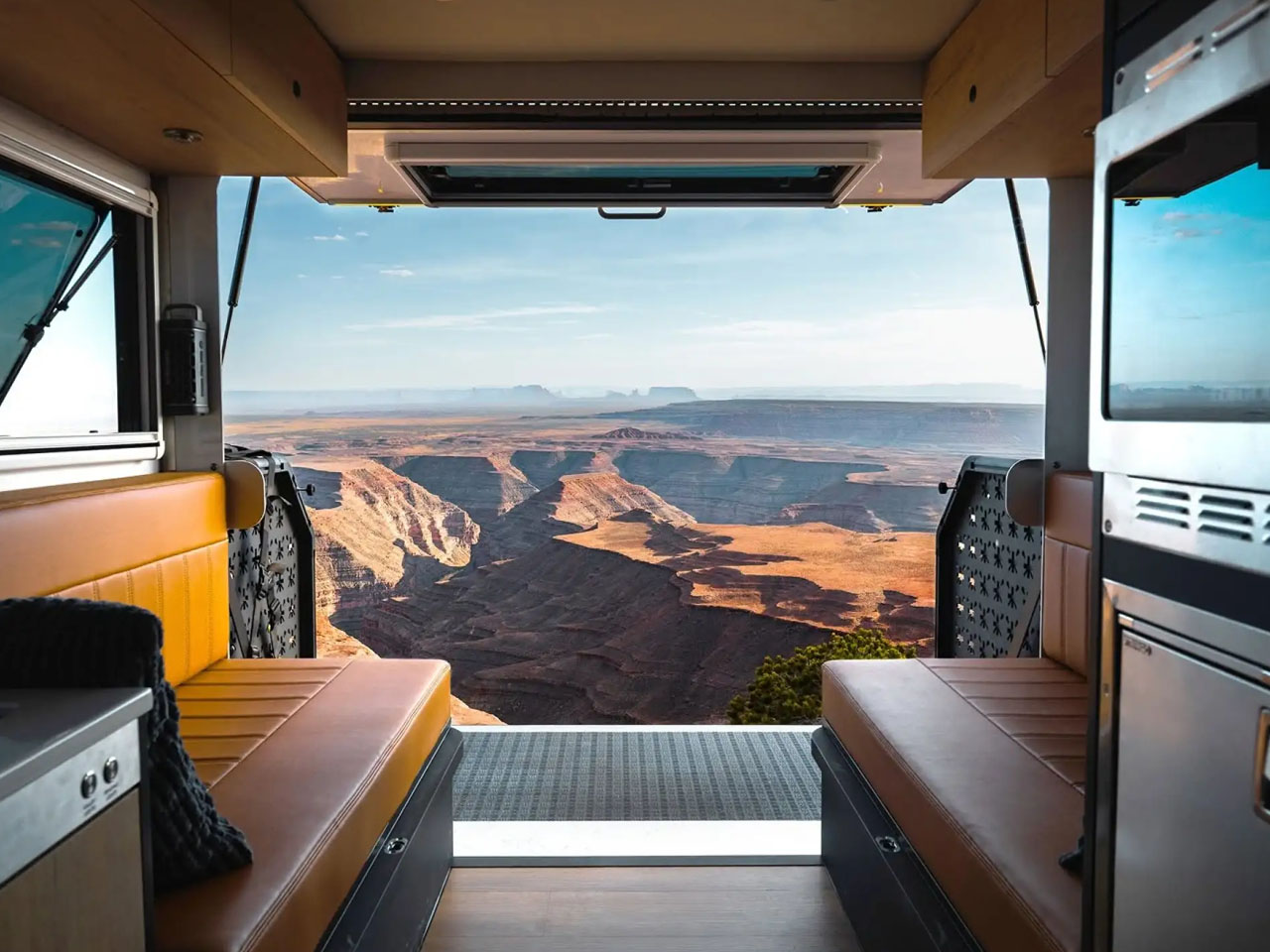
The adventure truck is based on the Ram 3500 single-cab chassis. That leaves the Wild catering to only a couple on the road. It can, we will learn later how, accommodate up to four people at camp. But what’s actually fascinating about the truck, beyond the overlanding compatibility and off-grid preparedness, is how the interior is designed to permit a congenial harmony between the inside and outside.
Built on the Ram chassis, which draws power from a 6.4L HEMI V8 engine delivering 375 hp and 429 lb-ft of torque, you already have a capable machine. To keep it performing at its best, Storyteller has kept it lightweight but tweaked it to add an AEV suspension kit with a 3-in lift and forged-aluminum wheels wrapped in all-terrain tires. The camper part is made using laminated insulated fiberglass walls and floor. The roof uses insulated panels, and windows feature dual panes (again for better insulation), ensuring year-round operability.
With the modifications to the chassis, the rig – measuring 23 feet long and 11.3 feet high – has a payload capacity of 1,000 lbs and a 14,000-lb GVWR. The Stroyteller GXV Wild can also tow up to 10,000 lb. if you have additional cargo to cargo, in the FlipOut Deck. Some of the truck campers this size we have seen compromise with bathroom space, but that’s the difference with the Wild. It has a dedicated bathroom, next to the alcove. It features a cassette toilet, sink, and a shower that gets water from the 189 L fresh tank and also has a 76 L gray water tank onboard.
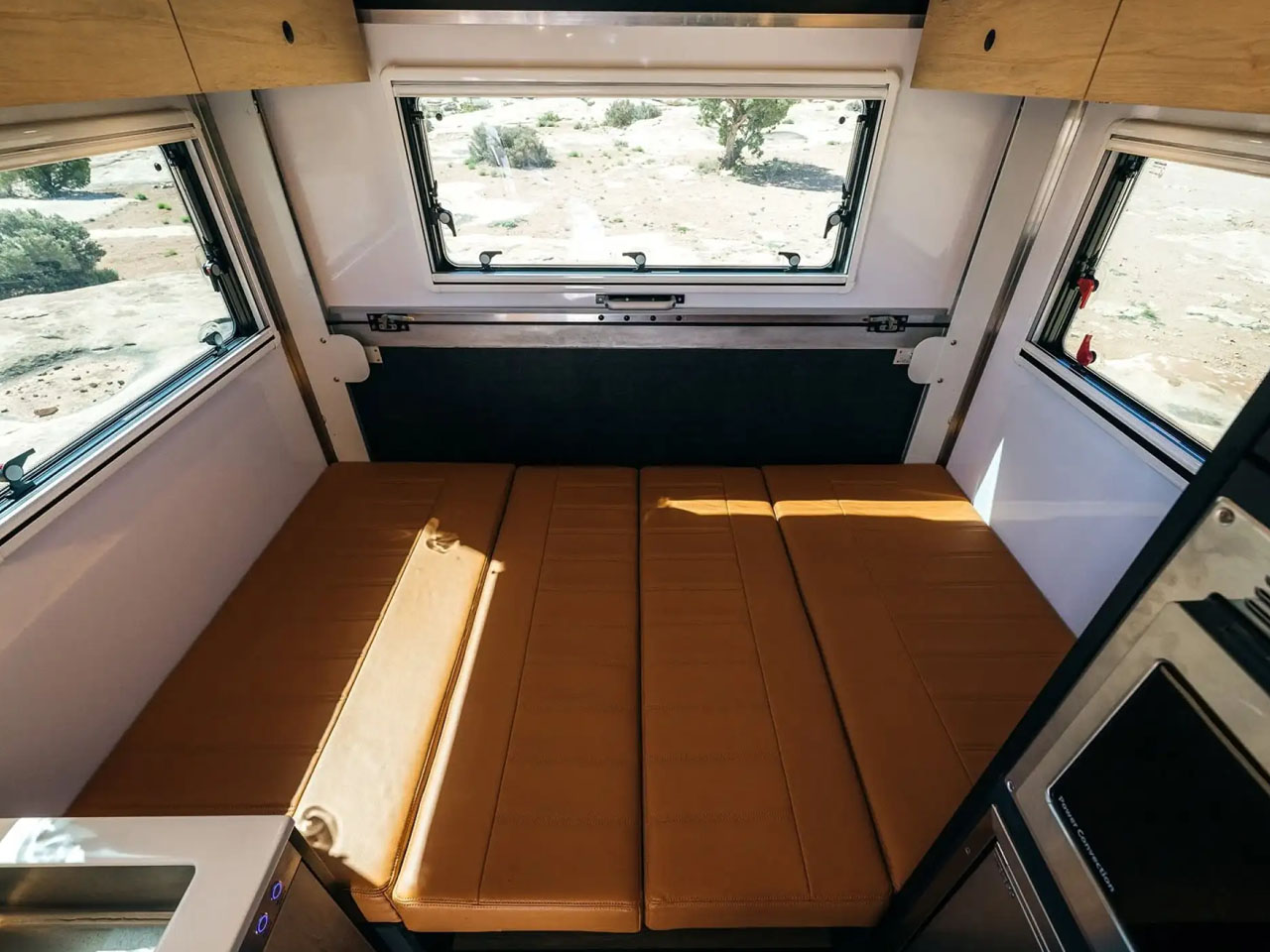
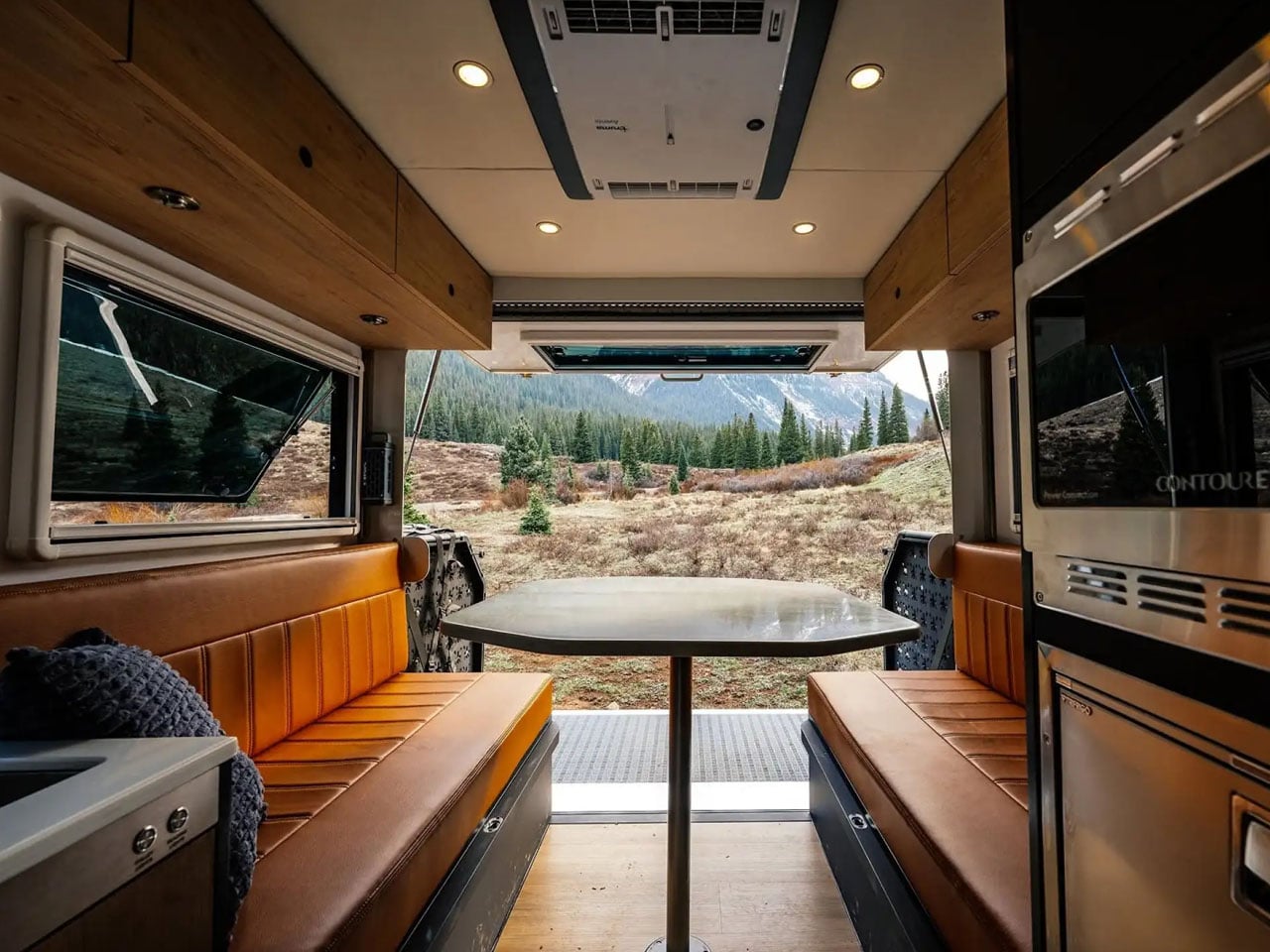
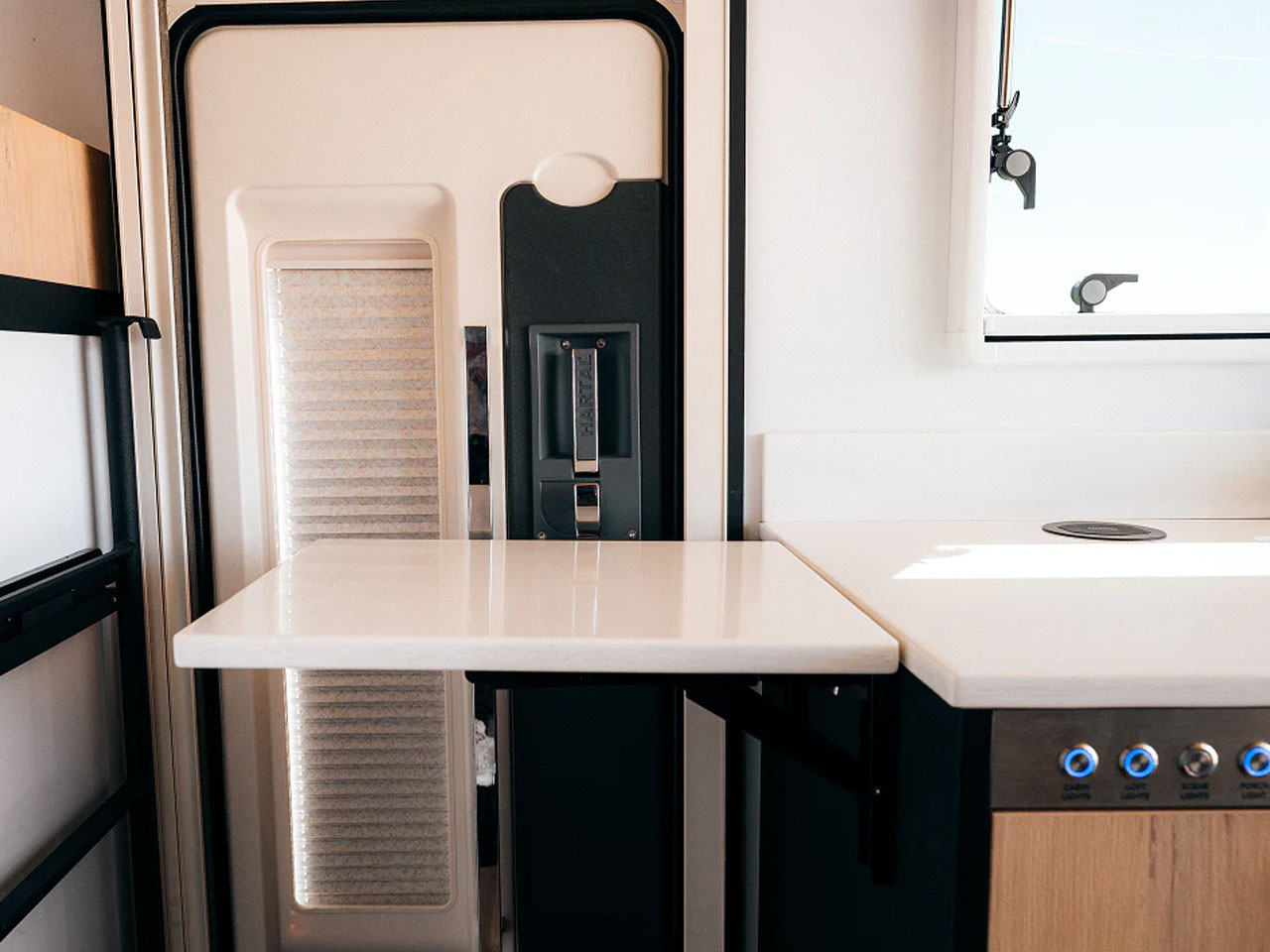
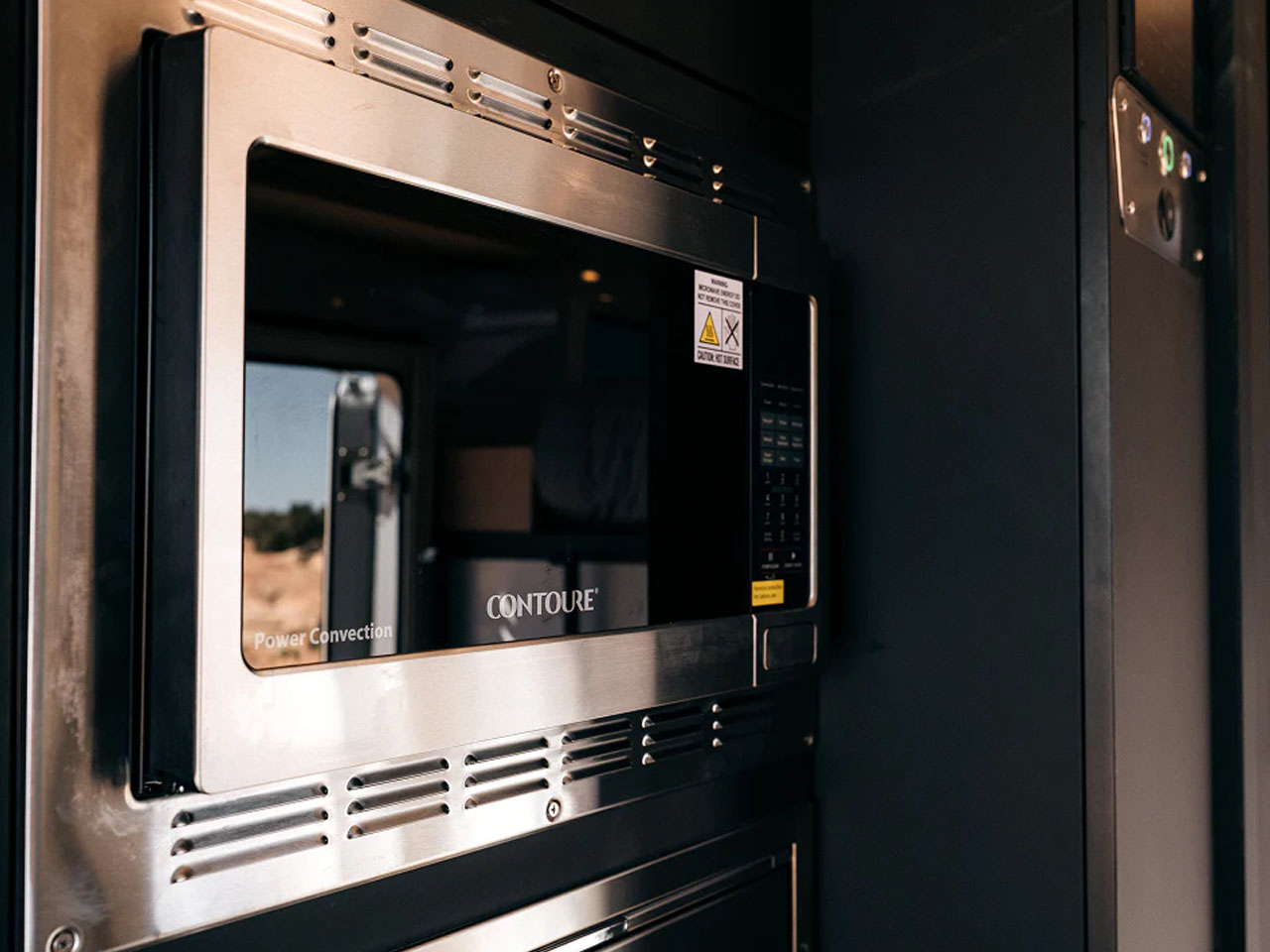
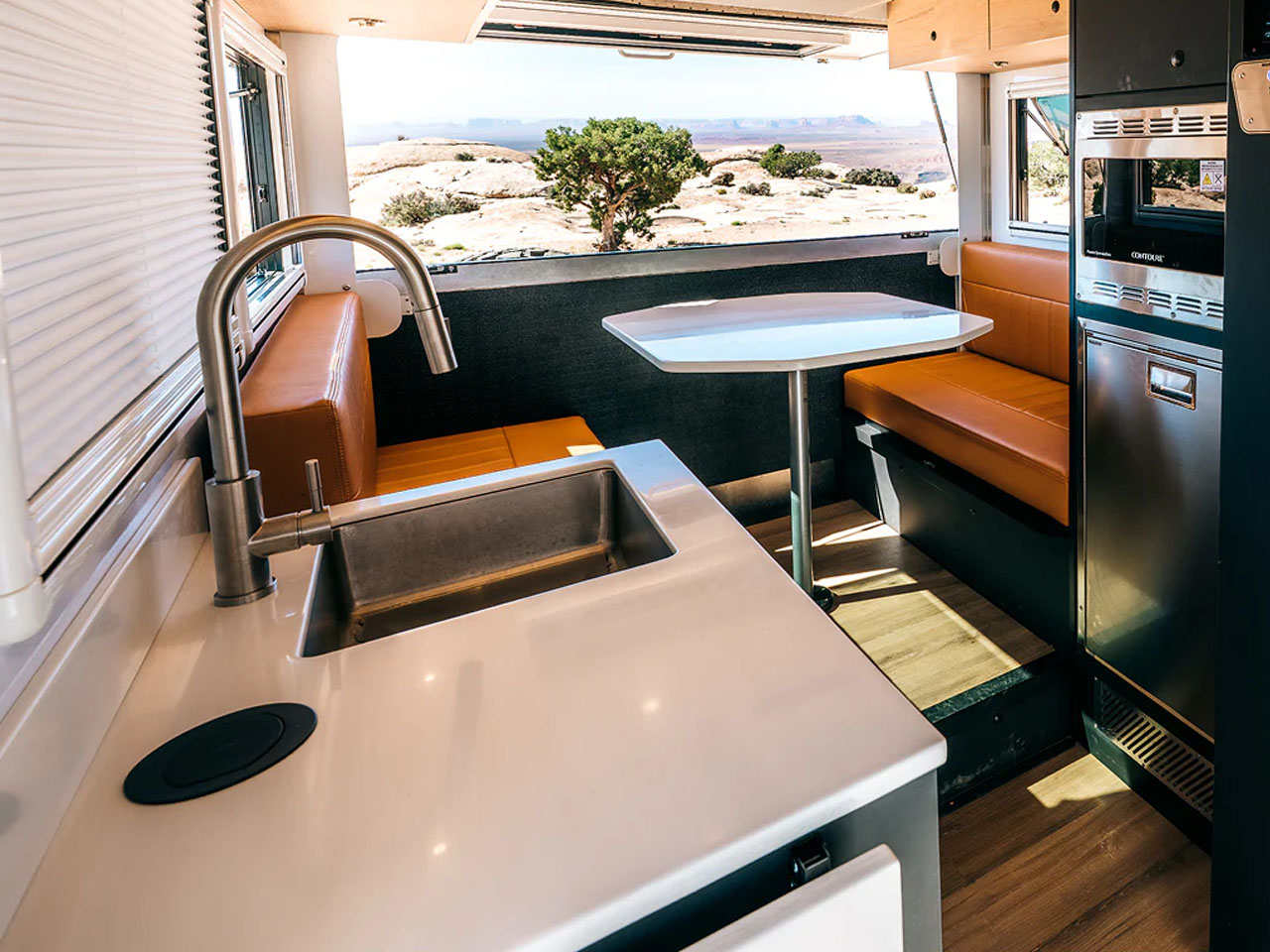
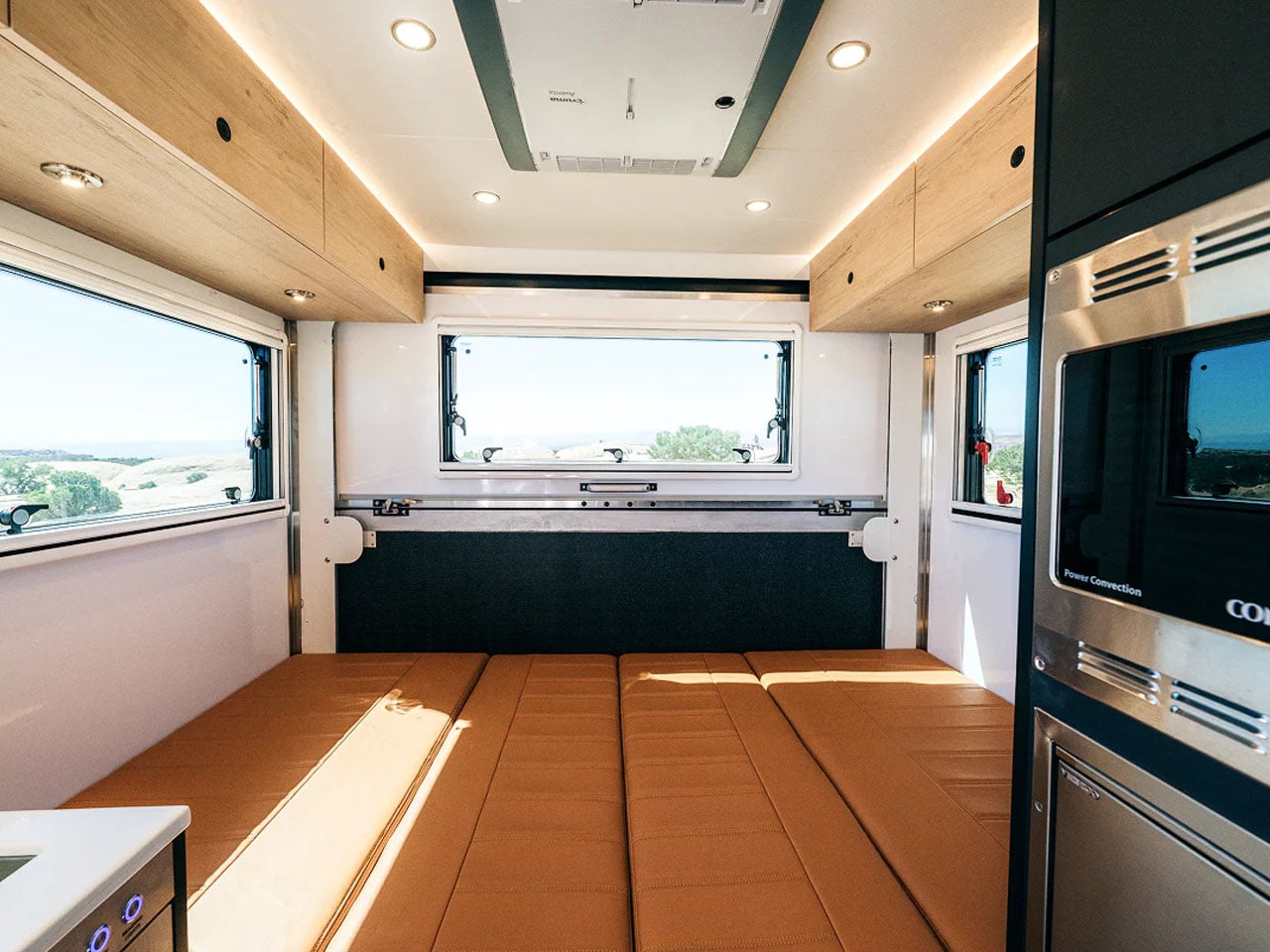
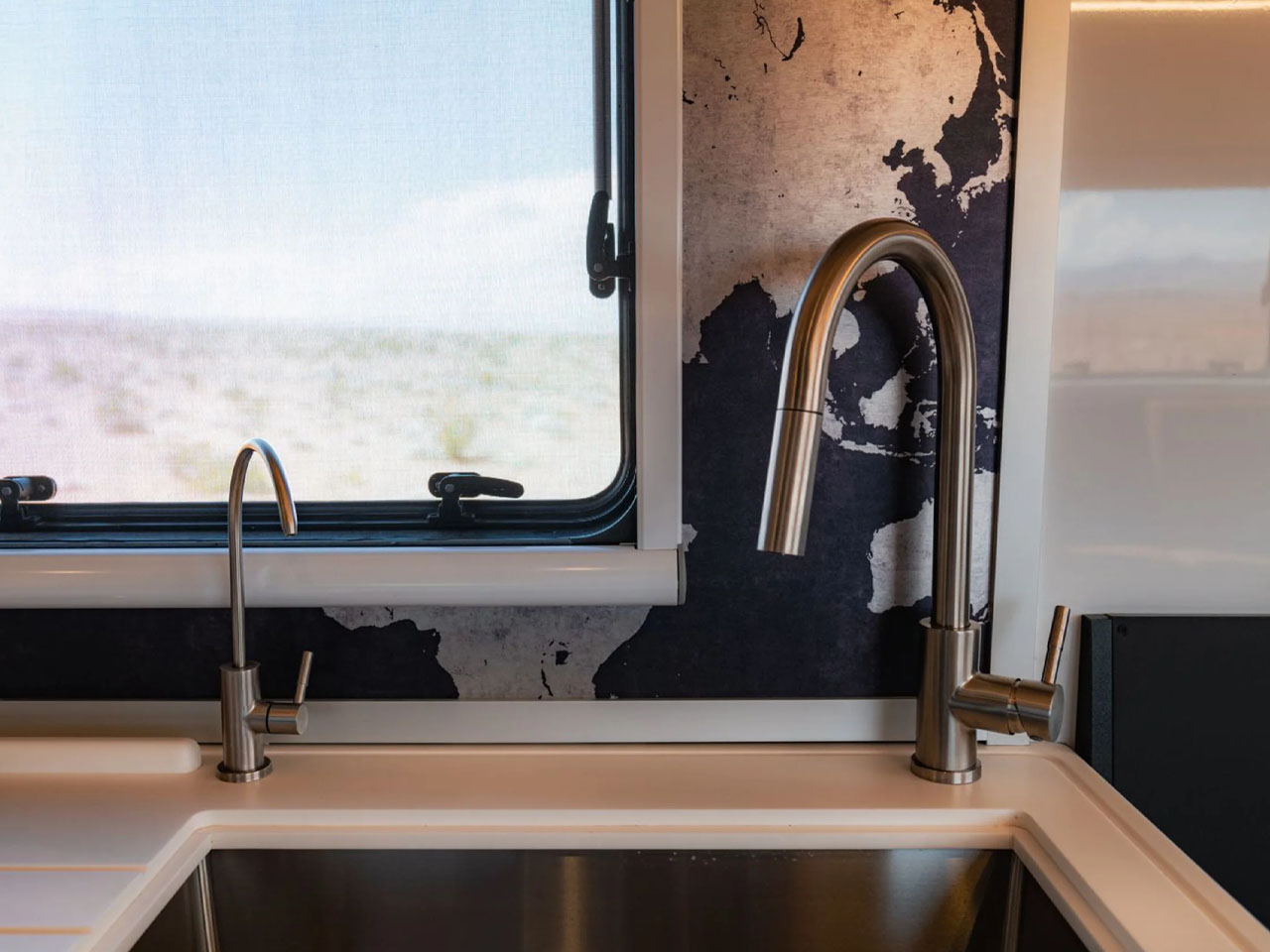
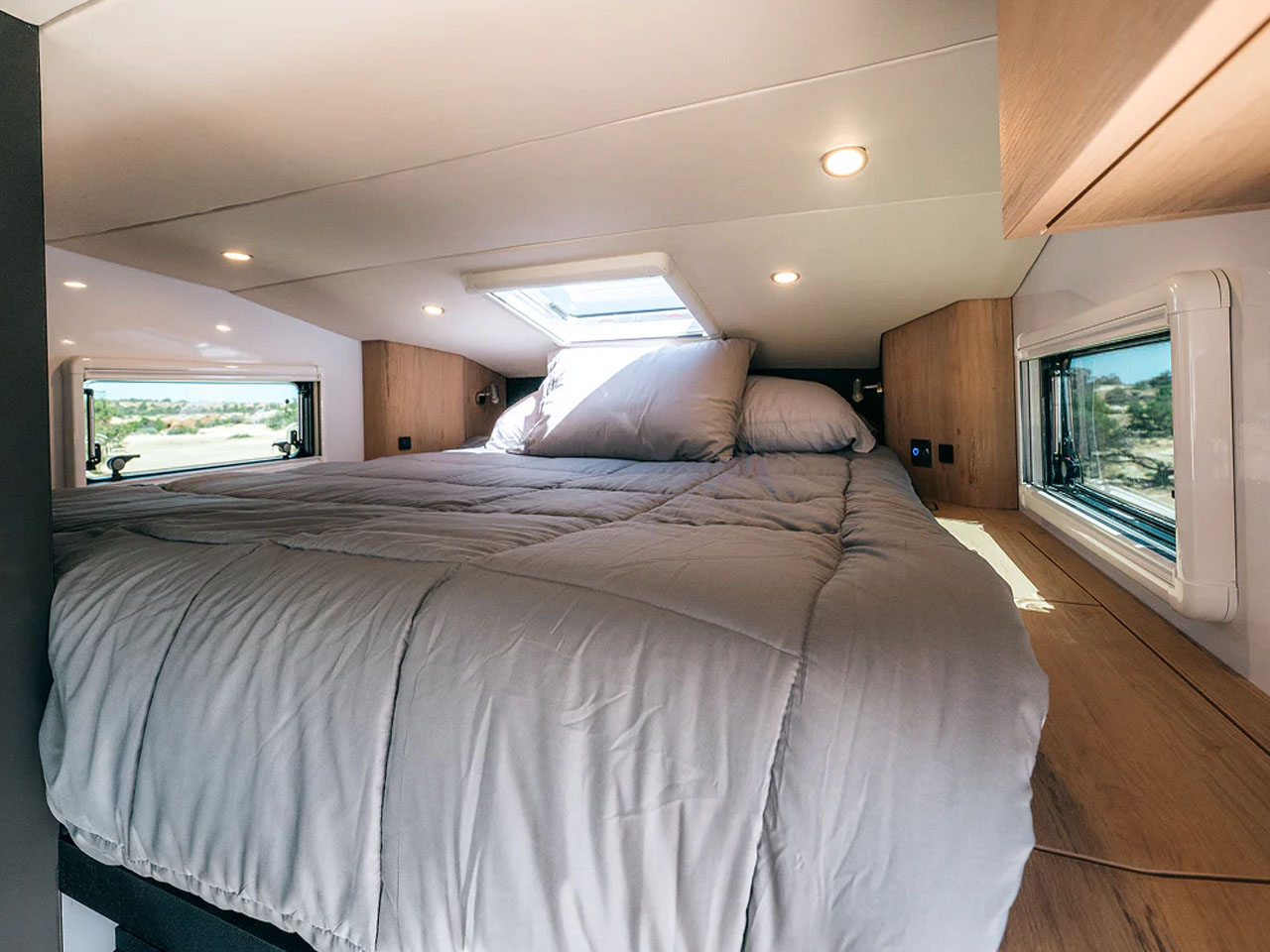
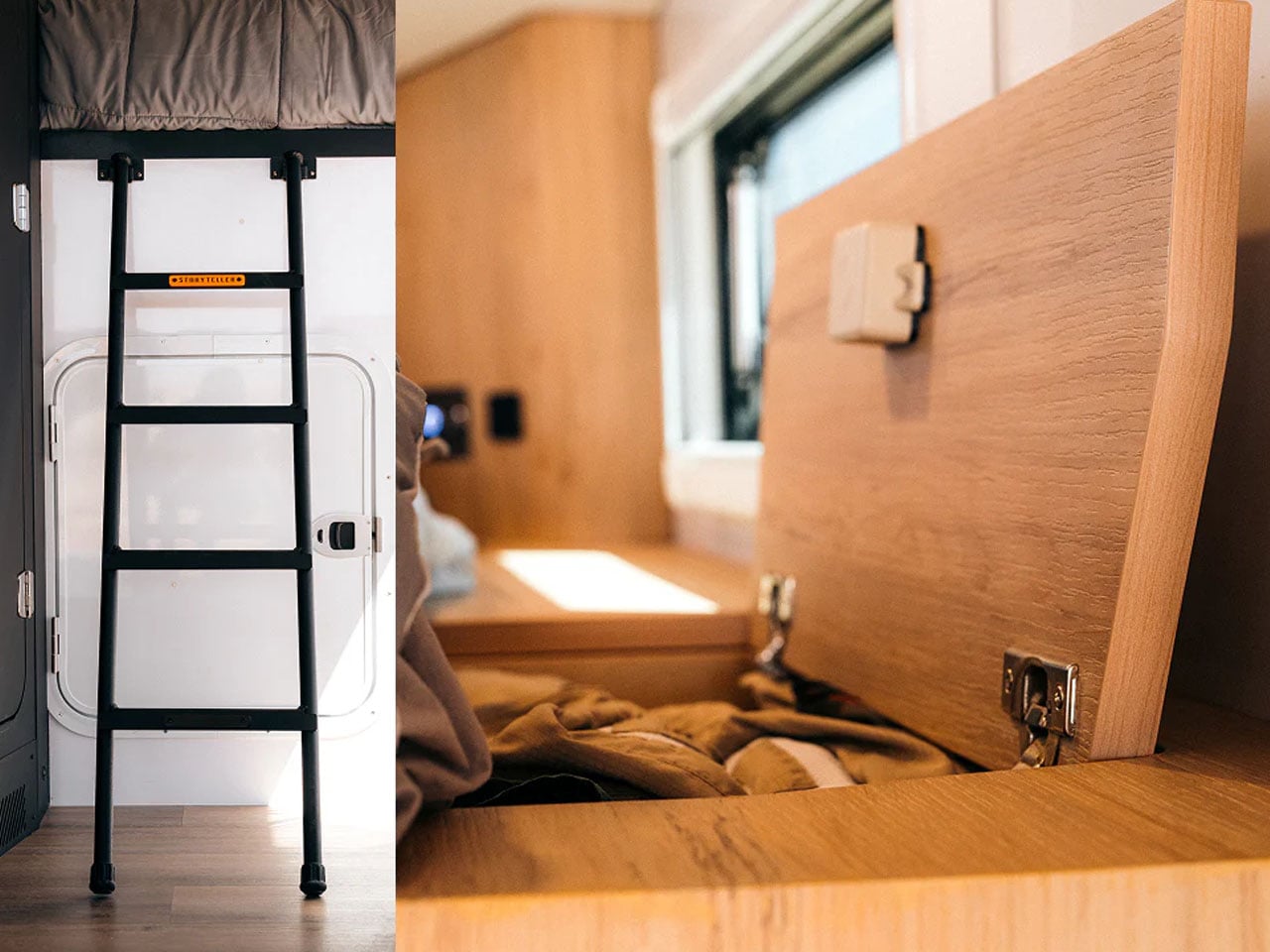
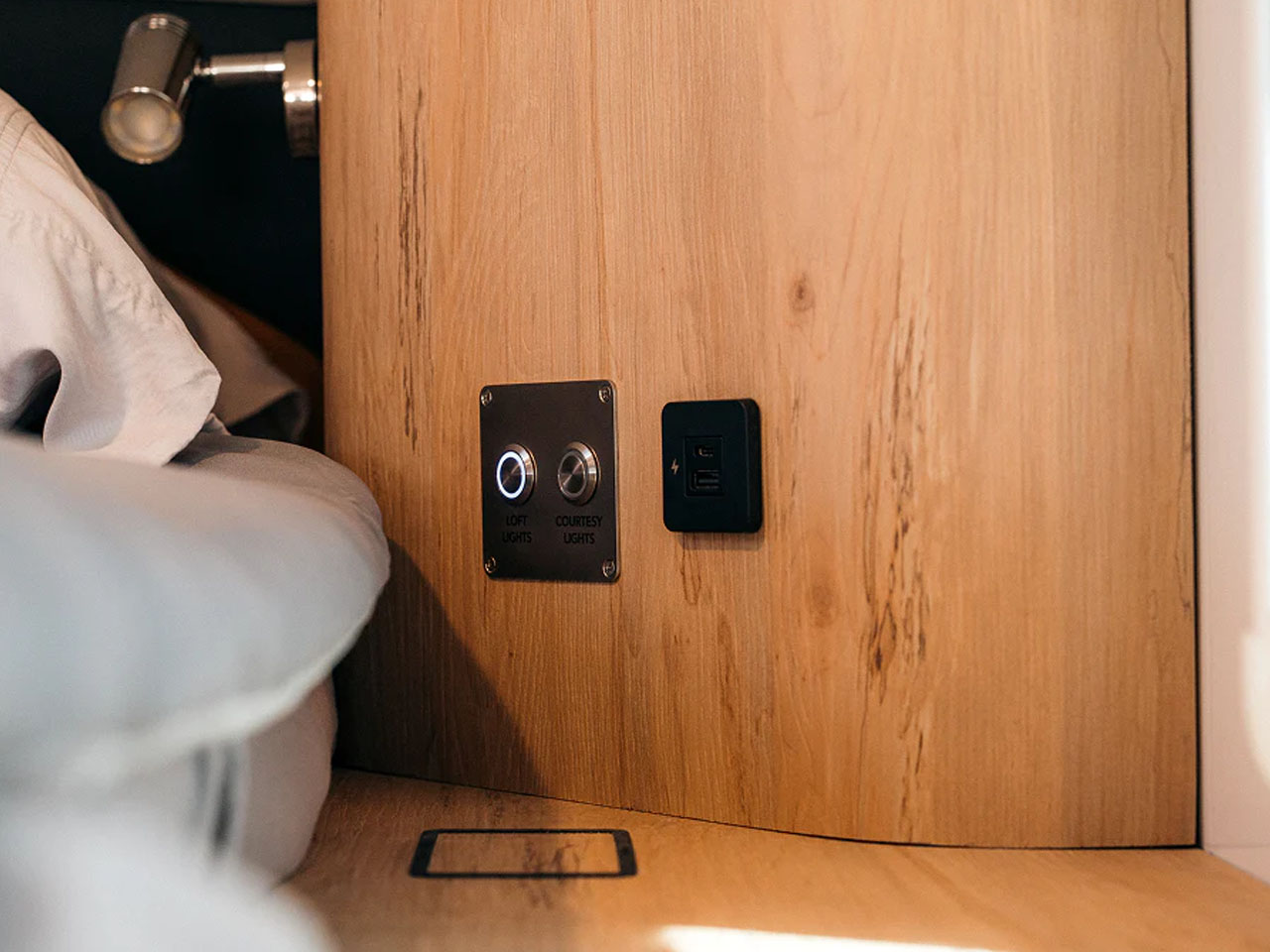
Opposite the bathroom, you have the kitchen with a portable induction cooker, a stainless steel sink, and a flip-up counter space extension. 116-L Vitrifrigo fridge/freezer, microwave and other appliances are aligned next to the convertible four-seat dinette with leather seating. When you want a little more space, the FlipOut Deck drops down and opens up your camp. On the far side is the main bed in the cabover loft. Together with the convertible dinette bed, you can have a sleeping space for four people in the Wild.
GXV Wild maintains off-grid convenience with the 400W of solar panels (expandable up to 800W), 12-kWh electrical system, and a 4,500W inverter. For all-season convenience, the insulated interior is furnished with a 13.5K-BTU rooftop air conditioner and a 14K-BTU hydronic heating system. Storyteller Overland is planning to sell the 2027 GXV Wild starting at $299,898. What do you think?
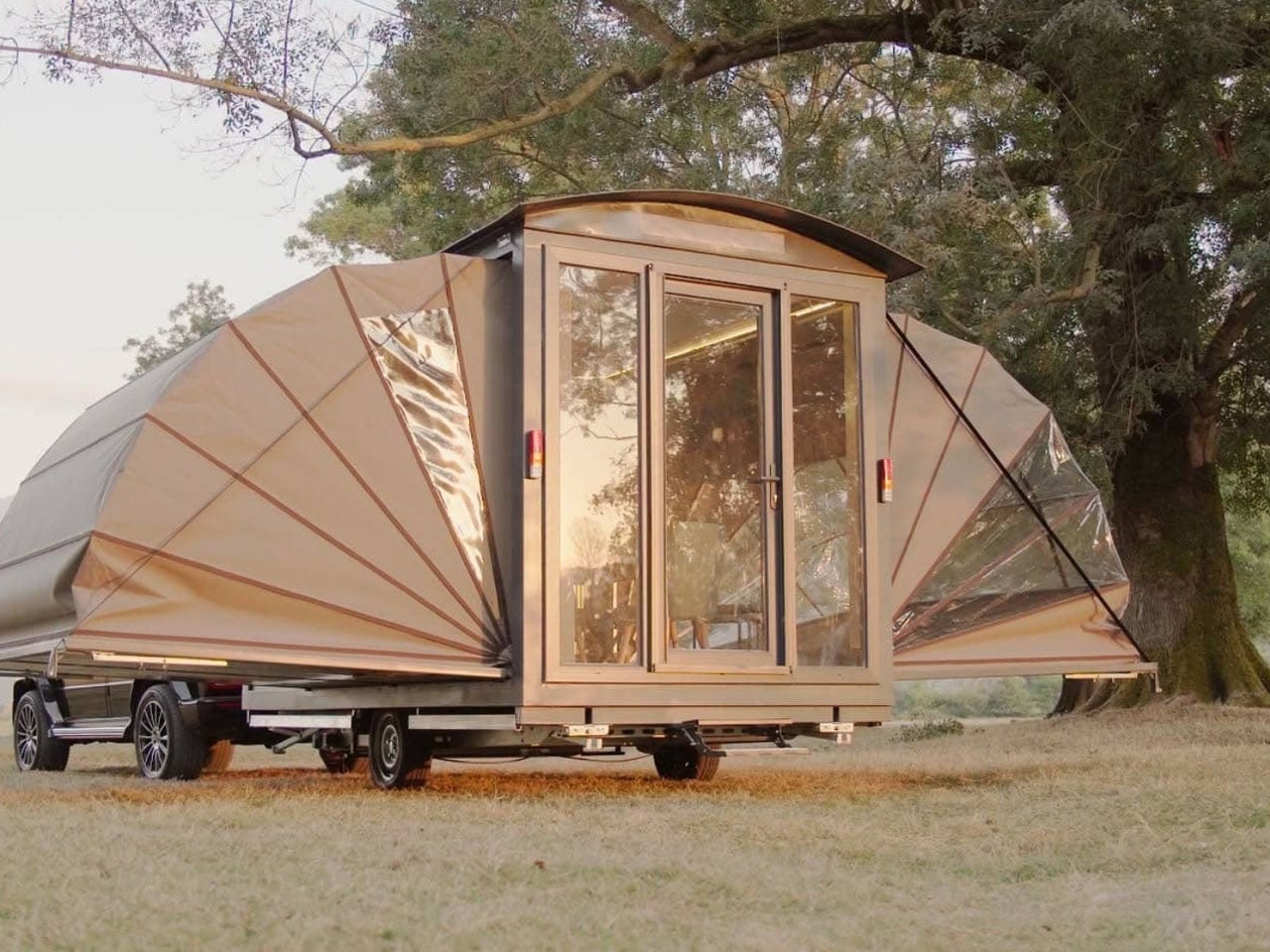
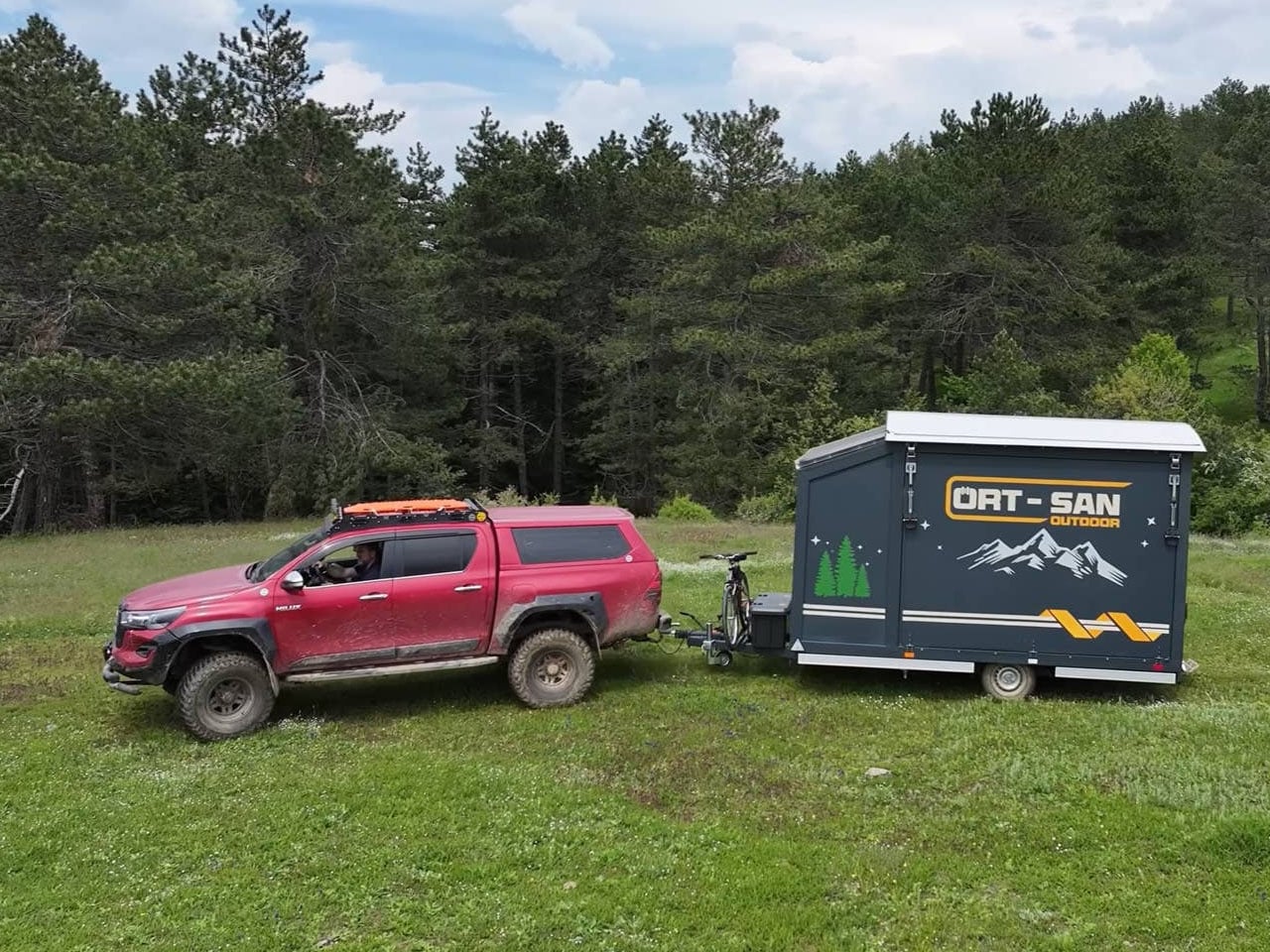
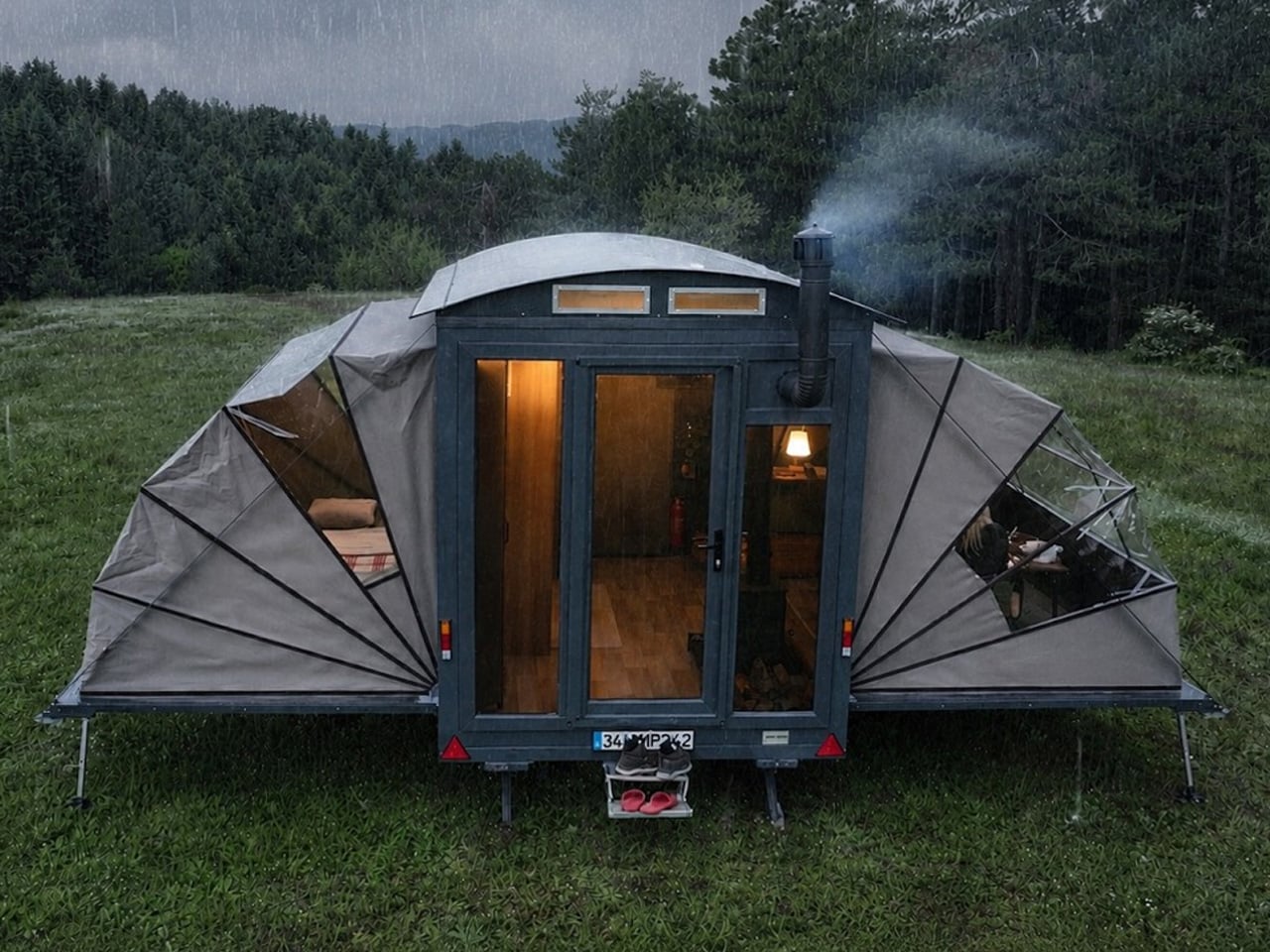
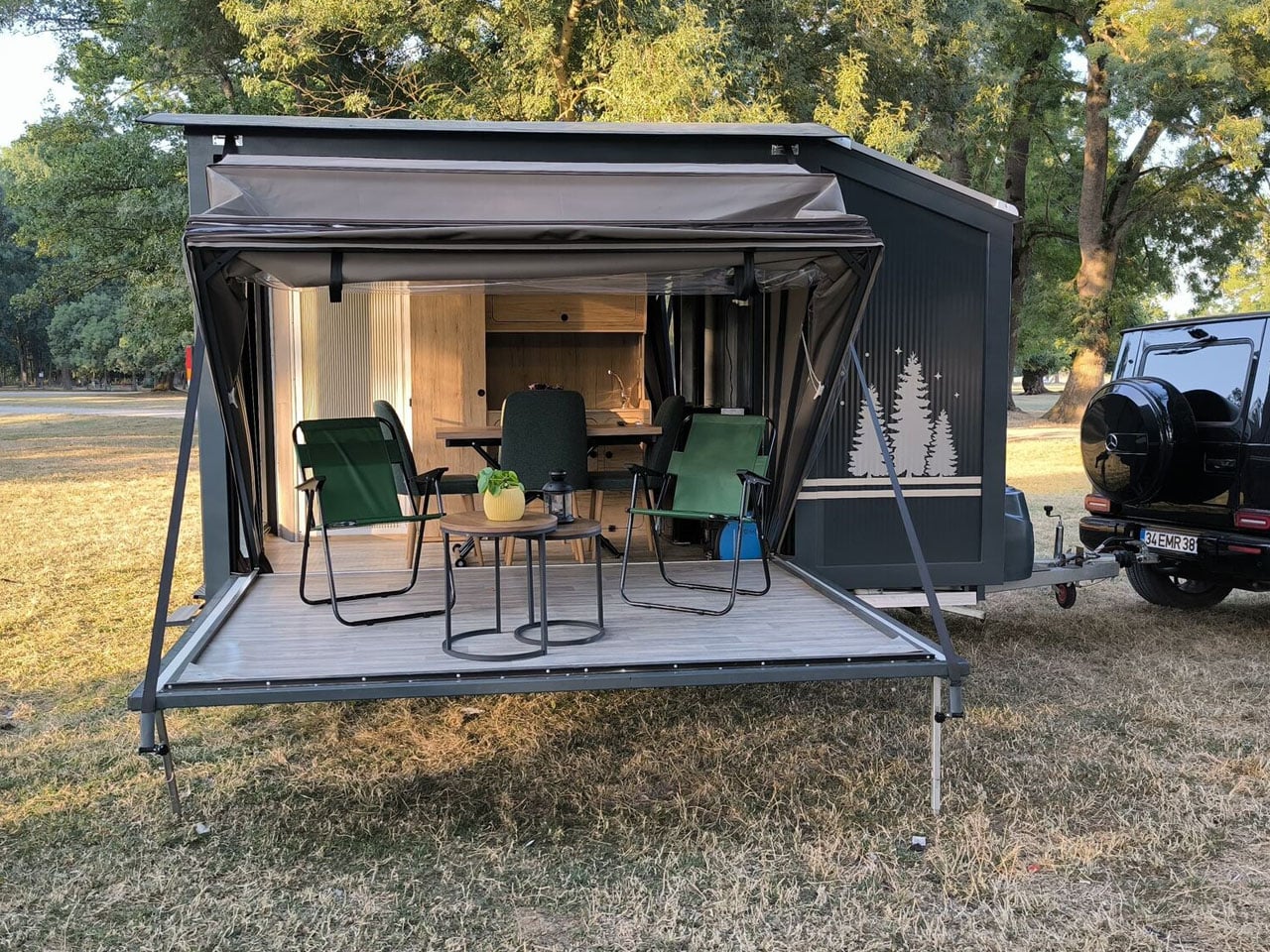
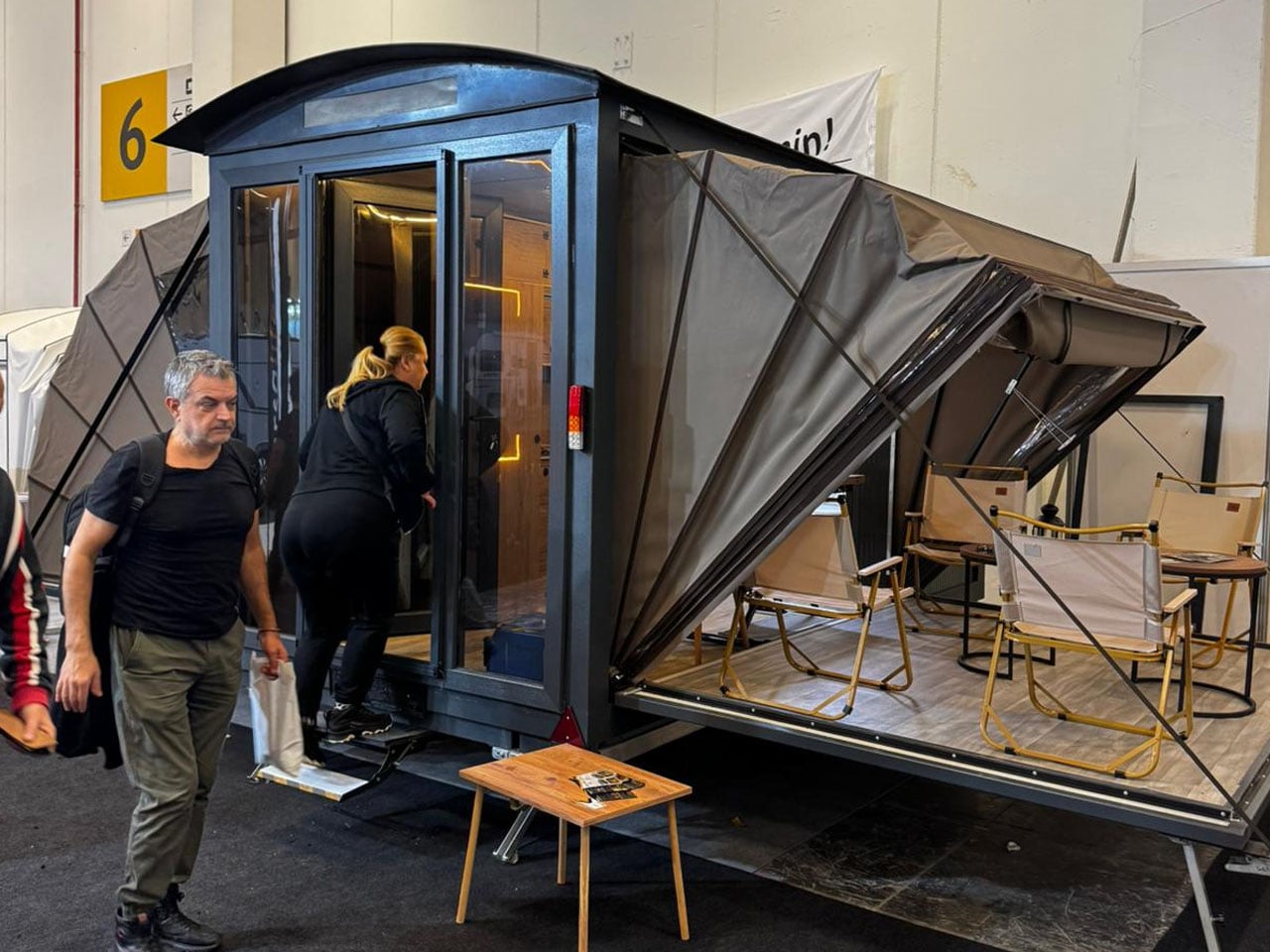
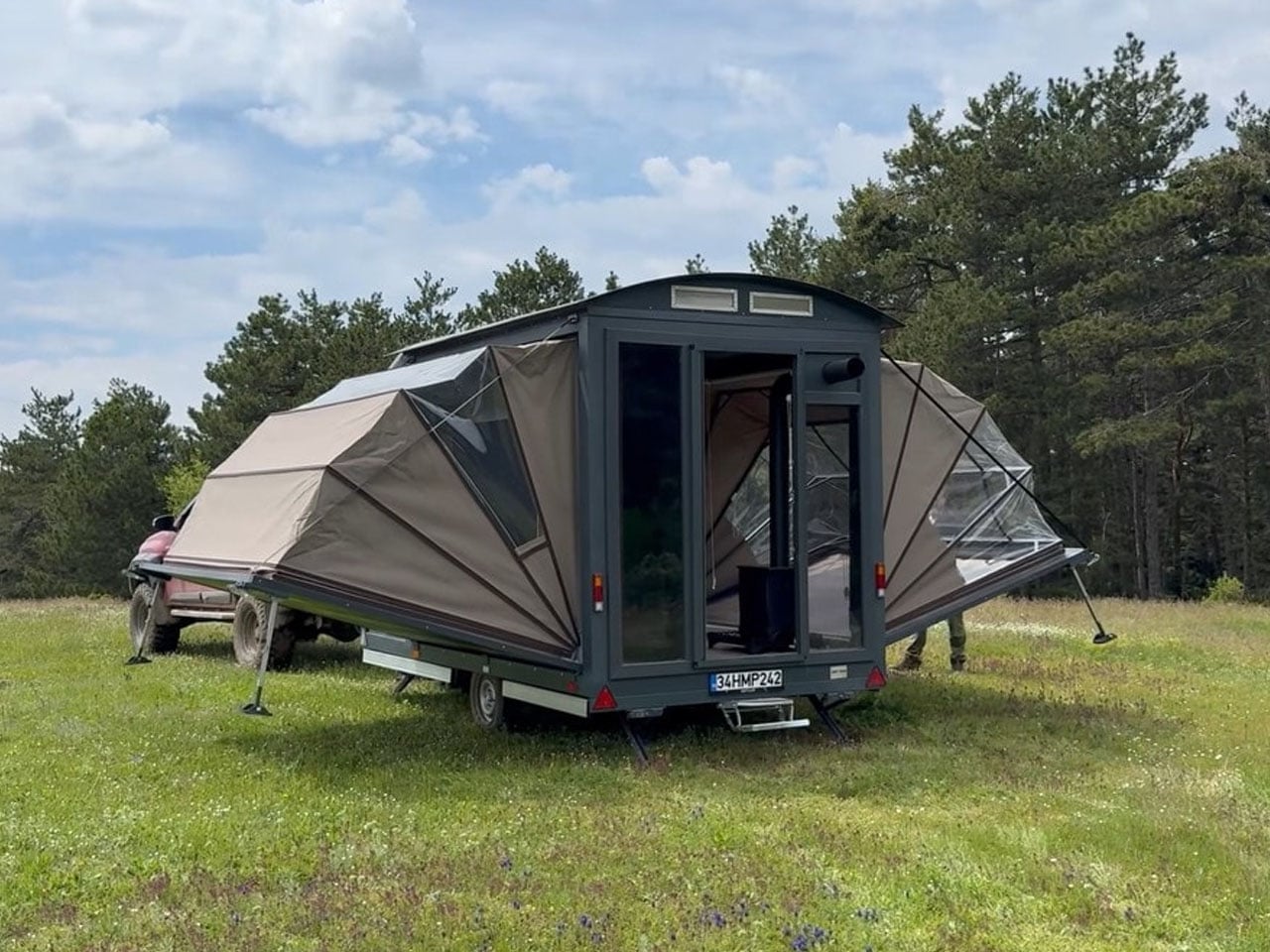
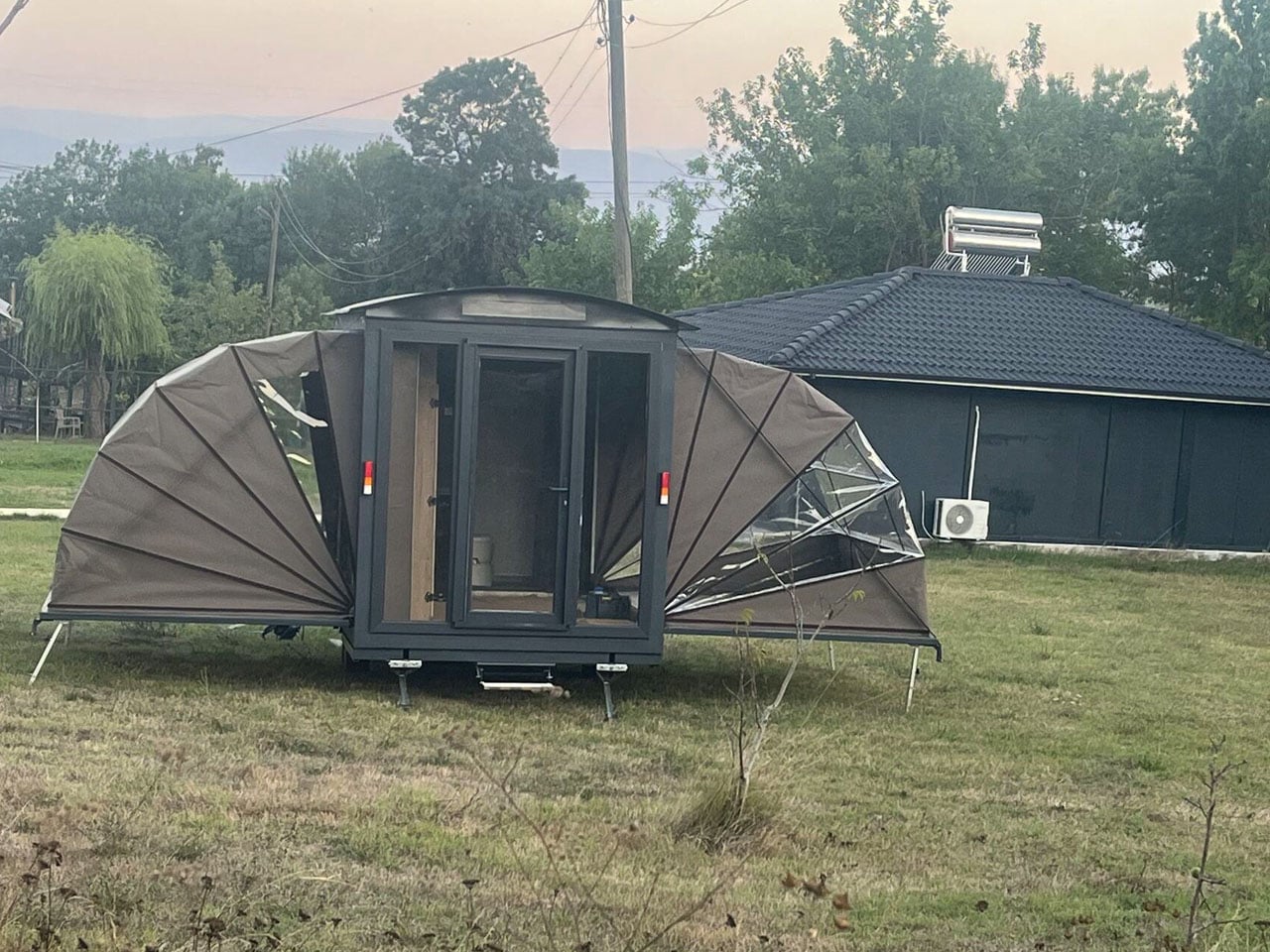
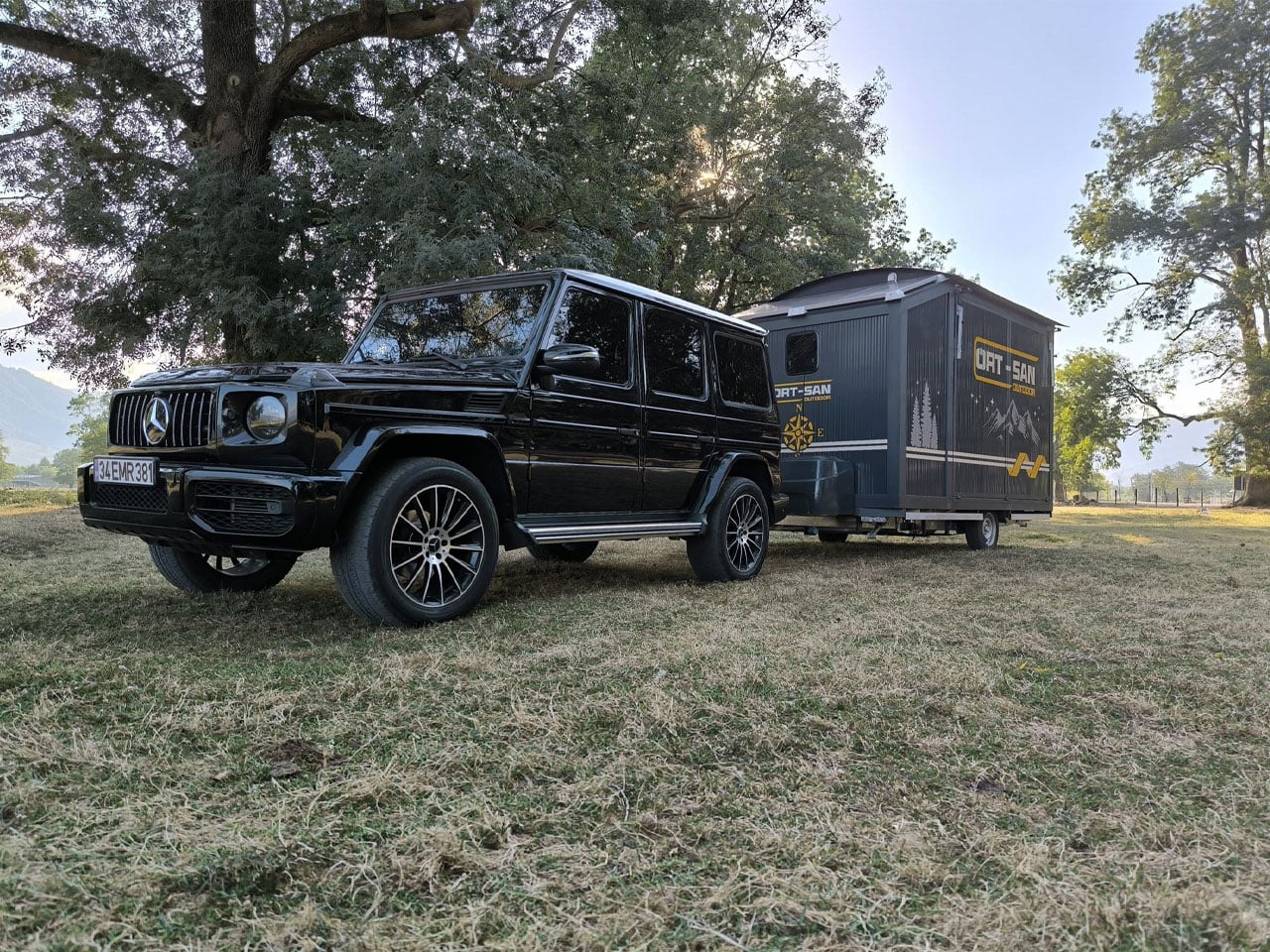
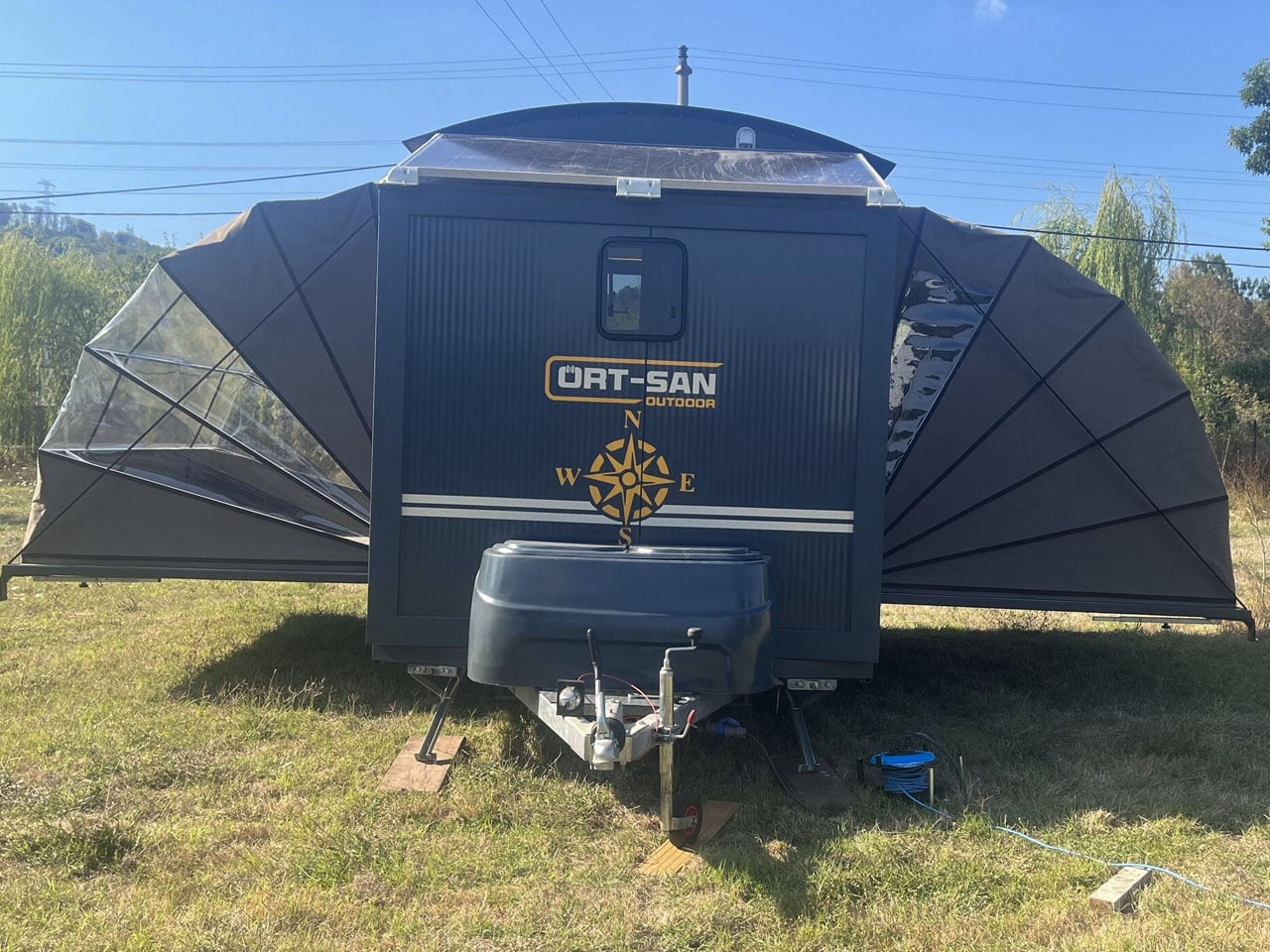
For anyone who has spent time researching compact camper trailers, the biggest challenge is often balancing portability with livable space. Smaller trailers are easier to tow and store, but they can feel cramped once you arrive at camp. The Mini House from Turkish manufacturer Ortsan Outdoor takes a different approach, combining the convenience of a compact travel trailer with the functionality of a tiny home. This is achieved with the ingenious accordion-style design that dramatically expands its footprint once parked. As Ortsan likes to put it, the RV is built to “Fold, unfold, expand” with the push of a button.
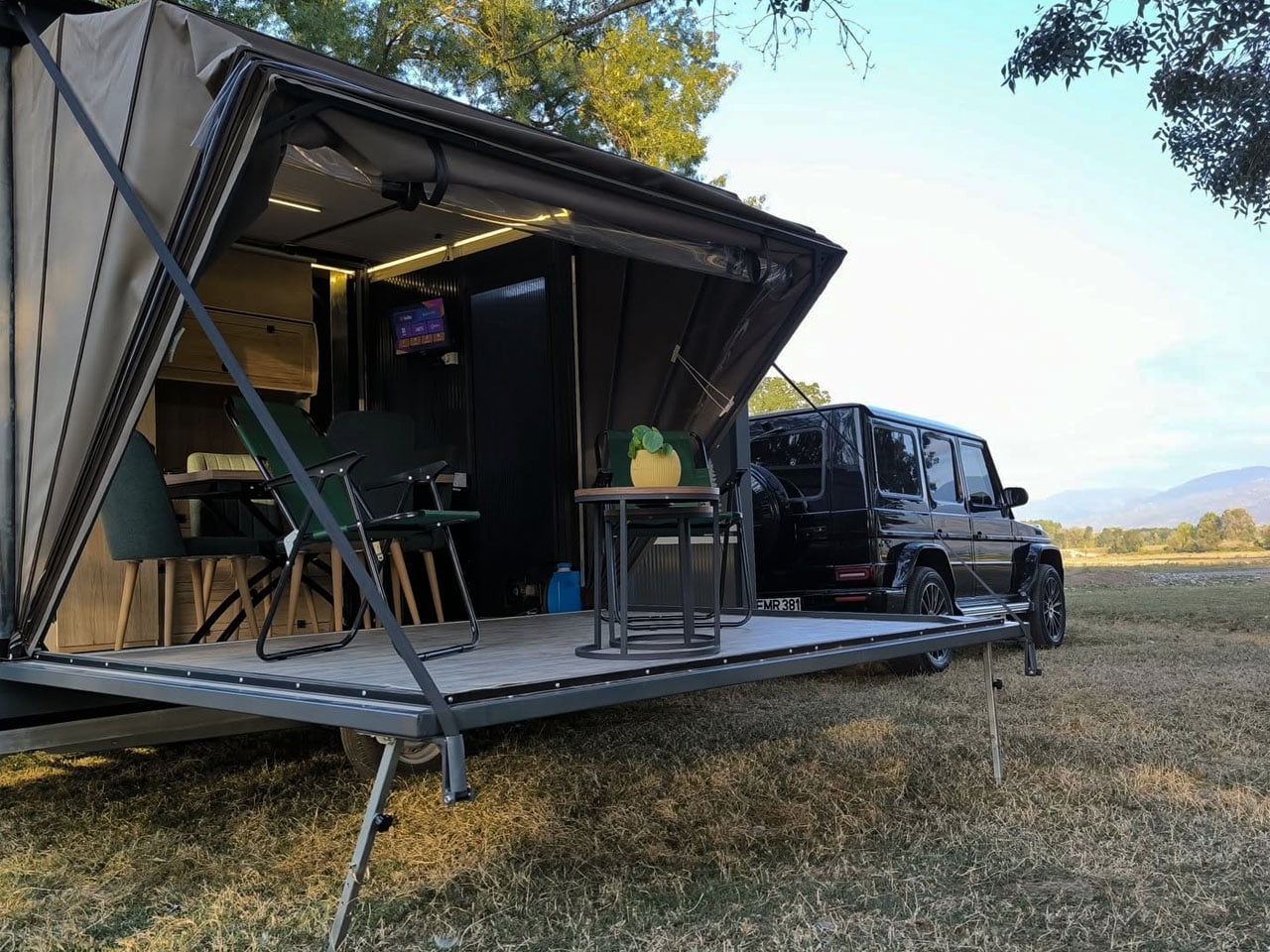
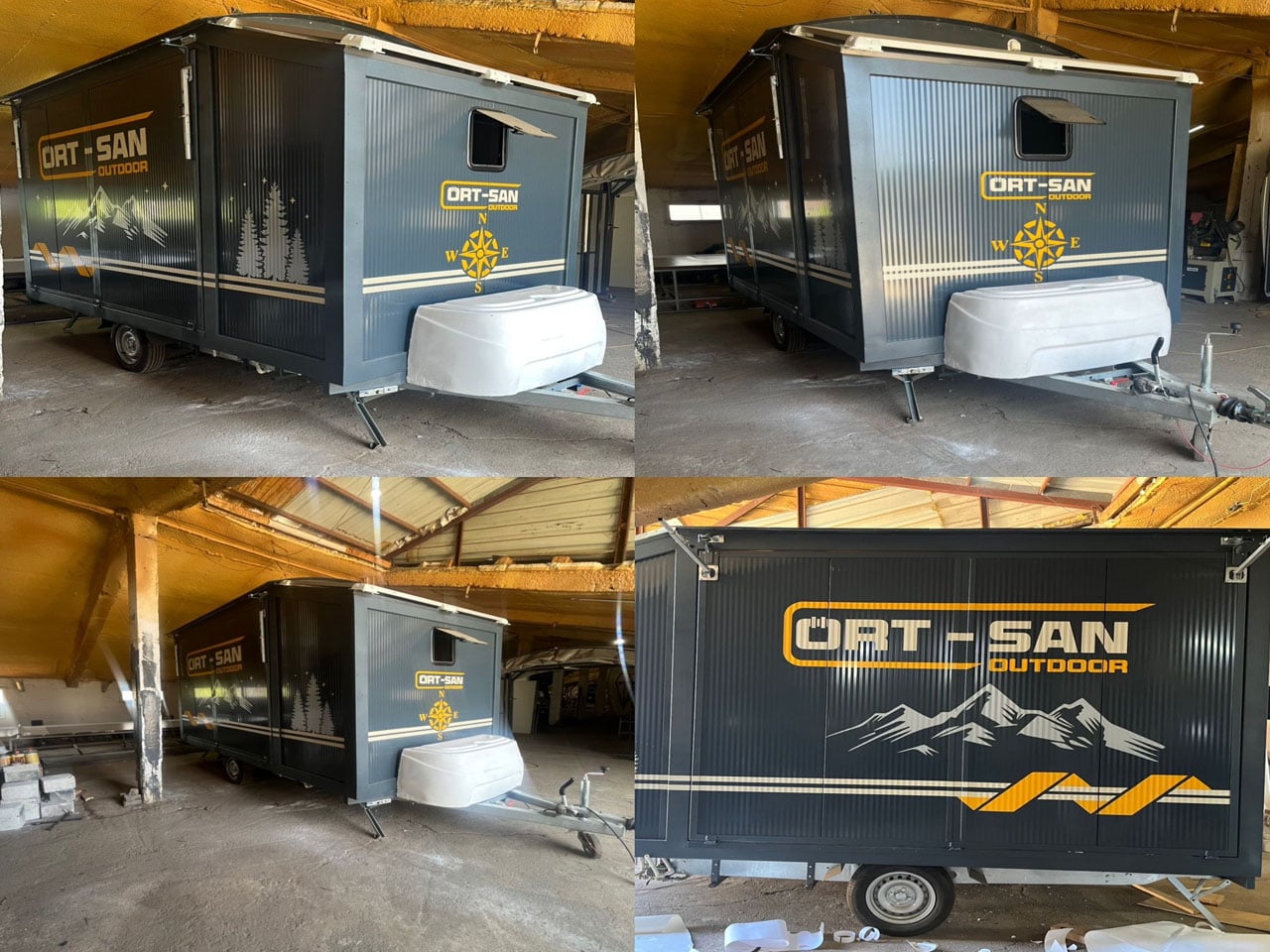
At first glance, the Mini House looks like a conventional single-axle caravan. Measuring approximately 13.1 feet long and 6.8 feet wide in transport mode, it occupies just 90 square feet of space on the road, making it considerably easier to tow than many larger campers. Built on a heavy-duty steel chassis with a low-slung design for improved stability, it is also certified to O2 international transport standards, ensuring compliance with road regulations in various markets.
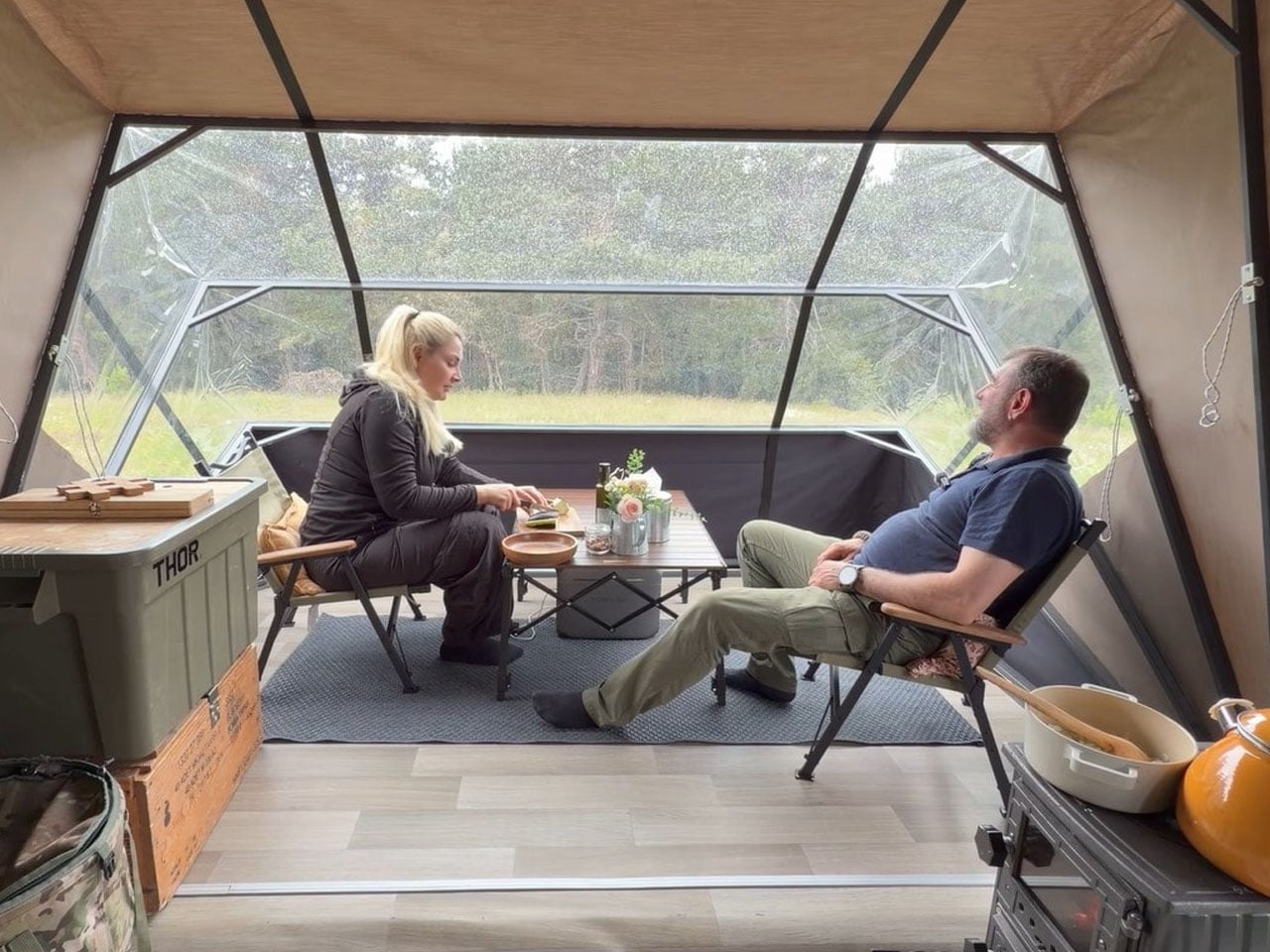
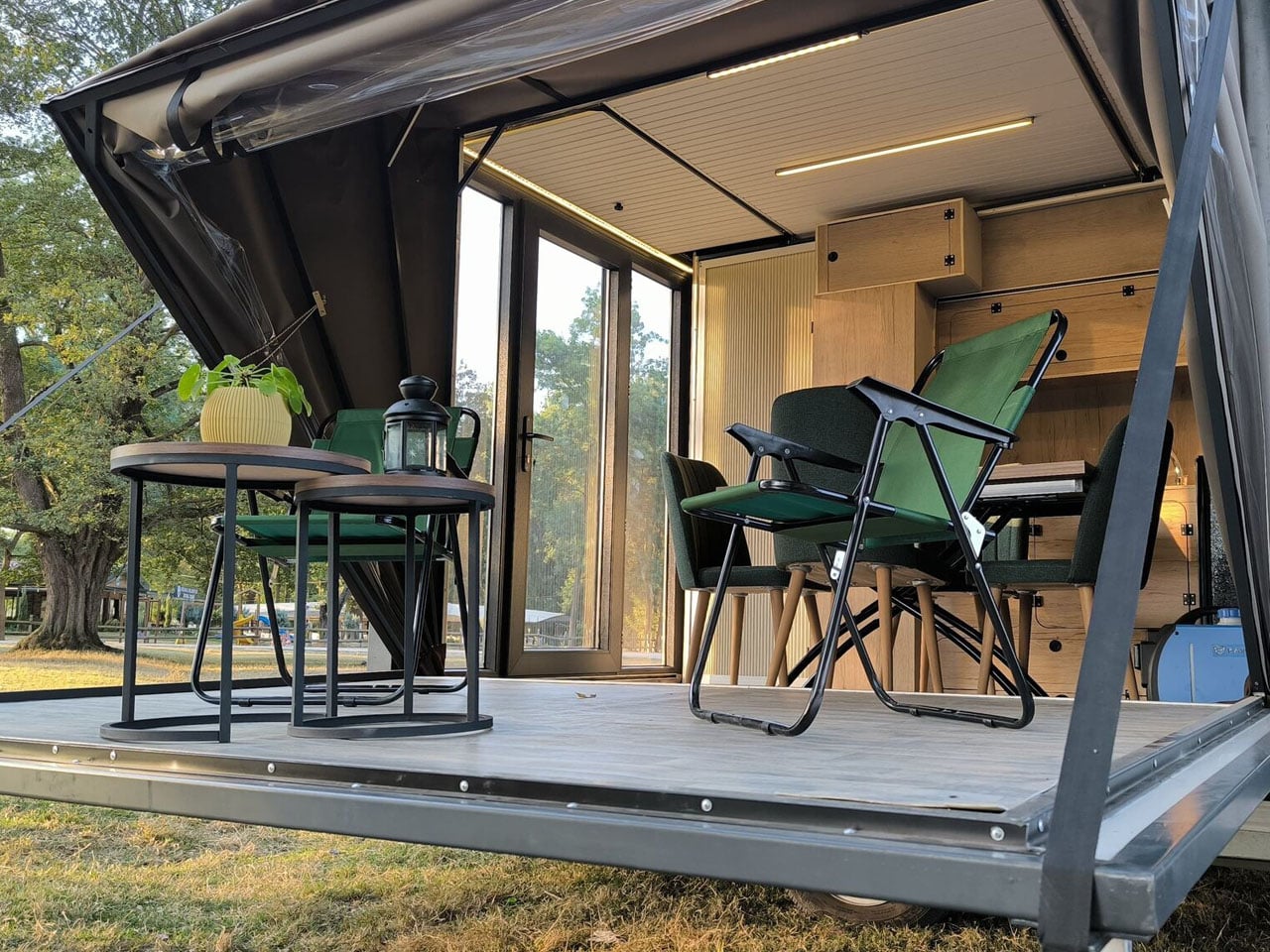
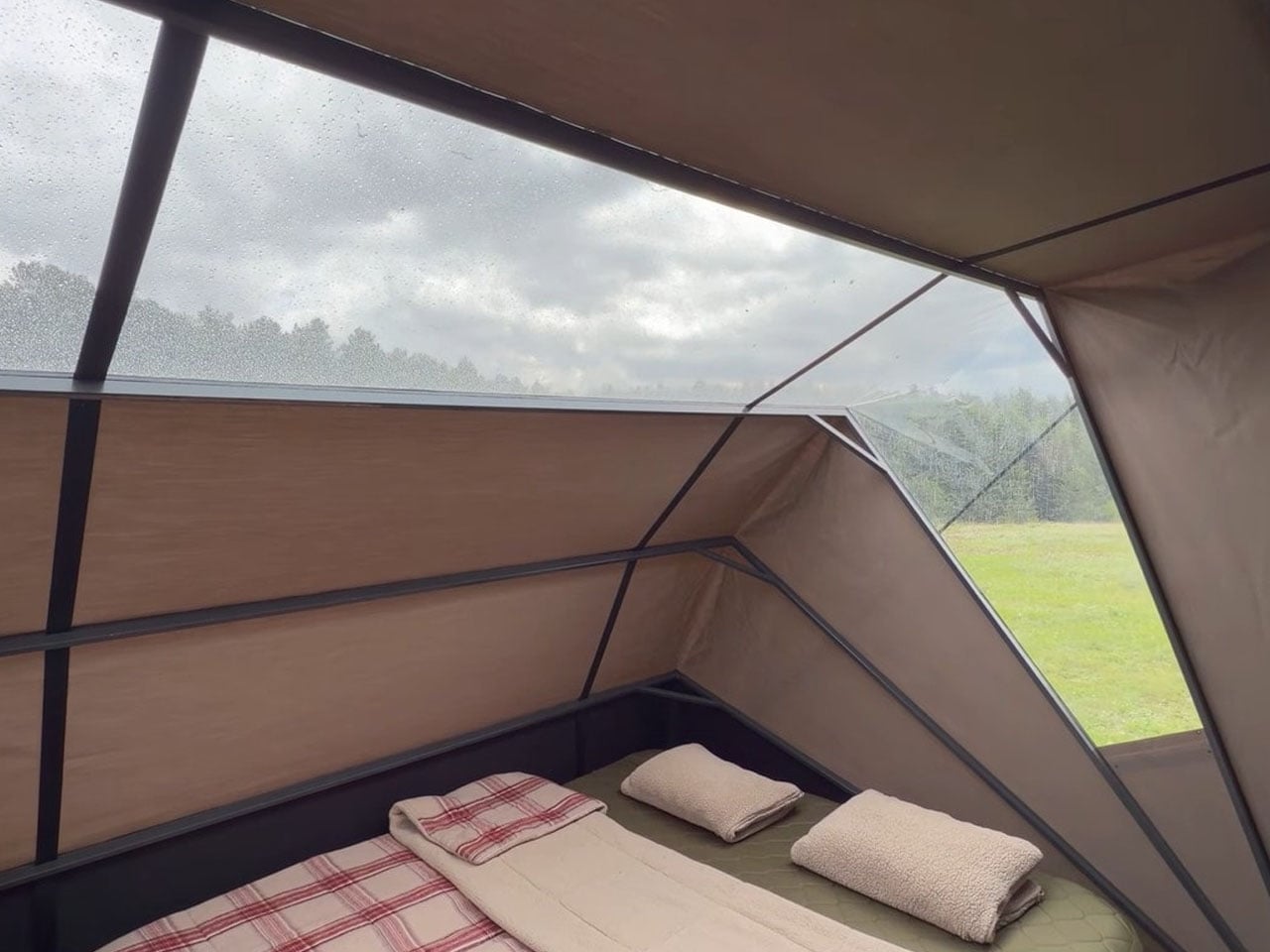
The real magic happens once the trailer reaches its destination. At the press of a button, both sidewalls fold outward, creating two expandable wings supported by canvas enclosures. This transformation more than doubles the available living area, increasing it to roughly 219 square feet. The expanded layout creates a more residential feel, separating spaces into dedicated zones rather than forcing every activity into a narrow corridor. The concept draws inspiration from accordion-style expandable structures, most notably the experimental De Markies caravan designed in the 1980s, but Ortsan has adapted the idea into a production-ready camper available on a made-to-order basis.
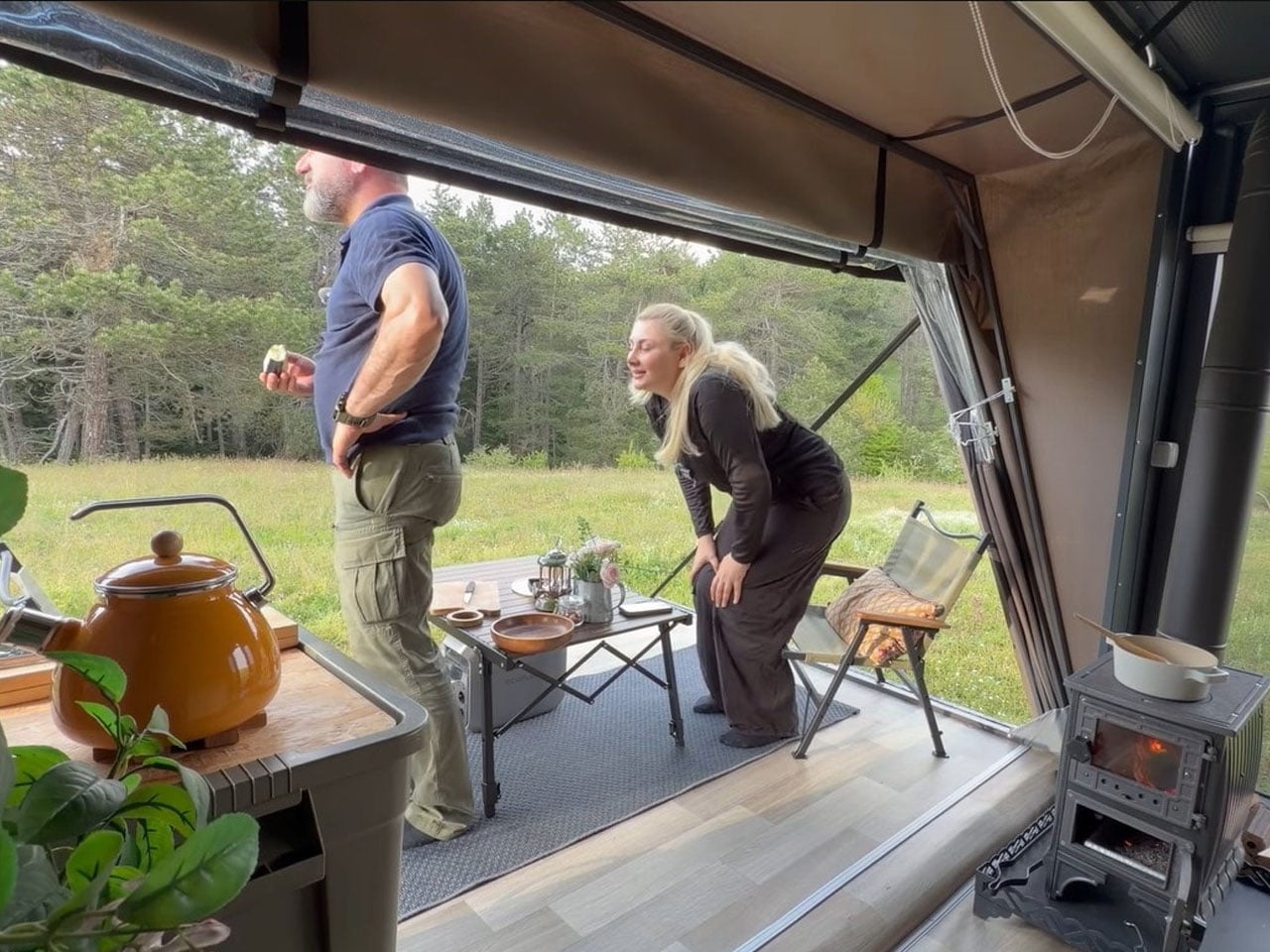
Despite its compact footprint, the interior offers a surprisingly complete living setup. A full-width bathroom occupies the front section of the trailer, while a long kitchen stretches along one side. The section includes a 90-liter 12-volt refrigerator, a two-burner gas cooktop, a stainless-steel sink, generous countertop space, multiple cabinets and drawers, and even a slide-out dining table. The bathroom also incorporates a large storage area, helping compensate for the limited storage available within the expandable wings. Additional storage can be found in a tongue-mounted box at the front of the trailer.
The Mini House is designed for off-grid travel as well. A roof-mounted 470-watt solar array works alongside a 200Ah lithium battery and inverter to provide electrical independence for extended stays. Water needs are supported by separate 200-liter fresh and gray water tanks, while a cassette toilet eliminates the need for a dedicated black-water system. These features make the camper suitable for weekend adventures and longer trips away from traditional campground hookups.
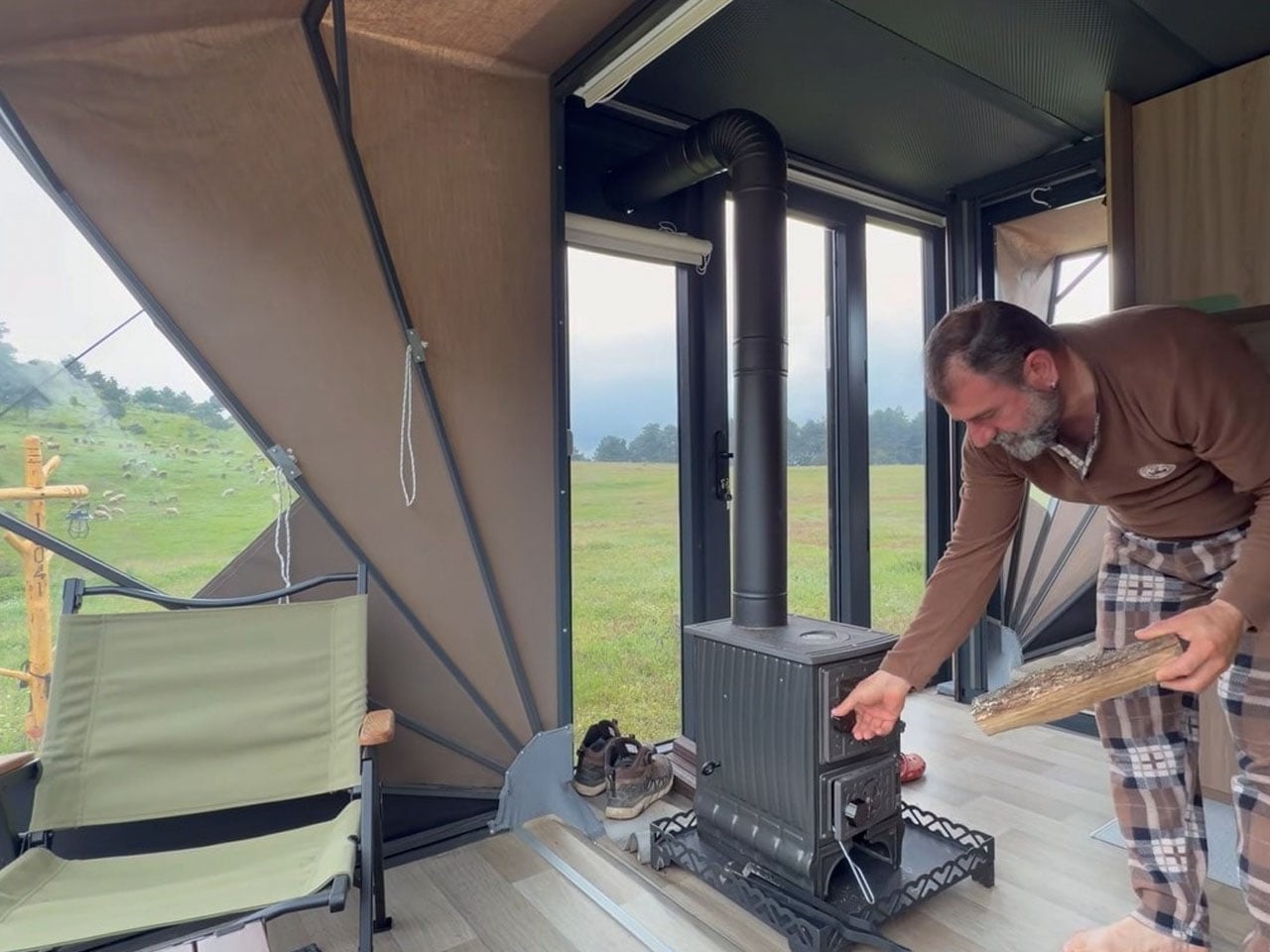
Cozy comfort is in no way compromised in the accordion-style setup. Ortsan equips the trailer with a wood-burning stove, air-conditioning system, Webasto diesel heater, and a smart TV with integrated multimedia capabilities. Many of the camper’s functions, including lighting, climate control, and the expandable sections themselves, can be managed through a tablet-based control system that serves as a central command hub.
Like any expandable design, the Mini House requires more setup than a conventional trailer and incorporates additional moving parts. However, the tradeoff is substantial as it delivers the towing convenience of a compact caravan while providing the livability of a much larger tiny home. Starting at approximately $19,300 (before taxes, shipping, and customization), the Mini House is truly a utilitarian solution for travelers seeking greater comfort without committing to a larger RV.
I am a fan of off-grid trailers that move light and open up in all directions when camped. The new overland micro trailer from Addax is one such camping solution that thrives on the build quality and the success of the original Addax overland trailer designed for Jeep in 2022. The new guy is called the 2026 Basecamp V3 and is, as you’d expect from Addax, a robust and dependable trailer that rolls out with the option to install camping hardware when and where you need it.
Designed for adaptability in adventures with your Jeep, this co-branded trailer, by virtue of its construction, boasts military-grade toughness and typical off-roading ability. Jeep is synonymous with adventure. The owners of a Wrangler are those who live to push boundaries, and the Basecamp is one of the toughest, purpose-built outdoor trailers – designed to complement that lifestyle.
If you have been religiously following the coverage here on Yanko Design, you would have, from the frequency of our related coverage, figured out that heavy-duty expedition trailers are creating a market buzz. But the Addax Basecamp begs to differ from the crowd. Weighing 1800 pounds, the trailer features specialized suspension, tires, and chassis, specifically tailored for off-road travel and gear-hauling capacity. Thanks to its payload capacity of 1,450 lbs.
Jeep and Addax struck a partnership to share branding in the latter’s Gladiator trailer series. This collaboration also included Mopar for service and customer support. There’s still uncertainty if Basecamp is licensed under the partnership, but the branding definitely screams the obvious. Alongside the banding, 2026 Basecamp V3 features rugged construction, the company is famous for, including the steel-on-steel body, 3/16-inch steel chassis, and deep-lugged 29-inch tires.
The trailer with a 6 x 6-foot form factor has a 26-inch x 40-inch front removable deck for additional space. Talking of space, when docked, the camp with its pre-installed OVS 270-degree batwing awning and pull-outs can instantly create a livable basecamp at grounds beyond the campsites as well. The 22L water tank, a functional 7-foot pull-out kitchen with a sink and 53-liter sliding fridge, and four power outlets add to convenience.
The power support is managed by an onboard 100 amp-hour slimline battery. It can draw renewable power from an optional 220W solar panel and also comes with a 1500W inverter for backup. Addax, does not offer a sleeping area inside of the trailer, so an additional Centori Outdoors aluminum hard-shell rooftop tent comes preinstalled for sleeping arrangements. The incredibly feature-packed Basecamp is an embodiment of its name, which is further supported by both internal and external MOLLE panel shelves. The attachment points here also allow you to carry a range of accessories/gear you would want on the Jeep trip into the wilderness. Basecamp V3 in its barebones starts at $19,000.
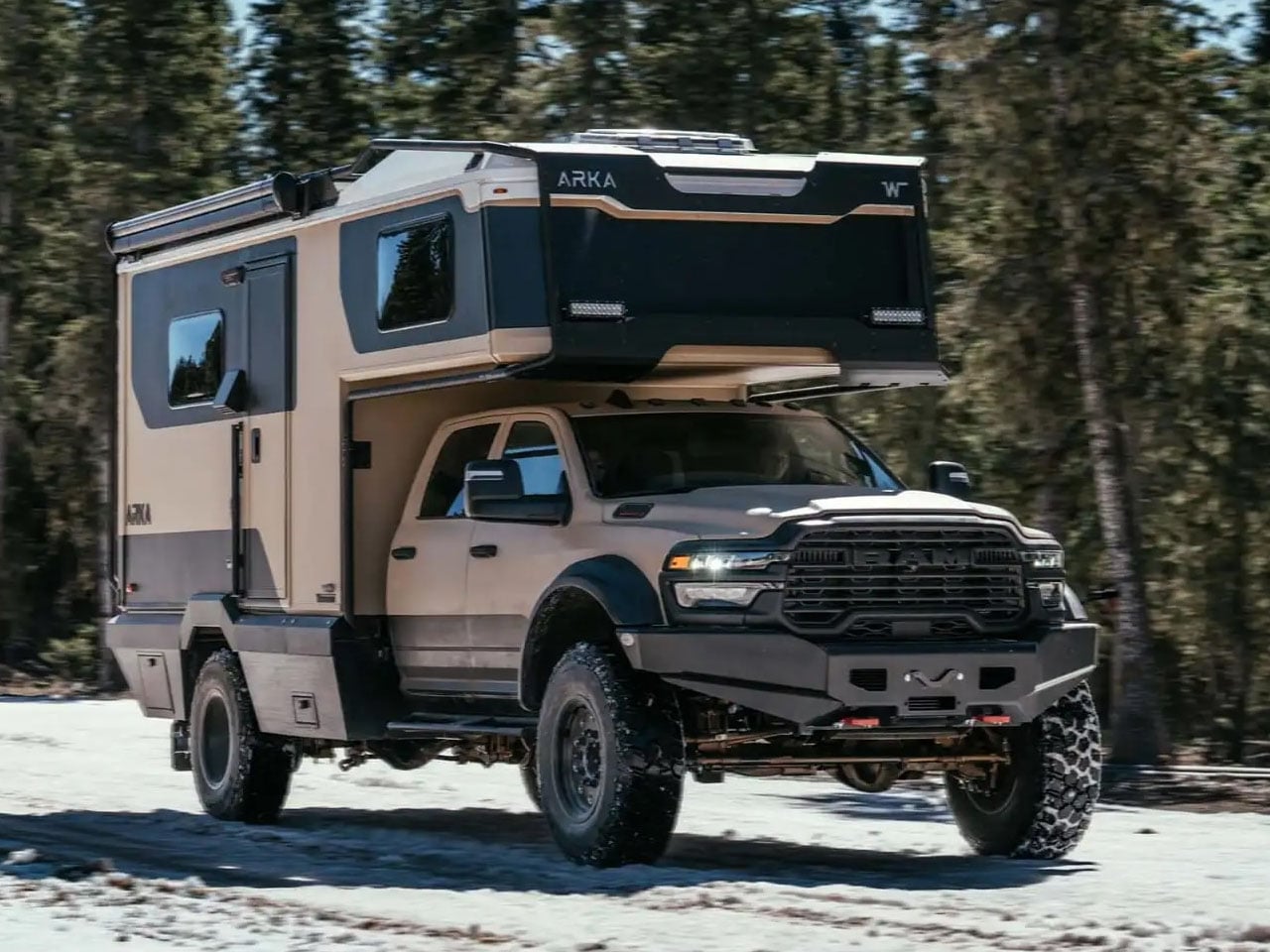
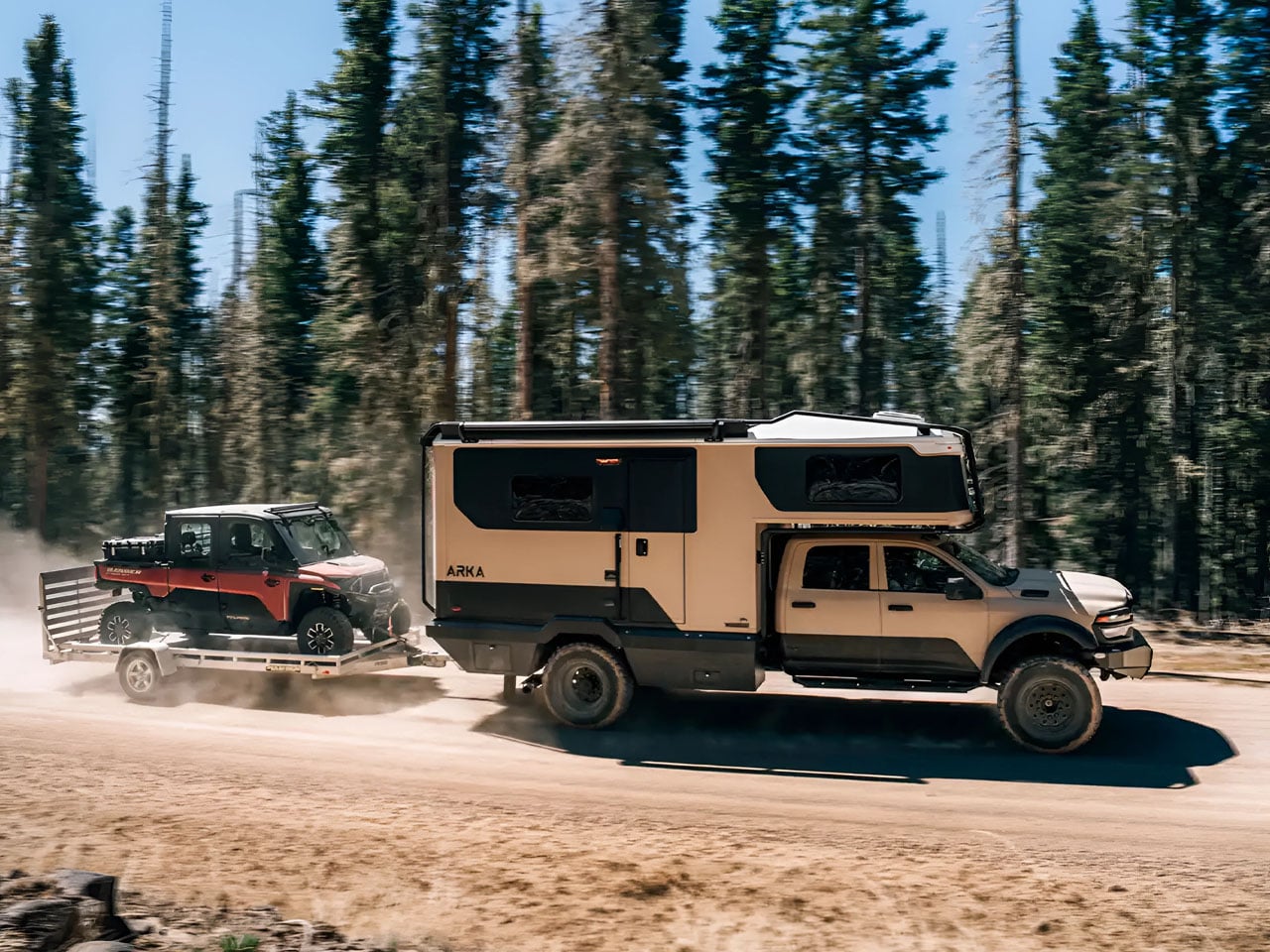
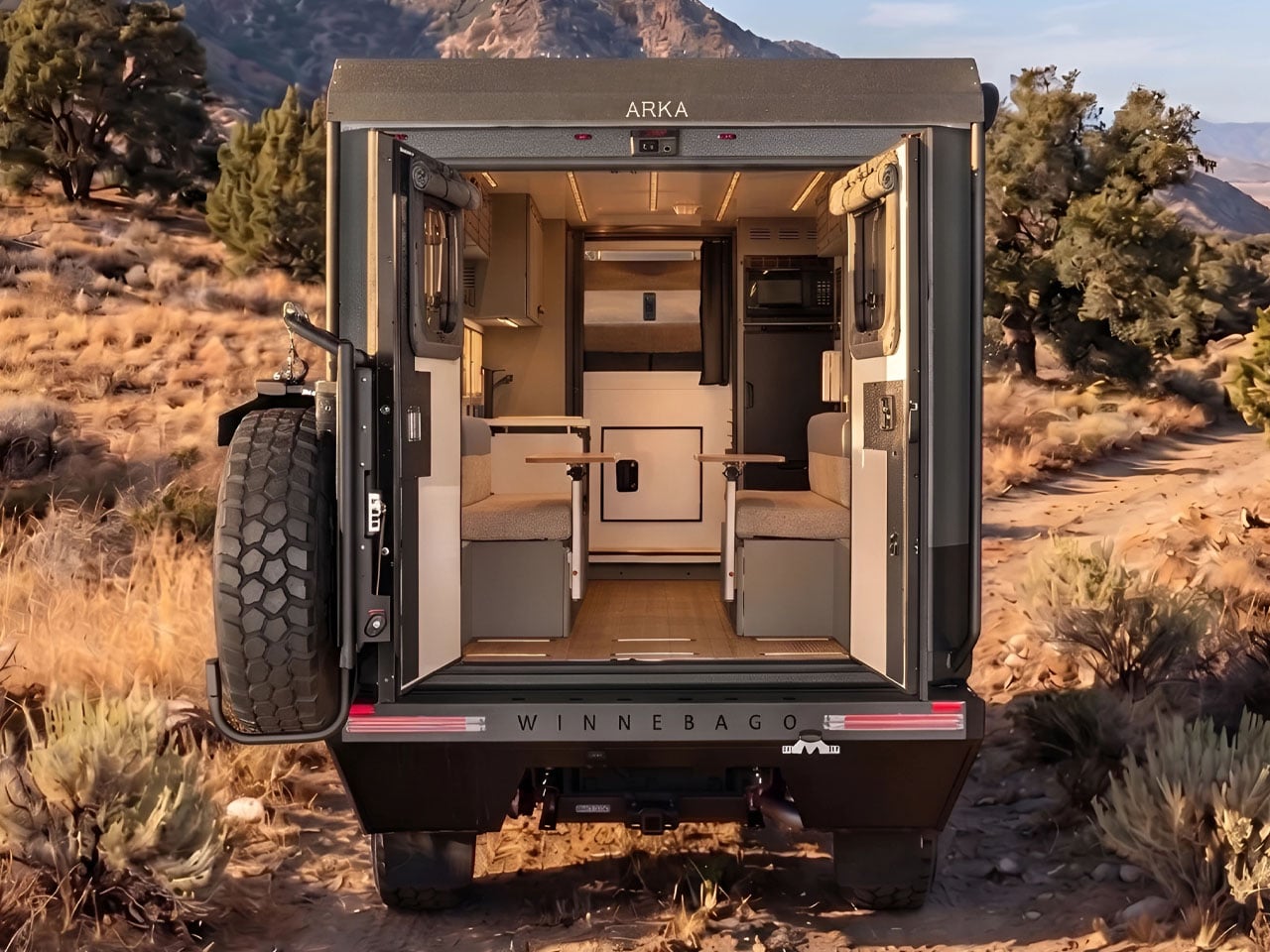
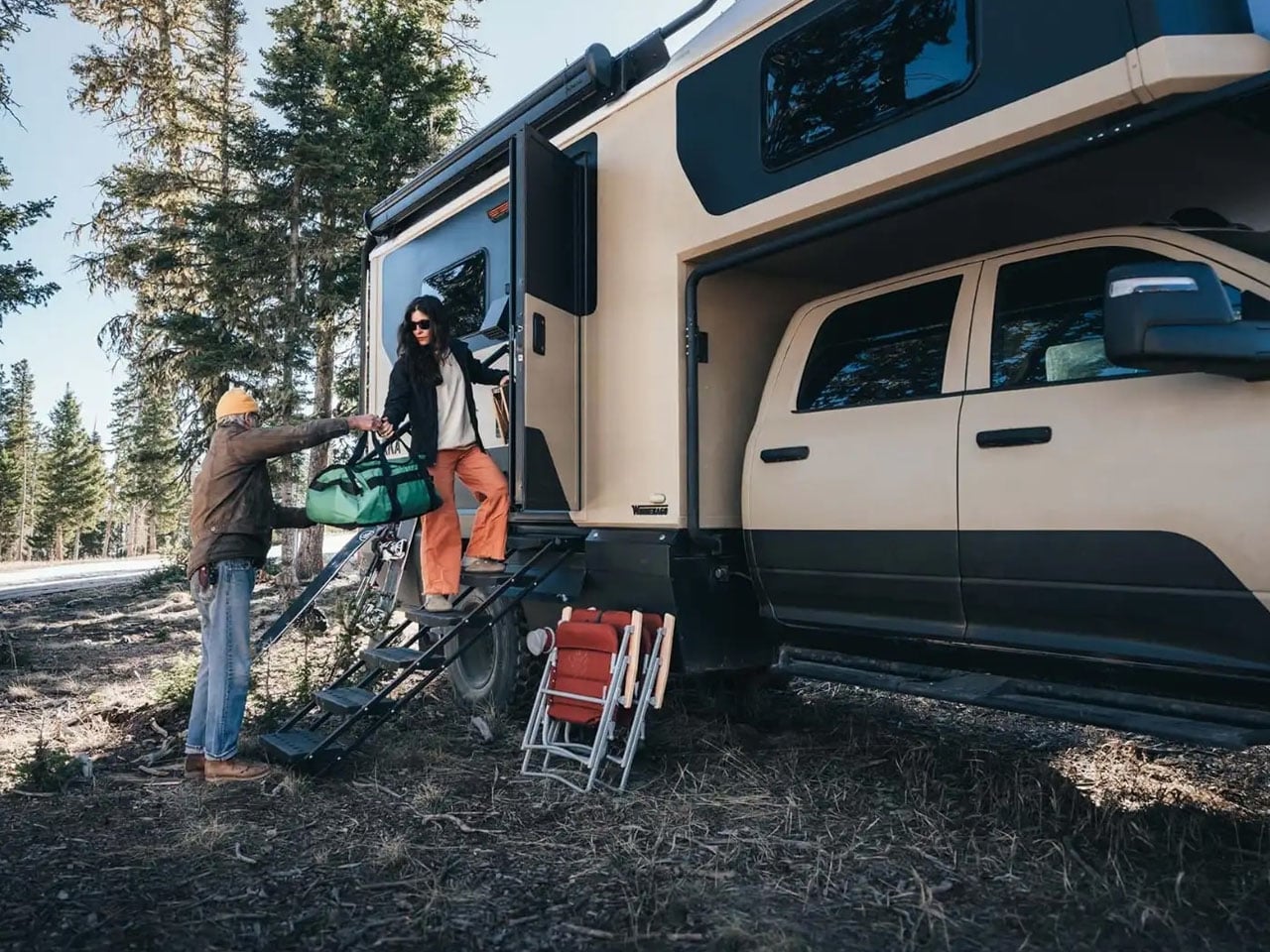
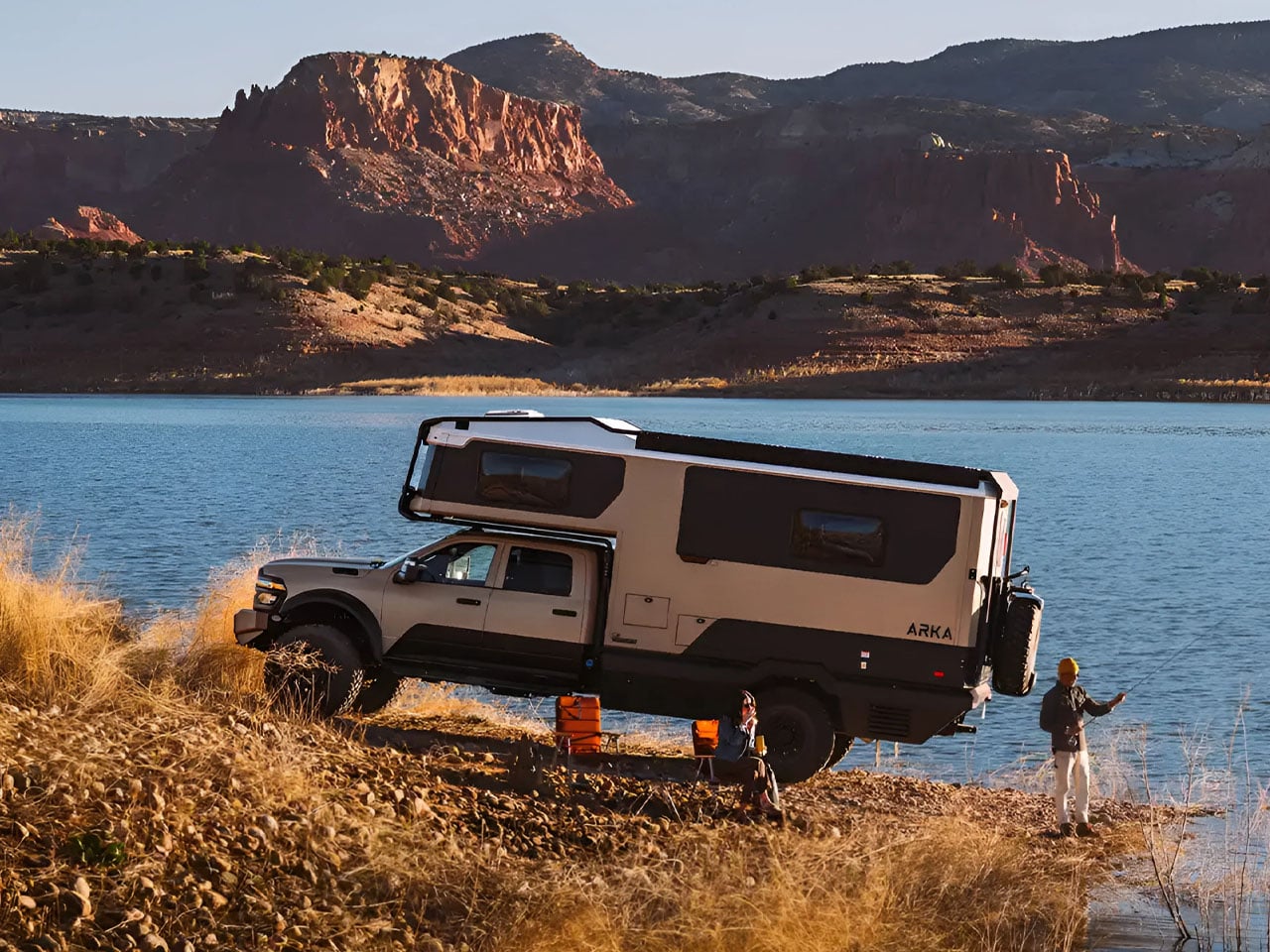
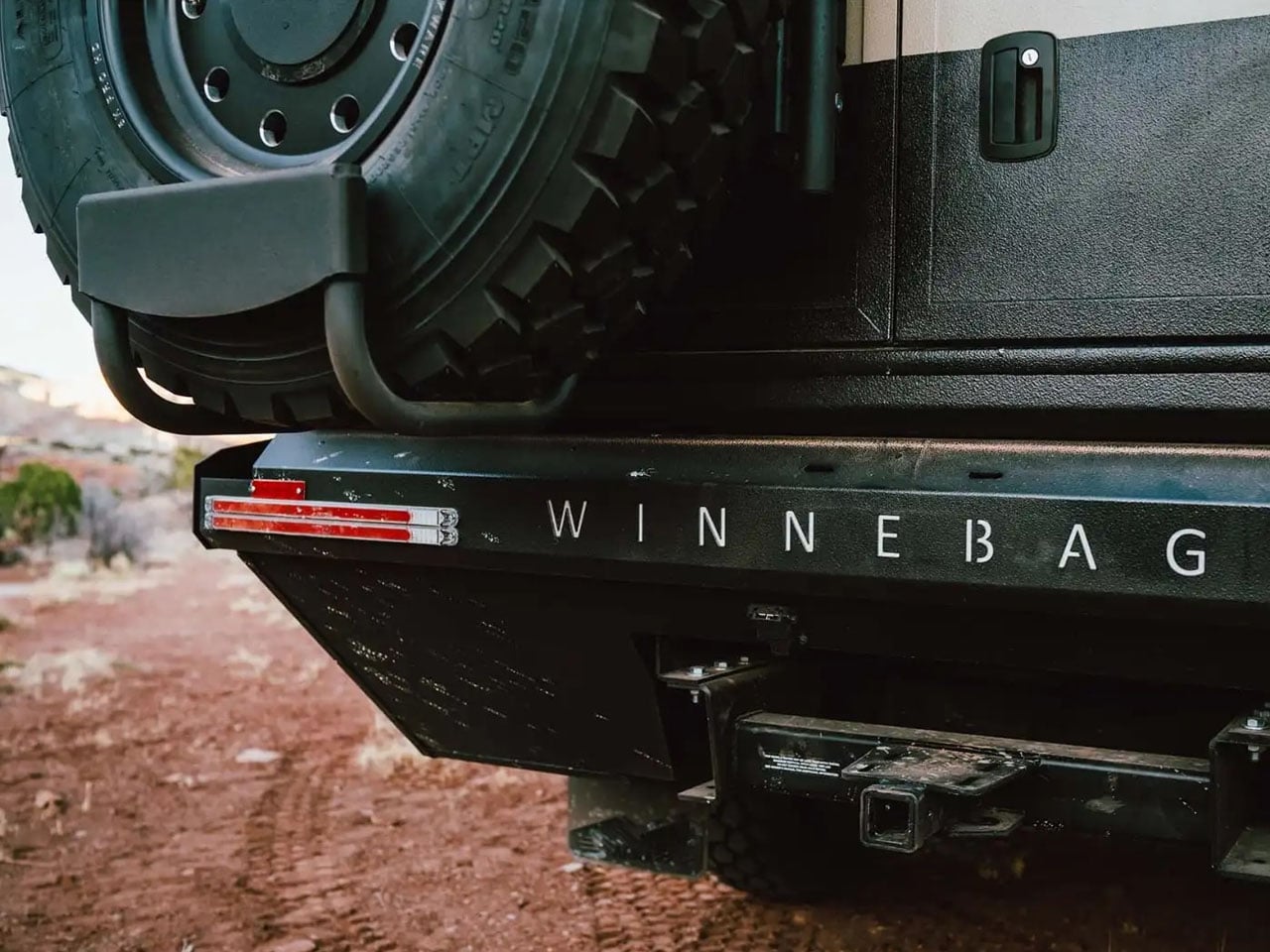
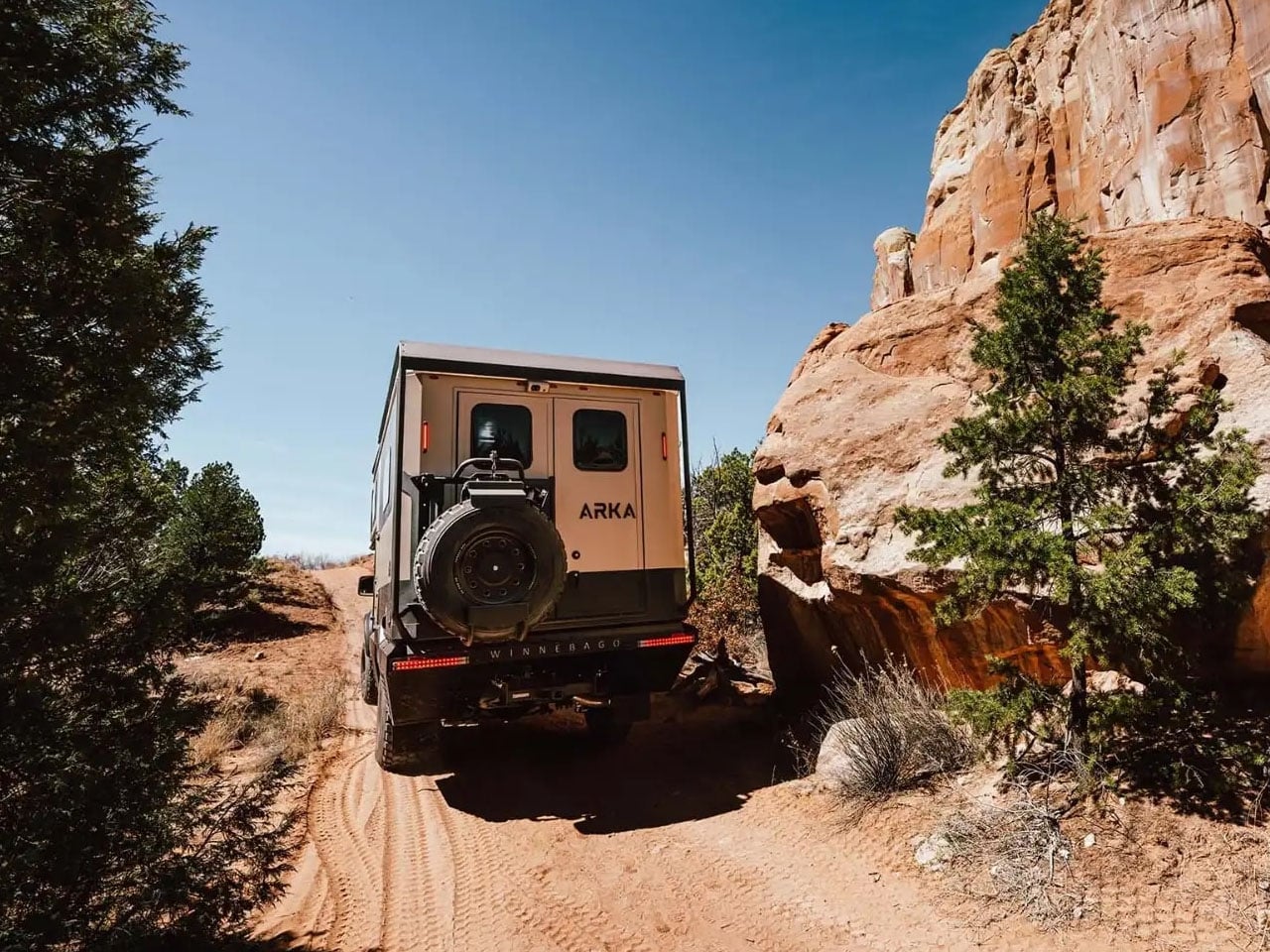
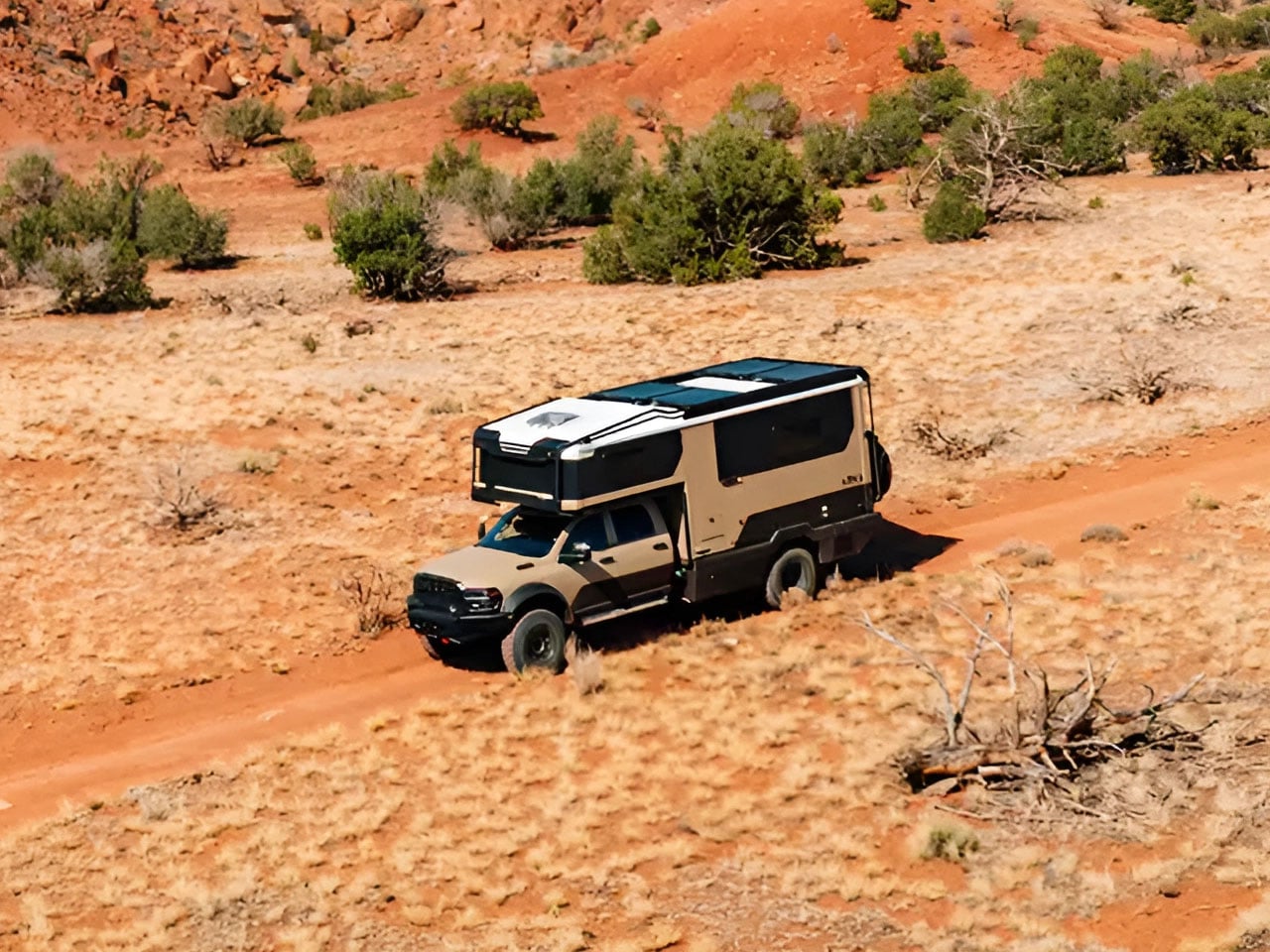
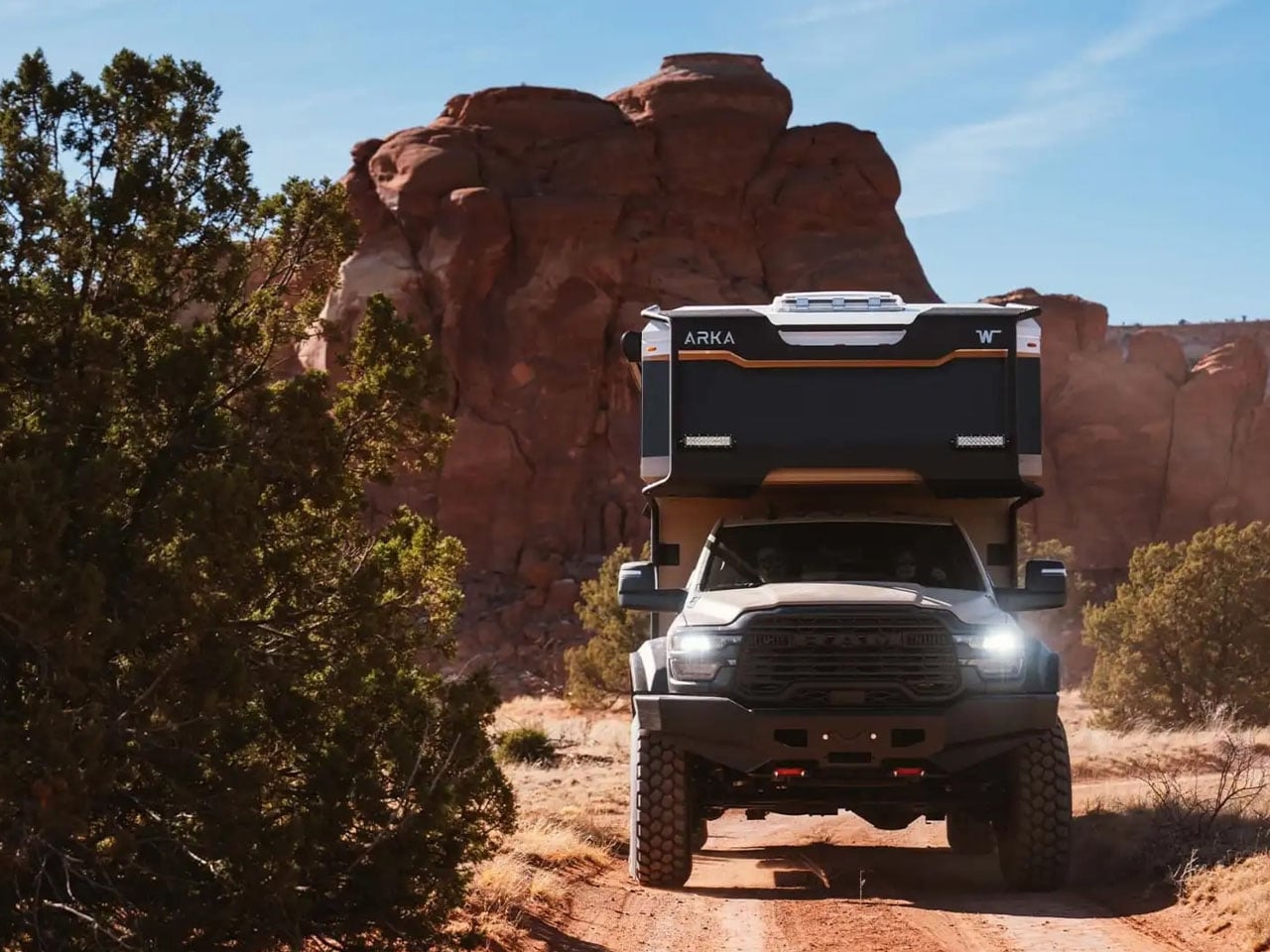
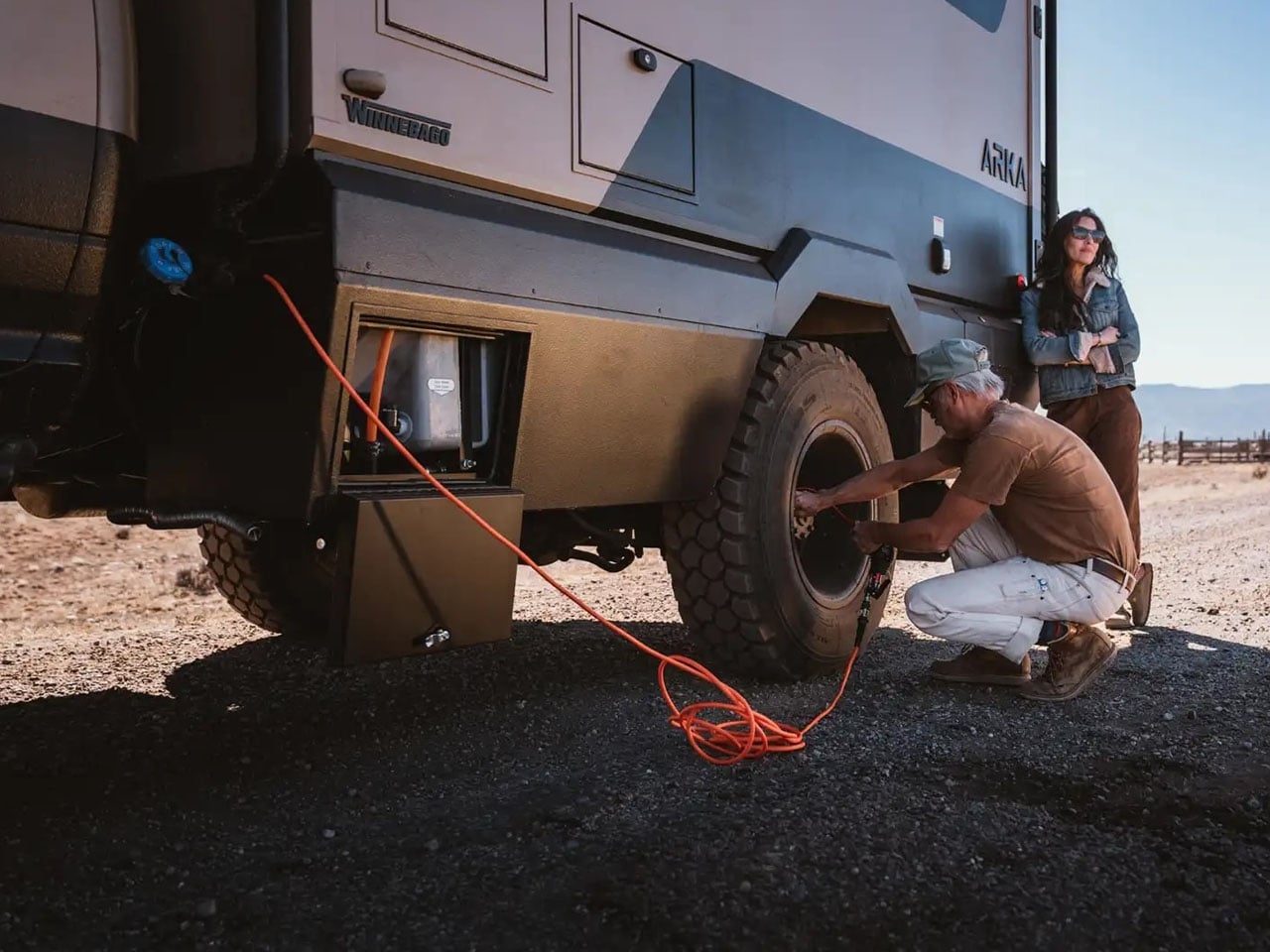
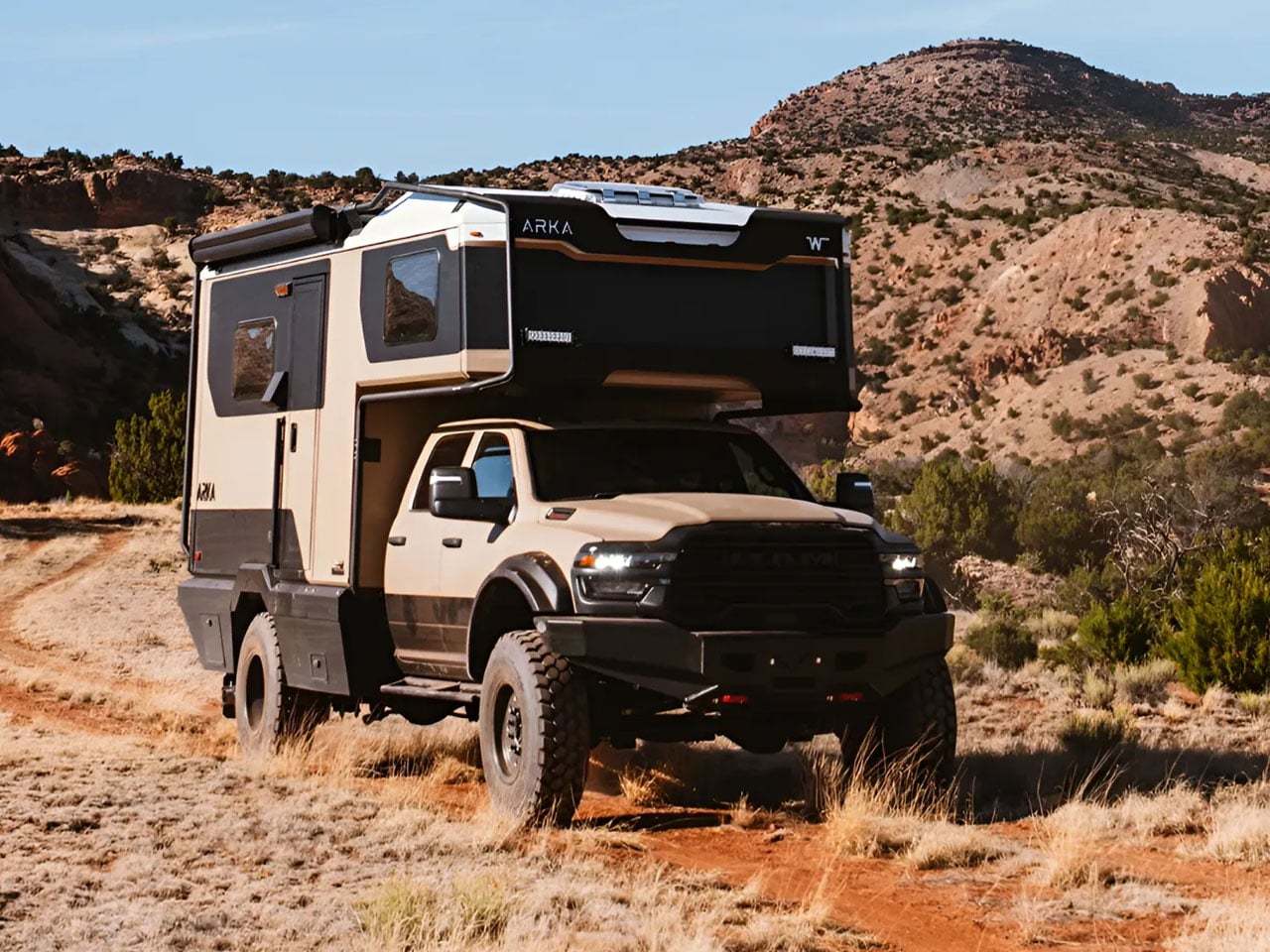
It’s not usual for brands to branch out of their niche and still rock the universe with the same effectiveness. Generally, there are incongruities here and there, but it’s not the case with Winnebago. The campervan genius that adventurers swear by, is this time around, venturing out of its comfort zone with a fully equipped overlanding adventure truck it calls the ARKA 20Z.
ARKA is definitely not the first time Winnebago has experimented with adventure rigs designed for extended stays away from the paved roads. However, how it’s been built ground up and from what’s packed into it, ARKA is the first proper overland adventure truck from Winnebago that serious overlanders wouldn’t want to ignore.
To start with Winnebago has based the ARKA 20Z on the heavy-duty Ram 5500 4×4 crew cab. It features a Cummins 6.7L Turbo diesel engine with an 8-speed automatic transmission and is complemented by a set of 41-inch tires to go anywhere your adventure takes you. Robust in appearance, the adventure truck is 26 feet 7 inches long and features fiberglass construction right from the hatch to the over-cab space.
It’s not meant to be lightweight; it’s designed for the ruggedness necessary for the overlanding expeditions. Understandably then, the ARKA has a 19,500-pound GVWR. It has a 15,000-pound hitch capacity and is packed with 48V energy architecture and serious off-grid spec to justify its readiness for the expedition territory it envisions to ride into.
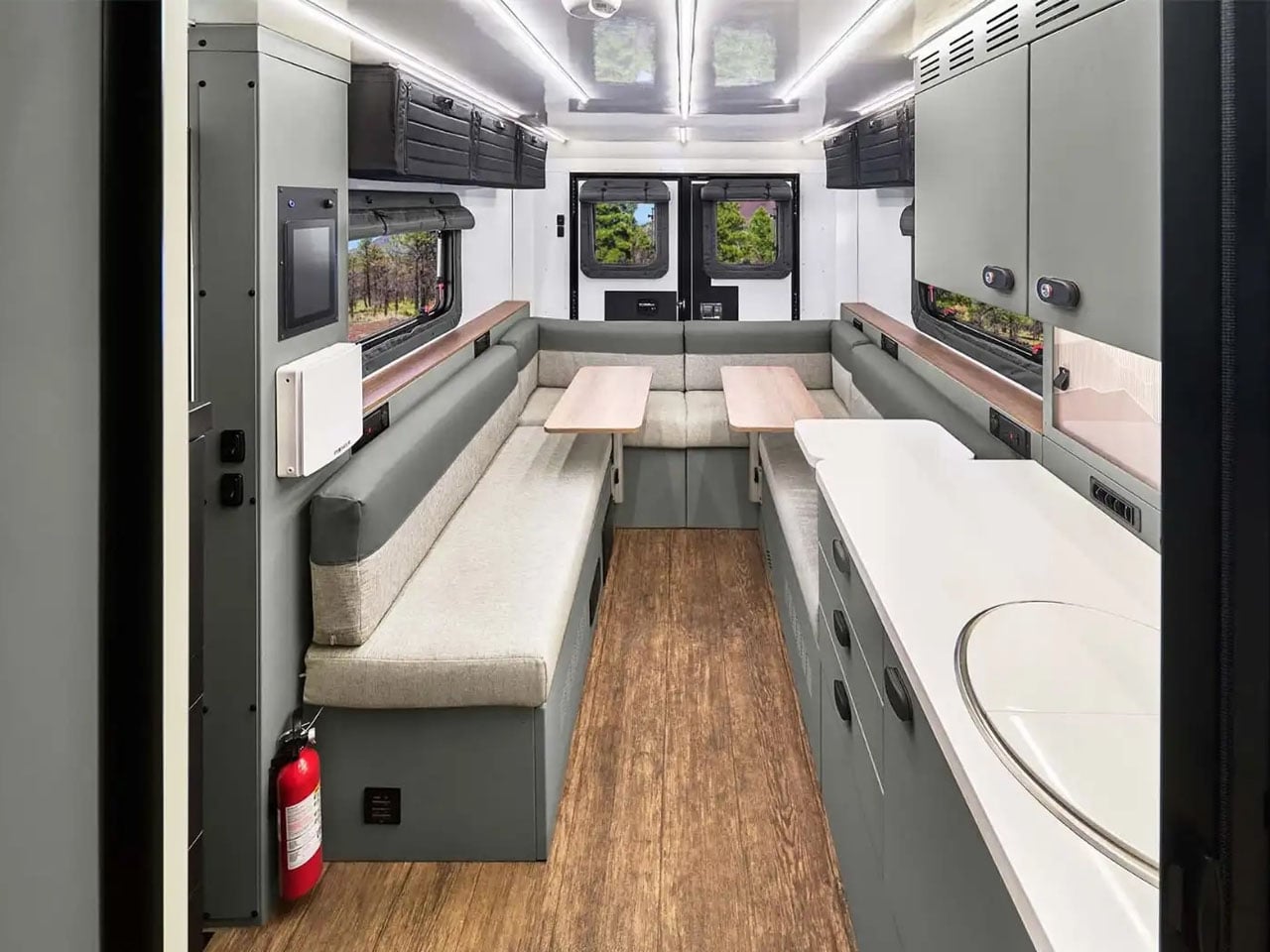
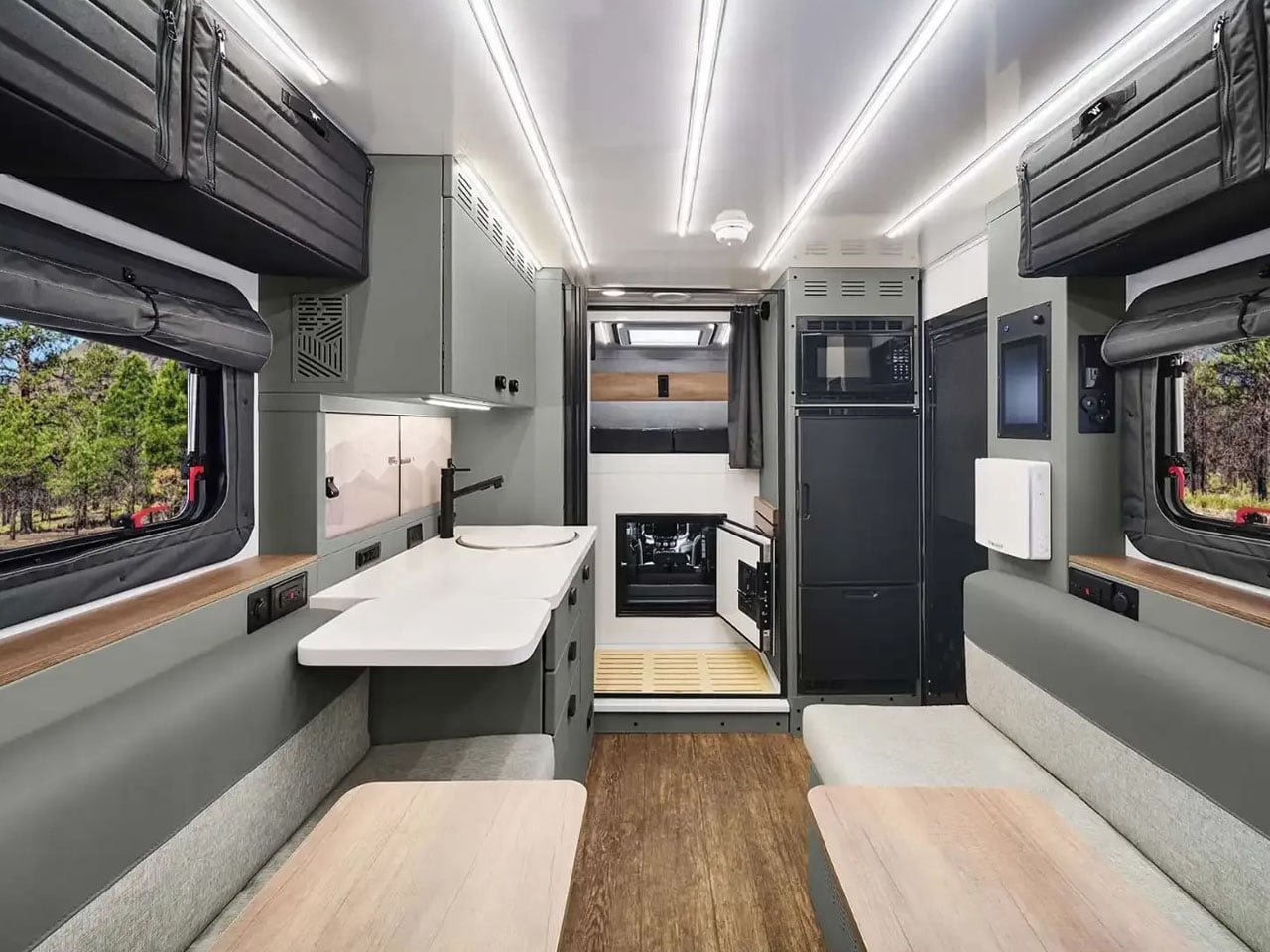
The interior of Winnebago’s new RV is outfitted in a choice of two decor options: dark gray and the company’s preferred river stone color. Its single molded fiberglass shell allows all-season exploration. According to the company, the roof and floor feature R-15 insulation, while its walls have a thermal resistance rating of 12. When you are on that off-grid, off-road setting, you need your RV to deliver. Winnebago has considered this strictly in the construction of the ARKA. “It doesn’t come with things that you don’t need in your everyday adventures,” the company explains.
Therefore, the interior is furnished for usability alone. The cab-over space features a surprisingly spacious bedroom. You get a king-sized bed here that, depending on choice and requirement, can convert into queen-size or twin-size beds. Hydronic heating runs along the floor of the motorhome and its rear U-shaped dinette converts into an additional, spacious sleeping area. The ARKA is therefore marketed to sleep up to four people conveniently.
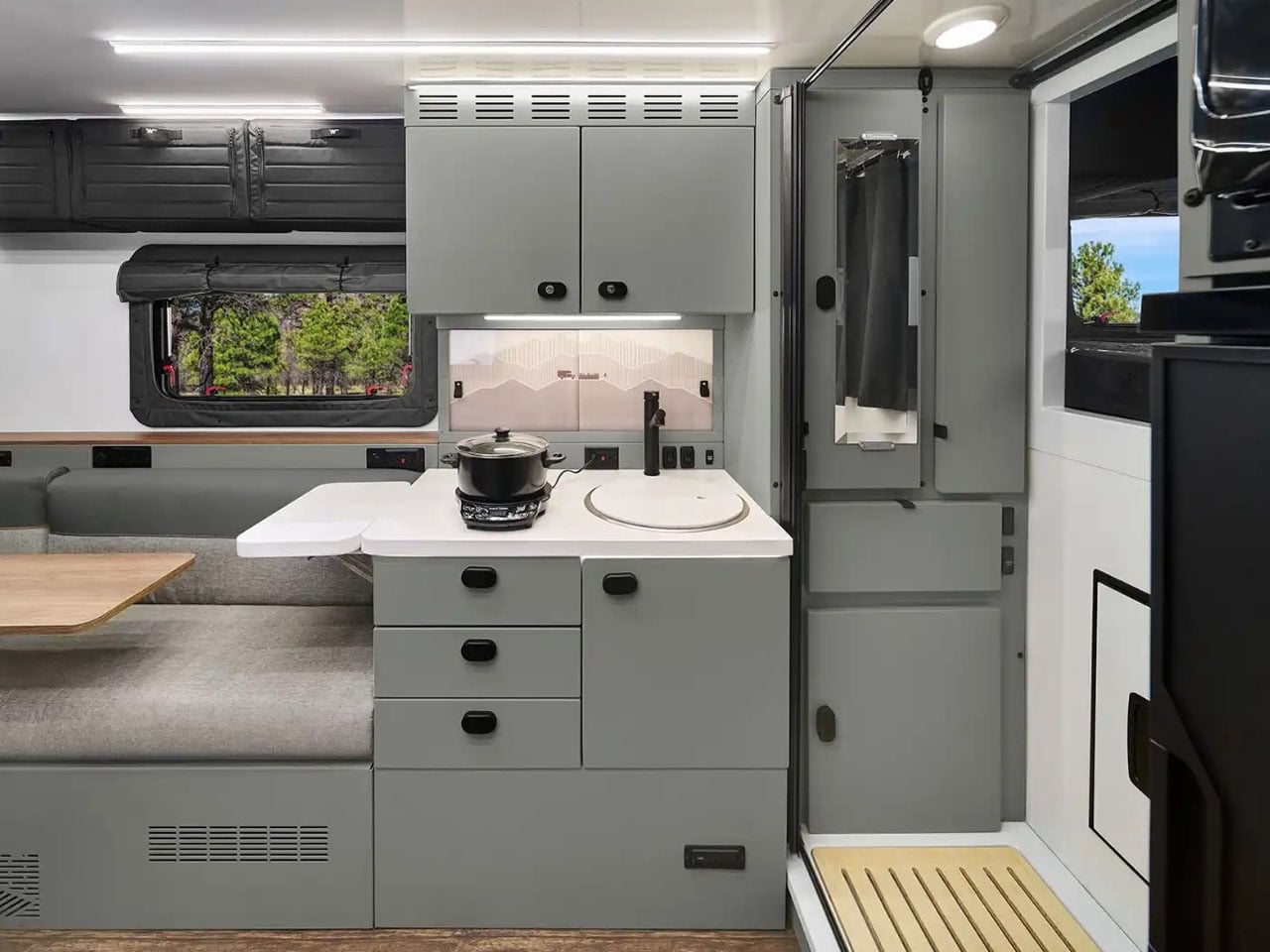
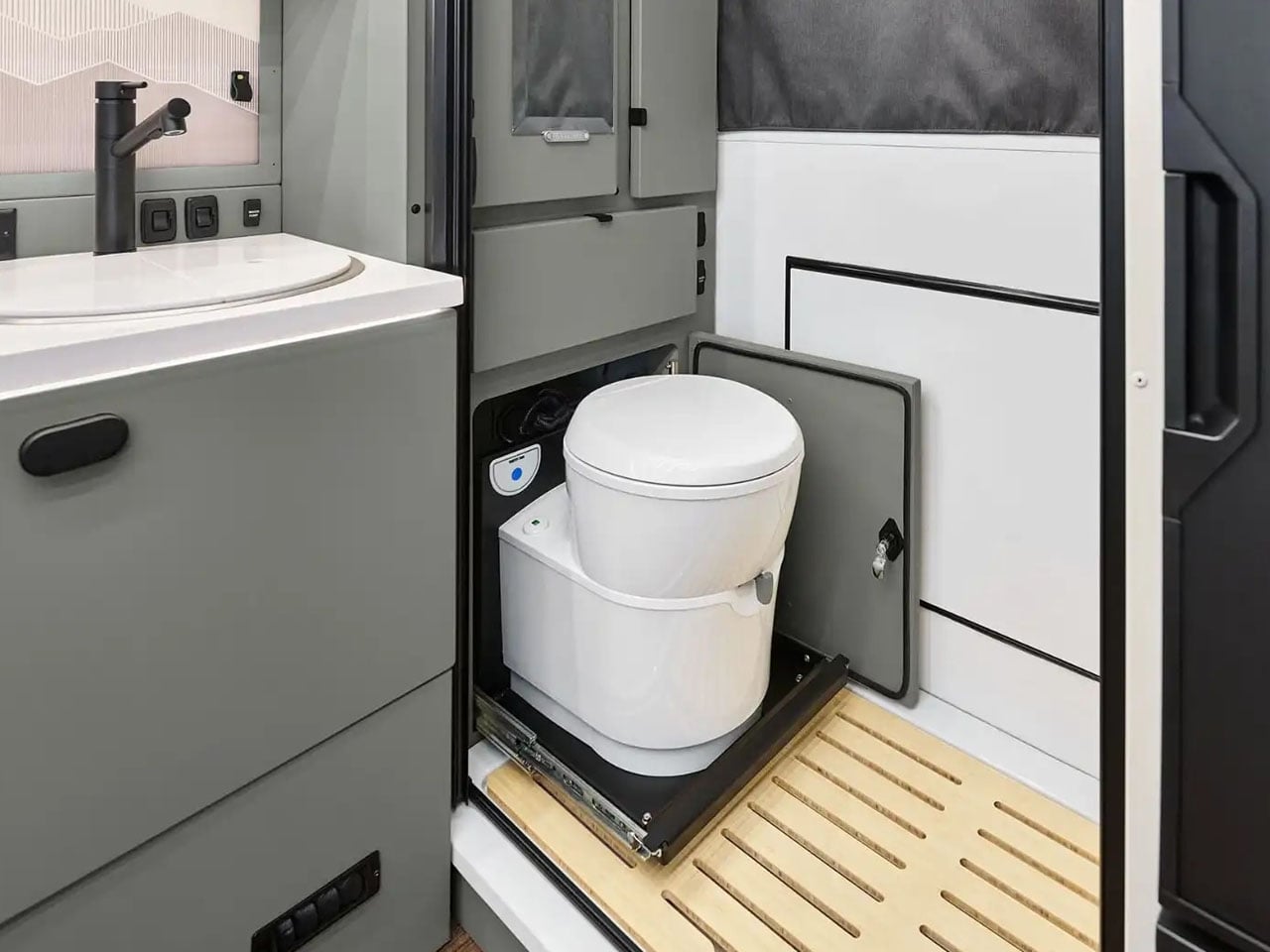
The adventure rig is powered by up to 16.8kWh of lithium battery. A rooftop 800W solar panel (expandable up to 1,200W) feeding a 3,600W inverter runs the backup. Winnebago says ARKA can stay convenient off-grid for 14 days without the AC, with the power options and the 60-gallon heated freshwater tank. The truck galley is equipped with a portable induction cooktop and a refrigerator. And the dry bath with 76-inch shower height and insulated gray water tank completes the fully-equipped Winnebago adventure truck that will set you back $332,000.
Fiberglass travel trailers with off-grid capability are an undeniable combination. There are a few perks that make such travel trailers worth every adventurer seeking a longer and happier stay away from home on the road. Fiberglass campers such as those perfected by the Tennessee-based Oliver Travel Trailers are lightweight to tow, all-season compatible, easy to maintain, and built to last.
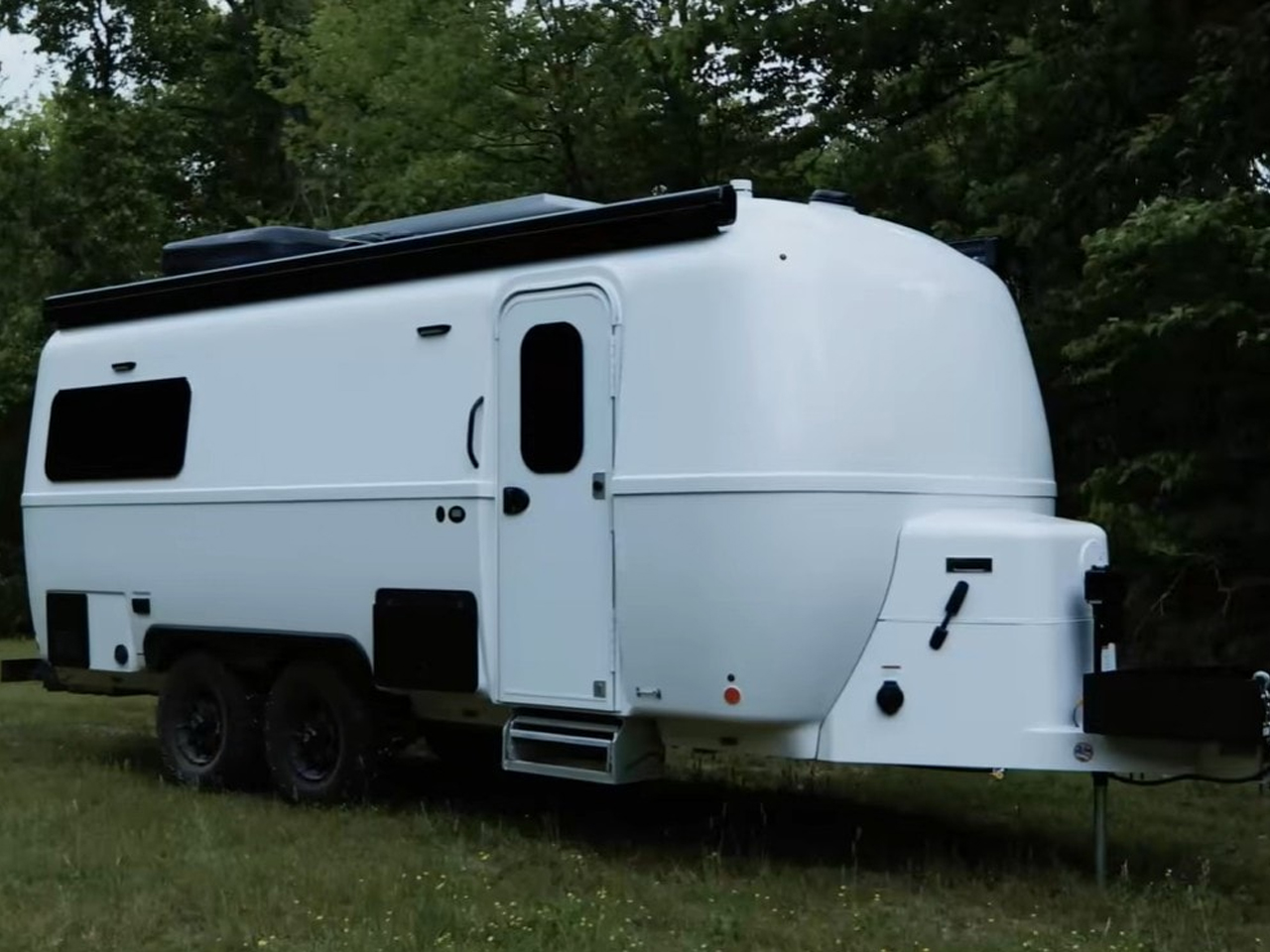
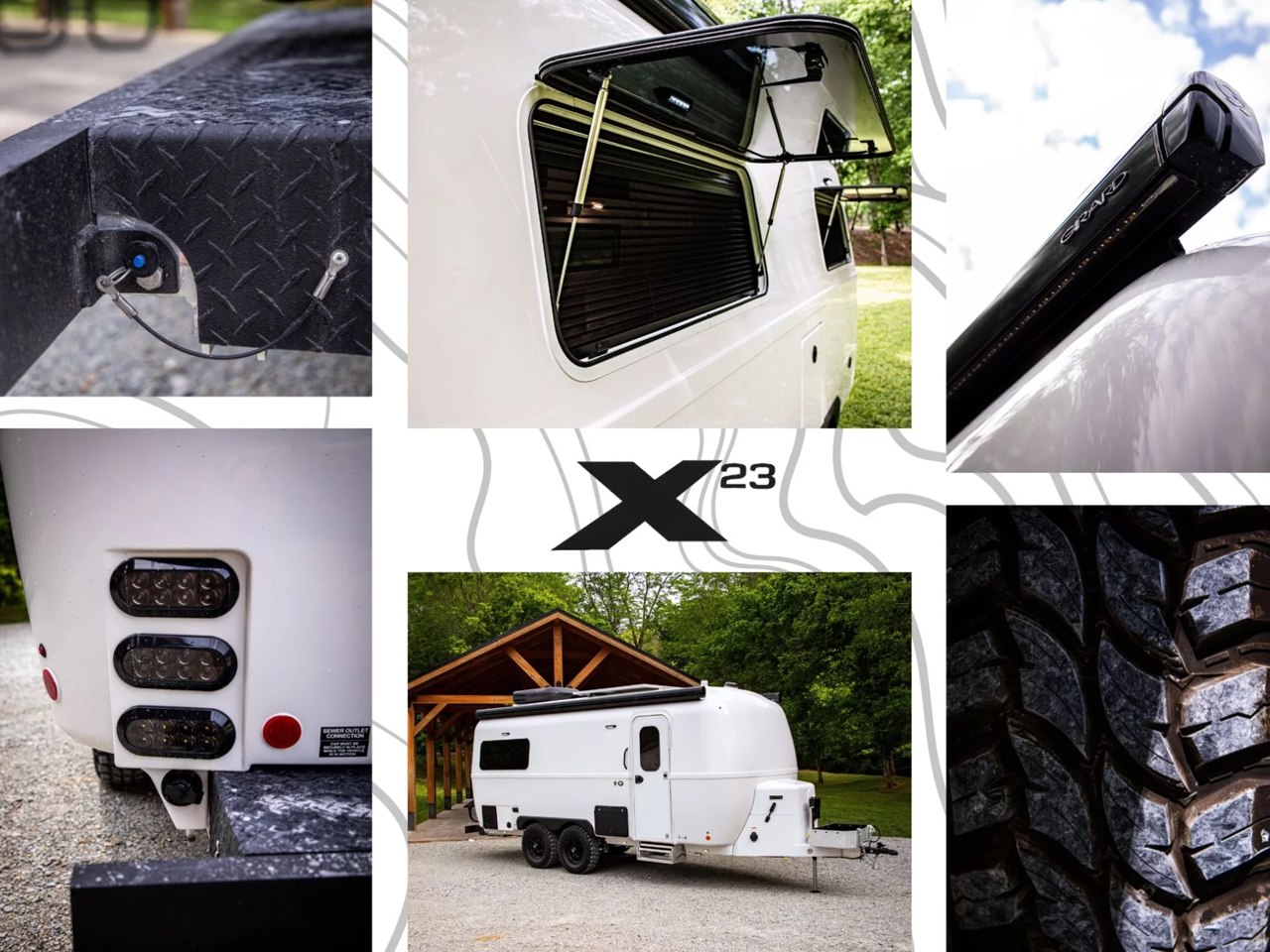
Oliver currently has two trailer models in its lineup. The Legacy Elite, built on an 18.5-foot (5.6-m) single-axle trailer, and the dual-axle Legacy Elite II, which measures 23 feet (7 meters). To extend its portfolio for 2027, the company has revealed the new Apex X23. Built to put the pace of trips back into your hands, the X23 comes fully packed with a lounge, sleeping area, kitchen, and bathroom, well within the confines of a 23-foot, all-season fiberglass body.
Oliver Apex X23 is off-grid ready. Powered by a 48-volt system, the trailer is customized from the factory for adventures that take you beyond the organized campgrounds. Oliver is secretive about their new travel trailer and hasn’t revealed a lot of information about it, but they recently showed it off for the first time in a public debut at the Lone Star Overland Adventure & Powersports Show. “The response was everything we hoped for,” the company informs.
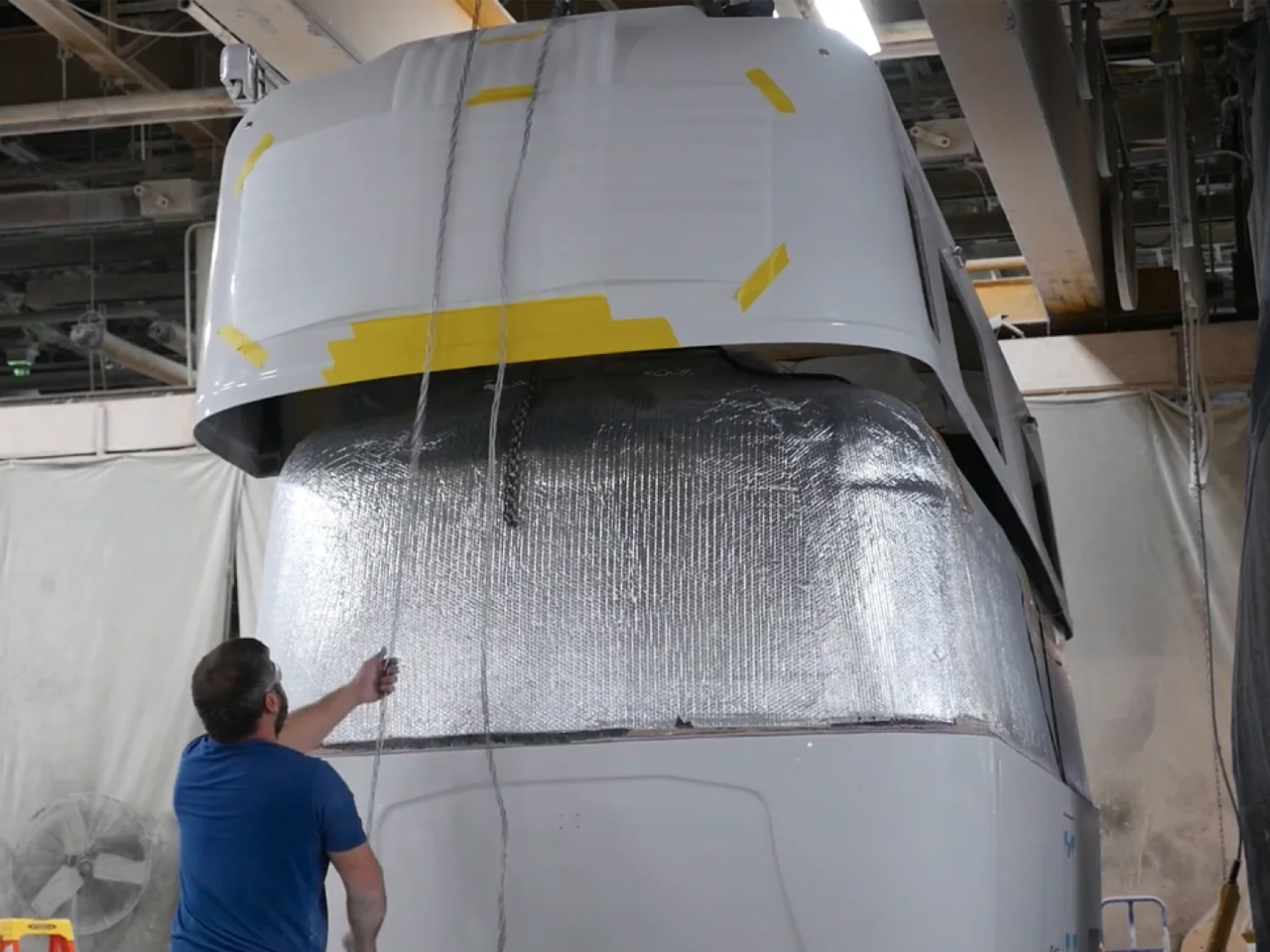
The X23 shares a very similar exterior to its predecessors; what actually differentiates it is the interior, which is now built around off-grid capabilities. The exterior is the same durable dual-hull construction. An insulation layer is sandwiched between the separate inner and outer fiberglass shells, which make the body completely airtight and stable for year-round use. The X23’s zero-wood construction body and interior are mold and corrosion-resistant, and the interior packs everything you need for a comfortable stay in the wild.
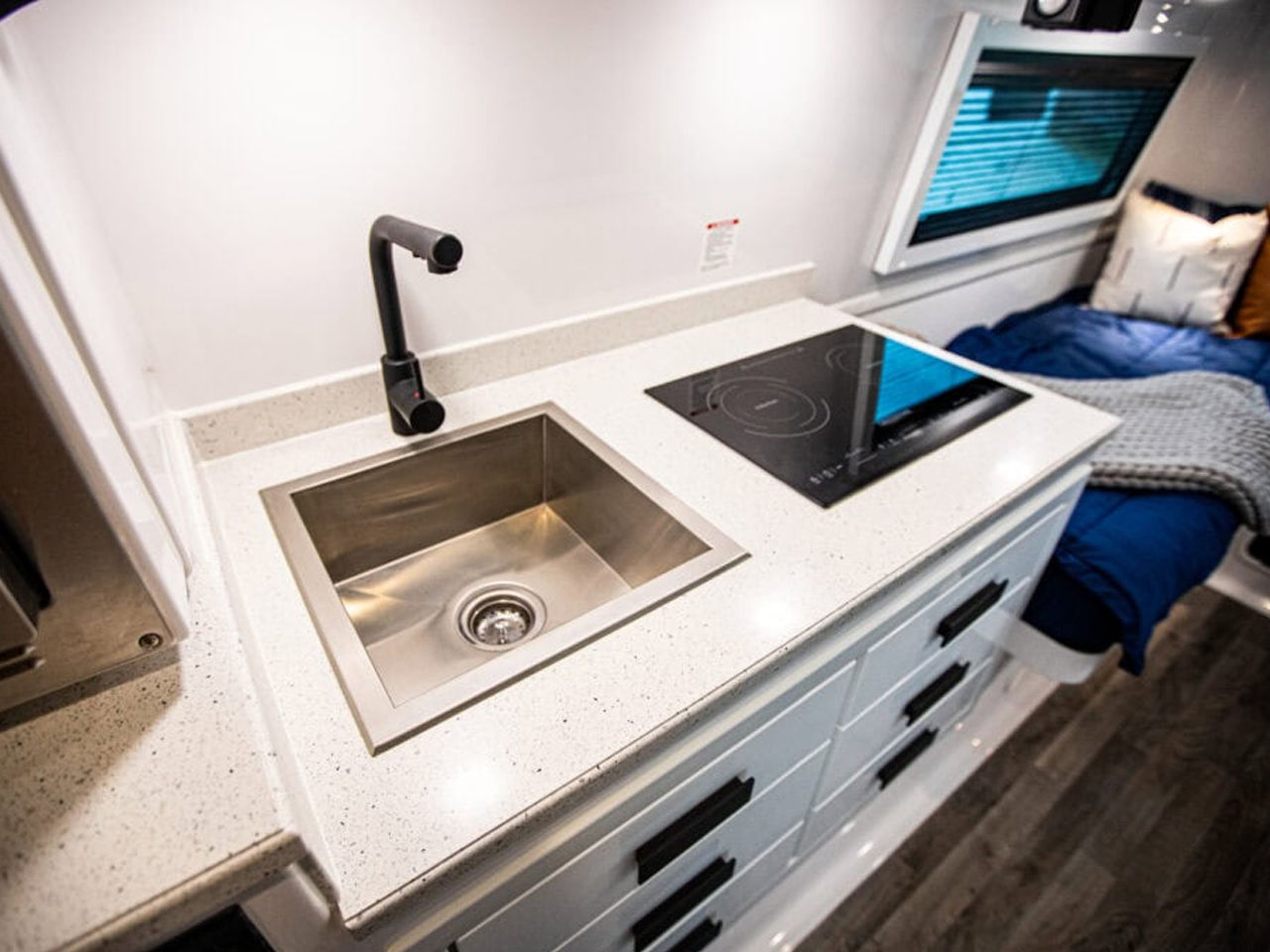
The travel trailer is aerodynamically designed for easy towing and increased fuel efficiency. The double-hull construction ensures that Oliver can easily hide away the water tank, plumbing, and many mechanical components within it. The interior is laid out with a twin bed or a choice of a king bed. The quilted leather dinette that converts into a third bed can seat up to seven people; however, it only has the capacity to sleep one additional person. The trailer fits almost a complete kitchen with an induction cooktop, a refrigerator, and a microwave with an air fryer.
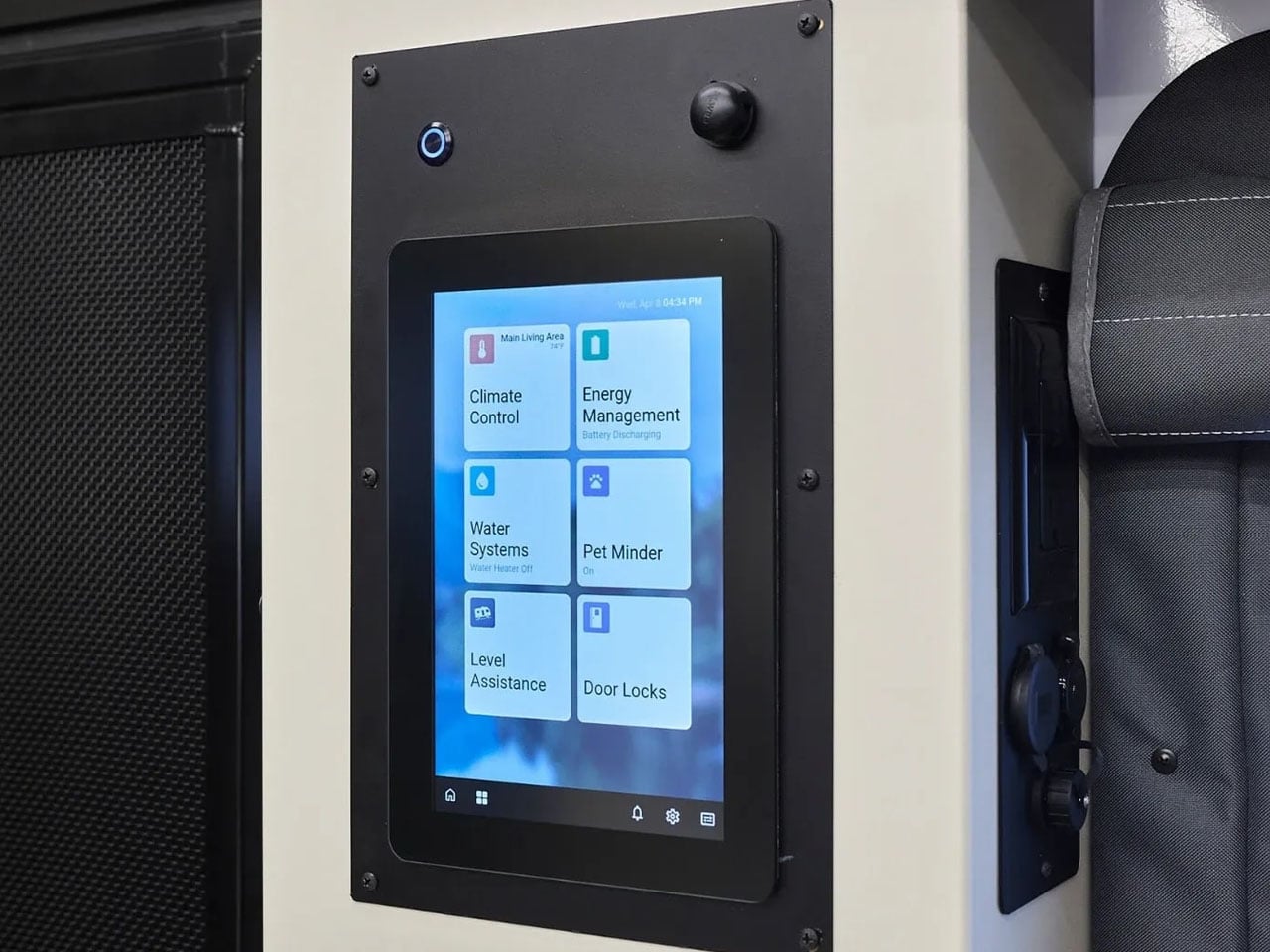
The 23-foot space reimagined for off-grid travel is also provided with a bathroom with a shower. The cabinetry inside the trailer is part of the mold and is integrated into the fiberglass body. This ensures the structural integrity of the X23, which is powered by a 48V system. It features a 1,360W solar panel paired with a 3,000W inverter, and the power system is controlled by a central touchscreen control panel. The Apex X23 with a 400W rooftop solar panel starts at $107,000, while the cost may shoot up for the top-of-the-line 1,360W solar capacity trailer.
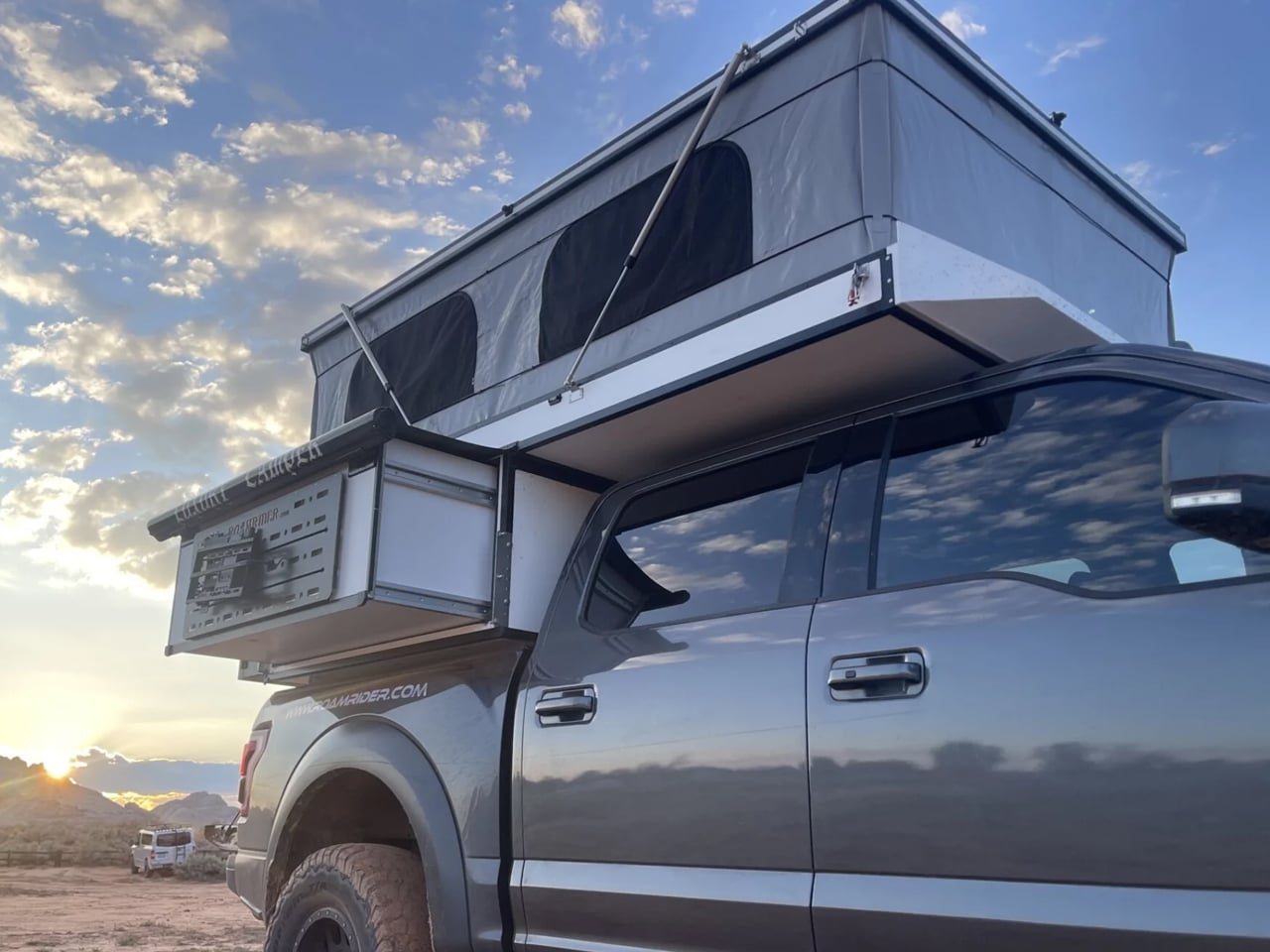
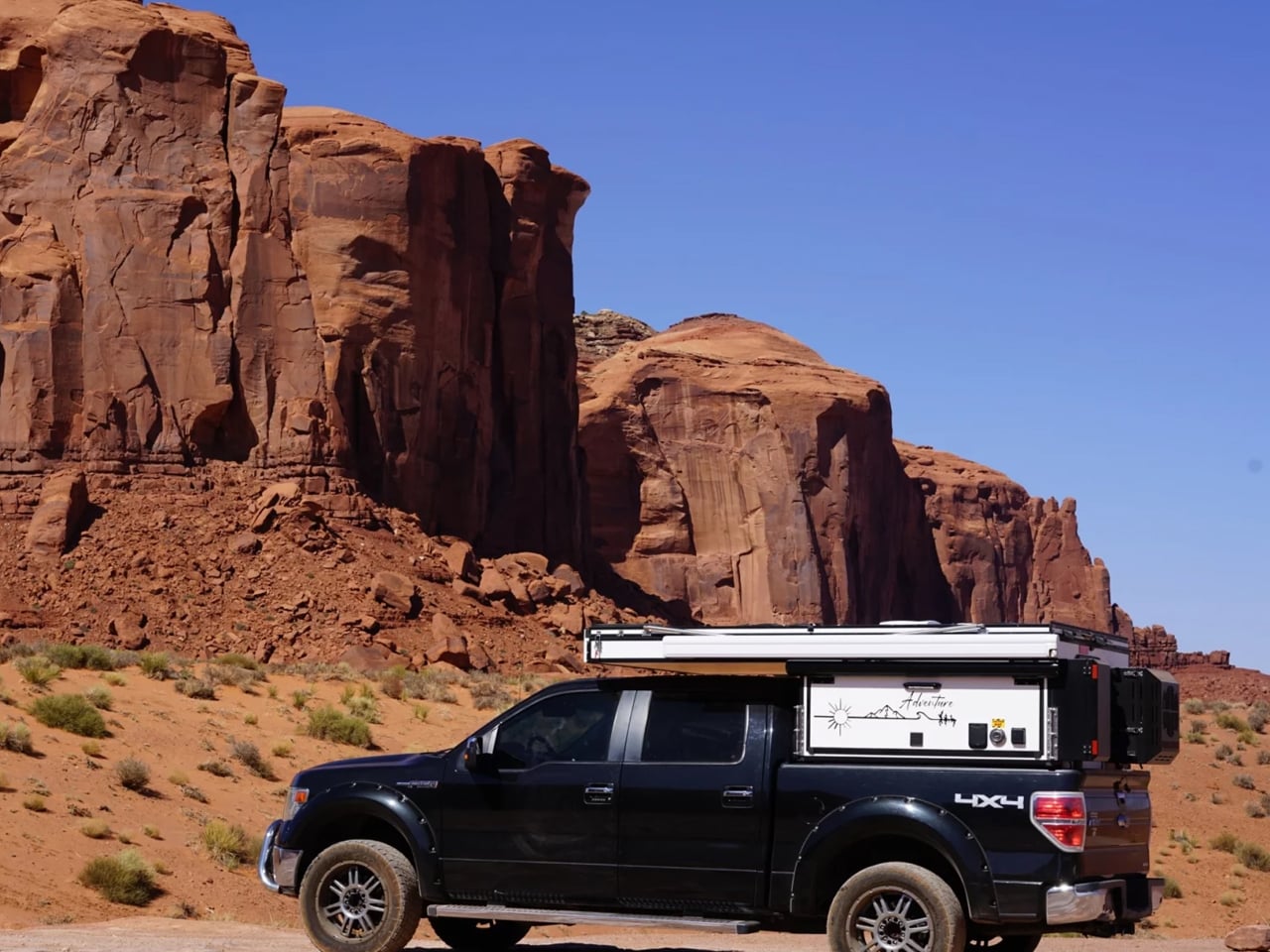
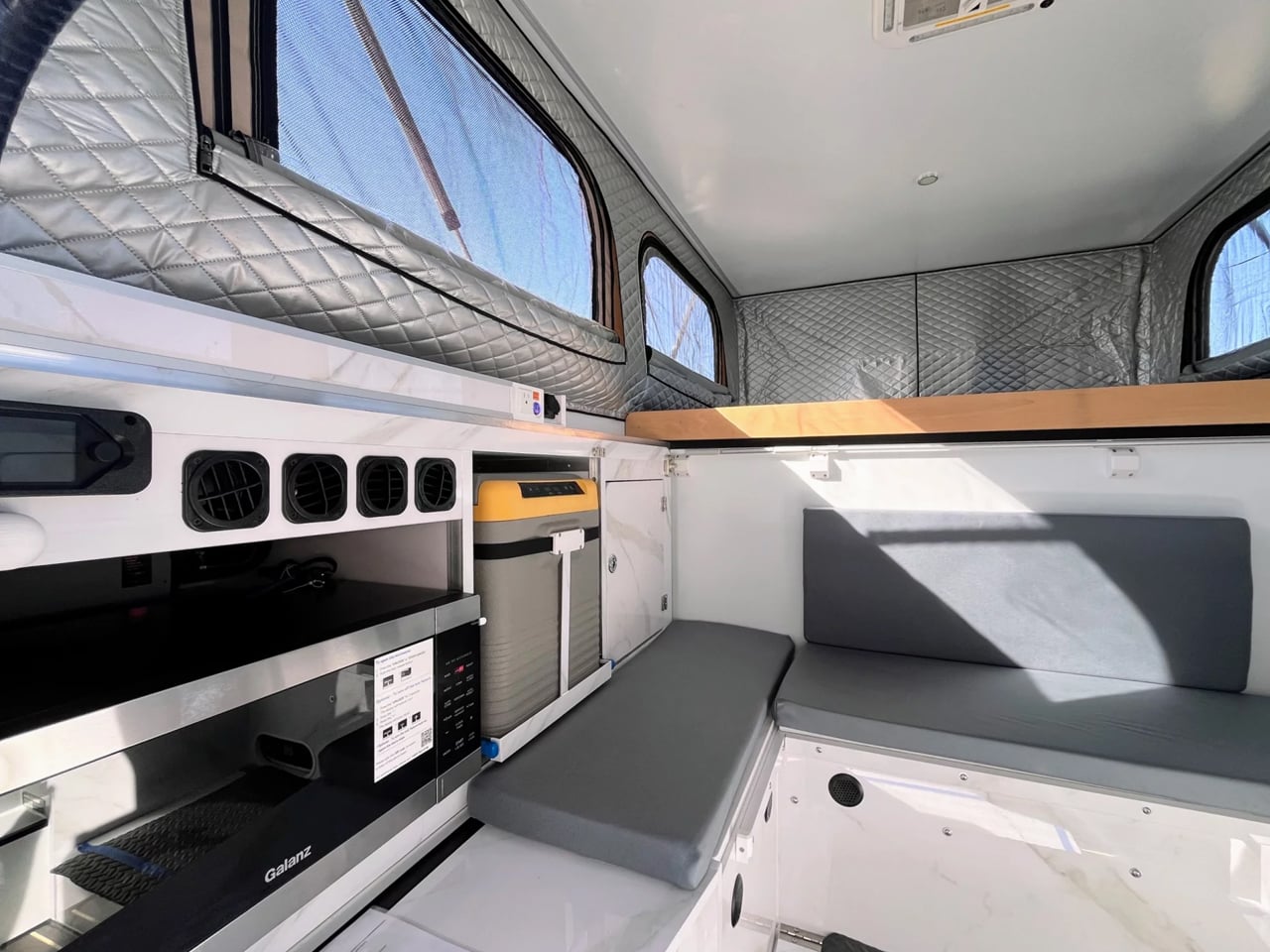
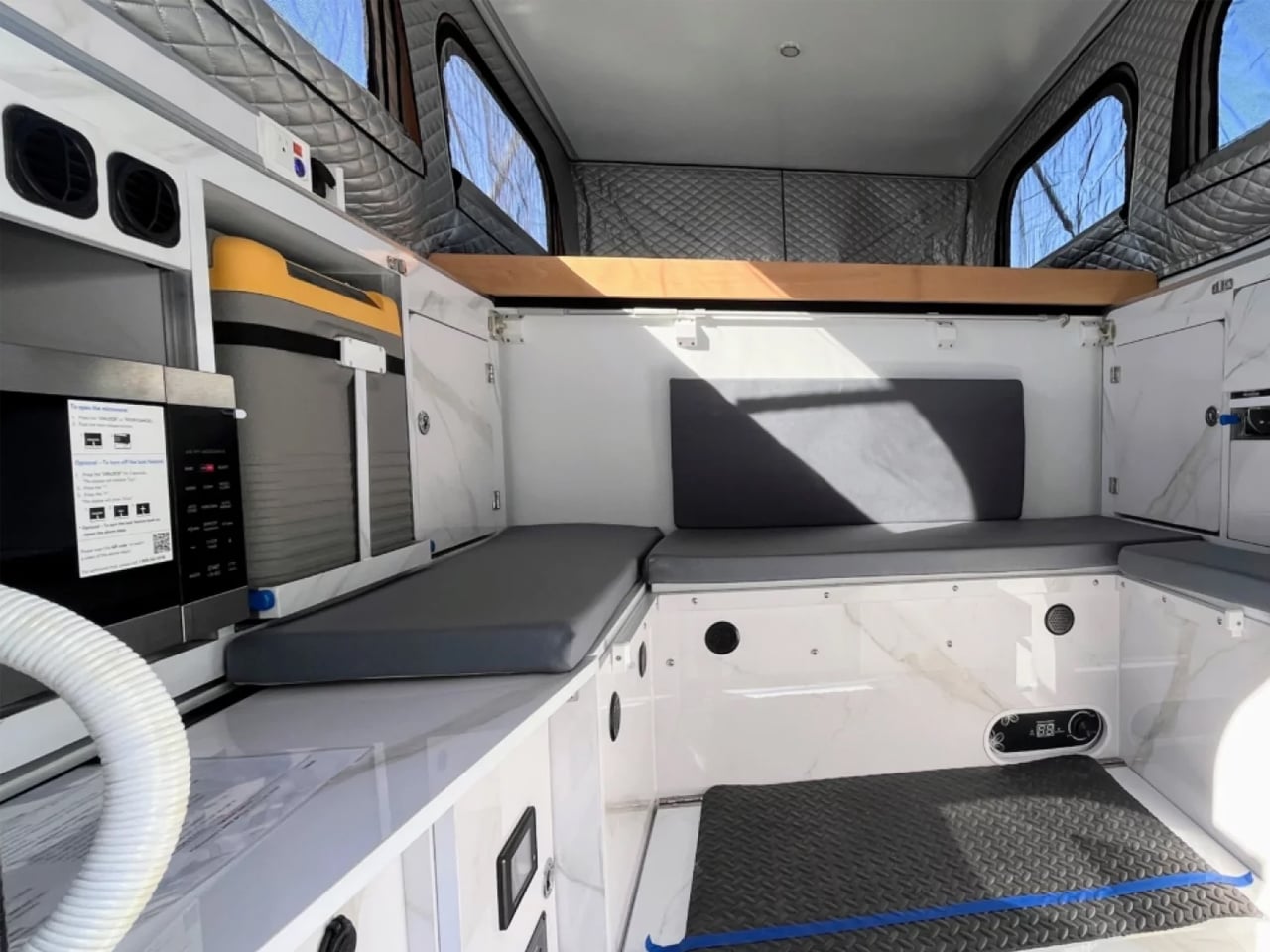
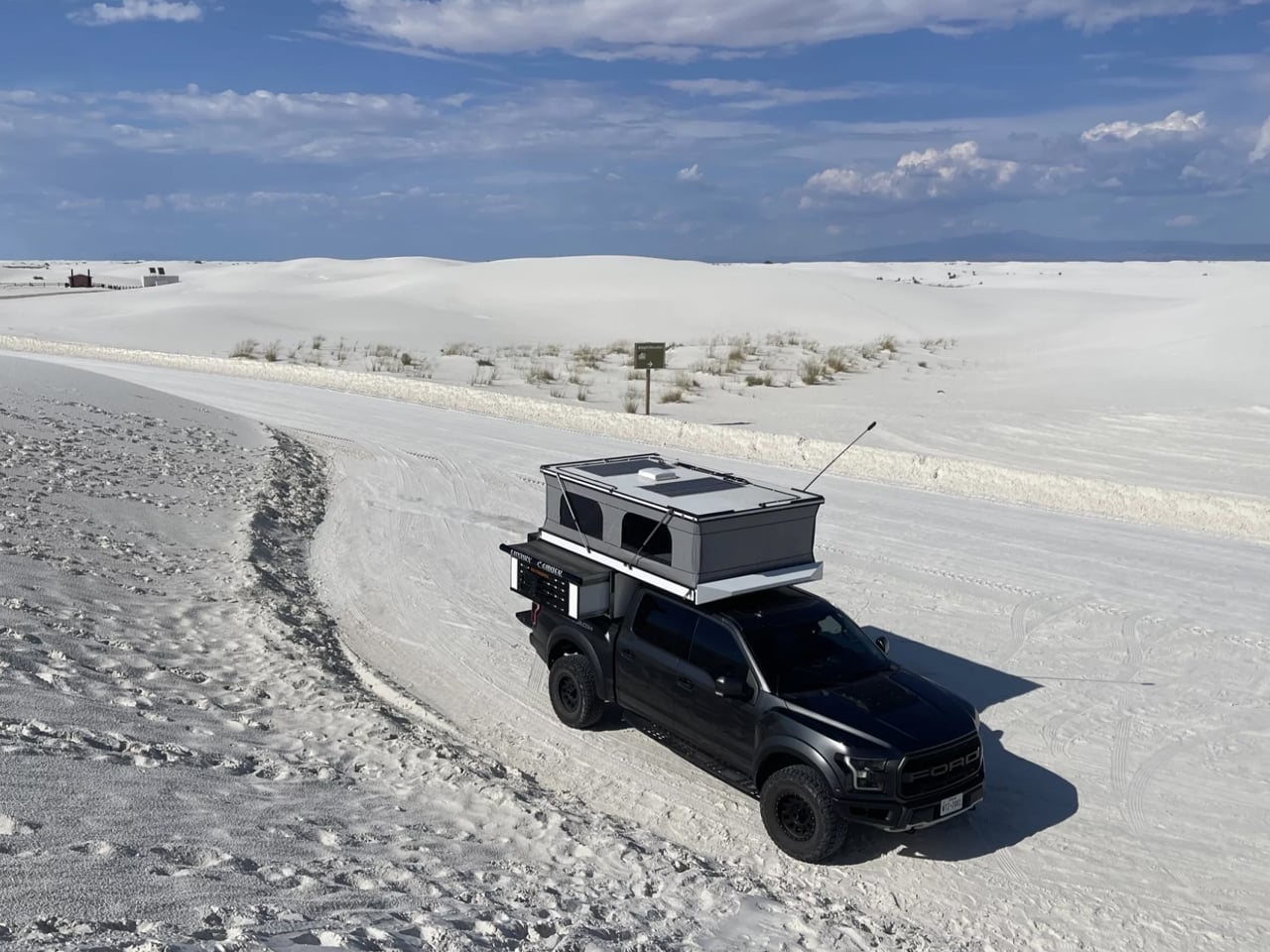
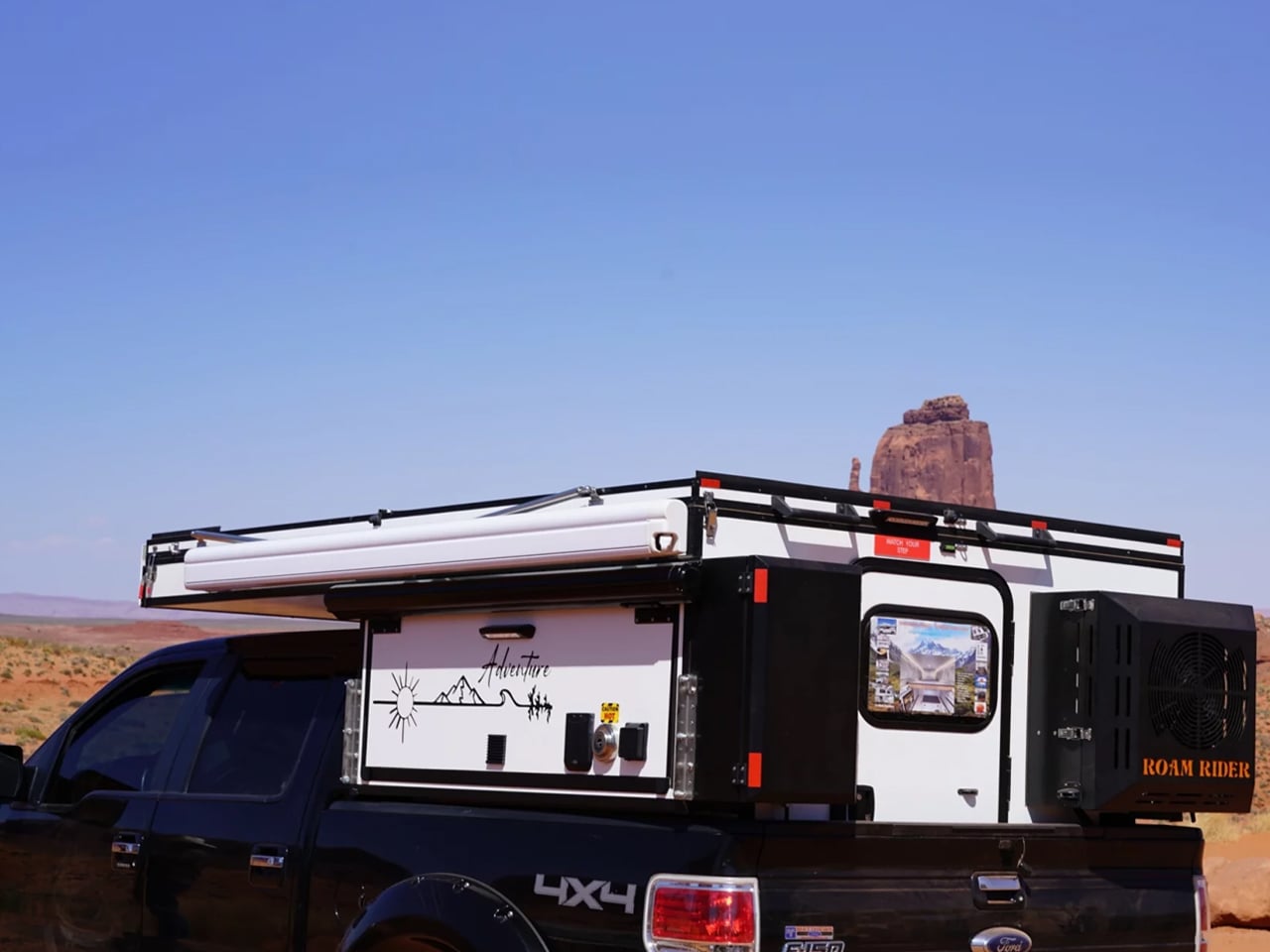
There are pickup campers that extend outwards or those that pop-up. Now there is a third kind. The Roam Rider – an off-grid camper – that pops up to create headroom, and slides out (on either side) to increase the living space. Along with serious off-grid power capacity, the fascinating truck camper is also designed for all-season comfort. So, you can camp in the remotest location without having to worry about power and amenities, or having to give up your living convenience.
A twin-slide pop-up pickup camper, the Roam Rider SL, is designed primarily to sit atop 5-foot 6 inches truck bed. The company offers a customization option to tailor it to your truck bed requirements. The camper in its ready size measures roughly 12 ft long, 6 ft wide, and 5 ft high.
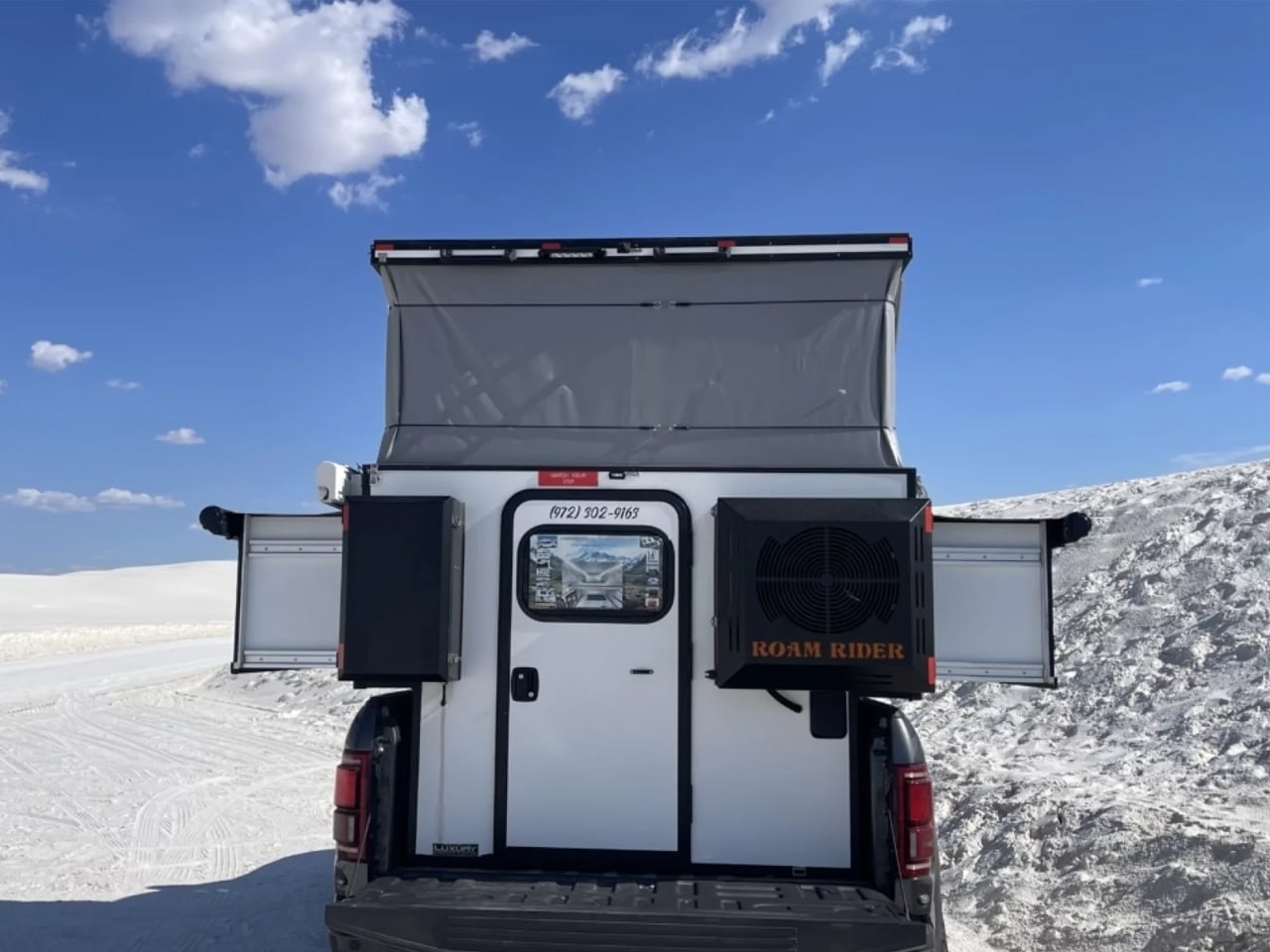
With an empty weight of 1,300 lbs, the Roam Rider SL is built in McKinney, TX, as an integral part of the company’s tough yet comfortable truck campers’ portfolio, made for real adventures. For its durability, the camper features an aluminum and fiberglass exterior, and XPS foam sheets sandwiched for insulation. Placed atop a truck bed, the Roam Rider SL feels snug. One can access the brightly lit interior of the camper through its rear entry door.
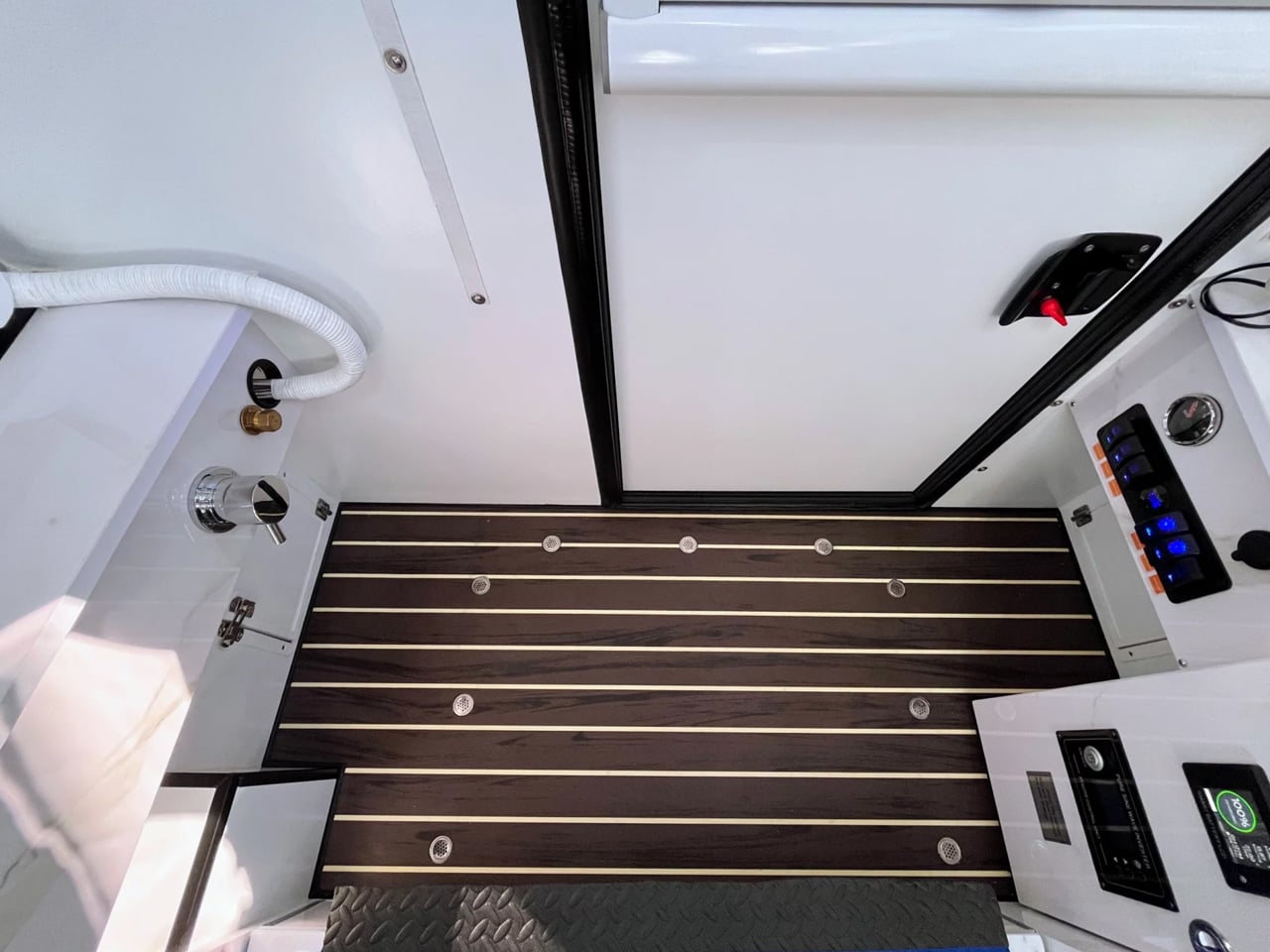
The natural lighting inside is ensured by a couple of mesh windows on each side of the pop-up camper. The pop-up roof itself is made of canvas and is supported by four stainless gas struts. The entire cabin from the walls to ceiling is insulated, while the eventful twin slide-out on either side gives the Roam Rider SL a unique vibe. It is complemented by sliding shelves and converting furniture, which easily adapt to the changing environment created by the camper’s sides sliding in and out.
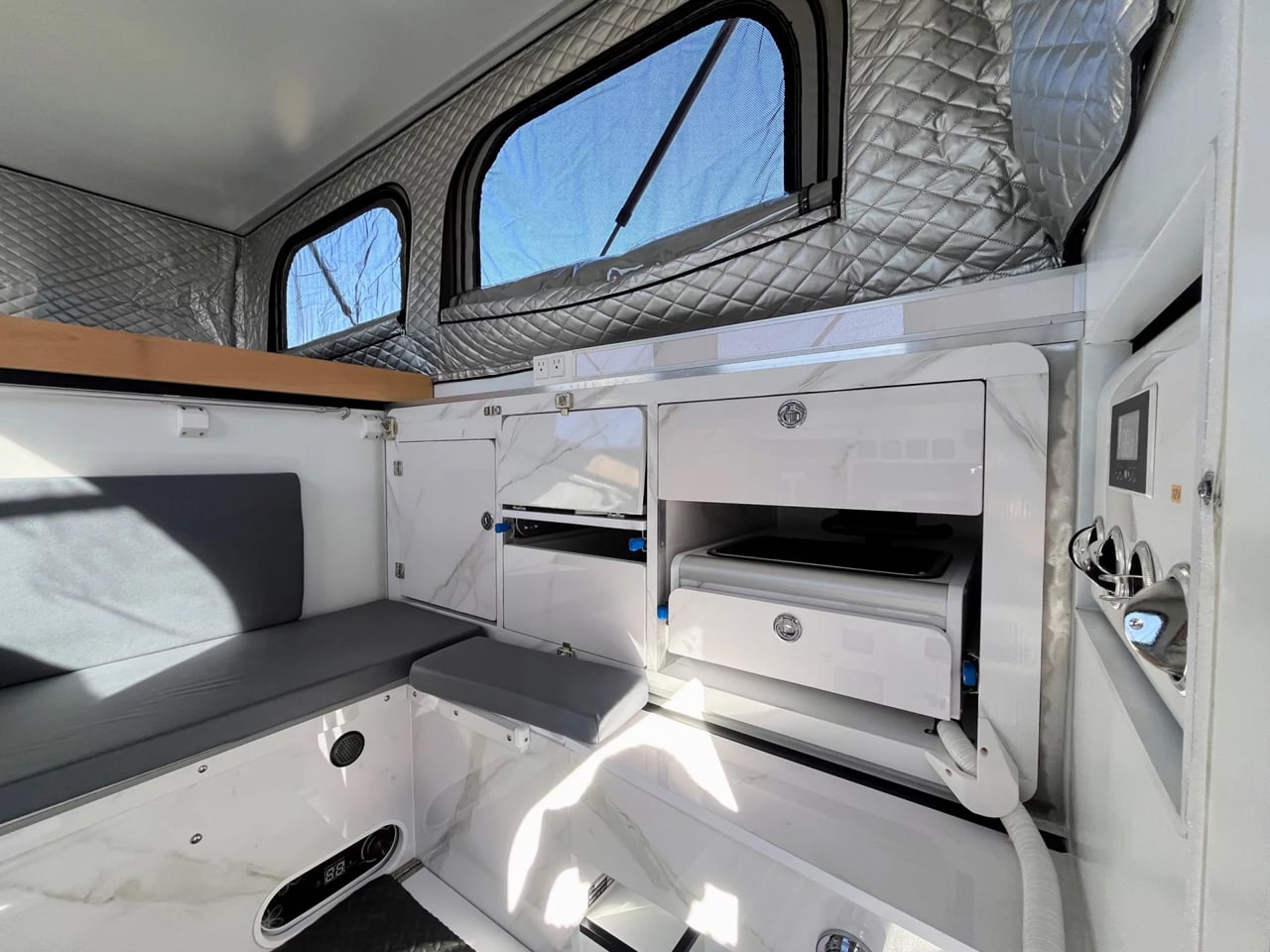
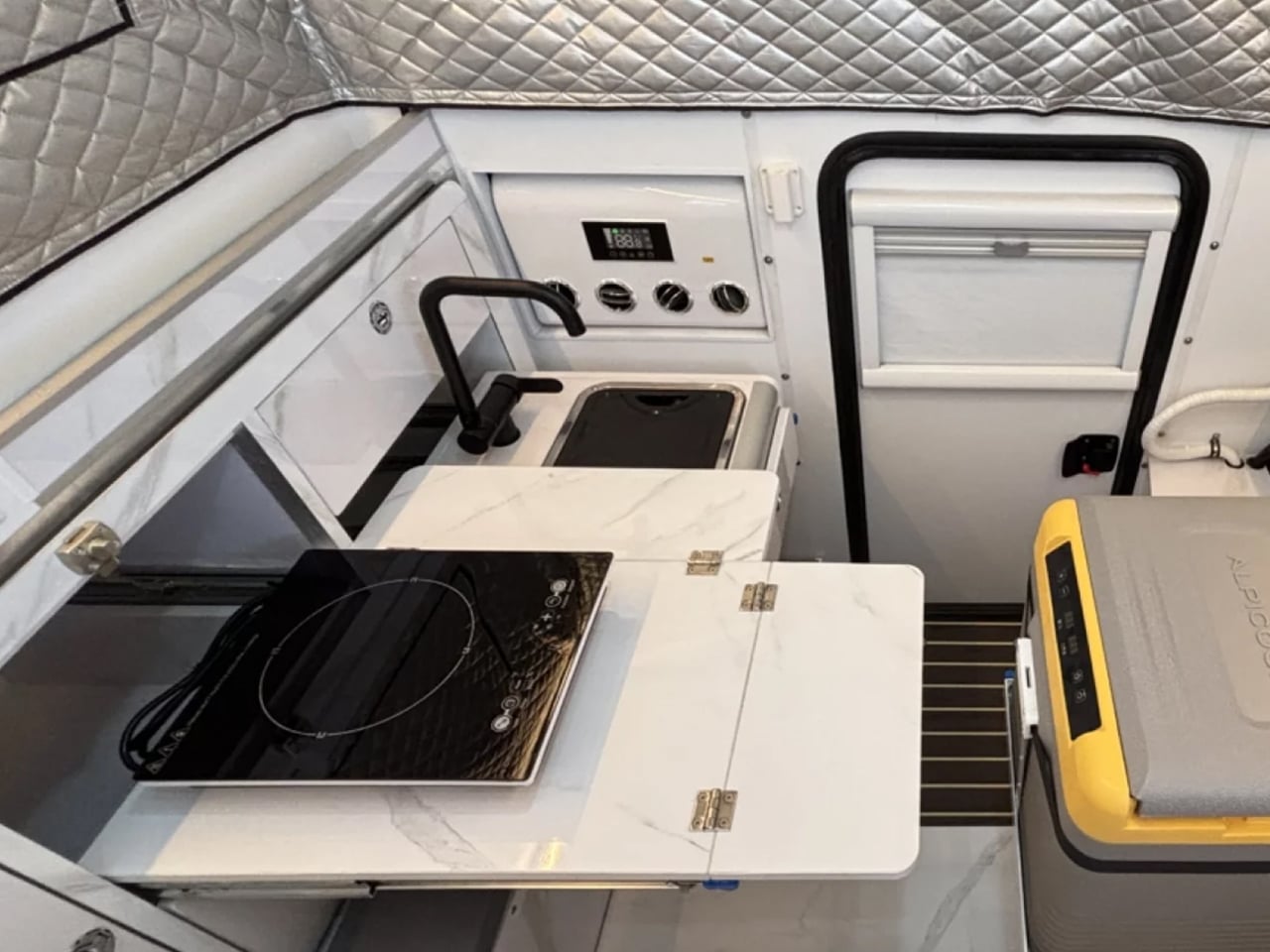
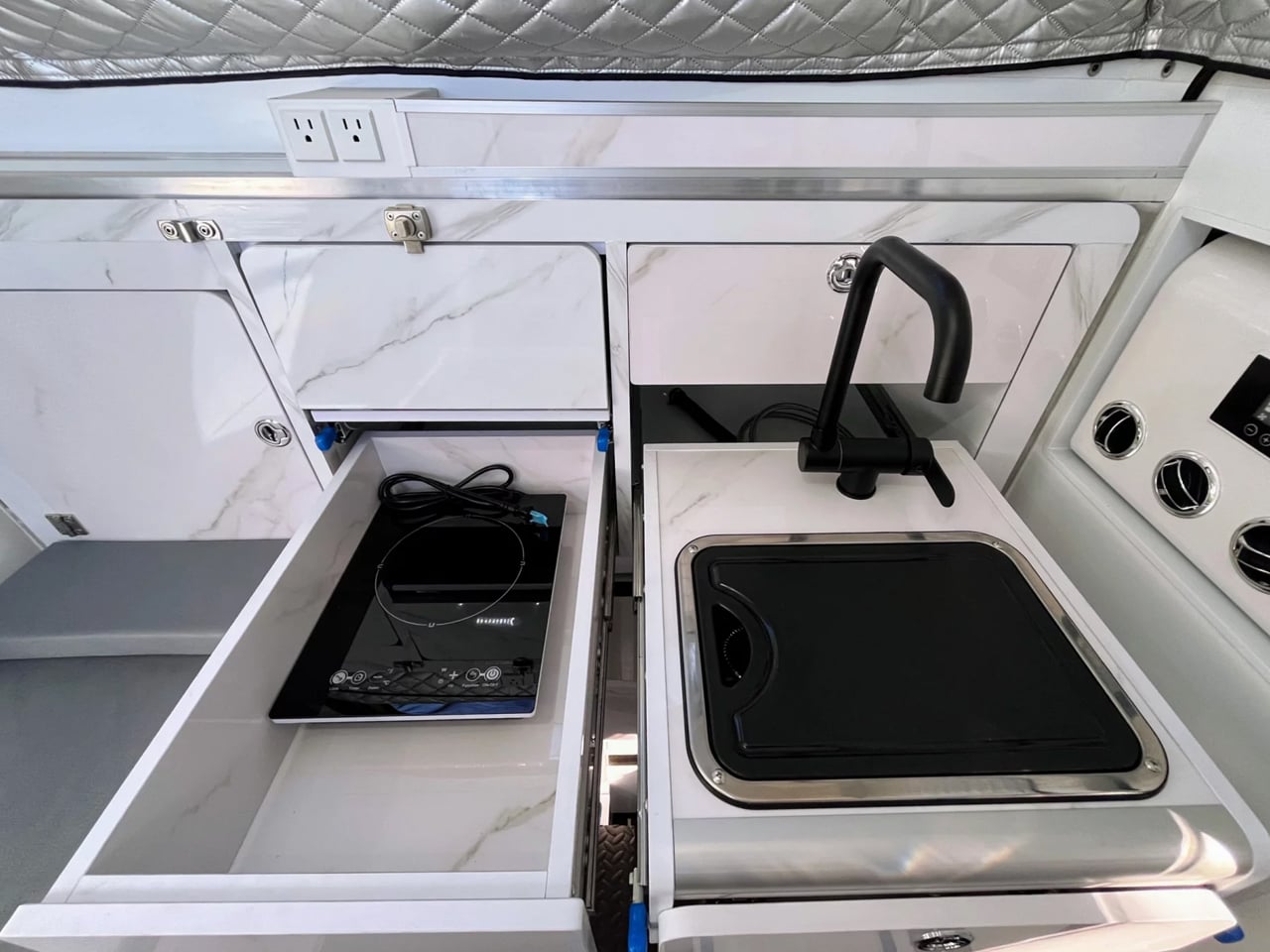
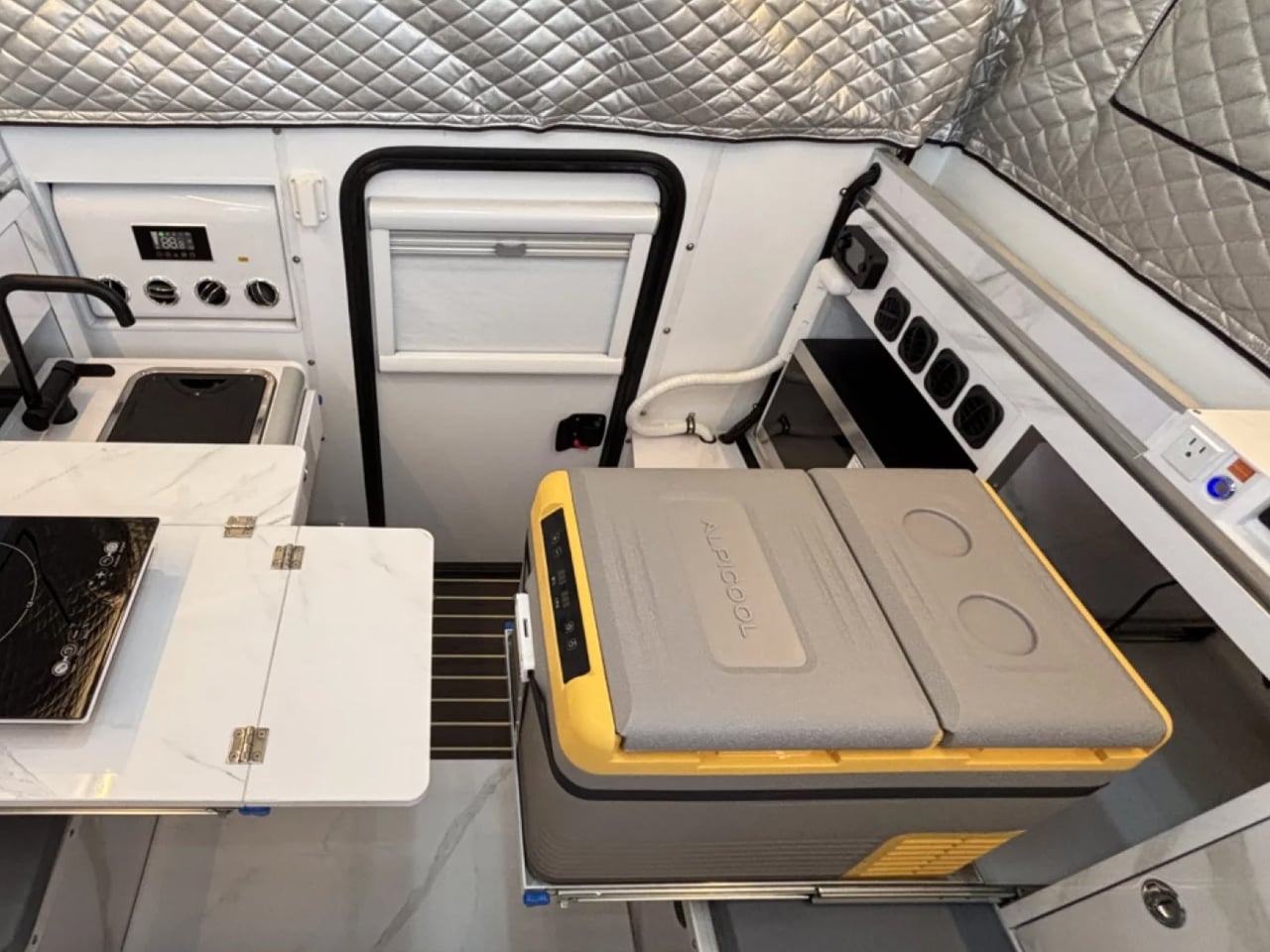
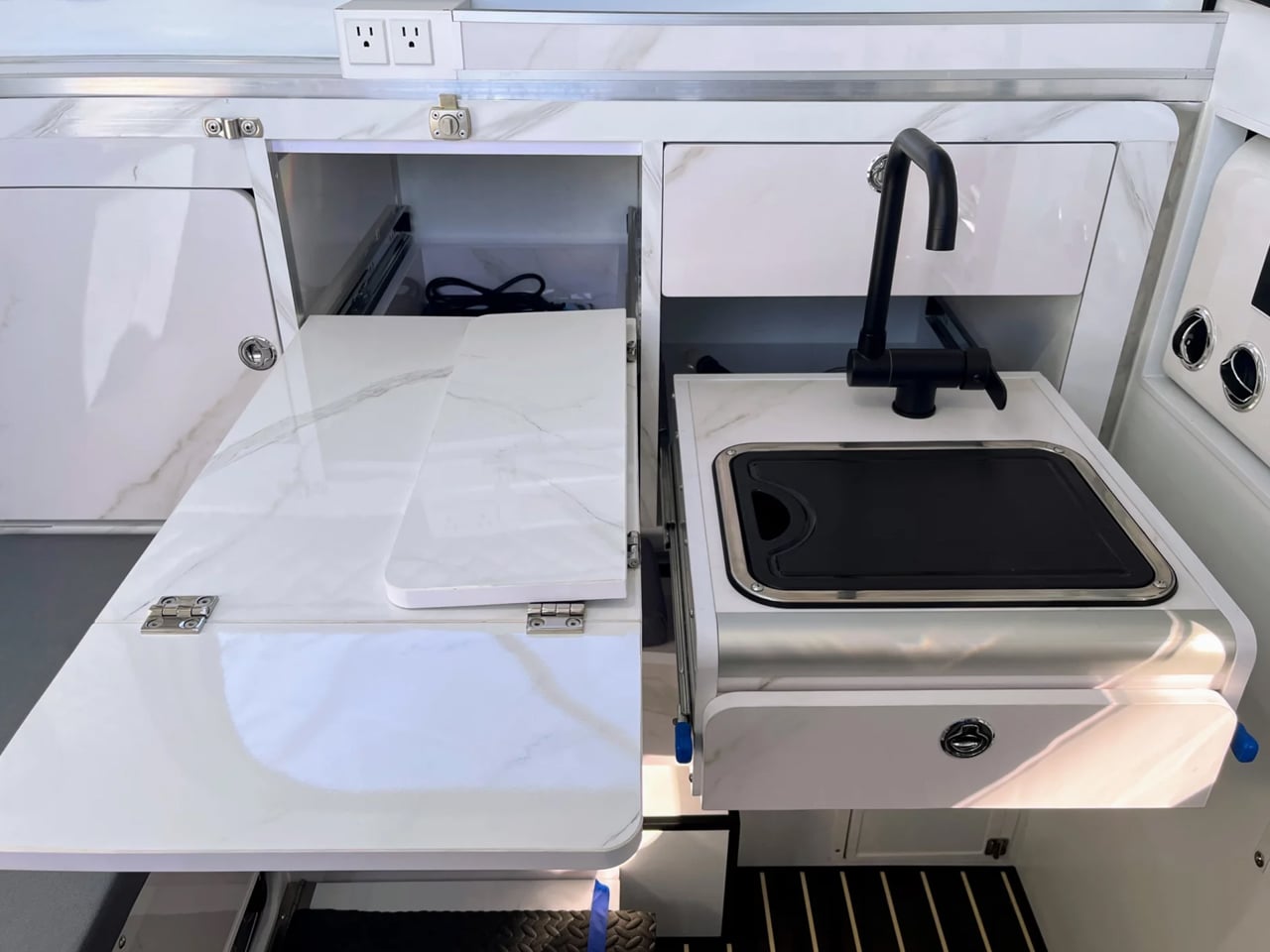
The Roam Rider SL has an interesting living environment, which is provided with a capable kitchen setup complete with appliances and amenities. The kitchen space has a 1500-watt induction cooktop sitting on a drop-down table, while a 12V dual zone refrigerator features on a sliding tray. The slide-out sink and folding faucet take care of the cleaning needs, and a 24-gallon freshwater tank onboard provides the needed water. An adjacent pull-out dining cum work table is where the prepared food is consumed.
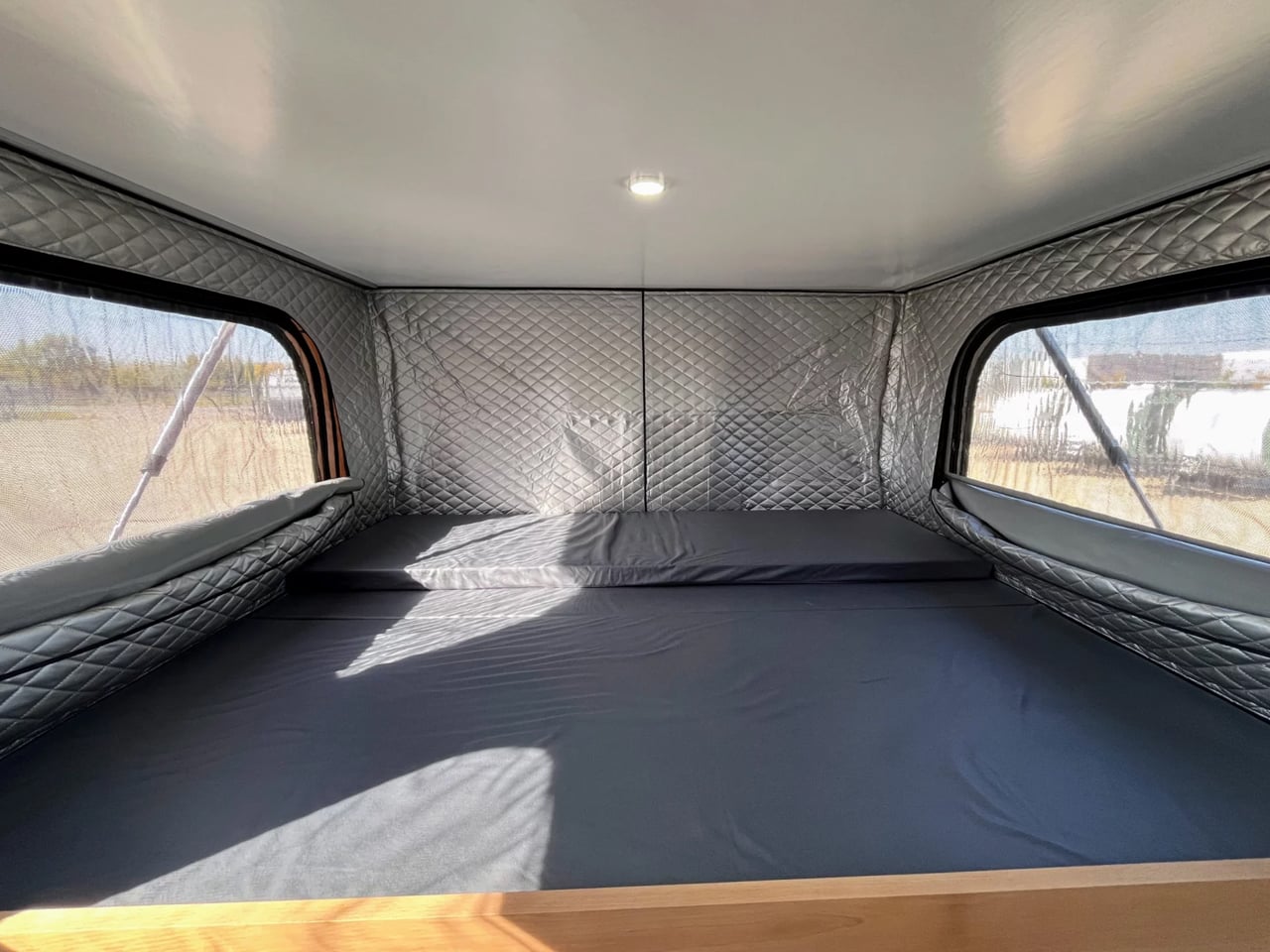
The cabin is designed for sleeping up to 3 campers conveniently. The main slide-out bed can fit a couple, while the second, convertible bed can sleep one person. During the day, the single-person bed becomes a cushioned sitting area for up to four people. You can find multiple storage options inside the Roam Rider SL. Two slide-in cabinets, two drawers, a floor storage box, and a vertical storage box.
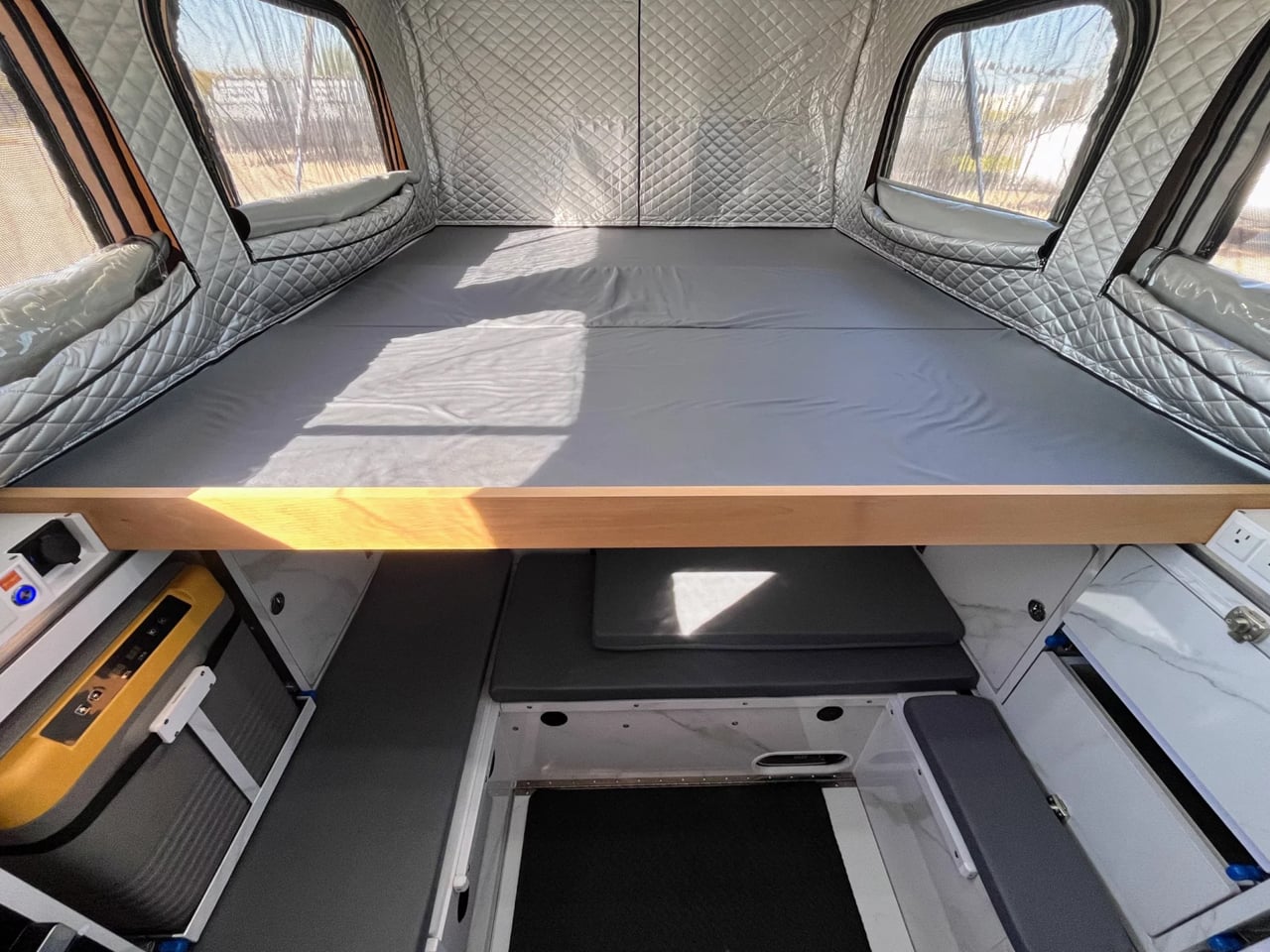
The camper is made for all-season adventures with a 7500BTU air conditioner and a 17,000 BTU diesel heater. A 4.8-gallon external diesel fuel tank is mounted on the back, which can provide fuel to the heater when you’re on an extended holiday in the winter. The camper is provided with a showering system, but there is no mention of a portable toilet inclusion. Though we learn that it features a 400Ah LiFePO4 lithium battery, paired with 320W solar panels. It also features a 3000-watt pure sine inverter, all for a starting price of $29,995.