8 Best Gadget Gifts Every Man Actually Wants This 4th of July

Most 4th of July gifts end up on a shelf by August. The problem is rarely budget. It is that the average gift guide optimizes for novelty over usefulness, leaving the recipient with something impressive at unboxing and forgotten by Labor Day. The eight picks here work differently. Each one earns its place through daily utility, genuine design quality, or the kind of clever thinking that makes you wonder why it took this long to exist.

These are products built to be used outdoors, shared freely, and carried constantly. Every price is real, every product is available to order in time for July 4th, and every item fits the kind of man who appreciates design as much as function. That is a harder brief than it sounds. These eight cleared it.

1. RetroWave 7-in-1 Radio

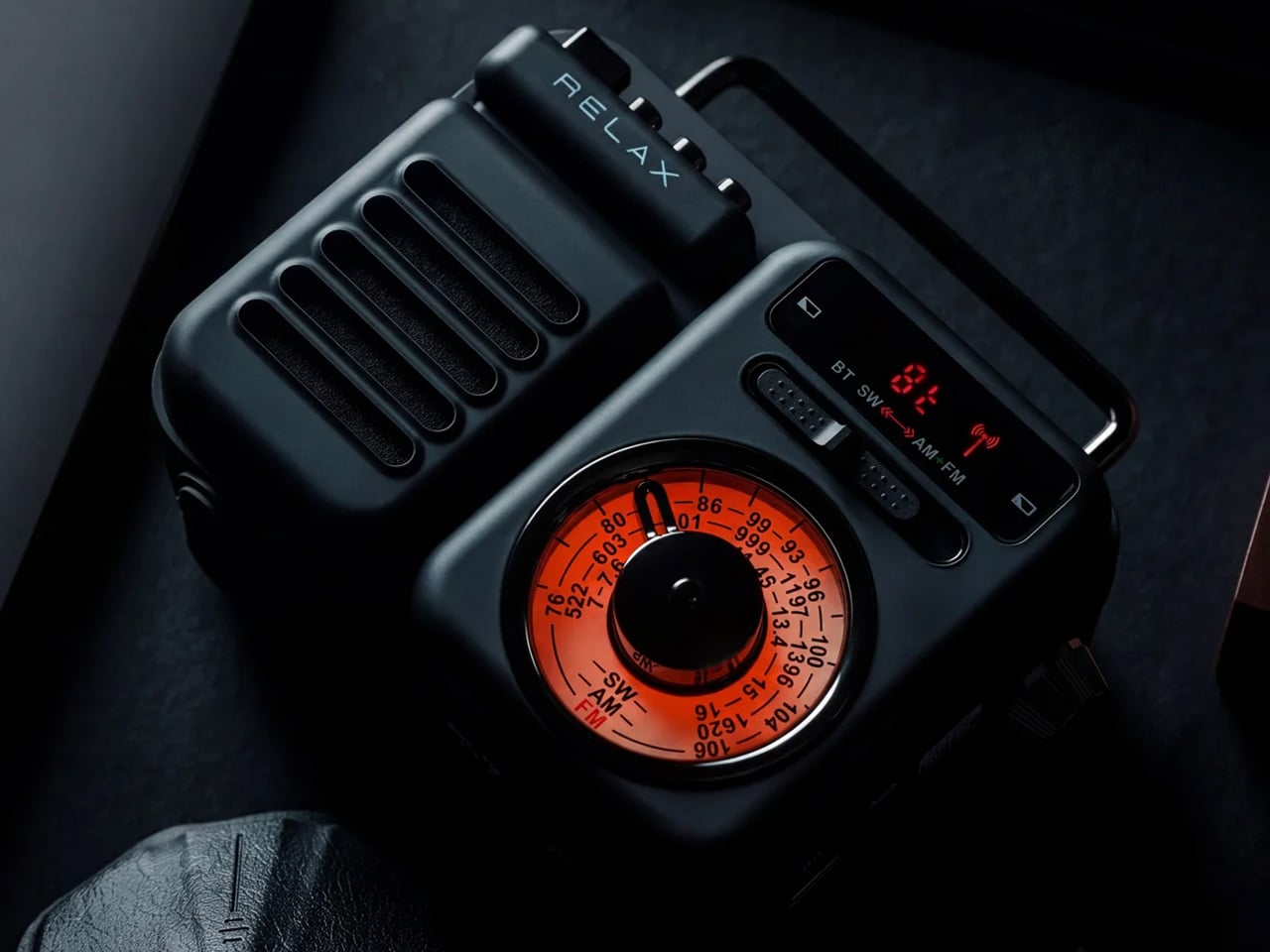
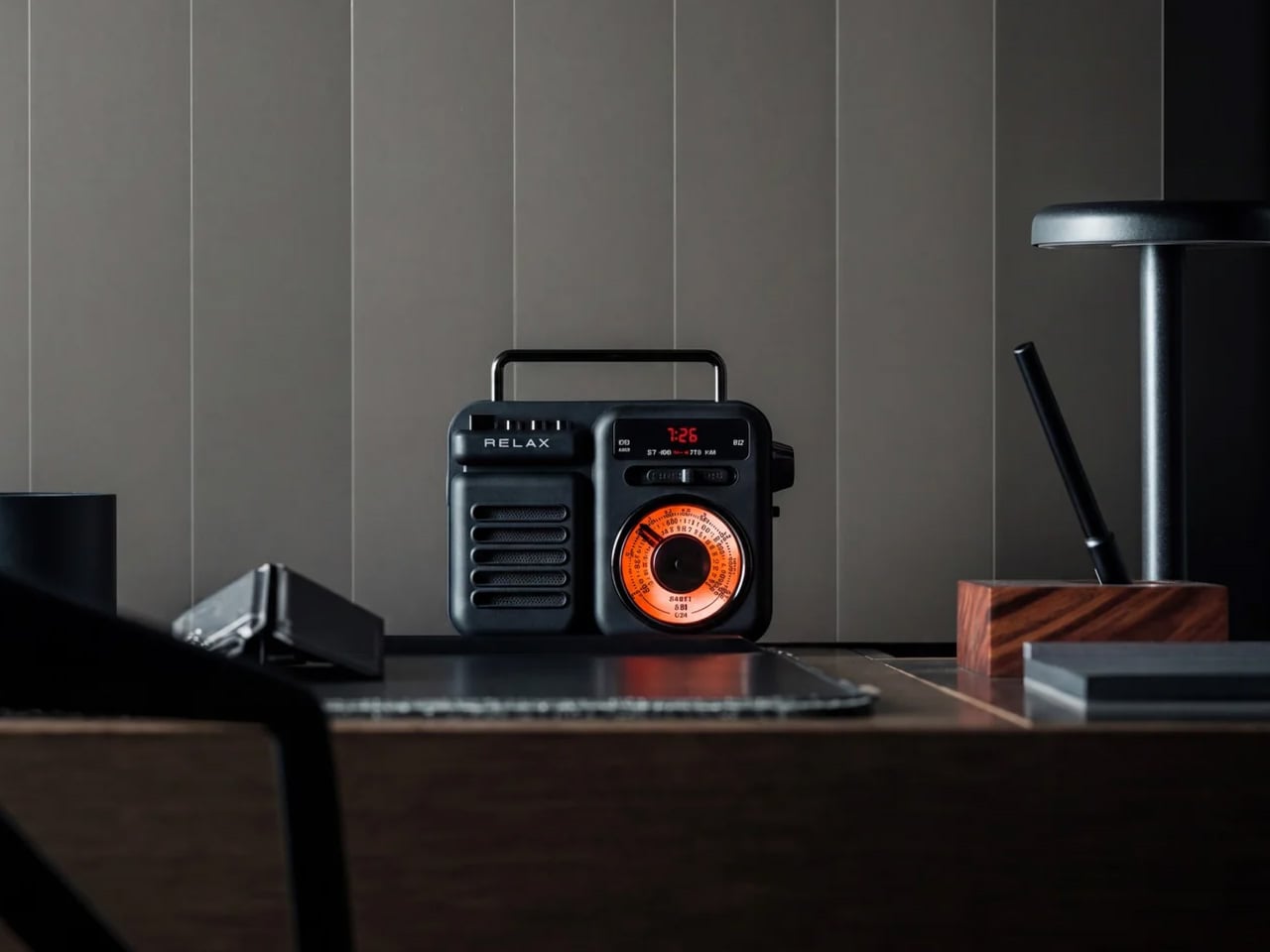
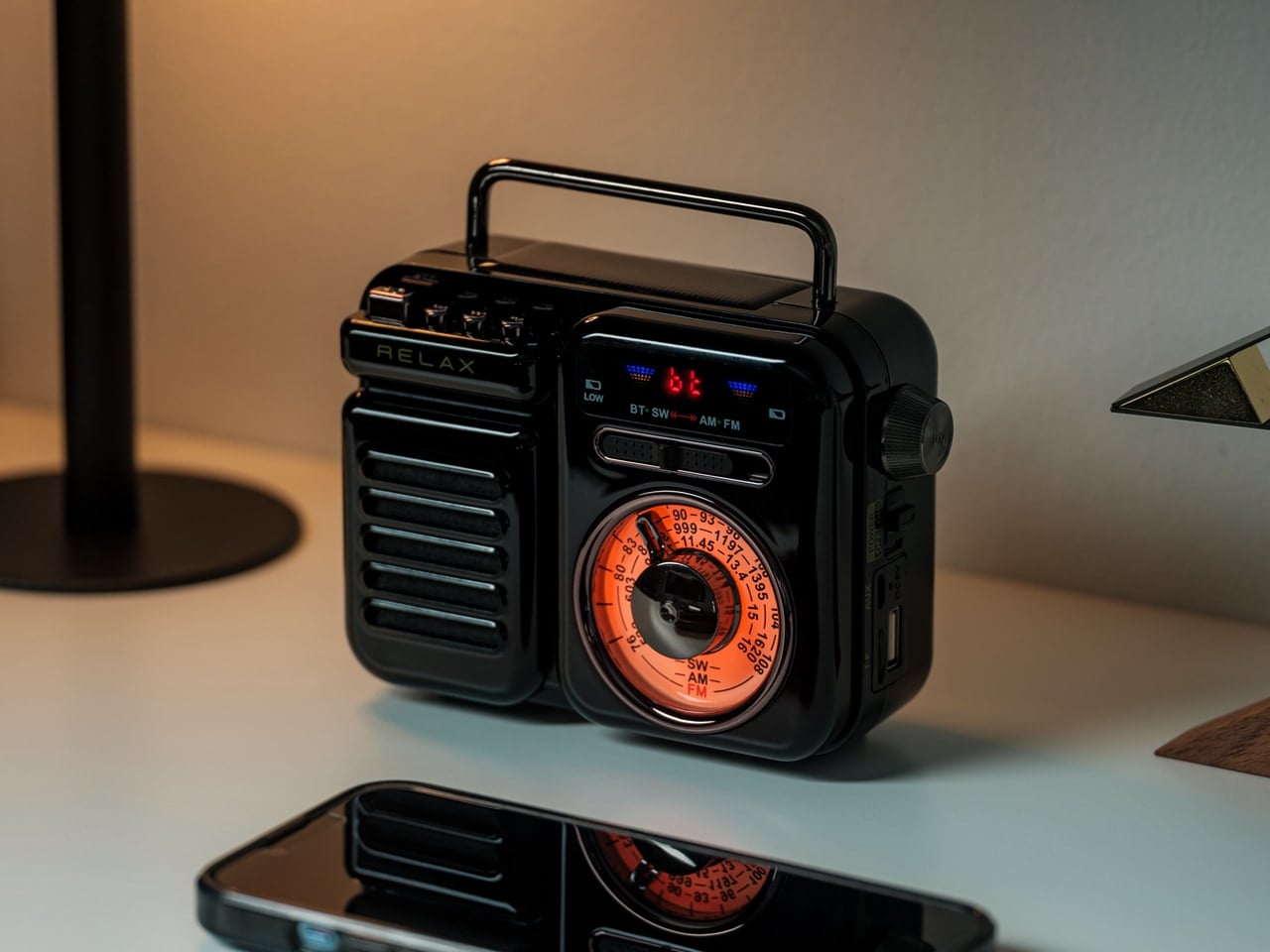
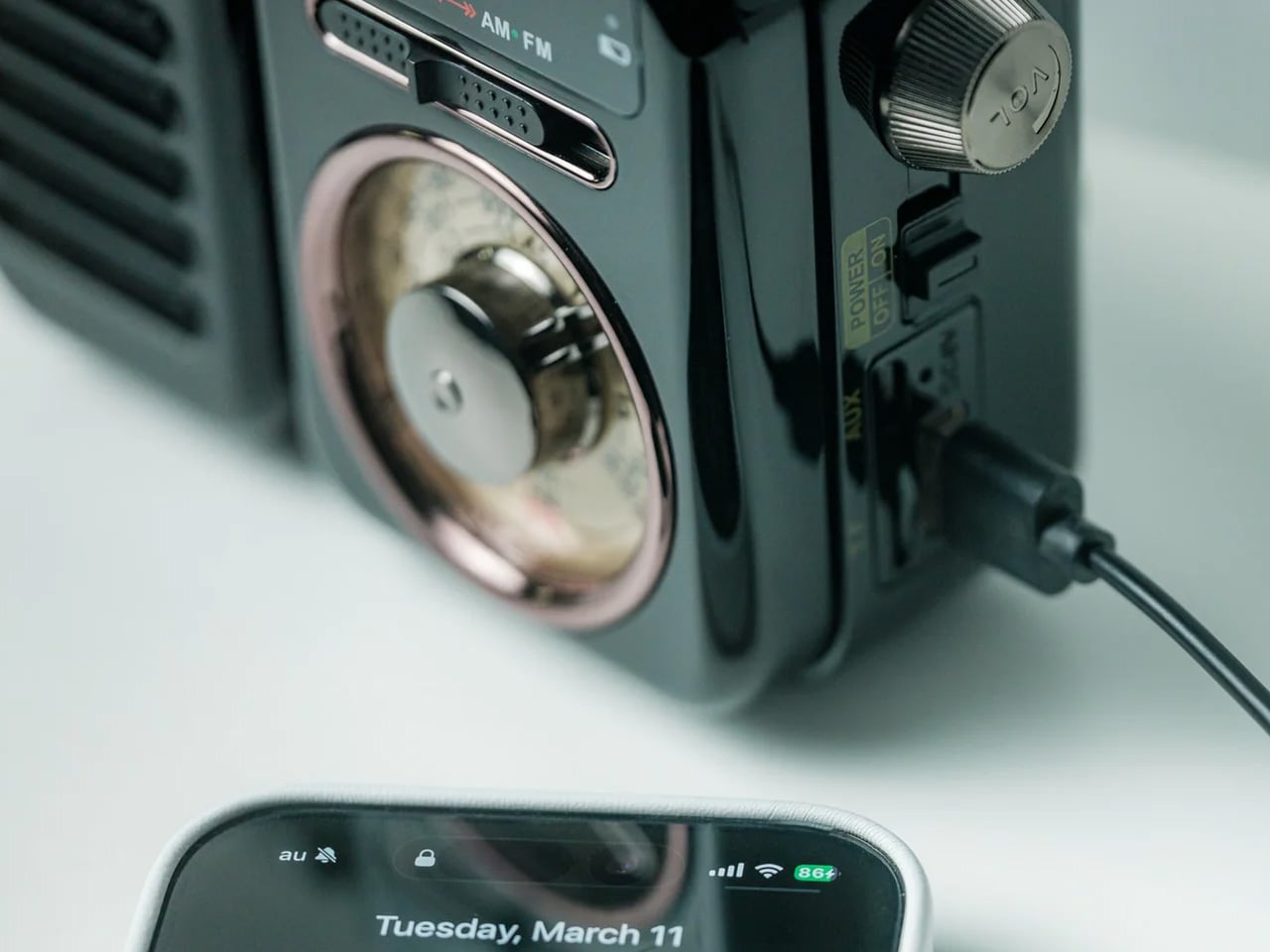
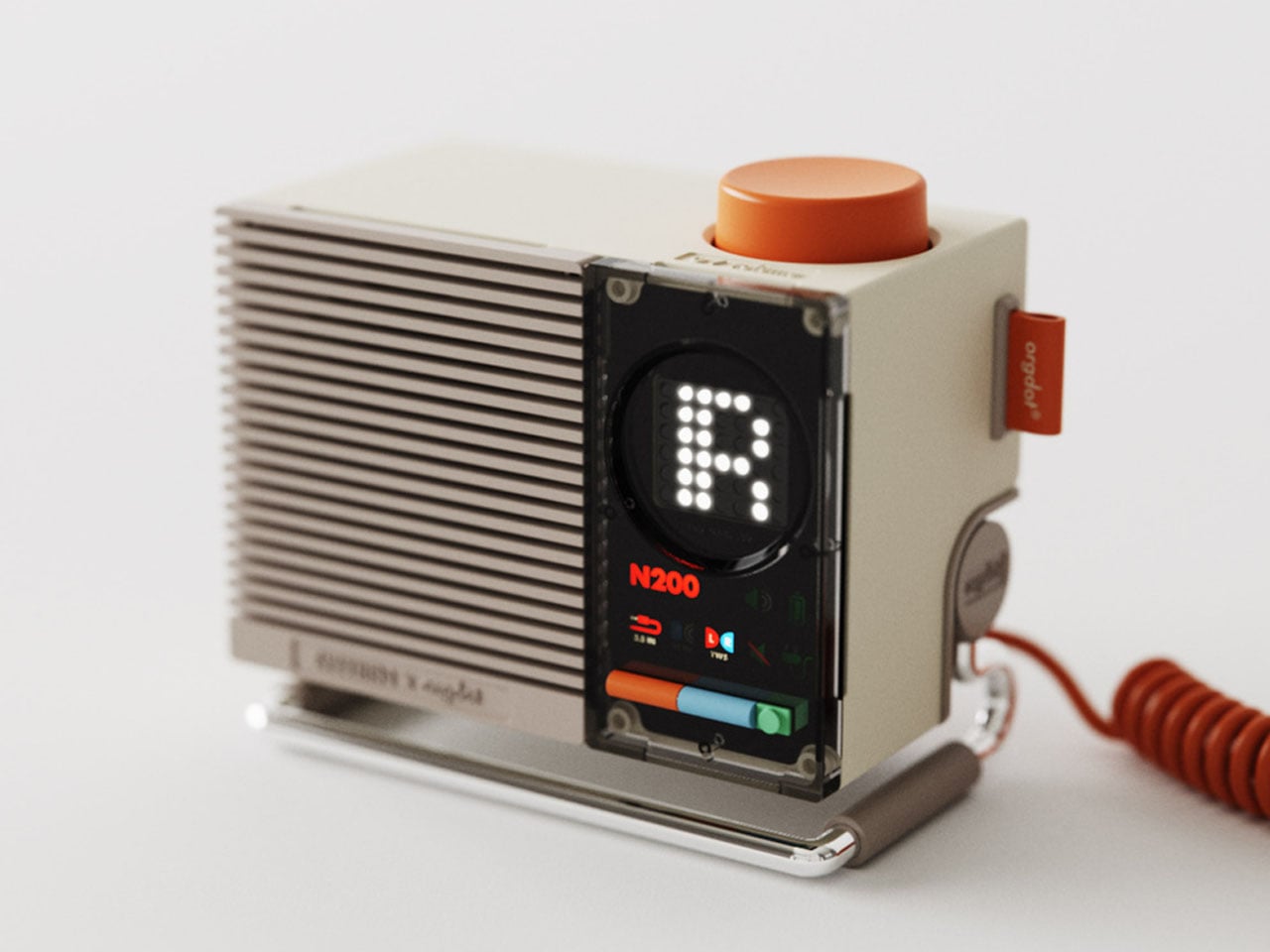
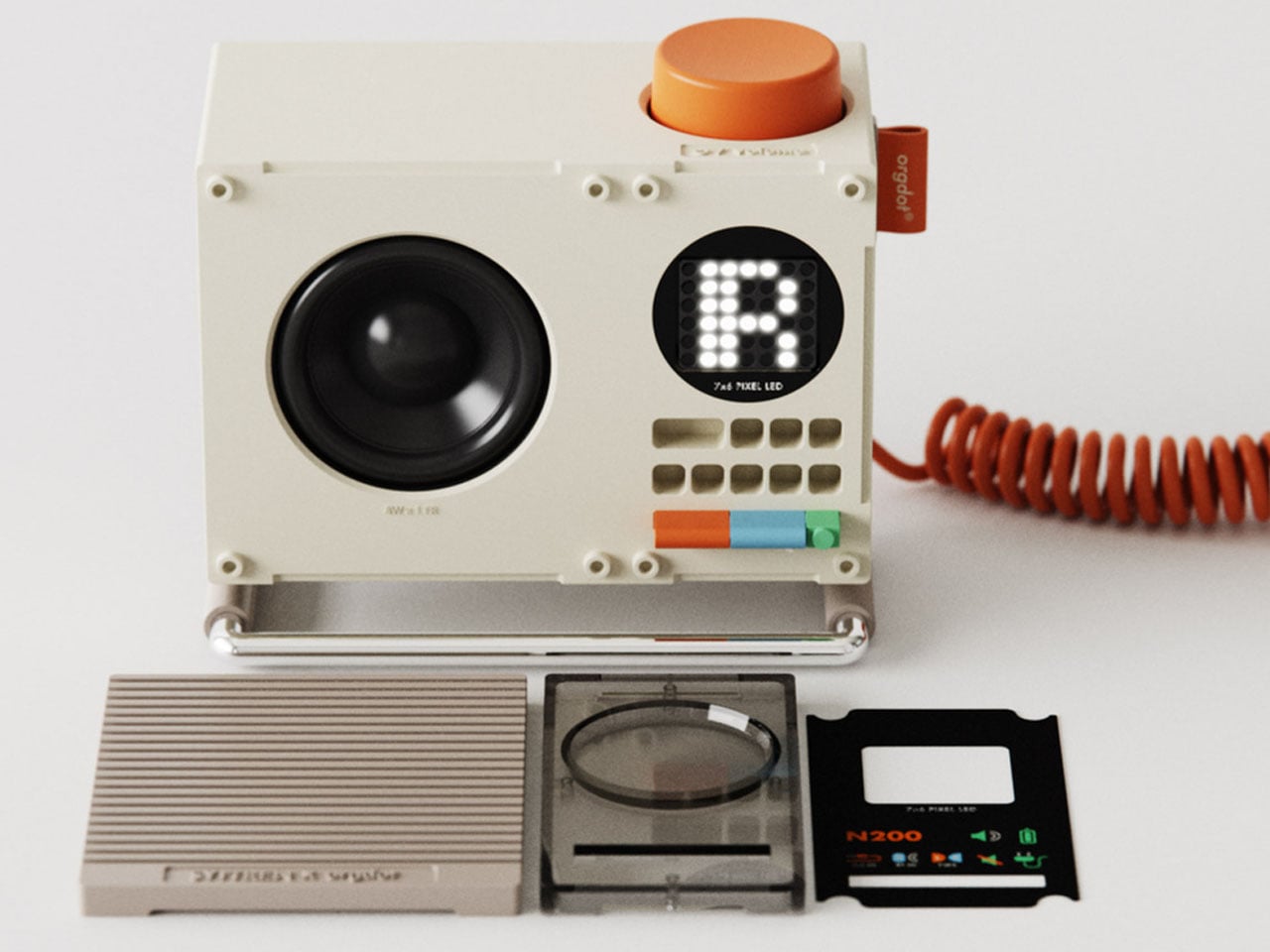
The RetroWave is not trying to be a smart speaker. That restraint is exactly what makes it work. At $89, it covers AM, FM, and shortwave reception alongside Bluetooth streaming, a built-in flashlight, a phone charging port, and a weather band — seven functions in a single object with a tactile analog tuning dial and enough visual warmth that it looks right sitting on a picnic table or a porch railing. It runs on battery or USB-C, which matters at any outdoor gathering where outlets are not a given.

What sets it apart from the wave of retro-styled Bluetooth speakers is that the RetroWave functions during a blackout. The weather band and hand-crank charging give it genuine emergency utility that most audio products ignore entirely. On a holiday weekend where fireworks, crowds, and summer storms converge, a radio that can do real work under pressure is a more interesting gift than another Spotify-only device with a personality made entirely of silicone and LED rings.

Click Here to Buy Now: $89.00

What we like:

  • Seven-function range covers daily and emergency use without feeling cluttered

What we dislike:

  • The shortwave reception will delight a specific type of person and leave others indifferent

2. Anker Soundcore Boom 3i

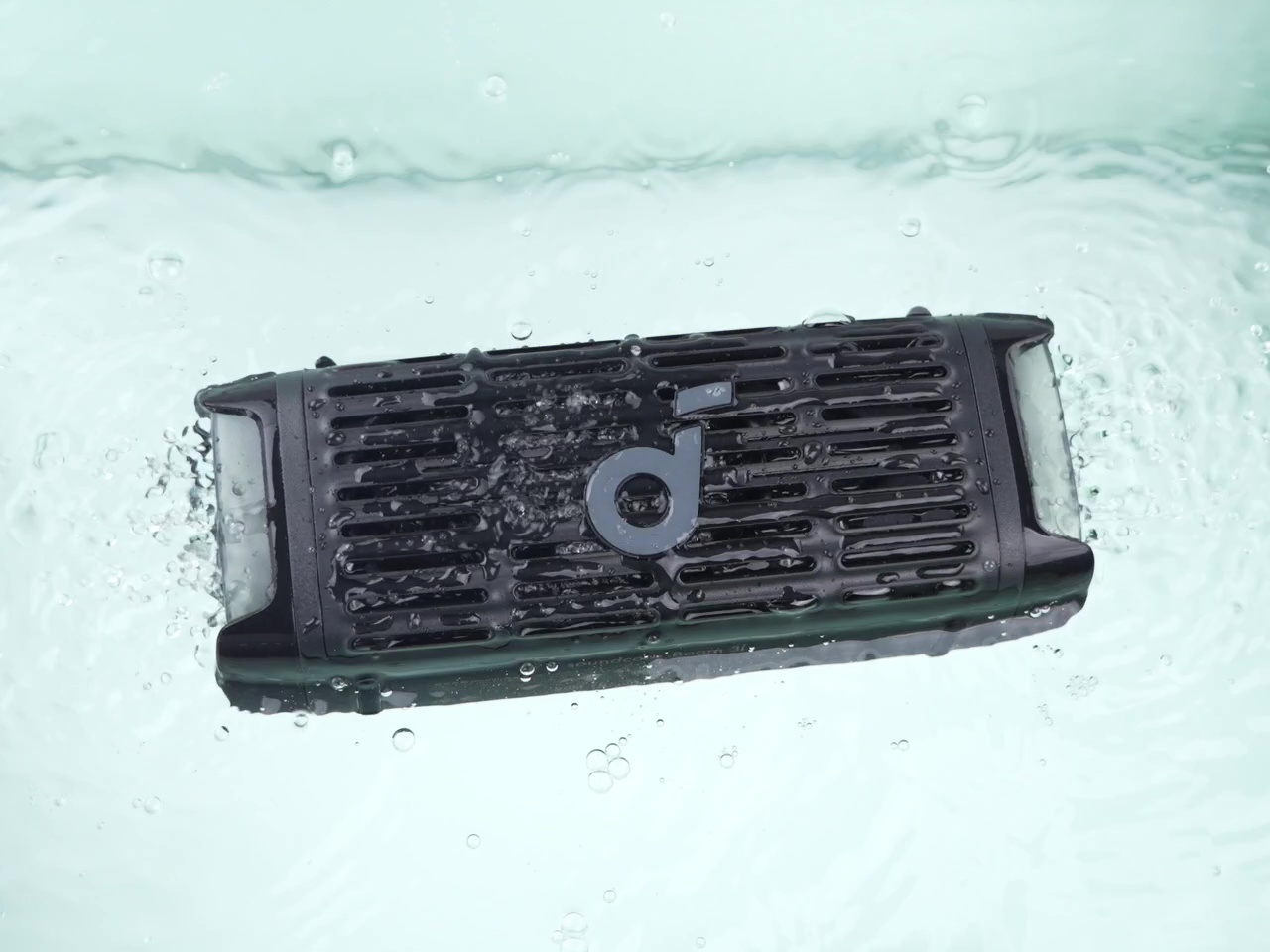
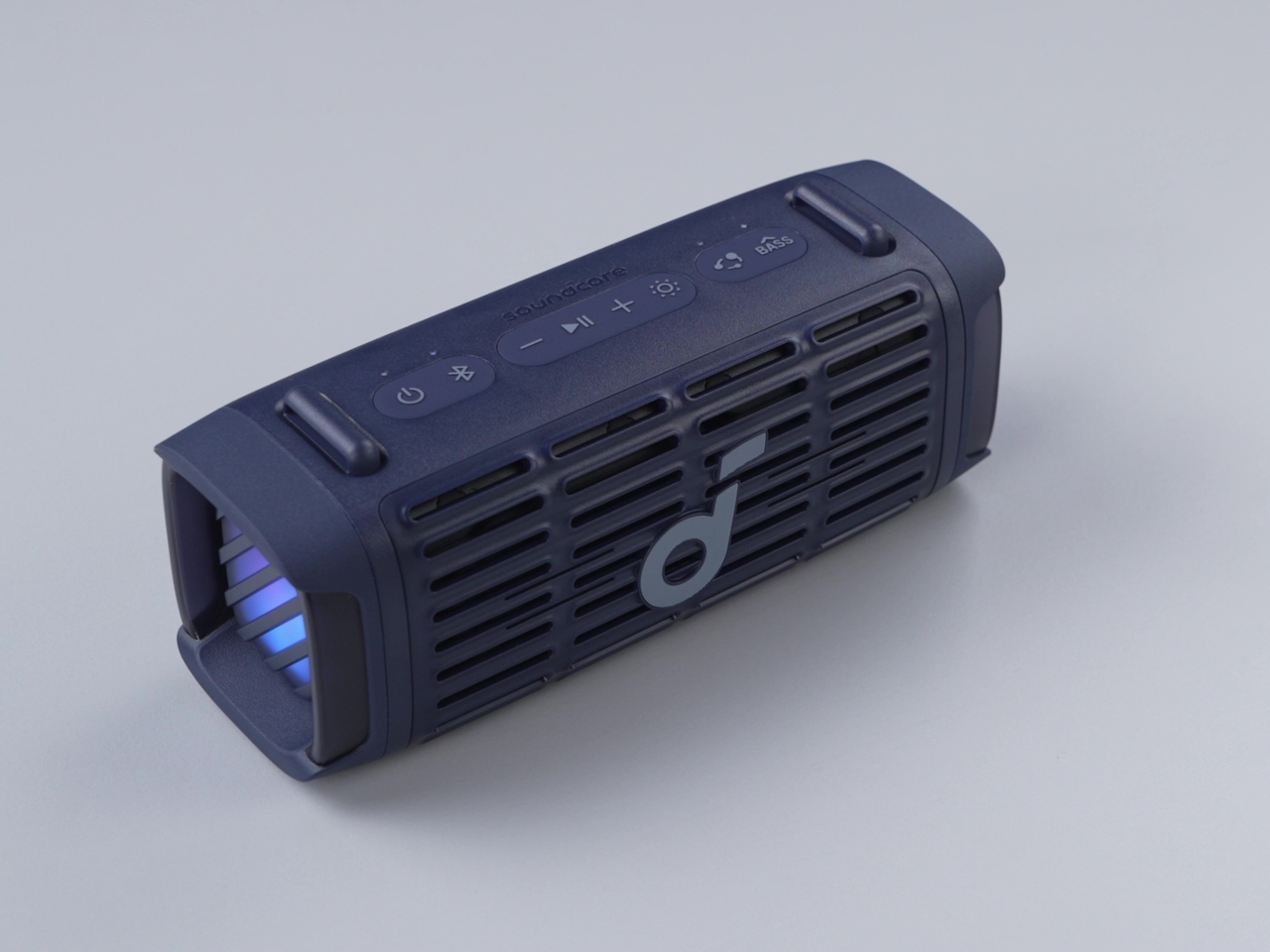
The Boom 3i was designed to survive the kind of afternoon that destroys other electronics. It floats on water. It shakes sand off its housing without clogging the drivers. The IP rating holds up in the rain and in the pool, and while most outdoor speakers are water-resistant in theory and fragile in practice, Anker engineered this one for submersion rather than splashes. It is the Bluetooth speaker you stop worrying about the moment you walk out the front door with it.

The audio output is full and wide for a speaker this compact, with enough low end to anchor a playlist over ambient crowd noise without the distortion that plagues smaller drivers at higher volumes. For a 4th of July gathering where the speaker will inevitably be nudged off a table, handed between a dozen people, and left near the cooler in a wet patch of grass, the Boom 3i is the one pick on this list that was engineered specifically for that set of conditions.

What we like:

  • Floating capability is the one feature that separates it from every comparable speaker at this price

What we dislike:

  • The design prioritizes durability over aesthetics, which shows in the bulkier silhouette

3. Leatherman Skeletool RX

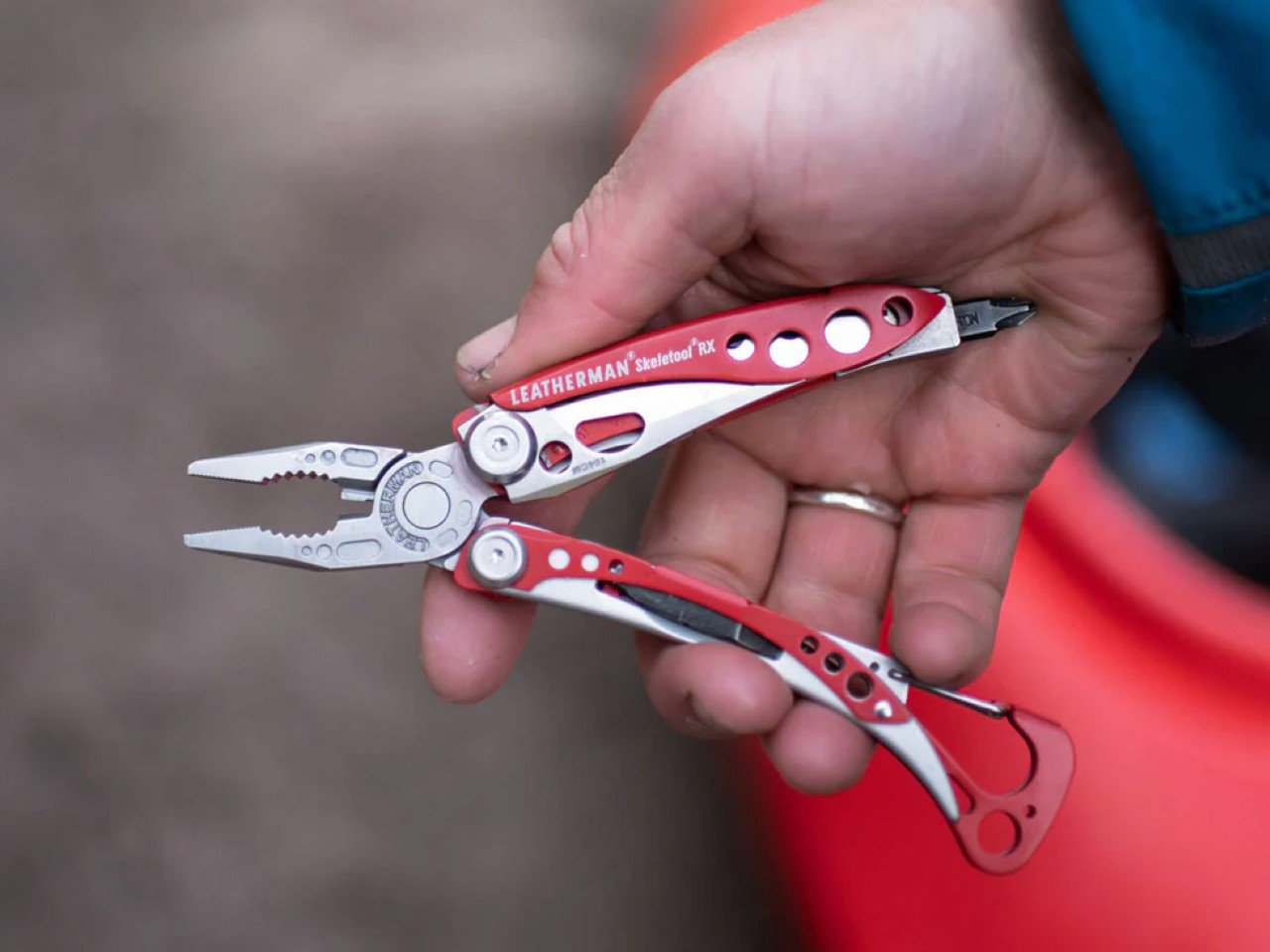
The Skeletool was built around an edit. Leatherman stripped the tool down to seven functions, removed everything that required compromise, and arrived at something genuinely elegant for a multitool: a stainless steel combo blade, needle-nose pliers, a bit driver, a removable pocket clip, and a carabiner that doubles as a bottle opener. That last detail is the most honest acknowledgment a tool manufacturer has ever made that a 4th of July multitool has a very specific social use case. Five ounces, built in Portland, Oregon.

The bottle opener earns its place at a summer cookout, but the pliers and driver mean it stays useful through the entire weekend and the weeks after. Most multitools feel like a design compromise. The Skeletool feels like a design decision. The skeletonized frame that gives it its name is functional rather than decorative, reducing weight without reducing grip. It is one of those tools that looks better the more it gets used, which is the best thing you can say about anything made from stainless steel.

What we like:

  • The carabiner bottle opener is a genuine design insight rather than a novelty feature

What we dislike:

  • Seven functions cover most use cases, but it will not satisfy anyone who needs scissors or a saw

4. TriBeam Camplight

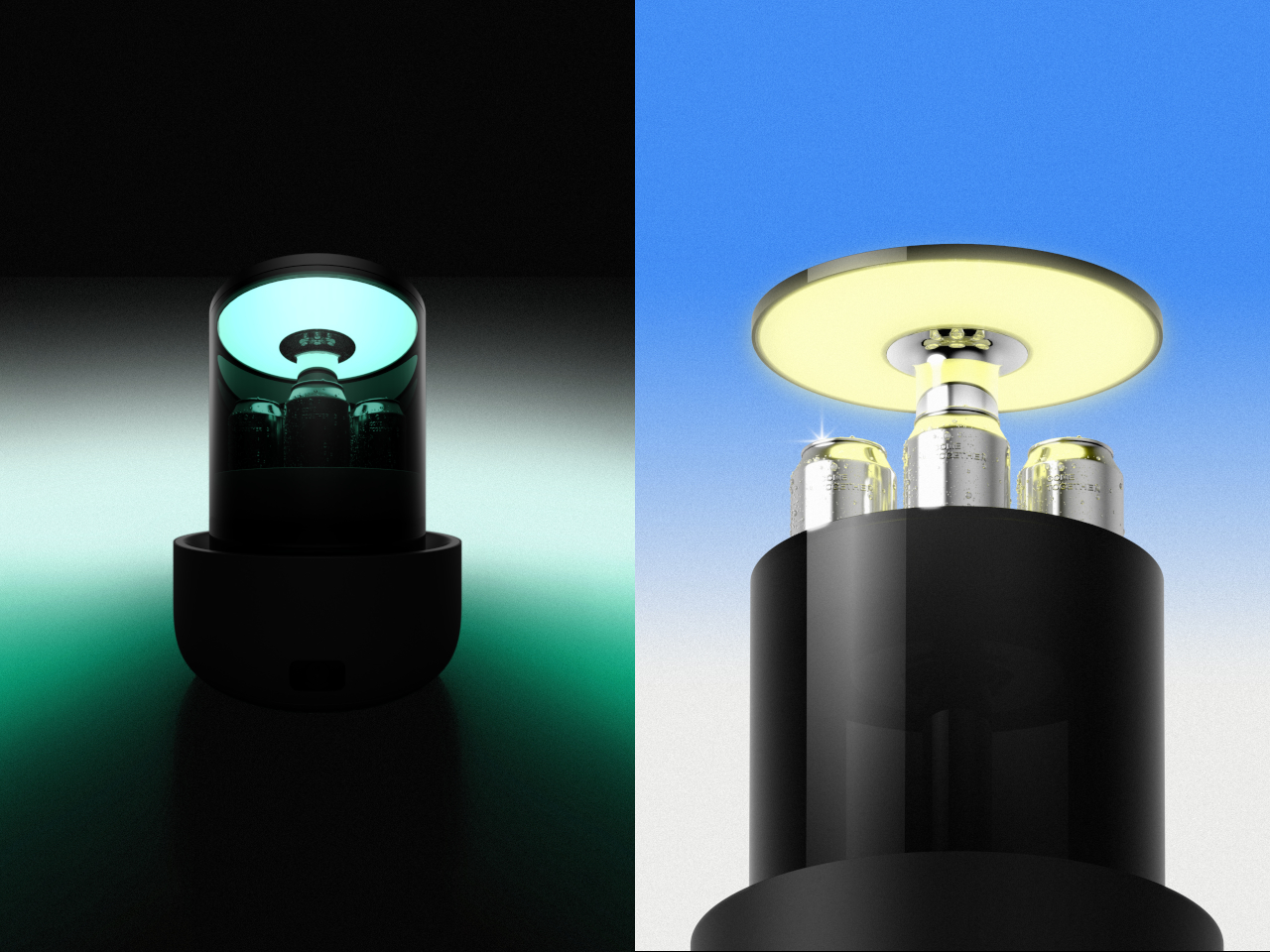
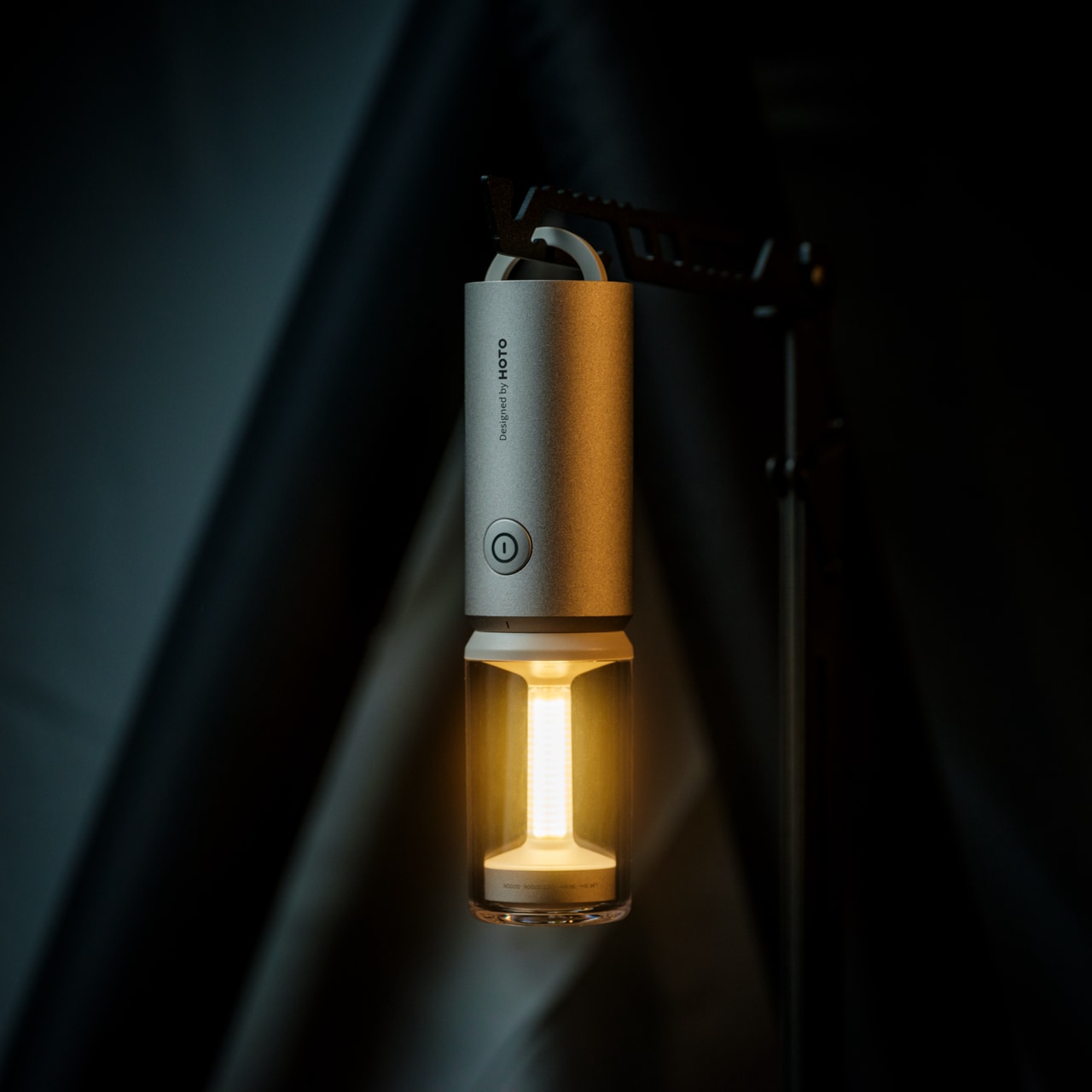
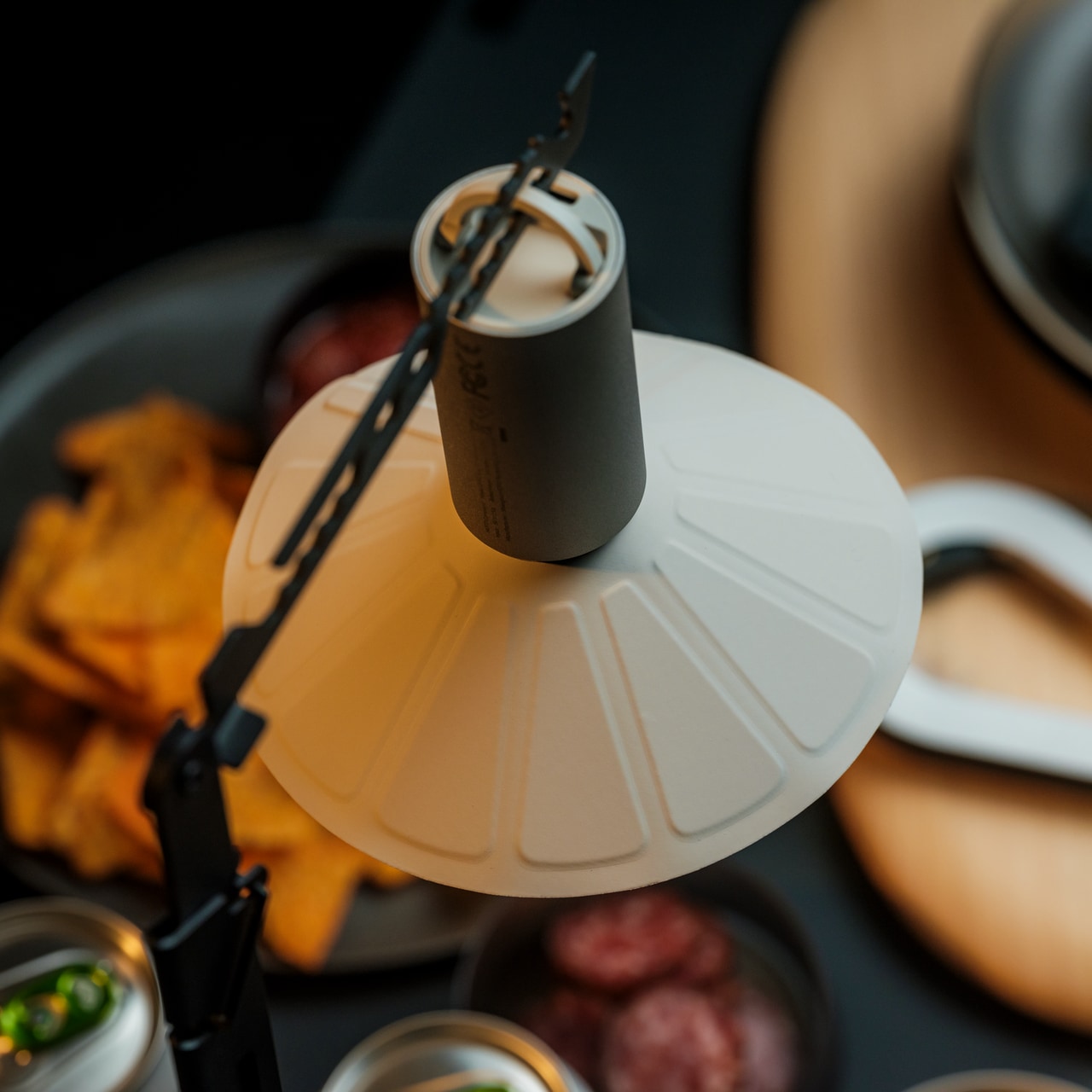
Most camp lights make you choose between utility and atmosphere. The TriBeam refuses that trade-off. At $65 and 135 grams, it switches between a soft ambient glow for conversation, a focused flashlight beam for task lighting, and a diffused lantern mode that fills a campsite evenly. Three distinct lighting behaviors in a single award-winning body that measures just 12.8 centimeters tall and fits in a jacket pocket, which is not something most camp lanterns can honestly claim.

The design is the product. Clean cylindrical housing, no unnecessary buttons, nothing that reads as cheap at close range. It earns its price through the quality of the materials and the precision of three modes that each do their job without bleeding into the others. For anyone spending part of the 4th of July weekend outdoors, whether camping or simply sitting on a dark lawn waiting for fireworks, the TriBeam handles the full range of lighting needs without requiring a second item in the bag.

Click Here to Buy Now: $65.00

What we like:

  • Three genuinely distinct lighting modes that each solve a specific outdoor scenario

What we dislike:

  • The compact scale means battery life has limits on multi-night trips

5. Matador Pocket Blanket 3.0

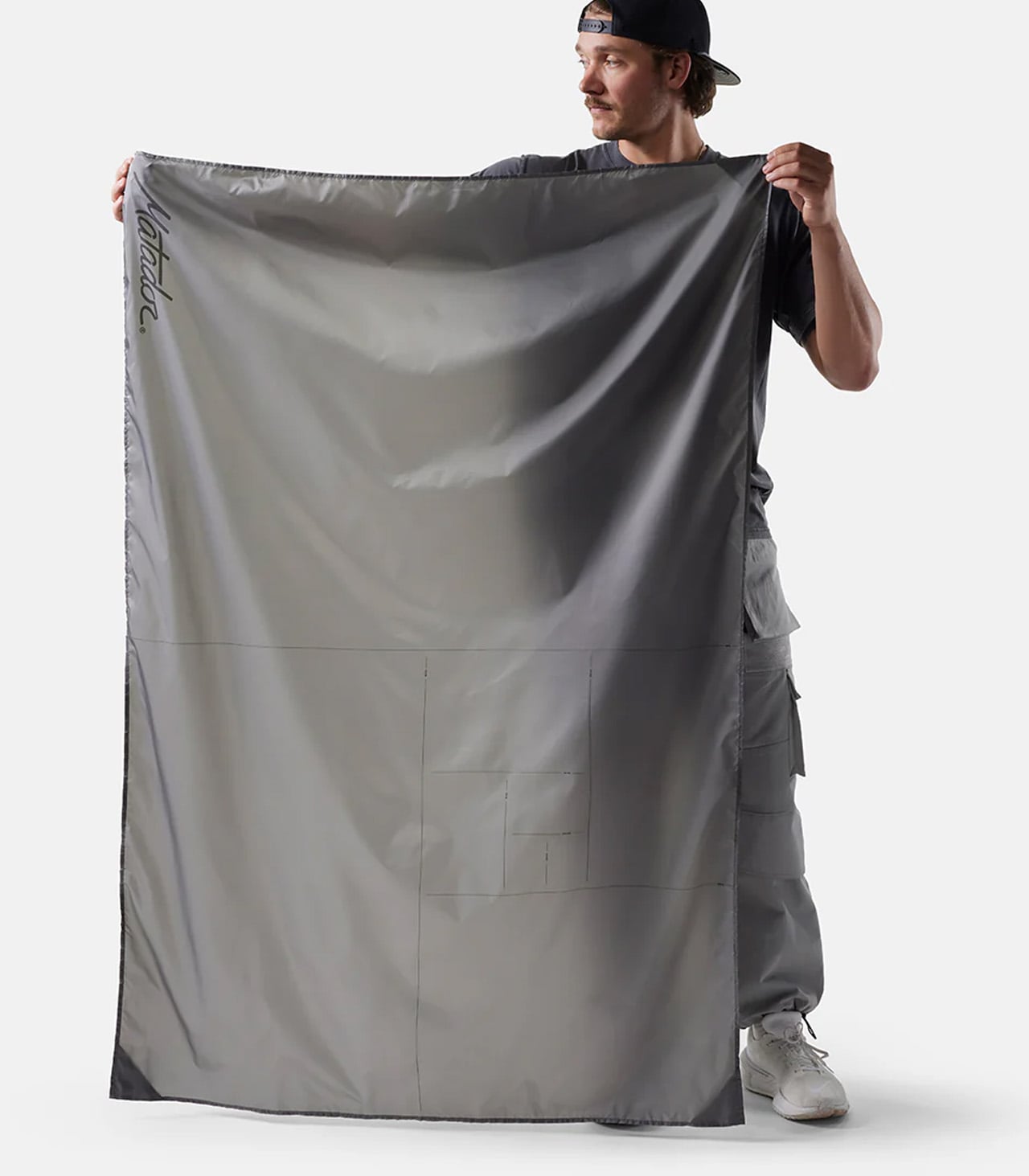
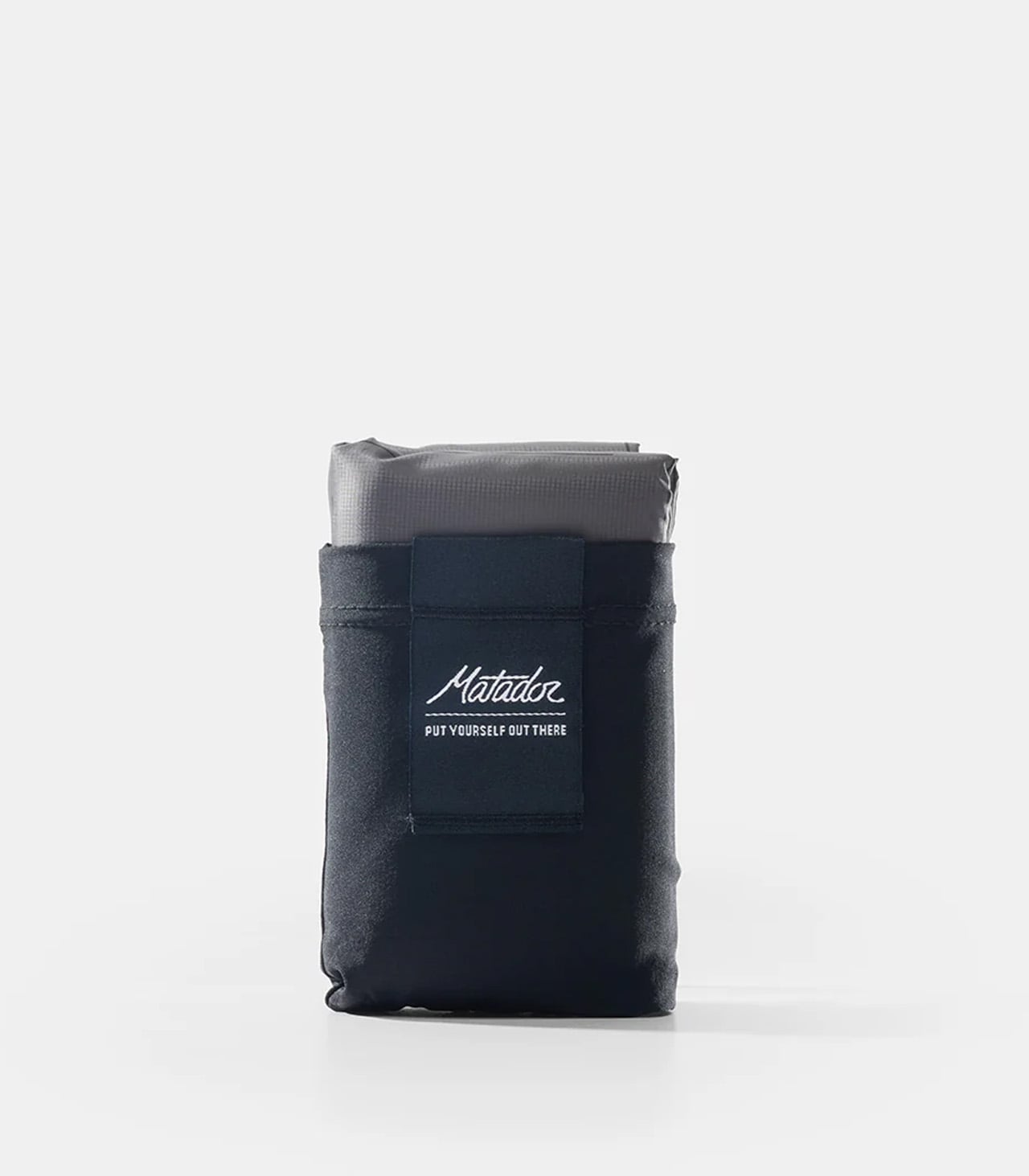
The Matador Pocket Blanket folds to the size of a carabiner pouch. Opened, it seats two to four adults on a water-resistant surface with integrated corner stakes for wind. The bottom layer blocks moisture from wet grass and damp park lawns; the top layer resists sand and water without trapping them. Everything about this object was designed for exactly the 4th of July scenario of sitting on public ground watching fireworks without wearing whatever that ground has been absorbing all afternoon.

The Easy-Pack Pattern built into the blanket’s face guides the refold intuitively, which solves the specific frustration that makes people abandon ultralight blankets within the first month of owning them. At $35 it is the lowest-price item on this list and potentially the most used, because it solves a problem that comes up every single time the weather is good enough to go outside. That ratio of price to utility is rare and worth recognizing when you find it.

What we like:

  • The built-in refolding guide makes packing it back down a one-attempt operation

What we dislike:

  • The sizing works well for two adults, but a larger group will want a second one

6. Planbok Waterproof Wallet

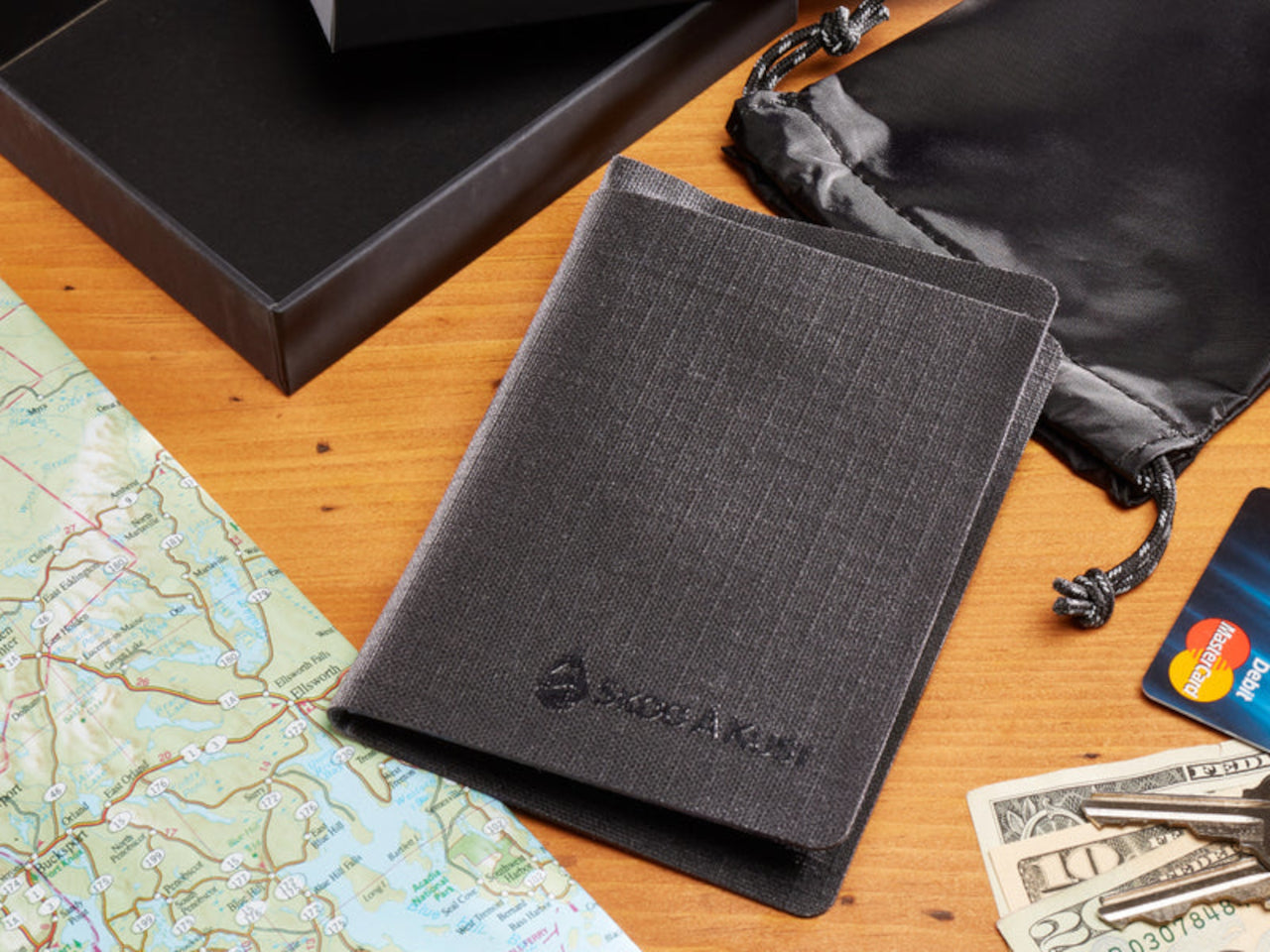
The Planbok is built from 420 denier TPU-coated ripstop nylon with fully welded seams and an IPX6 water resistance rating. It floats if you drop it in the water. That detail separates it from every slim wallet on the market, including the ones that market themselves as water-resistant. The difference between water-resistant and waterproof is invisible until it matters, and on a weekend that involves boats, coolers, rivers, or an unexpected downpour, it matters immediately and without warning.

The profile stays slim enough for a front pocket, cards slide easily, and the construction feels deliberate rather than disposable. It is not a novelty item. It is the answer to the quiet anxiety of carrying a leather bifold to a lake weekend, which is a real anxiety that real people experience every summer without ever quite solving it. Covering a genuine everyday frustration with a well-made object at a reasonable price is precisely the brief that good design exists to fulfill.

What we like:

  • Buoyancy is a genuine functional feature, not a marketing headline

What we dislike:

  • IPX6 covers heavy rain but stops short of full submersion, which the floating capability can quietly imply

7. DraftPro Top Can Opener

Hands lift and pull back the tab on a green beer can, revealing the opening. The can sits among other cans on a surface.

Coca‑Cola can with ice and a lime wedge, condensation on the can.

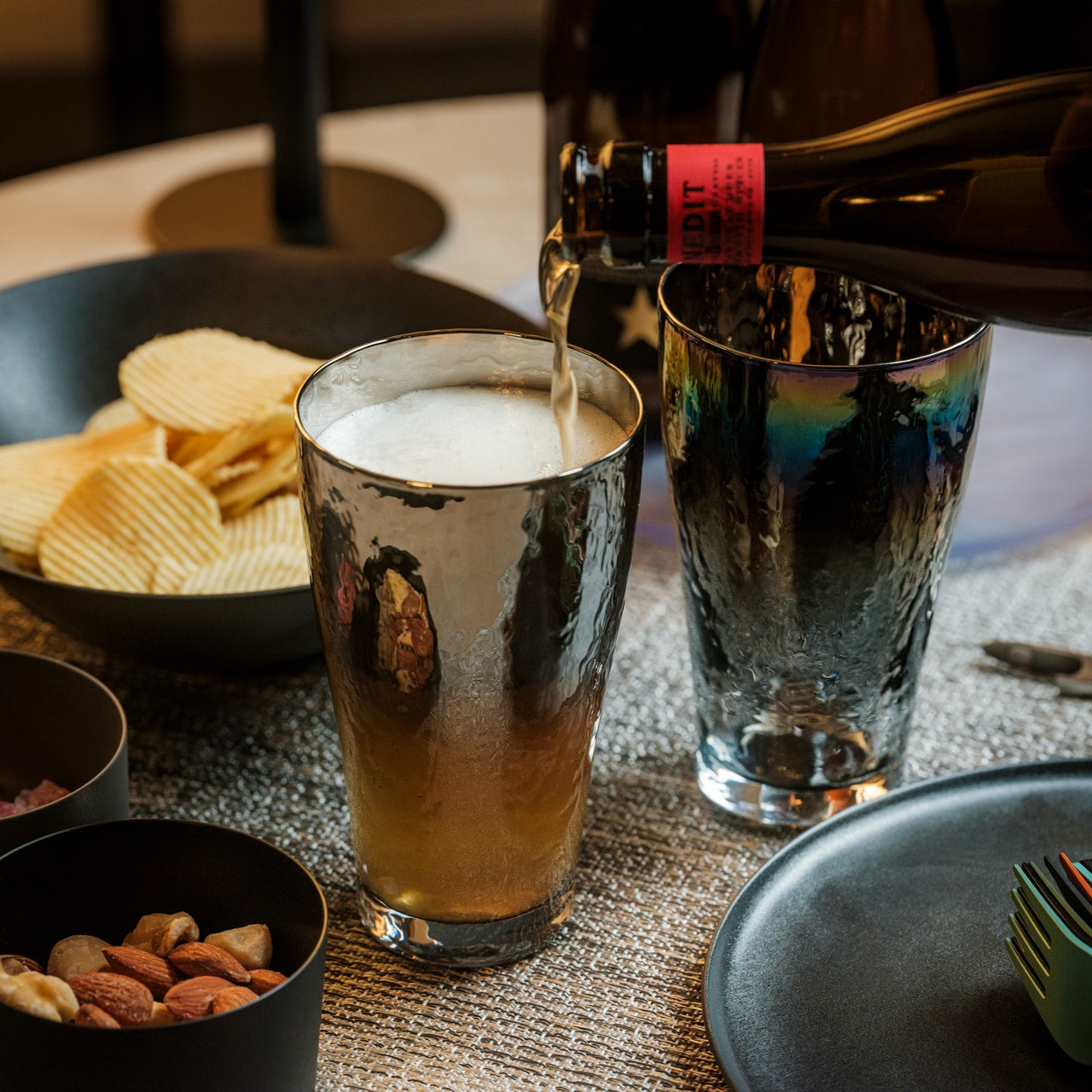
There is a version of cracking open a cold can on the 4th of July, and there is a better version. The DraftPro, designed by award-winning Japanese designer Shu Kanno and built in Japan, removes the entire top of a can in a single smooth motion, leaving a clean, safe edge and a wide-mouth opening that releases the full aroma of whatever is inside. Beer tastes closer to draft. Sparkling water breathes. A canned cocktail becomes something you can actually build on, adding ice directly into the can or mixing in the source without reaching for a glass or a shaker.

The opening motion is controlled and quiet — not by accident but by engineering — and the grip was shaped to sit naturally in the hand without slipping or requiring a particular angle. Nothing about it reads as a novelty. It is a tool designed with the restraint that Japanese craft disciplines demand: nothing added, nothing wasted, every detail in service of the one thing it exists to do. At a cookout full of people who have never seen one, it will be the most-passed-around object on the table.

Click Here to Buy Now: $60.00

What we like:

  • Removes the full top cleanly, transforming a canned drink into a genuinely better sensory experience
  • Works as a cocktail vessel, ice bucket, and open drink in one move with no extra equipment

What we dislike:

  • Stock is limited — only a few units available at the time of publication, so early ordering matters

8. Nimble SharePower

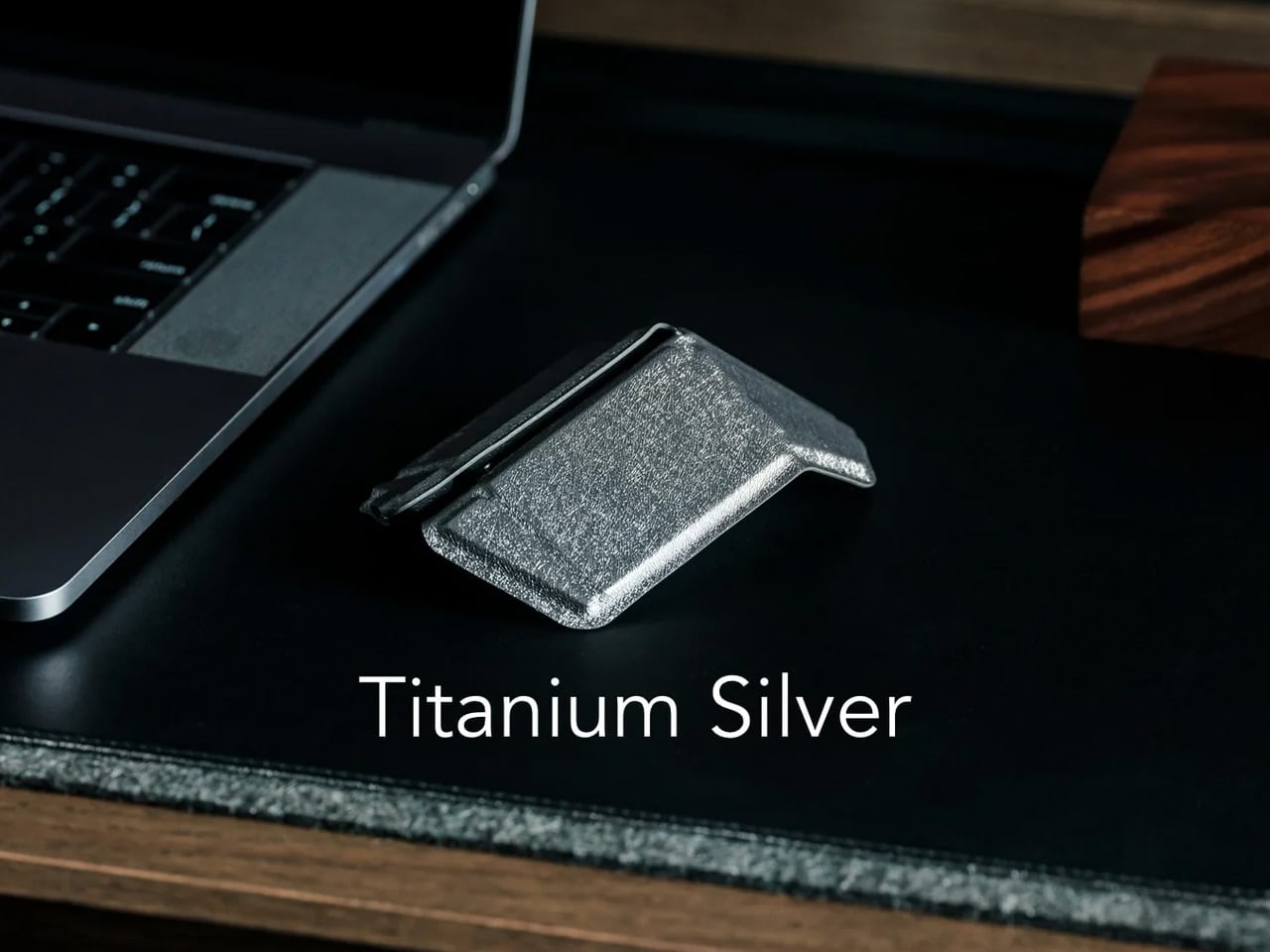
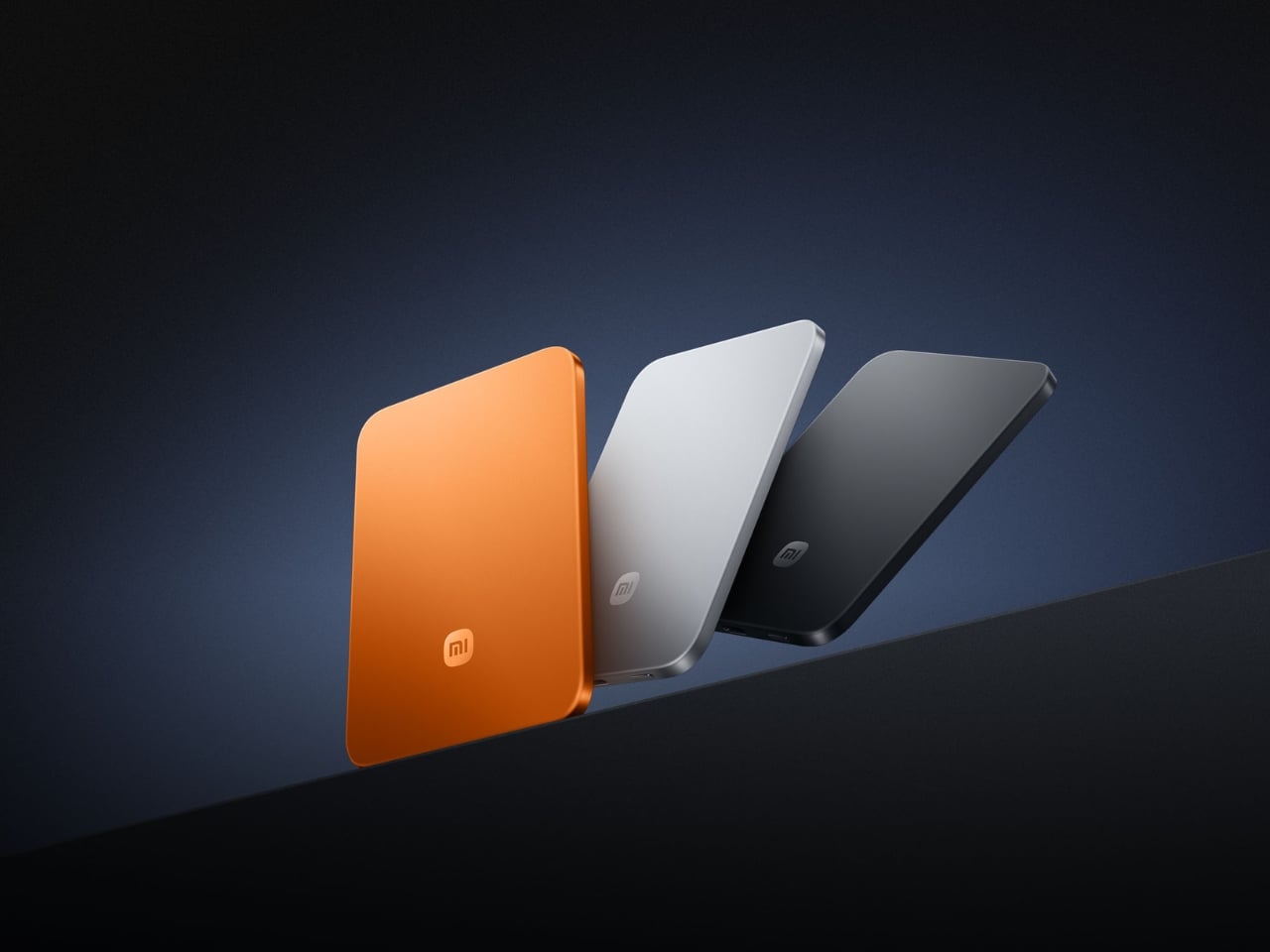
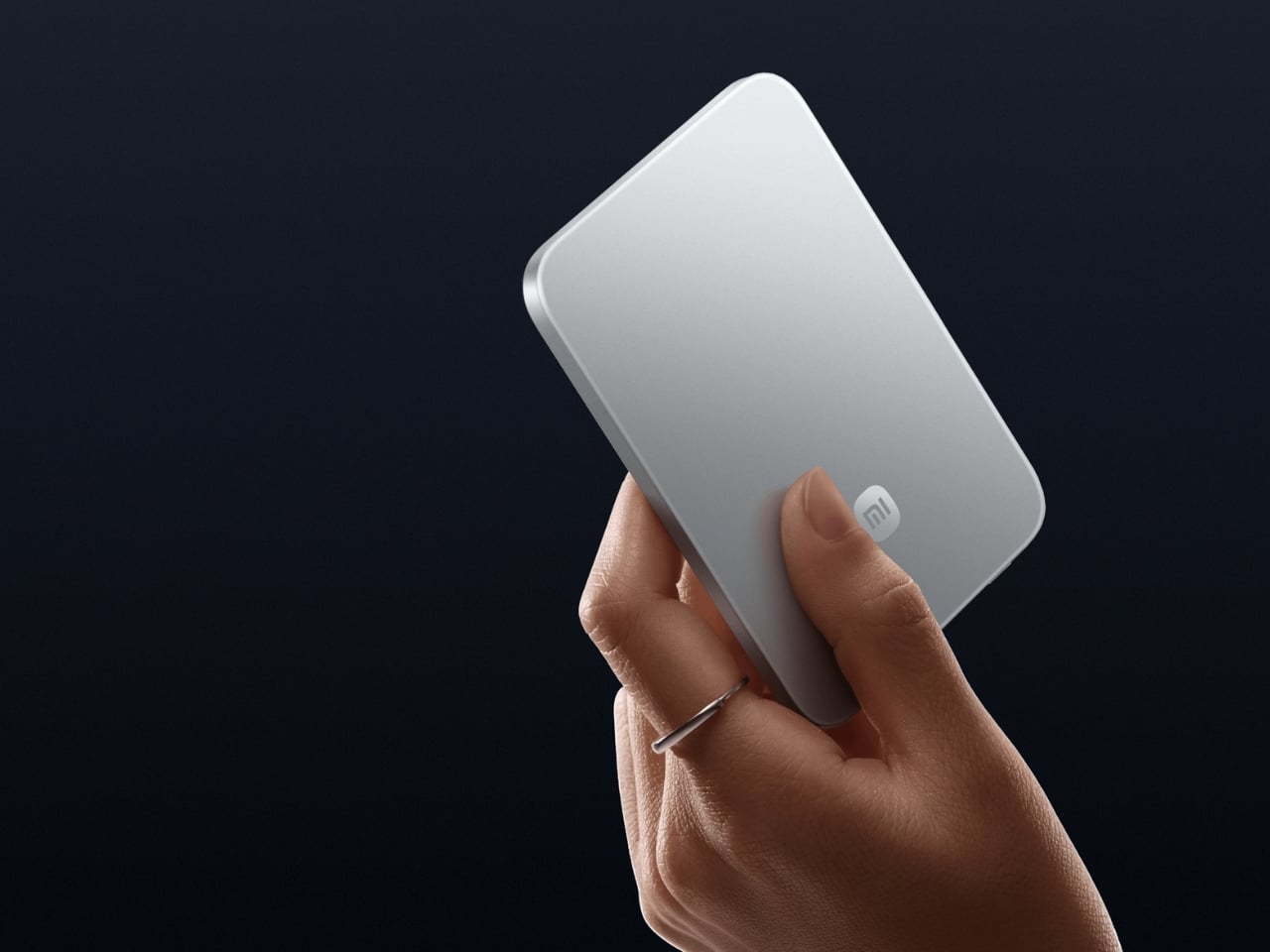
The SharePower from Nimble is a 10,000mAh power bank that splits in half. The two halves are held together magnetically and separate cleanly, with one half housing a battery percentage display and the other using four LEDs to communicate charge level. The braided lanyard connecting them opens into a USB-C cable when the halves are split apart. In joined mode, it delivers 35W charging; split, each half runs at 20W for a single device or 15W across two. The whole unit measures 3.05 by 2.75 inches at under one inch thick.

The concept is obvious in retrospect, which is the clearest sign of a genuine design insight. Every group trip produces the same conversation about who has the power bank and whether anyone can borrow it, followed by a compromise where the original owner gets it back at 30 percent. The SharePower ends that conversation by making sharing a built-in function rather than an inconvenience.

What we like:

  • The split-mode design solves a social problem that has existed since portable batteries were invented

What we dislike:

  • The translucent color options are fun in concept but may narrow the gift appeal depending on the recipient

The Only Standard That Matters

Eight products with one shared quality: each one earns its place through a specific design decision rather than a general category promise. The RetroWave works through a blackout. The Boom 3i floats. The Skeletool has a bottle opener exactly where it should. The TriBeam gives you three different lights in one hand. Good design shows up like that — not as a feature list but as a moment where something just works better than you expected it to.

That is the real standard for a gift. Not whether it looks impressive in the box, but whether it gets used on the second trip, the third, the tenth. Most of what is on this list ships before the holiday, which means the only remaining variable is whether you want to give someone something that will still be in their bag come Labor Day.

The post 8 Best Gadget Gifts Every Man Actually Wants This 4th of July first appeared on Yanko Design.
8 Best Gifts for Men Who Have Everything in 2026

Certain people are genuinely difficult to shop for. Not because they are indifferent to objects, but because they are already particular about them. They own the good knife, the good pen, the right carry for every situation they have encountered. They know what they like and have most of it. The only gifts that land are the ones they never knew existed or never thought to justify buying for themselves.

This list is for that person. Eight products chosen because each one does something specific better than anything else at its price. Some live on a desk. Some live in a pocket. One glows for twenty-five years without a battery. Another tracks your health without ever asking for a subscription. All of them are the kind of gift that makes the person receiving it quietly wonder why they hadn’t already found it.

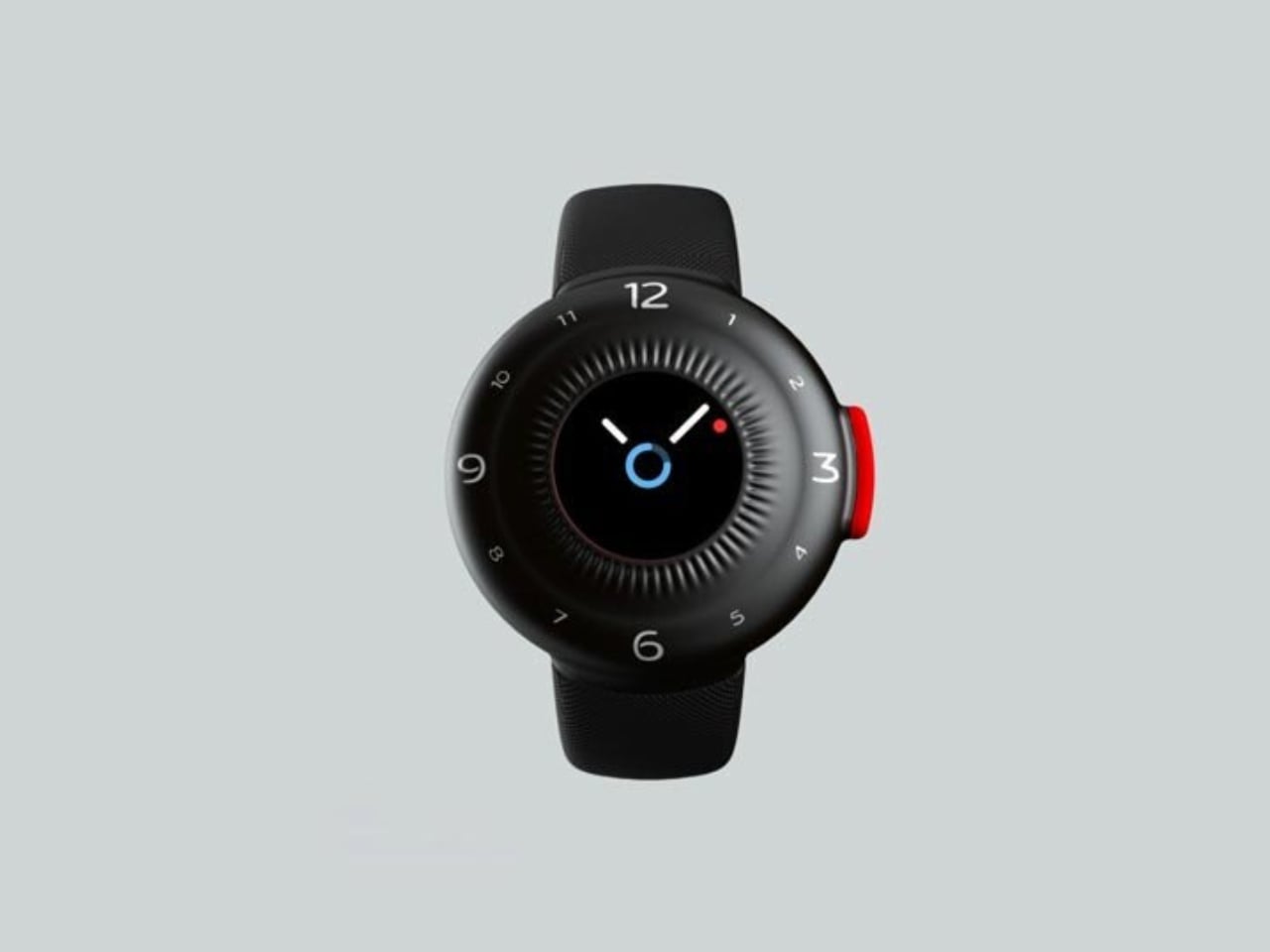
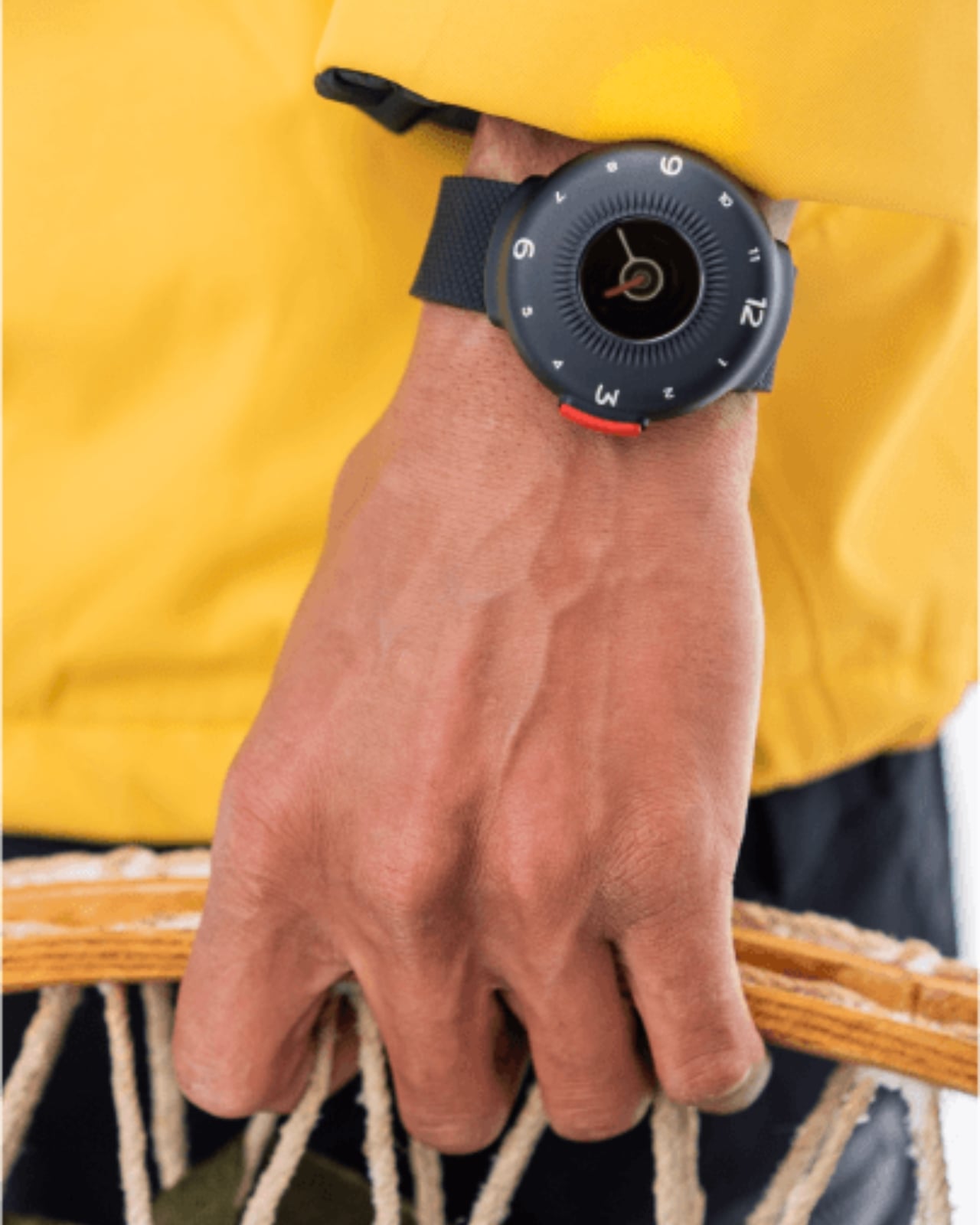
1. Futurewave O-Boy Satellite Watch

There is a version of off-grid preparedness that stops at downloading an offline map. The O-Boy is the version that actually works when everything else gives up. Developed by Brussels-based studio Futurewave, it is a satellite-connected emergency smartwatch that transmits distress alerts without a mobile network, covering mountains, open ocean, and remote worksites where the nearest cell tower is genuinely theoretical. The black and red colorway is borrowed from safety and emergency signaling equipment, a reference that earns itself without explanation.

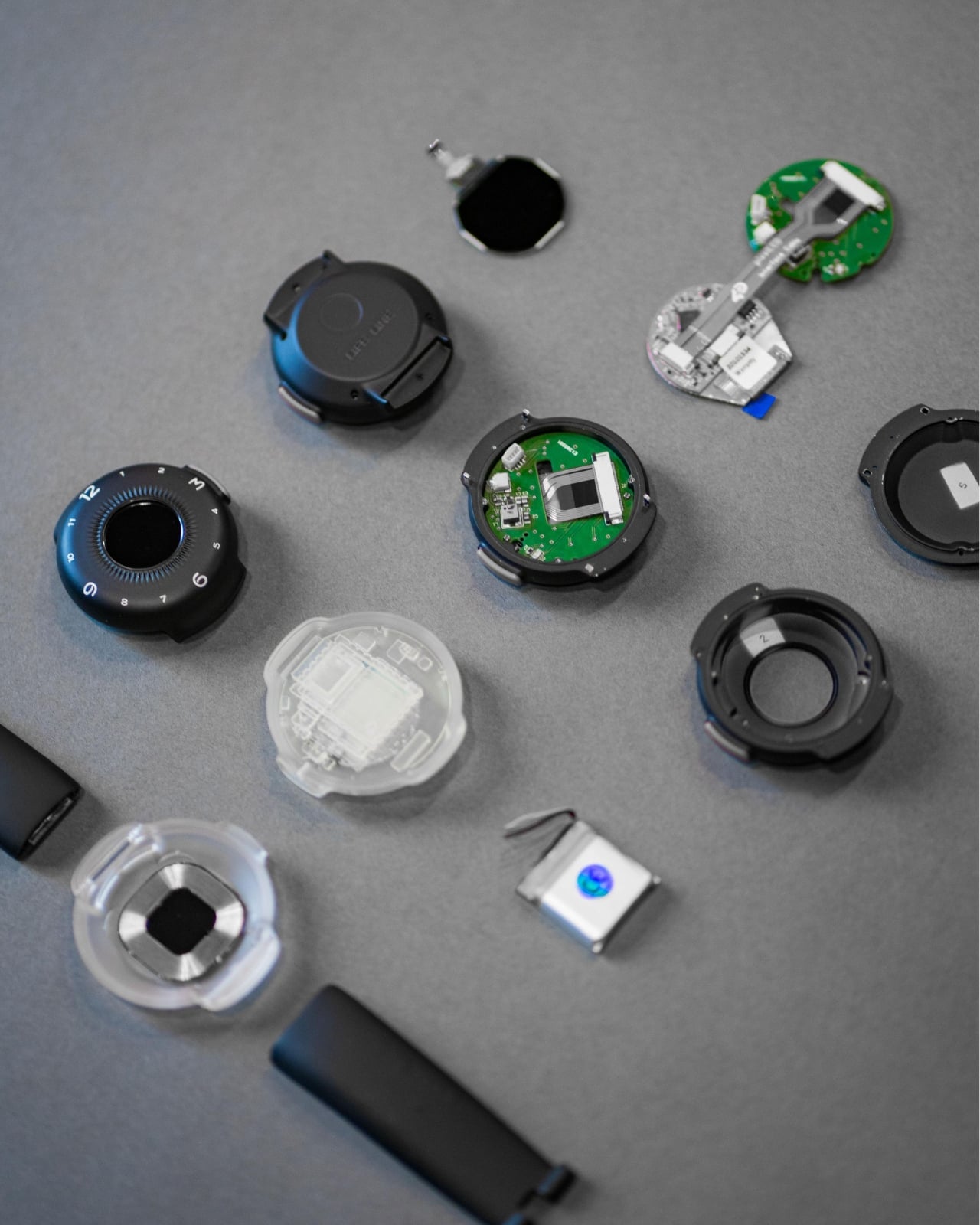
At $399, the O-Boy positions itself as the first multiple-use satellite rescue watch, designed to be worn daily rather than stored until it is needed. Developed alongside electronics engineers and antenna specialists, it was pressure-tested, waterproofed, and shock-tested before the design was finalized. The rounded form exists partly for wrist comfort and partly to accommodate the antenna hardware inside, a constraint Futurewave turned into a clean aesthetic. For the man who goes where signals do not reach, this is the watch that keeps pace with him.

What we like

  • Satellite connectivity works entirely without a mobile network, covering remote environments where every other device on this list stops functioning
  • Designed as a daily wearable rather than single-use distress gear, earning its wrist space on ordinary days as much as critical ones

What we dislike

  • Emergency-first design means the lifestyle and fitness tracking features found in conventional smartwatches are not the focus here
  • Satellite communication services may carry ongoing subscription costs depending on region, adding to the total cost of ownership beyond the watch itself

2. Levitating Pen 3.0

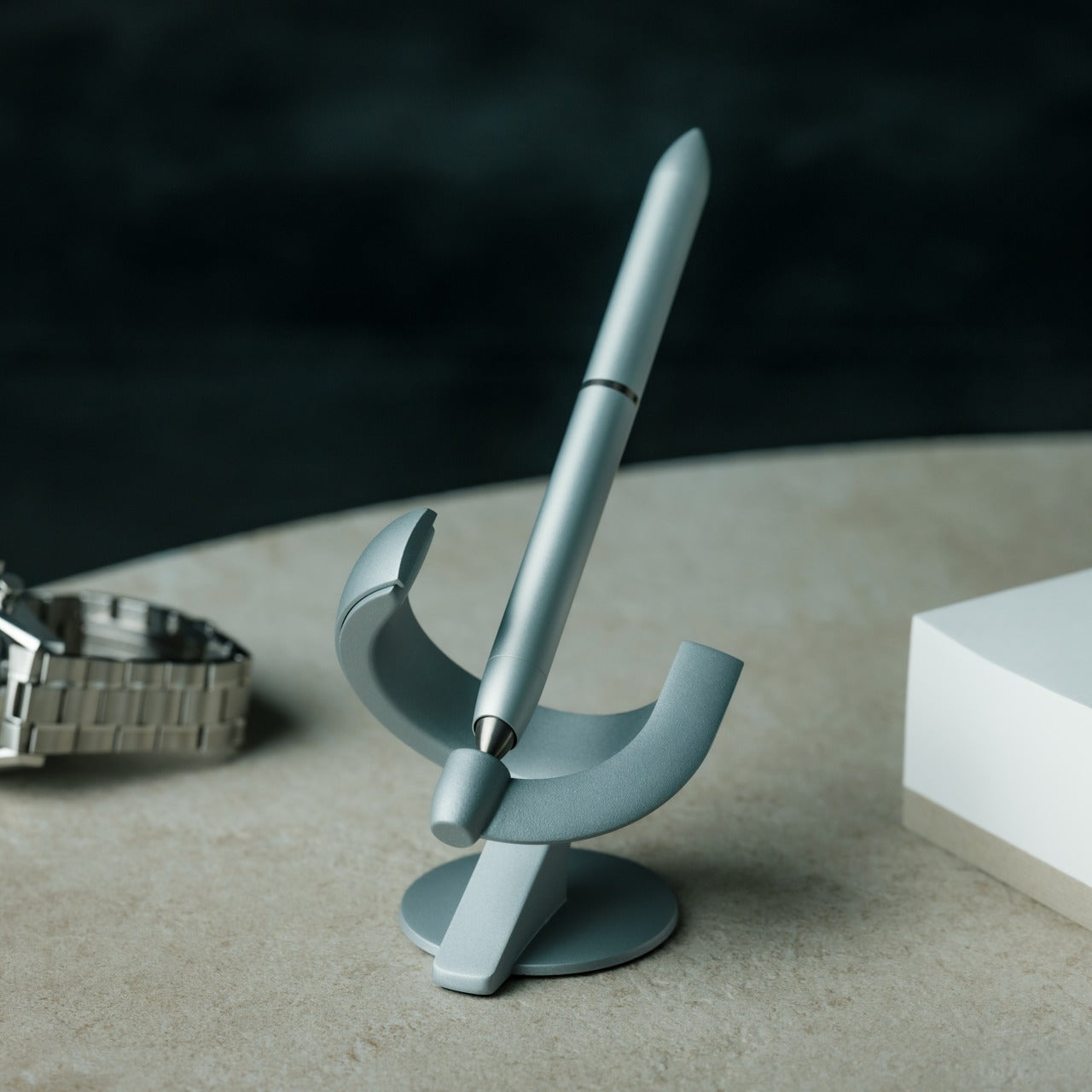
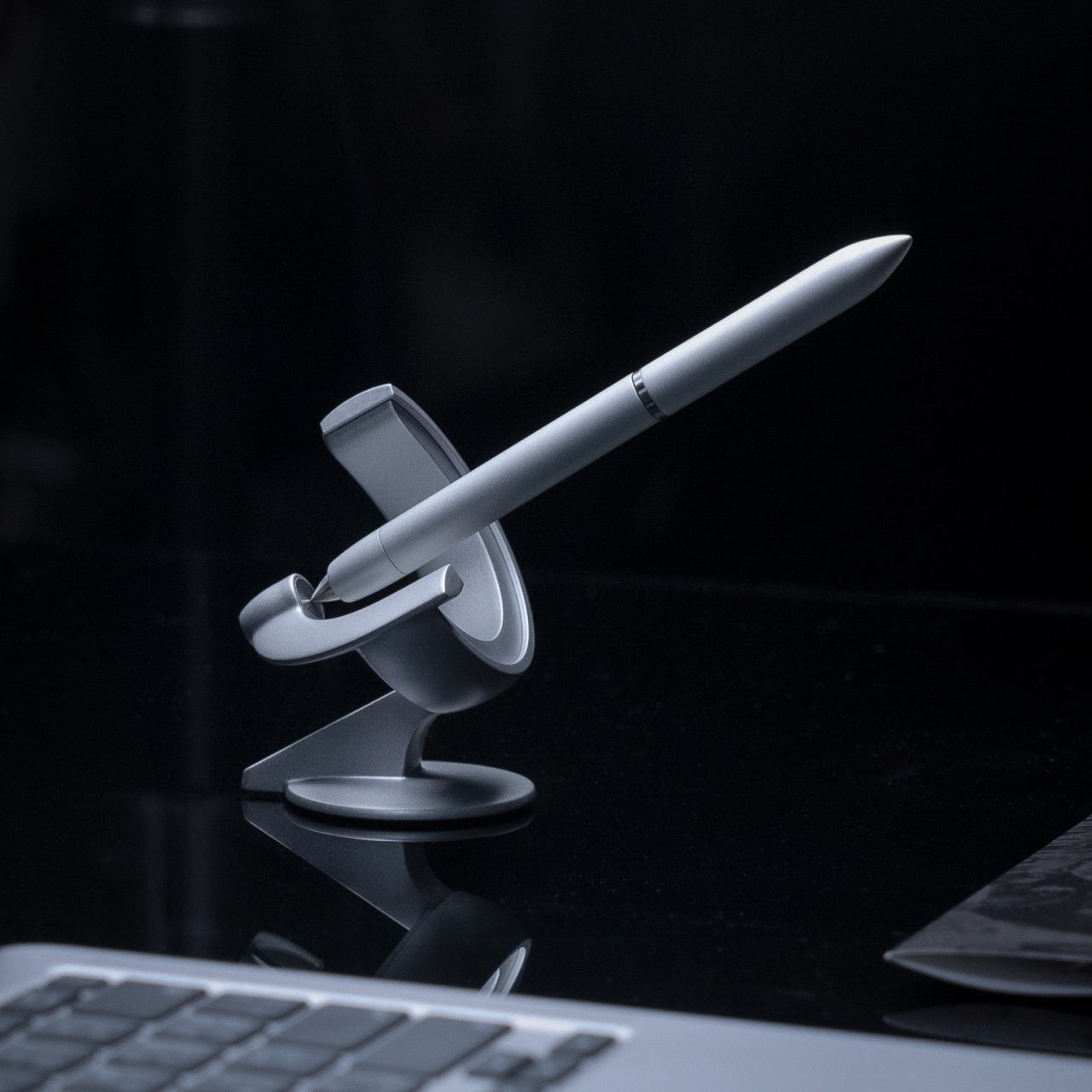
Most desk objects earn their place through utility. The Levitating Pen 3.0 earns its place through presence. Balanced on a pinpoint at a 60-degree angle, it hovers an inch above its base in a way that makes visitors stop mid-sentence to ask what they are looking at. The all-metal body is built from aerospace-grade aluminum and titanium, and a quick twist sends the pen spinning for up to 30 seconds, turning a writing tool into something worth watching between sessions.

It also writes, which matters more than it sounds. A German-engineered Schmidt rollerball cartridge, the same supplier behind Montblanc’s nibs, delivers a finish that makes note-taking feel slightly more deliberate than usual. The modular body lets you switch between rollerball and fountain pen setups depending on preference, and the zinc alloy magnetic base is precisely angled for smooth retrieval. Available in silver and anodized black, this is the rare desk piece that earns its footprint through daily use rather than sitting as decoration between sessions.

Click Here to Buy Now: $129.00

What we like

  • The 60-degree levitation and 30-second spin make it the most arresting object on any desk, requiring no setup beyond placing it on the base
  • Schmidt-cartridge compatibility ensures long-term refills are easy to source, and the pen writes as well as it looks

What we dislike

  • The magnetic base requires a flat, stable surface, making this a desk piece rather than something that travels with you
  • The levitation effect is tied to the base, which adds footprint you need to account for in a tighter workspace

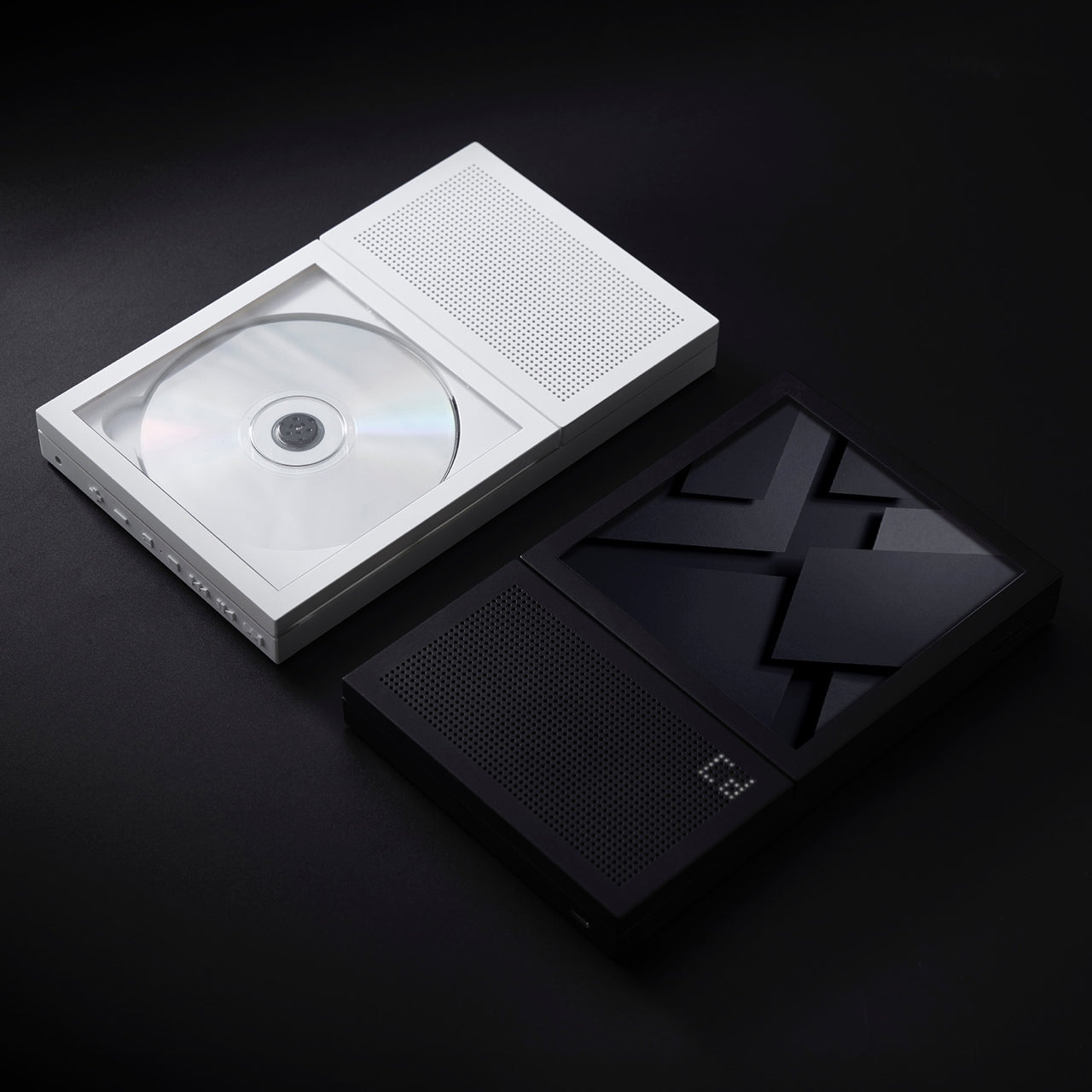
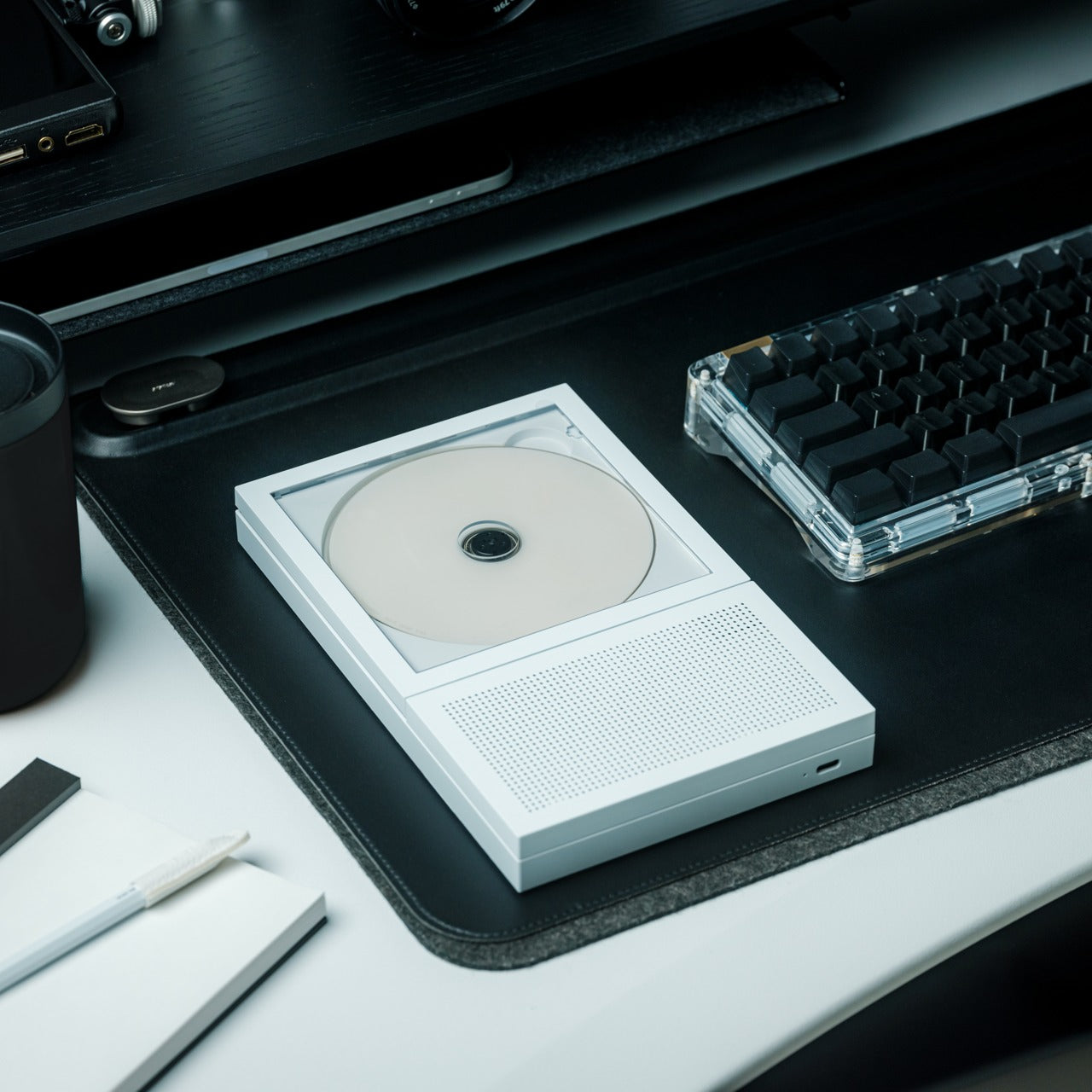
3. Portable CD Cover Player

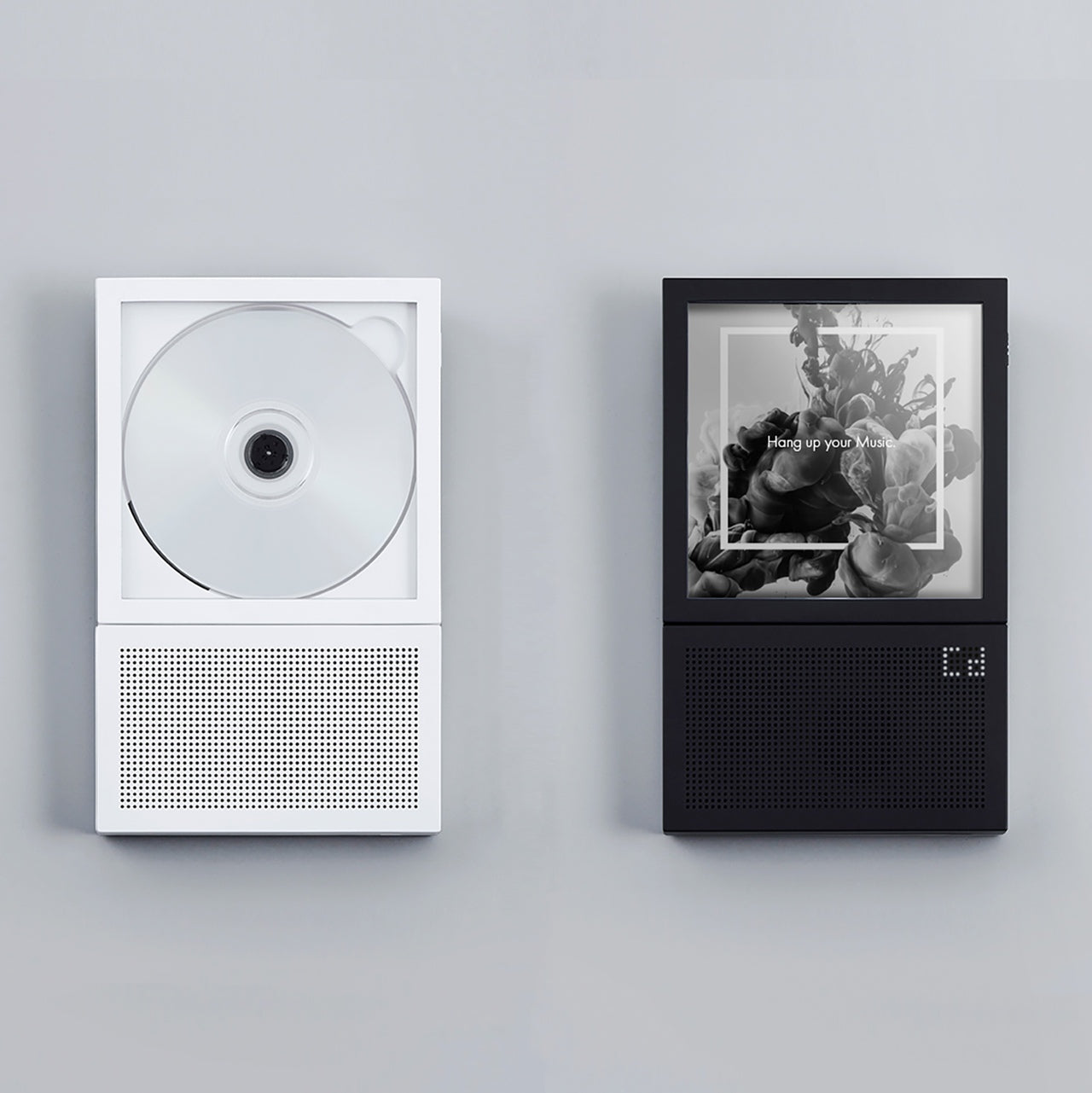
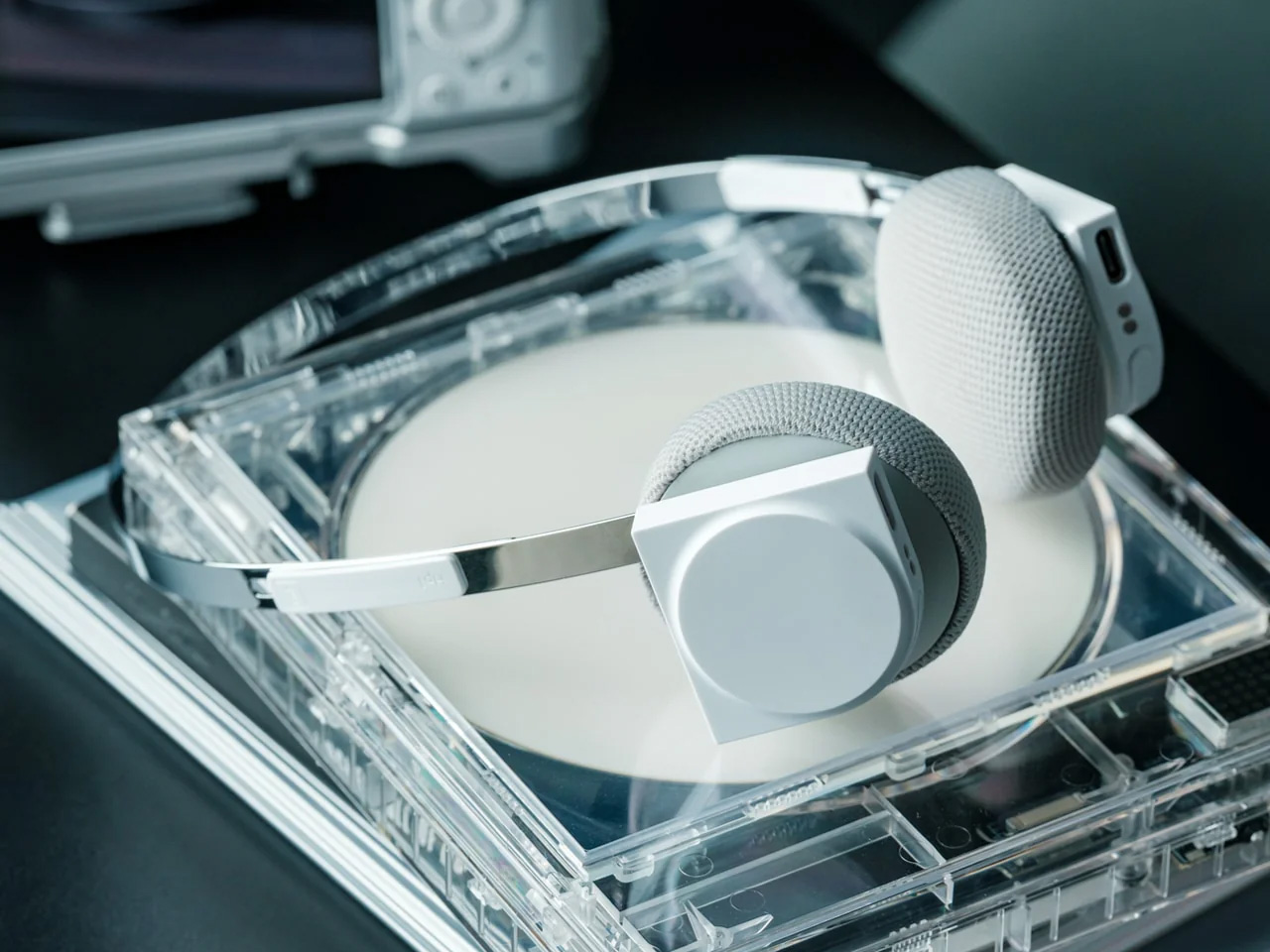
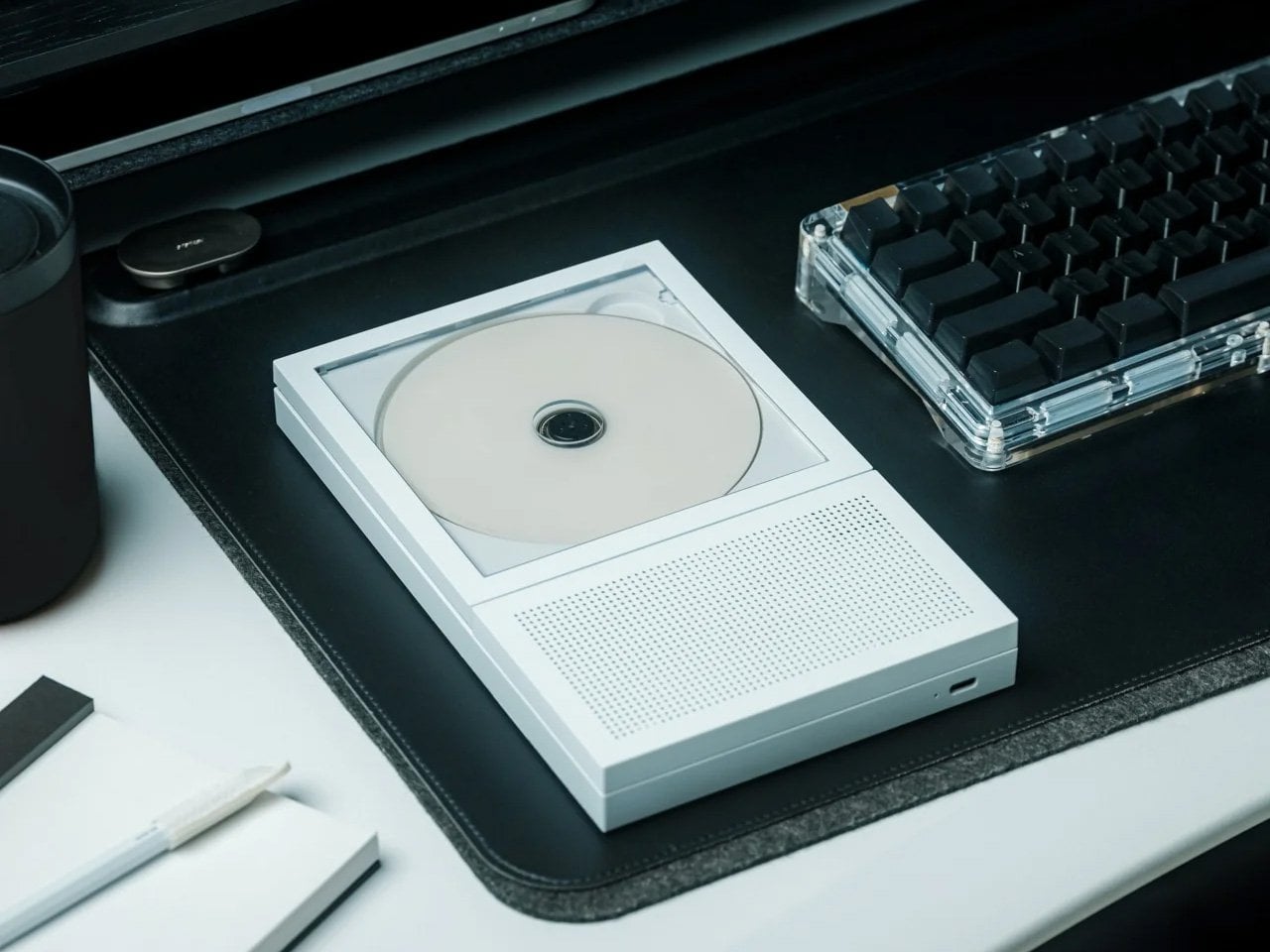
Nobody announced the CD comeback. It arrived quietly, then all at once, with artists slipping physical albums into merch drops and listeners buying records they could have streamed in seconds. What the Portable CD Cover Player understands is that the appeal has nothing to do with audio format. The disc loads and the album art stays facing outward while it plays, present and visible, the way music used to feel before playlists made it invisible and made albums forgettable.

The player is compact enough to move between desk, shelf, and bedside table without demanding much attention. It connects via Bluetooth or 3.5mm, charges over USB-C, and plays standard audio CDs. None of that is radical. What is considered is the single decision to build the entire object around what happens to the artwork while the music runs. At $199, it is for anyone who still thinks in full albums, or wants to start thinking that way again.

Click Here to Buy Now: $199.00

What we like

  • Album-forward design keeps the cover art visible throughout playback, turning a disc into a display object rather than a source file you scroll past
  • Bluetooth and 3.5mm output alongside USB-C charging makes it practical across every listening setup without compromise

What we dislike

  • Playing standard audio CDs means no streaming and no playlists, which is the point, but requires genuine commitment to a physical listening habit
  • Building or rebuilding a CD collection takes time and shelf space on top of the price of the player itself

4. Olight Baton 4 Premium Edition

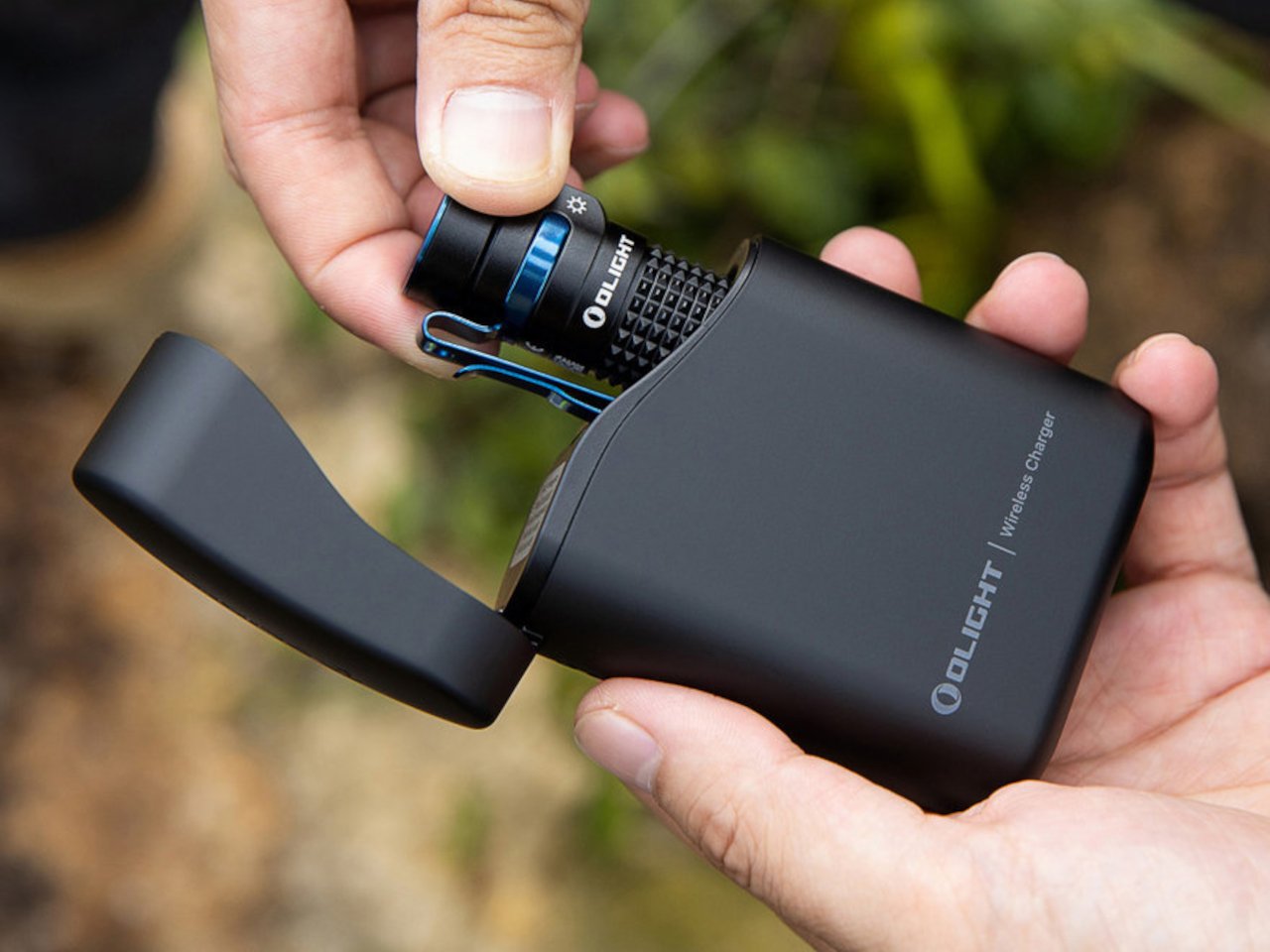
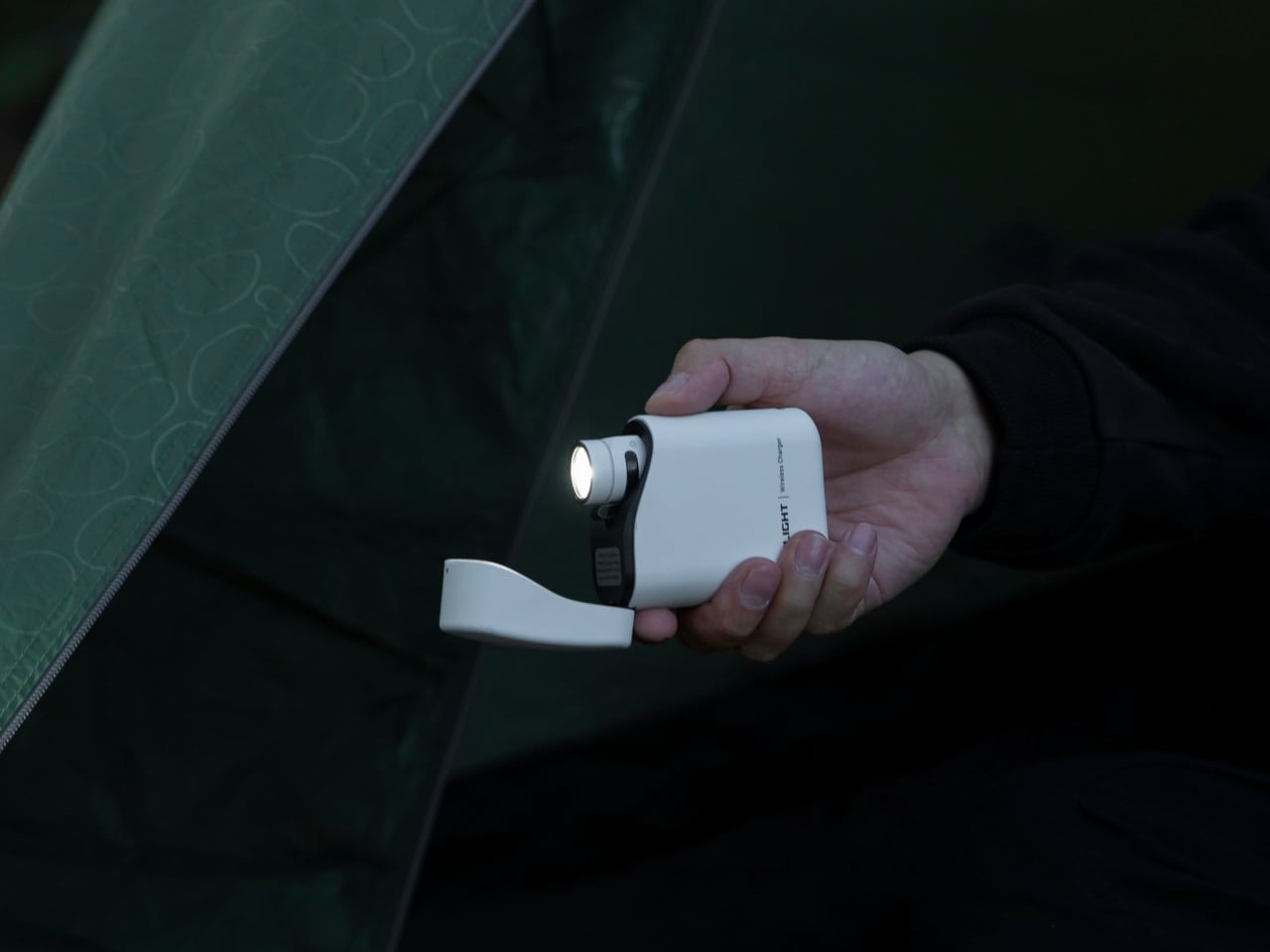
Most flashlights solve for brightness and stop there. The Baton 4 Premium Edition solves for the bigger problem, which is that a flashlight with a dead battery is dead weight precisely when it matters most. The Premium Edition pairs the Baton 4 cylinder with a 5,000mAh flip-top charging case, applying the same logic as wireless earbuds to a tool with much higher stakes. Drop the flashlight in after every use, and it tops up automatically without a second thought.

The flashlight delivers 1,300 lumens across a 170-meter throw from a body compact enough to disappear into a jacket pocket. A magnetic tail cap mounts it to any metal surface hands-free, and multiple brightness modes cover everything from close work to long-distance signaling. The 5,000mAh case also charges a phone over USB when the power goes out, turning a pocket tool into a two-function emergency kit. For the man whose current flashlight lives in a drawer with no charge, this is the upgrade that changes the habit entirely.

What we like

  • The 5,000mAh charging case keeps the flashlight perpetually ready, applying the same habit logic as wireless earbuds to a tool that matters

What we dislike

  • The Premium Edition costs considerably more than the Baton 4 alone, and the value is almost entirely in the case — buyers who skip the charging habit won’t fully justify the premium
  • The compact form prioritizes portability over maximum output; dedicated tactical lights push further, but at a bulk trade-off this one deliberately refuses to make

5. AirTag Carabiner

There is a version of the AirTag holder that is plastic, clips on, and looks like an afterthought. Then there is this one. Made from Duralumin composite alloy, the same material used in aircraft and marine vessels, and individually handcrafted, it has the weight and finish of something designed to outlast the tracker living inside it. It clips to bags, bikes, luggage, and keys, and Apple’s Find My network handles everything from there.

Available in untreated brass and stainless steel finishes, the carabiner develops character over time — brass in particular acquires a patina that mass-produced holders never manage. The design is restrained to the point of near-invisibility, which is precisely the point. For anyone deep in the Apple ecosystem who tags everything worth finding, this is the quiet upgrade that improves the entire experience without ever calling attention to itself. It is the difference between something you use and something you are genuinely glad to carry.

Click Here to Buy Now: $149.00

What we like

  • Duralumin construction delivers aerospace-grade strength at a weight that adds nothing perceptible to whatever it attaches to, from luggage handles to key rings
  • Untreated brass and stainless steel finishes develop genuine patina through use, turning a functional accessory into something personal over time

What we dislike

  • The AirTag itself is not included, meaning the full setup cost is the carabiner price on top of a separate tracker purchase
  • The deliberately understated design language means this one will not impress anyone who wants their accessories to make a visible statement

6. NoxTi Titanium Keychain

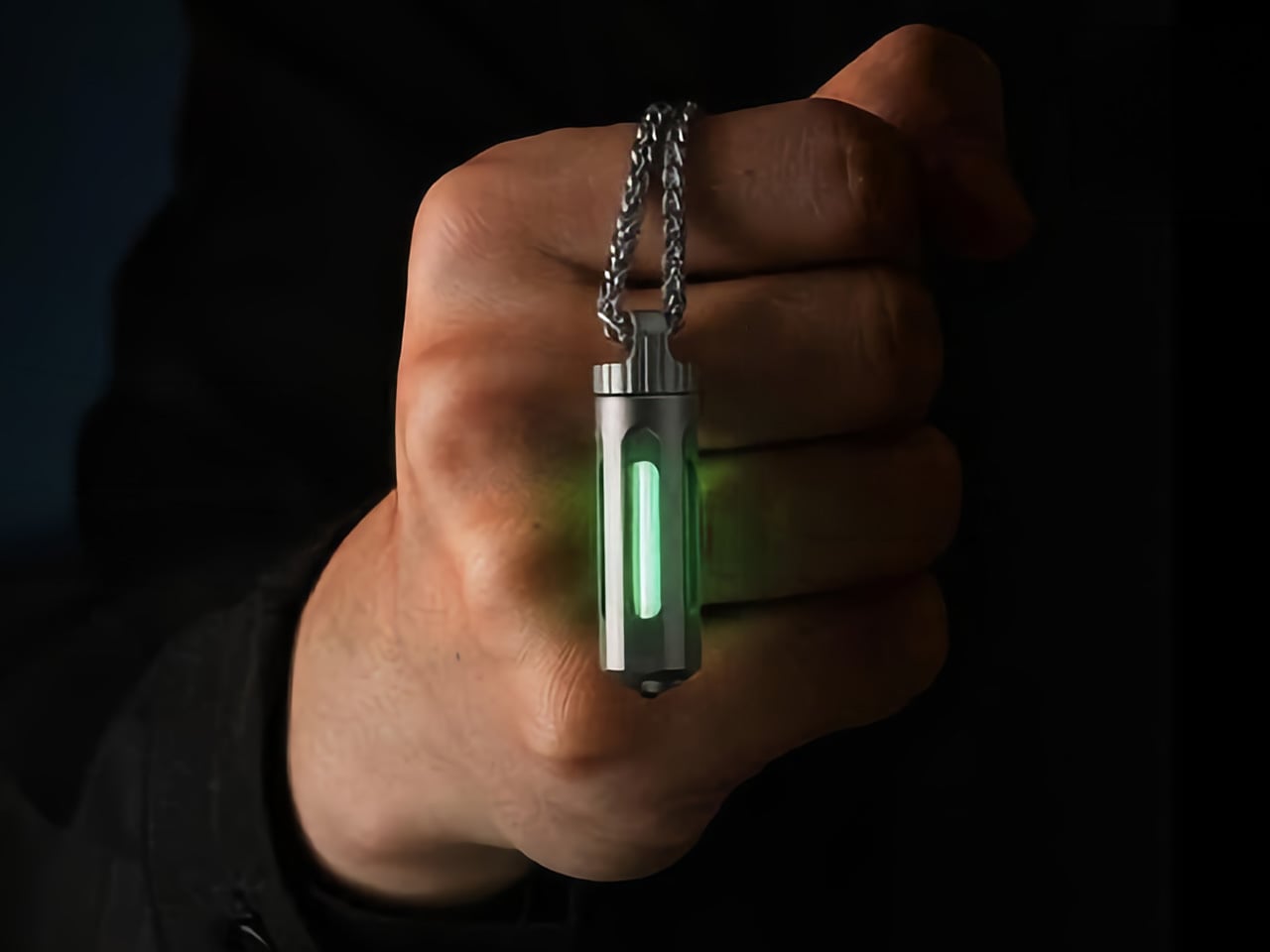
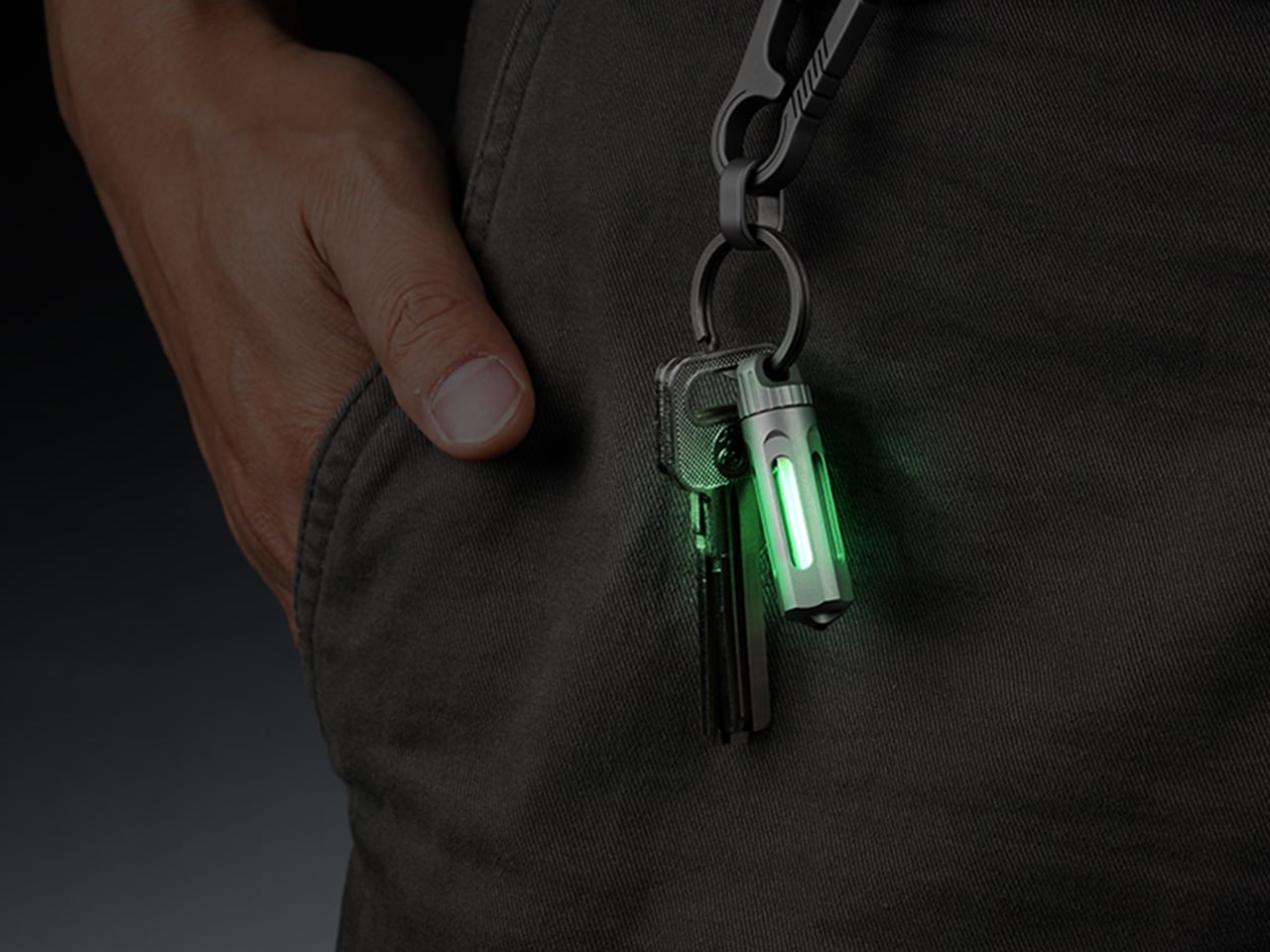
The NoxTi is not a gadget. It is closer to physics made portable. A tritium vial, sealed inside a precision quartz tube with 92 percent light transmission, produces a continuous passive glow through radioactive decay alone. No switch, no battery, no charging schedule, no maintenance of any kind. The Grade 5 titanium cylinder measures 45mm by 12mm and weighs 10.7 grams. Designed by Xedge and available in six color options across two titanium finishes, it asks absolutely nothing of the person carrying it.

Tritium’s half-life is 12.3 years, which means reliable passive illumination for roughly 25 years before the vial needs replacing. When it eventually dims, you push it out and slot in a new one. A ceramic glass breaker integrated at one end adds genuine emergency utility without altering the minimal proportions by a millimeter. For anyone running a considered EDC loadout who wants something that earns its keychain space entirely through what it is rather than what it promises, the NoxTi is the rarest kind of carry piece — one that never needs anything from you.

What we like

  • Twenty-five years of passive glow powered entirely by atomic decay, requiring zero charging, zero maintenance, and zero battery anxiety
  • The ceramic glass breaker adds real emergency function without changing the 45mm profile or the clean titanium aesthetic in any way

What we dislike

  • The ambient glow orients you in darkness rather than illuminating a space, so it works alongside a flashlight rather than replacing one
  • Tritium is regulated in certain countries, making local availability and import rules worth confirming before ordering

7. ScytheBlade

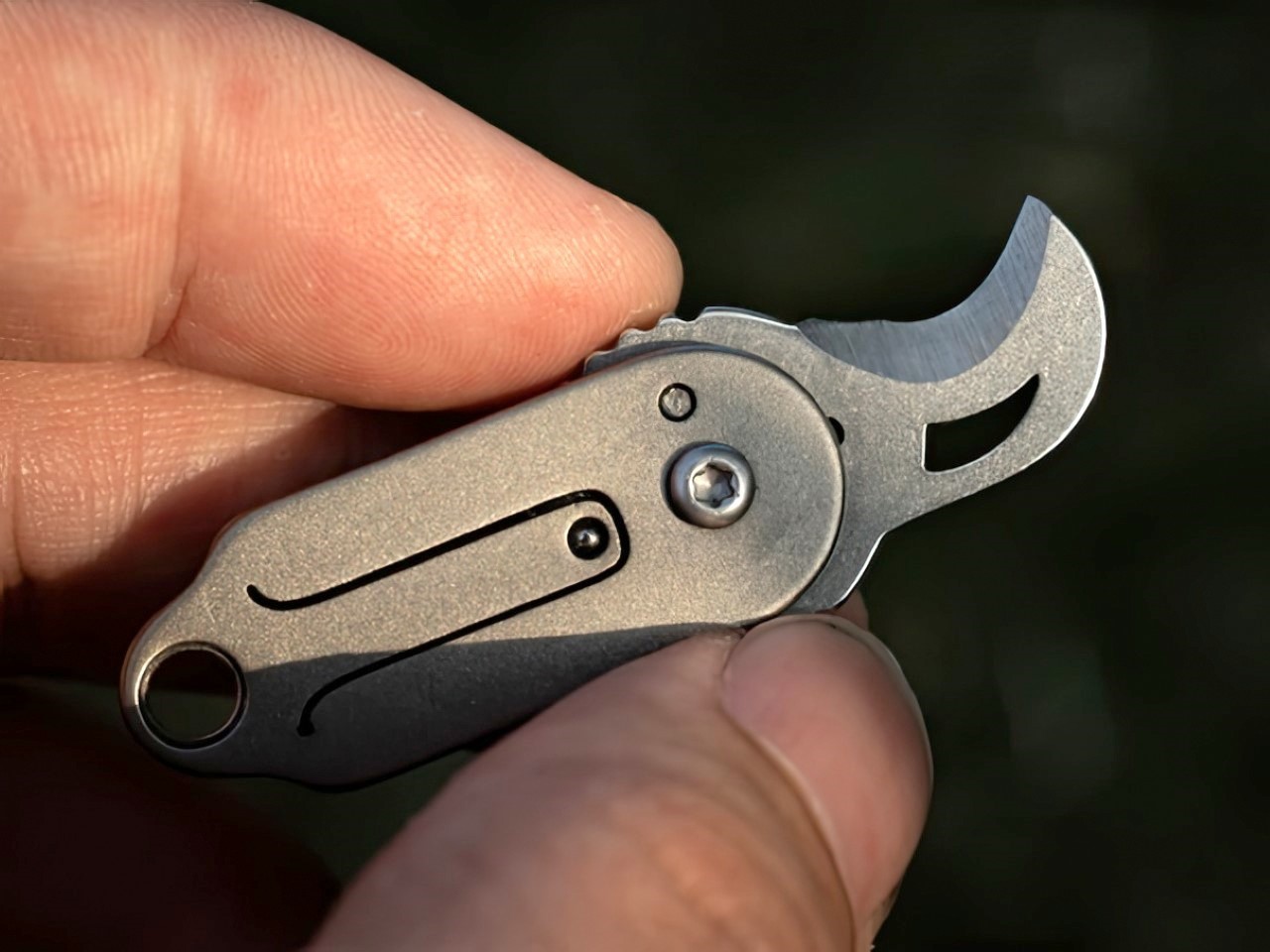
The ScytheBlade takes one of the most recognizable silhouettes in history and scales it to 8 grams. The curved blade profile mimics a tiger claw at 46mm deployed, and that geometry is not decorative. Curved blades concentrate cutting force on pull cuts in ways straight edges cannot match, which makes the ScytheBlade more capable than its keychain dimensions suggest. The full titanium body brings natural corrosion resistance without adding weight, and the result is a folding knife you genuinely forget you are carrying until the moment you reach for it.

For anyone whose daily carry involves cutting tape, opening packaging, trimming materials, or simply wanting a blade available without thinking about it, the ScytheBlade earns its place through consistent, quiet performance. Titanium survives contact with tools, chemicals, and outdoor conditions without demanding attention or care. The curved profile takes a day or two to adjust to if straight-edge knives are what you are used to. After that adjustment, the geometry stops being interesting and simply becomes useful.

What we like

  • The 46mm scythe-curved blade concentrates cutting force through geometry rather than size, making it more capable than its profile suggests
  • Full titanium at 8 grams is the kind of mass-to-material ratio that makes every other pocket knife feel slightly less thought through by comparison

What we dislike

  • The curved blade profile requires adjustment from anyone used to straight-edge carry, with the learning curve noticeable in the first few days of use
  • At 46mm deployed, heavier cutting tasks fall outside its range — it works alongside a full-size blade for more demanding work rather than replacing one

8. RingConn Gen 2 Smart Ring

The RingConn Gen 2 is made from titanium alloy, measures 6.8mm wide and 2mm thick, and sits on a finger for 10 to 12 days before it needs charging. A smart charging case extends total runtime beyond 150 days. It tracks heart rate, HRV, blood oxygen, skin temperature, sleep quality, stress, and sleep apnea — the latter developed in collaboration with universities and hospitals, and among the first of its kind available in a ring-form wearable. It is waterproof to 100 meters.

What separates the Gen 2 from most of its category is the no-subscription model. Most health platforms charge a monthly fee to access data the wearer generated themselves. RingConn does not. For the man who already tracks his health but resents the overhead, or the one who has been told he should but hasn’t started, this is the wearable that disappears on a finger and does its job without asking anything in return. At $209, it competes on depth of insight while undercutting most of the category on both price and profile.

What we like

  • No subscription required to access your own health data — a model that is increasingly rare in this category and worth choosing on its own terms
  • A 10-to-12-day battery paired with a smart charging case extending total runtime past 150 days removes low-battery anxiety from the equation entirely

What we dislike

  • Enabling sleep apnea monitoring increases power draw, which affects battery life on smaller ring sizes and may require more frequent charging
  • No built-in GPS means outdoor fitness tracking requires a paired phone nearby, limiting standalone utility during runs or hikes off-network

These Are the Gifts That Don’t Need Explaining

The thread connecting all eight of these is not category or price point. Each one was built by a designer who asked a narrower question than most products bother with and then answered it without hedging. A watch that works where no signal reaches. A keychain that glows for a quarter century through nothing but physics. A ring that tracks sleep apnea without charging you a monthly fee to read your own data. A CD player that finally figured out what to do with the album art.

Whether you pick the one that floats, the one that satellites, or the one that sits silently on a finger, the choice communicates something. These are not last-minute purchases or safe bets. They are objects that reward curiosity and repay daily use, which is the quietest compliment you can pay anyone on your list.

The post 8 Best Gifts for Men Who Have Everything in 2026 first appeared on Yanko Design.
8 Japanese Kitchen Gadgets & Tools That Make Dad Feel Like a Michelin-Star Chef This Father’s Day

There’s a reason Michelin-starred Japanese kitchens don’t look like the ones you see on American cooking shows. No plastic cutting boards. No thin-gauge nonstick pans. The tools themselves carry the weight of centuries of refinement: cast iron developed over generations, blades sharpened to tolerances measured in fractions of a millimeter, clay vessels fired in kilns with thousand-year histories. These eight tools bring that level of kitchen confidence home.

Japan’s approach to cookware has never been about accumulating tools. It’s about choosing the right one and understanding it deeply. The best Japanese kitchen gadgets don’t ask you to cook faster or easier. They ask you to cook better, with more presence, more attention, more respect for the ingredient. For a dad who cooks with intention rather than convenience, these eight pieces are the kind of upgrade that changes how a kitchen feels to work in.

1. Precision Ceramic Sashimi Knife

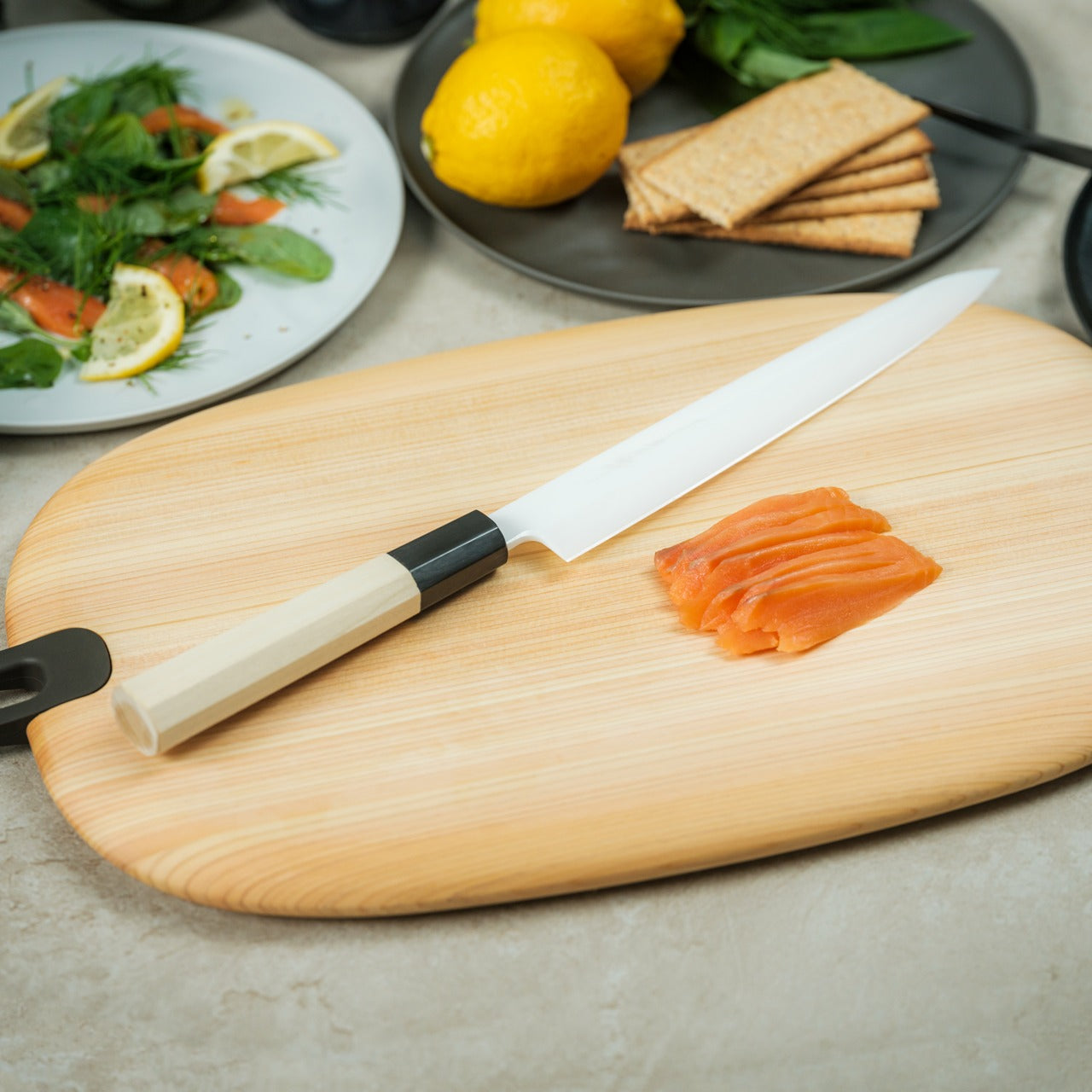
Raw fish demands knife performance that metal blades, for all their centuries of refinement, struggle to deliver. The Precision Ceramic Sashimi Knife represents the convergence of Japanese craftsmanship and advanced materials science, creating a blade twice as hard as stainless steel, with sharpness that lasts 200 times longer than conventional edges. The single-bevel design emulates the classic yanagiba with a concave back, reducing friction for effortless, drag-free cuts. The lightweight ceramic construction enables extended use without hand fatigue, while the advanced material requires minimal maintenance and virtually eliminates sharpening routines.

The cutting experience transforms sashimi preparation from a technical challenge into a flowing motion. The exceptional sharpness preserves delicate fish texture and cell structure that duller blades tear and compress. The friction-reducing concave back allows the blade to glide through ingredients with minimal resistance and maximum control. The lightweight design enables the precise, continuous strokes required for proper sashimi cutting without the arm fatigue associated with metal blades. The ceramic material doesn’t impart metallic taste or oxidation to delicate seafood, keeping every flavor entirely clean.

Click Here to Buy Now: $300.00

What We Like

  • The ceramic material maintains sharpness 200 times longer than conventional steel blades
  • The non-reactive material prevents metallic taste transfer to delicate seafood

What We Dislike

  • The ceramic blade, while exceptionally hard, is more brittle than steel and requires careful handling
  • The specialized design focuses on sashimi and delicate work rather than general-purpose cutting

2. Nagatani-en Iga-yaki Donabe

The donabe is arguably the single most important vessel in Japanese home cooking, and the Nagatani-en Iga-yaki version is the one professionals reference when the subject comes up. Made in Iga, Mie Prefecture, from clay drawn from ancient sediment layers unique to the region, the pot’s porous walls absorb heat slowly and distribute it evenly, creating conditions that braise meat, steam vegetables, and cook rice in ways that modern stainless steel and ceramic-coated vessels simply cannot replicate. There is a textural depth to food cooked in a donabe that registers immediately.

Nagatani-en has been crafting donabe in Iga for generations, and the design reflects that continuity. The textured clay exterior and smooth interior create a vessel that reads as a sculptural object as readily as a cooking tool, something worth leaving on the stovetop between uses. Available in the US through TOIRO Kitchen, where each piece is individually checked before shipping, it arrives ready for first use after a simple initial preparation. For a dad who treats cooking as a practice rather than a task, the donabe reframes what a pot is capable of entirely.

What We Like

  • The porous Iga clay distributes heat with remarkable consistency, transforming braises, steaming, and rice cooking
  • The design is as much sculpture as cookware, worthy of staying out on the stovetop between uses

What We Dislike

  • Requires a short initial preparation process before first use to condition the clay
  • Not compatible with induction cooktops without a separate converter plate

3. Iron Frying Plate

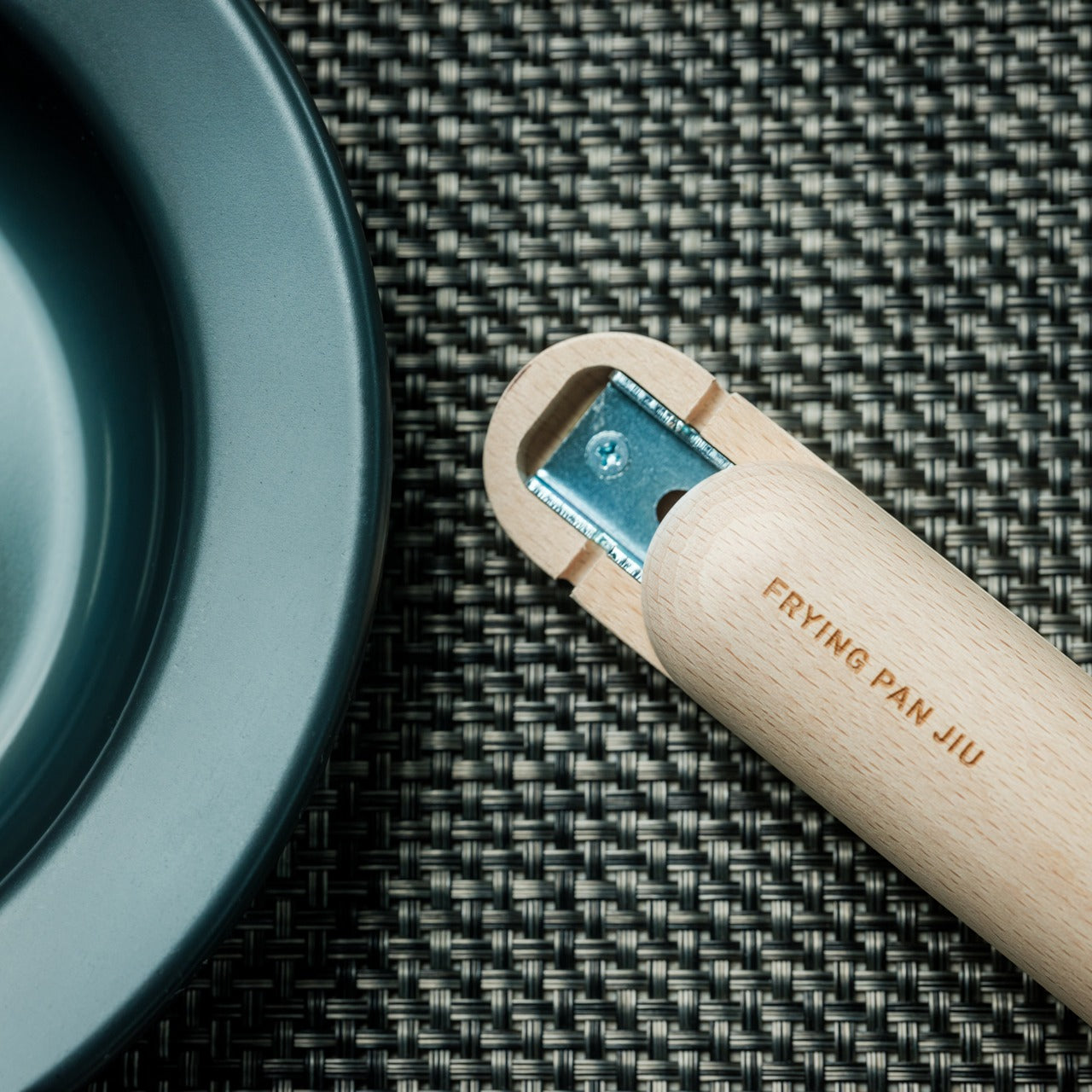
Western dining creates an artificial separation between cooking vessel and serving dish, transferring food from pan to plate in a ritual that cools ingredients and adds cleanup steps. The Iron Frying Plate eliminates that middleman: the frying pan is your plate, the plate is your frying pan, collapsing cooking and eating into a seamless experience. Crafted from rust-resistant mill scale steel with a detachable wooden handle, this cookware brings out superior flavors and textures while reducing the barriers between preparation and enjoyment. The uncoated surface comes ready to use immediately, requiring no seasoning or special preparation rituals.

The boundary-blurring design creates intimacy with your food that standard plating disrupts. Eggs sizzle on your breakfast table, fish arrives still crackling from the heat, and vegetables steam visibly as you lift your fork to your mouth. The immediacy preserves temperature, texture, and visual drama that dissipate during transfers. The detachable wooden handle attaches and releases with one hand, transforming cookware into serveware in seconds. The rust-resistant mill scale steel develops natural non-stick properties through use without chemical coatings. The design invites slower, more attentive eating, pacing yourself with a vessel that retains heat and presence throughout the meal.

Click Here to Buy Now: $69.00

What We Like

  • The cook-and-serve design preserves temperature and texture better than transferred plating
  • The one-handed handle attachment provides seamless transitions from stove to table

What We Dislike

  • The hot serving surface requires careful handling and might not suit households with young children
  • The iron construction adds weight compared to standard plates

4. Benriner Super Mandoline Slicer No. 95

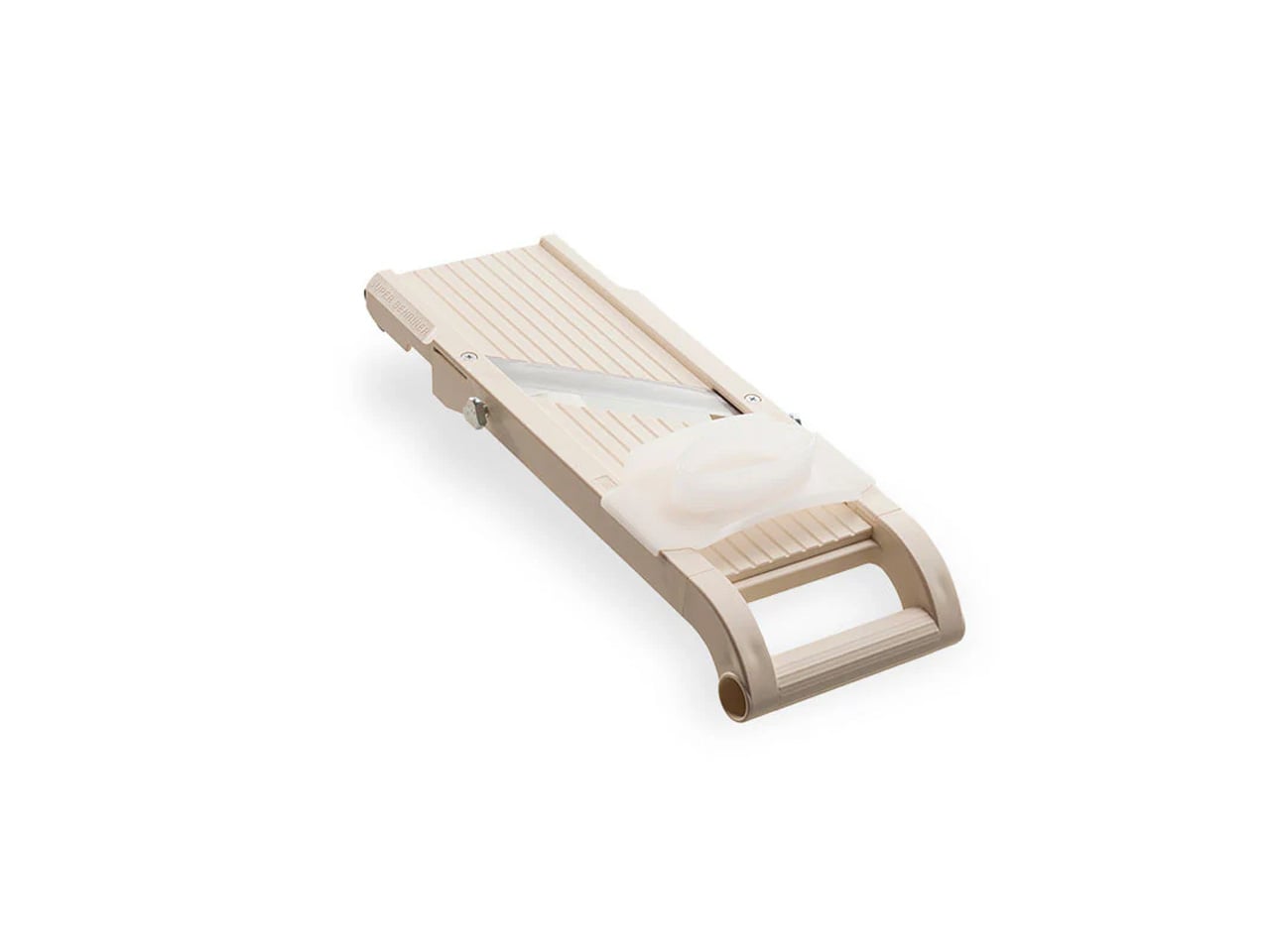
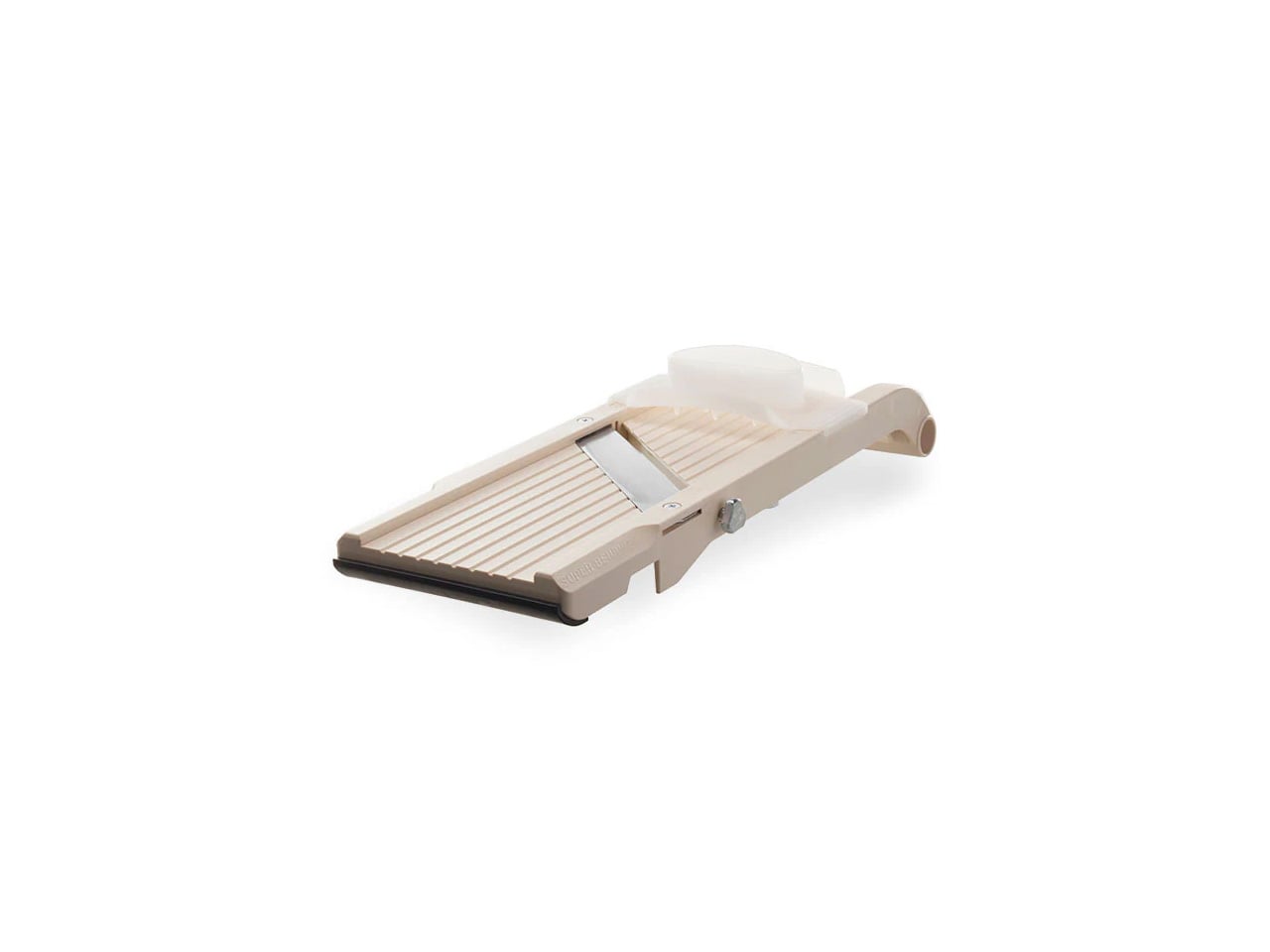
The Benriner has been the vegetable slicer of record in professional Japanese kitchens for decades, made in Yamaguchi Prefecture with an edge quality that made it standard equipment long before Western food media caught up. The No. 95 Super Benriner is the larger professional model, featuring four ultra-sharp Japanese stainless steel blades covering uniform slicing, julienne, and fry-cut work at a price that makes it one of the few genuine bargains in serious kitchen equipment.

Where most mandolines frustrate cooks with inconsistent blade adjustment and loose mounting, the Benriner holds its settings reliably cut after cut. Katsuobushi shaved paper-thin, daikon cut to near-translucent rounds, cucumber ribboned for sunomono: the cuts that separate restaurant-quality Japanese food from home attempts are largely a function of this tool.

What We Like

  • Four interchangeable Japanese steel blades handle everything from paper-thin slices to julienne cuts with professional-grade precision

What We Dislike

  • A cut-resistant glove is essential for safe use, and one isn’t included with the slicer
  • Can feel slightly unstable when processing larger produce without the finger guard properly seated

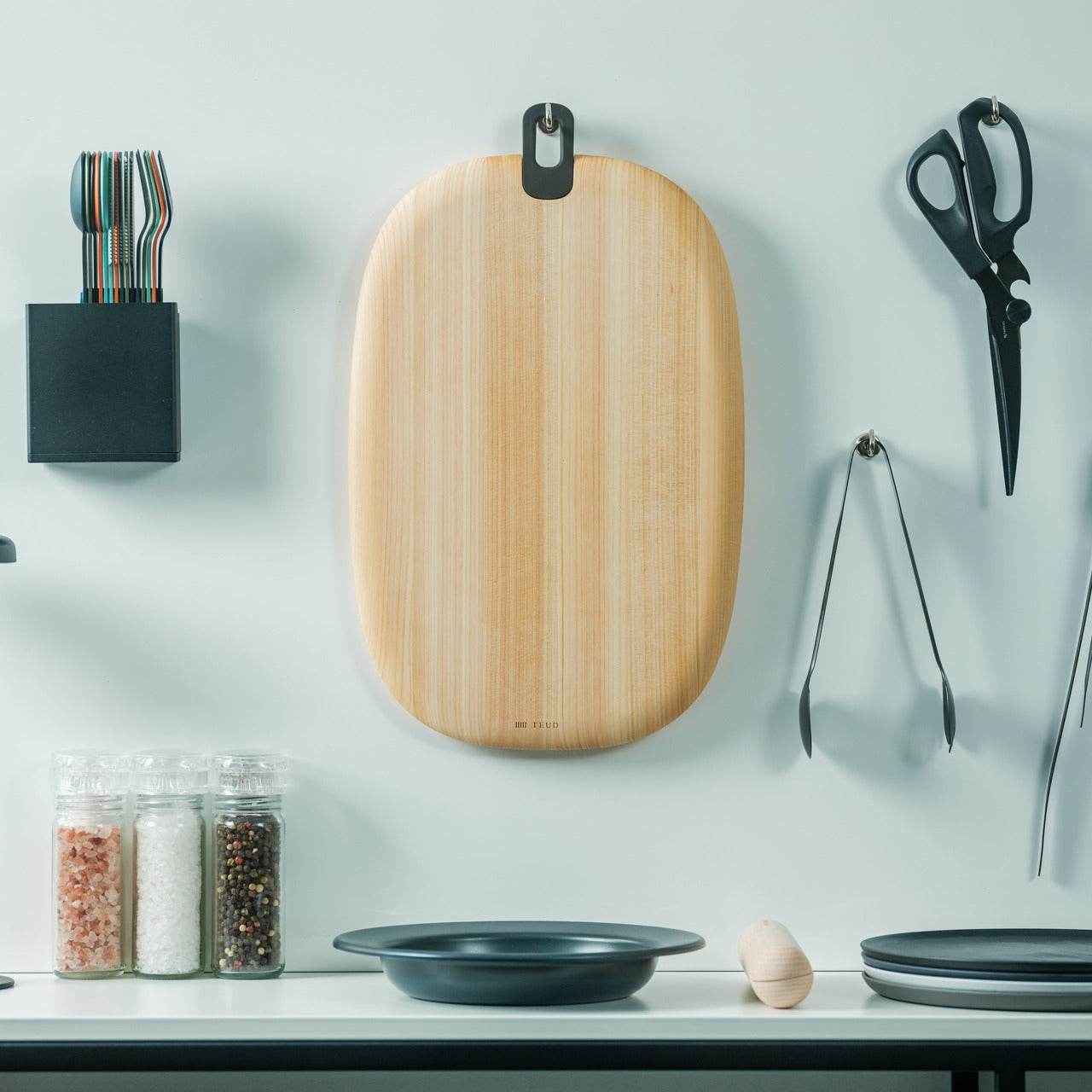
5. Hinoki Essence Cutting Board

Cutting boards in Western kitchens lean toward two extremes: hard plastic that preserves knife edges but feels clinical, or soft wood that comforts hands but dulls blades. The Hinoki Essence Cutting Board achieves the balance that Japanese cypress is renowned for: medium hardness that offers resistance without damaging knives. The majestic hinoki wood naturally resists mold, while the water-resistant silicone coating penetrates wood fibers to prevent damage. The gentle, rounded shapes and integrated handle provide both aesthetic grace and practical functionality for hanging and hygienic drying.

The cutting experience on hinoki transforms knife work from task into sensory practice. The wood provides satisfying feedback without the harsh impact of hard surfaces or the mushy give of soft materials. The natural aroma of cypress adds olfactory dimension to food preparation, creating an atmosphere that plastic and bamboo cannot replicate. The integrated handle facilitates hanging storage that promotes air circulation and drying. The water-resistant treatment extends durability without coating the surface in synthetic films. The gentle curves blend naturally with contemporary kitchen interiors while honoring traditional Japanese woodworking aesthetics. Paired with the ceramic sashimi knife, this is the right surface for the right blade.

Click Here to Buy Now: $75.00

What We Like

  • Hinoki’s medium hardness protects knife edges while delivering satisfying, precise cutting feedback
  • The natural cypress aroma adds a sensory quality to prep work that no synthetic material can offer

What We Dislike

  • Wood requires more care than plastic, including occasional oiling and thorough drying after washing
  • The premium material comes at a higher price point than most cutting boards on the market

6. Oku Knife

Every knife you own lies flat on the table. That’s not a law of physics, just a 400-year-old habit nobody bothered to question. Scottish metalworker Kathleen Reilly questioned it during a residency in Tsubame-Sanjo, Niigata Prefecture, one of Japan’s most celebrated metalworking regions, and the answer was Oku: a table knife with a folded handle that hooks over the edge of a plate or wooden board, holding the blade elevated entirely off the surface.

The knife is made by craftspeople in Tsubame-Sanjo using techniques refined over four centuries, from domestically produced high-quality stainless steel. The paired wooden boards come from Karimoku Furniture, Japan’s leading wooden furniture maker, using sustainably sourced Japanese forest wood. For a dad who cooks with intention, Oku adds something most kitchen tools cannot: a design that creates dialogue between cultures, between Eastern arrangement philosophy and Western dining conventions, and between the object and whatever surface it is placed on. Nothing else on the table will look like it.

What We Like

  • The folded handle elevates the blade completely off the table, keeping the cutting edge cleaner between uses
  • A genuine cultural collaboration between Scottish design sensibility and 400-year-old Japanese metalworking craft, with a story worth telling at the table

What We Dislike

  • Availability is through the designer’s studio rather than a mainstream retail channel, which takes more effort to source
  • The concept-forward design is purposefully singular, working as a table knife rather than a multi-purpose kitchen workhorse

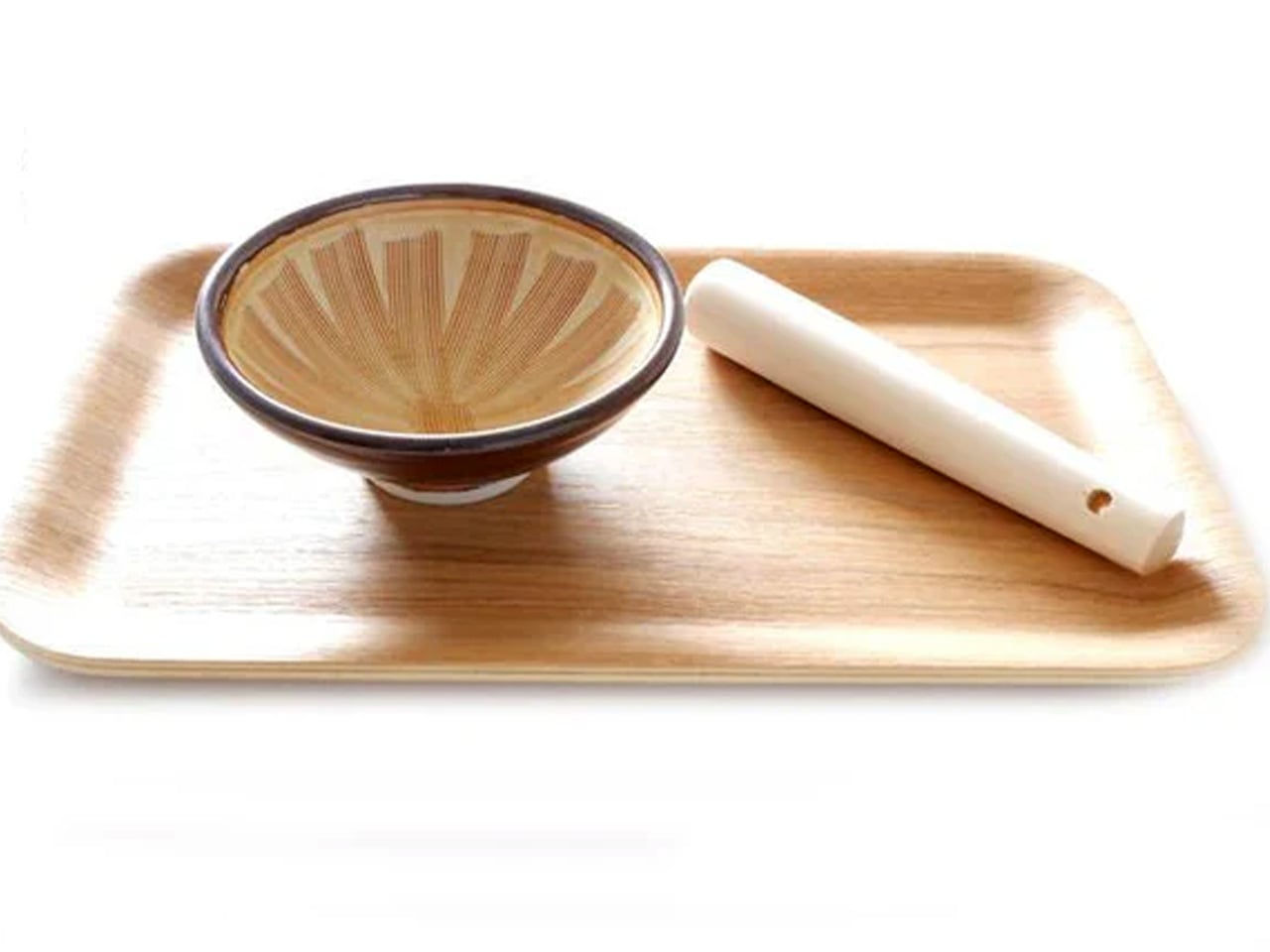
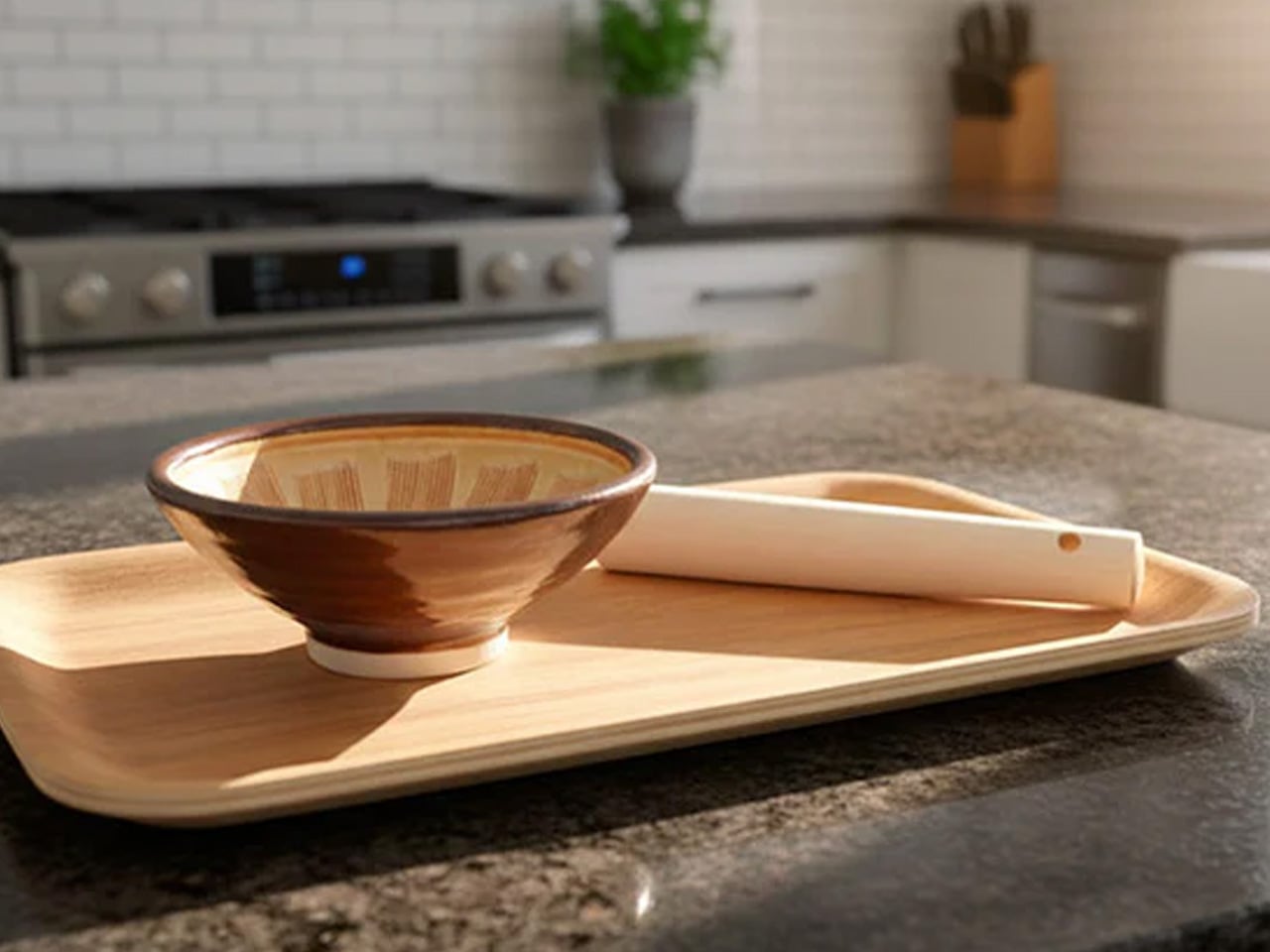
7. Suribachi and Surikogi Set

Grinding in Japanese cooking is fundamentally different from crushing. The suribachi achieves that distinction through its ridged ceramic interior, where scored grooves catch and shear ingredients rather than simply pressing them flat. Making gomadare sesame sauce, the kind that appears in cold noodle dishes and spinach salads at high-end Japanese restaurants, depends entirely on this action: sesame seeds releasing their oils through friction against the ridges rather than being pulverized against a smooth surface. No Western mortar produces this result or this texture.

The suribachi and surikogi set from Akazuki comes in three nested sizes, made from unglazed ceramic with the traditional scored interior that defines the tool. The wooden surikogi pestle grips the ridges effectively without damaging the bowl. For a dad who already cooks Japanese food with confidence, this closes the last gap in most Japanese-inspired home kitchens. For one who is beginning to explore the cuisine properly, it introduces a grinding technique that changes how sauces and dressings taste from the very first use.

What We Like

  • The ridged ceramic interior releases oils and extracts flavor from seeds and aromatics in ways no smooth mortar can replicate
  • The nested three-piece set covers different ingredient volumes without requiring multiple tools

What We Dislike

  • The ceramic bowl requires careful handling and won’t survive a drop onto a hard floor
  • Developing a consistent grinding rhythm takes a few sessions, particularly when working with sesame seeds

8. BALMUDA The Kettle

Temperature is one of the least visible but most consequential variables in Japanese cooking. Dashi performs best within a specific heat range. Green tea becomes bitter above 80°C. BALMUDA The Kettle approaches precision temperature control with the same seriousness that Tokyo-based BALMUDA brings to every product it makes: a minimal design language wrapped around functional performance that makes the object as intentional to look at as it is to use.

BALMUDA’s attention to proportion is visible in the kettle’s structure: a wide base tapering to a narrow, curved gooseneck spout engineered for controlled, targeted pouring. This matters for precise dashi work, for pour-over preparations, for the temperature discipline that separates a thoughtful Japanese home cook from someone following a recipe. The Kettle is not a generic appliance that happens to look elegant. It’s an object designed to make a daily preparation ritual feel considered, which is exactly what Japanese kitchen culture asks of every tool it produces.

What We Like

  • The precision gooseneck spout allows controlled, targeted pouring for dashi, tea, and any temperature-sensitive preparation
  • BALMUDA’s build quality and visual design make it as worthy of display as of daily use

What We Dislike

  • The premium brand carries a price considerably higher than functional alternatives with comparable temperature control
  • Some home cooks may want more granular degree-specific settings than the kettle’s range provides

The Gift That Gets Better Every Time He Cooks

Japanese kitchen tools don’t compete with each other for drawer space. They each occupy a specific role with such precision that using the wrong version becomes apparent the moment you try the right one. This collection covers that full range: the tools that produce results no substitute can replicate and the surfaces that make everything they touch perform better. Together, they build a kitchen that takes cooking seriously from prep board to serving vessel.

Father’s Day gifts often end up used once and forgotten. The tools here don’t work that way. A donabe improves every time it’s fired. An Oku knife perches at the edge of every plate it touches, carrying the weight of four centuries of craft. A hinoki board holds the character of every preparation made on its surface. These aren’t purchases. They’re the beginning of a cooking practice that rewards attention for years.

The post 8 Japanese Kitchen Gadgets & Tools That Make Dad Feel Like a Michelin-Star Chef This Father’s Day first appeared on Yanko Design.
8 Last-Minute Father’s Day Gifts So Good He’ll Think You’ve Been Planning for Months

Father’s Day is the holiday most people intend to prepare for and don’t. June arrives, the week narrows, and suddenly you’re looking at a browser tab full of gift sets that say nothing specific about the person you’re buying for. The window hasn’t closed. Every product on this list ships fast, buys in minutes, and arrives looking like the result of careful thought rather than a Sunday evening scramble.

The eight picks below share one quality: they belong to the category of things men genuinely want but rarely buy for themselves. That gap between wanting and buying is exactly where a great gift lives. From a speaker shaped like a mixtape to a pen that writes without ink, each one communicates something specific about the person giving it: you noticed what he actually likes, and you found it.

1. Side A Cassette Speaker

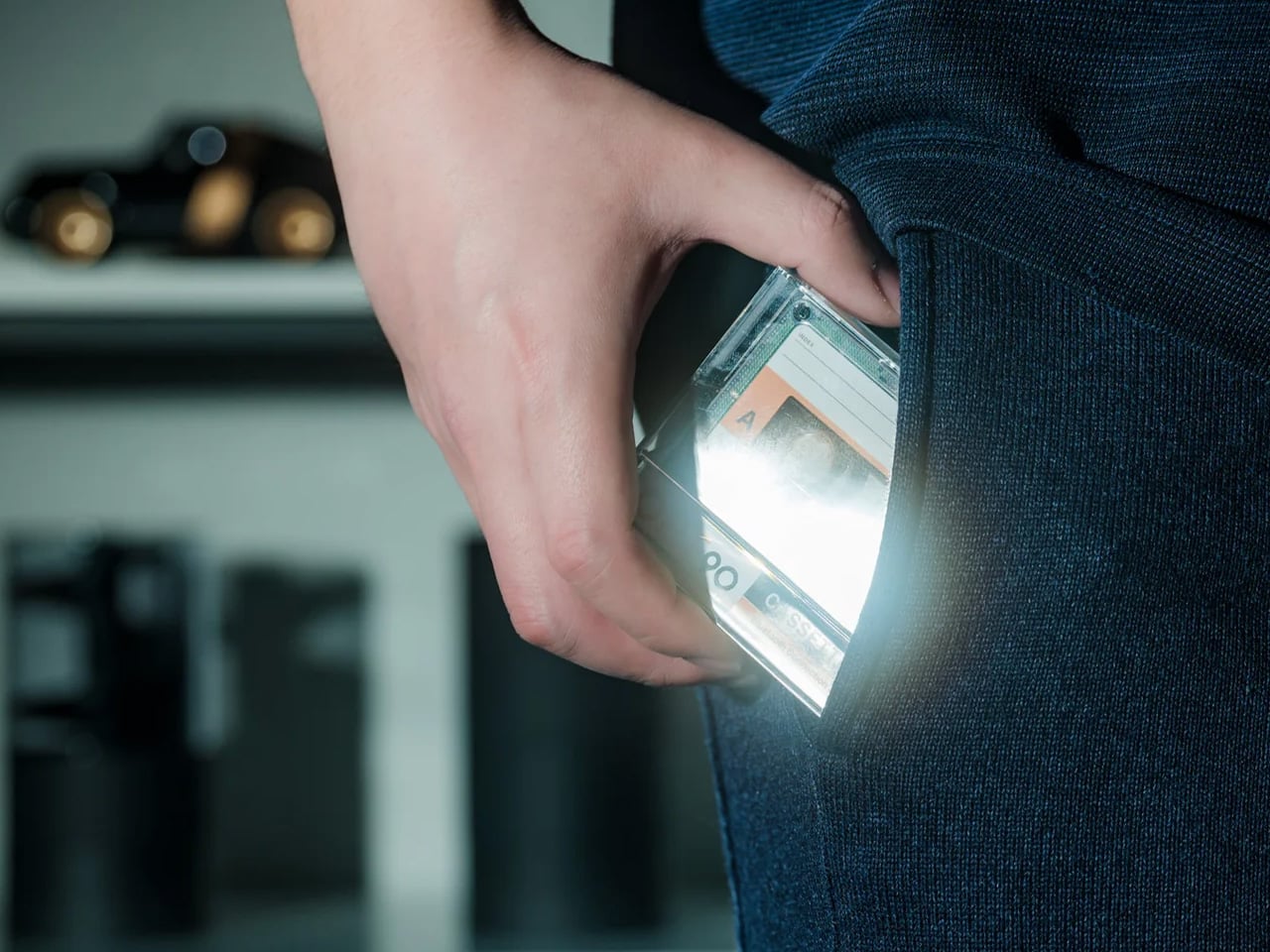
The Side A Cassette Speaker is built to look like a real mixtape. The transparent shell, the Side A label, the overall profile — it’s faithful enough to prompt a genuine double-take from anyone who spent their formative years recording songs off the radio. At 80 grams and arriving with a clear case that doubles as a display stand, it takes up almost no space on a shelf but immediately defines wherever it sits. For a dad who remembers making mixtapes, this does the emotional work before it plays a single note.

Bluetooth 5.3 handles wireless connection from any phone, tablet, or laptop. A microSD card slot adds offline MP3 playback for anyone who still curates music rather than surrendering it to an algorithm, and battery life runs to six hours with a two-hour USB-C recharge. The sound is tuned for warmth rather than clinical accuracy, which is exactly the right call for an object built around analog feeling.

Click Here to Buy Now: $49.00

What We Like

  • Cassette form is executed faithfully enough to spark a real conversation, not just a polite smile before the object gets set aside
  • MicroSD offline playback is a thoughtful addition for any dad who believes a carefully chosen playlist says more than a shuffle queue ever could

What We Dislike

  • Six hours of battery life is modest — the trade-off makes sense at this size, but worth knowing before the gift gets unwrapped
  • Sound leans toward warmth and character rather than reference performance, so temper expectations accordingly

2. Gerber Shard Keychain Tool

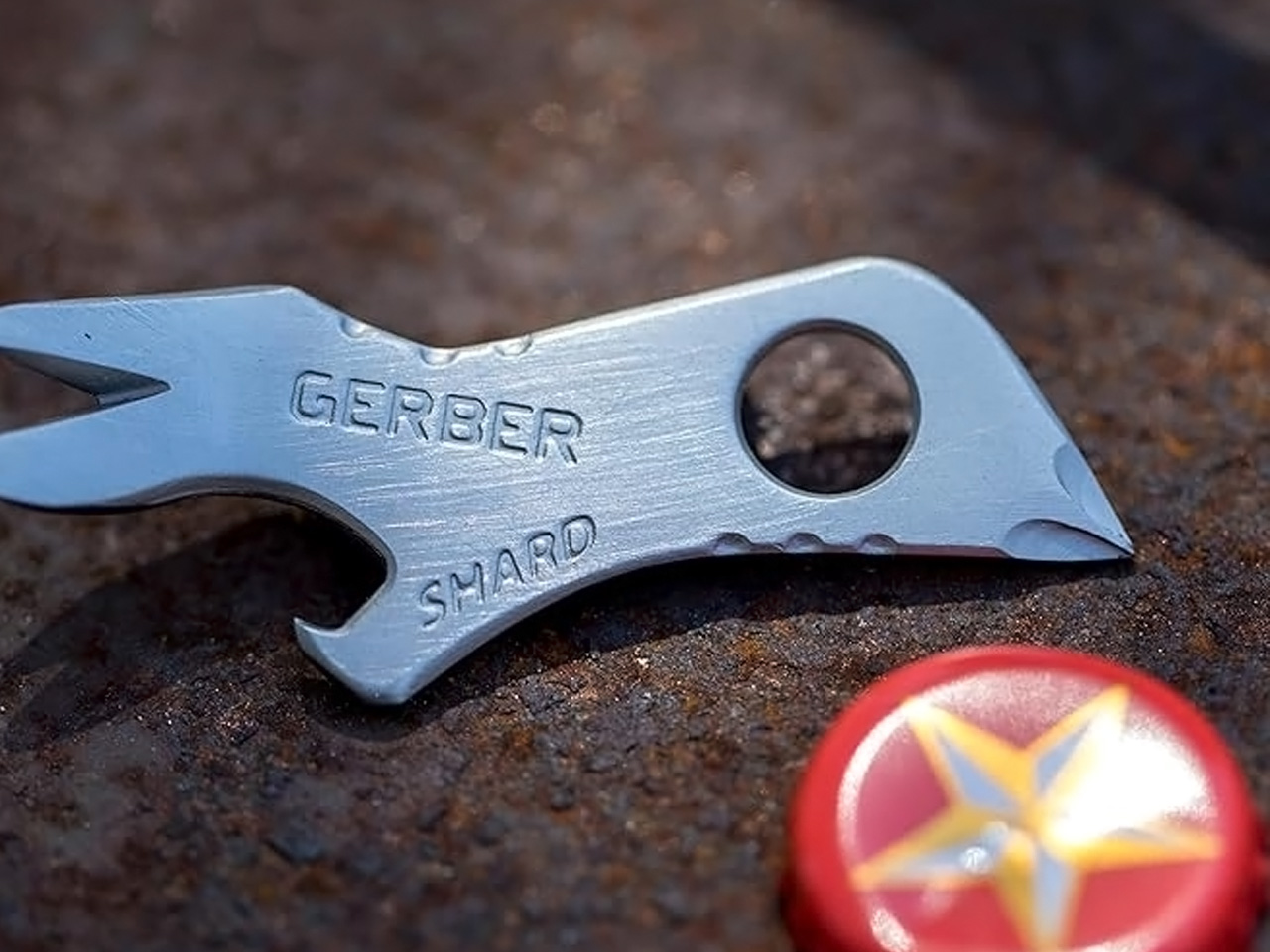
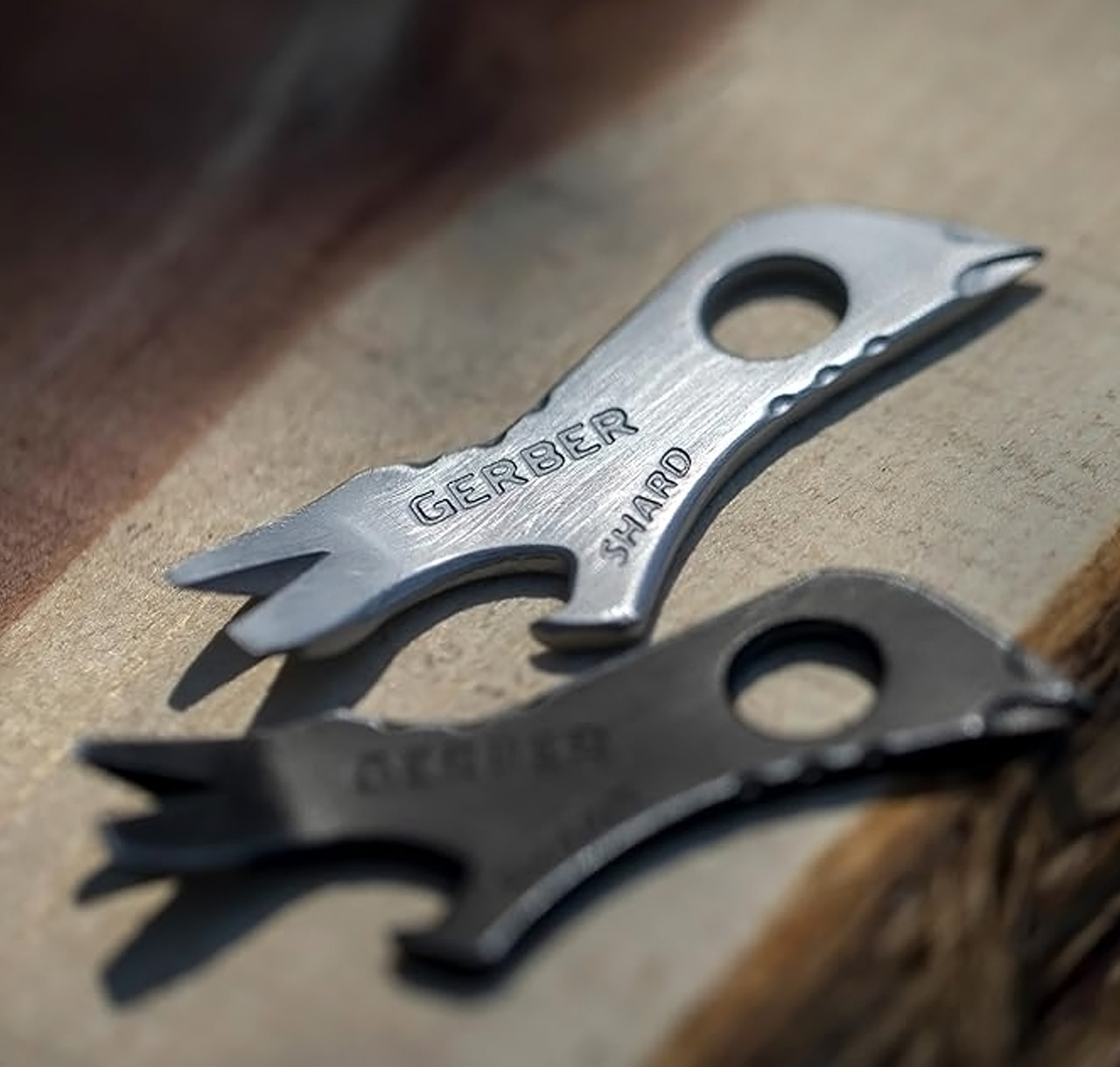
The Gerber Shard takes about four seconds to explain and about four days to fully appreciate. A single piece of titanium, pressed flat, with a pry bar, bottle opener, flathead driver, wire stripper, and lanyard hole all living in the same compact profile. It slips onto any keyring without adding meaningful weight or bulk.

What makes the Shard worth gifting rather than simply keeping is its TSA compliance. The blade-free construction means it clears airport security without a conversation, which makes it genuinely useful for any dad who travels regularly. It solves the small daily frictions — a stuck lid, a screw that needs turning, a bottle that needs opening — without asking him to adjust what he already carries. Something this useful and this affordable rarely looks this considered, and that gap is exactly where the gift lands.

What We Like

  • TSA-compliant titanium construction means it travels everywhere — no conversations at security, no confiscations
  • At $10, the value is genuinely hard to argue with — most multitools at five times the price solve fewer daily problems

What We Dislike

  • Function set is intentionally narrow — anyone expecting Leatherman-level capability will need to look elsewhere
  • The flathead driver won’t accommodate Phillips heads, which limits its usefulness for anything beyond basic fastener work

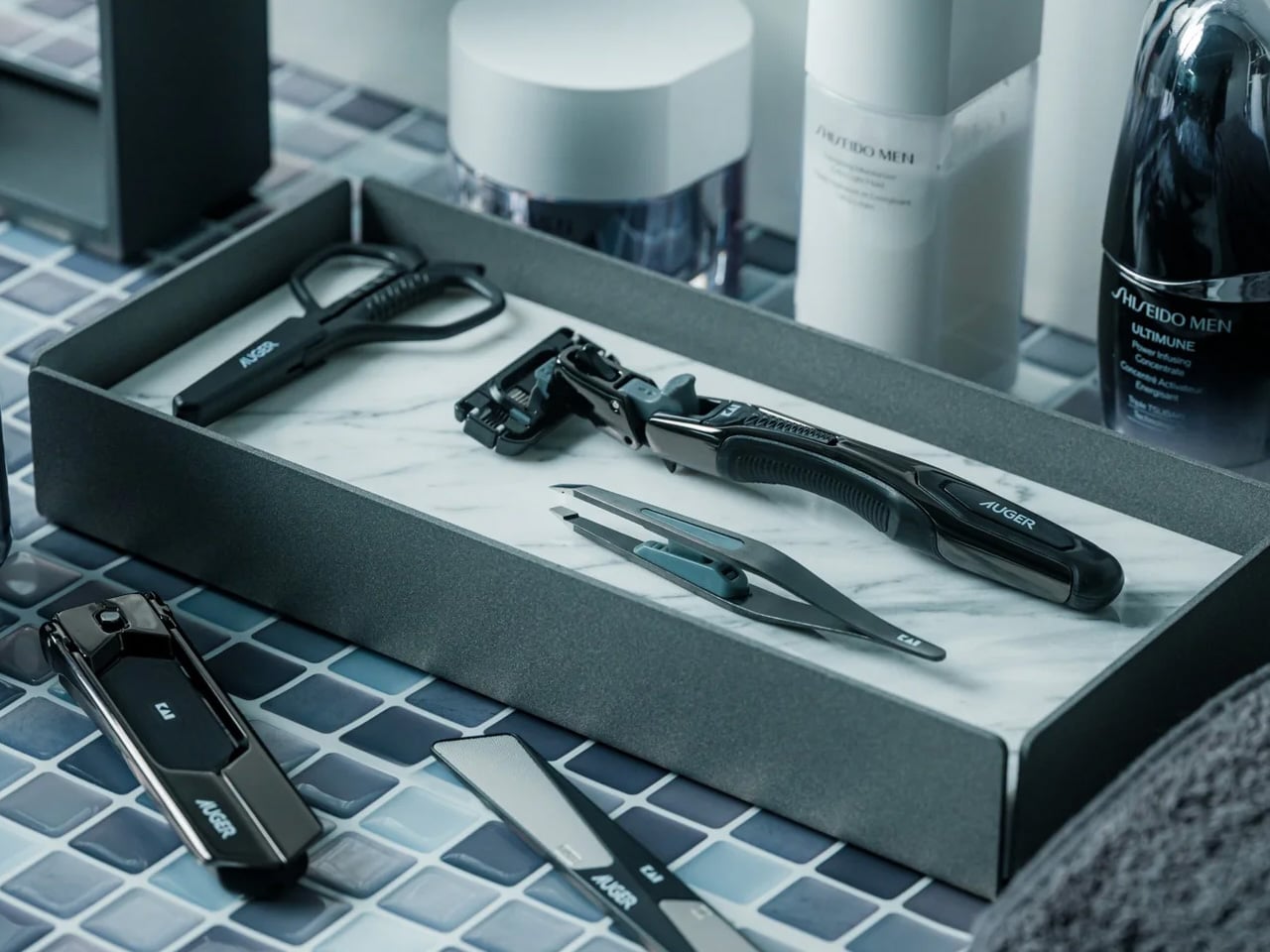
3. Auger PrecisionMaster Grooming Set

Grooming sets tend to fall into one of two categories: the kind bought without much thought, and the kind that reflect a genuine understanding of what precision looks like in a daily routine. The Auger Precision Mastergrooming Set belongs firmly in the second group. Designed with the same intention that good EDC tools bring to carry gear, it applies that same thinking to the objects a man reaches for every morning.

What separates a well-made grooming kit from a forgettable one is how it feels in hand and what it asks of the person using it. The Auger set is built for the dad who treats his routine like craft rather than obligation, who notices the difference between a tool designed with care and one that simply fulfills its function. For Father’s Day, that specificity matters. This is the upgrade he hasn’t bought himself yet, and it arrives looking nothing like the last-minute decision it technically was.

Click Here to Buy Now: $149.00

What We Like

  • Brings the precision-first philosophy of good EDC design to a category that rarely receives that level of editorial attention
  • Works as both a daily-use kit and a display-worthy object — the standard any well-made grooming set should be held to

What We Dislike

  • A dad who keeps his routine deliberately minimal may find the full kit more than his mornings require
  • The value concentrates for someone who’ll actually use it daily — as a display piece alone, the case becomes harder to make

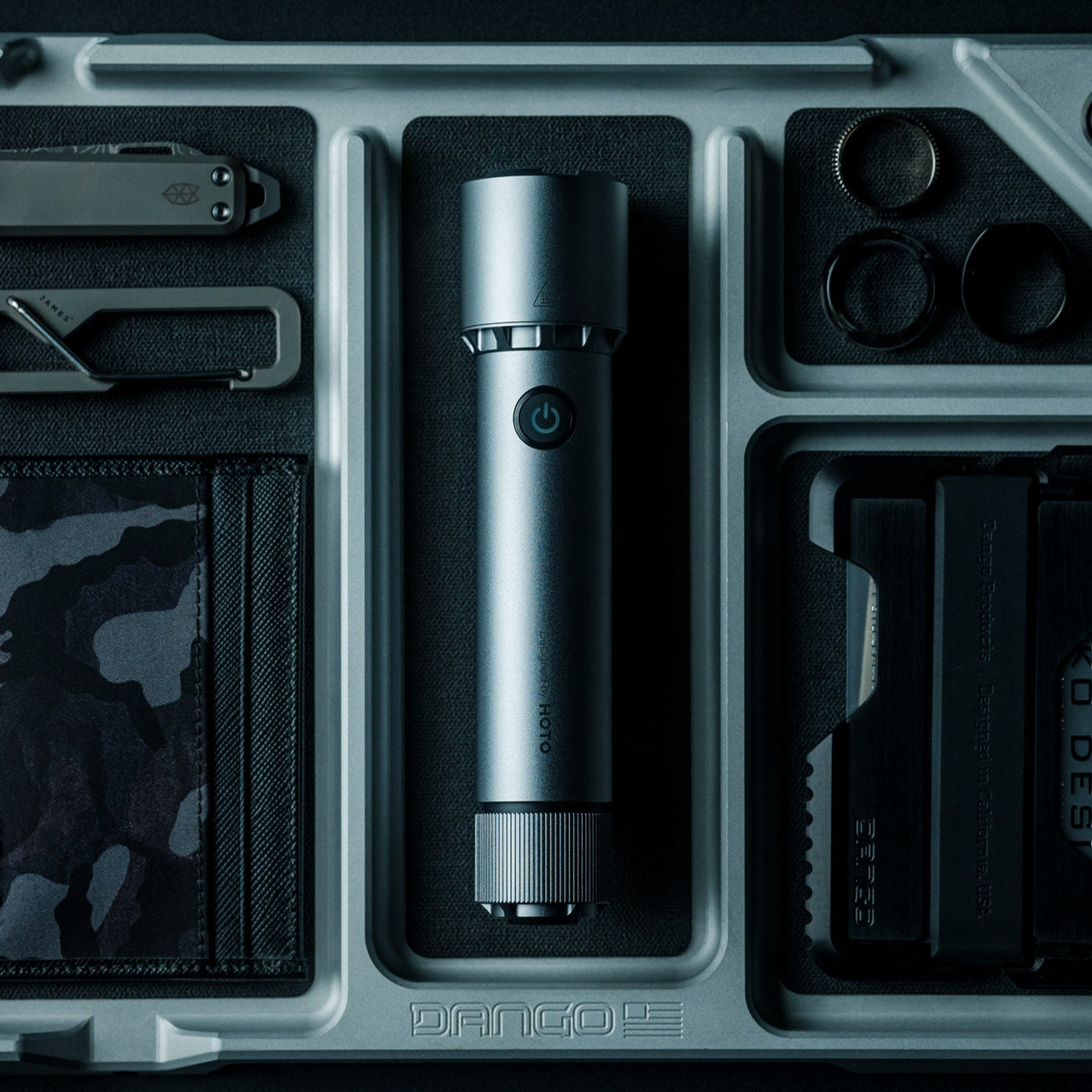
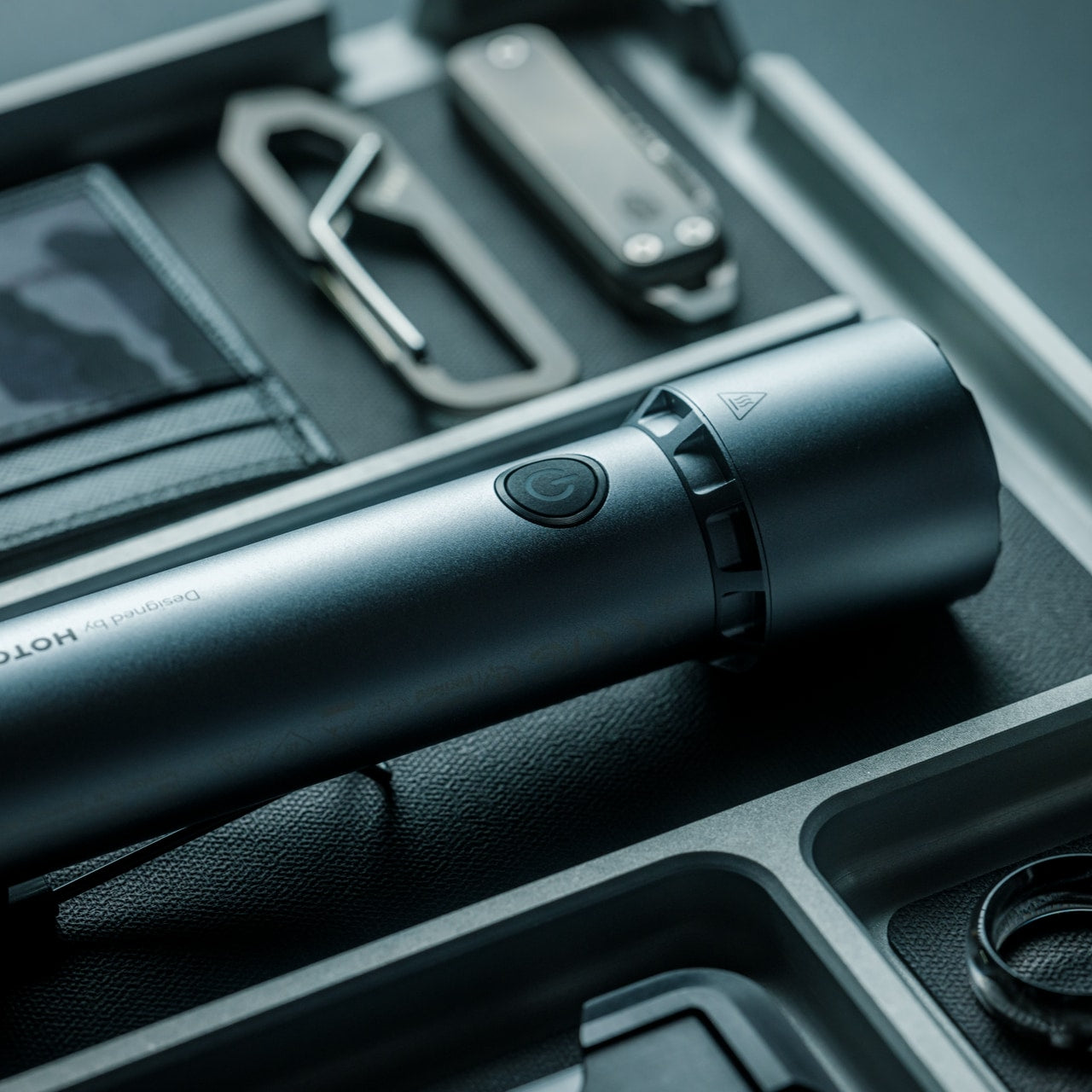
4. Blackout Beam Tactical Flashlight

There’s a version of a tactical flashlight that lives in a gear bag for years without ever earning its place there. The Blackout Beam is a different argument. For a dad who keeps a light in the car, the workshop, or the camping kit, this replaces whatever he currently has with something worth holding onto.

The tactical category tends to suffer from overclaiming: knurling that exists for the photograph, modes that exist for the spec sheet, and output numbers that bear little resemblance to everyday use. What the Blackout Beam does is deliver build quality and output that make sense of the description.

Click Here to Buy Now: $89.00

What We Like

  • Build quality and output hold up to the description — a rarity in a category prone to overclaiming

What We Dislike

  • A dad who primarily needs a simple everyday light may find the tactical category more than his routine calls for
  • The tactical aesthetic won’t suit every sensibility — know your dad’s taste before committing

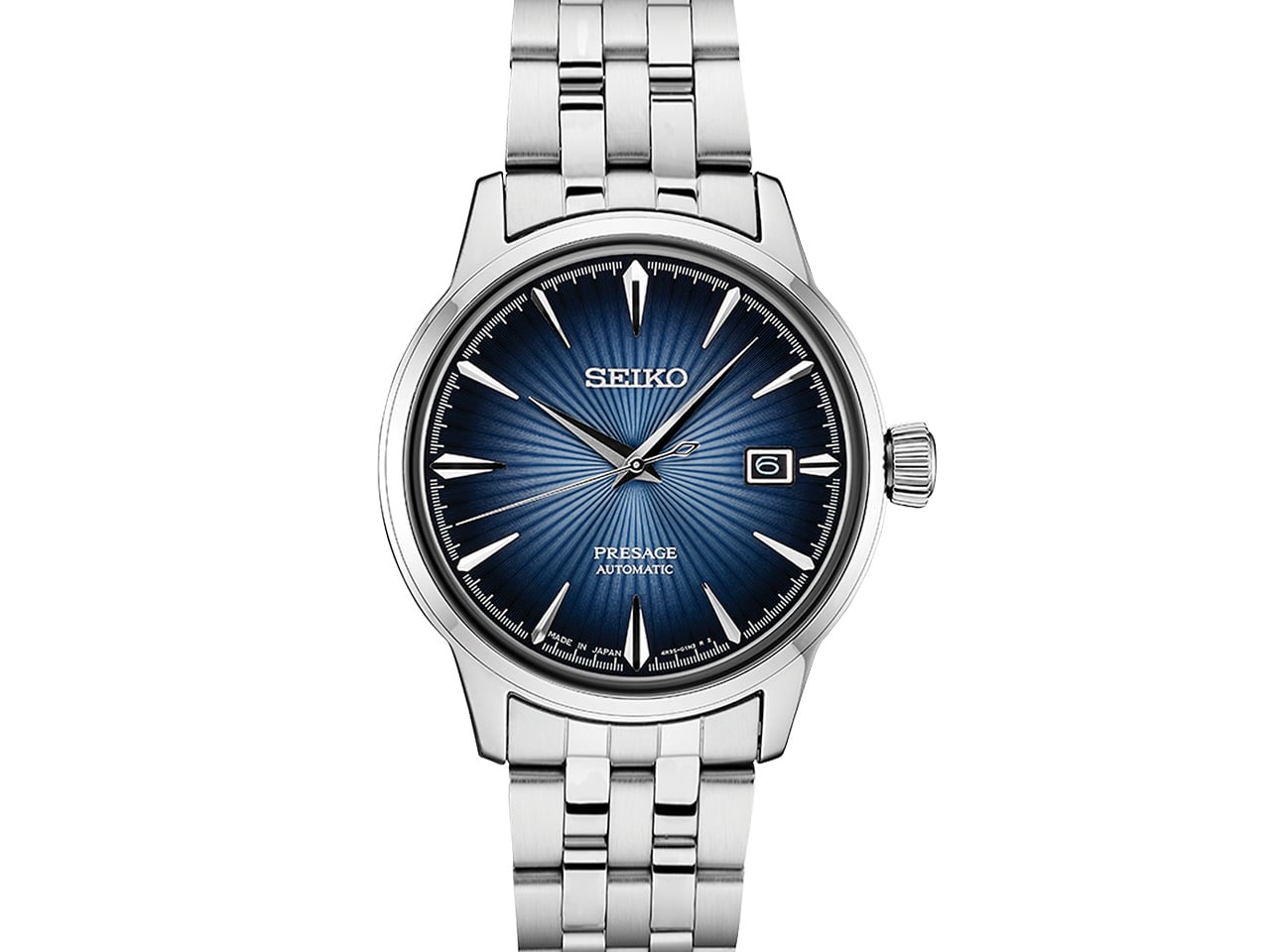
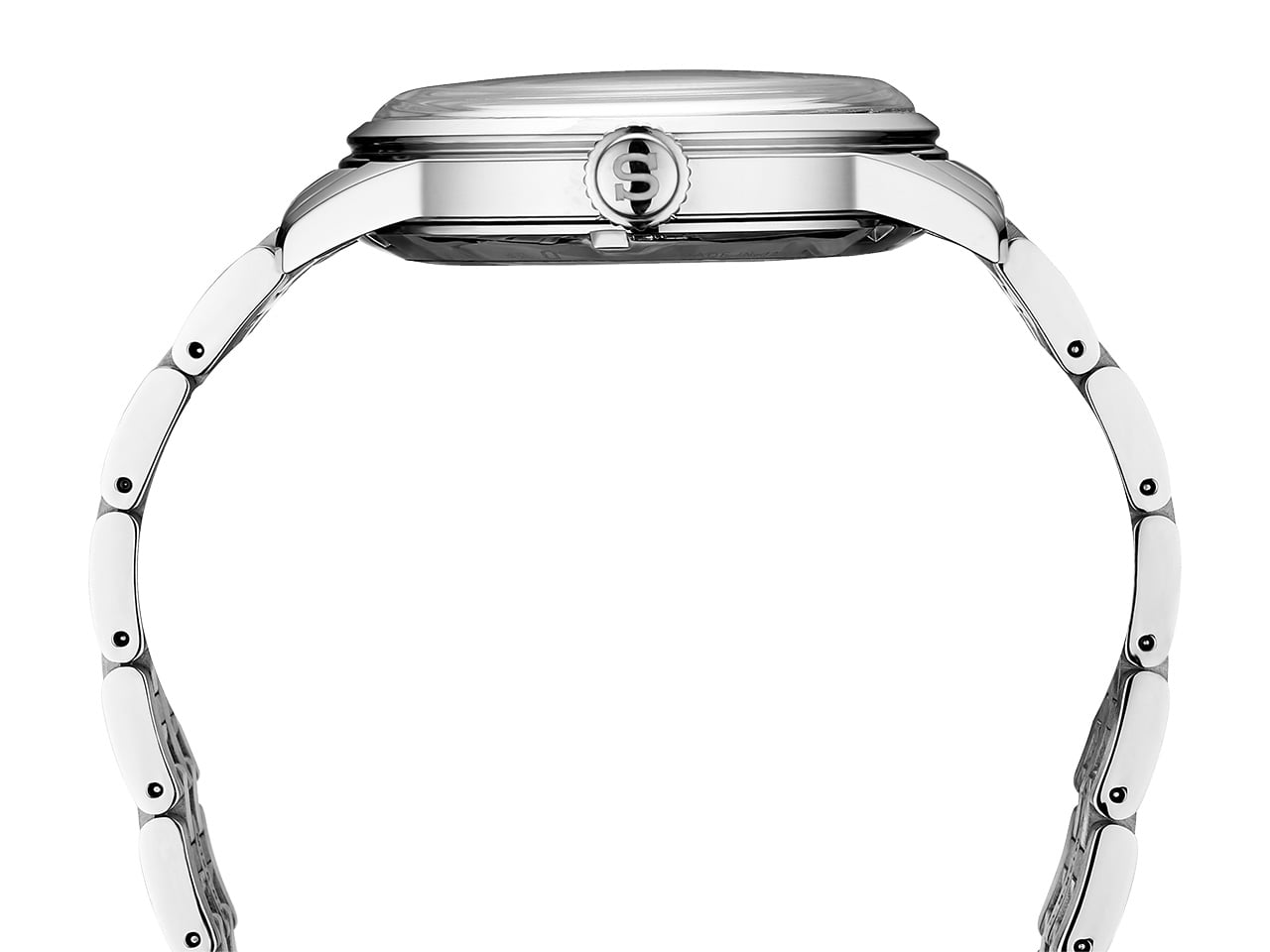
5. Seiko Presage Cocktail Time SRPB41

The SRPB41 is inspired by the Old Fashioned. Its sunburst enamel dial catches light the way a well-made drink does at the right angle, and the blue hands sweep across it with a precision no quartz movement can replicate. Seiko’s in-house automatic caliber winds itself from wrist movement, with the mechanism visible through the exhibition caseback. At 40.5mm and water-resistant to 100 metres, it wears formally without demanding it. No batteries. No quarterly trips to a jeweller. Nothing to maintain but the wearing of it.

What makes the SRPB41 the right last-minute gift isn’t just that it ships in days from Amazon, JomaShop, or SeikoUSA — it’s that it arrives looking like a decision made months ago. There’s a long tradition of Seiko producing watches that outperform their price point, and the Presage Cocktail Time series is where that tradition is most legible. It earns a second look across the dinner table and holds up under closer inspection every time. For a dad who appreciates when an object is exactly what it claims to be, this is the one.

What We Like

  • An in-house automatic movement at this price point remains one of the great bargains in contemporary watchmaking — the quality is audibly and visibly present
  • The cocktail-dial concept gives it a specific identity that generic dress watches at twice the price rarely manage to establish

What We Dislike

  • The formal aesthetic suits some lifestyles better than others — a dad who lives outdoors may find it less natural as a daily wear
  • It’s a dress watch first; anyone hoping it doubles as a field or sport watch will need to look at a different Seiko family entirely

6. Olight Oclip Pro S

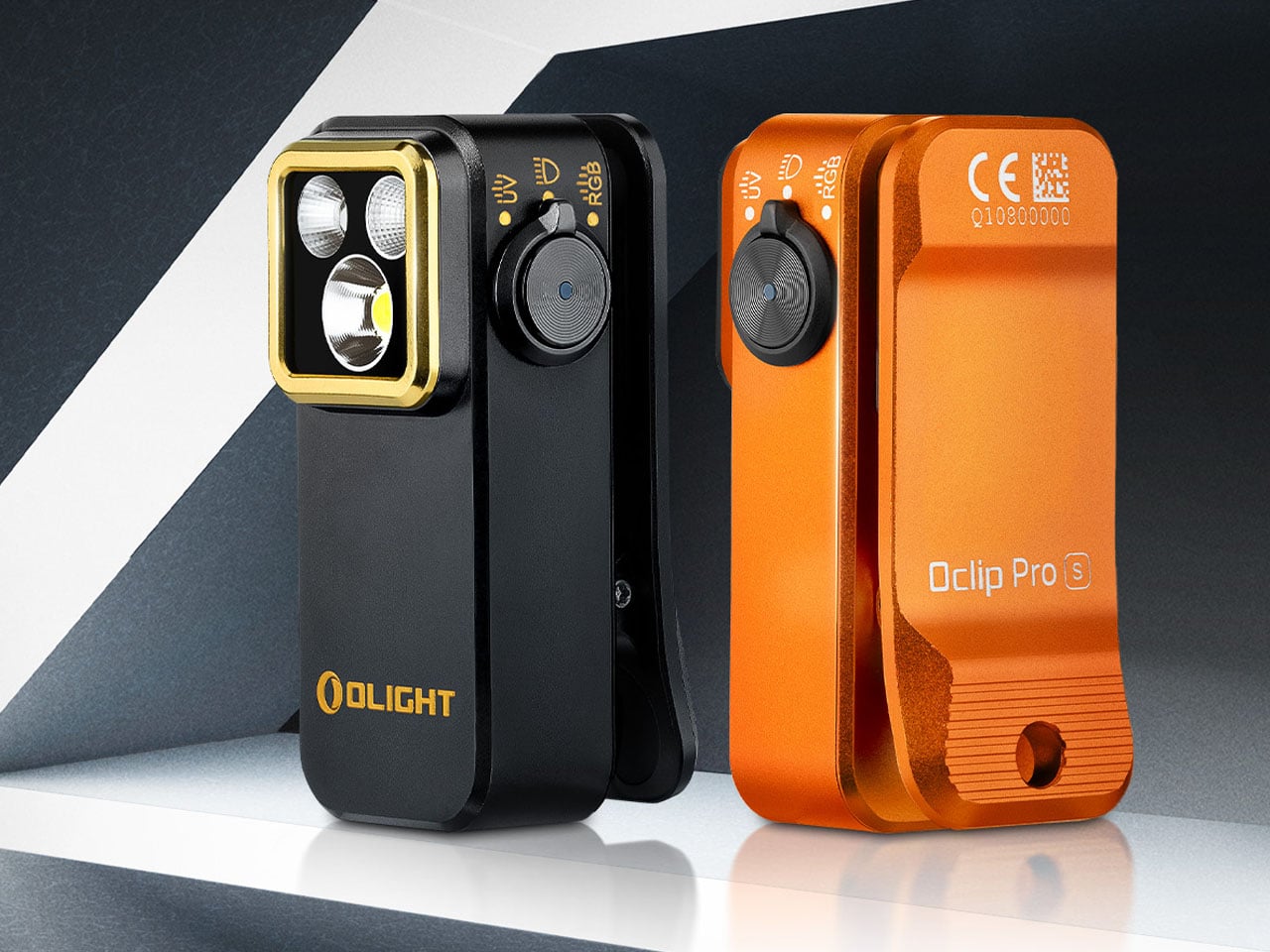
Most EDC flashlights ask you to hold them. The Olight Oclip Pro S clips to a pocket, bag strap, jacket, or gear loop and stays there until it’s needed, which is an entirely different carry proposition. At 53 grams and measuring 57 by 28 by 27mm, it disappears into whatever it’s attached to until it becomes the most useful object in the room. For a dad who prefers hands-free solutions over dedicated carry, this is the light that answers that preference with minimum fuss and maximum practical intelligence.

The 5-in-1 lighting system covers white spotlight at up to 600 lumens with an 80-metre beam, white flood mode, red, green, and blue signal options, and a 365nm UV light — all controlled by a side dial that works intuitively on first contact. Battery life reaches 144 hours on low mode with USB-C charging throughout. At around $59.95, the Oclip Pro S replaces multiple single-purpose tools in a single clip-on body. For a dad who carries thoughtfully, it adds genuine capability without adding meaningful weight.

What We Like

  • Five distinct lighting modes — including UV — at 53 grams is a genuine engineering achievement in a form factor this compact
  • USB-C charging and clip-on carry integrate seamlessly into any existing kit without introducing new habits or new accessories

What We Dislike

  • Maximum brightness triggers thermal management on extended runtime — a fair trade-off, but worth understanding before relying on it in demanding conditions
  • A dad who primarily needs a reliable everyday light may never explore the full five-mode system; the value concentrates for those who will

7. Fantom X Wallet

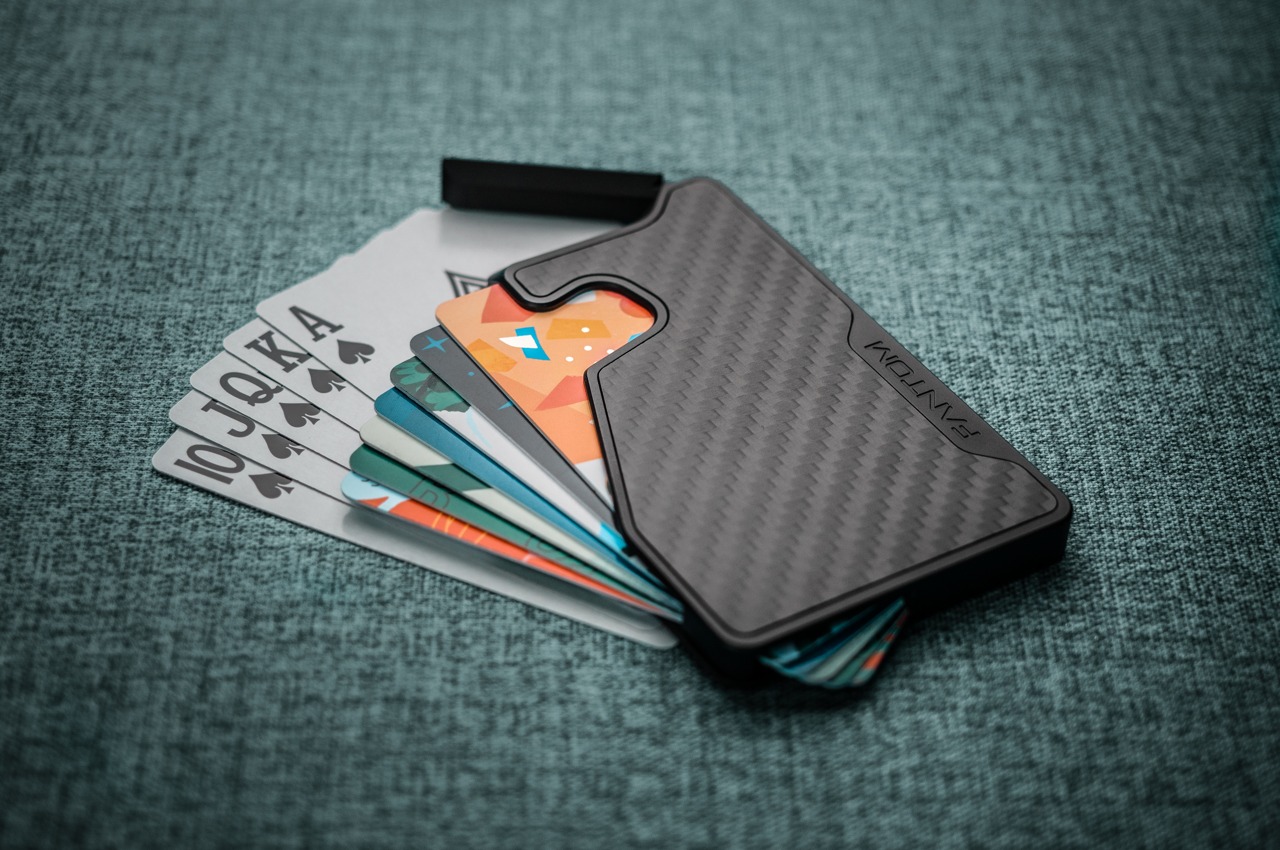
The Fantom X is the wallet you give the person still carrying a stuffed bifold like it’s a different decade. Machined from a single sheet of aluminum and finished in Cerakote for scratch and corrosion resistance, it holds between seven and thirteen cards depending on the size — all deployed with one thumb press on the side lever. Cards fan out individually, making each one visible at once. The wallet itself is three millimetres thicker than the cards it carries. That’s the entire margin between this and everything else in the category.

Made in Canada by Ansix Designs, the Fantom X comes RFID-blocked and backed by a lifetime warranty. Three size options mean the gift calibrates to how your dad actually carries rather than asking him to rebuild his wallet life around the product’s capacity. The lever mechanism has been tested to over half a million fanning cycles.

What We Like

  • The fan-out card mechanism makes accessing a specific card faster than any bifold — once you’ve used it this way, the standard wallet starts to feel like a design problem nobody bothered to solve
  • Three size options mean the wallet fits your dad’s carry habits rather than demanding he change them

What We Dislike

  • Card-first by design — regular cash carriers will find the experience less seamless without a dedicated money clip alongside it
  • The minimalist philosophy requires editing down from a stuffed wallet, which can feel like a bigger ask than the product deserves

8. Pininfarina Aero Ethergraf — The Forever Pen

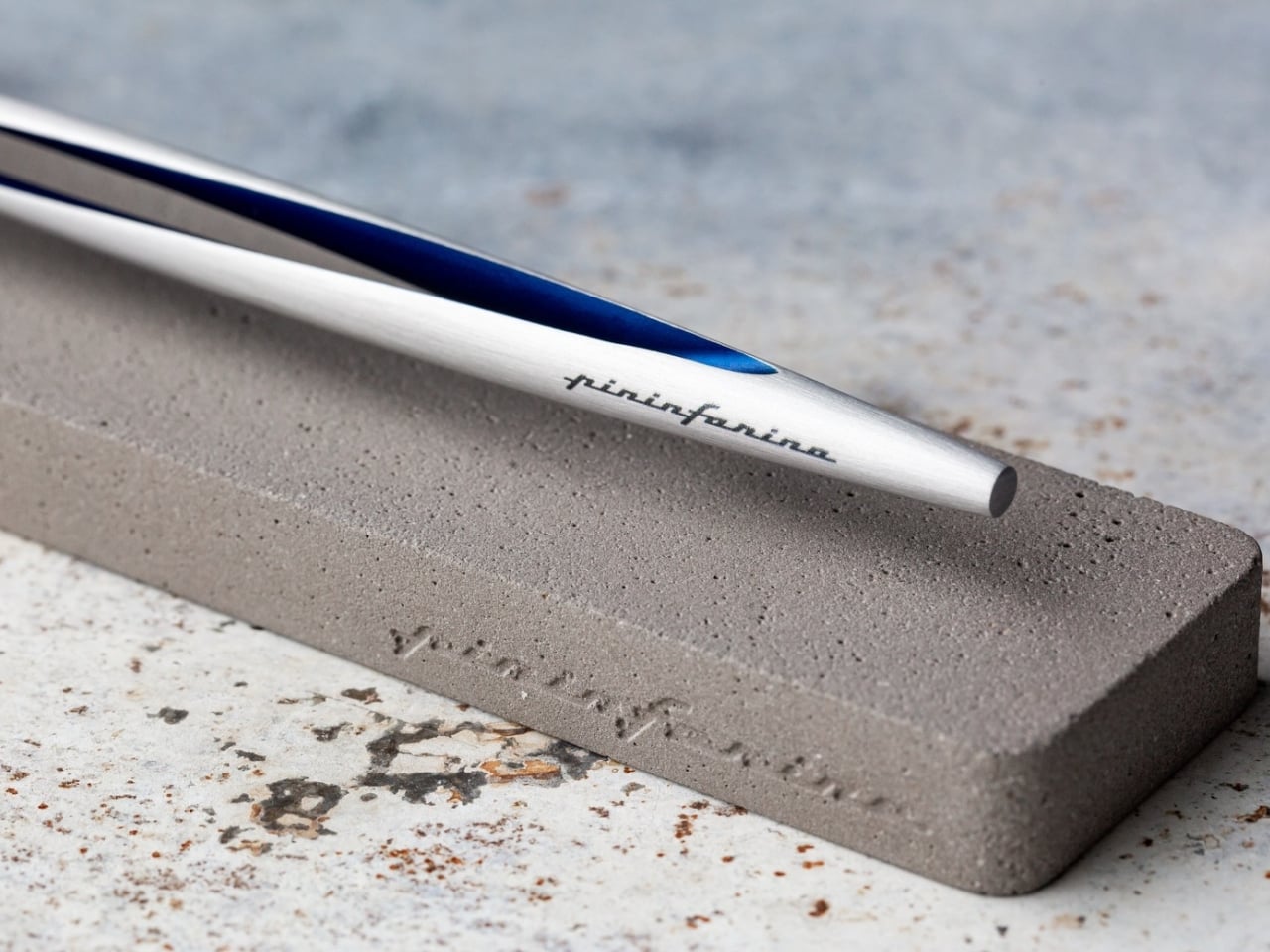
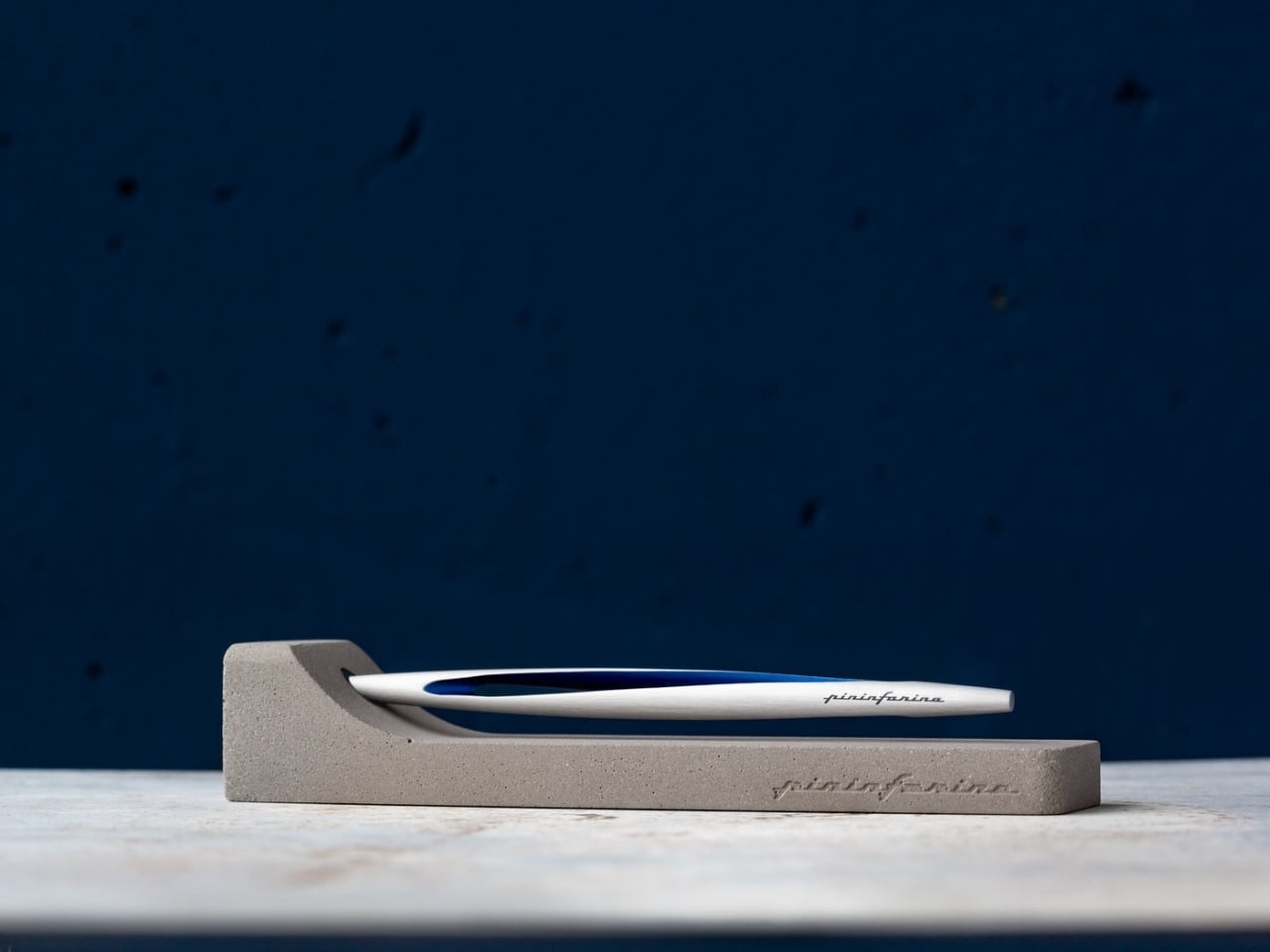
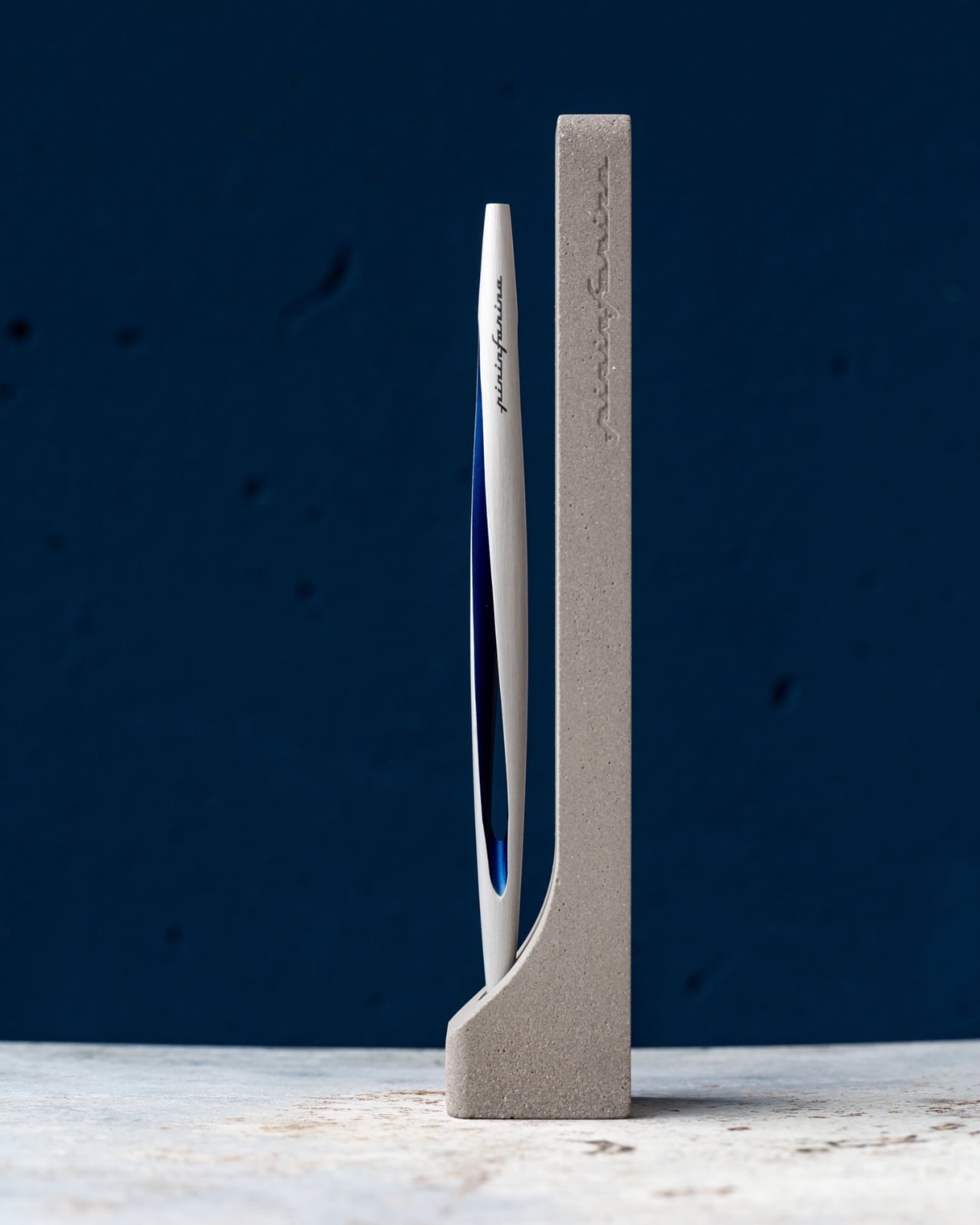
Pininfarina built its reputation on automotive silhouettes — Ferrari bodies, Maserati shapes, forms that held their beauty across decades. The Aero Ethergraf brings that same design philosophy down to the scale of a writing instrument. Machined from aerospace-grade aluminum, weighing 17 grams and measuring 160mm, it arrives paired with a raw concrete desk stand that reads less like packaging and more like a considered still-life. Made in Italy. No ink. No cartridges. No cap to misplace. Built to last without ever needing to be maintained.

The Ethergraf metal alloy tip writes through oxidation, leaving a graphite-like mark on paper that is precise, smudge-resistant, and permanent without relying on ink. The pen never dries out. It never runs out. For someone who has spent years managing fountain pen cartridges or replacing rollerball inserts, this inverts the entire expectation of what a writing tool asks of you. For a dad who notices objects and holds onto them, the Aero Ethergraf becomes the pen on his desk that earns a question from every person who picks it up.

What We Like

  • No ink, no refills, no maintenance — ever; the Ethergraf tip writes through oxidation, making the pen’s relationship with its owner permanent rather than consumable
  • Pininfarina’s automotive design lineage reads clearly in the body: aerodynamic, precise, and confident without announcing any of that on the surface

What We Dislike

  • The oxidation-based line runs lighter than a standard ballpoint — won’t suit every writing style or paper weight
  • The concrete stand is genuinely beautiful but adds volume to the package, a consideration for any desk already working at full capacity

The Best Last-Minute Gift Is One That Doesn’t Look Like It

The best Father’s Day gift is the one that looks like it came from somewhere thoughtful rather than somewhere fast. Every product on this list is available now and ships before June 21. The range runs from $10 to $350, which means there’s an entry point for every budget and a version of this list that works regardless of how late the decision hit. Good design doesn’t keep a delivery schedule. It just has to land well.

What these eight objects share is a quality the gift category rarely gets credit for: each one communicates something specific about the person giving it. A speaker shaped like a mixtape says you remember what he loved. A pen that lasts forever says you chose something built to last. Father’s Day doesn’t need to be a grand gesture. It just needs to be honest, considered, and there before Sunday.

The post 8 Last-Minute Father’s Day Gifts So Good He’ll Think You’ve Been Planning for Months first appeared on Yanko Design.

The 5 Best Home Office Gifts for the Guy Who Thinks He Has Everything — He Doesn’t Have These

The home office has become the most personal room in the house — and somehow still the hardest room to shop for. He already has the monitor arm, the mechanical keyboard, the cable organizer that never actually organized anything. The things worth giving now aren’t upgrades to what he owns. They’re objects that introduce something genuinely new to how a desk feels, functions, and performs — gifts that earn a permanent spot rather than a polite shelf appearance.

The best home office gifts of 2026 share one quality: they’re genuinely hard to explain without handling them. A pen that never needs ink. A lamp that works anywhere without a single cord. A speaker bar that makes RGB feel like a design choice rather than a gamer’s checkbox. These aren’t novelties with a short shelf life. They’re tools and objects with real staying power — the kind of things you’d buy for yourself if someone hadn’t already beaten you to it.

1. Mosaic

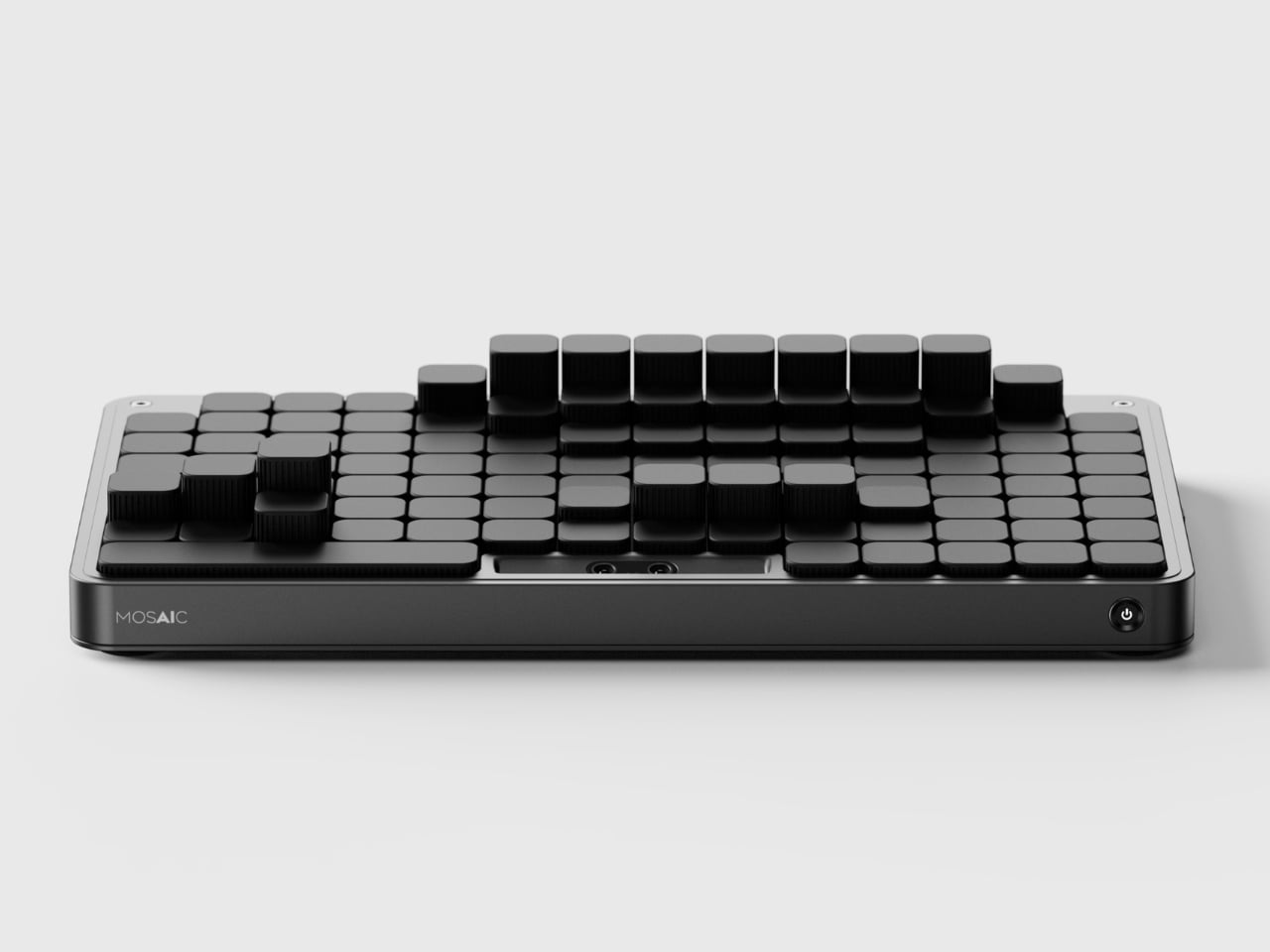
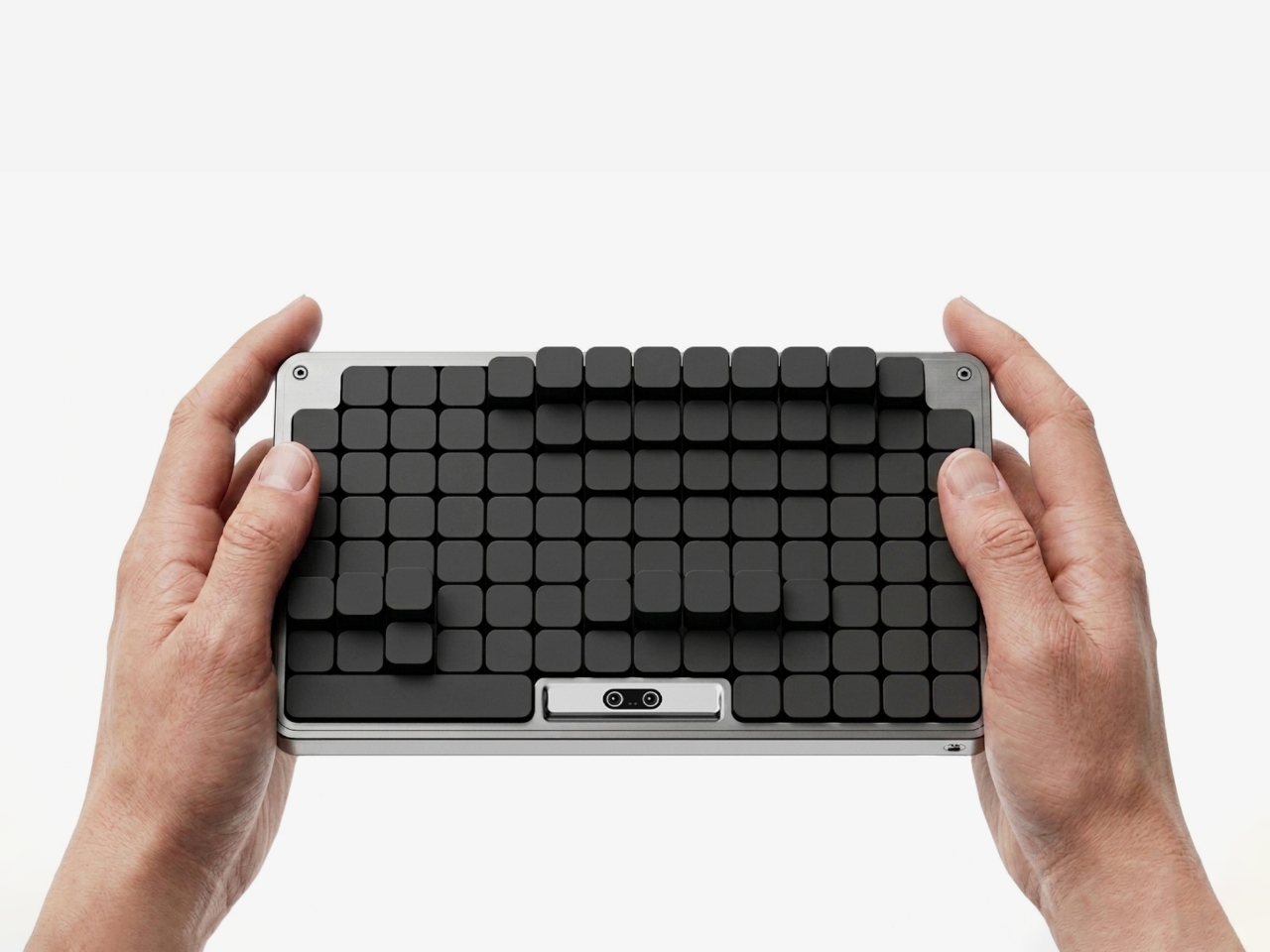
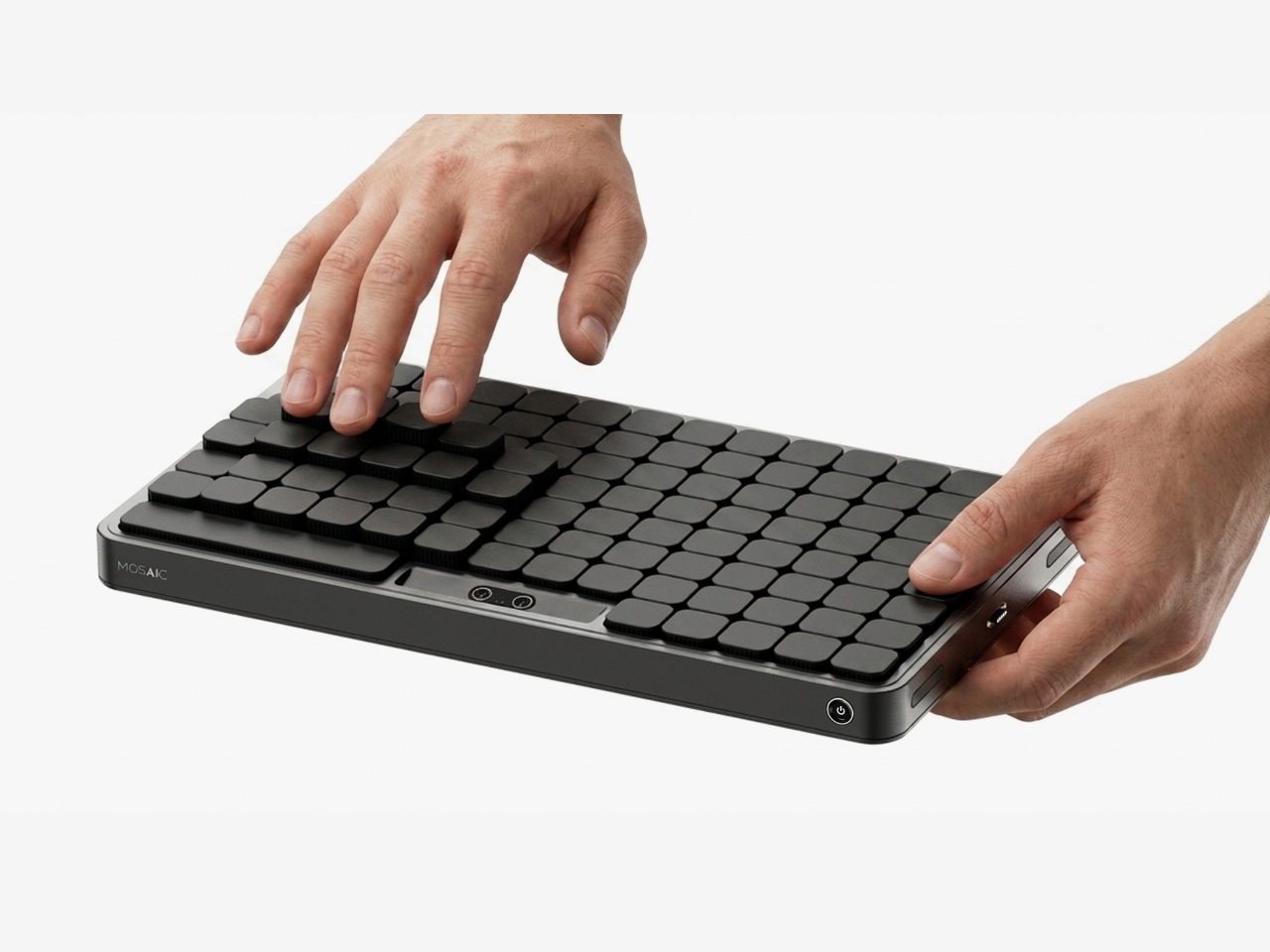
The most striking thing about the Mosaic isn’t what it does — it’s what it undoes. Most desk organizers arrive with a fixed grid of compartments and expect you to adapt, which is exactly why most of them end up abandoned in a drawer within weeks. The Mosaic flips the dynamic entirely, using AI to learn how objects get arranged and rearranged on a real desk over time, then reshaping its modular surface to match those habits rather than a designer’s assumptions about them.

What that looks like in practice is a tray that never quite looks finished — and that’s entirely the point. As a setup evolves, it moves with you, accommodating a new phone dock here, a relocated notebook there, without requiring a full reset. The dark modular surface carries a kind of purposeful architecture that reads as considered rather than cluttered. For anyone who has bought a beautiful organizer only to abandon it two weeks later, the Mosaic is the version that actually earns its permanent place.

What We Like

  • Learns and adapts to actual desk behavior instead of imposing a fixed layout
  • Modular surface reads as architectural on the desk — purposeful rather than busy

What We Dislike

  • AI calibration takes time before it fully understands desk patterns and adjusts accordingly
  • Darker aesthetic may not suit lighter or more minimal setups

2. Precision Sakura Metal Puzzle

The Precision Sakura Metal Puzzle is the kind of object that earns its spot on a desk by doing almost nothing visible — until you pick it up. Machined to a 0.004mm tolerance, it captures the shape of Japan’s most iconic flower in a set of pieces so similar to each other that distinguishing them becomes its own discipline. No solution is included. The intent was never to finish it quickly. The intent is to spend sustained, satisfying time with something that genuinely demands your attention.

For the person who says he has everything, this is a rare thing: an object that introduces something entirely new to the desk. It works as a precision puzzle and a sculptural display piece simultaneously, the polished metal finish clean enough to hold its own against far more expensive objects. Even unsolved, it belongs on the desk. When you finally do close it, the satisfaction is the kind no app or productivity widget has ever come close to delivering.

Click Here to Buy Now: $299.00

What We Like

  • 0.004mm machining tolerance makes every piece feel intentional and genuinely premium
  • Functions as desk sculpture whether actively mid-solve or sitting completed

What We Dislike

  • No solution included — a real test of patience for anyone expecting a guided experience
  • Small scale means pieces are easy to lose on a desk that isn’t kept clear

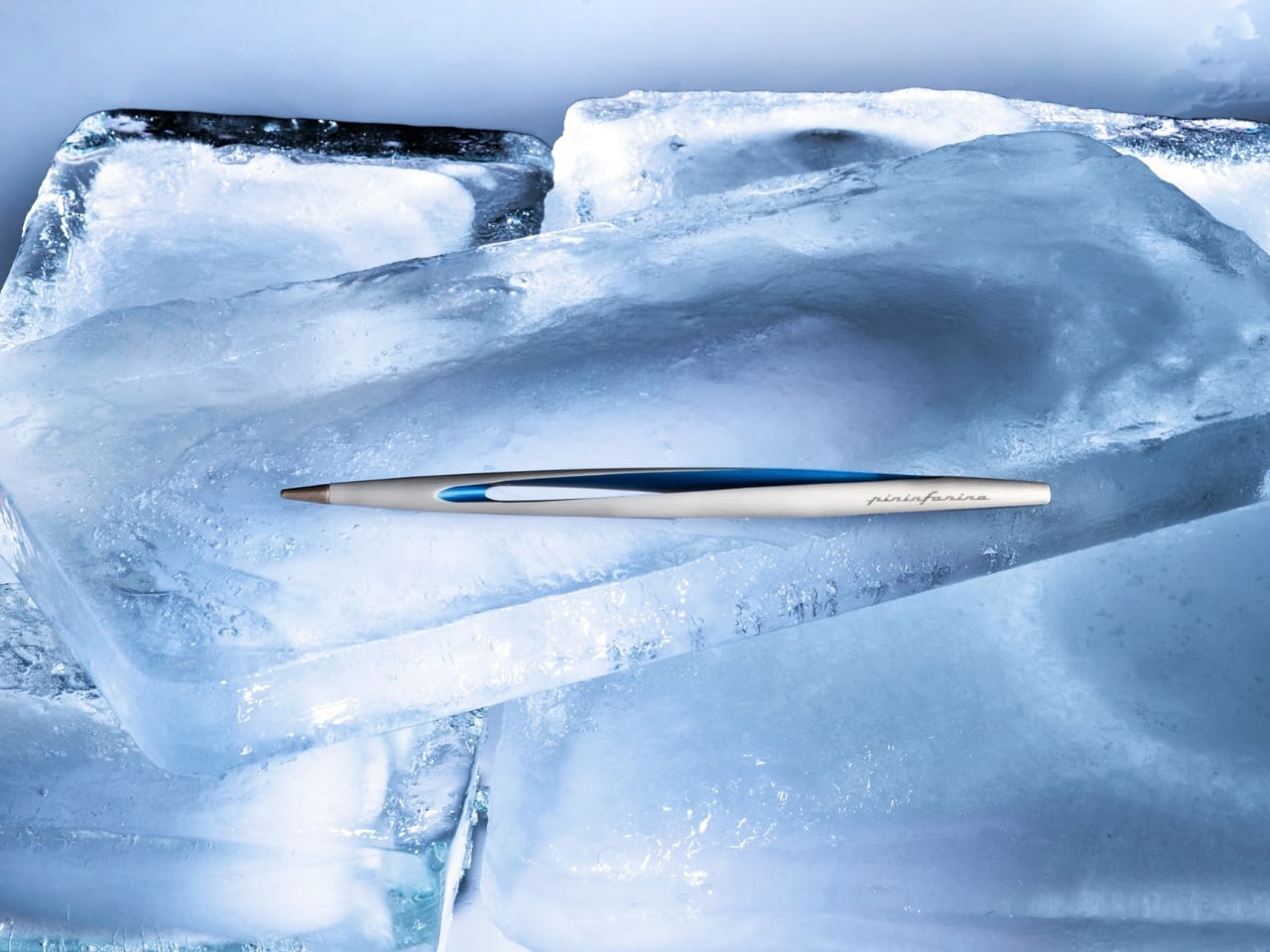
3. Pininfarina Aero Ethergraf

Pininfarina’s name lives in the curves of Ferraris and Maseratis, but the Aero Ethergraf makes a more interesting argument — that restraint is the harder design problem. Made from aerospace-grade aluminum, it weighs 17 grams and measures 160mm, numbers that don’t fully prepare you for how it sits in the hand. The tip is Ethergraf, a patented metal alloy that writes through oxidation, leaving a permanent mark on paper without a single drop of ink. No cartridges. No refills. No maintenance, ever.

It ships paired with a raw concrete stand — a deliberate material contrast that, on a desk, reads as sculpture rather than office supply. Handcrafted in Italy and rooted in a technique older than the modern ballpoint, the Aero makes every other writing instrument on the desk feel temporary by comparison. For a man who already has everything, it’s a quiet, permanent counterargument. Because nothing else quite like it exists on any desk, anywhere.

What We Like

  • Ethergraf tip writes indefinitely through oxidation — zero maintenance, zero refills, ever
  • Concrete stand creates genuine material tension that turns the pen into desk sculpture

What We Dislike

  • Performs best on dedicated paper — not every standard notebook will reveal the tip’s quality clearly
  • Concrete stand adds bulk that may feel heavy in a stripped-back minimal setup

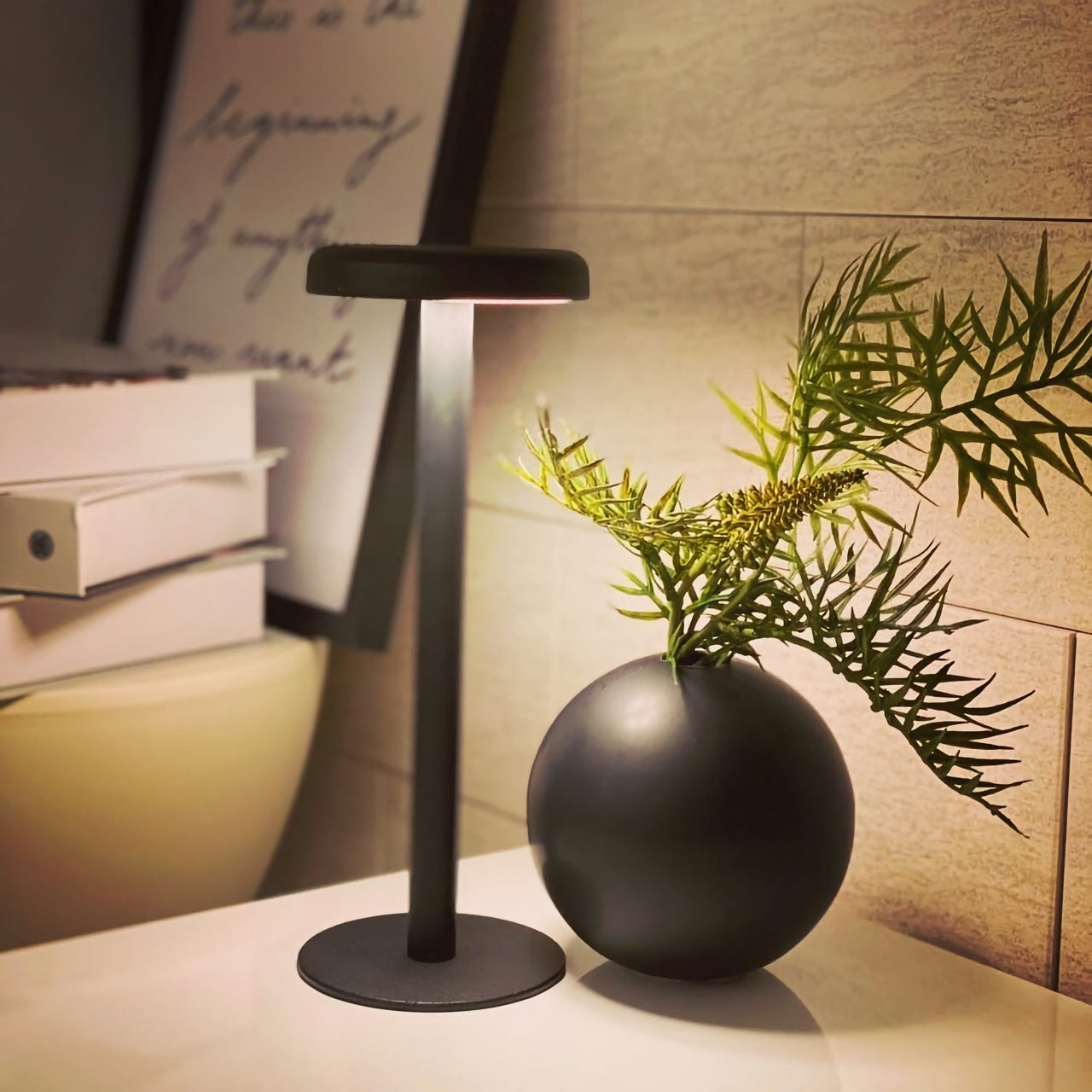
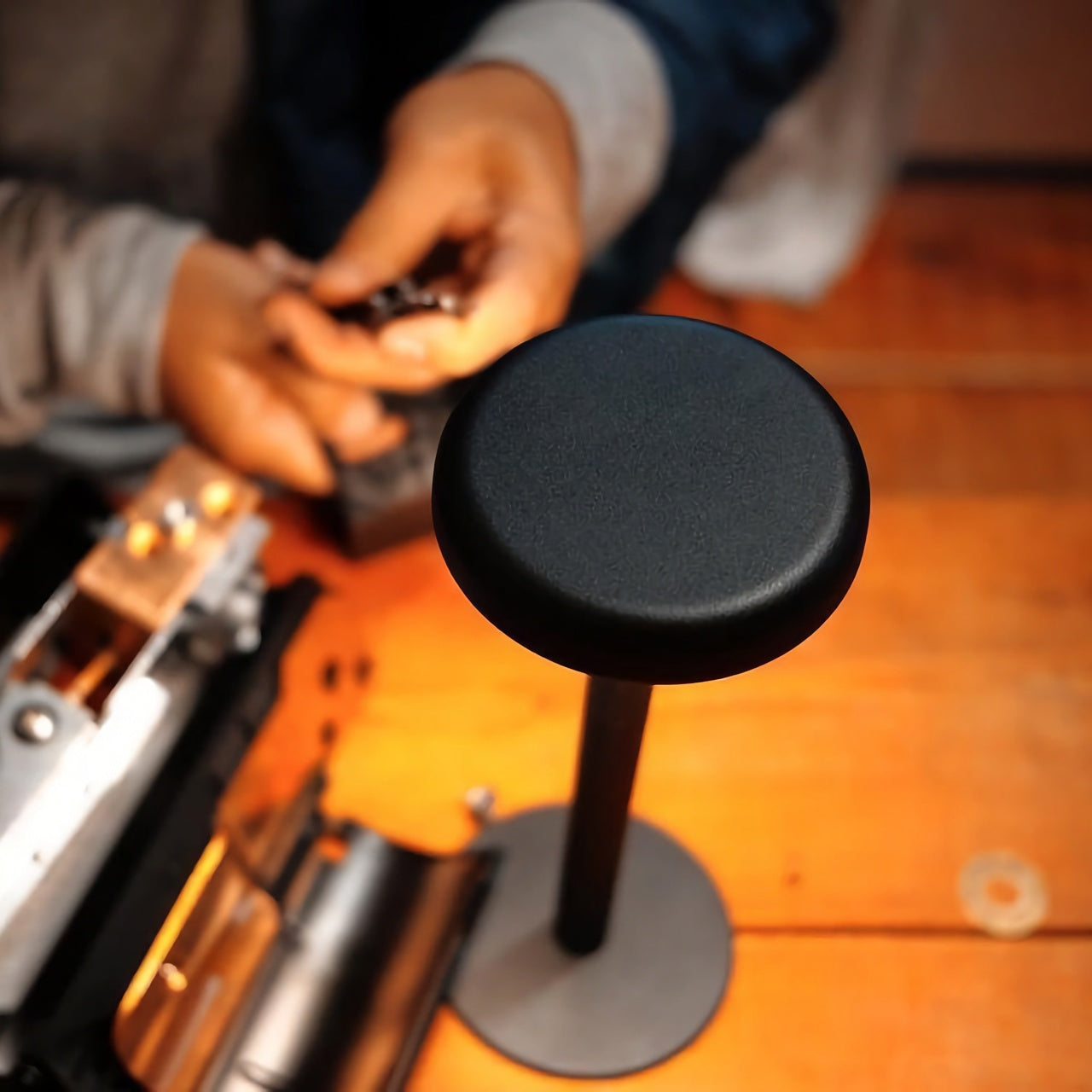
4. Anywhere-Use Lamp

The Anywhere-Use Lamp starts from one honest premise: good light shouldn’t be tethered to a wall. Running on four AA batteries, it removes every cord and cable from the equation, making it as functional in a hotel room, on a bookshelf, or in an outdoor corner as it is on a permanent desk. Six high color rendering LEDs produce warm, soft output that settles naturally into a space without announcing itself as the room’s loudest design decision. The result is light that feels like it always belonged where you put it.

Available in black, white, and an Industrial edition with a scratch-detailed metal base that treats surface wear as character rather than damage, it holds across every desk aesthetic without effort. Pressing any edge of the cap cycles through four brightness levels with a haptic click that makes even that small interaction feel considered. Modular construction means it breaks down flat for a bag. At $149, the Anywhere-Use Lamp is one of the most versatile objects on this list — earning its price through location freedom alone, before you’ve even switched it on.

Click Here to Buy Now: $149.00

What We Like

  • AA battery power removes all cord dependency and gives it genuine, unconditional location freedom
  • Industrial edition’s scratch-detailed base treats material wear as intentional character, not a flaw

What We Dislike

  • AA batteries mean ongoing replacement costs compared to a rechargeable alternative
  • Four brightness levels may feel limited for those who prefer more granular control over output

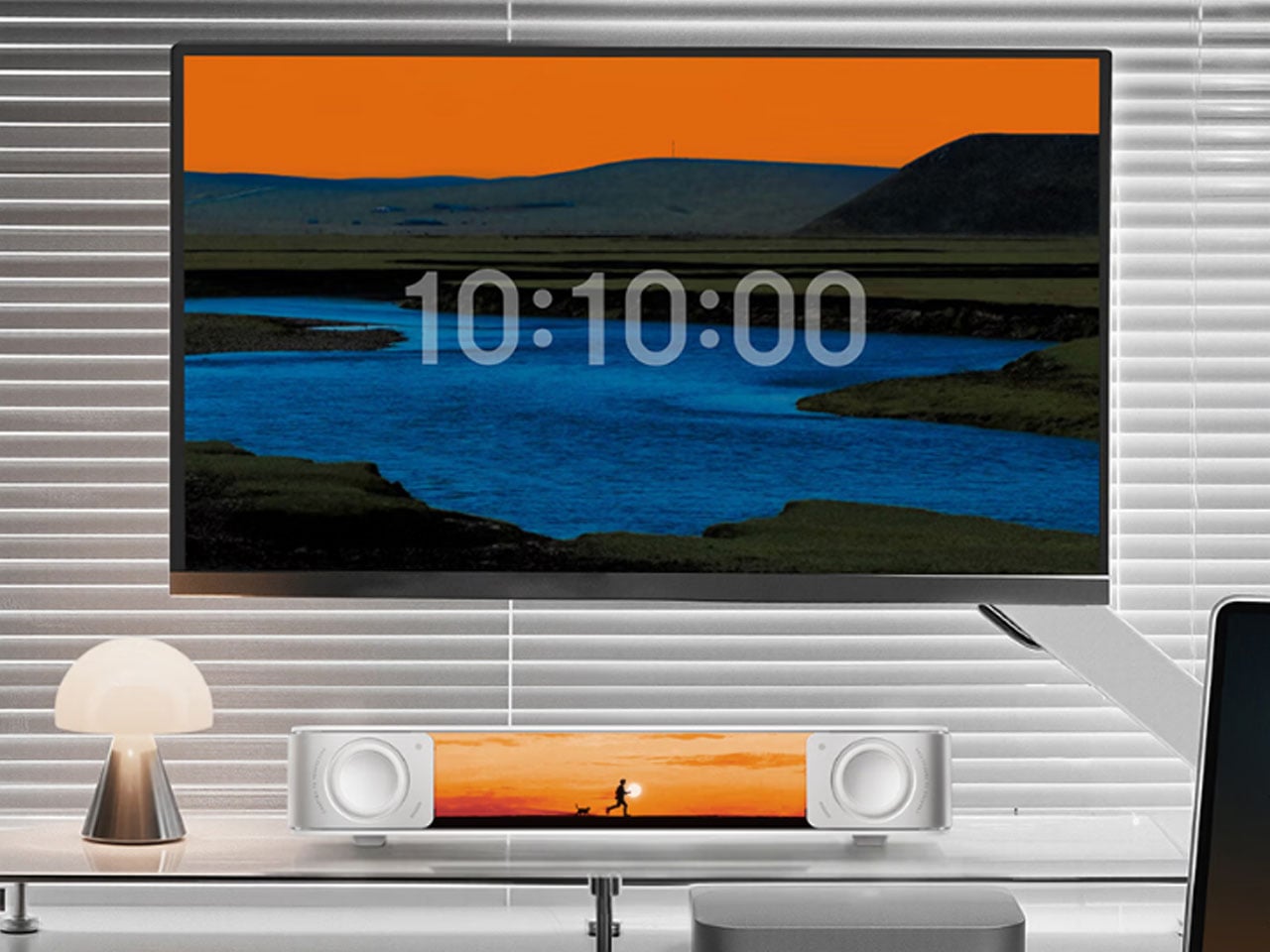
5. Edifier Melo Bar

The Edifier Melo Bar does the thing most desk speaker bars never quite pull off — it makes RGB feel like a design decision rather than a hardware checkbox. Three distinct audio modes handle music, gaming, and movie listening, each tuned differently and each backed by near-field sound clear enough to remind you how much you’ve been tolerating laptop audio. The interchangeable front panels are the detail that separates it from every other bar on the market, letting the object adapt to the desk instead of demanding the desk adapt around it.

The light output is deliberately understated for something that supports 16.8 million colors and 15 carefully tuned lighting themes. It frames a setup rather than overwhelming one — adding ambient depth without demanding that the desk revolve around it. For a home office that already has the monitor, the keyboard, and the cable routing handled, this is the piece that completes the sensory experience rather than complicating it. Sound and light are treated as a single designed object. That’s harder to achieve than it sounds, and the Melo Bar gets it consistently right.

What We Like

  • Interchangeable front panels let the speaker blend into or intentionally accent any desk aesthetic
  • Three dedicated audio modes handle every use case without asking for a compromise

What We Dislike

  • RGB-heavy profile may feel redundant on setups that already favor a completely dark aesthetic
  • Near-field performance is strongest close to the desk — less effective across a larger open room

The Right Desk Tells You Something About the Person Behind It

Each of these five objects earns its place for reasons that go further than specs. The Mosaic learns. The Sakura puzzle challenges. The Aero Ethergraf lasts forever. The Anywhere-Use Lamp untethers. The Melo Bar performs and illuminates. None of them exist because a spec sheet demanded them — they exist because someone asked what a desk should actually feel like and then had the discipline to build the answer without compromise.

The man who says he has everything doesn’t need another gadget. He needs the object he didn’t know was missing — and all five of these are exactly that. Each carries intention, permanence, and the kind of quiet confidence that makes a desk feel genuinely complete rather than just assembled. Buy one, and it earns its keep. Buy all five, and you’ve given someone the most considered setup they’ve ever worked from.

The post The 5 Best Home Office Gifts for the Guy Who Thinks He Has Everything — He Doesn’t Have These first appeared on Yanko Design.
5 Best Father’s Day Gifts for the Dad Who Thinks Good Design Actually Matters

Most Father’s Day gifts start and end with good intentions. A nice watch, a tool kit, a gift card wrapped in tissue paper. They say “I thought of you” without really saying much else. But some dads notice when something is well-made, keep objects long after they stop being new, and believe the things around them say something about how they live. If that sounds familiar, this list is for you.

The five gifts below aren’t the most expensive things you’ll find this season, and that’s the point. Each one earns its place through material honesty, considered proportions, or a mechanical logic that just feels right. Some are built to last decades. One runs indefinitely without a refill. Another turns a scattered desk into something worth photographing. All five were chosen because they respect the intelligence of the person receiving them.

1. Pininfarina Aero Ethergraf — The Forever Pen

Pininfarina built its reputation on some of the most celebrated automotive silhouettes in history, including Ferrari and Maserati bodies that turned heads for decades. The Aero Ethergraf brings that same design philosophy down to the scale of a writing instrument. Crafted from aerospace-grade aluminum, weighing just 17 grams and measuring 160mm in length, it arrives paired with a raw concrete stand that sits beside it on the desk like a quiet still-life. Made in Italy, built to last.

What makes it genuinely unusual is that it contains no ink. The Ethergraf metal alloy tip writes through oxidation, leaving a graphite-like mark on paper without a cartridge, a cap to misplace, or a refill cycle to manage. The line is precise and smudge-resistant. The pen never dries out and never runs out. For someone who has spent years maintaining fountain pens or replacing rollerball inserts, this inverts the entire expectation of what a writing tool asks of you.

What We Like:

  • The Ethergraf tip writes indefinitely through oxidation, with no ink, no cartridges, and no refills ever needed
  • Pininfarina’s automotive design DNA reads clearly in the body: aerodynamic, precise, and quietly confident about its own beauty

What We Dislike:

  • The oxidation-based line runs lighter than a standard ballpoint, which will not suit every writing style or paper type
  • The raw concrete stand, while a genuinely beautiful pairing, adds considerable volume and weight to the overall package

2. Foldline Pen Roll

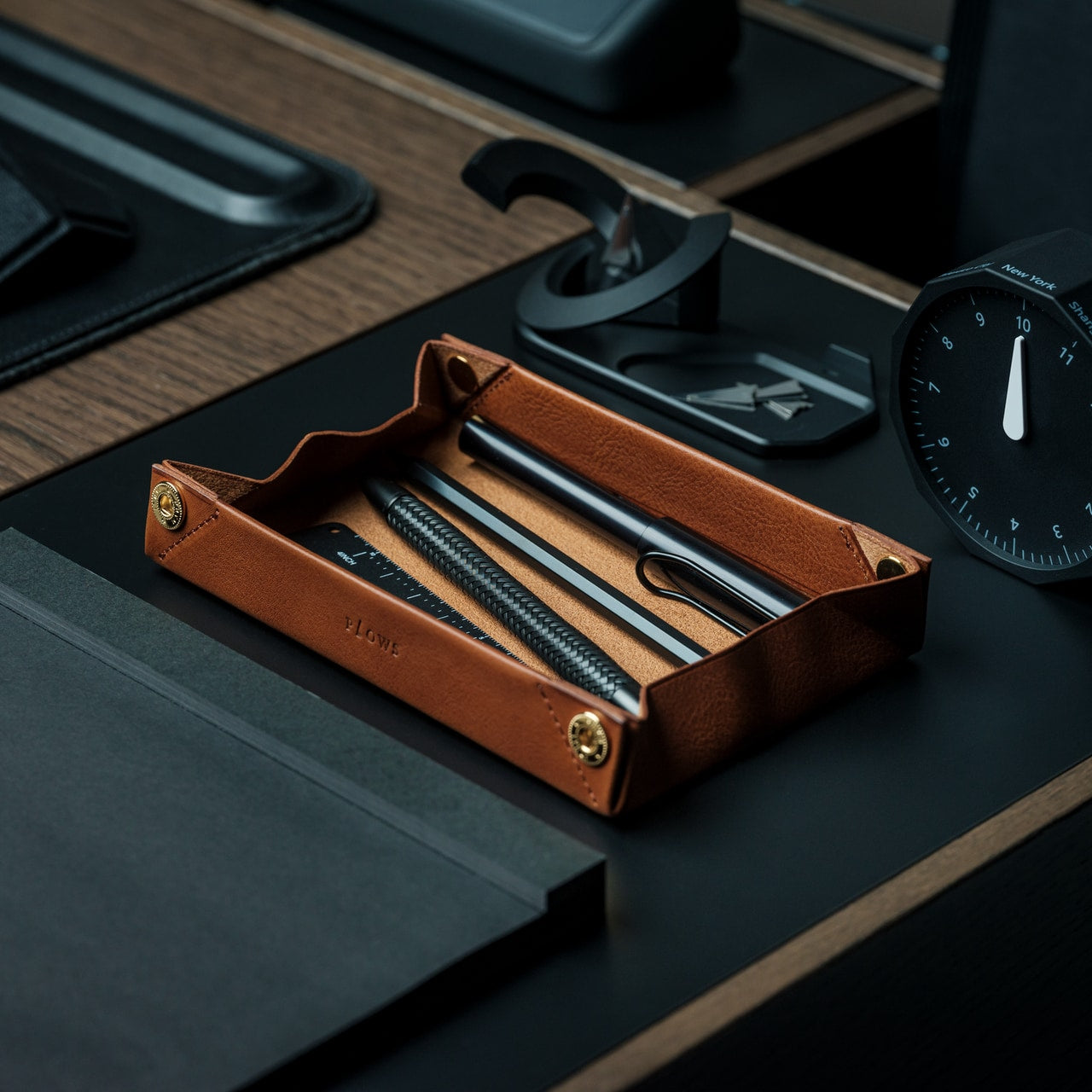
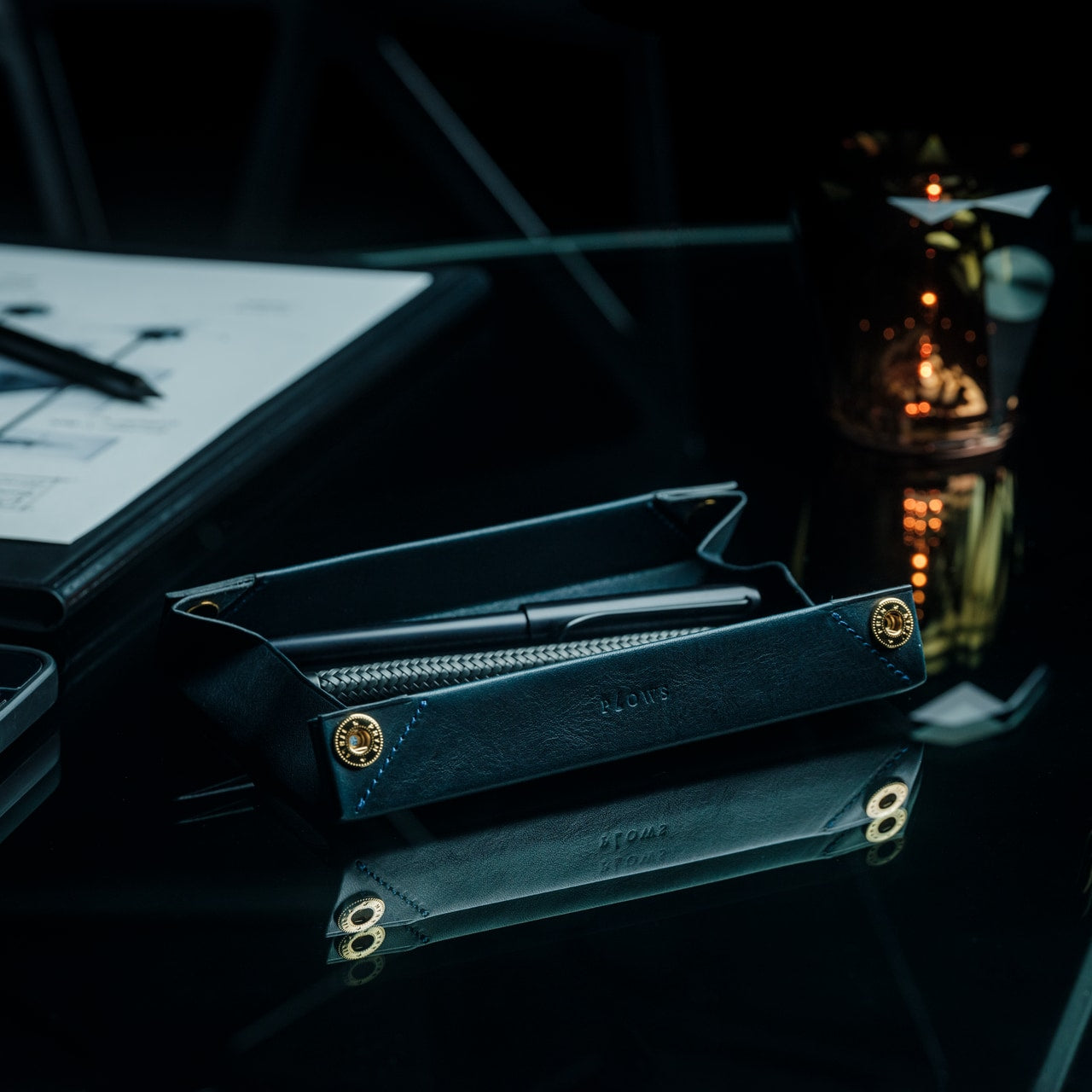
The FoldLine Pen Roll comes from PLOWS, a Japanese leather goods brand founded by a farming company, which may explain why its objects carry a particular kind of patience. The roll is cut from a single piece of Minerva Box leather sourced from Badalassi Carlo, an Italian tannery known for vegetable-tanned hides enriched with cow leg oil. That combination of material sourcing and hand-formed construction produces something that develops a patina entirely personal to how it is used and who carries it.

Structurally, it unfolds in two steps and under two seconds into a tray that holds pens in place without stitched slots or rattling. The entire form comes from precise folds rather than seams or inserts. A large machined snap from Italy’s PRYM closes the roll with satisfying solidity. The symmetrical design opens cleanly from either side, making it equally usable whether you are left- or right-handed.

Click Here to Buy Now: $135.00

What We Like:

  • A single piece of Minerva Box leather that develops a personal patina over time, making each roll gradually distinct to its owner
  • No designated top or bottom, no correct side to open from: a small but considered detail that removes daily friction entirely

What We Dislike:

  • The value is only legible to someone who already appreciates quality leather goods, making it a harder sell as a blind gift
  • Only a few units remain in stock, so availability is not guaranteed as Father’s Day approaches

3. Orbitkey Grid Desk Organizer

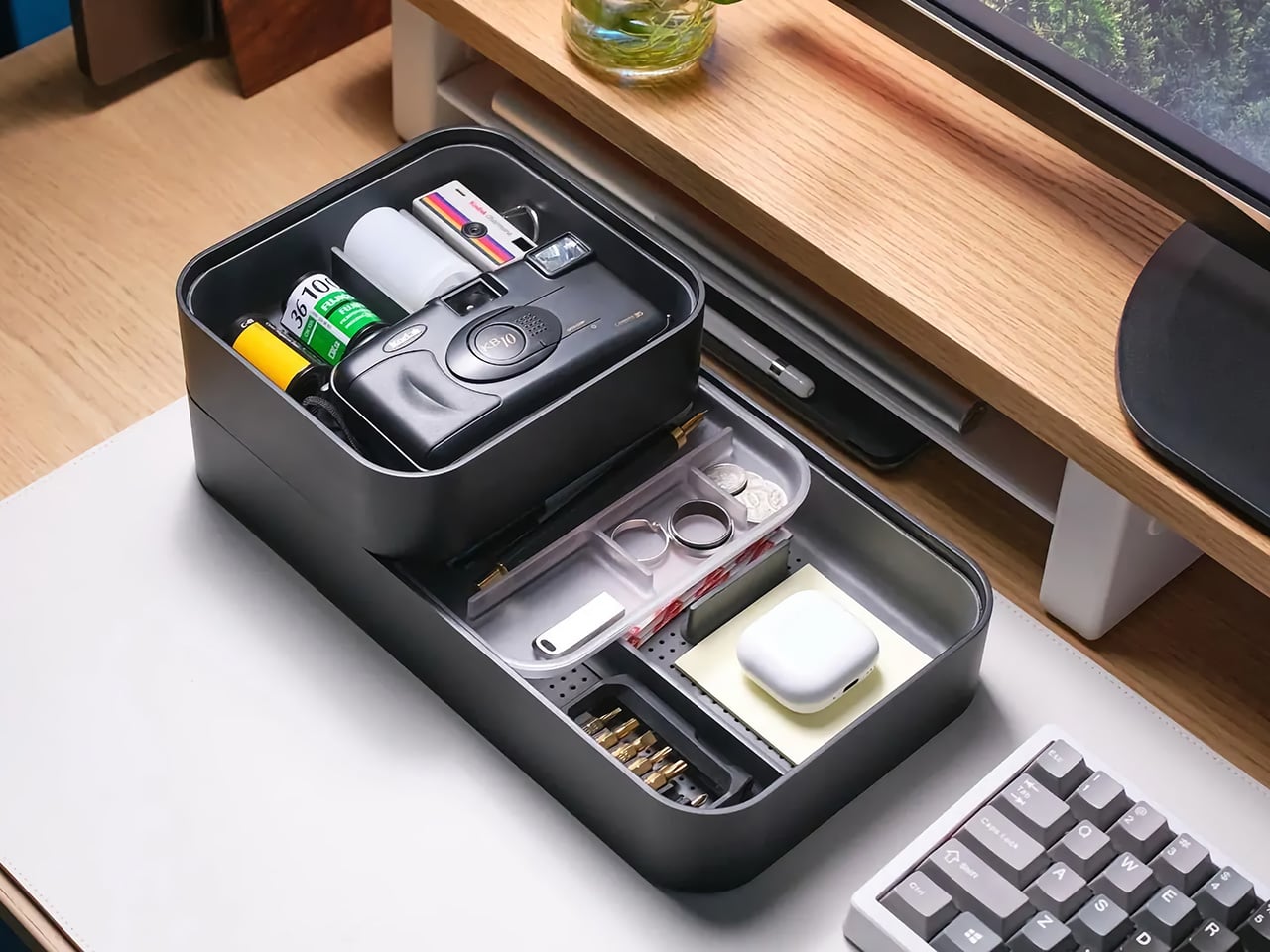
Orbitkey built its name around the idea that small daily frictions deserve serious design attention. The Grid Desk Organizer extends that logic into a broader desktop format. Its perforated tray base accepts snap-in dividers at any position, so the internal layout responds to whatever lives inside it rather than demanding objects conform to fixed compartments. Long dividers run the full tray depth while shorter ones slot in crosswise, and any arrangement can be lifted out and reconfigured in seconds. The system earns the word modular.

A soft-touch rubberized interior lining protects items from scratching and gives the tray a tactile quality that cheaper desk accessories rarely bother with. Silicone feet on the base prevent it from migrating across hard surfaces. The lid doubles as a valet tray on top, and its handle converts into a portrait phone stand when set upright.

Click Here to Buy Now: $42 $49.90 (16% off). Hurry, only a few left! Raised over $428,000.

What We Like:

  • The patent-pending snap-divider system adapts to the contents rather than demanding conformity, a structural logic that sounds minor until you experience the alternative
  • Three colorways (Black, Stone, and Terracotta) land in the space between generic and overdone, making it a natural fit for almost any desk setup

What We Dislike:

  • The $42 base price covers the standard configuration, but adding the Mini version raises the total cost beyond the initial impression

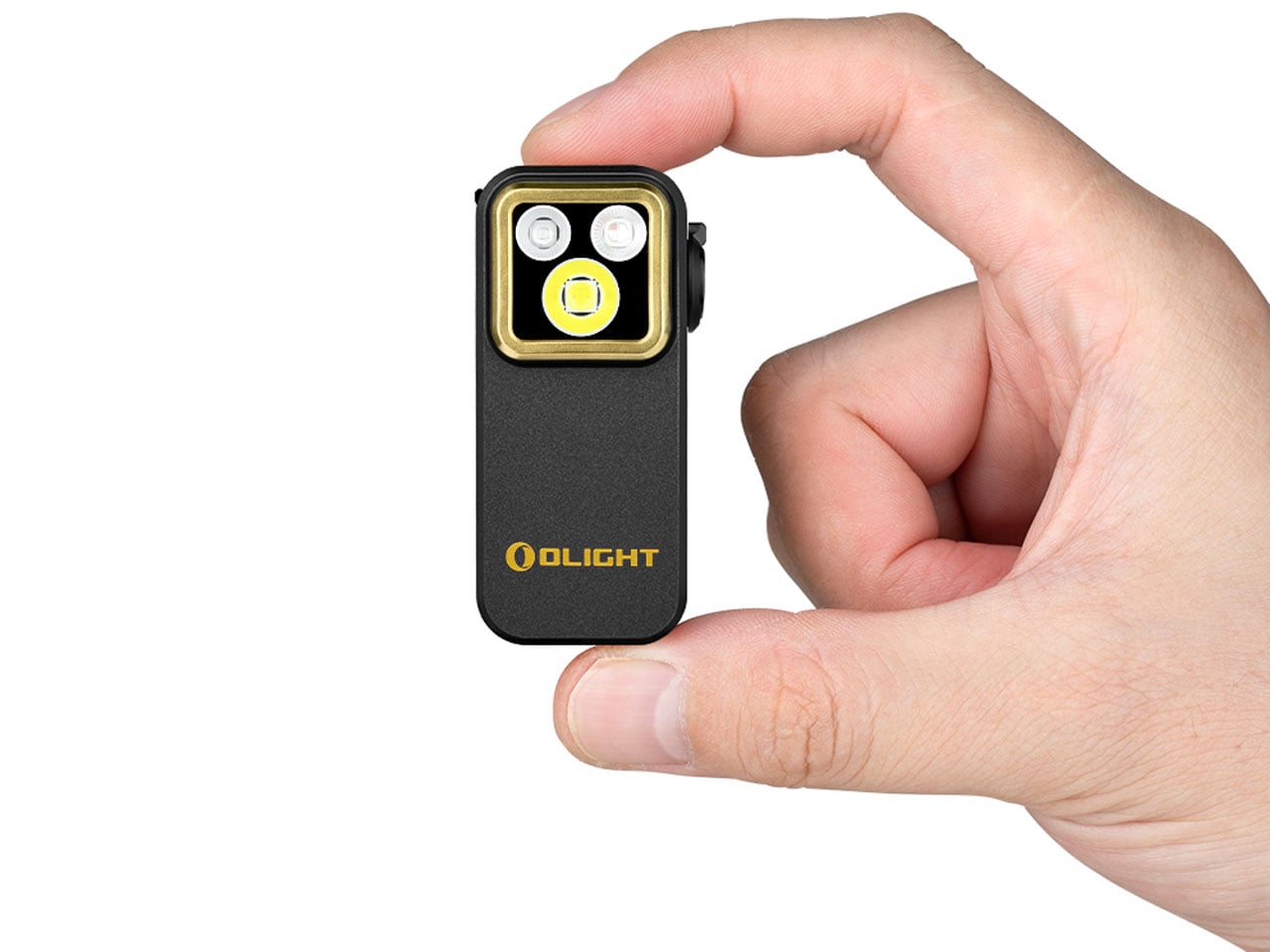
4. Olight Oclip Pro S EDC Flashlight

At 57 × 28 × 27 mm and 53 grams, the Olight Oclip Pro S is the kind of EDC tool that earns its carry weight by doing considerably more than one thing. Its integrated clip handles pockets, bags, and gear straps, while a magnetic attachment option makes it a capable hands-free light for tasks that require both hands. The body is compact enough to disappear in a pocket until it becomes exactly what is needed, which is the best quality a carry tool can have.

The 5-in-1 lighting system is what elevates it beyond a simple flashlight. Primary white LEDs deliver up to 600 lumens with an 80-meter beam distance, switchable between flood and spotlight modes. RGB illumination adds red, green, and blue signaling options. A 365nm UV light extends its usefulness into detecting fluorescent materials and checking cleanliness in specialized situations. A side dial controls the entire system intuitively, and battery life reaches up to 144 hours in low mode with USB-C charging throughout.

What We Like:

  • Five distinct lighting modes packed into a 53-gram body is a genuine engineering feat, and the UV capability is the kind of quiet surprise that distinguishes thoughtful design from merely competent design
  • USB-C charging integrates it cleanly into any modern kit without the need for proprietary cables or spare batteries

What We Dislike:

  • A dad who primarily needs a reliable everyday flashlight may never explore most of what the Oclip Pro S actually offers
  • At maximum brightness, thermal management limits extended runtime, which is a reasonable engineering trade-off but worth knowing before relying on it in demanding conditions

5. Side A Cassette Speaker

The Side A Cassette Speaker is shaped exactly like a real mixtape: transparent shell, side A label, the whole thing, and it makes no apologies for that. At $49, it is a speaker you would buy for what it looks like before you hear what it sounds like. The design is faithful enough to prompt a genuine double-take. Weighing just 80 grams with the clear storage case that doubles as a display stand, it occupies almost no space on a shelf but immediately defines wherever it sits.

Bluetooth 5.3 handles wireless connection to phones, tablets, and laptops. A microSD card slot supports offline MP3 playback for anyone who still curates music rather than just streaming it. Battery life runs to six hours at full volume, with a two-hour recharge via the included USB-C cable. The sound is tuned to evoke analog warmth rather than clinical accuracy, which is entirely the right call for the character of the object. For a dad who remembers making mixtapes, this does the emotional work before it plays a single note.

Click Here to Buy Now: $49.00

What We Like:

  • The cassette form is executed with enough fidelity to spark a real conversation, not just a brief smile before it gets set aside on a shelf
  • microSD offline playback is a thoughtful addition for anyone who still curates their own playlists rather than surrendering entirely to an algorithm

What We Dislike:

  • Audio performance leans toward warmth and character rather than reference quality, which suits the object perfectly but is worth setting expectations for anyone anticipating hi-fi output at this price
  • Six-hour battery life is modest compared to larger Bluetooth speakers, though the size makes the trade-off obvious and entirely forgivable

Good Design Doesn’t Need a Bow on Top

The best gift for a design-minded dad isn’t the most expensive thing on the shelf. It’s the one that shows you understood something about how he thinks and what he values. A pen that never needs ink. A leather roll shaped by hand in Japan. A flashlight that carries five functions in a 53-gram body. These aren’t objects that need explaining when someone picks them up. They make their case on their own.

Each pick here falls under $135 and spans a range of interests from desk organization to EDC carry to audio nostalgia. What they share is a commitment to material honesty and considered function. Father’s Day doesn’t have to be another gift that gets thanked and quietly forgotten. Give something built to last, and there is a good chance it becomes the thing he mentions to people for years, without quite being able to explain why.

The post 5 Best Father’s Day Gifts for the Dad Who Thinks Good Design Actually Matters first appeared on Yanko Design.

10 Best Graduation Gifts For 2026 Grads That Solve the First-Apartment Shuffle

The first apartment is never really about square footage. It’s about the gap between the life you imagined and the room staring back at you. White walls, borrowed furniture, a kitchen where nothing is where it should be. Graduation gifts usually fill that gap with sentiment. These fill it with design. Ten objects chosen because they solve something real, look good doing it, and make a bare space feel considered.

None of them requires assembly instructions or a decorator on speed dial. They fit wherever there’s room, carry their weight in both form and function, and give the impression that whoever received them has been thinking about how to live well for longer than they have. That’s the point of a good graduation gift. Not something used once and forgotten. Something that makes the shuffle a little easier to land.

1. ClearFrame CD Player

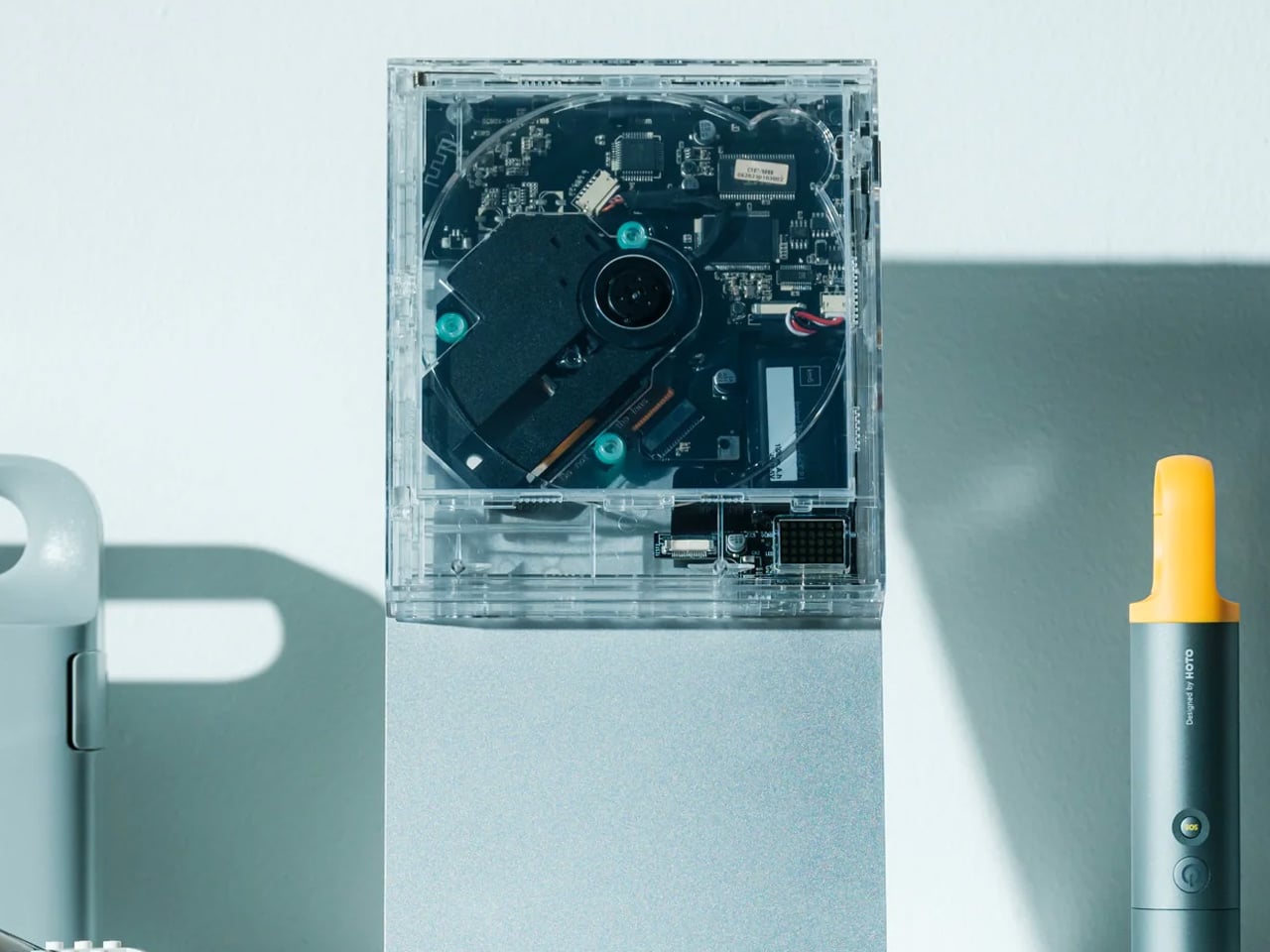
The ClearFrame CD Player is for the grad who already knows what they’re about. It plays physical CDs through a transparent frame that keeps the disc visible while it spins, turning the act of listening into something you can actually watch. In a generation that grew up on invisible streaming, there’s something genuinely refreshing about a music player that makes its mechanism the main event rather than hiding it behind a matte plastic casing.

A first apartment shelf rarely has any visual anchor in the early weeks. The ClearFrame takes up almost no visual weight while still giving a room a focal point worth looking at. It earns its place not just as a player but as an object with a point of view, which matters when you’re building a space from scratch, and everything you put in it says something about who you are before a single thing is hung on the walls.

Click Here to Buy Now: $200.00

What we like

  • The transparent frame makes the spinning disc part of the visual experience, turning playback into something physical and deliberate in a way that streaming platforms never quite replicate.
  • The compact, minimal footprint means it earns shelf or desk space without displacing other objects, sitting confidently without demanding the room be arranged around it.

What we dislike

  • Getting real value from the ClearFrame requires an existing CD collection, which means it works best as a gift for someone already invested in physical music formats.
  • The analog format is a deliberate choice that won’t resonate with graduates who have no interest in stepping back from digital and streaming convenience.

2. Rokform 3-in-1 Foldable Wireless Charging Stand

The nightstand problem in a first apartment isn’t about the nightstand. It’s about everything that ends up on it. Three devices, three cables, a different charger for each one, and a surface that looked intentional for exactly two days before it didn’t. The Rokform 3-in-1 Foldable Wireless Charging Stand replaces all of it with a single zinc alloy and glass unit that charges a phone at 15W, an Apple Watch from a fold-out arm, and earbuds on a separate pad. One cable in. Three devices done.

The build quality is the detail that separates this from the category it belongs to. Zinc alloy and glass don’t flex or slide. The stand stays exactly where you put it at midnight when you’re reaching for your phone by feel. For a grad setting up a bedside situation in a space that has no established routine yet, the Rokform removes one of the small daily frictions before it has a chance to become a habit. A charged phone, a charged watch, and a surface that looks considered rather than accumulated.

What we like

  • A single USB-C cable powers all three charging surfaces simultaneously, collapsing an entire nightstand cable situation into one clean connection that takes thirty seconds to set up.
  • Zinc alloy and glass construction put the Rokform in a different material category from the plastic pads that flex and slide, giving it a density and permanence that reads immediately in the hand.

What we dislike

  • The Apple Watch arm is purpose-built for that ecosystem, which means anyone outside the Apple Watch world loses a full third of the unit’s function without a meaningful workaround available.
  • At $100, the Rokform is priced above the average wireless charger, and those who only need to charge a single device will find the multi-device design hard to justify at that price point.

3. 3D-Printed Kumiko Panel

Traditional Kumiko panels are the kind of object that stops a conversation cold. The geometric latticework, built from interlocking wooden slivers without a single nail, has been a fixture of Japanese craft for centuries. Authentic wall-sized versions start around $2,700 and rarely leave galleries. This 3D-printed version by a Canadian maker — three months in the perfecting — brings that same hypnotic interplay of light and shadow to a first apartment wall at a fraction of the price and commitment.

A blank wall is the first problem every new apartment presents, and the last one anyone figures out how to solve. A framed print says something. A Kumiko panel says something else entirely — that the person who hung it knows exactly where they stand on craft, patience, and the kind of beauty that doesn’t need to explain itself. It catches light differently through the day, creates depth on a flat surface, and turns the emptiest wall in a room into the one everyone ends up standing closest to.

What we like

  • The geometric latticework creates shifting light and shadow patterns that change with the time of day, giving a blank wall a visual life that no poster or print can replicate.
  • At a fraction of the cost of authentic hand-carved Kumiko panels, it brings genuine craft-referencing design into a first apartment without the gallery price tag attached.

What we dislike

  • The 3D-printed plastic construction lacks the warmth and material depth of traditional wood Kumiko, which may feel like a meaningful compromise to those familiar with the authentic version.
  • The panel works best as a wall-mounted piece, which means hanging hardware and a commitment to a specific spot — something a first apartment with rental restrictions may complicate.

4. Ritual Card Diffuser

The first thing a new apartment needs isn’t furniture. It’s a scent that makes it feel like yours. The Ritual Card Diffuser from the Yanko Design shop uses fragrance cards to release scent gradually, building an atmosphere that doesn’t announce itself so much as settle in. No plug, no maintenance cycle, nothing that fights for counter space. It works in the background, the way the best objects do, making the room feel lived in before it actually is.

For a grad moving into their first real space, the Ritual Card Diffuser is less about fragrance and more about the idea that this room has been thought about. That effort matters. The card format keeps things clean and swappable, so the scent can shift with the season or the mood without committing to a single identity. For someone figuring out who they are in a new space, that flexibility lands exactly right from the very first week.

Click Here to Buy Now: $89.00

What we like

  • The card system allows scent profiles to be swapped without replacing the unit, giving it flexibility that traditional reed diffusers simply cannot match as taste evolves.
  • No cord, no heat element, and no liquid means it occupies no counter real estate and creates zero maintenance overhead in a space still being figured out.

What we dislike

  • Replacement cards are a recurring cost that adds up over time and needs to be factored in when gifting this to someone on a tight post-graduation budget.
  • The scent throw may feel subtle in open-plan spaces or rooms with high ceilings, where a stronger diffusion method might be more appropriate.

5. Orgdot N200 Desktop Speaker

Bluetooth speakers are everywhere, but few carry this much personality. The Orgdot N200, designed by Shu Zhang, pulls from industrial and steampunk aesthetics in a way that sits closer to Teenage Engineering than anything you’d find at a big-box electronics retailer. Exposed mechanical elements and a retro-modern silhouette give it a design sensibility that reads just as well from across a room as it does up close. It connects wirelessly and earns whatever surface it lands on.

In a first apartment where the speaker is often the only real sound system in the space, the N200 carries that responsibility well. It fills the room visually before you’ve even pressed play, and that matters in a space that doesn’t have much else going on yet. Pairing it with the ClearFrame CD Player builds a small analog audio corner that looks curated rather than assembled. Two objects. Real presence. No interior design degree required.

What we like

  • The retro-industrial design aesthetic gives a first apartment an instant visual anchor at desk or shelf level, doing decorative work that most Bluetooth speakers never attempt.
  • Wireless Bluetooth connectivity removes the need for cable management entirely, keeping the surface clean and the setup honest to the minimalist silhouette the N200 projects.

What we dislike

  • The distinctive aesthetic is a strong personal statement that reads very specifically, and it genuinely won’t suit every taste or complement every design direction a room might take.
  • Desktop placement limits the direction the sound can effectively project, which may leave larger rooms feeling like the speaker is working harder than it should have to.

6. AromaCraft Clothes Brush

Lint rollers solve a problem. The Aromacraft Clothes Brush solves it better. It handles the everyday task of removing lint, dust, and the general debris of daily life from clothing while folding a subtle aroma element into the ritual. It’s a small but meaningful shift in how a mundane task feels, one that turns the two-minute pre-work brush-down into something closer to a considered grooming moment worth actually doing.

For a grad entering a professional world where first impressions matter more than they did in a lecture hall, getting dressed well becomes a new priority. The Aromacraft Clothes Brush handles the physical part and adds a sensory layer that a standard bristle brush simply ignores. It’s the kind of object that makes morning routines feel like they were designed rather than stumbled into. Small enough to store on any shelf, purposeful enough to reach for every single day.

Click Here to Buy Now: $149.00

What we like

  • Combining garment care and scent into one object removes the need for two separate tools, which matters in a first apartment where counter and shelf space are genuinely limited.
  • The aroma element reframes a utilitarian task as part of a morning ritual, which is a small but real shift in how a workday begins for someone newly navigating professional life.

What we dislike

  • The aroma component will eventually lose its potency and need to be refreshed or replaced, adding a recurring step that a standard clothes brush simply doesn’t require.
  • Graduates who are sensitive to fragrance or prefer entirely scent-neutral routines won’t benefit from the secondary function the Aromacraft is specifically built around.

7. RUNERO PRO Coffee Maker

Designed by Ksenya Ilyukhina for Unicum, the RUNERO PRO lands in a kitchen and immediately makes the rest of the counter look like a placeholder. The brushed aluminum exterior is dense and considered, and the 15-inch LED touchscreen keeps controls front and center without adding visual clutter. Face ID recognition and voice control mean it learns how each person takes their coffee and starts acting accordingly, removing the ritual fumbling of a first-time morning routine from the equation.

The RUNERO PRO is not the kind of coffee machine you buy because you need coffee. You can get coffee anywhere. It’s the kind you buy because the kitchen is where a first apartment gets taken seriously, and the right appliance signals that you’re starting this chapter with real intention. For a grad who spent four years surviving on campus brews, landing a machine that knows their order from a glance changes the rhythm of every weekday morning.

What we like

  • Face ID recognition and voice control make personalizing and recalling coffee preferences genuinely effortless, removing the repetitive manual input that most smart appliances still demand daily.
  • The brushed aluminum construction and large touchscreen interface place the RUNERO PRO visually above the category of kitchen appliances it technically belongs to, which matters when the counter is also the room’s focal point.

What we dislike

  • The high-tech interface adds meaningful complexity that may feel excessive for those who want a reliable, straightforward coffee machine without a learning curve attached to it.
  • The premium build and integrated technology come at a price point that commits to the kitchen in a way that not every graduating budget can reasonably absorb in year one.

8. Fellow Stagg EKG Pro Kettle

The Fellow Stagg EKG Pro has been the design world’s favorite electric kettle long enough to earn its reputation several times over. The gooseneck spout handles pour-over coffee with precision, but the design reads just as well when it’s sitting on the counter doing nothing at all. Matte finish, a handle that earns its curve, and temperature precision through a minimal dial interface. It’s the kettle that makes a first kitchen counter look like someone considered exactly what they put on it.

Alongside the RUNERO PRO, the Stagg EKG forms the second half of a morning kitchen that actually functions. Where the RUNERO handles the automated side of coffee, the Stagg gives control back over water temperature for pour-over, tea, or anything that asks for more precision than a standard kettle provides. For a grad building a first kitchen from the counter outward, both objects together say more about how they intend to live than most furniture choices ever could.

What we like

  • Precision temperature control makes the Stagg EKG genuinely useful across pour-over coffee, tea, and any other preparation that demands more than a simple boil and pour.
  • The gooseneck silhouette has earned its place as a design standard that transcends trend cycles, meaning it will still look right on the counter five years from now.

What we dislike

  • The premium price point is a real consideration for a kettle, even one this well resolved, and it may feel difficult to justify against other first-apartment priorities competing for the same budget.
  • The capacity is calibrated toward one or two people, which means it may feel undersized in shared living situations where multiple people need hot water at the same time.

9. TWIST Side Table

The TWIST side table is made from a single sheet of metal folded in a continuous loop to form a tabletop, an integrated storage ledge, and a carry handle in one uninterrupted gesture. The matte light beige body pairs with a pale wood base and a small orange accent at the handle. It weighs almost nothing visually. In a first apartment where every surface is being asked to do more than one job, the TWIST handles it without complaint, holding a drink, a book, a phone, and a spare set of keys without making any of it feel like a compromise.

The carry handle is not an afterthought. It’s part of the same metal loop that forms the table, which means the whole object relocates in one motion. From beside the bed to beside the couch to near the window where the light hits differently on a Sunday. For a grad whose first apartment still has furniture in flux, an object that moves as easily as the plan does becomes indispensable by the second week of living with it.

What we like

  • The single-piece metal construction means the tabletop, storage shelf, and carry handle are all one continuous form, giving the TWIST a structural honesty that assembled furniture simply cannot match.
  • The integrated handle makes relocation a one-handed, one-second decision, which matters in a first apartment where the ideal layout takes several months of trial to actually arrive at.

What we dislike

  • The circular metal profile limits the usable surface area, which means anything larger than a mug, a book, or a phone asks for more real estate than the tabletop comfortably offers.
  • The concept-driven design places aesthetics at the center of the object, and those who prioritize pure utility over visual intention may find other side tables a more practical first apartment investment.

10. Arca Modular Furniture System

The Arca modular system from Elements Studio is the most practical thing on this list and possibly the most useful gift a 2026 grad can receive. Each piece works as a nightstand, a bench, a bookshelf, or a storage unit, depending on what the space needs that week. Stack them vertically for a shelf tower. Line them horizontally for a low credenza. Pull one out to use as a standalone stool. No tools required, no configuration that can’t be undone in sixty seconds.

The first apartment rarely stays the same for more than a few months. Roommates arrive and leave. Jobs change the schedule. A bedroom becomes a home office on Tuesday and a reading room by the weekend. The Arca grows with all of it because it was designed to. For a grad who is spending the next few years figuring out how they want to live, this is the furniture system that doesn’t ask them to decide right now. It just adapts, reconfigures, and moves with them into whatever comes next.

What we like

  • The tool-free modular configuration means the entire system can be rearranged to serve a completely different function in under a minute, without any commitment to a permanent layout.
  • The versatility across nightstand, shelf, bench, and storage roles effectively replaces several pieces of furniture with one considered system, which is a genuine win for a first apartment with limited floor space.

What we dislike

  • The modular format works best as a set, and a single piece loses much of its system-level appeal, meaning the gift lands better when multiple units are given together rather than one at a time.
  • The design language is deliberately restrained and neutral, which gives it broad compatibility but may feel too quiet for graduates who want their furniture to make a stronger visual statement.

The Shuffle Doesn’t Last. Good Design Does.

The first apartment doesn’t have to feel like a waiting room for the real thing. These ten objects treat it as exactly what it is — the beginning of a considered life, assembled one good decision at a time. Each one earns its place not because it fills space but because it solves something, holds its own visually, and gives whoever receives it the sense that they already know how they want to live. That confidence, quietly installed, is the real graduation gift.

The shuffle is part of it. Figuring out where the lamp goes, which corner becomes the morning corner, and what the kitchen means when it’s entirely yours. Good design makes that process feel less like a problem to solve and more like a space to settle into. These ten picks sit at that intersection, functional enough to matter from the first week, considered enough to stay relevant well past it.

The post 10 Best Graduation Gifts For 2026 Grads That Solve the First-Apartment Shuffle first appeared on Yanko Design.

8 Father’s Day Tech Gifts for Men Who Don’t Need Anything — But Actually Want These

The man who says he doesn’t need anything usually means he’s stopped expecting to be surprised. Father’s Day is the rare window where you can close that gap with something genuinely considered, not a gift card, not a safe bet, but an object that reflects actual attention. Every product on this list was built by people who thought carefully about the person using it, not just the one buying it.

What makes these gifts land is specificity. A privacy-first phone for the dad who quietly deleted his social accounts two years ago. A satellite watch for the one who goes places where a signal is a luxury. A smart ring for the guy who knows his HRV before he knows what’s for breakfast. The right gift doesn’t need a bow. It just needs to be exactly right for exactly that person.

1. Plinius Phone

There are phones that gather your data quietly, and there is the Volla Plinius. Built in Germany, this IP68-certified semi-rugged smartphone ships with either Ubuntu Touch or Volla OS, a Google-free version of Android, returning full control to the person holding it. The hardware backs that up convincingly: a 6.67-inch 120Hz OLED display, a MediaTek Dimensity 7300 processor, a 64MP main camera, and a 5,300mAh battery that you can replace yourself, a detail so deliberately countercultural it barely needs explaining.

For the dad who has quietly grown suspicious of how much his phone knows about him, the Plinius isn’t a compromise; it’s a correction. Two user-configurable hardware buttons let you shortcut whatever matters most, and the build holds up against water, drops, and the general conditions of a life lived without excessive caution. The standard model starts at €598 with 8GB RAM and 128GB storage, and it carries the kind of material confidence that makes most flagship phones feel like dressed-up glass rectangles.

What We Like

  • Privacy-first software with a choice of Ubuntu Touch or Google-free Volla OS built in from the start
  • A replaceable 5,300mAh battery on a modern IP68-certified body, a combination almost no other manufacturer offers

What We Dislike

  • Shipping is currently limited to Europe and the UK, which rules it out for buyers elsewhere
  • The Google-free ecosystem requires an adjustment period for anyone deep in the Android app ecosystem

2. OrigamiSwift Mouse

Designer Horace Lam built the OrigamiSwift around a single constraint: a Bluetooth mouse that you actually want to carry every day. Inspired by the geometry of origami, it folds flat in under 0.5 seconds and weighs just 40 grams, making it light enough to slip into a jacket pocket alongside a phone and forget about until you need it. For the dad who works from hotel rooms, client offices, or the corner café between meetings, this is the piece of kit that completes a laptop setup without adding to it.

The triangular structure does more than reference its design language. It reinforces the mechanics, giving the mouse a surprising solidity when open that you wouldn’t expect from something this compact. The transition from travel mode to full-sized ergonomic comfort becomes unconscious after a day of use, which is the real measure of any portable tool.

Click Here to Buy Now: $85.00

What We Like

  • Folds flat in under half a second and weighs just 40 grams for genuine everyday pocket portability
  • The origami-inspired triangular structure gives the mouse both structural rigidity and a strong visual identity

What We Dislike

  • The form factor defaults toward right-handed use, limiting comfort for left-handed users
  • Bluetooth-only connectivity offers no USB dongle option for setups where Bluetooth isn’t available

3. MelGeek Centauri80 Keyboard

The MelGeek Centauri80 is what happens when a keyboard decides to stop being a background object. Inside a suspended aluminum alloy unibody, TTC Flip King magnetic switches run at an 8000Hz polling rate with 0.125ms latency. Besides the keys, a 1.78-inch OLED touchscreen running at 325 PPI, the same pixel density as an Apple Watch face, displays live wallpapers, macros, and system controls. The physical rotary encoder called the Super Dock lets you dial in lighting and shortcuts without leaving whatever you’re working on.

MelGeek has spent a decade making keyboards for people who treat their desk setup the way audiophiles treat a listening room, and the Centauri80 is the clearest expression of that philosophy yet. The five-layer gasket-mounted acoustic structure keeps the typing sound intentional rather than accidental, and the suspended frame reduces vibration transfer throughout. At $299, it sits in a position against the Hall Effect field that feels genuinely earned. For the dad whose desk is his domain, this is the object that makes everything else on it reconsider its ambition.

What We Like

  • The 1.78-inch OLED touchscreen and Super Dock rotary encoder turn the keyboard into a true desktop control surface
  • Hall Effect switches at 0.125ms latency and 8000Hz polling deliver performance that serious typists and gamers both immediately notice

What We Dislike

  • Wired-only connection removes wireless flexibility for those who prefer a cleaner desk aesthetic
  • The $299 price tag places it firmly in deliberate gift territory rather than a casual upgrade

4. Xiaomi UltraThin Magnetic Power Bank 5000 15W

At 6mm thick and 98 grams, the Xiaomi UltraThin Magnetic Power Bank is thinner than most smartphones currently available, including the iPhone 17, which makes it feel less like a battery pack and more like a thoughtful design decision snapped onto the back of a phone. The 5,000mAh cell delivers 15W wireless charging on Xiaomi 17 series devices, 7.5W on iPhones, and up to 22.5W wired over USB-C. The aluminum alloy body is available in Glacier Silver, Graphite Black, and Radiant Orange, starting at around €60.

Most portable batteries live at the bottom of a bag because they’re too heavy to ignore. The Xiaomi UltraThin lives on the back of a phone, invisible and present at the same time, which is the exact behavior a daily-carry object should aspire to. For the dad who runs between meetings and treats plugging in as a luxury he rarely finds time for, this is the kind of upgrade that only becomes visible when everyone else’s phone hits 3% at the end of a long day.

What We Like

  • At 6mm thick and 98 grams, it is the thinnest magnetic power bank available at this capacity
  • Multi-mode charging supports Xiaomi devices, iPhones, and wired USB-C output in a single, minimal form

What We Dislike

  • The 5,000mAh capacity is designed for a top-up rather than a full recharge from zero
  • iPhone users are capped at 7.5W wireless output, well below the 15W maximum this pack delivers

5. StillFrame Headphones

StillFrame weighs 103 grams, and that number matters more than almost anything else on the spec sheet, because it means these over-ear headphones sit on your head the way a well-made hat sits: present but not intrusive. The ultra-minimal design draws from the quiet geometry of ’80s and ’90s CD culture, no exposed hardware, no decorative flourish, no design language that dates itself. Active noise cancellation and transparency mode both switch with a single tap, and the 24-hour battery means one charge carries from morning to evening without prompting you to think about a cable.

At $245, StillFrame earns its place by committing fully to one idea and executing it without compromise. Around the neck between uses, it disappears into an outfit rather than competing with it, which is a quality most headphones claim, and very few deliver. For the dad with a long commute or a home office that bleeds into family hours, these are headphones that serve both contexts, looking as considered on a collarbone as they do on the ears.

Click Here to Buy Now: $245.00

What We Like

  • At 103 grams, it sits among the lightest over-ear headphones available without any sacrifice in build integrity
  • The 24-hour battery runs from morning to evening on a single charge, removing low-battery anxiety from the equation

What We Dislike

  • Limited colorways are a direct consequence of the same design restraint that makes the StillFrame look this precise
  • The ultra-minimal form commits fully to its design language, which rewards patience but won’t suit every aesthetic or setup

6. Futurewave O-Boy Satellite Watch

The O-Boy is a satellite-based emergency smartwatch developed by Brussels design studio Futurewave for the specific condition where a phone network simply doesn’t exist. It transmits emergency alerts via satellite connectivity alone, working across mountains, open ocean, and isolated work sites where the nearest signal tower is an abstraction. The black and red color palette is borrowed directly from safety equipment and emergency signaling. The rounded form exists partly for wrist comfort and partly to accommodate the antenna hardware inside, a constraint that became an aesthetic.

O-Boy is for the dad who actually goes off-grid, not the one who talks about it. Starting at $399, it positions itself as the first multiple-use satellite rescue watch, meaning it isn’t single-use distress gear but a daily wearable built around the idea that safety and adventure don’t require negotiation. Developed through collaboration between product designers, electronics engineers, and antenna experts, the watch was tested for waterproofing, pressure resistance, and shock tolerance before the design was finalized. For fathers who push into real wilderness, nothing on this list is more important.

What We Like

  • Satellite connectivity works entirely without a mobile network, covering genuinely remote environments anywhere on Earth
  • Designed to meet waterproofing, pressure resistance, and shock tolerance requirements alongside proportions suited for daily wear

What We Dislike

  • Emergency-focused functionality means lifestyle and fitness features found in conventional smartwatches are not the priority here
  • Satellite communication services may carry ongoing subscription costs depending on the region and chosen plan

7. Soundcore Sleep Earbuds

The Soundcore sleep earbuds were built around a single, unglamorous problem: you want to sleep, and something else has other plans. The slim, low-profile design fits comfortably through the night even for side sleepers, while the noise-masking system blocks up to 35dB, enough to cover a snoring partner, street traffic, or the ambient low-frequency sounds that standard earplugs address poorly. Bluetooth connectivity doubles them as audio earbuds, letting you build a wind-down routine around music, podcasts, or whatever audio works best before sleep.

The Soundcore app extends the experience with white noise options, sleep tracking, a smart alarm calibrated to wake you at the right point in a sleep cycle, and adjustable EQ. For the dad whose sleep quality has quietly degraded over busy years, whether from stress, a shared bedroom, or a schedule that doesn’t respect recovery, these are a practical gift with a measurable impact. They are small enough to forget about entirely until the morning you realize you slept straight through without waking once.

What We Like

  • The ultra-slim, low-profile build stays comfortable through the night, even for dedicated side sleepers
  • The Soundcore app adds sleep tracking, a smart alarm, and curated soundscapes well beyond basic noise blocking

What We Dislike

  • Passive noise masking at 35dB performs well on consistent sounds, but won’t match the output of active noise cancellation technology
  • The full feature set requires the Soundcore app, which adds a dependency on a smartphone connection throughout the night

8. RingConn Gen 2 Smart Ring

The RingConn Gen 2 is made from titanium alloy, measures 6.8mm wide and 2mm thick, and tracks heart rate, HRV, blood oxygen, skin temperature, sleep quality, stress, and sleep apnea, a feature developed in partnership with leading universities and hospitals and one of the first of its kind in a ring-form wearable. Battery life runs 10 to 12 days, depending on ring size. The smart charging case can push total runtime beyond 150 days, and the entire experience runs without a subscription. It is waterproof to 100 meters.

What makes the Gen 2 a genuinely thoughtful gift is the no-subscription model. Most health platforms hold your own data behind a monthly fee; RingConn doesn’t. For the dad who already tracks his health but resents the overhead, or the one who’s been told he should but hasn’t started, this is the wearable that disappears on a finger and simply does its job. At $209, it competes with the Oura Ring on depth of insight while undercutting it on price and profile.

What We Like

  • No subscription required to access your own health data, which is increasingly rare in the smart ring category
  • A 10 to 12-day battery paired with a smart charging case extends total runtime to over 150 days

What We Dislike

  • Enabling sleep apnea monitoring increases power consumption, which can affect battery life on smaller ring sizes
  • No built-in GPS limits its outdoor fitness tracking capability without a paired phone nearby

The Bottom Line

Father’s Day gifts tend to fall into two categories: the kind you buy because the calendar told you to, and the kind you buy because you actually paid attention. Every product on this list belongs to the second category. They represent design decisions that hold up, objects built by people who thought carefully about the person using them, not just the person browsing the checkout page at 11 pm the night before.

The right one here isn’t the most expensive. It’s the one that fits the man you’re buying for. A privacy-first phone for the dad tired of being the product. A satellite watch for the one who needs a lifeline in places where no signal reaches. A ring that tracks his health without demanding he change anything about how he lives. Pick the one that sounds like someone specific, and give it, knowing the thought behind it is already half of what makes it worth receiving.

The post 8 Father’s Day Tech Gifts for Men Who Don’t Need Anything — But Actually Want These first appeared on Yanko Design.
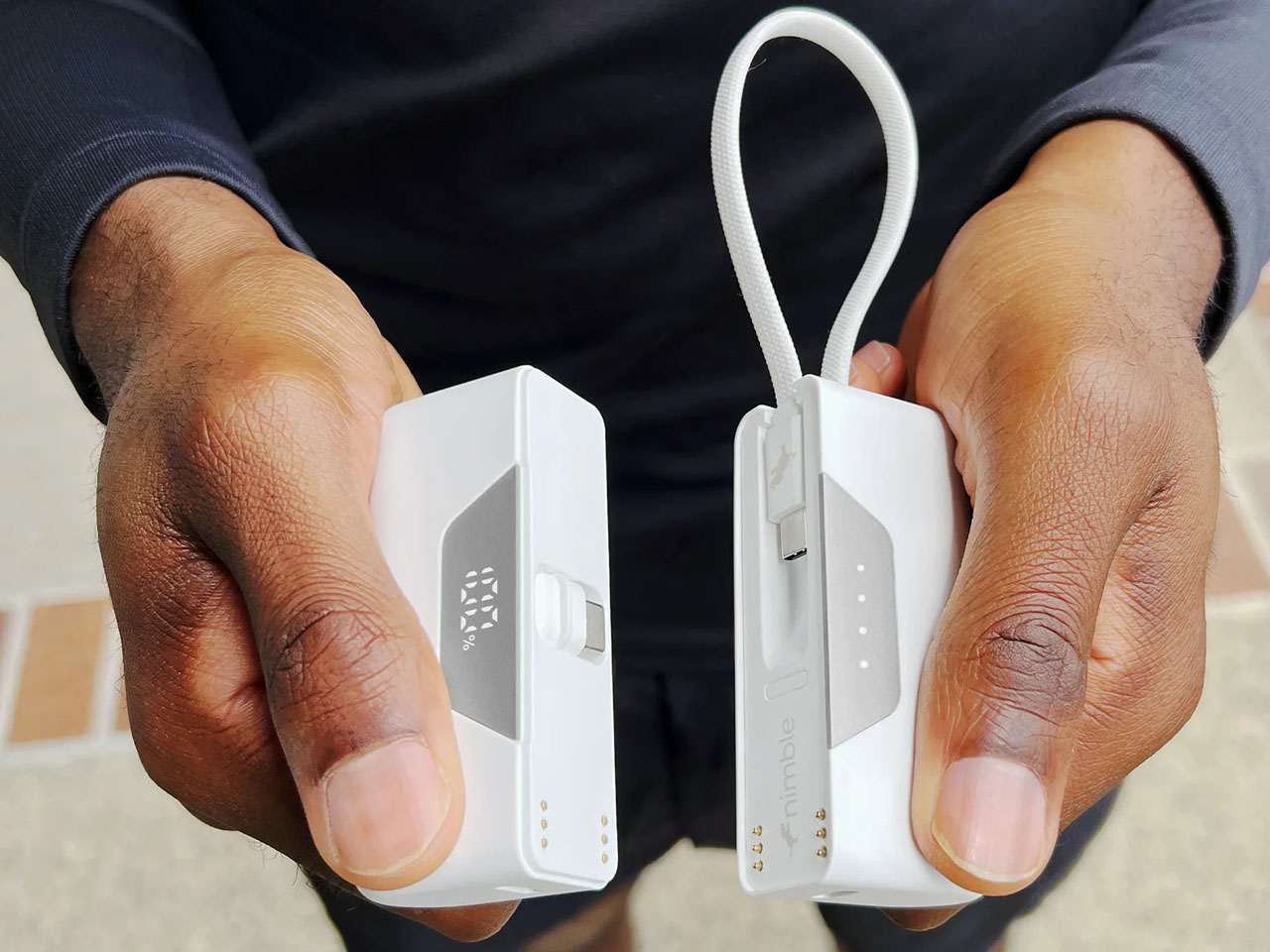
5 Gifts for the Person Who Takes Beer More Seriously Than Anyone Else You Know

Some people drink beer. Others study it, serve it with real intention, and actually feel the difference between a proper pour and a careless one. For that person in your life — the one who owns a specific glass for a specific brew and can tell you exactly why foam matters — a six-pack isn’t enough. What they need is something that matches the level of care they bring to every drink.

These five picks range from precision glassware engineered in Japan to a machine that replicates a professional draft tap at home. Each was designed with the same quiet seriousness your beer person applies to every single pour. If they treat drinking as a practice rather than a pastime, these are the gifts that speak their language — objects built with intention for someone who notices the difference between good and exceptional.

1. DraftPro Top Can Opener

There’s a version of drinking from a can, and then there’s the DraftPro version. Designed by award-winning Japanese designer Shu Kanno, this tool removes the entire top of a can with one clean motion, transforming it into something far closer to drinking from a proper glass. The wide-mouth opening lets aroma escape freely and allows the beer’s full range of flavor to come through completely unobstructed. For someone who selects their beer thoughtfully and actually wants to taste what they chose, this simple tool changes the nature of the experience entirely. It’s quiet, precise, and turns the ordinary act of cracking a can into something that feels far more considered and deliberate.

Beyond the drinking experience itself, the DraftPro functions as a capable bar tool in the most compact form possible. With the top removed, ice goes directly into the can for fast chilling on a hot day, or the can becomes the vessel for a quick cocktail with no shaker and no extra glass to clean afterward. It’s lightweight, portable, and compatible with both domestic and international can sizes, so it works wherever the drinking happens to be. The kind of object that earns a permanent place in a bag or kitchen drawer because it quietly solves problems you didn’t know you had until the first time you actually put it to use.

Click Here to Buy Now: $60.00

What We Like

  • Removes the entire top to create an open, aroma-forward experience that genuinely mirrors drinking from a glass
  • Universal compatibility with domestic and international can sizes makes it useful at home or anywhere else

What We Dislike

  • Designed exclusively for cans, with no application for bottles or other containers
  • The fully open-top format may feel less practical or contained depending on the setting

2. Prism Titanium Beer Glass

Most beer glasses do one thing: hold the beer. The Prism Titanium Beer Glass does something more carefully considered. Lined with 99.9% pure aerospace-grade titanium, it neutralizes metallic aftertastes and gently breaks down off-notes, leaving only the true, refined flavor of what’s been poured. Its gently flared rim softens texture and guides beer across the palate in a way that feels deliberate rather than incidental. Available in the timeless Silver with its quiet luster, or the Infinite with its shifting aurora of color, each version is finished with symbolic patterns that evoke longevity and prosperity. It’s the kind of glass that quietly resets the standard you hold everything else to.

This is a glass for someone who treats drinking as a ritual rather than a reflex. Clear glass meets softly reflective titanium inside, creating a visual interplay that reveals the beer’s true color with a quiet, elegant glow. The combination of material and shape means what you’re tasting stays as close to the brewer’s original intention as possible, without interference from the vessel itself. Japanese precision runs through every detail, from the balance of it in your hand to the way light plays across its surface at the table. For the person who thinks carefully about what they drink and how, this is the glass they’ve been looking for without quite knowing what to call it.

Click Here to Buy Now: $100.00

What We Like

  • Aerospace-grade titanium lining preserves pure flavor by neutralizing metallic aftertastes and off-notes that would otherwise interfere
  • The gently flared rim simultaneously improves both aroma delivery and mouthfeel for a more complete tasting experience

What We Dislike

  • Premium material and Japanese craftsmanship come at a higher price point than conventional glassware
  • The titanium interior may feel unfamiliar to those accustomed to standard glass or ceramic vessels

3. Hodi

The hodi is what happens when someone asks what a travel mug could genuinely be if it actually tried harder. Its unique two-part design splits into two separate glasses — one for hot drinks, one for cold — while an airtight lid doubles as a snack container and a built-in mesh filter handles all the brewing on the go. Coffee, tea, beer, wine, juice, milkshakes: hodi takes all of it, making it the kind of object a serious drinker carries without compromise.

What makes hodi visually impossible to ignore is the shape. Its curvy, tapered silhouette is directly reminiscent of the iconic Guinness glass — one of the most recognizable beverage vessels ever made —, and that’s entirely the point. Carry it anywhere, and it reads as intentional, not utilitarian. Functionally engineered to handle everything from a cold craft beer to a hot brew, yet portable enough to go wherever a standard travel mug would, hodi doesn’t ask you to trade form for function.

What We Like

  • The two-part split design offers two separate glasses for hot and cold drinks, making it genuinely versatile for every drink in a beer person’s rotation
  • Its Guinness-inspired silhouette carries the visual language of fine glassware into a portable, travel-ready format

What We Dislike

  • The multi-part construction means more components to keep track of and clean after every use
  • Its Swiss Army Knife versatility may feel like overkill for someone who wants a single-purpose, dedicated beer vessel

4. Fizzics DraftPour

The Fizzics DraftPour does something most people assume requires a full bar setup: it turns any can or bottle of beer into a creamy, nitro-style draft pour without leaving the house. Using patented Micro-Foam technology, it converts the beer’s existing carbonation into uniformly sized micro-bubbles that enhance aroma, flavor, and mouthfeel in a way a straight hand pour simply can’t replicate. It works across every beer style from IPAs and lagers to porters and stouts, and fits cans up to 32oz and bottles up to 750ml. No beer is excluded, and no special additives or gas cartridges are required to get that result at home.

What makes it exceptional as a gift is that it asks nothing extra from the beer itself. No CO2 cartridges, no nitro canisters, no complicated setup. Plug it in or run it on two AA batteries and take it wherever the occasion calls. The technology optimizes all three phases of foam production: nucleation, beading, and disproportionation — the same metrics brewers and cicerones rely on when evaluating the quality of a proper draft pour. For the person who knows what those words mean and cares enough to apply them at home, this is the most meaningful upgrade their home bar has ever seen.

What We Like

  • No CO2 or nitro cartridges required — the machine works entirely with the beer’s own existing carbonation
  • Compatible with all beer styles and most standard can and bottle sizes, making it broadly and consistently useful

What We Dislike

  • Requires a power source via plug or AA batteries, which adds a layer of setup compared to more passive tools on this list
  • Functions as a countertop appliance rather than a compact or easily portable bar accessory

5. Nendo Perfect 3Way Beer Glass

Japanese design firm Nendo built the Perfect 3Way Glass specifically around the flavor and aroma of Sapporo’s Kuro Label draft beer, and the result is one of the most intentional drinking vessels ever produced. The glass is asymmetrical by design, with three distinct zones that each deliver a different mouthfeel when you drink from them. Start at the straight side: the beer travels to the center of the tongue and flows toward the back of the mouth, delivering the initial crisp, clean finish that defines a well-served draft. That first side is the foundation, and what follows on the other two makes this glass genuinely unlike anything else on the market.

Move to the left side, where the curvaceous, wider rim fills the mouth with a mellow, rich aroma and bouquet of liquid. Then shift to the right, where the bulbous shape hits the middle of the tongue and controls the flow for a third, completely distinct sensation. Three sides, three moments, one glass. This isn’t a novelty. It’s a precision instrument for someone who understands that how beer enters the mouth shapes what they ultimately taste. For anyone who takes draft beer seriously, the Perfect 3Way Glass turns a single pour into three separate, considered experiences without ever needing to refill the glass or reach for something else.

What We Like

  • Three distinct mouthfeel zones deliver three genuinely different tasting experiences from a single pour
  • Built with draft beer specifically in mind, making it a meaningful and focused tool for serious enthusiasts

What We Dislike

  • The asymmetrical shape requires some orientation before the full experience lands as intended, which takes practice
  • Conceived around a specific style of draft beer, which may feel limiting for drinkers with broader or more varied tastes

The Right Gift for the Right Pour

The best gifts for a beer person aren’t about quantity. They’re about showing you understand exactly how they think about what they drink — the attention they give to temperature, aroma, foam, and the weight of a glass in the hand. Every pick here reflects that same level of care in how it was designed and what it was built to achieve. One thoughtful gift says more than any case could.

Pick one, and let the presentation carry the message. These aren’t items you grab from a shelf because the occasion demands something wrapped. They’re tools built by craftspeople and designers who understand what it means to give a drink the respect it deserves. For the person who brings that same respect to every pour, that’s a language they’ll recognize immediately — and appreciate far longer than anything else you could choose.

The post 5 Gifts for the Person Who Takes Beer More Seriously Than Anyone Else You Know first appeared on Yanko Design.

8 Best Graduation Gifts for Him in 2026 — Picked by a Design Editor, Not Amazon

Every graduation season produces the same list: engraved flasks, monogrammed padfolios, whiskey decanters carrying someone’s initials. None of it survives the second apartment move. Good design travels differently. A well-made object built around a clear idea doesn’t date. It earns its place on the desk, in the pocket, and on the wrist because it was never chasing a trend to begin with. These eight picks operate by that principle.

They share a common quality: they function as well as they look, and they look better over time. From an ice-blue automatic watch with a dial in seven layers of gloss to a leather pen roll that converts into a desk tray in under two seconds, each one is the kind of thing a graduate will still be reaching for a decade from now, probably wondering why nobody gave them this sooner.

1. Inseparable Notebook Pen

The problem with most notebook pens isn’t the pen. It’s the separation. You put the notebook down, the pen goes somewhere else, and the next time an idea arrives, you’re excavating a bag. The Inseparable Notebook Pen fixes this with a magnetic clip that holds the pen flush against the cover, releasing with zero resistance when you need it. A silencer deadens the magnetic snap so the attachment feels deliberate, not accidental.
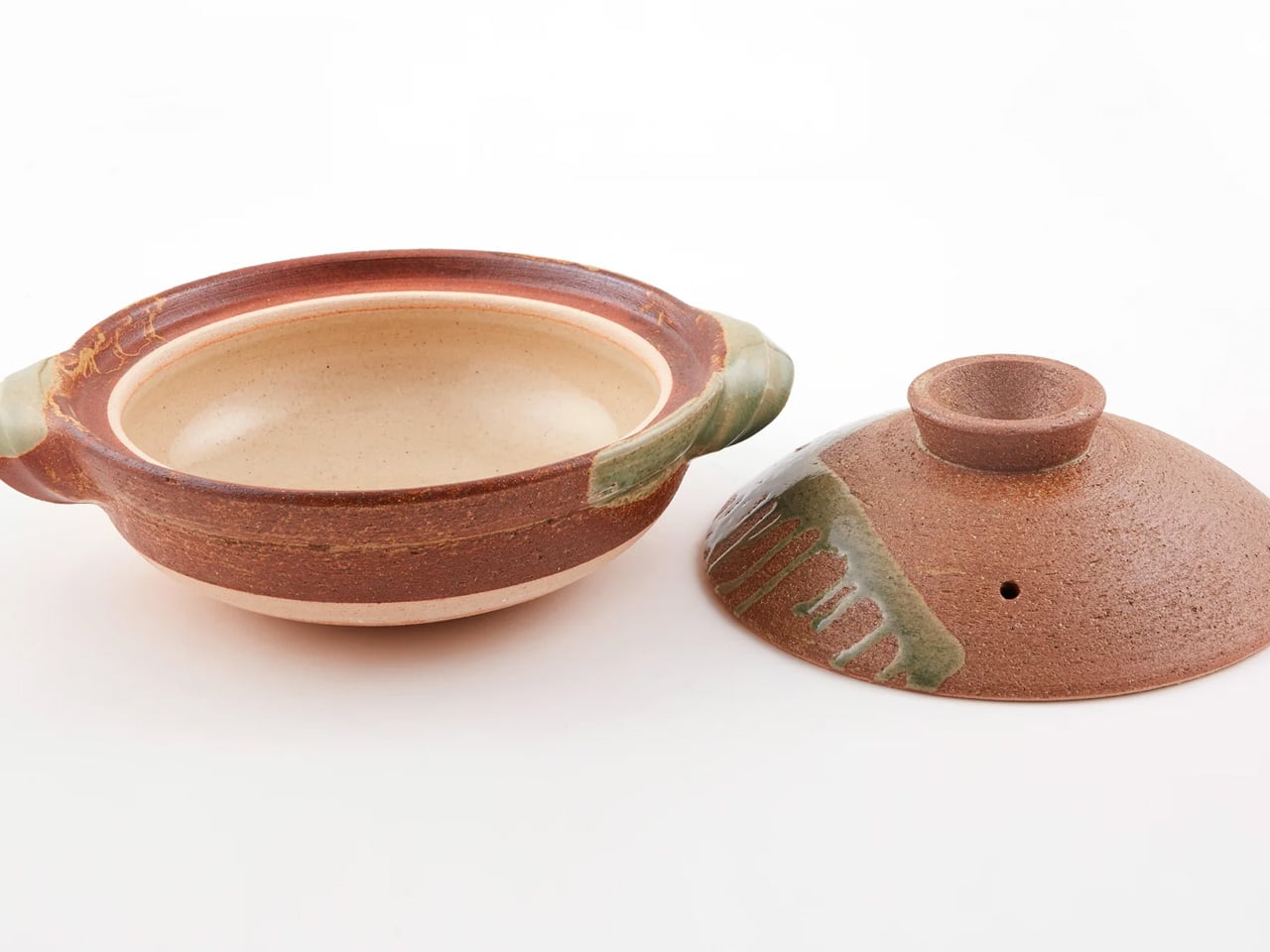
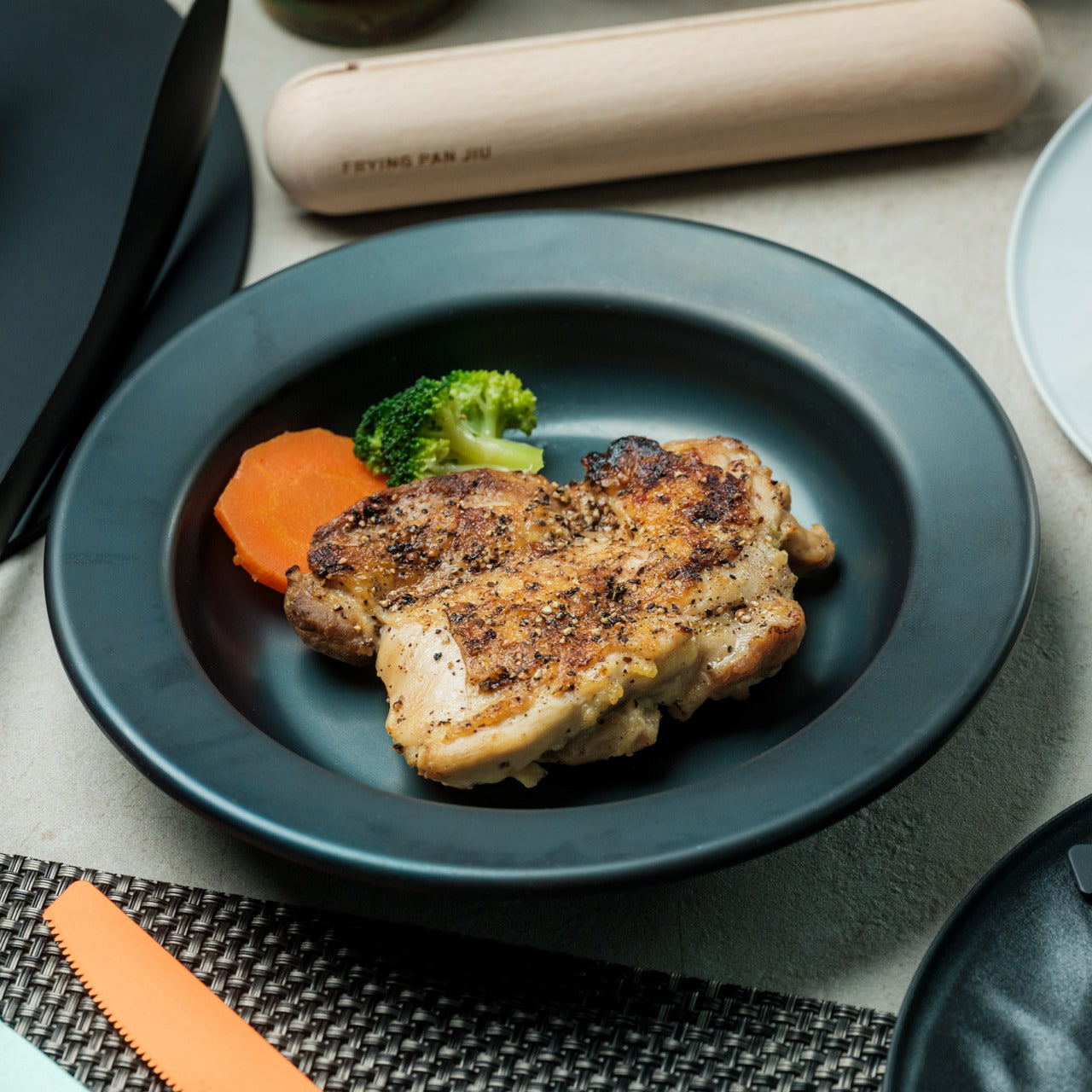
For a graduate stepping into environments where showing up prepared matters, this is the friction-eliminating object that earns its keep quietly. The minimalist barrel keeps the profile slim enough to disappear into a coat pocket alongside the notebook it belongs to. Available in black, white, blue, and orange, it works as a thoughtful standalone or as an intentional pairing with an existing journal. At $19.95, it’s the kind of small, considered gift that actually gets used every single day.

Click Here to Buy Now: $19.95

What we like

  • The magnetic clip holds securely through bag movement but releases with zero effort when the pen is needed
  • The silencer gives the attachment a tactile quality that makes it feel considered rather than incidental

What we dislike

  • The slim barrel goes unaccommodated for anyone who prefers a wider grip pen
  • Ink cartridge options are limited, restricting personalization for heavier writers with specific ink preferences

2. Seiko Men’s SRPB41 Presage Cocktail Time

The SRPB41’s dial stops people mid-sentence. Seven layers of gloss over a pressed ice-blue sunburst pattern, inspired by the surface of a cocktail, shifts between silver and pale blue depending on where you’re standing. It runs on a 4R35 automatic movement with manual winding capability, and the screwdown see-through caseback turns a glance at the time into a reminder that something genuinely mechanical is alive on the wrist. The 40.5mm case sits slim at 11.8mm.

Watches make sense as graduation gifts because they mark time in the most literal way. The SRPB41 earns the occasion. It’s a proper automatic at a price that doesn’t require financing, with enough craft in the dial to hold attention long after the novelty fades. It belongs on the wrist at a first job interview, at a Friday dinner, and thirty years from now at someone else’s graduation. At $475, that’s the right criteria for a gift worth giving.
What we like

  • Seven layers of gloss over the pressed dial create depth that shifts visibly with every change in light
  • A proper automatic movement at this price point is genuinely rare and mechanically satisfying to own over time

What we dislike

  • The integrated bracelet limits strap customization compared to watches built with standard lug widths
  • Hardlex crystal is durable, but won’t match sapphire glass for scratch resistance over the long term

3. Burnt Titanium Ridge Wallet

The Ridge in Burnt Titanium makes every other wallet feel like a compromise. Two Grade 2 titanium plates joined by an elastic band, RFID-blocking, expanding to hold up to twelve cards with a cash strap for bills. The color gradient on the burnt finish shifts between copper, bronze, and near-black. It isn’t paint or coating. It’s the result of heat treatment, which means every wallet’s colors slightly differ, and the finish is permanent by definition.

For a graduate learning what it means to carry less and own more, this is the wallet that changes the standard. It comes backed by a lifetime guarantee. At $150, it’s the EDC object that, once in rotation, makes every previous wallet feel embarrassing in retrospect. The burnt finish ensures no two are exactly alike.

What we like

  • The heat-treated titanium finish is unique to each piece; every wallet’s colors slightly differently during production
  • A lifetime guarantee backs a construction that already doesn’t need much backing up

What we dislike

  • No coin pocket, which matters depending on where the graduate is headed geographically
  • The elastic band requires eventual replacement, though Ridge makes the process accessible and the parts available

4. Fellow Stagg EKG Electric Kettle

The Stagg EKG+ by Fellow earned a Red Dot Design Award by doing something most kettles never attempt: treating the pour as a design problem worth solving properly. The precision gooseneck spout controls flow rate to the gram. The counterbalanced handle distributes weight so the pour stays steady at the end of the arc, where most kettles get heavy and sloppy. Variable temperature holds to the exact degree. A built-in stopwatch runs from the base. At $199.95, it’s a kettle that functions like a piece of equipment.

For a graduate setting up a first kitchen worth caring about, this is the object that signals the difference between a space assembled and a space considered. It lives on the counter permanently because it’s too good-looking to put away. Coffee, tea, pour-over, French press — every ritual that starts with hot water improves when the water temperature is controlled, and the pour is precise. The Stagg EKG+ doesn’t ask for much counter space and gives back more than most objects twice its price.

What we like

  • The counterbalanced handle keeps the pour steady and controlled at full capacity, where cheaper kettles become difficult to manage
  • Variable temperature held to the exact degree changes every hot beverage ritual that was previously just guesswork

What we dislike

  • The 0.9L capacity is standard for a gooseneck kettle, but limiting for anyone boiling water for multiple people at once
  • No audible alert when the target temperature is reached, which requires staying attentive during the heat cycle

5. Fujifilm Instax Mini Evo

The Instax Mini Evo is the camera that rewards people who think photography stopped being interesting somewhere around the smartphone. It’s a hybrid instant camera with 10 lens effects and 10 film effects, controlled by physical dials that reference analog film camera controls from the 1970s. The black anodized body stays restrained while the mechanism underneath is genuinely expressive. Via the companion app, smartphone photos become instant prints without the camera needing to enter the picture at all.

Graduation is the moment when everyone you know starts scattering. The physical print the Mini Evo produces ends up on refrigerators, in wallets, and pinned to apartment walls, not buried in a camera roll nobody opens. For a graduate who already shoots film or values the analog object, this is either a natural entry point or a meaningful upgrade. It’s the rare tech gift that produces something you can hand directly to another person and watch them keep.

What we like

  • Physical dial controls give creative decisions a tactile quality that touchscreen menus simply cannot replicate
  • The hybrid app integration means smartphone photos become instant prints without needing the camera in hand

What we dislike

  • Ongoing film costs accumulate and are worth factoring into the total investment when giving this as a gift
  • The mini print format is charming but limiting for anyone expecting larger output from the camera

6. Nomatic Travel Bag 40L

The Nomatic Travel Bag answers one question: what does someone who travels often and travels well actually need? The result is a 40-liter pack with a clean exterior that reads professional in any context, a dedicated laptop sleeve, lockable zippers, and a magnetic compression system that reduces the bag to carry-on dimensions when it isn’t at capacity. It moves through airports without the visual noise of most technical bags, which matters when the destination is a first impression.

For a graduate handed a life that requires moving between places, this is the bag that makes the transition feel managed rather than improvised. It holds four days of gear without looking like it does. The organizational system inside separates clothing, documents, and tech without requiring a guide to navigate. Nomatic builds it to survive overhead bins repeatedly. The exterior branding stays minimal. At $199, the bag communicates its quality through use, not through logos on the face.

What we like

  • The clean exterior reads professional in any environment, from an airport gate to a first-day office
  • Magnetic compression allows the bag to adjust its volume intelligently as contents change throughout a trip

What we dislike

  • The 40-liter size is deliberate but may feel oversized for strictly urban, daily carry situations
  • Water resistance is solid but not fully waterproof, which matters in sustained heavy rain

7. StillFrame Headphones

StillFrame approaches audio with a design philosophy borrowed from the deliberate era of physical media, when albums were objects you held, and listening was an intentional act. The result is a headphone sitting between in-ear and over-ear: 40mm drivers, 103 grams, built for a full work session without the fatigue heavier over-ears accumulate by the third hour. Bluetooth 5.4 handles wireless streaming; USB-C covers high-res wired playback. Dual microphones with noise cancellation handle calls throughout.

The 24-hour battery is the practical argument. The design is the emotional one. For a graduate moving into spaces where concentration is a skill under construction, headphones that disappear into a workflow rather than demanding attention are the correct tool. StillFrame doesn’t need visual noise to function as a signal. At $245, they sit on the head, do the job, and look like something chosen by someone paying close attention to what they actually own.

Click Here to Buy Now: $245.00

What we like

  • At 103 grams, the weight stays neutral through long sessions without creating pressure points at the ears
  • Transparency mode keeps you connected to your surroundings when needed without removing the headphones

What we dislike

  • The price places this outside impulse territory for most gift-givers and requires a deliberate decision
  • The folding mechanism introduces moving parts that could show wear under heavy daily use over the years

8. Xiaomi 212W HyperCharge Power Bank 25000

The Xiaomi 212W HyperCharge packs 25,000mAh and a 212W maximum output across three ports: two USB-C and one USB-A. The primary USB-C port delivers up to 140W, which means a laptop goes from flat to meaningful charge faster than most people expect from something that fits in a bag. The 90.8Wh capacity clears the airline threshold for cabin carry, so the power source doesn’t get checked while the devices that depend on it travel overhead.

A graduate entering any field where work lives on a device needs a power infrastructure that keeps pace. This is the object that matters on the days that matter: the six-hour layover, the all-day conference, the interview in a building with no accessible outlets. Nine layers of internal safety protection and a digital display showing remaining capacity make this a considered piece of hardware rather than just a large battery in a box. It weighs 628 grams.

What we like

  • At 212W maximum output, laptop-level charging speeds from a portable battery change what’s possible on long travel days
  • The 90.8Wh capacity qualifies for airline cabin carry, keeping the power source with you where it’s needed most

What we dislike

  • At 628 grams, it’s heavier than a typical power bank, which is a real factor for daily carry decisions
  • Full 212W output requires compatible cables and devices to actually hit the rated charging performance

Good Design Doesn’t Need an Occasion. But Graduation Is a Good One.

The difference between a gift that gets used and one that ends up in a drawer comes down to whether the object solved a real problem or just looked like it might. Every pick on this list earns its place by doing something specific well: maintaining battery life through a ten-hour travel day, marking time with mechanical precision, storing moments as physical prints. That specificity is what design-forward actually means when it isn’t just a marketing phrase.

The graduate in your life doesn’t need more things. They need fewer, better ones. A Japanese automatic watch, a power bank that keeps a laptop alive through any travel day: these are the objects that make a new chapter feel considered rather than assembled. Give one well-chosen thing from this list. That’s the right gift, and the one still in rotation a decade from now.

The post 8 Best Graduation Gifts for Him in 2026 — Picked by a Design Editor, Not Amazon first appeared on Yanko Design.