Most Rugged Phones Hide From Heat, This One Has Two Fans to Fight It

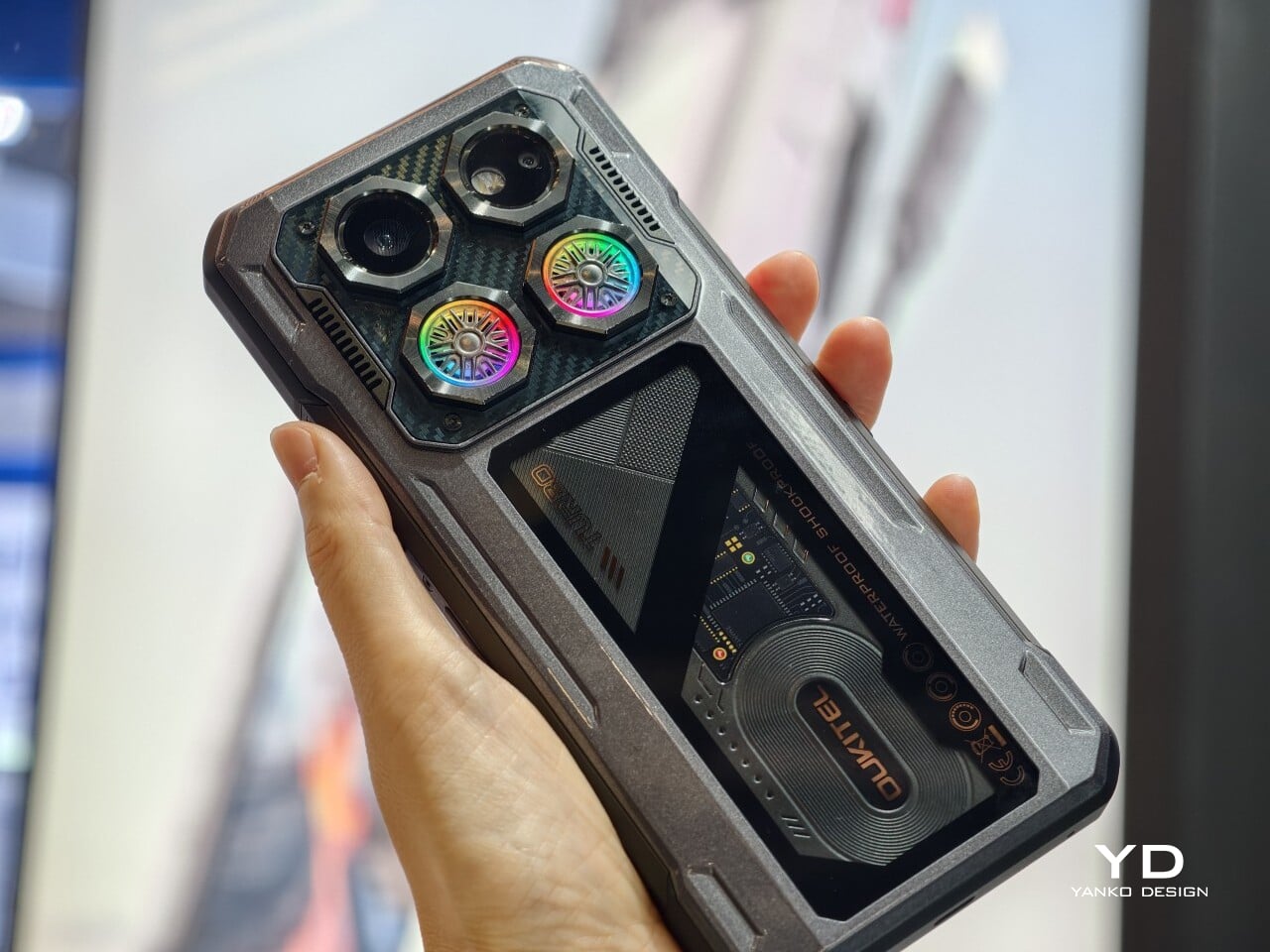
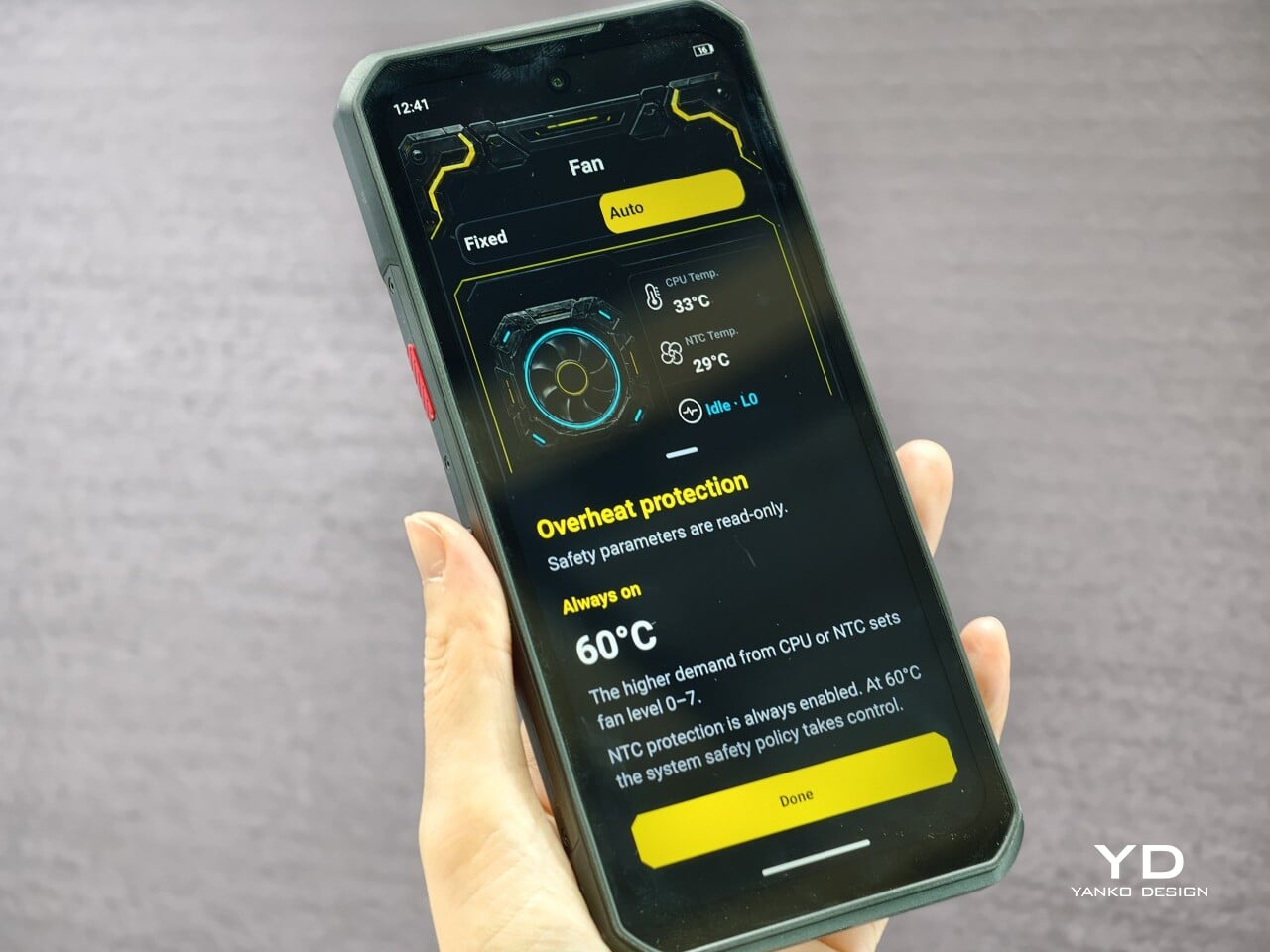
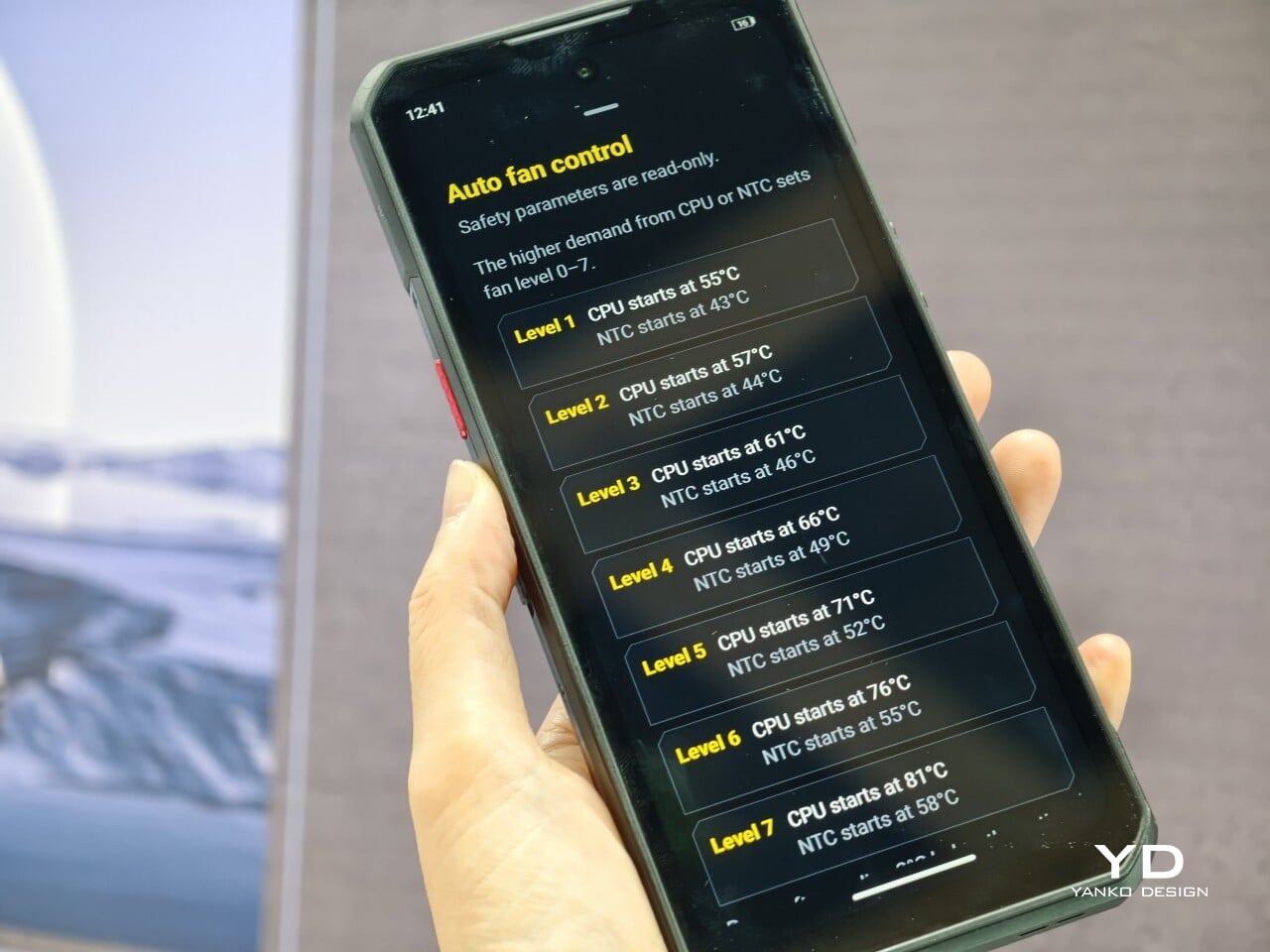
Rugged phones have always made a quiet trade-off. Sealing a device against water and dust means sealing in heat too, and that trapped warmth forces powerful chips to slow themselves down right when gaming or heavy use needs them most. OUKITEL’s WP600, unveiled at IFA 2026, treats that compromise as something worth engineering around, building visible cooling straight into its armor rather than hiding the problem under a tougher shell.

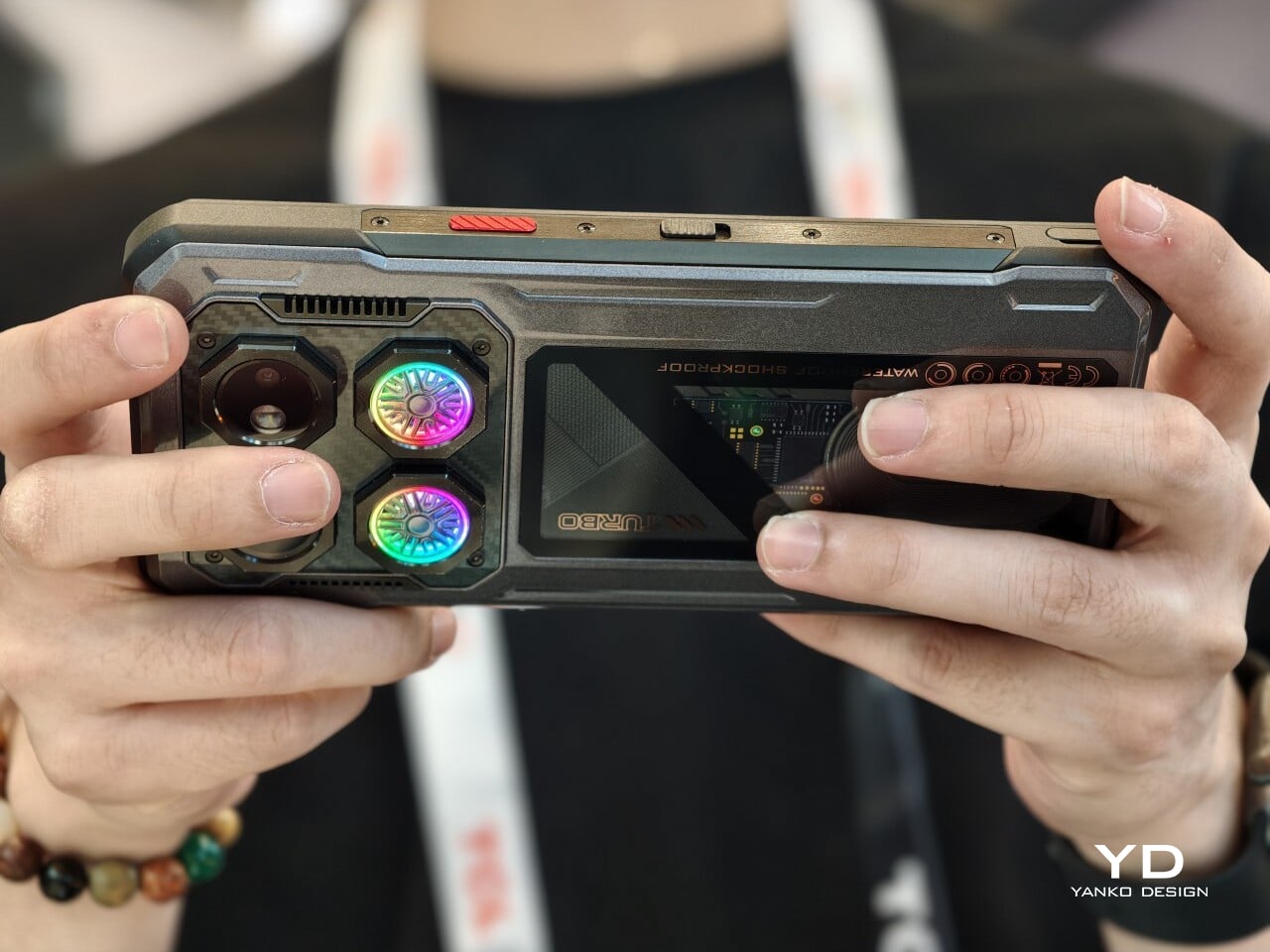
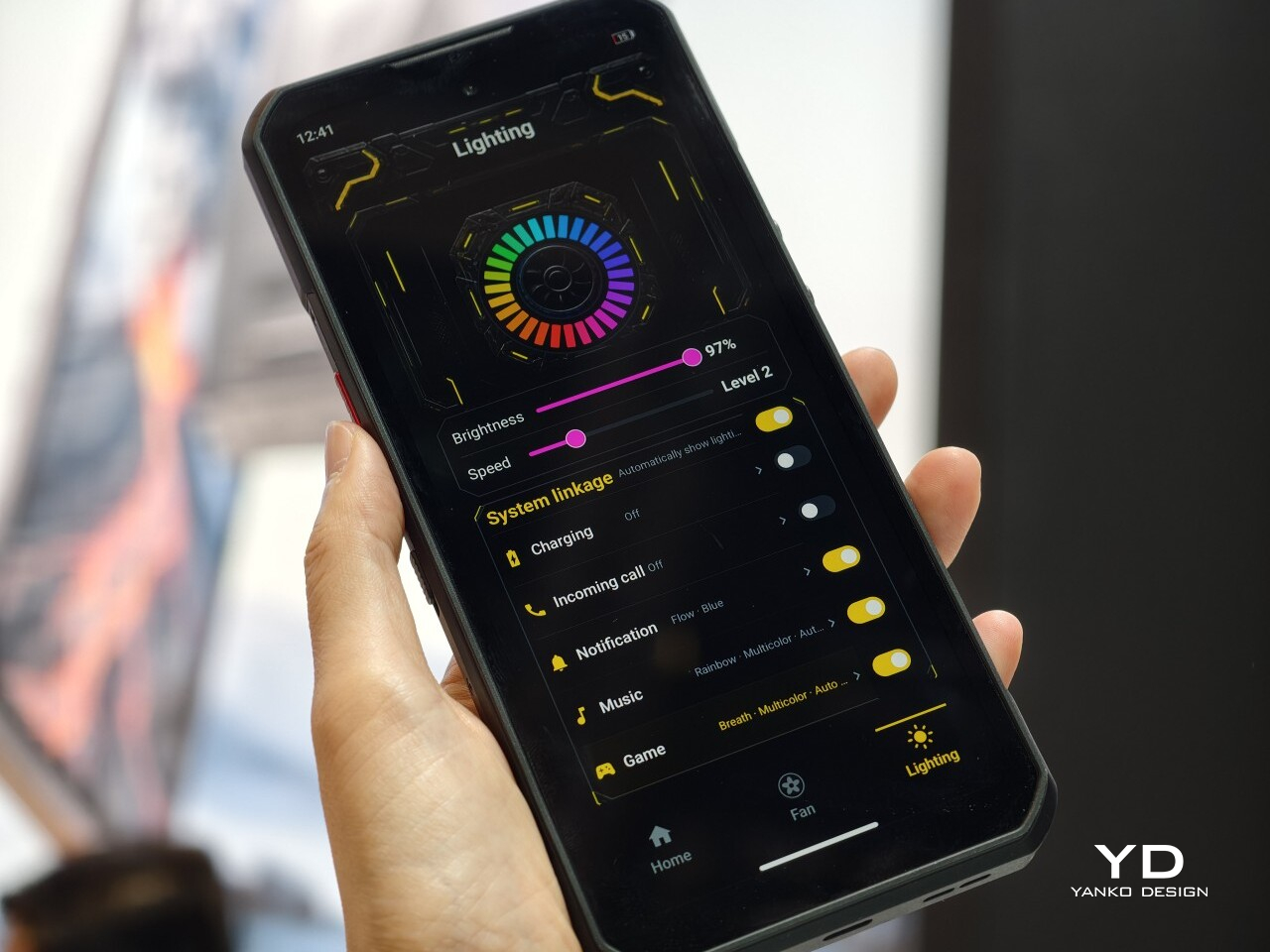
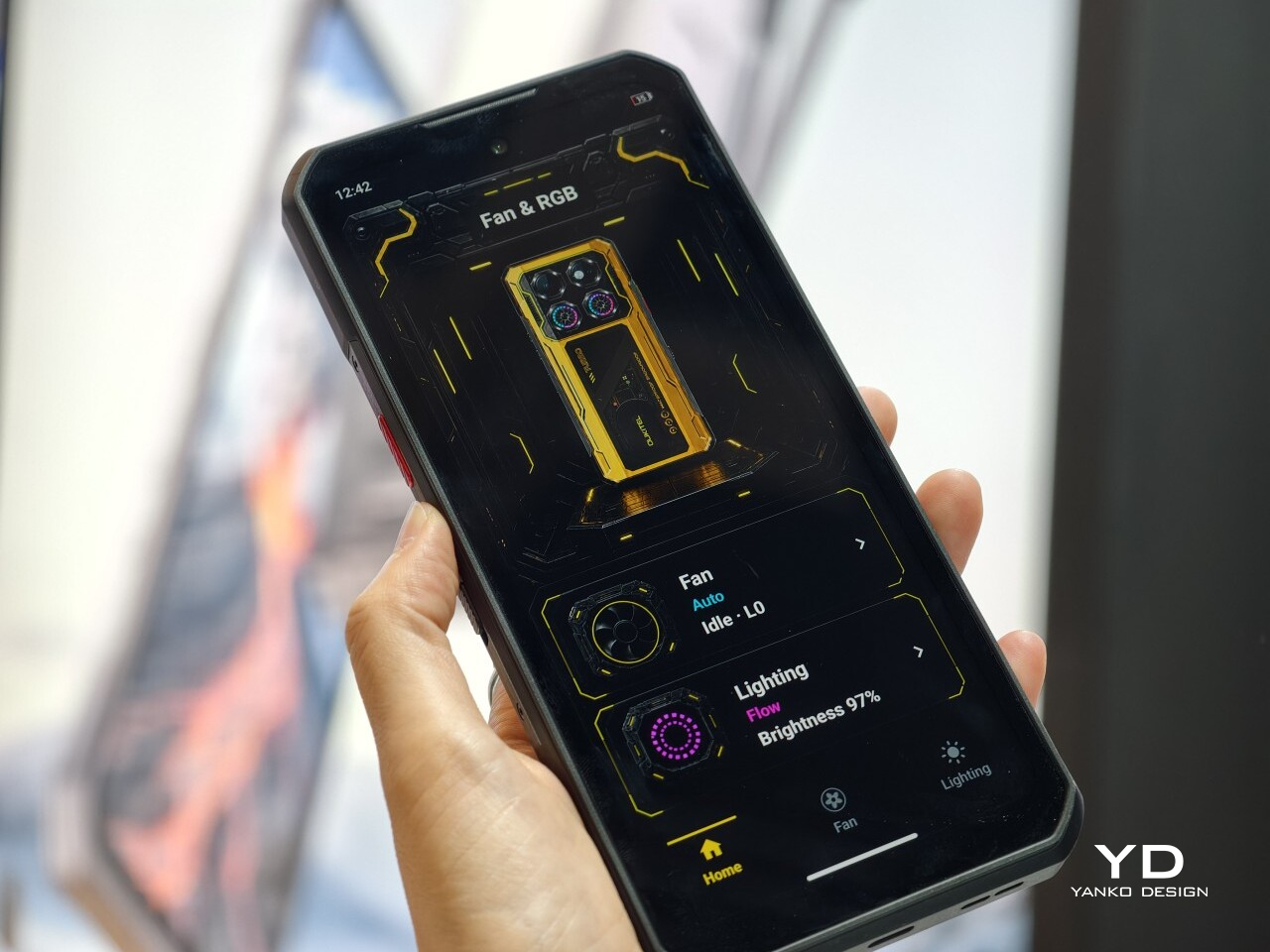
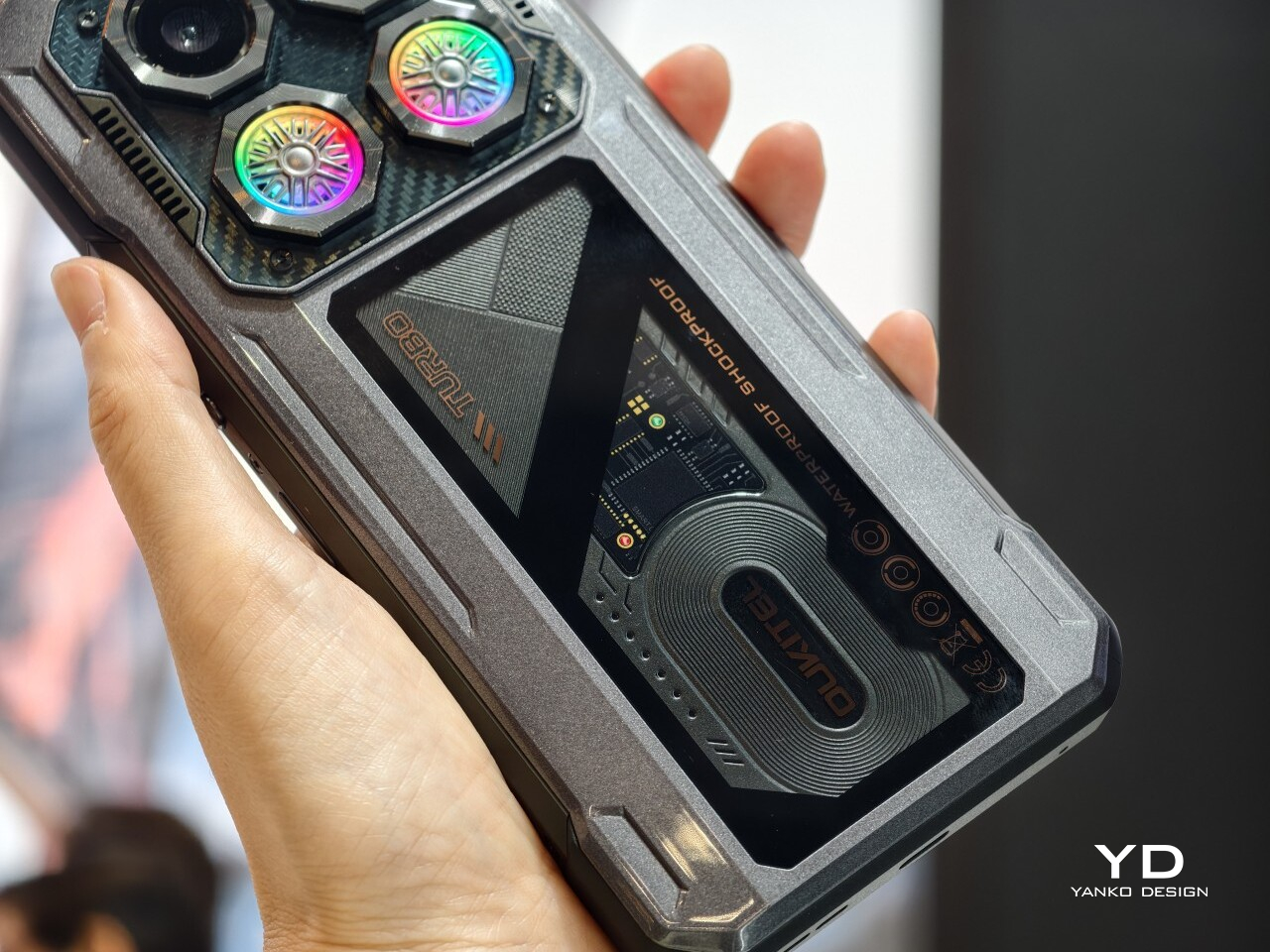
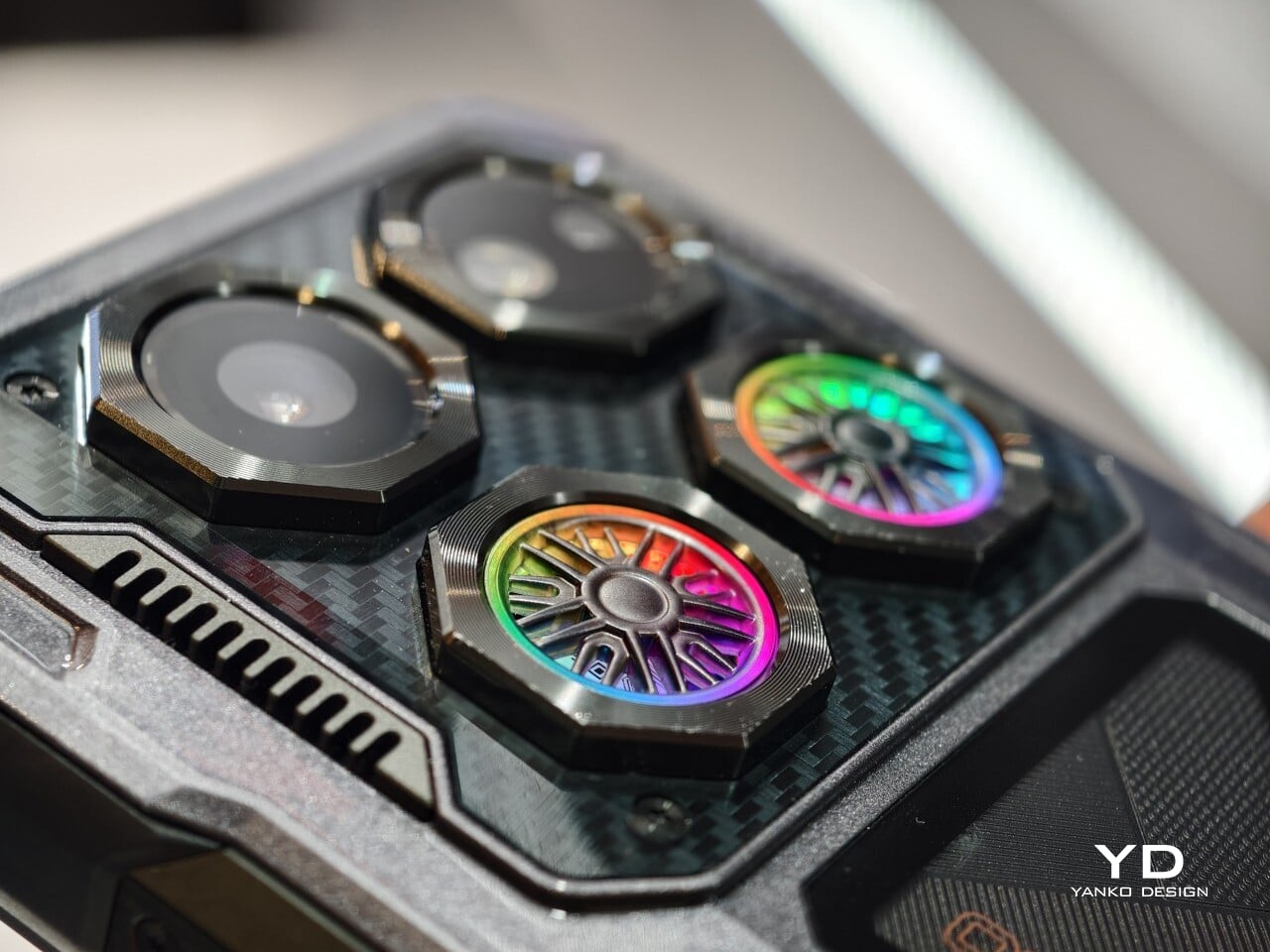
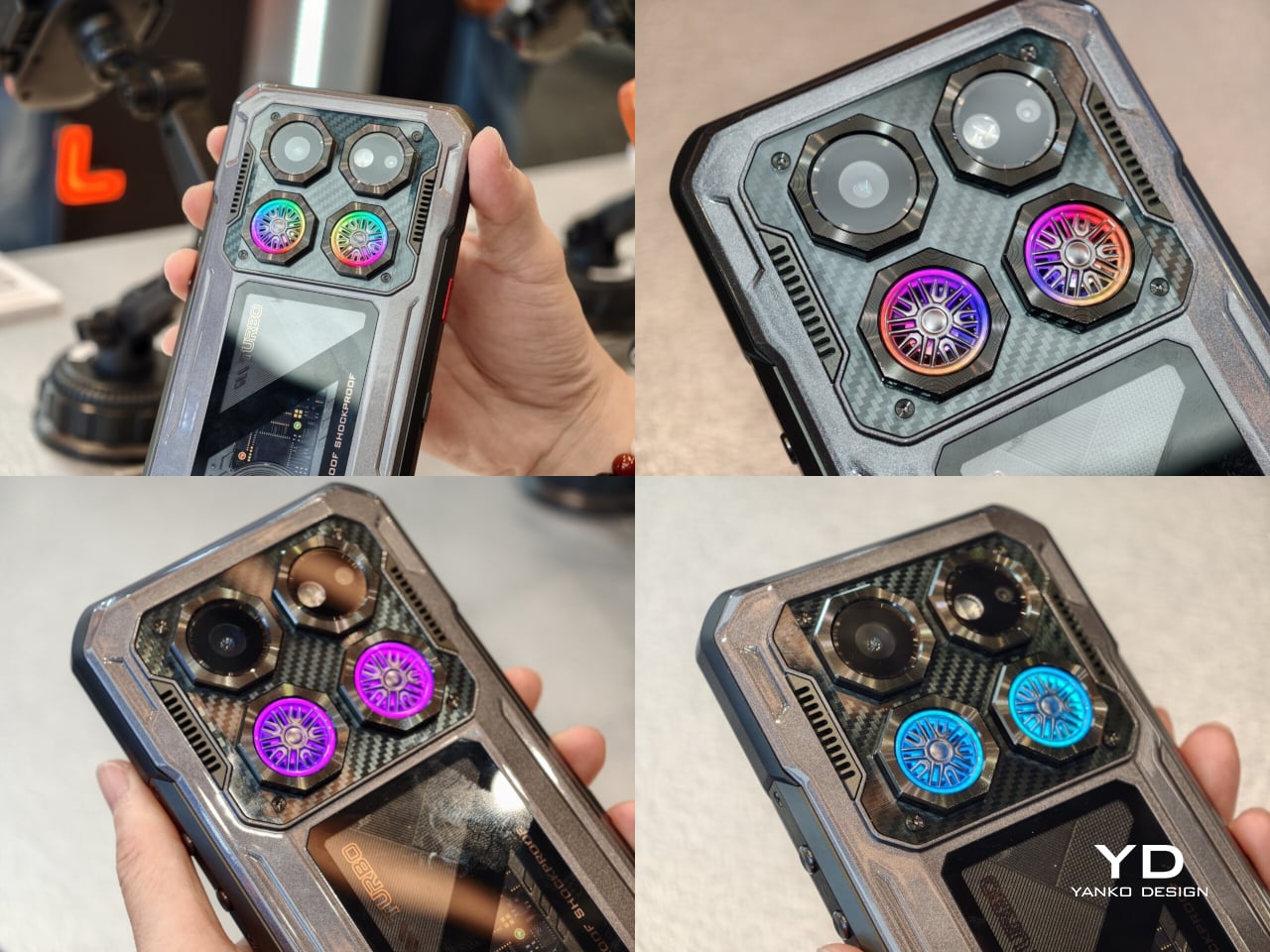
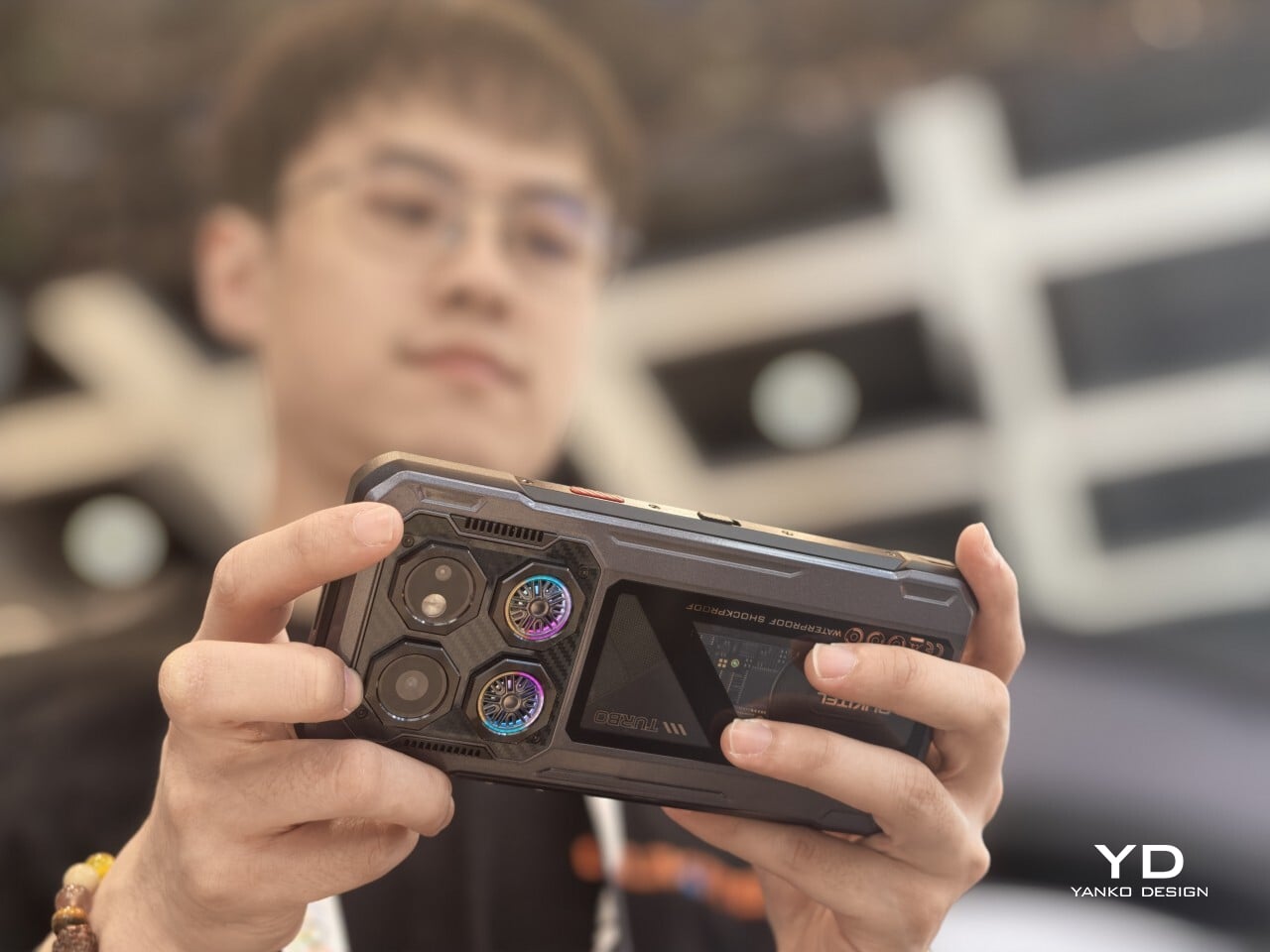
That solution shows up immediately on the back of the phone, where two turbine-style fans sit inside an octagonal housing next to the camera lenses. Rather than tucking cooling components away, OUKITEL frames them as part of the visual identity, finished in a gunmetal tone with RGB lighting that shifts through purples, oranges, and blues while the fans spin during demanding sessions.

Designer: Oukitel
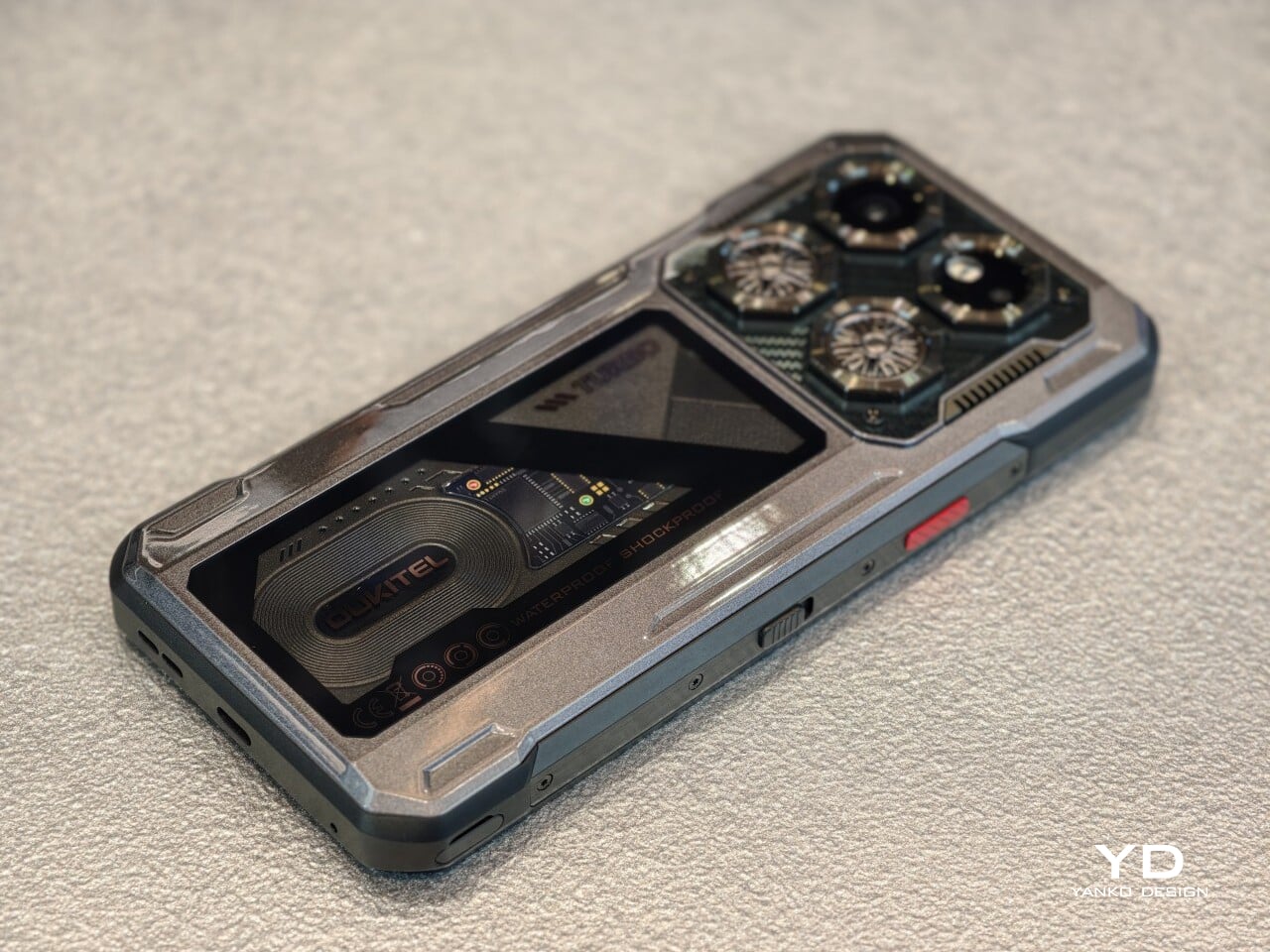
Underneath that display sits a MediaTek Dimensity 8300 chip running at 3.35GHz, paired with up to 24GB of RAM and a full terabyte of storage in its top configuration. Active airflow means that hardware can stay at full speed through a long gaming session in direct sun, instead of throttling the moment internal temperatures climb, the usual fate of sealed devices pushed hard outdoors.
A 10,000mAh battery backs up that sustained performance, large enough to outlast a full day of mixed use, camera work, and gaming without needing a midday top-up. When charging is needed, 45W wired input gets things moving again quickly, keeping downtime short for anyone relying on the phone through fieldwork, travel, or a weekend away from outlets.
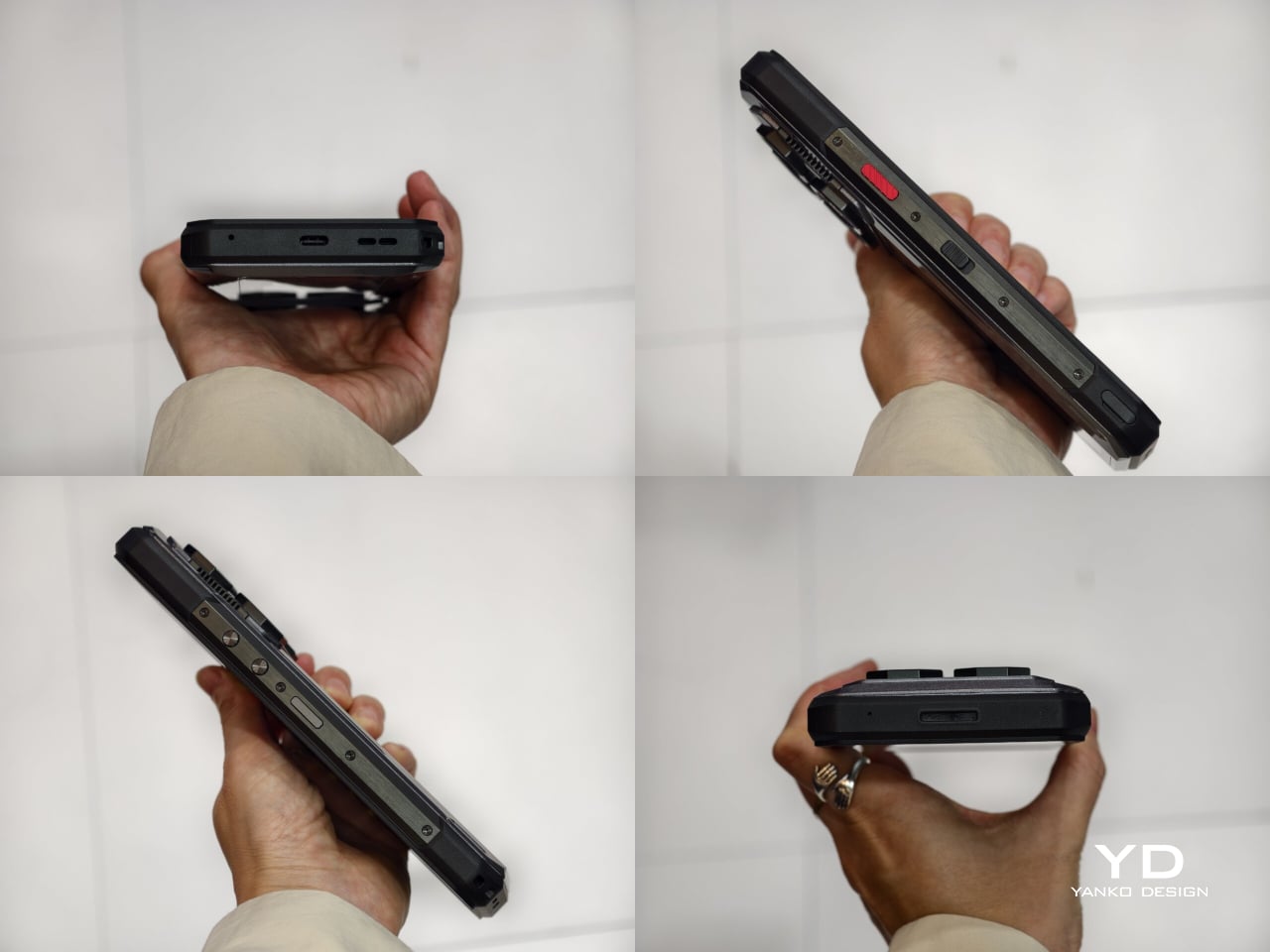
Privacy gets a physical answer instead of a software toggle buried in settings. A dedicated switch, styled as a bright red accent against the phone’s black and metallic paneling, physically disconnects the camera, microphone, and GPS at once. It is the kind of control that matters to fieldworkers or anyone stepping into a sensitive meeting who wants certainty that nothing is listening or tracking, not just a setting that claims to be off.
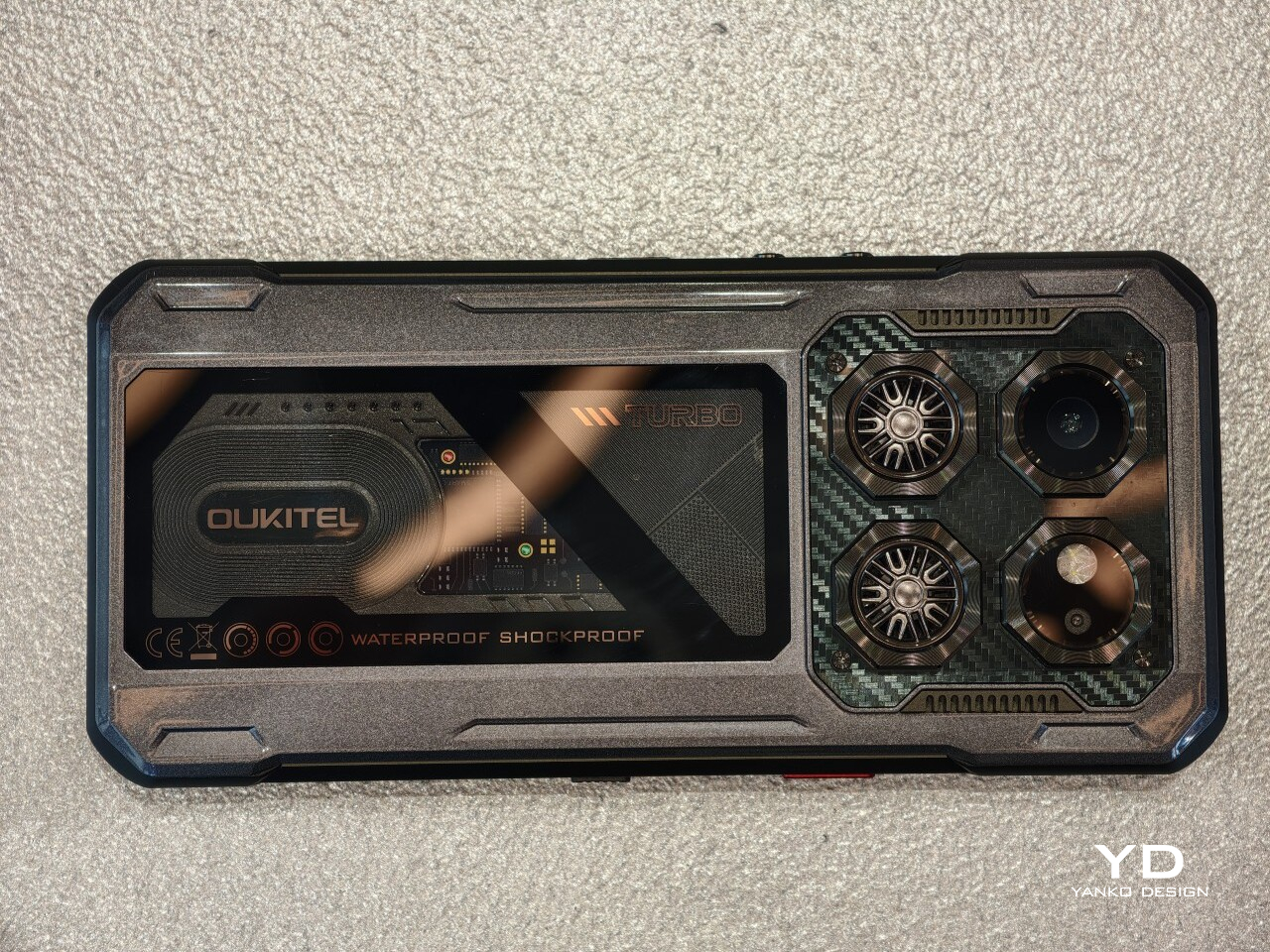
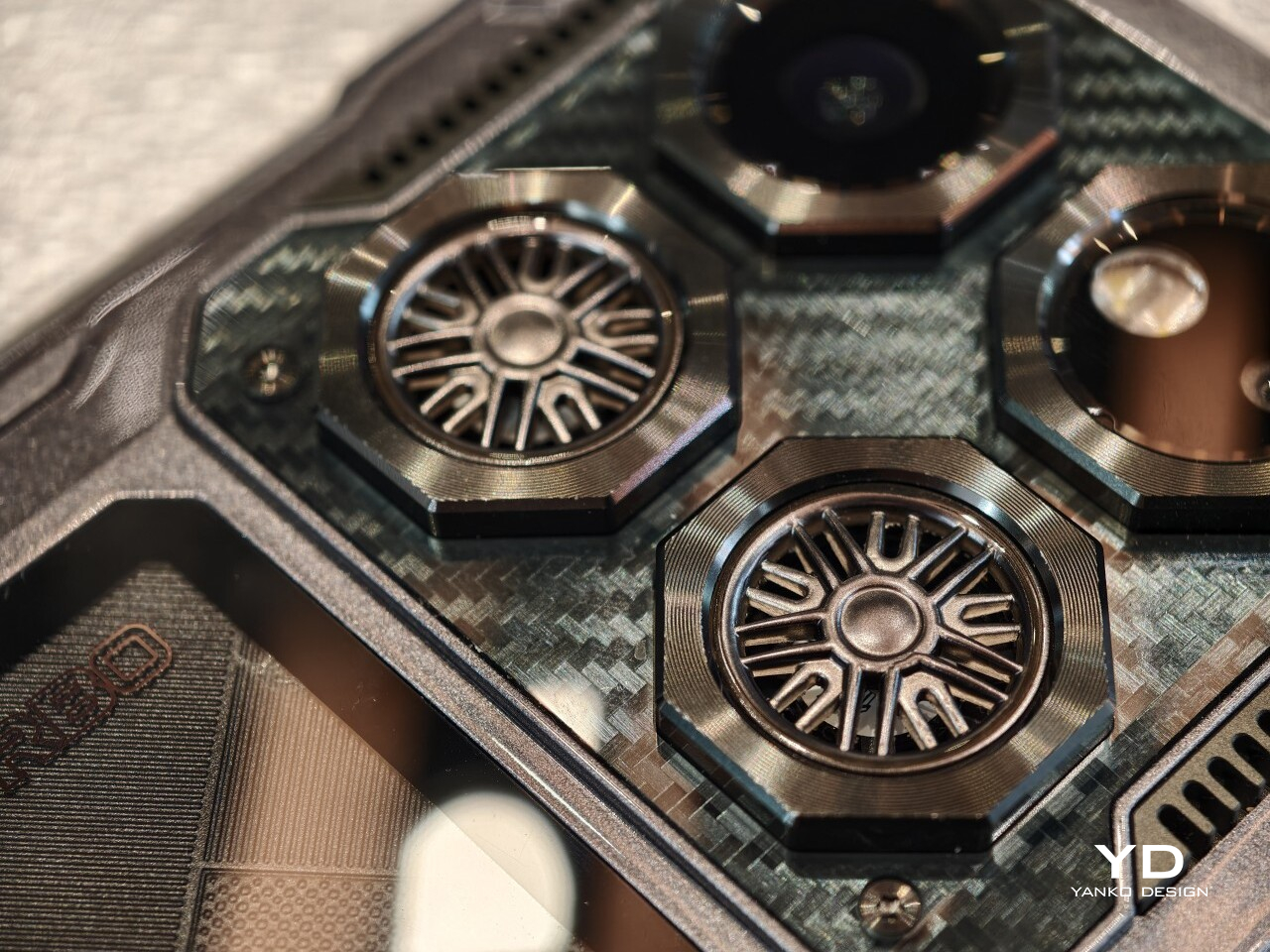
The rest of the chassis carries that same rugged-but-considered language throughout. Exposed hex screws, ridged texture strips along the frame, and a carbon-fiber-patterned panel insert surrounding the camera module all read as intentional detailing rather than leftover industrial parts. A 6.8-inch, 120Hz display handles the front, while the whole package comes finished in either black or yellow, playing into the tool-like character rugged phones usually lean into.

None of this asks buyers to choose between toughness and capability anymore. A phone built to survive drops and submersion can still run demanding software at full tilt, provided the cooling behind it gets treated as a design feature rather than an afterthought bolted on for a spec sheet.
The post Most Rugged Phones Hide From Heat, This One Has Two Fans to Fight It first appeared on Yanko Design.
A Laptop With a Solar Panel Lid Just Showed Up at MWC 2026: Hands-on with Oukitel RG14-P

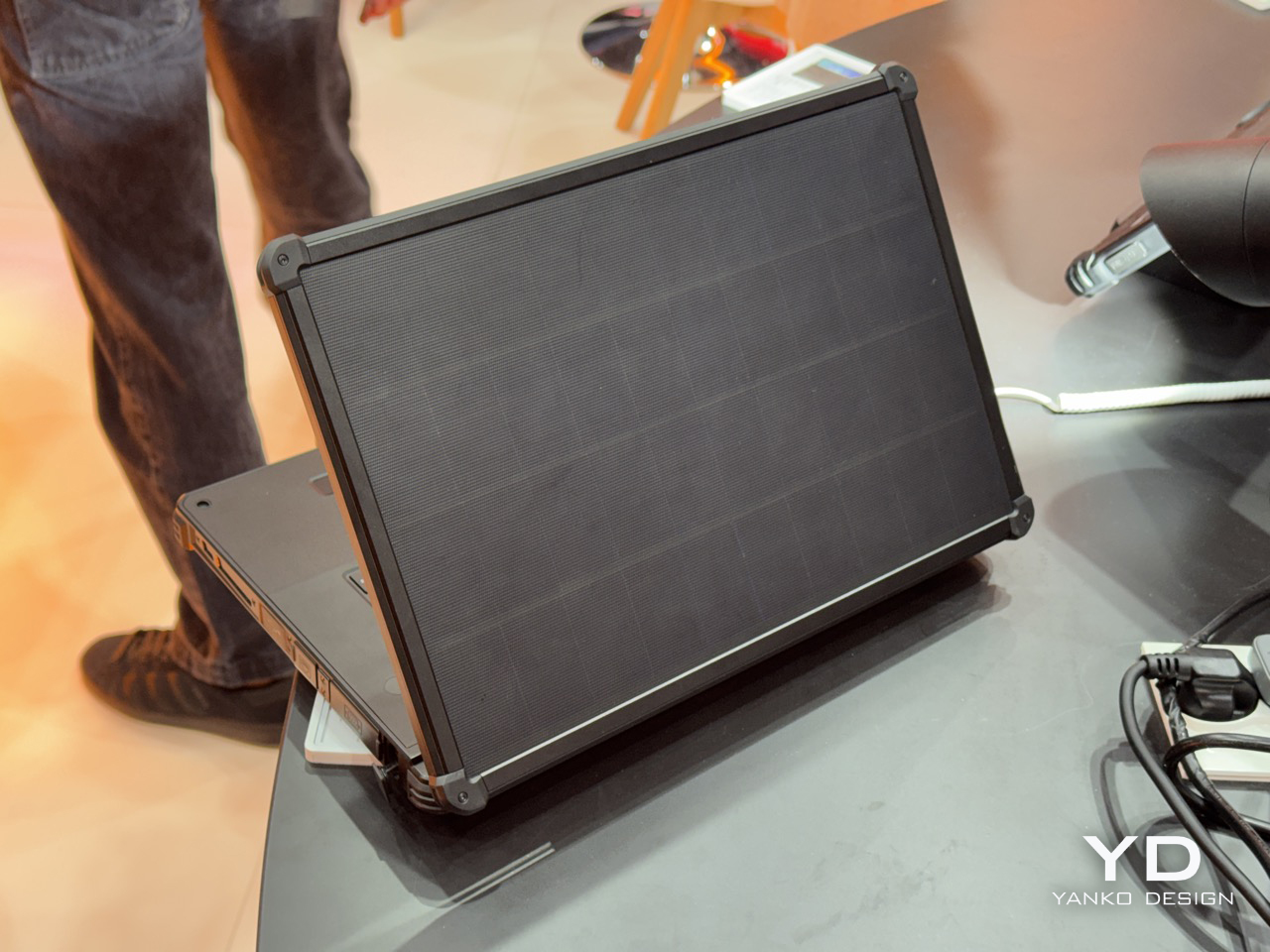
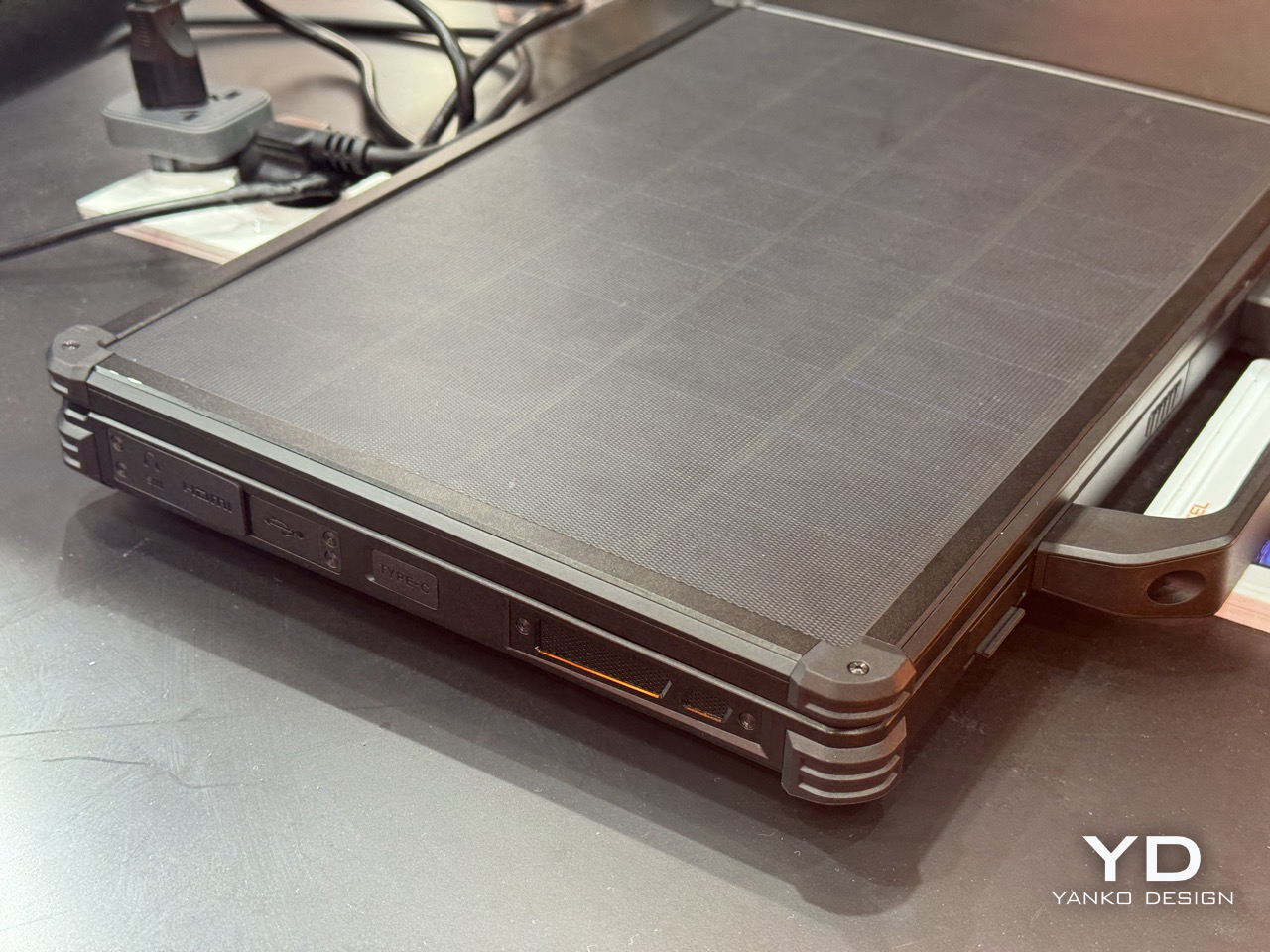
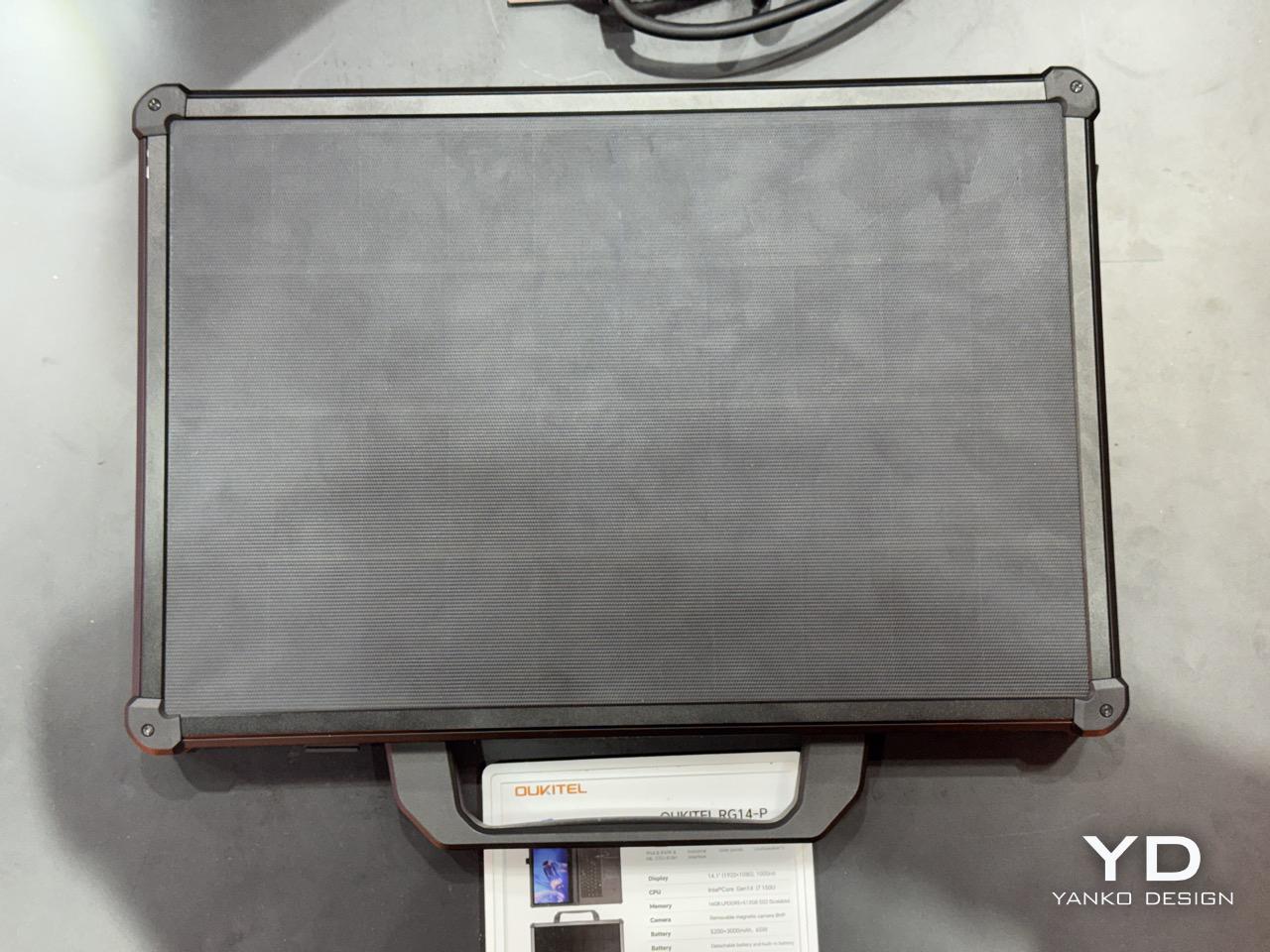
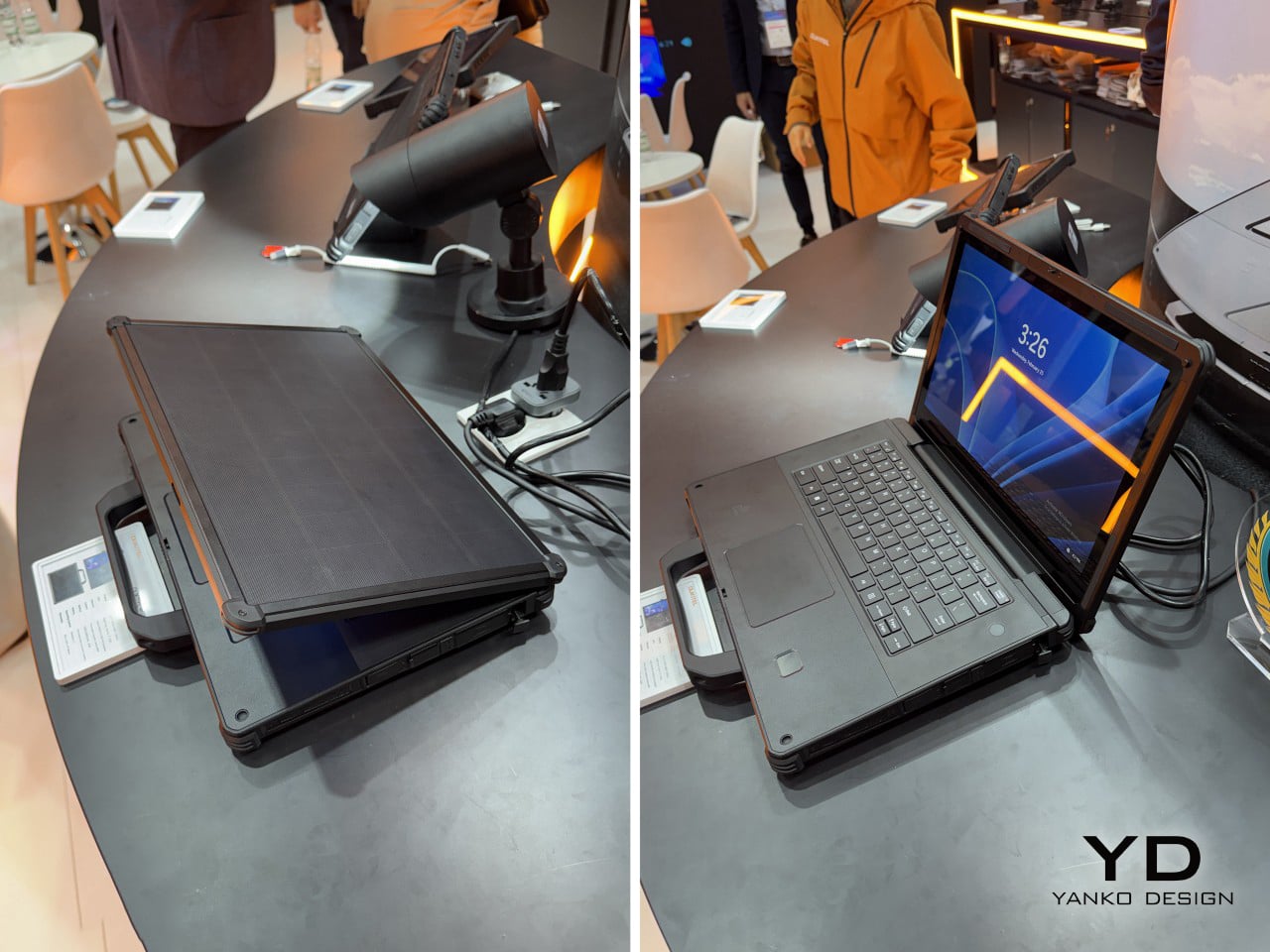
Solar charging on a laptop lid has been a niche curiosity since Samsung tried it with the NC215S netbook in 2011, a machine that needed two full hours of midday sun to buy you a single hour of runtime. Rough trade. The idea largely disappeared after that, surfacing occasionally in concept form, most recently with Lenovo’s Yoga Solar PC at MWC 2025, which packed 84 solar cells into an ultraslim lid at a reported 24.3% conversion efficiency. Lenovo’s version was sleek, consumer-friendly, and still a concept. Oukitel’s RG14-P, shown at MWC 2026 in Barcelona, skips the concept stage entirely and ships the thing.

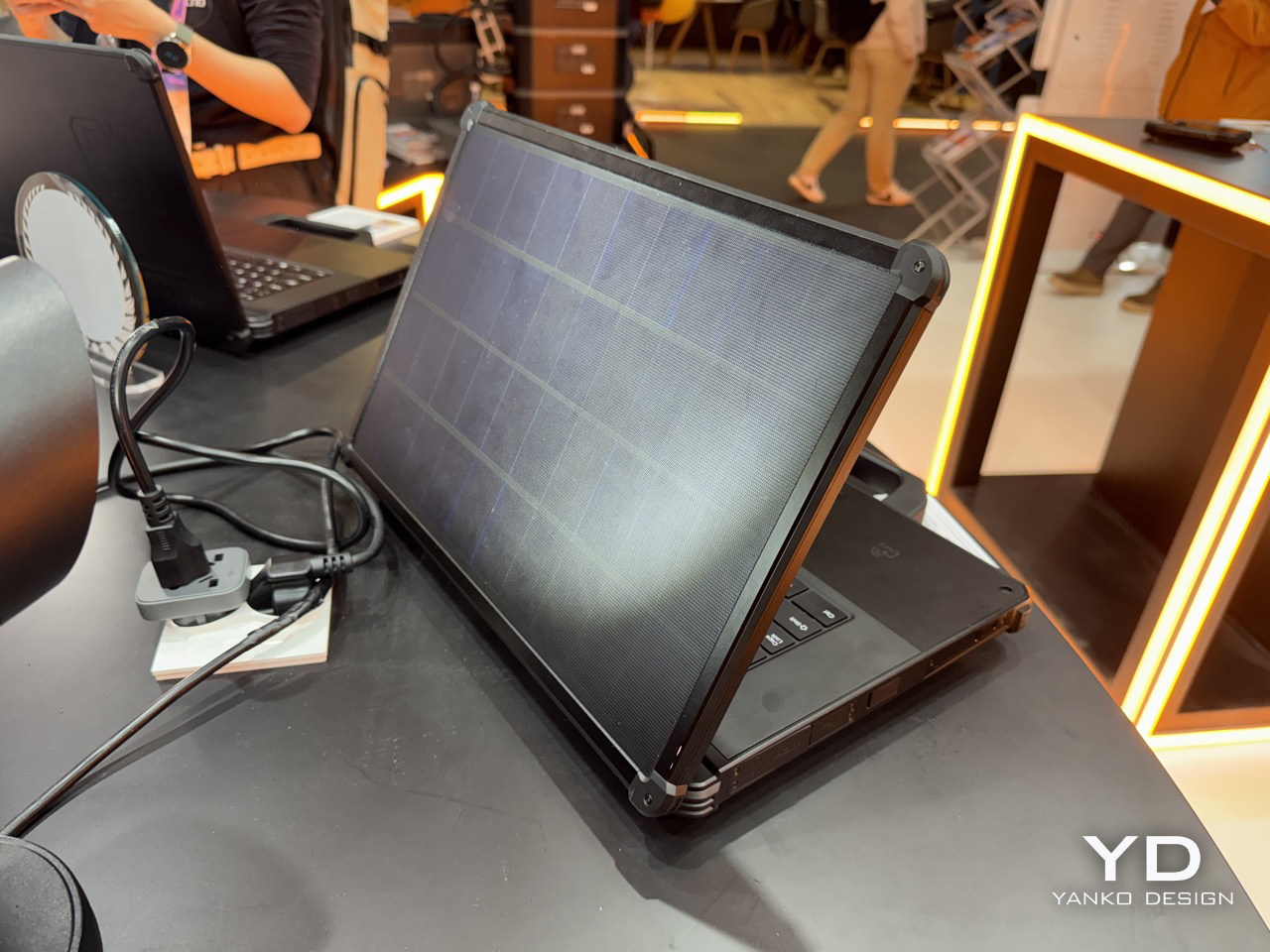
The RG14-P pulls 10W from its photovoltaic lid panel, enough to get the 95Wh dual-battery system to 50% in roughly six hours under optimal sunlight. That number sounds modest until you frame it correctly: this laptop is aimed at field engineers, utility inspectors, and emergency responders working in places where “finding a charging point” genuinely isn’t an option. For those people, six hours to half capacity under open sky is pretty meaningful. The dual-battery architecture pairs a 3,000mAh internal unit with a 5,200mAh hot-swappable external battery, meaning you can pull the secondary and slot in a fresh one without shutting the machine down. That feature gets requested loudly on job sites and almost never shows up.

Designer: Oukitel

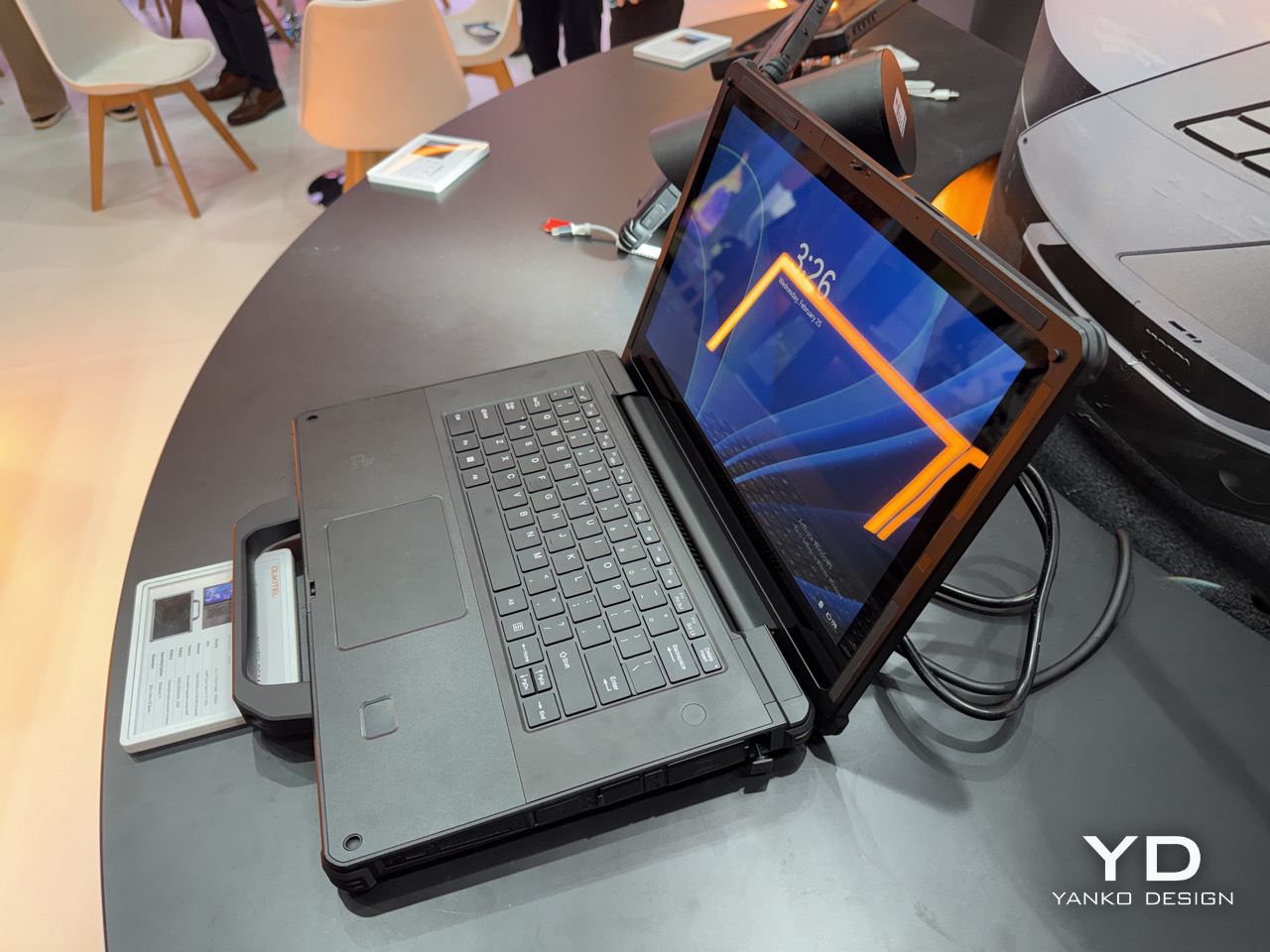
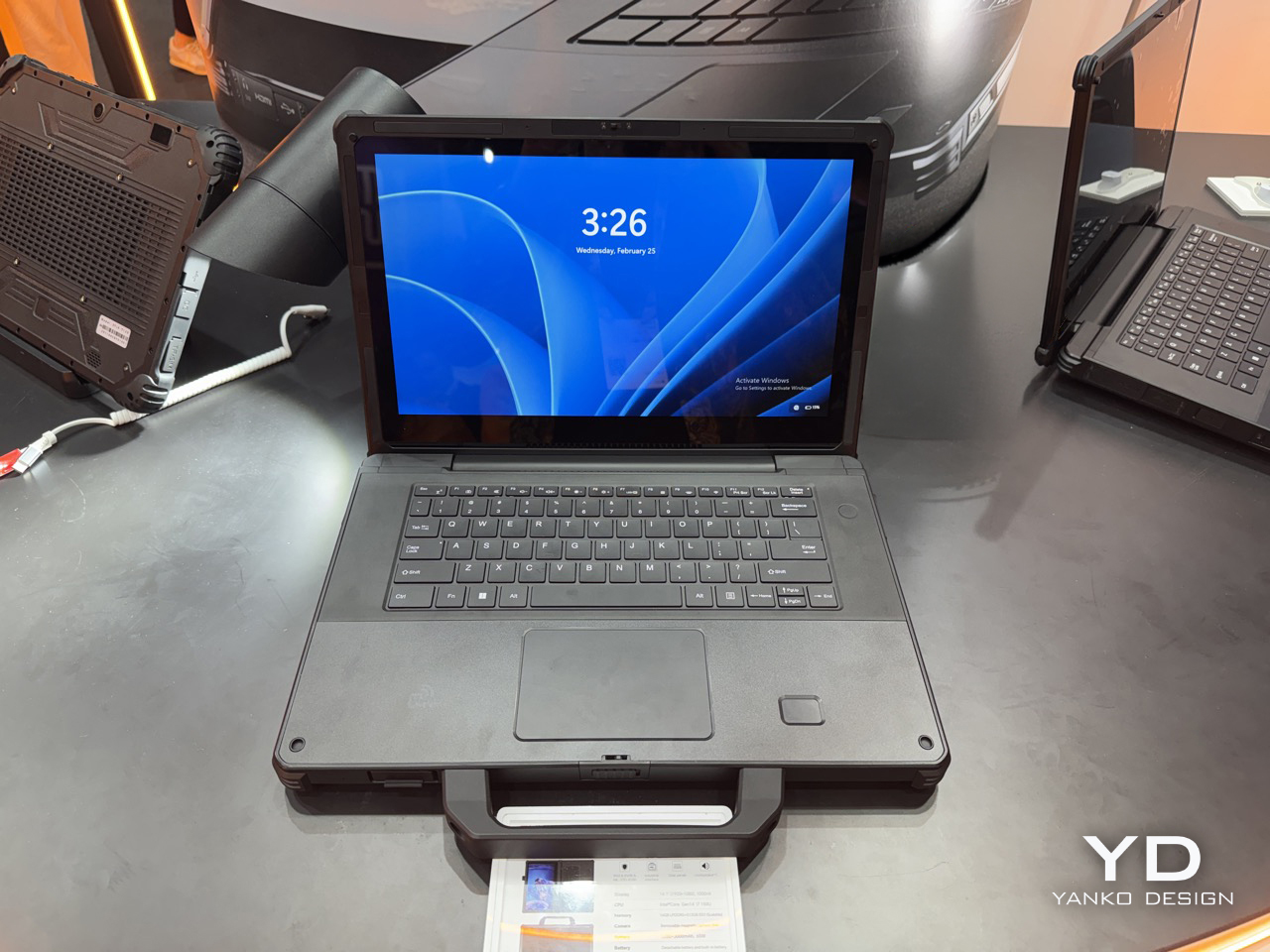
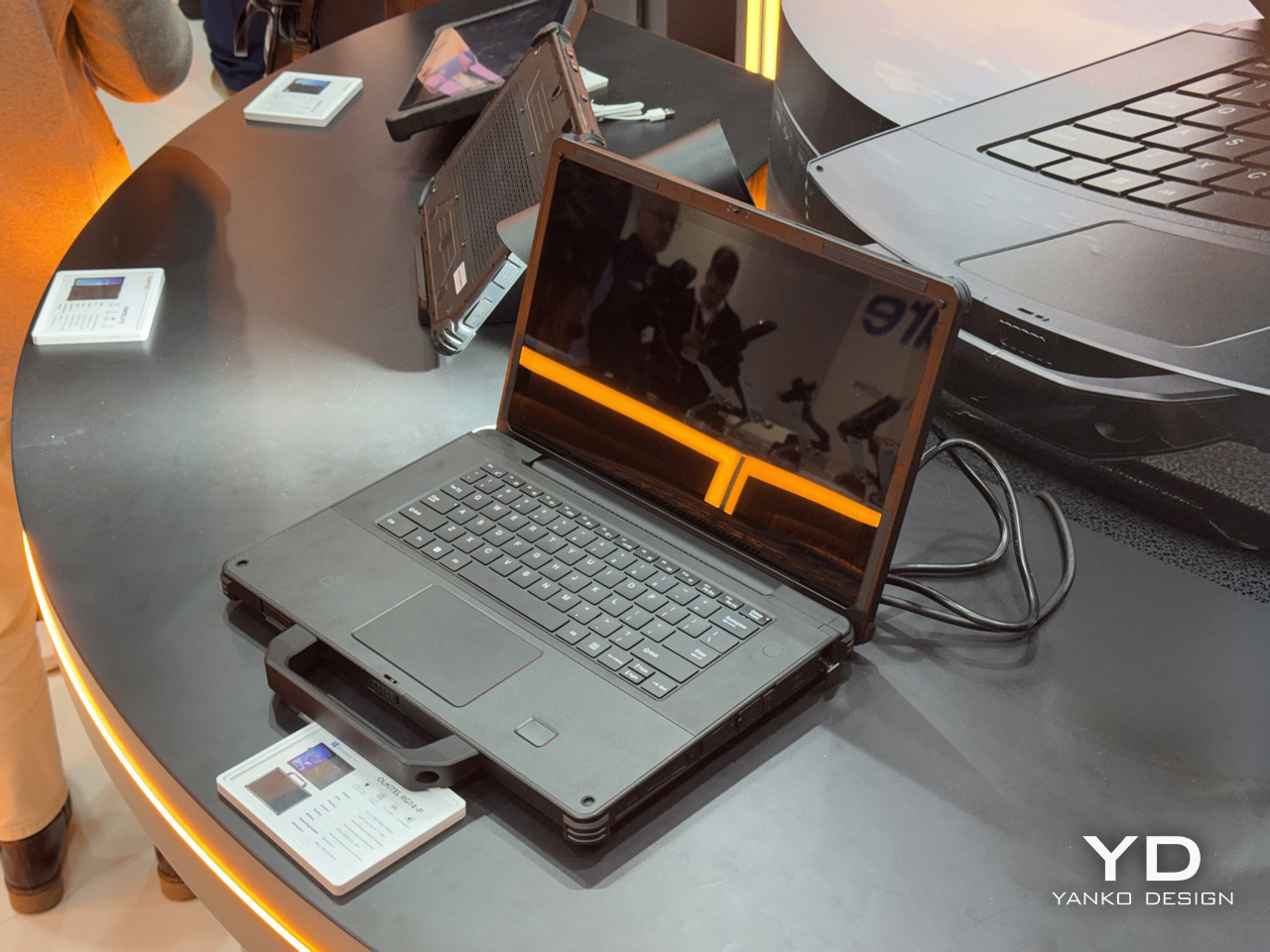
Under the lid, the RG14-P runs a 14th Gen Intel Core i7, 16GB of RAM, and 512GB of expandable storage, which puts it well past basic field terminal territory and into legitimate workstation range. The 14.1-inch touchscreen hits 1,000 nits, which matters enormously when your display is reflecting blue sky back at you. There’s also a 180-degree rotating magnetic camera, dual 5W speakers for noisy industrial environments, 65W fast charging as a backup, and IP68/IP69K certification currently in testing. IP69K specifically covers high-pressure, high-temperature jet spray, the kind of thing that happens near industrial cleaning equipment. The machine weighs 3.7kg, which is heavy, but rugged laptops have always made that tradeoff and nobody who needs one complains about it.

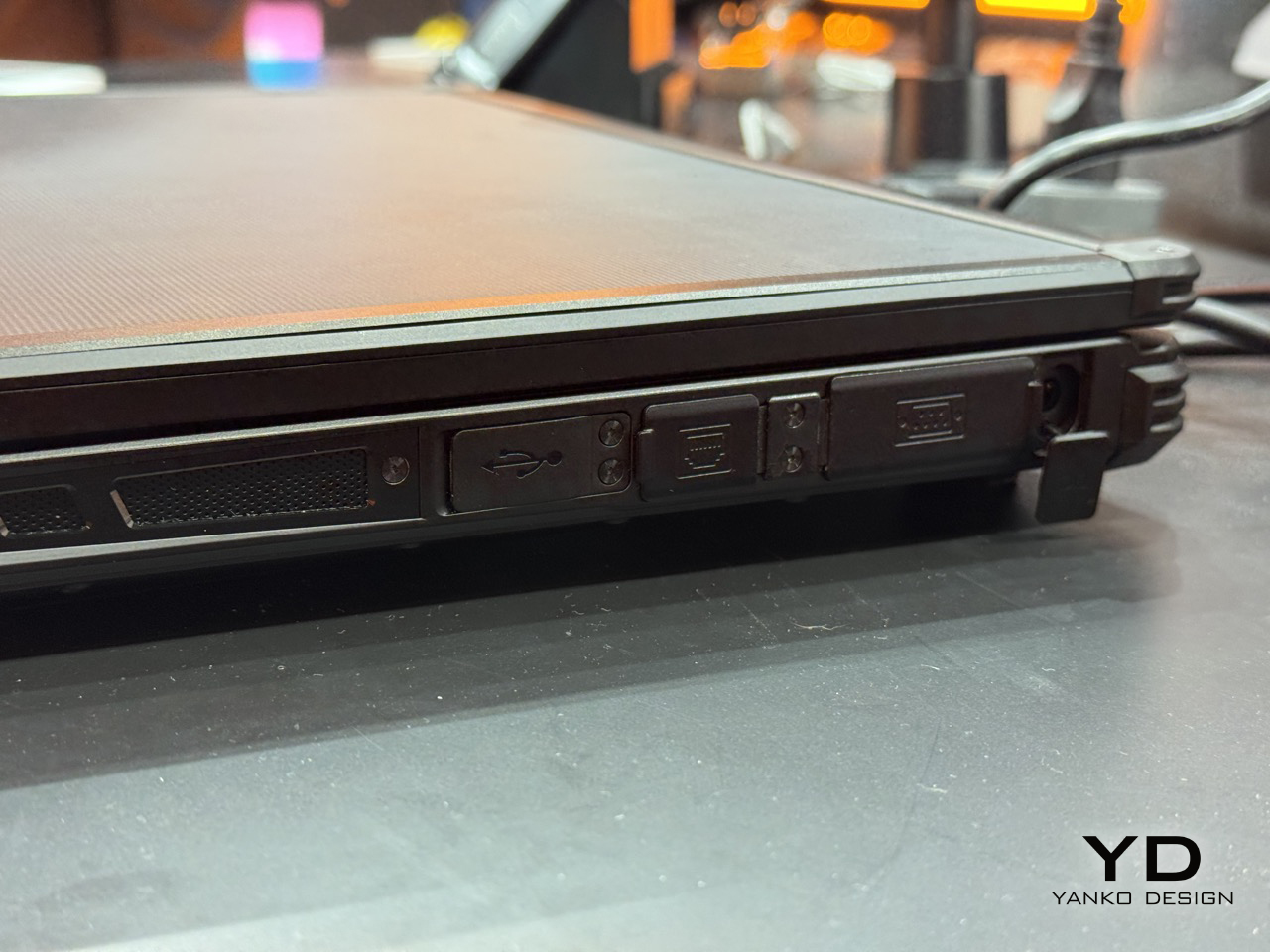
The connectivity stack is old-school in the best way: RS232, RJ45, HDMI, NFC, and fingerprint authentication. RS232 is serial protocol territory, the kind of interface still running on factory floor equipment and field measurement tools that haven’t been updated in a decade. Its presence signals that Oukitel actually mapped out real industrial workflows before finalizing the port selection, rather than building around a mood board. Compare that to where Lenovo has been spending its MWC energy lately: a rollable laptop at CES 2026 and a modular AI laptop concept at MWC 2026 that repositions the ThinkBook as an upgradeable platform. Both are interesting industrial design exercises, but neither one is solving a power access problem. The RG14-P is.

There’s also the RG14-L variant, which drops the solar lid and adds a built-in front camping light panel instead, turning the machine into a workstation and a light source simultaneously for night operations. Carrying less gear into a remote deployment is always a win, and building the light into the device rather than handing you a separate torch is exactly the decision you make when you’ve actually talked to the people using it. Pricing and availability are still unconfirmed post-Barcelona, and the IP68/IP69K certification is still in testing, so the most important durability claims haven’t been independently validated yet. Those are real open questions worth watching. But as a product that wraps the solar laptop concept around a genuine use case, with actual hardware specs and a shipping timeline, the RG14-P makes a far stronger argument for the idea than anything that’s come before it.

The post A Laptop With a Solar Panel Lid Just Showed Up at MWC 2026: Hands-on with Oukitel RG14-P first appeared on Yanko Design.