Insta360, the company best known for its action cameras, just released the Snap selfie screen. It's a small display that connects via USB-C and sits on the back of your phone, helping you to use your rear camera for higher resolution vlogging or selfies.
The 3.5-inch touchscreen allows you to adjust camera settings like zoom and focus and frame your selfies before you take them. The company has also released a model it co-developed with the beauty tech brand AMIRO that offers a built-in light with multiple color temperatures and brightness levels. The standard Snap costs $79.99, while the version with the light runs $89.99.
If you search "selfie screen" on Amazon, you'll see that this isn't a brand-new product space, but you'll also find that the most popular results are wireless screens. Insta360 claims that its USB-C-connected solution offers a more stable and lower latency feed.
The Snap is 6.8mm thick, a hair thinner than an iPhone 17, and attaches magnetically to the back of MagSafe-compatible iPhones. Insta360 says there is an included magnetic ring for other devices and that Snap supports Android phones that offer DisplayPort Alt Mode, a screen-mirroring function. Insta360 says Snap is compatible with all the major third-party camera and social media apps to make capturing and posting easier.
Phones like the iPhone 17 and Galaxy S25 feature rear cameras that offer roughly three to five times the resolution of their front cameras, or in the case of the Galaxy S25 Ultra, about 16 times as much. So, unless smartphone manufacturers start investing more heavily in front-facing cameras, Snap could find a market among creators and social media aficionados.
This article originally appeared on Engadget at https://www.engadget.com/mobile/insta360-releases-usb-c-selfie-screen-its-calling-snap-120001741.html?src=rss
The vehicles use tech from MOIA America, the US wing of Volkswagen's self-driving subsidiary. Uber and MOIA plan to deploy thousands of ID. Buzz vehicles across the US over the next decade. LA is the pilot city, and if all goes well, it will spread to "multiple US markets." The companies say they're still on track for rides (with safety drivers) in LA in late 2026.
Uber / MOIA
The ID. Buzz is Volkswagen's modern take on the automaker's classic "hippie van" microbus. The head-turning EV has minivan-style sliding doors and seats up to seven people, making it a logical fit for larger groups hailing an Uber. The vehicle has a per-charge range of up to 234 miles.
After selling its in-house self-driving unit in 2020, Uber pivoted to a new strategy of partnering with multiple AV companies. It currently offers autonomous rides in the US with Waymo (Phoenix, Austin and Atlanta) and Avride (Dallas). Overseas, it has live service with WeRide in Abu Dhabi, Dubai and Saudi Arabia. Uber has a long list of other partners lined up for future services, including (among others) Rivian, NVIDIA and Zoox, the latter of which also plans to debut van rides in LA within the next year.
Correction, April 8 2026, 8:50AM ET: A previous version stated that driverless rides would be available in 2026; AVs are planned to be on LA streets in 2026, but with human safety drivers. Engadget regrets the error.
This article originally appeared on Engadget at https://www.engadget.com/transportation/evs/uber-begins-testing-its-volkswagen-id-buzz-robotaxi-fleet-in-la-120000762.html?src=rss
Xbox’s Project Helix is an initiative designed to merge the convenience of console gaming with the flexibility of PC platforms. By incorporating technologies like FidelityFX Super Resolution and advanced ray tracing, it aims to enhance gaming performance and visual quality. However, as Kevin Kenson explains, this strategy raises concerns about compatibility and the potential loss […]
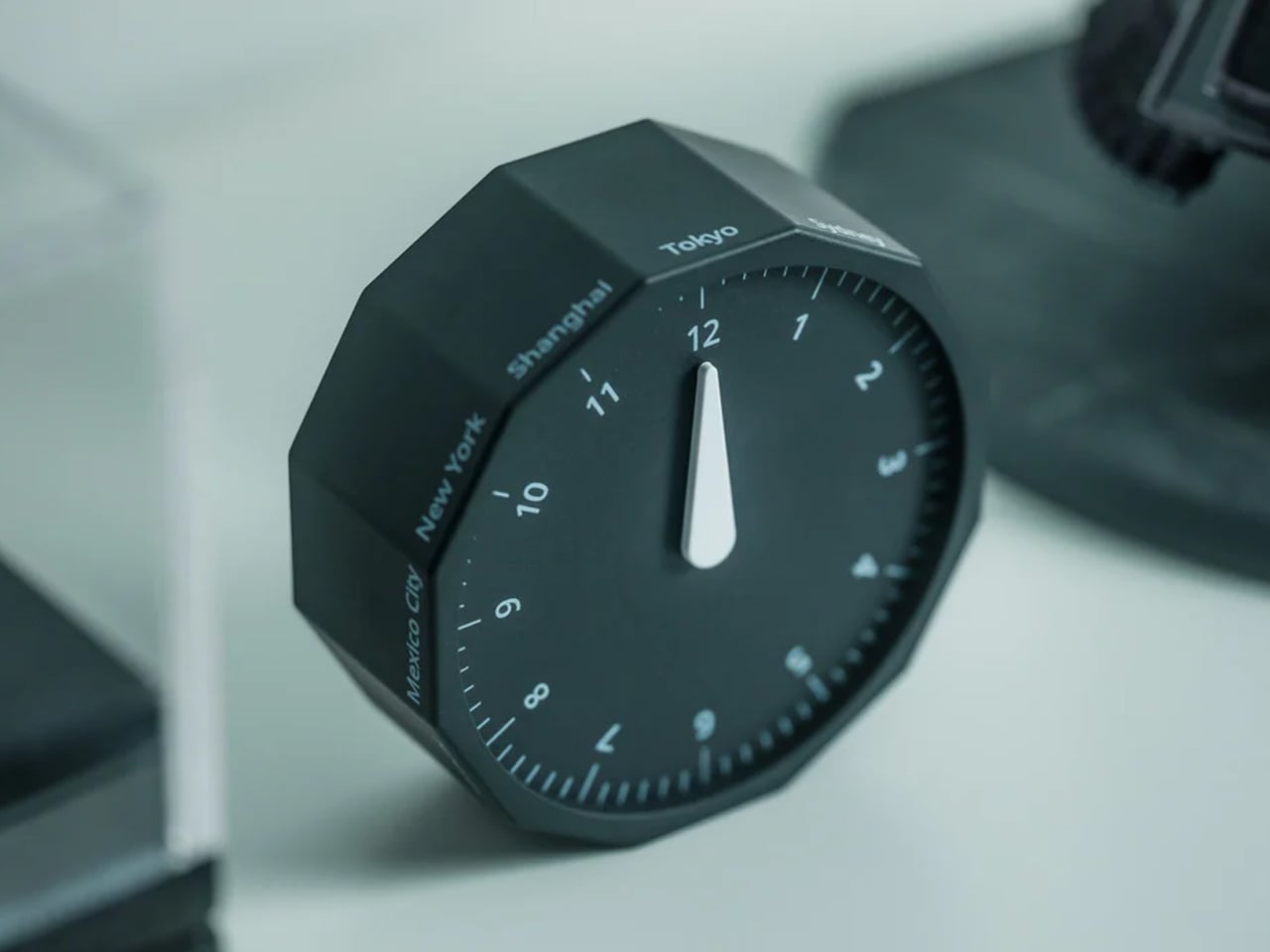
This 12-sided clock turns global timekeeping into a calmer desk ritual
Keeping up with different time zones sounds simple until it becomes part of your everyday routine. You check your phone before a call, open another tab to confirm the hour, do a quick mental calculation, and still second-guess whether it’s too early in Tokyo or too late in New York. Not to forget the perils of push-notifications – a quick check of time leads you down a drain of doom-scrolling that you take an hour to return from! To add a layer of analog convenience in this increasingly digital setup, I present the Rolling World Clock.
Why Traditional World Clocks Never Quite Feel Right
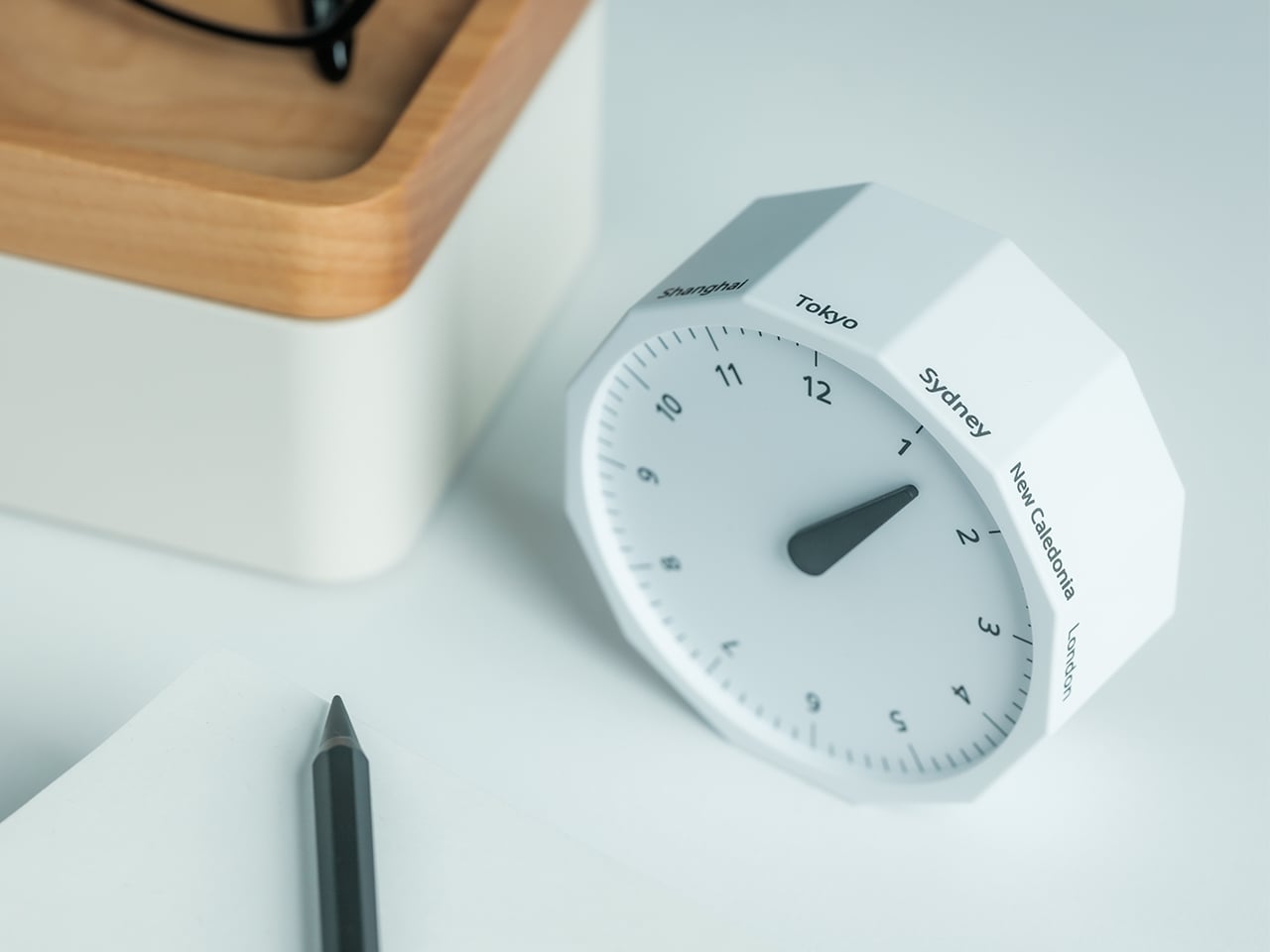
The Rolling World Clock takes a familiar category and gives it a much smarter form. Instead of relying on screens, menus, or a row of tiny city labels, this analog desk object turns world time into a simple physical interaction. Built with 12 sides, each representing a major timezone city, it lets you roll from one location to another and instantly read the local time with a single hand. It’s a cleaner, more tactile answer to a problem that has long been solved in ways that feel unnecessarily digital.
That analog quality is a big part of the appeal. There’s a growing interest in devices that help people step back from constant digital interaction, and this clock fits neatly into that trend without feeling nostalgic for nostalgia’s sake. It still solves a modern problem, especially for people working with global teams or keeping in touch with friends and family abroad, but it does so in a way that feels grounded and human. You’re not swiping, tapping, or toggling between screens. You’re just rolling the object in your hand and reading the time.
Built for modern routines, expressed through simple interactions.
The city lineup also makes it genuinely useful. The 12 sides cover major global time zones, including London, Paris, Cape Town, Moscow, Los Angeles, Karachi, Mexico City, New York, Shanghai, Tokyo, Sydney, and New Caledonia. That gives it enough range to be practical for a wide variety of work and lifestyle needs, whether you’re coordinating meetings, planning travel, or just trying not to message someone at the wrong hour.
Built for a More Intentional Desk
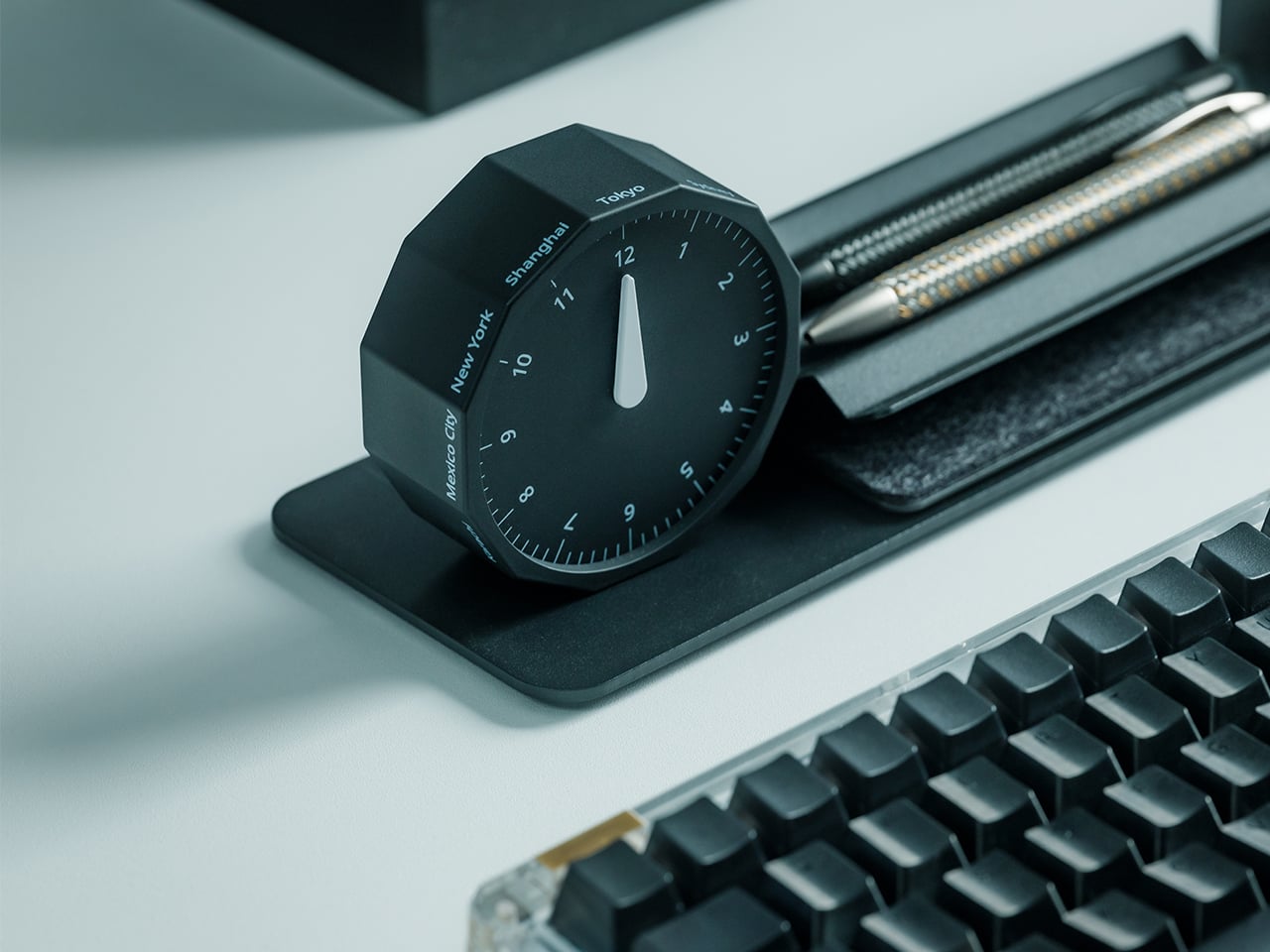
For the desk setup fanatics, there’s also a strong aesthetic argument here. The Rolling World Clock is available in black and white, two finishes that make it easy to integrate into a modern desk setup without fighting for attention. It has the kind of understated presence that works especially well for young professionals who want their workspace to feel differentiated without becoming visually noisy. It’s functional, yes, but it also reads as a design object, the sort of piece that quietly signals taste.
Clean lines, one hand, no distractions.
That balance of utility and personality is what makes this more than a novelty. If you work across cities, collaborate with clients in different regions, or simply like the idea of keeping global time visible without adding another glowing screen to your day, this clock makes a strong case for itself. It taps into a broader shift toward analog tools that feel slower, more deliberate, and more human, while still solving a very modern problem.
Feels as good in the hand as it looks on the desk.
Why It’s Worth Picking Up Now
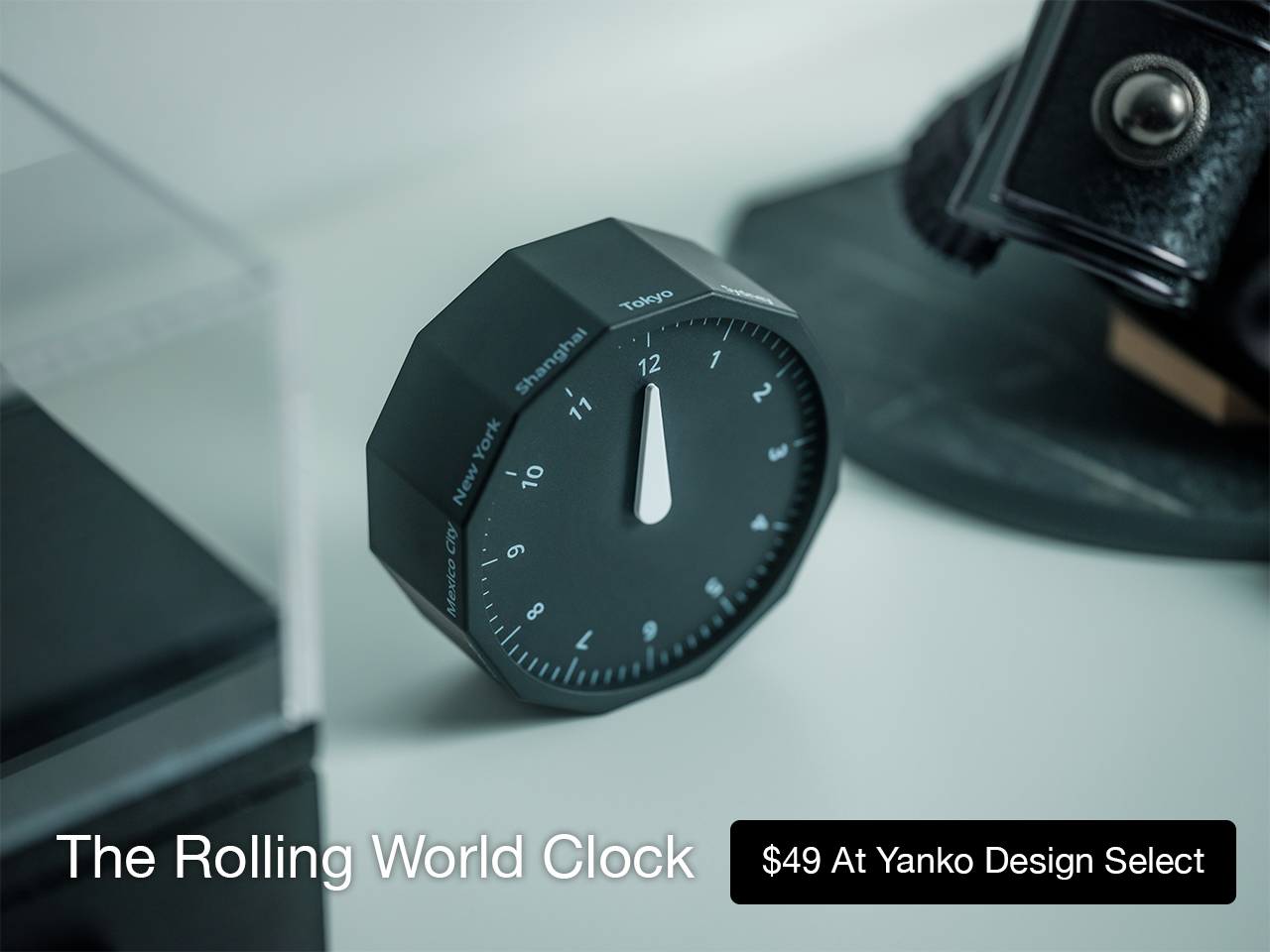
At $49, the Rolling World Clock lands in a sweet spot for a desk upgrade that feels distinctive without being overcommitted. It also has the kind of giftable appeal that comes from being both useful and conversation-worthy. And with only a few left, it carries just enough urgency to make hesitation a risky move.
If your desk could use an object that feels smarter, calmer, and more intentional than another digital widget, the Rolling World Clock is worth grabbing now. It’s currently available in the Yanko Design Shop in black and white, and with limited stock remaining, this is one of those rare functional design pieces you probably shouldn’t wait on.
Meta has released a new version of WhatsApp for CarPlay that has much better integration that its previous version. As MacRumors and9to5Macreport, the new app gives users access to a native interface. The old WhatsApp for CarPlay is mostly limited to Siri-operated features. Users can, for instance, ask Siri to compose messages or place calls for them. The new interface has a contact info section, where they can see the profiles of people saved in their account, as well as a favorite contacts section that makes it easy to find users they usually message or call.
Users can also find a list of their recent chats and call history within the app. Plus, they’ll see new shortcut buttons for sending messages via dictation or for placing a call, in case they don’t want or can’t give verbal Siri commands. Meta has been beta testing the new app since at least last week. Now that it’s available, users can have access to all the features we’ve listed by updating their iOS app and connecting to their infotainment systems. OpenAI also recently rolled out ChatGPT's Voice mode to CarPlay, allowing drivers to hold a conversation with the chatbot while on the road.
This article originally appeared on Engadget at https://www.engadget.com/apps/whatsapp-adds-a-better-native-interface-for-carplay-112127361.html?src=rss
Running a company entirely without human intervention might sound like science fiction, but David Ondrej’s video below explores how this concept becomes feasible with Paperclip, an open source platform for managing autonomous AI agents. Paperclip allows users to assign AI agents specific roles, such as CEO or operations manager, within a simulated corporate hierarchy. These […]
Apple is reportedly preparing to unveil a significant overhaul of its MacBook Pro lineup, with a redesigned model expected to debut in early 2027. This update could represent one of the most substantial changes to Apple’s flagship laptop in recent years. Key highlights include the introduction of an OLED display, next-generation M6 Pro and M6 […]
Lossless Scaling, as explored by Retro Game Corps, offers a unique way to enhance gaming visuals and performance through AI-driven upscaling and frame generation. Designed to work across platforms like Windows and Linux-based handhelds such as the Steam Deck, it brings smoother gameplay and sharper visuals to games and emulators alike. Its standout feature, integer […]
Apple is preparing to unveil the highly anticipated iPhone 18 Pro and 18 Pro Max this September, aiming to elevate the premium smartphone experience to new heights. With significant advancements in design, performance, and functionality, these flagship models are poised to redefine industry standards. Despite ongoing global component shortages, Apple has committed to maintaining […]
Google’s latest AI-driven design system, Stitch, offers a structured approach to interactive design by incorporating features like predictive heatmaps and instant prototyping. Powered by Gemini AI, Stitch enables users to quickly generate interactive design flows while analyzing potential user interactions, significantly reducing manual adjustments. As highlighted by World of AI, its AI-native canvas supports multitasking […]