Ubisoft had to shut down Rainbow Six Siege's servers and roll back transactions, a situation that came from a widespread breach that left various players with billions of in-game credits, ultra-rare skins of weapons, and banned accounts. As of Sunday, December 28, the status page on Rainbow Six Siege's website still shows "unplanned outage" on all servers across PC, PlayStation and Xbox.
Later that evening, though, the company confirmed that it was done testing on the update it pushed out and was opening the severs back up to players. It also said that the transaction rollback was complete, but that the Marketplace would remain closed for the time being.
➡️ Our live tests are now complete and we are opening the game to all players. Please note that you may experience a queue when connecting, as our services ramp up.
➡️ The rollback is also complete. 🔸 Players who did not log in between December 27th 10:49 UTC and December 29th… https://t.co/mfaAVnvK5G
The fiasco began Saturday morning when Ubisoft said on X that they were "aware of an incident currently affecting Rainbow Six Siege" and "working on a resolution." A couple of hours later, the Rainbow Six Siege servers were shut down, following plenty of user reports showing either zero or billions in R6 credits, rare skins in their lockers and either account bans or unbans. Ubisoft later clarified Saturday afternoon on X that nobody would be banned if they spent their ill-gotten credits, but that a rollback of all transactions starting from Saturday, 6AM ET would soon be underway.
On Sunday afternoon, Ubisoft informed the playerbase that they're currently performing a rollback, but that "extensive quality control tests will be executed to ensure the integrity of accounts and effectiveness of changes." The company added that "this matter is being handled with extreme care and therefore, timing cannot be guaranteed" and didn't provide an estimate for when servers would be back online.
Update, December 29, 2025, 10:22AM ET: This story and its headline have been updated with the details about Ubisoft re-opening the game’s servers.
This article originally appeared on Engadget at https://www.engadget.com/gaming/rainbow-six-siege-servers-are-back-online-after-shutting-down-in-response-to-marketplace-hacks-191049079.html?src=rss
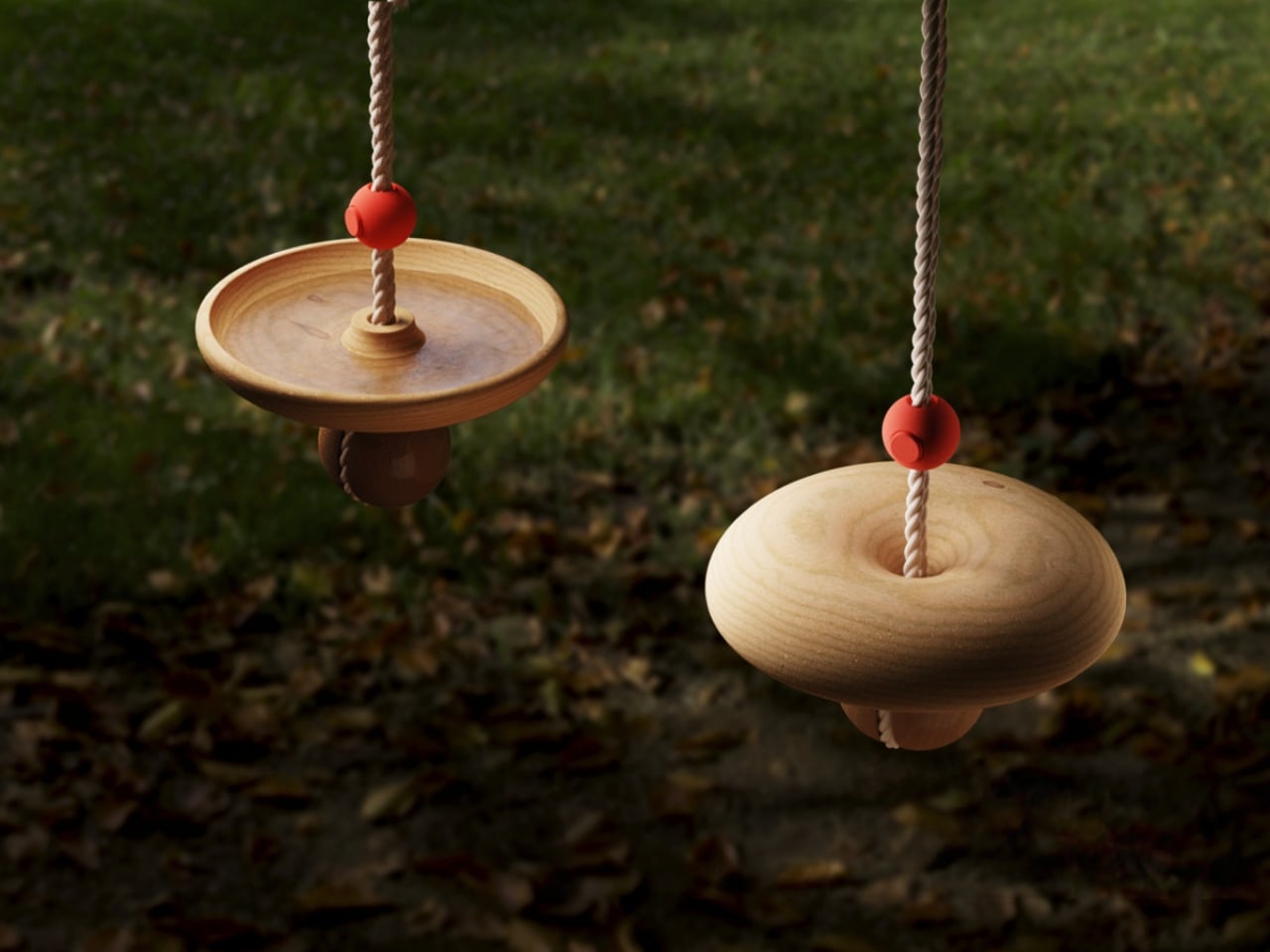
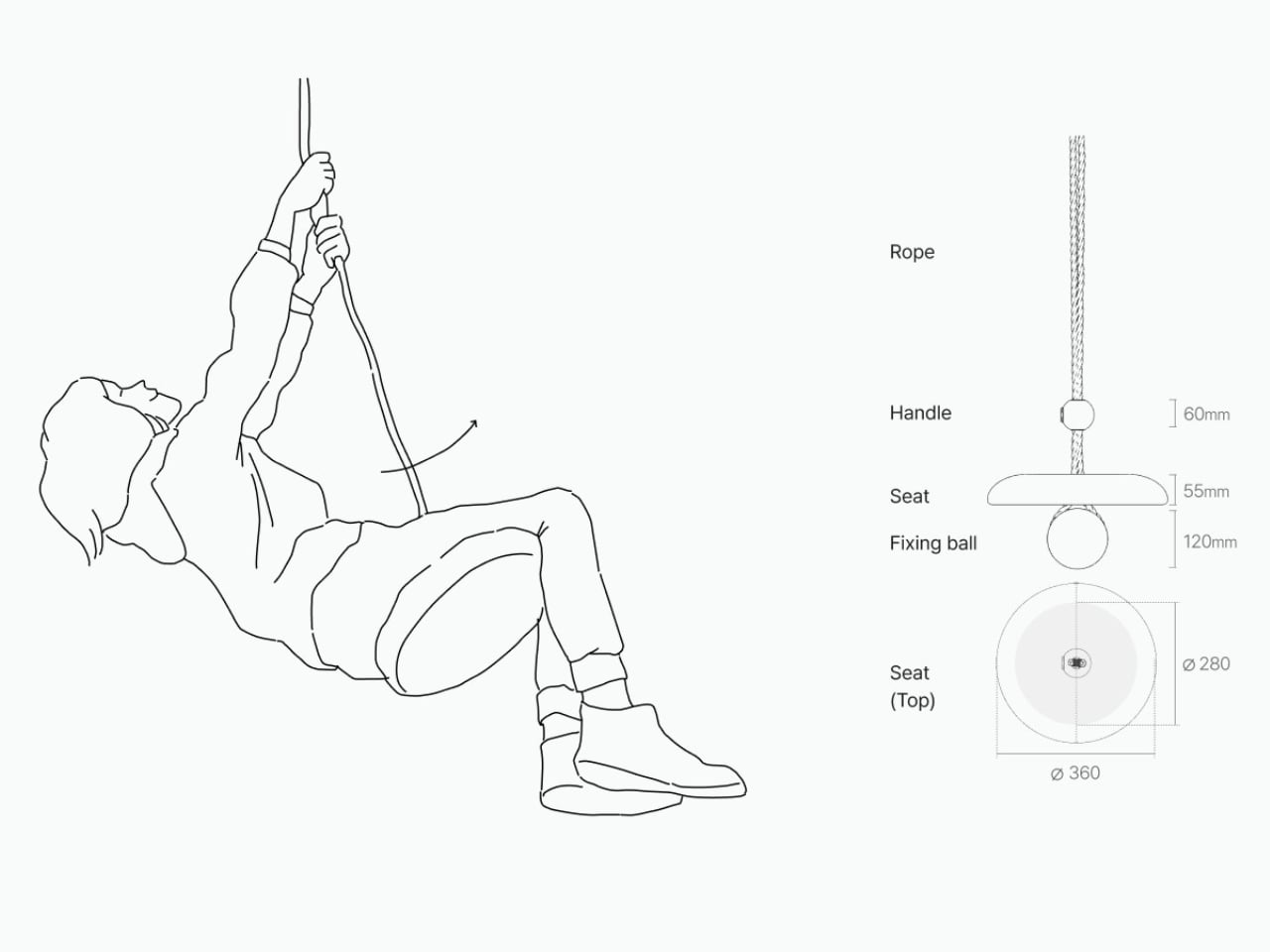
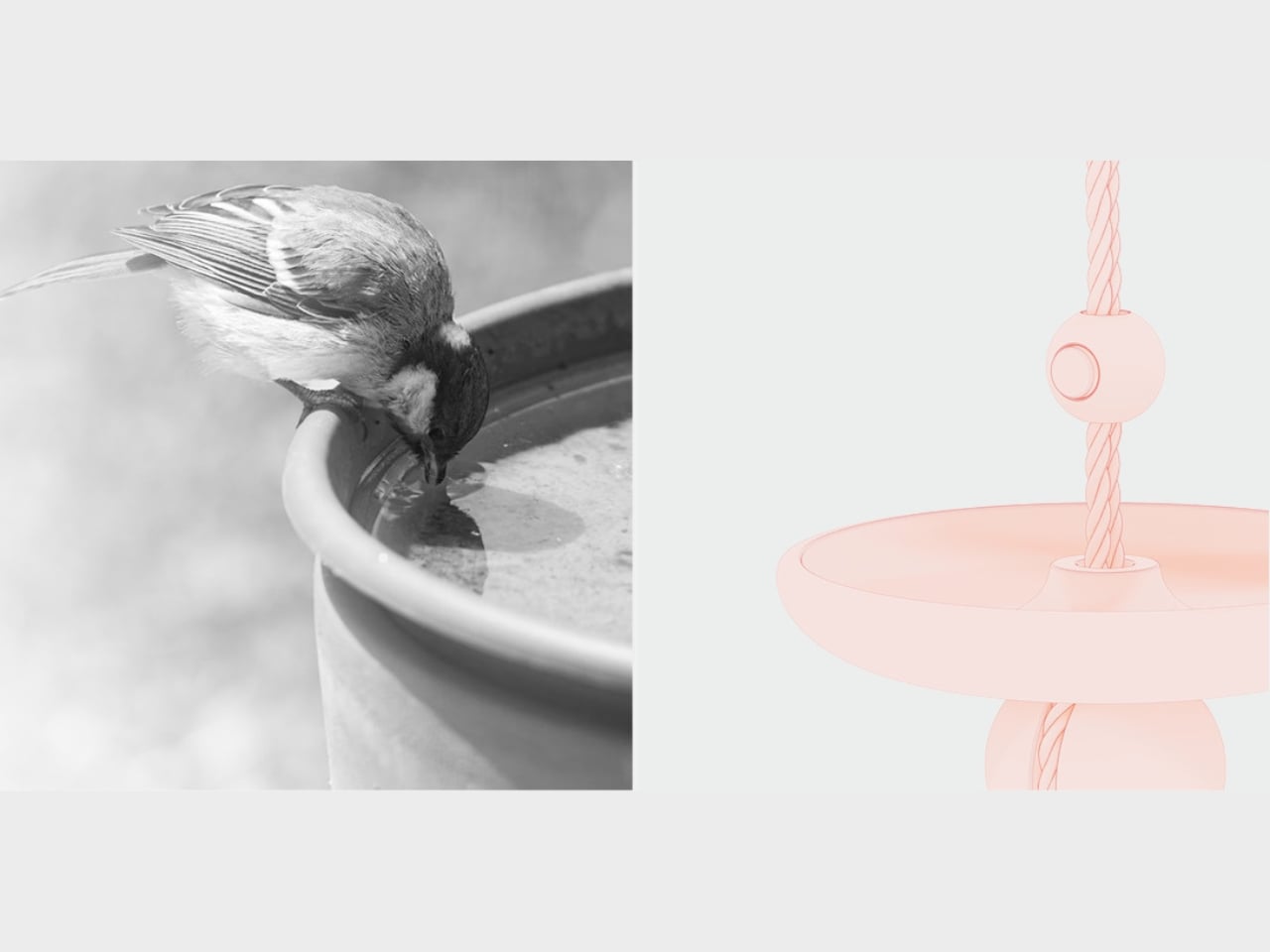
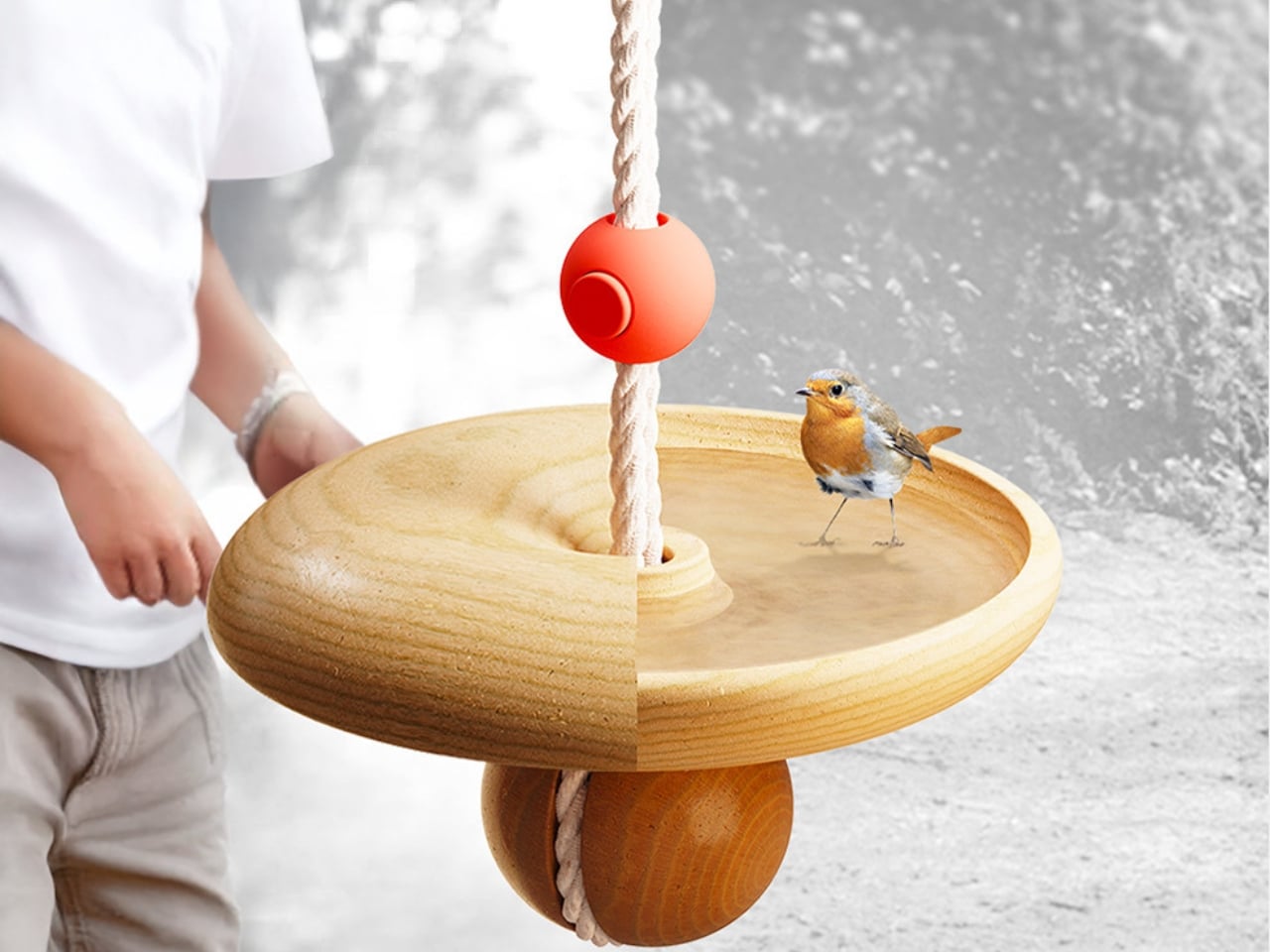
There’s something delightfully clever about design that refuses to pick just one job. You know what I’m talking about: those rare pieces that make you stop and think, “Wait, it does what?” Birddy, a recent award-winning furniture design by Korean designers Yejin Hong and Seyeon Park, is exactly that kind of creation. It’s a children’s swing when sunny days call for play, and a bird feeder when rain clouds roll in. Simple as that sounds, it’s the kind of thoughtful design that makes you wonder why we don’t see more of it.
The concept earned Hong and Park an Excellence Prize at the 2024 Kengo Kuma & Higashikawa KAGU Design Competition, and for good reason. The competition, known for championing furniture designs that bridge functionality with social awareness, found in Birddy exactly what contemporary design should aspire to be: useful, beautiful, and quietly compassionate.
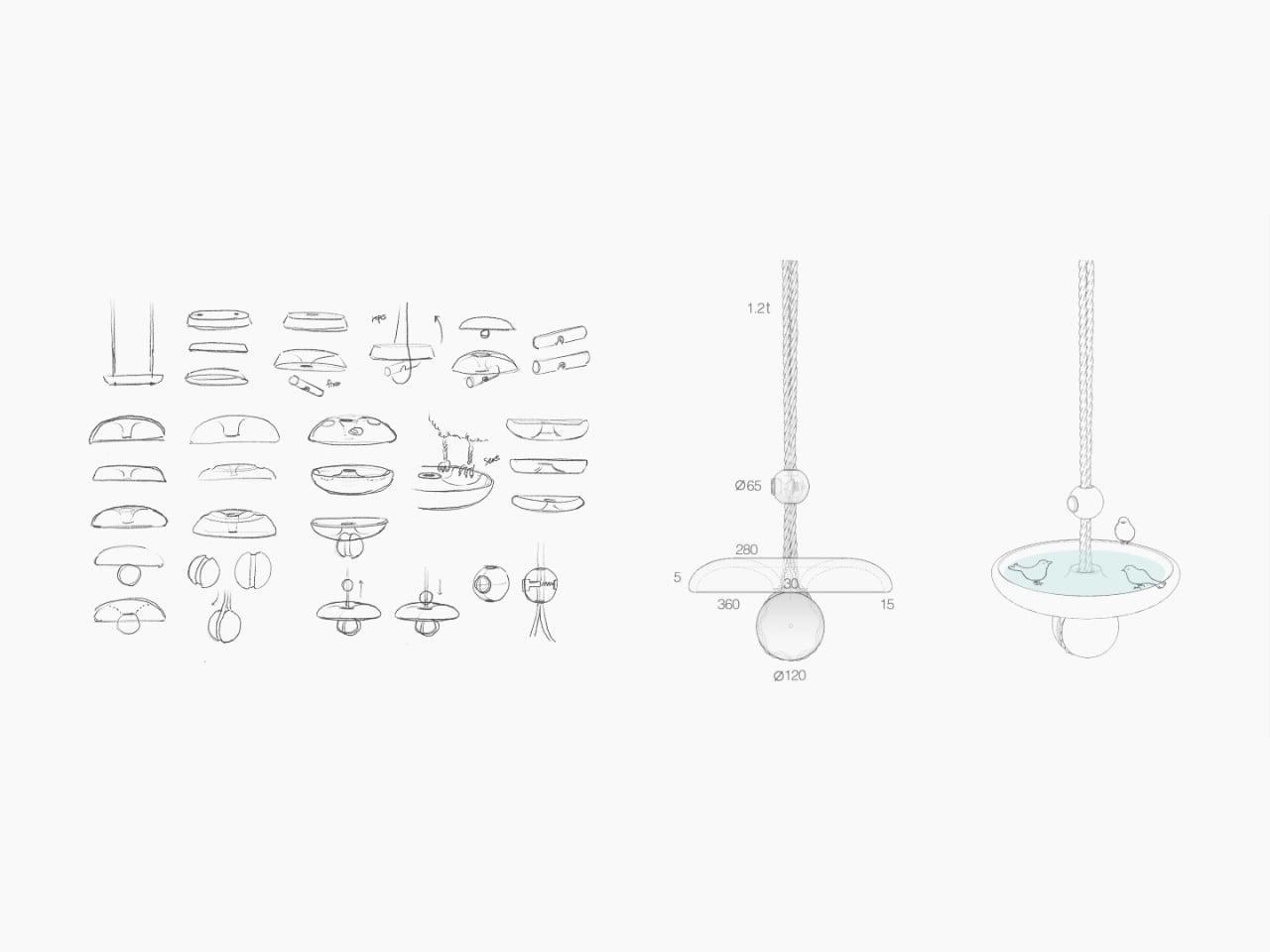
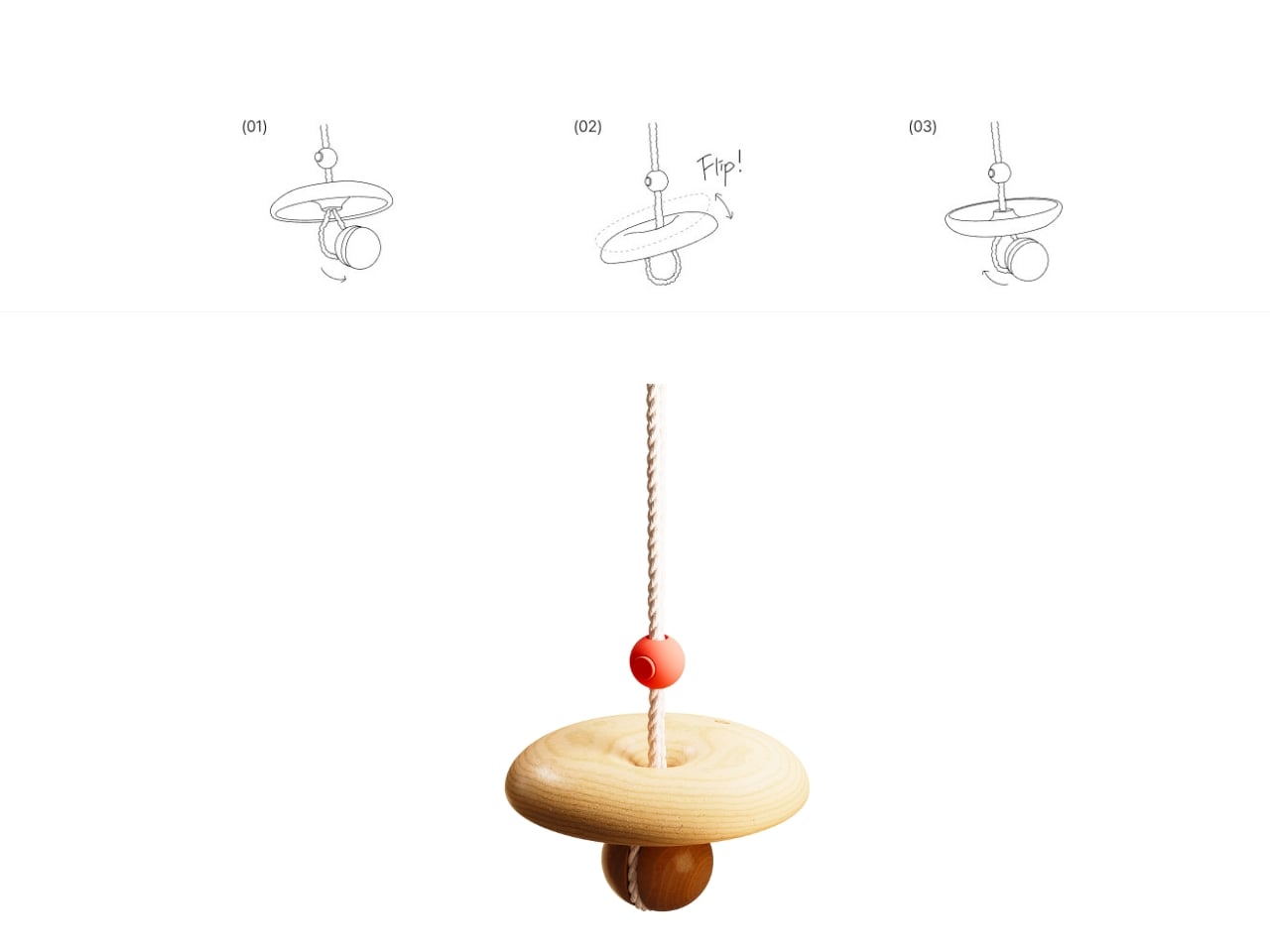
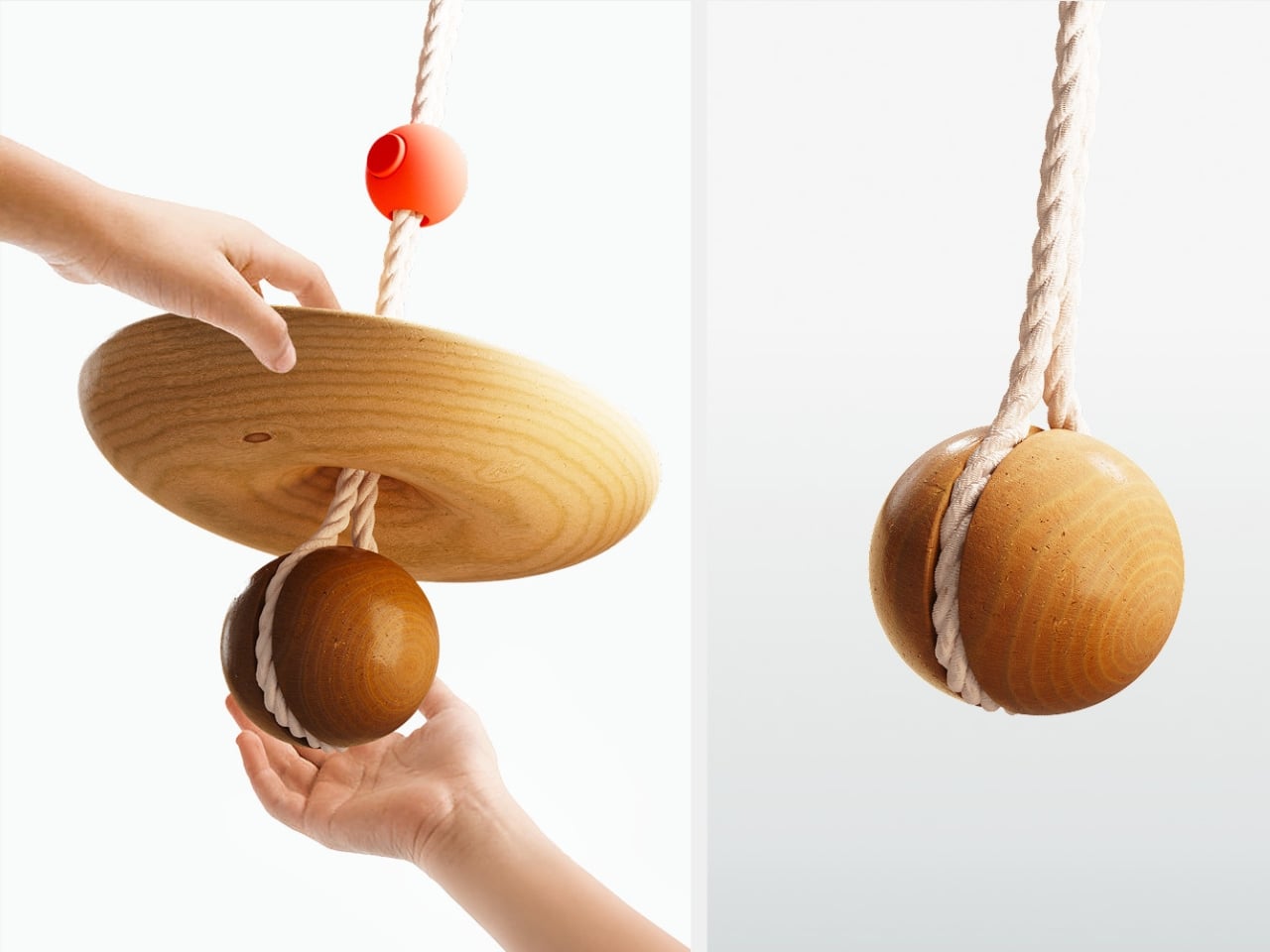
At first glance, Birddy looks like a refined wooden swing, the kind that would fit perfectly in a minimalist backyard or a community park. But flip it upside down on a rainy day, and suddenly you’ve got a protected feeding station for birds seeking refuge and sustenance when the weather turns harsh. It’s this elegant duality that makes the design so compelling. Rather than forcing two functions into an awkward compromise, the designers found a natural harmony between them.
What strikes me most about Birddy is how it normalizes empathy through everyday objects. We’re used to thinking about children’s play equipment and wildlife care as separate concerns, occupying different mental compartments in our design-thinking. Hong and Park challenge that separation. Their design suggests that caring for nature and creating joyful spaces for children aren’t competing priorities but complementary ones. When kids aren’t using the swing, why shouldn’t it serve another purpose? When birds need shelter and food, why can’t the solution be something that already exists in our yards?
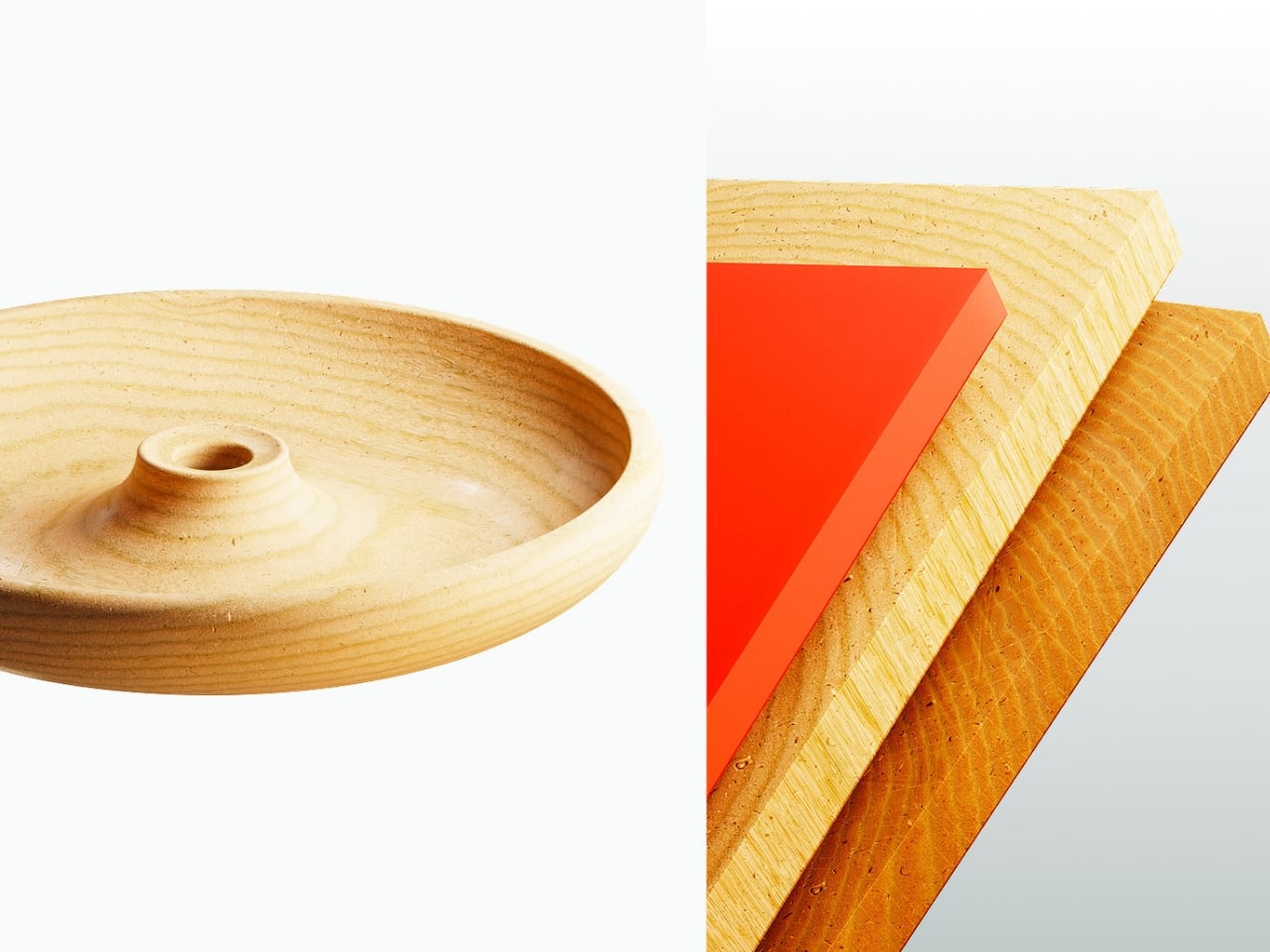
The execution shows restraint and respect for both users, human and avian. The wood construction feels appropriate for outdoor use while maintaining aesthetic appeal. There’s no garish attempt to make it “cute” or child-themed. Instead, the design trusts that good form works for everyone. This kind of confidence in simplicity is harder to achieve than it looks. Many designers would be tempted to add unnecessary flourishes or overcomplicate the transformation mechanism. Hong and Park resist that urge entirely.
From a practical standpoint, Birddy addresses real needs without requiring users to sacrifice space or budget for separate items. Urban and suburban dwellers increasingly want to support local wildlife, but bird feeders can feel like visual clutter. A swing is already part of many family landscapes. Combining them removes barriers to participation in backyard conservation. It’s environmental design through integration rather than addition.
The timing feels right too. We’re seeing a broader cultural shift toward multipurpose design as people become more conscious of consumption and space constraints. Furniture that pulls double or triple duty isn’t just trendy anymore, it’s becoming an expectation. But Birddy elevates the concept beyond mere space-saving. This isn’t about cramming more functionality into less area. It’s about finding poetic connections between different forms of care.
There’s also something wonderfully cyclical about the design. Children playing on the swing bring energy and life to a space during fair weather. Birds visiting the feeder bring that same vitality during storms. The object becomes a constant source of animation in the landscape, just with different performers depending on conditions. Parents watching kids swing on Tuesday might find themselves watching sparrows perch on Friday. That kind of continuous engagement with an object creates attachment and value beyond its material worth.
What Hong and Park have created isn’t revolutionary technology or groundbreaking engineering. Birddy succeeds precisely because it doesn’t try to be either. Instead, it represents something equally valuable: thoughtful observation of how we live and a willingness to imagine better arrangements. The best design often comes from asking simple questions like “What else could this do?” and “Who else could this serve?” Birddy answers both beautifully, proving that furniture can be generous in more ways than one.
After the high price tag of the Ayaneo Pocket DMG turned some retro handheld fans away, Ayaneo is working on another remake of the classic Game Boy with a slightly more affordable cost. Ayaneo revealed the pricing for the Pocket Vert, which starts at $269 for early bird orders.
Compared to the Pocket DMG that retails for $449, Ayaneo skipped the OLED and configurations that go up to 16GB of memory and 1TB of storage for the Pocket Vert. Instead, the handheld maker went with a fully metal CNC body and an ultra-minimalist design with engraving-free buttons that resemble the Analogue Pocket's look. Ayaneo built the Pocket Vert with a smaller 3.5-inch LCD screen that has a 1,600 x 1,440 resolution and a Snapdragon 8+ Gen 1 chip that should allow the handheld to handle anything up to PS2 and some Nintendo Switch games.
Ayaneo
To play more modern games, the Pocket Vert has a hidden touch pad below the buttons that acts as a makeshift joystick. Ayaneo also hid a fingerprint sensor in the power button and included a USB-C port, a 3.5mm headphone jack and a microSD slot for more storage capacity. The Indiegogo campaign for the Pocket Vert isn't open yet, but it will be the only place to snag the latest vertical handheld from Ayaneo at its lowest price before it reverts to the retail price of $339. You can even opt for the fully specced-out version that's only available in Lava Red and has 12GB of memory and 256GB of storage for an early bird price of $369 and a later standard price of $439.
This article originally appeared on Engadget at https://www.engadget.com/gaming/ayaneos-latest-game-boy-remake-will-have-an-early-bird-starting-price-of-269-174553644.html?src=rss
Ballpoint pen springs probably weren’t on your list of unofficial-yet-essential LEGO Technic parts, but this bobber MOC (My Own Creation) makes a compelling case for raiding your desk drawer. The twin coiled springs flanking the front forks and tucked behind the rear wheel handle suspension duties with surprising visual authenticity. They compress and extend just like real motorcycle shocks, adding functional movement to a build that already nails the stripped-down bobber aesthetic.
Bobbers emerged from post-war American garages when riders started cutting away everything unnecessary from their motorcycles. The philosophy was simple: lose the extra weight, keep what makes it run. This LEGO version channels that same spirit with its exposed twin-cylinder engine, bare-bones frame, and that yellow racing tank sporting a bold number 8. The builder modified LEGO Technic set 42036 into something far leaner and more specialized, swapping the original suspension components for those ingenious pen springs and repositioning elements to achieve proper bobber proportions.
Designer: MadamMelodicRaisin104
The pen spring hack solves a real problem in LEGO motorcycle builds. Technic sets come with their own suspension systems, sure, but they’re often bulky or visually clunky at this scale. Real bobber shocks are these long, exposed coil-over units that sit right out in the open, part of the bike’s visual language. Standard LEGO shock absorbers don’t quite capture that look. They function fine mechanically but lack the visual density and tight coil pattern you see on actual motorcycles. Pen springs nail the aesthetics, which works perfectly for this MOC because visuals are everything. The Bobber isn’t entirely functional, but the suspension (even if static) looks the part.
Set 42036, the donor bike here, originally builds into either a chopper or a street bike configuration. Both versions skew whimsical, which works for LEGO’s typical audience but doesn’t scratch the itch if you’re after something with genuine mechanical credibility. The builder kept the core engine assembly and frame geometry but ditched the fanciful proportions. Bobbers sit low, with the seat almost directly over the rear axle and minimal distance between components. This build compresses everything into that tight package, pulling the handlebars back into a more neutral position and mounting the foot pegs mid-frame rather than forward where cruisers typically place them. Mid-controls make sense for bobbers because the whole point was maneuverability and quick handling, not long highway cruises with your feet stretched out front.
The kickstand correction might seem minor but it speaks to the builder’s attention to detail. The original Technic chopper configuration puts the stand on the right side, which is wrong for actual motorcycles. Real bikes park on the left because that’s where the shifter lives and you need clear access when you’re mounting from the curb side. Swapping it over takes maybe five minutes but it shows someone who actually rides or at least understands how these machines work in the real world. Same logic applies to adding the foot pegs, which the kit omits entirely. You can’t have a rideable motorcycle without somewhere to put your feet, even in miniature form.
The yellow racing livery with that big number 8 pulls the aesthetic away from typical black-on-black bobber builds and into flat track racing territory. Flat trackers are bobbers’ dirt-slinging cousins, stripped down for speed on oval dirt tracks. The color choice keeps the build from looking too generic while the racing plate gives it a story beyond “stripped motorcycle.” The tail section stays minimal, just a small seat cowl and rear fender. Nothing to disturb the clean line running from tank to tail. The fat rear tire balances against that narrow front wheel, classic bobber proportions that suggest power and grip where it matters most. Those pen springs keep catching your eye though, because they’re so perfectly scaled and so absurdly obvious that you wonder why more builders haven’t figured it out.
The catch, however, is that this Bobber only exists in the metaverse… or rather LEGO’s own virtual verse, called the LEGO Ideas forum. Designed as an online platform for LEGO enthusiasts to share their own creations and vote for their favorites. MOCs that cross the 10,000 vote threshold get sent to LEGO’s internal team for review, and if successful, get turned into a box set that all of us can buy! I don’t see LEGO launching kits that require dismembering ballpoint pens for their springs (because that’s technically an ‘illegal’ form of building a brickset), but I’m sure there’s a pneumatic Technic part somewhere in LEGO’s arsenal that will work. If you want to see that happen, however, step 1 is to cast your vote for this gorgeous build on the LEGO Ideas website.
The possibility of a 16-inch iPad Ultra has sparked significant interest among tech enthusiasts and professionals alike. This rumored device could represent a bold evolution in Apple’s iPad lineup, offering a larger display, innovative hardware, and enhanced multitasking capabilities. However, questions surrounding its market positioning, competition, and potential overlap with existing Apple products remain central […]
What if you could turn outdated cryptocurrency mining hardware into a sleek, fully functional gaming console, all for a fraction of the cost of a traditional setup? ETA PRIME takes a closer look at how the AMD ASRock BC250, a mining blade originally designed for crypto enthusiasts, can be repurposed into a budget-friendly gaming machine. […]
Your smartphone is more than just a device for communication or entertainment—it’s a versatile tool that can be customized to suit your lifestyle. With the right apps, you can transform your phone into a powerful assistant that enhances productivity, personalization, and digital well-being. The video below from Xtream Droid explores ten lesser-known Android apps that […]
What if the future of energy storage didn’t rely on expensive, hard-to-source materials like lithium? In the video below, Ziroth breaks down how CATL’s reinforced sodium-ion battery could redefine the game by offering a stunningly affordable and sustainable alternative. With a cathode design that incorporates antimony and uses water-based manufacturing, this breakthrough not only slashes […]
I finished 23 books in 2025, after a few years of stalling out in the single digits. Most of those were physical books because I still love paper more than screens. The big shift was not suddenly having more free time, it was quietly building a set of reading ritual essentials that made sitting down with a book feel easier and more inviting than picking up my phone.
Instead of treating it as a willpower problem, I treated it as a design problem. I fixed how my books stayed open, how my space was lit, how comfortable long sessions felt, and how I handled travel, bathtime, and commutes. These seven reading ritual essentials did not turn me into a speed reader, they simply made reading the most pleasant option in more moments, and that is how I reached 23 finished books.
1. Bookish Bookmark
The Bookish Bookmark ended up being the quiet hero of my reading year. I read a lot of hardcovers and chunky paperbacks, and they used to fight me on every surface, snapping shut or demanding one hand just to hold them open. This clear acrylic piece became one of the first essentials in my reading ritual and changed that completely by sitting across the pages with a gentle curve and enough weight to hold everything flat without stressing the spine.
Because it is transparent, I can read straight through it while my hands stay free for coffee, breakfast, or note taking. It feels more like a small design object than a mere tool, and it looks beautiful left on a table between sessions. I reached for it during more than half of the 23 books I finished this year, especially the thicker novels and reference titles, and it turned physical reading from a small wrestling match into something smooth and effortless.
The Bookish Bookmark ended up being the quiet hero of my reading year. I read a lot of hardcovers and chunky paperbacks, and they used to fight me on every surface, snapping shut or demanding one hand just to hold them open. This clear acrylic piece became one of the first essentials in my reading ritual and changed that completely by sitting across the pages with a gentle curve and enough weight to hold everything flat without stressing the spine. Because it is transparent, I can read straight through it while my hands stay free for coffee, breakfast, or note taking. It feels more like a small design object than a mere tool, and it looks beautiful left on a table between sessions. I reached for it during more than half of the 23 books I finished this year, especially the thicker novels and reference titles, and it turned physical reading from a small wrestling match into something smooth and effortless.
Sculptural, minimalist design looks good and feels premium in the hand.
What I dislike
Performs best on flat surfaces, so it is less ideal if you mostly read fully reclined or on your side.
2. Anywhere-Use Lamp
Once I solved the problem of books fighting me, I turned to the light around them. The Anywhere-Use Lamp became the anchor of my reading spaces at home, from the sofa to the bedroom to a quiet corner of the dining table. It is a cordless, minimalist lamp with a soft diffused LED that feels more like candlelight than a harsh task light, and a clean cylindrical form that blends into almost any interior.
Touch controls on the body keep the silhouette free of visible switches and make it easy to tap the lamp on and adjust brightness without hunting in the dark. Because it is fully rechargeable and wireless, I stopped being constrained by outlets and cords and could place it exactly where reading wanted to happen. For most of my evening sessions this lamp was beside me, and it quickly stopped feeling like a generic light and started feeling like a core reading ritual essential that quietly supported the majority of those 23 books.
Cordless, rechargeable design lets you create a reading nook anywhere.
Soft, diffused LED creates a cosy, book friendly atmosphere.
What I dislike
Runs on 4 AA batteries, so you either go through disposables or need to charge rechargeable batteries.
3. LightMan Bendable Book Light
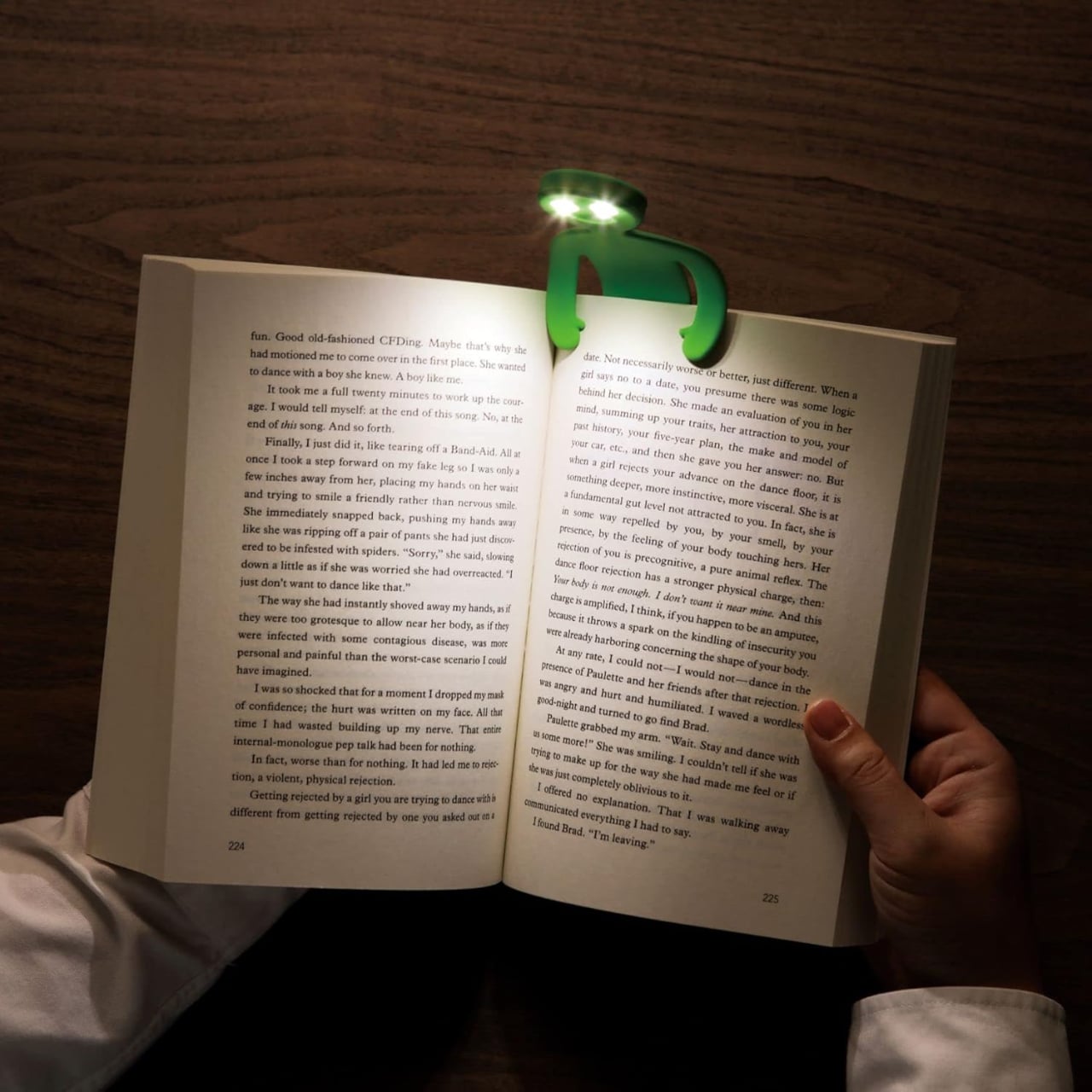
Not every reading moment happens in a perfectly styled corner, and that is where the LightMan by RayMay comes in. It looks playful at first glance, like a tiny figure with a glowing head and bendable limbs, but that personality hides a very functional little reading companion. I can clip it to the top of a book, wrap it around a headboard, or stand it on a shelf and then twist its arms and legs until the beam falls exactly where I need it. When I travel, it has become my secret weapon on long flights, because the built in overhead reading light on planes tends to wash a much wider area and I always feel like I am lighting up my neighbour’s space as well as my own.
The beam is bright enough for comfortable reading but soft enough that it never feels like a spotlight in my eyes. It is so compact it disappears into a carry on pocket until I need it. It became my go to solution for late night chapters and travel, quietly helping a handful of those 23 books get finished instead of abandoned, and it now feels like a non negotiable part of my travel reading ritual.
What We Like
Compact and lightweight, so it is easy to pack.
Playful character shape adds charm.
What We Dislike
Runs on coin cell batteries, which you need to replace rather than simply recharging via cable.
Light output is tuned for close range reading and is not strong enough to light an wide area.
4. Book Darts
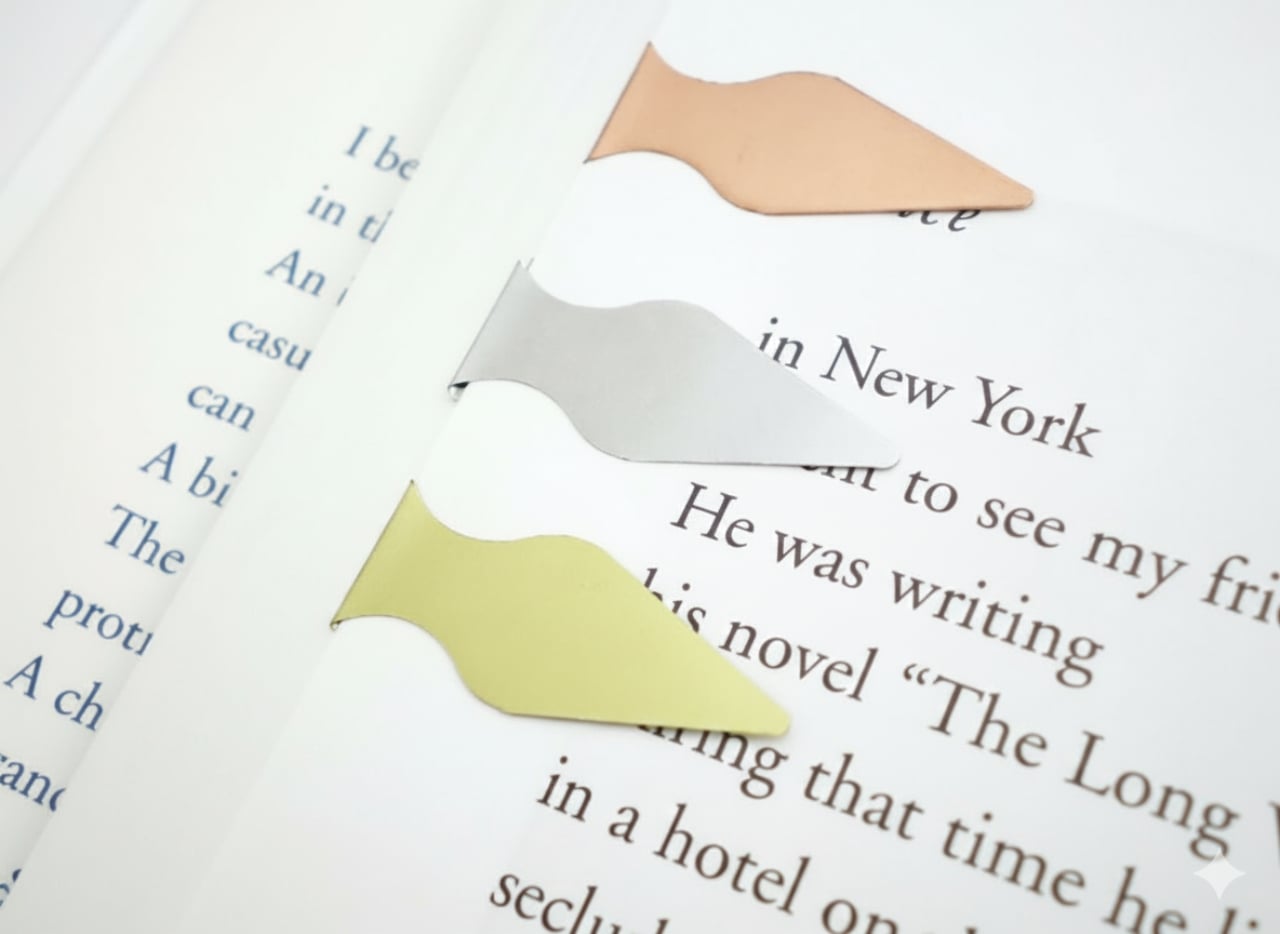
As my reading picked up, I realised I needed something better than a normal bookmark. Book Darts became my favourite functional essential because they mark the exact line, not just the page. They are tiny metal arrows that slide onto the edge of a page and point precisely where you stopped, with a profile so thin that even a heavily marked book still closes neatly.
With a traditional bookmark, I often felt it was not worth opening a book unless I had time for a full section, because I knew I would only be able to save the page, not the last sentence I read. With Book Darts, I can drop one right at the final word, close the book, and know I will land exactly there next time, even if I only had time for a paragraph. I also use the different metal finishes as a simple code, with one colour for quotes I love, one for ideas I want to act on, and another for things I want to revisit later, so the edge of the book becomes a tiny, elegant index of what matters most to me.
What I Liked
Line level marking makes micro reading feel worthwhile.
Reusable metal construction is more sustainable and durable than disposable tabs or sticky notes.
What I disliked
Small size makes them easy to misplace if you are not disciplined about where you store them.
5. Thermo Mug x Paul Smith Double Mag
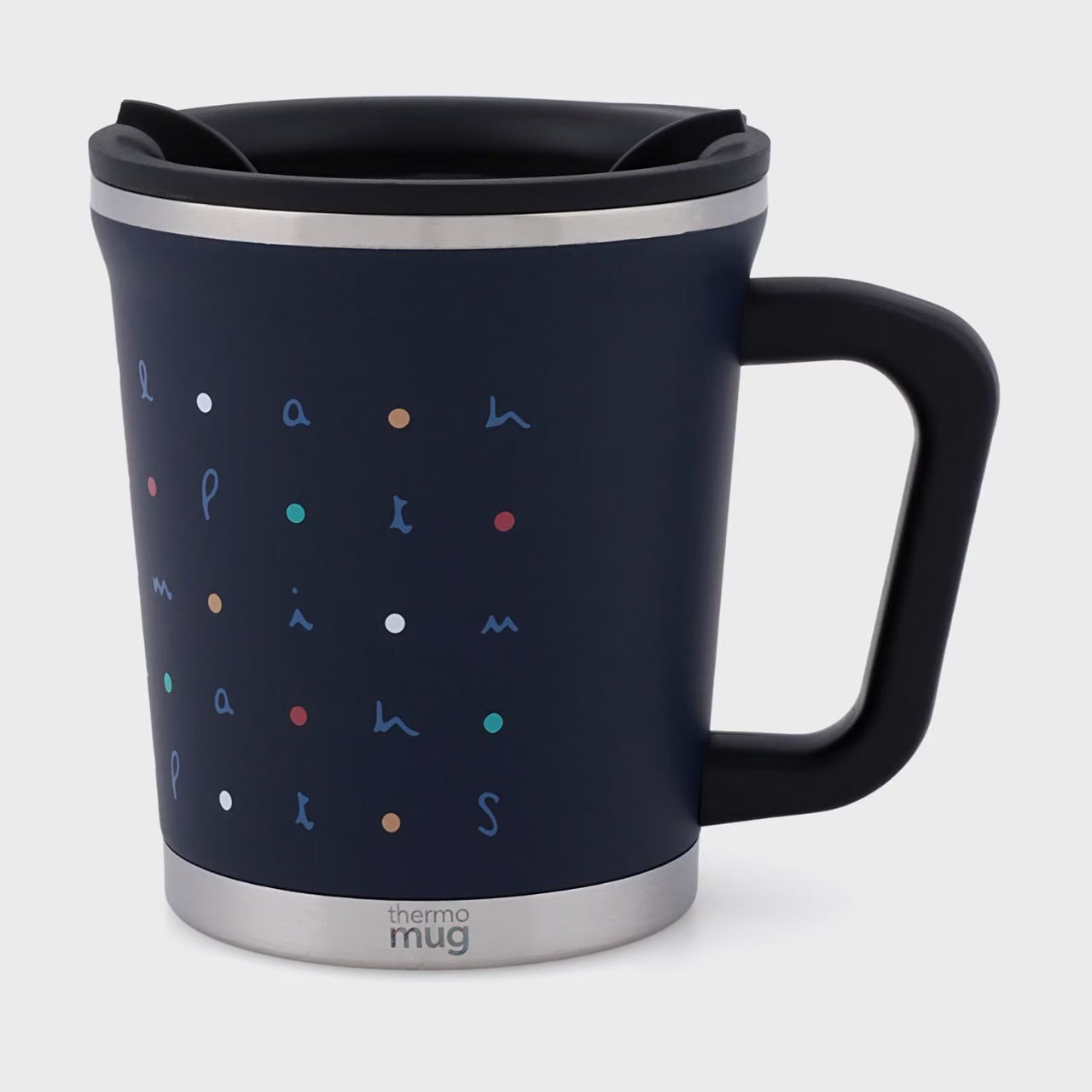
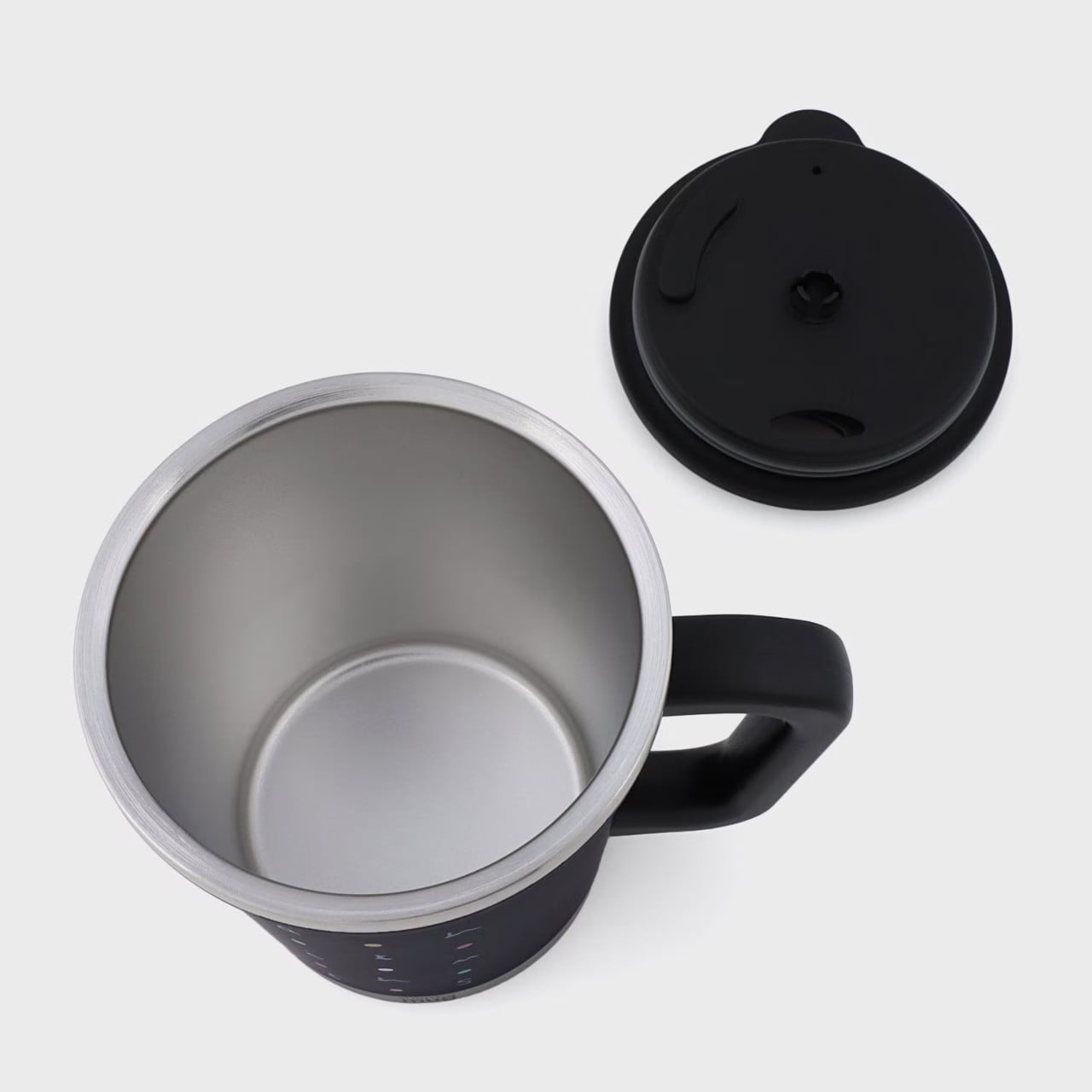
For my reading ritual, the thermo mug x Paul Smith Double Mag works because it gets both function and design right at the same time. It is a double walled stainless steel mug, so it keeps drinks warm or cold far longer than a regular ceramic cup. On cold days, I love settling in with a hot drink and a book, and this mug keeps my tea or coffee properly hot through a full chapter instead of turning lukewarm halfway through.
The insulation also makes it useful in warmer weather, because iced drinks stay cold without sweating all over my table or leaving rings on the surface. The stainless body feels solid without being heavy, and the Paul Smith detailing gives it a clean, characterful look that feels like it belongs in a considered reading setup rather than just being a generic travel mug. It did not directly add more pages to my 23 book total, but it made those cold weather reading sessions feel cosy and deliberate, which is exactly what I want from a reading ritual essential.
What I Like
Double walled stainless construction keeps hot drinks warm or cold drinks chilled for much longer.
Paul Smith detailing adds a clean, characterful look.
What I dislike
Not leak proof.
Limited regional availability.
6. Minature Bonfire Wood Diffuser
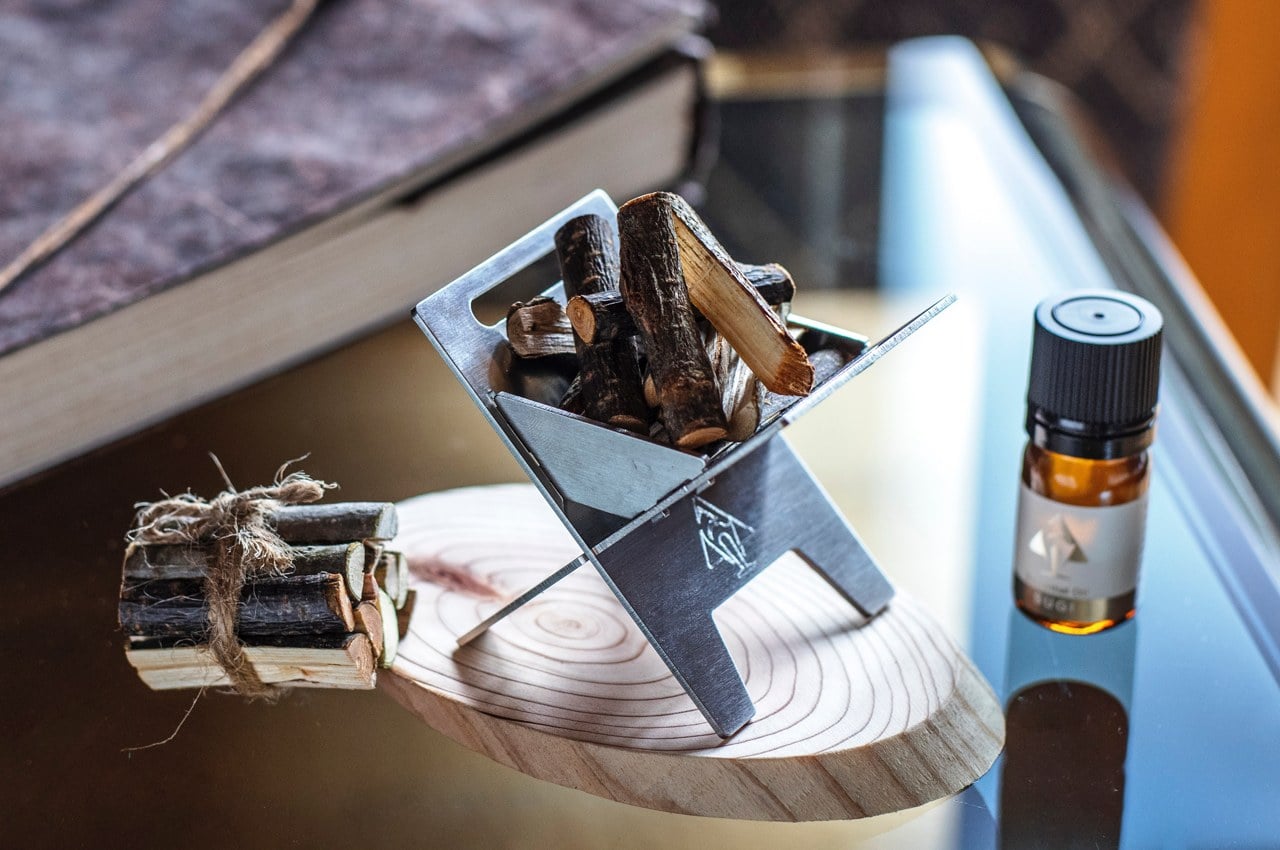
Once the light and the mug were in place, the last layer I wanted to add to my reading ritual was scent. The Miniature Bonfire Wood Diffuser Set became the little object that finished the scene and made my reading corner feel like its own tiny world. It looks like a miniature campfire on your table, with a rust resistant stainless steel base and bundled wood pieces that absorb essential oil, so it feels more like a design sculpture than a typical spa diffuser.
You do not actually light it, which makes it much calmer to use around books and textiles. Instead you add a few drops of oil to the wood and let the scent slowly drift into the room. You can choose between “Hakusan,” which evokes a Japanese mountain forest, or “Cedar,” which feels more like a cosy log cabin, and both create the illusion that you are reading in nature rather than in a city apartment. It made my reading corner feel like a retreat, which makes it much easier to choose a book over a screen.
Miniature bonfire form creates a strong visual focal point.
No open flame required, so it is safer and more relaxed to use near books, blankets, and paper stacks.
What I disliked
Scent throw is gentle, which is lovely for reading but may feel too subtle if you expect a very strong fragrance.
7. Kindle Paperwhite Signature Edition
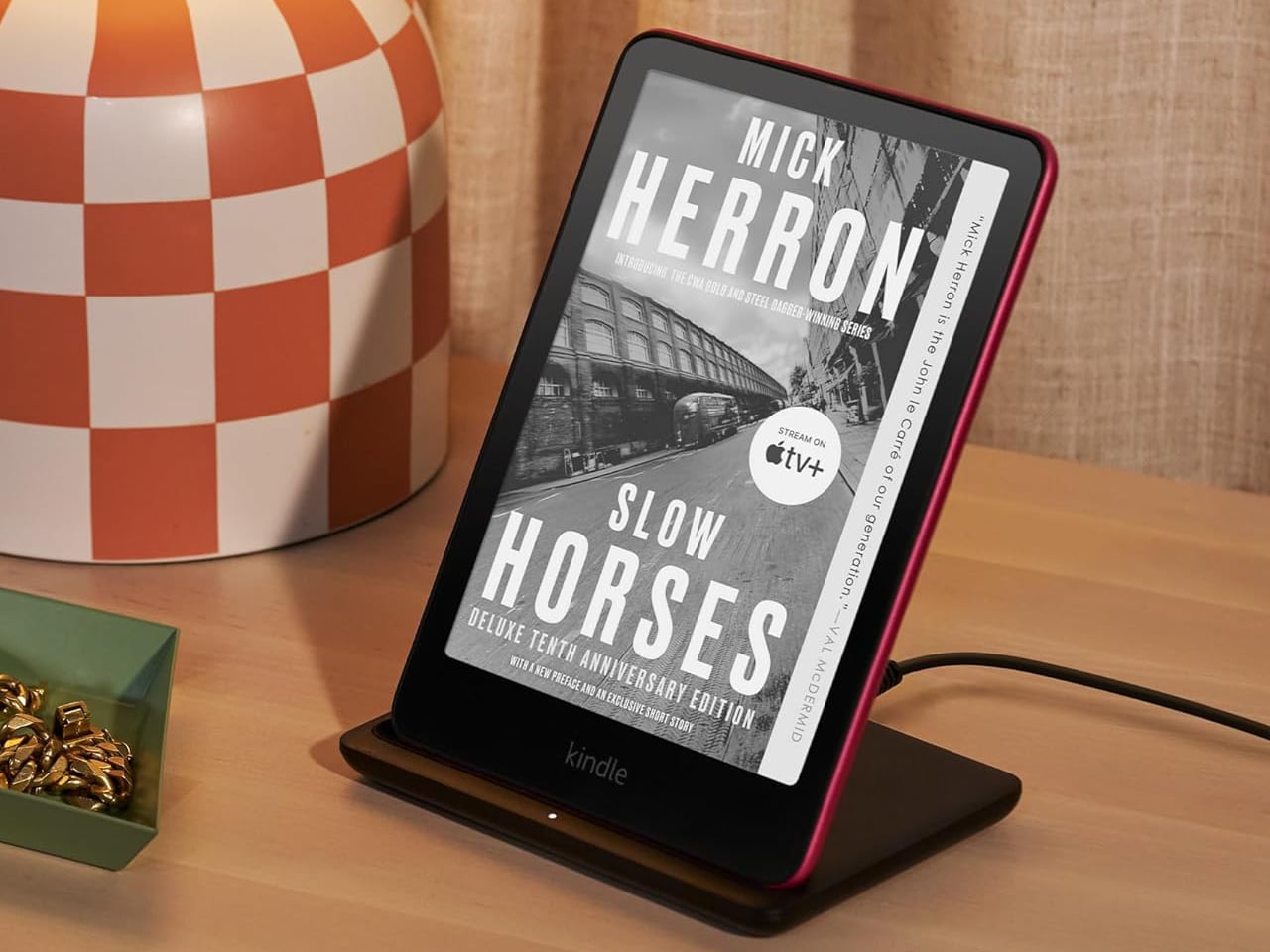
The Kindle Paperwhite Signature Edition was not the main engine of my reading year, but it became the situational essential I relied on in very specific contexts. I still prefer physical books, yet the Kindle quietly took over bathtime, travel days, and some bedtime reading when I did not want to juggle a heavy hardcover or risk splashing a favourite edition. Its seven inch E Ink Carta 1300 display feels close to paper, with darker blacks and snappy page turns that make those edge case moments feel like proper reading rather than a compromise.
I keep it loaded with a mix of lighter reads and travel friendly titles that I am happy to enjoy in steamy bathrooms or cramped airplane seats. The glare free screen stays comfortable under bright airplane windows and in dim hotel rooms, and the auto adjusting warm front light lets me read in bed without blasting the whole room. Wireless charging and long battery life mean it is always ready to toss into a bag, and while it only accounted for a handful of the 23 books I finished, those would almost certainly have been lost opportunities without this particular ritual essential.
What I Liked
Auto adjusting warm front light is perfect for bedtime.
Waterproof design adds real peace of mind for reading near water.
Excellent battery life and wireless charging.
What I disliked
Wireless charging only works with ccompatible Qi chargers.
8. Bose QuietComfort Ultra Earbuds 2nd Gen
For my reading ritual on the move, the Bose QuietComfort Ultra Earbuds 2nd Gen are all about turning chaos into a private reading bubble. I have tried a few different pairs over the years, and these are genuinely among the best noise cancelling earbuds I have used, which matters a lot on planes, trains, or in loud cafés. I use them both for audiobooks and for playing light background music while I read in noisy environments, and in both cases the noise cancelling lets the sound sit close and clear without being drowned out.
Battery life reaches up to six hours of playback on a charge, with the wireless case holding around three extra full charges, so a full workweek of listening felt effortless. I pair them with my phone, queue up an audiobook, or a soft playlist for reading in busy spaces, and suddenly those otherwise noisy hours become quiet, story filled pockets of time. They did not replace my physical reading, but they probably added three or four extra finishes to my 23 book total and rescued many sessions that would have been impossible without that level of noise control.
What I Like
Class leading noise cancellation.
Multipoint connectivity lets you switch between devices without constant reconnecting.
Comes in five color variations.
What I disliked
Touch controls can feel sensitive until you get used to it
How These Reading Ritual Essentials Added Up to 23 Books
Looking back, the pattern feels simple and honest. The pieces that touched the book and the light around it did most of the quiet work, from keeping pages open comfortably to making whatever seat I chose feel like a proper reading spot. The smaller details layered on top, like a bendable light for flights, line level markers for tiny pockets of time, a mug that kept drinks at the right temperature, and a diffuser that made the room smell like a forest or cabin, helped my reading corner feel less like an accident and more like a place I had designed on purpose.
The digital and audio pieces then extended that same ritual into situations where paper struggled. Baths, flights, hotel rooms, noisy cafés, commutes, and airport waits all became bonus reading windows, whether through a waterproof e reader or a pair of earbuds that could carve out a quiet bubble for audiobooks or soft background music. None of these objects are magic on their own, but together they removed enough friction that finishing 23 books in a year felt natural instead of aspirational, and that is the real value of building a reading ritual that actually fits your life.
Apple has inadvertently revealed critical information about the highly anticipated iPad Mini 8, suggesting a September 2026 release alongside the iPhone 18 series. This new iteration is expected to introduce a range of notable upgrades, including advanced hardware, improved connectivity, and a refined design. These enhancements aim to solidify the iPad Mini’s position as a […]