iOS 27 Beta 5 Is Coming Very Soon: Here’s What’s Changing

iOS 27 Beta 5 Is Coming Very Soon: Here’s What’s Changing The expected iOS 27 beta 5 home screen on an iPhone

The release of iOS 27 Beta 5 introduces a range of updates designed to enhance usability, customization, and visual appeal. With the official launch anticipated in mid-September, this beta version provides a preview of Apple’s focus on refining the user experience. From improved interface designs to a faster beta release schedule, iOS 27 Beta 5 […]

The post iOS 27 Beta 5 Is Coming Very Soon: Here’s What’s Changing appeared first on Geeky Gadgets.

Posted in Uncategorized

Jack Dorsey’s Buzz Integrates AI Agents and Built-in Repositories

Jack Dorsey’s Buzz Integrates AI Agents and Built-in Repositories The user interface of the Buzz multi-agent chat platform showing AI integrations.

Jack Dorsey’s latest venture, Buzz, offers a platform aimed at improving communication and collaboration for modern teams. According to Alex Finn, one of its defining features is the integration of AI agents with repositories and team discussions, creating a centralized workspace. For instance, in software development, Buzz’s AI can analyze repository data, team conversations and […]

The post Jack Dorsey’s Buzz Integrates AI Agents and Built-in Repositories appeared first on Geeky Gadgets.

Posted in Uncategorized

Forget Lithium. Algae Might Be Powering Your Devices Next.

Every time I replace a battery, I think about where it ends up. A AA battery in a remote control, a watch battery in a smoke alarm, the little round one rattling around in a drawer because nobody knows what to do with it. We go through billions of them every year, toss them out without much thought, and then mine more lithium from the earth to make the next round. It’s a loop that’s hard to break, and harder still to look at clearly. But what if the alternative was something alive?

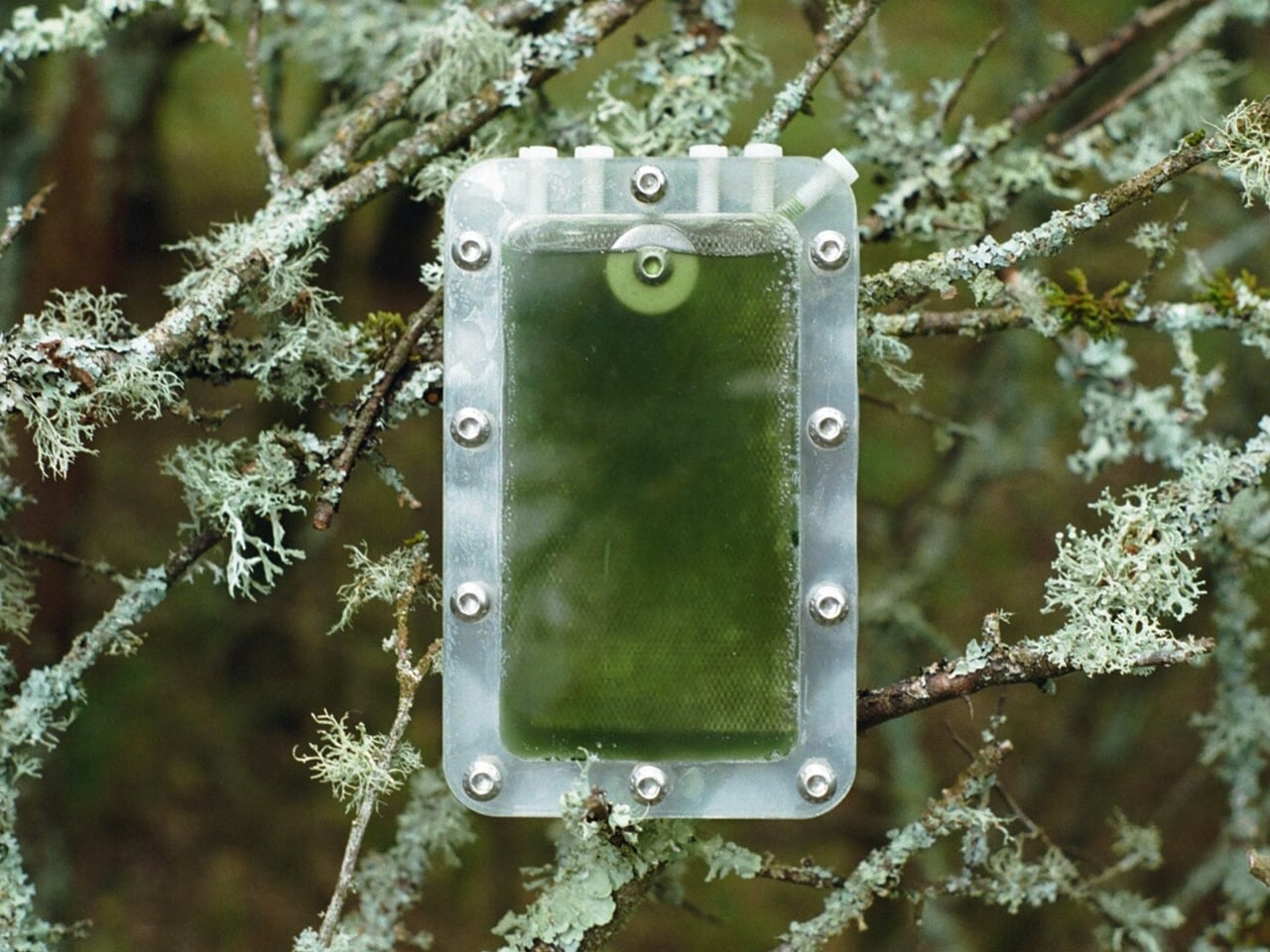
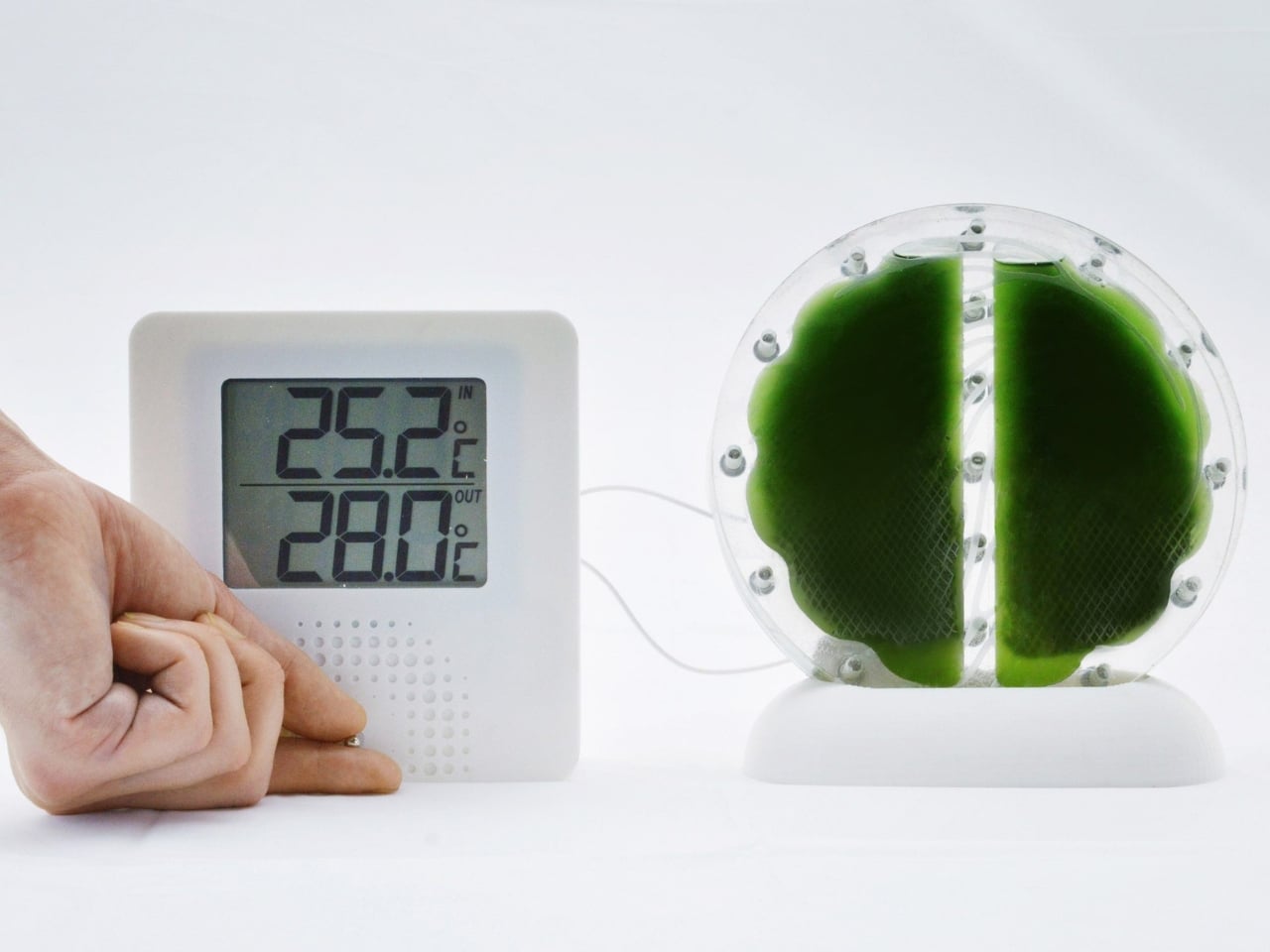
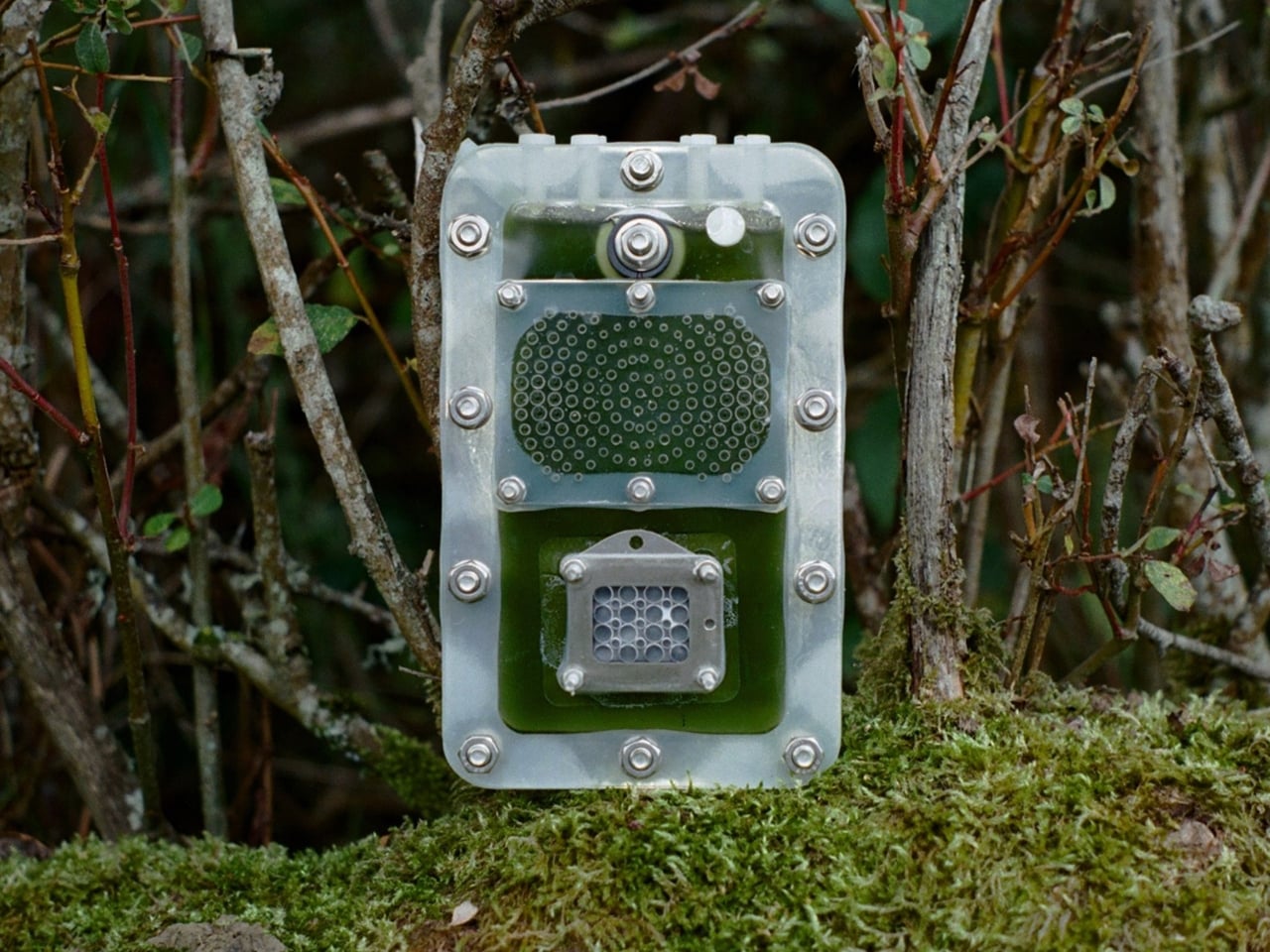
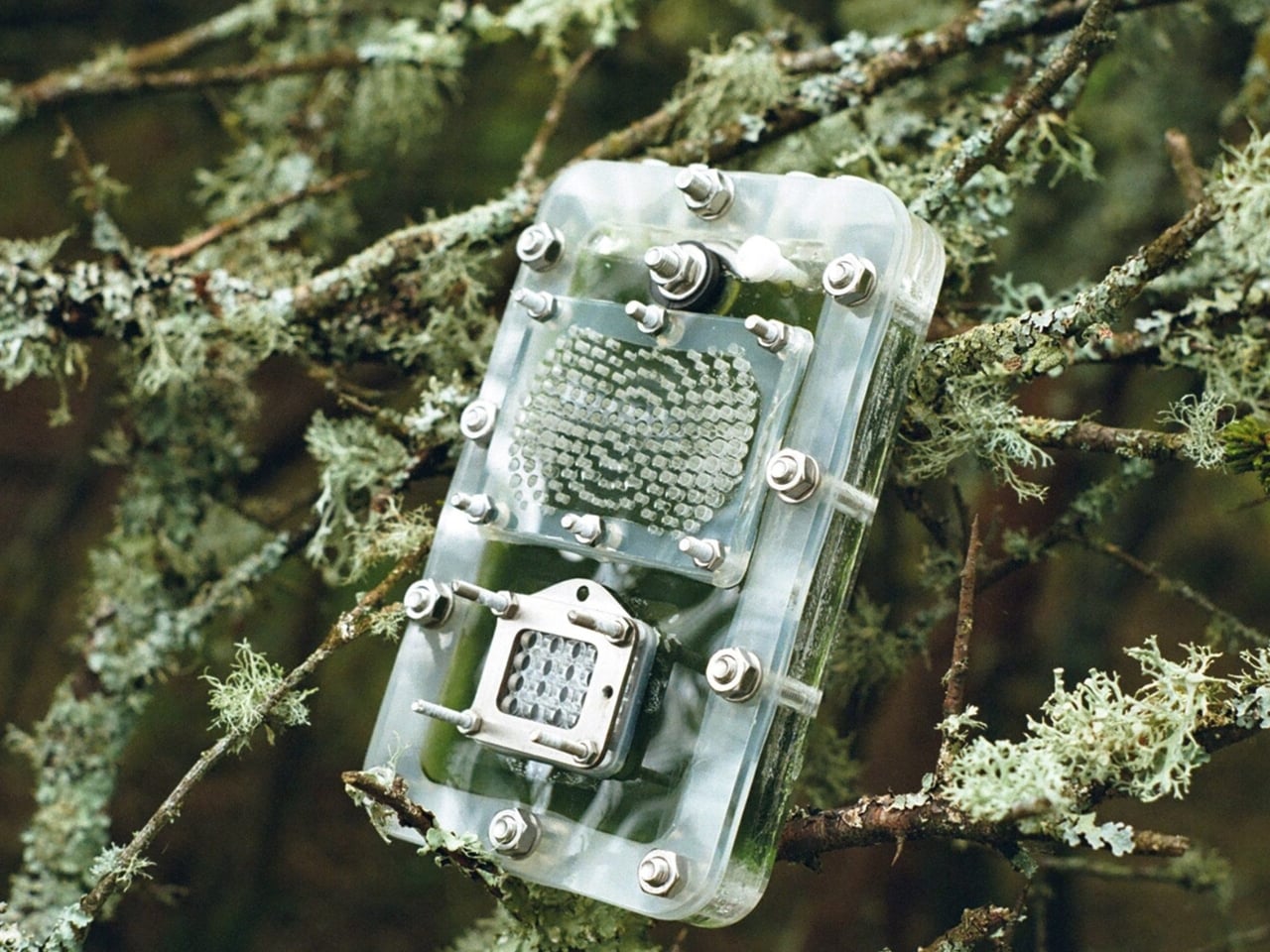
Bio-designer Lucia Giron, working alongside the University of Cambridge’s Department of Biochemistry and electrical engineer Lifu Tan, has developed prototypes of an algae-based battery alternative called a biocell. The science behind it is called biophotovoltaics, which works like a biological solar panel. Living microorganisms, specifically cyanobacteria (which most of us know as blue-green algae), carry out photosynthesis and generate an electrical current in the process. They take energy from sunlight and feed on carbon dioxide to grow. And crucially, the electricity keeps flowing even when it’s dark.

Designers: Lucia Giron and University of Cambridge’s Department of Biochemistry
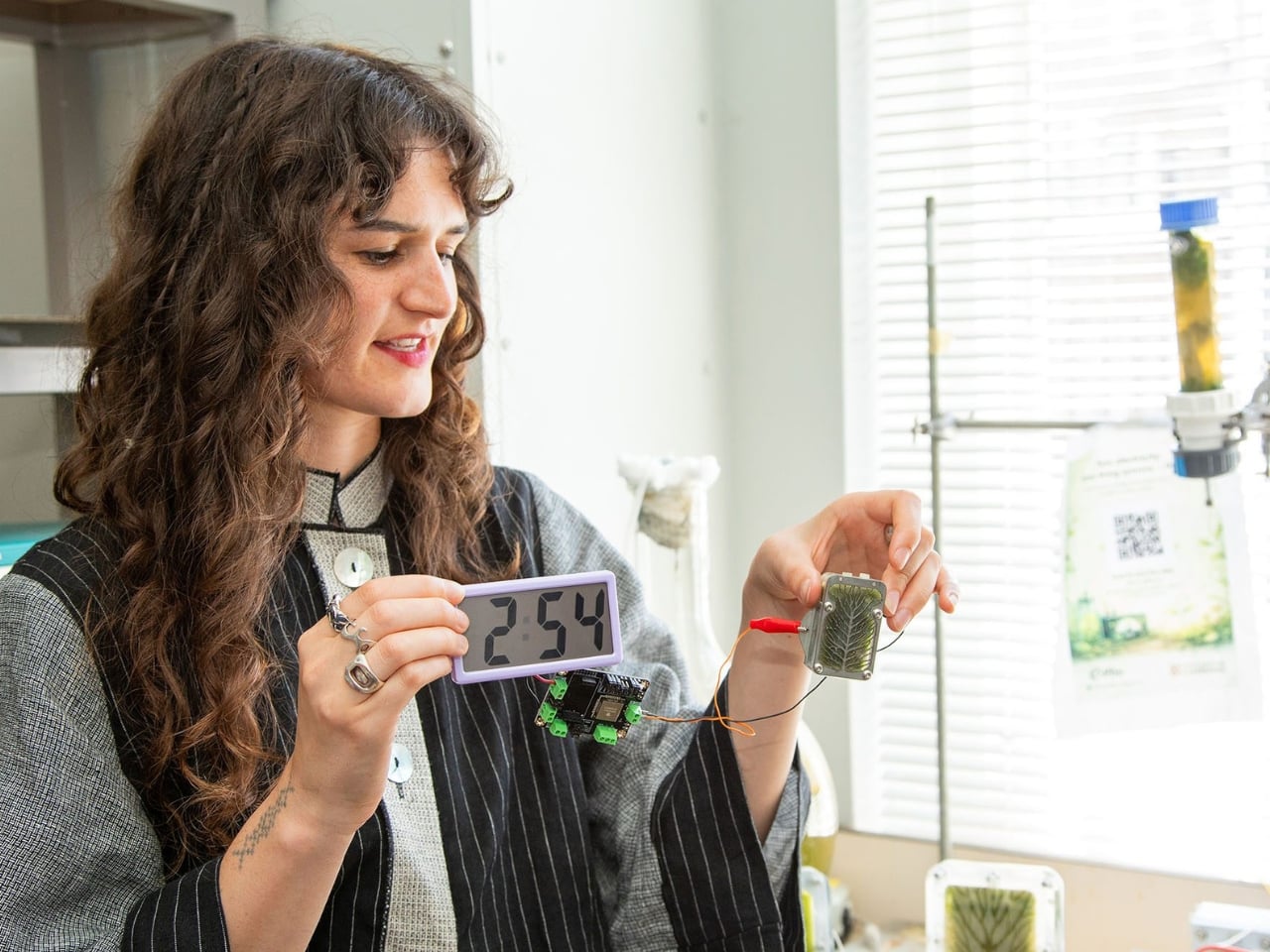
Cyanobacteria have been generating electricity in the Cambridge labs for over six years now. Not in theory. Actually generating. That number stopped me when I first read it. The potential scale of this is worth paying attention to. Professor Chris Howe, the project’s principal investigator, puts it plainly: disposable batteries are very bad for the planet. Conventional batteries are built with mined materials like lithium, which carry a range of environmental costs from extraction to disposal. The researchers believe biocells could one day eliminate the need for the small chemical batteries powering everyday devices like remote controls, smoke alarms, and sensors. Paolo Bombelli, one of the Cambridge researchers behind the project, has said their aim is to get rid of the need for batteries altogether.
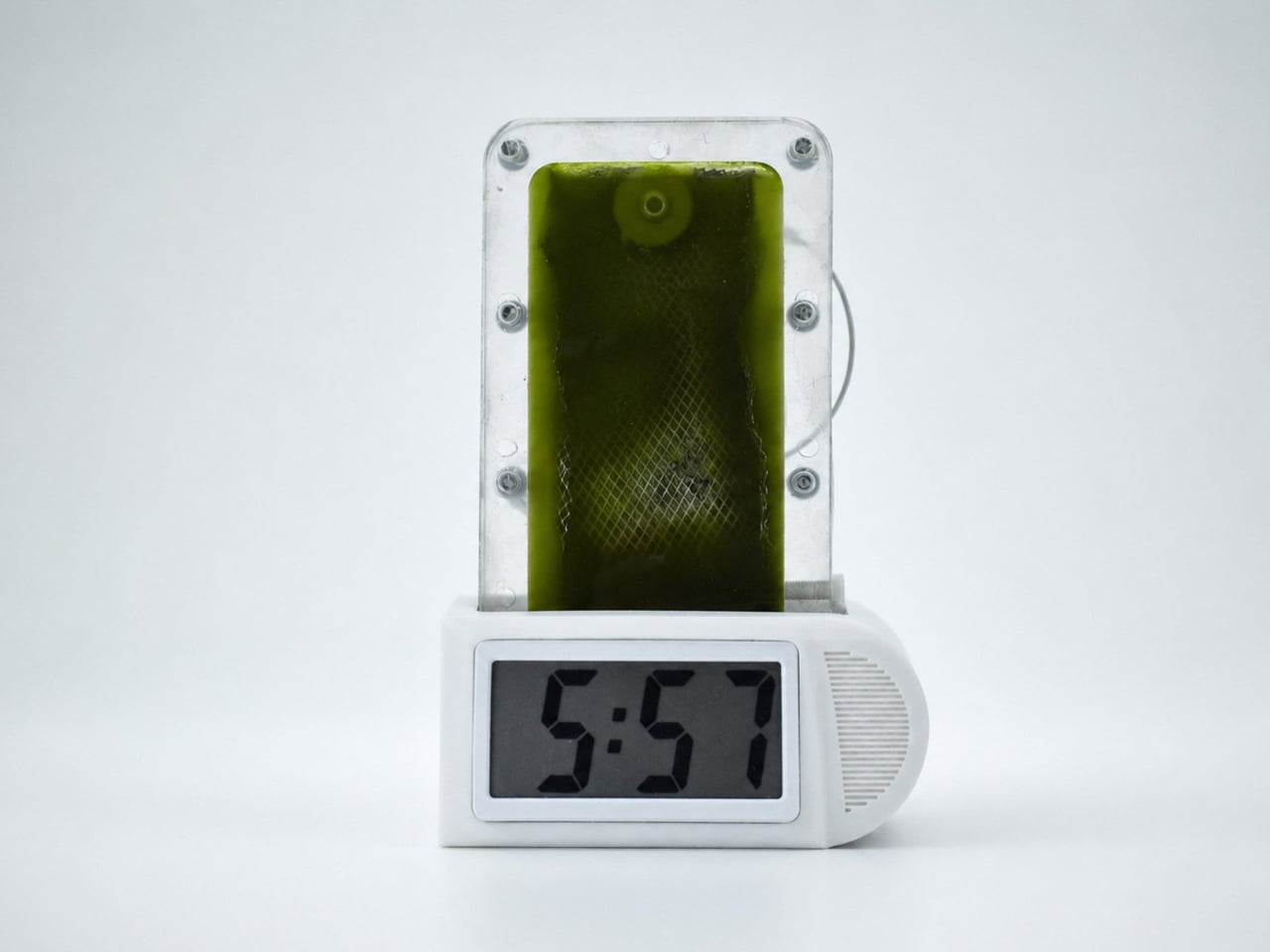
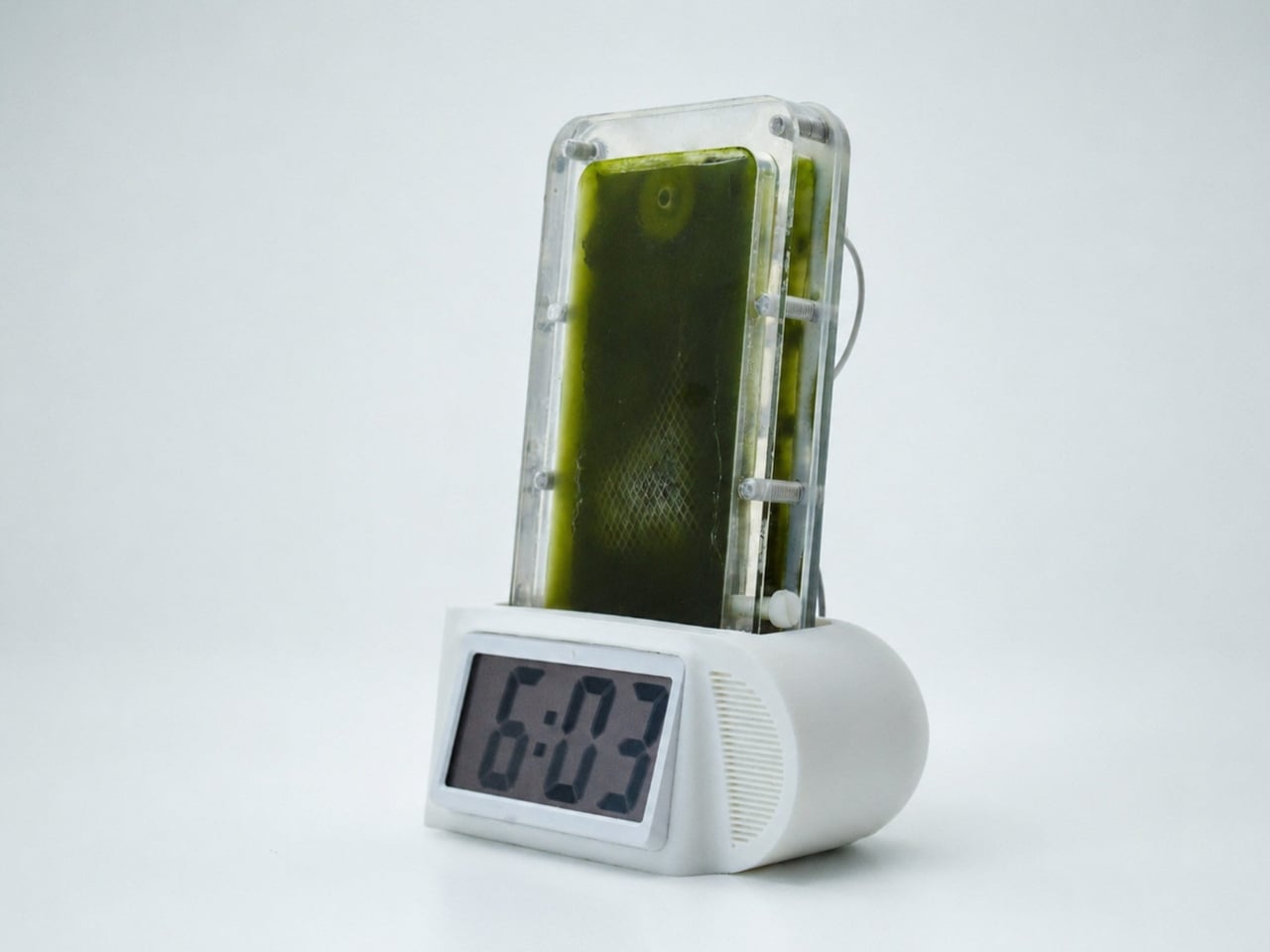
That sounds bold, but the team has already proven the concept beyond the lab. Giron designed a demonstrator cell (essentially a compact, transparent case filled with green-tinged cyanobacteria) as well as a clock radio and a temperature sensor, both powered by biophotovoltaic panels. There’s also a system that monitors a potted plant, reading light levels, air temperature, and soil moisture, all powered by the algae cells. The data feeds directly into a mobile app. It’s the kind of object that makes you look twice, because nothing about it reads as conventional technology.
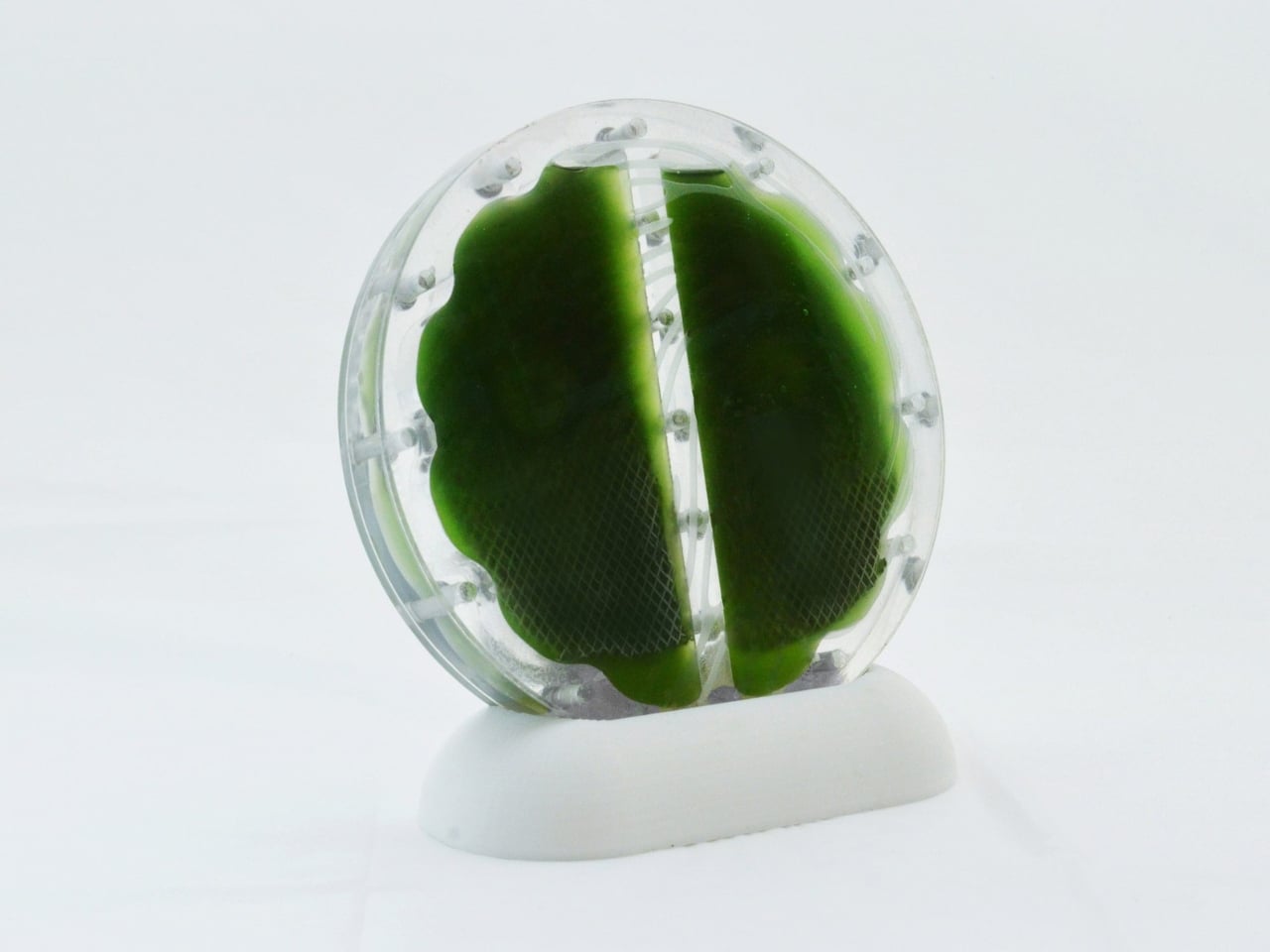
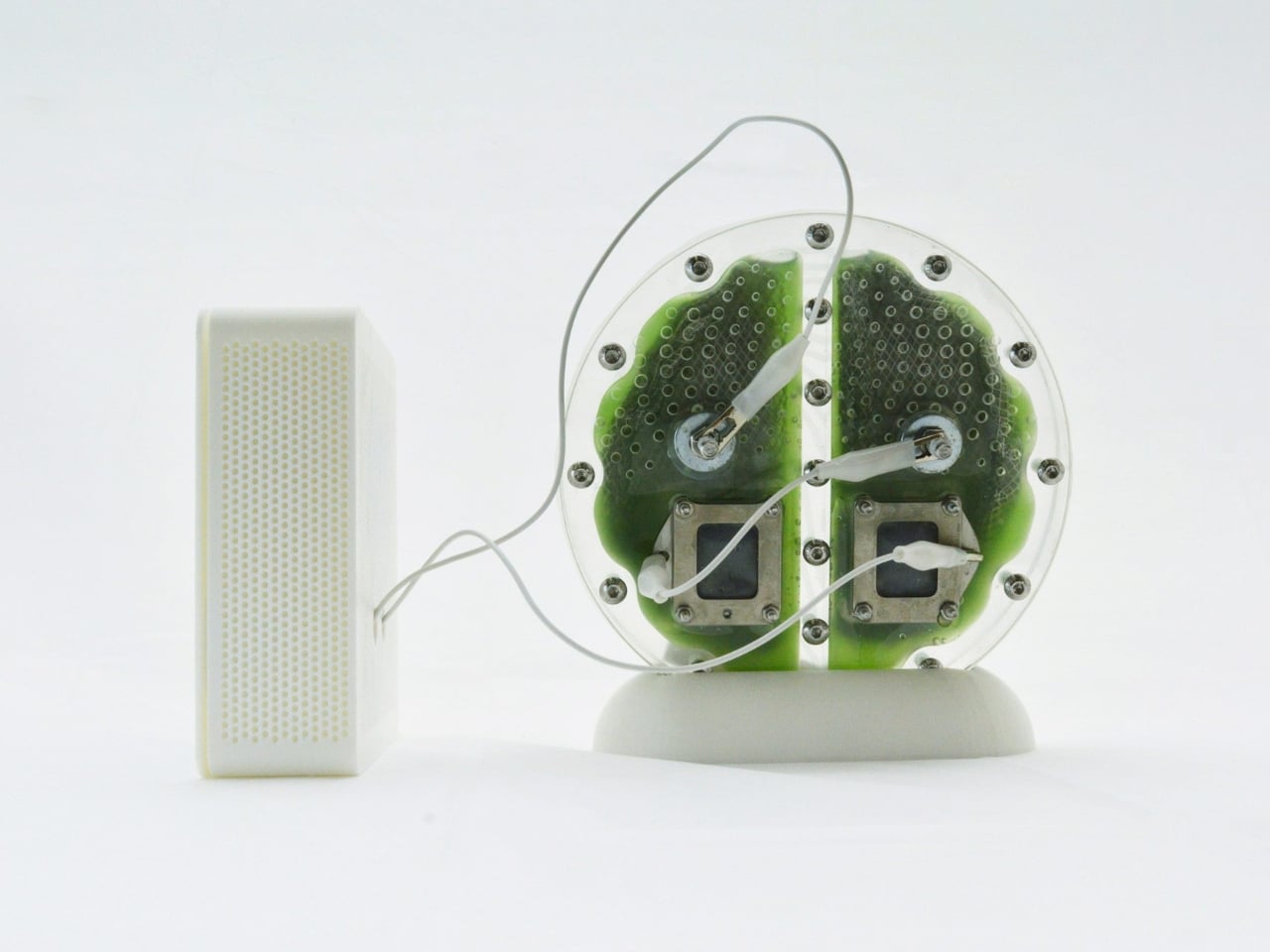
Giron’s role here is genuinely interesting. Coming from an art and design background rather than a science one, she was brought in specifically to translate the research into something legible to the rest of us. Her goal, as she’s described it, is to find ways of making these prototype living systems into real-world sustainable energy solutions. The demonstrator cell wasn’t designed to be hidden away in a lab. It was designed to communicate, to make biophotovoltaics feel tangible and approachable to a new audience.
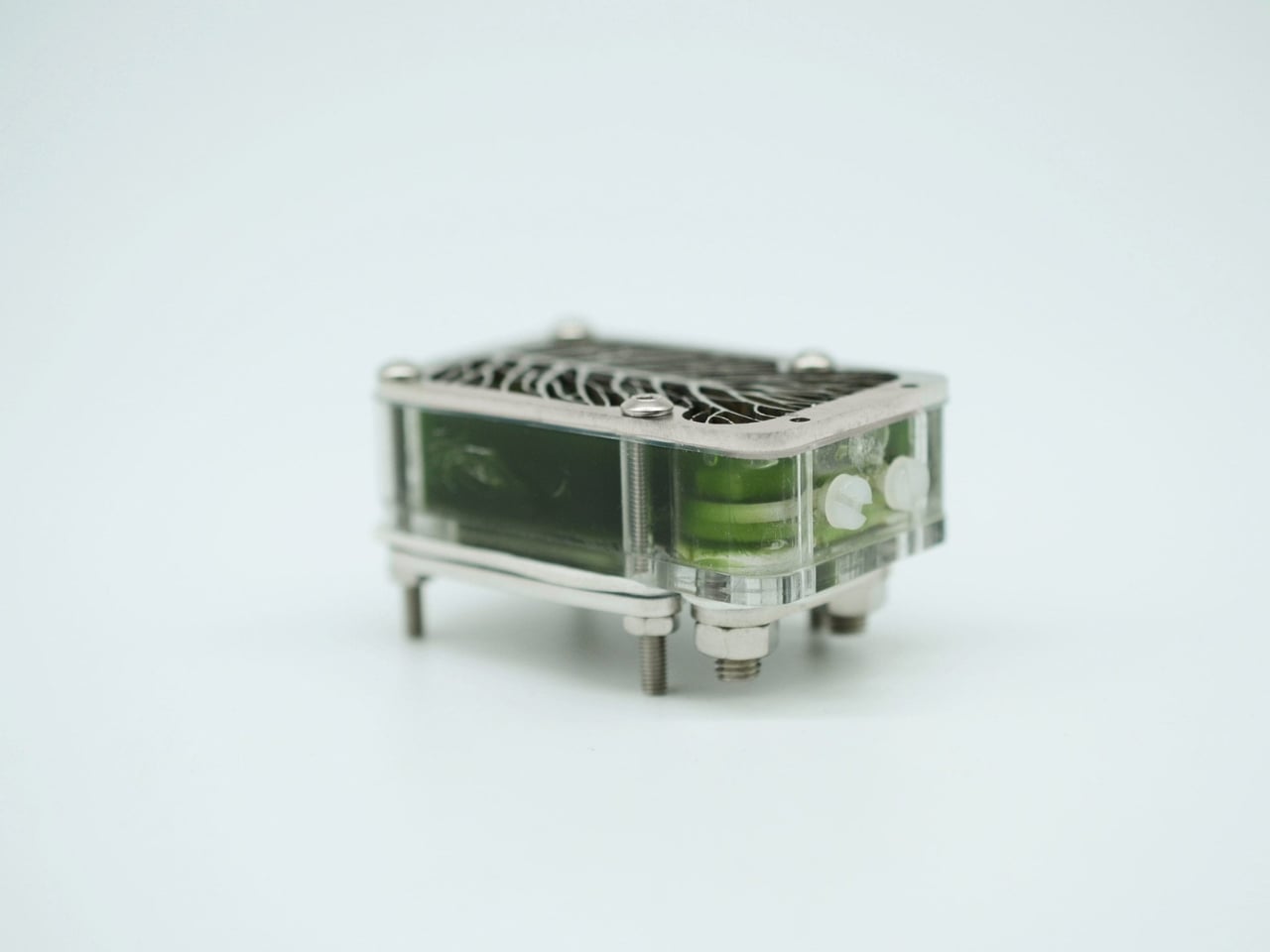
The team has since launched a startup, e-Pho, and is exploring commercial applications with prospective clients. They’ve also developed a classroom toolkit where students can grow algae, assemble biocells, and test how different materials affect performance. That last part feels significant to me. Getting a technology into classrooms before it reaches shelves is a way of building familiarity and, more importantly, building the next generation of people who don’t think twice about energy coming from something alive.
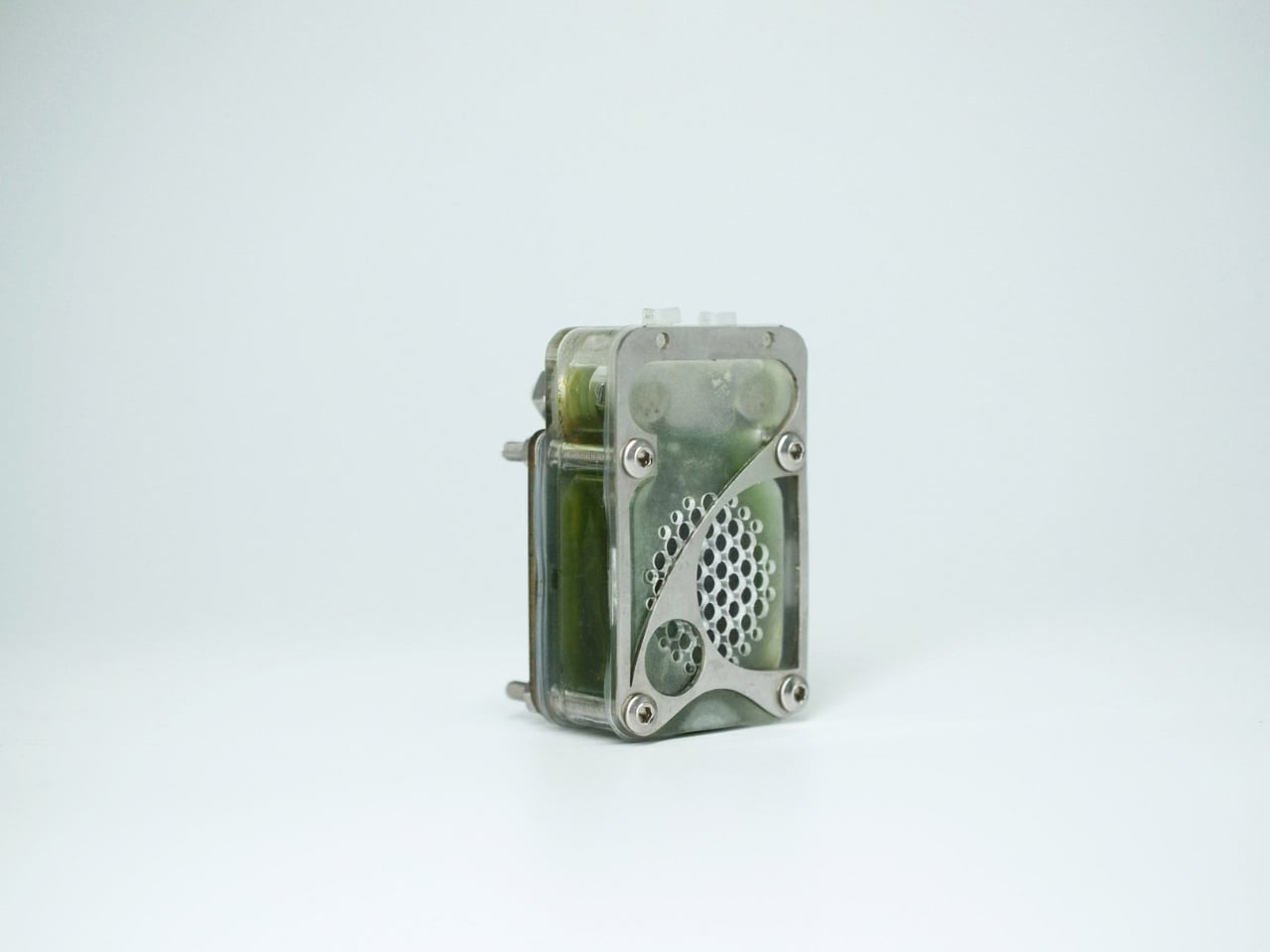
We’re at a stage where the biocell can power small, low-energy devices reliably. The researchers are clear that it’s not yet a replacement for your phone charger. But the trajectory is what matters, and it’s pointing somewhere genuinely different from where the battery industry has been going for the past century.

Algae is not the flashiest material to build a future around. It doesn’t have the gleam of a new chip or the cultural momentum of a wearable. But it eats light, feeds on carbon dioxide, and keeps going. For a technology, that’s a remarkably good résumé.
The post Forget Lithium. Algae Might Be Powering Your Devices Next. first appeared on Yanko Design.


Apple Maps vs. Google Maps vs. Waze: Which CarPlay App Wins?

Apple Maps vs. Google Maps vs. Waze: Which CarPlay App Wins? Apple Maps vs. Google Maps vs. Waze

Selecting the right navigation app for Apple CarPlay is essential for a smoother and more efficient driving experience. With Apple Maps, Google Maps and Waze offering distinct features, your choice should align with your driving habits and personal preferences. The video below from HotshotTek provides a detailed comparison of these apps, highlighting their strengths and […]

The post Apple Maps vs. Google Maps vs. Waze: Which CarPlay App Wins? appeared first on Geeky Gadgets.

Posted in Uncategorized

Apple Silicon Can Run Local Al with Just 2GB of RAM Using Turbo Fieldfare

Apple Silicon Can Run Local Al with Just 2GB of RAM Using Turbo Fieldfare The Turbo Fieldfare application interface running on macOS.

Apple Silicon has redefined what’s possible for local AI processing, demonstrating that advanced models can run efficiently on minimal hardware. In a detailed analysis by Better Stack, the focus is on Turbo Fieldfare, a system capable of handling a 26-billion-parameter model with just 2GB of RAM. This is achieved through the Gemma 4 mixture-of-experts architecture, […]

The post Apple Silicon Can Run Local Al with Just 2GB of RAM Using Turbo Fieldfare appeared first on Geeky Gadgets.

Posted in Uncategorized

This 1970s Japanese Home Tore Out Every Wall and Came Back Better Than Ever

Renovation is harder than building from scratch. You inherit someone else’s decisions — structural, spatial, aesthetic — and you’re asked to make them feel new without erasing what made them worth saving. Studio HYAN understood that with the Green Sandwich House, a 1970s home in Hayama, south of Tokyo, renovated for the studio’s own founders: architect Anna Naganuma and designer Shohei Hasegawa.

The starting point, as Hasegawa puts it, was inheritance rather than demolition. “Preserving a 1970s house wasn’t the goal in itself; we wanted to read the potential of the existing frame and update it for how we live today.” That clarity of intent matters. A lot of renovations get lost between nostalgia and novelty. This one knew exactly what it was doing.

Designer: Studio HYAN

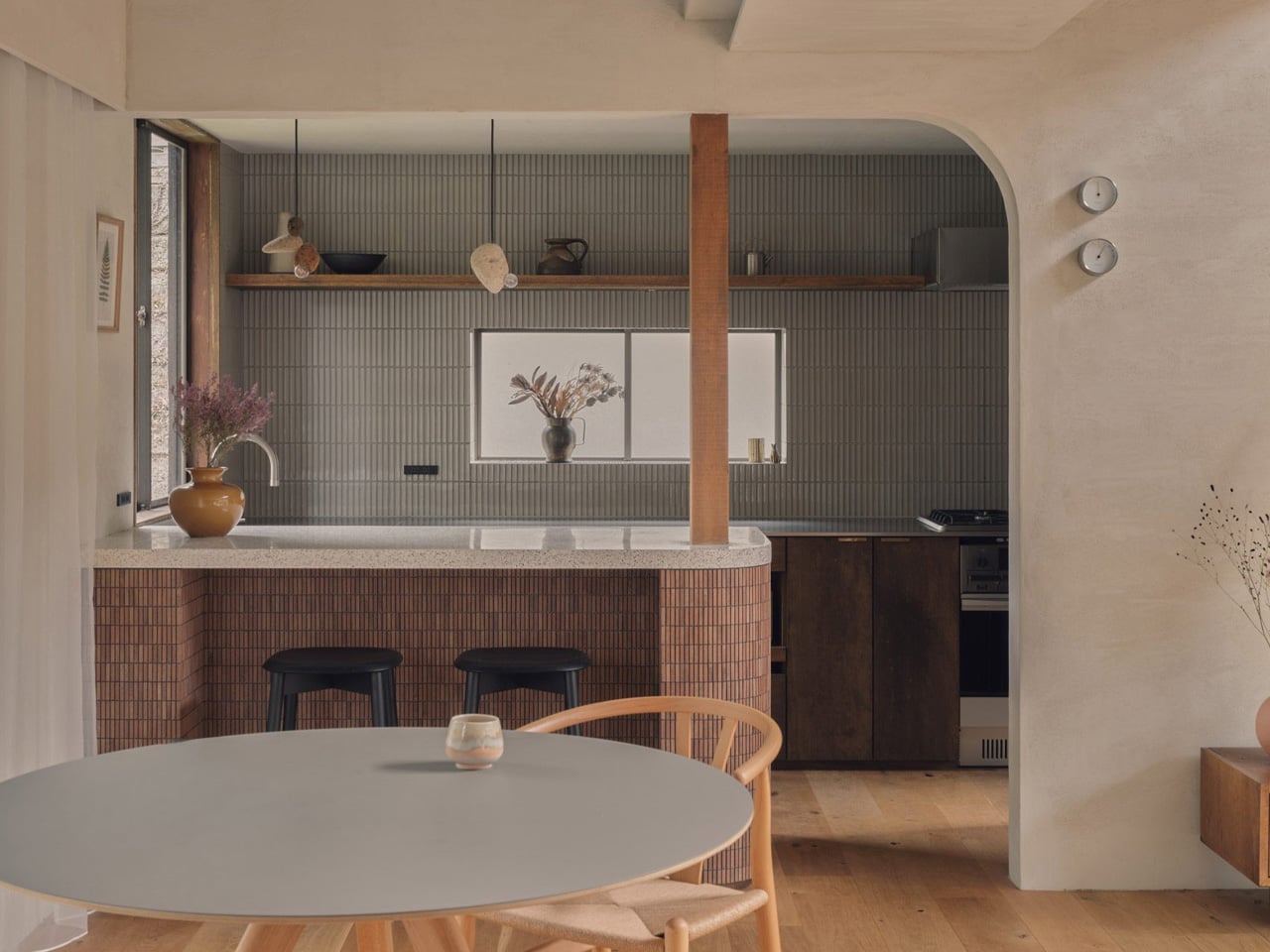
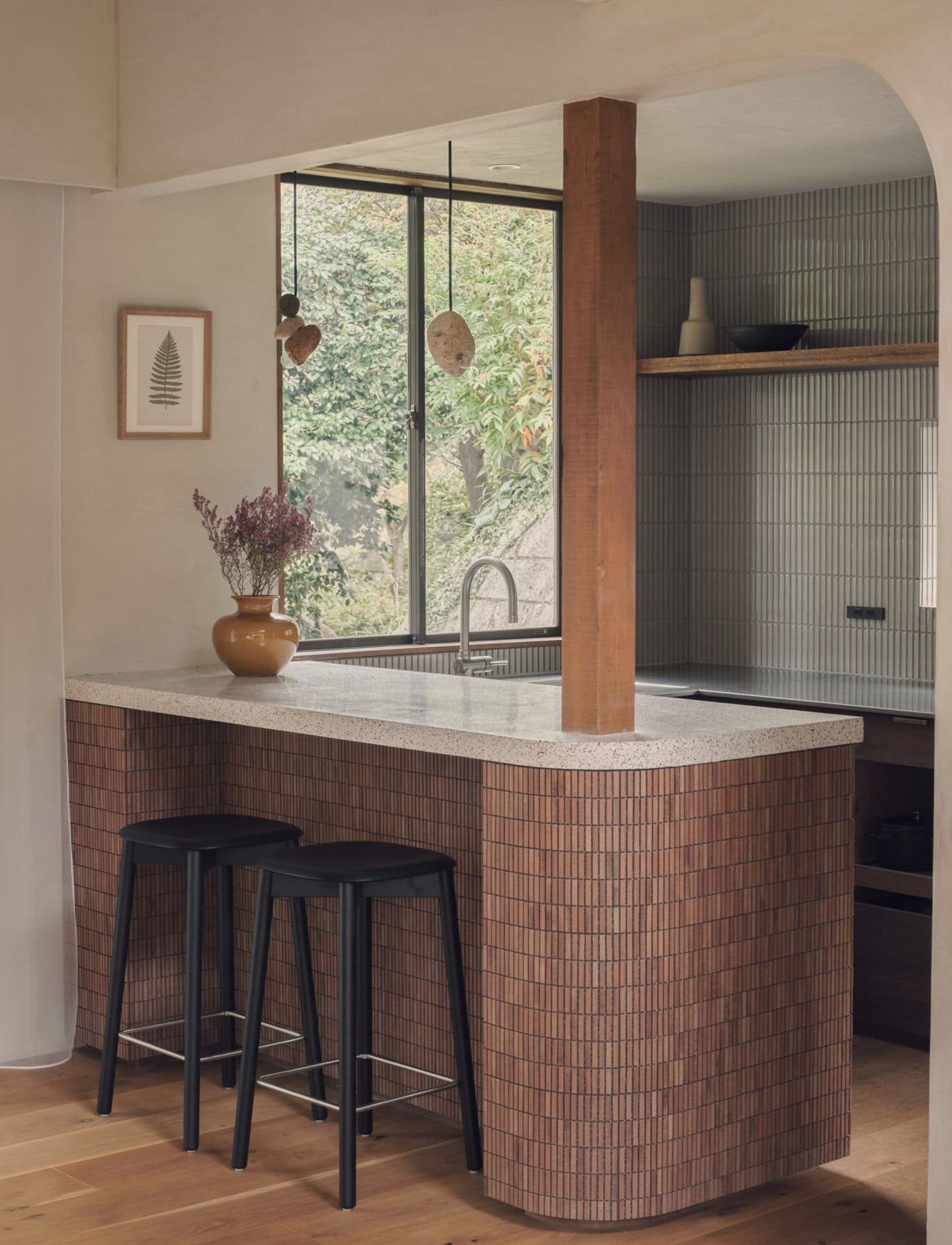
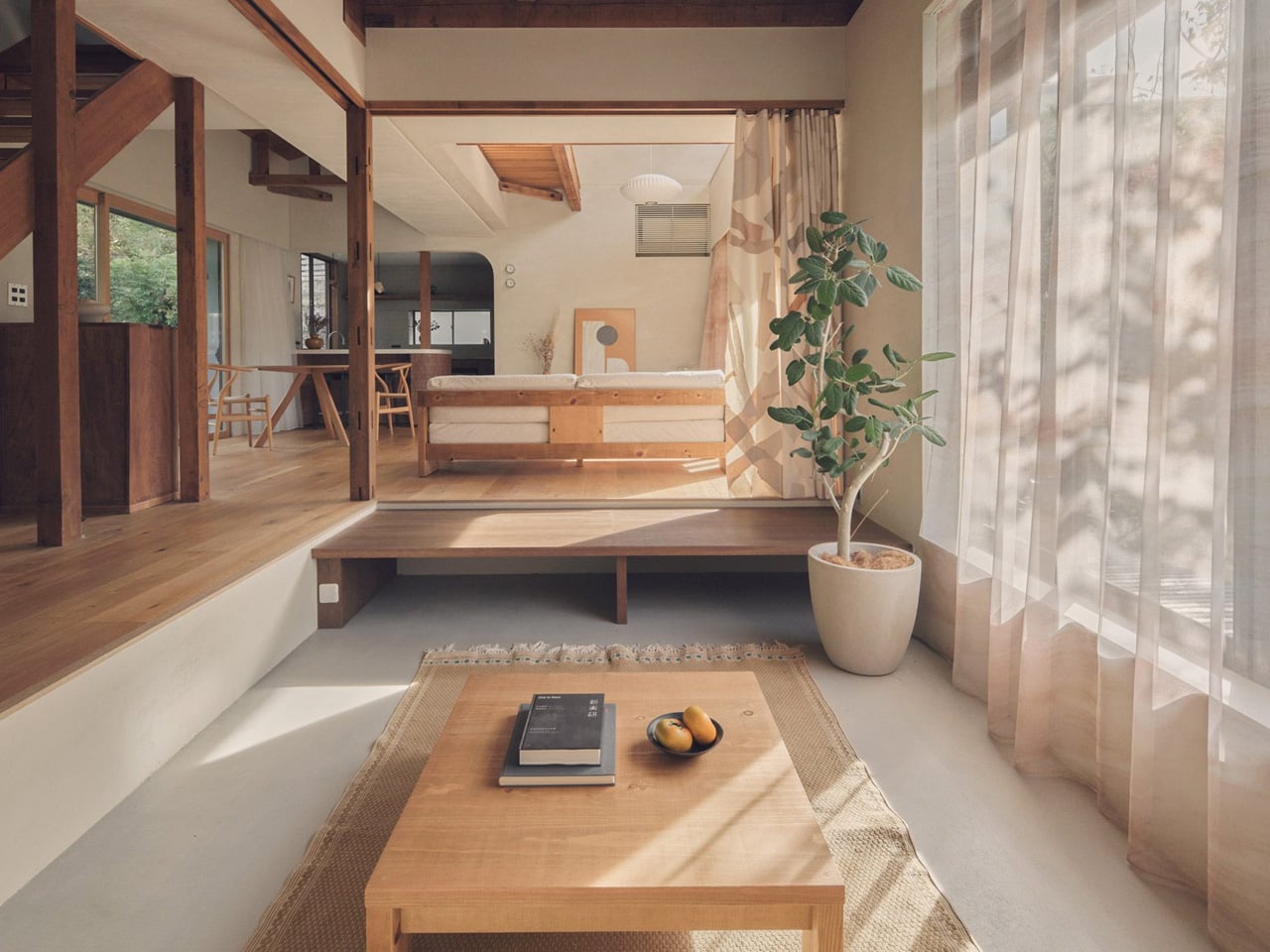
The home required significant structural reinforcement to meet modern seismic codes — a constraint HYAN turned into an opportunity. Rather than hiding the work, they built around it. The retained timber columns and roof beams are left exposed throughout, quietly tracing where the old partition walls once stood. The structure becomes the architecture. Almost every internal partition on the ground floor was removed, replaced by a single, flowing living, dining, and kitchen space where zoning is handled through changes in floor level and ceiling height rather than walls.

The living area occupies a double-height volume beside the kitchen and dining zone, while the floor steps down slightly to form a lounge with a daybed nook, closed off when needed by patterned curtains. It’s a spatial move that feels considered rather than open-plan for its own sake. Work, daily life, hosting — everything overlaps naturally, the way it actually does in a home people live in fully.

Materials carry the warmth the bare frame alone couldn’t. Pale plastered walls, timber floors, coloured tiles and terrazzo in the kitchen and bathroom — a restrained palette chosen for how surfaces catch light through the large windows and surrounding trees rather than for how they photograph. The wooded hills of Hayama are present throughout the day in the way the light shifts across those surfaces, tying the interior to the landscape without a single piece of statement furniture doing the heavy lifting.

Upstairs, the more private rooms — bedrooms, a study overlooking the double-height living space below — step back from the openness of the ground floor without feeling disconnected from it. Hasegawa describes the house not as a finished work but as one that grows with daily life. For a home this attuned to how its spaces breathe and change with the seasons, that feels exactly right.

The post This 1970s Japanese Home Tore Out Every Wall and Came Back Better Than Ever first appeared on Yanko Design.
Leaked: Samsung Galaxy S27 Ultra May Get Major Battery Upgrade

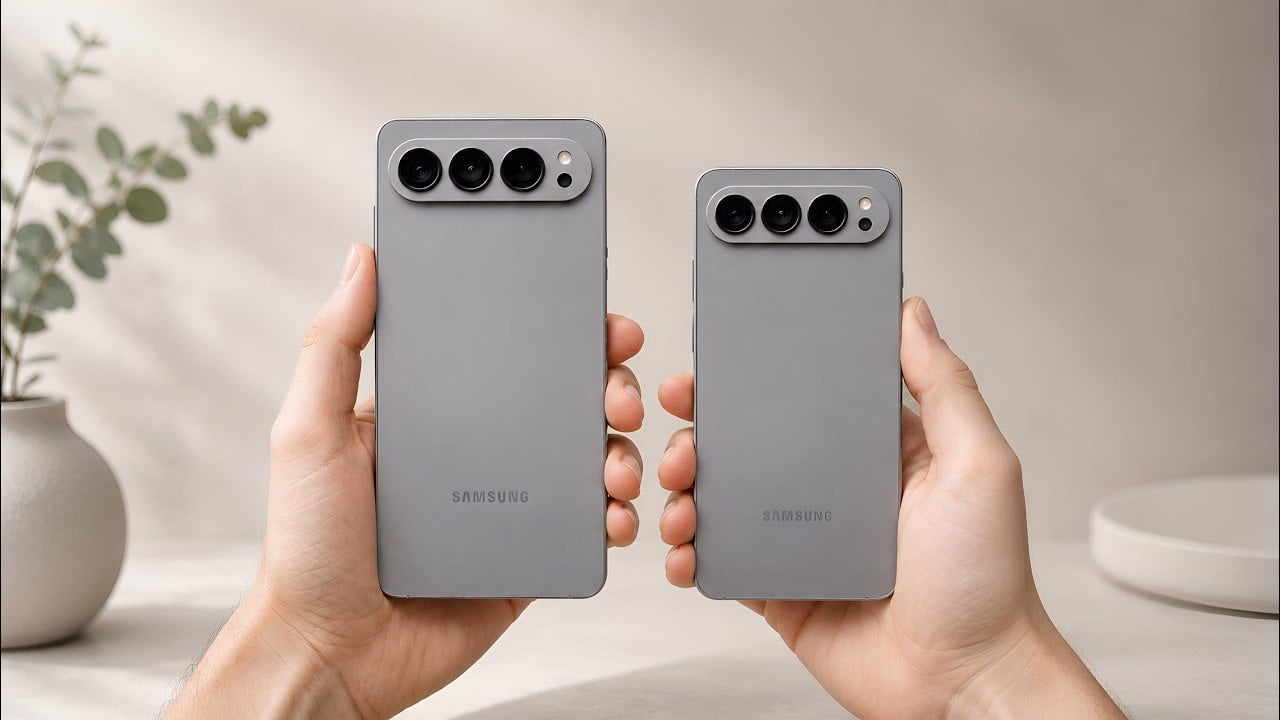
Leaked: Samsung Galaxy S27 Ultra May Get Major Battery Upgrade Concept render of the rumored Samsung Galaxy S27 Ultra smartphone

Samsung is poised to set new benchmarks in the smartphone industry with the highly anticipated Galaxy S27 Ultra. This flagship device promises significant advancements in battery technology, processing power, and design, solidifying Samsung’s reputation as a leader in innovation. Alongside the Galaxy S27 Ultra, the Galaxy Z Fold 8 is making a strong impact in […]

The post Leaked: Samsung Galaxy S27 Ultra May Get Major Battery Upgrade appeared first on Geeky Gadgets.

Posted in Uncategorized

New Linux Patch Boosts Steam Deck 1% Lows by Up To 31%

New Linux Patch Boosts Steam Deck 1% Lows by Up To 31% A person holding and playing games on a Steam Deck console.

The Steam Deck has seen a significant upgrade with a recent Linux patch aimed at improving frame rate stability during gameplay. Developed by David Vernet, this update enhances the device’s “1% lows” a key metric for minimizing stuttering, by up to 31%. By fine-tuning the CPU’s Energy Performance Preference (EPP) settings, the patch optimizes power […]

The post New Linux Patch Boosts Steam Deck 1% Lows by Up To 31% appeared first on Geeky Gadgets.

Posted in Uncategorized