This gorgeous concrete sculpture of the New York Flatiron Building is actually a high-end Speaker

It isn’t often that you see brutalism as a design style being used outside architecture… but this sculptural speaker is a different beast entirely.

Designed to look like it was chiseled out of actual concrete, “TheSoloist. Sounds.” from Takahiro Miyashita was crafted with the vision of being the absolute centerpiece of your living room. Outwardly, it’s an homage to New York’s Flatiron building, standing at an impressive 43 inches tall with a dizzying amount of detail. Behind that exterior, however, is a 7-speaker setup designed to output a whopping 2000W of audio power, loud enough that its engineers promise “spectacular sound pressure that can be felt directly on the skin.”

Designer: Takahiro Miyashita

Before your ears experience TheSoloist. Sounds.’s audio, your eyes are treated to one of the most beautiful speakers they’ll ever see. Now in the realm of speaker design, TheSoloist. Sounds. is far from traditional. It doesn’t boast your standard acoustic chamber, audio grill, or showcase the drivers. It looks entirely like an artistic representation of New York’s architecture emerging from a block of concrete, but under that facade hides all of the audio magic. The sculpture can be split into two halves, the upper chiseled section and the lower, which arguably house the mid/high, and the woofer drivers respectively.

The lower section sports two 6.5″ woofers, while the upper part of the speaker houses two 3″ mid-range and three 1″ tweeters, covering a frequency range of 20Hz ~ 25KHz. The speaker pulls 2000W of power, and outputs an impressive 110dB of audio. The entire unit comes crafted from faux concrete, weighing 55lb (24.9 kilograms)… which does feel deceptively light for its nearly 4-foot stature.

Recreated for a second edition after the first one sold out, TheSoloist. Sounds. sports an eye-watering $$6,345.32 price tag… but that makes sense just given the amount of effort and intricate detail that went into the exterior as well as its inner hardware. That being said, TheSoloist. Sounds. isn’t for the discerning audiophile. It’s made for people who want an expressive statement piece to dominate their interior spaces – something this brutalist speaker does exceedingly well!

The post This gorgeous concrete sculpture of the New York Flatiron Building is actually a high-end Speaker first appeared on Yanko Design.

The Twitter (X) Smartphone sports an X-shaped camera and a dedicated rear display for notifications

While the world’s been living on a prayer of a Tesla phone some day, designer Antonio De Rosa had a much better idea – why not build a phone centered around a much more smartphone-centric company? The Object-X is every microblogger’s dream device, with its own dedicated display unit just for Twitter (ahem, X). You can see notifications, browse the app, send tweets, and even access your Tesla right through the rear display. For everything else, a normal front display serves its purpose. Oh, and extra points if you noticed the X-shaped camera bump…

Designer: Antonio De Rosa

Just given the company’s (and its founder’s) trajectory over the past year, the Object-X may not be for everyone, but as a concept and design exercise, it makes for a pretty nifty piece of hardware. It builds on all of Elon’s companies’ most smartphone-centric features, from the social media app to Tesla integration, AI-based computational photography, and even enhanced connectivity thanks to Tesla SpaceLink.

The Object-X sports a 6.9-inch (nice) screen on the front, with a slightly asymmetric design and a sharper corner on the bottom right, with a dedicated X button that doubles as an Action Button, allowing you to do things like fire up the social media app, start your Tesla, or even chat with Grok (X’s ‘free speech’ AI chatbot). No, it probably isn’t made from the same metal as the Cybertruck, but it’s nice to think that maybe this could be possible one day.

The rear display is the Object-X’s most visually iconic feature, giving Twitter-addicts their dedicated supply of the microblogging platform. Although it’s really impossible to get any typing done on that small screen, it’s perfect for browsing tweets, retweeting, checking notifications, and liking tweets from your feed. A sidebar lets you also toggle between Twitter and Tesla applets, so you can also do things like locate your car, auto-park it, unlock it, or even remote-start your vehicle.

If the secondary display didn’t excite you, the quad-cam system probably might. Shaped to look like the X logo, the cameras are augmented by Twitter’s GROK AI that processes the photos to give you great images every time… or at least that’s what designer Antonio De Rosa envisions with the phone. The four cameras cover a wide range of scenarios, while a flash in the middle handles low-light photography.

The Object-X is clearly just a concept phone, but it explores possibilities more than it does feasibility. I doubt most people would trust Musk with a smart device that knows everything about you (no single person deserves all that power), but hey, you never know… the Cybertruck still has 1.9 million preorders as of last year, with no clear delivery in sight. People clearly have money to spare when it comes to Musk’s visions.

The post The Twitter (X) Smartphone sports an X-shaped camera and a dedicated rear display for notifications first appeared on Yanko Design.

SHARGE Icemag Hands-On at CES 2024: A Cool-looking MagSafe Power Bank that Cools your Phone

Touted as the world’s first power-bank with its own turbo-cooling feature, the Icemag power bank keeps itself (and your phone) breezy while charging. An ultra-silent fan moves at speeds of 8000 RPM, actively cooling the battery pack inside while the Icemag wirelessly charges your phone, preventing anything from heating up during the charging process.

Sharge has pretty much solidified its reputation for building some of the most incredible-looking charging equipment of our time. Whether it’s the transparent 170W power bank with its own LED display, or the tiny yet indomitable Flow Mini power bank that’s small enough to blend right into your phone’s design, becoming its dedicated second battery, Sharge’s built a rather wonderful ecosystem of charging gear that’s both powerful and unmistakably eye-catching. The Icemag joins that ecosystem as a first for both Sharge and the world – the 10,000mAh MagSafe battery pack comes with its own active cooling system that pushes hot air out from around the lithium-ion battery, increasing its life and overall efficiency as it charges your phone. It also comes as a rather opportune time, as Apple silently killed its own MagSafe power bank, leaving a void in the marketplace.

Designer: SHARGE

Click Here to Buy Now

The Icemag has the same proportions as Apple’s MagSafe power bank, albeit with that aforementioned cooling system and a whopping 10,000mAh battery that charges your entire phone twice over with enough extra juice left to spare for a third charge. It sports Sharge’s unmistakable aesthetic, with a transparent panel on the front that lets you peer into the electronics inside – namely the lithium ion battery, the PCB, and that active cooling system.

The active cooling system kicks in the second the Icemag is connected to a device (whether through MagSafe or via USB-C cable). The tiny fan outputs an impressive 8000 RPM, helping circulate air within the Icemag to keep the battery actively cooled (rather than relying on a metal heat-sink like other charging apparatus). The fan operates at a deadly silent <25dB, and it was practically inaudible in the buzz and chatter of the CES floor. What was noticeable, however, was the RGB lighting around the fan that changed colors as the Icemag juiced your device. It served as a nice visual indicator of the Icemag’s activity, especially given Sharge’s tech-geek and gamer-centric audience.

The compact power bank snaps satisfyingly onto the back of your MagSafe phone, beginning the charging process instantly. An indicator on the side shows exactly how much power the Icemag’s battery still has, while a USB-C port on the base supports both power in as well as out. This means the USB-C port can be used to charge the Icemag itself or can be used to connect the Icemag to another phone to charge it conventionally (without using the MagSafe wireless charging feature). The Icemag supports pass-through charging too, letting you charge it while it wirelessly juices your smartphone, and as far as charging speeds go, the Icemag’s wireless charging coil outputs a maximum 7.5W. If you want to tap into higher speeds, connecting your phone/device via USB-C gives you an output of 20W, charging your gadgets significantly faster for when you’re in a bind.

The Icemag balances its responsibilities of being handy, eye-catching, and functional rather well. It’s compact for its capacity and weighs just 223 grams (7.9 ounces), allowing it to securely attach to the back of your phone without any problems. The 10,000mAh battery is absolutely perfect for people who blow through their phones during the day, giving you an extra battery that can support your phone multiple times. The transparent aesthetic and active cooling system, however, steal the limelight for the gorgeous nerdy-cool aesthetic they give the Icemag. The term nerdy-cool probably gets used literally in this sense because of the Icemag’s ability to keep itself at manageable temperatures as it charges your phone. I dare you to find a MagSafe power bank that’s as gorgeously functional as this one…

Click Here to Buy Now

The post SHARGE Icemag Hands-On at CES 2024: A Cool-looking MagSafe Power Bank that Cools your Phone first appeared on Yanko Design.
Hands-on with the $5000 Wehead ChatGPT-powered AI Assistant: When Technology Disappoints

Too Little, Too Early… The Wehead has a long way to go before it can be taken seriously, on both hardware and software fronts.

As we coursed the floors of the Showstoppers event at CES, my eyes landed on something familiar. I made eye contact (to the best of my ability to make eye contact with a set of virtual eyes) with the $5000 Wehead device, which I had just reported on just mere weeks ago. It sat on a lone table in the corner of the massive ballroom where the event was being held, with a few people basically gathering the courage to talk to it. Obviously, I wanted to really get a sense of what it was like to chat with an AI, but also to see whether this $5000 device was worth the hype. Long story short, the Wehead was a bit of a mess from top to bottom. The hardware lacked the kind of finesse you’d expect from a premium product, and the software failed miserably at processing requests amidst the buzz of all the people around it.

Designer: Wehead

The Wehead was first envisioned as a one-of-a-kind teleconferencing device that could allow you to speak to people via video-chatting apps, but instead of staring at a screen, have you stare at a head that moved and responded to the actions of the person on the other end of the call. Somewhere down the line, the company made its transition to turning it into a ChatGPT-esque assistant that would use AI to answer queries and augment life. The difference between the Wehead and something like ChatGPT, Siri, or Google Assistant? The fact that Wehead actually had a face, which, at least in theory, would add a more immersive, believable aspect to the entire experience.

The problem, however, lay in two broad domains – firstly, the Wehead was a solution in search of a problem. The lack of a facial component to AI may be a problem, but it isn’t a problem that demands a $5000 multi-screen bionic robot. Secondly, even if that were true, the Wehead itself was a rather shoddily assembled device, using four mobile phones, a shotgun mic, and a speaker to give ChatGPT an anthropomorphized touch.

For starters, just a look at the Wehead revealed the fact that its four screens were actually smartphones assembled together into one large Macgyvered solution. The screen element with the Wehead’s eyes actually had a visible front-facing camera cutout. Above it sat an off-brand shotgun microphone that captured vocal input, and below, a small speaker where you’d expect the Wehead’s throat to be. The four screens displayed parts of the Wehead’s face, which emoted and responded to the Wehead talking, listening, and interacting.

However, even though the hardware seemed to be put together by a bunch of engineering students, the Wehead failed to deliver. Its face was perpetually pixelated, which impacted the Wehead’s already dwindling realism. There was a severe mismatch between the audio and the face’s movements, adding further problems to the mix… and finally, the Wehead just couldn’t seem to grasp anything anyone said. Sure, the event was crowded, resulting in a lot of background noise, but the Wehead still managed to fail at the basic questions it grasped. When Wehead got stuck in one of its “I’m sorry, I don’t understand” feedback loops, someone from the company came by to get it to stop responding, but it took them 3 tries to get Wehead to stop. A lot can be attributed to the general event’s background chatter, but that practically set the AI head up for failure, showing its clear lack of being able to isolate audio before processing it.

Here’s the thing though… I do think the Wehead holds great potential. It just needs a LOT of work before it can justify that price tag. For starters, maybe ditch the smartphone displays for something more unique like a curved OLED… and hide the microphone and speaker, so it isn’t that obvious that this was put together using hardware bought at Best Buy. A talking head running ChatGPT sounds impressive, but the illusion sure falls apart when it looks like a college project, and when the Wehead itself can barely pick up anything you say to it.

The post Hands-on with the $5000 Wehead ChatGPT-powered AI Assistant: When Technology Disappoints first appeared on Yanko Design.

BLUETTI’s wide catalog of Power Stations at CES 2024 make it an Absolute Must-Have for 2024

As the tech world descended upon Las Vegas for CES 2024, BLUETTI, a name synonymous with portable power solutions, has once again set the gold standard with its latest offerings designed for recreation, emergencies, work, and overall energy independence. From the versatile SwapSolar system to the rugged AC240 power station, BLUETTI’s lineup this year is nothing short of a power-packed promise for both adventurers and home users. We visited the BLUETTI booth to speak to their Director of Portable Power Systems, Phillip Fischer. Phillip explained to us what BLUETTI’s been achieving in the past year, what are the new exciting products they’re debuting at CES, and why portable power stations should be on everyone’s wishlist for 2024.

Designer: BLUETTI

If you’re still one of those power-station skeptics in the year 2024, Phillip has some rather sage advice to give you. Sure, the average power station user is the outdoorsy type, using it to provide energy to camping sites, RVs, and other outdoor excursions/activities… but what BLUETTI’s power stations also do is provide aid and assistance during emergency power cuts. Whether it’s one of their larger devices, or even the small portable ones, BLUETTI’s power stations can be potential life-savers when the power runs out. The same power station can play multiple roles, whether it’s necessity or leisure… with the added benefit of helping you do things like shift to a solar grid too to help reduce power bills.

Leading the power-station charge at CES this year is the BLUETTI SwapSolar, a dynamic duo comprising the AC180T portable generator and the MultiCooler portable fridge. The AC180T can easily be confused for its sibling, the AC180 – but what really sets it apart is its game-changing hot-swappable battery system. With 1,433Wh capacity, 1,800W output, and 2,700W lifting power, the AC180T features two detachable batteries that can either be used simultaneously, or in a scenario where one battery is removed from the AC180T and placed in the MultiCooler portable fridge. Imagine never running out of power because you can instantly replace depleted batteries with charged ones.

But that’s not all. The MultiCooler is the Swiss Army knife of portable fridges. Acting as a fridge, freezer, and, believe it or not, an ice maker, it redefines the concept of portable cooling. Featuring a 40-liter compartment with temperature control from -20°C to 20°C (-4°F to 68°F), the MultiCooler can chill a staggering 65 cans of soda (or any beverage of your choosing) or keep the sausages frozen for a picnic. It also boasts the ability to make ice from moving water, a feature that Phillip mentioned was “really cool” (pun intended!)

Next up, meet the AC240, BLUETTI’s rugged outdoor companion following the legacy of the AC60. Tailor-made for the wild, this power station is both water-resistant and dust-proof, boasting an impressive IP65 rating. Whether you’re facing a dust storm in the desert or a downpour in the mountains, the AC240 won’t let you down. With a robust 2400W of power output and a 1536Wh LFP battery, it’s built to last. And if you thought that was impressive, the AC240 can expand its capacity to a whopping 10kWh with four B210 expansion batteries. BLUETTI didn’t stop there. They also showcased their revamped portable generators and home storage products, including the AC60P, AC2P, and the modular AC500 and AC300 series.

In the midst of unveiling these technological marvels, BLUETTI also took a moment to highlight its Lighting an African Family (LAAF) program. This initiative underscores BLUETTI’s commitment to social responsibility, bringing sustainable solar energy to African families. With over 100,000 families already impacted, BLUETTI is powering more than devices; it’s powering dreams.

The post BLUETTI’s wide catalog of Power Stations at CES 2024 make it an Absolute Must-Have for 2024 first appeared on Yanko Design.

Ugreen’s NASync at CES 2024: Redefining Smart Storage with AI and User-Centric Design

At CES 2024, Ugreen has made a significant statement in the world of data storage by introducing its new NASync series. This foray marks Ugreen’s expansion beyond its traditional scope of charging and accessories into the realm of Network Attached Storage (NAS), doing so with a flair for innovation and user engagement. The NASync device also targets regular consumers (rather than the enterprise-specific tech users that usually rely on network-attached storage) – this shift comes with its distinct benefits, as Ugreen highlighted in their keynote, talking about how the NASync could now become the iCloud or Google Drive alternative that you don’t have to pay monthly subscriptions for… or the Netflix or Disney Plus streaming service that lets you play movies/media you own on any connected device anywhere.

Designer: Ugreen

The collaboration with Intel is a cornerstone of the NASync series, empowering these devices with Intel® processors. This partnership brings together Ugreen’s expertise in HDD and SSD solutions and Intel’s robust capabilities in cloud computing and PC components, creating a product that stands out for its technical excellence and user-friendly approach.

The integration of AI is a key highlight of the NASync series. This is a core component that transforms the NASync into an intelligent hub for digital activities. The AI in these devices is designed to adapt to user behaviors, streamlining tasks and offering personalized experiences. The NASync device can automatically read text within an image or a document, allowing you to then search for text WITHIN a file (like finding all invoices with a certain client’s name). Ugreen’s Hernan Lopez also demonstrated the ability to create visual tags, with the AI autonomously learning what different objects (or even faces) look like. For instance, you could create a tag for “Drone” and then visually search through your entire database for drone images, with the AI automatically understanding the visual archetype of a drone’s design. It all happens locally, allowing you to build your own Google Image Search right within the comforts of your own home.

Ugreen has also placed a significant emphasis on the design of the NASync, ensuring it is approachable for a wide range of users. The focus on a user-friendly interface, both in the hardware’s physical design and the software interaction, makes NASync an accessible yet powerful tool for anyone, regardless of their technical expertise. Easy hot-swappable drives allow users to add new HDDs or SSDs on demand, and if a drive fails, they can simply swap the old one out for a new one while still maintaining all their data on the NAS.

The NASync series stands as a powerful example of Ugreen’s commitment to blending high-tech features with ease of use. It’s a product that respects the user’s need for simplicity without compromising on performance – ideal for managing large data sets, running AI algorithms, or effortlessly streaming 8K video.

Ugreen’s entrance into the NAS market with the NASync series is reflective of the brand’s evolution and its commitment to being at the forefront of technology. This series is a bold demonstration of Ugreen’s ability to infuse cutting-edge technology into consumer-friendly products.

As we look at Ugreen’s new venture at CES 2024, it’s evident that the NASync series is more than a set of NAS devices; it’s a harbinger of how integrated and intelligent technology can become a seamless part of our daily lives. The NASync isn’t just about data storage; it represents a smarter, more intuitive way of interacting with our digital world.

The post Ugreen’s NASync at CES 2024: Redefining Smart Storage with AI and User-Centric Design first appeared on Yanko Design.

Regular Phone Cases are Dead… These Phone Stands from TORRAS offer Ultimate Hands-free Ergonomics

It’s 2024, and your phone case should do a LOT more than just protect your phone. The folks at TORRAS believe that too, which is why they’ve been spearheading the ‘phone stand’ movement since as early as 2018. In fact, even renowned global research firm Ipsos has ‘declared’ the phone stand as the next generation of phone cases… and after a 6-year headstart, they’ve labeled TORRAS as the global leader in this domain.

Even though the company has a wide product range, going all the way from phone accessories to neck-worn fans, the phone stand dominated the TORRAS showcase at CES this year (so much so that their booth had a massive phone stand on the front of it too, making it recognizable from a distance). The company launched two new stands this year – the simple yet delightful Lstand, and an improvement on their existing Ostand, now with a rotating ring (called the Ostand R). They also refreshed their neck-worn cooler line with the COOLiFY Cyber, which can now adjust its temperature based on your surroundings, making it the most advanced neck-worn ‘air-conditioner’ on the market!

Designer: TORRAS

Click Here to buy a TORRAS Phone Stand (20% Discount)

The Lstand on the left, and the Ostand R on the right.

The Ostand R is an impressive case given its abilities. For starters, the case has a ring on it that folds flat when not in use, but opens up into an angle-locking stand that can be used in landscape and vertical modes (or even as a ring to support your finger as you hold the phone). Moreover, it rotates on its hubless axis, giving you the ability to position the ring wherever you want, all while still managing to support the iPhone’s MagSafe and wireless charging features.

You also (obviously) get the benefits of a case, with a soft bumper frame around the sides and even the camera bump. The edges have an air cushion that gives your phone even more security from bumps or accidental drops. The frosted polycarbonate back is a great way to show off your phone’s color, while the Ostand R’s colors on the TPU rim and the metallic buttons complement your smartphone from top to bottom.

It isn’t easy building a phone case that has its own stand which rotates, while still maintaining a slim profile… but TORRAS lifted the veil on the Ostand R’s design to show the amount of research and innovation that goes into every detail. A specially designed hinge measures a mere 1.2mm (0.04 inches) thick, but can resist tens of thousands of folds, and can even hold its angle like a laptop hinge (while taking the weight of your phone). The hinge is also accompanied by a hubless rotating element that lets the ring orient however you want it to, giving you the kind of freedom you wouldn’t get with other cases.

A quick breakdown of the Ostand R shows all the innovation gone into its features and details

The Lstand, on the other hand, is for people who want a smooth case with nothing on the back. Research from TORRAS’ customer base showed that while the Ostand was a hot favorite, there were some who liked the appeal of the company’s older stands that were either built into the bottom of the phone, or the sides. To cater to these people, TORRAS built the Lstand, a stand case with a fold-out element around the camera lens. The robust ring adds an extra layer of beefed security to your iPhone camera, but pop it open and it transforms into a nifty stand to rest your phone on.

The two stands, while impressive, come backed by an Ipsos paper that puts Torras at the forefront of the upcoming phone stand trend. Ipsos mentions that the rise of digital nomads and of social media has prompted a lot of people to rely on their phone for staying connected, and entertained. Given that phones are now growing bigger, flatter, and heavier, it’s becoming more and more important to shift focus from merely ‘phone cases’ to phone stands that allow people to hold their phones better, and to rest them on surfaces for work, leisure, and everything in between. Phone cases aren’t going anywhere, because people inherently need to have protective accessories for their expensive smart-devices… but more than 52% of people mention that they want their phone cases to have a hands-free feature, while a staggering 59% mention the need to still maintain a minimalist sleek design. The Ostand R and Lstand (along with Torras’ other stands) maintain these considerations, resulting in smartphone accessories that don’t protect the phone… they enhance the phone’s experience too.

When asked about TORRAS, the Ipsos study revealed: “Through continuous innovation and research and development, TORRAS integrated upgraded protection and portability, restoring the design style of bare phones. At the same time, it pioneers a new design of phone case with the combination of kickstand and magnetic suction, which performs excellently and has won many international design awards, patented innovations, and industry honors, leading the development and progress of the kickstand and magnetic suction phone case products.” They added that “TORRAS is the next generation of phone cases.”

Click Here to take a look at the Ipsos study on the future of Phone Stands

The COOLiFY range also saw some changes with the Cyber, TORRAS’ latest neck wearable. Building on the existing line, the COOLiFY Cyber comes with a larger cooling plate and air ducts, creating a bigger impact. The air ducts blow wind (cold or hot) towards the neck and face, while the cooling plates rely on an electric current that passes through a semiconductor to rapidly cool down. With 3 speed settings to choose from, 3 heat/cool plates, and a total of 36 outlets, the COOLiFY Cyber is the equivalent of wearing an air conditioner on your neck.

The COOLiFY Cyber sports an incredibly slick design that can easily be worn around any neck thanks to its flexible horseshoe-shaped design. It’s made to be lightweight, it charges via USB-C, and from personal experience, it feels a lot like wearing an ice or heat pack around your neck – something you’ll probably appreciate in the harsh summers and winters. The neck’s unique location (near the face and connected to the spine) makes it a perfect spot for something like the COOLiFY Cyber, as its cooling/heating effect can be felt all over you (and not just your neck). The COOLiFY Cyber is slated to launch around March, which is when additional details like battery life and pricing will emerge.

TORRAS even partnered with the Dallas Maverick to create special Mavs-branded merchandise for them and their fans

Click Here to Buy a TORRAS COOLiFY Portable Air Conditioner (20% Off)

The post Regular Phone Cases are Dead… These Phone Stands from TORRAS offer Ultimate Hands-free Ergonomics first appeared on Yanko Design.

SHARGE Flow Mini Hands-On at CES 2024: A Tiny yet Mighty ‘Power Backpack’ for your Smartphone

Power banks have a reputation for being bulky. Nobody really likes carrying them in their pockets given how large and heavy they can be, which often means most power banks spend all their time inside backpacks and purses. The Flow Mini, from Sharge (formerly Shargeek) has a different story to tell. It’s extremely handy, with a compact design that fits into pockets and even around your belt loop (should you choose) and a 5000mAh battery that’s enough to charge your phone. It also boasts a nifty transparent outer design that makes it the kind of power bank you wouldn’t mind flaunting to people around you. Measuring just about as wide as your smartphone, the Flow Mini practically ‘piggybacks’ onto your smartphone’s form factor, blending right into its design in ways that most power banks don’t.

Designer: SHARGE

Click Here to Buy Now

Over the years, Sharge has pretty much nailed its core design DNA, focusing on functionality combined with a unique design that uses transparency to help create curiosity and a feeling of being able to see products for what they are. Sharge’s products aren’t for mere masses, they’re more aimed at people with a distinct penchant for design and power-use, as seen with their Shargeek 170, a whopping prism-shaped 170W charger with a transparent design and an LCD screen that lets you accurately measure the power output delivered to each port (along with things like battery percentage and other data-points). The Flow Mini, albeit too small to have its own display, comes with a transparent outer housing and a cylindrical base that’s reminiscent of pencil batteries or a roll of camera film (if you’re from that generation).

Designed to plug right into the base of your phone, it comes with an integrated port that lets the power bank itself attach to your device. This makes things a lot easier because you don’t need to hunt for a charging cable to connect your phone and power bank. However, the Flow Mini DOES have a cable that doubles as a lanyard or loop-grip when not actively in use.

The Sharge Flow Mini comes equipped with a tiny yet mighty 5000mAh battery that’s more than enough to take your dead smartphone from 0 to 100, or to juice your battery multiple times in the day for that extra boost.

The tiny design blends right into your phone’s overall form factor, allowing you to hold/ use your phone even with the Flow Mini attached. Perfect for people who prefer not carrying around a 10,000mAh brick along with them everywhere.

Given the fact that the world is still divided by USB-C and Lightning users (and will be for at least the next 4-5 years), the Flow Mini offers the option to alternate between USB-C and Lightning variants. The battery unit stays the same between both designs, with the only change being the primary port on the front. However, Sharge lets you detach the primary port and swap between USB-C or Lightning variants. Meanwhile, a lanyard/loop cable sits on the side, letting you charge another device simultaneously, or charge the Flow Mini itself by directly plugging it into a power outlet.

Th Flow Mini is Sharge’s smallest charger, but its size shouldn’t be taken for granted. While Sharge does make larger, powerful, and more feature-rich charging banks for the tech-nerd and power-user, the Flow Mini is perfect for on-the-go battery. In fact, the folks at Sharge call it your phone’s second battery, because plug it in place and it sits flush against your device, adding power to it without adding all that extra bulk and weight!

Click Here to Buy Now

The post SHARGE Flow Mini Hands-On at CES 2024: A Tiny yet Mighty ‘Power Backpack’ for your Smartphone first appeared on Yanko Design.

We checked out The World’s First “Aroma Speaker” at CES 2024

It projects audio as well as over 100 different unique scents. The creators, Aroma Join, say that developers can customize their own scents and use an SDK (scent development kit?) to create specific experiences that combine video with smell to make a much more immersive overall experience.

As I entered Showstoppers, I walked past the exhibitors, even past the food buffet (which didn’t have a smell, to be frank), but was stopped dead in my tracks when I smelled a distinct salted caramel scent coming from somewhere. I looked around and saw a sign that said “Digital Scent Technology” two meters away from me. At the booth sat two rather gorgeous glossy-red speakers, and a screen that displayed a looped video of different sceneries. The folks at Aroma Join were debuting their “Aroma Speaker 60” for the first time – a speaker capable of projecting both sound and scent up to distances of 6.5 feet.

Designer: AromaJoin

The metaverse, or at least its initial stages, has always focused on just three things – sight, sound, and touch. If you’re wondering why metaverse experiences (or spatial ones, for Apple lovers) aren’t highly immersive, it’s because your brain uses a combination of inputs from all your senses together. Leave out one or more, and the experience feels less believable… Designer Jinsop Lee has a very interesting TED Talk on this too. What the Aroma Speaker 60 does is plug that gap in a way. By shooting both audio as well as aromas, it subconsciously tricks your brain into believing what it sees. You’ll see a grassy field and feel more relaxed, even if you don’t know it. Or if you see food, your mind will make your tongue salivate.

Scent-firing devices have been around for a decade now, but if you listen to anyone who’s tried them, they’ll all tell you the same thing. The technology isn’t completely there yet. I stood alongside industry veteran Vincent Nguyen and his first reaction was “this isn’t like the stuff we’ve seen before”. The Aroma Speaker does a few things incredibly well. It hyper-targets an area and shoots scents really far (up to 6-7 feet). That’s enough to catch your attention even if you aren’t paying attention. The smells are distinct, powerful, and VERY dynamic… by which I mean when a scene on the TV or monitor chances, the old scent vanishes and a new scent appears almost instantly.

Although the technology is a bit of a black box (they won’t tell us how it works), it boils down to a set of aroma modules that sit in each individual speaker unit, totaling 10 modules in two speakers. Each module is equipped with 6 cartridges that have essential oils of some sort. The speaker (and the software on the laptop) use those 6 cartridges as the building blocks for scents, creating as many as 60 different distinct scents. Sure, the speakers fire audio too, but it’s the fragrances that really set it apart.

The folks at AromaJoin have figured out how to precisely blend these 6 base fragrances to create an entire gamut of aromas – both pleasant and unpleasant. The scented caramel aroma was almost too strong, but the floral aromas were wonderful, the speaker even generated a petrichor aroma as the laptop display showed an endless green field. The scene then switched to a polluted city and you could instantly smell the smoke. The fragrances weren’t a 100% exact (your mind can somewhat tell that they’re artificial), but they fell well within their ballpark.

AromaJoin isn’t currently selling these speakers but is using them as a proof of concept to lure developers and marketers into building out the ecosystem. They’ve got an open-source app and SDK that allows people to build scent profiles for their video content, and with time, hopefully, AromaJoin will have an entire library that then makes the Aroma Speaker 60 a much more lucrative buy. Until that happens, the company IS selling its VR accessory, the Aroma Shooter Wearable 3, a neck-worn device that works in tandem with headsets like the Meta Quest 3 to help make the metaverse more immersive and multisensory.

The post We checked out The World’s First “Aroma Speaker” at CES 2024 first appeared on Yanko Design.

Moft Invisible Phone Tripod hands-on at CES 2024: A phone tripod as thin as two credit cards

If there’s anything we’ve come to expect from Moft, it’s the ability to combine design and origami together to make some of the slimmest-yet-most-enduring stands for phones, tablets, and even laptops. Moft’s stands are so thin that they’re practically invisible… but fold them open and you’ve got something that’s so robust and functional it’s honestly surprising.
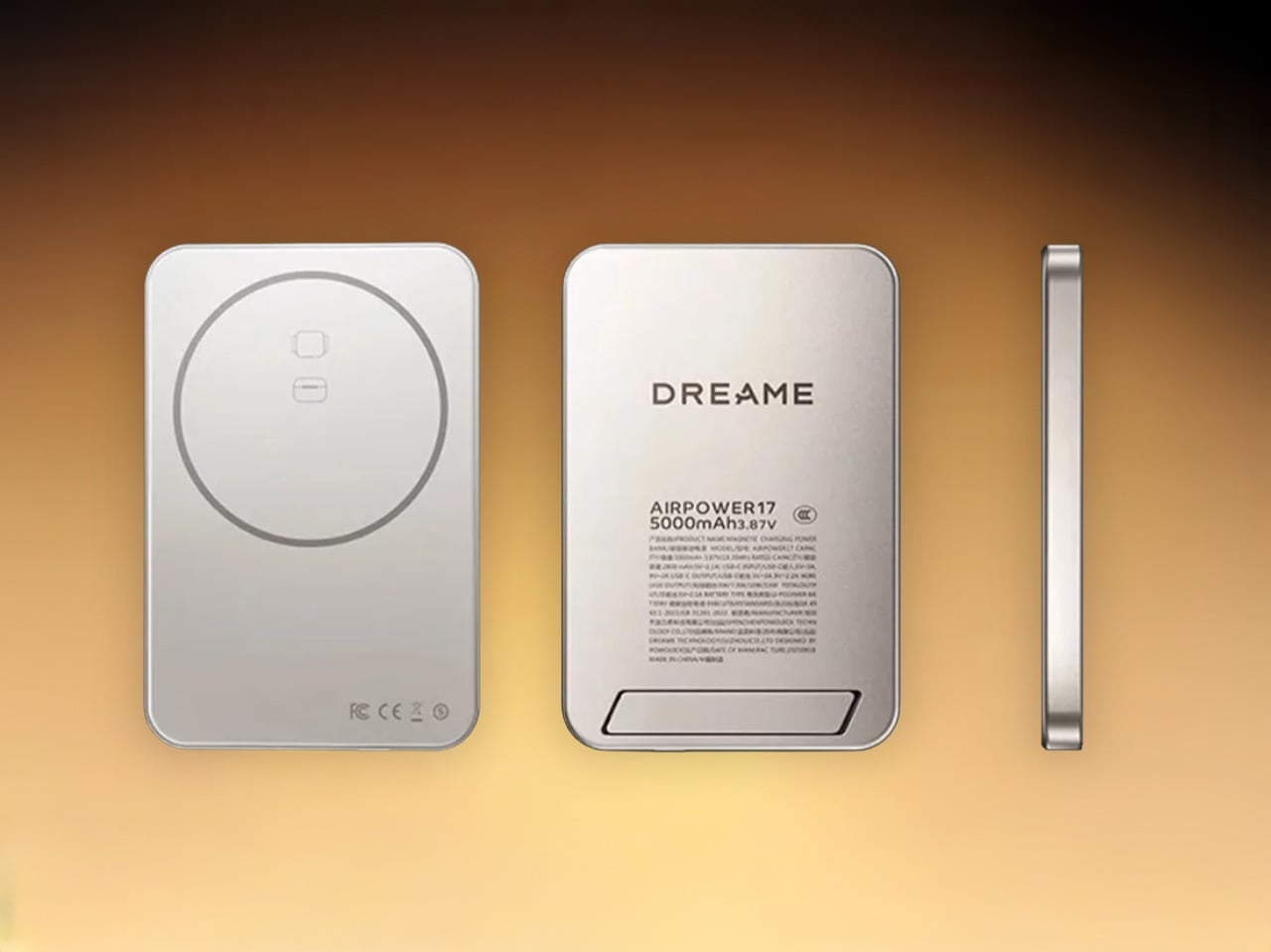
We came down to Moft’s stand at CES to check out their latest product – the Invisible Phone Stand. As ardent fans of the Moft Z (the world’s thinnest laptop stand) and the Moft X (a shape-shifting slim phone stand with a built-in wallet), we wanted to check out what else they were building, only to set eyes on the ‘Invisible Phone Tripod’ – a highly versatile and adjustable tripod that sits at a mere 0.27 inches thick when folded back into your phone.

Designer: Moft

Designed to be no thicker than two credit cards sandwiched together, the stand sits flat against the back of your phone. Open it up, however, and you’ve got yourself a perfectly stable tripod that can be angle-adjusted and even switched between landscape or portrait modes thanks to the inclusion of MagSafe. The secret lies entirely in a blend of origami-inspired design and some clever material choices and engineering to create a stand so seamless and so slim, it’s there when you need it, and invisible when you don’t.

One of the standout features of the MOFT tripod stand is its versatility, offering three distinct modes with adjustable angles. These include Floating Mode, which raises your phone to a height of 8 inches and offers various angles such as Video Call Angle, Showcase Angle, Theatre Angle, Browsing Angle, and Macro Photography Angle. Then there’s Stand Mode and Vlogging Mode, catering to different content creation and viewing needs.

The folding procedure takes just a few seconds

Despite its multifunctionality, the tripod stand boasts a compact design, measuring 3.82.50.27 inches and weighing just 2.9 oz. It’s crafted from MOVAS™ Vegan Leather, magnets, metal sheets, fiberglass, and PC, ensuring both durability and a premium feel​. The MOVAS™-E vegan leather used in the stand is designed to resist yellowing, boasting impressive UV and dirt resistance compared to regular leather. The material retains its vibrant color over time through a unique dyeing process, although it’s advised to avoid strong chemicals and to clean any stains immediately for optimal maintenance.

Its origami-inspired structure provides a stable triangular base, and it has been tested to support a weight of up to 17.6 oz, which is more than twice the weight of an iPhone 14 Pro Max. The hinge is made from manganese steel, which remains solid even after 5,000 open-close cycles, ensuring longevity. Paired with the MOVAS leather, the entire product is durable inside and out, and won’t show signs of ageing even with constant everyday use.

Priced at $39.99, this tripod stand is not only compatible with MagSafe for iPhone 12 and newer models but also offers universal compatibility for various phone models, including Android, through the inclusion of a MOFT Metal Ring. This ring is suitable for non-silicone cases made from PC, TPU, or aluminum, ensuring a wide range of devices can benefit from this accessory.

The post Moft Invisible Phone Tripod hands-on at CES 2024: A phone tripod as thin as two credit cards first appeared on Yanko Design.