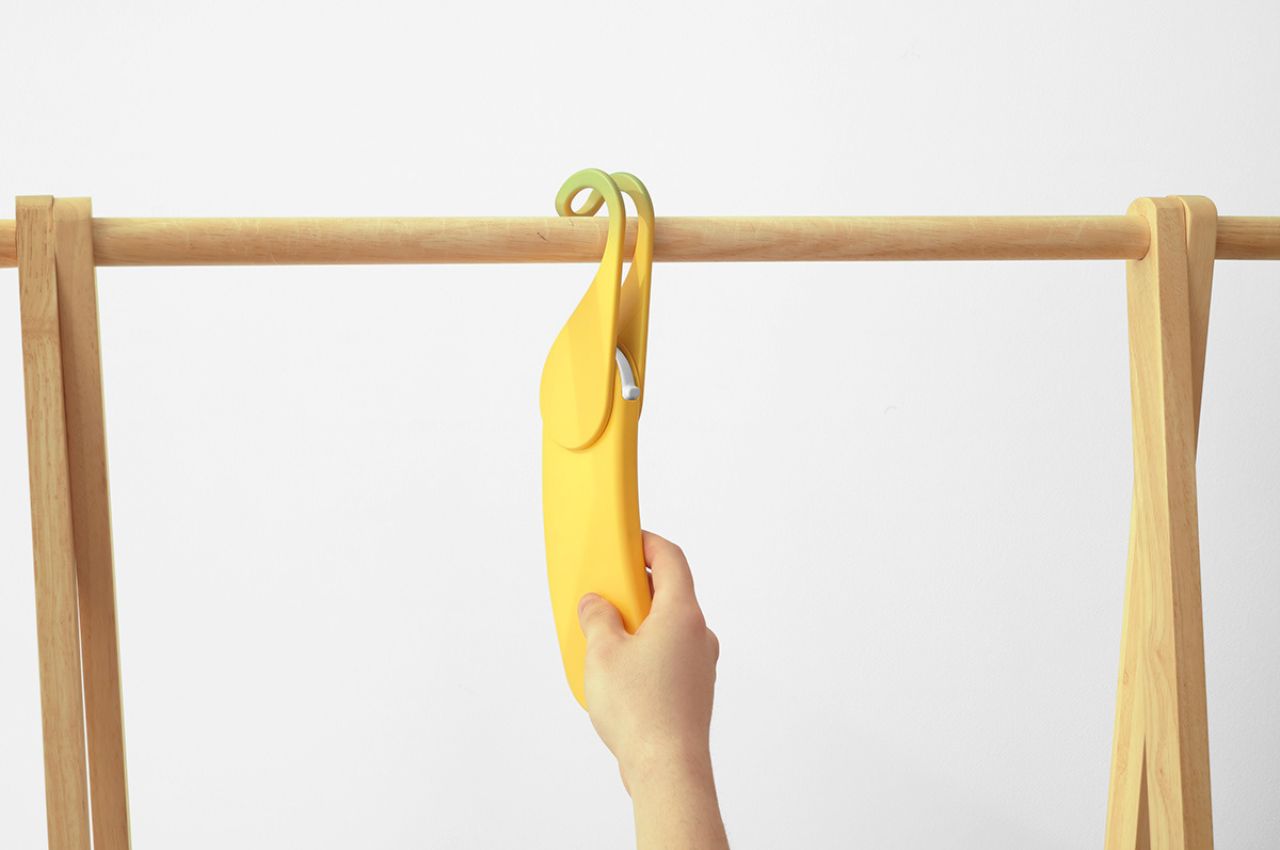
Adorable banana-shaped hanger encourages kids to organize their wardrobes

Every parent understands the importance of instilling good habits in their children from a young age. Whether it’s tidying up after themselves or learning to organize their belongings, these habits lay the foundation for a disciplined and organized life. However, getting kids to adopt these habits can sometimes be a challenge, especially when it comes to something as mundane as hanging clothes. That’s where Banannang steps in.

Designer: Minje Park and ROUSEED STUDIO
Banannang is not just any ordinary hanger; it’s a cleverly designed tool that makes the process of hanging clothes fun and engaging for young children. Developed by a team passionate about fostering good habits in children, Banannang aims to revolutionize the way kids interact with their clothing and their environment.
One of the most common grievances of parents is the sight of clothes strewn across the floor or piled up on chairs – the infamous “chair of used clothes” in many households. These are clothes that aren’t necessarily dirty enough to be thrown in the laundry but still need to be tidied up. Banannang addresses this issue by turning clothes-hanging into a playful activity that children enjoy.

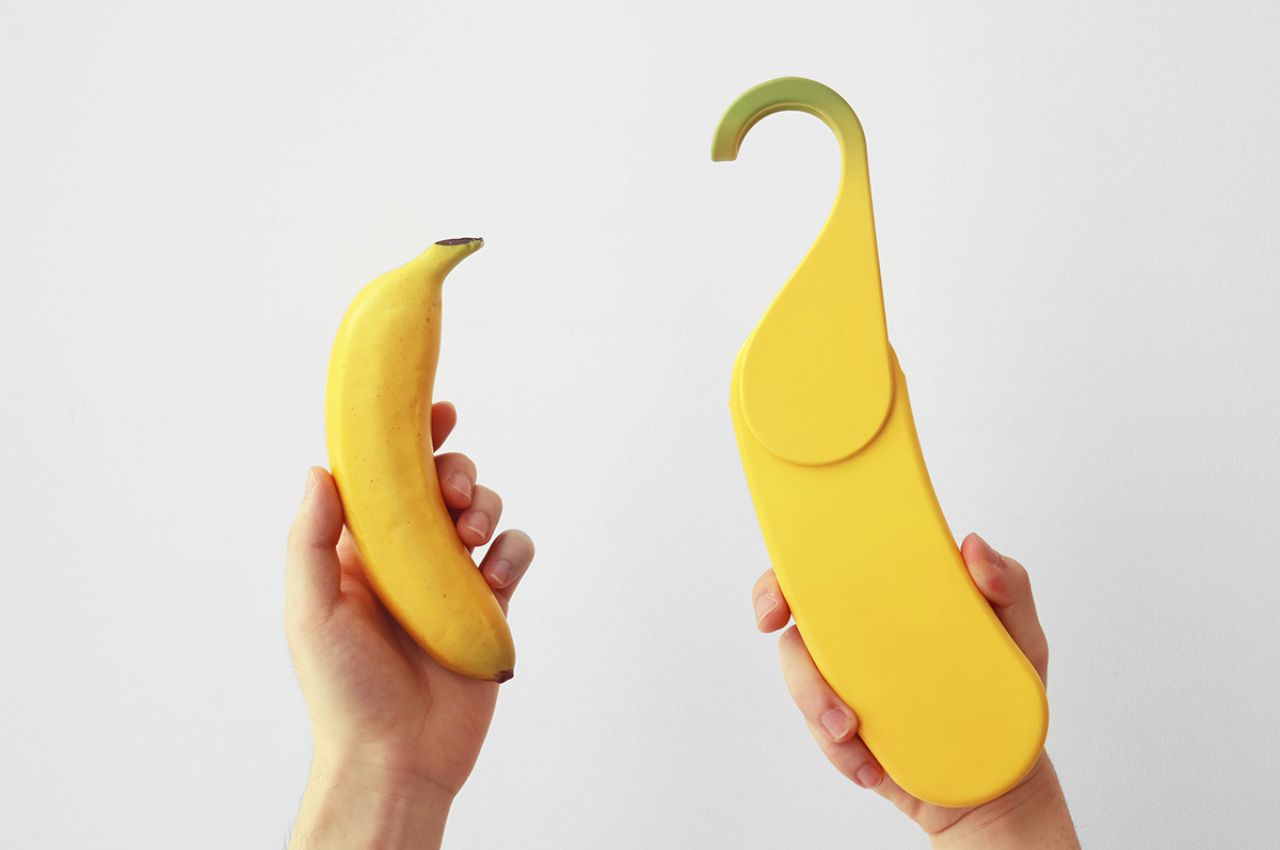
At first glance, Banannang resembles a banana, with its round, soft curved shape and bright color. This design isn’t just for aesthetics; it’s specifically tailored to fit the size, usability, and convenience of children’s hands. The hanger’s playful banana shape instantly captures the attention of young minds, inviting them to explore and engage with it.
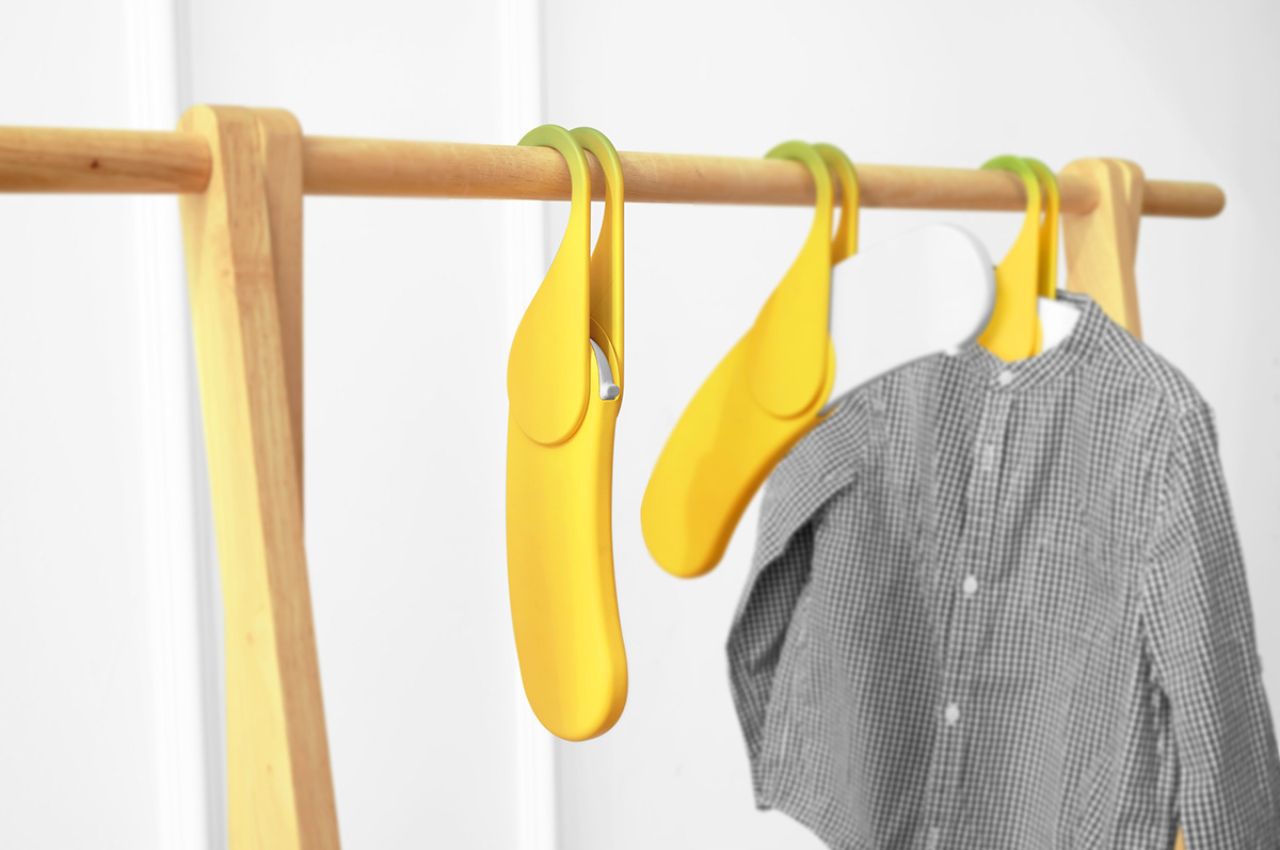
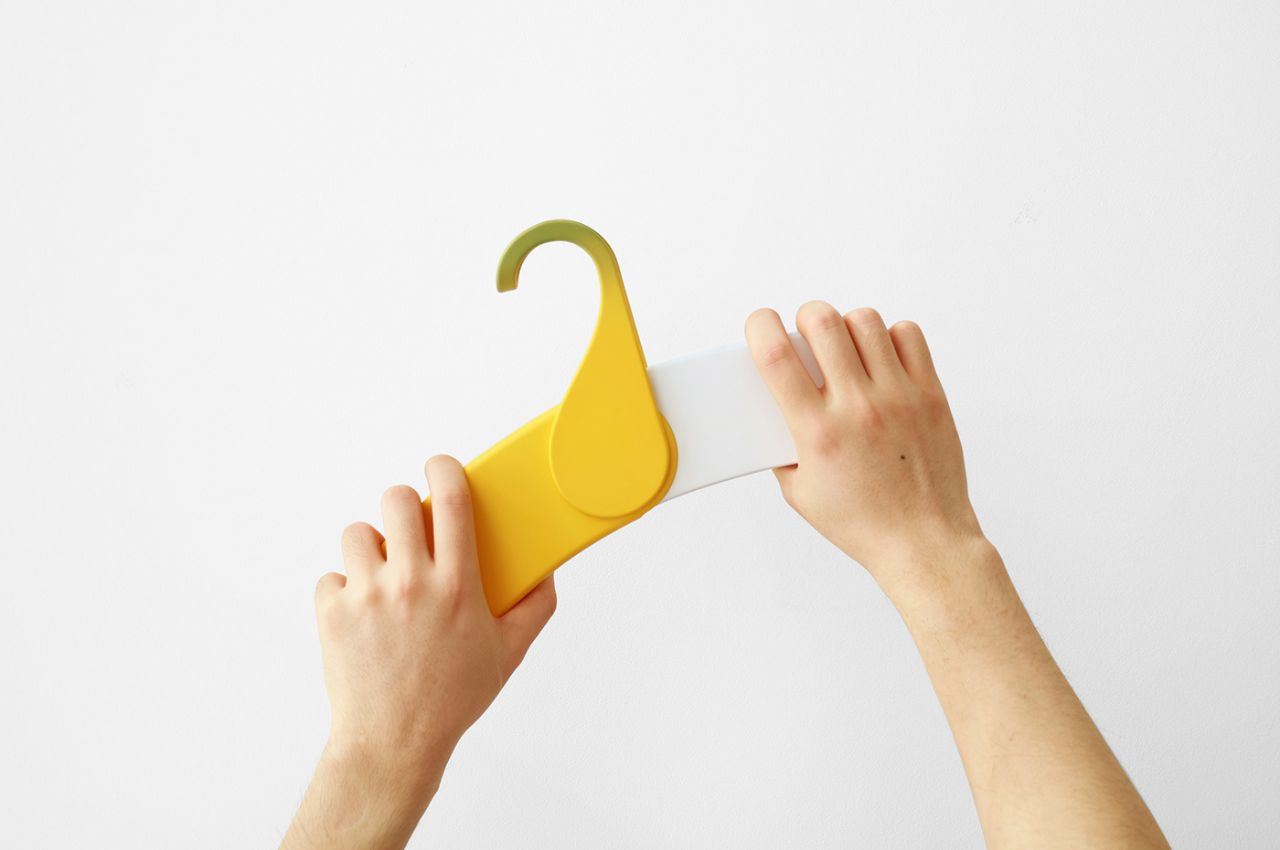
But Banannang is more than just a cute hanger – it’s a tool for learning and development. For children who are unfamiliar with hanging clothes or who simply haven’t formed the habit yet, Banannang provides a fun and natural way to learn. Modeled after the behavior of monkeys peeling bananas, Banannang teaches children how to use hangers through imitation and practice.

The process is simple and intuitive, making it easy for children to grasp. Step by step, they learn to bring out the banana-shaped hanger, hold it, hang their clothes on it, and organize them neatly. By associating the act of hanging clothes with something as familiar and enjoyable as peeling a banana, Banannang makes the learning process both educational and enjoyable.

Moreover, Banannang’s branding reinforces its mission of promoting free and diverse personalities in children. The pattern of freely laid bananas on the hanger represents the idea of children expressing themselves without being confined by rigid molds. It sends a message that forming good habits doesn’t have to be boring or restrictive; it can be a fun and liberating experience.
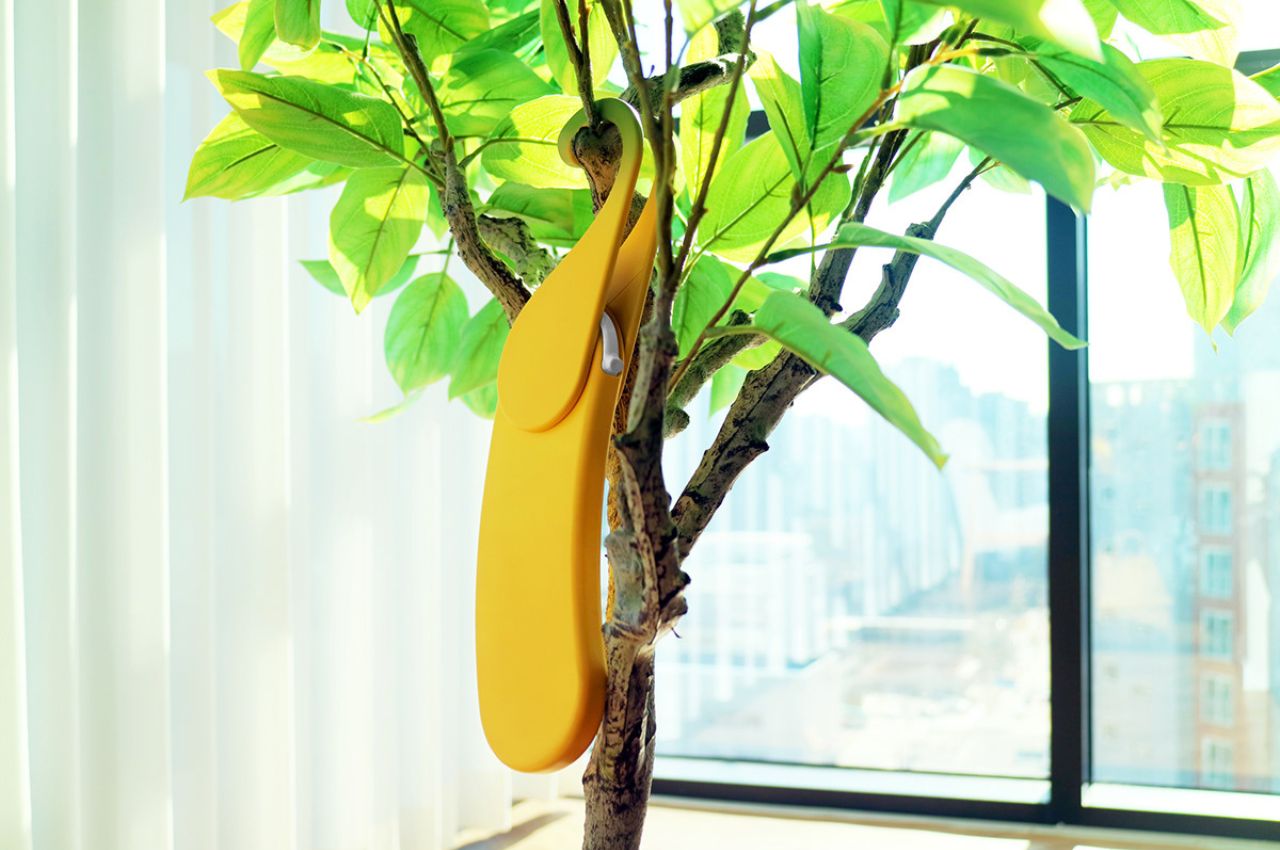
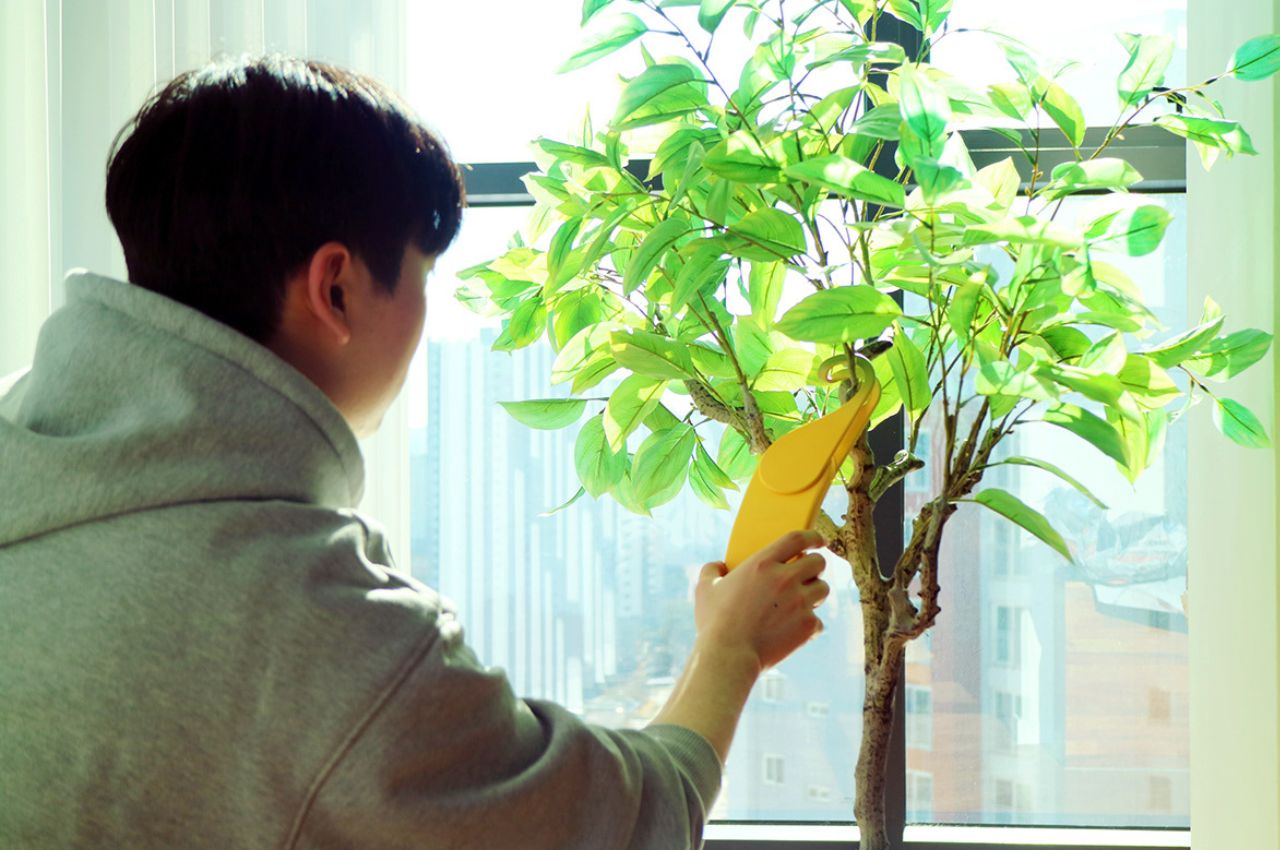
By combining innovative design with educational principles, Banannang empowers children to take ownership of their belongings and develop essential life skills from a young age. So, the next time you’re struggling to get your child to hang up their clothes, why not give Banannang a try? After all, who can resist the allure of a banana-shaped hanger?

The post Adorable banana-shaped hanger encourages kids to organize their wardrobes first appeared on Yanko Design.
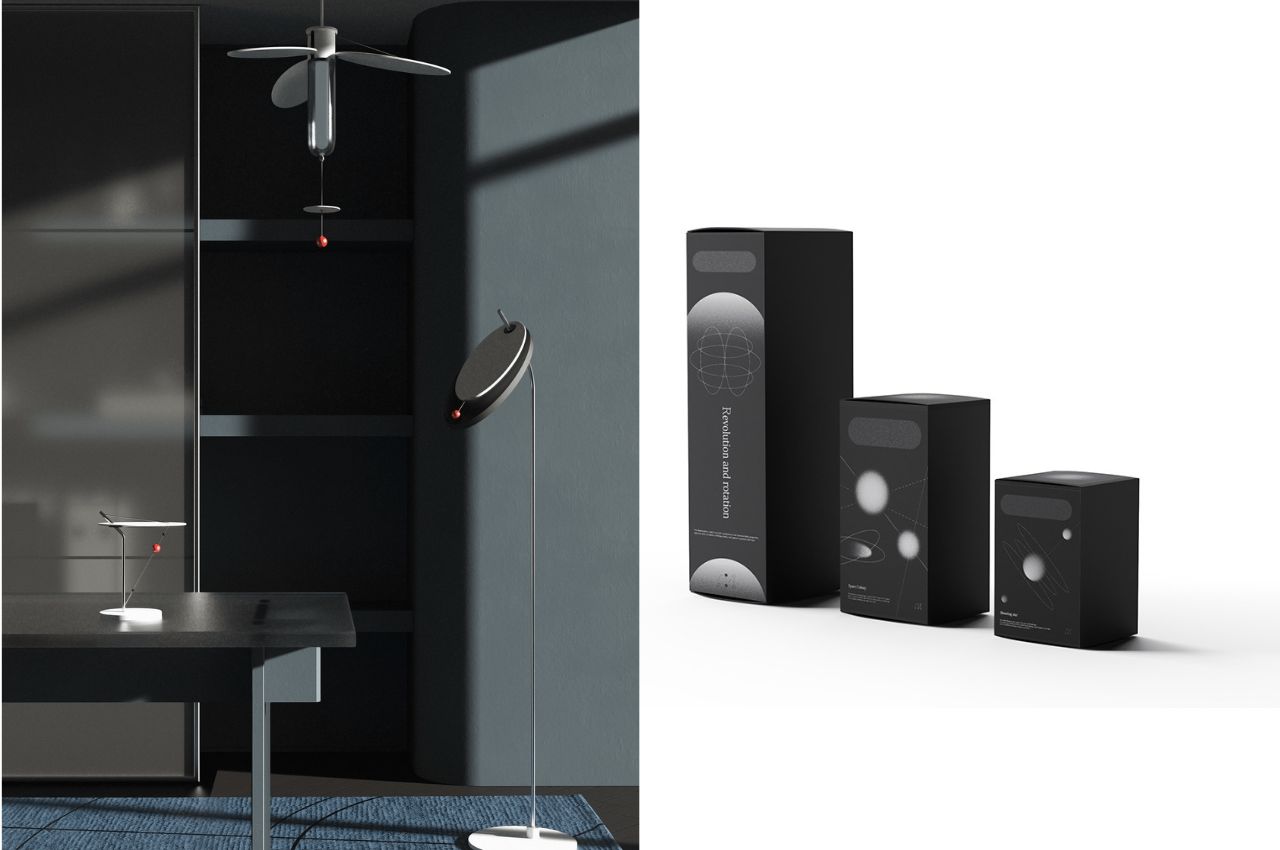
An Interactive Lamp Series That Brings The Cosmic Moments Into Interiors

Space, with its vastness and complexity, has always captivated the human imagination. Our solar system, a celestial ballet of planets and stars, has inspired various aspects of human life and design, from ancient sundials to modern-day innovations. The COSMOOVAL lamp series is a testament to this inspiration, drawing on the phenomenal interconnectivity of our solar system to create a collection of lamps that not only illuminate spaces but also tell a cosmic story.

Designer: LFD Official – Seohyun NamNam Woo KimDoyoon Kim

The designers of Cosmooval drew inspiration from the celestial bodies in our solar system, considering the way they influence our planet and the intricate dance of light and shadow they create. The lamp series incorporates key elements such as expandability, limitation, transparency, and immateriality to bring the essence of space into our living environments.

The design process began with the creation of a mood board, reflecting the tension and spatial dynamics of the universe. Simple basic figures, inspired by solar and lunar eclipses, shooting stars, and planetary movements, were arranged to evoke the mood of the cosmos. A clay mockup emphasized stability through the use of circles and triangles, laying the foundation for the lamp series’ structural elements.

Several idea sketches were explored, with the initial focus on a triangular structure within three circles. As the design evolved, proportions, details, and interactions were refined in subsequent sketches. The final design selected a form that considered materials, structure, and user interaction, resulting in three distinct types of lamps within the Cosmooval series.

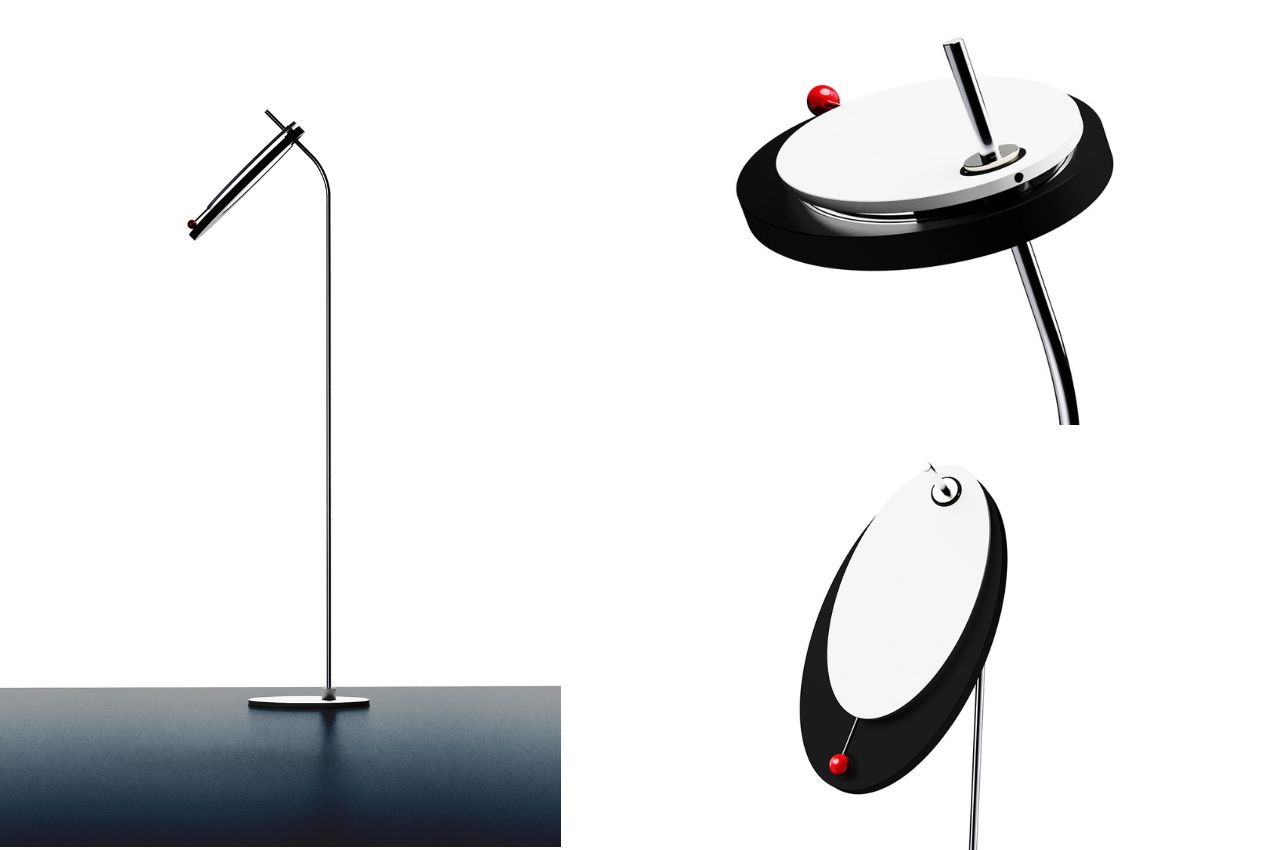
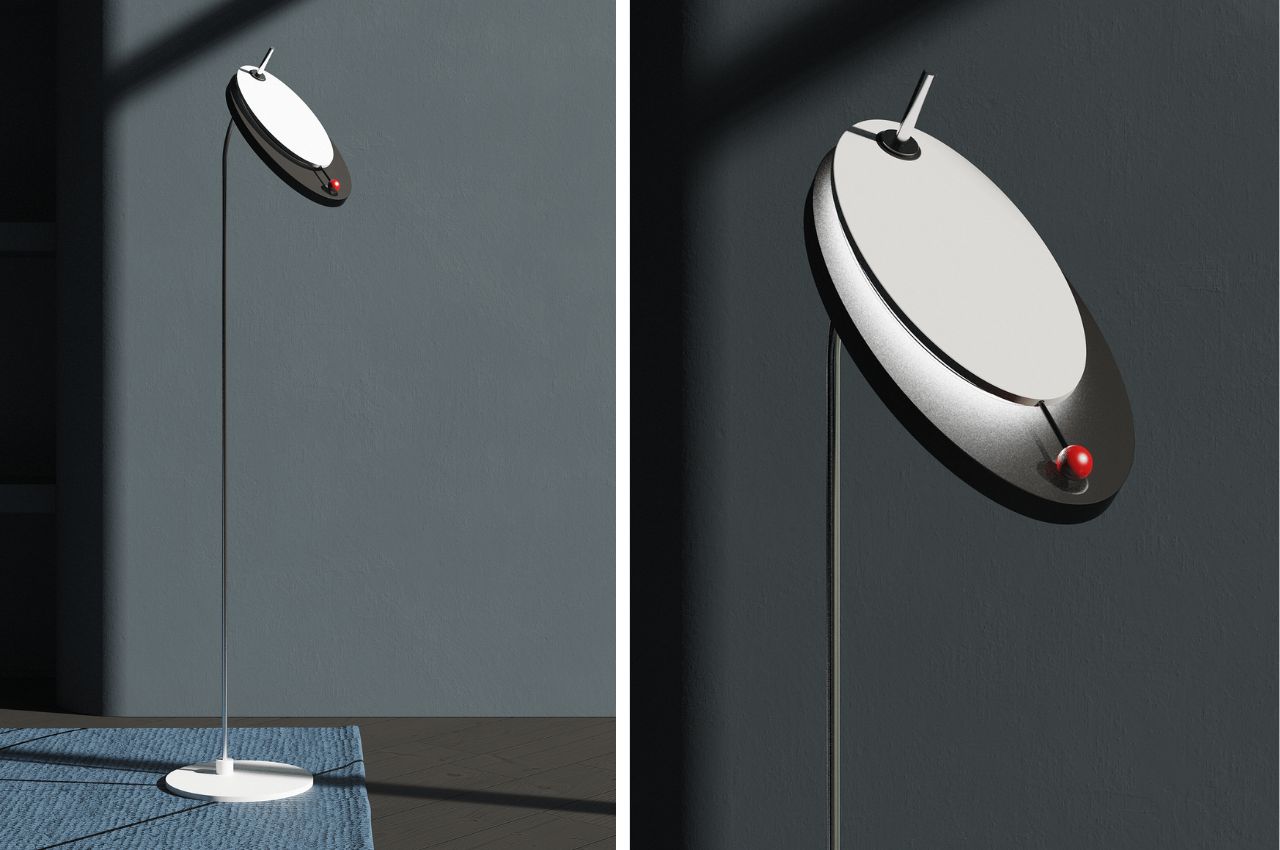
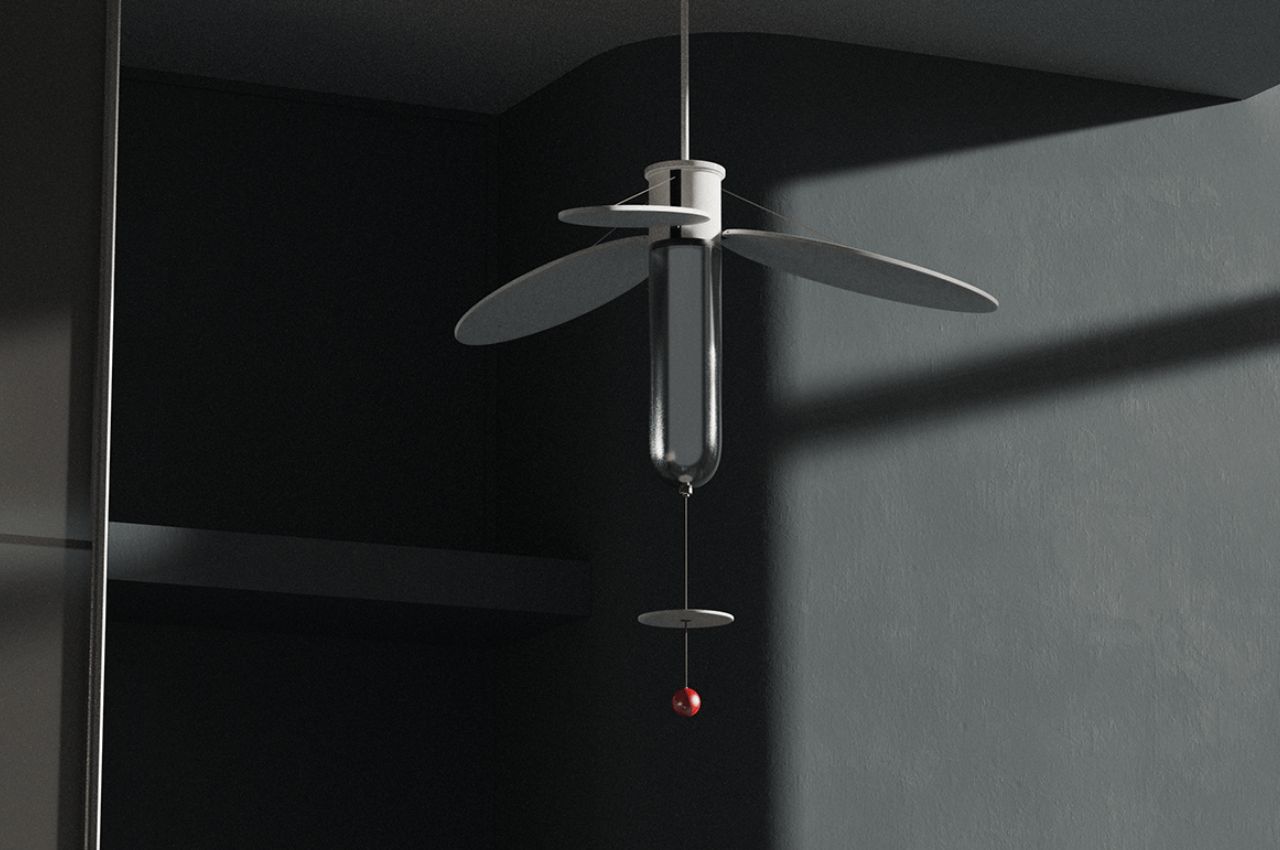
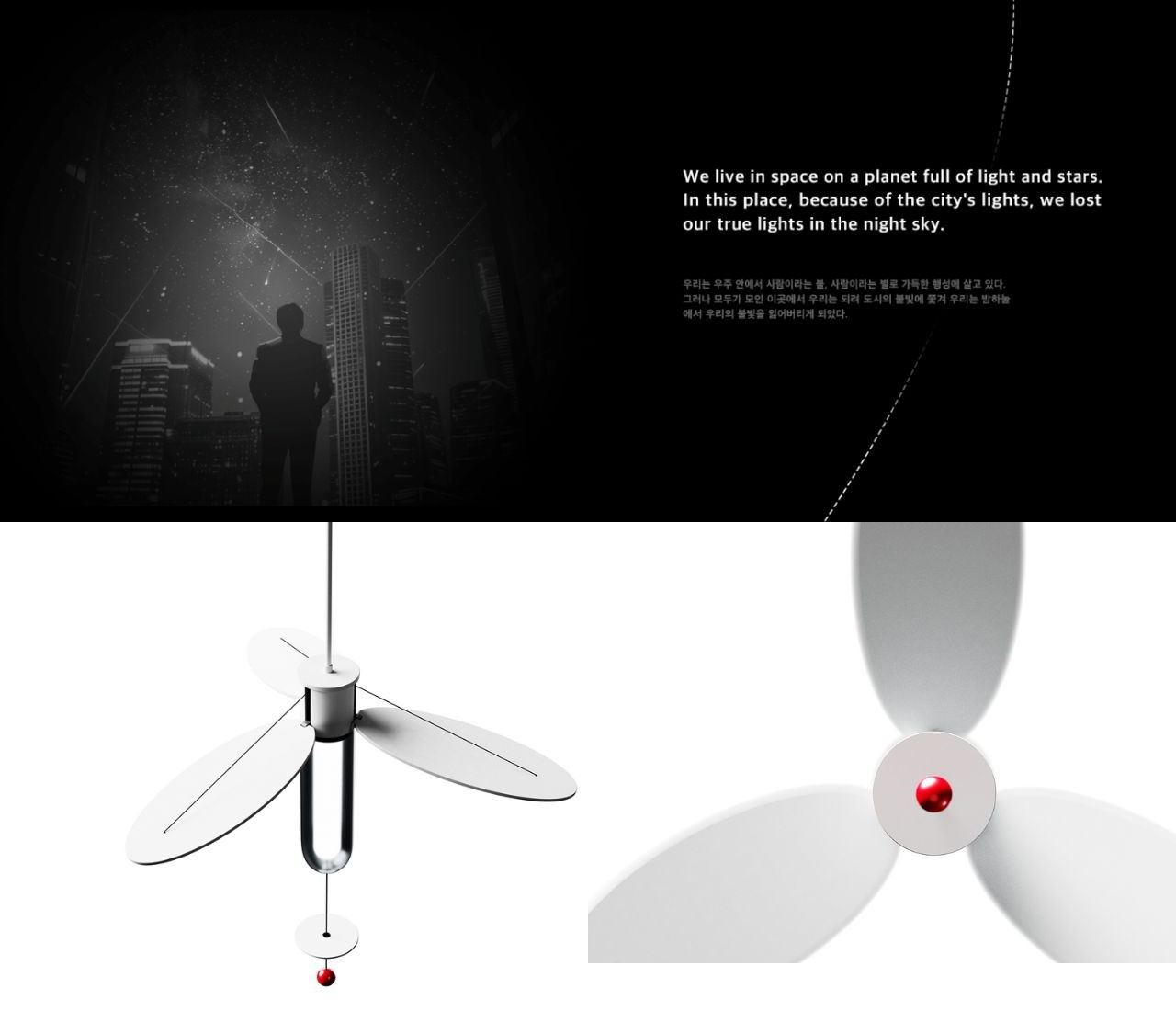
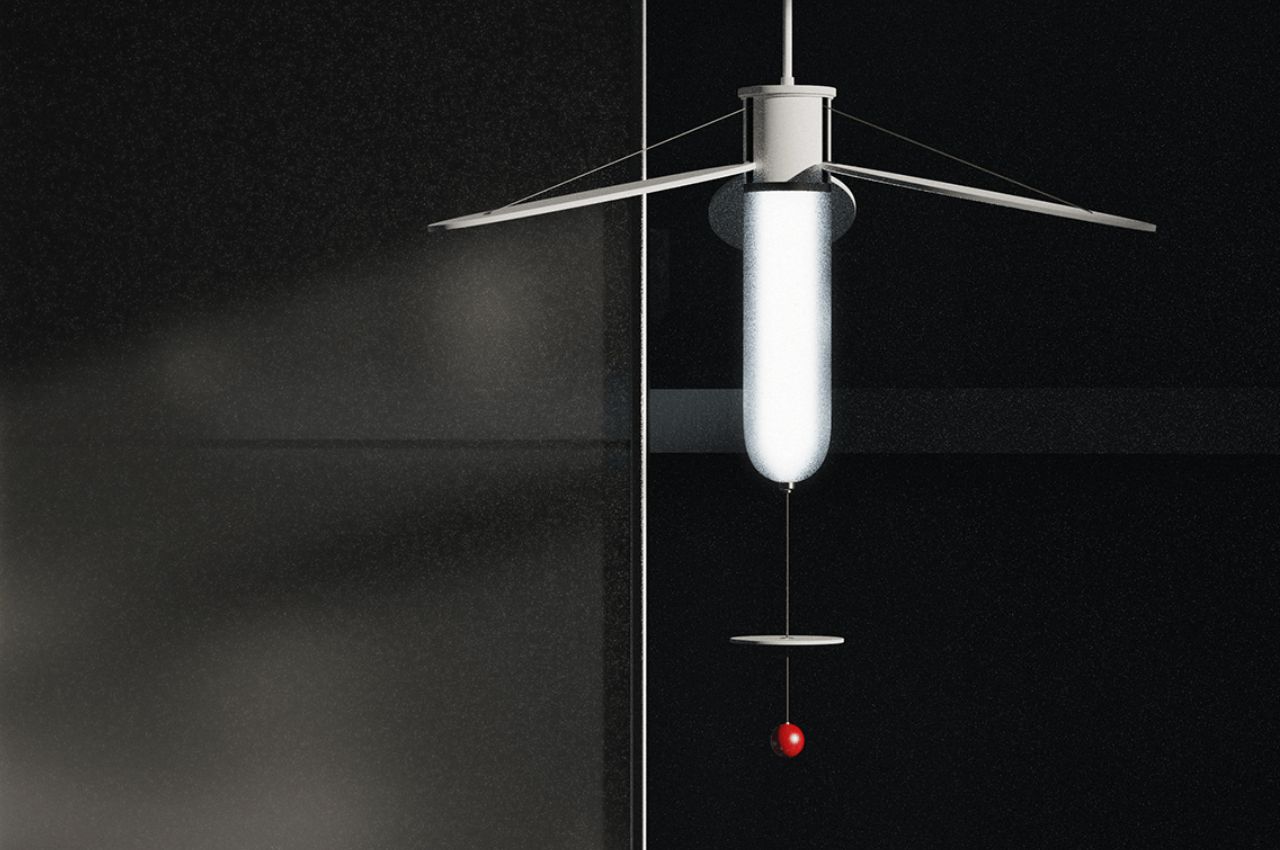
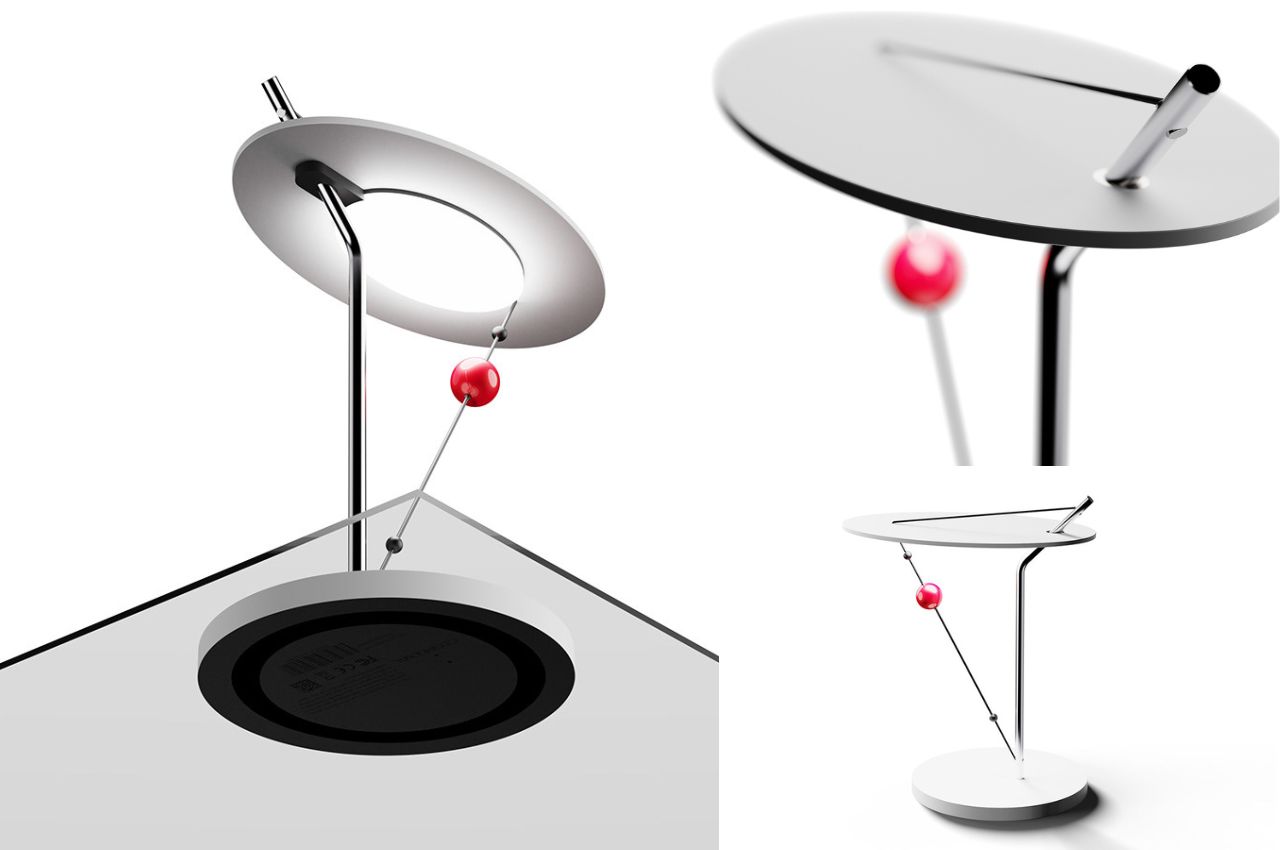
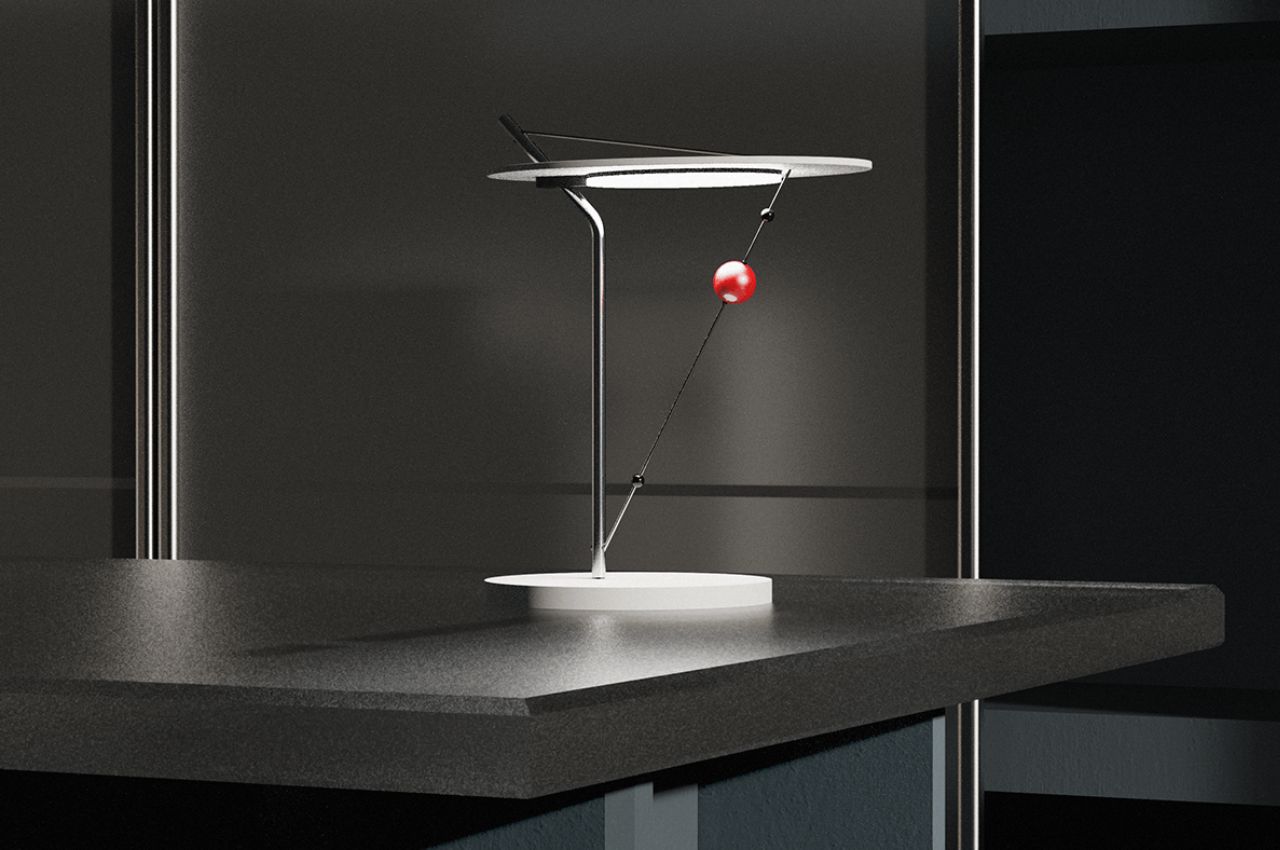
Each lamp in the series offers a unique interaction with light, adding to the overall cosmic experience. The ceiling lamp, representing expandability, spreads light by adjusting the angle of an oval disk. The table lamp, embodying limitation, controls light brightness through the movement of a red sphere, mimicking the motion of a shooting star. The floor lamp, combining transparency and immateriality, simulates orbiting planets and solar eclipses, changing light intensity as the red sphere is manipulated.

Cosmooval, derived from the fusion of “Cosmo” (space) and “Oval” (ellipse), is more than just a lighting solution; it is an artistic representation of the cosmos. The series serves as a visual metaphor for planets, satellites, and shooting stars, moving in harmony with their orbits.

The ceiling lamp symbolizes the expansiveness of space, spreading light with three ovals arranged in a stable manner. By pulling the red sphere attached to a string, users can open and close the ovals, controlling the brightness and essential light in their space.

1

In the table lamp, a triangular structure controls the concentrated light source. Moving the red sphere along a diagonal line mimics the motion of a shooting star, allowing users to experience the fleeting brightness associated with celestial phenomena.

1

The floor lamp embodies transparency and immateriality, recreating the orbits of planets and solar eclipses. Pushing the red sphere sideways changes the shape and intensity of light, providing a dynamic representation of the passage of time and celestial revolutions.

1

The Cosmooval lamp series transcends conventional lighting, offering users an immersive experience that connects them to the wonders of our solar system. Through innovative design and thoughtful interaction, these lamps bring the cosmos into our living spaces, reminding us of the beauty and complexity of the universe that surrounds us.

The post An Interactive Lamp Series That Brings The Cosmic Moments Into Interiors first appeared on Yanko Design.

The Pixelated Interiors of this Bucharest eyewear store feels like Minecraft in real life!

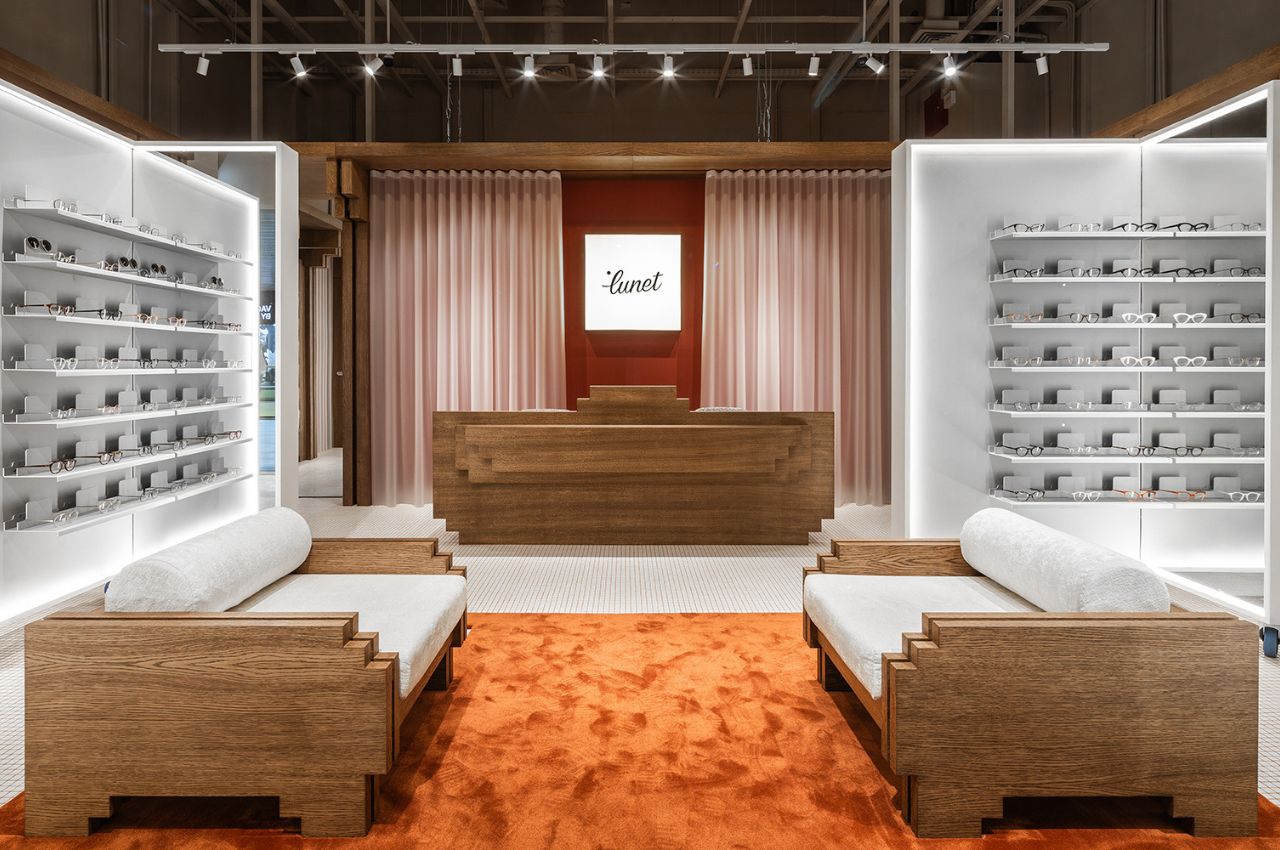
In the bustling streets of Bucharest, Lunet Eyewear has unveiled its latest spectacle, a whimsical wonderland that blurs the lines between reality and imagination. Romanian practice Bogdan Ciocodeica Studio has once again pushed the boundaries of interior design, this time crafting an optical oasis that celebrates the essence of blurry vision.

Designer: Bogdan Ciocodeica Studio

Drawing inspiration from the very purpose that brings customers through its doors; the quest for clarity in a world of blurriness. Lunet’s newest store is a testament to the power of narrative-driven design. The concept is bold yet intuitive, as pixelated furnishings dance against translucent latex curtains, inviting customers into a realm where perception is questioned and celebrated.

Situated in the heart of Bucharest, this marks the third collaboration between Bogdan Ciocodeica Studio and Lunet, with previous ventures in the capital and Cluj-Napoca setting the stage for innovation. Unlike its predecessors, this store avoids the classic trappings of color and metallics from their previous designs, opting instead for a playful and pixelated ambiance that invites visitors to explore its depths.

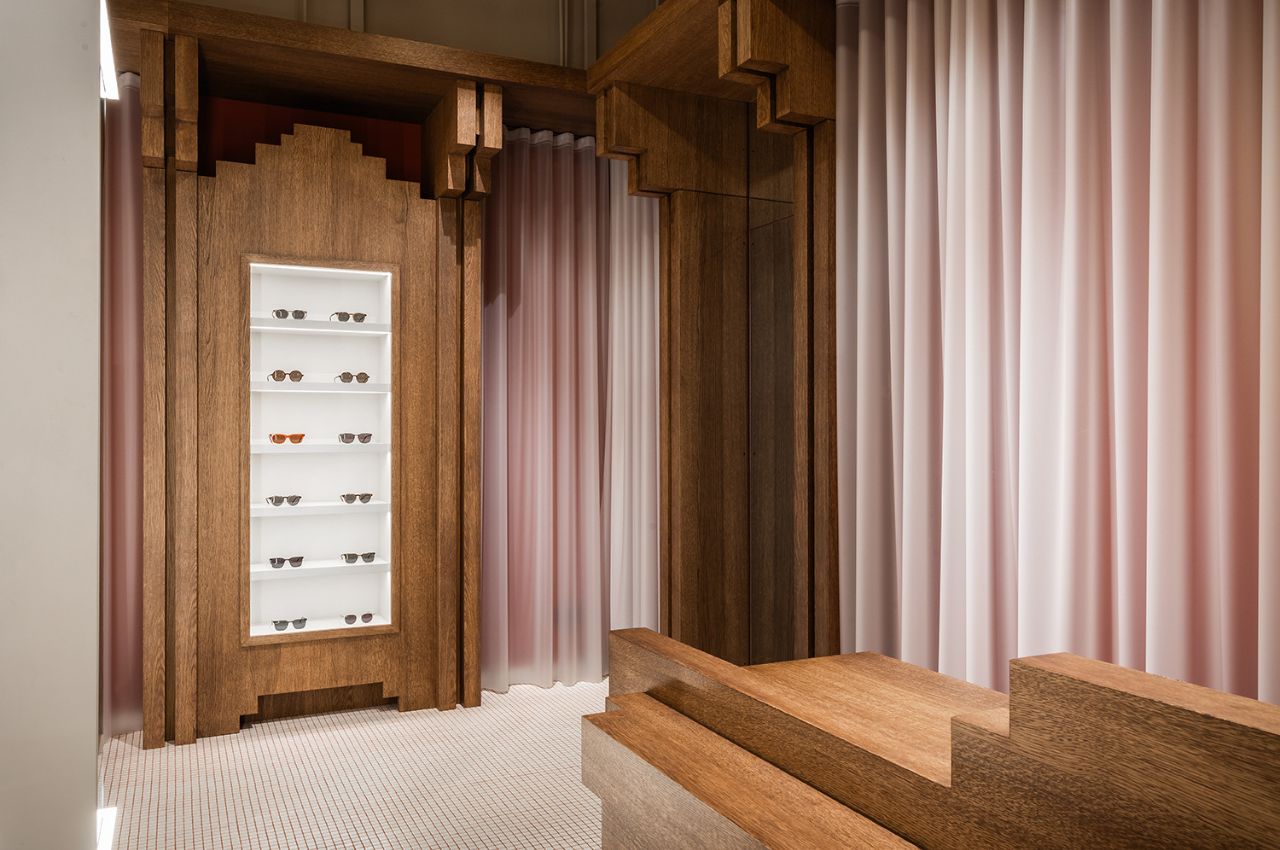
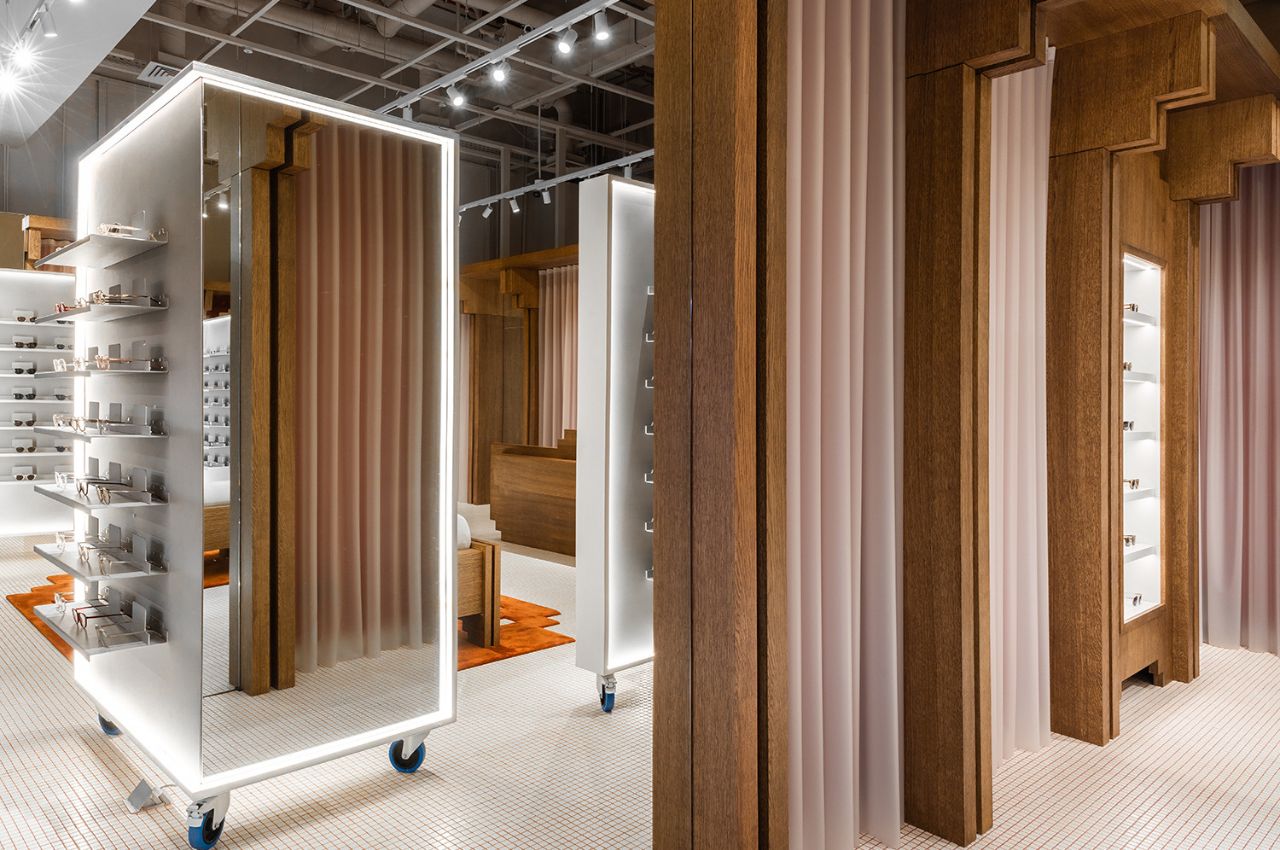
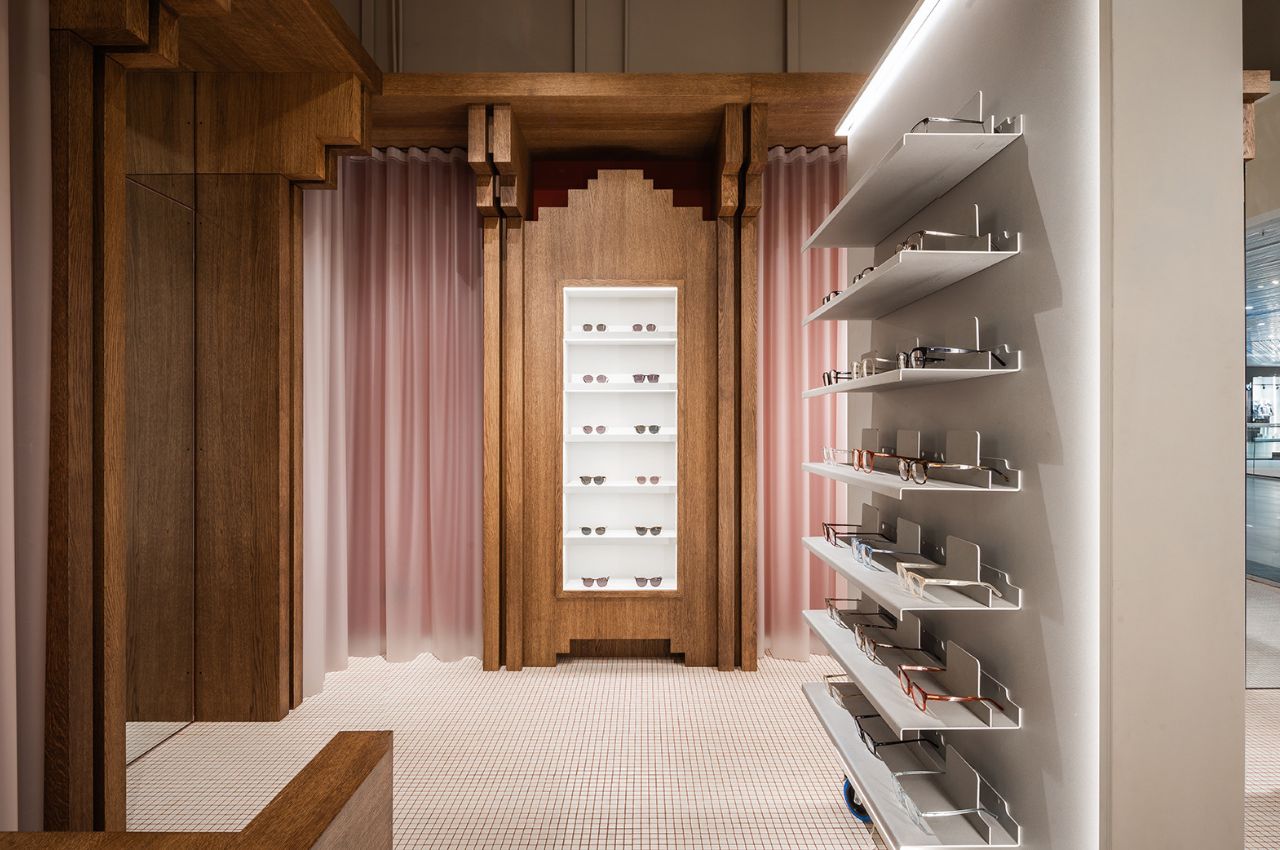
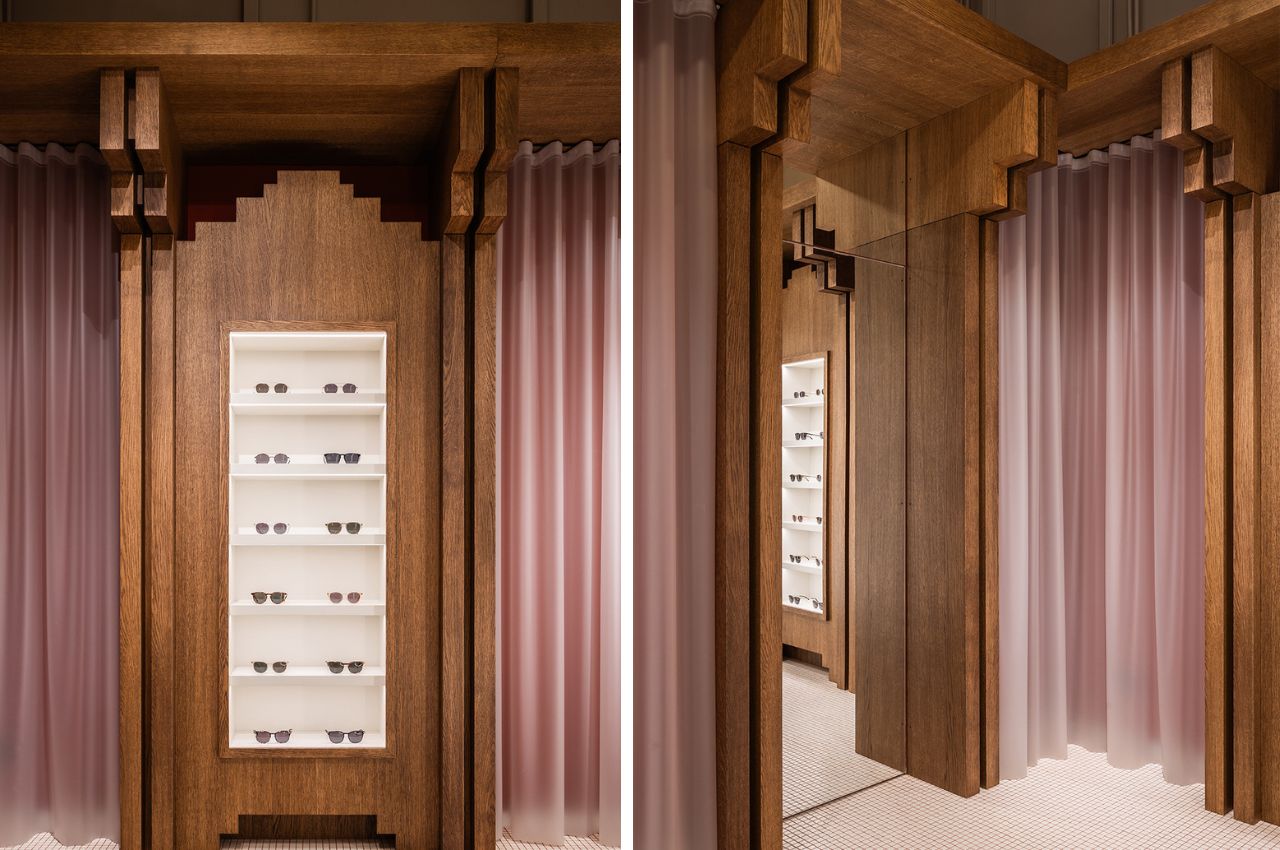
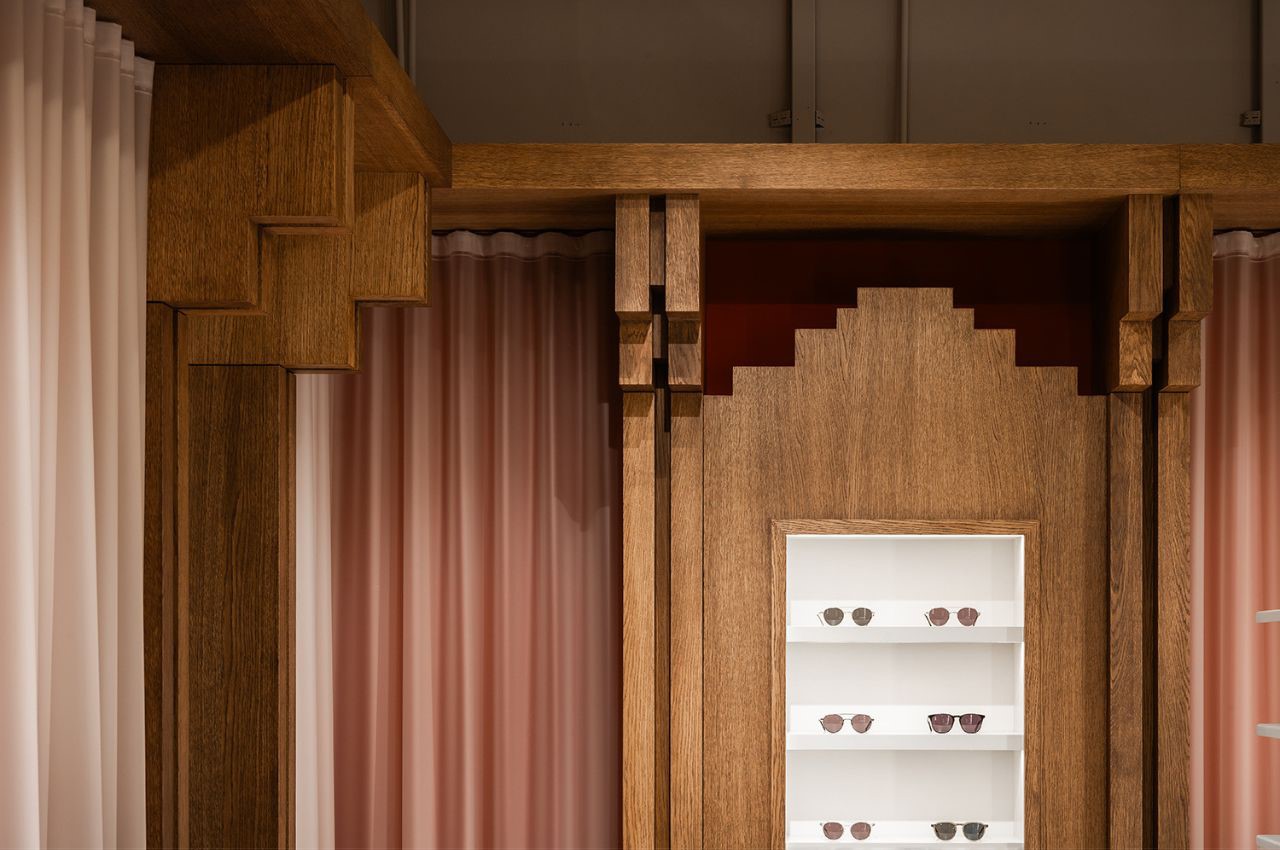
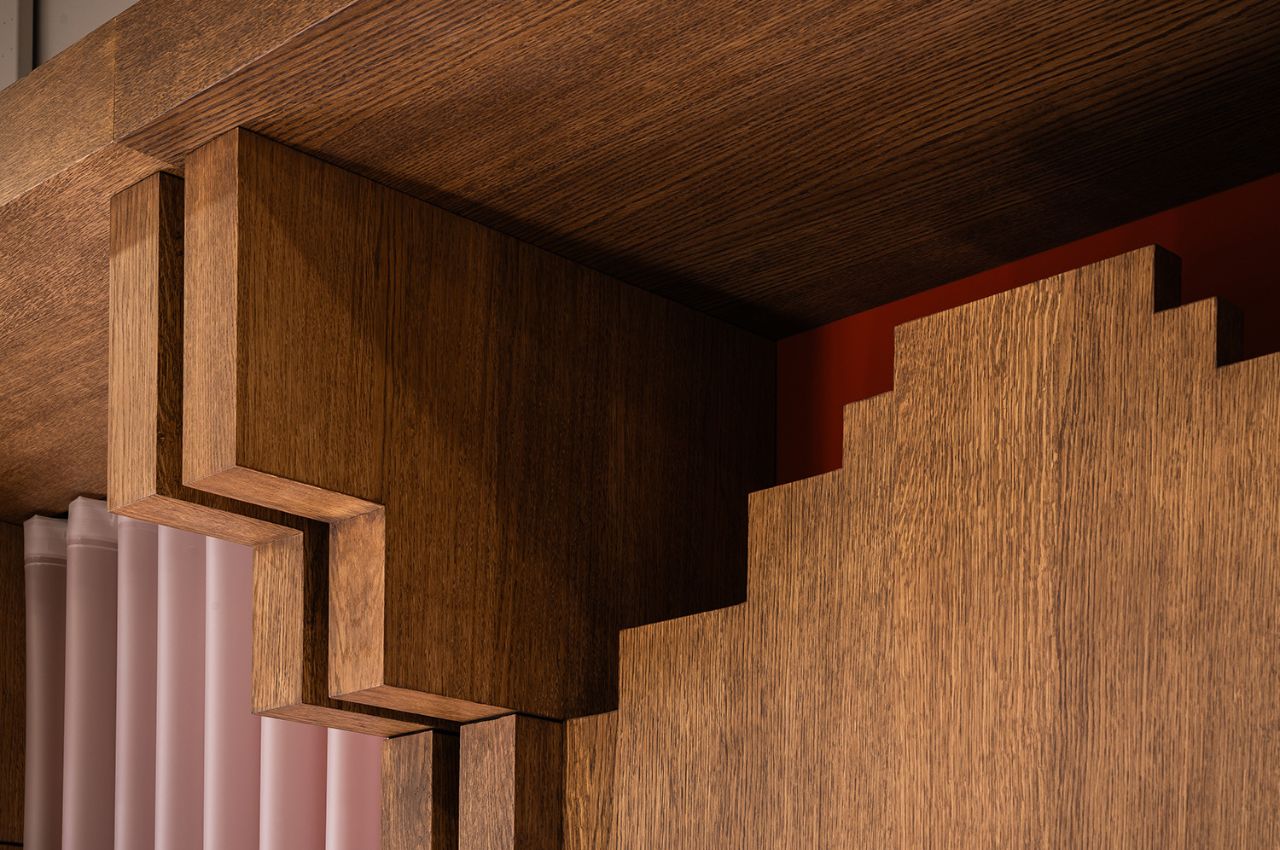
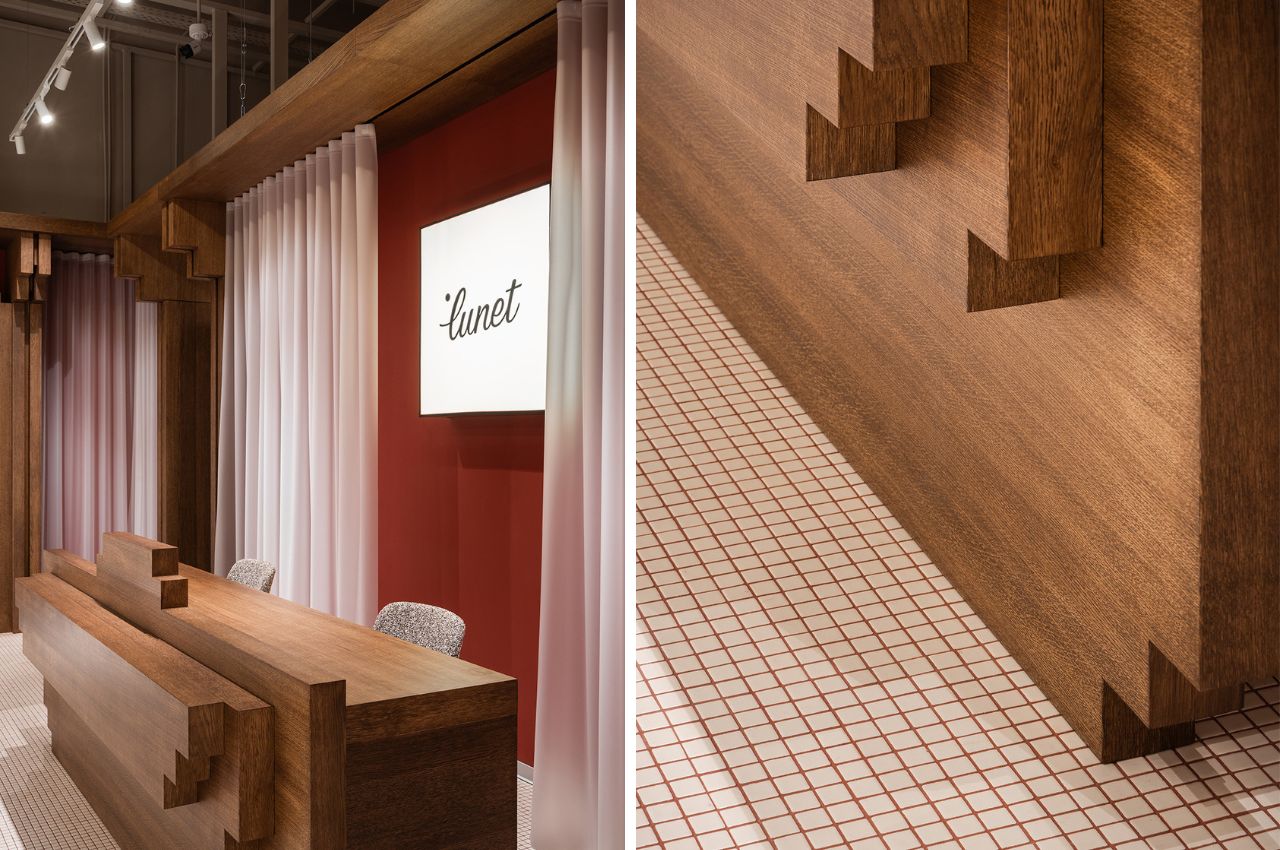
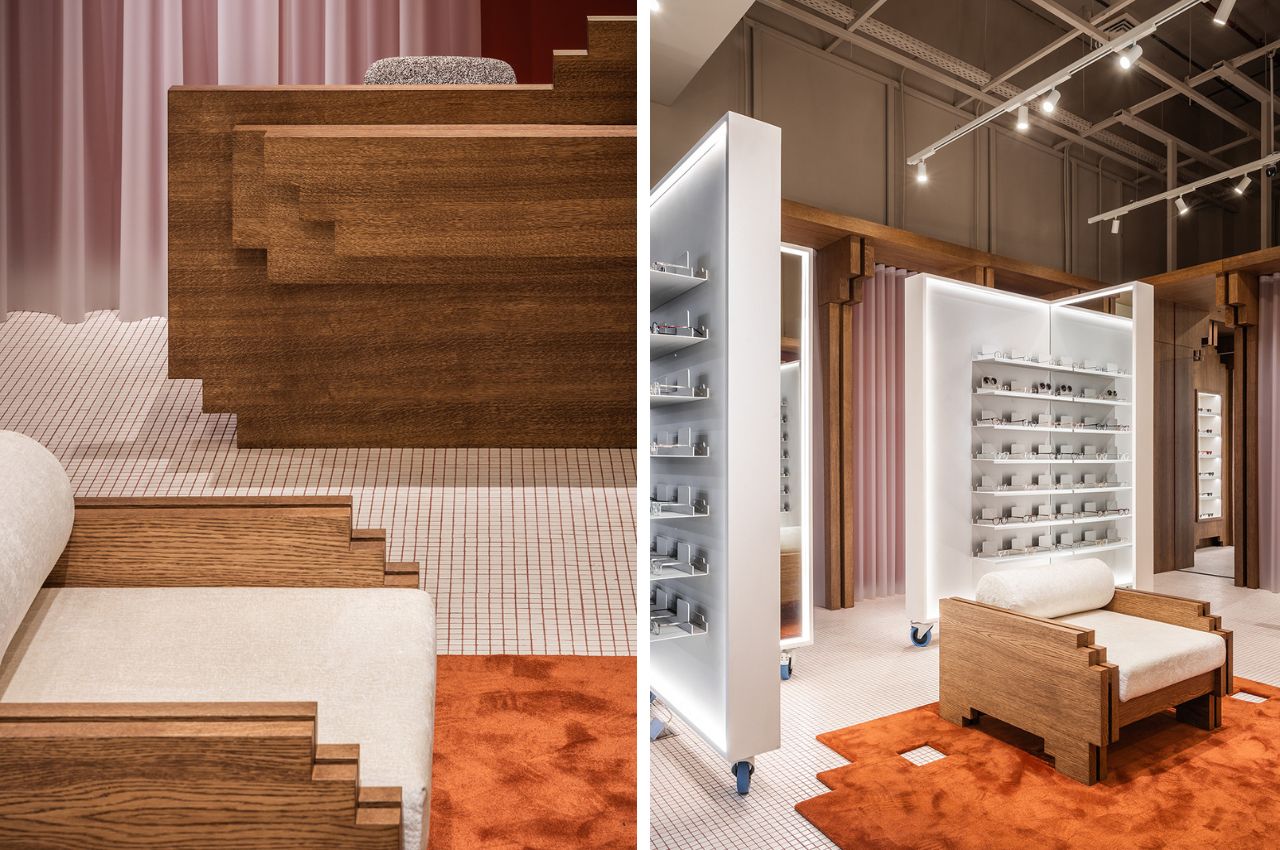
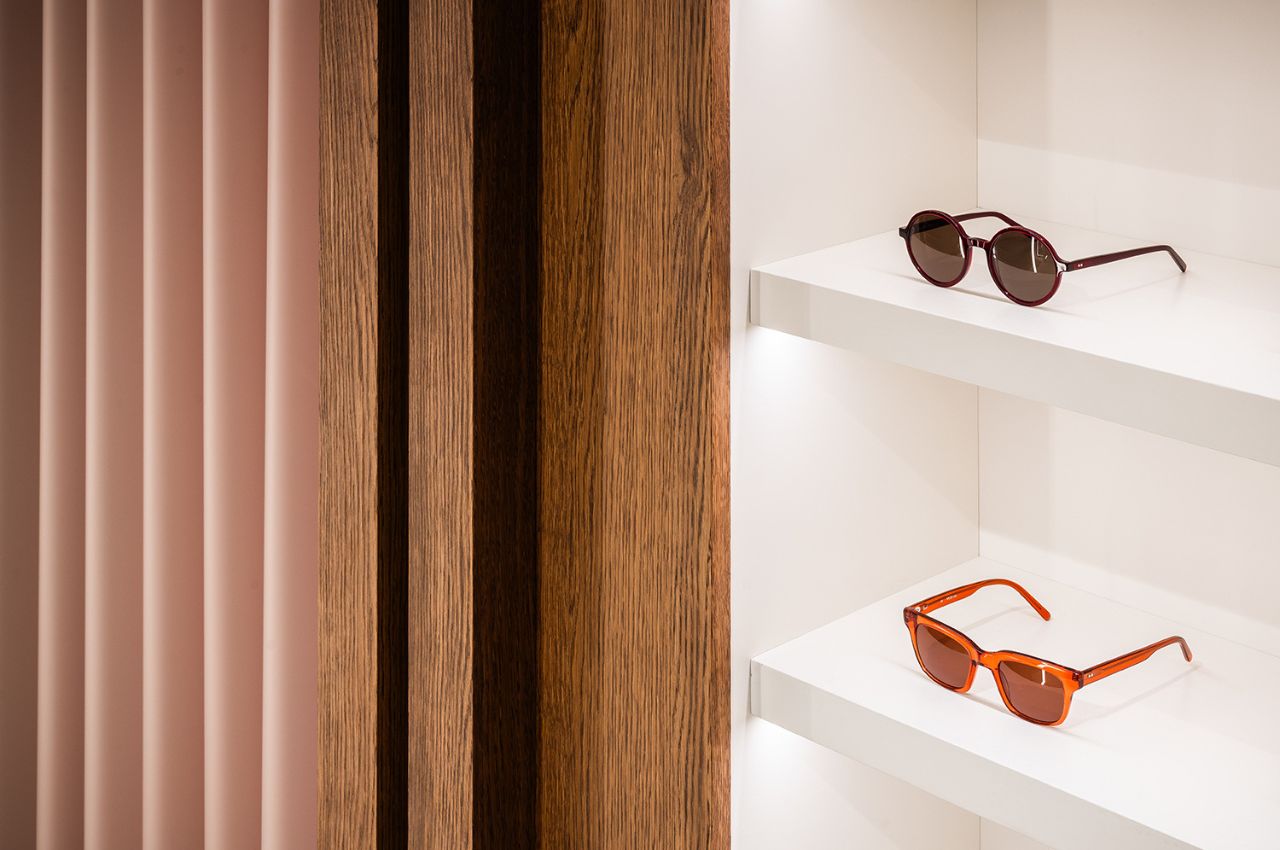
At the forefront of this visual symphony are the shelves, strategically punctuated with pixel-style cutouts that mimic the blocky form of their digital counterparts. These tall wooden structures serve as both showcases and canvases, housing Lunet’s eclectic range of eyewear while simultaneously blurring the lines between art and function.

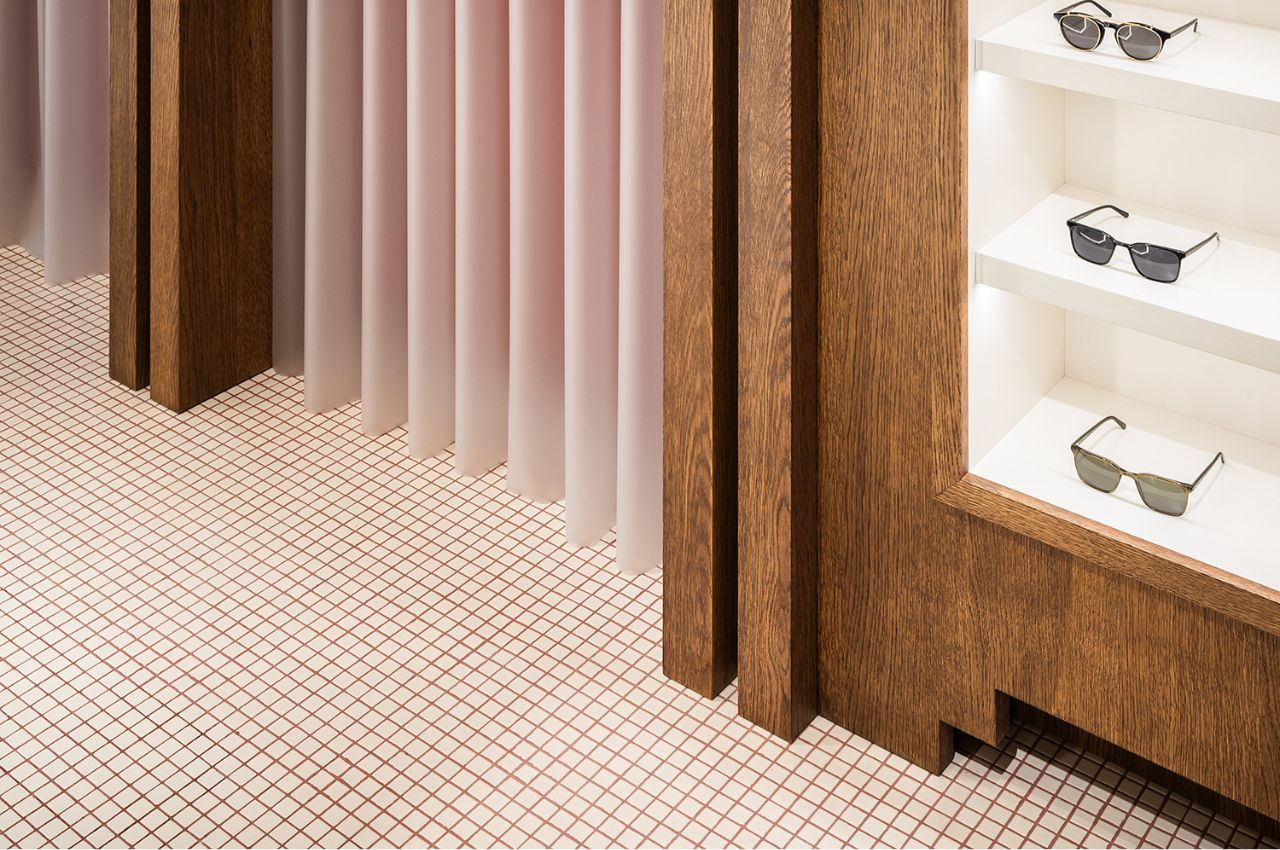
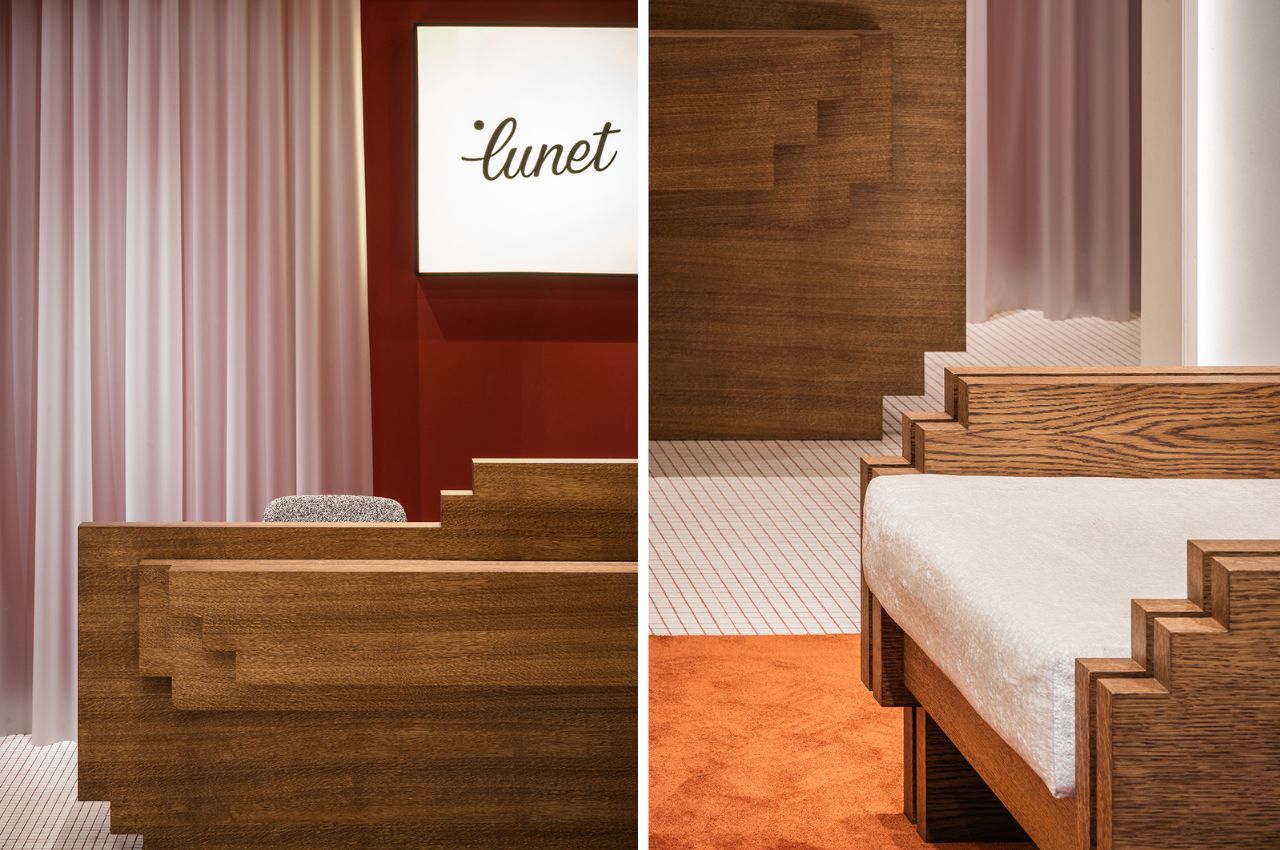
But the pixelated magic doesn’t stop there, gridded tile flooring lays the foundation for this playful palette, while cutouts in chairs, rugs, and service desks continue the theme with finesse. Each element, meticulously crafted and thoughtfully placed, converges to create an environment that is at once nostalgic and futuristic, those columns and arches created by the shadows seem like a modern interpretation of Romania’s architectural heritage.

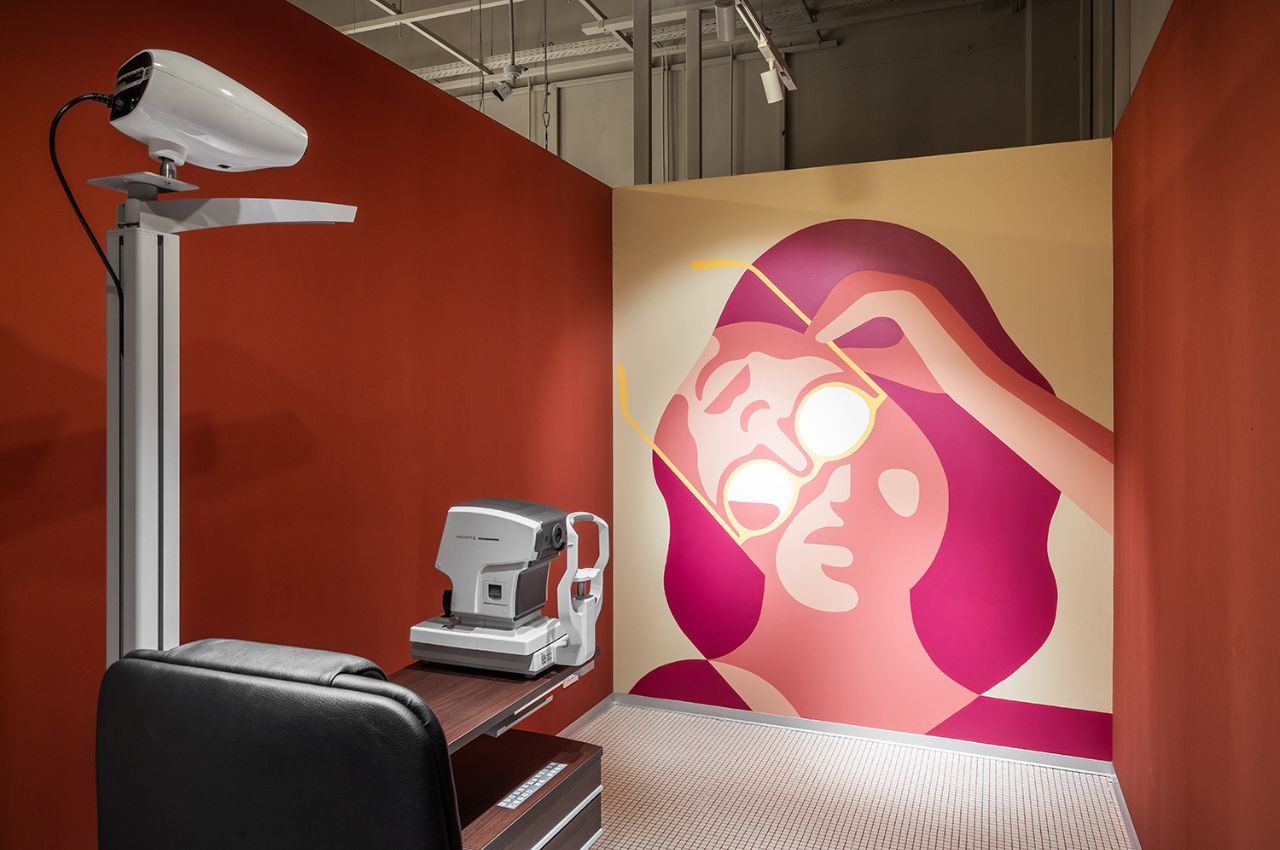
In between the wooden pillars, the walls are painted in a burnt sienna color with translucent latex curtains draping gracefully between shelves, these ethereal veils add depth and texture to the space, enveloping patrons in a cocoon of visual intrigue as they navigate the store’s diverse offerings. They also have a touch of industrial aesthetic, a mix of brushed metal and mirror cladding, keeping in line with the original concept of the first Lunet store.

At the heart of Lunet’s pixelated playground lies a seating area, where wooden chairs with pixelated edging offer leisure amidst the chaos. Beneath them, a burnt-orange rug adorned with pixel-shaped openings provides a whimsical peek into the store’s underlying grid, inviting guests to linger and explore.

In the eye test room, brick-red walls set the stage for surrealist graphics that challenge perception and defy convention. Here, Lunet invites patrons to see beyond the ordinary, to embrace the blurred lines between art and reality as they embark on their optical journey.

The post The Pixelated Interiors of this Bucharest eyewear store feels like Minecraft in real life! first appeared on Yanko Design.

Perelel’s $10M Donation Advances Maternal Health Research and Supports Prenatal Care

Every expectant mother embarks on a journey filled with joy, anticipation, and, understandably, a dash of apprehension. The responsibility of nurturing a new life brings with it a plethora of considerations, chief among them being maternal health. Recognizing this critical aspect, Perelel, a maternal health startup, has pledged a substantial $10 million towards closing the healthcare research gap, underscoring their commitment to maternal well-being.

Designer: Perelel

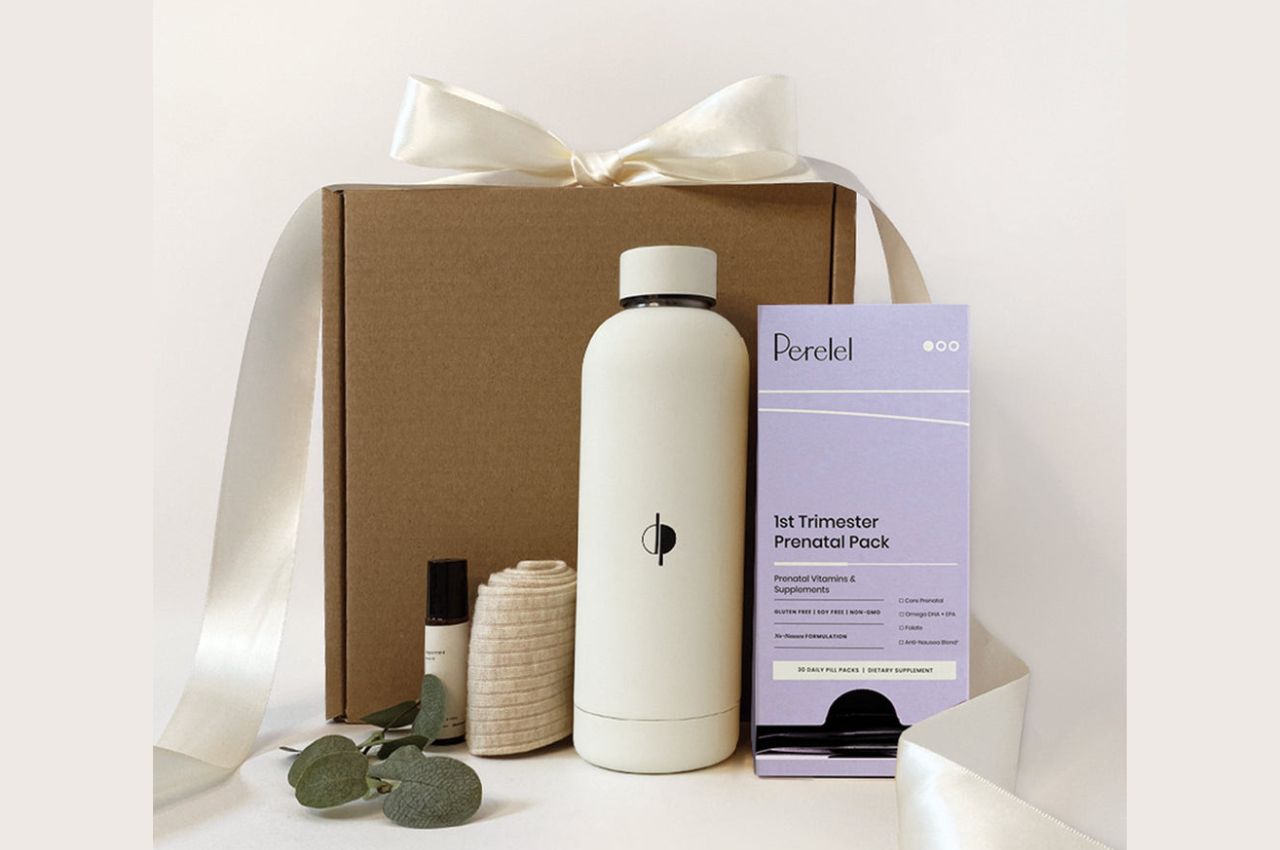
The journey of Perelel traces back to 2020 when Victoria Thain Gioia, Alex Taylor, and Dr. Banafsheh Bayati co-founded the company with a mission to provide expectant mothers with superior prenatal vitamin options. The inception of Perelel was deeply personal, as Gioia’s experience with her daughter’s cleft lip shed light on the critical link between folic acid deficiency and prenatal health. Meanwhile, Taylor’s own pregnancy journey underscored the challenges of researching and sourcing quality prenatal vitamins. With Dr. Bayati’s expertise as an obstetrician-gynecologist, Perelel formulated a line of prenatal vitamins tailored to each trimester, using high-quality ingredients to optimize maternal and fetal health.

However, Perelel’s vision extended beyond mere commercial success; it was deeply rooted in philanthropy. Today, the company fulfills its promise by announcing a substantial $10 million donation, a testament to its ethos of giving back. This donation will be directed towards two esteemed organizations: Magee-Womens Research Institute, dedicated to pioneering research in women’s health and reproductive biology, and Good+Foundation, which addresses family poverty and supports new mothers.

The significance of this donation extends beyond monetary value. Perelel’s contribution will be distributed over three years as in-kind product donations and grants, ensuring tangible support for vital research initiatives. This announcement comes on the heels of Perelel’s successful fundraising efforts, including a recent $6 million Series A funding from Unilever Ventures, supplemented by $4.7 million in seed funding last year.

For Perelel, giving back is not an afterthought but a fundamental principle. Victoria Thain Gioia emphasizes, “From day one, giving was a very clear line item for us.” The company meticulously integrates giving into its financial models, allocating a percentage of sales toward philanthropic endeavors. Alex Taylor echoes this sentiment, highlighting Perelel’s commitment to scaling its giving as the company expands its reach. “Vitamins keep the lights on,” Taylor affirms, “but we stand for so much more.”

As Perelel continues to scale its operations and influence, its unwavering commitment to bridging healthcare research gaps remains steadfast. With each sale, the company not only illuminates the path to maternal well-being but also catalyzes transformative change in women’s health research. Through their actions, Perelel epitomizes the profound impact that businesses can wield when driven by a sense of purpose and compassion.

In a landscape where niche yet crucial topics like maternal health often go overlooked or insufficiently addressed, Perelel’s compassionate dedication stands out as a beacon of hope. It’s a refreshing sight to witness empathetic individuals recognizing the importance of this sector, and it’s even more inspiring that it’s predominantly led by women, adding an empowering cherry on top to their noble cause, illuminating a path toward a healthier, more equitable future for all mothers and their precious babies.

The post Perelel’s $10M Donation Advances Maternal Health Research and Supports Prenatal Care first appeared on Yanko Design.

Zoo Architects Expand The Boundaries Of Architecture And Design For Otters

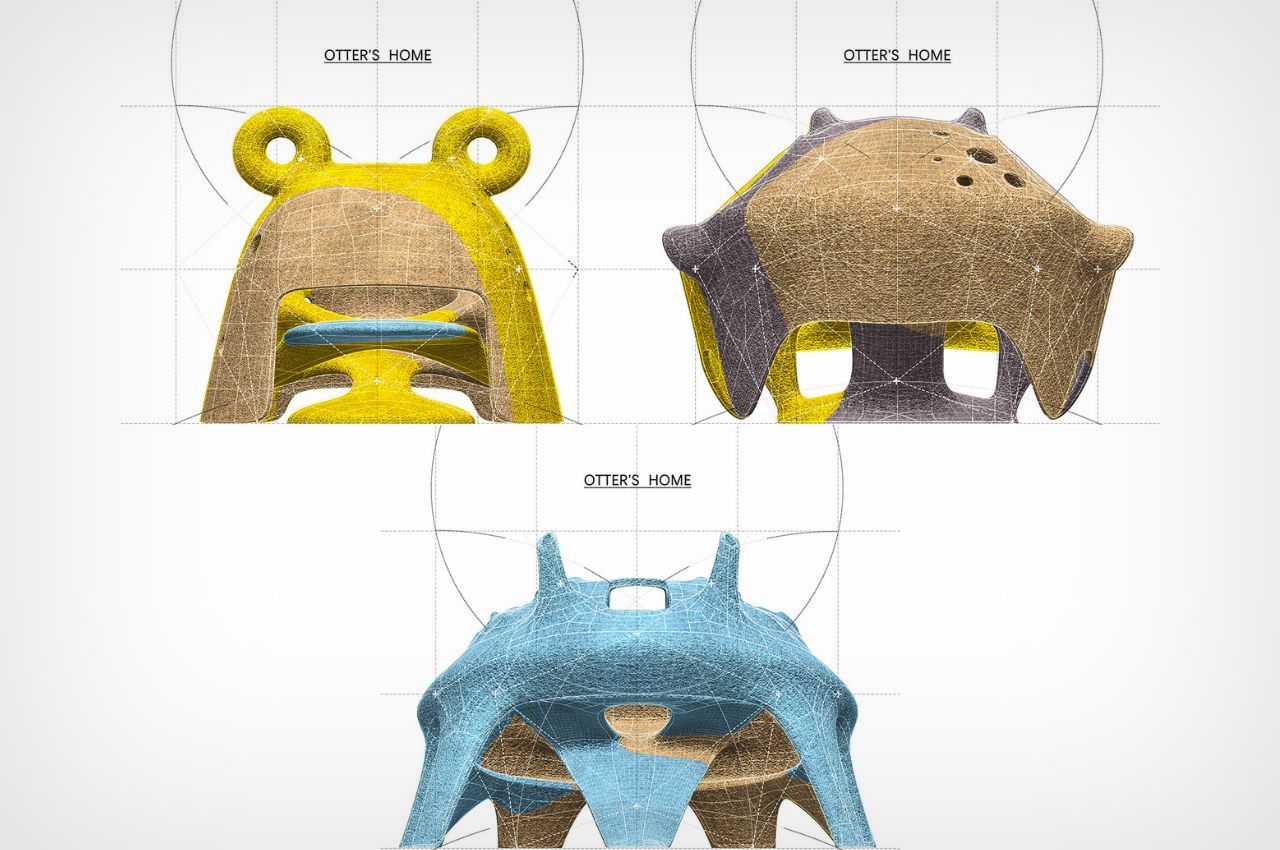
In the realm of architecture, where innovation often intersects with human habitation, there exists a fascinating intersection with the natural world. Chinese architecture firm ZOO Architects has masterfully navigated this juncture with their latest endeavor — The Otter House Project. Contrary to conventional architectural endeavors aimed solely at human occupants, this initiative is a testament to the boundless scope of architectural creativity and empathy towards our fellow inhabitants on this planet.

Designer: ZOO Architects

At its core, architecture transcends the confines of human-centric design. It’s the seamless blend of art and science, manifested in physical structures that serve diverse purposes, including providing sanctuary for creatures beyond the human realm. Inspired by the intelligence and social dynamics of otters, ZOO Architects embarked on a journey to create bespoke shelters tailored to the needs of these captivating aquatic mammals.

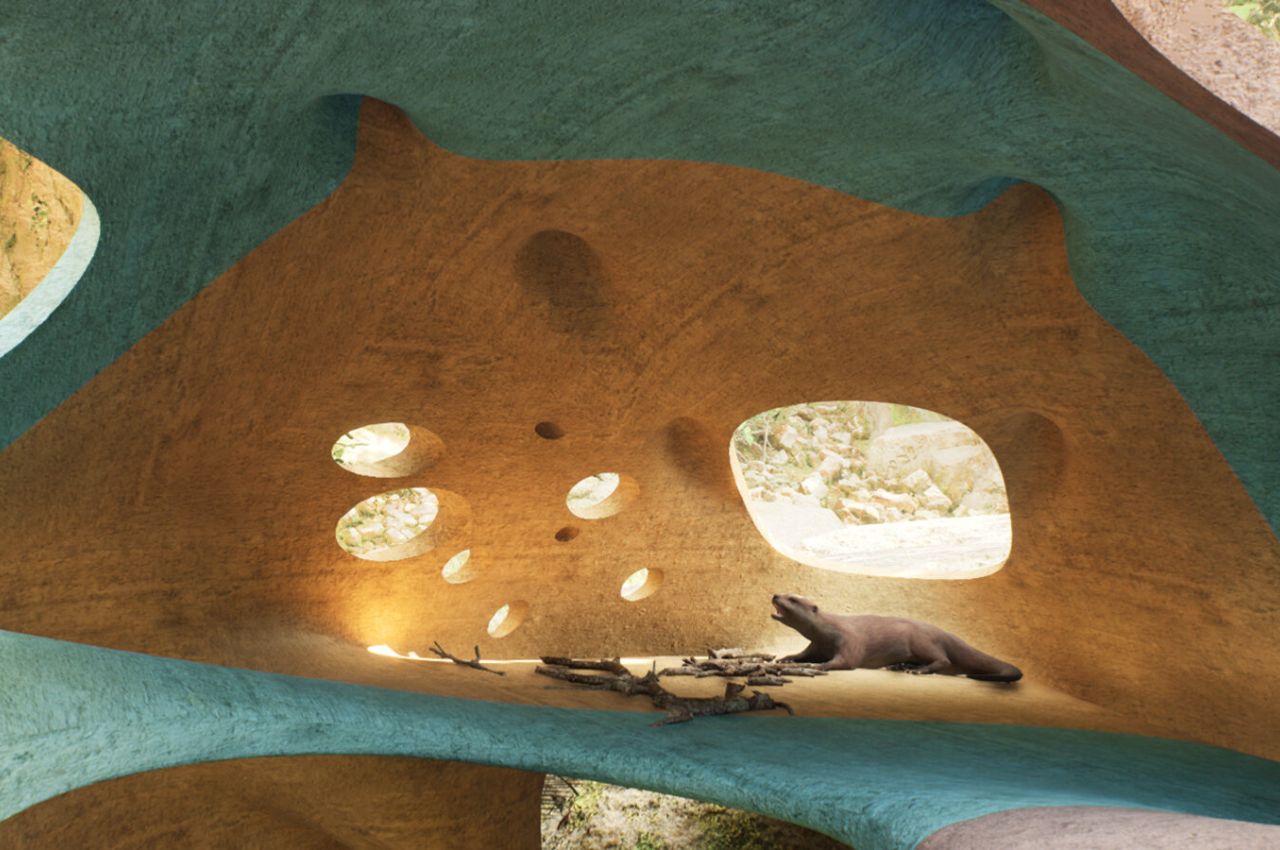
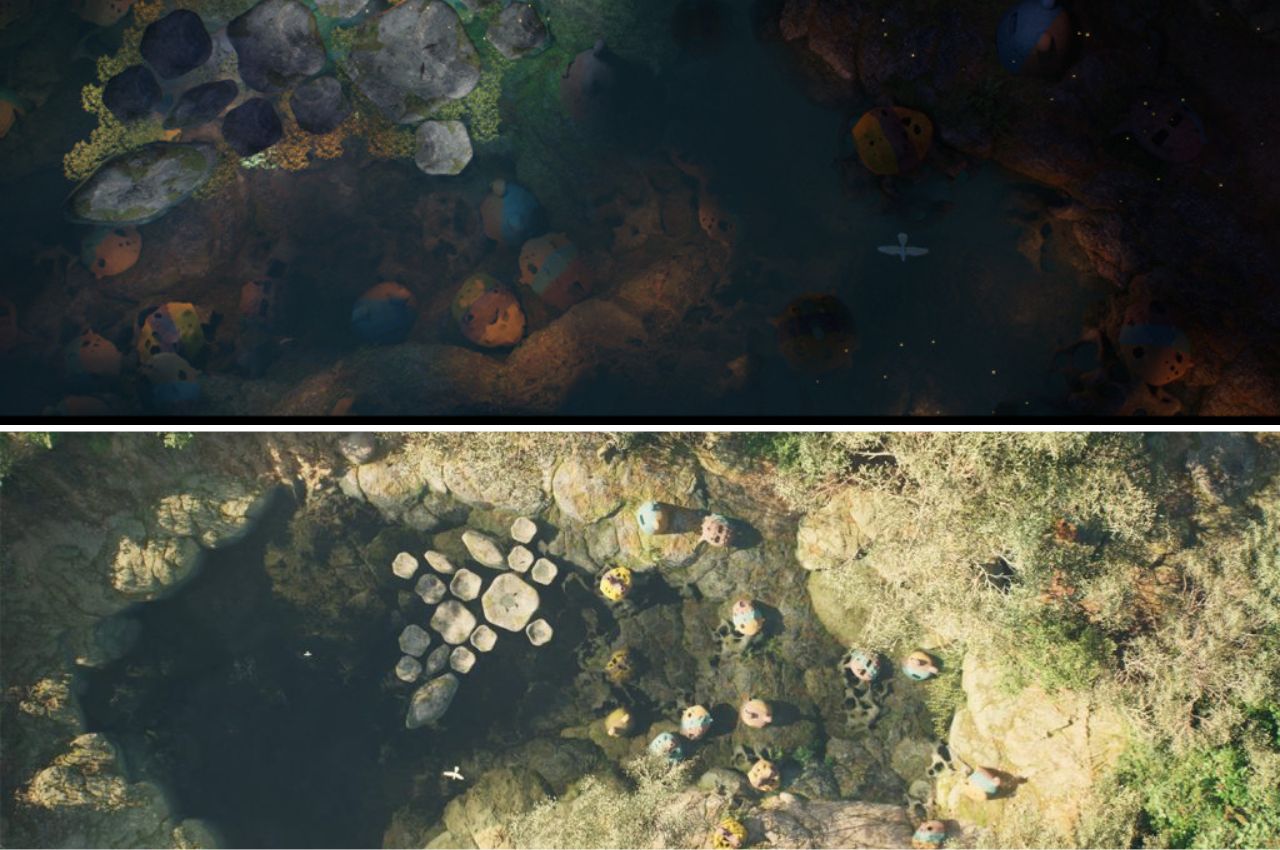
Otters, admired for their intelligence and communal tendencies, provided a rich tapestry of inspiration for the architects. Drawing from a profound understanding of otters’ preferred environments, social behavior, diet, and cognitive abilities, ZOO Architects meticulously crafted housing prototypes that mimic the organic forms found in nature. Utilizing materials such as rock, earth, and hay, the resulting structures embody both functionality and aesthetic harmony with the otters’ natural habitats.

Central to The Otter House Project is a deep appreciation for the intricate social structures that otters form. These creatures, known for their familial bonds and monogamous relationships, inspired the architects to create spaces that foster communal living and mutual trust. The prototypes, designed to accommodate family groups of otters, provide ample space for social interactions while offering privacy for nesting and rest.

Beyond mere shelter, the Otter House prototypes serve as a testament to the ingenuity and adaptability of these remarkable animals. Otters’ innate ability to utilize tools, maintain hygiene, and engage in playful activities has been carefully considered in the design process. From incorporating stone-cracking tools to providing space for recreational fish-catching, every aspect of the shelters reflects a deep understanding of otters’ behavioral patterns.

Moreover, The Otter House Project underscores the pivotal role of otters as keystone species in freshwater and coastal ecosystems. By designing habitats that cater to otters’ needs, ZOO Architects not only contributes to environmental conservation but also prompts a profound reflection on the essence of human architecture.

The post Zoo Architects Expand The Boundaries Of Architecture And Design For Otters first appeared on Yanko Design.

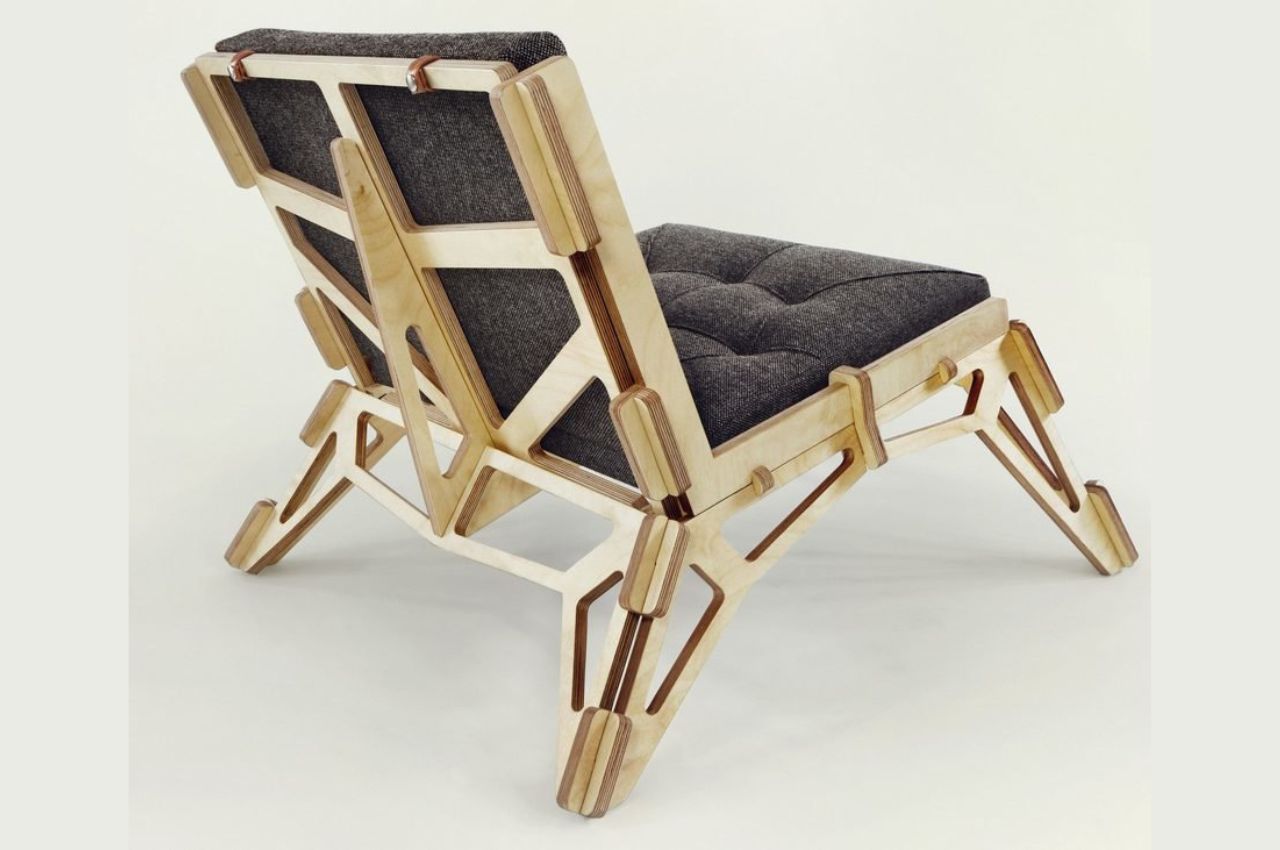
Gustav Düsing’s Flat-Pack Barcelona Chair Version With Sustainable Plywood And No Binding Materials

The furniture design industry is increasingly crowded with visually striking creations, and standing out requires a blend of innovation, convenience, and sustainability. Gustav Düsing’s Space-Frame series, though conceived over a decade ago as an architectural experiment, offers a refreshing perspective that seamlessly merges cutting-edge production technologies with timeless design principles.

Designer: Architect Gustav Düsing

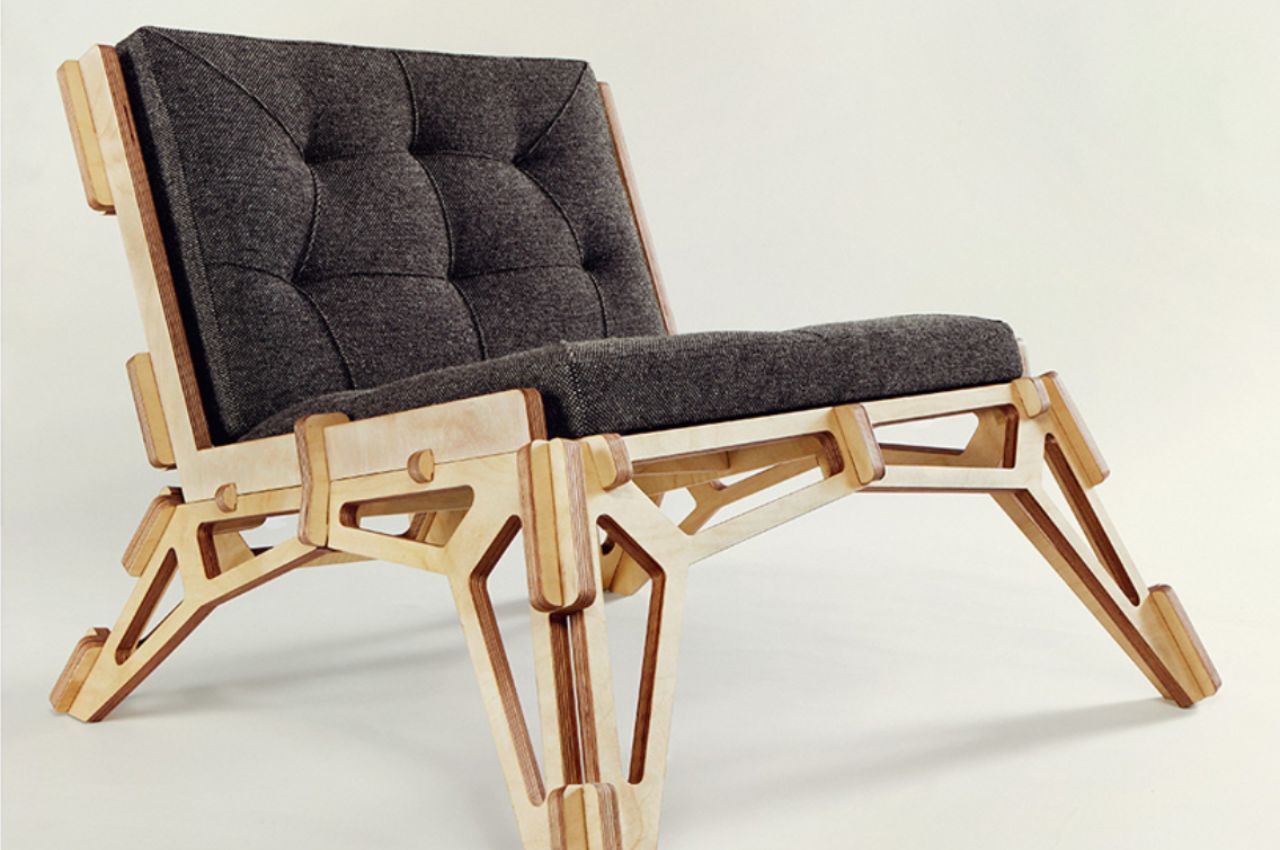
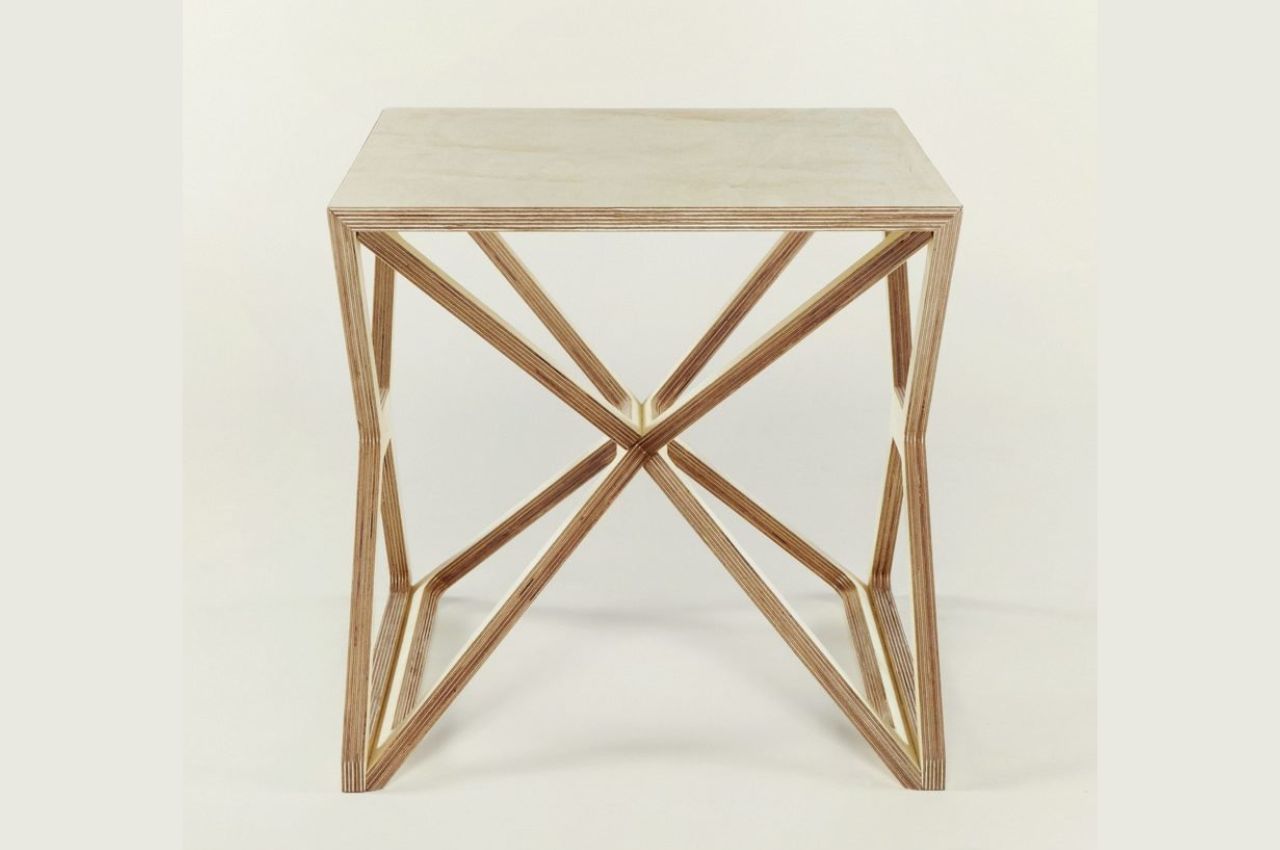
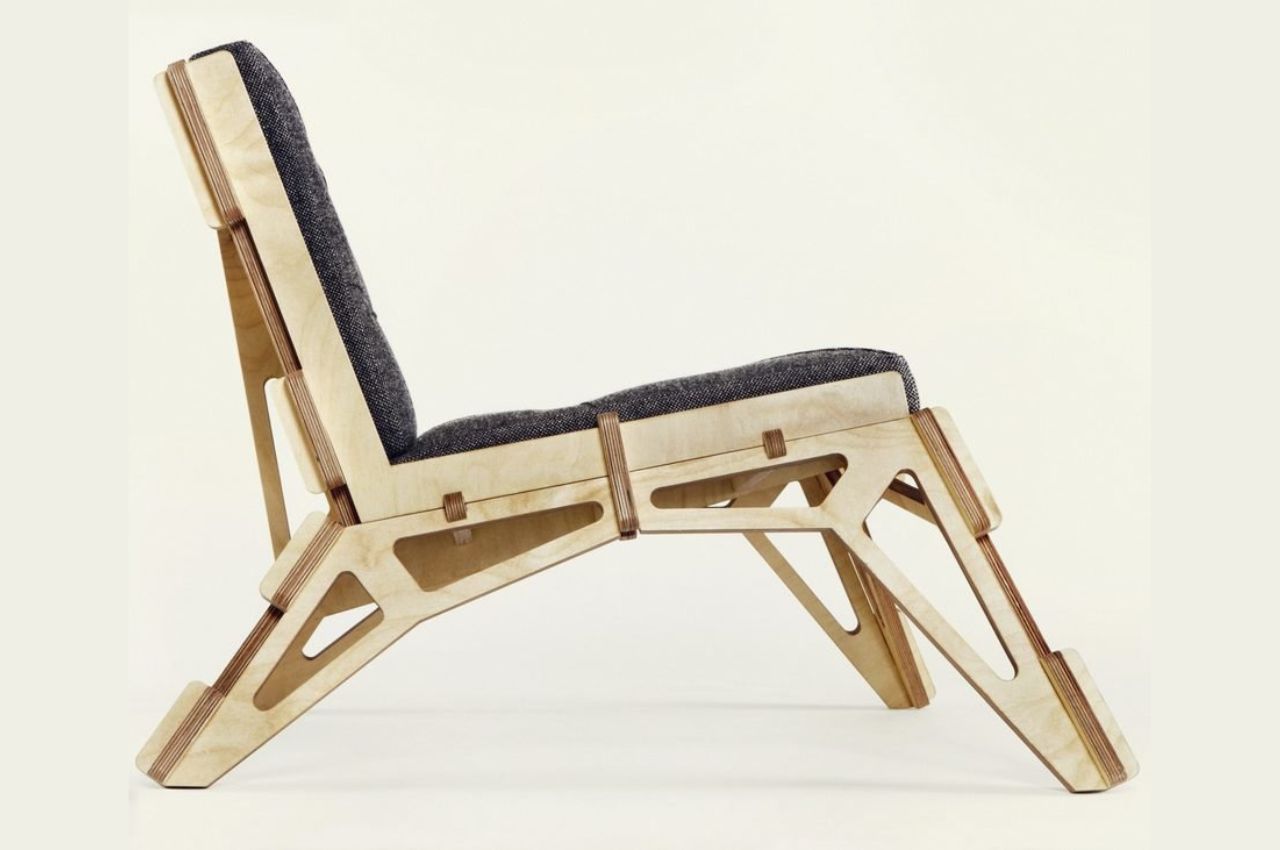
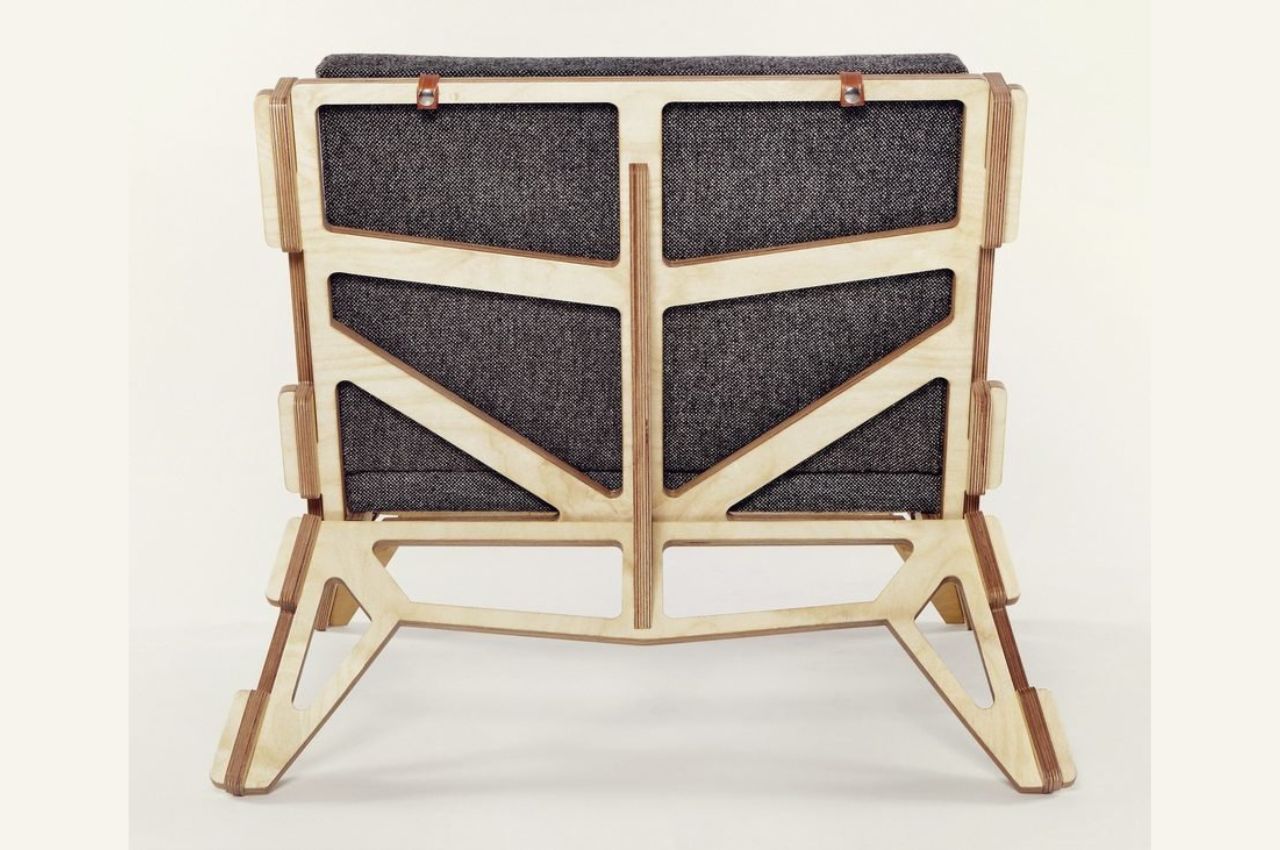
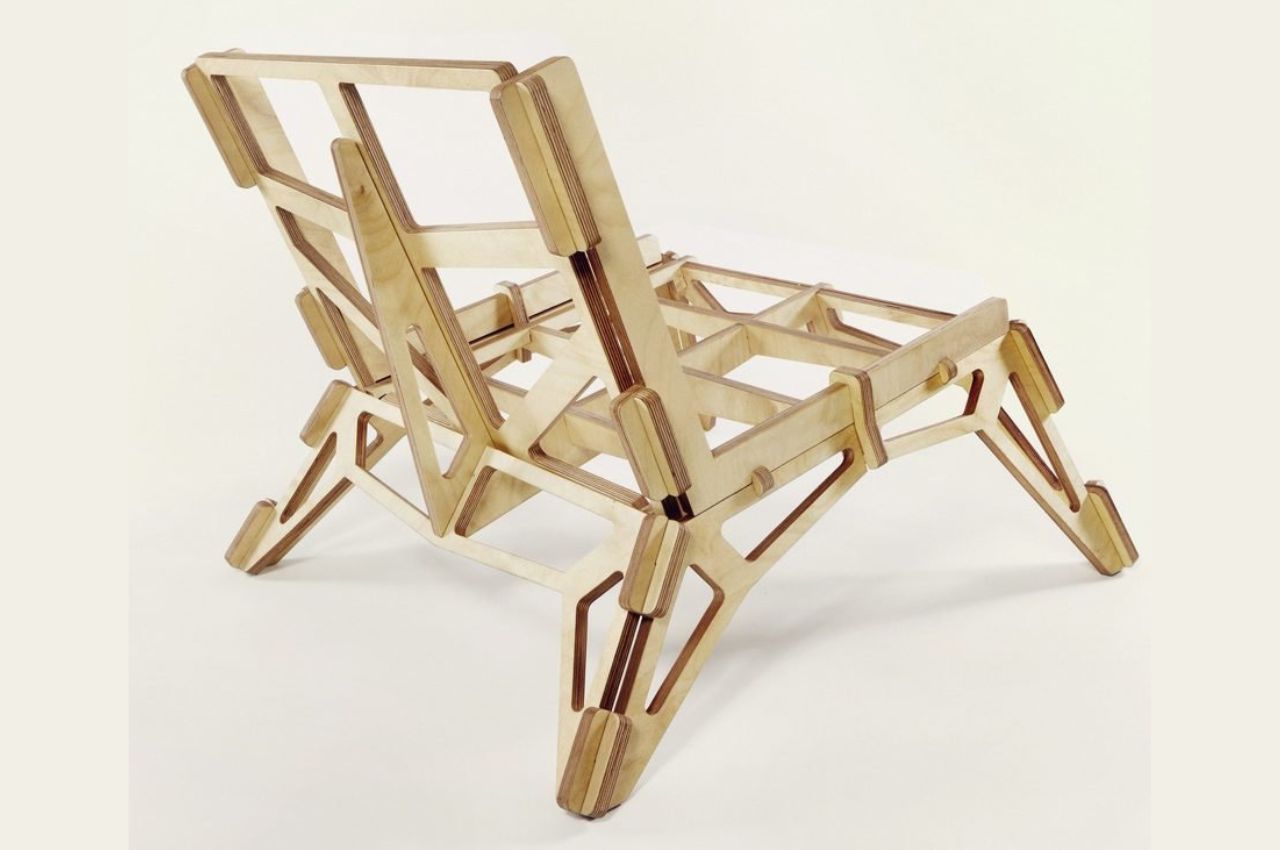
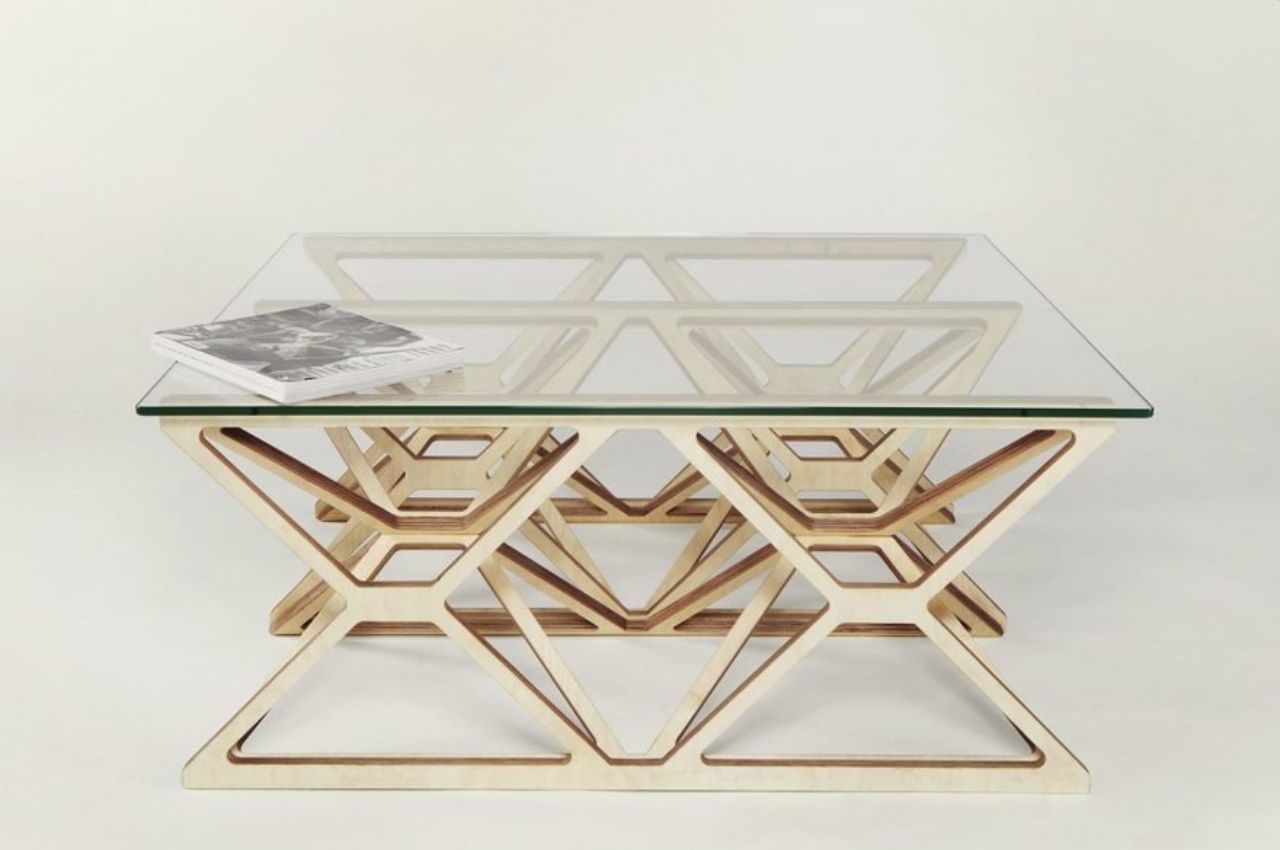
The Space-Frame series, crafted from Baltic Birch plywood, brings back the charm of childhood 3D wooden puzzles, this time, in life-size form. What sets this collection apart is its utilization of space-consuming structural elements, aptly named space-frames, which serve as the foundation for its intricate yet functional designs.

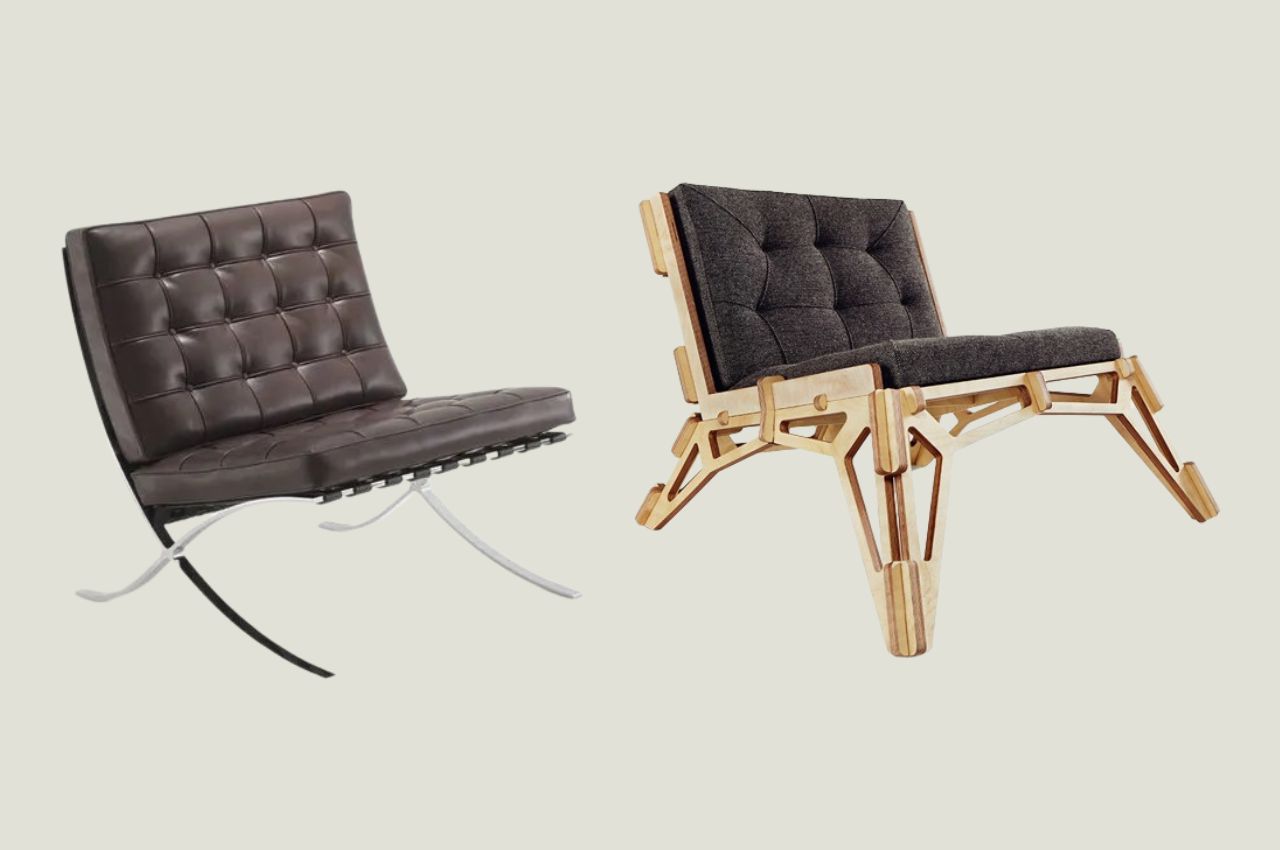
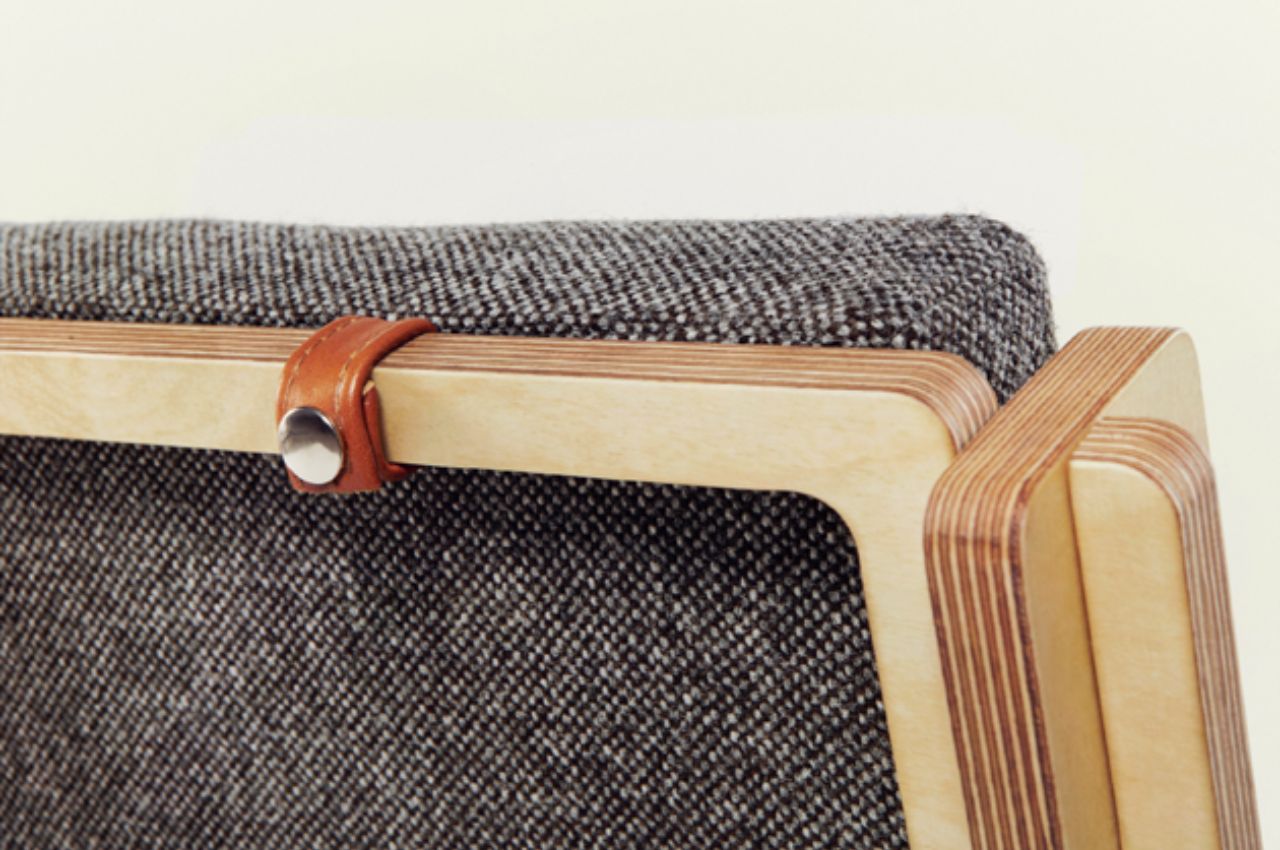
Chair23D, a standout piece from the series, draws inspiration from iconic lobby chairs like the Barcelona Chair by Mies van der Rohe. Its complex three-dimensional structure is a testament to Düsing’s mastery, ingeniously assembled without the need for adhesives or screws. Instead, it mimics the human skeleton, with a spine, ribs, and pelvis, resulting in a stable, self-contained system that defies conventional assembly methods.

Beyond its aesthetic appeal, the Space-Frame series embodies a commitment to sustainability. Crafted from Baltic Birch plywood, a renewable resource, these pieces offer a guilt-free indulgence for environmentally conscious consumers. Furthermore, their flat-pack design not only minimizes shipping costs and space but also reduces fuel consumption, making them a truly eco-friendly choice.

Düsing’s design ethos is evident in every facet of the series, from its honest construction to its meticulous attention to detail. Unlike conventional CNC-cut furniture, which often exposes unsightly joints, Düsing’s designs cleverly conceal such imperfections while transforming them into visual elements in their own right. It’s this fusion of form and function that sets this series apart, elevating it from mere furniture to functional art.

The post Gustav Düsing’s Flat-Pack Barcelona Chair Version With Sustainable Plywood And No Binding Materials first appeared on Yanko Design.

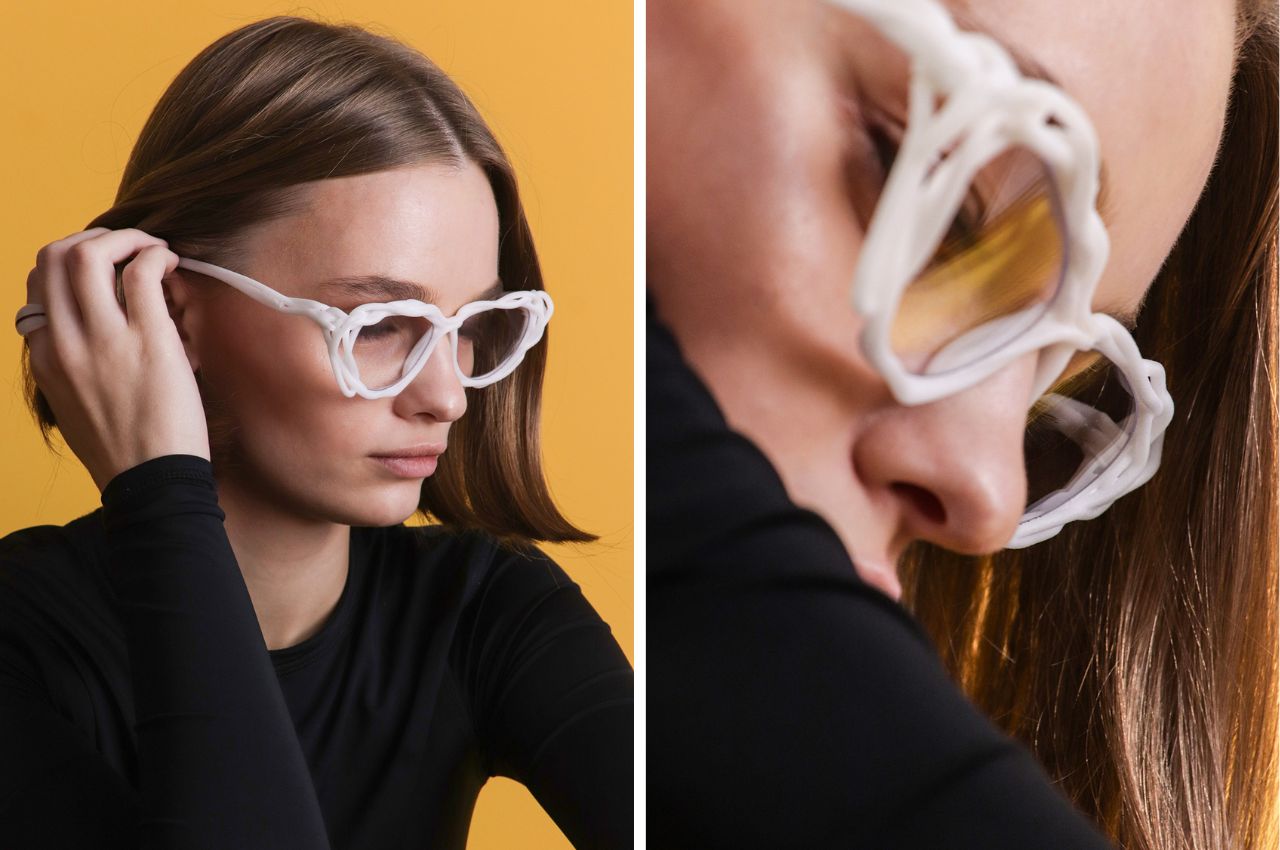
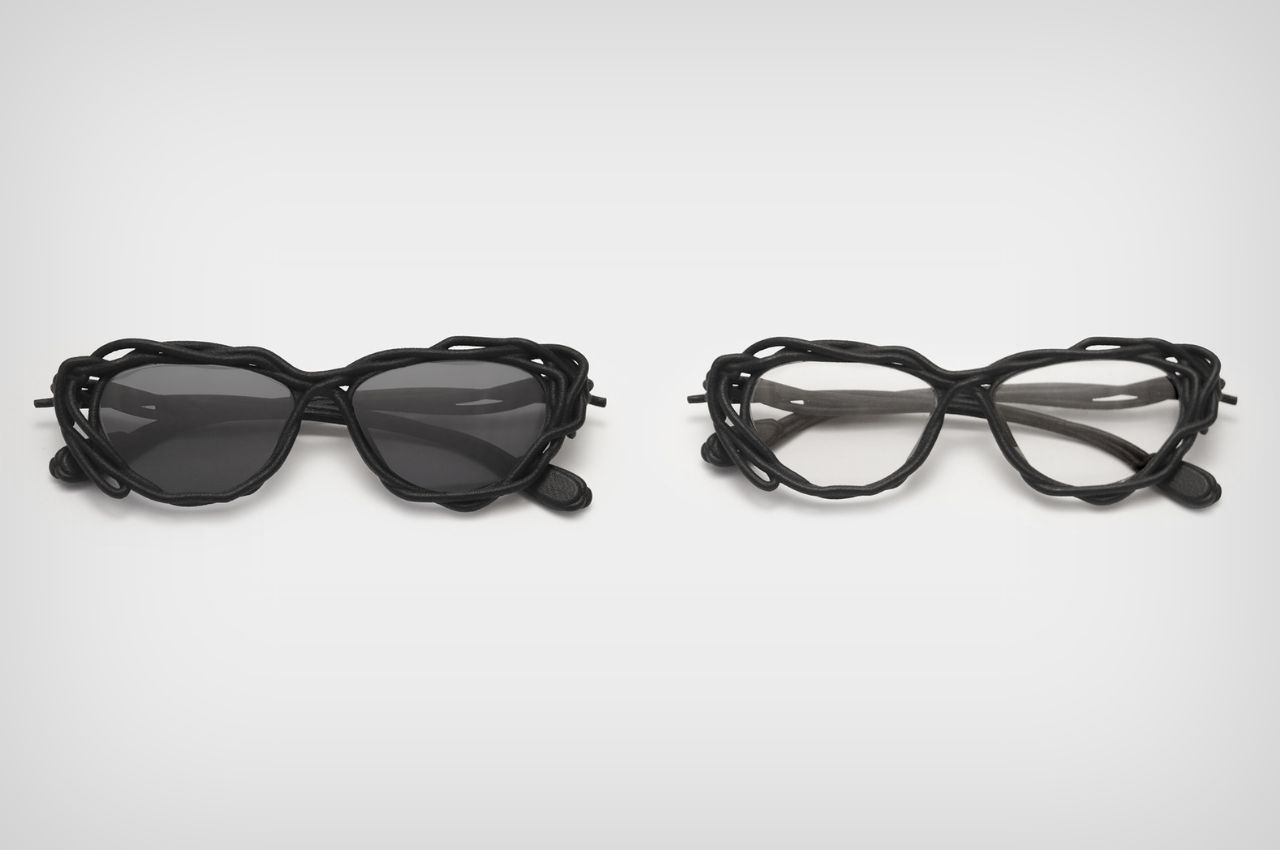
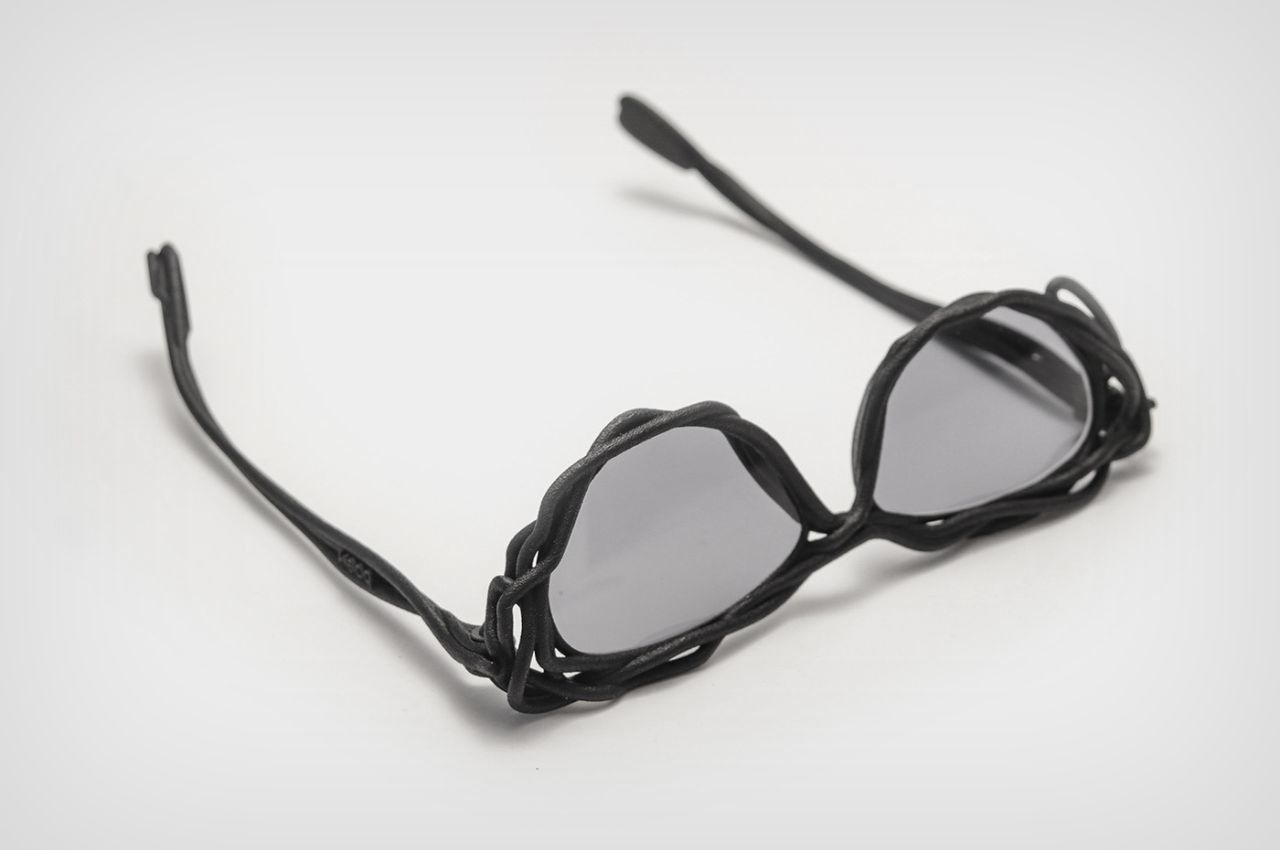
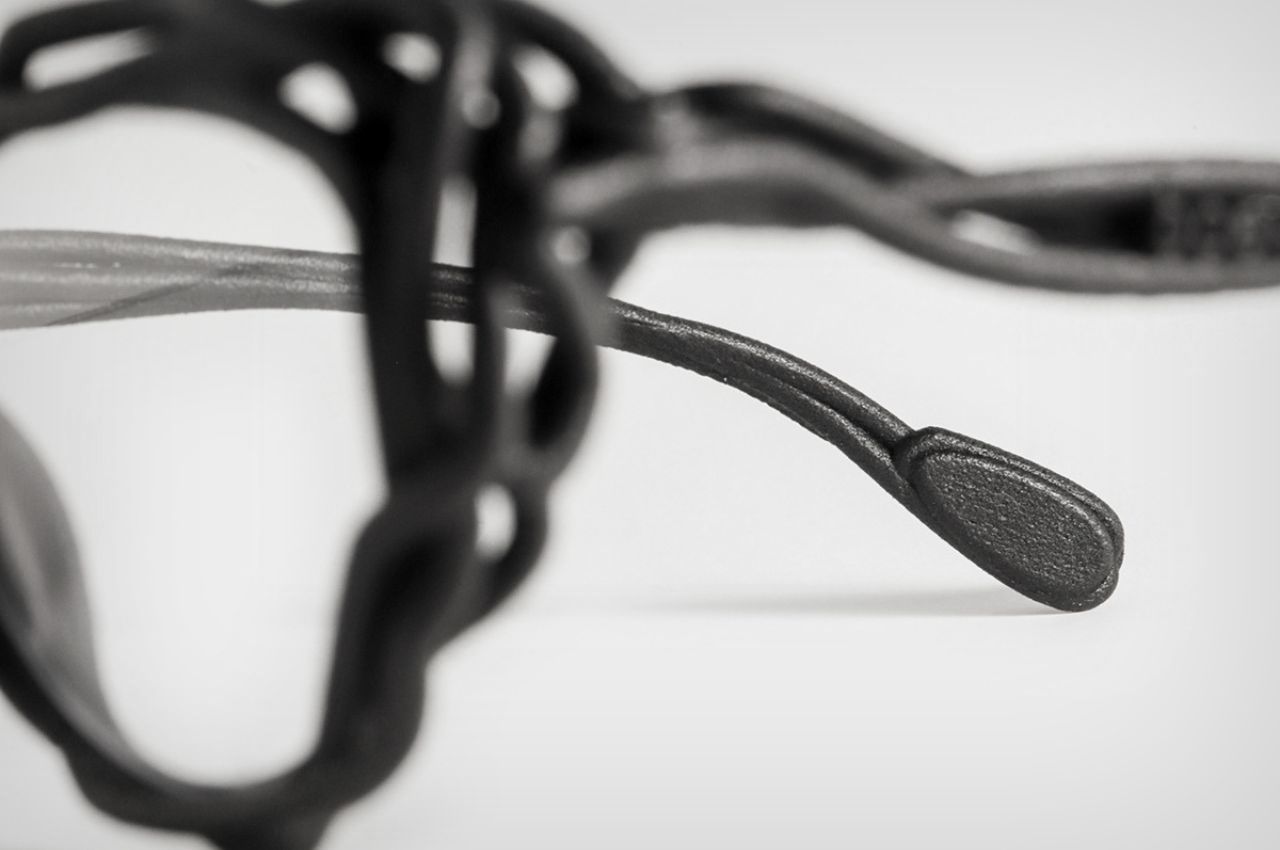
These quirky 3D printed spectacles have a unique sinewy design with no metal hinges

Eyewear fashion, I believe, is a constantly evolving realm and a new contender has emerged, disrupting the status quo with its bold and distinctive design. Tangled Eyewear, as its name suggests, embraces the beauty found within the chaos, presenting a captivating blend of disorder and elegance that challenges conventional aesthetics. If you’re a fashion enthusiast, you’re going to love what’s coming!

Designer: Aleš Boem

When you first see Tangled Eyewear it definitely appears as a statement piece, commanding attention much like a messy situation draws our gaze. However, upon closer inspection, its intricate design reveals a harmonious fusion of chaos and sophistication. The chaos and elegance of its tangled frames serve as a poignant reminder that beauty can emerge from the most unexpected places.

The concept of an ‘organized mess’ is a familiar one to many, particularly in today’s fast-paced world. Just as we might navigate through the chaos of a cluttered room with ease, Tangled Eyewear invites us to embrace the beauty found within the tangle. Its intricate design echoes the complexity of modern life, yet within its chaos lies a hidden order waiting to be discovered.

Tangled Eyewear pushes boundaries with its embrace of disorder. Through high-end 3D printing techniques and unconventional shaping possibilities, each pair of Tangled glasses is a testament to the creative potential found within apparent disarray. The result is a dynamic design that captures the eye and sparks conversation.

What sets Tangled Eyewear apart is its commitment to both style and functionality. The ergonomically modeled frames cater to both prescription and sunglasses wearers, ensuring a comfortable fit without compromising on design. With frames and sides hand in hand, Tangled Eyewear offers a seamless blend of form and function.

One of the most impressive aspects of Tangled Eyewear is its versatility. Whether you’re attending a lavish party or a corporate event, these frames are sure to make a statement. The key lies in the choice of color, with options available to suit any occasion or outfit. From vibrant hues to understated shades, Tangled Eyewear offers a solution for every style dilemma.

The post These quirky 3D printed spectacles have a unique sinewy design with no metal hinges first appeared on Yanko Design.
Kartell Reimagines Iconic Chairs In Barbie Pink At 2024 Milan Design Week

The recent collaboration between Kartell, the distinguished Italian furniture brand, and Mattel, the creative force behind Barbie, has resulted in an extraordinary collection of chairs that blurs the boundaries between furniture and art. Unveiled at Milan Design Week 2024, this partnership represents a significant milestone in design history, as it merges Kartell’s Philippe Starck-designed chairs with the timeless charm of Barbie.

Designer: Philippe Starck

Barbie’s enduring influence as a cultural icon cannot be overstated. From her origins as a children’s toy in 1959 to her recent portrayal in a live-action film, Barbie has continually evolved, captivating audiences worldwide and transcending her toy origins to become a symbol of empowerment and aspiration. Last year’s release of the Barbie movie further underscored her cultural significance, reshaping perceptions and highlighting her relevance across different age groups.

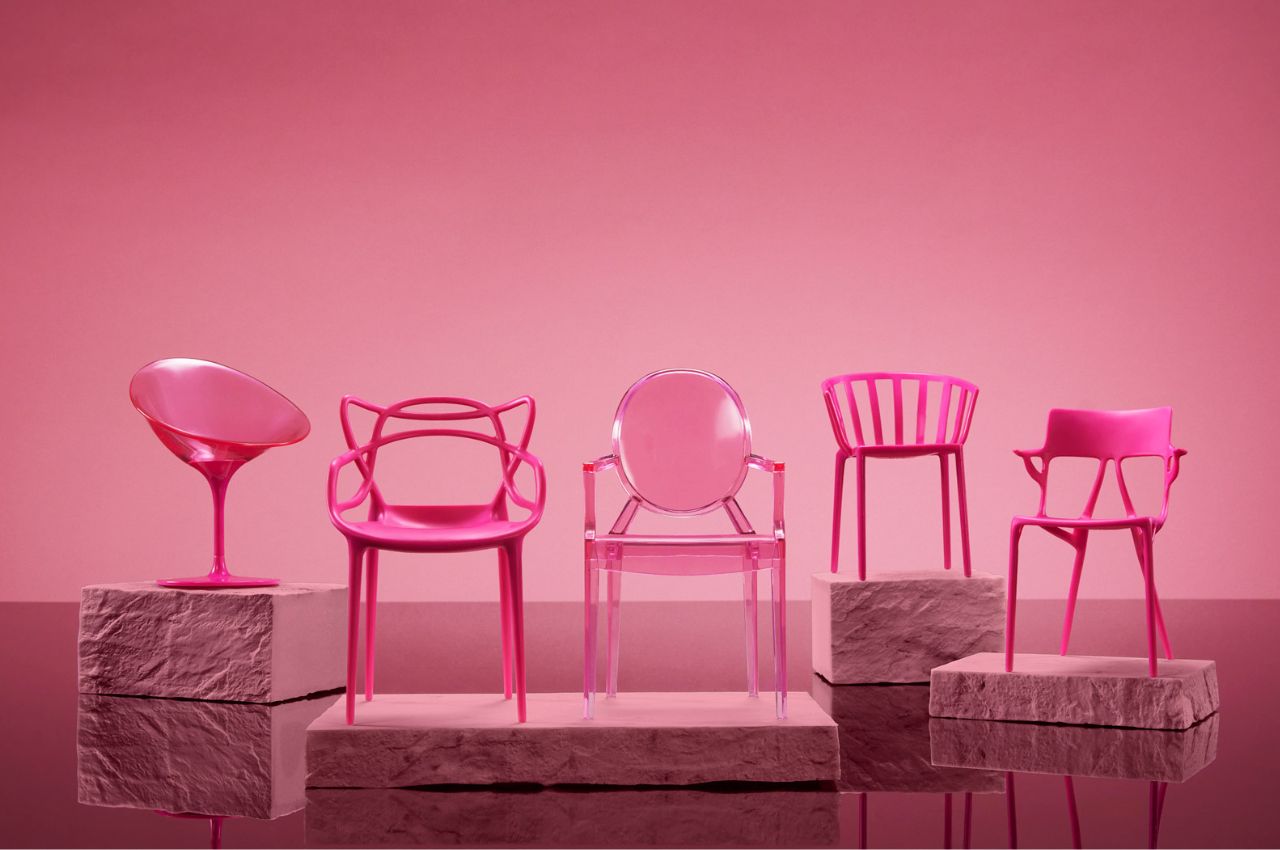
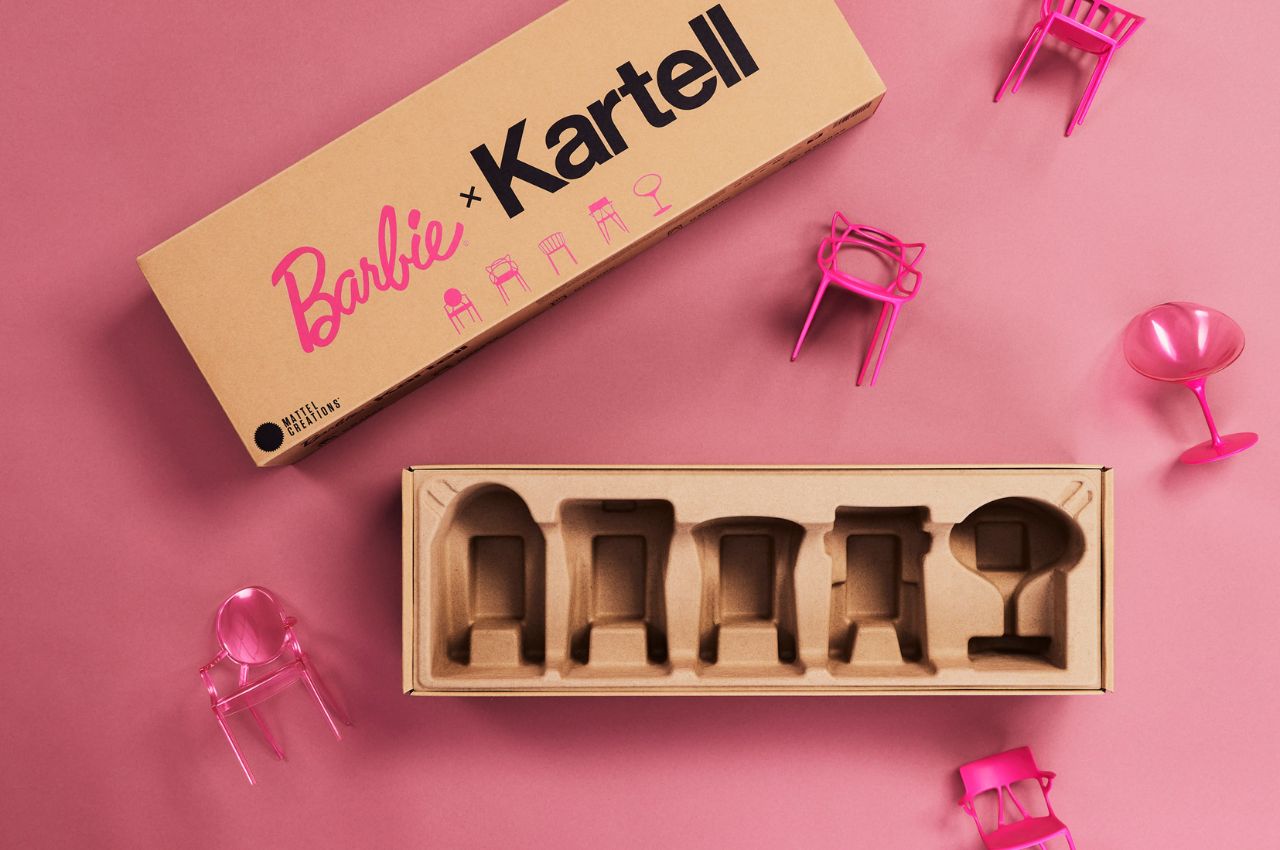
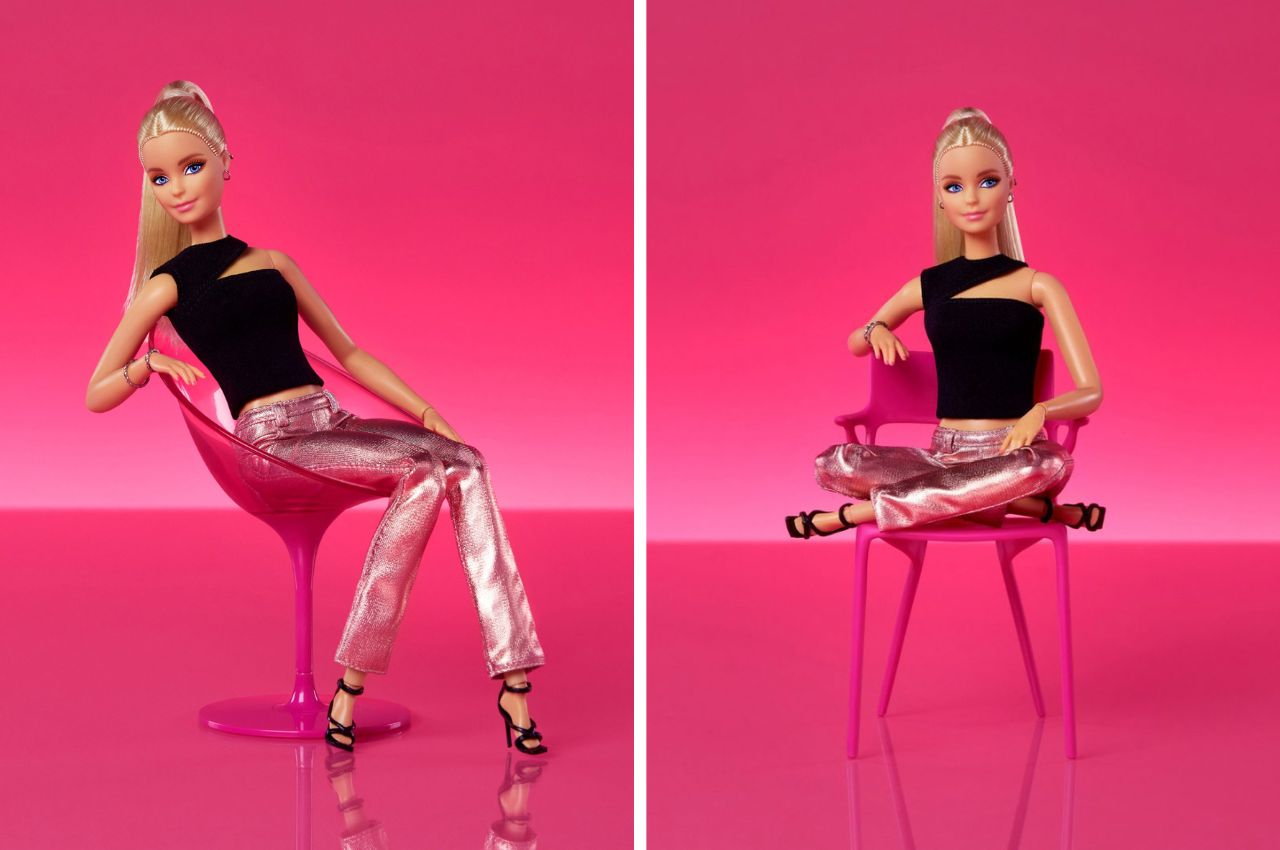
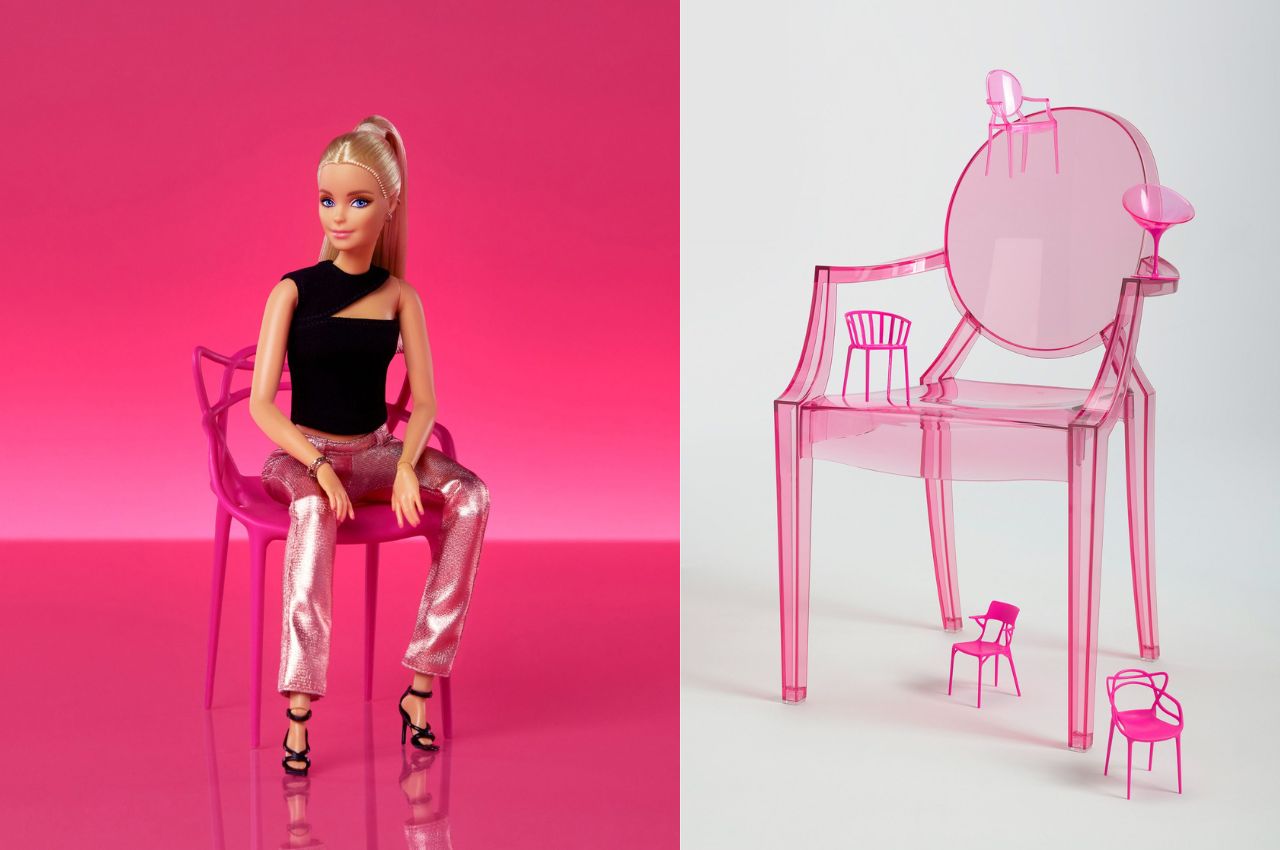
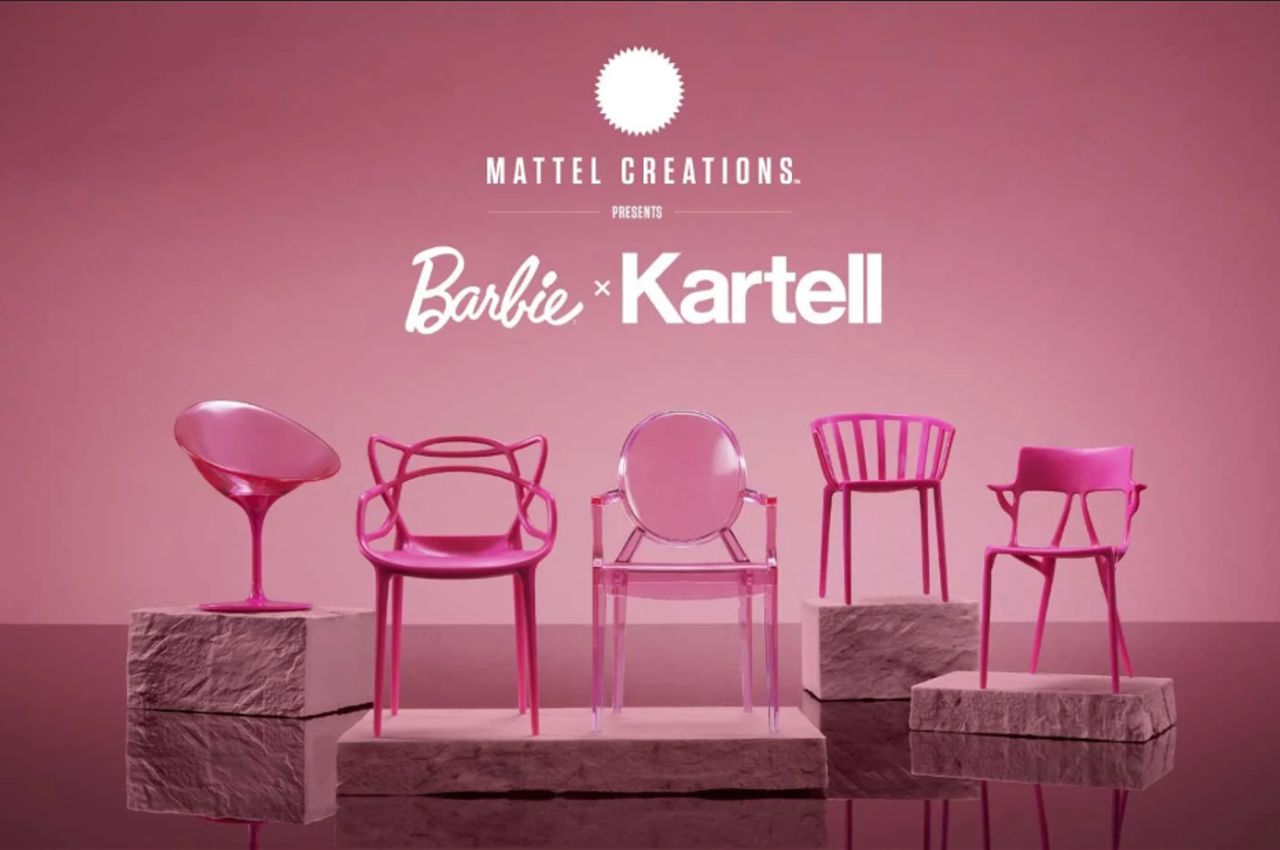
In response to Barbie’s multifaceted influence, Kartell and Mattel Creations embarked on an innovative partnership. Reimagining five of Kartell’s iconic chairs through a Barbie-inspired lens, the collection breathes new life into Philippe Starck’s designs, infusing them with Barbie’s signature style and charm.

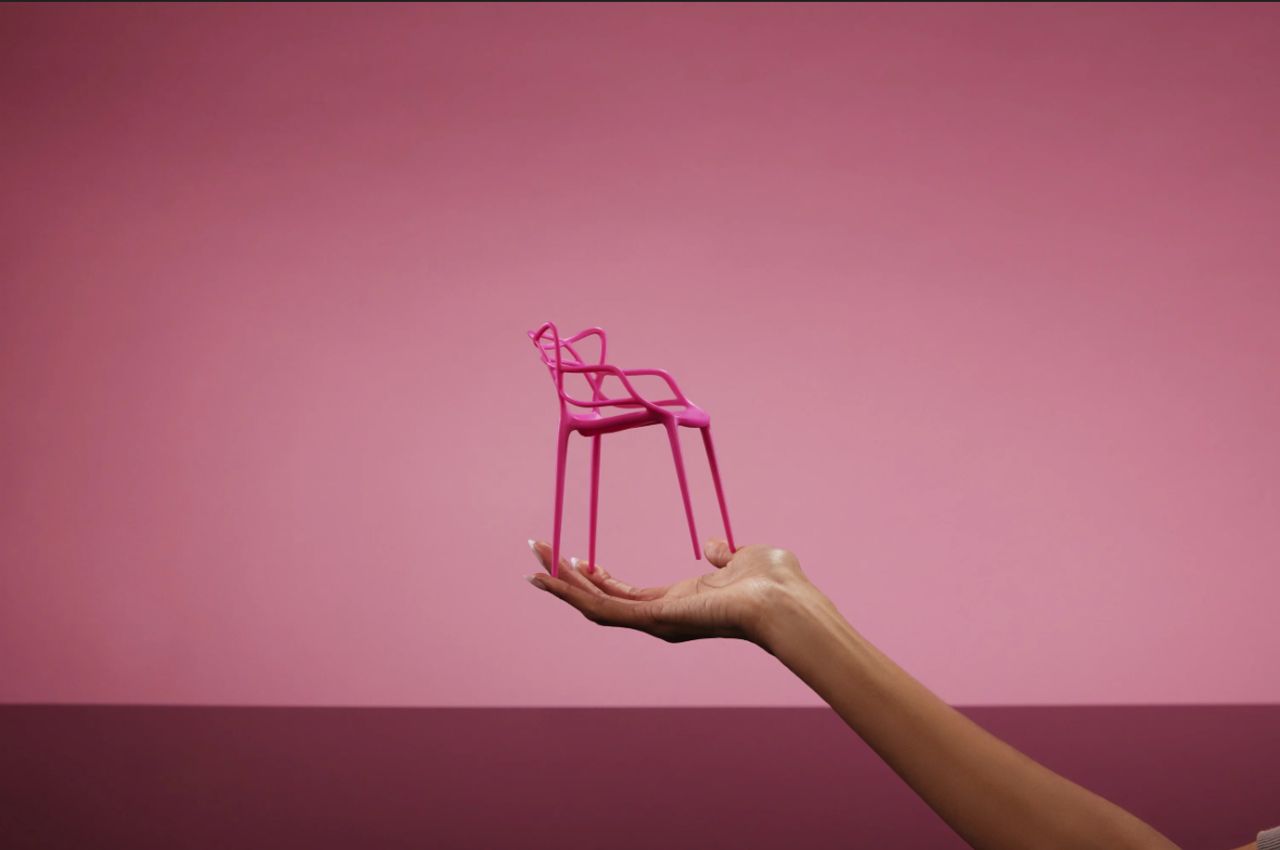
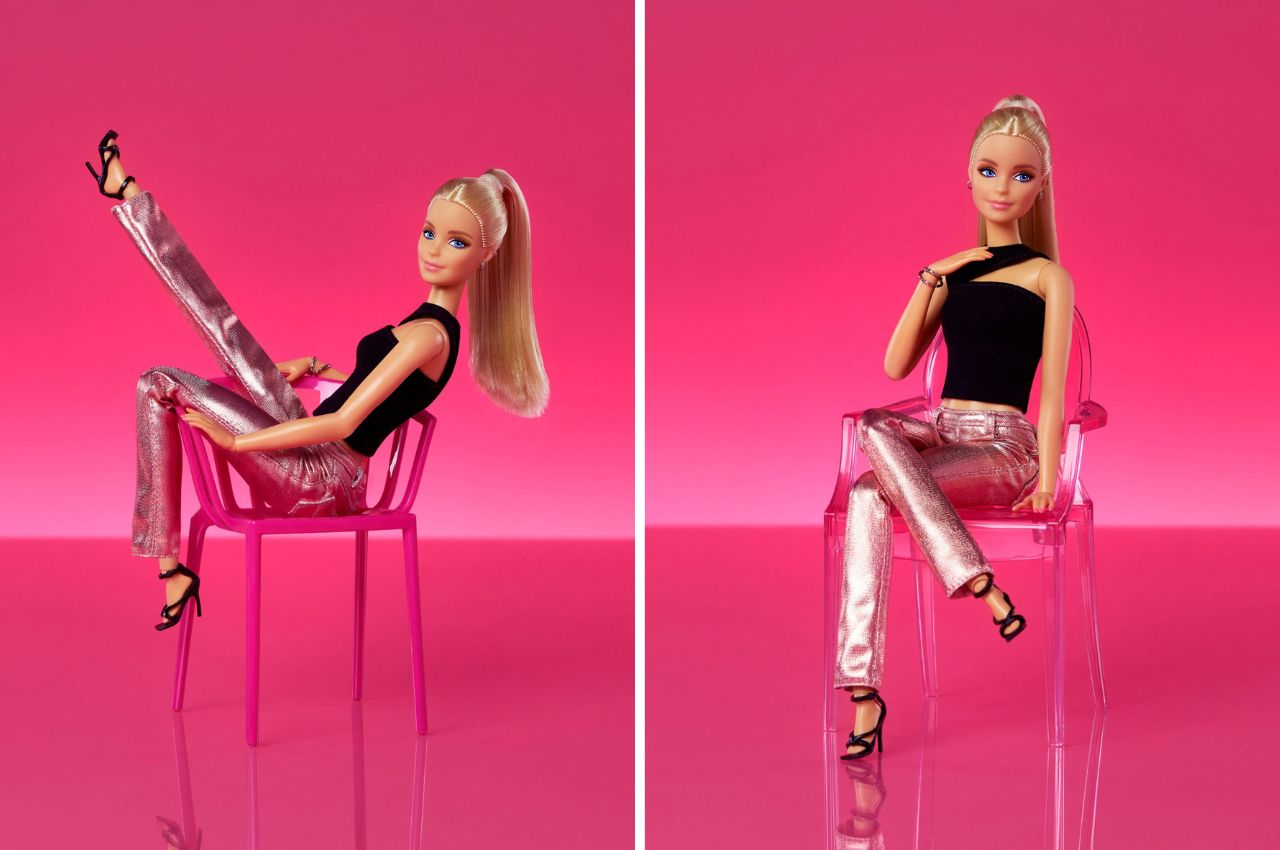
The chairs, including the ‘Venice’, ‘Louis Ghost’, ‘Masters’, ‘Ero|S|’, and ‘AI’, have been meticulously recreated in both human and doll sizes, symbolizing Barbie’s 65-year legacy of inspiring imagination and creativity. Each chair, bathed in Pantone 219 C – the iconic Barbie Pink hue – is crafted from recycled plastic, highlighting the brand’s commitment to sustainability.

The genesis of this collaboration lies in Barbie’s ability to reinvent herself and resonate with audiences across generations. By transforming Kartell’s chairs into vibrant pink masterpieces, the collection pays homage to Barbie’s legacy of creativity and imagination. Crafted from recycled plastic and incorporating innovative materials such as bamboo, each chair embodies Barbie’s Dreamhouse aesthetic while also prioritizing sustainability—a testament to both brands’ commitment to environmental responsibility.

The debut of this remarkable collection at Milan Design Week captivated attendees, transporting them into a world where toys seamlessly merge with art. Displayed against the backdrop of Condé Nast’s Vogue Closet exhibition, the chairs became more than just functional pieces—they became cultural artifacts, inviting viewers to reconsider the boundaries between fantasy and reality.

In the words of Kartell, this collaboration represents a fusion “where toys become art, and art becomes toys.” By marrying Starck’s timeless designs with Barbie’s enduring allure, the Kartell x Barbie collection not only celebrates nostalgia but also invites us to embrace the power of creativity and imagination—a testament to the transformative potential of collaboration in the world of design.

The post Kartell Reimagines Iconic Chairs In Barbie Pink At 2024 Milan Design Week first appeared on Yanko Design.
This Tiny Home In A 17-Foot Wide Lot In Toronto Is Redefining Urban Living

In major cities worldwide, the ever-increasing cost of living and space crunch have become common challenges. Toronto, one of Canada’s prominent cities, is no exception. To address this issue, it’s crucial to optimize every available space. In the contemporary era of interior design, the focus has shifted towards planning and adapting to small spaces, mobile housing, multi-use spaces and furniture. As more people yearn to experience city life, it’s imperative to make even the smallest spaces comfortable. The Symington Laneway Suite, situated in Toronto’s Junction neighborhood, is a quintessential example of innovative space utilization and modern interior design.

Designer: Lanescape Architecture

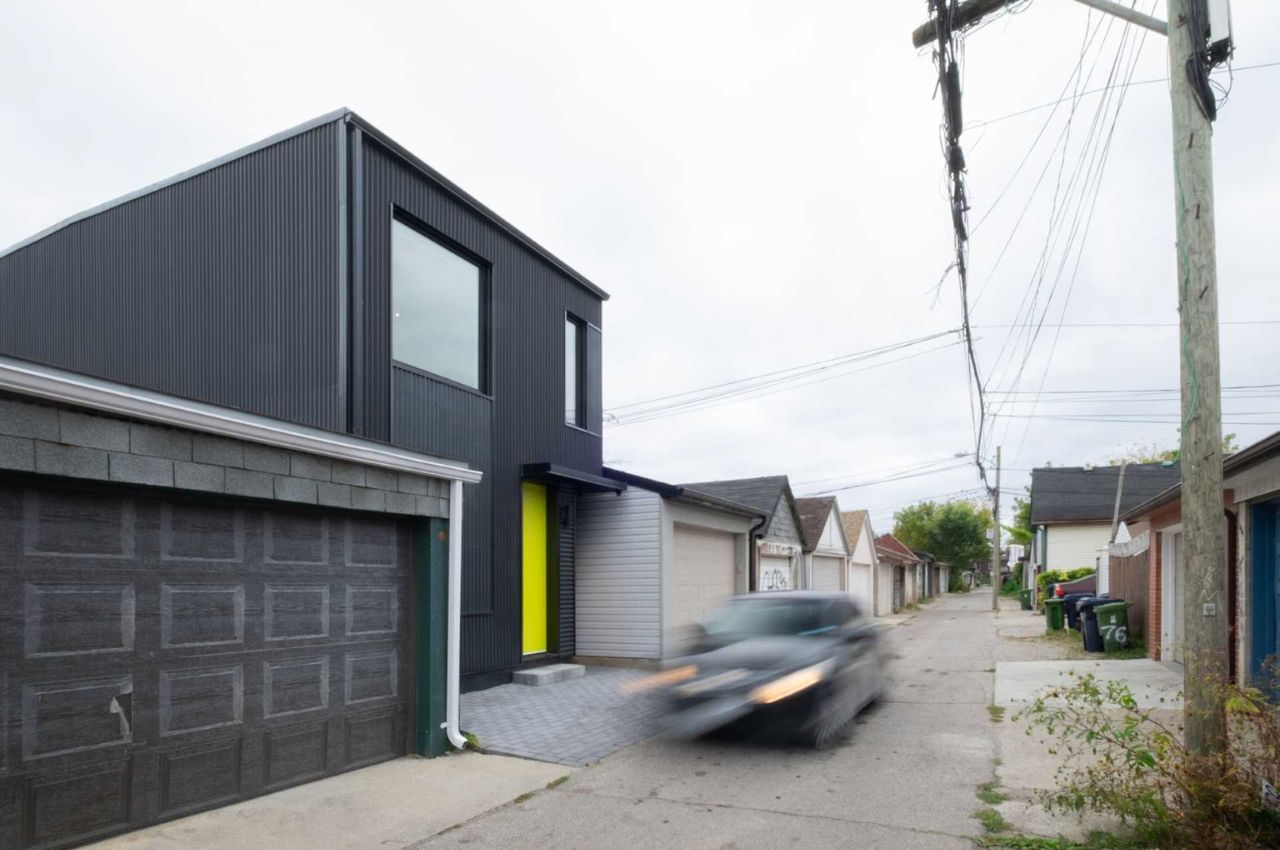
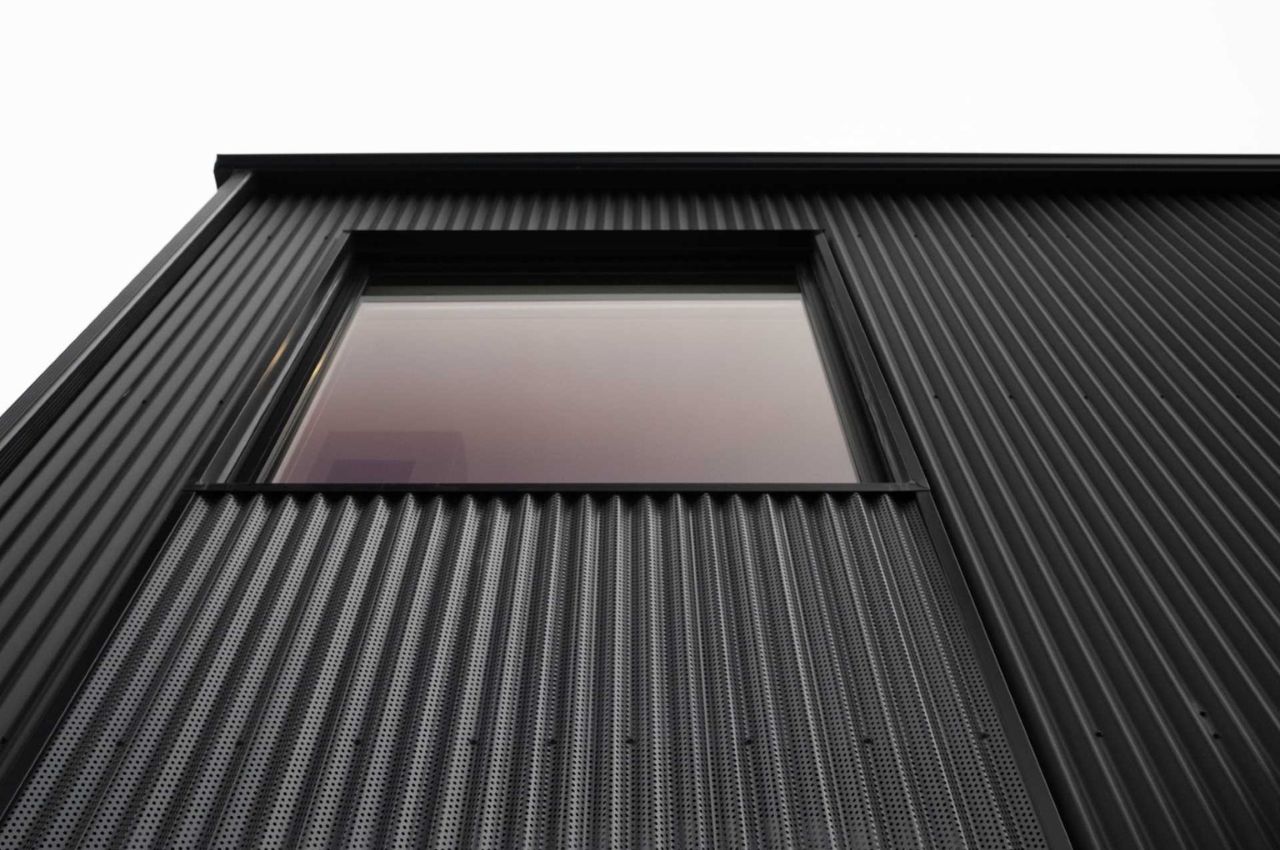
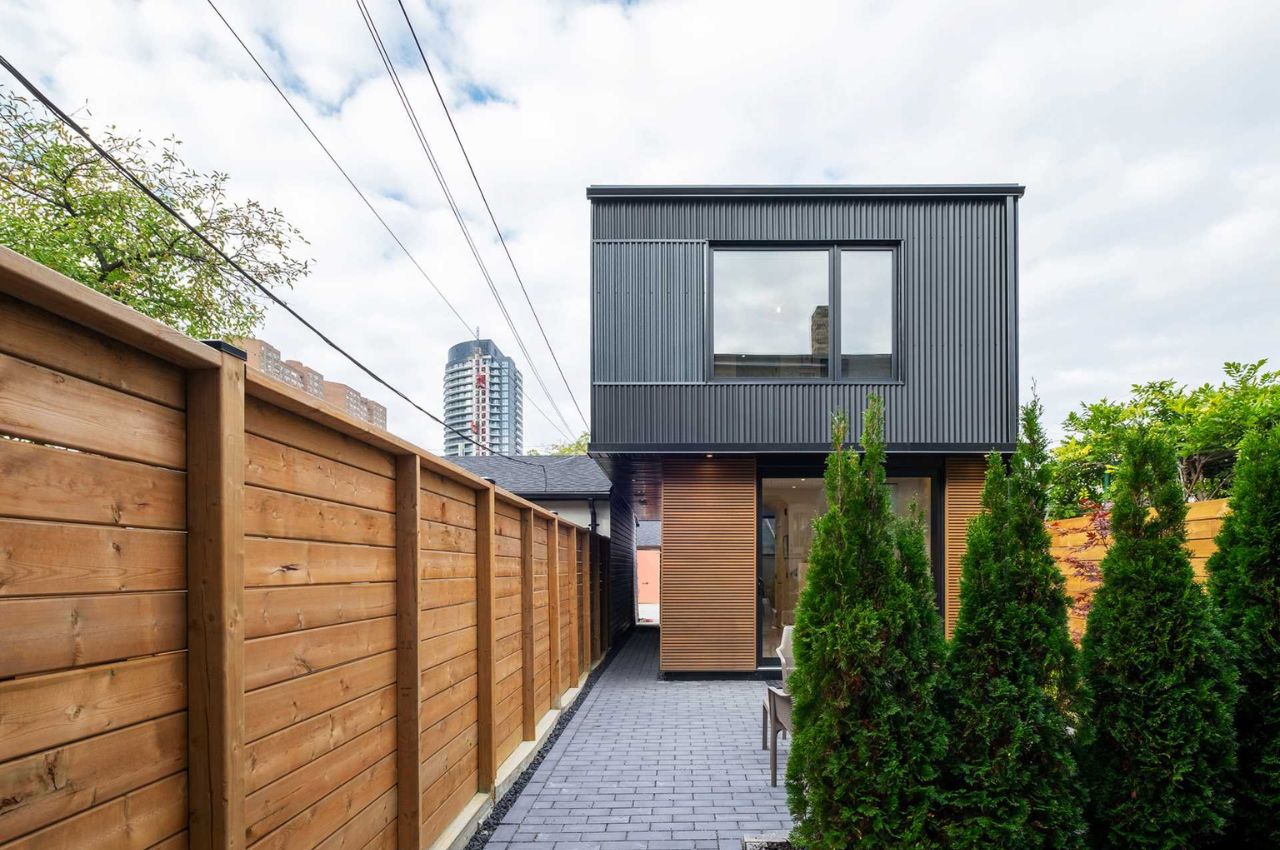
In the heart of Toronto’s Junction neighborhood, on a narrow 17-foot wide lot, stands a beacon of modern living: the Symington Laneway Suite. This 1,000 square foot (92sqm), 2-storey home is a testament to ingenuity, offering a 1-bedroom, 1.5 bathroom residence conveniently close to parks, transit, and community amenities. The exterior is built using black corrugated metal, while horizontal planks add texture to the ground floor, making it feasible to construct.

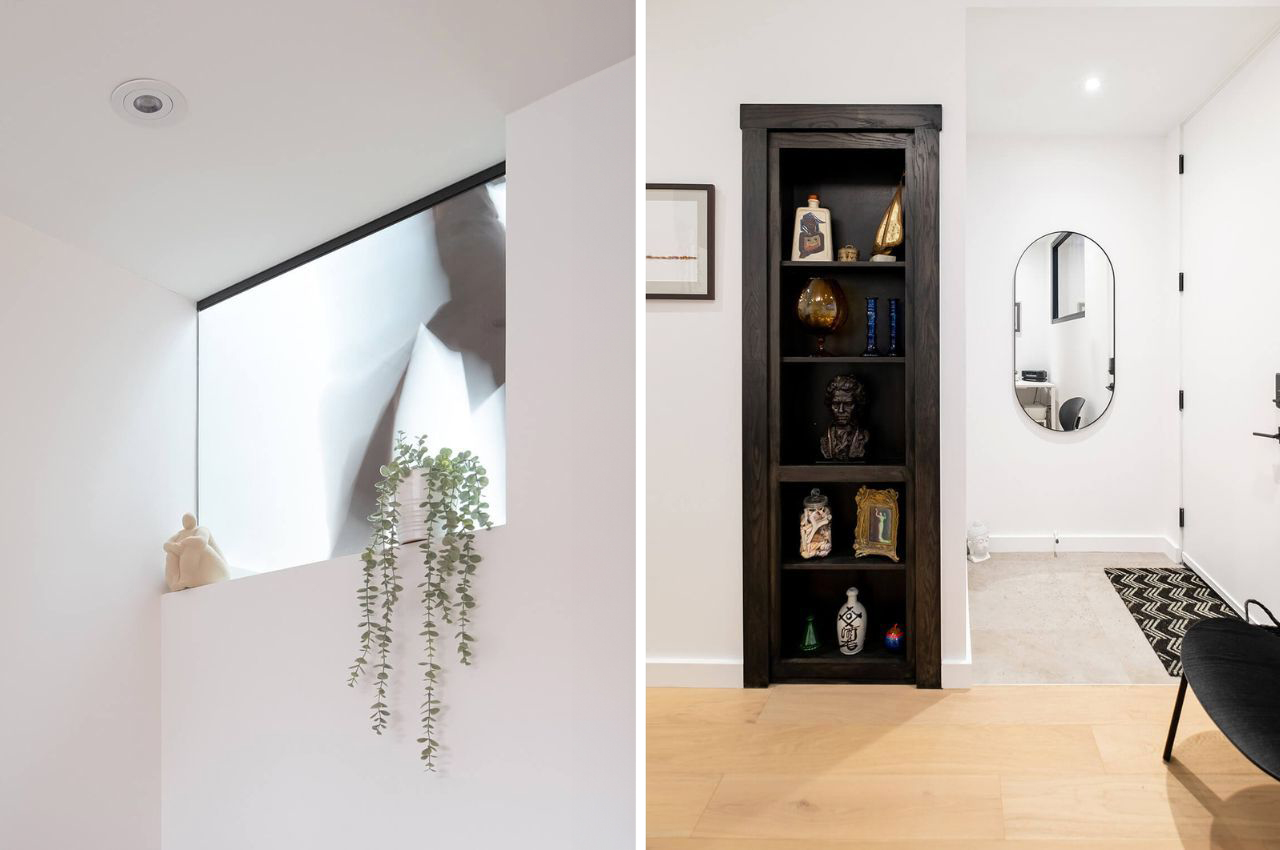
Don’t be fooled by its size, this suite is packed with features. As you approach, the bright yellow entry door immediately catches the eye. Behind it lies a den/study, complete with a desk, a cozy sitting area, and a built-in shelving niche – perfect for work-from-home needs or simply completing tasks during the day.

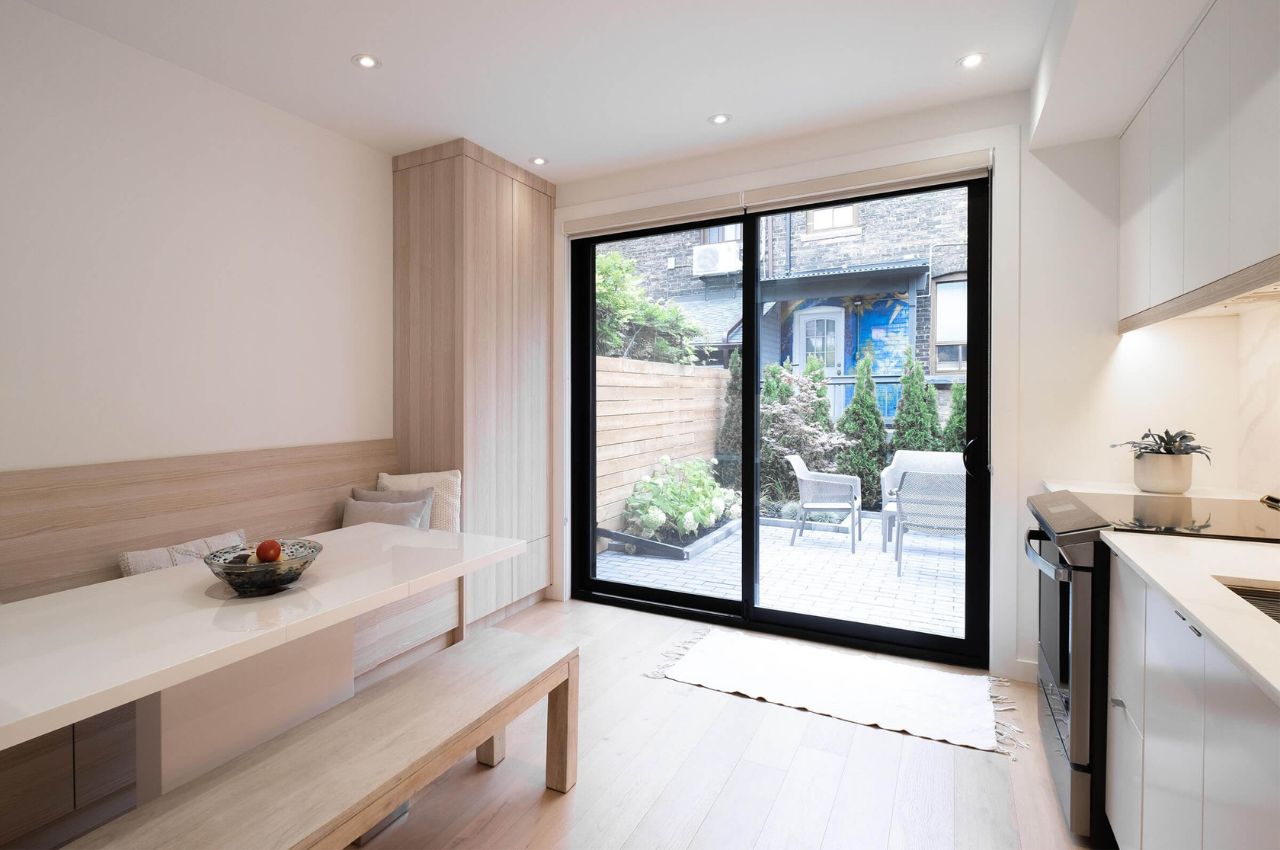
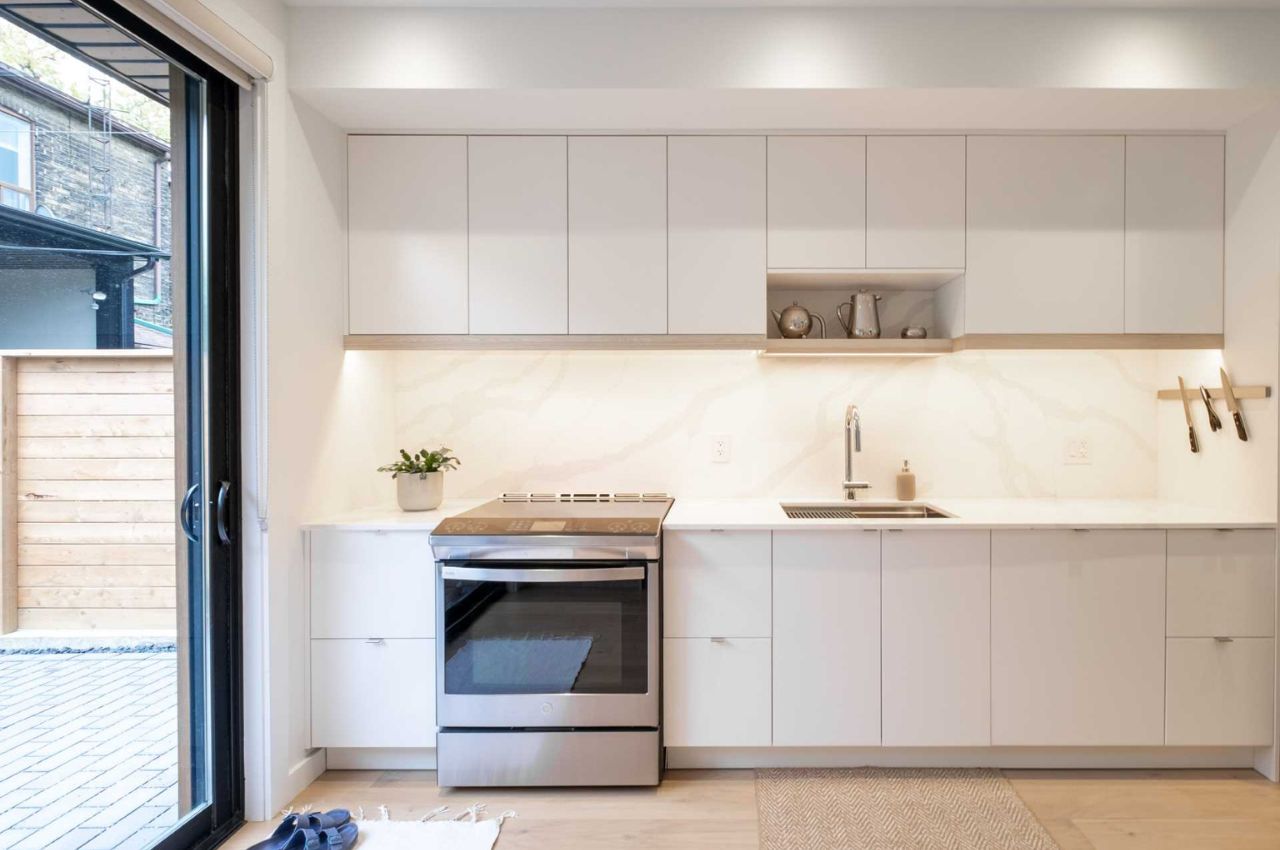
Moving through the space, towards the rear of the laneway house, you’ll find the dining area and kitchen. The dining area boasts banquette seating, while the kitchen is adorned with under-cabinet lighting, adding to its ambiance. A sliding door seamlessly extends this open-plan space to a small patio, offering a delightful outdoor escape.

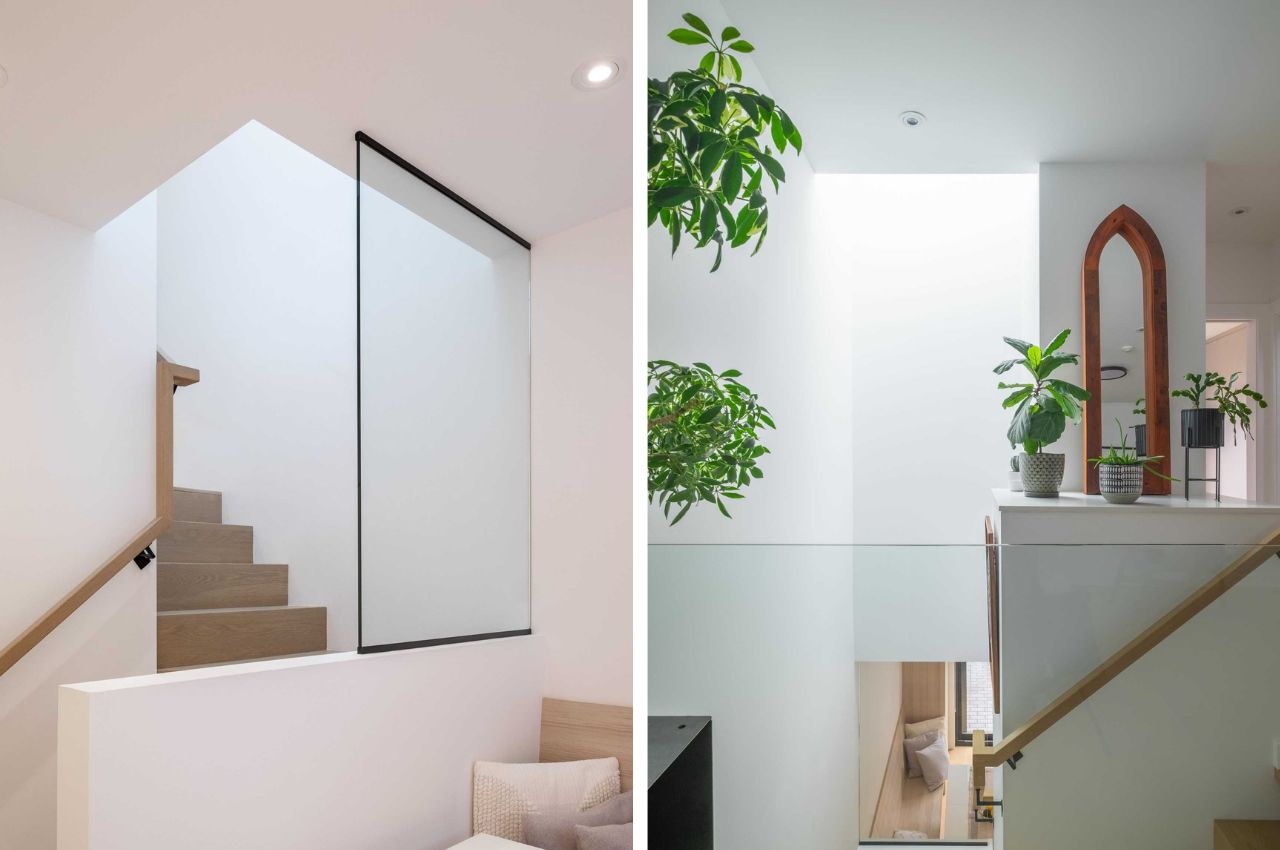
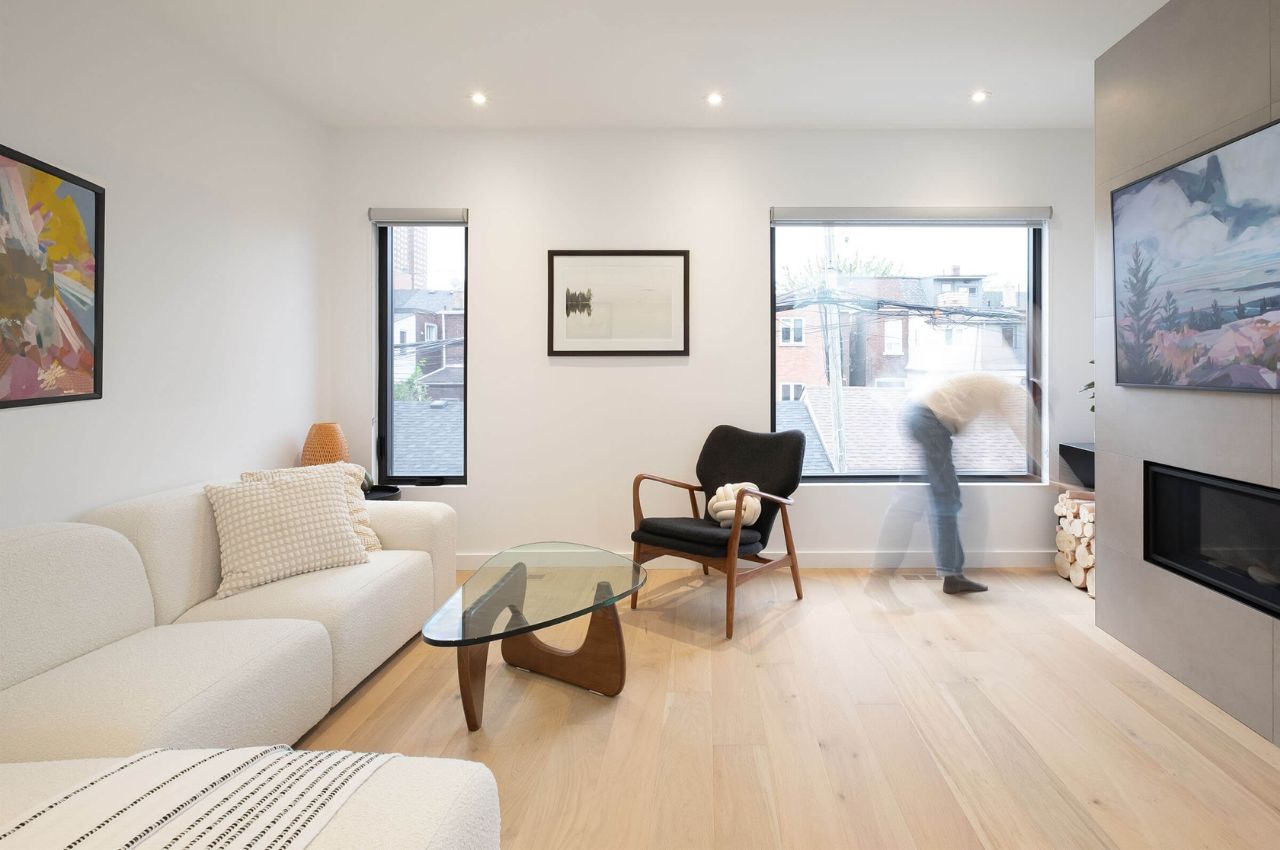
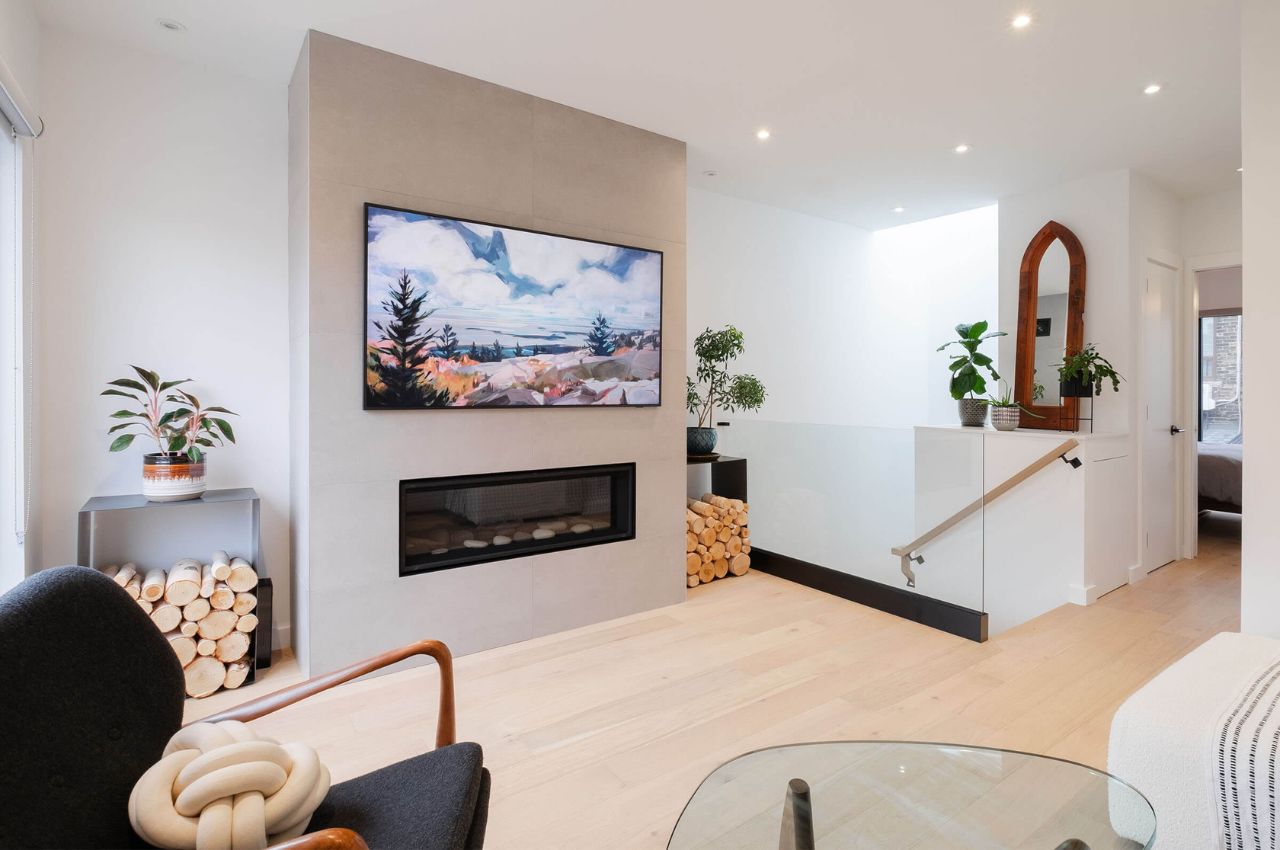
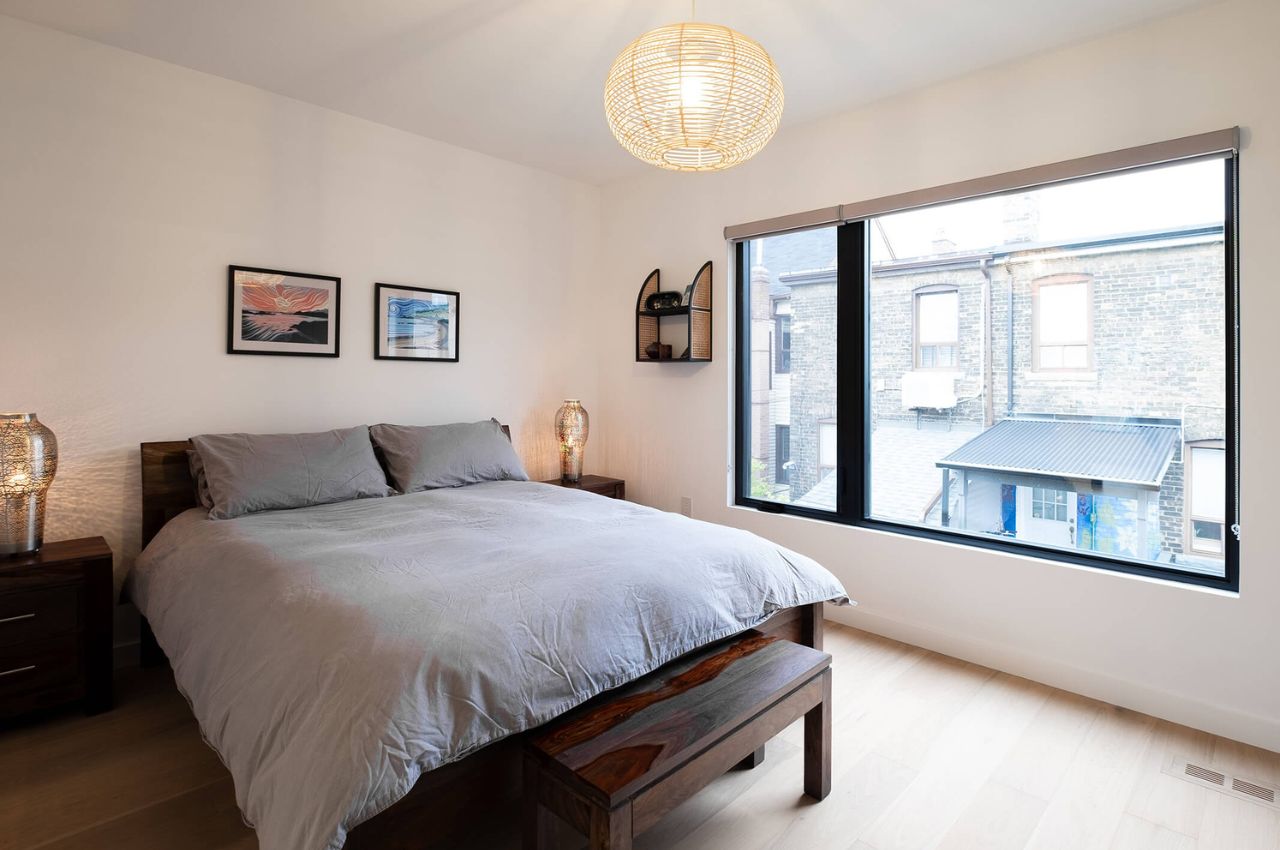
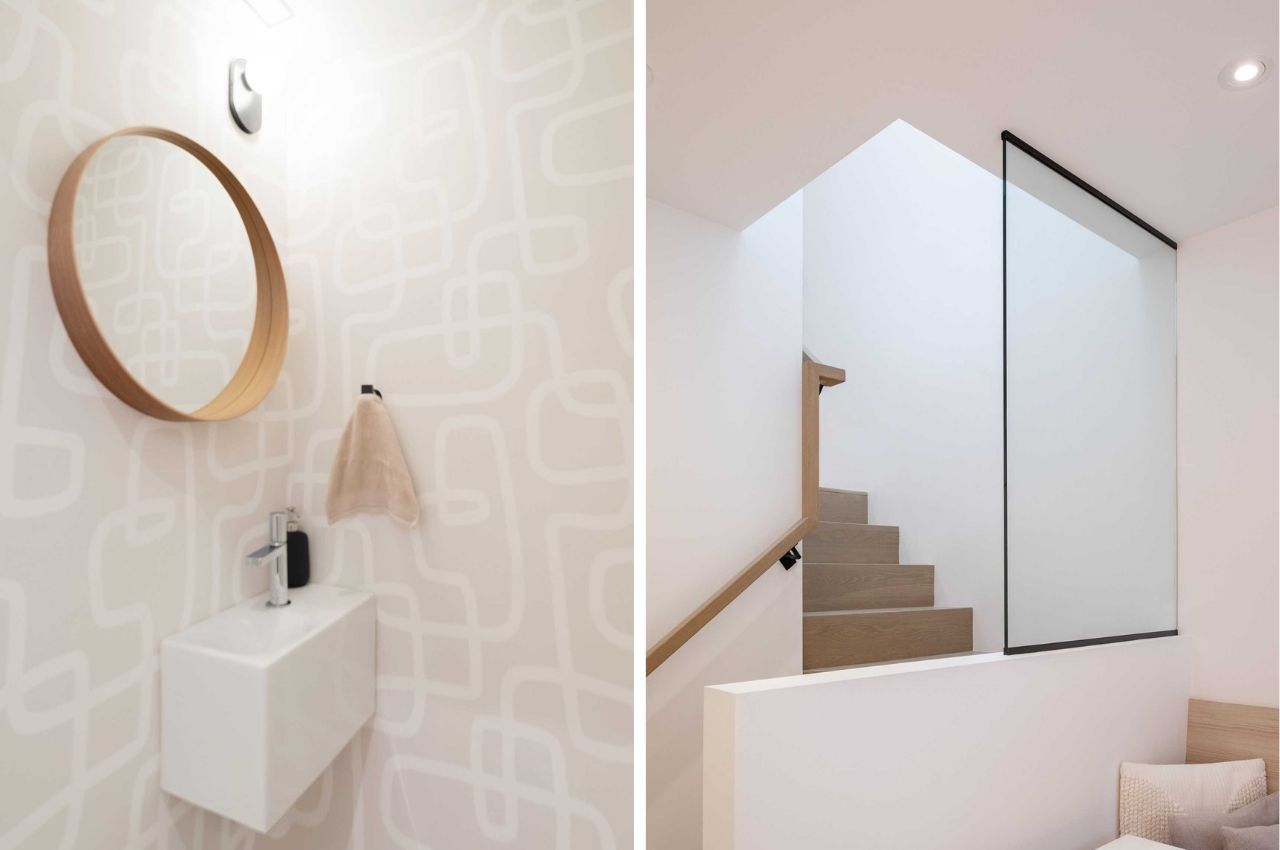
Step onto the patio and take in the ingenious architectural design. The second floor of the laneway house cantilevers outward, providing an additional 3 feet of livable space inside. Stairs between the den and the dining area/kitchen lead to the upper level of the home. Here, a glass partition and railing allow natural light to travel throughout the interior. Upstairs, the small living room, featuring a fireplace, overlooks the laneway with a more private view towards West Toronto. The bedroom and bathroom are located at the rear of the house, facing the yard. Both rooms boast a neutral color palette with added interest in the form of artwork and wallpaper.

The secret to the spacious feel lies in the open floor plan, with not many walls, and large windows that allow light to flow through the space, making it seem open and airy, rather than claustrophobic. The use of a light color palette also makes the space look bigger and airy, making it feel larger than it is. Moreover, the addition of plants brings life to the space, enhancing its overall ambiance.

The post This Tiny Home In A 17-Foot Wide Lot In Toronto Is Redefining Urban Living first appeared on Yanko Design.
Art Exhibit honoring Salvador Dali lets you “Ask Dali” anything on his 120th Birthday

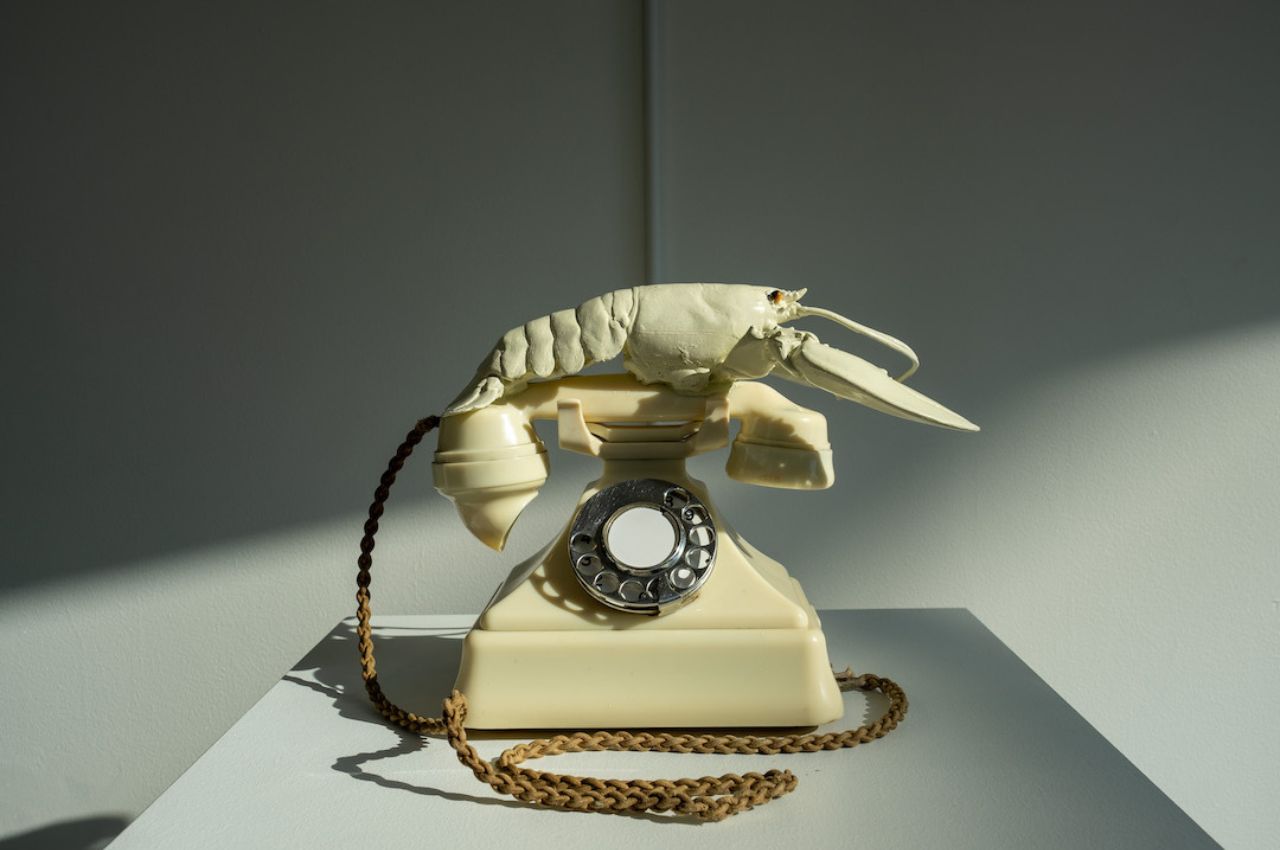
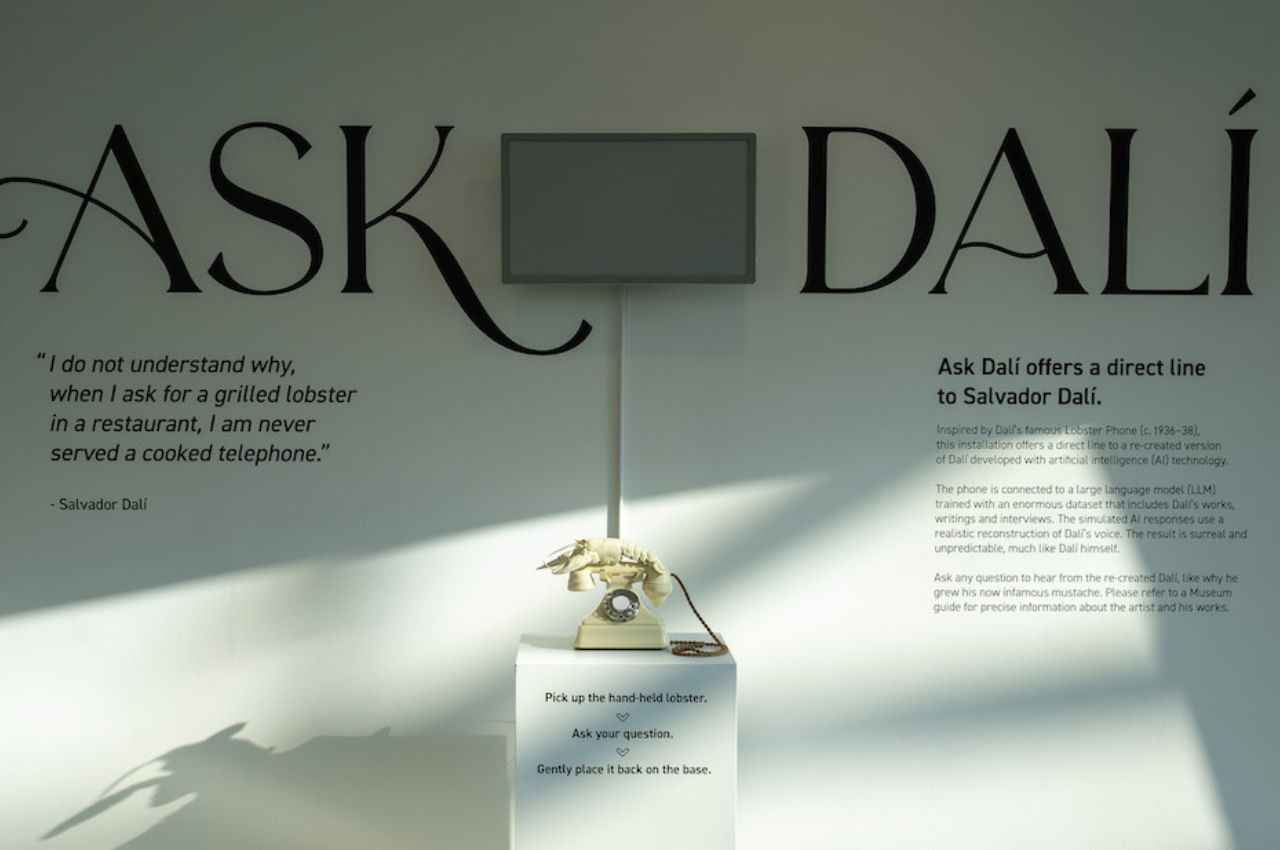
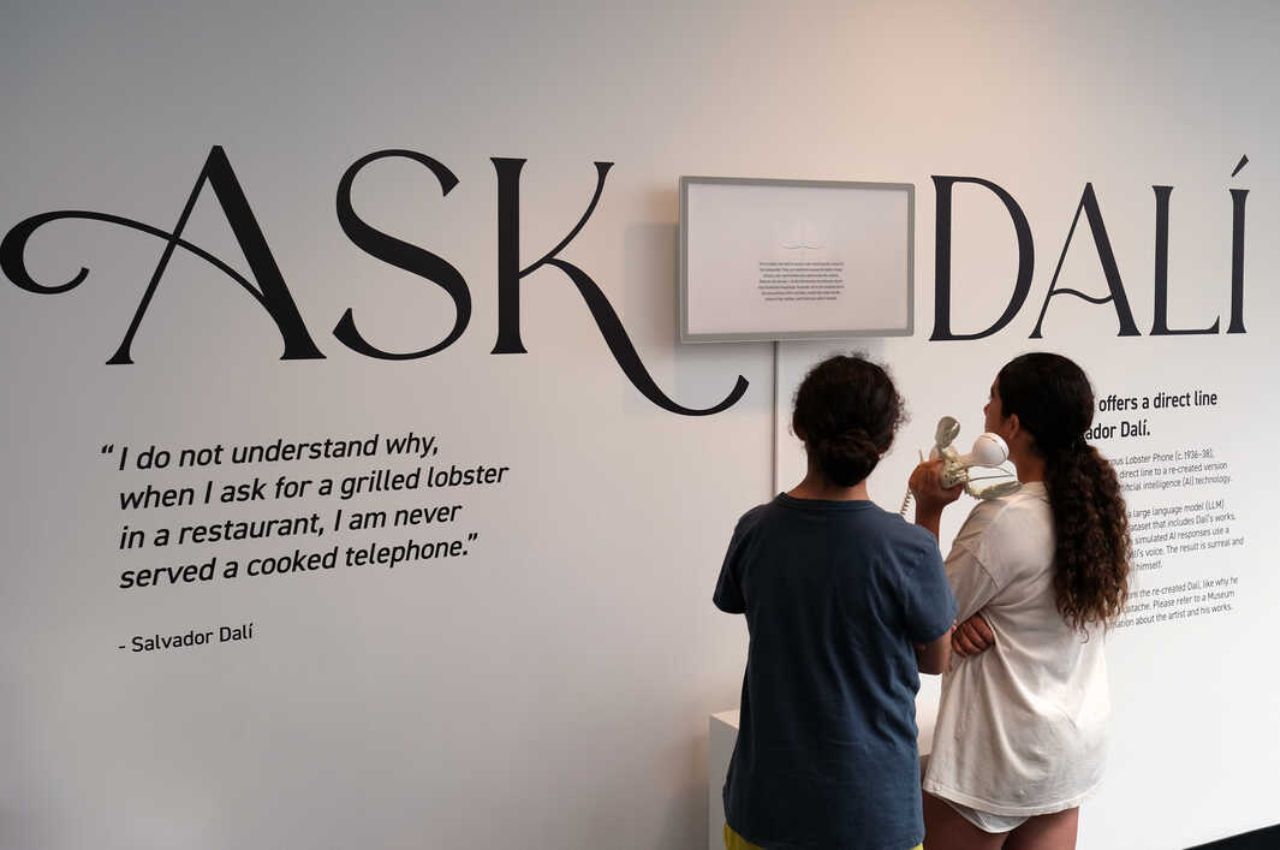
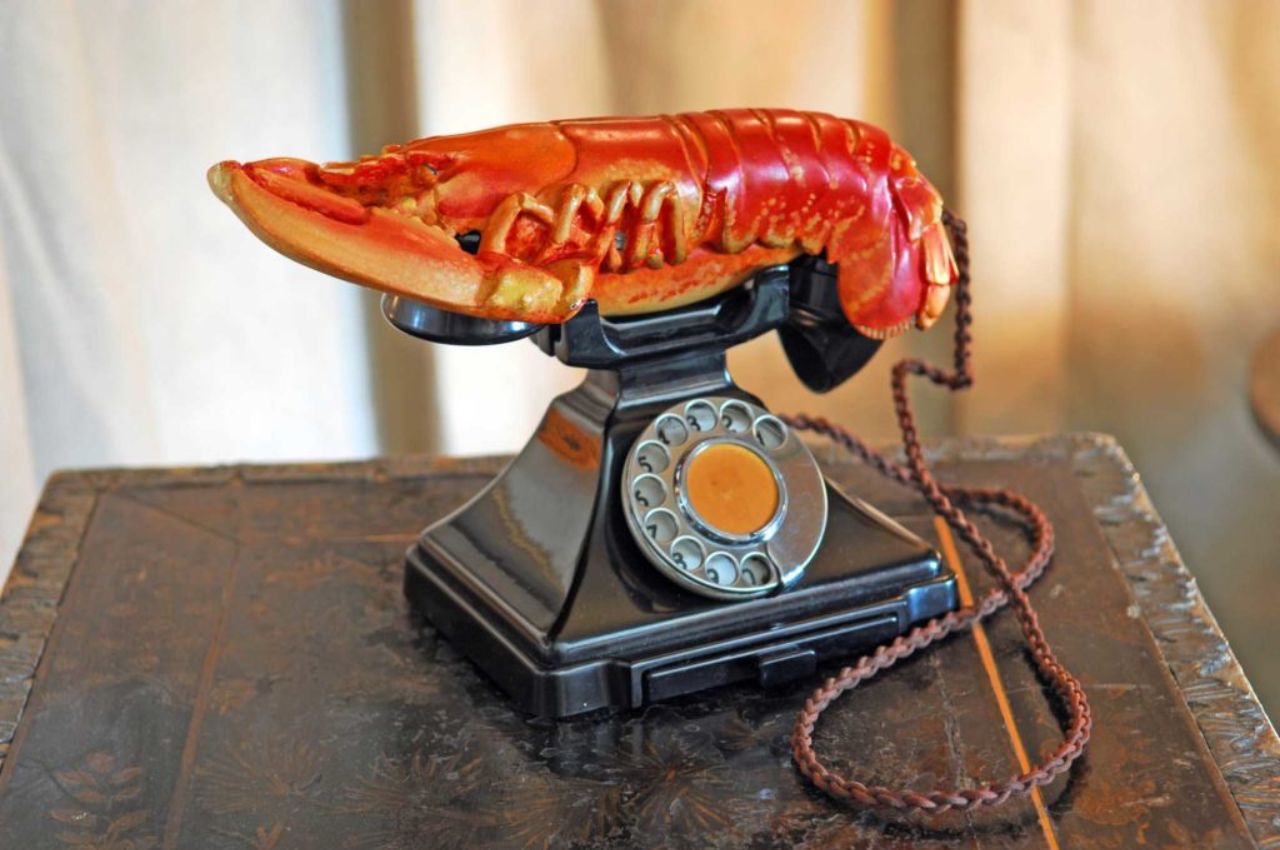
As we approach Salvador Dalí’s 120th birthday on May 11th, the Dali Museum in St. Petersburg, Florida, is offering visitors a unique opportunity: to “Ask Dalí” and converse with a lifelike, artificial intelligence recreation of the Spanish painter himself, simply by picking up a lobster phone. This innovative experience is inspired by one of Dalí’s most iconic creations, the Lobster Telephone, and is made possible through the fusion of the artist’s eccentric genius with cutting-edge machine-learning technology.

Designer: Goodby Silverstein & Partners

Salvador Dalí, known for his surrealist paintings such as “The Persistence of Memory,” “Swans Reflecting Elephants,” and, of course, the Lobster Telephone, has left an unforgettable mark on the world of art. His works continue to captivate audiences worldwide, challenging our perceptions of reality and expanding the boundaries of the imagination. The Lobster Telephone, created by Dalí in 1936 for the English poet Edward James, now serves as an inspiration to the central piece in the Dali Museum’s latest interactive exhibit, as the ‘telephone’ fits best for the analogy, allowing visitors to engage with the artist himself in a surreal and thought-provoking manner.
Surrealism, the movement Dalí helped to spearhead, aims to revolutionize human experience by balancing a rational vision of life with one that asserts the power of the unconscious and dreams. Surrealist artists find magic and strange beauty in the unexpected and the uncanny, the disregarded and the unconventional. Dalí’s paintings offer deep and multifaceted meanings, providing ample scope for imagination and understanding of the artist’s perspective.

In an era marked by remarkable technological advancements, it’s fitting to bring a renowned artist back to life through AI, especially as we celebrate his birthday. Debuting after a successful preview at the renowned SXSW conference, Ask Dalí marries the artist’s eccentric genius with some of the latest in machine-learning technology. Crafted by advertising agency Goodby Silverstein & Partners (GS&P), the experience utilizes OpenAI’s GPT-4 and ElevenLabs’ Eleven Multilingual V2 models. These tools are trained on a rich dataset of Dalí’s own writings and archival audio, producing responses that echo his distinctive voice, flamboyant personality, and whimsical humor.

To start a conversation, visitors pick up the telephone and ask any question they would like, whether seeking insights into the artist’s surreal imagery or his thoughts on contemporary matters. During a demonstration, Hank Hine, director of the Dalí Museum, tested the system by asking what one should be sure to see when visiting the museum. The AI, channeling Dalí’s lyrical style, recommended, “In the labyrinth of the imagination that unfurls within the Dalí Museum of St. Petersburg, one must seek the melting clocks in The Disintegration of the Persistence of Memory, where time drips like a dream refusing to be contained.”

Building upon the successes of previous AI-assisted exhibits, such as Dalí Lives in 2019, which brought the artist’s persona to life on screens throughout the museum, and the Dream Tapestry in 2023, where AI assisted visitors in creating digital paintings from descriptions of their dreams, Ask Dalí is the latest in a series of innovative intersections of art and technology inspired by Dalí’s own fascination with new mediums. Jeff Goodby, the co-founder of GS&P, reflects on the project’s alignment with Dalí’s legacy: “Dalí was fascinated by the latest tools and technologies of his era and continually explored various artistic media,” he notes. “Ask Dalí provides a delightful new way to interact with machine-learning technology. Dalí’s poetic writings, in an imaginative style all his own, are the basis of the training, providing dynamic and unpredictable answers to visitors’ questions.”

The 120th birthday of Salvador Dalí promotes the intersection of art and technology allowing visitors to engage with one of the greatest artists of the 20th century in a manner that is both enlightening and surreal. Through the Lobster Telephone, visitors to the Dali Museum in St. Petersburg can experience firsthand the wit, wisdom, and eccentricity of Salvador Dalí, ensuring that his legacy lives on for generations to come.

The post Art Exhibit honoring Salvador Dali lets you “Ask Dali” anything on his 120th Birthday first appeared on Yanko Design.