These 3 Desk Objects Make Shredding, Crushing Feel Like Design

Many of us already practice tiny acts of destruction when we’re stressed. Shredding receipts, crumpling paper, or picking at packaging feel oddly satisfying even though we usually hide them. They’re little releases that most designs ignore, treating them as guilty pleasures instead of real human behaviors. Art of Destruction is a concept that leans into those impulses and asks what happens if industrial design treats them as experiences worth designing.

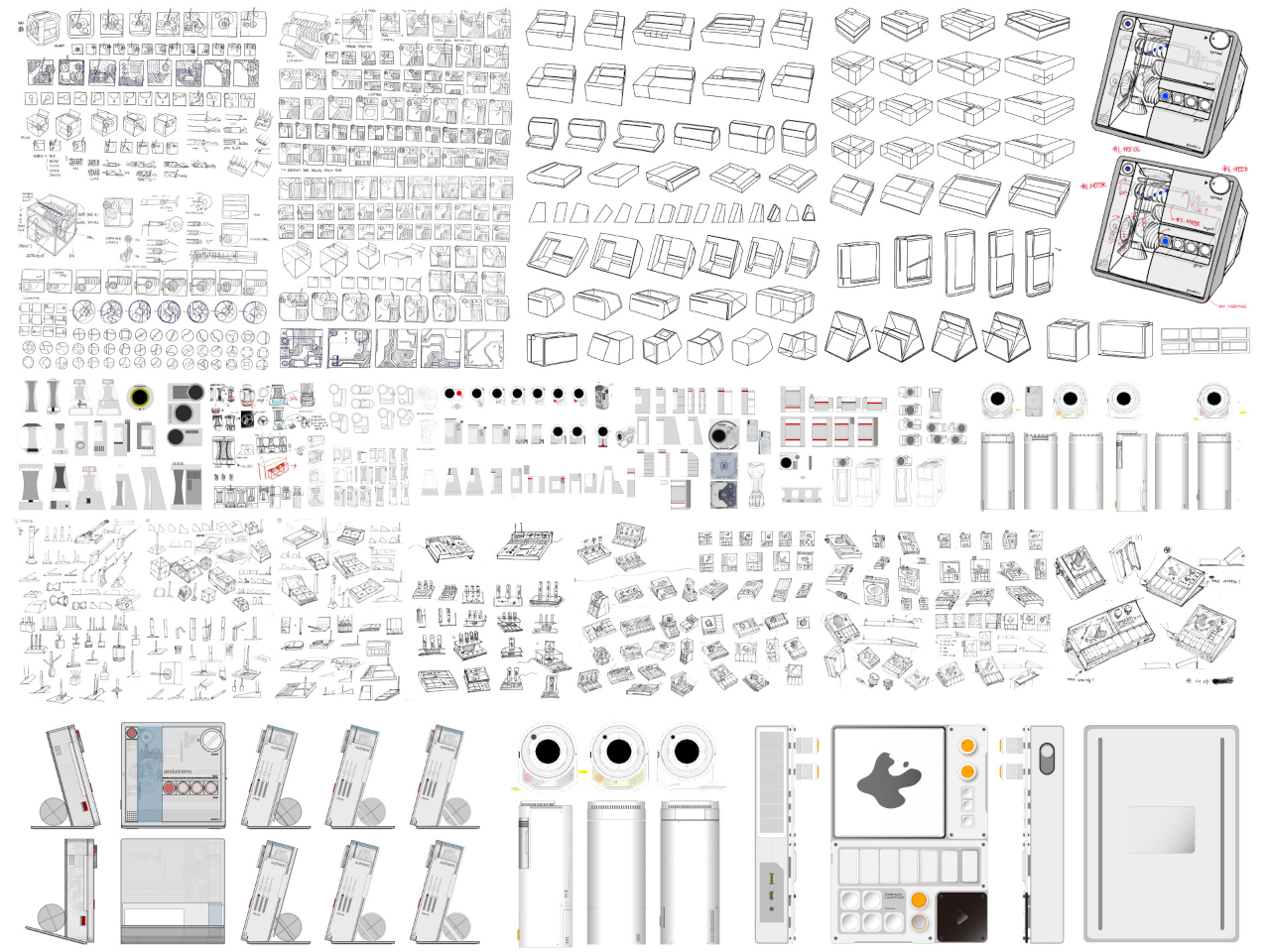
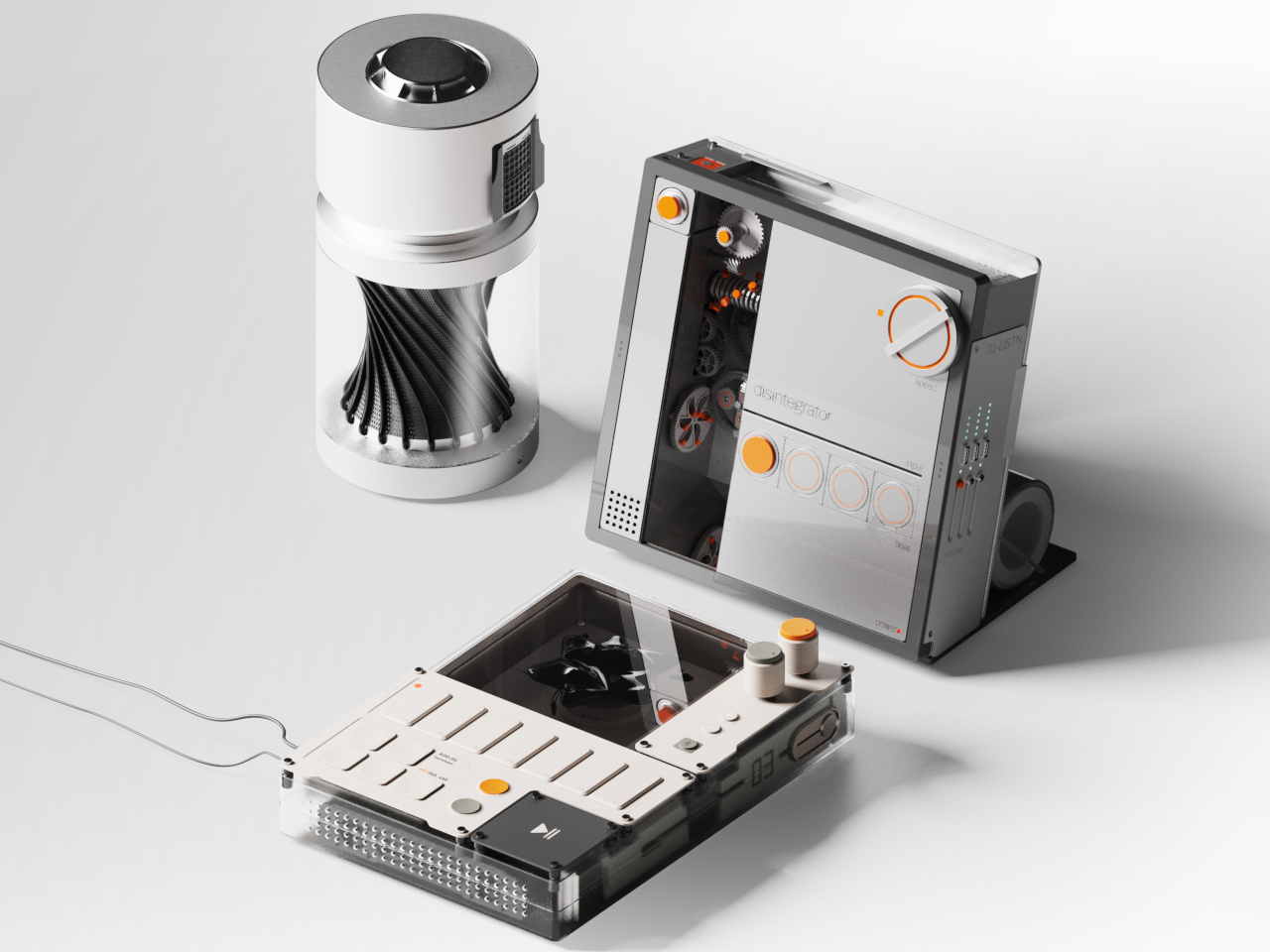
The project is a trio of objects named Disintegrate, Compress, and Explosion. Each one takes a different destructive action and turns it into a deliberate, almost ceremonial interaction. They share a visual language of cool grey bodies, orange accents, clear panels, and exposed mechanisms that make them look more like hi-fi gear than office tools. Together, they feel like a small family of instruments for controlled chaos on your desk.

Designers: Meesol Park, JiHoon Park, MIN A Kim, Nahyeon Kwon, Dongkyun Kim, Taeyoon Kim

Create your own Aesthetic Render: Download KeySh2ot Studio Right Now!

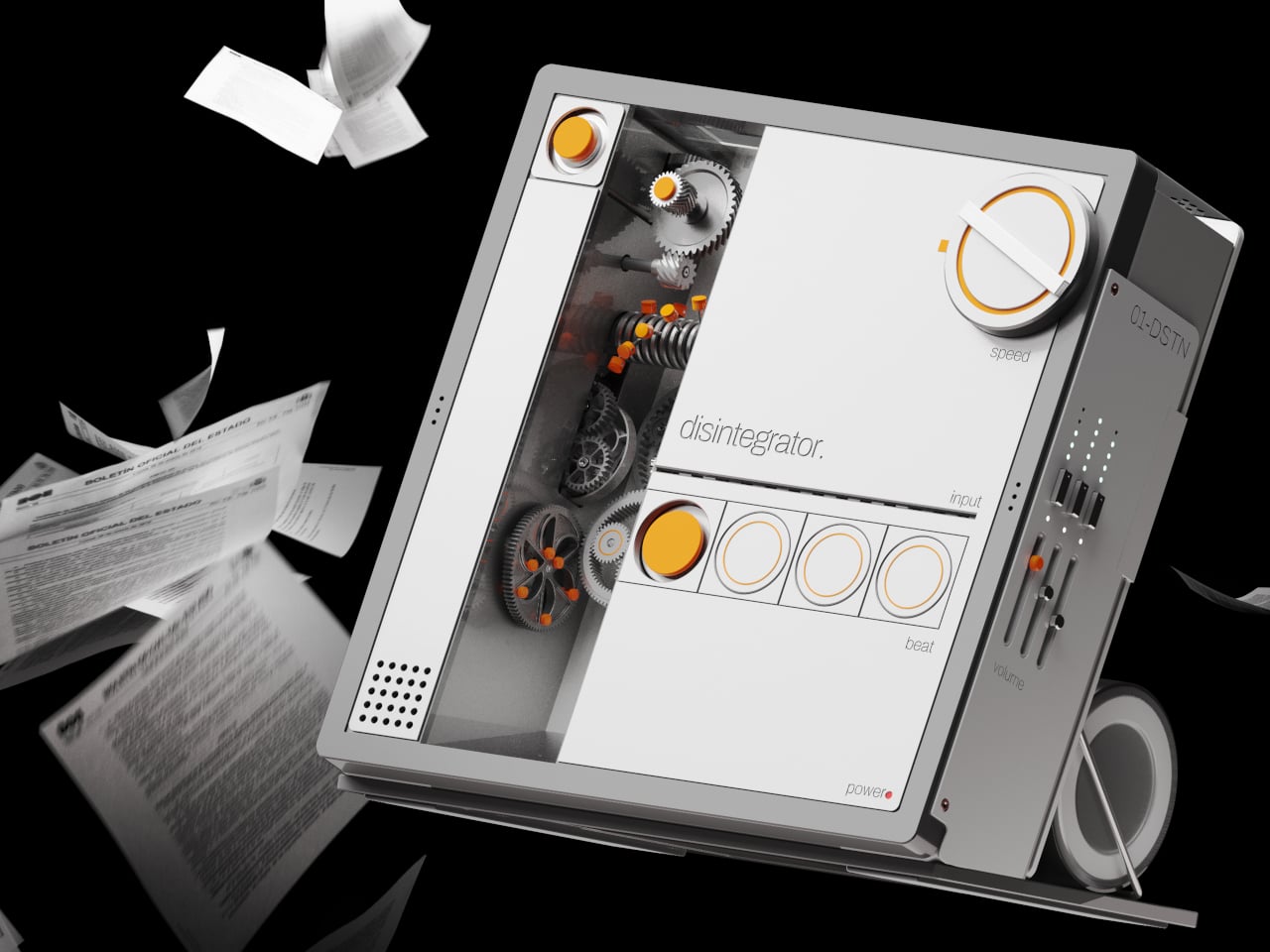
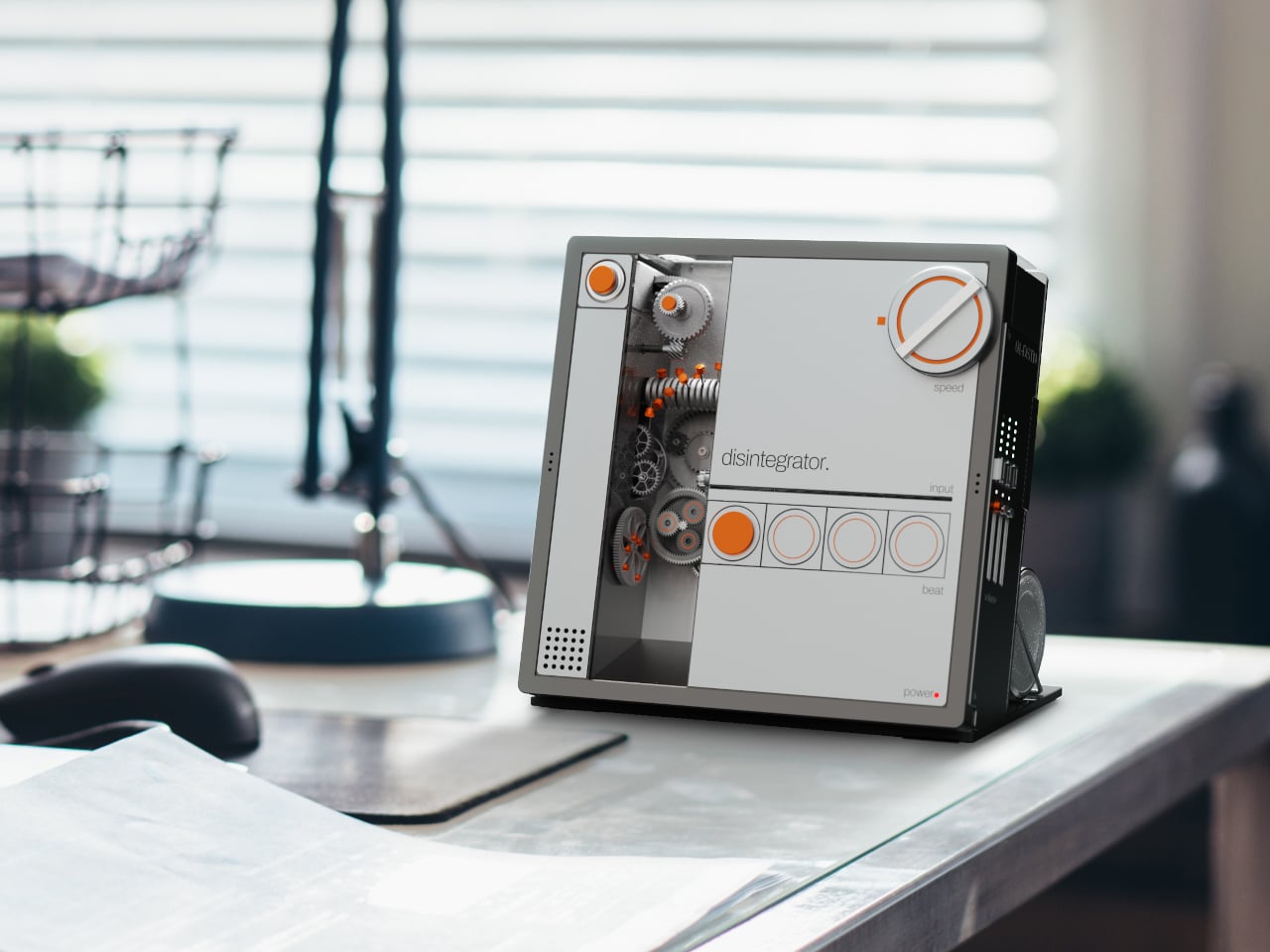
Disintegrate is a reimagined paper shredder that puts the whole process on display. A rectangular frame with a large side window reveals gears, belts, and blades pulling paper into a cylindrical bin. A big orange dial and a row of circular buttons invite you to tune the experience. Shredding becomes less about security and more about watching documents get mechanically unmade in sound and motion.

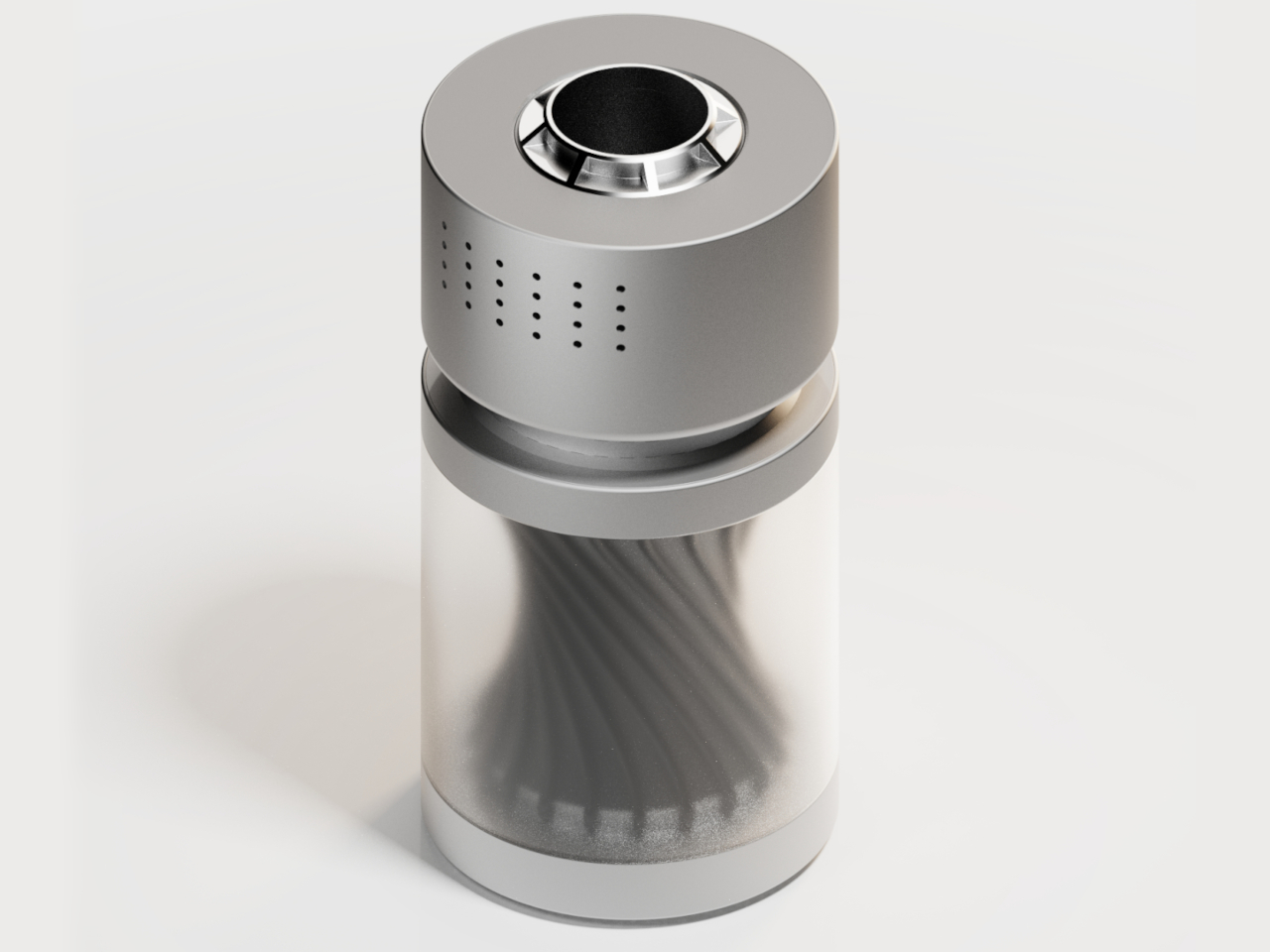
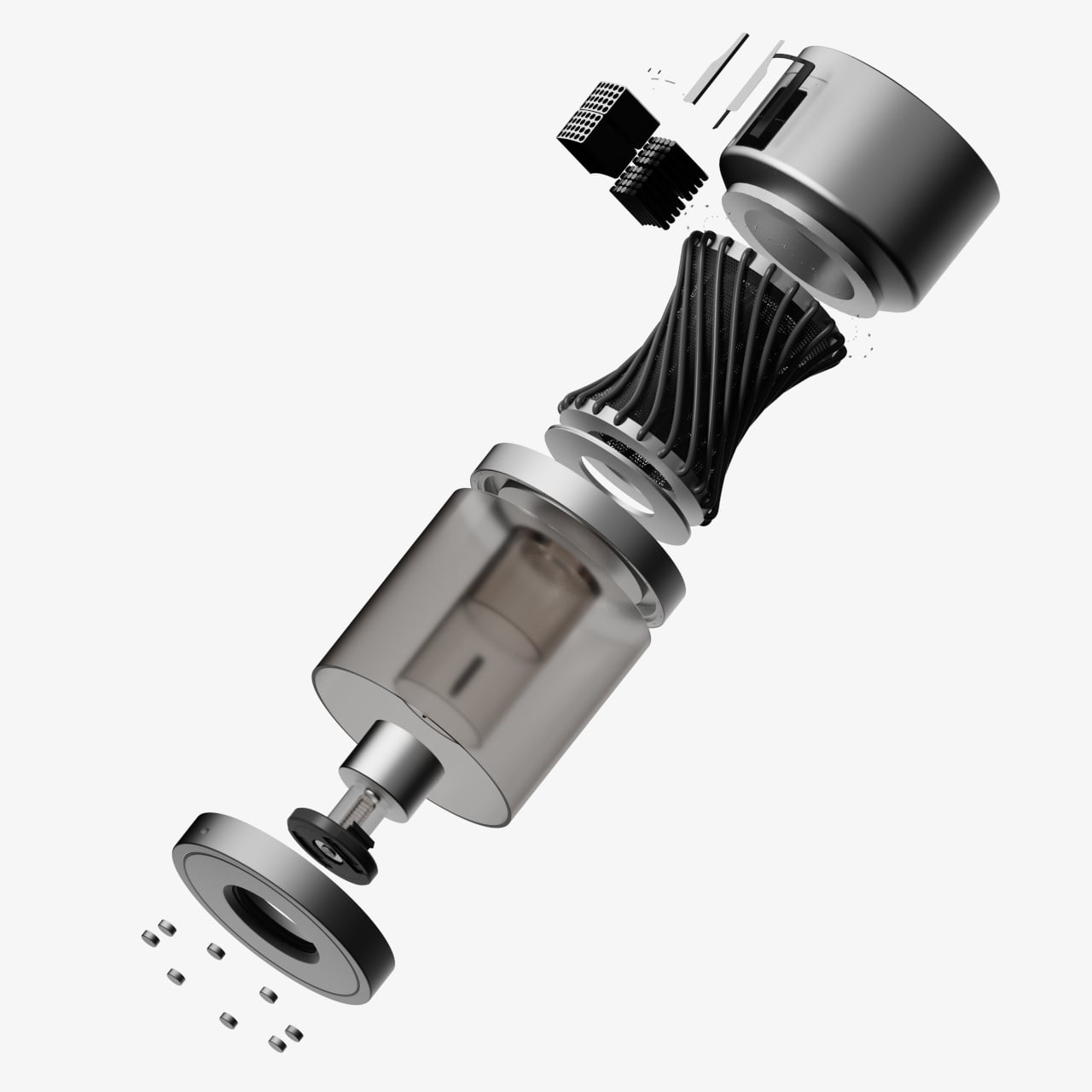
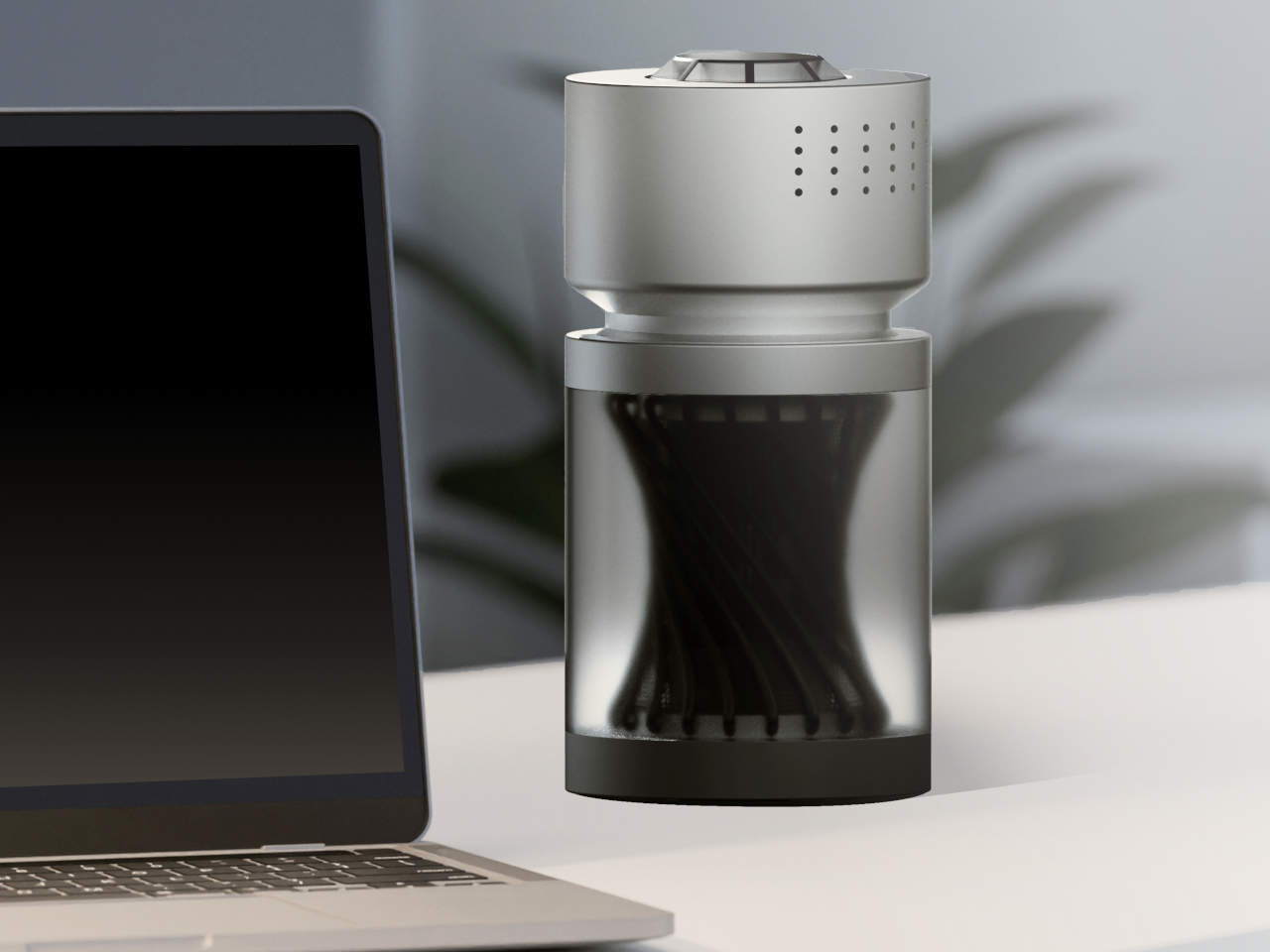
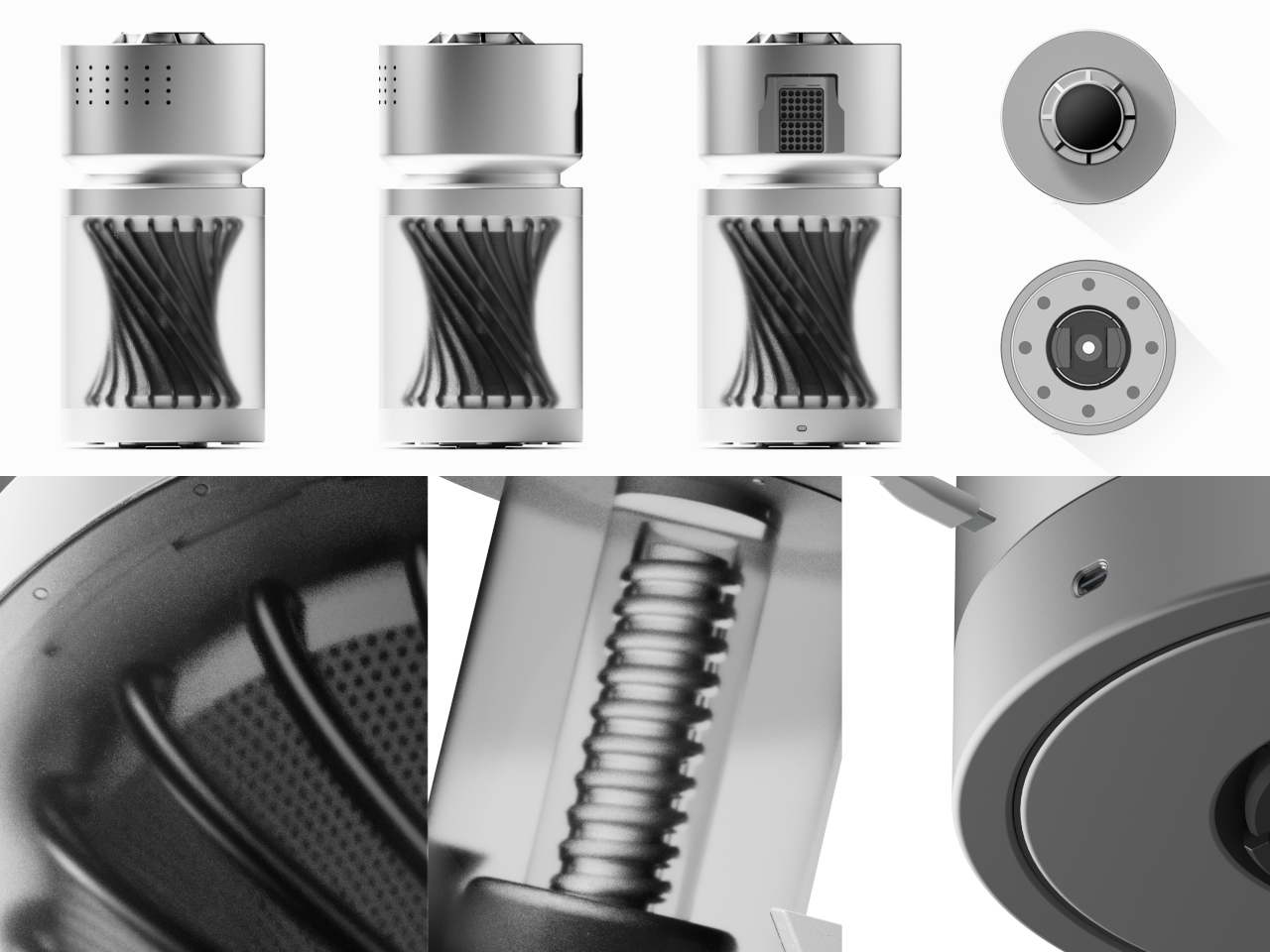
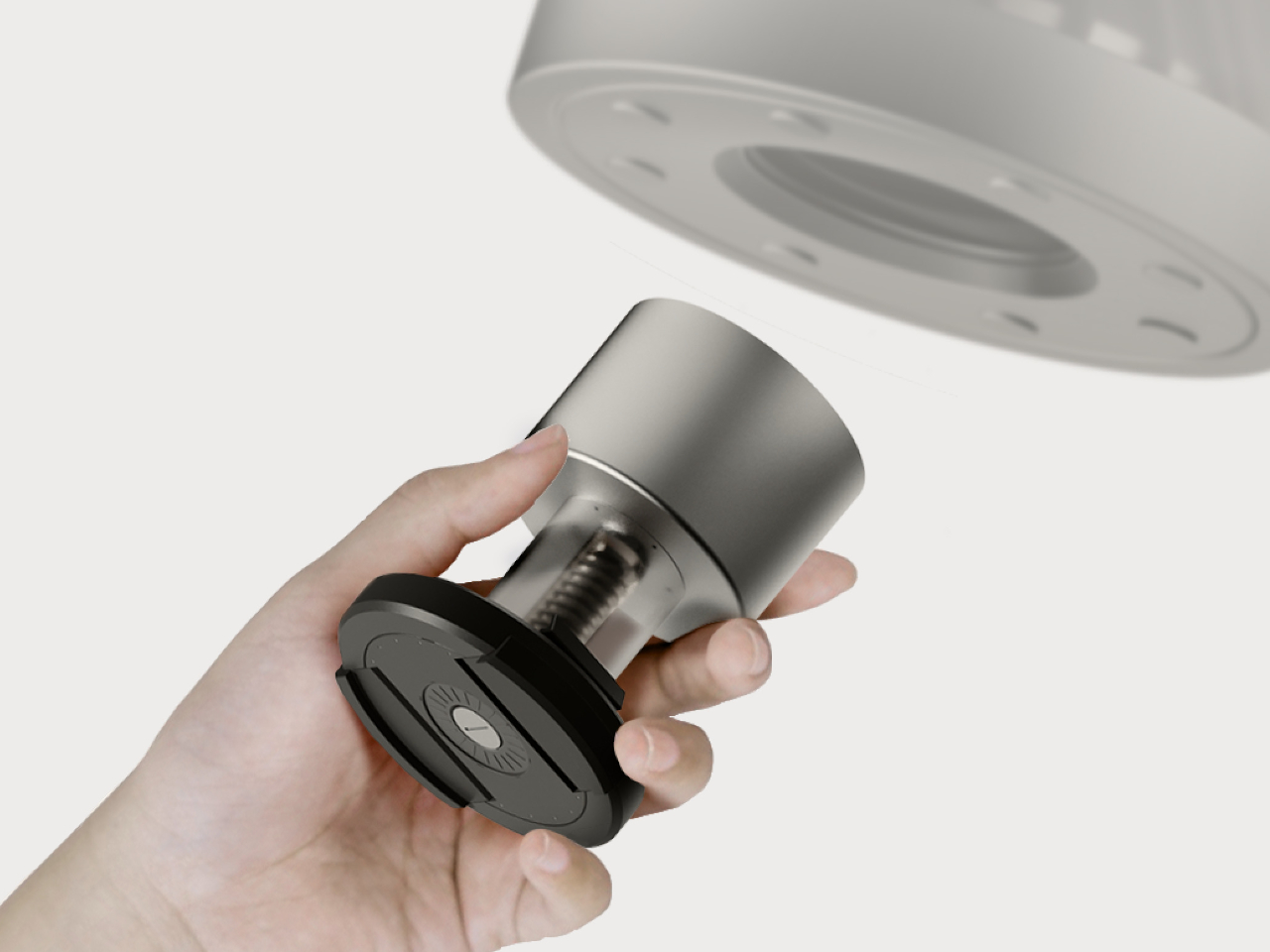
Compress is a small cylindrical compactor that looks like a cross between a speaker and a sculptural vase. The top is a solid metal cap, while the lower half is a clear chamber showing a twisted vortex of ribs inside. Drop something in, press down, and the spiral structure crushes it into a neat puck. The act of compression becomes a slow, visual performance instead of a quick, guilty squeeze.

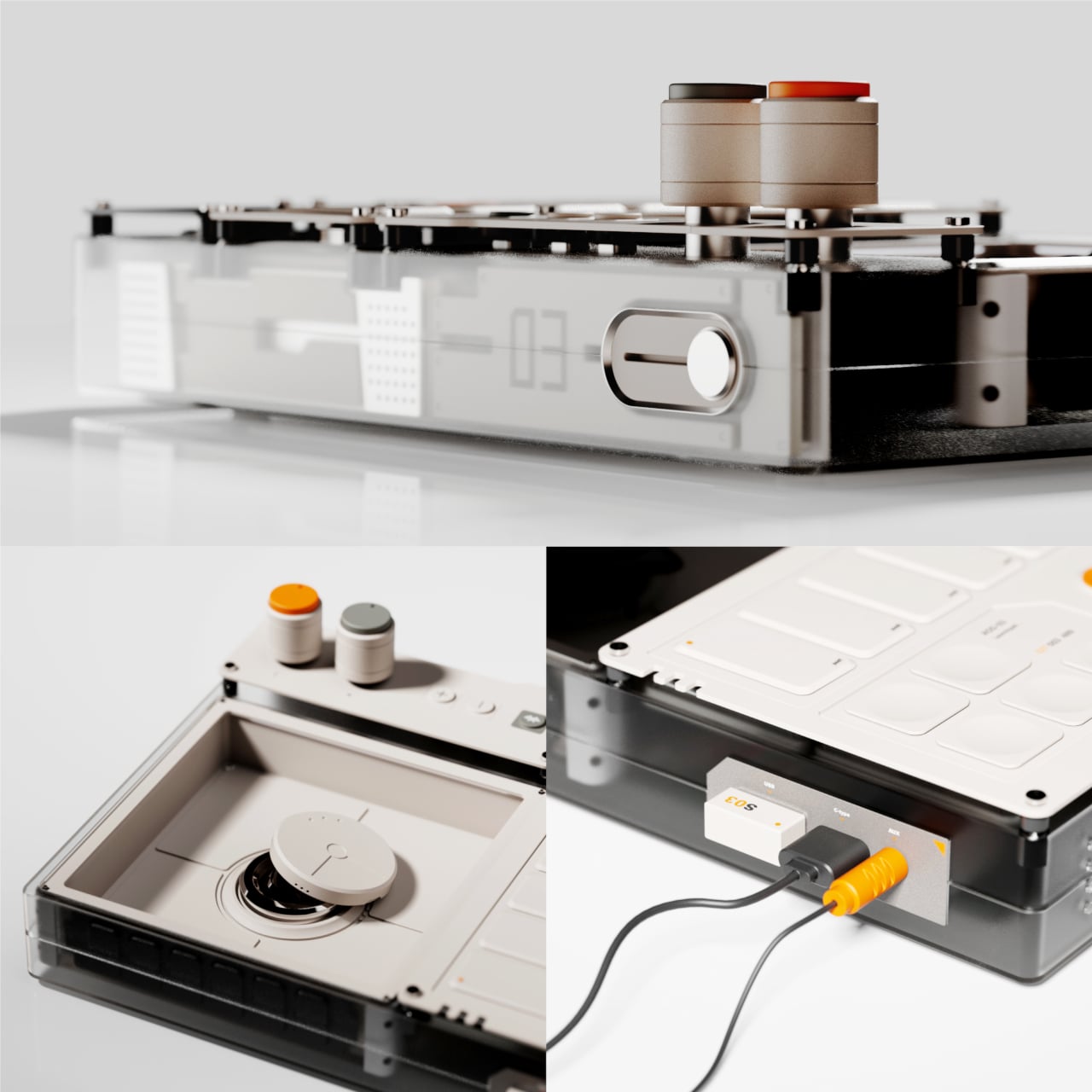
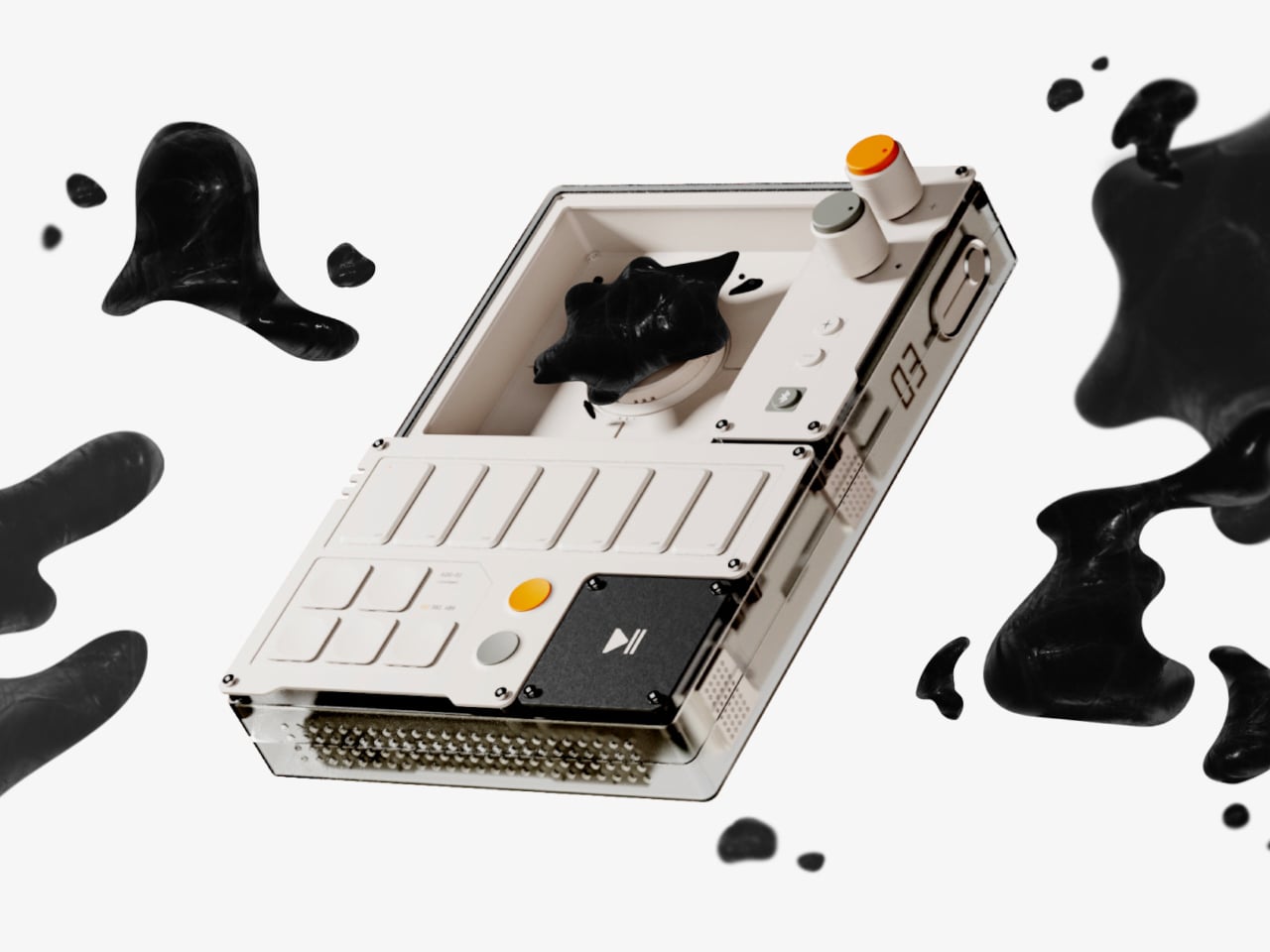
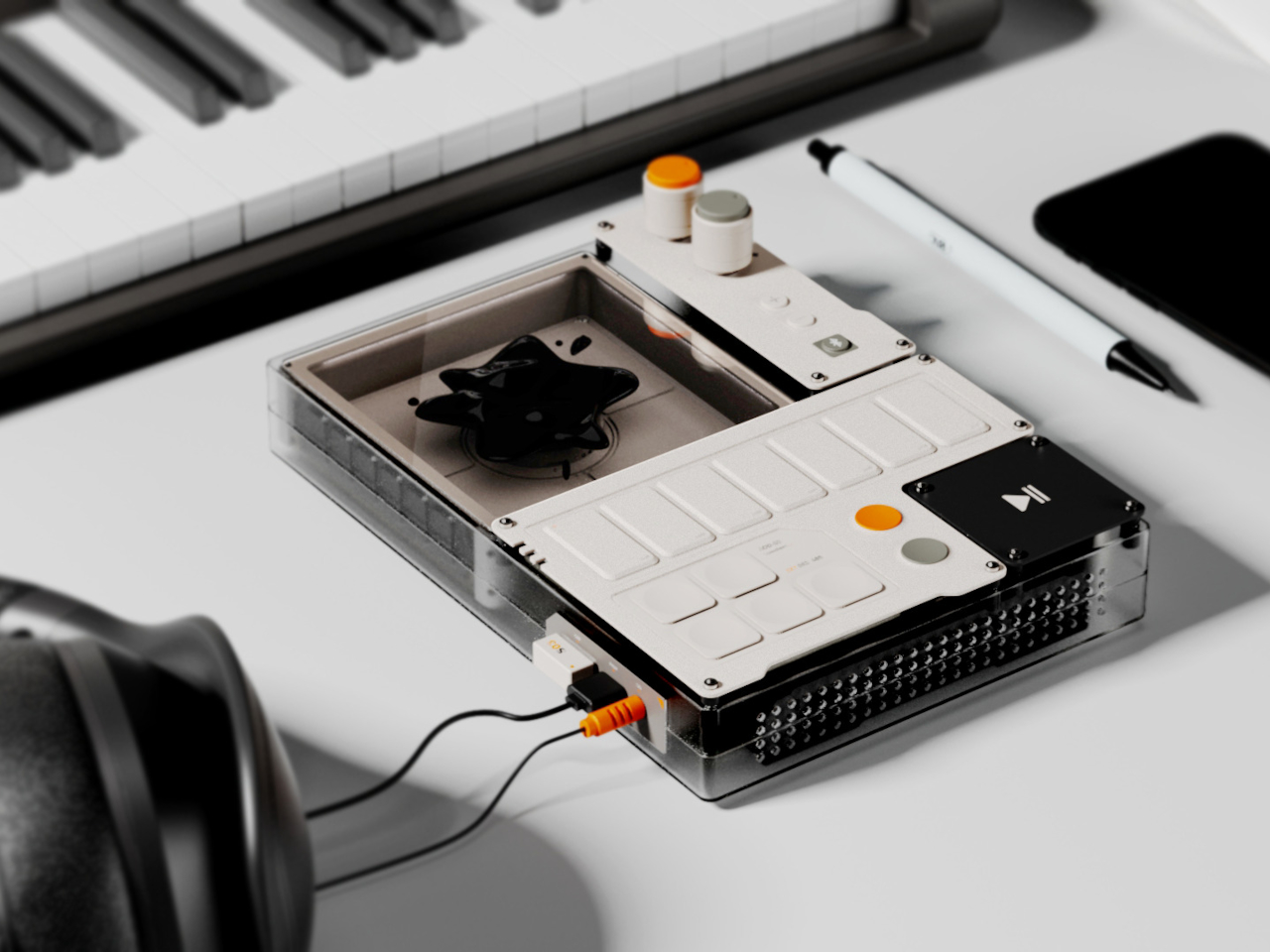
Explosion is a flat tabletop console built around a central well of magnetic fluid. A large knob and button sit on one corner, and a perforated grid hints at lights or sound. Press the control, and a pulse of magnetism sends the ferrofluid erupting into spikes before it settles back. It’s a safe, repeatable way to trigger miniature explosions, with the mess contained behind a clear top plate.

The three devices work together visually. In the group shots, they share proportions and detailing, so they could sit on a desk like a family of instruments. Transparent panels and exploded views reveal carefully layered internals, turning mechanisms into part of the aesthetic. They feel less like gadgets and more like props from a film about emotional regulation through designed objects.

Art of Destruction is a playful question about how we deal with tension and boredom. Instead of hiding our urge to tear, crush, or explode things, these concepts imagine channeling it through objects that are honest about what they do and beautiful while doing it. Whether or not they ever exist beyond renders, they make a strong case that even destruction can be a mindful ritual.

The post These 3 Desk Objects Make Shredding, Crushing Feel Like Design first appeared on Yanko Design.

Pocket Casts rolls out playlists, so users can sequence episodes of their favorite shows

There are millions upon millions of podcast episodes out there and it can be tough to figure out what to listen to and when. The popular podcast service Pocket Casts is rolling out a playlists feature to help users make sense of it all.

This is being advertised as a "new way for listeners to organize, sequence and customize episodes across all their favorite shows." The idea of a playlist isn't new by any stretch, but it's not typically an option on podcast apps. As a matter of fact, Pocket Casts says this was one of its most-requested features.

The platform says this tool is great for "building a morning news lineup, curating interviews to study a topic or creating a queue for a long flight." There's a manual option but also an automatic Smart Playlists feature that gathers episodes together based on pre-determined rules.

The playlists feature.
Pocket Casts

For instance, episodes can be collected and sorted by release date, duration and other factors. This replaces the pre-existing filters tool. I can absolutely see this being useful on a road trip when you don't really wanna fiddle with a phone and would rather just let the podcast episodes flow into one another to create a Conan O'Brien-induced driving zen state.

The playlists tool is available right now. This is just the latest move by Pocket Casts. The service recently added a free tier for accessing its web player and desktop app. We love it when things get cheaper, don't we folks?

This article originally appeared on Engadget at https://www.engadget.com/entertainment/pocket-casts-rolls-out-playlists-so-users-can-sequence-episodes-of-their-favorite-shows-170046666.html?src=rss

Walmart Black Friday deals: The AirPods Pro 2 are down to their lowest price yet

Apple updated its flagship earbuds this year with the new AirPods Pro 3, but the AirPods Pro 2 were our top picks for the best wireless earbuds for Apple users for many years before that. They're a bit hard to find at this point, but Walmart Black Friday deals have come for them (in addition to a bunch of other Apple products). Walmart has the AirPods Pro 2 for $139, which is the lowest price we've ever seen them and more than $100 off their standard $249 price tag. During Black Friday last year, they dropped to around $155.

At this price, the AirPods Pro 2 are a good option for anyone who wants most of the conveniences and features of the Pro 3s without spending nearly $100 more. They have excellent active noise cancellation and great sound quality, and thanks to a firmware update, they do support Apple's new Live Translation feature. Using the buds in tandem with the Translate app on iPhones running iOS 26 or later, you can translate foreign languages in conversation in real time, hearing other languages being spoken to you in your preferred language.

Sound quality remains great on the Pro 2 and battery life hits at around six hours of use on a single charge with ANC enabled. The wireless charging case that comes with the Pro 2 actually offers more total hours of listening time than the Pro 3 — 30 hours in total, in comparison to the Pro 3's 24 hours. You also get most of Apple's health tracking capabilities along with all the conveniences of the H2 chipset, which includes quick pairing and switching, plus hands-free Siri. What you won't get here is built-in heart rate tracking and improved sound quality and ANC, all of which are stand-out features of the new Pro 3.

In addition to the AirPods Pro 2, other AirPods are on sale for Black Friday. AirPods 4, both with and without ANC, are down to record-low or near-record low prices. Plus, the new AirPods Pro 3 are on sale for their best price since their launch in September. We'll update this post as more Walmart Black Friday tech deals come in.

This article originally appeared on Engadget at https://www.engadget.com/deals/walmart-black-friday-deals-the-airpods-pro-2-are-down-to-their-lowest-price-yet-170032199.html?src=rss

HBO Max Black Friday deal: Get one year of access for only $3 per month

HBO Max has rolled out a limited-time, one-year subscription deal, offering a chance to stream HBO originals and Warner Bros. blockbusters at a lower cost. The platform has reduced pricing to $3 per month for one year, bringing the final cost down to $36 for the year. With many streaming services increasing their rates, this Black Friday streaming deal lets you catch up on hit shows and new releases without committing to a full year. You can sign up via HBO Max's website or, if you're a Prime Video subscriber already, via that service as an add-on.

HBO Max has one of the best libraries of content in the streaming market, combining HBO’s acclaimed originals with Warner Bros. theatrical releases, Discovery content and live sports. The service now runs across three main plans. The Basic With Ads plan, the one included in this deal, allows streaming on two devices in full HD and costs $11 a month at full price. The Standard plan adds offline downloads, more live sports coverage and better device flexibility for $18.49 per month. The Premium plan increases quality to 4K with Dolby Atmos sound (where available), four simultaneous streams and up to 100 downloadable titles for $23 monthly.

While the feature differences matter, the real appeal of HBO Max is its library. Subscribers get access to the full catalog of HBO originals, including House of the Dragon, The White Lotus, The Last of Us and Euphoria, alongside recent Warner Bros. theatrical hits like Dune: Part Two and Barbie. The addition of Discovery content brings in reality favorites such as Fixer Upper: The Hotel and 90 Day Fiancé, while sports coverage through TNT and TBS channels includes NHL, NASCAR, college football and more.

It’s worth noting that live sports are still limited to certain tiers and regions and 4K availability varies by title. But compared with other premium services that have recently raised prices or limited simultaneous streams, HBO Max’s current setup offers strong flexibility across its plans.

If you’re considering which streaming platform gives the best range of new shows, live events and cinema releases, our guide to the best streaming services compares HBO Max with other major options. For now, this one-year subscription offer provides a straightforward way to explore HBO’s latest hits and a wide catalog of content at a lower upfront cost.

There are plenty of other Black Friday streaming deals to consider as well. Here are some of the best ones:

  • Disney+ Hulu bundle — $60 for one year: The Disney+ and Hulu (with ads) bundle is on sale for $5 per month for one year (for a total of $60) through December 1. New and eligible returning subscribers can take advantage of this deal, and considering the bundle typically costs $13 per month, this deal represents more than a 50 percent discount on the standard monthly price.

  • Apple TV+ — 6 months for $36: Apple TV+ is offering six months of access for only $36 for Black Friday, which comes out to a discounted price of $6 per month for the six-month period. The deal is live now for new and eligible returning subscribers and runs through December 1, giving you a chance to stream shows like Silo, The Morning Show and For All Mankind for less. The biggest caveat to the deal is that you must subscribe directly through Apple and not through a third-party service.

  • Paramount+ — two months of Essential or Premium for $6: This Black Friday deal brings the monthly price of either Paramount+ tier down to just $6 for two months, or $3 per month. The obvious better deal is on the Premium plan, which typically costs $13 per month.

  • Sling TV Orange — day pass for only $1: Sling TV launched Day Passes earlier this year, giving users one-day access to a variety of its packages. This deal cuts $4 off the normal price of a day pass for Sling Orange. With that, you get unlimited access for 24 hours to Orange's more than 30 channels that includes ESPN, CNN, TBS and others.

This article originally appeared on Engadget at https://www.engadget.com/deals/hbo-max-black-friday-deal-get-one-year-of-access-for-only-3-per-month-163017450.html?src=rss

The OnePlus 15R smartphone is budget-friendly, durable and coming next month

OnePlus just revealed a trio of products, including the long-anticipated 15R smartphone. This is a redesign of the OnePlus 15, which is a device we rather enjoyed. The 15R will presumably be a budget-friendly version of the flagship 15, based on past releases, but we don't have a price just yet. It is, however, being referred to as "the ultimate value high quality flagship device."

The company hasn't dropped any real specs just yet, but we do know that this handset prioritizes durability. As a matter of fact, OnePlus says the 15R has "the industry's most complete durability ratings of IP66, IP68, IP69 and IP69K." This phone should take a licking and keep on ticking.

A durable phone.
OnePlus

It'll be available in two colors. There's a black one and a mint green design. The phone launches on December 17, which doesn't leave OnePlus a lot of time to provide specs and pricing information. Only customers in Europe, India and North America will be able to buy the handset at first.

Three tablets.
OnePlus

OnePlus also just revealed the Pad Go 2, which looks like a decent enough mid-range tablet. It boasts an anti-glare finish and is available in both black and purple. This will be the first tablet from the company to offer 5G connectivity. It comes with an integrated stylus, which has been "designed to enhance productivity and precision for note-taking and creative work." It also drops on December 17 in Europe, India and North America.

A watch.
OnePlus

The OnePlus Watch Lite is a budget-friendly version of its flagship smartwatch, offering top-tier "health and fitness features to an even more accessible price point." We don't have that price point just yet. This will only be available in a silver finish and also drops on December 17, but just in Europe. 

This article originally appeared on Engadget at https://www.engadget.com/mobile/smartphones/the-oneplus-15r-smartphone-is-budget-friendly-durable-and-coming-next-month-163000244.html?src=rss

Memo home robot brews espresso and loads the dishwasher on its own

We are all getting busier by the day. And simple household chores and repetitive to-dos often slip through the cracks. But what if there were a robot that could work 24/7 to make our lives easier? This has been a long-time dream for most roboticists, yet home robots have not really reached a stage where they can be trusted, until now. However, this stands to change. At least that’s what the first demonstration of the Memo robot by Mountain-View-based Sunday Robotics suggests.

The robot demonstrated how efficiently it can make a cup of espresso, from start to finish, all by itself, while also being able to carry out a few other repetitive tasks, such as uploading crockery to the dishwasher. The household humanoid was quietly introduced to the world on November 19, and since it has been in the news. The personal home robot designed to assist families with some time-consuming household chores uses homebuilt hardware and integrated AI assistance to perform tasks that require deft handling and precise control.

Designer: Sunday Robotics

Standing 1.7 meters tall and weighing 170 lbs, Memo has a white torso and a friendly face. Instead of moving on legs, the robot is designed to move on a wheeled base. That could mean limited mobility, restricted to level surfaces, but Memo has a telescoping spine allowing the robot to reach up to 2.1 meters to handle tasks like reaching overhead cabinets with ease. The battery-powered robot boasts four hours of runtime, and it takes about an hour to fully charge.

While the capabilities are unlimited, it’s Memo’s demonstrated skill to make a cup of espresso that has really won hearts. In the demonstration, the robot responds to a request for an espresso by using its hands to deftly operate the espresso machine. It is seen filling the portafilter with coffee grounds and then tamping it perfectly before installing it back into the machine to brew a cup by pressing the button. The robot then places a cup in the designated slot to collect the brewed cup of espresso and serve it to the person who asked for it.

Making a cup of espresso might not seem all that spectacular, but Sunday assures Memo is learning to do a range of other chores, such as clearing the table and loading the dishwasher. Besides, it should also be able to fold laundry or sort your shoes for you. “We want to build robots that free people from laundry, from the dishes, from all chores,” cofounder and CEO of Sunday Robotics, Tony Zhao told Wired. Of course, the prospects look nice, but how would the Memo perform in real-life settings: in households with kids and pets, and other messy routines remains to be seen.

The robot’s dexterity, Sunday informs, is based on the company’s training model. It allows Memo to learn directly from real-world domestic behavior and not the industrial simulations in closed lab environments. A reason we are personally resting our stake on Memo to redefine the use of home robots. For this, Memo collects daily household data from more than 500 households, using a Skill Capture Glove. This is a $400 “wearable device that records how people move, clean, sort, and organize objects.” The data accumulated from the glove is provided to an AI model, which then uses it to control the robot’s actions like a human.

Sunday Robotics has started accepting applications for Memo’s beta testing. If you’re interested, you will have to be in the fifty households that will be early adopters to beta test it next year. The idea is to check how the robot performs and to also gauge how people respond to having a robot at home.

The post Memo home robot brews espresso and loads the dishwasher on its own first appeared on Yanko Design.

Netflix drops one more Stranger Things trailer before season five begins

It’s almost time to return to Hawkins for one last ride, and ahead of Netflix releasing the first four episodes of Stranger Things season five this week, the company dropped one more trailer. The clip sets the stage for a final showdown with Vecna, as Demogorgons aplenty break through from the Upside Down to wreak havoc on a militarized zone and Hawkins at large.

The gang seems to have a plan to take down the series’ big bad, with Dustin saying that “I wanna see Vecna’s heart on a platter.” (Dustin is also shown with a bloody face in a few shots and I will never forgive the person or thing that harmed him or ripped his Hellfire Club shirt.) As with previous trailers, there’s lots of action and explosions here. This preview ends with Steve getting a Back to the Future moment as he — with Dustin, Nancy and Jonathan in the passenger seats — guns his car into an Upside Down portal.

Anyone who’s been watching the show over the last (gosh) nine years will be hoping that Netflix and the Duffer brothers — the Stranger Things creators and showrunners — can bring the show home with a satisfying conclusion. We’ll get a better sense of how well they’ll pull that off very soon. The first four episodes of the final season debut on Netflix at 8PM ET on Wednesday, November 26, just in time for a Thanksgiving weekend watch with loved ones. Three more episodes will land on December 25 and the finale will hit Netflix (and some theaters) on December 31.

This article originally appeared on Engadget at https://www.engadget.com/entertainment/tv-movies/netflix-drops-one-more-stranger-things-trailer-before-season-five-begins-152951886.html?src=rss

Meta allegedly buried research showing its products are harming users

Meta allegedly suspended internal research into the mental health effects of its products after it showed that people who stopped using Facebook experienced less depression, anxiety and loneliness. This comes from unredacted court filings in a lawsuit filed by multiple US school districts against major social media companies, as reported by Reuters. The suit alleges that these companies had knowledge of the health risks posed by these platforms but intentionally hid this from users.

Meta started the research project, dubbed "Project Mercury," in 2020. The company's scientists worked with survey firm Nielsen to investigate what effect, if any, "deactivating" Facebook had on its users. The suit alleges that when this research showed mental health benefits to quitting Facebook, Meta shut down the project, chose not to publish the results and decreed the findings tainted by “existing media narrative” surrounding the company.

According to Reuters, the filings also showed internal research staffers clearly expressing that the findings had merit, writing “the Nielsen study does show causal impact on social comparison.” Another compared the findings to the tobacco industry “doing research and knowing cigs were bad and then keeping that info to themselves.” The allegations call to mind the now well-known decisions by Shell and Exxon to bury internal research connecting fossil fuels with catastrophic climate change as far back as the 1980s.

In a statement obtained by Reuters, a Meta spokesperson said, “the full record will show that for over a decade, we have listened to parents, researched issues that matter most, and made real changes to protect teens." The statement touted the company's Instagram Teen Accounts and said, "We strongly disagree with these allegations, which rely on cherry-picked quotes and misinformed opinions.”

Meta is arguing to strike the documents underlying these allegations, which are not yet public, claiming the nature of what plaintiffs want to unseal is overly broad. These lawsuits, filed by hundreds of school districts, are being consolidated and handled in the Northern District of California, with a hearing regarding this particular filing set for January 26.  

This isn't even the first time the company has been accused of burying research that yielded inconvenient results. In 2023 Meta also faced a massive lawsuit from 41 states as well as the District of Columbia over allegations that its platforms harm and addict young users. A judge in that case ruled that Meta's lawyers tried blocking internal research showing its social media platforms were harmful to teen mental health.

There is growing concern surrounding the effects of social media on mental health, particularly for children. Today Malaysia joined a growing list of countries including Denmark and Australia in a plan to ban social media for underage users.

This article originally appeared on Engadget at https://www.engadget.com/social-media/meta-allegedly-buried-research-showing-its-products-are-harming-users-152236073.html?src=rss

NOVA Cools PCs Without Fans or Spinning Blades, Uses Ion Wind

RGB fans have become the default way to make a PC build look custom, yet most of them look the same. Spinning blades, ring lights, and aggressive grilles dominate the category, visually loud but rarely distinctive. NOVA is a Red Dot-winning concept that asks what a cooler could look like if you removed the fan entirely and treated airflow as a sculpted, silent element instead of a spinning propeller.

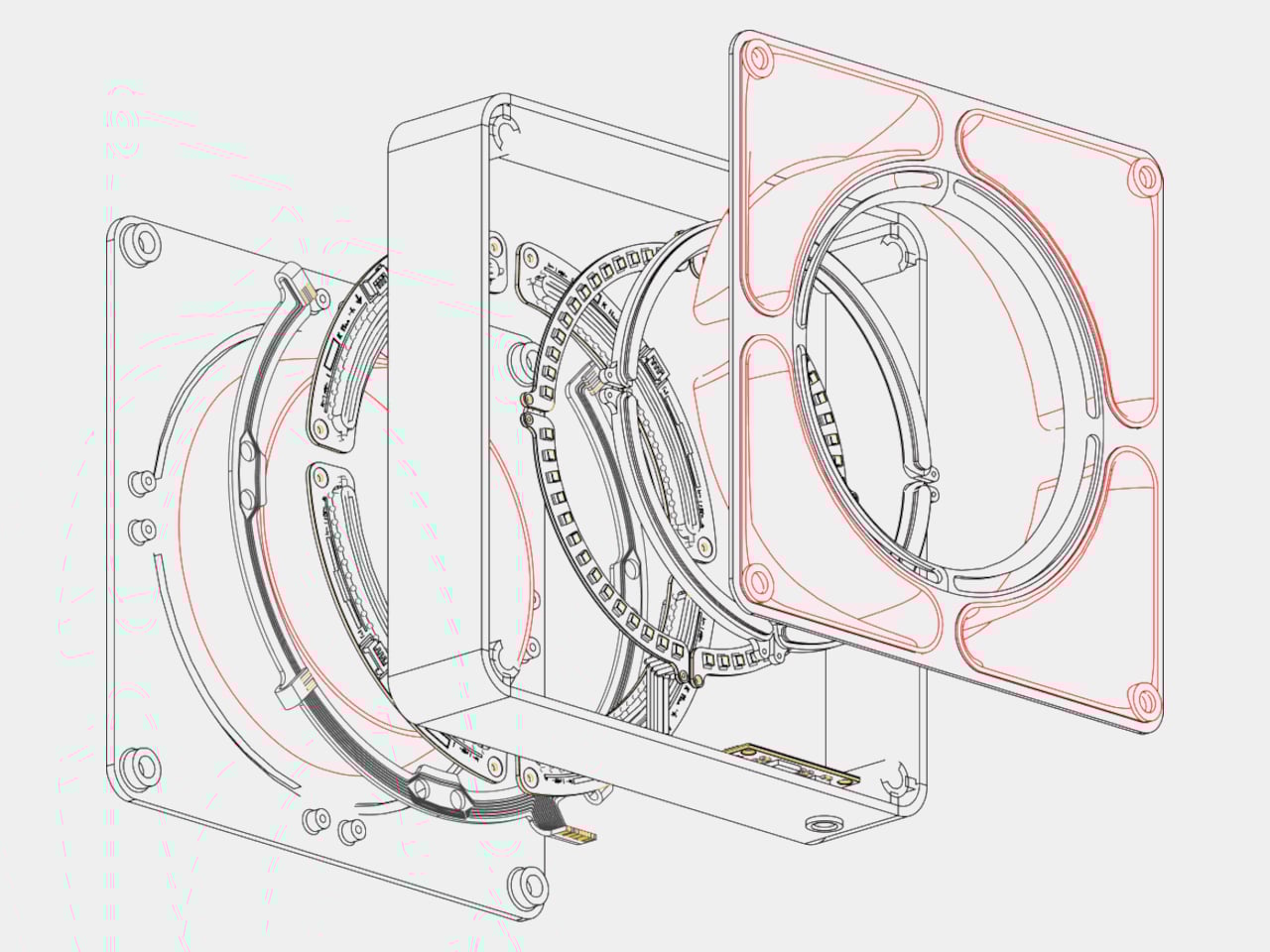
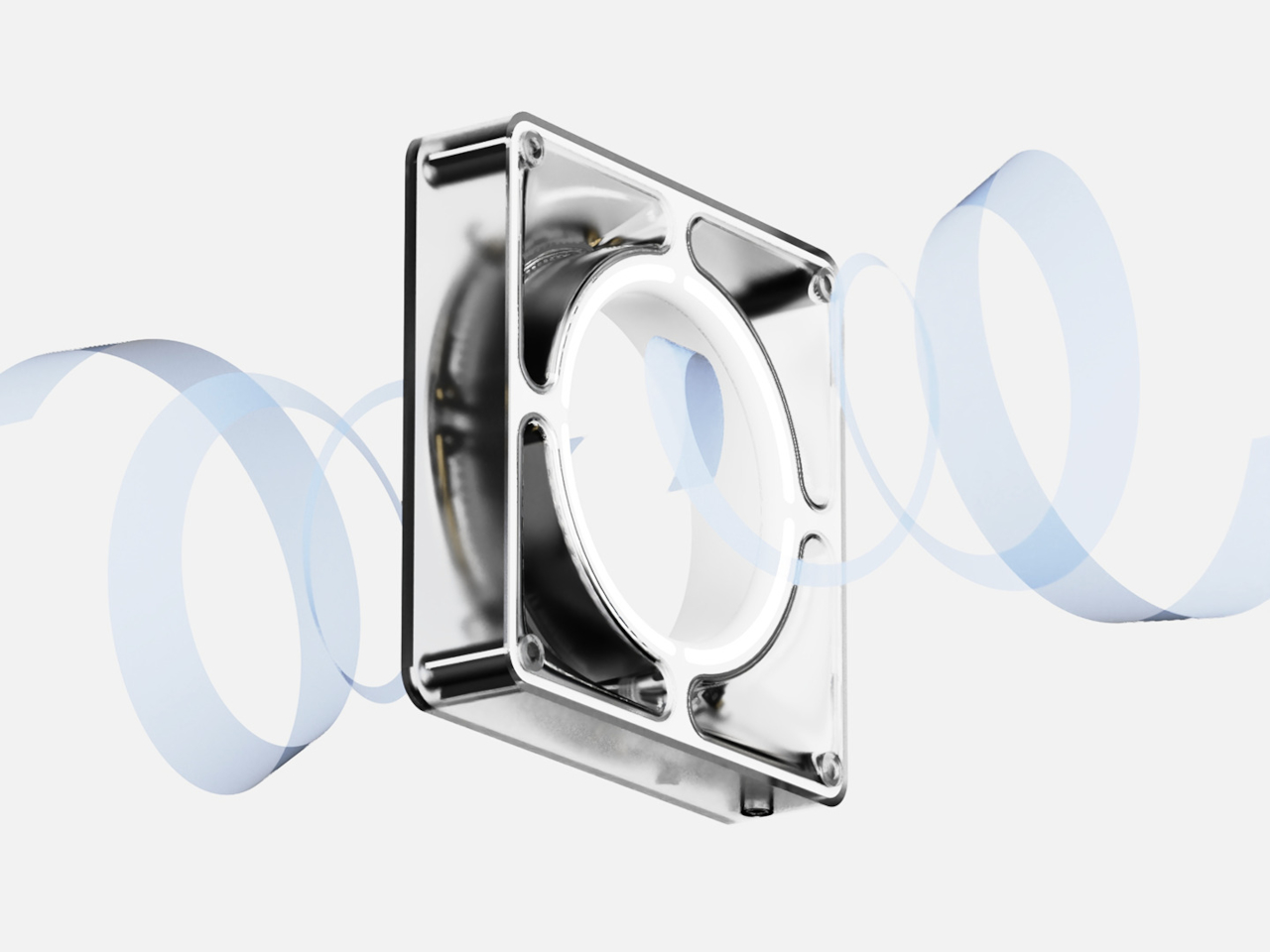
NOVA is a fanless desktop cooler designed to sit where a case fan would normally go. Instead of blades, it uses a shaped intake, ion electrodes, and clever airflow to move air through a central opening. The frame reads more like a minimalist architectural vent than a traditional PC fan, with a form language closer to audio components or precision instruments than the usual gamer aesthetic.

Designers: Minhwan Kim, Gyuri Kim

Create your own Aesthetic Render: Download KeySh2ot Studio Right Now!

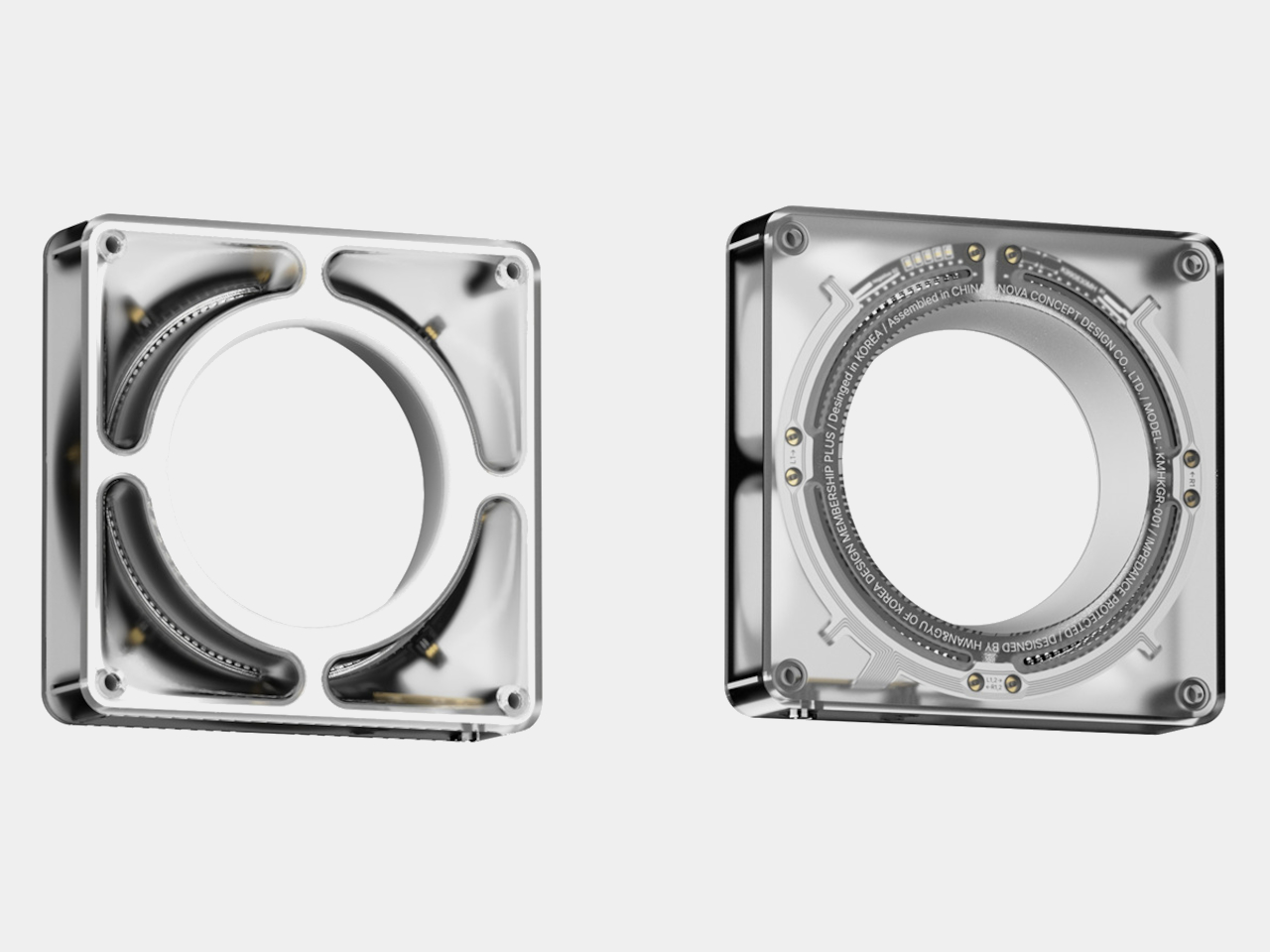
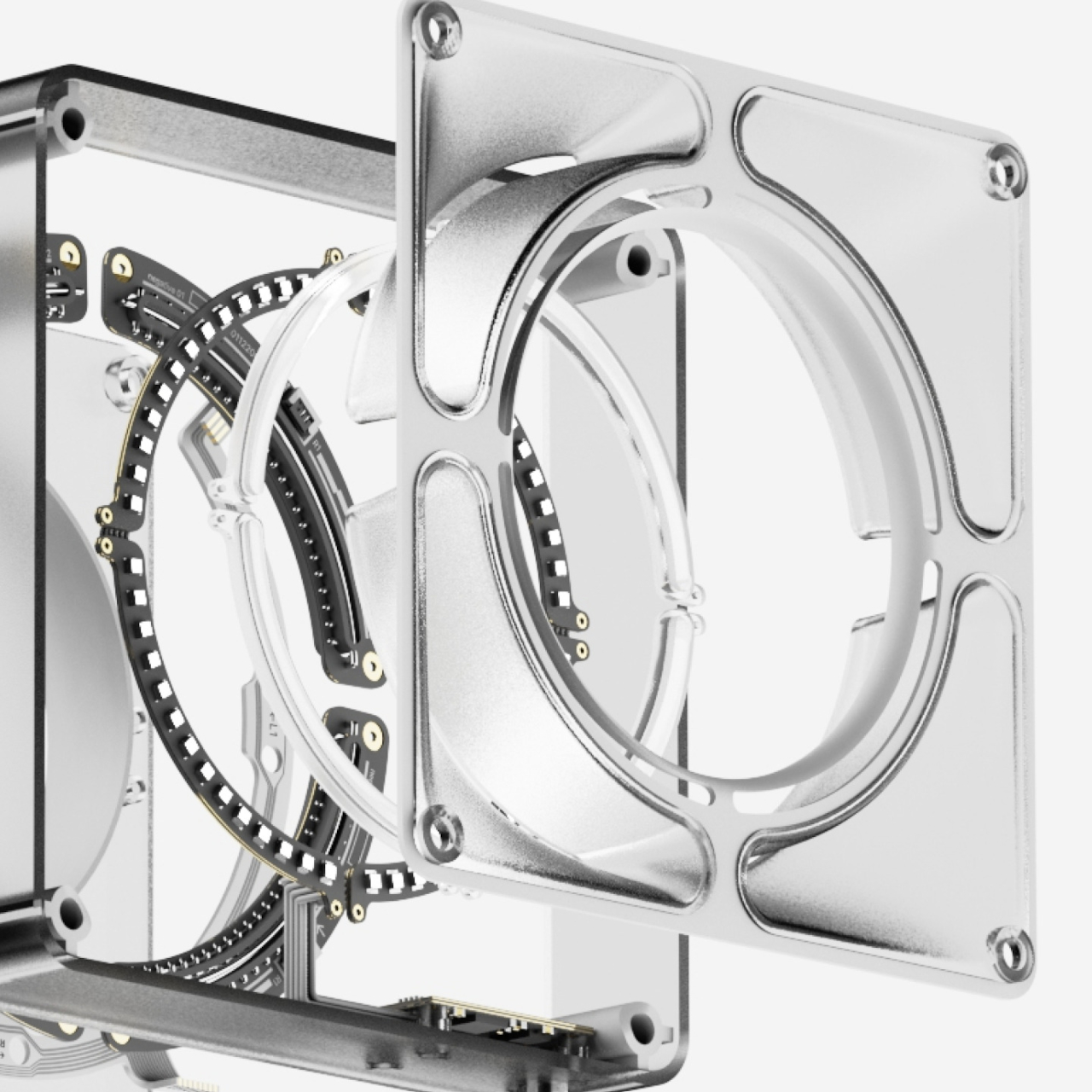
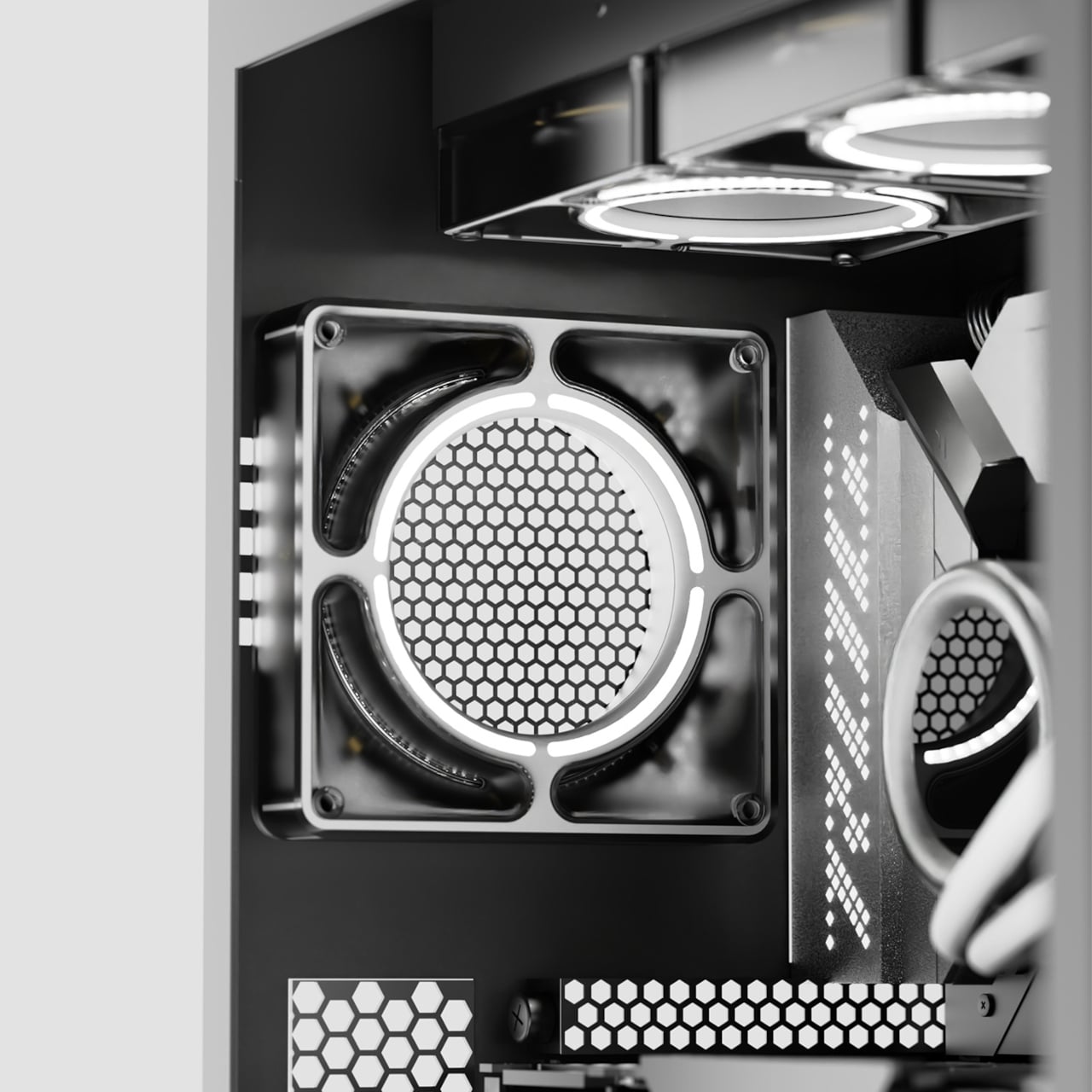
The front face is a square frame with rounded corners and four curved ribs that form a circular opening in the middle. The ribs flare from a wide outer edge to a narrower inner throat, guiding air and accelerating it toward the center. The metallic finish and subtle LED halo around the intake give it a calm, sculptural presence rather than the visual noise of rainbow patterns.

The airflow works through shaped channels and ion wind. The intake narrows the path, so air speeds up as it moves toward the center, like water through a nozzle. Ion electrodes arranged in a ring around the opening create a high-speed jet that clings to the curved surfaces and pulls surrounding air along with it. The result is a strong flow through the central hole without any visible blades or motor noise.

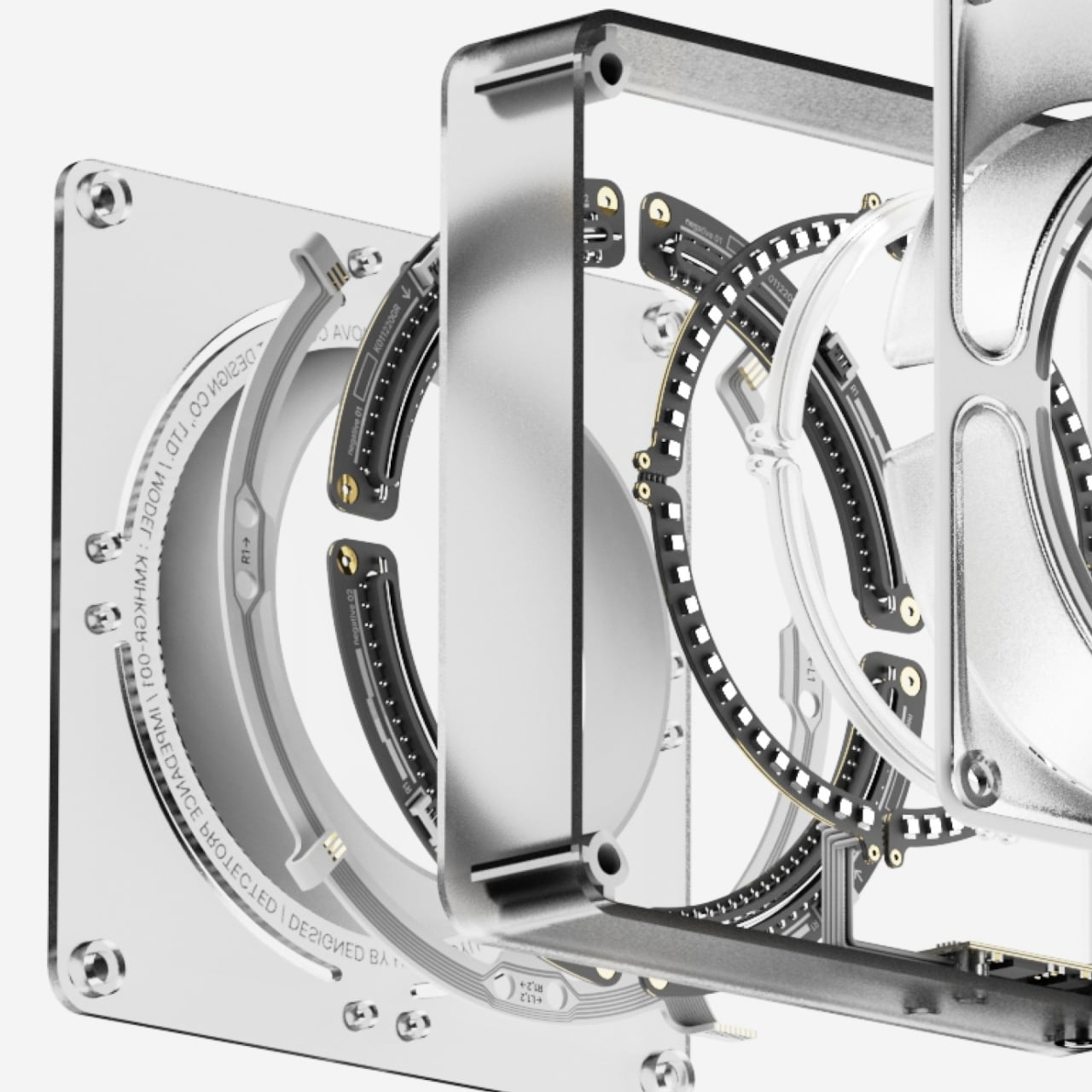
NOVA is designed to look finished from both sides. Opaque materials and careful detailing mean the cooler maintains its identity even when mounted at the rear of a case. A circular PCB carries both the ion electrodes and LEDs, arranged in a ring that simplifies assembly and gives a clean visual effect. The lighting is more like an architectural accent than a typical fan RGB, emphasizing form over flash.

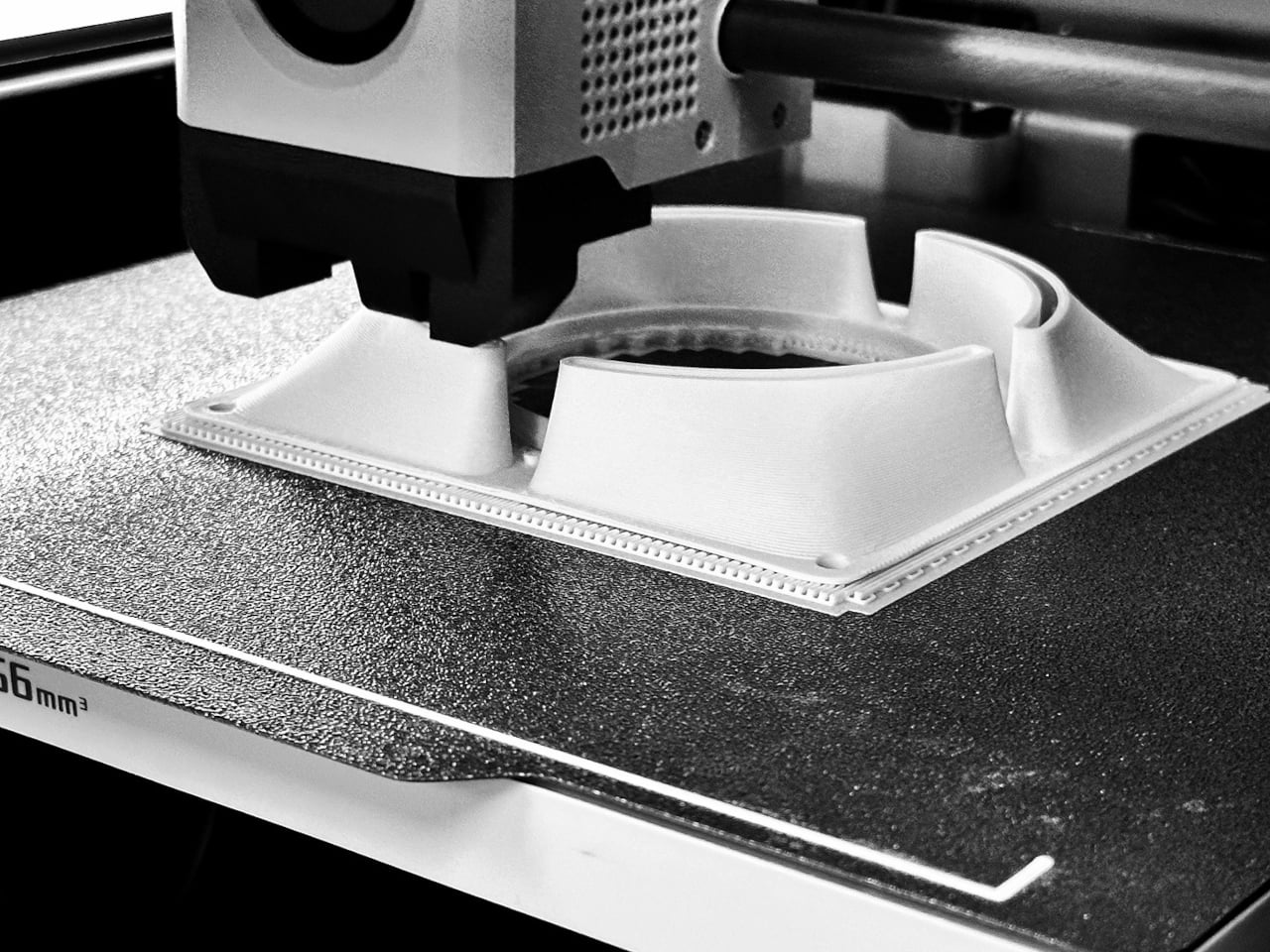
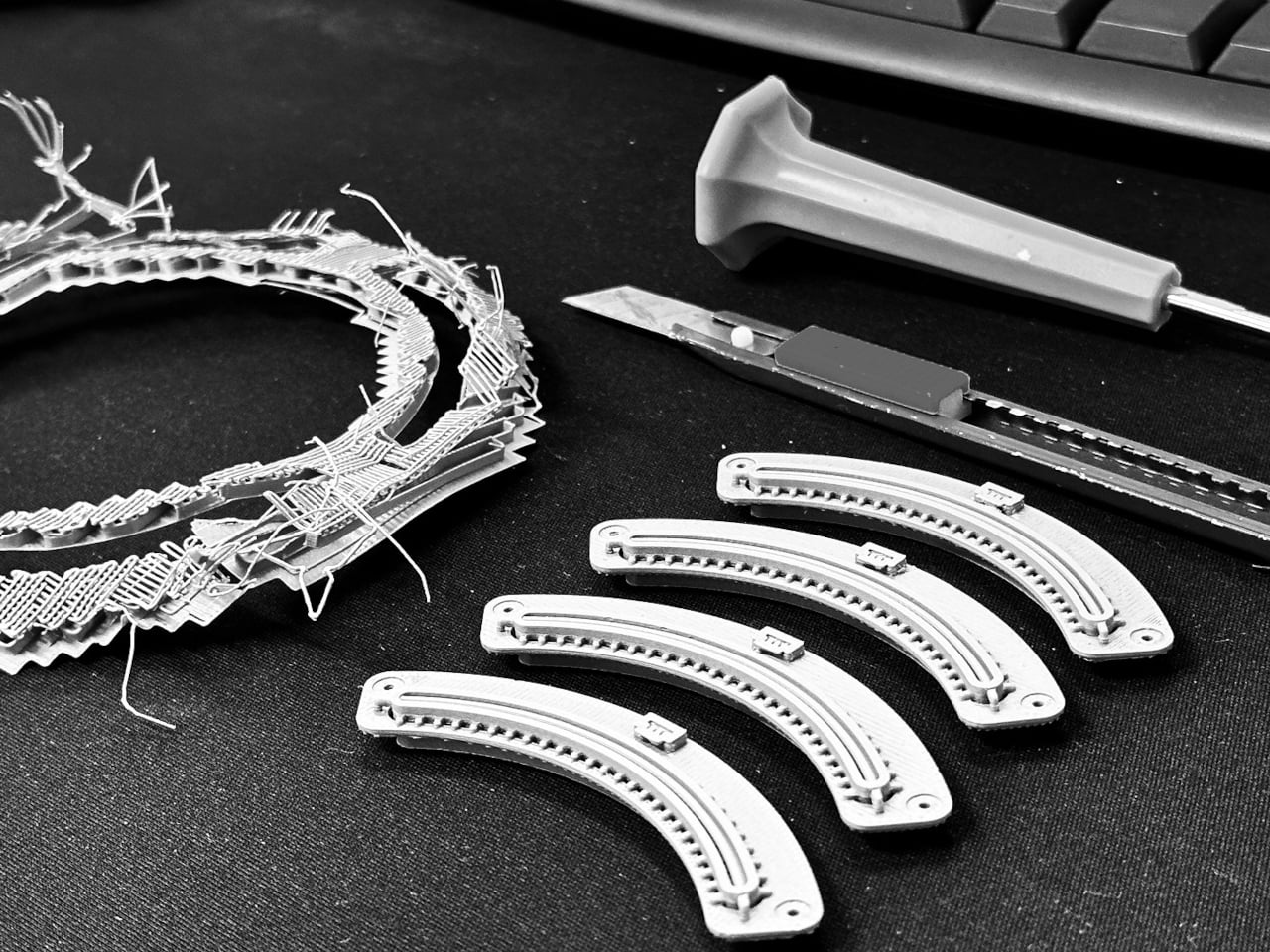
The intake components are modular curved segments that assemble into a full ring. The circular layout minimizes unique parts and makes production more straightforward if the concept ever moves to market. Everything feels engineered with manufacturing in mind, not just designed to look good in a portfolio, with careful attention to how pieces fit together and how the whole unit mounts inside standard cases.

NOVA shows what PC cooling could look like once we stop assuming every solution needs spinning blades and RGB chaos. By combining ion wind, shaped channels, and a sculptural form, it turns a background component into a visible design element. Whether or not this exact concept ships, it makes a strong case that airflow inside a case deserves the same design attention as the hardware it keeps cool.

The post NOVA Cools PCs Without Fans or Spinning Blades, Uses Ion Wind first appeared on Yanko Design.
Samsung Galaxy S26 Ultra – What Samsung Isn’t Telling You About the Display

Samsung Galaxy S26 Ultra – What Samsung Isn’t Telling You About the Display

The Samsung Galaxy S26 Ultra introduces a series of meaningful upgrades to its display technology, emphasizing usability, efficiency, and security over chasing higher brightness levels. While the device retains the same peak brightness of 2,600 nits as its predecessor, it incorporates innovations such as the M14 OLED panel, anti-reflective coating, and privacy display technology. These […]

The post Samsung Galaxy S26 Ultra – What Samsung Isn’t Telling You About the Display appeared first on Geeky Gadgets.

Posted in Uncategorized