New Microsoft 365 Updates :From Passkeys to No-Cost AI Copilot Chats

New Microsoft 365 Updates :From Passkeys to No-Cost AI Copilot Chats

What if your workday could be smarter, faster, and more secure, all thanks to the tools you already use? With the latest updates to Microsoft 365, unveiled alongside key announcements at the Ignite conference, that vision is closer than ever. From AI-driven innovations that automate tedious tasks to security enhancements designed to protect sensitive data, […]

The post New Microsoft 365 Updates :From Passkeys to No-Cost AI Copilot Chats appeared first on Geeky Gadgets.

Posted in Uncategorized

Don’t Update to iOS 26.2 RC Until You Watch This!

Don’t Update to iOS 26.2 RC Until You Watch This!

\Apple has officially released iOS 26.2 RC (Release Candidate), marking the final pre-release version before the public rollout. This update introduces a variety of new features, design adjustments, and bug fixes across Apple’s ecosystem, including iPadOS, macOS, watchOS, and tvOS. With a focus on enhancing user experience, accessibility, and performance, iOS 26.2 RC represents a […]

The post Don’t Update to iOS 26.2 RC Until You Watch This! appeared first on Geeky Gadgets.

Posted in Uncategorized

Can You Tell the Difference? Huawei Pura 80 Ultra vs. Pro Camera

Can You Tell the Difference? Huawei Pura 80 Ultra vs. Pro Camera

Choosing between the Huawei Pura 80 Ultra smartphone camera and the Sony A7C Mark II full-frame camera requires a clear understanding of their unique strengths and limitations. These devices cater to distinct audiences, yet their overlapping features make the comparison intriguing. By examining their image quality, usability, and technological advancements, you can determine which device […]

The post Can You Tell the Difference? Huawei Pura 80 Ultra vs. Pro Camera appeared first on Geeky Gadgets.

Posted in Uncategorized

UltraBar X Replaces Your Stream Deck, Volume Knob, and Phone Apps

Most desks accumulate a scattered collection of control devices over time. There’s the keyboard and mouse, maybe a Stream Deck for shortcuts, a volume knob for your speakers, a phone running smart home apps, and a separate remote for the desk lamp. Each solves a specific problem, but together they create a landscape of disconnected gadgets competing for space and attention. The monitor sits above it all, while everything underneath becomes a tangled mess of cables and redundant functions.

UltraBar X tries to consolidate that chaos into a single, modular strip that lives under your monitor. Built around a long, wedge-shaped bar with an ultra-wide display, it acts as a command center for your computer, applications, and even your smart home devices. Instead of a fixed product, it works more like a platform where you snap on magnetic modules to build the exact control surface your desk needs.

Designer: Team UltraBar

Click Here to Buy Now: $289 $429 (33% off). Hurry, only 379/500 left! Raised over $178,000.

The central piece is CoreBar, a low, seven-inch display wedge-shaped bar tilted at forty-five degrees so it’s easy to glance at without adjusting your posture. The screen shows clocks, system stats, app icons, and customizable scenes that change based on what you’re doing. Tap the screen to wake your PC, jump between apps, or trigger macros, all from a touch interface that sits right where your hands naturally rest.

What makes the system feel different is how the magnetic modules expand it. DotKey snaps onto the side and brings a cluster of Cherry MX mechanical keys for shortcuts and macros. KnobKey adds a precision rotary dial that clicks crisply as you turn it, perfect for adjusting volume, brush size, or timeline scrubbing. VivoCube is a tiny controller with its own AMOLED screen and switches, small enough to hold or dock alongside the bar.

Of course, there’s also SenseCube, the environmental sensing module. Inside its small triangular shell are millimeter-wave radar and sensors for light, temperature, humidity, and vibration. This gives your desk a kind of ambient awareness, letting it detect when you sit down, notice changes in lighting, or respond when the room gets too warm. The workspace starts to feel less static and more responsive without constant input.

A typical morning might look like this. You walk up to your desk and tap CoreBar to wake the PC, which also brings up a layout tuned for writing and email. The mechanical keys are mapped to window management shortcuts, while the knob handles scrolling through long documents. Later, a single press shifts CoreBar into a design layout, and pretty much the same modules now control brush size, zoom, and layers in Photoshop or Illustrator.

The system doesn’t stop at the screen. Through its network connection, CoreBar can talk to Philips Hue lights to adjust the room based on your focus mode, or trigger a Sonos playlist with a single tap on an icon. The same bar that manages your open apps can also dim the lights or change the soundtrack, turning your desktop into a bridge between your computer and the rest of your space.

What keeps the experience from feeling overwhelming is how the software handles it. CoreBar runs a custom system with an app store and a library of templates for different workflows. Programmers get layouts for terminal, debugging, and IDE shortcuts. Designers get knobs and keys for brushes and layers. Streamers get scene controls and quick mutes. These templates bundle icons, animations, and logic, so you can load a complete setup without building from scratch.

That said, the modular approach means the system can grow over time. You can start with just CoreBar and add modules as you figure out what you actually need, swapping them in and out as your workflow shifts. The QuantumLink magnetic protocol means modules snap on, get recognized instantly, and can be reconfigured in seconds without tools or menus.

UltraBar X is made for people who enjoy shaping their tools rather than accepting whatever default interface their operating system provides. It doesn’t replace your keyboard or mouse, but it gives the space under your monitor a clear job beyond collecting dust and cable clutter. For anyone tired of juggling separate devices or hunting through nested menus, a modular bar that can sense, adapt, and consolidate feels like a thoughtful step toward desks that work the way you do.

Click Here to Buy Now: $289 $429 (33% off). Hurry, only 379/500 left! Raised over $178,000.

The post UltraBar X Replaces Your Stream Deck, Volume Knob, and Phone Apps first appeared on Yanko Design.

Starbucks China Is Selling a $28 Camera With Dual Sensors and Y2K Filters

Starbucks wants you to photograph your coffee so badly that they’ve started selling you the camera to do it with. The Seattle coffee chain has ventured into digital imaging with a retro-styled camera that’s generating buzz for being surprisingly functional rather than just another piece of logo-plastered merchandise.

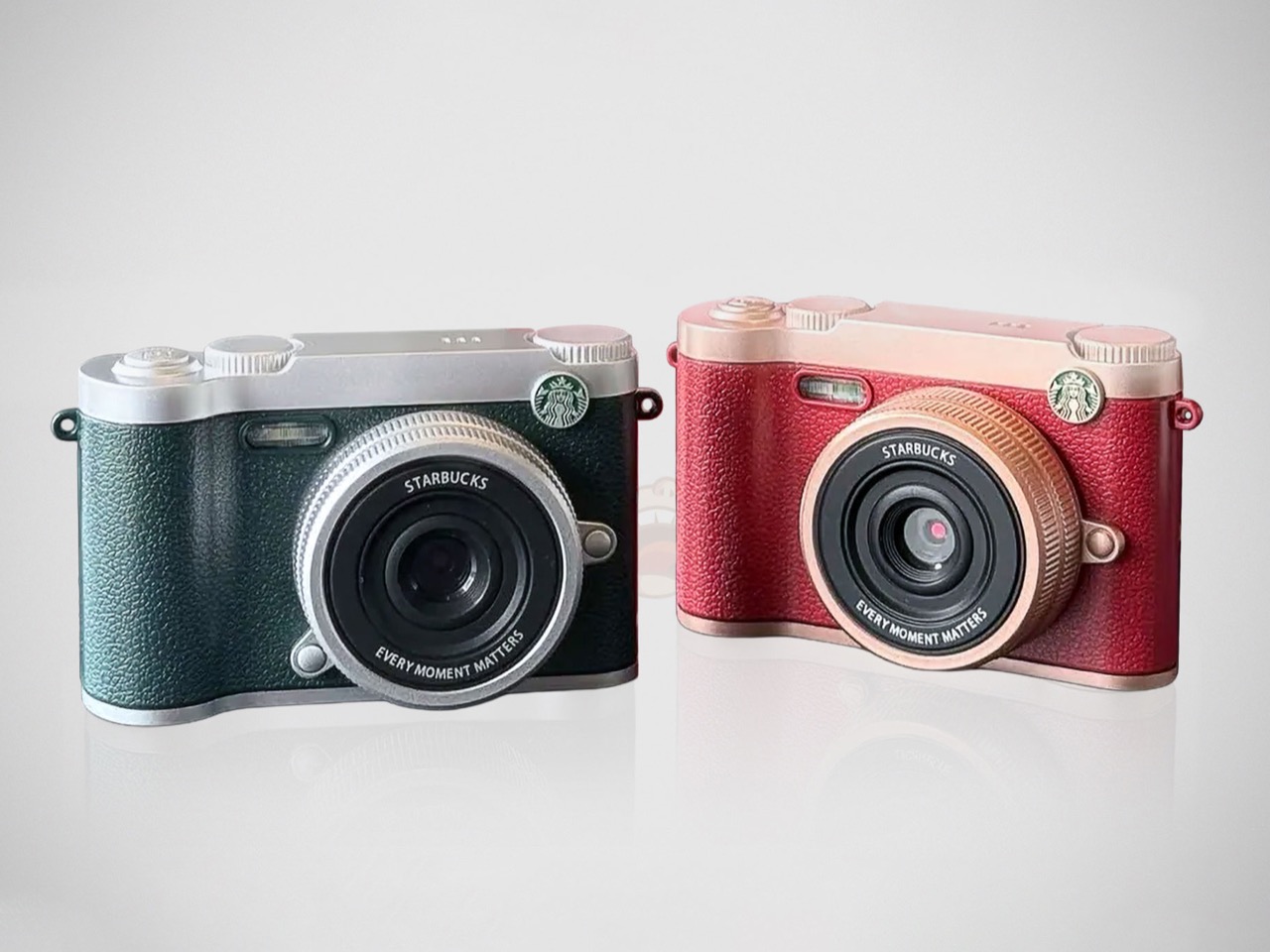
Released in China for the 2025 holiday season, the Starbucks Retro Digital Camera comes with dual sensors, vintage filters, and a design aesthetic borrowed from classic rangefinder cameras. At 198 yuan (roughly $28), it undercuts almost every digital camera on the market while offering features like proper selfie framing through its rear sensor and Y2K photo overlays. The metal-and-leather construction in burgundy-gold or green-silver colorways suggests Starbucks contracted with an established camera manufacturer rather than creating novelty electronics from scratch.

Designer: Starbucks

Look, Starbucks absolutely did not design this camera from the ground up. That $28 price point screams white-label collaboration with one of China’s numerous budget camera OEMs, and honestly, why wouldn’t they? The country has an entire ecosystem of manufacturers churning out retro-inspired digital cameras for the nostalgia market. You’d be an idiot to build camera R&D infrastructure when you’re a coffee company. Slap your logo on proven hardware, customize the leather colors, engrave “EVERY MOMENT MATTERS” around the lens ring, and call it a day. Starbucks already did this dance with LOMO on an instant camera in 2024, so they know the playbook. Partner with people who actually understand imaging sensors and leave the coffee roasting to yourself.

What actually matters here is that dual-sensor setup, because it solves a problem that every budget camera has ignored for decades. Taking selfies with a traditional camera means holding it at arm’s length, pressing the shutter, and praying you’re somewhere in the frame. Maybe your face is cut off. Maybe you captured mostly ceiling. Who knows? Starbucks stuck a second sensor where the viewfinder would normally sit, turning decorative nonsense into a functional front-facing camera. You frame yourself on the rear LCD exactly like using a smartphone, which means the target audience (people who want filtered photos for Instagram) can actually use this thing without wanting to throw it against a wall. Those nine Y2K photo frame overlays and retro filters are pure nostalgia bait, but we’re drowning in millennium aesthetics right now anyway. Fashion’s doing it, UI design’s doing it, why shouldn’t cameras?

Resale prices jumped to $72 almost immediately, which tells you everything about actual demand. Triple the original price means people want these as functional devices, not just collectors hoarding Starbucks merch. The lychee leather texture and metal construction feel surprisingly premium when you hold one. Those decorative dials on top are completely useless, sure, but they nail the vintage rangefinder look well enough that you’d need to inspect closely to realize this costs less than a week of lattes. At some point, perceived quality matters as much as actual specs, especially when you’re targeting casual photographers who care more about vibes than aperture settings.

The post Starbucks China Is Selling a $28 Camera With Dual Sensors and Y2K Filters first appeared on Yanko Design.

US Department of Transportation doubles down on gas, cuts fuel efficiency standards

The Department of Transportation under President Donald Trump is moving to reverse more of the climate policies that had been enacted by President Joe Biden. Under a proposed rulemaking by the National Highway Traffic Safety Administration, fuel efficiency standards for cars and light trucks in model year 2031 will be reduced to an average of 34.5 miles per gallon, down from the standard of 50.4 miles per gallon that was part of Biden's plans to encourage more adoption of electric vehicles among US drivers. 

The move was expected since Trump re-took office. Transportation Secretary Sean Duffy ordered the NHTSA to review fuel efficiency standards in January a day after he assumed the title. The current administration also ended a tax credit for buying electric vehicles over the summer. In the meantime, international manufacturers are racing ahead in their progress on building better EVs, offering other markets more exciting models that won’t arrive in the US thanks to tariffs.

While Trump's announcement today claimed that the change would reduce the average cost of a new car by $1,000 and offer a savings of $109 billion over five years, gas prices are on track to increase if the Environmental Protection Agency does successfully repeal the finding that climate change causes human harm. Plus there's the incalculable financial and human cost of a growing number of catastrophic weather events that have been predicted if the planet continues to get warmer.

This article originally appeared on Engadget at https://www.engadget.com/transportation/us-department-of-transportation-doubles-down-on-gas-cuts-fuel-efficiency-standards-234542939.html?src=rss

Rimac’s Verne Turns the Robotaxi Into a Private Lounge on Wheels

Mate Rimac built his reputation on speed. The Nevera hypercar, with its 1,914 horsepower and sub-two-second sprint to 60 mph, represents everything traditional car enthusiasts worship: acceleration, cornering, the primal connection between human and machine. So when the same company unveils a vehicle designed to never exceed city speeds, one without a steering wheel or pedals, the contrast demands attention. The Verne robotaxi is not a departure from Rimac’s engineering ambitions. It is a redirection of those ambitions toward a question the automotive industry has been avoiding: what does a vehicle become when you delete the driver entirely?

Designer: Rimac

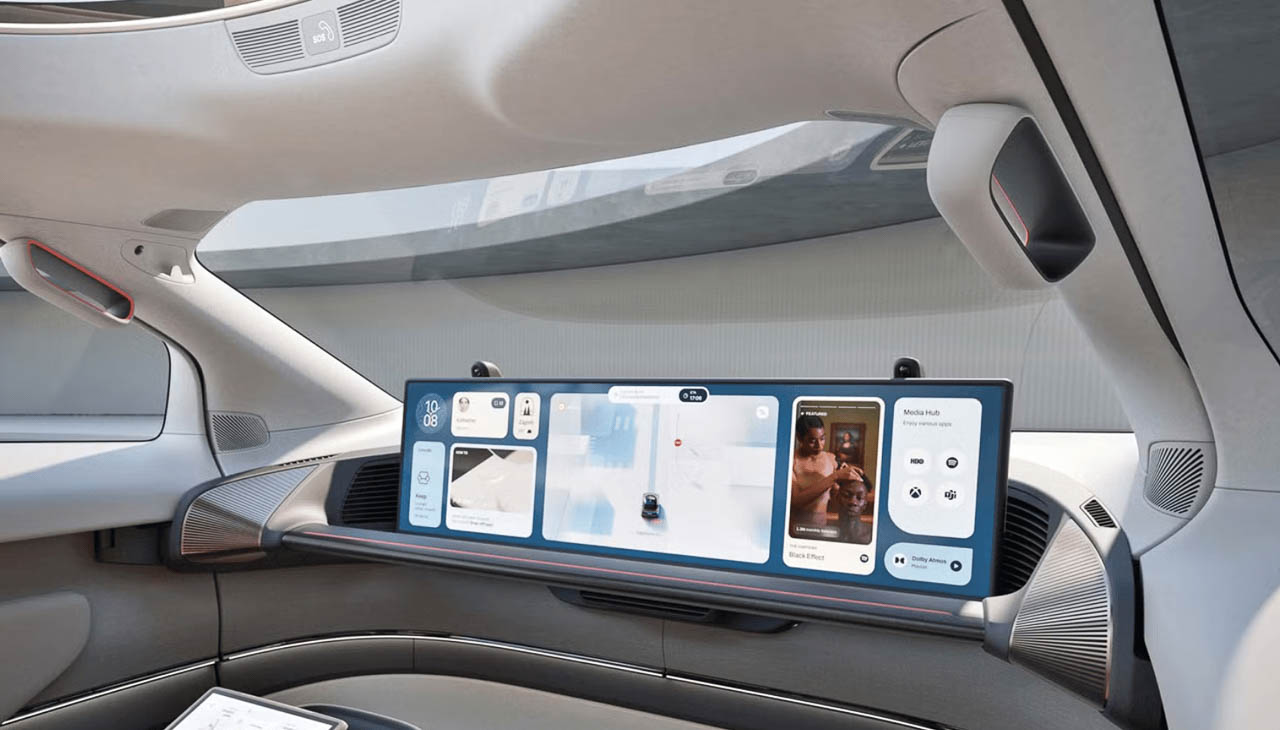
The answer, according to Rimac, looks more like a hotel room than a car. The Verne’s interior abandons the dashboard-centric layout that has defined automobiles for over a century. In its place sits a 43-inch ultra-wide display that stretches across the cabin like a digital horizon line, flanked by lounge seats that recline through five positions including fully flat. Rimac describes the space as “less automotive and more like a living room,” and the company means this literally. There are no controls to learn, no interfaces to master, no traditional automotive vocabulary at all.

Designing From the Inside Out

Most vehicles begin as an engine bay connected to a passenger compartment. The proportions follow predictable rules: hood length communicates power, wheelbase suggests stability, and the cabin fits whatever space remains after mechanical necessities claim their real estate. The Verne inverts this hierarchy completely.
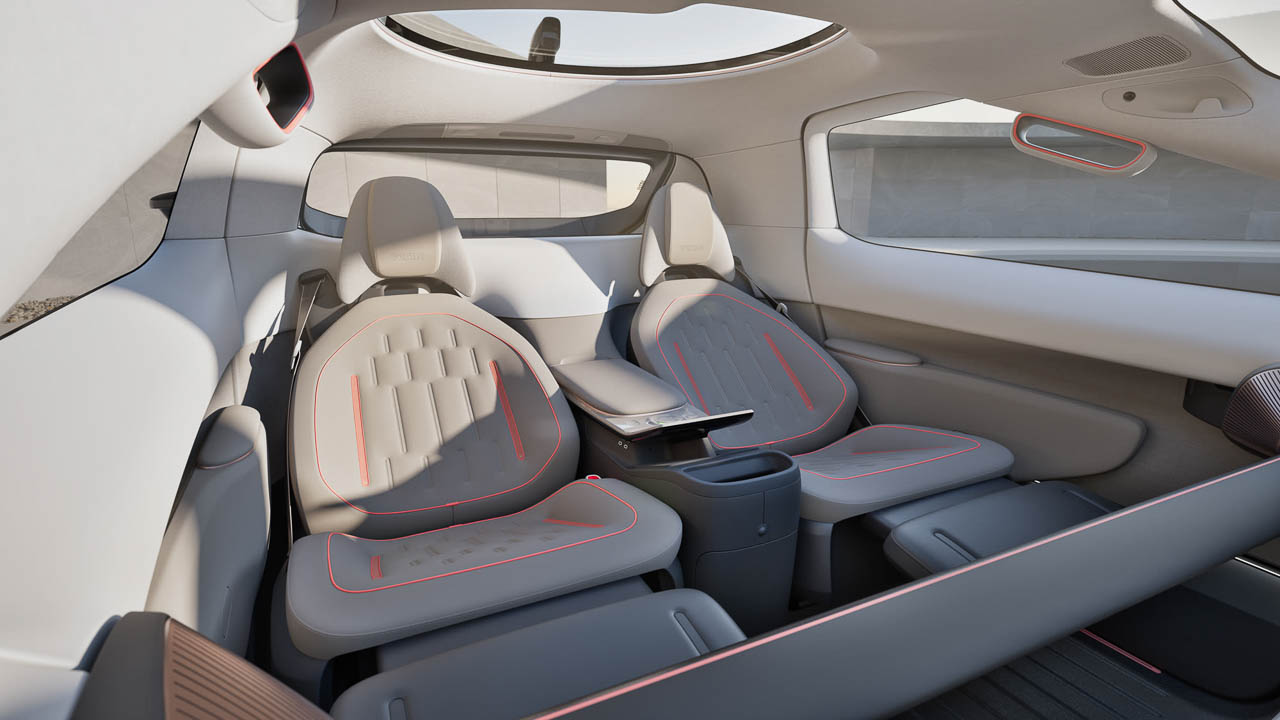
Rimac’s design team started with a two-person living room brief and worked outward. The result is a compact exterior with a trapezoidal profile, short overhangs, and a tall cabin that claims more legroom than a Rolls-Royce despite fitting easily on narrow European streets. This is not marketing exaggeration. When you remove the engine bay, transmission tunnel, and driver’s cockpit, the remaining volume can be redistributed entirely toward passenger comfort.
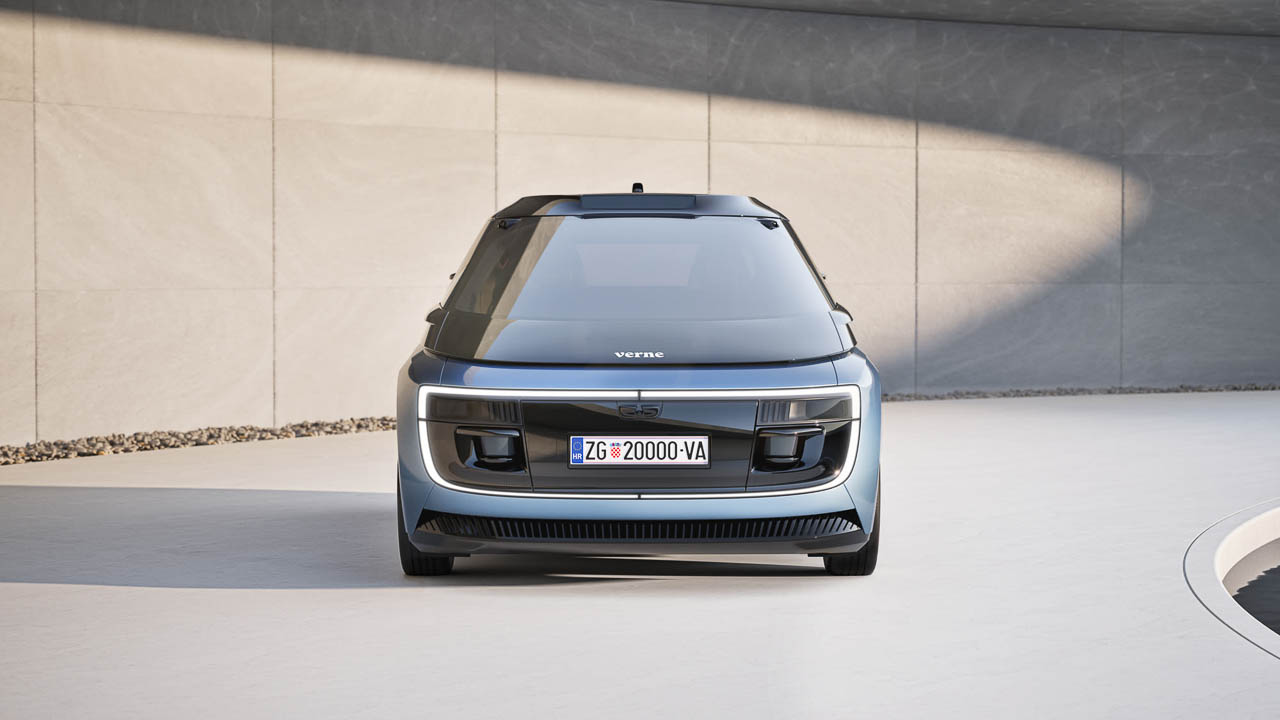
The exterior reads as a clean monovolume pod, almost architectural in its simplicity. Unlike many autonomous test vehicles, which wear their sensor arrays like medical equipment strapped to the roof, the Verne integrates its Mobileye hardware directly into the bodywork. The lidar, radar, and camera systems that enable Level 4 autonomy remain invisible from the passenger’s perspective. This design choice reflects a deeper philosophy: the technology should enable the experience without announcing itself.
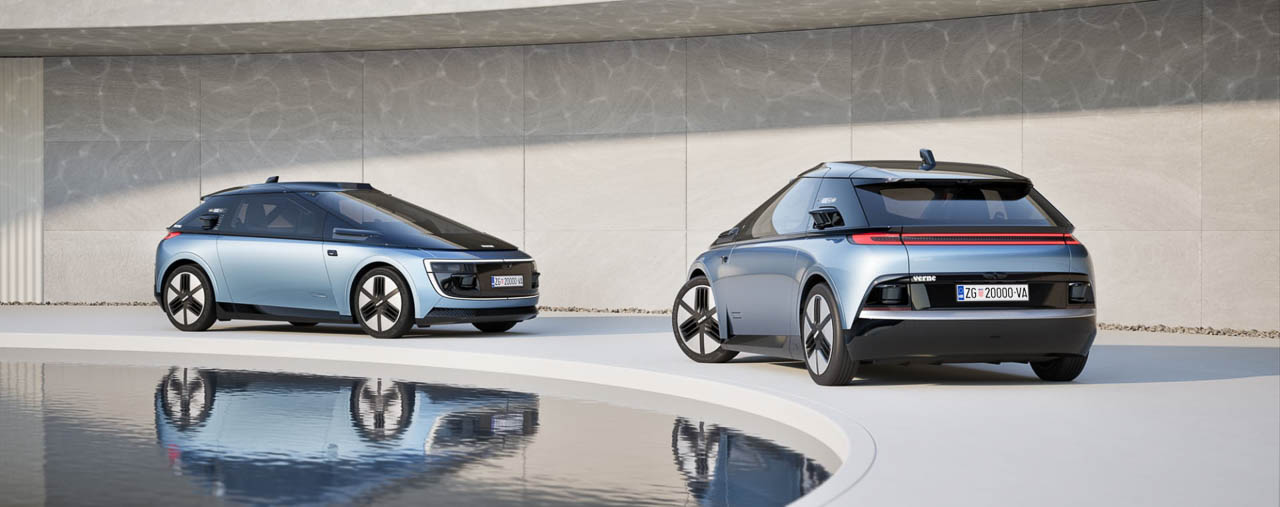
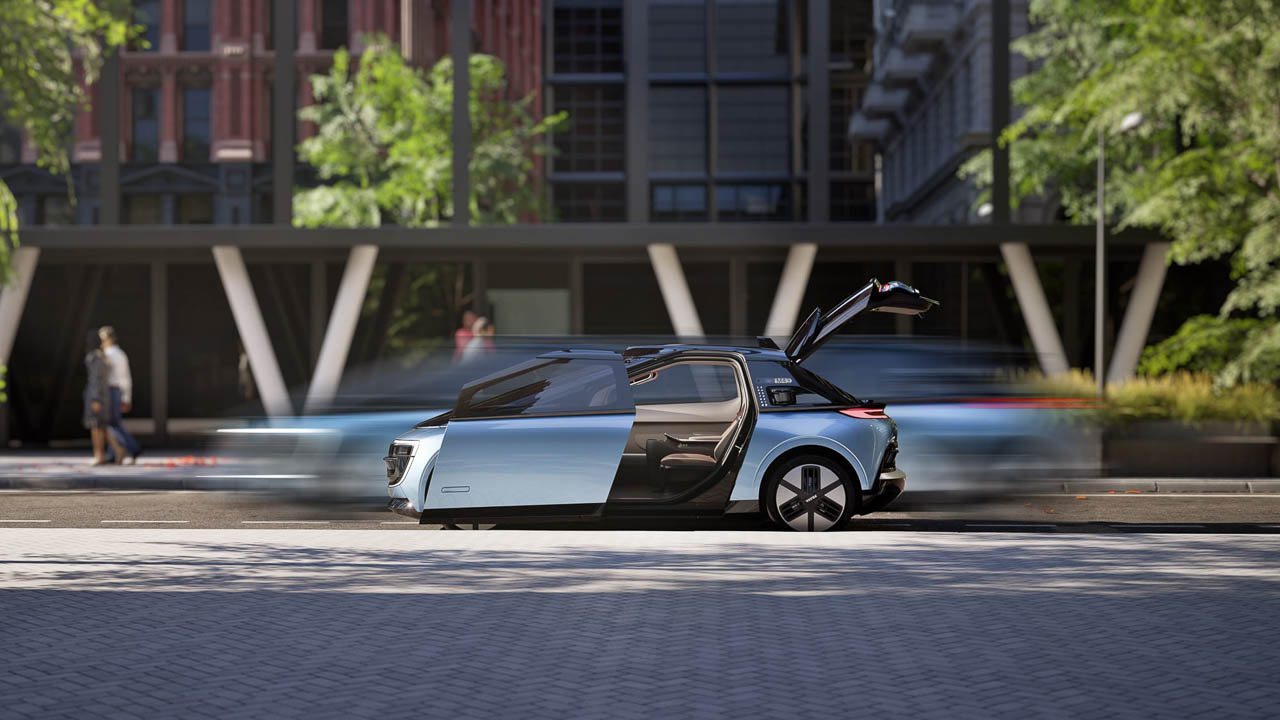
Twin sliding doors reinforce this architectural thinking. Rather than swinging outward into traffic or requiring passengers to squeeze past a door edge, Verne’s doors glide along the body, opening a full entry that lets you step in and sit down in a single motion. For a vehicle designed to operate in dense urban environments, picking up passengers along crowded curbs, this is not merely convenient. It is the kind of detail that separates mobility design from automotive styling.

The Lounge Cabin as a New Typology

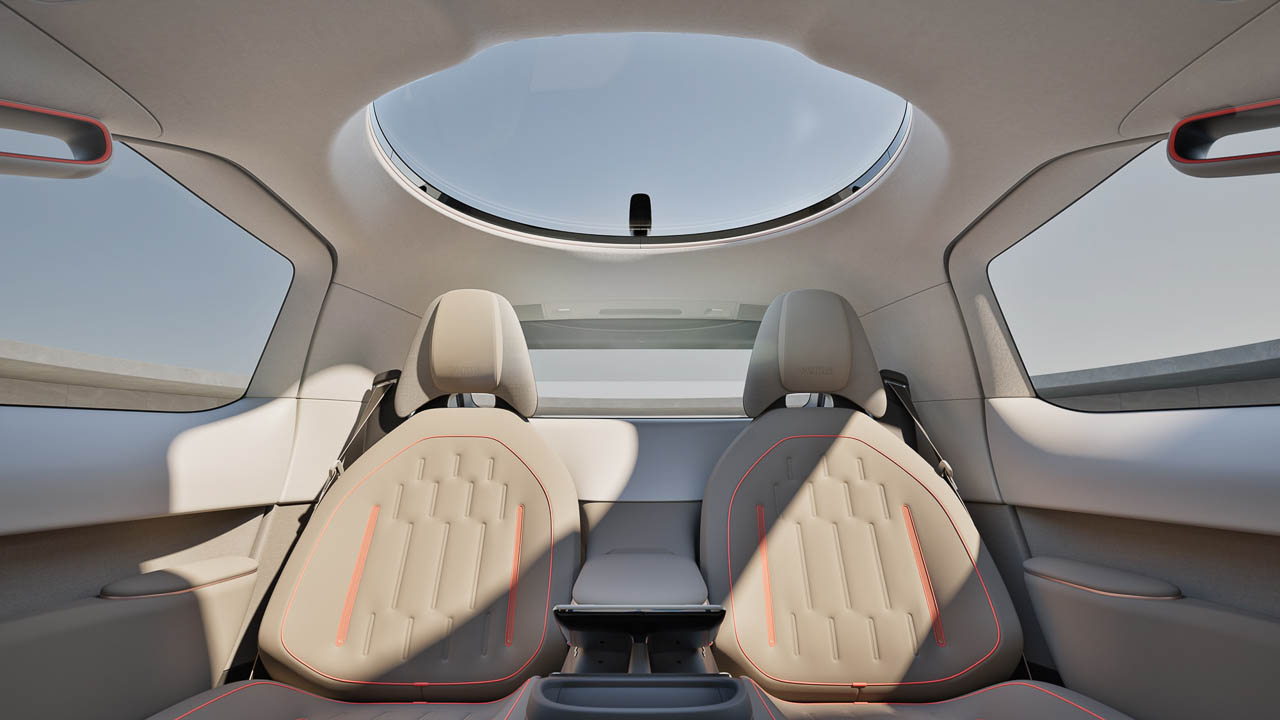
Step inside the Verne and the absence of traditional automotive elements creates an immediate spatial shift. There is no steering column to navigate around, no center console dividing driver from passenger, no dashboard cluttering the forward view. The cabin feels less like sitting in a car and more like settling into a premium railway compartment or private jet. The 43-inch display serves multiple functions depending on context: cinema screen, workspace, or simply a window to curated content during transit.
A 17-speaker audio system surrounds the cabin, and the circular Halo ring sunroof overhead washes the space in ambient light that Rimac calibrated to feel warm and residential rather than automotive. The seats themselves draw more from airline business-class design than traditional car buckets, with deep recline options that transform the vehicle into a genuine nap pod. What makes this interior approach significant is not the individual features. Large screens and reclining seats exist in luxury vehicles already. The significance lies in the coherence: without a driver to accommodate, every design decision can optimize for passenger experience alone. The seating geometry, the display placement, the ambient lighting, the acoustic tuning all work toward a single purpose rather than competing with driver-centric requirements.

Rimac included one deliberate exception to the screen-dominated interface. A physical “Median” control sits within reach, providing a tactile way to start and end rides. In a cabin stripped of mechanical controls, this single physical interaction point offers psychological reassurance. You are still in control of something, even when the vehicle handles everything else. This is furniture design meeting transportation design, with transportation losing its traditional priority.

Why Two Seats Is a Design Choice, Not a Limitation

The Verne’s two-seat configuration will strike many observers as restrictive. Conventional automotive thinking says more seats equal more utility, more potential passengers, more flexibility. Rimac’s research led them to a different conclusion.
Analysis of ride-hailing data reveals that approximately 90% of trips involve one or two passengers. The rear bench seat in a typical sedan, the one that supposedly provides flexibility, sits empty on nine out of ten journeys. This is not an argument against four-seat vehicles. It is an argument for purpose-built alternatives. By eliminating that largely unused rear space, Rimac freed up volume for stretch-out legroom, substantial luggage capacity, and a sense of openness that a cramped four-seat cabin cannot provide.

Right-Sizing Performance for Cities

The powertrain specification tells a story of intentional restraint. Where the Nevera produces nearly 2,000 horsepower, the Verne makes do with approximately 150 kW. The battery pack holds 60 kWh compared to the Nevera’s 120 kWh setup. Range reaches roughly 240 kilometers, modest by EV standards but more than sufficient for urban fleet operation where vehicles return to charging hubs between shifts.
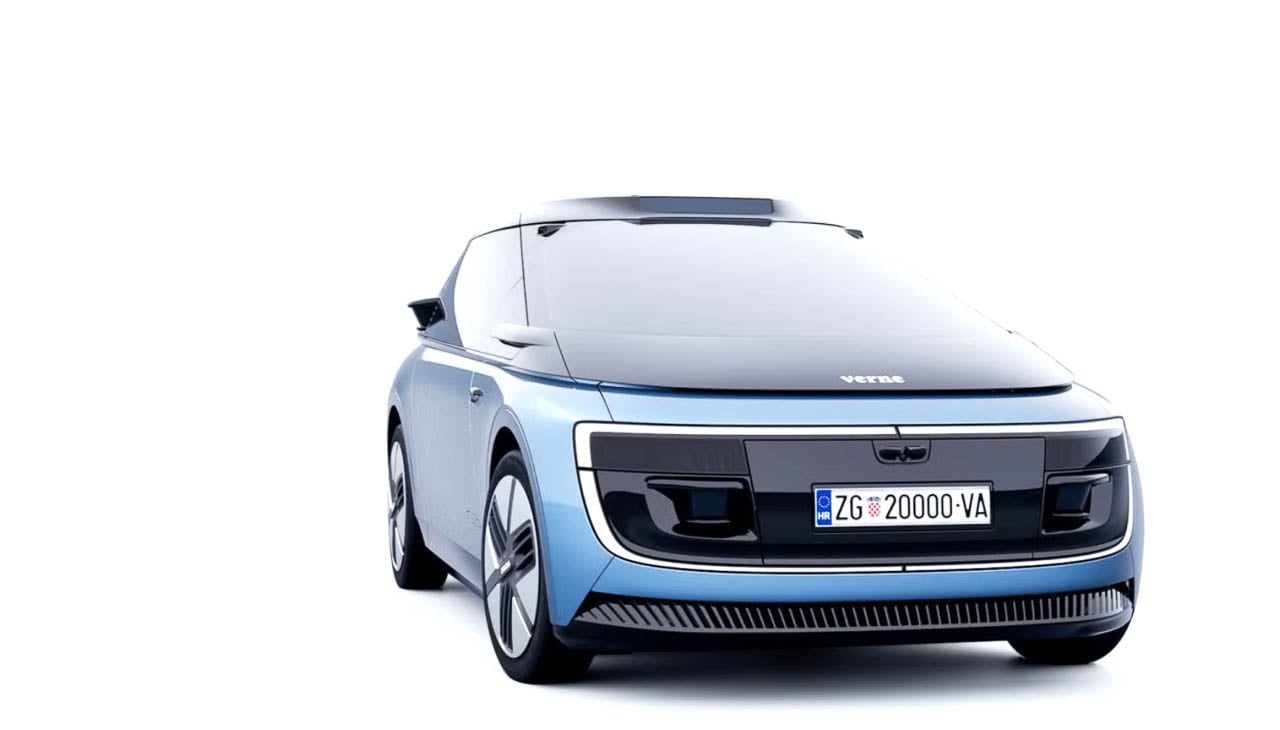
This represents a deliberate rejection of the spec-sheet competition that dominates electric vehicle marketing. Rimac could have installed larger batteries and higher-output motors. The company certainly has the engineering capability. Instead, they optimized for city duty: lower material consumption, easier charging cadence, reduced manufacturing complexity, and a lighter footprint for the urban environments where Verne will operate. The performance numbers are not a compromise. They are a design decision as intentional as the sliding doors or the lie-flat seats.

Autonomy as Invisible Infrastructure

The Verne runs on Mobileye Drive, a purpose-built autonomous driving platform that integrates multiple lidar units, radar arrays, and over thirteen cameras. This sensor architecture enables Level 4 autonomy, meaning the vehicle can handle all driving tasks within its operational domain without human intervention or supervision. For design purposes, the important word is “invisible.” The entire autonomous stack exists to enable the clean cabin experience. Every sensor, processor, and software system works toward a single goal: erasing the need for human attention to the road.

Rimac extended this invisible infrastructure philosophy to the user experience layer. An app lets riders configure their preferred environment before the vehicle arrives: temperature, seat position, ambient lighting, music selection, even scent. When the Verne pulls up, your ride is already personalized. You do not adjust anything. You simply enter a space that was curated for you. This shifts the experience from operating a vehicle to inhabiting one. The entry system reinforces this transition: instead of a door handle, you unlock via keypad or app, a gesture more architectural than automotive, closer to entering a hotel room than climbing into a car.

A New Species of Urban Object

The Verne represents something the automotive industry has been circling for years without quite achieving: a vehicle designed entirely around passengers rather than drivers. Previous attempts at autonomous concepts retained too much conventional automotive vocabulary. They looked like cars that happened to drive themselves. The Verne looks like something else entirely, a mobile room that happens to move through cities.
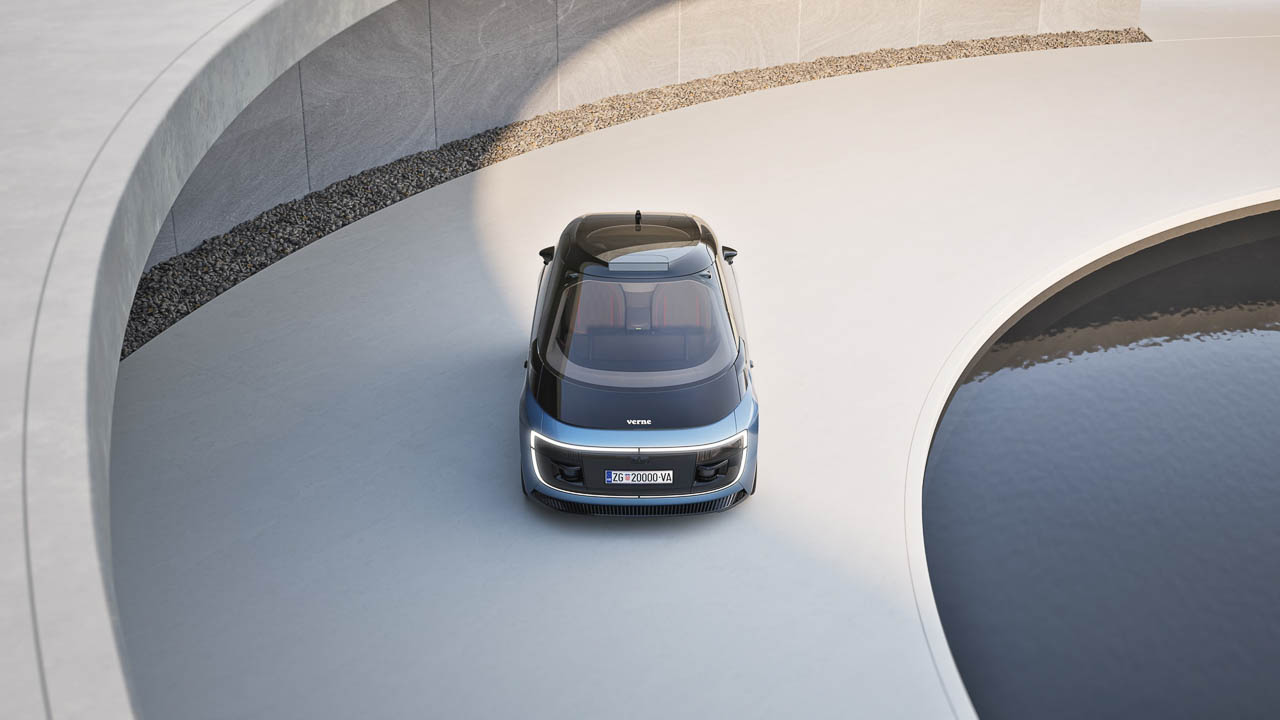
Rimac plans initial deployments in European and Middle Eastern cities starting around 2026, with service hubs and charging infrastructure designed as extensions of the Verne’s visual language. The vehicle becomes part of a larger system, a fleet of identical pods circulating through urban environments, picking up passengers, delivering them, returning to charge. This is not personal transportation in the traditional sense. It is infrastructure that feels personal.

The questions this raises extend beyond Rimac’s specific implementation. What happens to automotive identity when the driver disappears? How do cities redesign curb space for vehicles that open sideways? Does the two-seat configuration represent a constraint or an intentional intimacy that larger vehicles cannot offer? The Verne does not answer all of these questions. But it is the first production-intent vehicle that forces the industry to ask them seriously.

The hypercar maker from Croatia has delivered something unexpected: a slow, quiet pod that may influence urban mobility design more profoundly than any 250-mph supercar ever could. Sometimes the most ambitious engineering is knowing when to stop.

The post Rimac’s Verne Turns the Robotaxi Into a Private Lounge on Wheels first appeared on Yanko Design.

Artist Bungie plagiarized for Marathon alpha says the issue has been resolved

Bungie and Sony Interactive Entertainment appear to have settled the plagiarism scandal that rocked Marathon before the game was indefinitely delayed in June 2025. Fern Hook, an artist who goes by the name “Antireal” online, posted on X that her issues with Bungie using her work without credit in Marathon have been resolved to her "satisfaction."

Marathon's distinct art style is one of its charms, but as Hook claimed on X and Bungie later confirmed, a portion of the assets and textures featured in the game's alpha were lifted from Hook's work. At the time, Bungie announced that it was conducting an investigation and hoped to discuss the issue with Hook. It's not clear what kind of agreement Bungie, Sony and Hook came to, but it appears to have solved any outstanding issues.

Bungie delayed Marathon from its original September 2025 launch date in June, and more recently ran closed playtests of an updated version of the game in October. As of Sony's November earnings report, the company now says Marathon will launch by March 2026. Marathon is a reimagining of an older Bungie franchise, but more importantly, it's also the developer's first new game since Destiny 2 was released in 2017. Considering Sony's increased scrutiny of Bungie's performance, settling this issue and hopefully setting up Marathon for a smoother launch is definitely a good thing.

This article originally appeared on Engadget at https://www.engadget.com/gaming/artist-bungie-plagiarized-for-marathon-alpha-says-the-issue-has-been-resolved-223901094.html?src=rss

Artist Bungie plagiarized for Marathon alpha says the issue has been resolved

Bungie and Sony Interactive Entertainment appear to have settled the plagiarism scandal that rocked Marathon before the game was indefinitely delayed in June 2025. Fern Hook, an artist who goes by the name “Antireal” online, posted on X that her issues with Bungie using her work without credit in Marathon have been resolved to her "satisfaction."

Marathon's distinct art style is one of its charms, but as Hook claimed on X and Bungie later confirmed, a portion of the assets and textures featured in the game's alpha were lifted from Hook's work. At the time, Bungie announced that it was conducting an investigation and hoped to discuss the issue with Hook. It's not clear what kind of agreement Bungie, Sony and Hook came to, but it appears to have solved any outstanding issues.

Bungie delayed Marathon from its original September 2025 launch date in June, and more recently ran closed playtests of an updated version of the game in October. As of Sony's November earnings report, the company now says Marathon will launch by March 2026. Marathon is a reimagining of an older Bungie franchise, but more importantly, it's also the developer's first new game since Destiny 2 was released in 2017. Considering Sony's increased scrutiny of Bungie's performance, settling this issue and hopefully setting up Marathon for a smoother launch is definitely a good thing.

This article originally appeared on Engadget at https://www.engadget.com/gaming/artist-bungie-plagiarized-for-marathon-alpha-says-the-issue-has-been-resolved-223901094.html?src=rss

Artist Bungie plagiarized for Marathon alpha says the issue has been resolved

Bungie and Sony Interactive Entertainment appear to have settled the plagiarism scandal that rocked Marathon before the game was indefinitely delayed in June 2025. Fern Hook, an artist who goes by the name “Antireal” online, posted on X that her issues with Bungie using her work without credit in Marathon have been resolved to her "satisfaction."

Marathon's distinct art style is one of its charms, but as Hook claimed on X and Bungie later confirmed, a portion of the assets and textures featured in the game's alpha were lifted from Hook's work. At the time, Bungie announced that it was conducting an investigation and hoped to discuss the issue with Hook. It's not clear what kind of agreement Bungie, Sony and Hook came to, but it appears to have solved any outstanding issues.

Bungie delayed Marathon from its original September 2025 launch date in June, and more recently ran closed playtests of an updated version of the game in October. As of Sony's November earnings report, the company now says Marathon will launch by March 2026. Marathon is a reimagining of an older Bungie franchise, but more importantly, it's also the developer's first new game since Destiny 2 was released in 2017. Considering Sony's increased scrutiny of Bungie's performance, settling this issue and hopefully setting up Marathon for a smoother launch is definitely a good thing.

This article originally appeared on Engadget at https://www.engadget.com/gaming/artist-bungie-plagiarized-for-marathon-alpha-says-the-issue-has-been-resolved-223901094.html?src=rss