The best cameras for 2026

Choosing a camera is not just about resolution or price. It is about finding something that matches how you like to shoot. Some photographers want a compact mirrorless camera that travels easily. Others want an action cam that can handle rough hikes, or a full-frame system that delivers the best possible image quality. With so many options today, there is a camera built for almost every creative style.

We tested the top models across categories to help you decide which one fits your needs. Whether you are filming your first vlog, shooting portraits or capturing fast-moving action, these are the best cameras to help you grow your skills.

Mirrorless is the largest camera category in terms of models available, so it’s the best way to go if you’re looking for something with the most advanced features. Canon and Nikon recently announced they’re discontinuing development of new DSLRs, simply because most of the advantages of that category are gone, as I detailed in a video. The biggest selling feature of a mirrorless camera is the ability to change lenses depending on the type of shooting you want to do.

The most important features to look for in an action cam are image quality, stabilization and battery life. GoPro has easily been beating all rivals recently in all those areas, but DJI has taken a lot of its business with the Osmo Pocket 3 gimbal camera.

This category has fewer cameras than it did even a few years ago and many models are older, as manufacturers focus instead on mirrorless models. However, I’m still a big believer in compact cameras. They’re a noticeable step up from smartphones quality-wise, and a lot of people will take a compact traveling or to events when they’d never bother with the hassle of a DSLR or mirrorless camera.

Compacts largely have type 1-inch sensors, but a few offer larger options, particularly Fujifilm’s XF-100V. Another popular model, Sony’s XV-1, is primarily aimed at content creators looking to step up. In any case, desirable qualities include image quality, a fast lens, relatively long zoom, flip-out display, good battery life, a high quality EVF, decent video and good pocketability.

Though smartphones get better for video and photos every year, full cameras still have an edge in many ways. The larger sensors in mirrorless cameras let more light in, and you have a wide choice of lenses with far superior optics. Dedicated cameras are also faster for shooting things like sports or wildlife, offer superior video for content creators and create more professional results.

There are a few key things to consider to get the most out of a camera. The first is sensor size: in general, the larger the sensor, the better (and usually more expensive) the camera.

Full frame is the largest sensor size for mainstream cameras, and it’s available on models like the new Panasonic S9, the Nikon Z III and Canon EOS R5 II. At a size equivalent to 35mm film (36 x 24mm), it offers the best performance in terms of image quality, low-light capability and depth of field. But it’s also very expensive and finicky. While bokeh looks incredible at an aperture of f/1.4, the depth of field is so razor thin that your subject's eyebrow might be in focus but not their eye. This can also make shooting video difficult.

The next size category is APS-C (around 23.5 x 15.6mm for most models and 22.2 x 14.8mm for Canon), offered on Fujifilm's X Series lineup, the Canon R10, the Sony ZV-E10 II and the Nikon Z50. It's cheaper than full frame, both for the camera body and lenses, but still brings most of the advantages like decent bokeh, high ISOs for low-light shooting and relatively high resolution. With a sensor size the same as movie cameras, it's ideal for shooting video, and it’s easier to hold focus than with full-frame cameras.

Micro Four Thirds (17.3 x 13mm), a format shared by Panasonic and Olympus, is the next step down in sensor size. It offers less bokeh and light-gathering capability than APS-C and full frame, but allows for smaller and lighter cameras and lenses. For video, you can still get reasonably tight depth of field with good prime lenses, but focus is easier to control.

The other common sensor size is Type 1 (1 inch), which is actually smaller than one inch at 12.7 x 9.5mm. That's used mostly by compact models like Sony’s ZV-1 vlogging camera. Finally, action cameras like the GoPro Hero 11 and DJI’s Osmo 3 have even smaller sensors (1/1.9 and 1/1.7 inches, respectively).

For photographers, another key factor is autofocus (AF) speed and accuracy. Most modern mirrorless cameras have hybrid phase-detect AF systems that allow for rapid focus and fast burst speeds. The majority also offer AI features like eye-detect AF for people and animals, which locks in on the subject’s eyes, face or body to keep them in focus. However, some models are faster and more reactive than others.

The electronic viewfinder (EVF) and rear display are also crucial. The best models have the sharpest and brightest EVFs that help you judge a shot before taking it. For things like street photography, it’s best to have as bright and sharp a rear display as possible, so it’s easy to see your subject and check focus in all manner of lighting conditions. You may also want a screen that flips out rather than just tilting, too.

DSLRs and mirrorless cameras let you change lenses, but you're stuck with what's built into a compact camera. While that's great for portability, a single lens means you're going to sacrifice something along the way. The Fujifilm X100V, for instance, has a fast but fixed 35mm-equivalent f/2.0 lens and no zoom. The Sony RX100 V has a 24-70mm zoom, but it's slower at the telephoto end (f/2.8) and less sharp than a fixed focal (prime) lens.

When choosing a lens for a mirrorless camera, you’ll need to consider the focal or zoom length, along with the minimum aperture. Smaller numbers like f/1.4 for a prime lens or f/2.8 for a zoom are best, as they let you work in darker environments and maximize background blur to isolate your subject. However, those lenses are more complex and thus more expensive.

When it comes to video, there are other factors to consider. Some cameras combine or skip over pixels (line skipping or pixel binning) for video recording, which is not ideal because it can reduce sharpness. Better cameras tend to read out the entire sensor and then “downsample” to improve video sharpness (camera manufacturers don’t often say if video is pixel binned, but will say if it’s downsampled). Another important factor is sensor speed, as slower sensors tend to have more rolling shutter that can create a “jello” effect that skews video.

In addition, how’s the battery life? How do you like the handling and feel? How long can you shoot before the camera heats up or stops? Does it support 10-bit HDR video? Is there a microphone and/or a headphone jack? (If you record a lot of interviews, it's preferable to have both.) How's the video autofocus? All of these things play a part in your decision.

This article originally appeared on Engadget at https://www.engadget.com/cameras/best-cameras-151524327.html?src=rss

Is the 2026 Apple TV Worth the Wait?

Is the 2026 Apple TV Worth the Wait?

The Apple TV 2026 is set to redefine the landscape of home entertainment and smart home integration. Scheduled for release in spring 2026, this highly anticipated device combines advanced technology with user-focused functionality. Featuring the powerful A17 Pro chip and Apple Intelligence, it is designed to appeal to gamers, smart home enthusiasts, and entertainment lovers […]

The post Is the 2026 Apple TV Worth the Wait? appeared first on Geeky Gadgets.

Posted in Uncategorized

Inside NVIDIA’s $20B Groq Licensing Move, Speed Gains and Fewer Watts

Inside NVIDIA’s $20B Groq Licensing Move, Speed Gains and Fewer Watts

What happens when a tech giant like NVIDIA, already dominating the AI hardware space, makes a bold $20 billion move to license innovative technology from an ambitious startup? Matt Wolfe breaks down how NVIDIA’s licensing agreement with Groq, a deal that’s anything but conventional, could reshape the future of artificial intelligence hardware. This isn’t your […]

The post Inside NVIDIA’s $20B Groq Licensing Move, Speed Gains and Fewer Watts appeared first on Geeky Gadgets.

Posted in Uncategorized

Samsung Galaxy S26 Ultra: This is the One You’ve Been Waiting For

Samsung Galaxy S26 Ultra: This is the One You’ve Been Waiting For

The Samsung Galaxy S26 series is poised to reshape the premium smartphone market with a host of significant upgrades. From enhanced displays and faster charging to improved camera systems and advanced processors, the S26 lineup offers a compelling mix of innovation and practicality. With a February 2026 launch on the horizon, Samsung is positioning itself […]

The post Samsung Galaxy S26 Ultra: This is the One You’ve Been Waiting For appeared first on Geeky Gadgets.

Posted in Uncategorized

Learn Copilot Chat for MS Teams : From File Analysis to Loop Pages, Custom Styles & Agents

Learn Copilot Chat for MS Teams : From File Analysis to Loop Pages, Custom Styles & Agents

Have you ever wished for a smarter way to manage your workload in Microsoft Teams? With AI-powered features that draft emails, analyze data, generate visuals, and enhance collaboration, Copilot Chat is here to transform how you work, all within your virtual workspace. In the video below, Mike Tholfsen breaks down how this innovative assistant transforms […]

The post Learn Copilot Chat for MS Teams : From File Analysis to Loop Pages, Custom Styles & Agents appeared first on Geeky Gadgets.

Posted in Uncategorized

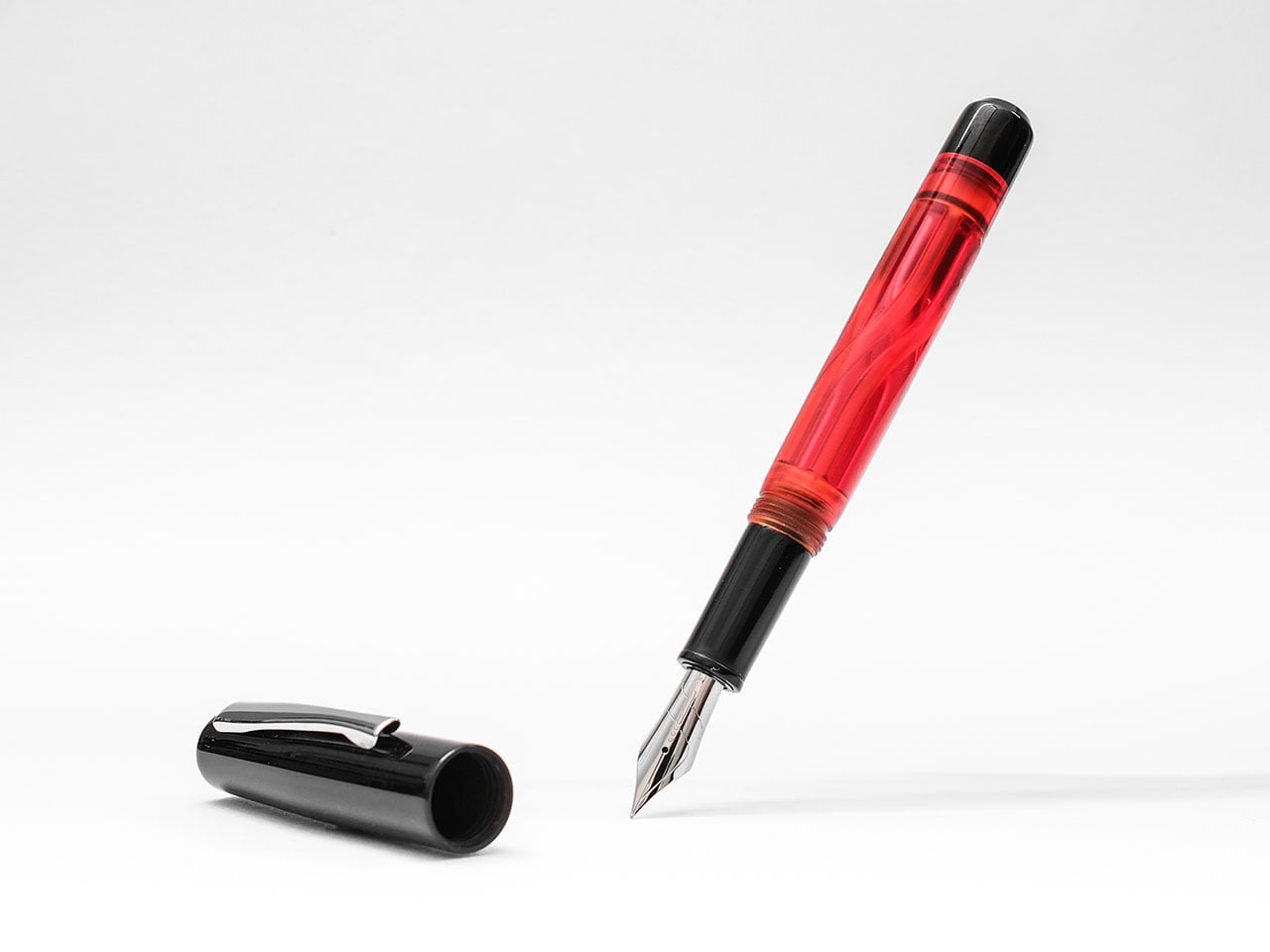
This $89 Fountain Pen Shows You the Ink Flowing Through it’s 3D Printed Maze

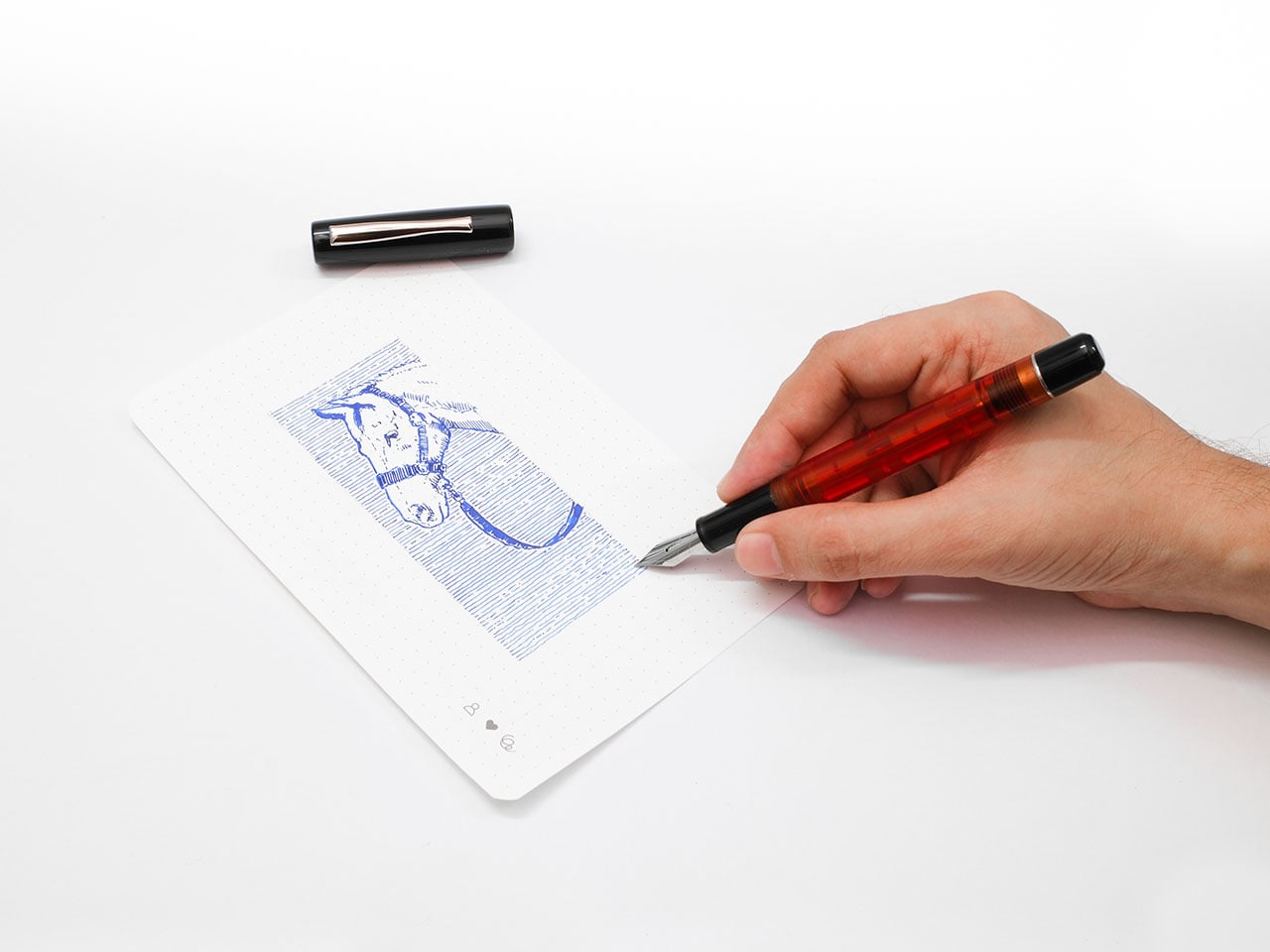
Nib is the first thing I want right when choosing a fountain pen, then I look for its design and aesthetics afterwards. Endless Stationery, a Chennai, India-based global stationery brand, that successfully created a retractable fountain pen and raised close to $250,000 in funding for it in 2024, wants to change my idea in favor of aesthetics without compromising the writing experience.

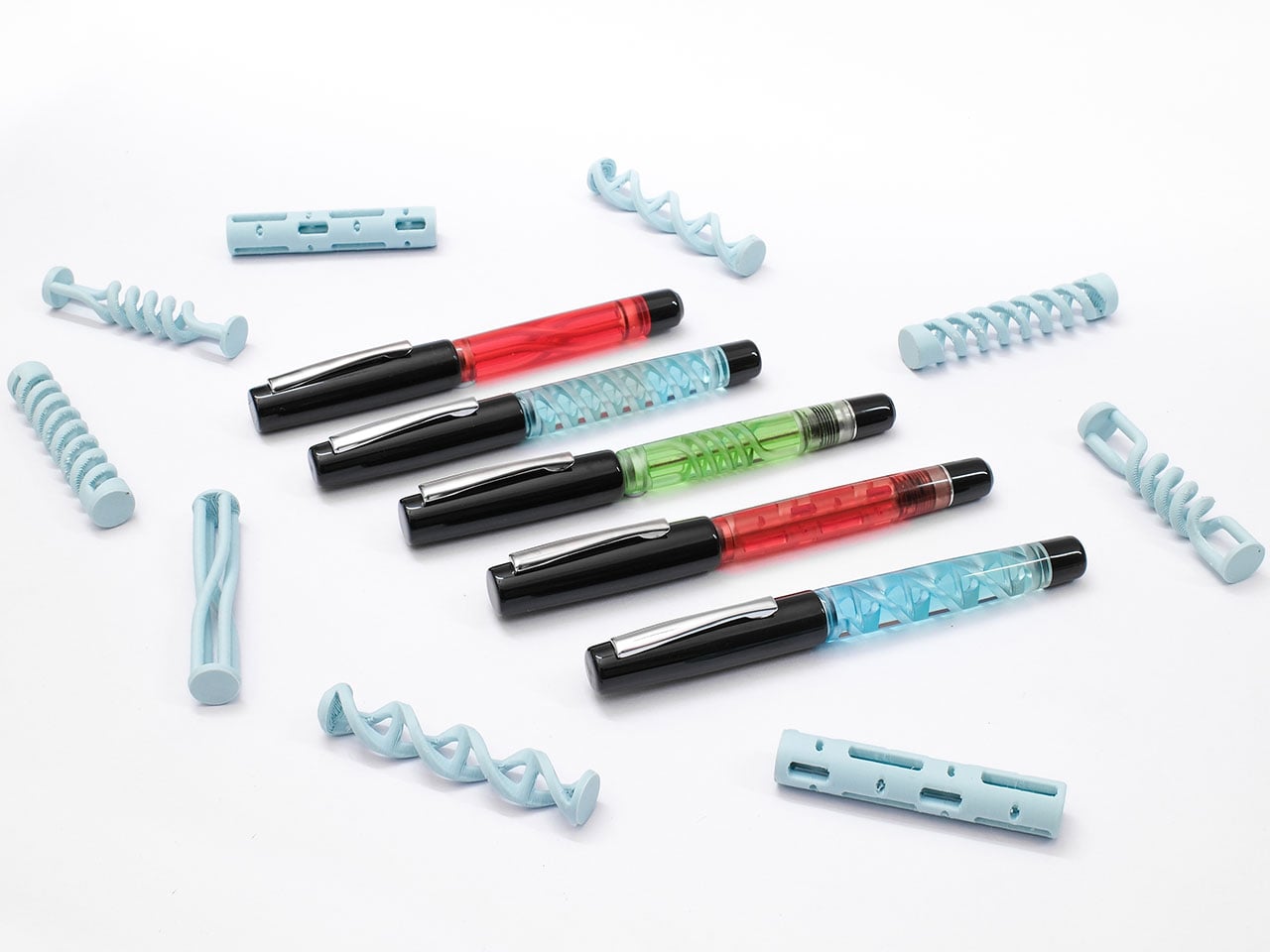
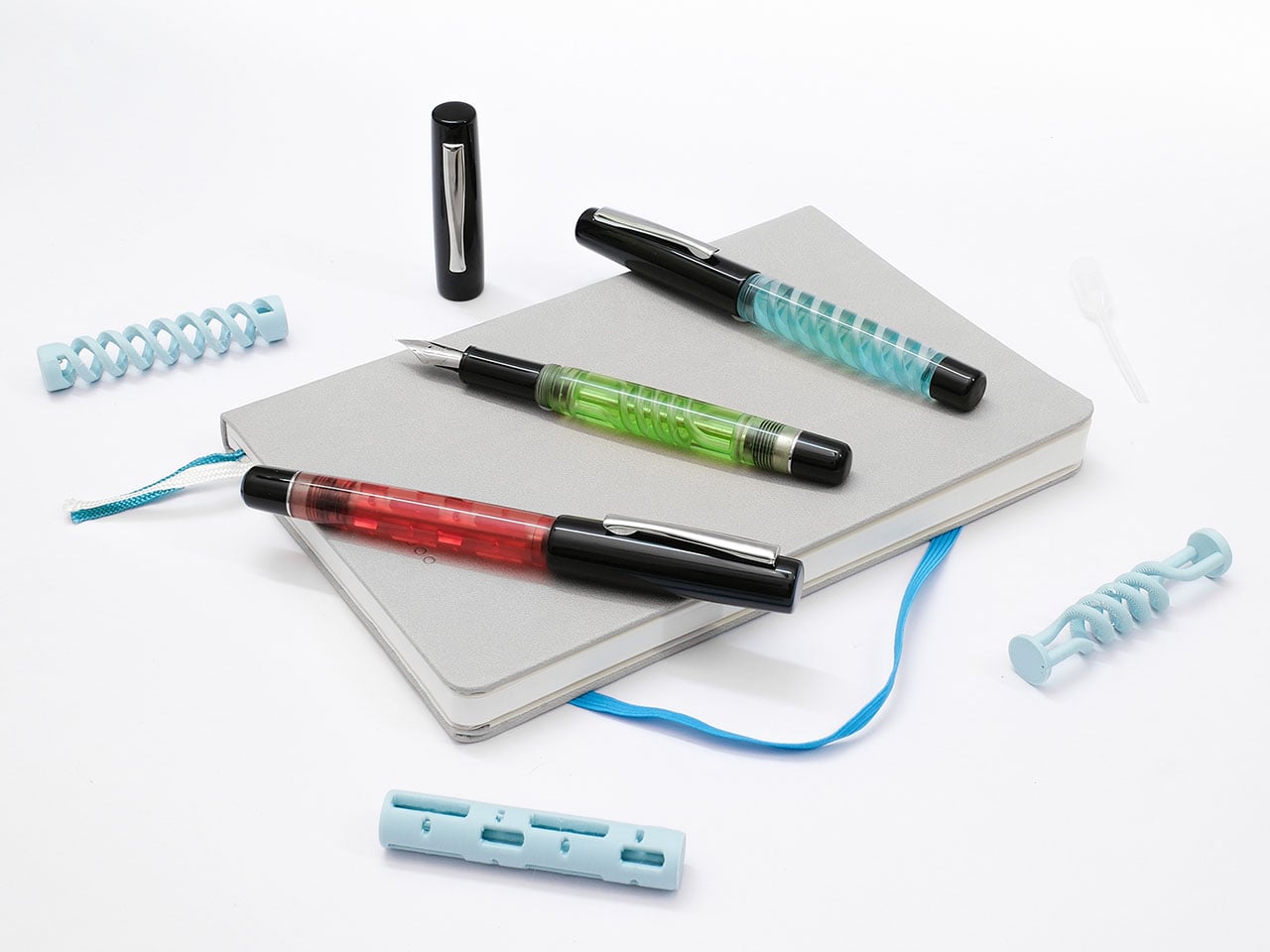
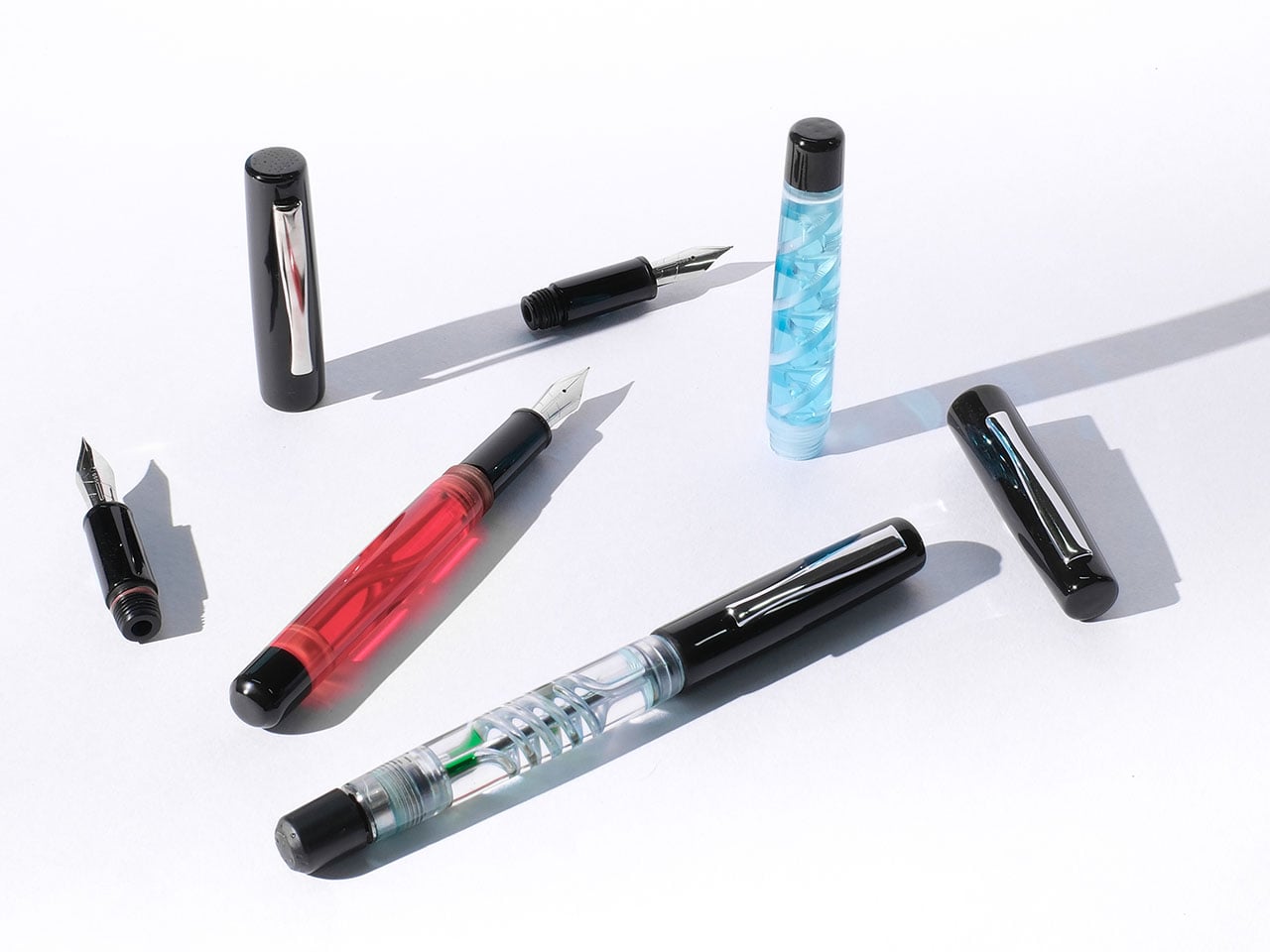
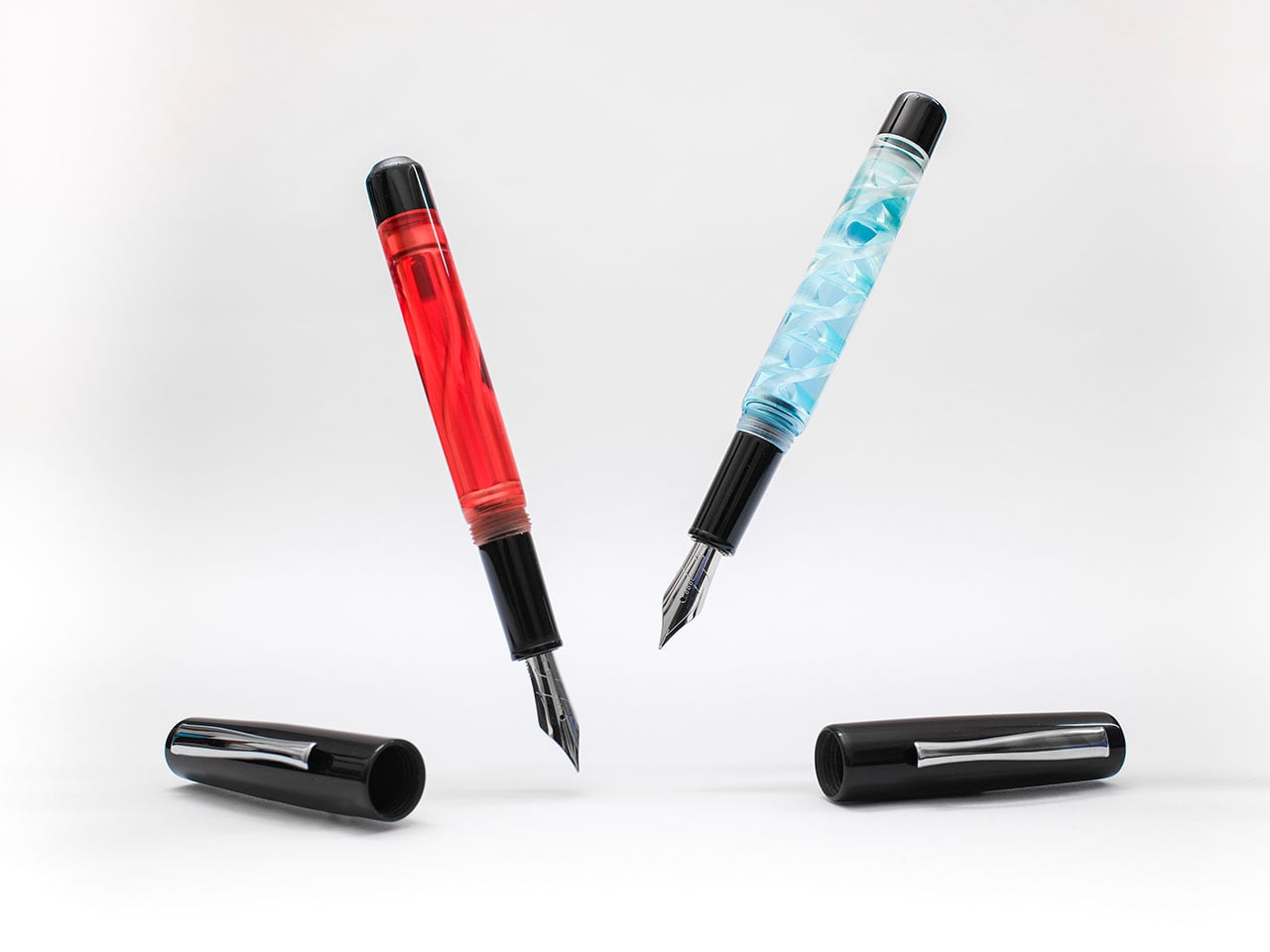
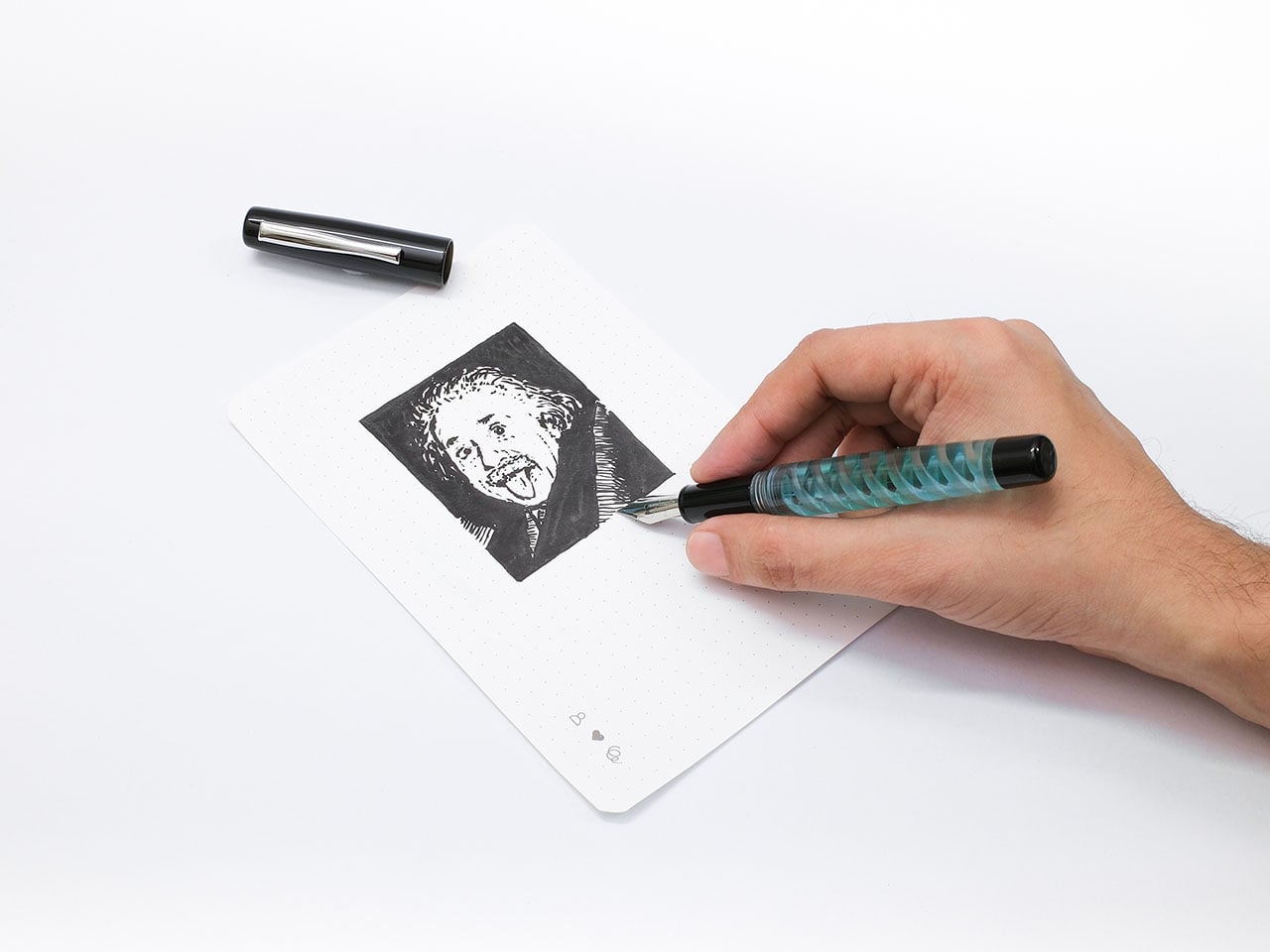
The company has partnered with 3D printing experts Arclayer to design and launch Maze fountain pen, which makes “what used to be hidden… the star of the show.” The new series of fountain pens has a see-through body, allowing you to gawk at the flowing ink within the geometric patterns 3D printed inside the pen.

Click Here to Buy Now: $89 $99 (10% off). Hurry! Raised over $280,000 already.

Arclayer is redefining the writing instrument as we know it through these visually appealing 3D-printed fountain pens for Endless Stationery. The Maze pen created in partnership, answers the simple question, “why can’t a pen be beautiful on the outside and the inside,” which the makers asked themselves before getting down to creating a fountain pen built from “light, resin, and imagination.”

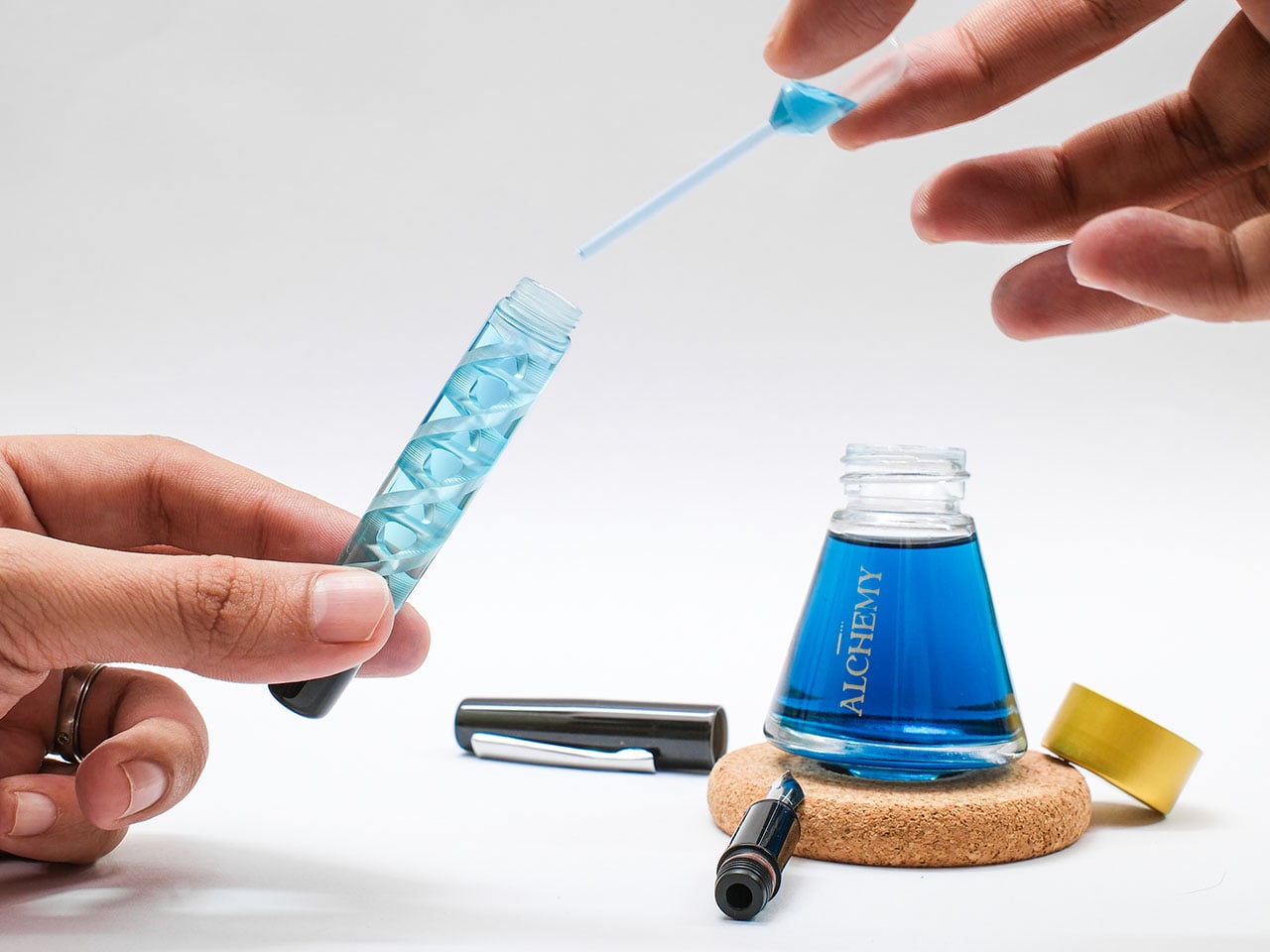
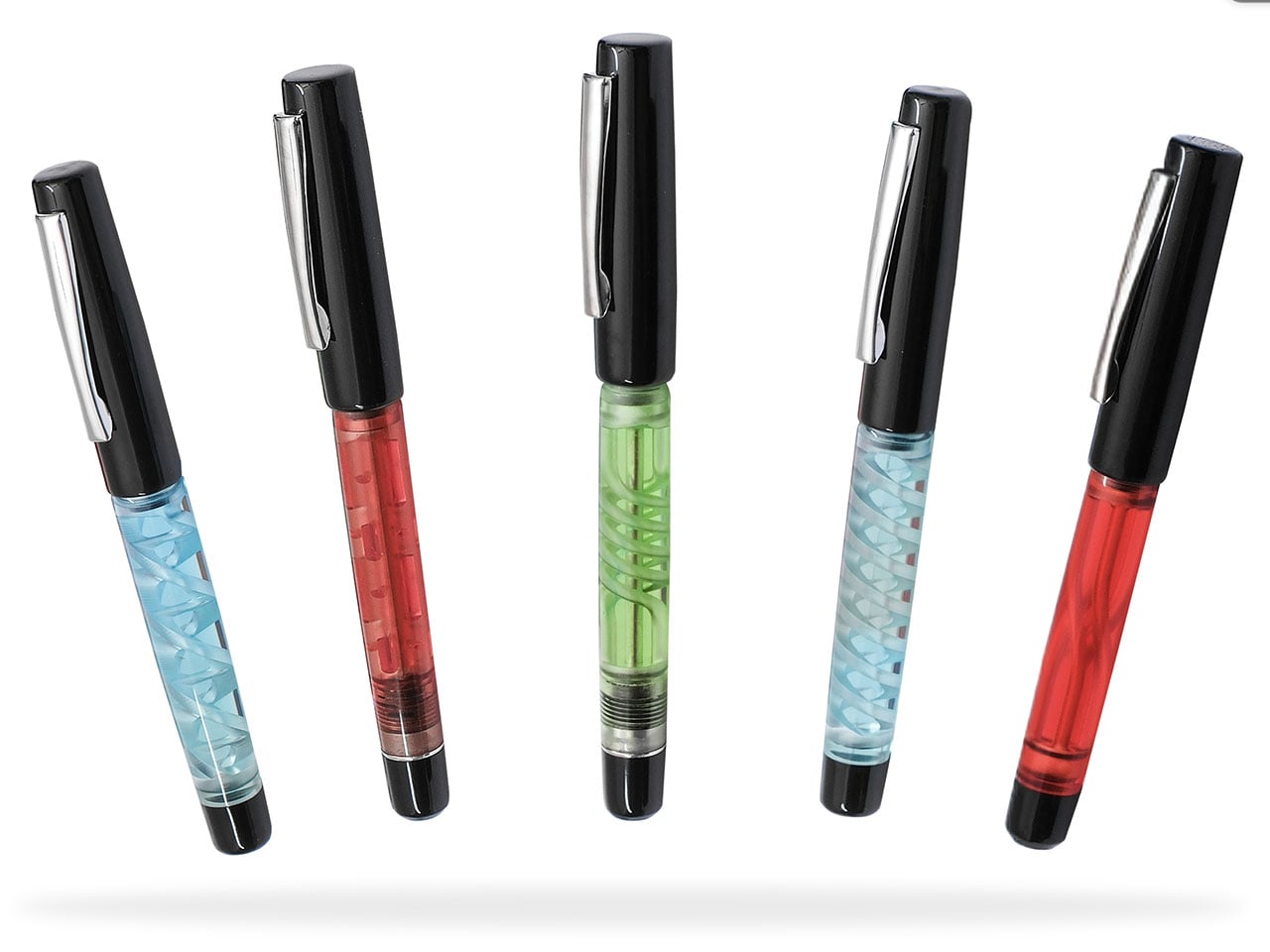
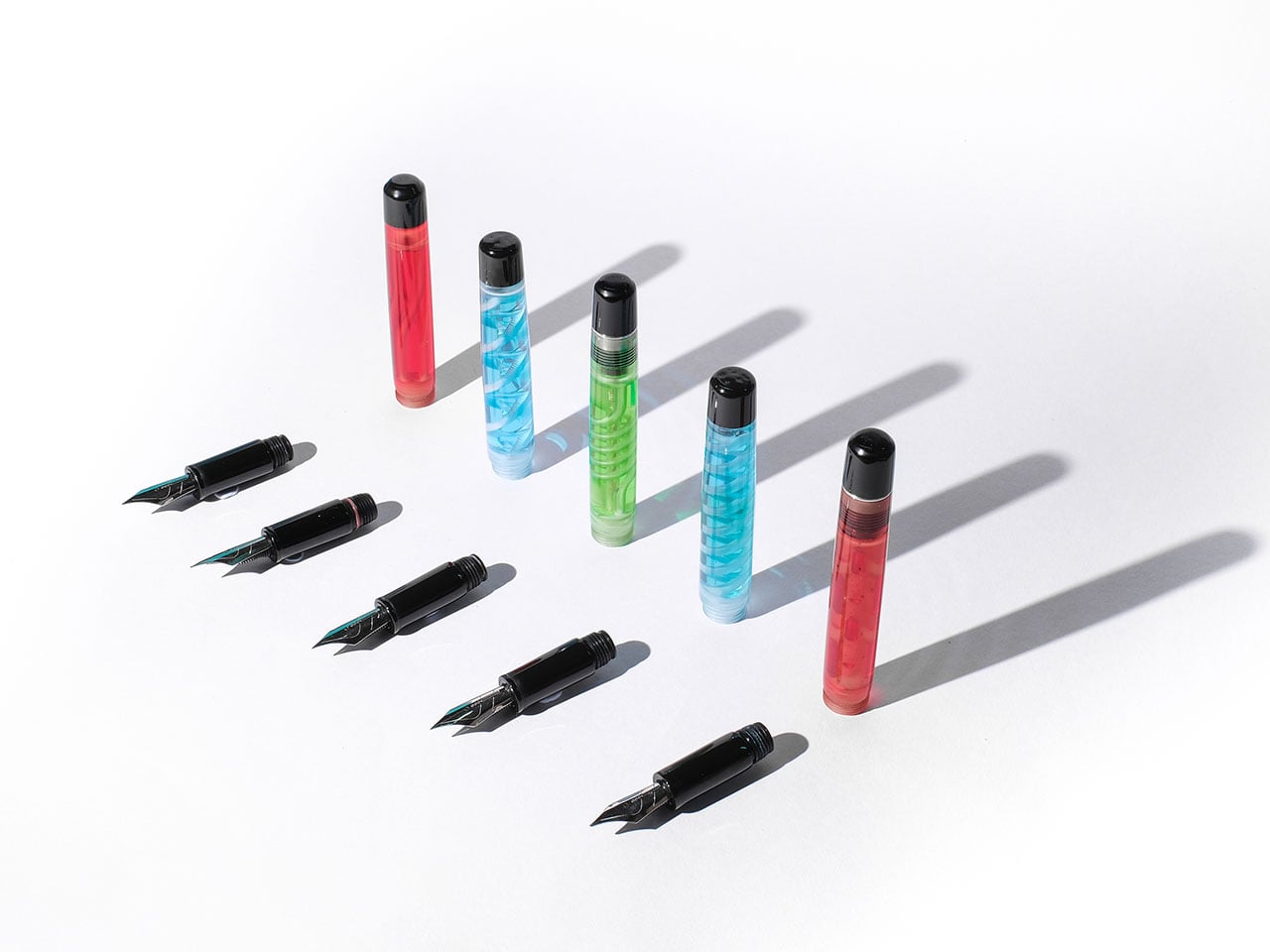
Within each Maze pen is a 3D printed architecture in the form of DNA, pattern or spiral, which allows the ink to flow through them, creating a visually exciting display unlike anything ever seen before in a pen. While Maze pens are standard, the Maze Pro features the Japanese eyedropper inking system that makes the pen easy to carry in movement-intensive journeys or even on airplanes; soring at high altitudes without worrying about the ink leaking at pressure changes.

For the design of these pens, the upper body and the grip section are made from acrylic, while the barrel is made by 3D printing resin. All the Maze pens are formed using resin printing, which makes it possible to have the ink chambers designed the way they are. 3D printing allows a clear finish and internal geometry without adding weight to the pen design. It comes in a special casing which doubles as a fidget toy, if that’s something you tend to spend extra on.

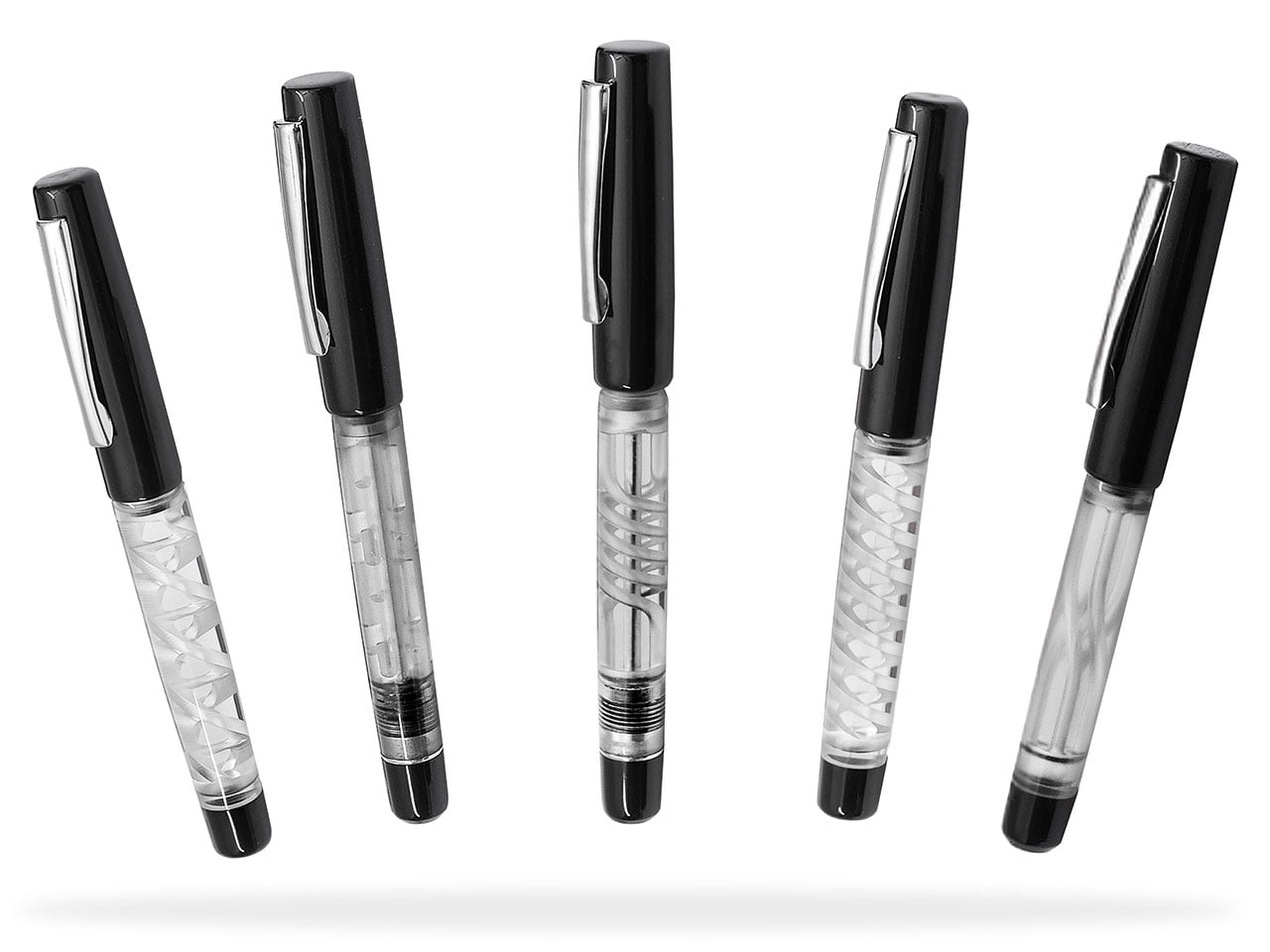
The pen interiors are lively and show the company’s own Alchemy Ink flow through the interesting architecture, yet the intriguing design is easy to clean. It can be rinsed with water to keep the ink flow smooth. The Maze pens come in five unique patterns, DNA, Morse, Twist, Coil, and Swirl and as many colors, with the choice to pick from extra-fine, fine, medium, broad, and a special architect nib.

Currently, the Maze and Maze Pro fountain pens are available for preorder through Kickstarter, where they are enjoying a successful crowdfunding campaign. You can preorder a Maze fountain pen starting $89, while the Maze Pro costs $10 extra. The campaign is also providing a celebratory Christmas combo, which you can get for $135 now. It includes a Maze Pro, a pen pouch, Alchemy Ink, and a set of Storyboard Pocket Notebook.

Click Here to Buy Now: $89 $99 (10% off). Hurry! Raised over $280,000 already.

The post This $89 Fountain Pen Shows You the Ink Flowing Through it’s 3D Printed Maze first appeared on Yanko Design.

LG announces new line of xboom speakers ahead of CES

LG just revealed several new speakers in the xboom line ahead of CES 2026. These speakers are part of an ongoing collaboration with will.i.am from Black Eyed Peas, who is on board as the "experimental architect" involved with "development, design and brand marketing."

These speakers are fairly different from one another, but they all have AI in common. Each speaker includes an algorithm that automatically adjusts the EQ after analyzing the audio content and the listening space. Many also feature an AI algorithm for ambient lighting, which will adjust the lights to match the song being played.

The xboom Stage 501 is intended for parties and karaoke sessions. It features additional AI that can remove vocals from "virtually any song" and even adjust the pitch. The battery lasts for around 25 hours and can operate while plugged in. The speaker delivers up to 220W of power, with dual woofers and full-range drivers. It boasts a five-sided cabinet design that allows for vertical and horizontal placement.

A boombox.
LG

The xboom Blast is a boombox with a 99Wh battery that allows for up to 35 hours of continuous playback. That's a mighty fine metric. This is a modern boombox, so it's designed for durability. There are edge bumpers and a side rope handle for carrying.

A speaker
LG

The Mini is a tiny doodad that can be placed just about anywhere. It offers ten hours of battery life per charge and a strap for easy placement. The speaker also includes a built-in tripod mount.

A speaker.
LG

The Rock is a, well, rock-shaped speaker that's larger than the Mini but can still be held in the palm of the hand. The battery lasts for ten hours and the design is focused on durability. It has been tested to "seven military standards" to ensure reliability in "challenging outdoor environments." This is an upgrade of the pre-existing XG2 model.

We don't have pricing or exact availability on this stuff yet, though the speakers will be on display at LG's booth at CES. The company has said that all four of these gadgets will come out in 2026.

This article originally appeared on Engadget at https://www.engadget.com/audio/speakers/lg-announces-new-line-of-xboom-speakers-ahead-of-ces-010052598.html?src=rss

How a Modest Zinc-Clad Retreat Won Scotland’s Top Architecture Prize

Nestled into the rolling hills of rural Stirlingshire, a modest zinc-clad home has captured the attention of Scotland’s architecture community. Grianan, designed by Cameron Webster Architects for jewellery designers Neil Smith and Wesley Zwiep, recently claimed both Best Building and the Overall Chapter Prize from the Scottish Society of Architects, cementing its place among the country’s most thoughtful residential projects.

The name itself tells much of the story. Grianan translates from Gaelic as “sunny place,” a fitting description for this single-storey retreat that seems to bask in its landscape setting. The two-bedroom home sits within gardens that the owners meticulously cultivated from what was once an overgrown field. Since acquiring the plot in 2017, Smith and Zwiep have transformed the site into a thriving orchard dotted with over 10 varieties of Birch and Japanese Maple. Pine martens, owls, and woodpeckers now visit regularly, drawn to the flourishing ecosystem.

Designer: Cameron Webster Architects

The clients, who run Orro Contemporary Jewellery in Glasgow’s West End, approached Cameron Webster Architects with a clear vision: create a compact home where they could immerse themselves in their garden while enjoying views of the surrounding hills. The architects responded with a design that privileges simplicity and material honesty. The clean form of the zinc-clad structure sits modestly within its setting, allowing the building’s materiality to speak for itself rather than competing with the landscape.

“There wasn’t a single inspiration point,” explains Stuart Cameron, co-founder of Cameron Webster Architects. “It’s more about developing a plan to suit the site specifics and then considering appropriate materials from an aesthetic and budget point of view.” This pragmatic approach has yielded a home that feels both site-specific and quietly confident in its restraint.

What makes Grianan particularly compelling is its demonstration that thoughtful architecture need not shout to make an impact. The home’s modest footprint and careful siting create a private retreat that enhances rather than dominates its garden setting. For Smith and Zwiep, the result is exactly what they sought: a place to cosy up while remaining deeply connected to the landscape they’ve so carefully nurtured. In an era of increasingly complex residential projects, Grianan offers a quiet reminder that simplicity, executed with precision and care, remains architecture’s most enduring virtue.

The post How a Modest Zinc-Clad Retreat Won Scotland’s Top Architecture Prize first appeared on Yanko Design.

The Flashback ONE35 V2 Turns Limitation Into Its Most Compelling Feature

Digital photography has spent three decades eliminating friction, yet the Flashback ONE35 V2 deliberately reintroduces it. This compact camera restricts shooters to 27 exposures per roll and can withhold images for 24 hours before revealing them, treating scarcity and anticipation as design features rather than technical shortcomings. The approach feels counterintuitive until you recognize what it actually targets: not the act of taking pictures, but the behavioral patterns that infinite storage and instant preview have normalized.

Flashback, the Australian startup behind the ONE35, positions the device as “film feeling, digital freedom,” a phrase that captures the central tension the product navigates. The camera doesn’t simulate film chemistry or grain patterns. Instead, it borrows the behavioral scaffolding of disposable cameras, the fixed exposure count, the inability to review shots immediately, the delayed gratification of waiting for development, and grafts these constraints onto a reusable digital core. What emerges is less a nostalgic throwback than a deliberate intervention in how we interact with image-making tools.

The design argument here is worth parsing carefully. Constraint, when applied with intention, can redirect attention and reshape behavior in ways that pure capability expansion cannot. The ONE35 V2 doesn’t ask users to appreciate limitation for its own sake. It proposes that limitation might produce something that unlimited access has gradually eroded: the weight of a single frame, the suspense of unseen results, the social ritual of collective reveal.

Form Language and Material Identity

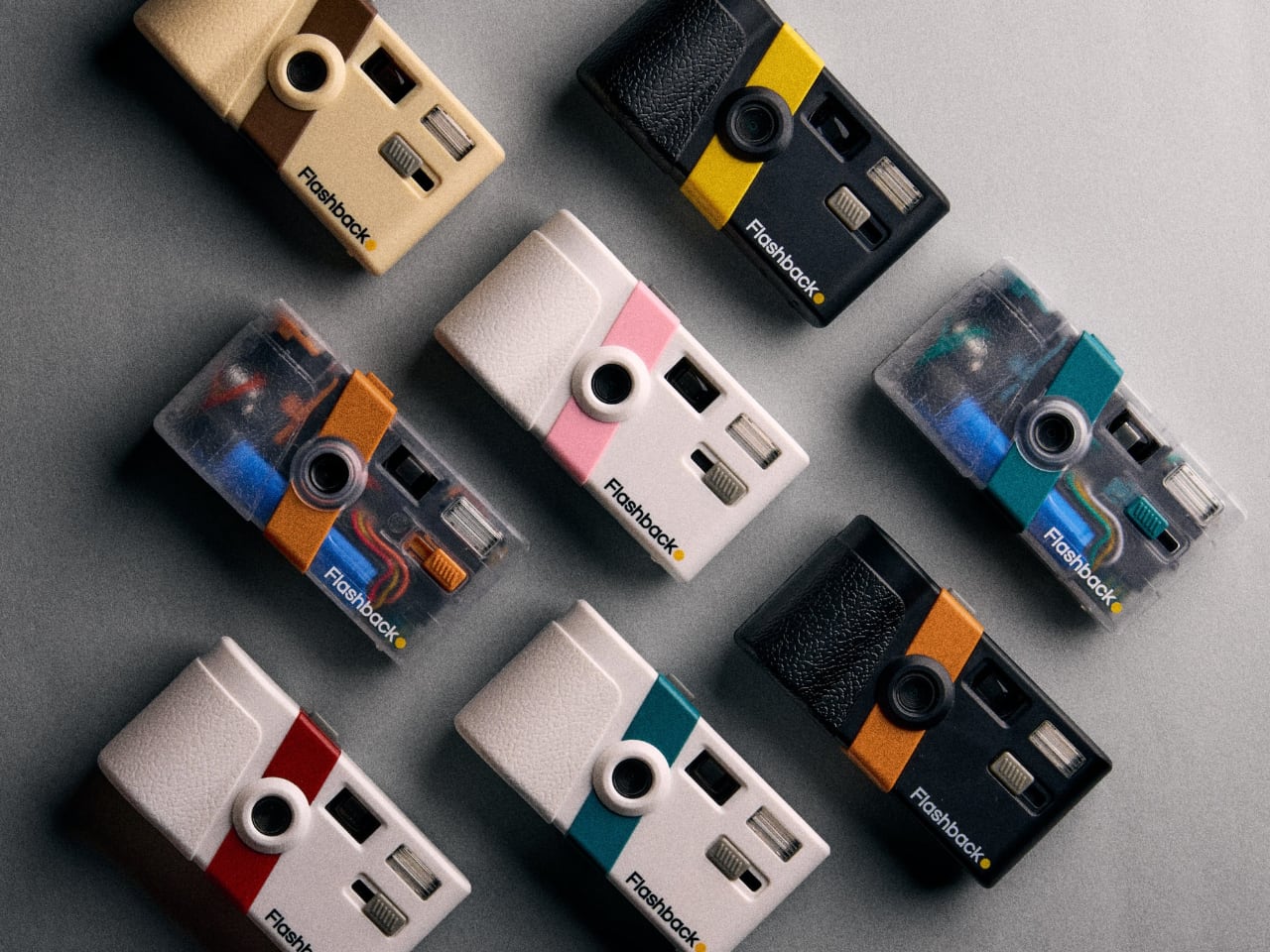
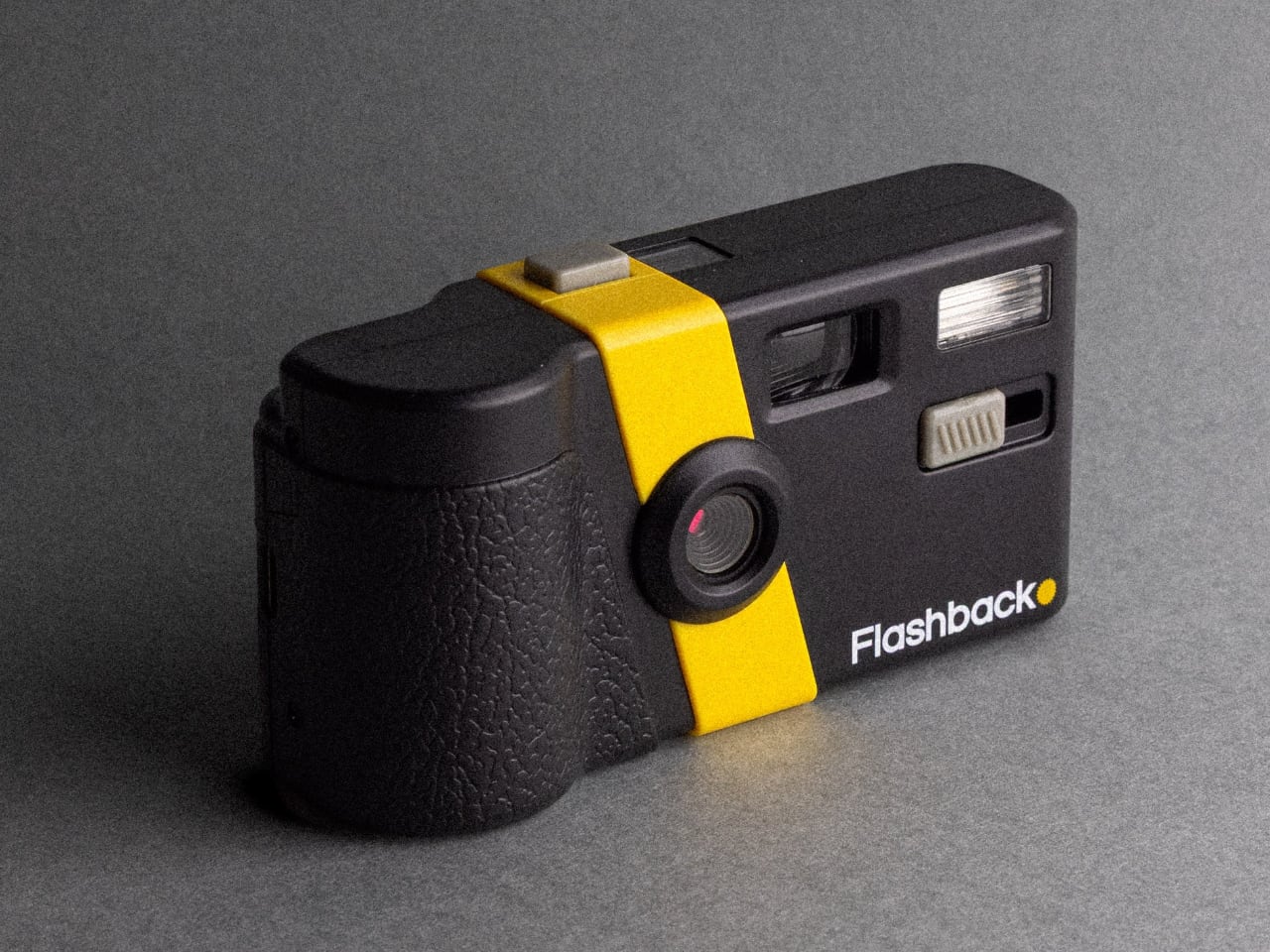
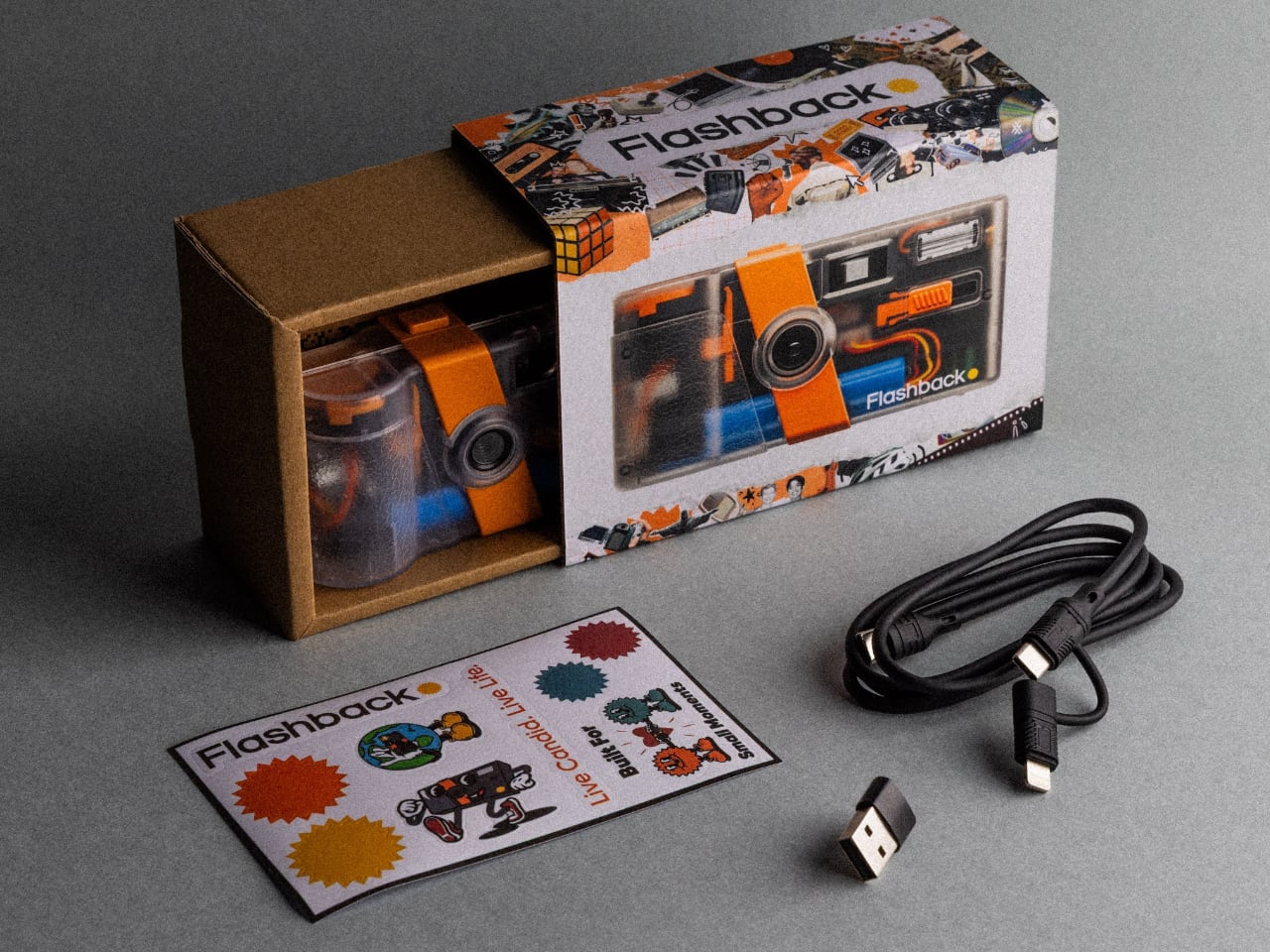
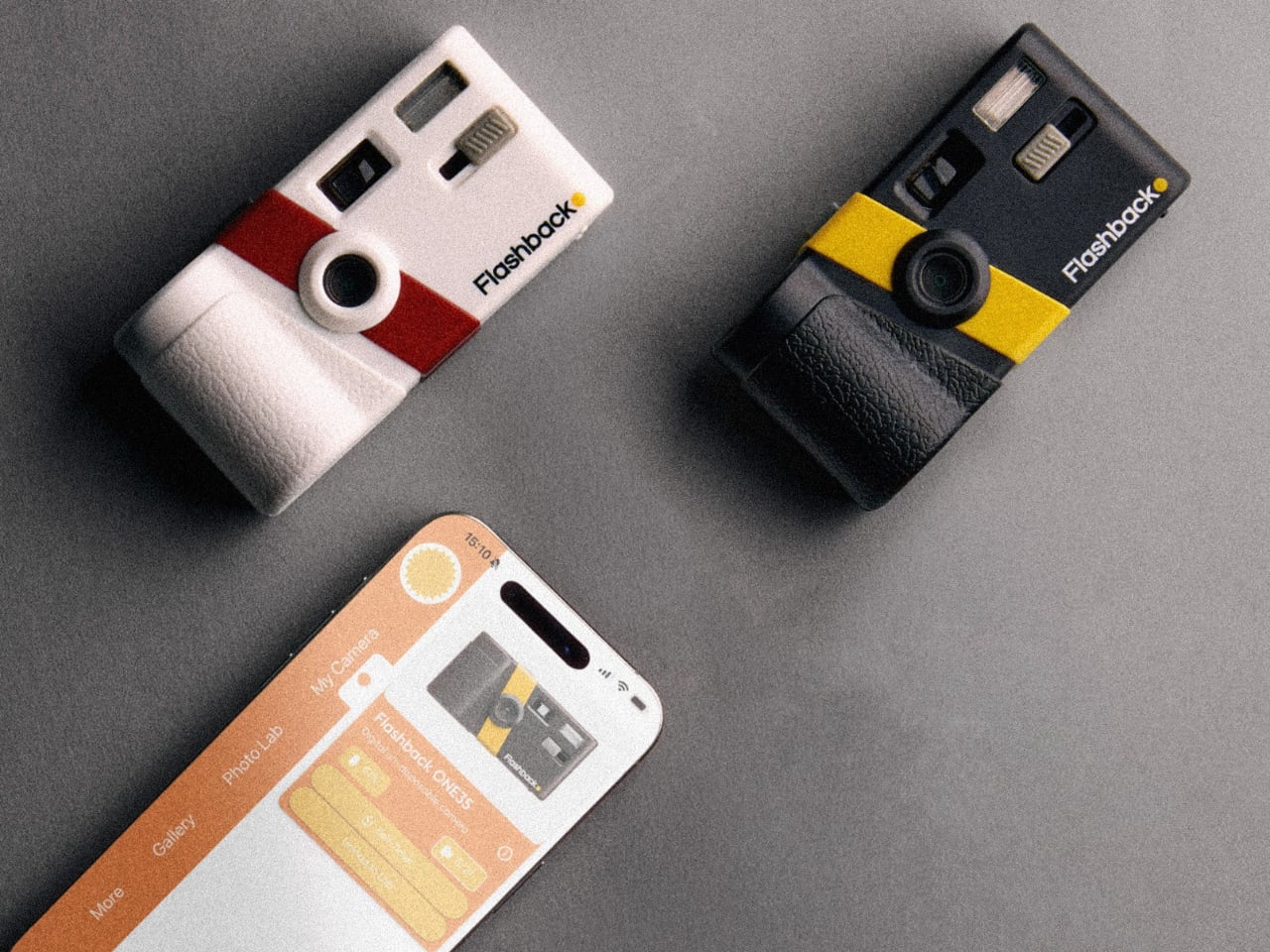
Physically, the ONE35 V2 speaks a dialect of late-1990s consumer electronics, updated with contemporary material sensibilities. The body arrives in eight colorways ranging from high-contrast pairings like Yellow/Black and Red/White to more subdued options like Coffee/Cream. Two variants feature transparent shells that expose internal componentry, a direct nod to the see-through electronics trend that peaked around 1999 with devices like the iMac G3 and translucent Game Boy Color. The proportions feel familiar, chunky without being bulky, designed to disappear into a jacket pocket or small bag.

Color blocking dominates the visual strategy. Each variant commits to two tones maximum, avoiding the gradient meshes and complex surface treatments common in contemporary consumer tech. This restraint serves the object’s conceptual positioning: it looks like something you would find at a beach shop checkout in 2001, yet the material finish and assembly precision read as current. The plastic shells have a matte texture on most models, reducing fingerprint visibility and giving the camera a tactile presence that glossy alternatives would sacrifice.

The transparent variants deserve particular attention. Exposing circuitry and internal structure creates an honesty of construction that opaque housings inherently conceal. You see the battery, the sensor housing, the flash capacitor. This transparency also functions as a trust signal, suggesting the device has nothing to hide about its relatively simple internals. There’s no pretense of computational complexity here, just the essential components required to capture and store 27 images at a time.

Materiality extends to the accessory ecosystem. A vegan leather case at $19 positions the camera as an object worth protecting and displaying, not a disposable item despite its disposable-camera heritage. The existence of branded caps and lanyards suggests Flashback understands the ONE35 as a lifestyle product, something users might want to signal ownership of rather than simply use.

Interaction Architecture: How Constraint Reshapes Behavior

Twenty-seven exposures. That number, pulled directly from the standard frame count of disposable film cameras, functions as the ONE35 V2’s primary behavioral lever. Disposables dominated casual photography from the late 1980s through the early 2000s before smartphones consolidated image capture into always-available, unlimited-capacity devices. By imposing the same ceiling, the ONE35 V2 forces a kind of photographic triage that contemporary shooters rarely practice: you cannot spray-and-pray when each frame represents roughly 3.7% of your available shots.

Scarcity changes the shooting ritual in observable ways. Users report thinking before pressing the shutter, evaluating whether a moment warrants one of their limited frames. The camera transforms from a capture-everything tool into something closer to a curation device, where selection happens at the point of exposure rather than afterward in a bloated camera roll. Each shot carries psychological weight proportional to the constraint.

The 24-hour development delay in Classic Mode introduces a second behavioral intervention. Instead of chimping (the photographer’s habit of immediately reviewing each shot on the camera’s screen), users must wait a full day before seeing results. This delay severs the feedback loop that digital photography introduced, the instant gratification that allows endless re-shooting until the perfect frame emerges. Without that loop, users either accept what they captured or miss the moment entirely.

Flashback’s decision to include Digicam Mode alongside Classic Mode reveals a pragmatic understanding of user psychology. Some shooters want the constraint of limited exposures without the enforced patience of delayed development. Others want the full experience. By making the delay optional, the ONE35 V2 acknowledges that not every context suits maximum friction, a party might call for immediate sharing that a travel diary would not.

The transfer workflow also carries design intention. Photos unload via Lightning or USB-C cable to the Flashback app, which handles what the company frames as “development.” The cable requirement is notable in an era of wireless everything. It creates a deliberate moment of connection, a physical ritual that separates capture time from viewing time. You must decide to plug in, to initiate the transfer, to move from shooter to viewer.

What Constraint Produces

The behavioral implications extend beyond individual users into social dynamics. At parties or group events, the ONE35 becomes a shared object that circulates hand to hand, with each person granted temporary access to a limited pool of exposures. This communal aspect mirrors how disposable cameras functioned at weddings and gatherings in the pre-smartphone era: multiple people contributing to a single roll that no one could immediately review.

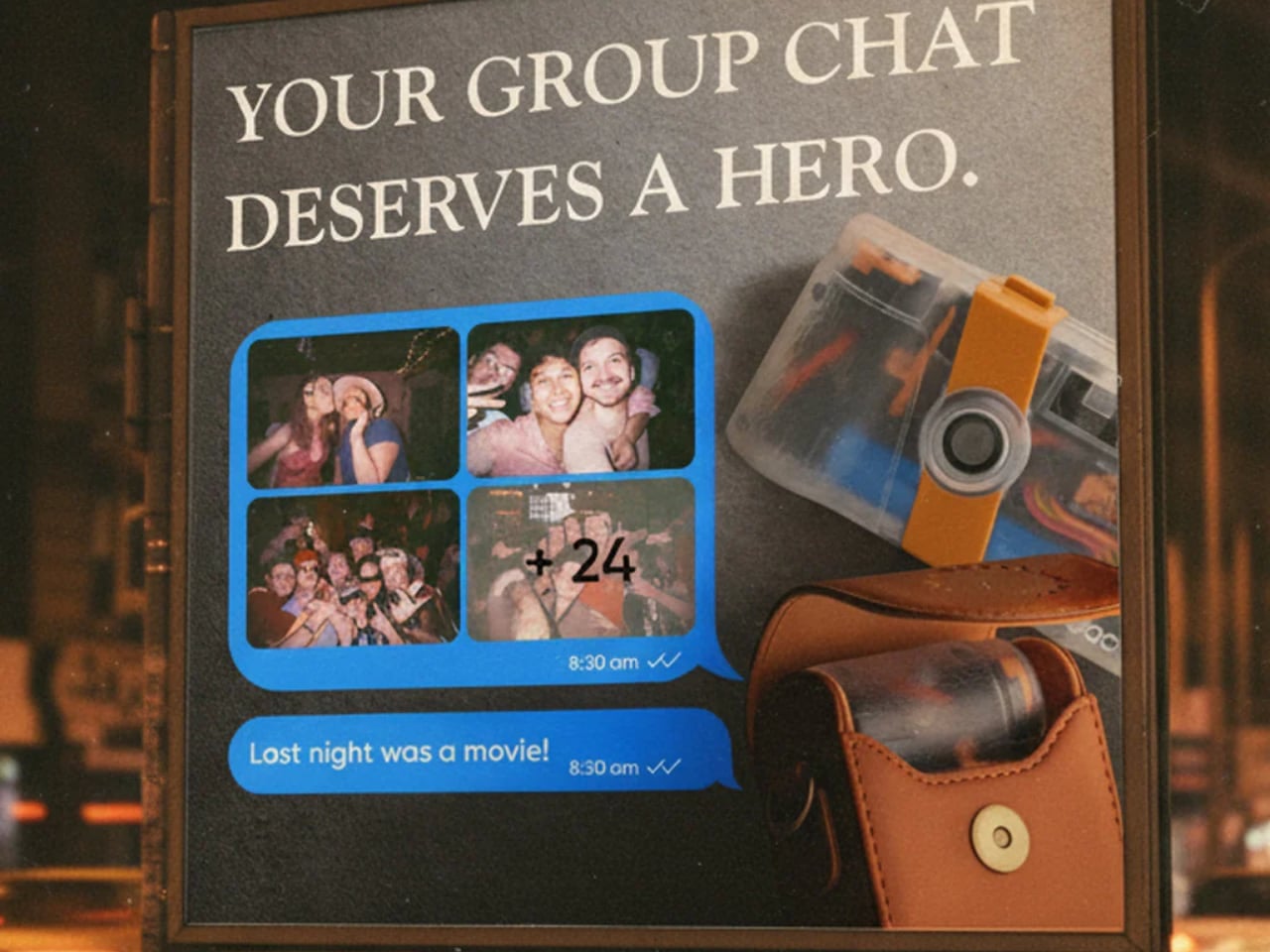
The delayed reveal transforms image sharing from instant broadcast into group ritual. When Classic Mode holds photos for 24 hours, the eventual viewing becomes an event rather than a continuous trickle. Group chats waiting for a camera’s worth of party photos to “develop” experience collective anticipation, a social texture that immediate availability cannot replicate. Flashback’s marketing leans into this with phrases like “your friends will be begging you to share.”

There’s also an environmental dimension to consider. Disposable cameras generate physical waste with every roll: plastic housing, battery, packaging, chemical development. The ONE35 V2 retains the behavioral structure while eliminating the material throughput. One device, rechargeable via USB-C, replaces hundreds of single-use cameras over its lifespan. The sustainability argument nests inside the experience design rather than leading it.

Cultural Positioning: Where This Object Lives

The ONE35 V2 enters a market already primed for analog revival and digital skepticism. Film photography has seen sustained growth since the mid-2010s, driven partly by aesthetic preference but also by users seeking relief from the infinite scroll of digital capture. Fujifilm’s disposable cameras routinely sell out. Kodak has reintroduced discontinued film stocks. The secondhand market for film cameras has pushed prices for once-cheap bodies into collector territory.

Within this landscape, the ONE35 occupies an interesting niche. It doesn’t require users to learn film handling, find processing labs, or pay per-roll development costs. The app handles what chemistry once did, for free, indefinitely. But it preserves the behavioral constraints that film imposed, the limitations that many film revivalists cite as the actual source of appeal. In this sense, the camera represents a kind of constraint extraction: pulling the valuable behavioral friction out of an analog medium and transplanting it into a digital one.

The “screen detox” movement provides additional context. Products and services promising to reduce smartphone dependency have proliferated over the past five years, from grayscale phone modes to minimalist devices like the Light Phone. The ONE35 V2 aligns with this impulse without requiring users to abandon connectivity entirely. You can still have your smartphone in your pocket. You simply capture certain moments with a different tool, one that encourages presence during the event and patience afterward.

Flashback’s origin story reinforces this positioning. Founders Kelric and Mack reportedly started the project after observing that partygoers spent more time on their phones than engaging with each other. The garage-prototype-to-Kickstarter arc (reaching $80,000 in 13 minutes, $800,000 total) suggests the observation resonated with a substantial audience. The subsequent Good Design Award and Shark Tank appearance mark a trajectory from indie curiosity to legitimate product category.

What the ONE35 V2 Signals

The camera’s success, 50,000 units across 68 countries, 10 million captured images, suggests that designed constraint has commercial viability beyond niche appeal. Users are paying $119 for a device that does less than their phones, specifically because it does less. This inverts the typical value proposition of consumer electronics, where more features justify higher prices.

What Flashback demonstrates is that subtraction can constitute a design feature when the thing being subtracted has become a source of friction itself. Unlimited storage, instant preview, always-on connectivity: these capabilities solved problems when they emerged, but they’ve also generated new ones. The ONE35 V2 proposes that rolling back certain capabilities, with intention and care, might address the second-order problems the first capabilities created. Pick up the camera. Feel its compact, slightly chunky form. Press the shutter knowing you have 26 frames left. That deliberate friction is the product.

The post The Flashback ONE35 V2 Turns Limitation Into Its Most Compelling Feature first appeared on Yanko Design.