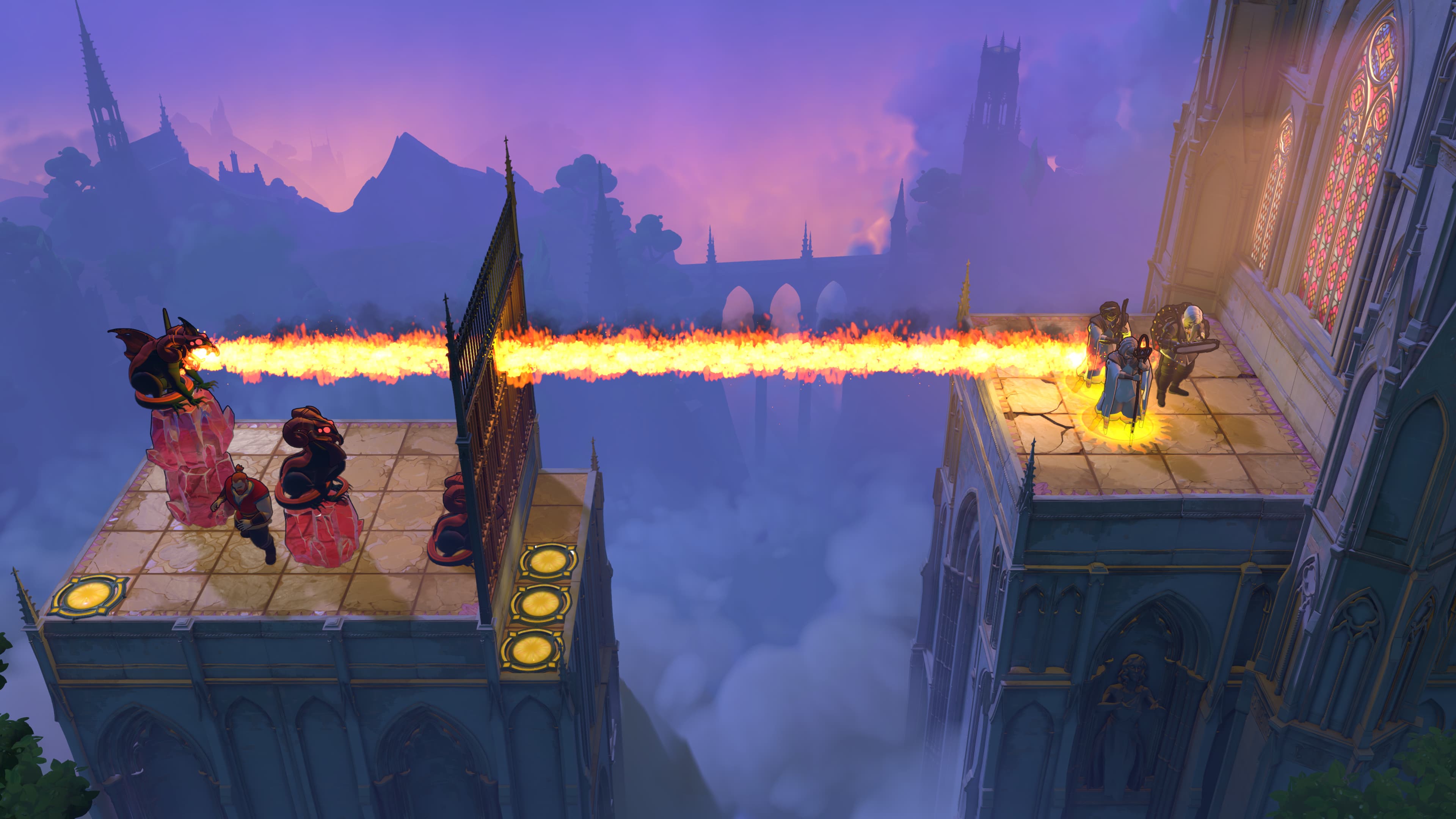
Larian Studios didn’t rest on its laurels for long. Two years after taking home the Game of the Year prize for Baldur’s Gate III at The Game Awards, the developer popped up again at the 2025 edition of the ceremony to announce its upcoming project, which is the next entry in the Divinity series. Simply called Divinity, this will be the studio’s biggest game to date with “more breadth and depth than ever before,” according to TGA host Geoff Keighley.
After 2017’s Divinity: Original Sin II, Larian took a break from the series with which it established itself to make BG3. The rumor mill had been churning about a new Divinity game after Keighley shared a photo of a statue that was erected in the Mojave Desert. The shape of the statue matched a Divinity logo that was trademarked recently.
Before the reveal trailer was shown at The Game Awards, a short (and rather neat) live performance took place in which some actors were hoisted into the air. The trailer itself is pretty gruesome. It references The Wicker Man, as large wooden effigies with people chained inside are set ablaze. I won’t spoil what else happens other than to say it’s pretty gruesome, so maybe don’t watch it quite yet if you’ve just had dinner.
Larian hasn’t announced a release window for Divinity yet.
This article originally appeared on Engadget at https://www.engadget.com/gaming/larian-studios-is-returning-to-the-divinity-series-with-divinity-015833088.html?src=rss
Many of the big announcements at The Game Awards are for completely new projects, some of which are total surprises (if you had an Okami sequel on your bingo card last year, you're either in the know or probably used up all your luck for the next few years). We'll often get updates on games that were previously announced too. The trailer for Order of the Sinking Star is something a little different, as it's a game that Braiddesigner Jonathan Blow has been working on fairly openly since releasing The Witnessin 2016.
The trailer revealed some new details, including confirmation of the expected title and a release window (2026 on Steam, with more platforms to be announced). Ahead of The Game Awards, Blow gave Engadget a preview of the game and explained some of its many complexities.
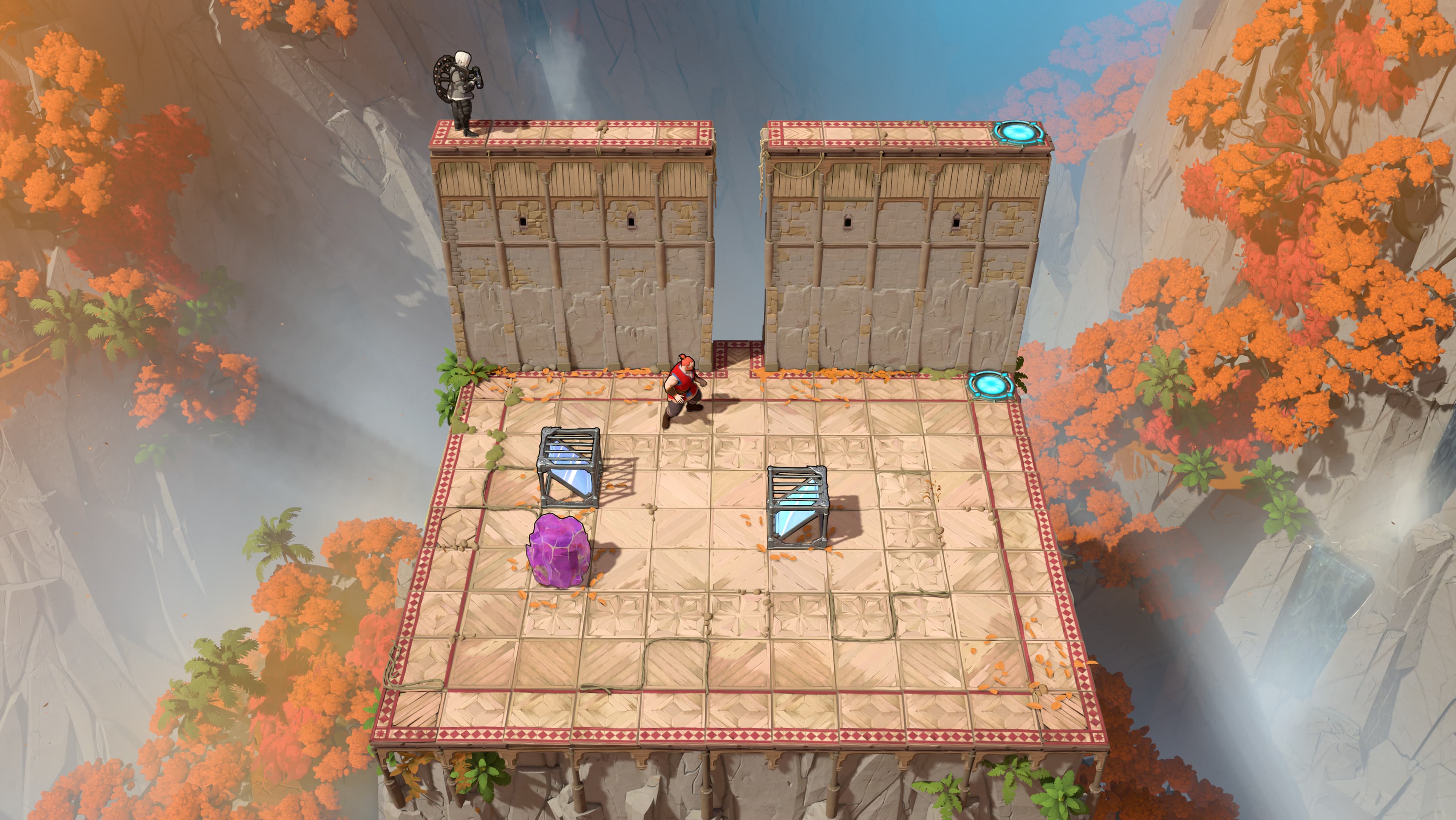
Fundamentally, Order of the Sinking Star is a grid-based puzzle game in which you'll move blocks around to complete an objective. You might know of this as a Sokoban game, named after the series Hiroyuki Imabayashi created about pushing boxes around a warehouse.
But this is a Jonathan Blow game, so nothing stays too simple for very long. Blow and his team took the core concept of pushing objects around and built on it in myriad ways, with a wide array of environments, mechanics and characters for you to get to grips with.
Order of the Sinking Star starts with you playing as a deposed queen from another world who is transported to a strange place. This turns out to be the tutorial. Among other things, you'll find out about the undo button, a handy option you can use to revert your actions if you get stuck. It's probably worth being careful with this button, as Blow says it's possible to undo thousands of moves with it. There's a level reset option too.
The first phase of the game has four distinct territories with their own characters, stories and gameplay mechanics. One of these realms has a fantasy theme with a warrior character who can push multiple objects that are in a row. His friend, the thief, can only pull objects. The wizard, meanwhile, can teleport and swap positions with objects or other characters. Sometimes, you'll use multiple characters in a level and swap between them to solve puzzles. There’s a talking boat somewhere, too.
You'll take what you learn within individual levels into the overworld so you can make progress there. For one thing, the queen can wear a warrior, wizard or thief outfit to adopt their abilities and solve puzzles in the north section of this phase.
Over in the east, there’s a world with mirror-based puzzles. By positioning the mirrors and where you stand, you'll use the mirror's reflection to teleport at a right angle. If your character (or an object) has a reflection in two mirrors, they can be duplicated, which is something you might have to do a few times if a level requires you activate multiple switches at the same time.
Once you near the end of two of the phase one worlds, you can enter one of six gold rooms. In these rooms, which are the gateways to the second phase of Order of the Sinking Star, some of your characters meet each other for the first time. For instance, the guy from The Mirror Isles and the wizard might encounter each other in a gold room and then you can use their combined abilities to solve puzzles. Given that later-game levels combine mechanics from the early stages, they are naturally more complex. Shifting to 3D perspectives will ramp things up too.
Order of the Sinking Star
Thekla/Arc Games
You can tackle the four worlds that make up the first phase in any order. Collectively, they contain "days worth of gameplay," Blow said. And yet he claimed this first phase accounts for about five percent of the entire game.
All told, there are about 1,400 puzzles, many of which are optional. If you're a completionist, you'll need to be pretty dedicated to see this through. Blow estimates that it'll take around 500 hours for a player to do absolutely everything in the game.
The overworld has more than 100 screens from which you can jump into individual levels. "All the levels are about ideas. They're not just random puzzles," Blow said. "We don't add puzzles to the game unless they show something cool about how the objects interact. Then, once you see the cool thing, you come back to the overworld, and you navigate from that screen using the cool mechanic that you learned."
"We" is a key word there, because it's not as if Blow has been making Order of the Sinking Star by himself for the last decade. His studio, Thekla, has around 10 people working on the game full-time along with another 10 or so part-time contractors. Those who contributed include puzzle game designers Alan Hazelden and Marc ten Bosch. Some members of Blow's Twitch community who "contributed some idea to one of the levels somewhere" will receive design credits too.
Blow and his team use custom game engines for their projects. Starting in around 2013, he started livestreaming his work on the programming language that Order of the Sinking Star is written in (Thekla will eventually make the engine available for free as an open-source project). "Once I was working on the game, it was a good way to show people what the programming language was about and also how game programming works, and so I would frequently do just streams where we would sit down and implement something," Blow said. Some of the design work he did on stream ended up in the final game.
Order of the Sinking Star
Thekla/Arc Games
After such a long time of working on Order of the Sinking Star, the end is in sight for Blow and his team. The main focus for the last year or so has been on making sure all of the puzzles align with the overworld. Making art for many hundreds of levels is a major undertaking too, while Blow is still refining the story.
"Because there's a lot of these levels and a lot of characters in the levels, it's just natural for them to talk to each other," Blow said. "And so what is that dialog and what does it do? Is it just little jokes that don't add up to anything? Or do you get little peeks into a larger narrative? I think the latter is obviously better. And so that's my main task between now and release, is making sure that the story is really good."
Blow had the core concept of having separate worlds with mechanics that work across them in place from the very beginning, though how that worked in practice evolved a lot over time. For instance, the overworld idea wasn't set in stone from the outset. There was an overworld in place by around 2021, "but it wasn't organized in the way the current one was. It was just sort of areas smushed together," Blow said. "At some point, I came up with this concept that it was spatially organized in an almost ritualistic manner or a mathematical manner, whichever way you want to think about it. And we redesigned the overworld from that point, and from then till now, it's been just sort of a continuous improvement."
Order of the Sinking Star was originally supposed to be a much smaller game that took around 10 or 20 hours to play, but "it just blew up," Blow said. "Part of development has just been dealing with that fact. Like, oh, my God, this game took so long to make. It actually feels really good to be here toward the end. We still have a fair bit of work to do before it's done, but we can see the ending from where we are now, and that's great."
This article originally appeared on Engadget at https://www.engadget.com/gaming/ten-years-after-the-witness-jonathan-blows-next-massive-puzzle-game-is-almost-ready-for-primetime-015727378.html?src=rss
GoPro expands its AI Training program after subscribers contribute over 300,000 hours of video, boosting its role in the growing AI data licensing market.
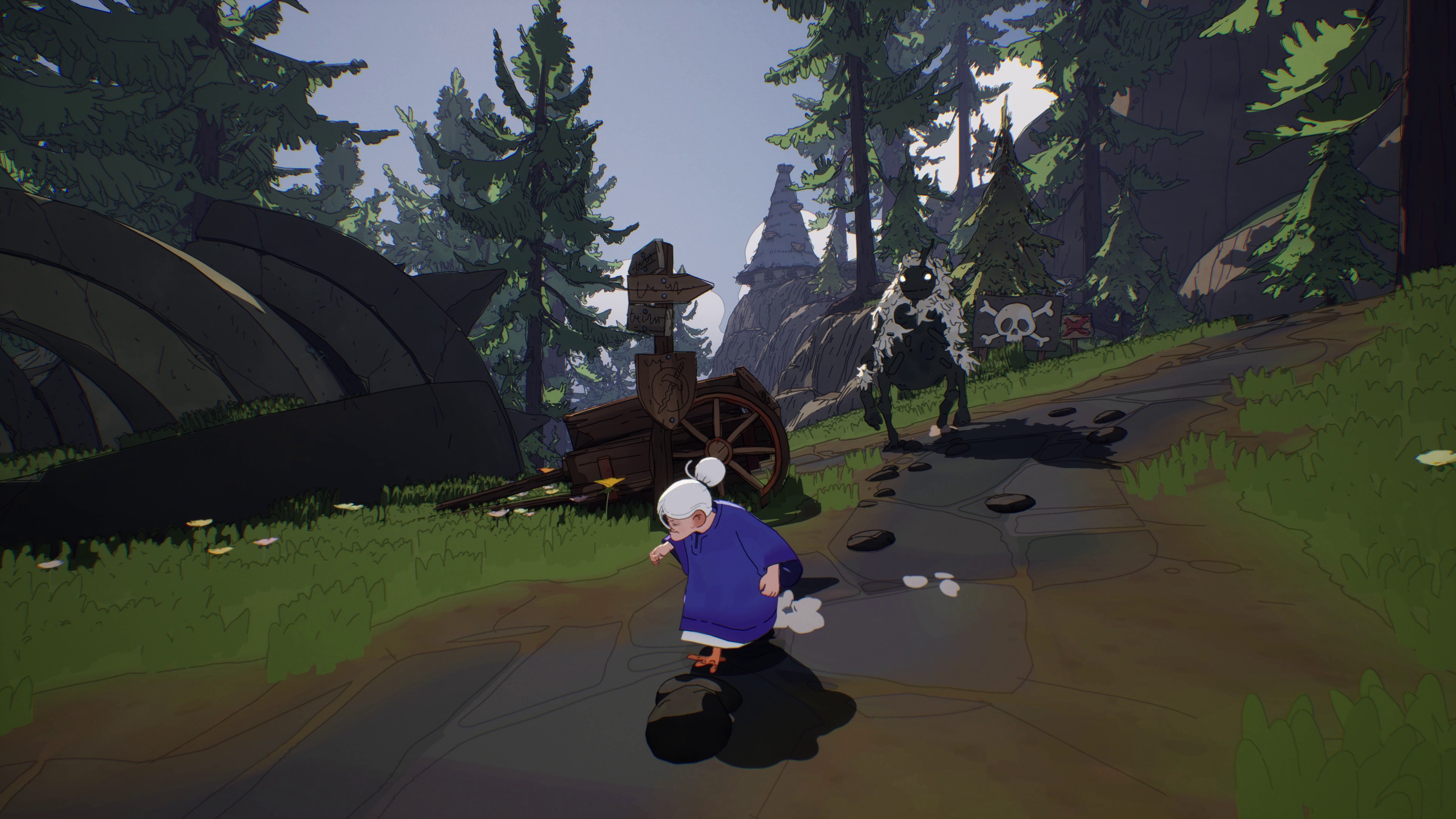
Coven of the Chicken Foot has a lot of things going for it already, in my book. It stars a hero rarely seen in video games, an elderly woman, and it has gorgeous storybook-style art in a lush fantasy setting. It’s a single-player puzzle platformer, it relies on wordless storytelling and the woman, a witch named Gertie, travels with a creepy-cute companion. Plus, Gertie has chicken feet. I love her little chicken feet.
Coven of the Chicken Foot is the first game from Wildflower Interactive, the independent studio founded by Naughty Dog veteran Bruce Straley. The game is coming to Steam and it’s available to wishlist now, though there’s no firm release date. The first trailer for Coven of the Chicken Foot premiered at The Game Awards 2025, showing Gertie and her friend traveling together through caves, forests and temples.
Gertie is on a quest to prove herself to the local coven by standing up to the self-appointed, prideful heroes of the land. She doesn’t have a sword or a dodgeroll, and instead has to figure out how to work with her strange friend to survive. Her companion develops unique behaviors based on individual play styles, shaping how Gertie gets around.
Straley left Naughty Dog in 2017 after almost 20 years with the studio, where he directed The Last of Us and Uncharted 4. He announced Wildflower Interactive in July 2022 with a brief YouTube message, saying, “In 2017 I left the industry not sure if I wanted to make games anymore. But the longer I was away, I kept thinking about this medium, and everything yet to be done and everything I wanted to do still. And this idea kept following me. So I grabbed some friends and we started prototyping.”
This naturally led to the formation of a studio, Straley explained.
“We have to do it the right way,” he said in the video. “It has to be inclusive, equitable and collaborative, full of big-hearted people that want to grow both professionally and personally. The culture needs to be as iterative as the way we make games.”
Coven of the Chicken Foot
Wildflower Interactive
Today Wildflower Interactive has 16 employees from AAA and smaller-scale backgrounds, according to its website. Its mission statement reads as follows:
“We’re making ‘small-ish,’ creatively-charged, uniquely-stylized games that explore the possibilities of our medium. And we’re building a small, open-hearted team of creators that want to improve their skills and still lead a good life outside of work. People that want to hone their craft, have a say in the process, feel respected for their contributions, and be a part of the evolution of this awesome medium.”
I’m not going to say the studio’s direct and repeated emphasis on work-life balance, diversity and compassion is a response to the soulless capitalistic grind built into the AAA development complex, but I’m not going to not say that, either.
This article originally appeared on Engadget at https://www.engadget.com/gaming/pc/coven-of-the-chicken-foot-is-the-debut-game-from-naughty-dog-alum-bruce-straleys-indie-studio-014004553.html?src=rss
Most LEGO builders start with the instructions. Simons_Studio started with experience building actual radio-controlled aircraft, then wondered if the same principles could work with plastic bricks. The answer turned out to be yes, and in some ways, LEGO proved easier since every connection stays perfectly aligned without adjustment.
The Red Bull Extra Aerobatic Plane showcases this aviation-first approach to LEGO building. Rather than simply creating a brick shell shaped like an airplane, the builder constructed an actual airframe using proper longitudinal bracing and wing structures. At just under 1,000 pieces and 1/14 scale, this model balances impressive size with buildable complexity, making it a compelling candidate for LEGO’s official product lineup.
Lowkey there’s something fascinating about watching someone apply real engineering knowledge to a toy medium that makes you reconsider what that medium can do. Simons_Studio brought RC aircraft building experience to this Red Bull Extra, which explains why the fuselage tapers convincingly instead of looking like stacked rectangles trying their best. LEGO fights you on curves. The plastic wants right angles, wants to stack in predictable increments, wants to betray its modular origins at every turn. That rear fuselage section apparently took multiple attempts and different techniques before it worked, but the final result flows from cockpit to tail without those telltale bumps where one building method gives up and another takes over. You can see it in the profile shots, how the dark grey maintains its line.
The wings use actual longerons running lengthwise with plates acting as structural spars and ribs. If that sounds excessive for a display model, consider that this approach gives the wings proper internal geometry instead of being solid brick masses. Real aircraft wings are essentially fabric or metal stretched over a skeleton, and replicating that logic in LEGO means the proportions naturally fall into place. The thickness-to-chord ratio looks right because the structure underneath enforces it. It’s the difference between sculpting something to look like a wing versus building something that is fundamentally wing-shaped, even if it’ll never see airflow.
The Red Bull livery stretches across 48 centimeters of fuselage and a 55-centimeter wingspan, which puts this squarely in the display model category rather than something you’d swoosh around the living room. Those yellow wing tips and lightning bolt tail graphics capture the brand’s energy without sliding into corporate sponsorship territory. The color blocking works because it follows the aircraft’s actual lines instead of fighting them. At 1/14 scale with just under 1,000 pieces, this sits in an interesting space for LEGO Ideas submissions. Complex enough to justify the price point an official set would command, accessible enough that someone with intermediate building experience could tackle it over a weekend.
Now the Lycoming O-480 engine sitting behind that propeller deserves its own conversation. This is a six-cylinder horizontally-opposed powerplant, the kind you’d find in actual Extra aerobatic aircraft. Simons_Studio modeled it with a blue crankcase, white cylinder heads complete with cooling fins, and accessories in red and yellow positioned where they’d actually sit on the real thing. We’re talking about replicating individual cooling fins on cylinders, the sort of detail that lives in shadow and could easily be skipped. But then there’s the exhaust system, which uses custom-bent chrome LEGO bars to route individual pipes away from each cylinder in those distinctive curves. On a real Extra, this exhaust setup does real work during airshows, mixing smoke oil with hot gases to generate colored trails. Getting those curves right means someone heated LEGO bars and shaped them by hand, which is definitely off-label use of the parts.
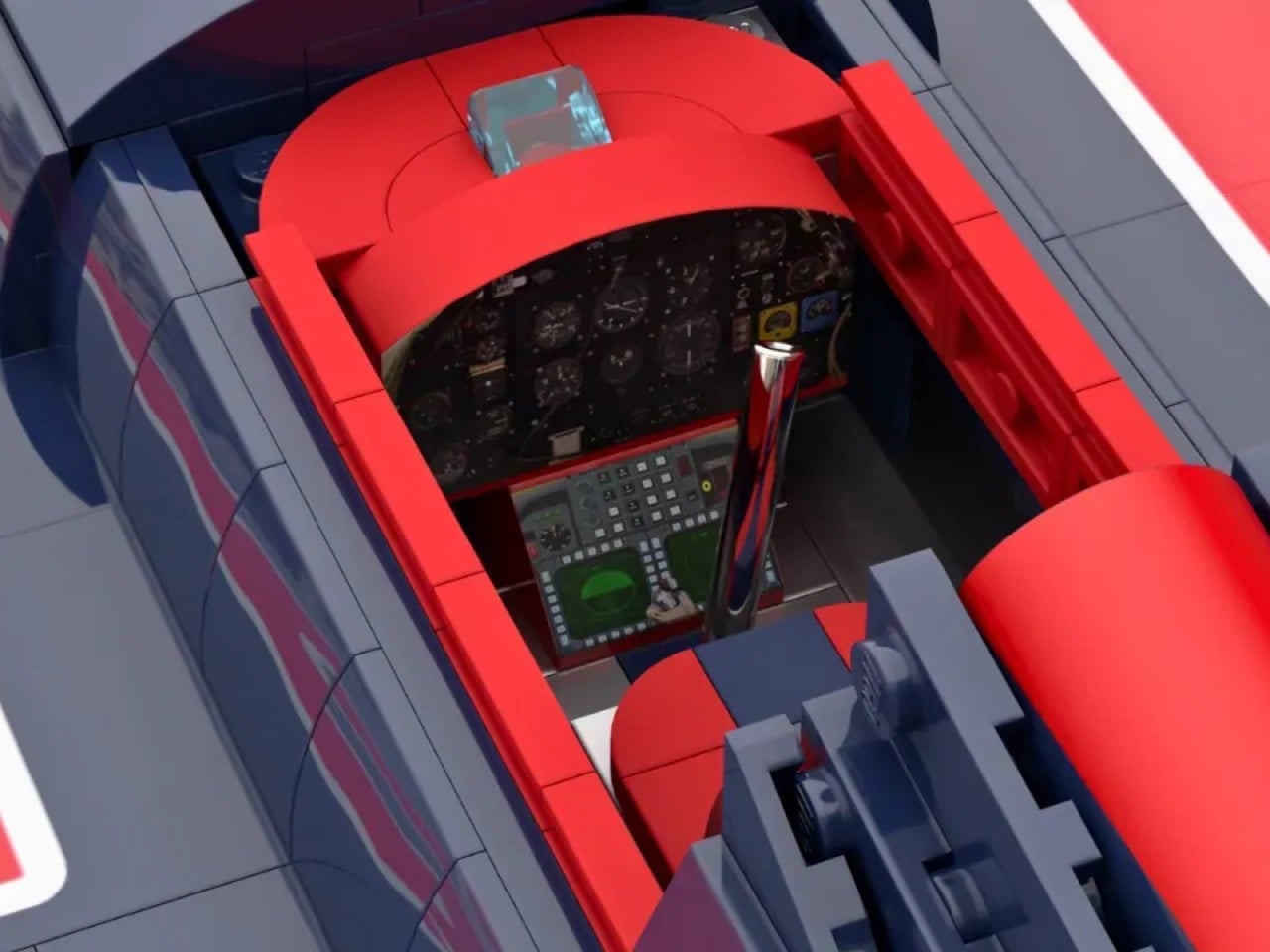
That exhaust detailing matters beyond aesthetics. Anyone who’s spent time at airshows can spot an Extra’s exhaust configuration from the flight line, and those curves are part of the aircraft’s visual signature. Replicating them accurately signals that this build understands its subject matter at a level beyond “red and blue plane with wings.” The cockpit continues this pattern with a full instrument panel mimicking actual Extra avionics layouts, modern digital displays below representing GPS navigation systems, and proper canopy framing with curved transparency. Most LEGO aircraft put a seat in there and move on. This one recognizes that aerobatic pilots experience serious g-forces in that space and the cockpit deserves proportional attention to the exterior.
LEGO’s been oddly conservative with aircraft in their lineup. Military stuff runs into guideline issues around weapons and warfare, which eliminates a huge chunk of aviation history from consideration. But civilian aircraft don’t generate the same enthusiasm outside of specific niches, and planes generally demand more sophisticated building techniques than cars or buildings. This Extra threads through that narrow gap as a legitimate performance aircraft with name recognition that happens to be completely civilian.
LEGO Ideas MOCs (My Own Creations) needs 10,000 supporters for a project to get reviewed, and this one’s sitting at 361 with over a year to go. The platform’s algorithm favors early momentum, so that’s a concerning gap. LEGO’s been bizarrely stingy with aircraft sets, partly because military guidelines eliminate a huge chunk of aviation history, partly because planes demand building techniques that scare off casual customers. This Extra threads a narrow path: civilian aircraft with legitimate performance credentials, complex enough for adult builders but not so esoteric that it lacks mainstream appeal. Whether it hits that supporter threshold depends on whether aviation nerds and LEGO enthusiasts overlap enough to create critical mass. The build quality deserves it. The question is whether 9,639 more people will care. If you consider yourself a part of that demographic, head down to the LEGO Ideas website and cast your vote for this build!
The Game Awards kicked off with a bang, showing the world premiere of Star Wars: Fate of the Old Republic. It's a brand new action role-playing game that will be directed by Casey Hudson, who previously headed up several notable BioWare games you probably know like Mass Effect and Star Wars: Knight of the Old Republic.
There’s not much to go on in the trailer, but the game simply existing is a pretty great surprise and this cinematic trailer sure looks shiny. Hudson is working with Arcanaut Studios on this project, which is described as “an epic interactive adventure across a galaxy on the brink of rebirth where every decision shapes your path towards light or darkness.” Which kind of sounds like Star Wars crossed with Mass Effect, and I am personally very excited for that combo.
This article originally appeared on Engadget at https://www.engadget.com/gaming/star-wars-fate-of-the-old-republic-is-a-new-action-rpg-from-the-director-of-mass-effect-and-kotor-012913046.html?src=rss
Capcom’s long, long-delayed sci-fi shooter Pragmatafinally has a release date. It’s headed your way on April 24, 2026 on Steam, PS5, Xbox Series X/S and — as Capcom confirmed in a trailer at The Game Awards — Nintendo Switch 2. You don’t have to wait another four months to try it out, though. A gameplay demo is out now on Steam. It will be available for consoles at a later date.
Pragmata first emerged all the way back in 2020 and Capcom initially planned to release it in 2022. After multiple delays, the game will arrive four years later than the company anticipated.
This is the first entry in a new franchise from Capcom, so taking extra time to get things right is not exactly a bad idea. Pragmata, which is set in a dystopian near-future, features the dual protagonists of Hugh Williams (a heavily armored fella) and Diana (an android with special powers). The two have to work together if they want to escape from a lunar research station that’s filled with malevolent robots. To defeat these clankers, Diana has to hack them to disable their defense systems and make a weak point available for Hugh to attack.
This article originally appeared on Engadget at https://www.engadget.com/gaming/capcoms-pragmata-is-coming-your-way-on-april-24-010826258.html?src=rss
A lot of trailers drop during The Game Awards, but the comedy of Bradley the Badger stood out from the pack. The conceit is similar to Wreck-It Ralph. Bradley, the protagonist of a fictional platforming series, is suddenly transported into the worlds of other unfinished video games; the trailer shows a badger-ified Bloodborne, Cyberpunk 2077 and The Last of Us. He also has access to a kit of dev tools that let him modify these incomplete projects, getting a taste of making a game. As the trailer ends, Bradley briefly crosses into the real world and comes face to face with an actual game developer. This looks like it will be a funny and very meta game. Astro Bot made that combo work brilliantly, so here's hoping Bradley the Badger does too.
"Bradley is part love letter to videogames and part satire of them," said Christian Cantamessa, co-founder of Day 4 Night Studios. "Games are an art form and this is a story inspired by our adventures making them." Cantamessa and fellow co-founder Davide Soliani have some big credits on their resumes, including Red Dead Redemption, Middle-earth: Shadow of Mordor and Mario + Rabbids Kingdom Battle. The titular badger is voiced by Evan Peters, who has been in the recent X-Men movies as well as Tron: Ares.
The team is planning to release the game on Steam, with consoles possibly to follow, but no timeline has been given yet.
This article originally appeared on Engadget at https://www.engadget.com/gaming/bradley-the-badger-looks-like-wreck-it-ralph-as-a-real-video-game-005634520.html?src=rss
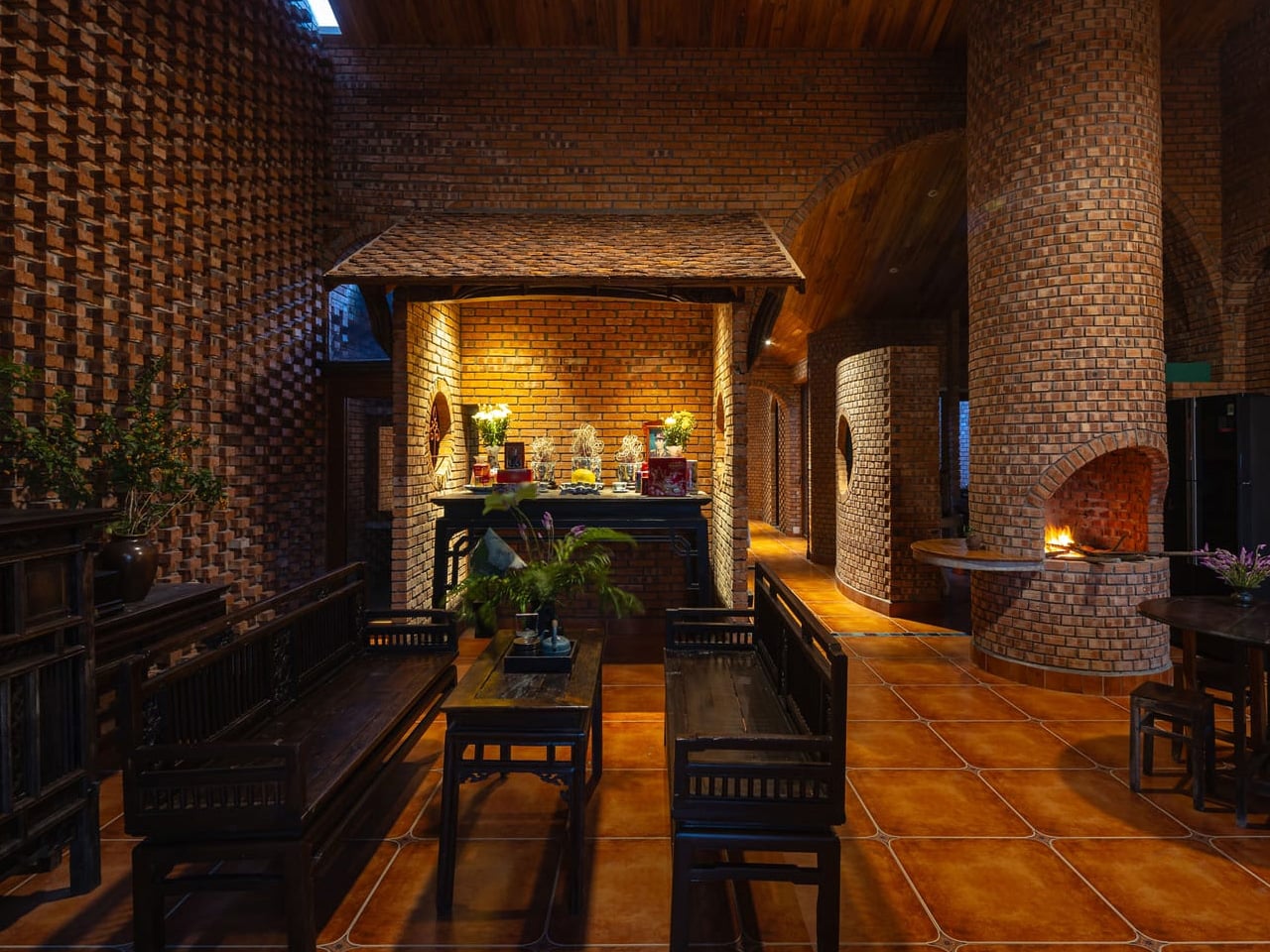
In the outskirts of Hanoi, where sprawling urbanization steadily encroaches on traditional village life, Trung Tran Studio has completed a residence that refuses to erase what came before it. The Nang House, a 270-square-meter dwelling for three generations, sits quietly among established homes and mature trees, each element of the natural landscape carefully preserved rather than cleared away. Completed in 2025, this project emerges at a moment when rapid development threatens to break down the traditional rural structure that has defined these communities for generations.
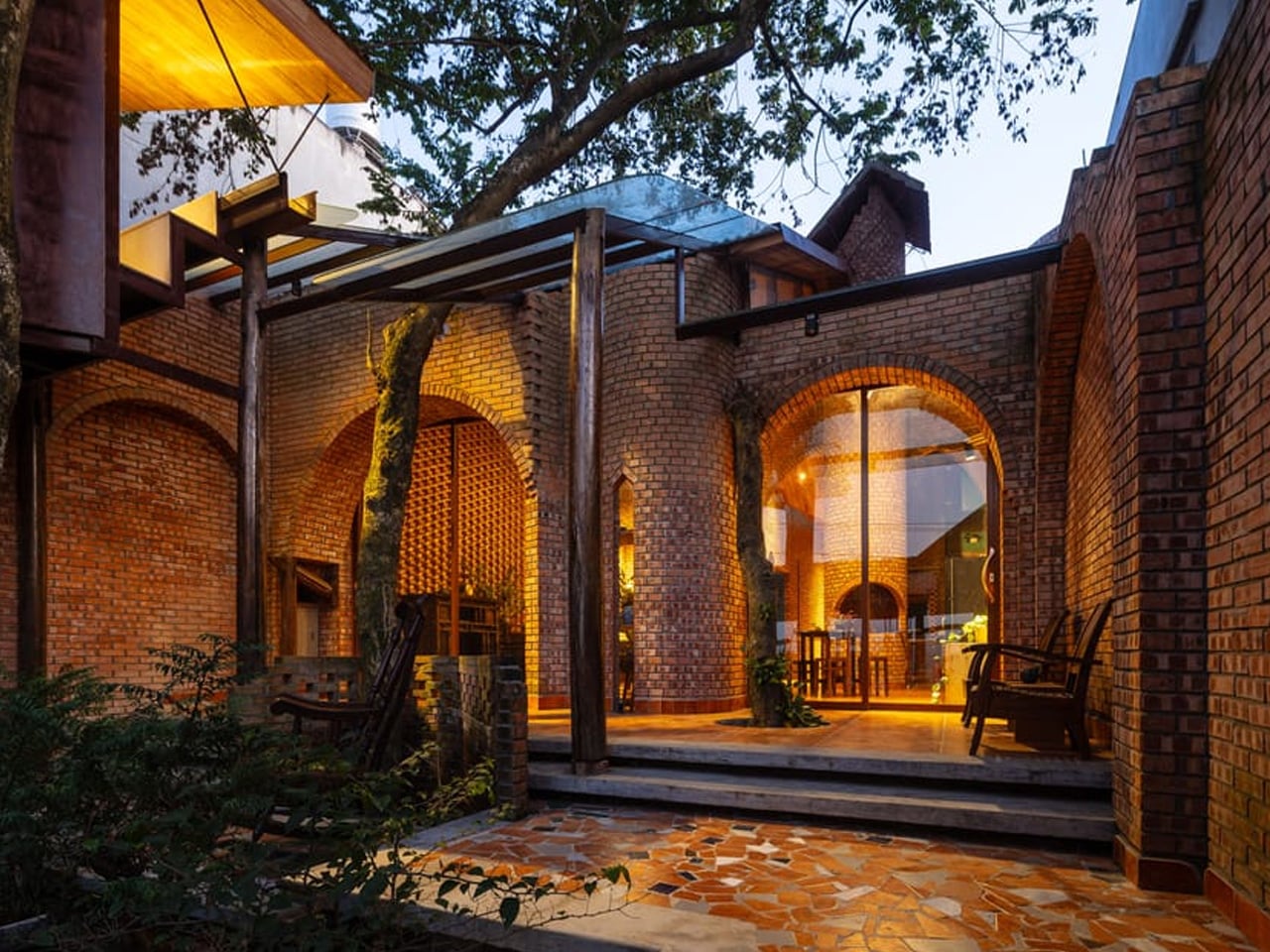
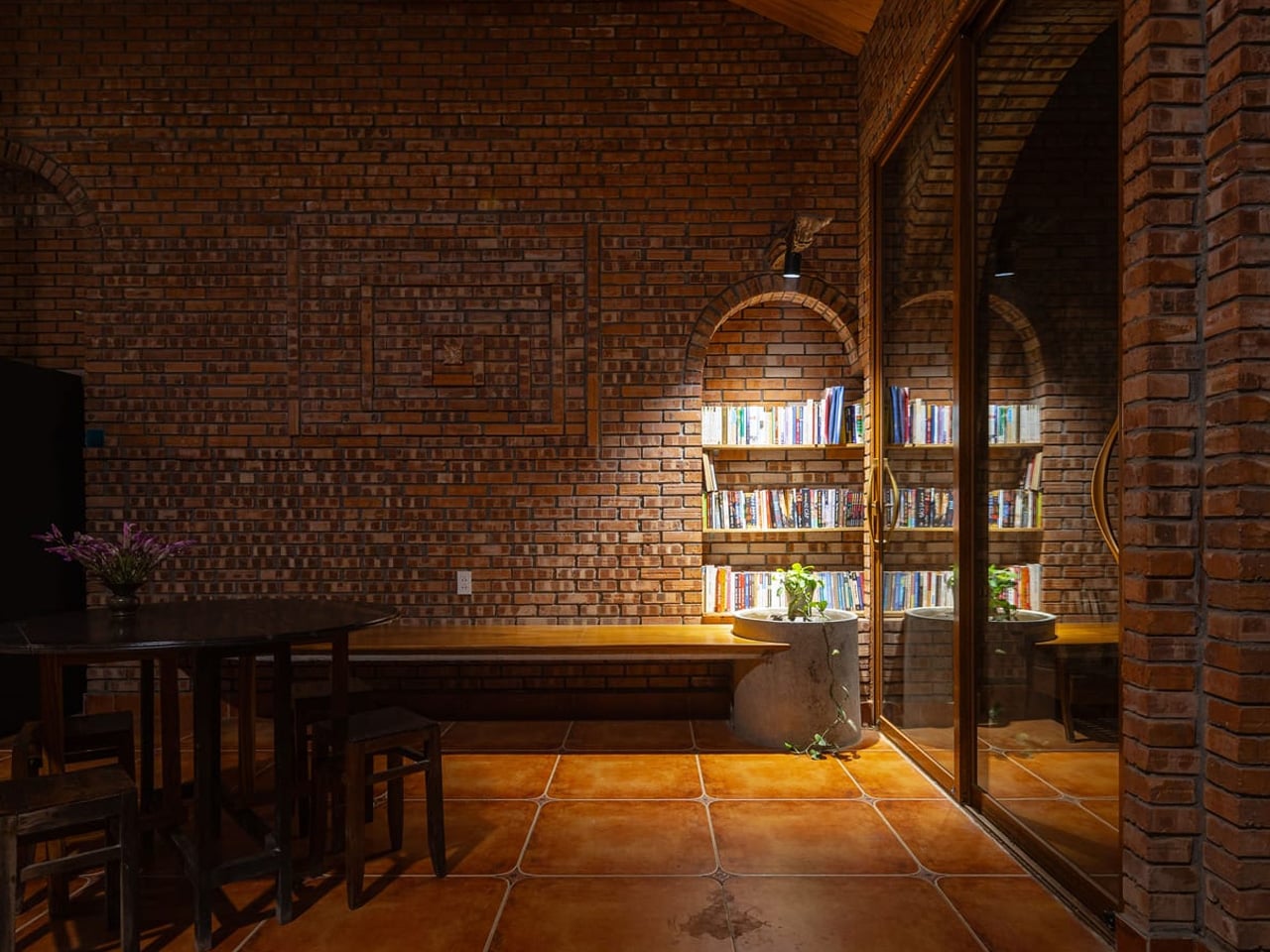
The architecture speaks through brick, that most fundamental of building materials, reimagined through contemporary forms. Textured walls rise in modular patterns, their surfaces catching light at different angles throughout the day. Arches and circular openings punctuate the structure, creating portals that guide movement while framing views of the gardens beyond. The material choice feels both pragmatic and poetic, grounding the home in local building traditions while pushing toward something unmistakably modern. High wooden ceilings and curved details highlight the angularity of the masonry, creating an interplay between rigid geometry and organic warmth.
Designer: Trung Tran Studio
What makes this project remarkable is its relationship with the site. Trees that have stood for years remain rooted in their original positions, their trunks accommodated by deliberate notches carved into rooflines. The canopy spreads over a central courtyard, blurring boundaries between interior and exterior spaces. This garden becomes the heart of the home, a breathing space where sunlight filters through leaves and generations gather. The design creates an airy, earthy dwelling where indoor and outdoor zones converge seamlessly, allowing natural ventilation to flow through the porous brick facade.
The floor plan unfolds as a series of carefully sequenced rooms wrapped around a central void. Living areas, dining spaces, and a worship room occupy the core, treated as a continuous zone for family life. Light enters through narrow clerestory windows set high along pitched ceilings, creating small, shifting patterns across the brick surfaces. The effect is subtle but transformative, making the walls appear alive as the sun moves overhead. This inner zone holds the main living functions, where textured brick walls meet timber elements at concise junctions.
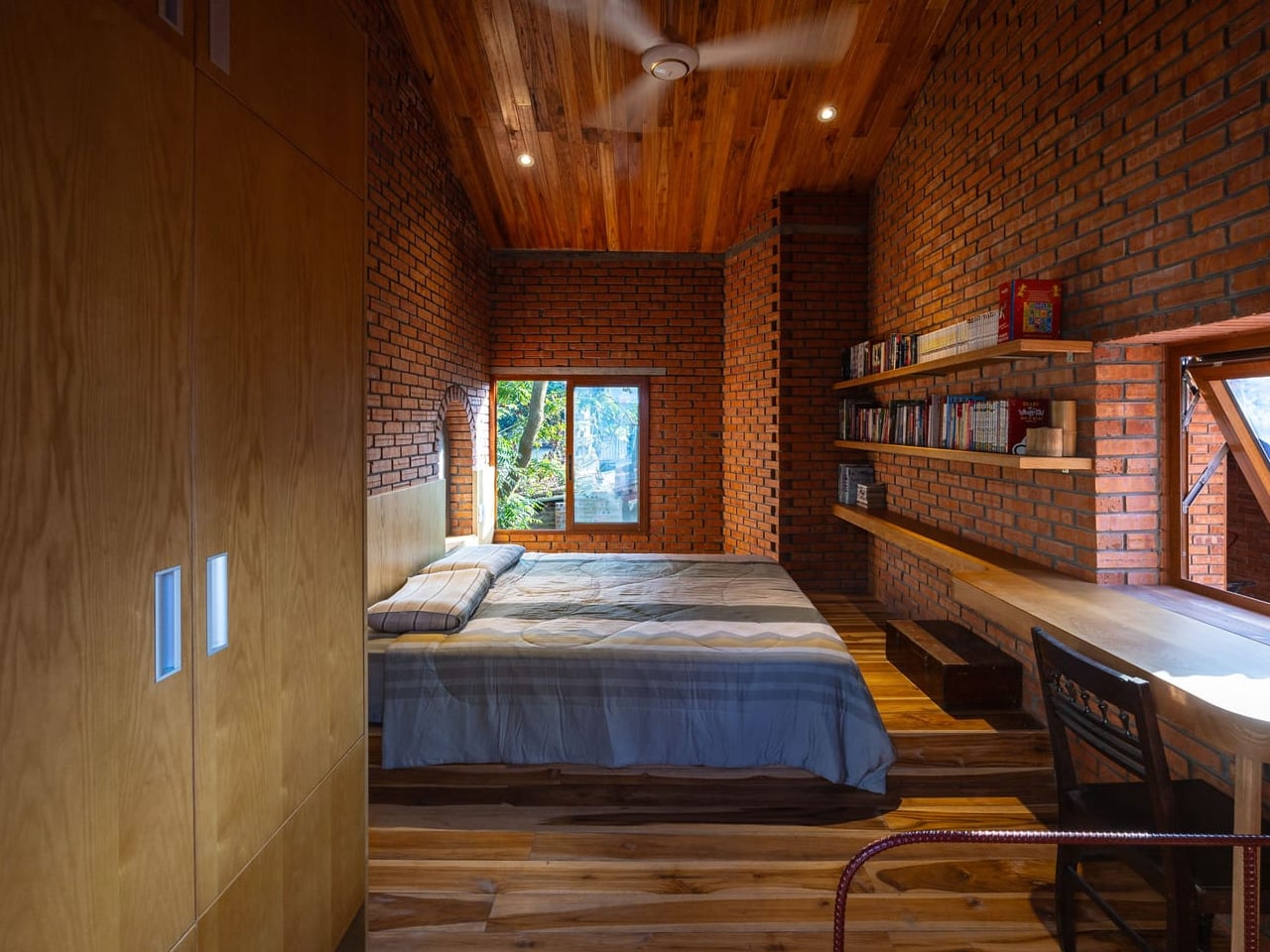
The two-storey structure accommodates five bedrooms total, with four extending toward the rear of the property. Each is modest in size yet warm in character, shaped by timber ceilings and brick surfaces that create intimate, comfortable spaces. Framed views of the garden connect every room to the landscape, maintaining visual continuity throughout the home. The bedrooms are interspersed with three distinct garden spaces that serve different functions for the multigenerational household. This careful zoning allows privacy when needed while encouraging interaction in shared areas, creating a home that expands and contracts according to the rhythms of family life.
Trung Tran Studio’s approach resists the typical pattern of development in rapidly changing rural areas, where new construction often means wholesale clearing and starting fresh. Instead, the Nang House demonstrates how contemporary architecture can work with existing conditions, respecting what’s already there while creating something entirely new. This is architecture that understands context without being constrained by it, honoring tradition while refusing nostalgia. In a landscape where urbanization threatens to flatten everything in its path, the Nang House offers a different model, one where old trees and new walls coexist naturally, proving that progress needn’t come at the cost of erasure.
Apple has clawed back a bit of ground in its legal fight with Epic Games that could have wide-reaching consequences for all app developers. Today, the 9th U.S. Circuit Court of Appeals mostly upheld a previous contempt ruling regarding fees Apple levied on third-party payment systems. However, the judges did decide to reverse the order that Apple cannot charge any commissions on those external payments, which was one of the company's main arguments in this ongoing debate.
To catch you up, US Judge Yvonne Gonzalez Rogers initially ruled in 2021 that Apple must allow third-party payment systems, although her decision fell shy of calling the tech company's control over the App Store a monopoly. In May 2025, she ruled that Apple's 27 percent commission on those outside payments violated her previous order. Apple responded with an emergency motion to appeal that finding.
Epic Games had taken its smash hit Fortnite off both the Apple App Store and Google Play Store while it was in court arguing these cases. Fortnite returned to iOS in the spring and just arrived back on Android devices today.
This article originally appeared on Engadget at https://www.engadget.com/big-tech/apple-mostly-loses-its-appeal-in-epic-games-case-235509557.html?src=rss