The INMO Air 3 Smart AR Glasses deliver a standalone augmented reality experience, combining advanced waveguide technology with a sleek yet unconventional design. According to Gamesky, these glasses are powered by a Snapdragon XR processor and feature Sony micro OLED technology, allowing a virtual 150-inch screen with 600 nits of brightness. While the device excels […]
The Galaxy S26 series is poised to set a new standard in the smartphone industry, combining innovative technology with user-centric design. This highly anticipated lineup includes three models—Galaxy S26, S26 Plus, and S26 Ultra—each tailored to meet diverse user needs. With features such as an AI-powered privacy display, enhanced charging speeds, and a sleeker design, […]
Apple is getting ready to launch its new budget-friendly smartphone, the iPhone 17e, a device designed to offer a balance of affordability, performance, and longevity. Positioned as the successor to the iPhone 16e, this model is aimed at users who want access to the iOS ecosystem without the premium price tag of flagship devices. By […]
Selecting the ideal pair of earbuds can be a daunting task, especially when comparing two premium options like the Apple AirPods Pro 3 and Sony WF-1000XM6. Both models offer innovative features, but their differences in performance, design, and functionality can significantly influence your decision. The video below from Mike O’Brien provides a detailed comparison across […]
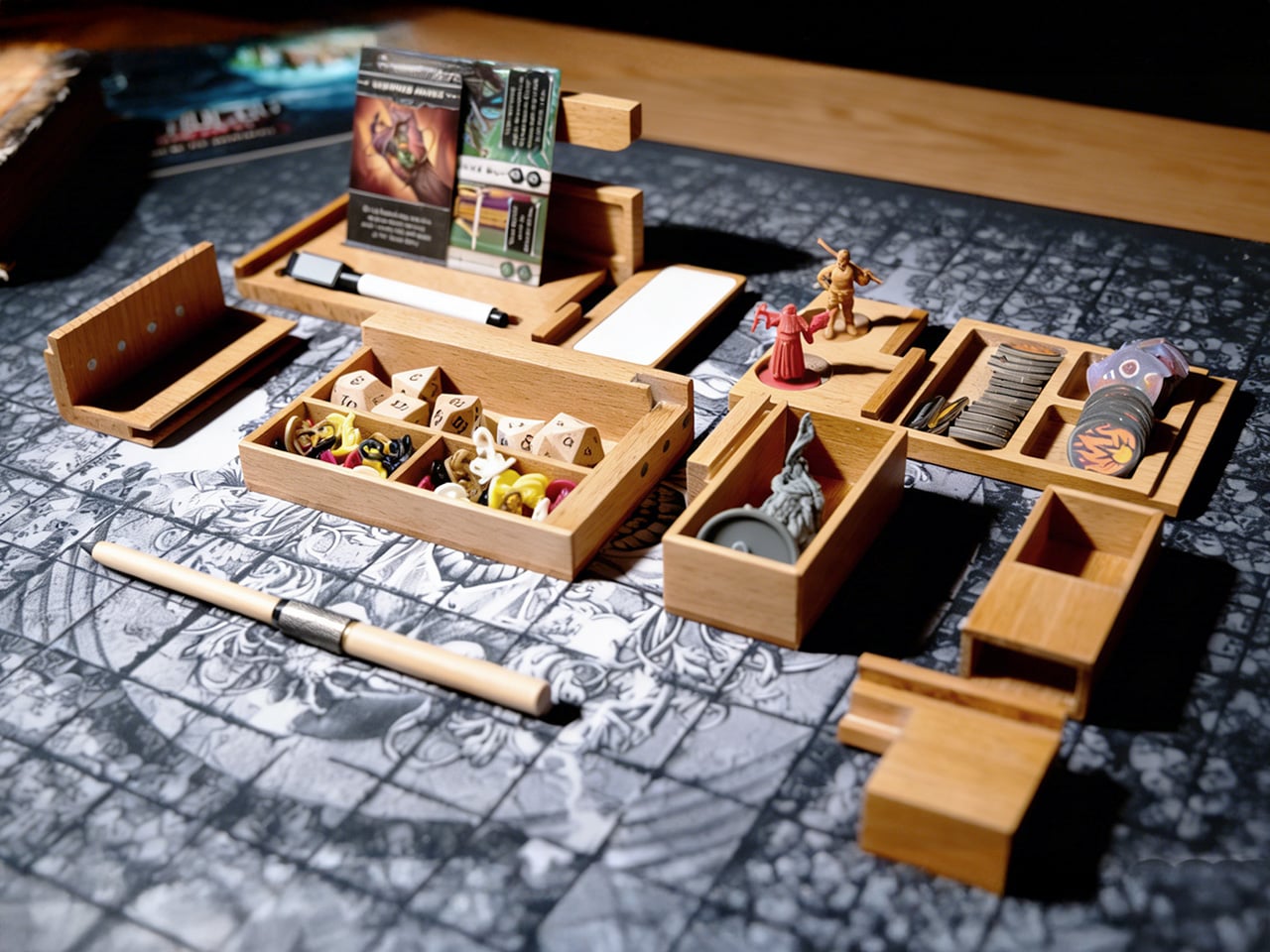
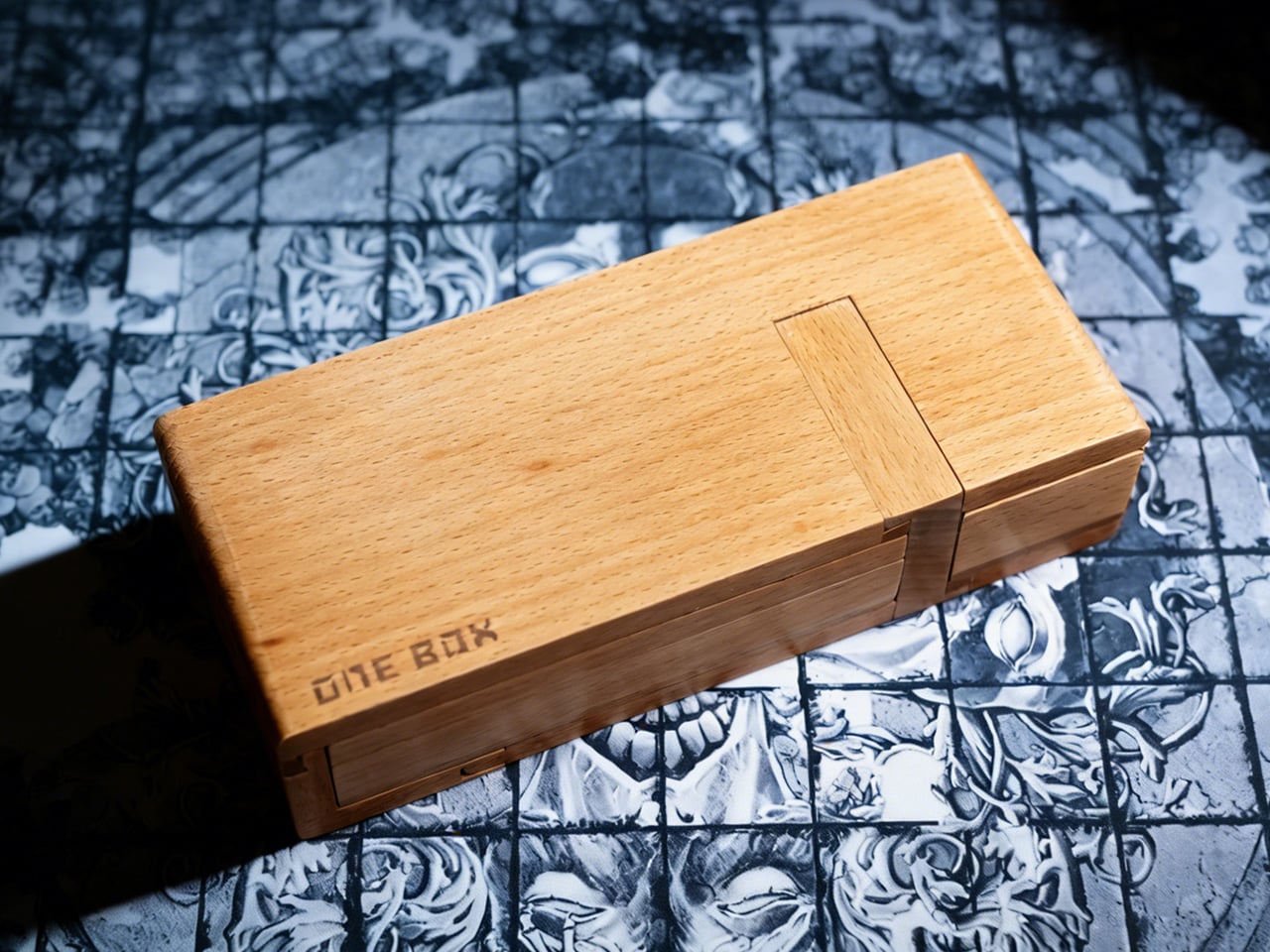
Board game nights typically end the same way: scattered tokens, bent cards sliding across the table, dice that have rolled onto the floor for the third time. The chaos becomes part of the experience, tolerated because storage solutions only address what happens after everyone goes home. ONE BOX 4.0 takes a different approach by treating organization as something that belongs inside the game itself, using modular wooden compartments that stay open and active throughout play. The whole thing behaves less like a box and more like a portable command deck that happens to collapse into something the size of a pencil case. You unfold it, and the table suddenly has lanes, stages, and zones instead of a single flat battlefield where everything fights for the same square inches.
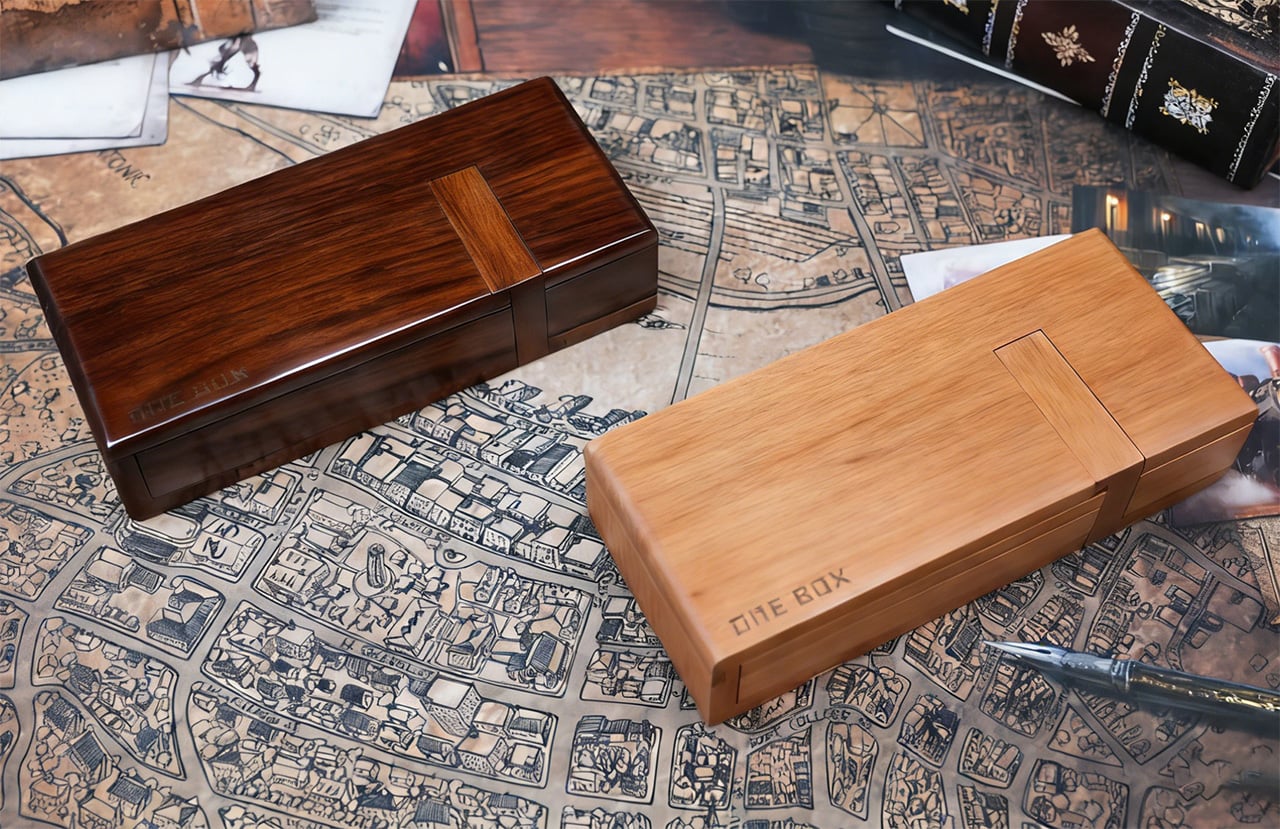
CHENGSHE.design built the system from mortise and tenon joinery, the kind of traditional woodworking that holds furniture together without screws or glue. Each unit comes in beech, teak, or black walnut, and the natural grain variations mean no two boxes look identical. The modules include card display stands, contained dice rolling areas, and phone holders that keep digital rulebooks accessible without crowding the play surface. The parts interlock into a single carryable brick, then fan out into a full tabletop system in a couple of moves. It feels like someone took the logic of a good travel tool roll, mixed it with a GM screen, and then asked an architect to make it beautiful without turning it into furniture cosplay.
The design addresses three distinct phases of a session: setup, active play, and teardown. Before play, the modules unfold from a single case into multiple zones in a matter of seconds, with dividers and trays already proportioned for cards, dice, tokens, and reference materials. During play, cards sit upright in angled stands, which keeps information visible and reduces edge wear from constant handling. Dice move through a contained rolling lane that prevents table escapes and limits collisions with card stacks or miniatures. After the session, components return to defined compartments, which then recombine into a unified case for transport and shelf storage.
Underneath the pretty wood, the logic is very modular and very modern. One set of modules can handle a deck-heavy Euro game one night and a crunchy TRPG session the next, simply by rearranging dividers and stands. The dividers are adjustable, so you can create narrow lanes for standard 63.5 by 88 mm cards or open wider slots for tarot or oversized character sheets. A lot of “board game accessories” assume a single flagship game and then become useless when your group rotates titles. ONE BOX 4.0 behaves more like a system-level accessory, closer to a camera cage or modular tool chest that expects you to change the loadout constantly. The fact that this is the fourth generation shows in that ecosystem thinking.
The mortise and tenon construction is not a decorative flex either. That joint style is pretty resilient when you are opening and closing something hundreds of times, applying torsion in slightly different directions every session. Screws back out, cheap hinges loosen, glued butt joints fail at the worst moment. Properly cut mortise and tenon joints share load across surfaces and age with the wood rather than against it. Combined with hardwoods like teak and black walnut, you get a product that can take the mild abuse of transport and table slams without turning into a rattling box of regret.
The other design decision that lands beautifully is backward compatibility. If you bought ONE BOX 3.0, you do not have to retire it to adopt 4.0. The new modules plug into the old ecosystem, which is the kind of long horizon thinking you usually only see in camera mounts, bike standards, or pro audio racks. That matters because people build habits around their table setups. If you already have a certain arrangement for card lanes and dice trays, you can add a new TRPG-focused module or that OB Infinite Pen without rethinking everything. This is how you build a niche platform instead of a series of isolated products that age out every two years.
The OB Infinite Pen and erasable whiteboard module signal a clear orientation toward TRPG and scenario driven gameplay. By dedicating space to writing tools and a reusable surface, the system supports initiative tracking, hit points, quick maps, and ad hoc notes without adding disposable paper clutter. The pen shares the same wood material language as the box, which unifies the visual identity and reinforces the idea that note taking is an integrated part of the experience. For groups that run mixed digital and analog setups, the phone and tablet holder aligns with this approach, parking screens at the edge of the system instead of scattering them across the main play field.
Visually, this is the opposite of RGB acrylic chaos. Natural wood, clean chamfers, visible grain, and a restrained color palette of light beech, warm teak, and dark walnut. On a table, it reads more like a compact piece of joinery than a toy, which is exactly what you want if your “game table” is also your work desk or dining surface. There is a subtle psychological trick here: when the tools of play look like serious objects, people tend to treat the whole session with a bit more focus. You are less likely to fling dice across a carefully built wooden lane than across a bare laminate tabletop.
Folded shut, the core ONE BOX 4.0 package is roughly pencil box sized, which means it goes into a backpack alongside a laptop and a rulebook without much negotiation. Unfolded, it spreads to cover a player station or GM area without requiring a dedicated gaming table. That portability is what separates this from the beautiful but immovable wooden tables that dominate the aspirational side of tabletop culture. You can take this to a cafe, a friend’s apartment, or a convention hall, and your setup logic travels with you instead of being rebuilt from scratch every time.
The ONE BOX 4.0 comes in three primary wood options: beech for a pale, almost Scandinavian tone, teak for a warmer mid tone, and black walnut for a darker, more saturated look. Configurations range from a single core box setup to multi box “command station” style bundles that add dedicated dice rollers, erasable whiteboard modules, storage bags, and the OB Infinite Pen in matching wood. Up to 50 early backers can grab the beech variant for as low as $59, while the next tier for all wood versions sits at $79 (which includes the ‘recording kit’ featuring the OB Infinite Pen and erasable whiteboard modules). Throw in an extra twenty, and the $99 tier also gets you a dice roller. The ONE BOX 4.0 is open for preorder and ships globally starting May 2026.
“Foglie” is the Italian word for leaves, and Tobias Sartori makes no effort to obscure the reference. His Foglie Wall Clock is built from dozens of hand-carved pine leaves, each shaped with a carved central ridge that mimics a real leaf’s midrib, arranged into a pointed, flame-like cluster that functions as the clock face. Branch-carved hands in a contrasting darker finish sweep the hours from a movement housed at the center. The result sits between decorative object and wall art, and it does so with enough material confidence to hold that ground convincingly.
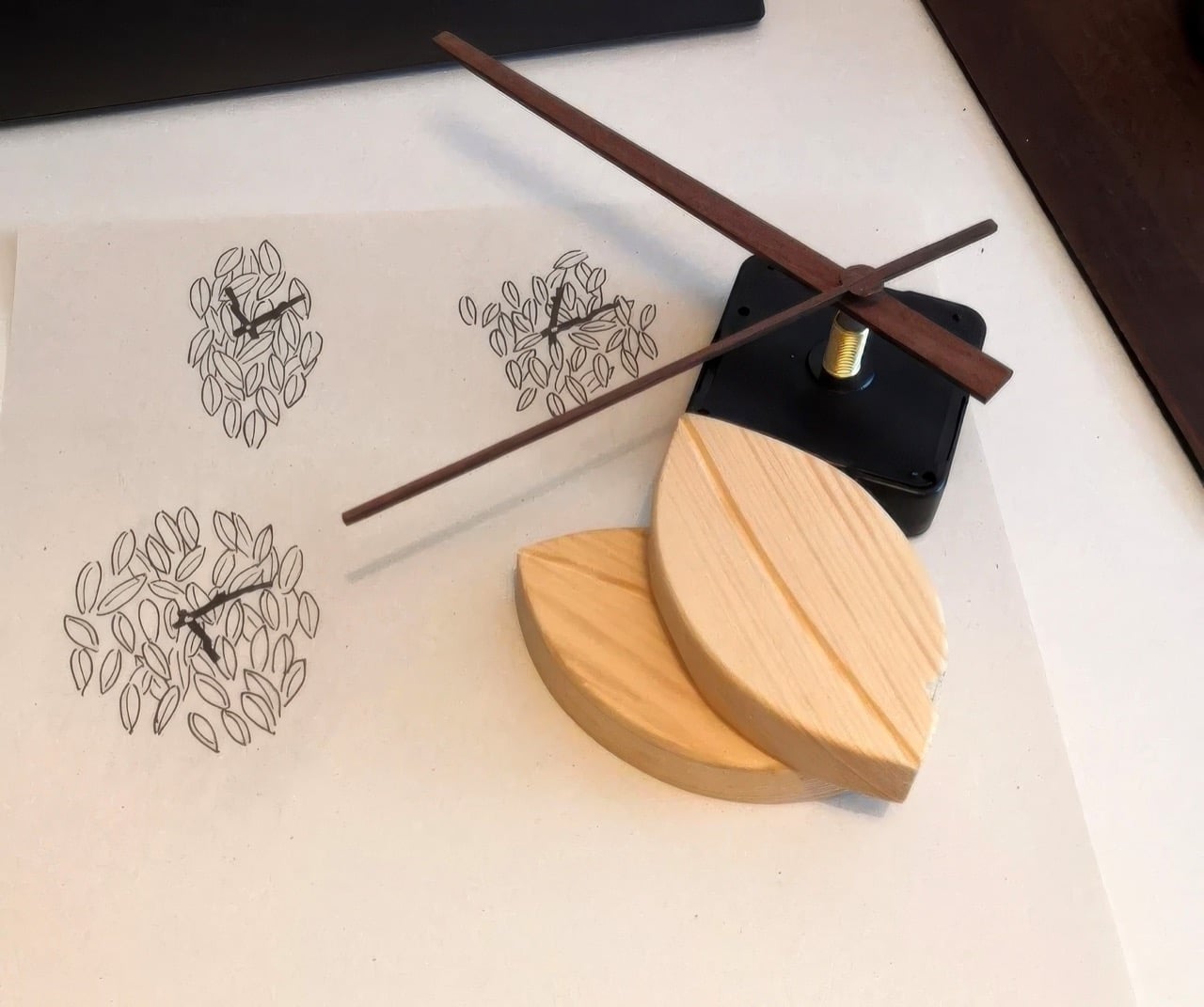
Sartori first worked with leaf forms in a jewelry project, carving wooden pendants for necklaces, and the motif followed him home. A beech hedge outside and a botanical wallpaper inside reinforced the idea, together suggesting that an entire clock could operate in the same visual vocabulary. Several layout sketches followed before two strong candidates emerged. The chosen design is the one where every individual carved leaf echoes the overall silhouette of the piece, creating a quality that feels grown from the inside out.
Designer: Tobias Sartori
The final piece has a remarkable sense of depth and texture, a direct result of its meticulous construction. Because each pine leaf is an individual component, hand-carved and set at a slightly different angle and height, the clock creates a dynamic topography of light and shadow that shifts throughout the day. This layered arrangement gives the object a living quality, changing its character as the sun moves across the room.
The choice of pine, with its warm and expressive grain, gives the clock an approachable, organic feel that invites a closer look. The darker, more delicate hands provide just enough contrast to ensure legibility without overpowering the woodwork. It is a quiet object that reveals its handmade complexity gradually, rewarding careful observation with subtle details that a mass-produced item could never replicate.
Sartori’s process sketches reveal another, more traditional round variant that he ultimately set aside, a decision that proved critical to the design’s integrity. The circular concept, while pleasant, felt more like leaves applied to a conventional clock shape. The final, elongated form, however, feels like a clock that grew directly from the leaves themselves. This distinction is the core of its success. By housing a simple, reliable clock movement within a form that feels completely natural, Sartori allows the artistry of the woodwork to remain the main story. The Foglie clock successfully integrates function into a form that feels elemental and intentional, as if a gust of wind had gathered the leaves on the wall in a moment of perfect, fleeting composition.
Settled quietly within Naselje Murgle, one of Ljubljana’s most thoughtfully conceived residential neighborhoods, the House Under the Poplars is a 122-square-meter reconstruction and extension that speaks softly and means it. Completed in 2025 by OFIS Arhitekti, the project reads less as a statement of ambition and more as an act of architectural respect, a house that earns its place not by standing out but by understanding exactly where it stands.
Murgle was never meant to be remarkable in a conventional sense. Designed by Slovenian architects France and Marta Ivanšek and built through self-construction phases between 1965 and 1982, the settlement became a quietly radical model of ecological, human-scaled living long before sustainability entered the architectural vocabulary. Its distinctly Scandinavian character, shaped in part by the Ivanšeks’ time in Sweden, gave the neighborhood a collective identity rooted not in signature gestures but in shared, low-tech intelligence.
Led by Rok Oman and Špela Videčnik, OFIS Arhitekti approached the project with the kind of cultural sensitivity that most renovations only gesture toward. The intent was never to impose a new architectural language onto an existing one but to refine and carefully elevate what was already there. The studio leaned into Murgle’s founding principles, treating them not as limitations but as the clearest possible brief for what this house needed to become.
The new glazed façade opens generously toward the garden, framing a mature birch tree with an ease that feels entirely uncontrived. Vertical timber slats line the side glazing, offering privacy to the main living space without cutting it off from the broader landscape. The covered atrium connects the primary bedroom and its ensuite bathroom to the rest of the house, creating a sequence of spaces that feel considered without ever feeling overcalculated.
Inside, timber cladding runs across the walls and ceiling in a move that unifies the interior and gives the whole house its warmth. A wine cellar sits beneath a glass floor panel in the living room, one of the project’s more unexpected gestures, and all the better for it. The rest of the program stays deliberately modest: a single additional bedroom suite and a small study, a reminder that restraint, when properly applied, is its own kind of luxury.
The House Under the Poplars does not try to reinvent Murgle. It tries to honor it, and in doing so, quietly sets a standard for what thoughtful, sensitive reconstruction can look like in a neighborhood that has always asked its residents to think beyond themselves. As a project, it resists easy categorization. It is not a restoration, not a reimagining, but something far more useful: a considered continuation of an idea that was already worth keeping.
Mark Zuckerberg took the stand Wednesday in a high-profile jury trial over social media addiction. In an appearance that was described byNBC News as "combative," the Facebook founder reportedly said that Meta's goal was to make Instagram "useful" not increase the time users are spending in the app.
On the stand, Zuckerberg was questioned about a company document that said improving engagement was among "company goals," according to CNBC. But Zuckerberg claimed that the company had "made the conscious decision to move away from those goals, focusing instead on utility," according to The Associated Press. "If something is valuable, people will use it more because it’s useful to them,” he said.
The trial stems from a lawsuit brought by a California woman identified as "KGM" in court documents. The now 20-year-old alleges that she was harmed as a child by addictive features in Instagram, YouTube, Snapchat and TikTok. TikTok and Snap opted to settle before the case went to trial.
Zuckerberg was also asked about previous public statements, including his remarks on Joe Rogan's podcast last year that he can't be fired by Meta's board because he controls a majority of the voting power. According to The New York Times, Zuckerberg accused the plaintiffs' lawyer of "mischaracterizing" his past comments more than a dozen times.
Zuckerberg's appearance in court also apparently prompted the judge to warn people in the courtroom not to record the proceedings using AI glasses. As CNBC notes, members of Zuckerberg's entourage were spotted wearing Meta's smart glasses as the CEO was escorted into the courthouse. It's unclear if anyone was actually using the glasses in court, but legal affairs journalist Meghann Cuniff reported that the judge was particularly concerned about the possibility of jurors being recorded or subjected to facial recognition. (Meta's smart glasses do not currently have native facial recognition abilities, but recent reports suggest the company is considering adding such features.)
The Los Angeles trial has been closely watched not just because it marked a rare in-court appearance for Zuckerberg. It's among the first of several cases where Meta will face allegations that its platforms have harmed children. In this case and in a separate proceeding in New Mexico, Meta's lawyers have cast doubt on the idea that social media should be considered a real addiction. Instagram chief Adam Mosseri previously testified in the same Los Angeles trial that Instagram isn't "clinically addictive."
This article originally appeared on Engadget at https://www.engadget.com/social-media/mark-zuckerberg-testifies-in-social-media-addiction-trial-that-meta-just-wants-instagram-to-be-useful-234332316.html?src=rss
Road construction has a complexity problem. Getting a stretch of road built in a remote region, a disaster zone, or difficult terrain typically means coordinating multiple heavy machines, multiple skilled operators, and a logistical chain that can collapse at any point. Yan Zhang and Jialu Hou, two designers from Shandong University of Art and Design, spent several months in 2024 working on a concept that treats all of that complexity as a design challenge worth solving from scratch.
The result is PaveLink, an autonomous modular road-building system that arrives as a single articulated electric train and deploys into a coordinated fleet of AI-guided construction robots on site. One system. One delivery. A drone overhead, autonomous modules on the ground, and an intelligent command hub managing all of it in real time.
Designers: Yan Zhang and Jialu Hou
The truck head is a blocky, panoramic-windshield command center with a drone launch platform built right into the roof. When PaveLink reaches its target location, that drone lifts off first, ascending to map the terrain using aerial sensors and streaming data back to the cab in real time. The drone itself is worth a second look: shaped like a swept-back arrowhead with a multi-rotor configuration, it looks aggressive and purposeful in the air, matching the amber and gunmetal black palette of the ground units working below it.
Four distinct unit types detach from that spine: a front-loader with a wide scoop bucket, an excavator arm for breaking ground, a grader for leveling, and a heavy steel drum compactor for finishing the surface. On their own, each unit looks almost insectoid, riding on two or three fat rugged wheels with articulated limbs that flex and angle across uneven ground. Together, working in coordinated parallel, they turn what would normally require a crew of operators and days of staging into something that functions more like a synchronized performance.
All the modules stay tethered to the system via cables, which serve double duty as power lines and data channels. PaveLink runs fully electric, so there’s no diesel cloud hanging over the operation, and the continuous cable connection means the modules never need to stop and recharge independently. The drone keeps feeding updated terrain data overhead, flagging hazards and fine-tuning the AI’s workflow decisions as ground conditions change.
PaveLink is aimed squarely at the places traditional road construction struggles most: disaster-hit zones, remote regions with no skilled operators, and rugged terrain that conventional machinery can’t navigate efficiently. The modular autonomous approach answers all three problems at once. Fewer humans in harm’s way, fewer separate machines to transport in, and an AI coordination layer that adapts to whatever chaotic ground conditions it finds on arrival.
Last year Dyson introduced the PencilVac, which it immediately declared the "world’s slimmest vacuum cleaner." Presumably, then, the title of world’s slimmest wet floor cleaner goes to the newly unveiled PencilWash.
Promising a "lighter, slimmer and smaller solution to wet cleaning without compromising on hygiene," the PencilWash is designed to let you clean everywhere you need to with minimal hassle. Like the vacuum cleaner with which it shares the first part of its name, the handle measures just 1.5 inches in diameter from top to bottom, and the whole thing weighs little more than 2kg.
The ultra-thin design allows the cleaner to lie almost completely flat, allowing you to get into tight corners or under low furniture, where more traditionally bulky devices might struggle. Its slender proportions also make it easier to store if your home is on the smaller side.
Dyson says the PencilWash only applies fresh water to floors, and after swiftly eliminating spills and stains it should dry up pretty quickly. Its high-density microfiber roller is designed to tackle both wet and dry debris in one pass, and because it doesn’t have a traditional filter, you won’t have to worry about trapped dirt or lingering smells.
Above the power buttons there’s a screen displaying remaining battery level, and the handle can be slotted into a charging dock when not in use.
The Dyson PencilVac will cost $349, with a release date yet to be announced.
This article originally appeared on Engadget at https://www.engadget.com/home/dyson-announces-the-pencilwash-wet-floor-cleaner-230152299.html?src=rss