Road construction has a complexity problem. Getting a stretch of road built in a remote region, a disaster zone, or difficult terrain typically means coordinating multiple heavy machines, multiple skilled operators, and a logistical chain that can collapse at any point. Yan Zhang and Jialu Hou, two designers from Shandong University of Art and Design, spent several months in 2024 working on a concept that treats all of that complexity as a design challenge worth solving from scratch.
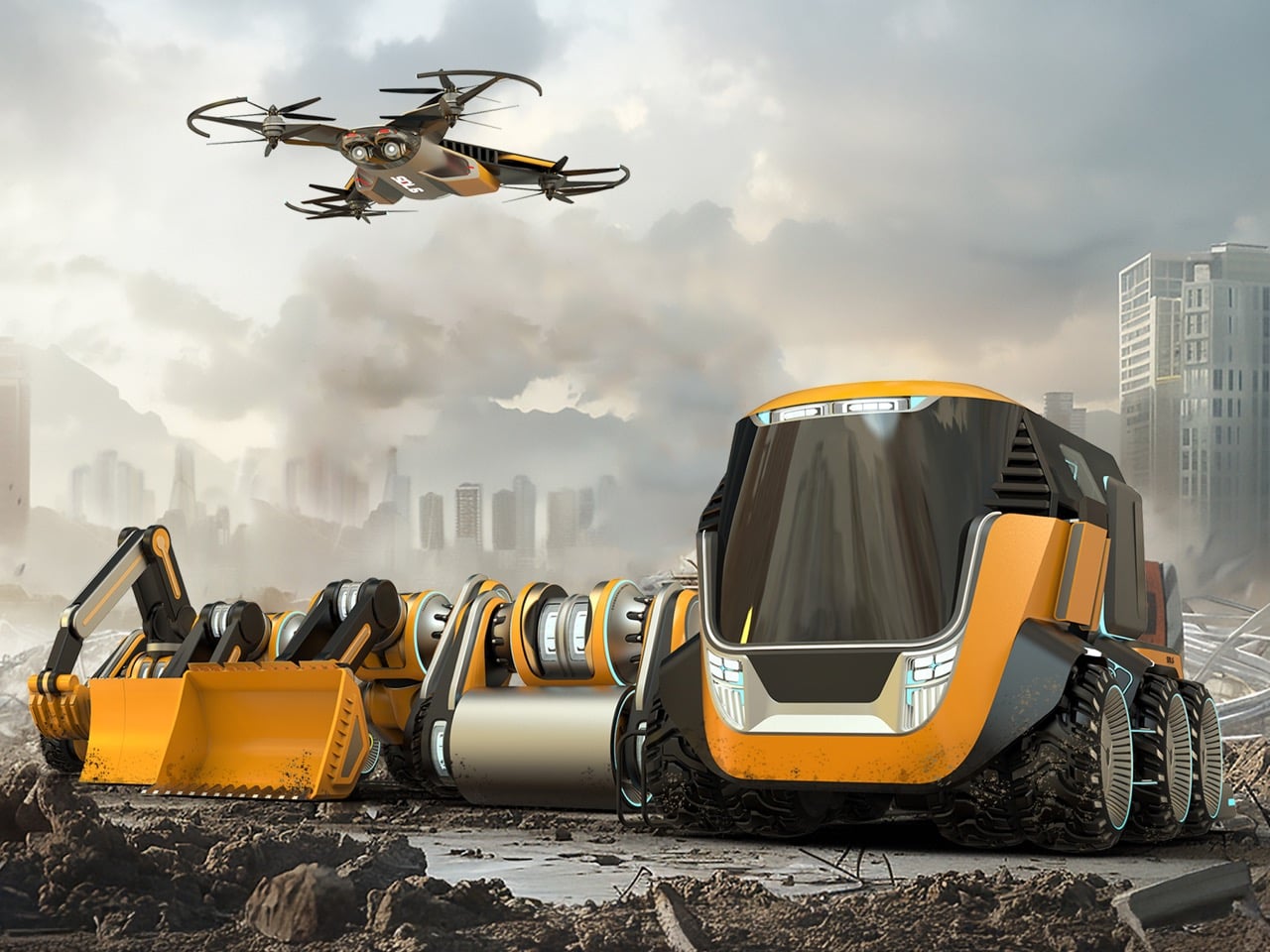
The result is PaveLink, an autonomous modular road-building system that arrives as a single articulated electric train and deploys into a coordinated fleet of AI-guided construction robots on site. One system. One delivery. A drone overhead, autonomous modules on the ground, and an intelligent command hub managing all of it in real time.
Designers: Yan Zhang and Jialu Hou
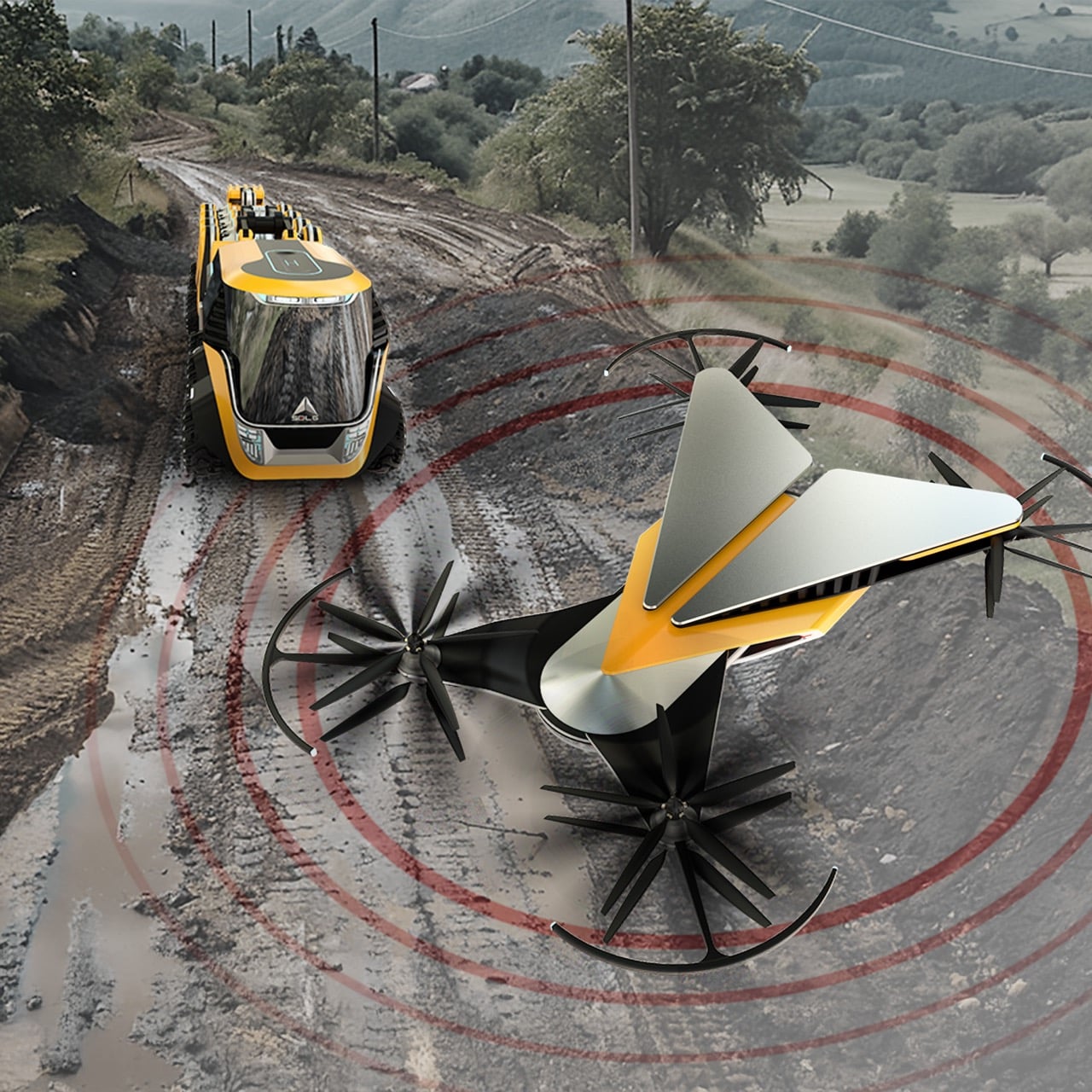
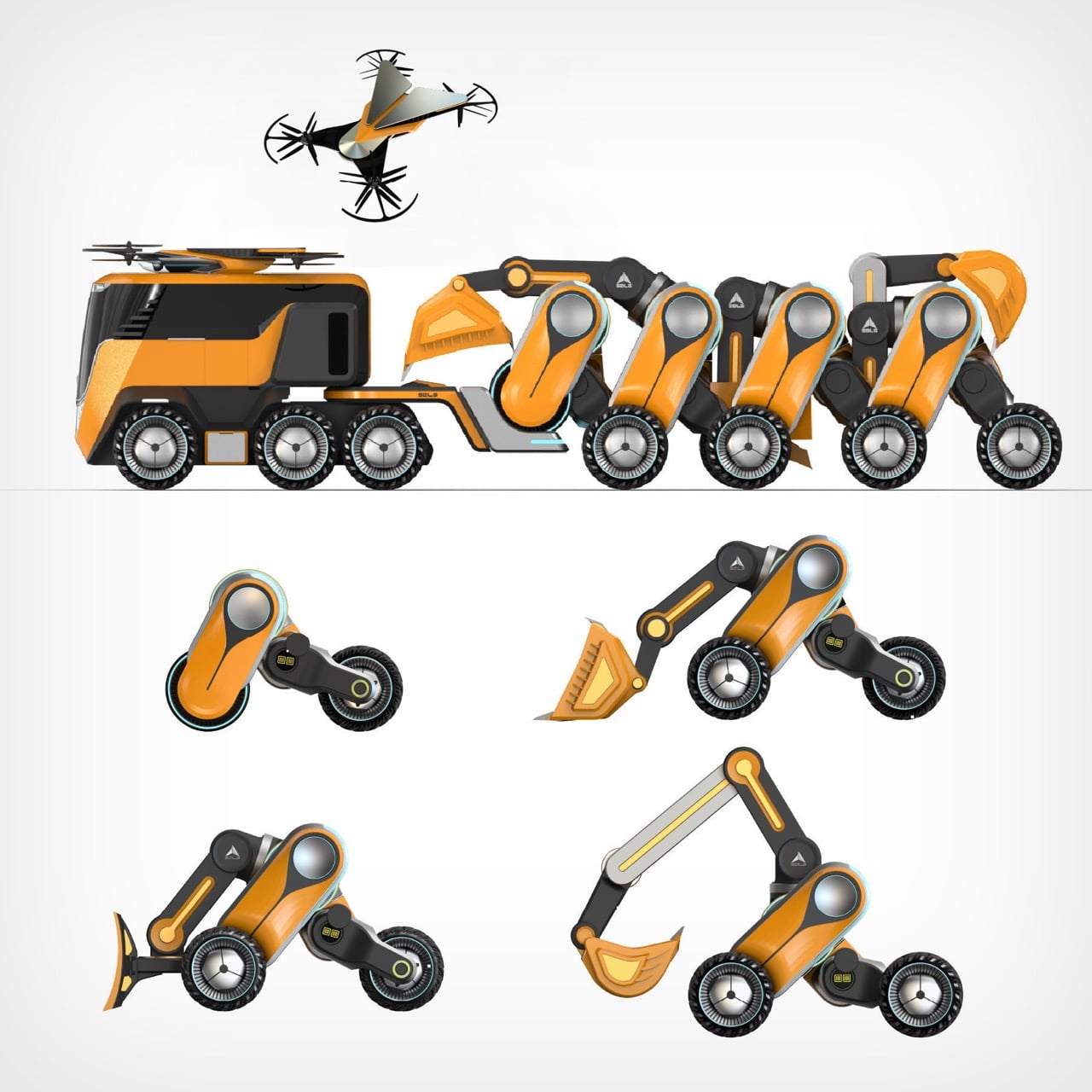
The truck head is a blocky, panoramic-windshield command center with a drone launch platform built right into the roof. When PaveLink reaches its target location, that drone lifts off first, ascending to map the terrain using aerial sensors and streaming data back to the cab in real time. The drone itself is worth a second look: shaped like a swept-back arrowhead with a multi-rotor configuration, it looks aggressive and purposeful in the air, matching the amber and gunmetal black palette of the ground units working below it.
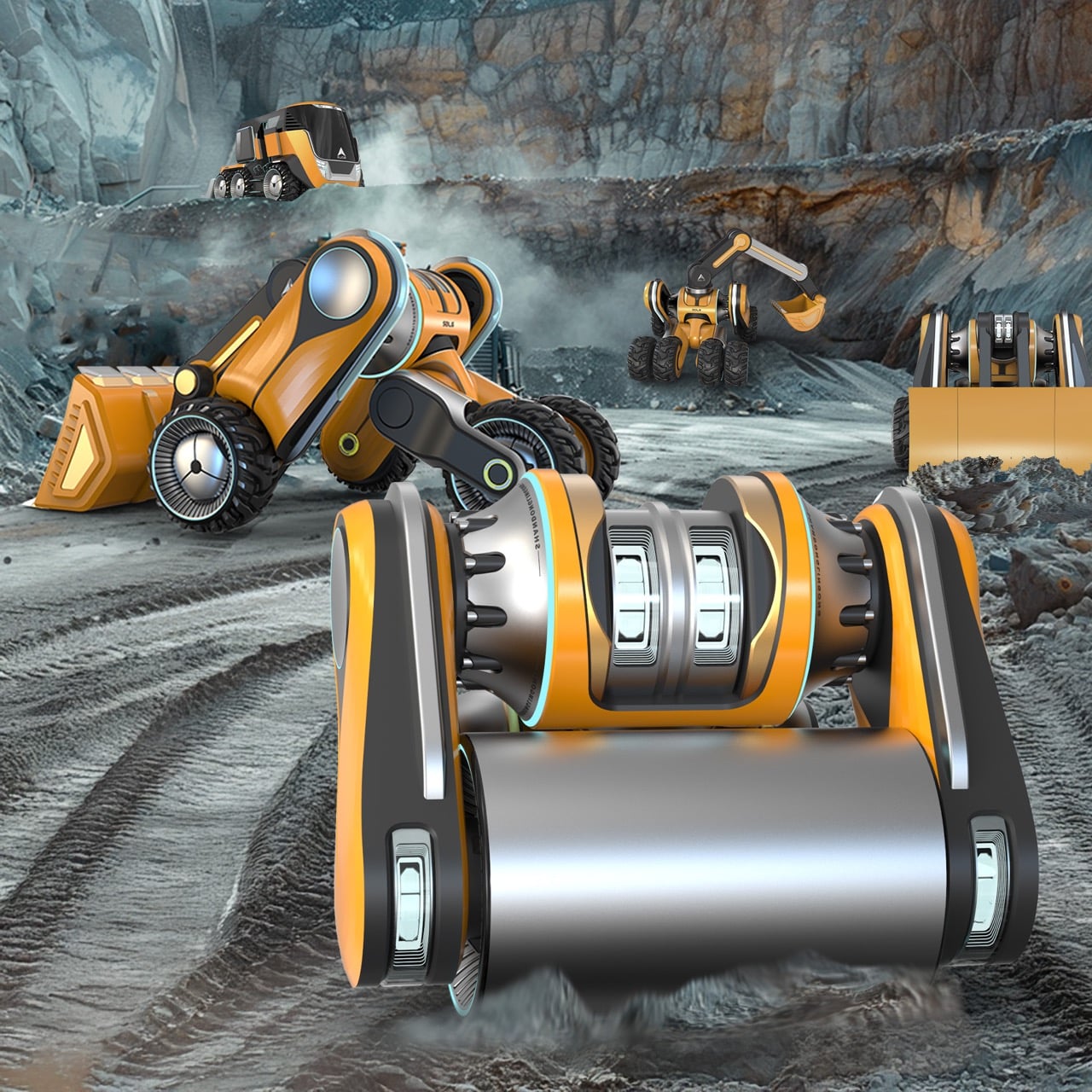
Four distinct unit types detach from that spine: a front-loader with a wide scoop bucket, an excavator arm for breaking ground, a grader for leveling, and a heavy steel drum compactor for finishing the surface. On their own, each unit looks almost insectoid, riding on two or three fat rugged wheels with articulated limbs that flex and angle across uneven ground. Together, working in coordinated parallel, they turn what would normally require a crew of operators and days of staging into something that functions more like a synchronized performance.
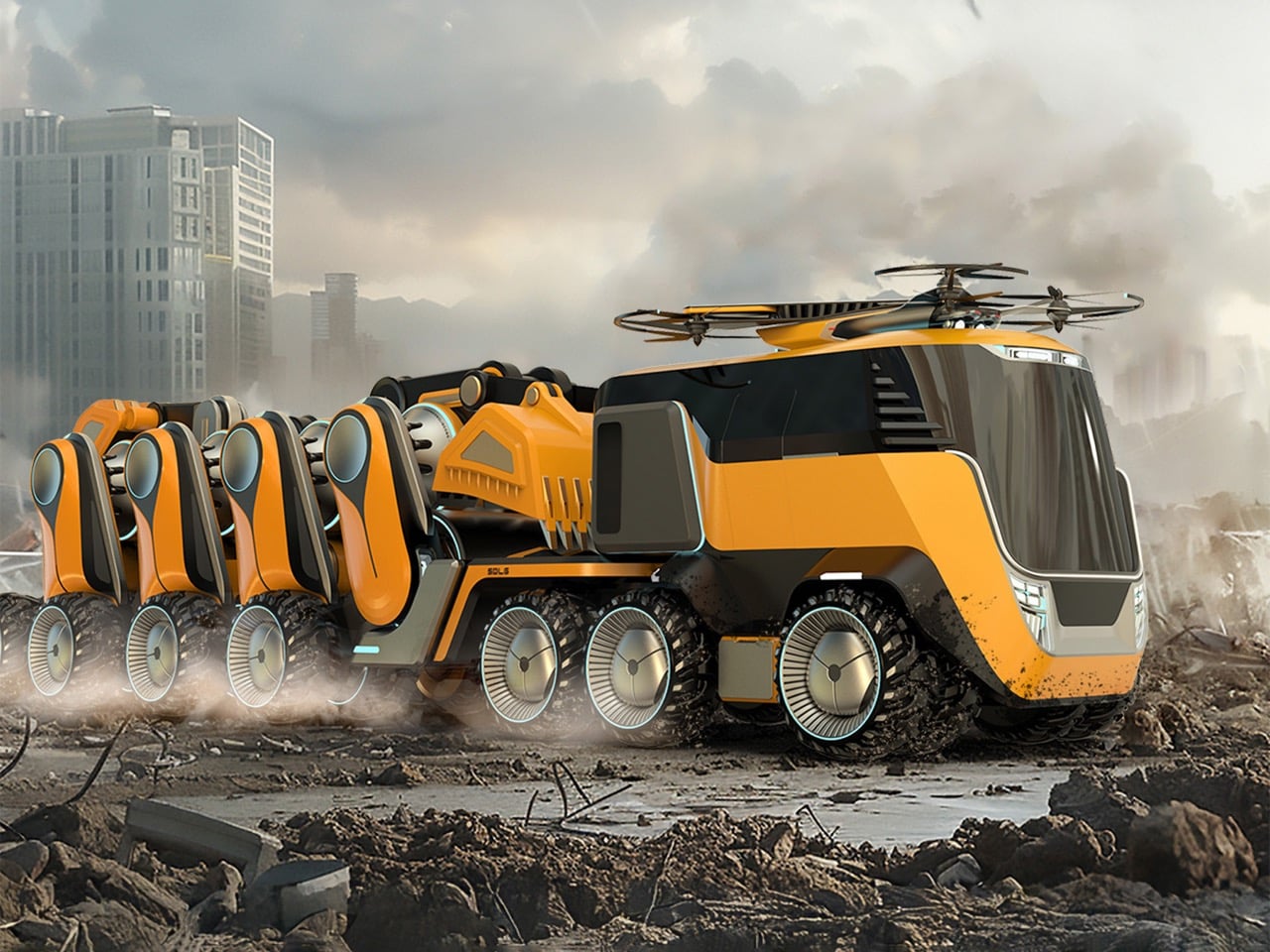
All the modules stay tethered to the system via cables, which serve double duty as power lines and data channels. PaveLink runs fully electric, so there’s no diesel cloud hanging over the operation, and the continuous cable connection means the modules never need to stop and recharge independently. The drone keeps feeding updated terrain data overhead, flagging hazards and fine-tuning the AI’s workflow decisions as ground conditions change.
PaveLink is aimed squarely at the places traditional road construction struggles most: disaster-hit zones, remote regions with no skilled operators, and rugged terrain that conventional machinery can’t navigate efficiently. The modular autonomous approach answers all three problems at once. Fewer humans in harm’s way, fewer separate machines to transport in, and an AI coordination layer that adapts to whatever chaotic ground conditions it finds on arrival.
The post Transformers-inspired Shapeshifting Machine Splits Into An Entire Road-Construction Robot Fleet first appeared on Yanko Design.