YouTube is muting push notifications from channels you don’t watch

YouTube notifications can get messy fast, particularly if you’re subscribed to a lot of different channels. To address that, today the company will begin muting push notifications from creators that you haven’t engaged with in the last month.

The change to YouTube notifications began as a small trial the company tested out earlier this year. The idea behind it is that if a viewer continually receives notifications about content they don't engage with, this may eventually cause the user to disable YouTube notifications altogether. Now obviously, this is bad for YouTube. Turning off notifications means people will use the platform less, thereby resulting in lower revenue. However, it's also bad for content creators, especially the ones you do like, who will have one fewer avenue to keep you updated about new and upcoming videos. 

So starting today, for channels that you have subscribed to and have notifications set to "all," YouTube will no longer send out push notifications to mobile devices from creators that you haven't interacted with for one month. That said, these notifications will continue to be available inside the YouTube app in your inbox (the little bell icon in the top right). 

Notably, for those who are clicking on notifications and watching related videos, nothing will change. Additionally, based on info from the test earlier this year, YouTube said "channels that upload infrequently will not have their notifications affected." This is a good thing, especially for creators who post long-form content that takes extra time to make, as people probably don't want notifications to go away in case they happen to miss a once-a-month upload. 

The one thing that's unclear is if you start watching a channel again that you have not interacted with in a while, is if YouTube will automatically restart related push notifications. However, as a way to prevent too many alerts from clogging up your phone, YouTube's new protocol seems like a good way to cut down on the clutter.

This article originally appeared on Engadget at https://www.engadget.com/entertainment/youtube/youtube-is-muting-push-notifications-from-channels-you-dont-watch-205119228.html?src=rss


Chopard’s Beehive Table Clock is a masterpiece of horological art with L’Épée 1839

Brilliance usually comes in limited quantities. In fact, it is embodied by the new limited edition Chopard Table Clock, which stands apart from anything the horologist has created in the past three decades. To celebrate the 30th anniversary of the Chopard Manufacture in Fleurier, the company has teamed up with L’Épée 1839 – the masters of complex watches – to create the Beehive Table Clock.

After reimaging a legendary car and a colorful hand grenade as clocks, L’Épée 1839 is now giving a new horological dimension to the desk clock. Easily, one of the most complex and finely decorated Objet d’Art – spare a thought for the MB&F – the clock revives Chopard’s own iconic beehive motive originally used by the founder Louis-Ulysse Chopard in the 19th century. The bee was later adopted as the emblem of the Manufacture in Fleurier by Karl-Friedrich Scheufele back in 1996 to represent “labor, precision, and collective skill.”

Designer: Chopard

Chopard timepieces are generally an embodiment of precision and strength highlighted by timeless style. Each of its creations reflects Swiss mastery with the use of dancing gems, fine artworks, and sustainable innovation. All of this is presented well in the Beehive Table Clock, which is made of steel and brass in 18K ethical yellow gold to mimic the color of an original beehive.

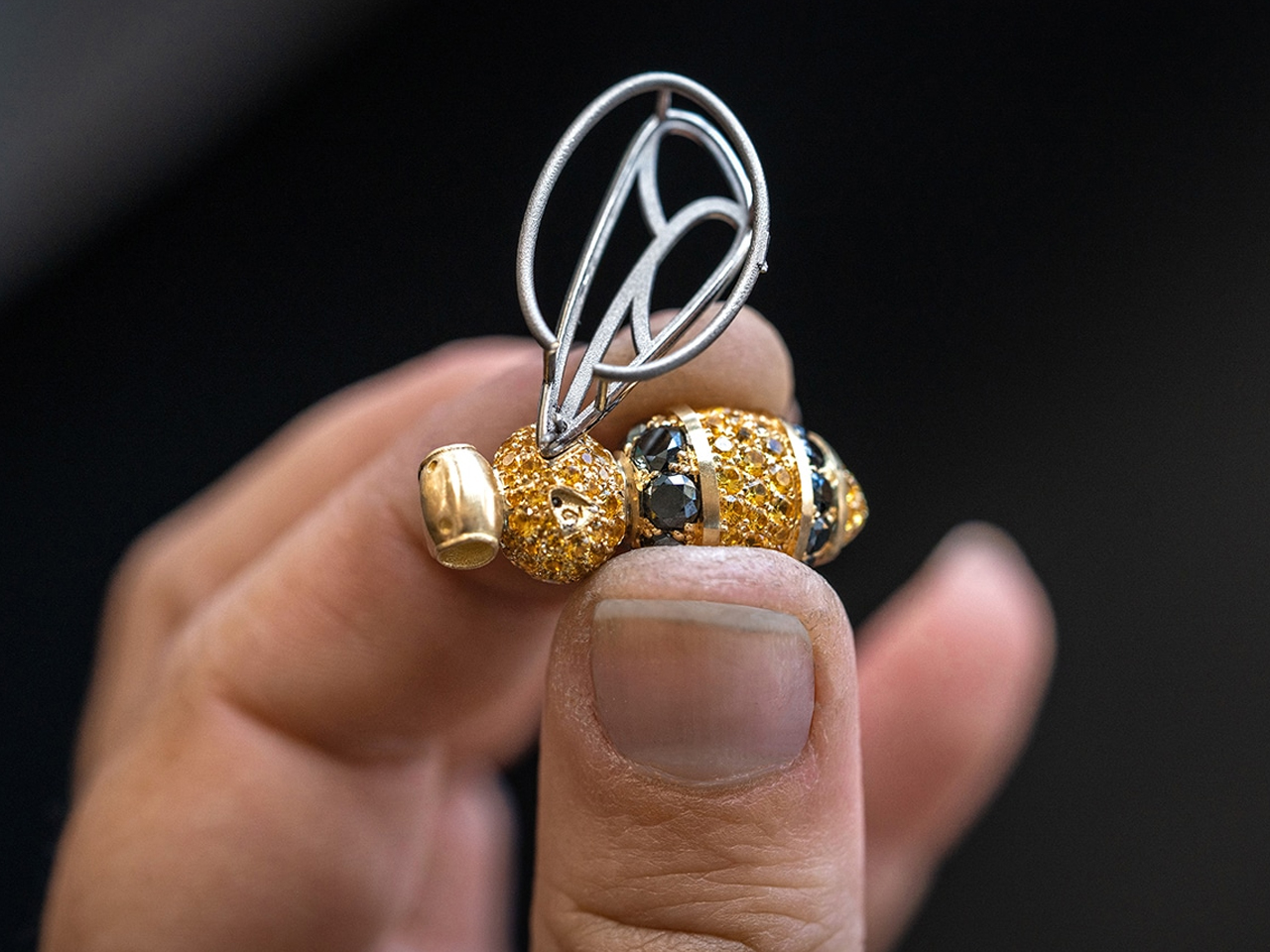
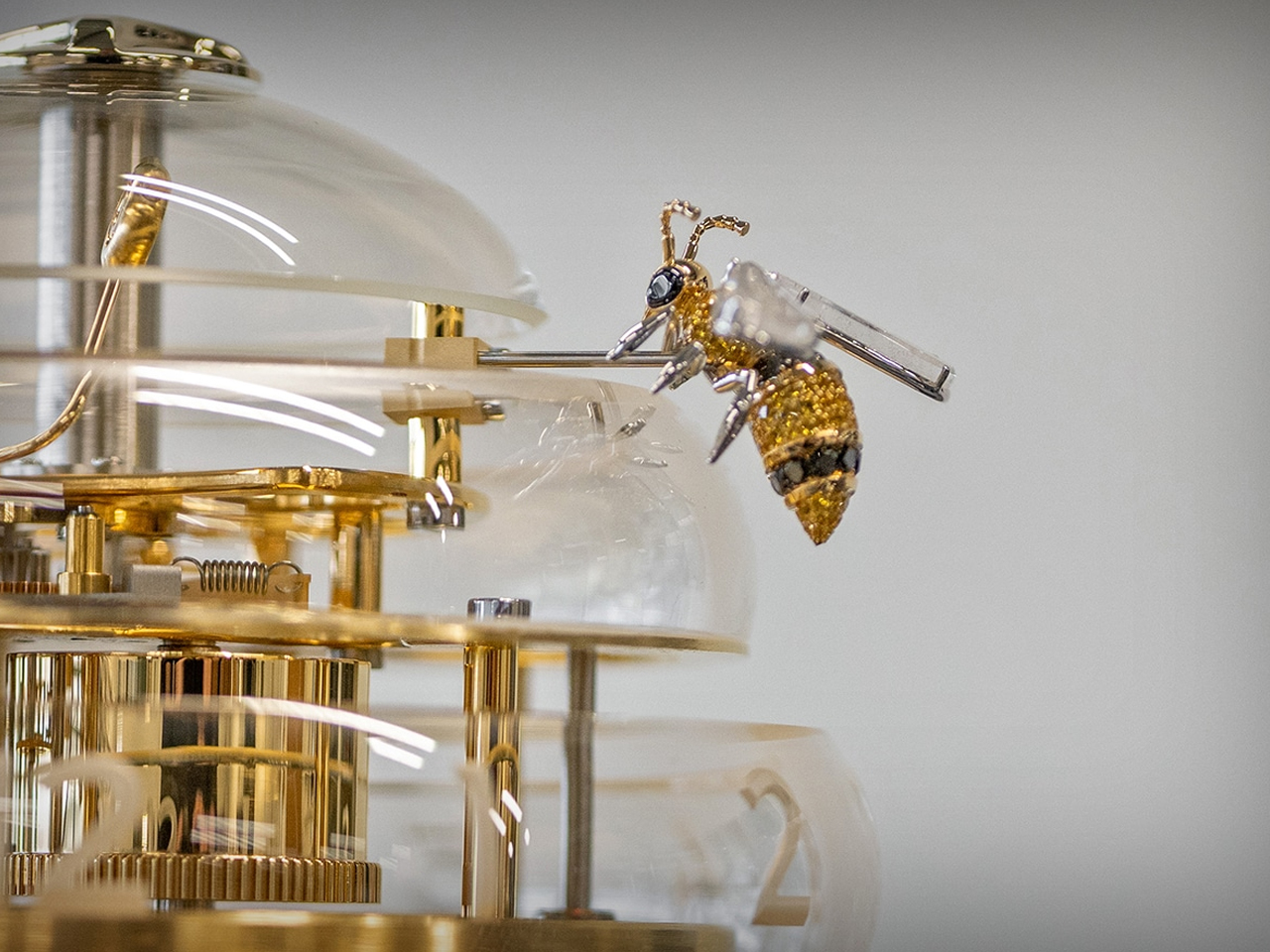
The clock, measuring 25.8 cm high and with a diameter of 16.5 cm, features three jeweled bees made in Chopard’s jewelry atelier in Geneva. The bees feature a body made using 18-carat ethical yellow gold, which is studded with gemstones, yellow sapphires, and black diamonds, and have rock crystal for wings. While the bees may feel like the most distinctive part of the clock, which comprises seven rounded tiers of borosilicate glass, two of which have the hour and minute numerals. It’s the chime mechanism of the Chopard Beehive Table Clock that’s, in fact, its best highlight.

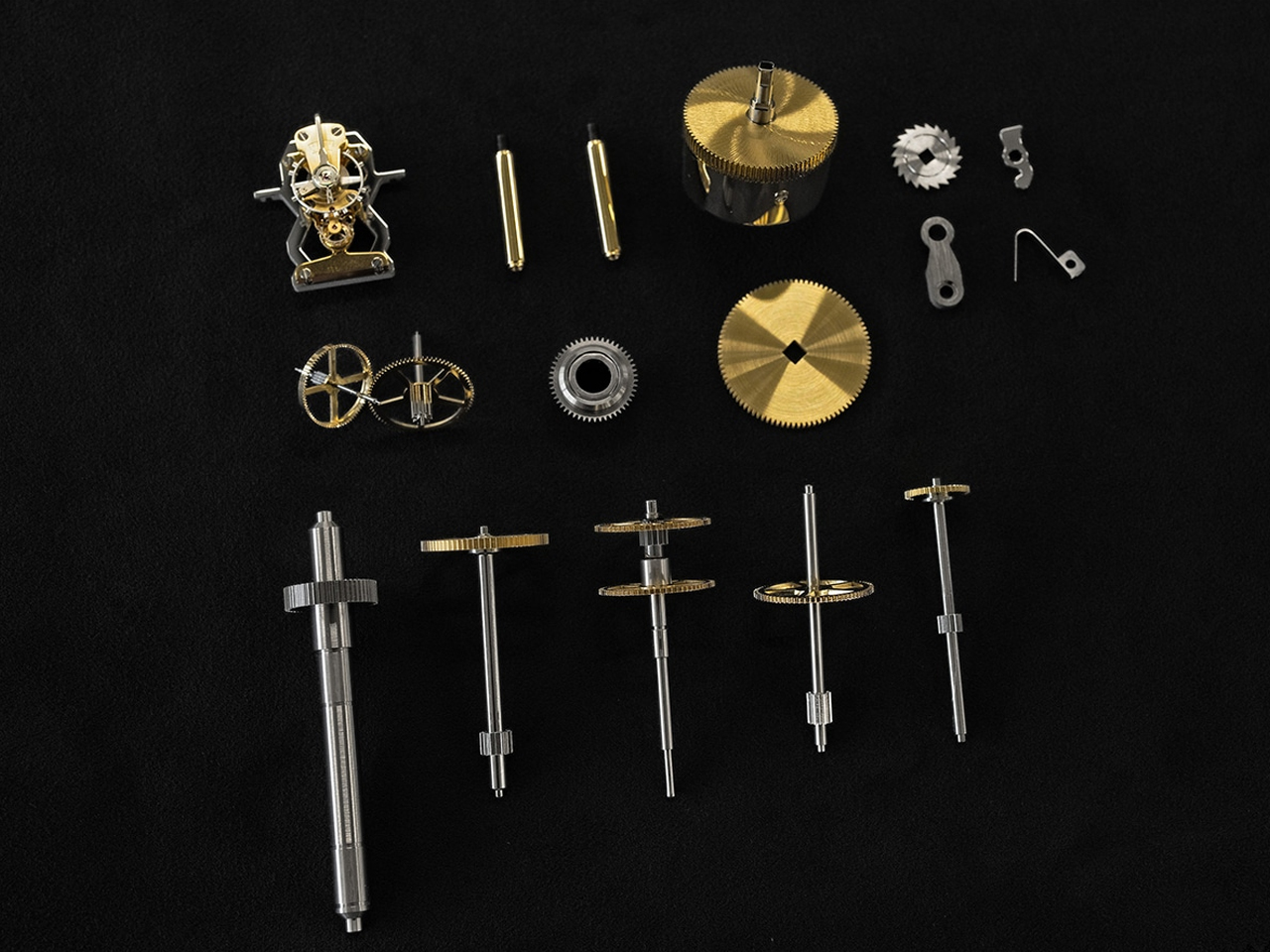
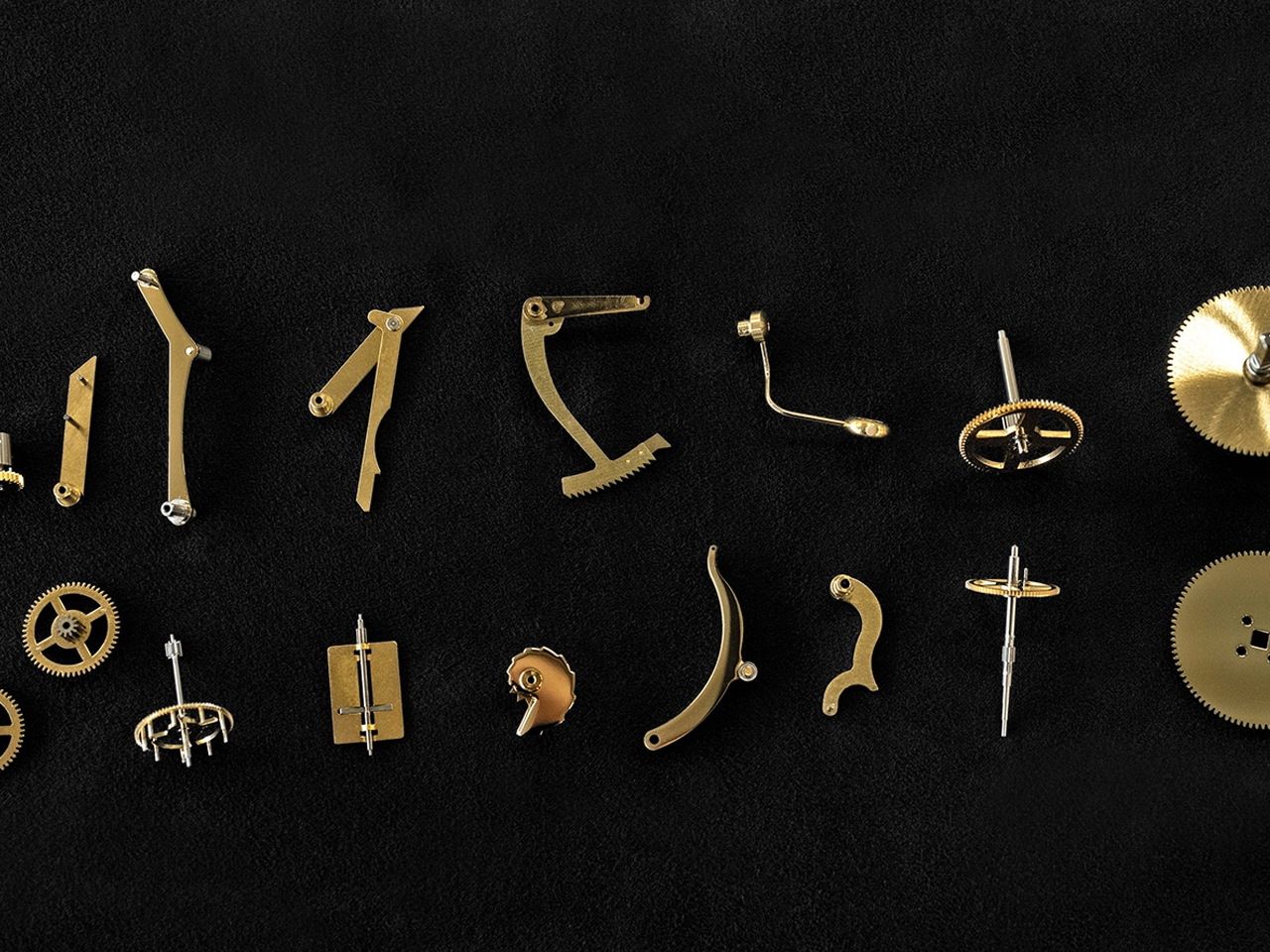
The clock’s movement plate is brass, and the base is steel, but both are finished in gold to match the beehive theme. Its chime mechanism is located at the top, where the glass dome is used as the bell struck by a small gold hammer to announce the time. There are three – Active, Silent, and On-Demand – chime modes to choose from, which can be changed by rotating the top part. In the active mode, the clock sounds the time automatically, in Silent mode, it doesn’t chime at all, and in On-Demand mode, you can manually set the clock to sound the current time.

The Beehive Clock is powered by a twin-barreled, hand-wound movement, which can be conveniently wound with a crown located at the bottom. When full-wound, the clock has a power reserve of up to 8 days. With its impressive shape, sophisticated chiming mechanism, and a legacy to live up to, the Chopard Beehive Table Clock is limited to just 10 pieces worldwide. The elusive timepiece will be sold exclusively at Chopard boutiques for an estimated $330,000.

The post Chopard’s Beehive Table Clock is a masterpiece of horological art with L’Épée 1839 first appeared on Yanko Design.

Browser Gaming Is Heading Toward $3 Billion. Here Is Why It Is Being Taken Seriously

Browser Gaming Is Heading Toward $3 Billion. Here Is Why It Is Being Taken Seriously Browser Gaming

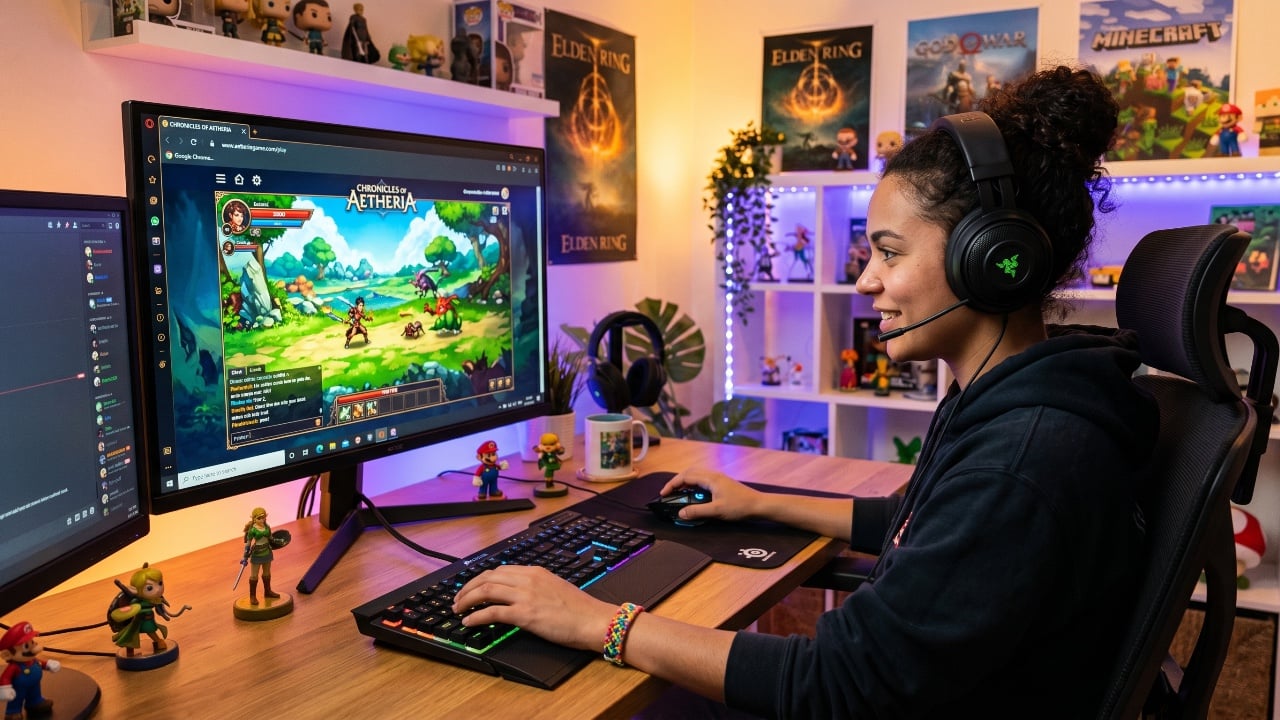
Browser gaming is on track to triple in market value by 2028, and the audience driving that growth is not who most people would expect. New research from Kantar, partnered with Google, puts the global HTML5 gaming market at $1 billion in 2021 and projects it will exceed $3 billion by 2028, driven by frictionless […]

The post Browser Gaming Is Heading Toward $3 Billion. Here Is Why It Is Being Taken Seriously appeared first on Geeky Gadgets.

Posted in Uncategorized

AI company deletes the 3 million OKCupid photos it used for facial recognition training

When online platforms violate their own privacy policies to sell your photos, have no fear: They just might have to pay an undisclosed settlement fee 12 years later. (Who says justice is dead?) According to Reuters, AI company Clarifai says it has deleted 3 million profile photos taken from dating site OkCupid in 2014. It follows a settlement reached last month between the FTC and Match Group, OkCupid's owner.

The Delaware-based Clarifai reportedly certified the data deletion to the FTC on April 7. The company also confirmed to US Representative Lori Trahan (D-MA) that it deleted any models that trained on the data. Clarifai told the representative's office that it hadn't shared the data with third parties.

The FTC opened the investigation in 2019, after The New York Times reported that Clarifai had built a training database using OkCupid dating profile photos. The behavior was a direct violation of OkCupid’s privacy policy. Court documents reviewed by Reuters reveal that Clarifai asked OkCupid executives for the data in 2014. Apparently, they obliged.

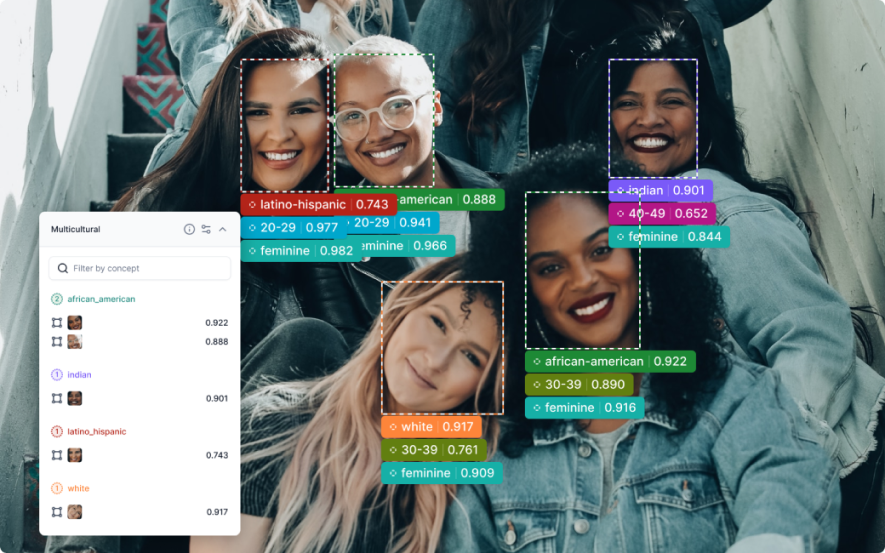
Five people sitting on stairs. Creepy boxes surround their faces, estimating age, race and gender.
<p>Clarifai uses this creepy facial profiling example to sell its services.</p>
Clarifai

"We're ⁠collecting data now and just realized that OkCupid must have a HUGE amount of awesome data for this," Clarifai founder Matthew Zeiler wrote in an email to OkCupid co-founder Maxwell Krohn. The AI startup used the dating site's images to build a facial recognition service that can identify a person's age, gender and race. (Another brilliant and totally ethical idea from Clarifai, tapping into unsecured city surveillance cameras without authorization, was reportedly shuttered.)

Zeiller suggested to The New York Times in 2019 that people needed to, well, get over it. "There has to be some level of trust with tech companies like Clarifai to put powerful technology to good use, and get comfortable with that," the AI founder declared. Some of OkCupid's founders were reportedly investors in Clarifai.

As part of the settlement, the FTC "permanently prohibited" OkCupid from misrepresenting its data collection and privacy controls. TechCrunch notes how strange it is to use that as a penalty, given that FTC rules already bar that behavior.

This article originally appeared on Engadget at https://www.engadget.com/ai/ai-company-deletes-the-3-million-okcupid-photos-it-used-for-facial-recognition-training-195223996.html?src=rss

Meta has misled users about scam ads on Facebook and Instagram, lawsuit says

Meta is facing a new lawsuit over its advertising practices. The nonprofit group Consumer Federation of America (CFA) has filed a proposed class-action suit against Meta for "failing to protect users" from scam ads on Facebook and Instagram. 

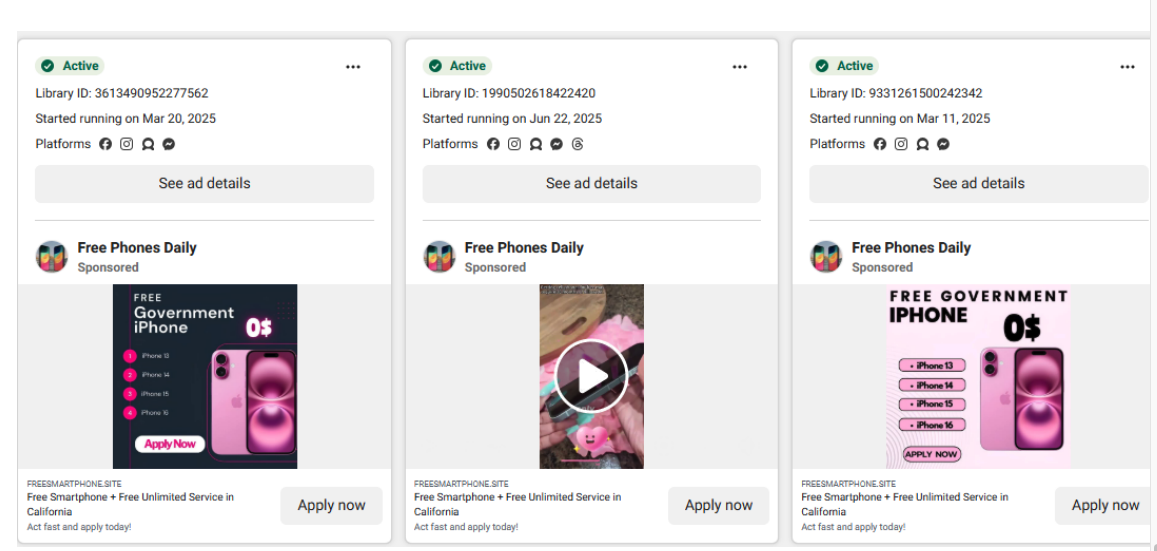
The lawsuit, which was first reported by Wired, alleges that Meta has run afoul of consumer protection laws in Washington D.C. for misleading Facebook and Instagram users about scams on its apps and that the company has "chased profits rather than protecting its users." The filing includes numerous examples of alleged scam ads that CFA says it found in Meta's ad library. These include ads promoting a "free government iPhone," as well as those claiming to offer $1,400 checks to people born in certain years. Many of the ads use AI videos, according to CFA.  

Some of examples of alleged scam ads CFA includes in its lawsuit.
CFA

Meta's advertising practices have been in the spotlight since last year when Reuters reported on internal documents that indicated the company was making billions of dollars from ads promoting scams and banned goods. The report also highlighted how Meta's own processes have at times made it harder for its own employees to fight malicious advertisers.

"Meta claims it is doing all it can to crack down on scam advertising on its platforms," CFA's lawsuit states. "But in reality, Meta has knowingly taken steps and adopted policies that pad its bottom line at the expense of its users’ safety and well-being. In fact, rather than prohibiting advertisers who the company itself has determined pose a higher risk to its users (as other tech companies like Google have), Meta just charges these advertisers more. The perverse result is that the riskier the advertiser, the more money Meta makes."

CFA's allegations "misrepresent the reality of our work and we will fight them," a Meta spokesperson said in a statement. "We aggressively combat scams across our platforms to protect people and businesses — last year alone, we removed over 159 million scam ads, 92% of which we took down before anyone reported them, and took down 10.9 million accounts on Facebook and Instagram associated with criminal scam centers. We fight scams because they are bad for business — people don't want them, advertisers don't want them, and we don't want them either.”

This article originally appeared on Engadget at https://www.engadget.com/social-media/meta-has-misled-users-about-scam-ads-on-facebook-and-instagram-lawsuit-says-193220235.html?src=rss

New York Attorney General sues two prediction markets on illegal gambling allegations

New York is the latest state to take a stand against prediction markets. Attorney General Letitia James has sued Coinbase Financial Markets and Gemini Titan on charges that both are illegally running unlicensed gambling operations. The suit also claims that these prediction markets violate state laws that prevent betting on games involving New York college sports teams. 

"Gambling by another name is still gambling, and it is not exempt from regulation under our state laws and Constitution," James said. "Gemini and Coinbase’s so-called prediction markets are just illegal gambling operations, exposing young people to addictive platforms that lack the necessary guardrails."

Multiple states have taken similar actions over the proliferation of prediction markets, but they may face a new roadblock at the federal level. Earlier this month, the US Commodity Futures Trading Commission sued three of the states that have charged prediction markets with running unlicensed gambling. The CFTC claimed that it should be the sole regulator for prediction markets and called the efforts by Arizona, Connecticut and Illinois an overreach of authority.

This article originally appeared on Engadget at https://www.engadget.com/big-tech/new-york-attorney-general-sues-two-prediction-markets-on-illegal-gambling-allegations-192012225.html?src=rss

Three Bedrooms, Two Bathrooms, and a Tiny Home Layout Nobody Thought to Try Until Now

Most tiny homes follow the same predictable playbook: squeeze a loft bed above, cram the kitchen below, repeat. The Onda by Australian builder Removed Tiny Homes throws that rulebook out entirely. Part of the brand’s new Tiny Mansions lineup — a series of oversized, premium tiny homes built for people who love the concept of small-scale living but refuse to sacrifice comfort — the Onda is the first of its kind to introduce a true upside-down layout.

The concept is disarmingly simple, yet nobody has really done it before. All three bedrooms sit on the ground floor, while the kitchen, living room, and bathroom occupy the elevated upper level. It’s a reverse loft plan, and once you see it, the logic is undeniable. Private spaces below, communal life above, all wrapped in a design that moves with natural fluency between the two.

Designer: Removed Tiny Homes

Built on a double-axle trailer, the Onda is finished in steel with warm wooden accents that keep it from reading too industrial. It measures 10 meters long, 3.4 meters wide, and 4.5 meters tall, dimensions that push it squarely into apartment territory rather than anything you’d call a cabin. An optional deck extends the footprint further, spilling the living area outdoors when the weather calls for it.

Upstairs is where the design really earns its Tiny Mansion billing. The kitchen is a proper one with stone benchtops, full cabinetry, and no compromises. The living room opens beside it, lit by a trio of skylights that flood the space with natural light. The bathroom is equally considered: a central vanity, a glass-enclosed shower positioned directly beneath a skylight, a toilet, a closet, and a stacked laundry setup all within a space that somehow feels spa-like.

The three downstairs bedrooms give a growing family actual breathing room, not a ladder-accessed loft shared with luggage, but real rooms with doors. That shift alone repositions the Onda from novelty to a genuine alternative for families navigating an increasingly impossible housing market.

Early buyers are rewarded with a Luxury Living Upgrade Pack that includes the fully tiled bathroom, the skylight trio, and the stone benchtops at no extra cost. Customization options ranging from strategic window placement to full off-grid capability mean the Onda can be tailored to wherever life needs to land next. Pricing starts at around USD $161,700, with delivery available across Australia. For a home that carries three bedrooms, two bathrooms, and an entirely new way of thinking about space, that number is harder to argue with than it looks.

The post Three Bedrooms, Two Bathrooms, and a Tiny Home Layout Nobody Thought to Try Until Now first appeared on Yanko Design.

Florida AG opens criminal investigation into OpenAI and ChatGPT

Florida Attorney General James Ulthmeier has announced that the state's Office of Statewide Prosecution has opened a criminal investigation into OpenAI and ChatGPT. The investigation was opened because the suspect in a mass shooting at Florida State University in 2025 reportedly used ChatGPT in the lead up to the shooting.

Per Uthmeier, "Florida law states that anyone who aids, abets, or counsels someone in the commission of a crime, and that crime is committed or attempted, may be considered a principal to the crime." That means that the responses provided by ChatGPT to the shooter could be interpreted as the AI assistant aiding and abetting his actions. Or at least that's what Florida seems interested in arguing.

OpenAI provided the following statement when asked to comment on the Florida investigation:

Last year's mass shooting at Florida State University was a tragedy, but ChatGPT is not responsible for this terrible crime. After learning of the incident, we identified a ChatGPT account believed to be associated with the suspect and proactively shared this information with law enforcement. We continue to cooperate with authorities. In this case, ChatGPT provided factual responses to questions with information that could be found broadly across public sources on the internet, and it did not encourage or promote illegal or harmful activity. ChatGPT is a general-purpose tool used by hundreds of millions of people every day for legitimate purposes. We work continuously to strengthen our safeguards to detect harmful intent, limit misuse, and respond appropriately when safety risks arise.

As part of the investigation, Florida has subpoenaed OpenAI for information on "all policies and internal training materials" related to how the company handles things like users threatening to harm others, threatening to harm themselves and how OpenAI responds to law enforcement. The state is also asking OpenAI to share its organizational chart and any publicly released statements on the shooting.

"Florida is leading the way in cracking down on AI's use in criminal behavior, and if ChatGPT were a person, it would be facing charges for murder," Attorney General James Uthmeier said. "This criminal investigation will determine whether OpenAI bears criminal responsibility for ChatGPT's actions in the shooting at Florida State University last year."

Florida’s investigation isn’t the first time OpenAI has been connected to a mass shooting. Canadian regulators called for OpenAI to change how it approaches threats of harm following a Wall Street Journal report that claimed the company flagged the account of a Canadian shooting suspect in 2025 but failed to bring their threats to law enforcement. The company agreed to new policies around how it works with Canadian law enforcement in March. Separately, OpenAI is still in the midst of a wrongful death lawsuit from 2025 for the role it may have played in the suicide of a teenage user.

This article originally appeared on Engadget at https://www.engadget.com/ai/florida-ag-opens-criminal-investigation-into-openai-and-chatgpt-190200227.html?src=rss

ChatGPT Images 2.0 is better at rendering non-Latin text

A little more than a year after OpenAI gave ChatGPT users the option to create images and designs directly from its chatbot, it's now releasing ChatGPT Images 2.0. OpenAI describes the new system as a “step change” for image generation models, particularly when it comes to the tool’s ability to follow instructions in detail, render dense text and place and relate objects in a scene. For the first time, OpenAI has also built an image model with reasoning capabilities, giving the system the ability to do things like search the web and verify its outputs. According to the company, those capabilities should translate to a tool that's more reliable when accuracy, consistency and visual cohesion are essential. 

An example of ChatGPT's new non-Latin rendering abilities.
OpenAI

OpenAI says it has also put in a lot of work to make Images 2.0 better at understanding and rendering non-Latin text, with "significant gains" when it comes to the model's ability to handle Japanese, Korean, Chinese, Hindi and Bengali. At the same time, the company claims the new model is better at faithfully recreating the specific characteristics of different visual languages. On this point, OpenAI says that makes Images 2.0 more useful for tasks like game prototyping and storyboarding. Outside of those features, the new model is more flexible when it comes to aspect ratios, allowing it to generate images that are as wide as 3:1 and as tall as 1:3. It can also produce designs at resolutions of up to 2K, and even generate up to eight outputs in one go. 

A tortoiseshell cat in the style of Pokemon's third generation of games.
ChatGPT

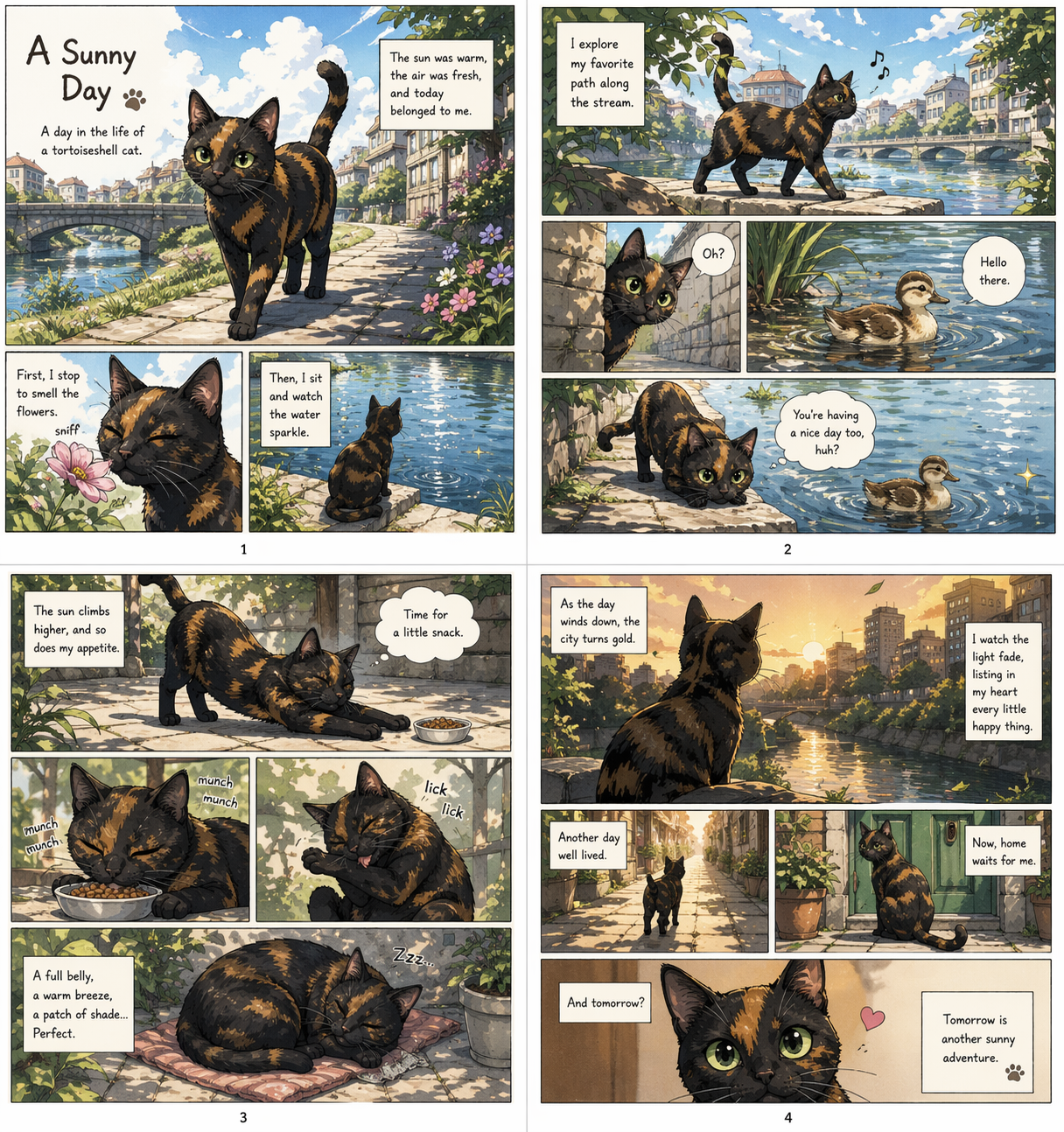
I got a chance to preview Images 2.0 ahead of its public release. For my first prompt, I asked ChatGPT to generate an image of a tortoiseshell cat in the pixel art style of Pokémon's third generation. I thought this would be a good test because AI models typically struggle with pixel art, and the Game Boy Advance Pokémon games are iconic for their art style, so much so that if ChatGPT merely approximated that style, it wouldn't do. The result is the image you see above, and I think ChatGPT did a commendable job there. I then tasked the new model with converting that image into a transparent PNG. For one last test, I asked ChatGPT to create a four-page manga about my cat enjoying a sunny day by an idyllic city stream. 

Notice how the cat isn't render exactly like the one above it.
ChatGPT

Of those three tests, ChatGPT spent the most time on the second one and the output there was slightly different from the first image it generated, which I felt deviated from my prompt. Still, it managed to generate a proper transparent image, which is something other image models can struggle to do properly. Once more people have a chance to put the model through its paces, we’ll have a better idea of how it compares to Google’s Nano Banana 2, and where OpenAI can make additional improvements.

A manga generated by ChatGPT about a cat enjoying a sunny day.
ChatGPT

Images 2.0 is available starting today for all ChatGPT users, including those on the company's Free and Go tiers. Plus and Pro subscribers get access to more advanced outputs. OpenAI is also making the model available through its API service and Codex coding app, which just last week it updated to offer built-in image generation. Notably, Images 2.0 arrives just days after Anthropic waded into the visual design market with its own design assistant.  

This article originally appeared on Engadget at https://www.engadget.com/ai/chatgpt-images-20-is-better-at-rendering-non-latin-text-190000153.html?src=rss

Netflix’s Devil May Cry animated adaptation returns for a second season on May 12

Netflix's hit animated adaptation of the video game series Devil May Cry is returning for a second season on May 12. The streamer has released a full trailer alongside this announcement, after dropping a short teaser several months back.

The new footage promises plenty of action and franchise fans will note that protagonist Dante now looks extremely similar to his counterpart from the games. This tracks with what series creator Adi Shankar said last year, when he promised that season two would show the character "embrace more of the iconic badassery fans of the game expect."

The show, and the games, follow a half-demon demon hunter as he fights to prevent the gates of Hell from opening. The first season was a gigantic hit for the platform, racking up more than 5 million views in its first four days of release.

Showrunner Shankar was heavily involved with the animated Castlevania adaptation, also for Netflix. Studio Mir is once again handling the animation, which is always great to see. This is the studio behind The Legend of Korra, X-Men '97, Kipo and the Age of Wonderbeasts and My Adventures with Superman, among others. The first season of Devil May Cry looked gorgeous, so season two should follow suit.

This article originally appeared on Engadget at https://www.engadget.com/entertainment/tv-movies/netflixs-devil-may-cry-animated-adaptation-returns-for-a-second-season-on-may-12-184003226.html?src=rss