A Spiderweb-Shaped Home in Japan Has No Fixed Rooms and Adapts as the Family Grows

Spiders have been building radial webs for about 100 million years, spinning silk into a geometry that spreads weight around with an efficiency engineers spent centuries trying to copy. The web holds up because every strand pulls toward the center, so stress gets shared across the whole thing instead of piling up in one spot. Architecture has borrowed this trick before, from geodesic domes to tensile fabric roofs, but a regular family home almost never commits to the idea this literally. UID Architects looked at a spiderweb and saw a floor plan. In Fukuyama, Japan, they turned that into a house where a family of four actually lives.

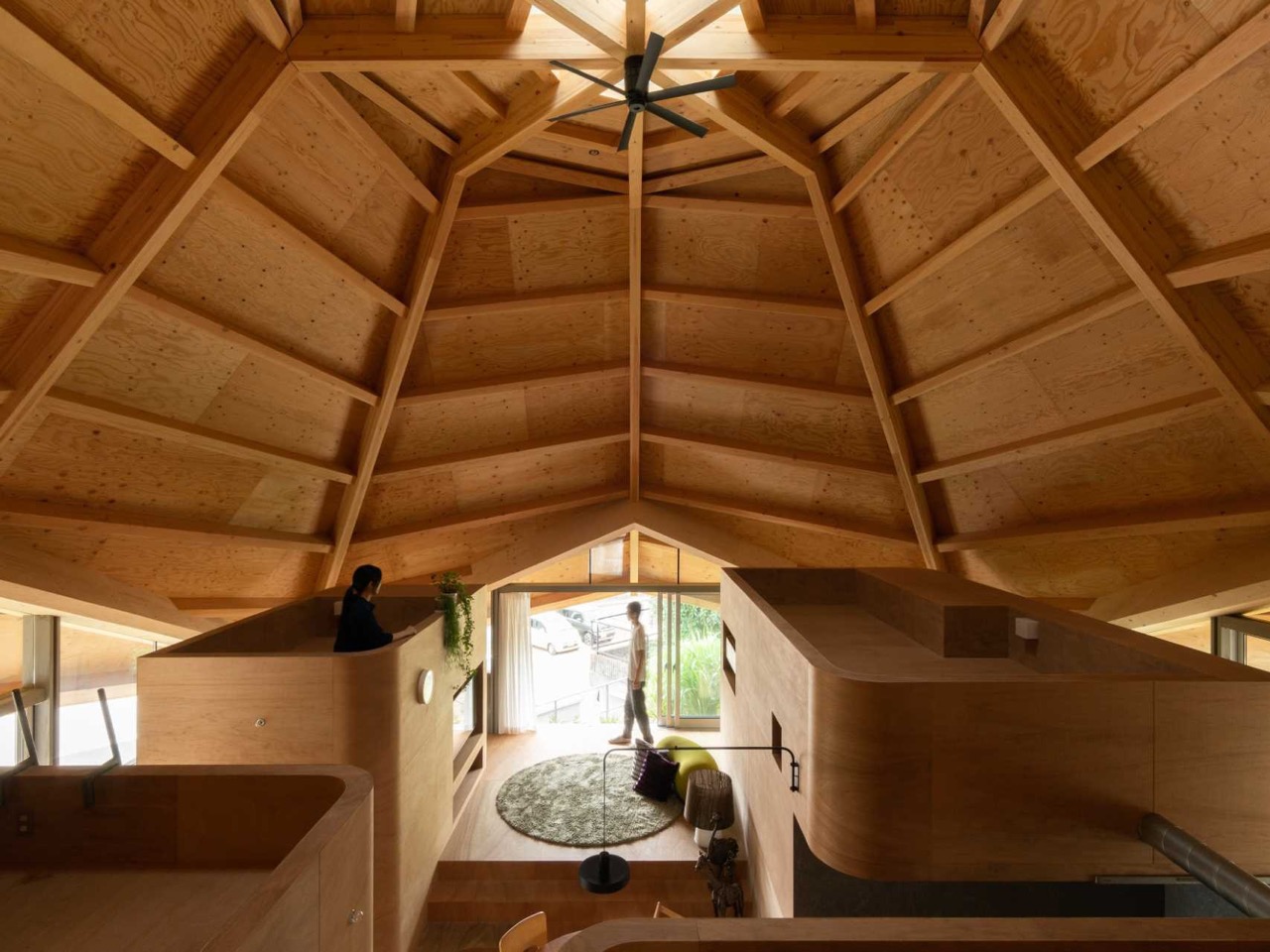
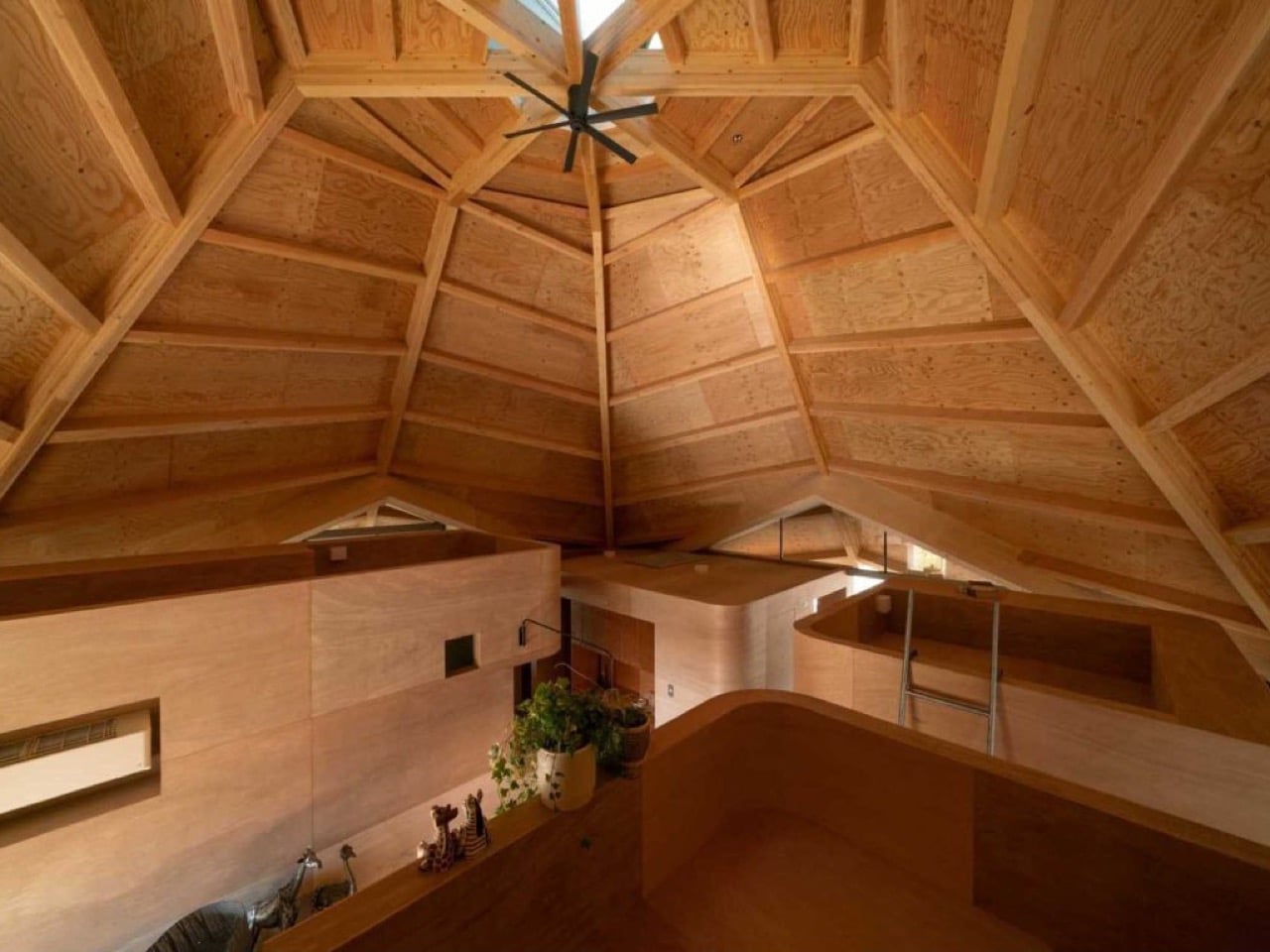
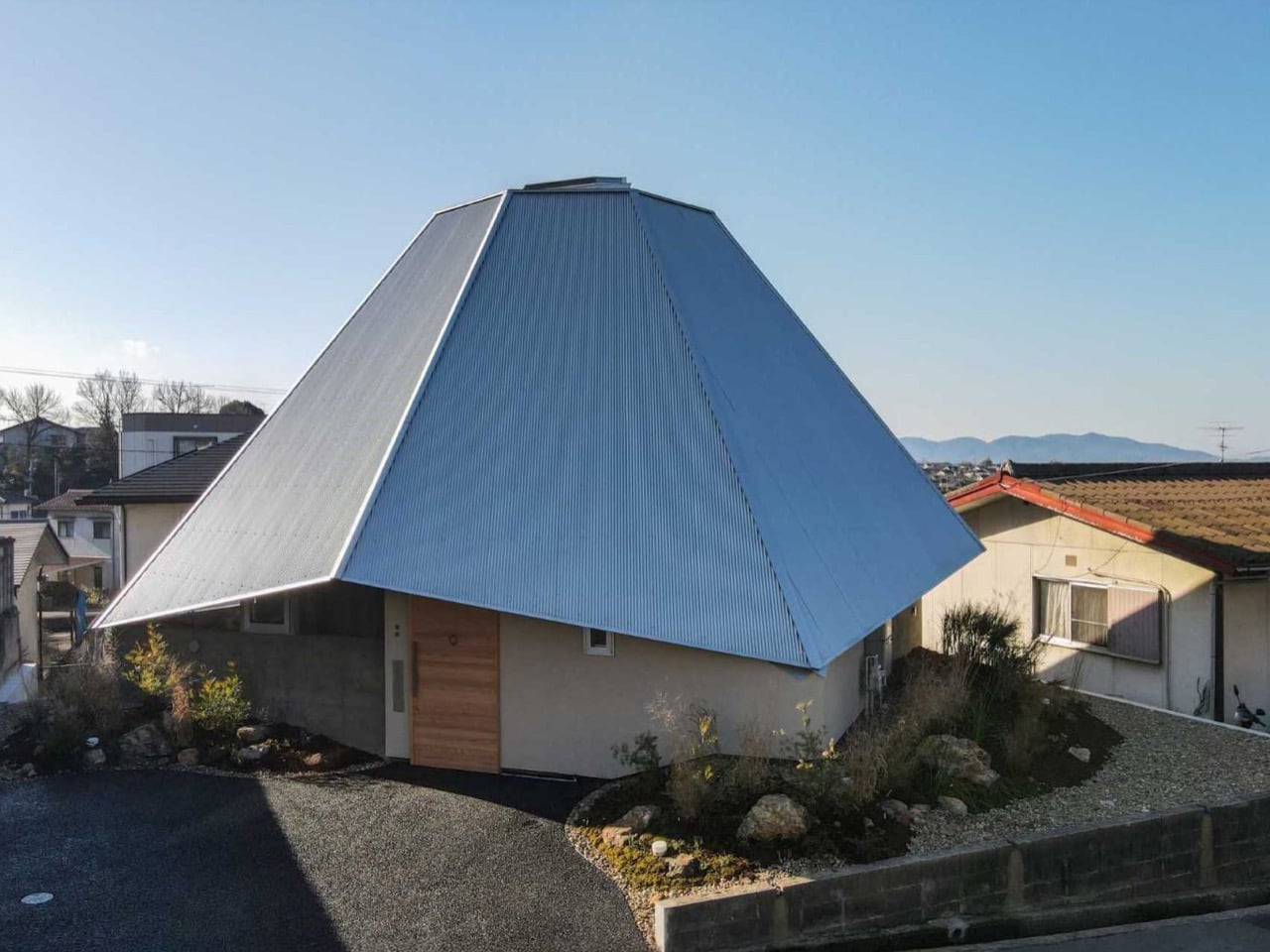
The home is an octagonal timber structure turned 45 degrees across its sloping suburban plot, topped by a roof whose beams all converge on a glazed opening at the center. UID balanced the entire volume on four points and wrapped triangular openings around the edges to pull in light from every direction. Inside, the roughly 828 square feet stays open on purpose, skipping conventional rooms in favor of four rounded plywood boxes that guide you through the space like a corridor. The dining table sits right under the middle of the web, putting the family’s social life at the structural heart of the house. It is a home you read from the ceiling down.

Designer: UID Architects
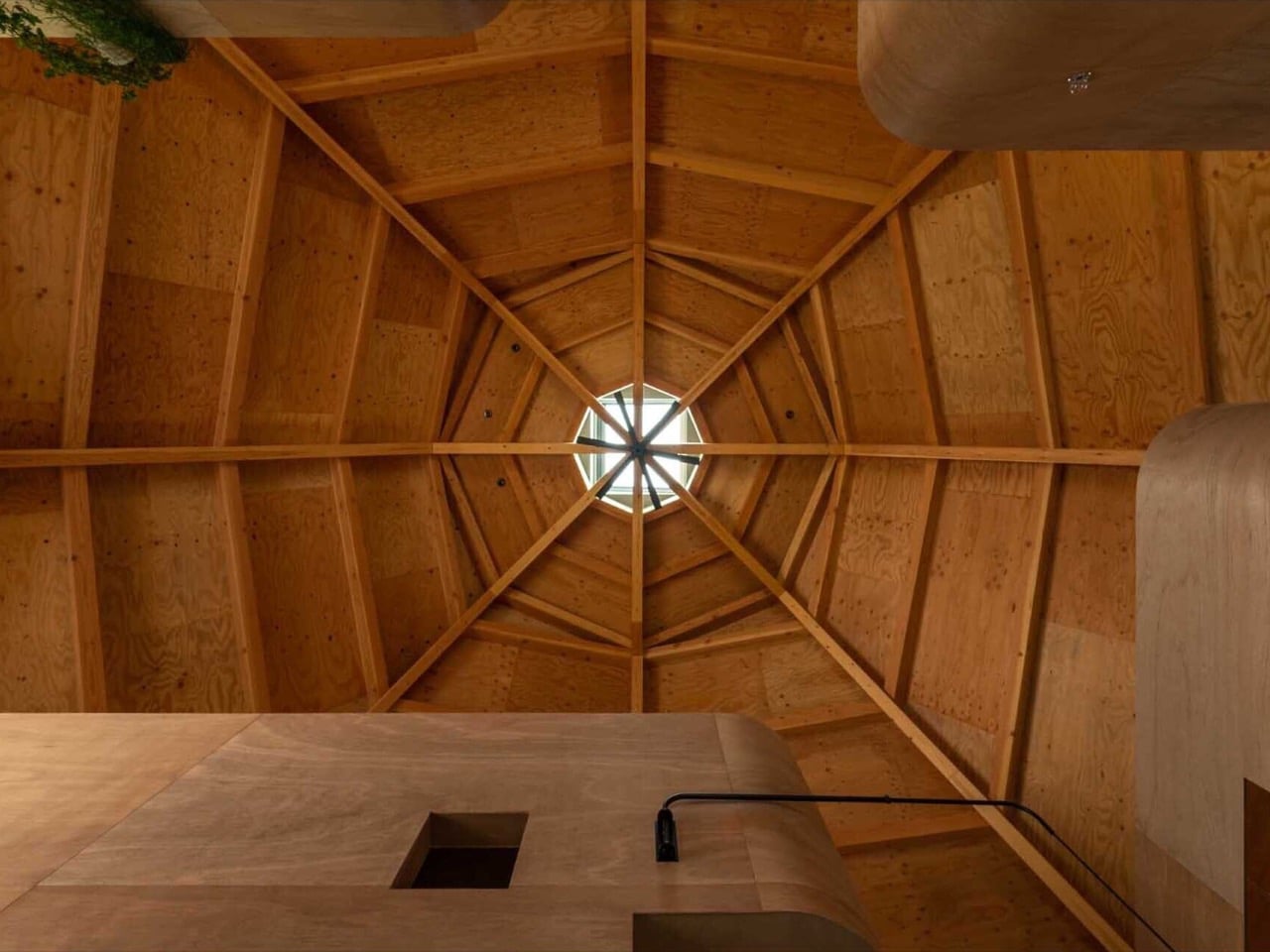
Eight timber beams run up from the perimeter and meet at a small glazed oculus that drops daylight straight into the middle of the plan. Looking up, the whole thing reads as a literal web frozen in wood, every strand under tension and pulling toward the same hub. From outside it flips into something else entirely, a faceted metal cone that rises over the neighboring rooftops like a spinning top someone left on the street. That shift between the warm wooden interior and the cool metal shell makes the house feel bigger and stranger than its footprint suggests. You read it as a tent from the driveway and a cathedral once you walk in.
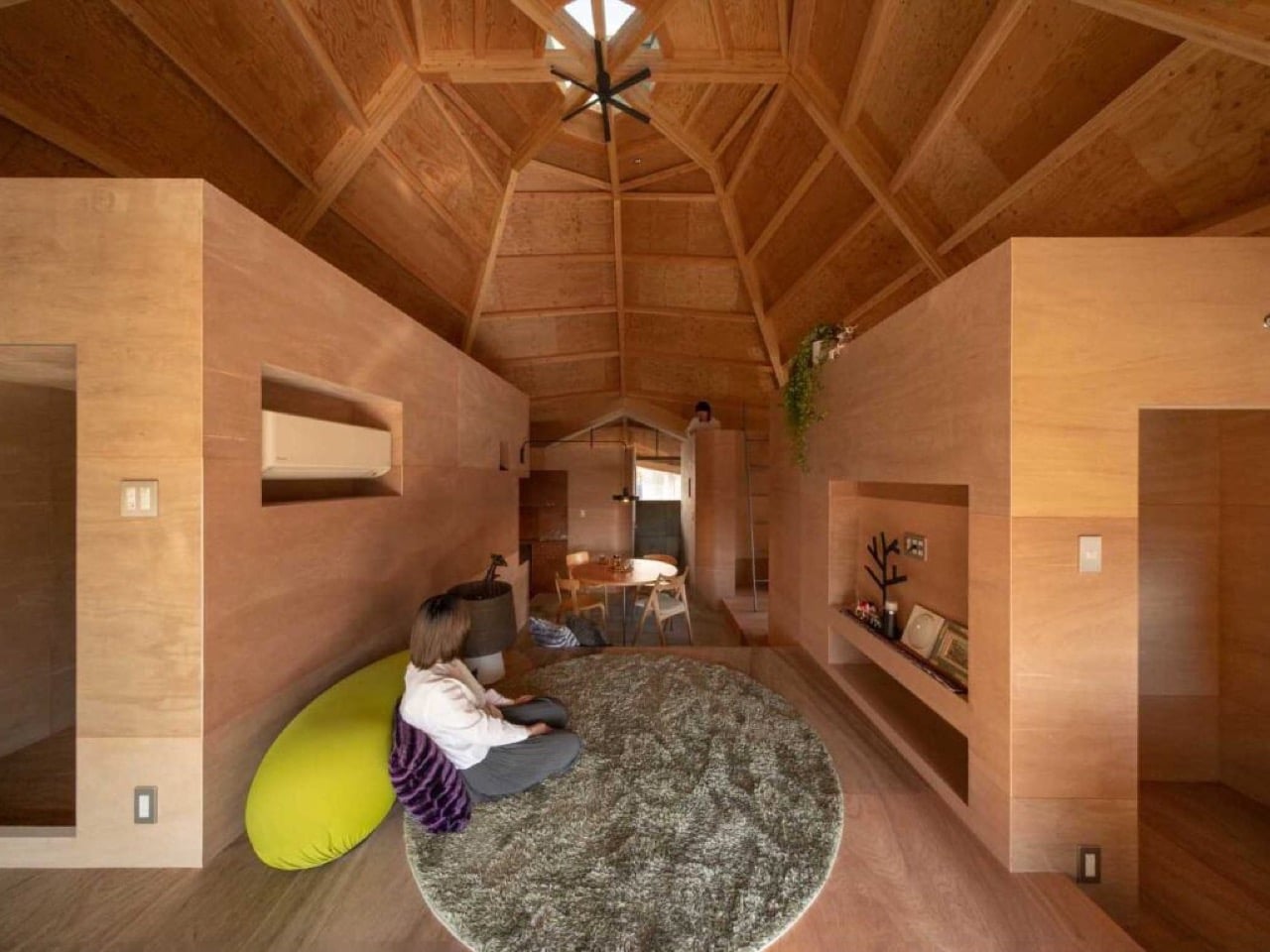
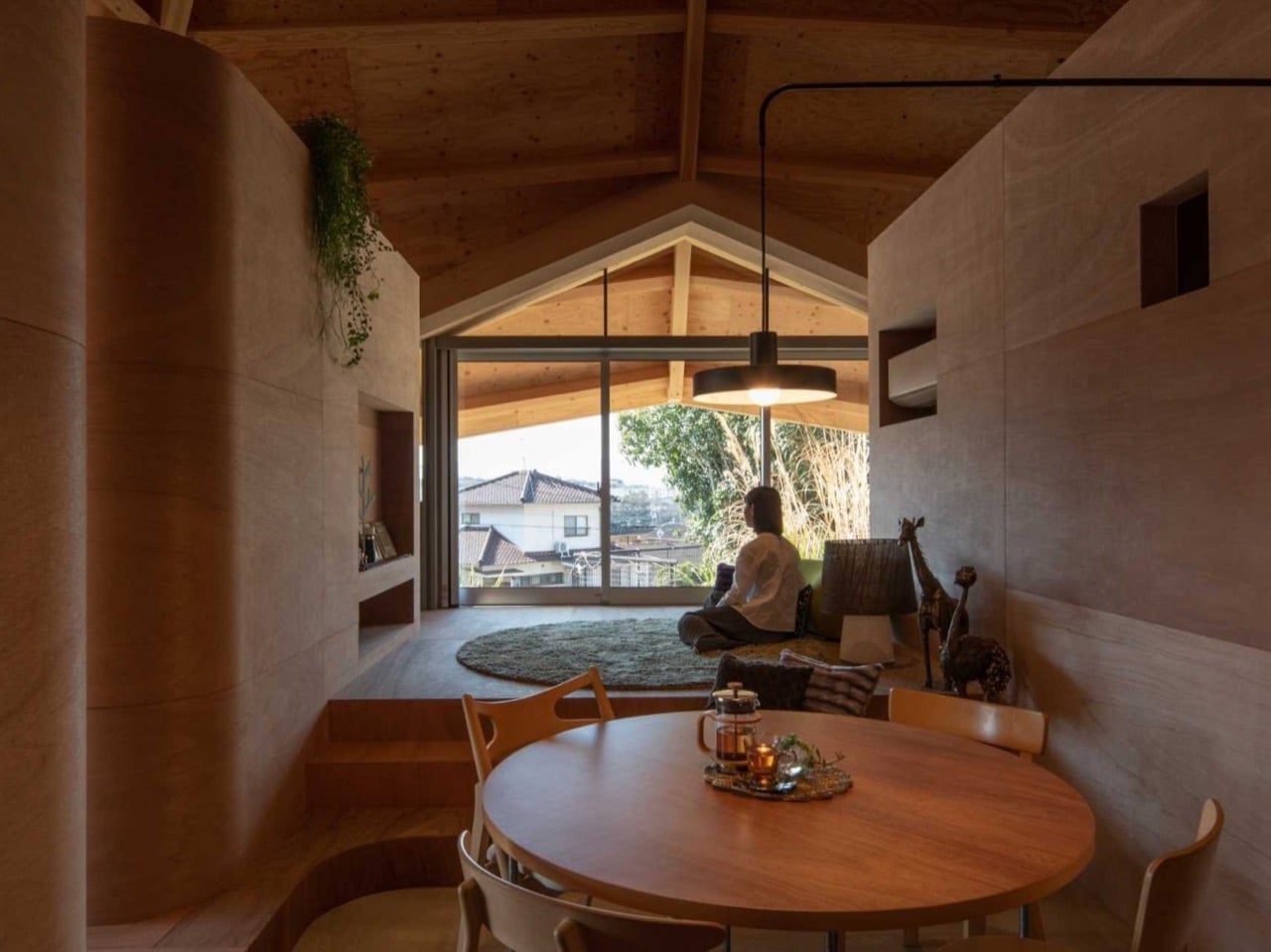
A sunken lounge with a round shag rug steps up to the raised dining level, so the open plan never collapses into one undifferentiated room. The four plywood boxes handle the rest of the organizing, standing low enough that the soaring ceiling flows over all of them without interruption. Their corners are rounded rather than sharp, a small move that softens the heavy plywood and keeps the place from feeling like a furniture warehouse. You move between these volumes the way you would wander through a small village, never quite walled in, never fully out in the open. The boxes suggest where to sit, cook, or gather without ever issuing an order.
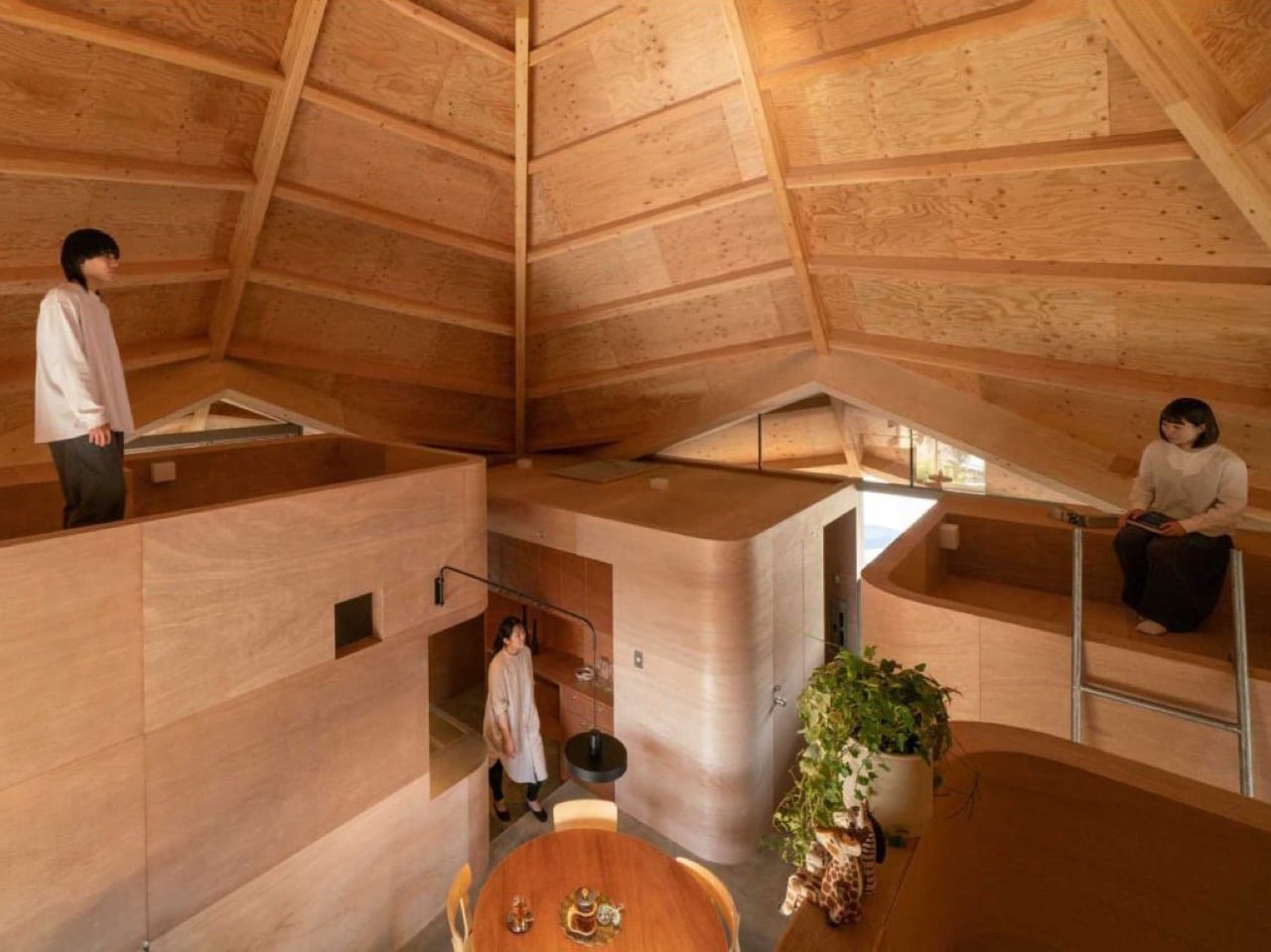
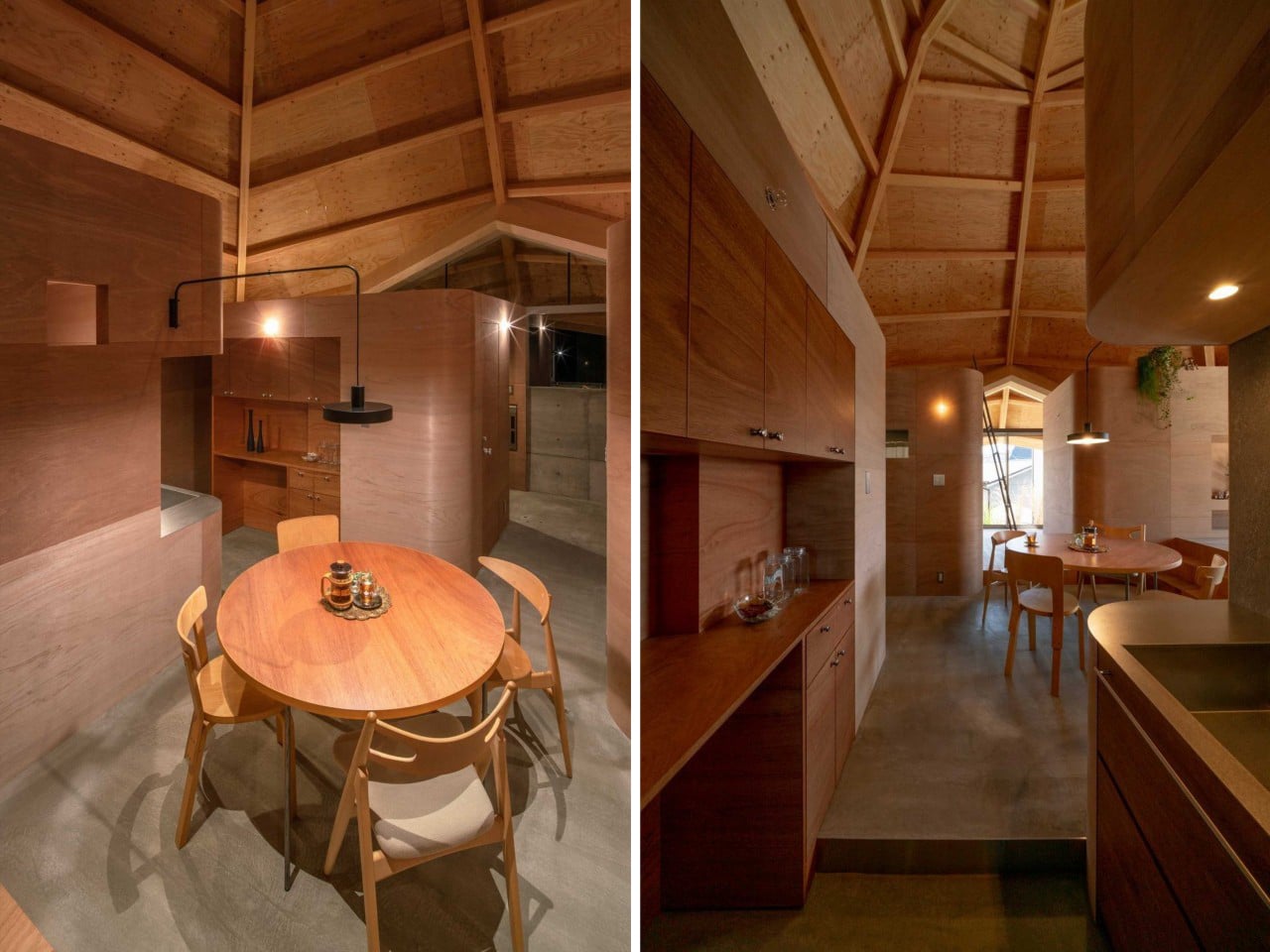
There are almost no permanent interior walls, which means the family can reassign space as their lives shift instead of calling a contractor. A corner that works as a play area now can quietly become a study, then a home office, all inside the same shell. Most homes get designed for one stage of family life and then fight the people living in them for the next thirty years. UID dodged that trap by building rooms that are really just zones, defined by furniture and habit rather than drywall. It is a smart, patient way to think about a house someone plans to keep for decades.
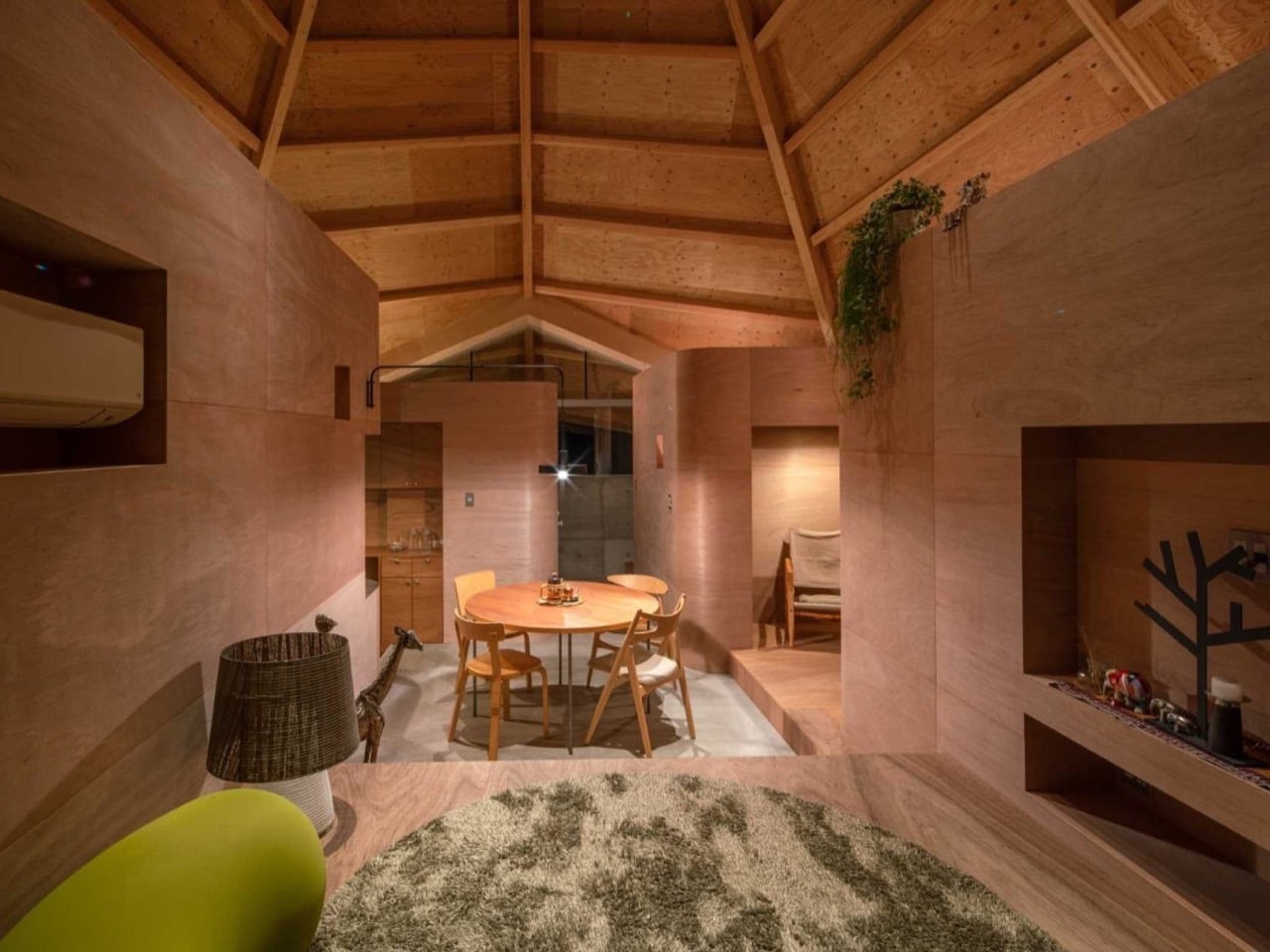
Plywood usually gets buried under veneer the moment a budget allows, treated as the cheap stuff you hide. UID does the opposite, letting warm plywood climb from the floor all the way up into the ceiling so the wood becomes both the structure and the finish. The one exception is the kitchen, where a darker, redder cabinetry tone marks it as its own little district within the larger space. That single shift in wood gives the cooking zone an identity without breaking the calm consistency holding the rest of the home together. Everywhere else, the material repeats until the house feels carved from a single block.
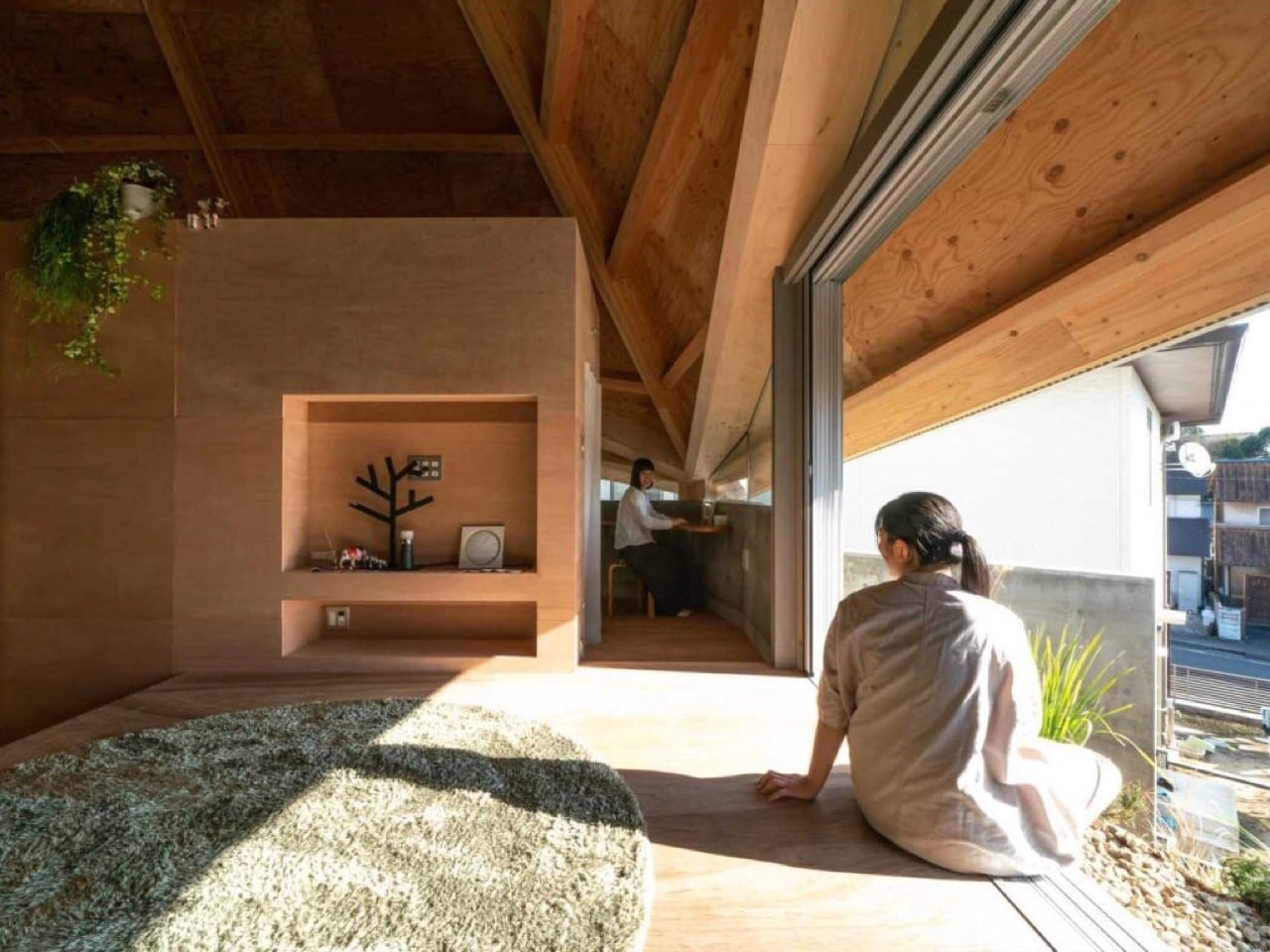
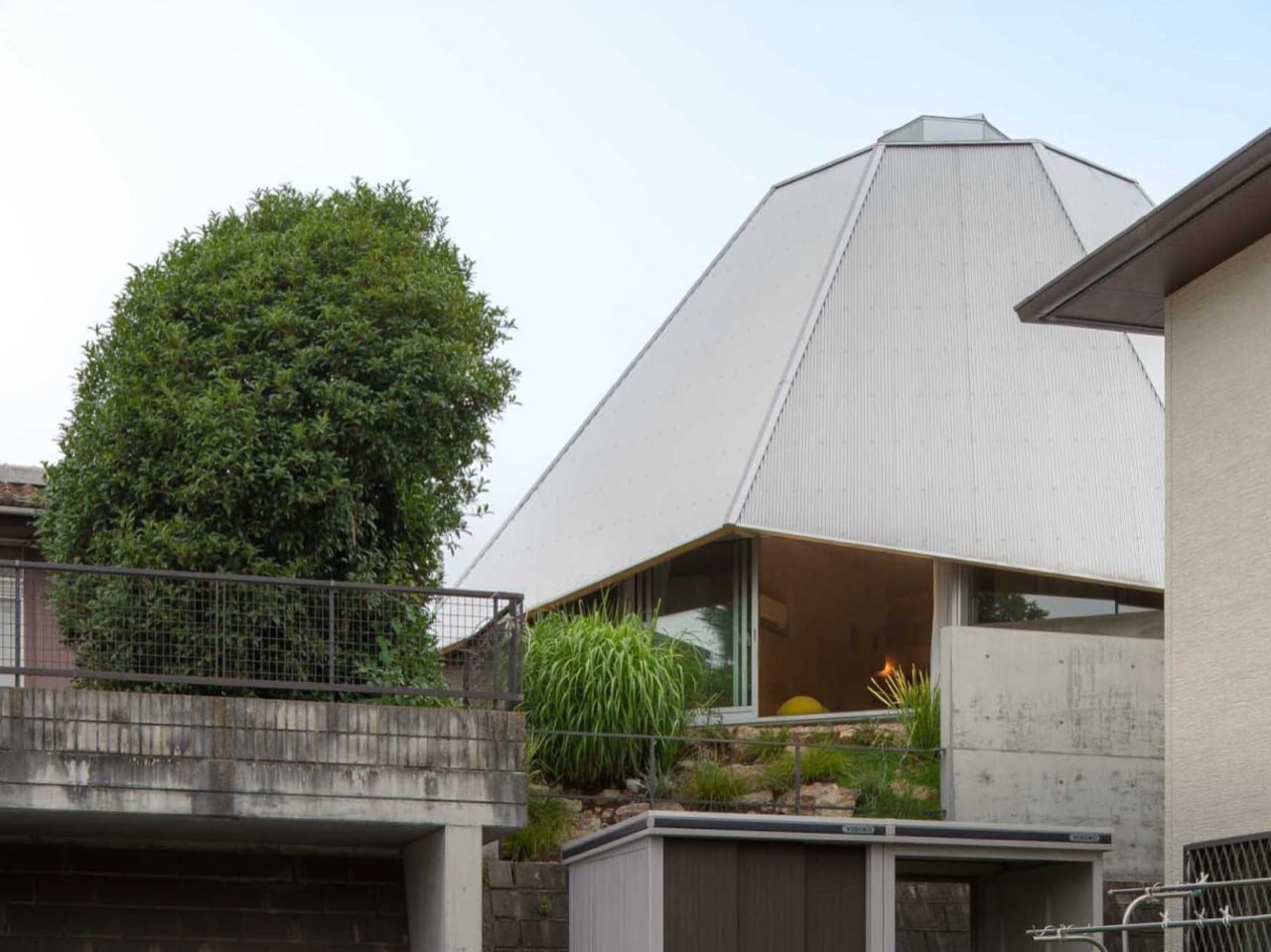
Building a giant timber web in a neighborhood of beige boxes takes real nerve, and the renderings could easily have collapsed into a gimmick once construction started. They did not, mostly because the geometry earns its keep, handling light, ventilation, privacy, and circulation in one gesture rather than decorating over them. Japan has a long history of small homes that punch far above their square footage, from the metabolist experiments of the sixties to the tight urban houses we cover constantly, and this one sits comfortably in that lineage. UID built a house that should still make sense long after the kids have grown and moved out. I keep thinking about who gets to redraw their own floor plan just by moving the furniture.
The post A Spiderweb-Shaped Home in Japan Has No Fixed Rooms and Adapts as the Family Grows first appeared on Yanko Design.

PlayStation 6 Expected to Hit $1,500 Amid Ongoing Chip Shortages

PlayStation 6 Expected to Hit $1,500 Amid Ongoing Chip Shortages A conceptual design of the upcoming Sony PlayStation 6 console.

Sony has announced that the PlayStation 6 could carry a price tag of $1,500, a figure that highlights the rising costs of advanced gaming hardware. According to RGT 85, this steep pricing is tied to factors such as the increasing demand for high-performance chips, driven by advancements in AI technology and ongoing supply chain constraints. […]

The post PlayStation 6 Expected to Hit $1,500 Amid Ongoing Chip Shortages appeared first on Geeky Gadgets.

Posted in Uncategorized

Olivia Rodrigo’s New LEGO Collection Hides Loads of Easter Eggs, Just Like Her Music Videos

Heartbreak made Olivia Rodrigo famous, then rage made her interesting. SOUR arrived as a teenage gut-punch of betrayal and longing, all trembling ballads and bedroom devastation. GUTS answered it two years later with distortion pedals and a sneer, the sound of someone who had cried enough and picked up an electric guitar instead. The whiplash between those two modes is the most compelling thing about her, and any tribute worth its salt has to hold both at once.

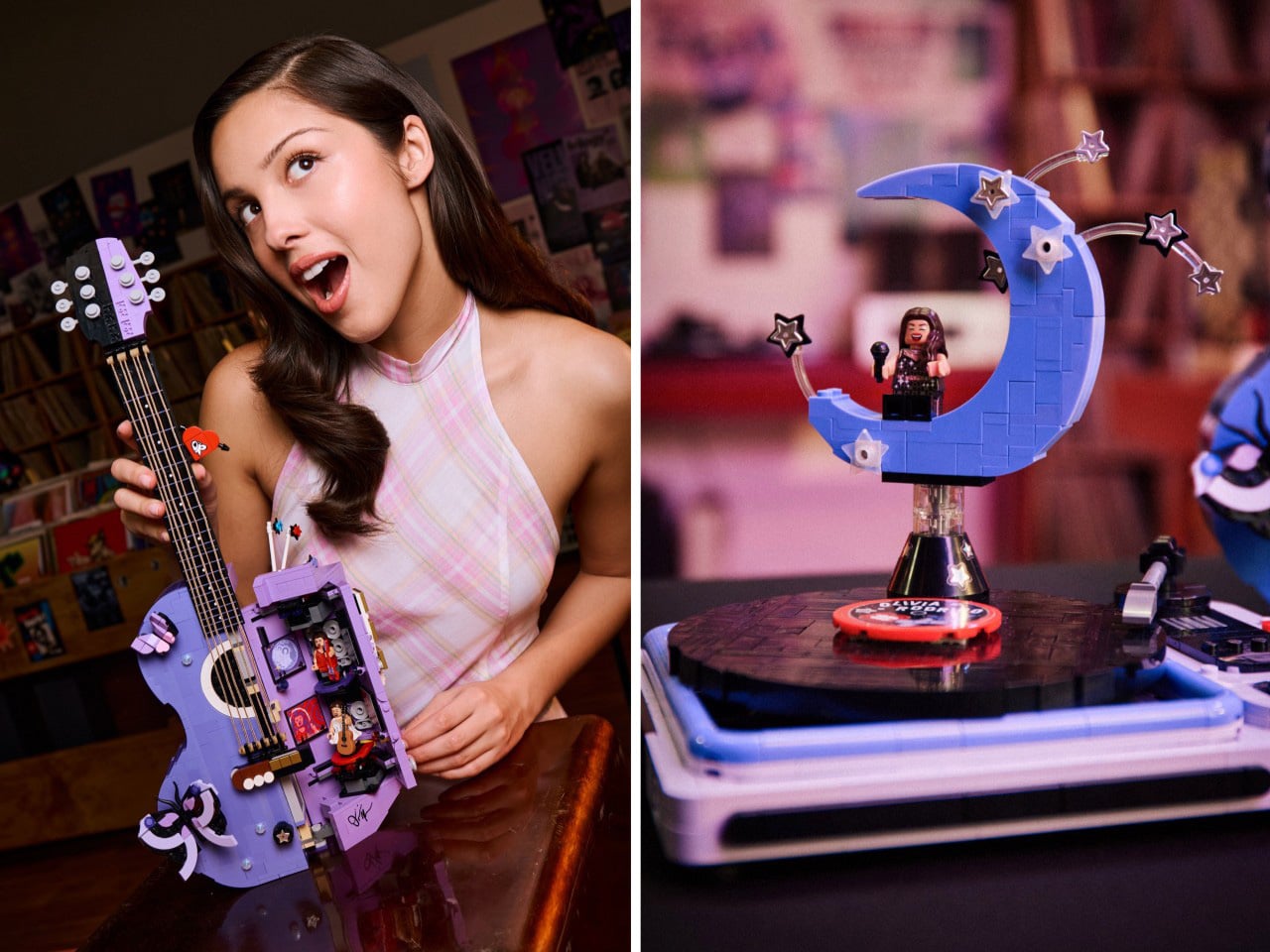
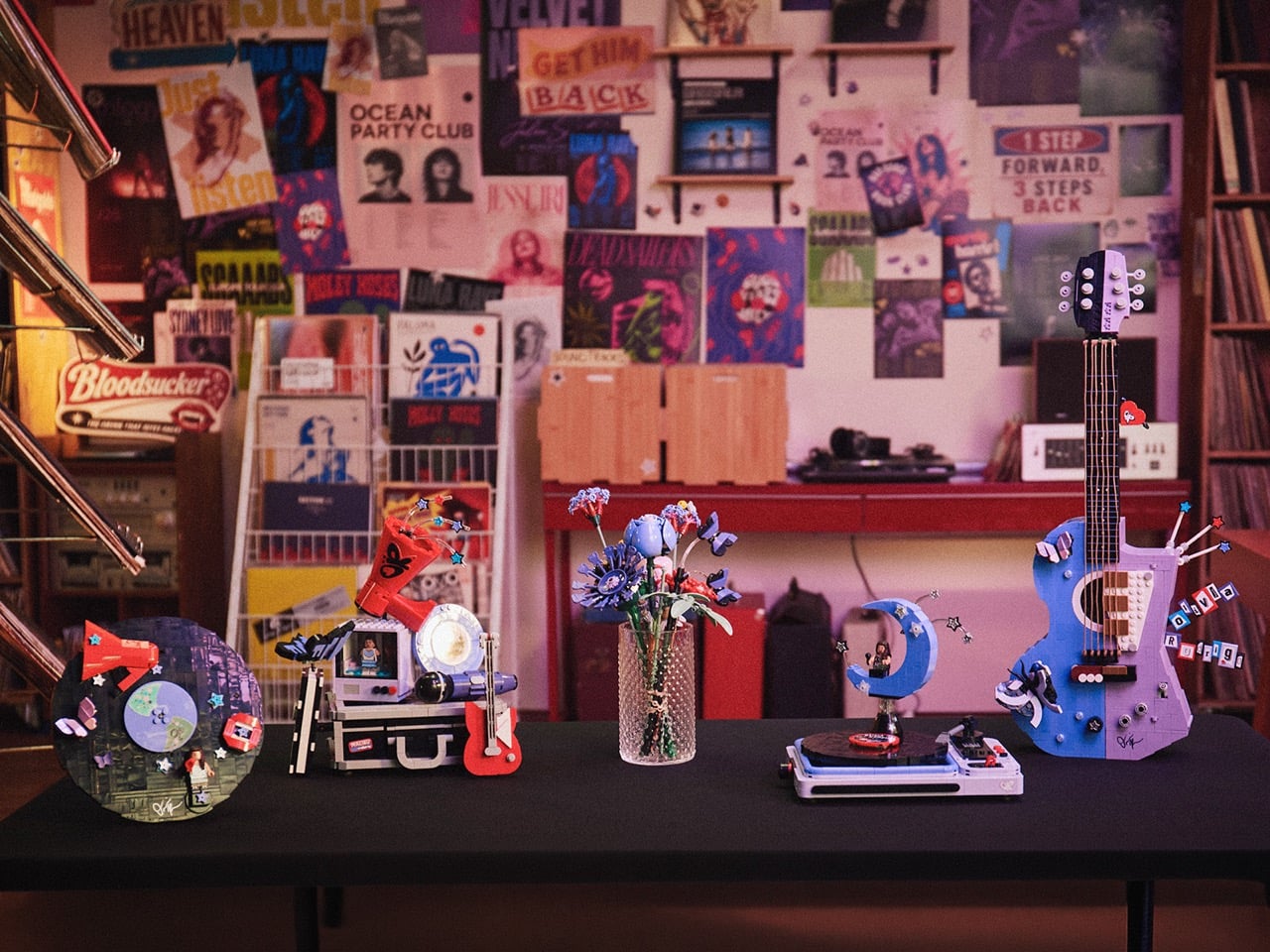
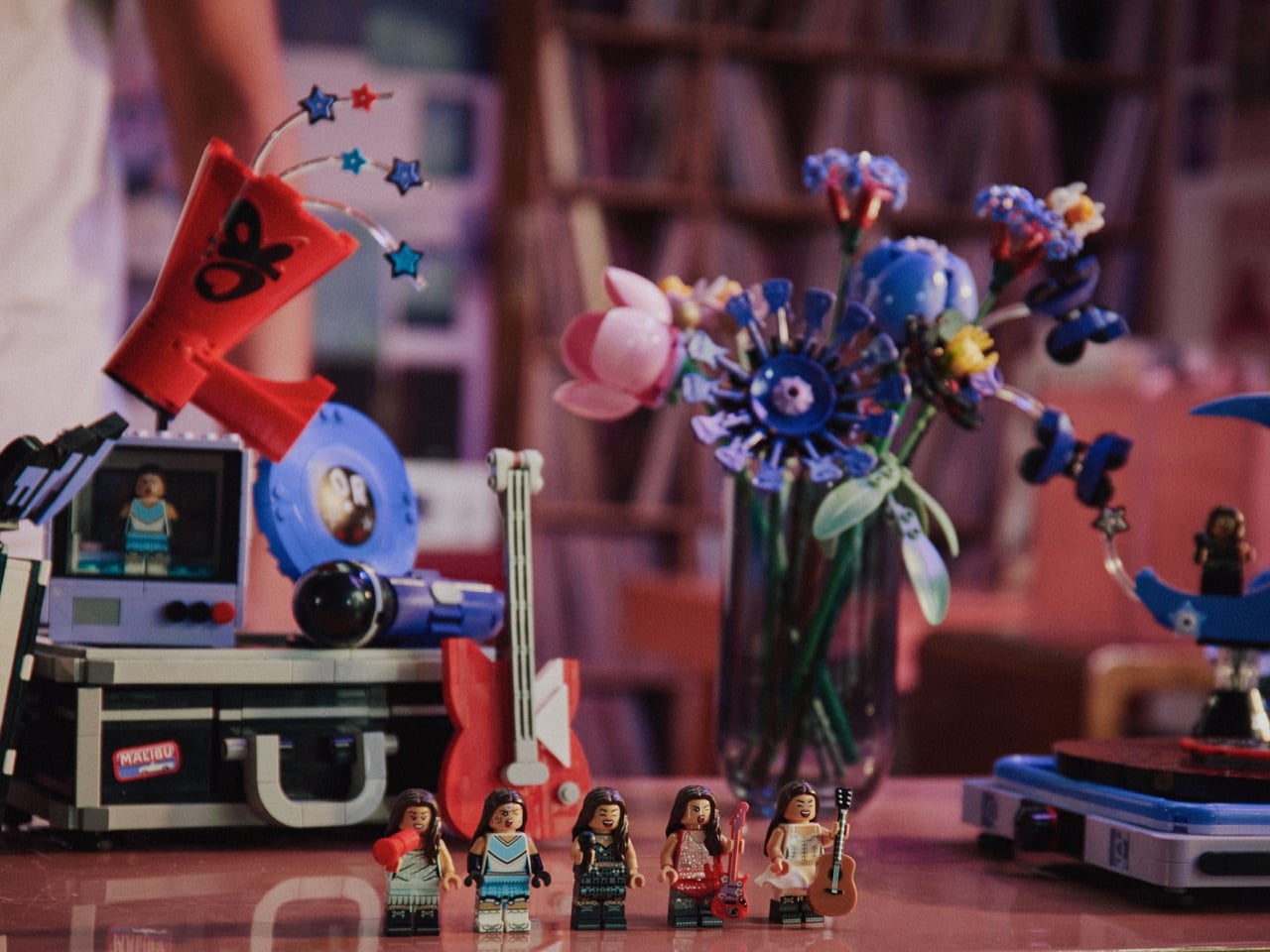
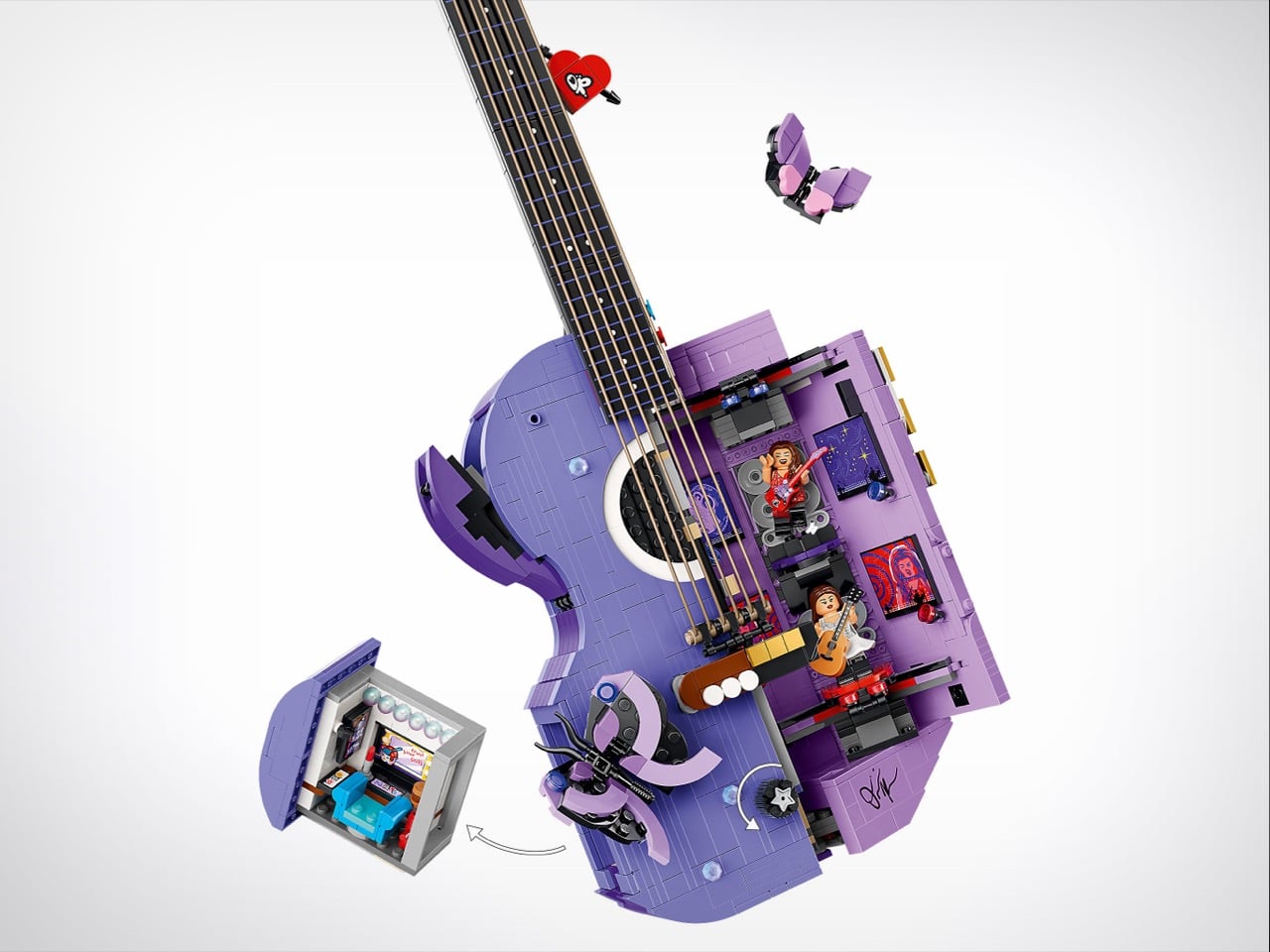
The new LEGO Editions Olivia Rodrigo collection gets that completely. Across five collectible sets, the range swings from soft to loud and back again, and the flagship Dual Guitar build (43031) literally splits the difference, fusing an acoustic and an electric into one 1,228-piece object that opens to reveal hidden stage scenes inside. It is a collection that understood the assignment was always about duality, right down to the minifigures and their two faces. And like the best Rodrigo music videos, every set is salted with easter eggs you are meant to hunt down, the kind of buried references the Livies will be freeze-framing and cataloguing for weeks.

Designer: LEGO Group (Amy Corbett – Senior Design Manager)

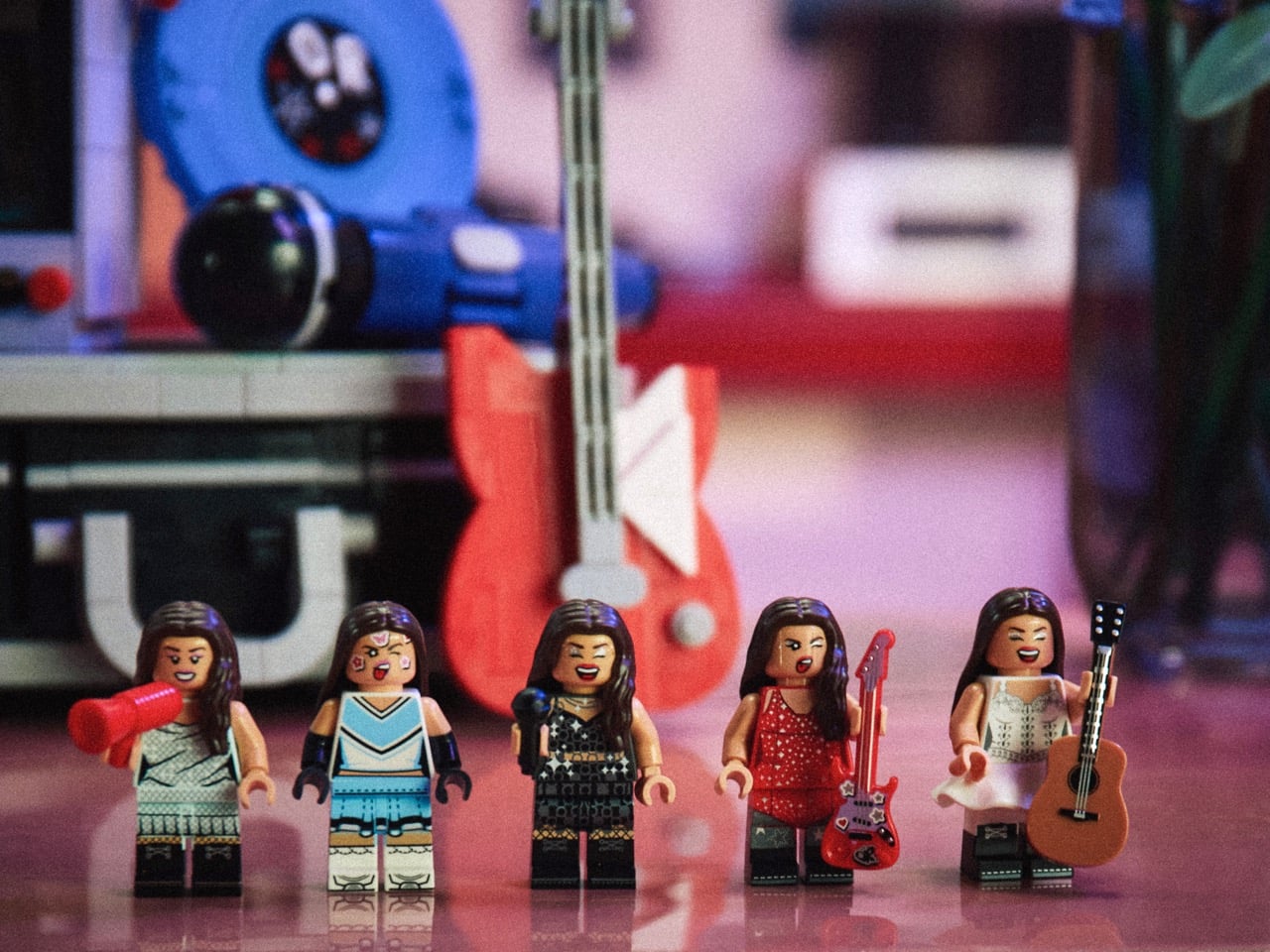
That duality is a genuine milestone too, because Rodrigo becomes the first musician in history to receive multiple dedicated LEGO sets in one go, arriving with five new minifigures modeled on her most recognizable stage looks. The detail I keep grinning at is that every one of those minifigs carries two different facial expressions, so you can flip a single character between the wide-eyed ballad version and the snarling festival version depending on which Olivia the scene calls for. Amy Corbett led the design direction and worked directly with Rodrigo to refine each element, and that collaboration shows in how much of the collection is built around slow discovery rather than instant payoff.

The clearest proof of that is a clever piece of industrial sleight-of-hand in the LEGO Botanicals Flower Bouquet (11507). Rodrigo is the first partner LEGO has ever let personalize one of its Botanicals sets, and rather than a generic posy, the 400-piece arrangement is built around a striking purple flower assembled out of electric guitars, with further floral nods to her Filipino heritage threaded through the petals. It is the kind of part-repurposing that makes a designer grin, taking an instrument silhouette and coaxing it into a botanical form. Look closely and you will find a tiny visitor buzzing around the stems, which is exactly the sort of easter egg the Livies will lose their minds over.

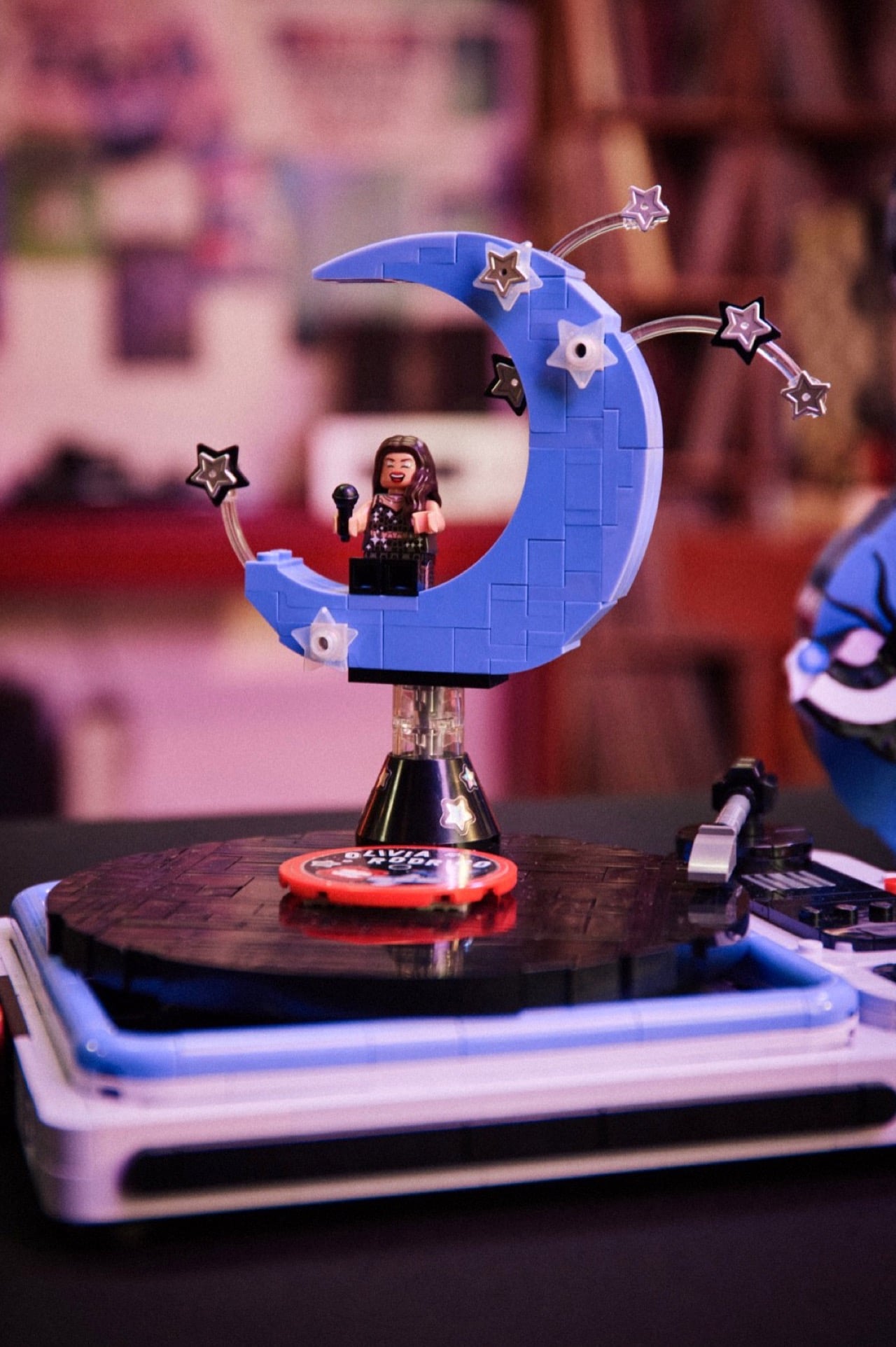
The Concert Moon (43029) is the showstopper for me, a 670-piece recreation of that viral GUTS tour moment where Olivia drifts above the crowd on a giant glowing moon. What elevates it past a static diorama is the engineering tucked behind the spectacle, with hidden drawers and picture holders worked into the body of the thing, so the prop that floated over a stadium doubles as a tiny functional curio on your shelf.

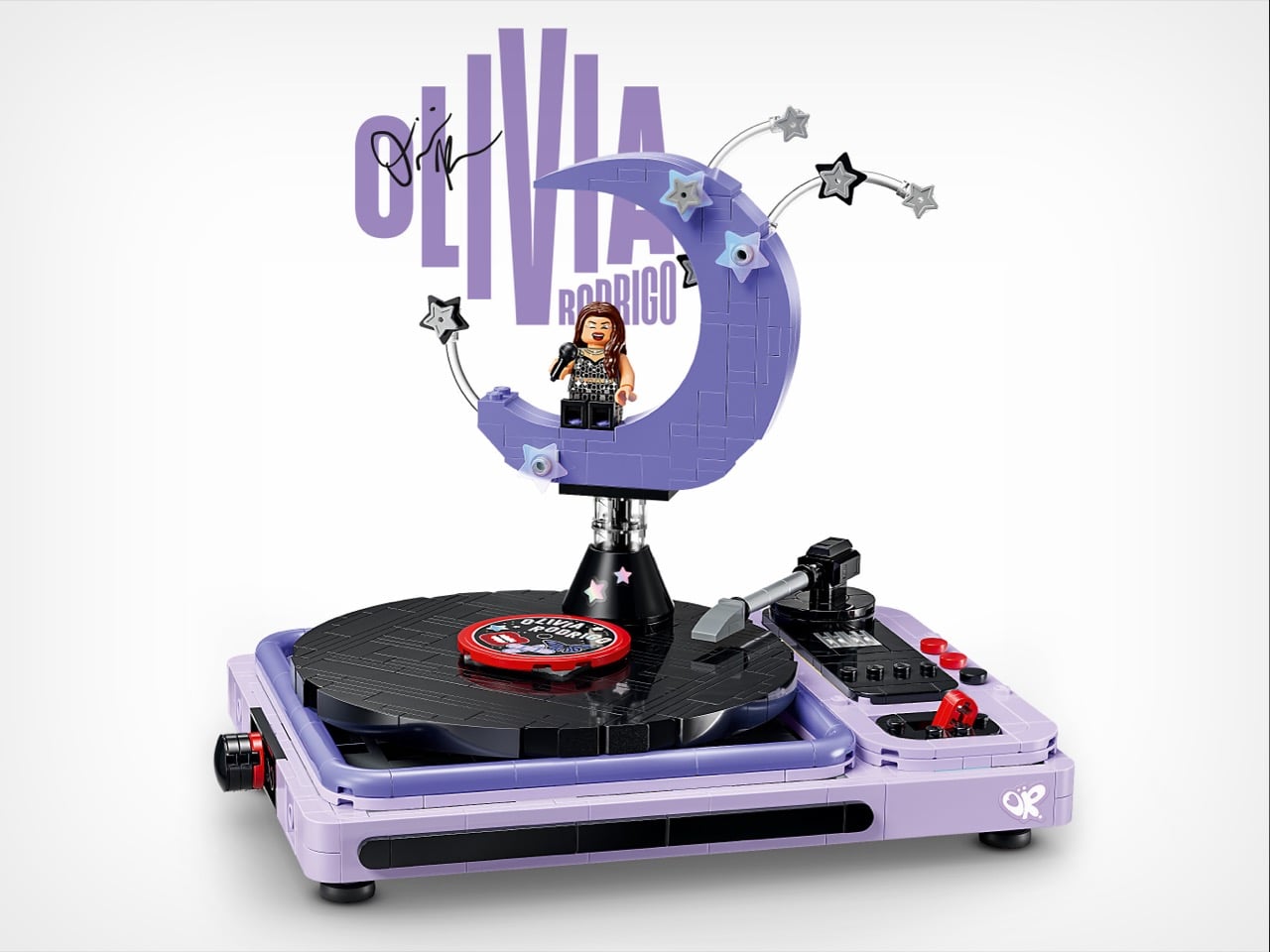
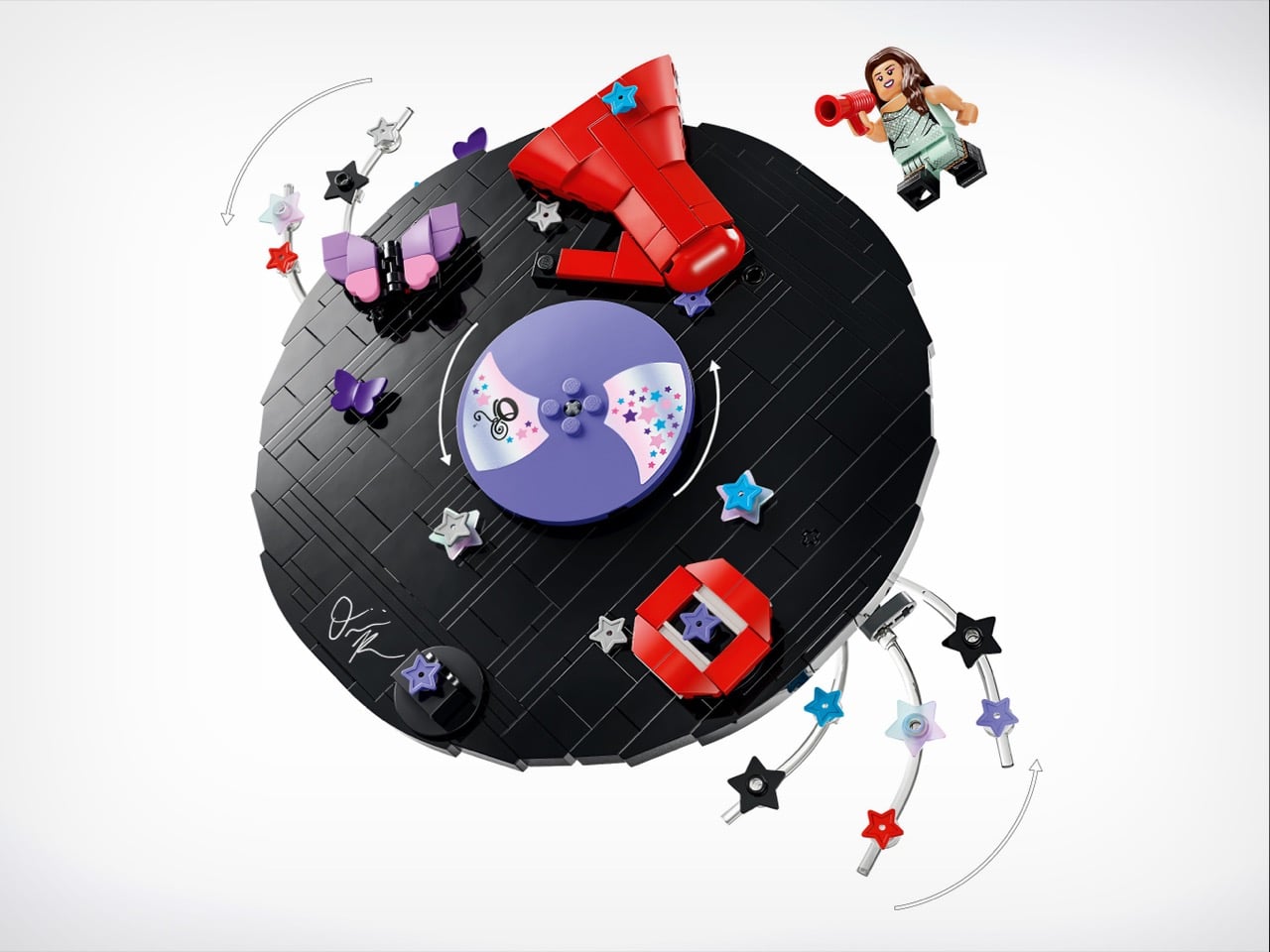
The Dual Guitar (43031) earns its flagship billing the longer you sit with it, because the headline trick from up top, an acoustic and an electric fused into one 1,228-piece instrument, turns out to be only half of it. The body opens to reveal hidden stage scenes, backstage details, and secret storage compartments waiting to be decoded, one side soft and dreamy, the other ready to make some noise. From there the range dials down with the Vinyl (43028), which compresses her career into a 360-piece brick-built record display salted with callbacks and fresh clues hinting at what is still to come. And the Secret Storage (43030) closes things out, gathering her signature symbols into one 1,085-piece collectible, the red festival-tour guitar, the GUTS megaphone, a notebook pulled from those handwritten SOUR lyric books, each prop hiding a compartment that keeps it doing double duty.

So much of this collection is mechanism disguised as merchandise. A pop-star tie-in could so easily have been five pretty busts and a logo, but Corbett and her team kept asking what each object could do, which is why you get faces that swap, drawers that slide, guitars that open, and a moon that hides its own secrets. Pitched at ages nine to fourteen but plainly aimed at the adult collectors who grew up alongside this music, the sets read as display pieces with a puzzle-box heart.

The collection launches globally on August 1, 2026, at LEGO.com, LEGO stores, and selected retailers, with the Dual Guitar, Concert Moon, and Flower Bouquet already up for pre-order. Prices run from a friendly 34.99 USD for the Vinyl to 119.99 USD for the Dual Guitar, which feels fair for what is essentially a working brick instrument. If I had one wish, it would be a single playable string on that Dual Guitar, some tiny Technic mechanism that lets it twang just once. Give me that, and this goes from a great tie-in to an instant classic.

The post Olivia Rodrigo’s New LEGO Collection Hides Loads of Easter Eggs, Just Like Her Music Videos first appeared on Yanko Design.

Rick Owens and adidas Are Back, and They Brought Air Conditioning

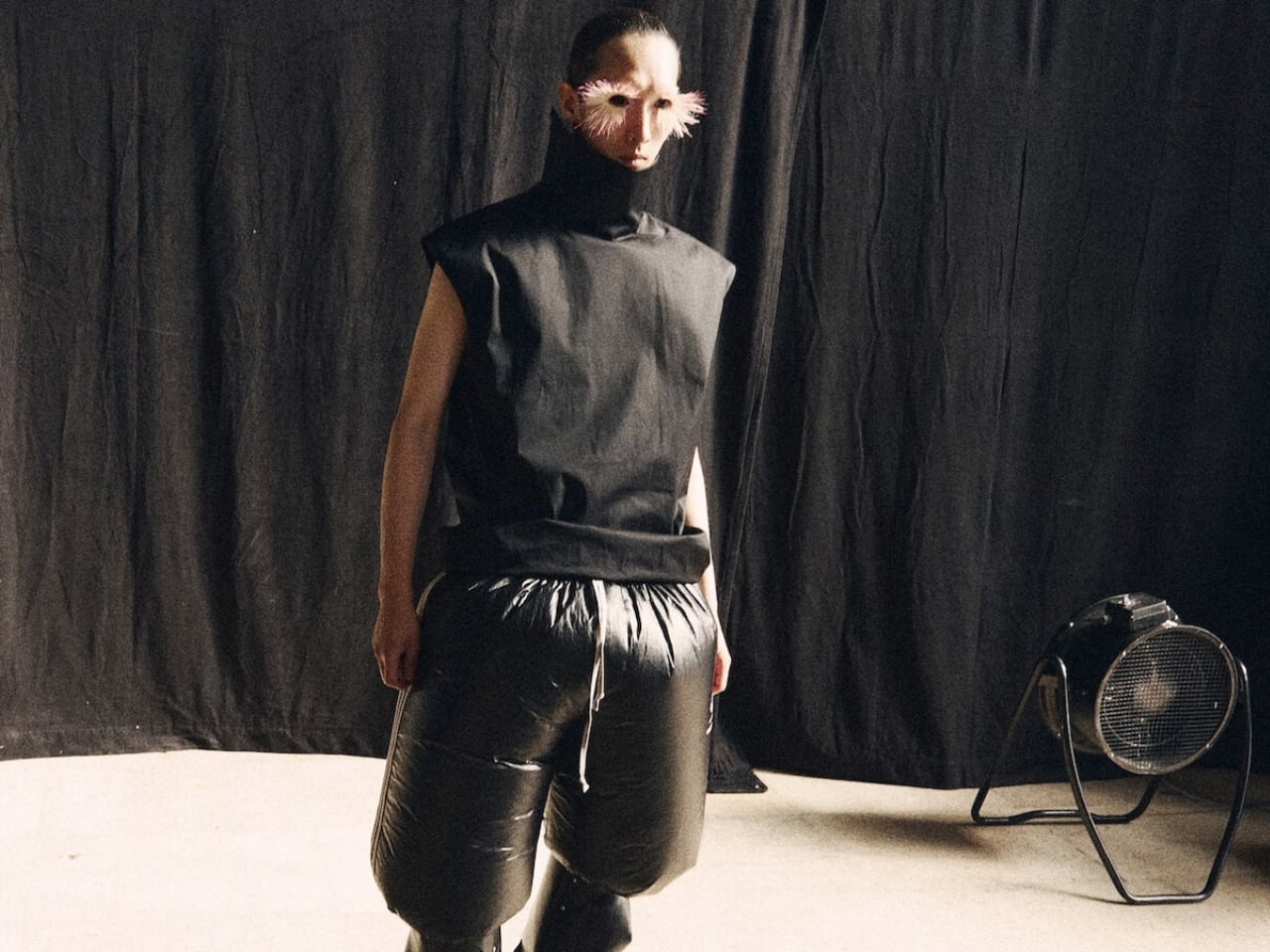
If you’ve ever stood outside in peak summer heat thinking, “someone really needs to fix this,” Rick Owens apparently heard you. At his Spring/Summer 2027 menswear show held at the Palais de Tokyo during Paris Men’s Fashion Week, the notoriously dark, architectural designer made a surprise announcement of sorts: he and adidas are back together, and this time, they came with cooling technology sewn right into the clothes.

The reunion itself is already big news. The original Rick Owens x adidas partnership ran from 2013 to 2017 and produced some of the most visually striking footwear of that era. Chunky, sculptural sneakers that looked like they belonged in a sci-fi film became collector staples. Nearly a decade later, the two are picking up right where they left off creatively, but the direction has shifted entirely. This is no longer about shoes. This is about what you put on your body when the planet refuses to cooperate.

Designers: Rick Owens x adidas

The collection features inflatable tracksuits fitted with adidas’ Climacool technology and integrated fans that circulate air directly around the wearer. Ballooning jackets and shorts expand dramatically around the body, creating silhouettes that look part sculptural art installation, part protective gear for some future we haven’t quite arrived at yet. The palette stays true to Owens’ signature obsessions: black, white, leather, latex, and technical fabrics that make everything feel simultaneously post-apocalyptic and razor-precise.

What makes this more than a clever gimmick is the context. Paris was reportedly sweltering during this particular fashion week, making the inflatable cooling garments less of a conceptual gesture and more of a direct, almost blunt response to conditions on the ground. Owens didn’t hide the technology. He put it front and center, letting the puffed forms become the silhouette rather than something tucked away beneath a lining. Wearable cooling as a visible design choice rather than a discreet utility is a genuinely interesting move, and it reframes what performance wear can mean in a luxury context.

The show itself was called “Stone.” It was moved from its usual afternoon time slot, which already tells you the team was thinking about heat logistics from the jump. Presented at the Palais de Tokyo, the setting felt apt for a collection that reads like a serious piece of speculative design. These are clothes asking a real question: as temperatures climb and climate disruption becomes a consistent backdrop to daily life, how does fashion respond beyond making linen shirts?

Rick Owens has always had this quality where the extreme nature of his vision somehow makes total sense the moment you see it in context. Inflatable suits with fans built in sounds absurd until you’re watching models move through them on a scorching Paris afternoon. Then it starts to feel less like provocation and more like logic. That balance between the theatrical and the genuinely functional is exactly what keeps this designer relevant across decades.

The adidas partnership adds a layer here that feels important. adidas brings serious technical credibility, including Climacool, which has roots in motorsport and was developed over years before making it to football. Pairing that depth of performance engineering with Owens’ architectural fashion language creates something that neither brand could pull off alone. It’s not a logo collaboration. It’s a genuine material conversation between two very different fluencies in how clothing can perform.

Whether these pieces ever reach everyday consumers in a wearable form, or whether they stay in the realm of editorial and collector culture, almost doesn’t matter for the conversation they’re opening. Climate-adaptive fashion has been floating around the design world for a few years now, usually in academic or experimental contexts. Seeing it hit a major runway like this, with actual technology and actual scale behind it, moves the needle. The Rick Owens x adidas SS27 collection isn’t just a reunion worth noting. It’s a reminder that the most interesting design often comes from taking an urgent problem and refusing to make it invisible.

The post Rick Owens and adidas Are Back, and They Brought Air Conditioning first appeared on Yanko Design.