This CO2-powered cooling jacket could keep you comfortable in extreme heat without a battery

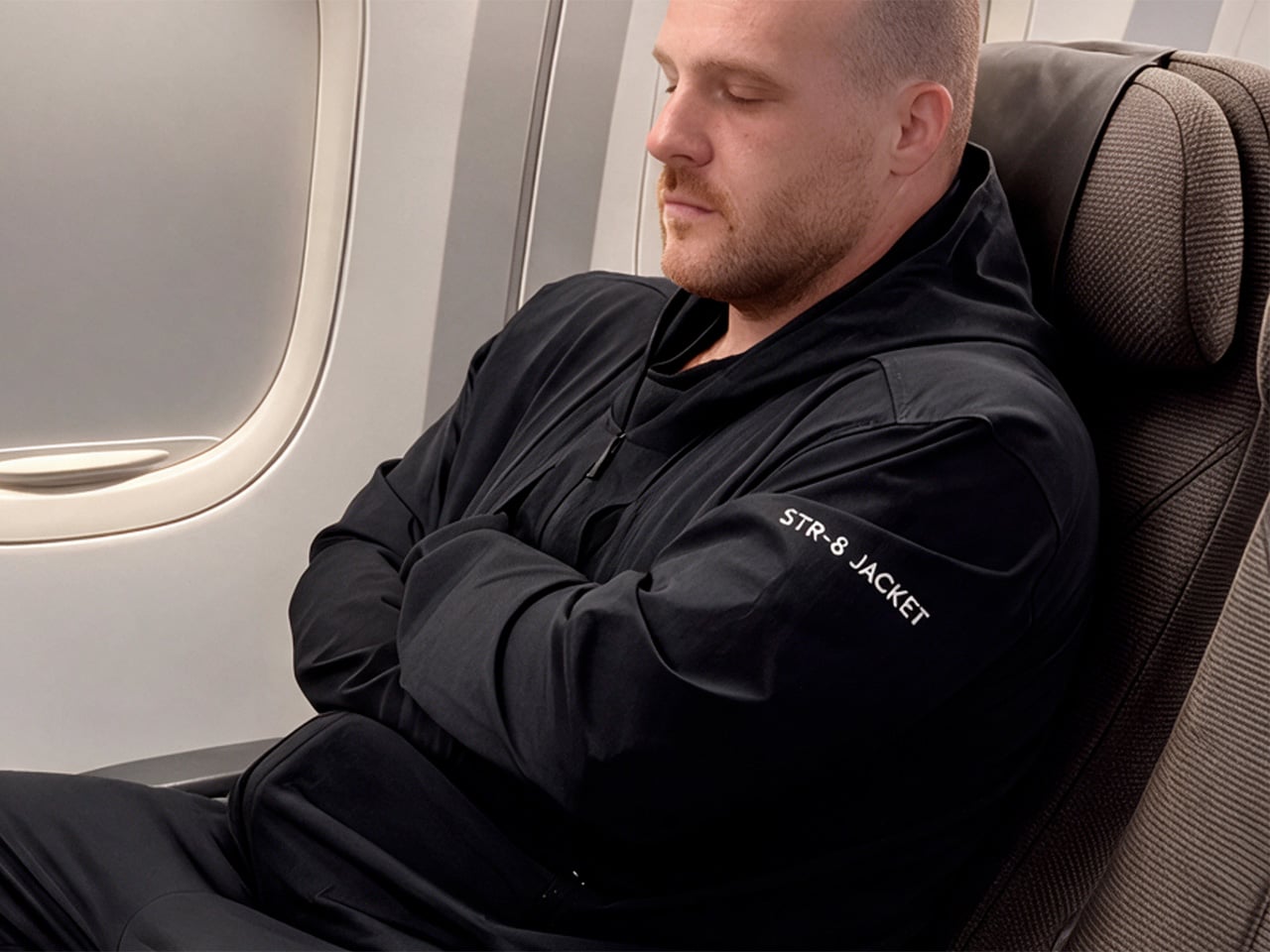
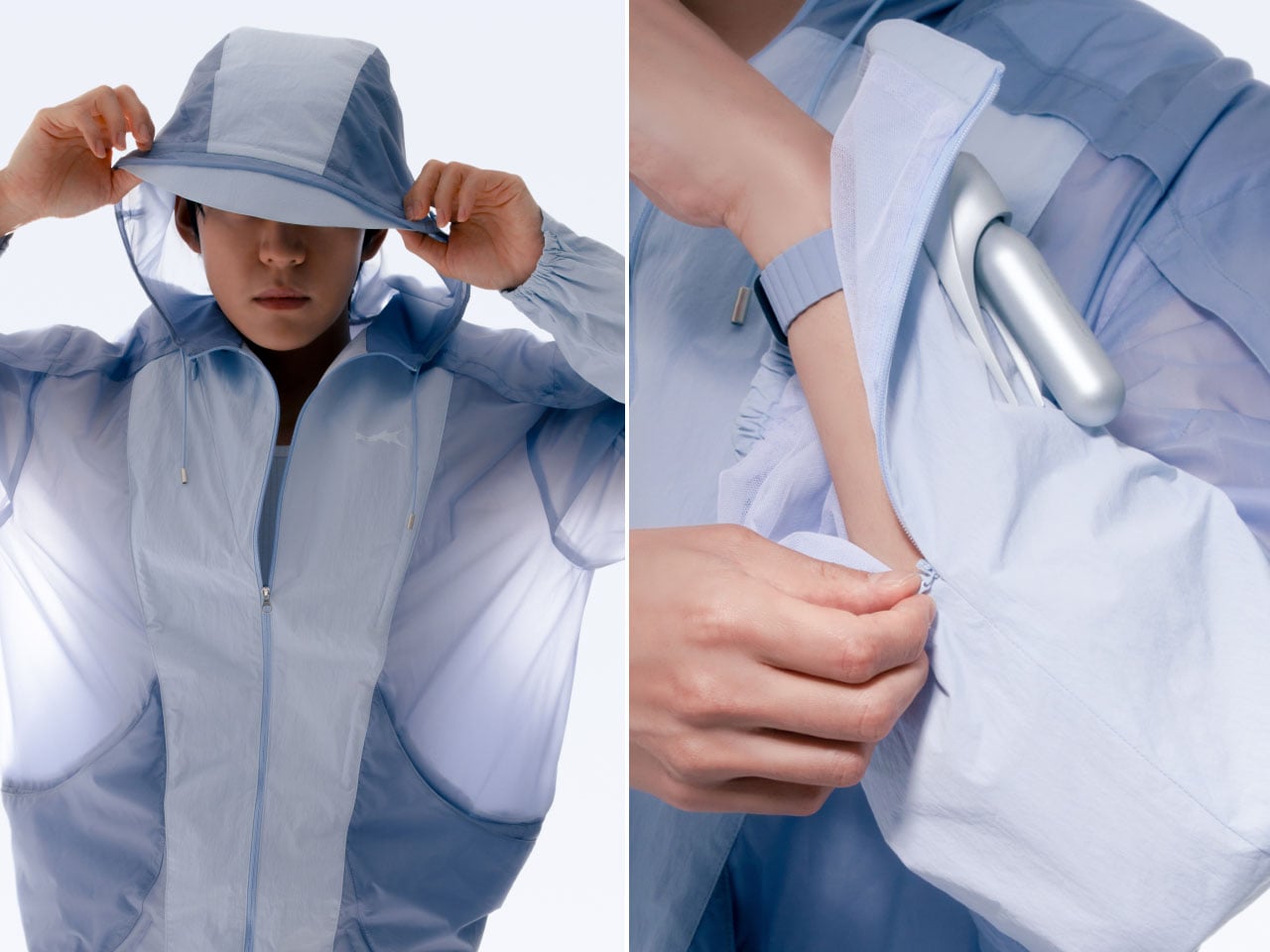
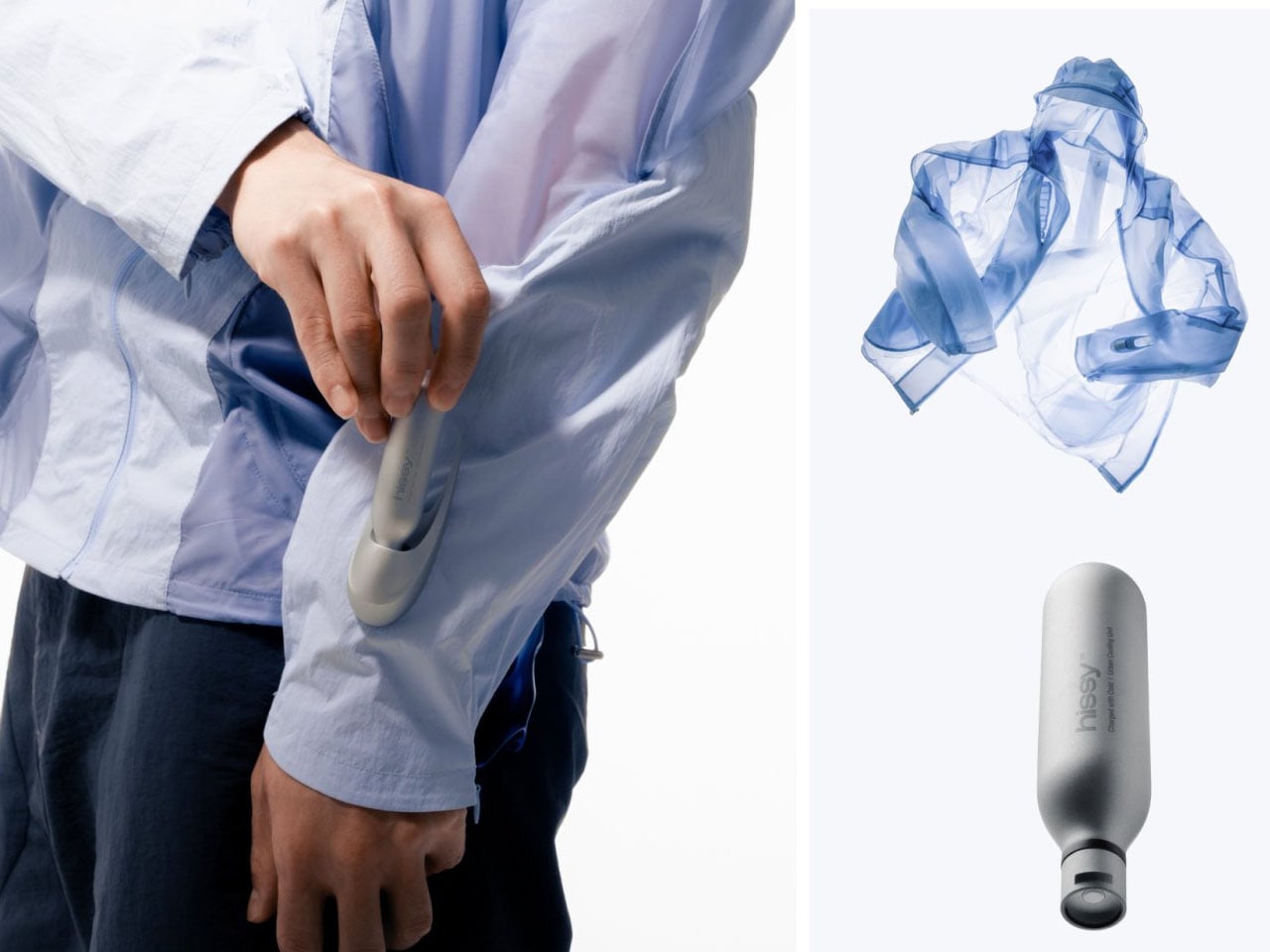
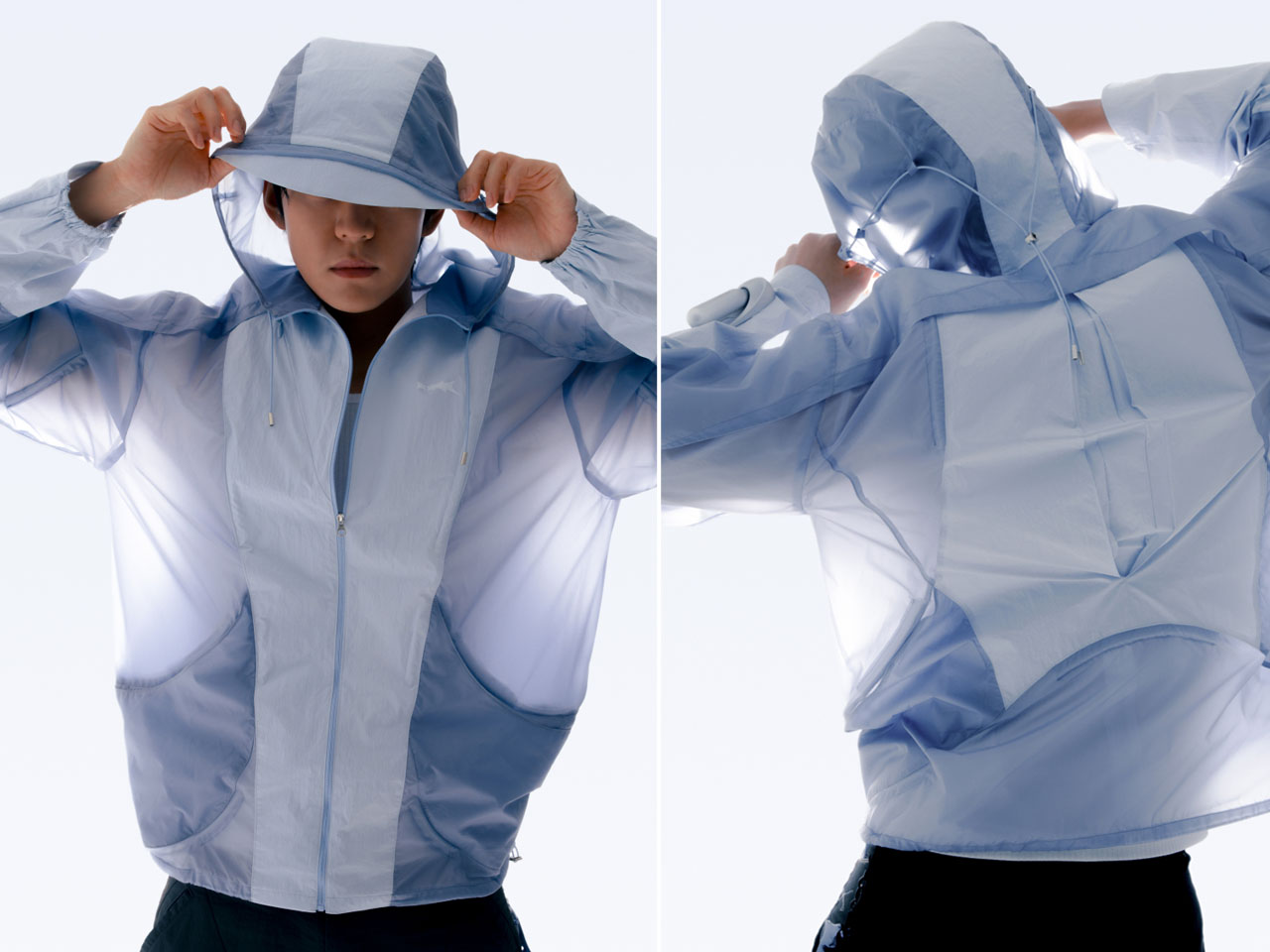
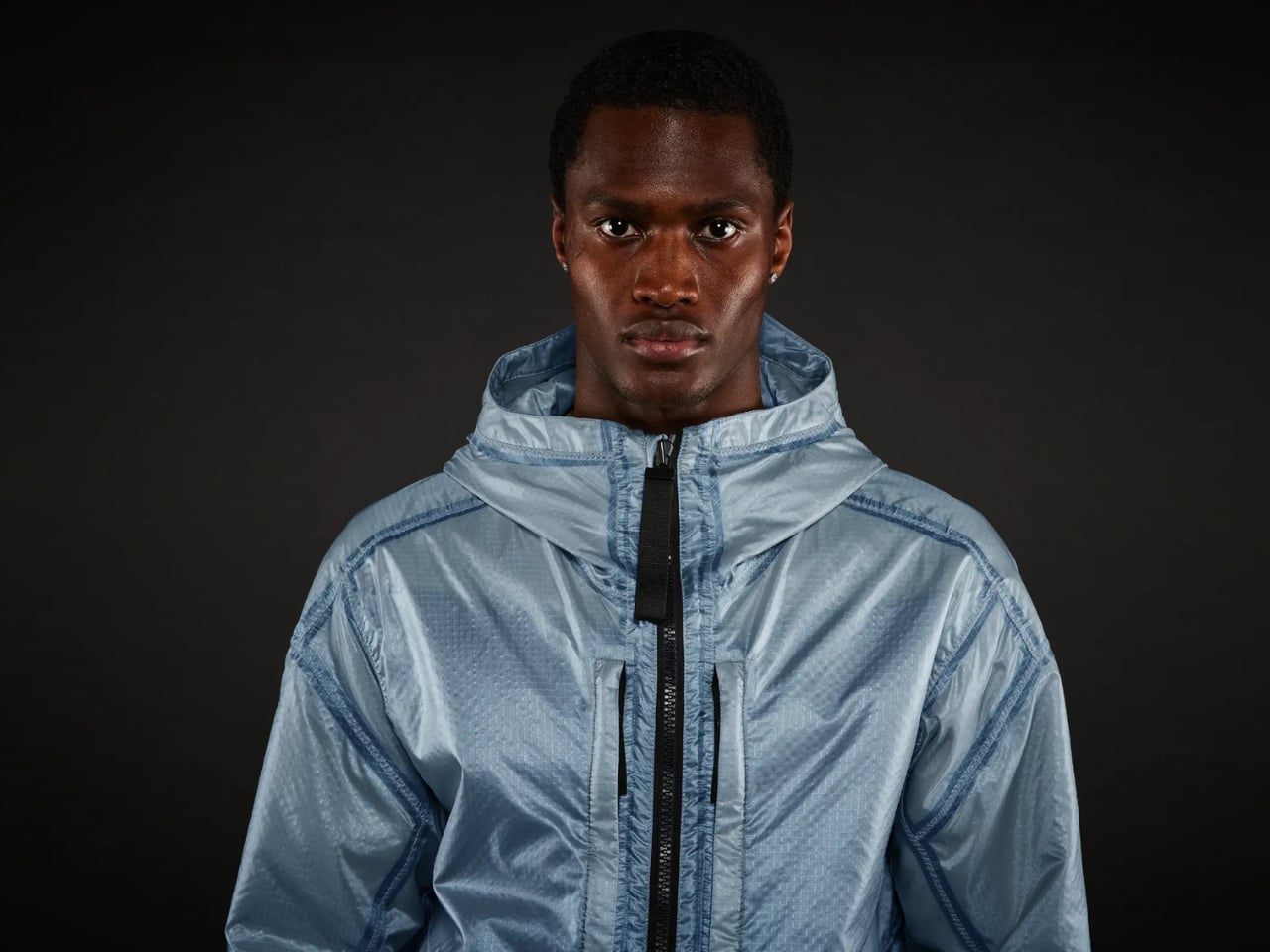
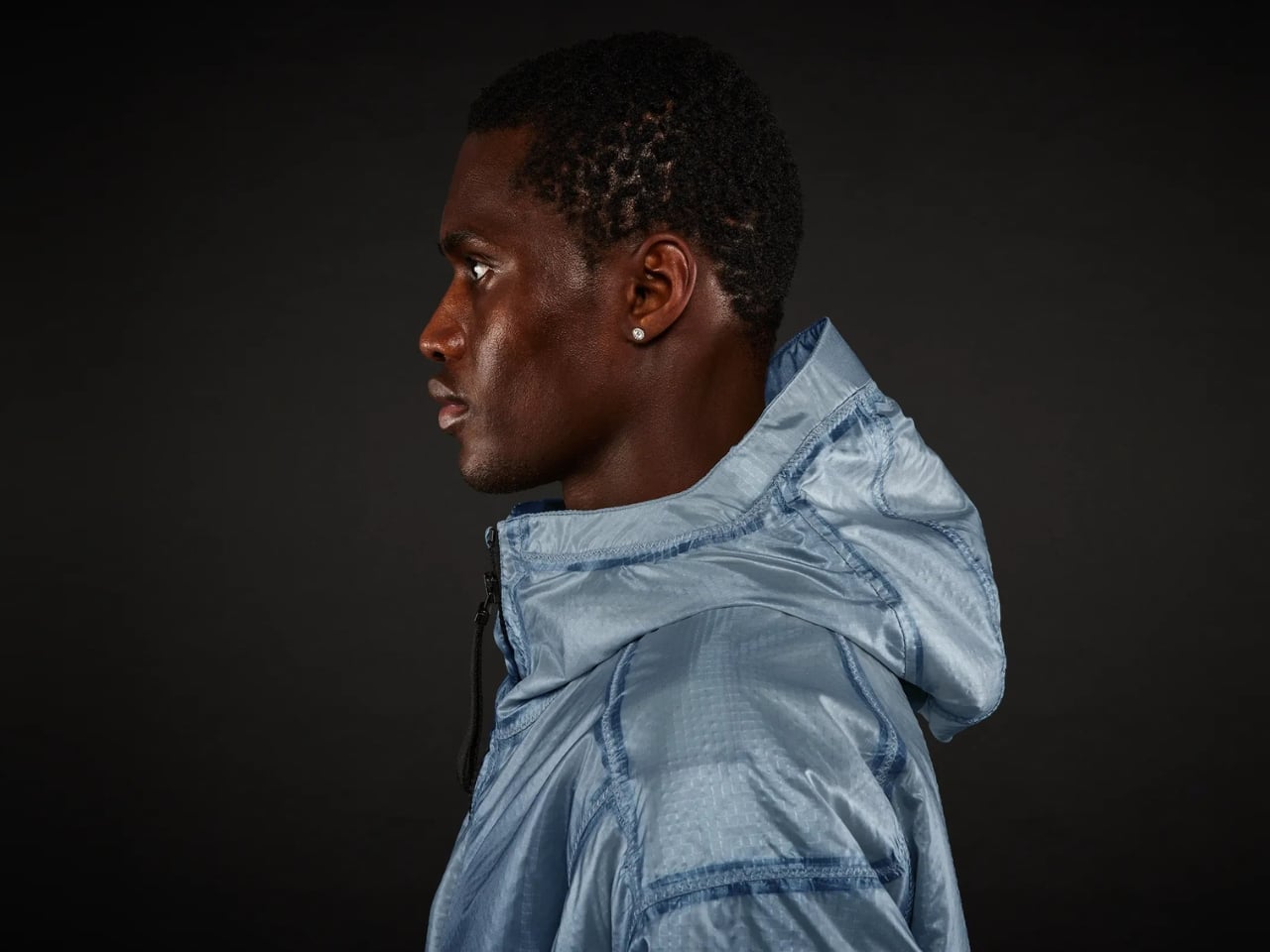
Most wearable cooling devices add more hardware to what you are already wearing. Hissy, developed by five designers as part of Samsung Design Membership, is different though. the concept puts a CO₂-powered cooling system inside a lightweight technical jacket, turning the garment itself into an air-delivery system.

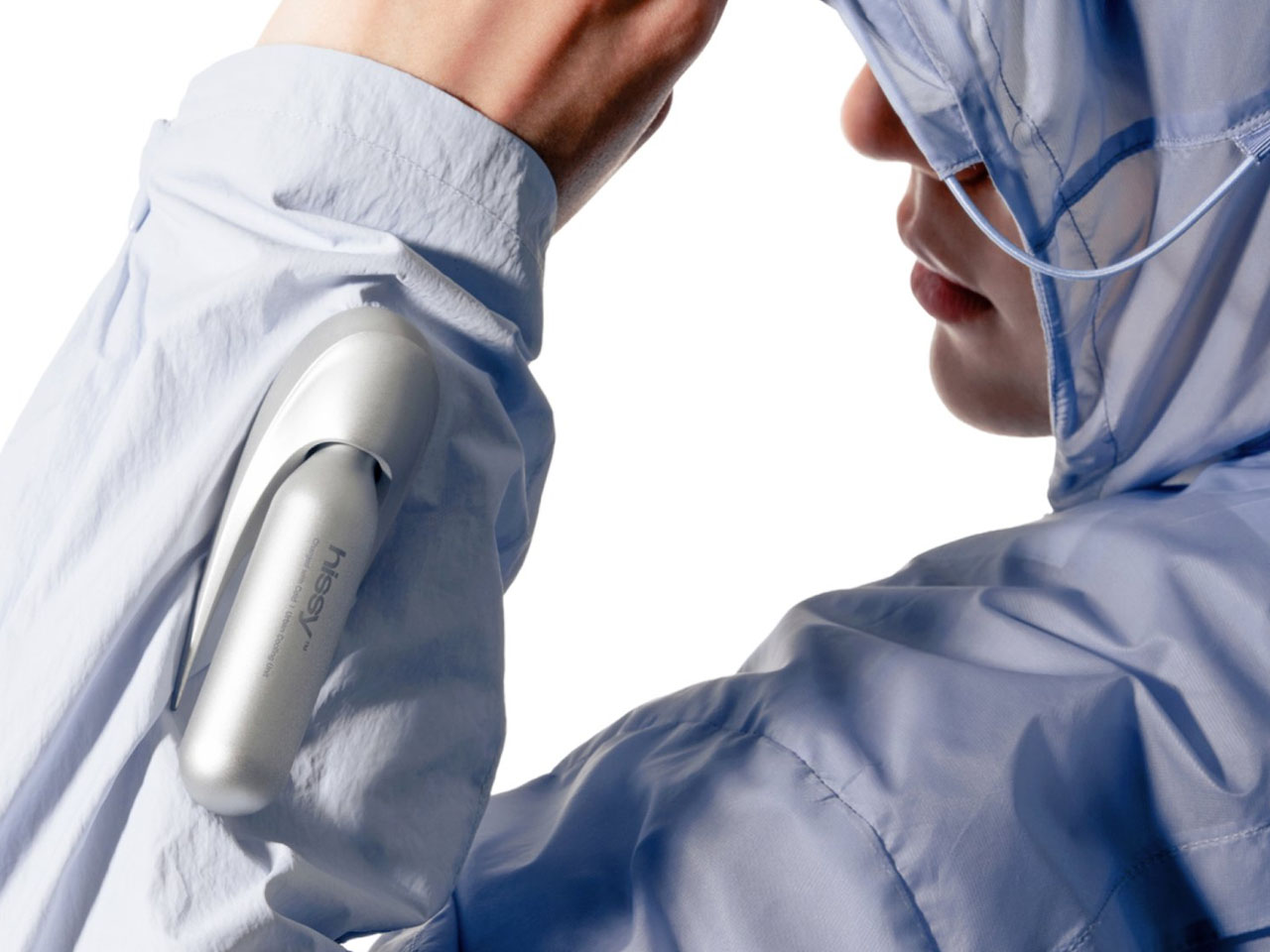
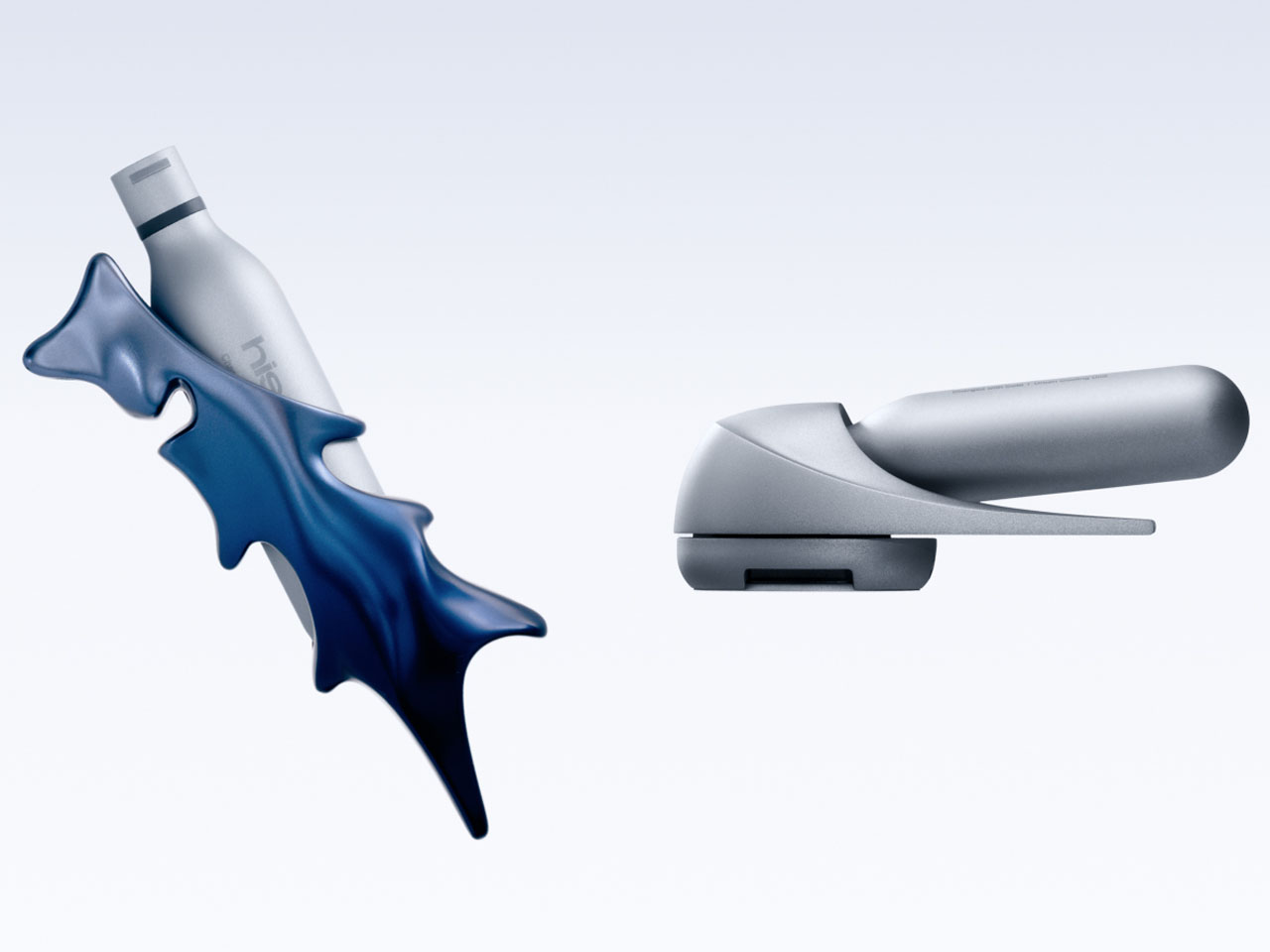
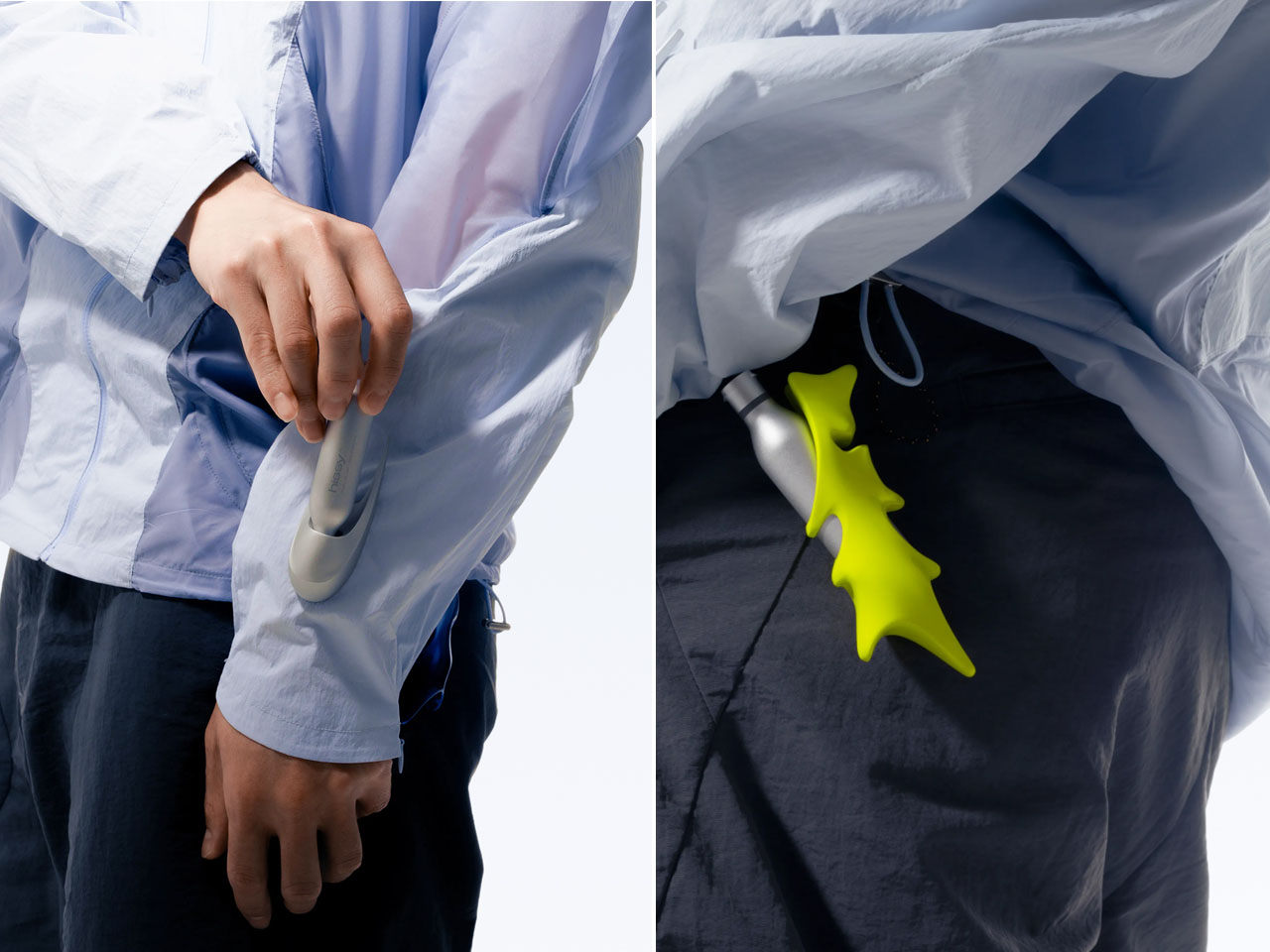
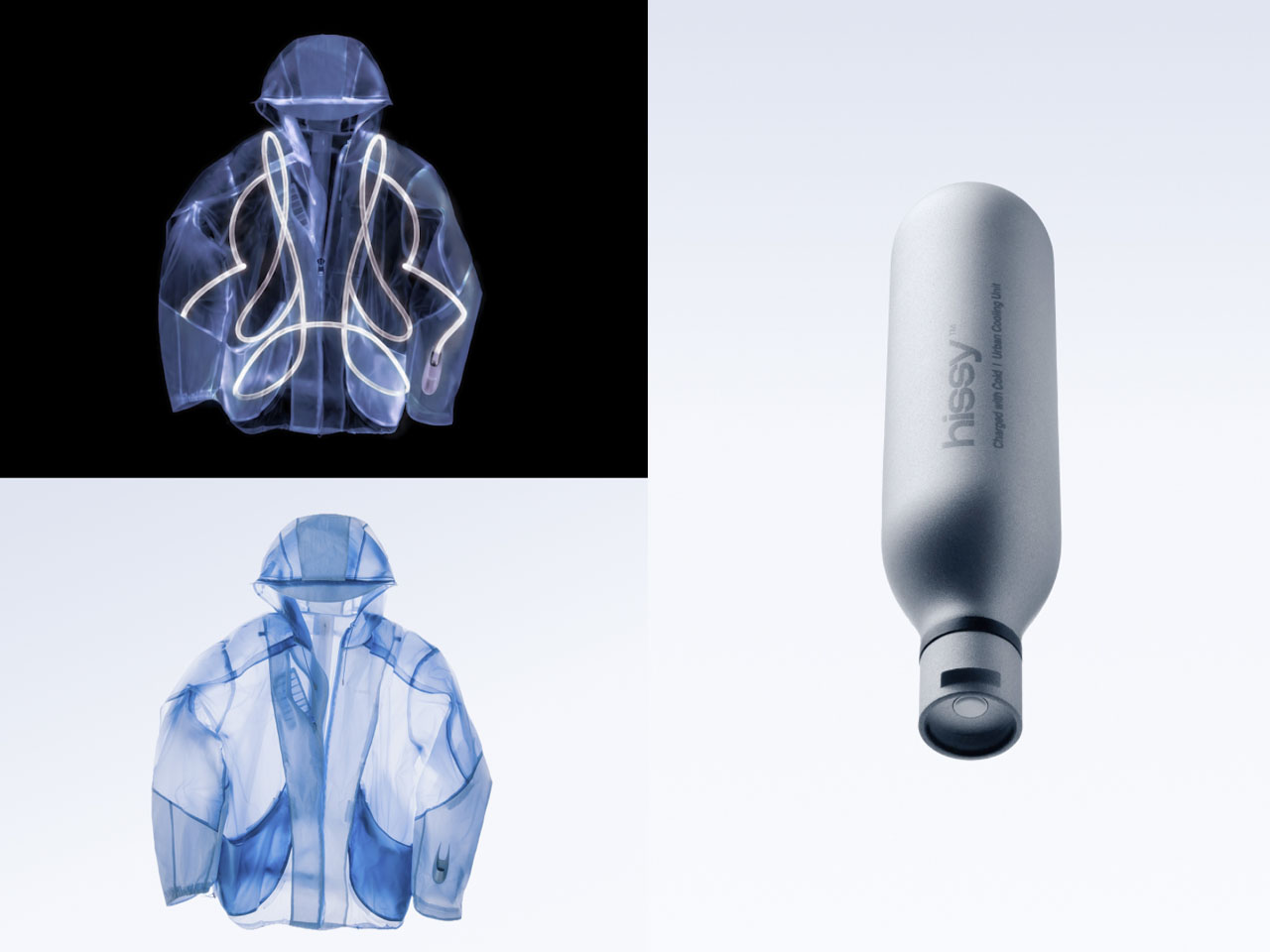
The idea comes from a fairly simple problem. Portable fans can struggle when the surrounding air is already extremely hot, while battery-powered cooling systems bring their own compromises in weight, runtime, and heat management. Hissy replaces the usual fan-and-battery setup with a small CO₂ cartridge mounted at the wrist. When the cartridge is connected, high-pressure liquid carbon dioxide vaporizes inside the cooling hardware, producing airflow at around -30 Degree Celsius.

Designer: Dongheon Kang, Minseo Jung, Yuha Ko, Juhyeon Jeon, Woohi Park

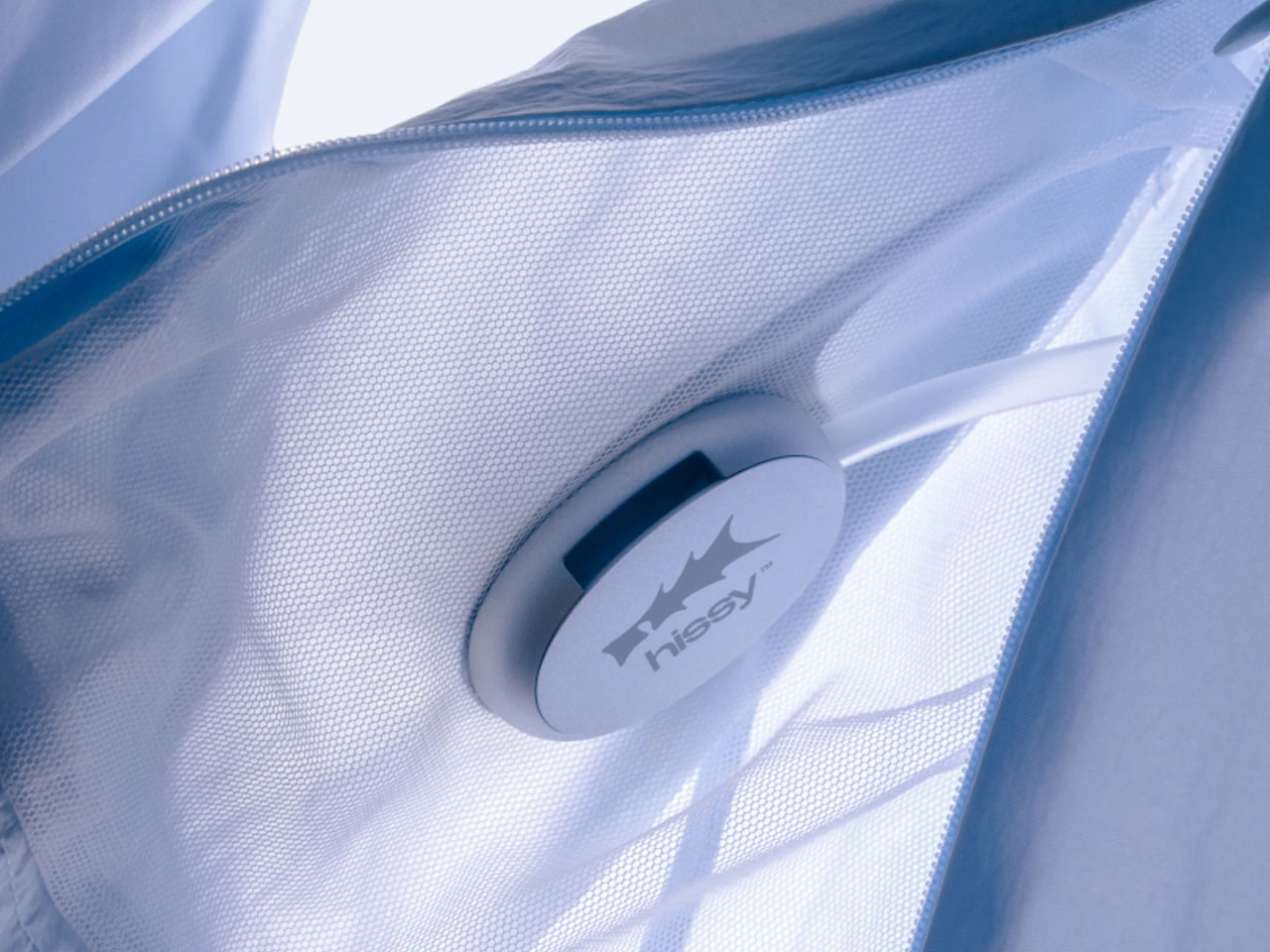
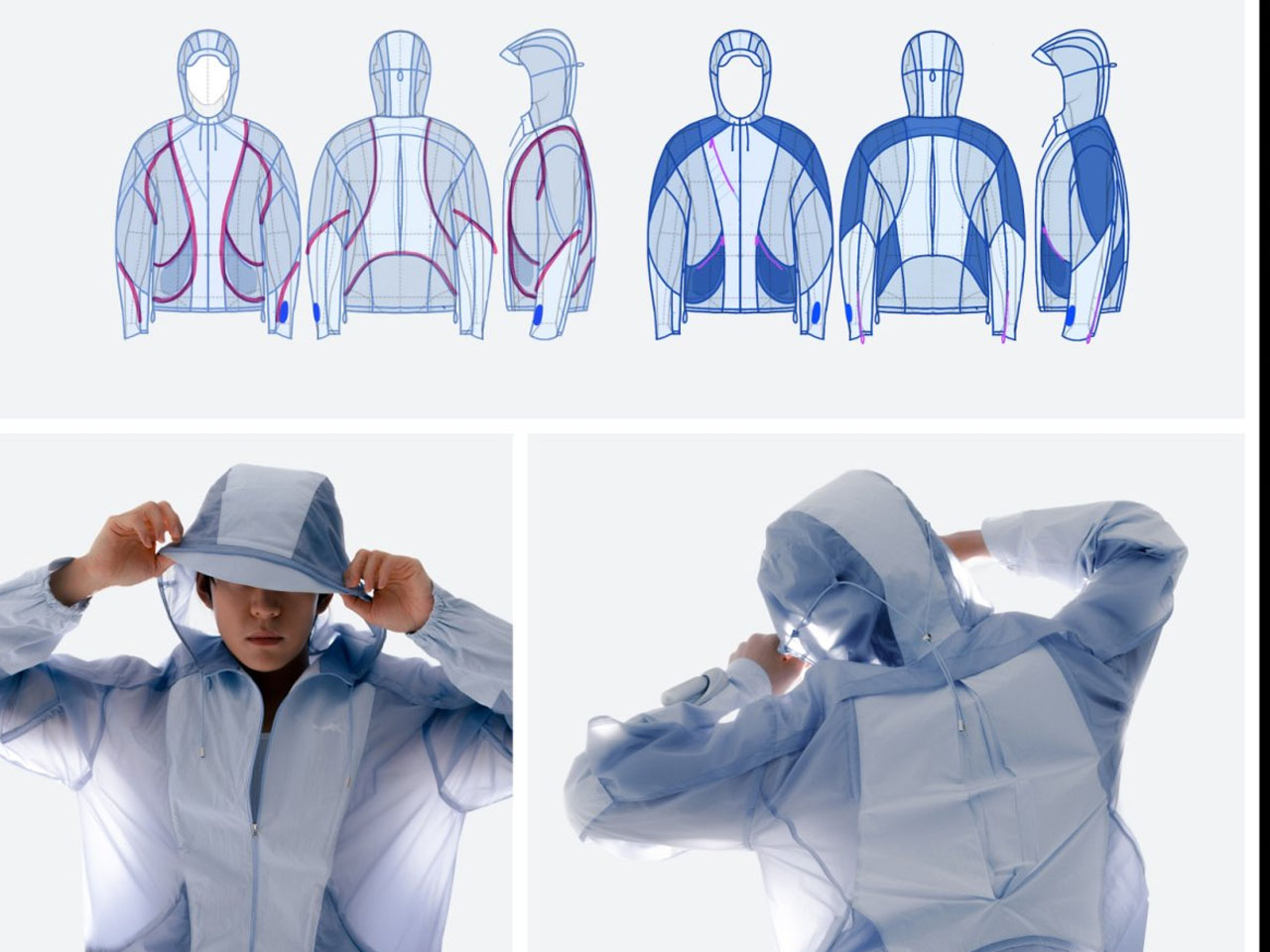
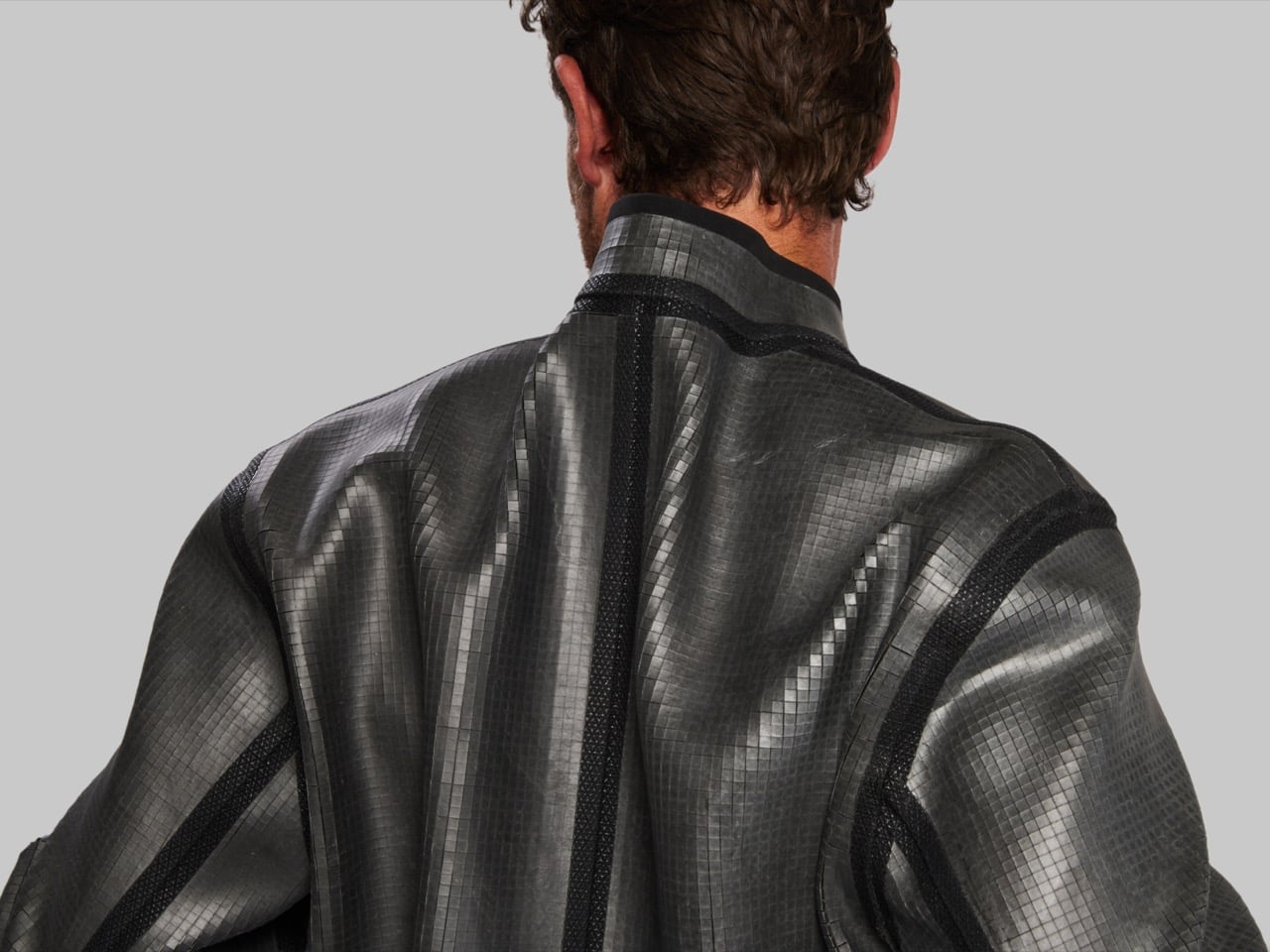
What makes the jacket interesting, however, is what happens after the cold air is generated. Rather than dumping it into the garment and hoping it reaches the right places, Hissy routes it through a tubular Air Path built into the jacket. The path follows a spiral around the body, and the jacket is cut and stitched around this structure. Its shape also helps prevent the tube from sharply bending or kinking as the wearer moves.

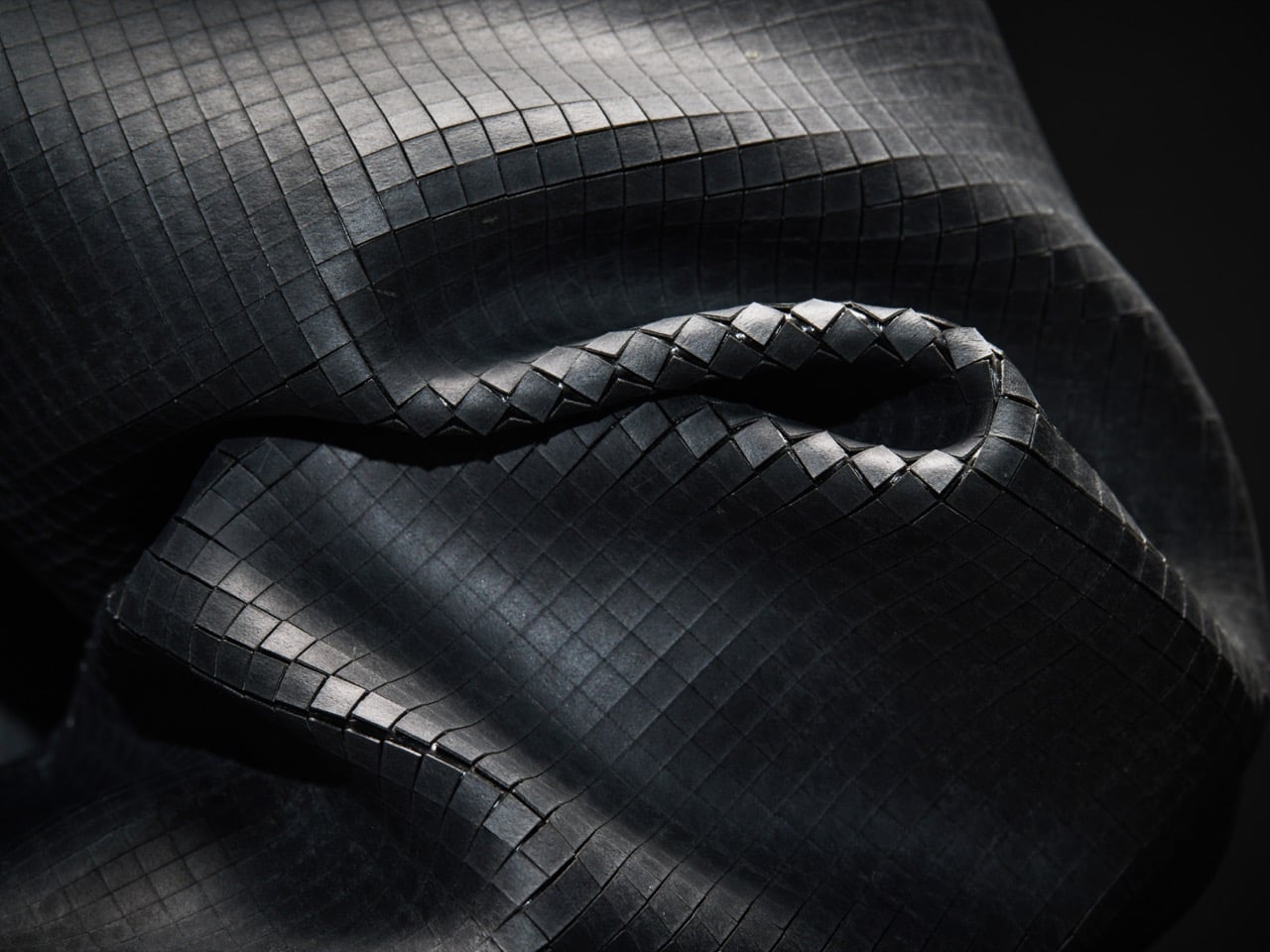
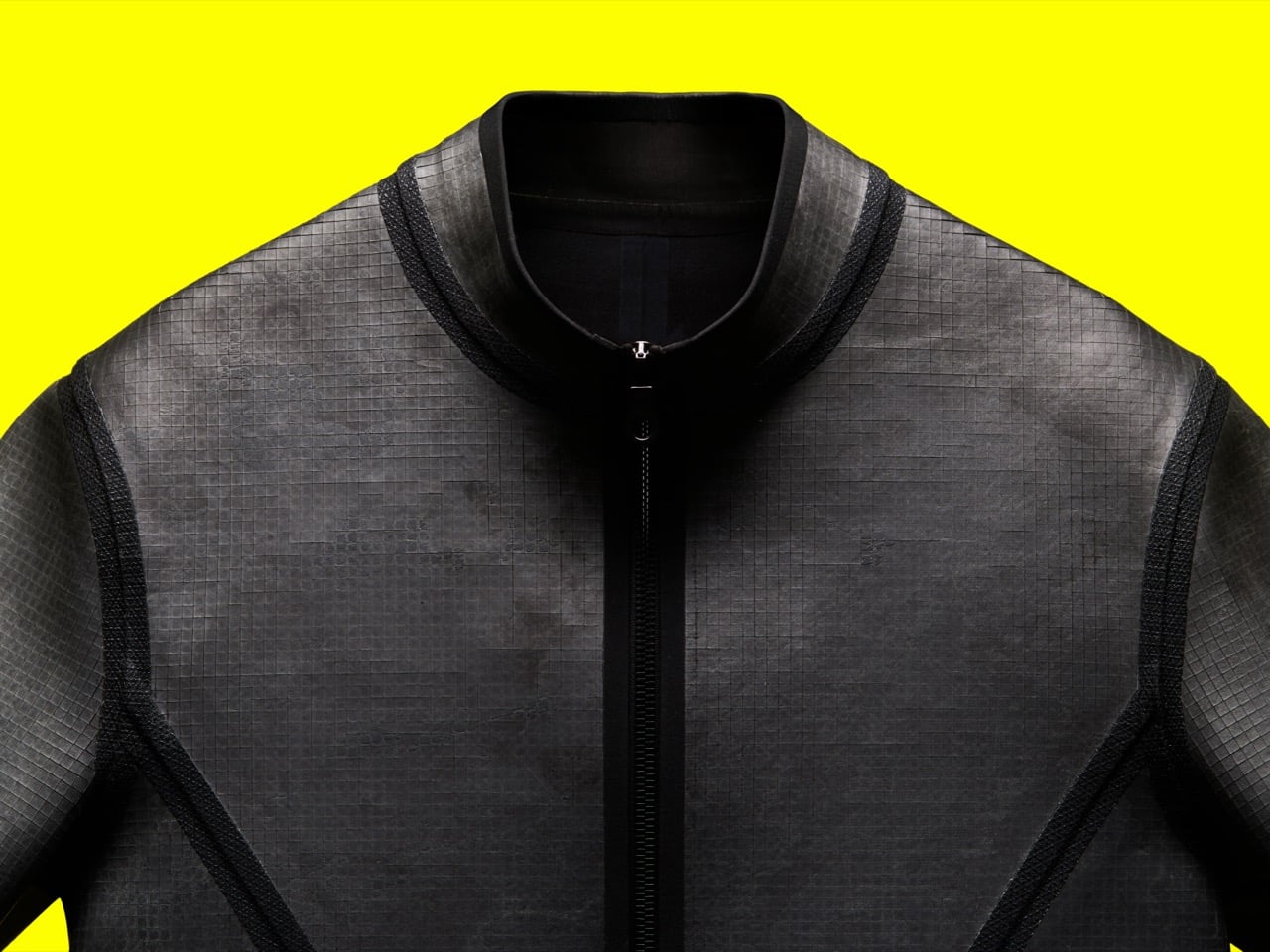
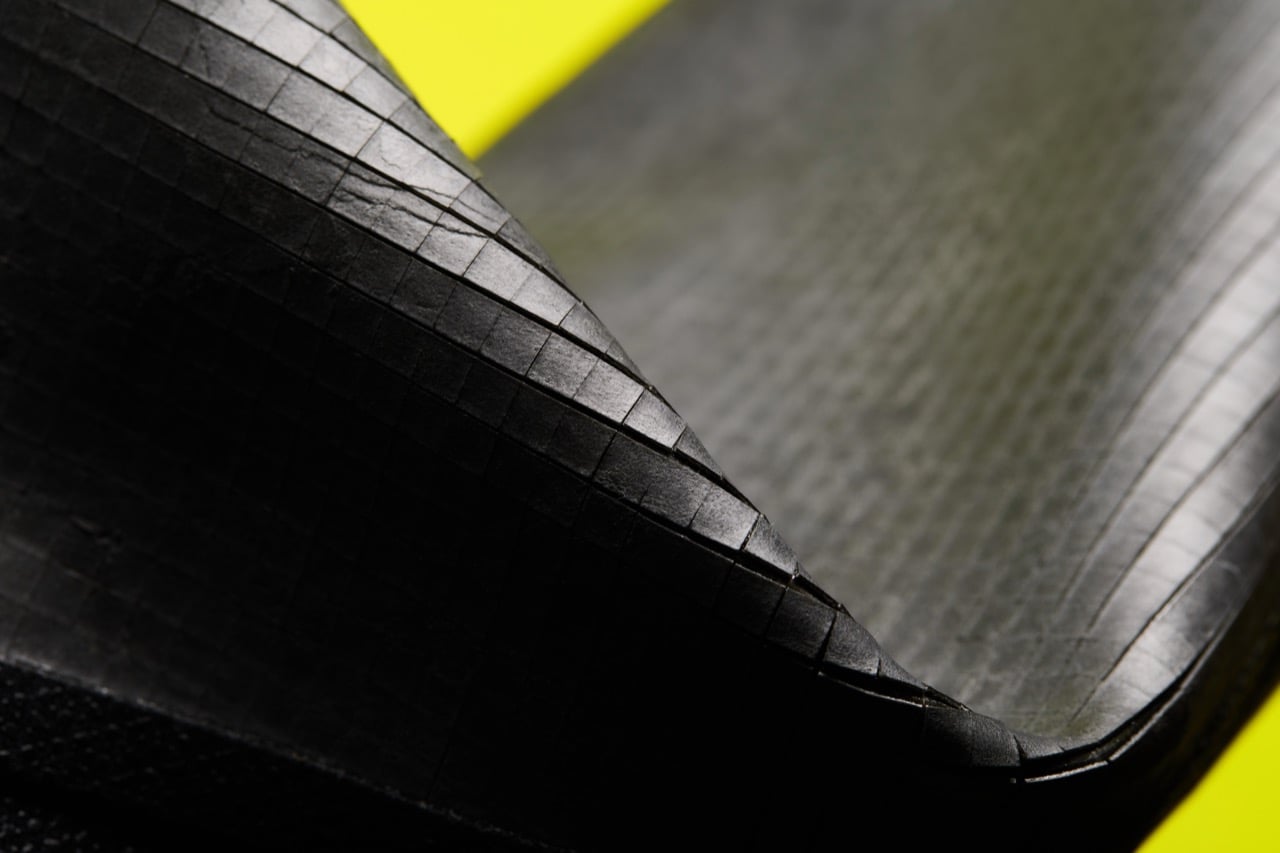
Small perforations along the Air Path release the cold air at selected points. The designers determined their positioning and size using thermal mapping and heat-distribution tests, concentrating the airflow around areas where the body produces more heat. That explains the unusual construction of the jacket. The visible pattern isn’t simply there for visual effect; it traces the route the cooling system needs to take through the garment.

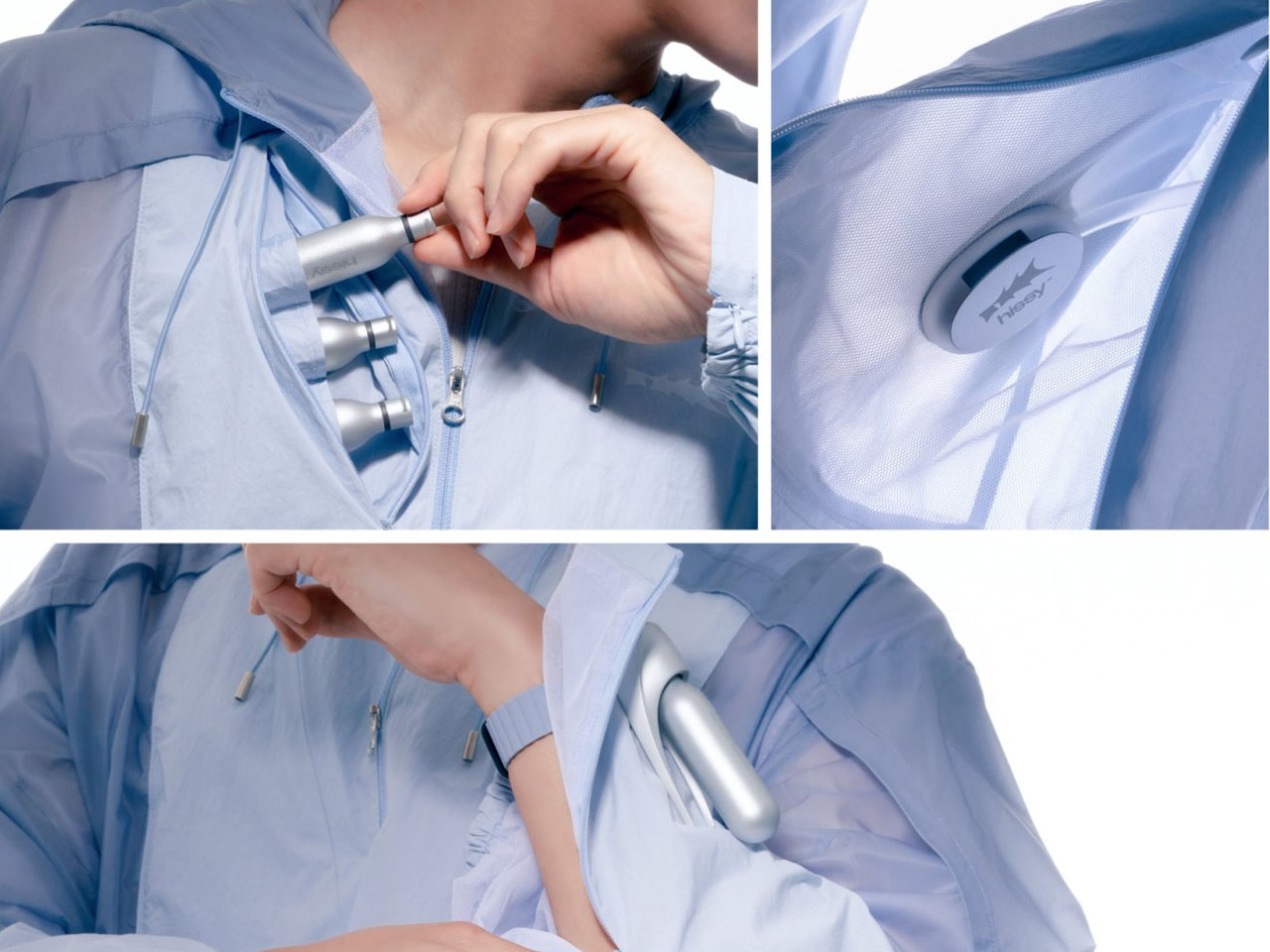
The CO₂ cartridge itself sits in a surprisingly neat docking system. Instead of being screwed into place, it attaches magnetically. Locking protrusions keep it from being pulled straight out while the system is operating, and rotating the cartridge changes the magnetic interaction so it can be released. An internal strap and sleeve zipper keep the hardware secure around the wrist, while a chest pocket provides somewhere to carry additional cartridges.

There is also an effort to make the disposable-looking cartridge system less wasteful. Hissy proposes using CO₂ captured from industrial processes as the cooling medium. Once a cartridge is empty, it can be collected, inspected, refilled, and returned to circulation. The designers see this as a way of keeping both the cartridge and the captured gas within a reuse cycle rather than treating them as single-use components.

For now, Hissy is a design concept rather than a product you can buy, but the team isn’t limiting the idea to jackets. Its proposed roadmap includes applying the same cooling technology to footwear, followed by products such as outdoor can coolers. A later version could even become a thermal-management system for machines working outdoors in high temperatures, including delivery robots and drones.


The post This CO2-powered cooling jacket could keep you comfortable in extreme heat without a battery first appeared on Yanko Design.

AI Surveillance Cameras Can’t See Through This Jacket

The last time I really thought about what my outfit was doing for me, I was considering whether my summer dress made me look like I was fashionable or it was just perfect for the hot weather. Simon Weckert has me rethinking the question entirely. Do my clothes do something for me other than protect me from the elements or make me look cool? Can they be about something more?

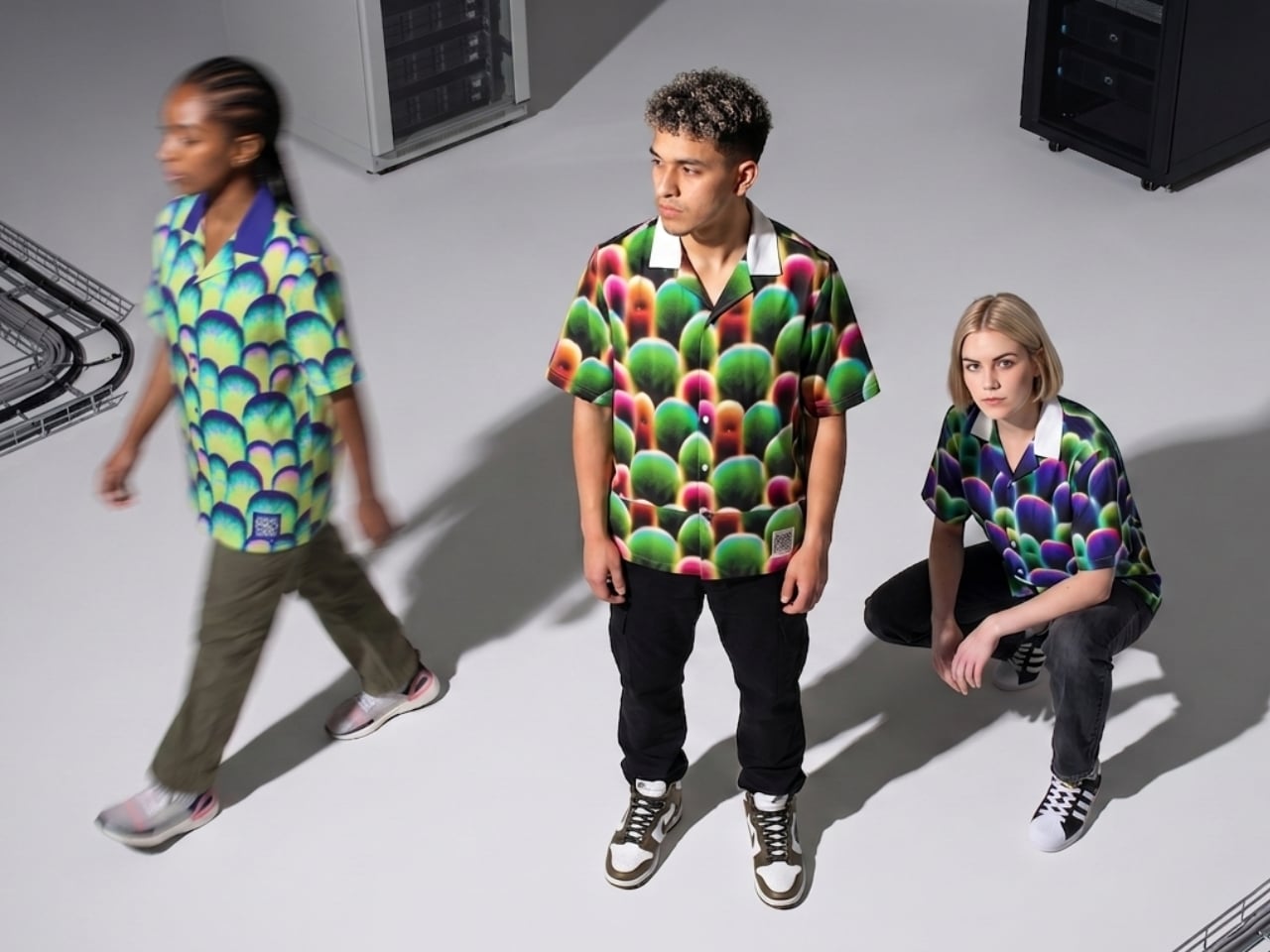
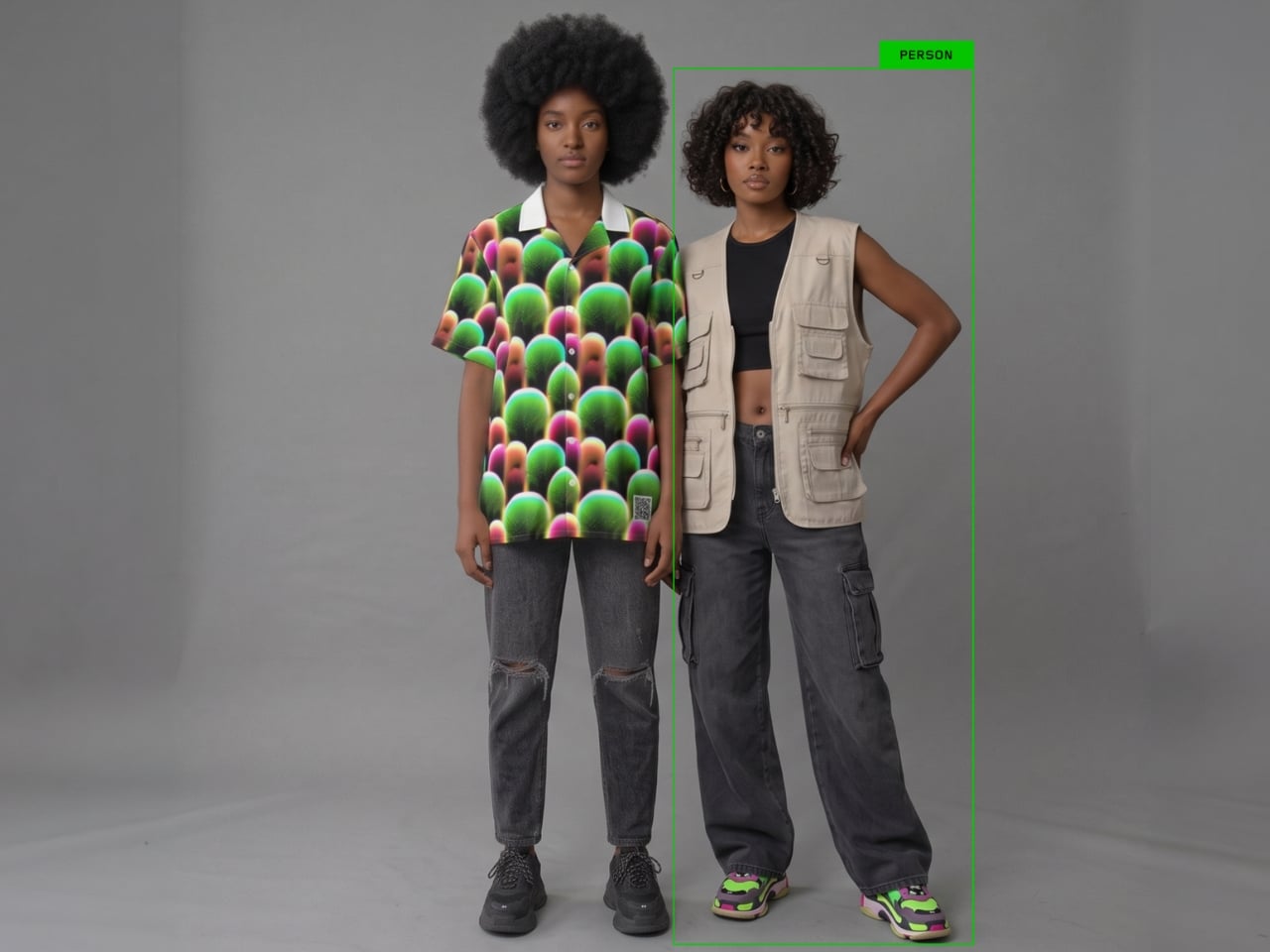
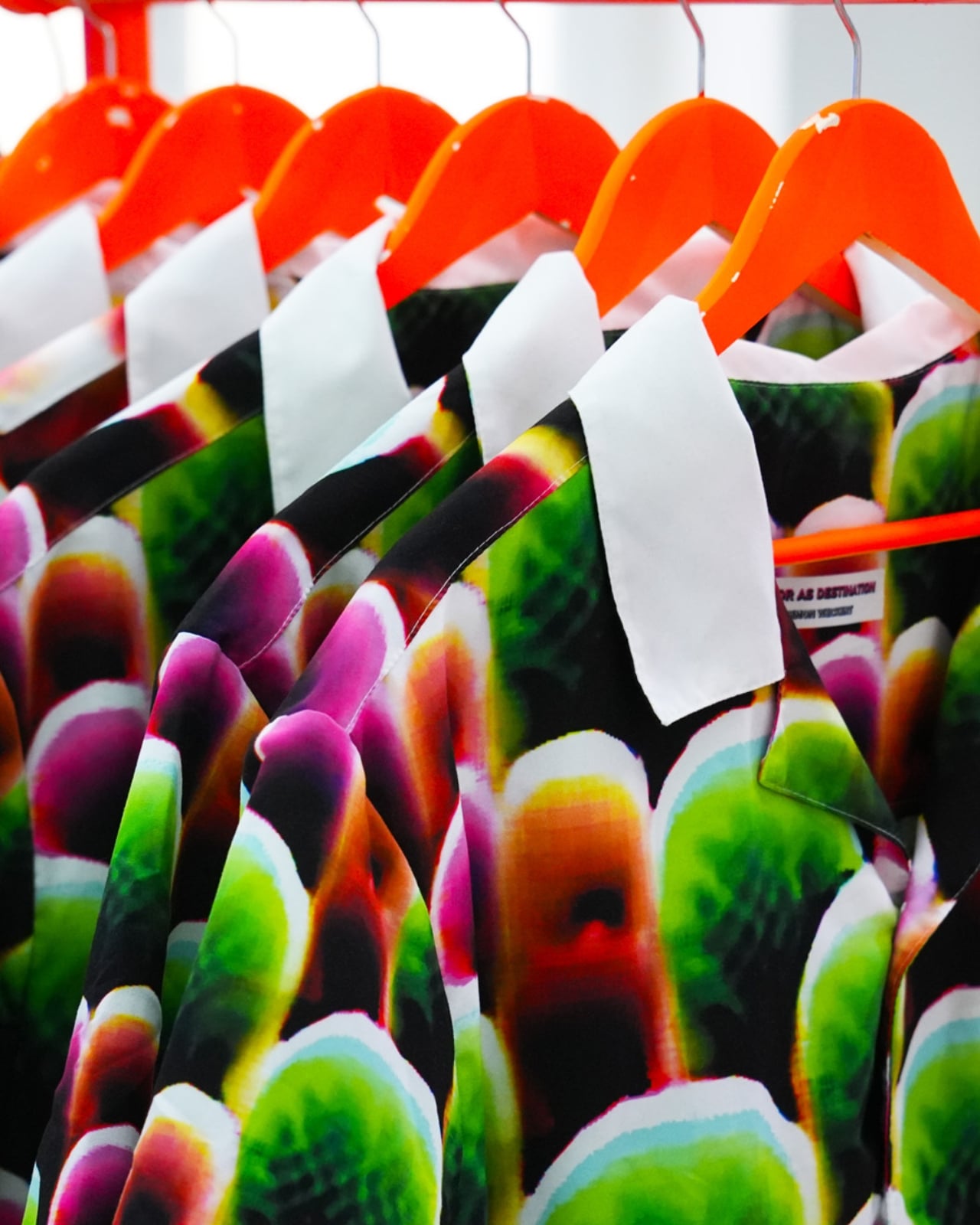
The Berlin-based artist recently unveiled Digital Camouflage, a conceptual garment collection that does one very specific, very remarkable thing: it makes you invisible to AI. Not invisible to the human eye, obviously. You’d still be fully, stylishly present to anyone walking past you. But to the surveillance cameras powered by AI-based person detection systems that increasingly populate airports, streets, and public spaces, you essentially cease to exist. That’s not a metaphor. It’s the engineering.

Designer: Simon Weckert

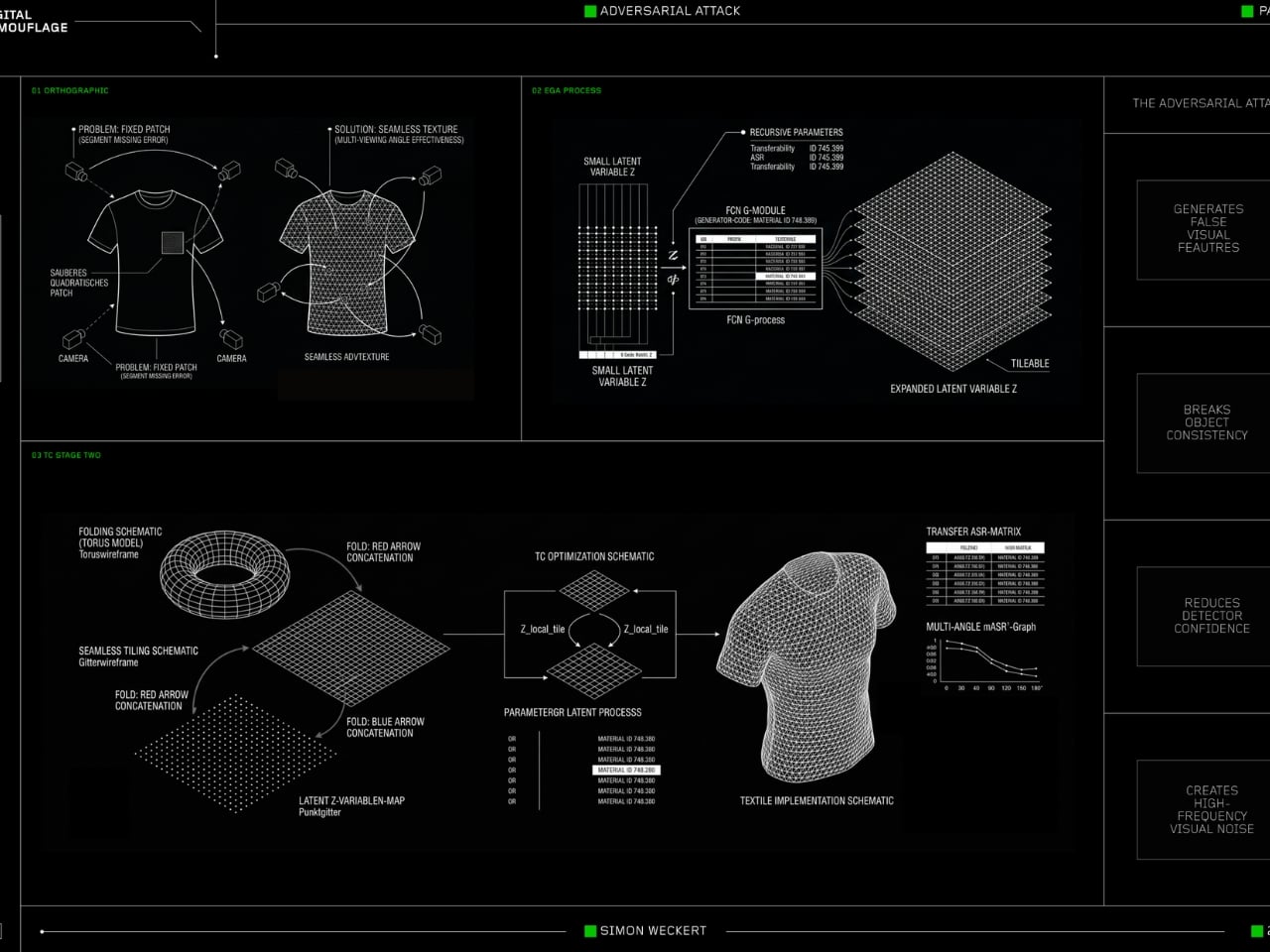
The collection works through what researchers call an adversarial attack, a method of manipulating visual data so that a machine misreads what it’s looking at. The garments are printed with a continuous, generative pattern that floods AI recognition systems with computational noise. The algorithm looks at you, processes the visual information, and fails to register a person. You’re there. The camera sees you. But the machine watching through it draws a blank.

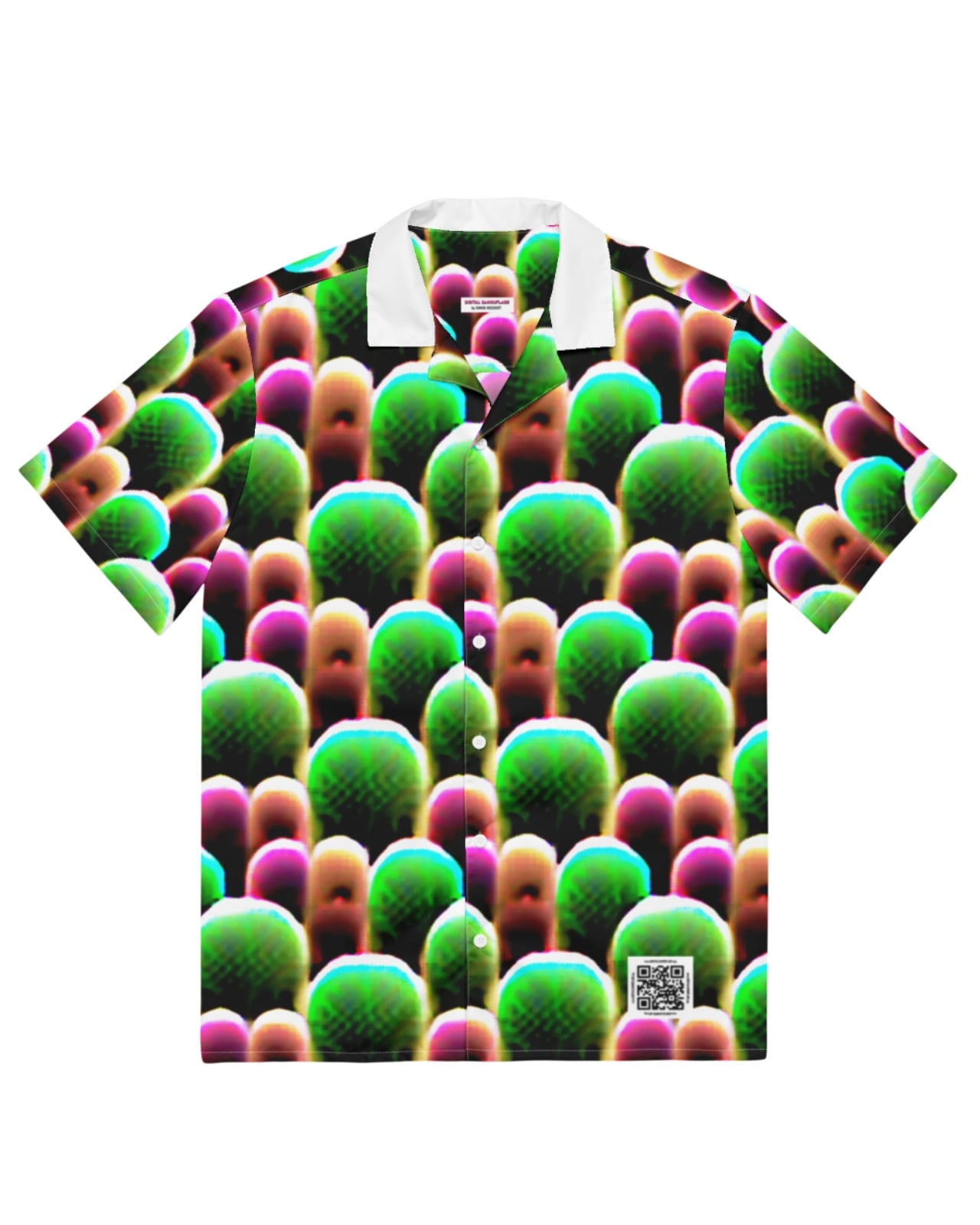
At first glance, the clothes look like bold graphic fashion. The kind of abstract print that could easily headline a capsule collection or land on an editorial mood board. The technical function is completely hidden in plain sight, which is, when you think about it, a fairly elegant bit of design irony.

Previous anti-recognition designs relied on fixed printed patches, a kind of static visual disruption that quickly lost effectiveness when fabric folded or camera angles shifted. Weckert’s collection uses a continuous adversarial texture across the entire garment surface, designed to hold up against both movement and perspective change. It’s not a sticker. It’s the whole jacket.

The collection is manufactured in Latvia from a blend of 65% recycled polyester and 35% polyester, with the adversarial pattern applied through digital textile printing. For something that sounds like it belongs in a speculative fiction exhibit, it’s a remarkably practical construction.

And yet, the project lives comfortably in conceptual territory. Weckert is not selling these at retail. Digital Camouflage was exhibited at Ars Electronica Festival 2025, which carries a certain kind of cultural weight. Ars Electronica has long been the venue where designers and technologists come to ask uncomfortable questions rather than offer comfortable answers. Showing the work there feels deliberate. This isn’t a product pitch. It’s a provocation.

I think that tension is exactly where the project is most interesting. The garment works, or is designed to work, but its purpose is as much about raising the question as answering it. Who should have the right to walk through a public space without being catalogued? At what point does automated surveillance stop being a security tool and start being a form of ambient control? Weckert isn’t handing out a manifesto. He’s handing out a jacket.

The fact that we even need clothes that hide us from cameras is worth pausing on. Digital surveillance infrastructure has expanded so quietly and so consistently that most of us have simply accepted it as background noise. AI-powered cameras now occupy the same mental category as streetlights: ubiquitous, impersonal, unremarkable. Weckert’s collection interrupts that acceptance, not through argument, but through design.

Fashion has always been a negotiation between the self and the seen. We dress for impressions, for identity, for protection against the cold. Adding protection against algorithmic recognition to that list feels like a genuinely new chapter in a very old human conversation about who gets to see us and on whose terms.

Whether or not Digital Camouflage ever becomes something you can actually buy, it has already done its most important work. It made an abstract threat feel like something you can put on your body. And sometimes that’s all it takes to make people start paying attention.

The post AI Surveillance Cameras Can’t See Through This Jacket first appeared on Yanko Design.

Vollebak Made a $3,995 Jacket for the End of the World

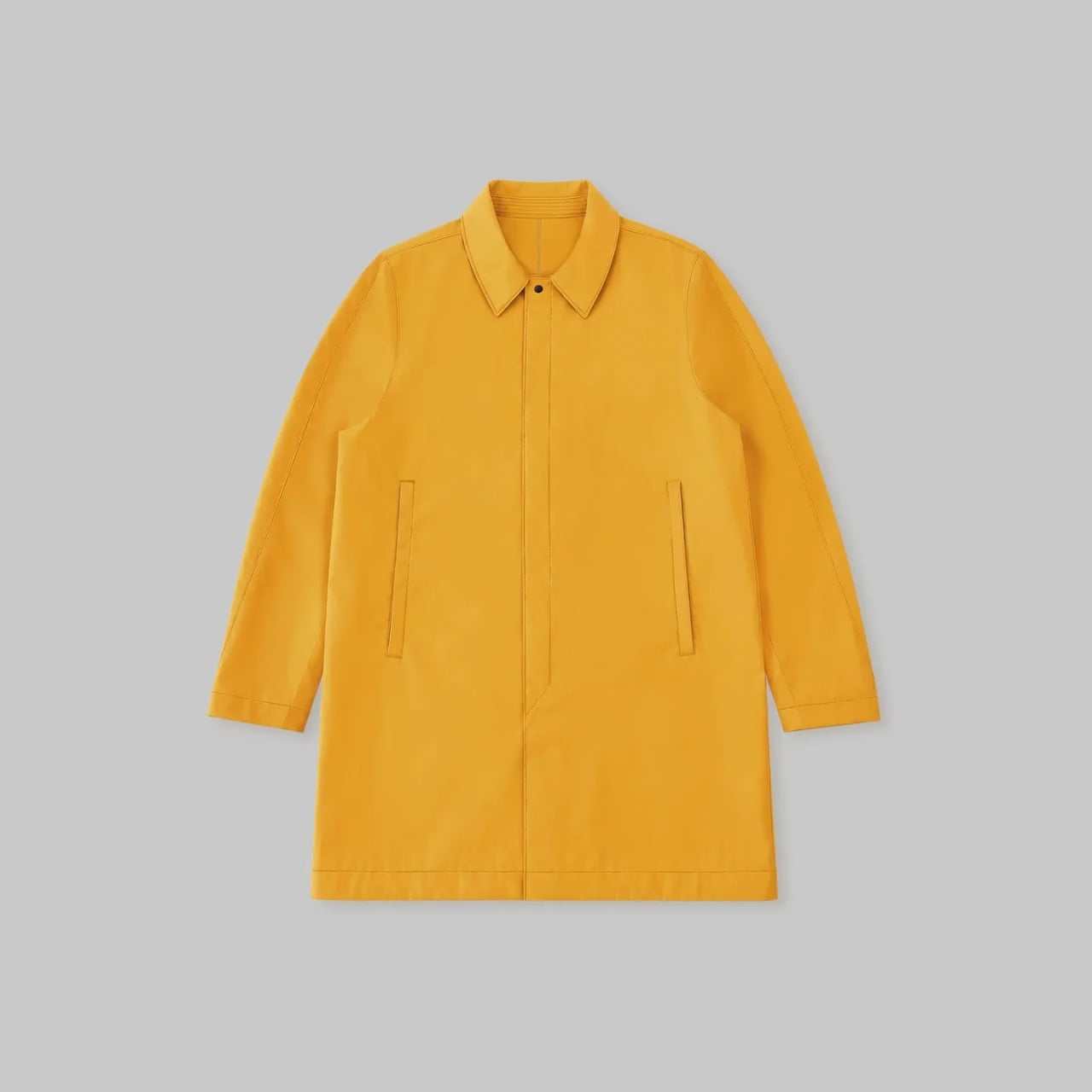
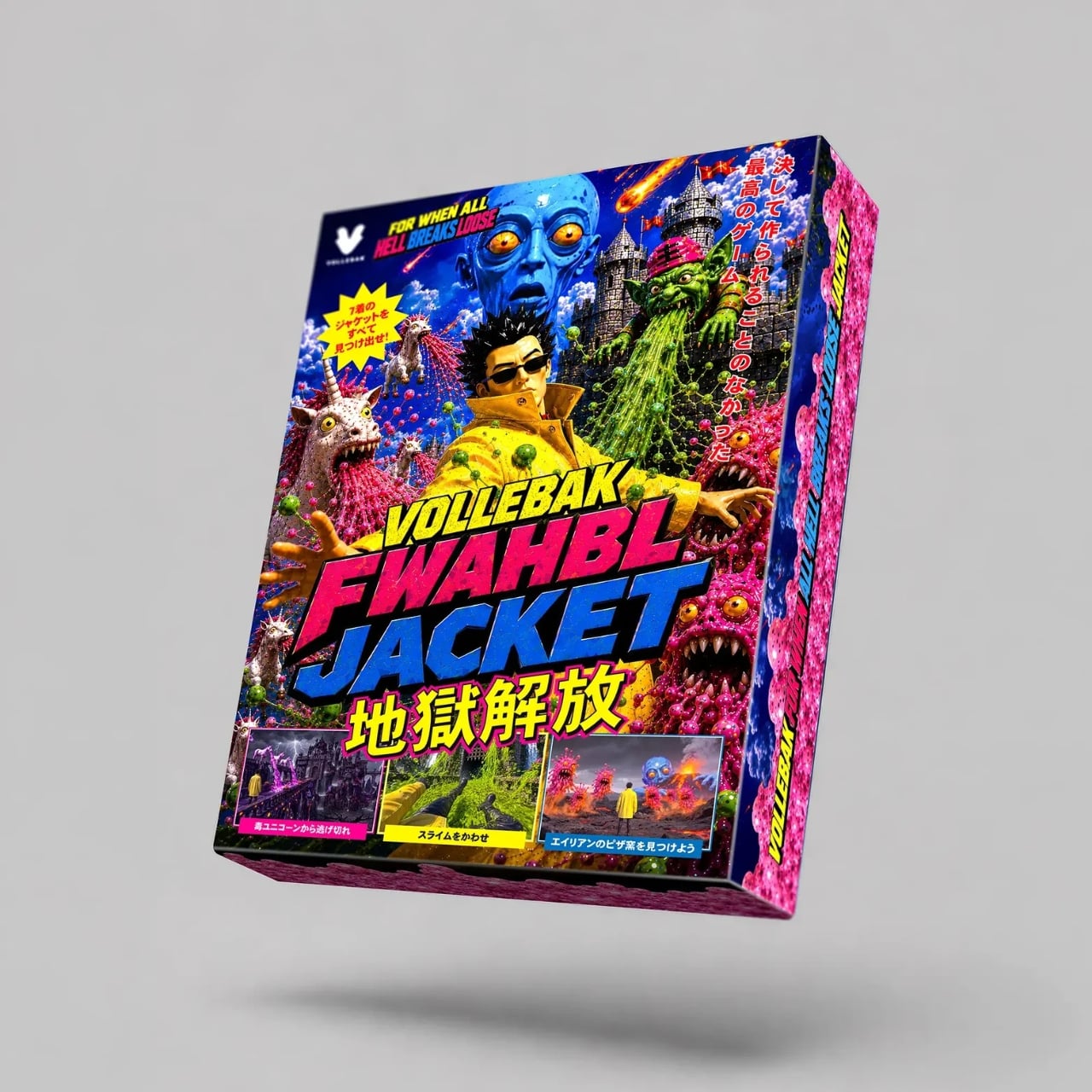
Vollebak has never been the kind of brand that plays it safe. Since launching in 2016, the British label has built a reputation for making gear that reads more like science fiction than seasonal fashion. Their products come with essays instead of product descriptions, and their material choices lean toward graphene, solar-charged fibres, and military-grade composites. So when their latest release landed with an acronym for a name and a price tag that could cover a month’s rent in most cities, most of us weren’t entirely surprised. Just a little stunned.

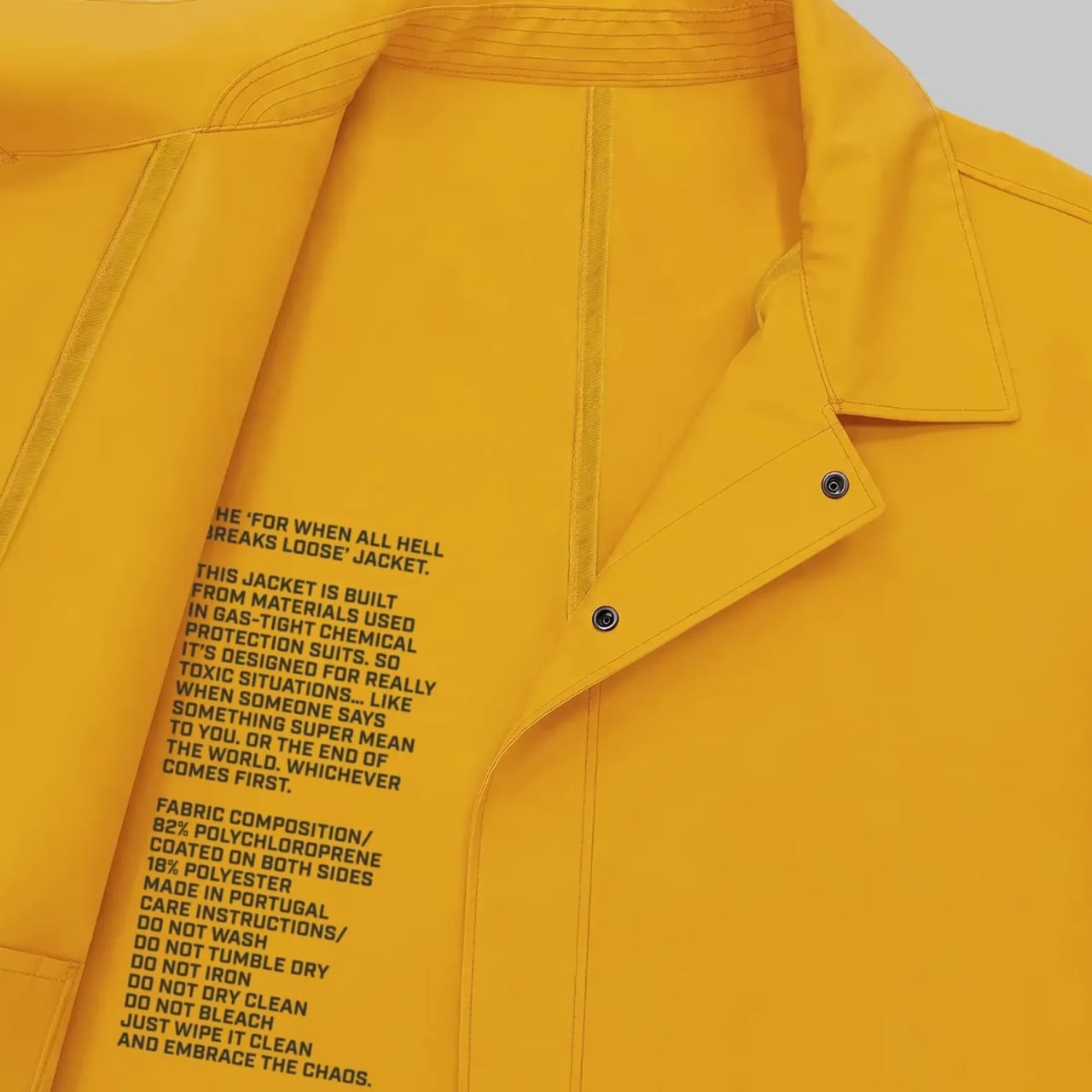
FWAHBL stands for “For When All Hell Breaks Loose.” That’s the actual name. Not a placeholder, not a working title, not a wink-and-nod provocation. The brand looked at the current state of the world and decided the most honest thing they could do was name a jacket after it.

Designer: Vollebak

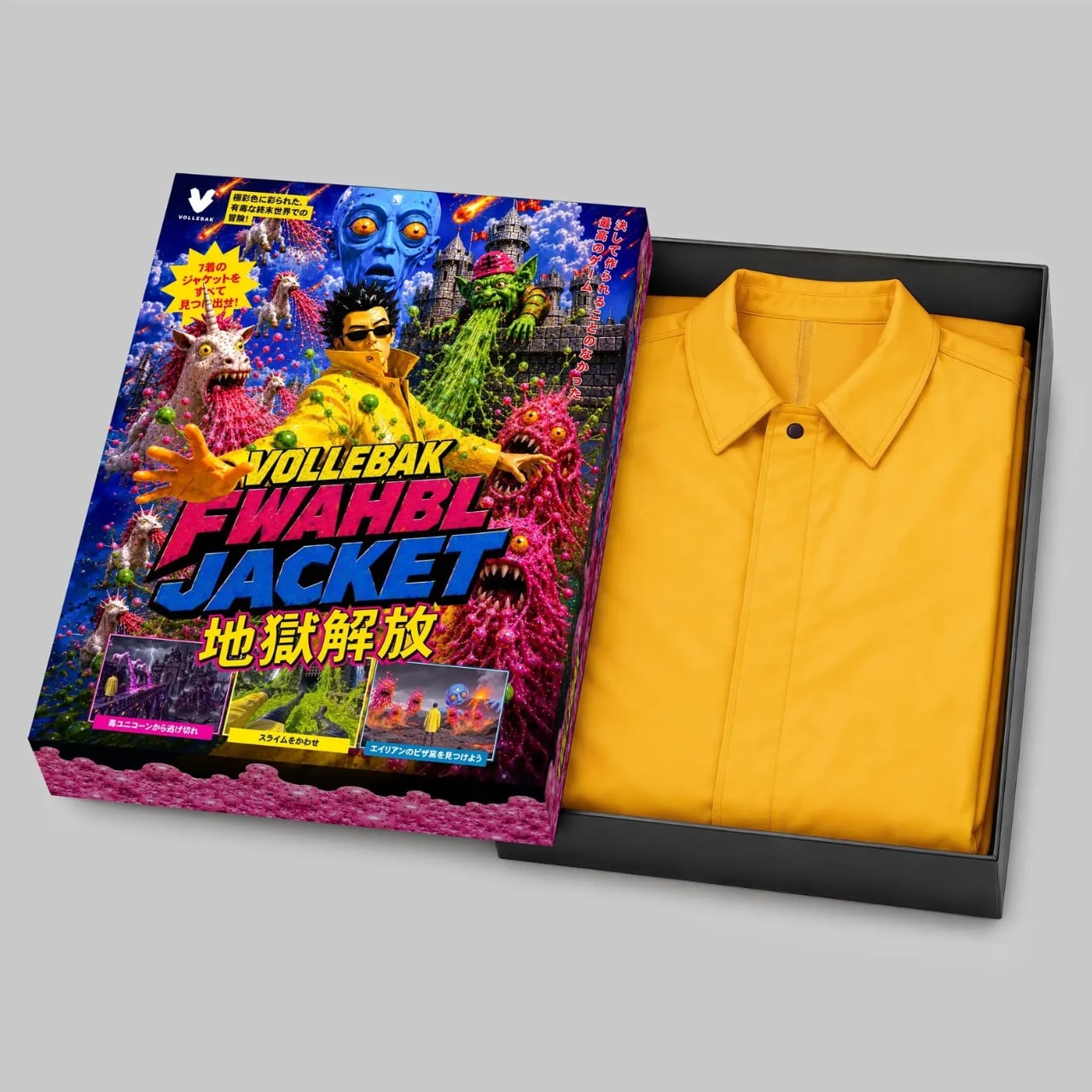
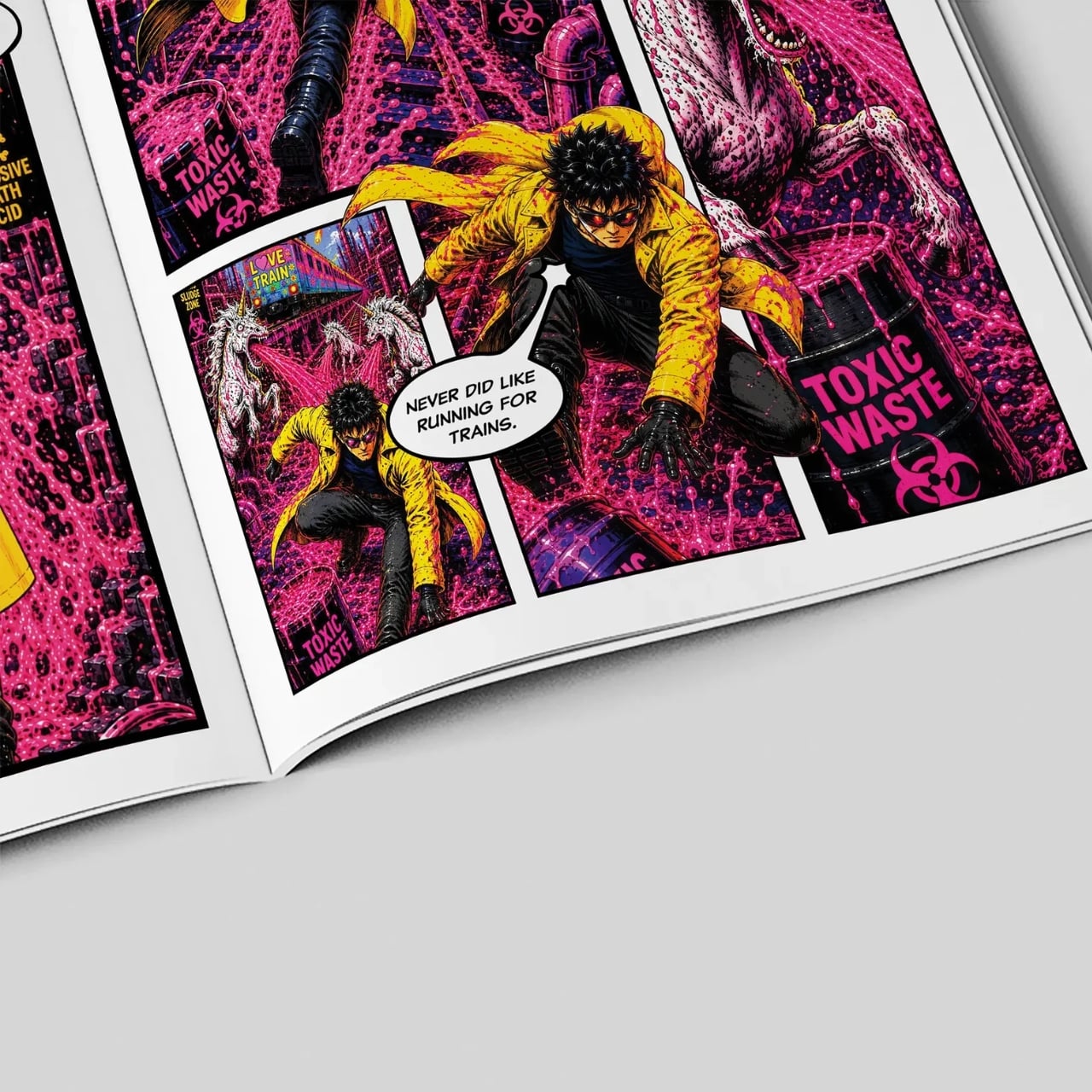
Only 10 of these exist. They’re priced at $3,995. They arrive in retro video game packaging alongside a comic book and a trailer for an upcoming game. The whole thing reads like a fever dream, and yet, once you look at what’s actually inside it, the jacket starts making a strange kind of sense.

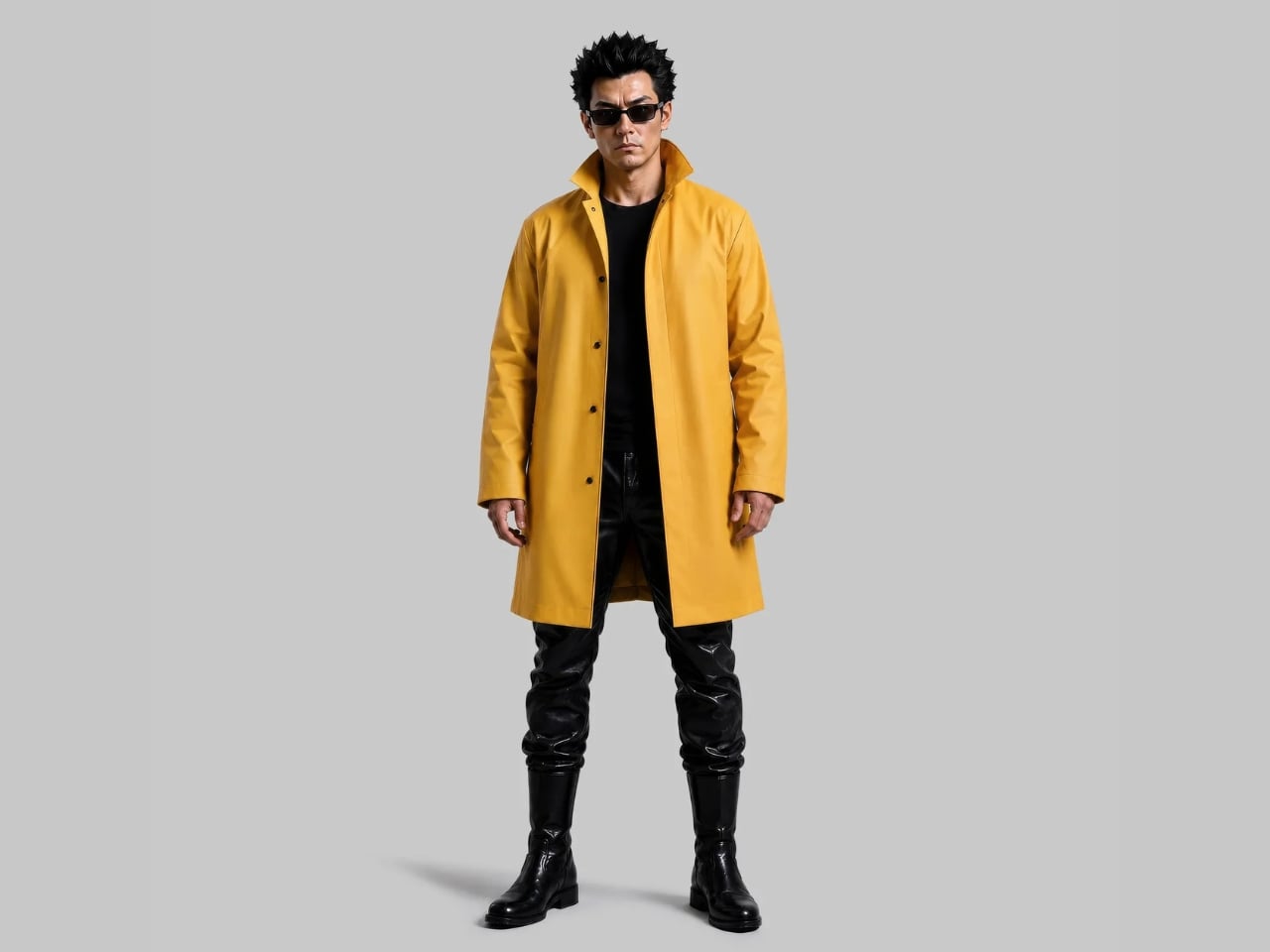
The material comes from Fothergill, a British manufacturer that has been producing protective gear for the military since 1847. The fabric is double-faced polychloroprene rubber coated over a woven polyester core, built to resist oils, chemicals, flame, and extreme weather. This isn’t performance wear with a dramatic name slapped on it. The engineering is real, even if Vollebak is quick to clarify that it isn’t certified safety equipment. What it is, they say, is clothing designed for extreme weather and existential dread. I appreciate the specificity.

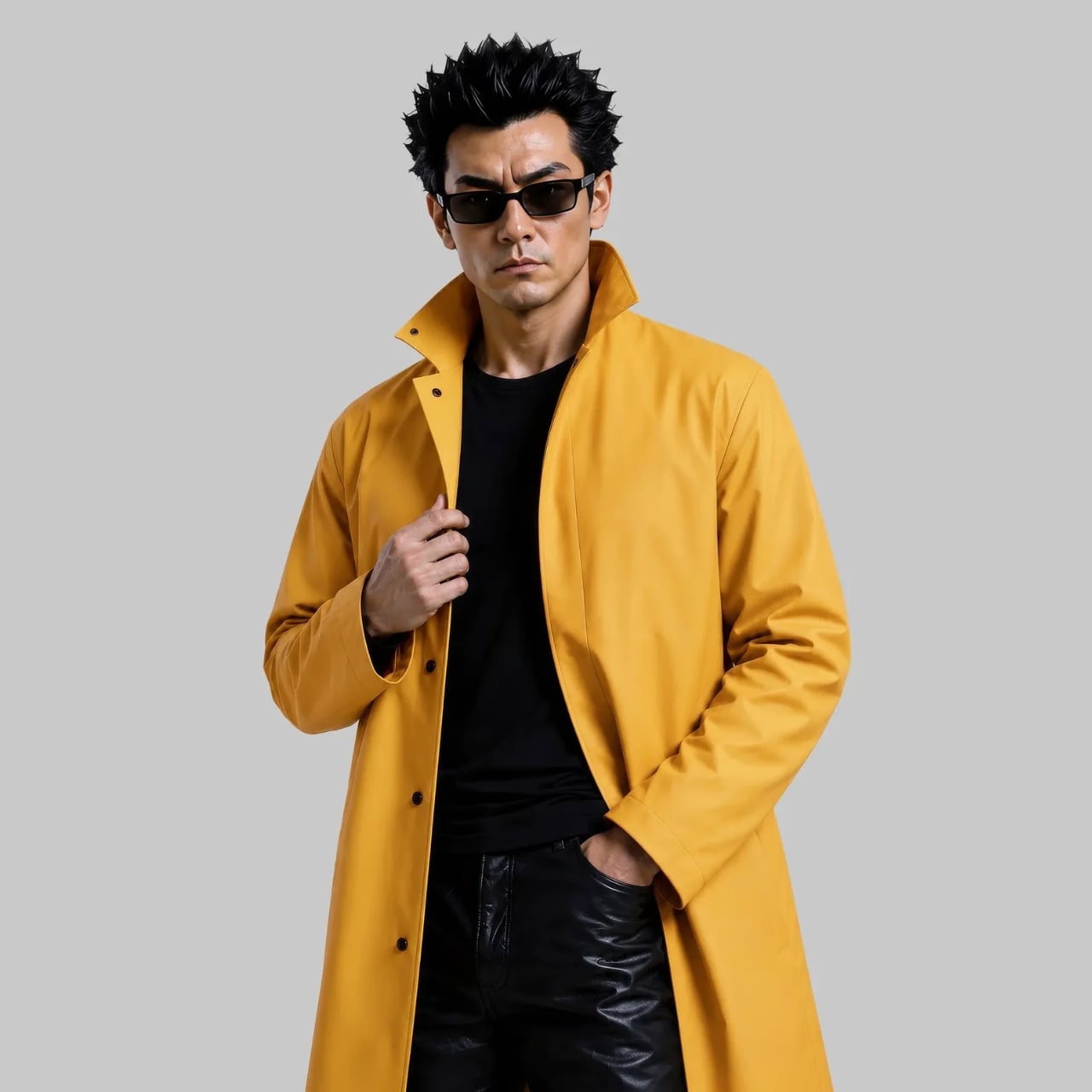
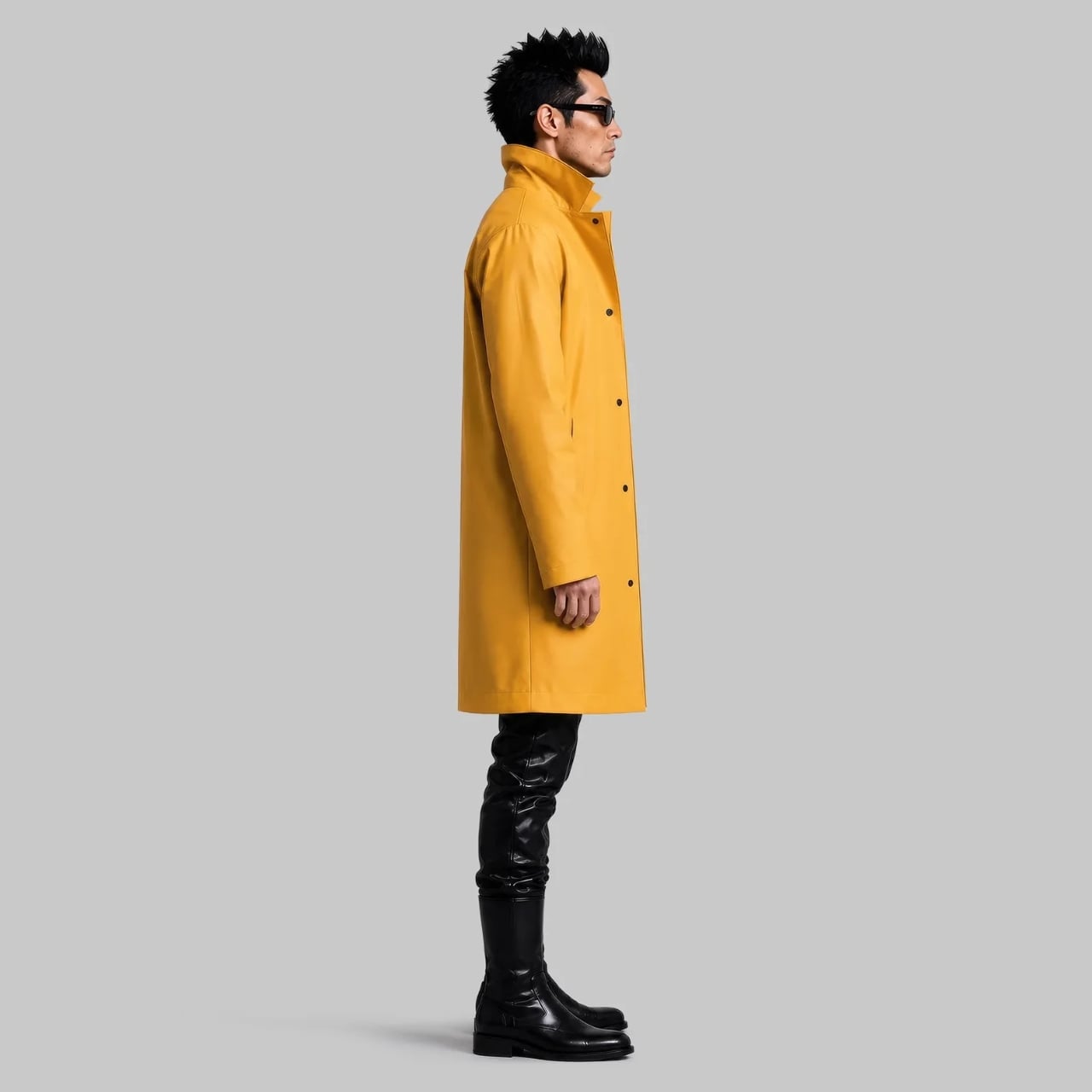
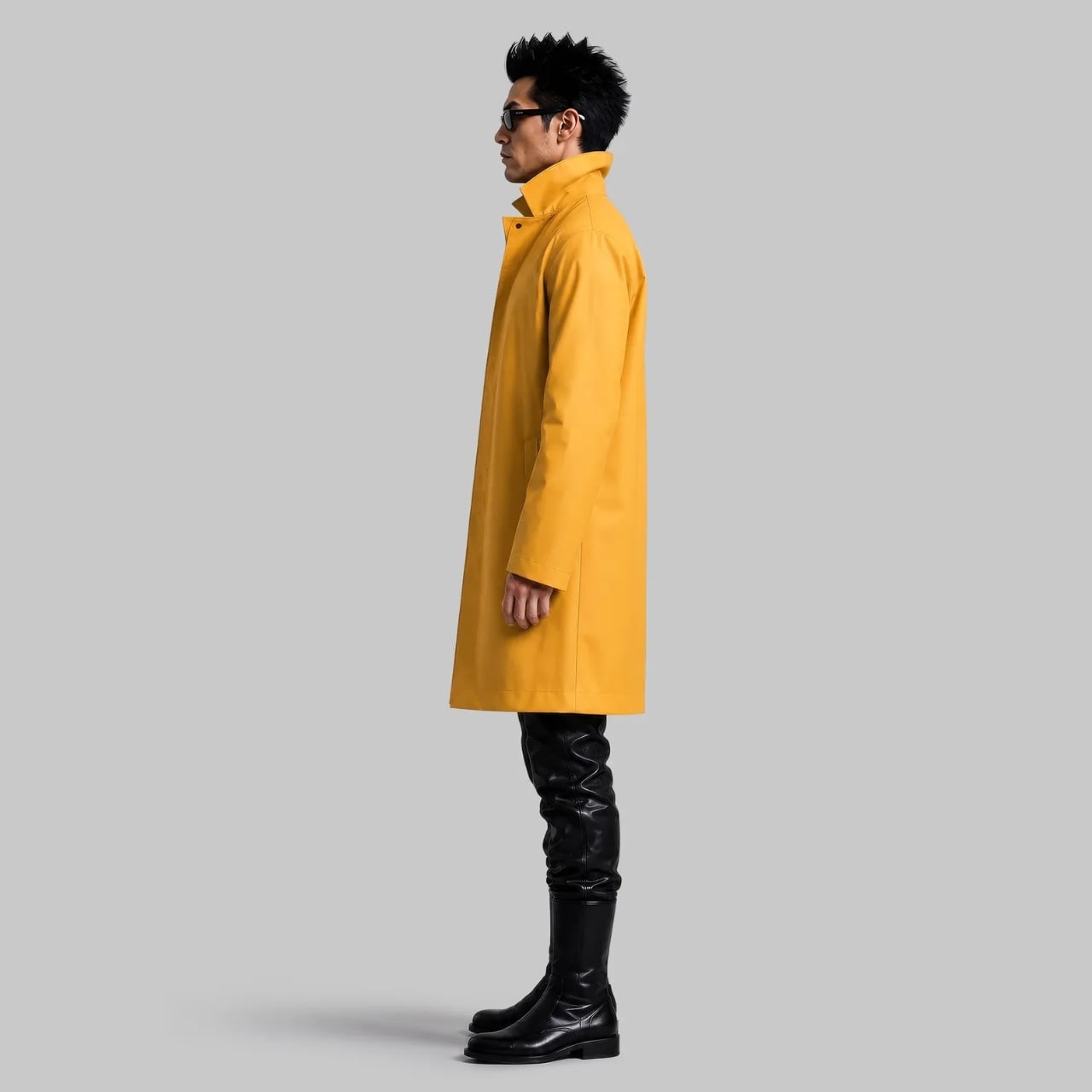
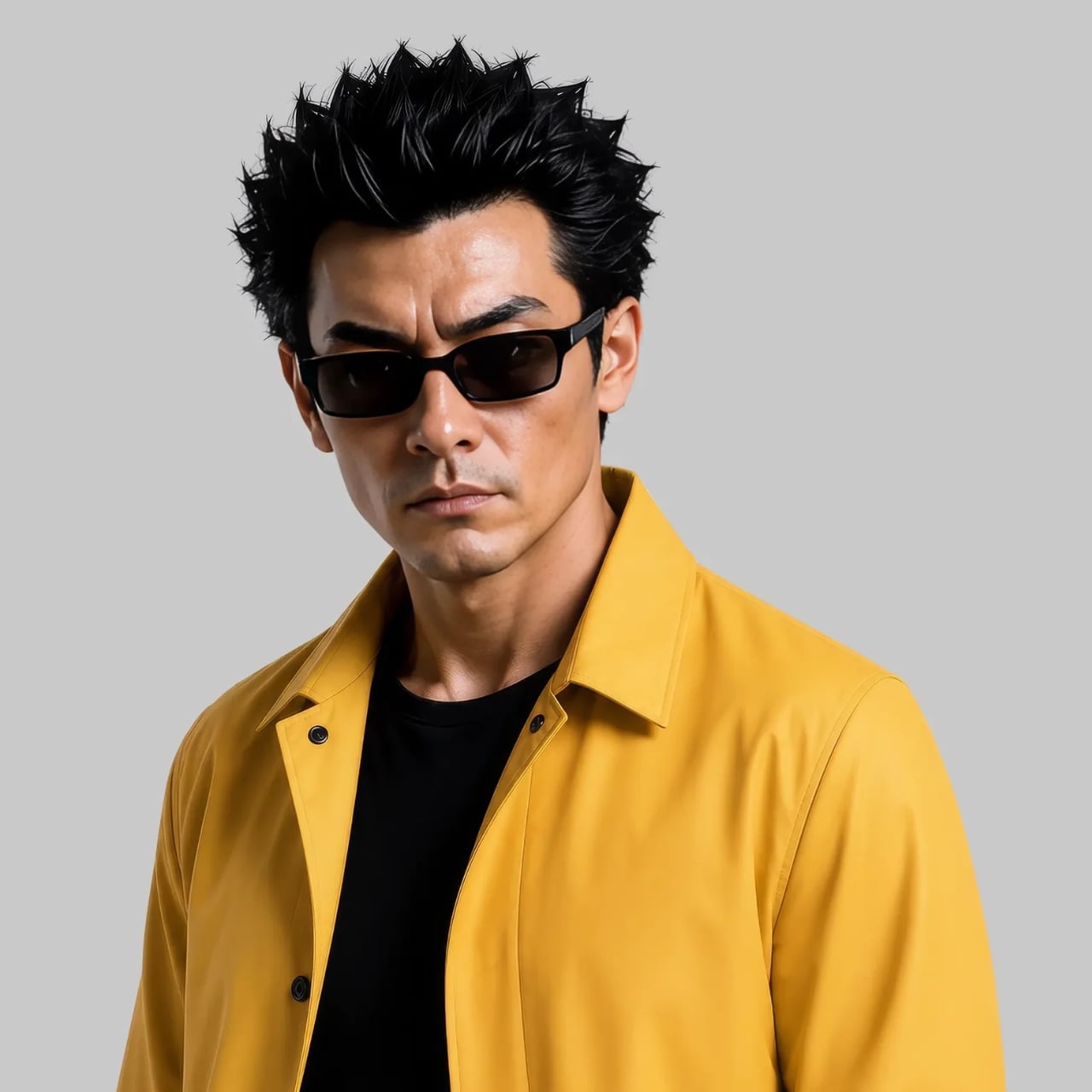
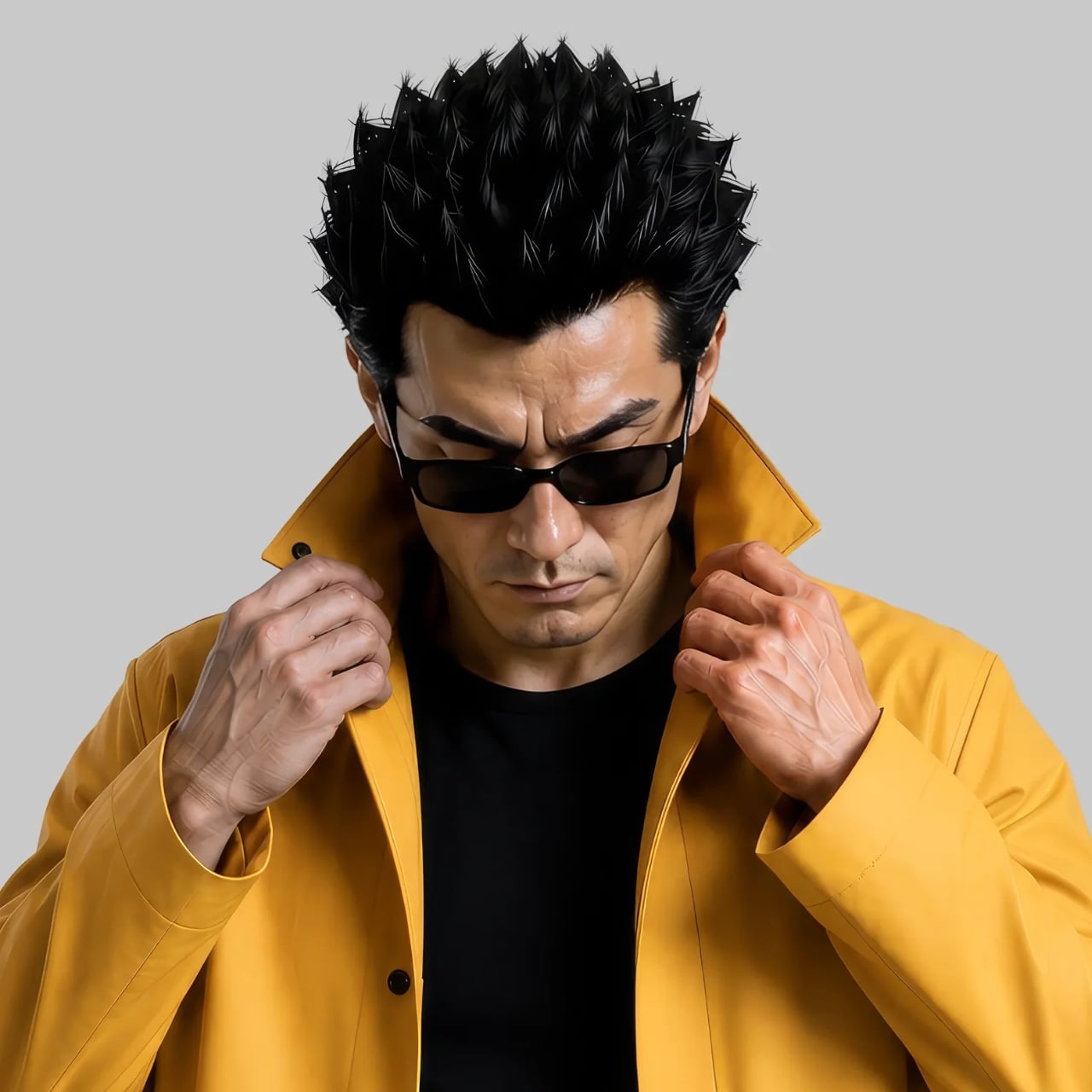
A jacket that could theoretically withstand a chemical spill but comes dressed for a gallery opening is a very particular kind of product. The hazard yellow finish makes it look like something you’d find on a nuclear site inspector who also happens to have excellent taste. It’s alarming and considered at the same time, which feels very intentional. Vollebak’s whole design language leans into that tension, the idea that what we wear should be able to meet us at our worst, not just our most polished.

The narrative wrapped around the jacket is what separates it from a typical limited-edition fashion drop. Vollebak didn’t just make a jacket and photograph it on a rooftop. They built a universe: the comic book, the video game, the worldbuilding. The jacket becomes almost secondary to the story it’s trying to tell, which is either a genius move or a complete overreach, depending on how you feel about brands constructing mythology around outerwear. Personally, I find it more compelling than a seasonal lookbook ever manages to be. At least it commits to a point of view.

The collectible angle is also hard to ignore. Ten pieces worldwide isn’t a production run. It’s closer to an art edition, which raises the question of who actually buys this. Probably not someone planning to commute in it. Most likely it’s the kind of person who understands that certain objects carry cultural weight beyond their function, the same kind of person who collects a Helmut Lang archive piece or a first-edition sneaker that never touches the ground. Whether we call that fashion, collecting, or very expensive storytelling, the outcome is the same.

Objects that sit at the intersection of design, utility, and narrative have always existed, from limited-run furniture to bespoke motorcycles to museum-acquired concept cars. The FWAHBL Jacket fits that lineage more comfortably than it fits any fashion calendar.

Whether or not you’d wear it, or could, the jacket asks a useful question. How much are we expecting from the things we put on our bodies? Vollebak’s answer has always been: more. More protection, more engineering, more intention. The FWAHBL Jacket takes that philosophy to its logical, slightly unhinged conclusion. A trench coat for the end of things, made by people who clearly hope you never actually need it.

The post Vollebak Made a $3,995 Jacket for the End of the World first appeared on Yanko Design.

Rick Owens and adidas Are Back, and They Brought Air Conditioning

If you’ve ever stood outside in peak summer heat thinking, “someone really needs to fix this,” Rick Owens apparently heard you. At his Spring/Summer 2027 menswear show held at the Palais de Tokyo during Paris Men’s Fashion Week, the notoriously dark, architectural designer made a surprise announcement of sorts: he and adidas are back together, and this time, they came with cooling technology sewn right into the clothes.

The reunion itself is already big news. The original Rick Owens x adidas partnership ran from 2013 to 2017 and produced some of the most visually striking footwear of that era. Chunky, sculptural sneakers that looked like they belonged in a sci-fi film became collector staples. Nearly a decade later, the two are picking up right where they left off creatively, but the direction has shifted entirely. This is no longer about shoes. This is about what you put on your body when the planet refuses to cooperate.

Designers: Rick Owens x adidas

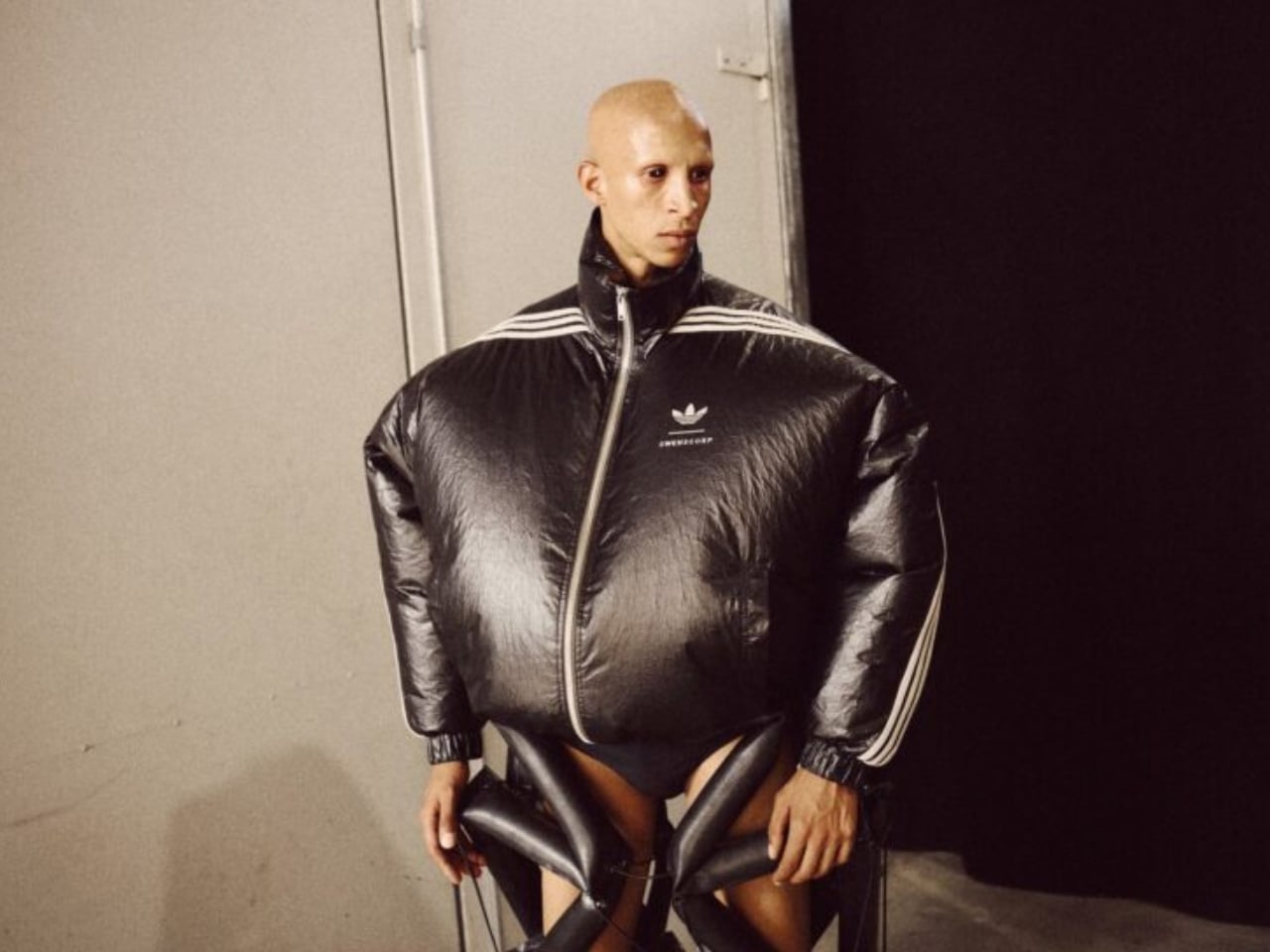
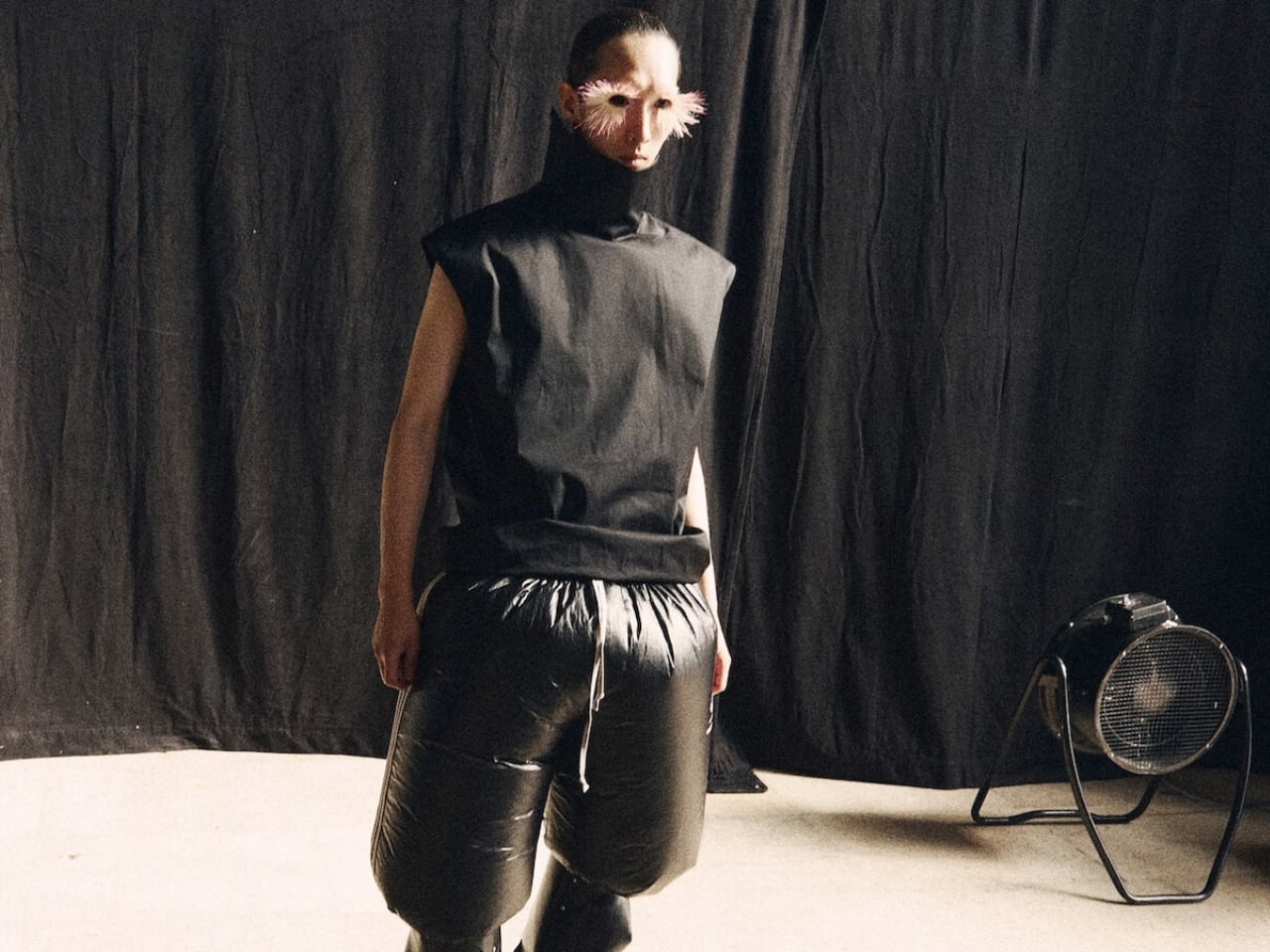
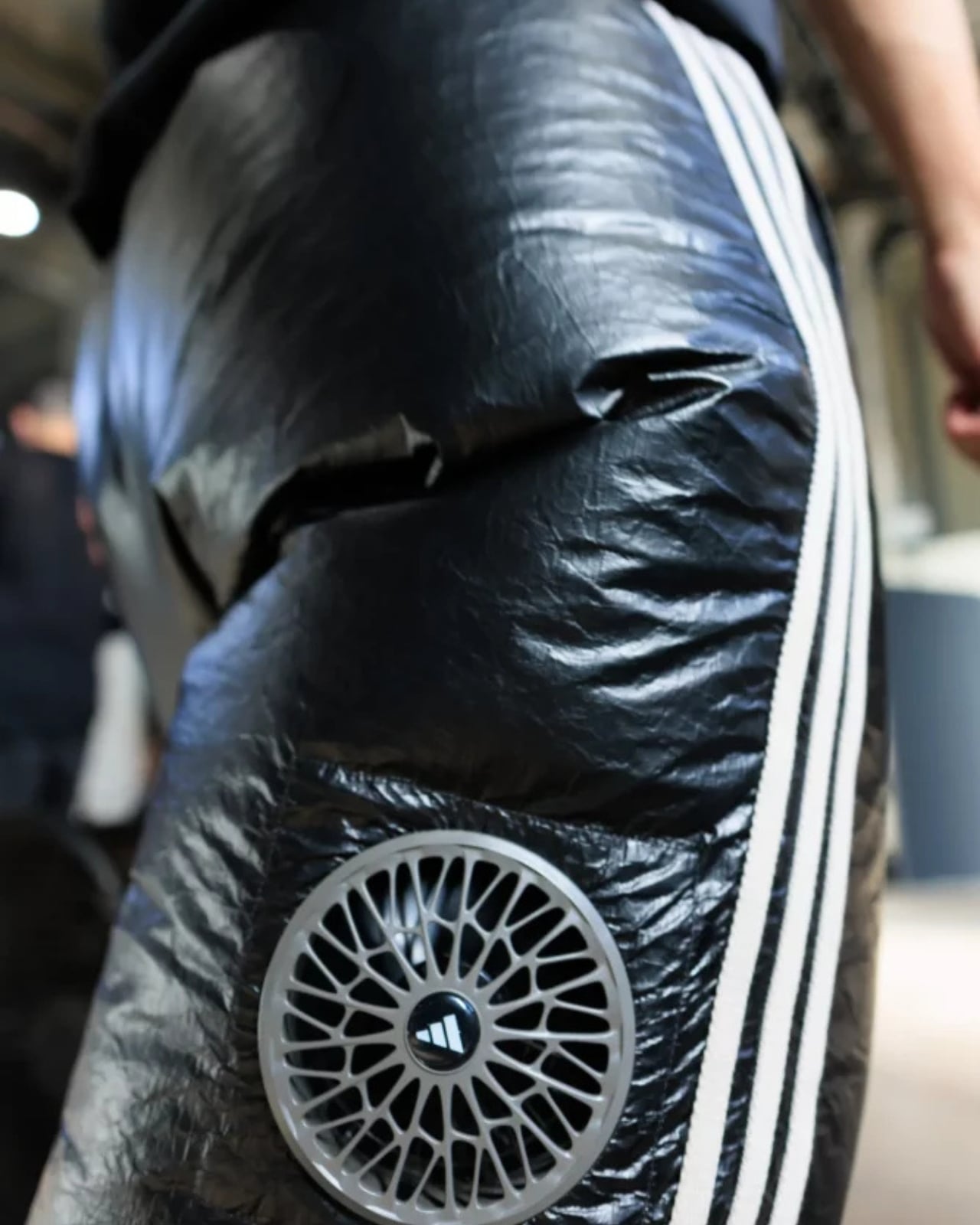
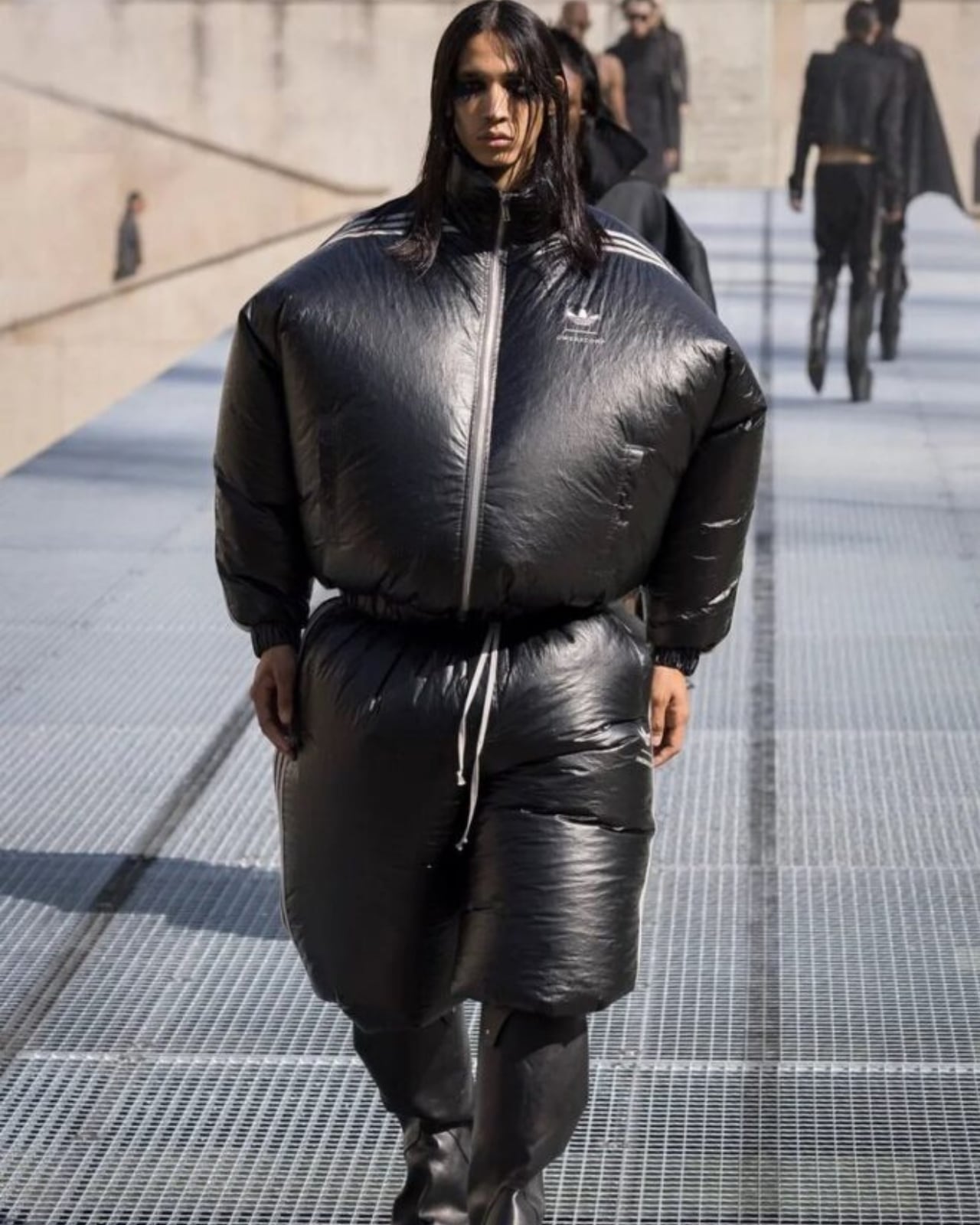
The collection features inflatable tracksuits fitted with adidas’ Climacool technology and integrated fans that circulate air directly around the wearer. Ballooning jackets and shorts expand dramatically around the body, creating silhouettes that look part sculptural art installation, part protective gear for some future we haven’t quite arrived at yet. The palette stays true to Owens’ signature obsessions: black, white, leather, latex, and technical fabrics that make everything feel simultaneously post-apocalyptic and razor-precise.

What makes this more than a clever gimmick is the context. Paris was reportedly sweltering during this particular fashion week, making the inflatable cooling garments less of a conceptual gesture and more of a direct, almost blunt response to conditions on the ground. Owens didn’t hide the technology. He put it front and center, letting the puffed forms become the silhouette rather than something tucked away beneath a lining. Wearable cooling as a visible design choice rather than a discreet utility is a genuinely interesting move, and it reframes what performance wear can mean in a luxury context.

The show itself was called “Stone.” It was moved from its usual afternoon time slot, which already tells you the team was thinking about heat logistics from the jump. Presented at the Palais de Tokyo, the setting felt apt for a collection that reads like a serious piece of speculative design. These are clothes asking a real question: as temperatures climb and climate disruption becomes a consistent backdrop to daily life, how does fashion respond beyond making linen shirts?

Rick Owens has always had this quality where the extreme nature of his vision somehow makes total sense the moment you see it in context. Inflatable suits with fans built in sounds absurd until you’re watching models move through them on a scorching Paris afternoon. Then it starts to feel less like provocation and more like logic. That balance between the theatrical and the genuinely functional is exactly what keeps this designer relevant across decades.

The adidas partnership adds a layer here that feels important. adidas brings serious technical credibility, including Climacool, which has roots in motorsport and was developed over years before making it to football. Pairing that depth of performance engineering with Owens’ architectural fashion language creates something that neither brand could pull off alone. It’s not a logo collaboration. It’s a genuine material conversation between two very different fluencies in how clothing can perform.

Whether these pieces ever reach everyday consumers in a wearable form, or whether they stay in the realm of editorial and collector culture, almost doesn’t matter for the conversation they’re opening. Climate-adaptive fashion has been floating around the design world for a few years now, usually in academic or experimental contexts. Seeing it hit a major runway like this, with actual technology and actual scale behind it, moves the needle. The Rick Owens x adidas SS27 collection isn’t just a reunion worth noting. It’s a reminder that the most interesting design often comes from taking an urgent problem and refusing to make it invisible.

The post Rick Owens and adidas Are Back, and They Brought Air Conditioning first appeared on Yanko Design.

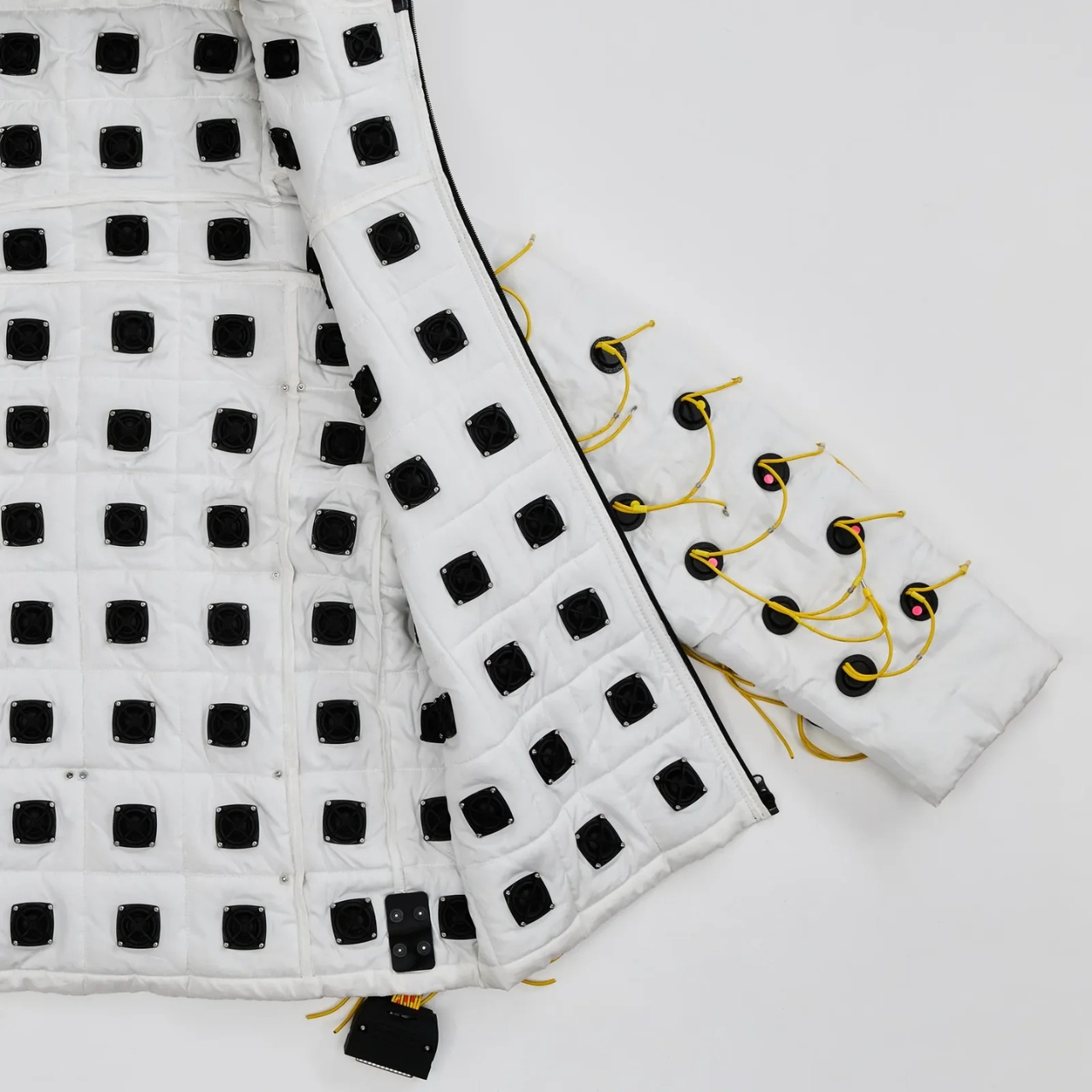
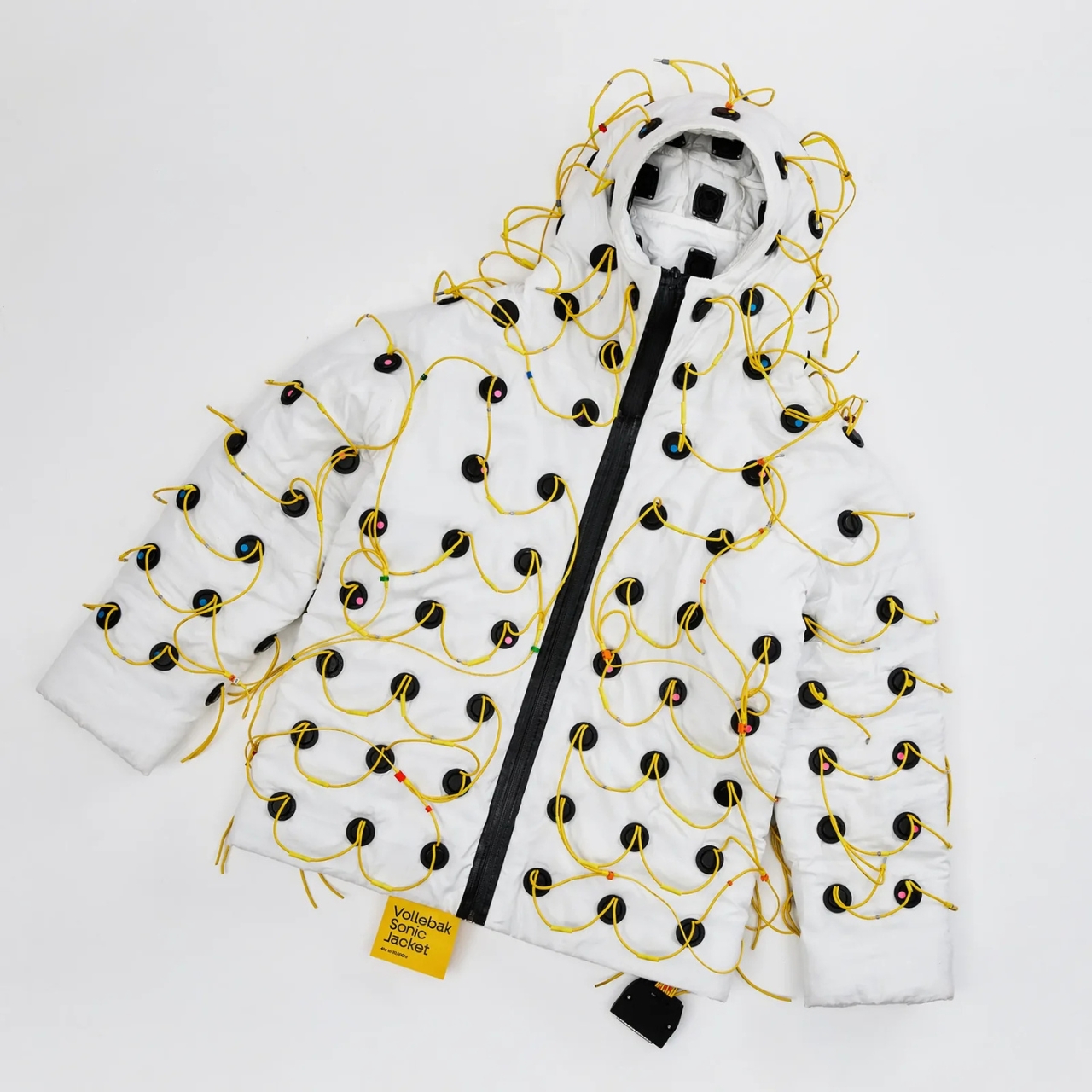
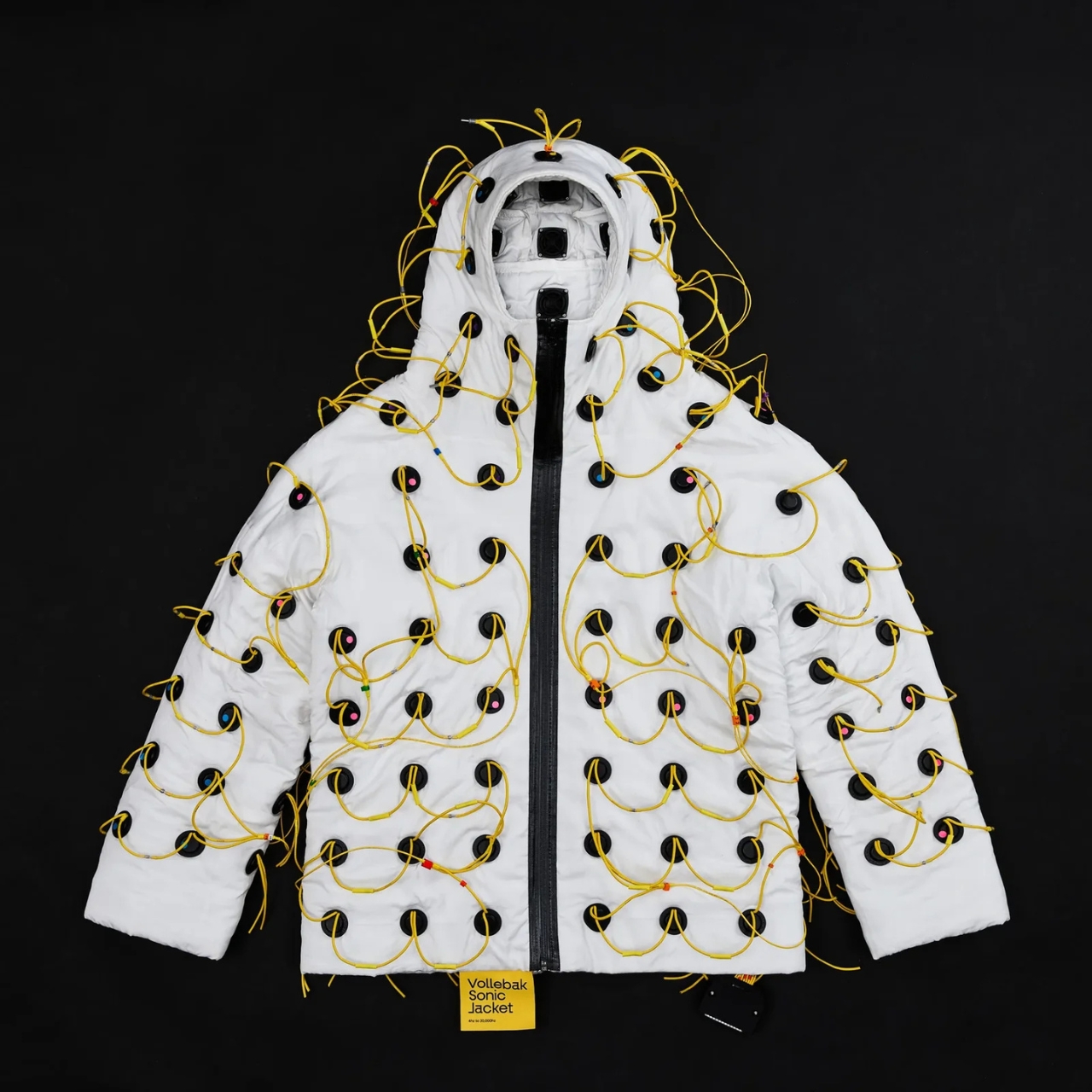
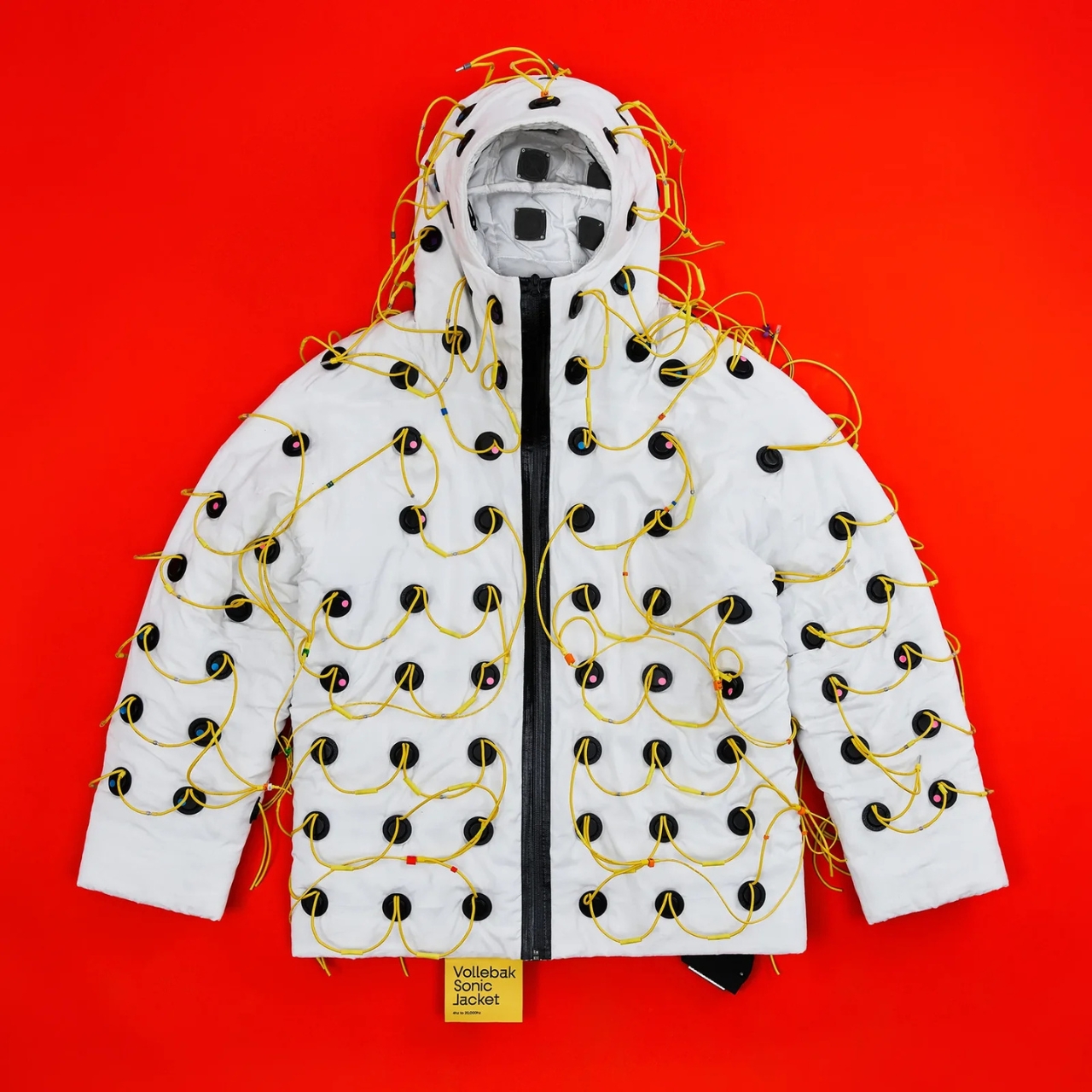
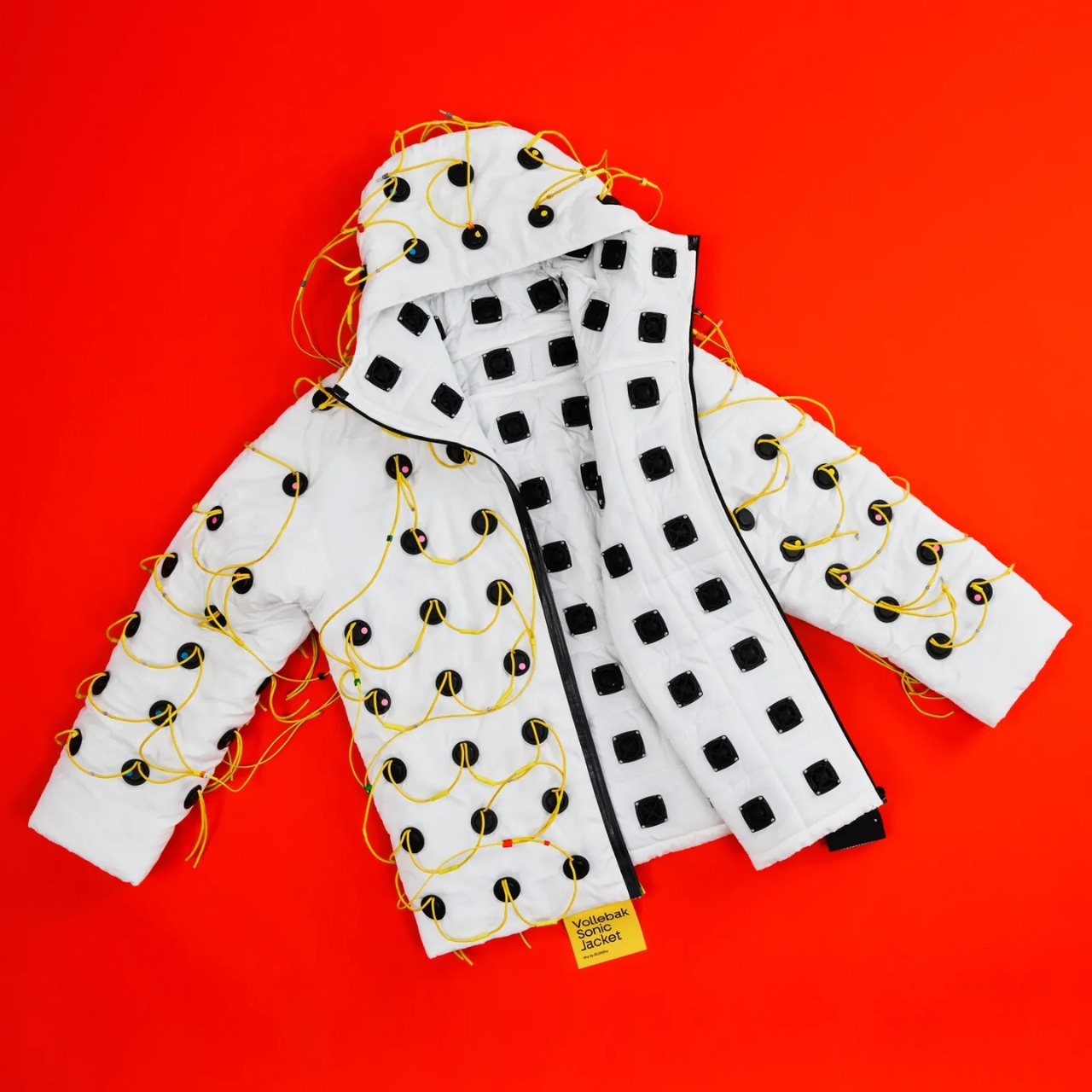
Vollebak’s New Sonic Jacket Fires 180 Speakers Into Your Body

If you’ve ever stood too close to a speaker at a concert and felt the bass move through your chest, you already understand the basic premise of Vollebak’s latest creation, even if just barely. The Sonic Jacket doesn’t pump sound into a room. It pumps it directly into you.

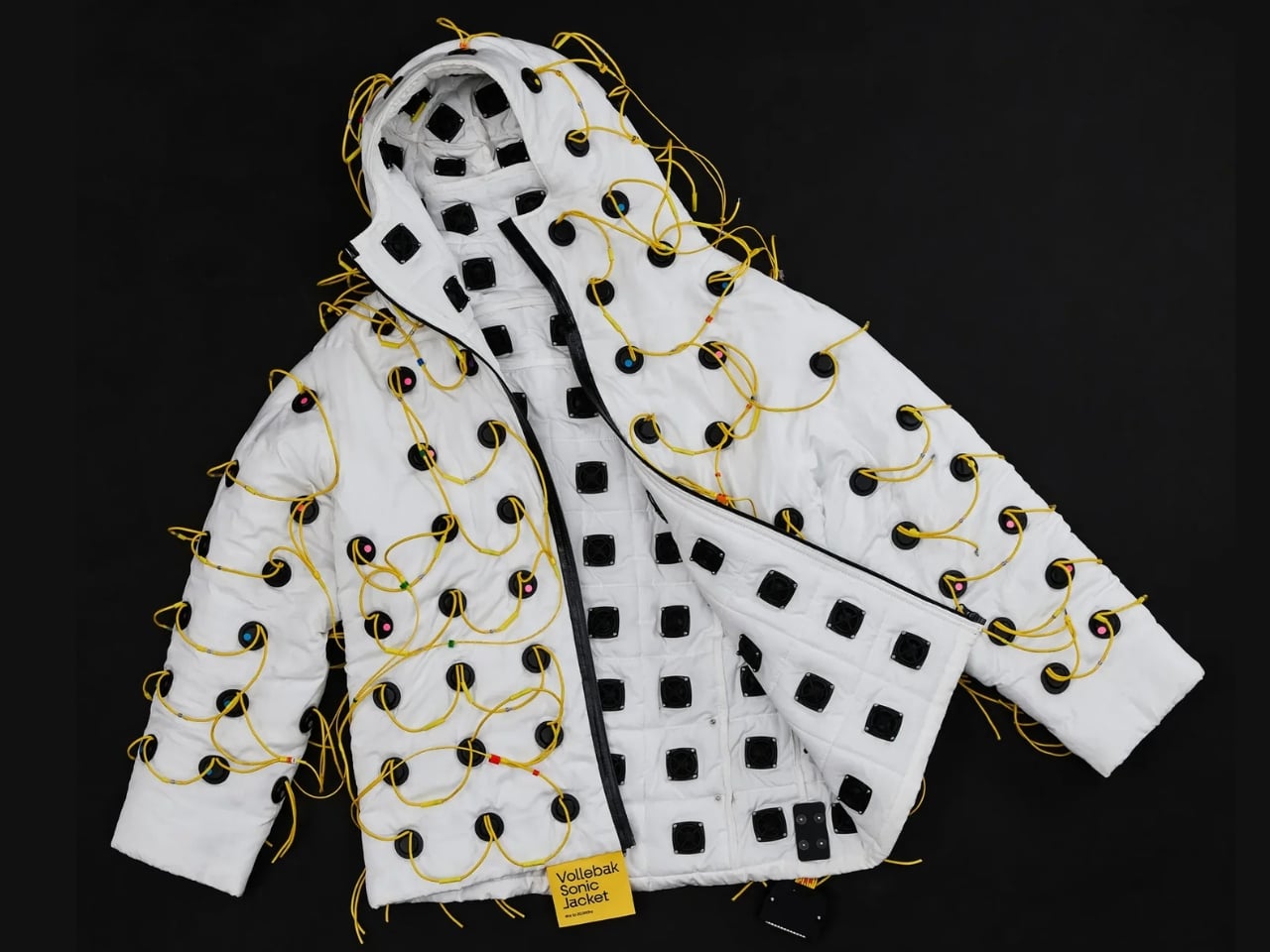
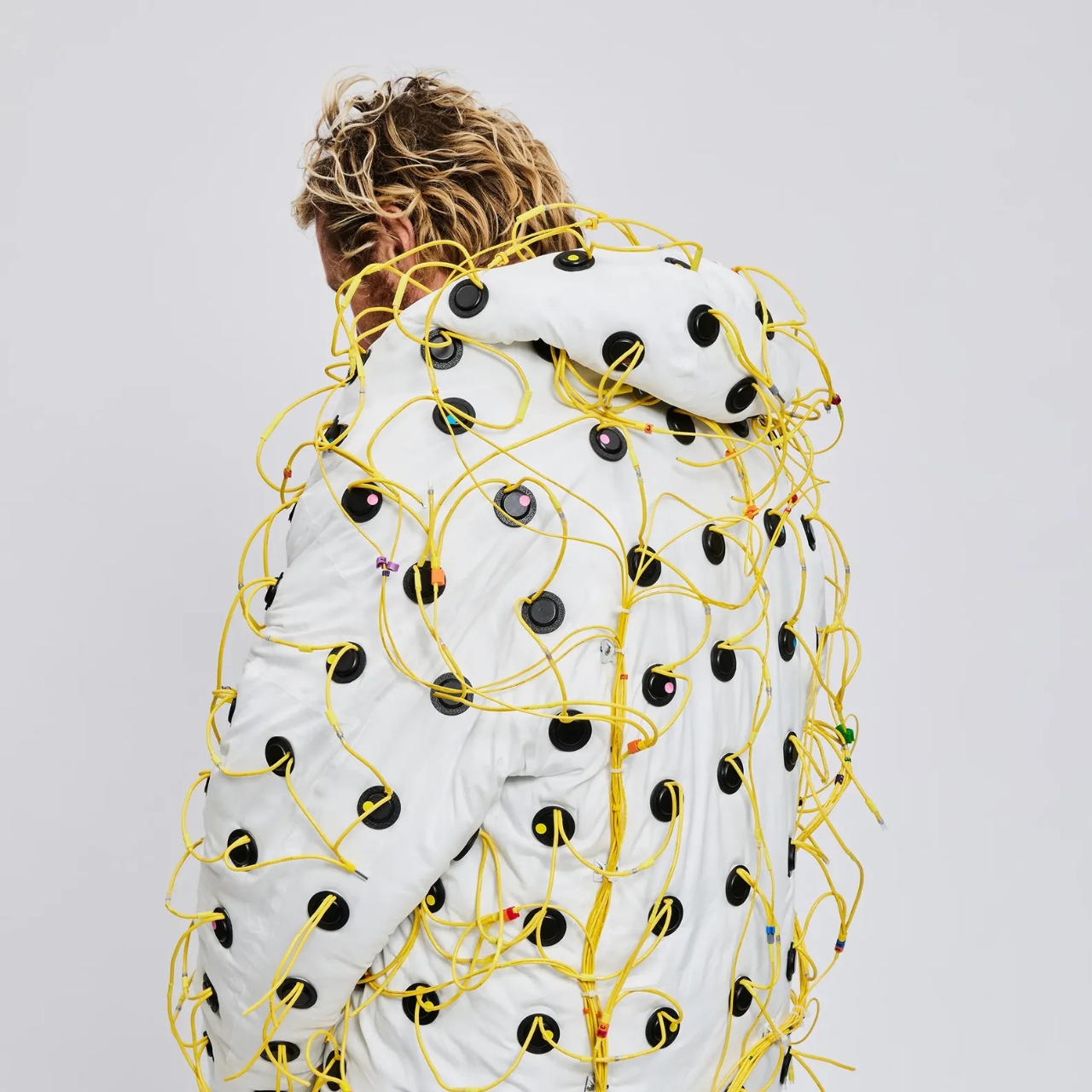
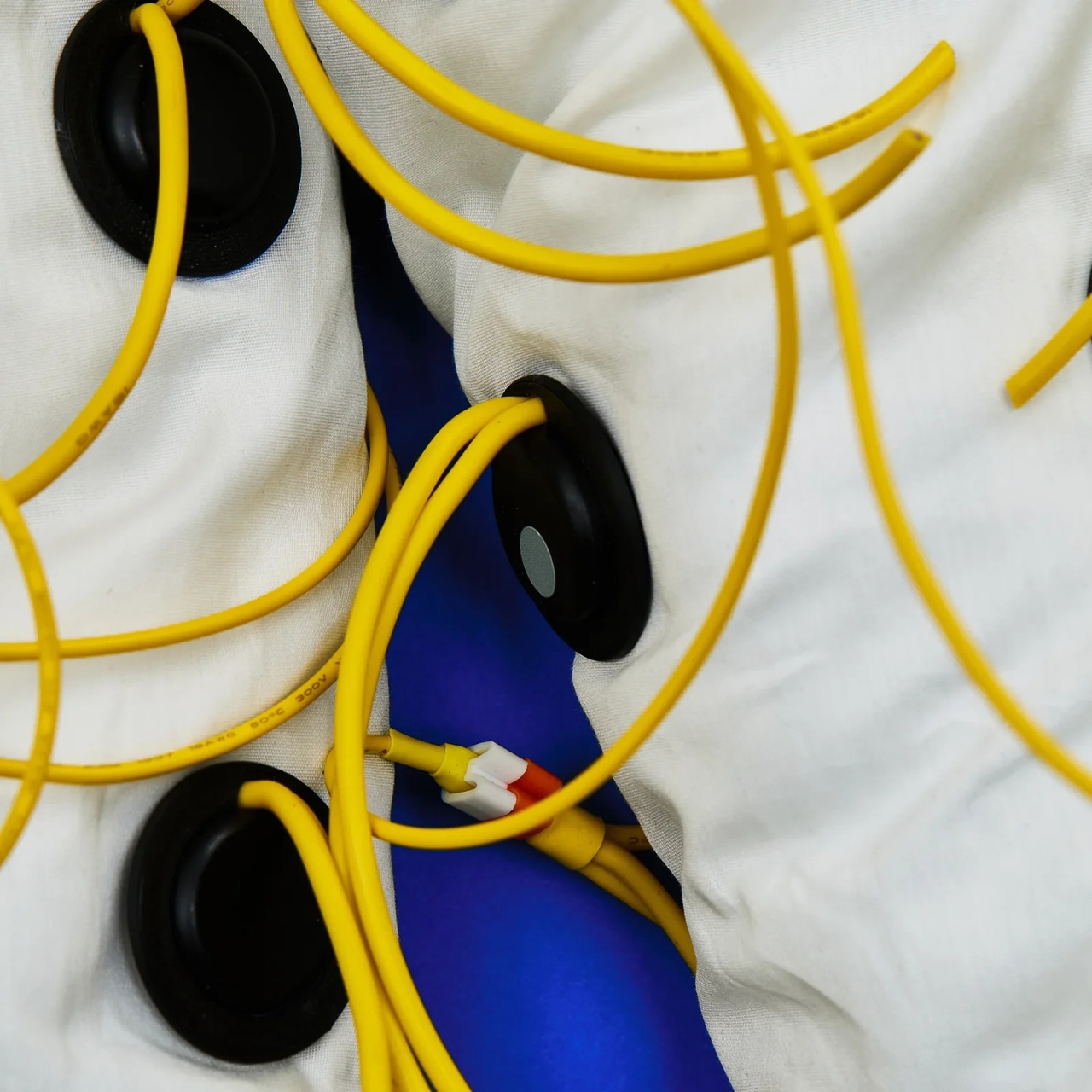
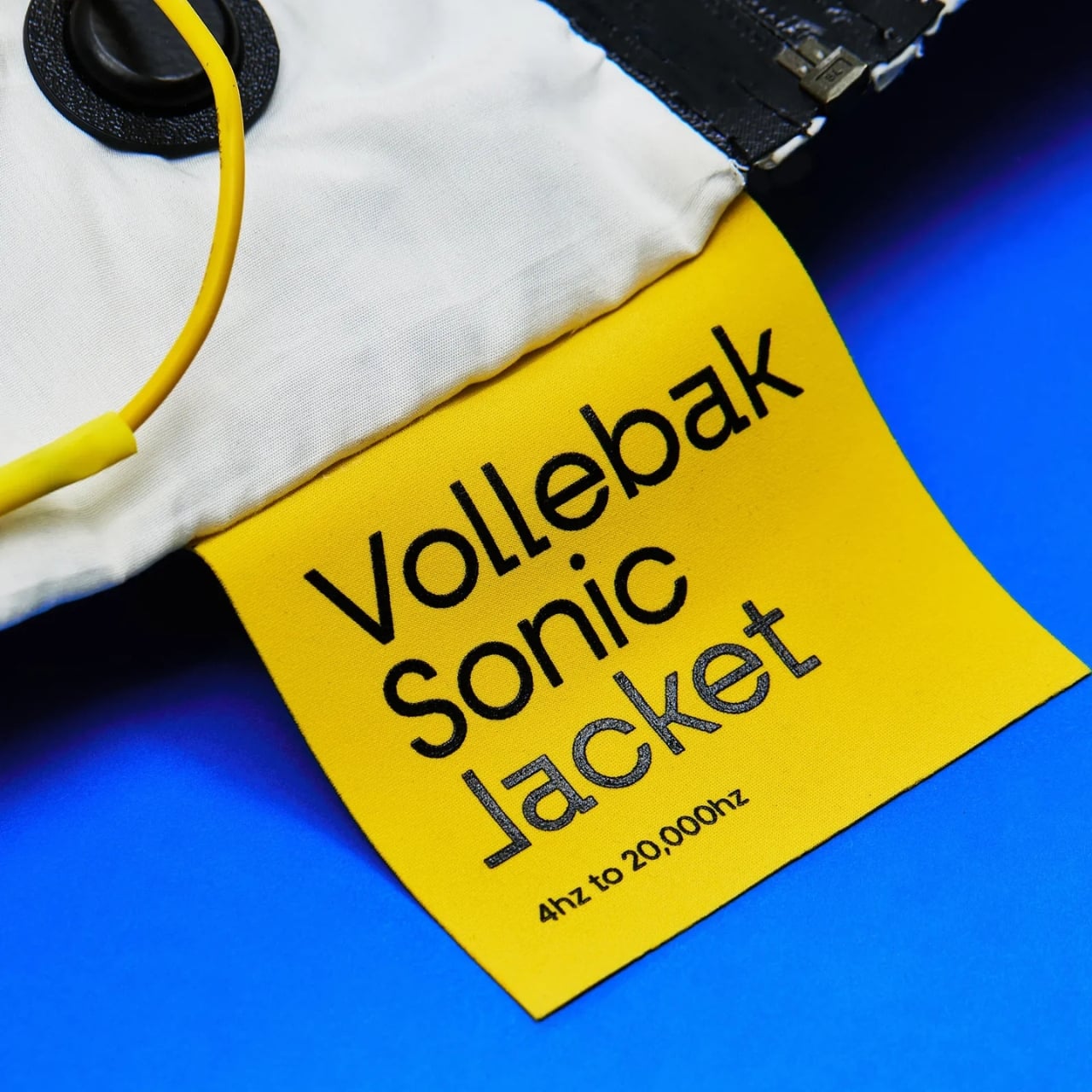
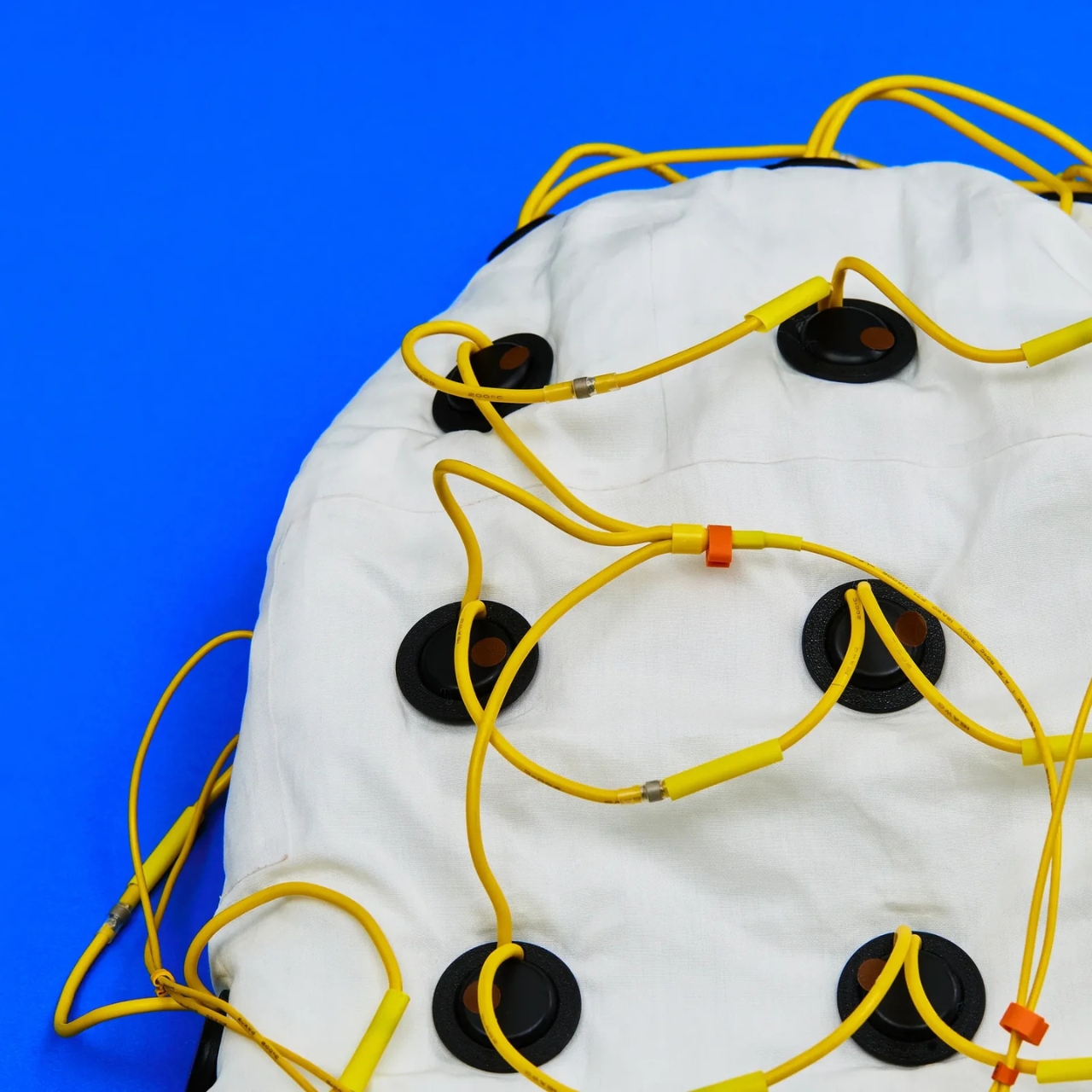
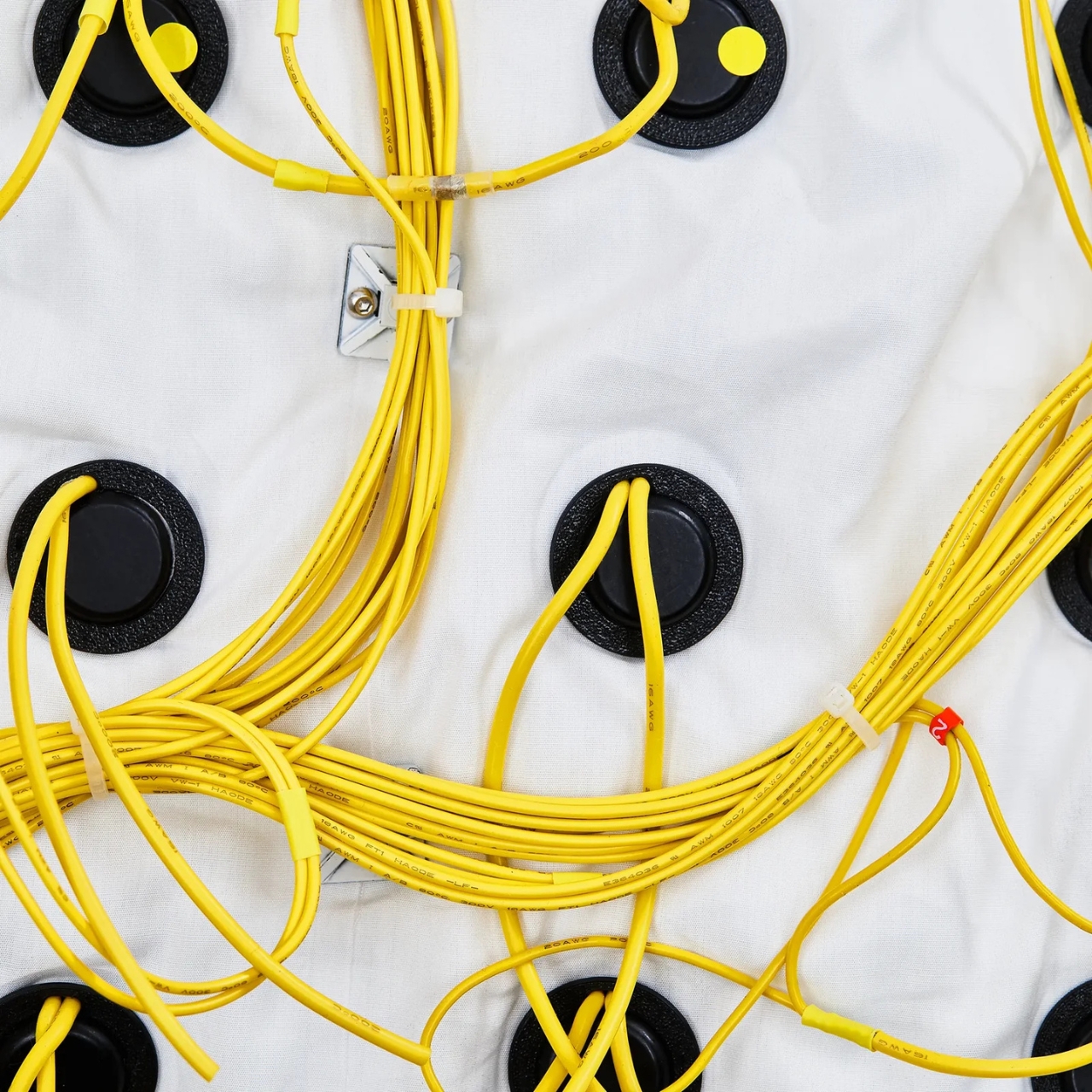
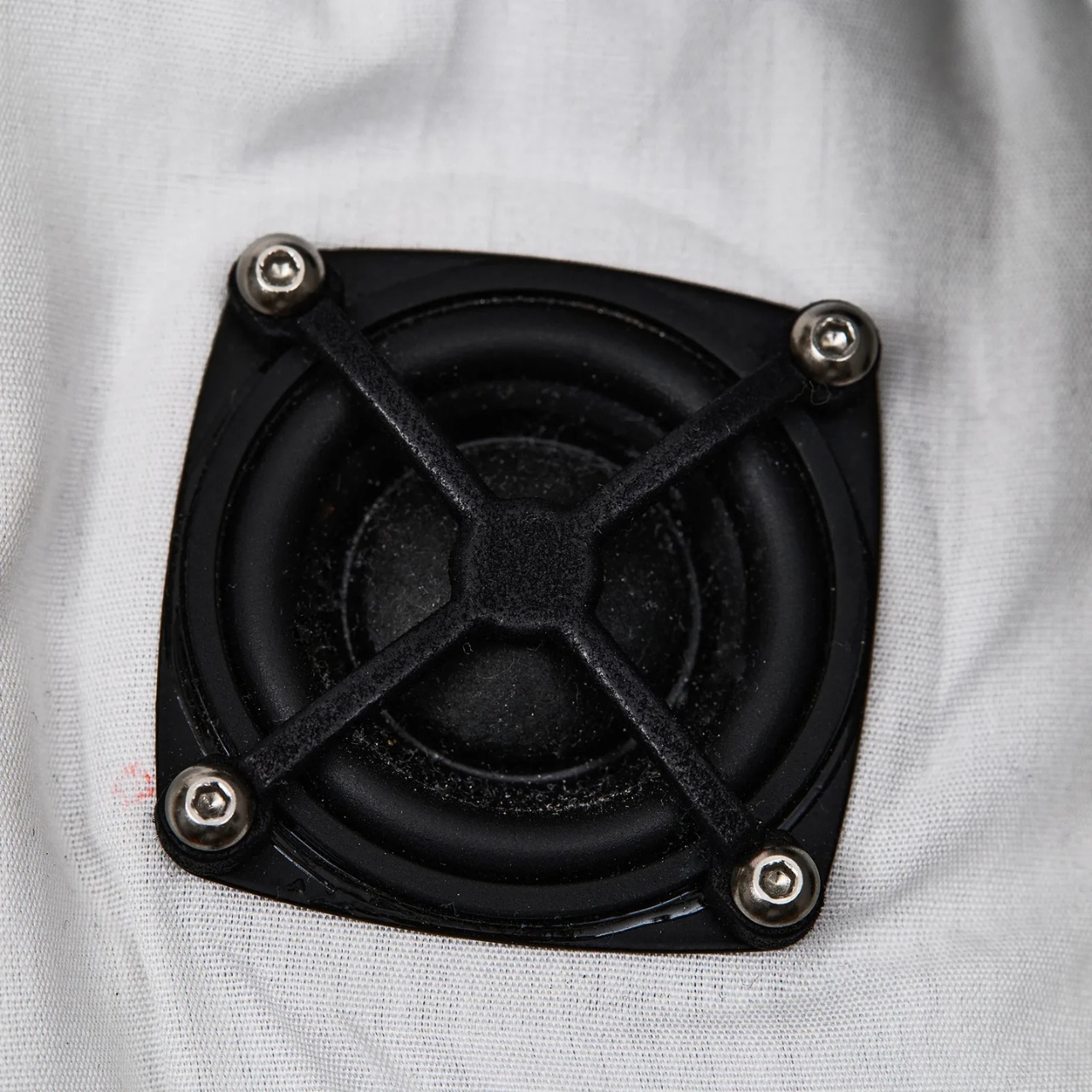
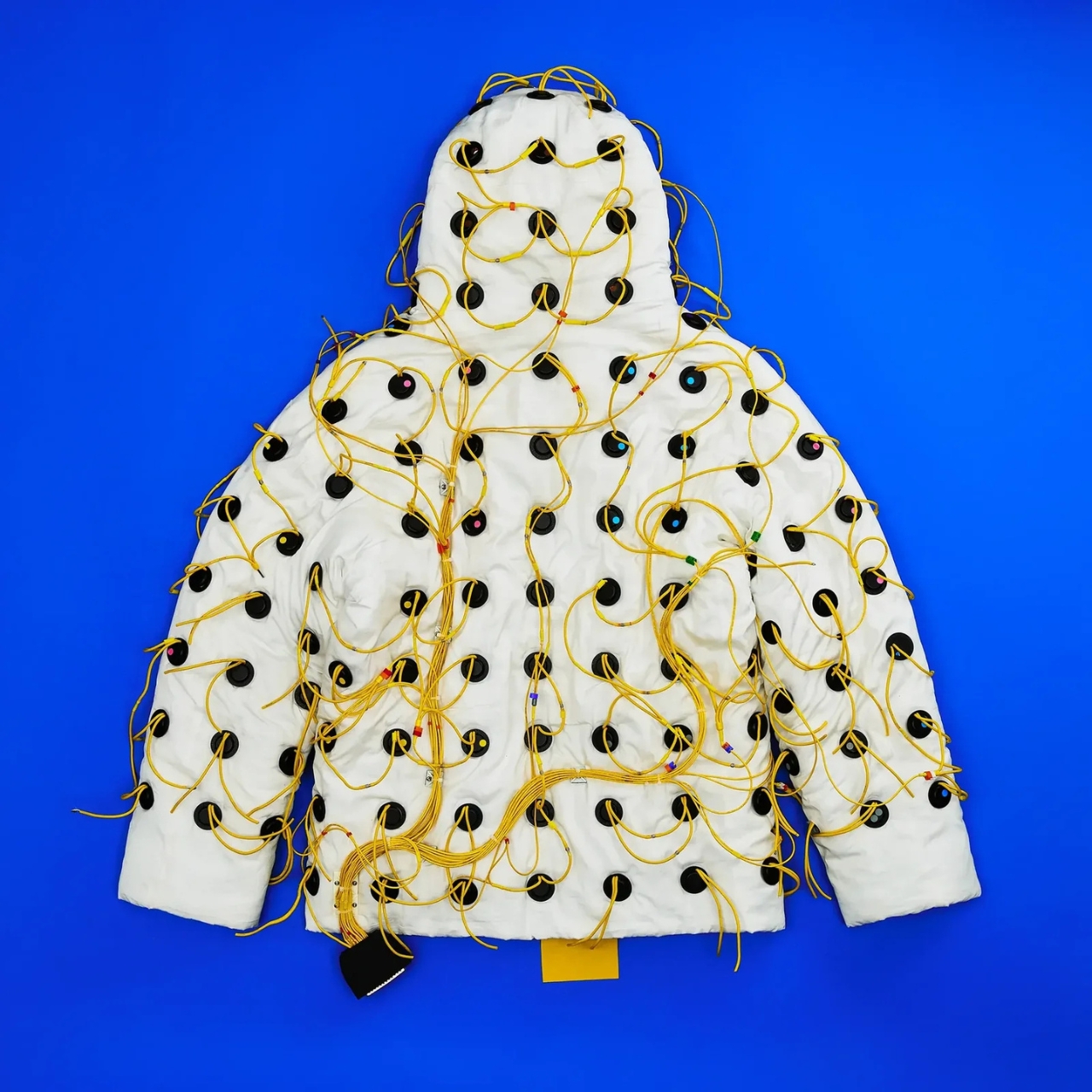
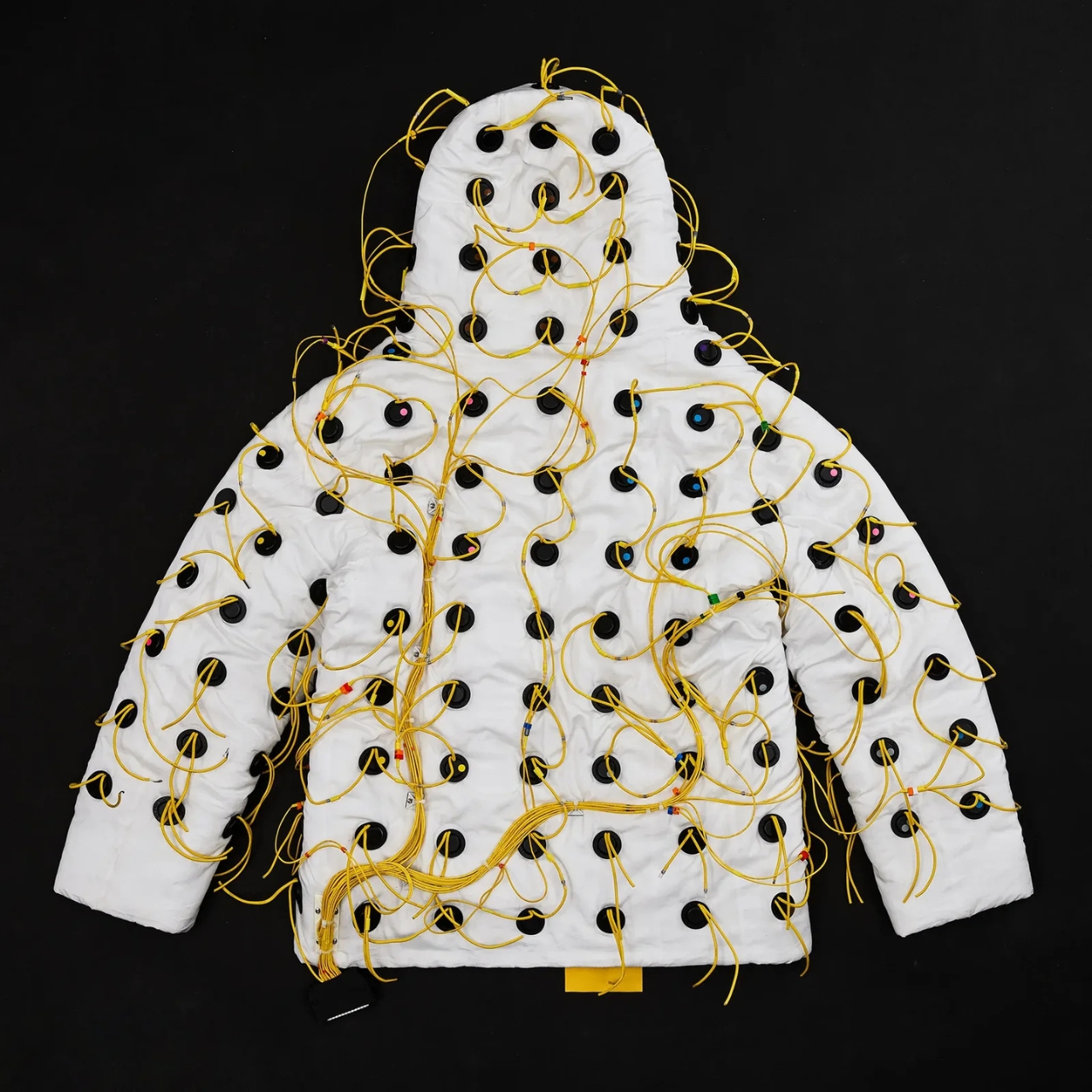
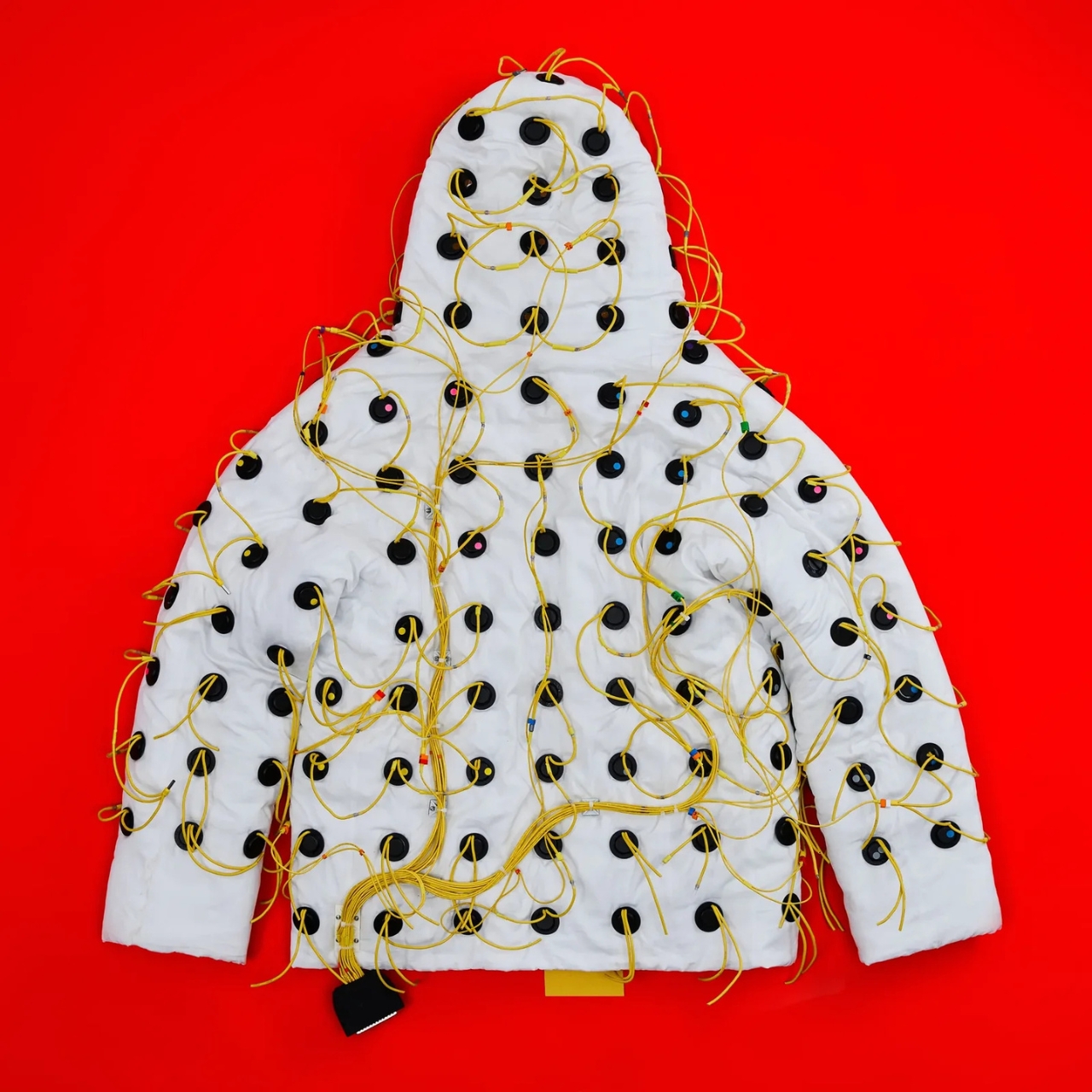
Vollebak, the experimental clothing brand founded in 2015 by twin brothers Nick and Steve Tidball, has built a jacket lined with 180 inward-facing speakers. Each one is 32mm in diameter and 10mm deep, laser-cut into the fabric across the body, arms, and hood. The speakers fire frequencies ranging from 4 Hz to 20,000 Hz straight into the wearer’s body. Not at your ears. Through your skin, your bones, your tissue. The brand’s own description puts it plainly: “You don’t listen to this jacket. You feel it.”

Designer: Vollebak

I’ll be honest. My first instinct was skepticism. Frequency therapy and sound healing have a way of sitting at the awkward intersection of legitimate science and wellness marketing, and it can be hard to tell which side of that line you’re on at any given moment. But the more I dug into what Vollebak actually built here, the harder it became to dismiss.

The jacket was engineered by FBFX, a London-based special effects studio with 30 years behind them and credits that include Gladiator, Dune, The Martian, and Project Hail Mary. These are people who build functional spacesuits worn by real actors in demanding production environments. They brought that same precision to the problem of turning a jacket into a distributed speaker system. The wiring is intentionally left visible, all yellow and exposed, because FBFX co-founder Grant Pearmain’s position is straightforward: it looks like a science experiment because that’s exactly what it is.

Control is handled through a unit fitted with an MP3 player preloaded with 10 frequencies, a physical dial for fine-tuning, and a Micro SD card slot that can hold up to 1,000 personalized frequencies. A Bluetooth app is in development. For lower frequencies, where speakers risk overheating, the jacket works around the problem by playing two slightly different tones simultaneously. The body registers the gap between them rather than the tones themselves, and that gap is where the lowest frequencies live.

Nick Tidball’s language around the whole project is part visionary, part slightly unhinged, which is exactly what makes Vollebak so compelling as a brand to follow. He talks about the earth resonating at a frequency, about his cat’s purr, about the fact that we are not solid beings but collections of particles with space between them where sound can travel. “Maybe you’ll orgasm. Maybe you’ll shit yourself. Maybe you’ll find God,” the brand writes on its site. Bold copy, sure. But it’s genuinely hard to argue that sound and frequency don’t do something to us. Every religious tradition figured that out thousands of years ago, from drumming around fires to chanting in stone chambers.

The Sonic Jacket is currently a prototype, tested on only a handful of people. Tidball himself did a 30-minute session and described the initial effects as “kind of astonishing.” That’s a small sample size and a subjective account, so I’d take the results with appropriate caution. But the ambition here isn’t really in question.

What Vollebak is doing, jacket by jacket, is expanding the definition of what clothing is for. They’ve done it with graphene that behaves like a radiator, with near-indestructible Dyneema, and with a jacket made from 250,000 pieces of laser-cut American walnut. The Sonic Jacket feels like the most speculative thing they’ve attempted so far, and that’s saying something. It’s not a wellness gadget in a tech form factor. It’s a wearable environment designed to shift your nervous system.

Whether the science catches up to the ambition remains to be seen. But that’s always been part of Vollebak’s proposition. They make things that probably shouldn’t exist yet, and then figure out if they should. The Sonic Jacket is the most interesting thing I’ve seen come out of the wearable tech space in a long time, and I’m not even sure it counts as wearable tech. It might just be the future of how we think about clothing altogether.

The post Vollebak’s New Sonic Jacket Fires 180 Speakers Into Your Body first appeared on Yanko Design.

The 44-Pocket Coat That Makes You Question Home Itself

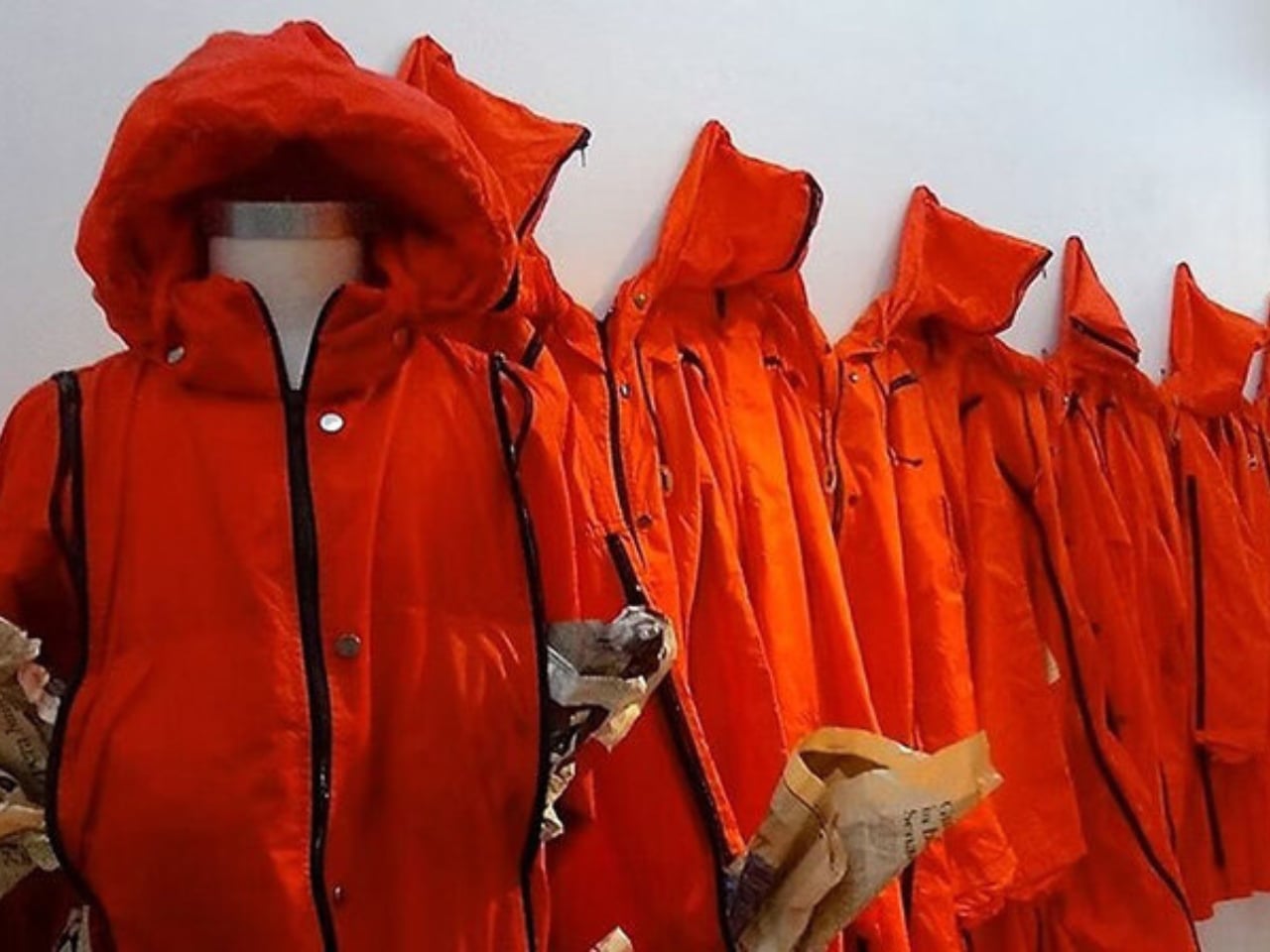
Picture this: you’re standing on a sidewalk with nothing but the clothes on your back. No wallet, no keys, no lease, no address. The only shelter you have is what you’re wearing. For most of us, that thought is hypothetical enough to be brushed aside. But for Japanese designer Kosuke Tsumura, it became a thirty-year design obsession.

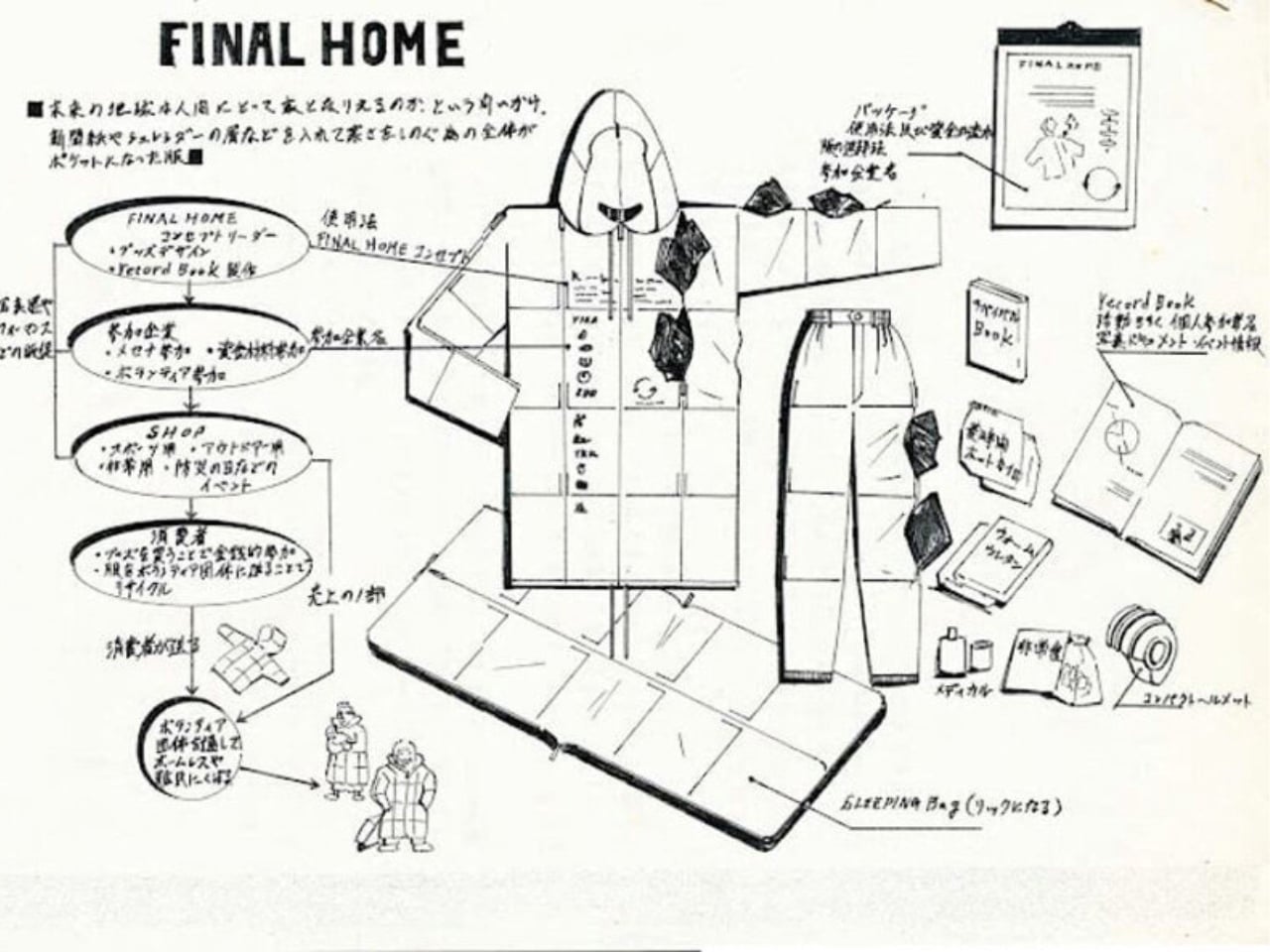
FINAL HOME, the label Tsumura founded in 1994 under the Miyake Design Studio, is built on a single uncomfortable question: if home disappears because of disaster, war, or economic collapse, what can clothing become? The answer, it turns out, is a translucent nylon parka with 44 pockets.

Designer: kosuke tsumura

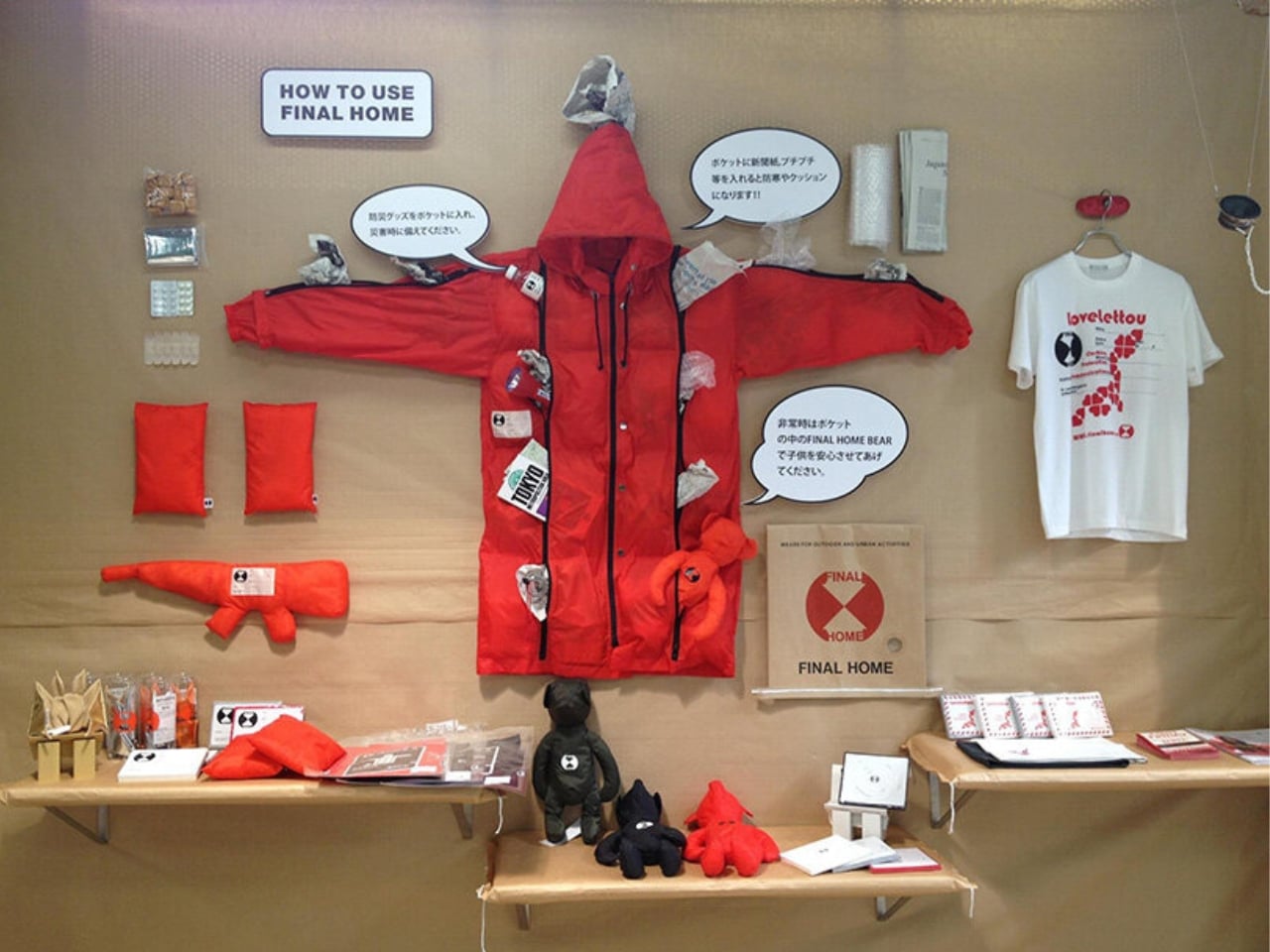
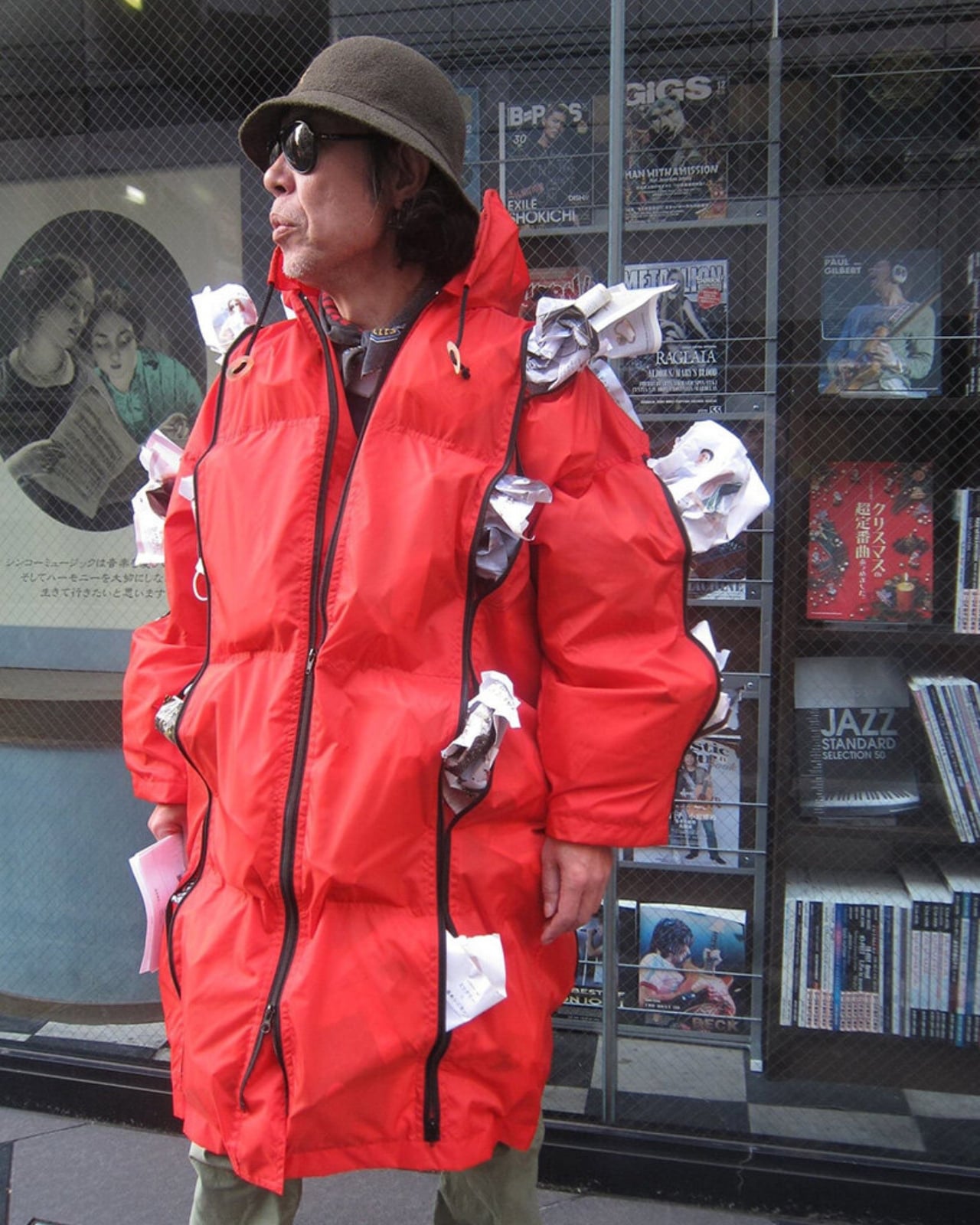
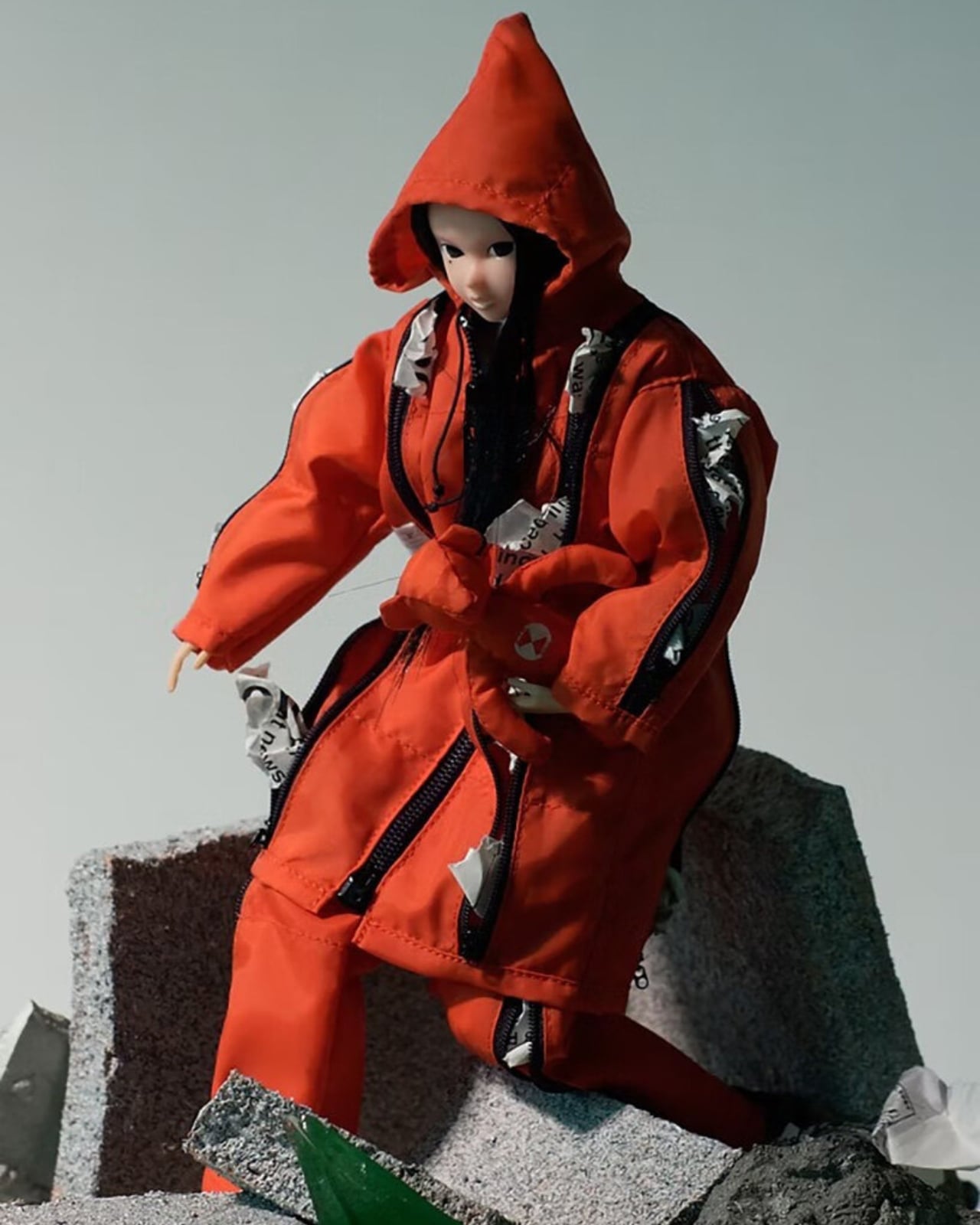
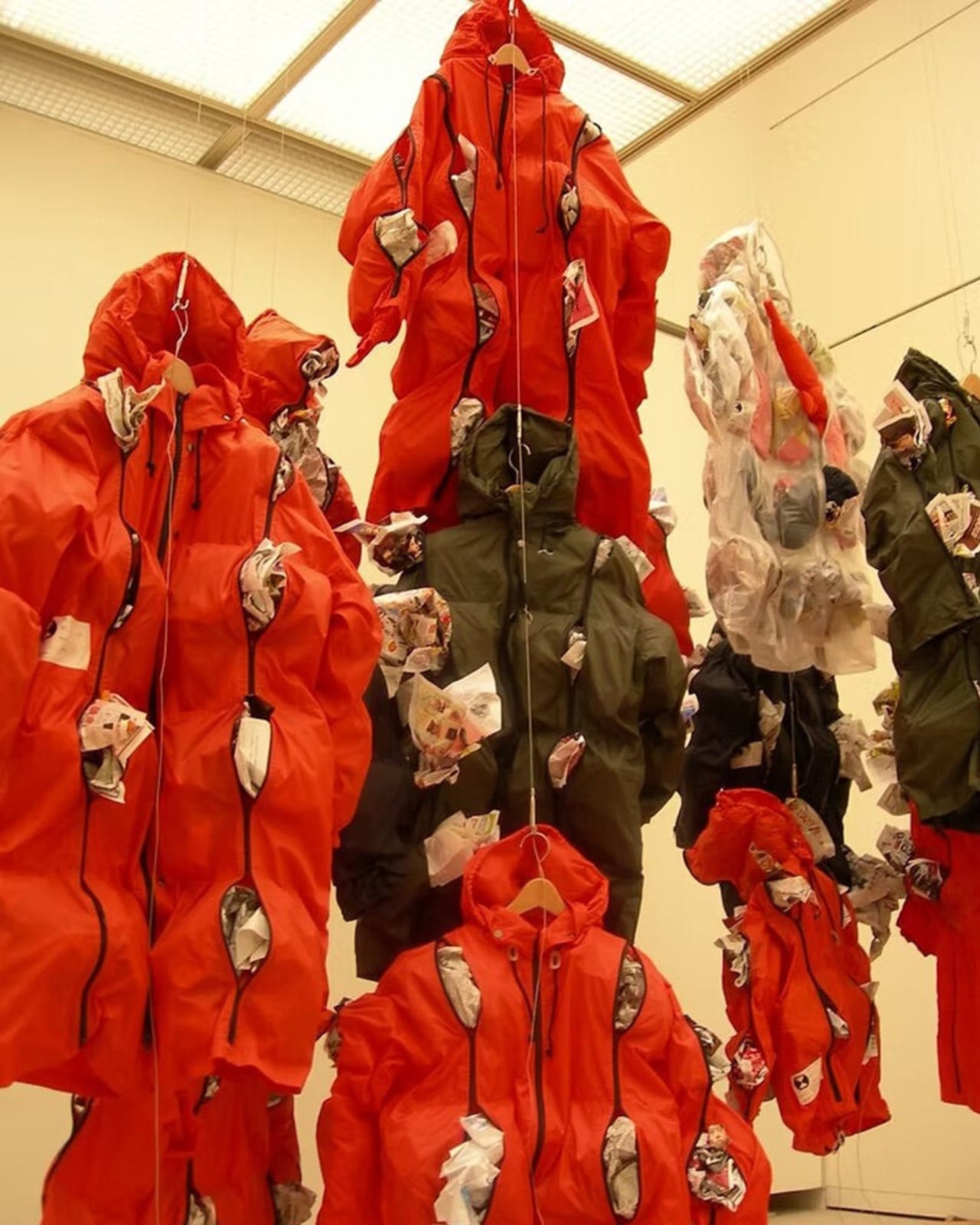
The 44-pocket parka is FINAL HOME’s most iconic piece, and it earns that status through sheer conceptual density. Those pockets aren’t decorative. They’re meant to carry food, medicine, tools, whatever you need to survive. When the temperature drops, you stuff them with newspaper or any insulating material you can find, and the coat does the work of keeping you warm. Optional down cushions slot into the pockets too, turning the whole thing into a proper down jacket at a moment’s notice. The coat can even be adjusted for fit by stuffing specific pockets, which means it adapts to any body type without tailoring. There’s even a FINAL HOME Bear, a small companion designed to nestle into a pocket and add a layer of insulation.

That last detail is the one I keep returning to. A teddy bear as thermal technology. It sounds absurd until you realize it’s also kind of genius, and deeply human. Tsumura isn’t just designing for survival in a cold, mechanical sense. He’s designing for the full experience of being displaced: frightened, possibly alone, needing warmth in more than one way.

This is what separates FINAL HOME from the streetwear brands that borrow its visual DNA. Plenty of labels have done the oversized translucent nylon thing. Few of them are asking anything of it. Tsumura is asking everything. The coat lives at the intersection of fashion, architecture, and emergency preparedness, and it doesn’t apologize for the weight of that position.

The fact that the 44-pocket parka has been in MoMA’s permanent collection since 2006 says a lot. Museums have a way of freezing things in amber, turning useful objects into relics. But FINAL HOME resists that fate because its premise only becomes more relevant over time. We are, by most reasonable measures, living through an era of compounding instability. Climate events, economic precarity, the slow erosion of what people once assumed was stable. A jacket designed for when the floor disappears doesn’t feel like a curiosity anymore. It feels almost prescient.

Tsumura has described utopia not as a destination but as a method, something embedded in everyday life rather than promised in some distant future. That framing reframes FINAL HOME entirely. It’s not a coat for the apocalypse. It’s a coat for right now, for a world where the safety nets are showing their age and adaptability matters more than ever. The chocolate candles included in the broader FINAL HOME universe push this even further, objects designed to serve two purposes at once, comfort and function, because the line between them is thinner than we like to admit.

The 44-pocket parka doesn’t look like survival gear. It looks like art, which is partly why it works so well. Wearing it doesn’t announce crisis or declare emergency. It just quietly insists that preparedness and design don’t have to be mutually exclusive, that you can move through the world looking completely intentional while also being ready for it to shift beneath you.

Tsumura started this project over thirty years ago, and it still feels ahead of where most design conversations are happening. That’s not a small thing. Most ideas burn bright and fade. FINAL HOME just keeps asking its question, and the world keeps making that question harder to ignore.

The post The 44-Pocket Coat That Makes You Question Home Itself first appeared on Yanko Design.

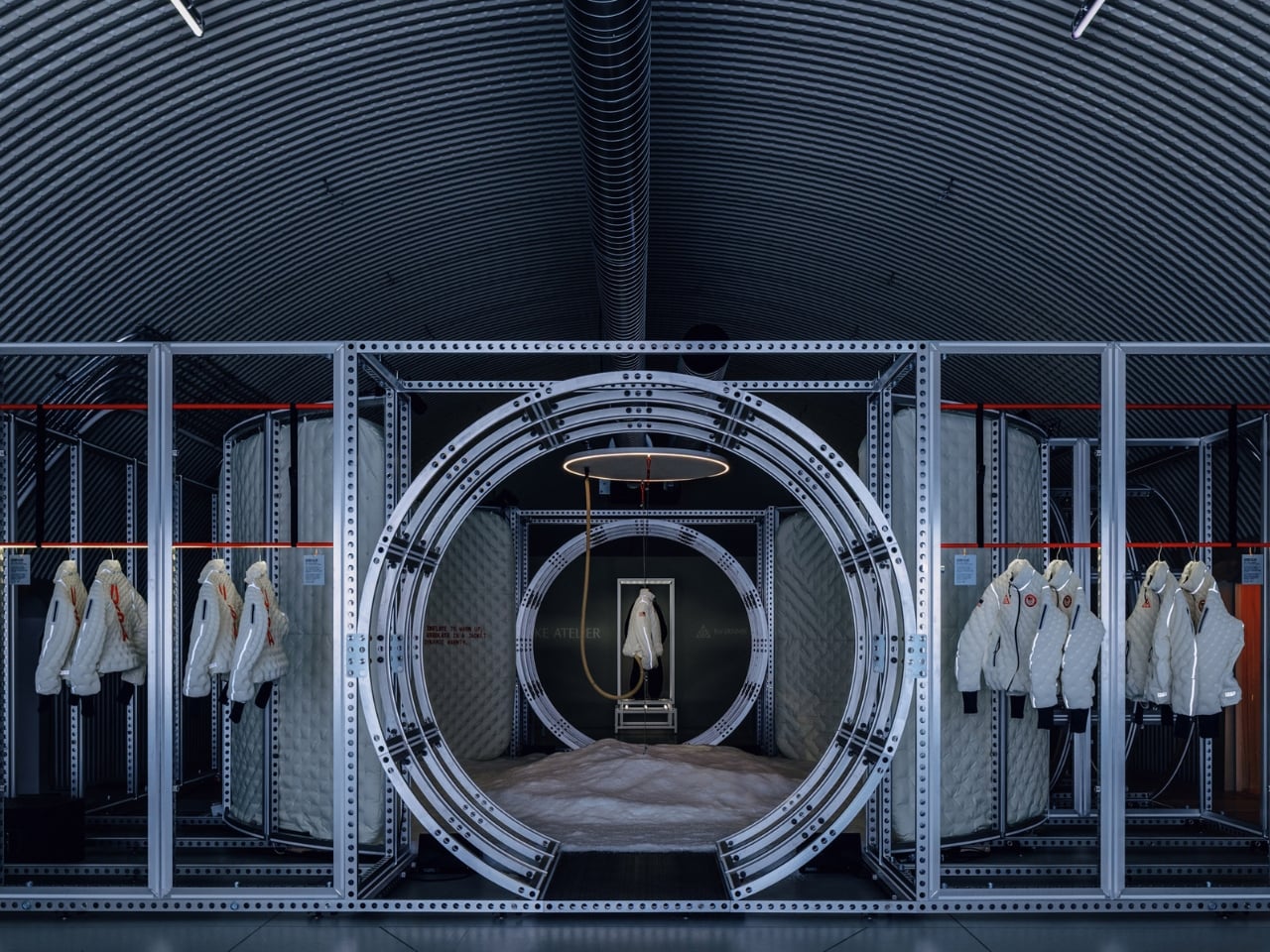
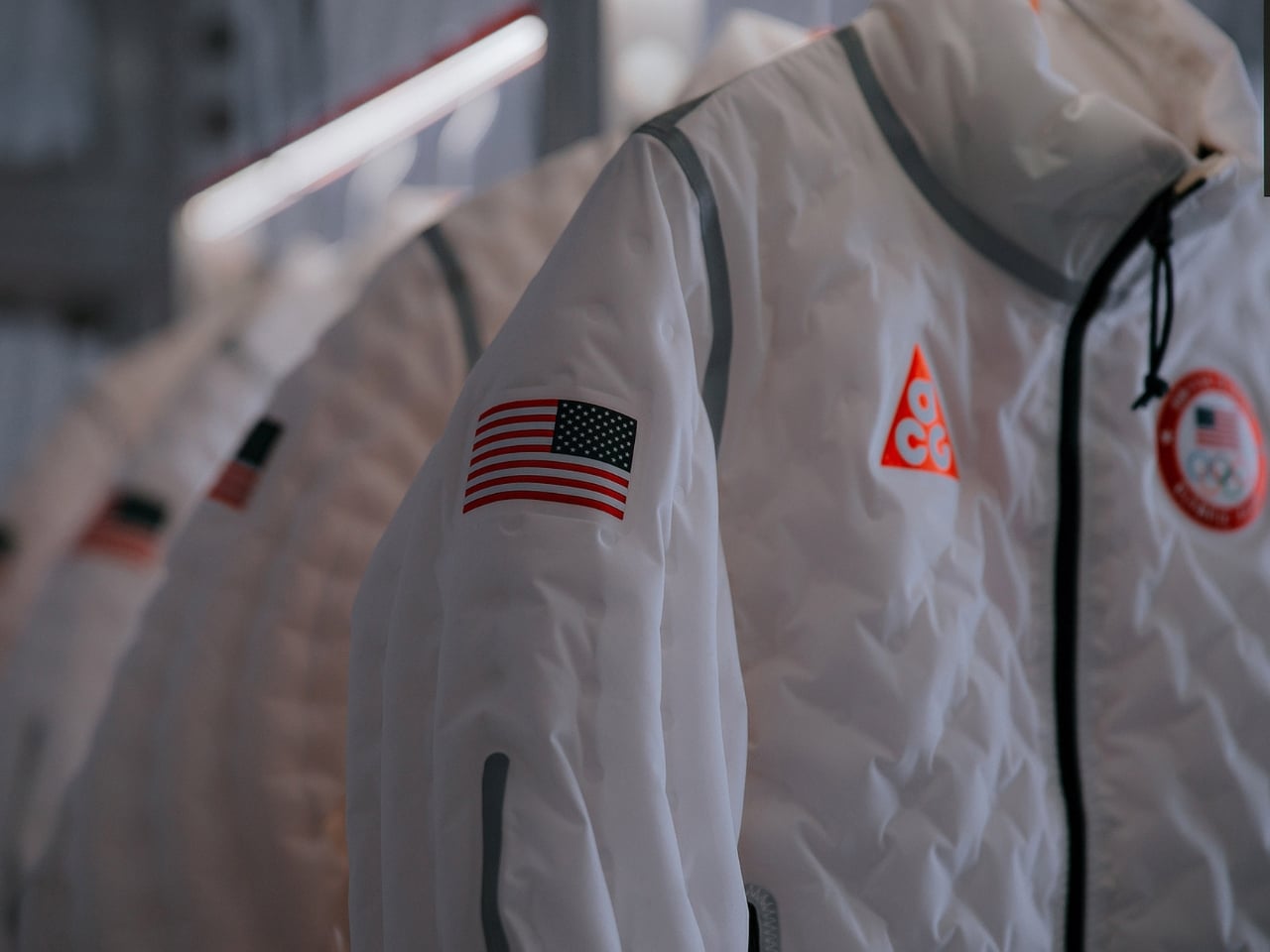
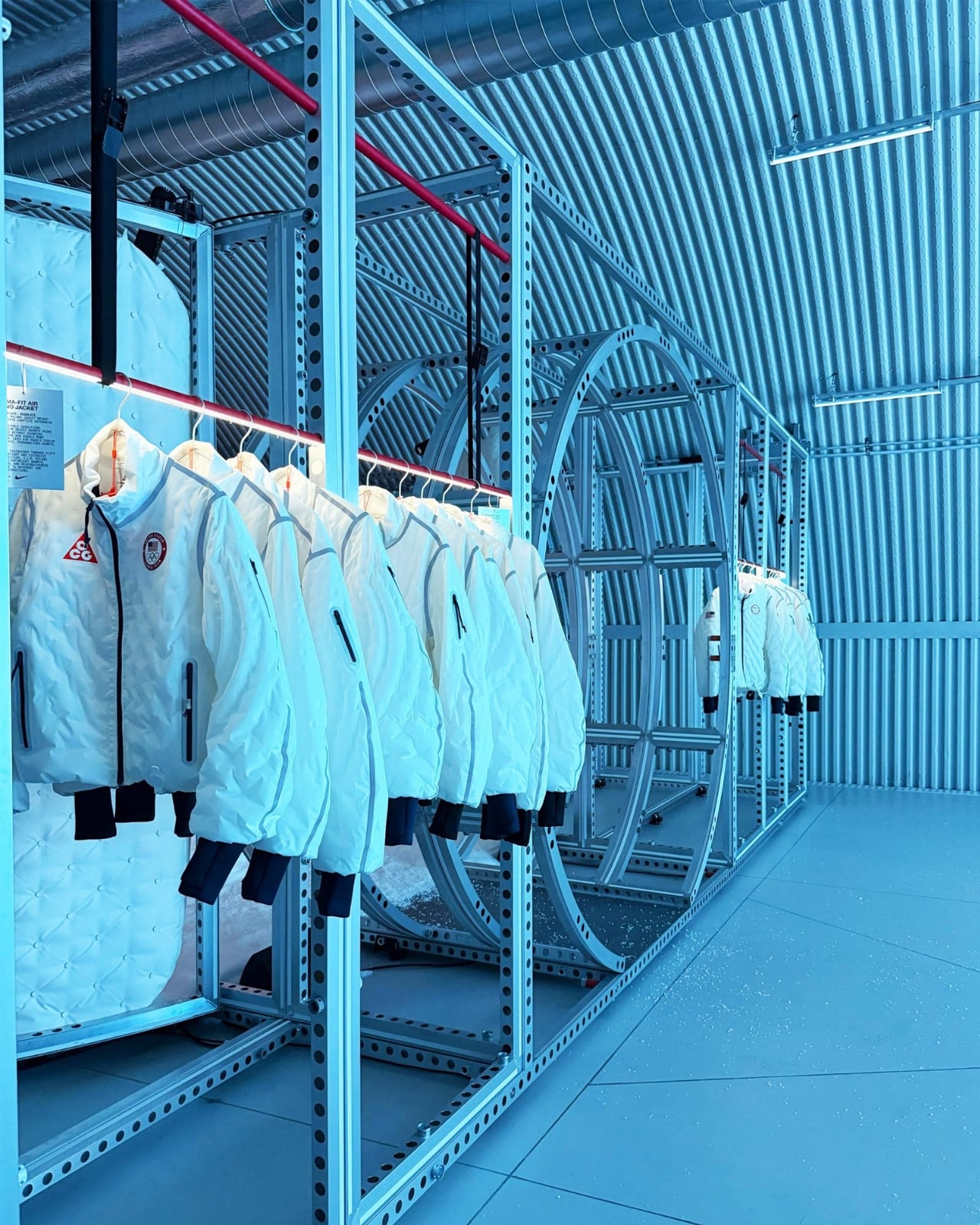
Nike Just Turned Air Into Team USA’s Smartest Olympic Jacket

Remember when Nike introduced the Air Milano jacket a few months back? The inflatable jacket that promised to solve the age-old runner’s dilemma of overheating mid-run? Well, it just made its official debut at the 2026 Winter Olympics in Milan, and Nike’s chief design officer Martin Lotti is making it clear: this isn’t some novelty stunt.

The jacket’s now being worn by Team USA athletes during medal ceremonies, which is pretty much the ultimate endorsement for any piece of sportswear. But beyond the Olympic spotlight, there are some fascinating new details emerging about why this jacket matters more than you might think.

Designer: Nike

Lotti explained that Nike has been working with air as a cushioning technology in footwear for half a century, but they’ve barely scratched the surface of what air can do. The interesting twist? From a design perspective, they’re working with a medium that’s completely invisible. You can’t see air, you can’t touch it in the traditional sense, yet it’s proving to be one of the most versatile materials in their arsenal.

The real game changer here is how the jacket addresses temperature regulation. According to Lotti, runners face this problem constantly. You start your morning run when it’s cold, you warm up as you go, and then what? Most of us just tie the jacket around our waist without thinking about it. It’s such an automatic response that we don’t even realize we’re settling for an imperfect solution.

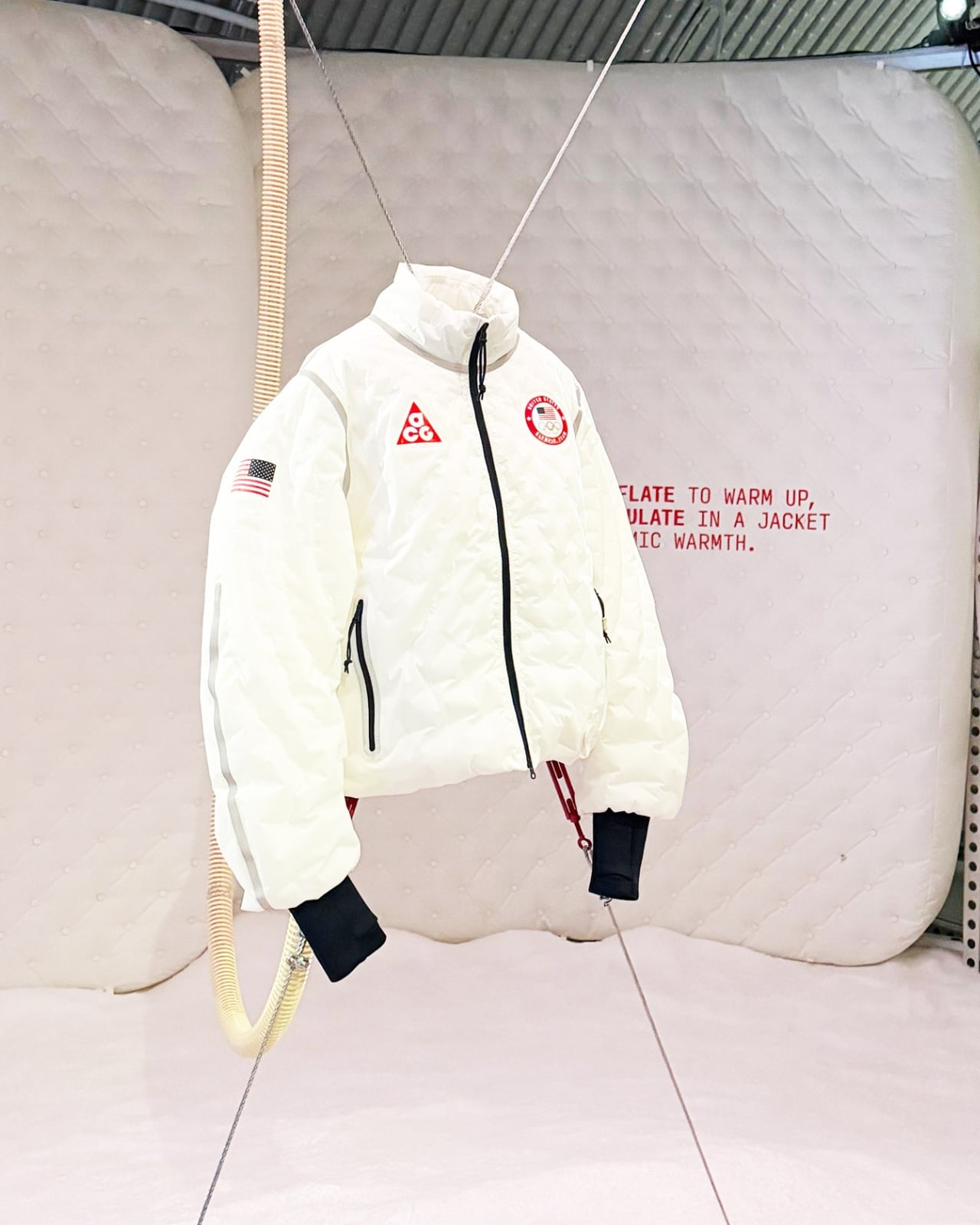
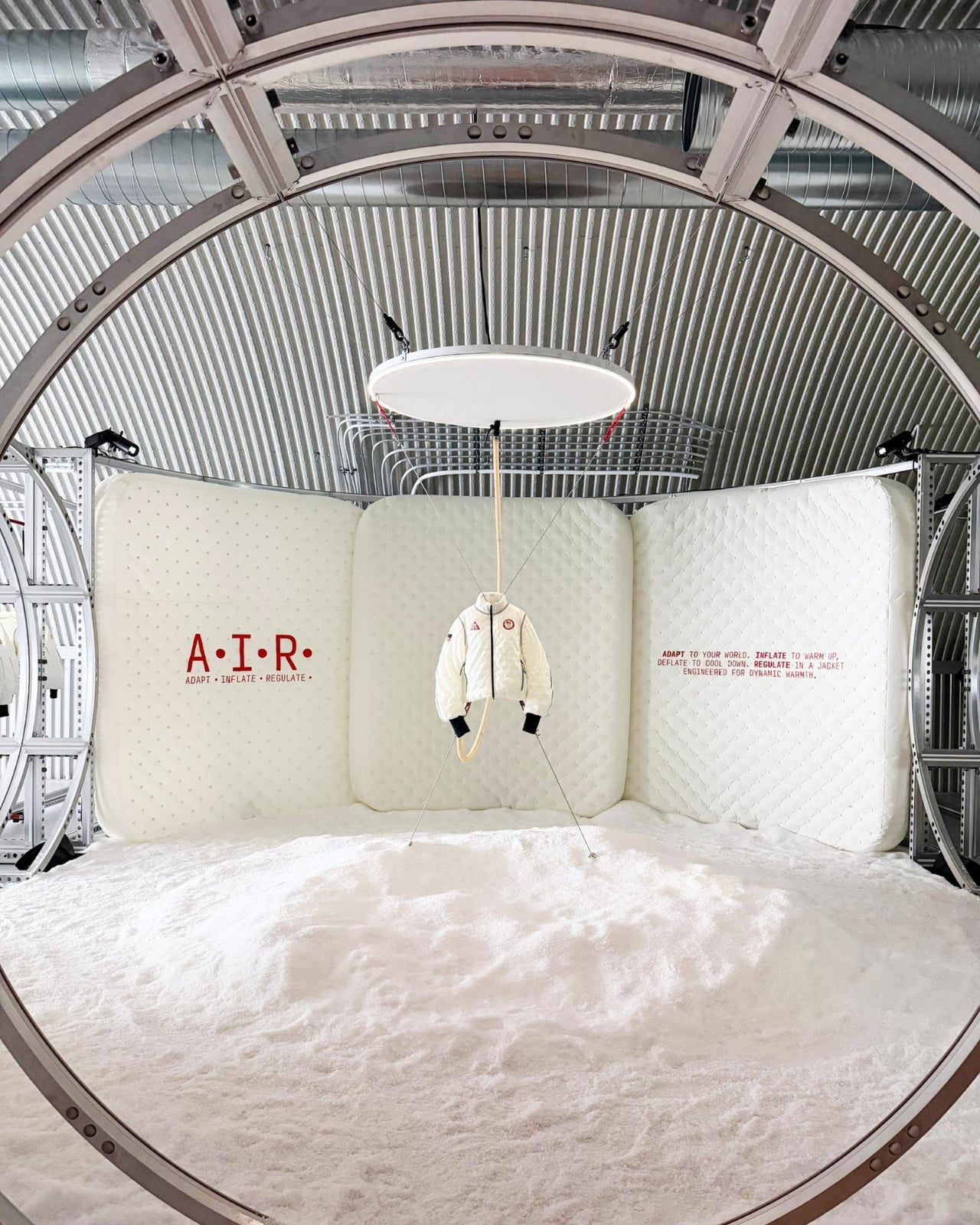
With the Air Milano, that problem disappears. The jacket inflates with a small battery-powered fan through a valve on the front, and it takes about 20 seconds to go from windbreaker to mid-weight puffer. Need to cool down? Press the same valve and gradually release the air. The whole process happens while you’re moving, which means you can adjust your warmth on the fly without breaking stride or stopping to fuss with layers.

One of the most compelling arguments for this technology is the weight-to-warmth ratio. Traditional down puffers have a fatal flaw: when they get wet, they lose their insulating properties. The feathers clump together, the jacket gets heavy, and suddenly you’re wearing a soggy, useless shell. Because the Air Milano uses actual air as insulation, water doesn’t compromise its performance. It stays light, it stays warm, and it doesn’t wet out.

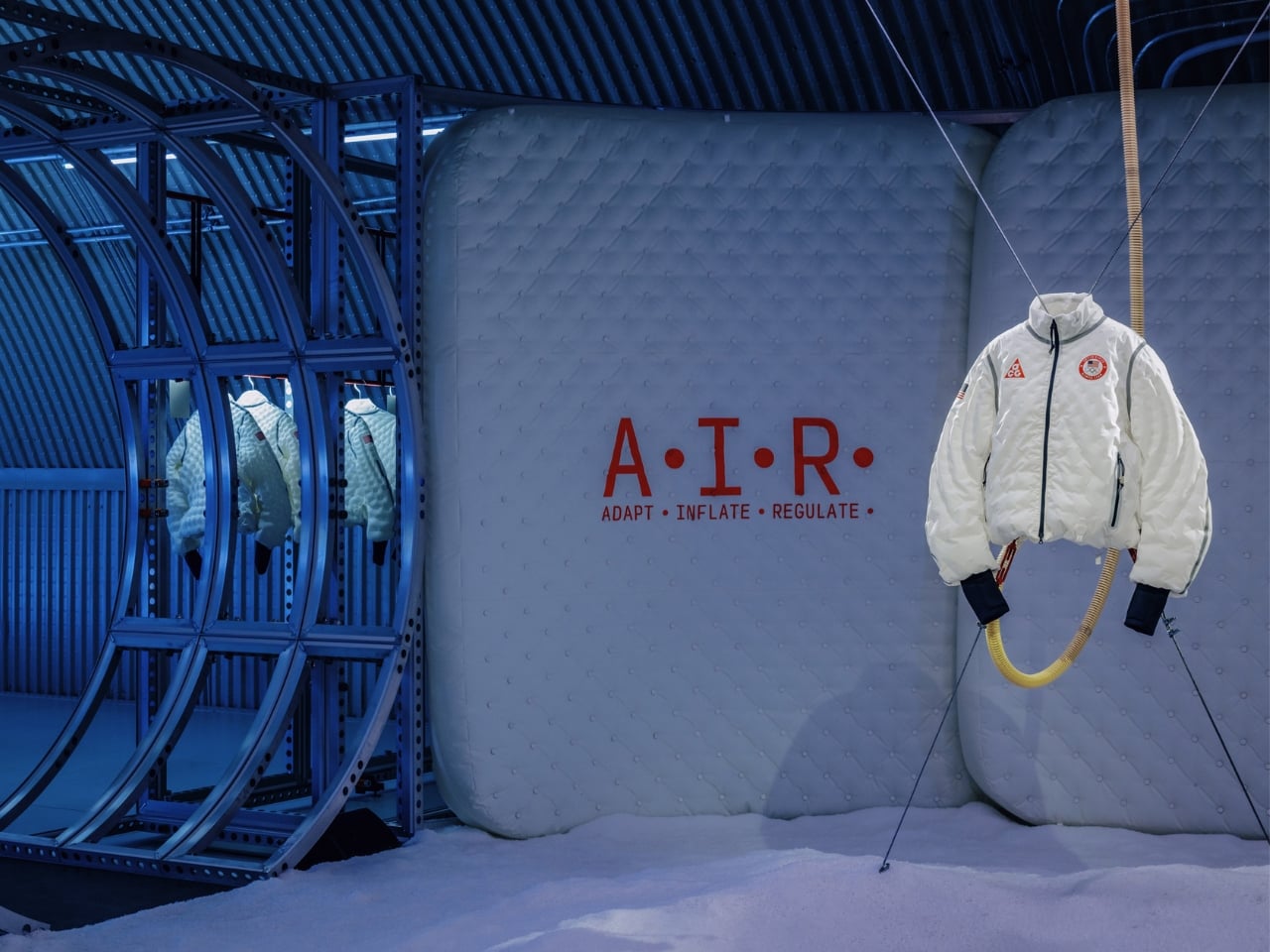
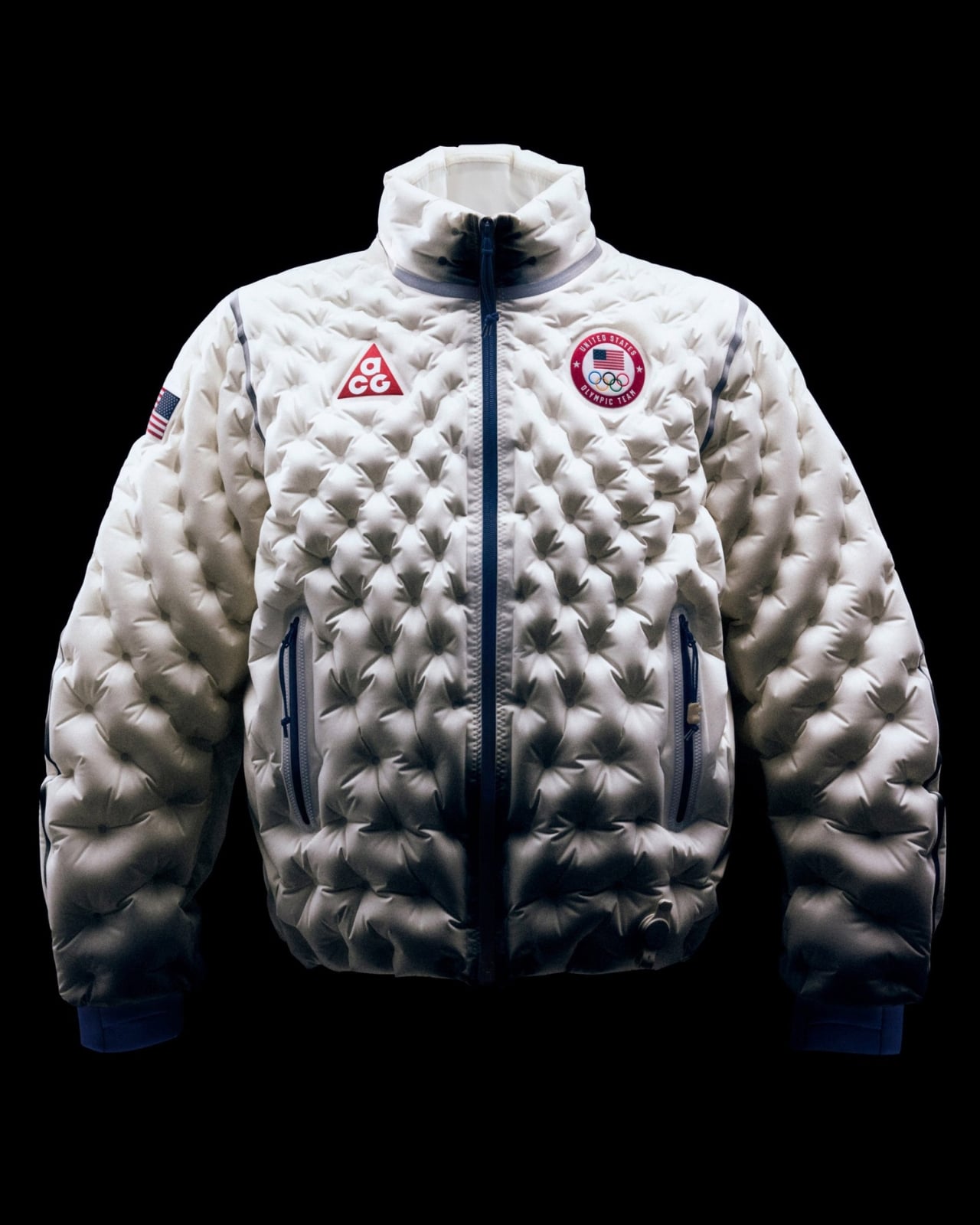
Nike also revealed that this jacket showcases what they’re calling A.I.R. Technology, which stands for Adapt, Inflate, Regulate. The whole design is informed by body mapping data from Nike’s Sport Research Lab and uses computational design to create those sculptural baffles you see on the surface. It’s not just about making something that looks cool; it’s about strategically placing air where your body needs warmth most.

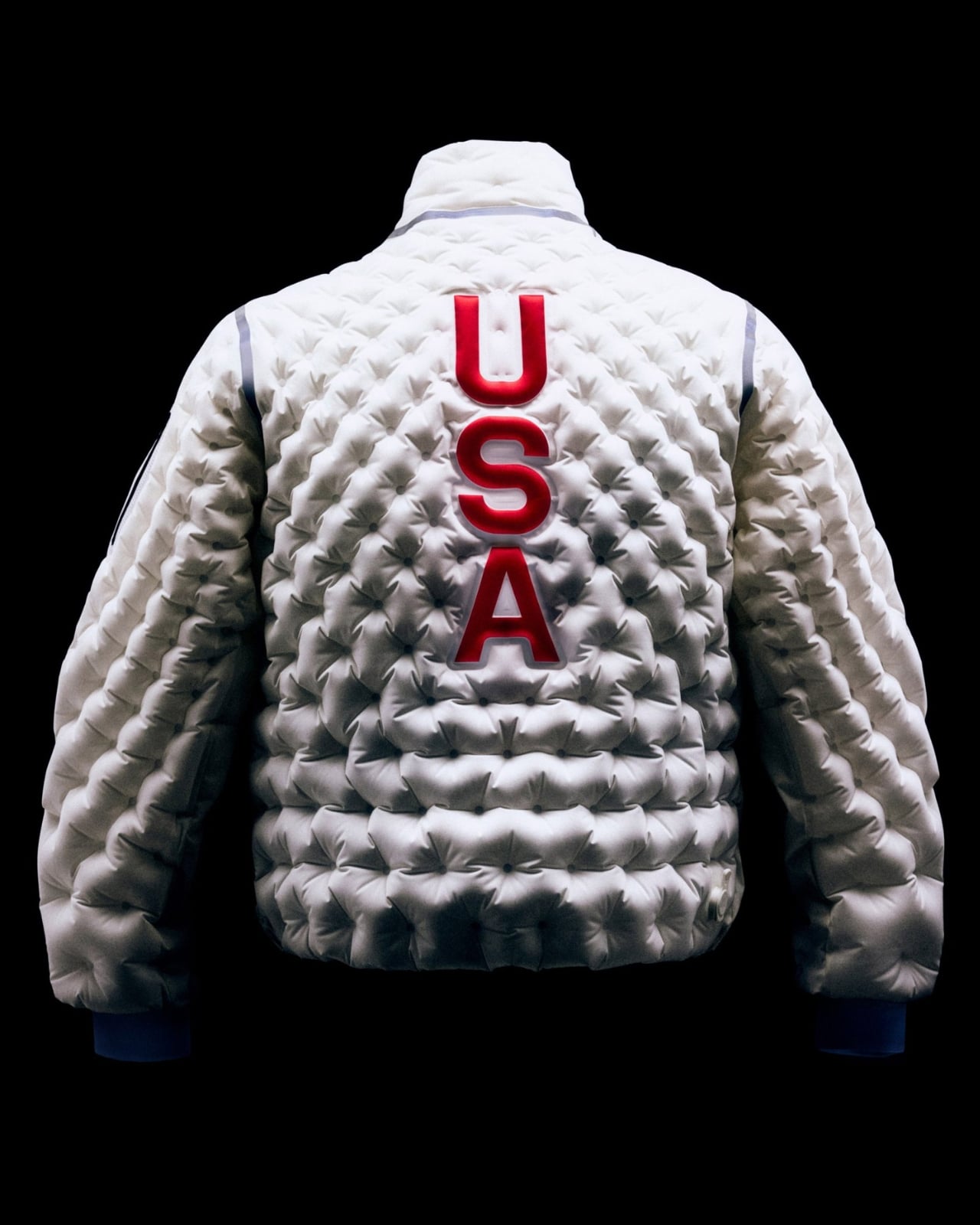
The Team USA version comes with some exclusive touches that weren’t part of the original announcement. There are sculpted design elements, a custom ACG pump (instead of the generic battery-powered fan initially mentioned), metallic twill branding, and an interior lining graphic depicting the Garden of the Gods in Colorado Springs, where Team USA trains. More importantly, Nike built in accessibility features like interior thumb loops on the bottom hem and a magnetic zipper specifically designed to help Paralympic athletes put on and close the jacket independently.

What’s particularly interesting is that this isn’t Nike’s first rodeo with inflatable outerwear. They’ve been experimenting with this concept for 20 years, starting with the ACG Airvantage jacket and continuing with the ISPA Adapt Sense Air. But the Air Milano represents a major evolution in both technology and wearability. It’s lighter, faster to inflate, and actually solves a practical problem instead of just being a technical curiosity.

Lotti’s perspective on this is refreshing. He’s adamant that the Air Milano isn’t a gimmick because it addresses a real issue that athletes face every single time they go for a run. That’s the difference between innovation for innovation’s sake and design that actually improves how people move through the world.

The jacket is positioned as part of Nike’s broader FIT system of apparel, which includes Therma-FIT insulation, Aero-FIT cooling, Dri-FIT moisture-wicking, and Storm-FIT weather protection. It’s not meant to replace every jacket you own, but rather to fill a specific need for adaptive warmth in changing conditions.

Seeing Team USA athletes wearing these jackets on the podium in Milan gives the whole project a very different context. It’s not just a prototype or a concept piece anymore. It’s performance gear that’s being tested at the highest levels of athletic competition, which means Nike has confidence it can handle real-world demands.

The post Nike Just Turned Air Into Team USA’s Smartest Olympic Jacket first appeared on Yanko Design.

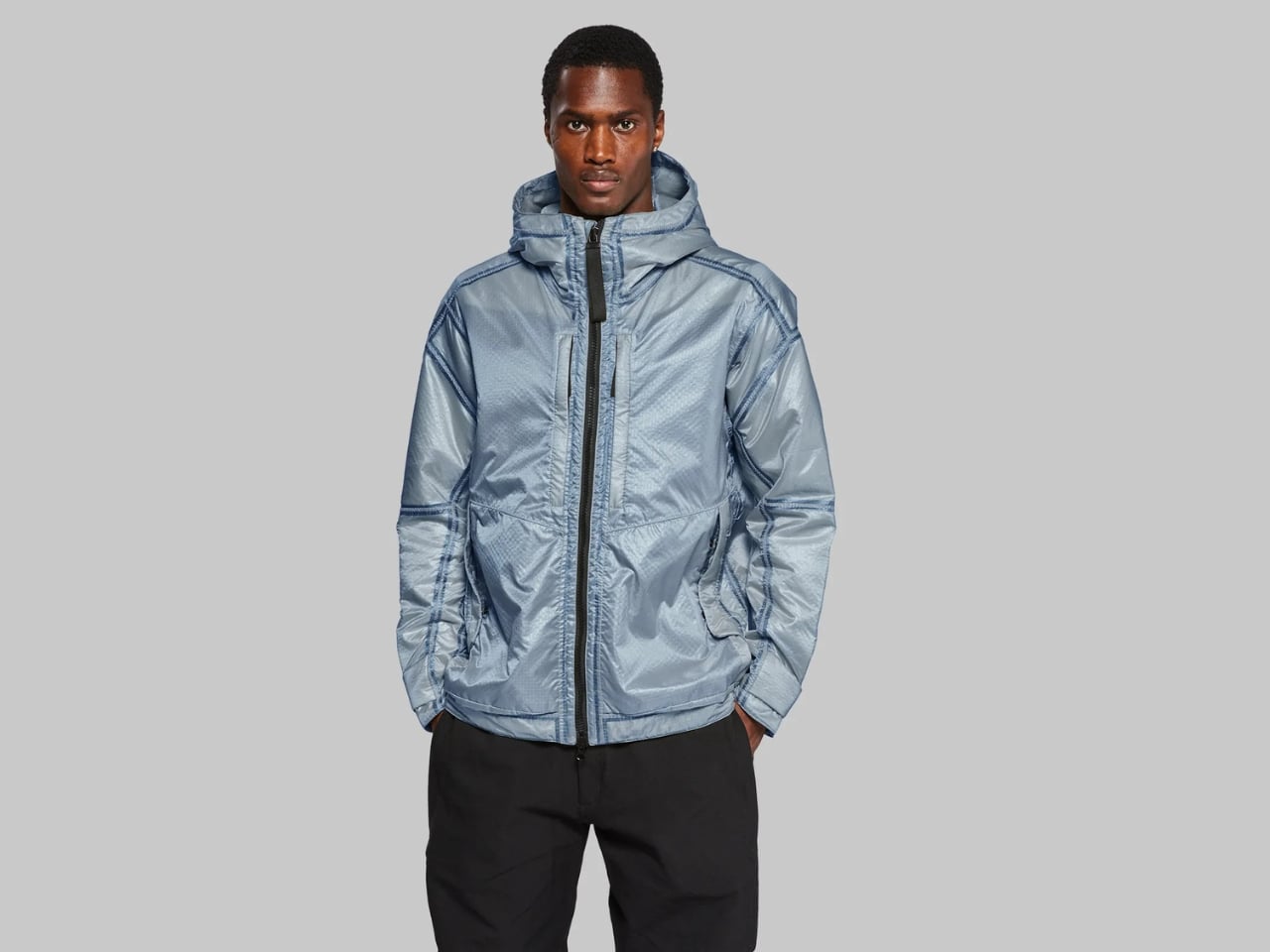
This $3,295 Elysium Blue Jacket Uses Tech That’s Actually on Mars

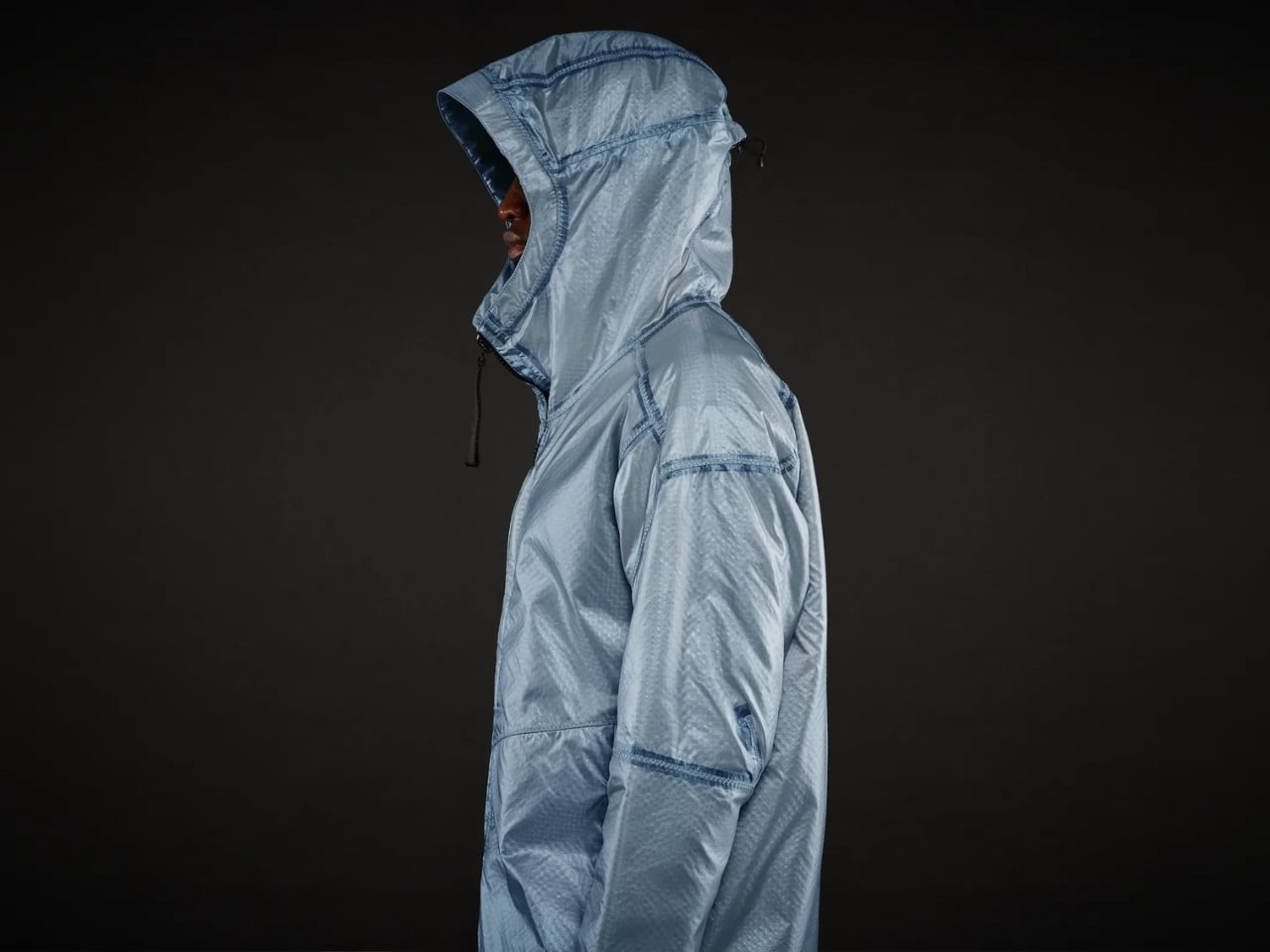
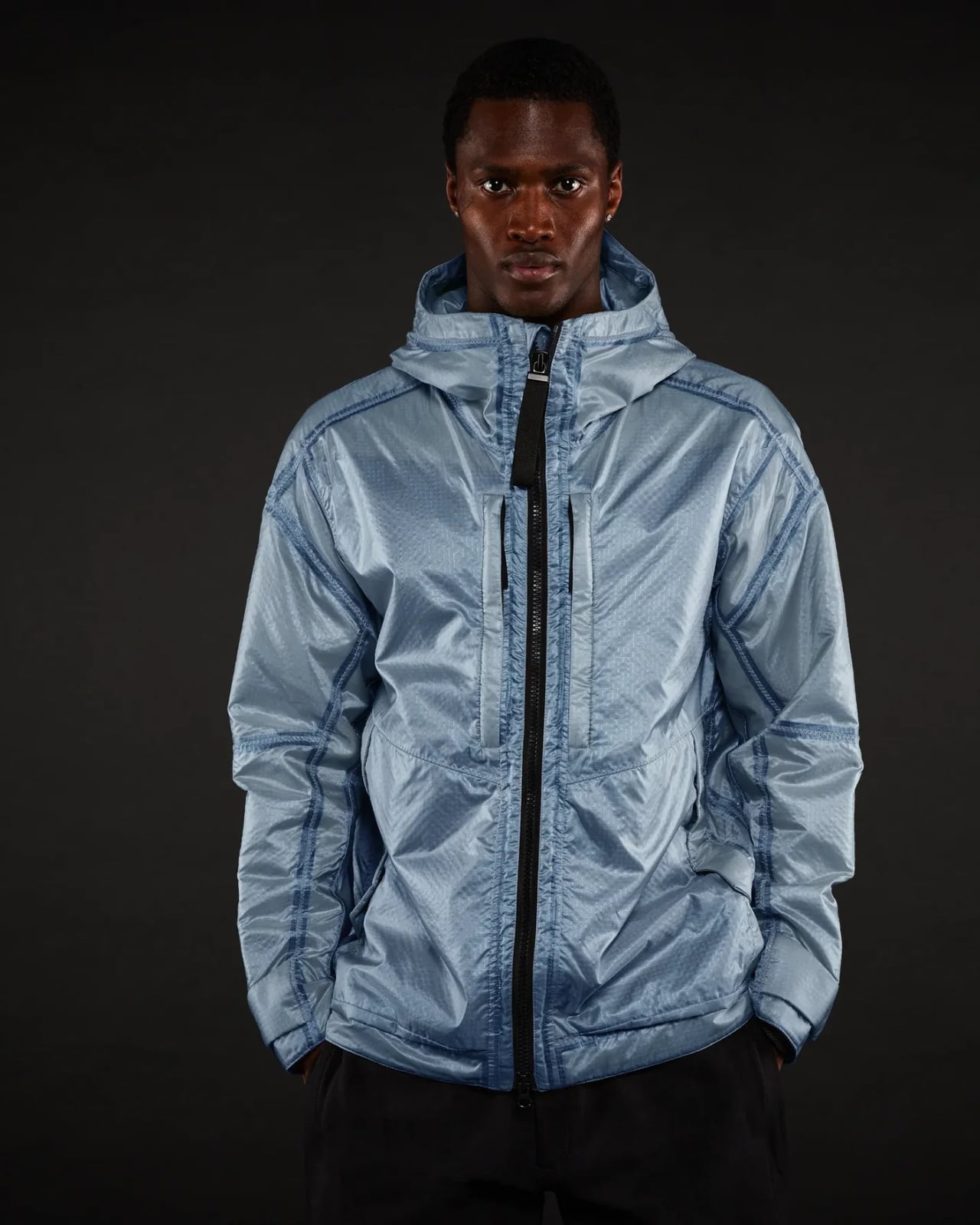
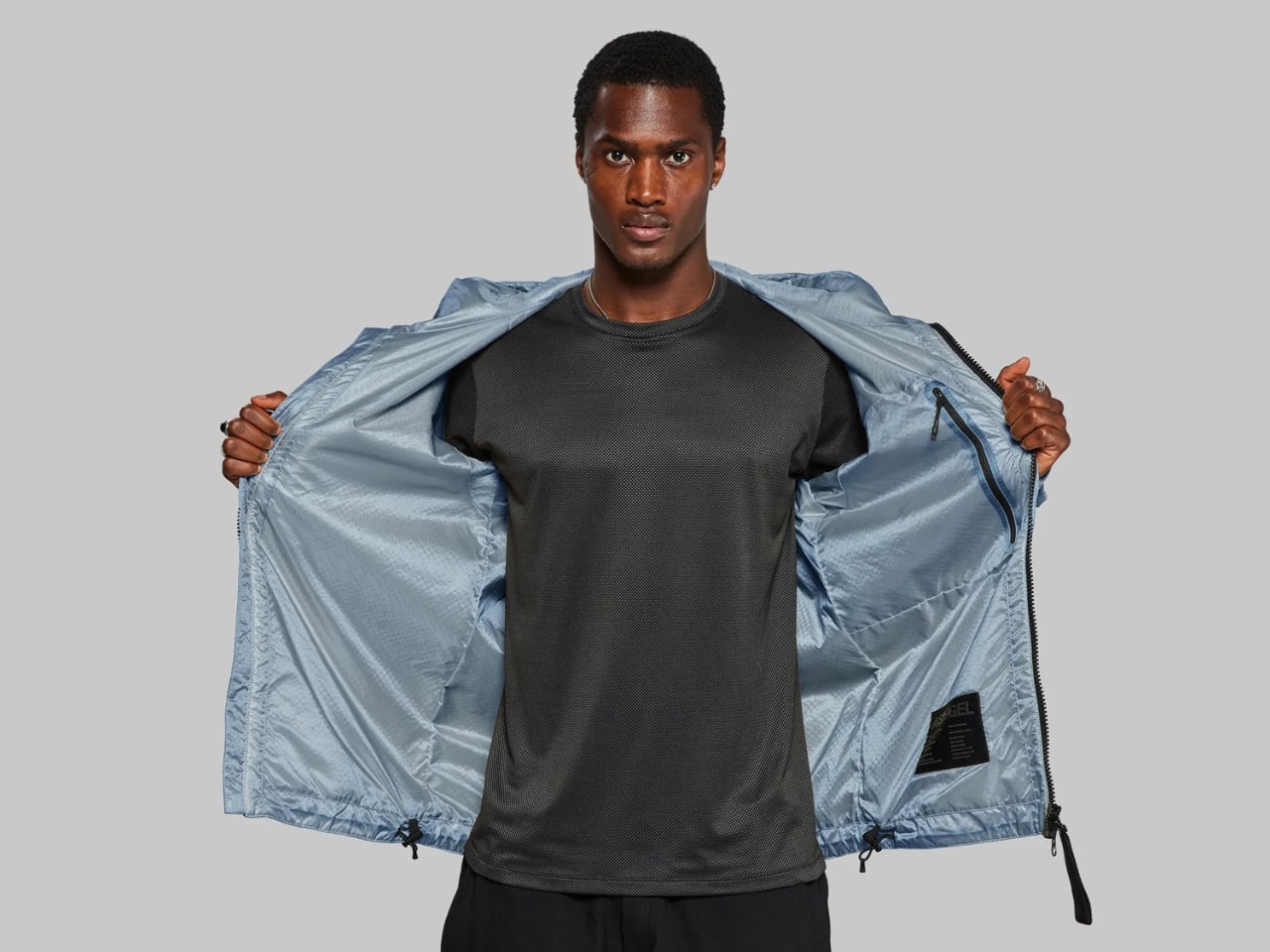
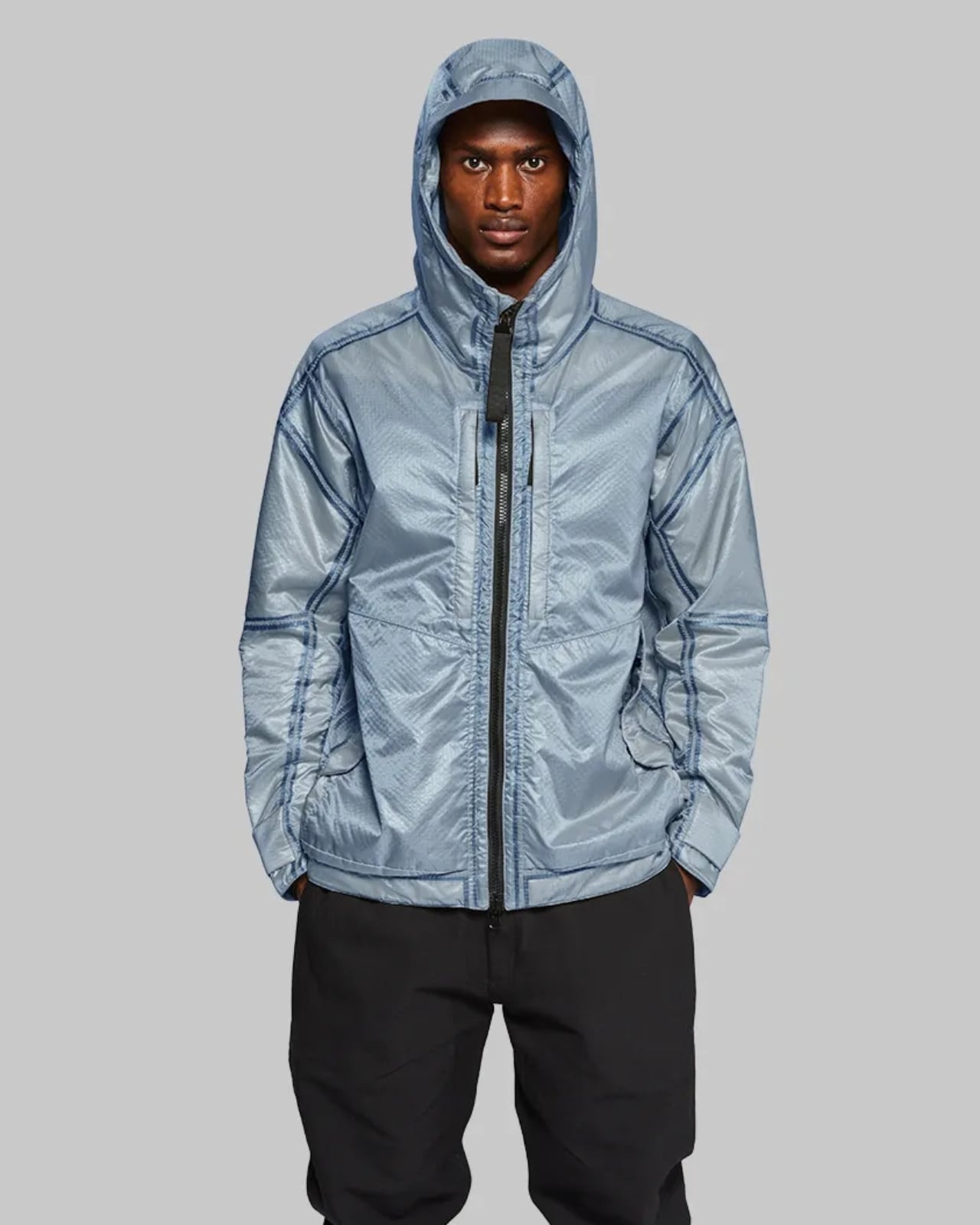
Let me tell you about a jacket that’s so technologically advanced, the only component you won’t find on Mars is the zipper. Yes, you read that right. Vollebak’s Martian Aerogel Jacket in Elysium Blue is literally made from the same materials currently exploring the Red Planet and it’s one of the most fascinating pieces of design I’ve come across in a while. Well, at least when it comes to jackets.

Here’s the wild part. The outer shell is woven from hypersonic parachute fabric, the exact same material NASA uses to land probes on Titan and Mars Rovers on the Martian surface. Inside, you’ll find aerogel insulation developed by the same team engineering heat shields for the next Mars Rover mission. This isn’t just marketing speak or space-inspired aesthetics. This is actual aerospace hardware transformed into something you can wear on Earth.

Designer: Vollebak

Vollebak released this Elysium Blue edition exactly 846 days after launching their first Martian Aerogel Jacket, which happens to be the same amount of time it takes to travel from Earth to Mars twice. The attention to detail is absolutely incredible, and it shows how much thought went into not just the technology but the storytelling behind it.

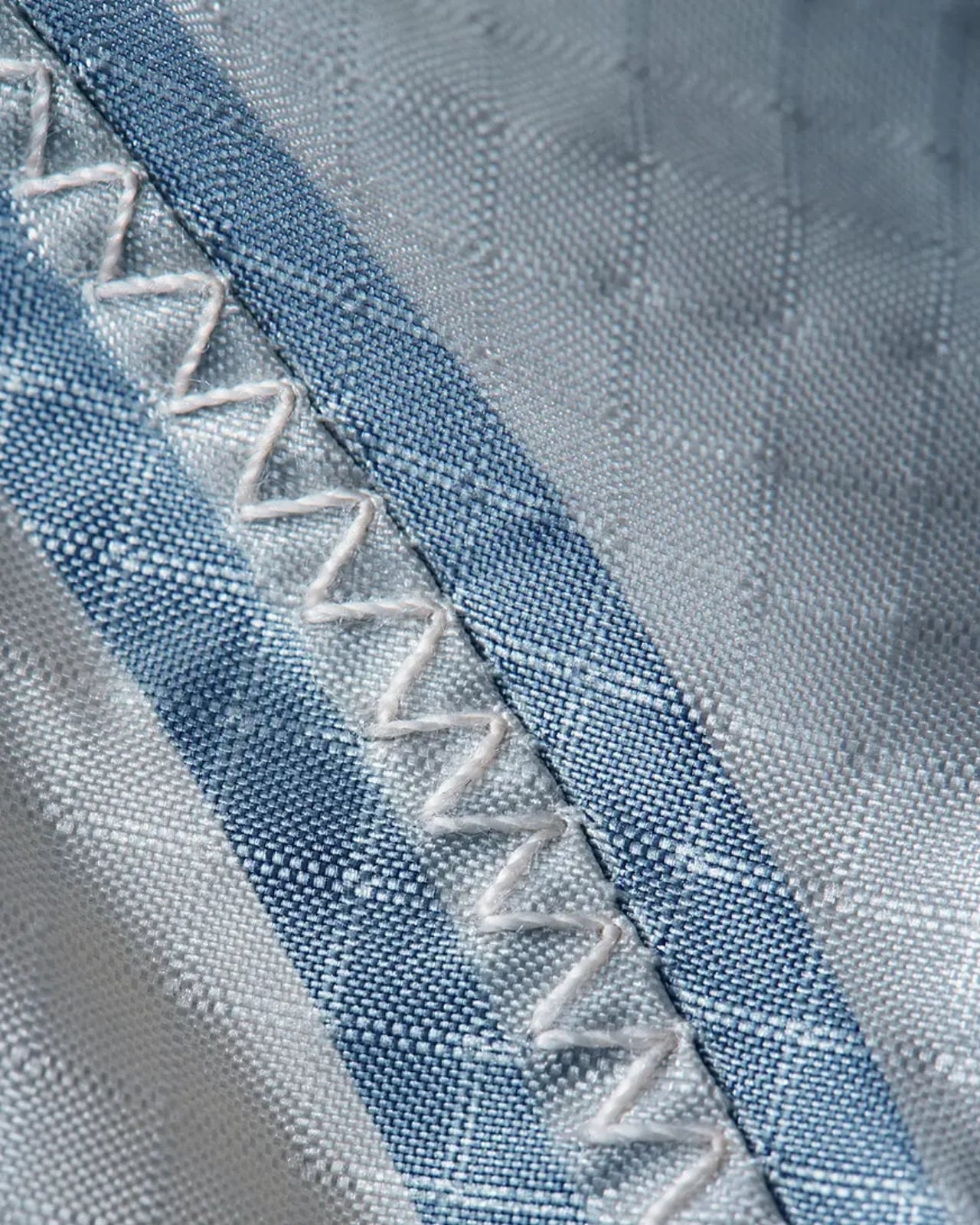
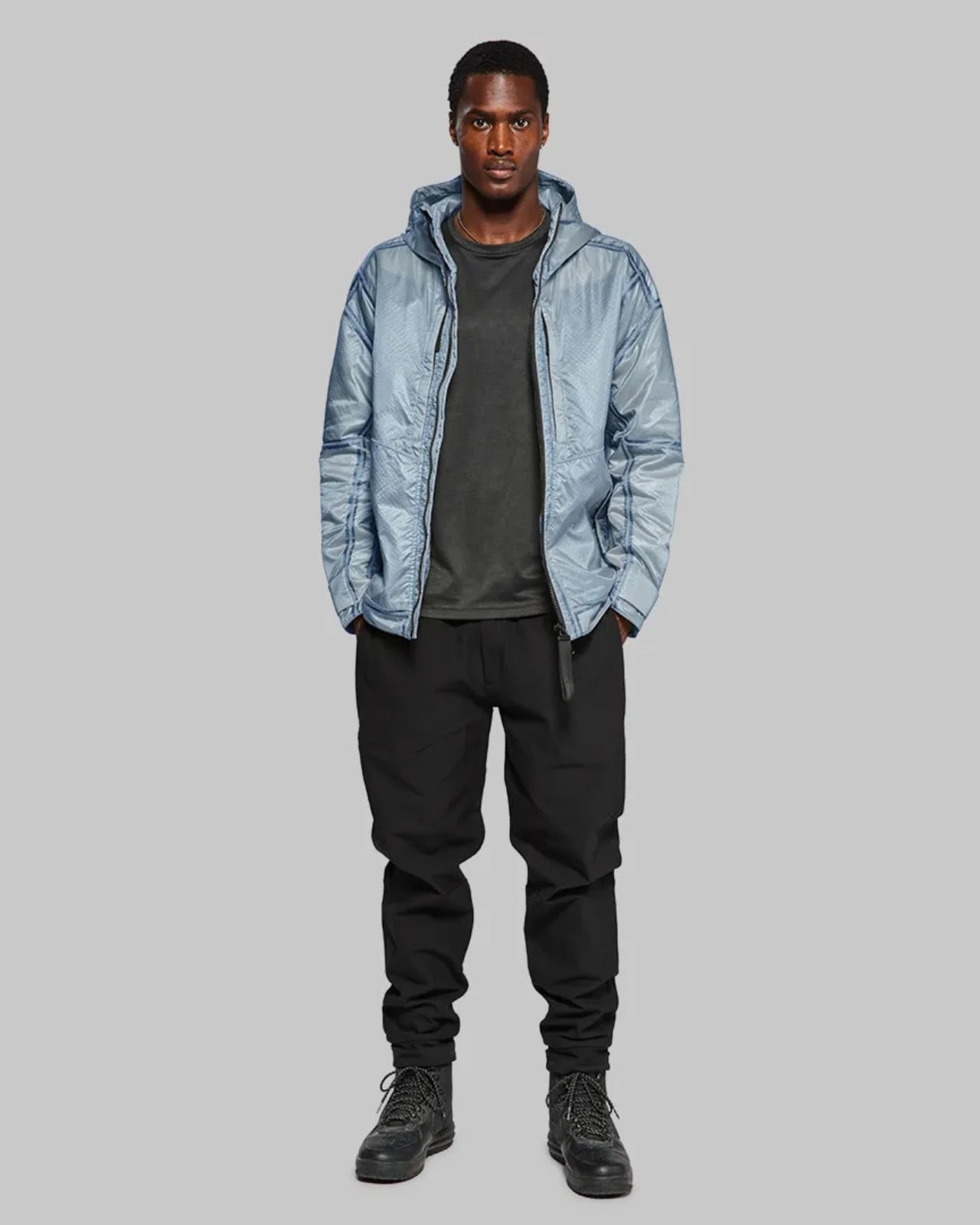
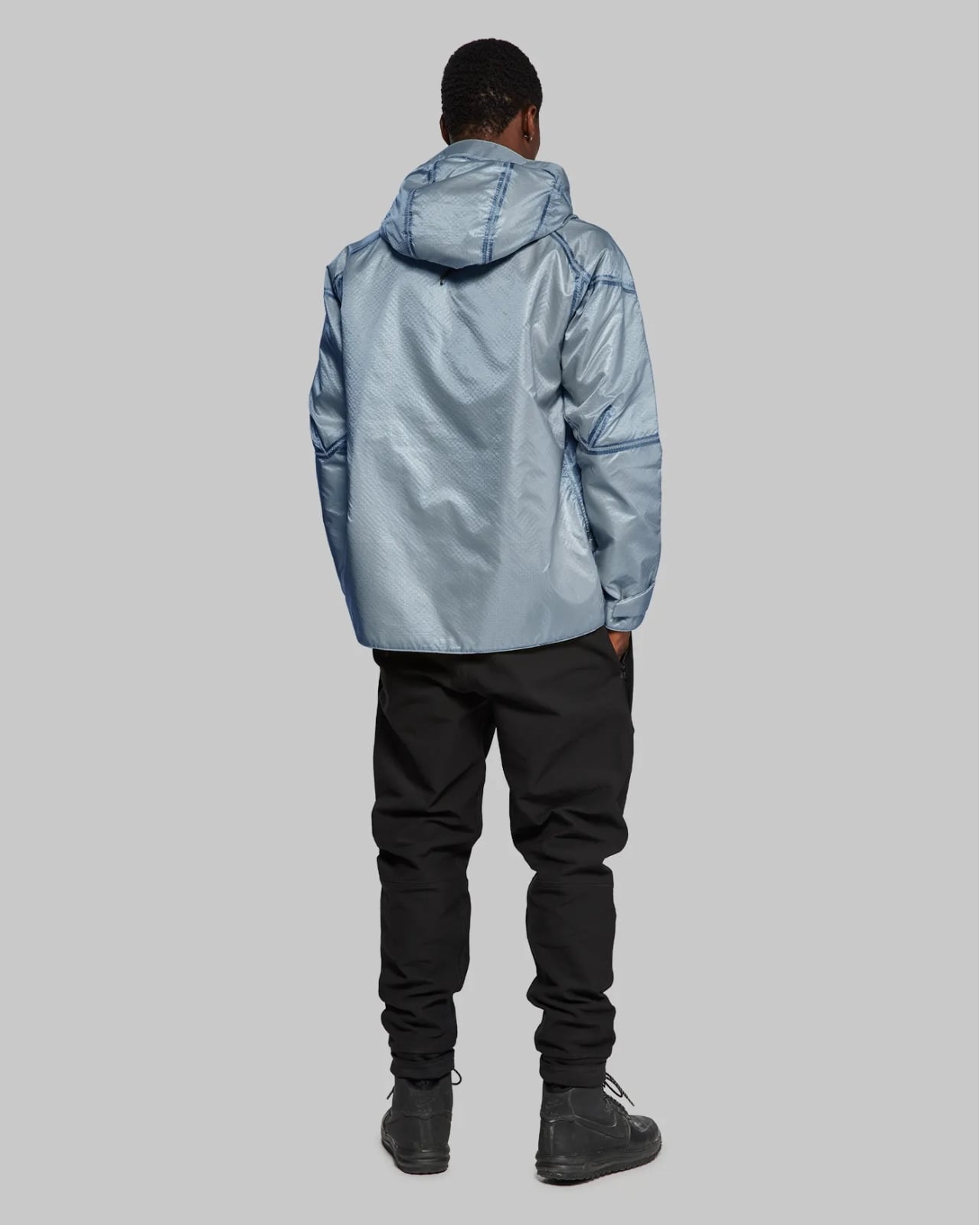
The color itself is stunning. While previous editions came in Mercury silver, Stealth Black, and Rover Orange, this Elysium Blue offers something more versatile and wearable for everyday life. The soft metallic blue finish creates this beautiful shimmer that catches the light, contrasted perfectly against black seam taping and zigzag stitching throughout. The design pays homage to Project Mercury spacesuits from the early days of space exploration, specifically inspired by the aluminized nylon and angled zippers that protected the first astronauts.

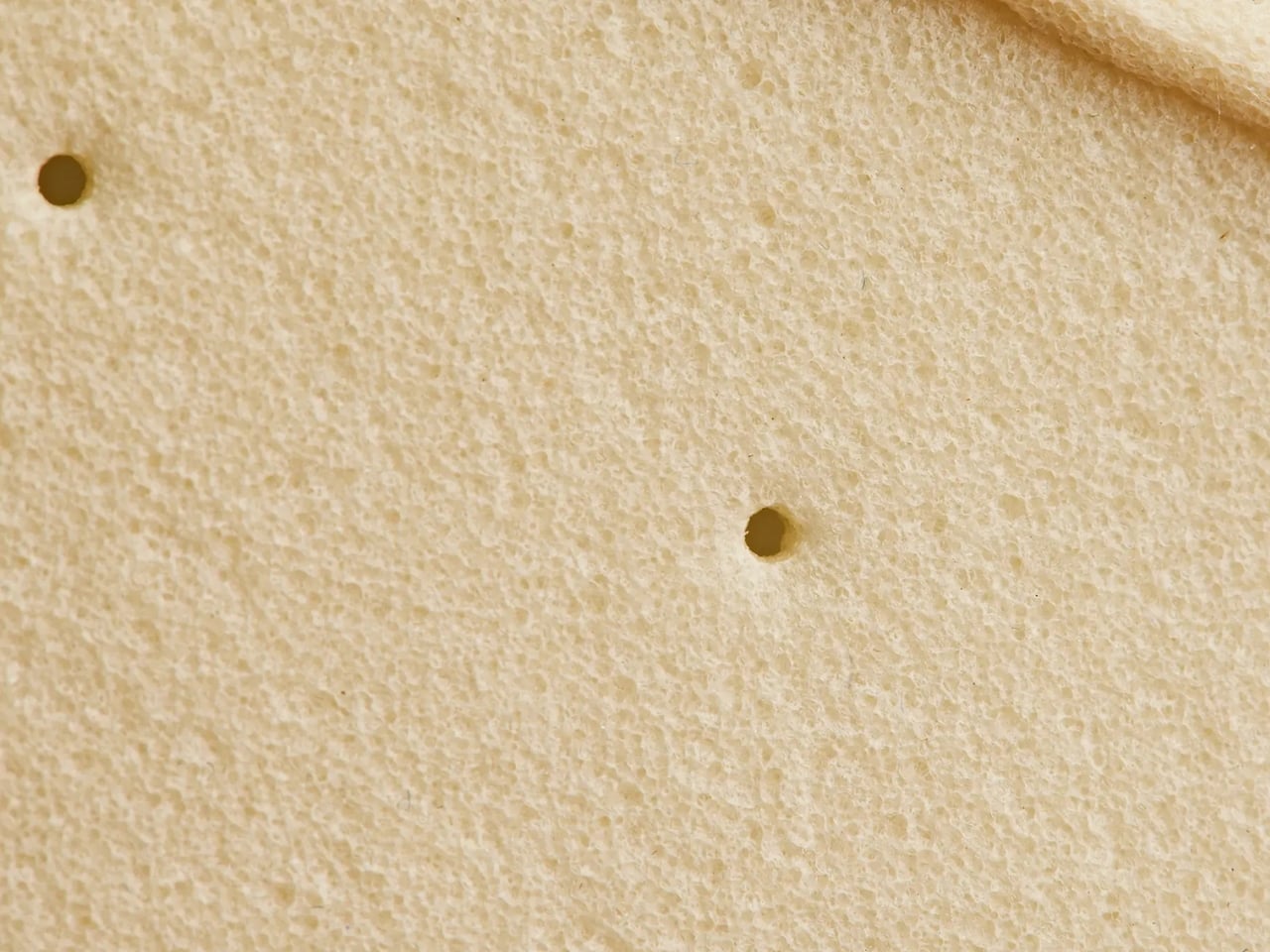
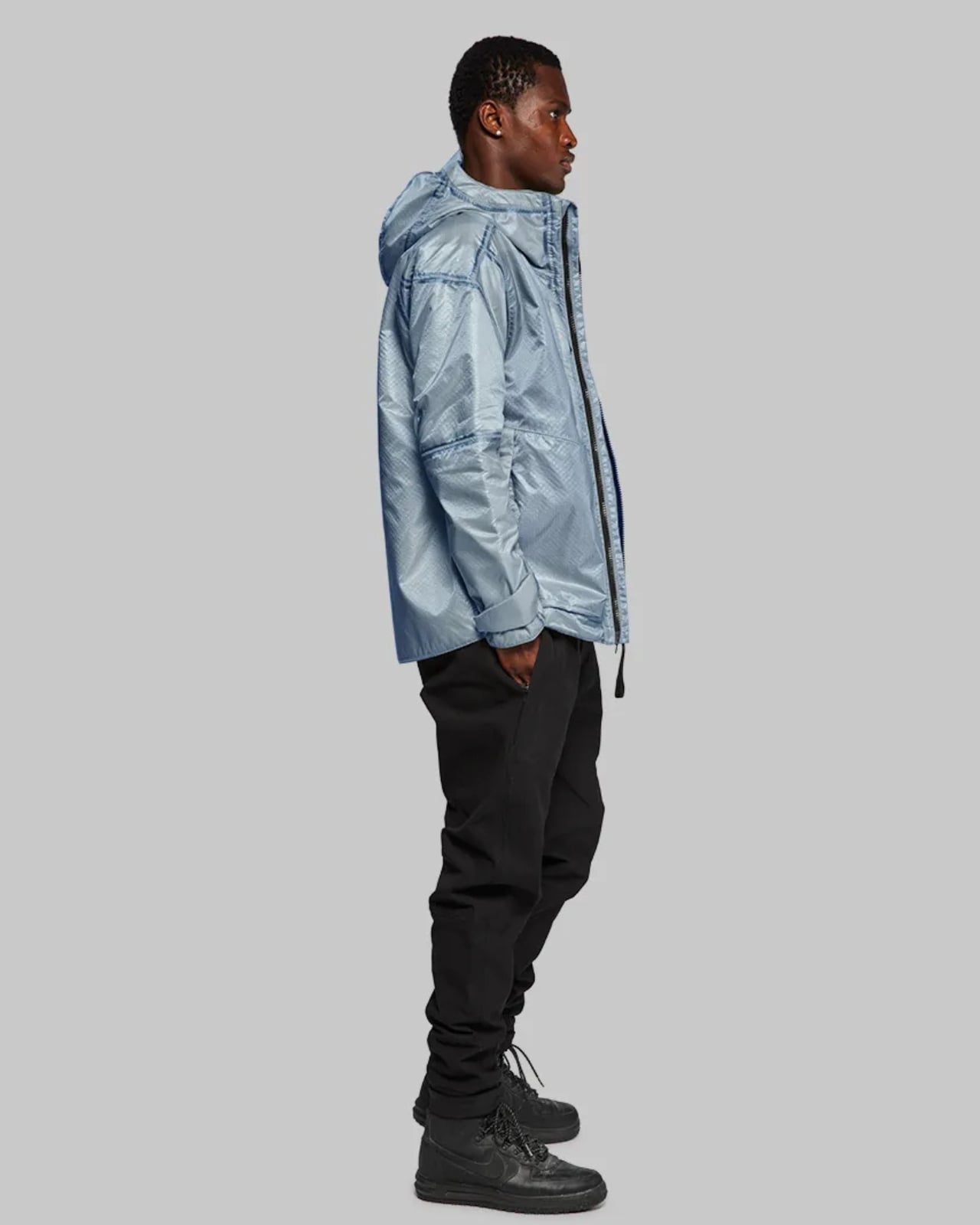
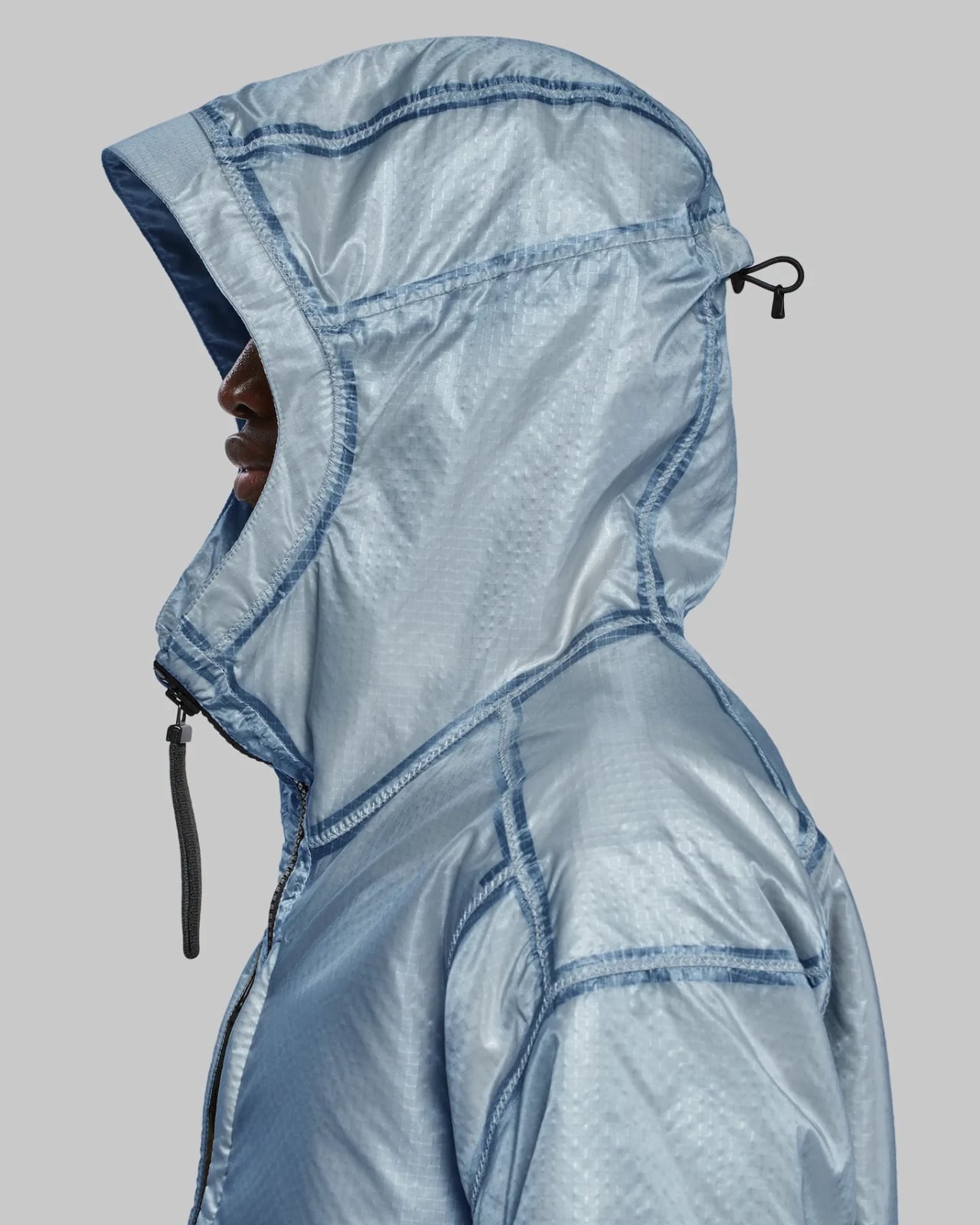
What really sets this jacket apart visually is the transparent finish on the outer shell. It literally gives you a window into the laser-drilled aerogel technology underneath. You can actually see the advanced engineering that makes this piece work. It’s like wearing a piece of functional art that reveals its secrets instead of hiding them. Now let’s talk about what makes aerogel so special. This material is incredibly lightweight yet provides serious insulation. The construction features laser-drilled micropores that allow breathability while still keeping you warm, which solves one of the biggest problems with traditional insulated jackets. You won’t overheat when you’re moving, but you’ll stay toasty when you’re standing still.

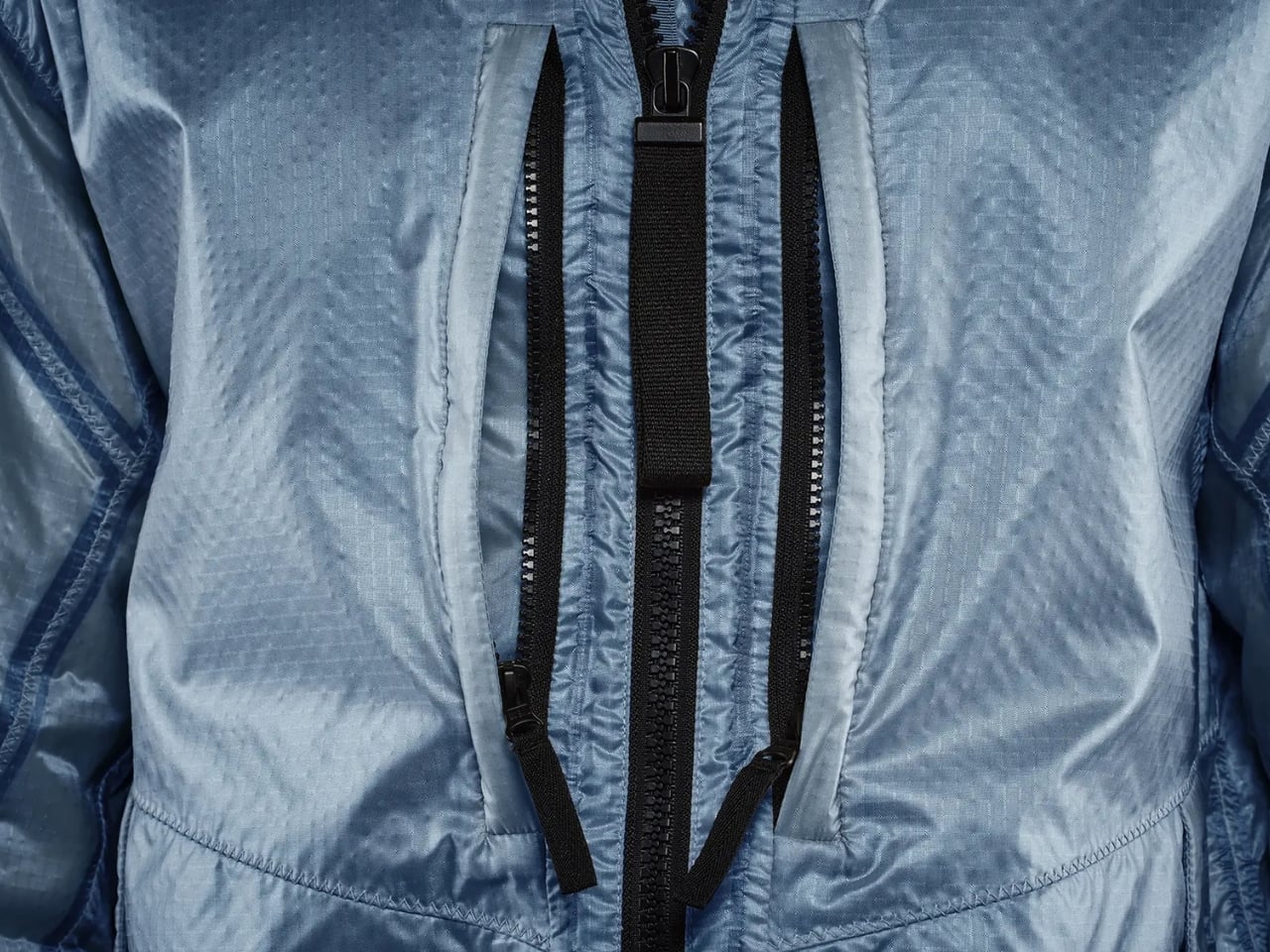
The practical features are equally impressive. You get five zipped pockets total, including two large side pockets with storm flaps that close with metal snaps, two chest pockets perfect for your phone and wallet, and an interior pocket on the left side. The peaked hood is lined with the same aerogel insulation as the rest of the jacket, and there are cord adjusters at the hood and hem to seal out cold air. The cuffs close with metal snaps to create a tight seal around your wrists.

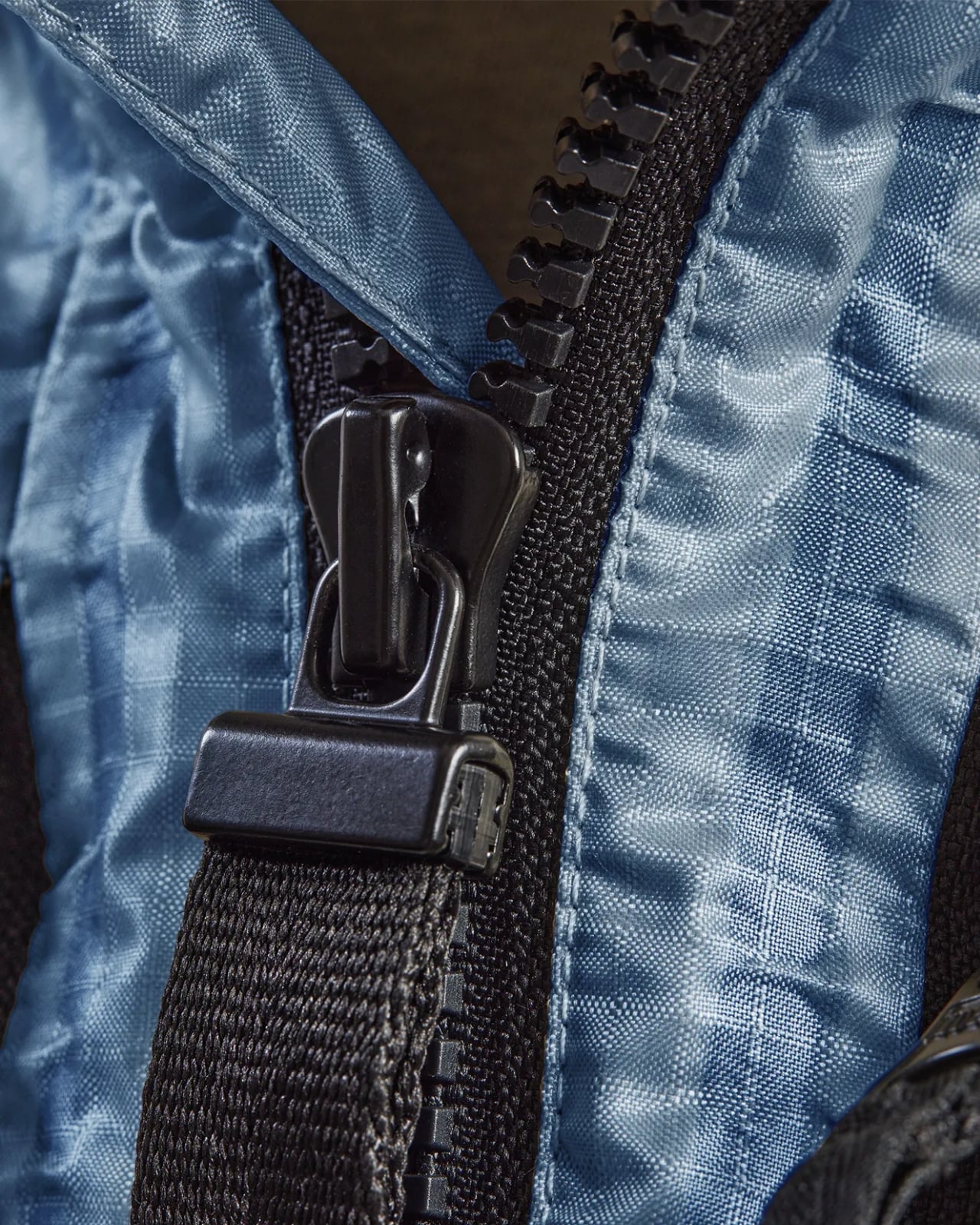
My favorite detail is the two-way front zipper comes with an oversized pull cord specifically designed so you can operate it while wearing thick gloves. It’s these kinds of thoughtful touches that show this jacket was designed for actual performance, not just to look cool (though it absolutely does both). The materials breakdown is fascinating too. The insulation is made in the US from 80% organic rubber foam and 20% silica aerogel, while the outer material and lining are 100% polyamide made in the UK. This jacket is designed to survive downpours while keeping you warm and dry, making it genuinely functional for extreme weather conditions.

At $3,295, this is definitely an investment piece. But you’re not just buying a jacket. You’re buying a conversation starter, a piece of aerospace history, and genuinely cutting-edge technology that performs in real-world conditions. It’s where fashion meets function meets the future of space exploration.

Whether you’re a design enthusiast, a tech lover, or someone who appreciates the intersection of innovation and style, the Martian Aerogel Jacket in Elysium Blue represents something truly special. It’s proof that the most exciting design happens when we push boundaries and ask what’s possible when we bring technology from other worlds into our everyday lives.

The post This $3,295 Elysium Blue Jacket Uses Tech That’s Actually on Mars first appeared on Yanko Design.
When Fashion Becomes a Safety Net: The Jacket That’s a Tent

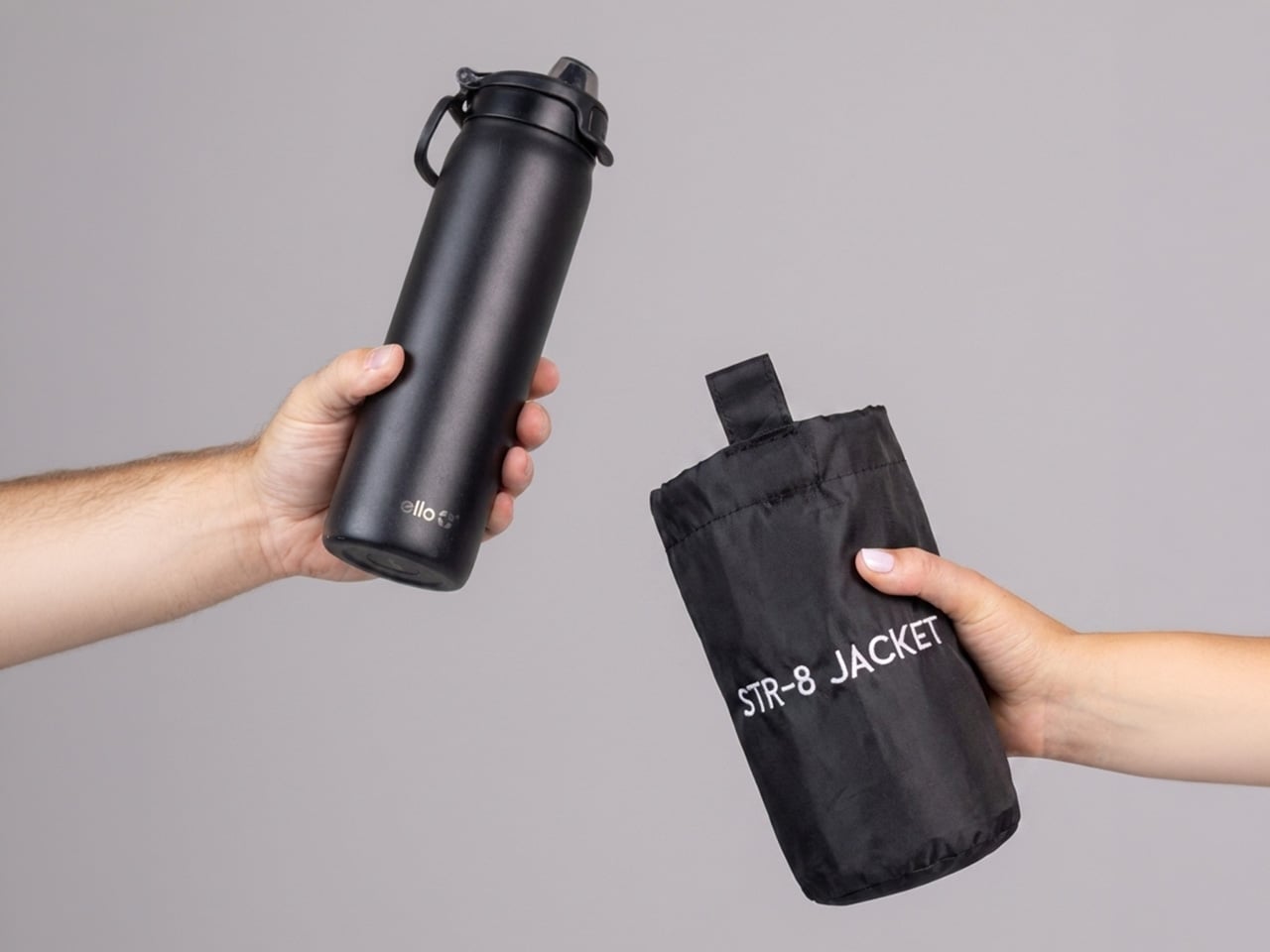
What if your jacket could save your life? Not in the metaphorical sense, but literally. Tokyo-based fashion student Yoon Myat Su Lin has designed something that sounds like it belongs in a sci-fi movie but is rooted in very real human need. It’s called Shelter Wear, and it’s exactly what it sounds like: a wearable garment that transforms into a functional tent.

The concept didn’t come from a design studio brainstorm or a trendy pitch deck. It came from memory and trauma. Yoon experienced an earthquake in Myanmar, where she witnessed people suddenly displaced, left scrambling for safety without any temporary shelter. That image stuck with her. She started thinking differently about what clothing could do, beyond looking cool or expressing identity.

Designer: Yoon Myat Su Lin

What if the thing you’re already wearing could become the thing you desperately need? And that’s where Shelter Wear gets interesting. It challenges the entire idea of what fashion is supposed to be. We’re used to clothes being decorative, seasonal, expressive. But Yoon flips that script. She’s asking: why can’t a garment be infrastructure? Why can’t your outfit double as your emergency kit?

When you first look at Shelter Wear, it reads as a structured, utilitarian vest. Think sleeveless outerwear with a high protective collar and some seriously intentional paneling. It’s got that techwear aesthetic, the kind of thing you’d see on someone who’s into urban exploration or just really likes pockets. But here’s where it gets wild: those sleeves? They’re detachable backpacks. You’re literally wearing your storage.

Then comes the transformation. Unclip a few buckles, unfold the structure, and suddenly you’re inside a triangular tent that expands around your body. It’s not a gimmick or a prototype that barely works in controlled conditions. It’s a legitimate shelter that offers protection when everything else has failed. The tent resembles a wide skirt when worn, blending into the garment’s silhouette until you actually need it.

This isn’t about camping trips or festival fashion. This is crisis design. It’s for the moments when help hasn’t arrived yet, when infrastructure has collapsed, when all you have is what’s on your body. In those first critical hours after a disaster, traditional emergency supplies might be inaccessible. But if you’re already wearing your shelter, you’ve bought yourself time and safety. Yoon drew inspiration from designer Aojie Yang, who also works in the space of functional, transformative fashion. But where some conceptual designs feel distant from real application, Shelter Wear feels grounded. It’s portable without being bulky. It’s practical without sacrificing design integrity. And it makes you rethink the relationship between body and architecture.

Because that’s really what this is about. The body as the first architecture. When buildings fall, when homes are destroyed, your body remains. Shelter Wear treats that body as a moving site of refuge. It’s a radical reframing of what clothing infrastructure can mean in vulnerable communities. The design also won the YKK Special Prize at the 25th YKK Fastening Award, which makes sense when you think about the engineering involved. This isn’t just fabric and good intentions. It’s ripstop materials, strategic folding mechanisms, and fasteners that need to hold up under actual emergency conditions.

But beyond the technical specs, Shelter Wear is a gesture of solidarity. It acknowledges that displacement is real, that climate disasters are increasing, that millions of people worldwide face housing insecurity. Instead of looking away, Yoon designed toward that reality. Does it solve homelessness? No. Will it prevent earthquakes? Obviously not. But it does something equally important: it expands our imagination of what design can do. It proves that fashion students in Tokyo are thinking about Myanmar earthquakes, about refugee crises, about what happens when safety disappears. And they’re making things that might actually help. That’s the power of design when it refuses to just be decorative. When it insists on being useful, urgent, and human.

The post When Fashion Becomes a Safety Net: The Jacket That’s a Tent first appeared on Yanko Design.
Columbia’s Endor Collection Brings Star Wars Style to Real Life

If you’ve ever wanted to dress like a Rebel Alliance soldier without looking like you just walked out of a cosplay convention, Columbia Sportswear has you covered. Their new Star Wars Endor Collection, dropping December 11th, is their most ambitious collaboration yet, and honestly, it’s pretty spectacular.

This isn’t just another brand slapping a logo on a hoodie and calling it a collaboration. Columbia has been partnering with Star Wars since 2016, releasing annual holiday collections that go deep into the details. But this 20-piece Endor Collection takes things to another level entirely. The designers actually visited Skywalker Ranch to see the original spray-painted camo costumes from Return of the Jedi in person. That hands-on research shows in every piece.
Designer: Columbia

The collection reimagines some of the most iconic looks from the Battle of Endor: Han Solo’s camouflage trench coat, those memorable ponchos Luke and Leia wore, and the Rebel troop uniforms. But here’s what makes it special. These aren’t costume replicas. They’re actual functional outdoor gear that happens to be inspired by a galaxy far, far away. Columbia took their signature performance technology and merged it seamlessly with authentic Star Wars design elements.

Take the Endor Issue Ponchos, for example. They recreate the iconic look from the film, but they’re made with Omni-Tech waterproof fabric and feature bungee-adjustable arms. You could actually wear these hiking in the Pacific Northwest (which, let’s be honest, looks a lot like Endor anyway). The General Han Solo Trench is even more impressive because it separates into three individually wearable pieces, each packed with Star Wars Easter eggs for fans to discover.

The boots deserve special mention too. The Endor Issue Boots combine technical features like Omni-MAX cushioning, an Omni-Grip outsole, and a TechLite midsole, making them genuinely trail-ready. Following last year’s footwear debut in the collaboration, Columbia clearly learned what works for fans who want both authenticity and actual performance from their gear.

The attention to detail is where this collection really shines. Throughout the pieces, you’ll find carefully placed Rebel Alliance logos, coordinates, and messages written in Aurebesh (the Star Wars alphabet) for fans to decode. The blanket features original concept art, there are Ewok fleece patches, Bright Tree Village references, and even the actual map of the filming location tucked inside the shoebox and printed on long-sleeve tees. It’s like a treasure hunt for Star Wars enthusiasts.

What’s particularly clever is how Columbia captured that organic, hand-sprayed technique used on the original costumes. The designers worked to ensure their versions maintained that same imperfect, authentic look while still being performance-driven outdoor apparel. Balancing costume accuracy with real-world functionality took considerable time and effort, but the result is pieces that feel genuinely inspired rather than gimmicky. The color palette pulls directly from Endor’s forest moon aesthetic: earthy browns, mossy greens, and woodland camouflage patterns that feel both fantastical and wearable in everyday life.

The collection includes everything from the standout trench coat and ponchos to more practical pieces like the Endor Issue Pants (Columbia’s first-ever Star Wars-inspired pants), cargo jackets, reversible jackets, cargo vests, and various pullovers and half-zips. There’s also an Endor Issue Cargo Backpack for carrying your gear, water bottles with themed designs, multiple hat styles including a ball cap and wider-brimmed options, and even a quilted blanket perfect for outdoor adventures or cozy movie marathons watching the original trilogy.

Columbia enlisted Billie Lourd for the campaign, which feels particularly meaningful. Lourd, who played Lieutenant Connix in the sequel trilogy and is the daughter of the legendary Carrie Fisher, was photographed among towering California redwoods with her children wearing Ewok-inspired fleece pieces. It’s a beautiful tribute that connects the collection to Star Wars legacy while showcasing how these pieces work for real families having real outdoor adventures.

The collection launches December 11th at 10 AM EST on Columbia’s website, with early access for members of their free Greater Rewards program starting 30 minutes earlier. It’s the kind of collaboration that shows what happens when a brand genuinely respects both the source material and their customers. You get functional outdoor gear that happens to make you feel like you’re part of the Rebellion, without sacrificing style or performance. And in a world full of half-hearted pop culture collaborations, that’s definitely worth celebrating.

The post Columbia’s Endor Collection Brings Star Wars Style to Real Life first appeared on Yanko Design.