
Mark Zuckerberg says Meta is ‘entering a new phase’ with Muse
Zuckerberg expects the agent will generate more revenue per user than the company's apps.

A grid of triangular glass panels follows O27’s swelling, pinched silhouette, making the proposed Houston skyscraper look almost elastic. Designed by Austin-based STG Design for developer Broadview Real Estate, the 32-story office tower is planned for 4701 Westheimer Road, near the River Oaks District. Its approximately 520,000 square feet of office space would occupy a building whose exterior seems reluctant to follow a straight line.
In the renderings, two curving glass surfaces rise above a substantial podium, with terraces tracing the opening between them. The triangular pattern gives those broad surfaces a finer texture, helping the eye register changes in curvature. Near the ground, the glazing sweeps diagonally toward the entrance; higher up, projecting terraces interrupt the smooth outline. The effect is sculptural, with the terrace edges providing a useful sense of scale.
Designer: STG Design

Behind that expressive exterior is a more pragmatic design exercise. According to the developer, an intensive computational design process allowed the architects to refine the tower’s geometry while maintaining efficient, repeatable floor plates. That is the project’s most consequential balancing act: giving the skyline an unusual shape without requiring every office level to become an entirely different planning problem.
The triangular glass panels are intended to produce a shimmering surface that changes appearance throughout the day. That remains a design intention, rather than an observed property of a finished facade. Visually, though, the renderings suggest that the diagonal grid will be as important to O27’s identity as its overall profile, breaking the curved elevations into smaller, legible facets.

At street level, Design ALT + TAB is responsible for the entrance drive and lobby. The planned motor court includes a water wall and a canopy embedded with fiber optics to evoke a night sky. Its rendering is emphatically theatrical: golden lighting follows the ceiling’s curves, while water and planting frame the vehicle arrival. The office address is presented with the ceremony of a luxury hotel.
That hospitality approach extends to planned amenities, including a restaurant and bar, fitness and yoga studios, a spa, conference facilities, and a sky lounge. A landscaped terrace would sit above the nine-story parking deck, adding an outdoor gathering space at the point where the tower rises from its base.

The podium is a substantial part of the composition, and its relationship with the street deserves as much attention as the skyline silhouette. Broadview is targeting completion in 2028, but told Bisnow that neither a groundbreaking date nor an equity partner had been finalized. For now, O27 remains an ambitious proposal, with its most interesting promise resting in the reconciliation of fluid form and repeatable workspace.

The post Houston’s Proposed O27 Skyscraper Turns Triangular Glass Into a Rippling Facade first appeared on Yanko Design.


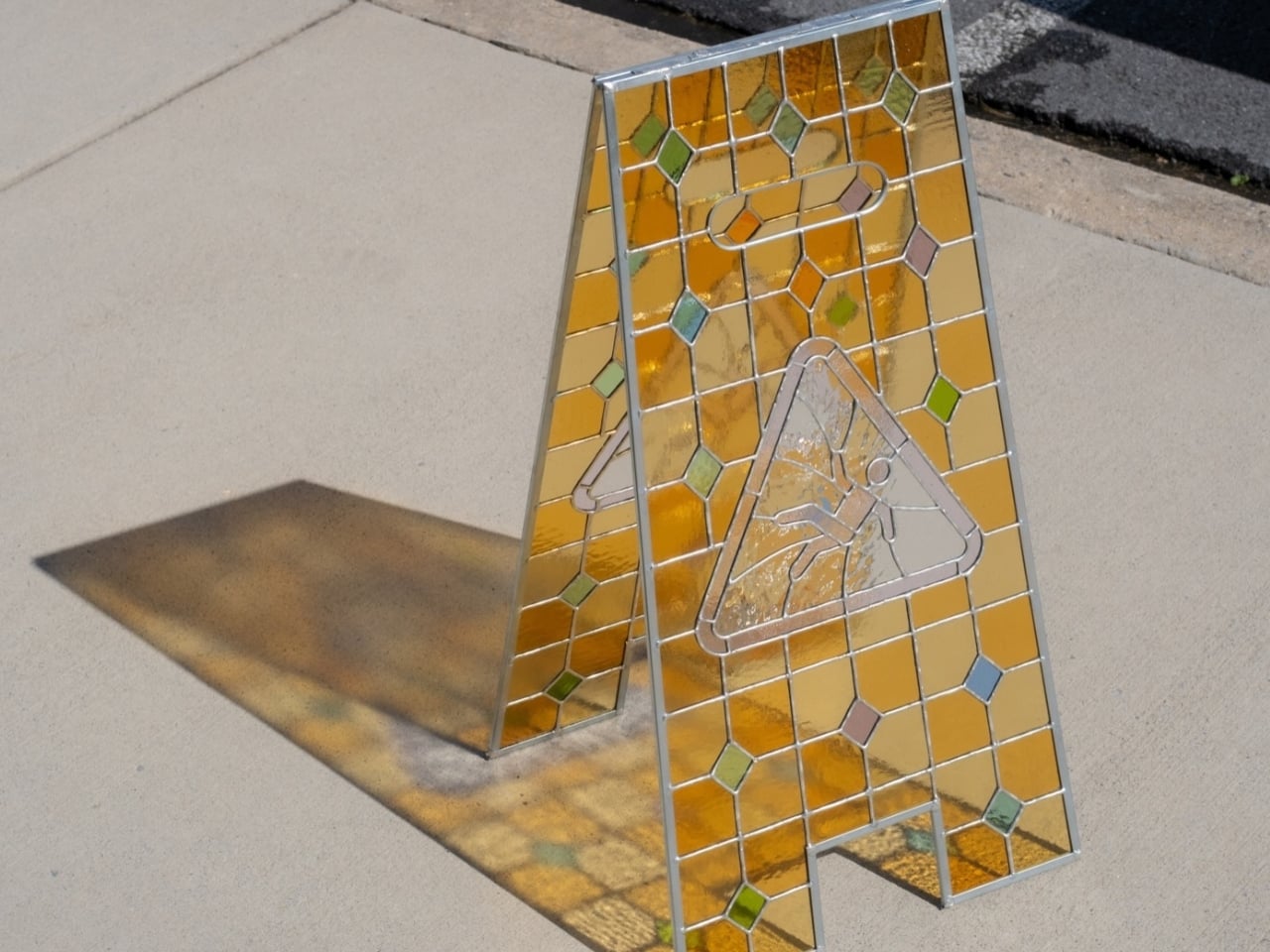
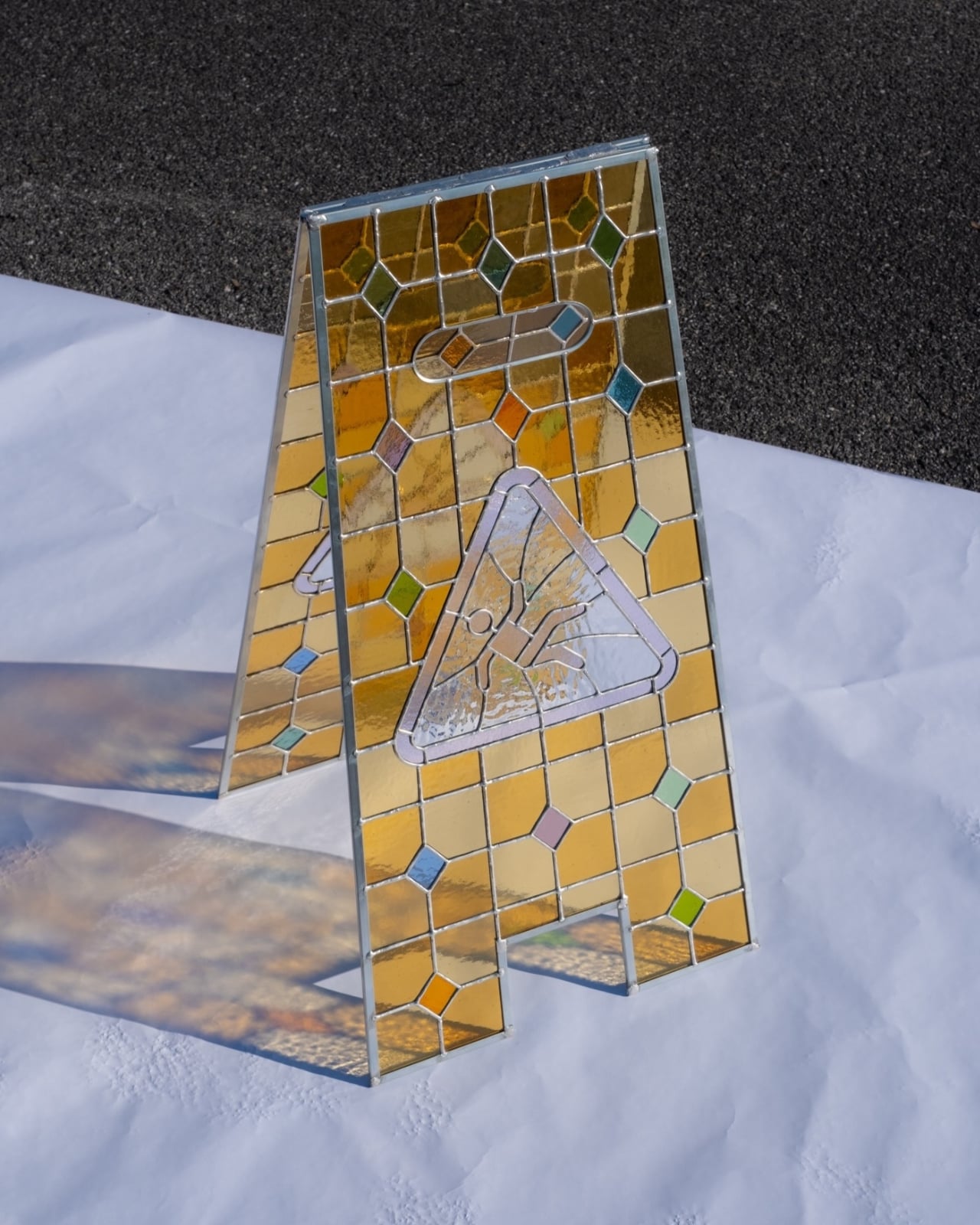
The amber shadow on the sidewalk is almost as appealing as the object casting it. Hayden Clay Williams’ stained-glass caution sign takes the familiar folding silhouette and rebuilds it as a sculpture, with golden panels, small colored diamonds, and a slipping figure enclosed in a triangle. I like that you can recognize the source immediately. The glass hasn’t swallowed the design; it gives you a reason to study its familiar parts.
A conventional caution sign has a straightforward problem to solve: make a hazard visible before someone steps into it. Williams keeps that visual shorthand, particularly the upright stance and warning symbol, while changing what happens when light hits the surface. This is an artwork rather than a demonstrated improvement to safety equipment. Its appeal comes from preserving an everyday sign’s identity while making its construction worth a closer look.
Designer: Hayden Clay Williams
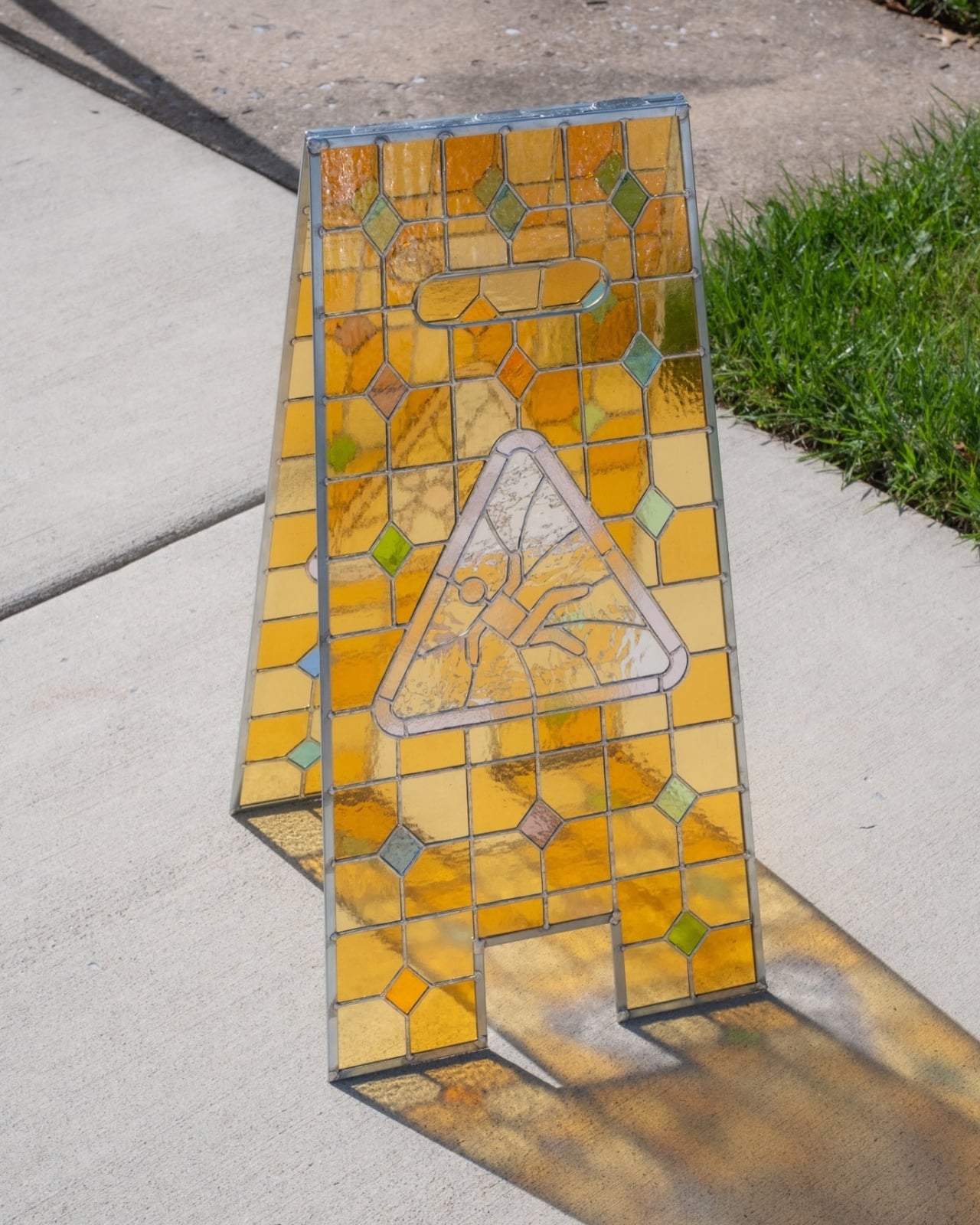
The color does much of that work. Rather than reproducing a uniform safety yellow, Williams uses rectangular sections ranging from pale honey to deeper orange and amber. Their uneven textures break up reflections, giving neighboring pieces subtly different appearances. Small diamonds interrupt the grid in green, blue, pink, and rust. The arrangement reminds me of a decorative window transplanted into the cleaning aisle, with enough restraint to keep the warning symbol from disappearing into the pattern.
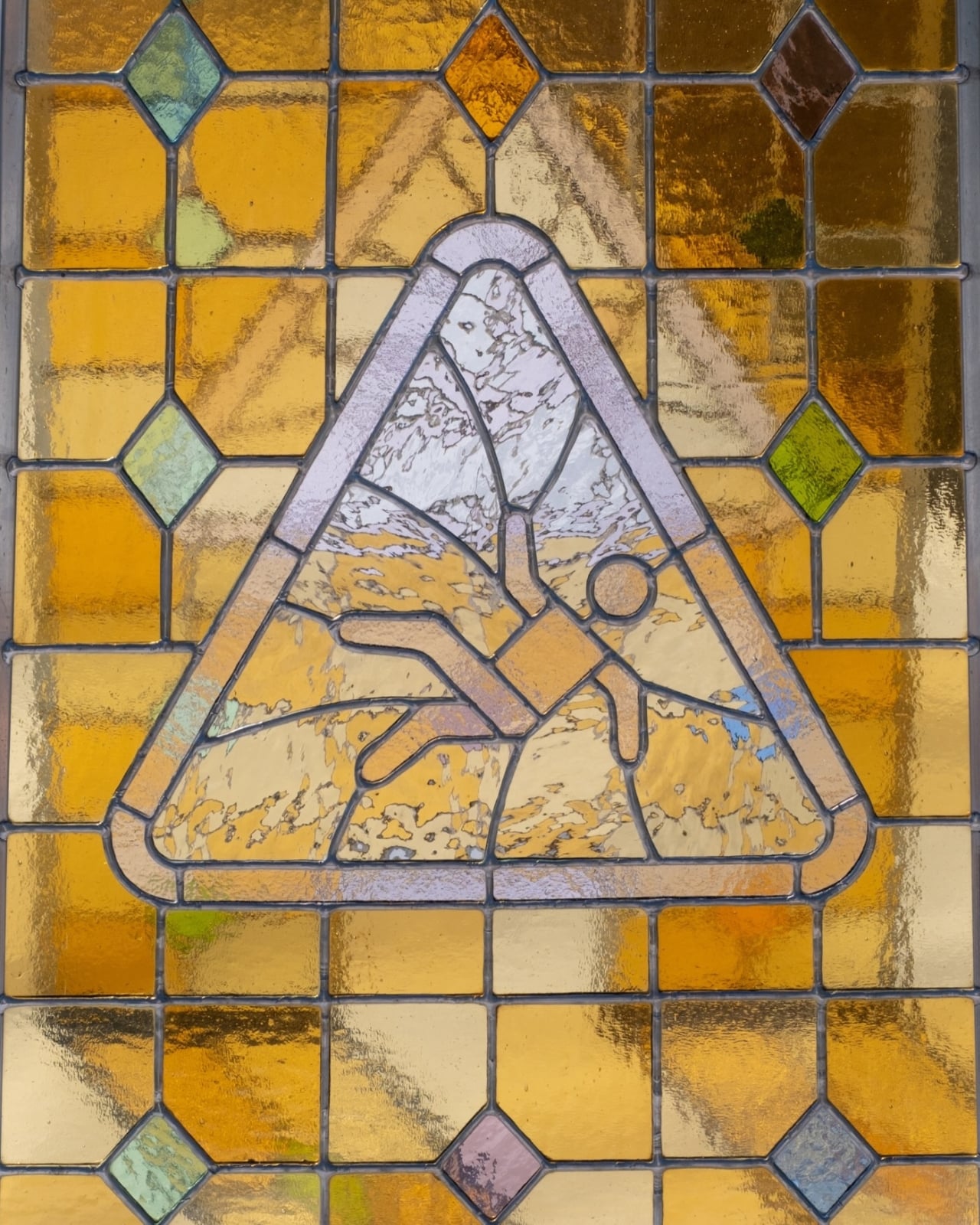
That symbol deserves its own attention. The triangular border is picked out in pale, translucent glass, separating it from the warmer background without turning it into a completely opaque graphic. Inside, the tumbling figure is drawn through the network of seams between glass pieces. Its circular head and bent limbs remain readable, but the surrounding cuts make the whole triangle feel integrated into the assembly. The image has been worked into the glass rather than simply applied over it.
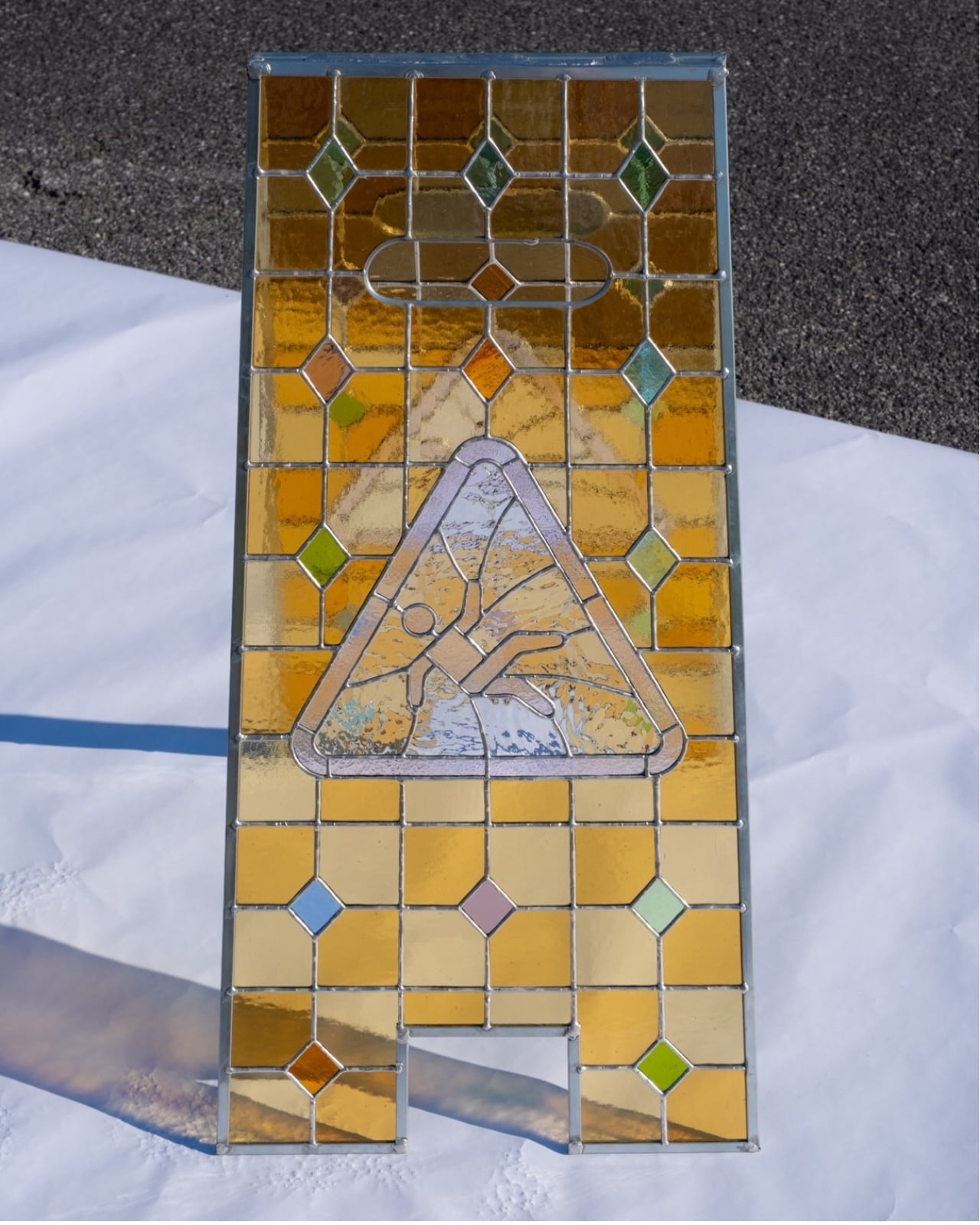
Williams also retains the less glamorous parts of the original shape. There’s the rounded handle form near the top, the slight taper of the panels, and the rectangular notch between the feet. Those details matter because a flat rectangle of decorative glass with a warning symbol would read very differently. Here, the proportions and cutouts carry the association before you’ve examined the central image. Even the slim perimeter frame leaves the sign’s outline easy to follow.
The construction adds another layer of interest. The two stained-glass panels can be separated, giving the piece a physical logic beyond its surface decoration. Joined at the top, they form the familiar freestanding A-frame. Seen at an angle, the space between them becomes part of the composition, allowing the rear panel’s colors and pattern to appear through the front. I appreciate that Williams has treated the sign as a three-dimensional object, rather than concentrating all the effort on one decorated face.
Sunlight makes that depth particularly clear in the photographs. The panels cast warm, patterned shadows across the ground, extending the grid beyond the sculpture’s edges. The darker seams remain visible within those projections, while the glass contributes patches of color. A molded sign normally occupies a small piece of floor space. Here, the light gives it a second, less predictable footprint, one shaped by where it stands and the direction of the sun.
Of course, glass changes the practical proposition. I wouldn’t mistake the familiar handle shape or folding stance for an invitation to put this beside a supermarket spill. The material introduces a need for care that sits awkwardly, and amusingly, beside the warning about falling. That tension feels earned because the object still looks so much like equipment. Strip away those utilitarian details, and much of the humor would go with them.
I’d display it with room for the shadow, preferably where daylight could pass through both panels. Placing it against a wall would preserve the pattern but lose some of the design’s best work. Williams has made the gap between the panels, the translucent warning, and the surrounding floor worth looking at together. The sculpture needs a little empty space to show how much is happening inside that ordinary silhouette.
The post A Stained-Glass Caution Sign You’ll Actually Stop to Admire first appeared on Yanko Design.




The 1968 Dodge Charger almost died as a clay model. Designer Richard Sias sculpted a 1/10th scale study, and Dodge styling boss Bill Brownlie ordered it destroyed before leaving on a trip to Europe. His team hid it in a back corner of the studio and kept refining it anyway, which might be the most Toretto move in automotive history. That rebellious little model became the second-generation Charger, and the 1970 version went on to become Dom’s car in The Fast and the Furious. Fast forward a few decades, and LEGO has put the Charger right back where it started, as a scale model on a table, this time in 1,516 pieces.
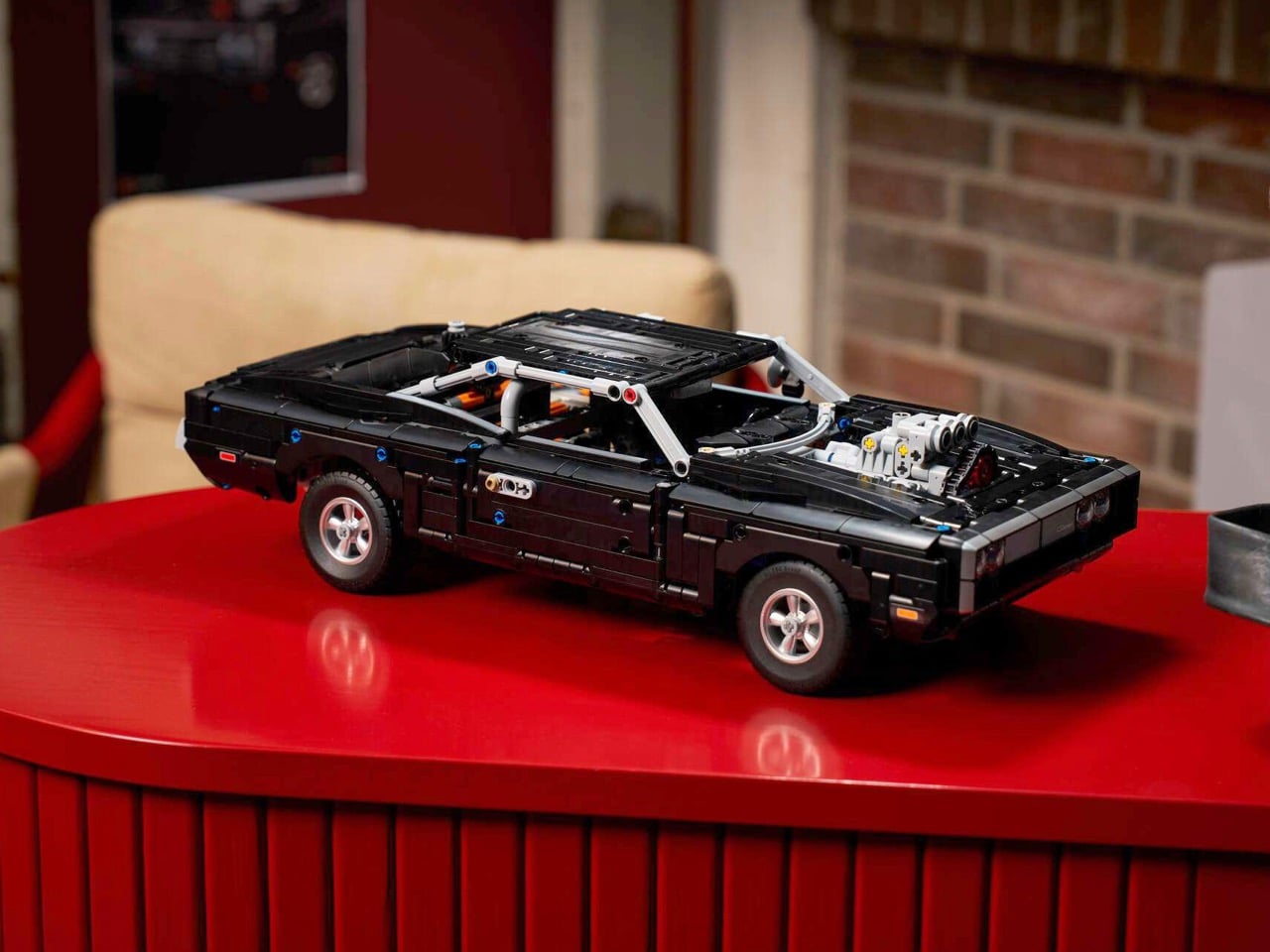
The LEGO Technic Fast and Furious Dodge Charger R/T (set 42231) runs 16 inches long, costs $159.99, and marks the second time LEGO has built Dom’s ride in Technic. The 2020 version had 1,077 pieces, a 10+ rating, and a wheelie stand. This one goes 18+ with a V8, a chain-driven blower, a cardan shaft feeding a rear differential, independent front suspension, and two NOS bottles plus a fire extinguisher in the trunk. A Build Together mode in the LEGO Builder app lets multiple people work on the same car from their own devices. Building Dom’s Charger with family is basically required by franchise law at this point.
Designer: LEGO Technic Design Team (in collaboration with Universal)
Dom’s Charger has always been a beautiful lie. The production acquired five Chargers for the 2001 film, and some of them were 1969 cars with 383 engines dressed up to pass as 1970 R/Ts. The towering supercharger bursting through the hood was a chrome-plated plastic replica, and the famous start-line wheelie came from a hydraulic ram. The script still promised 900 horsepower and a nine-second quarter mile, and audiences happily believed every word. The wreck from the finale even landed a second acting gig, sitting in a scrapyard at the start of Herbie: Fully Loaded.
LEGO’s version wears black Technic panels from nose to tail, with a light-gray frame tracing the 1970 model’s loop bumper around the front end. New 2×2 corner panels, spotted by fans on Eurobricks, shape the grille so the front clip wraps around its edges instead of ending in a flat wall. Charger script sits on the grille, and the tail gets a light-gray valance, red taillights, and a Fast & Furious plate. Staggered-width tires, another new part, put fatter rubber at the back, which is exactly how a drag car should sit. A light-gray roll cage threads through the cabin, giving the black body a contrasting skeleton you can see from every angle.


My favorite detail, though, is the blower. LEGO calls it a chain-driven compressor, and up close it’s a loop of Technic chain links wrapped around a red pulley on top of the V8. Real Roots-style blowers run on belts, so the chain stands in for one at brick scale and gives the engine a moving part you can watch. It does three jobs at once: it’s the car’s visual signature, it’s a working mechanism, and it’s a LEGO recreation of a prop that was fake to begin with. Hollywood bolted a plastic blower to a 1969 Charger, and LEGO answered with a plastic blower that actually moves.
The 2020 set launched at $99.99, which makes the new one a hefty step up in price and ambition. Set 42231 adds 439 pieces and drops the old lever-operated wheelie stand, a feature fans loved more for the idea than the execution. At 16 inches long, the model works out to roughly 1:13 against the real car’s 17-plus feet. That slots it between LEGO’s Technic Supra at 1:16 and its Skyline GT-R R34 at 1:10. It also lands close to the 1/10th scale clay that Sias’s team once hid from their boss, so the Charger has come full circle.


LEGO launched the Technic Fast and Furious Mitsubishi Eclipse (42229) alongside the Charger, an 827-piece take on Brian’s green Eclipse from the first film, complete with its own NOS bottles. Add the Technic Supra and Skyline, and LEGO has rebuilt the hero cars of the first two films in Technic form. Line them up on a shelf, and you’ve got a family reunion that only needs a backyard barbecue and a bucket of Coronas. The Build Together mode handles the rest, splitting the Charger’s build across multiple devices so everyone gets a turn. I fully expect someone to claim the blower and refuse to share, which is also very family.
The LEGO Technic Fast and Furious Dodge Charger R/T (42231) costs $159.99 and is available now at LEGO.com, LEGO Stores, and retailers including Amazon and Best Buy. LEGO caps online orders at three per household, which feels low for anyone with a crew as big as Dom’s. Assembled, it stands over 4 inches tall and 7 inches wide, sized for a desk or a shelf next to the Supra. If LEGO ever does a third version, I’d ask for the wheelie stand back and a light kit for that grille. Until then, keep this one parked well away from semi trucks.


The post Lego’s new $160 Fast & Furious Dodge Charger takes family time very seriously first appeared on Yanko Design.