
The original versions of Metro 2033 and Metro: Last Light land on GOG
These are the latest editions to the platform's game preservation program.

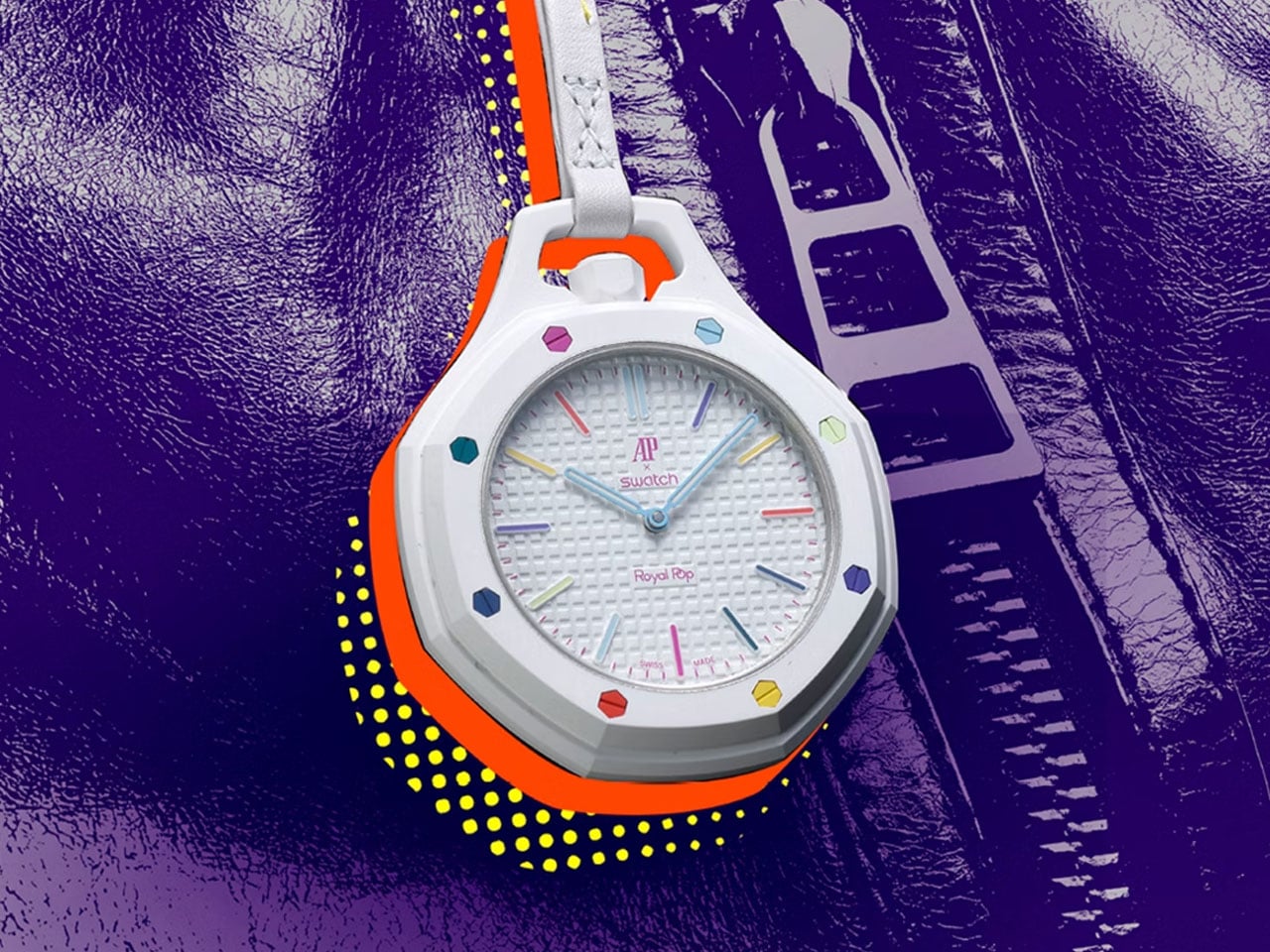
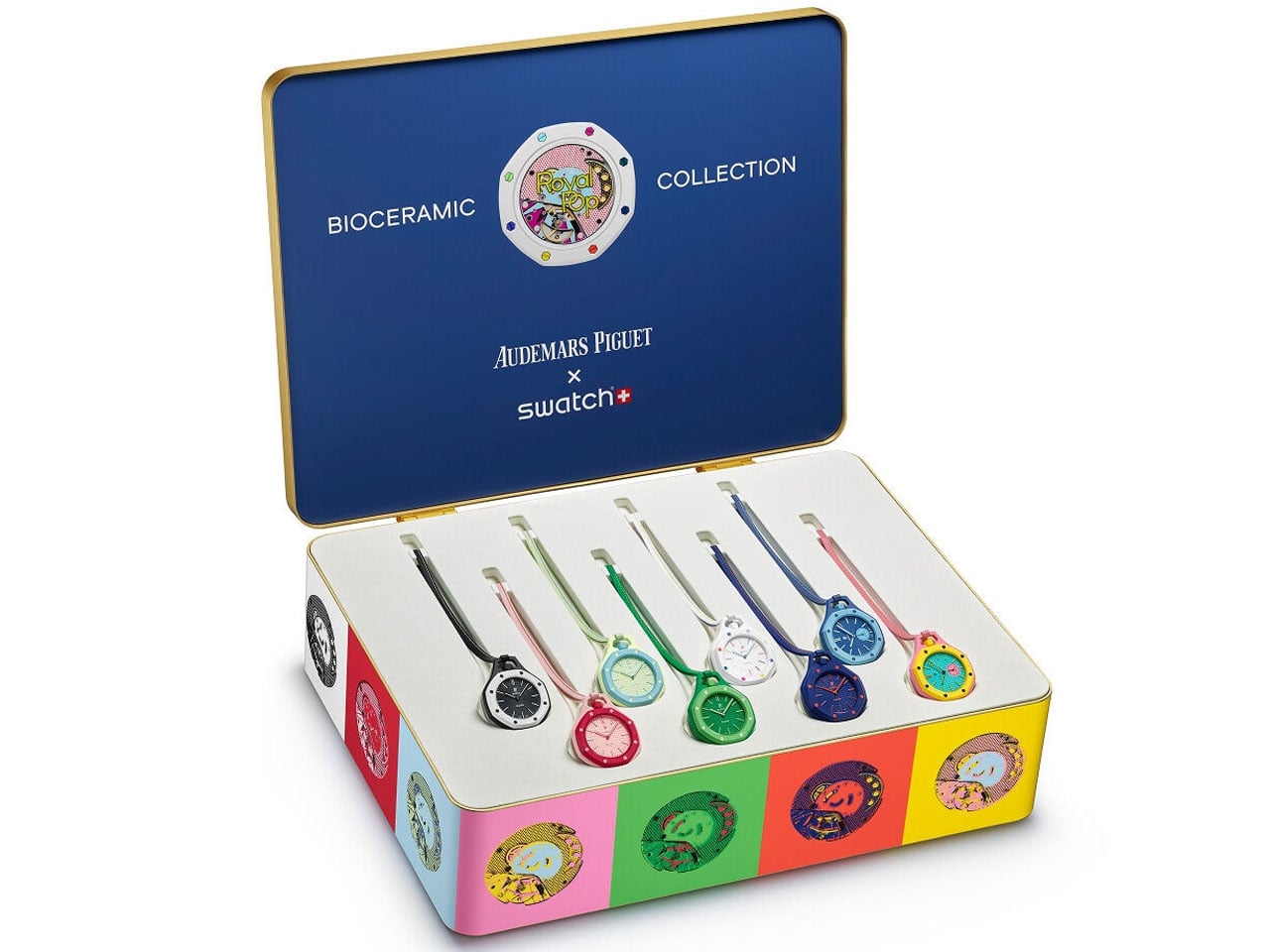
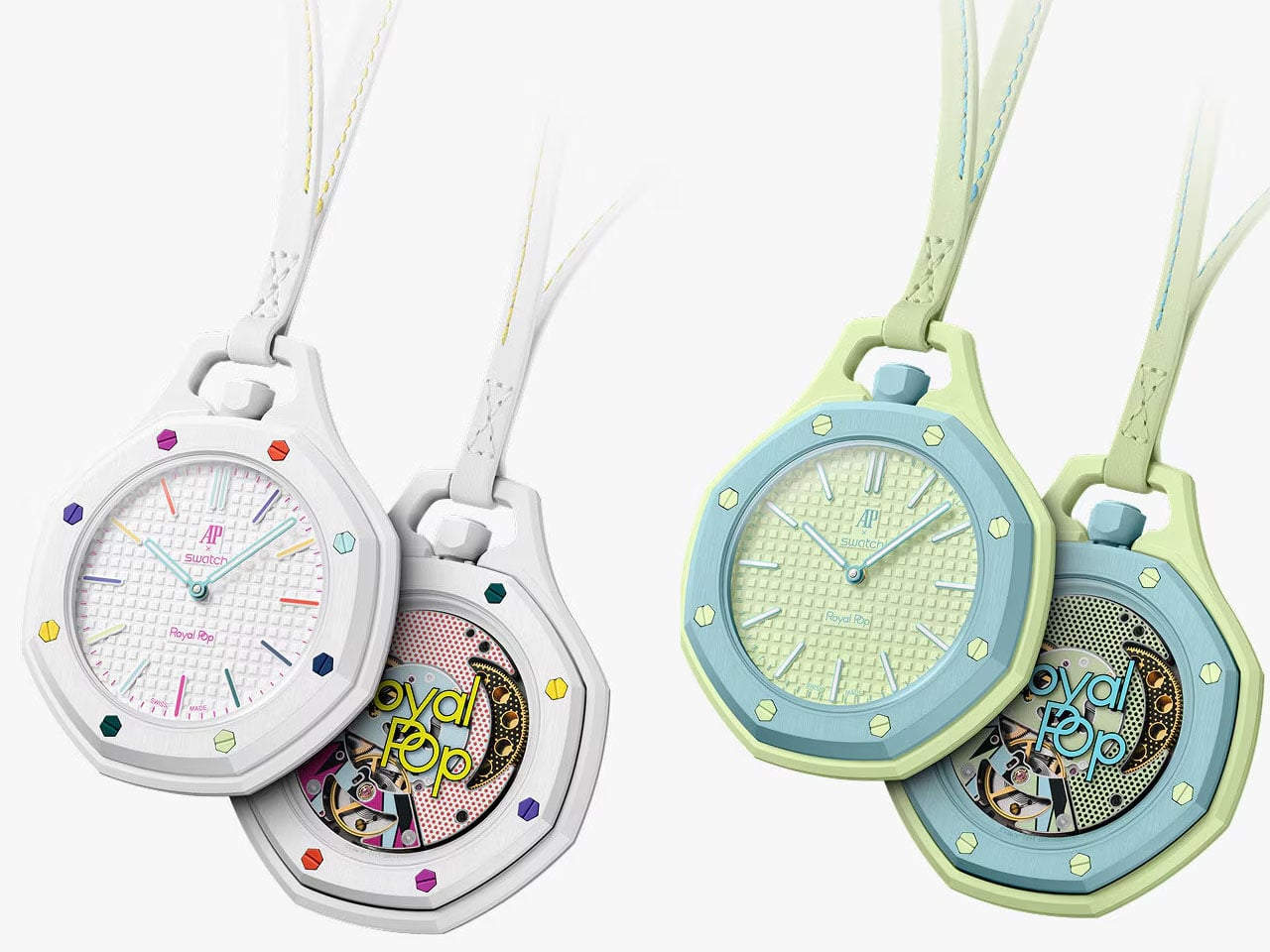
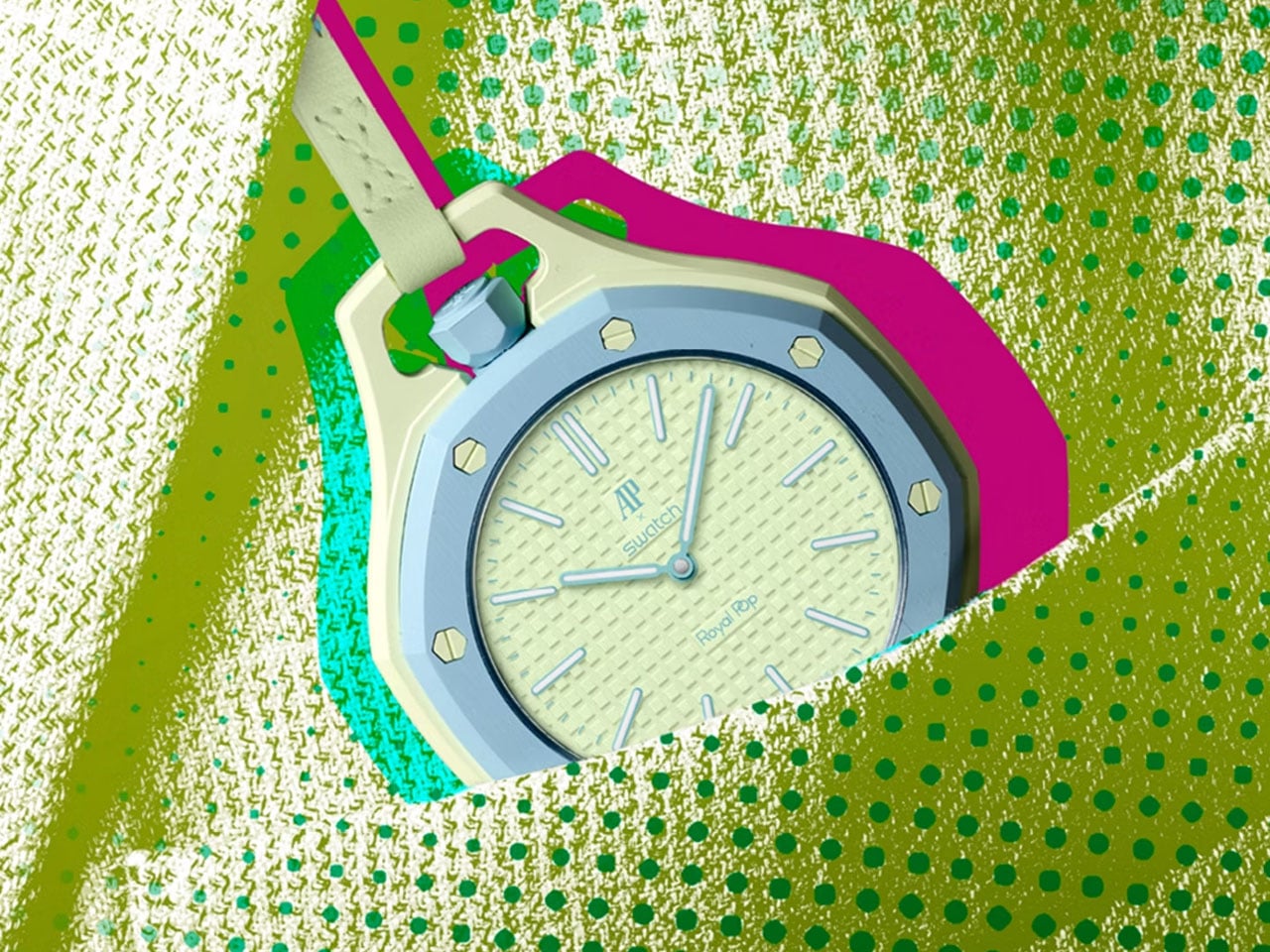
Since 1875, Audemars Piguet has been at the core of Swiss watchmaking, relentlessly blending luxury with bold designs in the Royal Oak. The avant-garde craftsmanship is now shared with Swatch to deliver a collaboration first Royal Pop in eight different models. The watch, designed to be worn in multiple ways, is not a traditional wristwatch, but a vision of an Instagram-worthy pocket watch. Don’t miss the pop of colors and the innovative audacity that underlie the ethos of this new collaborative timepiece when sharing a picture of it on your profile.
The eight colorful pocket watches by Audemars Piguet and Swatch are inspired by the former’s Royal Oak and the latter’s POP watches from the 1980s. This may be Swatch’s first partnership with AP, but the watchmaker has a history of making exciting collaborative models such as the Omega x Swatch MoonSwatch. While the new watches share the same Bioceramic case as the MoonSwatch, there are many differences, lets learn them in detail below.
Designer: Audemars Piguet x Swatch
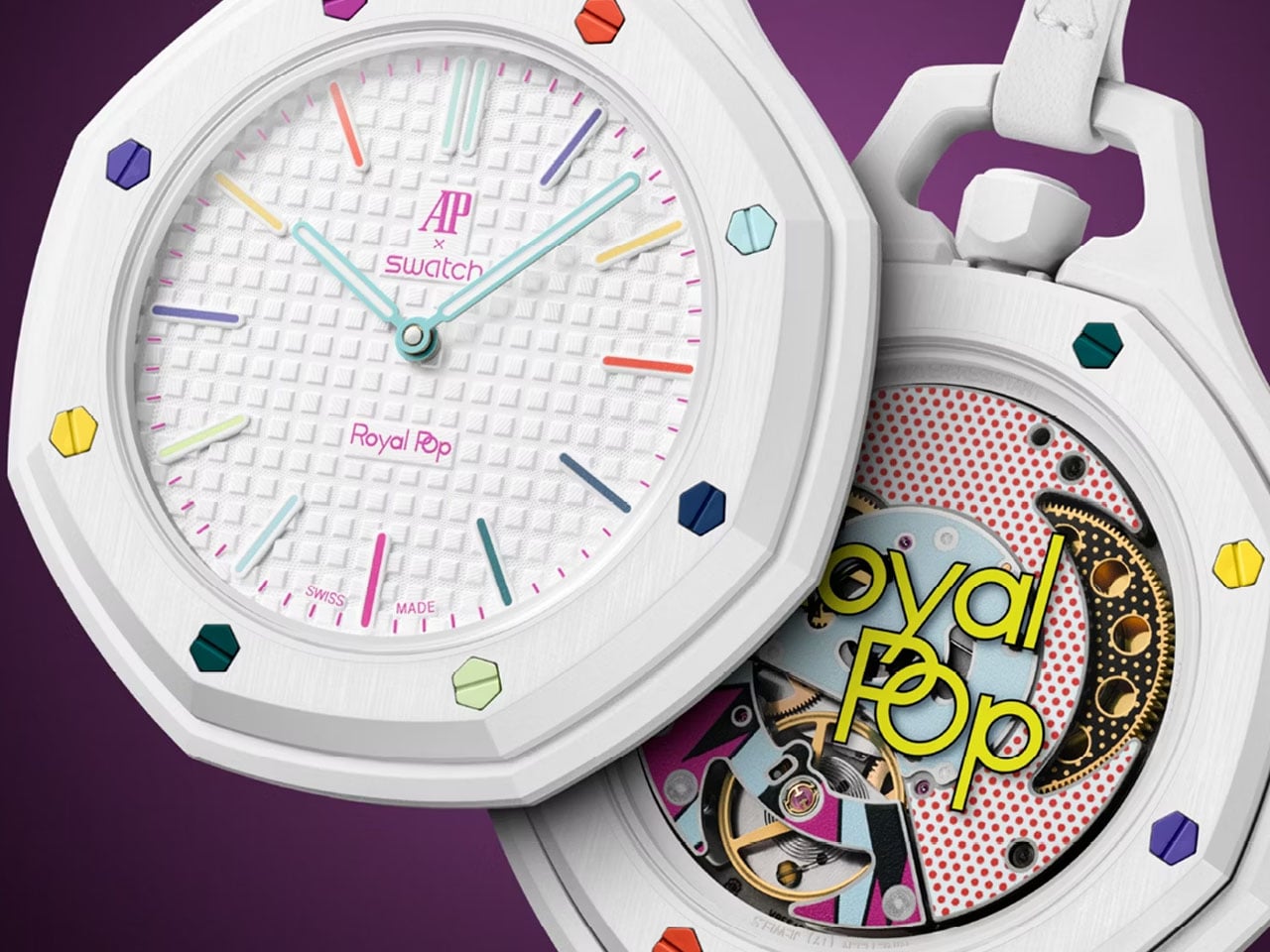
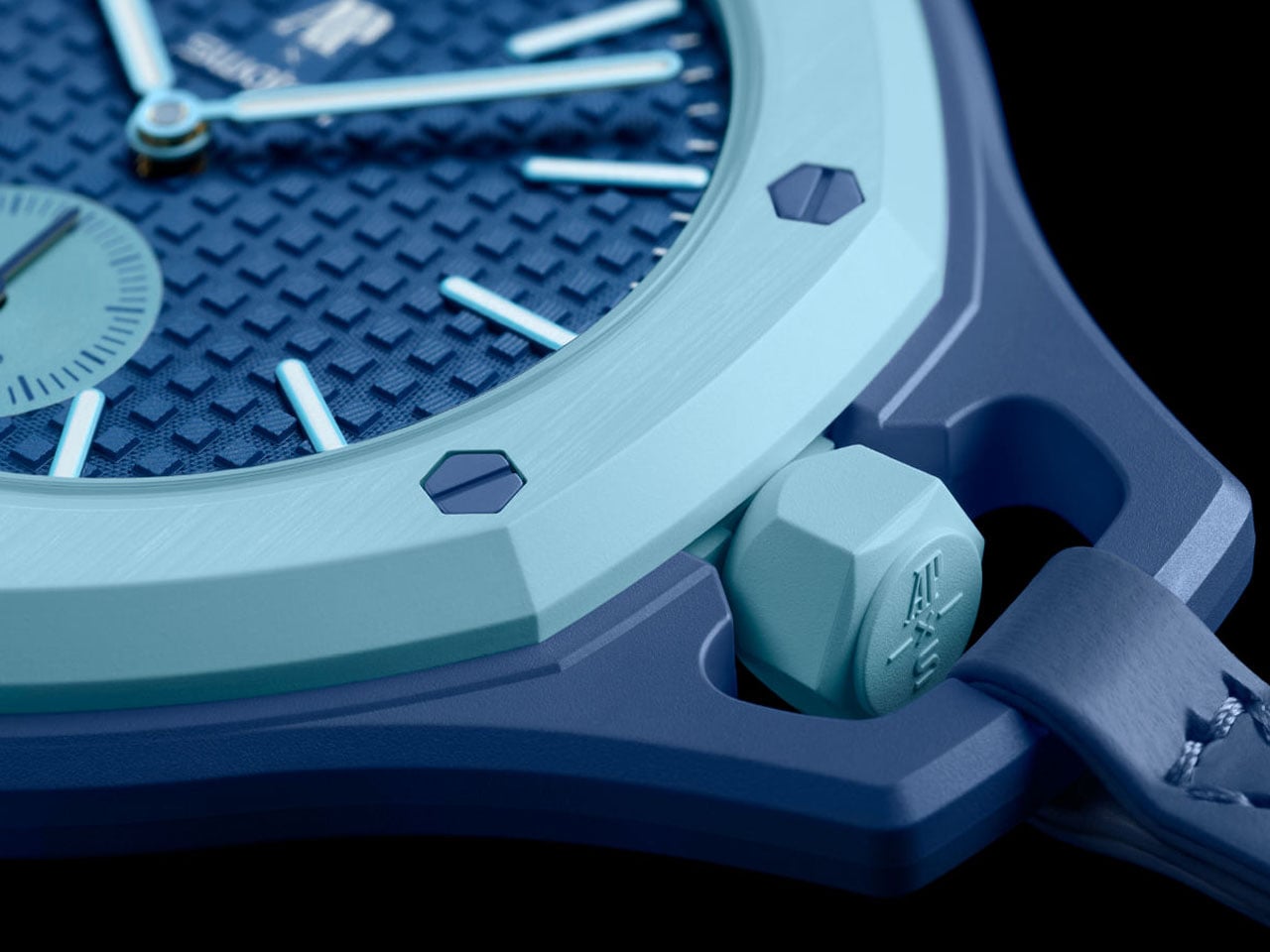
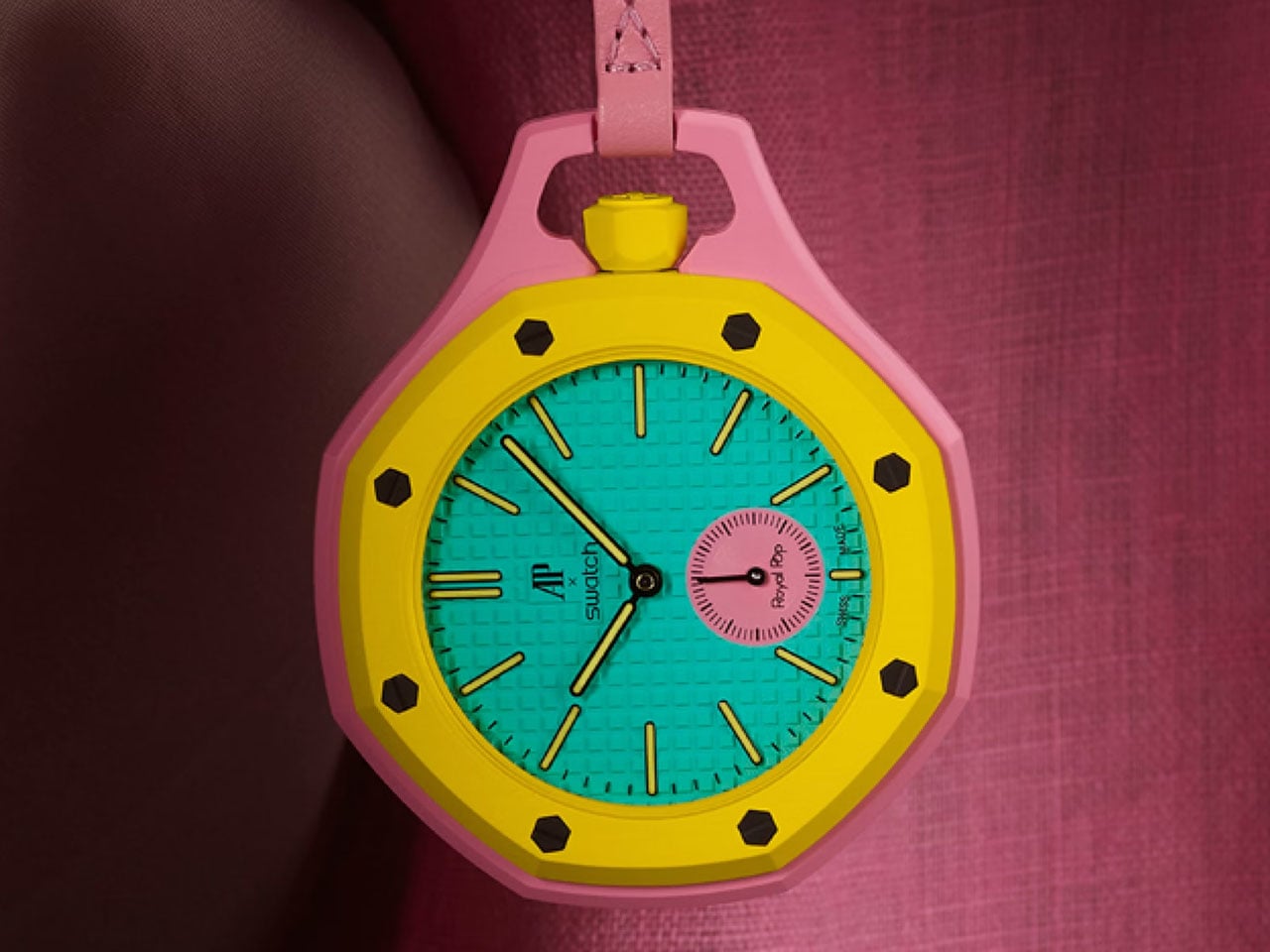
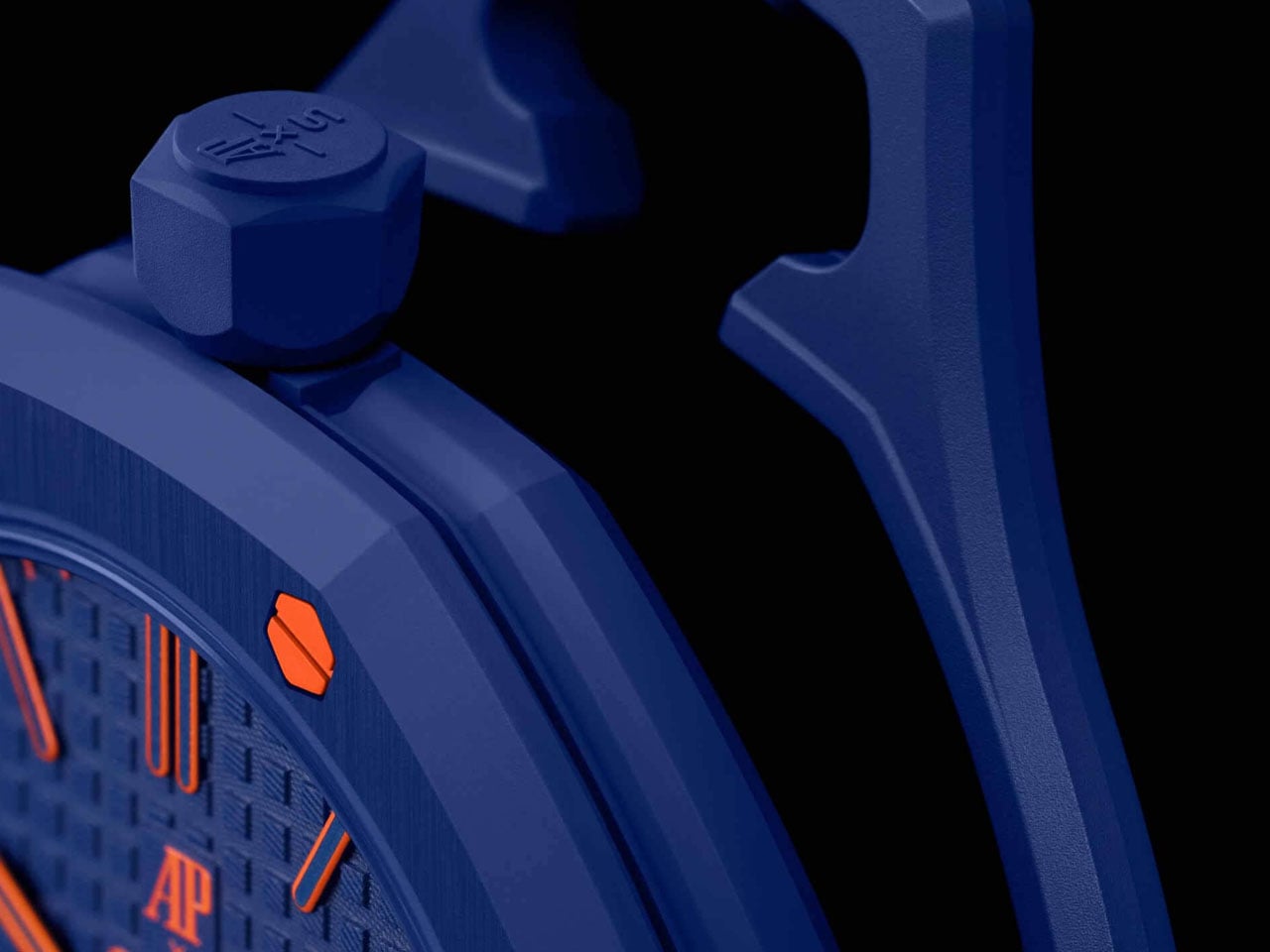
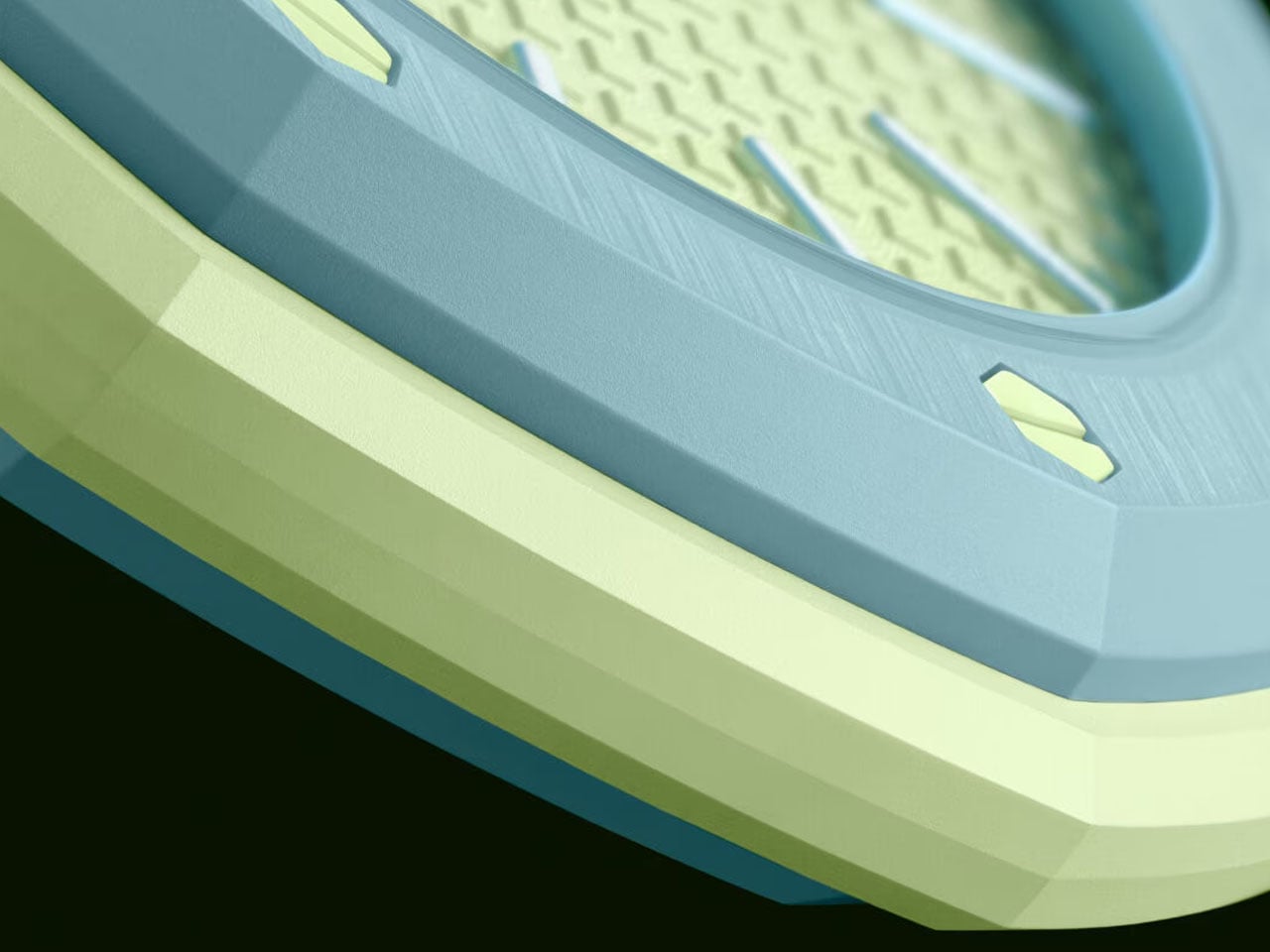
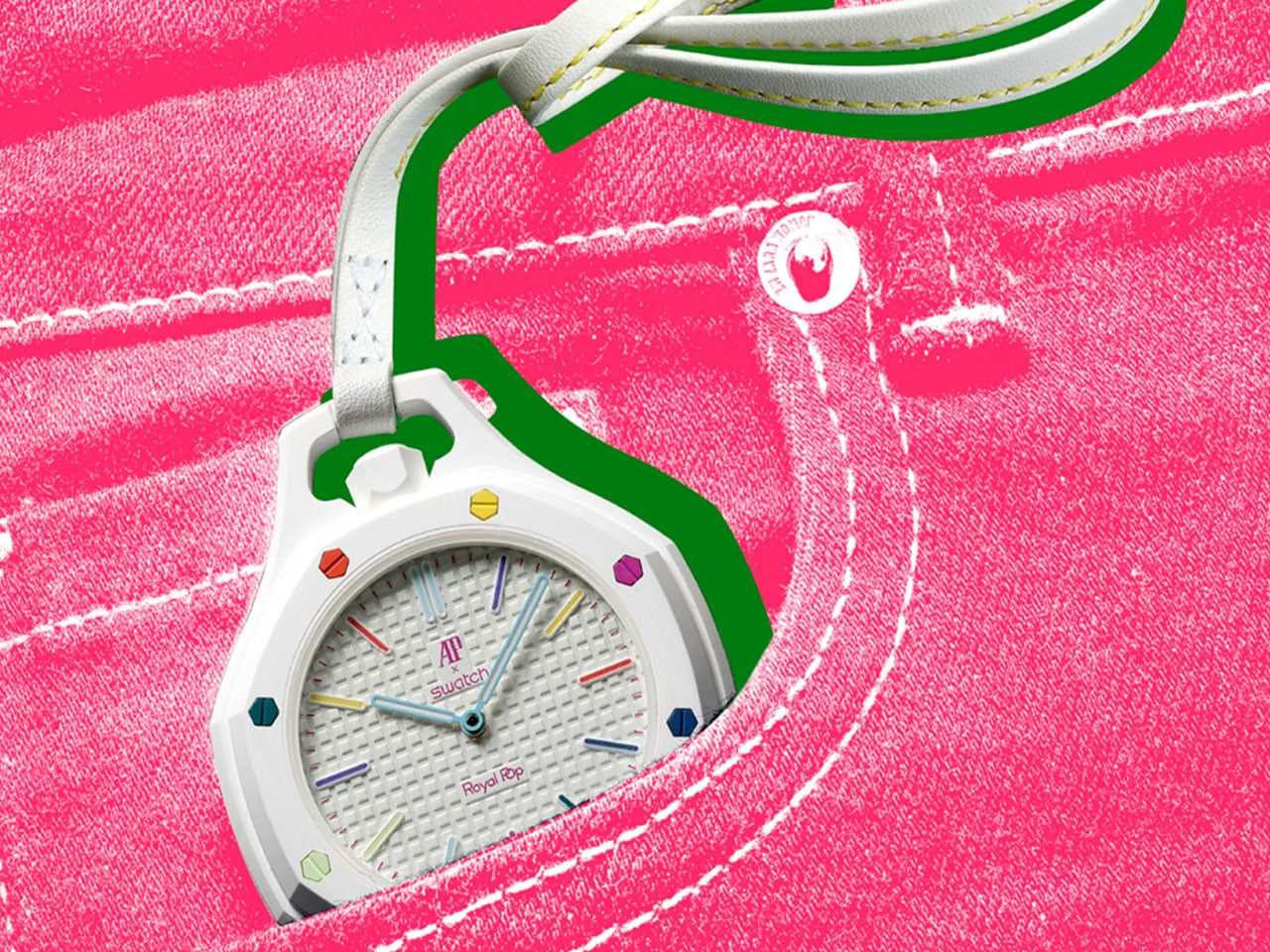
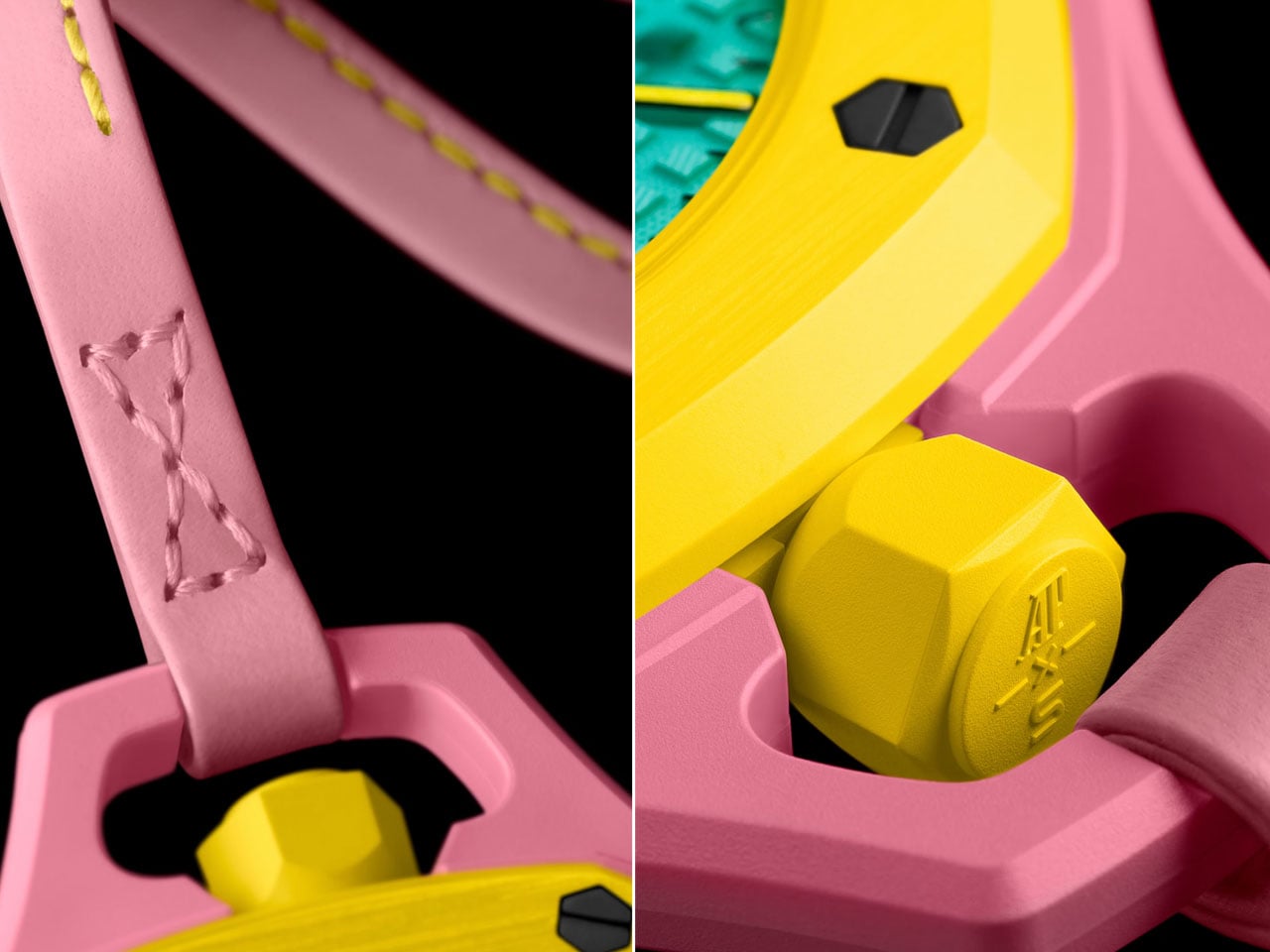
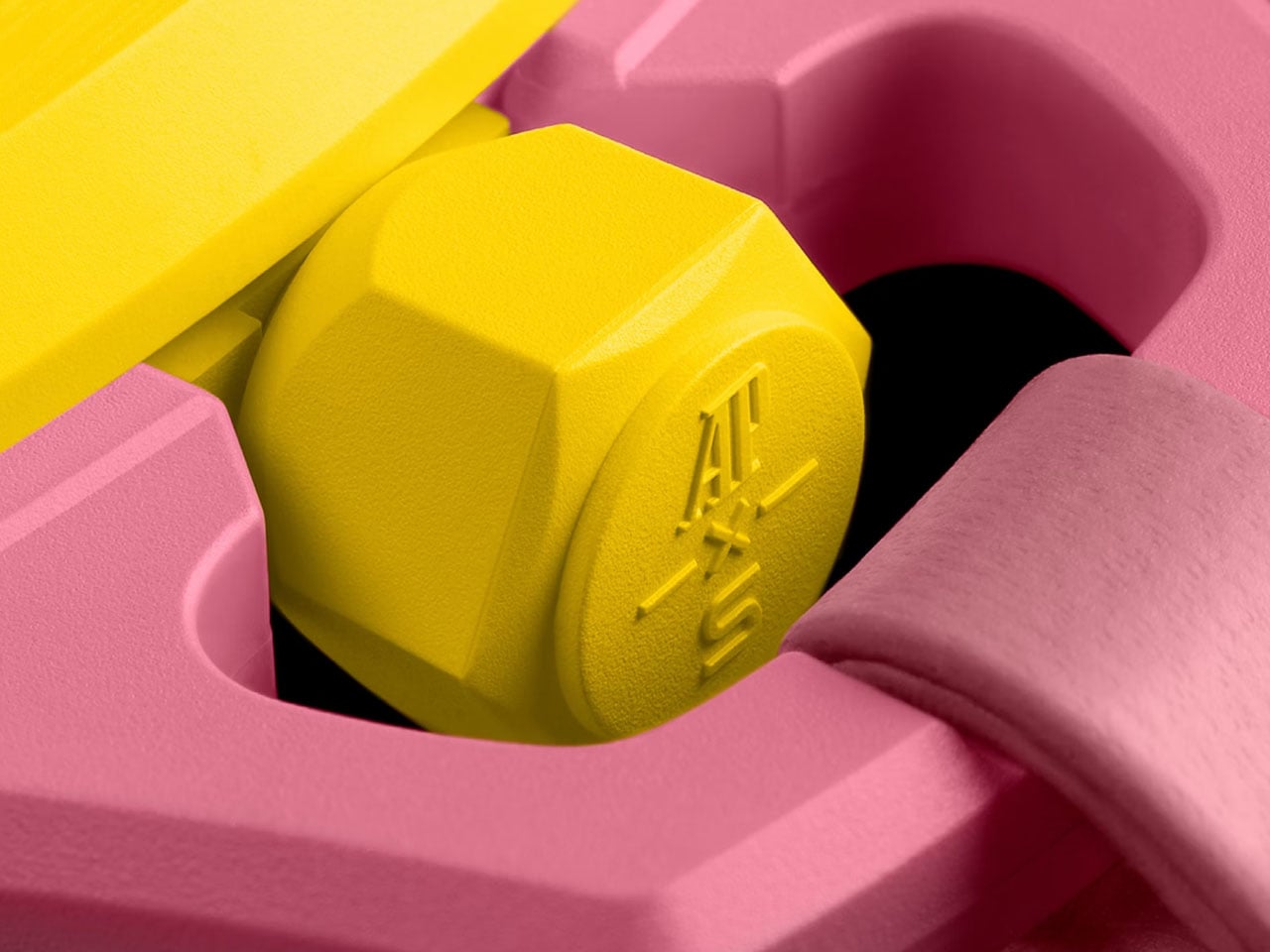
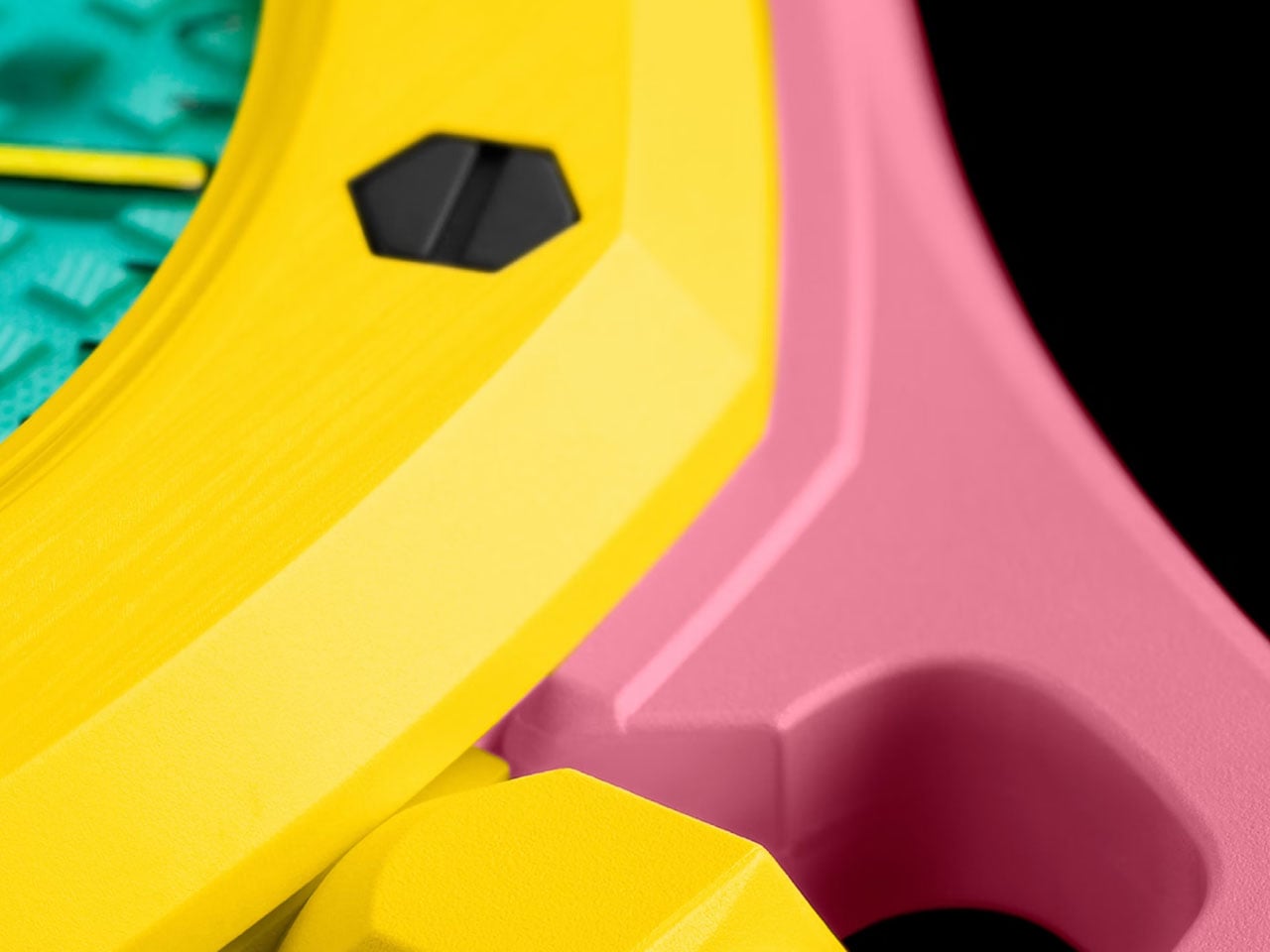
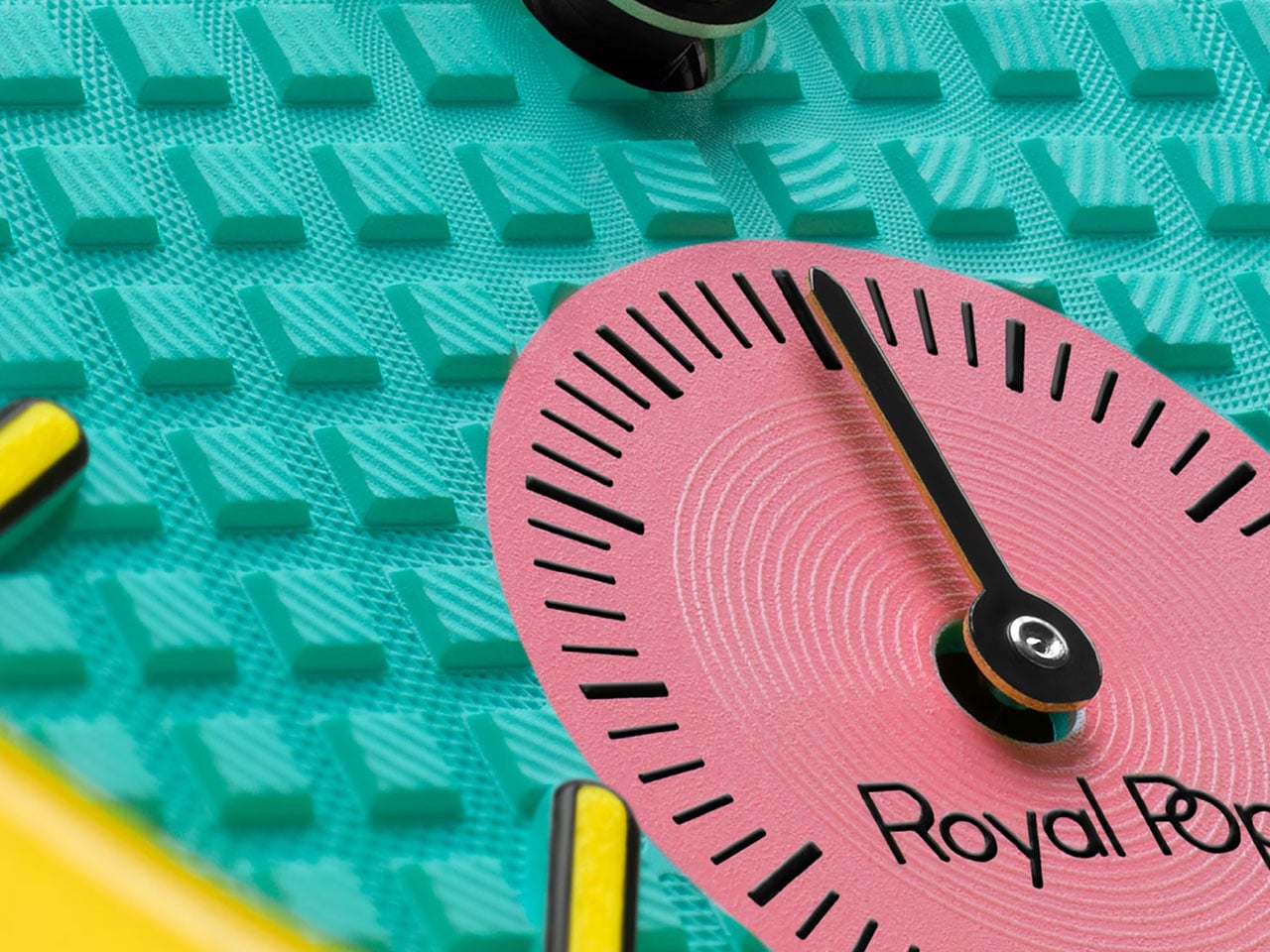
The joyful collaborative Royal Pop makes a statement with its bold colorways and the intent to give a new vision to the traditional way of wearing a watch. The watch features Swatch’s patented Bioceramic (a composite material) case, but the larger distinction – or similarity, if you may – is its Royal Oak inspiration. It has an octagonal bezel slapped with eight hexagonal screws, ‘Petite Tapisserie’ pattern on the dial, and comes with three lanyard lengths to wear it in different ways.
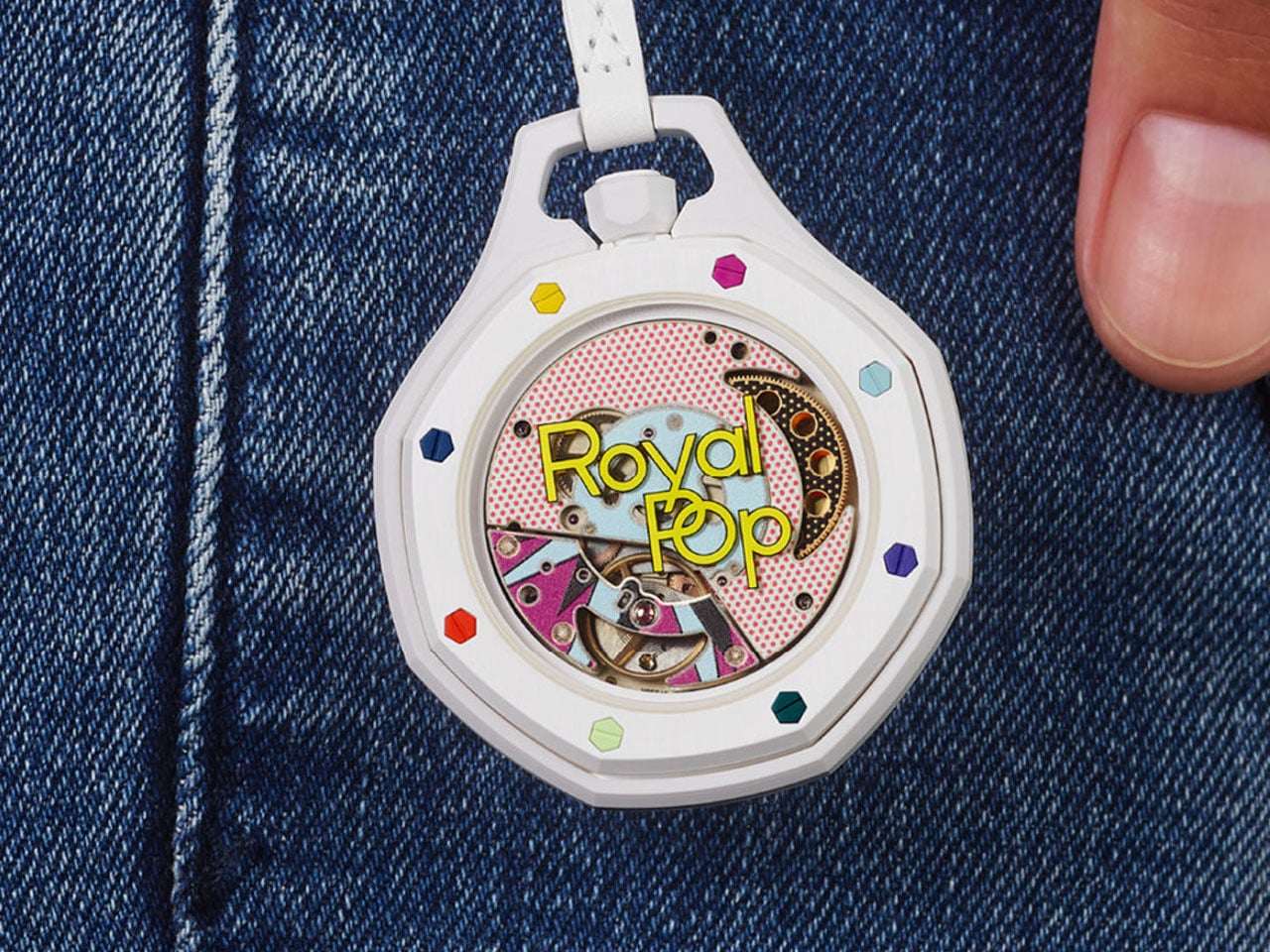

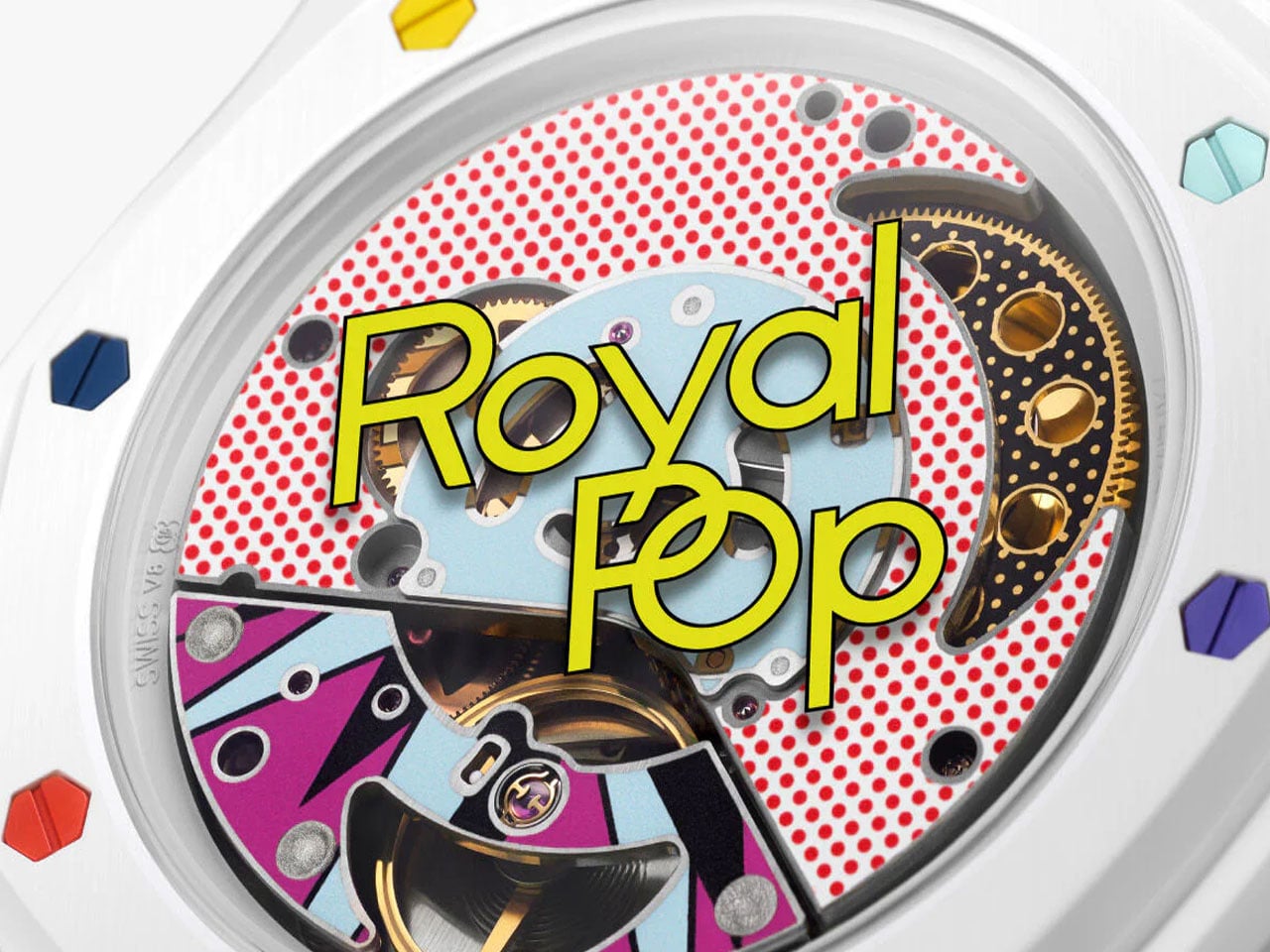
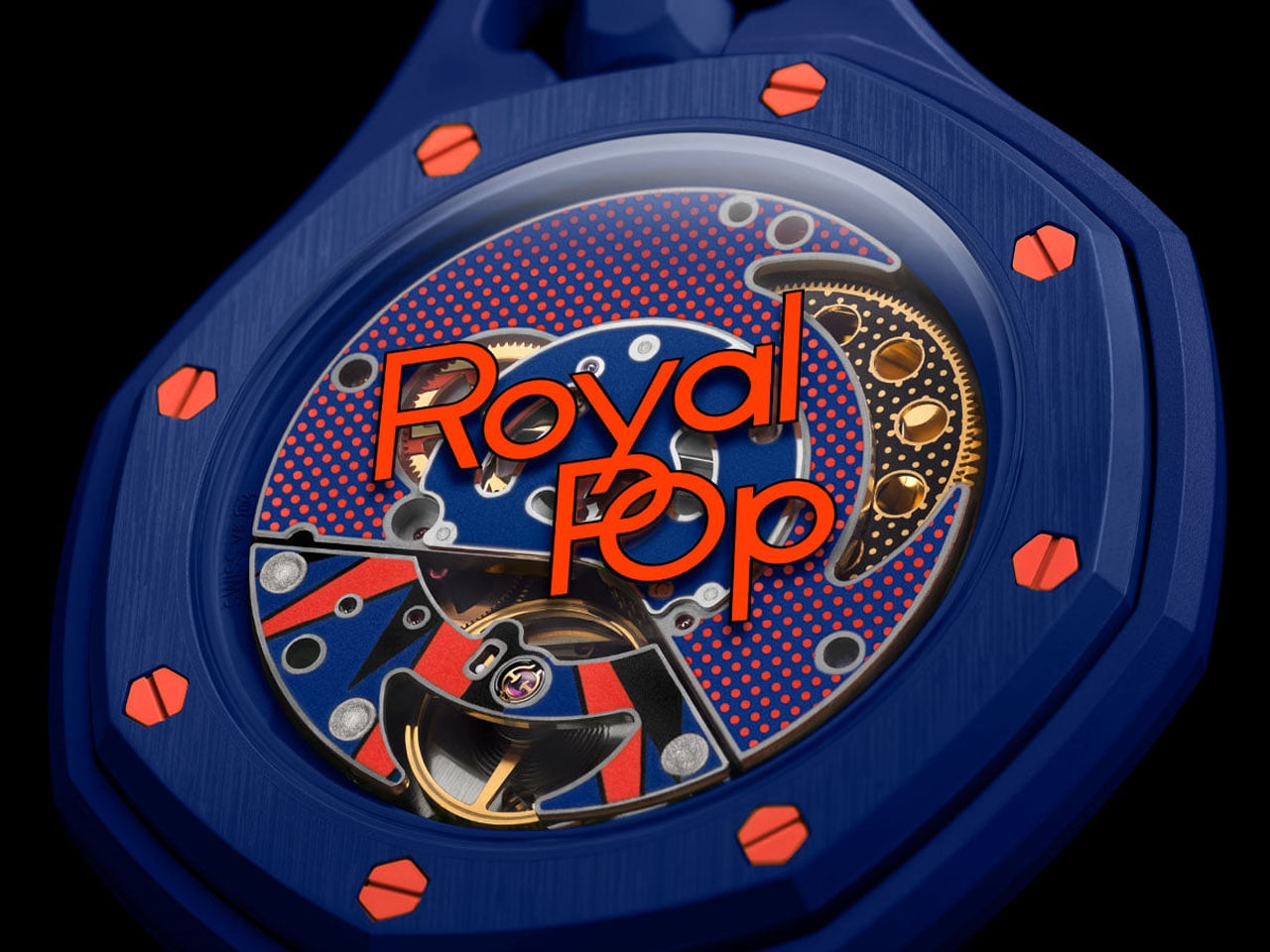
The colorful Bioceramic Royal Pop pocket watch with Royal Oak pedigree measures 40mm in diameter, and it is only 8.4mm thick. The hour and minute hands under the sapphire crystal feature Super-LumiNova for readability in the dark. Other interesting aspects of the Royal Pop are its see-through caseback and its innovative SISTEM51 movement, designed by Swatch.
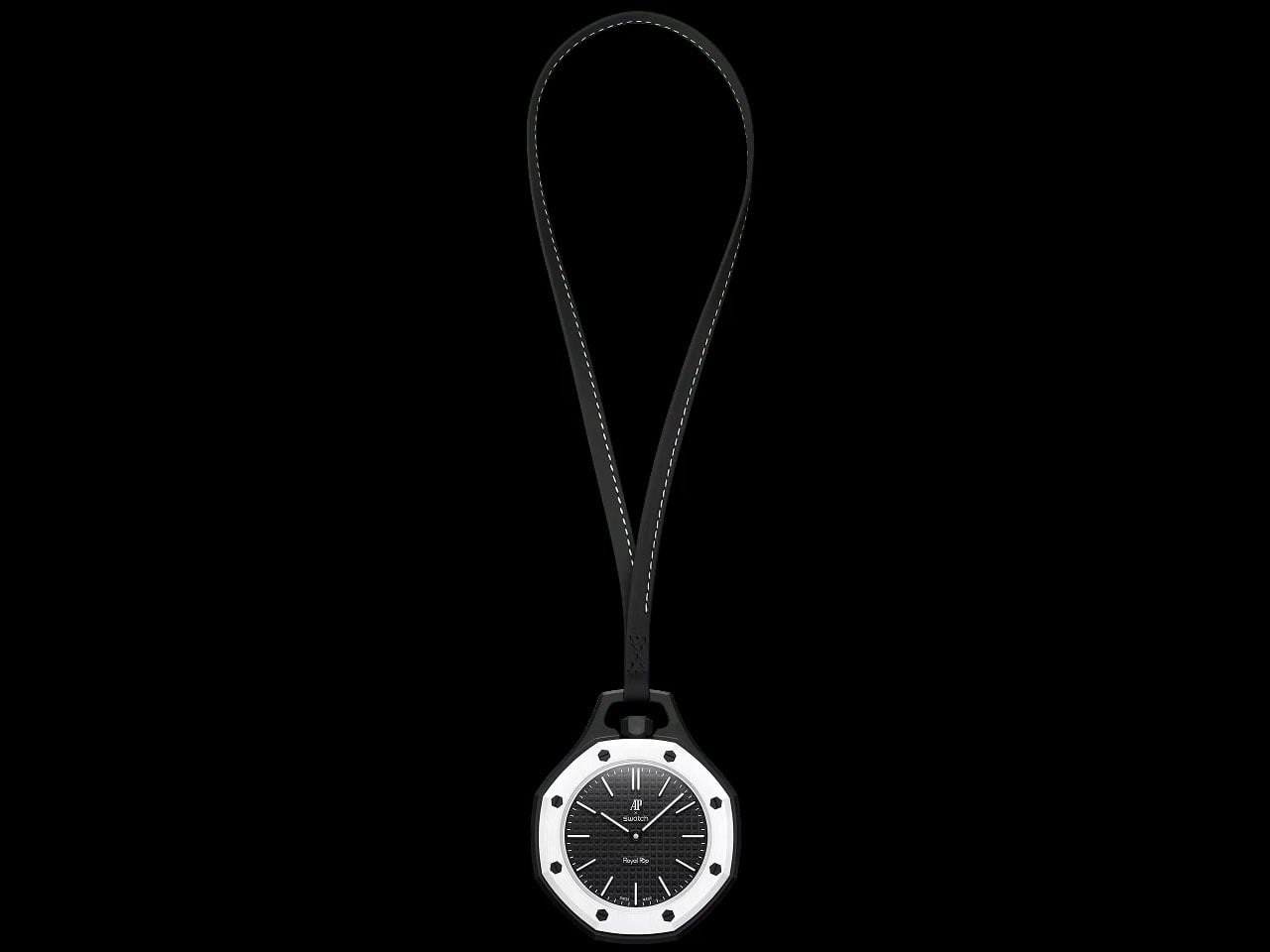
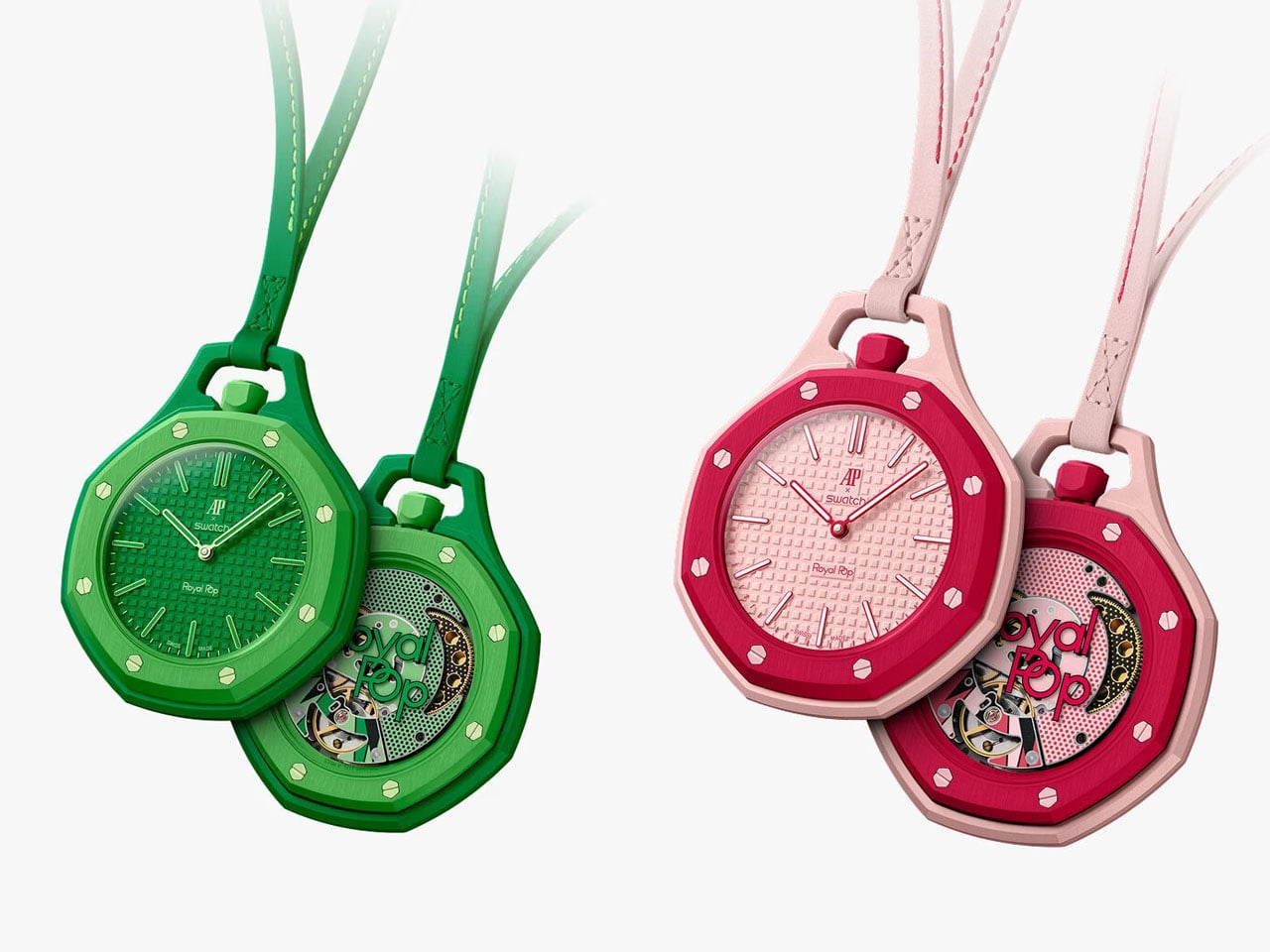
As noted, the Audemars Piguet x Swatch Royal Pop comes in eight different models. These are further divided into two distinct configurations: Lépine and Savonnette. The six Lépine-style pocket watches feature hour and minute hands and a crown at 12 o’clock. Two Savonnette-style watches, on the other hand, have a crown placed at a more recognizable 3 o’clock position, and in addition to the hour and minutes, also have a small second hand at 6 o’clock.
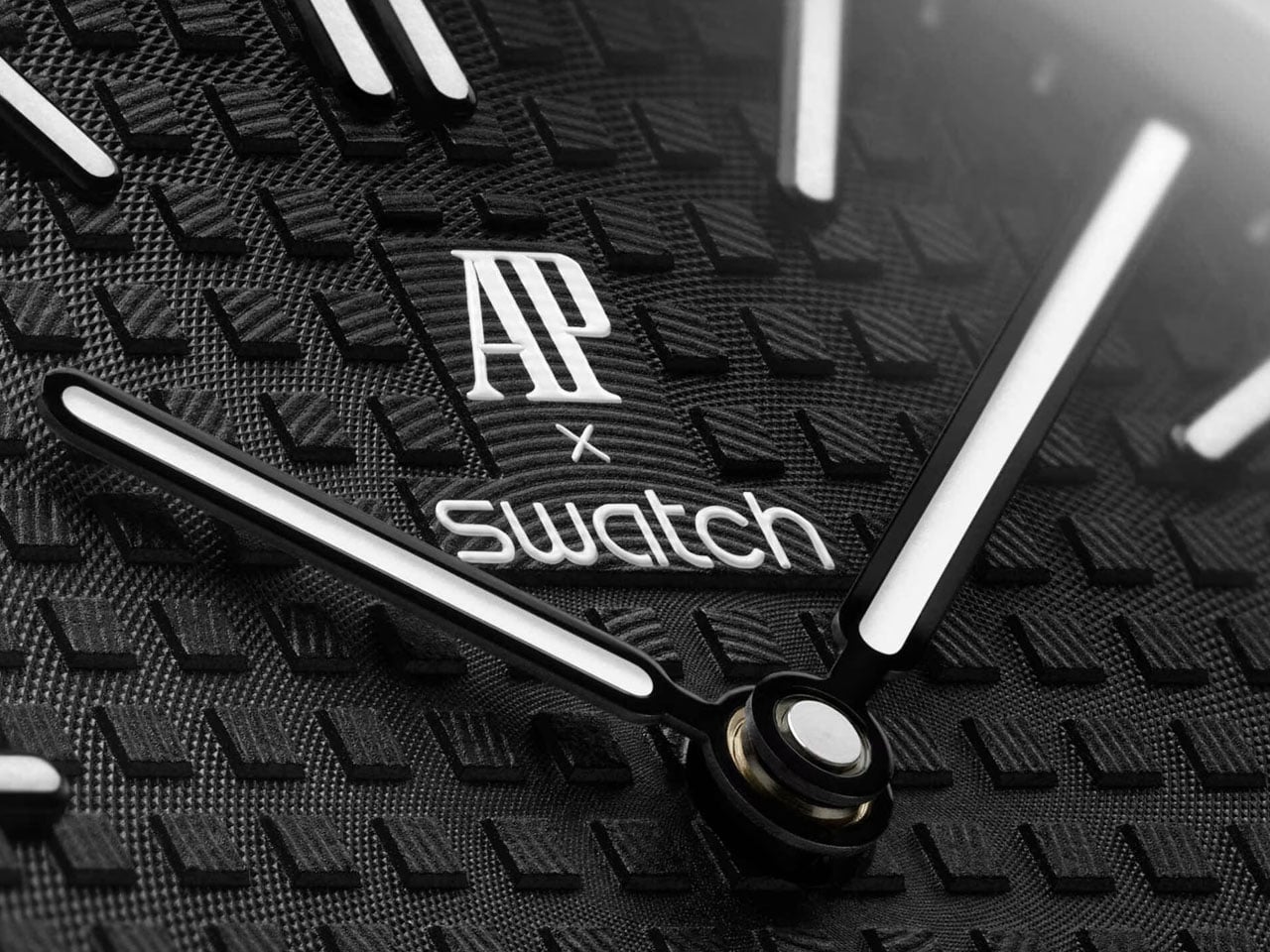

Bioceramic Royal Pop pocket watch, as mentioned, is powered by Swatch’s hand-wound SISTEM51 movement, which is reportedly the only mechanical movement with a “100% automated assembly.” The movement features an anti-magnetic Nivachron balance spring along with laser-based precision adjustment set directly at the factory. It will provide the pocket watch with up to 90 hours of power reserve. The Bioceramic Royal Pop Collection is now available for purchase through selected Swatch stores, starting at $400 for the hour-and-minute versions. The model with a small second hand will cost you $420 before taxes.
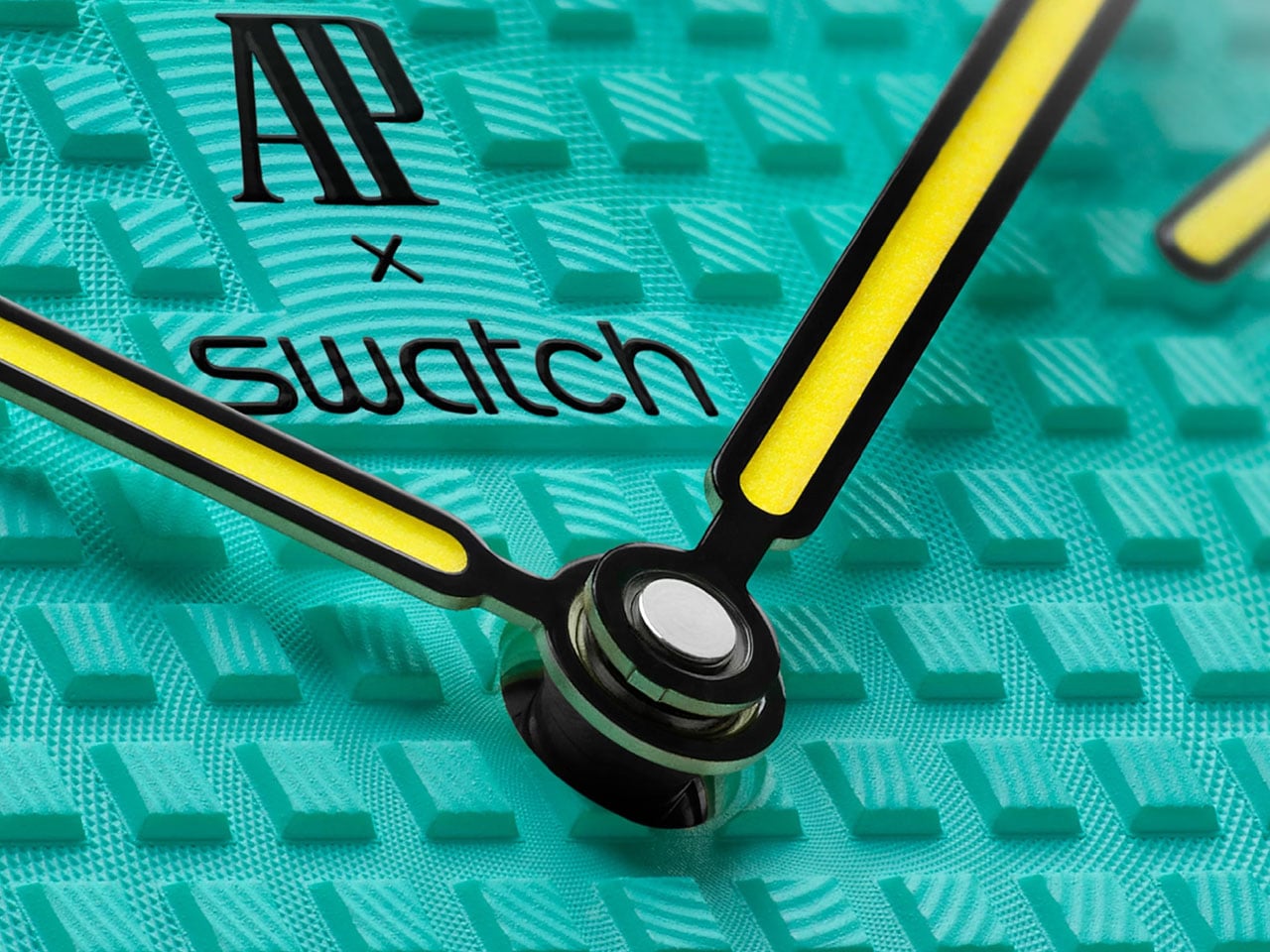
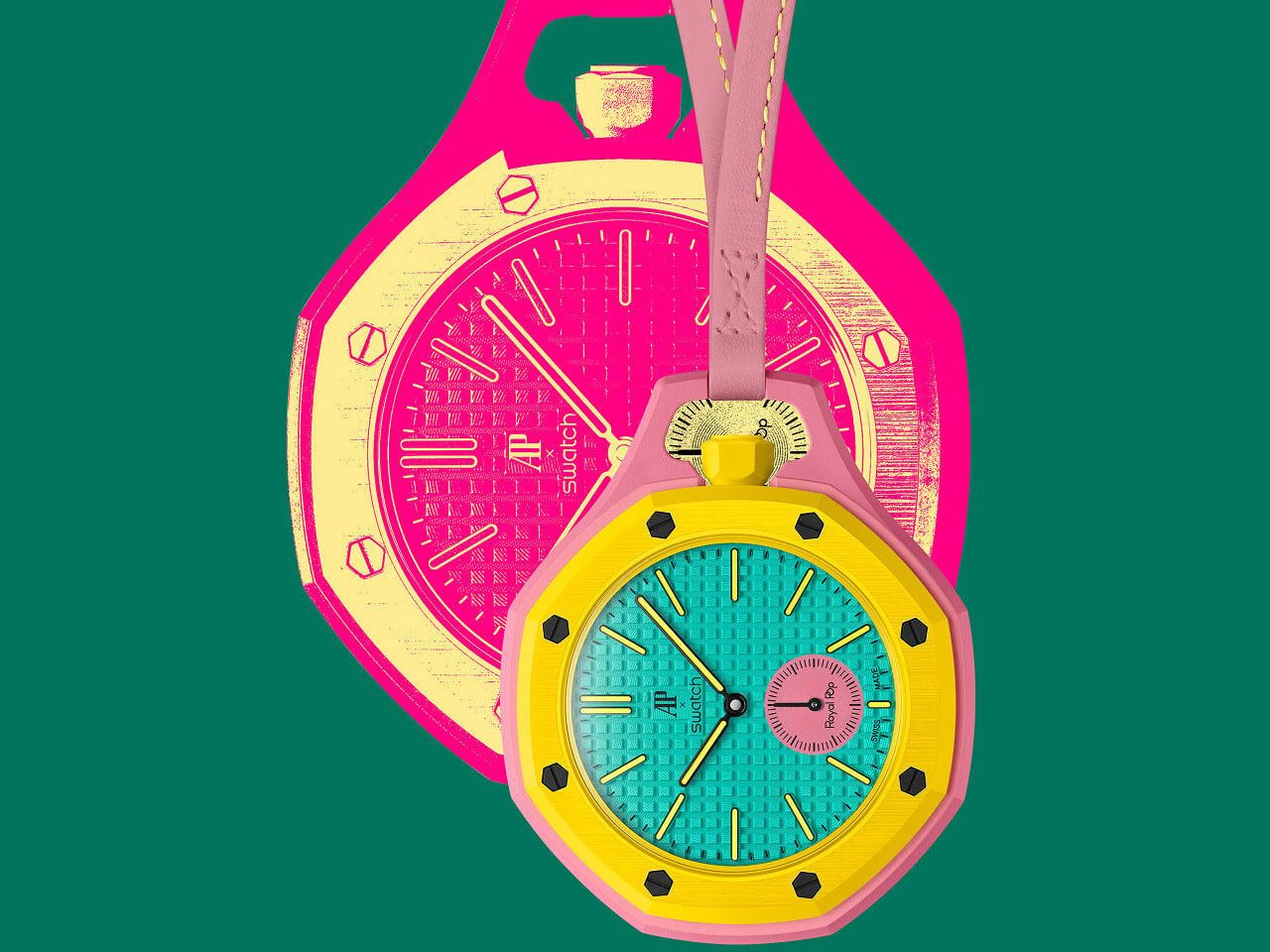
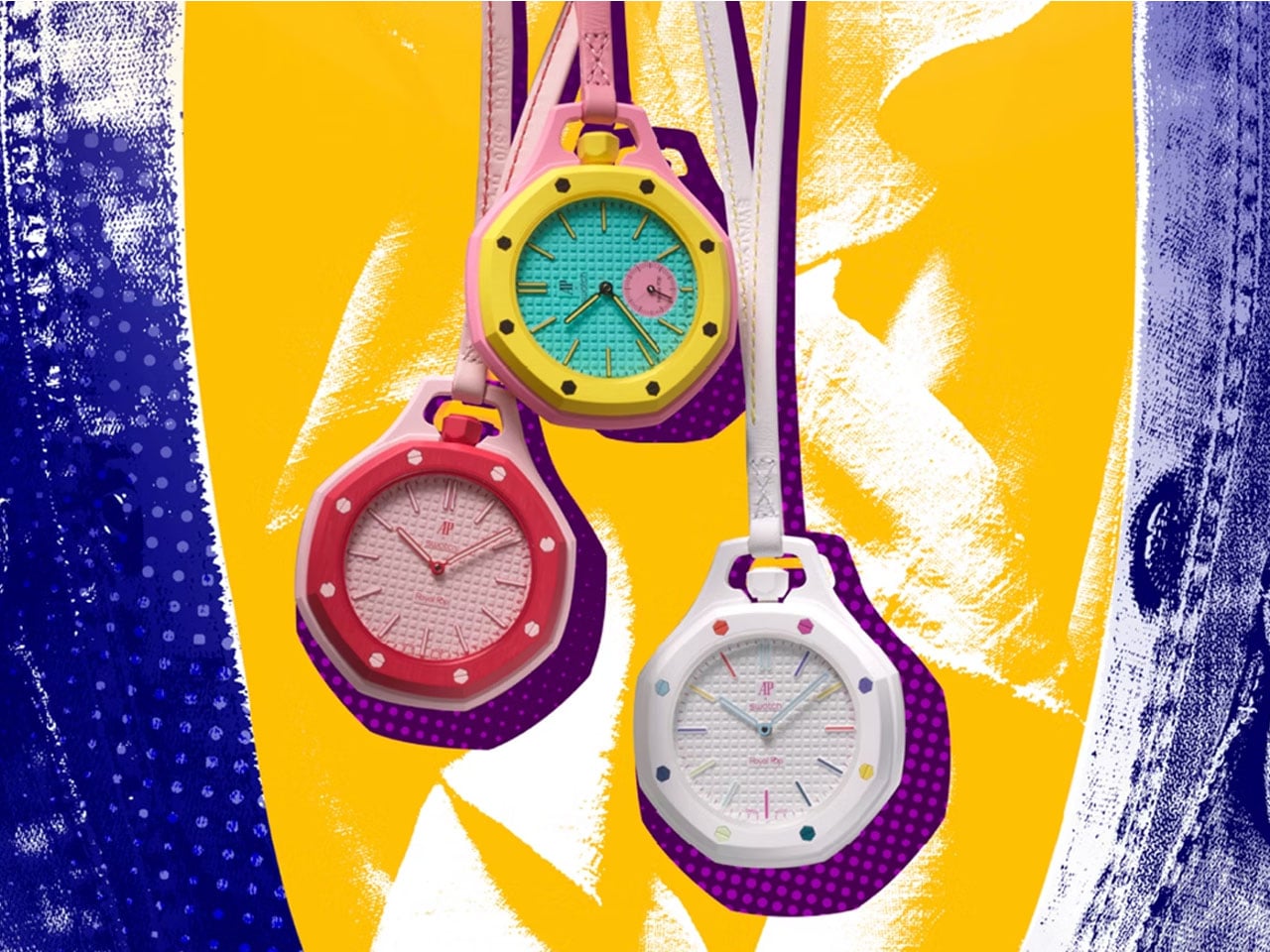
The post The colorful Audemars Piguet x Swatch Bioceramic Royal Pop watch can be worn in multiple ways first appeared on Yanko Design.

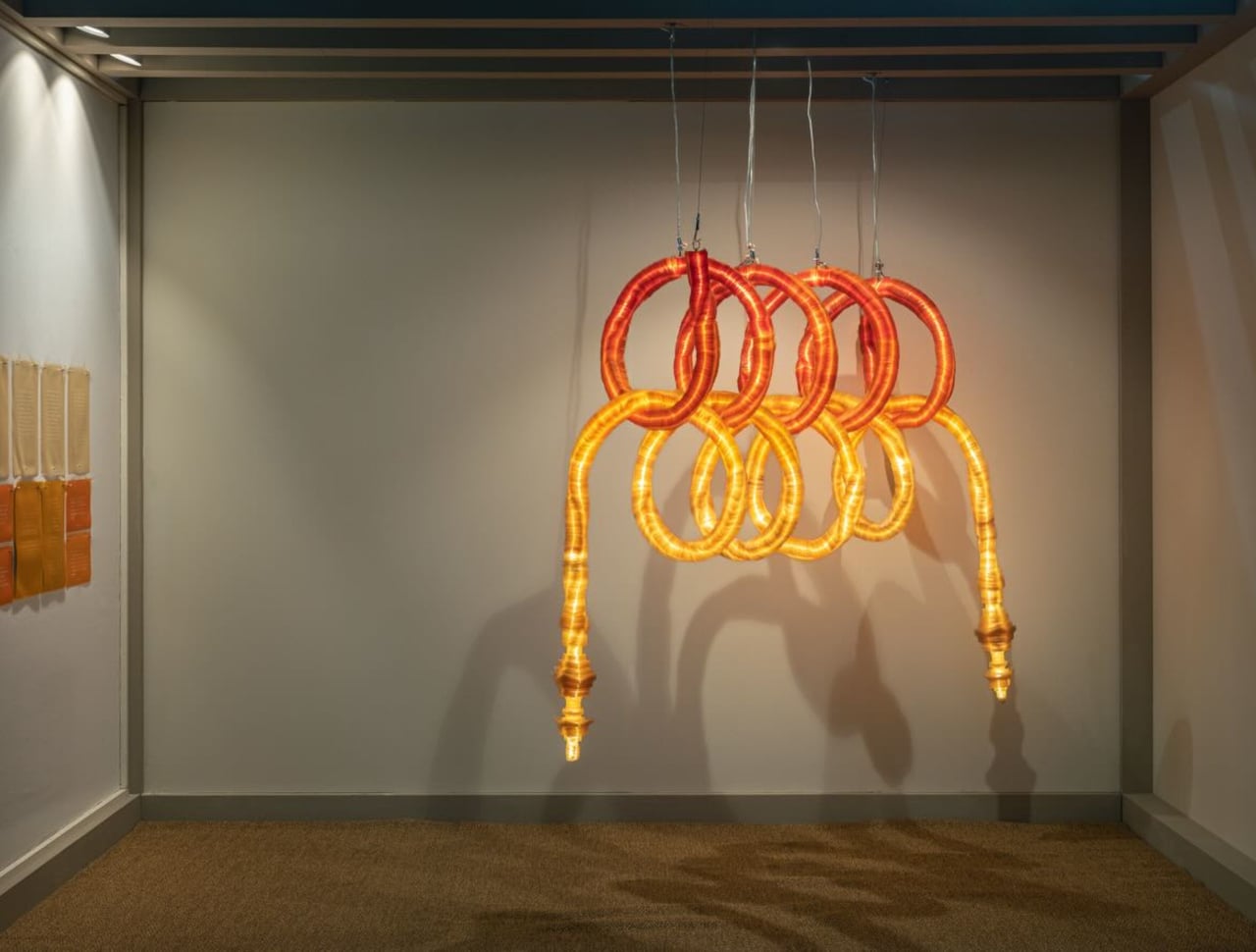
Sustainable design has spent years negotiating an awkward identity crisis. The moment a material gets labeled biodegradable or plant-based, it tends to be filed under “eco-alternative,” which is shorthand for “almost as good as the real thing, but greener.” That framing puts the worth of the material almost entirely on what it replaces, rather than what it can become as something genuinely new.
Designer Su Yang Choi has been pushing back against that assumption with the Slow Project series, an ongoing investigation into seaweed-derived agar as a material with its own aesthetic voice. Slow2, the series’ second work, was presented at Salone Satellite 2026 in Milan as a pair of glowing tubular light installations that don’t quite look like anything industrial design or nature has produced before.
Designer: Su Yang Choi
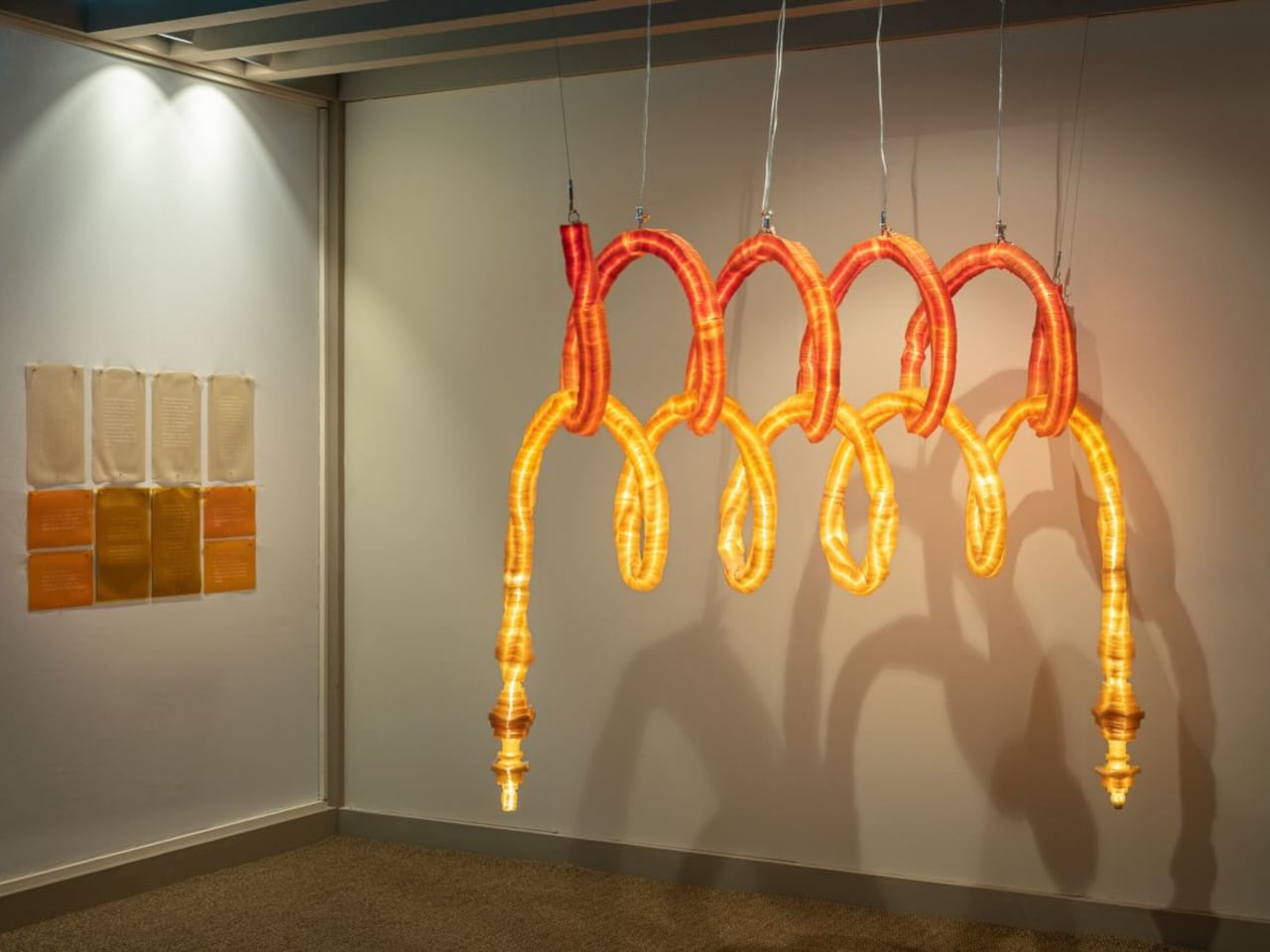
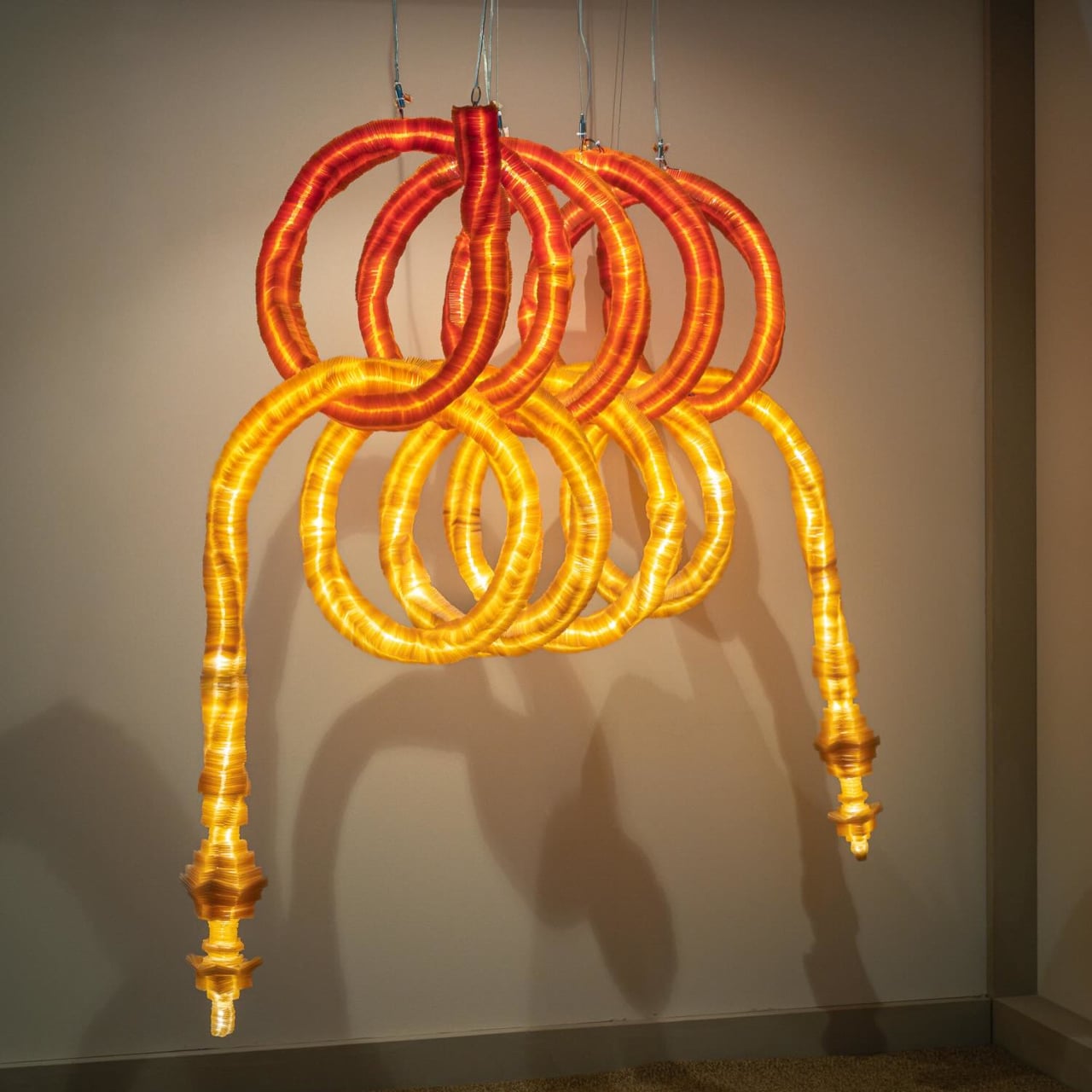
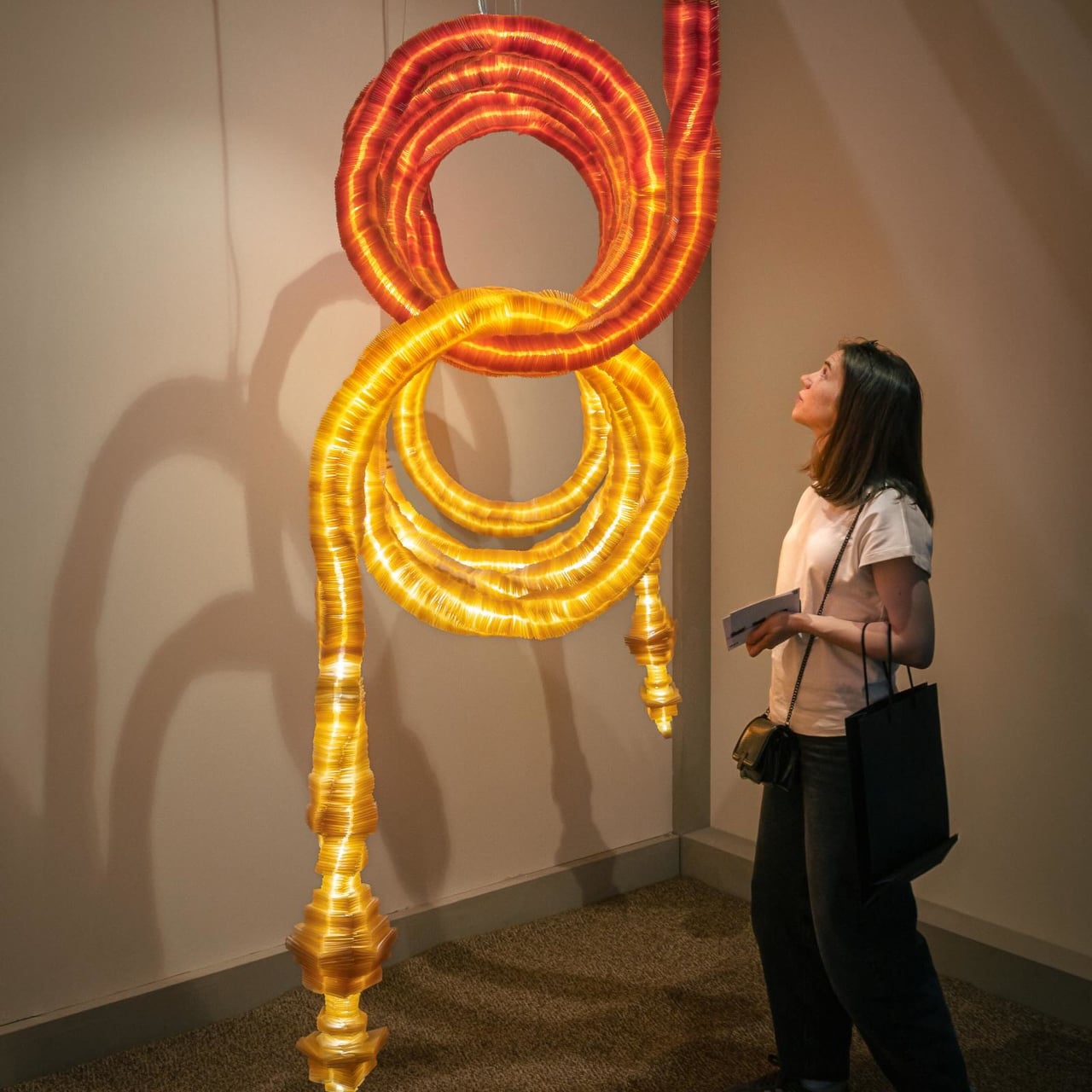
The structural idea comes from baramgil, a spatial principle in traditional Korean hanok architecture where doors and windows line up along a single axis, letting the gaze pass through layered planes and create the impression of depth. Choi translates that logic into two vertically interlocking circular tubular structures, which build perceived depth through repetition and overlap rather than any physical expansion.
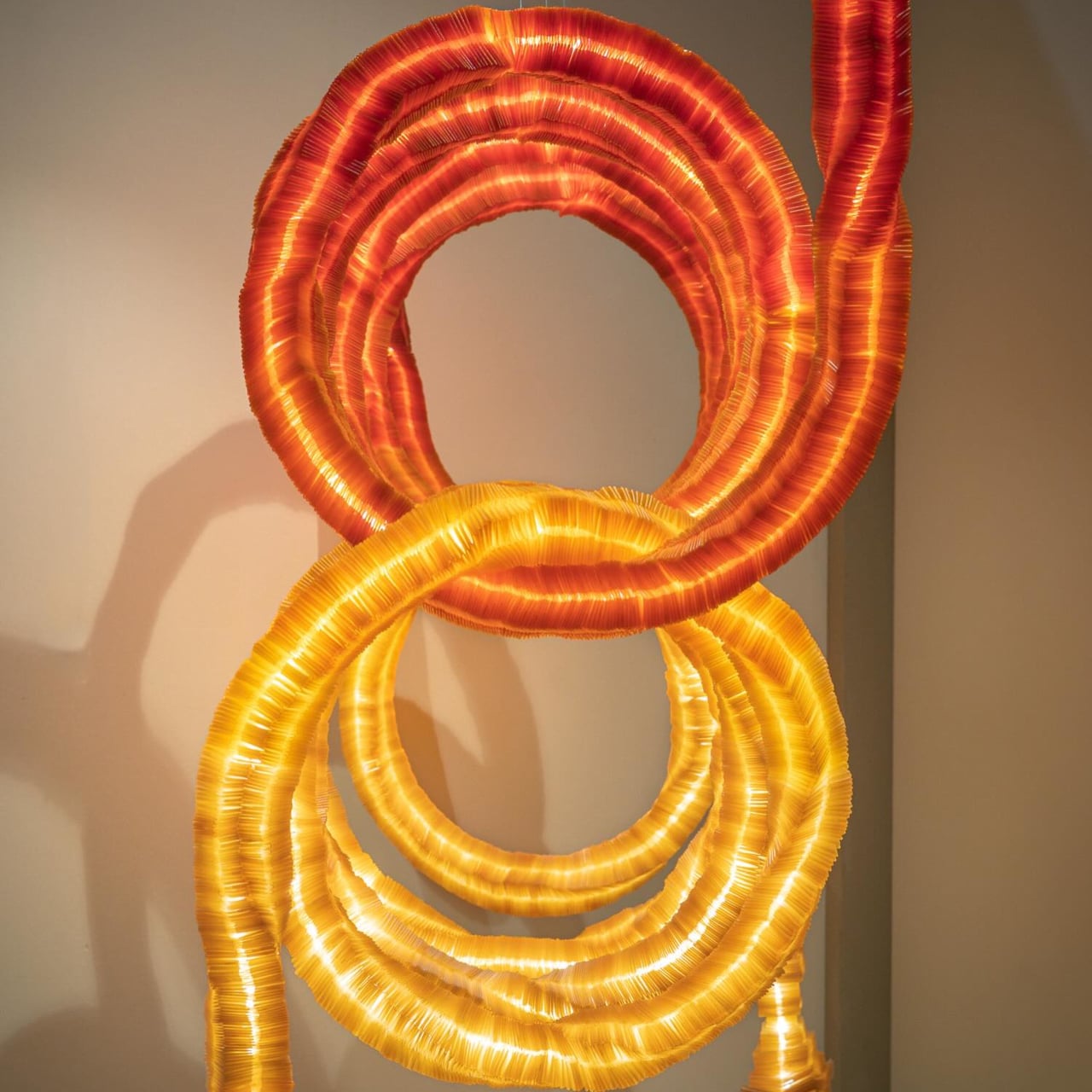
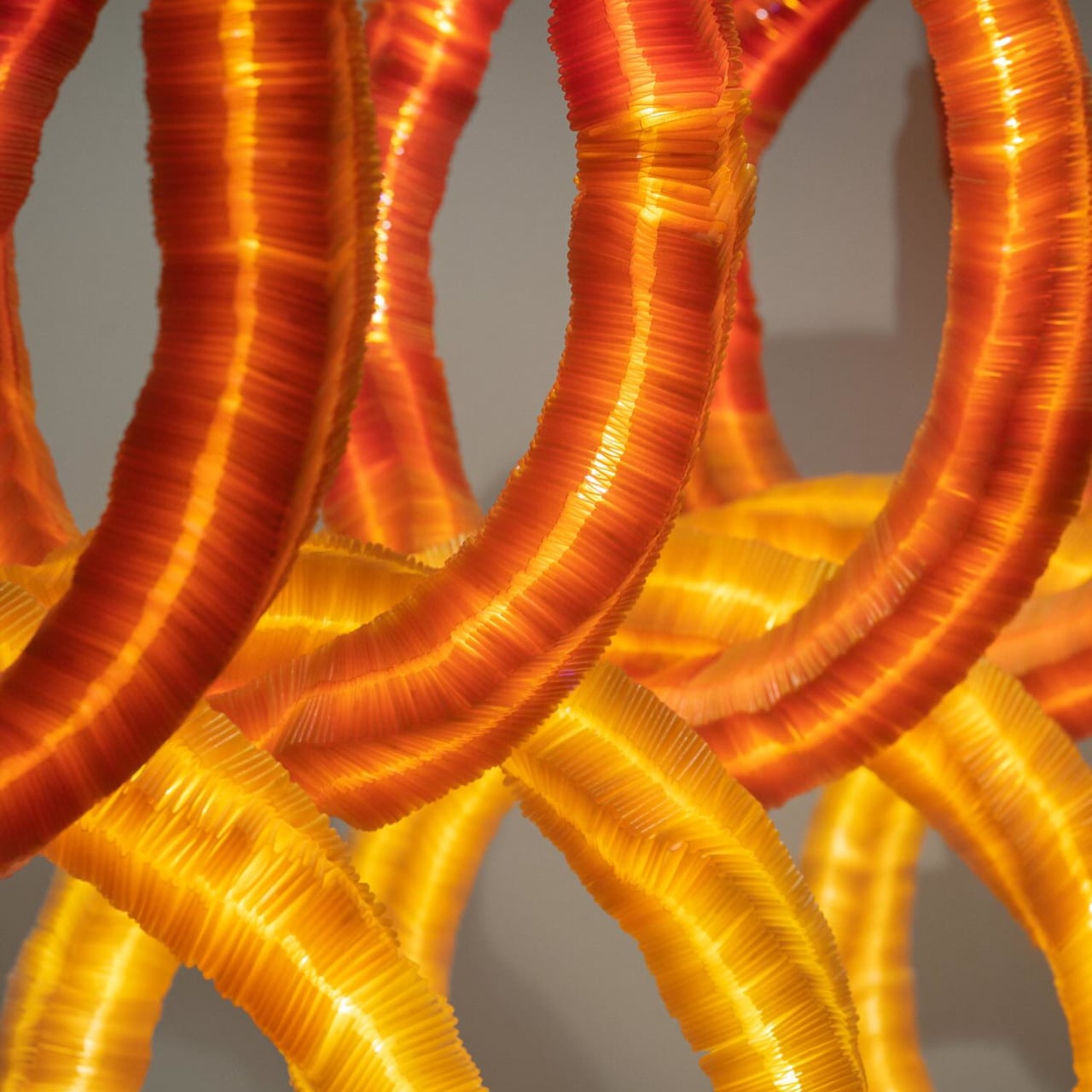
The tubes are built around a steel armature wrapped in layers of seaweed-derived agar, a biodegradable biopolymer Choi formulated independently without any synthetic additives. LED strips run through the core alongside insulating tubing, and the light passes outward through the semi-translucent material. The agar’s own surface texture, tight ridges spiraling along each curved section, reads as integral to the form rather than incidental.
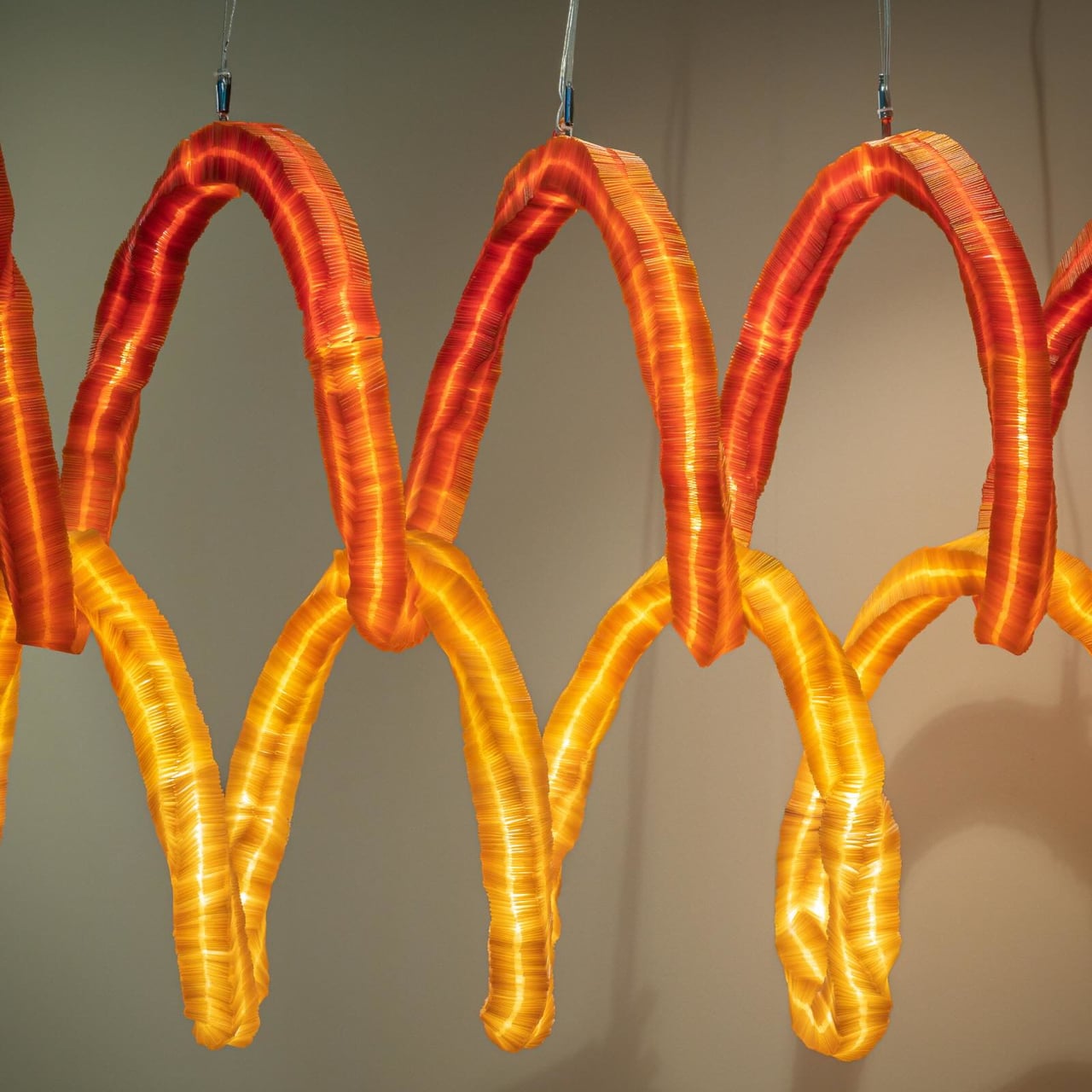
Color comes entirely from natural pigments, specifically gardenia and paprika, which produce a gradient from warm amber and gold at the lower sections to a deeper red toward the top. The shift isn’t applied in flat bands but moves gradually across the form, and the LED light amplifies those variations differently through each layer of agar, so the coloration changes depending on where you look from.
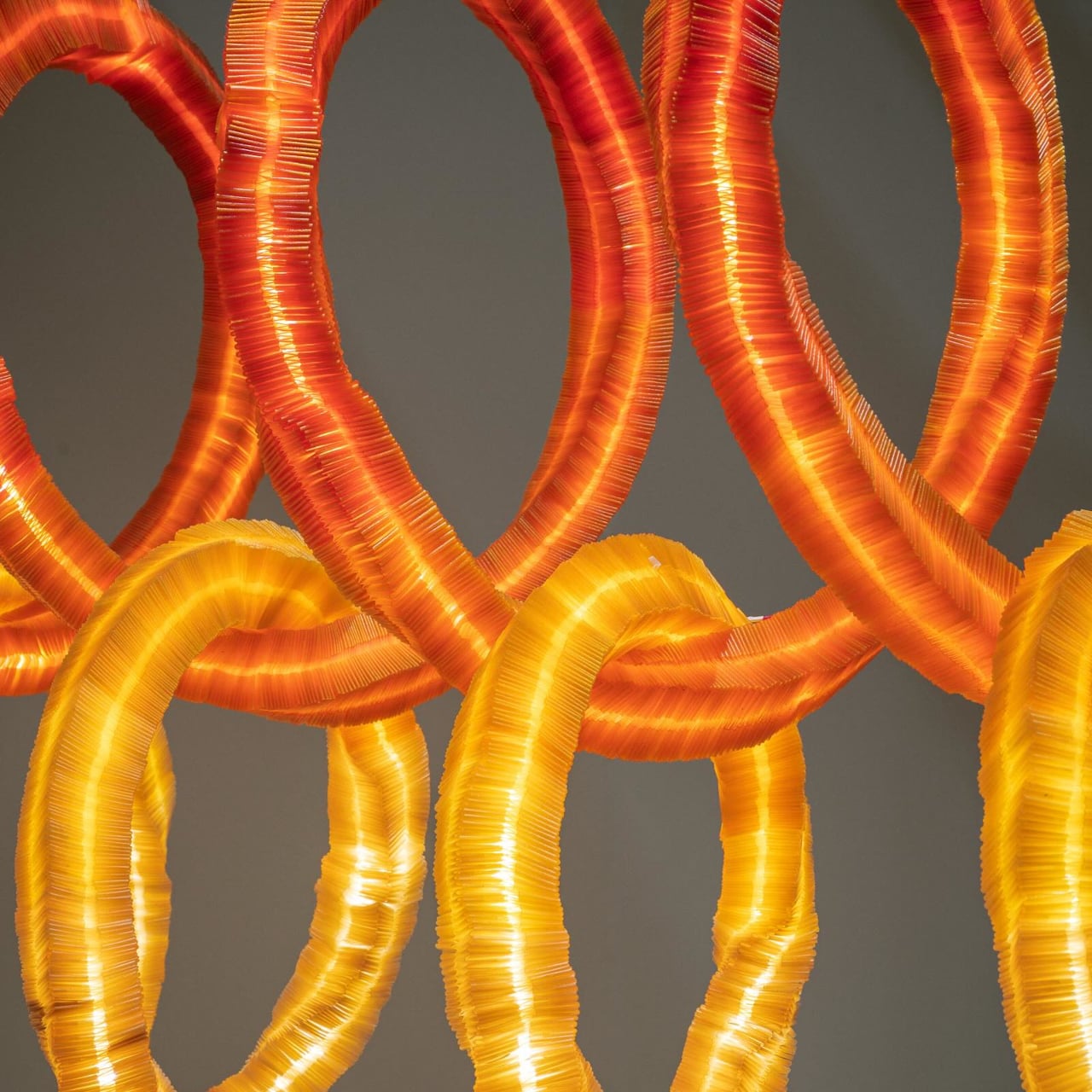
Hung from the ceiling, the installation casts shadows on the wall behind it, the overlapping loops producing a secondary layer of visual information that extends the work beyond its physical boundaries. That doubling mirrors the baramgil idea at a different scale. Seen from the front, the structures read as a single unified form; shift to an angle and the depth between the interlocking sections opens up considerably.
What makes Slow2 compelling is what Choi is actually arguing through it. The Slow Project series isn’t about demonstrating what seaweed agar can replace; it’s an inquiry into whether the material can develop enough formal character to stand on its own. The baramgil reference, the natural pigments, the hand-wrapped tubes, none of it reads as sustainable messaging but as decisions the material itself invites. The concept, the form, and the substance aren’t three separate layers but one coherent thing, which is precisely where the Slow Project series seems to be heading.
The post Su Yang Choi Made a Glowing Lamp From Seaweed, Paprika, and Gardenia first appeared on Yanko Design.

The iPhone 18 Pro Max introduces a series of thoughtful upgrades, focusing on enhancing core features such as camera performance, processing power and connectivity. While it doesn’t aim to transform the smartphone landscape, it refines the user experience in meaningful and practical ways. Here’s a closer look at Apple’s latest flagship and how it aligns […]
The post The Biggest Changes Coming to Apple’s iPhone 18 Pro Max appeared first on Geeky Gadgets.

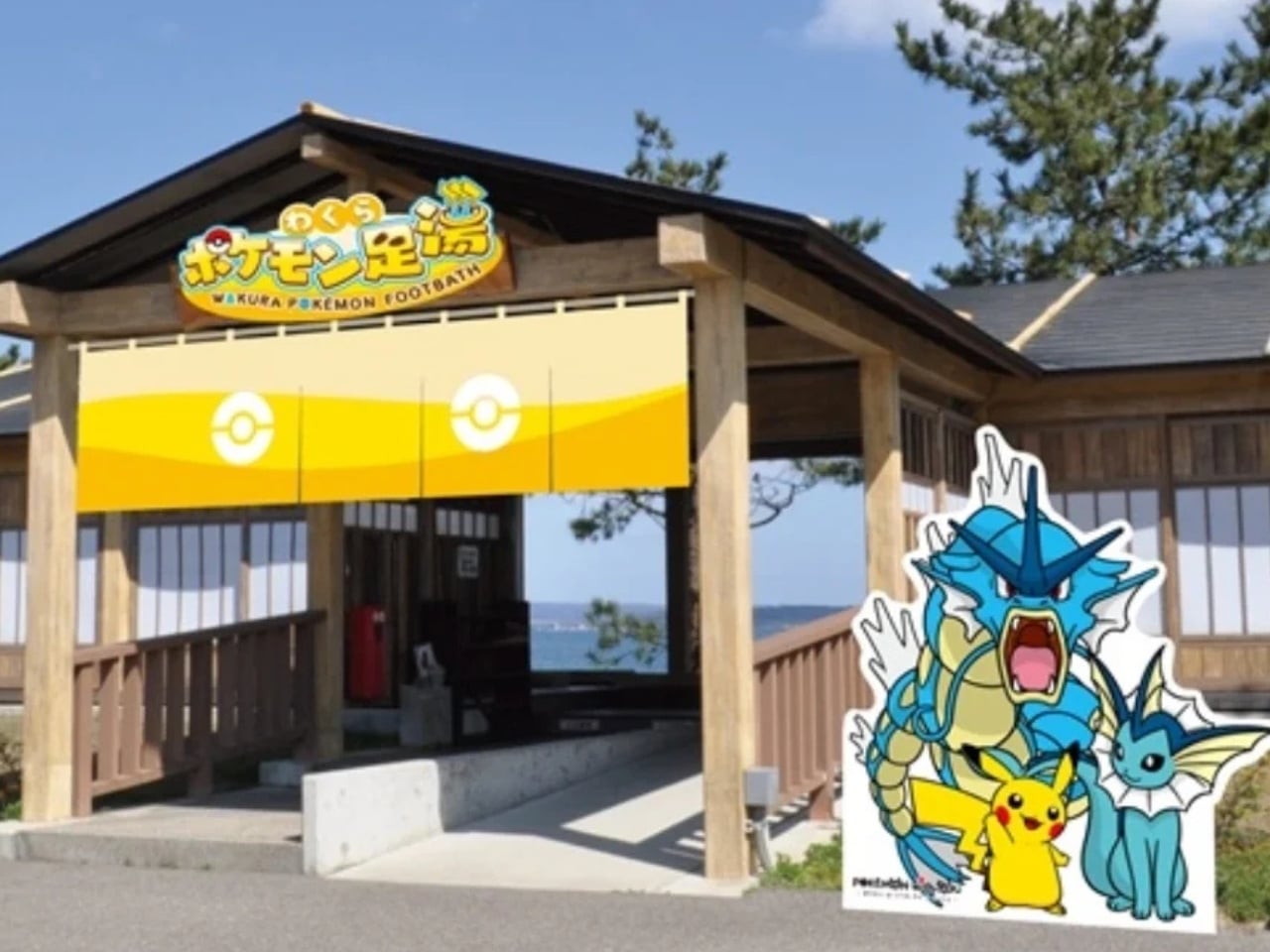
When you hear “Pokémon footbath,” your brain probably goes one of two places: either immediate delight or mild confusion. Both reactions are fair. But when you actually see what just opened in the small coastal town of Wakura Onsen in Nanao City, Japan, the response tends to land somewhere more unexpected than either. It lands in quiet, genuine warmth.
The Wakura Pokémon Footbath officially opened on May 12 inside Yuttari Park in Ishikawa Prefecture, and it is exactly what it sounds like: a public footbath surrounded by beloved Water-type Pokémon. Gyarados towers over the soaking pool, appearing to blast water in with its Hydro Pump. Psyduck perches nearby, looking stressed as always. Vaporeon, Pikachu, Poliwag, Poliwhirl, and Quaxly are scattered throughout the wooden structure, each one in character, each one impossibly charming. The facility is free to use and open daily from 7 AM to 7 PM, though it may close depending on weather conditions.
Designer: Wakura Onsen
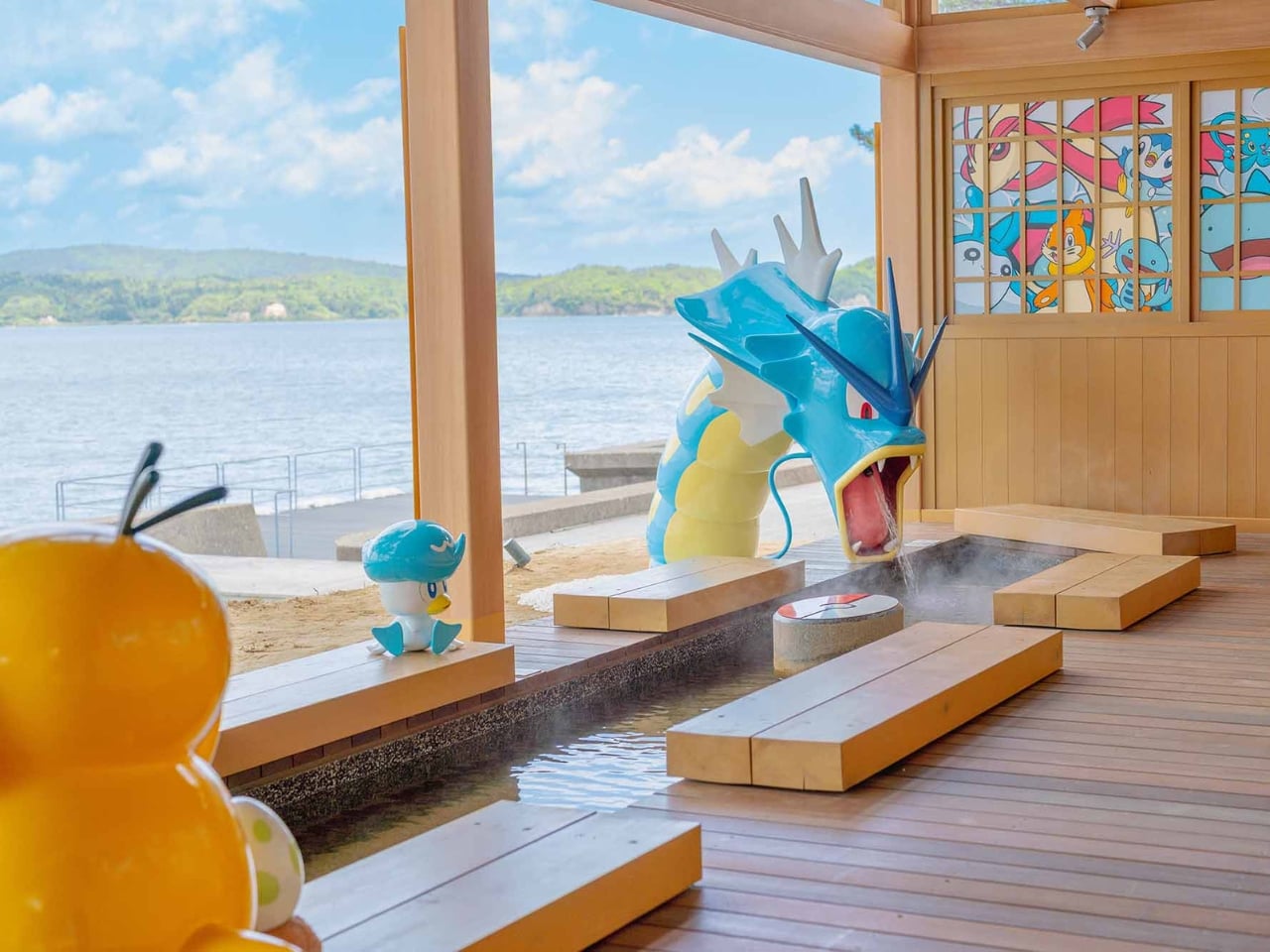
From a pure design standpoint, it works. The Pokémon figures feel integrated into the space rather than slapped onto it as an afterthought. The Gyarados placement especially is clever: positioning a creature historically associated with destruction as the one filling a community wellness space with warm water is a quietly subversive design choice. It takes a familiar icon and gives it a new job, and the whole thing is better for it. Good character-led design usually does this. It finds the emotional logic of the IP and builds something genuinely functional around it, instead of just stamping a logo on a wall and calling it a day. The wooden structure keeping everything together also helps ground the Pokémon elements in something tactile and traditionally Japanese, which keeps it from reading as pure merchandise and more as a genuine place to be.

But the design story here is only part of the picture. What elevates the Wakura Pokémon Footbath beyond a cute novelty is the context surrounding it. Wakura Onsen is still recovering from the 2024 Noto Peninsula earthquake, which caused major damage to local tourism infrastructure. The footbath was renovated and developed through a collaboration between Nanao City and the Pokémon With You Foundation, an organization that has long used Pokémon’s reach to support communities facing hardship. Local officials are hoping the new attraction will draw visitors back to a region that urgently needs them. On opening day, a dedication ceremony was held, and children from a local nursery school were among the first to try it out.
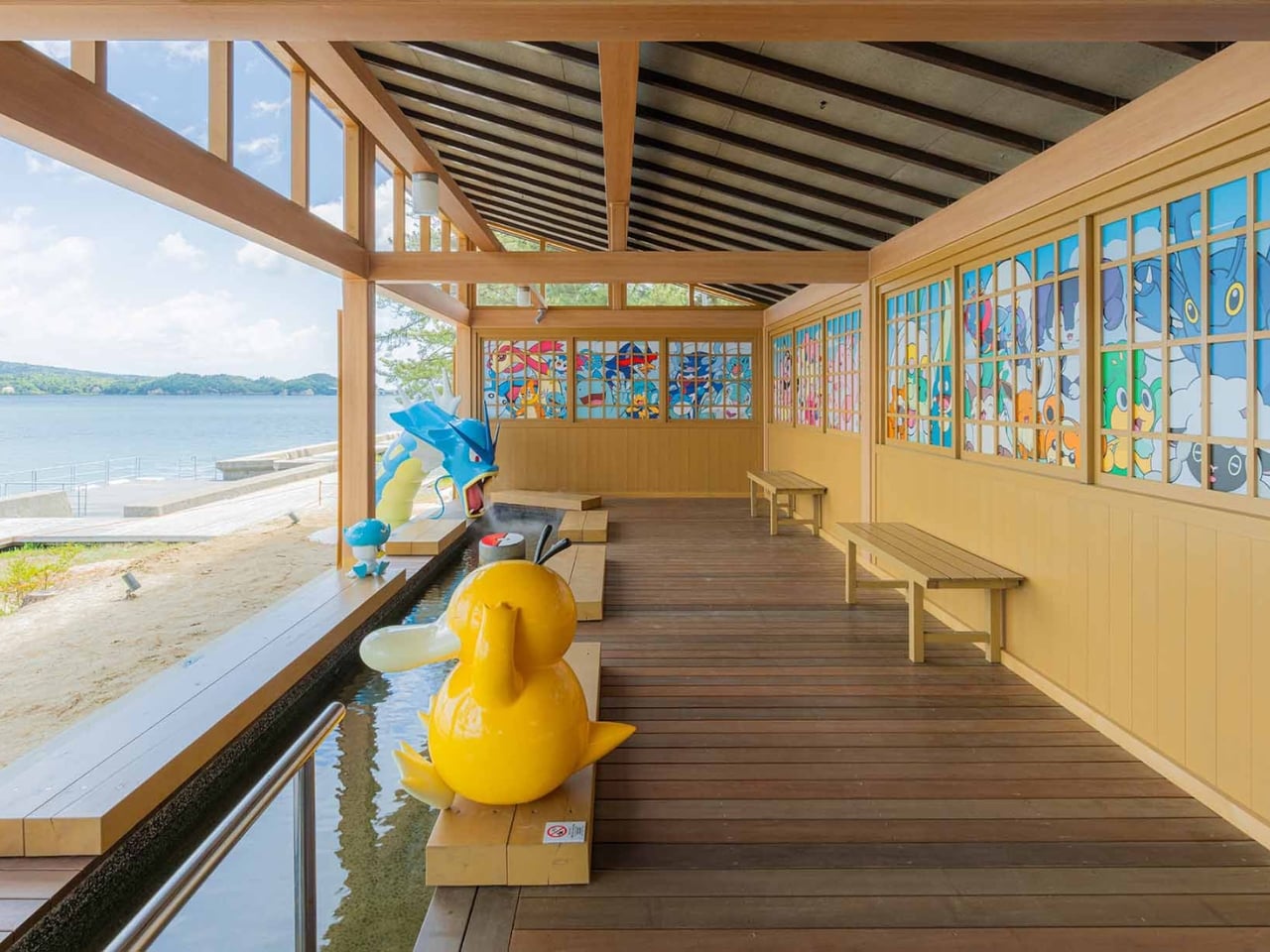
That detail matters. It reframes the entire project. A giant Gyarados shooting water into a hot spring pool is fun in isolation. A giant Gyarados shooting water into a hot spring pool in a community rebuilding after a disaster, inaugurated by children experiencing something joyful, is a different kind of story. It is design as care. It is pop culture as infrastructure.
I think we underestimate how much deliberate playfulness can do for a place in recovery. A footbath is not a hospital. It is not a new road or a rebuilt building. But public spaces designed to give people a reason to show up, to sit down, to stay a while, do real work. They signal that a place is worth visiting again. That it has something to offer. That life, in some form, is continuing. And sometimes the difference between a place that comes back and one that does not comes down to whether people believe it is worth returning to.
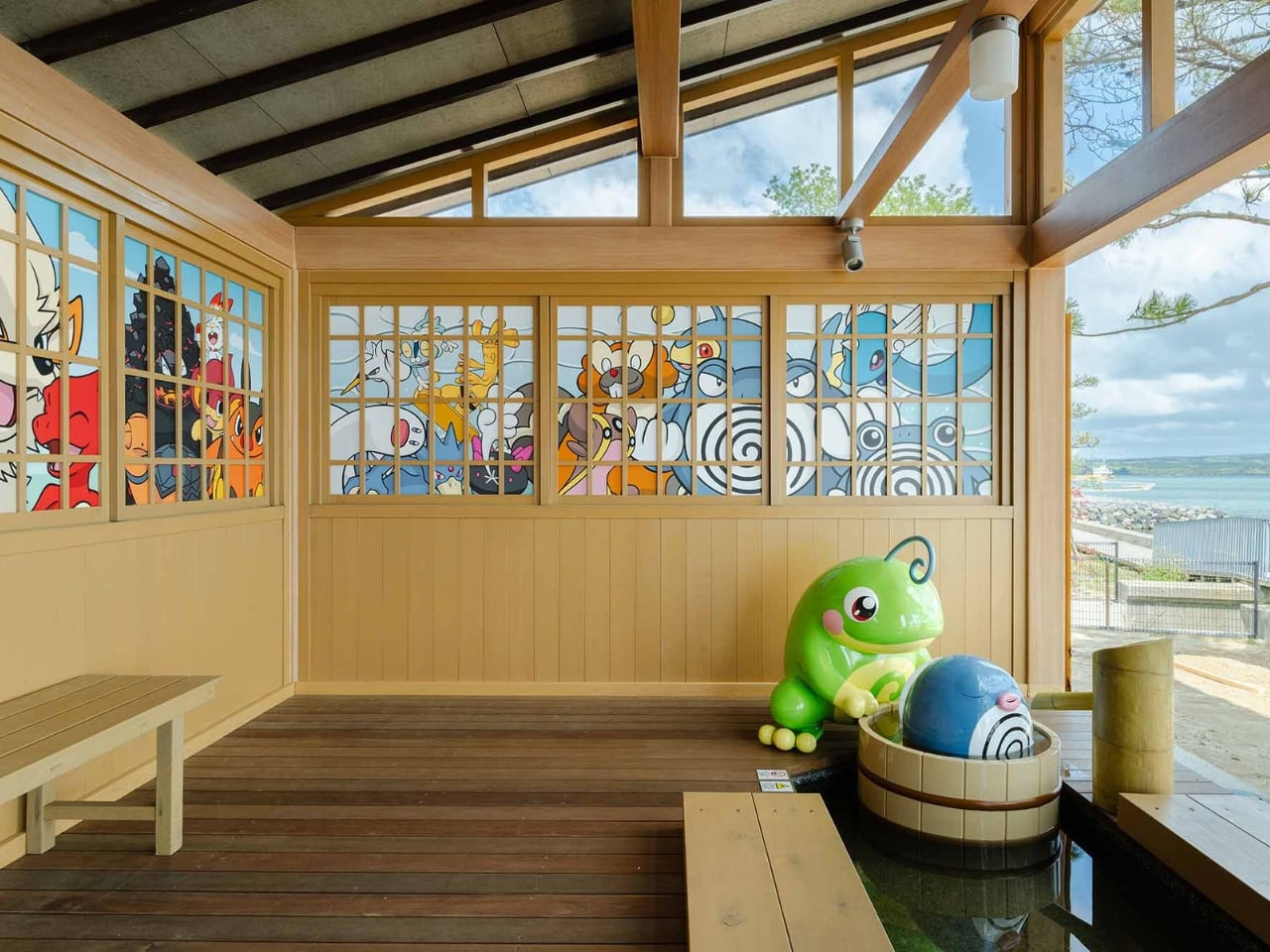
The footbath also ties into the newly installed Pokémon manhole covers placed around Nanao City, part of Japan’s Pokéfuta initiative, which uses collectible Pokémon-themed covers to encourage visitors to explore lesser-known regions. It is a broader ecosystem of soft infrastructure pointing in the same direction: come here, look around, stay awhile.
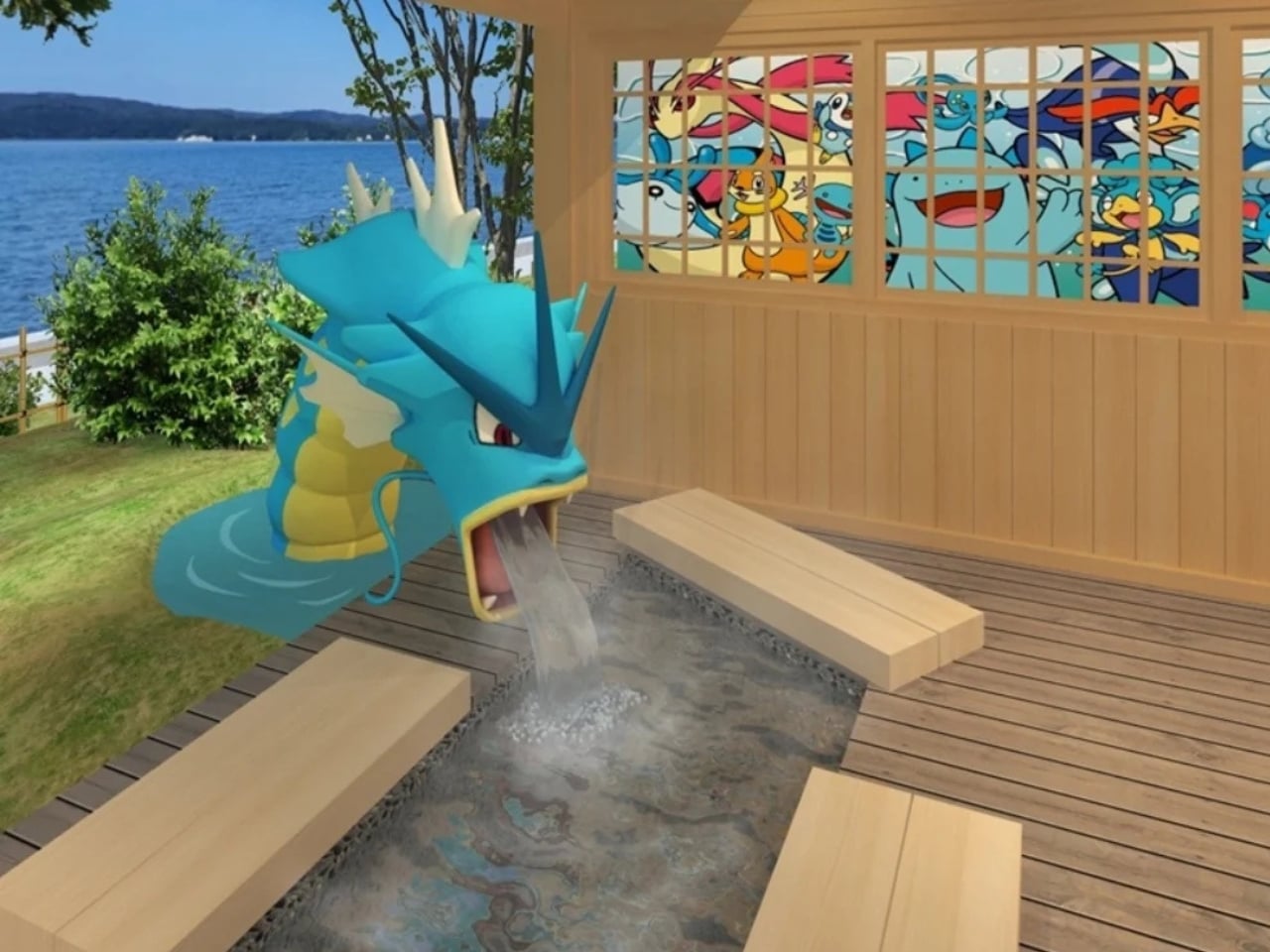
Wakura Onsen may not be the first destination that comes to mind for a travel itinerary. But a free footbath where a reformed Gyarados keeps your feet warm while Psyduck quietly spirals next to you? That is a genuinely compelling reason to make the trip. And right now, Nanao City could use a few more of those.
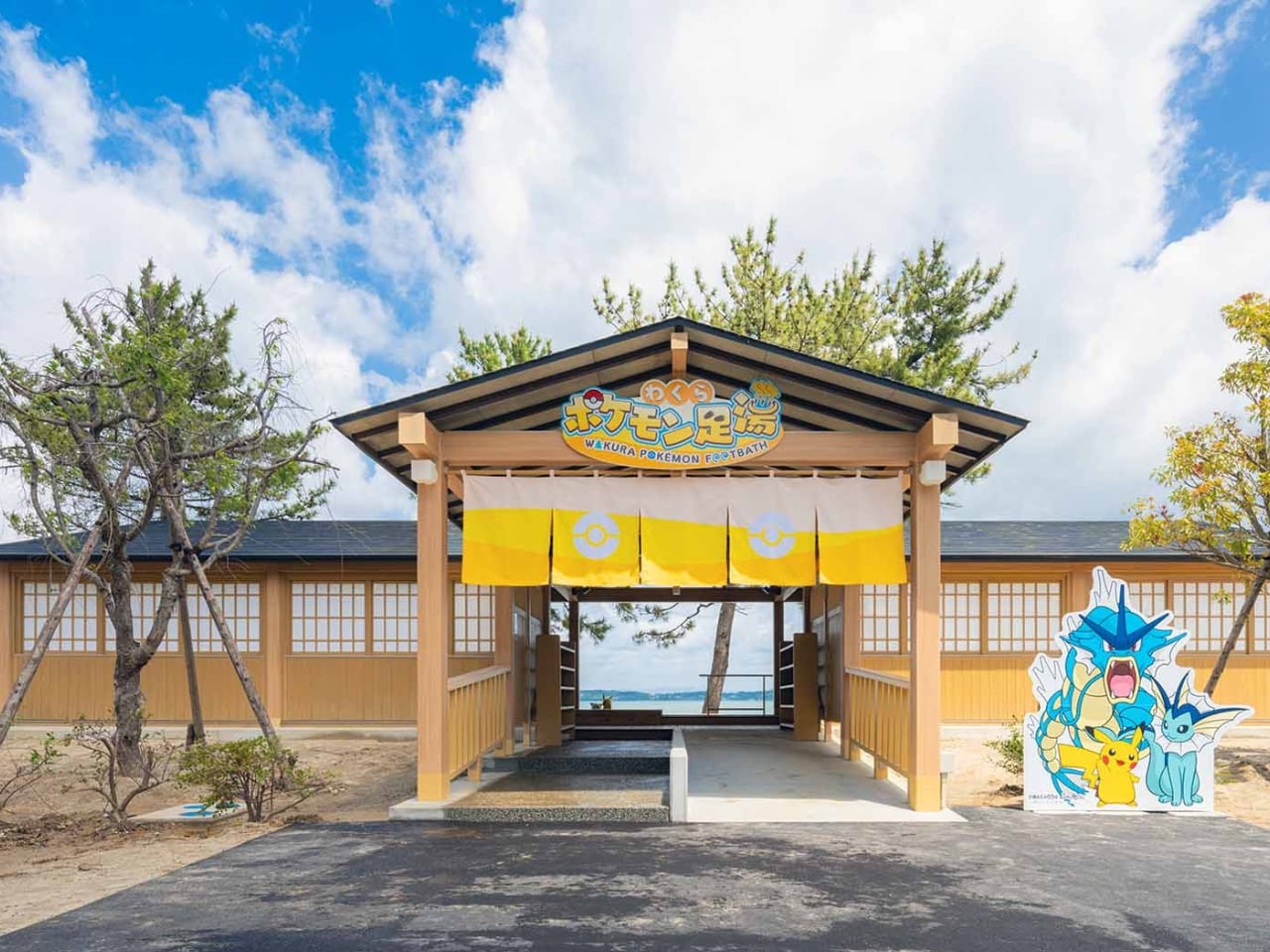
The post Japan Just Built a Pokémon Footbath and It’s Genuinely Moving first appeared on Yanko Design.

AI agents have become a cornerstone of automation in 2026, offering capabilities that extend far beyond the limitations of traditional chatbots. Unlike chatbots, which excel at predefined conversational tasks, AI agents are designed to independently handle complex, multi-step operations by combining reasoning, memory and goal-setting. As explained by AI Master, these agents rely on frameworks […]
The post How to Build and Deploy AI Agents in Under an Hour appeared first on Geeky Gadgets.