Verizon waives late fees for federal workers affected by partial DHS shutdown

Verizon will waive late fees and offer flexible payment arrangements for workers affected by the partial government shutdown. The carrier has made similar offers in the past, like during the COVID-19 pandemic when it gave customers extra mobile data at no additional cost. 

The Department of Homeland Security has been hit the hardest by the partial shutdown, but Verizon's offer covers any federal worker who's able to offer employment verification. Verizon says employees can call 1-800-Verizon (1-800-922-0204) to get their late fees waived and set up a payment plan.

The partial government shutdown started in February after Congress failed to pass a new DHS funding bill. The lack of funding has not affected all of DHS' sprawling organizations equally, however. While the Transportation Security Administration is no longer able to pay its employees — leading to significant delays in airport security lines over the last week — both Immigration and Customs Enforcement and Customs and Border Protection have been spared thanks to a separate funding pool established by a previous bill.

Lawmakers continued inability to fund DHS also happens to hinge on both agencies. Democratic senators and congresspeople are demanding ICE agents wear body cams and remove masks before making arrests, among other restrictions, and refusing to fund DHS until those restrictions are worked into the bill. Both Republicans and Democrats have also separately proposed funding the entire department except for ICE and CBP, but while that bill passed in the Senate, it hasn't been taken up in the House.

This article originally appeared on Engadget at https://www.engadget.com/mobile/verizon-waives-late-fees-for-federal-workers-affected-by-partial-dhs-shutdown-221814382.html?src=rss

The ‘Transparent CD Player’ That Makes Streaming Feel Lazy

At some point, music stopped being an event and became wallpaper. You don’t really choose what plays anymore. A playlist starts, an algorithm decides what comes next, and before you know it, three hours have passed and you couldn’t name a single song. We used to sit with albums. We used to commit to them. That shift in how we listen is so gradual, so seamless, that most of us didn’t even notice it happening.

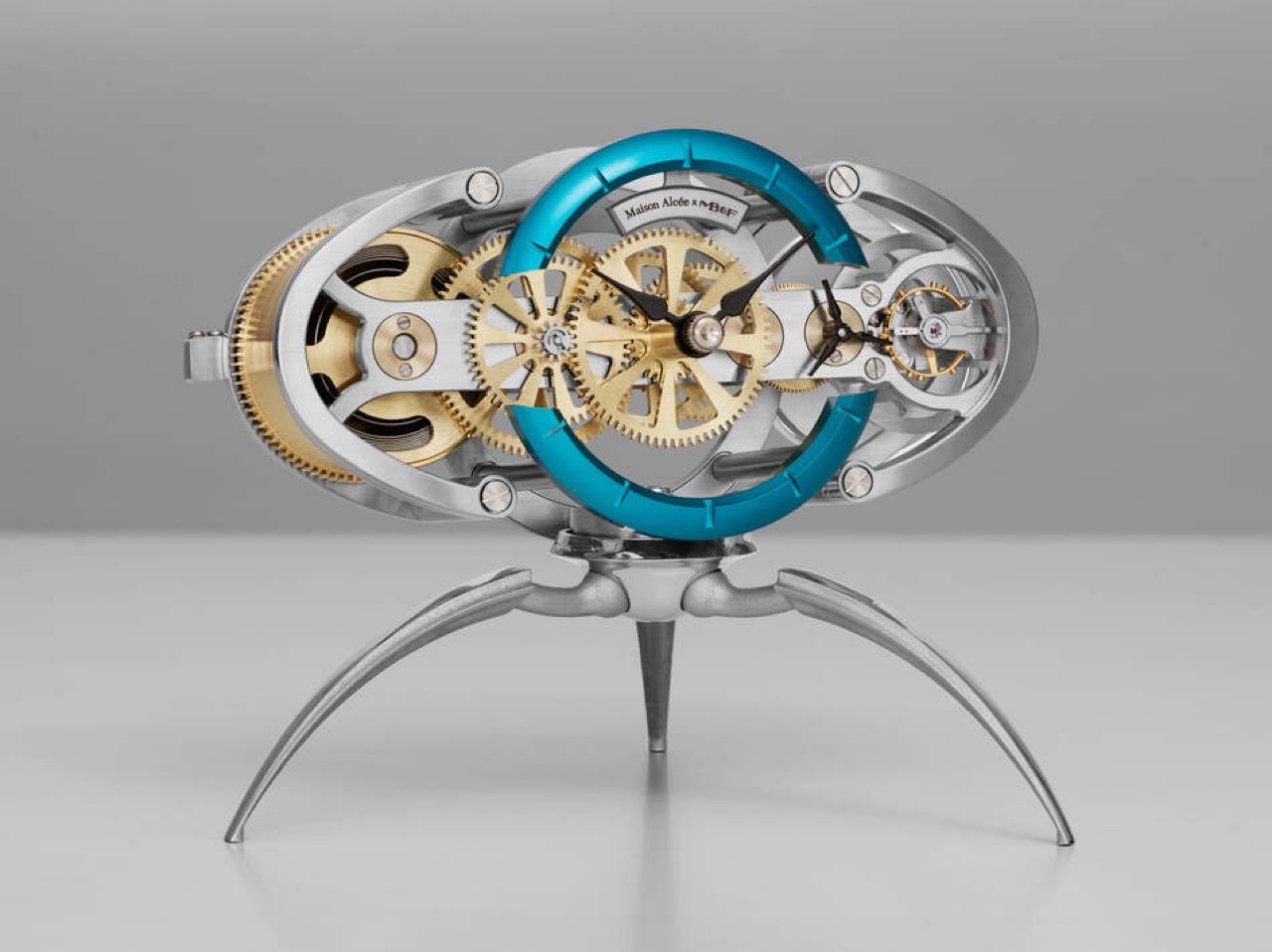
Arindam Kalita noticed. The multidisciplinary industrial designer, based in New York City and currently studying at Parsons School of Design, is betting that plenty of us miss that older, more intentional way of engaging with music. His project, called Analog, is a transparent CD player, and it is one of the more quietly compelling design statements to emerge from the current wave of nostalgia around physical media.

Designer: Arindam Kalita

The premise is almost aggressively simple. Analog has a power button and a volume knob. That’s it. No screen, no algorithm, no shuffle function, no “Up Next” queue pulling you in six directions. You put in a CD and you listen to it. The whole thing. In order. The way the artist intended. Kalita describes it as a “distraction-free music listening device designed to restore intention and commitment to the act of listening,” and that framing matters because it isn’t merely a product description. It is a design philosophy made physical.

The transparency is what makes Analog visually arresting. The casing is clear, which means you can watch the disc spin, follow the mechanics working in real time, and see the whole process of recorded sound become something tangible. Kalita calls it “a sculptural window into your sound,” and that description earns itself. You watch the CD move and you’re suddenly reminded that music is a material thing, that it exists somewhere beyond a server farm. That reminder turns out to be surprisingly moving. It’s the kind of design detail that rewards you for paying attention.

The timing of this project feels deliberate. The vinyl revival has been going strong for years, and CDs are quietly following a similar arc. Sales have been steadily climbing, thrift store bins are getting picked over with real intention, and people are rediscovering what it feels like to have a physical relationship with music they love. Analog fits right into that conversation, but it isn’t trying to be retro for the sake of aesthetics. The design is clean and modern, and the transparency gives the whole thing a contemporary, almost scientific quality that keeps it from sliding into nostalgia bait.

The more interesting argument Analog makes is about constraint. Most of us have a streaming library that is effectively infinite, and that abundance, paradoxically, makes both choosing and listening more passive. When you only have the album you put in, you pay attention differently. You stop skipping. You let the slow tracks breathe. You remember that albums have pacing and arc, and that the track you used to fast-forward through is actually one of the best ones. You start actually listening instead of just having music on. Kalita’s design is making a case through form alone that fewer options can create a richer experience.

Kalita believes that humans connect to objects and experiences through tangibility and sight, placing designers in a position of great power and responsibility. Analog is a direct expression of that. It asks you to see your music, to physically interact with it, to be present for it. That feels almost radical in 2026, and I think that’s precisely the intention.

Whether or not Analog ever goes to market is, in a way, beside the point. The best concept design doesn’t just propose a product. It poses a question. What do we actually want from music? Convenience or connection? Background noise or something you can recall the next day? I know my answer, and I suspect if a lot of people stopped to think about it, they’d know theirs too.

The post The ‘Transparent CD Player’ That Makes Streaming Feel Lazy first appeared on Yanko Design.
Kash Patel’s personal email account was accessed by hackers linked to Iran

A hacking group called Handala has gained access to FBI Director Kash Patel's email account, Reuters reports. The group published content from Patel's email on their website as proof, including photos of Patel "sniffing and smoking cigars" and "making a face while taking a picture of himself in the mirror with a ​large bottle of rum."

TechCrunch was able to independently confirm that at least some of the emails Handala stole were from Patel's account by checking information used by mail delivery systems that’s stored in an email's header. Several stolen emails included a cryptographic signature that linked them to Patel's account. The FBI has also separately confirmed that the Director's account was hacked. "The FBI is aware of malicious actors targeting Director Patel's personal email information, and we have taken all necessary steps to mitigate potential risks associated with this activity," the Bureau told TechCrunch. "The information in question is historical in nature and involves no government information." 

The FBI is offering up to $10 million in rewards for more information about the hackers who targeted Patel's account. Handala presents as a pro-Palestinian hacking group online, but is believed to be one of several aliases used by cyberintelligence units working for the Iranian government, Reuters writes. Groups affiliated with Iran have targeted officials in the US before. In August 2024, the FBI shared that a separate group, APT42, was trying to gain access to both the Trump and Harris campaigns. Three men associated with APT42 were later charged that September.

Handala has appeared to become more active during the current conflict between the US, Israel and Iran. According to Reuters, the group claimed to be behind a cyber attack on Stryker, a medical devices company, earlier in March. Handala also said it accessed and published personal data from Lockheed Martin employees stationed in the Middle East.

This article originally appeared on Engadget at https://www.engadget.com/cybersecurity/kash-patels-personal-email-account-was-accessed-by-hackers-linked-to-iran-212618474.html?src=rss

Mark Zuckerberg offered to ‘help’ Elon Musk with DOGE in 2025

Elon Musk and Mark Zuckerberg have a complicated history. In 2023, the two vowed to fight each other in a cage match that never happened. But by early 2025, when both were cozying up to the newly-elected President Donald Trump, they were apparently on more friendly terms. 

In February of that year, Zuckerberg texted Musk approvingly about his work with the now-defunct Department of Government Efficiency (DOGE). "Looks like DOGE is making progress," the Meta CEO texted. "I've got our teams on alert to take down content doxxing or threatening the people on your team. Let me know if there's anything else I can do to help."

The texts, which were published Friday in court documents as part of Musk's lawsuit against Sam Altman and OpenAI, are dated February 3, 2025. That's just a few weeks after Zuckerberg announced Meta's pivot away from content moderation in favor of "free expression." It's also the same day that a US Attorney said he would protect DOGE employees from "disgruntled" critics. 

Musk responded to Zuckerberg's message with a heart and followed up with an unrelated topic: OpenAI. He asked Zuckerberg if he was "open to the idea of bidding on the OpenAI IP with me and some others." Zuckerberg asked to "discuss it live" and Musk said he would call the next day. Previous documents disclosed in the case show that Musk had invited Zuckerberg to help him buy OpenAI, though he never officially signed on to the bid.

In a separate filing also made public Friday, Musk's lawyers argued that his exchanges with the Meta CEO ought to be excluded from the lawsuit. "Musk’s personal relationships and communications – including with other high-profile individuals – are also tangential and prejudicial," they wrote. "Defendants included in their exhibit list for trial, for example, several private exchanges between Musk and Mark Zuckerberg discussing Musk’s political activity and this lawsuit. Those recent communications have nothing to do with Musk’s claims and are nothing more than Defendants’ attempt to stoke negative sentiments toward Musk because of his association with Zuckerberg."

A Meta spokesperson declined to comment. 

In the same filing, Musk's lawyers also take issue with Altman's lawyers asking about Musk's alleged ketamine use and his attendance at Burning Man. A transcript from a video deposition with Musk indicated he was asked if had taken "rhino ket" at Burning Man in 2017. Musk said no, according to the transcript. 

"Any implication that music festivals or drugs have any relevance to this case is outlandish, and how Musk spends his free time is equally irrelevant," his lawyers wrote. A judge ruled earlier this month that OpenAI's lawyers would be permitted to ask "limited" questions about Burning Man, but not ketamine. 

This article originally appeared on Engadget at https://www.engadget.com/big-tech/mark-zuckerberg-offered-to-help-elon-musk-with-doge-in-2025-211737138.html?src=rss

LG Just Invented a New Metal to Build the Lightest 16-Inch OLED Laptop of 2026

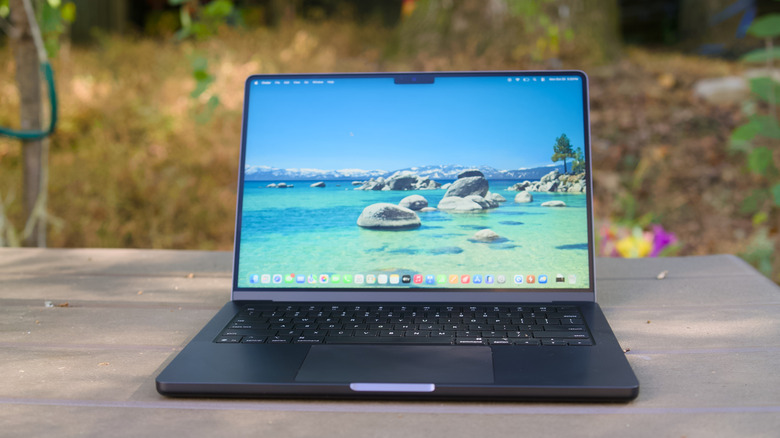
Every laptop manufacturer promises lighter builds, but most of them cheat. They shrink the battery, strip out ports, swap metal for plastic, or just make the screen smaller and call it progress. Real weight reduction without compromise requires inventing something new at the molecular level, which is exactly what LG did. The company spent the last year developing Aerominum, an in-house engineered alloy designed to be simultaneously lighter and stronger than the magnesium chassis that defined the gram line for a decade. The result is a 16-inch laptop with a 120Hz OLED display that weighs under 1.2 kilograms, a figure that sounds like a typo until you actually pick one up.

LG introduced three new gram models this week, all built on the Aerominum chassis: a 14-inch variant with Intel Panther Lake, a 17-inch with 32GB of RAM and an optional NVIDIA RTX 5050 GPU, and the headliner gram Pro 16. The Pro 16 pairs its sub-1.2kg weight with a 2,880 x 1,800 OLED panel running at 120Hz, powered by Intel’s latest Core Ultra processors. LG claims the new alloy meets military-grade durability standards while delivering scratch resistance that previous gram models couldn’t match. If the engineering holds up under real-world use, this could finally be the laptop that breaks the portability ceiling for 16-inch displays.

Designer: LG

Aerominum replaces the magnesium alloy LG has used across the gram lineup since 2015, when the series first launched internationally. The new material uses what LG calls an “aeroplate structure,” a term that suggests internal geometry optimization rather than just a change in chemical composition. The company also applies a refined atelier brushing technique to the surface, delivering a metallic finish that looks premium without adding the typical weight penalty of anodized aluminum. The scratch resistance claim addresses one of the most consistent criticisms leveled at ultralight laptops over the years: magnesium chassis tend to show wear quickly, and previous gram models were no exception. Whether Aerominum actually solves that problem will depend on how it holds up after six months in a backpack, but the intent is clear.

The gram Pro 16 carries a 2,880 x 1,800 OLED display with a 120Hz refresh rate, a resolution LG markets as WQXGA+. The OLED panel is the differentiator here. LG’s 17-inch model uses an IPS display, which keeps costs down but sacrifices contrast and color depth. The Pro 16 gets the premium screen treatment, and pairing that with a 120Hz refresh rate makes it viable for light creative work and high-refresh browsing without needing discrete graphics. Intel’s Core Ultra processors handle the computing side, though LG hasn’t disclosed specific SKUs yet. The company does confirm support for both on-device AI (via LG’s gram chat powered by EXAONE 3.5 sLLM) and Microsoft Copilot+ PC functionality, which requires certain minimum performance thresholds that narrow down the chip options.

Weighing under 1.2 kilograms puts the gram Pro 16 in the same weight class as most 13-inch ultrabooks, which is absurd for a machine with a 16-inch OLED display. For context, Apple’s 13-inch MacBook Air with M3 weighs 1.24 kg. The Dell XPS 16 sits closer to 2.1 kg, and even Lenovo’s ThinkPad X1 Carbon (a 14-inch machine) weighs 1.19 kg. LG has been chasing this kind of weight advantage since the gram line launched over a decade ago, and Aerominum is the material innovation that finally closed the gap.

The gram Pro 16 will compete directly with premium Windows ultrabooks from Dell, Lenovo, and ASUS, all of which have been adding OLED options to their flagship models over the past two years. LG’s advantage is weight. The weakness, historically, has been GPU performance and pricing. The Pro 16 skips discrete graphics entirely, which will limit its appeal to anyone doing serious video editing or 3D work. Pricing hasn’t been announced yet, but previous gram Pro models launched at premium price points that undercut Apple while overshooting most Windows competitors. If LG can keep the Pro 16 under $2,000, it becomes a legitimate alternative to the MacBook Pro 16. If it creeps past that threshold, the weight advantage starts to feel like an expensive novelty.

The post LG Just Invented a New Metal to Build the Lightest 16-Inch OLED Laptop of 2026 first appeared on Yanko Design.
Posted in Uncategorized | Tagged ,

Meta will fund seven new natural gas plants to power its biggest data center yet

Meta will essentially foot the power bill for the $27 billion mega data center it's building in Louisiana. On Friday, the Wall Street Journal reported that the company struck a deal to fund the energy infrastructure needed for the project.

Through a deal with Entergy Louisiana, Meta will fund seven new natural gas power plants, 240 miles of transmission lines and battery energy storage at three locations. The gas plants will have a combined power output of 5,200 megawatts, and the transmission lines will operate at 500 kilovolts.

In addition, the company will help fund up to 2,500 MW of new renewable resources. It also agreed to a memorandum of understanding for future nuclear power development. The 4-million-square-foot Richland Parish, LA, data center will be Meta's biggest yet. It's currently under construction.

The energy deal follows a pledge by tech companies, including Meta, to offset local residents’ rising electricity costs from AI data centers. The companies plan to "build, bring or buy the new generation resources and electricity needed to satisfy their new energy demands, paying the full cost of those resources." However, the pledge lacks a binding agreement or any enforcement mechanisms.

The shift in tone comes in response to growing anger from local communities over the rise of power-hungry, environmentally damaging AI data centers. A December poll found that 60 percent of Americans — including majorities of Democrats, Republicans, and independents — support more AI regulation. Just this week, Sen. Bernie Sanders and Rep. Alexandria Ocasio-Cortez introduced a bill to force a moratorium on data center construction until meaningful regulations are passed.

We could easily file this and similar moves as Big Tech's latest attempt to convince voters and officials that it can be trusted to do right without enforceable regulations. We've seen that movie before.

This article originally appeared on Engadget at https://www.engadget.com/big-tech/meta-will-fund-seven-new-natural-gas-plants-to-power-its-biggest-data-center-yet-201000045.html?src=rss

European Commission confirms data breach

The European Commission has announced that it suffered a cyber attack that affected "cloud infrastructure hosting the Commission's web presence on the Europea.eu platform." While the attack has been contained, Bleeping Computer reports that the threat actor claiming to be behind it was able to take over 350GB of data before the Commission addressed the issue.

"Early findings of our ongoing investigation suggest that data have been taken from [Europa] websites," the European Commission says. "The Commission is duly notifying the Union entities who might have been affected by the incident."

The Commission's investigation is ongoing, and it has yet to disclose how its cloud infrastructure was breached. According to Bleeping Computer, the threat actor was able to access the Europa sites and employee data via one of the Commission's Amazon Web Services accounts. The Commission disclosed a breach that similarly impacted employee data in February.

Both breaches appear to be less severe than the Salt Typhoon hack that impacted US telecommunications companies in 2024. Hackers reportedly gained access to data from the smartphones of members of both the Trump and Harris campaigns, and other government officials. In January 2026, the European Commission introduced a new Cybersecurity Package designed to address similar issues, in part by outlining new ways for EU states to deal with potentially risky companies in their telecom supply chains.

This article originally appeared on Engadget at https://www.engadget.com/cybersecurity/european-commission-confirms-data-breach-200000982.html?src=rss

Crunchyroll is now available as a channel in the Apple TV app

If you're still using Crunchyroll after its AI subtitle fiasco and subsequent price increase, there's a new way to watch. The anime streaming service is now available as a channel in the Apple TV app.

That means you can subscribe and stream your favorite anime titles, all within Apple's video app. No need for the Crunchyroll app or a separate login. (Your Apple account handles your subscription using this method.) 9to5Mac notes that this is the first significant new channel added to the TV app in some time.

Crunchyroll starts at $10 per month, after the platform raised all of its monthly subscription prices by $2 earlier this year. That may be a hard sell for fans frustrated by the platform's direction.

Last year, months after the company president enthused about the potential for AI subtitles, fans noticed something fishy. The German subtitles for Necronomico and the Cosmic Horror Show included one that began with "ChatGPT said…" Crunchyroll pinned the blame on a third-party vendor and promised it would work to "rectify the error."

This article originally appeared on Engadget at https://www.engadget.com/entertainment/streaming/crunchyroll-is-now-available-as-a-channel-in-the-apple-tv-app-182500579.html?src=rss

If you live in Georgia, there’s a new exhibit you can visit celebrating Apple’s 50th anniversary

The Mimms Museum of Technology and Art in Roswell, Georgia is debuting a new exhibit celebrating Apple's 50th anniversary. The exhibit, iNSPIRE: 50 Years of Innovation from Apple, is set to open on April 1, the date the company was founded, and includes "more than 2,000 artifacts across 20,000 square feet, making it the largest public display of Apple products in the world."

iNSPIRE is supposed to offer "a unique look" into Apple, by "highlighting early computers, rare prototypes, original documentation and immersive installations inspired by Apple’s most iconic products and campaigns." Based on photos shared from the exhibit's launch event, that includes displays of every model of key products like the iPod, iPhone and iPad, and an interactive installation that inserts you in the company's iconic iPod ads.

If you're based on the west coast of the US, the Computer History Museum in Mountain View, California is also displaying its own "Apple@50" exhibit, and running what it calls "Mactivations," scheduled demos where you can interact with a reproduction of an original Macintosh.

Apple's own celebrations have included a published letter from CEO Tim Cook ruminating on the company's mission, and live music events at the company's stores, offices and select landmarks around the world.

This article originally appeared on Engadget at https://www.engadget.com/computing/if-you-live-in-georgia-theres-a-new-exhibit-you-can-visit-celebrating-apples-50th-anniversary-180940846.html?src=rss

It looks like we’re finally getting an Ocarina of Time remake

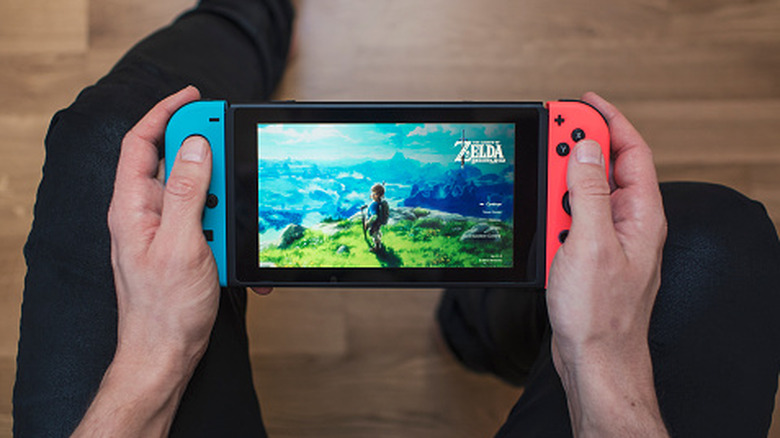
After years of rumors and countless fan-made Unreal Engine tech demos of varying quality, it sounds like we might finally be getting a ground-up remake of The Legend of Zelda: Ocarina of Time.

That’s according to Nintendo insider NatetheHate, who said in the latest edition of his podcast that a remake of the seminal Nintendo 64 game would be coming to Switch 2 in the second half of 2026. The reliable tipster said he doesn’t know whether Nintendo is making a 1:1 remake of the original 3D Zelda entry, or something "that’s a little more free to explore design choices," adding that he was initially reluctant to share the information he’d received in case we ended up getting little more than an HD remaster. But it sounds like this is a more ambitious undertaking than that.

Ocarina of Time has of course been remastered before, with 2011’s The Legend of Zelda: Ocarina of Time 3D for the 3DS generally considered to be the best version of the game you can play today. The original 1998 game is also easily accessible via emulation through Nintendo Switch Online, but a modern remake for Switch 2 does make some sense.

For one, 2026 marks the series’ 40th anniversary, and if you asked every Zelda fan alive what their favorite entry is, you can bet that OoT would feature pretty high in the final rankings. We’re also getting that live-action Zelda movie next year, and Nintendo will no doubt want to make sure audiences have done their homework on the games that inspired it.

Of course, none of this is official, so have those grains of salt at the ready, but NatetheHate did also claim that anyone hoping for a new 3D Mario game to arrive in 2026 is going to be disappointed. That’s more likely to arrive in 2027. In better news, we’re apparently also getting a brand new "classic-style" Star Fox game this summer, which would mark the return of the spacefaring Fox McCloud after a decade spent in Nintendo’s unloved mascot closet.

This rumor seems logical after Nintendo’s surprise announcement that the anthropomorphic red fox is going to feature in The Super Mario Galaxy Movie, which arrives next week. He’s being voiced by Glen Powell, because of course he is.

NatetheHate’s information on all of the above has been corroborated by VGC, which says it lines up with what it's heard from its own sources. And in the case of the Ocarina of Time remake, that recent Lego set suddenly makes a lot of sense.

If indeed we do get the remake of Metacritic’s highest-rated game of all time later this year, physical collectors could have a difficult choice to make, after Nintendo announced that physical versions of first-party Switch 2 games are about to become more expensive than their digital counterparts. This adjusted pricing will come into effect when Yoshi and the Mysterious Book launches on May 21.

This article originally appeared on Engadget at https://www.engadget.com/gaming/nintendo/it-looks-like-were-finally-getting-an-ocarina-of-time-remake-175546356.html?src=rss