Have you ever wondered how artificial intelligence could transform the way you work, from crafting stunning presentations to conducting large-scale research? In this walkthrough, Kevin Stratvert and team shows how Manus AI, a innovative productivity platform, can streamline complex tasks and elevate your workflow efficiency. With its ability to integrate seamlessly into widely used systems […]
Counter real estate is precious territory in modern living spaces. Every inch counts when you’re balancing functional needs with aesthetic desires. Traditional table lamps with their bulky bases and tangled cords devour valuable surface area that could serve better purposes. The solution lies in rethinking how we light our spaces altogether. Minimalist lighting design offers an elegant answer to this spatial dilemma.
The best space-saving lights share certain qualities beyond mere compactness. They’re portable enough to move where needed, adaptable to different moods and settings, and beautiful enough to enhance rather than clutter a room. These five designs prove that reducing footprint doesn’t mean compromising on atmosphere or functionality. Each offers a distinct approach to illumination while respecting the reality of limited space and budget constraints under $200.
1. Anywhere Use Lamp – The Modular Minimalist
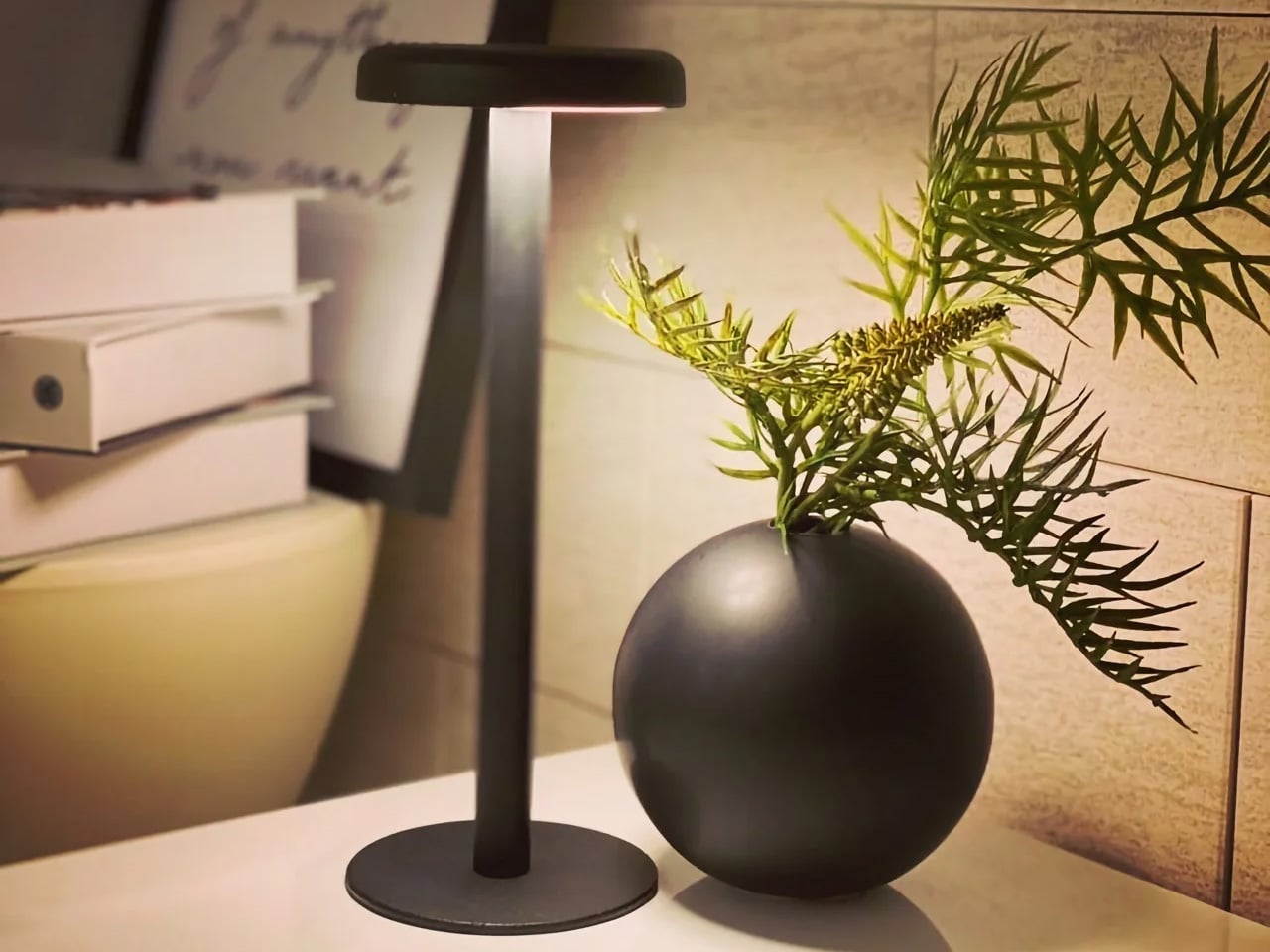
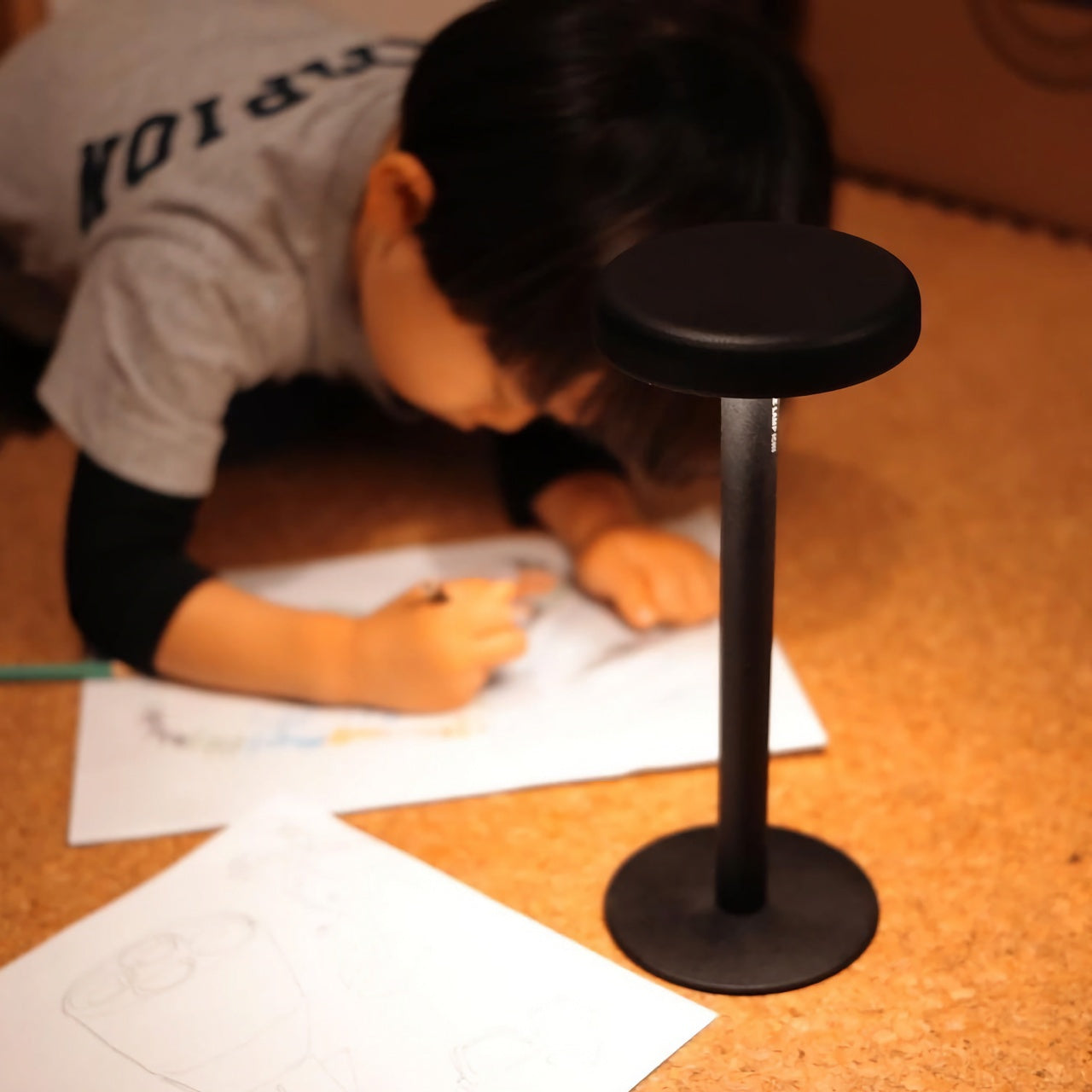
The Anywhere Use Lamp channels the quiet confidence of Scandinavian design philosophy. Its mushroom-inspired silhouette feels organic yet refined, with a cap-and-stem construction that breaks down into remarkably compact components. The base measures just a few inches across, meaning it occupies less counter space than your morning coffee mug. Six high color rendering LEDs cast a warm glow that transforms harsh corners into inviting nooks. The entire assembly runs on four AA batteries, eliminating the cord chaos that typically accompanies lighting solutions.
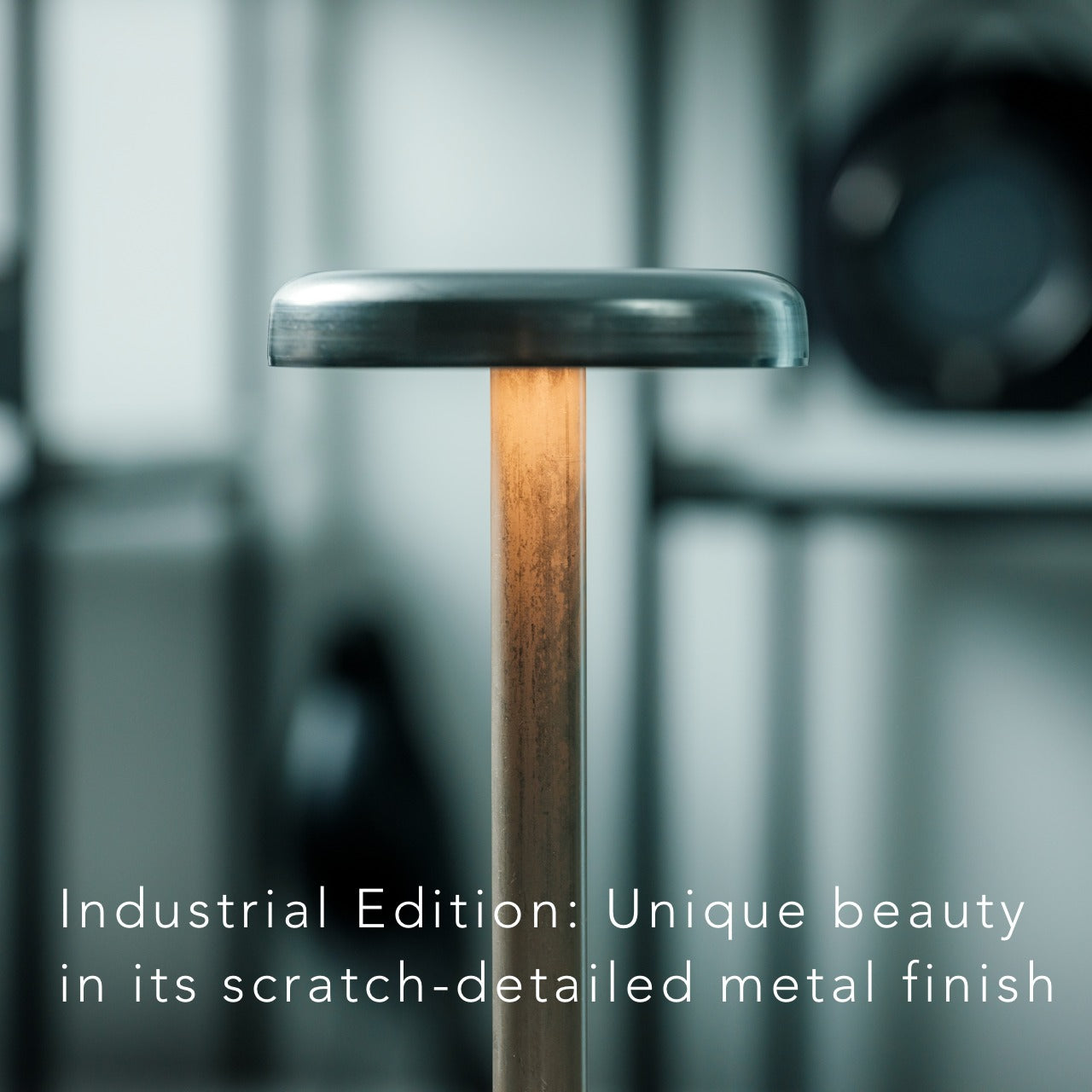
What makes this lamp genuinely space-conscious is its modular nature. When not in use, it disassembles completely and tucks into a bag or drawer. The Industrial edition adds textural depth through deliberately distressed metalwork that celebrates manufacturing marks rather than hiding them. Four brightness settings cycle through with a press anywhere along the cap’s edge, delivering satisfying tactile feedback that feels intentional rather than fumbling. This thoughtful interaction design means you’re never hunting for tiny switches in the dark.
The battery operation liberates you from outlet dependency and cord management
The disassembly feature turns a permanent fixture into a flexible tool
The touch-anywhere interface makes brightness adjustment effortless in low light
The warm LED quality creates a genuine ambiance rather than sterile illumination
What We Dislike
Battery replacement becomes an ongoing consideration for frequent users
The compact footprint means less light dispersion than larger fixtures
The minimalist aesthetic may read as too simple for traditional decor schemes
The cap requires careful handling during transport to avoid separation
2. Fire Capsule Oil Lamp – Analog Warmth
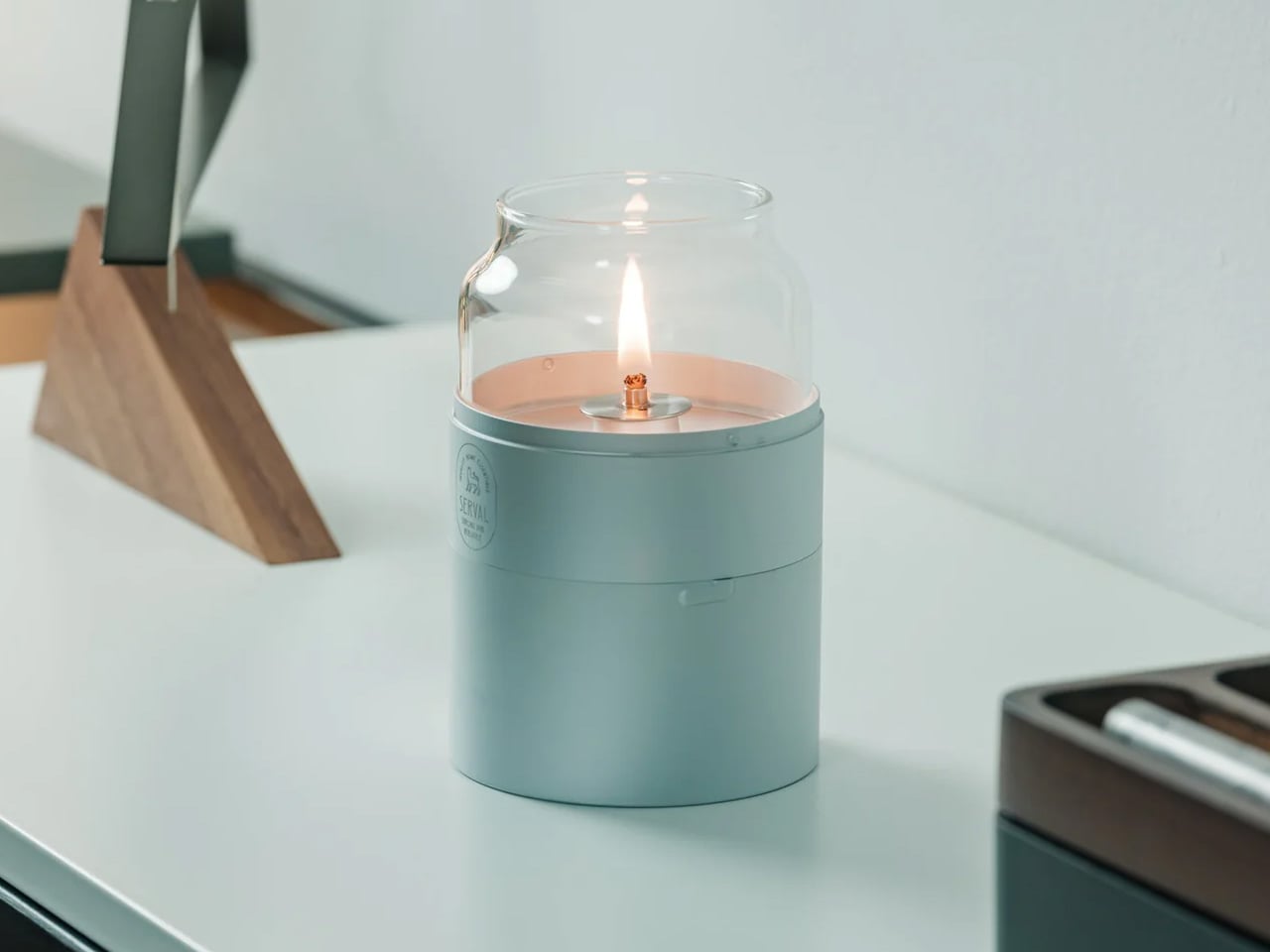
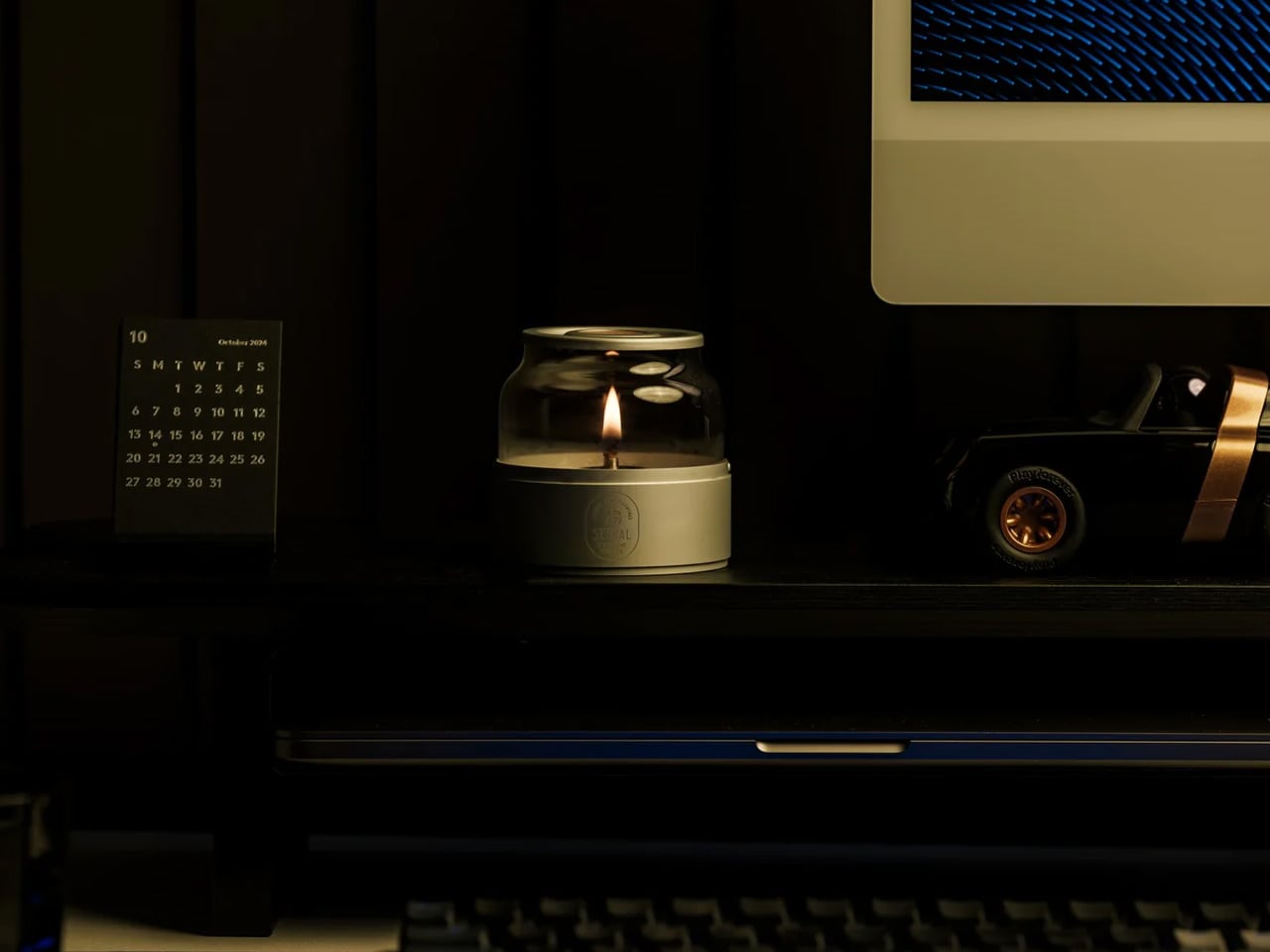
The Fire Capsule reimagines centuries-old oil lamp technology through a contemporary minimalist lens. Its cylindrical form factor takes up minimal counter space, while the flat top enables vertical stacking when you own multiples. The precision-engineered lid keeps the glass chimney dust-free between uses, maintaining optical clarity that cheaper oil lamps sacrifice. An 80ml fuel capacity delivers up to 16 hours of continuous burn time, outlasting most dinner parties and evening reading sessions without intervention.
Beyond basic illumination, this design incorporates an aroma plate that transforms the lamp into a scent diffuser. The flickering flame quality creates movement and depth that static LED solutions cannot replicate, adding living energy to spaces. The included drawstring pouch protects the glass during transport, making this viable for outdoor dining, camping, or emergency preparedness kits. When filled with paraffin oil containing insect-repelling compounds, it becomes functional outdoor lighting that actively improves the experience rather than just enabling it.
The stackable design maximizes vertical storage efficiency
Real flame createsan authentic ambiance that feels fundamentally different from electric alternatives
The aroma plate integration serves dual functions without additional equipment
The extended burn time eliminates constant monitoring and refilling
What We Dislike
Open flame requires more attention than switch-operated lights
Glass construction demands careful handling and storage considerations
Fuel purchases become an ongoing operational requirement
The flame produces minor heat output that may be unwelcome in small spaces
3. Lớp Lamp – Layered Optics
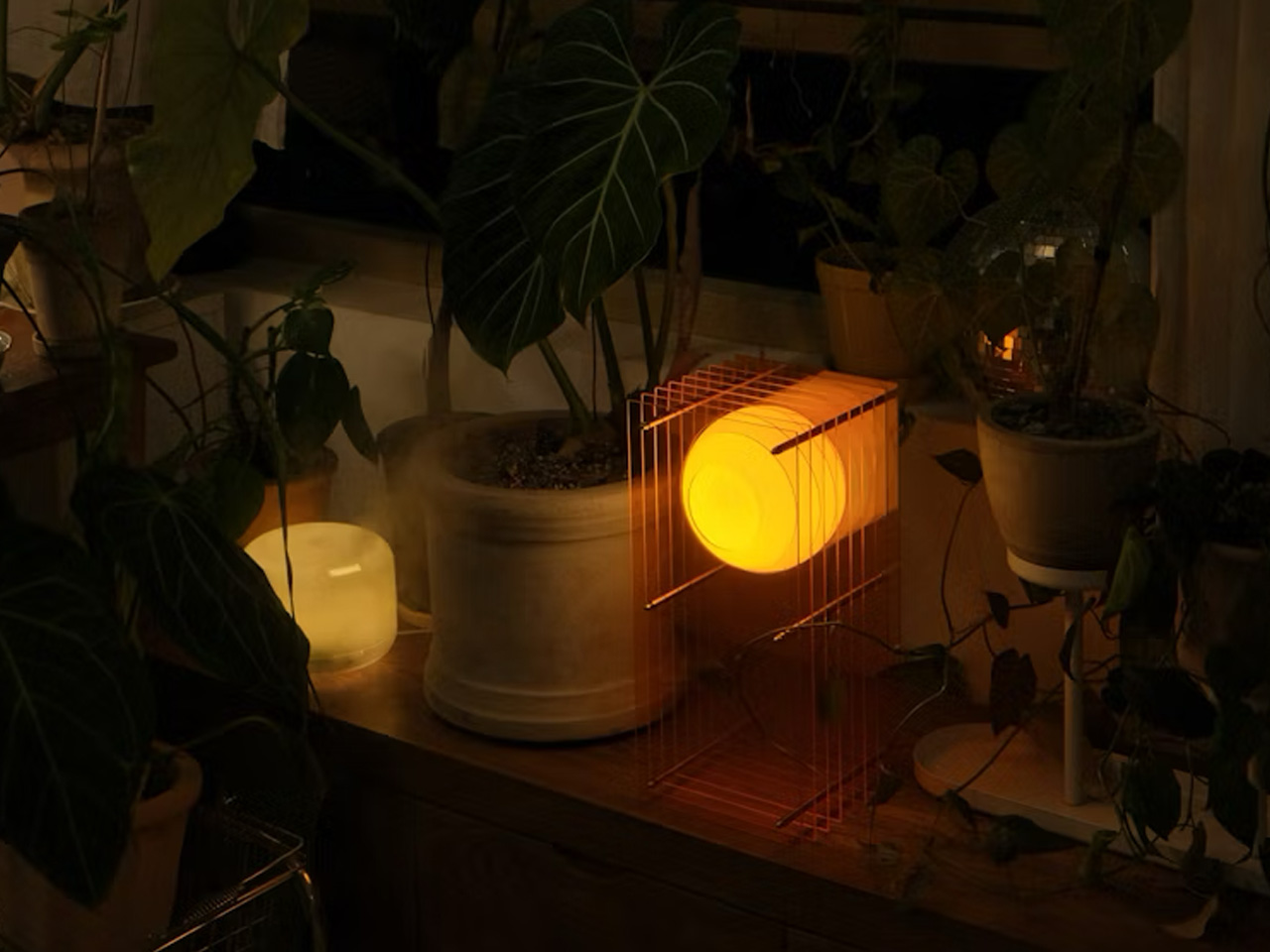
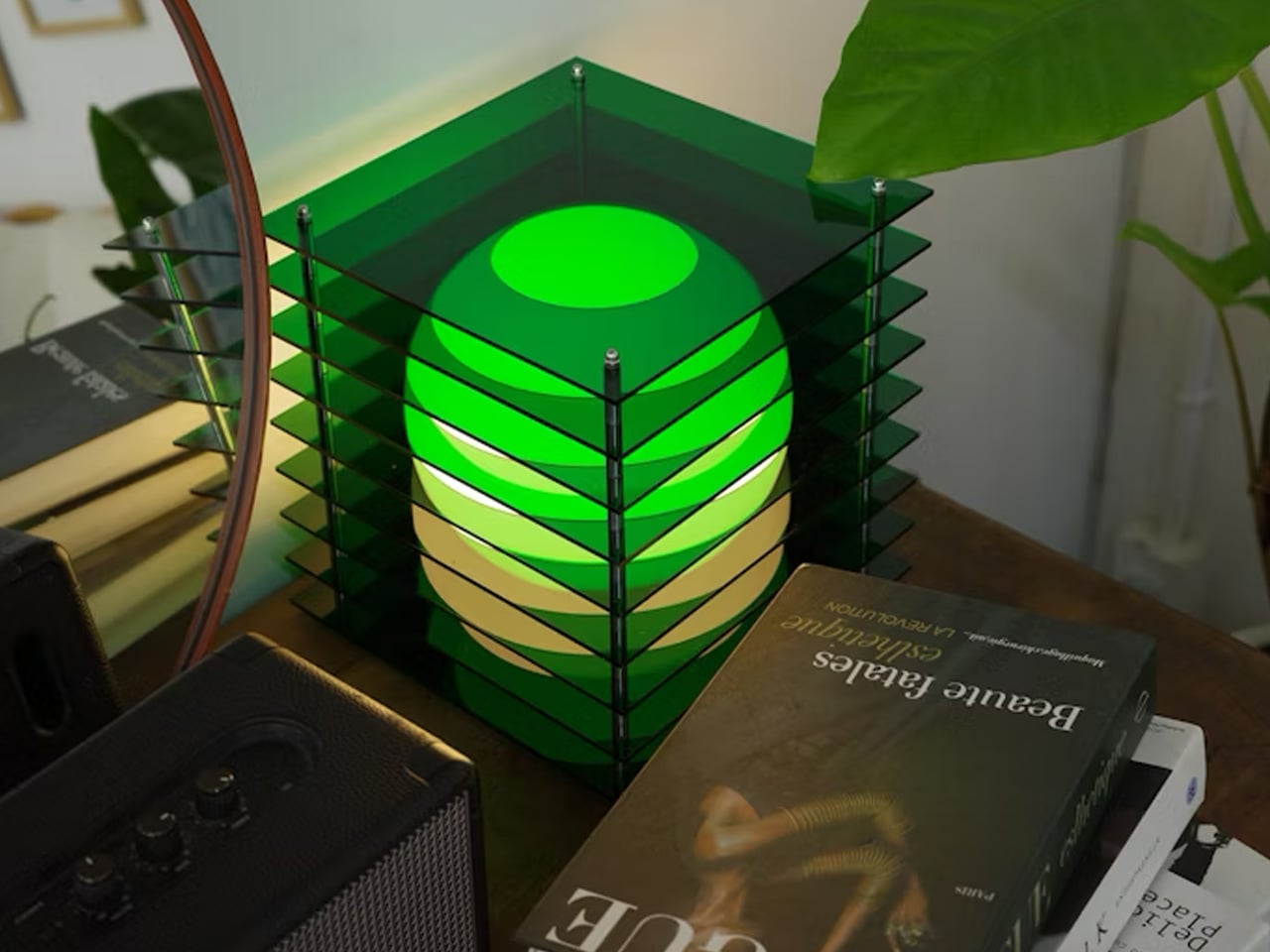
The Lớp lamp employs layered transparent acrylic panels to create an optical illusion where light appears suspended mid-air. This geometric approach to diffusion means the actual footprint remains surprisingly modest while the visual impact scales dramatically. Four size options accommodate different spatial contexts, from bedside surfaces to statement pieces on credenzas. Eight colorway options span from whisper-quiet neutrals to conversation-starting accent tones that anchor a room’s palette.
Standard LED bulbs keep replacement simple and heat generation minimal, meaning you can place them near books, fabrics, or other heat-sensitive materials without concern. The optical art reference feels intentional without derivative mimicry, nodding to Victor Vasarely’s kinetic square studies while establishing a distinct identity. Natural daylight shifts throughout the day interact with the layered panels differently, creating a dynamic character that evolves from morning through evening. The substantial construction feels grounded without becoming cumbersome, striking that difficult balance between presence and portability.
What We Like
The layered design creates visual complexity from simple geometric elements
Multiple size options allow matching the scale to specific spatial needs
Standard bulb compatibility avoids proprietary replacement hassles
The design actively responds to changing ambient light conditions
What We Dislike
The transparent panels require regular cleaning to maintain optical clarity
The geometric aesthetic may feel too contemporary for certain interiors
Larger sizes increase the footprint despite an efficient design
The visual effect depends heavily on proper bulb selection
4. TriBeam Camplight – Triple Function Compact
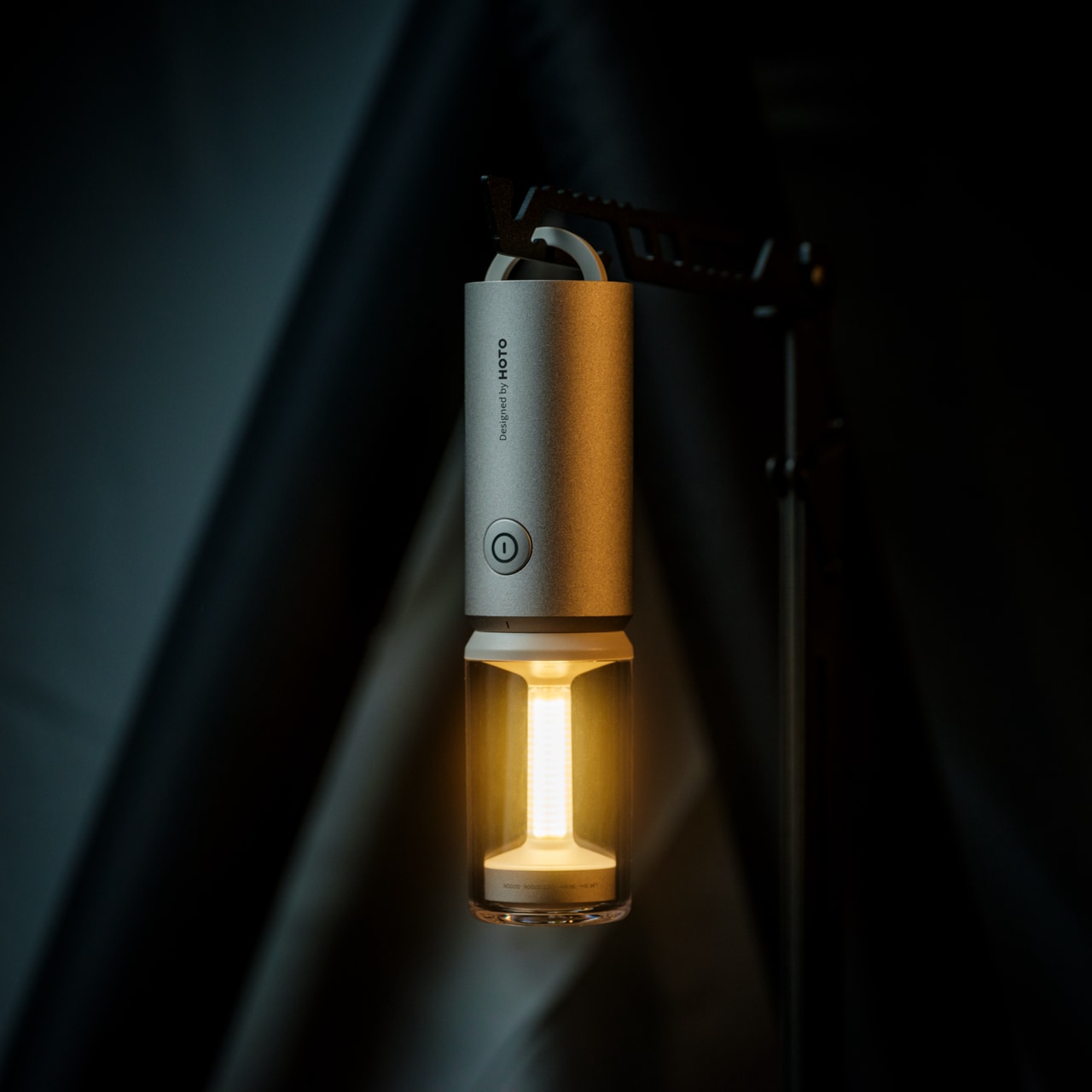
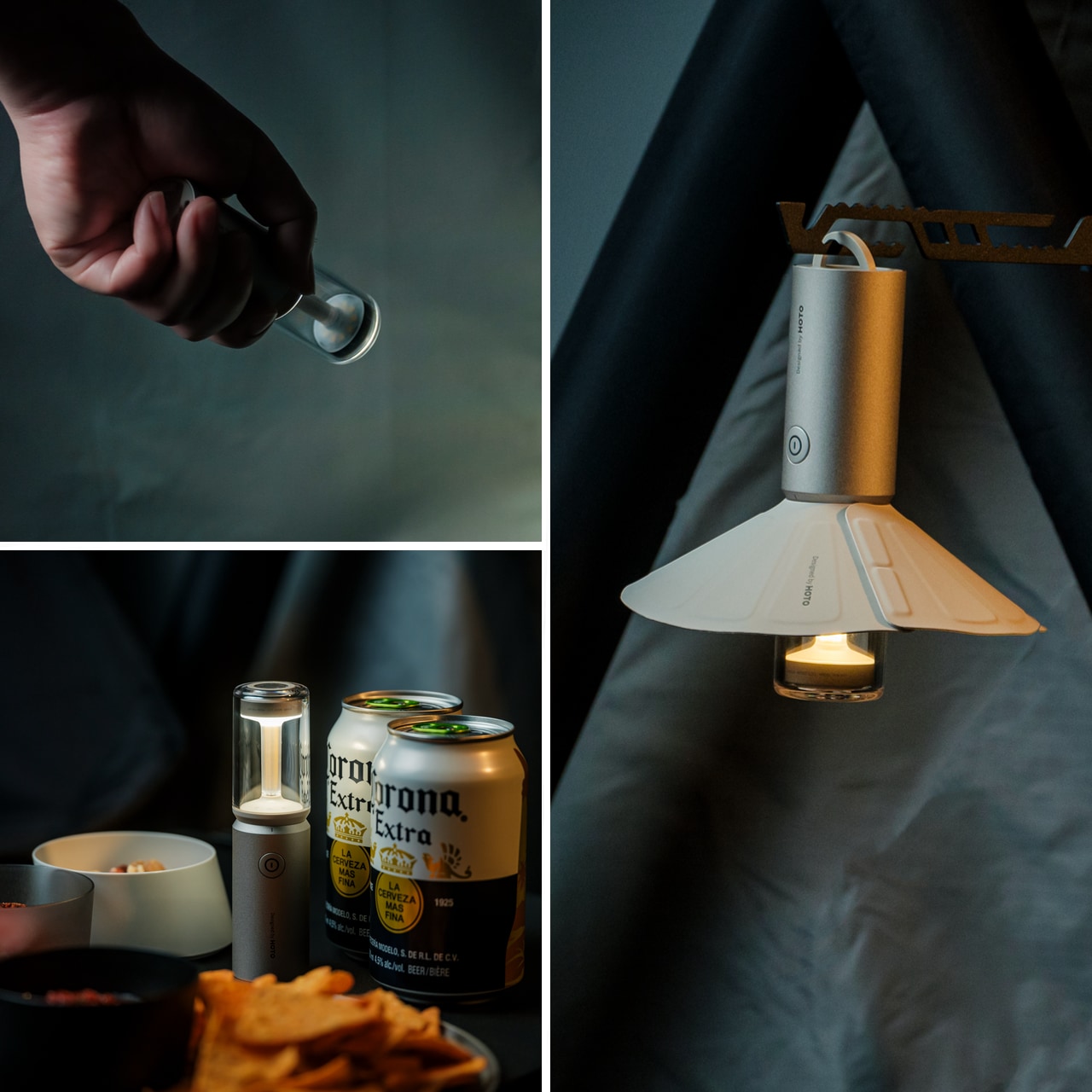
The TriBeam Camplight condenses three distinct lighting modes into a form factor smaller than a water bottle. At 12.8cm tall and just 135 grams, it essentially disappears in a backpack or jacket pocket yet delivers up to 180 lumens when needed. The three modes—camping, ambient, and flashlight—address genuinely different use cases rather than offering superficial variation. Camping mode provides broad area illumination for tents and outdoor dining. Ambient mode creates a soft background light for reading or relaxing. Flashlight mode focuses the beam for navigation and task work.
Brightness adjustment spans from five lumens for subtle night lighting up to that full 180-lumen output for serious illumination needs. Runtime extends to 50 hours on lower settings from a single charge, meaning weekend trips require no mid-adventure charging anxiety. The single-button interface cycles through modes intuitively without requiring instruction manual consultation in the field. The award-winning industrial design demonstrates that purpose-built gear can embrace aesthetic sophistication rather than defaulting to utilitarian blandness.
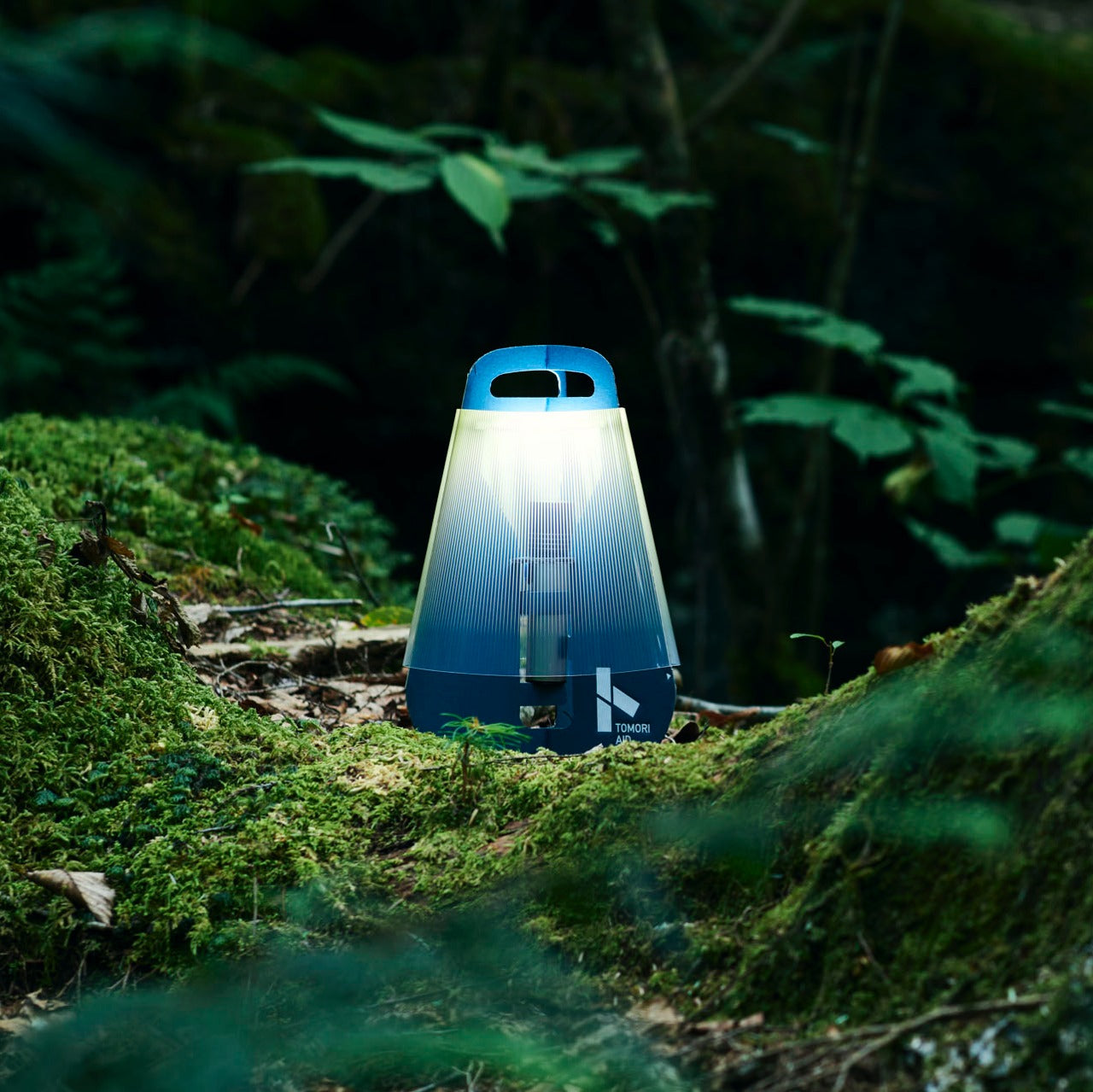
The Tomori Lantern takes minimalism to its logical extreme by existing as a flat kit until needed. Collapsed to A4 dimensions, it slips into emergency drawers, glove compartments, or bug-out bags where traditional lanterns cannot fit. The cardboard base construction sounds fragile, but it proves bend-resistant through clever engineering, working with any standard LED flashlight that fits the clamp system. This universal compatibility means you’re never dependent on proprietary bulbs or replacement part availability.
The polypropylene cover diffuses harsh flashlight beams into even ambient light, which makes spaces feel inhabited rather than interrogated. Setup requires no tools, cables, or technical knowledge—unfold, clamp the flashlight, and place the cover. This simplicity becomes critical during power outages or emergencies when complexity creates failure points. The included flashlight ensures the kit functions immediately rather than requiring you to source compatible components. When the situation resolves, the entire assembly collapses back to flat storage, ready for the next need.
No charging or fuel requirements mean indefinite shelf stability
The simple assembly works under stress when fine motor skills decline
What We Dislike
The cardboard construction has limited long-term durability with repeated use
Performance depends entirely on the flashlight quality and charge state
The utilitarian aesthetic prioritizes function over decorative appeal
The diffuser cover can separate from the base during transport
Making Light Work Harder
Space-saving lighting design represents more than dimensional reduction. These five solutions demonstrate how thoughtful engineering can deliver better functionality from smaller footprints. The key lies in questioning assumptions about what lighting must be—permanent, plugged-in, single-purpose. Modularity, portability, and multi-functionality transform lights from static fixtures into dynamic tools that adapt to changing needs and contexts throughout the day.
The under-$200 price point makes experimentation accessible rather than requiring major commitment to a single approach. You might discover that battery operation liberates furniture arrangement more than expected, or that collapsible emergency lighting serves daily uses you hadn’t anticipated. These designs prove that minimalism isn’t about deprivation but rather about intentional choices that enhance living spaces through subtraction rather than addition. Your counters will thank you for the breathing room.
As an iPhone user, you might be unintentionally limiting your device’s potential. Small habits, often overlooked, can impact your phone’s efficiency, usability, and security. By identifying and addressing these common pitfalls, you can unlock a more seamless and productive iPhone experience. The video below from Proper Honest Tech explores ten key habits to change and […]
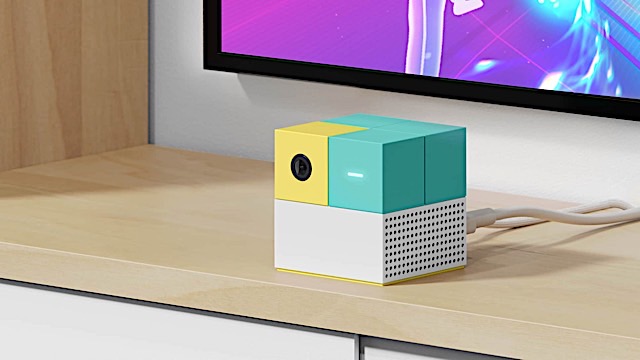
You might not have heard of the Nex Playground, but it’s a tiny gaming system built entirely around Kinect-like games. With its camera and computer vision processing, the $249 Nex Playground can track up to four players as effectively as Microsoft’s old Xbox motion tracker, according to Engadget’s Devindra Hardawar.
The hardware is cute and well-designed, there are plenty of games, and it works offline. The only issue is the ongoing subscription needed to access most games. Check out our full review to learn more.
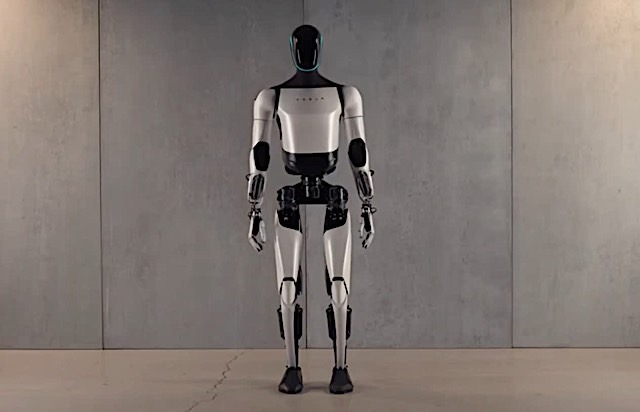
Tesla is going to wrap up production of its Model S and X EVs next quarter, CEO Elon Musk has announced. It’s less of a major shift for the company than it sounds: The newer Model 3 and Y now make up the bulk of the company’s sales. Tesla delivered over 1.5 million Model 3 and Y vehicles but sold under 450,000 Model S and X units. Musk added that Tesla’s long-term goal is to manufacture 1 million Optimus robots in the current Model S and X production space.
Snap’s augmented reality glasses business will now be its own company called Specs Inc. It’ll still be fully owned by Snap, though. The company has been trying to figure out ways to raise outside money for its AR glasses to better compete with Meta, which has a lot more money to spend on development. Earlier this week, Mark Zuckerberg said his Reality Labs will (eventually) stop losing so much money as it doubles down on AI glasses and shifts away from virtual reality. According to the Meta boss, the company’s smart glasses sales “more than tripled” in 2025.
How can Snap’s Specs match the might of Meta? Well, its next pair will apparently be lighter, smaller and more capable than its older smartglass model, which was pretty dev-focused. One request: make them not look awful.
Hosting a Super Bowl party? Maybe you’ve been thinking about replacing an aging set, or you’re itching for a full refresh of your home theater setup — either way, if you’re looking for a good deal on a new TV, we’ve got you covered. TV prices steadily decrease after a new model comes out. The 2026 TV models were announced at CES and are expected to arrive this year, making now a good time to look for discounts on 2025 sets. Aside from the holiday shopping season, this is one of the best times of the year to save on a TV — it’s like the manufacturers know there’s a Super Bowl.
This article originally appeared on Engadget at https://www.engadget.com/general/the-morning-after-the-nex-playground-channels-the-spirit-of-xboxs-kinect-121500965.html?src=rss
What if the emojis you use in Midjourney could unlock entirely new creative dimensions, but not in the way you’d expect? Below, Thaeyne breaks down how Midjourney’s Style Explorer interprets emojis in a way that defies their literal meanings, grouping them into a single aesthetic category rather than treating them as unique symbols. This surprising […]
Samsung Galaxy has introduced a major update to its Good Lock module, bringing a host of advanced customization features to enhance lock screen personalization. This update, designed for users of One UI 8.5 and partially compatible with One UI 8.0, focuses on delivering a more engaging and tailored user experience. Whether you’re a casual user […]
What if you could complete tasks four times faster than the leading AI models, without compromising accuracy or reliability? That’s exactly what Kimi K2.5 promises. Universe of AI takes a closer look at how this new multimodal AI is reshaping the landscape of artificial intelligence, leaving competitors like Claude Opus 4.5 in the dust. With […]
What if the future of solar energy didn’t rely on silicon or even the much-hyped perovskite? What if there was a more sustainable, durable, and cost-effective alternative waiting in the wings? Undecided with Matt Ferrell breaks down how a lesser-known material called kesterite could transform solar technology by addressing some of the biggest challenges facing […]
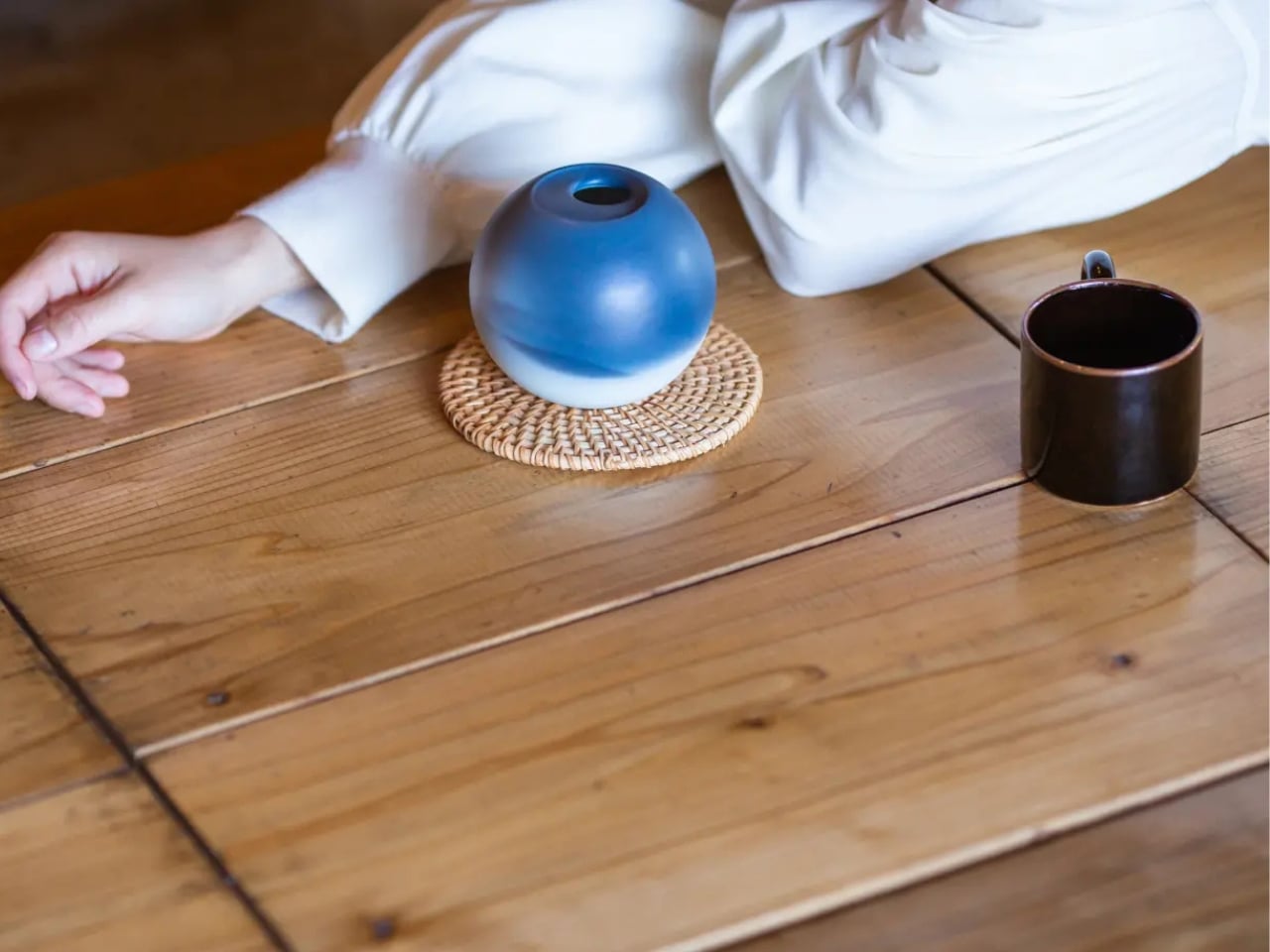
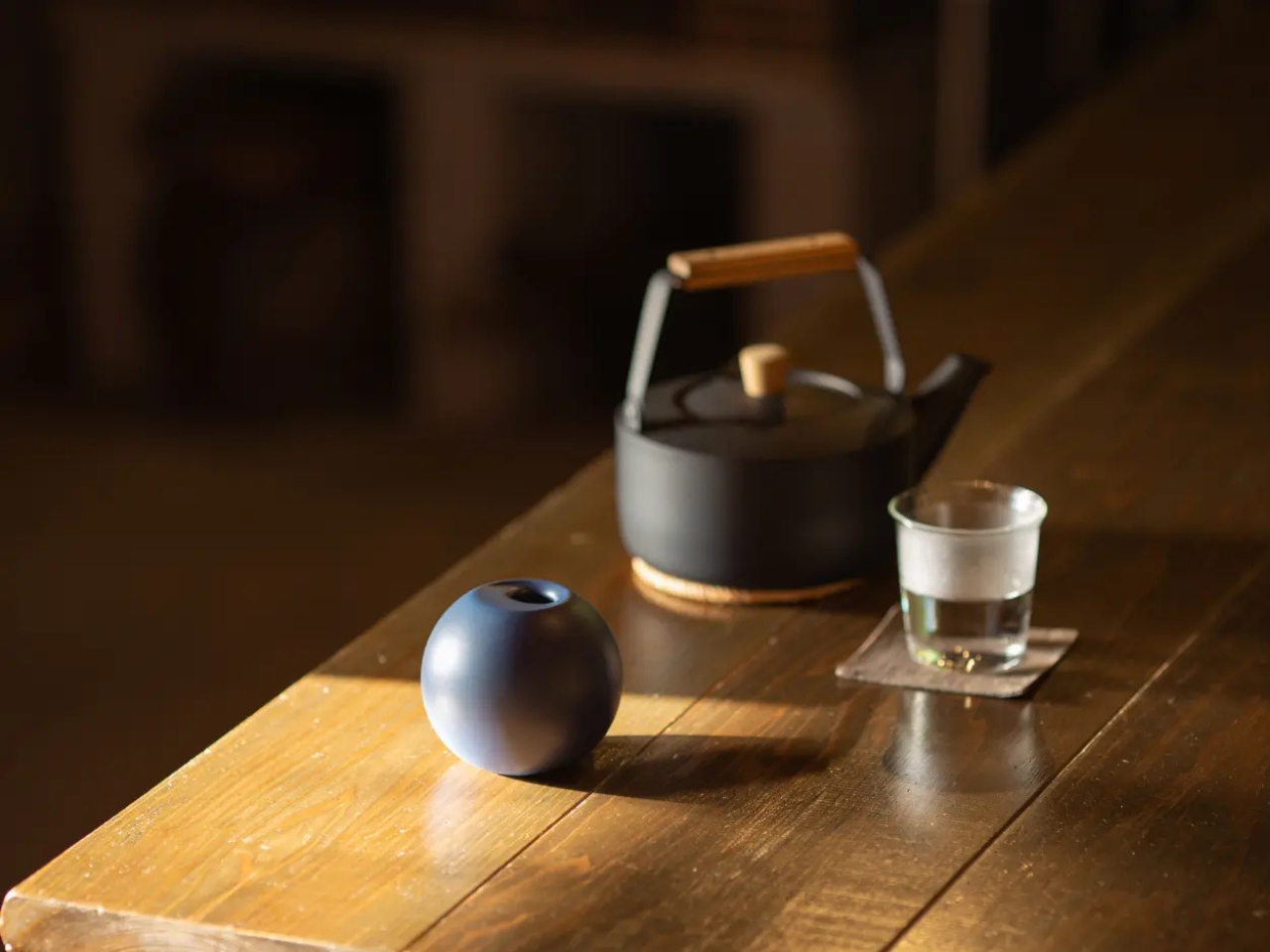
There’s something hypnotic about watching things change color. Remember those mood rings from the 90s? Or those hypercolor t-shirts that turned purple wherever you got warm? That same technology just got a serious upgrade, and it’s sitting on the cutting edge where centuries-old craftsmanship meets modern science.
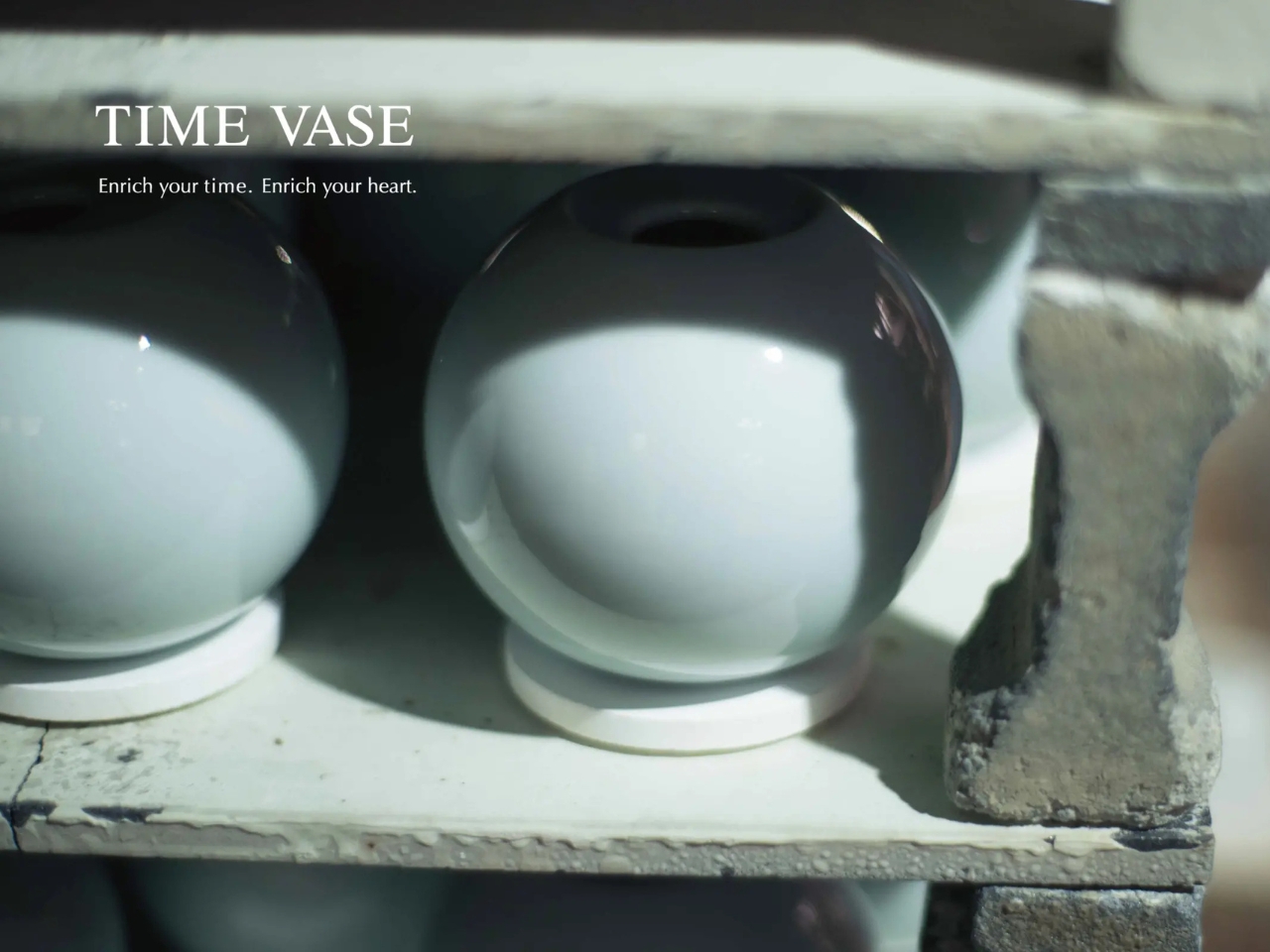
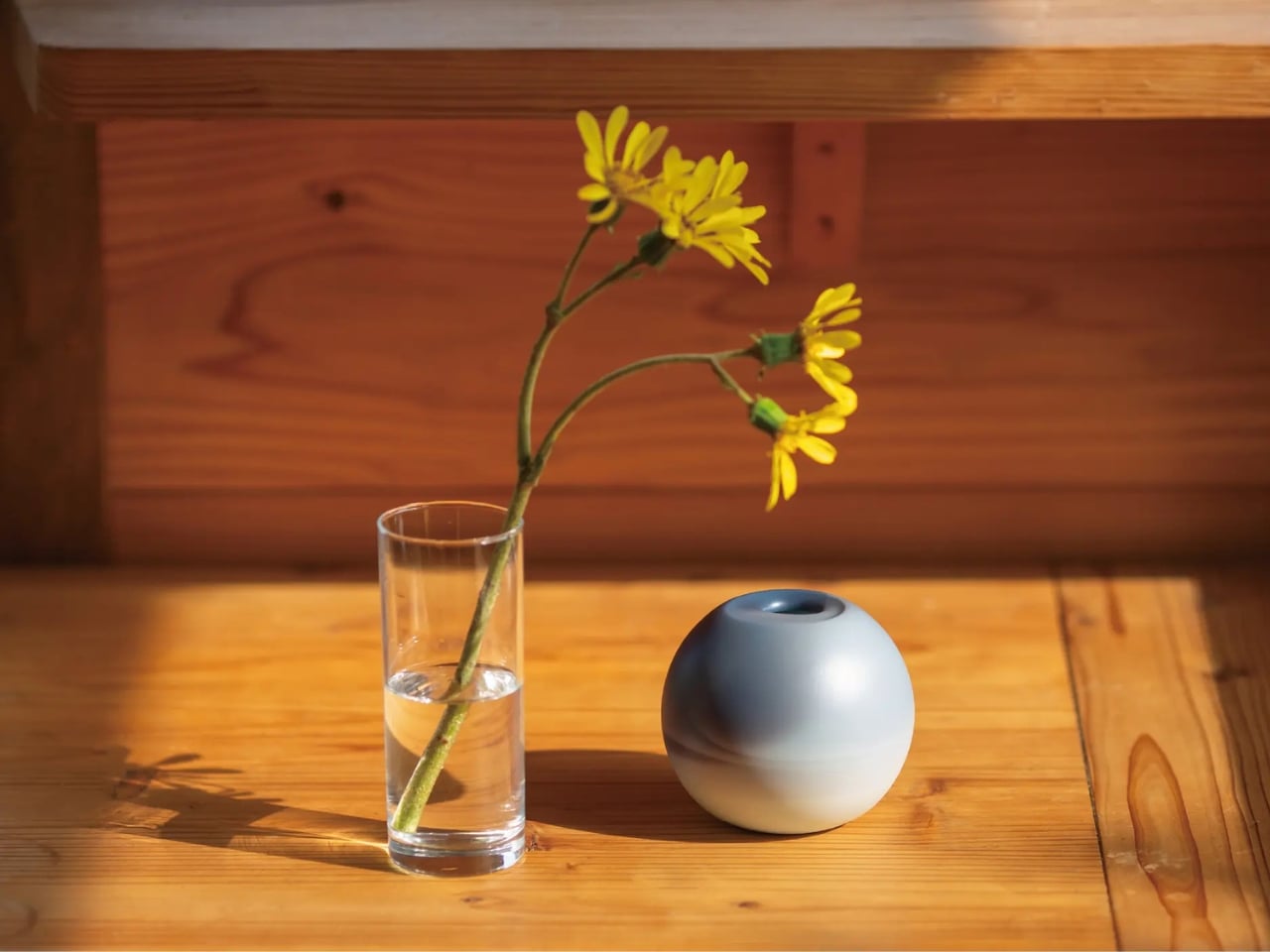
Enter TimeVase, a collaboration between Pilot Corporation (yes, the pen company) and traditional Arita porcelain artisans in Japan. This isn’t your grandmother’s ceramic vase, even though it’s made using techniques that have been perfected over 400 years in one of Japan’s most historic pottery towns.
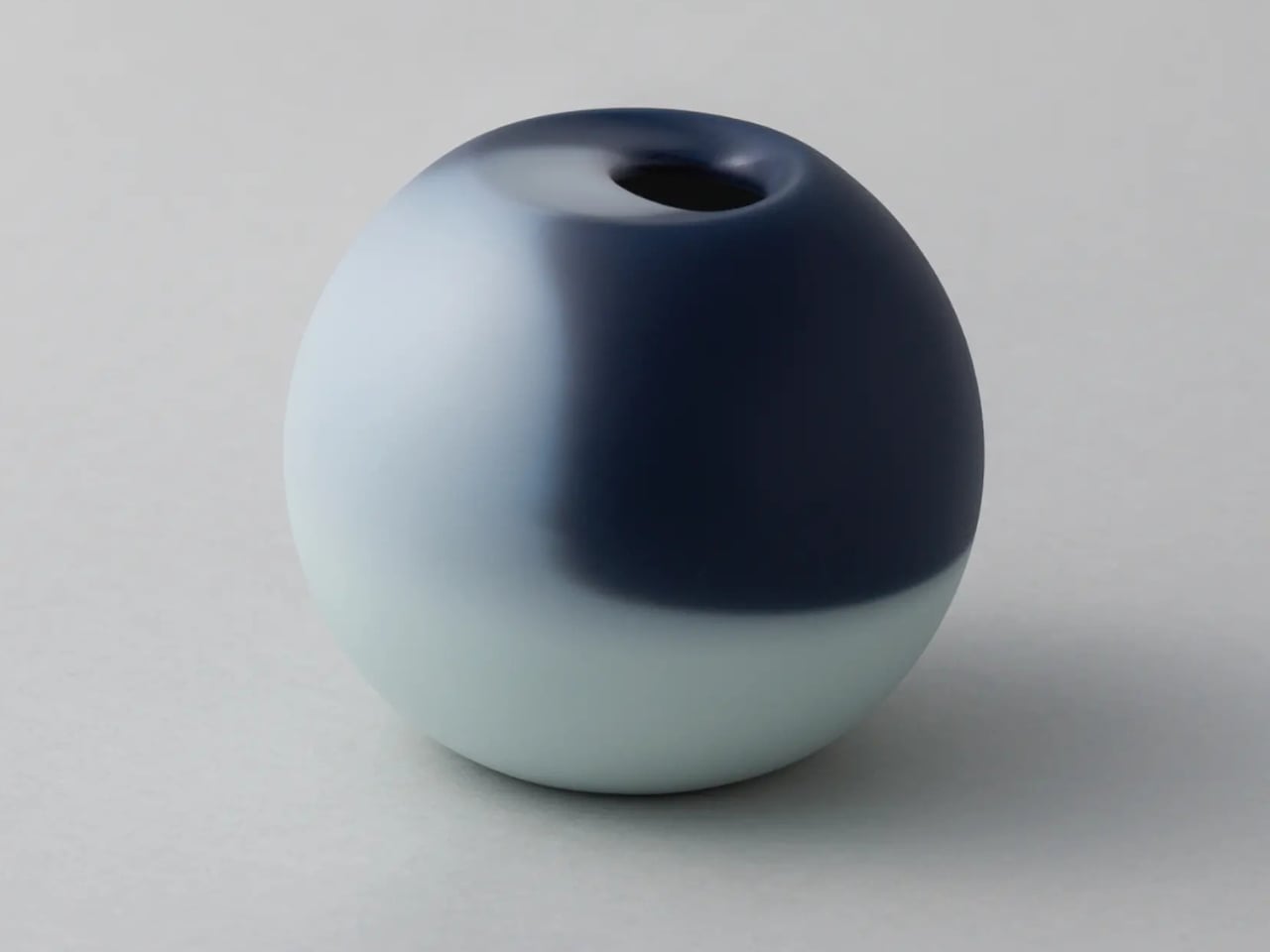
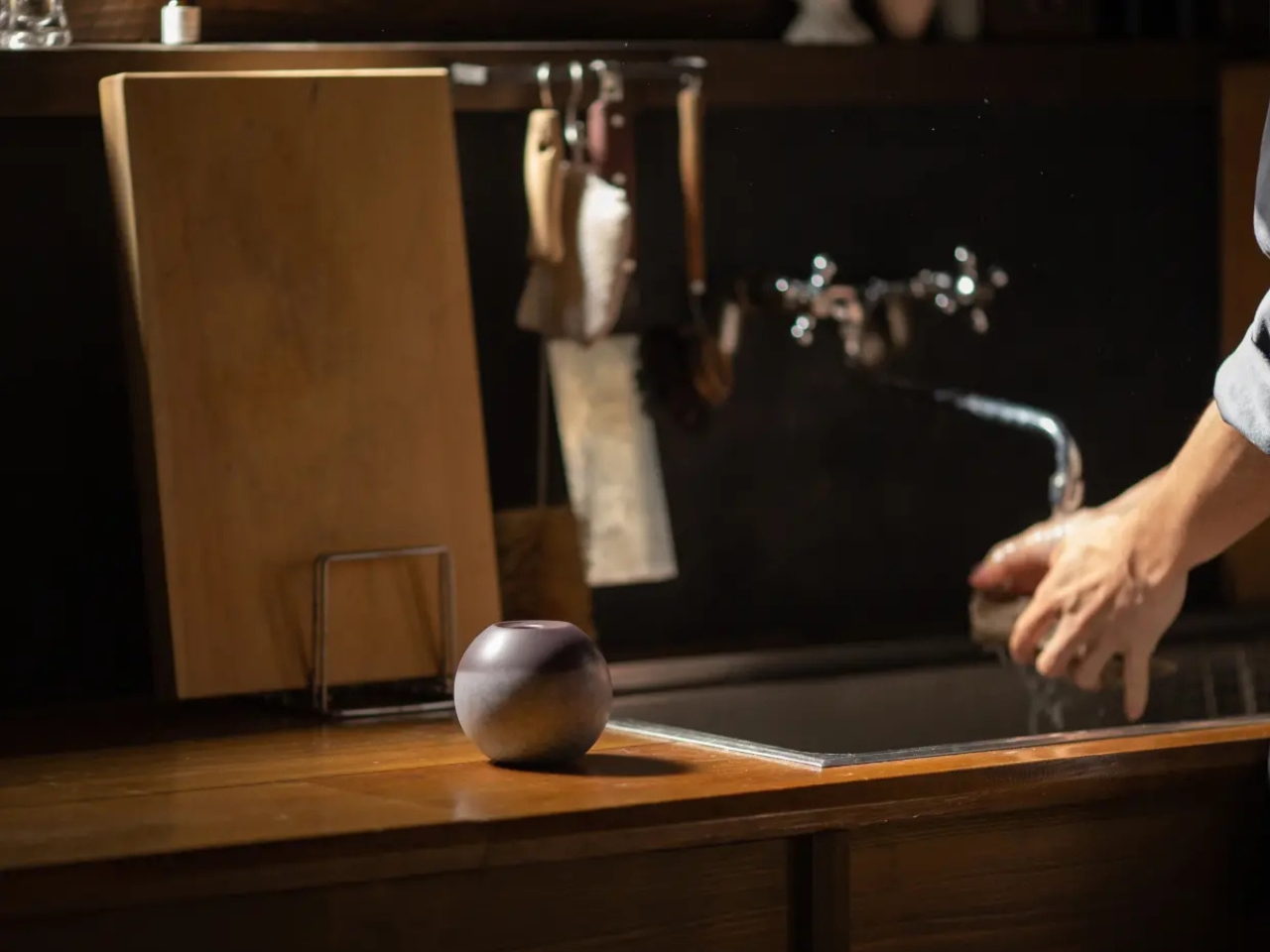
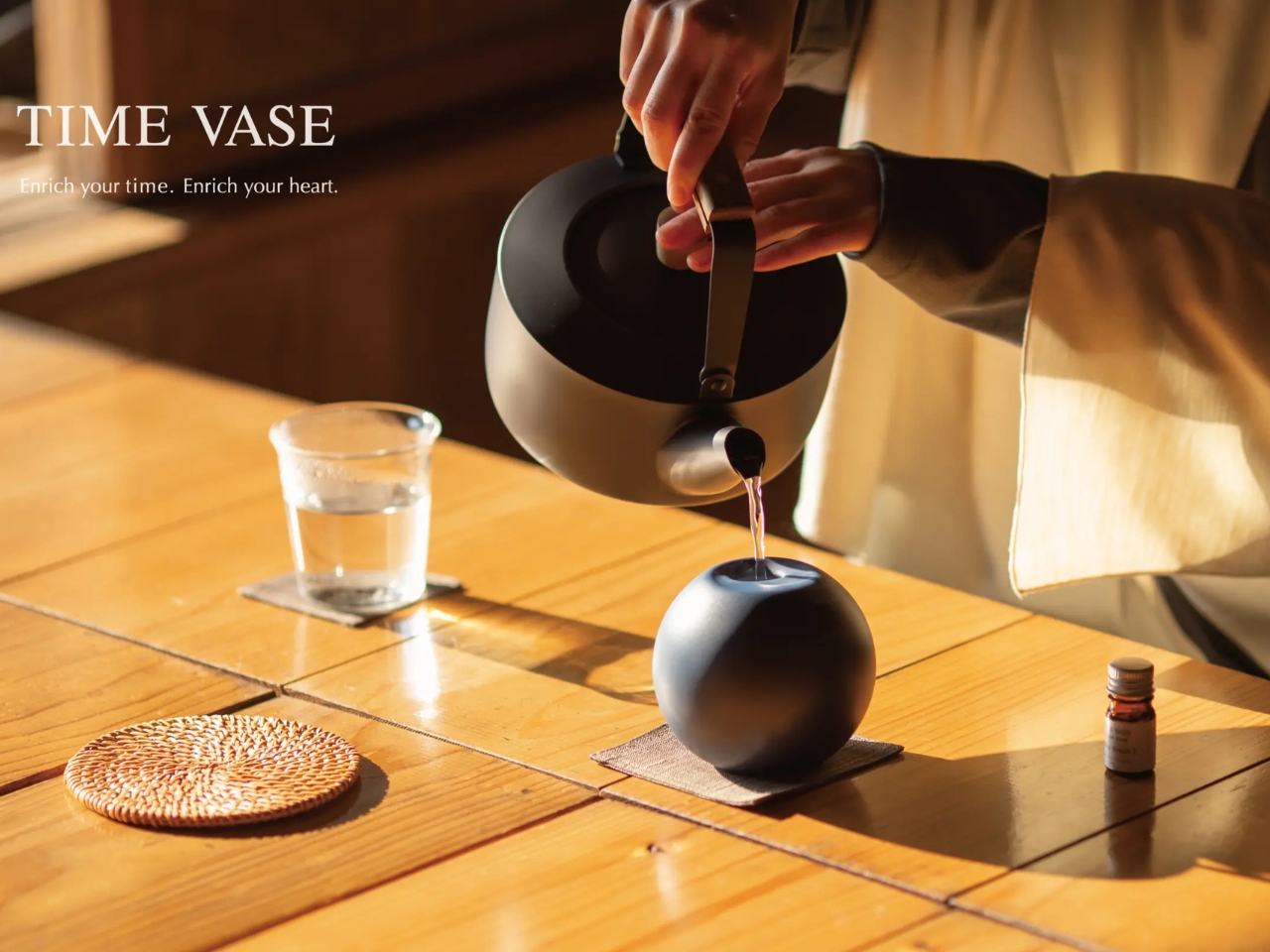
The concept is beautifully simple. The entire surface of the porcelain vessel is coated with Pilot’s thermochromic ink, the same temperature-reactive technology they developed for their erasable pens. At room temperature, the vase appears as a deep, rich navy blue. But pour in hot water, and something magical happens. The heat triggers a color transformation that gradually reveals a stunning celadon glaze underneath, one of the most prized colors in traditional Arita ware.
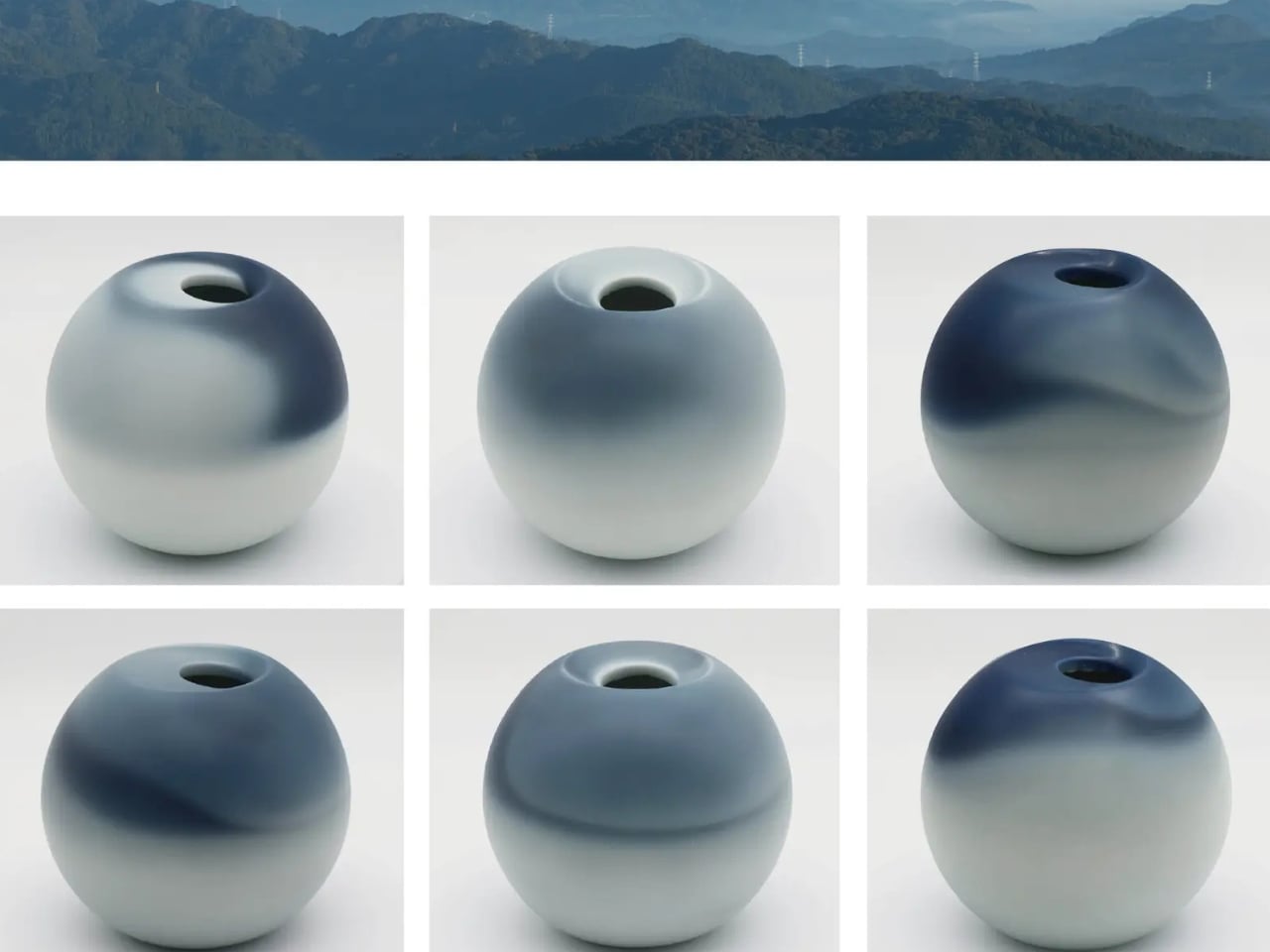
What makes this particularly fascinating is how the change unfolds. It’s not an instant flip from one color to another. The transformation is organic and unique each time, with different patterns emerging as the heat spreads through the ceramic. Then, over the next 30 to 60 minutes, you watch as the color slowly returns to its original deep blue state as the water cools. It’s like having a living piece of art that breathes with temperature.
Thermochromic ink has been around since the 1970s, initially showing up in novelty items. The technology works through leuco dyes that change their molecular structure when heated, typically becoming translucent or shifting to lighter shades. Pilot has been a pioneer in this field, particularly after developing erasable ink pens in 2006 that used thermochromic properties to create ink that disappears above 65°C.
But applying this technology to traditional ceramics required something different. The ink had to work at the right temperature range for hot beverages and withstand the demands of daily use while maintaining the aesthetic integrity of Arita porcelain. Arita ware has a reputation for its delicate beauty and that distinctive celadon color, a jade-like blue-green that has captivated collectors for centuries. Covering it entirely with color-changing ink and trusting it to reveal that beauty at just the right moment takes both technical precision and artistic courage.
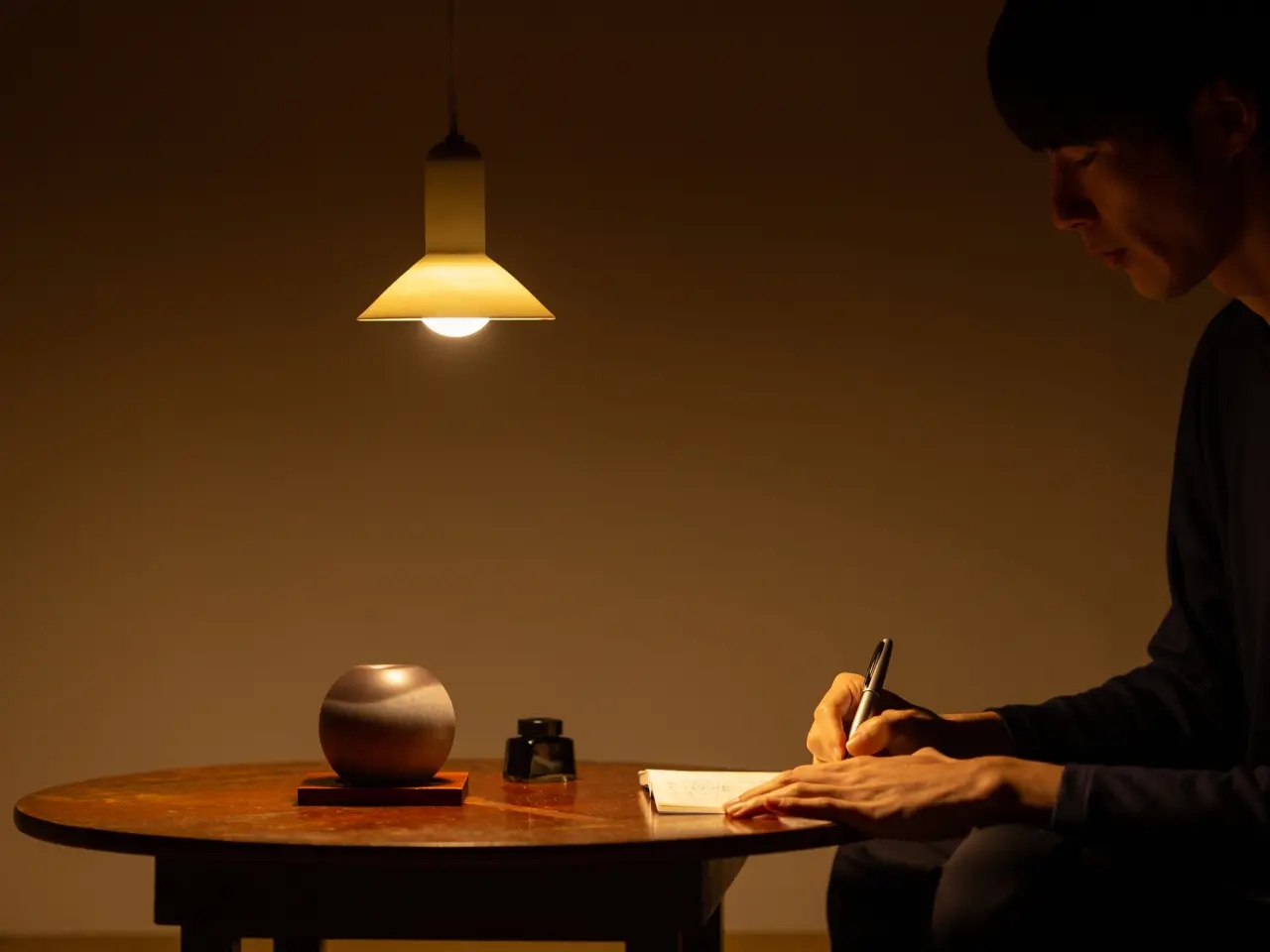
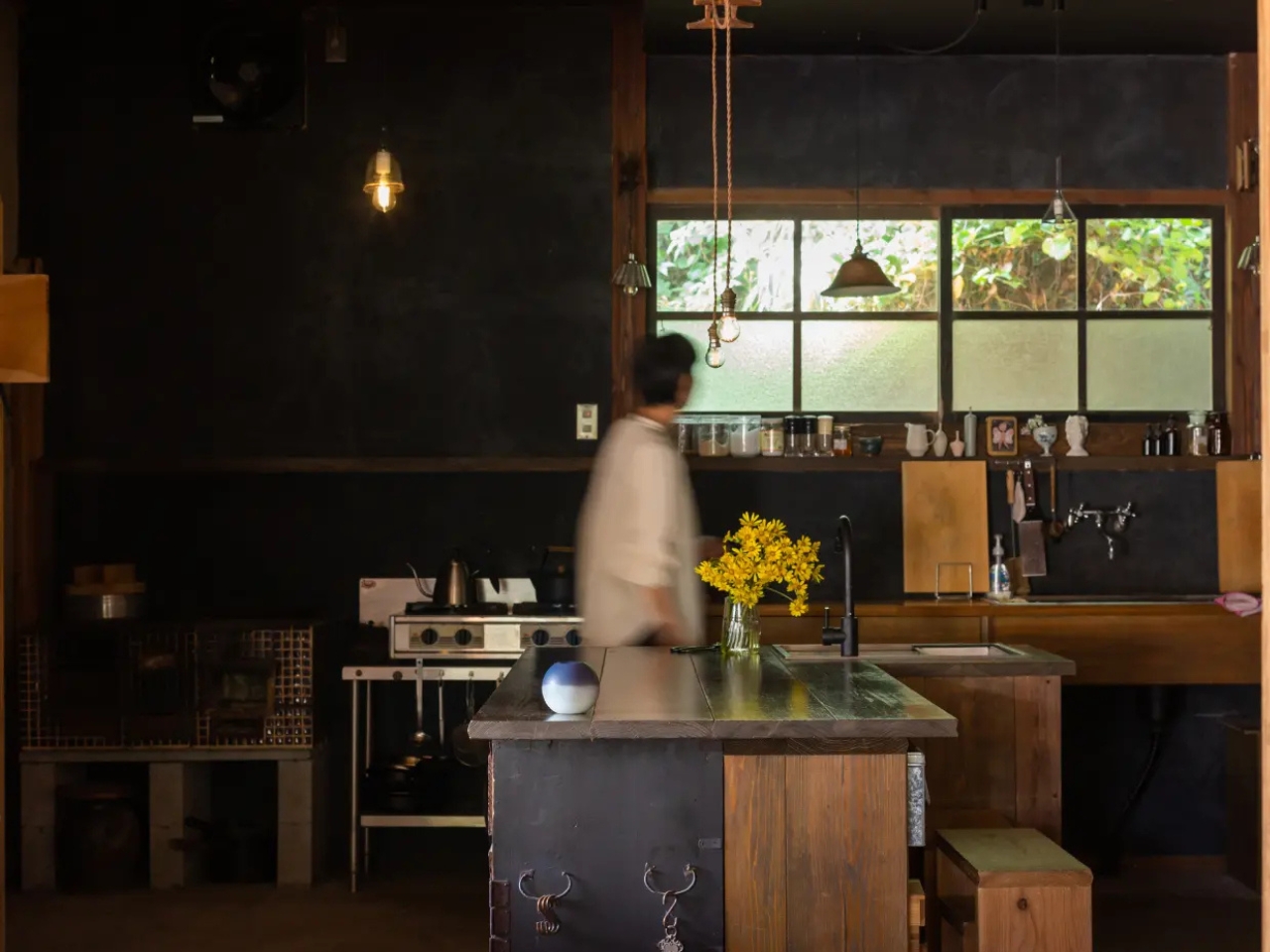
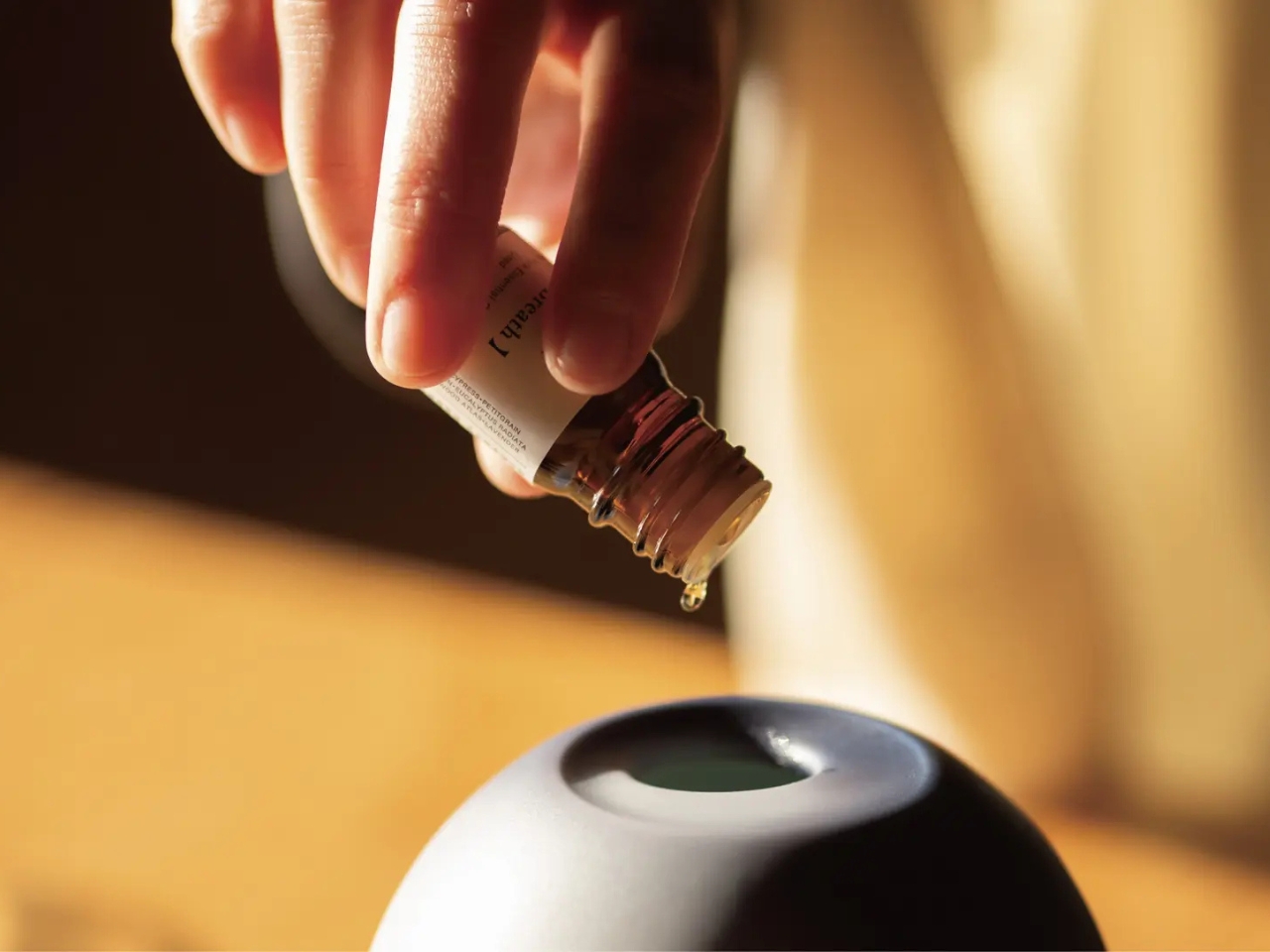
The practical applications are surprisingly versatile. Sure, it works as a traditional vase for flowers, but it’s also designed to function as a tea vessel or even an aroma pot. Add a few drops of essential oil to the hot water, and you’ve got a piece that engages both sight and smell, creating what the designers call “luxurious blank time” for contemplation.
There’s something distinctly Japanese about this design philosophy. The concept of finding beauty in transience, of appreciating the moment as it unfolds and then lets go, feels deeply connected to traditional aesthetics like mono no aware (the pathos of things) or wabi-sabi (finding beauty in imperfection and impermanence). You’re not just using a vase. You’re watching time made visible through color.
This fusion of old and new, analog and digital, craft and chemistry represents a growing trend in contemporary design. We’re seeing more collaborations where traditional artisans partner with tech companies to create objects that honor heritage while pushing boundaries. It’s not about replacing one with the other but finding where they can amplify each other’s strengths. TimeVase launched in January 2026 through Pilot’s creative division, Pilabot, which focuses on experimental projects that explore new applications for their ink technology. It’s part of a broader movement where stationery and office supply companies are thinking beyond paper, asking what else their specialized materials can do.
For anyone interested in design, this piece sits at a fascinating intersection. It’s functional art that performs differently each time you use it. It’s tech that doesn’t scream its presence but quietly enhances the everyday ritual of making tea or arranging flowers. It’s a reminder that innovation doesn’t always mean adding more features or screens but sometimes means taking technologies we’ve mastered and applying them in unexpected ways. The TimeVase proves that magic doesn’t require batteries. Sometimes it just needs hot water and patience.
The iPhone 18 Pro series represents a significant evolution in the smartphone industry, blending advanced technology with Apple’s signature focus on user experience. With innovations such as a smaller Dynamic Island, under-display Face ID, the powerful A20 Pro chip, and next-generation display technology, Apple continues to set the benchmark for mobile devices. These updates are […]