Netflix has released a trailer for the Stranger Things finale

Tomorrow's the big day, and I don't just mean New Year's Eve. The series finale of Stranger Things airs tomorrow, and Netflix has released a trailer for the last episode. We're given only flashes of the final episode, along with a voiceover of an emotional Jim Hopper telling Eleven he needs her to fight one last time.

It's just over 1 minute and 30 seconds long, with what appears to be only about 30 seconds of new footage. There isn't much to go on here, as most of the footage features emotional moments from seasons past. Netflix no doubt is hoping to keep much of the excitement under wraps until tomorrow's premiere.

Warning: Some spoilers ahead for Stranger Things season 5.

Among the new images we briefly see Vecna, hooked up to the ceiling in his gross cave of power on his other world. There's also an explosion at what looks like a military site, plus a few more out-of-context flashes of our heroes.

One particularly ominous moment shows Hopper walking around a smoke-filled room with almost zero visibility, gun drawn, when we see what looks to be Vecna appear behind him. We also see Eleven climb back into the sensory-deprivation tank in the Upside Down, presumably to take the fight to the show’s big bad.

The only continuous scene in the trailer shows most of the gang standing atop a radio tower as Vecna's world moves close enough to collide with the tower's tip. Dustin lets out a "mother of God" as the so-crazy-it-just-might-work scheme the group cooked up in Chapter Seven appears to be well underway.

After nine years and five seasons, we will finally reach a conclusion for the heroes of Hawkins. The episode premieres at 8PM ET (5PM PT). For those still craving more from the world of Hawkins after the finale, Netflix is releasing a Stranger Things animated series in 2026.

This article originally appeared on Engadget at https://www.engadget.com/entertainment/streaming/netflix-has-released-a-trailer-for-the-stranger-things-finale-171204480.html?src=rss

Adidas Just Turned Minecraft Creepers Into $40 Holiday Sneakers

Remember when video game merchandise meant cheesy graphic tees at the mall? Those days are officially over. Adidas just quietly dropped a massive holiday collection with Minecraft that turns pixelated game creatures into surprisingly wearable sneakers, and honestly, it’s kind of brilliant.

The collaboration reimagines some of Adidas’ most iconic silhouettes through the blocky, digital lens of Minecraft’s universe. We’re talking the Samba XLG, Handball Spezial, Campus 00s, Superstar II, and even those beloved Adilette slides, each one carefully themed around specific Minecraft mobs and in-game elements. What makes this partnership work so well is how thoughtfully each shoe connects to its source material without losing the essence of what makes these Adidas classics so enduringly popular.

Designer: Adidas
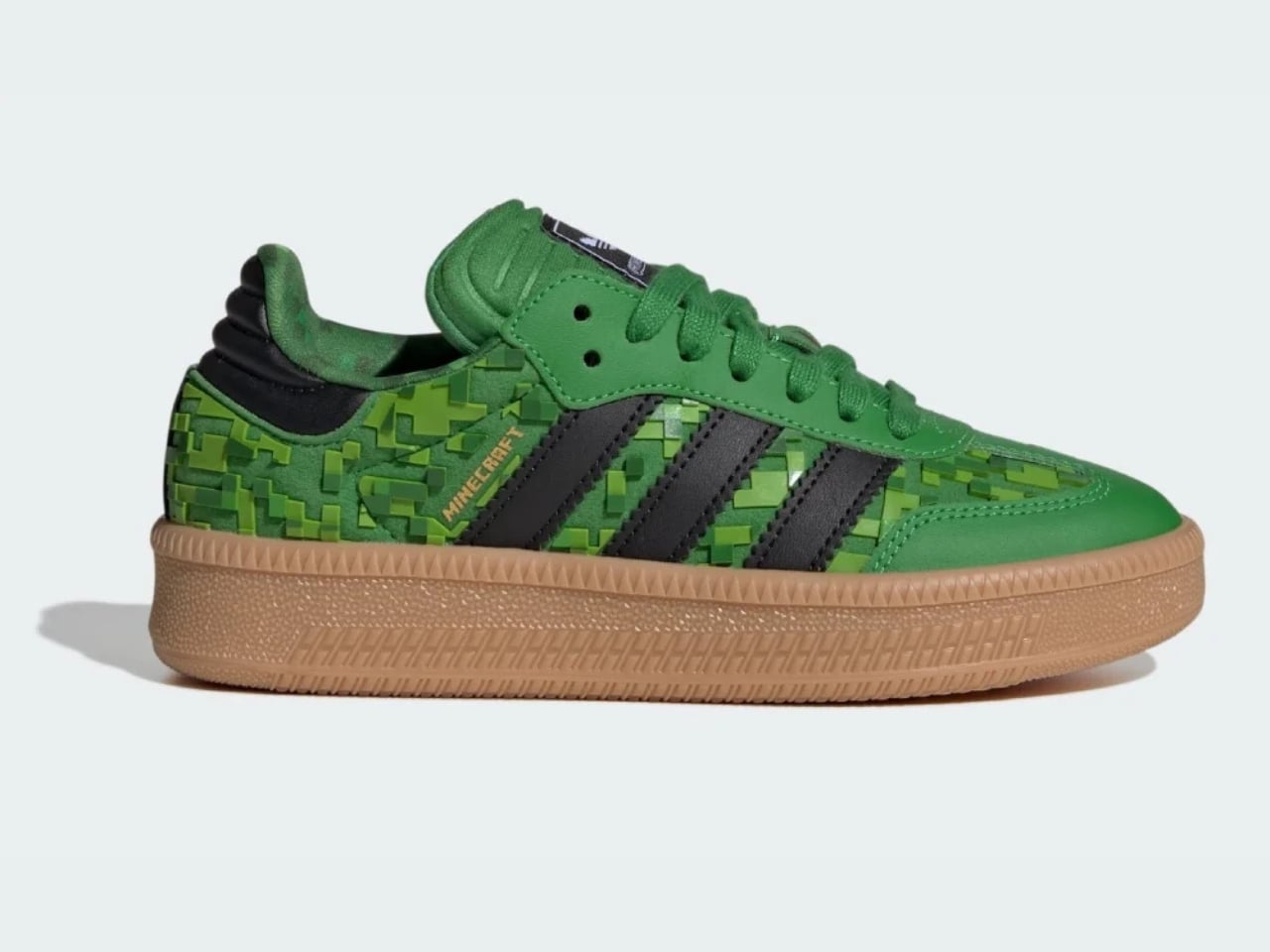
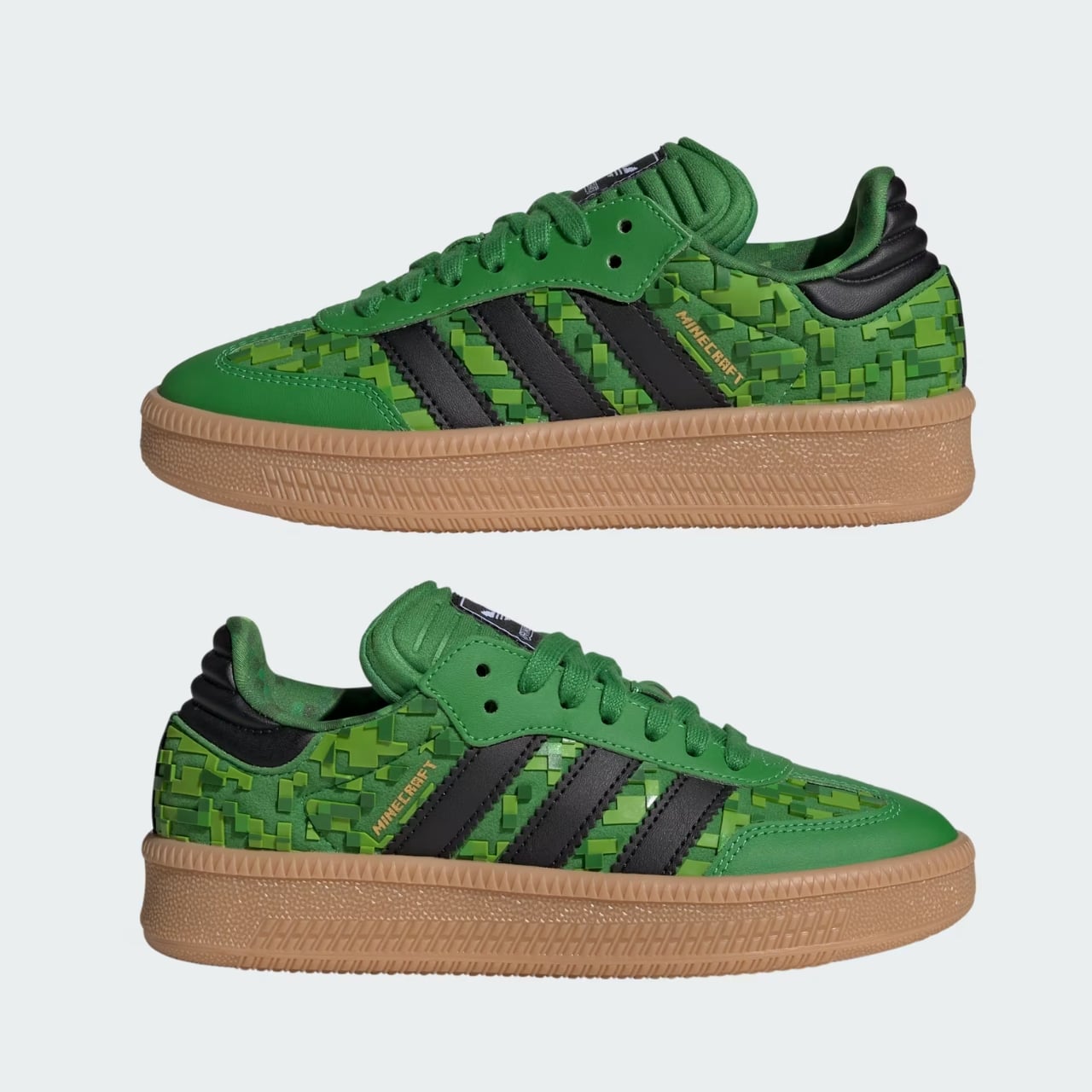
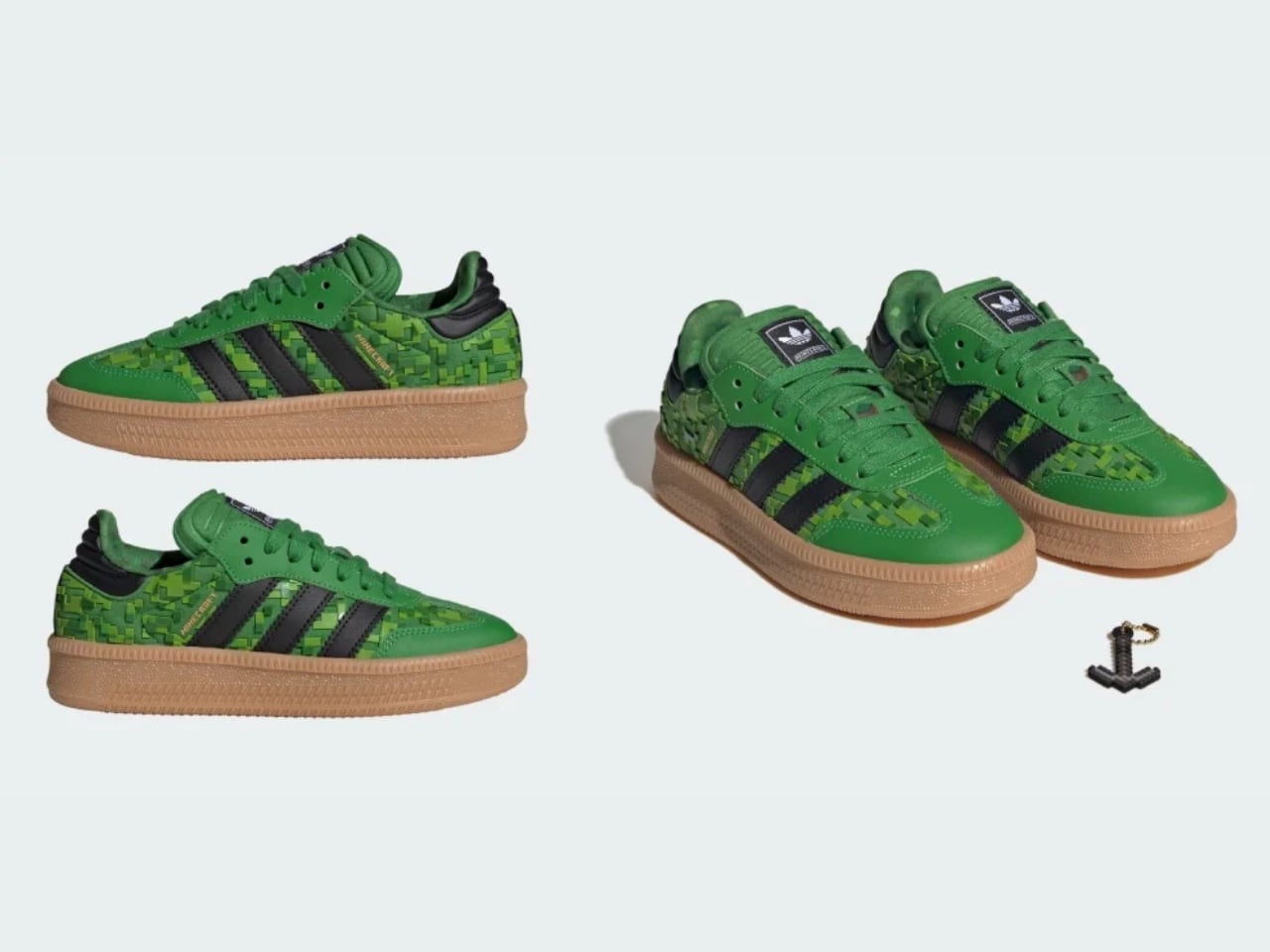
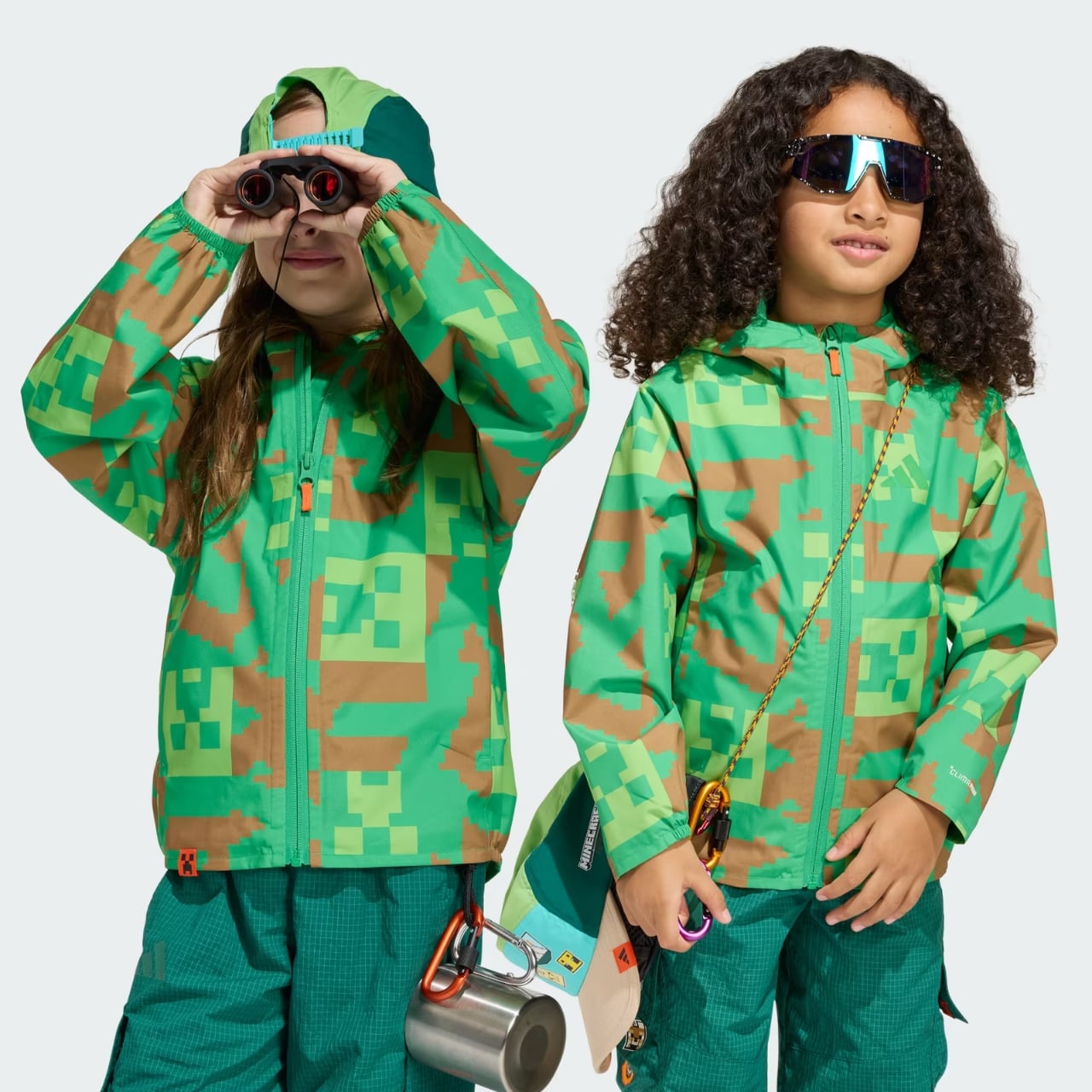
Take the Samba XLG inspired by the Creeper, arguably Minecraft’s most recognizable character. The shoe arrives in that signature explosive green colorway with blocky graphics spread across the upper, while a gum sole keeps things grounded in classic Samba DNA. It’s playful without being costume-y, which is exactly the balance you want in a collaboration like this.
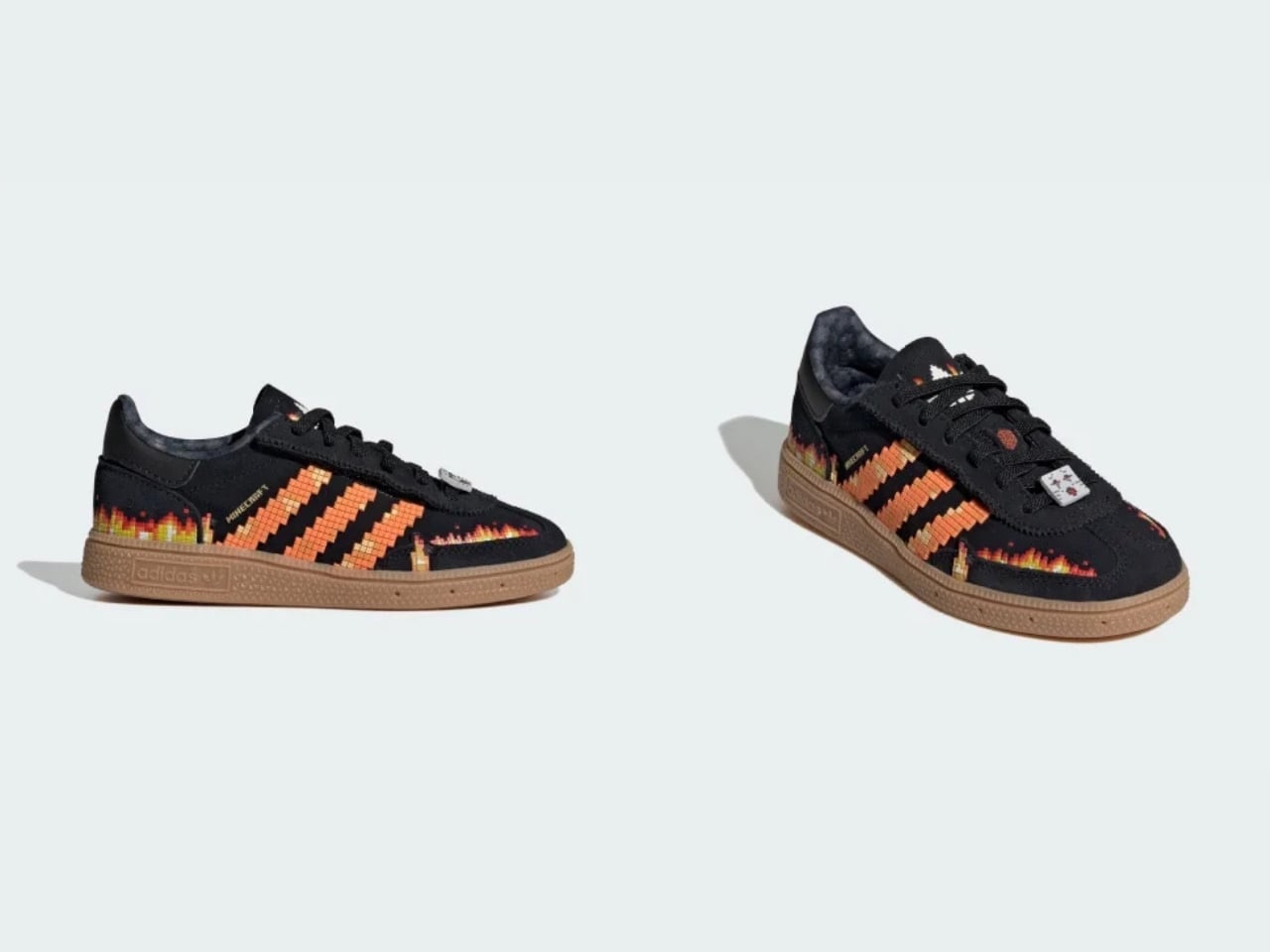
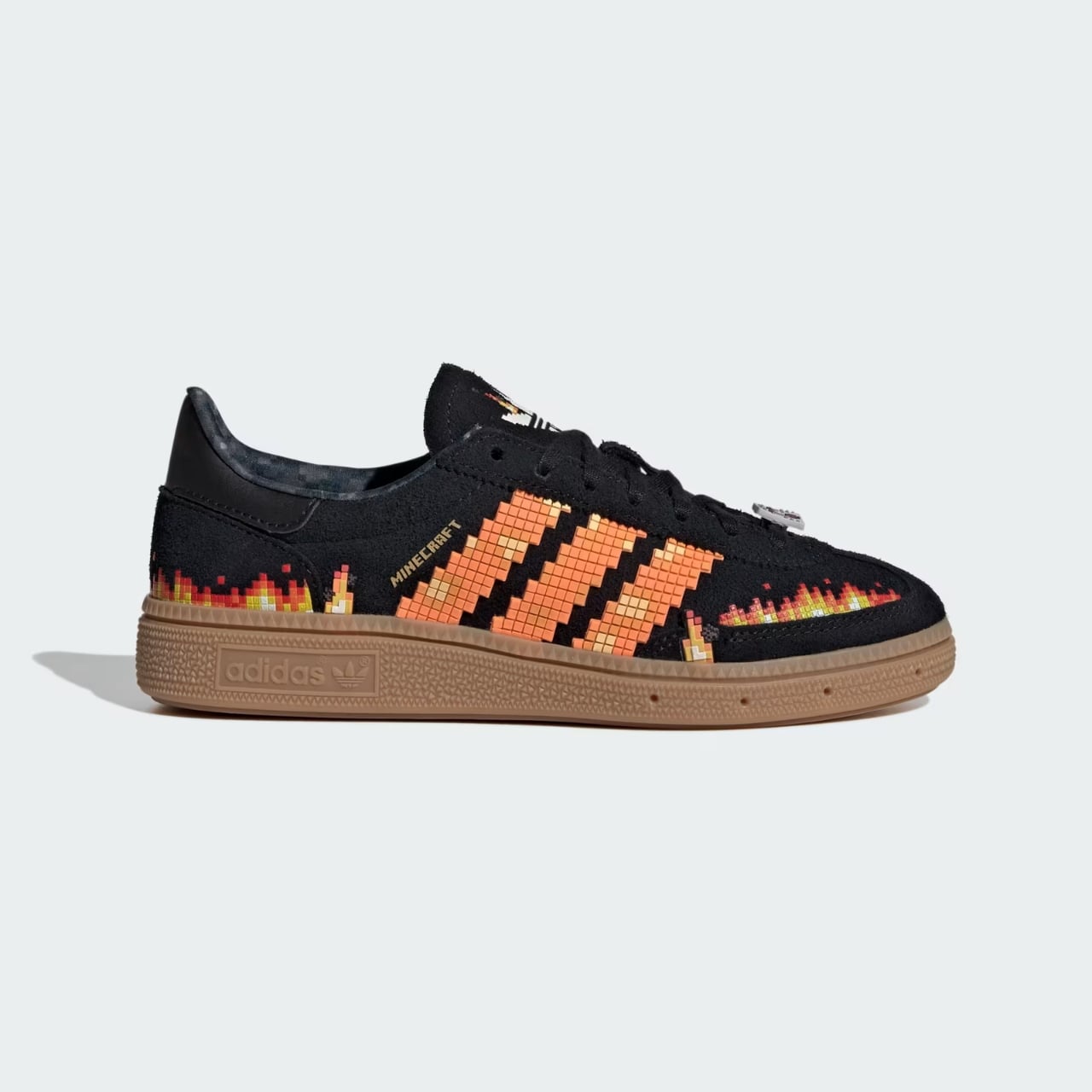
The Handball Spezial takes a different approach with its Ghast theme. For those not fluent in Minecraft speak, the Ghast is that floating, fireball-spewing creature you encounter in the game’s Nether dimension. Flame graphics dance across the shoe while an illustrated Ghast appears on the laces, giving the piece a narrative quality that goes beyond simple branding.
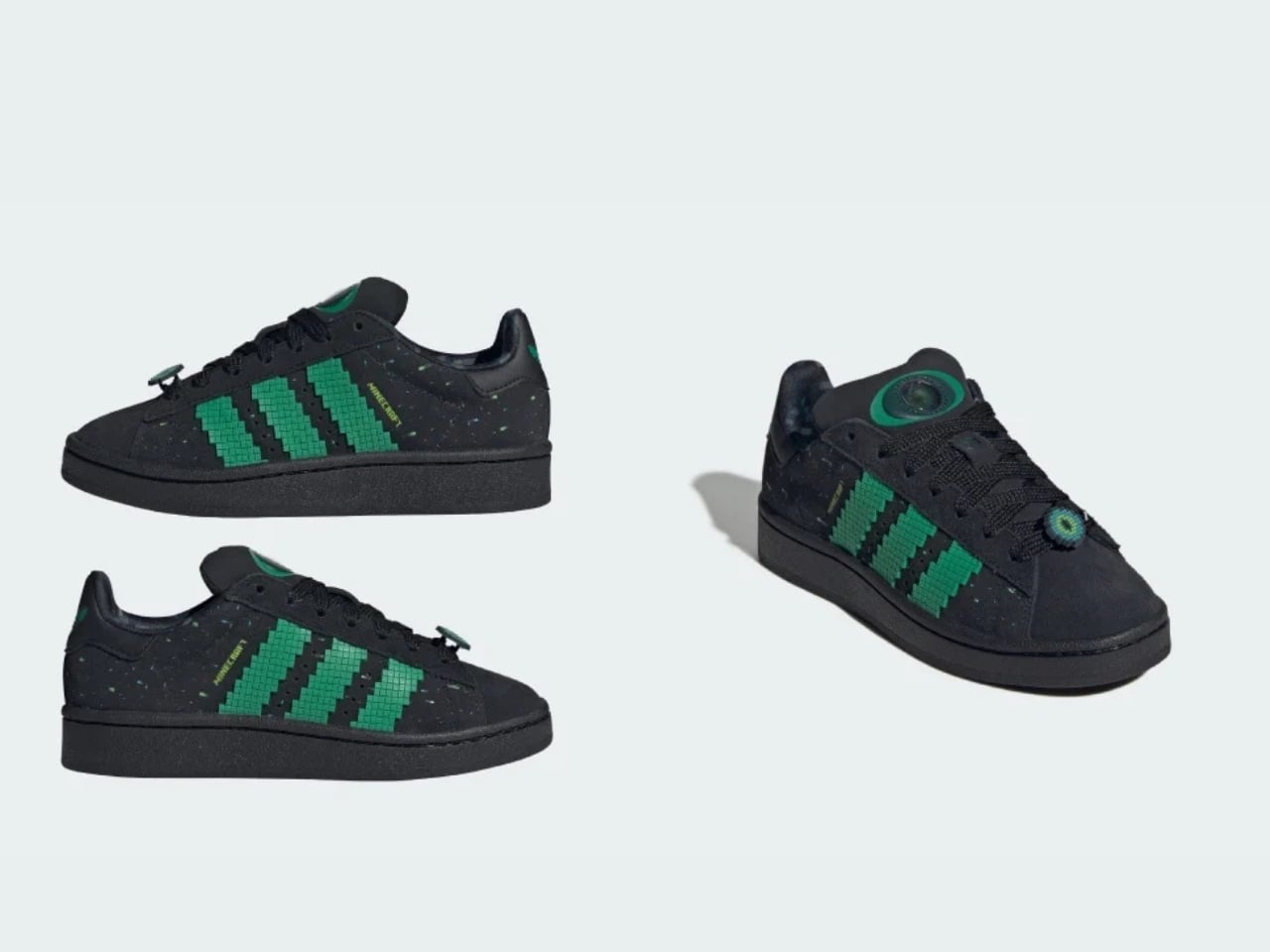
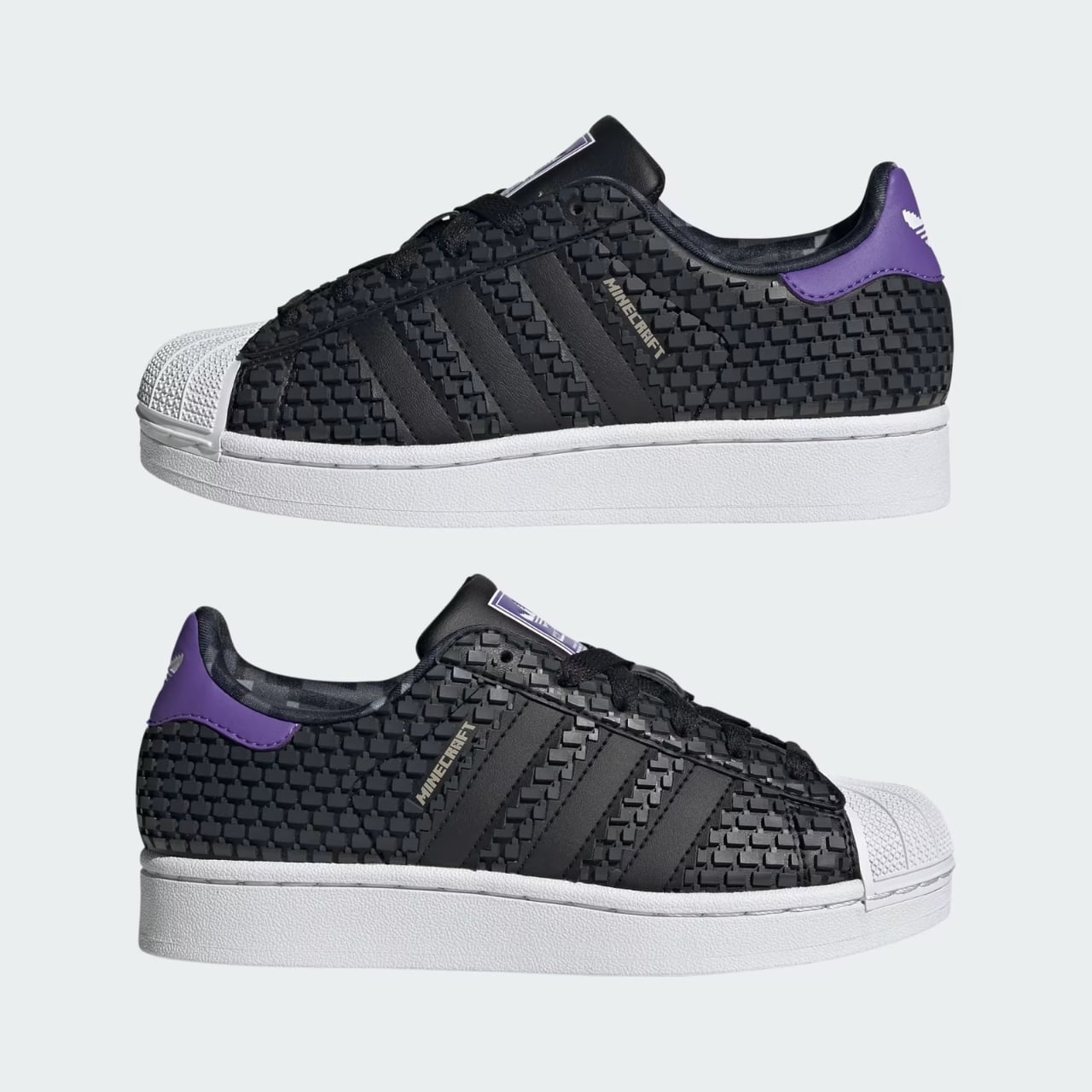
Then there’s the Campus 00s channeling the Eye of Ender aesthetic with its black and green palette, and the Superstar II drawing inspiration from the Ender Dragon itself. The Superstar features black, block-like scales that translate the dragon’s texture into something you can actually wear on city streets. The Adilette slides circle back to Creeper territory, with the mob’s iconic face prominently displayed on the strap.
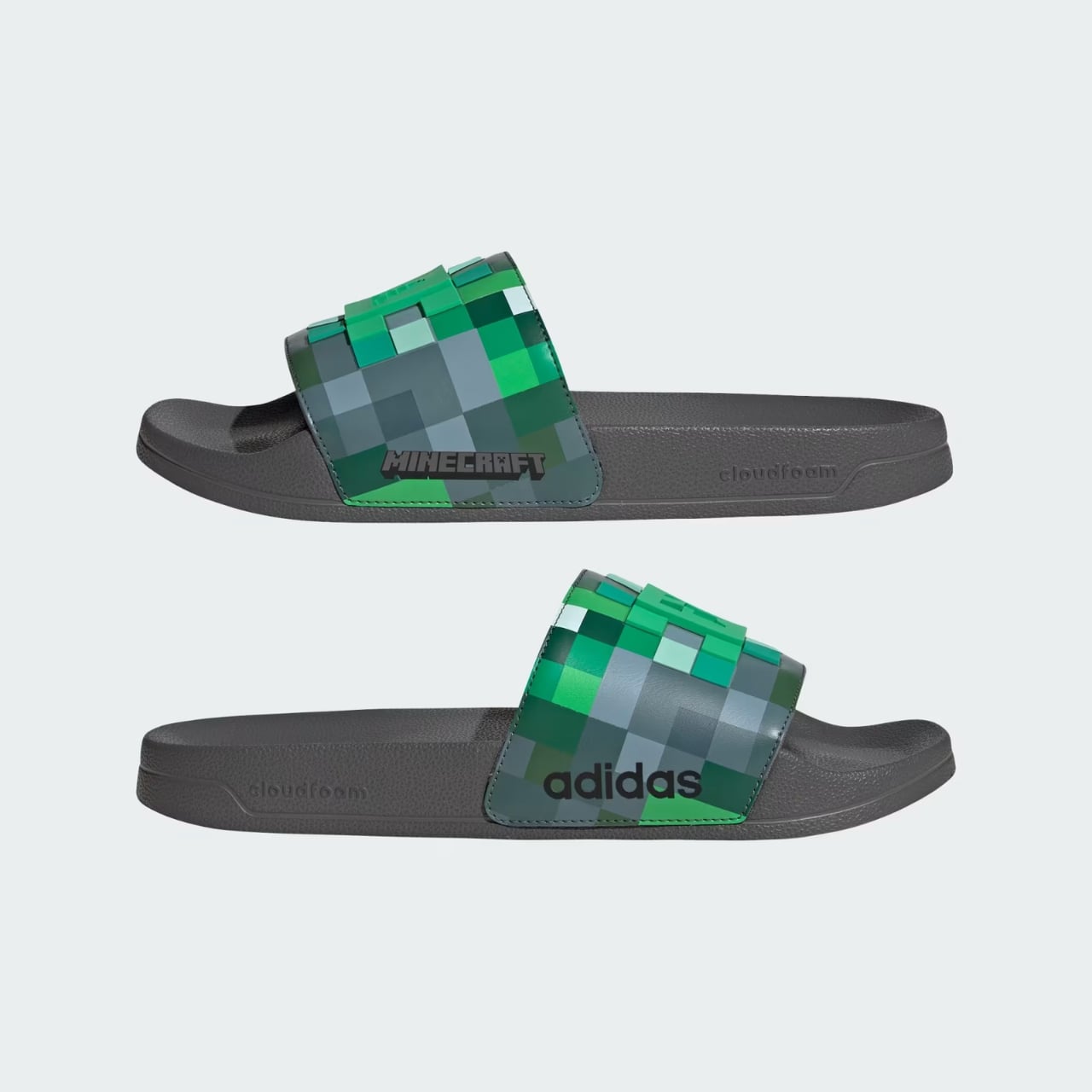
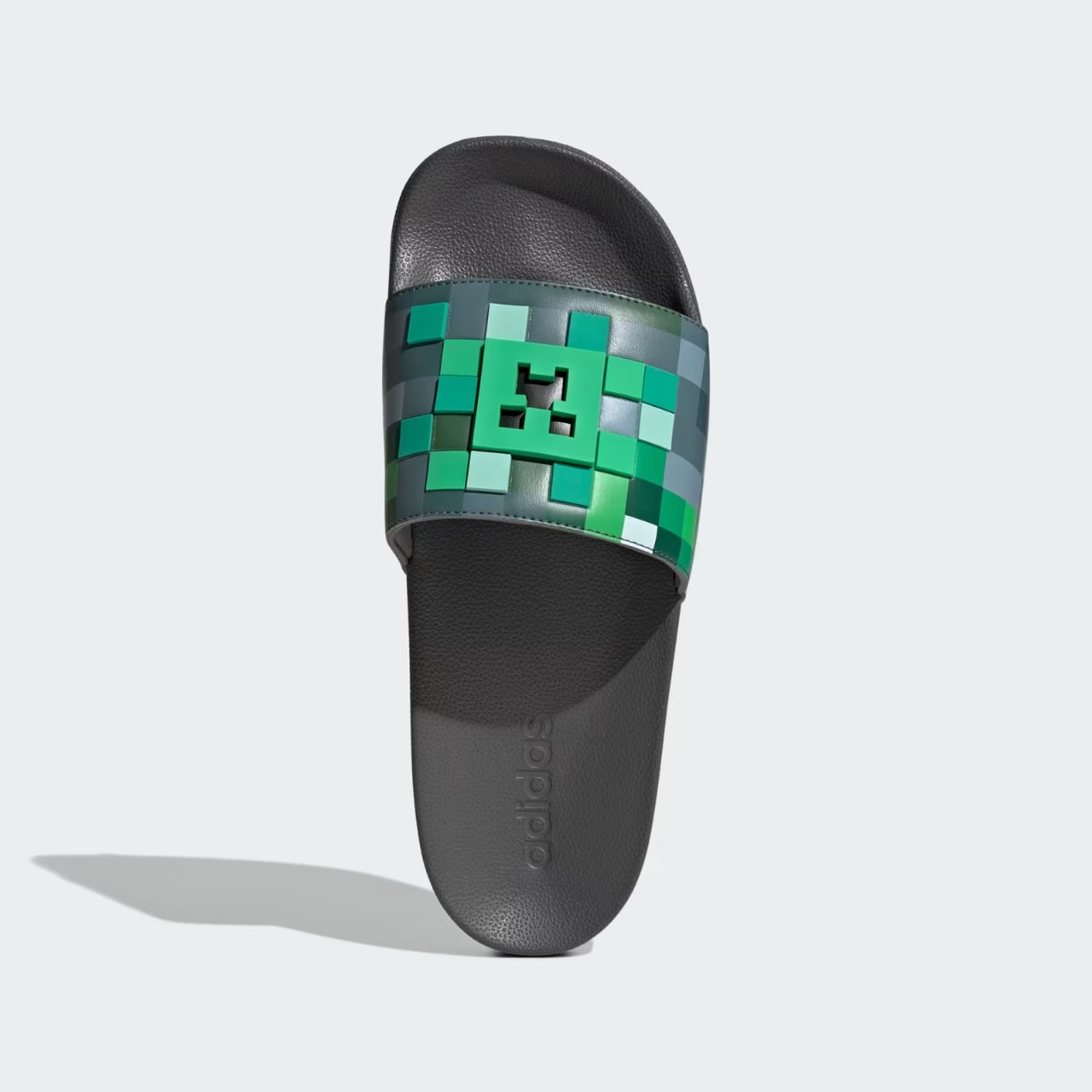
But here’s where things get really interesting from a design perspective. The packaging deserves its own spotlight. Adidas designed the boxes to resemble Minecraft’s in-game storage chests, extending the conceptual thread beyond just the product itself. This kind of attention to detail elevates the entire unboxing experience and shows a genuine understanding of what makes Minecraft’s visual language so compelling.

There’s a caveat worth mentioning, though. The entire footwear collection comes exclusively in youth and children’s sizing. While this might disappoint adult collectors hoping to snag a pair for themselves, it actually makes strategic sense. Minecraft’s core audience skews younger, and positioning these as wearable extensions of the game rather than adult collectibles keeps the collaboration authentic to its roots. Plus, prices ranging from forty to ninety-five dollars make these accessible holiday gifts rather than hype-beast grails.

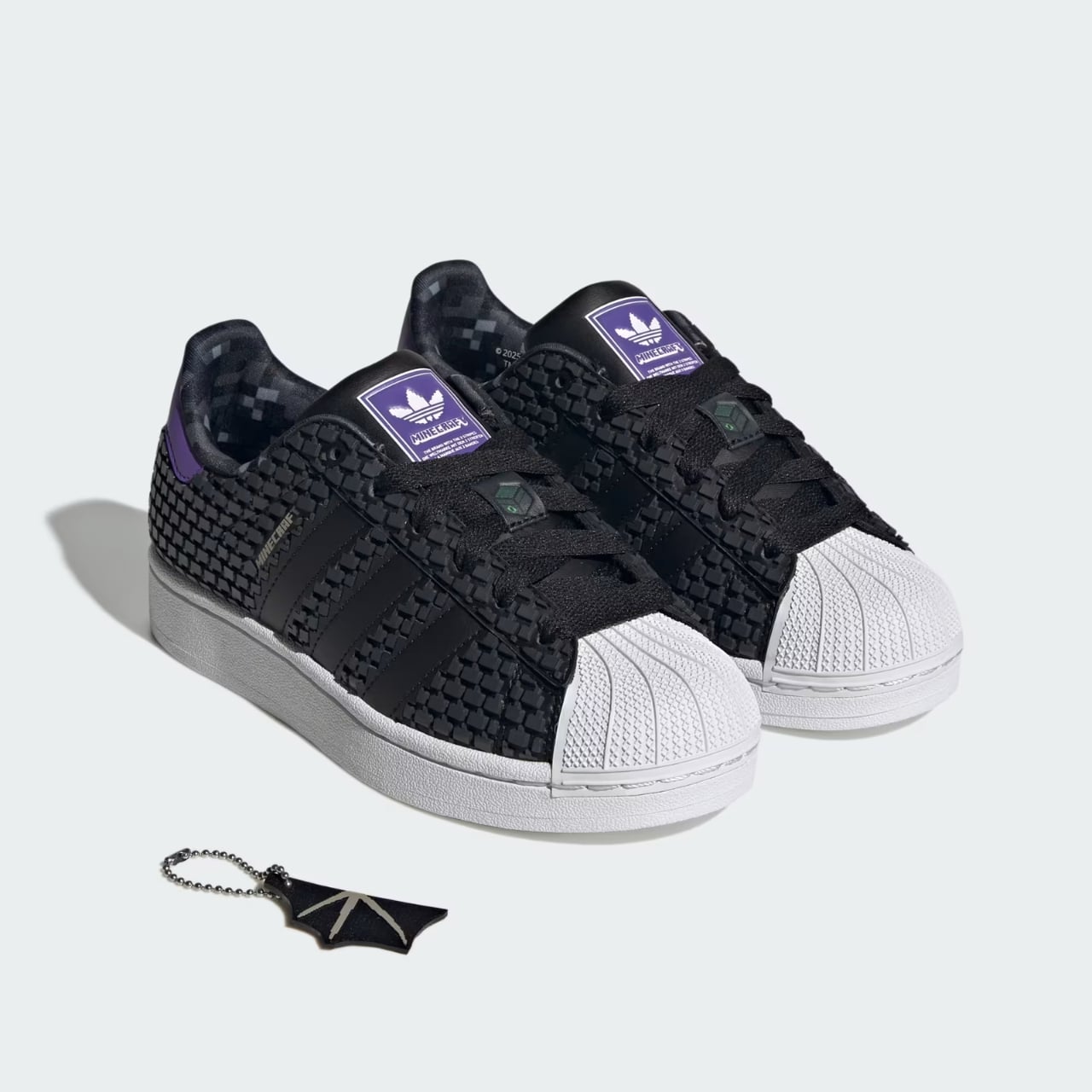
The sneaker world has seen its fair share of video game collaborations over the years, but most lean heavily into nostalgia for retro gaming. This partnership feels refreshingly current. Minecraft remains one of the most played games globally, with a massive cultural footprint that extends far beyond gaming circles. By tapping into this active, engaged community rather than mining the past, Adidas positions itself at the intersection of contemporary gaming culture and street style.
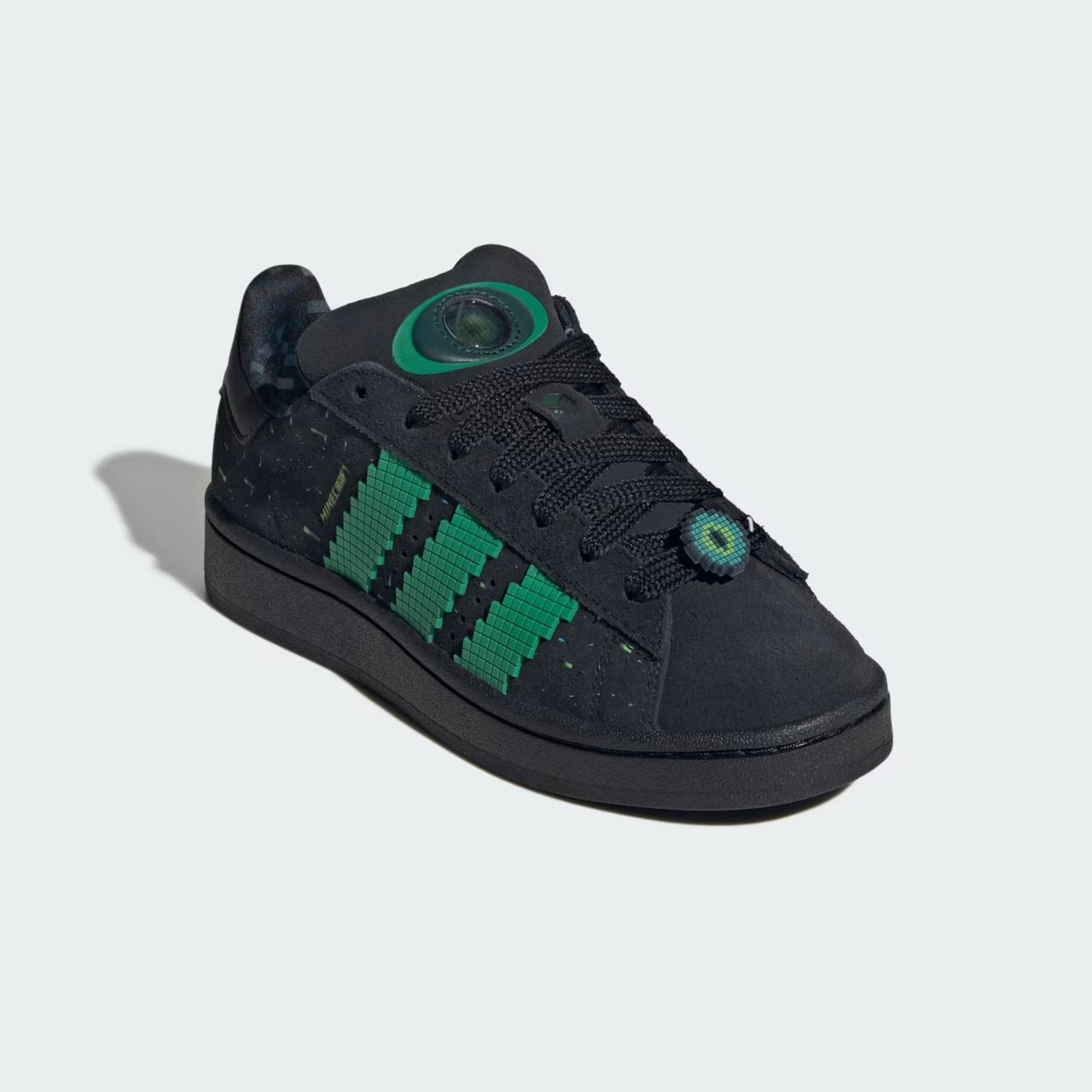
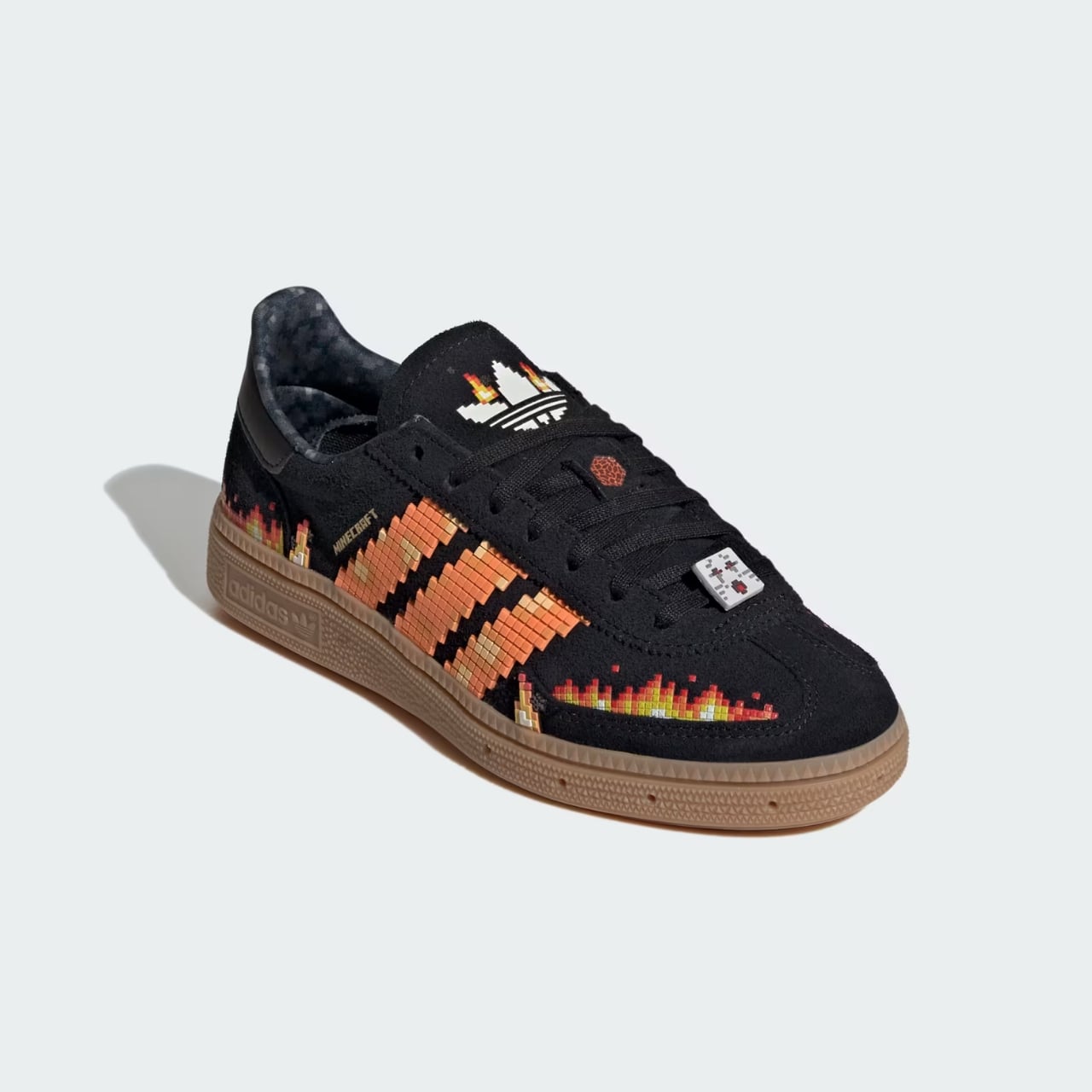
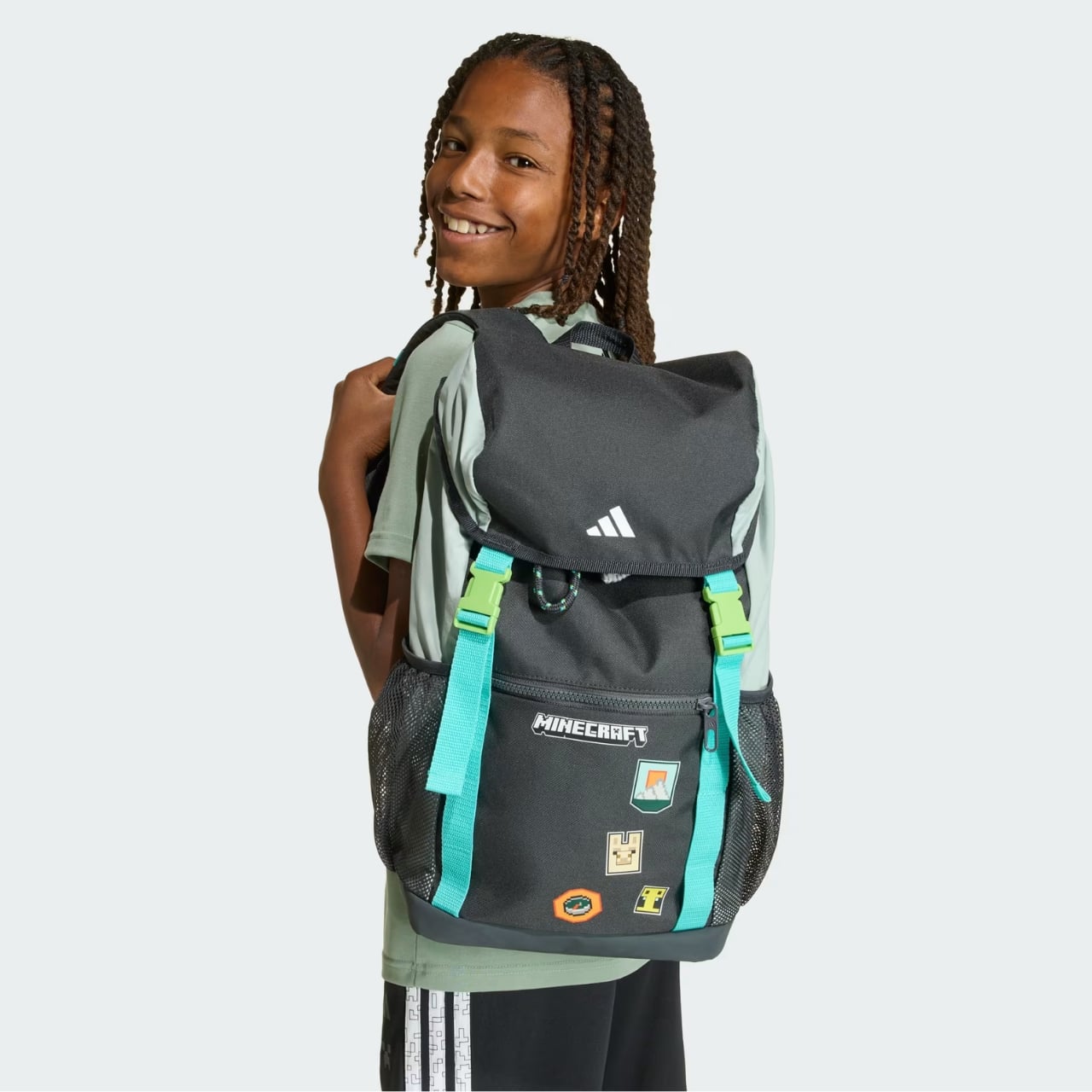
What’s particularly clever is how the collection works on multiple levels. Die-hard Minecraft fans get references they’ll immediately recognize and appreciate. Meanwhile, someone who’s never played the game might just see a cool green Samba or a sleek black Superstar with interesting texture details. The designs don’t require insider knowledge to work aesthetically, which broadens their appeal considerably. The collection also includes complementary apparel pieces, creating a full lifestyle offering that lets young fans dress head to toe in Minecraft-inspired gear. This comprehensive approach transforms the collaboration from a simple licensing deal into something that feels more like a genuine creative partnership.
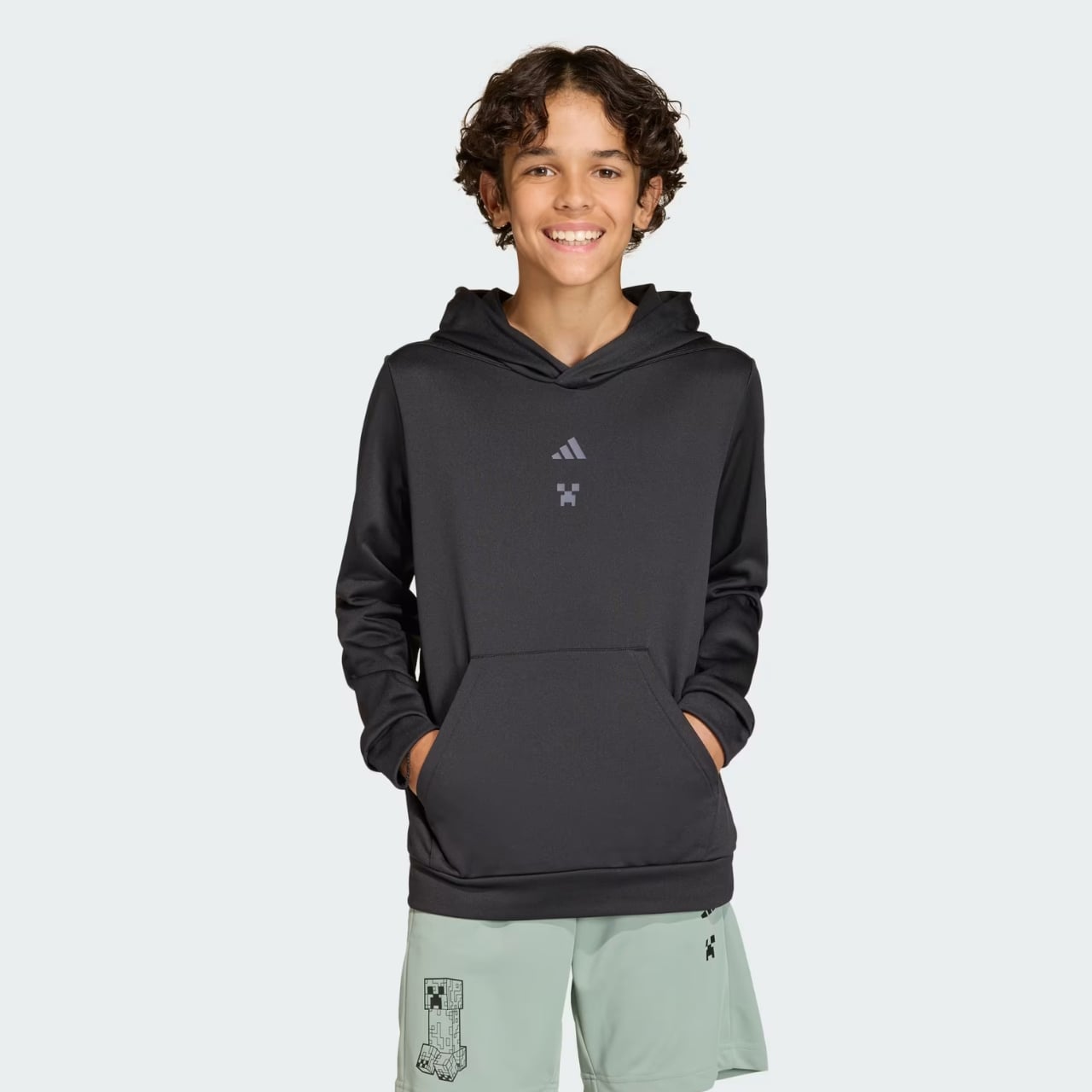
Brand collaborations drop constantly and often feel forced but the Adidas x Minecraft holiday collection stands out by actually making sense. Both brands benefit from the association, the design execution shows real thought and craft, and the end result offers something genuinely fun in a sneaker landscape that sometimes takes itself way too seriously. Available now through the Adidas webstore, these pieces prove that when gaming and footwear cultures collide thoughtfully, everyone wins, especially the kids who get to wear their favorite game on their feet.
The post Adidas Just Turned Minecraft Creepers Into $40 Holiday Sneakers first appeared on Yanko Design.

The iOS 26 Revolution: Every Major Feature Apple Unveiled This Year

The iOS 26 Revolution: Every Major Feature Apple Unveiled This Year

Apple’s iOS 26, released in late 2025, represents a significant evolution in mobile operating systems. This update introduces a suite of features designed to enhance usability, strengthen security, and optimize energy efficiency. Whether your focus is on personalization, communication management, or extending battery life, iOS 26 offers tools that make your device smarter, more secure, […]

The post The iOS 26 Revolution: Every Major Feature Apple Unveiled This Year appeared first on Geeky Gadgets.

Posted in Uncategorized

Budget Intel Arc Gaming PC Rig Crushes 1440p

Budget Intel Arc Gaming PC Rig Crushes 1440p

What if you could build a gaming PC in 2026 that crushes 1440p gaming without emptying your wallet, even with the increased RAM prices? ETA Prime explains how a carefully curated mix of affordable new parts and savvy second-hand finds can deliver smooth, high-quality performance in modern titles like Cyberpunk 2077 and Red Dead Redemption […]

The post Budget Intel Arc Gaming PC Rig Crushes 1440p appeared first on Geeky Gadgets.

Posted in Uncategorized

Posha Self-Watering Planter Lets You Forget Watering for Weeks

Most desk plants live in simple pots that depend entirely on memory. Watering is irregular, overwatering and underwatering are both common, and busy workdays do not help. Planters are usually treated as decorative containers, not as systems that could manage themselves. Posha is a self-watering desk planter that starts from a different premise, embedding care into the object instead of into the user’s to-do list or relying on guilt when leaves start to droop.

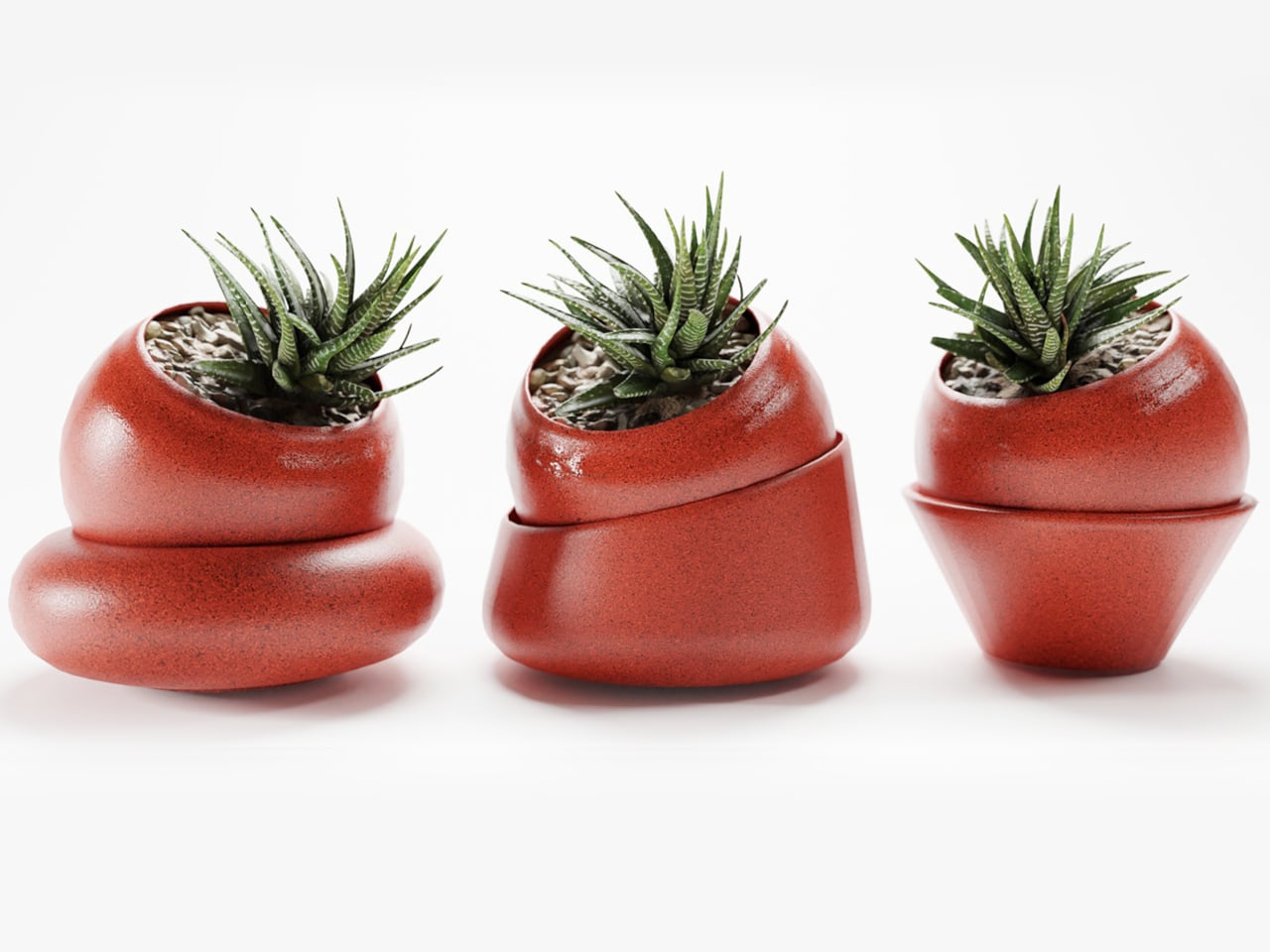
Posha is a compact desk planter built around a passive self-watering system. It separates water storage from the soil zone, with a concealed reservoir at the base and a wick or capillary pathway that draws moisture upward only as the plant needs it. The roots stay hydrated without sitting in water, which reduces overwatering and stretches the time between refills in a way that suits distracted desk life and unpredictable schedules.

Designer: Ayush Kumar Singh

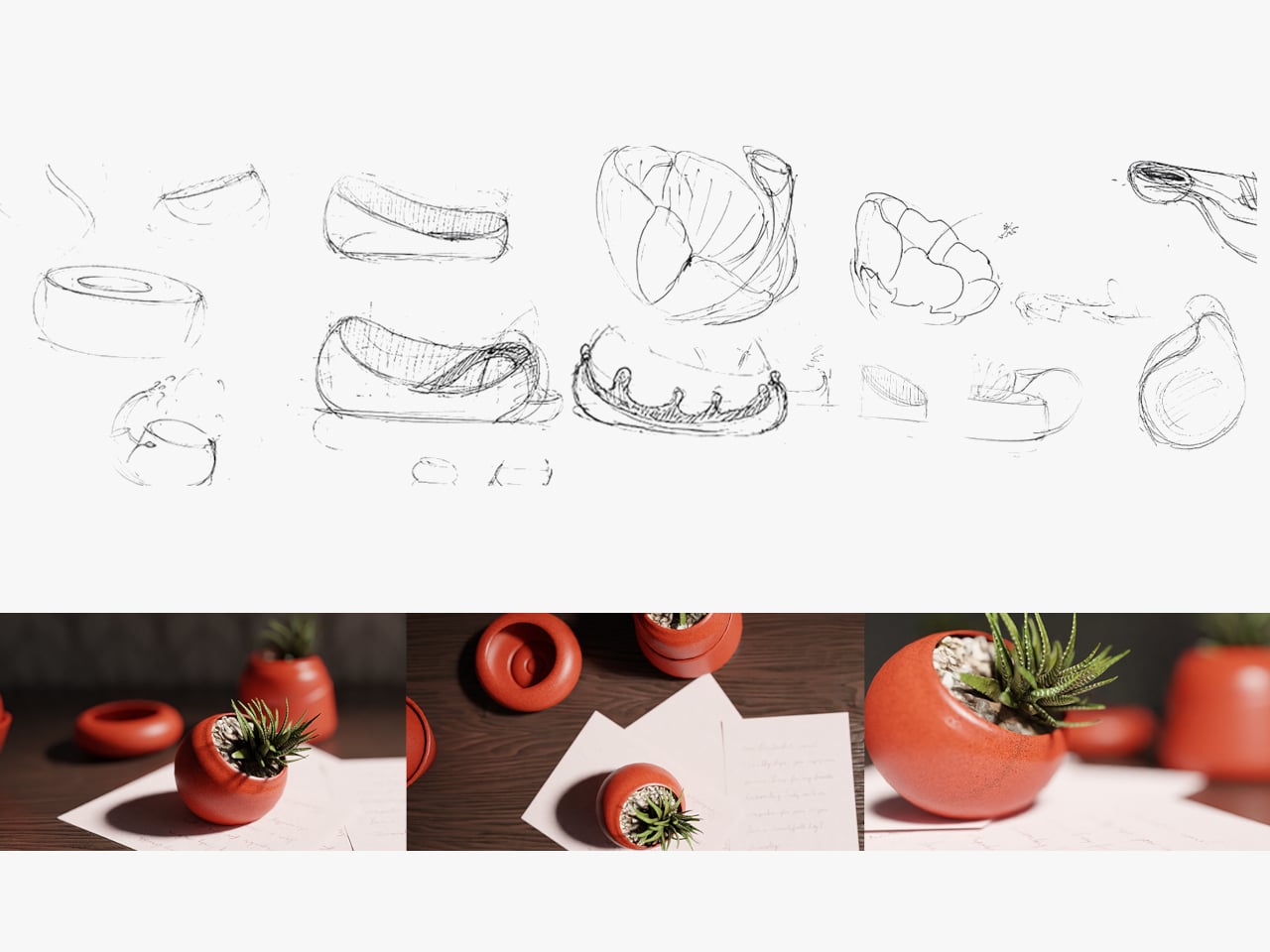
Early explorations focused on proportions and water behaviour, how much water a compact planter should realistically store, how fast it should release moisture, and how to keep the system stable without adding visual clutter. Several internal layouts were tested to balance soil volume, reservoir capacity, and airflow, so the plant remains healthy while the planter stays small and unobtrusive on a work surface next to keyboards and coffee cups.

The form is deliberately minimal, so from the outside it reads as a simple desk object rather than a technical product. The complexity is pushed inward, where the water chamber, soil separator, and wicking element work together as a single system. The geometry avoids sharp transitions so water can distribute evenly, and the top opening is sized for common indoor plants without making planting or pruning awkward when you need to swap species.

1

Refilling is straightforward and non-disruptive; the water inlet is integrated into the form so it does not dominate the appearance, and the reservoir can be topped up without removing the plant. The system is designed to be reusable and serviceable, allowing the planter to be cleaned or replanted over time rather than treated as a disposable object that gets tossed when the first plant fails or the season changes.

What defines Posha is not a single interaction but how it behaves over weeks of use. The soil stays consistently moist, the plant experiences less stress, and the user interacts with it less frequently but more intentionally. Plant care shifts from a daily responsibility to an occasional check-in, better suited to desks, studios, and workspaces where attention is already stretched thin, and memory is unreliable at best.

Posha demonstrates how small functional decisions, like separating water and soil and hiding the reservoir, can significantly change user behaviour and plant health. By working quietly in the background and doing one job well, the self-watering desk planter supports healthier plants and a calmer relationship between people and the living things they keep nearby, which is a surprisingly meaningful outcome for such a small piece of desk real estate that could have easily stayed simple and decorative.

The post Posha Self-Watering Planter Lets You Forget Watering for Weeks first appeared on Yanko Design.

Meta buys startup known for its AI task automation agents

Meta has acquired an AI startup called Manus — known for its custom research and website-building agents — in a deal valued at more than $2 billion, according toThe Wall Street Journal. It's reportedly one of the largest acquisitions yet involving a startup nurtured in China's AI ecosystem. 

Manus arrived in March 2025, shortly after another Chinese AI startup, DeepSeek appeared on the scene. The company (called Butterfly Effect at the time) originally described it as "the first general AI agent" to perform complex tasks autonomously, rather than just generating ideas. It draws from several third-party models, particularly Anthropic's Claude 3.5 Sonnet and versions of Alibaba's Qwen. 

Manus is designed to automate certain tasks, like market research, coding, sales data analysis and website cloning and creation. (However, one skeptic called it "a product devilishly optimized for influencers, which is why it exploded so much.") The company claims that Manu is "already serving the daily needs of millions of users and businesses" and has an annualized average revenue of more than $100 million only eight months after launch. 

Manus laid off most of its Beijing employees this summer before moving its headquarters to Singapore in an effort to expand globally.The company was reportedly seeking a funding round that would have valued it at $2 billion when it was approached by Meta. "Joining Meta allows us to build on a stronger, more sustainable foundation without changing how Manus works or how decisions are made," said Manus CEO Xiao Hong in a company news release.

This article originally appeared on Engadget at https://www.engadget.com/ai/meta-buys-startup-known-for-its-ai-task-automation-agents-140045275.html?src=rss

Google Pixel Features You Didn’t Know You Needed

Google Pixel Features You Didn’t Know You Needed

Google Pixel smartphones have established themselves as a unique presence in the highly competitive smartphone market. By offering a suite of exclusive features that emphasize usability, convenience, and innovative functionality, these devices cater to a wide range of user needs. Whether you’re looking for seamless day-to-day performance or advanced tools, the Pixel lineup delivers an […]

The post Google Pixel Features You Didn’t Know You Needed appeared first on Geeky Gadgets.

Posted in Uncategorized

TCL introduces its own take on a color Kindle Scribe

Hot on the tail of Amazon's Kindle Scribe Colorosoft, TCL is introducing its own take on a distraction-free note-taking and reading device. Unlike the new Scribe, however, it doesn't use E Ink. The TCL Note A1 NXTPAPER is the company's latest device to use NXTPAPER, TCL's custom paper-like LCD screen, which offers some of the qualities of E Ink without the limitations.

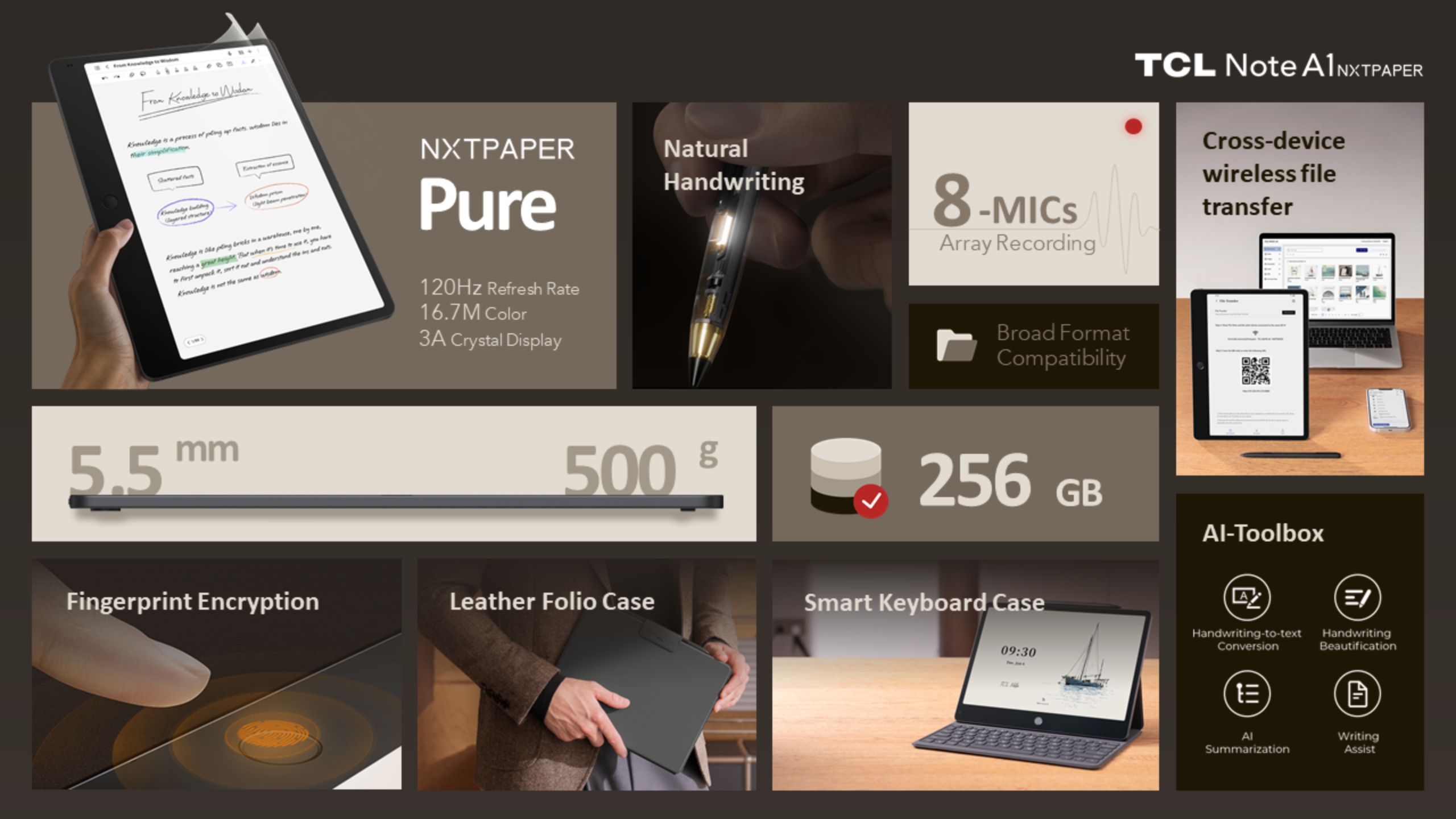
TCL says the 11.5-inch color "NXTPAPER Pure" display on the Note A1 has a 2,200 x 1,440 resolution and a 120Hz refresh rate, which should mean it looks clearer and feels much smoother to interact with than the color E Ink screen used on something like the reMarkable Paper Pro. The tablet supports TCL's T-Pen Pro for taking notes and drawing on the screen, but also features eight built-in microphones for recording and transcribing audio. The Note A1 also has a 13-megapixel camera for scanning documents, an 8,000mAh battery and 256GB of storage, with the option to access cloud services like Google Drive or Microsoft OneDrive if you want it. 

A diagram of different Note A1 NXTPAPER features arranged in a grid.
TCL

Unlike TCL's past NXTPAPER tablets, the Note A1 doesn't prioritize media consumption — it's a productivity tool first and foremost. TCL says the device runs Android, but hasn't shared whether it'll have access to the Play Store. All the features the company has announced focus on taking notes and using AI to process and organize whatever you've written down. The device will also support real-time translation and "handwriting beautification," among a collection of other AI-powered features.

Engadget has reached out to TCL for more information on the Note A1 NXTPAPER's software. We'll update this article if we hear back.

There will likely never be one “Goldilocks” version of these note-taking devices, but the Note A1 NXTPAPER's combination of display and microphones does make it an intriguing, if limited, alternative to Boox's E Ink tablets. Anyone interested in TCL's new device won't have to wait long to try it, either. 

The TCL Note A1 NXTPAPER is available to order now through Kickstarter (with additional bonuses and discounts) and will officially go on sale for $549 at the end of February.

This article originally appeared on Engadget at https://www.engadget.com/mobile/tablets/tcl-introduces-its-own-take-on-a-color-kindle-scribe-140000207.html?src=rss

Humanoid Robots Are Entering the Real World Faster Than Expected

Humanoid Robots Are Entering the Real World Faster Than Expected

Imagine walking into a bustling café where a humanoid robot greets you, takes your order, and expertly prepares your coffee, all while engaging in casual conversation. This scenario, once the stuff of science fiction, is rapidly becoming reality. Universe of AI breaks down how advancements in embodied artificial intelligence (AI) are propelling humanoid robots out […]

The post Humanoid Robots Are Entering the Real World Faster Than Expected appeared first on Geeky Gadgets.

Posted in Uncategorized

How to watch the NVIDIA CES 2026 press conference with Jensen Huang live

NVIDIA AI Computing Card
CFOTO via Getty Images

During CES 2025, NVIDIA spent much of its keynote touting its leading position in artificial intelligence. Still, the company managed to squeeze in a few notable hardware announcements, including its RTX 5000-series GPUs and Project Digits desktop supercomputer (later redubbed Spark). For this year's show, the company's website says it's "lighting up CES 2026 with the power of AI." To that end, NVIDIA is going big in Las Vegas, promising hands-on demos in its Fontainebleau booth, replete with the "latest NVIDIA solutions driving innovation and productivity across industries."

But if you won't be in Vegas for the action, don't worry. Here's how you can watch the livestream of the company's January 5 press conference, and what NVIDIA is expected to unveil at CES this year.

NVIDIA CEO Jensen Huang will deliver a 90-minute keynote at CES 2026. The event will be livestreamed on Monday, January 5 at 4PM ET via NVIDIA's website (and likely on YouTube as well). We'll embed the link here once it's available.

NVIDIA's game plan for CES is suitably vague so far, including "cutting-edge AI, robotics, simulation, gaming and content creation at the NVIDIA Showcase." It also notes there will be more than 20 demos. Although we're unsure if all of these will be shown during the keynote, we can at least expect to see them throughout the week of CES.

NVIDIA arrives at CES as the most valuable publicly traded company in the world (a stunning $4.6 trillion at the time of this writing, albeit down from an even higher valuation earlier in 2025). And given that the health of the US and global economy seems increasingly linked to infrastructure spending on AI data centers — largely powered by chips from NVIDIA and its competitors — expect Huang's remarks to be as closely followed by Wall Street investors as technology acolytes, if not more so. Will we get any insight on a successor to the company's Blackwell chip? A more detailed look at how NVIDIA's partners are applying AI to real-world robotics? Time will tell, but you might want to keep your stock portfolio in a split screen while taking in Huang's presentation.

This article originally appeared on Engadget at https://www.engadget.com/computing/how-to-watch-the-nvidia-ces-2026-press-conference-with-jensen-huang-live-130028602.html?src=rss