Insta360 Link 2 Pro vs Link 2: Sensor or Setup?
Compare Insta360 Link 2 Pro and Link 2 on sensor size, microphones, tracking, and software limits, with the fixed-camera alternatives explained.
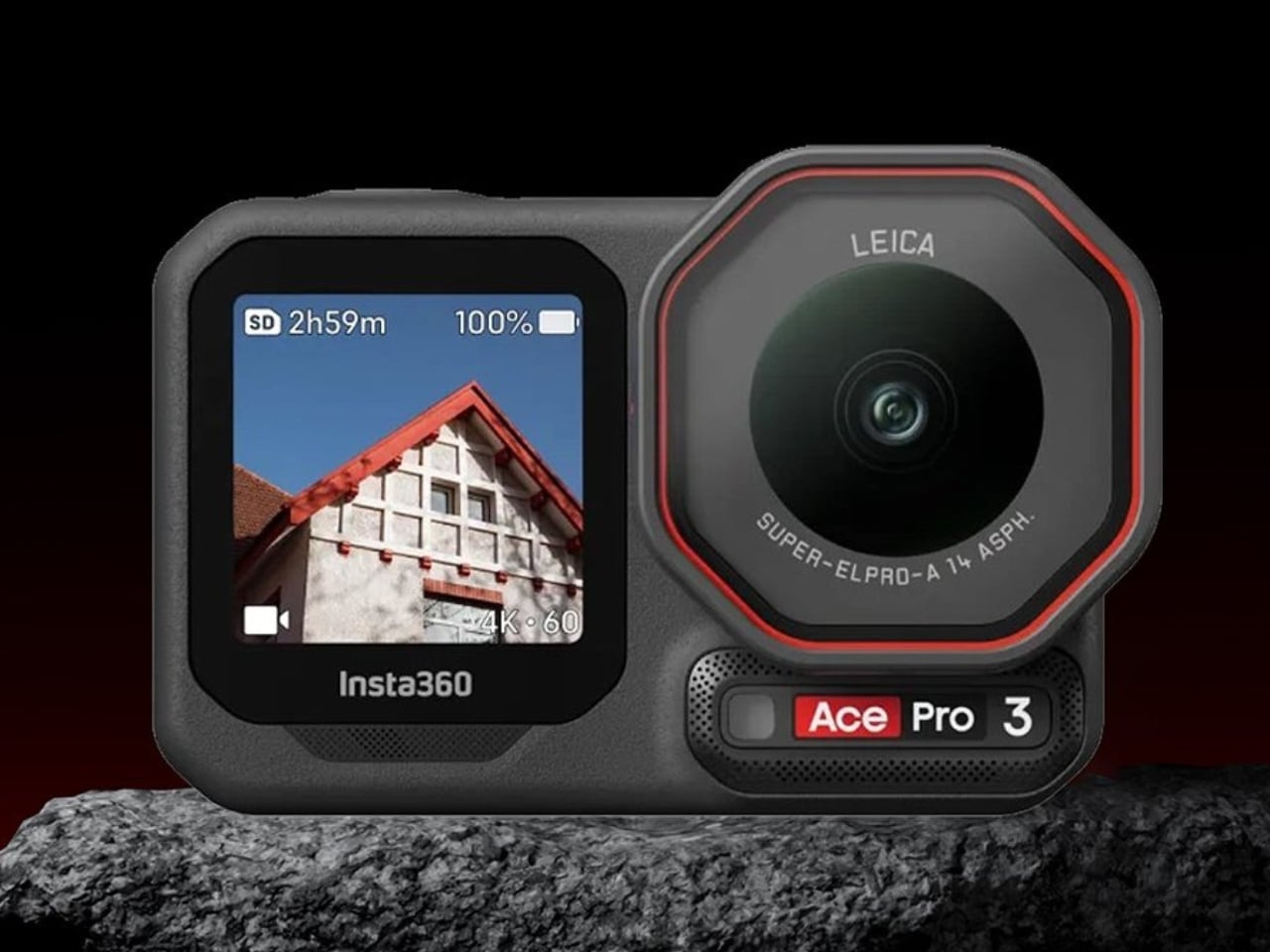
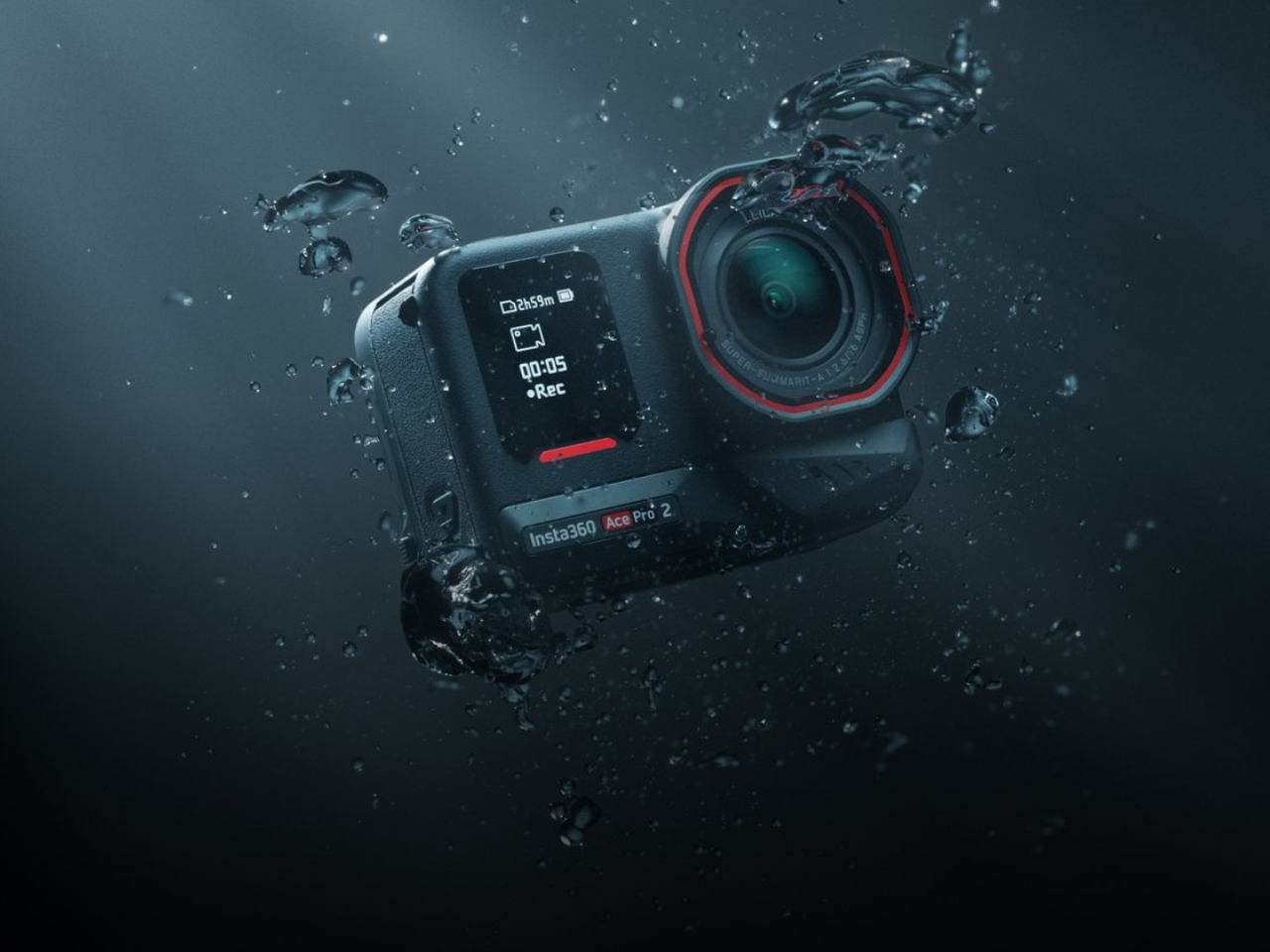
The leaked Insta360 Ace Pro 3 wears its most conspicuous change around the lens: a chunky, eight-sided housing with Leica branding and a red outline. I’d look just to its left, though. The alleged front display shows an actual scene instead of a settings readout. If that becomes a working preview screen, it could remove a small but persistent nuisance: having to flip up the rear screen to frame yourself.
These are leaked images, not an Insta360 announcement. Shared by Igor Bogdanov, who posts as @Quadro_News, and covered by The Gadgeteer on November 4, they suggest a camera with a more convenient approach to self-recording. The existing Ace Pro 2 has a 2.5-inch flip touchscreen, while its front display handles status information. Checking your composition without repositioning that larger screen would be a welcome improvement, particularly for quick clips between everything else you’re doing.
Designer: Insta360
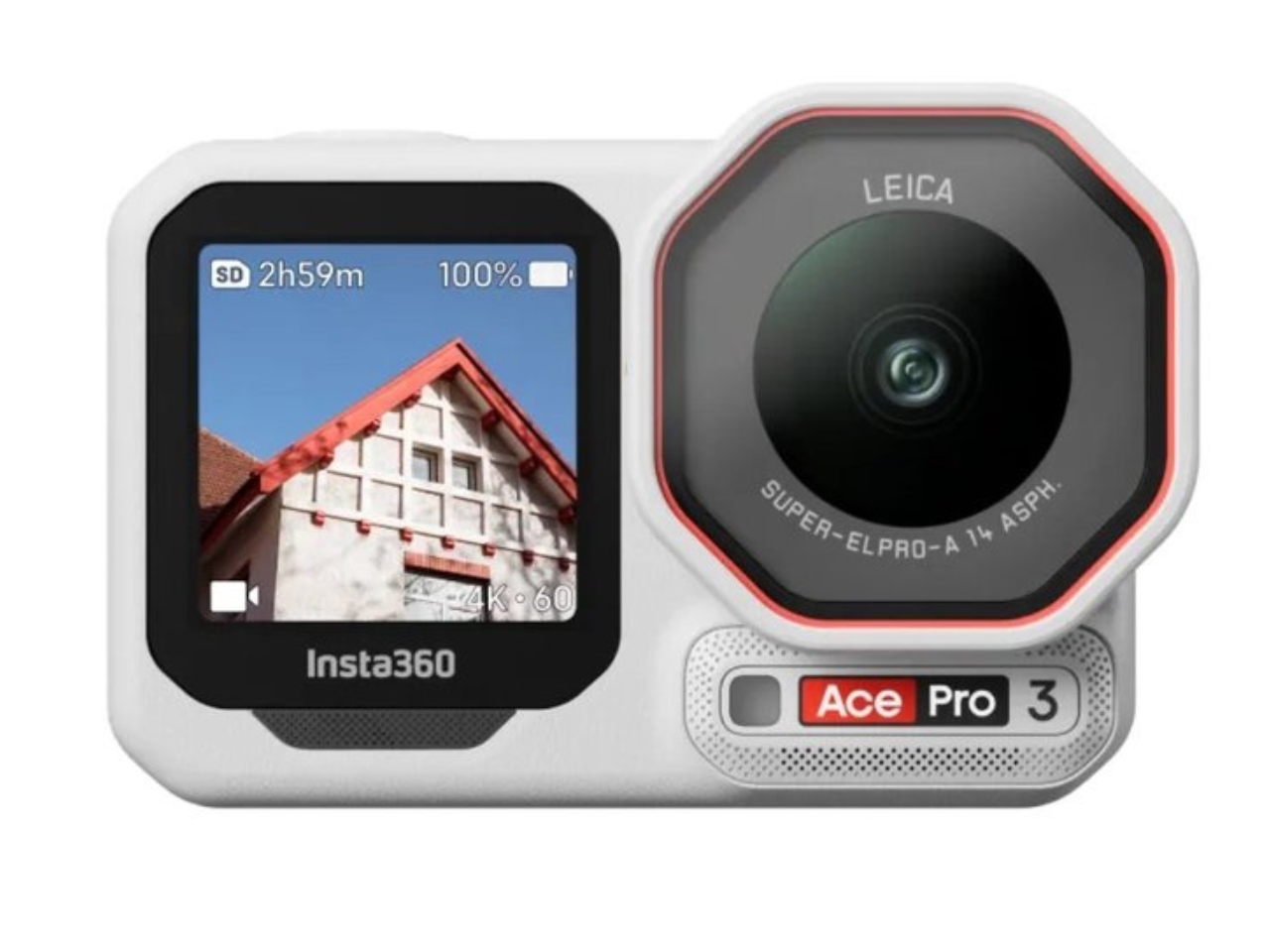
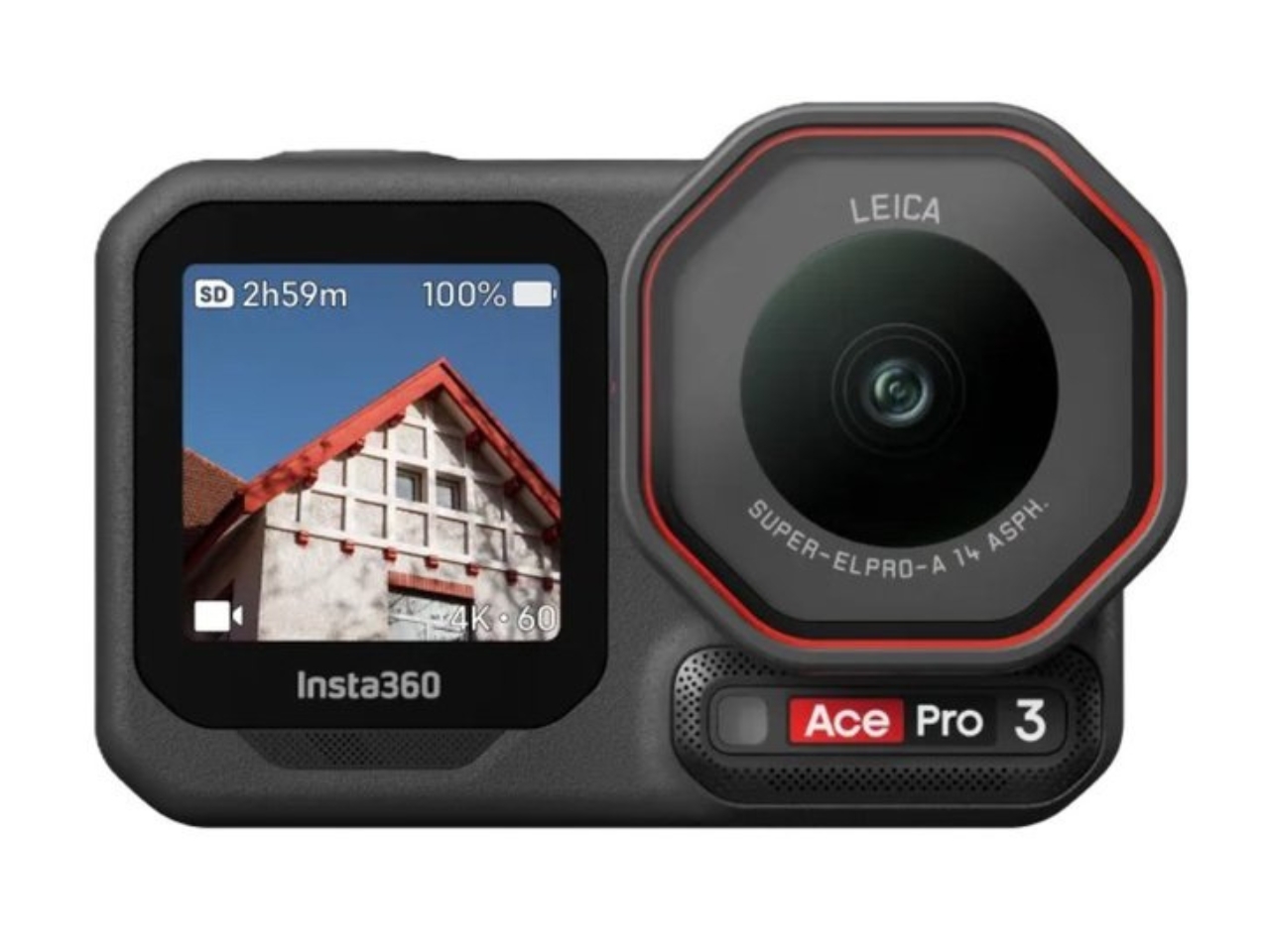
Visually, the alleged redesign gives the lens considerable authority. Its octagonal surround dominates the face, with the screen tucked alongside it and the Ace Pro 3 badge underneath. Black and white versions appear in the leaked image set. I prefer how the white body separates those components, making the camera’s layout easier to read. The black version looks more unified, although that red outline still insists you notice the lens first.
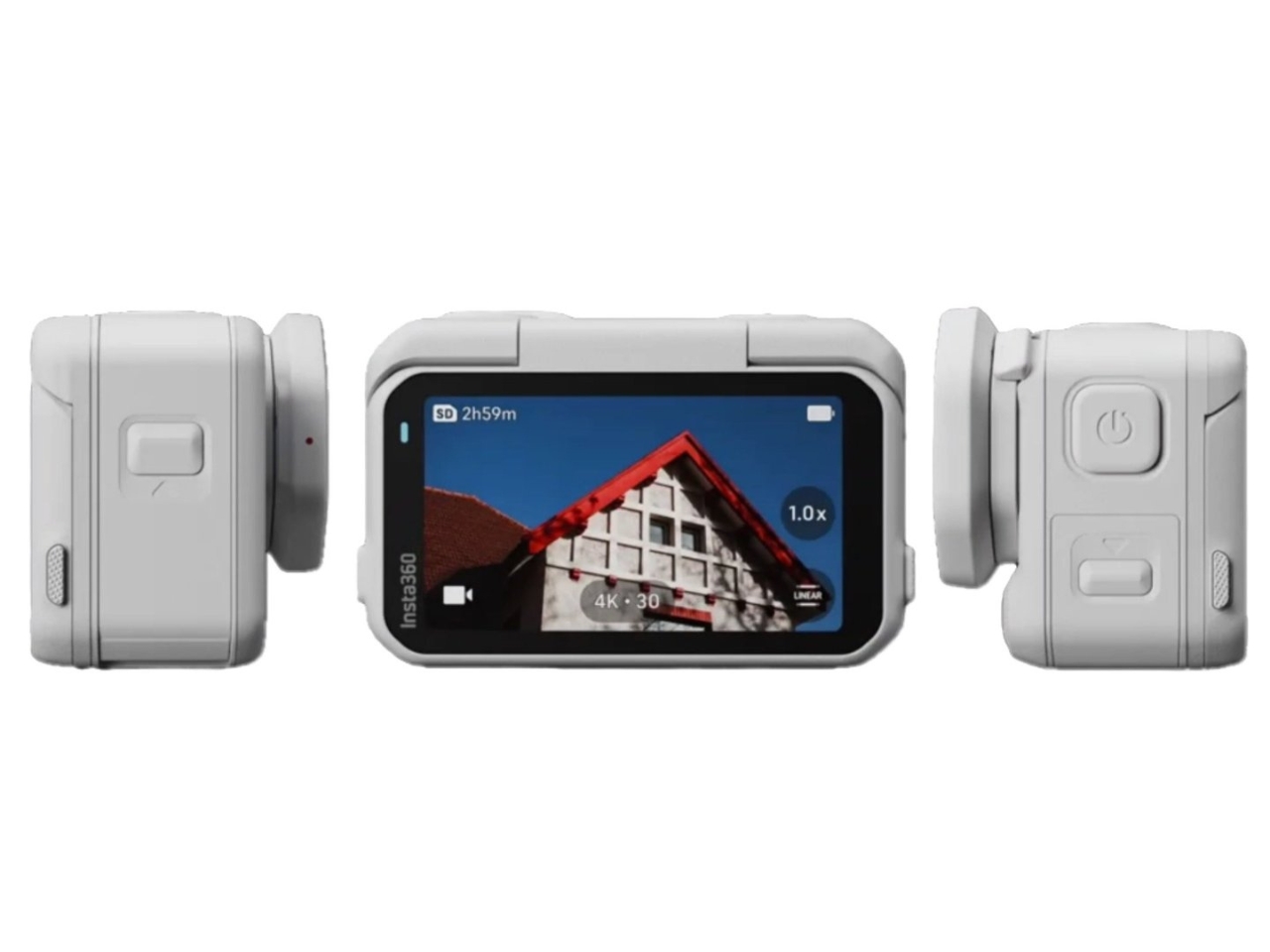
The front screen interests me more than the styling because it suggests a useful division of labor. A rear display could remain the place for reviewing footage and adjusting settings, with the front handling composition when you’re in the shot. The images show a rear screen and what appears to be its hinge, but they don’t establish whether both displays can show a live preview simultaneously.
Battery capacity is the other tangible clue. A leaked regulatory-screen image lists a 2,250mAh battery, compared with the 1,800mAh battery Insta360 specifies for the Ace Pro 2. That would represent a 25 percent capacity increase if the label reflects the eventual retail camera. It’s an encouraging number for anyone tired of budgeting recording time around spare batteries. It is not, however, evidence of 25 percent longer recording, and the leak supplies no verified endurance result to make that connection.
A larger battery would matter most if it reduced the number of interruptions during an ordinary outing. That’s the upgrade I’d want measured: how much useful footage you can capture between charges, with the settings you actually use. A capacity figure alone can’t answer that, especially when the same leak raises the possibility of an additional preview display drawing power.
The more ambitious rumor concerns a 1-inch, 50-megapixel sensor, potentially replacing the Ace Pro 2’s 1/1.3-inch sensor. That remains unconfirmed, and a prominent lens surround doesn’t tell us what sits behind it. The existing camera already records 8K video at 30 frames per second and shoots 50-megapixel photos. Personally, I’d be more interested in convincing improvements to evening footage and difficult lighting than another resolution headline. Those are results we’ll need actual footage to judge.
There is a reason to keep the enthusiasm measured. Some lettering in the leaked render looks uneven, a detail that RedShark also flagged when discussing its uncertain authenticity. Separately, an FCC authorization dated September 29, 2026, names the Insta360 Ace Pro 3. That gives the product name a documented regulatory trail, but it doesn’t authenticate this particular image or confirm the rumored imaging specifications.
For now, there’s no announced price or release date to build a buying decision around. I wouldn’t postpone a camera purchase solely because this render exists. Still, its most appealing suggestion is refreshingly modest. A front preview could make the camera less fussy when you turn it toward yourself, while a larger battery might mean fewer interruptions. Neither needs a dramatic sales pitch. If Insta360 delivers those changes, the benefit would be less time preparing to record and more time getting on with the shot.
The post Insta360 Ace Pro 3 Leak Teases Vlogs Without a Screen Flip first appeared on Yanko Design.
Most pocket gimbal cameras chase versatility by piling on extra lenses, extra zoom ranges, extra everything. The Insta360 Luna Pro takes the opposite approach, stripping its flagship sibling down to a single lens and betting that one really good sensor beats two mediocre ones. It’s a stripped-down design philosophy wrapped around genuinely premium hardware, and that trade-off defines everything about how this camera works.
That single lens is no afterthought. A 1-inch sensor pairs with a Leica Summicron optic carrying a 20mm-equivalent focal length and an F1.8 aperture, the exact imaging core found in the pricier dual-lens Luna Ultra. Stripping away the telephoto camera doesn’t touch the part of the system responsible for actual image quality; it just removes the zoom flexibility, letting the Luna Pro undercut its sibling’s price without touching what the sensor sees.
Designer: Insta360


A 4nm chipset and dedicated image processor push that sensor toward genuinely demanding footage, including 8K Dolby Vision HDR recording and 4K at 120fps for slow motion. Ten-bit I-Log color capture means footage holds up under real color grading rather than falling apart the moment you push shadows or highlights, a detail that matters more to someone editing later than someone just hitting record.


Low light gets its own dedicated mode called PureVideo, which leans on AI processing to cut noise while pulling out extra brightness and detail up to 4K60. Rather than treating darkness as a limitation to shoot around, the camera treats it as a condition worth engineering specifically for, useful for anyone filming evening events, dim interiors, or anything after the sun goes down without reaching for external lighting.


Zoom still exists here, just handled differently than a second lens would allow. A 2x mode crops into the sensor’s center while holding a full 4K output, and a 4x “HighRes Zoom” mode uses AI reconstruction to hold onto detail that would otherwise blur. Neither replaces true optical zoom, but both stretch a single-lens system further than its hardware alone would suggest.


The physical shell wraps a 3-axis gimbal around all of this, smoothing footage down to a jitter tolerance of just 0.005 degrees while still allowing fast repositioning during a shot. A detachable 2-inch OLED touchscreen doubles as both a viewfinder and a standalone remote, letting you step back from the camera without losing the ability to frame or trigger a shot.


Forty-seven gigabytes of built-in storage and roughly four hours of battery life round out a camera built for grabbing footage on the move rather than settling in behind a tripod. At $600, the Luna Pro carves out a clear identity for itself: less camera than its flagship sibling on paper, but no less capable where the actual image lives.


The post Most Pocket Cameras Pile On Lenses, Insta360 Luna Pro Leans On One first appeared on Yanko Design.
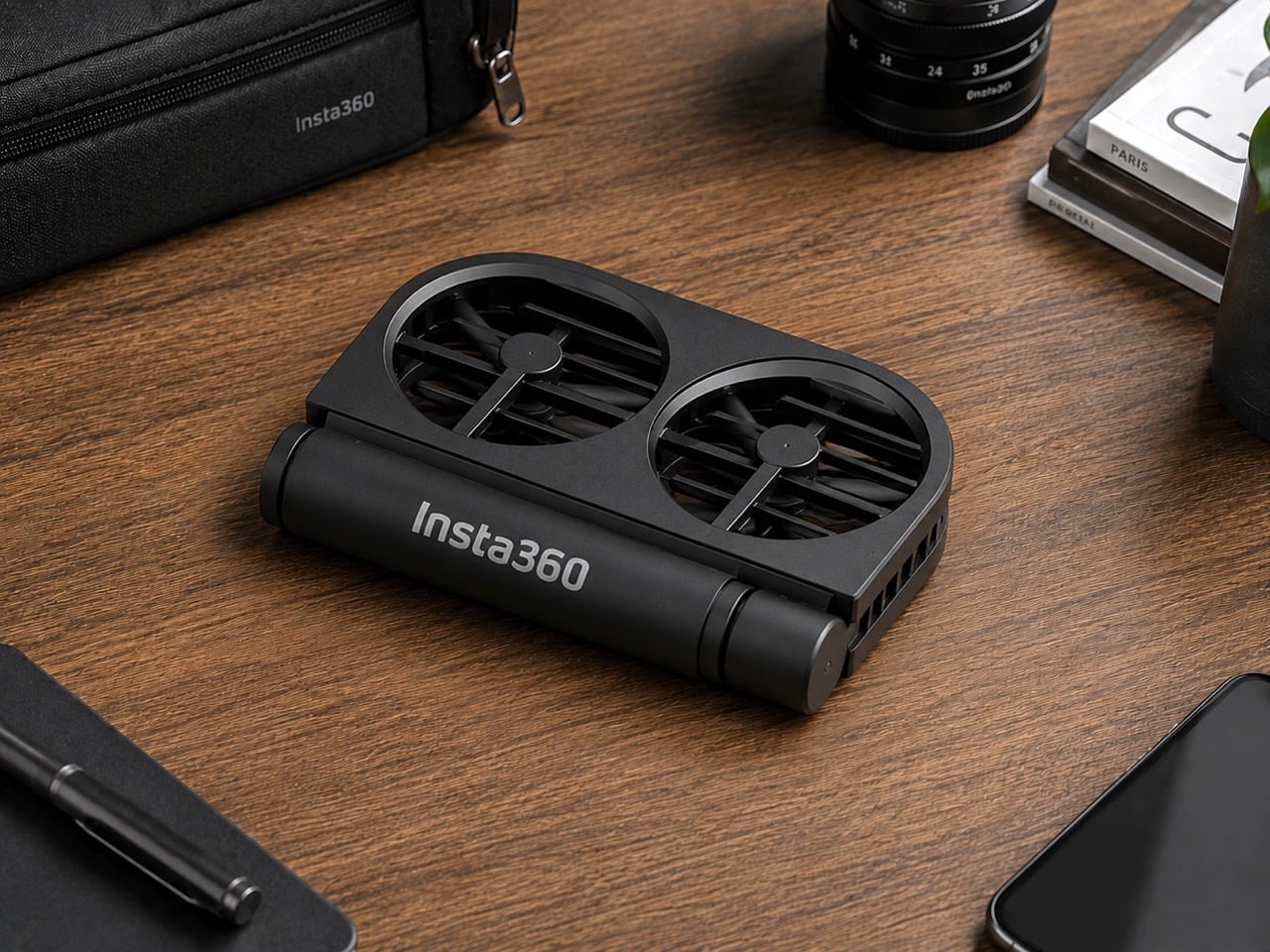
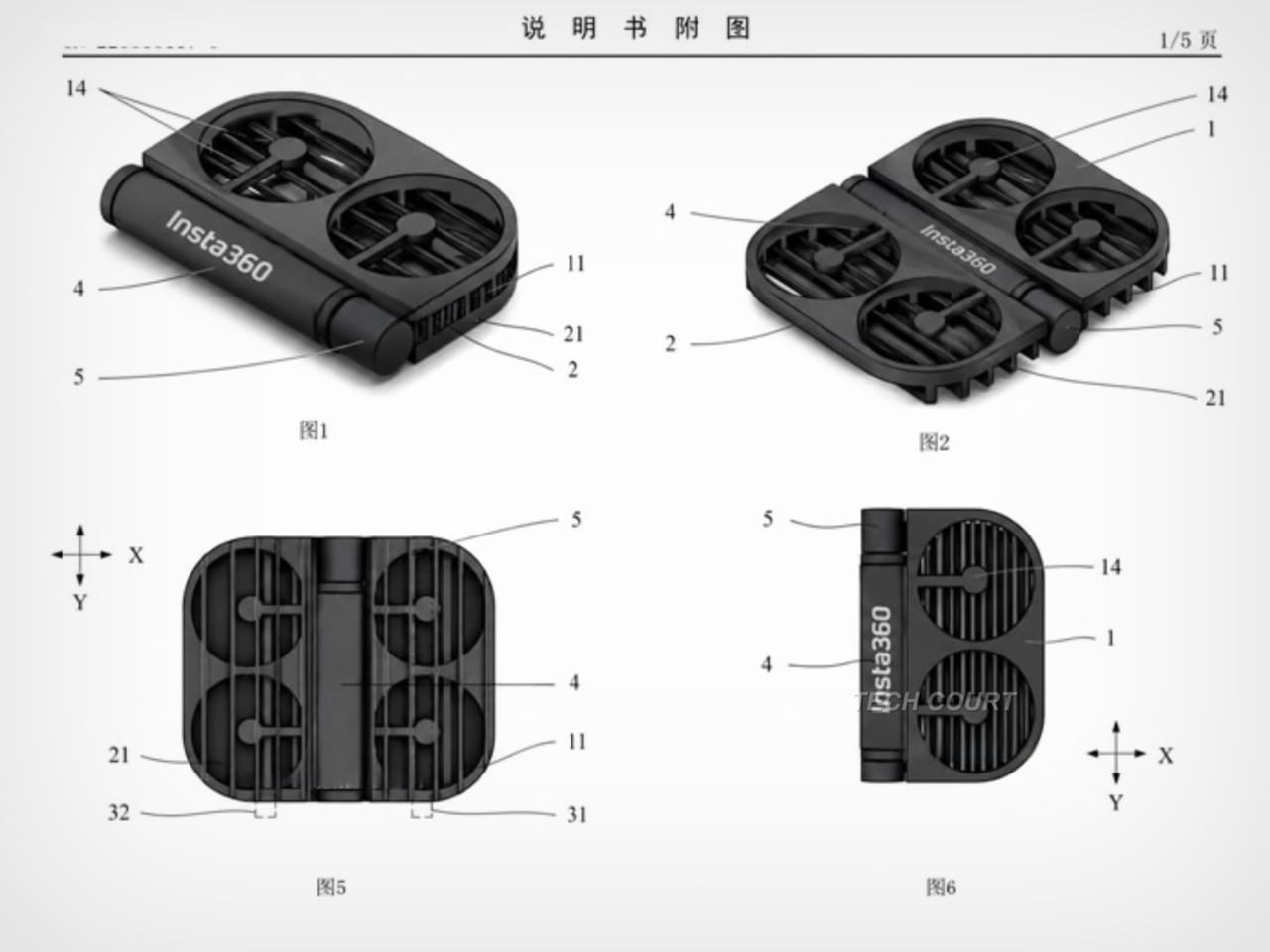
Insta360 built its reputation on cameras that see in every direction at once. It’s literally in their name. The X series made 360-degree capture accessible; the Luna Ultra brought Leica optics to a handheld gimbal. Flying something, though, is a different category of challenge, and the patent images that appeared in July 2026 show the company working through what a foldable drone looks like with Insta360 DNA. The illustrated design at the bottom shows folding arms, a ring-shaped propeller guard, and a dedicated locking mechanism, a form factor that prioritizes the moment of packing away just as much as the moment of takeoff.
DJI’s Neo 2 has the casual drone segment largely to itself in the sub-250g category, with a rigid one-piece frame and a 19-minute flight time that have made it a reliable default for creators who want aerial footage without the complexity of a serious drone setup. Insta360 entering that space would break what has effectively been a two-player market, with Zero Zero Robotics’ HoverAir as the only real alternative. The folding design alone gives Insta360 a structural argument against the Neo 2; a potential 360-degree camera, if it materializes, would give it a creative one. What a wonderful year for foldables, eh? We’re expecting a folding iPhone in September, and Insta360 might give us a folding drone too!
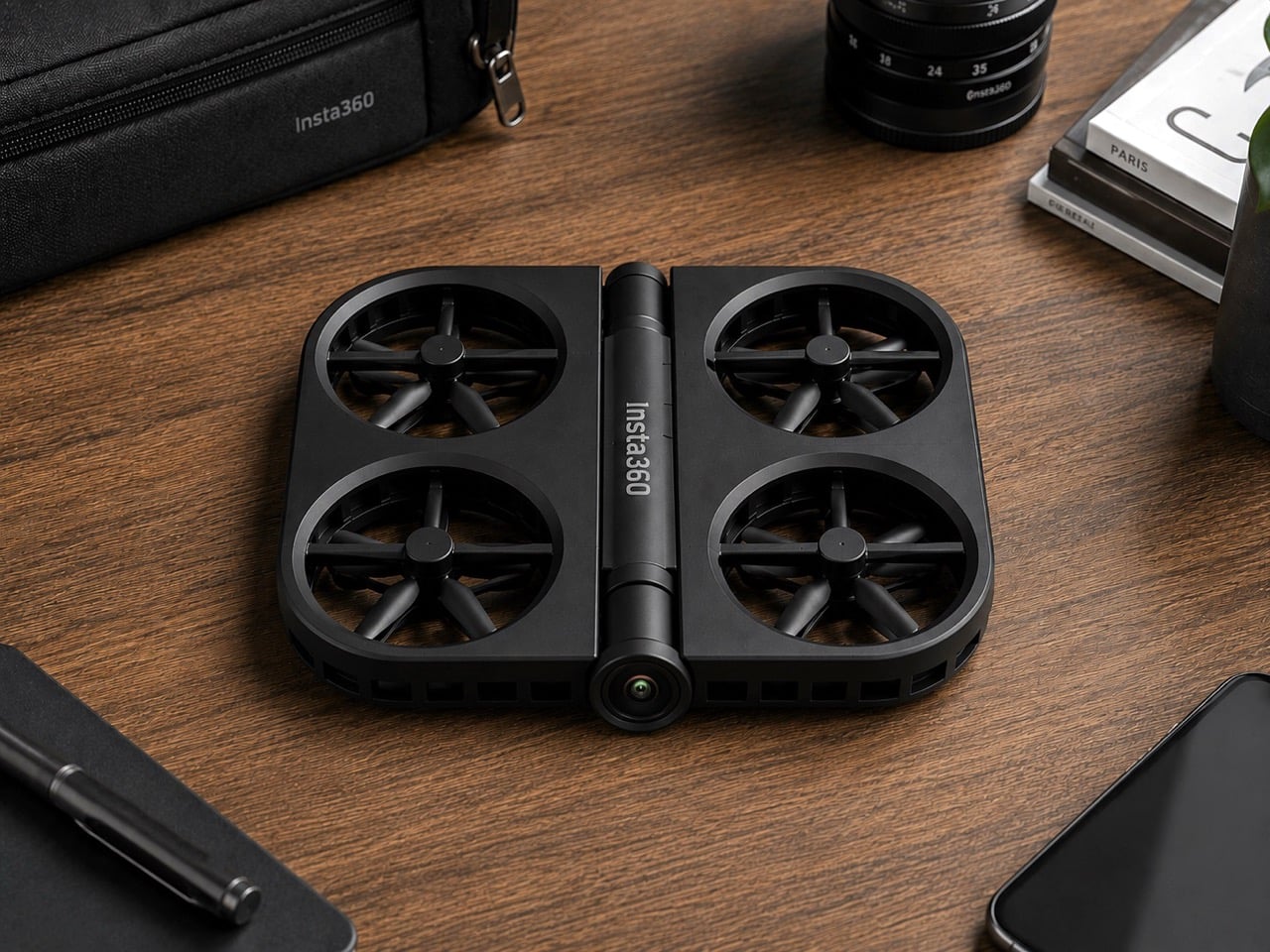
This isn’t just some forum rumor, either. The patent images (from patent file CN223865117U), which started making the rounds on July 16th and were highlighted by outlets like Tech Court, are pretty specific. They show a drone body with the “Insta360” logo stamped on it, with fully folding arms that tuck into the chassis and a distinctive ring-shaped guard protecting the propellers. There’s even a dedicated locking mechanism detailed, which tells you just how seriously they’re taking the whole “fold-and-go” concept. This is a design that screams it was made to be stuffed into a pocket, not carefully placed in a bespoke case.
But here’s the thing: this isn’t Insta360’s first aerial rodeo. Before they decided to put their own name on a drone, they sent in a scout team under the sub-brand Antigravity. The A1 drone they launched was, frankly, a bit of a monster: a sub-249g drone with a wild dual-lens setup that shot 8K 360-degree video and made the drone itself invisible in the footage. It was a spec-sheet beast and a clear shot across DJI’s bow, proving Insta360 had the engineering chops to compete in the sky. It was their way of testing the waters.
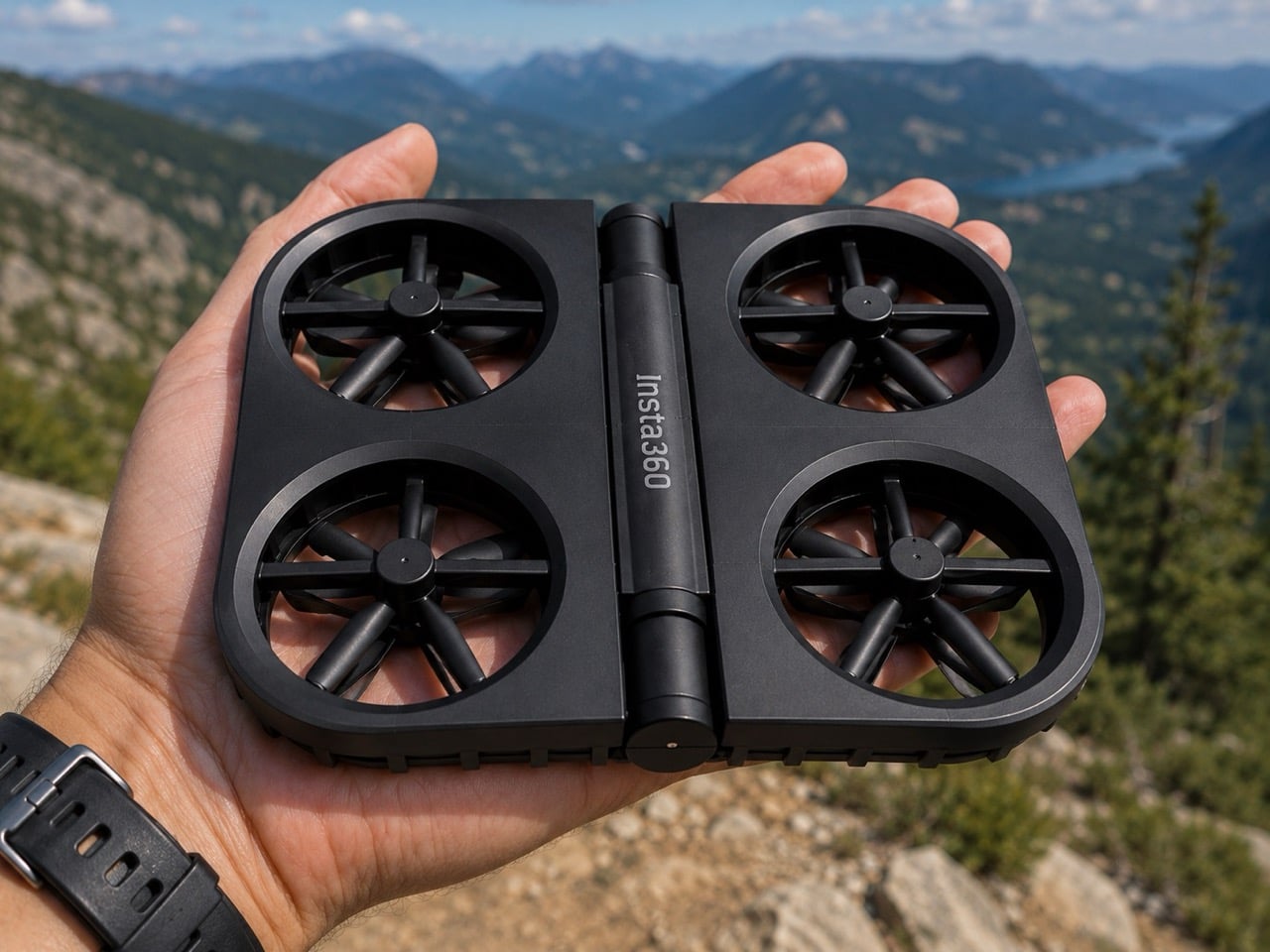
Now, it looks like they’re done testing. This new patent is the second, more direct shot. And here’s the kicker: for a company obsessed with 360-degree video, the patent images don’t show a fisheye lens. At all. It’s a huge question mark hanging over the whole project. Are they hiding the tech, or are they planning to launch a drone that, for the first time, doesn’t have their signature feature? If they’re aiming for a rumored sub-$200 price point, leaving the 360 camera on the cutting room floor might be the only way to get there. It’s a move that would be both shocking and, in a weird way, perfectly logical.
You also can’t forget that this is all happening while the two companies are actively suing each other in China. This isn’t friendly competition; it’s a full-blown hardware rivalry. Insta360 came for DJI’s gimbals, tested the drone market with a sub-brand, and is now preparing a direct assault on DJI’s most accessible drone. With a release window expected somewhere between late 2026 and early 2027, we’re not just watching a new product being born. We’re watching the next chapter in a tech soap opera, and it’s about to get very, very interesting.
The post Insta360’s foldable drone patent targets DJI Neo 2 at sub-250g first appeared on Yanko Design.
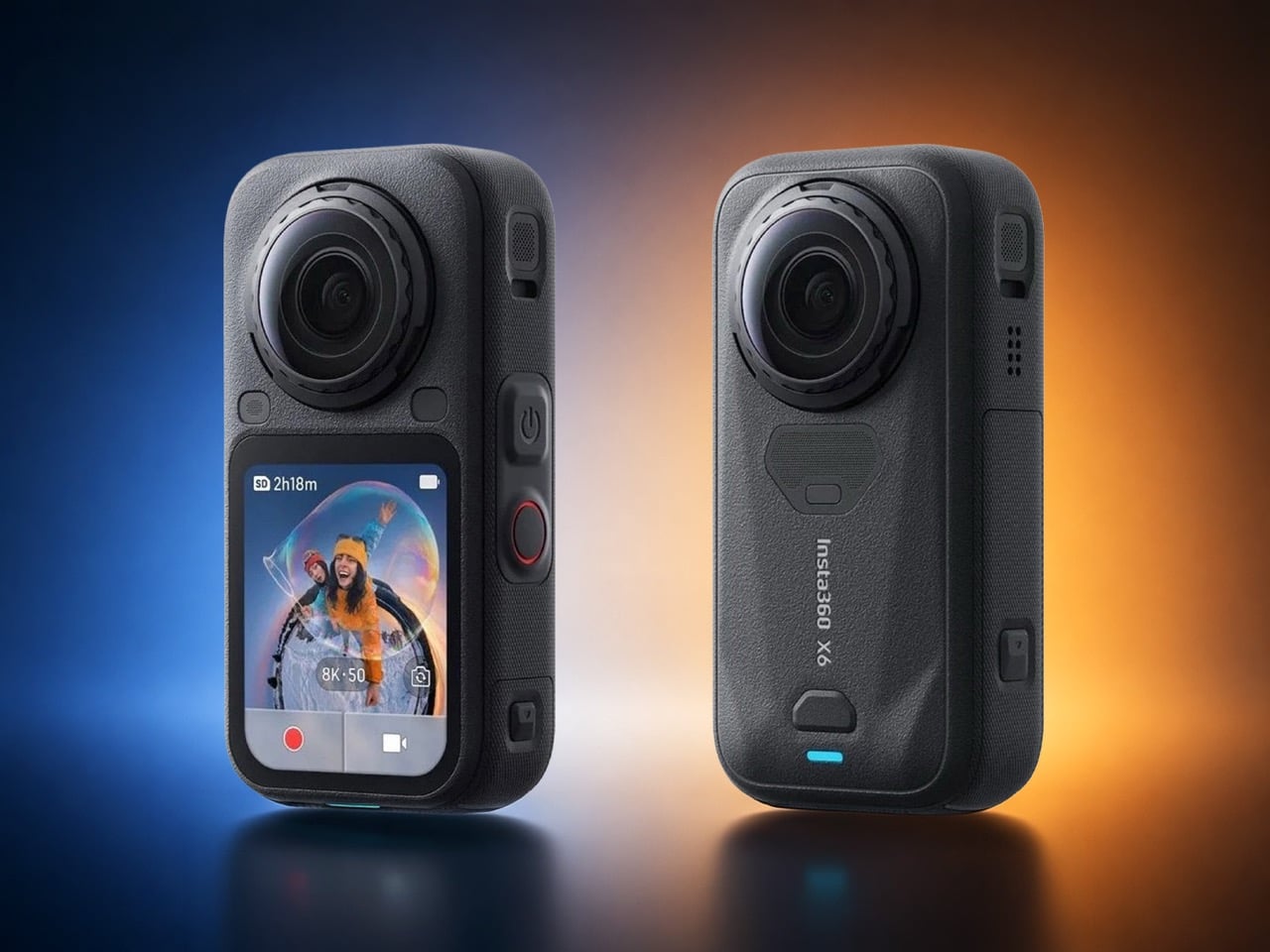
The internet has spent actual years begging for a mini smartphone. Compact flagships, tiny bezels, something that fits in a single palm without needing a spreadsheet to justify the screen size. Samsung teased it, forums campaigned for it, and every rumor cycle ends the same way, with a phone that somehow got taller instead of smaller. Insta360 looked at all that unmet demand and, whether on purpose or by accident, decided to answer it in the one product category nobody was petitioning about. Their upcoming X6 leaked this week, and the headline isn’t just the spec bump, it’s the shape. Shorter. Stockier. A real departure from the elongated body the X series has worn since the X3.
Roland Quandt of WinFuture broke the story, spotting the camera listed early at a retailer alongside official marketing images that confirm the redesign in full. The X6 keeps the dual fisheye lens setup on front and back for capturing 360 degree footage, along with the small side mounted display that’s handled preview and settings duties since earlier generations. What’s changed is everything around that formula. Performance climbs to 8K at 50 frames per second in full 360 mode, up from the X5’s 30fps ceiling. Pricing leaks put the base model at 689 euros, with an Essentials Bundle running 789 euros. No official launch date has surfaced yet, though a retail listing at this stage usually means an announcement isn’t far behind.
Designer: Insta360
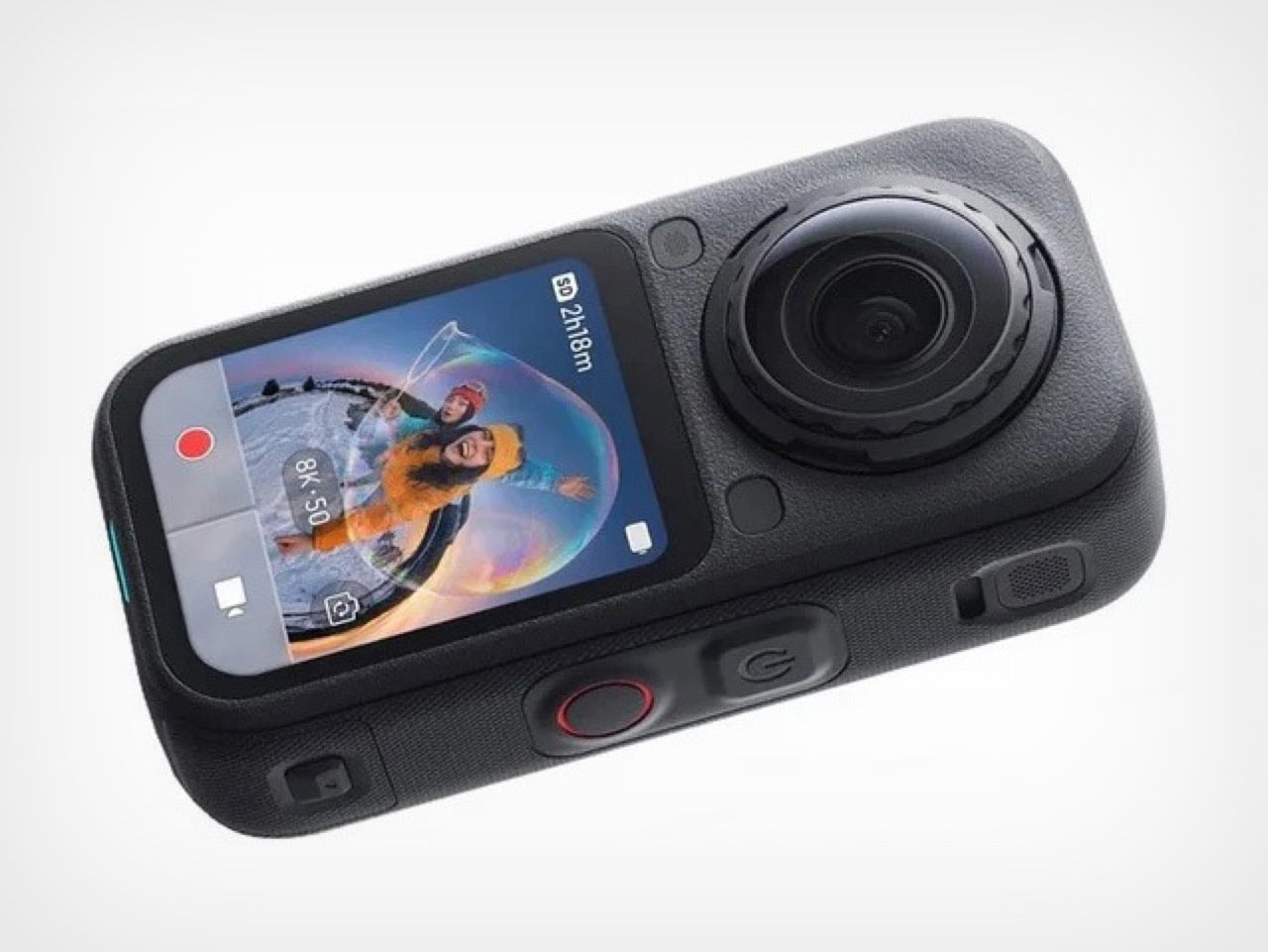
Nobody asked Insta360 for a smaller camera specifically, but the timing scratches an oddly similar itch to the mini phone conversation. We wanted small and premium in our pockets, they’re apparently delivering small and spherical instead, and the resemblance to a standard action cam silhouette is doing a lot of the visual work here. Gone is the candy bar proportions that made the X5 and X3 instantly recognizable from across a gear bag. In its place sits something that could plausibly be mistaken for a GoPro at a glance, at least until you clock the second lens staring back at you from the rear.
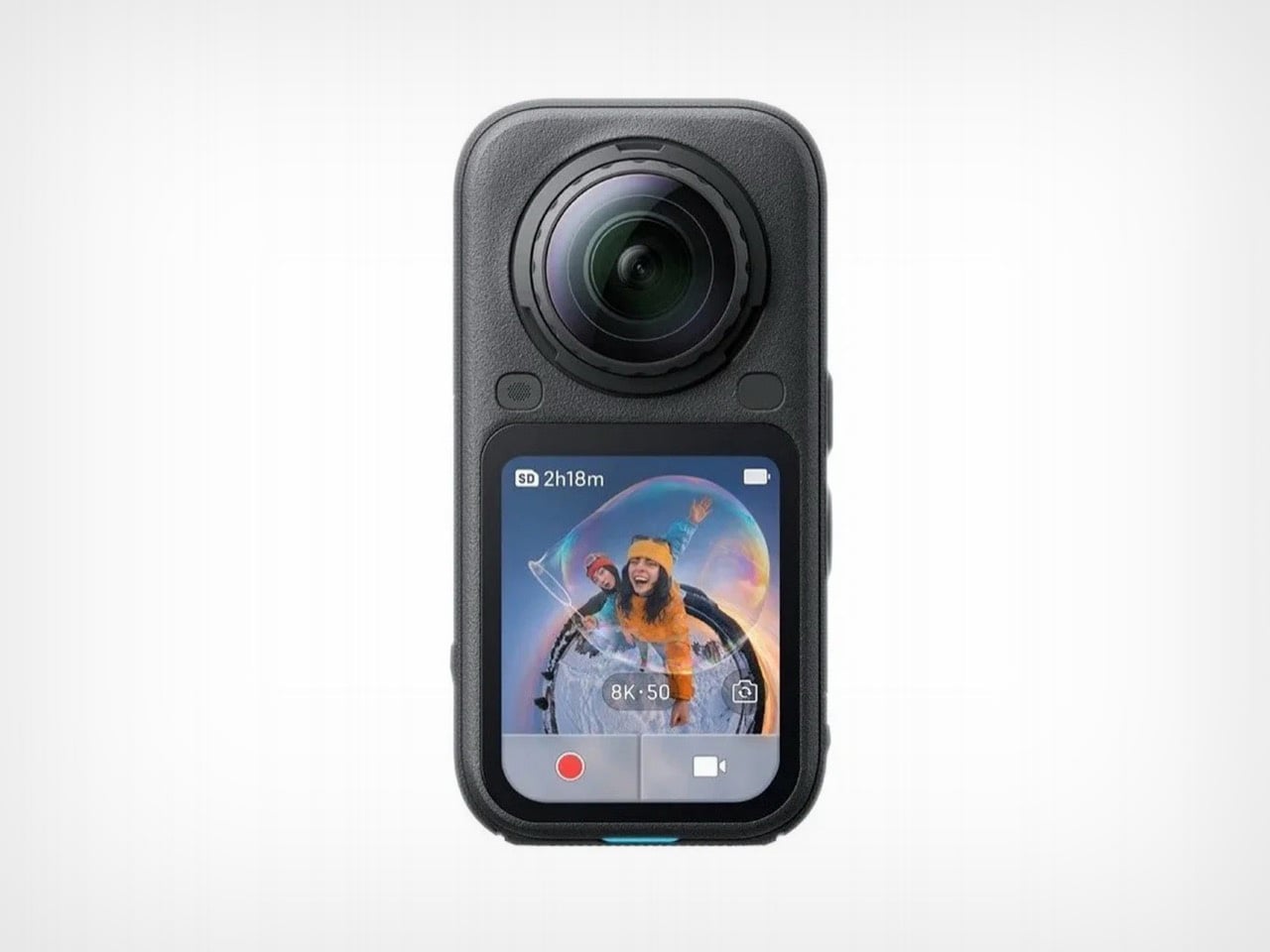
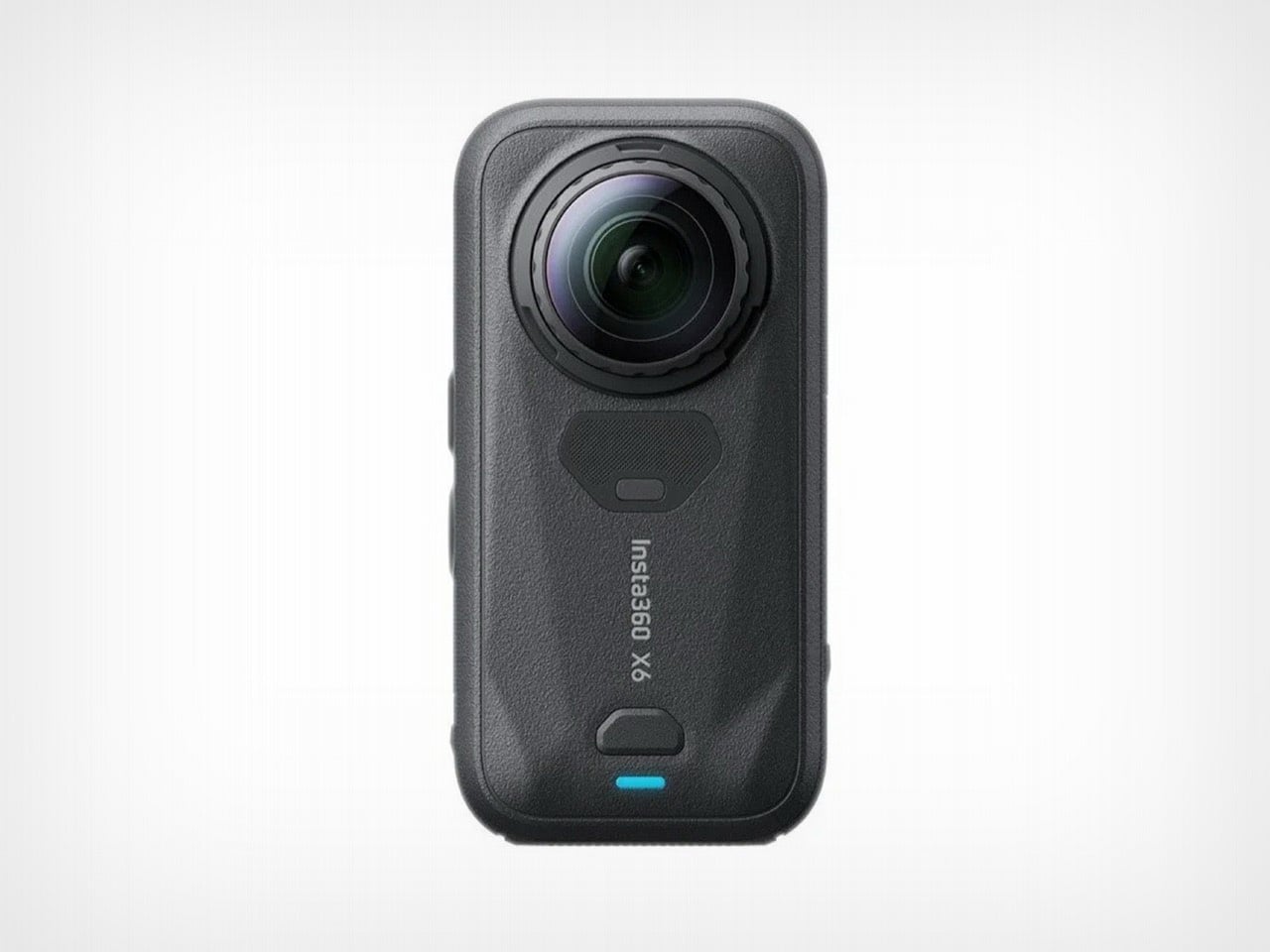
That shrink isn’t free – the X5’s battery wasn’t tucked into a corner somewhere convenient, it ran along nearly the entire length of that longer chassis, functioning almost like a structural spine as much as a power source. Compress the spine and you’re left with a real engineering decision to make. Either the cell itself shrank, sacrificing some runtime in the process, or Insta360 found a differently shaped battery that fits the new footprint without giving up capacity, or there’s some internal repackaging happening that redistributes components in ways this product line hasn’t tried before.
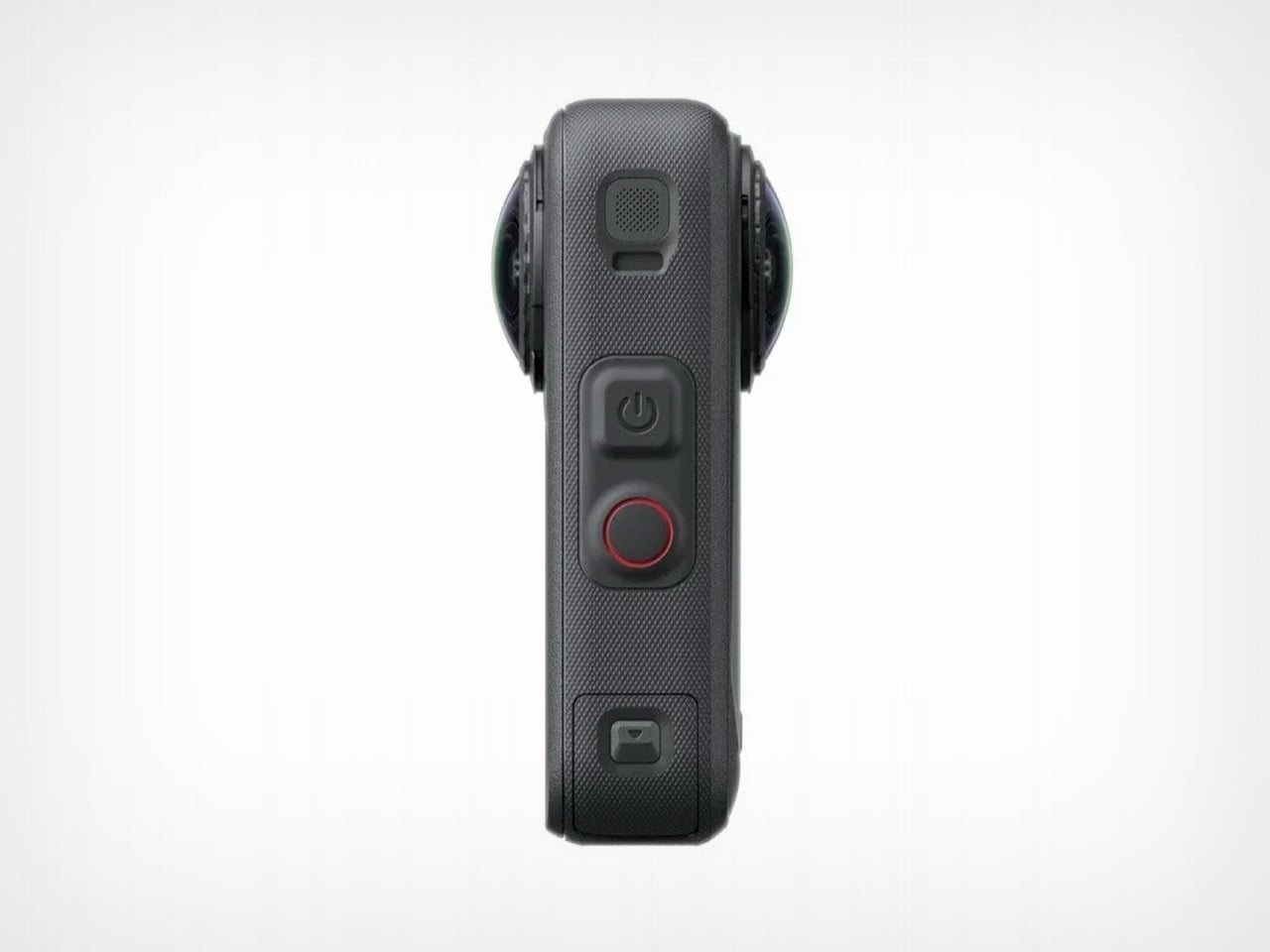
None of this has been confirmed yet, and that’s precisely the fun part of covering a leak this early. The images give us the exterior story clearly enough, right down to the reshaped corners on that side display and a button layout that looks reorganized to fit the tighter shell. What they don’t give us is a teardown, a battery spec sheet, or any hint of how Insta360 is managing thermals for a higher frame rate inside a smaller volume. Cramming more compute into less space usually means better heat engineering somewhere, or a compromise the company hasn’t disclosed. We’ll be watching for the official reveal, because this is the kind of redesign that deserves receipts, not just render leaks.
The post Insta360 X6 Leak Reveals a Shorter, Stockier Body, and I Have Battery Concerns first appeared on Yanko Design.
The Kodak Charmera sold out repeatedly on the back of pure aesthetic energy, and Insta360 was clearly paying attention. The Go 3S Retro Bundle arrives squarely in that same cultural moment, where younger creators are increasingly drawn to cameras that feel tactile and intentional rather than optimized and frictionless. The difference is that behind the retro stripe and optical viewfinder sits a legitimately capable action camera: 4K video, FlowState stabilization, 10-meter waterproofing, and a magnetic mounting system that lets you stick it to your jacket in under a second.
The bundle swaps the standard Action Pod for a new Retro Viewfinder, a simple optical accessory with a waist-level finder and a built-in selfie mirror. It adds no processing power and carries no battery, which is precisely the point. Insta360 is betting that some creators want to feel their way through a shot rather than preview it on a flip screen, and they’ve built an entire product around that instinct.
Designer: Insta360
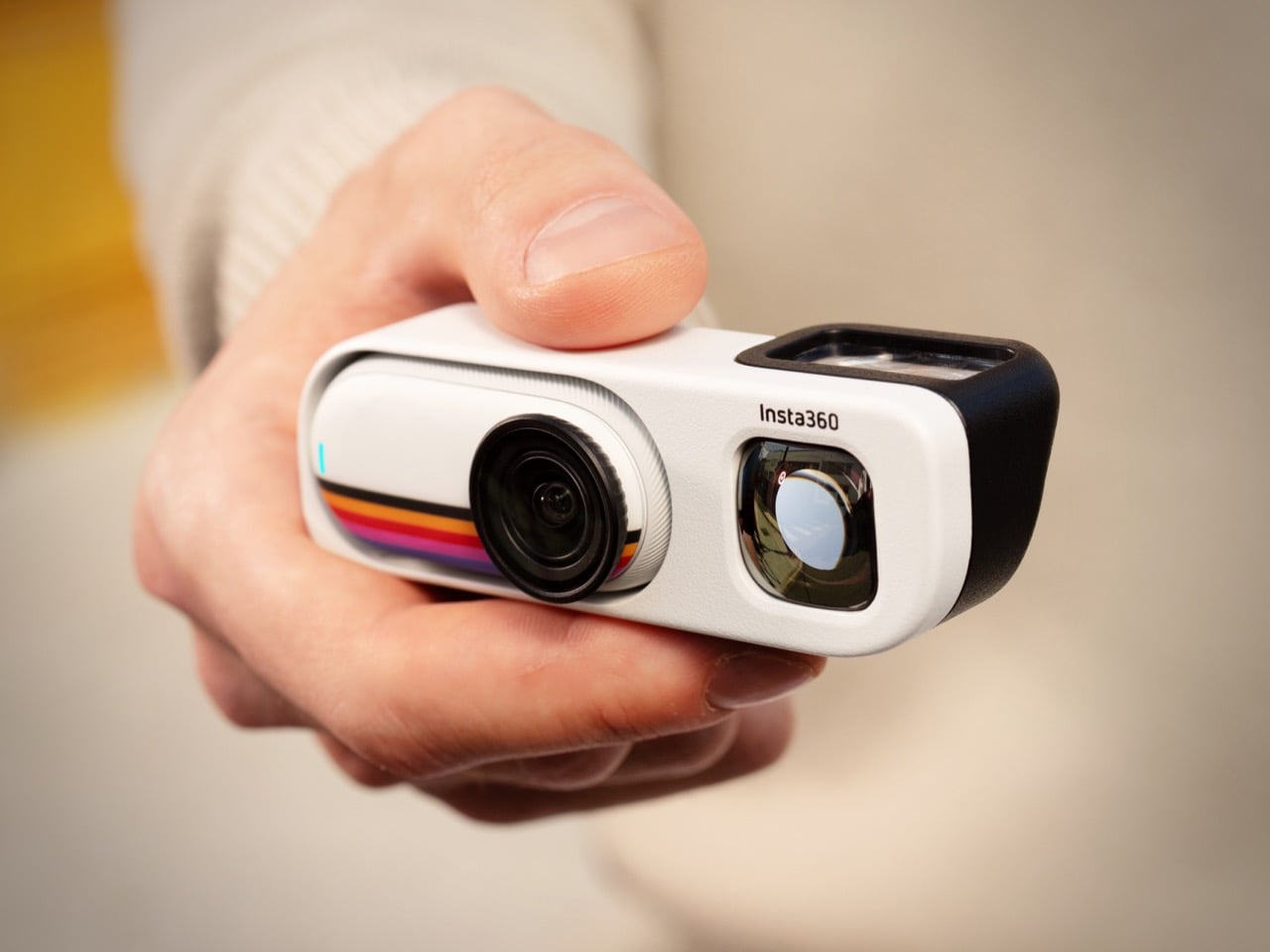
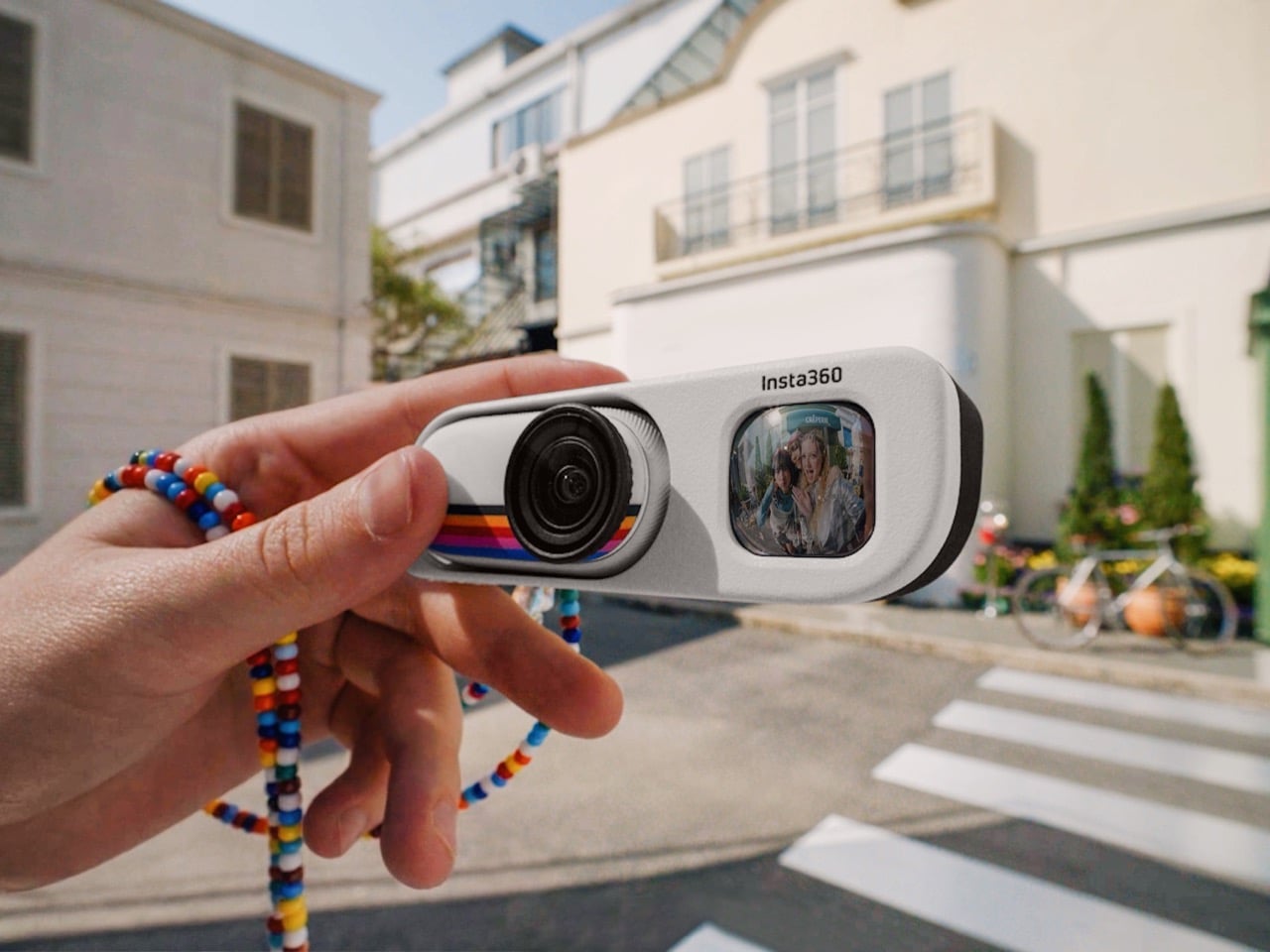
The visual language is an emphatic nod to retro. That Polaroid-stripe graphic running across the front face of the Canvas White body is not a subtle nod; it’s a full commitment to a specific cultural reference, one that lands immediately in the hand. The waist-level viewfinder on top directly recalls the twin-lens reflex cameras that street photographers used in the mid-20th century, the Rolleiflex era of composing from the hip with your eyes down instead of raised. It’s a deliberate posture shift, and it changes how people interact with you when you’re shooting. Nobody flags you down for pointing a GoPro at them; a waist-level retro camera with a Polaroid stripe is a conversation starter.
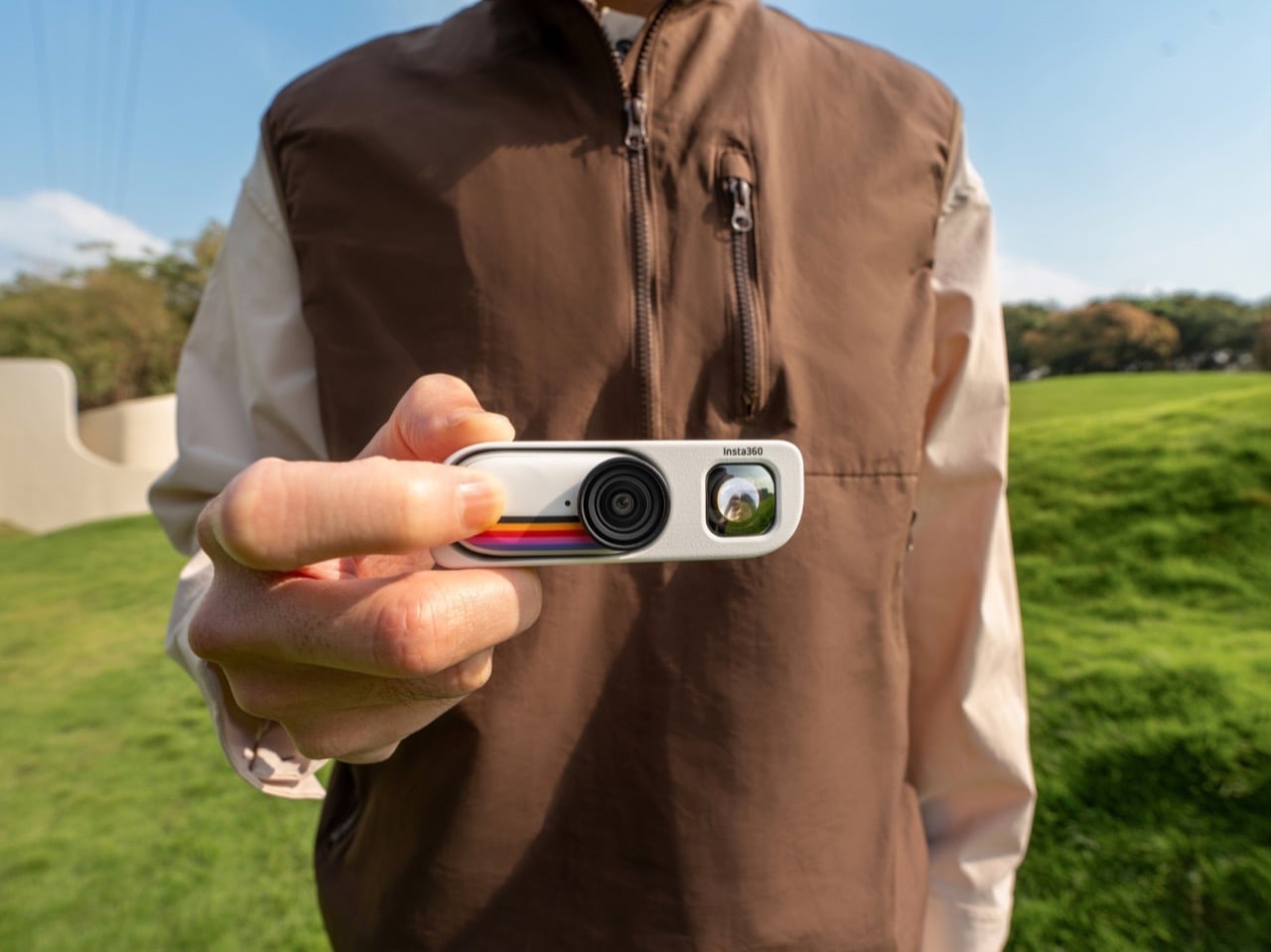
What’s worth understanding is what Insta360 gave up to get here, and why that trade makes design sense. The standard Action Pod is genuinely useful: it charges the camera module, provides a touchscreen for playback and settings, and functions as a remote monitor. The Retro Viewfinder does none of that. Settings changes require the Insta360 app on your phone, accessed quickly via the included NFC skin, and the optical finder offers only approximate framing rather than precise composition. For a camera this small, shooting 4K with FlowState absorbing the shake, approximate framing is usually enough. The 12-megapixel 1/2.3-inch sensor captures enough resolution that modest crops in post are painless, and the magnetic pendant means you can switch to pure POV mode the moment precise framing stops mattering.
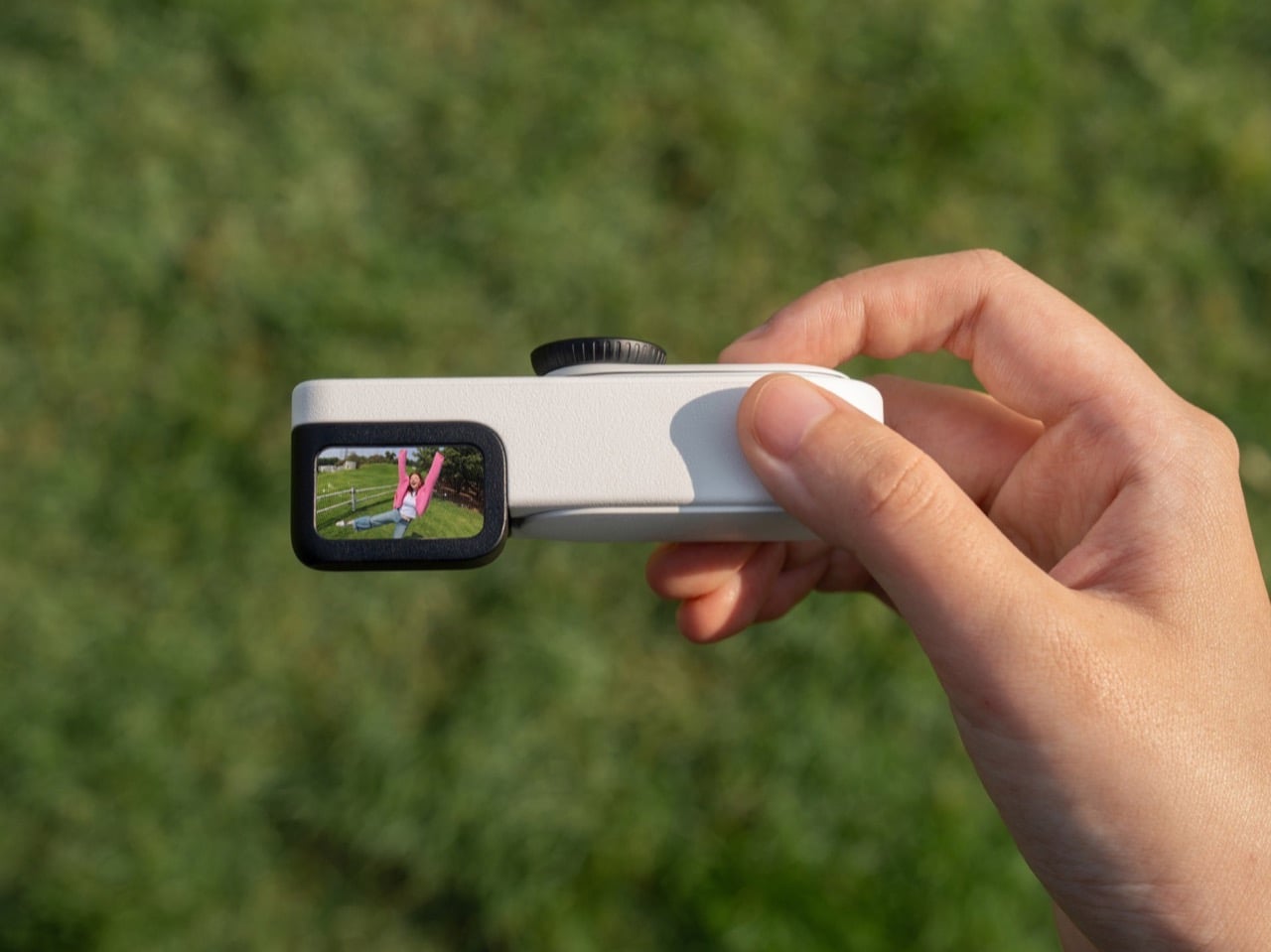
A separate 393mAh battery pack clips on alongside the camera module’s built-in 310mAh, bringing total recording time to 76 minutes, because the Retro Viewfinder carries no internal power of its own. For a day of casual street shooting, 76 minutes covers more than enough ground. For a long travel day, you’ll want to know where your pack is. The two-piece power solution is a fair exchange for the form factor, though it’s a consideration worth making consciously before you head out the door.
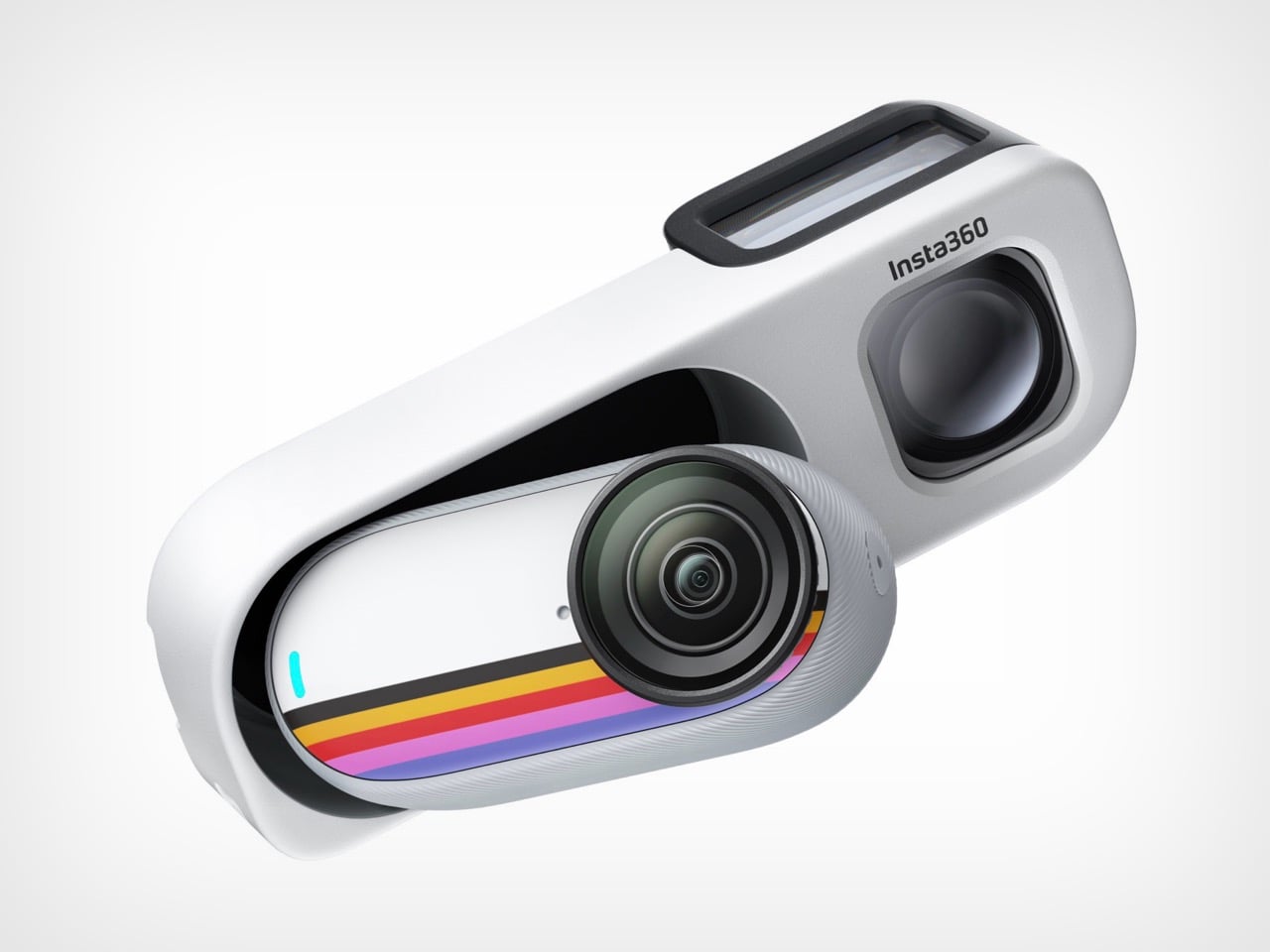
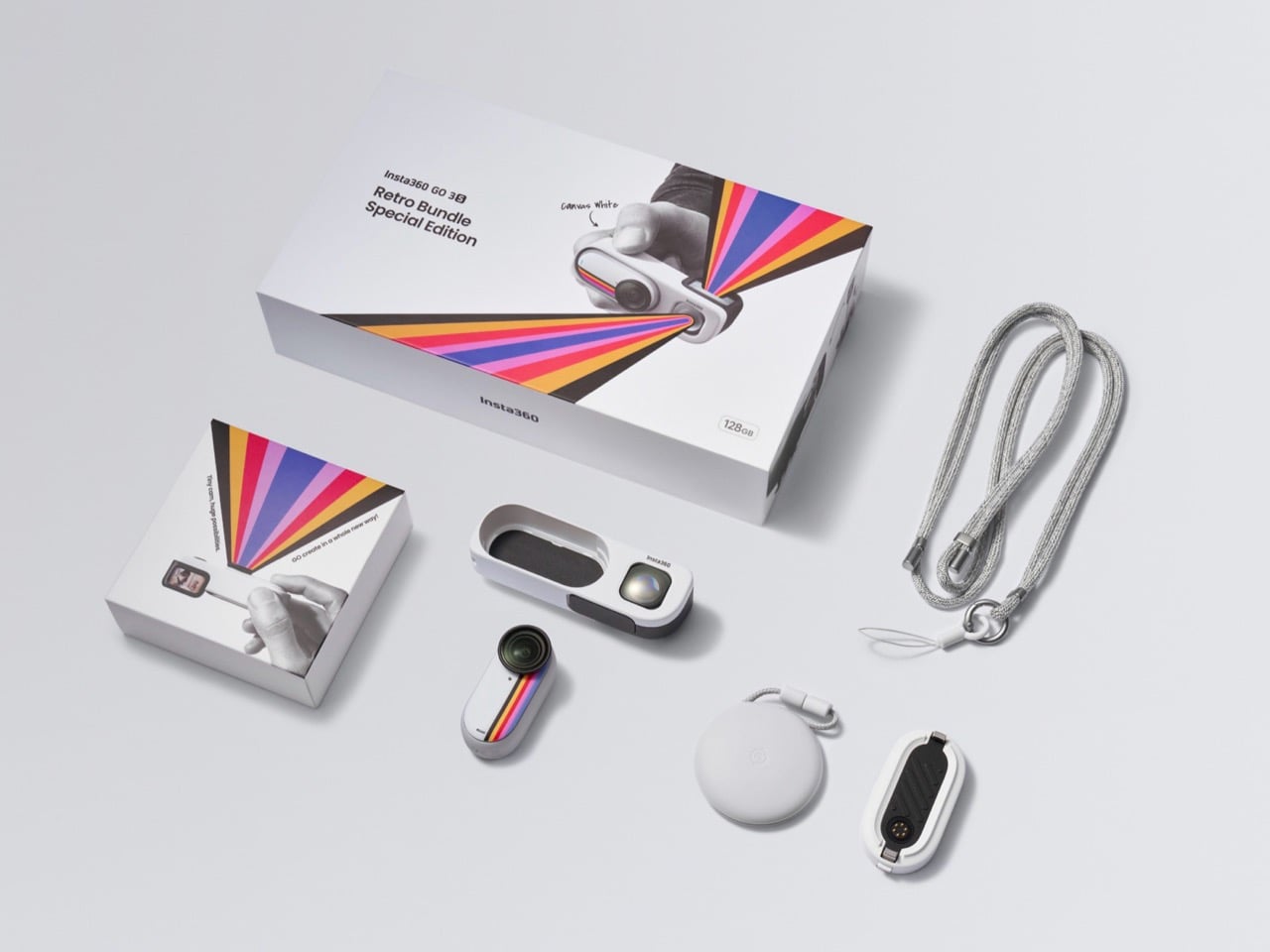
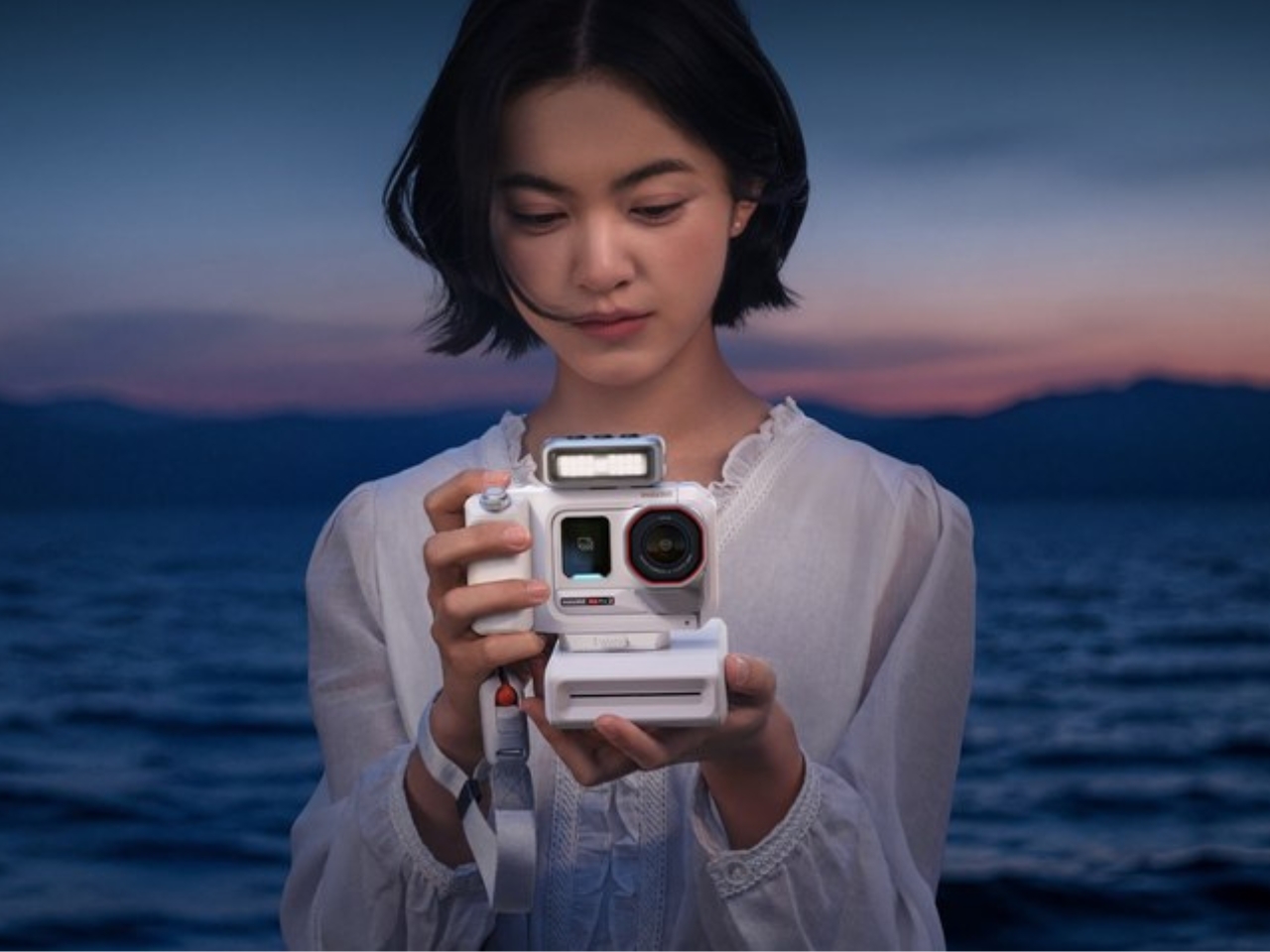
We’ve covered Insta360’s ecosystem experiments before, from the X5’s replaceable lens architecture to the Ace Pro 2’s snap-on Polaroid printer, and the consistent thread is a company willing to bet that the camera module is a platform rather than a finished product. The Retro Bundle is that philosophy applied to a mood rather than a spec sheet. Three exclusive film filters, five new color profiles including Vintage Vacation and Mono, and the analog shooting posture the viewfinder enforces all push toward a coherent experience. The Canvas White and Classic Red colorways are available now at $279.99 for 64GB and $299.99 for 128GB, and if you already own a Go 3S, the Retro Viewfinder sells separately for $48.
The post The Insta360 Go 3S Retro Bundle Is a 4K Action Camera With A Viewfinder That Lets You Shoot Like It’s 1965 first appeared on Yanko Design.
Anyone who’s owned a modern smartphone knows the frustration. The front camera you rely on for selfies and vlogs is almost always the weakest lens on the device. Rear cameras have grown increasingly capable, packing larger sensors, multiple focal lengths, and advanced computational photography, yet most people never use them for self-facing shots because there’s simply no way to see what’s being captured.
That’s the problem Insta360 is solving with the Snap Selfie Screen, a portable magnetic display that attaches to the back of your phone and gives you a live view of what the rear camera sees. It’s a fairly obvious idea in hindsight, one that’s been a long time coming, but there’s enough thoughtfulness in the execution to make it feel like a genuinely practical accessory.
Designer: Insta360

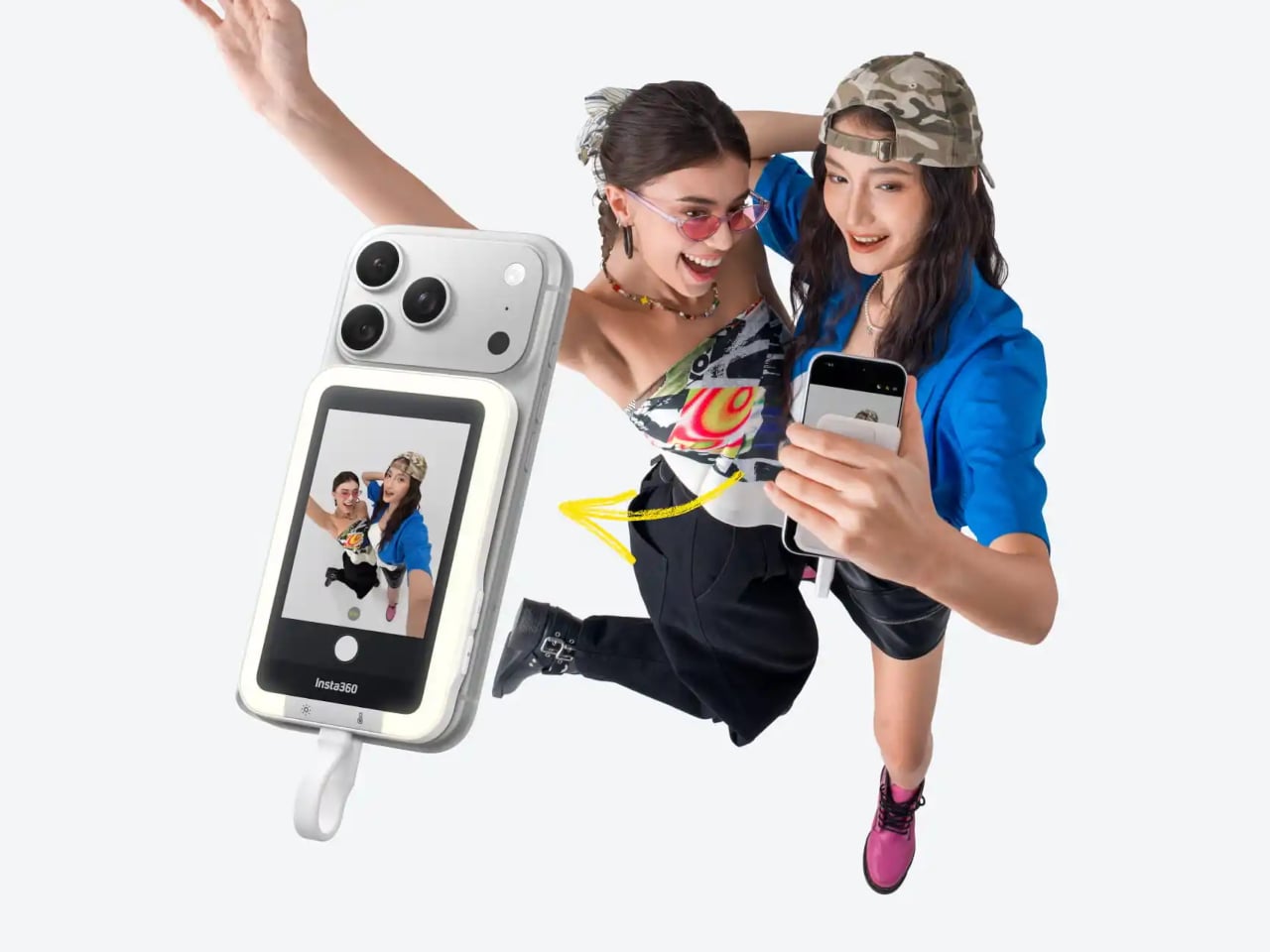
On iPhones, the Snap attaches magnetically to any MagSafe-compatible model from the iPhone 15 series onward and connects through the USB-C port. That wired link is what keeps the preview stable and responsive, in a way that Bluetooth or Wi-Fi-based alternatives simply can’t match. The Snap draws power directly from the phone as well, so there’s nothing separate to charge or carry.
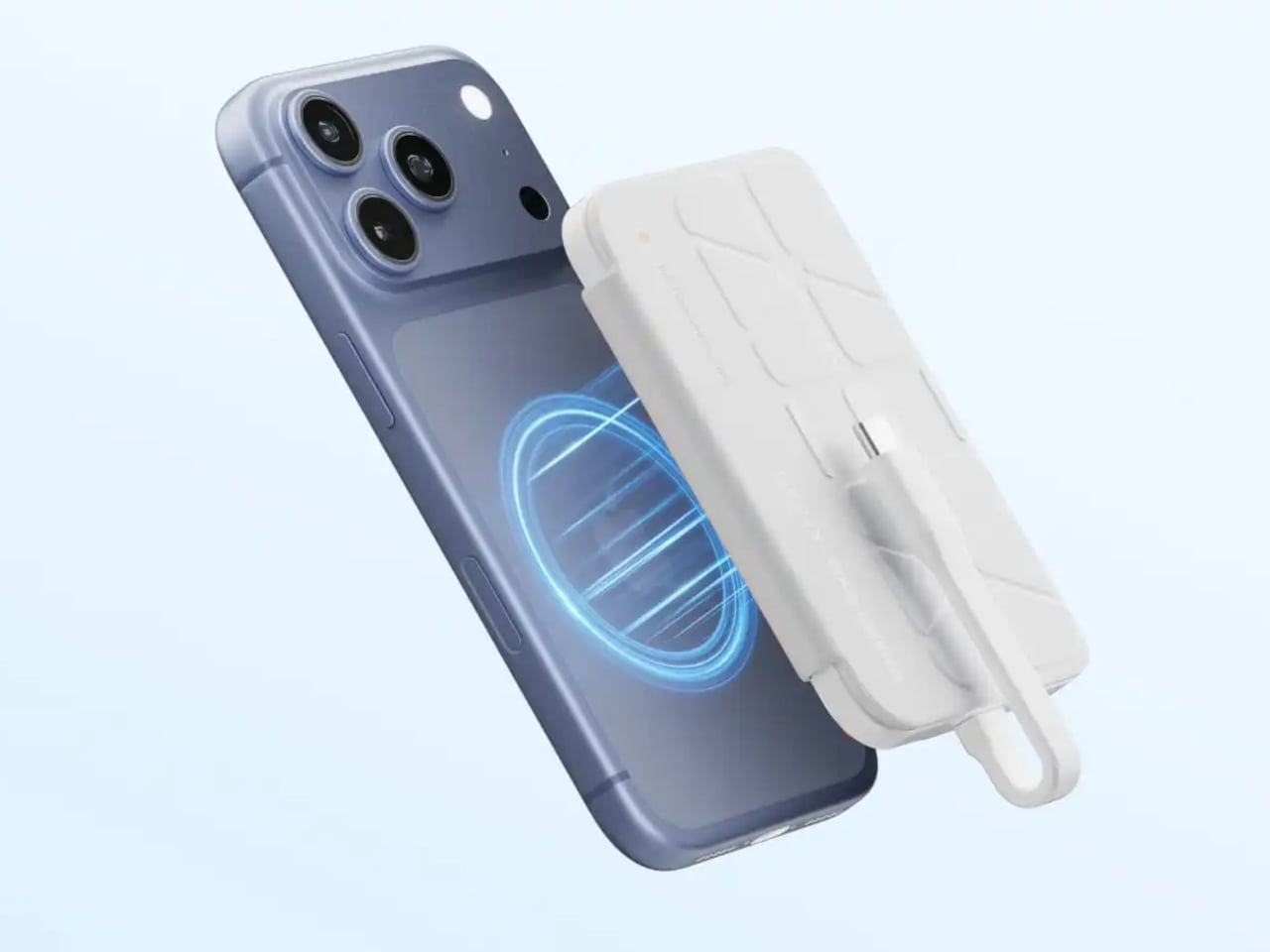
Insta360 says the wired connection keeps latency down to around 30ms during 4K recording, close enough to real time that there’s no discernible gap between movement and what appears on the screen. Android users aren’t left out either, as those with USB-C and DisplayPort Alt Mode support can use the Snap with the magnetic ring adapter that comes included in the box.
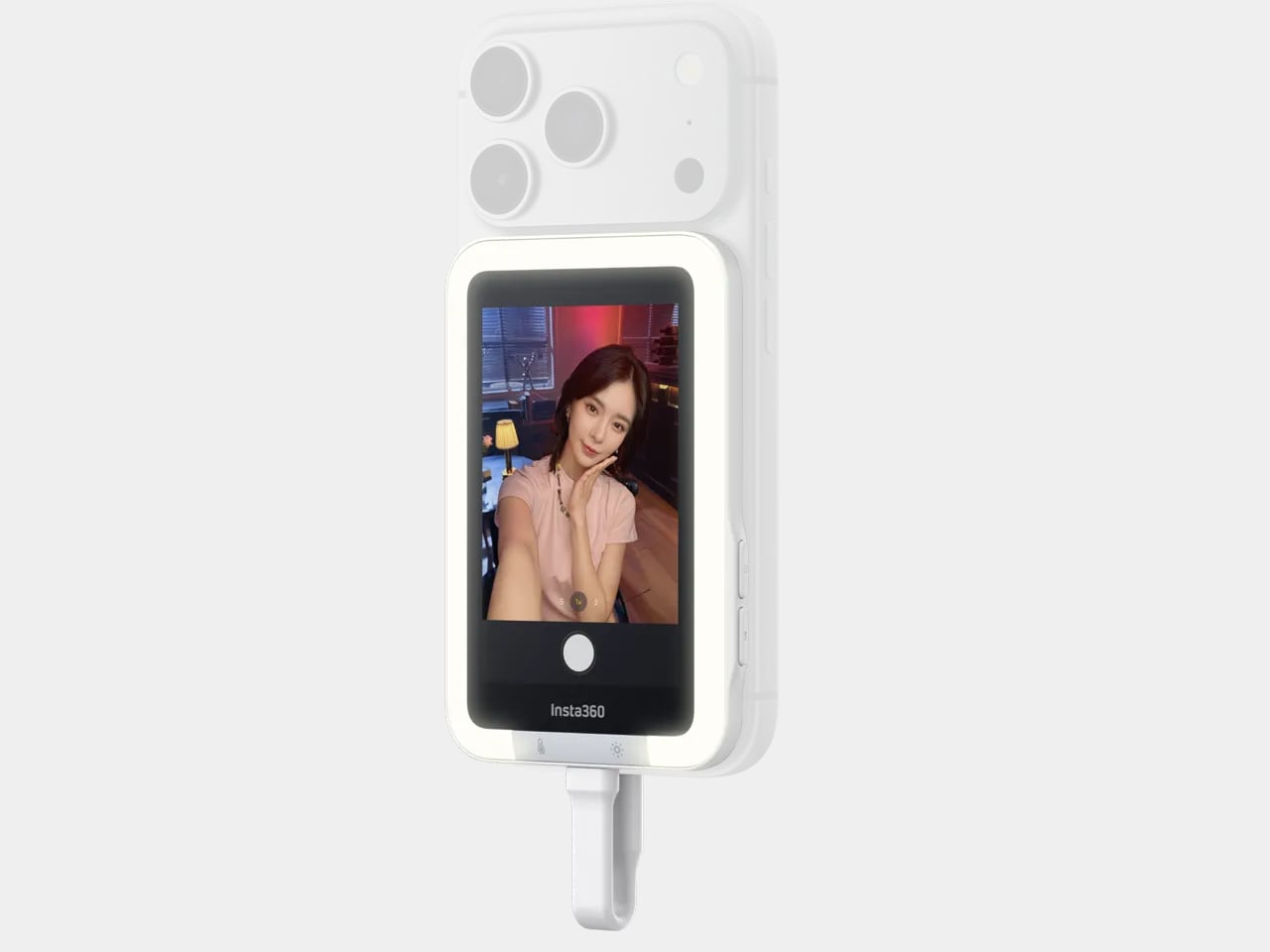
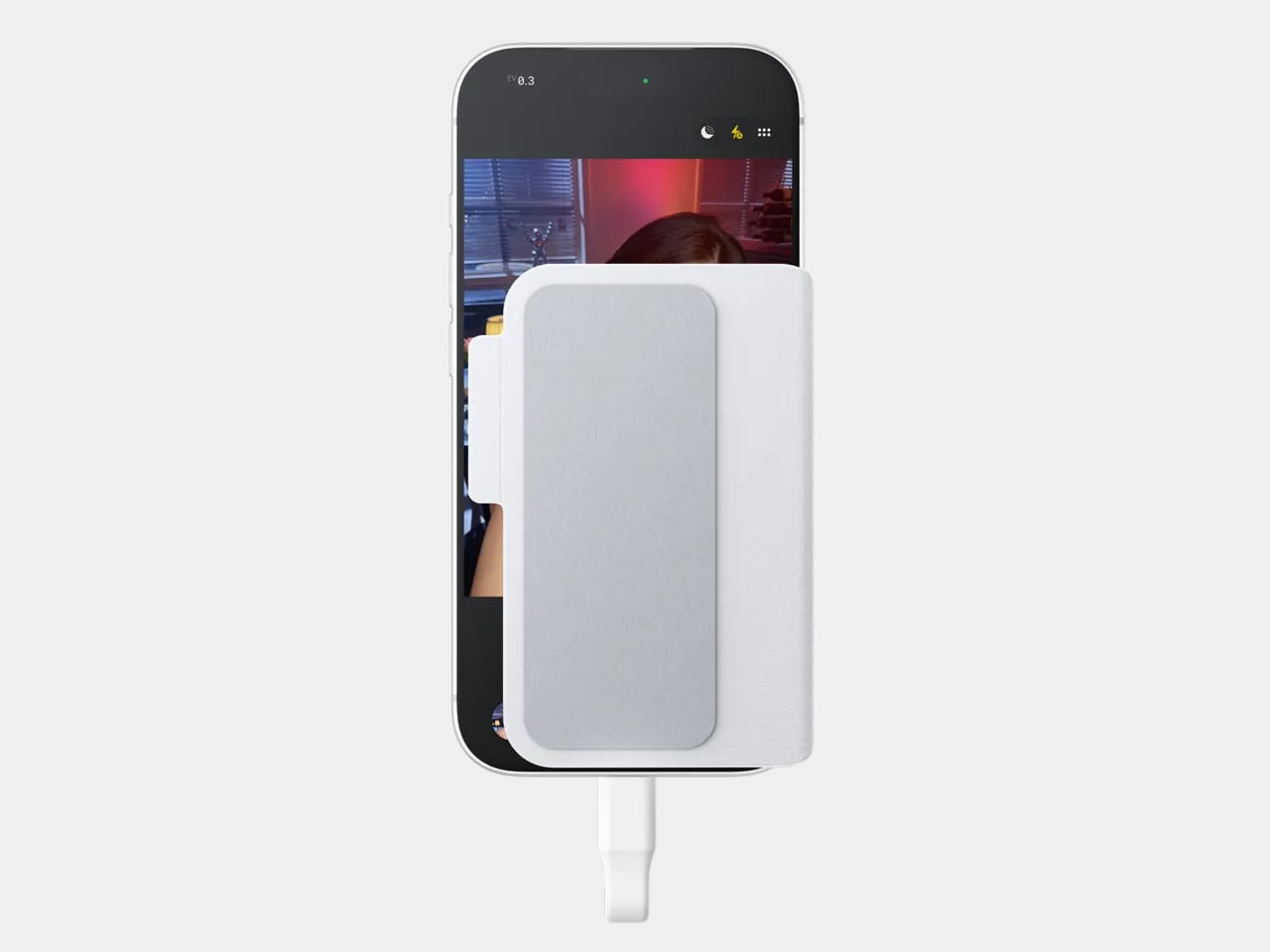
The 3.5-inch touchscreen goes well past a passive viewfinder. It fully mirrors your phone’s display and responds to touch, so you can adjust exposure, switch focal lengths, change apps, and tap the shutter all from the back of the device. Any camera app on your phone works exactly as it normally would, including Instagram, so you’re not tied to Insta360’s own software.

The premium edition adds a ring light around the screen, co-developed with beauty-tech company AMIRO. It comes with three color settings and five brightness levels, which makes a real difference when shooting indoors under flat lighting or outdoors at an awkward hour. For content creators who’d rather not carry a separate panel light, this version handles fill lighting without adding much to the bag.
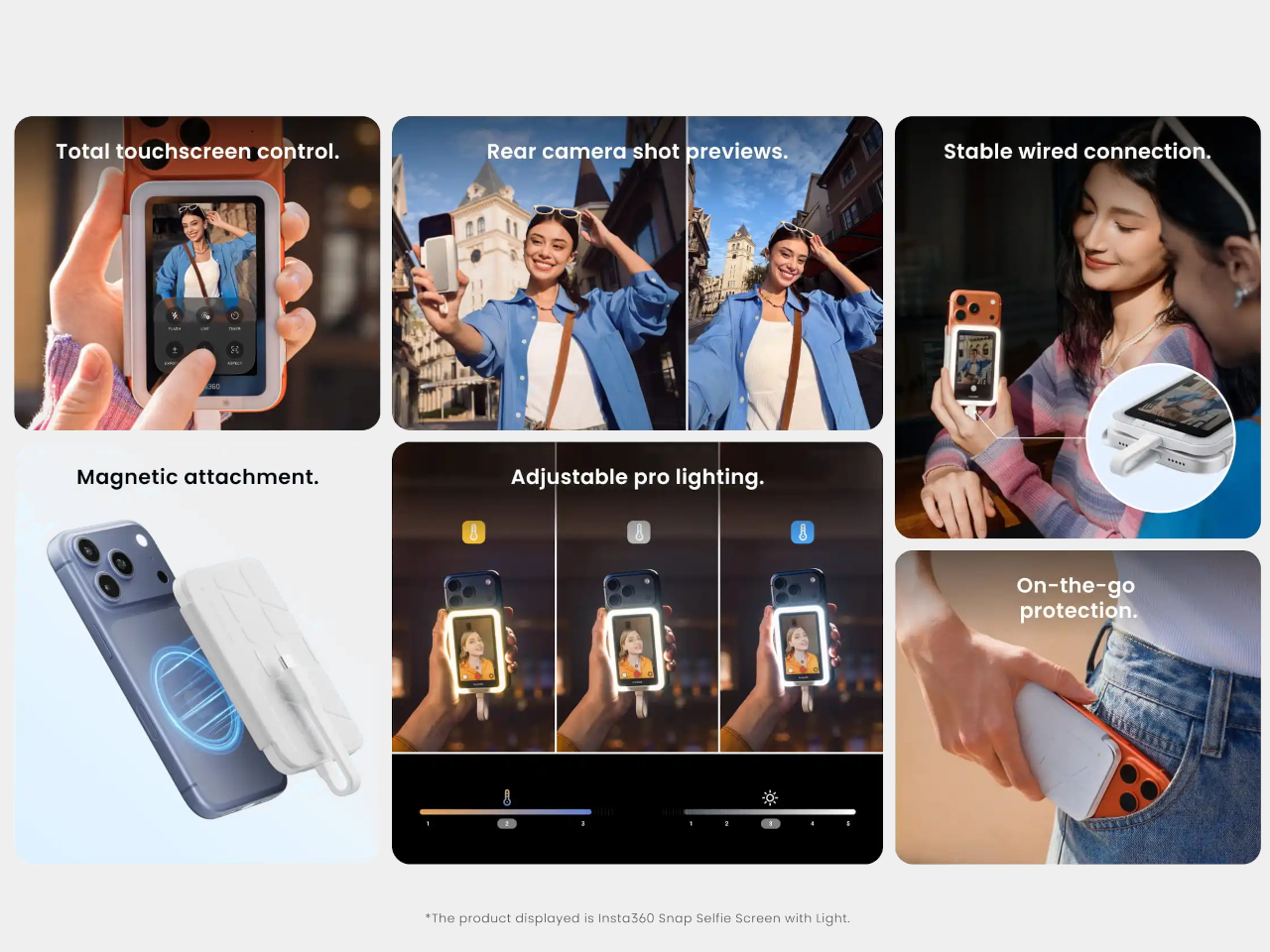
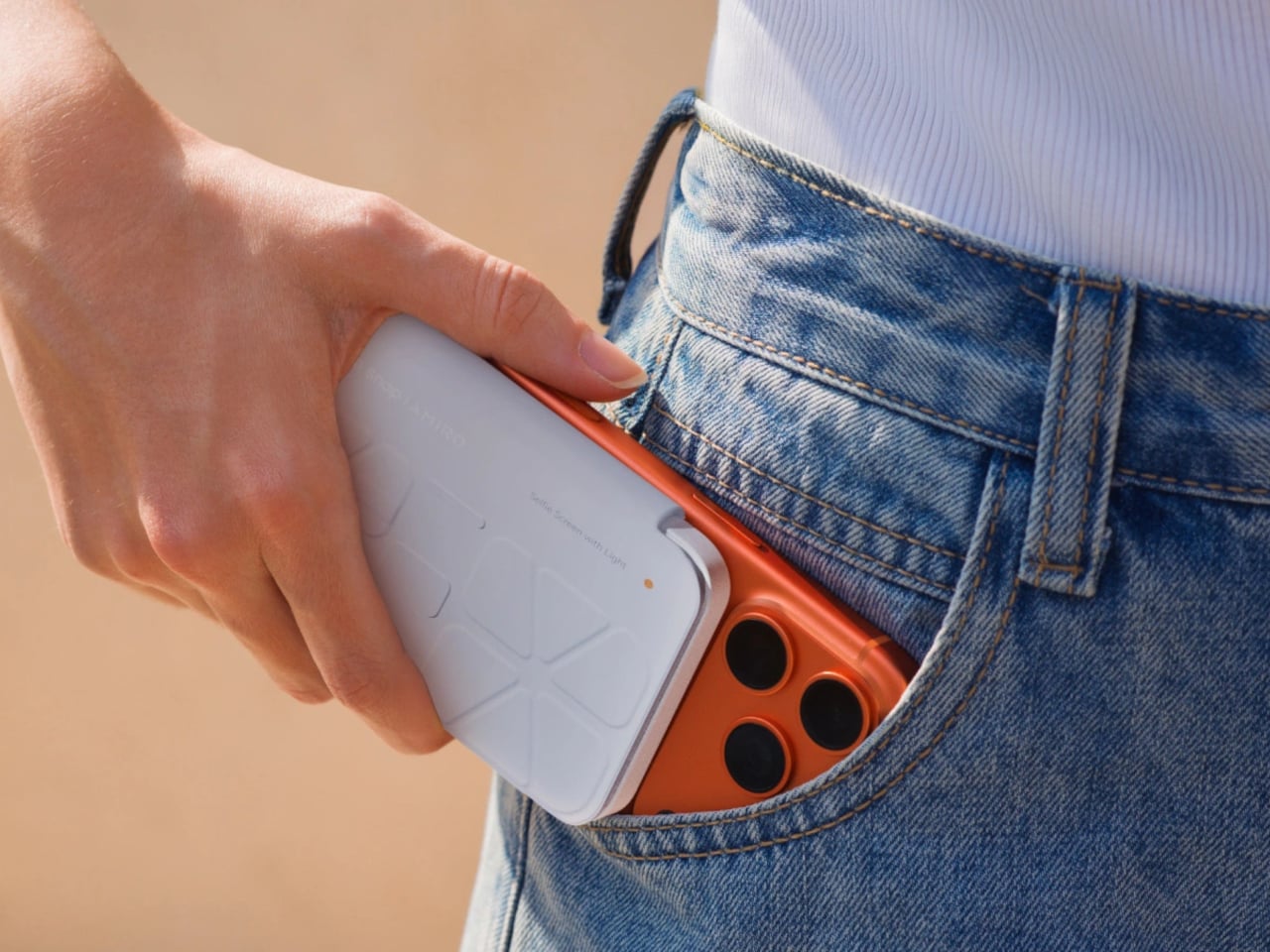
At just 6.8mm thick, the Snap fits into a bag without adding much. The protective cover that folds over the screen also secures the USB-C cable when not in use, so nothing tangles with other gear. That tidy design makes daily carry feel easy, and it’s especially handy for solo travelers who’d rather have a reliable way to photograph themselves than hope a willing passerby is nearby.
Both editions are available now through Insta360’s store and Amazon. The standard version starts at $79.99, with the ring-light edition at $89.99. Smartphone cameras have been improving for years, but always with the assumption that you’d be shooting other things. The Snap flips that around, putting the device’s most capable optics in the hands of the person holding it.


The post Insta360’s $80 Snap Lets Your Phone’s Best Camera Shoot Selfies first appeared on Yanko Design.