Apple just announced it will be integrating more ads into the App Store because our poor eyeballs must be assaulted at all times. The company plans on littering search results with advertisements beginning next year.
Currently, the App Store only has one ad spot. That's at the very top of search results. If you search for something like Instagram it's likely that top spot will be filled with an ad for a rival social media platform. The new ads will appear further down the actual search results.
Apple says that advertisers won't have to alter their campaigns, as the ads will "run in either the existing position — at the top of search results — or further down in search results." The company says that 65 percent of app downloads happen after a search, so this move will "give advertisers more opportunities."
Google began inundating the Play Store with more ads last year and, well, the results haven't been pretty. The general consensus is that the store has become more frustrating to use. We'll have to wait and see just how intrusive these App Store ads end up being.
Recent reporting also indicates that Apple plans on bringing ads to the Maps app. This is reportedly scheduled for next year, though the company has yet to comment.
This article originally appeared on Engadget at https://www.engadget.com/apps/apple-is-bringing-even-more-ads-to-the-app-store-193416921.html?src=rss
The T1 smartphone from Trump Mobile remains non-existent vaporware, but the company is still finding new ways to take people's money. Anyone who desperately wants to fund this sham can now buy a refurbished phone from the company. The business's website has listings for "Renewed" models of the Samsung S24 and S23 and the iPhone 15 and 14. Gizmodonoticed that Trump Mobile is selling these other brands' phones for the same cost, or sometimes more, than the same refurbs from other retailers. Seems pretty par for the course.
NBC News opted to order one of the T1 phones in August to track its development. "After confirming with the credit card company that the transaction was not fraudulent, NBC News received a confirmation email verifying the order," the publication said in a report last month. However, it has not received much communication from the company on why the phone still has not shipped. "Neither Trump Mobile nor the Trump Organization responded to NBC News’ multiple requests for comment on when the phone would be released and why it’s delayed."
In case you missed the previous acts of sketchiness from Trump Mobile, the company insisted at its debut that the phone was made in the US. That seemed like a dubious claim and the "made in the USA" language was quietly removed from the website shortly after.
This article originally appeared on Engadget at https://www.engadget.com/mobile/smartphones/trump-mobiles-t1-still-doesnt-exist-but-the-company-is-now-selling-refurbished-phones-191740570.html?src=rss
Trump media, the company behind the president's personal social media platform Truth Social, is inexplicably merging with a Google-backed fusion energy company called TAE Technologies. The deal is worth $6 billion, according to reporting by Financial Times.
Why is an entity known for publishing frenzied hot takes by the president at 3AM combining with a fusion energy company? Who the heck really knows, but a statement says the two organizations will join together to build the "world's first utility-scale fusion power plant." This would be huge, if true, as there are currently no operational commercial nuclear fusion power plants.
📣TAE Technologies, a premier global fusion power company, to merge with Trump Media & Technology Group to create one of the world’s first publicly traded fusion companies.
We know what TAE would bring to the table in that scenario. The energy company has been around since the 1990s and has attracted interest from Google, Chevron and others. Trump Media would be a great partner when building a reactor powered by insults, but doesn't seem to offer much of anything else.
The merger statement does mention that Trump Media would provide TAE with "access to significant capital." The company lost $55 million last quarter, as there's only so much money in a social media platform primarily used by just one person.
However, the president himself is likely the world's most renowned raiser of funds when it comes to personal pet projects. He knows how to get a roomful of billionaires to open up their wallets, provide copious compliments and even hand-deliver gold statues. The terms of the deal state that Trump Media will provide TAE with $300 million in capital as a bonus of sorts, though we don't know where that money is coming from as it represents over ten percent of the company's entire valuation.
This is an all-stock deal and stocks aren't exactly immune from the manipulative whims of billionaires. To that end, shares in Trump Media have risen dramatically since this deal was announced. President Trump shifted his stake in the company to a revocable trust that he is the sole beneficiary of and is controlled by Donald Trump Jr.
There's also the potential notion of using access to shore up federal support for grants, low-interest loans and permit approvals. That kind of thing seems particularly thorny and, to put it mildly, legally gray.
Creating a power plant for large-scale nuclear fusion would be an incredible undertaking and it's something humanity has yet to figure out. TAE CEO Michl Binderbauer told CNN the newly-formed company will have it done in "five-ish years." Most experts put that time frame in the "30-ish years" category.
This article originally appeared on Engadget at https://www.engadget.com/big-tech/trump-media-is-merging-with-a-google-backed-fusion-energy-company-in-a-deal-worth-6-billion-180910779.html?src=rss
You can add Japan to the list of regions where Apple has been forced to do something it would rather not: open up the App Store. On Thursday, the company announced changes to iOS in Japan to comply with the nation's Mobile Software Competition Act (MSCA). The tighter regulations for Apple and Google, which overlap with Europe's, took effect today. Users in the US and elsewhere won't see any of these changes.
Apple's changes in iOS 26.2 in Japan revolve around alternative app stores, payments outside the App Store and browser choice. The company worked with Japanese regulators on new protections for increased security risks.
The company calls this set of safeguards Notarization. It involves an authorization process for alternative app stores and child-safety protocols. Third-party marketplaces will need to undergo a baseline security review. This uses a combination of human and automated checks to block malware and other threats.
Naturally, Apple cautions that Notarization is less comprehensive than the App Store's reviews. "The App Store — where every app is reviewed to meet the App Store's high bar for privacy and security — remains the best place for iOS users in Japan to discover and download the apps they love," the company wrote.
To state the obvious, the App Store is a booming business for the iPhone maker. In 2024, it generated $1.3 trillion in total sales. Opening it up poses a threat to one of the company's most reliable revenue streams. Big Tech seems to talk a lot about fewer rewards and more penalties for users when their own money trees are at risk.
Apple CEO Tim Cook in Tokyo in October 2025
ANDREW CABALLERO-REYNOLDS via Getty Images
iOS 26.2 in Japan also introduces new payment options. Developers can now use non-Apple payment processors within their apps or link to external websites for purchases. (Children's content is exempt from this.) Here, Apple again warns the user about the penalties for doing something that will hurt its bottom line. "For apps that use alternative payment processing or link users to the web for transactions, Apple will not be able to issue refunds and will have less ability to support customers encountering issues, scams or fraud," the company cautioned.
The last big change involves picking defaults within the operating system. Users in Japan will see new browser and search engine choice screens. They'll also find default controls for navigation apps and app stores. Finally, developers can now offer browsers that use alternative engines other than Apple's WebKit.
Apple's announcement comes a day after Google detailed its compliance with the MSCA. Since Android is more open than iOS, Google's changes in response to the regulations are a bit less pronounced. Android users will find new browser / search choice screens, expanded billing options and side-by-side comparisons of external vs. Play Store payment options.
This article originally appeared on Engadget at https://www.engadget.com/mobile/apple-opens-up-ios-in-japan-in-response-to-new-regulations-174854950.html?src=rss
Amazon just introduced a new feature for Alexa+ called Greetings. This lets Alexa+ answer the doorbell and converse with visitors, which certainly sounds futuristic in a "gated community as dystopia" kind of way.
There are several caveats here. First of all, it only works with certain newer Ring video doorbell models. Customers also have to pony up for a Ring Premium Plan and have access to the Alexa+ early access build. It's available in the US and Canada and only in English.
If you meet those criteria, this could be a fairly useful little feature. Amazon says it "transforms your Ring doorbell into an intelligent assistant capable of determining who's at your door, understanding what they need and responding conversationally." The company promises that the tool operates whether people or home or out doing errands.
How does this work? It's an AI algorithm that "determines who's there based on what they're wearing, holding or their actions." It will use "visual context, any information the visitor shares and the instructions it's been given to help manage interactions on your behalf."
Amazon says that it can, for instance, distinguish if a person is wearing a delivery uniform and tell them to leave the package at the back door. Most of my delivery drivers don't come to the door in full uniforms because it's winter and that would be ridiculous. I don't even expect that during the summer. In other words, this is modern AI and mistakes will happen.
The company gives other examples of how this could be used, like gathering messages from friends who stop by and telling door-to-door salespeople to (politely) bug off. Amazon also says Alexa+ will be able to direct visitors to water and snacks that have previously been laid out. Finally, there's a way to avoid those pesky cute kids on Halloween while still providing them with treats.
Everything can be reviewed later on via the Ring app, which should provide context as to who has been hanging around the porch. Alexa+ Greetings are rolling out today.
For the uninitiated, Alexa+ is Amazon's updated chatbot. It's more conversational than the old Alexa, which could be useful or annoying depending on what you use it for. I use Alexa primarily as an alarm, so I don't necessarily want a gabfest.
This article originally appeared on Engadget at https://www.engadget.com/ai/alexa-can-now-answer-your-ring-doorbell-and-talk-to-people-162712774.html?src=rss
If you're like me, it's probably been a hot minute since you’ve used or even thought of Meetup. Predating both Facebook and Twitter, the website, which was designed to help people organize in-person events, has changed hands a handful of times in recent years.
In 2017, founder Scott Heiferman sold it to WeWork, which offloaded it a few years later before declaring bankruptcy in 2023. As of 2024, Bending Spoons, the Italian tech company that's probably best known for buying Evernote in 2022, has been running Meetup.
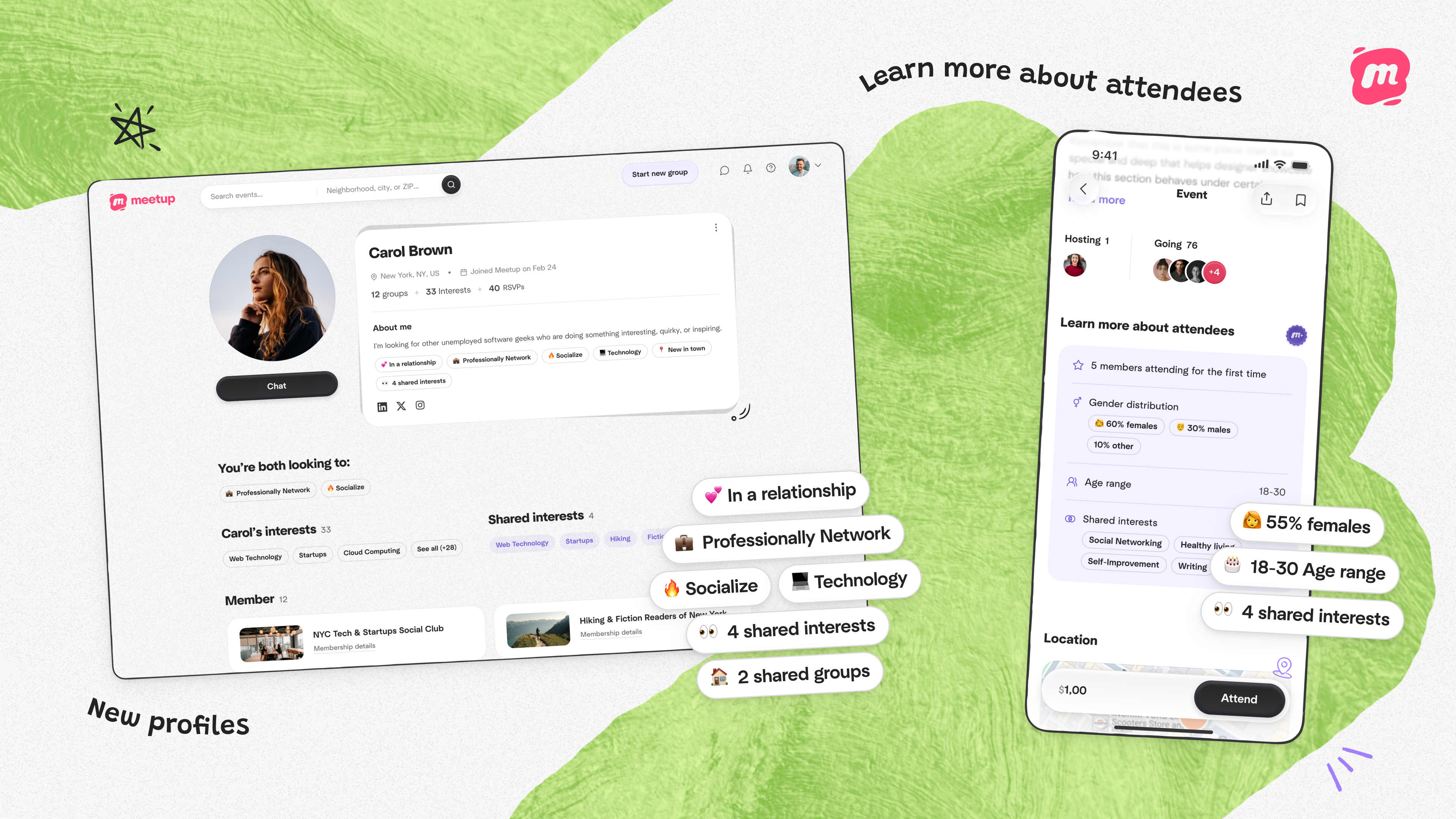
In the aftermath of the pandemic, the platform has seen something of resurgence. As of late 2025, Gen Z and young Millennials make up 40 percent of Meetup's active user base and represent its most engaged group of users. This year, the app has also seen a 20 percent year-over-year increase in new registrations. Going into 2026, Bending Spoons is hoping to build on that momentum with a redesign of Meetup's mobile app.
The new interface, which starts rolling out today, brings the Android and iOS app inline with Meetup's recently redesigned website. Across the application, users can expect updated fonts, new more colorful icons and better spacing. The goal of the redesign is to make the app "vibrant, fun and more modern than before," says Chiara Vivaldi, Meetup's product lead. She adds the redesigned app retains all the key features found in the previous version, while making those easier to find. For instance, users can access their profile and groups directly from the homepage of the app.
Beyond making Meetup feel more modern, Bending Spoon is using the redesign to cement the groundwork for a series of improvements it plans to roll out in the coming months.
Soon, Meetup users will be able to see a breakdown of the people who have signed up for an event.
Bending Spoons
According to Vivaldi, one major priority is to give people, particularly women, more confidence to attend the events that are listed on Meetup. When you navigate to an event page in the new app, you'll see a broad gender and age breakdown of the users who have signed up to be there. Additionally, new and richer user profiles allow people to get a better sense of who exactly they might meet if they decide to go. Bending Spoons is also introducing a new Super Organizer badge it plans to award to the platform's top event planners. It's designed to signal to users that the person who put together the event takes community building seriously.
Taken together, Vivaldi says these features are designed to reduce the friction of attending events where you might not know anyone, and they're something the company plans to build on in the future.
At the same time, Bending Spoons plans to make it easier for organizers to use Meetup. Starting early next year, the company will unify Meetup's two disparate apps — right now, the company maintains separate ones for members and organizers. Vivaldi says organizers can expect the unified app to include all of the features they depend on, alongside a handful of enhancements. For instance, Vivaldi’s team is working to make QR-based ticketing the norm for check-ins and attendance tracking. She says the move to a single app is informed by the fact that 75 percent of Meetup's organizers got their start as a member.
"[Organizers] are part of the community. They want to be in the action, and so having them within the same app is conducive to that. They can jump into conversations, look at other events, making it all feel a bit more organic," Vivaldi said. In the meantime, if it’s been since you’ve used Meetup, you can download the redesigned app from the App and Google Play stores.
This article originally appeared on Engadget at https://www.engadget.com/mobile/meetups-new-mobile-app-is-designed-to-make-it-easier-to-meet-people-irl-150000920.html?src=rss
OpenAI has introduced an app directory that's now available right inside ChatGPT, the company announced. "Apps extend ChatGPT conversations by bringing in new context and letting users take action like order groceries, turn an outline into a slide deck or search for an apartment," the company wrote in a blog post. OpenAI also noted in a help document that "connector" apps like Google Drive are now simply called "apps."
The new apps section (on iOS, Android and web) is divided into Feature, Lifestyle and Productivity categories, letting you connect to commonly used apps and sites like Booking.com, Spotify and Dropbox. To use an app, simply click on it, hit "Connect" then authorize the app to access ChatGPT. With that done, you can then start a chat related to that app. In the case of Dropbox, for instance, you'll be able to "gather insights, prepare briefs and summarize reports or internal documents," according to the description. Once connected, any app can be accessed by doing an @ mention of it.
A new addition that came along with the store is an Apple Music app that, like Spotify, helps users find music, create playlists and manage their libraries through a chat interface. Another is DoorDash, which lets you transform recipes, meal planning and staples into "an actionable shopping cart."
Along with the app directory, OpenAI is now allowing developers to submit apps for review and publication in ChatGPT according to the company's app submission guidelines. It also published resources to help developers build such apps, including best practices, open-source example apps, an open-sourced UI library for chat-native interfaces and a step-by-step quickstart guide. That's on top of the software developer kit (SDK) that OpenAI introduced in October.
OpenAI noted that for now, developers can only monetize apps by linking out from the ChatGPT app to the native app or website — but the company is exploring internal monetization options as well. Privacy was also emphasized, with companies required to provide "clear" policies.
The new feature is a big part of Sam Altman's promises to make ChatGPT more versatile with the addition of custom "GPT" bots. "Over time, we want apps in ChatGPT to feel like a natural extension of the conversation, helping people move from ideas to action, while building a thriving ecosystem for developers," the company wrote.
This article originally appeared on Engadget at https://www.engadget.com/ai/openai-just-launched-an-app-store-inside-chatgpt-133049586.html?src=rss
The Ultrahuman Ring Air now has the capacity to track snoring and general respiratory health. This is thanks to proprietary technology called Respiratory Health PowerPlug, which is basically a suite of audio analysis tools along with some "advanced biomarker tracking" and AI tomfoolery.
All of this results in "one of the most comprehensive consumer tools ever built for understanding nighttime respiratory stability." It details snoring sessions, of course, but also delivers a holistic and "actionable sleep picture." The company says this "reveals patterns, trends and changes in respiratory health over time."
Ultrahuman
To that end, it can also detect coughing and respiratory disturbances. This data is cross-referenced with movement patterns, sleep fragmentation patterns and resting heart rate to "show exactly how breathing issues shape sleep quality." The company says this can be a good resource when experimenting with interventions, like switching to a new pillow or taping up the nose.
More health data is never a bad thing, but this information isn't free. Ultrahuman is charging $4 per month for access to the tool, though folks can pick up an annual subscription for $40.
The Ultrahuman Ring Air made our list of the best smart rings, and that was before the company introduced this new software. It tracks an impressive amount of data and integrates with third-party devices like glucose monitors.
This article originally appeared on Engadget at https://www.engadget.com/wearables/ultrahuman-brings-snoring-detection-and-respiratory-health-tracking-to-the-ring-air-130054901.html?src=rss
The Federal Trade Commission has sent Instacart a civil investigative demand, seeking information about its AI-powered pricing tool, according to Reuters. This comes after a recently published pricing experiment study showed that the online grocery delivery app gave different users different prices for the same items from the same store location at the exact same time. Some of the testers saw prices up to 23 percent higher than what the other testers saw, though the average difference for the same list of items was around 7 percent. Those higher prices could cost customers over $1,000 more in expenses for the year.
“The Federal Trade Commission has a longstanding policy of not commenting on any potential or ongoing investigations,” the FTC told Reuters in a statement. “But, like so many Americans, we are disturbed by what we have read in the press about Instacart’s alleged pricing practices.”
When the study came out, Instacart told Engadget that the pricing variances were caused by some of its retail partners doing “limited, short-term and randomized tests” to better understand consumers. Those randomized pricing tests were enabled by Instacart’s AI pricing tool called Eversight developed by a company it purchased in 2022. Instacart told CNBC that “much of what’s been reported has mischaracterized how pricing works” on its platform. The spokesperson repeated that retailers conduct pricing tests on its app and said that “prices on Instacart do not change in real time,” aren’t based on supply or demand and that it never uses “personal, demographic, or user-level behavioral data to set item prices.”
This article originally appeared on Engadget at https://www.engadget.com/apps/the-ftc-is-reportedly-investigating-instacart-over-its-ai-pricing-tool-130000472.html?src=rss
Earlier this year Sony sued Tencent for copyright infringement over its Light of Motiram game, calling it a "slavish clone" of Horizon Zero Dawn. Then, earlier this month, Tencent agreed to stop promoting and publicly testing the game. Now, the two companies have reached a "confidential settlement" and the case has been dismissed, according to court documents seen by The Verge. Light of Motiram has also disappeared from Steam and Epic's game stores.
"SIE and Tencent are pleased to have reached a confidential resolution and will have no further public comment on this matter," Tencent's spokesperson told The Verge.
When Sony first filed its lawsuit in July 2025, it said that Tencent's game appeared to copy aspects of not just Horizon Zero Dawn, but other franchise games including Horizon Forbidden West and Lego Horizon Adventures. That included the post-apocalyptic setting with humans and machines coexisting, the visual appearance of characters and even the marketing materials — something Engadget certainly noticed when Tencent first announced the game.
This article originally appeared on Engadget at https://www.engadget.com/gaming/sony-settles-with-tencent-over-slavish-horizon-clone-120042886.html?src=rss