Over the past two years, the Nex Playground has carved out a niche for itself with kids and parents alike. It's a small box that sits in front of your TV and uses a camera, along with computer vision AI processing, to track your movement for interactive games. Think of it like a simplified version of Microsoft's Kinect (RIP), with a bit of the local multiplayer we see from the original Wii. In this bonus episode, we chat with David Lee, Nex's CEO and co-founder, about how he went from building a basketball tracking app to one of the most intriguing gaming console alternatives on the market. (The Nex Playground even managed to outsell Xbox in November!)
What led to the development of the Nex Playground? — 2:04
Who helped design and build the console? — 8:36
Questions about the Nex PlayPass subscription and other ways to get new games — 13:23
How did Nex convince major brands to build for Nex Playground? — 19:10
Credits
Host: Devindra Hardawar Guest: David Lee, CEO and co-founder of Nex Producer: Devindra Hardawar Music: Dale North
This article originally appeared on Engadget at https://www.engadget.com/social-media/engadget-podcast-why-is-the-nex-playground-ai-console-such-a-hit-181151201.html?src=rss
Anna's Archive, the open-source search engine for shadow libraries, says it scraped Spotify's entire library of music. The group acquired metadata for around 256 million tracks, with 86 million actual songs, and is just under 300TB in total size.
"A while ago, we discovered a way to scrape Spotify at scale. We saw a role for us here to build a music archive primarily aimed at preservation," the group said in a blog post. The pirated treasure trove of music represents over 15 million artists with over 58 million albums.
The group intends to make all files available for download for anyone with the available disk space. "This Spotify scrape is our humble attempt to start such a “preservation archive” for music. Of course Spotify doesn’t have all the music in the world, but it’s a great start," the group wrote. The 86 million songs that the group has archived so far represent about 99.6 percent of listens on the platform. This only represents about 37 percent of the total and the group still has millions left to be archived.
The open-source site is normally focused on text like books and papers, which it says offers the highest information density. The group says its goal of "preserving humanity's knowledge and culture" doesn't distinguish between media types. Of course none of this is exactly legal, and the sharing or downloading of all these files is flagrantly in violation of IP protection laws.
Anna's Archive contends that current collections of music, both physical and digital, are over-indexed to the most popular artists or composed of unnecessarily large file sizes due to collectors' focus on fidelity. The group says that what it's amassed is by far the largest music metadata database publicly available. The music files will be released in order of popularity in stages.
“Spotify has identified and disabled the nefarious user accounts that engaged in unlawful scraping,” a spokesperson told Engadget in a statement. “We've implemented new safeguards for these types of anti-copyright attacks and are actively monitoring for suspicious behavior. Since day one, we have stood with the artist community against piracy, and we are actively working with our industry partners to protect creators and defend their rights.”
Update, December 22, 2025, 10:45PM ET: This story has been updated to add Spotify’s statement.
This article originally appeared on Engadget at https://www.engadget.com/entertainment/streaming/pirate-group-annas-archive-says-it-has-scraped-spotify-in-its-entirety-211914755.html?src=rss
The Indie Game Awards has stripped Clair Obscur: Expedition 33 of two major awards, including Game of the Year and Debut Game. This is due to developer Sandfall Interactive's use of generative AI, as reported by Mashable.
This looks to be fairly cut and dry. The awards ceremony clearly states in its FAQ that any game that uses generative AI in the development process would be "strictly ineligible" for nominations. It was recently revealed that Sandfall did indeed use generative AI while making Clair Obscur.
Correct me if I'm wrong, but it appears as though Clair Obscure: Expedition 33 used generative AI for these textures. pic.twitter.com/V6mtdG8bUx
The company says it was only for placeholder textures that were later removed, but a few squeezed past the QA process and made their way to the final game and, as such, the internet. The Indie Game Awards is clear about disallowing any use of generative AI and, so, here we are.
"In light of Sandfall Interactive confirming the use of gen AI art in production on the day of the Indie Game Awards 2025 premiere, this does disqualify Clair Obscur: Expedition 33 from its nomination," the organization wrote. "While the assets in question were patched out and it is a wonderful game, it does go against the regulations we have in place."
Six One Indie, the company behind the ceremony, deserves a smidge of the blame here. These awards were initially handed out last week and we've known about the whole Clair Obscur AI thing for months. It says it didn't discover Sandfall's use of AI until December 18, the day the winners were announced. A Google search on December 17 likely would've helped. It is worth noting, however, that Sandfall did previously agree that no generative AI was used during development as part of the submission process.
In any event, the second-highest scoring titles in each category now gets the award. This means that Blue Prince is now Game of the Year and Sorry We're Closed snags Debut Game.
Despite this AI controversy, Clair Obscur had a record-setting night at this month's The Game Awards. It won just about everything it was put up for, including Game of the Year. It also made our list of the best games of 2025. The developer announced that it had sold 5 million copies back in October. That number is surely much higher by now.
This article originally appeared on Engadget at https://www.engadget.com/gaming/the-indie-game-awards-snatches-back-two-trophies-from-clair-obscur-over-its-use-of-generative-ai-164730842.html?src=rss
Gamers who prefer physical copies of their favorite titles may be getting a major win with the Switch 2. In an unexpected announcement from retro video game publisher ININ Games, Nintendo reportedly has "two new smaller cartridge sizes" for its Switch 2 console. For ININ Games, these rumored game cartridges with smaller storage capacity allow the publisher to recalculate production costs and pursue a physical Switch 2 release of its upcoming R-Type Dimensions III.
ININ Games later deleted its posts mentioning these smaller Switch 2 cartridges and issued a correction on its website and social media pages. However, the publisher reiterated that R-Type Dimensions III will be released on a physical cartridge, but that "no further technical details regarding cartridge specifications have been officially confirmed."
"There has been no official announcement or confirmation from Nintendo concerning cartridge storage capacities," ININ Games said in a statement. "Any references to specific storage sizes should not be interpreted as official information from Nintendo."
If we're reading between the lines, ININ Games may have been early to tease a crucial detail about Switch 2 cartridges that Nintendo wasn't officially ready to reveal yet. For more context, Nintendo reportedly only offers physical game cartridges for Switch 2 with a 64GB capacity. With less demanding games like R-Type Dimensions III, that much storage capacity could be unnecessary and raise production costs. Nintendo still hasn't made an announcement about these potential smaller cartridges, but we could see a lot more game publishers opting for physical copies of their upcoming games if they are indeed an option.
This article originally appeared on Engadget at https://www.engadget.com/gaming/nintendo/game-publisher-says-cheaper-switch-2-cartridges-are-coming-in-since-deleted-post-191145230.html?src=rss
From indies like Silksong,to AAAs like Ghost of Yotei, and everything in between, 2025 truly had it all, and is likely to go down in the history books as one of the best years in gaming. But these are the games that felt truly special to the Engadget team.
Arc Raiders
I’m genuinely shocked by how much I love ARC Raiders. I’ve never been very interested in the whole PvE (Player vs. Environment) genre, aside from some brief stints with Destiny, but ARC Raiders's sci-fi post-apocalyptic vibe just works for me. I love the Blade Runner/anime-like aesthetic of its environments, enemies and outfits. I’m a sucker for its synthy soundtrack and immersive soundscape. And somehow, I’ve just fallen for the game’s loop, which involves running out for resources and missions, and hopefully making it back home safe.
Sure, I’ve had a few runs where I’ve lost all my gear, thanks to random online jerks. But even those setbacks kept me motivated to play. You can always head out into the world with free gear, so if you fail, all you really lose is a bit of time. ARC Raiders reminds me of playing Phantasy Star Online on the Dreamcast decades ago, an early multiplayer experience that’s genuinely been hard for me to replicate since then.
I sometimes explore maps just to soak up their architecture and environmental sounds. Sometimes I jump in to help other players, especially when they’re being harassed by others. Through success or failure, I can’t wait to head back in.
— Devindra Hardawar, Senior Editor
Avowed
Obsidian kicked off 2025 with a bang, introducing a fresh and deeply engaging fantasy RPG universe in Avowed. It’s an expertly crafted and narratively rich adventure through mystical lands blighted by a mysterious fungus, set against a backdrop of political scheming, spiritual manipulation, colonization and resistance. The writing is stellar throughout, though the sidequests that reveal your companions’ backstories are particularly poignant. Avowed is gorgeous, its combat systems are fully customizable, its characters are intriguing and its encumbrance limit is generous. There’s a real sense of magic about the entire game — and no, that’s not just the mind-altering mushrooms talking.
— Jessica Conditt, Senior Reporter
Baby Steps
Baby Steps is a true walking simulator: Your left trigger controls your left leg, and your right trigger controls your right. At first, you'll be stumbling and comically falling every few paces, and it’s easy to write the game off as some sort of Octodad affair, where half the fun is dealing with the jank of basic navigation. But before long, you’ll find the rhythm and confidently pace through the game’s open world.
Of course, the challenge ramps up with your skill. Baby Steps has incredibly tight mechanics and a rewarding if punishing difficulty curve. Various surfaces and steeper inclines are introduced, and the game ends with a truly horrific mountain pass. Through it all, you’ll be treated to a light but touching story full of comedic improvisation from the game’s developers, who voice most of the characters themselves.
— Aaron Souppouris, Editor-in-chief
Ball X Pit
I don’t usually go in for roguelike-style games, but my colleague Kris Holt convinced me to try Ball X Pit and, in doing so, ruined my autumn. This is, quite simply, one of the most addictive games I’ve ever played. The base gameplay is rooted in classic Brick Breaker-style games from the ‘80s. Balls bounce from the bottom to the top of the screen, but instead of hitting and breaking bricks you’re bouncing them off a massive series of demonic enemies. There are eight levels and over a dozen different playable characters, each with their own distinct strengths and play styles, and the vast combination of upgrades you can unlock means no run will ever be quite the same.
Perhaps the most fun thing about it is unlocking the different fusions and evolutions you can find along the way. Beyond the basic balls that your character shoots, you have slots for special balls that do things like freeze enemies, deal extra damage or blind enemies so they can’t accurately attack you. You can combine those special balls into even more powerful weapons, and finding the best evolutions that work with each character and each level adds yet another layer to the madness. While you can easily pick it up and play for 20 or 30 minutes, I’ve found it pretty difficult to end a session without whiling away multiple hours. Think carefully about whether you’re ready to ruin your productivity for a few weeks (or months) before you dive into Ball X Pit.
— Nathan Ingraham, Deputy Editor
Blue Prince
My absolute favorite experience in all of gaming is when I'm several hours into a puzzle game and I discover there's more going on than meets the eye. It's the moment where I realize an already-good game is in fact an excellent one, and I want to simultaneously curse the creators' evil brains and applaud their brilliance. I feel fortunate if I have that reaction once during a playthrough. Blue Prince provided me with that experience of total delight many times over.
The biggest downside to a game like Blue Prince is that it's hard to talk about. For starters, it defies categorization. Sure, there are some roguelike elements and obviously plenty of puzzles, but playing it goes beyond a single genre tag. And more importantly, the journey of uncovering its surprises is a big reason why this game is so special. If you haven't tried it yet, I strongly suggest you do so and that you read as little about it as possible before diving in. All you need to know is that if you enjoy burrowing ever deeper into a rabbit hole of mysteries and problem-solving, you must play this game. Blue Prince is a real masterpiece by creative lead Tonda Ros and the whole Dogubomb team. It earns all the hype it gets.
— Anna Washenko, Contributing Reporter
Citizen Sleeper 2: Starward Vector
No game I played this year has stuck with me the way Citizen Sleeper 2: Starward Vector did. At a time when it feels like our governments are failing us and corporate greed is destroying the world, Citizen Sleeper 2 tells a critical story about finding hope and purpose in the people and communities around you. And as great as the original Citizen Sleeper was, the new one is an even better game, with more polished systems that do a great job of reinforcing its narrative themes.
There's a good chance many of you missed Citizen Sleeper 2, seeing as it arrived at the start of the year, but if you're feeling down about the state of the world, I can't recommend it enough. It will change your perspective.
— Igor Bonifacic, Senior Reporter
Clair Obscur: Expedition 33
Clair Obscur made a striking impression when we first glimpsed it in 2024, with its French dark fantasy aesthetic, its wild concept of a god-like Paintress and a turn-based combat system that seemed uniquely cinematic. It instantly became my most anticipated game of 2025. Thankfully, the game itself lived up to my expectations, with a thrilling story, memorable characters and some of the most beautiful visuals I’ve ever seen in a game. Sure, its twists and turns might not feel entirely surprising if you’re an RPG connoisseur, but no other game captures such a specific vibe. It may not fully stick the landing, but Clair Obscur was certainly one of the most fulfilling narrative experiences I experienced this year.
— D.H.
Date Everything!
This dating sim is witty as heck. That's the first reason I loved Date Everything. The writing is equal parts sharp and sensitive, silly and sincere, with a dose of pointed social commentary in between bouts of flirtation with anthropomorphized household items. Even the artwork is witty, transforming everything from a toaster to a treadmill into attractive humans in wildly clever and creative ways.
The second and most important reason I loved this game is that Date Everything is a cavalcade of virtuoso voice acting that must be heard to be appreciated. I've played a bunch of visual novels without voiceover where the writing alone wasn't strong enough to make the characters pop, as well as voiced ones where middling performances detracted from the story. Date Everything's cast of 100 of the best in the business make their dialogue shine (and like I said, the dialogue is really damn good).
There are some endearingly obvious casting choices. The horny clothes dryer? Yeah, it's Neil Newbon, who probably charmed your pants off as Astarion in Baldur's Gate 3. Your D&D dice set? It couldn't be anyone but Matt Mercer. On the flip side, Cherami Leigh as perky Chairemi (yep, your chairs) was unrecognizable from her stellar turn as V in Cyberpunk 2077. Laura Bailey has voiced countless heroines over the years, so the last place I expected to hear her was screaming her lungs out as one half of the toxic relationship playing out in your laundry room. Whether you're looking for love or laughs, Date Everything is a marvelous showcase of talents that often go underappreciated in gaming.
— A.W.
Despelote
Having grown up with grandparents from South America, I'm familiar with a flavor of soccer fanaticism that hasn't quite taken root in the US. What makes Despelote so moving to play in 2025 is how it makes that sports fandom universal. The semi-autobiographical game lets you play your way through narrative vignettes, rendered in a stunning mix of filtered, photorealistic backgrounds and almost comics-inspired characters, primarily with a soccer ball at your feet. There's more to the game than kicking, however.
Despelote asks players to walk, run and kick through the life of the game's lead developer Julian Cordero as he recounts his memories of Ecuador's historic attempt to win the World Cup. It's a personal history and national one, and by the end of the game, not quite what it seems. To put it another way: Despelote is melancholy, humorous and quite possibly the first game to capture what soccer means rather just than what it feels like to play.
— Ian Carlos Campbell, Contributing Reporter
Dispatch
If you miss the heyday of Telltale's multiple choice narratives, like The Walking Dead and The Wolf Among Us, and you aren't tired of superheroes yet, you'll love Dispatch. Developed by AdHoc Studio, which was formed by former Telltale alum, it's essentially a workplace dramedy for superheroes. But the mechanics don't matter as much as the characters, who are all uniquely intriguing, sad and hilarious.
You play as Robert Robertson III, AKA Mecha Man, a former Iron Man-esque hero who can no longer fight crime on his own. He decides to manage a group of former villains for SDN (the Superhero Dispatch Network), hoping to imbue them with his own ideals of heroism. By day, you assign them to deal with crimes around Los Angeles, but through conversations and crucial Telltale decisions, you also encourage them to work as a team and hopefully become better people (or mutants). Buoyed by strong voice acting (including actors like Aaron Paul as the lead, and Jeffrey Wright in a hilarious supporting role), AdHoc's sharp writing, and excellent animation, Dispatch is a reminder of just how powerful adventure games can be.
— D.H.
Donkey Kong Bananza
The Switch 2 had a decent enough first year, but there's only one true killer app so far in my mind. Donkey Kong Bananzais the primary reason to pony up for Nintendo's new console. It's a 3D platforming classic up there with any Mario game, which makes sense given that the team behind Super Mario Odyssey made this one.
It actually reinvents the formula by adding wanton destruction into the mix. Donkey Kong can destroy just about everything in the game and that's not hyperbole. You can literally spend hours absolutely pummelling entire game worlds into dust. This isn't just a stress reliever, as it leads to new kinds of puzzles and platforming ideas. As a bonus, DK is joined by a young Pauline, making this the cutest riff on The Last of Us ever.
— Lawrence Bonk, Contributing Reporter
Fast Fusion
Fast Fusion is a sci-fi arcade racer that wants little more than to bring the oldWipeout and 3D F-Zero games into modern times. Those games ruled. So does this one.
As the name implies, it is seriously fast, and it commits to enhancing that sense of speed with every choice it makes. Whooshing lines drag from the back of your hard-angled, anti-grav ships. Their engines wheeze. The backgrounds blur. Each course is littered with boost pads, and there’s a boost meter you can keep persistently charged by taking turns just right. Because this is what some may call a “video game-ass video game,” you can also make your ship jump, skipping entire turns or launching into a fiery wreck in equal measure.
The courses here aren’t as thematically consistent as those in Mario Kart World. One minute you’re dashing through an Endor-style forest, the next you’re dodging tornadoes on a rainy highway. There are no cute mascots, either. But the tracks are spectacles, and they always give room to keep up your pace. When there is an obstacle to dodge, you tend to just whiz by, furthering the sense of threading the needle. In a year unusually loaded with high-profile arcade racers, few are better than Fast Fusion at keeping you engaged. It makes blinking feel risky.
— Jeff Dunn, Senior Reporter
Ghost of Yōtei
Sucker Punch Productions' return to a feudal Japan setting is another triumph for the studio. In Ghost of Yōtei, the developer crafted a world that I happily got lost in for hours, doing everything and anything but the main story missions until I absolutely had to. There was something to do around almost every corner and some of the game's many secrets were well-hidden. That's not to say the game's plot is anything to sniff at: this is a brutal tale of revenge, featuring rich writing and performances.
The open-world format is a little at odds with protagonist Atsu’s steely desire for vengeance, but Ghost of Yōtei is beautifully orchestrated enough for that to be a minor complaint. The combat is stellar — to be most effective, you’ll need to swap between weapons to counter what your current opponent is wielding. Still, I couldn’t help but use the kusarigama whenever possible, especially to carry out stealthy assassinations from a distance. Strengthening Atsu’s bond with a wild wolf that becomes an ally in combat is also a highlight, while the deeply customizable difficulty settings are very welcome.
Like its predecessor, Ghost of Tsushima, this is a technical masterpiece. Sucker Punch created another lush game that will surely be the source of countless desktop backgrounds. Blood-stained snow has rarely looked this good, especially if you enable the Miike Mode (named after director Takashi Miike and his gory films) to really paint the landscape red.
— Kris Holt, Contributing Reporter
Hades 2
The first thing to know about Hades II is that it's more Hades. It's the standard roguelite RNG grindfest, but with charm and enough detail-oriented flourishes to disguise what is essentially cranking the arm on a slot machine. The second thing to know is that you are no longer Zagreus, but Melinoë, princess of the underworld, and if you are a gay woman this game exists to roast you mercilessly.
Zag was a lovable himbo engaged in a petty dispute against his father and free to romance a variety of Greek gods along the way. By contrast the world around Mel is coming apart at the seams, and her dating options are considerably less satisfying. Several of her in-game relationships with women are written to be warm and reciprocal, but of course they're with the found family of deities who support her. Nemesis and Eris, her two options for romance, seem to actively hate her and, after dozens of runs, are never interested in anything beyond a threadbare situationship.
Juggling two different mission paths with their own distinct enemies and biomes is a treat — as are the new, sometimes brutally hard bosses. If only the rest didn't so closely resemble the indignities of dating in your 30s.
— Avery Ellis, Deputy Editor
Is This Seat Taken?
Every incurable people pleaser has been told, at some point in their life, “you can’t make everyone happy.” Perhaps not in life. But in the sweetly cozy, zero-pressure, logic-puzzle indie game Is This Seat Taken? making people happy is not only possible, it’s the entire point.
The game is set in a line-drawn, sepia-toned Barcelona and other cities. You act as a set of pinching fingers that lifts and places shape-people in their preferred seats — on the bus, in a restaurant, at a movie theater and so on. Each person has preferences (window seat, no bad smells, wants to read) and attributes (forgot to shower, plays loud music) that mesh or conflict.
Tiny accessories and icons not only make each shape more adorable, they help keep track of some of their proclivities. Bubbly smiles or heartbreaking frowns tell you whether you’ve met a seated shape’s needs, and tapping on them tells you exactly what they want. A simple story involving a few of the shapes and an indie film takes form as you advance levels, but for the most part, you’re just checking in on what people want and arranging them to optimize happiness.
I obsessively plowed through the game, soothed by the strummy music, delighted by the plops, bloops and chatters of the sound effects. As more people get on the bus (show up to the coworking space, arrive at the restaurant) it gets increasingly tougher to satisfy everyone — more than once I had to clear everyone off the train and start from scratch — but achieving 100 percent contentment is always possible. And if that’s not true IRL, then at least it is here.
— Amy Skorheim, Senior Reporter
Keeper
Keeper is a surprisingly quiet and soul-soothing experience from Double Fine Productions, a studio best known for sassy, cartoon-style games like Costume Quest, Psychonauts and Brütal Legend. Keeper is a gorgeous and dialogue-free adventure through fantastical lands of deep shadows and vivid pastels, presented in a claymation-like art style that’s a joy to interact with. The game follows a sentient, walking lighthouse and its bird companion as they attempt to reach a mountaintop and cleanse the land of a nasty parasitic presence. Keeper only lasts about four hours tops, but its striking visuals, smooth mechanics and heartwarming story leave a lasting impression.
— J.C.
Kingdom Come: Deliverance II
Kingdom Come: Deliverance IIis a modern-day Morrowind. I mean that as a compliment. It's a game built on a series of complex, interlocking systems that work together to create one of the most immersive worlds I've had a chance to experience in recent years.
As I guided my version of Henry of Skalitz through Warhorse Studios' beautiful recreation of 15th century Bohemia, I spent dozens of hours doing mundane things like blacksmithing, playing dice, foraging for herbs and concocting potions. Each of these activities feels like it could be a game on its own, and they work together to create an experience that feels refreshingly old-school. No one is making RPGs like Warhorse anymore — not even Bethesda — and that's what makes this game feel so special. It's the kind of experience studios used to make when games didn't need to appeal to everyone to recoup their development costs.
— I.B.
Look Outside
Months after its release, Look Outside is still the game I can't shut up about, and it probably will continue to be for the foreseeable future. In Look Outside, your character wakes up to discover that an apocalyptic event has taken place, and anyone who looks outside to observe it is transformed into some sort of abomination. You have to survive two weeks inside your apartment building, gathering resources and, if you're trusting, accumulating allies to fight by your side. There are monsters everywhere, and their designs are wildly creative. It's a joy encountering all of the freakish creatures for the first time.
There are tons of choices to make in Look Outside that will affect the course of your playthrough, and there are both moments of gut-wrenching bleakness and sheer absurdity. It's in a league of its own, blending a multitude of horrors — survival horror, cosmic horror, body horror, psychological horror — and captivating artwork (not to mention an S-tier soundtrack) into a gripping RPG that has enough substance to justify playing it again and again.
— Cheyenne MacDonald, Weekend Editor
Lonely Mountains: Snow Riders
Most games involving mountains are about a heroic climb. Lonely Mountains: Snow Riders is about a series of humbling descents. This is a physics-driven downhill skiing game that, like its predecessor, starts you at the top of various summits and tasks you with racing to the goal in one piece. The way down is filled with interweaving routes and shortcuts, but there are no directional markers to guide you. Nor is there any music to pump you up, just the sounds of skis cutting into powder, winds whipping, birds chirping, nature being nature.
The result is a game that pits you against yourself. You rush down to beat a target time, but you’re always fighting gravity and cold, hard earth. So you crash, again and again, until you manage to survive that one clean run. The mountain becomes something to respect, not conquer. It’s fast, thrilling and total slapstick: Steering your low-poly, literally blockheaded avatar into a tree or off a cliff is always good for a laugh. (Seeing others do it in multiplayer is even better.) It’s also gorgeous, all glistening snow, intimate sounds and serene vistas. More than an enjoyably tense sports game, Snow Riders is a vivid expression of our relationship with nature. Think of it like a more contemplative SSX.
— J.D.
Metroid Prime 4: Beyond
Metroid Prime 4: Beyond is not a perfect game. The story barely hangs together at times, the addition of a squad of companions can really disrupt the atmospheric isolation the series is known for, there are a few unfair difficulty ramps and the open-world desert is a bit of a slog. And yet, it also does so many things right. As with most Metroid games, there are varying biomes to explore, each with a distinct identity and various flora and fauna that do not like intruders. As with most Nintendo games, the design of these levels are excellent across the board, with clever challenges and puzzles that reward continued exploration.
But for me, seeing a Metroid Prime game in 4K was worth the price of admission alone. Beyond doesn’t reinvent the wheel, but it presents an absolutely gorgeous and immersive spectacle the likes of which we haven’t seen in a Metroid game before. Given that Metroid Prime 3: Corruption came out in 2007 on the Wii, a console that maxed out at 480p, seeing the series’ impeccable art style brought to life on modern hardware was a delight. It may have some issues, but Metroid Prime 4: Beyond is still worth experiencing.
— N.I.
Ninja Gaiden Ragebound
I'd somehow never played a single Ninja Gaiden game until this year, but I could hardly have had a better introduction to the series. The Game Kitchen's Ninja Gaiden Ragebound is an old-school, hack-and-slash platformer with top-notch pixel art, an excellent score and slick level design.
The combat helps ensure that everything hangs together. Dual protagonists Kinji Monzu and Kumori (whose souls fuse together) have distinct abilities that work in harmony, and using the right tools to tackle each enemy helps charge up a powerful hyper attack. Ragebound isn't necessarily easy, but it isn't frustrating either — unless you're trying to put it down and do something else, because this is a very absorbing, entertaining game.
— K.H.
Peak
Peak perfectly captures the delightful, simultaneous disasters that can happen when multiple people make stupid decisions at the same time. Ostensibly a multiplayer game about child scouts who crash land on a deserted island and are forced to climb to the top of a mountain to get rescued, Peak's multitude of dangerous biomes, status-affecting consumables and hidden secrets make it fun to get you and your friends killed. The game is an awkward first-person platformer where it's sometimes easier to shoot someone out of a cannon than it is to get them to toddle up a hill, but those obstacles feel good to overcome because the game lets you talk to people while you do it.
The term "friendslop" was coined following the popularity of Peak and games like it, a burgeoning micro-genre where games with deceptively simple virtual tasks are paired with proximity-based voice chat. Unsurprisingly, it's fun to play video games with your friends, but Peak stands out because the ongoing support of developers Aggro Crab and Landfall has managed to keep things interesting in the game for nearly half the year.
— I.C.C.
Oblivion Remaster
There's a comfort in knowing exactly what you're going to get from a game. The Elder Scrolls 4: Oblivion Remastereddelivers all the things I love about Bethesda creations. It's a world I want to get lost in, where the detours are the true point of the journey. I become a stealth archer cat person who can cause chaos or save the day. And I can enjoy the studio's signature open-world RPG experience without suffering through the wonky design ideas that made the original game frustrating. For Bethesda fans, this remaster is a joy whether it's your first time playing Oblivion or your fiftieth.
— A.W.
Öoo
I have a deep appreciation for games that give you a limited set of tools and many ways to use them. Puzzle-platformer Öoo is a brilliantly constructed example of that. It's so thoughtfully crafted that even the name is perfect. The large Ö looks like the caterpillar character you control and the smaller characters resemble the two bombs that you drag around and use to solve a variety of conundrums. Öoo is also the noise I involuntarily made when I solved some of the puzzles.
Nama Takahashi (who made Öoo with help from Tiny Cactus Studio and Tsuyomi) uses deeply clever level design to teach you how to use the bombs and move forward. Takahashi clearly wants you to succeed. Checkpoints are everywhere, so if you die while trying to find a puzzle solution, there's no lengthy runback to worry about. The developer (who previously created ElecHead) even made his own walkthrough video to help you get to the end.
Öoo — which you can complete in a single sitting — respects your time. It looks and sounds wonderful too. The music reminds me a lot of the outstanding Poinpy. While I remain sad that it's not currently possible to play that game, I'm more than happy to have Öoo to return to.
— K.H.
Silksong
It’s such a relief to know that, finally, this is probably the last time I’ll write about Silksong. (Oh no, more is coming.) Seven years in the making, from DLC to standalone game to Reddit meme, Silksong arrived across pretty much every mainstream gaming platform.
The Hollow Knight sequel swaps to a new protagonist, Hornet, who was a recurring boss in the original. She’s faster, she can attack in diagonal dives, and just plays pretty differently from the Knight. Off the back of the slowburn hit of Hollow Knight, Team Cherry have lavished more attention, more fun and more diverse boss battles, ensuring this feels like a better (although possibly more challenging) game.
I prefer the faster, risk-and-reward playstyle too. Hornet uses silk to heal, which, like soul in Hollow Knight, you build up by attacking enemies. However, Hornet does this in bulk, healing three hearts at once. When you die, you’ll leave a bounty of silk behind, making for a tempting health top-up you can grab mid-boss fight. If you don’t die before then.
You can equip Hornet with different weapon and subweapon loadouts, adding a little more variety in this sequel. Heavy, slower weapon swings, or relentless strikes with a much shorter range? Your choice.
When it launched, half the Engadget team were sharing tales of bottlenecks and seemingly impossible boss fights, and we were all exploring the world of Silksong in entirely different directions. That’s the blessing and the curse of a Hollow Knight game.
— Mat Smith, UK Bureau Chief
Silent Hill f
It’s a rare and special thing when a horror game lives up to the gruesome promises of its cinematic teaser trailer, and Silent Hill f accomplishes this and more. Silent Hill f is a heart-pounding survival-horror game set in a rural Japanese village in the 1960s and starring Hinako, a high school student with crappy friends and a tormented home life. Hinako’s town is ravaged by demonic creatures and an infectious botanical fungus, and she has to fight her way through it, shifting among realities and encountering a cast of untrustworthy peers and fox worshippers. The combat starts out great and only gets better as Hinako sacrifices her flesh in the name of salvation, meaning the body horror steadily ramps up as the game progresses. Hinako’s world is filled with terrifying mannequin minions, bulbous pus monsters and disturbing, trypophobic visuals. It’s beautiful.
— J.C.
Subway Builder
Subway Builder
Aaron Souppouris
Subway Builder is an indie transport sim like no other. Creator Colin Miller combined OpenStreet maps of large cities with government data about where people live and work. This creates a complex web of nodes representing residents and workplaces for you to connect. You’ll start with no public transport infrastructure and try to build out a profitable network. In dense cities like New York this is incredibly easy, but freeing even 20 percent of Phoenix's endless sprawl from cars without going bust is very challenging.
The game scratches the same itch for me as Mini Metro, only instead of cutesy vector graphics you're basically working in Google Maps. It's also expanding at a rapid pace: When I first played in October, there were maybe 15 locations, and as of writing there are now 29 US cities and, most recently, five UK options. I spent the first 35 years of my life bouncing around Croydon and Lewisham in London; giving South Londoners a proper tube network (while ignoring anything north of Highbury) has been a real treat.
— A.S.
Sword of the Sea
While the game might always be evoked in the same breath as Journey, the PlayStation classic with which it shares a key creative, Sword of the Sea is more than just another beautiful trek towards a mountain. Combining delectable traversal mechanics from The Pathless and beautiful sea creatures like those in Abzu, the game is a culmination of everything developer Giant Squid is good at. More importantly, though, Sword of the Sea's surfing mechanic just looks and feels damn cool.
I don't know that I ever mastered how to surf on a sword during Sword of the Sea's silent and surprisingly brief narrative, but I do know it didn't take long to care. Carving through sand and snow immediately came easy enough that getting to any of the game's intriguing landmarks and collectibles was a matter of how, not if. That's not to discredit the game's other charms, like a score from Austin Wintory and a photo mode that's perfect for capturing close encounters with dolphins, whales and sharks. If you need a reason to play Sword of the Sea, though, let it be the surfing. It tells you more about the game and what it wants you to feel than any piece of dialogue could.
— I.C.C.
Sworn
Let's get one thing out of the way. Yes, Sworn is a Hades clone, but it's a darned good one. This game swaps out the Olympian gods for characters sourced from Arthurian legend, but the nuts and bolts gameplay is pretty much the same. So why was this one of my favorite games in a year when Hades 2 set the world on fire? The combat is extremely addictive and there are multiple character classes that truly change how everything plays.
Some characters are for up close combat and others are better at dropping turrets and related items that do damage over time. It's super fun to litter a bunch of poison-soaked cannons in a level and just let them do their thing. It also has four-player co-op, which is chaotic in all the best ways. The story is totally forgettable when compared to Hades, but that's not why I play roguelites.
— L.B.
This article originally appeared on Engadget at https://www.engadget.com/gaming/engadgets-favorite-games-of-2025-153000109.html?src=rss
Creators and publishers have long worried about Meta's ability to throttle links to outside content. Now, the company is testing out a new scheme that effectively puts link-sharing behind a paywall for creators on Facebook.
Under the test, a Meta Verified subscription will determine how many links a creator can share another profile per month. According to a screenshot shared by social meda consultant Matt Navarra, creators in the test recently received a notification from Meta informing them that "certain Facebook profiles without Meta Verified, including yours, will be limited to sharing links in 2 organic posts per month."
Meta is making link sharing pay to play with a new test.
A spokesperson for Meta confirmed the test to Engadget. The test is currently affecting an unspecified number of creators and pages using "professional mode" on Facebook. Publishers aren't affected for now. "This is a limited test to understand whether the ability to publish an increased volume of posts with links adds additional value for Meta Verified subscribers," the spokesperson said.
While Meta seems to be trying to downplay the significance of the test, it's a notable shift for the company. Many creators and businesses rely on Facebook and reducing their ability to send traffic to outside websites could be a significant hit. Many creators are already frustrated that the company puts its better customer service features behind the Meta Verified subscription, which starts at $14.99/month. Making link-sharing a premium feature as well would be even more unpopular.
Have a tip for Karissa? You can reach her by email, on X, Bluesky, Threads, or send a message to @karissabe.51 to chat confidentially on Signal.
This article originally appeared on Engadget at https://www.engadget.com/social-media/a-facebook-test-makes-link-sharing-a-paid-feature-for-creators-224632957.html?src=rss
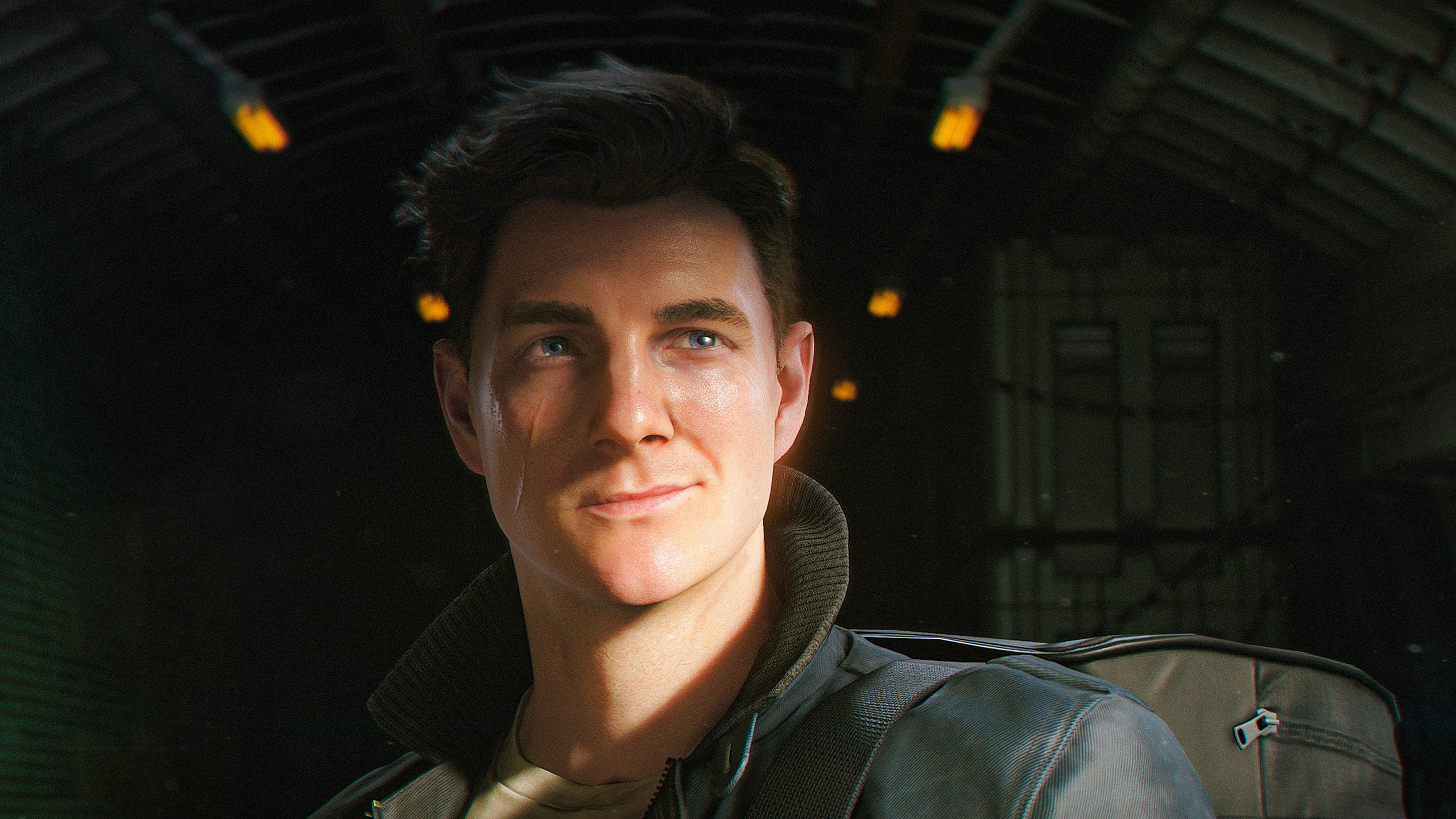
The creators of the Hitman series have honed their style of- open-ended and spectacle-driven sandboxes across several games, and now they're taking their signature immersive gameplay to the world of James Bond. With 007 First Light, developer IO Interactive is crafting an origin story for the globetrotting British spy, showing how he undertook daring missions at the start of his career to eventually become the world's most infamous agent.
Before the reveal at The Game Awards of 007 First Light's newest villain, played by Lenny Kravitz, we had an early look at the latest bits of plot for James Bond's origin story as a superspy. We also spoke with cinematic and narrative director Martin Emborg about the main inspirations for the game, how Bond's origin taps into decades of lore, and why a good spy story is timeless.
"What I think is kind of baked into doing an origin story for a character like James Bond, is that everyone knows the character and who he's going to become," Emborg said. "But how does he become this character? I think that's an exciting challenge from a storytelling perspective."
IO Interactive's James Bond is young and inexperienced.
IO Interactive
While some Bond films and novels have touched upon the early years of the iconic character, 007 First Light will be the first attempt at an actual, modernized origin story. As a twenty-something new MI6 recruit, this James Bond, portrayed by Patrick Gibson, is inexperienced and brash, which can result in some operations going off the rails. He still possesses a certain cunning, and near-supernatural levels of charisma and resourcefulness. This presents a solid archetype for the game’s open-ended missions where players will explore tightly designed worlds with a multitude of tasks and objectives to handle – however the players see fit.
While IO Interactive's Hitman series taps into the spy experience, what really separates James Bond from Agent 47 is that he's a far more social character. The social element will play a big part in how players can find ways to distract, or even outright bluff through charisma to sneak into areas.. Emborg explained that James Bond's resourcefulness also makes him a compelling character for a video game, especially one that is all about player agency.
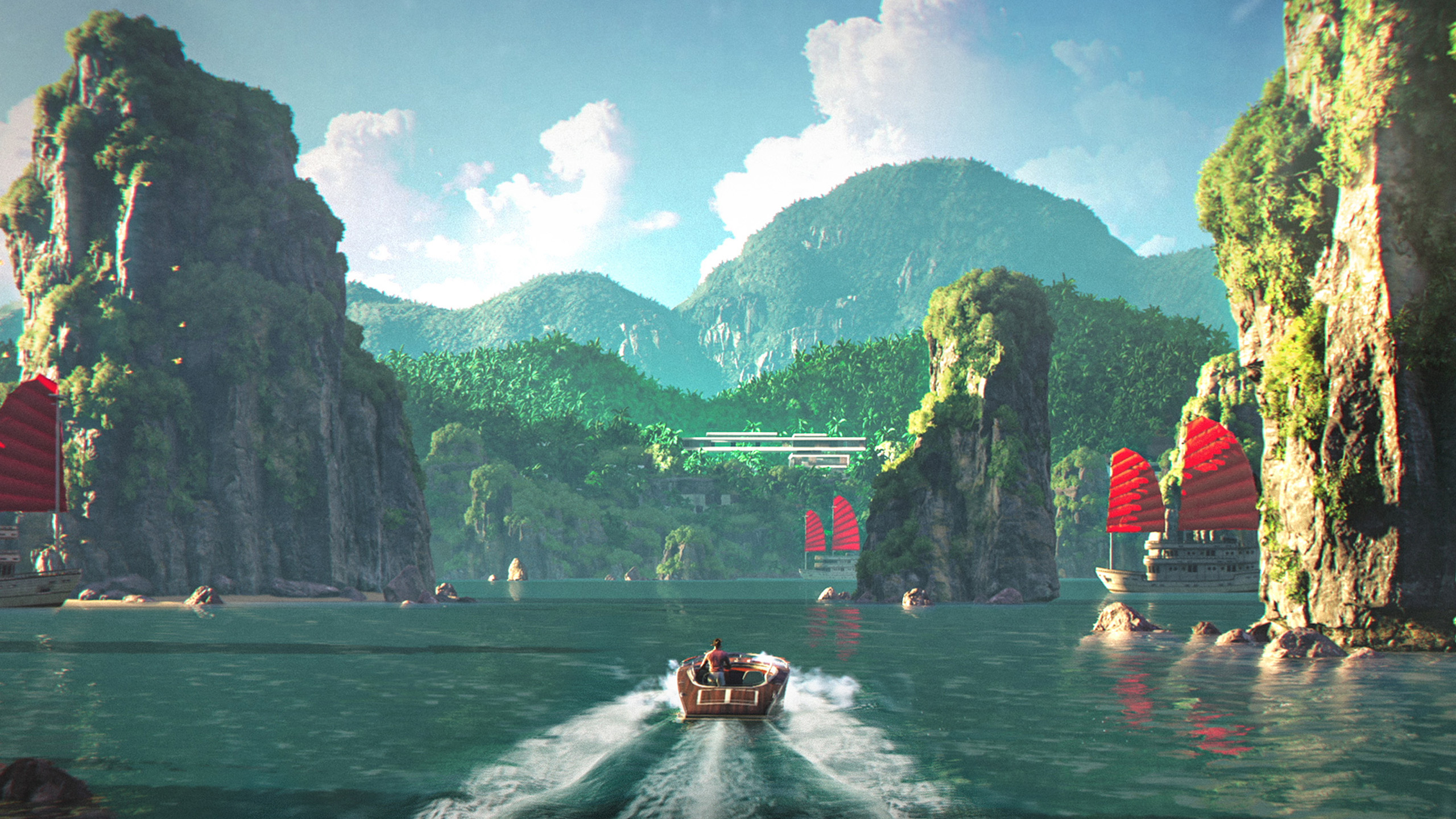
007 First Light will take players to several locations, including Slovakia and what appears to be Vietnam.
IO Interactive
"Bond is a competent character,” Emborg said. “We want to give the player the opportunities to have that agency to say, 'Oh, I'm gonna talk to that guy,' or, 'I'm gonna go and punch that guy,’ or, ‘I can probably crawl up into a tight space to sneak in.' Having that sense of agency is pivotal if you want to deliver a full Bond experience. Obviously, the social aspect of that is important; to embed yourself and infiltrate socially is a big part of that Bond experience."
Emborg said the rhythm of a James Bond game is different from a Hitman title, even though espionage, infiltration and subterfuge are at the core of both.
"We have a lot of experience with that from obviously making Hitman, but there are just many more gears to Bond,” he said. “Of course, the shape of this game is different. We have sandbox locations where you make the open-ended decisions, but we also have other levels where it is a chase or a set-piece encounter, and then it opens up again. So we kind of coined the term, having a game that breathes. It's a very different way of playing this type of game that we usually do, so we've definitely bolstered our toolbox for this game."
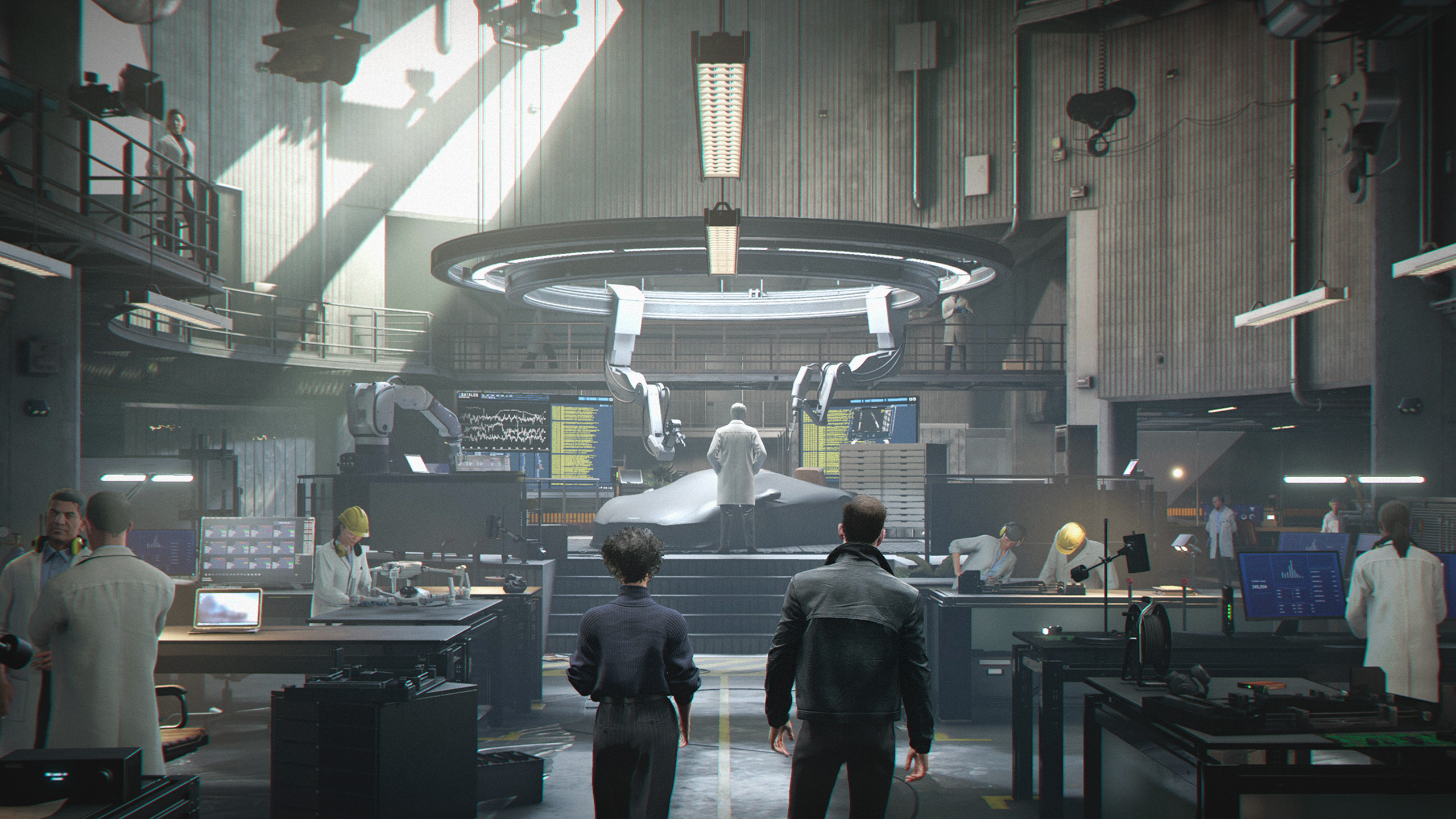
In many ways, 007 First Light is a story that can only be told in an interactive format. The new game will pull from numerous novels and films for its plot, and it also features a large cast of familiar characters seen throughout the franchise – such as MI6 assistant Moneypenny (performed by Kiera Lester), gadget guru and quartermaster Q (played by Alastair Mackenzie), and team leader M (Priyanga Burford).
But like any singular Bond story, First Light features its own set of original characters. In addition to James Bond's MI6 mentor John Greenway (portrayed by Lennie James), a new core villain, black-market smuggler and warlord Bawma, will be played by Lenny Kravitz. It's a familiar setup for a Bond experience for sure, but within the context of a video game – one made by IO Interactive – it really taps looks to tap into the Bond fantasy more than other games have.
From the gameplay demos and trailers we've seen, IO Interactive looks to be channeling the style and lore from decades of Bond with its modernized reboot of the character. From deep cuts to On Her Majesty's Secret Service – one of the great and underrated Bond movies – and You Only Live Twice, 007 First Light is keeping a keen eye on paying tribute to what came before.
"At the very beginning, it was very much like a maelstrom of [ideas], then suddenly something emerges, and you build up a story around it," Emborg said. He continued, “I love doing this stuff and with great reverence for the material. It's a privilege to work in this universe. James Bond is one of the few IPs that still hasn't been overdone, in my view. We have a space to come in with a fresh take, and he's a character who's seen a lot of versions over the years."
Confirmed MI6 gadgets include the "Q-Watch."
IO Interactive
So far, 007 First Light has the makings of not only the biggest Bond game but also the most true-to-life simulation of being a superspy. While previous Bond games like Goldeneye and Everything or Nothing are well-loved classics, they embody traditional video game shooting spectacle. 007 First Light is looking to lean into the immersive element of the Hitman games in its adaptation of James Bond, finally giving players the opportunities to explore the social aspects of spy work on a grand scale.
007 First Light will arrive on March 27, 2026, for PC, PS5 and Xbox Series X/S.
This article originally appeared on Engadget at https://www.engadget.com/gaming/io-interactives-007-first-light-reimagines-james-bond-as-a-young-and-reckless-spy-180000758.html?src=rss
There are way too many online services and subscriptions to keep track of these days, but the flip side is there’s a tool for just about everything. Time is just about up to get a physical gift shipped in time for the holidays, so below we’ve pulled together some of our favorite digital gifts and subscriptions, including time-tested video, music and gaming services as well as tools to clear your mental space and learn new skills. There are also a few subscriptions that provide ongoing, IRL deliveries, if you think your giftee will appreciate the nostalgic charm of a physical object.
Best digital gifts and subscription gifts
Gaming subscriptions
Game consoles are certainly among the most popular gift ideas this time of year. If you know someone who’s been so good that they’re getting a new Nintendo Switch, PlayStation 5 or Xbox Series X/S, one of these subscriptions will make their shiny toy immediately playable out of the box.
There’s no doubt that Microsoft has changed the value proposition for its Game Pass subscription service service. It recently raised the price for its most comprehensive Ultimate tier by 50 percent, to $30 a month. That’s a bitter pill to swallow — but devoted players who have an Xbox as their main (or only) console will still get a ton of value out of Game Pass.
The aforementioned Ultimate tier provides access to more than 500 games that’ll work on Xbox, PC and other supported devices. It’s also the only way to get “day one” release games like Hollow Knight: SilksongNinja Gaiden 4, The Outer World 2, Call of Duty Black Ops 7; in recent years other high-profile day one releases have included Doom: The Dark Ages, Starfield, Clair Obscur: Expedition 33, Forza Motorsport and numerous others. Game Pass Ultimate subscribers also have access to the highest quality and fastest game streaming Xbox offers. For a slightly less hardcore Xbox fan, though, the $15-per-month Premium tier is also worth considering.
Nintendo’s Switch Online subscription has gotten some nice upgrades in 2025, the year of the Switch 2. As it has for years, Nintendo offers two different Switch Online plans. The basic $20-per-year plan unlocks online play and enables Switch 2 owners to use the system's GameChat capabilities. It also includes more than 100 Game Boy, NES and Super NES games, cloud backups of your saved games as well as the occasional special offers. It also includes access to the rather silly but enjoyable Nintendo Music app, so you can listen to your favorite Zelda or Mario tracks at any time.
The $50 “expansion pack” adds a collection of N64, Game Boy Advance and Sega Genesis games as well as some DLC for games like Mario Kart 8, Animal Crossing: New Horizons and Splatoon 2. But most interesting are the new additions for Switch 2 owners: there’s a small but growing library of GameCube games, including classics like The Legend of Zelda: The Wind Waker and F-Zero GX. Switch 2 owners who have the expansion pack subscription can also upgrade to the Switch 2 versions of The Legend of Zelda: Breath of the Wild and Tears of the Kingdom for free.
A PlayStation Plus subscription is a must-have for any PS5 owners. That’s partially because you need one to play multiplayer games online, but there are plenty of other significant benefits. PS Plus comes in three tiers, but the middle “Extra” plan ($15/month or $135/year) is probably best for most gamers. In addition to cloud storage for saves, online multiplayer support and a couple of free games for your library every month, you get access to the PlayStation Plus catalog, which includes more than 400 PS4 and PS5 games.
There are a number of heavy hitters here, including The Last of Us Part I and II, Ghost of Tsushima, God of War Ragnarok, Death Stranding, Marvel’s Spider-Man Remastered and Returnal alongside lower-profile hits and indie games such as Citizen Sleeper, Sayonara Wild Hearts, Dave the Diver and Humanity. If you know someone who loves older games though, the “Premium” tier ($18/month or $160/year) adds a bunch of titles from the PS1 through the PS4 as well as perks like game trials and PS5 game streaming from the cloud.
This article originally appeared on Engadget at https://www.engadget.com/the-best-subscription-gifts-to-send-to-your-loved-ones-this-christmas-disney-bundle-masterclass-field-notes-and-more-141830326.html?src=rss
Google's at it again, once more insisting that AI is something people need or want more of in their lives. The latest move comes from YouTube Gaming, which announced an open beta for a project called Playables Builder. This allows select YouTube Creators to use a "prototype web app built using Gemini 3" to make bite-sized games, no coding required.
YouTube is launching a closed Beta test for Playables Builder, a prototype web app built using Gemini 3 where users create games with short text, video or image prompts. we’ve partnered with YouTube Creators like @sambucha, @AyChristene, @goharsguide and @Mogswamp to start making… pic.twitter.com/1Gx0v4oZFA
YouTube was testing the addition of small-scale games to its desktop and mobile platforms back in 2023, then added multiplayer capability to Playables last year. Since AI is appearing all over Google-owned services, today's news probably shouldn't be a surprise.
The premise sounds similar to the Disco and GenTabs projects that Google Labs recently announced. They offer an AI layer to web browsing: provide a natural language input, get an interactive widget that does what you asked for. Despite my skeptical attitude toward AI, I can see those tools having some practical applications for search, where the goal is to aggregate whatever data you're looking for into a manageable, easy-to-read interface.
But a game is not simple. A good game takes what might be a simple idea and, with finesse and iteration and skill, transforms it into a genuinely fun experience. It's a cute parlor trick that AI assistants can help people to make stuff without technical knowledge, but there's a reason professional game devs work hard to amass all their know-how. Playables Builder is a peak example of misunderstanding what artificial intelligence is best at. Just because a chatbot can make a game doesn't mean anyone will enjoy playing it.
This article originally appeared on Engadget at https://www.engadget.com/ai/youtube-is-letting-creators-make-playable-games-with-a-gemini-3-tool-195500318.html?src=rss
Netflix has inked a deal with iHeartMedia to begin showing video podcasts, so the content will never, ever run out. The partnership covers new episodes from more than 15 popular podcasts, including The Breakfast Club, Dear Chelsea, My Favorite Murder and others. Customers will have access to video podcast episodes in early 2026.
In addition to new footage, the partnership includes a select library of archival episodes from each show. It's worth noting that YouTube already platforms video versions of many popular podcasts, including stuff like The Breakfast Club.
This follows a similar deal from earlier this year in which Netflix announced plans to stream video podcast episodes from Spotify. That partnership covers stuff like The Bill Simmons Podcast and The Zach Lowe Show, among others.
Many people use podcasts for background noise and soon Netflix will be a major player in that market, such as it is. Disney+ also recently started prioritizing those "barely paying attention" eyeballs, as it inked its own deal to air The Rich Eisen Show on weekdays.
This article originally appeared on Engadget at https://www.engadget.com/entertainment/streaming/netflix-will-soon-start-airing-video-podcasts-like-the-breakfast-club-193112093.html?src=rss