Sony’s new Bravia TVs boast powerful processors and a Prime Video calibration mode

Sony just revealed its lineup of new TVs for 2024. While many boast interesting features that we’ll get into later, the biggest change is naming conventions. Sony TVs used to be named confusing strings of numbers and letters, but that’s all gone now. The names here are clean and simple. They all use Bravia, a long-time Sony moniker for televisions, and a single digit number.

The Bravia 3 is a standard 4K LED TV with dynamic HDR, upscaling technology and a 60Hz refresh rate. This is the most basic box within Sony’s lineup, but it still looks plenty capable. The company promises that it also uses eight percent less power than last year’s equivalent, which is always nice. The TV is available in sizes ranging from 43-inches all the way up to 85-inches, with prices going from $600 to $1,800.

A TV.
Sony

Don’t ask what happened to Bravia 4, 5 and 6, because the next TV in the lineup is called the Bravia 7. This is a mini LED box with some neat tech, including a powerful updated processor and Sony’s proprietary Backlight Master Drive local dimming algorithm. The company says this allows it to feature 790 percent more dimming zones compared to last year’s similar X90L. The more dimming zones a TV has, the smaller each one will be. This leads to an increase in precision and a better contrast ratio.

It also uses less power than the X90L, to the tune of 15 percent, and boasts a new calibration mode primarily intended for Prime Video content. The Bravia 7 is available in sizes ranging from 55-inches to 85-inches, with prices fluctuating from $1,900 to $3,500.

The Bravia 8 is the company’s latest OLED model. The OLED panel ensures a “perfect black” response and the box includes the same calibration mode for Prime Video found with the Bravia 7. However, the most interesting aspects of this line have to do with size and form factor. The Bravia 8 is 31 percent thinner than last year’s equivalent model, with a slimmed down bezel. It should really pop when hung on a wall. There are only three sizes in this lineup, and the 55-inch model costs $2,000, the 65-inch version costs $3,400 and the 75-inch box costs a whopping $3,900.

A TV.
Sony

Finally, there’s the flagship Bravia 9. This is basically a souped-up version of the Bravia 7, as its another mini LED box. Sony says that the display technology is similar to what’s found in a mastering monitor, which is a lofty promise. It’s 50 percent brighter than last year’s X95L, which was already plenty bright, with a 325 percent increase in dimming zones. 

There’s also a 20 percent reduction in power consumption when compared to the X95L and new beam tweeters for improved audio. The Bravia 9 features Sony’s proprietary Backlight Master Drive and the new Prime Video calibration feature. The 65-inch version of this TV costs $3,300, while the 85-inch model comes in at a jaw-dropping $5,500.

All of these TVs are available right now for purchase, so go ahead and empty that bank account. In addition to the new televisions, Sony just released a whole bunch of new audio products, including soundbars and an update of its neckband speaker.

This article originally appeared on Engadget at https://www.engadget.com/sonys-new-bravia-tvs-boast-powerful-processors-and-a-prime-video-calibration-mode-160046996.html?src=rss


Sony’s new Bravia TVs boast powerful processors and a Prime Video calibration mode

Sony just revealed its lineup of new TVs for 2024. While many boast interesting features that we’ll get into later, the biggest change is naming conventions. Sony TVs used to be named confusing strings of numbers and letters, but that’s all gone now. The names here are clean and simple. They all use Bravia, a long-time Sony moniker for televisions, and a single digit number.

The Bravia 3 is a standard 4K LED TV with dynamic HDR, upscaling technology and a 60Hz refresh rate. This is the most basic box within Sony’s lineup, but it still looks plenty capable. The company promises that it also uses eight percent less power than last year’s equivalent, which is always nice. The TV is available in sizes ranging from 43-inches all the way up to 85-inches, with prices going from $600 to $1,800.

A TV.
Sony

Don’t ask what happened to Bravia 4, 5 and 6, because the next TV in the lineup is called the Bravia 7. This is a mini LED box with some neat tech, including a powerful updated processor and Sony’s proprietary Backlight Master Drive local dimming algorithm. The company says this allows it to feature 790 percent more dimming zones compared to last year’s similar X90L. The more dimming zones a TV has, the smaller each one will be. This leads to an increase in precision and a better contrast ratio.

It also uses less power than the X90L, to the tune of 15 percent, and boasts a new calibration mode primarily intended for Prime Video content. The Bravia 7 is available in sizes ranging from 55-inches to 85-inches, with prices fluctuating from $1,900 to $3,500.

The Bravia 8 is the company’s latest OLED model. The OLED panel ensures a “perfect black” response and the box includes the same calibration mode for Prime Video found with the Bravia 7. However, the most interesting aspects of this line have to do with size and form factor. The Bravia 8 is 31 percent thinner than last year’s equivalent model, with a slimmed down bezel. It should really pop when hung on a wall. There are only three sizes in this lineup, and the 55-inch model costs $2,000, the 65-inch version costs $3,400 and the 75-inch box costs a whopping $3,900.

A TV.
Sony

Finally, there’s the flagship Bravia 9. This is basically a souped-up version of the Bravia 7, as its another mini LED box. Sony says that the display technology is similar to what’s found in a mastering monitor, which is a lofty promise. It’s 50 percent brighter than last year’s X95L, which was already plenty bright, with a 325 percent increase in dimming zones. 

There’s also a 20 percent reduction in power consumption when compared to the X95L and new beam tweeters for improved audio. The Bravia 9 features Sony’s proprietary Backlight Master Drive and the new Prime Video calibration feature. The 65-inch version of this TV costs $3,300, while the 85-inch model comes in at a jaw-dropping $5,500.

All of these TVs are available right now for purchase, so go ahead and empty that bank account. In addition to the new televisions, Sony just released a whole bunch of new audio products, including soundbars and an update of its neckband speaker.

This article originally appeared on Engadget at https://www.engadget.com/sonys-new-bravia-tvs-boast-powerful-processors-and-a-prime-video-calibration-mode-160046996.html?src=rss

Sony debuts Bravia Theater line of Dolby Atmos soundbars and speakers

Sony didn't announce any new home theater audio gear at CES, so it was only a matter of time before the company would reveal its latest soundbars and speakers. Today, the company unveiled its new Bravia Theater line, a moniker that the company's soundbars and living room speakers will carry for the foreseeable future. Sony is ditching the HT-XXXX naming scheme, which should be less confusing for all parties. For the initial offering, the company has two new Dolby Atmos soundbars, a four-speaker surround system and a wearable neckband speaker. 

At the top of the list sits the Bravia Theater Bar 9. This is Sony's new flagship soundbar, but the company says it's 36-percent smaller than the former premium model, the HT-A7000. Inside, a 13-speaker setup includes three tweeters, four woofers, two beam tweeters, two up-firing and two side-firing drivers. The slightly smaller Bravia Theater Bar 8 houses 11 total speakers, lacking the the two beam tweeters from the Bar 9. Sony says the Bar 8 is 30-percent smaller than the unit it replaces, the HT-A5000. 

Both soundbars feature very similar spec sheets, including support for Dolby Atmos, DTS:X, 360 Reality Audio and Hi-Res audio content. The pair will also gain IMAX Enhanced capabilities with a pending update, but that feature will require additional wireless rear speakers and a subwoofer. Connectivity is the same on both models with one HDMI input and one HDMI output (eARC). HDMI 2.1 is supported, so you can expect 4K/120 passthrough and all the other perks that standard affords. 

A closeup of the front corner of a black Sony soundbar.
Sony Bravia Theater Bar 8
Sony

There's also a host of Sony-specific features on both soundbars. That list includes Sound Field Optimization for room calibration and 360 Spatial Sound that places virtual speakers around a space for more immersive audio via virtualization. Acoustic Center Sync combines the speakers of a Bravia TV with either of these soundbars for a more realistic cinema experience where it sounds like the audio is coming directly from the screen. The soundbars also support Voice Zoom 3 from Sony's Bravia TVs, a tool that uses AI to recognize human voices and amplifies them so it's always heard clearly. 

The Bravia Theater Bar 9 and Bravia Theater Bar 8 are compatible with Sony's current rear satellite speakers and subwoofers. Those include the SA-RS5 and SA-RS3S speakers and the SA-SW5 and SA-SW3 subs. Unfortunately, there's no bundle option, so on top of a $1,400 (Bar 9) or a $1,000 (Bar 8) soundbar, you'll have to shell out hundreds more for a better setup. At the very least, you'll want a subwoofer, which will currently cost you either $350 (SW3) or $620 (SW5).

A living room with a TV and four speakers, two beside the TV and two on a shelf behind a couch.
Sony Bravia Theater Quad
Sony

And then there's the Bravia Theater Quad. This four-speaker set replaces the HT-A9 that Sony introduced in 2021. Instead of four cylindrical units, the company opted for flat, square designs this time, which will allow you to mount them on a wall more easily. Like the A9, there's a separate box that holds all of the necessary connections. You'll get HDMI 2.1 here too, with one input and one output (eARC). 

Inside of each speaker, there are four drivers: one tweeter, one mid-range, one woofer and one up-firing unit. That's a total of 16 across the set, and Sony says you can add on either the SW3 or the SW5 subwoofer for more low-end thump. The Sony-developed features from the new Bravia Theater Bars are here as well, including 360 Spatial Sound, Sound Field Optimization, Acoustic Center Sync and Voice Zoom 3. Dolby Atmos, DTS:X, 360 Reality Audio and Hi-Res tunes are in the mix too, and IMAX Enhanced will arrive later via an update (you'll need a sub to use it). The Bravia Theater Quad is the priciest of the bunch, setting you back $2,500 for the initial set without a bundled subwoofer. 

Lastly, Sony has a new neckband speaker for "open-air yet personal listening." The Bravia Theater U ($300) supports Dolby Atmos when paired with a compatible Bravia TV. Two of the company's X-balanced speakers power the device, which supports 360 Reality Audio on its own. There's also 12-hour battery life, multipoint Bluetooth and a built-in mic for calls. 

Sony says the Bravia Theater Bar 9 and Bar 8 will be available for preorder this spring from Amazon and other retailers. Ditto for the Bravia Theater U. The Bravia Theater Quad is available for preorder now.

This article originally appeared on Engadget at https://www.engadget.com/sony-debuts-bravia-theater-line-of-dolby-atmos-soundbars-and-speakers-160034176.html?src=rss

Reviving Elegance in Design – The Porsche Pepita Edition by Vitra Blends Classic and Modern Mastery

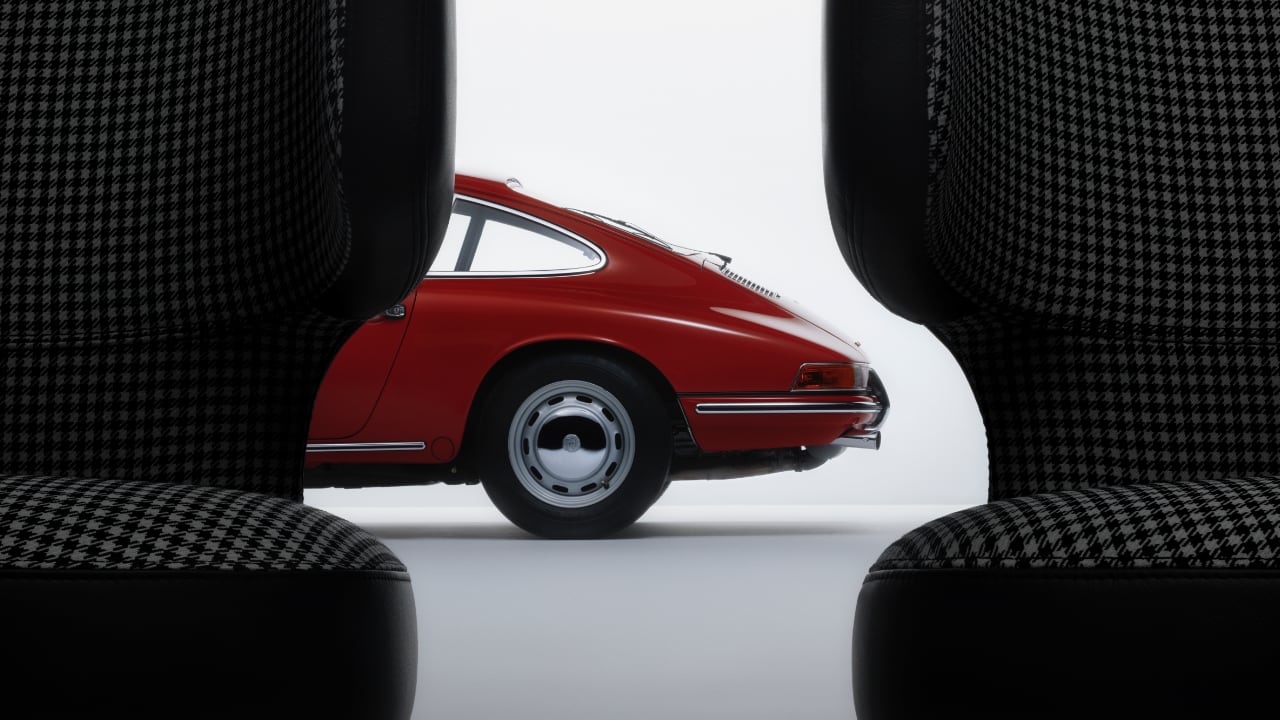
The Porsche Pepita Edition by Vitra represents a masterful integration of automotive heritage and contemporary design, where each piece fulfills a functional role and also carries a legacy of innovation and timeless design as it finds a place in homes and offices. Vitra’s limited release of iconic chairs, such as the ‘Eames Plastic Side Chair,’ ‘ID Trim L,’ and ‘Petit Repos,’ show the synergy between traditional craftsmanship and modern aesthetics. This houndstooth pattern, a long-standing feature in Porsche interiors since 1965, symbolizes a tradition of exceptional craftsmanship and aesthetic finesse.

Designer: Porsche x Vitra Collab

First introduced in the interiors of Porsche vehicles in the 1960s, the Pepita fabric is a distinctive duotone checkered pattern that resembles abstract four-pointed shapes. It is often rendered in black and white, though it can be incorporated through a specific weaving process that interlaces two contrasting colors to create a visually striking and uniquely recognizable broken check pattern. Pepita fabric has become synonymous with high quality and sophisticated taste.

Initially featured as upholstery in the iconic Porsche 911 models, the rarity of Pepita fabric has increased as fewer manufacturers choose to undertake the labor-intensive production of true houndstooth weaves. This scarcity has made genuine Pepita a coveted element in both the automotive and interior design sectors. Vitra’s reintroduction of this fabric through limited edition pieces revives a classic style and maintains its exclusivity, making it highly treasured among collectors. The combination of its limited availability, storied heritage, and intricate aesthetics solidifies Pepita fabric’s status as a rare and distinctive feature across design and automotive history.

In the 1960s, the introduction of the iconic 911, launched in 1963, exemplified Porsche’s commitment to combining performance with sophisticated comfort. The interior design focused on functionality and luxury, resonating with discerning customers through the use of durable and tactile materials like leather and the stylish Pepita fabric for seat coverings. The clean and driver-oriented dashboard design emphasized ease of use and clear visibility of essential instruments, with the tachometer centrally positioned to align with Porsche’s performance-driven philosophy. Subdued color schemes of blacks, greys, and browns dominated, though brighter colors were also available, reflecting personal preferences and the vibrant styles of the 60s.

The unveiling at the ‘The Art of Dreams’ event in Milan highlights the seamless integration of innovation and design excellence between Vitra and Porsche. The collection prioritizes exclusivity, mirroring significant Porsche models and milestones, such as the ‘Eames Plastic Side Chair Pepita Edition’, limited to 1,963 pieces to commemorate the year Porsche introduced the Pepita option in its 911 model. These chairs are more than functional items; they are collector’s pieces that echo the narratives of their creators and pivotal moments in both design and automotive history, celebrating a rich heritage and the evolution of design.

The post Reviving Elegance in Design – The Porsche Pepita Edition by Vitra Blends Classic and Modern Mastery first appeared on Yanko Design.

ASUS ROG Zephyrus G16 (2024) review: Not just for gamers

ASUS’ latest 14-inch gaming laptop is an incredibly versatile and stylish all-rounder. But for those who want something even beefier, there’s the ROG Zephyrus G16. Not only does it feature a more powerful Intel Core Ultra 9 CPU, it supports up to NVIDIA RTX 4090 graphics cards. That’s not all. Its OLED display refreshes twice as fast at 240Hz and it has surprisingly good speakers as well as a full-size SD card reader for quickly transferring files from a camera. So despite being aimed at gamers, the G16 is better equipped to serve as a portable editing rig, which makes this a great system even for people who don’t care about bunny-hopping and fragging.

Design

The G16’s new all-aluminum chassis is simply fantastic. That’s because in addition to being a touch lighter (about 0.1 pounds) and thinner (about 0.2 inches) than the previous model, it feels even sturdier. For 2024, ASUS ditched the dot matrix display on its lid for a single diagonal slash with white (not RGB) LEDs running down the center, which gives the laptop a much more sophisticated look without becoming boring. It’s like a teenager who grew up and learned to dress properly without losing touch with their gamer roots. On the inside, there’s a backlit keyboard with rainbow lighting (though it’s single-zone and not per-key) flanked by some surprisingly punchy speakers with an absolutely massive touchpad below. All told, it’s a beautifully designed system that looks as good as it feels.

ASUS has also included the right blend of connectivity options. The G16 features two USB 3.2 Gen 2 Type-A slots, two USB-C ports (one of which supports Thunderbolt 4), HDMI 2.1, a full-size SD card reader and a 3.5mm audio jack. This is the kind of arrangement that lets you travel freely without needing to worry about extra dongles or adapters. Plus, thanks to ASUS’ new Slim Power Jack, you don’t have to hog any other ports while charging. And in a pinch, you can also juice up the G16 via USB-C, albeit at slower speeds (up to around 100 watts) than with the included 240-watt brick.

Display

The G16’s 2.5K (2,560 x 1,600) OLED screen might be the best component here. It’s vivid and supports a huge color gamut (100 percent of DCI-P3), while its 240Hz refresh rate makes it great even for gamers looking to squeeze out every last competitive advantage. Though brightness is just average at around 400 nits in standard definition mode or 450 nits in HDR, I didn’t really have any trouble seeing the screen unless the G16 was in direct sunlight. One last bonus for photo and video editors is that ASUS does include a few calibrated viewing modes in its Armoy Crate app for sRGB, D65 P3 and DCI-P3 so you can more accurately adjust hues or color grade footage.

Performance

The ASUS ROG Zephyrus G16's 240Hz OLED display might be one of its best components thanks to vibrant colors and a handful of calibrated presets for photo and video editing.
Photo by Sam Rutherford/Engadget

The G16’s performance is pretty solid thanks to an Intel Core ultra 9 195H CPU, up to 32GB of RAM, 2TB of storage and NVIDIA RTX 4090 graphics. However, here’s where some trade-offs for the G16’s slim chassis factor in. Compared to similarly-sized rivals like the Razer Blade 16, the G16 features a lower overall TDP (total device power), which means even if they appear to have the same listed components, there’s still a difference in capabilities. For example, on our review unit with an RTX 4080, the amount of power sent to the GPU caps out at 115 watts versus 175 watts for the Razer. The G16's RAM is also soldered in, so you can't add more post-purchase. 

In Cyberpunk 2077 at 1440p and ultra graphics with ray-tracing on, the G16 hit 68 fps, which is just barely ahead of what we saw from a smaller Razer Blade 14 (66 fps), despite the latter having a lower tier RTX 4070 but with a similar wattage. That said, those figures are more than adequate to keep AAA games running smoothly. And let's not forget that the Blade 14 model I referenced costs $2,700, which is the same price as our G16 review unit. This makes it an apt comparison even if Razer’s laptop has a smaller footprint.

Battery life

The ASUS ROG Zephyrus G16 has a great selection of ports including two USB 3.2 Gen 2 Type-A slots, two USB-C ports (one of which supports Thunderbolt 4), HDMI 2.1, a full-size SD card reader and a 3.5mm audio jack.
Photo by Sam Rutherford/Engadget

One of the main advantages of a larger system is having extra room for a bigger battery. On PCMark 10’s Open Office rundown test, the G16 lasted 9 hours and 17 minutes versus just 5:12 for the smaller G14. That’s a solid mark considering it’s also better than an XPS 16 (8:31) we reviewed. However, overall longevity depends on your workload, because when I ran the battery test a second time only using the GPU instead of relying on NVIDIA’s Optimus graphic switching feature, that time dropped to just 3:08. That means the system will last all day if you’re using basic productivity app, but for more demanding tasks like gaming or video editing, you’ll want to keep ASUS’ 240-watt power brick close by.

Wrap-up

The ASUS ROG Zephyrus G16 has a spacious keyboard and a massive touchpad. We just wish it had per-key RGB lighting instead of a single-zone setup.
Photo by Sam Rutherford/Engadget

Just like its smaller sibling, ASUS’ ROG Zephyrus G16 is an almost ideal thin-and-light gaming laptop. It’s got a sleek all-aluminum build, a gorgeous 240Hz OLED display and longer battery life. Granted, it might not be quite as powerful as some of its rivals thanks to lower-wattage components, but it’s still got enough oomph to handle practically anything you can throw at it. And thanks to a full-size SD card reader, it makes for an even better portable editing workstation. But most importantly, with a starting price of $1,750, the G16 is more approachable than many of its high-end (and bulkier) competitors, which makes it a great pick for people who want a larger system that won’t weigh them down.

This article originally appeared on Engadget at https://www.engadget.com/asus-rog-zephyrus-g16-2024-review-not-just-for-gamers-153001954.html?src=rss

Boston Dynamics unveils an all-electric version of its Atlas robot

When Boston Dynamics announced on Tuesday it was retiring the hydraulic version of Atlas, there were a few hints that the company wasn't done with humanoid robots entirely. Sure enough, one day later, Boston Dynamics has unveiled an all-electric model.

Atlas was originally envisioned as a search-and-rescue robot and Boston Dynamics claims the latest model is designed for real-world applications. It calls Atlas "the world’s most dynamic humanoid robot" and it certainly looks limber. 

A video shows Atlas lying prostrate and flipping its feet over to push itself up into a standing position. The robot then turns its head 180 degrees, followed by its torso. The rotations of the legs and the rest of the body are a little unnerving, but it's an impressive display of balance and flexibility. 

The electric Atlas appears sleeker than its predecessor, which looked slightly like a person wearing an exosuit. Rather than having a face with human features, Atlas' featureless head looks a bit like a ring light.

Boston Dynamics says parent company Hyundai's next generation of automotive manufacturing tech is the "perfect testing ground for new Atlas applications." It plans to show off what the robot can really do over the coming months and years, and to put Atlas through its paces with a small group of partners at first.

The company is looking into new gripper systems to make sure Atlas is suitable for a range of commercial needs while building on the previous parkour-capable model's ability to lift and move a variety of heavy and irregular objects. It claims that the new Atlas will be stronger than before and it's confident that it can commercialize a humanoid robot.

"Atlas may resemble a human form factor, but we are equipping the robot to move in the most efficient way possible to complete a task, rather than being constrained by a human range of motion. Atlas will move in ways that exceed human capabilities," Boston Dynamics wrote in a blog post. "Combining decades of practical experience with first principles thinking, we are confident in our ability to deliver a robot uniquely capable of tackling dull, dirty and dangerous tasks in real applications."

Boston Dynamics is hardly the only company working on a humanoid robot. Tesla, of course, has one in the pipeline, while Menteebot, which can be controlled using natural-language voice commands emerged just this morning. 

However, Boston Dynamics has been working on robots with this form factor for well over a decade, far longer than most. As things stand, it may be best positioned to get a humanoid robot into workplaces and even homes. Before that though, you might expect to see some videos in which the electric Atlas shows off some slick dance moves.

This article originally appeared on Engadget at https://www.engadget.com/boston-dynamics-unveils-an-all-electric-version-of-its-atlas-robot-151513244.html?src=rss

Cozy cat sim Little Kitty, Big City arrives for consoles and PCs on May 9

After the massive success of Stray, the world has been crying out for another big game about cats. Well, our pleas have been answered. The cozy cat sim Little Kitty, Big City will be available for download on May 9 for multiple platforms, including the Switch, Xbox One, Xbox Series X/S and PC via Steam. It costs $25 and preorders are available now, with Switch owners getting 10 percent off for the time being. It’s also a Game Pass day one release.

There’s a new trailer, which was revealed at Nintendo’s latest Indie World Showcase event. It looks very cute. You play as a, duh, cat and explore a Japan-inspired city, getting into mischief and wearing a bunch of costumes. It’s a cozy game, so don’t expect any bloodthirsty cyberpunk ruffians to chase you around town.

The cel-shaded visuals are adorable and the “mini-open-world” looks like its filled with stuff to do, people to annoy and sun-soaked spots to take a good nap. We’ll never fully understand what goes on in the brains of our favorite felines, they are aliens after all, but this game will at least give us some time in their shoes/paws.

The developer is a company called Double Dagger Studio, which was started by veteran game designer Matt T. Wood, who spent nearly two decades honing his craft at Valve. He worked on a whole bunch of games that seem to be the polar opposite of a cat sim, like Left 4 Dead, Portal 2 and CS:GO. Despite this pedigree, Little Kitty, Big City features no combat and has been likened to classic stories like Alice in Wonderland and The Wizard of Oz.

This article originally appeared on Engadget at https://www.engadget.com/cozy-cat-sim-little-kitty-big-city-arrives-for-consoles-and-pcs-on-may-9-145650339.html?src=rss