The Raspberry Pi Foundation has provided new insights into the development of the Raspberry Pi 6, offering a clearer picture of the challenges and decisions shaping its release. According to Jeff Geerling, the next-generation single-board computer has been delayed until at least early 2028, primarily due to global DRAM shortages and rising production costs. Despite […]
All-in-one computers have always promised clean desks, but they rarely deliver a truly minimal presence. Traditional AiOs hide their processors inside their displays, and those chips generate enough heat to demand substantial cooling, adding bulk to what should be a space-saving device. The result is often a thick, monitor-shaped box that makes you wish the cables were the only problem.
ASUS’s answer to that problem isn’t a slimmer chassis on paper, but a different processor choice entirely. The V400 AiO is the first all-in-one PC built on Qualcomm’s Snapdragon X platform, an ARM-based chip with mobile roots. Because it runs more efficiently than conventional desktop processors, it generates less heat, which means the cooling system can shrink significantly, and so can everything around it.
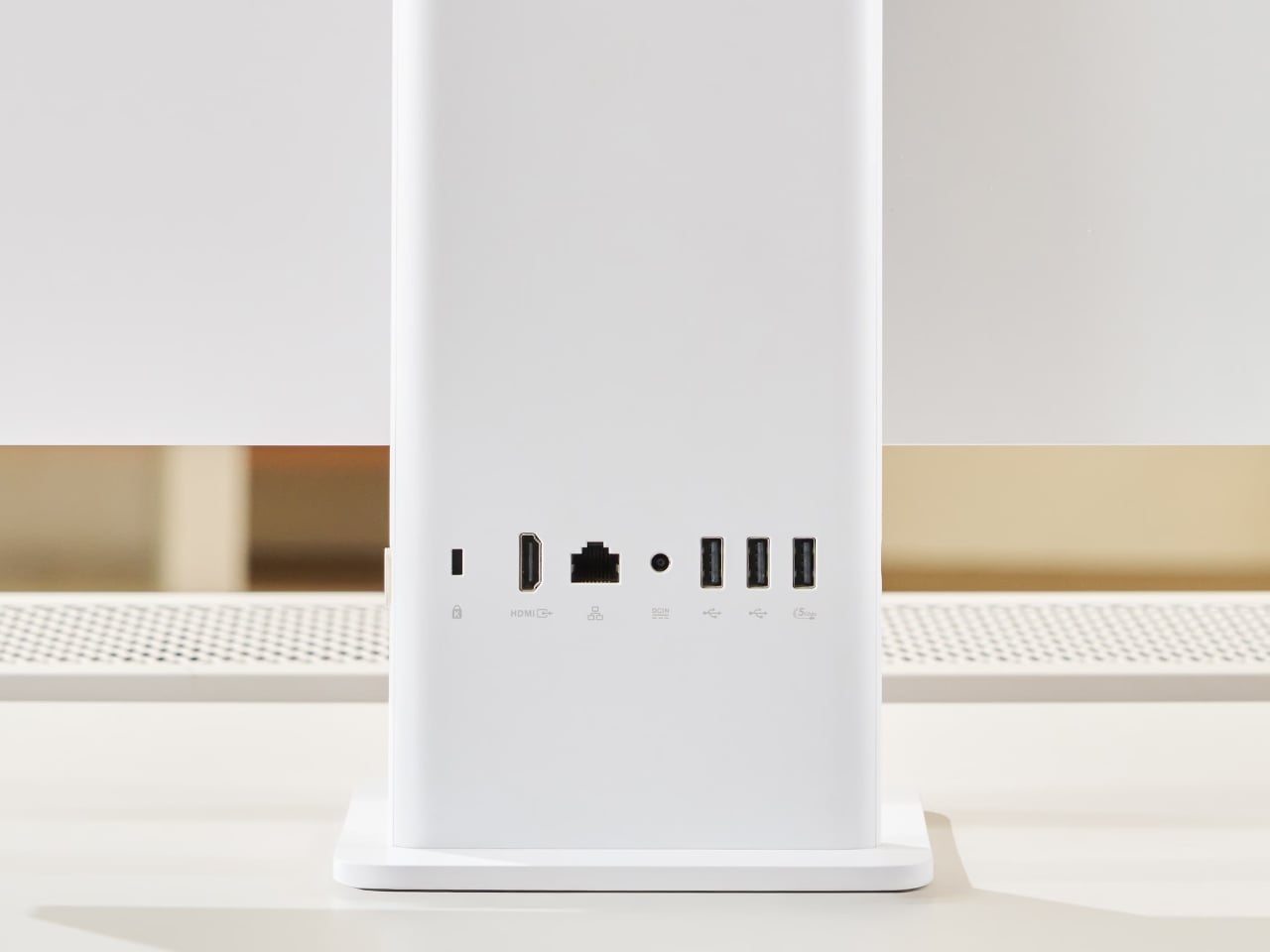
The lean stand and uncluttered rear panel make the V400 AiO look more like a monitor than a desktop. In a living room or study doubling as a homework station, it doesn’t demand attention the way a traditional AiO does. The quieter cooling helps too; no loud fans cycling up during video calls or while someone streams in the next room.
The 23.8-inch Full HD IPS display supports touch input and covers the full sRGB color gamut, making it comfortable for both casual browsing and creative work. With up to 32 GB of LPDDR5X memory and up to 1 TB of PCIe 4.0 SSD storage, it handles simultaneous tasks without hesitation. The 5-megapixel IR camera gives video calls a cleaner look than most built-in webcams manage.
The Snapdragon X’s 45 TOPS NPU qualifies the V400 AiO as a Copilot+ PC, meaning it runs Microsoft’s on-device AI features without routing anything through the cloud. Smart photo management, real-time voice processing, and intelligent assistance all happen locally, keeping personal data off third-party servers. For a machine that’ll likely sit in a shared family space, that kind of privacy has practical appeal.
Dolby Atmos handles the audio, which makes a difference when the V400 AiO doubles as an entertainment hub for the family. Connectivity includes HDMI output, USB 3.2 Gen 1 Type-A, and USB-C ports, covering most peripherals without adapters. A wireless keyboard and mouse ship in the box, so the whole setup can be up and running without hunting for extra accessories.
ASUS priced the entry-level V400 AiO at $649.99 in the US, with 16 GB of RAM and a 512 GB SSD. The Indian market gets a 512 GB model at ₹1,01,990 and a 1 TB version at ₹1,11,990. For an all-in-one that doubles credibly as a piece of furniture in a modern room, that starting point asks less than many Intel-powered competitors.
What the V400 AiO makes clear is that the Snapdragon X choice isn’t incidental. The chip’s lower heat output is why the chassis stays slim. Its efficient architecture is why the AI runs locally rather than through a server. Its quiet thermal profile is why it belongs in a living room as much as a home office. The processor determines the design, not the other way around.
The Galaxy Buds 4 are a feature-rich pair of earbuds designed to elevate your audio experience while simplifying everyday tasks. With advanced sound customization, intuitive controls, and seamless connectivity, these earbuds offer a comprehensive solution for both casual listeners and tech enthusiasts. The video below from GregglesTV explores the most practical features of the […]
The uncertain US release of the DJI Pocket 4P has sparked discussions about its impact on the compact gimbal camera market. As TechAvid explains, this delay has created an opening for competitors to address the needs of creators seeking reliable alternatives. One standout contender is Xtra Cameras’ Muse 2 Pro, which builds on the strengths […]
The latest review by World of AI examines key developments in the AI field for 2026, focusing on the leaked details of Anthropic’s Claude Opus 4.8 and OpenAI’s GPT-5.6. Claude Opus 4.8 reportedly enhances visual understanding and multi-step reasoning, but its updated tokenizer may result in a 30% increase in token usage. In parallel, GPT-5.6 […]
Apple is reportedly preparing to unveil a new flagship laptop, tentatively named the “MacBook Ultra.” Positioned as a premium addition to the MacBook lineup, this device is expected to introduce advanced technology and a refreshed design, the first significant update in over five years. While its release is anticipated in early 2027, ongoing […]
Bun.Image, introduced in Bun 1.3.14, embeds a high-performance API for server-side image processing directly into the Bun runtime. Unlike traditional methods that depend on external libraries such as Sharp or libvips, Bun.Image performs tasks like resizing, cropping and format conversion natively. According to Better Stack, this approach not only simplifies implementation but also achieves measurable […]
The Samsung Galaxy S27 series marks a pivotal moment in the evolution of flagship smartphones, blending technological advancements with strategic trade-offs. With the Galaxy S27 Pro and Ultra models, Samsung aims to cater to a wide spectrum of consumer needs while addressing the challenges of rising production costs and fierce competition. But how much of […]
The integration of DeepSeek V4 with the Hermes Agent introduces a significant enhancement to open source AI capabilities. By combining a persistent, self-improving framework with advanced reasoning features, this pairing offers a versatile solution for tackling complex tasks. One standout feature is the expansive 1-million-token context window, which enables the system to process intricate, multi-layered […]