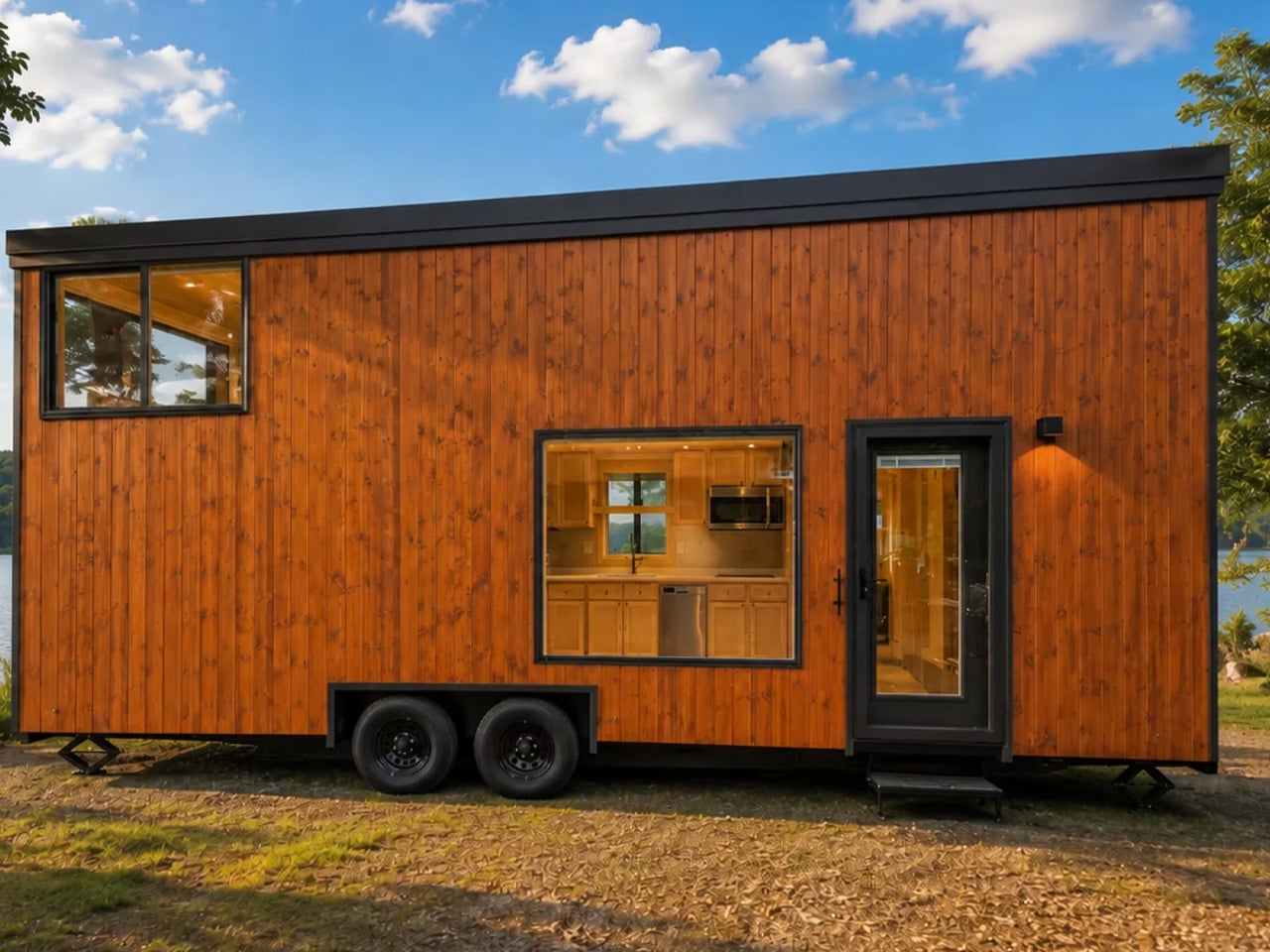
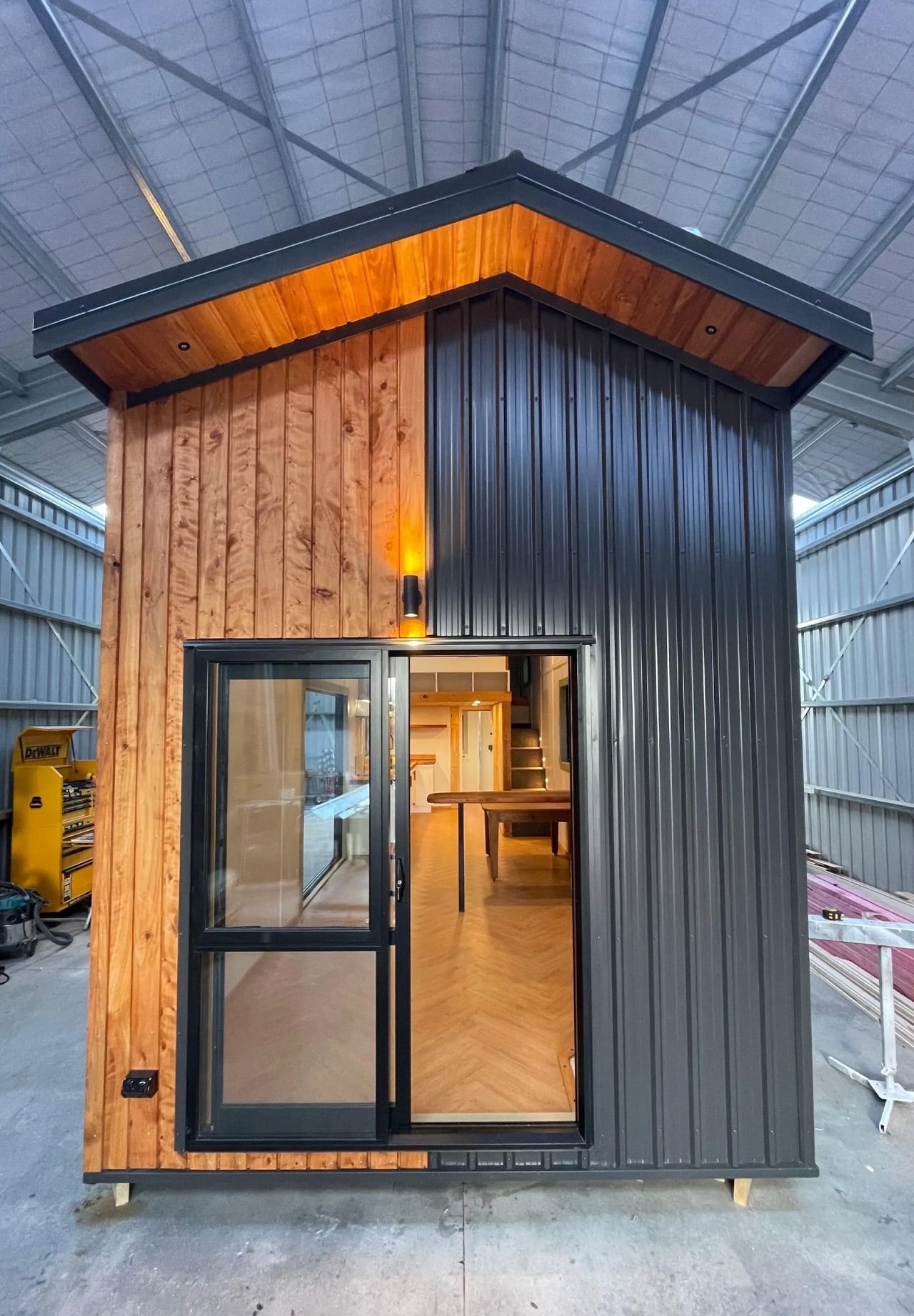
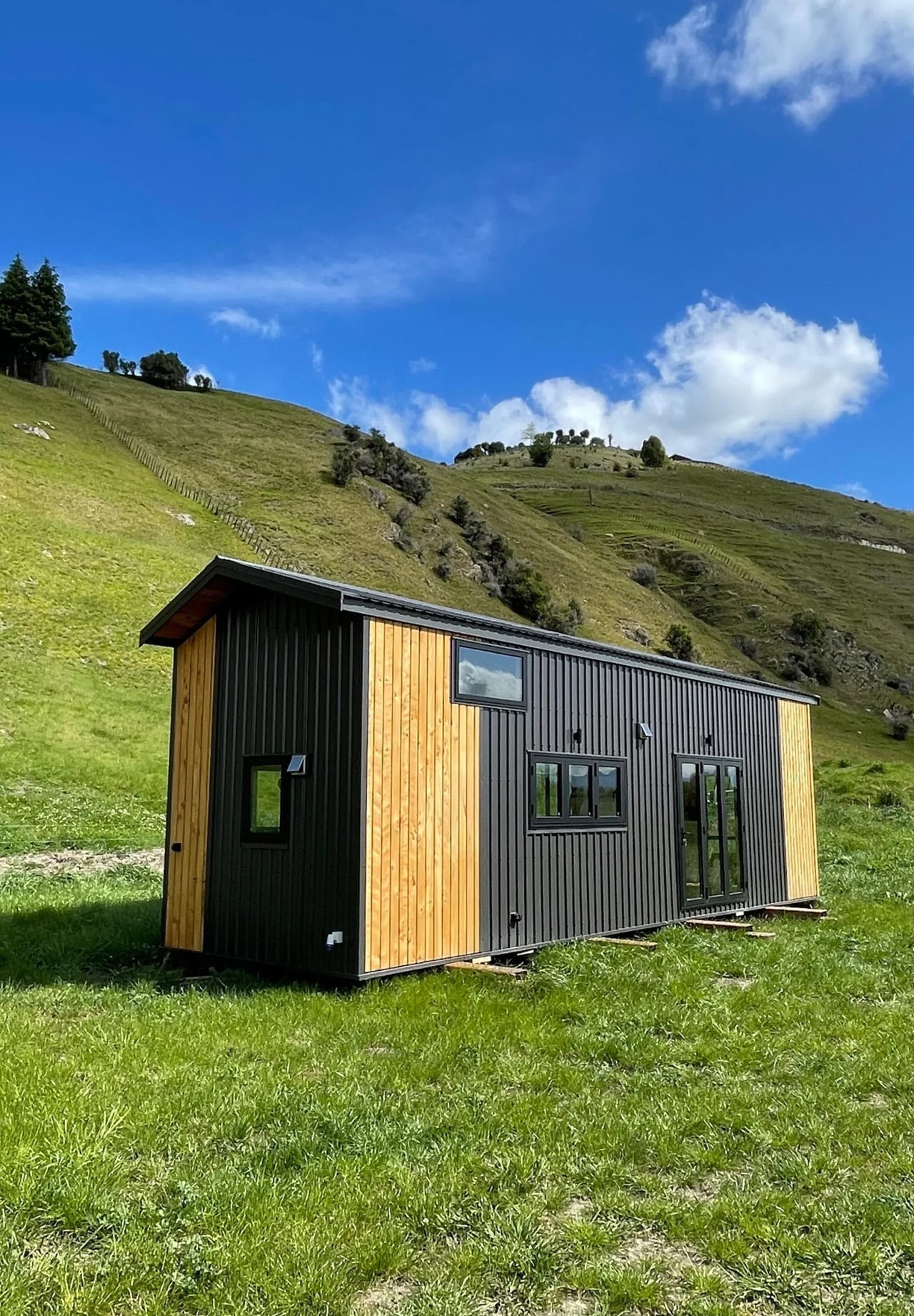
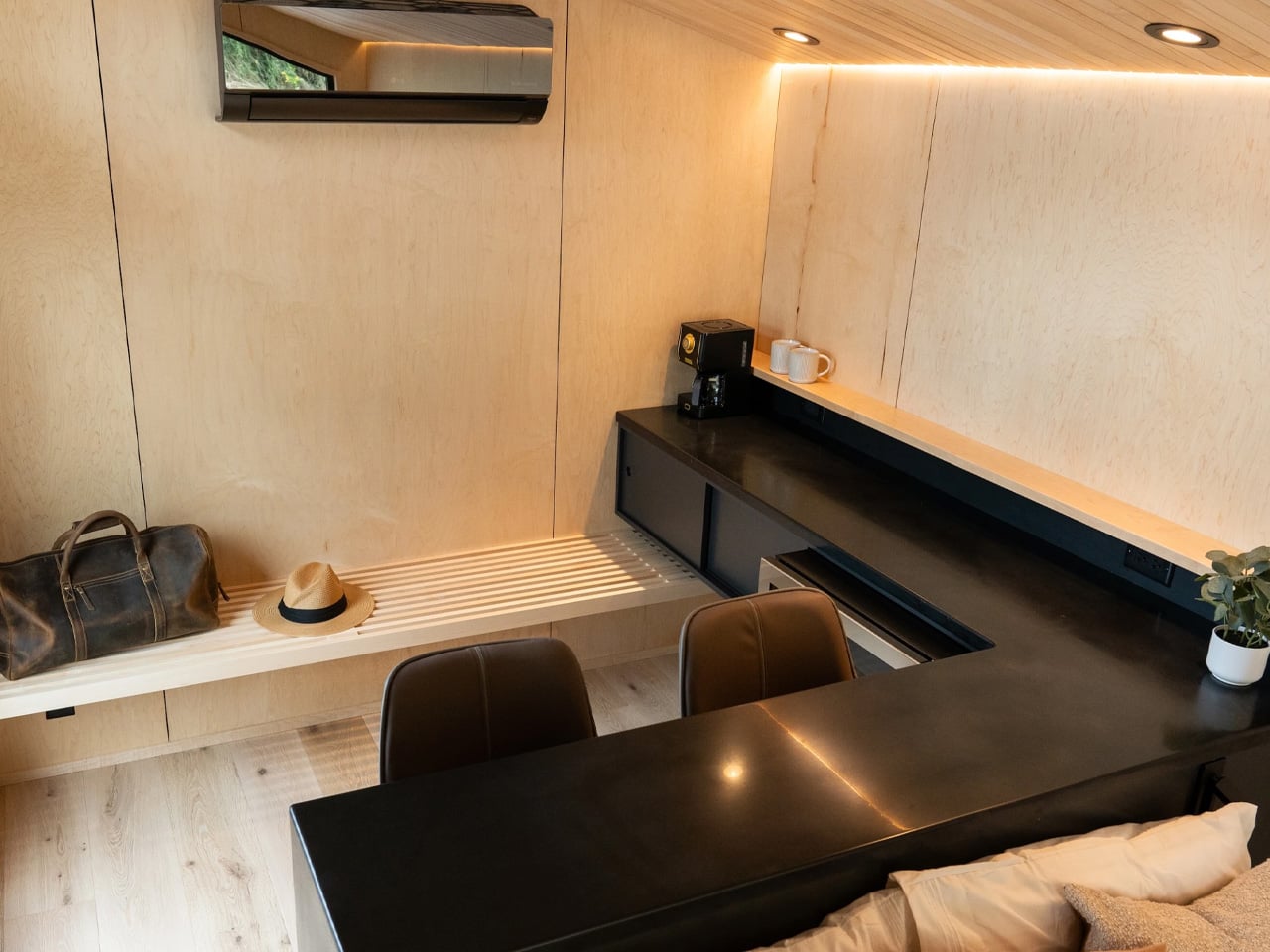
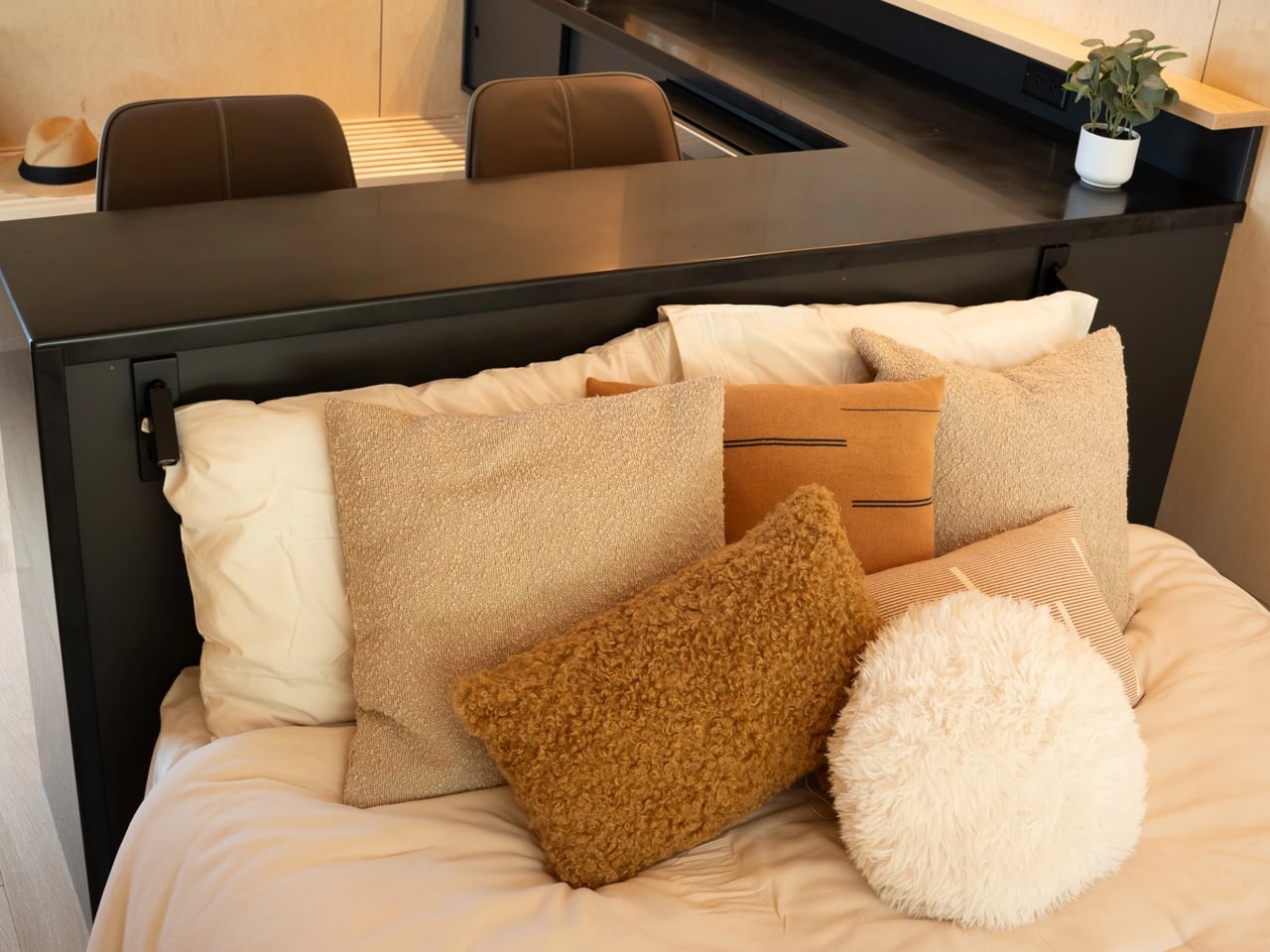
There are plenty of towable tiny houses that look good in a photoshoot. Far fewer are ones you could actually live in. The eONE Limited – Special Edition by Escape is quietly one of the exceptions, and it makes its case not with gimmicks, but with restraint and good decision-making at every turn.
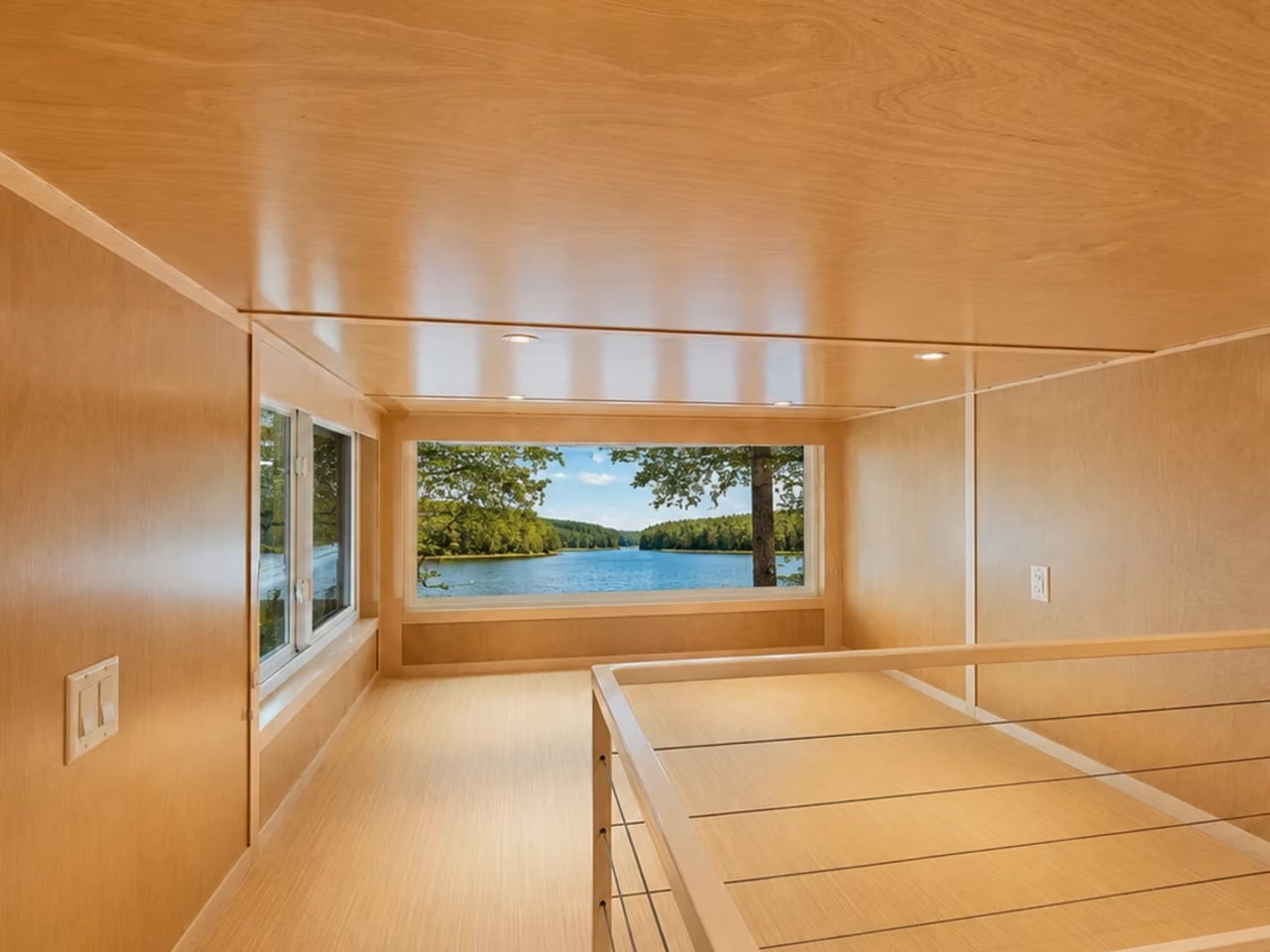
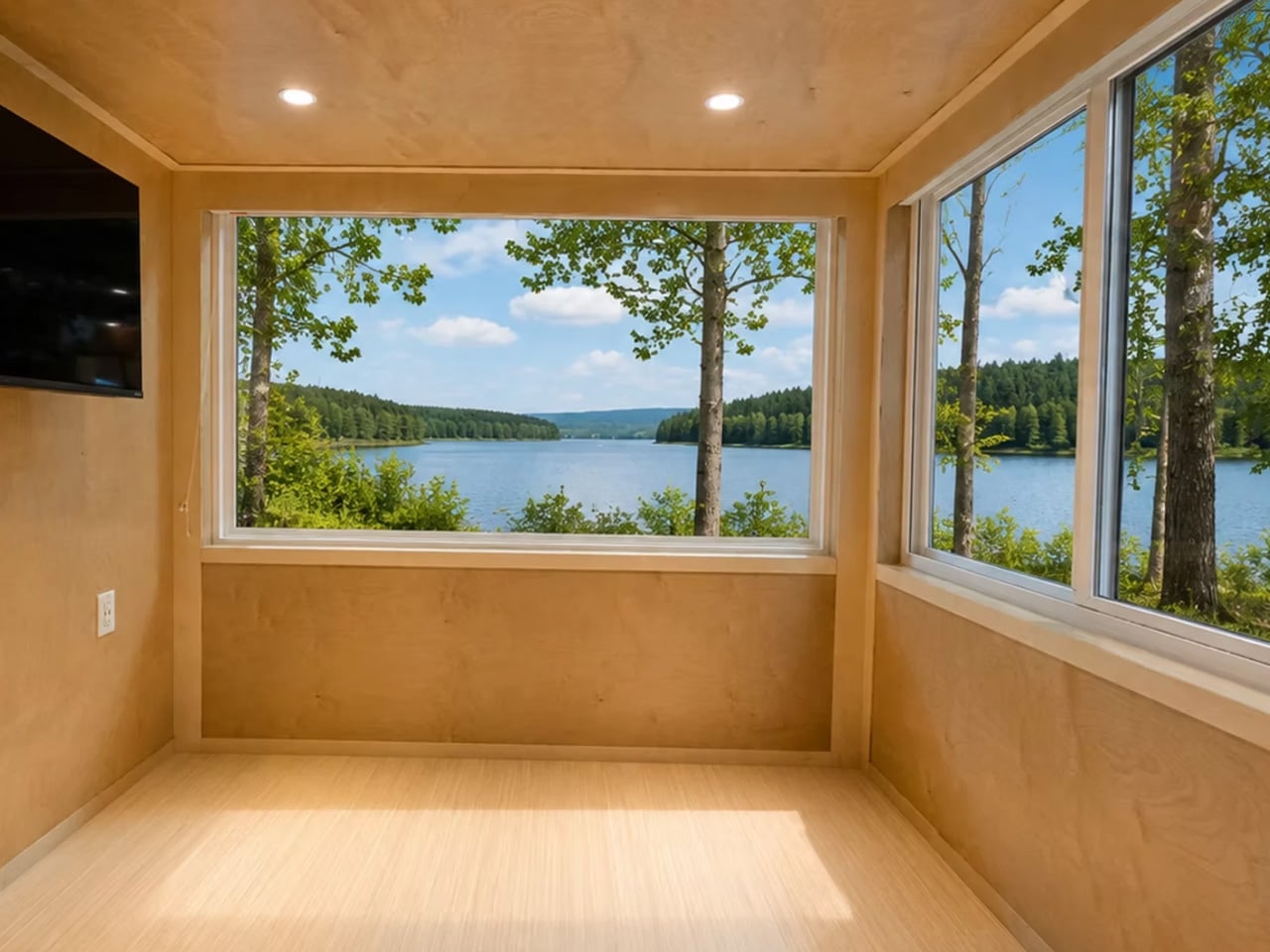
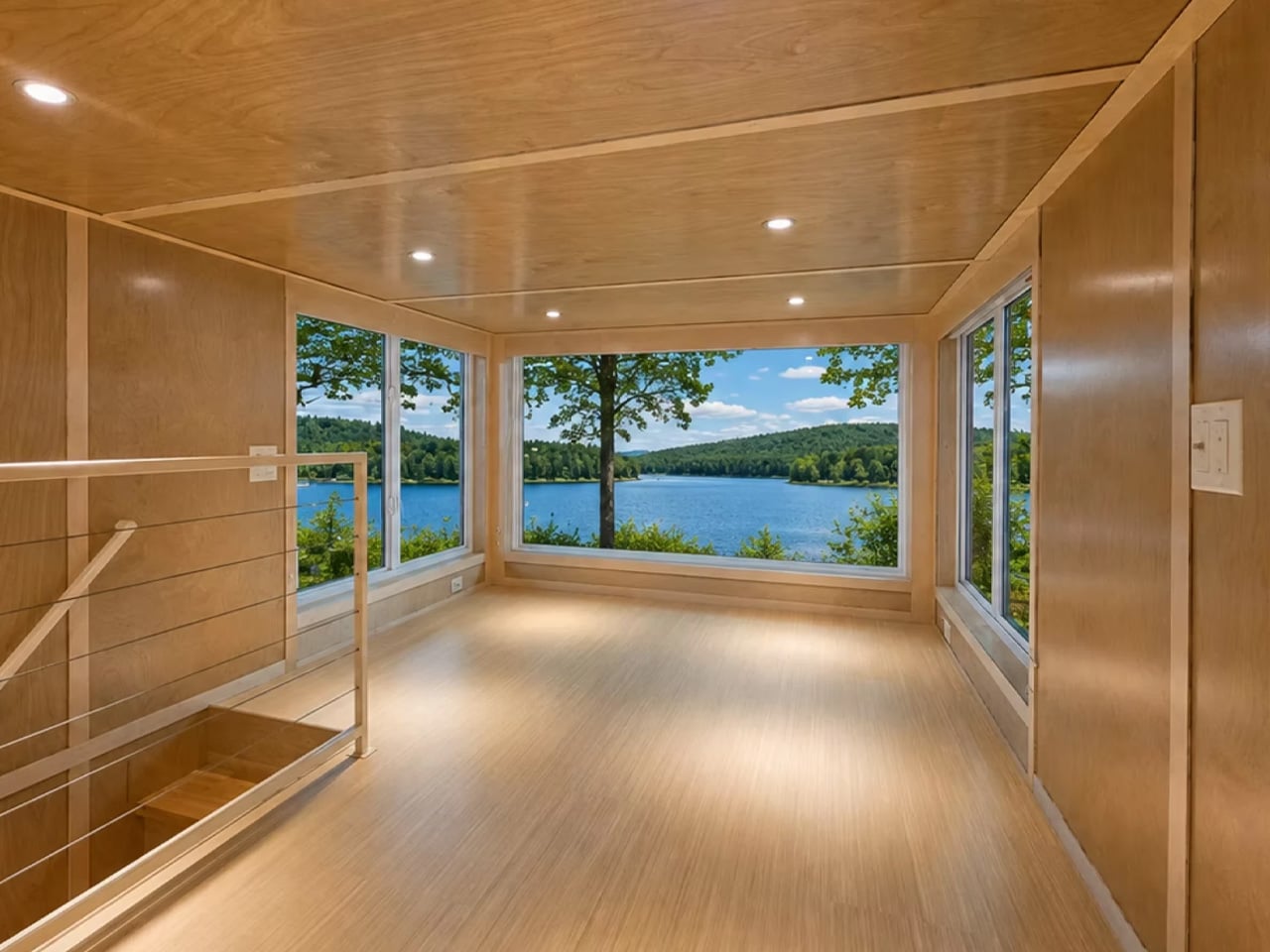
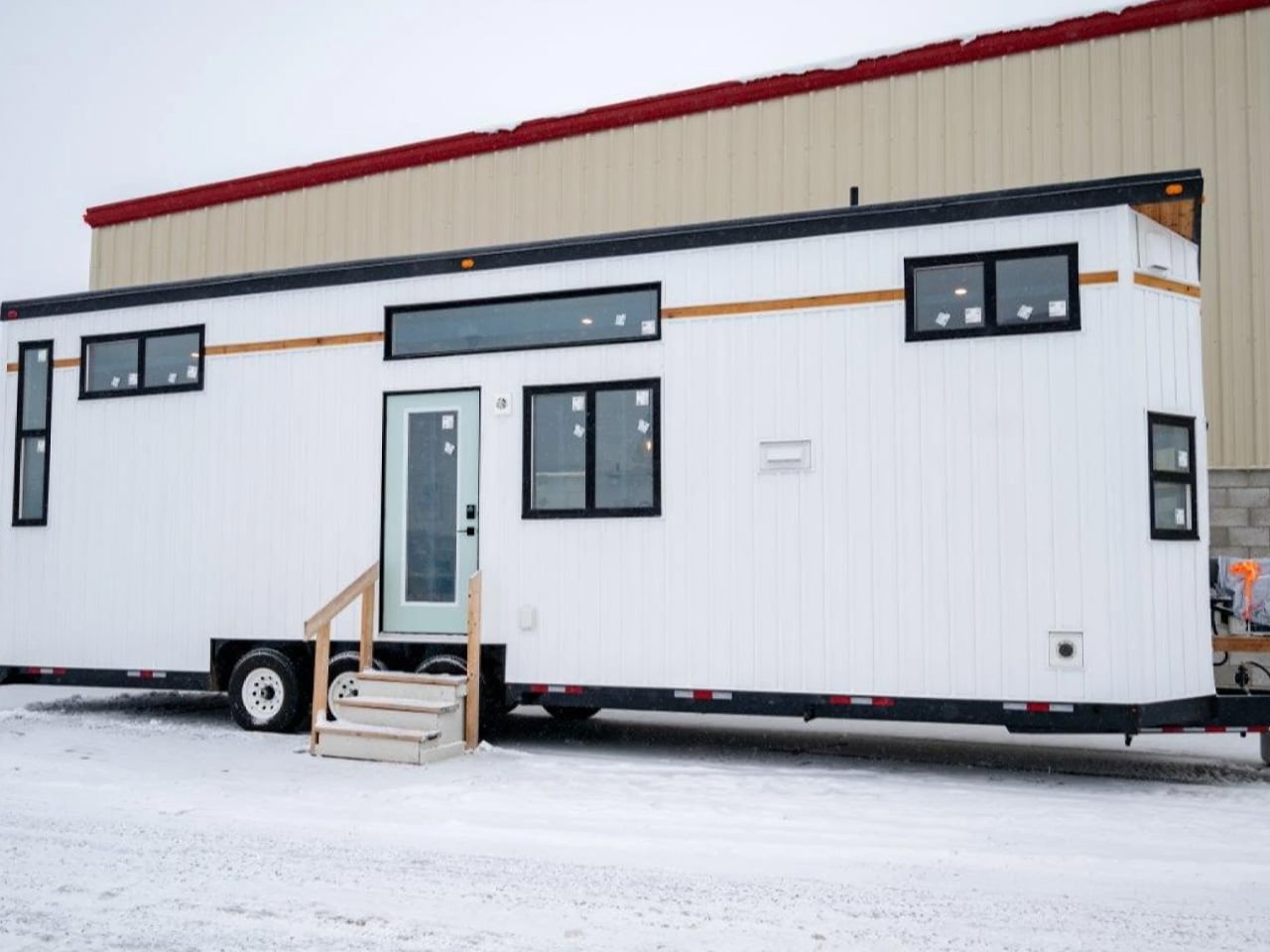
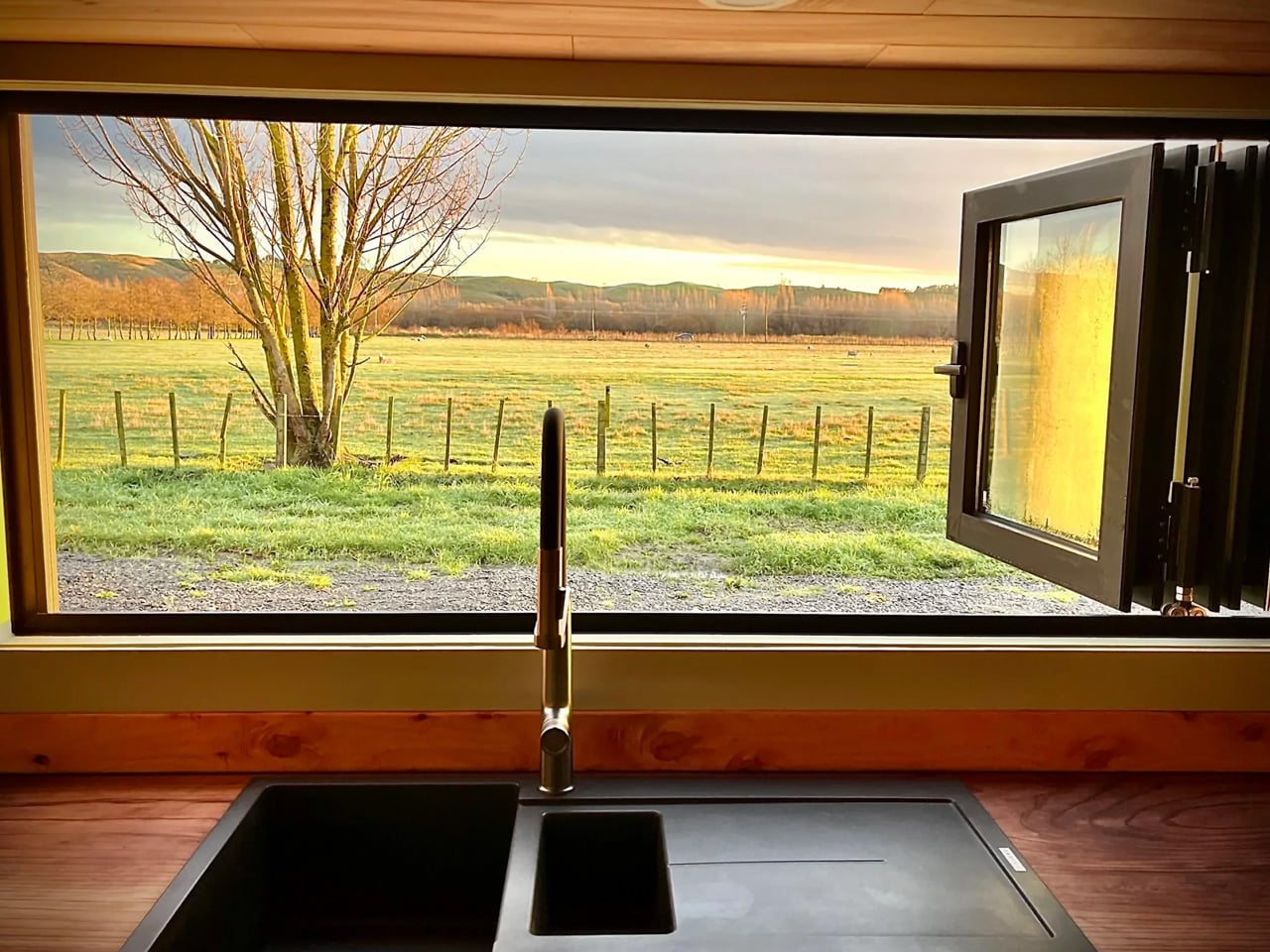
Built on a double-axle trailer and clad in custom-engineered wood siding with a metal roof, the home measures 26 feet long and 8.6 feet wide — compact enough to tow without a special permit, but not so small that you’re constantly rearranging your life to fit inside it. The interior carries Escape’s signature design language: birch-lined walls, an abundance of glazing, and a floor plan that feels genuinely bright rather than aggressively efficient. The floor-to-ceiling glass on the second floor is the standout move — it floods the upper level with light and keeps the whole structure from reading as a box.
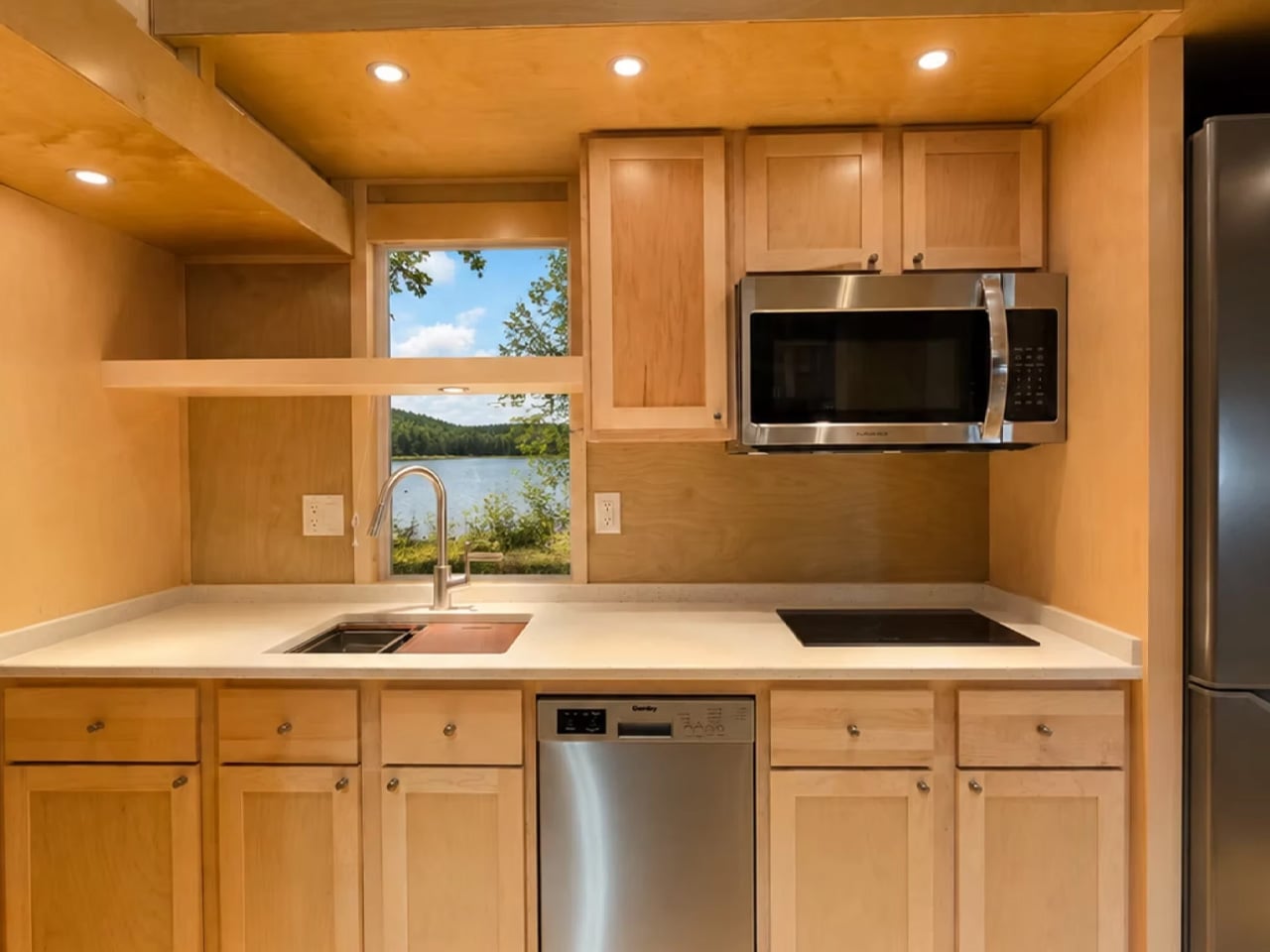
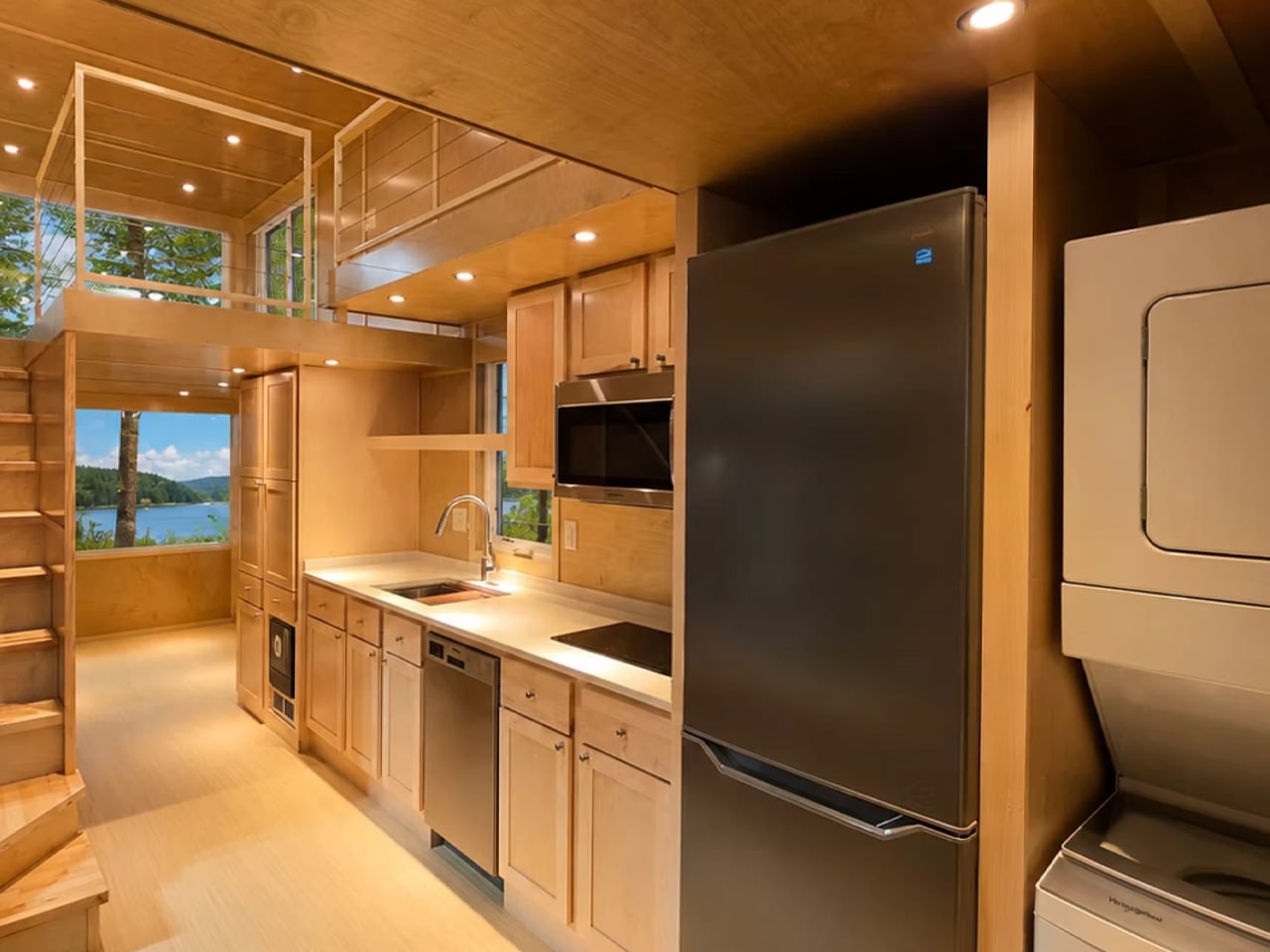
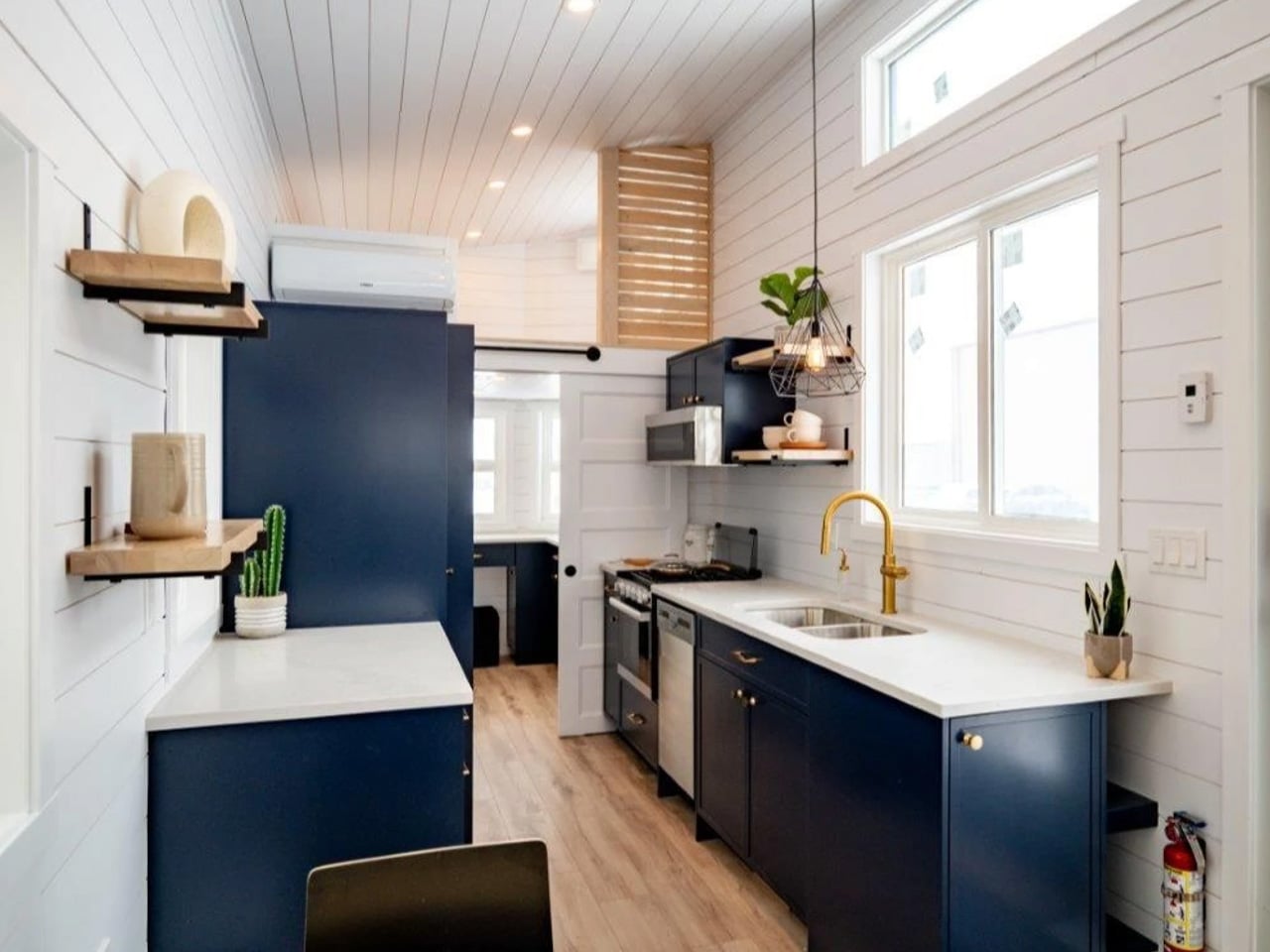
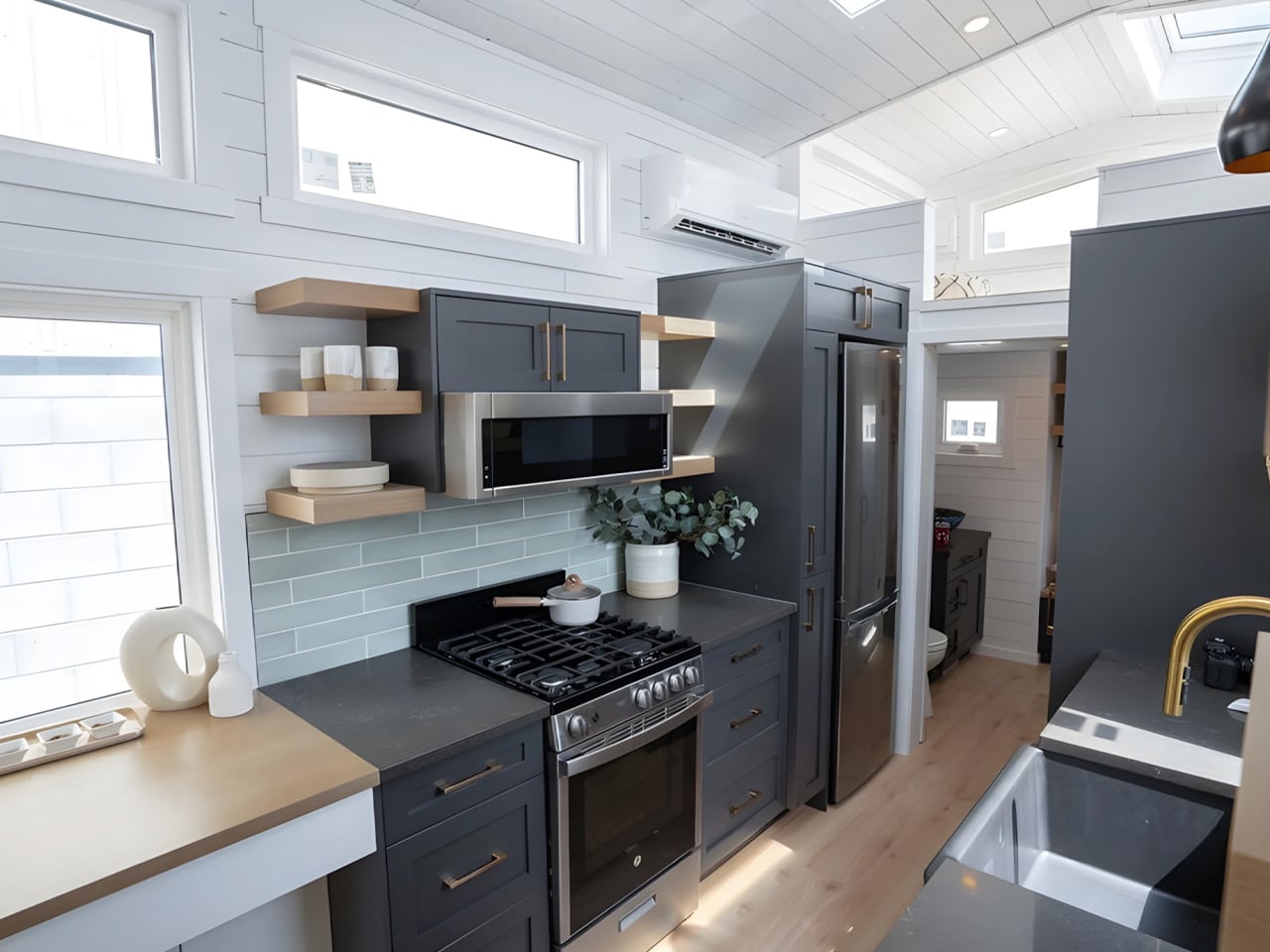
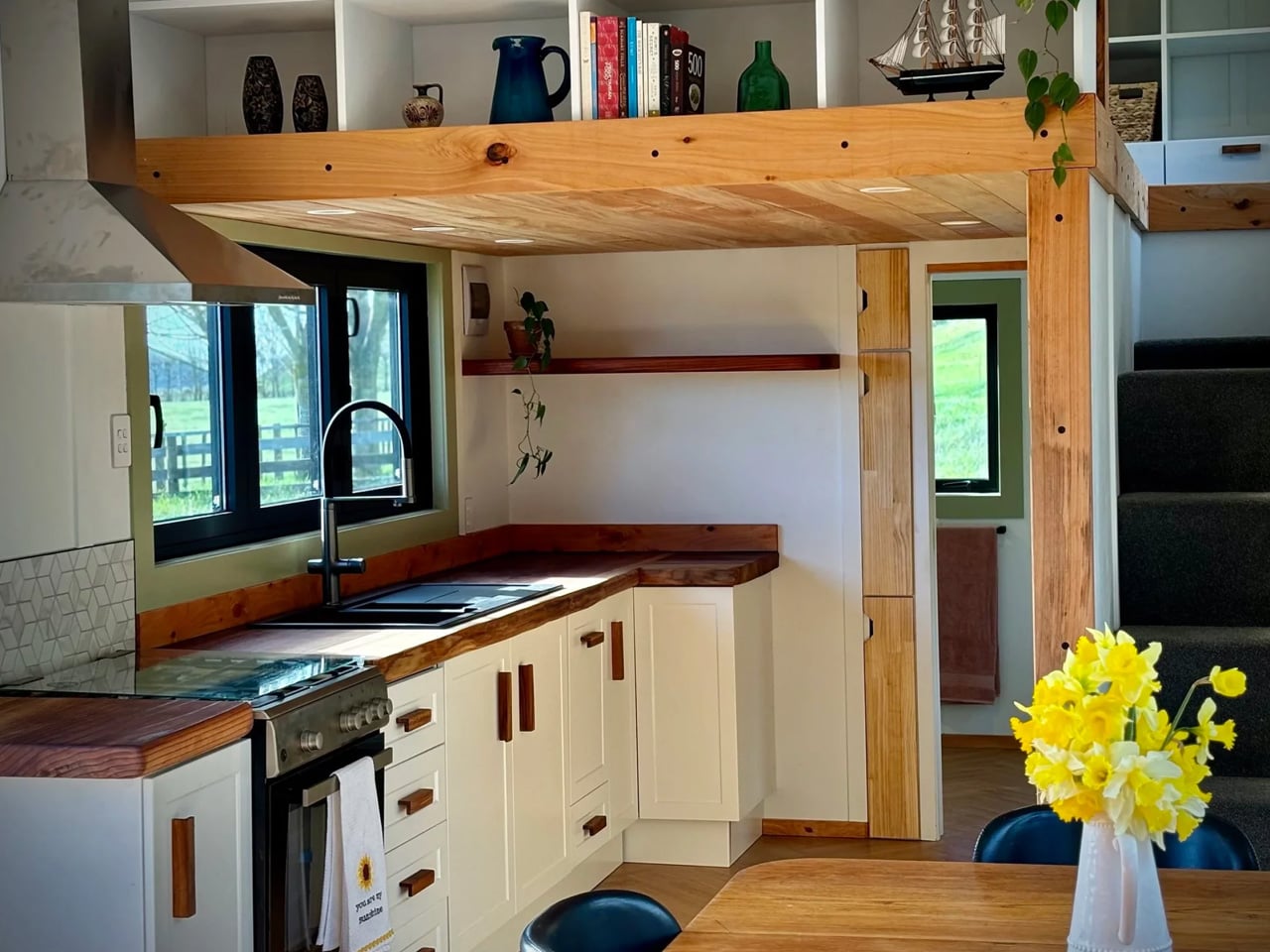
What makes this the Limited edition are the upgrades Escape doesn’t typically bundle into the base eONE. The kitchen arrives fully loaded: induction cooktop, combination microwave and convection oven, a tall fridge and freezer, a large deep sink, a dishwasher, and a stacked washer and dryer — all behind a quartz countertop with generous cabinetry. In most tiny houses, you’re choosing between a dishwasher and usable counter space. Here, you don’t have to choose. A storm and screen door, modern cable rail detailing, and window coverings round out the details that separate the Limited from a standard build.
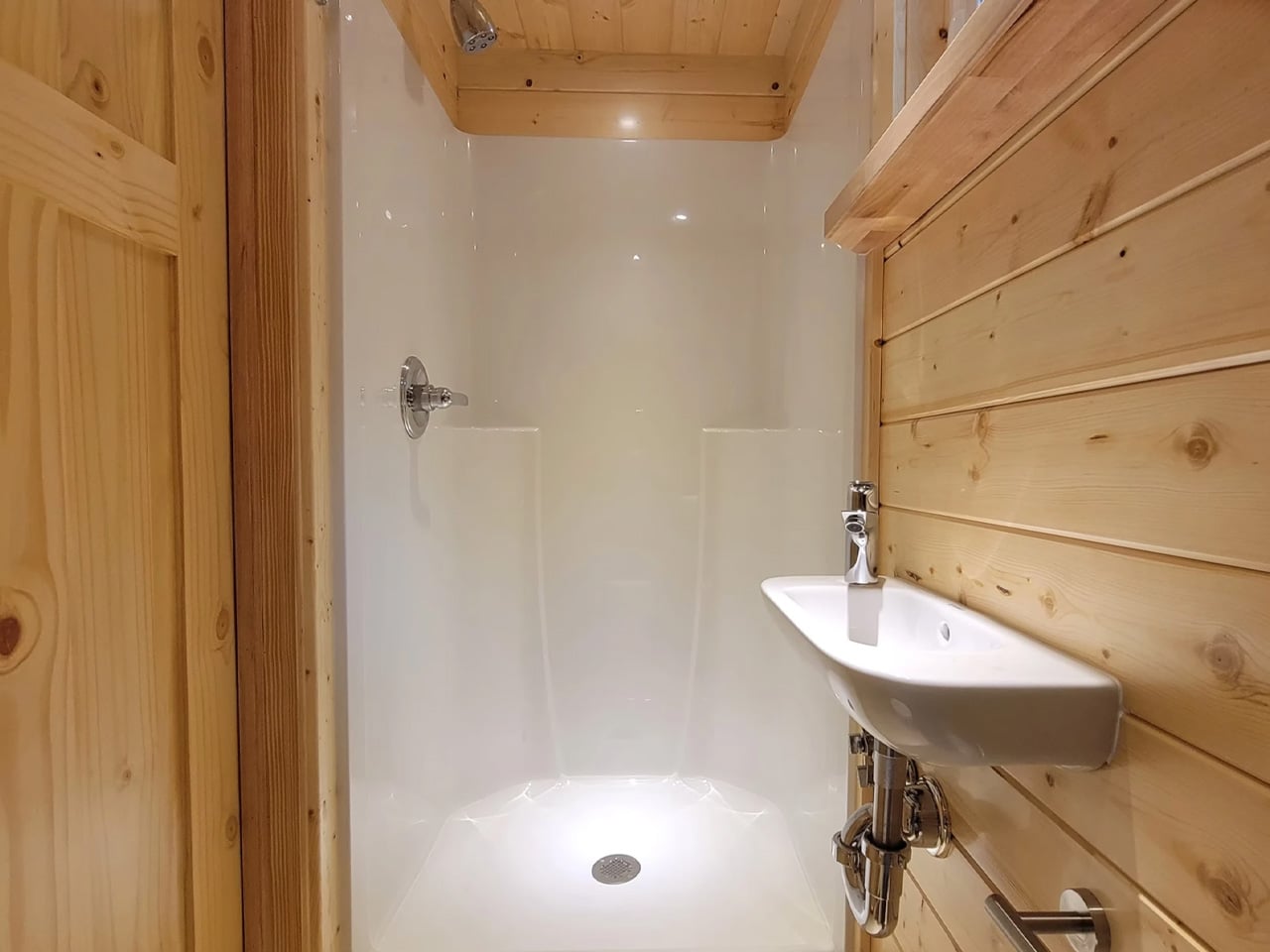
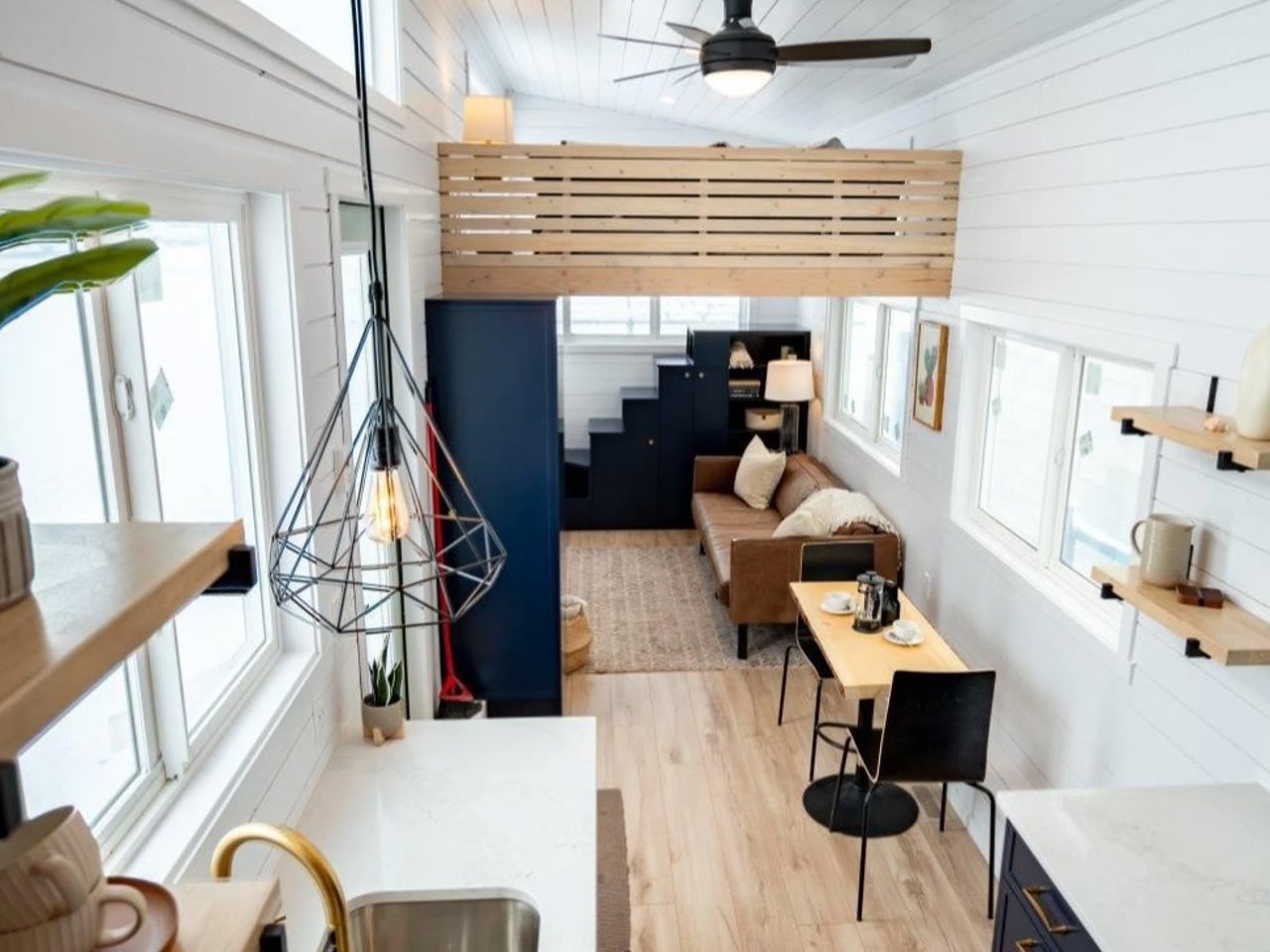
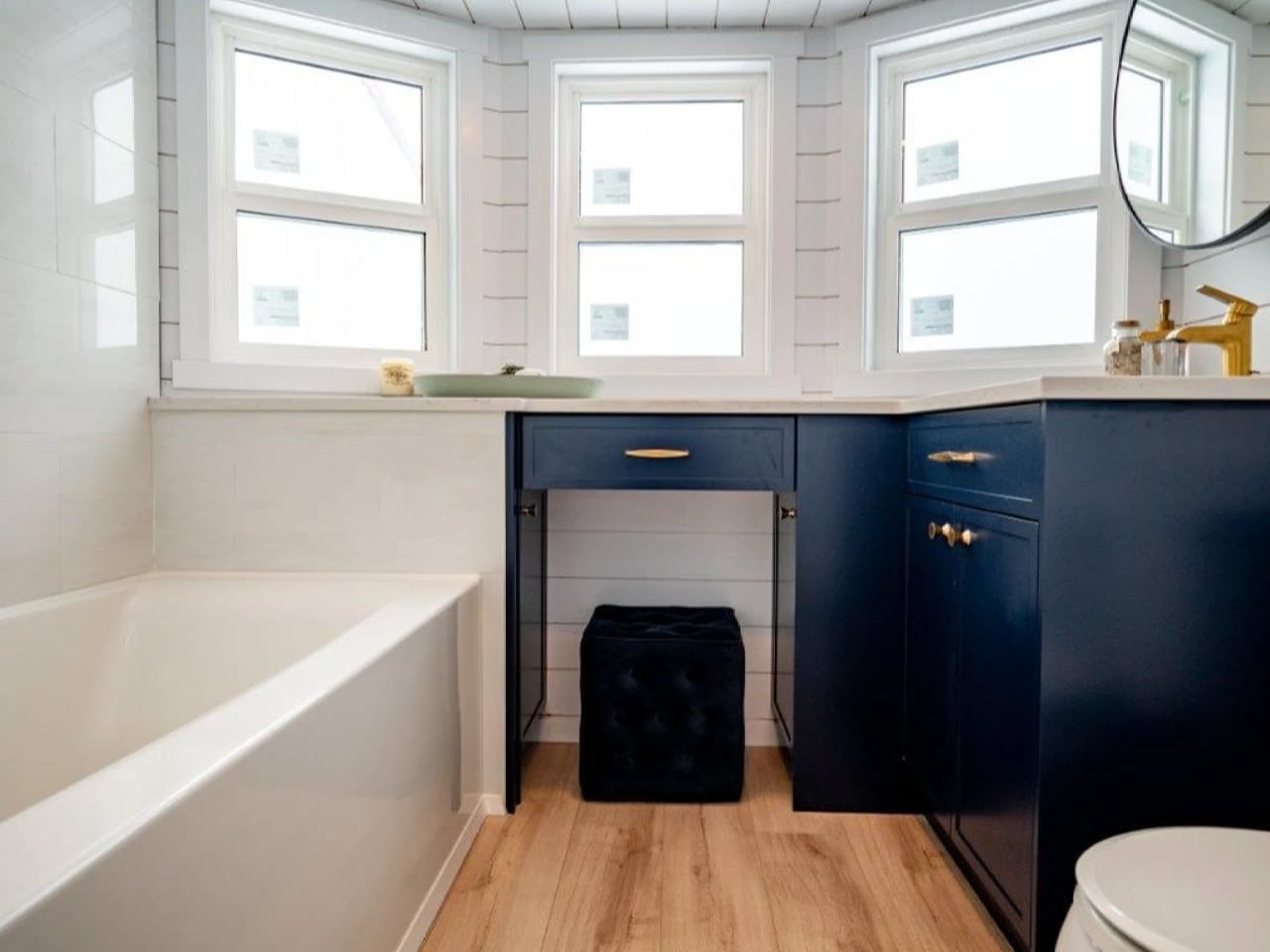
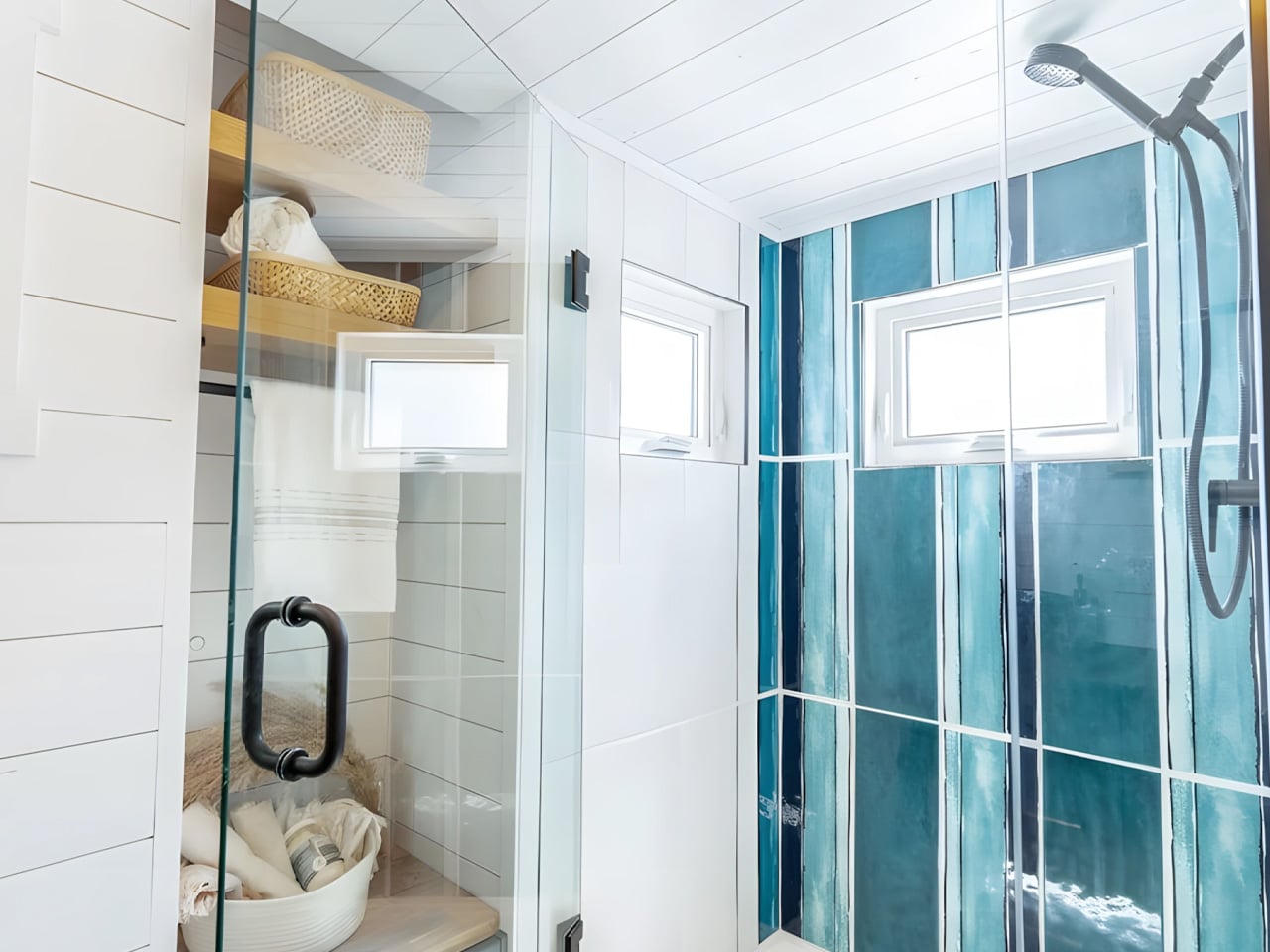
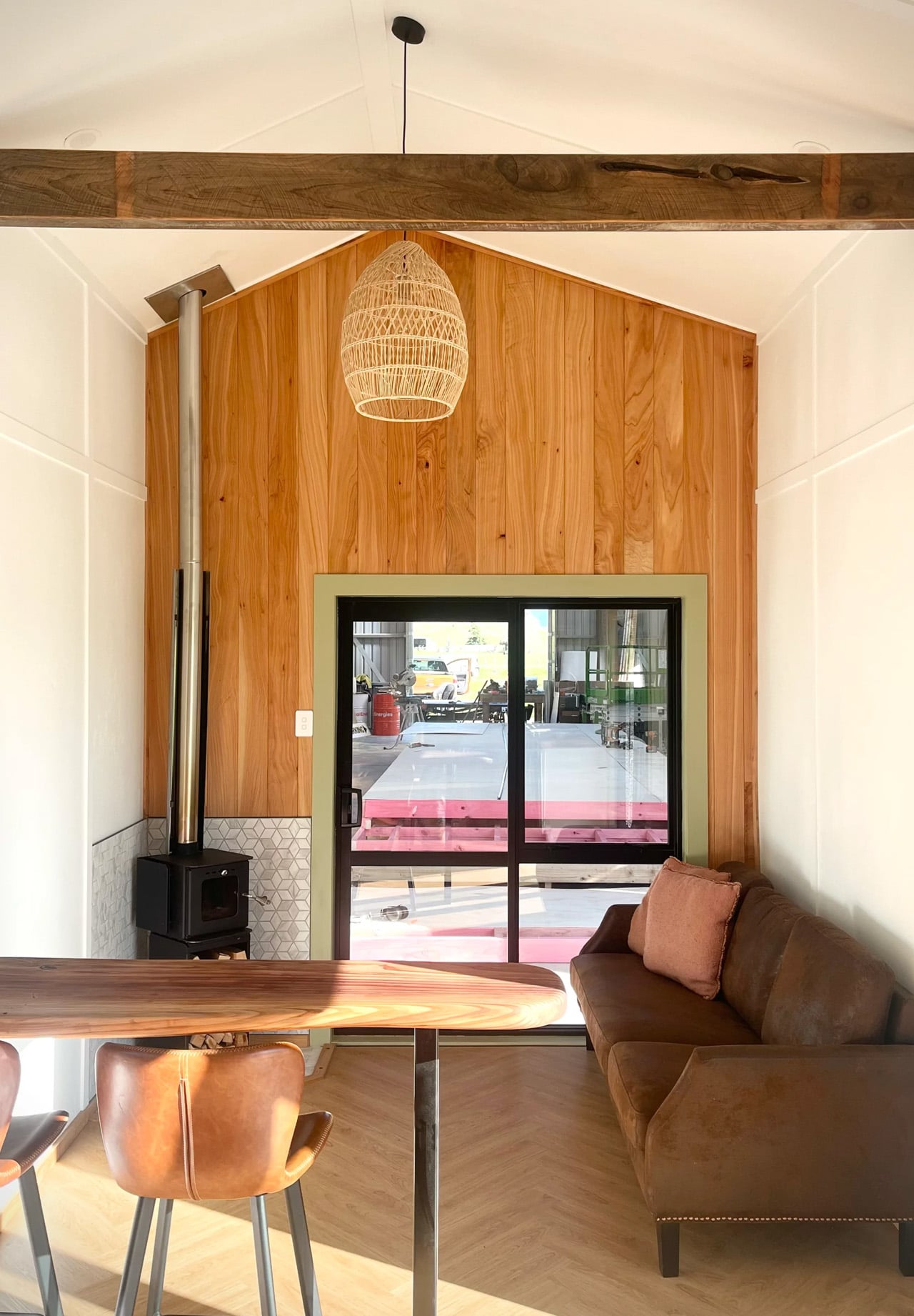
The living area sits beside the kitchen, big enough for a proper sofa and a wall-mounted television — the kind of arrangement that lets you sit down and decompress rather than perch on the edge of your bed. The bathroom holds a walk-in shower, toilet, sink, and a bit of storage. Nothing is squeezed.
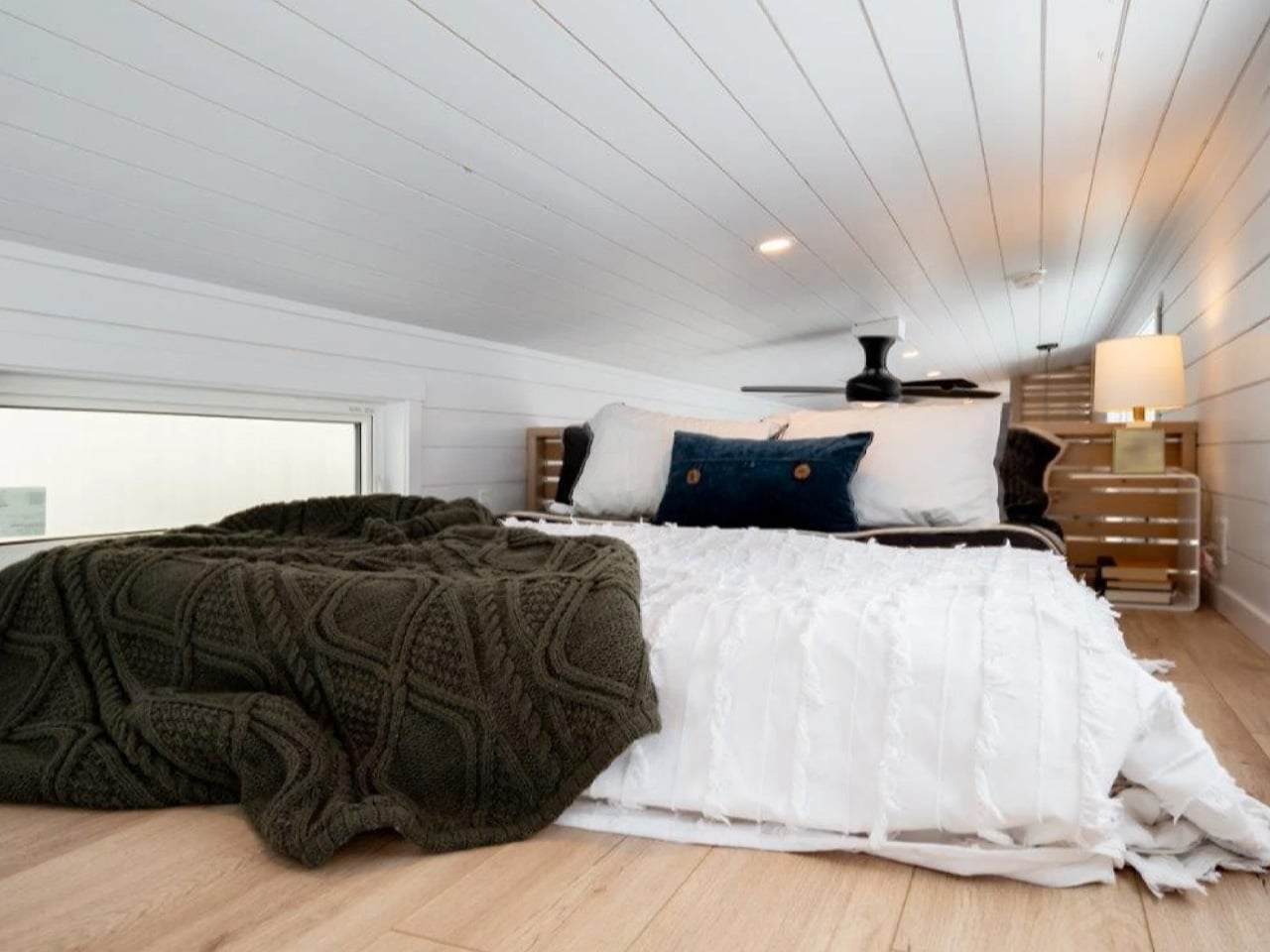
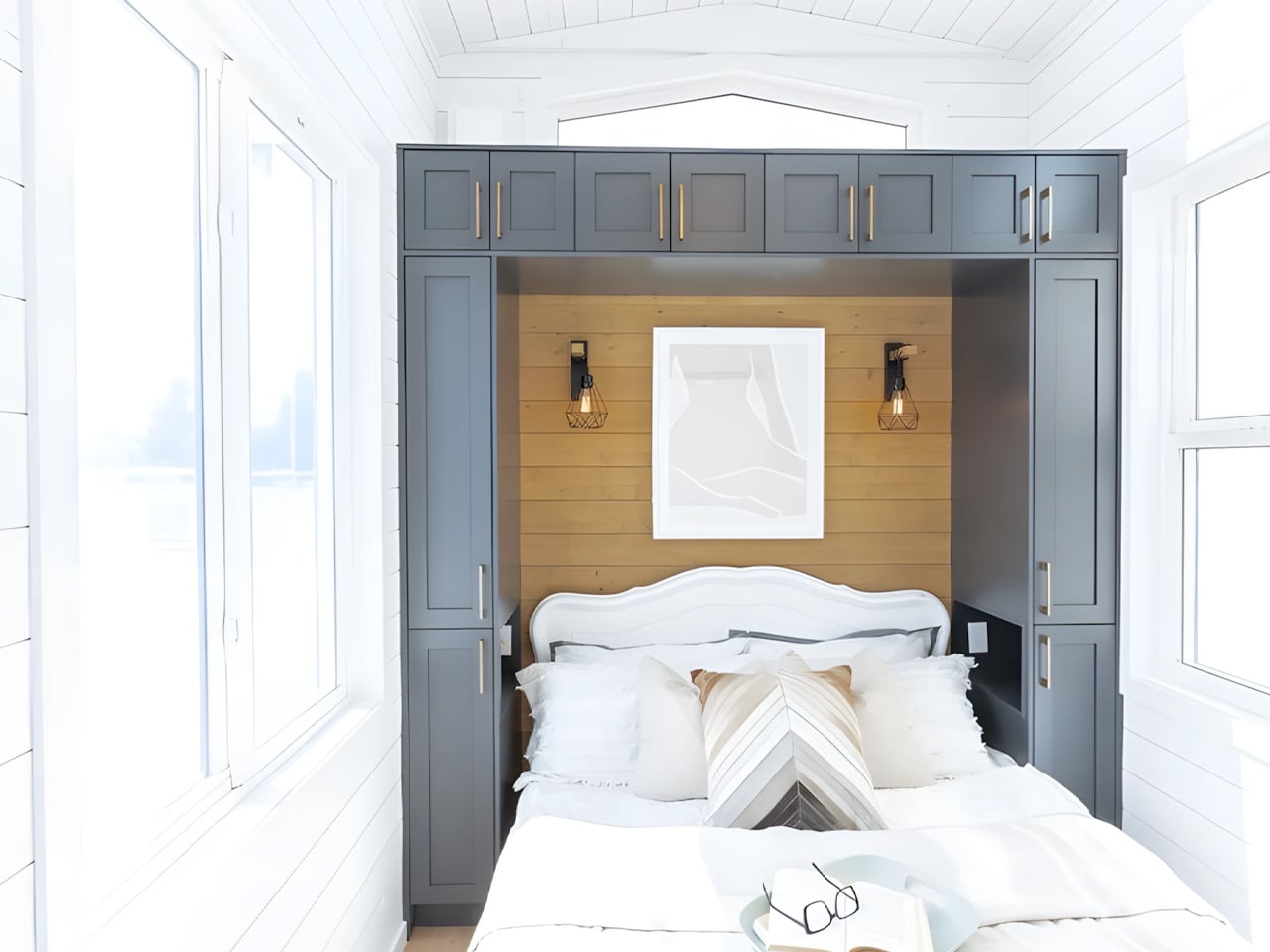
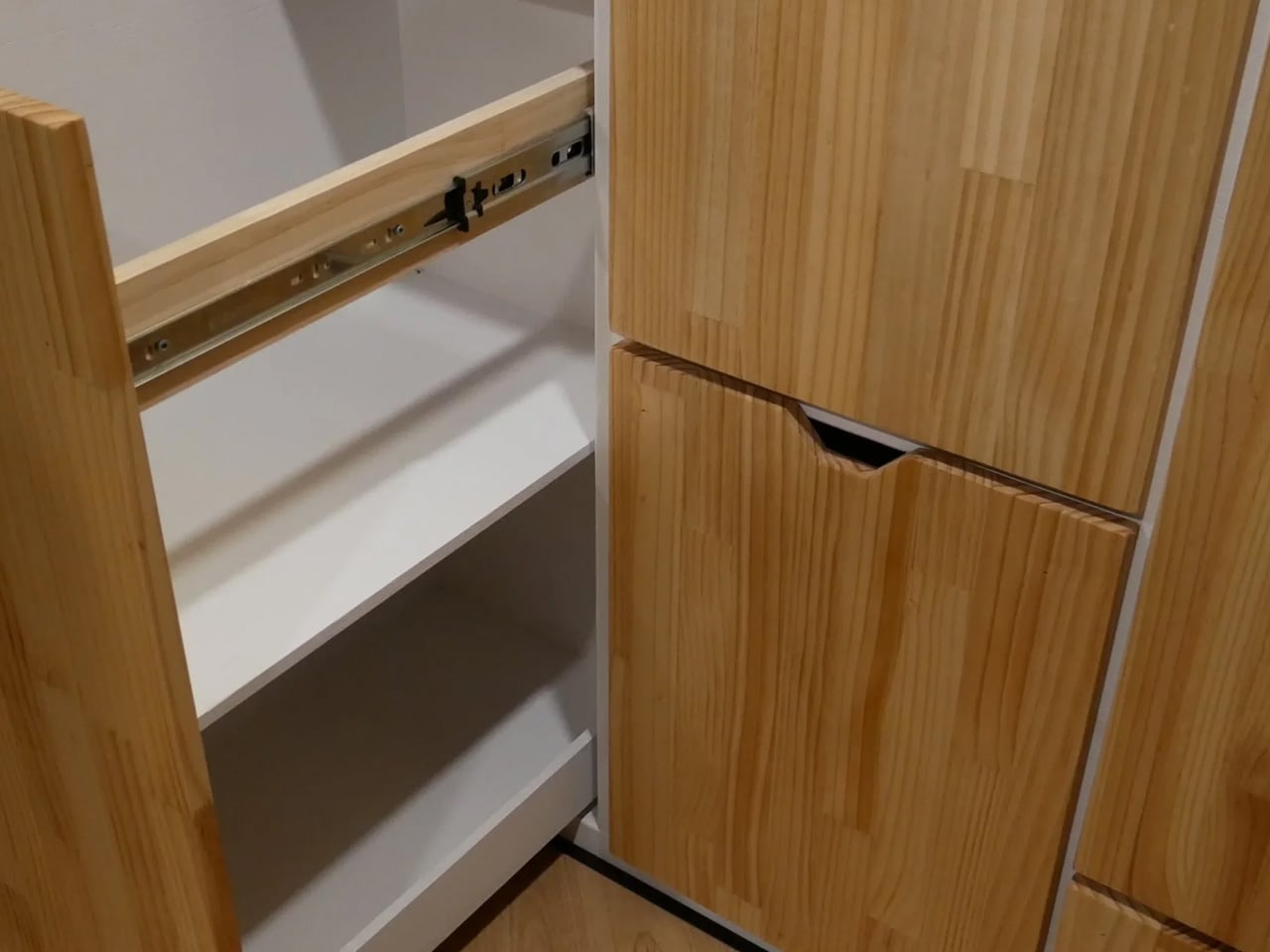
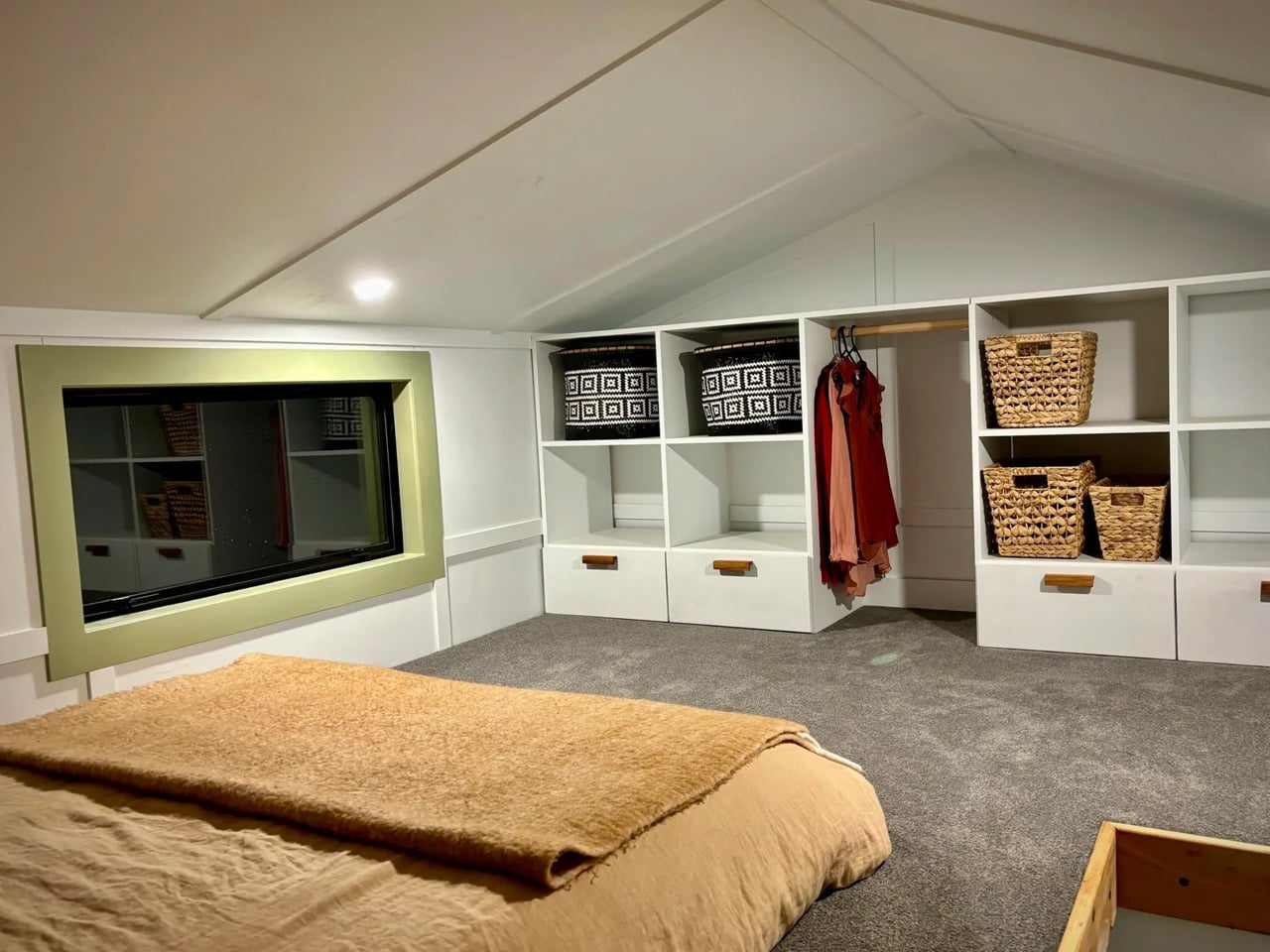
The bedroom layout is where the design earns its keep. A staircase built around integrated storage leads up to the main bedroom, sized for a double bed. From there, a catwalk connects to a secondary loft — a smart move that keeps a second sleeping or storage space accessible without eating up floor area downstairs with its own ladder.
High R-value spray foam insulation and a high-efficiency heat pump handle the climate side of full-time living, and the home runs entirely on electricity. The eONE Limited is currently listed at $105,389. For a home this considered, that number is harder to argue with than you’d expect.
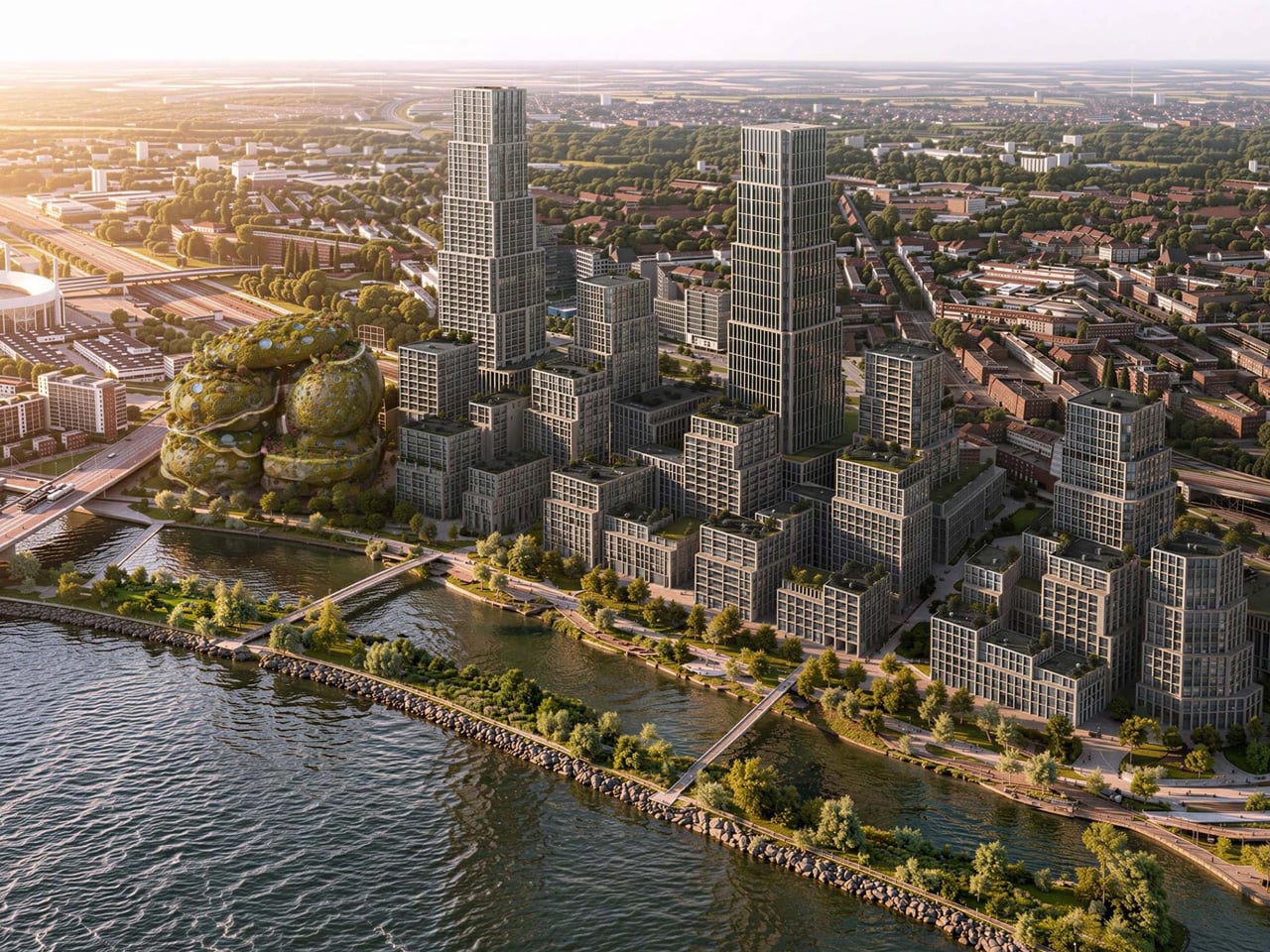
What does a building look like when it’s designed for birds, insects, and plants just as much as people? According to MVRDV, it looks like a mountain that grew out of the Maas riverbank — rough, porous, and unapologetically massive.
Rotterdam ROCKS! is MVRDV’s winning entry in Shift’s international design competition, which called for proposals for a “new world wonder” capable of motivating people to act on the climate and biodiversity crises. The €240 million project beat out a formidable shortlist that included Heatherwick Studio, Mecanoo, Office for Political Innovation, and Ecosistema Urbano. The jury — which included Zaha Hadid Foundation director Aric Chen and UNS founder Ben van Berkel — called the proposal “remarkably bold.”
That’s an understatement. The design takes the form of seven giant stacked rocks arranged into two towers on the south bank of the Maas, in Rotterdam’s emerging Waterkant district. The district itself is slated to deliver over 3,500 homes alongside schools, offices, and a new train station — Rotterdam ROCKS! is meant to be its cultural heartbeat.
At 30,000 square metres, the building is organized around two internal circulation routes and a series of cave-like exhibition spaces carved into the rock forms. A third route wraps the exterior of the structure, leading visitors through an immersive area called The Elysium before arriving at a viewing terrace overlooking the city. Below that, the program includes a 200-room hotel, a conference centre, a food court, and event spaces — essentially a vertical neighborhood compressed into a geological fiction.
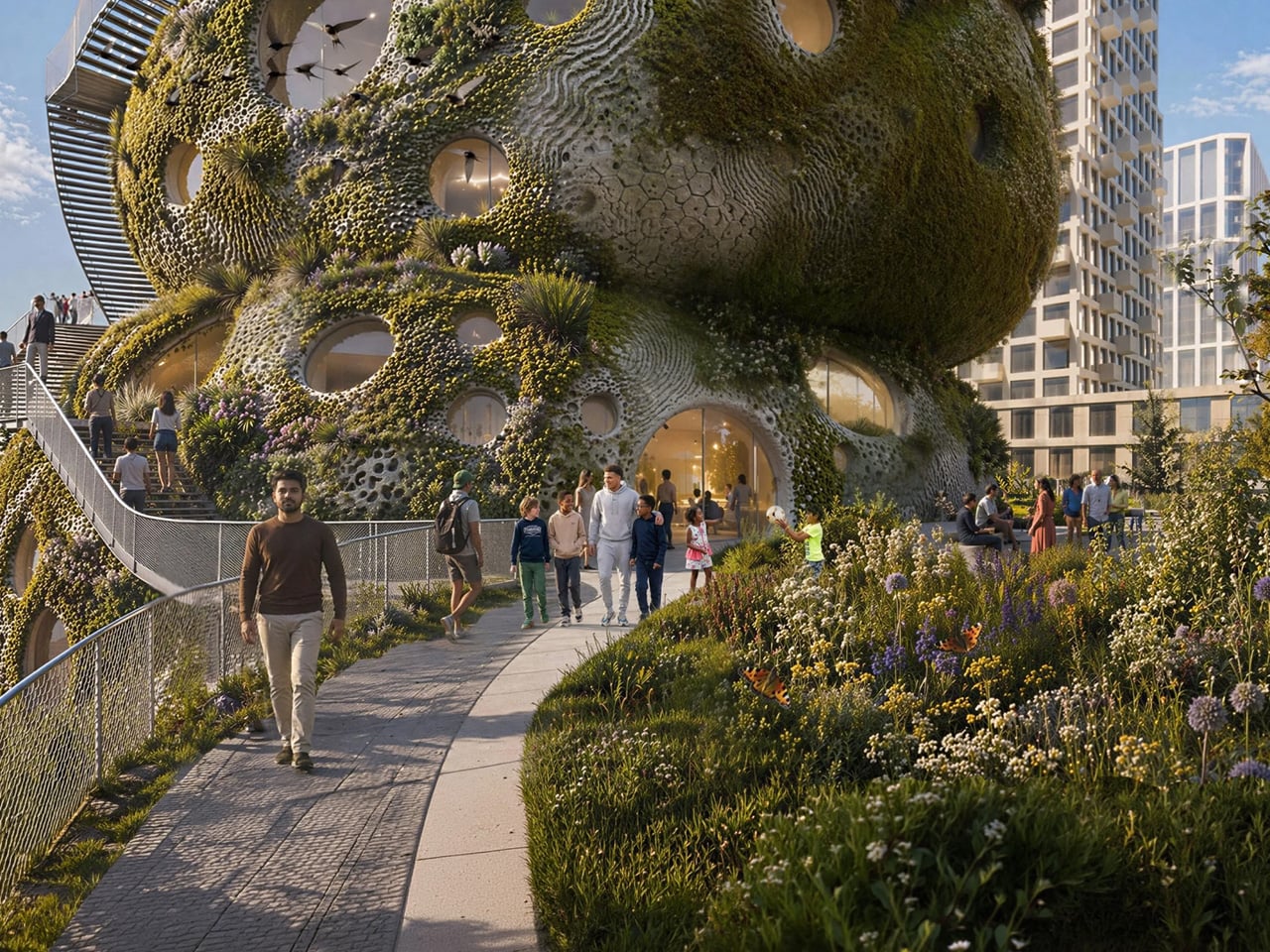
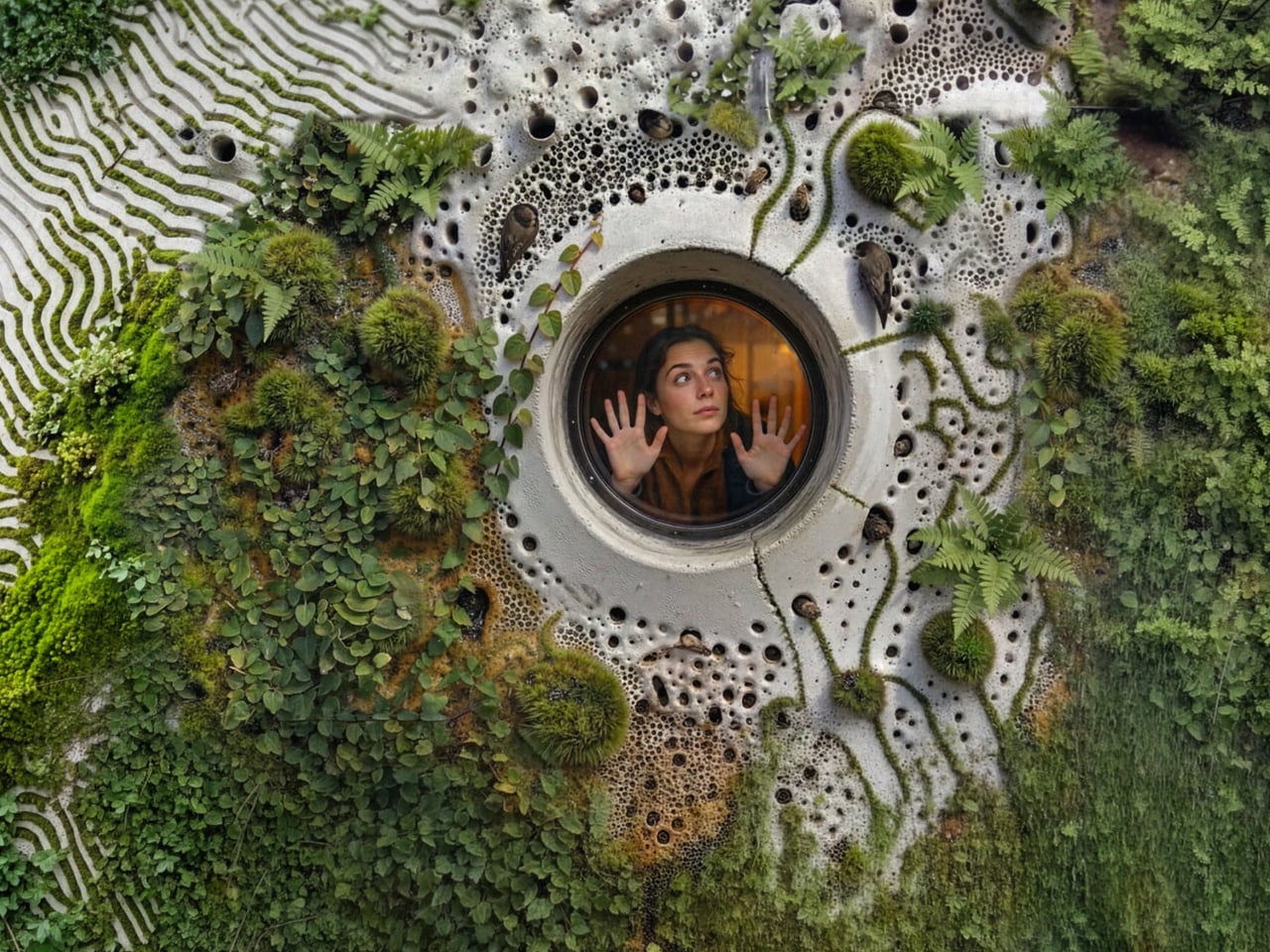
The facade is designed to be genuinely alive. Pockets built into the exterior hold soil, water, plants, and nesting habitats for birds and urban wildlife. MVRDV has said the building will “showcase the latest innovations in low-carbon construction,” though specific materials have yet to be disclosed. Founding partner Winy Maas described the design logic directly: “We need to reduce carbon dioxide emissions and to create inclusive spaces for people, trees, plants, for water, air, and for animal habitats, balancing the need for new built space with new landscapes to compensate our ecological impact.”
The project is the first-ever Shift Embassy — a new typology conceived by the social enterprise as a permanent physical institution for ecological and societal change. Shift is targeting a 2032 launch, which gives the design time to move through further development and public consultation. Rotterdam already has the Markthal, De Rotterdam, and the Cube Houses. It’s building a reputation for architecture that refuses to be quiet. Rotterdam ROCKS! might be its loudest statement yet.
What does a building look like when it’s designed for birds, insects, and plants just as much as people? According to MVRDV, it looks like a mountain that grew out of the Maas riverbank — rough, porous, and unapologetically massive.
Rotterdam ROCKS! is MVRDV’s winning entry in Shift’s international design competition, which called for proposals for a “new world wonder” capable of motivating people to act on the climate and biodiversity crises. The €240 million project beat out a formidable shortlist that included Heatherwick Studio, Mecanoo, Office for Political Innovation, and Ecosistema Urbano. The jury — which included Zaha Hadid Foundation director Aric Chen and UNS founder Ben van Berkel — called the proposal “remarkably bold.”
That’s an understatement. The design takes the form of seven giant stacked rocks arranged into two towers on the south bank of the Maas, in Rotterdam’s emerging Waterkant district. The district itself is slated to deliver over 3,500 homes alongside schools, offices, and a new train station — Rotterdam ROCKS! is meant to be its cultural heartbeat.
At 30,000 square metres, the building is organized around two internal circulation routes and a series of cave-like exhibition spaces carved into the rock forms. A third route wraps the exterior of the structure, leading visitors through an immersive area called The Elysium before arriving at a viewing terrace overlooking the city. Below that, the program includes a 200-room hotel, a conference centre, a food court, and event spaces — essentially a vertical neighborhood compressed into a geological fiction.
The facade is designed to be genuinely alive. Pockets built into the exterior hold soil, water, plants, and nesting habitats for birds and urban wildlife. MVRDV has said the building will “showcase the latest innovations in low-carbon construction,” though specific materials have yet to be disclosed. Founding partner Winy Maas described the design logic directly: “We need to reduce carbon dioxide emissions and to create inclusive spaces for people, trees, plants, for water, air, and for animal habitats, balancing the need for new built space with new landscapes to compensate our ecological impact.”
The project is the first-ever Shift Embassy — a new typology conceived by the social enterprise as a permanent physical institution for ecological and societal change. Shift is targeting a 2032 launch, which gives the design time to move through further development and public consultation. Rotterdam already has the Markthal, De Rotterdam, and the Cube Houses. It’s building a reputation for architecture that refuses to be quiet. Rotterdam ROCKS! might be its loudest statement yet.
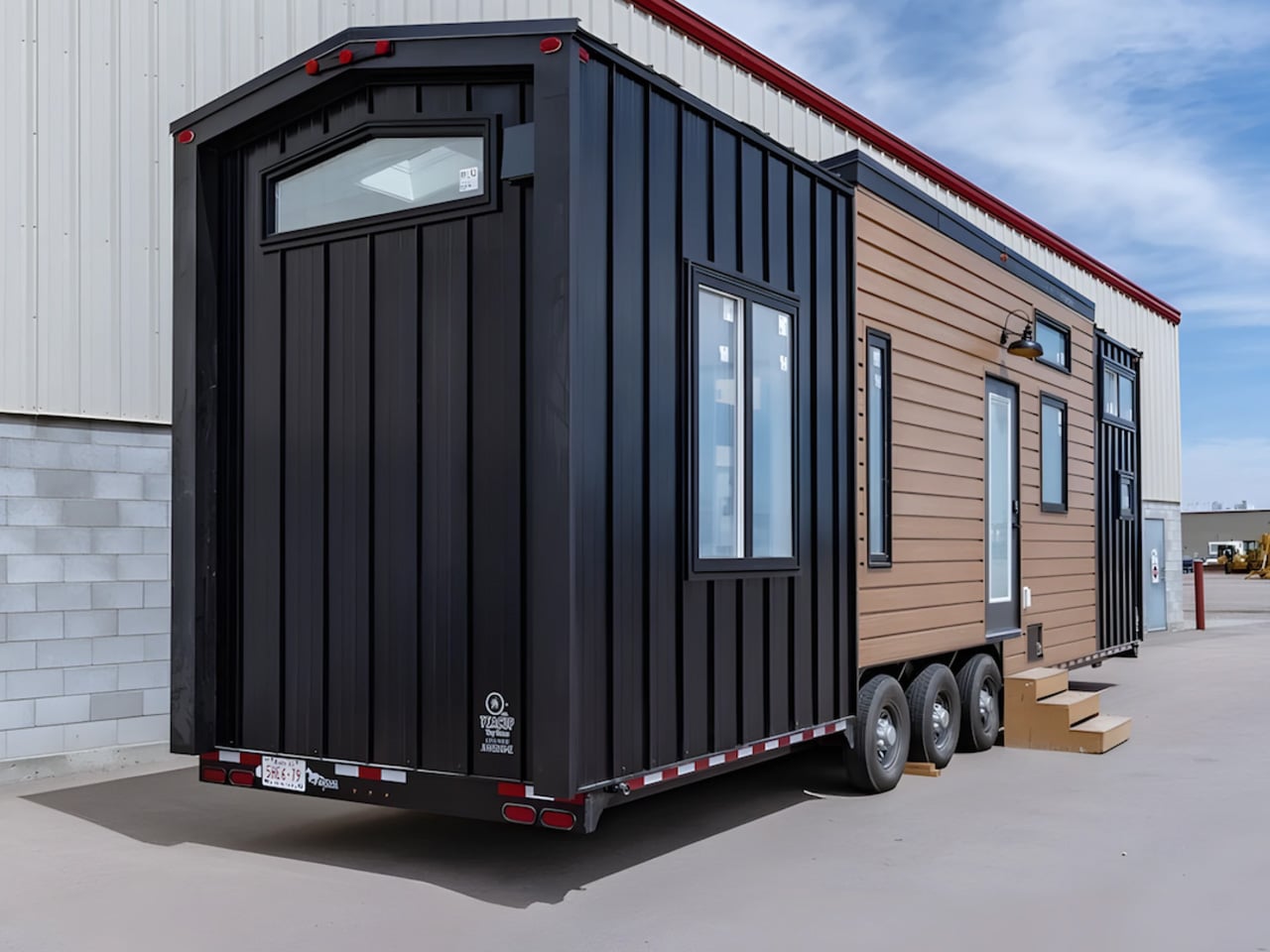
Most tiny homes make you choose: comfort or portability, but rarely both. The Laurel, a custom build by Canadian builder Teacup Tiny Homes based on their Bernice plan, manages to sidestep that entirely. At 423 square feet across a 34-foot triple-axle trailer, it sleeps four people, fits a dishwasher, a full bathtub, and still feels like somewhere you’d actually want to live.
The exterior sets the tone before you step inside. White vertical siding runs the length of the home, capped by a black metal roof — clean, modern, and unfussy. At 8.5 feet wide, it stays within standard road-legal dimensions, which means taking it to a new site doesn’t require a special permit or a nervous conversation with your tow truck driver.
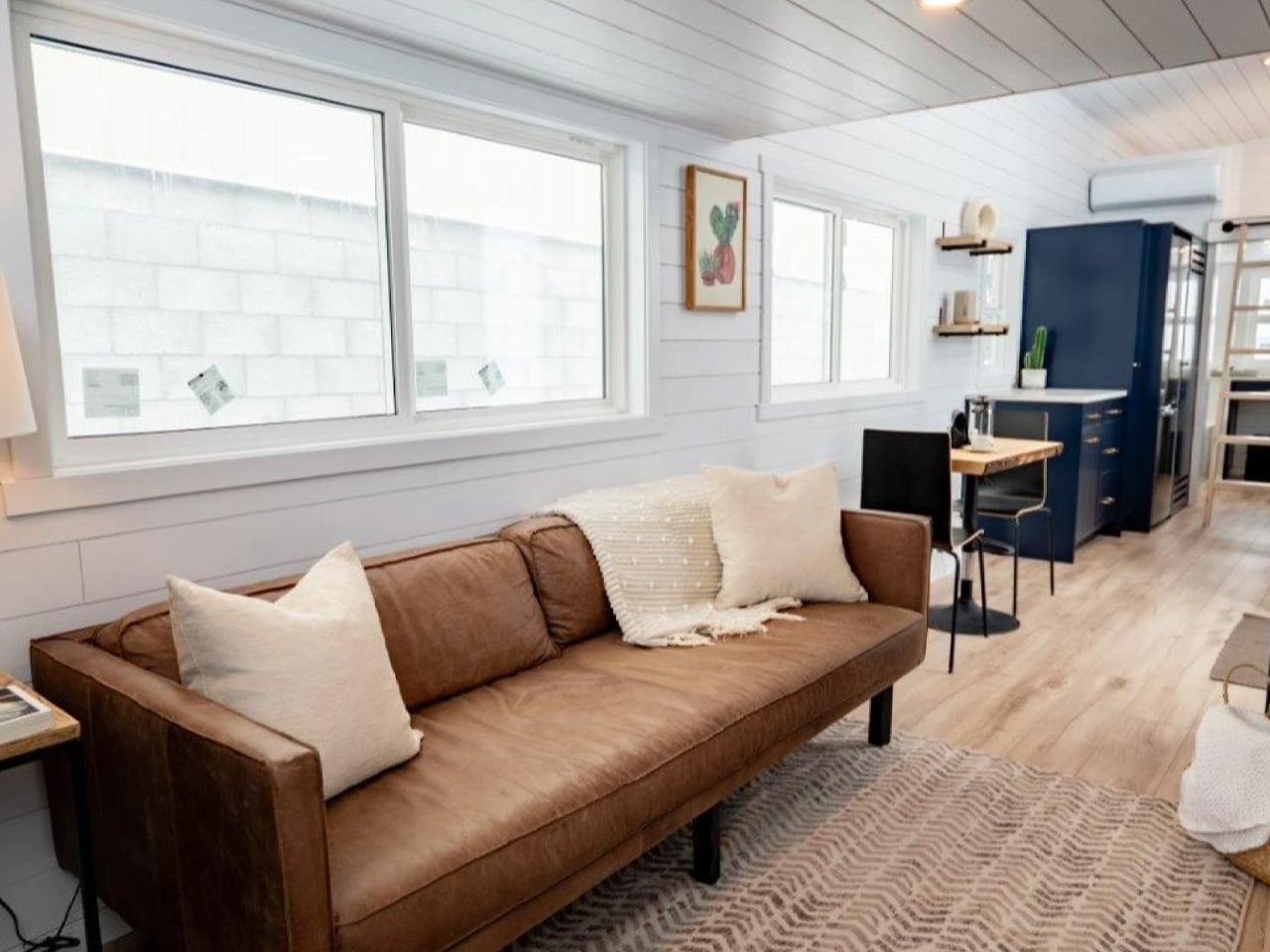
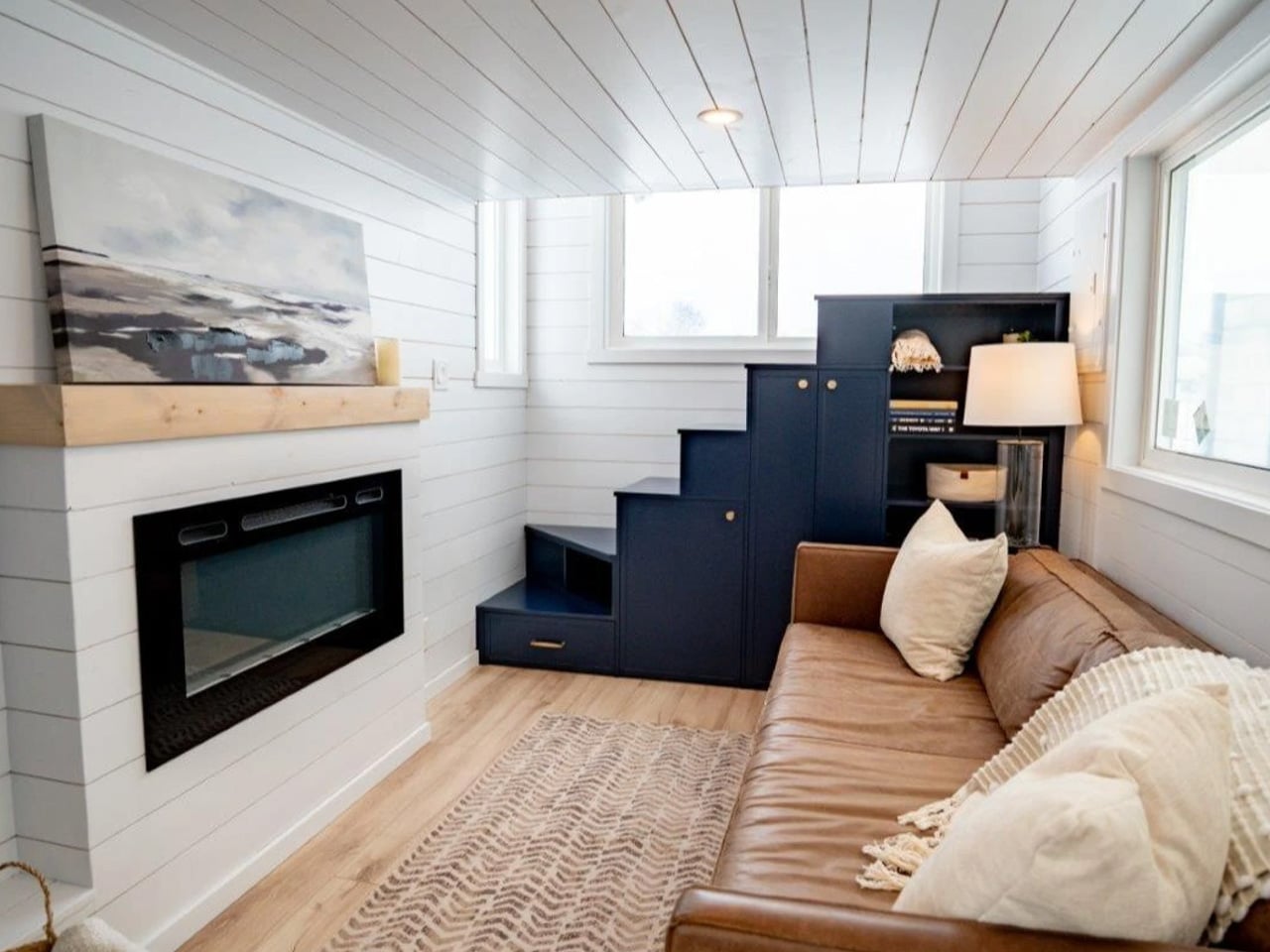
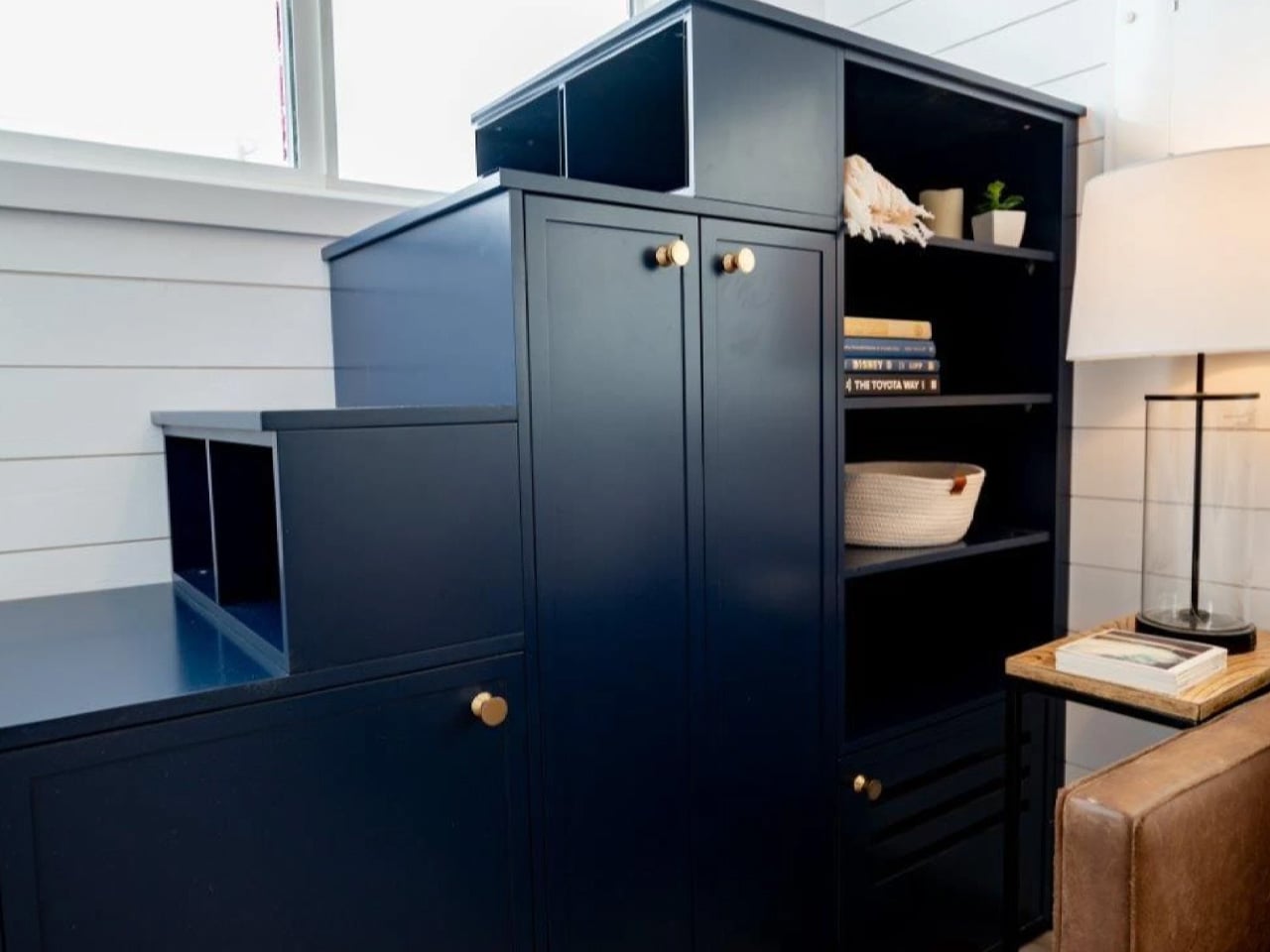
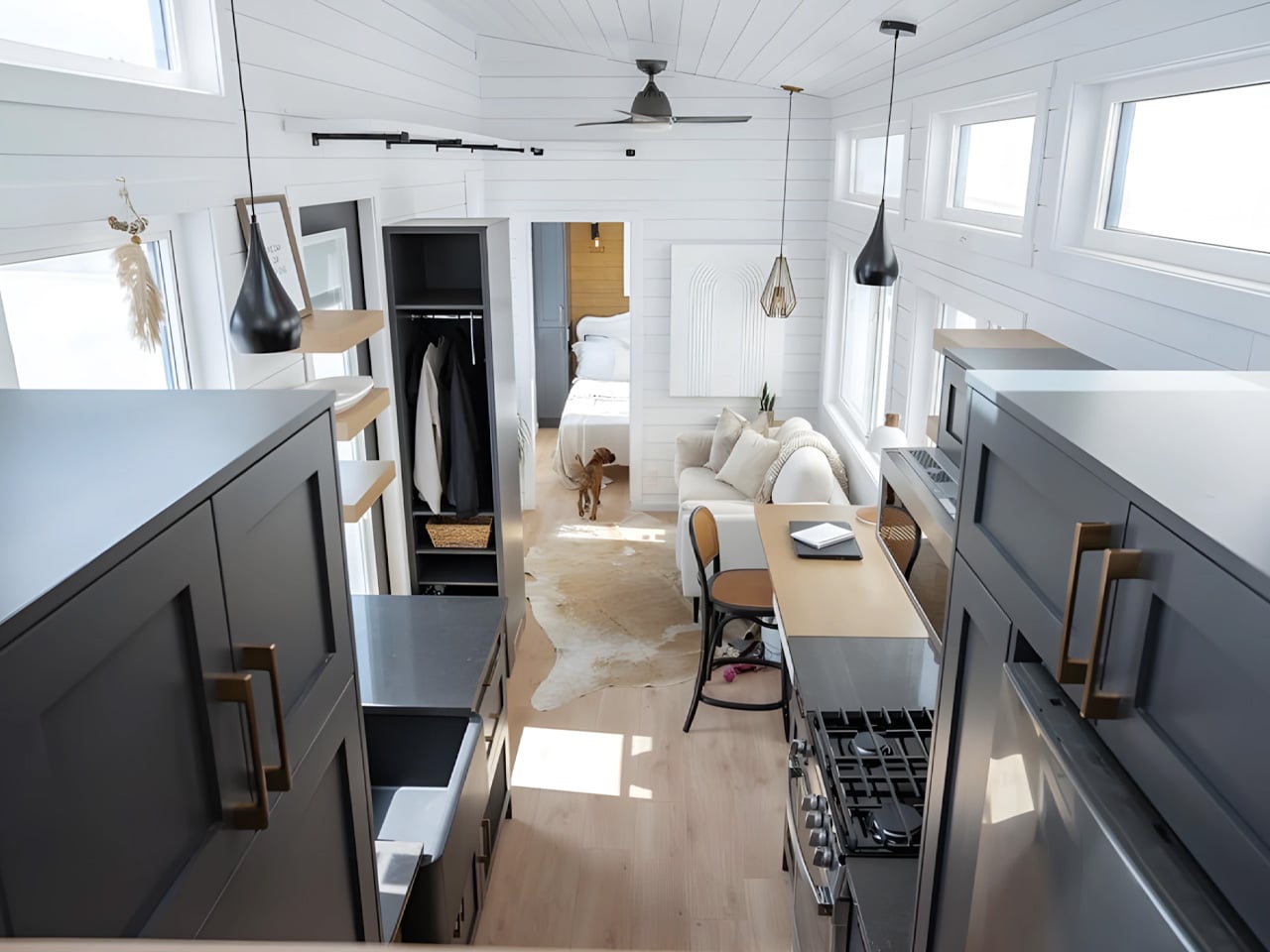
Inside, the aesthetic leans into modern farmhouse without being heavy-handed about it. White tongue-and-groove paneling lines the walls, dark blue cabinetry anchors the kitchen, and vinyl flooring runs throughout the lower level, kept warm by propane-powered underfloor heating. The living room is proportioned well enough to hold a full sofa and an electric fireplace, with room for a TV and actual breathing space. The staircase leading up to the main loft doubles as a storage unit — drawers and cupboards built directly into each step, so no square inch goes to waste.
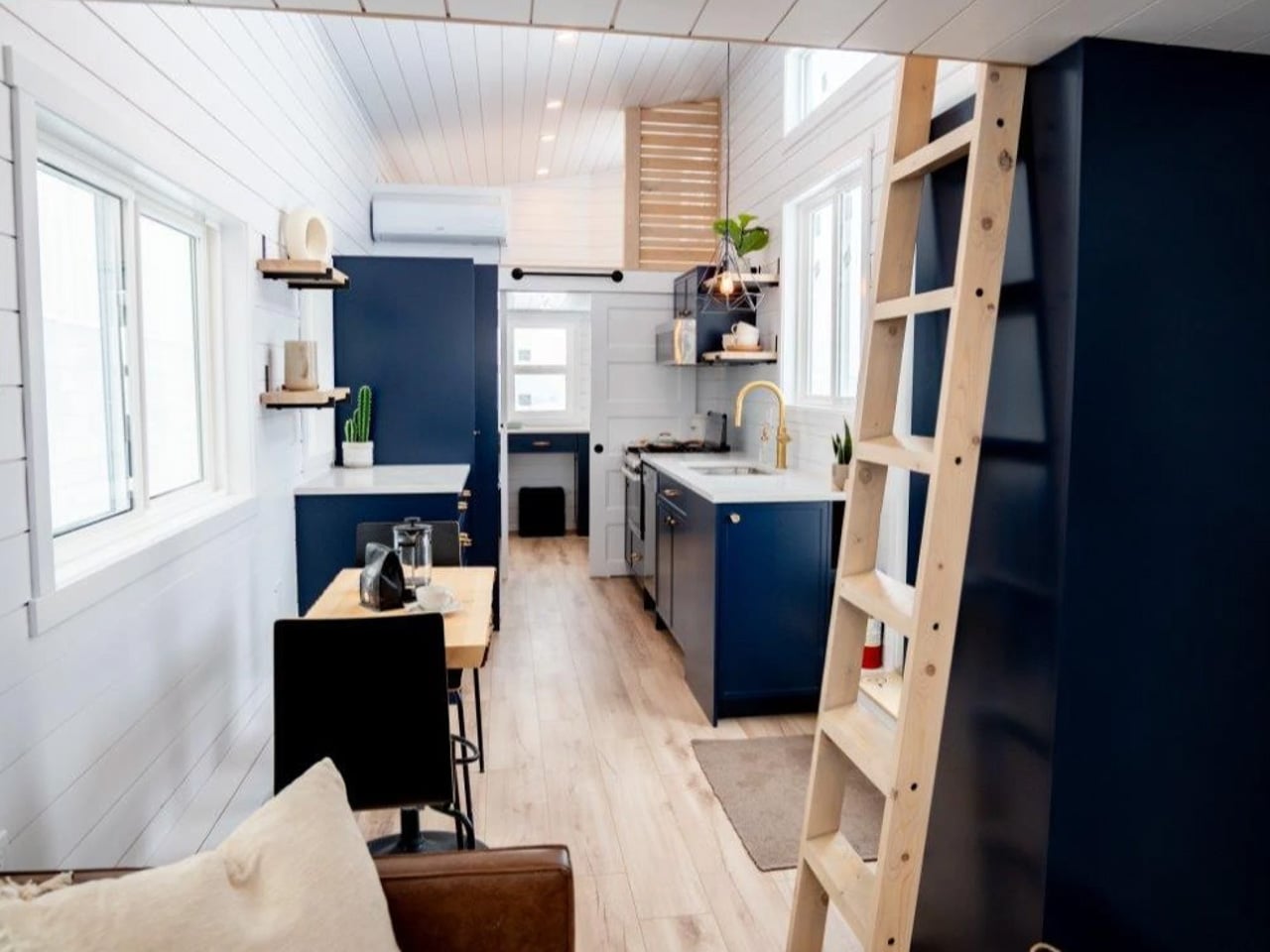
The kitchen is galley-style with cabinetry on both sides, and it’s more capable than most tiny homes manage. A four-burner propane stove, oven, fridge and freezer, microwave, twin-basin stainless steel sink, and a dishwasher. That last one gets mentioned a lot because it rarely shows up in this category. A small dining table seats two just off the kitchen.
The bathroom earns its own mention. A sliding barn door opens into a space with an L-shaped vanity, a flushing toilet, and a combined bathtub and shower. Bathtubs in tiny homes are practically currency — most builders skip them entirely to save the square footage. Finding one here, in a home that’s also road-legal, is genuinely rare.
Two loft bedrooms handle the sleeping situation. The main loft sits above the living room with a double bed, storage, and a privacy divider. A second loft above the kitchen and bathroom is accessed by a removable ladder and fits another double bed. Combined, the Laurel sleeps four comfortably. Pricing is based on Teacup’s Bernice Range, which starts at roughly US$121,000, with delivery rates depending on location.
The design museum makes one quiet argument. Certain objects deserve to be looked at, and how a thing is made can matter as much as what it does. Most people accept this on a Saturday afternoon in front of a Noguchi lamp or an Eames chair, then go home to a shelf full of things nobody chose with the same intention. That gap is worth closing, and it does not require a renovation budget.
These six objects cost somewhere between a round of drinks and a dinner for two. None are functional in the way a charging cable is functional. They are functional in the way a good room is, changing how a space reads and getting noticed before anyone can articulate why. That quality has very little to do with price and everything to do with knowing where to look for it.
1. Carte Blanche Ceramics
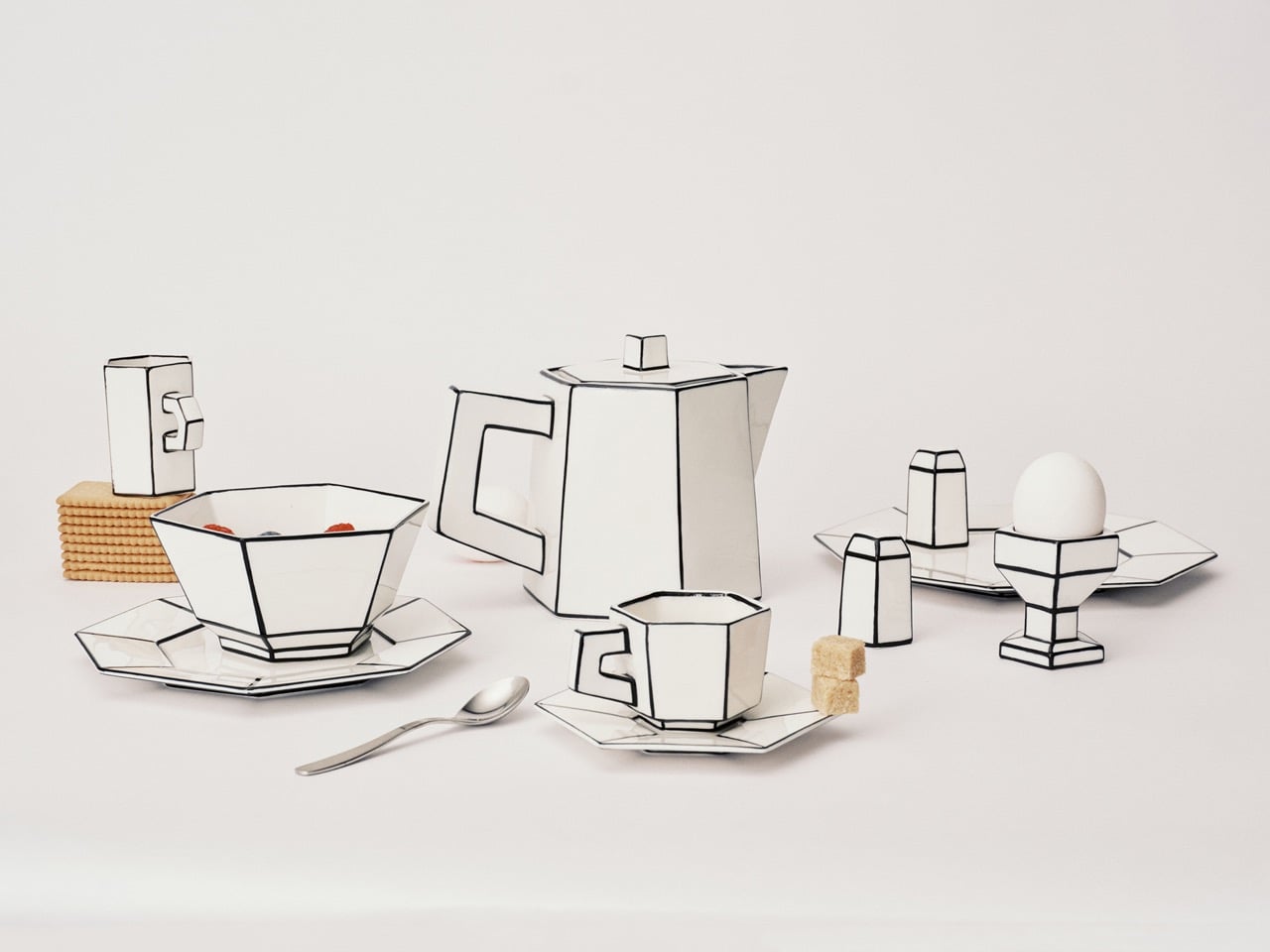
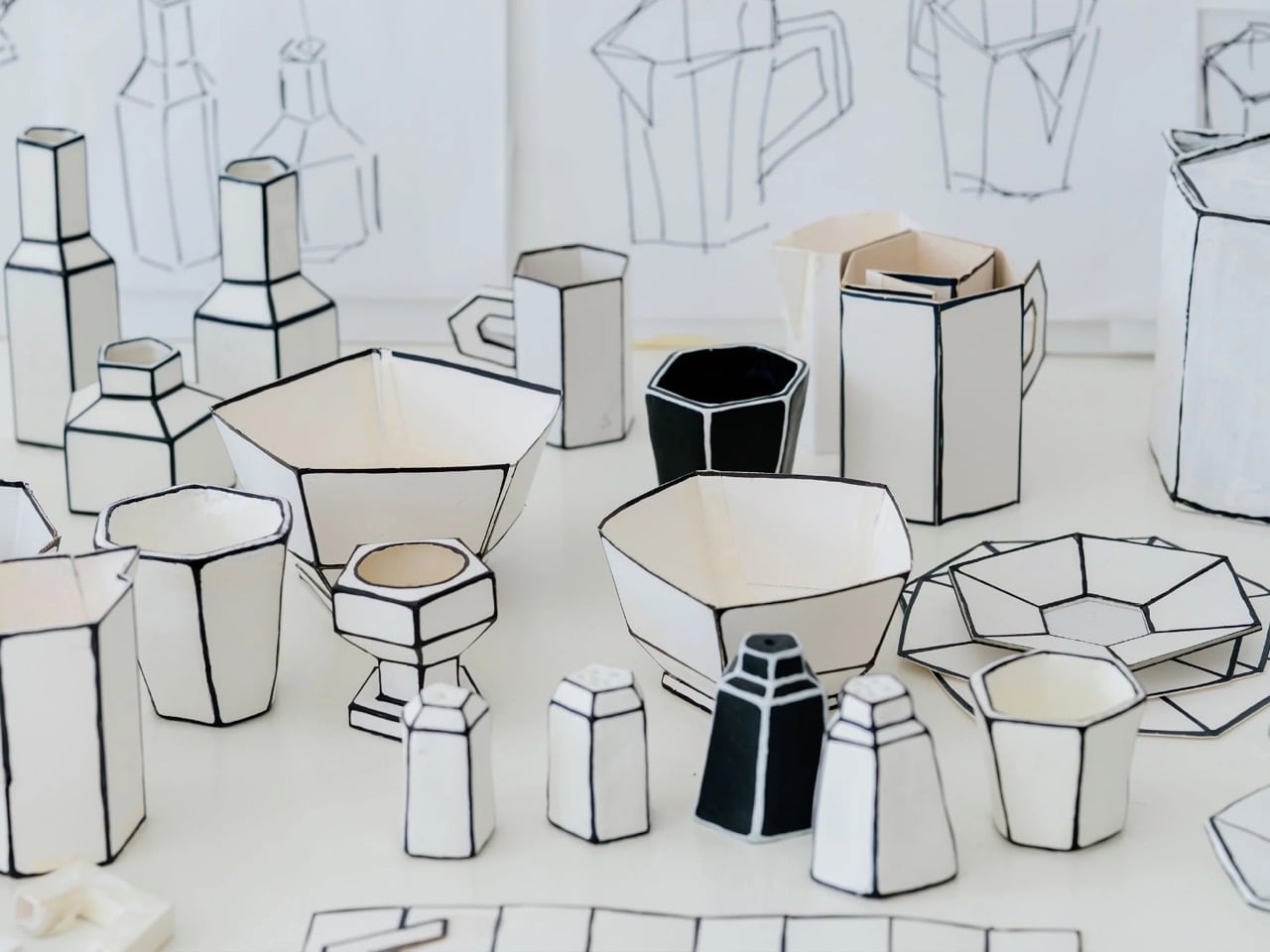
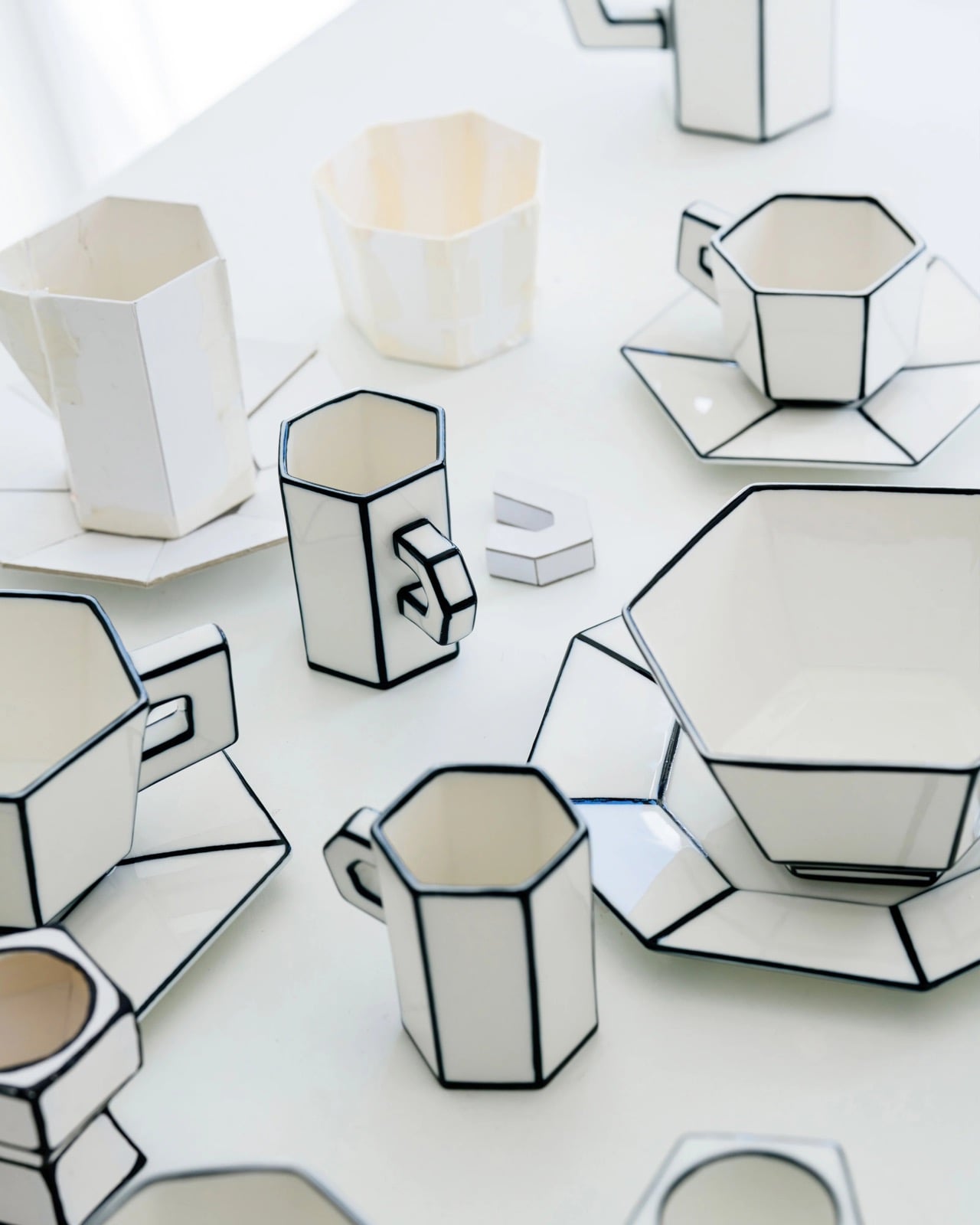
Dutch designer Annebet Philips began this collection in cardboard rather than clay, cutting shapes with deliberately uneven edges and treating the paper prototype as the design language itself rather than a step to be discarded. Belgian brand Serax carries the result through to porcelain: a coffee and tea service that has since grown to include plates, a breakfast bowl, an egg cup, and a salt and pepper set. Every piece started as a childlike cutout on a blank page. Nothing about that origin was smoothed away in production.
What makes each piece genuinely strange is that it reads as a drawing of itself. Hand-painted black lines trace every fold and seam, giving cups and saucers the flattened quality of ink on paper rather than fired ceramic. Photographed straight on, a cup collapses into what looks like a quick sketch, the handle reading as a doodled loop rather than a ceramic ear. Everything is microwave and dishwasher safe, which keeps the concept in daily use rather than retreating to a shelf nobody touches.
What we like
The trompe-l’oeil effect holds in person, not only in photographs
Dishwasher safe at a design level that rarely permits it
What we dislike
Sold through Serax stockists rather than one direct channel, which makes sourcing specific pieces more work than it should be
Hand-painted lines vary slightly between pieces, which is part of the concept but can feel inconsistent in a matched set
2. ECHO Ceramic Speaker
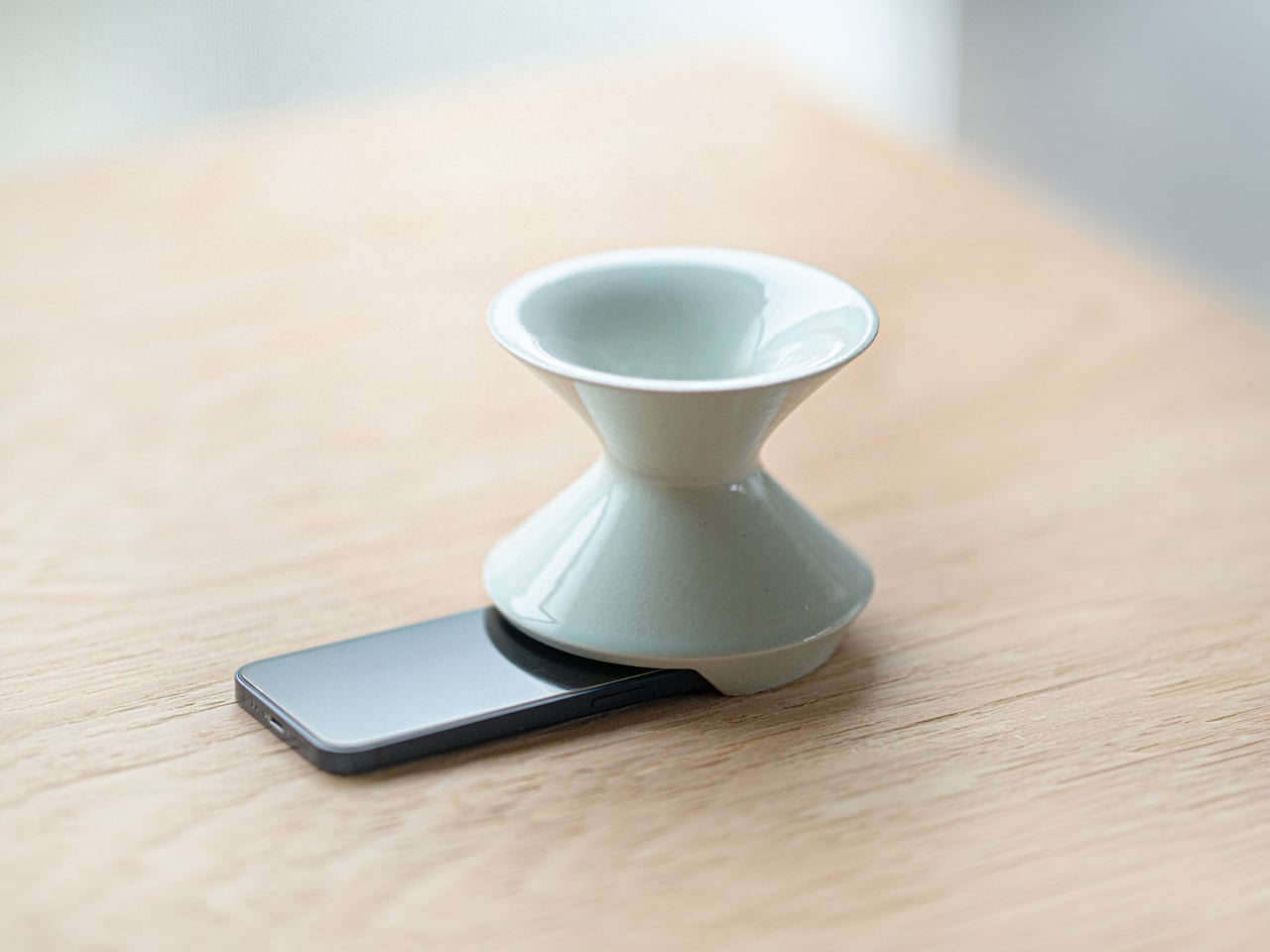
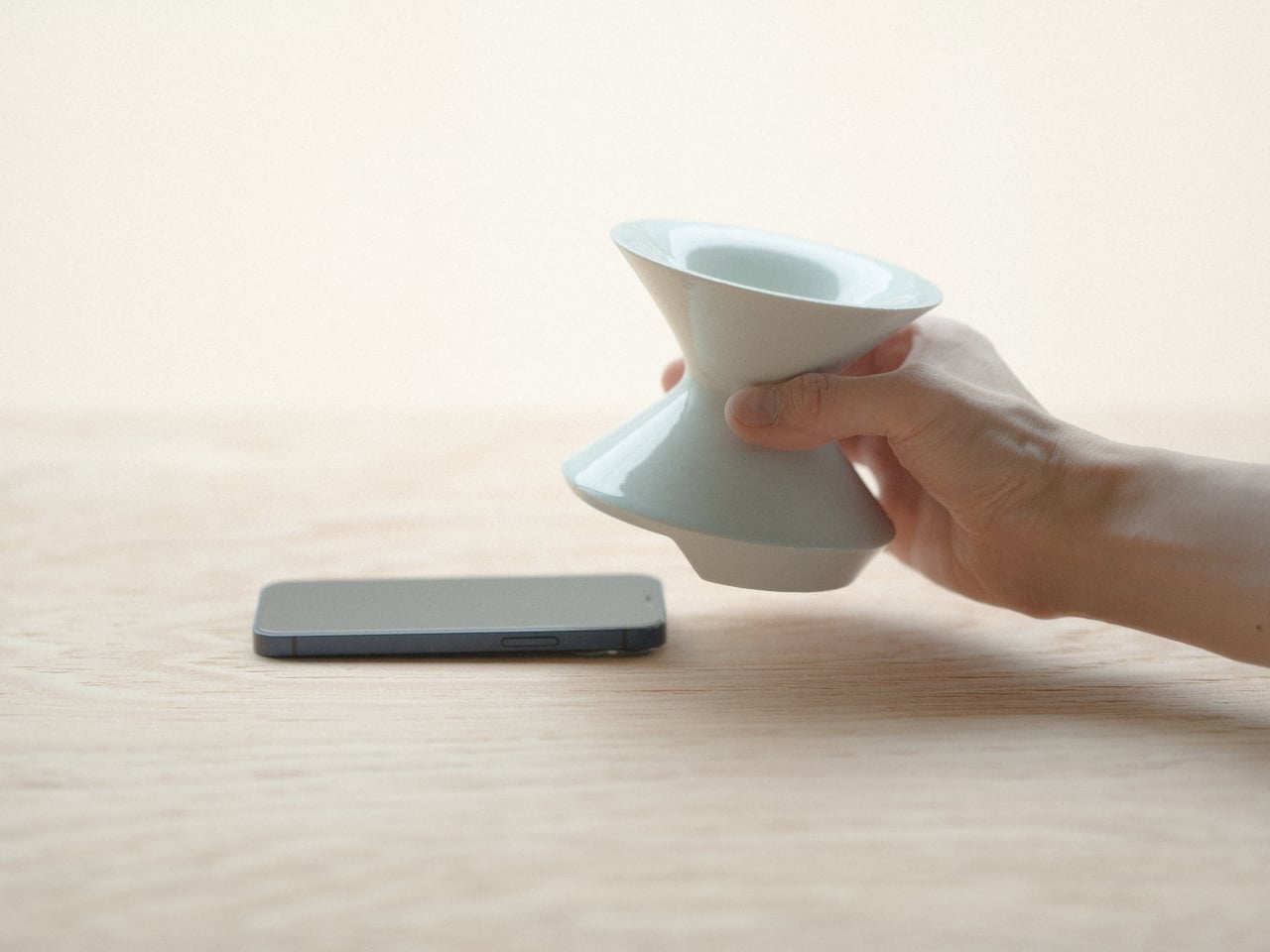
Most speakers announce themselves. They sit on surfaces with blinking lights and trailing cables, with the general suggestion of being placed there temporarily. Kenji Abe’s ECHO arrives from the opposite direction. It is a glazed ceramic chamber built on the acoustic logic of a seashell and a cupped hand that looks exactly like a small vase. Slide a phone underneath, and the cavity carries audio outward in soft, diffused waves. No power. No pairing. Nothing to charge or set up.
The decision to use ceramic was not incidental. Ceramic belongs to the visual grammar of a home, the language of objects that have simply always been there, and ECHO uses that familiarity to disappear into a room entirely. A guest would not identify it as a speaker. The glazed surface catches light the way pottery does, and when the phone is gone, it stays on the shelf with the composure of something that was never trying to perform in the first place.
What we like
Looks like a ceramic piece because it is one, not a speaker wearing a vase disguise
No charging, no pairing, no batteries to deplete or replace
What we dislike
The amplification is warm and subtle rather than loud, better suited to a quiet kitchen than a busy room
Designed for smartphones placed directly underneath, which limits where in a room it can be used
3. Petal Vase
Every day, thousands of tons of cut flowers are incinerated at flower markets because they reached the end of their shelf life before a buyer arrived. Rebloom Studio, a Korean design practice, collects those discarded blooms, processes them into pulp with Korean paper pulp and a natural binder, and molds the result around an interior glass cylinder. The finished piece is a vase made entirely from flowers that never got the chance to be seen by anyone.
No two Petal Vases look alike. The flowers used to make each one determine its final color, texture, and edge profile. The jagged rim, the petal compression visible in the walls, the slight asymmetry in the silhouette- all of it is preserved deliberately rather than corrected in finishing. When the vase reaches the end of its life, the biodegradable shell returns to the earth. It is one of those rare objects where the material story requires no explanation because you can already see exactly where it came from.
What we like
Every piece is genuinely one of a kind, not in the marketing sense but the literal one
The biodegradable origin is visible in the object itself rather than printed on the packaging
What we dislike
Availability depends on Rebloom Studio’s production schedule, and stock from a small Korean studio can be intermittent
The rough, irregular surface is the whole point, but buyers expecting a conventional smooth ceramic finish may need to adjust
4. Delicato Tray
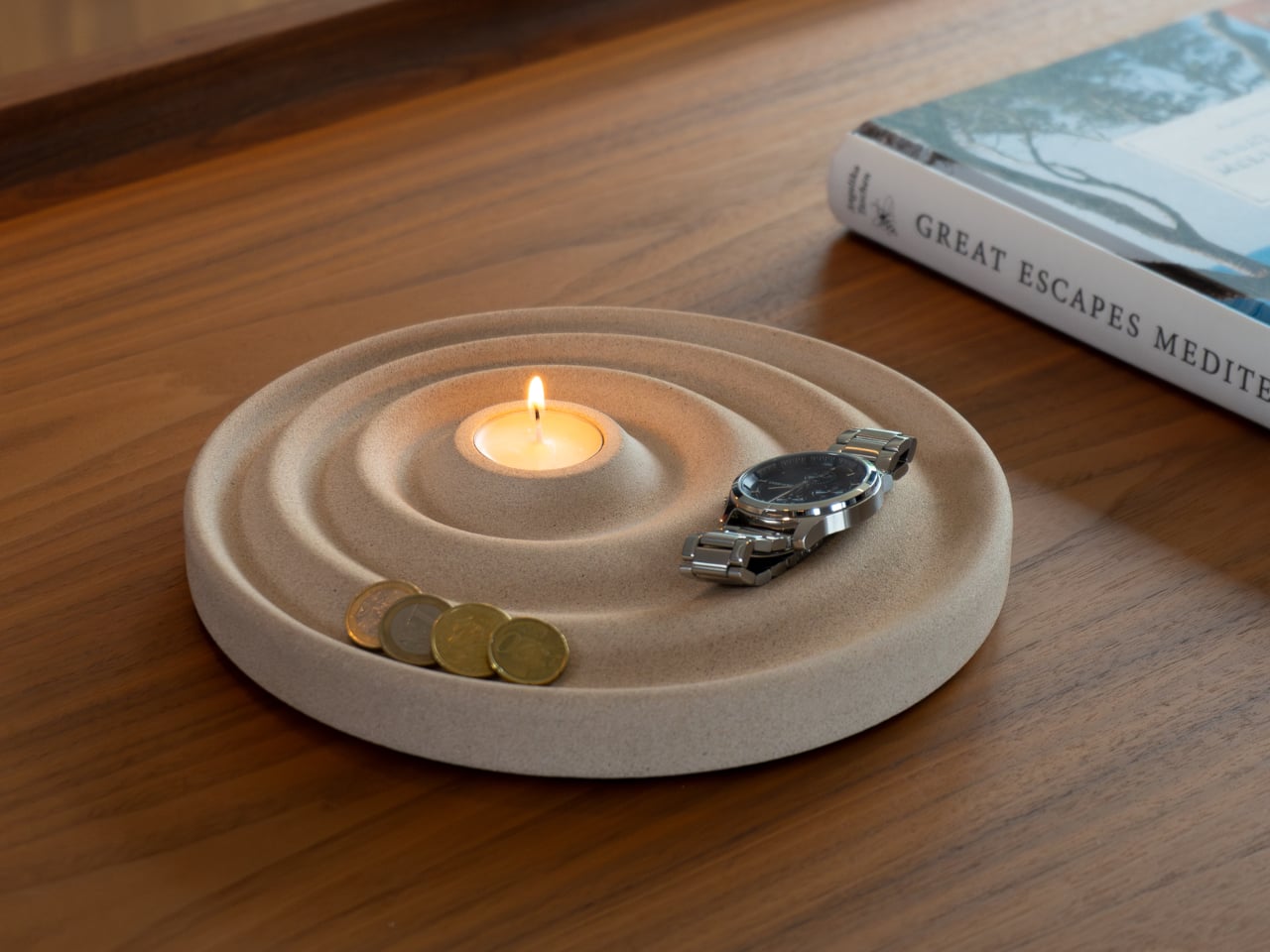
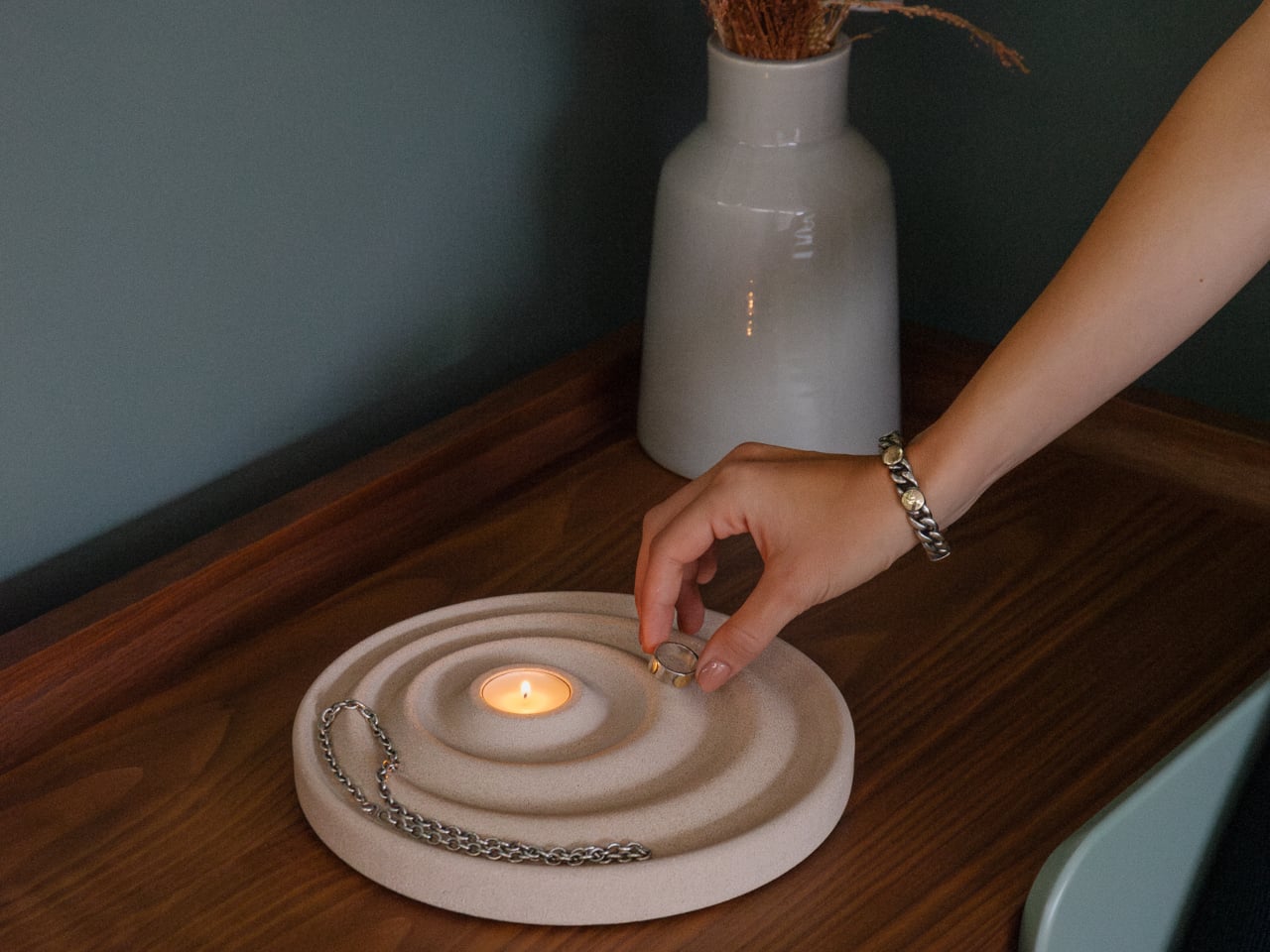
The entryway surface tells a familiar story, and it is rarely flattering. Keys land wherever there is space, coins scatter to the edges, a watch ends up beside a receipt from last week. Joao Teixeira’s Delicato Tray for Oftwise is cast from Jesmonite AC730, a water-based, fire-rated stone composite, in the form of a rippled disc. The concentric waves are asymmetric by design: wider at the outer ring for keys and glasses, tighter toward the center for rings and coins.
At the center of those ripples sits a recessed pocket sized for a tealight candle, turning the daily ritual of dropping your things at the door into something closer to a ceremony. Because the tray is hand-cast, no two are identical. Small air bubbles, subtle texture variations, and minor color shifts are natural byproducts of the process. The result is two kilograms of warm sandy stone that makes a surface look deliberately arranged before anything has been placed on it at all.
What we like
The hierarchy is built into the form itself, so organization becomes almost unconscious
Hand-cast production means no two pieces are identical, in the way that actually matters
What we dislike
At €235 it sits at the very top of the dinner framing, and that math depends on which dinner you have in mind
Currently available in one color, which limits how it integrates into darker or cooler interiors
5. Luna
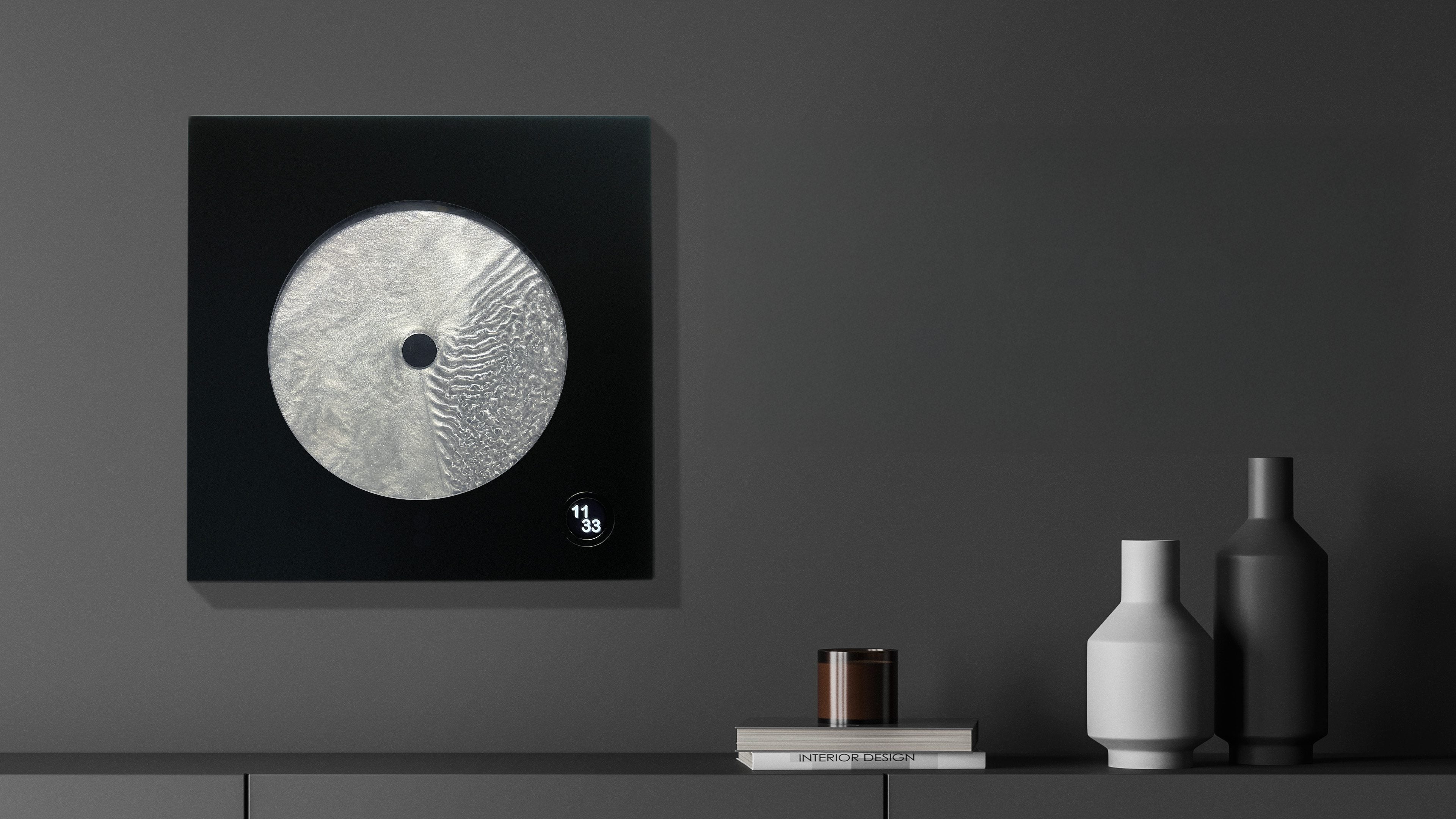
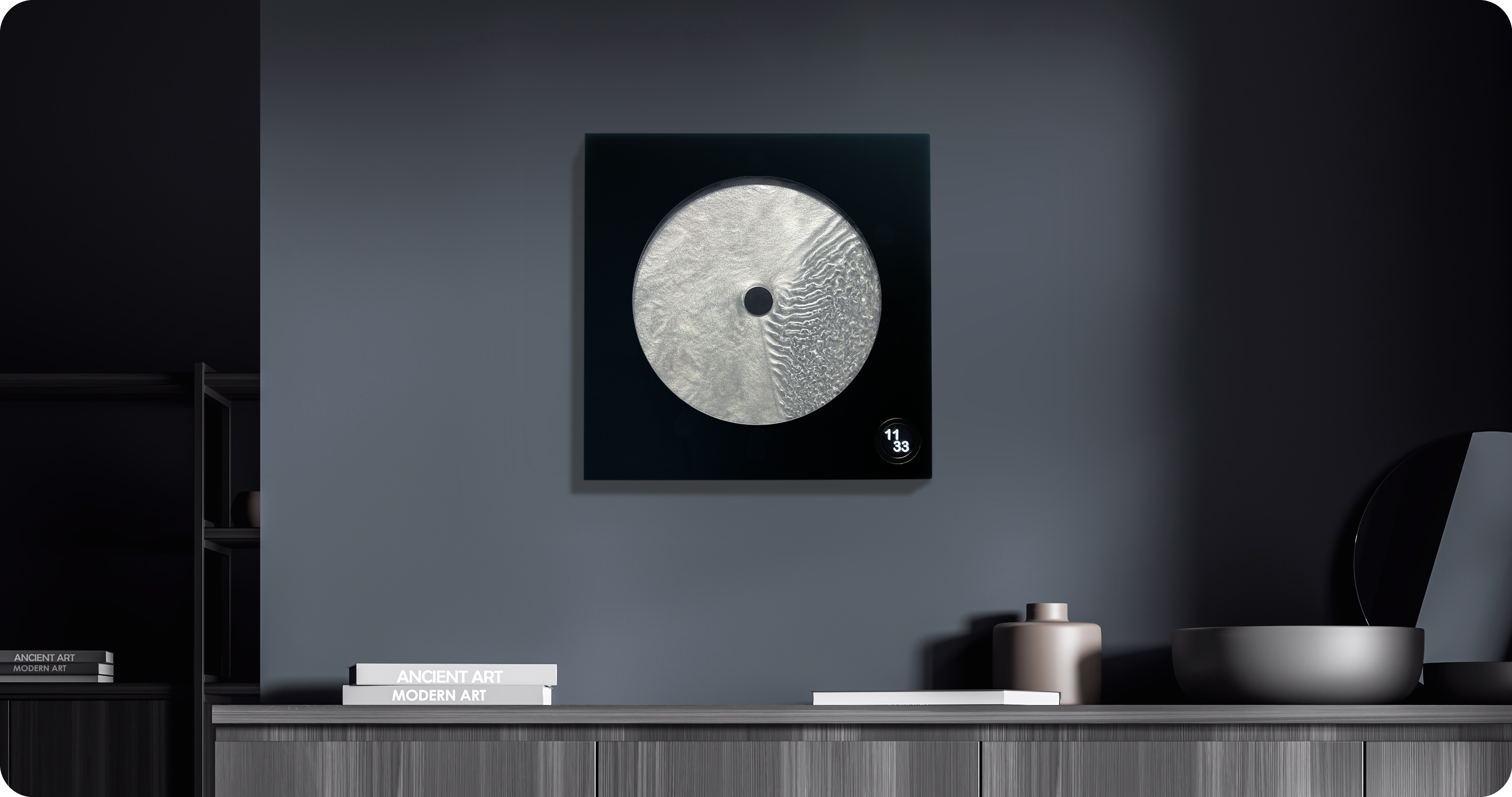
Robert Spillner spent years building components for Formula 1 teams before reversing the entire premise of his career. Instead of measuring speed, he built an object that stages time. Luna is a 400 x 400mm wall piece framed in matte black solid wood with a cast acrylic pane at its center. Inside, a single pointer moves through Zero Flow Technology, Spillner’s proprietary fluid made from distilled water, additives, micro-particles, and a small quantity of genuine lunar dust. Behind the pointer, turbulent patterns mark what has passed. Ahead of it, the liquid sits completely undisturbed.
The exact composition of the fluid is deliberately undisclosed, and that is the right call. The lunar dust is certified and billions of years old, documented with a certificate of authenticity that ships with each piece. Every Luna is signed, numbered, and limited to 99 per year, all made on demand in Germany. A small LCD touchscreen adjusts time and brightness without competing visually with the fluid. Spillner describes it as an art object with a time function, and the order of those words is correct.
What we like
The past-and-future visual logic is legible in the object itself, not only in the written description of it
Lunar dust certification and a limit of 99 per year make each piece traceable and unrepeatable
What we dislike
No public price is listed; the limited edition, handmade production profile suggests it sits above the other objects in this list
The 400mm square format demands a wall that can hold it as a singular focal point rather than one object among several
Editor’s Choice: Japanese Lantern Candle
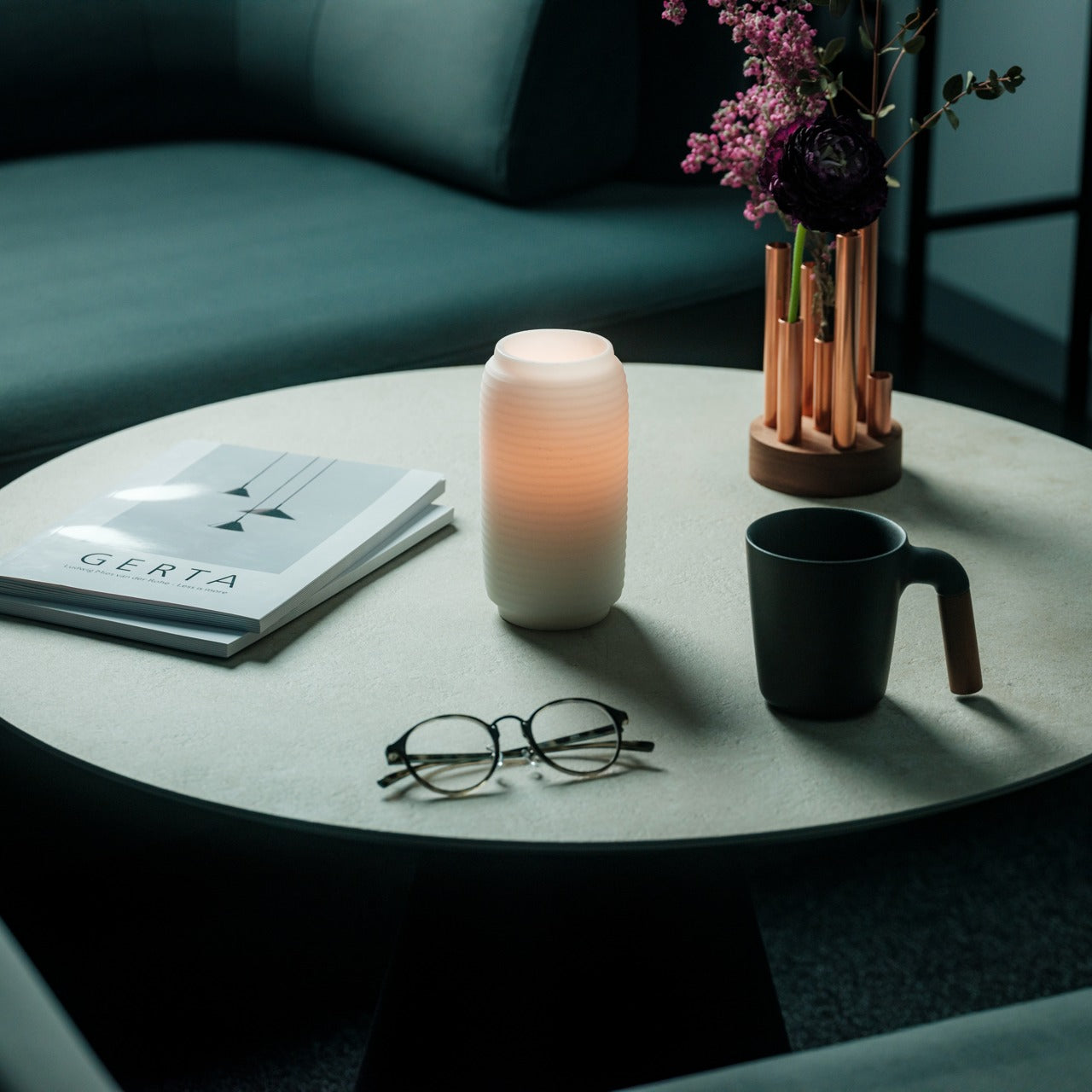
The paper lantern is one of the oldest resolved problems in lighting design. How do you carry warmth from a candle flame into a room without losing it to the hardness of the fixture? Japanese designers worked through that question for centuries and arrived at a form that required almost no further development: a collapsible structure of thin ribs and translucent paper that diffuses candlelight into a soft, directionless glow.
What separates a well-made Japanese lantern from a decorative replica is the quality of light it produces and how it behaves in a room. Warm and sourceless, candlelight filtered through translucent paper fills a corner the way natural light from a small window does, without the hard edge of a focused lamp or the flatness of overhead lighting. On the floor beside a chair or a side table, it becomes the kind of object people notice and comment on before they have thought to ask what it is.
The quality of diffused candlelight it produces is genuinely different from any other fixture in a room
Stores flat, which matters in a small apartment where every permanent object has to earn its place
What we dislike
Works best as ambient lighting rather than a primary source for reading or close work
The candle paired with it needs to suit the scale and material to get the full effect
The Best Things in a Room Are the Ones Nobody Can Quite Explain
None of these objects ask for much. A shelf, a corner, a spare stretch of counter. They do not need a gallery to earn the attention they receive. What they share is the quality of being genuinely chosen, the sense that someone worked through a problem not just until it was functional but until it was right. That difference is immediately visible and, unlike most things in a home, it does not fade with time.
The museum argument is that certain objects deserve to be seen. These six make the same case from a kitchen counter, an entryway shelf, a bedroom wall. The price point is almost beside the point, though it helps. What matters is that buying thoughtfully and buying well tend to produce the same result: a home that feels assembled by someone who paid attention, rather than one that simply accumulated things over time.
Most tiny homes are upfront about their limitations. The Florence isn’t interested in that conversation. The Florence, by Alberta-based Teacup Tiny Homes, is the argument against all of that. Sitting on a triple-axle trailer, the Florence stretches 36 feet long and 8.5 feet wide, placing it at the roomier end of the towable tiny home spectrum. Its 355 square feet of interior space is arranged with the kind of logic you’d expect from a full-size home — not an afterthought. That discipline in planning is what separates it from the crowd.
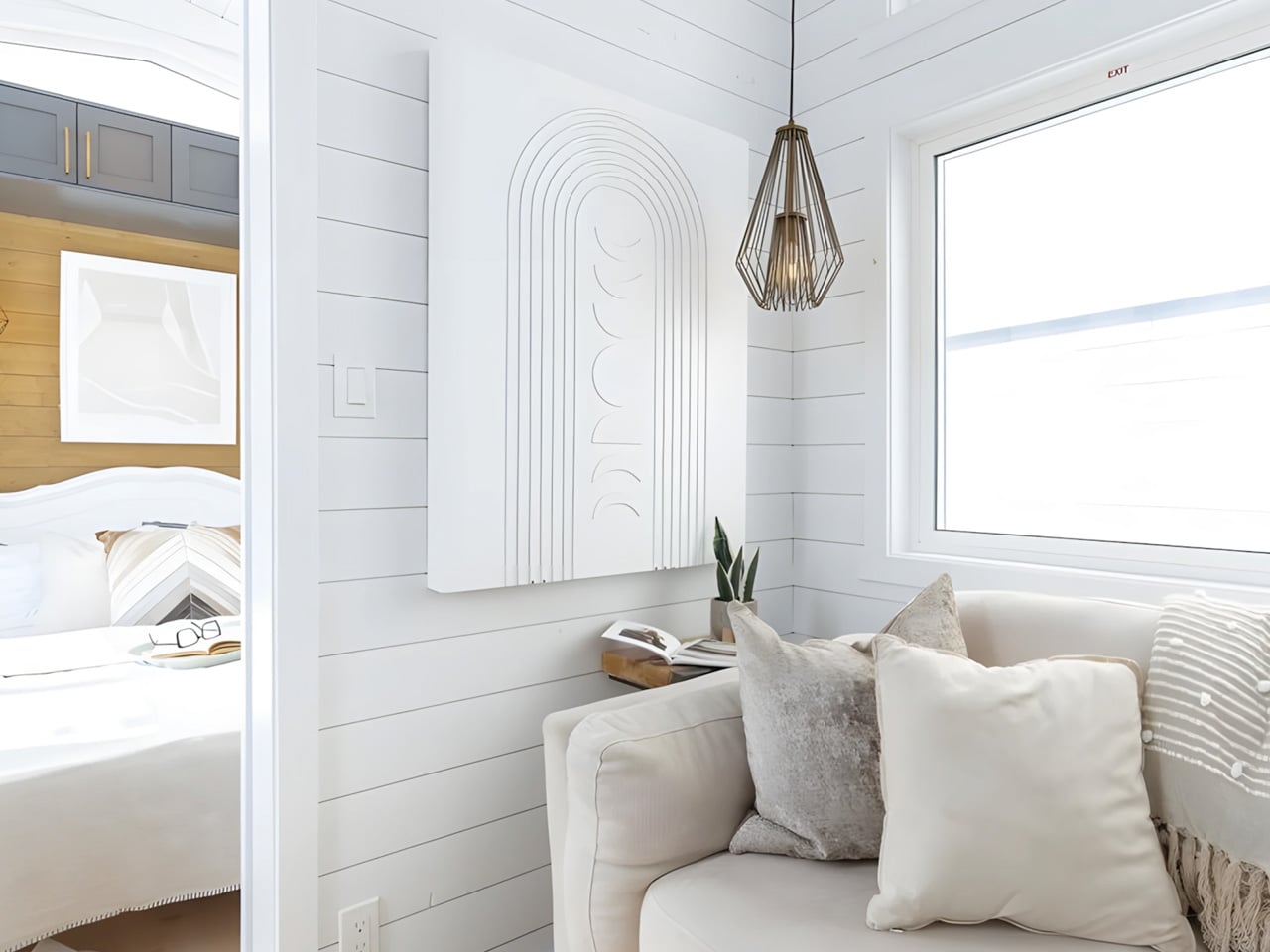
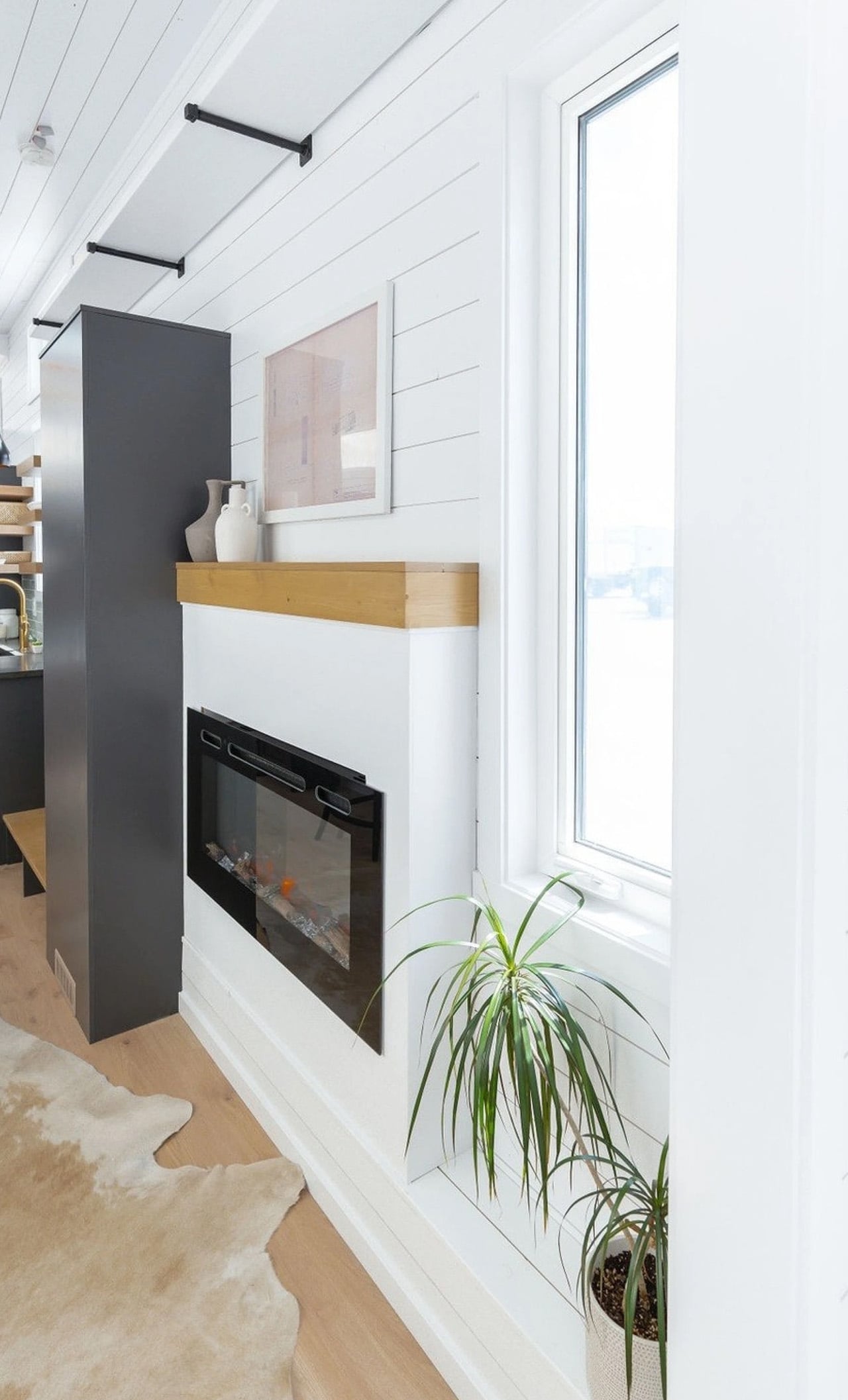
Step inside and the first thing you notice is light. White tongue-and-groove paneling wraps the walls, 11-foot vaulted ceilings push the space upward, and generous windows pull the outdoors in. The living area anchors the layout, centered around a sofa and electric fireplace, with room for a television and a large built-in storage unit near the entrance. It doesn’t read like a compromise. It reads like a considered home.
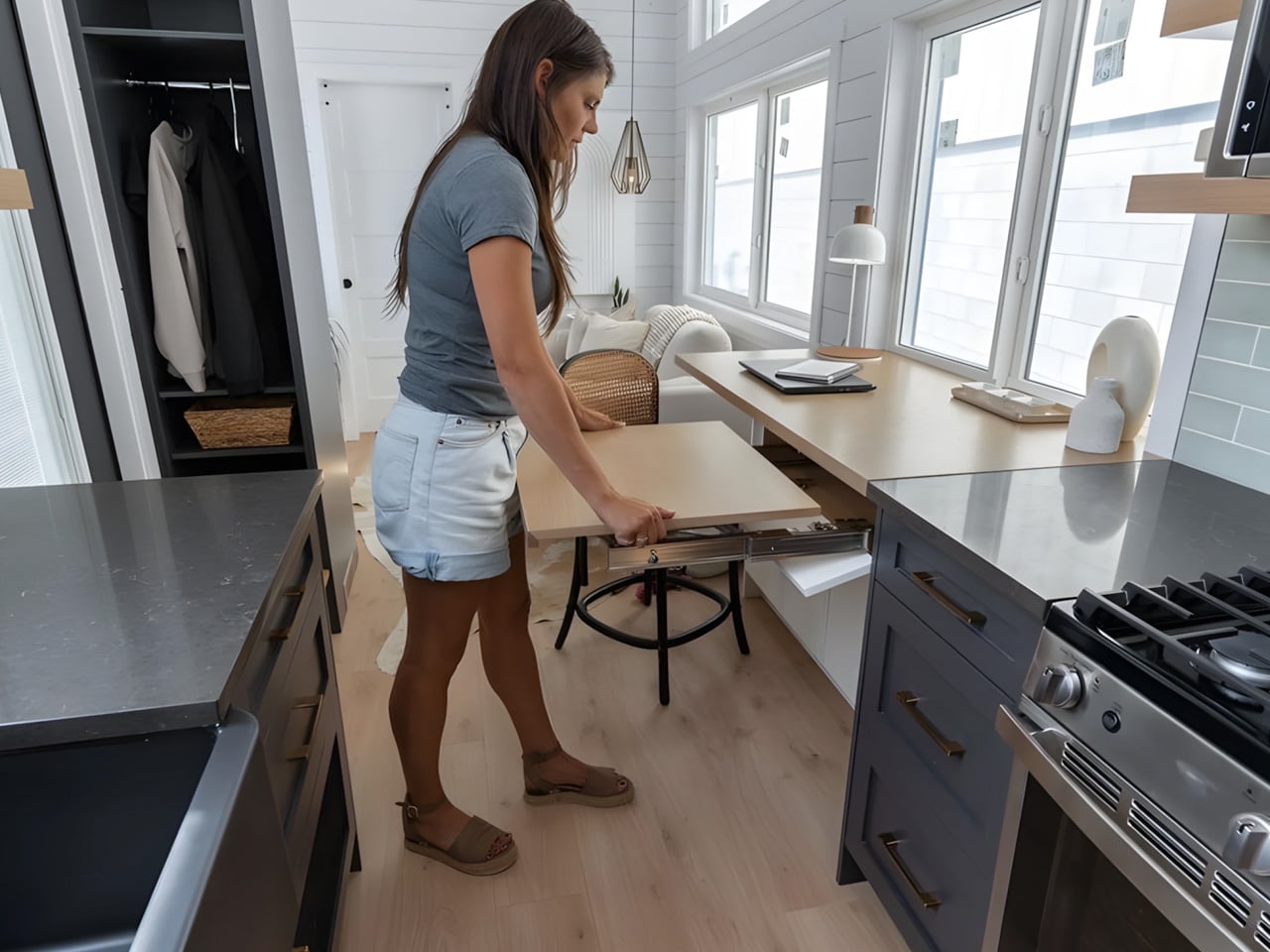
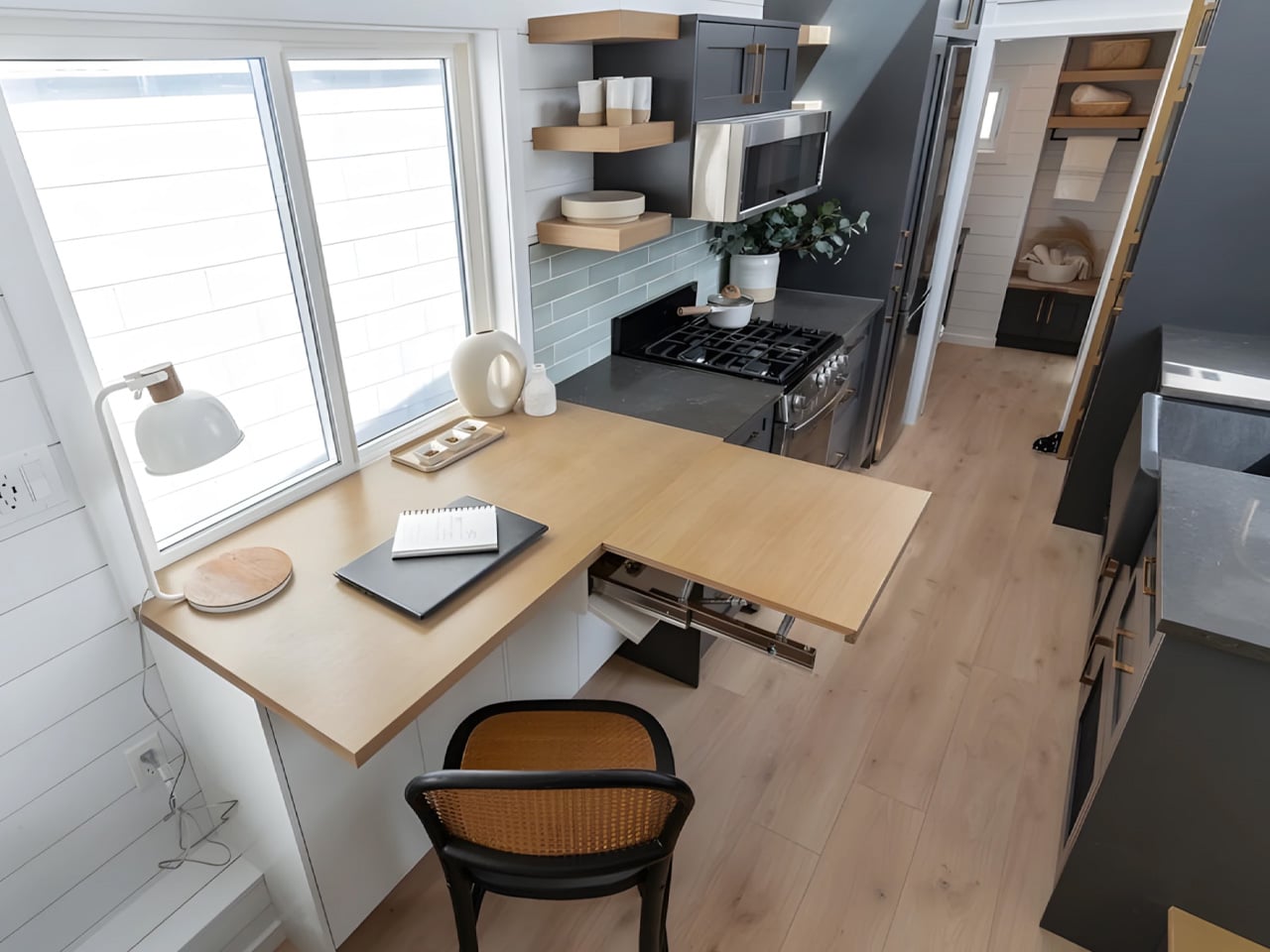
Immediately adjacent is one of Florence’s more thoughtful touches — a dining nook that doubles as a home office, complete with an extending desk and integrated storage. For remote workers or anyone who needs a dedicated workspace without sacrificing a room, this dual-function zone is quietly brilliant. The kitchen runs along the galley wall nearby, equipped with a four-burner propane stove, oven, microwave, fridge/freezer, a large sink, and storage that actually holds things.
The master bedroom is located on the main floor, which is rarer than it should be in the tiny home world. Positioned next to the living area, it fits a double bed with genuine walking clearance on both sides and enough built-in storage to feel like a real room. A secondary sleeping loft sits above the kitchen and bathroom, accessed by a removable wooden ladder, offering space for a second double bed. The bathroom, tucked between the kitchen and bedroom, features a glass-enclosed shower, flushing toilet, and vanity sink.
Teacup Tiny Homes, a 100% female-owned and operated company founded in 2016, offers the Florence with a range of customization options — a soaking tub in place of the shower, choice of materials and furnishings, and permanent foundation installation if mobility isn’t the priority. Delivery runs across both the US and Canada. The Florence starts at roughly US $122,000. For a home this size, it’s a number that’s easier to justify than it might first appear.
Most coffee nerds can tell you the difference between a bean from Colombia and one from Ghana, or even one from Brazil, without hesitation. Some are arabica, some robusta, some carry caramel notes while others lean fruity, some taste gentler thanks to high-altitude growing conditions, while others pick up the character of the soil they’re grown in. Most coffee nerds can taste the difference between two cups brewed with two different beans. What they usually can’t do at a glance is look at two pour-over drippers and instantly tell how each design shapes the brewing process and, ultimately, the flavor in the cup. They obsess over coffee, and sometimes maybe even the device they brew the coffee in, but not everyone can identify the hidden engineering details that make your coffee maker do its job consistently.
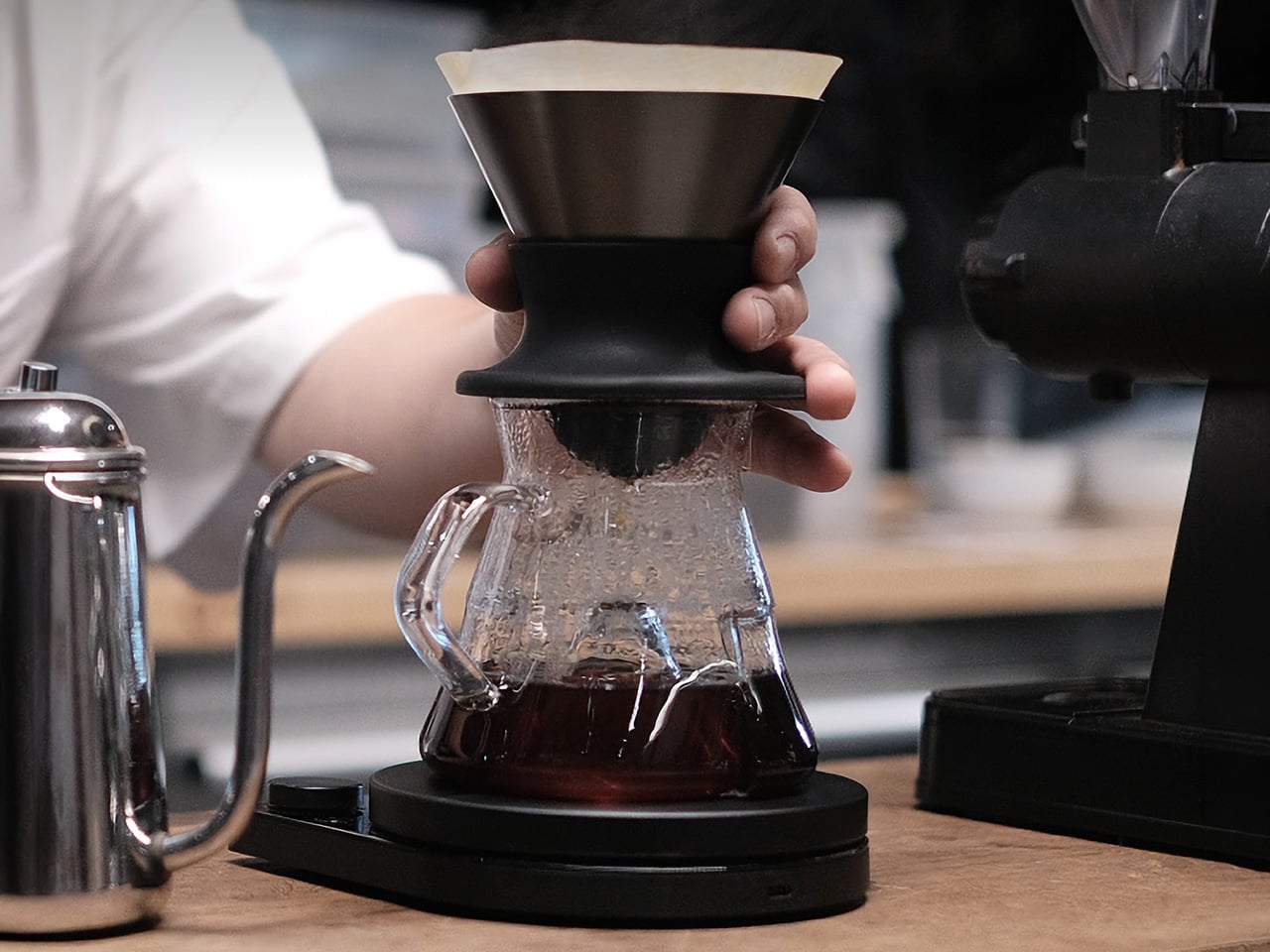
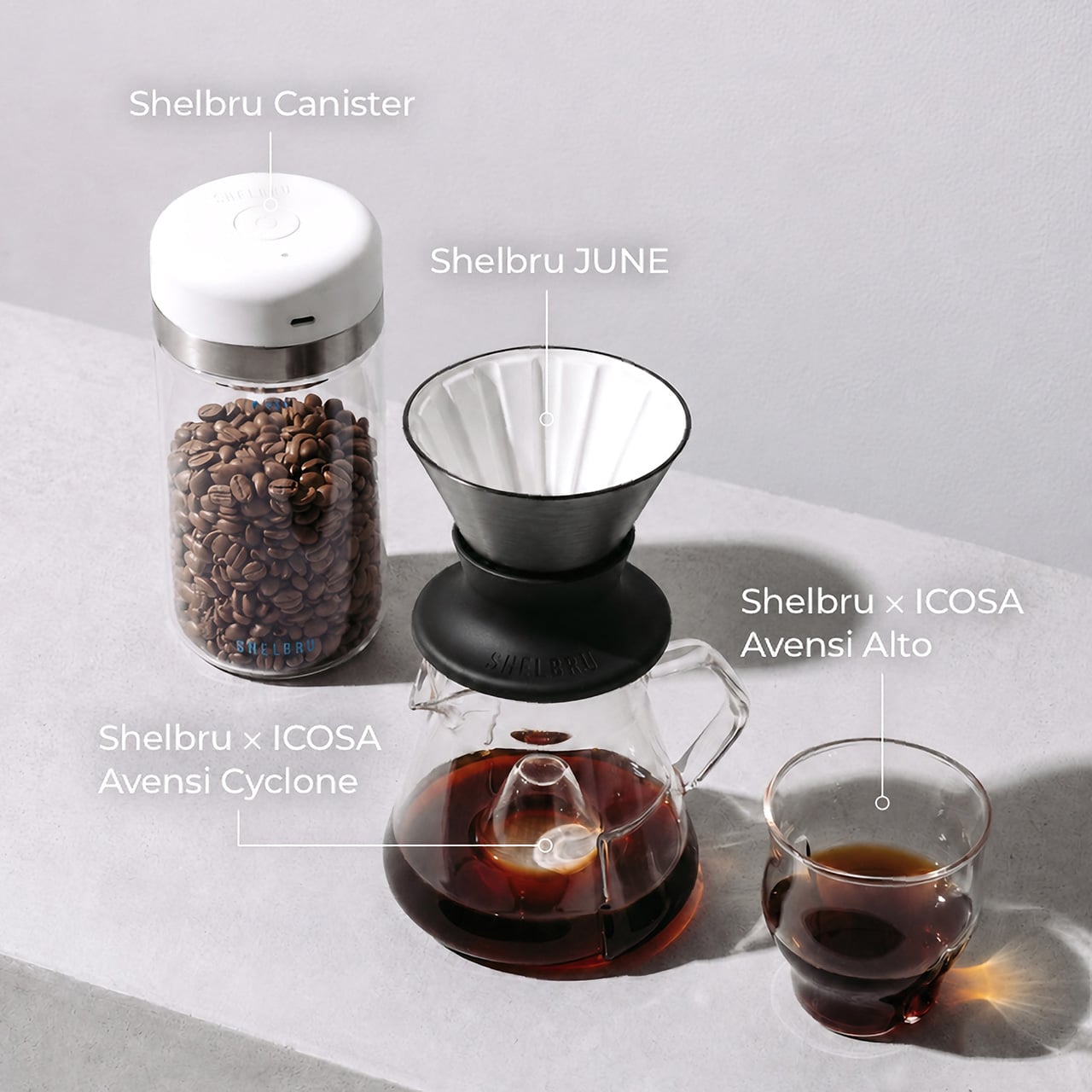
The fun part is that JUNE wears all that engineering incredibly well. It has the clean, almost gallery-like silhouette of a countertop design object you’d actually want to leave out, but every part of that shape is secretly working double duty. The dual-wall vacuum body is there to stop heat from escaping mid-brew, the ceramic-coated interior keeps your coffee tasting like coffee instead of metal, and the 12 internal ribs are designed to manage filter contact and airflow with a surprising amount of precision. It’s the kind of thoughtful design that makes you realize some drippers are basically just bowls with ambition, hoping for the best. JUNE, on the other hand, tries to account for every unknown variable, make it known, and then control it obsessively to ensure that your brew is consistent to the point where it feels like science meets art meets coffee.
Temperature is the variable most pour-over gear quietly ignores. Glass, ceramic, and single-wall steel drippers all absorb heat from brewing water rapidly, sometimes dropping the temperature by as much as 15-20°C in the first thirty seconds of a brew, which changes how compounds extract from the grounds and ultimately changes what ends up in the cup. Most people never realize it’s happening because the result is just a slightly flatter, slightly less interesting version of what the coffee could have been. JUNE’s double-wall vacuum structure builds a thermal barrier directly into the dripper itself, maintaining a more stable brewing environment from bloom to drawdown. Shelbru’s own testing showed JUNE holding within roughly 1-2°C of its starting brew temperature over four minutes, while glass and metal competitors dropped far more aggressively. The practical payoff is straightforward: you can dial in a recipe and actually repeat it, which sounds obvious but is genuinely harder than it should be with conventional gear.
The 12 concave ribs inside JUNE are doing more brewing work than they look like. Their primary job is holding the paper filter flush against the dripper wall, which reduces the gap through which water can slip around the coffee bed instead of through it, a problem that quietly leads to under-extracted, uneven cups. Between each rib, recessed air channels let pressure escape smoothly as water flows down, helping maintain a steadier, more controlled drawdown from start to finish. Then there’s the Aroma Flow outlet at the base, which centers and stabilizes the coffee stream as it exits the dripper, pointing it precisely where it needs to land. For people using a standard server, that’s a nice quality-of-life detail. For people pairing JUNE with ICOSA’s Avensi Cyclone, it becomes the entire point.
JUNE’s Aroma Flow outlet was designed with a specific destination in mind, and the Shelbru x ICOSA Avensi Cyclone is it. The Cyclone is a borosilicate glass sensory carafe featuring a raised Aroma Peak at its center, a form inspired by high-end wine decanters, which coffee cascades over as it drips from JUNE’s outlet, diffusing and magnifying aromatics into the air as it does. The Avensi Alto tasting cup extends that philosophy further, with an hourglass form and Aeration Waves geometry that amplify the aromatic complexity of each sip. Both pieces are handcrafted from borosilicate glass and designed to stack cleanly for storage. Together they push the serving and tasting half of the pour-over ritual well past what a standard mug typically offers.
The Shelbru Smart Canister handles everything that happens before the kettle even comes out. It’s a vacuum-sealed bean storage container with an automated pressure sensor that monitors internal conditions and reactivates vacuuming whenever pressure drops below -20 kPa, keeping beans in a stable, low-oxygen environment without any manual effort on your part. Press once to seal, press again to open, and the canister takes care of the rest. It holds 250 to 300 grams of roasted coffee, runs on a 1,500 mAh battery rated for around 4,000 hours of standby, and charges fully in three hours. For anyone who has bought genuinely excellent beans and then watched them go stale in a poorly sealed bag, this is the container that fixes that specific, recurring regret.
Swapping JUNE’s silicone base for a Hario Switch converts the entire setup to immersion brewing in seconds, giving you a different extraction profile from the same dripper body without buying a second piece of equipment. Pairing JUNE with Nucleus Paragon opens up rapid cooling and temperature-controlled experiments for brewers who want to get more technical about what’s in the cup. The detachable base makes JUNE feel like a platform rather than a fixed tool, one that grows with how seriously you decide to take this whole thing. For casual daily brewers, this is context they may never need. For the kind of person who already owns a precision kettle and a gram scale, this is where JUNE gets very interesting very fast.
JUNE starts at $63 for the single dripper, with the Fresh Brew Bundle pairing JUNE with the Smart Canister at $103. The Complete Aroma System, which brings together JUNE, the Avensi Cyclone, the Avensi Alto, and the Smart Canister, covers the full pour-over journey from bean storage to brewing to serving to tasting, and is priced at $137. Yanko Design readers get an exclusive deal on that Complete Aroma System at $135, against an MSRP of $235. The Cold Brew Bundle, which includes the Shelbru Brewer, Carafe, and Smart Canister, comes in at $83. Mass production is already underway with delivery expected in September 2026, and full details are available on the Kickstarter page below
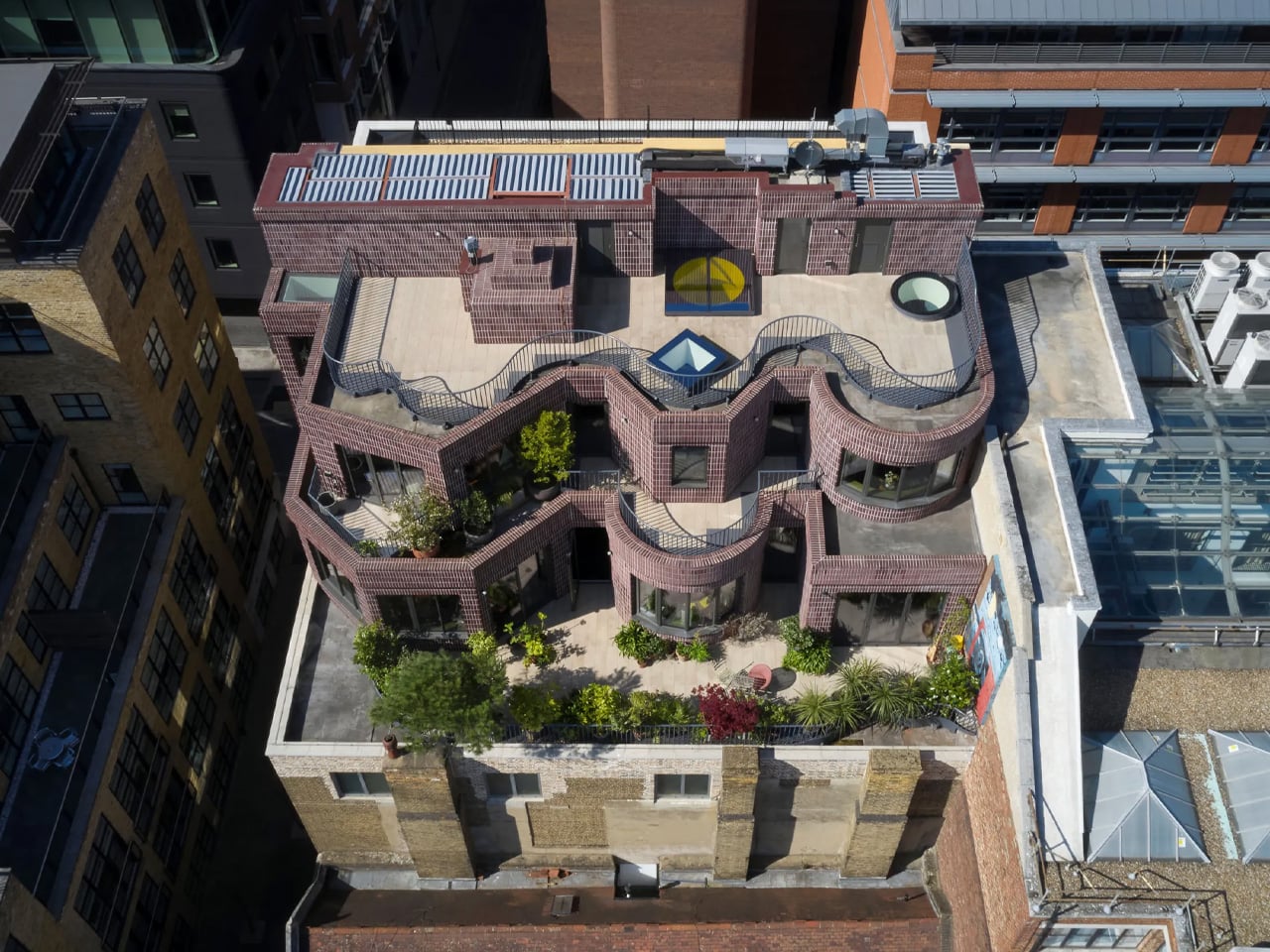
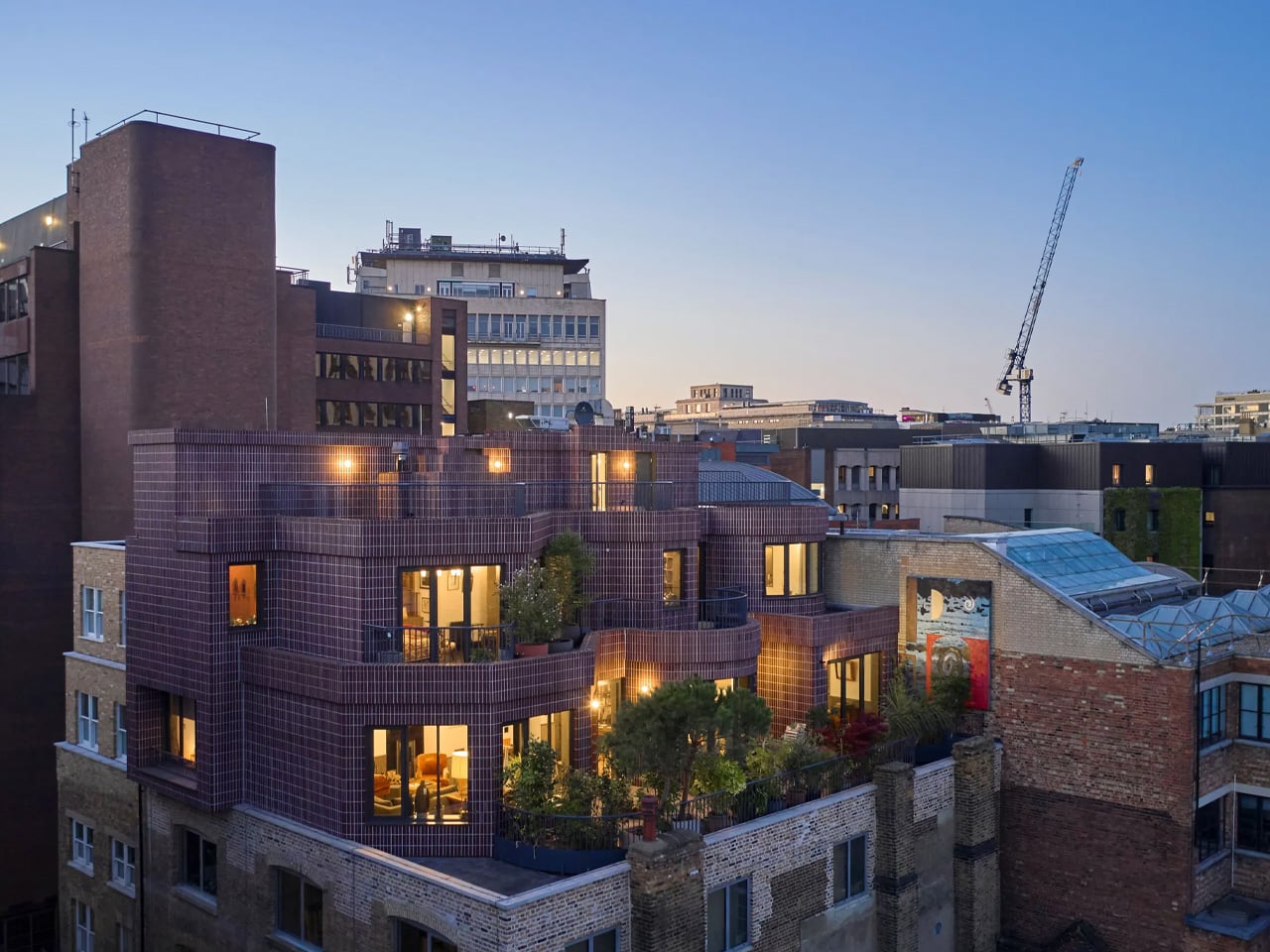
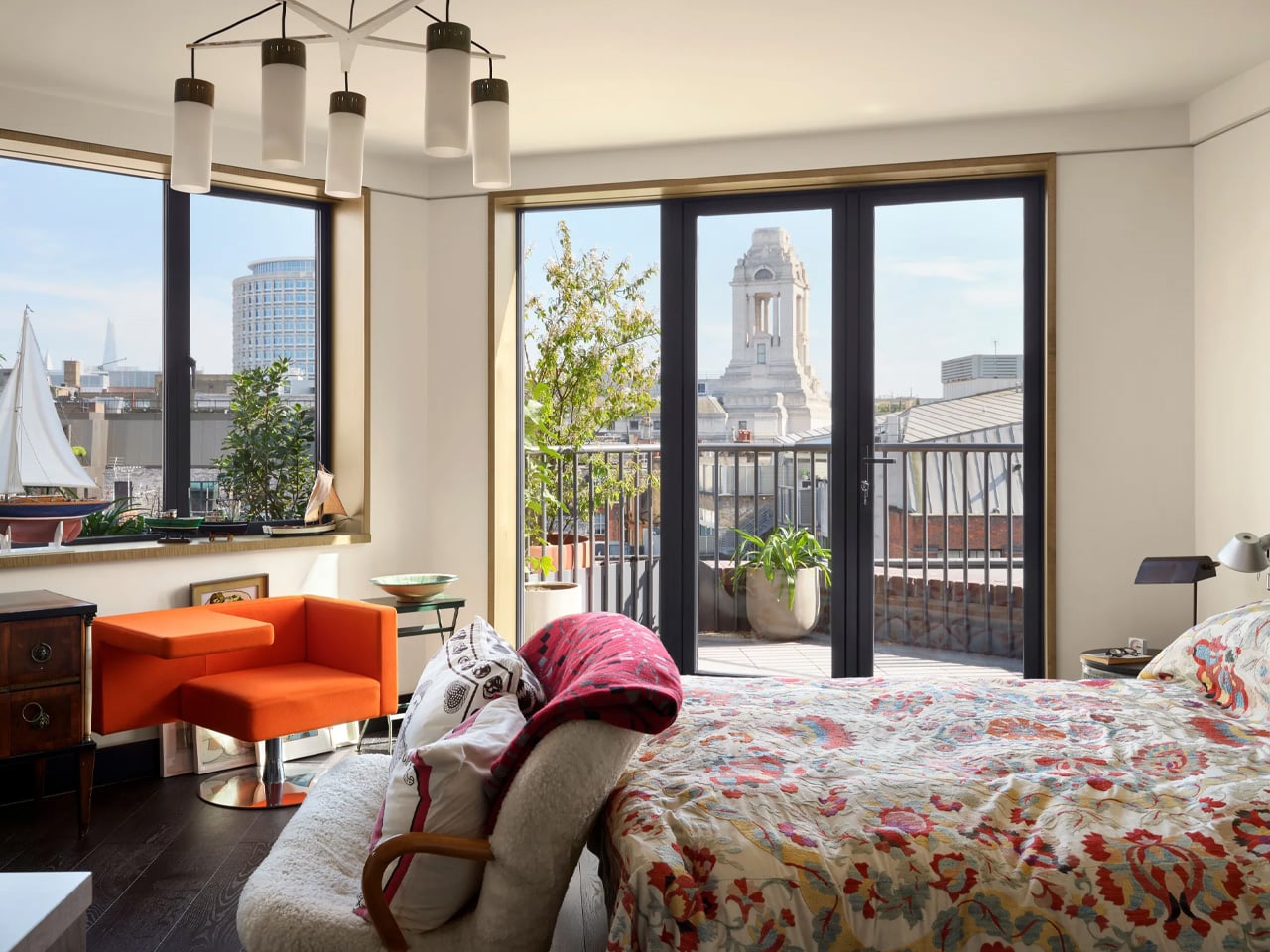
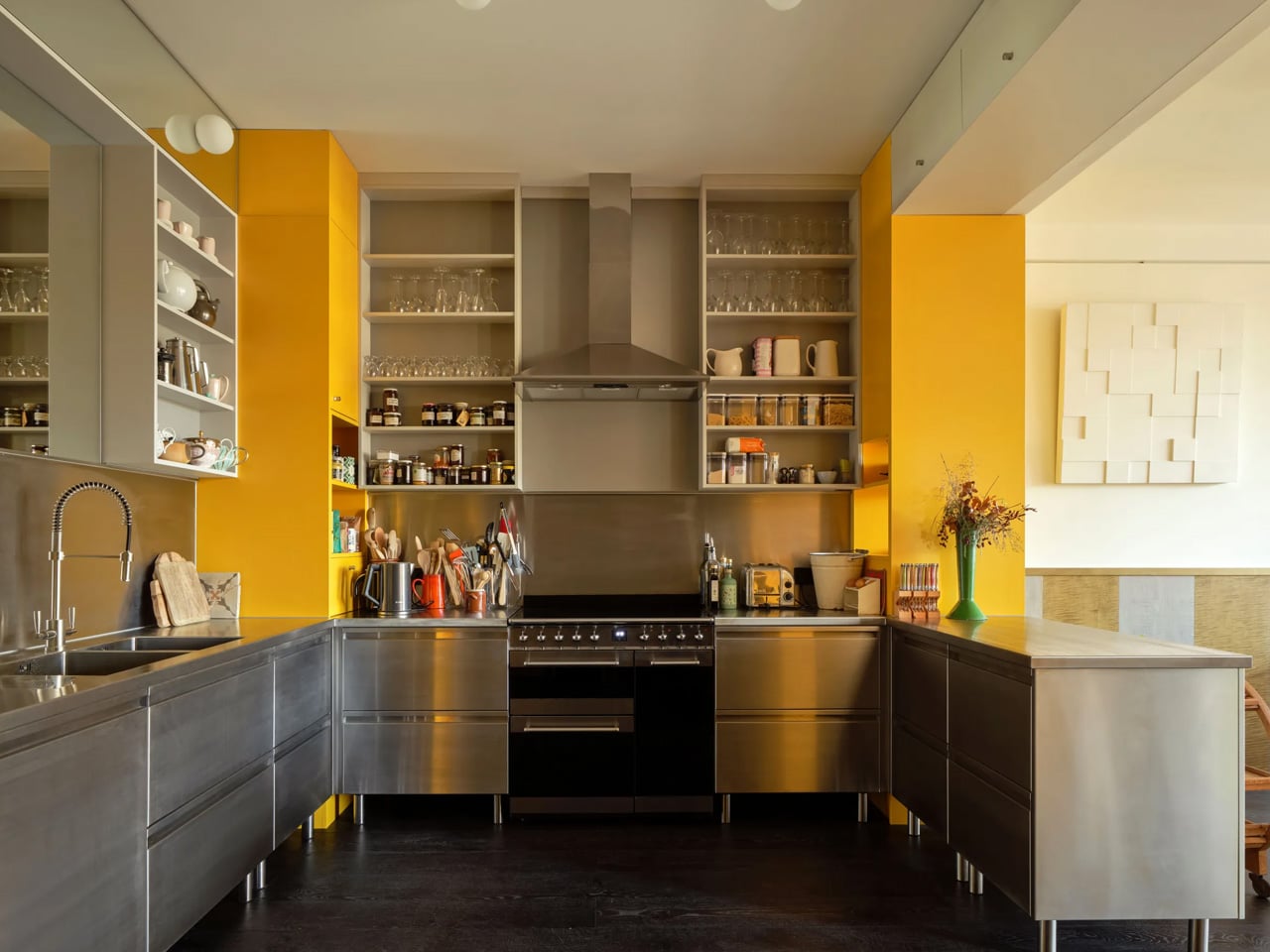
London has always demanded creative solutions from its architects. Space is scarce, plots are irregular, and the city’s historic fabric rarely makes room for anything new without a fight. Smart’s Place, designed by David Kohn Architects for developer Baylight Properties, found its answer not on the ground, but above it — perched atop a 19th-century Covent Garden warehouse where a rooftop became the foundation for a proper two-story home.
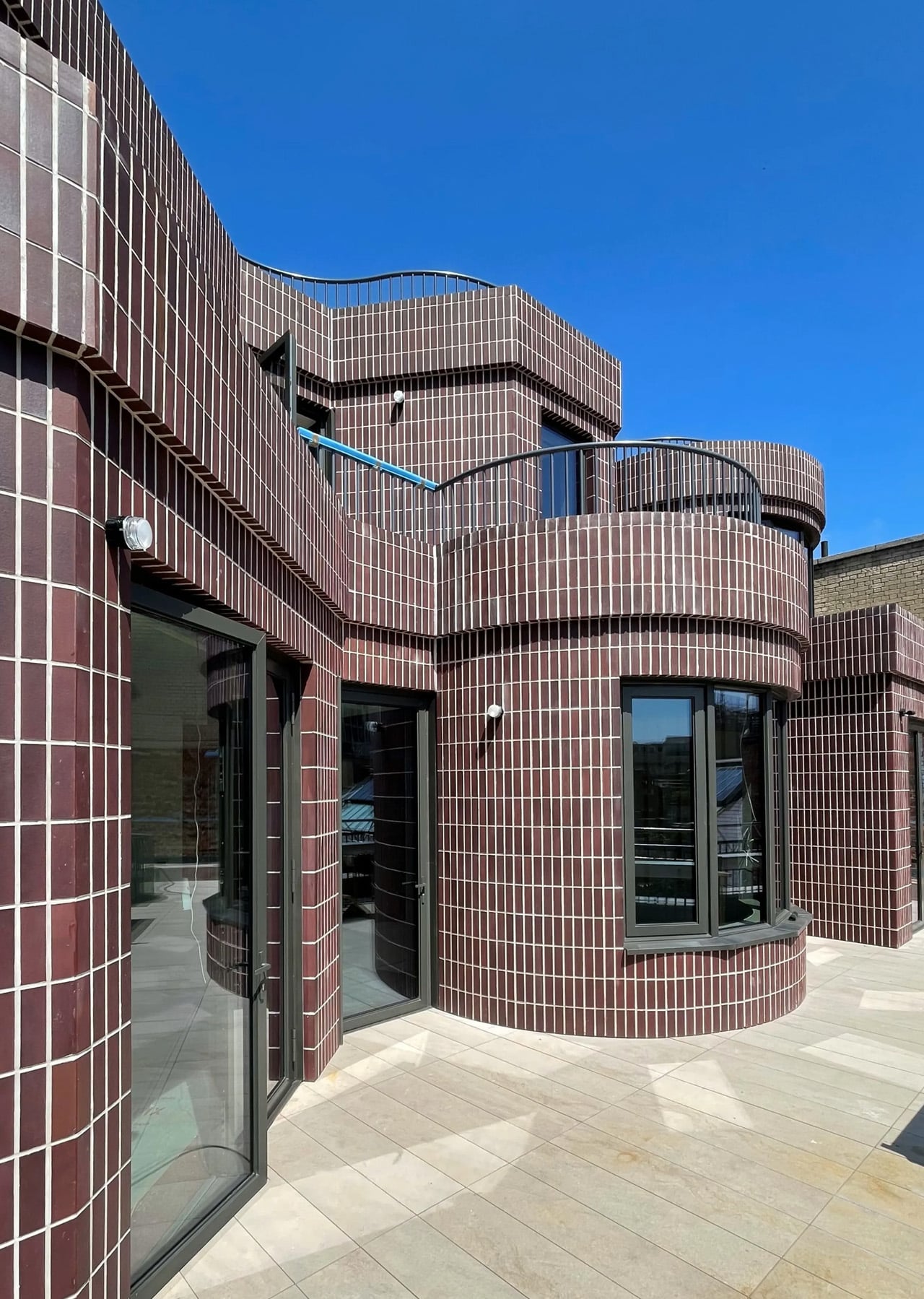
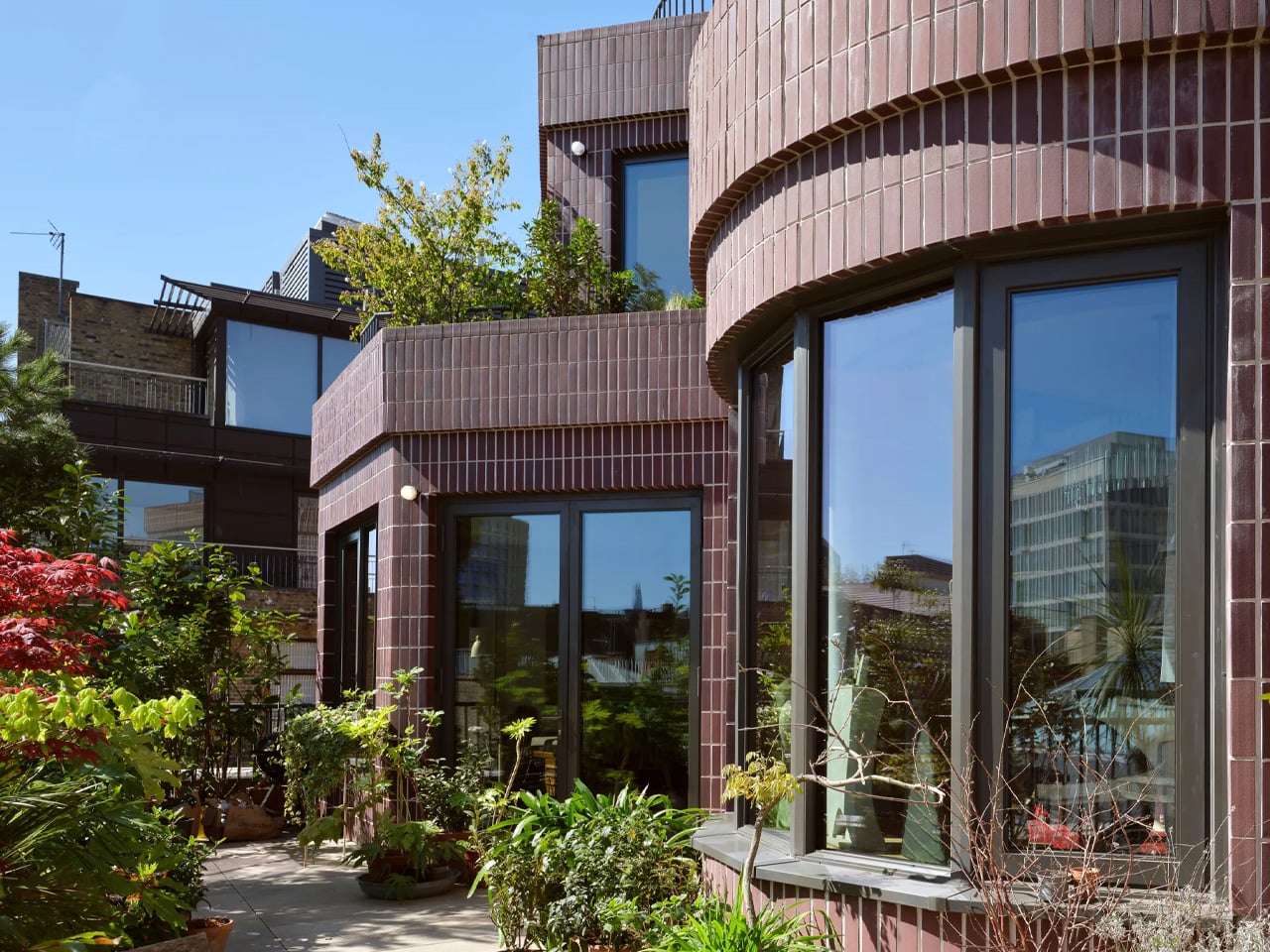
At 3,046 square feet, the residence doesn’t read like a rooftop addition. It reads like a house. The exterior is clad almost entirely in brick, but not laid in the conventional staggered pattern found across London’s surrounding streetscape. Here, each brick is turned on its narrow side and stacked vertically, producing a tighter, more textured surface. The dark plum tone and pale mortar still acknowledge the neighborhood’s palette — it fits without blending in.
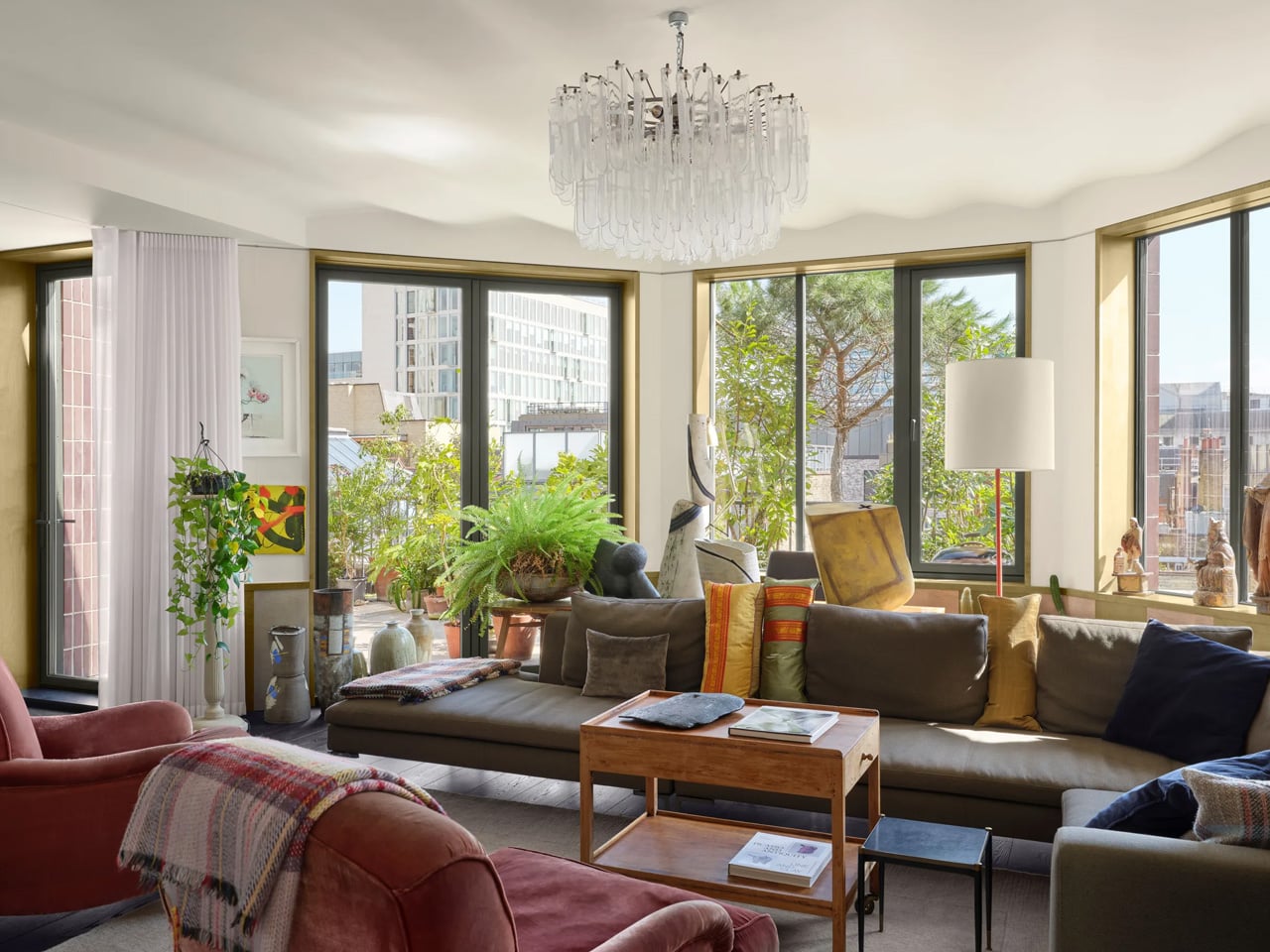
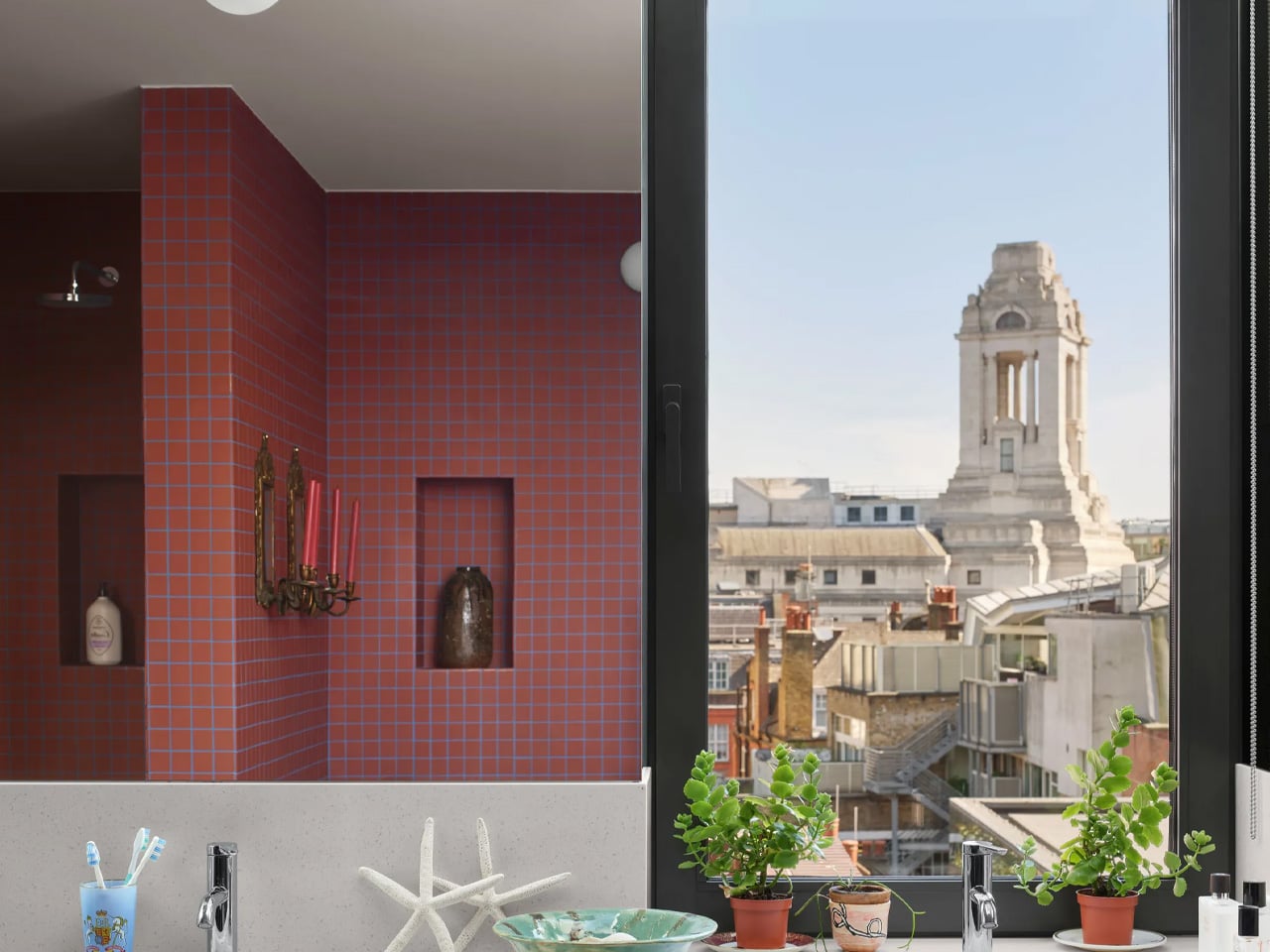
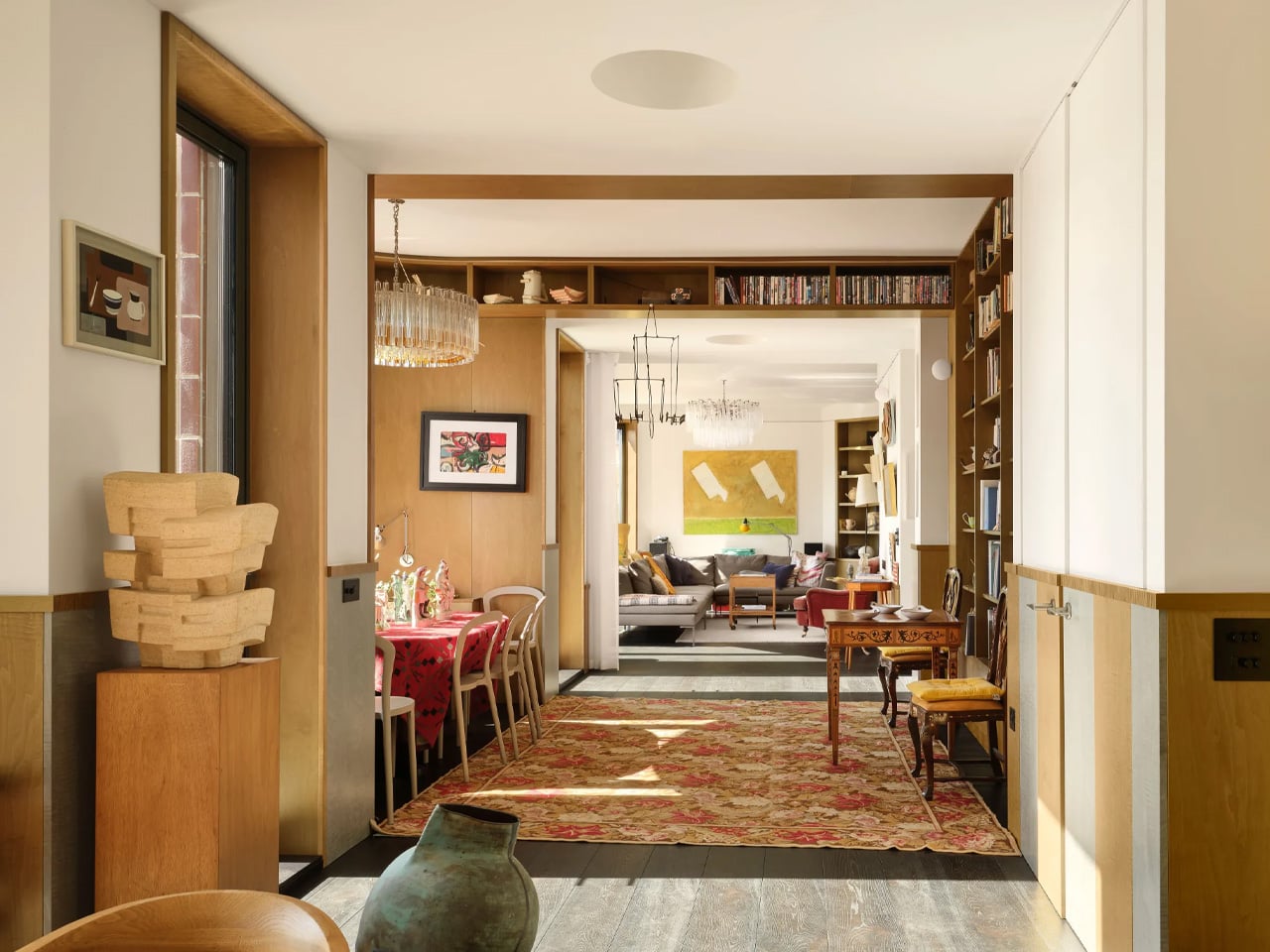
The ground floor is organized as an enfilade — dining room, library, and lounge arranged in an open sequence with no doors between them, flowing as one continuous space. It’s a layout that suits the owner well; the brief called for a home built around hosting. Each room faces south, framed by bay windows that pull London’s skyline into view, with a terrace extending the living space outward. Behind this sequence sits the kitchen, bathrooms, and a lift connecting the home to the warehouse below, which the owner uses as an office.
Upstairs, the character shifts slightly. Two bedrooms, each with its own bathroom, are lined with shelving and wood paneling — a deliberate backdrop for the owner’s collection of art and ceramics. Picture rails run throughout, and a study completes the floor. The staircase connecting both levels is lit from above by circular skylights, a quiet architectural gesture that makes the climb feel considered. Each bedroom has bay windows set back from the facade, carving out private terraces landscaped by Todd Longstaffe-Gowan.
David Kohn himself acknowledged the layered references embedded in Smart’s Place. He cited Sir John Soane’s Museum and the Villa Necchi in Milan alongside the studio’s own Red House — the Dorset project that won RIBA’s House of the Year in 2022, praised specifically for its enfilade that “magically flows.” That same spatial logic reappears here, refined and transported to a London rooftop.
What Smart’s Place demonstrates, much like the studio’s previous work, is an ability to find genuine domesticity inside unlikely shells. Two years in the making, it doesn’t try to look temporary or apologetic about its position above the city. It simply looks like a home — which, given where it sits, is the hardest thing to pull off.
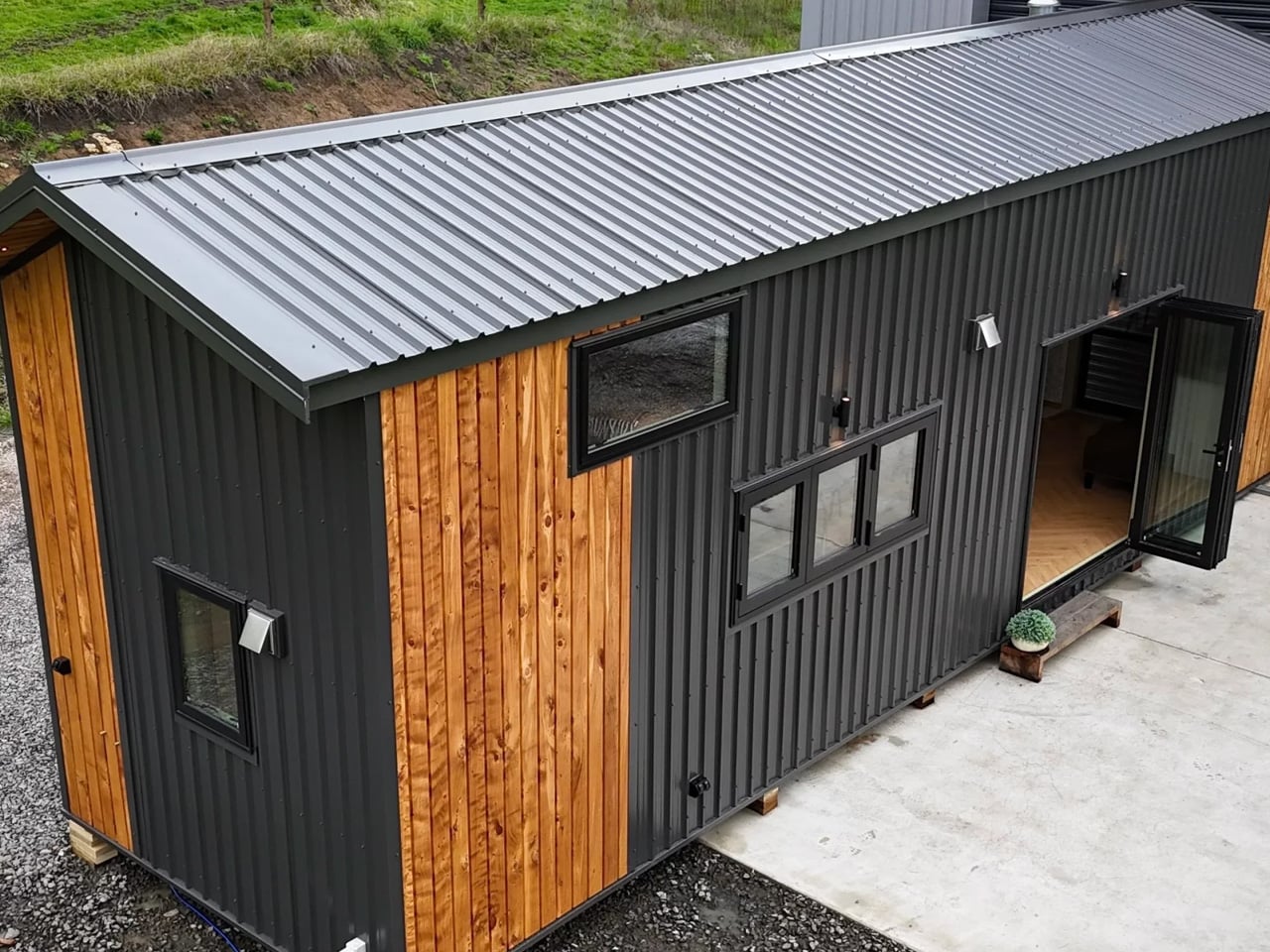
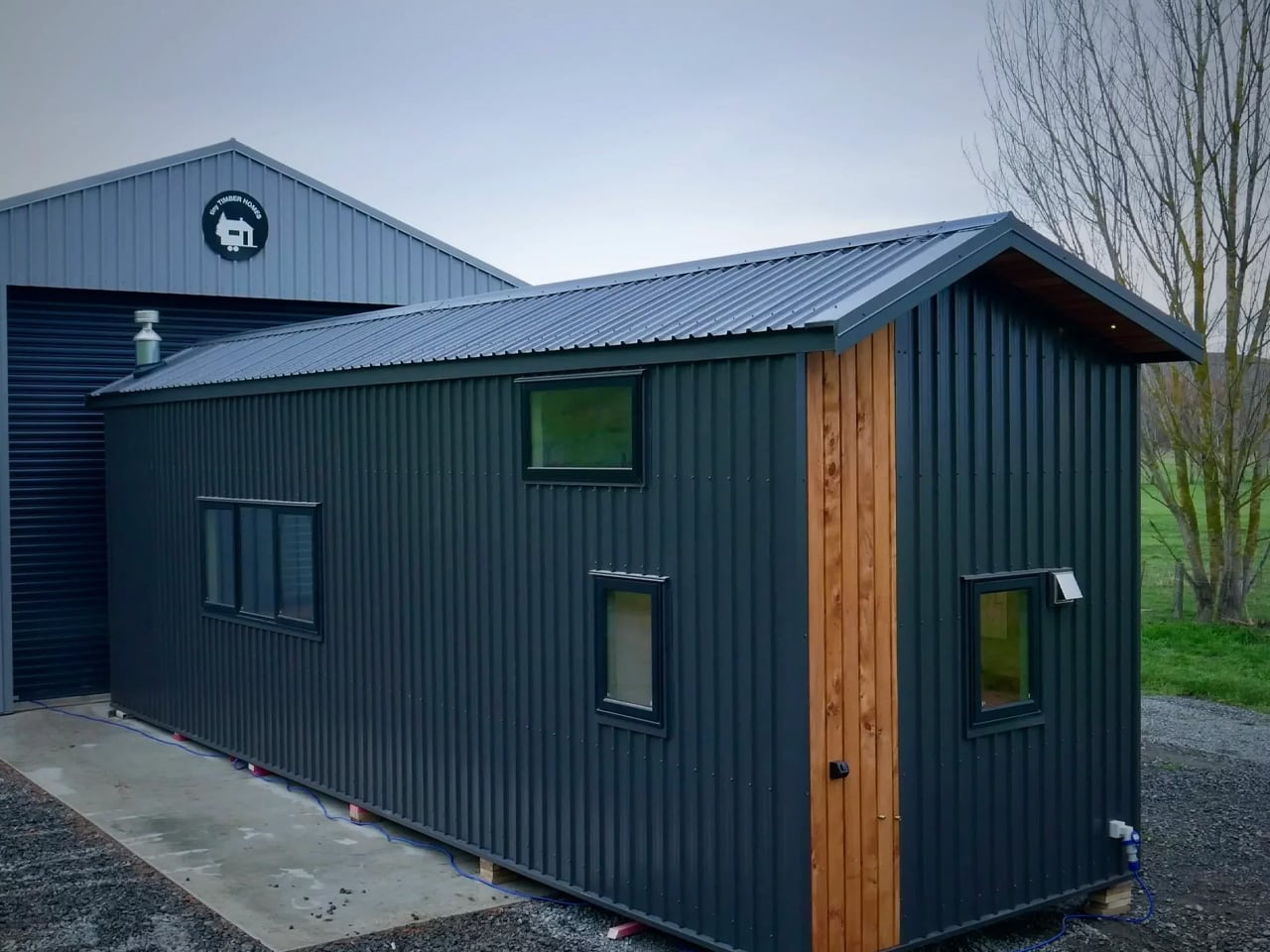
Wood has a way of telling you exactly where it’s been — and the Redwood by Tiny Timber Homes wears that history well. The Redwood leans into that quality completely — and the result is a tiny house that feels less like a compromise and more like a choice you’d make twice.
Tiny Timber Homes has built its reputation on one idea: that small spaces deserve the same craftsmanship as full-sized ones. The Redwood is perhaps the clearest expression of that philosophy. Its exterior reads immediately as intentional — warm wood cladding, clean rooflines, and a silhouette that sits confidently without trying to mimic a traditional house. It’s not cosplaying a cabin. It’s its own thing.
Step inside and the material language continues without interruption. Exposed timber framing lines the interior walls, giving every room a structural honesty that most tiny homes paper over with drywall and distraction. Natural light does the heavy lifting here — strategically placed windows pull the outdoors in and keep the interior from ever feeling like a box you’re trapped inside.
The kitchen is compact but considered. Counter space is used with real intention, storage is tucked where you’d actually look for it, and the layout doesn’t ask you to turn sideways to reach the sink. It’s the kind of kitchen that rewards a slower pace — coffee in the morning, dinner from scratch, no dishwasher you don’t need.
The sleeping loft sits above it all, accessible by a stair ladder that doubles as storage. From up there, the whole space reads differently. You see the structure, the grain of the wood, the way everything fits without forcing. It’s a perspective that makes you appreciate the design more, not less.
What separates the Redwood from the growing noise in the tiny home market is restraint. There’s no attempt to cram in features that don’t belong, no feature list that sacrifices livability for a spec sheet. What you get instead is a home that understands its own scale and works with it — not against it.
Tiny Timber Homes builds for people who’ve thought seriously about what they actually need from a home. The Redwood answers that question with timber, light, and a layout that respects the person living inside it. In a category full of aspirational renderings and underwhelming follow-through, that’s worth something. It looks like a home. It lives like one too.
Most tiny homes ask you to make peace with the compromise. Wind River Built’s Rogue Mini skips that conversation entirely. Built in Tennessee by one of the most respected names in the tiny home space, the Rogue Mini is a trailer-mounted dwelling that treats small square footage not as a limitation, but as a design brief.
From the outside, the Rogue Mini reads clean. Board-and-batten siding, a pitched roofline, and restrained exterior detailing give it the visual composure of something far more permanent than its wheels suggest. Wind River Built has always leaned into quality construction over novelty, and the Rogue Mini reflects that. Every edge feels considered. Nothing about the exterior screams “novelty camper” — it looks like a house someone actually wants to live in.
Step inside, and the interior continues that conversation. Wood-paneled walls and vaulted ceiling lines open the space upward, drawing the eye in a way that makes the square footage feel more generous than it is. The kitchen is compact but functional, with enough counter space to cook a real meal rather than reheat one. The sleeping loft sits above, accessible by a staircase or ladder depending on configuration, and offers a surprisingly comfortable retreat that feels separated from the main living area in the way a bedroom should.
What Wind River Built understands — and what a lot of tiny home builders get wrong — is that smallness only works when the details are right. Inadequate storage, poor natural light, and awkward transitions between zones make a small home feel punishing. The Rogue Mini sidesteps most of those pitfalls. Windows are placed deliberately, throwing light into corners that would otherwise collapse. Storage is woven into the structure rather than bolted on as an afterthought.
The Rogue Mini isn’t designed for the weekend warrior or the festival-goer chasing Instagram backdrops. It’s designed for someone who has genuinely decided to live differently — to trade square footage for mobility, and square footage for intention. That kind of design decision requires a builder who takes the task seriously, and Wind River Built clearly does.
At a time when housing feels increasingly abstract — prices climbing, spaces shrinking, and permanence fading — the Rogue Mini offers something rare. It chooses to make living small feel like an upgrade rather than a retreat. That’s not an easy thing to design. Wind River Built pulls it off.