First Drive: Rolls-Royce Spectre EV – An Electrifying Blend of Luxury and Performance

Anders Warming, the Director of Design at Rolls-Royce, presented the Spectre EV’s design philosophy at Amelia Island Concours d’Elegance a couple of years back, providing a comprehensive look into its design philosophy and highlighting the specific elements that make the Rolls-Royce Spectre unique. During his in-depth presentation, Warming strongly emphasized the integral role of storytelling in the design process at Rolls-Royce. He explained that each design element tells a story that reflects a deep and enduring connection to the brand’s rich heritage. However, this commitment to tradition doesn’t hinder innovation. On the contrary, it acts as a potent platform for challenging design limits, enabling the integration of creative elements that improve the overall vehicle’s experience, providing a glimpse into the delicate equilibrium of tradition and advancement that characterizes Rolls-Royce.

Designer: Anders Warming for Rolls-Royce
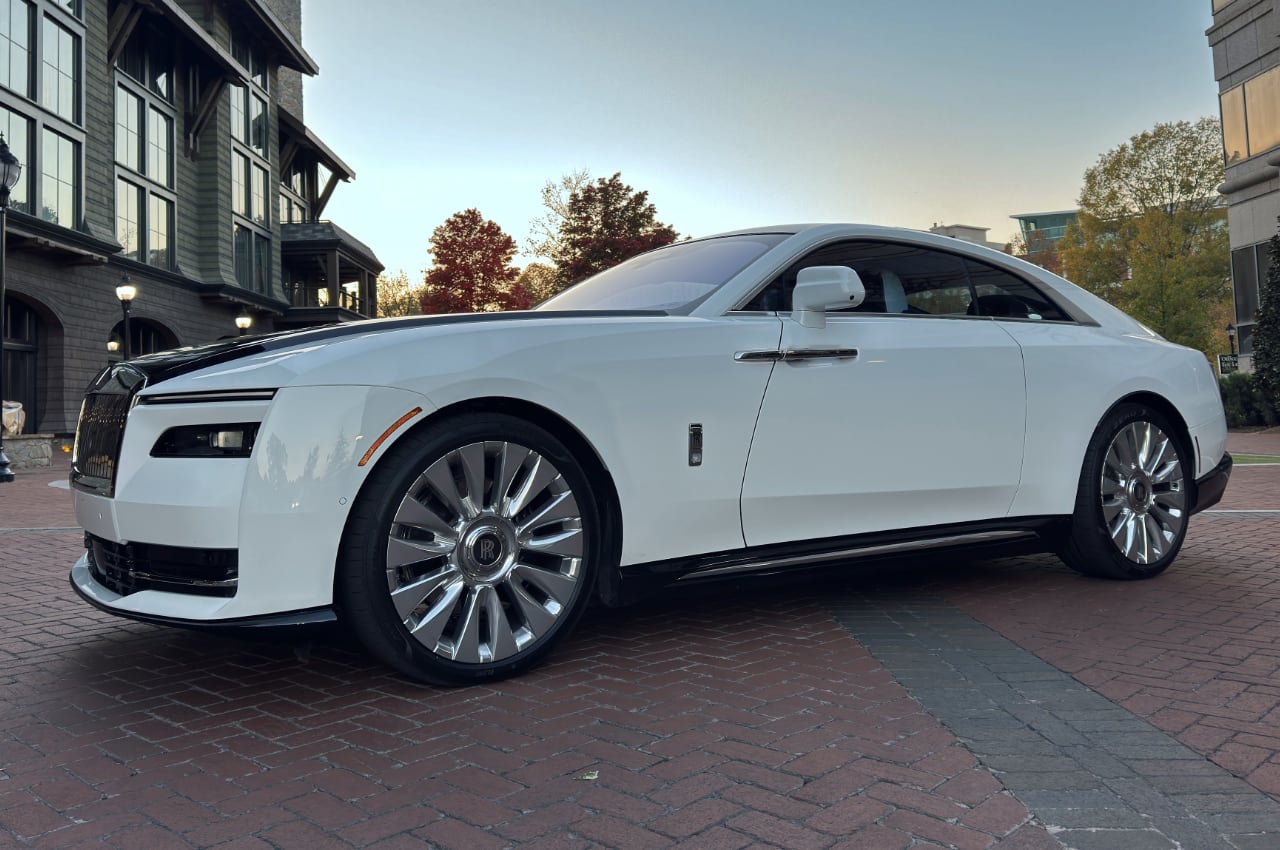
Exterior Design: Front & Side Profile – Elegant, Aerodynamic and Nautical Elegance

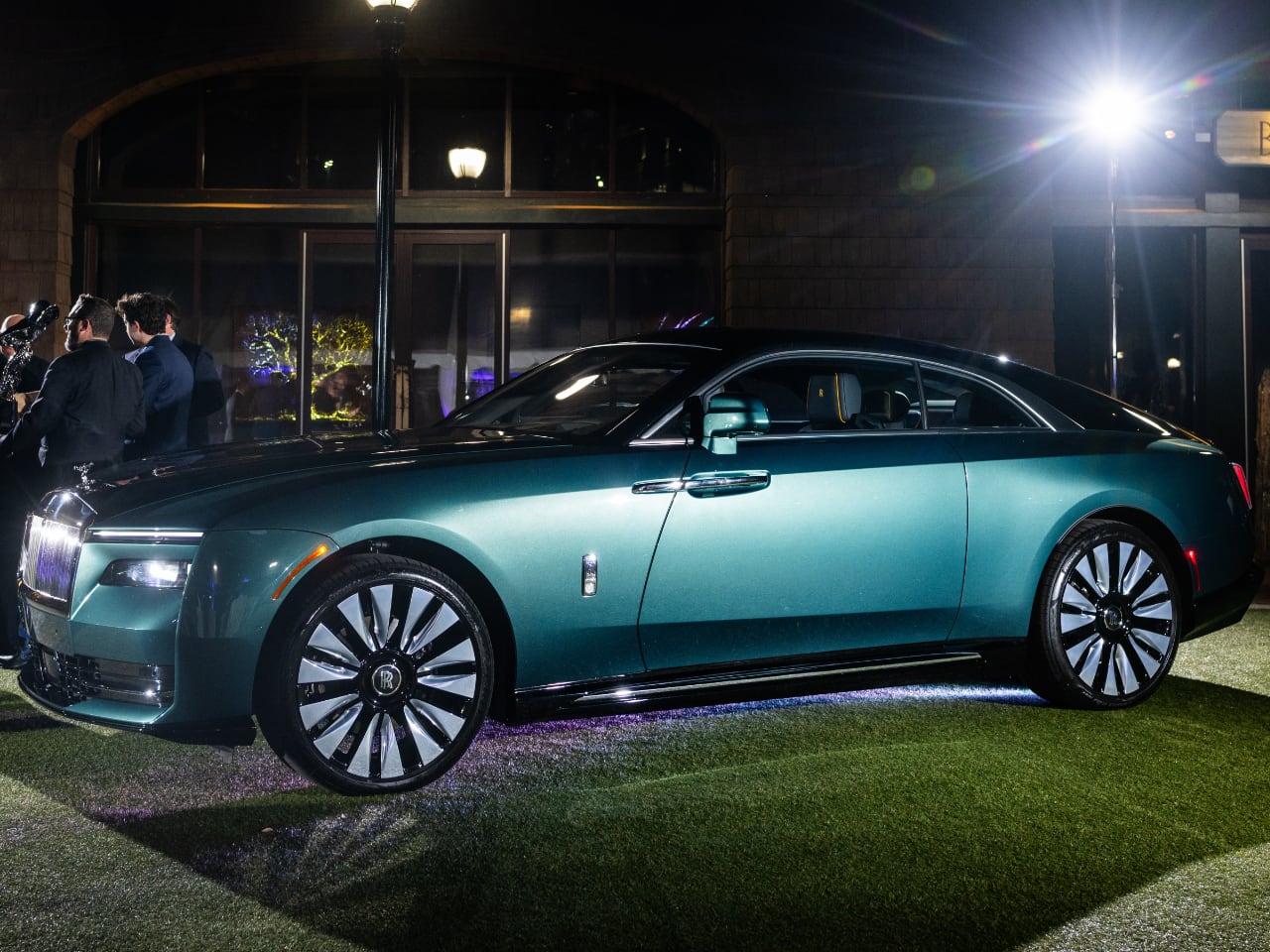
The car’s exterior design achieves a unique elegance and strength with a playful mix of upright and flowing lines. ItThear gives you a friendly wink, saying, “I’m strong, but I also know how to have fun!” The design creates a dynamic vibe, with waft lines that remind you of a sailing adventure, adding a sense of motion and speed, even when the car is parked. The two-tone color scheme is like a cherry on top. The Aero Two-Tone finish, a fantastic design element, highlights the car’s sporty spirit. It’s like the car is wearing a stylish cap, with the upper color extending across the bonnet and along the sweeping fastback roofline, leaving out the side pillars for an eye-catching contrast. This coloring choice, a classic feature of Rolls-Royce designs, creates an unforgettable visual impact, significantly adding to the car’s overall look.
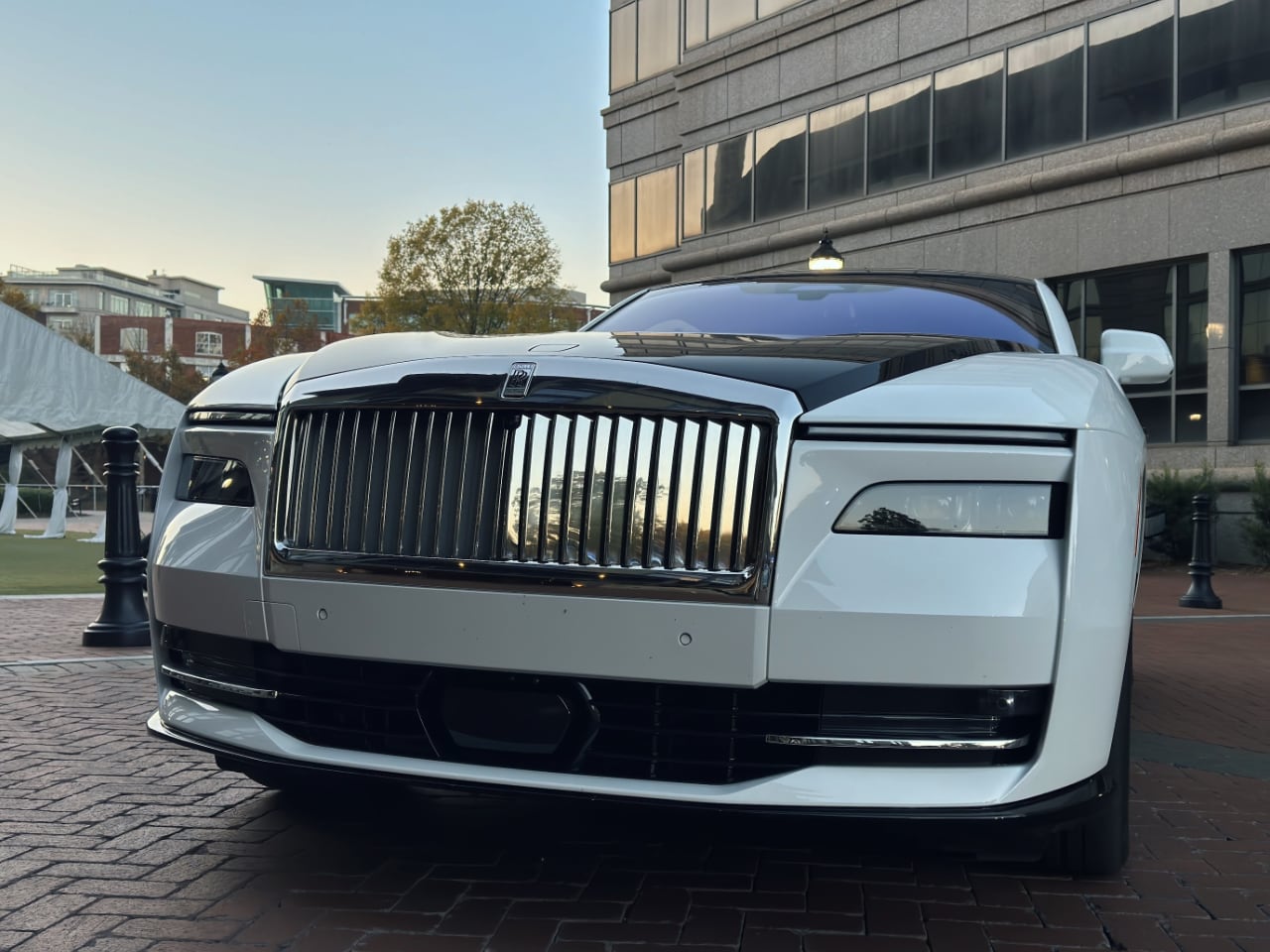
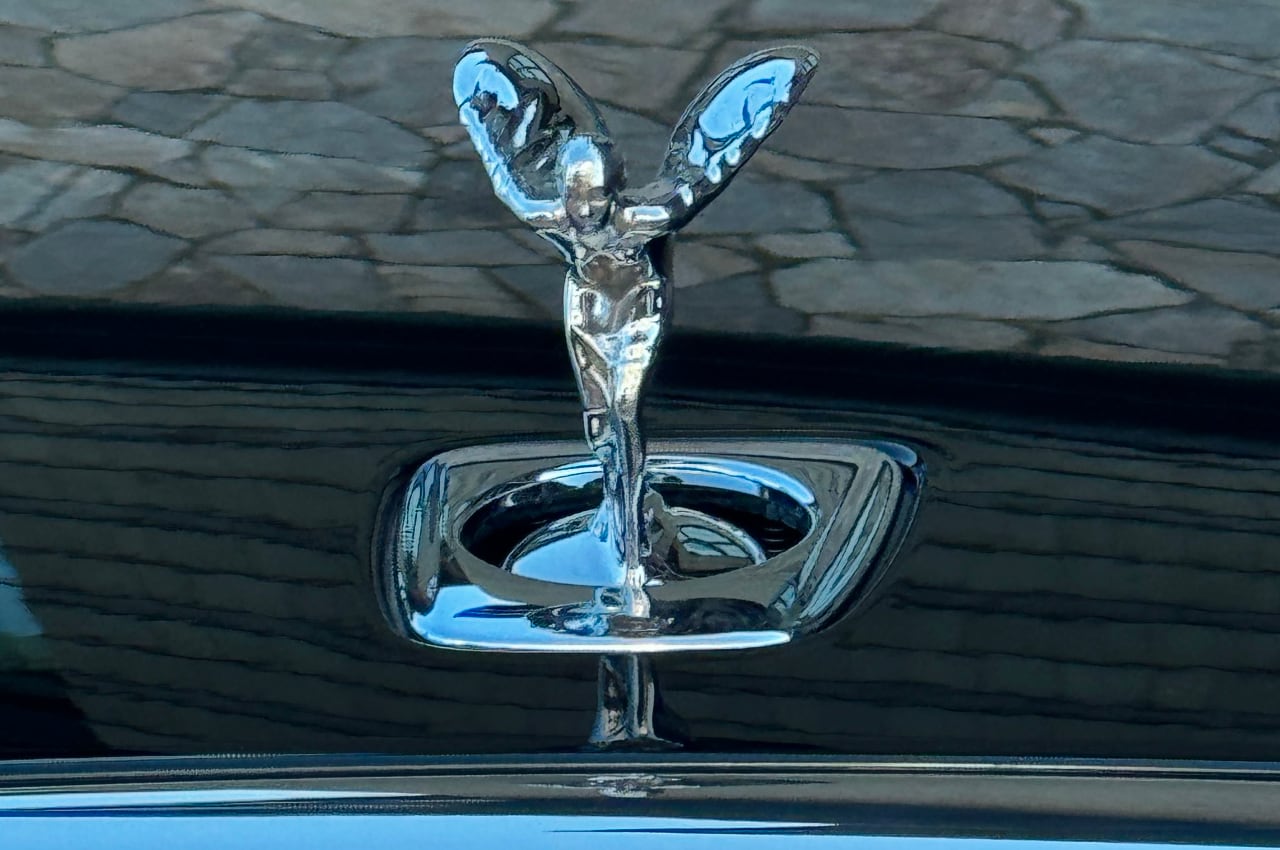
The Rolls-Royce Spectre redefines luxury automotive design in many ways, beginning with its iconic Spirit of Ecstasy. This revered emblematic figure is now reimagined for aerodynamic finesse, embodying ce and forward thrust. It’s a poetic blend of heritage and modernity.
With its unique split headlights, this modern design is not about looks; it’s a mix of old and new design, similar to the famous Phantom Coupé’s lights but with a modern touch.
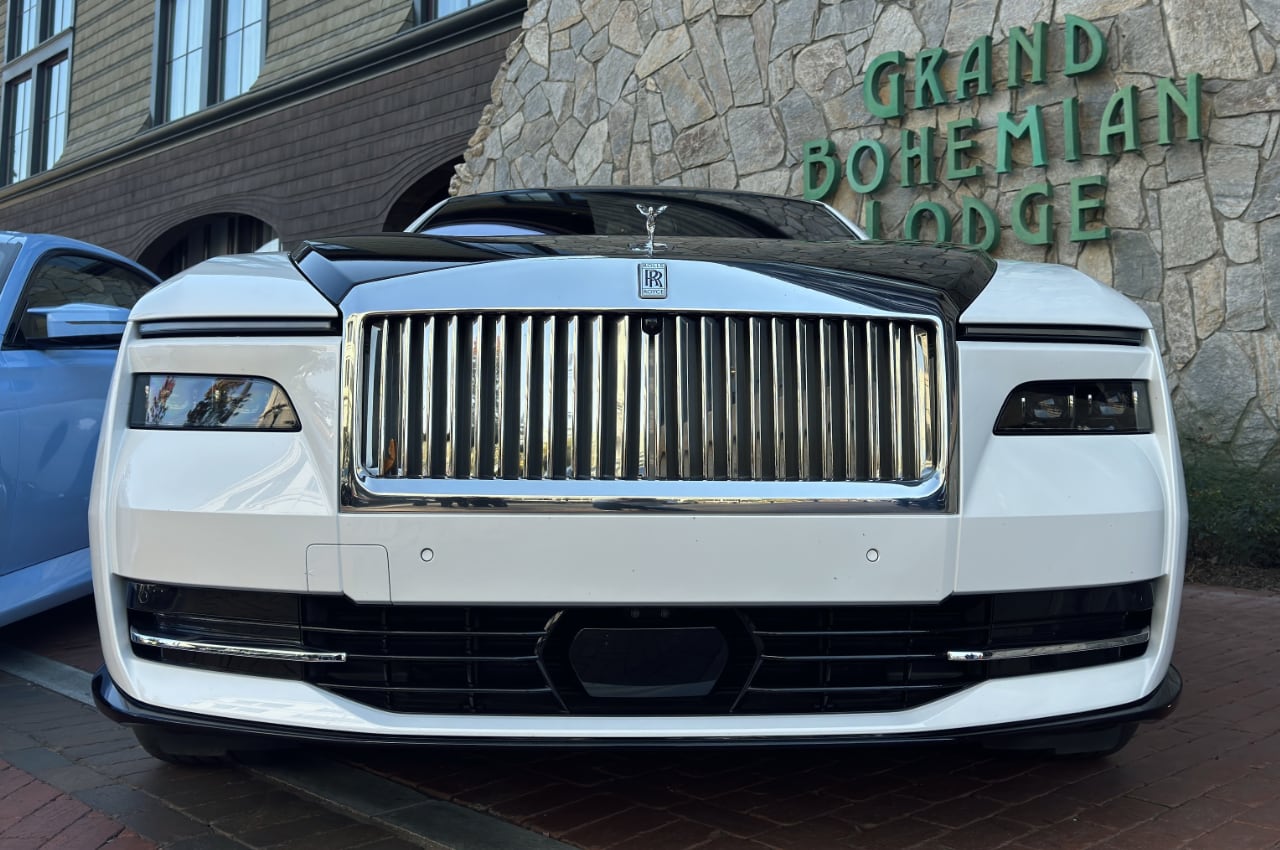
The Pantheon grille, a key feature of Rolls-Royce, has been stylishly updated for the brand’s first EV. It’s a great example of old design meeting new needs. The grille is broader, showing how the brand can change with the times but still keep its grand style. This grille isn’t just for looks; it also helps air flow smoothly around the car.

This is where the blend of design and aerodynamics has culminated in the Spectre’s drag coefficient. While it may not match other high-end luxury EVs, the figure is remarkable, considering the car’s adherence to Rolls-Royce’s design principles.
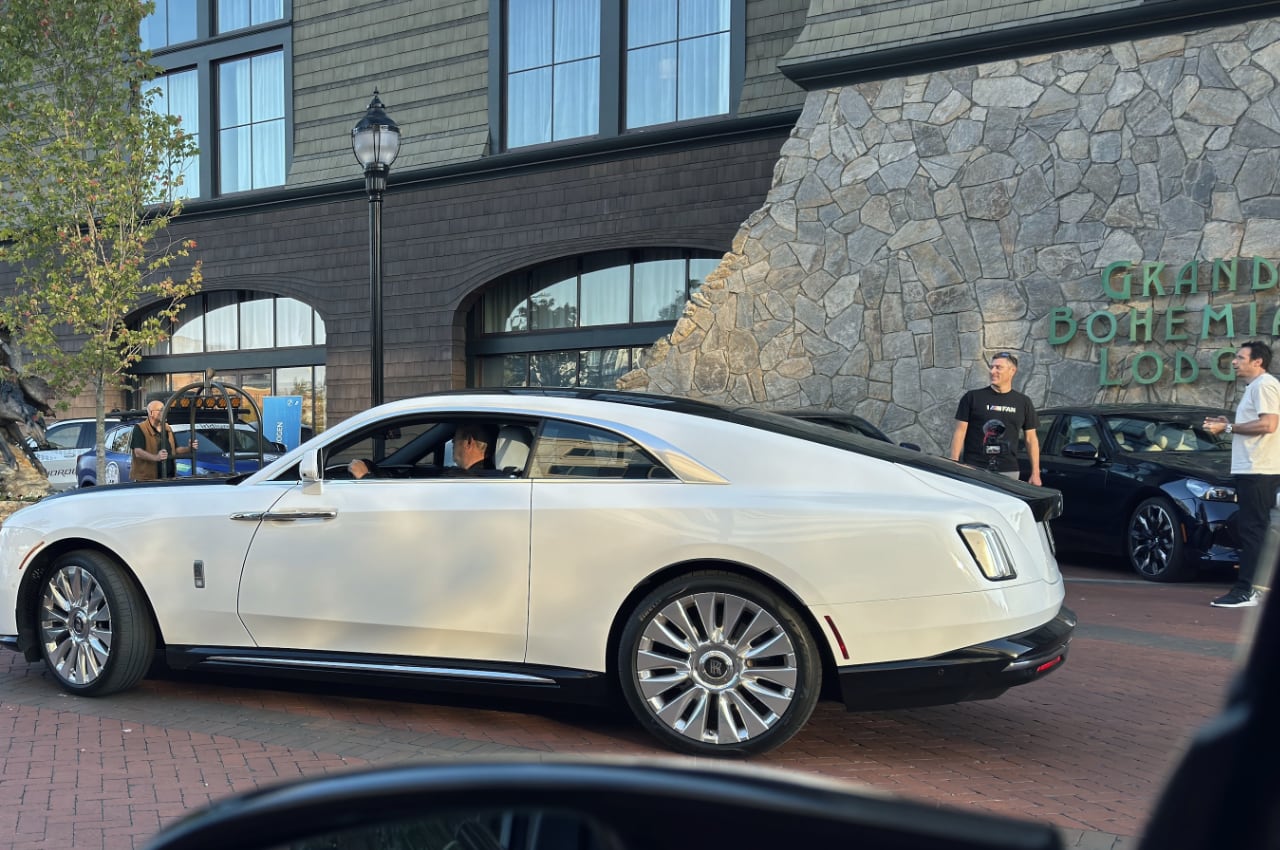
The side profile of the Spectre is a canvas where Rolls-Royce’s rich history of bespoke design merges with nautical elegance. This is apparent in the sweeping fastback glasshouse, which resembles a yacht ready for a voyage. It’s a visual narrative that combines motion and grace, intertwining car design with the elegance of maritime aesthetics.

The Spectre opts for a cleaner, more sculptural approach, avoiding excessive lines. Two defining lines – the ‘bow line’ and the ‘waft line’ – serve as key design elements and narrative features. The bow line guides the observer’s eye from the front wheel arch to the rear tail light, shaping the car’s form and emphasizing its powerful stance. The waft line, a fluid representation of movement, is reminiscent of a yacht slicing through the waves.

Together with the two-tone paint and the fastback roof, these lines create a tapering that mirrors a yacht’s stern, blending luxury maritime design and elite automotive architecture.

Rear Design – An Artistic Culmination

At the back, the Spectre’s design story reaches its peak. The converging bow and waft lines culminate at the tail of the Spectre, where the car’s yacht inspiration is arguably most evident.
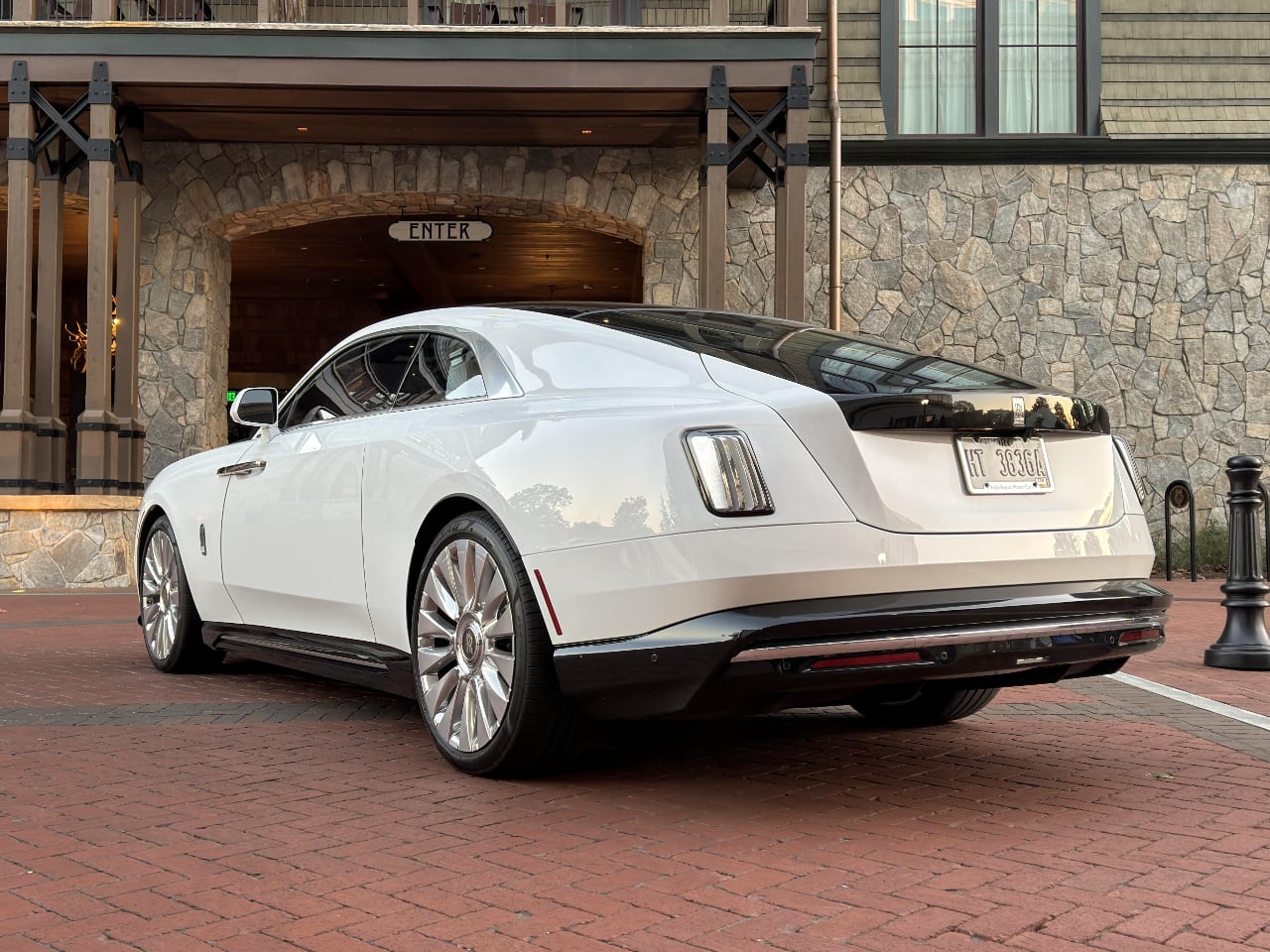
Similar to the subtle taper the stern of a yacht might have, the Spectre’s rear haunches have a gentle inwards curve that draws the eye to the U-shaped tailgate, with the rear bumper featuring an otherwise clean, uncluttered design.
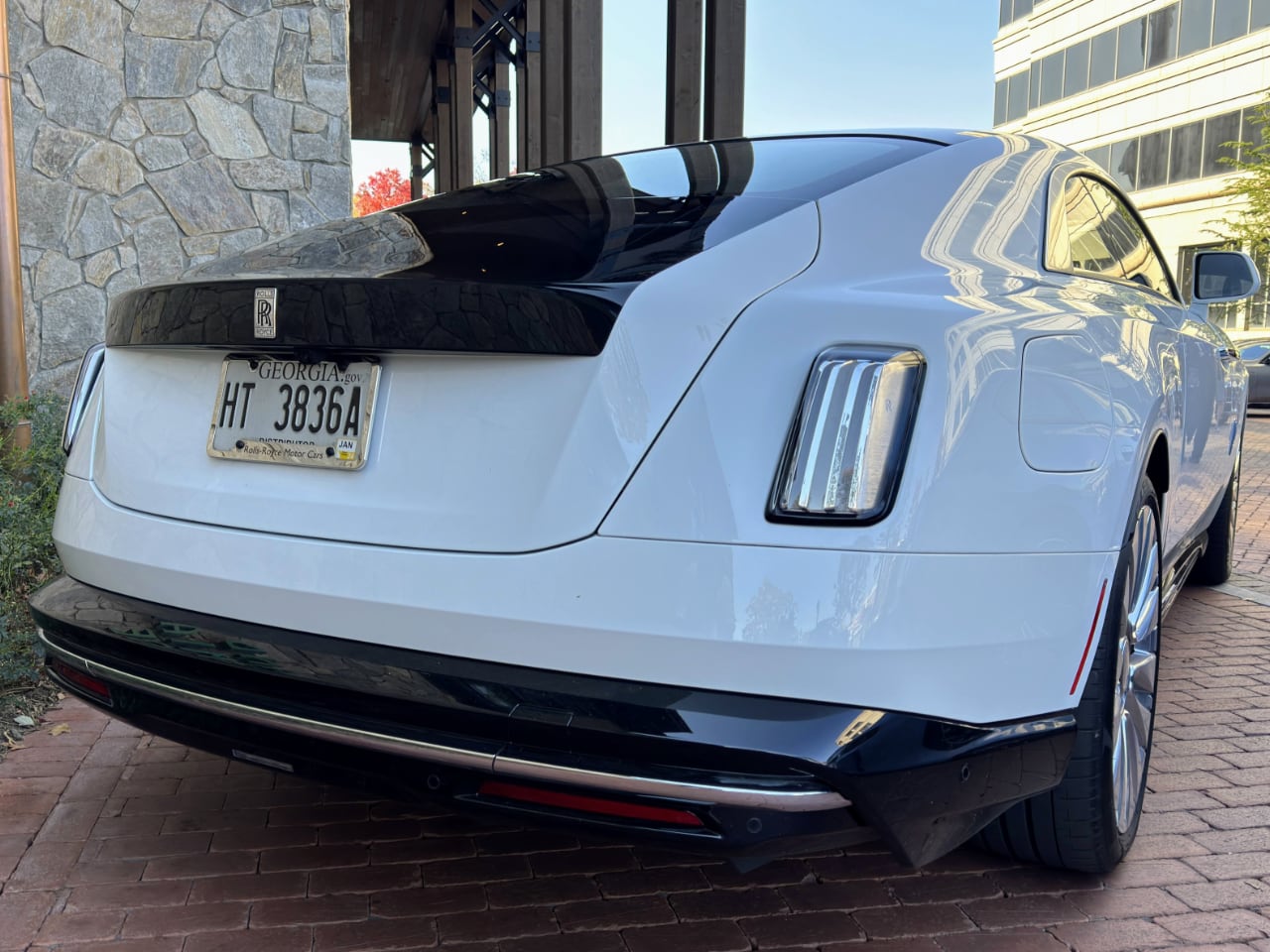
Another exciting feature is the transparent, art-deco style tail lamps equipped with a metal inset, with the company claiming the neutral finish, which allows the tail lamp design to work well with any exterior color.

Inside the Spectre: Rolls-Royce Craftsmanship and Innovation

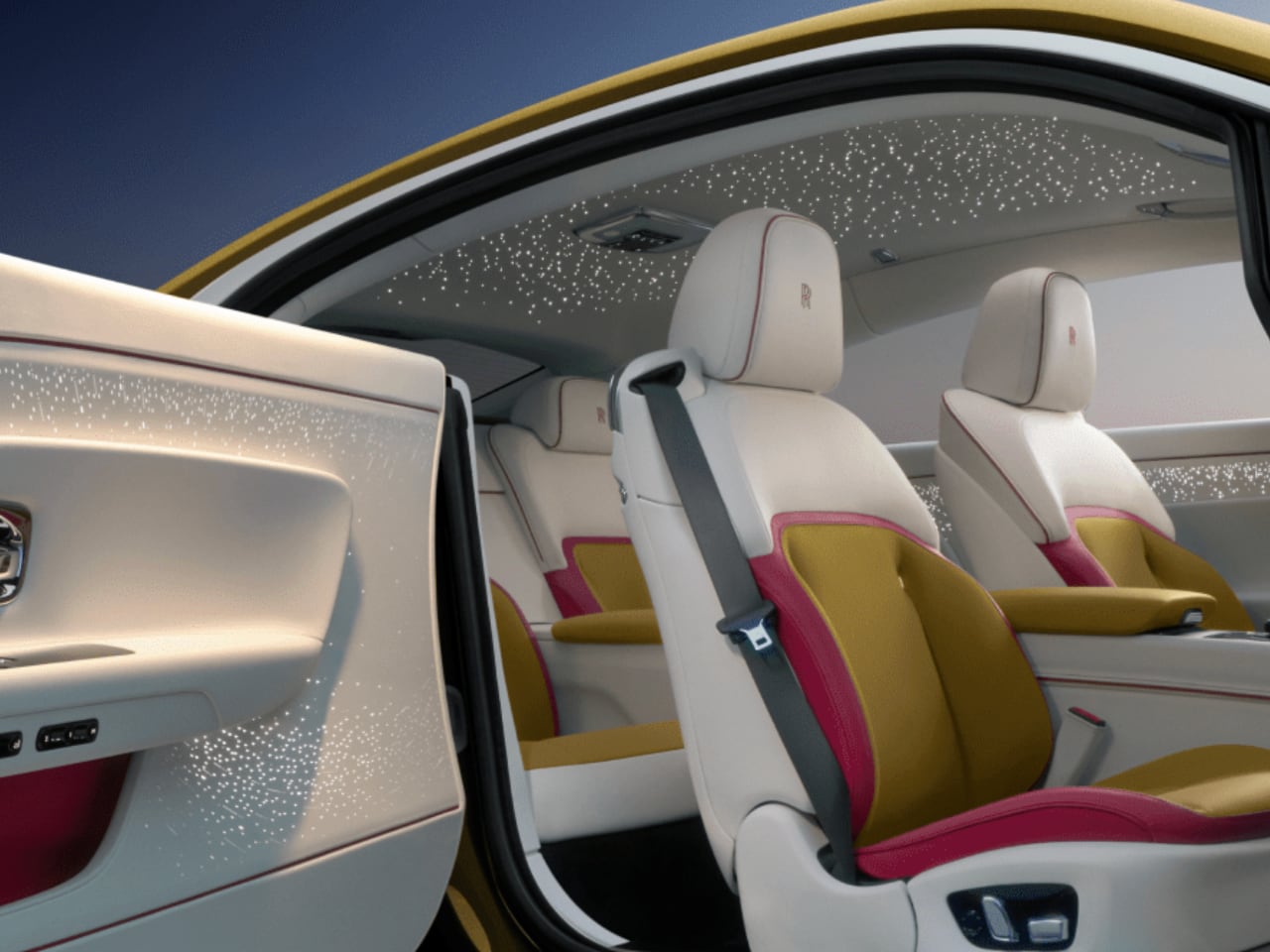
Inside, the design focuses on superior craftsmanship and unparalleled luxury. This is apparent in the meticulous attention to detail and the use of high-end materials throughout the interior. One of the standout features is the Starlight Headliner, a distinctive Rolls-Royce feature that adds a mesmerizing, starry sky effect to the interior ambiance. This creates an ethereal and magical atmosphere within the car, making every journey a celestial experience.
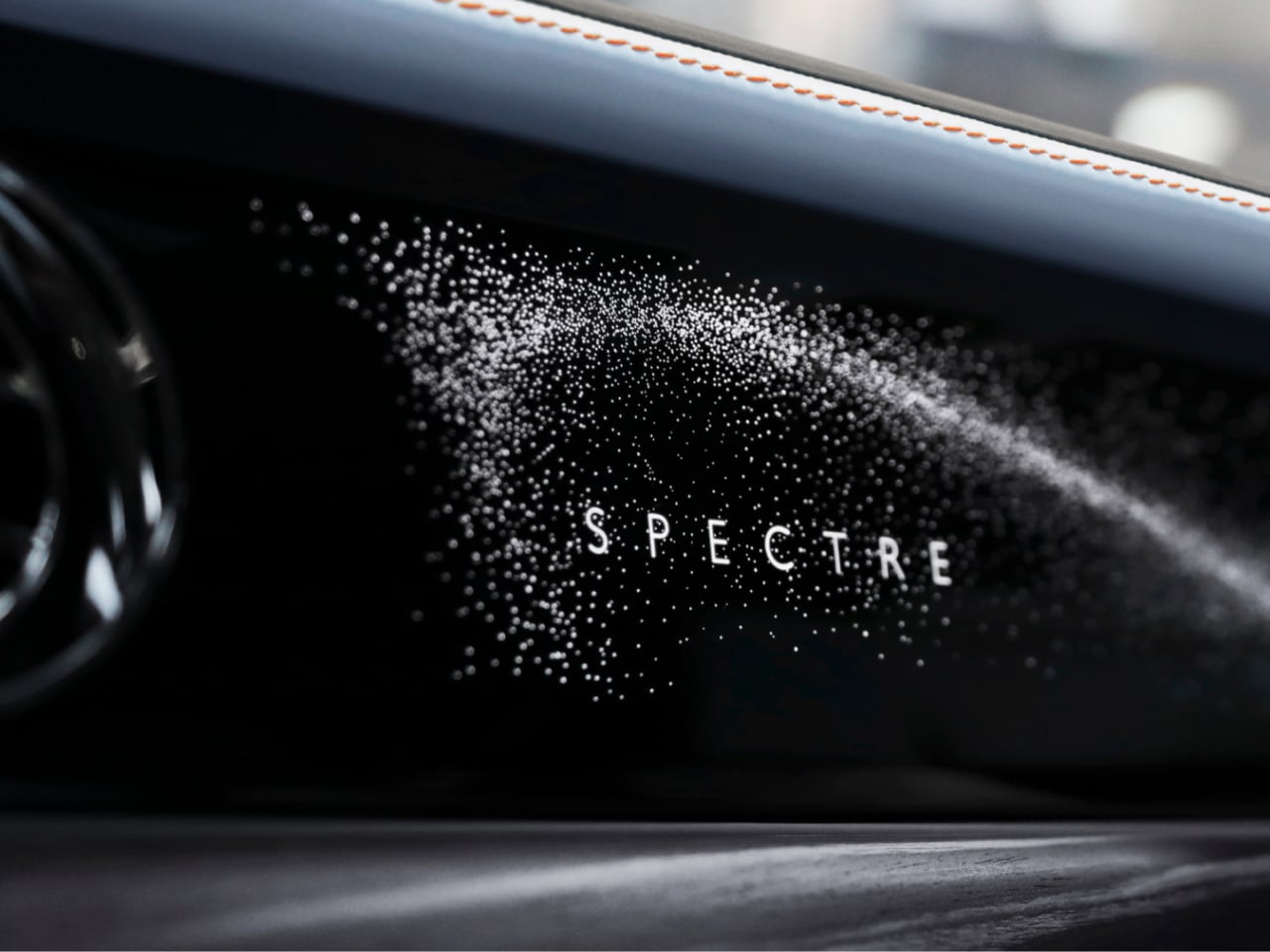
Another unique element is The Gallery, a feature that beautifully marries art and automotive design. It provides a space for personalized art displays, allowing the owner to imbue their vehicle with a personal touch and aesthetic. Beyond visual appeal, emphasis is also placed on the tactile experience. High-quality materials and finishes are used throughout the interior, ensuring every touchpoint communicates the car’s luxury and craftsmanship. This enhances the visual appeal and contributes to a more immersive, sensory driving experience.
Supporting its grandness are formidable 23″ wheels, a first for Rolls-Royce, enhancing both aesthetics and performance. These wheels, adaptable for winter conditions with specialized tires, add to the Spectre’s versatility.
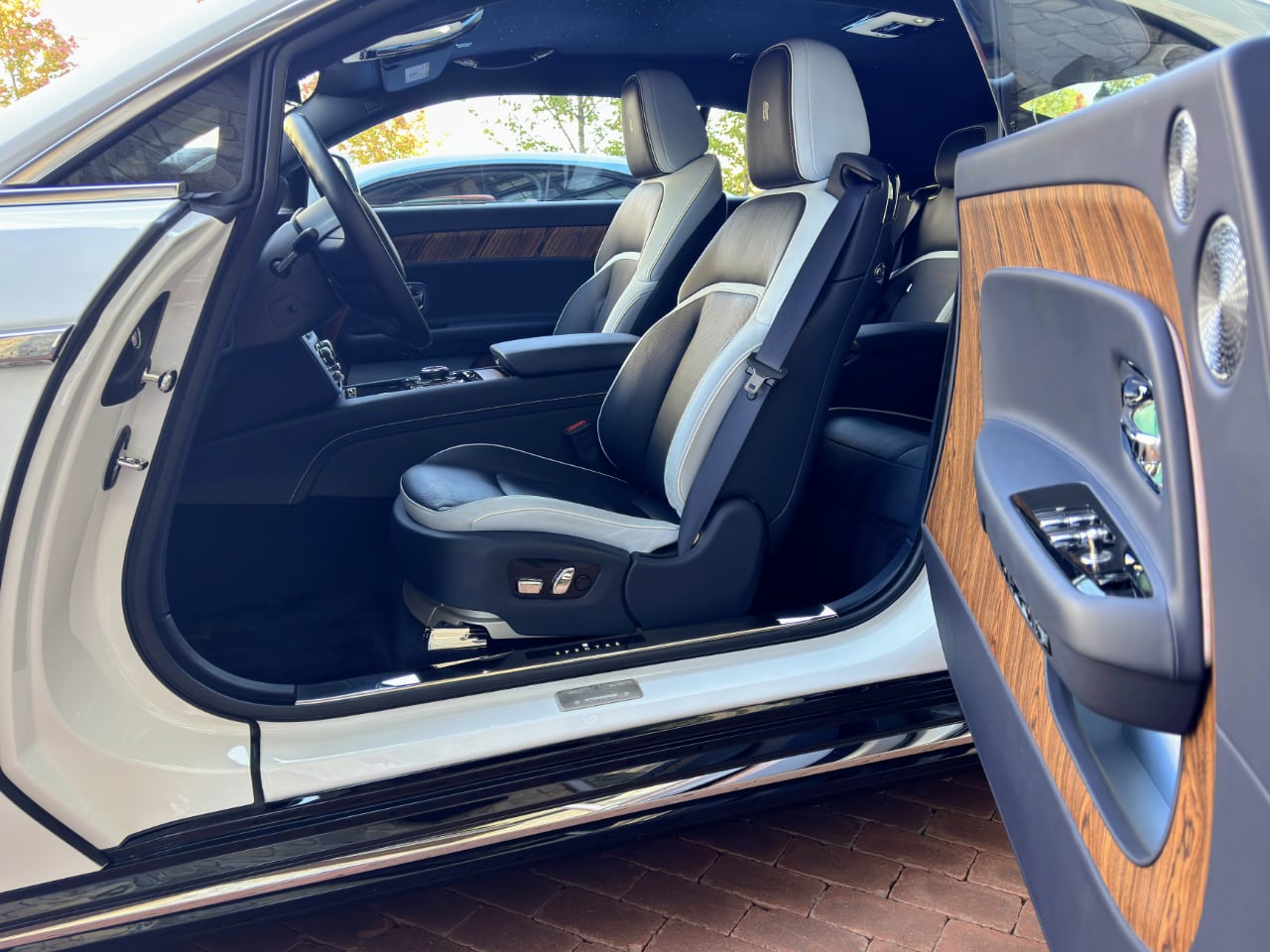
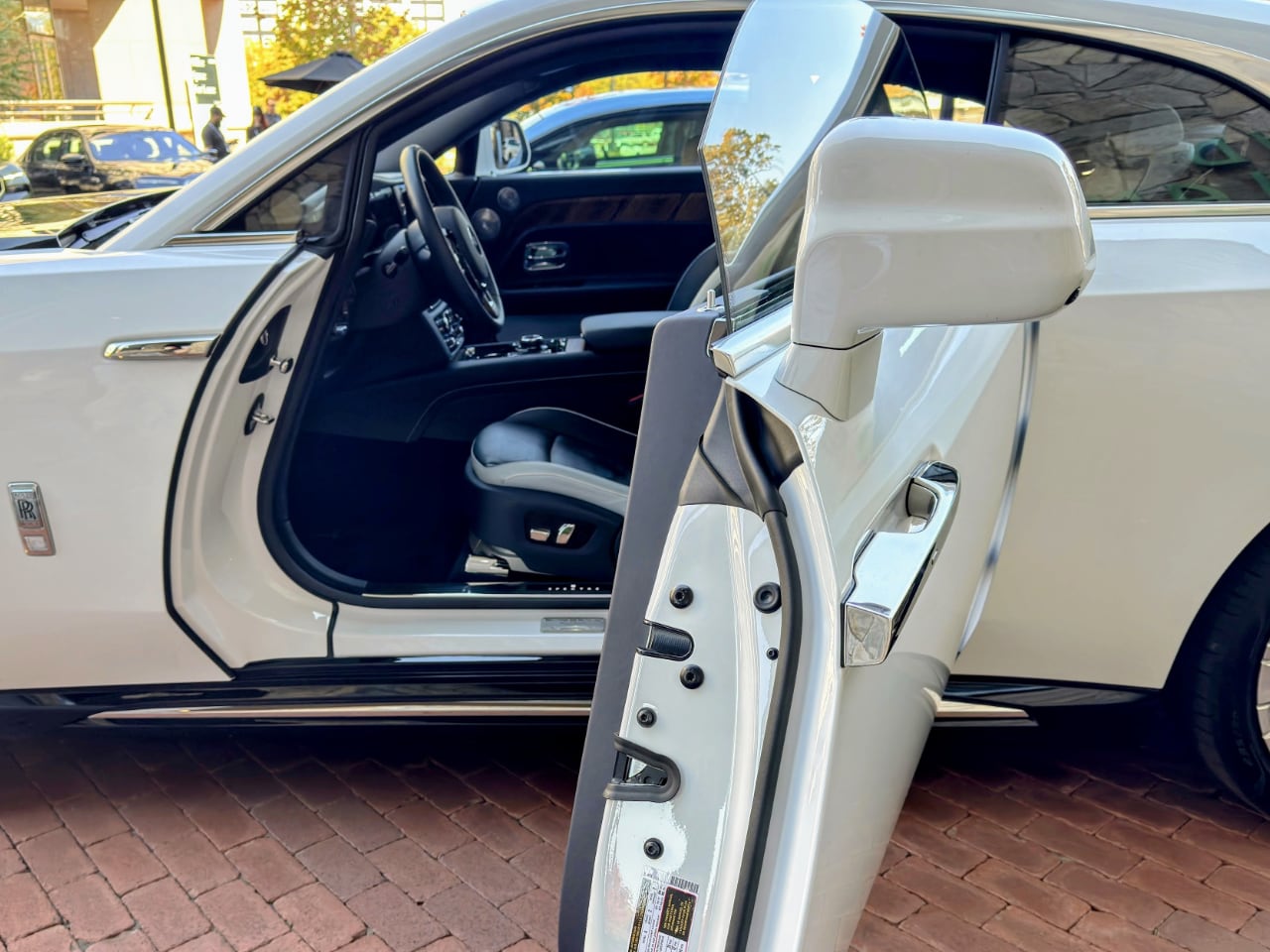
Entering and exiting the Spectre is truly elegant, thanks to the largest doors in Rolls-Royce history, measuring 1.5 meters. They allow for a graceful entry and exit. The effortless opening and closing technology mirrors the luxury of having a personal chauffeur, an expectation for any Rolls-Royce owner.
Color plays a vital role in the Spectre’s allure, with the introduction of Chartreuse, a vivid, eye-catching hue inspired by French liqueur, adding a mesmerizing richness to its appearance.

Each of these elements converges to create a vehicle that is not just a mode of transport but a statement of luxury and innovation, pushing the boundaries of electric vehicle design.

Spectre’s Performance and Range

Yes, the Spectre is entirely electric. It uses the same platform as the Cullinan SUV but with two electric motors that generate 577 hp and 664 lb-ft of torque. Despite the Spectre’s weight, the abundance of torque makes it hardly noticeable during a test drive at BMW’s Test Fest. It’s estimated to accelerate from 0-60 mph in a little over 4 seconds, a remarkable feat considering its 6,500-pound weight.
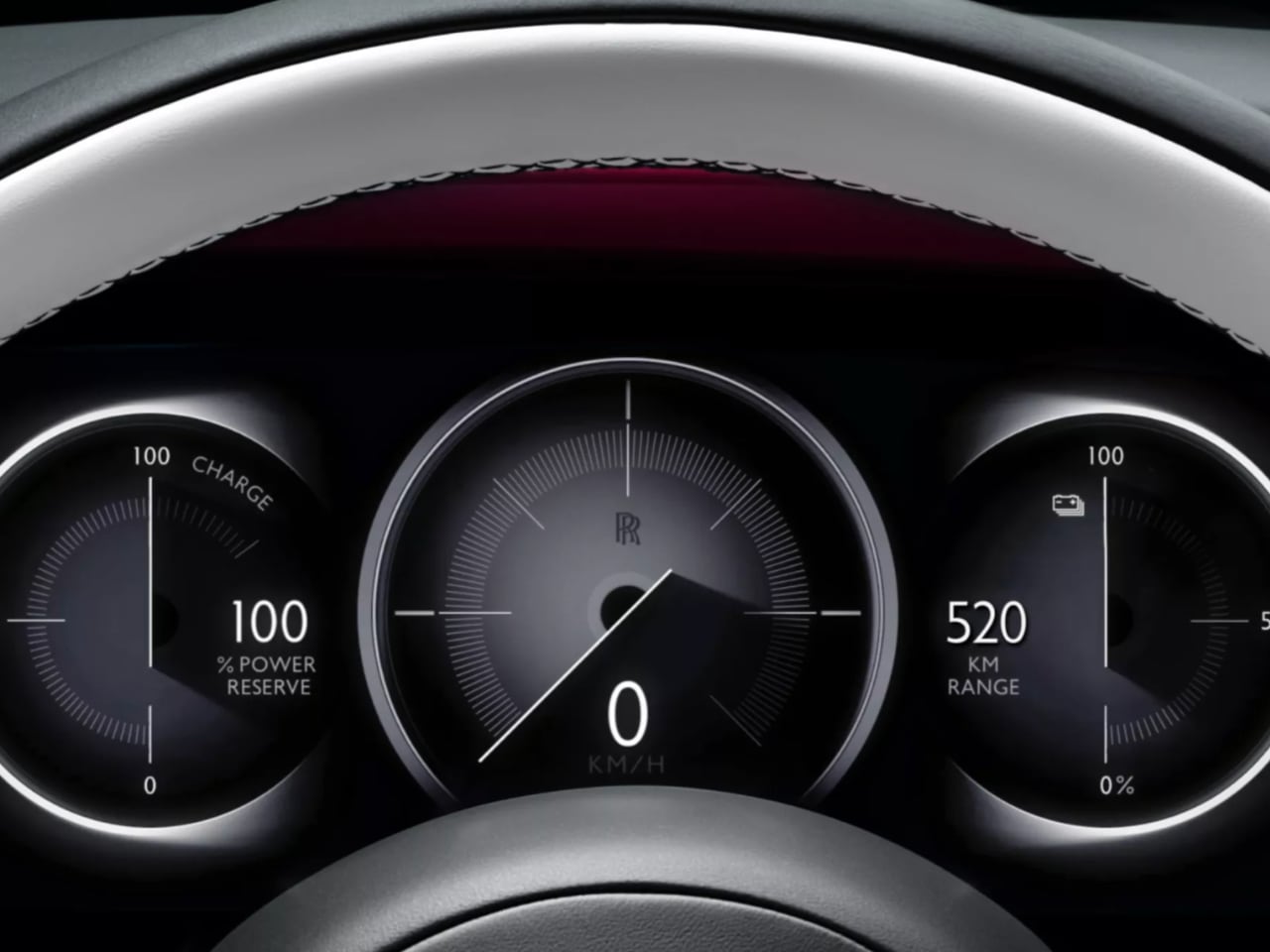
In its stride towards electric luxury, the Rolls-Royce Specter boasts a 102.0-kWh battery, mirroring the advanced technology in the BMW i7. This marks a notable step in the evolution of electric vehicles in the luxury segment. In fact, the driving range exceeds earlier expectations, offering an impressive journey of up to 291 miles on a single charge with its 22-inch wheel variant. This figure surpasses the initial projection of over 260 miles. The version sporting 23-inch wheels drops the range to 266 miles, showcasing the minor trade-offs between style and efficiency.
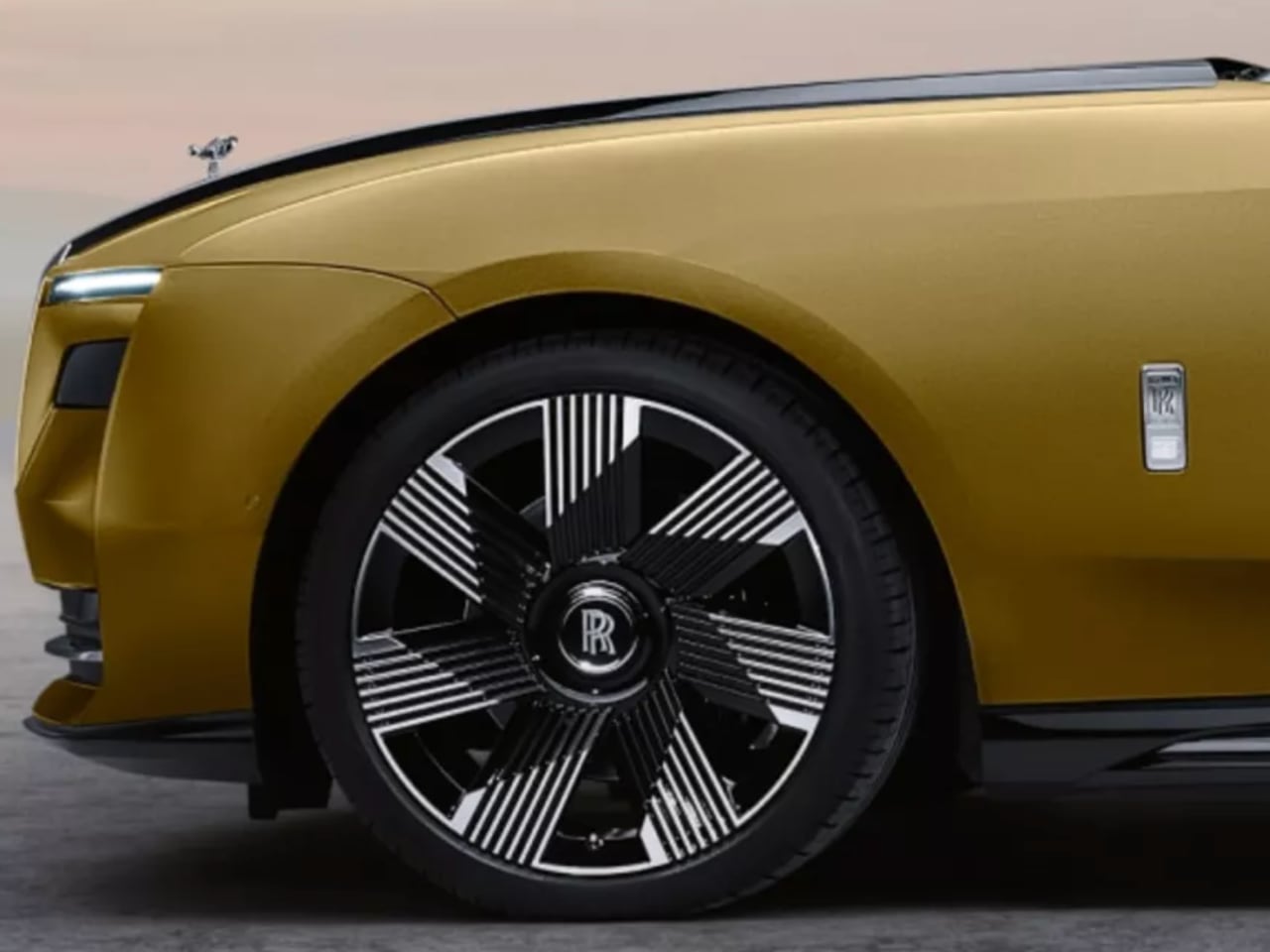
Meanwhile, the Black Badge edition of the Spectre, known for its heightened performance and bespoke features, offers a range of 280 miles with 22-inch wheels and 264 miles with the more prominent 23-inch option. These variations underscore Rolls-Royce’s commitment to providing choices that cater to the diverse preferences of its discerning clientele, balancing elegance, performance, and environmental consciousness.

The Spectre doesn’t just signify luxury but also represents changes in high-end car design. It combines electric power with the luxury and custom design that Rolls-Royce is known for. This shows that the brand can excel in the era of electric cars while maintaining its luxury and uniqueness.

The Spectre also features DC fast-charging capabilities, a standard that speaks to the modern luxury car buyer’s need for speed and convenience. However, in true Rolls-Royce fashion, where every detail is about personal luxury, it’s envisaged that many Spectre owners will opt for a more bespoke charging solution. The idea of a custom-installed charging system at one’s private estate aligns perfectly with the brand’s ethos – it’s not just about the practicality of charging but also about integrating this new electric age into the refined lifestyles of its clientele. This approach ensures that the experience of owning and charging the Spectre remains exclusive and seamless as the vehicle itself.

Final Thoughts

From my perspective, the Rolls-Royce Spectre EV, which starts at $422,750 and can exceed $500,000 with customization, is the pinnacle of opulent electric vehicles. It’s a remarkable blend of luxury, innovation, and environmental consciousness. The elegant design, blending the brand’s rich heritage with modern elements, is breathtaking. The Spectre shows that electric vehicles can be both luxurious and distinctive. The performance, particularly the impressive torque and range, challenges the usual limitations of electric cars, making it a joy to drive. The ride’s quietness, the quality of the interior materials, and the meticulous attention to detail all encapsulate the essence of Rolls-Royce. In conclusion, the Spectre EV successfully maintains Rolls-Royce’s commitment to its legacy while embracing the future. It was a thrill to experience.
The post First Drive: Rolls-Royce Spectre EV – An Electrifying Blend of Luxury and Performance first appeared on Yanko Design.
This Apocalyptic Cyberpunk Cafe Racer has a humble BMW R Nine T underneath it

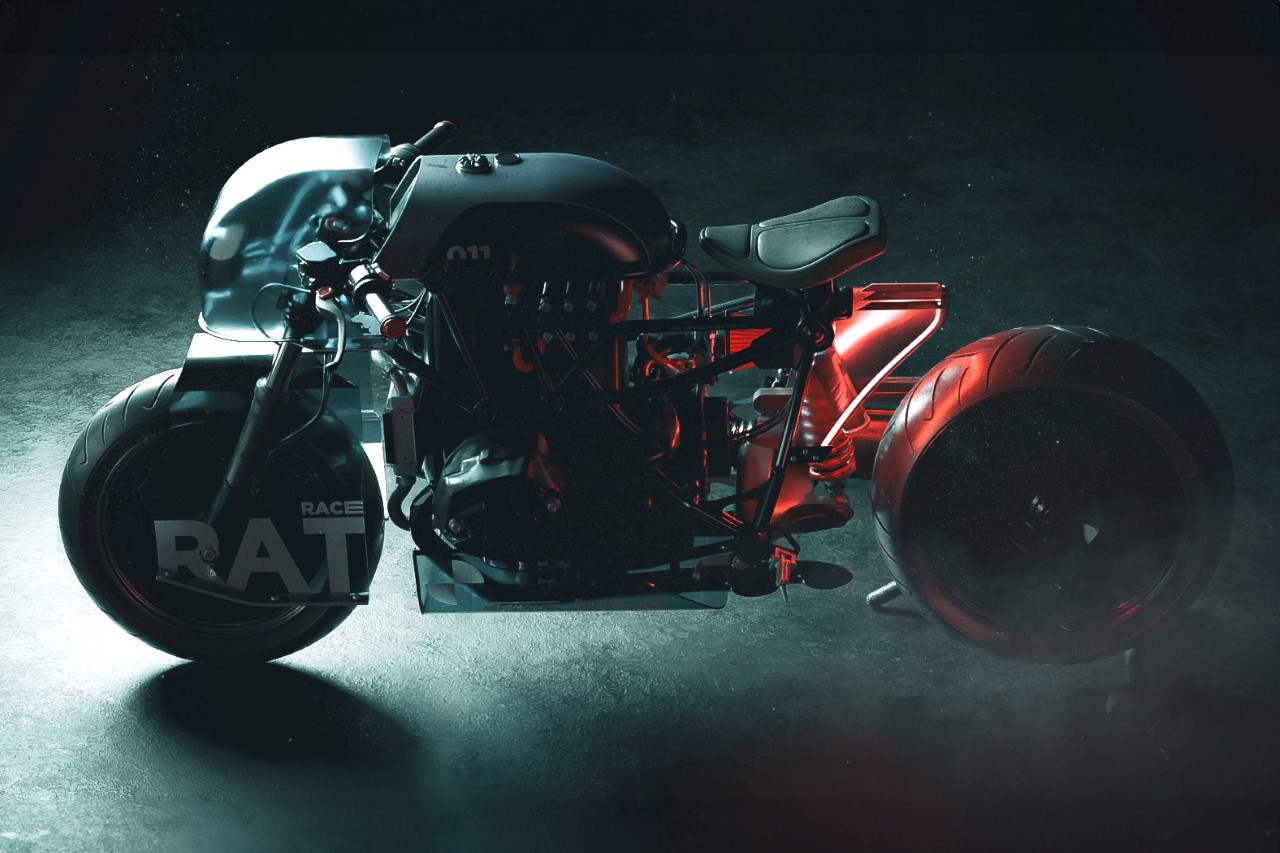
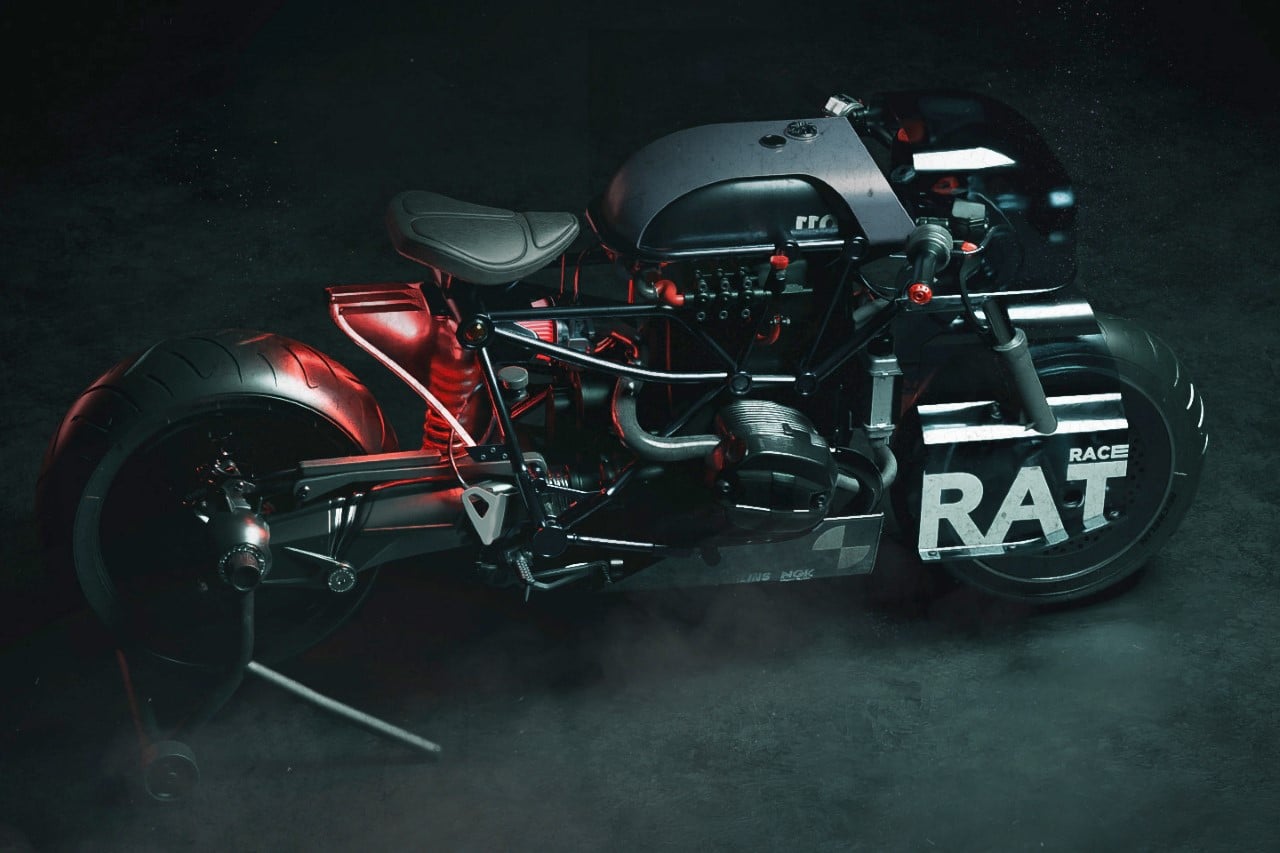
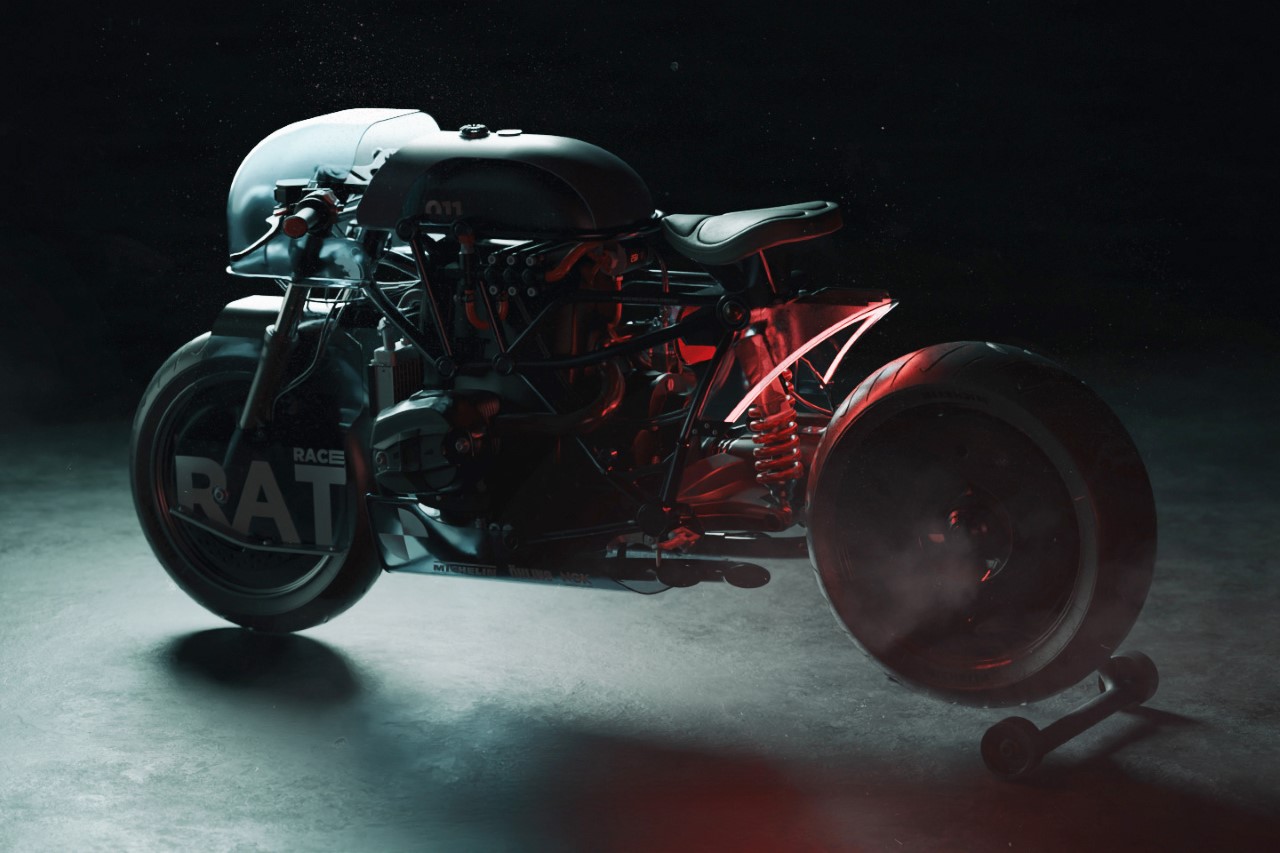
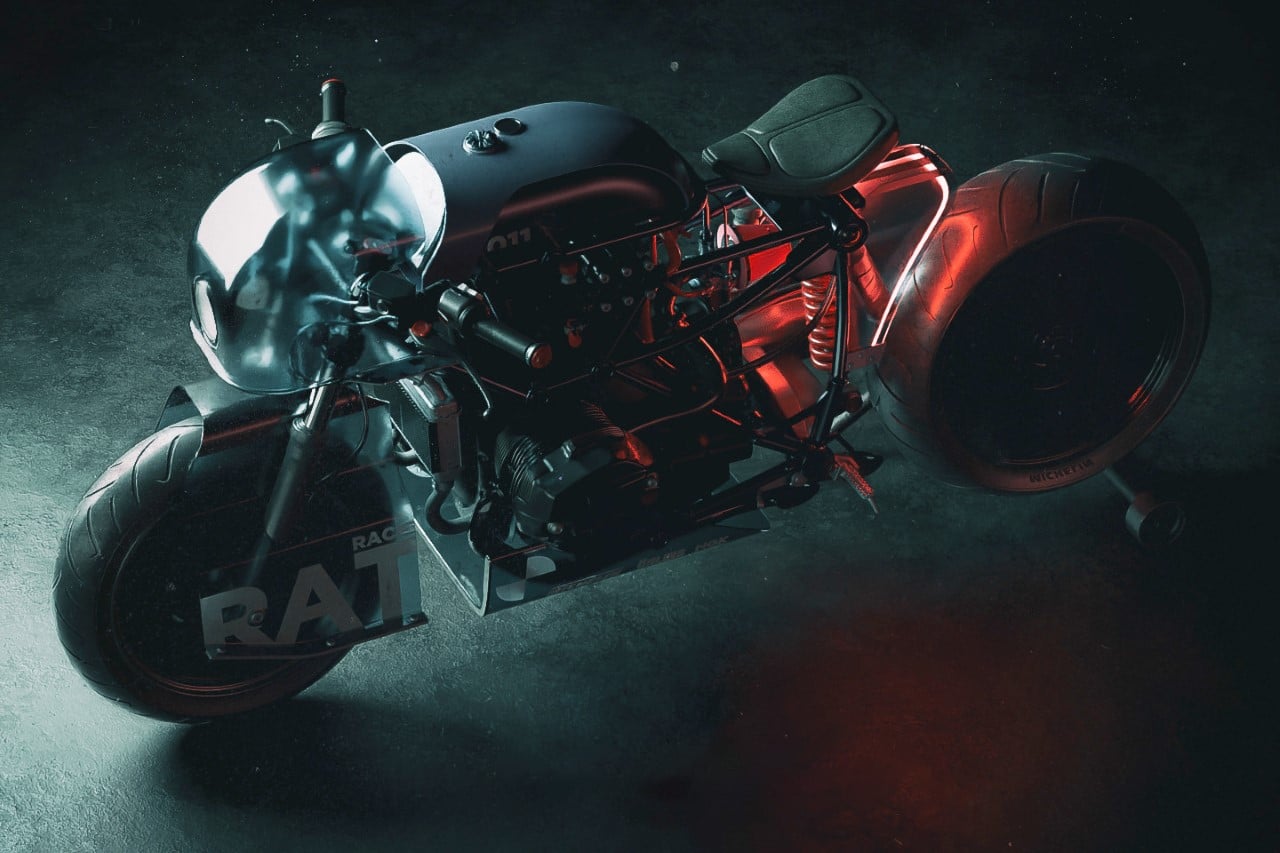
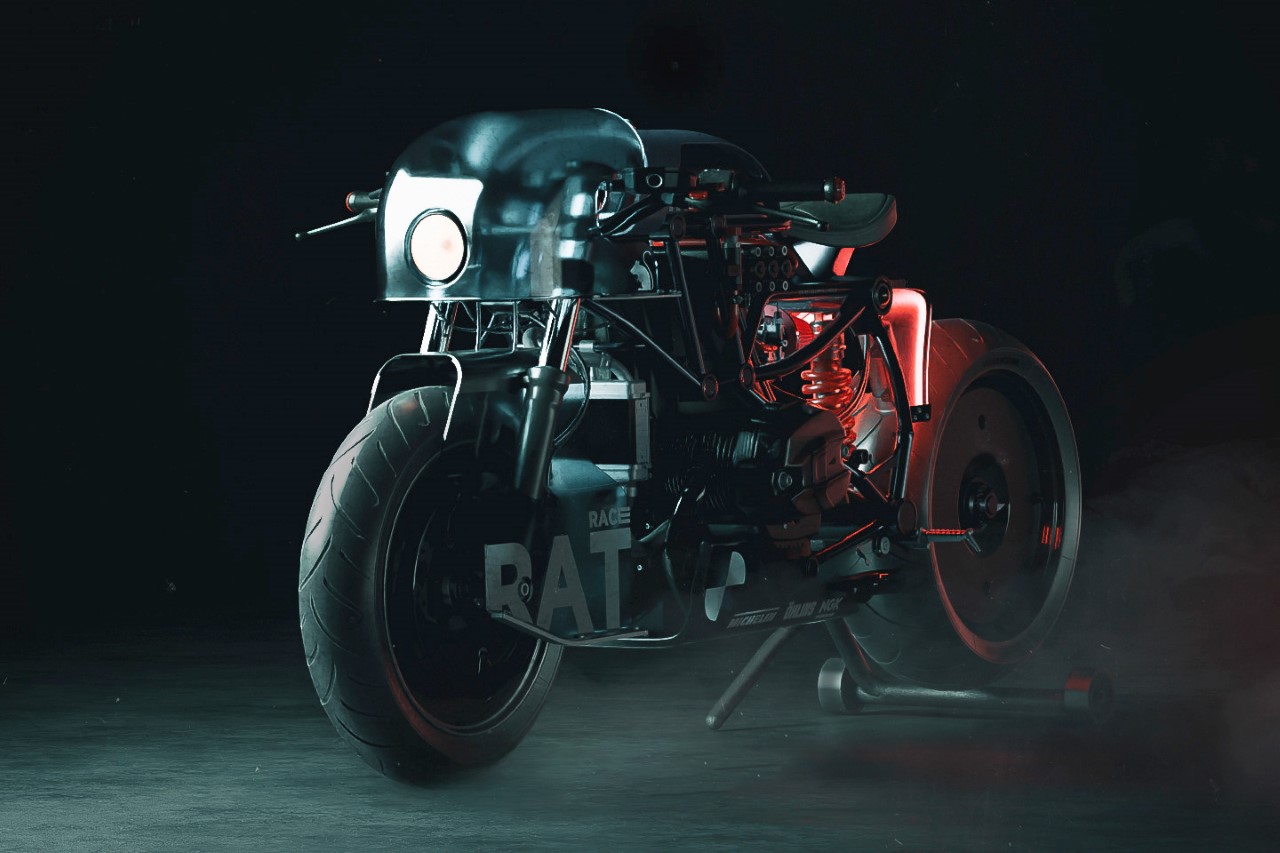
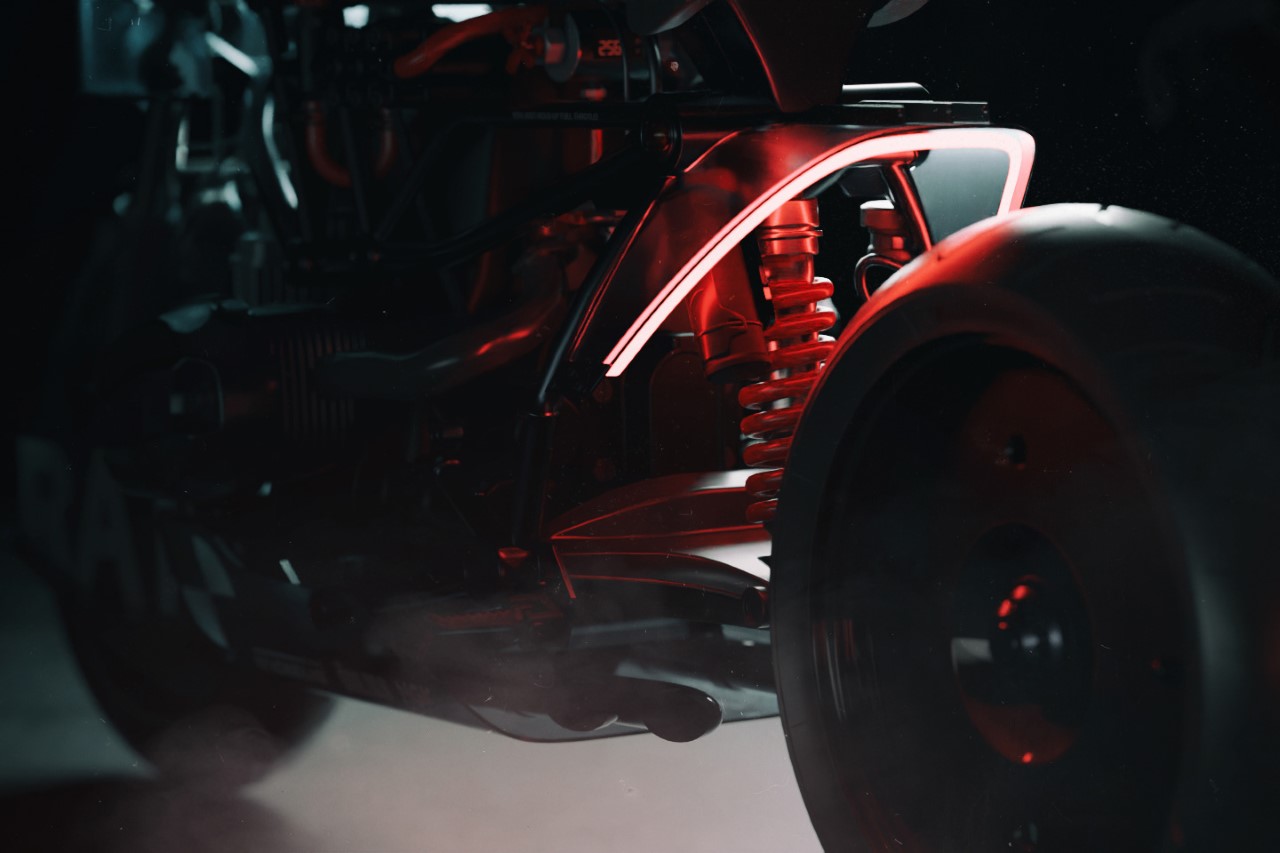
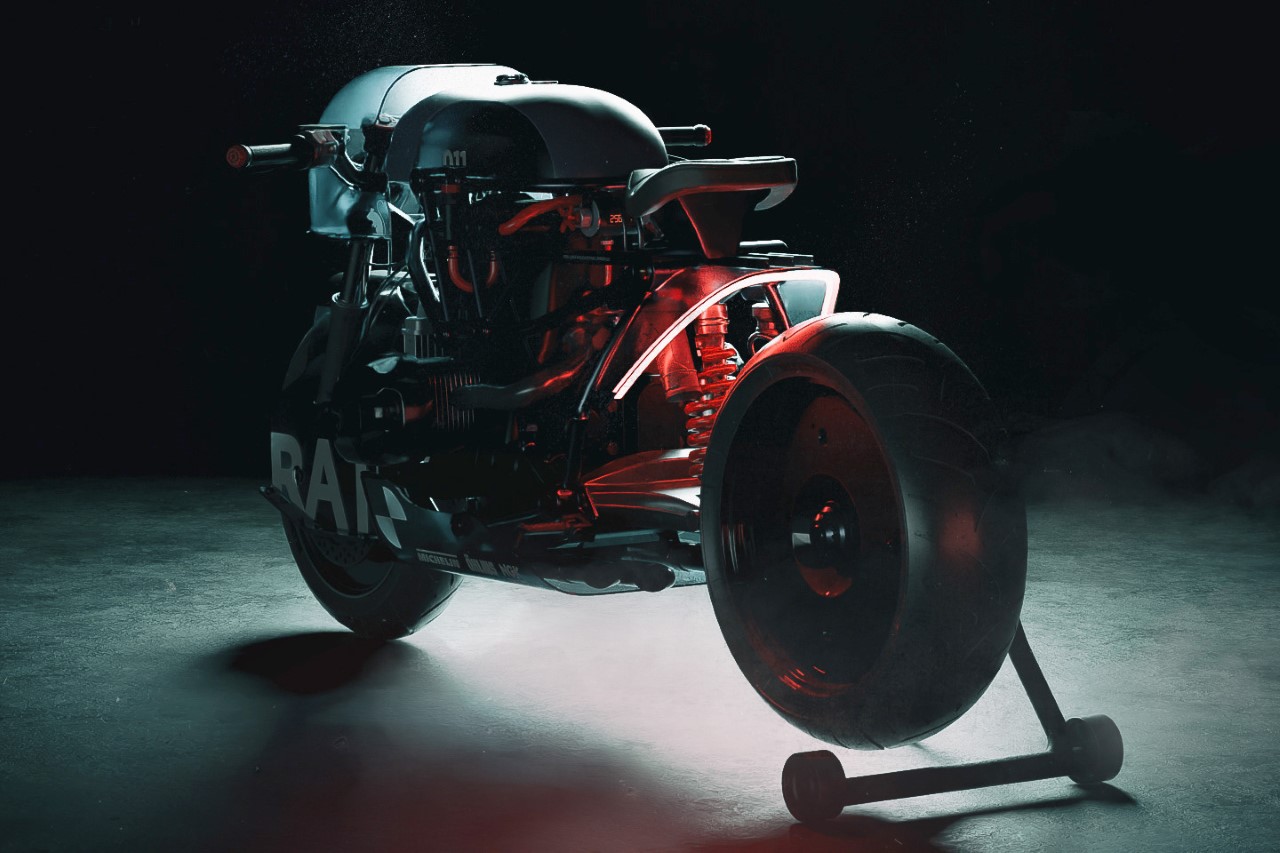
The R nine T is perhaps BMW, nay, the world’s most customized bike. Ognjen Docic remixed this versatile classic into something virtually unrecognizable but vastly more eye-catching. Dubbed the Rat Race, this cafe racer isn’t for the faint of heart. It’s skeletal yet meaty, and explores unique design directions like using transparent plastic as a part of its overall fairing. This post-apocalyptic beauty also seats just one, because if Hollywood’s taught us anything, the apocalypse always creates lone wolves!

Designer: Ognjen Docic

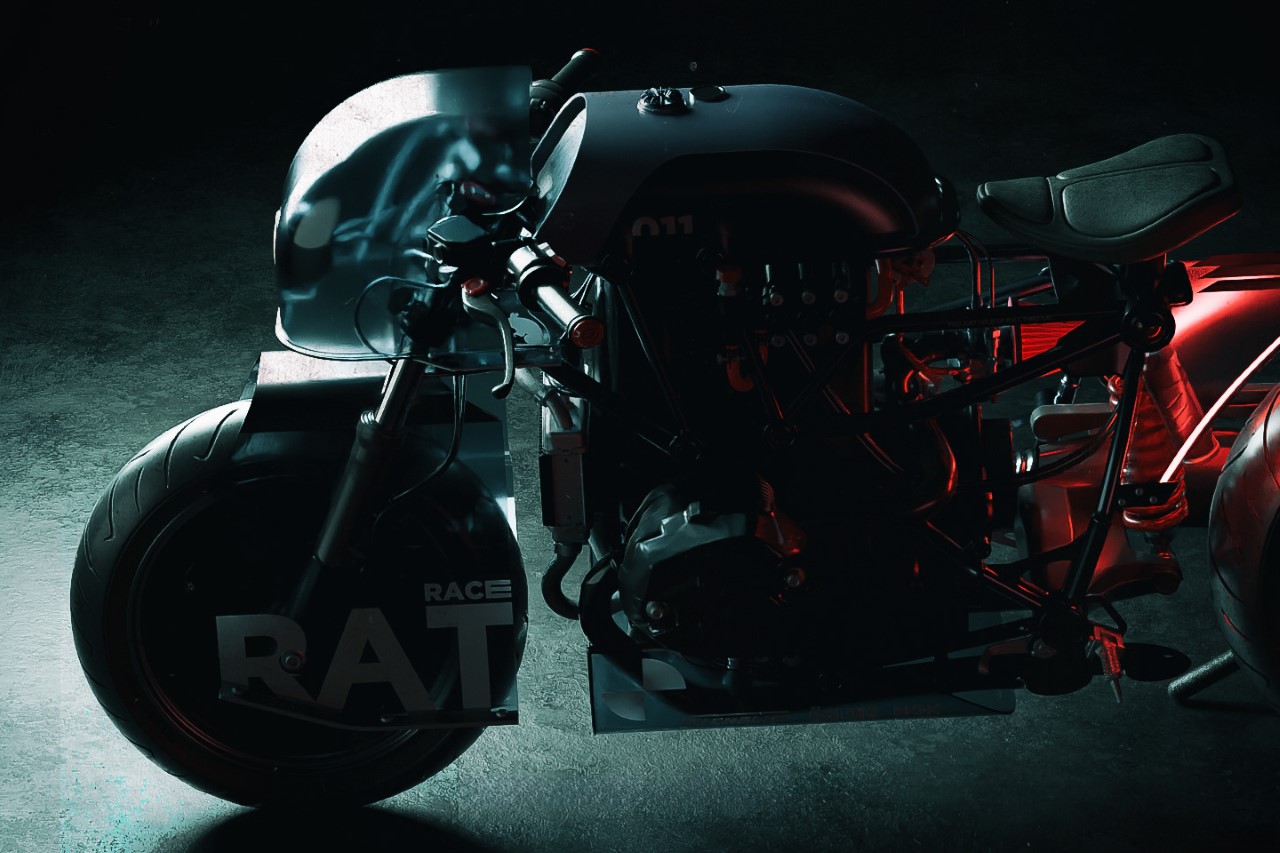
The Rat Race’s aesthetic explores the addition, removal, and reinforcement of its overall structure. Certain parts of the fairing are removed because they add no value. Others are given further reinforcement like the fuel tank (perhaps to deter theft), and the overall chassis gets a secondary frame to make it stronger for more aggressive riding.

“I transformed the iconic BMW R9T model into dream vision, seamlessly blending vintage aesthetics for a retro old-school vibe with futuristic elements. By merging the past and future in design, I believe it transcends a specific era, becoming timeless,” says Serbia-based designer, Ognjen Docic. “In my rendition, the bike retains its original structure with subtle modifications to the frame. Introducing “Rat Race,” this concept embodies the timeless struggle, capturing the essence of life’s rat race.”

When asked about the Rat Race’s specs, Docic mentions – “Specifications of the motorcycle are unknown! Crafted within the confines of my mind, it borrows foundational elements from the R9T model. My imagination took residence in an underground motorcycle tuning garage in the outskirts of Belgrade.”

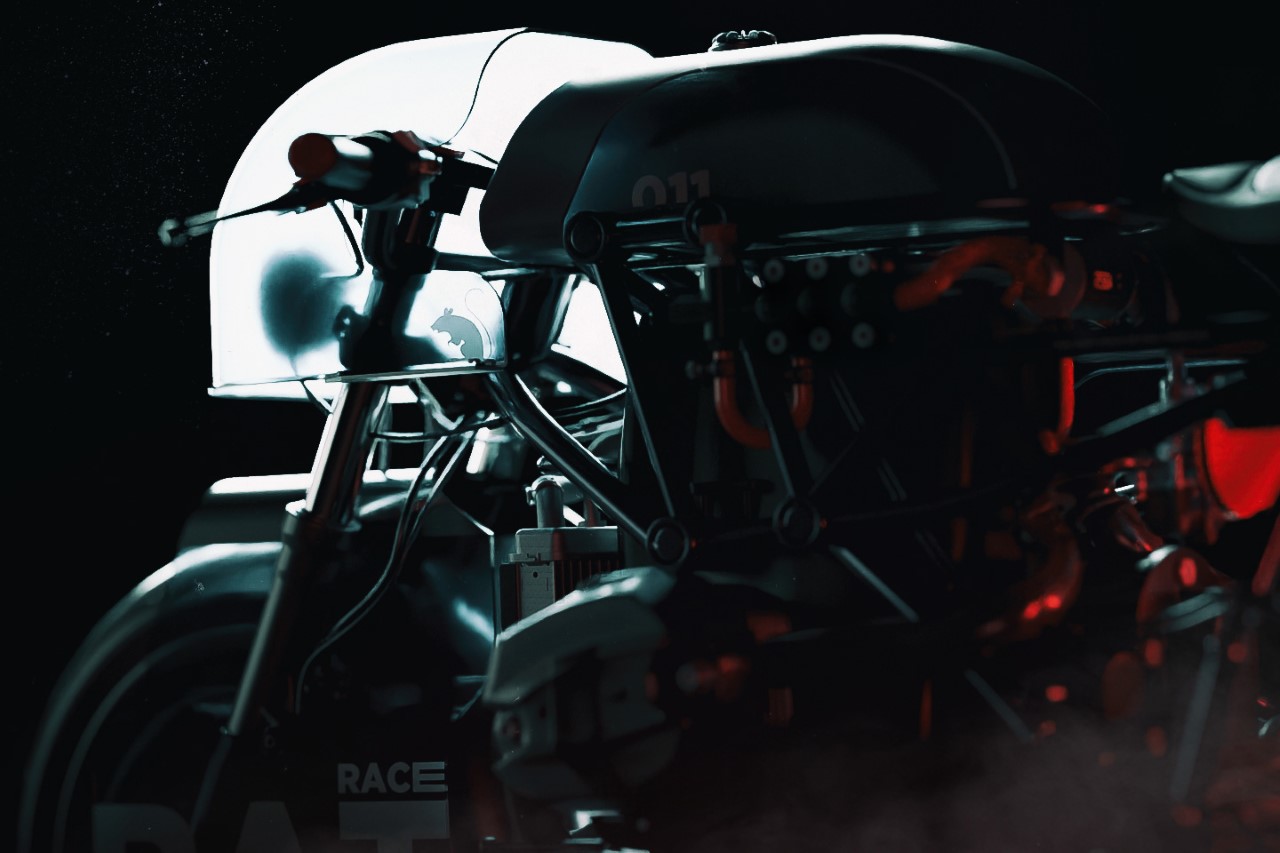
An interesting touch is Docic’s use of transparent materials in the motorcycle’s body design. A panel around the headlight almost looks like a transparent skull for the bike, enveloping its headlight and a portion of its handlebars. The base of the automobile has it too, as does the end, where Docic cleverly implemented edge-lighting to create a rather unique-looking taillight. This use of transparent plastic adds to the structure without adding to the bulk or volume.

The result of the entire endeavor is a bike that’s practically unrecognizable, but somehow still manages to have its own distinct character (and possibly a very interesting backstory). It looks like it’s been through hell and back, and still has the willpower for handling some more. Those ridiculously chunky tires are proof that the Rat Race was built to get you anywhere you want to go – no questions asked… and the lack of rear-view mirrors is proof that where you’re going, there’s no looking back!

The post This Apocalyptic Cyberpunk Cafe Racer has a humble BMW R Nine T underneath it first appeared on Yanko Design.

Nissan Trail Mountain Rescue off-roader is built for tough rescue operations in the Italian alps

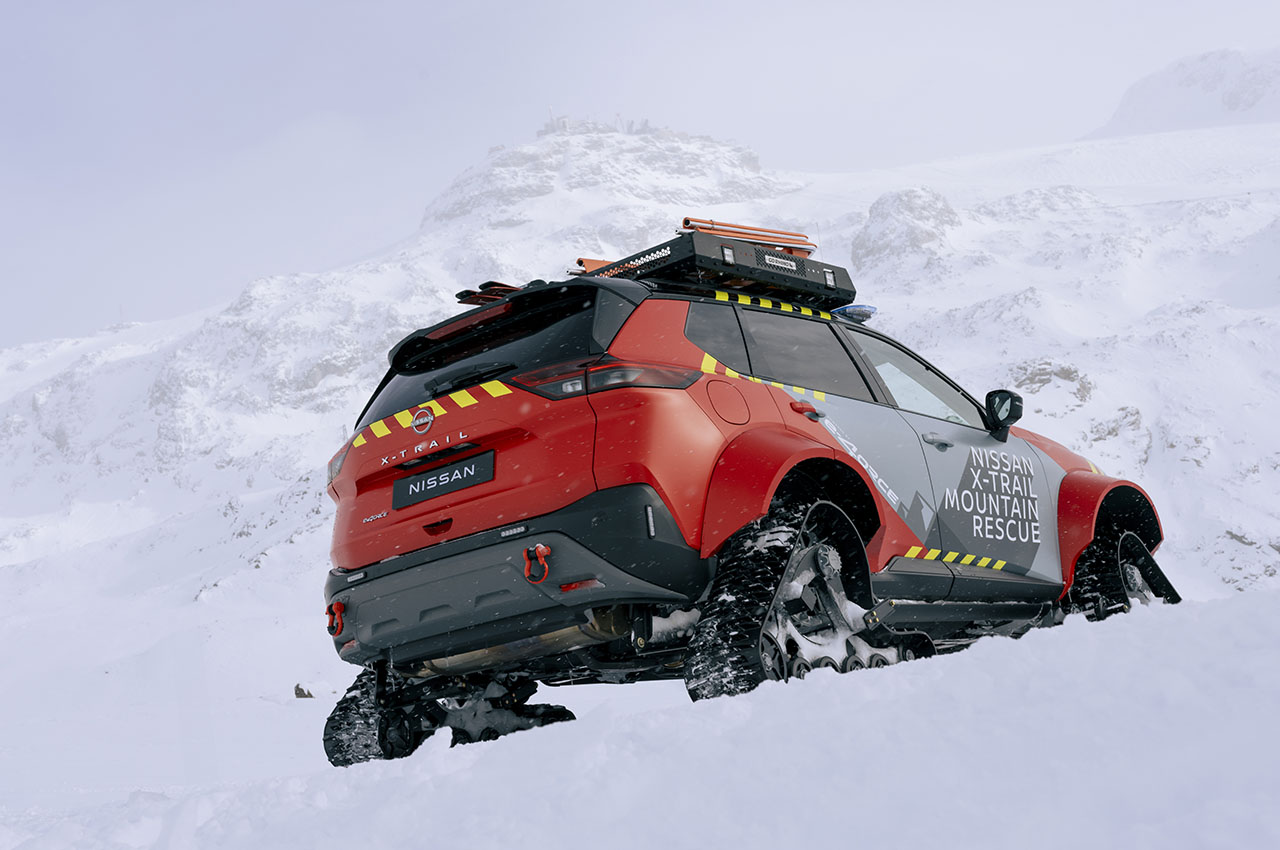
Nissan has just revealed a specialized version of its X-Trail model, tailored for mountain rescue operations, that would mean the difference between life and death in inclement weather conditions. The robust Nissan X-Trail Mountain Rescue vehicle is equipped with the innovative e-4ORCE all-wheel drive powertrain, marking a significant step forward in the brand’s commitment to versatile and capable off-road vehicles.

The twin motor e-4ORCE system powering the heart of this X-Trail Mountain Rescue vehicle enhances the rig’s performance on challenging terrains, with exceptional grip management. The traction in just 1/10,000th of a second (1000 times faster than traditional systems), ensures optimal power delivery to each wheel, promoting stability and control, essential attributes for speedy mountain rescue missions. The system’s seamless integration into the X-Trail platform demonstrates the Japanese automotive giant’s dedication to pushing the boundaries of treading inhospitable terrain.

Designer: Nissan

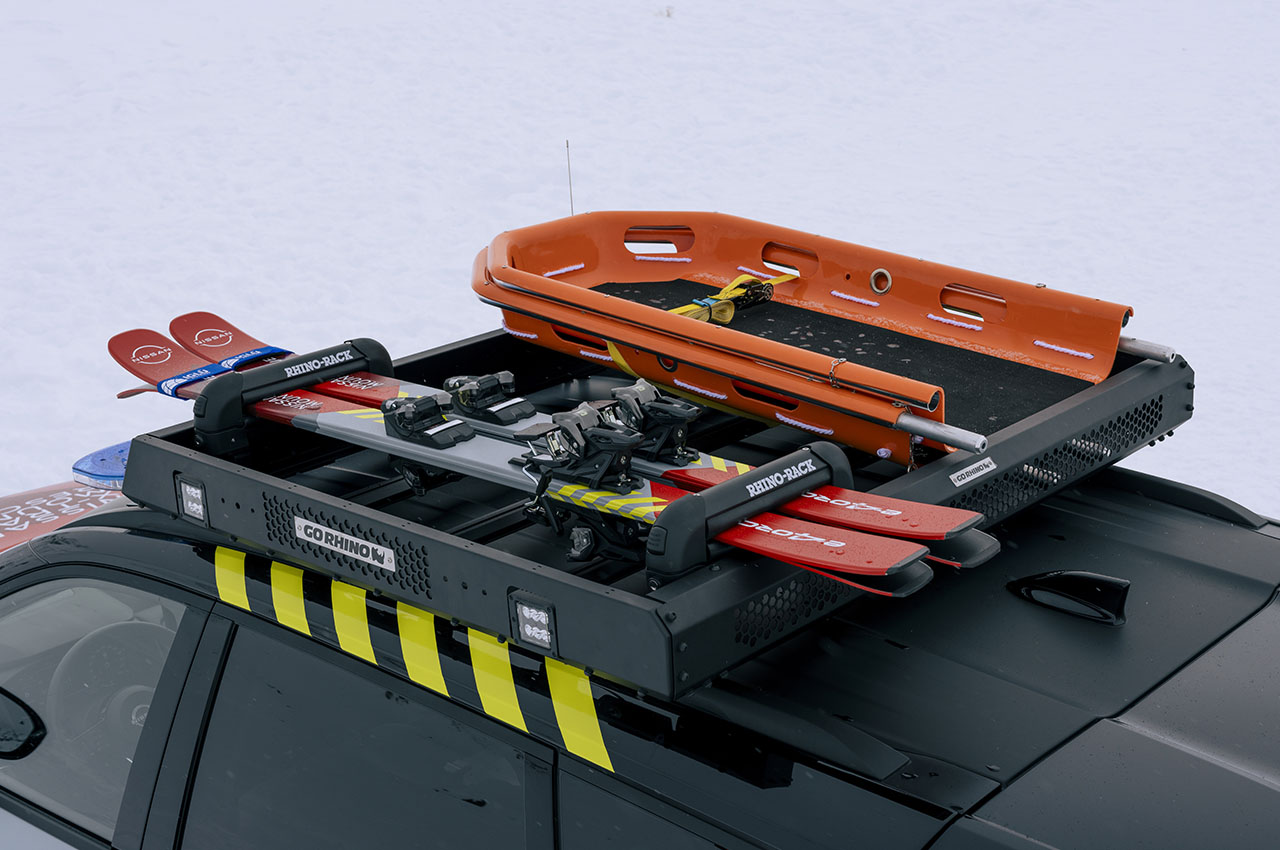
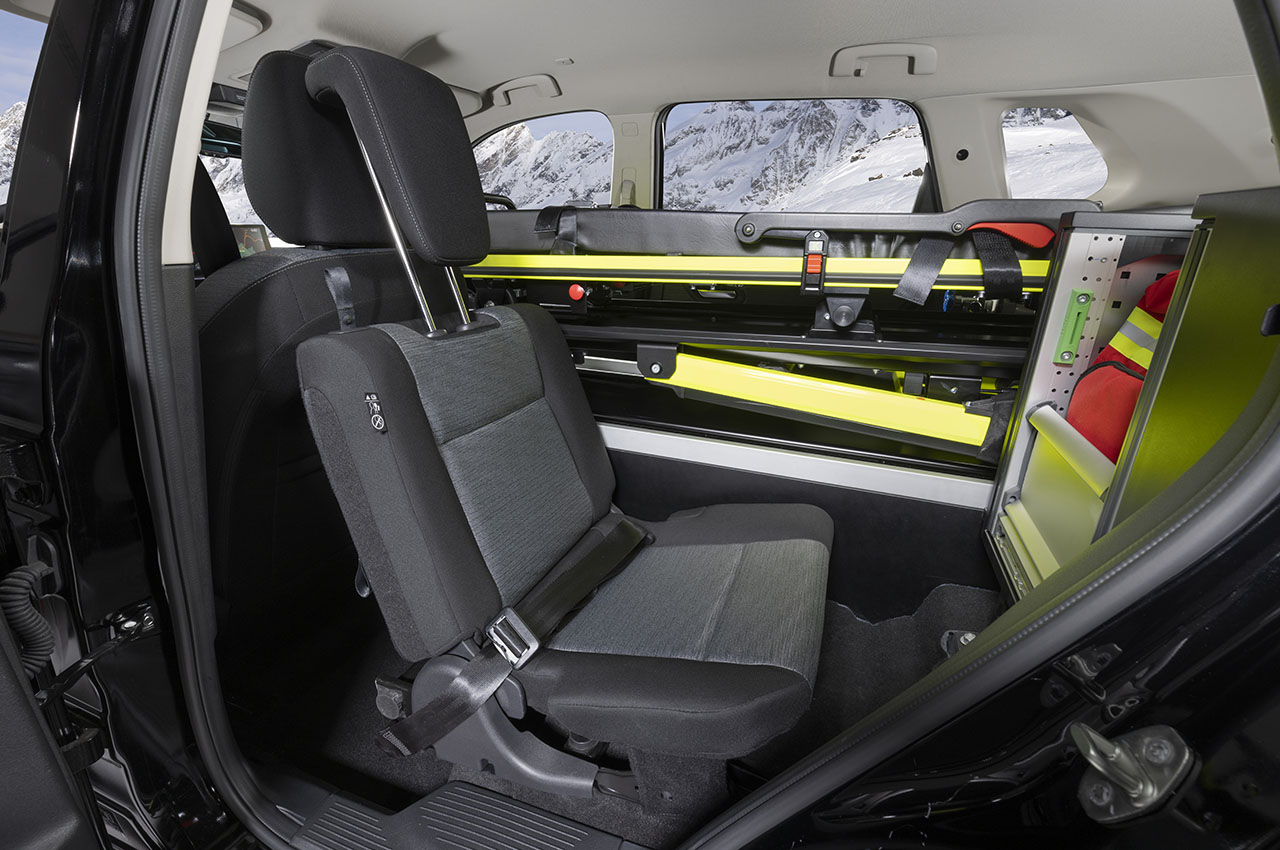
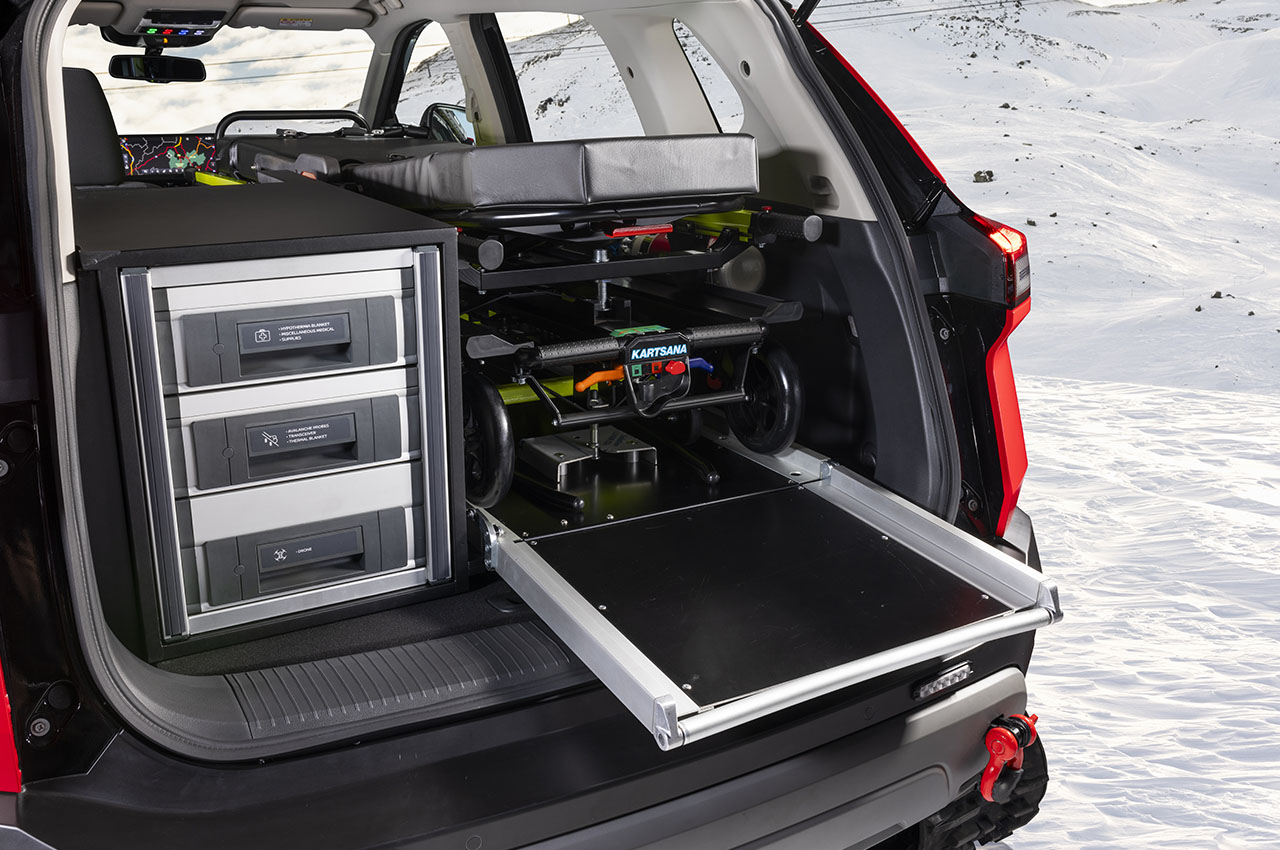
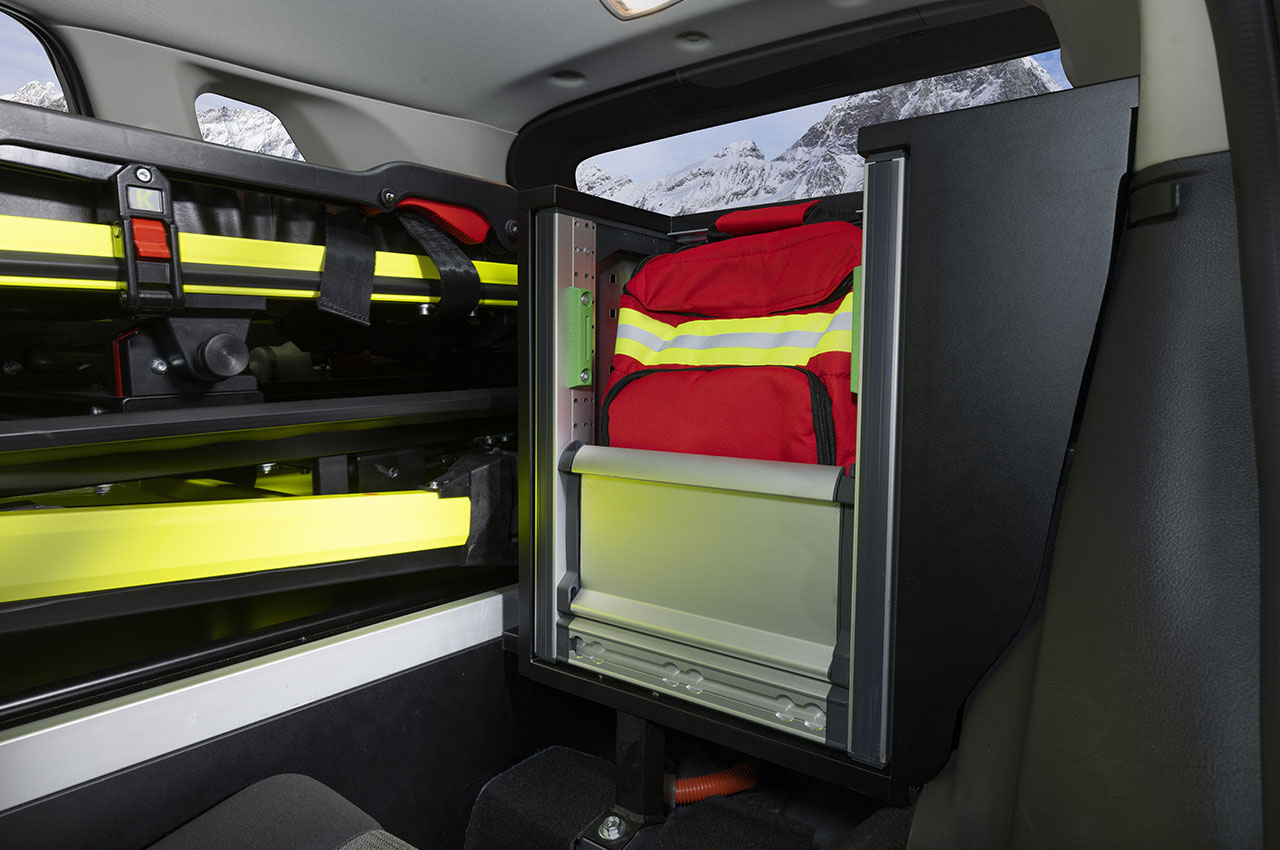
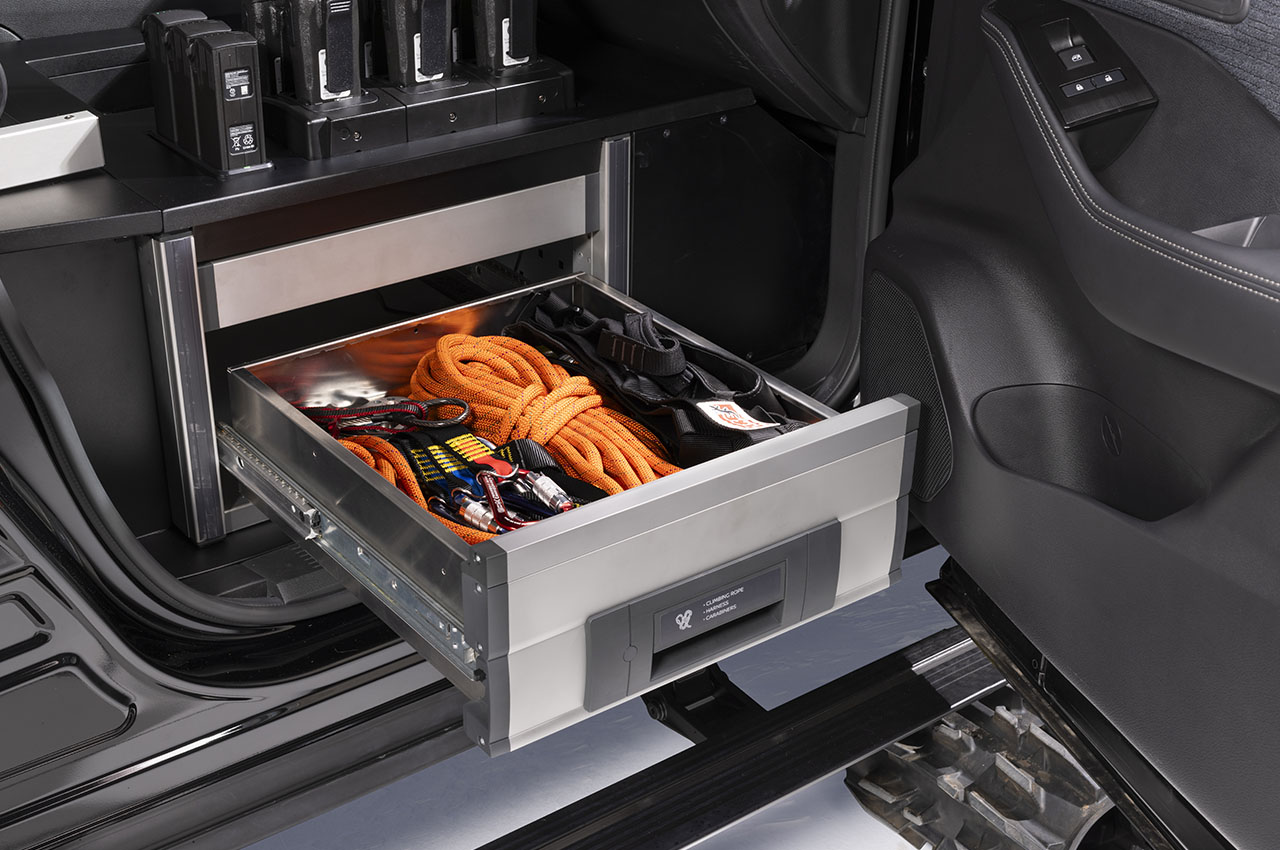
The mountain-ready X-Trail will understandably catch the attention of automotive enthusiasts during its debut at the Italian ski resort of Cervinia. The vehicle’s robust design and purpose-built features make it an ideal choice for navigating the demanding landscapes associated with mountain rescue scenarios. The X-Trail Mountain Rescue vehicle is not just a visual spectacle; it boasts practical elements designed to aid rescue teams. The addition of tracks, replacing traditional wheels, enables the X-Trail to conquer snow-covered terrain with ease. This modification ensures the vehicle remains surefooted in challenging conditions. Loaded with additional gear including a stretcher, removing the rear seat, also ensures medical personnel can be on site for emergency care. The vehicle also comes with a siren, flashing light bar, powerful roof and hood lights, wider fenders, an enhanced front bumper with a winch and reinforced towing hooks. The footboards and a raised ride height make sure there is easy access in and out of the vehicle.

Nissan’s strategic collaboration with mountain rescue services underscores its commitment to leveraging its automotive expertise for the greater good. By tailoring the X-Trail to meet the specific needs of rescue teams, Nissan showcases its ability to adapt and innovate within the automotive landscape. The X-Trail Mountain Rescue vehicle’s unveiling will generate excitement among outdoor enthusiasts and those in search of reliable off-road solutions.

As the automotive industry continues to evolve, Nissan’s foray into specialized off-road applications reflects a broader trend of manufacturers catering to niche markets. The X-Trail Mountain Rescue vehicle not only serves as a testament to the brand’s engineering prowess but also highlights the brand’s commitment to addressing the unique needs of diverse user groups.


The post Nissan Trail Mountain Rescue off-roader is built for tough rescue operations in the Italian alps first appeared on Yanko Design.

Motorcycle riding on monster wheels is a Batcycle on steroid ready to steamroll anything that lies ahead

If ever the Gotham City vigilante desired for an upgrade to the Batcycle (or Batpod if I may) this would be it. The crazy DIY project by a bunch of friends from North Idaho, who’ve built unique automotive projects in the past, is something that’ll spark your instinct for dominance.

Starting their journey with hobby builds on YouTube, the dudes have now amassed millions of views courtesy of their out-of-the-box creations. Their previous builds include the world’s fastest snow bike, 100 HP jet boat, off-road Tesla Model 3 and a crazy fast shopping trolley.

Designer: Grind Hard Plumbing

Their latest exploration is a monstrous bike that looks like the love child of a monster bike and a powerful motorcycle. The power on this one comes from a KTM 1190 Adventure V-twin motor, riding on 46-inch monster truck wheels fitted with mud tires and actuated by a hydraulic steering wheel. Everything on this naked machine is kept together with a stellar trellis frame and those gigantic tires turn as intended (with some effort in standing position) with the pair of single-sided swingarms suspended from the wheels.

Label it as a Batcycle or maybe a Mad Max-style apocalyptic two-wheeler, the machine is built purely for entertainment purposes by the crazy pals. For that, the lay-back position of the chopper makes sure you don’t flex any muscles unwantedly to land in trouble with painful cramps. Turning this monster is not going to be something usual due to the huge size of the front wheel, so the team fitted it with a hydraulic steering system and a drive piston controlled by the handlebar to provide the needed leverage. Even with this assist, the bike seems like a handful while turning!

If you notice closely there is a certain lag from the time when the steering is turned and the wheels actually turn. A gamer would instantly refer to that as latency in the real world. From what we see, the machine is darn hard to control and maybe with some more subtle additions and tweaking it’ll get close to a normal motorcycle. Of course, the project is ongoing and we’re eager to see the monster chopper in action someday with silky smooth steering input and control mechanism.


The post Motorcycle riding on monster wheels is a Batcycle on steroid ready to steamroll anything that lies ahead first appeared on Yanko Design.

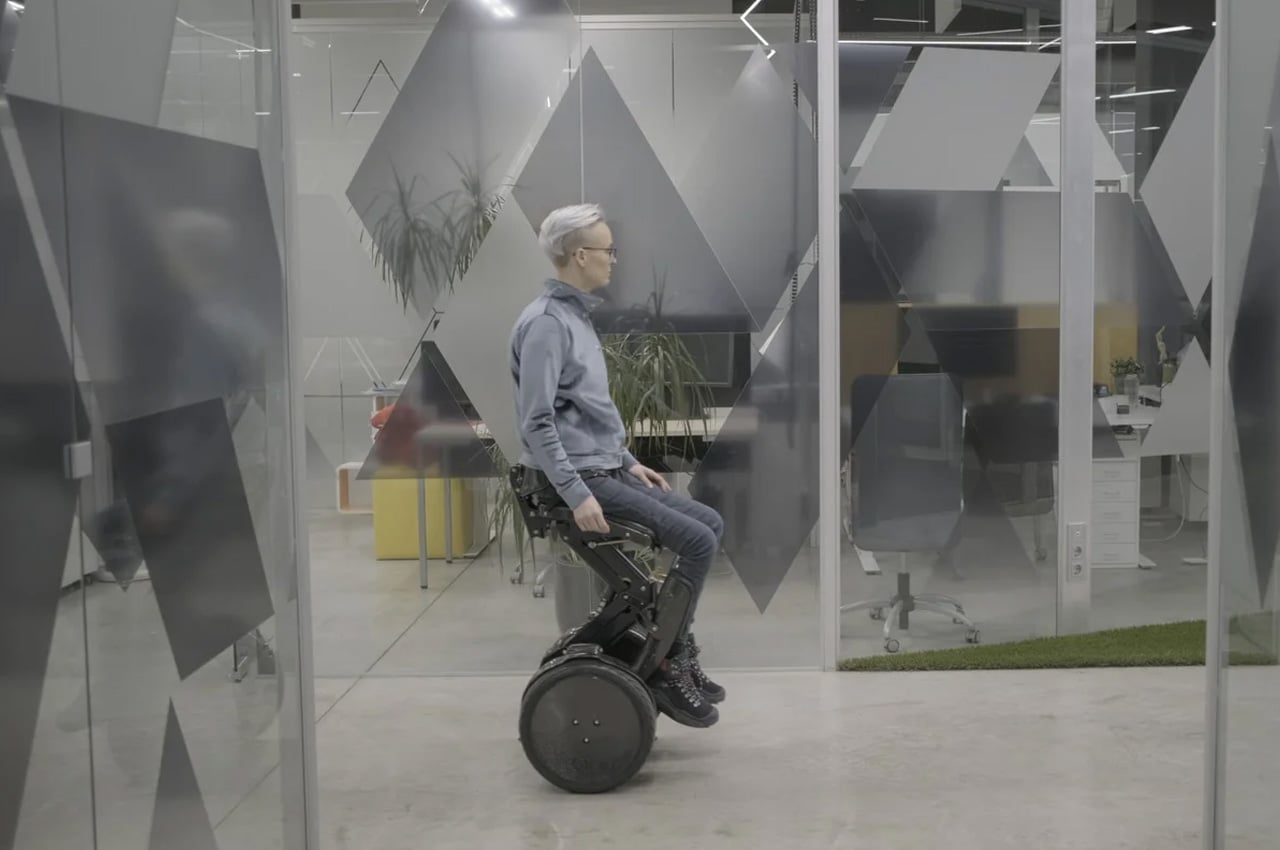
Segway-style, motion-activated ‘standing’ wheelchair helps users confidently navigate life

What is the ultimate freedom for those with lower limb disabilities bound to a wheelchair? A ride that not only helps get around with minimum external human assistance, but that allows one to stand up and sit down with similar convenience. Invaluable modifications have happened to the traditional wheelchair to reach closer to this dream of ultimate freedom.

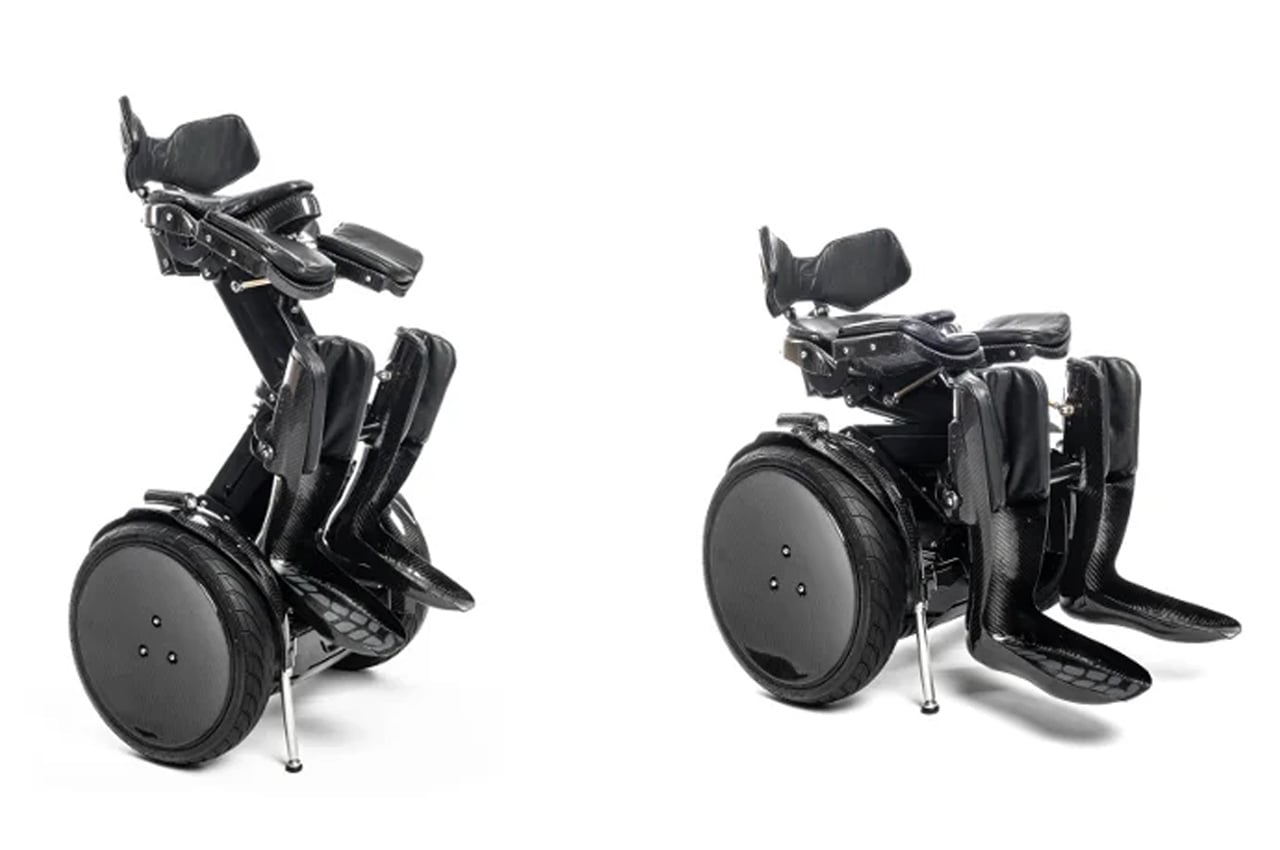
Joysticks are used for maneuvering the wheelchair through obstacles and mechanics are to allow a wheelchair to rise from the usual sitting position to semi-standing freedom. Addressing this facet with an outstanding new approach is the Kim-e, a segway-styled wheelchair users can stand upright in just a matter of seconds.

Designer: Chronus Robotics

The brainchild of Chronus Robotics, a Lithuanian-based manufacturer, the Kim-e has been developed into a production model over four years of research, prototyping and perfecting. Unlike the traditional wheelchair, the Kim-e is instantly distinguishable with its two-wheeled design. There is no word on pricing or availability at the time of writing, presumably though, it should be out sometime later in the year. You can book a free test ride with Kim-e today.

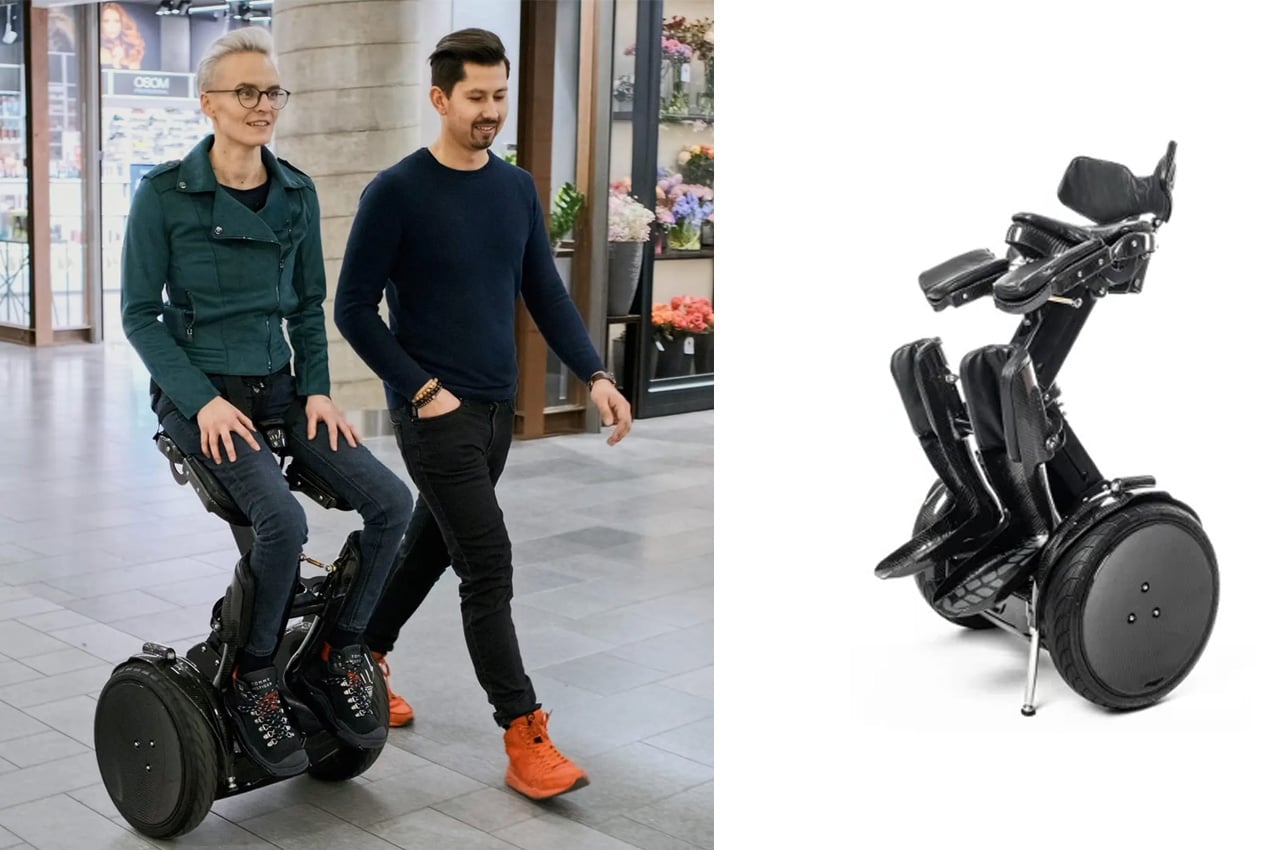
Things are made ultra-convenient not just by the instant transformation of this wheelchair from sitting to standing in seconds, but more so by its hands-free functionality. Reportedly, Kim-e can be controlled by upper body movement to raise and lower the seat or glide the wheelchair through the crowd. And when you’re ready to hit the road, it can fold up to fit into the boot of your car for easy transportation.

Drawing its power from a lithium battery onboard, Kim-e can power up fully in four hours and travel up to 30 km on a single charge at a top speed of 20 km/h. This wheelchair, along with the built-in battery weighs 38 kg and has a payload bearing capacity of up to 90 kg. Kim-e may have a slightly lesser weight-carrying ability, but it is designed with safety in mind whether you use it in a traditional seated position at the work desk or while strolling upright with your friends in the mall.

Kim-e is equipped with a scissor-lift-type mechanism which allows the seat to raise enough to put the occupant at the eye-level of your companion. No more pushing or tugging. Let your friend/partner wall besides, while you maneuver the wheelchair on your off-road capable tires over sand, gravel or shallow water. At a semi-standing position, Kim-e straps the user’s thigh and even supports one to climb slopes of up to 20 degrees without breaking a sweat.

The post Segway-style, motion-activated ‘standing’ wheelchair helps users confidently navigate life first appeared on Yanko Design.
Exploring the 2022 Lamborghini Countach: An In-Depth Design Analysis with Mitja Borkert

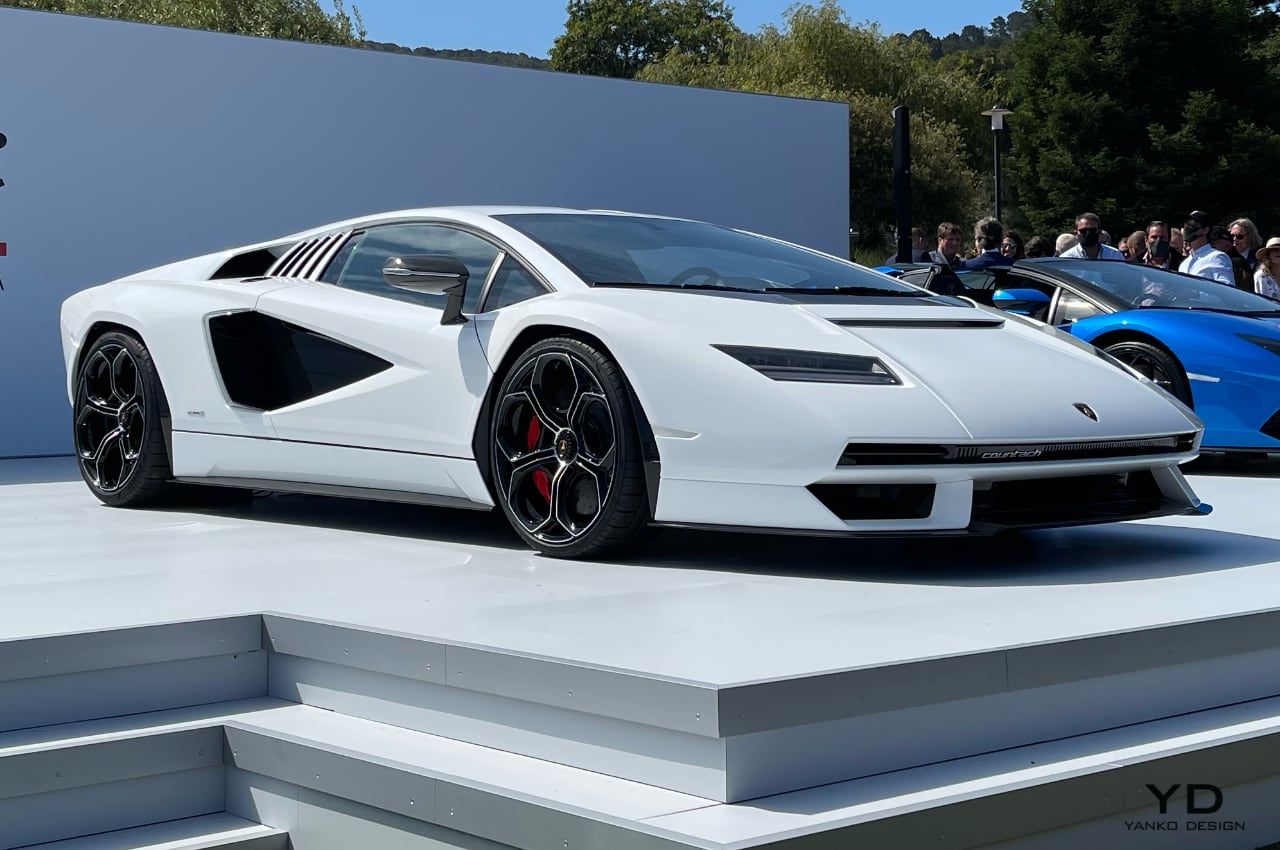
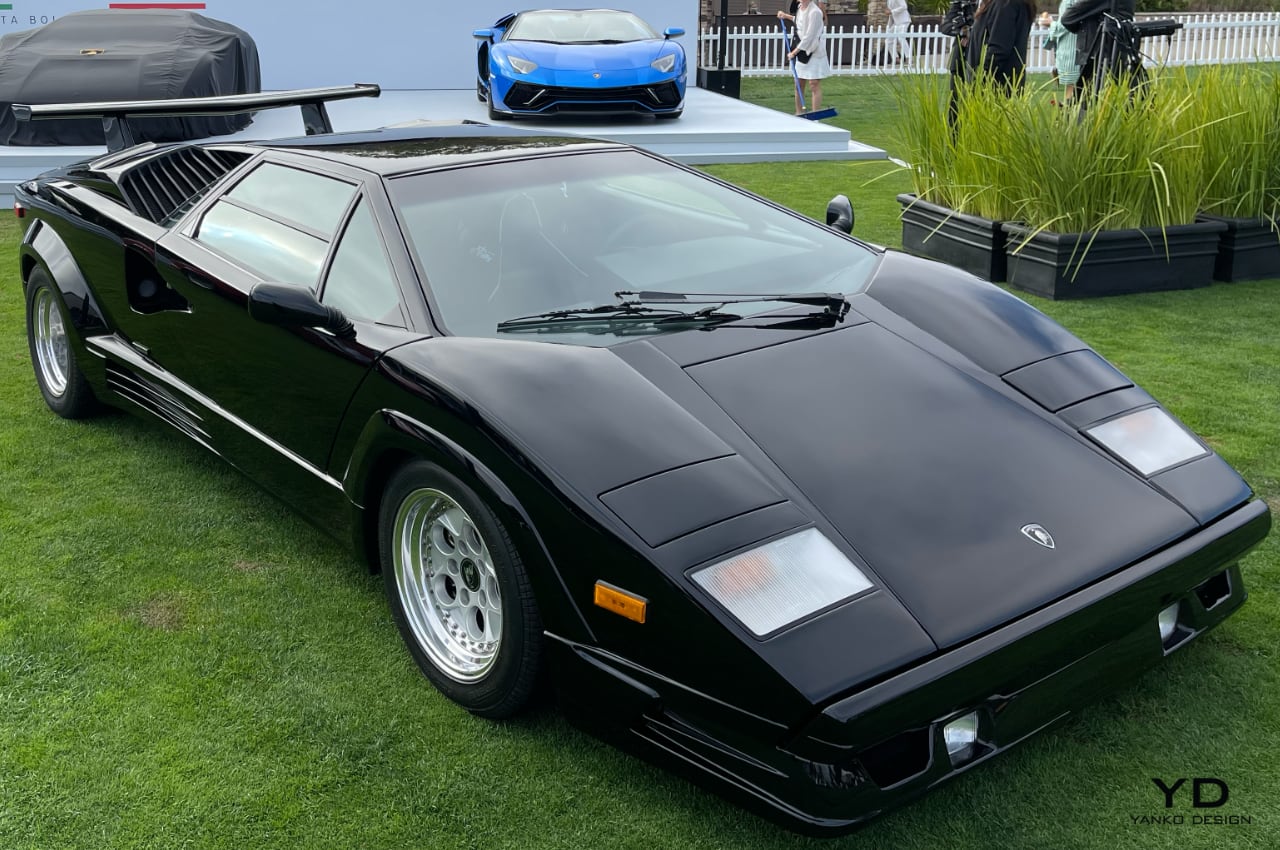
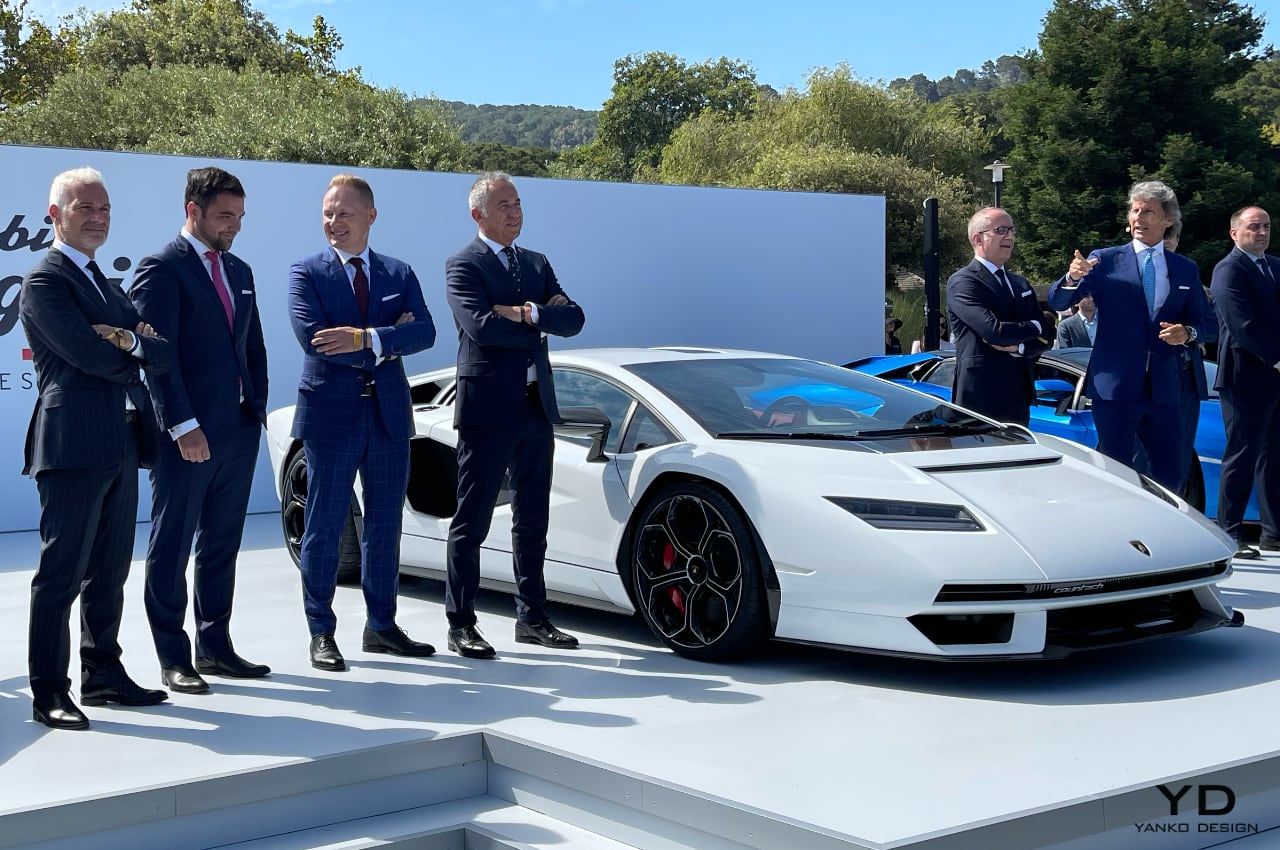
Mitja Borkert’s approach to designing the 2022 Lamborghini Countach is a masterful blend of reverence for its heritage and a leap into the future. As the Head of Design at Automobili Lamborghini, he walks Yanko Design through his creative process, illuminating how the new Countach is a culmination of various iconic elements from its predecessors, reimagined for the 21st century.

Designer: Mitja Borkert for Lamborghini

Borkert’s design journey begins with the original Countach prototype, unveiled 50 years ago at the Geneva Auto Show. He extracts the essence of its purity and simplicity, as evidenced in the uncluttered silhouette and the slim front grille. This minimalist approach is a nod to the prototype’s untainted form, a defining characteristic he sought to echo in the new model.

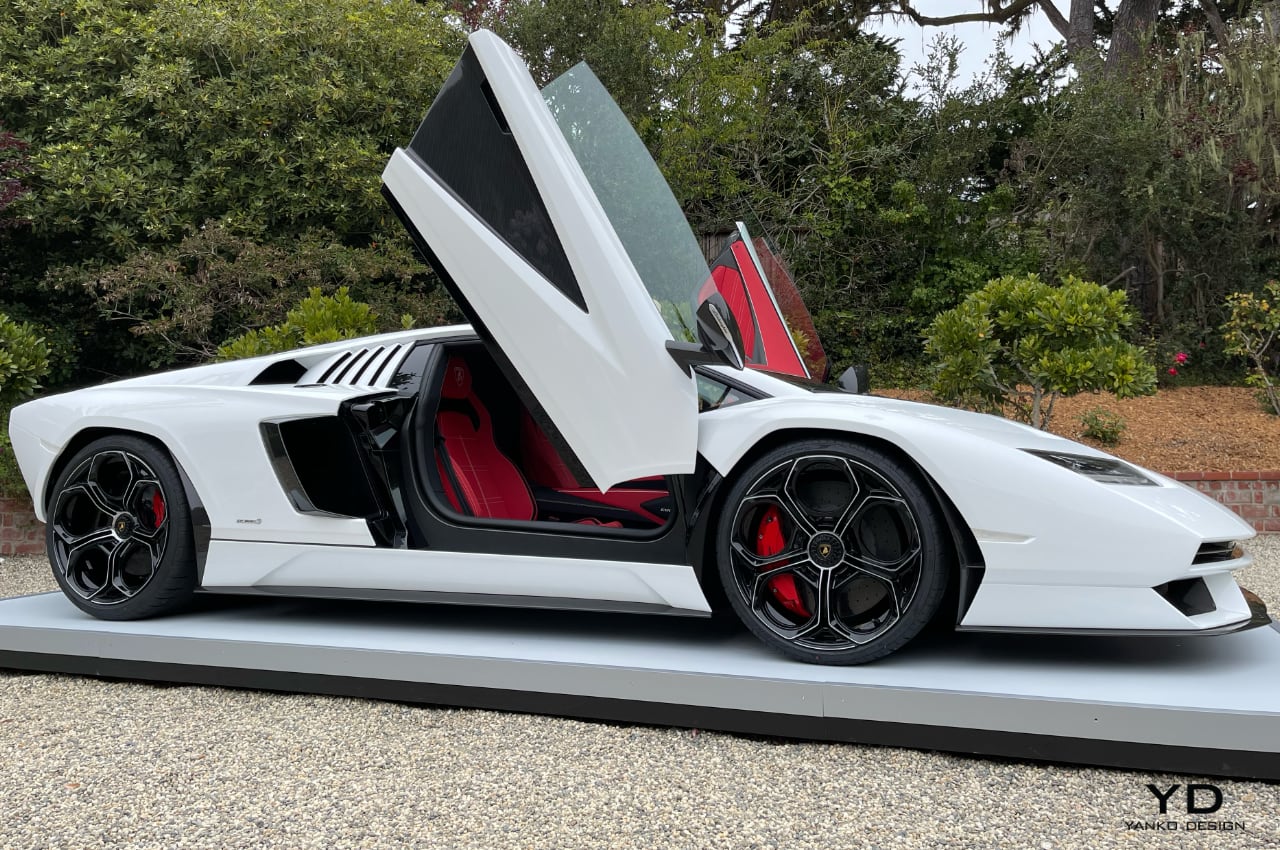
The influence of the LP400 ‘Periscopio’ is evident in the innovative photochromatic roof panels of the 2022 Countach. This modern interpretation of the ‘Periscopio’ view offers a contemporary solution to the original’s limited rear visibility, allowing the driver to adjust the transparency of the roof panels as needed.

The most striking inspiration comes from the LP5000 Quattrovalvole, known for its exaggerated features and a favorite among Countach enthusiasts. Borkert draws from this version to infuse the new Countach with a sense of drama and presence. The hexagonal wheel arches, reminiscent of the Quattrovalvole’s prominent flares, are reinterpreted with a more human, rounded form. This subtle softening of lines blends the Countach’s characteristic sharpness with elegance.

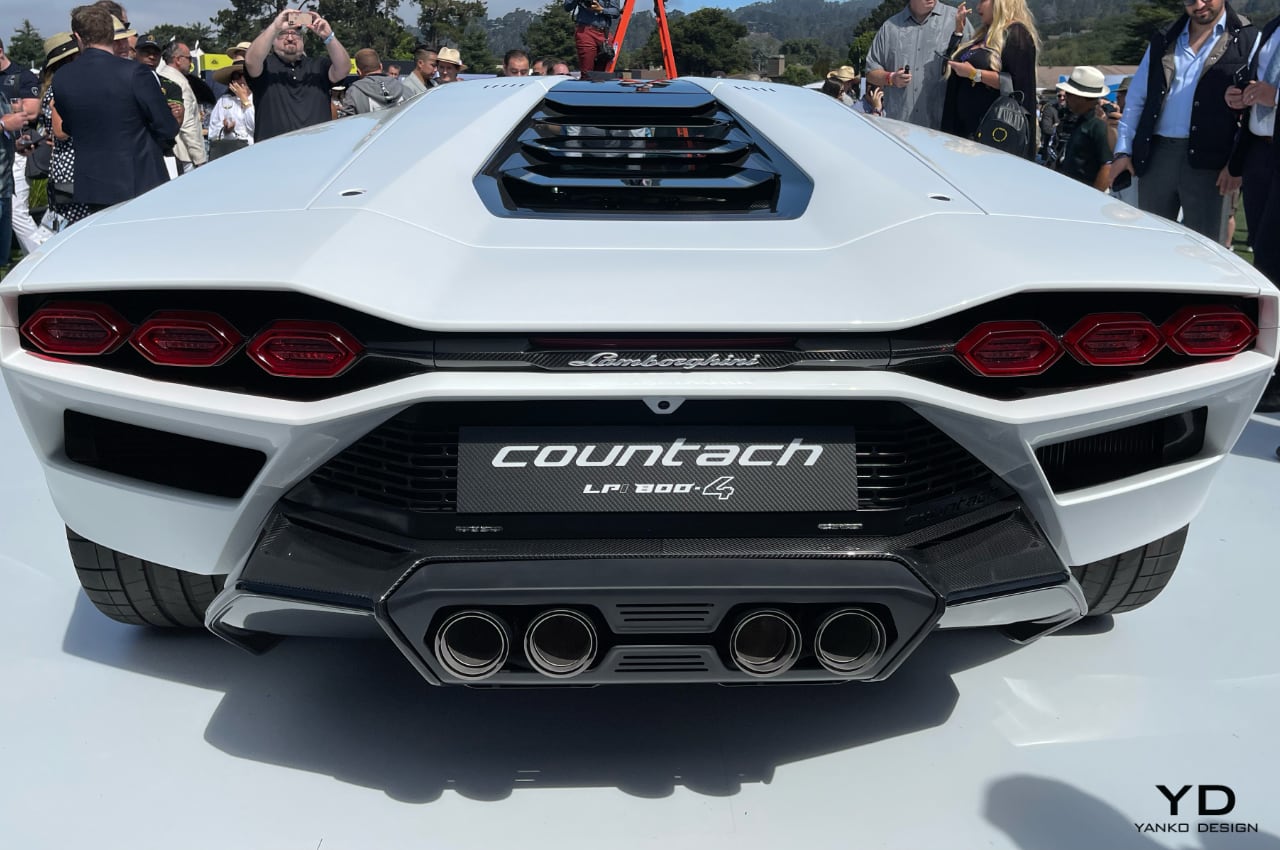
In reimagining the Countach for the present day, Borkert doesn’t just replicate; he reinterprets. For instance, the new model’s taillights are an agonal shape iconic to the original but are slimmed down, aligning with the car’s overall streamlined aesthetic. The chopped-off rear end, another hallmark of the classic Countach, is reenvisioned to dramatically showcase the rear tires, much like a motorcycle, adding to the car’s dynamic stance.

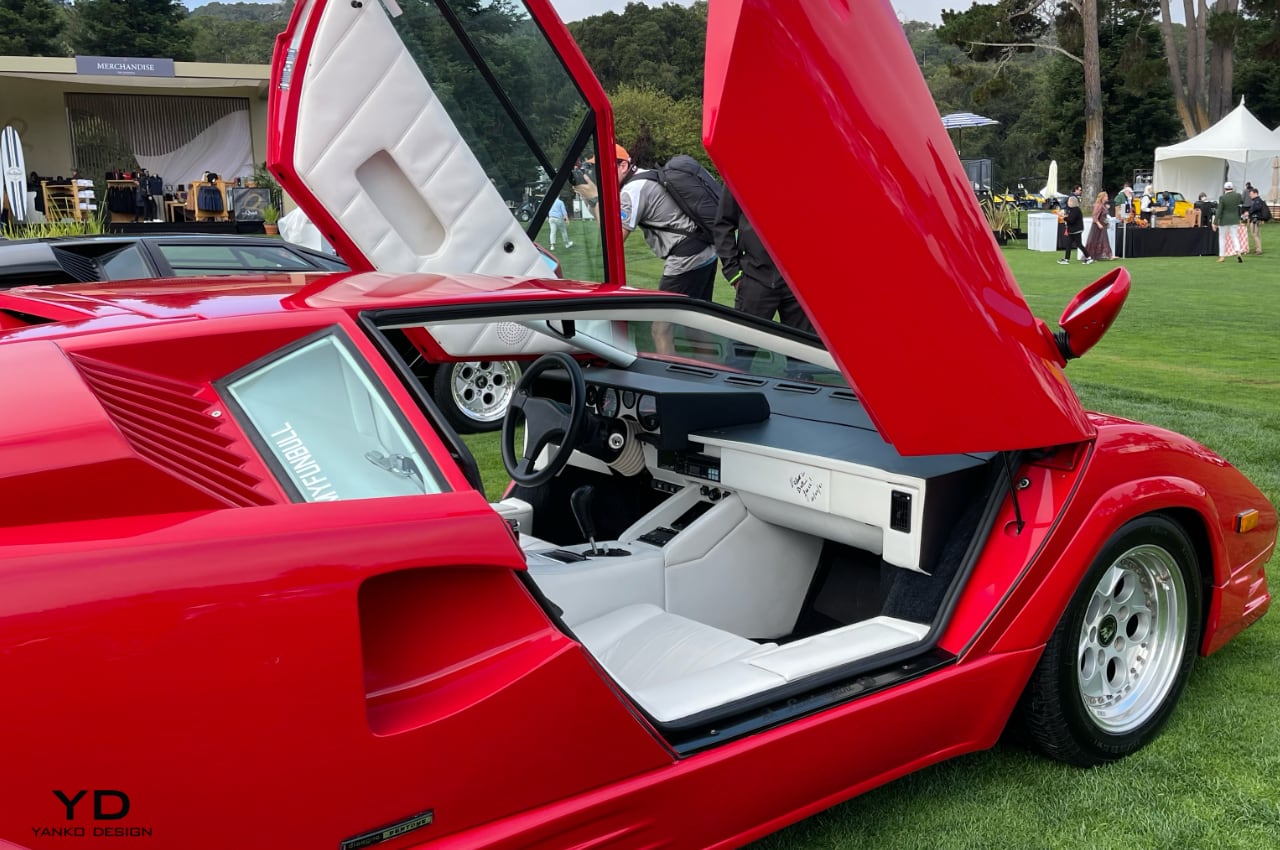
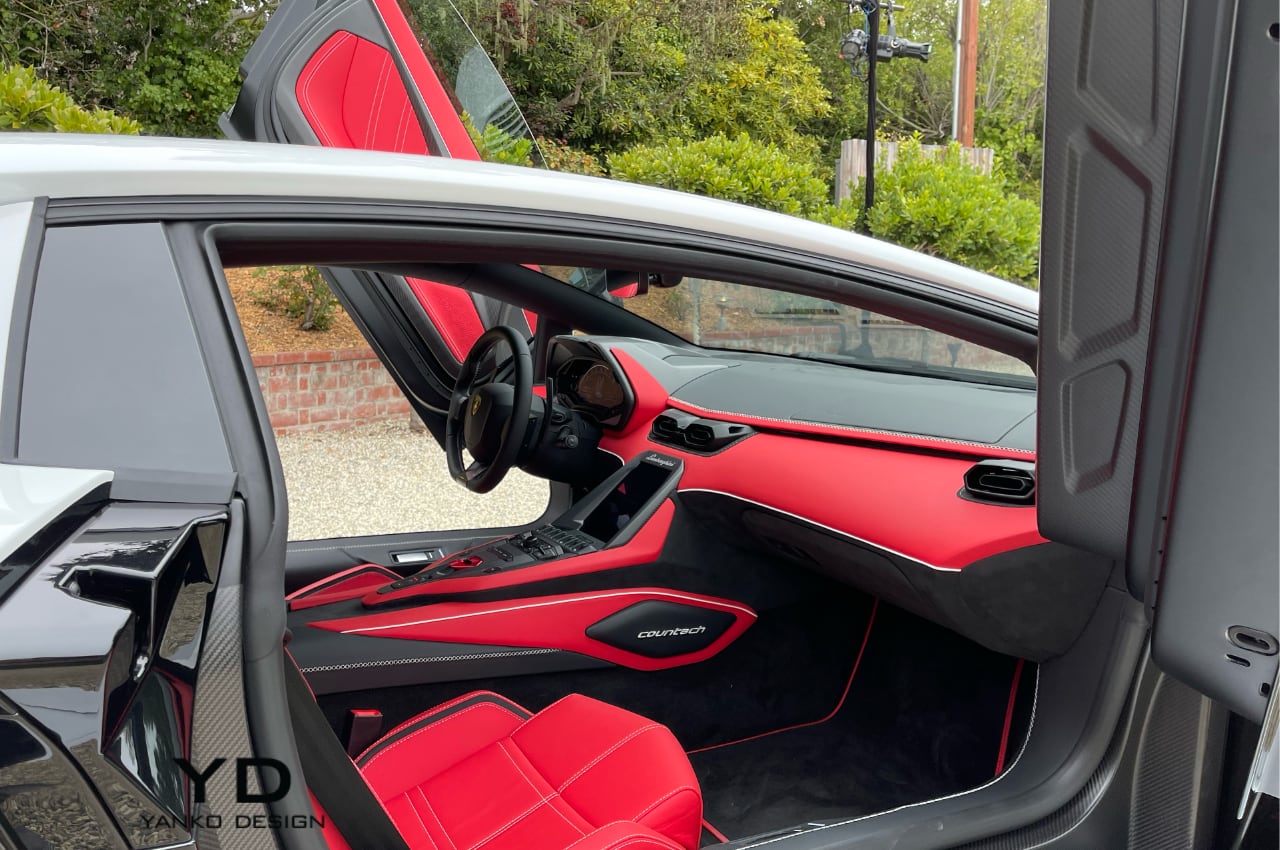
His vision for the 2022 Countach extends to its interior, drawing inspiration from a white Countach with a red interior owned by Lamborghini in the mid-1980s. This color theme is a tribute, linking the past with the present.

The essence of the Countach spirit underlies all the design elements of this car, making it an experience rather than just a sight to behold. The new model maintains the V12 engine’s iconic roar, which is a crucial aspect of its DNA and has been amplified by a specially designed exhaust system. This sound, combined with the innovative design, not only pays tribute to its predecessors but also honors its long-standing legacy in the world of high-performance supercars.

The post Exploring the 2022 Lamborghini Countach: An In-Depth Design Analysis with Mitja Borkert first appeared on Yanko Design.
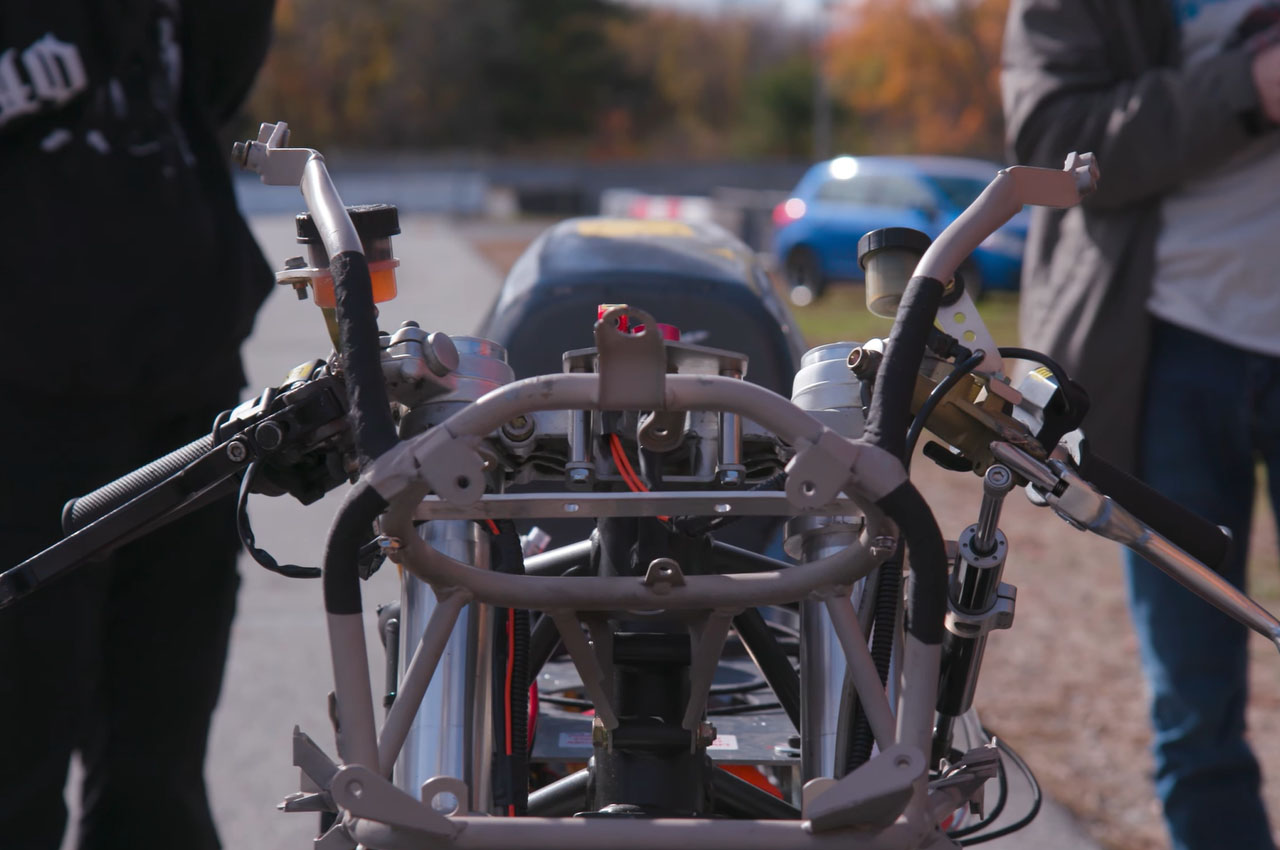
MIT researchers developing open source hydrogen powered motorcycle for other developers to improve on

Electric battery-powered vehicles might seem the future but in the long run, they are harmful to the environment in their wicked way. The next best thing is the hydrogen-powered drivetrain and many automotive manufacturers are already exploring the possibility. Sure, the cost of such vehicles is not practical enough to go mainstream, still, constant innovations in technology are getting things closer to fruition.

MIT’s electric vehicle team is also exploring the possibility with their hydrogen-powered electric motorcycle prototype. The two-wheeler uses a new hydrogen-based testbed and is open source for other proactive automotive developers to test out as the files are available online. Led by Aditya Mehrotra, a graduate student working with mechanical engineering professor Alex Slocum, the Walter M. May and A. Hazel May Chair in Emerging Technologies, the project aims to take clean energy alternatives to the next level with innovation.

Designer: MIT

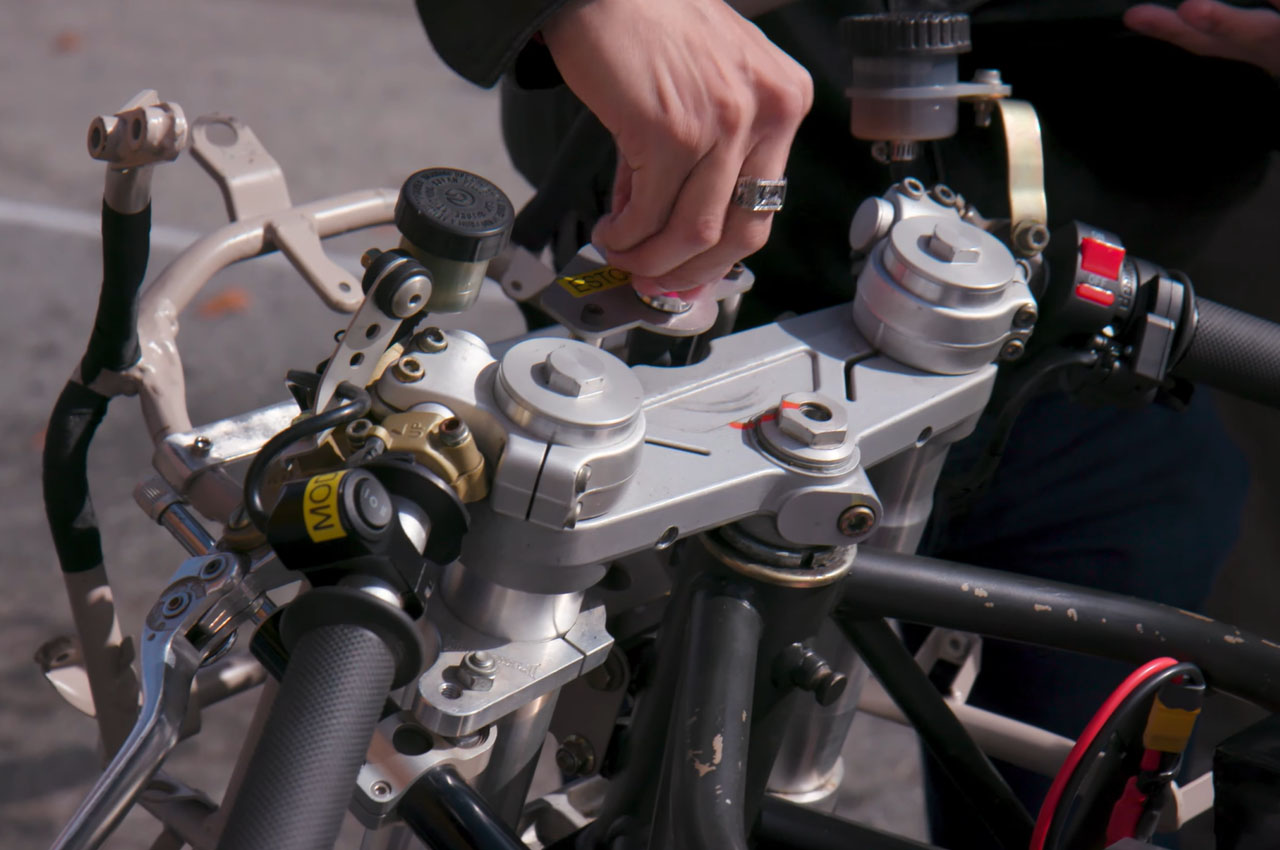
According to Aditya, “We’re hoping to use this project as a chance to start conversations around ‘small hydrogen’ systems that could increase demand, which could lead to the development of more infrastructure.” The team took a 1999  Ducati Supersport donor motorcycle frame as the basis and fitted an electric motor, drive train, hydrogen tank and other custom-made components to develop the design. Some components were donated by industry sponsors and the two-wheeler took shape over the period of one year.

The heart of the system is a fuel cell developed by South Korean company Doosan and it’s mated to the supporting gas cylinder for drawing energy. Until the drivetrain is fully developed the bike runs on this hybrid system. The bike is still in the early stages of development and is going to be purely a concept of proof for other designs to follow. To this accord, the team is mindful enough to create a handbook detailing the process of development and fail-safes in case anything goes wrong.

This is important because “a lot of the technology development for hydrogen is either done in simulation or is still in the prototype stages because developing it is expensive, and it’s difficult to test these kinds of systems,” as per one of the team members. There have been previous efforts to develop such hydrogen-powered vehicles but nothing that’s completely open-source like this one. The project is an ongoing endeavor until the cost of the fuel cell is made commercially viable.

The post MIT researchers developing open source hydrogen powered motorcycle for other developers to improve on first appeared on Yanko Design.

This 20-foot-long futuristic recreational vehicle has button-activated expandable walls to become a 400 sqft mobile home instantly

eVTOL aircrafts may be the future of personal aviation but the future of adventures on the road would be an all-encompassing recreational vehicle that transforms from its minimal structure on demand. We have seen a few iterations of travel trailers – such as the Rockwood Roo – that fit the notion, but the smart expanding ability with sustainable features is yet to reach recreational vehicles.

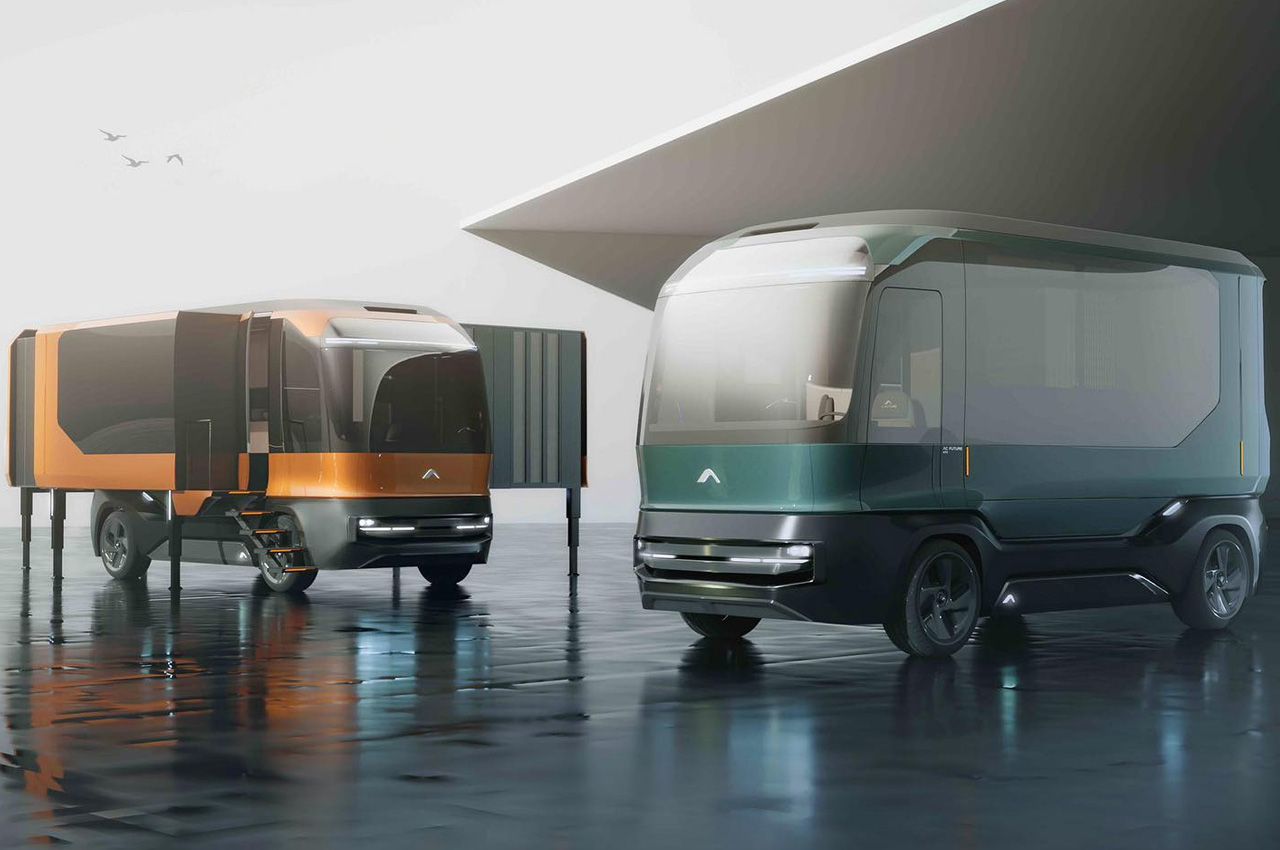
That’s what we thought until going up and personal with the eTH, an Electric Transformer House, doing rounds at CES in its rendered glory. A sublime blend of comfort, smart tech, and sustainability; it is by far the most futuristic mobile living space present in Vegas, at the time of writing. Visioned with the future in mind, eTH is the brainchild of Italian design house Pininfarina and AC Future, a leading inventor of living solutions for the future.

Designer: Pininfarina and AC Future

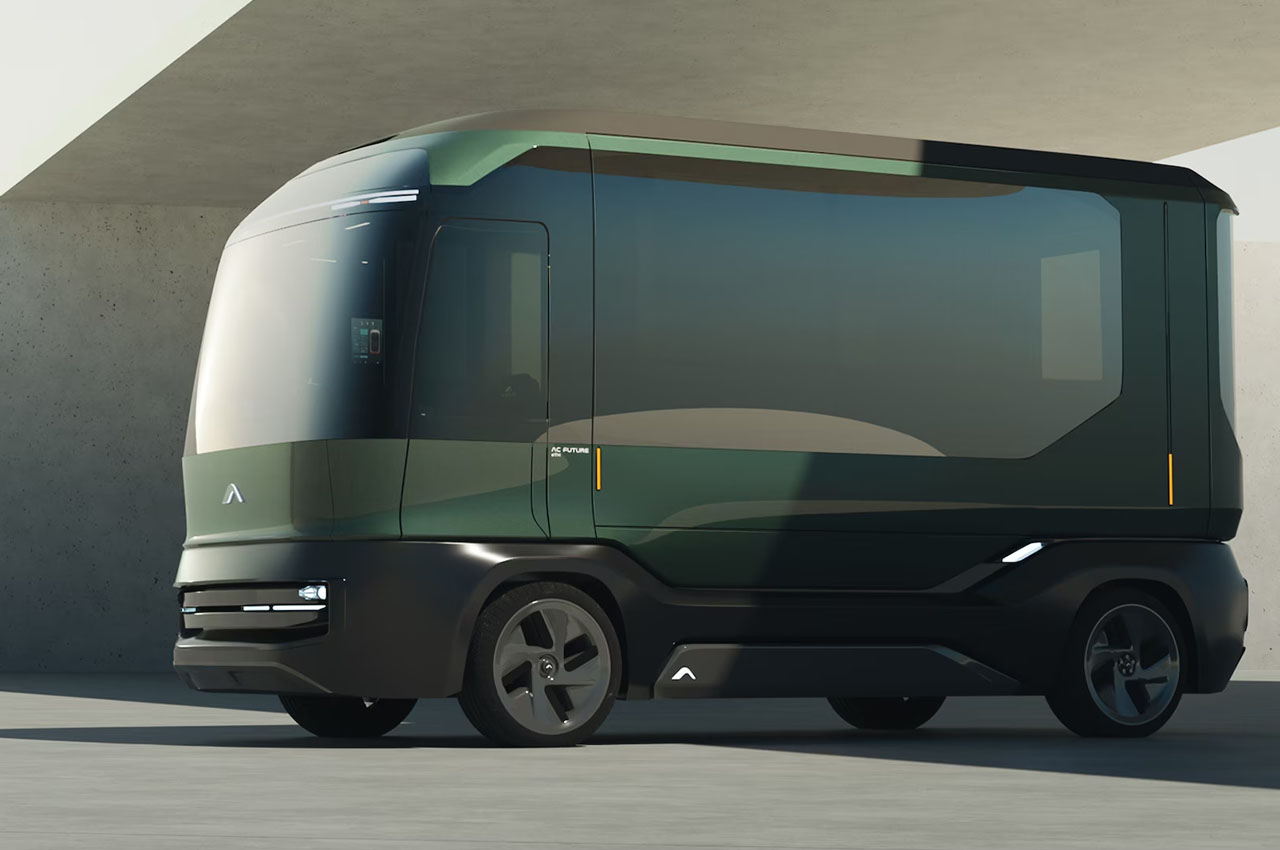
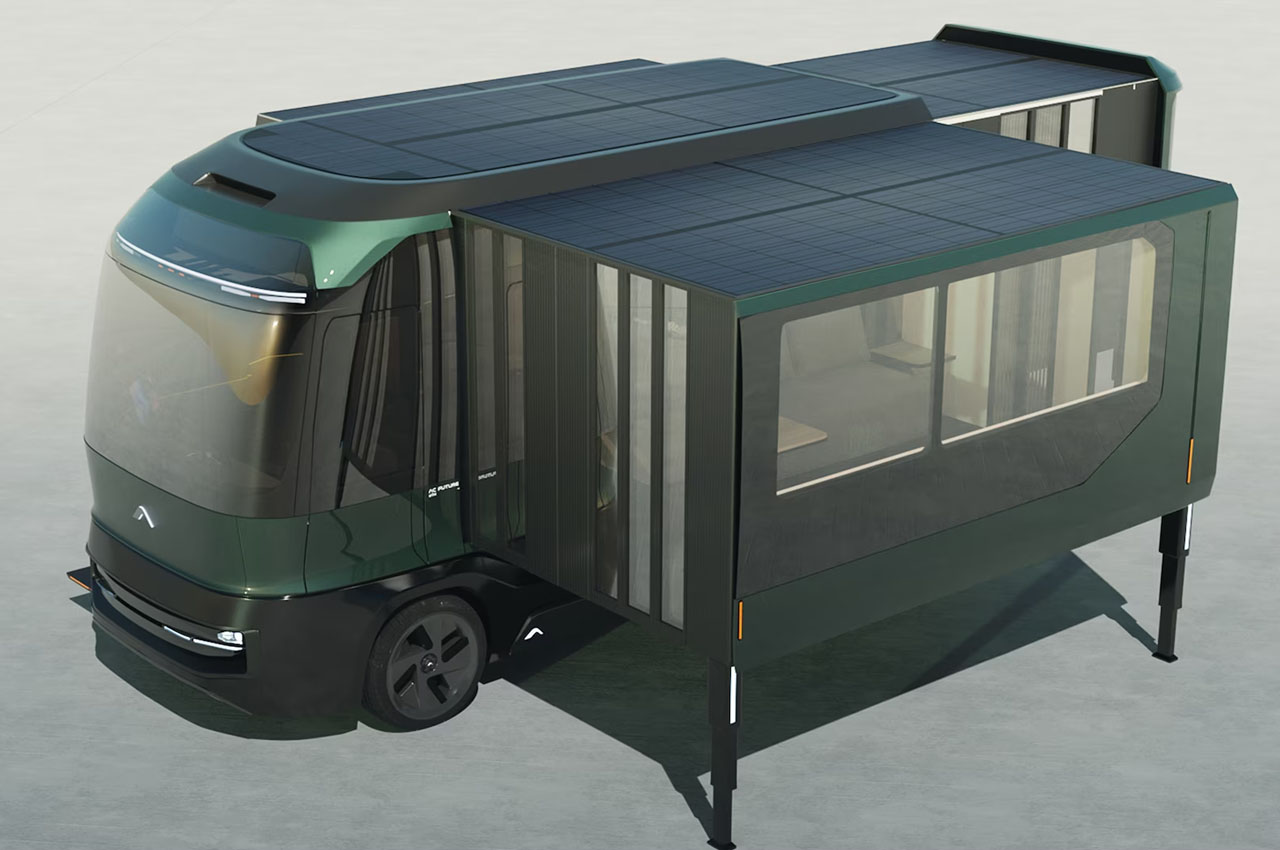
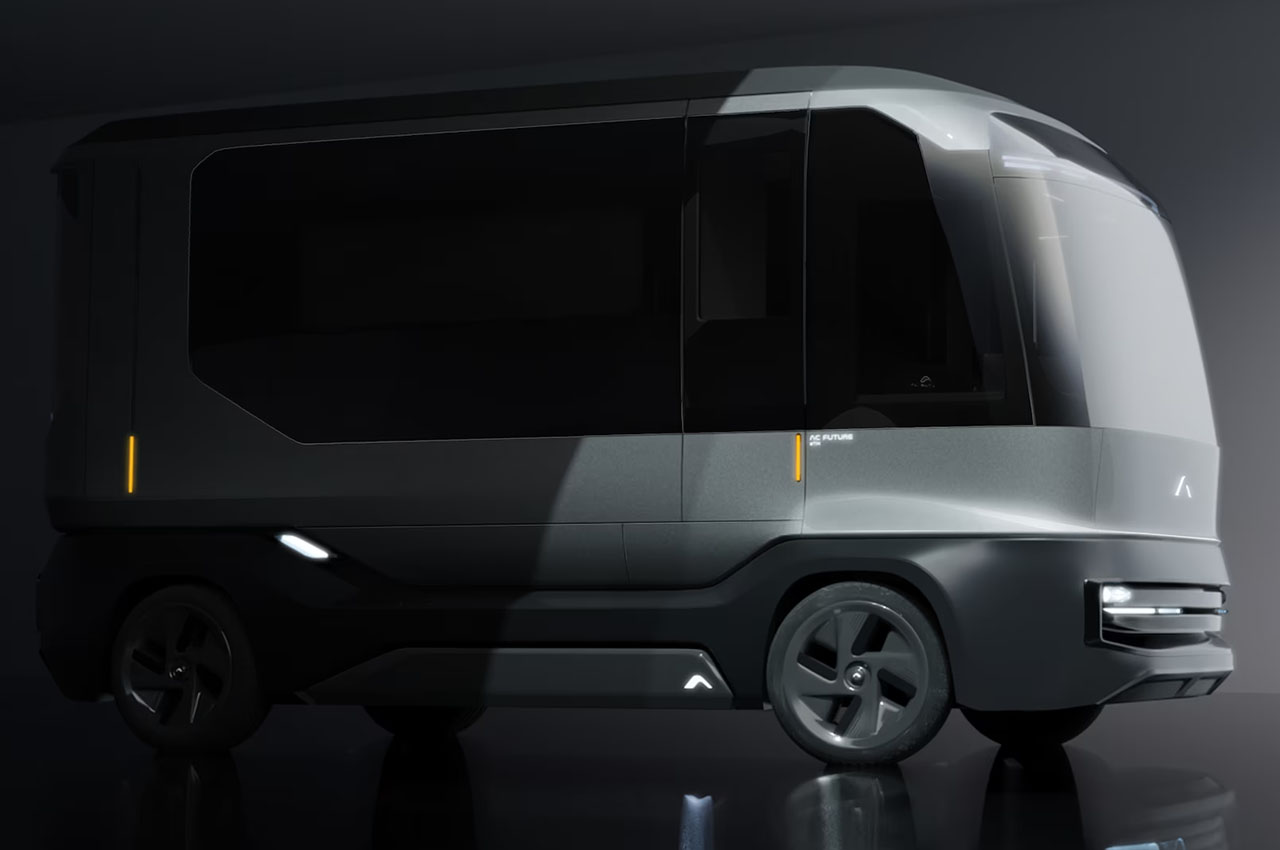
This mobile living space is a green van that features an all-glass upper body. The developers have a proof of concept at CES, and from how we learn, the prototype could be on the way. The mass production for this ultra-capable, highly functional, and amazingly luxurious mobile home is aligned for the fourth quarter of 2025, that’s if all were to go as planned.

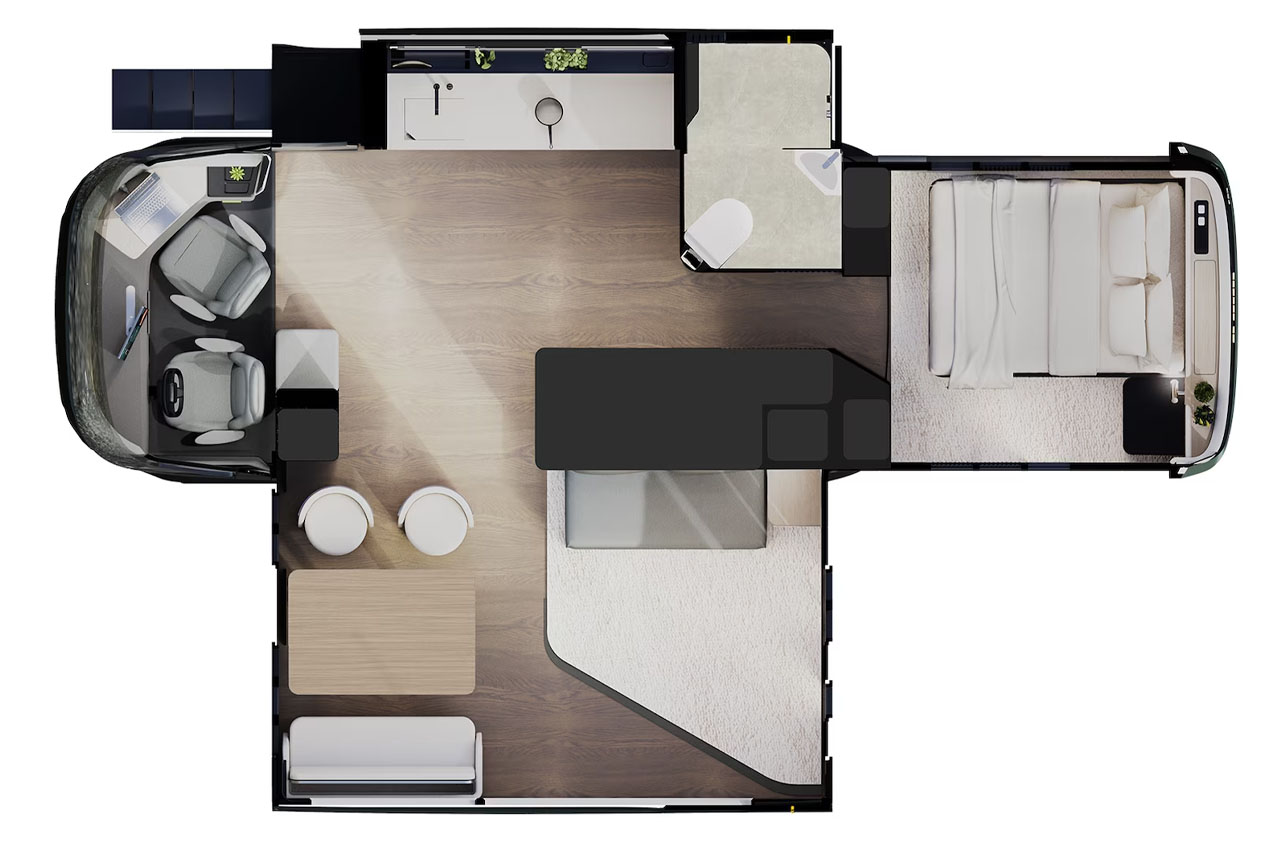
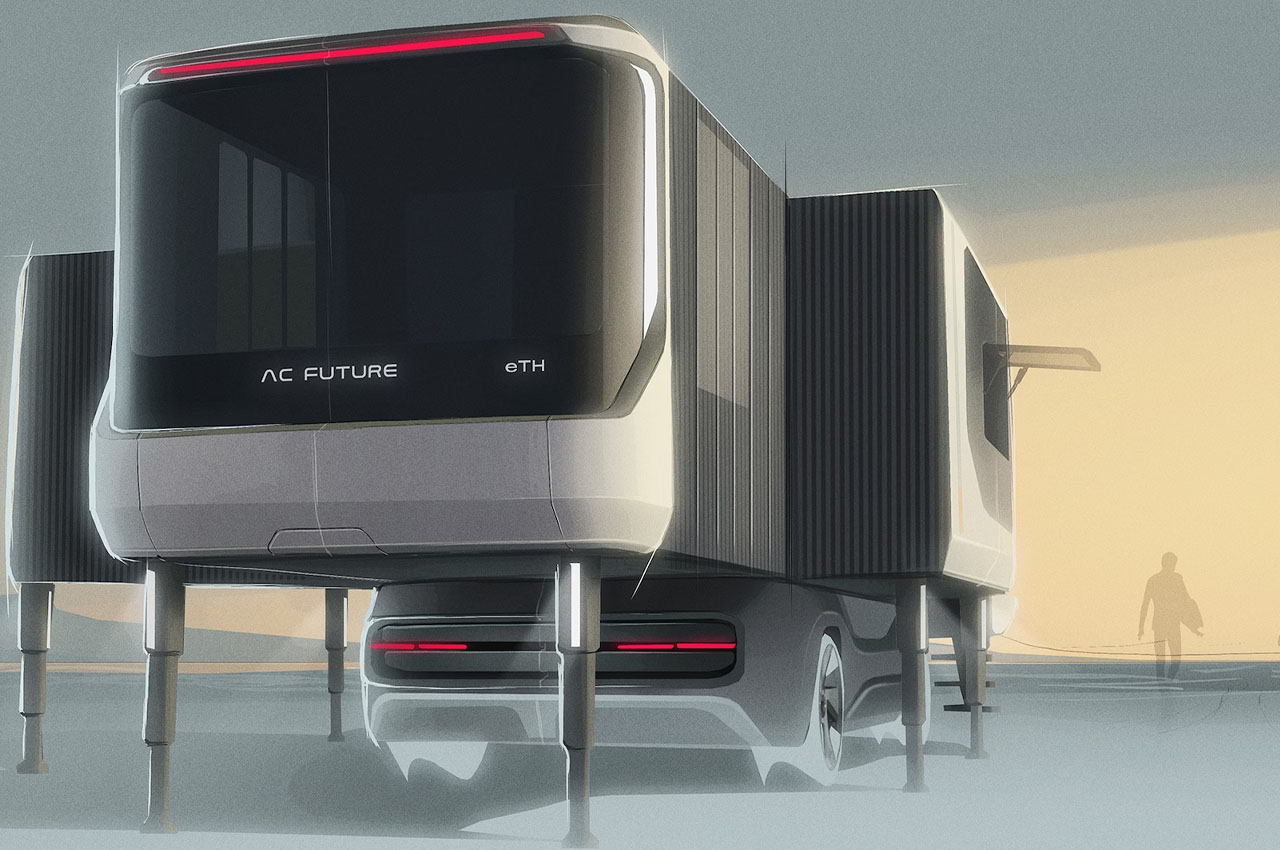
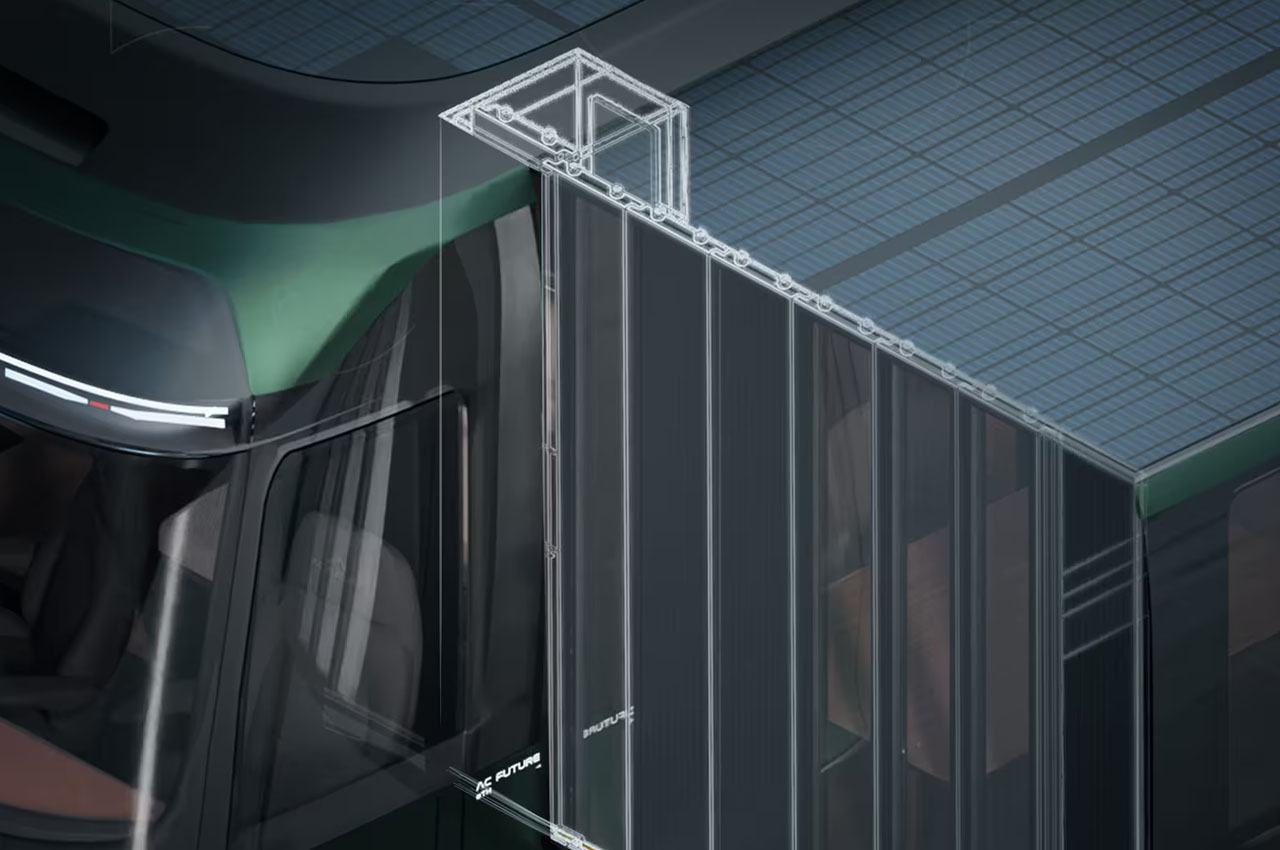
This out-of-the-ordinary electric recreational vehicle is different from the usual market-ready options in two departments: first, its expansion ability and second, the vivid sustainable functions on board. The eTH aligns in the former segment with movable walls, which allows the structure of the modular living space to expand from 20-foot-long, 11-foot-high to a good 400 square feet abode on the push of a button.

While the expanding form factor of the eTH would allow the RV to redefine the concept of living on wheels, it will be the inherent off-grid features that would make it a haven for adventurers. To that end, the modular RV features retractable 25kWh solar panels on the roof and onboard batteries to power it for a week of off-the-grid living. Details on the sleeping facility, washroom, and kitchen are scanty at the moment, but the Electric Transformer House has an Atmospheric Water Generator that produces fresh drinking water from the air every day.

The fascination extends further into the inside of the eTH where folding furniture enthralls with the convenience it renders while driving or when halted for the night. The lux interior allows this RV to be used as a full-time residence or mobile home by nomadic workaholics. For the latter, the inventive cockpit with driver assist technology and entertainment hub has a dashboard that doubles as an office desk. The steering wheel retracts under and the space above becomes a functional workspace while Starlink and Co-Pilot take care of the connectivity requirements.

The post This 20-foot-long futuristic recreational vehicle has button-activated expandable walls to become a 400 sqft mobile home instantly first appeared on Yanko Design.
This 20-foot-long futuristic recreational vehicle has button-activated expandable walls to become a 400 sqft mobile home instantly

eVTOL aircrafts may be the future of personal aviation but the future of adventures on the road would be an all-encompassing recreational vehicle that transforms from its minimal structure on demand. We have seen a few iterations of travel trailers – such as the Rockwood Roo – that fit the notion, but the smart expanding ability with sustainable features is yet to reach recreational vehicles.

That’s what we thought until going up and personal with the eTH, an Electric Transformer House, doing rounds at CES in its rendered glory. A sublime blend of comfort, smart tech, and sustainability; it is by far the most futuristic mobile living space present in Vegas, at the time of writing. Visioned with the future in mind, eTH is the brainchild of Italian design house Pininfarina and AC Future, a leading inventor of living solutions for the future.

Designer: Pininfarina and AC Future

This mobile living space is a green van that features an all-glass upper body. The developers have a proof of concept at CES, and from how we learn, the prototype could be on the way. The mass production for this ultra-capable, highly functional, and amazingly luxurious mobile home is aligned for the fourth quarter of 2025, that’s if all were to go as planned.

This out-of-the-ordinary electric recreational vehicle is different from the usual market-ready options in two departments: first, its expansion ability and second, the vivid sustainable functions on board. The eTH aligns in the former segment with movable walls, which allows the structure of the modular living space to expand from 20-foot-long, 11-foot-high to a good 400 square feet abode on the push of a button.

While the expanding form factor of the eTH would allow the RV to redefine the concept of living on wheels, it will be the inherent off-grid features that would make it a haven for adventurers. To that end, the modular RV features retractable 25kWh solar panels on the roof and onboard batteries to power it for a week of off-the-grid living. Details on the sleeping facility, washroom, and kitchen are scanty at the moment, but the Electric Transformer House has an Atmospheric Water Generator that produces fresh drinking water from the air every day.

The fascination extends further into the inside of the eTH where folding furniture enthralls with the convenience it renders while driving or when halted for the night. The lux interior allows this RV to be used as a full-time residence or mobile home by nomadic workaholics. For the latter, the inventive cockpit with driver assist technology and entertainment hub has a dashboard that doubles as an office desk. The steering wheel retracts under and the space above becomes a functional workspace while Starlink and Co-Pilot take care of the connectivity requirements.

The post This 20-foot-long futuristic recreational vehicle has button-activated expandable walls to become a 400 sqft mobile home instantly first appeared on Yanko Design.

Vanderer’s Citroën 2CV Electric Mini Camper Van is a retro-modern van for adventurers

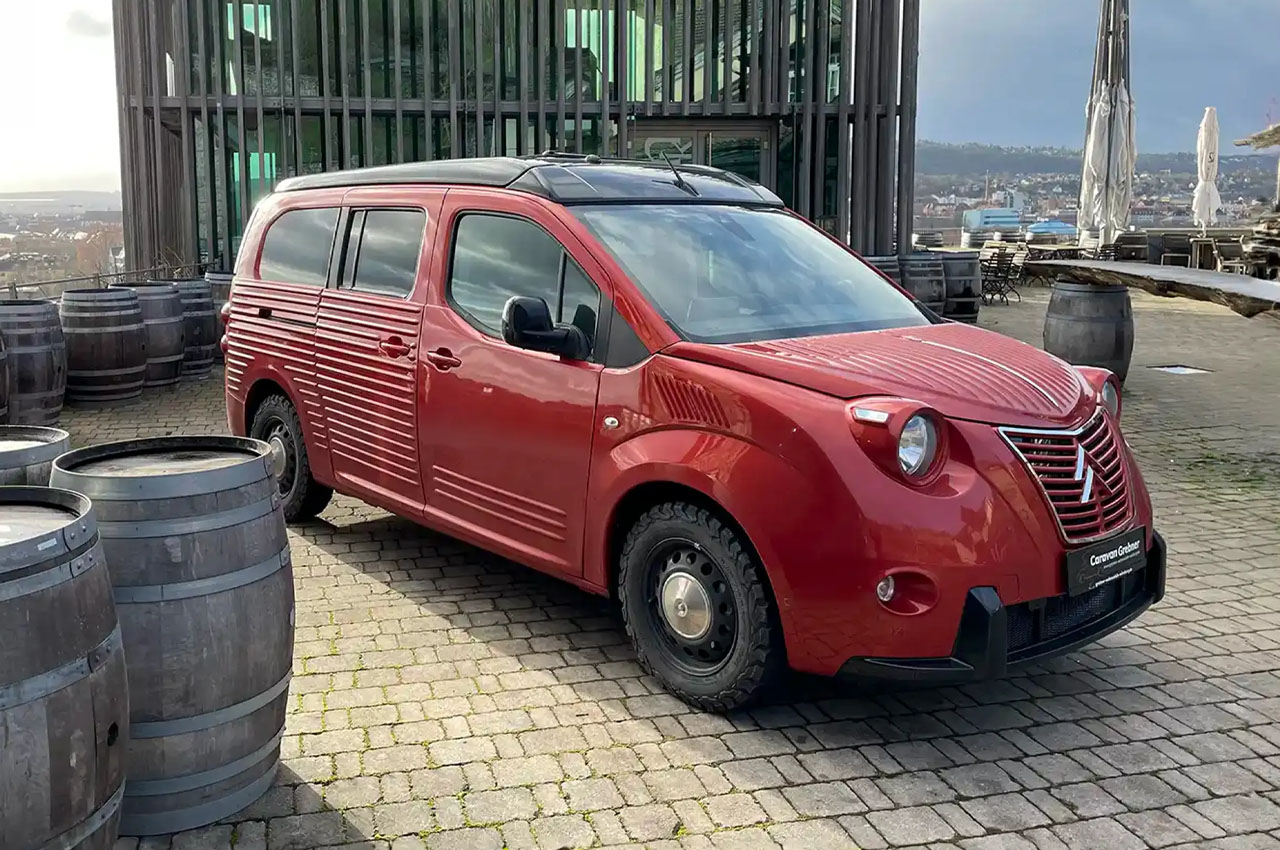
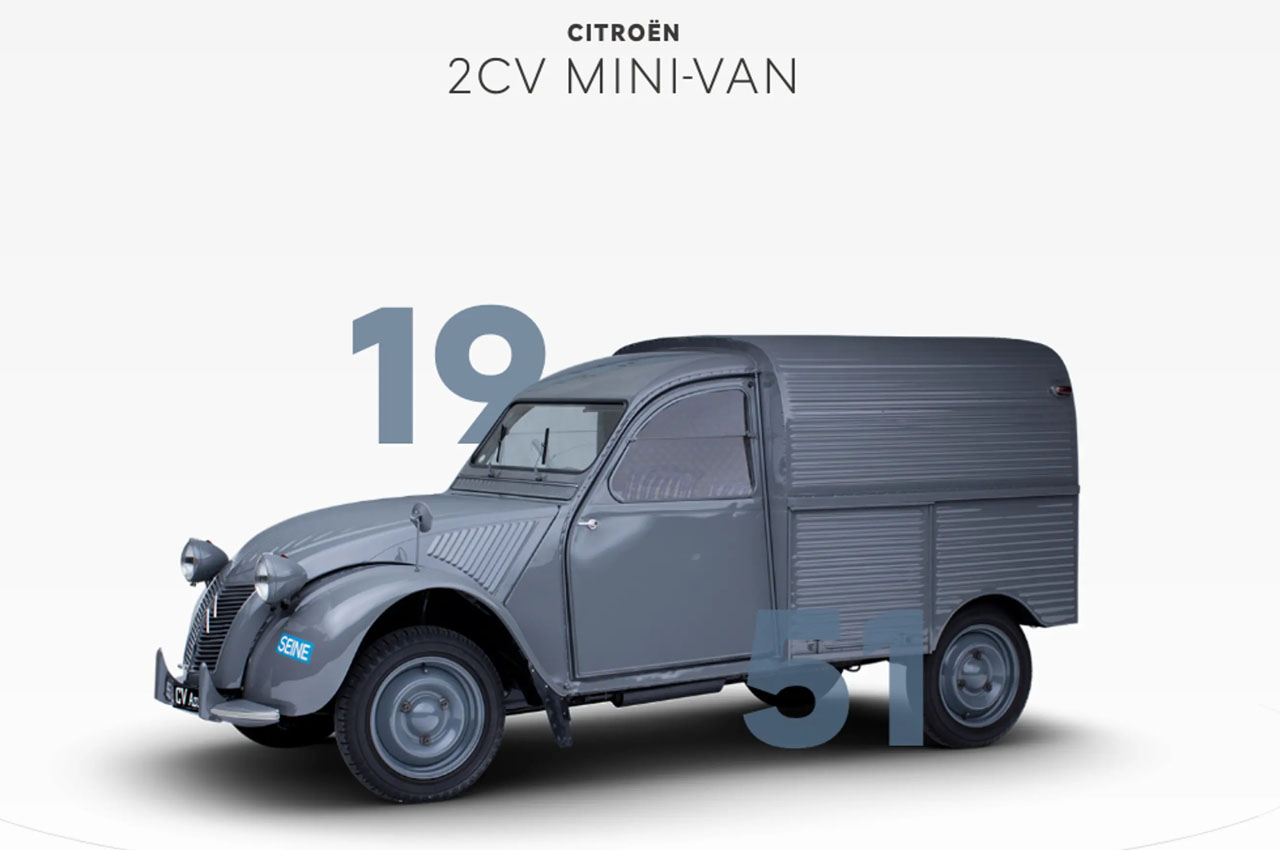
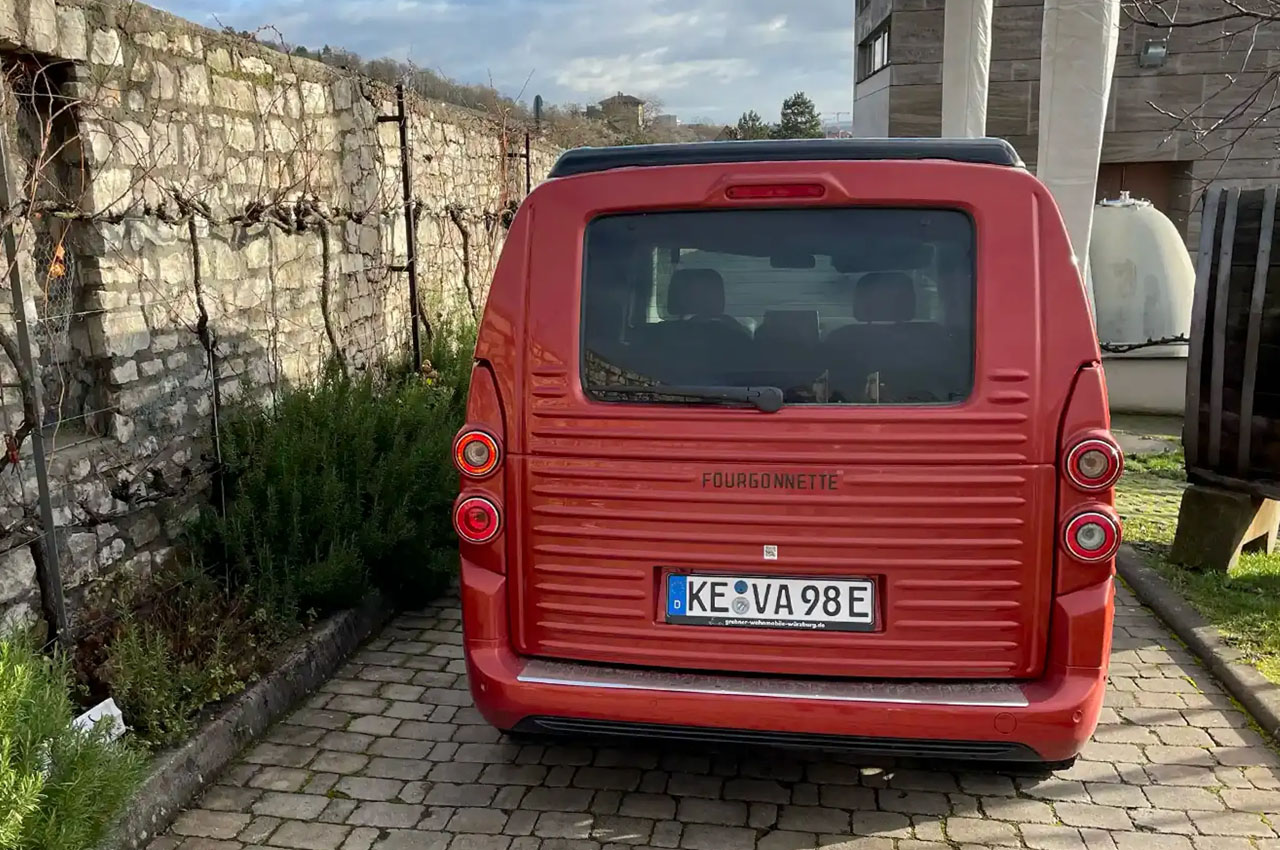
Vanderer, a niche automotive design firm, has unveiled a stunning electric mini camper van based on the iconic Citroën 2CV. The classic 2CV, renowned for its quirky design and timeless appeal, has undergone a futuristic transformation, marrying the charm of the past with the sustainability of the present.

The electric mini camper van is a testament to the evolving landscape of automotive design, where heritage meets innovation. The design firm has seamlessly integrated an electric powertrain into the beloved 2CV, offering a clean and eco-friendly driving experience without compromising on the nostalgic aesthetic that motorheads adore.

Designer: Vanderer and Caravan Grebner

Underneath its charming exterior, the mini camper van packs a punch with its electric propulsion system. The electric motor not only aligns with the growing trend towards sustainable mobility but also enhances the driving dynamics of the 2CV. The camper van promises a smooth and silent ride, a departure from the characteristic hum of traditional combustion engines.
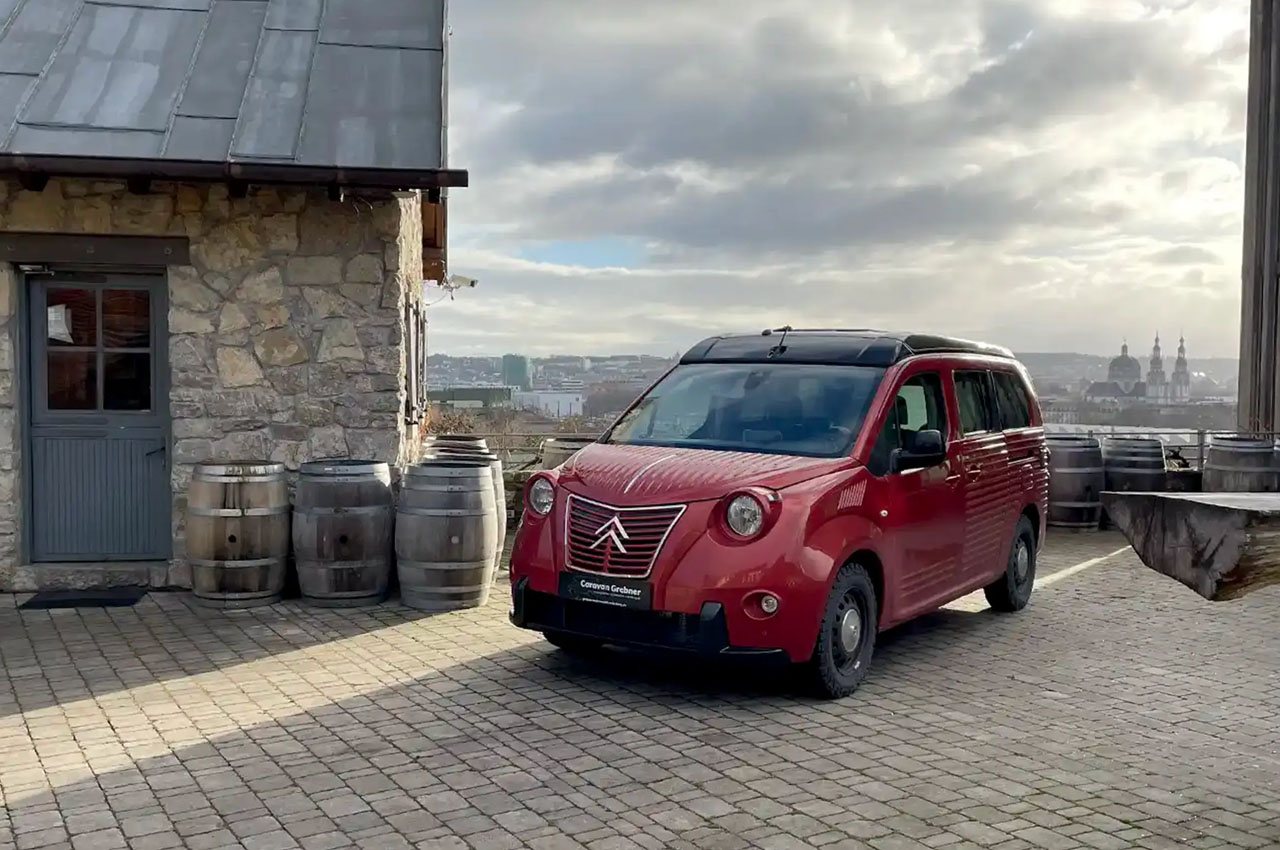
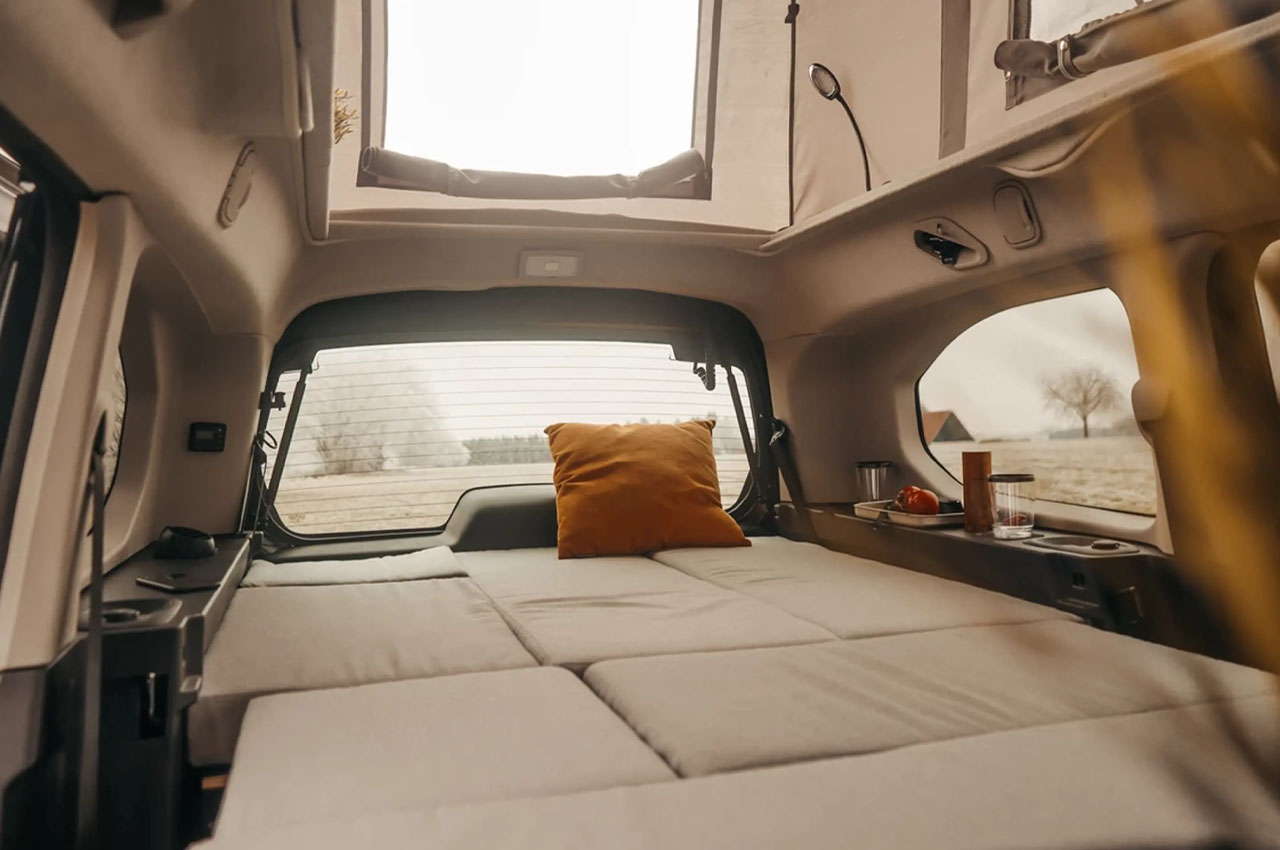
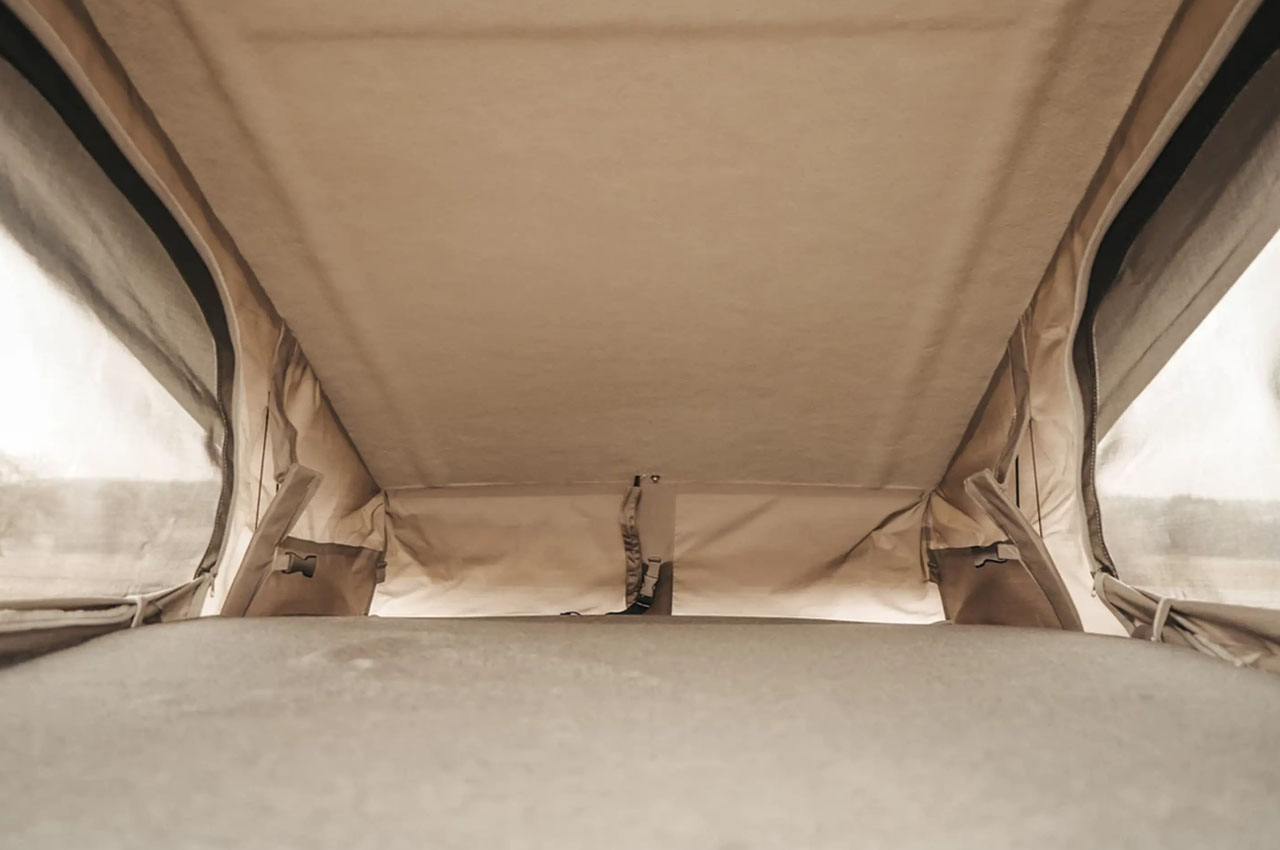
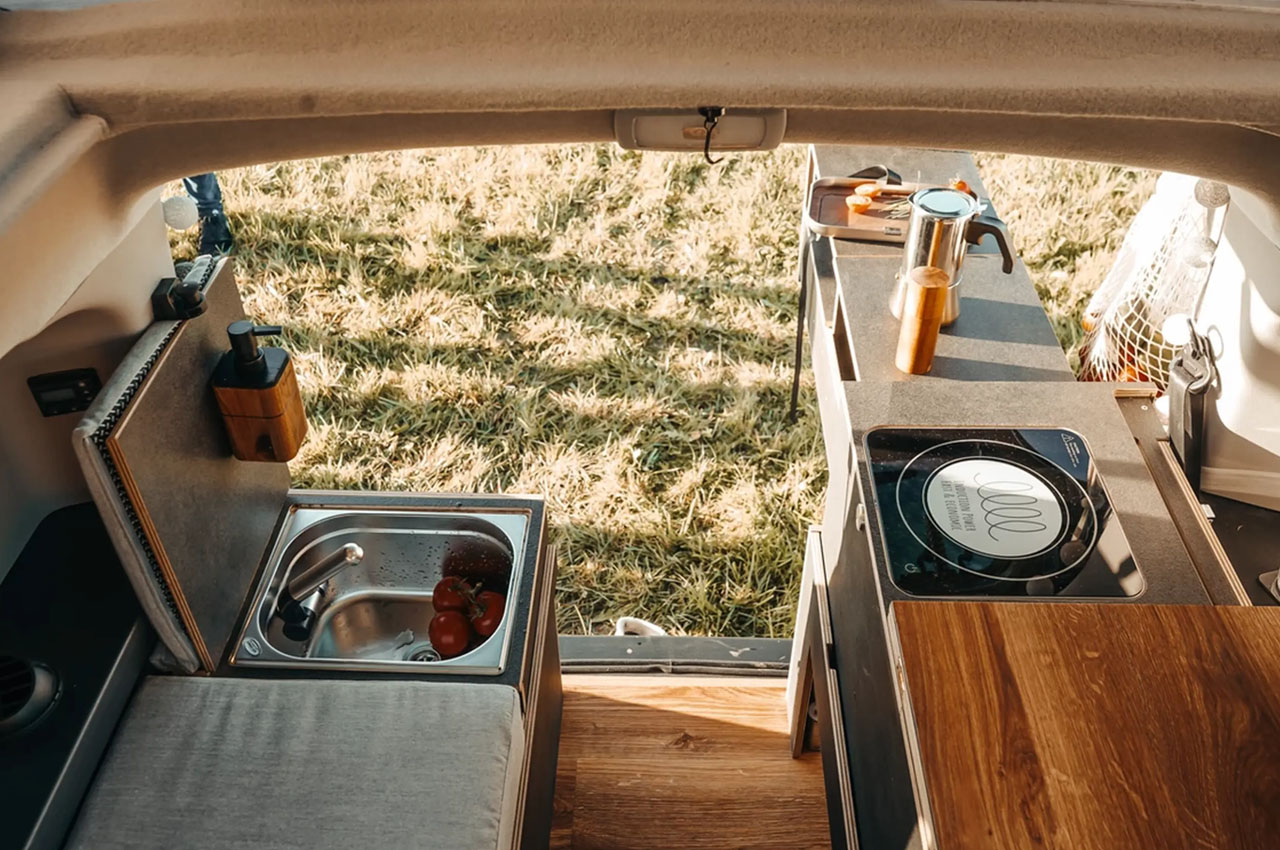
Beyond its eco-conscious credentials, Vanderer has ingeniously converted the rear section of the 2CV into a compact camper, elevating its utility and appeal. The mini camper van is equipped with essentials for a cozy getaway, including a compact kitchenette, sleeping quarters, and storage space cleverly integrated within the limited dimensions of the vehicle. This innovative approach caters to the rising demand for versatile, small-scale camper vans that can navigate both urban jungles and scenic landscapes.

The fusion of retro design and modern functionality is evident in the camper’s interior, where Vanderer has tastefully blended vintage aesthetics with contemporary comforts. The camper van boasts a minimalist yet functional layout, creating an inviting space for travel enthusiasts to embark on spontaneous road trips with ease.

As automotive enthusiasts and eco-conscious motorheads celebrate the arrival the Vanderer Citroën 2CV Electric Mini Camper Van, and its all set to make the world premier at 2024 CMT caravan and tourism show to commence on January 13 in Stuttgart. The unique combination of electric mobility and camper functionality within the classic 2CV framework exemplifies the endless potential for innovation in the ever-evolving world of custom camper vans.

Caravan Grebner will offer the ride as a limited edition version of 200 models with price and the final specifications still kept under the carpet for now.

The post Vanderer’s Citroën 2CV Electric Mini Camper Van is a retro-modern van for adventurers first appeared on Yanko Design.