Sennheiser’s $200 Clip-On Buds Defeat Bose Ultra Open on Battery — And Skip the US

Clip-on earbuds were always going to go mainstream; the category just got there in the east first. Huawei’s FreeClip became roughly as ubiquitous as AirPods in Chinese cities, building an installed base for open-ear wearables that Western brands are only now beginning to seriously contest. The appeal is not complicated: a form factor that keeps the ear canal open, lets ambient sound in naturally, and eliminates the sealed pressure that makes conventional in-ears uncomfortable after long sessions. Asia ran that experiment at scale, and the results were settled long before the Western audio press started treating it as a breakthrough.

Sennheiser enters the conversation on July 23 with the Accentum Clip, a product priced at £149 that brings Bluetooth 6.0, LDAC support, IP54 protection, and 36-hour total battery life to a category where Bose has been setting the reference point at a higher price. The launch covers the UK, EU, and Canada. For US consumers, the Accentum Clip joins a lengthening list of globally significant products that simply will not be available at their local retailer, a pattern this publication has been tracking across categories as diverse as electric vehicles, smartphones, and now, apparently, open-ear audio.

Designer: Sennheiser
The Accentum Clip earbuds promise nine hours of playback on a single charge, with the case providing a total of 36 hours. This is a deliberate and significant advantage over the Bose Ultra Open Earbuds, which offer around 7.5 hours per charge and a total of 27 hours with their case. In a category built for all-day wear, that extra nine hours is a direct appeal to users who want to leave the charging cable at home.

The Accentum Clip uses a 12mm dynamic driver, but the more interesting detail is its support for the LDAC codec. Including a high-bitrate codec like LDAC is a bold choice for an open-ear design, which by its nature lets sound escape and ambient noise in. It signals a confidence in the driver’s ability to deliver a detailed audio experience, even if it is not a closed, isolating one. Paired with Bluetooth 6.0, which promises more stable multipoint connections, the package is technically robust for commuters and office workers who need to switch between devices seamlessly.
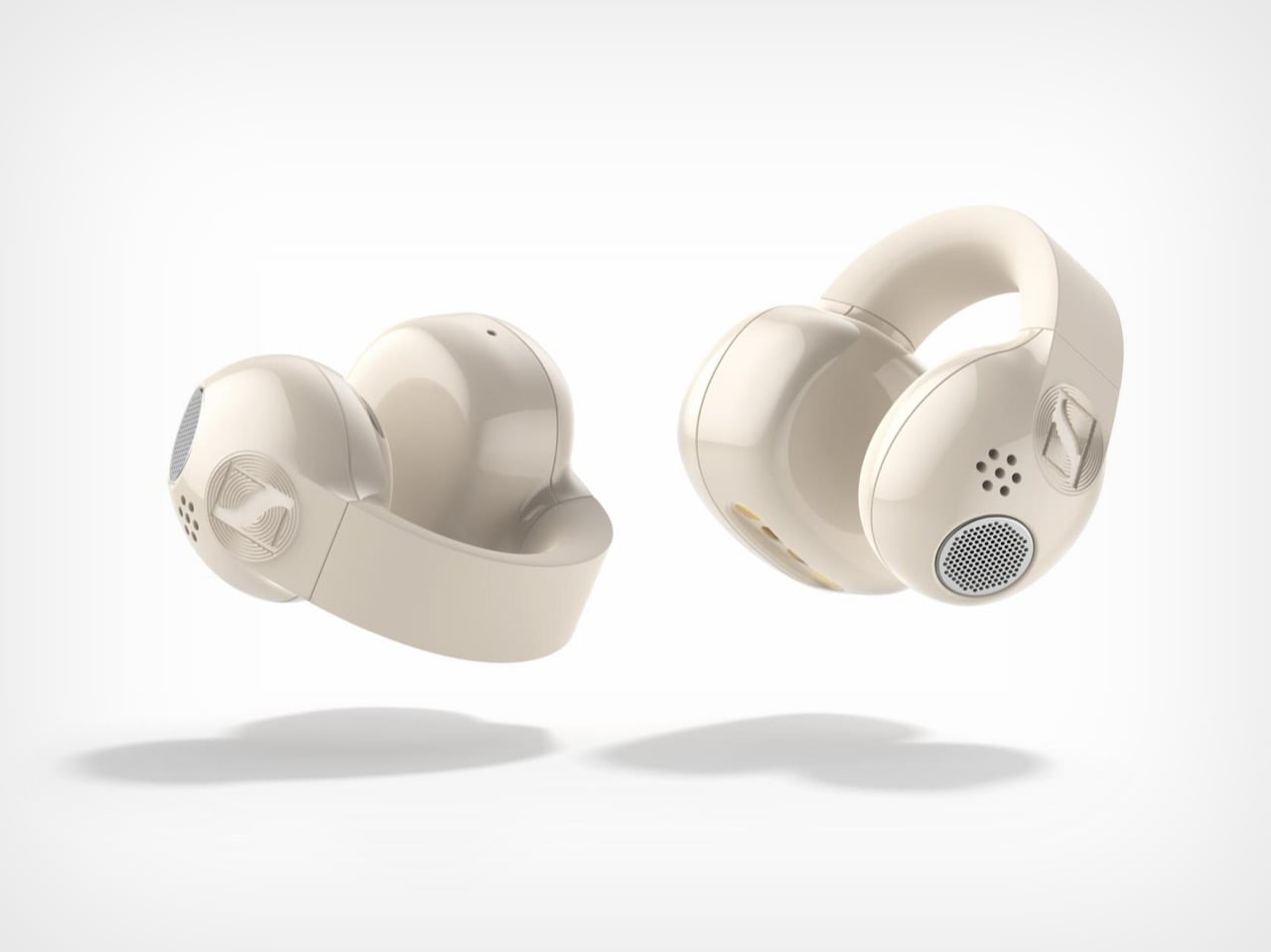
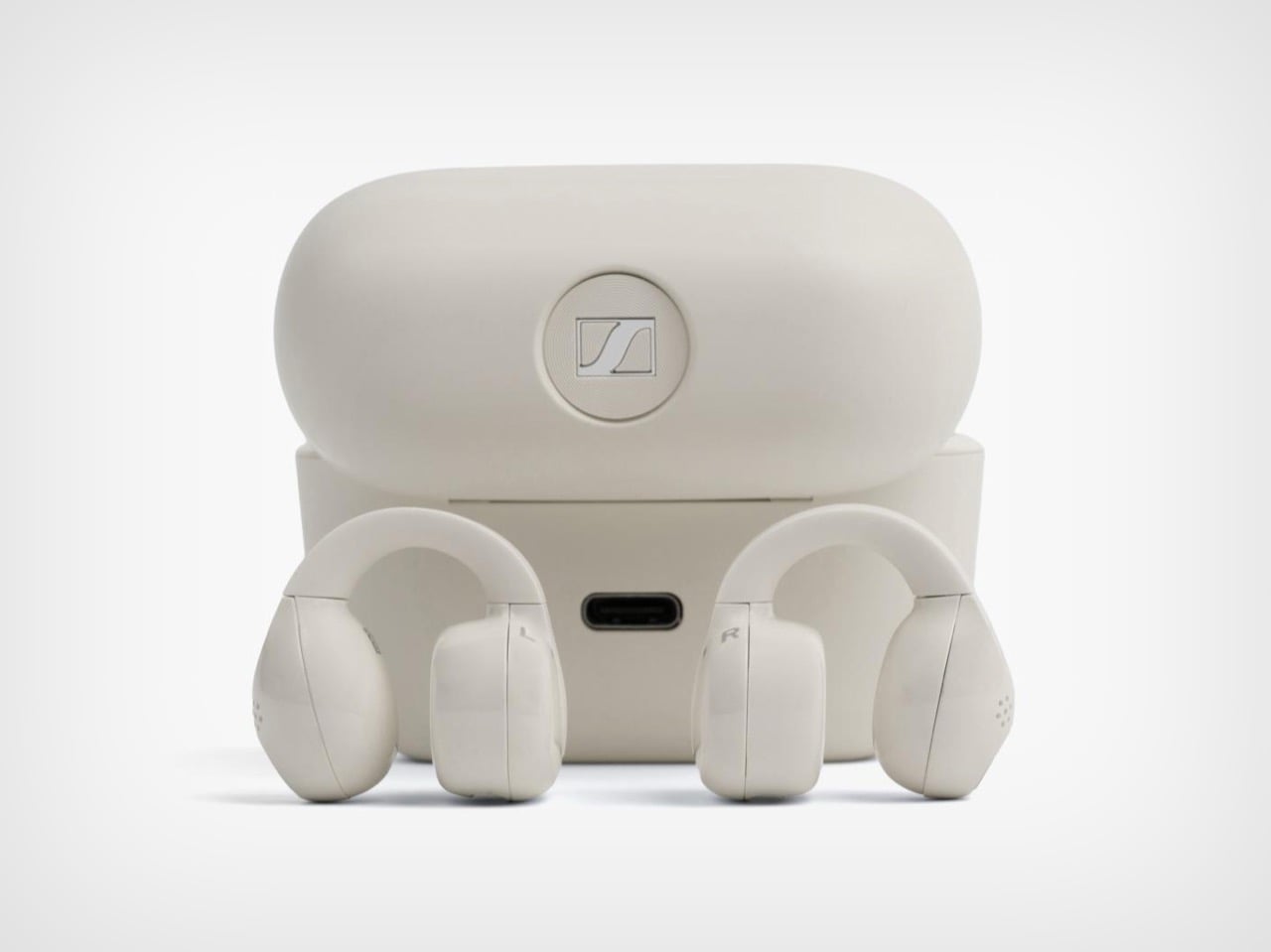
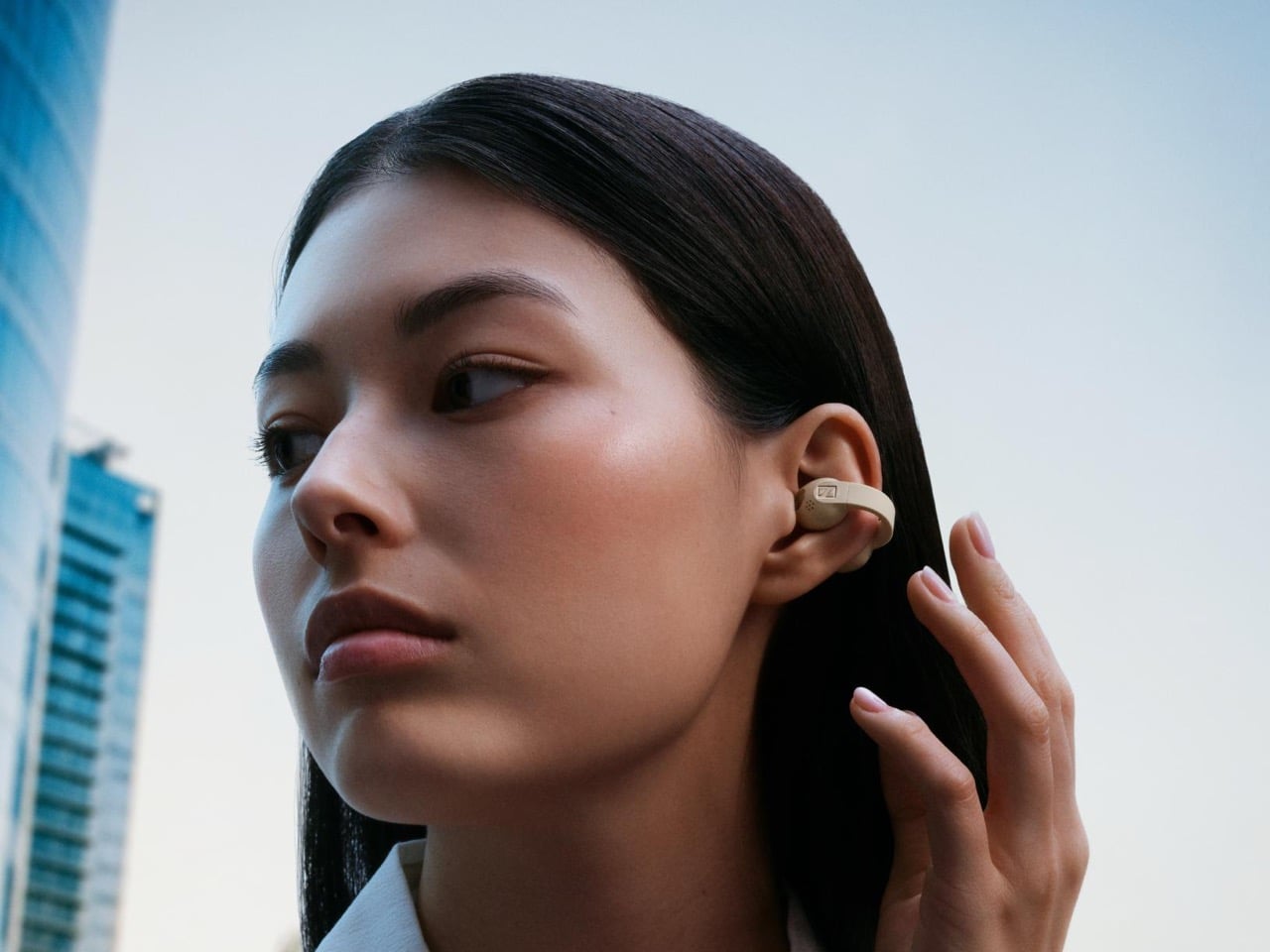
Sennheiser opted for a flexible silicone bridge to connect the driver unit and the battery component, quite like Bose’s offering. At 6.8 grams per bud, the design focuses on a gentle, secure clamping force that distributes weight evenly around the ear’s cartilage. The goal is a “barely there” feeling that encourages leaving them on for hours, which aligns perfectly with the product’s impressive battery life. The IP54 rating for dust and splash resistance makes them durable enough for workouts, even if they are not explicitly marketed as fitness gear.
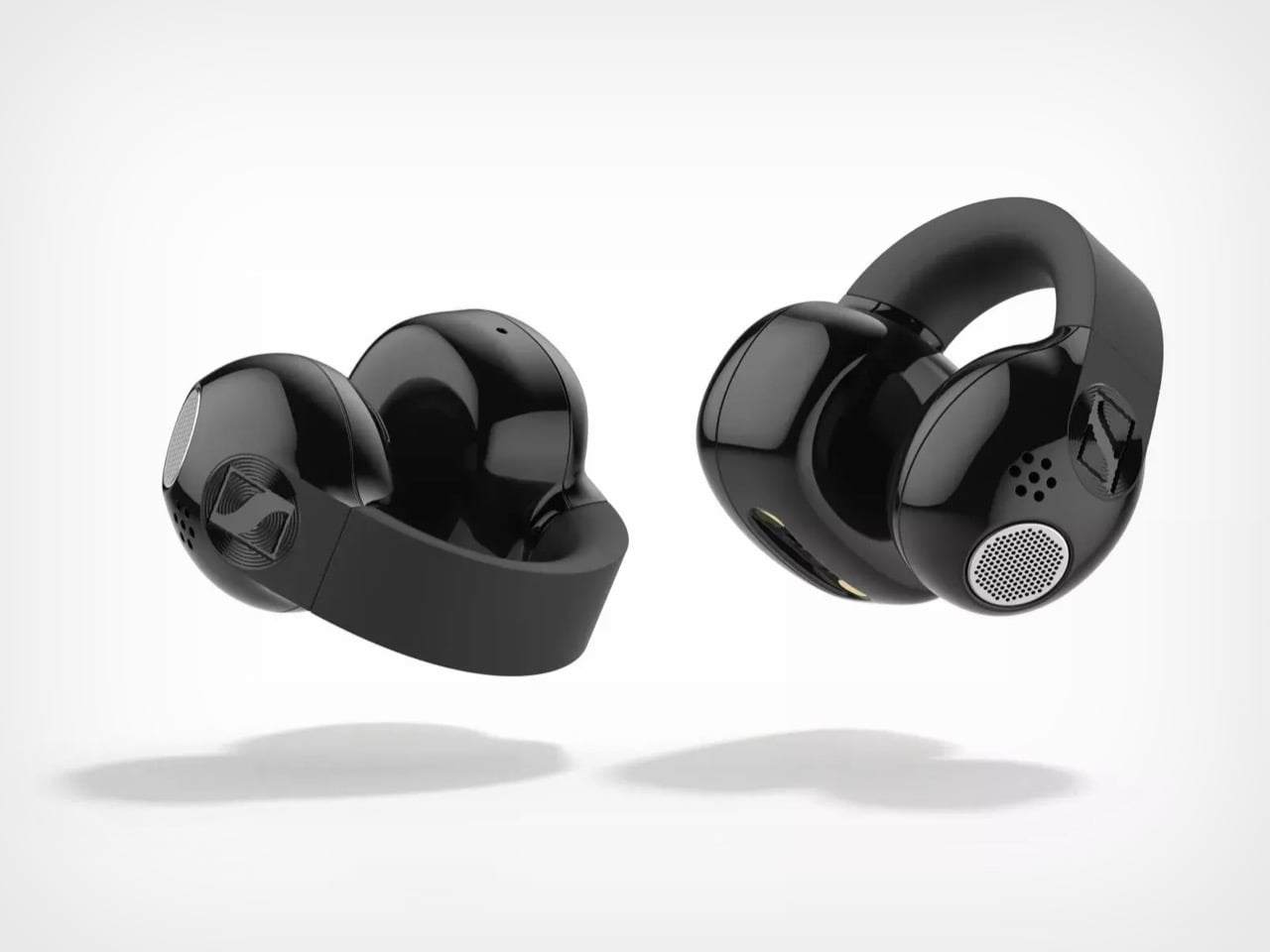
These engineering choices culminate in a fairly reasonable price tag. At £149 or €179 (around $200 USD), the Accentum Clip is positioned aggressively beneath the Bose Ultra Open, which launched at $299. Sennheiser is not trying to create a new category; it is trying to win the one Bose popularized by being a better value on paper. It is a classic challenger strategy: arrive a little late to the party, but bring a better spec sheet and a more accessible price. For European and Canadian buyers, the choice between the two just became much more interesting.
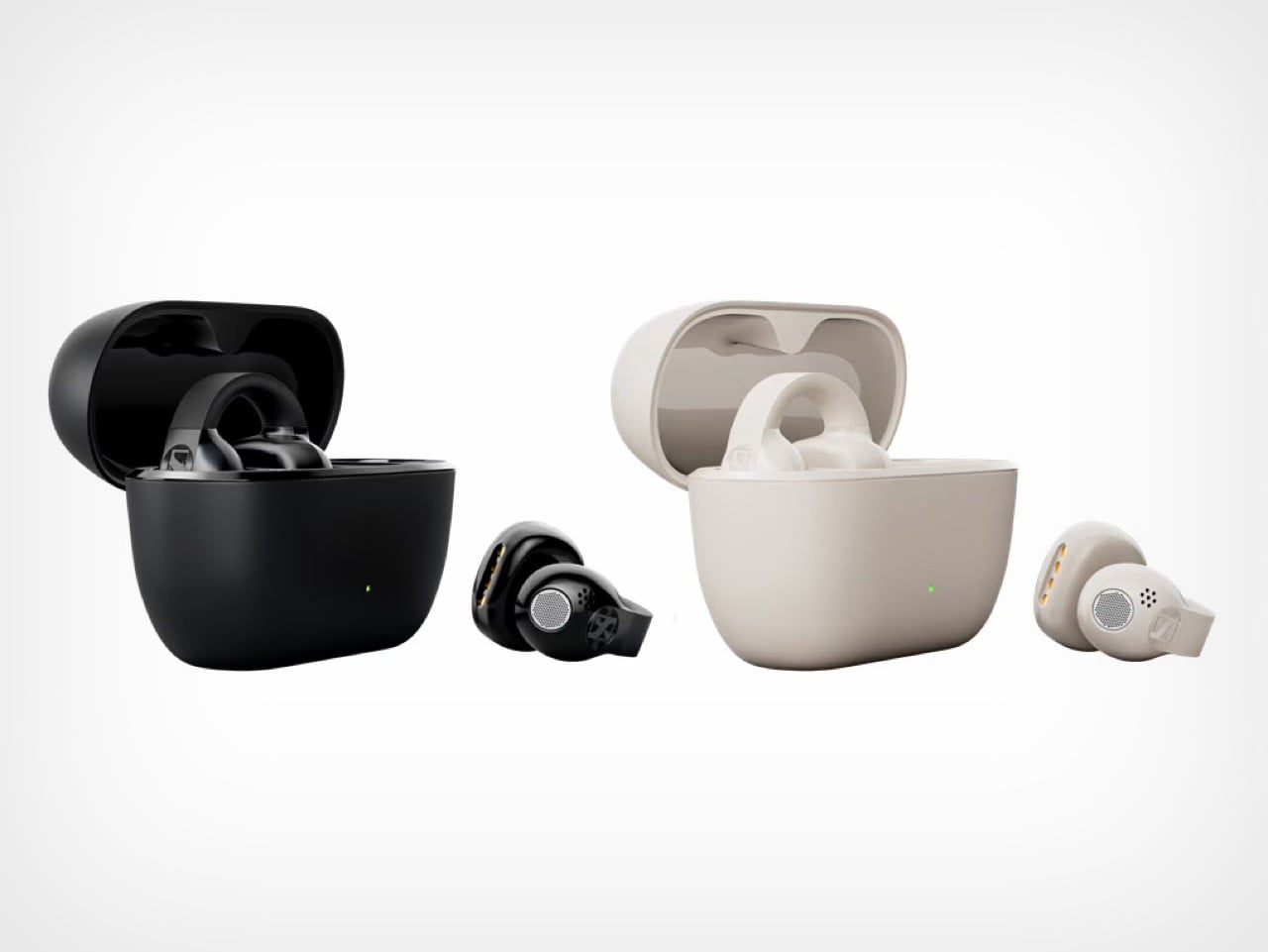
Which brings us back to that curious launch map. The decision to omit the United States, the world’s largest single market for high-end audio, feels a lot like a symptom of a broader shift in the tech industry. Whether due to the complexities of FCC certification, a desire to test the product in smaller markets first, or the simple fact that the US is becoming a harder place for global brands to operate, the absence is loud.

The post Sennheiser’s $200 Clip-On Buds Defeat Bose Ultra Open on Battery — And Skip the US first appeared on Yanko Design.
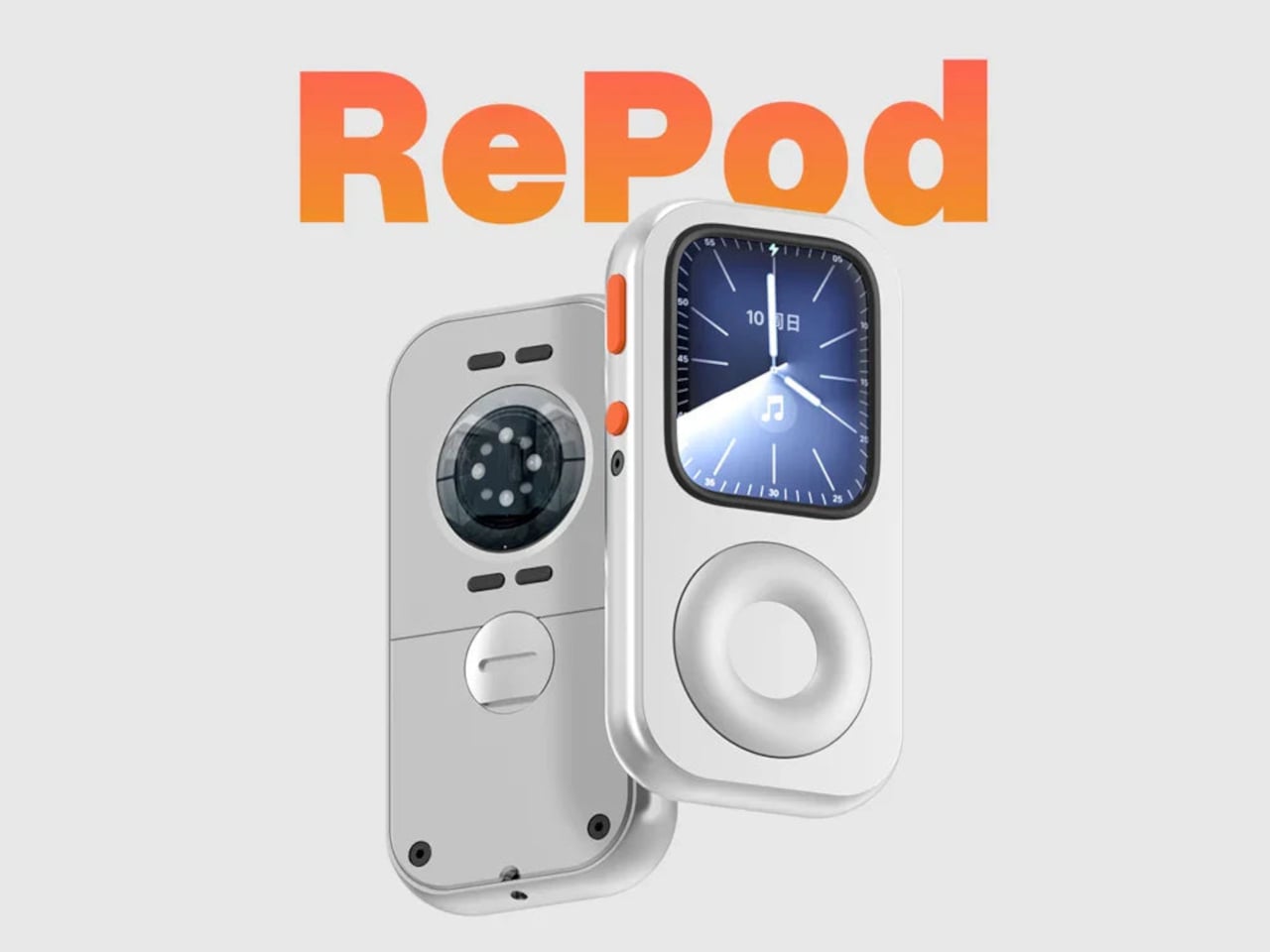
This $60 Apple Watch Case Is the iPod Apple Never Replaced

There’s a specific kind of nostalgia attached to the original iPod’s click wheel that has very little to do with the music. It had to do with the feeling. Scrolling through a playlist with a thumb, hearing and feeling that resistance, navigating a menu without looking away from the wheel; it was one of the few moments in early consumer electronics where a device felt as good to hold as it did to use. Touchscreens solved a lot of problems, but they quietly retired that particular quality.

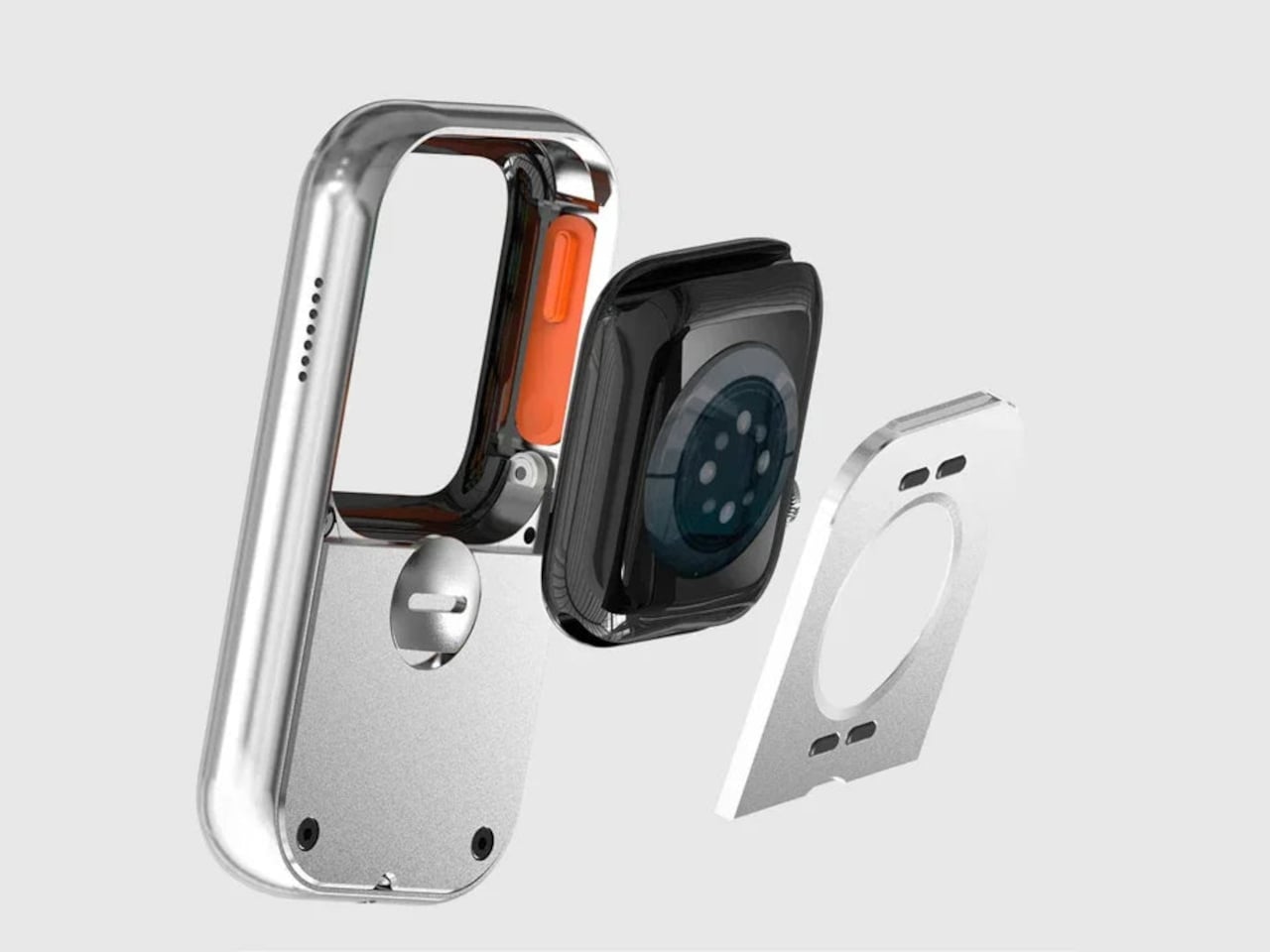
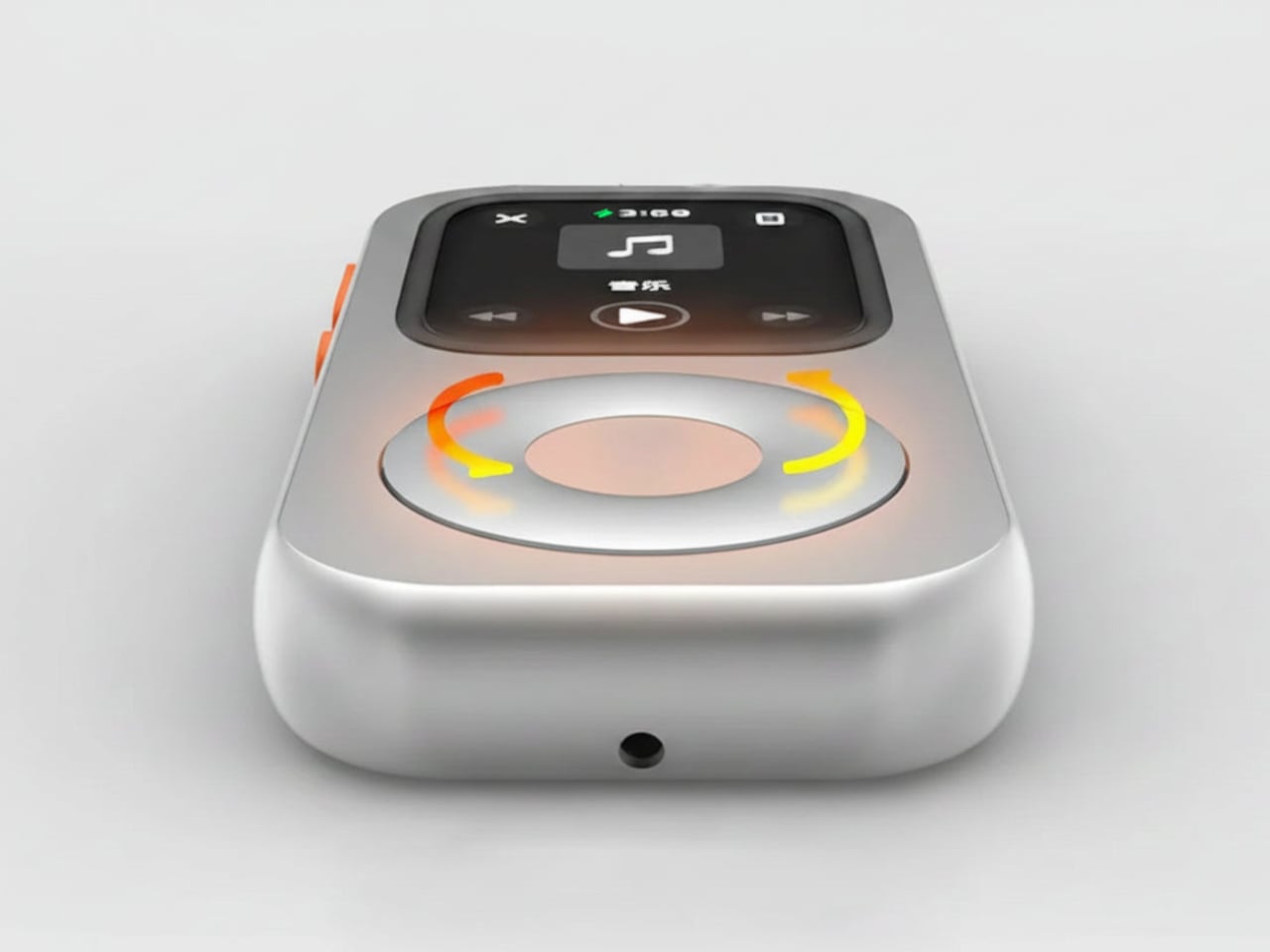
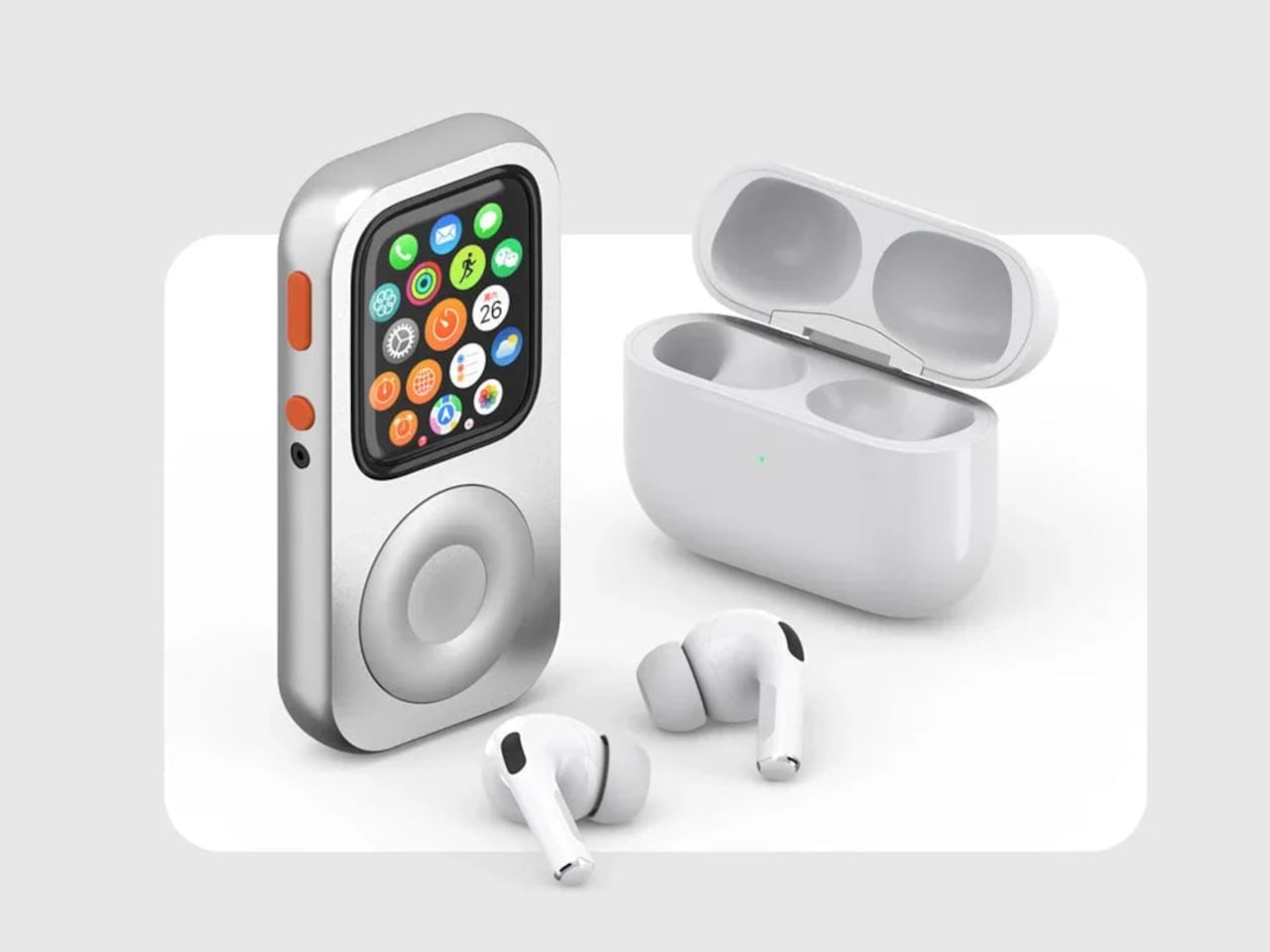
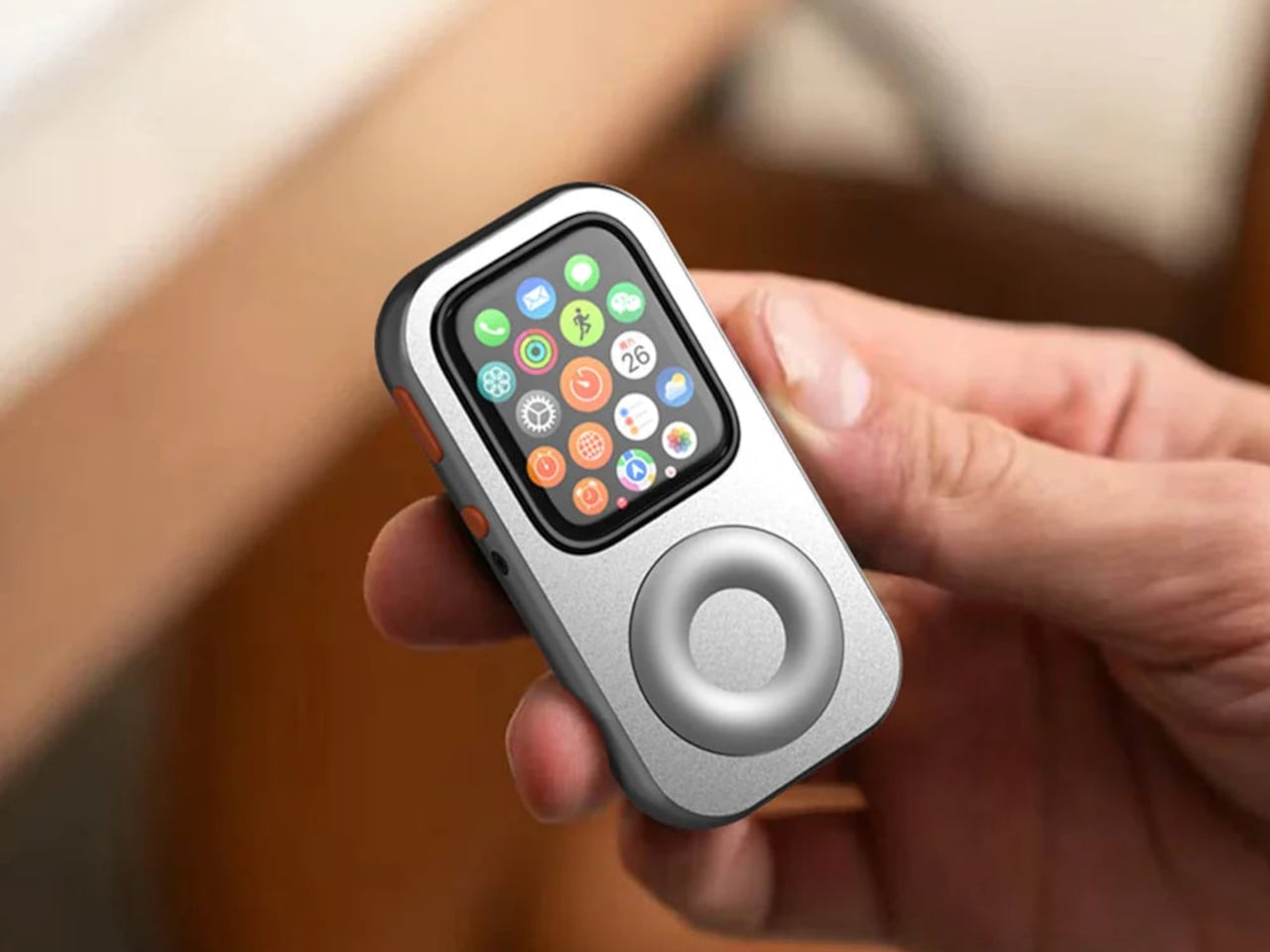
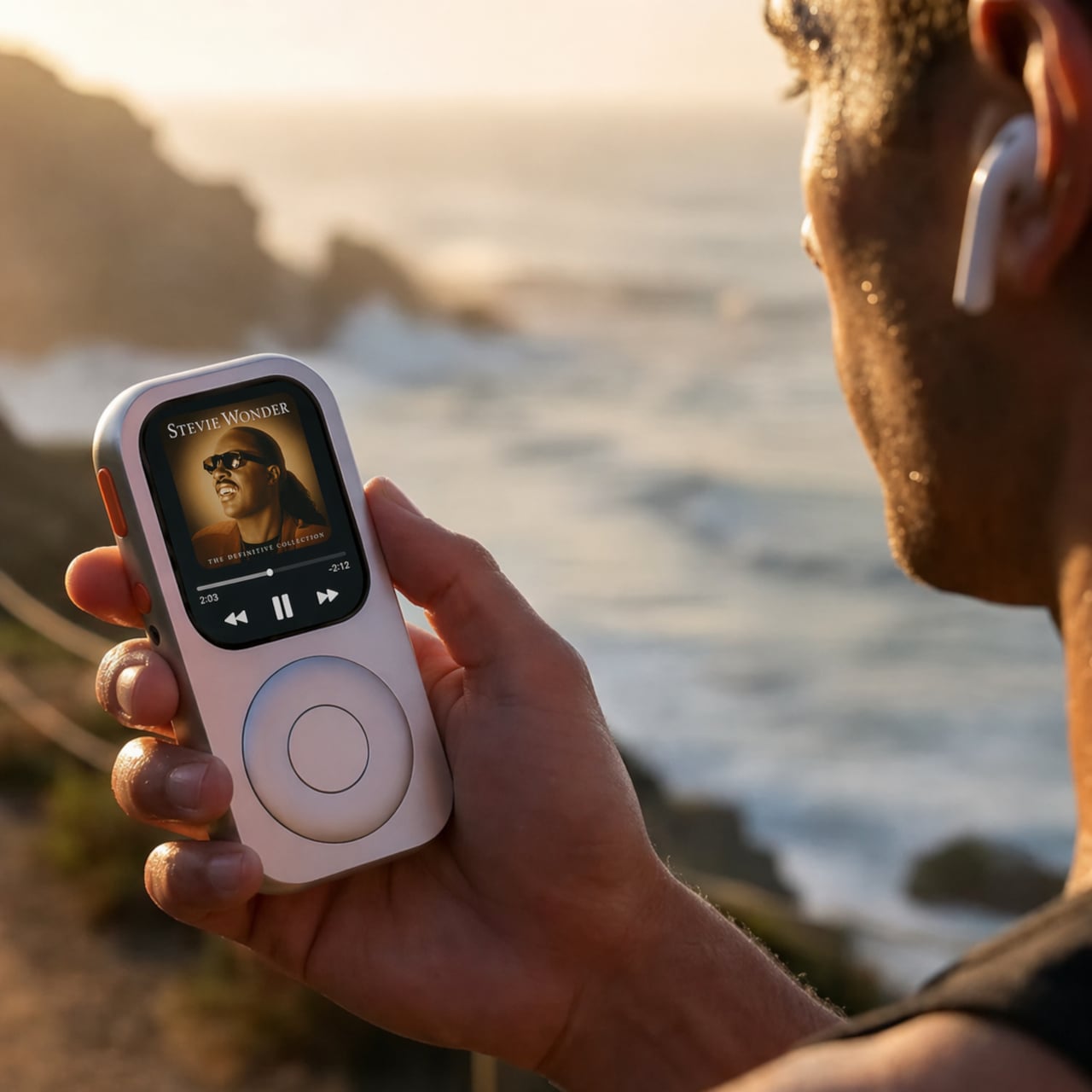
The RePod C1 is a CNC-machined aluminum case for the Apple Watch that rebuilds that tactile experience from scratch. The outer shell gives the watch the proportions and visual language of a classic iPod, and the click wheel around it is mechanically linked to the Apple Watch’s Digital Crown, so turning it actually does something. It’s not decorative. The scroll feedback comes from real physical interaction with the watch’s native controls, which makes the nostalgia feel a bit less hollow than it might have been.

Designer: Techpod

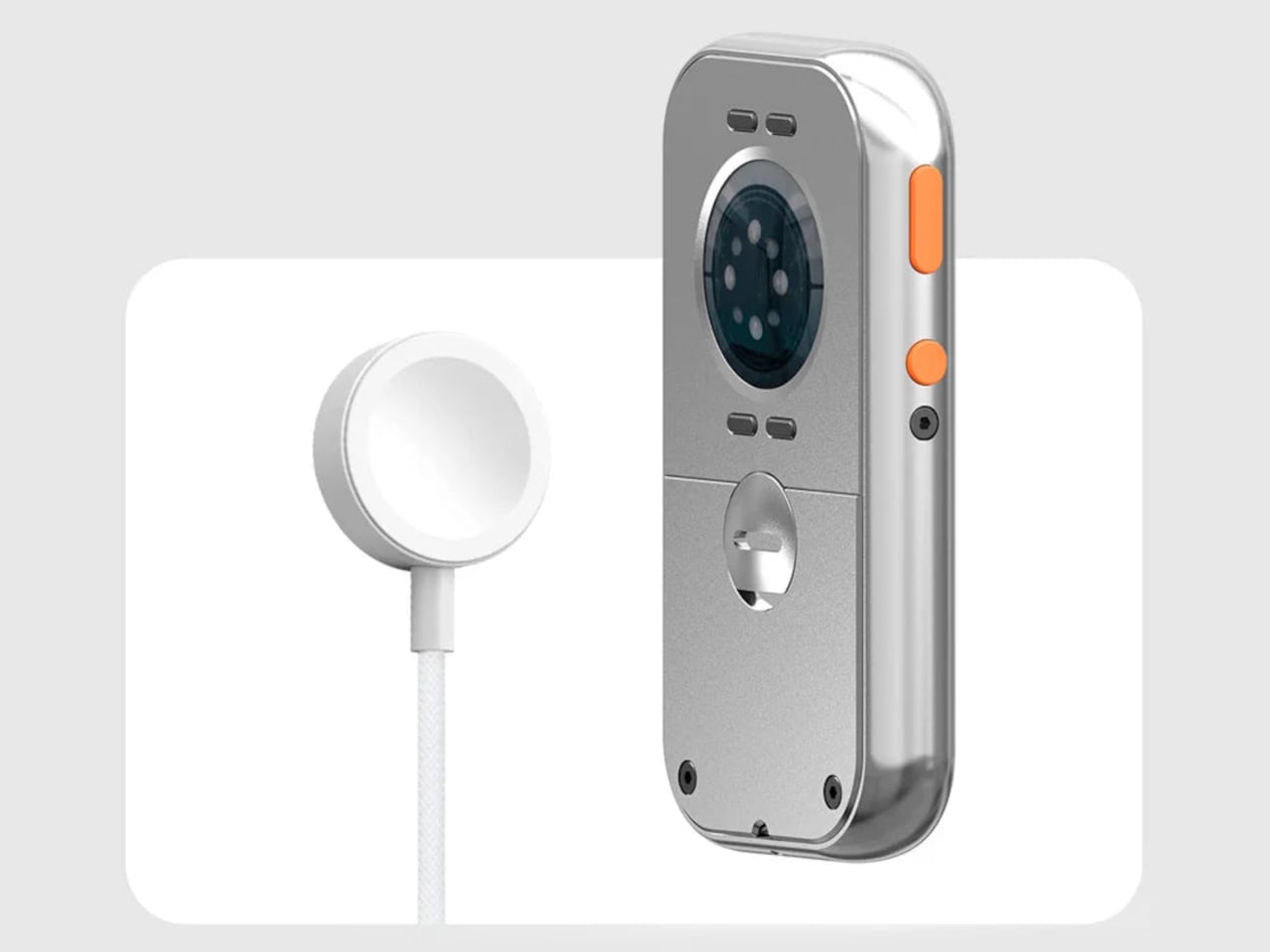
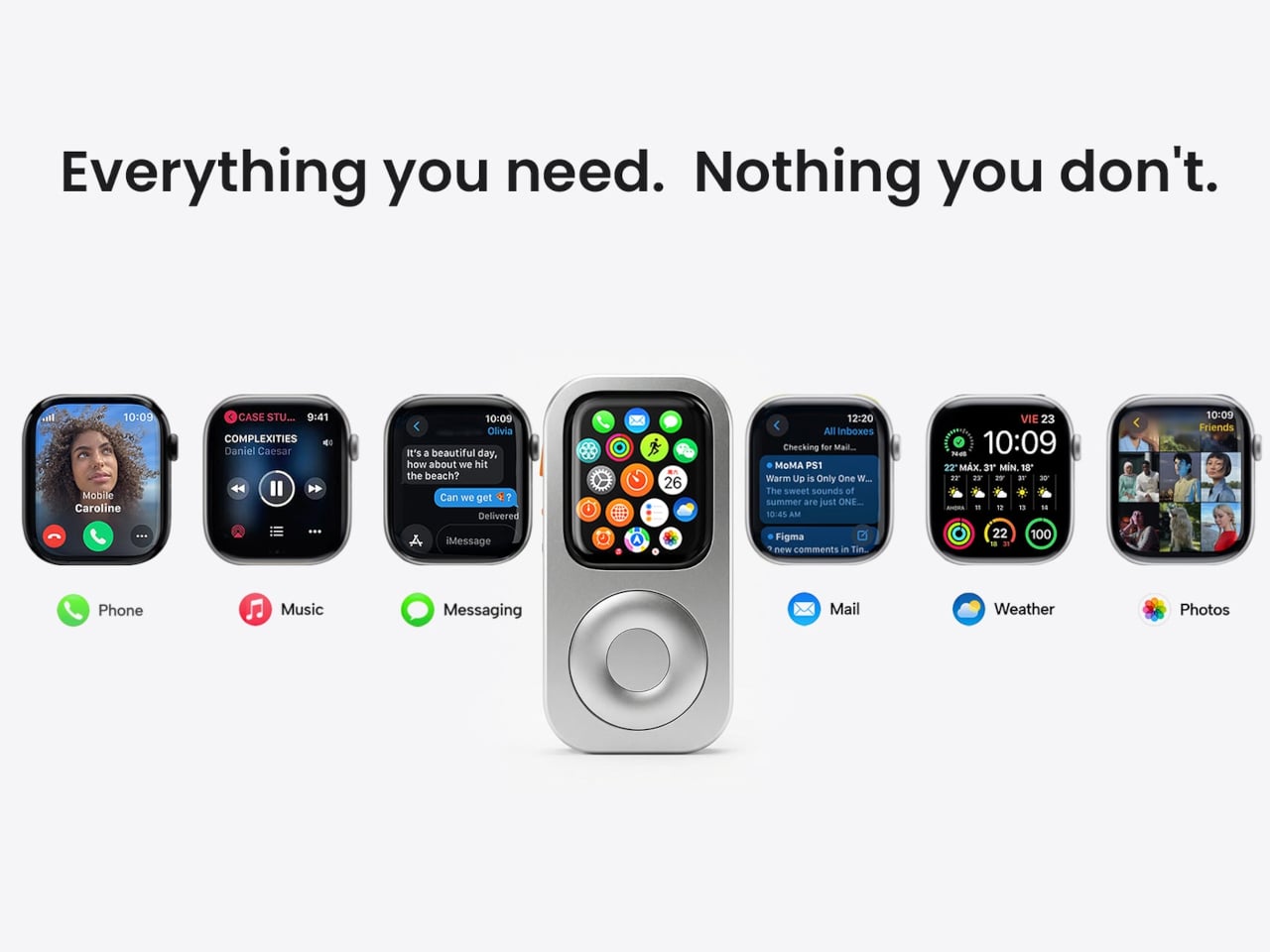
The case doesn’t ask the Apple Watch to give anything up. All of its sensors remain accessible through an open-back design, which means heart rate monitoring, ECG, and NFC for Apple Pay all continue to work normally. Antenna cutouts preserve Wi-Fi, Bluetooth, and cellular connectivity, so messages, calls, and Siri stay intact. The only thing that changes is the shell around the watch and the way it sits in your hand.

That second part matters more than it sounds. One of the more interesting things the RePod C1 does is turn the Apple Watch into a pocket device rather than exclusively a wrist device. Slide it into a pocket during a run, a commute, or an errand where pulling out a phone feels like too much, and the watch does most of what needs doing. Music plays back offline with Apple Music or Spotify Premium, notifications come through, and payments work at the counter. The phone can stay home, or at least in a bag.

Charging works through a built-in magnetic connector that sits flush in the frame, so the case doesn’t have to come off to top up the battery. The aluminum body also helps manage heat during fast charging, which the original iPod obviously never had to think about. The case is available in sizes covering everything from the Apple Watch Series 4 through the Series 11 and both Apple Watch Ultra models, with prices starting at $59.90 for standard sizes and $69.90 for the 49mm Ultra variant.

The iPod itself was discontinued in 2022 after 21 years, and Apple made no announcement about anything replacing it. The click wheel, as a piece of interaction design, has no current first-party home in any product. The RePod C1 doesn’t try to be a real iPod or pretend the Apple Watch needs help. It’s just a case that noticed the gap between what modern devices can do and what they feel like to use, and made a deliberate choice about which side it wanted to be on.

The post This $60 Apple Watch Case Is the iPod Apple Never Replaced first appeared on Yanko Design.
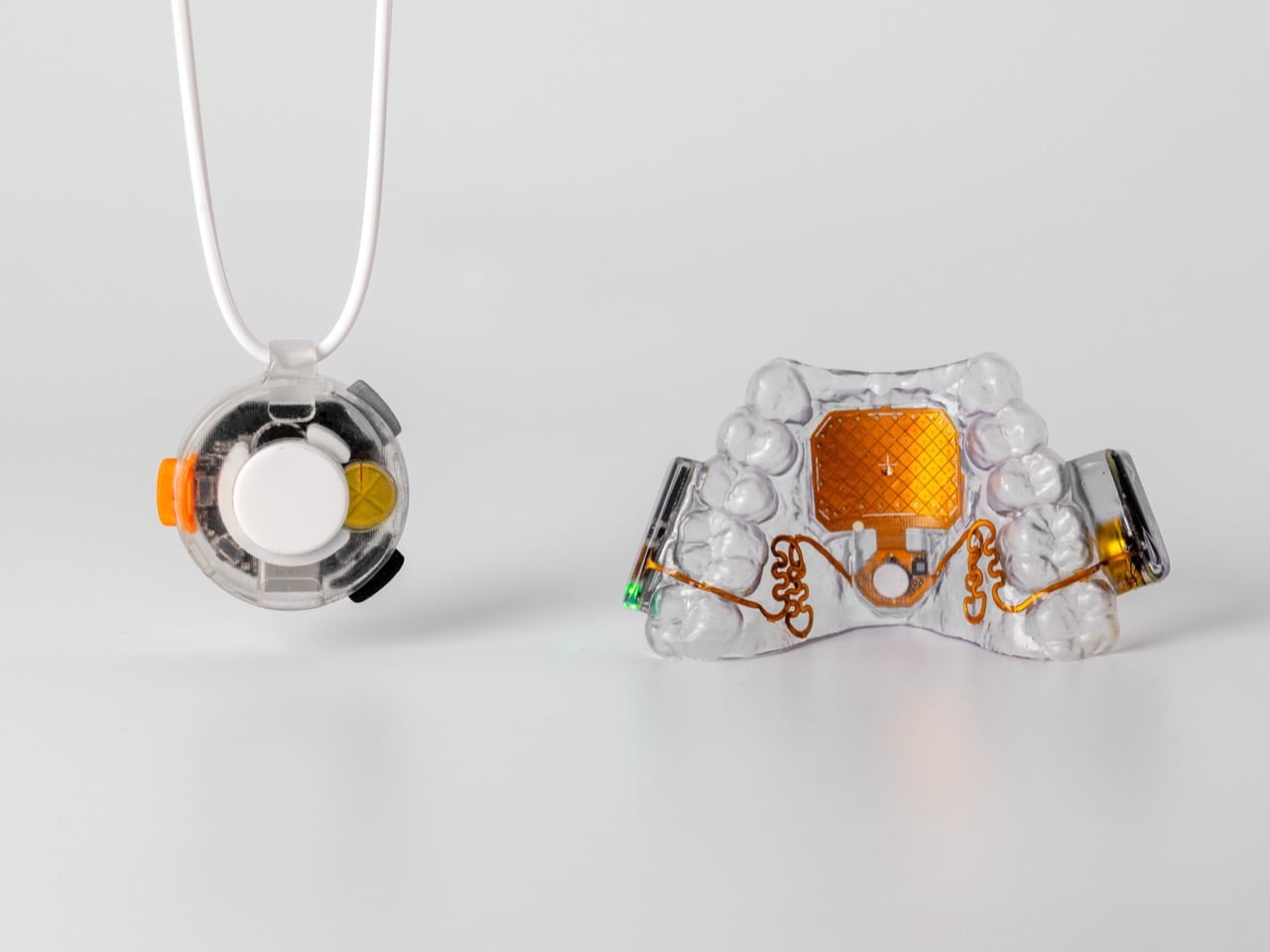
After MouthPad, Augmental unveils Vox, a privacy-focused wearable mic that lets you whisper-to-type

The most interesting interface ideas often begin where conventional gadgets start to fail. Voice assistants want you to speak up, microphones capture the whole room, and public dictation still feels awkward in the age of AI. Augmental’s latest product, Vox, approaches that problem from a very different angle, placing a speech interface on the chest where it can listen closely to the wearer and stay nearly invisible under a shirt.

When Augmental introduced MouthPad, it showed how assistive technology could evolve into something far more refined than a visible workaround. The in-mouth interface gave users hands-free cursor control through a custom dental form factor, and now together, MouthPad and Vox begin to outline a new computing language built around the body. One handles navigation through subtle tongue gestures, the other captures quiet speech for dictation and commands, recreating the familiar logic of mouse and keyboard in a wearable, deeply personal form.

Designer: Augmental

Tomás Vega sat down with Yanko Design to show us Vox, but he started by talking about the success of MouthPad. Over a hundred users now rely on it for daily computing, with some logging up to 16 hours of use in a single day. One user, he mentioned, started her undergraduate degree with the device and is now finishing her studies in mathematics. Another told him how it freed him from his wheelchair-anchored setup, letting him work from the comfort of his bed. These stories ground Augmental’s work in real human impact, which makes the arrival of Vox feel like a natural next chapter.

The core problem Vox tackles is that voice technology assumes everyone has a strong, clear voice and is comfortable speaking aloud. That isn’t always true. For users with speech impediments, weakened voices, or lost lung function, standard microphones just don’t work well. Even for those who can speak clearly, privacy is a real concern; private computer access is a right everyone should have. Vox was built for these constraints, but the solution ends up having much broader appeal. It even helps people who stutter, including Tomás himself, because whispering can reduce stuttering and make voice AI more accessible.

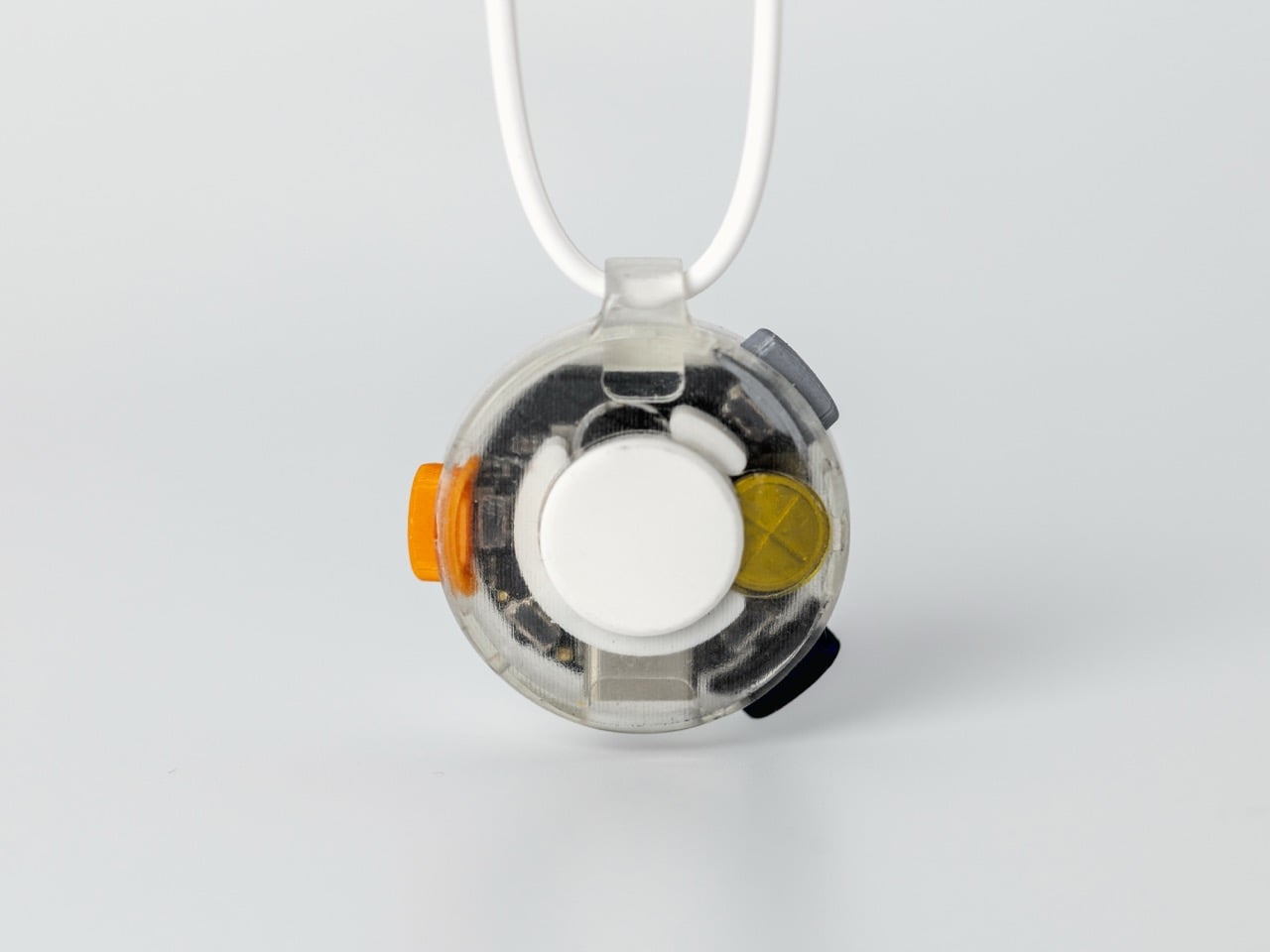
The logic behind Vox is pretty clever, drawing inspiration from a doctor’s stethoscope. It sits against the skin under your shirt and is optimized to capture the low-volume speech that travels through your body. An acoustic horn inside the device gathers the subtle vibrations and air displacement from your skin and channels them into a super-sensitive MEMS microphone that is tuned specifically for human speech. The raw audio sounds a bit like hearing someone talk underwater, but Augmental’s signal processing cleans it up to isolate exactly what the speech-to-text model needs. Because the mic is facing your body instead of the room, it’s a personal microphone designed for you and only you.

The relationship between the two products is what makes the whole system click. As Tomás puts it, MouthPad is the mouse, and Vox is the keyboard. Together, they offer full computer control that is both private and hands-free. MouthPad handles all the navigation with tongue gestures on its trackpad, and its radial menu turns complex actions like copy-and-paste into a single, simple gesture. Vox then adds the speech layer, which can be activated with a button press or through the MouthPad itself. The idea is that you put it on in the morning and forget it’s there, always available but almost entirely invisible.

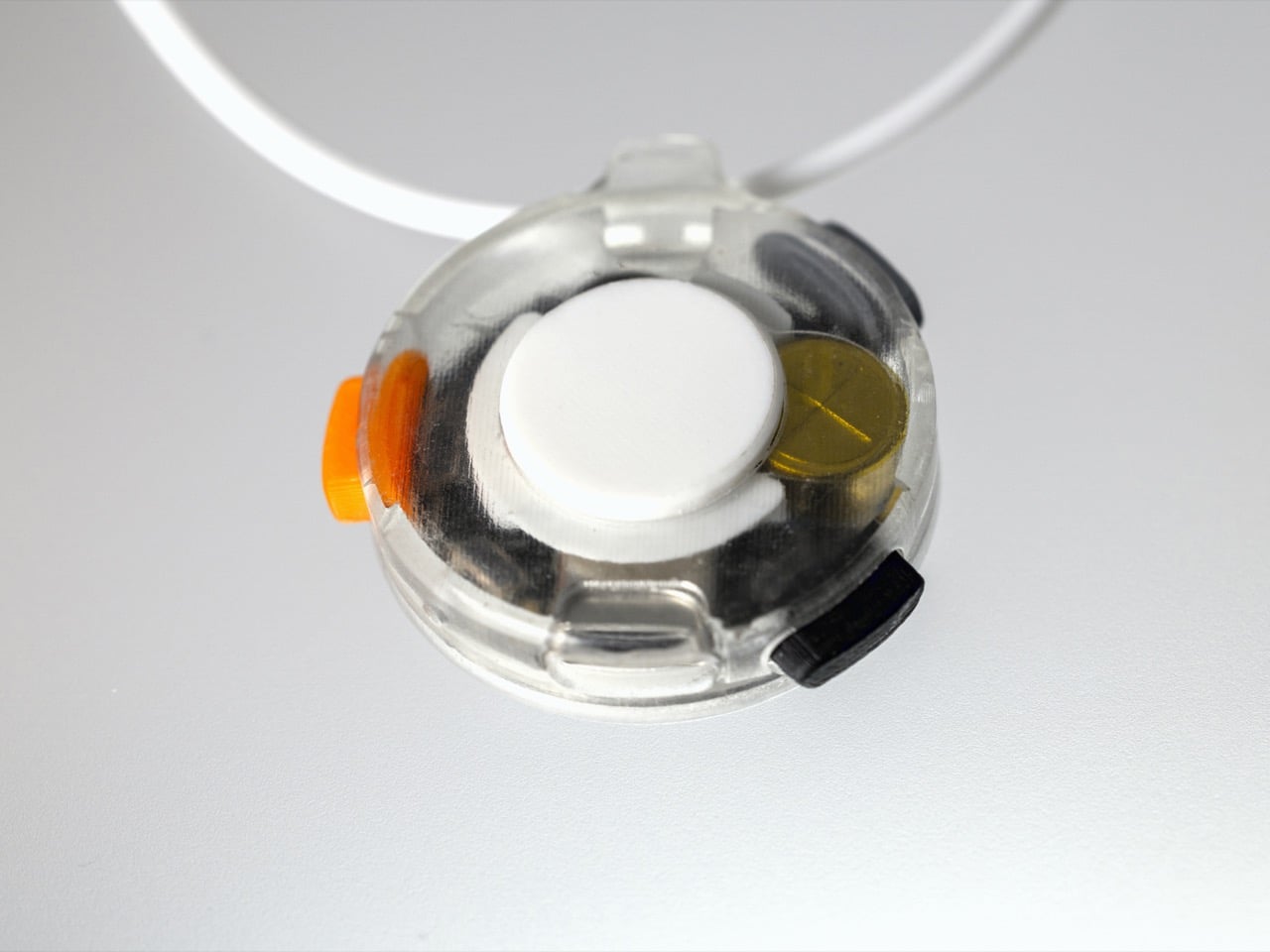
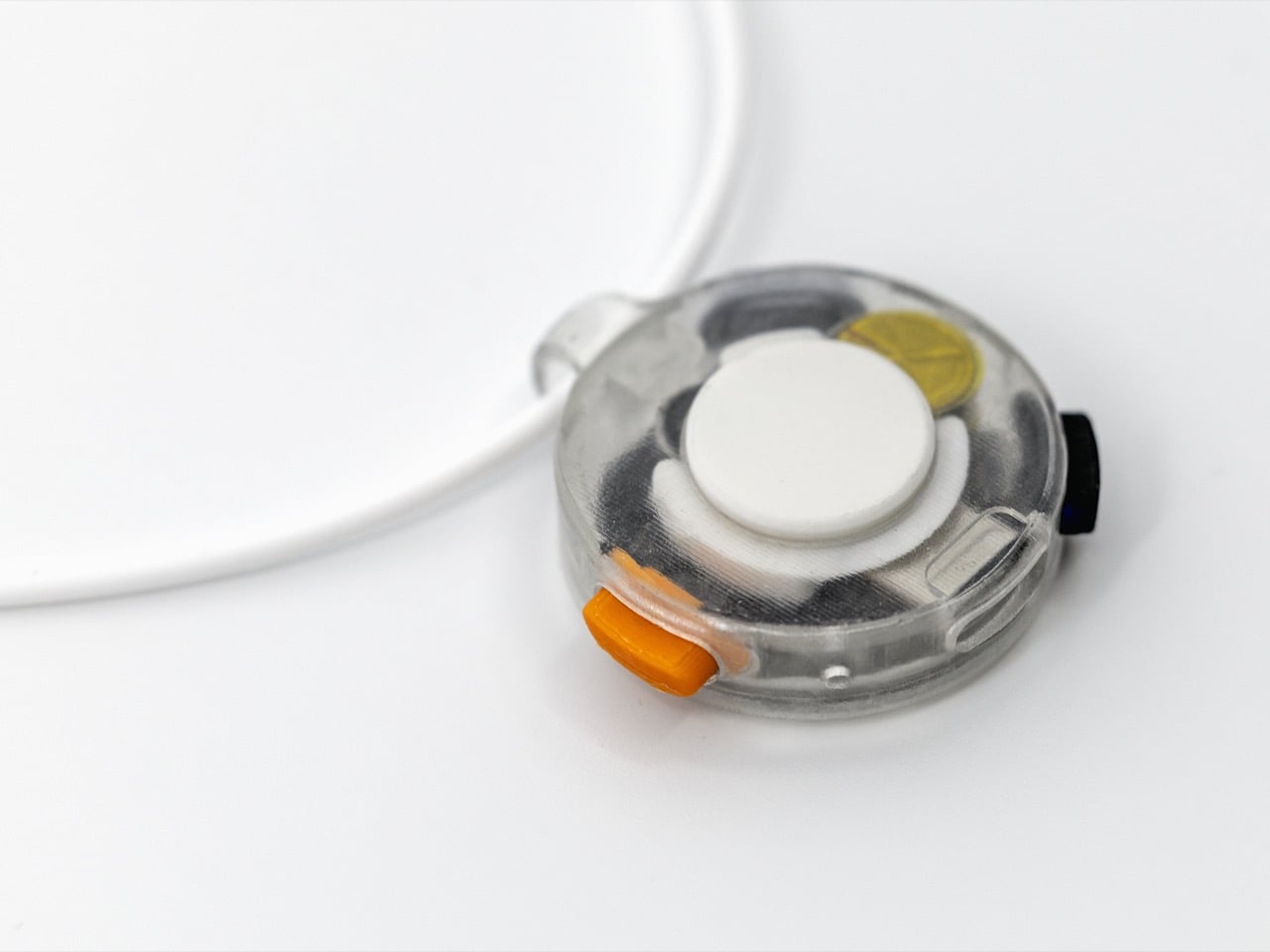
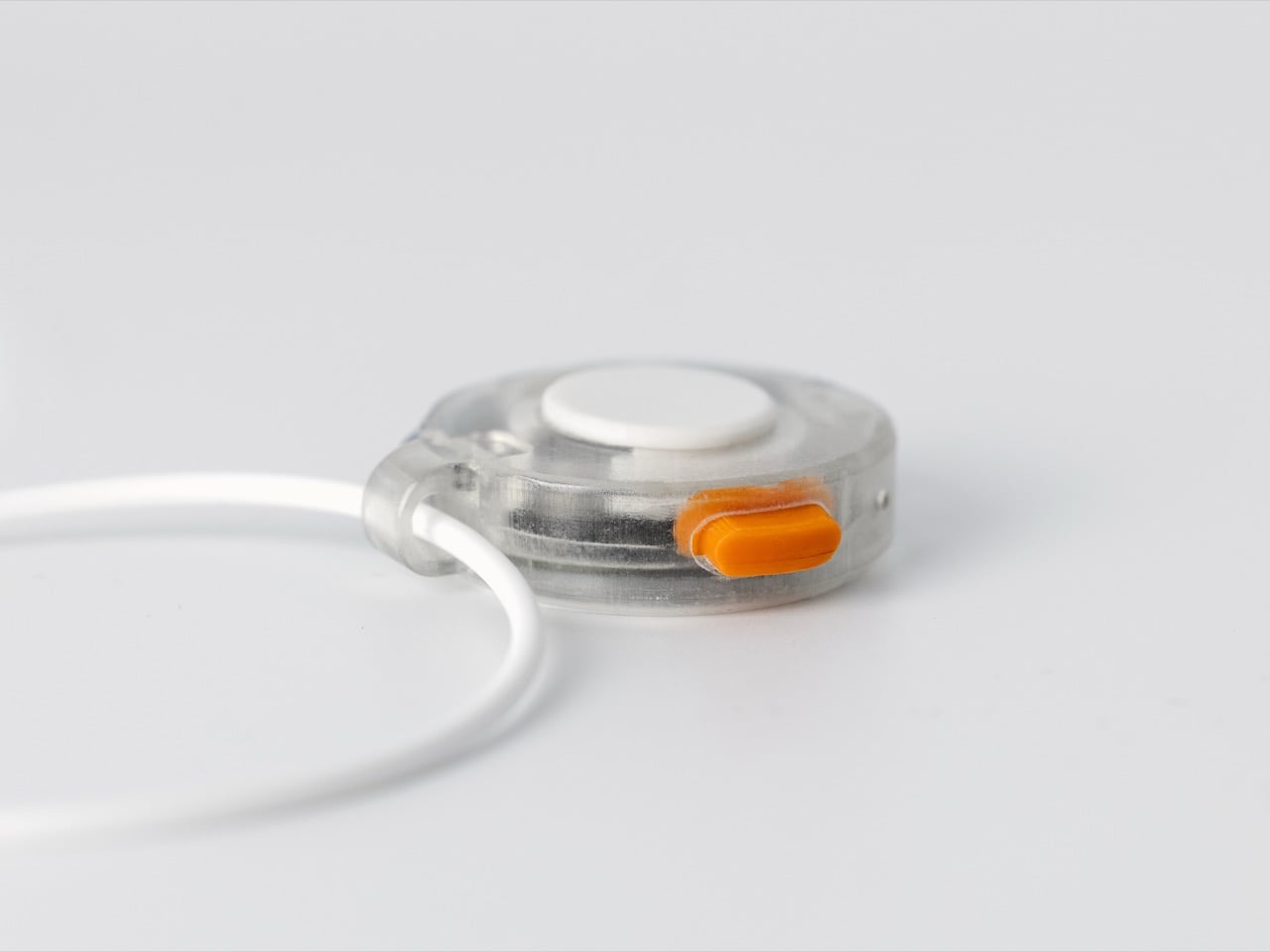
Looking at it next to the MouthPad, you can immediately see the family resemblance. Vox is a circular, transparent pendant on a simple white cord, with its internals visible enough to look engineered but not so much that it feels cold or clinical. The three colored buttons on the side, orange, black, and gray, can be remapped to do whatever you want, whether that’s firing up a specific AI agent, switching devices, or just controlling your music. The long-term vision is even more integrated, with Tomás imagining a future of “skinware” where these functions might one day live in a smart tooth or a small skin patch.

For now, Vox is launching as a beta, with the first wave limited to a few hundred units priced at $200. This is a deliberate choice to learn from early users before scaling up. The MouthPad, for comparison, is $1,400, a price that reflects the complex custom-fit process, which involves a 3D scan at one of Augmental’s hundreds of partner dental centers across the US. The Vox pendant has a battery that lasts about eight hours, with enough power for around two hours of straight transcription time, which is more than enough for a full day of dictation. You can learn more and get yours over at augmental.tech.

The post After MouthPad, Augmental unveils Vox, a privacy-focused wearable mic that lets you whisper-to-type first appeared on Yanko Design.
Samsung and Google Are Trying Smart Glasses Again, at the Worst Possible Time

“Glasshole” entered Urban Dictionary as word of the day in March 2013, which tells you roughly how long it took society to make up its mind about face-mounted cameras. Google Glass had barely reached early users when bars, restaurants, and theaters started banning it. The device died from a social verdict so decisive it became a punchline. A decade later, Google is back. At Samsung’s Galaxy Unpacked in London today, the company helped reveal a new generation of AI-powered smart glasses, co-engineered with Samsung, dressed up in Warby Parker frames, and powered by Gemini. Same idea. Different fonts.

The climate into which these glasses arrive is not quiet. Meta spent the better part of 2026 trying to convince the public that AI glasses are aspirational, recruiting Kylie Jenner for the Meta Starfire Kylie Edition at $399 and positioning it as a style statement. What followed was a wave of coverage about covert recordings, a social media tutorial on disabling the LED light meant to prevent covert recording, and a protest campaign near Meta’s headquarters branding the glasses “fascist.” Some owners are reportedly now reluctant to wear them in public, having learned that the street name for their $399 fashion statement is “pervert glasses.” Google could not have picked a stranger moment to try again.

Designers: Samsung, Google, Warby Parker, and Gentle Monster

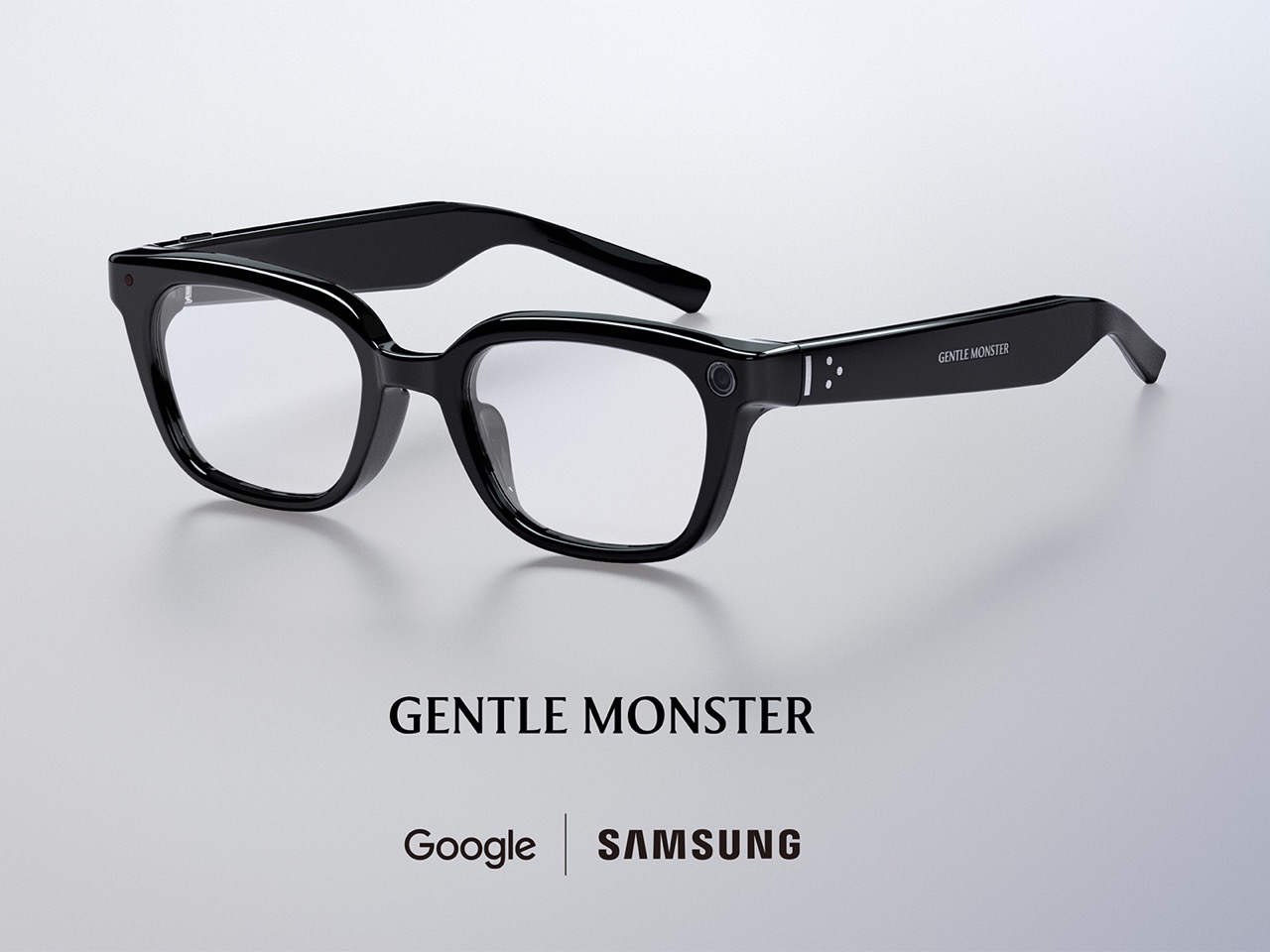
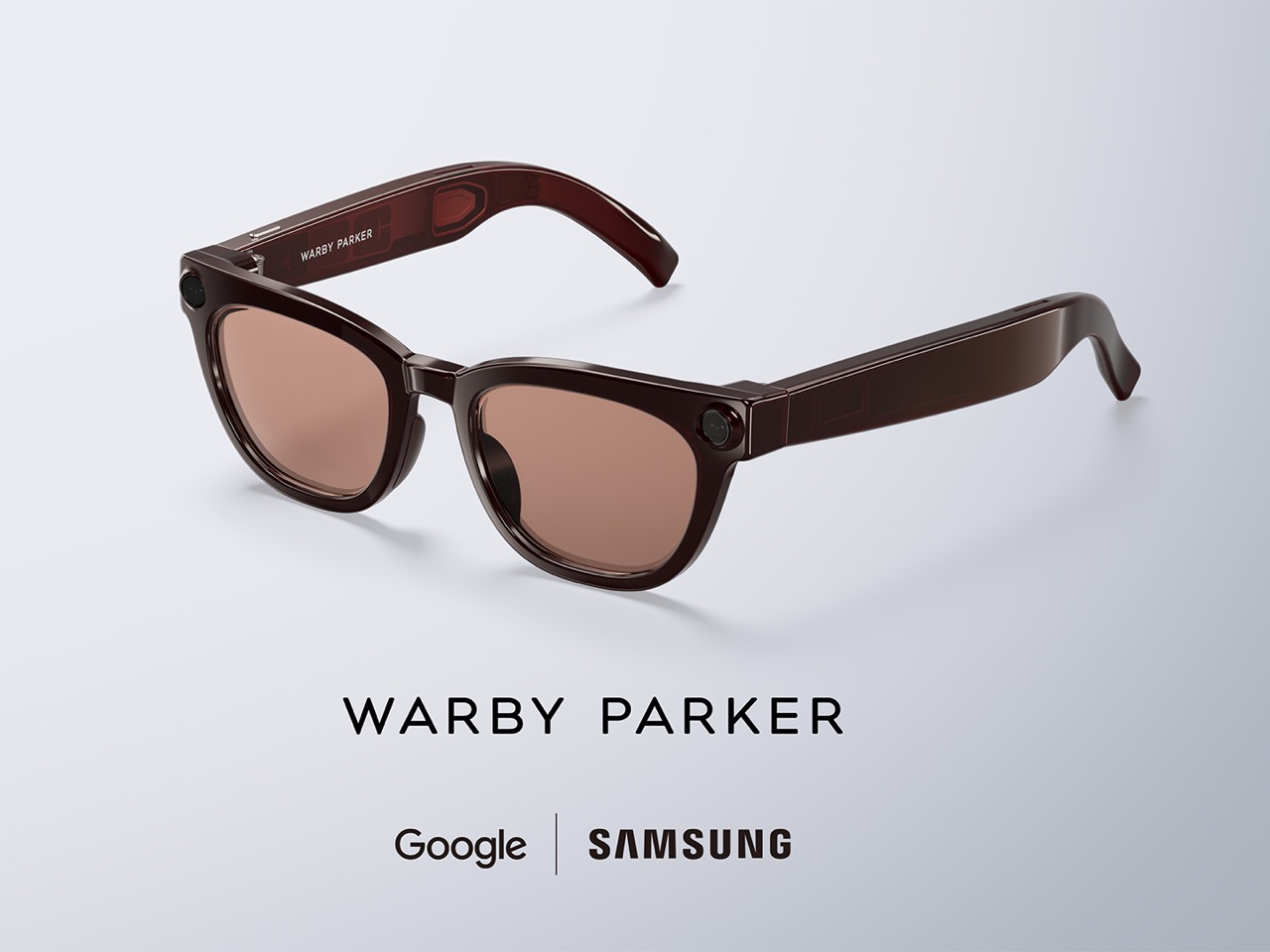
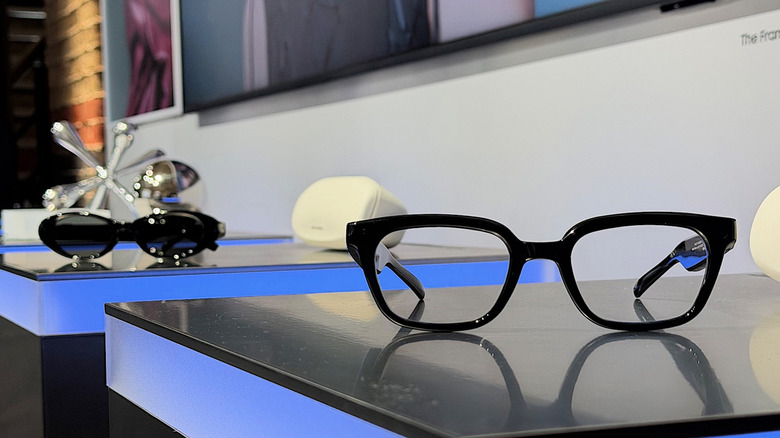
So what exactly did Samsung and Google show up with today? The glasses, branded Intelligent Eyewear, come in two designs: a slim black frame from Gentle Monster with a refined, fashion-forward silhouette, and a rich brown Warby Parker edition with a subtly upswept brow line meant for everyday wear. Under the hood, the Snapdragon AR1 Gen 1 chip handles the processing, the same silicon inside Ray-Ban Meta’s glasses, which is either reassuring or ironic depending on your mood. Gemini runs as the AI assistant on Android XR, the platform Samsung and Google co-developed, delivering information spoken into your ear rather than displayed on a screen. Battery life sits at nine hours, with a charging case that carries up to seven additional full charges. There is a built-in camera. There is always a built-in camera.

The positioning is reasonably clever and deliberate. By going audio-first with no display, Samsung sidesteps the cyborg-visor aesthetic that made Google Glass so alienating, and by partnering with Gentle Monster and Warby Parker, two brands with genuine fashion credibility, they are betting that good frames can do what celebrity endorsements and $400 price tags couldn’t for Meta. The glasses also pair with both Android and iOS, which removes the ecosystem friction that would otherwise halve the addressable market before a single unit ships. On paper, this is the most considered entry into smart glasses anyone has made.

The paper, unfortunately, has to reconcile with the sh*tstorm that is Meta and Kylie’s brand collab. Kylie Jenner’s job in the Meta Starfire campaign was to make AI glasses feel safe and aspirational, particularly for women. She wore them, posed with them, starred in content shot from the glasses’ own point of view. What nobody at Meta apparently modeled was the possibility that Jenner’s involvement would become the story, and the story would be unflattering. Lorde publicly called the glasses “not sexy.” Women across Brussels and beyond reported being filmed without consent by men wearing the exact product Jenner was paid to glamorize. Meta had to patch their own hardware to stop people from disabling the recording indicator light. The fact that a patch was required is its own headline.

Samsung and Google have built in visible recording indicators and user-controlled privacy settings, which they are smart to advertise loudly. But the problem Meta created for the entire category goes deeper than indicator lights. The public now has a fixed mental model of what a camera on someone’s face means, and it was not built by reading spec sheets. It was built by watching someone get filmed on the bus, by the NameTag story, by “pervert glasses” becoming the phrase that stuck when “Intelligent Eyewear” didn’t.

Google killed Glass in 2015 because society rejected the behaviour the device enabled before the technology even had a chance to mature. Everything Samsung unveiled today is genuinely more refined, more considered, and more fashionable than anything Glass ever was. The question is whether any of that is the actual problem. Going by recent evidence, the frames were never really the issue.

The post Samsung and Google Are Trying Smart Glasses Again, at the Worst Possible Time first appeared on Yanko Design.
Garmin Just Built the Whoop Alternative That Needs No Subscription

There’s a growing frustration with fitness wearables that has nothing to do with their accuracy or features. It’s the screen. Even devices that track recovery and stress can contribute to the same screen-checking habit they’re supposed to help reduce, turning what should be a passive health monitor into just another thing demanding attention on your wrist. The smartwatch category has leaned further into displays, notifications, and apps, leaving a gap for something that doesn’t do any of that.

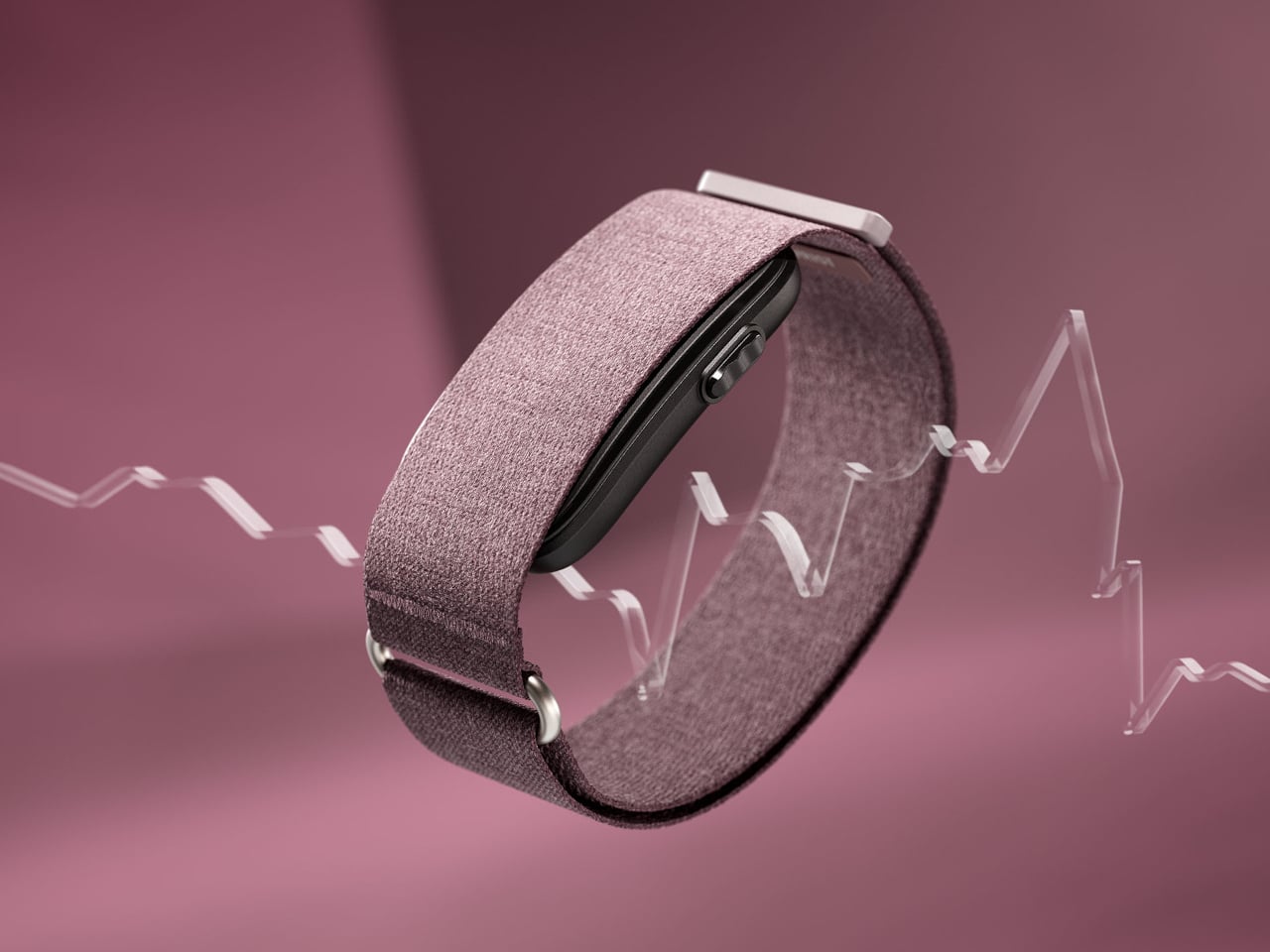
The Garmin CIRQA is Garmin’s first screen-free smart band, and the pitch is straightforward. It tracks everything, shows you nothing on the wrist, and routes all the data to the Garmin Connect app for review when you actually want to look. There’s no display to glance at, no notifications, no interface to interact with during the day. The band does its job in the background, and you check the results on your terms.

Designer: Garmin

Worn on the wrist or moved up to the upper arm for sleeping or specific activities, the CIRQA runs 24 hours a day on a single charge for up to ten days. The sensor stack covers all the metrics Garmin is known for: continuous heart rate, Body Battery energy monitoring, Pulse Ox, stress, skin temperature, HRV status, and comprehensive sleep tracking including sleep stages, a sleep score, and nap detection. Women can also track their menstrual cycle and sync skin temperature data with the FDA-cleared Natural Cycles birth control app.

Fitness tracking doesn’t require picking up the phone either. The band detects and records activities automatically, and the more you review and correct those logs in Garmin Connect, the better it gets at classifying your workouts without prompting. For sessions where you want more control, a single side button lets you manually start any of 80-plus activities. Connected GPS borrows location data from a paired smartphone for accurate outdoor pace and distance, and LiveTrack lets people follow your route in real time.

The monitoring side goes deeper than basic step counting. Training readiness, VO2 Max estimates, and workout recovery time give athletes a fuller picture of whether a day calls for a hard effort or an easy spin. The CIRQA was built to complement Garmin’s watch lineup rather than replace it. Someone who already runs with a Forerunner can use the CIRQA to handle overnight recovery and all-day wellness without wearing the watch to bed or to the office.

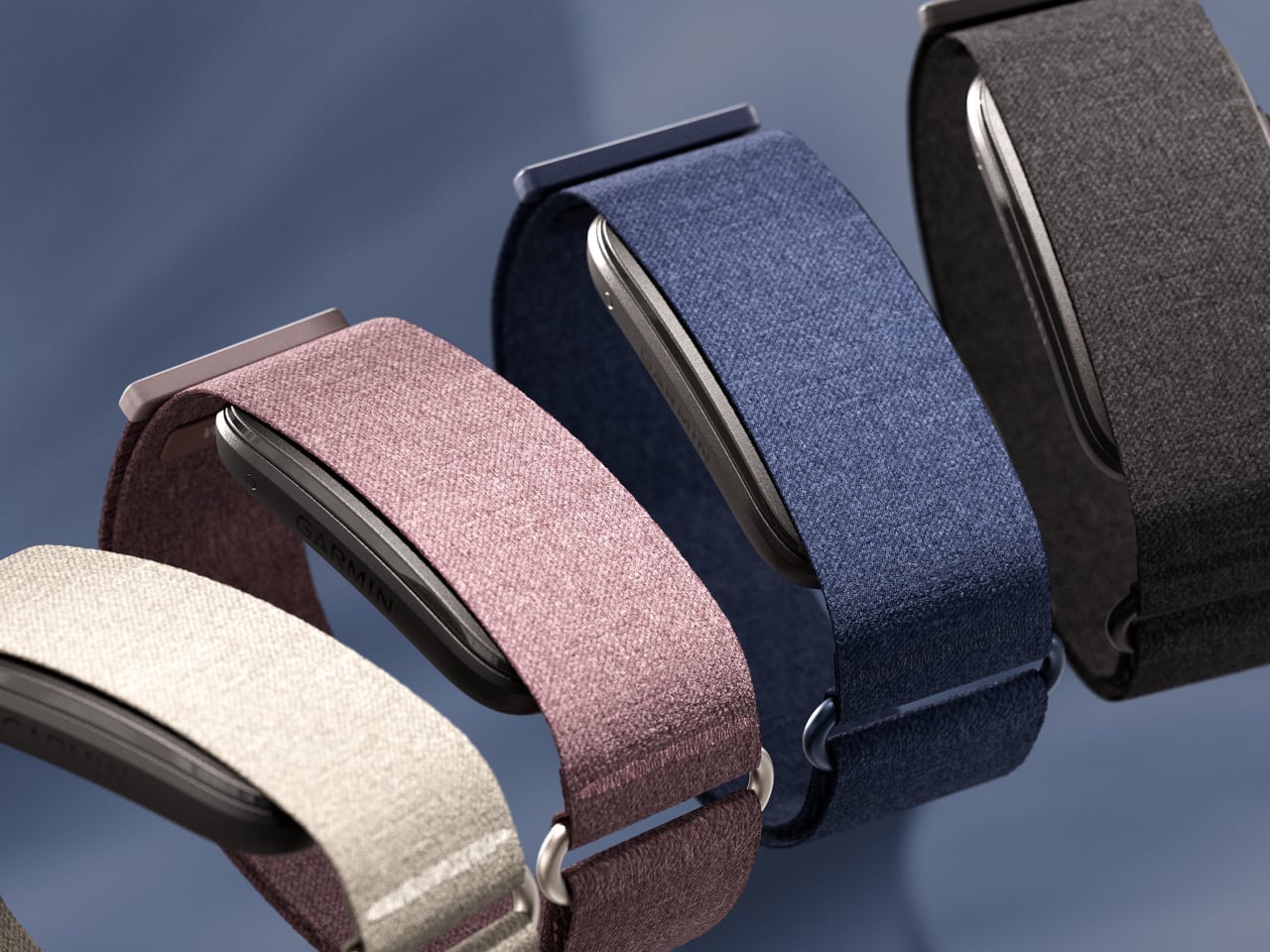
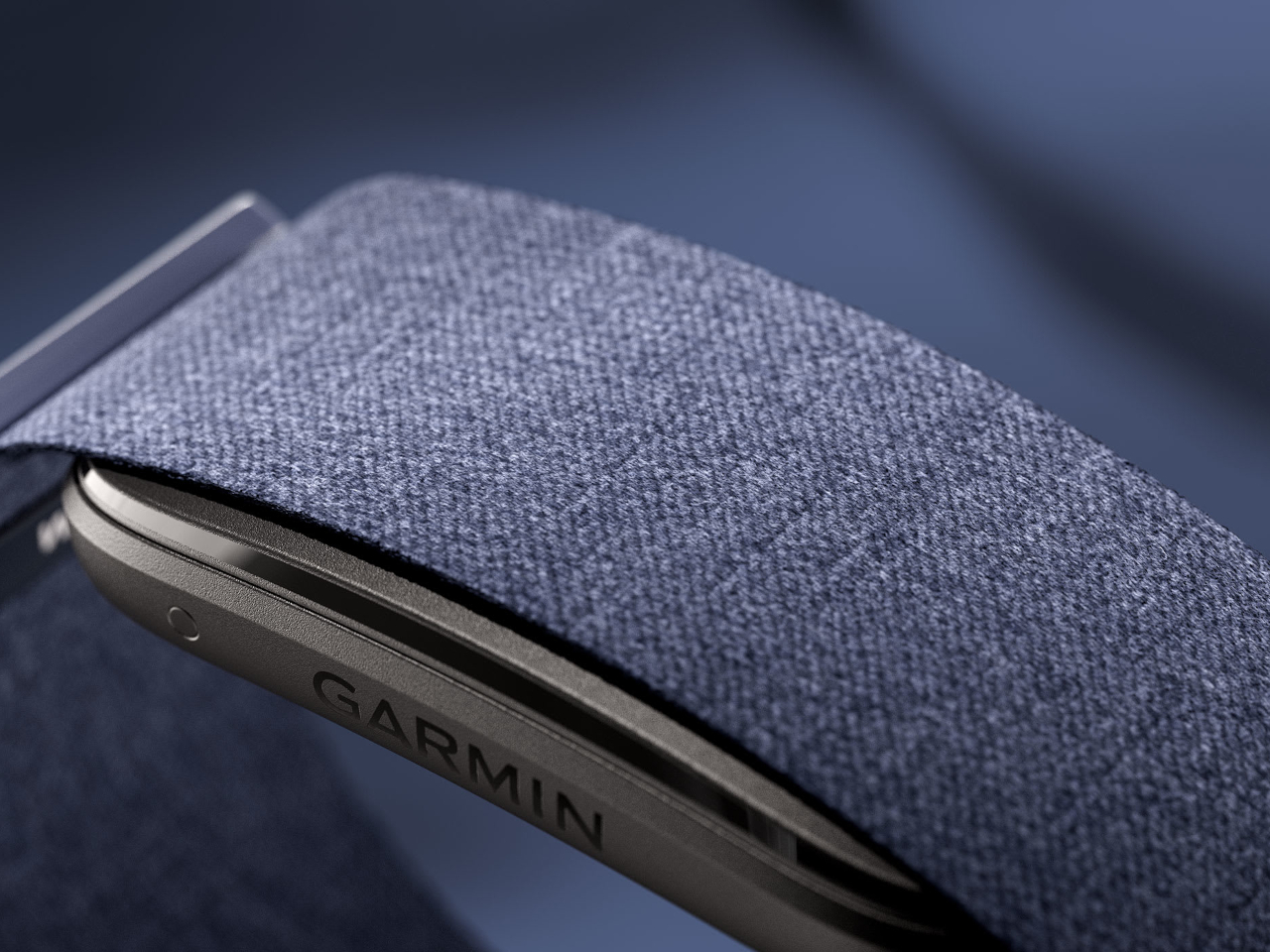
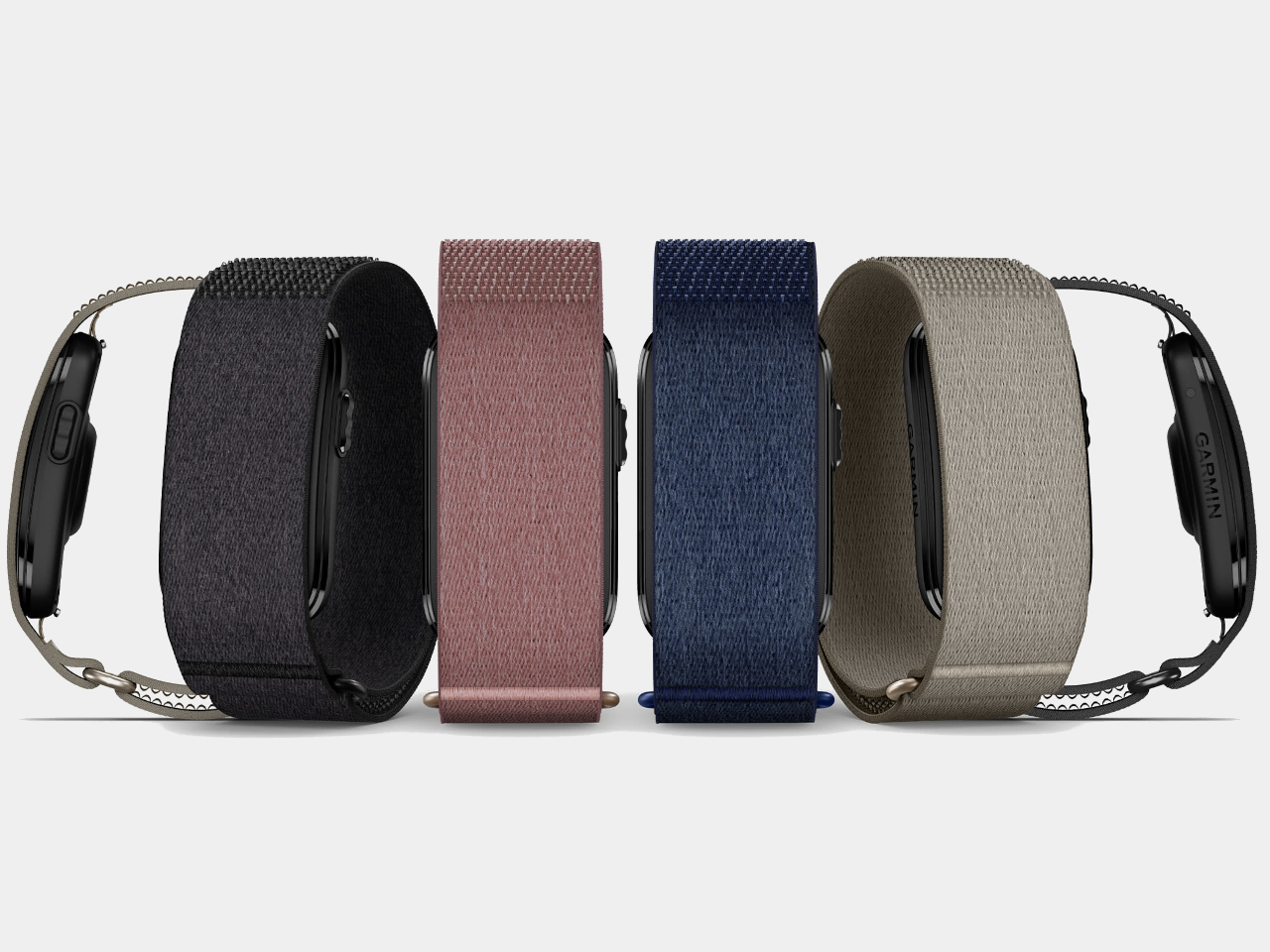
The band comes in a soft ComfortFit fabric strap that Garmin designed to fade into the background and sits in a compact sensor module with a fiber-reinforced polymer housing. Colors include Black, French Gray, Berry, and Navy, with seven additional accessory band options for the wrist. Both wrist and upper-arm sizing are available in two fits.

The CIRQA Smart Band is priced at $199.99, and no subscription is required for the core feature set, which is a pointed difference from Whoop, the most obvious comparison in this category. Garmin does offer optional Connect+ upgrades for coaching and advanced guidance, but the full tracking stack works without it.

The post Garmin Just Built the Whoop Alternative That Needs No Subscription first appeared on Yanko Design.