Moisture is the secret ingredient in Midea’s award-winning air fryer

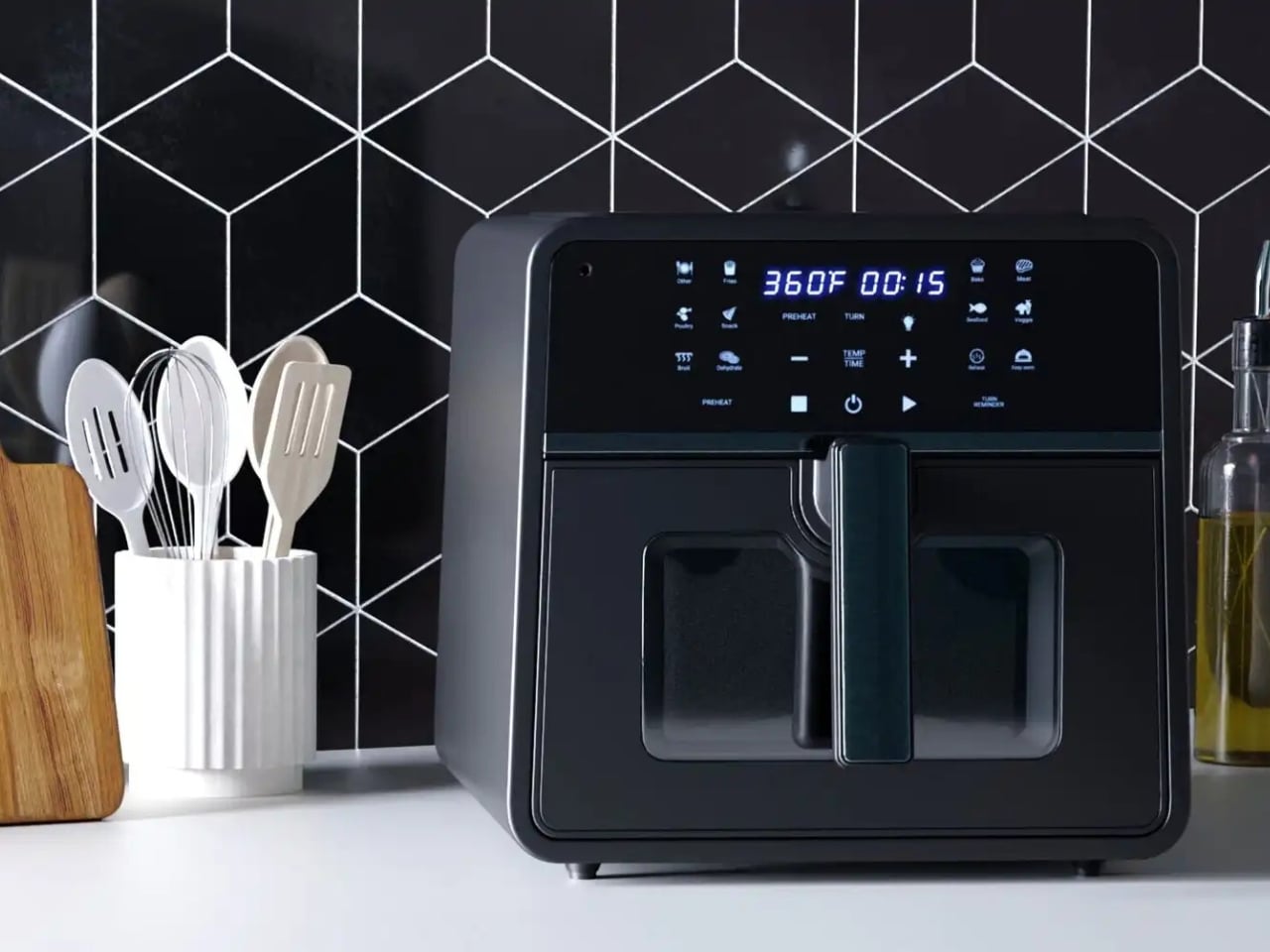
Steaming is about as old as Chinese cooking gets. Bamboo baskets stacked over a wok have been turning out buns, dumplings, and whole fish for centuries, so it makes sense that a Chinese appliance giant would want that steam inside its air fryer. Midea’s new Humidity-Controlled Air Fryer does exactly that, pairing hot air with Smart Moisture Technology that can air fry, steam, or blend the two. The pitch is simple: crunch where you want crunch, juice where you want juice. Your bao and your chicken wings can finally share a counter spot, and nobody has to fight over the steamer.

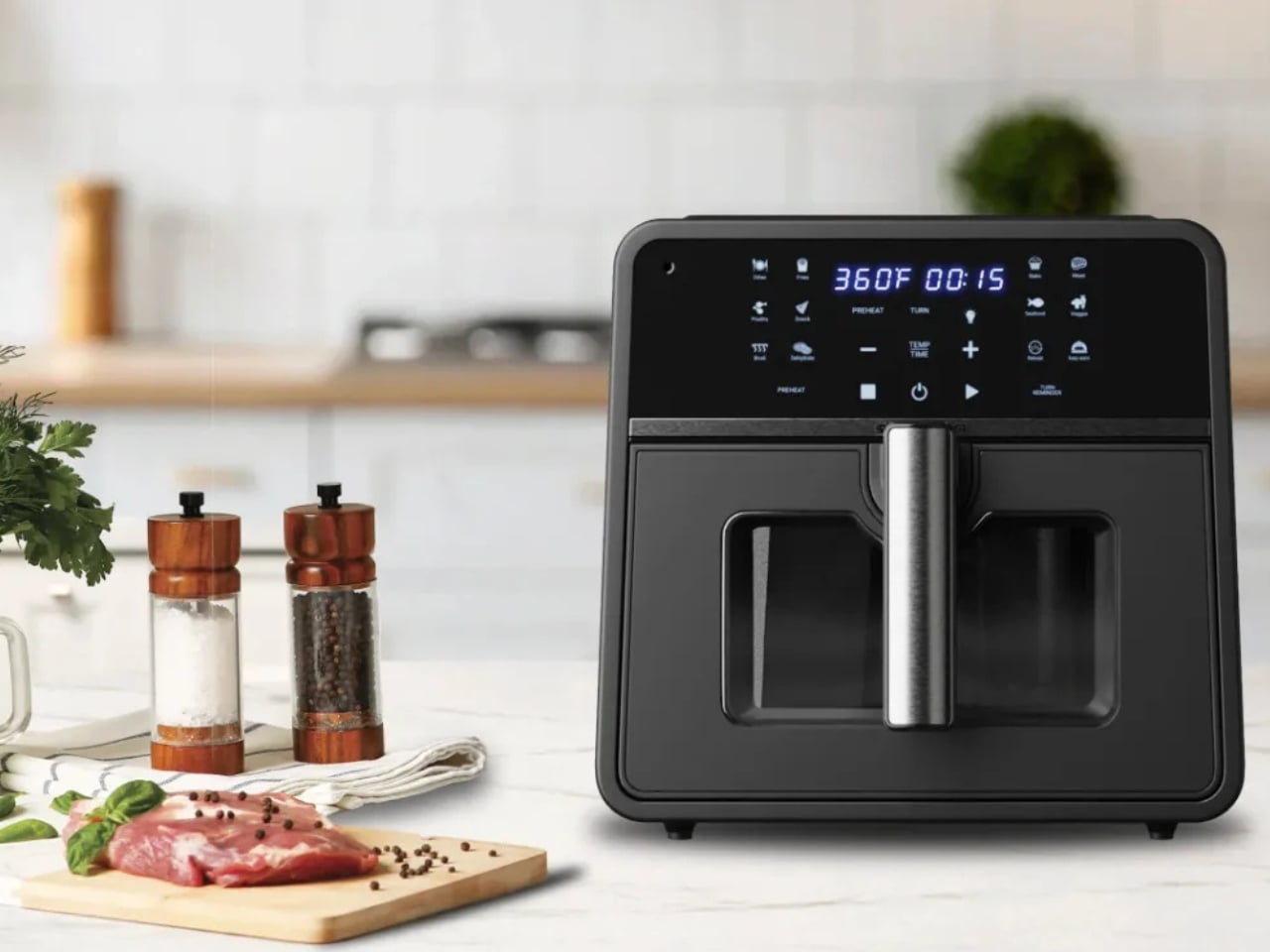
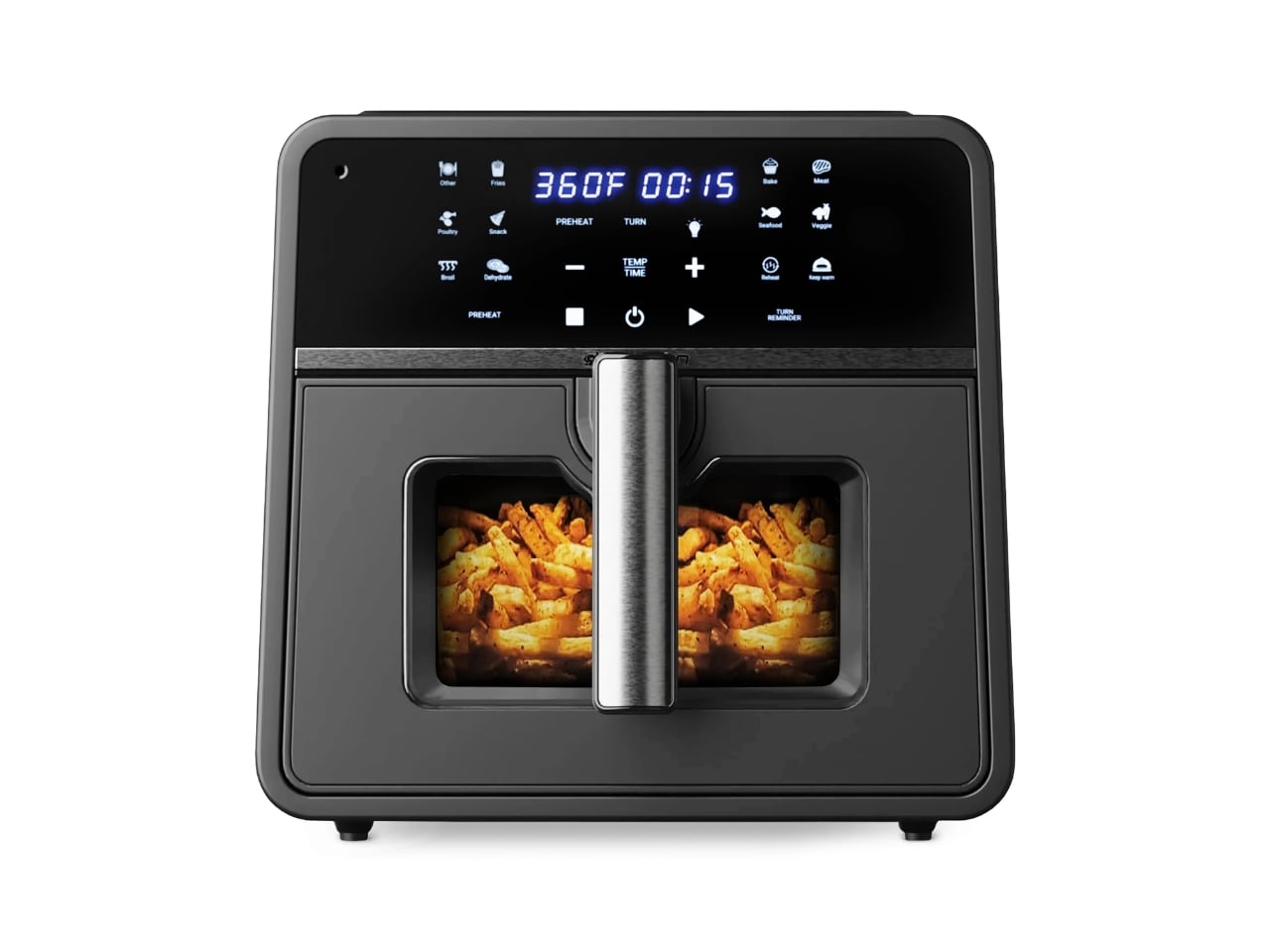
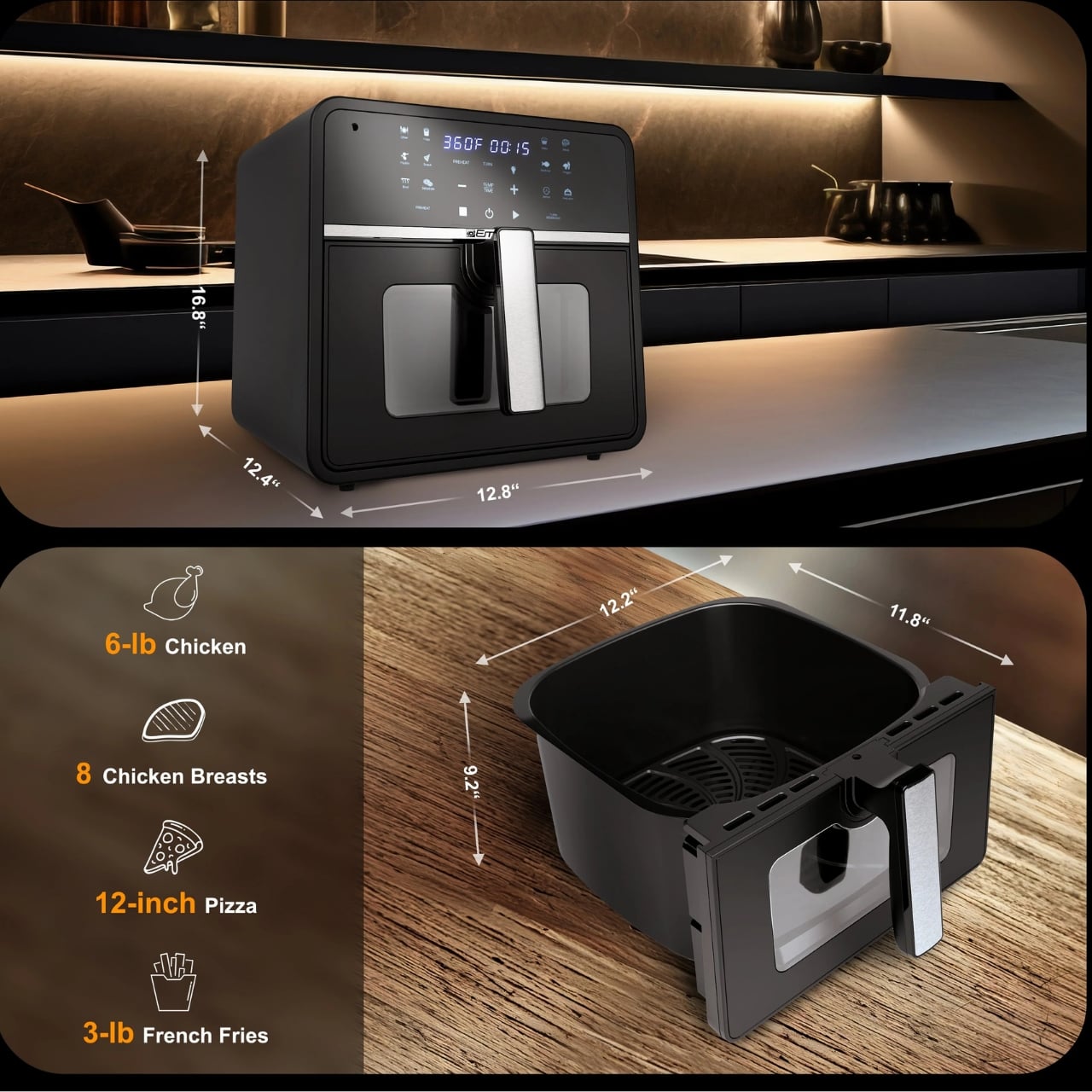
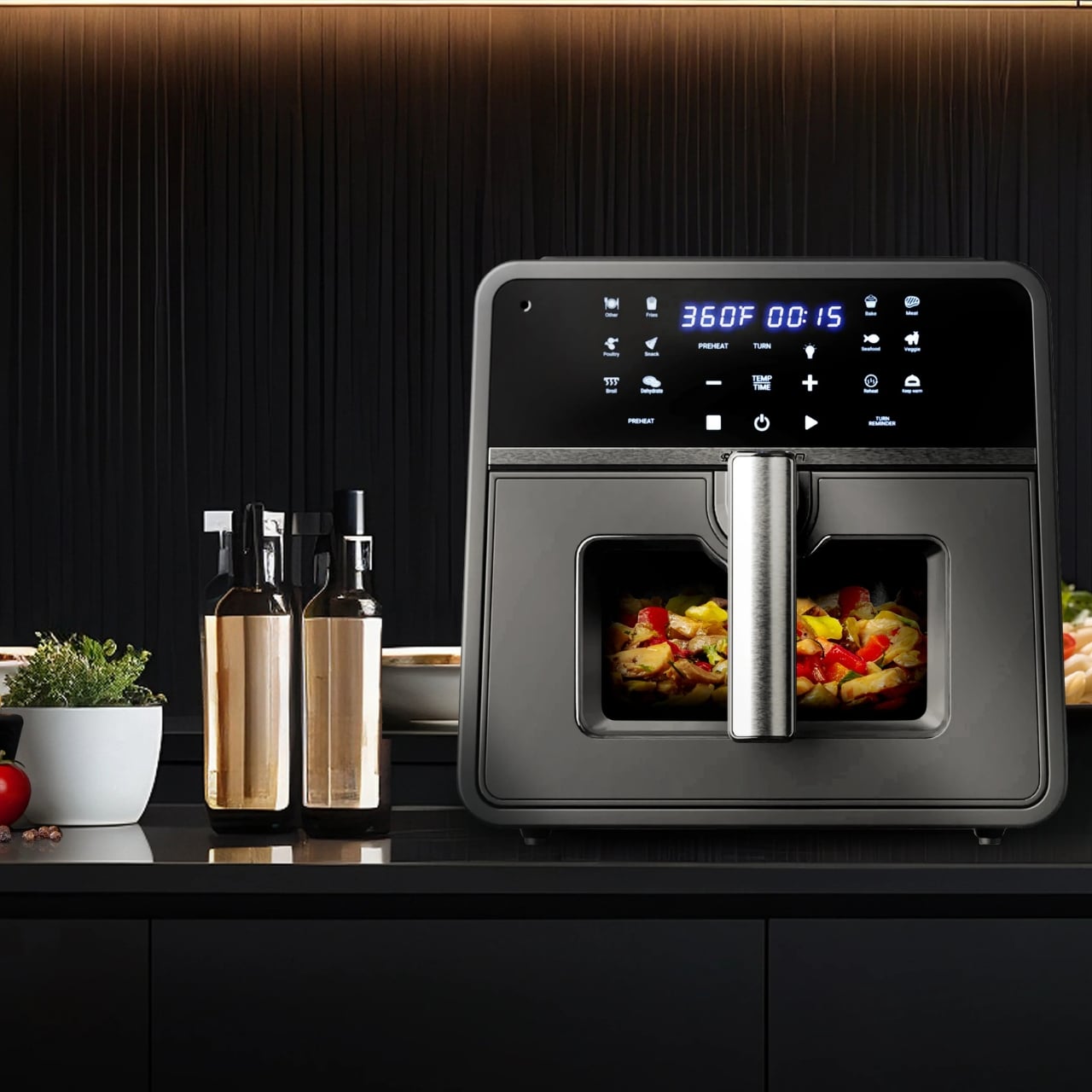
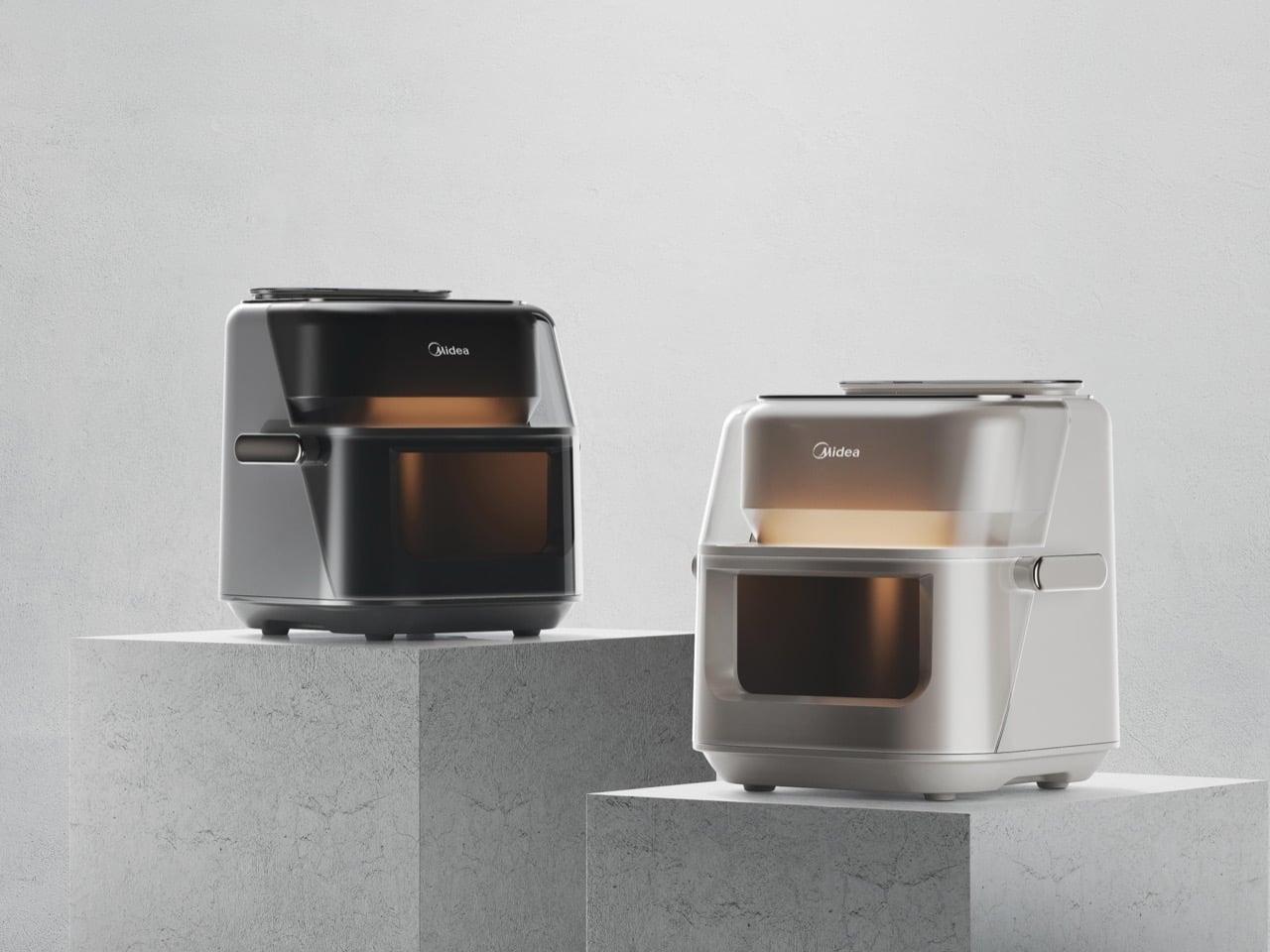
Smeg’s steam air fryer and Xiaomi’s Mijia Pro Steam and Bake both bolted water tanks onto air fryers this year, and both leaned hard on the crispy wings pitch. Midea treats steaming as a full cooking mode, which tracks for a product designed around China’s multi-person households. The 8-liter (about 8.5-quart) cooker comes from Midea’s Shunde-based cooking division and won a 2026 Red Dot in the Design Concept competition’s Ready For Market category, reserved for designs that are nearly or fully developed but not yet on sale. Two transparent windows let you watch dinner without letting the steam out. There’s no price or US release date yet, which is my only complaint so far.

Designers: Peng Xi, Wang Jin, Ma Yufeng, Jo Jeongmin, Peng Yunyun & Chen Hailong (Midea)

Midea has been sneaking water into air fryers for a while now. Its European 7.5-liter model offers separate Moisture and Air Fry functions with automatic steam injection, and in China the 6-liter KZC6019D steam air fryer sells on JD for 308 yuan, roughly $43. The new design scales that idea up to 8 liters and hands humidity control to Smart Moisture Technology, which dynamically regulates moisture so the chamber can run wet, dry, or a mix of both in one cycle. In practice, that could mean steaming a batch of frozen dumplings until tender, then switching to dry heat so their bottoms crisp up, potsticker style. Your standalone steamer can finally retire.

The two transparent windows do serious functional work on a steam cooker. Every time you yank open an air fryer basket to check on dinner, you dump the hot, humid air the machine just spent minutes building up. Midea’s lower window looks straight into the basket, so you can watch the browning happen without breaking the seal. Above it sits a tinted, translucent hood that gives a second view into the cavity, with a conical housing glowing amber behind it. Chronic basket-pullers like me finally get to keep our hands to ourselves, and the steam gets to stay put.
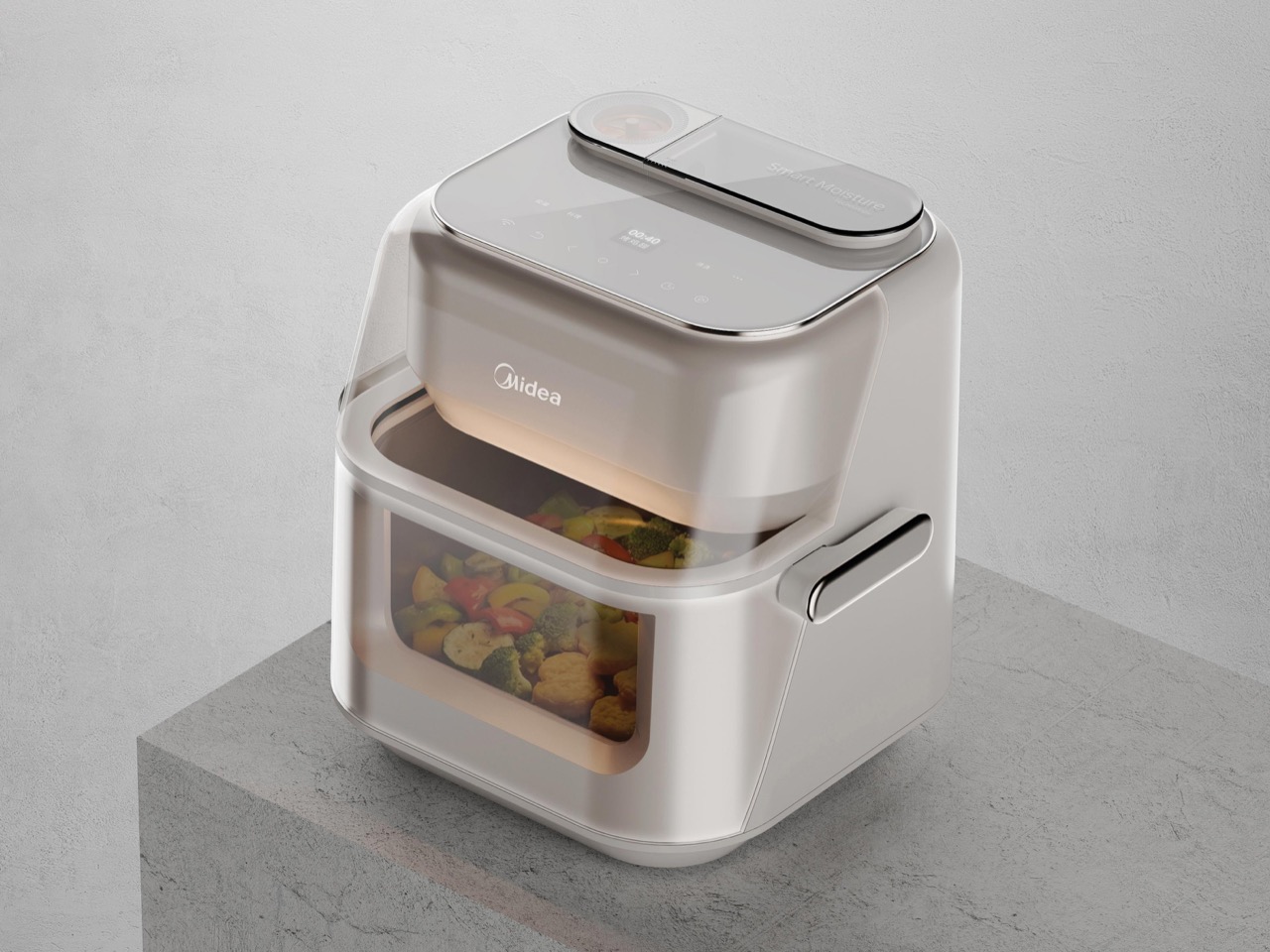
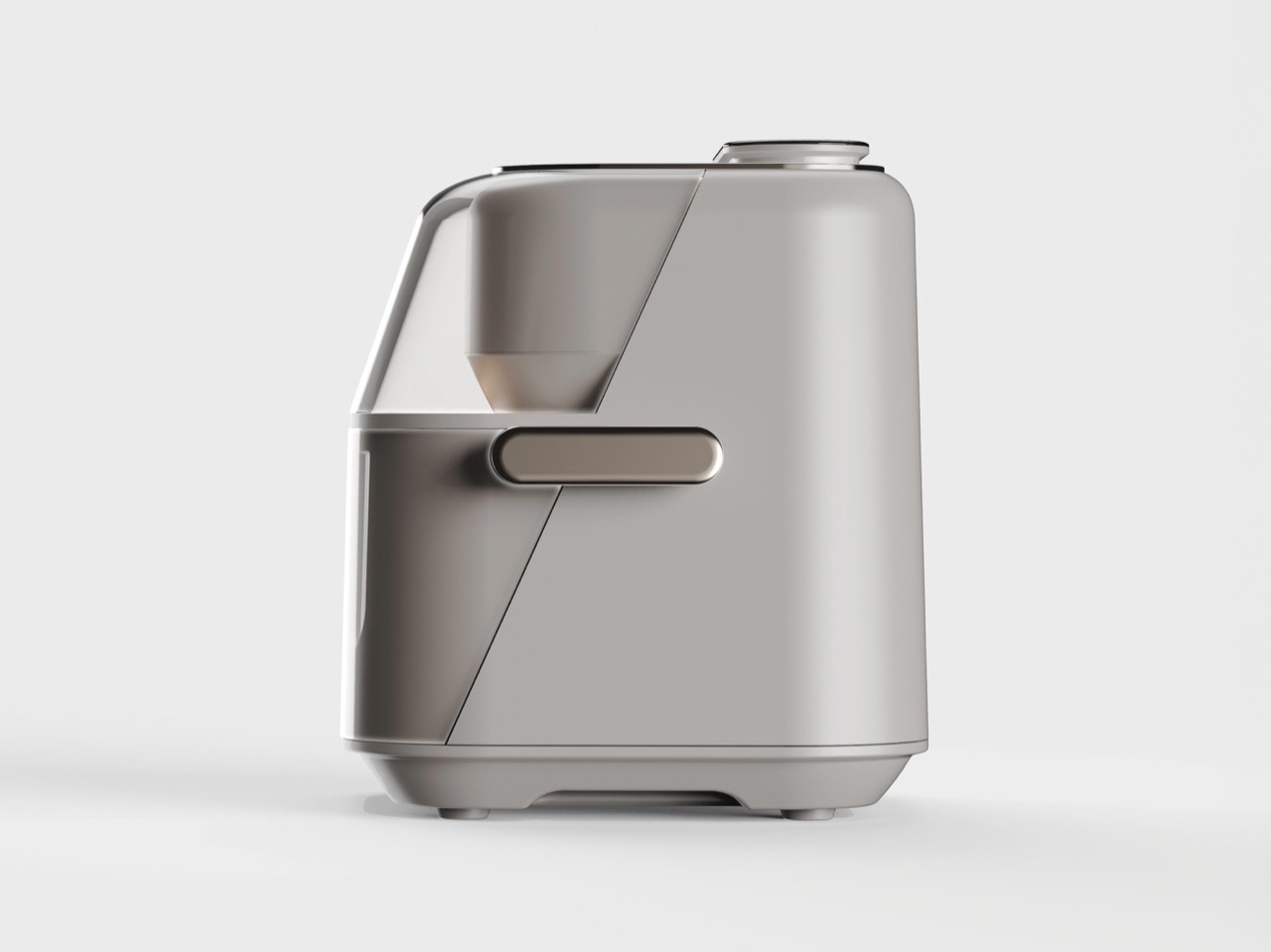
A sharp diagonal seam runs down each side, splitting the translucent upper hood from the solid lower body and giving it a forward lean, like it’s mid-stride toward your plate. The handle, a champagne-finished pill, sits on that seam at the center of the side panel. Centering it makes sense for an 8-liter basket loaded with a family dinner, since the weight stays balanced instead of tipping toward your wrist. On top, a glass deck carries touch controls and a timer display, with a Smart Moisture module and what looks like a water fill cap at the back. Midea renders it in warm white and dark gunmetal, a welcome break from the glossy black boxes crowding most counters.

The steam air fryer category now has three clear personalities. Xiaomi’s 6.5-liter Mijia Pro chases value after crowdfunding in China at 559 yuan, around $81, Smeg’s 7-liter AFC01 chases style at £199.95 in the UK, roughly $265, and Midea’s 8-liter design chases capacity and visibility. Midea already sells dual-zone air fryers in the US, though it hasn’t announced US plans for this one. Red Dot’s Ready For Market jurors judge whether a product can ship within about 12 months, and the China-first brief hints at where it lands first. Somewhere, a bamboo steamer is watching all this with mild amusement, having figured out wet heat centuries before anyone plugged it in.
The post Moisture is the secret ingredient in Midea’s award-winning air fryer first appeared on Yanko Design.
DUO STOVE Concept Air-Fries and Steams Without Two Appliances

Dinner can be a one-pot meal and still leave a small collection of appliance parts in the sink. Add a separate steamer or countertop cooker, and the equipment starts taking up as much attention as the food. DUO STOVE, a concept by designer Eunseo Yun, tackles both kinds of clutter by rethinking where an appliance’s heating unit belongs.

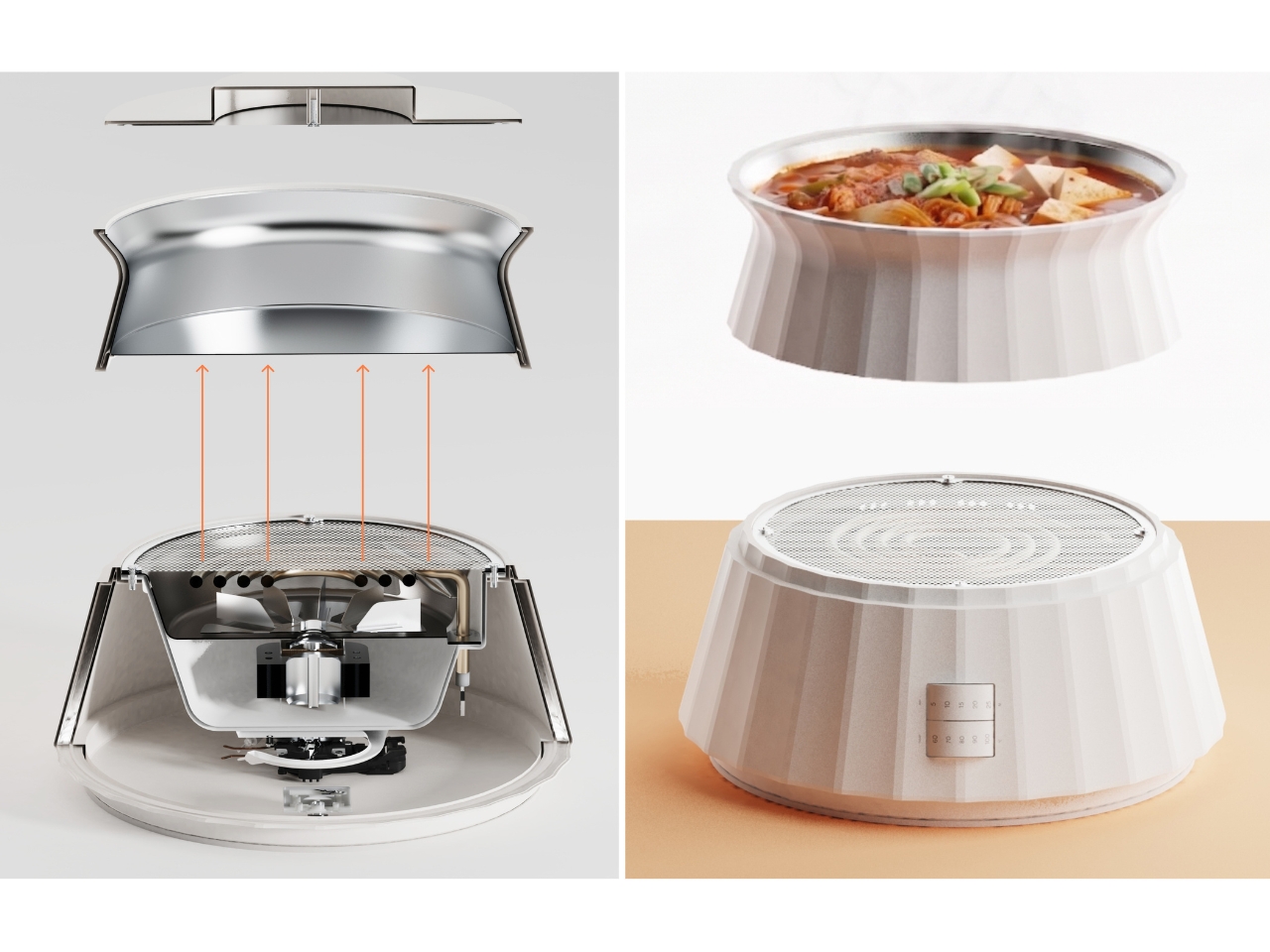
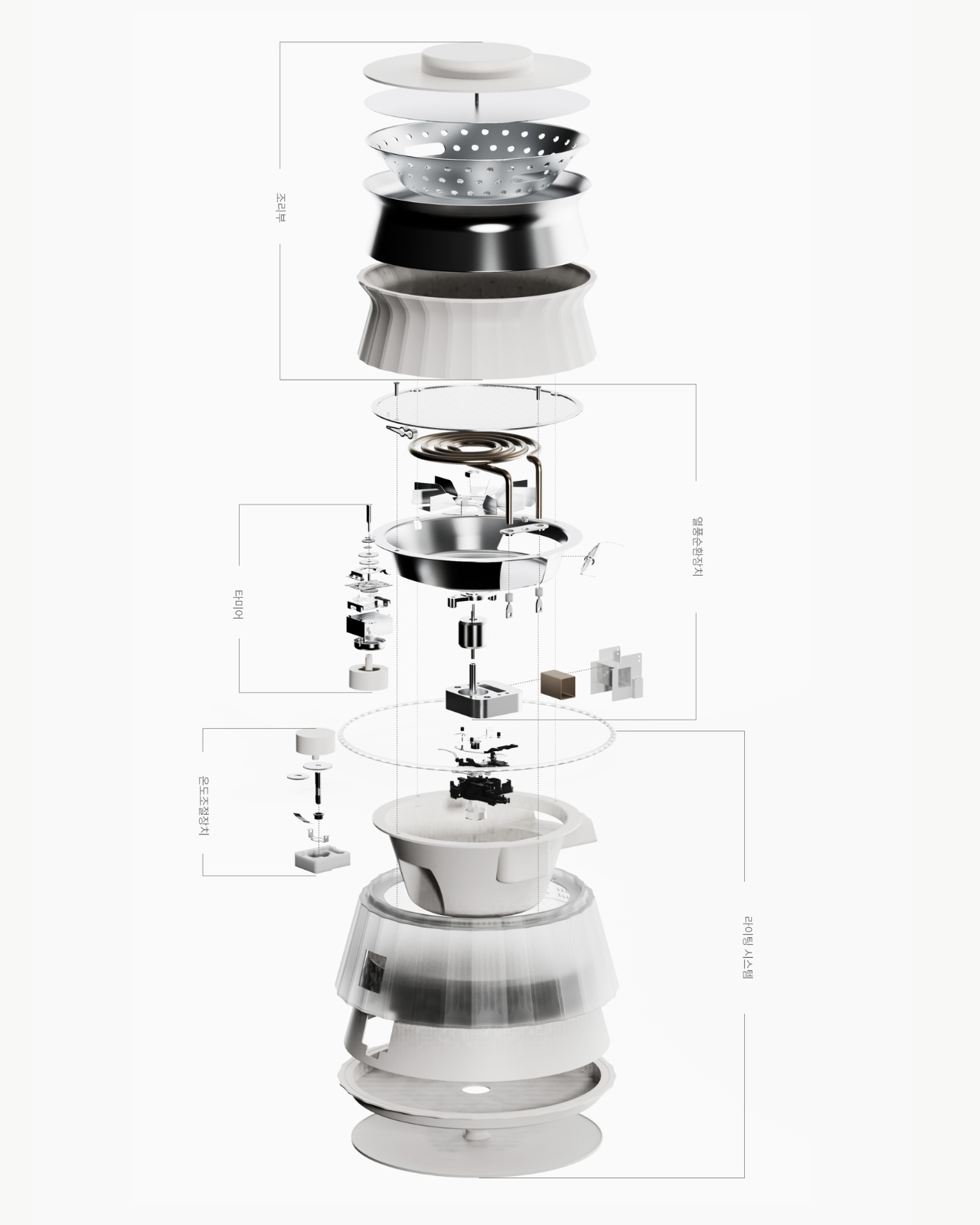
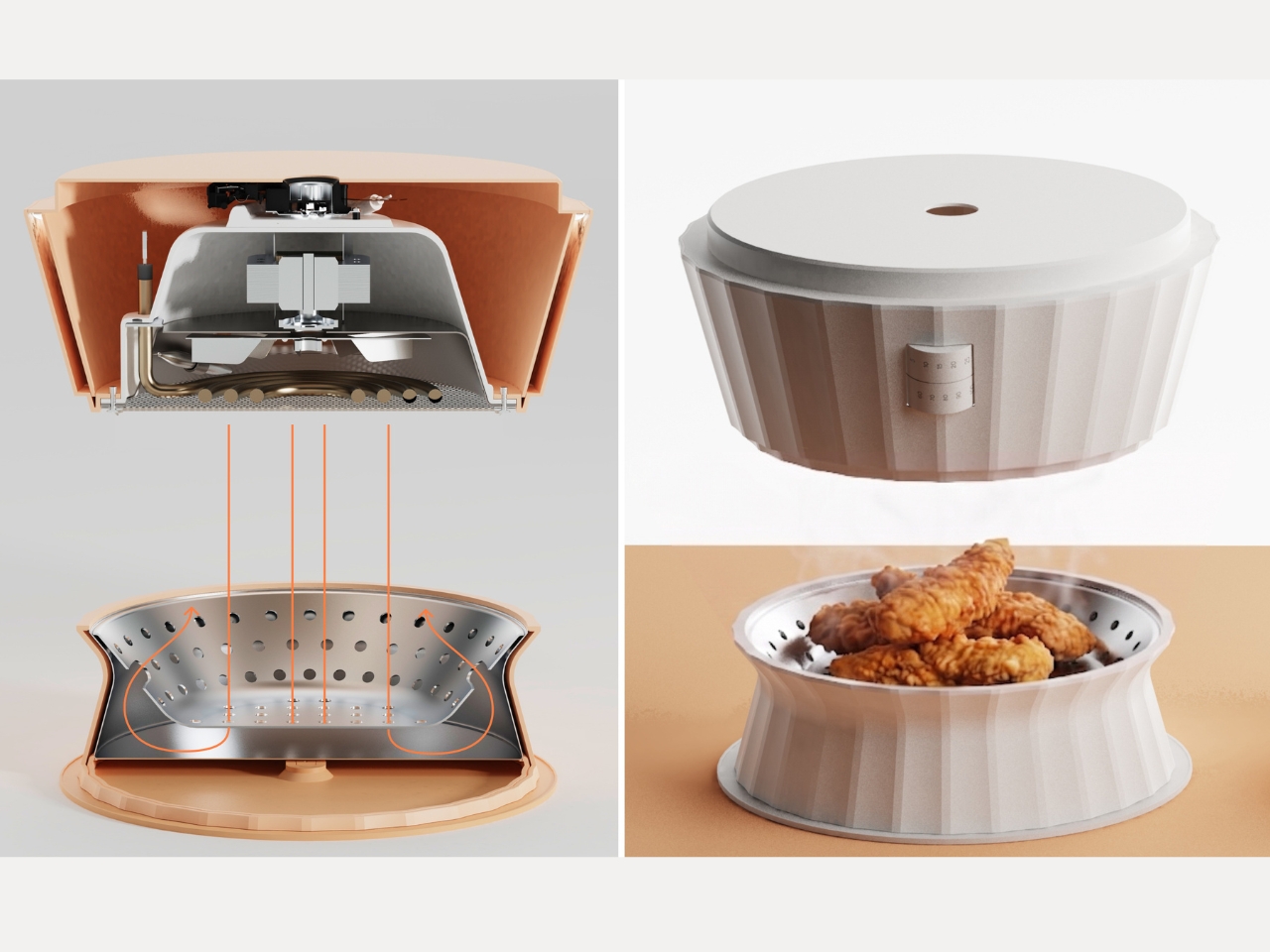
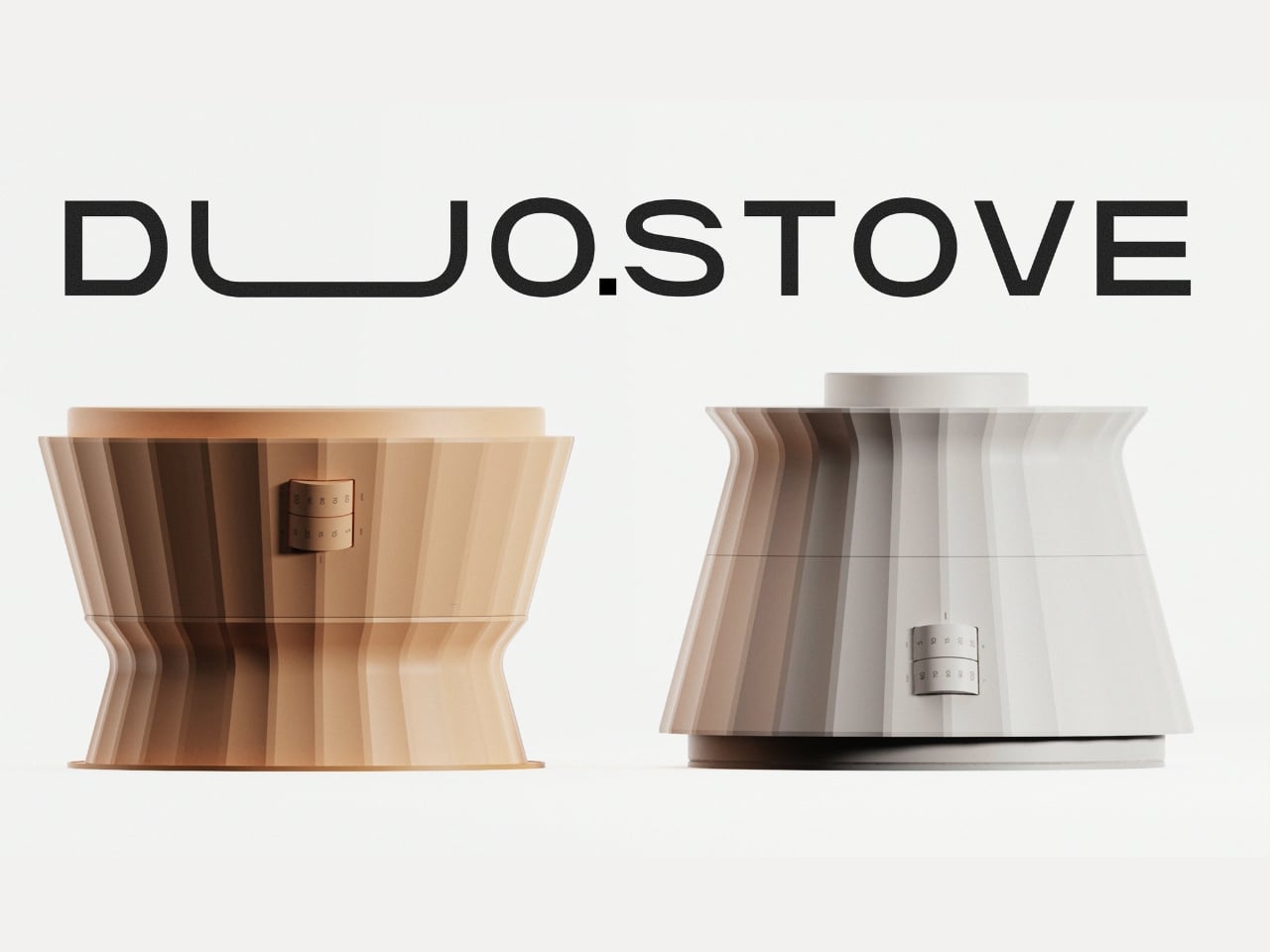
The central move is a reversible heating module. It sits beneath the cooking vessel in multicooker mode. In air fryer mode, it flips over and moves above it, directing heat down into the food chamber. Yun’s presentation treats the appliance as two essential parts: something that holds food and something that heats it. Rearranging those parts offers two cooking setups without asking you to find room for two separate machines.

Designer: Eunseo Yun

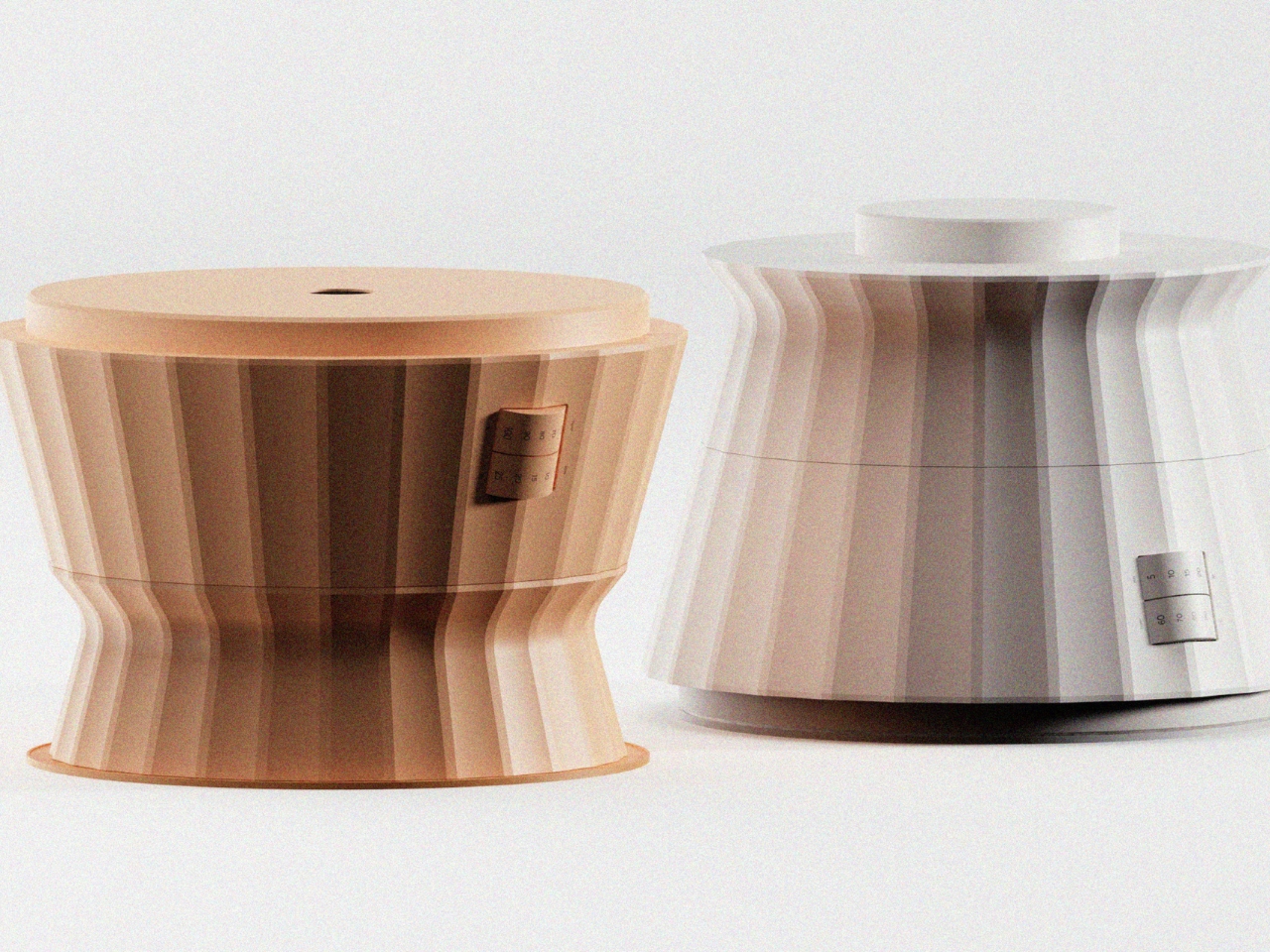
The exterior makes that reversal look intentional. Its fluted sides pinch inward around the middle, giving the body a sculptural silhouette that works in either orientation. The pale and amber-toned versions shown in the presentation look closer to serving vessels than the usual black countertop box. I like that restraint. A device meant to sit beside dinner should look comfortable there, even when nobody is admiring its specifications.

In multicooker mode, a wire insert turns the vessel into a steamer. Remove it, and the proposal supports other methods, including boiling; a lower temperature setting is intended to keep food warm while you eat. That last use feels especially relevant to the dining-table placement. A pot of soup could remain part of the meal instead of becoming another trip back to the kitchen.

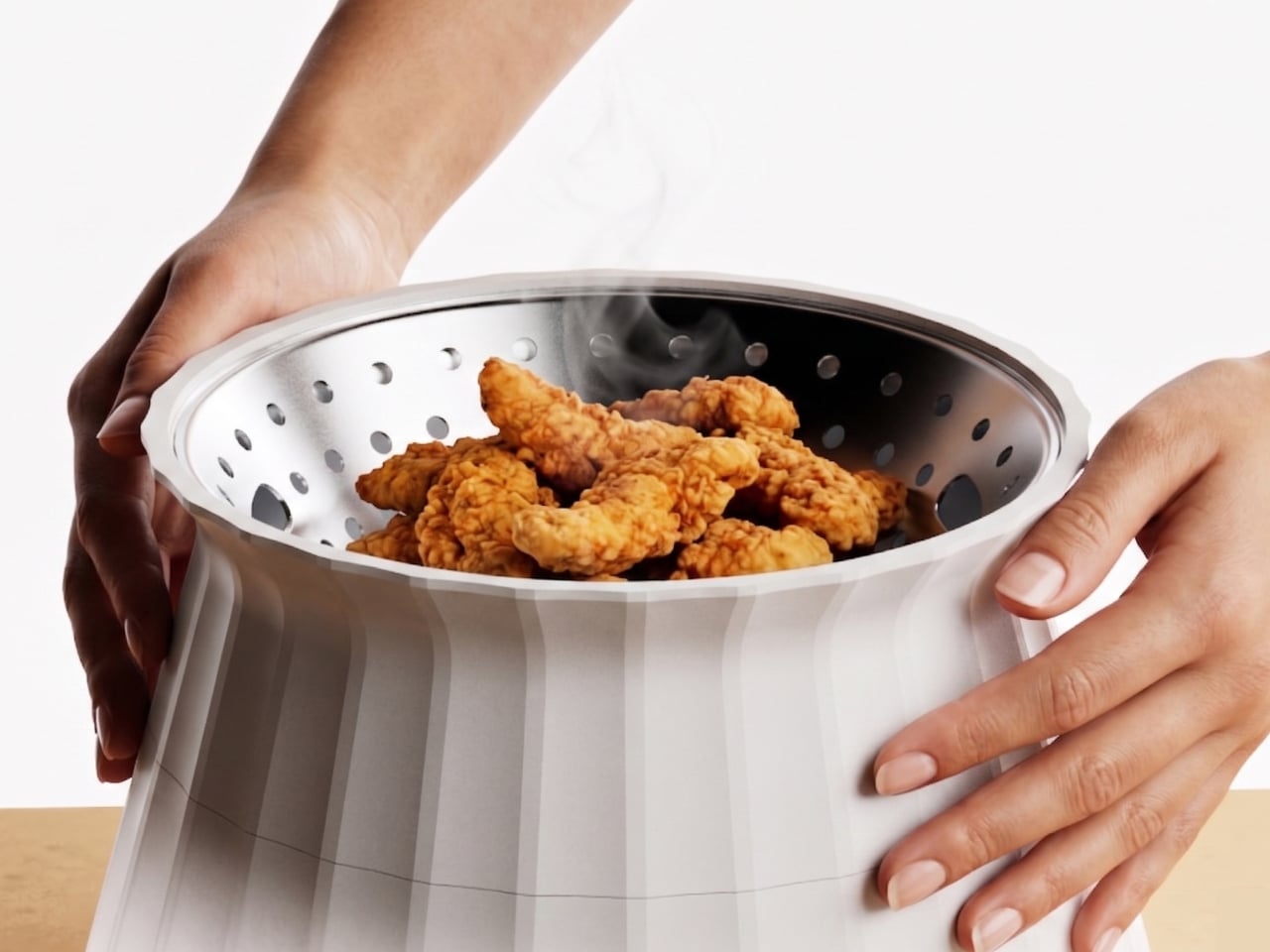
The air fryer arrangement brings the cleanup argument into focus. Yun proposes using the lower inner pot as a bowl after cooking, reducing the need to transfer food into separate serving ware. The presentation shows a perforated insert holding chicken pieces inside the outer vessel. The useful detail is the continuity between cooking and eating, with the appliance’s lower half doing a job beyond containing a basket.

That doesn’t mean washing disappears. Food-contact parts still need cleaning, and a perforated insert still has holes to deal with. I’d read the concept’s cleanup pitch as an attempt to shorten the sequence, rather than a promise of a magically empty sink. Serving from the cooking vessel is a modest improvement, but modest improvements are often the ones that make sense on a busy weeknight.

The controls follow the same pared-back thinking. Two dials handle time and temperature, with an interface intended to remain readable when the heating module is flipped. There’s no menu of food presets to navigate in the proposed system. I’d take that trade, provided the markings were clear. Choosing a temperature yourself can feel less fussy than deciding which tiny food icon most closely resembles tonight’s leftovers.

Yun also gives the timer a visual presence beyond the controls. Light shines through a translucent lower housing, with its intensity changing in proportion to the remaining cooking time. The illustrated sequence moves from a brighter glow toward darkness. It’s conceived as both an ambient progress indicator and a nod to a campfire at the table. That’s an appealing role for lighting, although it wouldn’t replace a precise time reading.

The questions are practical ones. How safely could you handle and reposition the heating module? Where would the cord go in each arrangement? Would the cooking capacity justify the space it occupies? The supplied presentation establishes the design proposal, not answers backed by cooking tests. Before treating DUO STOVE as a genuine replacement for two appliances, I’d want to know how well it performs both jobs.

Still, the premise is worth exploring because it addresses more than appliance count. It considers the route from preparing food to serving it, then clearing the table. Combining functions only helps if the transitions don’t become chores of their own. DUO STOVE’s strongest idea is giving those transitions some attention, with a bowl you can keep using and a heating unit that changes position instead of demanding another permanent spot on the counter.

The post DUO STOVE Concept Air-Fries and Steams Without Two Appliances first appeared on Yanko Design.
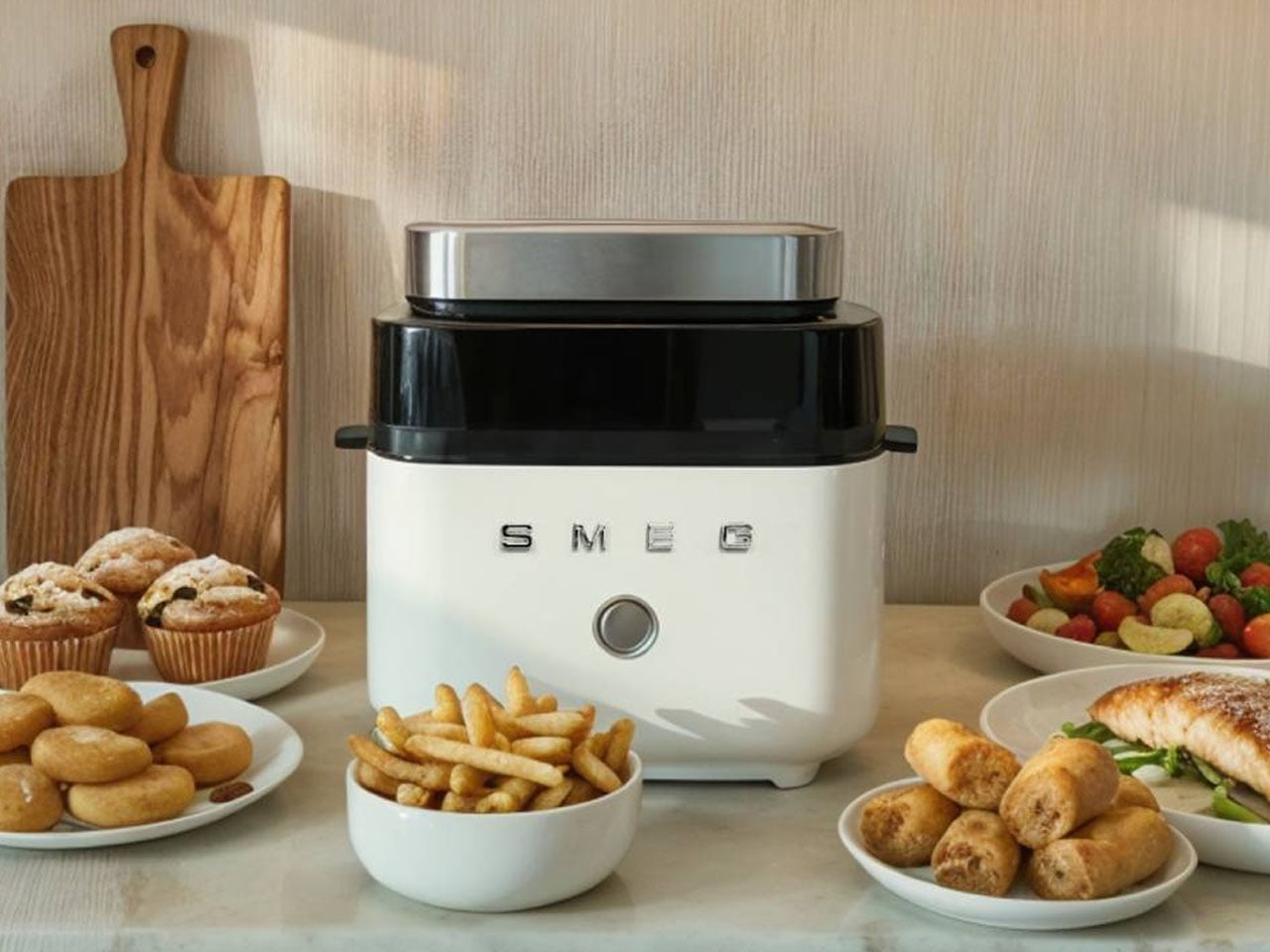
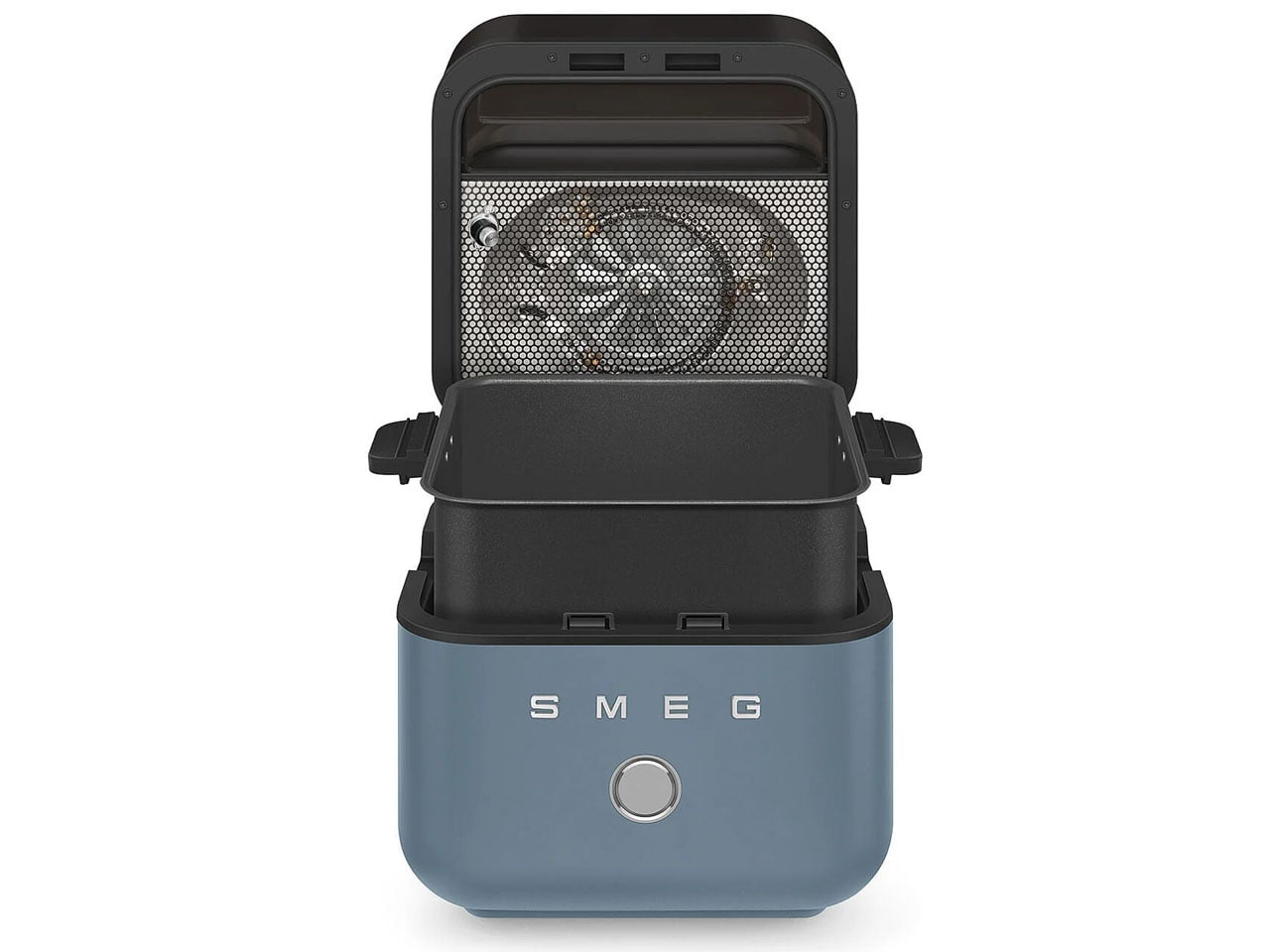
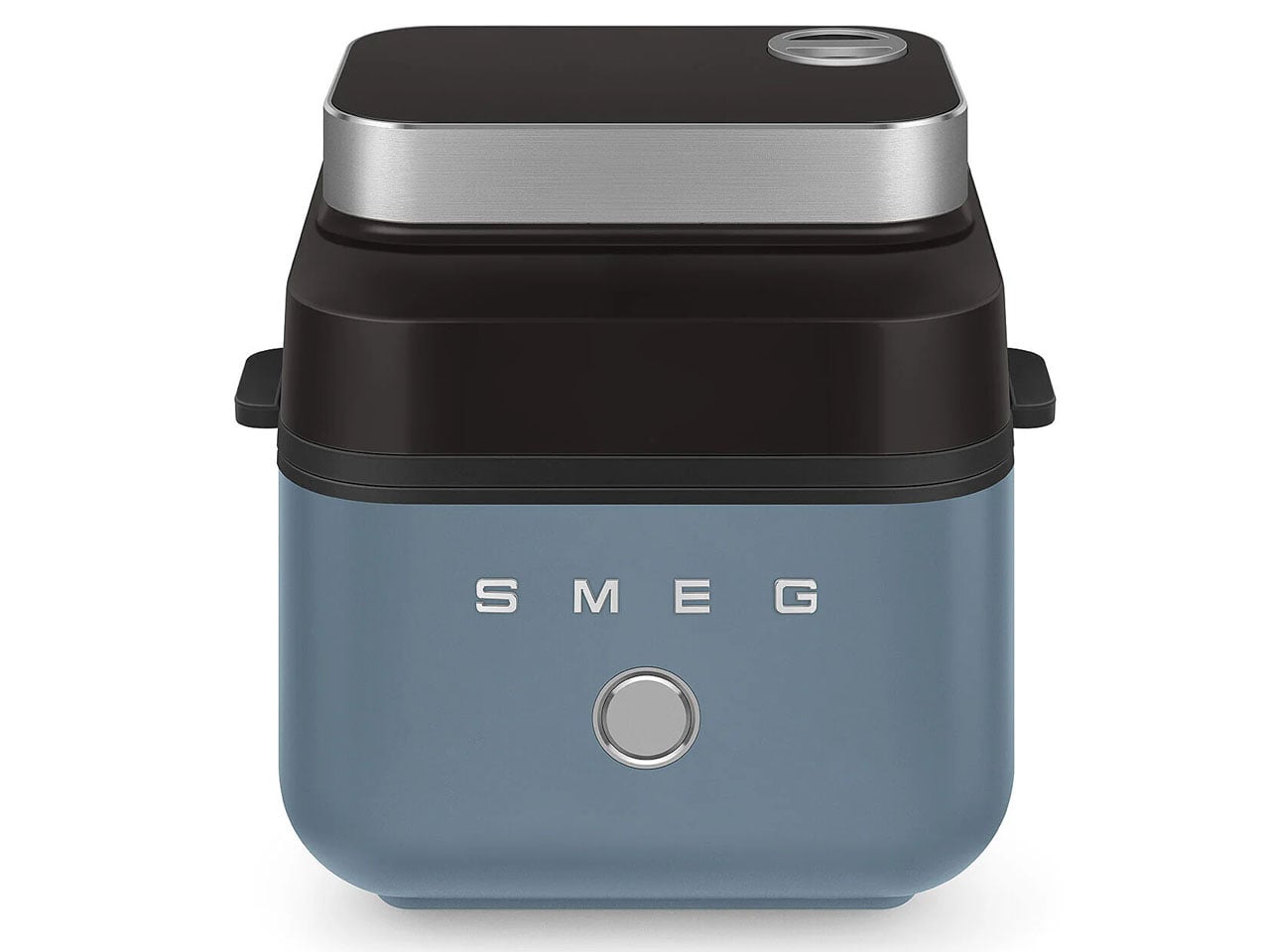
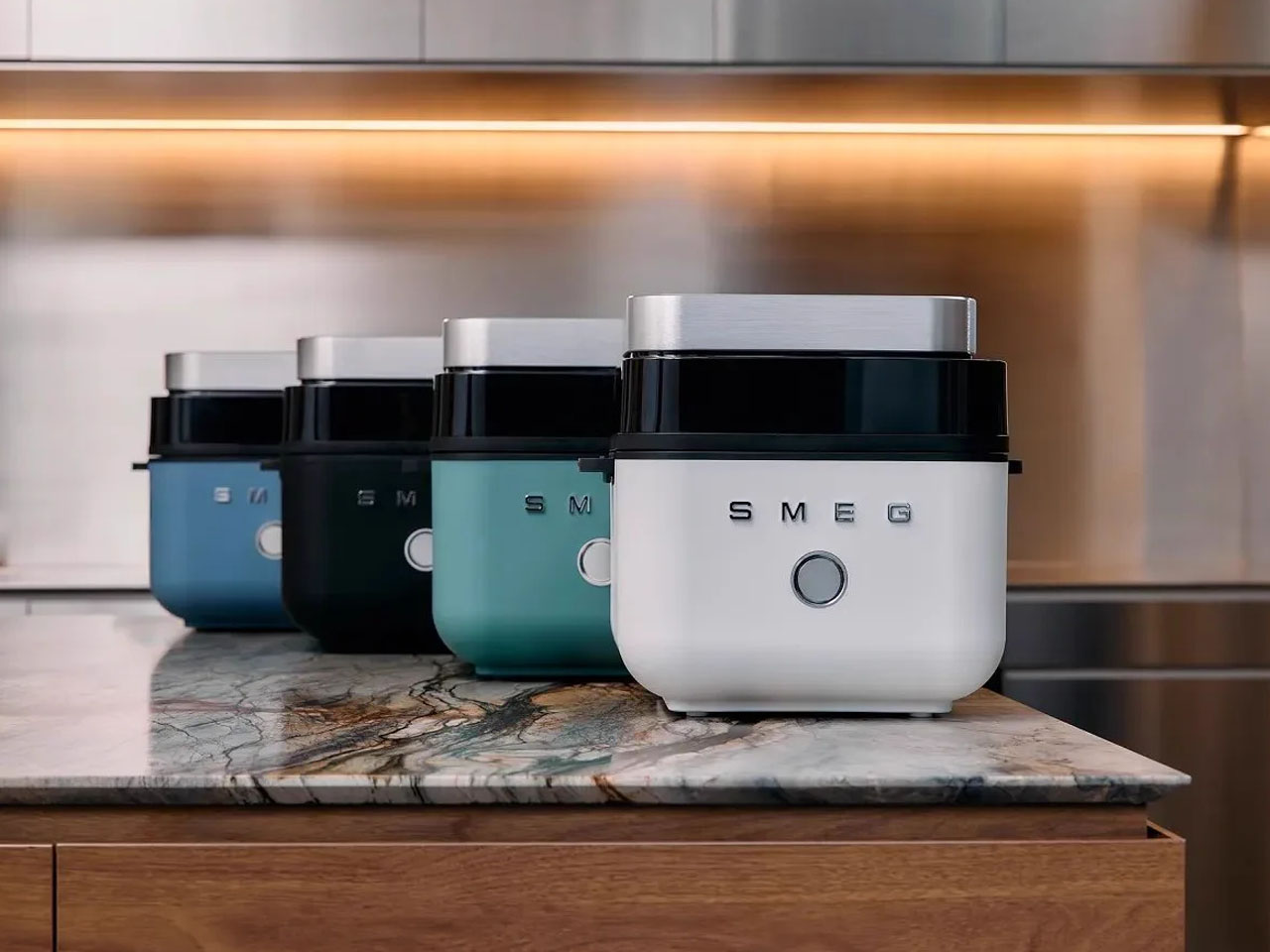
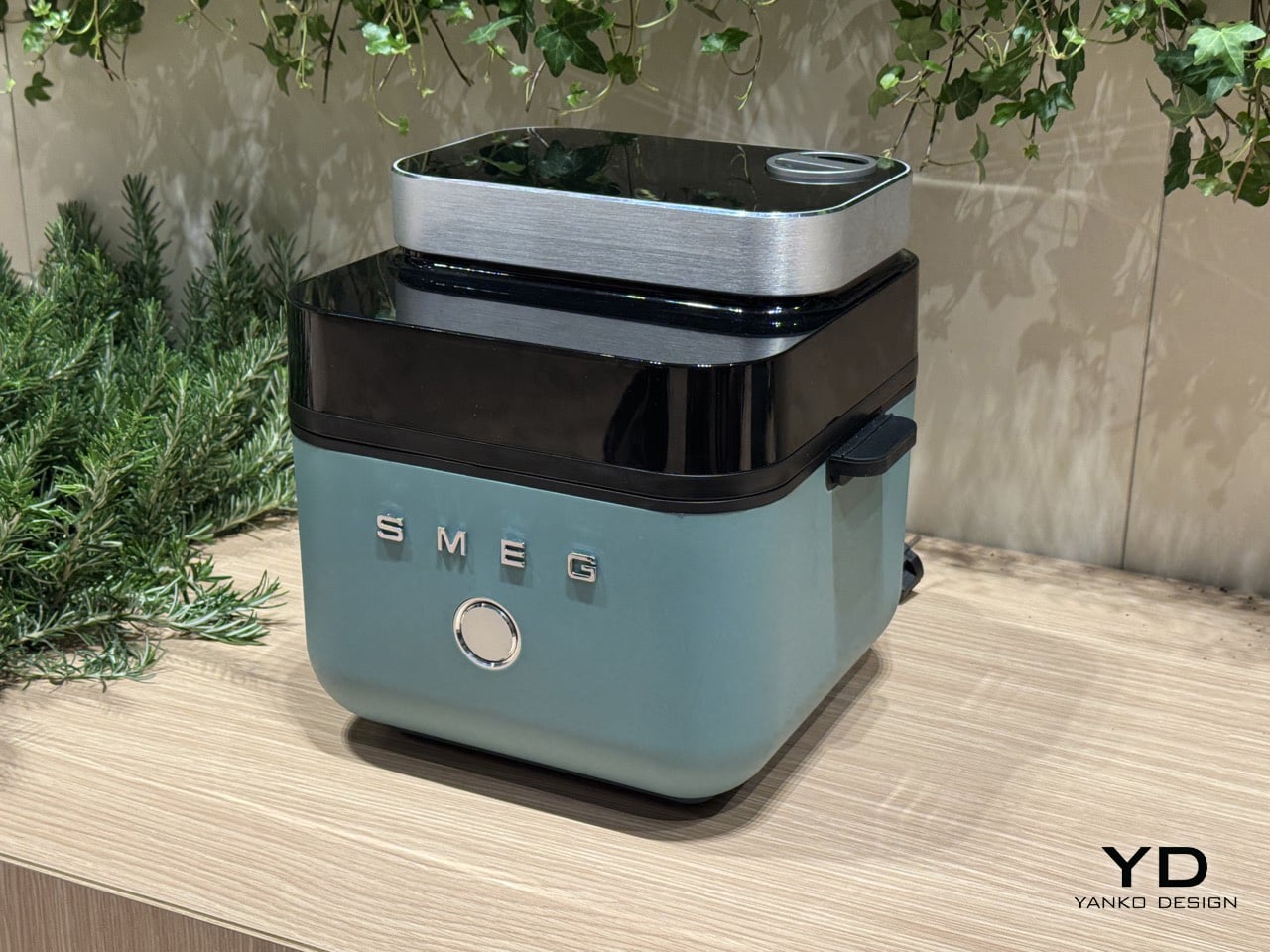
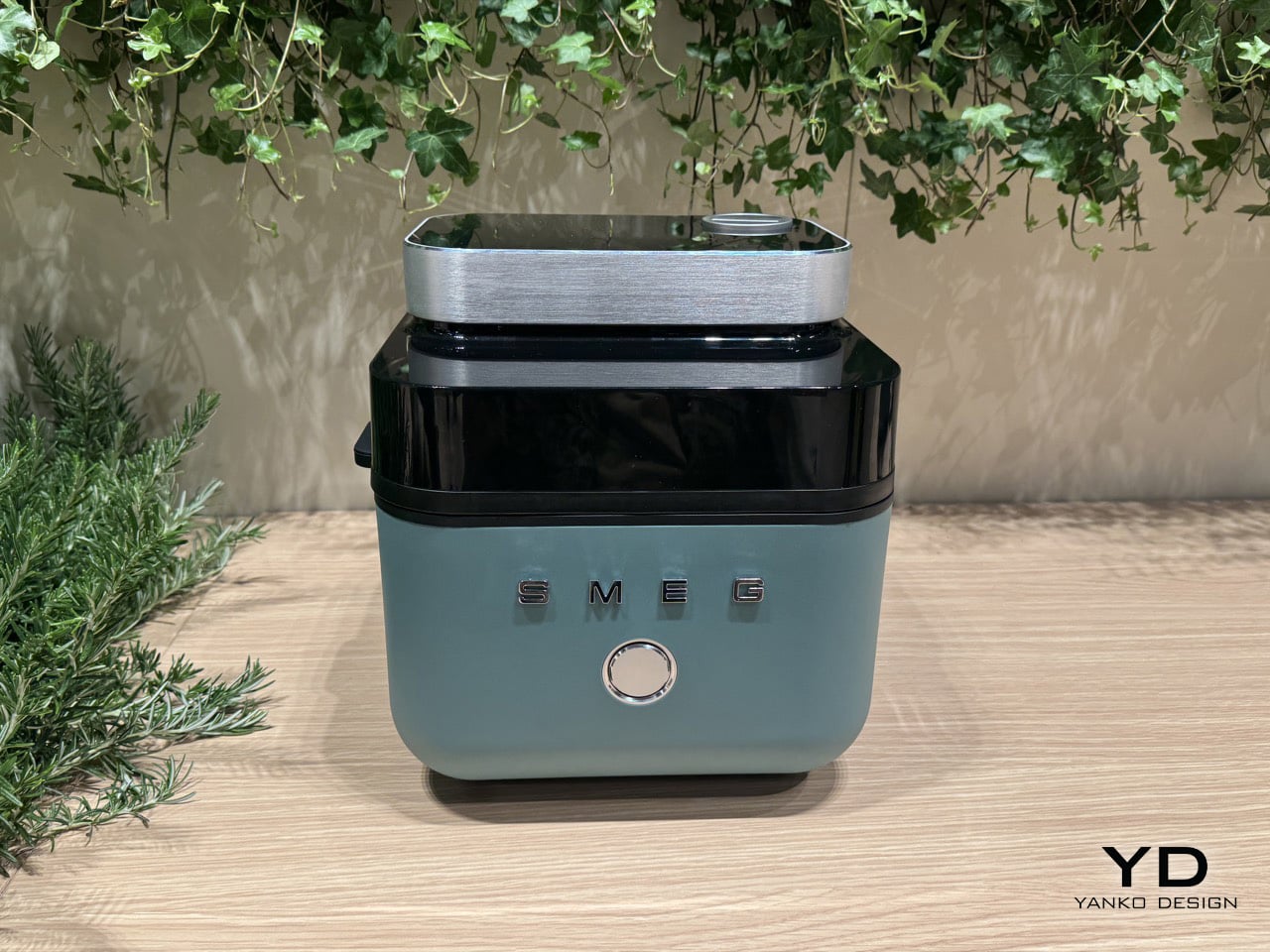
Smeg’s first air fryer with built-in steamer is available now in four gorgeous colors

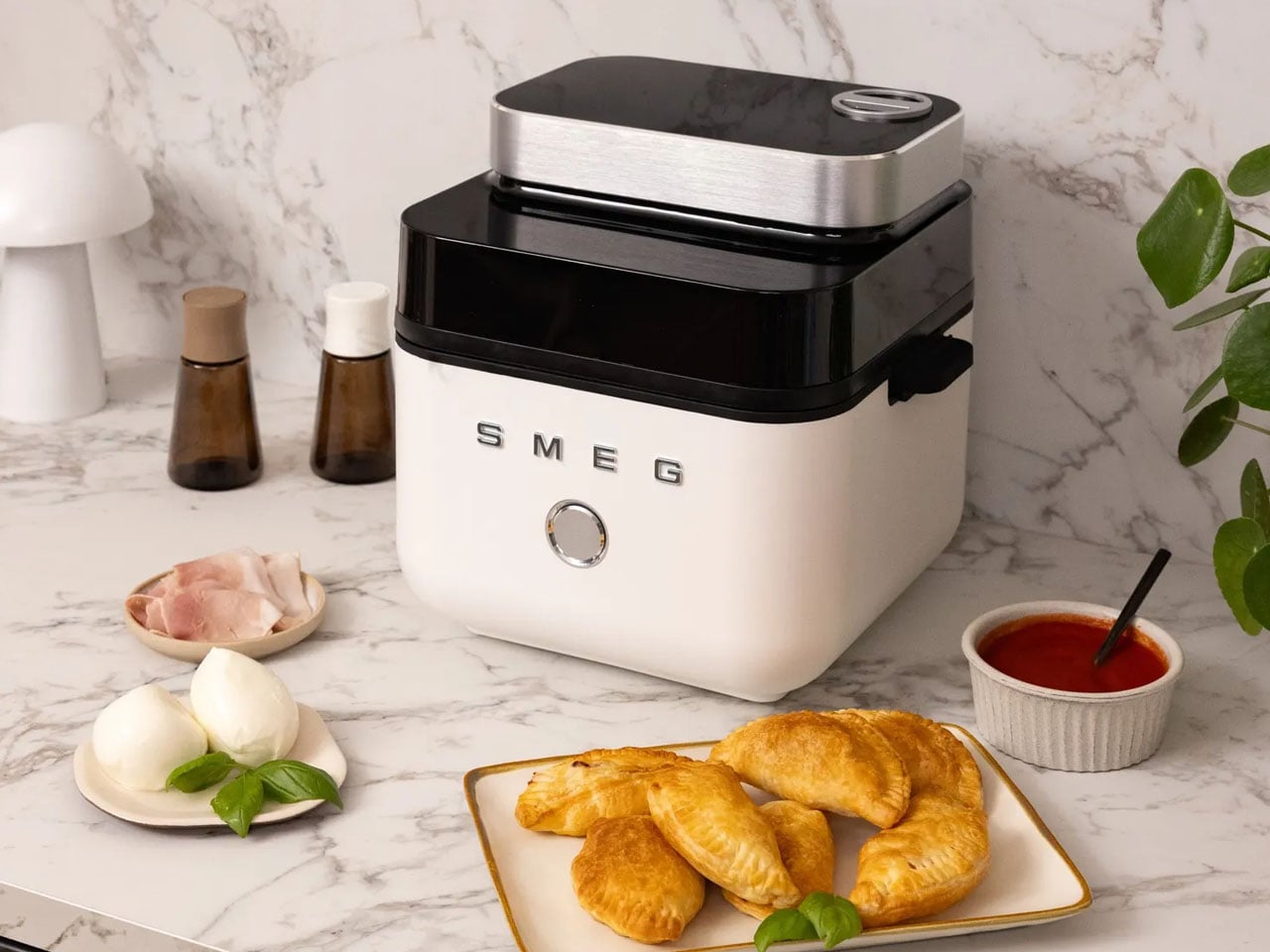
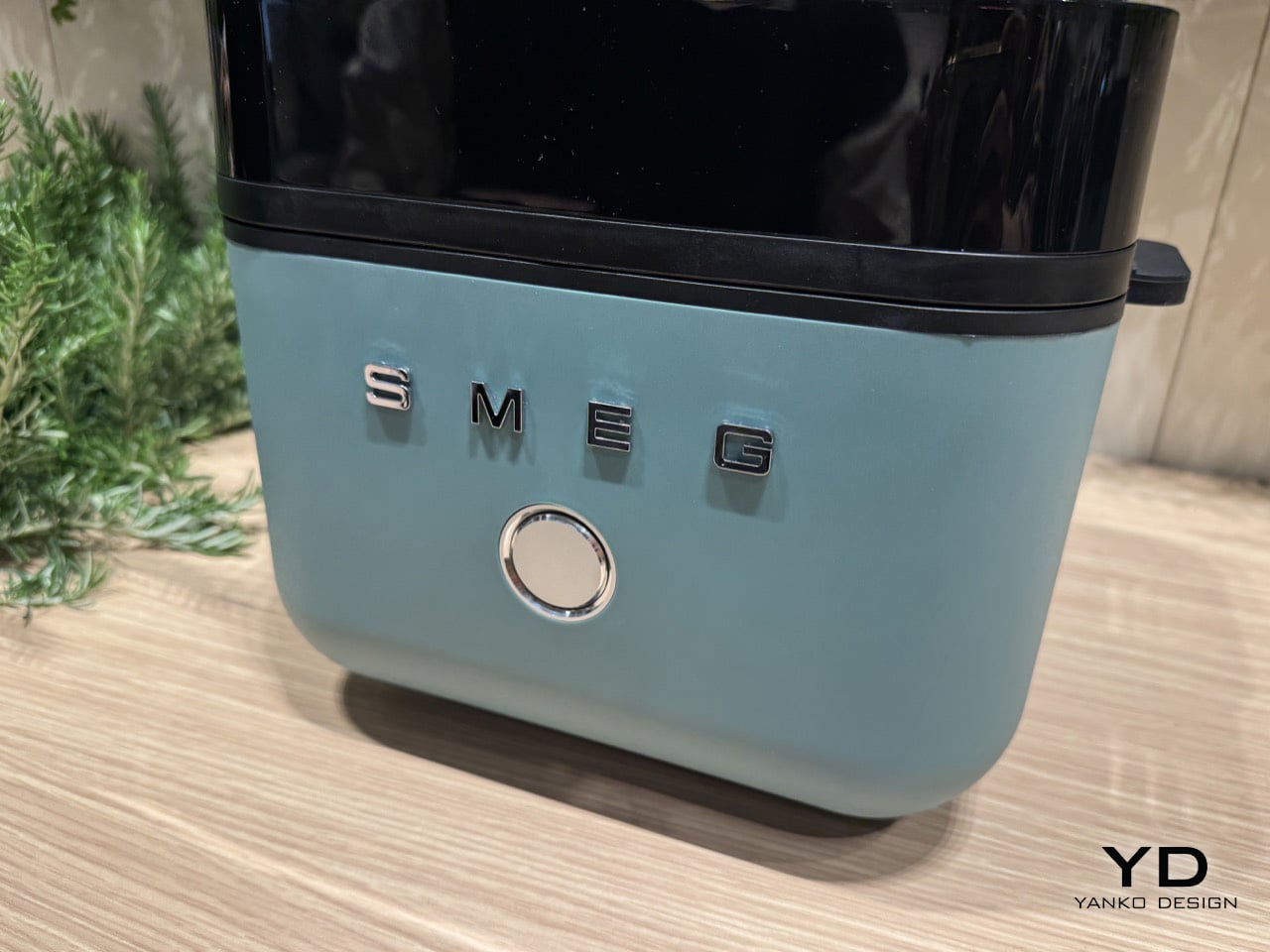
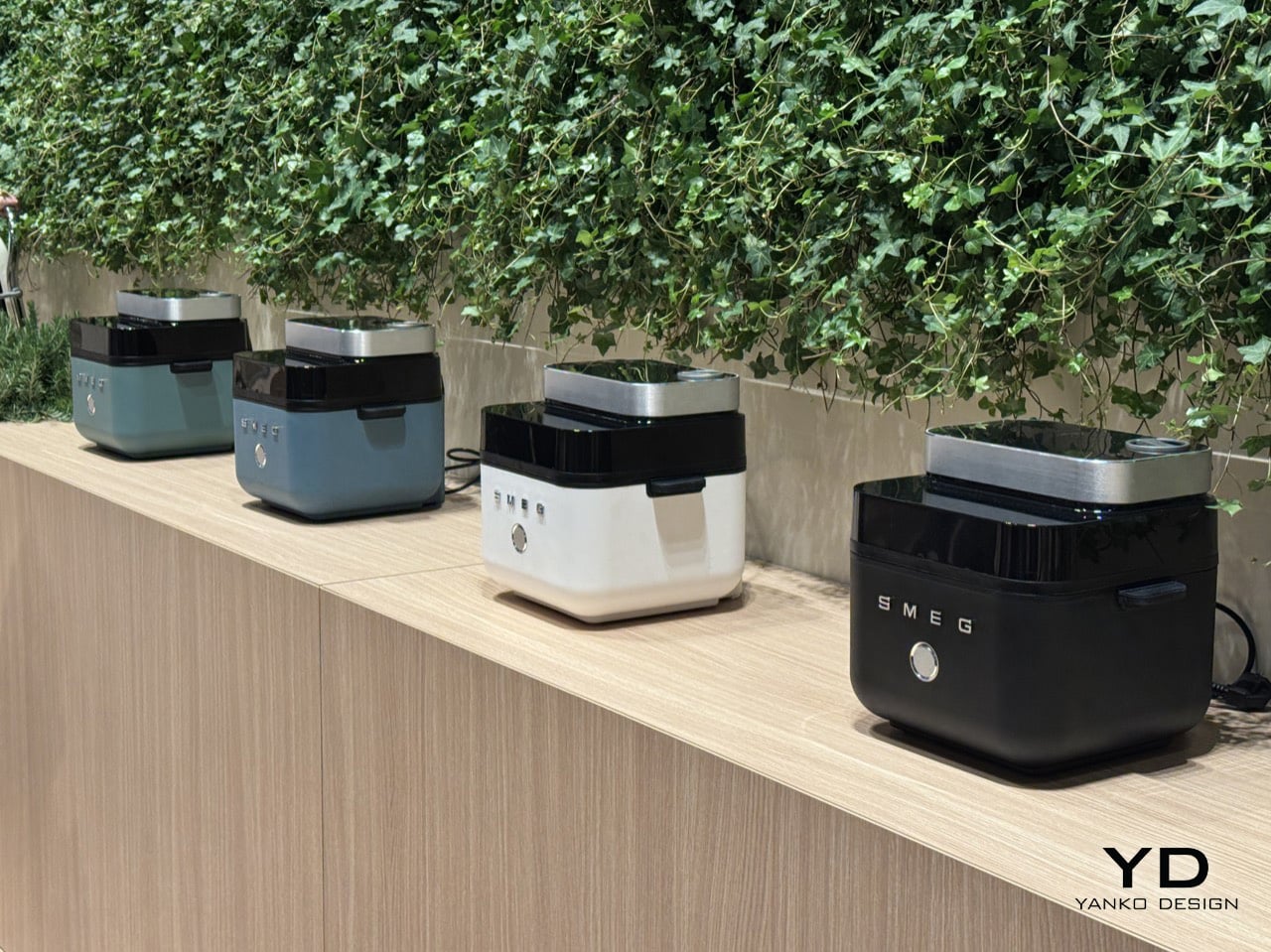
Smeg gave us a first glimpse of its maiden air fryer with its own built-in streamer at Milan Design Week earlier this year. The colorful new appliance was nothing more than a concept back then, with no information whatsoever on whether it would become real. The scenario now stands changed. Smeg officially announces the availability of the new air fryer in four colors to choose from.

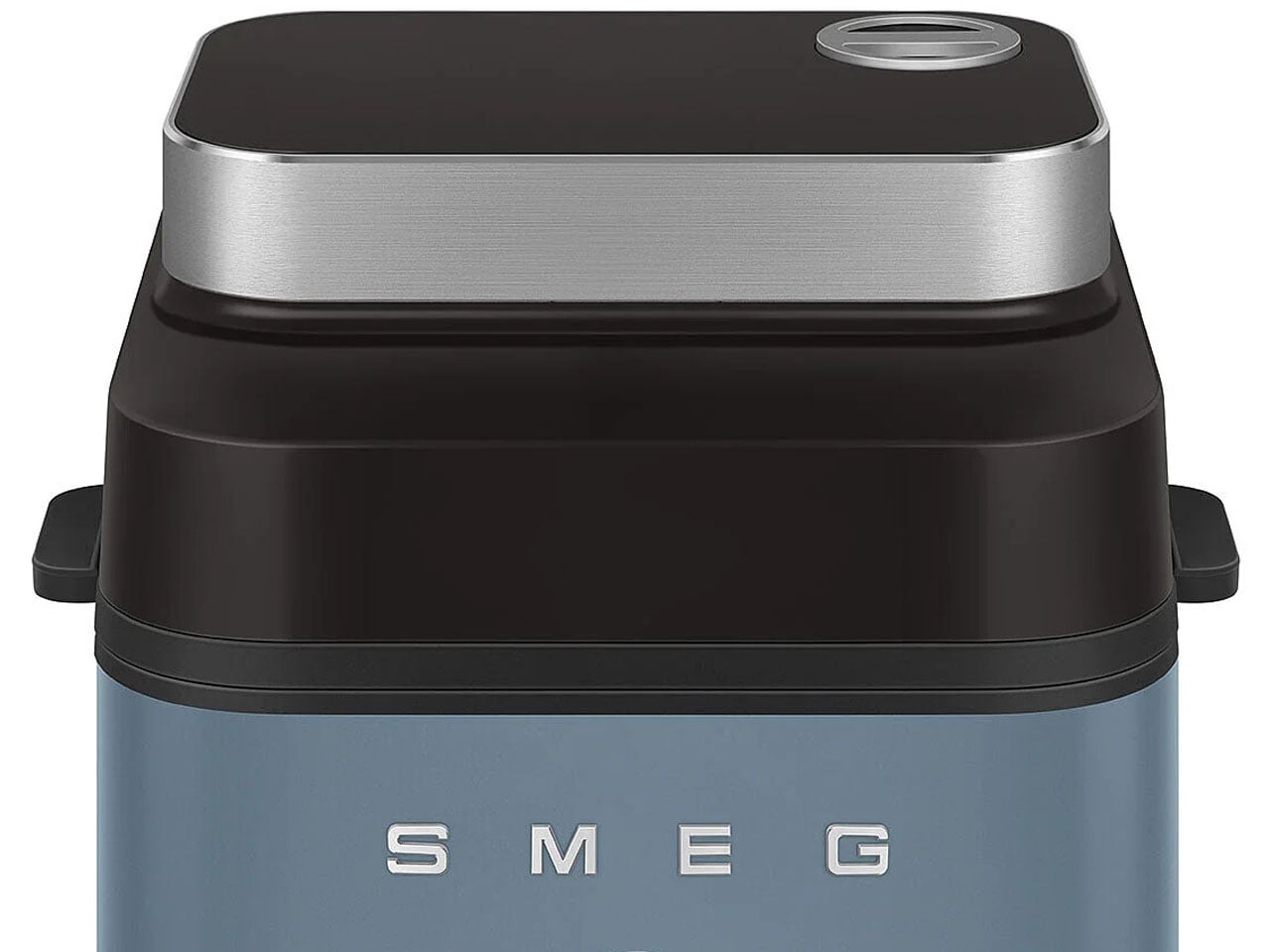
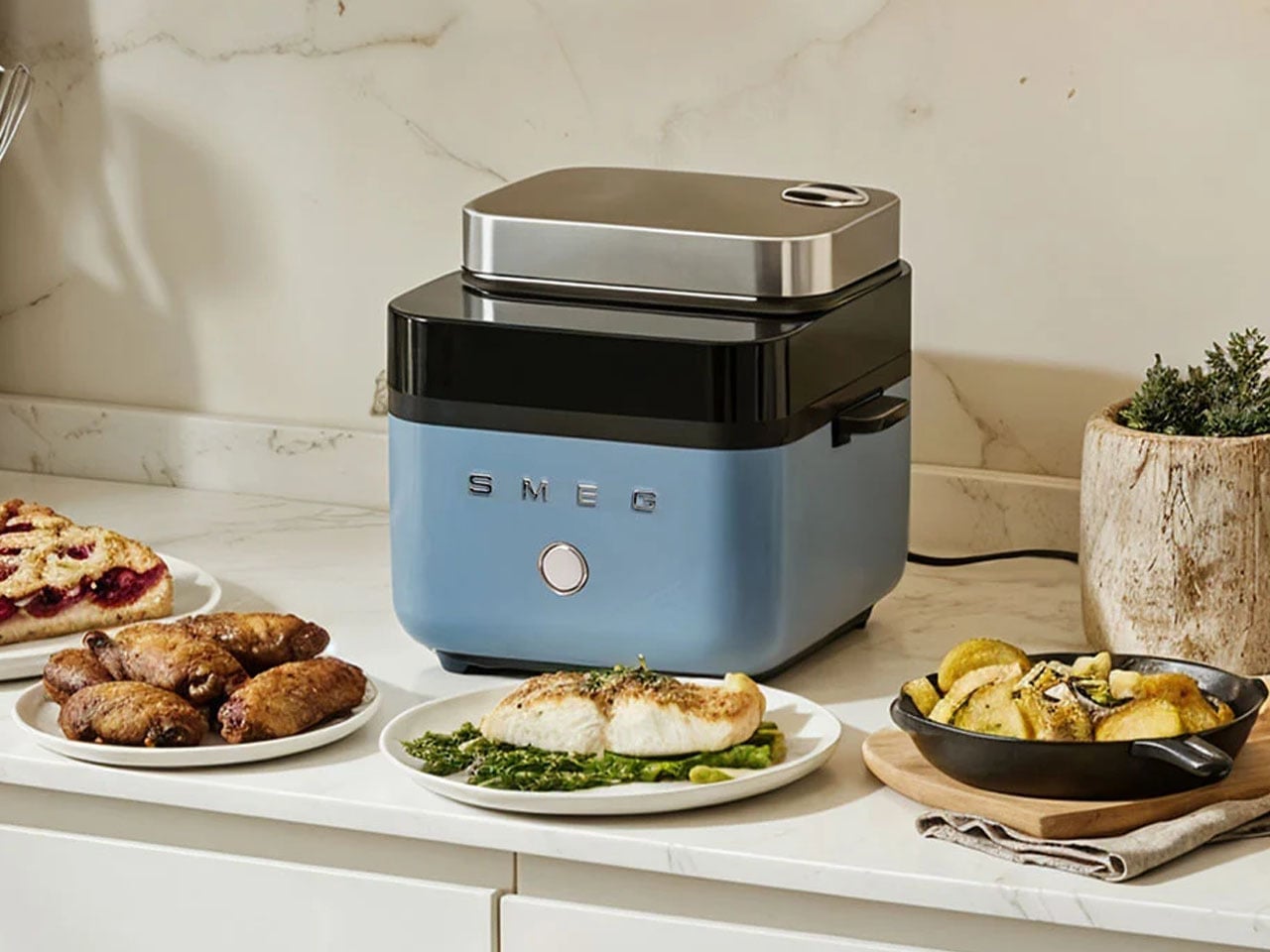
This is the first dedicated air fryer from Smeg, which follows the company’s inclusion of air frying technology in ovens before this. The product range is new, but familiar design language with vibrant color options and a matte body makes the appliance recognizable in the crowd.

Designer: Smeg

Smeg calls it the AFC01 Dual Flavor Air Fryer and distinguishes itself from the others on the market with its large 7.3-litre capacity and multiple presets and modes to cook with. It comes with two cooking modes to choose between: Crispy and Juicy+Crispy. As the names suggest, in Crispy mode, the air fryer cooks food evenly to get a crispy crust and golden-brown color, which is recommended by Smeg for breaded meals, snacks, and vegetables.

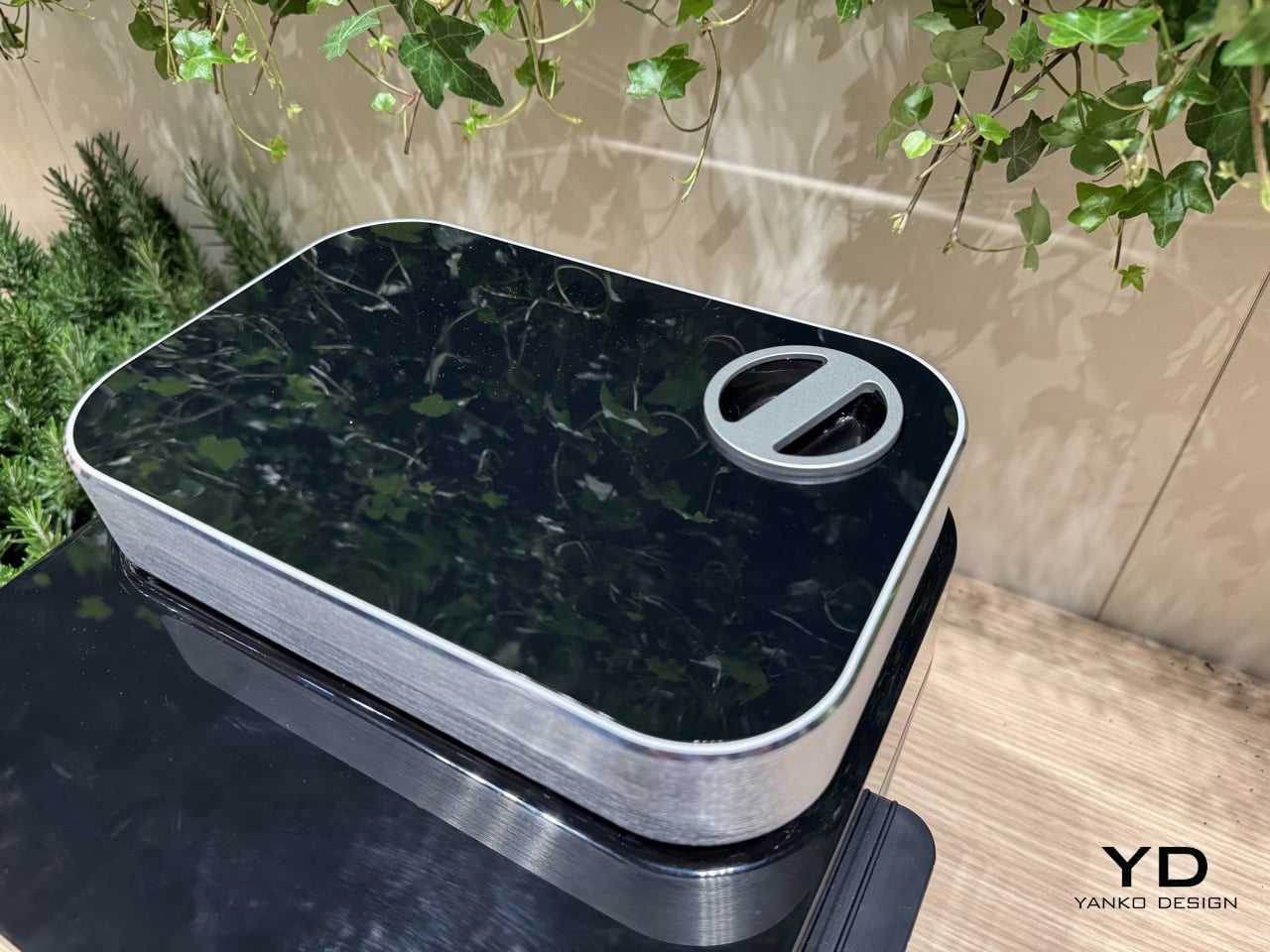
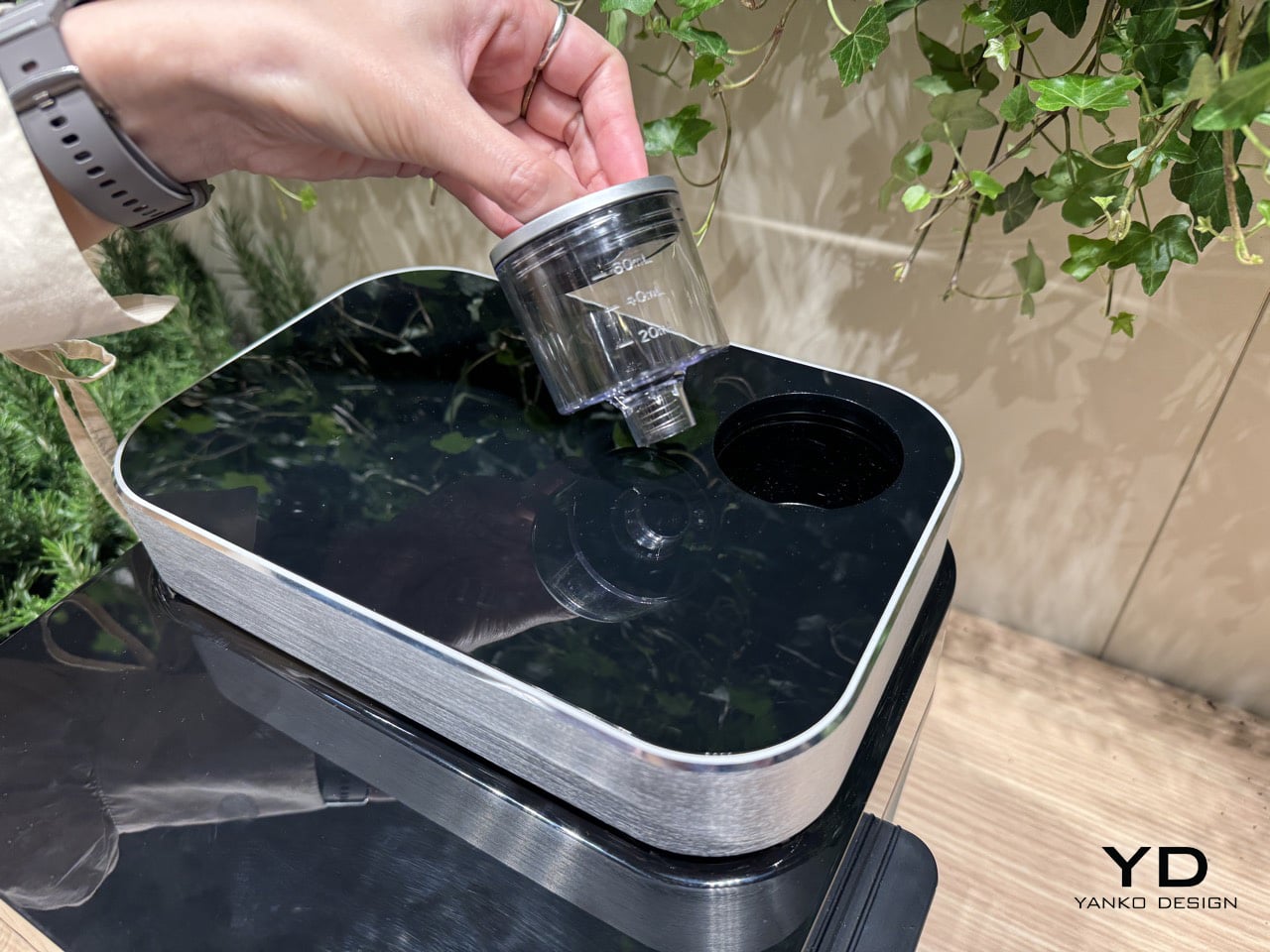
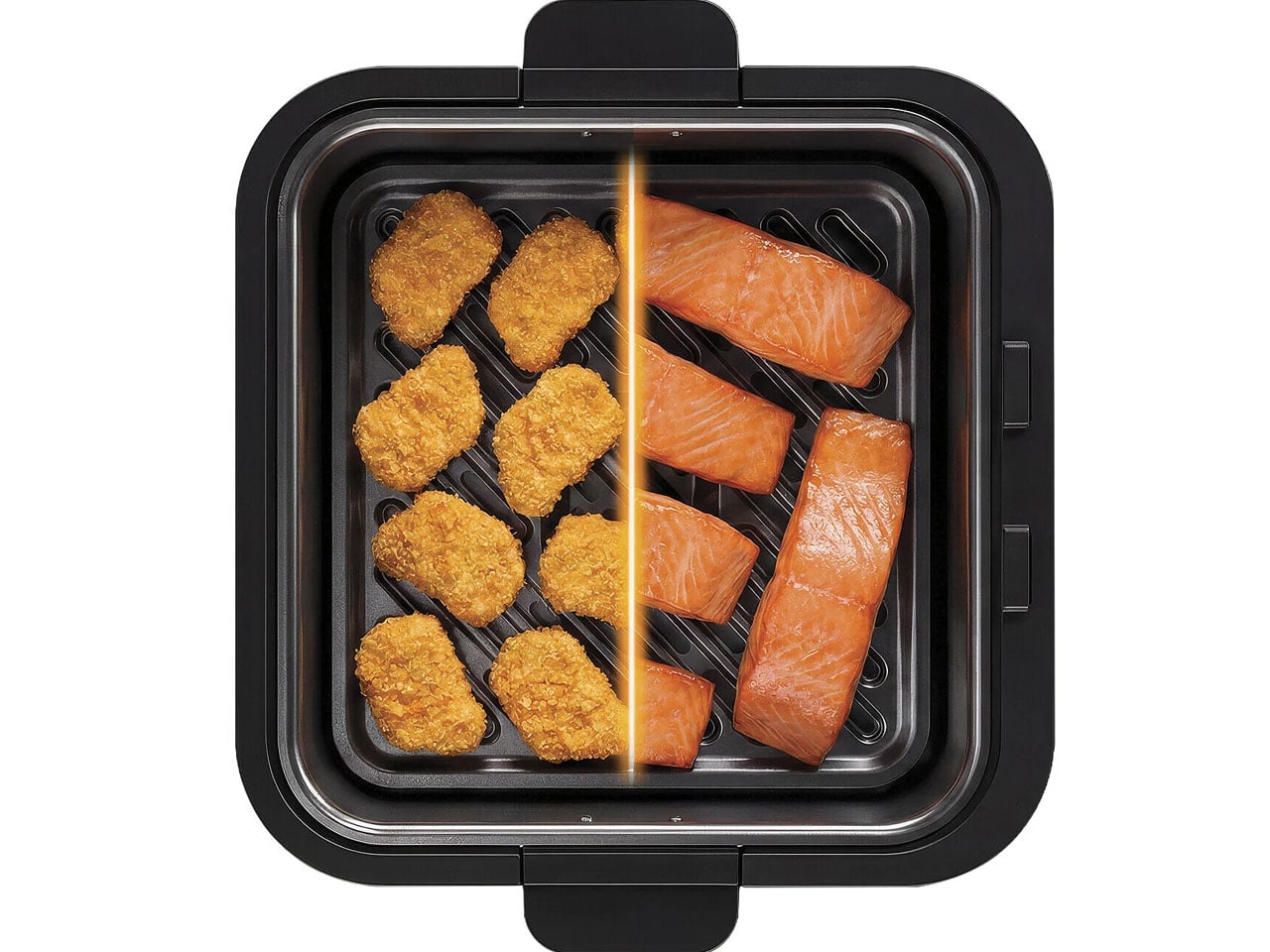
The Juicy+Crispy cooking mode, on the other hand, can provide foods with a crispy exterior and juicy center. This is possible with the Smeg Dual Flavor Air Fryer since it combines hot air circulation with the fryer’s own internal steaming system, so the food retains its flavorful moistness inside while forming a crisp crust on the outside. For the steam feature, Smeg has built a water cartridge that you can pull out and fill up. It is located at the top of the fryer. Once you choose the setting, the steam is deployed into the basket, providing it with moisture that helps make breads fluffy and wedges crispy outside and juicy inside. Both the Crispy and Juicy+Crispy modes can work in manual or in any of the seven pre-set controls. The fryer consumes little to no oil in the process.

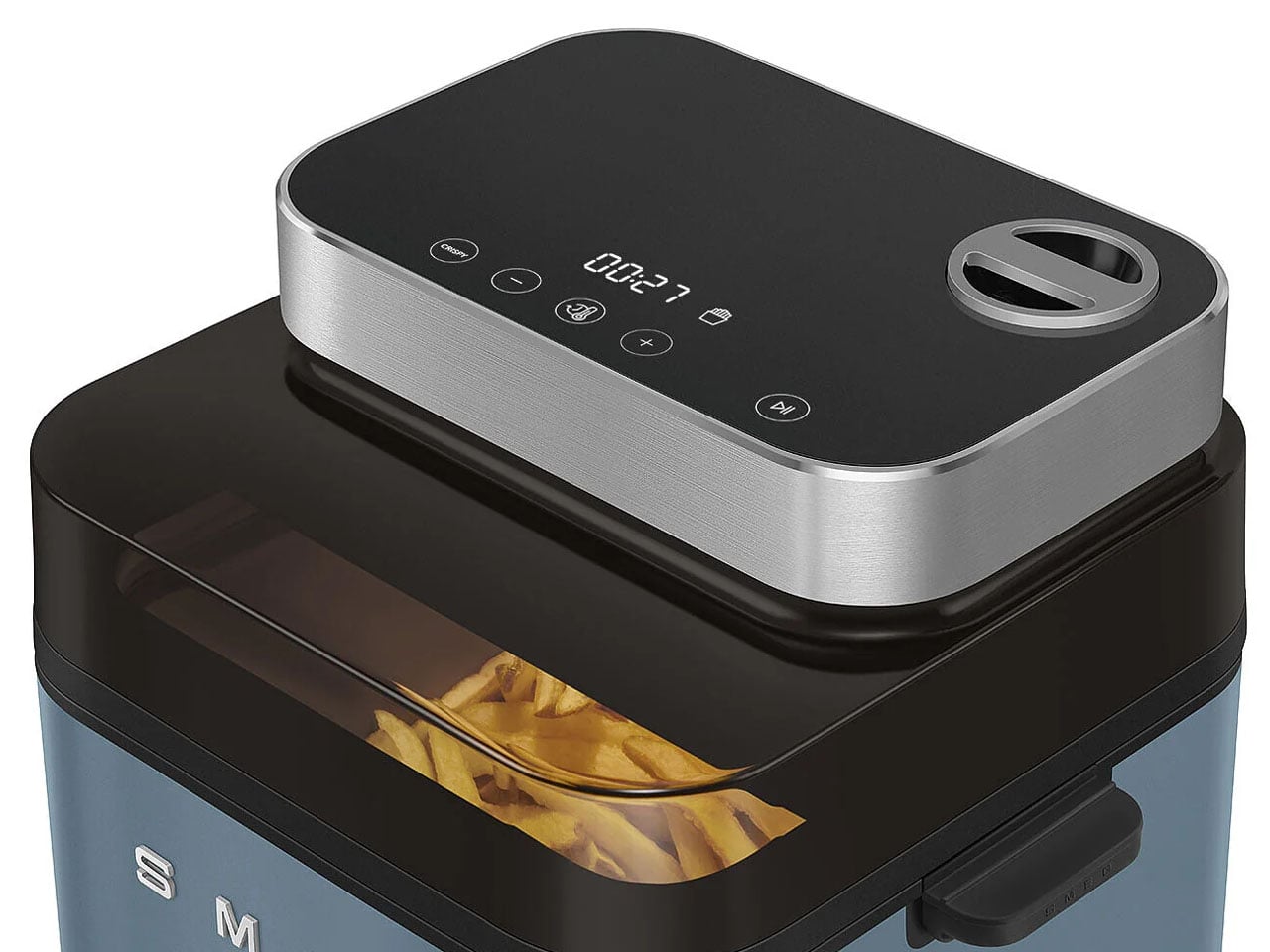
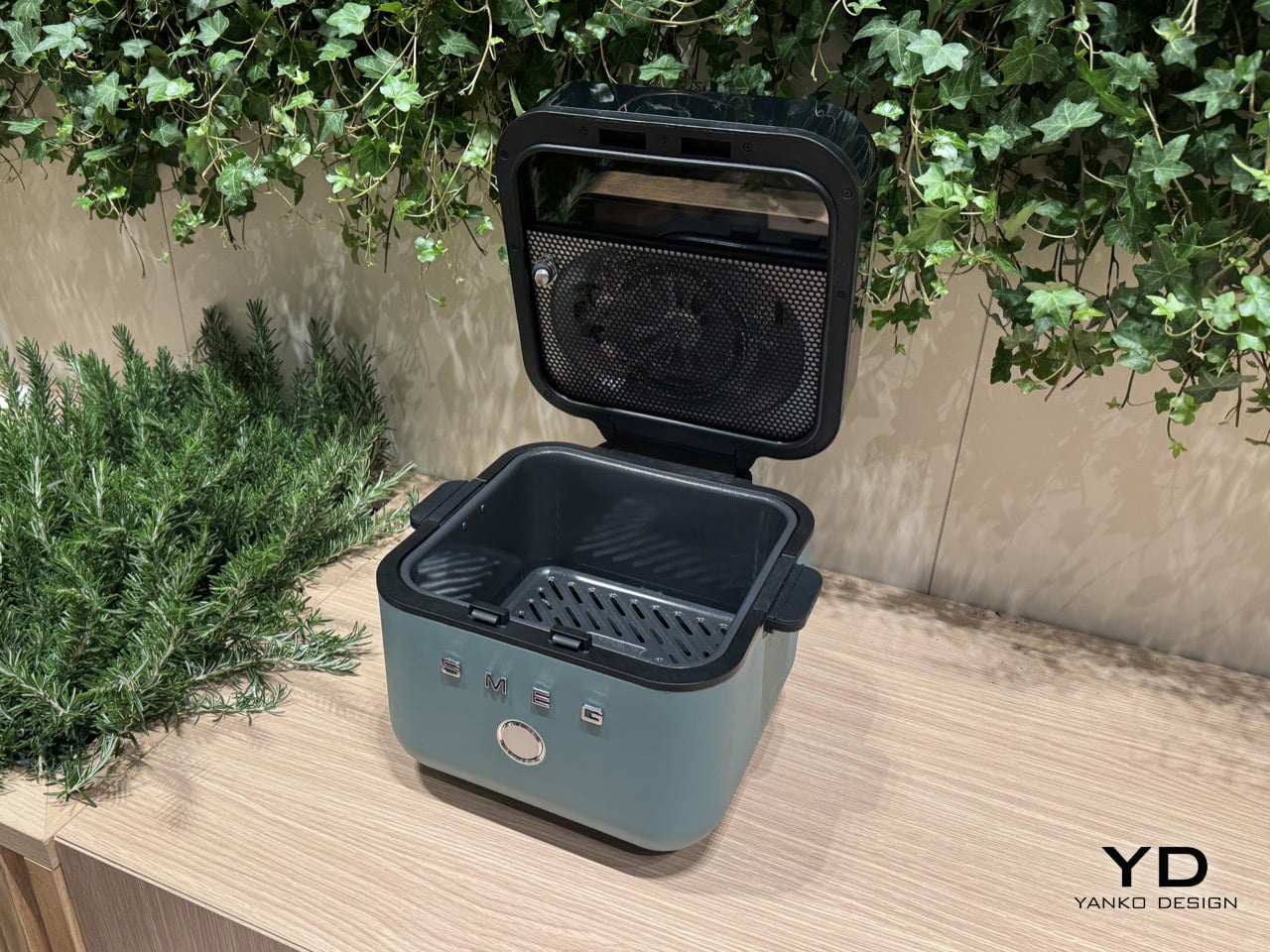
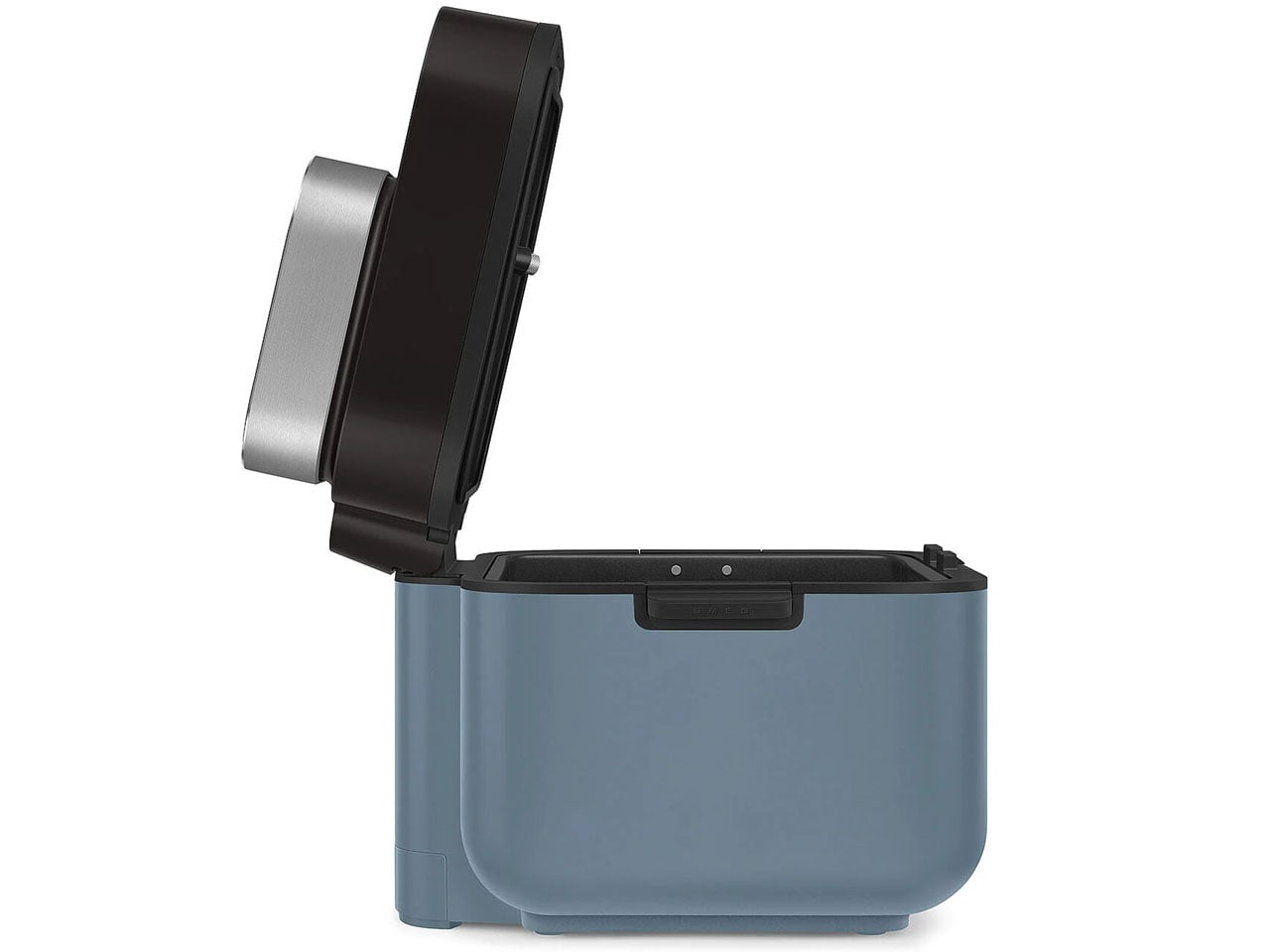
Interestingly, the new Smeg air fryer operates differently from the run-of-the-mill air fryers out there. It features a flip-open top that operates at the touch of a button on the control panel, which is a touchscreen display located at the top of the air fryer. When you press the button, the top lid flips open to reveal the frying basket inside.

It is easy to remove the basket using its silicone handles for cleaning. The basket itself is made from non-stick ceramic coating, making it dishwasher-safe. The top of the fryer has a large viewing window to keep a real-time check on your food’s progress while it cooks crisp or juicy inside. If you’re interested in this new take on the air fryer by Smeg, you can get it for £199.95 (approximately $270) now in black, white, storm blue, or emerald green colors.

The post Smeg’s first air fryer with built-in steamer is available now in four gorgeous colors first appeared on Yanko Design.
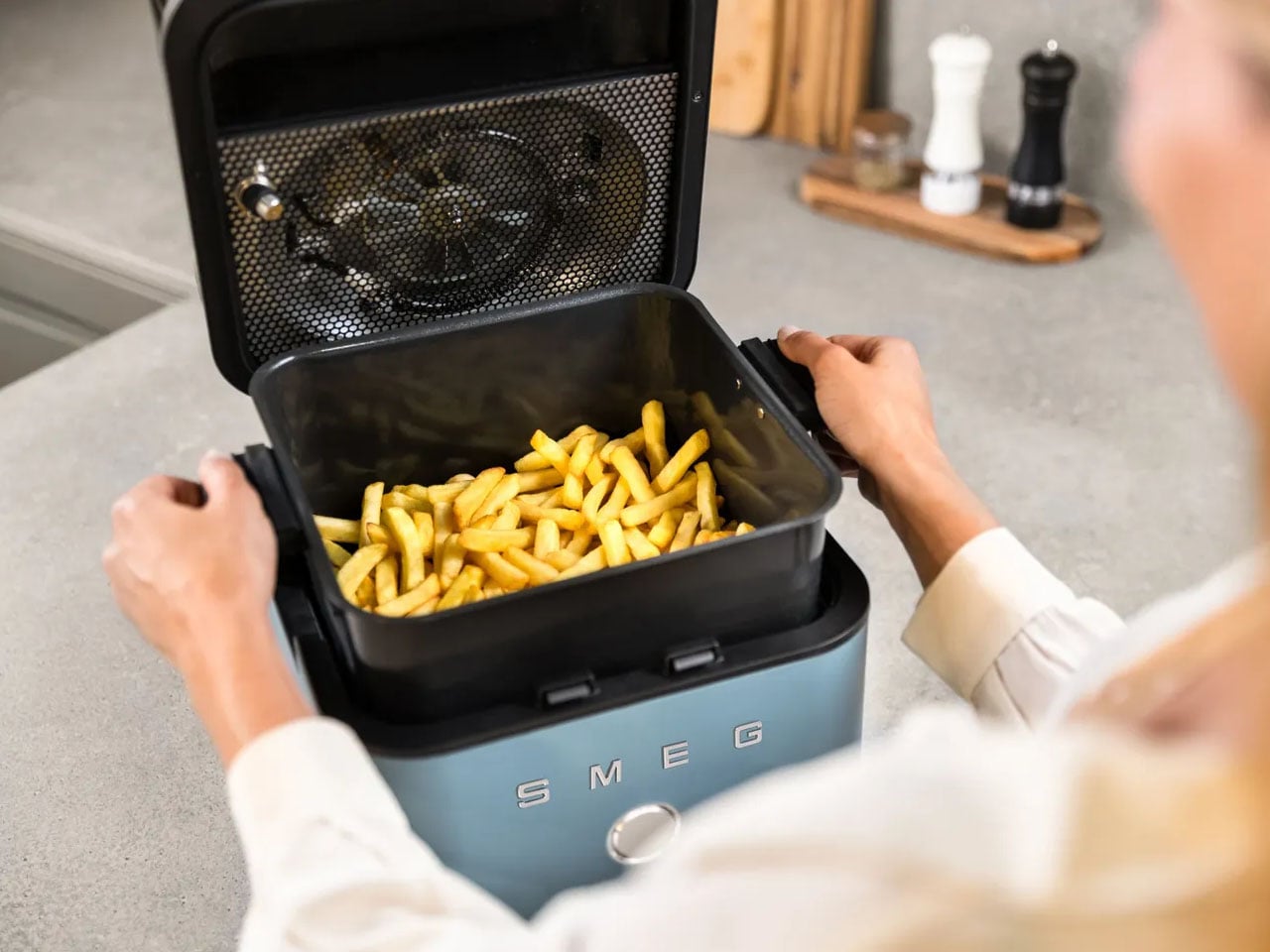
Weber Is Shutting Off the June Oven’s AI Camera, and a $90 Air Fryer Already Does The Same Thing

Somewhere in a warehouse in Illinois, someone at Weber is about to flip a switch that turns a $999 oven back into a very expensive toaster. On September 22, the June Oven loses its cloud, its app, and the camera trick that made it famous in the first place. You can still push the manual buttons. You just lose the part where the oven looks at your chicken thighs and quietly figures out what to do with them.

Here’s the kicker. That exact party trick, the camera that scans your food and picks a cook program for you, now lives inside air fryers that cost less than a nice dinner out. June invented food recognition cooking in 2015 for fifteen hundred bucks. A decade later you can buy the same basic idea for under a hundred dollars on Amazon. The technology didn’t get worse. It just stopped being special enough to protect.

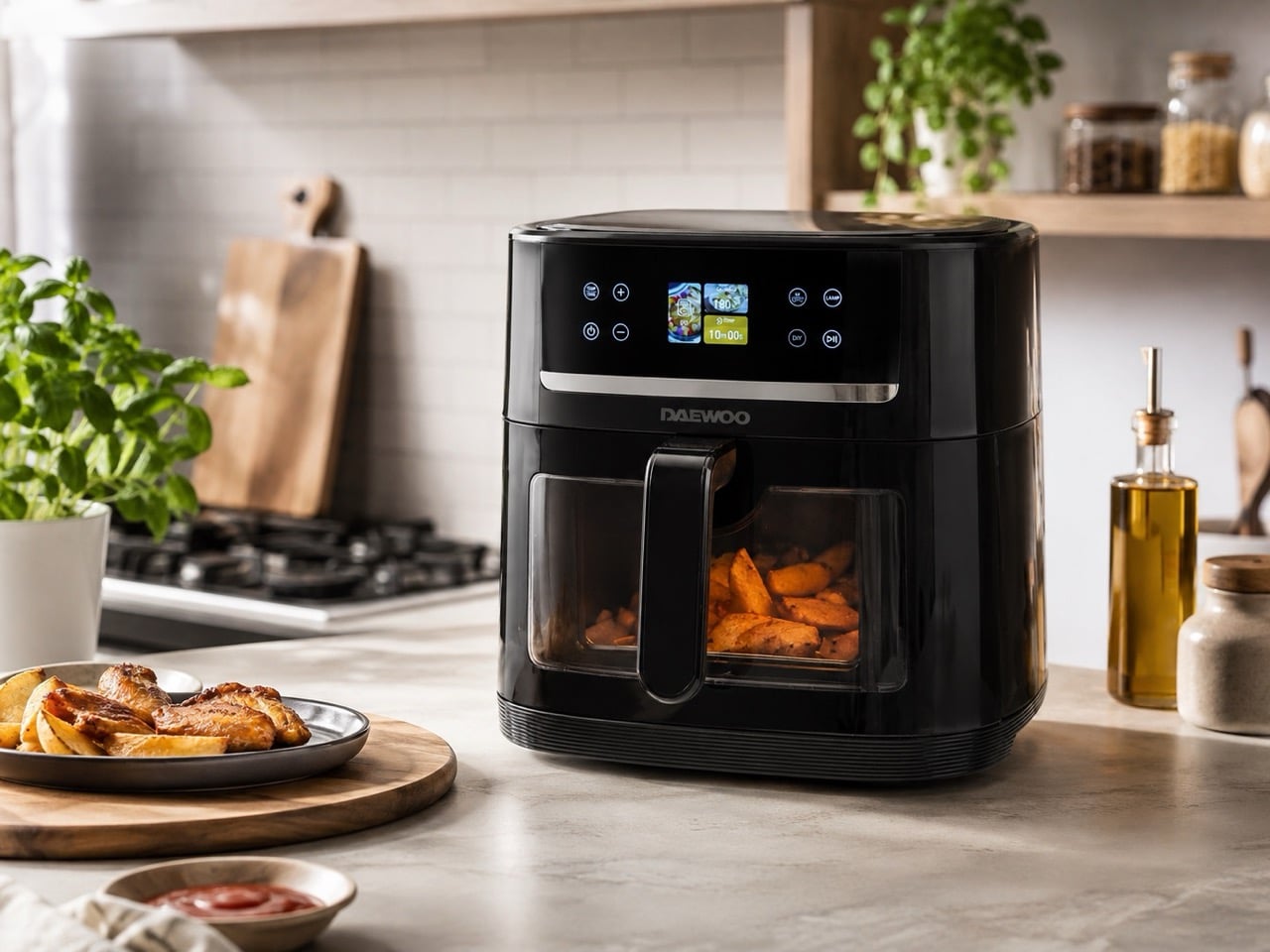
Daewoo Actuate

Weber hasn’t put out a press release about any of this, which tells you plenty on its own. Owners found out by email. Meanwhile the company has been actively expanding Weber Connect, the smart grilling platform June’s own engineers helped build, across its charcoal and gas lineup. So the message, whether Weber meant to send it or not, is that connected cooking tech is worth investing in when it’s attached to a grill, and worth quietly switching off when it’s attached to a toaster oven nobody’s manufacturing anymore.

Daewoo’s Actuate is the cheapest, dumbest version of June’s original idea, and I mean dumbest as a compliment. An internal camera peeks at whatever’s in the basket, matches it against twelve presets like chips, sausages, and chicken, and sets the time and temperature without asking you to tap through a menu. It runs about ninety to a hundred dollars depending on the retailer and the day. No app, no account, no subscription. It just watches your dinner and gets on with it.

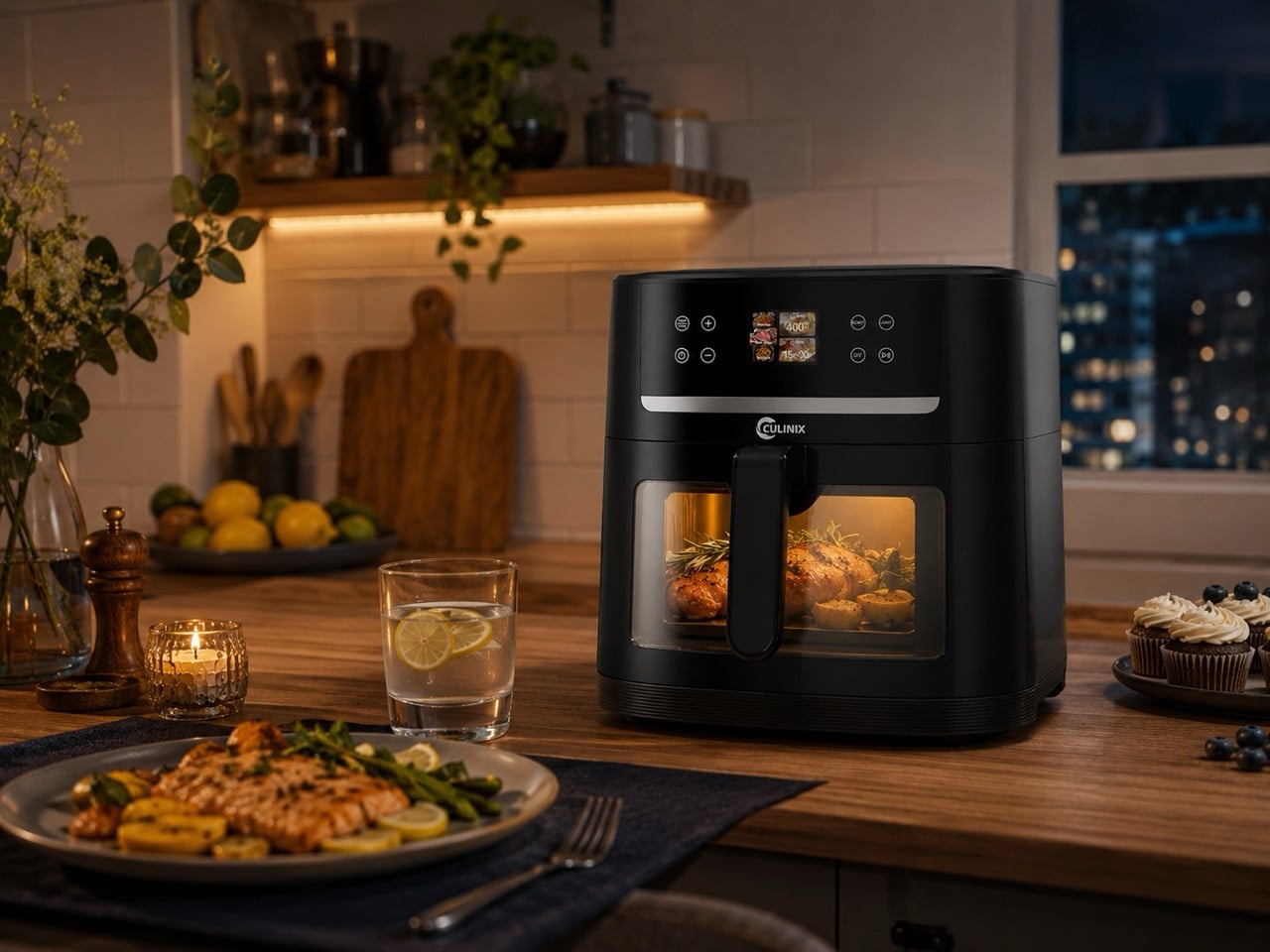
Culinix 8.5QT AI air fryer

Here’s where it gets fun. Culinix sells an 8.5 quart fryer in the US with an AI camera that recognizes twelve foods, and the list reads like it was lifted straight off Daewoo’s spec sheet. Chicken goujon. Fish finger. Beef joint. Chick pea. That is oddly specific British supermarket vocabulary to land on two unrelated product pages by coincidence. My guess is neither brand invented this camera module, they just bought the same one off a factory shelf and slapped their own logo on the box, the same way every USB charger secretly comes from three factories in Shenzhen.

Emerson skipped the camera entirely and gave its SmartVoice fryers ears instead. Say “cook pork chops” and it just does it, no app, no wifi, all the processing happening locally on the device. It’s not glamorous, but it solves a real problem for people who find touchscreens fiddly, whether that’s arthritis, low vision, or just being elbow deep in raw chicken and unable to tap anything. I’d argue this is the most quietly useful of the three schools, even though it’ll never trend on a gadget blog.

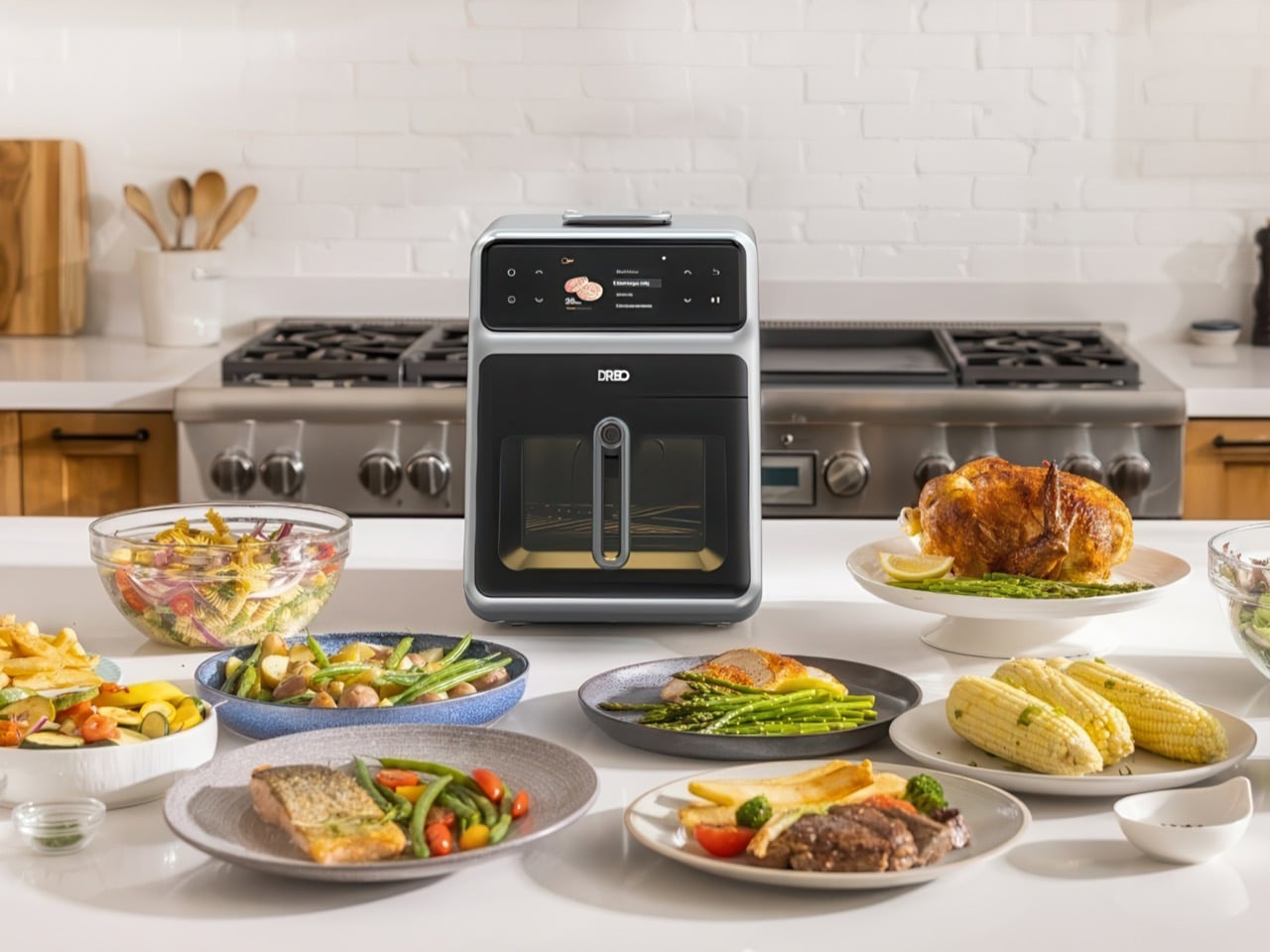
Dreo ChefMaker

Xiaomi and Dreo took the opposite bet and gave up on guessing entirely. Xiaomi’s Mijia Pro adds a water tank so it can steam and sous vide alongside the usual hot air, which actually changes the physics of what comes out the other end. Dreo’s ChefMaker goes further and sticks a probe straight into the meat, measuring real internal temperature instead of inferring anything from a camera. It’s the only method here that isn’t a guess.

Which brings us back to June. Anova’s newer oven has the same food recognition camera, except the feature only works if you’re actively paying a subscription. So the actual choice in 2026 isn’t camera versus voice versus probe. It’s whether you own the smarts in your kitchen outright, or you’re just renting them from a company that can turn them off the second it stops making sense on a spreadsheet.

The post Weber Is Shutting Off the June Oven’s AI Camera, and a $90 Air Fryer Already Does The Same Thing first appeared on Yanko Design.
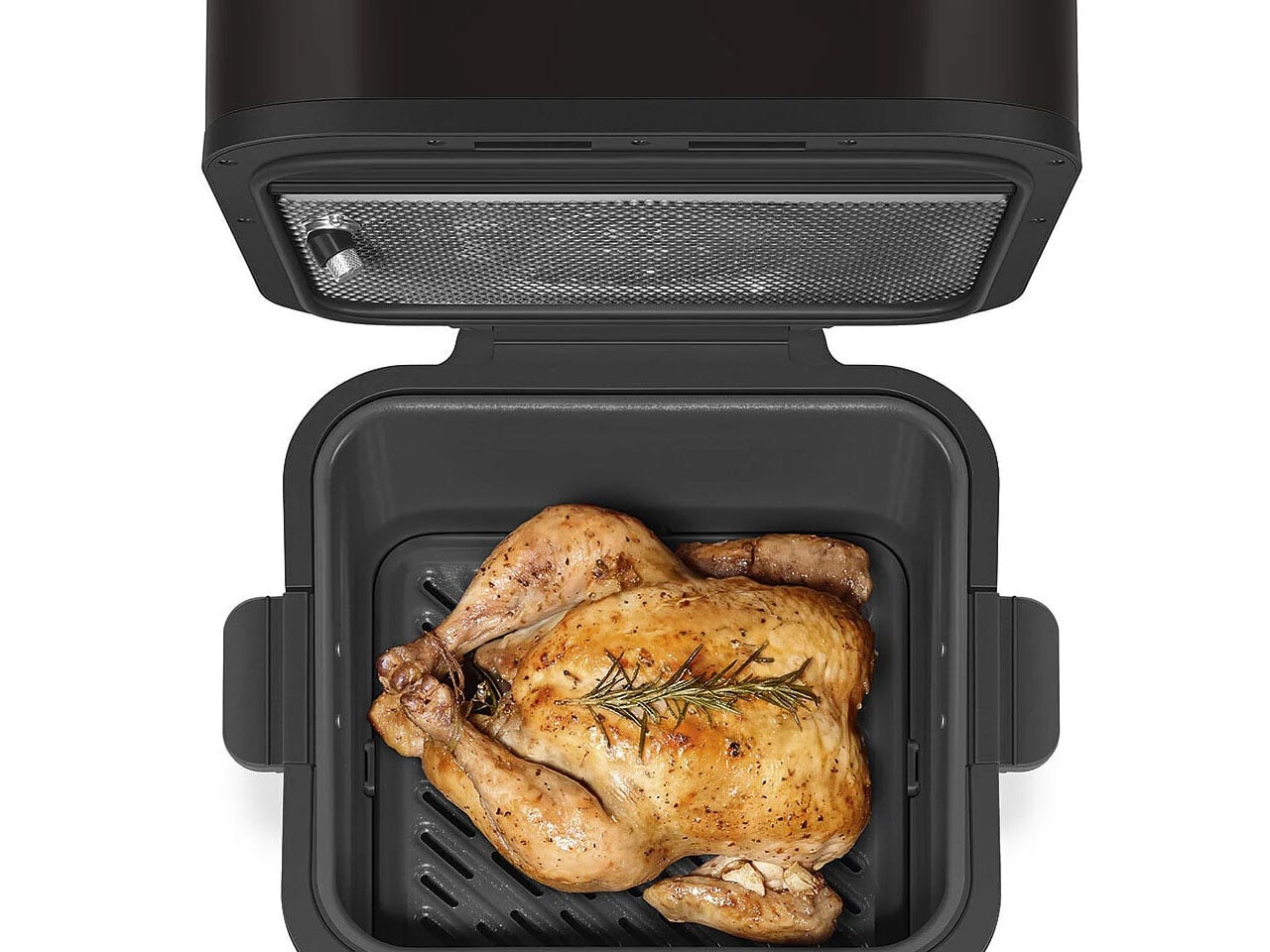
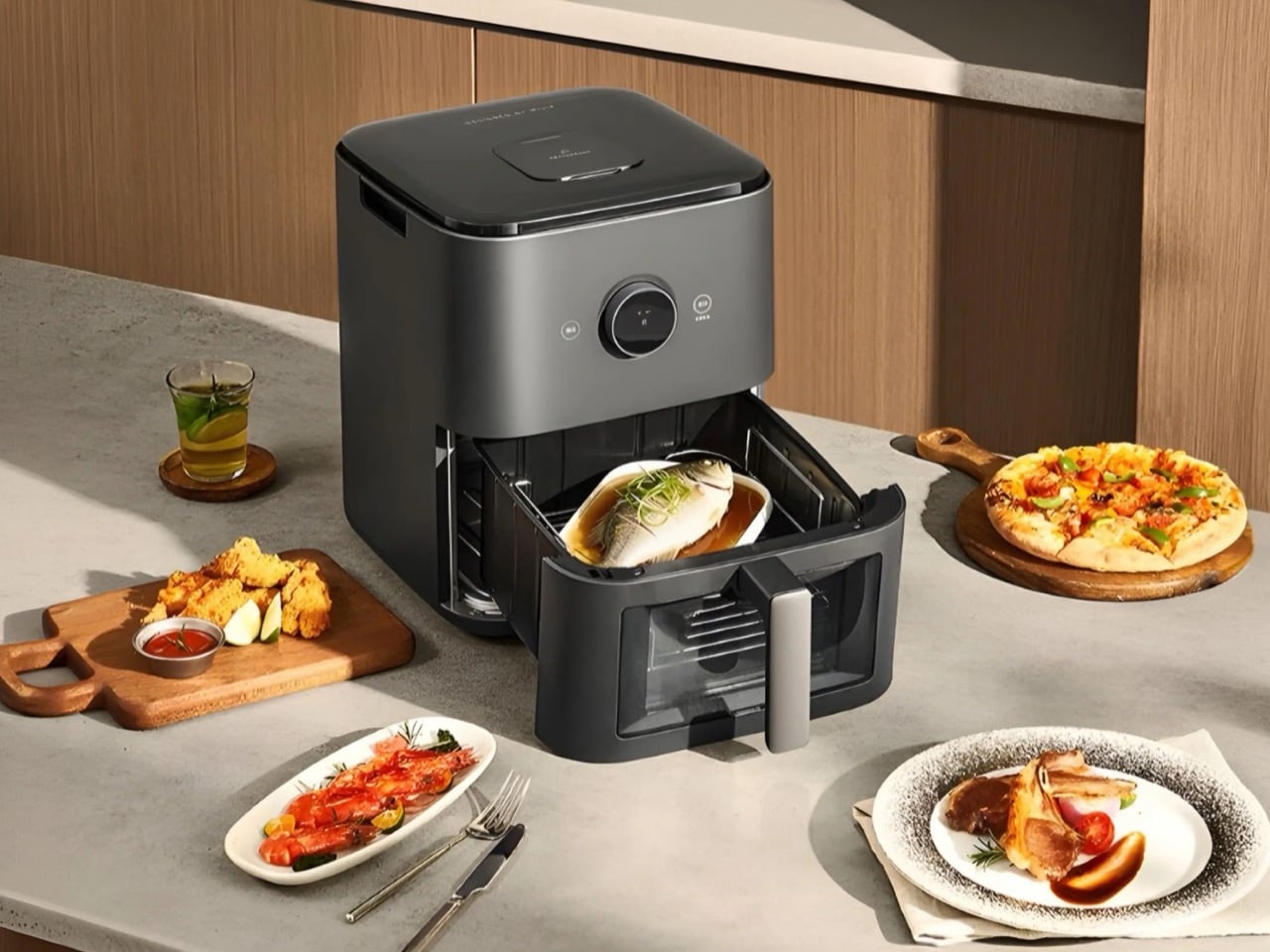
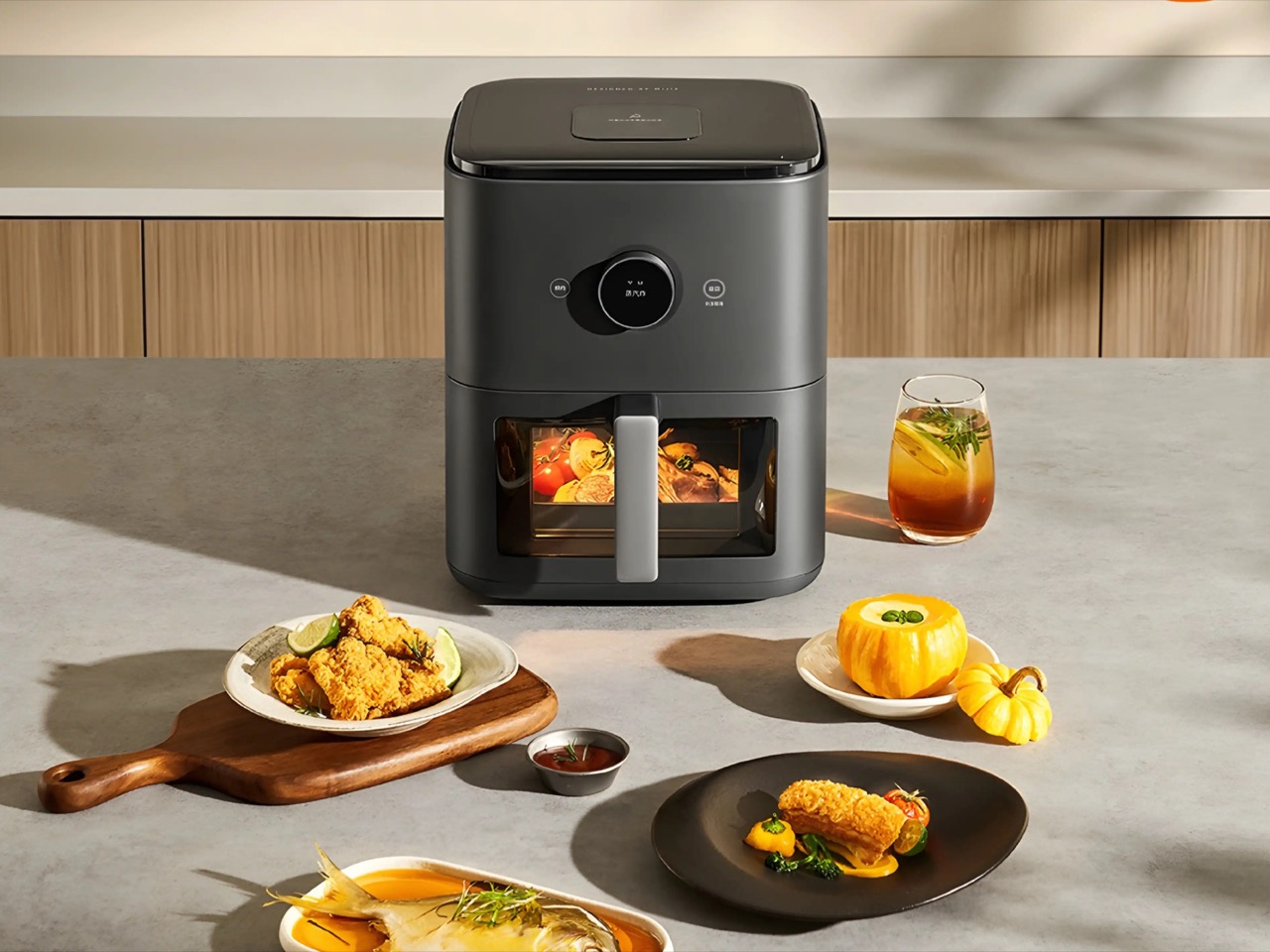
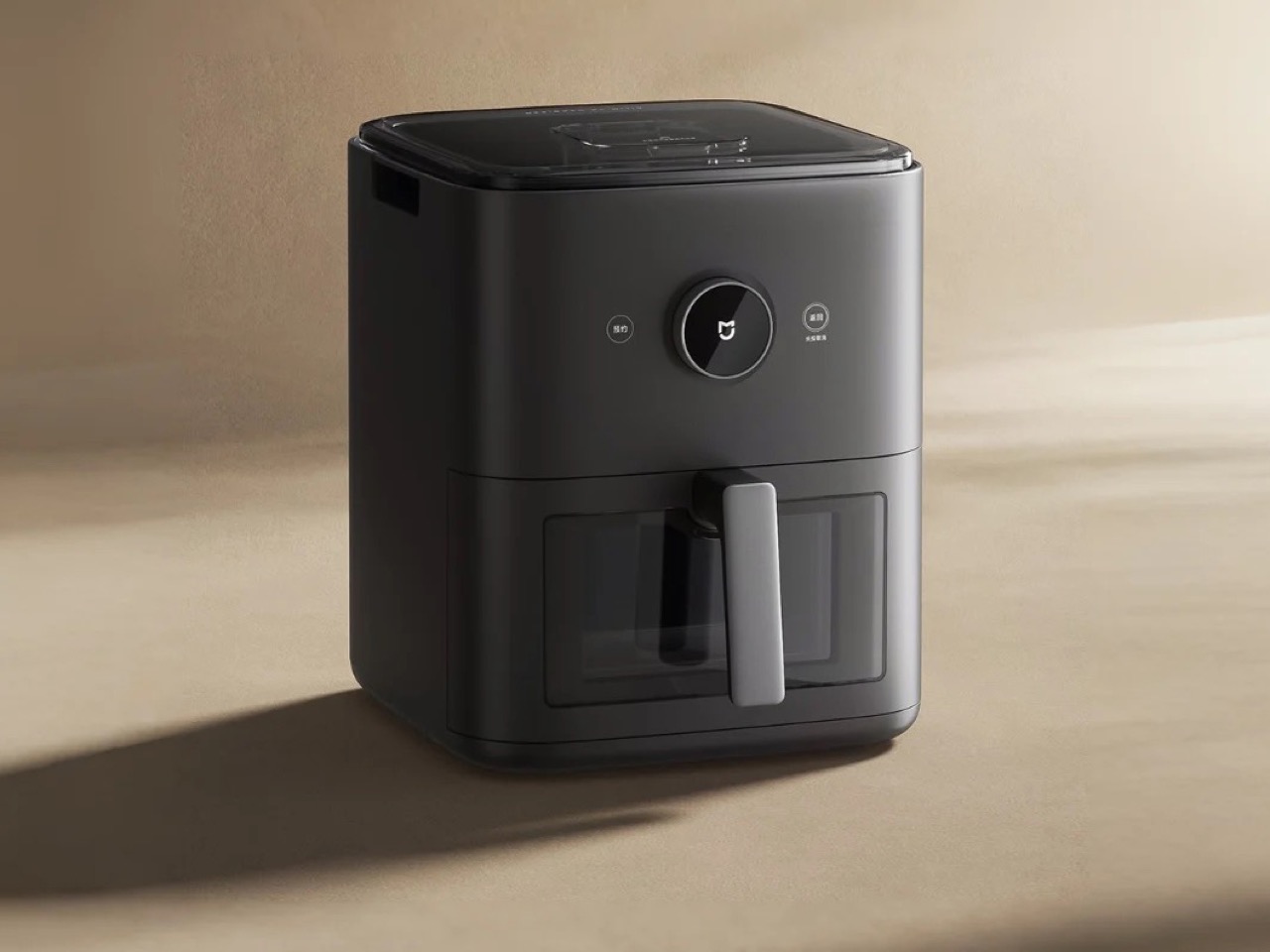
Xiaomi’s $80 Air Fryer Can Steam, Sous Vide, and Air Fry, Giving You A Crisp Outside and Juicy Inside

There is a reason professional bakers spray water into their ovens right before a loaf goes in. Steam in the early stages of baking keeps the crust elastic long enough for the bread to fully rise before it sets, and then as the moisture burns off, the outside crisps up hard and crackly while the inside stays open and soft. Xiaomi applied that same principle to an air fryer, which sounds obvious in hindsight but somehow took the entire appliance industry a decade to get around to trying. The result is the Mijia Smart Air Fryer Pro Steam and Bake Edition, a 6.5-liter machine that launched on Youpin in March for around $80.

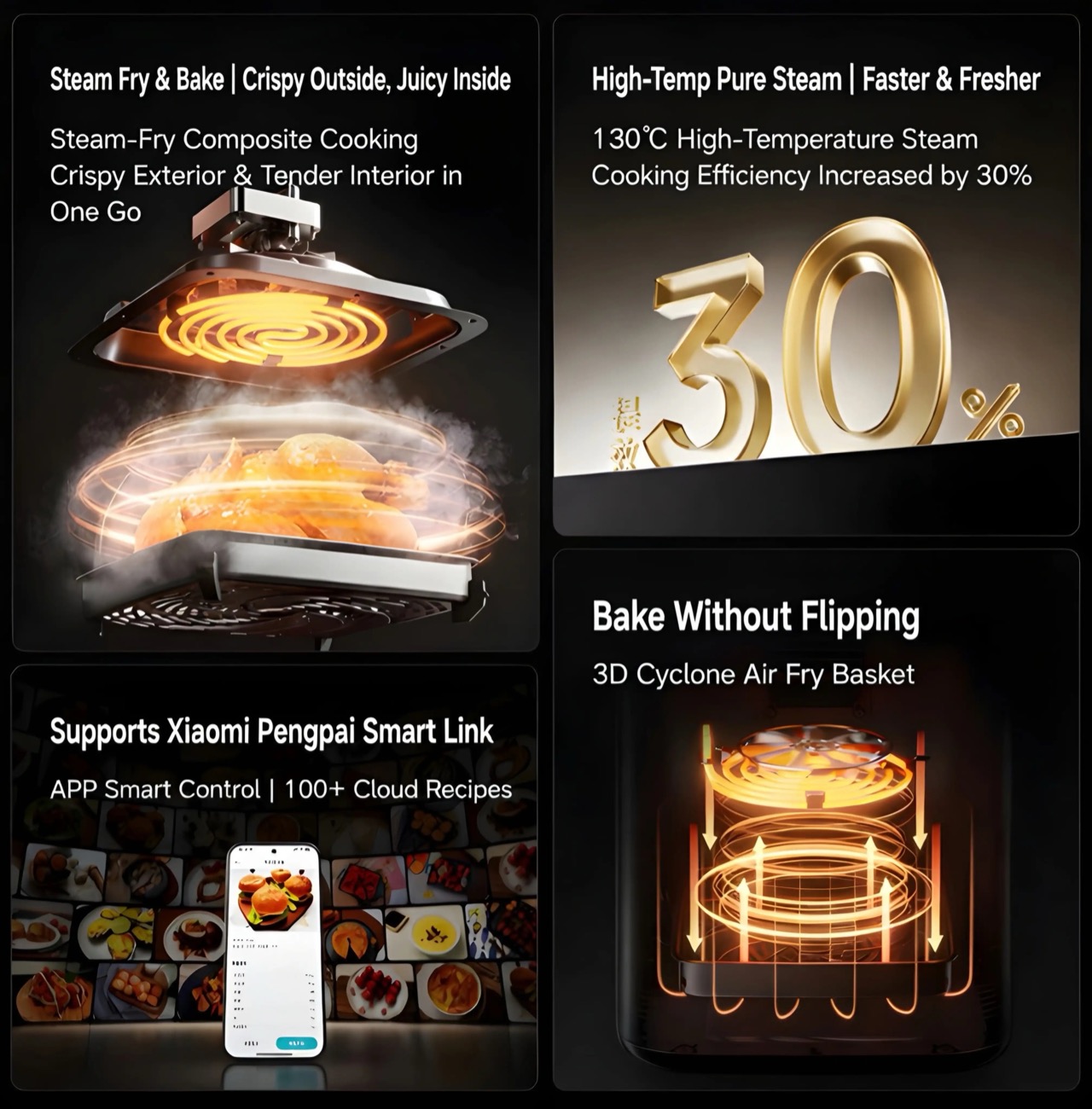
We covered Smeg’s steam-equipped air fryer concept out of Milan Design Week back in April, and the reaction told us something useful: people are genuinely ready for this idea. The hardware behind Xiaomi’s take is straightforward but well thought out. A 1.5-liter water tank sits on top of the unit and feeds a 900W steam generator capable of reaching 130 degrees Celsius, with enough output to run seven continuous dishes before needing a refill. Combined with a conventional 1,850W heating element and a 360-degree hot air circulation system, you get a machine that can switch between dry heat and humid heat within the same cooking cycle. The 304 stainless steel interior handles the moisture without corroding, and the fluorine-free non-stick basket makes cleanup considerably less painful than you might expect from something that gets regularly steamed.

Designer: Xiaomi

Steam-fry and sous vide are the two modes that actually push past what any conventional air fryer can do, rather than just relabeling the same hot-air cycle with a fancier name. Steam-fry layers humid and dry heat in sequence, holding just enough moisture in the chamber to slow surface dehydration while the heat pushes deeper into the food, which is exactly how you get chicken wings that crack rather than just brown. The sous vide mode holds a low, stable temperature over a long period using the water tank as its medium, something a dry-heat machine physically cannot fake its way through. The full temperature range runs from 30 to 230 degrees Celsius with NTC precise control, which in practice means the same machine handles yogurt fermentation at the low end and a proper sear at the high end, a spread that no single-mode appliance on its own can match.

A 234mm horizontal interior sounds like a spec sheet abstraction until you realize it fits a whole chicken, 24 wings, or nine steamed buns in a single load, and the dual-layer rack splits that cavity between two dishes cooking simultaneously at different heights without either one stealing heat from the other. The 1,850W heating element drives the hot air side of things hard enough to cut sausage cooking time to eight minutes versus the twenty-odd you’d wait in a conventional oven, and the 360-degree circulation keeps that heat moving evenly rather than pooling at one side of the basket. Scheduling a cook 24 hours out through Mi Home, or pulling from a library of over 100 cloud recipes, means dinner can be running before you’ve even thought about what you want to eat. The OLED interactive knob handles everything manually for anyone who’d rather just twist a dial than pull out a phone, which is the kind of small considered detail that keeps a smart appliance from feeling like a chore.

The Mijia Pro is crowdfunding in China at 559 yuan, around $81, with a planned retail price of 749 yuan, roughly $109. Smeg’s steam air fryer, by contrast, is a concept with no confirmed price and a launch window no earlier than late 2026. Dreame’s Feast DS50, which takes a different approach to the same problem through dual-zone independent airflow rather than steam, is priced at $229 for its North American launch. Xiaomi is delivering a technically comparable answer to the same cooking challenge at a fraction of that price, in a machine that is already shipping in China and building toward a global rollout. The steam air fryer category is real, it has momentum, and the most affordable entry point currently has a Xiaomi logo on it

The post Xiaomi’s $80 Air Fryer Can Steam, Sous Vide, and Air Fry, Giving You A Crisp Outside and Juicy Inside first appeared on Yanko Design.
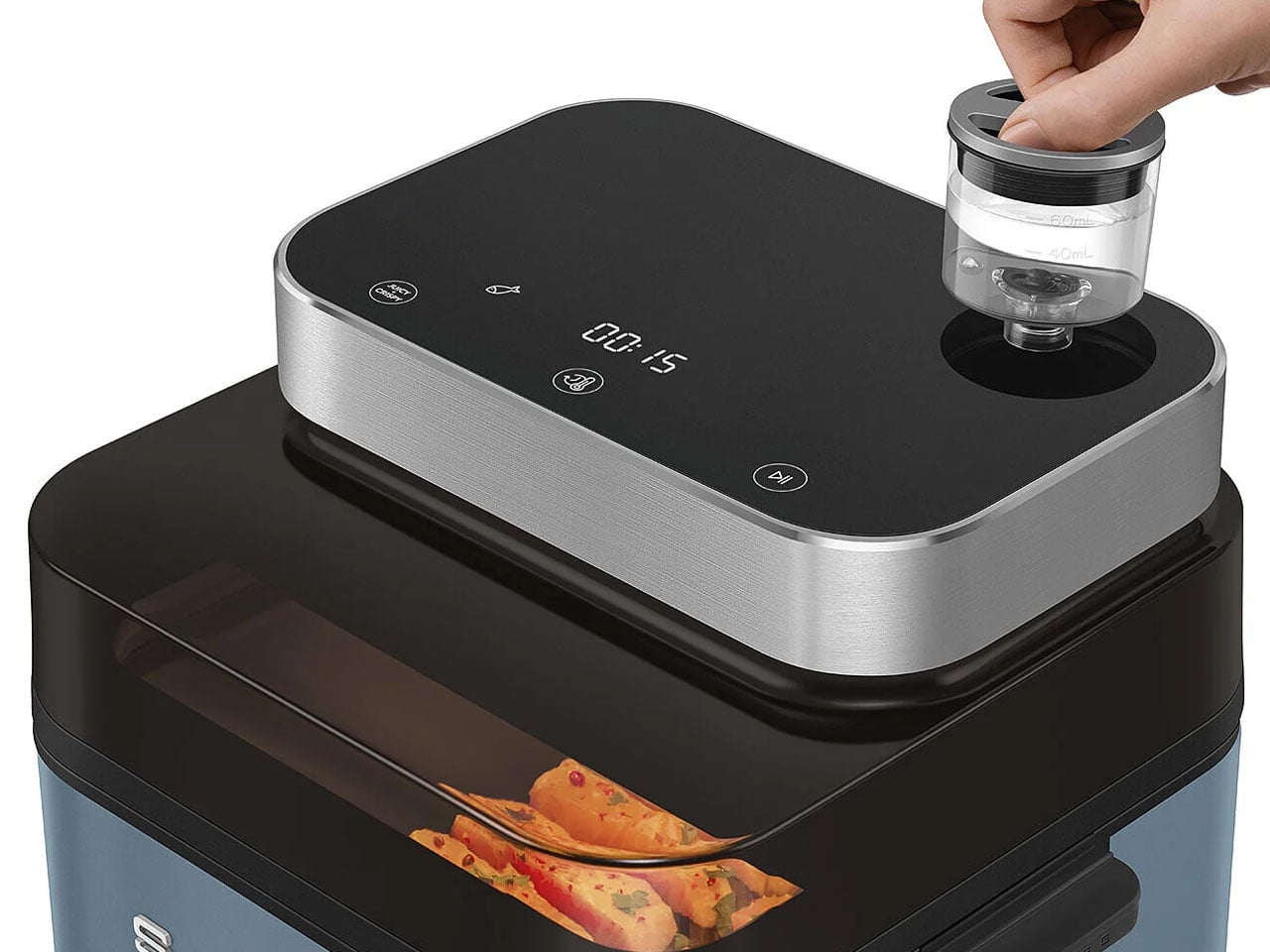
Smeg’s Air Fryer Comes With A Steam Function For Food That’s Crispy Outside and Juicy Inside

I was today years old when I learnt that Smeg’s origins were in enamel technology, not the gorgeously colorful kitchen appliances we’ve known them for these past few decades. Well, Smeg did end up perfecting the art of enameling wonderful hues onto appliances, so it’s just natural that they’d become famous for it, collaborating with Dolce & Gabbana and even Porsche to reveal appliances in some truly eye-catching colors.

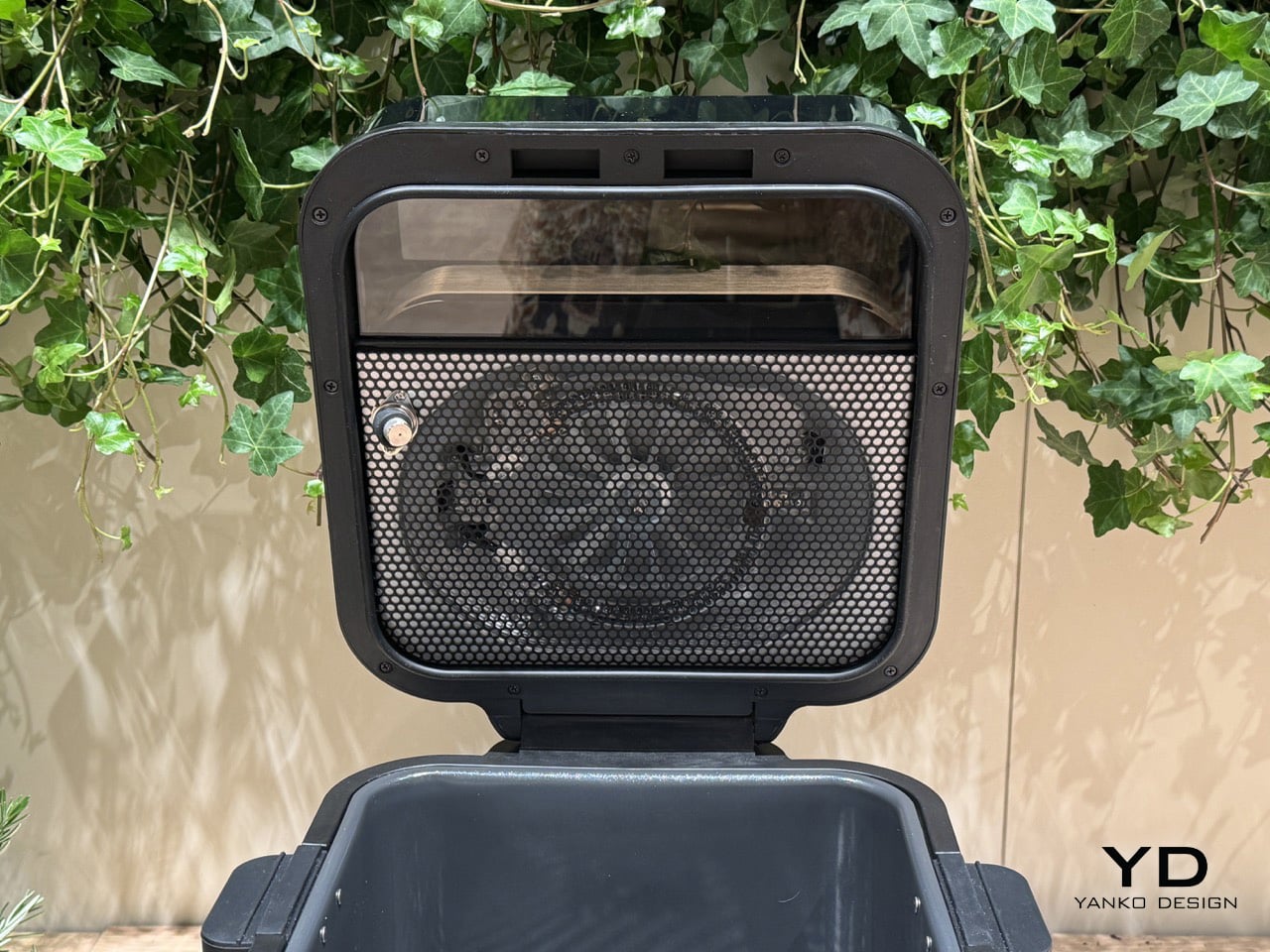
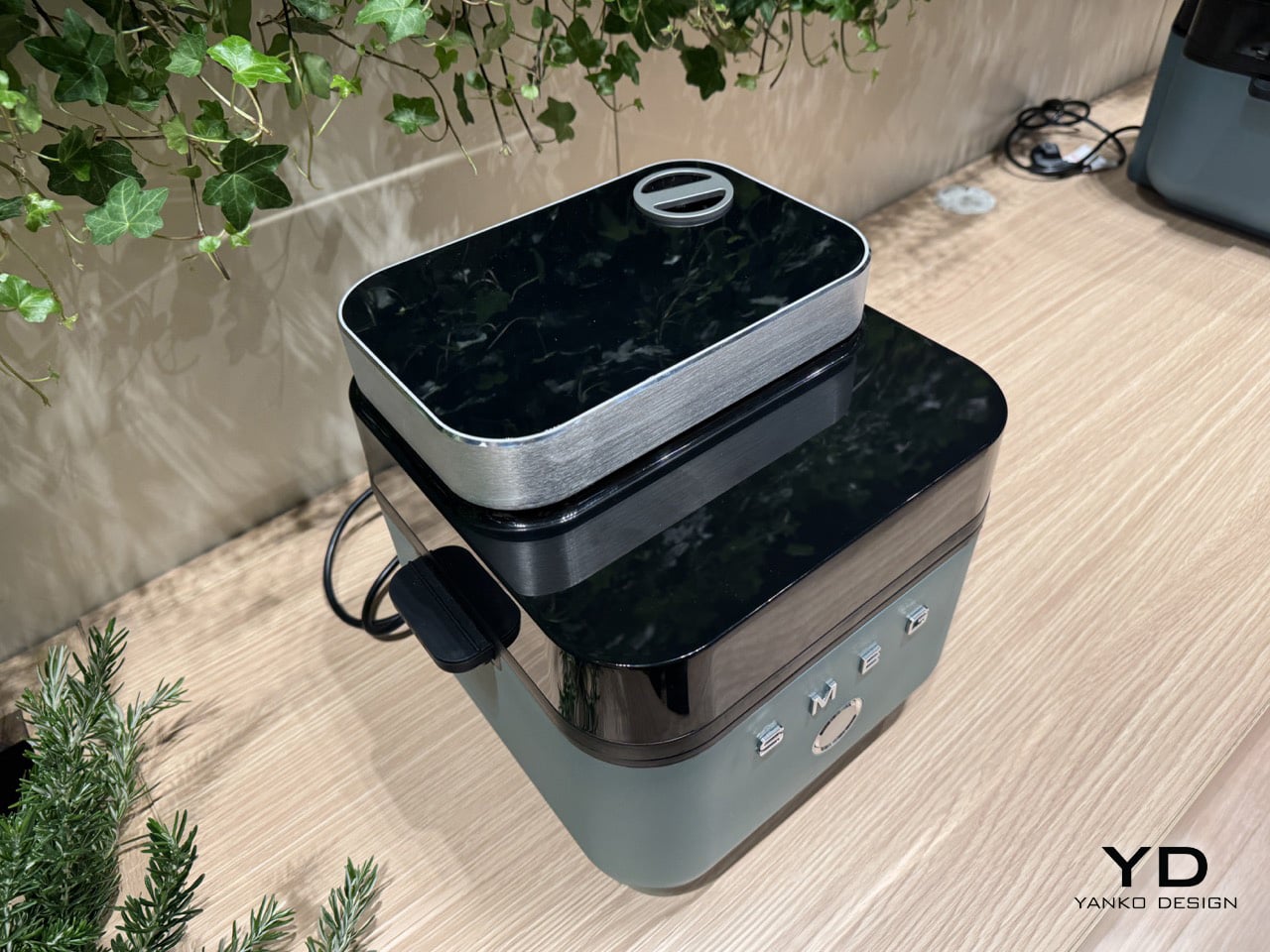
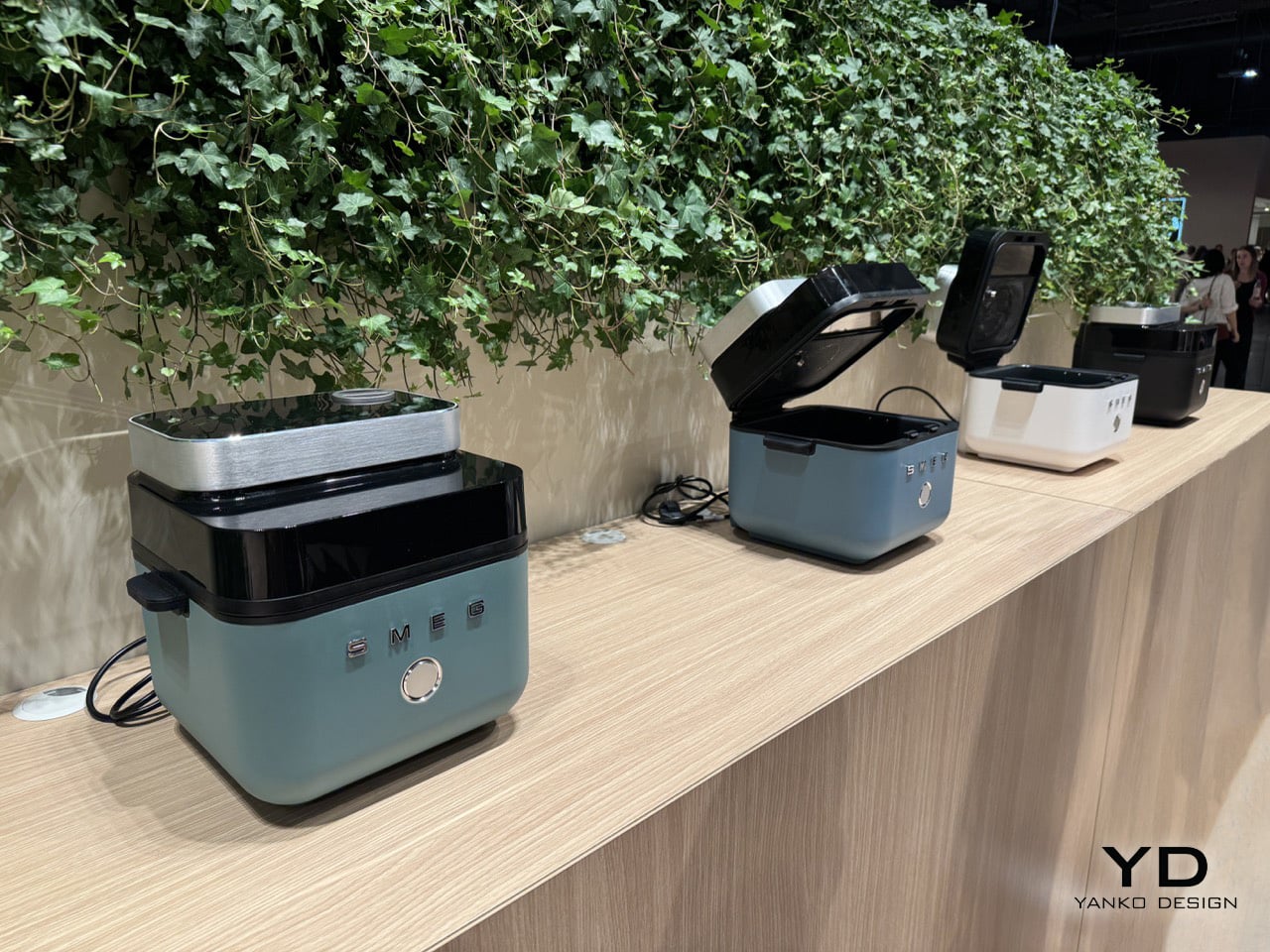
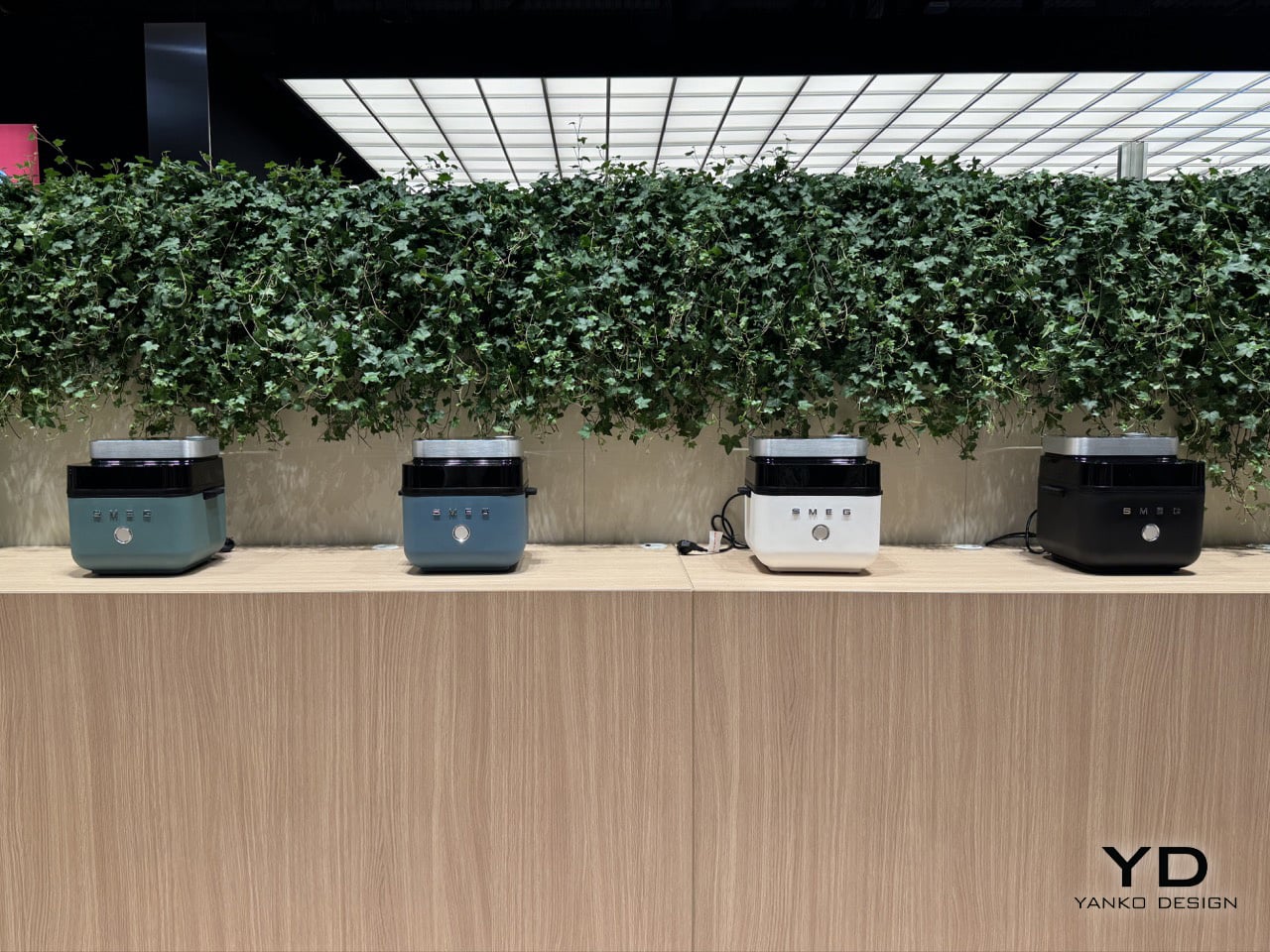
However, apart from the usual fanfare, Smeg even brought some concepts to the table at Milan Design Week, showcasing an innovative air fryer with its own built-in steamer feature. Currently just a concept (with really no product name, price, or market-launch date yet), the fryer channels Smeg’s familiar color language with 4 options, all interplaying wonderfully with gloss black and brushed metal trims.

Designer: Smeg

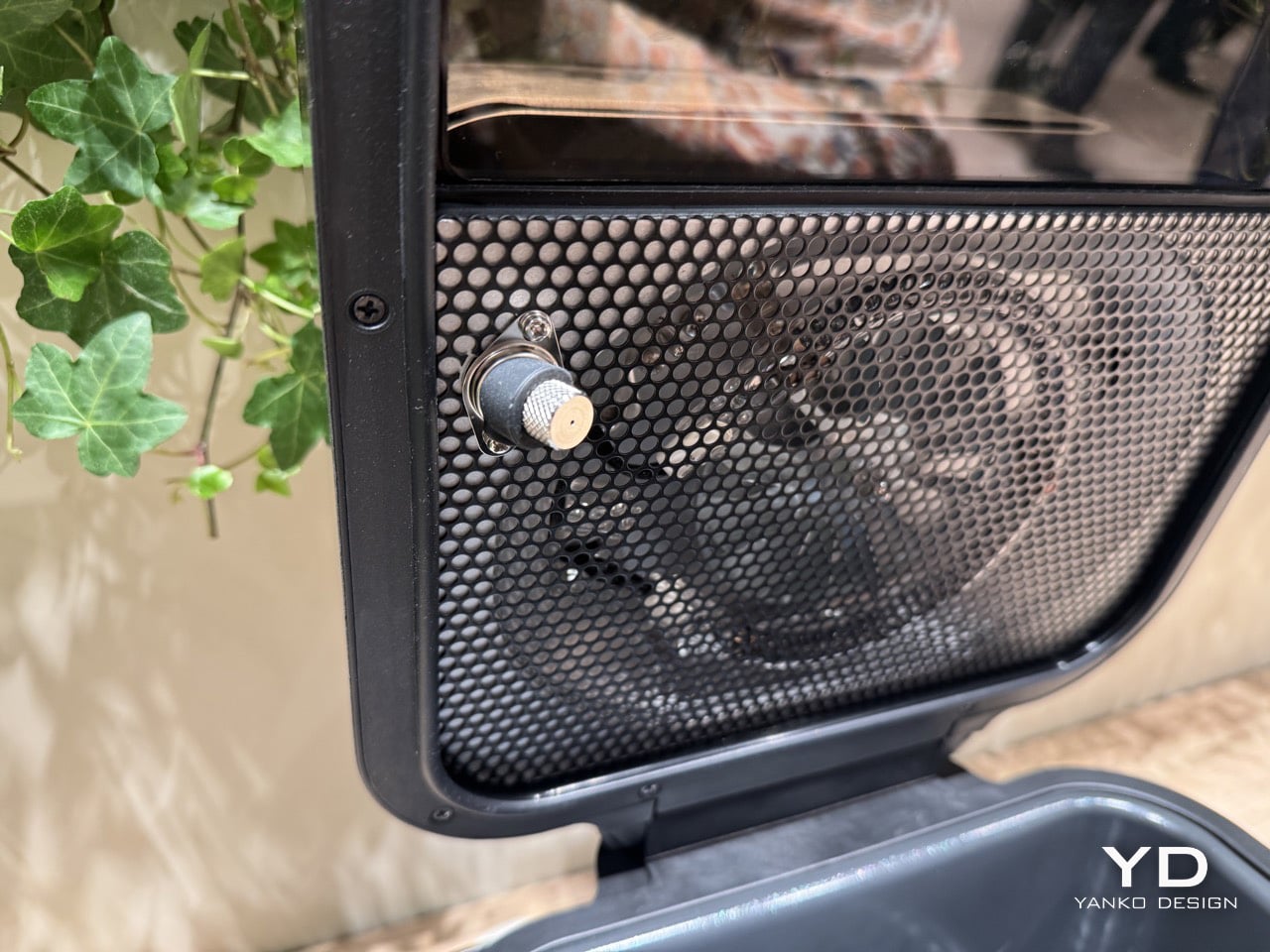
The fryer boasts a 7-liter internal capacity, accessed by a button on the front that ejects the fryer’s lid. Unlike most air fryers that open frontwards, Smeg’s opens from the top, letting you directly place items inside or even take the basket out by its handles. The coil and fan, which otherwise remains hidden from view, is directly visible here, right beside a tinted black visor that allows you to also look into the basket when the air fryer’s at work.

However, we wouldn’t be talking about an air fryer if it was just some basic piece of hardware. Smeg built a steamer into the fryer too, basically turning it into a steam oven, should you choose to use that feature. Most air fryers are just convection ovens redesigned in a different format, but the addition of steam makes a great difference to the fryer’s output. Contrary to popular belief, steam actually helps with crisping up of food, which is why breadmakers usually mist the insides of their oven while baking a loaf. The result is a gorgeous outer crust that’s perfectly brittle, with an inside that’s still fluffy. The same logic works with things like chicken wings, allowing you to cook them without oil, and still ensure that they don’t feel dry to the bite. The steam prevents the inside of the chicken from losing its moisture, so you still have the crack of a fried crust on the outside, with the delectable juiciness you love inside.

The way you use the steam feature is simple. Smeg built a water cartridge that you can pull out and fill up, before reloading back into your air fryer. Once chosen in the settings, the steam is deployed into the basket via a tiny nozzle on the top, permeating the inner chamber with moisture that makes breads fluffy, cakes delicious, and wedges/wings crispy outside and wonderful inside.

We probed Smeg to give us a launch date, but the air fryer + steamer is just a concept for now. Here’s to hoping that they actually launch it sometime in the future, although a representative did say that if it were to launch, it wouldn’t be before 2027. I guess I’ll have to settle for manually spritzing my food in the air fryer with water every few minutes until then!

Along with the concept Air Fryer, you can check out Smeg’s entire showcase at Salone del Mobile in Milan in the Euro Cucina section of the exhibition. The Italian kitchen brand is showcasing fridges, ovens, stoves, coffee machines, induction hobs, and even chimneys, combining color and enamel technology with a design aesthetic suited for both European as well as American markets.

The post Smeg’s Air Fryer Comes With A Steam Function For Food That’s Crispy Outside and Juicy Inside first appeared on Yanko Design.

Emerson Just Built the Air Fryer That Actually Listens to You

One of the goals for this year is to cook more, and my good ol’ air fryer should play a huge role in this as I’m also trying to be healthier. However, preparing the ingredients while operating the device can sometimes be a little challenging and messy, to say the least. I sometimes wish that my air fryer could actually just listen to what I want it to do instead of me trying to figure out everything manually.

Emerson is trying to solve that problem with their SmartVoice 10QT 6-in-1 Air Fryer and its game-changing feature: true voice control. The device has more than 1,000 preset voice commands, which make it easier for you to just tell the air fryer what it is you’re cooking, and it helps you figure out how it should be cooked. Having this in your kitchen will bring convenience to a whole other level.

Designer: Emerson

The SmartVoice Technology built into this allows you to use natural conversation. You can say things like “Hey air fryer, cook pork chops” or “Hey air fryer, increase temperature” without having to memorize the exact syntax you need for it to follow you. It is a 6-in-1 device as you can also bake, roast, broil, reheat, and dehydrate all sorts of food and dishes in there, aside from air frying, of course. There are also voice prompts that will remind you to shake or flip your food if the recipe calls for it.

Another standout feature of this device is that all your voice commands are handled directly on the device. There are no cloud servers or background monitoring involved, which should satisfy those who are concerned with privacy and data collection. It is also a literal plug-and-play device, so there should be no frustrating setup issues, or so they claim. Reality can sometimes be different, but hopefully, it is as advertised.

This SmartVoice air fryer should suit large households as it has a capacity of 10 quarts, which should be able to hold up to 10 pounds of food. It is able to recognize more than a hundred different foods, so you don’t need to constantly check on temperature and times. If you prefer the usual button approach, the appliance also has 12 touch presets. It also has preheat settings to ensure optimal cooking conditions even before you start cooking. The 1,700-watt power output ensures your food cooks quickly and evenly, while the nonstick basket makes cleanup a breeze. The device weighs 14.46 pounds, giving it a sturdy presence on your countertop without being impossible to move when needed.

What makes this air fryer truly special is how it fits into your real cooking routine. Picture this: you’re marinating chicken with messy hands, your phone is across the room, and you suddenly remember you need to adjust the temperature. Instead of washing your hands, drying them, and fumbling with buttons, you simply speak your command. It’s that seamless integration into your workflow that makes voice control more than just a gimmick as it becomes genuinely useful.

For busy parents juggling multiple tasks, this is a game-changer. You can monitor your cooking while helping kids with homework, folding laundry, or prepping the next dish. For anyone with mobility challenges or arthritis that makes pressing small buttons difficult, voice control offers newfound independence in the kitchen. And for multitaskers who are always moving between counters, the ability to control your appliance from anywhere in the kitchen is liberating.

Priced at $169.99, the Emerson SmartVoice Air Fryer sits in the mid-range category for large-capacity air fryers. However, when you consider that you’re getting six cooking functions, genuine offline voice control (not just app-based controls), and a family-sized capacity, the value proposition becomes quite compelling. Many smart appliances require subscriptions or constant connectivity; this one simply works out of the box.

The Emerson SmartVoice 10QT 6-in-1 Air Fryer represents a thoughtful approach to smart kitchen technology. Instead of adding complexity for complexity’s sake, it addresses real pain points that home cooks face daily. Whether you’re trying to eat healthier, cook more efficiently, or simply make your time in the kitchen more enjoyable, this voice-activated marvel might just be the cooking companion you’ve been waiting for. If you’ve been on the fence about smart kitchen appliances because of privacy concerns or setup hassles, this offline, plug-and-play solution could finally change your mind.

The post Emerson Just Built the Air Fryer That Actually Listens to You first appeared on Yanko Design.
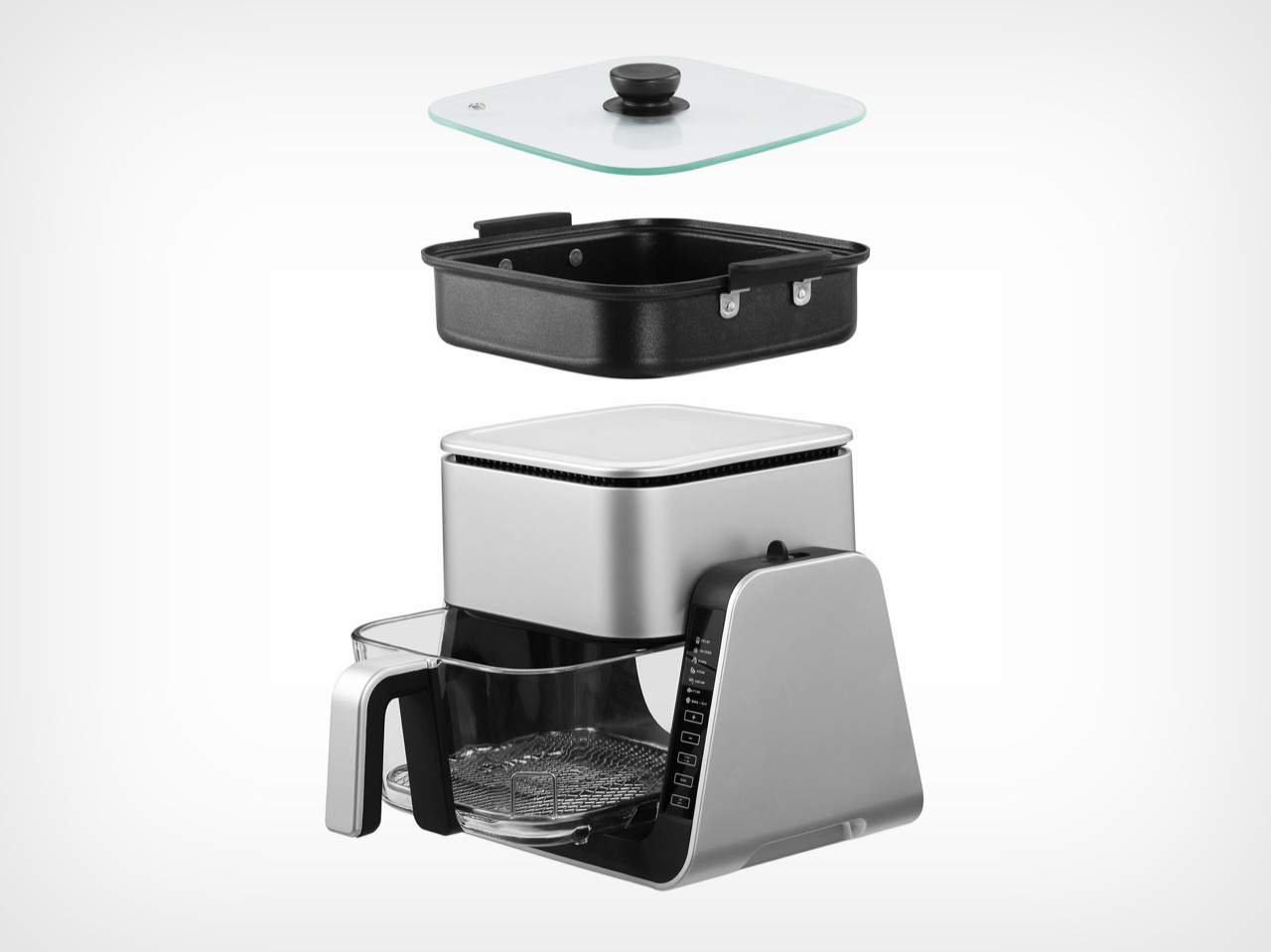
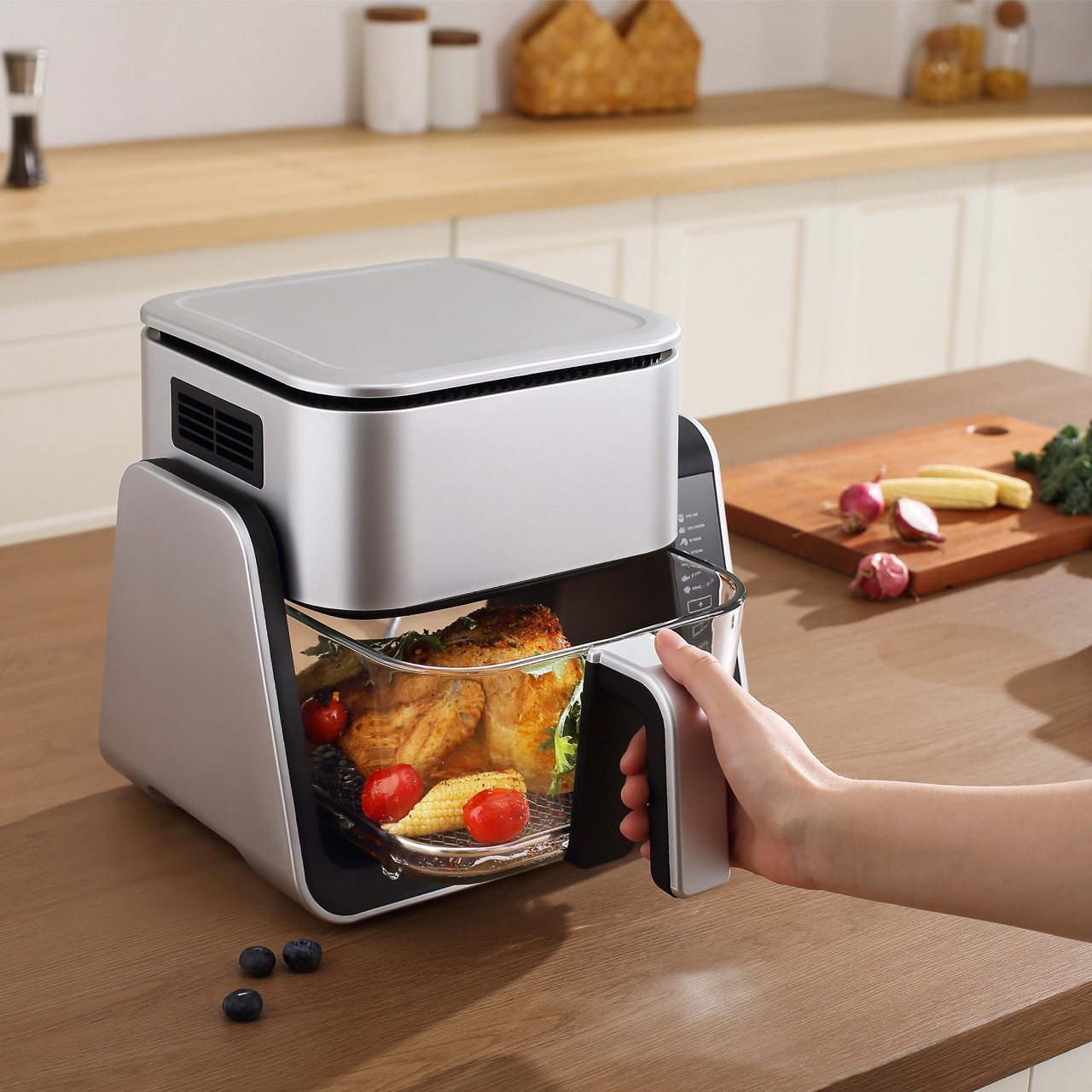
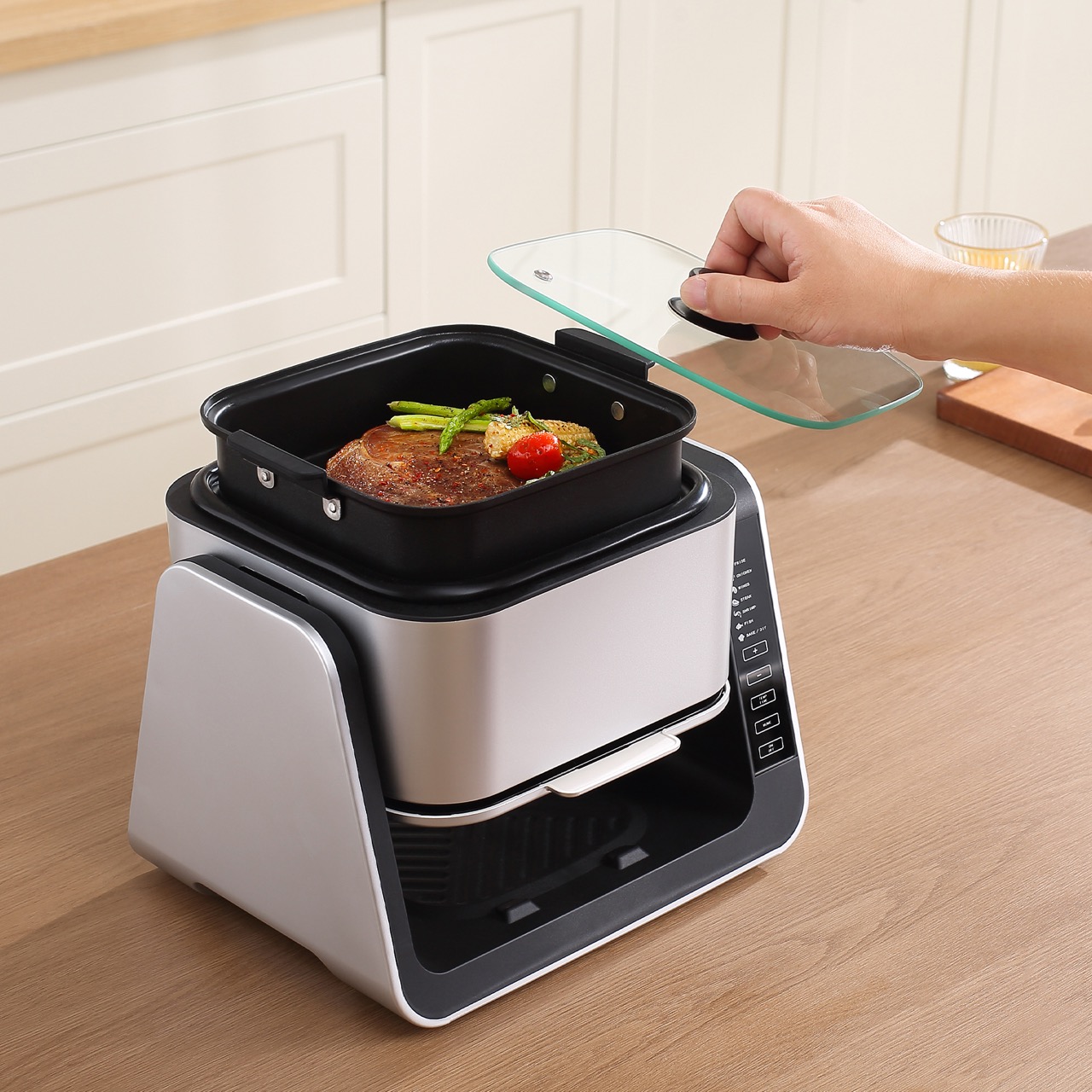
This Air Fryer Flips 180° To Transform Into An Electric Cooktop

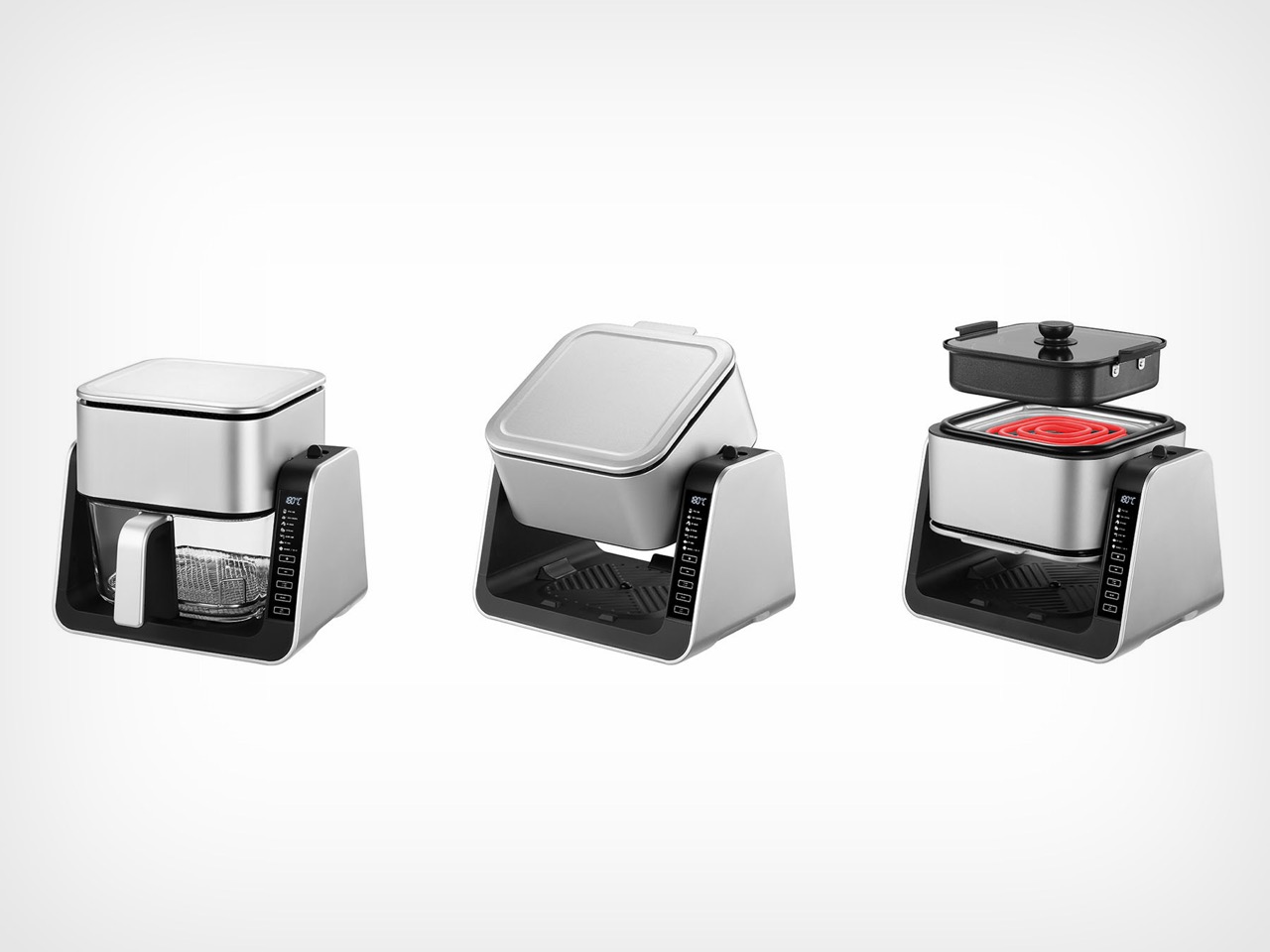
I’m telling you, a bachelor probably designed the Aouball because it’s giving such ‘MacGyvering a kitchen appliance’ energy that I absolutely love it! To be absolutely frank, an air fryer is nothing more than an electric heating coil and a fan… so what if you just flipped the coil upwards and shut the fan down? You’d have an electric cooktop! The Aouball might just be the first ever product to actually implement this genius idea and I can’t wait for it to become the new kitchen standard.

It’s simple – if a product serves multiple purposes it should be allowed to serve both purposes. A toaster can easily work as a quick pizza-maker too, but nobody makes vertical pizzas, which is why the toaster feels so incredibly limiting – apart from the fact that it warms up pop tarts too. Aouball breaks the air fryer’s format by allowing the main unit to flip 180°. This simple flip lets you cook normally, without frying, making the Aouball perfect for tiny apartments, dorms, or even the kitchenette in your hotel room.

Designer: Zhongshan Aouball Electric Appliances

“To offer a comprehensive and efficient one stop solution, the design team has created this compact device that supports multiple cooking methods like air frying, roasting, baking, shallow frying, stir frying, steaming and boiling, able to meet diverse cooking needs,” says maker Zhongshan Aouball Electric Appliances. “Such a device avoids the purchase of several devices with only a single function to ease the economic burden on users and save kitchen space,” they add.

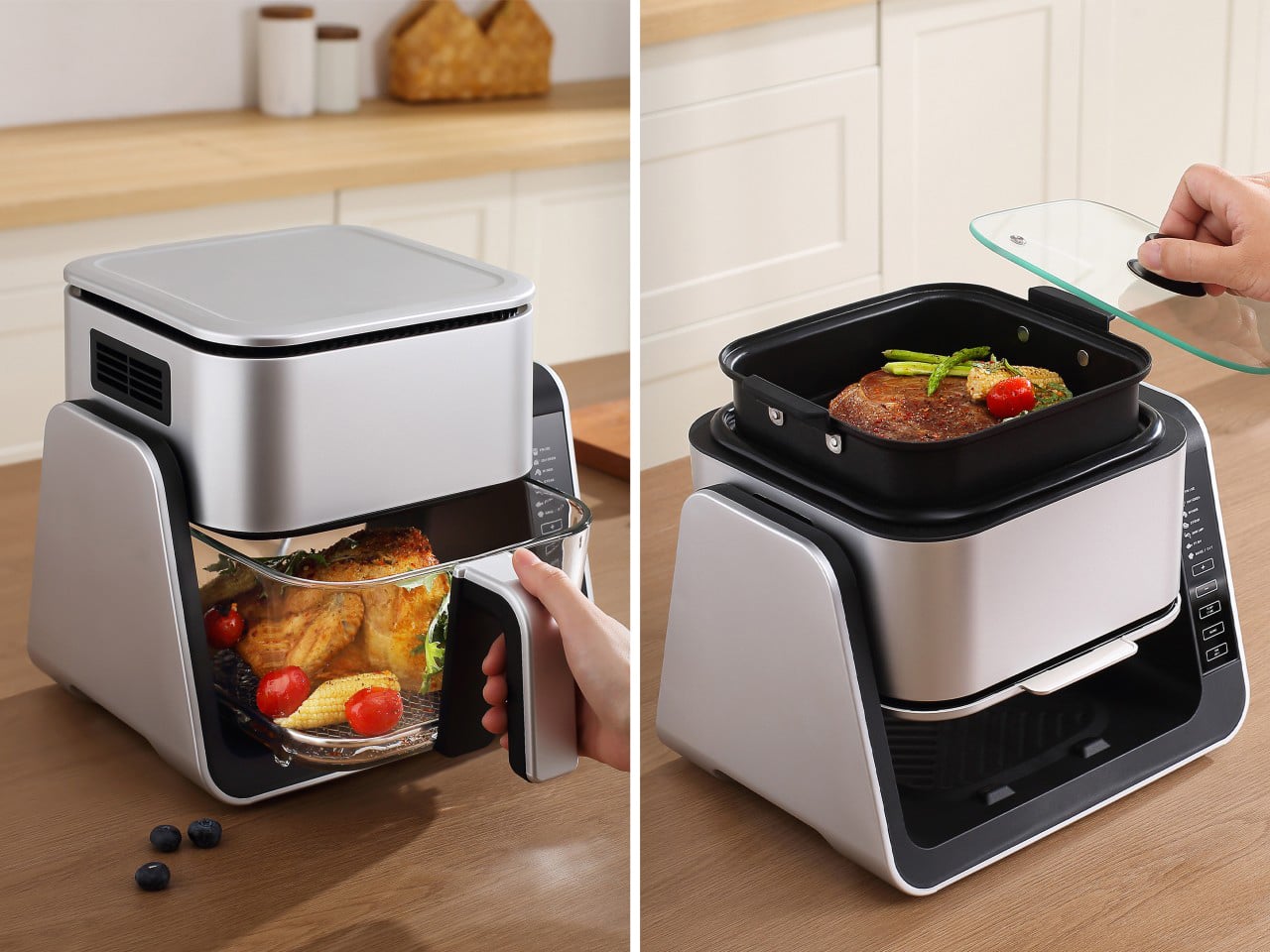
After all, just manipulating a few parameters allows the air fryer to do so much more than ‘air fry’. Turn the fan off and it’s perfect for roasting or baking. Flip the coils over and add a shallow pan and you can stir-fry, saute, or griddle. Make the container deeper and you can shallow or deep fry, boil, steam, etc. The heat just gets applied in a different way and the cooking transforms entirely.

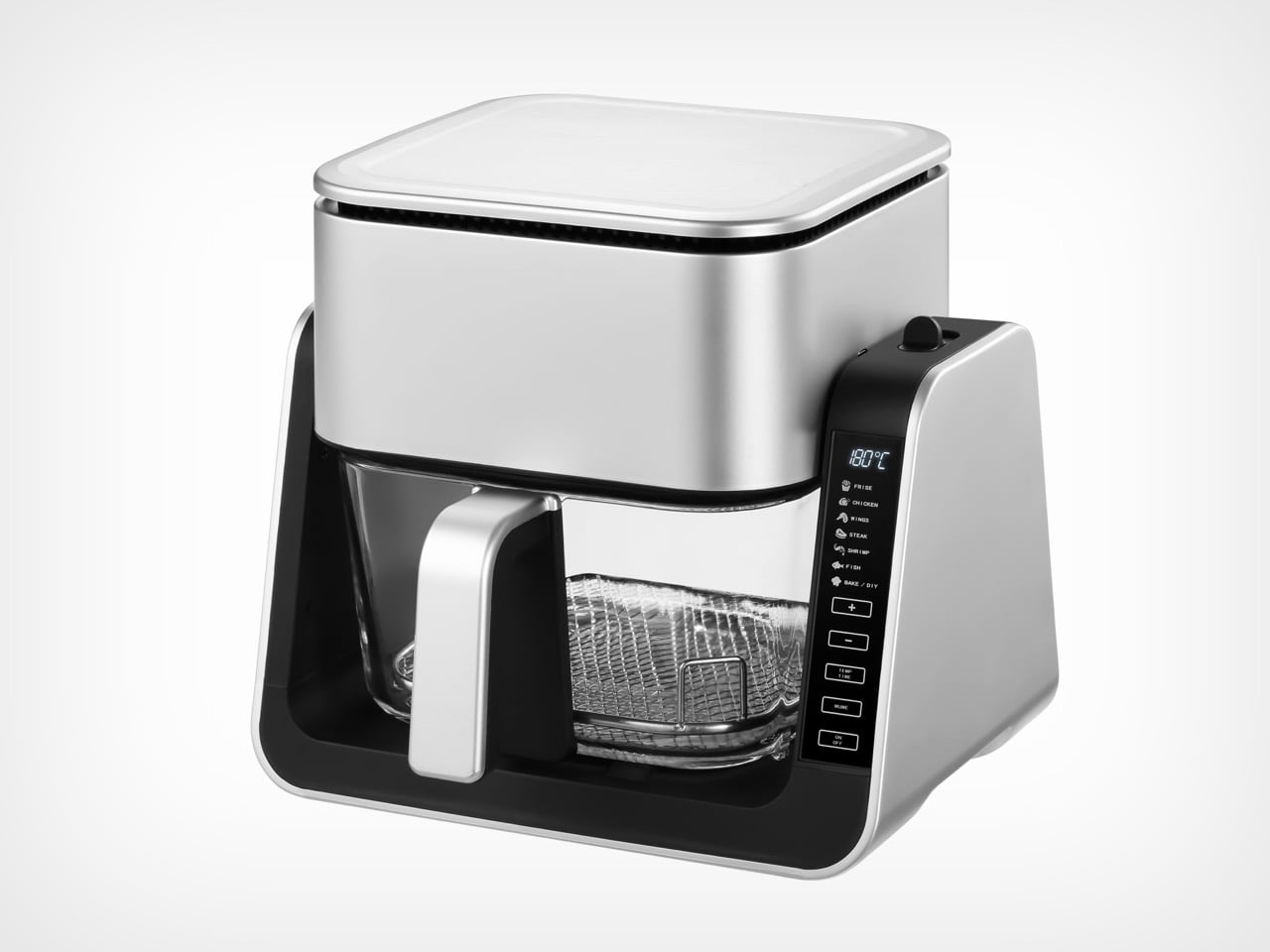
The Aouball is designed slightly differently compared to your average air fryer. The main unit (with the electricals) sits on a rotating element that allows it to flip downwards or upwards. When flipped down, the thing works as an oven or broiler. Turn the fans on and you now have a convection oven or air fryer. This is accompanied by a clear glass basket that slots into the gap in the base, with a metal grille for aiding in air circulation.

Flip the entire thing upwards and the vents on the side for the air get blocked (for good reason, they’re not in use anymore). Lock the unit in its new position and you’ve got yourself a cooktop (with storage space at the bottom!) The Aouball comes with its own cooktop vessel too, a 3″ deep rectangular tray with a non-stick coatin, a glass lid, and handles. A control panel on the side gives you complete control over the Aouball’s functionality, allowing you to access all the different cooking modes, temperatures, fan speeds, etc.

This simple trick is frankly genius. I love my air fryer, but I barely use it. It literally only gets used for intense work like roasting veggies, frying wedges, crisping up things, or just some basic baking. The air fryer, given that it uses a heating coil that heats up super fast, is capable of so much more, and the Aouball harnesses that. A winner of the A’ Design Award, the game-changing air-fryer is currently even available in China, although Alibaba lists its wholesale price at roughly $36. Perfect for small homes and smaller budgets!

The post This Air Fryer Flips 180° To Transform Into An Electric Cooktop first appeared on Yanko Design.
Midea Flexify French Door Air Fryer: 10-in-1 Oven, 1 Black Friday Deal

Small kitchen counters have a way of accumulating appliances. You start with a toaster, then add an air fryer for crispy fries without the oil. A countertop pizza oven shows up because takeout is expensive, and before you know it, there’s a slow cooker tucked in the corner. Pretty soon, you’re playing appliance Tetris just to clear enough space to chop vegetables, and half the devices spend most of their time unplugged and shoved into cabinets.

The Midea Flexify™ French Door Air Fryer Oven tries to solve this by replacing that entire lineup with one countertop oven. It’s a BEST OF KBIS 2024 winner built around a simple idea: combine ten cooking modes into one appliance without making it too complicated or too big. The oven handles air frying, baking, broiling, roasting, toasting, pizza, reheating, slow cooking, dehydrating, and warming. Midea is running a Black Friday and Cyber Monday promotion on it, which makes it worth considering if you’ve been thinking about clearing out your countertop.
Designer: Midea

Click Here to Buy Now: $139.87 $169.99 (17% off). Hurry, deal ends in 48-hours!

The first thing you notice is the French doors. Instead of a single drop-down door that forces you to lean over a hot cavity, the Flexify uses dual doors that swing open with one pull. They’re made from stainless steel with wide glass windows, so you can check on your food without letting heat escape. There’s an anti-scald handle to keep your fingers safe, and the doors save space in front of the oven.

Inside sits a 26.4-quart cavity with generous vertical space. You can fit a whole chicken or turkey breast on one rack and vegetables on another, or stack a multi-layer lasagna without worrying about clearance. The oven also handles a twelve-inch pizza, six slices of toast, or fourteen chicken wings comfortably. Four rack positions let you adjust the height depending on what you’re cooking.

The Cyclone Air Fry system is what lets the Flexify work as both an air fryer and a conventional oven. It uses a convection fan and six heating tubes to circulate air quickly and evenly, cooking up to 25 percent faster than traditional frying while using up to 90 percent less oil. The oven heats up fast enough that you can skip preheating when air frying, so you just toss frozen food into the basket and start.

What sets the Flexify apart from most countertop ovens is the VDE-certified evenness. That certification means the oven’s heat distribution has been independently tested and proven consistent, so your toast browns evenly and cookies on different racks bake at the same rate. It’s the kind of reliability that matters when you’re making dinner for a family or hosting a gathering and can’t afford uneven results.

The oven settles into daily routines naturally. In the morning, it toasts bread and reheats pastries. At lunch, it warms leftovers without drying them out. In the afternoon, it dehydrates fruit snacks or slow-cooks a stew that finishes by dinnertime. At night, it air-fries vegetables or broils salmon. The digital LED display makes it easy to adjust temperature and time precisely without navigating complicated menus.

What makes the Flexify feel like a smart upgrade is how it cleans up both the physical and mental clutter of a crowded kitchen. Instead of remembering which appliance does what and where you stored it, you just open the French doors and pick a mode. The stainless body and clean lines also look better than a collection of mismatched plastic gadgets.

The Midea Flexify™ French Door Air Fryer Oven fits the category of appliances that earn their counter space by doing more than one job well. For anyone tired of juggling multiple devices, it consolidates without sacrificing functionality. The Black Friday and Cyber Monday window brings it down 18 percent from November 20 to December 1, which is worth considering if you’ve been eyeing a countertop upgrade.

Click Here to Buy Now: $139.87 $169.99 (17% off). Hurry, deal ends in 48-hours!

The post Midea Flexify French Door Air Fryer: 10-in-1 Oven, 1 Black Friday Deal first appeared on Yanko Design.