This $152 Laptop Backpack Has 7 Features Most Business Bags Skip

The office is no longer a place. For a growing number of professionals, work happens across a rotating cast of locations, on trains, in hotel lobbies, at standing desks in co-working spaces, at airport gates between meetings. What gets carried through all of that has quietly become one of the more personal decisions in a working day. The bag has to hold a laptop, a water bottle, travel documents, chargers, and sometimes a change of clothes, while still looking appropriate in every environment it passes through. Most bags manage the functional half of that requirement passably well; the visual half tends to be where the compromises show.

Nayo Smart designed the Herman Pro around exactly this reality. The half-roll-top silhouette keeps things looking composed from the outside, while the internal architecture handles an impressive amount of organized complexity. A dedicated laptop compartment sits separately from the main storage zone, accessible directly from the back panel for quick retrieval at security. The L-shaped main opening lays nearly flat for visibility and easy packing. A FIDLOCK magnetic buckle secures the flap in one motion, and hidden pockets, a side waterproof sleeve, and a luggage strap round out a carry system built around real transit habits rather than feature checklists.

Designer: Nayo Smart

Click Here to Buy Now: $152.10 $169 (10% off) Free Waterproof Packing Cube included with your Herman Pro

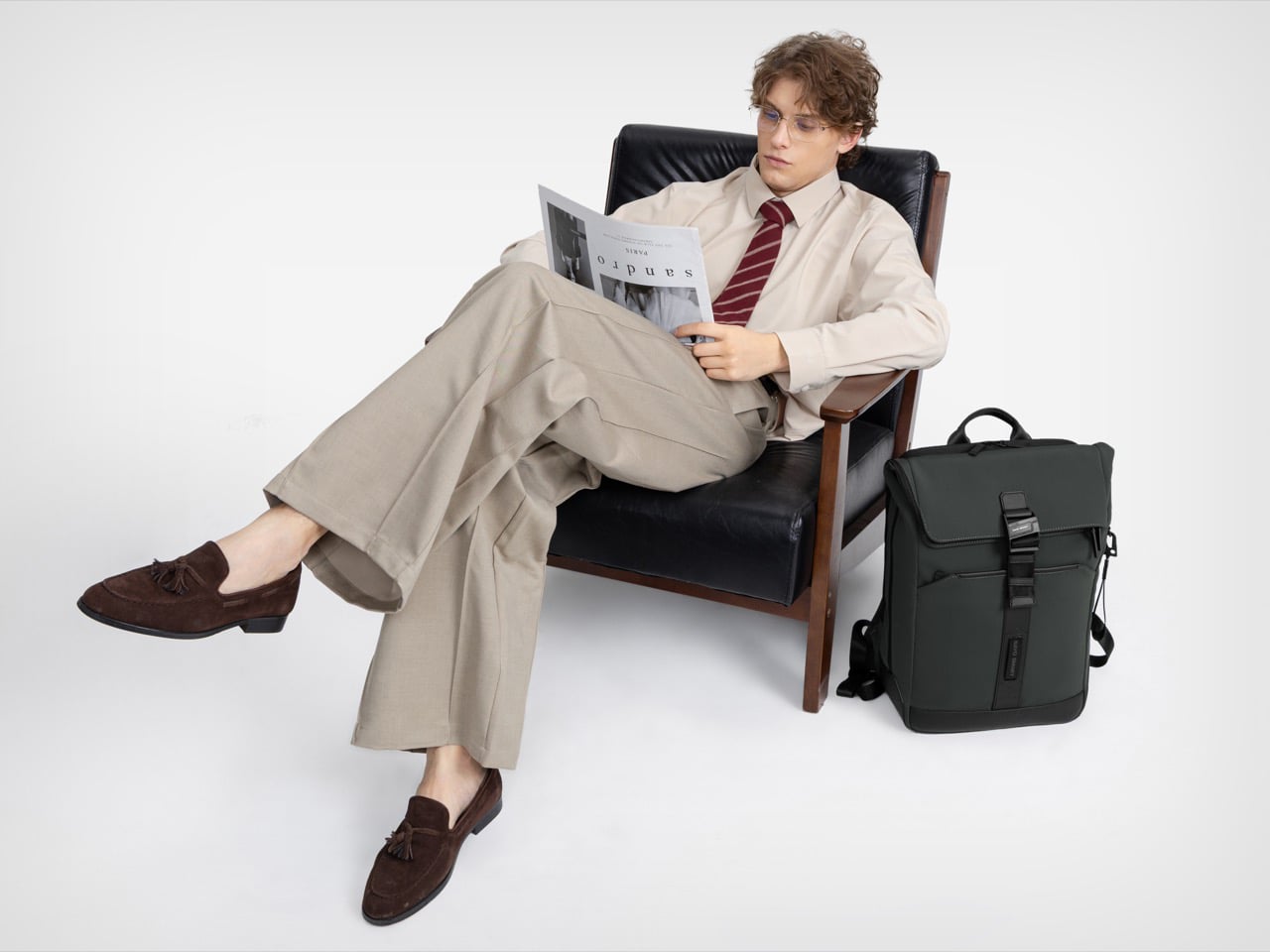
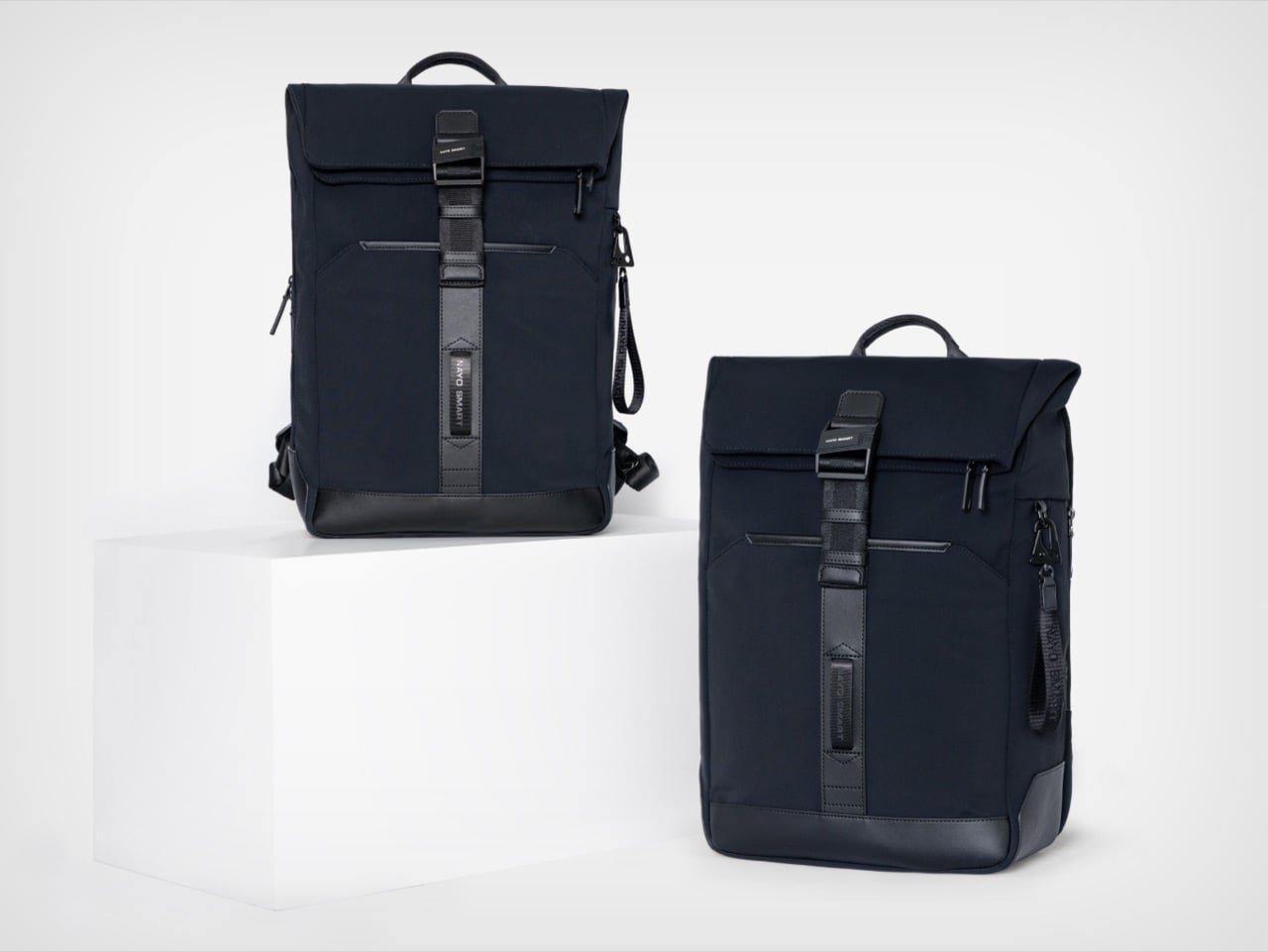
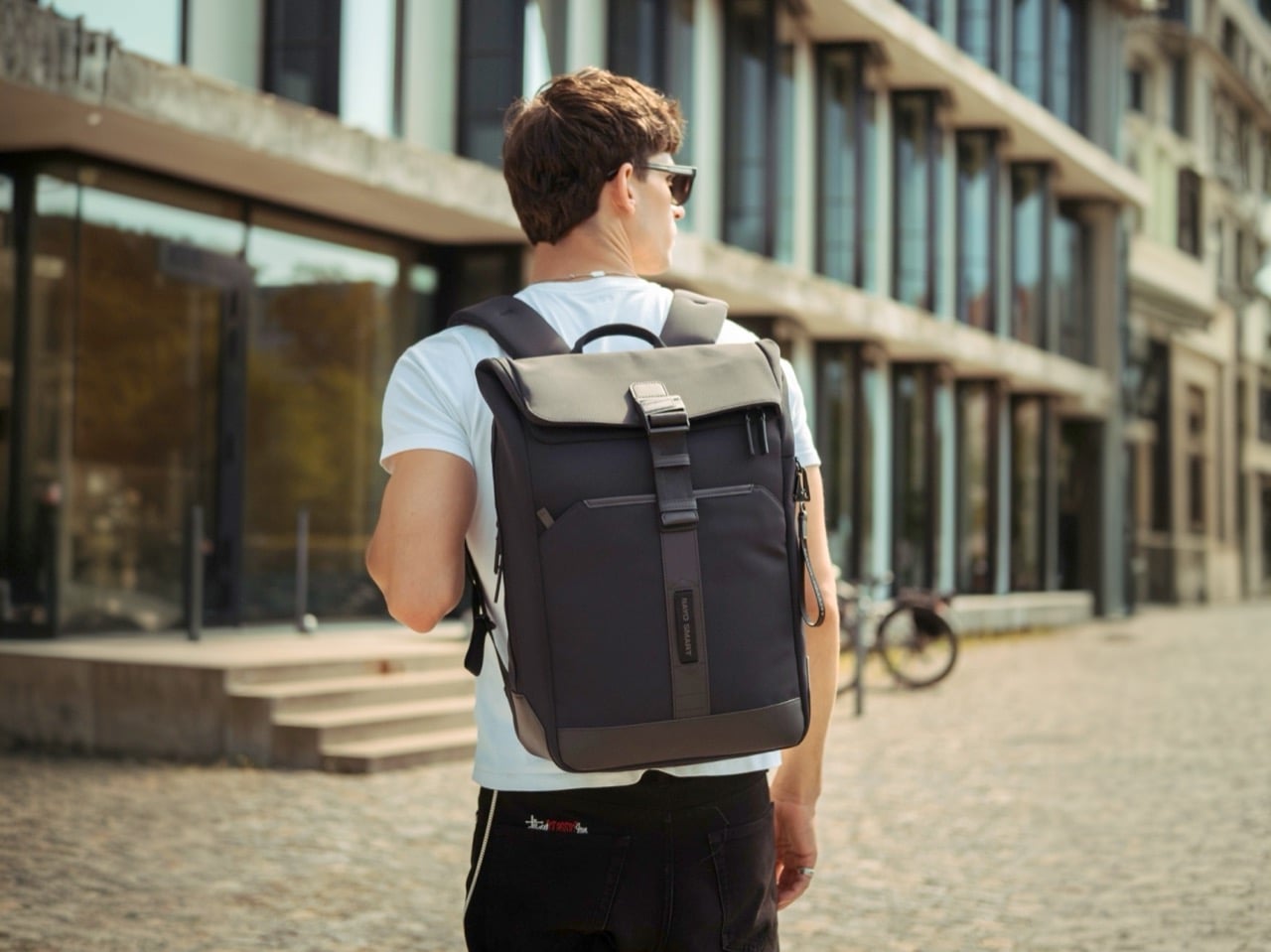
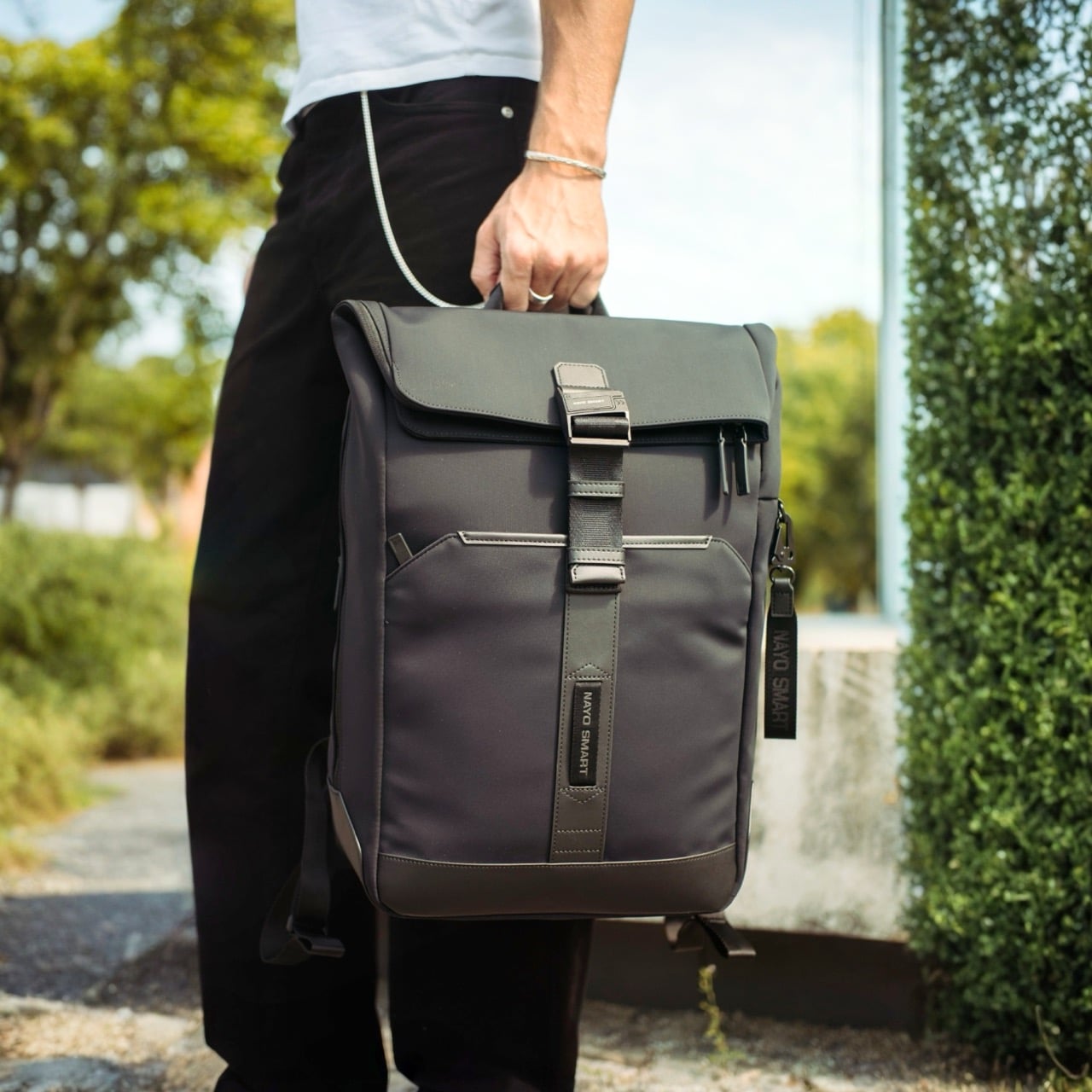
The most immediate visual quality of the Herman Pro, looking at it against the body, is how settled the silhouette stays. Many contemporary backpacks have evolved into highly technical, feature-heavy products that prioritize utility, and the result is often a bag that reads more like field gear than office carry. The Herman Pro’s exterior has been edited rather than accumulated. A clean rectangular body in dark nylon, a structured top flap held down by the FIDLOCK buckle, and a vertical webbing strap running the full length of the front panel make up the entirety of what faces the world. Both colorways, the deep black and the muted forest green, land firmly on the right side of understated, and the structured base gives the bag a stable, planted quality that prevents the slouching common in softer nylon designs.

Beyond durability and weather resistance, equal importance was placed on tactile quality, structure retention, visual texture, and long-term everyday usability, and the parachute-inspired water-repellent NA-TEX fabric was ultimately selected because it balances performance with a more refined and premium visual character. The surface has a matte density to it that holds its character under different lighting conditions, which matters for a bag that moves between a boardroom and a café in the same afternoon. Water beads off without leaving marks or altering the fabric’s structure, the kind of weather performance that earns trust over months of daily use rather than in a single dramatic rain test. A slightly firmer, smoother material at the base grounds the bag both structurally and visually, adding subtle zoning to the exterior without making a statement of it. Tactile quality was clearly weighed alongside durability here, and the difference from a generic nylon backpack is noticeable at first contact.

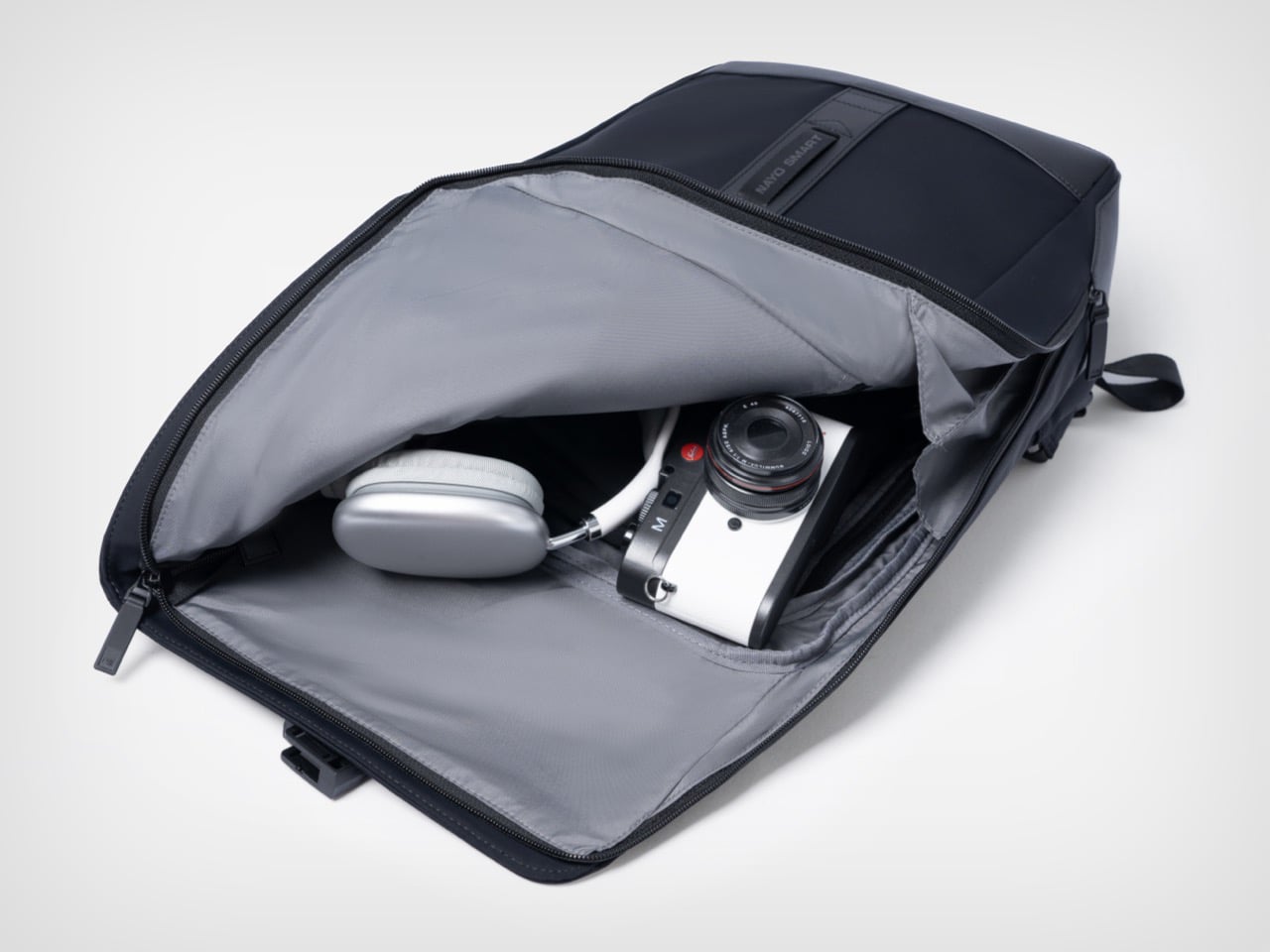
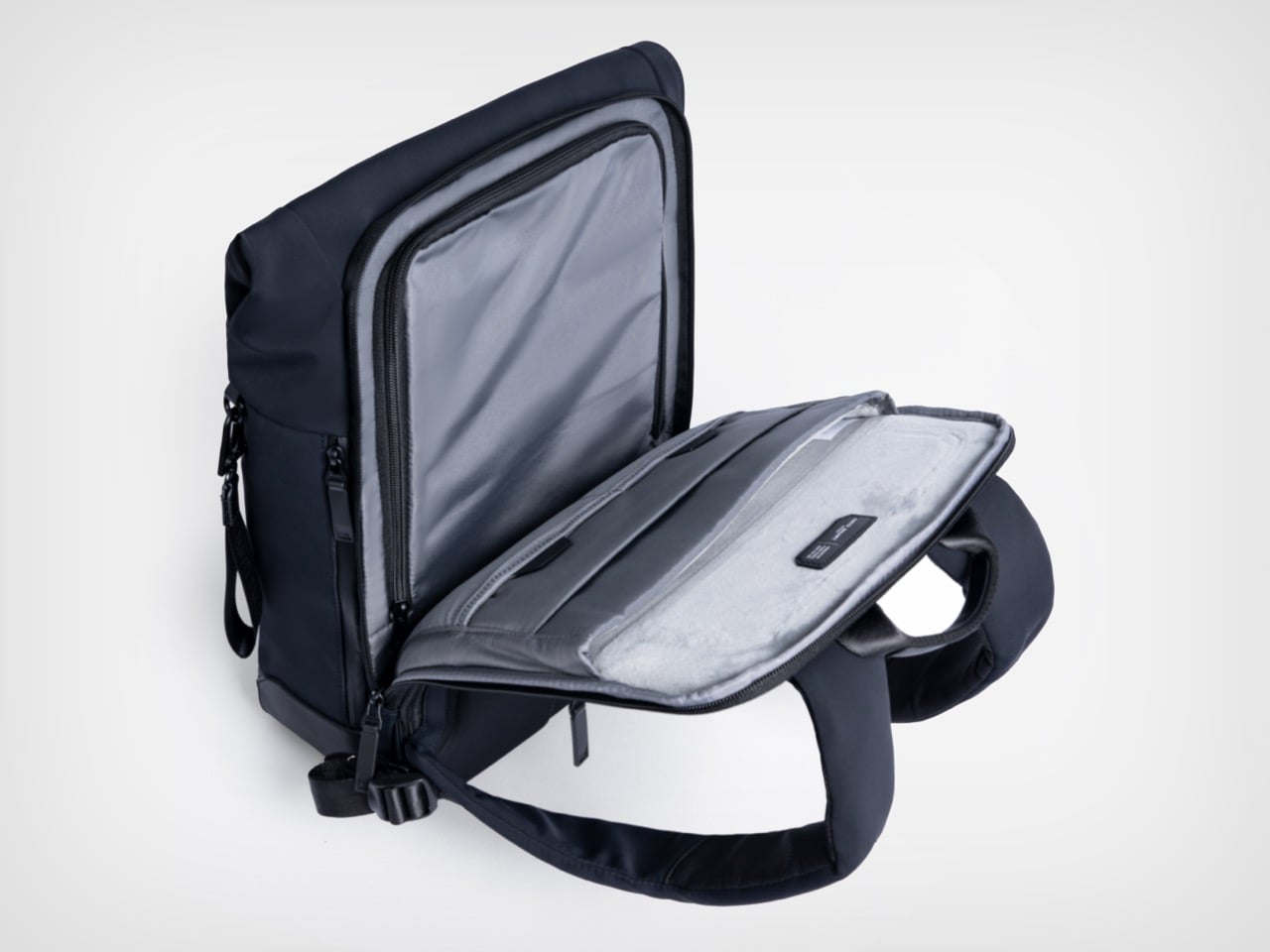
The L-shaped opening improves packing visibility and access in a way that is genuinely hard to go back from once you’ve experienced it. A conventional top-loader reveals its contents in layers, demanding that you excavate through whatever went in last to find what you need now. The L-shaped zipper runs across the top and down one full side, so the flap swings away and the entire main compartment opens in a single motion, nearly flat. The light gray interior lining amplifies this, creating strong contrast against dark items so headphones, cables, and loose accessories are immediately locatable rather than lost at the bottom. Cameras, over-ear headphones, and a tablet all fit comfortably in the main zone without competing for space with the laptop, which lives in an entirely separate section of the bag.

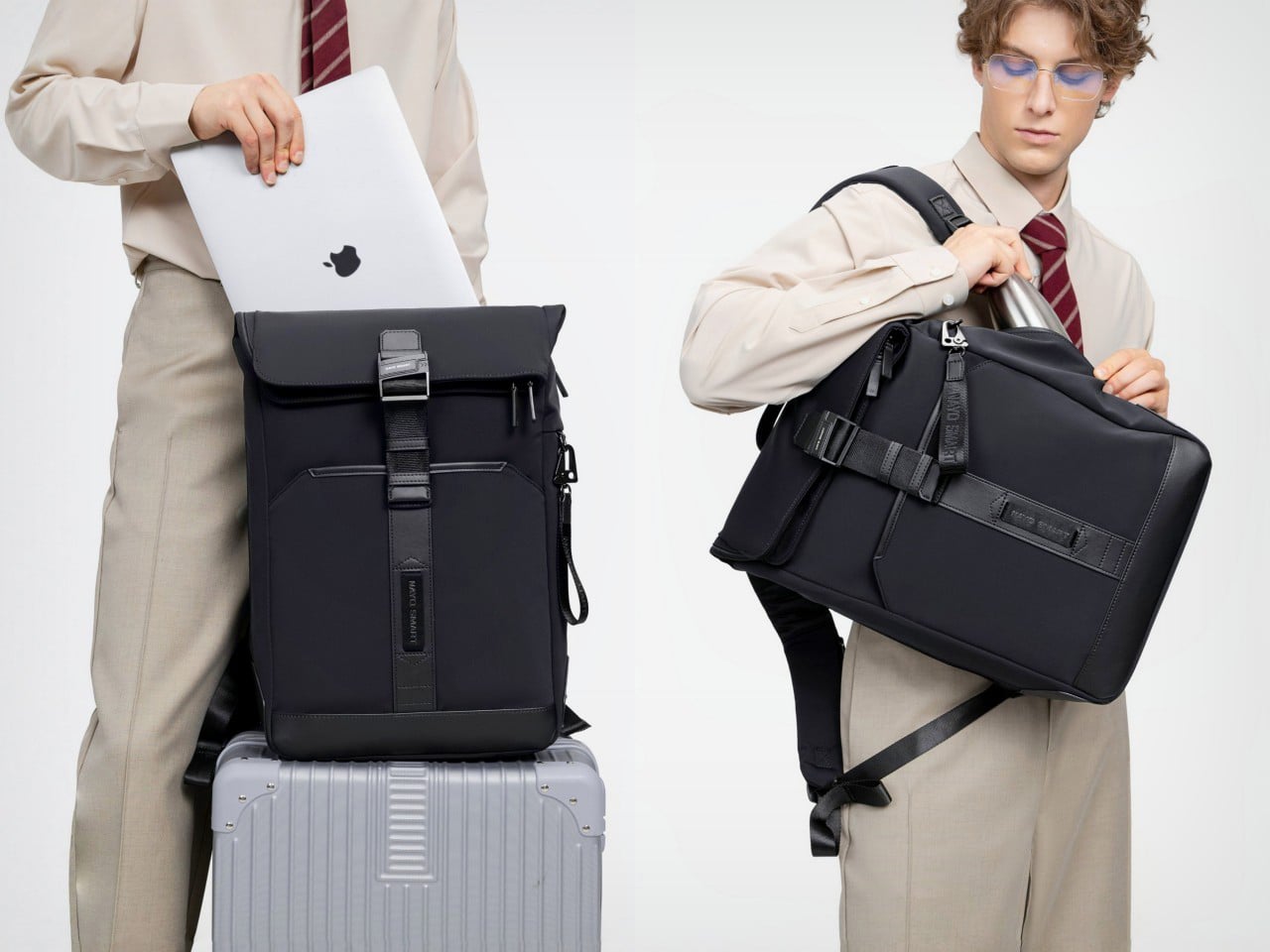
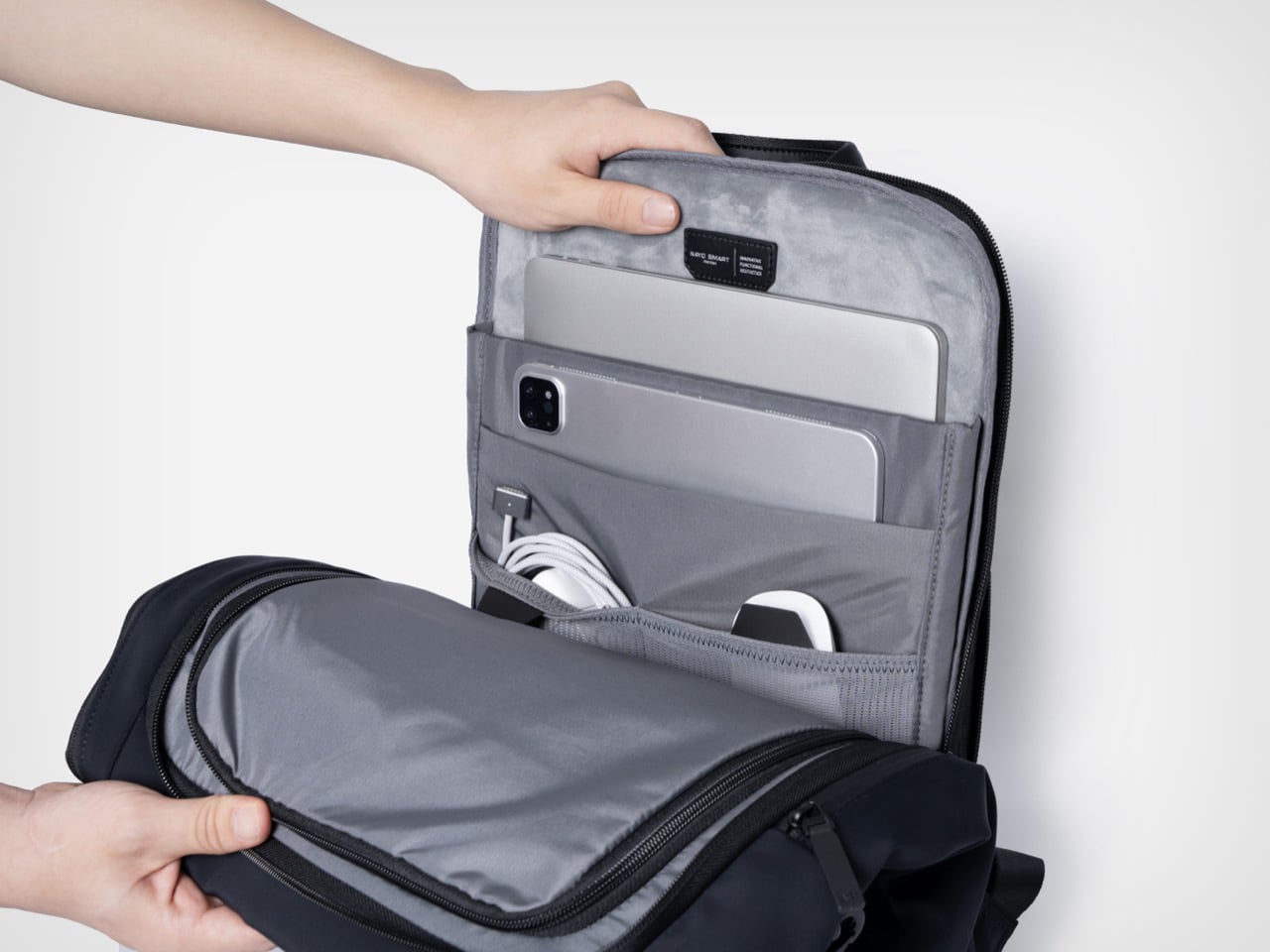
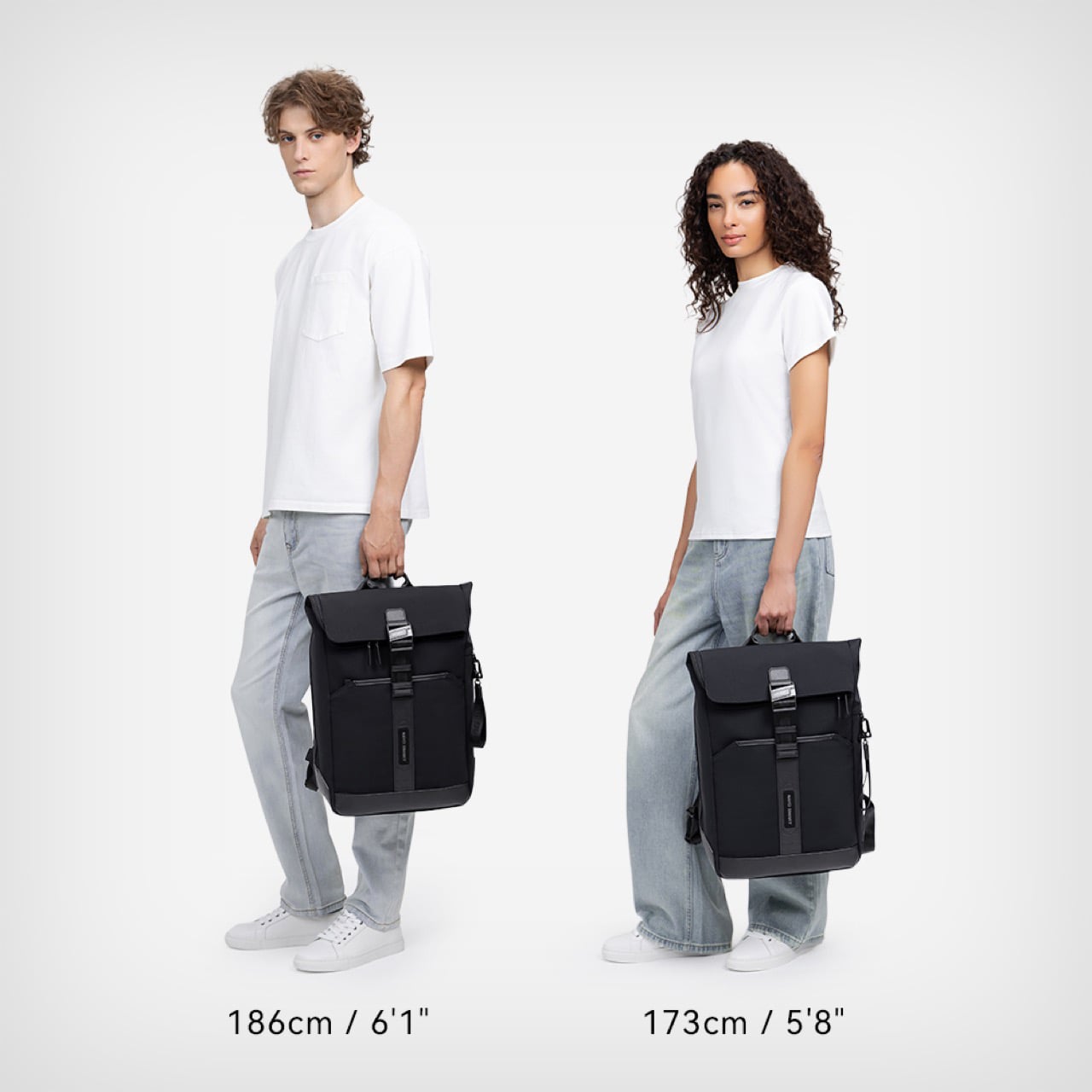
The independent laptop compartment, accessed directly from the rear panel, is one of the more practically useful organizational decisions in the Herman Pro’s design. Airport security typically means pulling the laptop out in a motion that requires setting the whole bag down, opening the main compartment, and digging through accumulated carry chaos. The back-access panel changes that entirely, allowing the laptop to slide out cleanly without touching the main storage zone. The dedicated laptop and digital device organization helps separate work essentials from personal items, and the compartment fits modern 15-inch laptops without forcing anything, with a padded tablet slot sitting alongside it. What looks like a relatively minor structural decision on paper becomes one of those carry conveniences that is hard to give up.

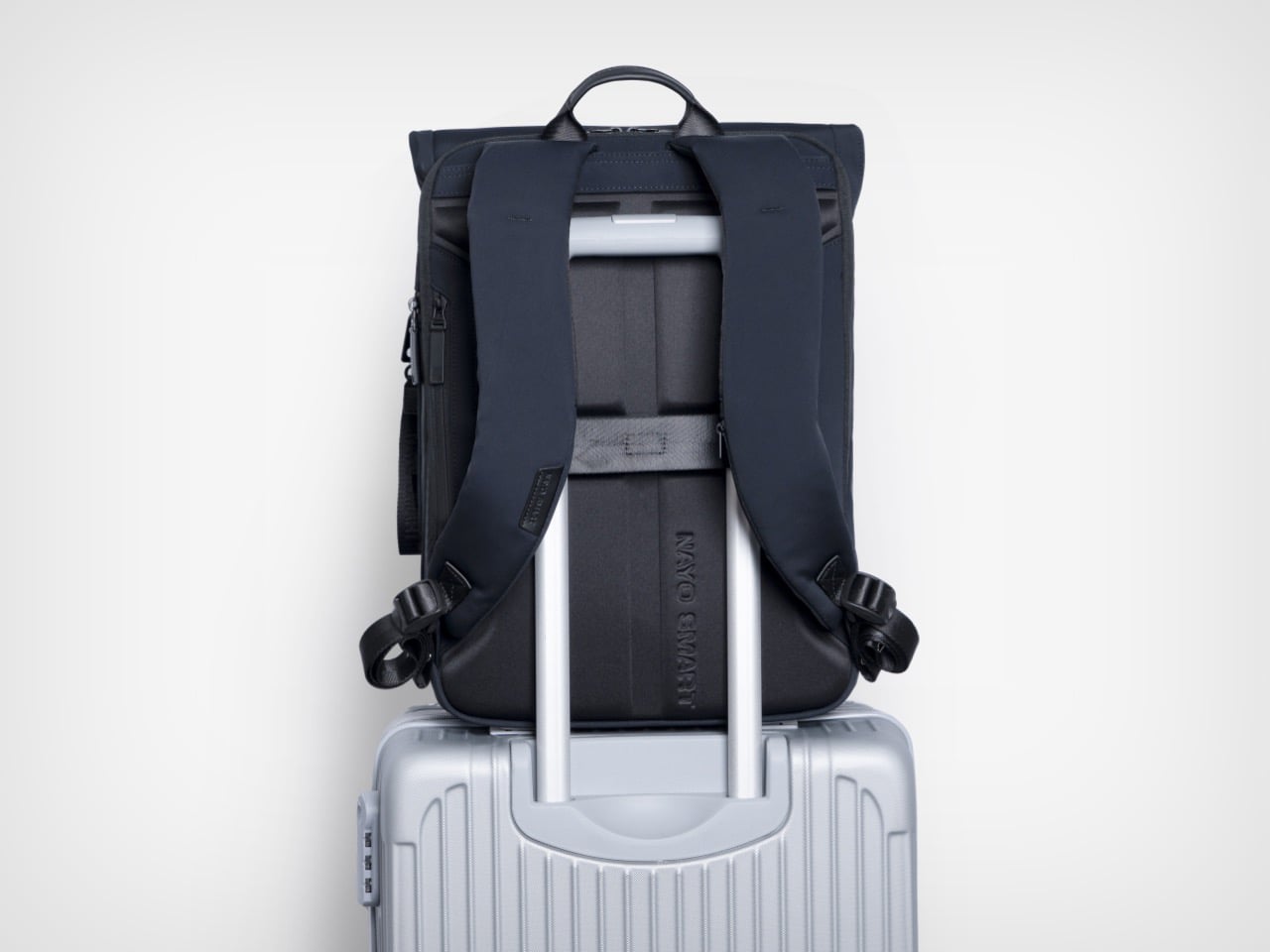
FIDLOCK’s magnetic buckle system has been appearing across premium outdoor and travel gear for several years now, and its inclusion here reads as a purposeful hardware specification rather than a borrowed credential. The mechanism snaps shut with one hand in a single motion and releases just as cleanly, removing the small but cumulative friction of a conventional buckle from what might amount to dozens of open-and-close cycles across a travel week. Hidden anti-theft pockets add a layer of security for passports and cards, while a hidden front zipper pocket handles flat documents or a transit card in a separate zone entirely. The side waterproof pocket accommodates a water bottle or umbrella without disrupting the bag’s profile from the front. A nylon luggage strap on the rear panel completes the transit toolkit, locking the Herman Pro cleanly onto a roller case handle when the load demands it.

Nayo Smart is a Singapore-based brand operating in a market that has gotten genuinely competitive at this price tier. The Herman Pro starts at $169 for the black colorway, placing it in direct conversation with well-regarded carry brands like Aer, Boundary Supply, and Tropicfeel, all of which have raised baseline expectations around what a commuter or travel backpack should deliver. Reviewers have already been reaching for the “affordable Tumi alternative” framing, which is a pointed comparison given how aggressively Tumi’s pricing has drifted upward over the past decade. The more interesting discussion may not simply be how functional a backpack can become, but how modern business backpacks are evolving alongside changes in work culture, mobility, and contemporary everyday lifestyles, and the Herman Pro fits into that conversation as a considered example of how a business travel backpack can become more organized, more comfortable, and more visually restrained without losing the practical performance that modern professionals expect. Both colorways are available directly through nayosmart.com, in standard 20L and large 25-30L sizing.

Click Here to Buy Now: $152.10 $169 (10% off) Free Waterproof Packing Cube included with your Herman Pro

The post This $152 Laptop Backpack Has 7 Features Most Business Bags Skip first appeared on Yanko Design.
This $152 Laptop Backpack Has 7 Features Most Business Bags Skip

The office is no longer a place. For a growing number of professionals, work happens across a rotating cast of locations, on trains, in hotel lobbies, at standing desks in co-working spaces, at airport gates between meetings. What gets carried through all of that has quietly become one of the more personal decisions in a working day. The bag has to hold a laptop, a water bottle, travel documents, chargers, and sometimes a change of clothes, while still looking appropriate in every environment it passes through. Most bags manage the functional half of that requirement passably well; the visual half tends to be where the compromises show.

Nayo Smart designed the Herman Pro around exactly this reality. The half-roll-top silhouette keeps things looking composed from the outside, while the internal architecture handles an impressive amount of organized complexity. A dedicated laptop compartment sits separately from the main storage zone, accessible directly from the back panel for quick retrieval at security. The L-shaped main opening lays nearly flat for visibility and easy packing. A FIDLOCK magnetic buckle secures the flap in one motion, and hidden pockets, a side waterproof sleeve, and a luggage strap round out a carry system built around real transit habits rather than feature checklists.

Designer: Nayo Smart

Click Here to Buy Now: $152.10 $169 (10% off) Free Waterproof Packing Cube included with your Herman Pro

The most immediate visual quality of the Herman Pro, looking at it against the body, is how settled the silhouette stays. Many contemporary backpacks have evolved into highly technical, feature-heavy products that prioritize utility, and the result is often a bag that reads more like field gear than office carry. The Herman Pro’s exterior has been edited rather than accumulated. A clean rectangular body in dark nylon, a structured top flap held down by the FIDLOCK buckle, and a vertical webbing strap running the full length of the front panel make up the entirety of what faces the world. Both colorways, the deep black and the muted forest green, land firmly on the right side of understated, and the structured base gives the bag a stable, planted quality that prevents the slouching common in softer nylon designs.

Beyond durability and weather resistance, equal importance was placed on tactile quality, structure retention, visual texture, and long-term everyday usability, and the parachute-inspired water-repellent NA-TEX fabric was ultimately selected because it balances performance with a more refined and premium visual character. The surface has a matte density to it that holds its character under different lighting conditions, which matters for a bag that moves between a boardroom and a café in the same afternoon. Water beads off without leaving marks or altering the fabric’s structure, the kind of weather performance that earns trust over months of daily use rather than in a single dramatic rain test. A slightly firmer, smoother material at the base grounds the bag both structurally and visually, adding subtle zoning to the exterior without making a statement of it. Tactile quality was clearly weighed alongside durability here, and the difference from a generic nylon backpack is noticeable at first contact.

The L-shaped opening improves packing visibility and access in a way that is genuinely hard to go back from once you’ve experienced it. A conventional top-loader reveals its contents in layers, demanding that you excavate through whatever went in last to find what you need now. The L-shaped zipper runs across the top and down one full side, so the flap swings away and the entire main compartment opens in a single motion, nearly flat. The light gray interior lining amplifies this, creating strong contrast against dark items so headphones, cables, and loose accessories are immediately locatable rather than lost at the bottom. Cameras, over-ear headphones, and a tablet all fit comfortably in the main zone without competing for space with the laptop, which lives in an entirely separate section of the bag.

The independent laptop compartment, accessed directly from the rear panel, is one of the more practically useful organizational decisions in the Herman Pro’s design. Airport security typically means pulling the laptop out in a motion that requires setting the whole bag down, opening the main compartment, and digging through accumulated carry chaos. The back-access panel changes that entirely, allowing the laptop to slide out cleanly without touching the main storage zone. The dedicated laptop and digital device organization helps separate work essentials from personal items, and the compartment fits modern 15-inch laptops without forcing anything, with a padded tablet slot sitting alongside it. What looks like a relatively minor structural decision on paper becomes one of those carry conveniences that is hard to give up.

FIDLOCK’s magnetic buckle system has been appearing across premium outdoor and travel gear for several years now, and its inclusion here reads as a purposeful hardware specification rather than a borrowed credential. The mechanism snaps shut with one hand in a single motion and releases just as cleanly, removing the small but cumulative friction of a conventional buckle from what might amount to dozens of open-and-close cycles across a travel week. Hidden anti-theft pockets add a layer of security for passports and cards, while a hidden front zipper pocket handles flat documents or a transit card in a separate zone entirely. The side waterproof pocket accommodates a water bottle or umbrella without disrupting the bag’s profile from the front. A nylon luggage strap on the rear panel completes the transit toolkit, locking the Herman Pro cleanly onto a roller case handle when the load demands it.

Nayo Smart is a Singapore-based brand operating in a market that has gotten genuinely competitive at this price tier. The Herman Pro starts at $169 for the black colorway, placing it in direct conversation with well-regarded carry brands like Aer, Boundary Supply, and Tropicfeel, all of which have raised baseline expectations around what a commuter or travel backpack should deliver. Reviewers have already been reaching for the “affordable Tumi alternative” framing, which is a pointed comparison given how aggressively Tumi’s pricing has drifted upward over the past decade. The more interesting discussion may not simply be how functional a backpack can become, but how modern business backpacks are evolving alongside changes in work culture, mobility, and contemporary everyday lifestyles, and the Herman Pro fits into that conversation as a considered example of how a business travel backpack can become more organized, more comfortable, and more visually restrained without losing the practical performance that modern professionals expect. Both colorways are available directly through nayosmart.com, in standard 20L and large 25-30L sizing.

Click Here to Buy Now: $152.10 $169 (10% off) Free Waterproof Packing Cube included with your Herman Pro

The post This $152 Laptop Backpack Has 7 Features Most Business Bags Skip first appeared on Yanko Design.
This $152 Laptop Backpack Has 7 Features Most Business Bags Skip

The office is no longer a place. For a growing number of professionals, work happens across a rotating cast of locations, on trains, in hotel lobbies, at standing desks in co-working spaces, at airport gates between meetings. What gets carried through all of that has quietly become one of the more personal decisions in a working day. The bag has to hold a laptop, a water bottle, travel documents, chargers, and sometimes a change of clothes, while still looking appropriate in every environment it passes through. Most bags manage the functional half of that requirement passably well; the visual half tends to be where the compromises show.

Nayo Smart designed the Herman Pro around exactly this reality. The half-roll-top silhouette keeps things looking composed from the outside, while the internal architecture handles an impressive amount of organized complexity. A dedicated laptop compartment sits separately from the main storage zone, accessible directly from the back panel for quick retrieval at security. The L-shaped main opening lays nearly flat for visibility and easy packing. A FIDLOCK magnetic buckle secures the flap in one motion, and hidden pockets, a side waterproof sleeve, and a luggage strap round out a carry system built around real transit habits rather than feature checklists.

Designer: Nayo Smart

Click Here to Buy Now: $152.10 $169 (10% off) Free Waterproof Packing Cube included with your Herman Pro

The most immediate visual quality of the Herman Pro, looking at it against the body, is how settled the silhouette stays. Many contemporary backpacks have evolved into highly technical, feature-heavy products that prioritize utility, and the result is often a bag that reads more like field gear than office carry. The Herman Pro’s exterior has been edited rather than accumulated. A clean rectangular body in dark nylon, a structured top flap held down by the FIDLOCK buckle, and a vertical webbing strap running the full length of the front panel make up the entirety of what faces the world. Both colorways, the deep black and the muted forest green, land firmly on the right side of understated, and the structured base gives the bag a stable, planted quality that prevents the slouching common in softer nylon designs.

Beyond durability and weather resistance, equal importance was placed on tactile quality, structure retention, visual texture, and long-term everyday usability, and the parachute-inspired water-repellent NA-TEX fabric was ultimately selected because it balances performance with a more refined and premium visual character. The surface has a matte density to it that holds its character under different lighting conditions, which matters for a bag that moves between a boardroom and a café in the same afternoon. Water beads off without leaving marks or altering the fabric’s structure, the kind of weather performance that earns trust over months of daily use rather than in a single dramatic rain test. A slightly firmer, smoother material at the base grounds the bag both structurally and visually, adding subtle zoning to the exterior without making a statement of it. Tactile quality was clearly weighed alongside durability here, and the difference from a generic nylon backpack is noticeable at first contact.

The L-shaped opening improves packing visibility and access in a way that is genuinely hard to go back from once you’ve experienced it. A conventional top-loader reveals its contents in layers, demanding that you excavate through whatever went in last to find what you need now. The L-shaped zipper runs across the top and down one full side, so the flap swings away and the entire main compartment opens in a single motion, nearly flat. The light gray interior lining amplifies this, creating strong contrast against dark items so headphones, cables, and loose accessories are immediately locatable rather than lost at the bottom. Cameras, over-ear headphones, and a tablet all fit comfortably in the main zone without competing for space with the laptop, which lives in an entirely separate section of the bag.

The independent laptop compartment, accessed directly from the rear panel, is one of the more practically useful organizational decisions in the Herman Pro’s design. Airport security typically means pulling the laptop out in a motion that requires setting the whole bag down, opening the main compartment, and digging through accumulated carry chaos. The back-access panel changes that entirely, allowing the laptop to slide out cleanly without touching the main storage zone. The dedicated laptop and digital device organization helps separate work essentials from personal items, and the compartment fits modern 15-inch laptops without forcing anything, with a padded tablet slot sitting alongside it. What looks like a relatively minor structural decision on paper becomes one of those carry conveniences that is hard to give up.

FIDLOCK’s magnetic buckle system has been appearing across premium outdoor and travel gear for several years now, and its inclusion here reads as a purposeful hardware specification rather than a borrowed credential. The mechanism snaps shut with one hand in a single motion and releases just as cleanly, removing the small but cumulative friction of a conventional buckle from what might amount to dozens of open-and-close cycles across a travel week. Hidden anti-theft pockets add a layer of security for passports and cards, while a hidden front zipper pocket handles flat documents or a transit card in a separate zone entirely. The side waterproof pocket accommodates a water bottle or umbrella without disrupting the bag’s profile from the front. A nylon luggage strap on the rear panel completes the transit toolkit, locking the Herman Pro cleanly onto a roller case handle when the load demands it.

Nayo Smart is a Singapore-based brand operating in a market that has gotten genuinely competitive at this price tier. The Herman Pro starts at $169 for the black colorway, placing it in direct conversation with well-regarded carry brands like Aer, Boundary Supply, and Tropicfeel, all of which have raised baseline expectations around what a commuter or travel backpack should deliver. Reviewers have already been reaching for the “affordable Tumi alternative” framing, which is a pointed comparison given how aggressively Tumi’s pricing has drifted upward over the past decade. The more interesting discussion may not simply be how functional a backpack can become, but how modern business backpacks are evolving alongside changes in work culture, mobility, and contemporary everyday lifestyles, and the Herman Pro fits into that conversation as a considered example of how a business travel backpack can become more organized, more comfortable, and more visually restrained without losing the practical performance that modern professionals expect. Both colorways are available directly through nayosmart.com, in standard 20L and large 25-30L sizing.

Click Here to Buy Now: $152.10 $169 (10% off) Free Waterproof Packing Cube included with your Herman Pro

The post This $152 Laptop Backpack Has 7 Features Most Business Bags Skip first appeared on Yanko Design.
This $152 Laptop Backpack Has 7 Features Most Business Bags Skip

The office is no longer a place. For a growing number of professionals, work happens across a rotating cast of locations, on trains, in hotel lobbies, at standing desks in co-working spaces, at airport gates between meetings. What gets carried through all of that has quietly become one of the more personal decisions in a working day. The bag has to hold a laptop, a water bottle, travel documents, chargers, and sometimes a change of clothes, while still looking appropriate in every environment it passes through. Most bags manage the functional half of that requirement passably well; the visual half tends to be where the compromises show.

Nayo Smart designed the Herman Pro around exactly this reality. The half-roll-top silhouette keeps things looking composed from the outside, while the internal architecture handles an impressive amount of organized complexity. A dedicated laptop compartment sits separately from the main storage zone, accessible directly from the back panel for quick retrieval at security. The L-shaped main opening lays nearly flat for visibility and easy packing. A FIDLOCK magnetic buckle secures the flap in one motion, and hidden pockets, a side waterproof sleeve, and a luggage strap round out a carry system built around real transit habits rather than feature checklists.

Designer: Nayo Smart

Click Here to Buy Now: $152.10 $169 (10% off) Free Waterproof Packing Cube included with your Herman Pro

The most immediate visual quality of the Herman Pro, looking at it against the body, is how settled the silhouette stays. Many contemporary backpacks have evolved into highly technical, feature-heavy products that prioritize utility, and the result is often a bag that reads more like field gear than office carry. The Herman Pro’s exterior has been edited rather than accumulated. A clean rectangular body in dark nylon, a structured top flap held down by the FIDLOCK buckle, and a vertical webbing strap running the full length of the front panel make up the entirety of what faces the world. Both colorways, the deep black and the muted forest green, land firmly on the right side of understated, and the structured base gives the bag a stable, planted quality that prevents the slouching common in softer nylon designs.

Beyond durability and weather resistance, equal importance was placed on tactile quality, structure retention, visual texture, and long-term everyday usability, and the parachute-inspired water-repellent NA-TEX fabric was ultimately selected because it balances performance with a more refined and premium visual character. The surface has a matte density to it that holds its character under different lighting conditions, which matters for a bag that moves between a boardroom and a café in the same afternoon. Water beads off without leaving marks or altering the fabric’s structure, the kind of weather performance that earns trust over months of daily use rather than in a single dramatic rain test. A slightly firmer, smoother material at the base grounds the bag both structurally and visually, adding subtle zoning to the exterior without making a statement of it. Tactile quality was clearly weighed alongside durability here, and the difference from a generic nylon backpack is noticeable at first contact.

The L-shaped opening improves packing visibility and access in a way that is genuinely hard to go back from once you’ve experienced it. A conventional top-loader reveals its contents in layers, demanding that you excavate through whatever went in last to find what you need now. The L-shaped zipper runs across the top and down one full side, so the flap swings away and the entire main compartment opens in a single motion, nearly flat. The light gray interior lining amplifies this, creating strong contrast against dark items so headphones, cables, and loose accessories are immediately locatable rather than lost at the bottom. Cameras, over-ear headphones, and a tablet all fit comfortably in the main zone without competing for space with the laptop, which lives in an entirely separate section of the bag.

The independent laptop compartment, accessed directly from the rear panel, is one of the more practically useful organizational decisions in the Herman Pro’s design. Airport security typically means pulling the laptop out in a motion that requires setting the whole bag down, opening the main compartment, and digging through accumulated carry chaos. The back-access panel changes that entirely, allowing the laptop to slide out cleanly without touching the main storage zone. The dedicated laptop and digital device organization helps separate work essentials from personal items, and the compartment fits modern 15-inch laptops without forcing anything, with a padded tablet slot sitting alongside it. What looks like a relatively minor structural decision on paper becomes one of those carry conveniences that is hard to give up.

FIDLOCK’s magnetic buckle system has been appearing across premium outdoor and travel gear for several years now, and its inclusion here reads as a purposeful hardware specification rather than a borrowed credential. The mechanism snaps shut with one hand in a single motion and releases just as cleanly, removing the small but cumulative friction of a conventional buckle from what might amount to dozens of open-and-close cycles across a travel week. Hidden anti-theft pockets add a layer of security for passports and cards, while a hidden front zipper pocket handles flat documents or a transit card in a separate zone entirely. The side waterproof pocket accommodates a water bottle or umbrella without disrupting the bag’s profile from the front. A nylon luggage strap on the rear panel completes the transit toolkit, locking the Herman Pro cleanly onto a roller case handle when the load demands it.

Nayo Smart is a Singapore-based brand operating in a market that has gotten genuinely competitive at this price tier. The Herman Pro starts at $169 for the black colorway, placing it in direct conversation with well-regarded carry brands like Aer, Boundary Supply, and Tropicfeel, all of which have raised baseline expectations around what a commuter or travel backpack should deliver. Reviewers have already been reaching for the “affordable Tumi alternative” framing, which is a pointed comparison given how aggressively Tumi’s pricing has drifted upward over the past decade. The more interesting discussion may not simply be how functional a backpack can become, but how modern business backpacks are evolving alongside changes in work culture, mobility, and contemporary everyday lifestyles, and the Herman Pro fits into that conversation as a considered example of how a business travel backpack can become more organized, more comfortable, and more visually restrained without losing the practical performance that modern professionals expect. Both colorways are available directly through nayosmart.com, in standard 20L and large 25-30L sizing.

Click Here to Buy Now: $152.10 $169 (10% off) Free Waterproof Packing Cube included with your Herman Pro

The post This $152 Laptop Backpack Has 7 Features Most Business Bags Skip first appeared on Yanko Design.
This $152 Laptop Backpack Has 7 Features Most Business Bags Skip

The office is no longer a place. For a growing number of professionals, work happens across a rotating cast of locations, on trains, in hotel lobbies, at standing desks in co-working spaces, at airport gates between meetings. What gets carried through all of that has quietly become one of the more personal decisions in a working day. The bag has to hold a laptop, a water bottle, travel documents, chargers, and sometimes a change of clothes, while still looking appropriate in every environment it passes through. Most bags manage the functional half of that requirement passably well; the visual half tends to be where the compromises show.

Nayo Smart designed the Herman Pro around exactly this reality. The half-roll-top silhouette keeps things looking composed from the outside, while the internal architecture handles an impressive amount of organized complexity. A dedicated laptop compartment sits separately from the main storage zone, accessible directly from the back panel for quick retrieval at security. The L-shaped main opening lays nearly flat for visibility and easy packing. A FIDLOCK magnetic buckle secures the flap in one motion, and hidden pockets, a side waterproof sleeve, and a luggage strap round out a carry system built around real transit habits rather than feature checklists.

Designer: Nayo Smart

Click Here to Buy Now: $152.10 $169 (10% off) Free Waterproof Packing Cube included with your Herman Pro

The most immediate visual quality of the Herman Pro, looking at it against the body, is how settled the silhouette stays. Many contemporary backpacks have evolved into highly technical, feature-heavy products that prioritize utility, and the result is often a bag that reads more like field gear than office carry. The Herman Pro’s exterior has been edited rather than accumulated. A clean rectangular body in dark nylon, a structured top flap held down by the FIDLOCK buckle, and a vertical webbing strap running the full length of the front panel make up the entirety of what faces the world. Both colorways, the deep black and the muted forest green, land firmly on the right side of understated, and the structured base gives the bag a stable, planted quality that prevents the slouching common in softer nylon designs.

Beyond durability and weather resistance, equal importance was placed on tactile quality, structure retention, visual texture, and long-term everyday usability, and the parachute-inspired water-repellent NA-TEX fabric was ultimately selected because it balances performance with a more refined and premium visual character. The surface has a matte density to it that holds its character under different lighting conditions, which matters for a bag that moves between a boardroom and a café in the same afternoon. Water beads off without leaving marks or altering the fabric’s structure, the kind of weather performance that earns trust over months of daily use rather than in a single dramatic rain test. A slightly firmer, smoother material at the base grounds the bag both structurally and visually, adding subtle zoning to the exterior without making a statement of it. Tactile quality was clearly weighed alongside durability here, and the difference from a generic nylon backpack is noticeable at first contact.

The L-shaped opening improves packing visibility and access in a way that is genuinely hard to go back from once you’ve experienced it. A conventional top-loader reveals its contents in layers, demanding that you excavate through whatever went in last to find what you need now. The L-shaped zipper runs across the top and down one full side, so the flap swings away and the entire main compartment opens in a single motion, nearly flat. The light gray interior lining amplifies this, creating strong contrast against dark items so headphones, cables, and loose accessories are immediately locatable rather than lost at the bottom. Cameras, over-ear headphones, and a tablet all fit comfortably in the main zone without competing for space with the laptop, which lives in an entirely separate section of the bag.

The independent laptop compartment, accessed directly from the rear panel, is one of the more practically useful organizational decisions in the Herman Pro’s design. Airport security typically means pulling the laptop out in a motion that requires setting the whole bag down, opening the main compartment, and digging through accumulated carry chaos. The back-access panel changes that entirely, allowing the laptop to slide out cleanly without touching the main storage zone. The dedicated laptop and digital device organization helps separate work essentials from personal items, and the compartment fits modern 15-inch laptops without forcing anything, with a padded tablet slot sitting alongside it. What looks like a relatively minor structural decision on paper becomes one of those carry conveniences that is hard to give up.

FIDLOCK’s magnetic buckle system has been appearing across premium outdoor and travel gear for several years now, and its inclusion here reads as a purposeful hardware specification rather than a borrowed credential. The mechanism snaps shut with one hand in a single motion and releases just as cleanly, removing the small but cumulative friction of a conventional buckle from what might amount to dozens of open-and-close cycles across a travel week. Hidden anti-theft pockets add a layer of security for passports and cards, while a hidden front zipper pocket handles flat documents or a transit card in a separate zone entirely. The side waterproof pocket accommodates a water bottle or umbrella without disrupting the bag’s profile from the front. A nylon luggage strap on the rear panel completes the transit toolkit, locking the Herman Pro cleanly onto a roller case handle when the load demands it.

Nayo Smart is a Singapore-based brand operating in a market that has gotten genuinely competitive at this price tier. The Herman Pro starts at $169 for the black colorway, placing it in direct conversation with well-regarded carry brands like Aer, Boundary Supply, and Tropicfeel, all of which have raised baseline expectations around what a commuter or travel backpack should deliver. Reviewers have already been reaching for the “affordable Tumi alternative” framing, which is a pointed comparison given how aggressively Tumi’s pricing has drifted upward over the past decade. The more interesting discussion may not simply be how functional a backpack can become, but how modern business backpacks are evolving alongside changes in work culture, mobility, and contemporary everyday lifestyles, and the Herman Pro fits into that conversation as a considered example of how a business travel backpack can become more organized, more comfortable, and more visually restrained without losing the practical performance that modern professionals expect. Both colorways are available directly through nayosmart.com, in standard 20L and large 25-30L sizing.

Click Here to Buy Now: $152.10 $169 (10% off) Free Waterproof Packing Cube included with your Herman Pro

The post This $152 Laptop Backpack Has 7 Features Most Business Bags Skip first appeared on Yanko Design.
This $152 Laptop Backpack Has 7 Features Most Business Bags Skip

The office is no longer a place. For a growing number of professionals, work happens across a rotating cast of locations, on trains, in hotel lobbies, at standing desks in co-working spaces, at airport gates between meetings. What gets carried through all of that has quietly become one of the more personal decisions in a working day. The bag has to hold a laptop, a water bottle, travel documents, chargers, and sometimes a change of clothes, while still looking appropriate in every environment it passes through. Most bags manage the functional half of that requirement passably well; the visual half tends to be where the compromises show.

Nayo Smart designed the Herman Pro around exactly this reality. The half-roll-top silhouette keeps things looking composed from the outside, while the internal architecture handles an impressive amount of organized complexity. A dedicated laptop compartment sits separately from the main storage zone, accessible directly from the back panel for quick retrieval at security. The L-shaped main opening lays nearly flat for visibility and easy packing. A FIDLOCK magnetic buckle secures the flap in one motion, and hidden pockets, a side waterproof sleeve, and a luggage strap round out a carry system built around real transit habits rather than feature checklists.

Designer: Nayo Smart

Click Here to Buy Now: $152.10 $169 (10% off) Free Waterproof Packing Cube included with your Herman Pro

The most immediate visual quality of the Herman Pro, looking at it against the body, is how settled the silhouette stays. Many contemporary backpacks have evolved into highly technical, feature-heavy products that prioritize utility, and the result is often a bag that reads more like field gear than office carry. The Herman Pro’s exterior has been edited rather than accumulated. A clean rectangular body in dark nylon, a structured top flap held down by the FIDLOCK buckle, and a vertical webbing strap running the full length of the front panel make up the entirety of what faces the world. Both colorways, the deep black and the muted forest green, land firmly on the right side of understated, and the structured base gives the bag a stable, planted quality that prevents the slouching common in softer nylon designs.

Beyond durability and weather resistance, equal importance was placed on tactile quality, structure retention, visual texture, and long-term everyday usability, and the parachute-inspired water-repellent NA-TEX fabric was ultimately selected because it balances performance with a more refined and premium visual character. The surface has a matte density to it that holds its character under different lighting conditions, which matters for a bag that moves between a boardroom and a café in the same afternoon. Water beads off without leaving marks or altering the fabric’s structure, the kind of weather performance that earns trust over months of daily use rather than in a single dramatic rain test. A slightly firmer, smoother material at the base grounds the bag both structurally and visually, adding subtle zoning to the exterior without making a statement of it. Tactile quality was clearly weighed alongside durability here, and the difference from a generic nylon backpack is noticeable at first contact.

The L-shaped opening improves packing visibility and access in a way that is genuinely hard to go back from once you’ve experienced it. A conventional top-loader reveals its contents in layers, demanding that you excavate through whatever went in last to find what you need now. The L-shaped zipper runs across the top and down one full side, so the flap swings away and the entire main compartment opens in a single motion, nearly flat. The light gray interior lining amplifies this, creating strong contrast against dark items so headphones, cables, and loose accessories are immediately locatable rather than lost at the bottom. Cameras, over-ear headphones, and a tablet all fit comfortably in the main zone without competing for space with the laptop, which lives in an entirely separate section of the bag.

The independent laptop compartment, accessed directly from the rear panel, is one of the more practically useful organizational decisions in the Herman Pro’s design. Airport security typically means pulling the laptop out in a motion that requires setting the whole bag down, opening the main compartment, and digging through accumulated carry chaos. The back-access panel changes that entirely, allowing the laptop to slide out cleanly without touching the main storage zone. The dedicated laptop and digital device organization helps separate work essentials from personal items, and the compartment fits modern 15-inch laptops without forcing anything, with a padded tablet slot sitting alongside it. What looks like a relatively minor structural decision on paper becomes one of those carry conveniences that is hard to give up.

FIDLOCK’s magnetic buckle system has been appearing across premium outdoor and travel gear for several years now, and its inclusion here reads as a purposeful hardware specification rather than a borrowed credential. The mechanism snaps shut with one hand in a single motion and releases just as cleanly, removing the small but cumulative friction of a conventional buckle from what might amount to dozens of open-and-close cycles across a travel week. Hidden anti-theft pockets add a layer of security for passports and cards, while a hidden front zipper pocket handles flat documents or a transit card in a separate zone entirely. The side waterproof pocket accommodates a water bottle or umbrella without disrupting the bag’s profile from the front. A nylon luggage strap on the rear panel completes the transit toolkit, locking the Herman Pro cleanly onto a roller case handle when the load demands it.

Nayo Smart is a Singapore-based brand operating in a market that has gotten genuinely competitive at this price tier. The Herman Pro starts at $169 for the black colorway, placing it in direct conversation with well-regarded carry brands like Aer, Boundary Supply, and Tropicfeel, all of which have raised baseline expectations around what a commuter or travel backpack should deliver. Reviewers have already been reaching for the “affordable Tumi alternative” framing, which is a pointed comparison given how aggressively Tumi’s pricing has drifted upward over the past decade. The more interesting discussion may not simply be how functional a backpack can become, but how modern business backpacks are evolving alongside changes in work culture, mobility, and contemporary everyday lifestyles, and the Herman Pro fits into that conversation as a considered example of how a business travel backpack can become more organized, more comfortable, and more visually restrained without losing the practical performance that modern professionals expect. Both colorways are available directly through nayosmart.com, in standard 20L and large 25-30L sizing.

Click Here to Buy Now: $152.10 $169 (10% off) Free Waterproof Packing Cube included with your Herman Pro

The post This $152 Laptop Backpack Has 7 Features Most Business Bags Skip first appeared on Yanko Design.
More than a backpack, the solar-powered Makeshift Traveler is helping California’s homeless live better

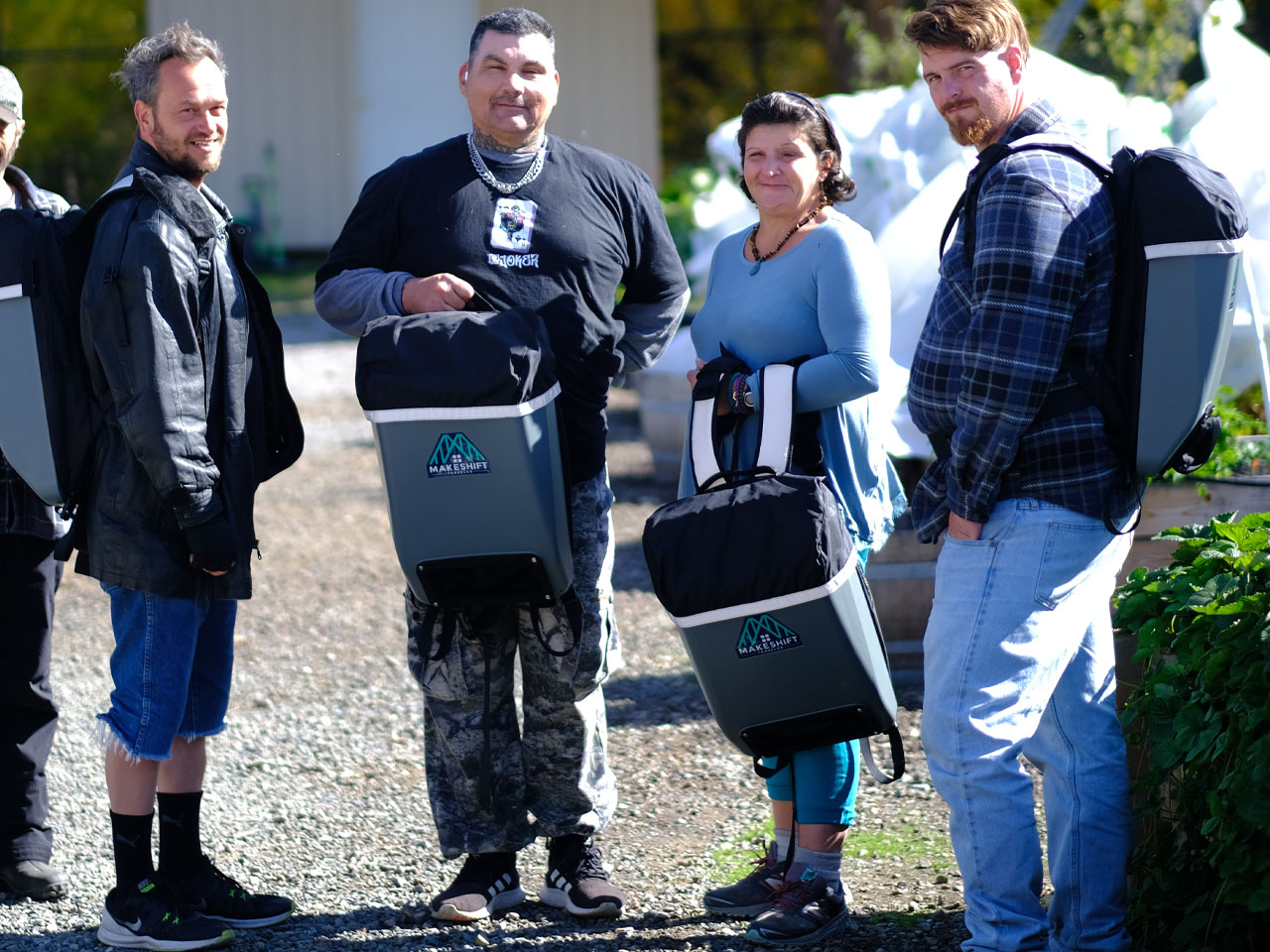
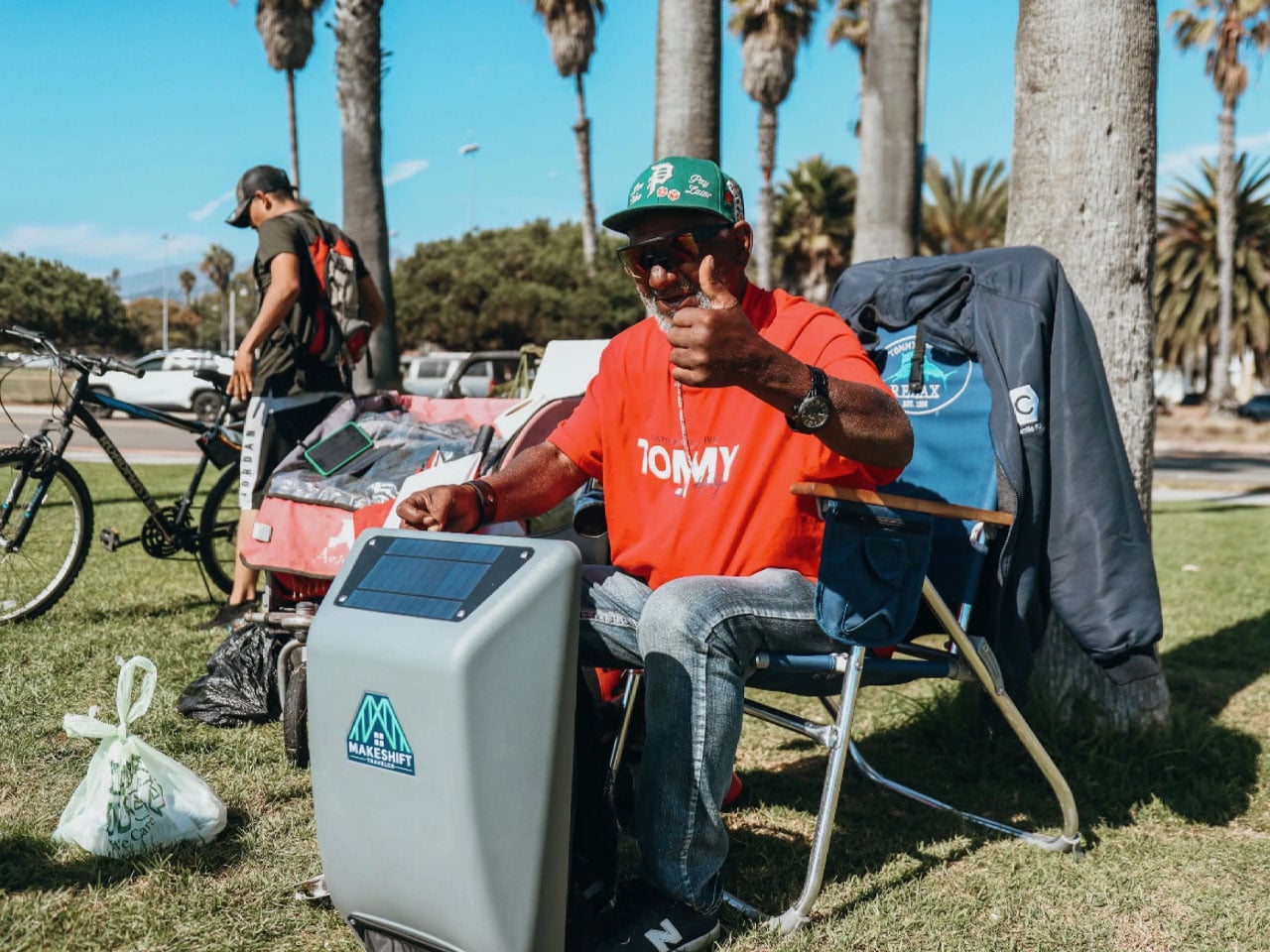
The best part about my job is, I get to see so many interesting products designed for a spectrum of users. While some cater to the elite and embody luxury, others — such as the HomeMore Project’s Makeshift Traveler — truly touch the heart because of the purpose behind their creation. Since the introduction of the first Makeshift Traveler (a backpack, per se; more on it below), the not-for-profit organization behind the creation has delivered upward of 1,200 units to individuals experiencing homelessness in California.

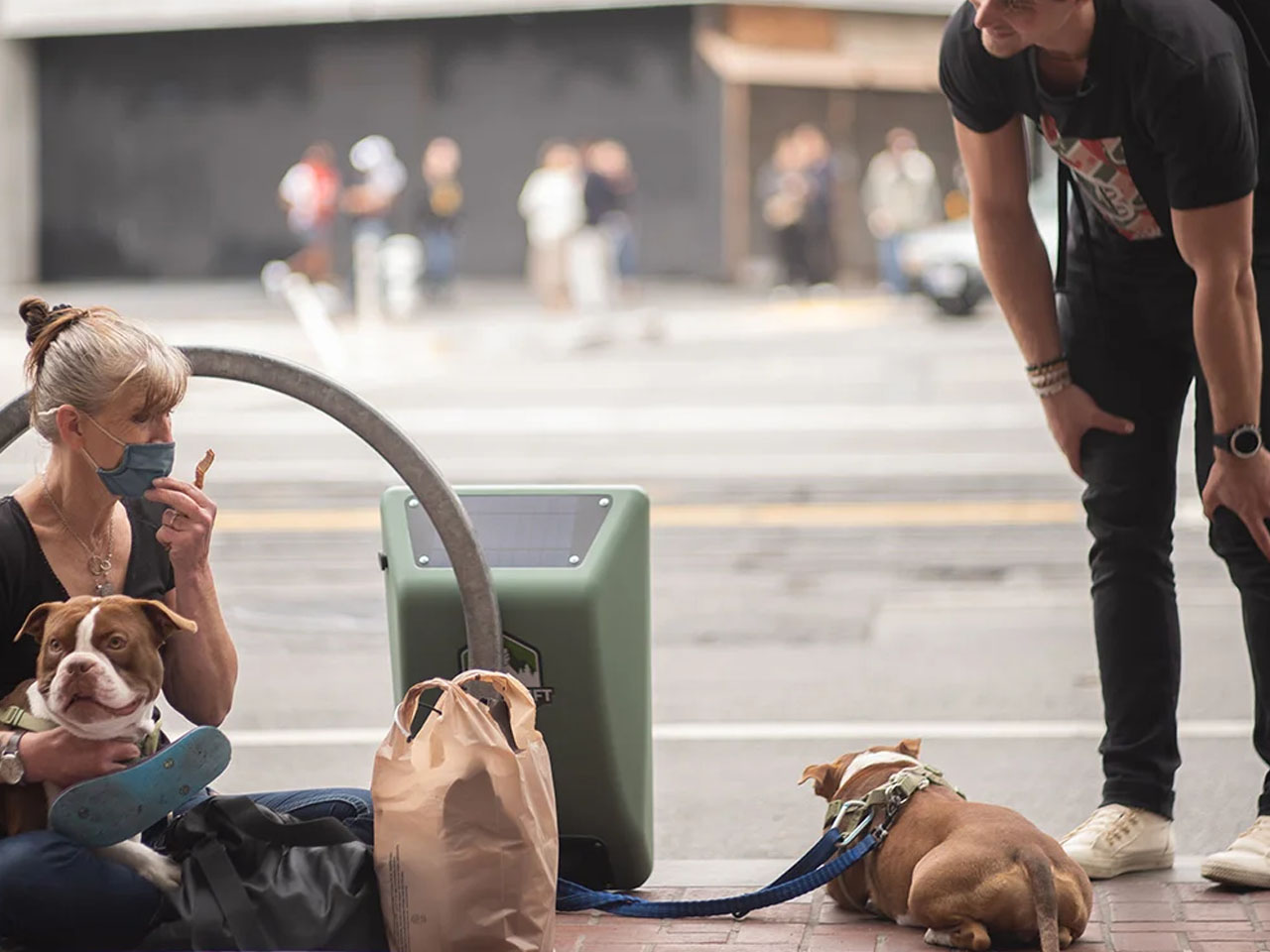
The target with the fourth edition, built in 2025 with enhanced design and new features, is to deliver another 2,000 units across 25 cities in California and counting. The project that started from Tenderloin in San Francisco has, with feedback from unhoused people, reached a point where it’s more than an ordinary backpack. It’s a self-sustaining unit that is designed to provide connectivity, shelter, resources, and assistance to the homeless.

Designer: The HomeMore Project

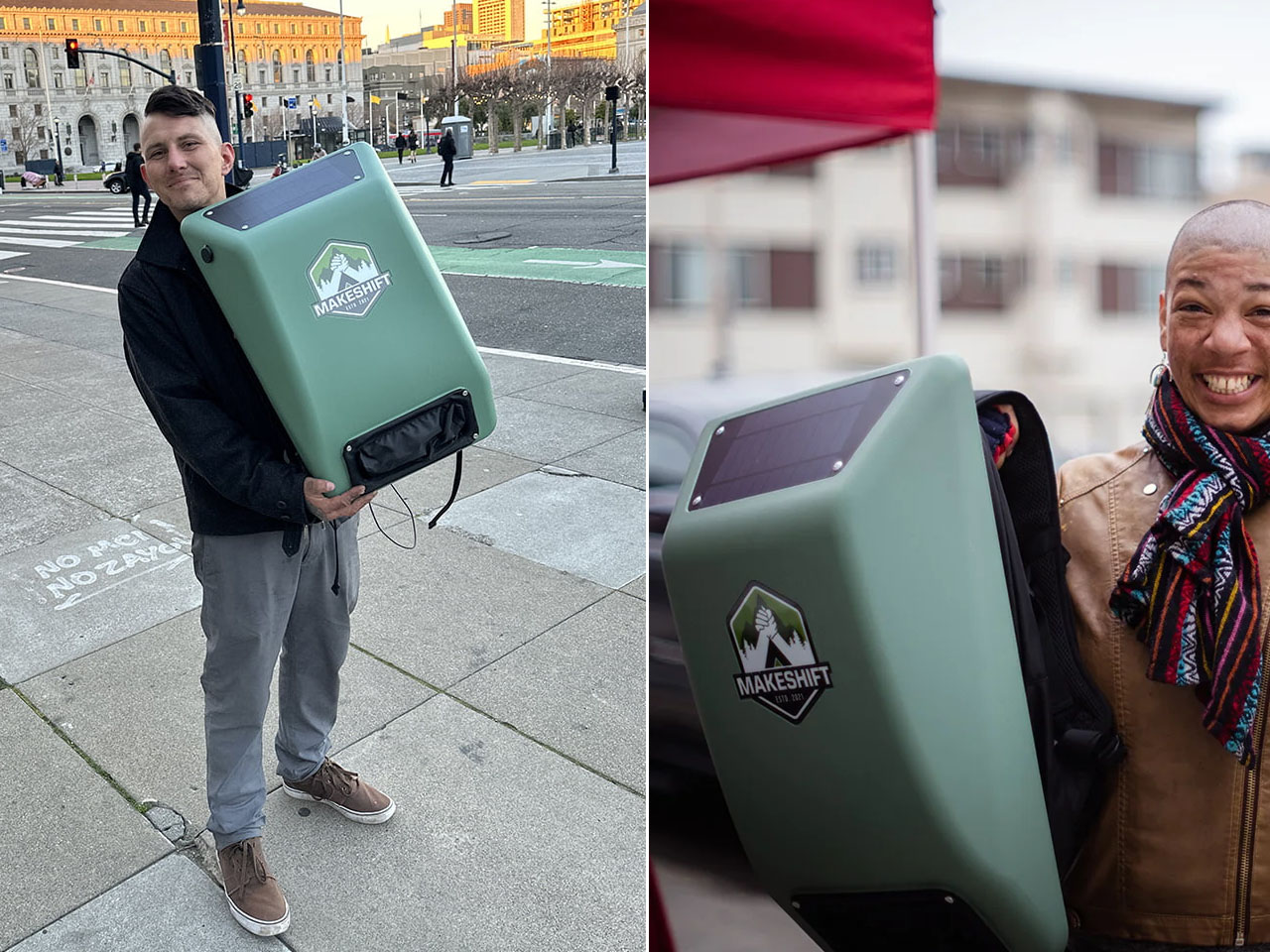
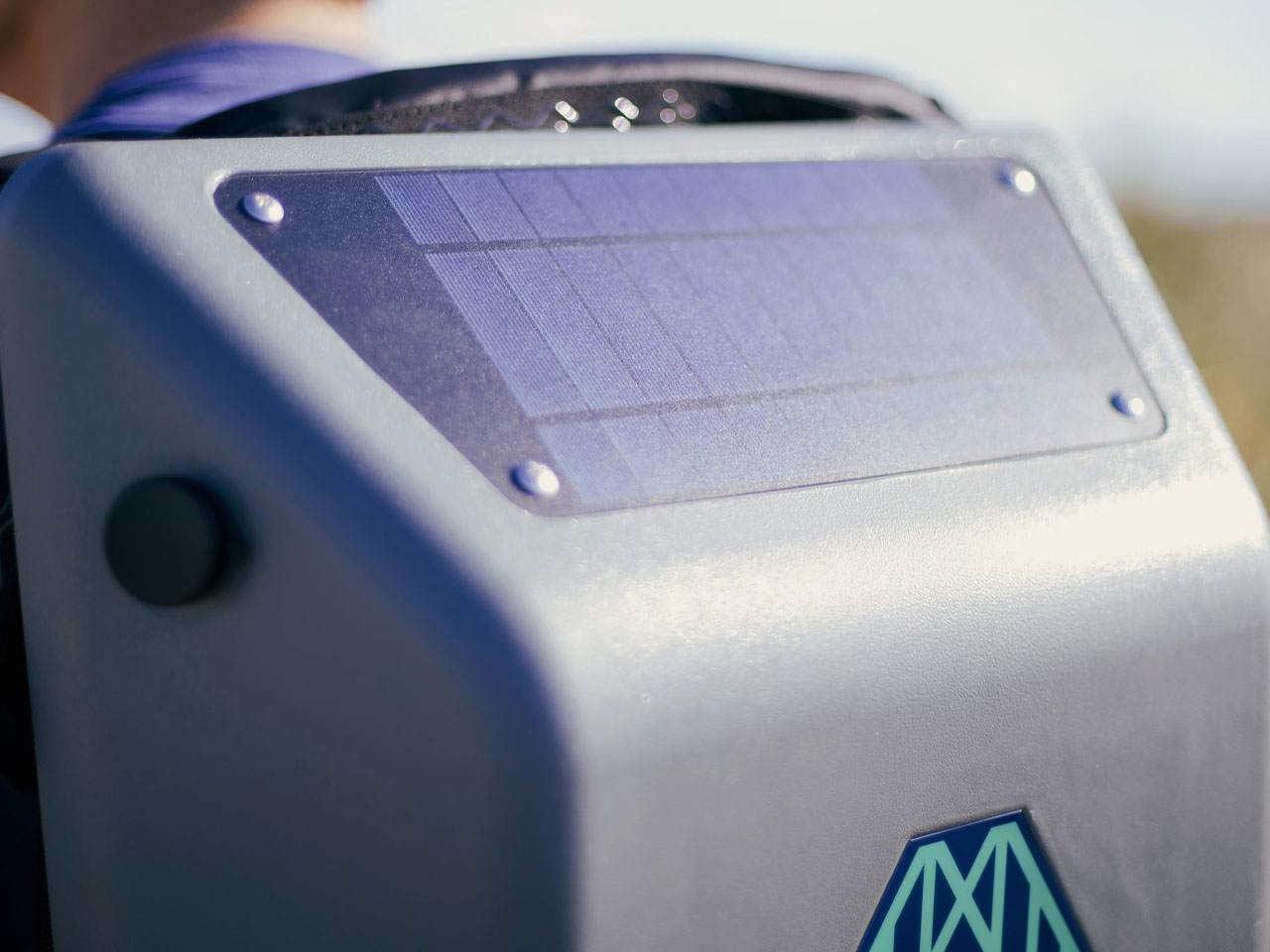
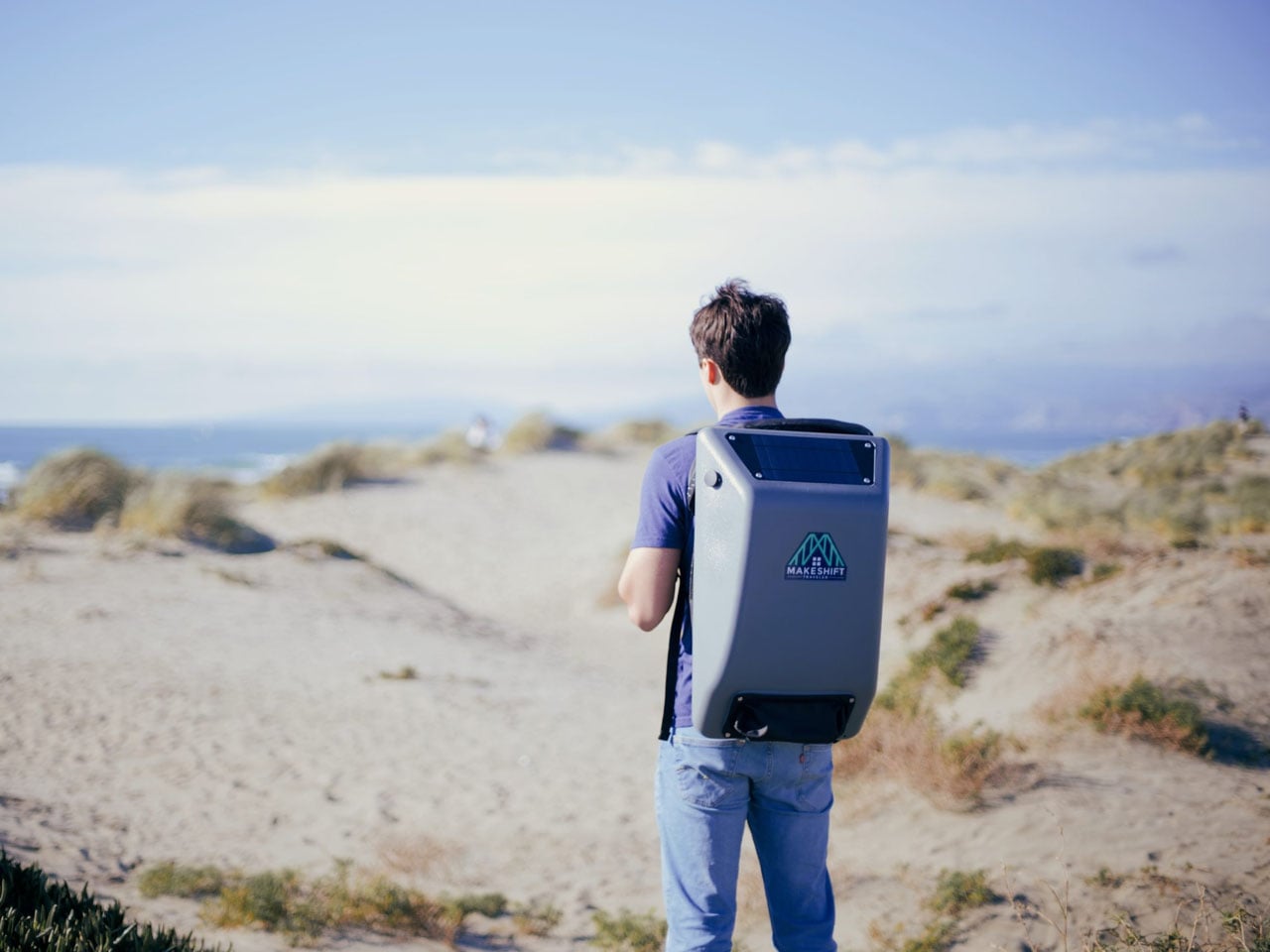
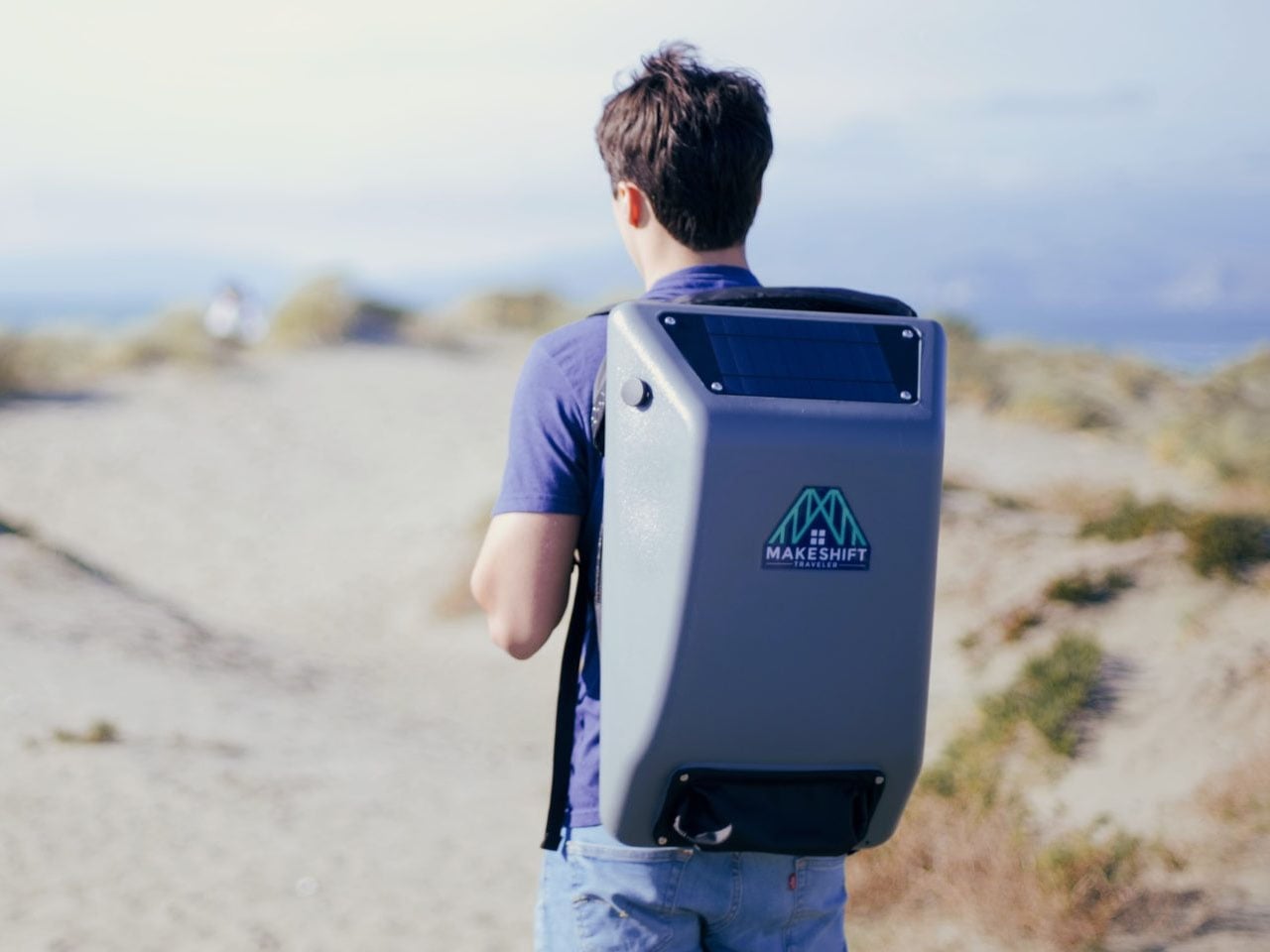
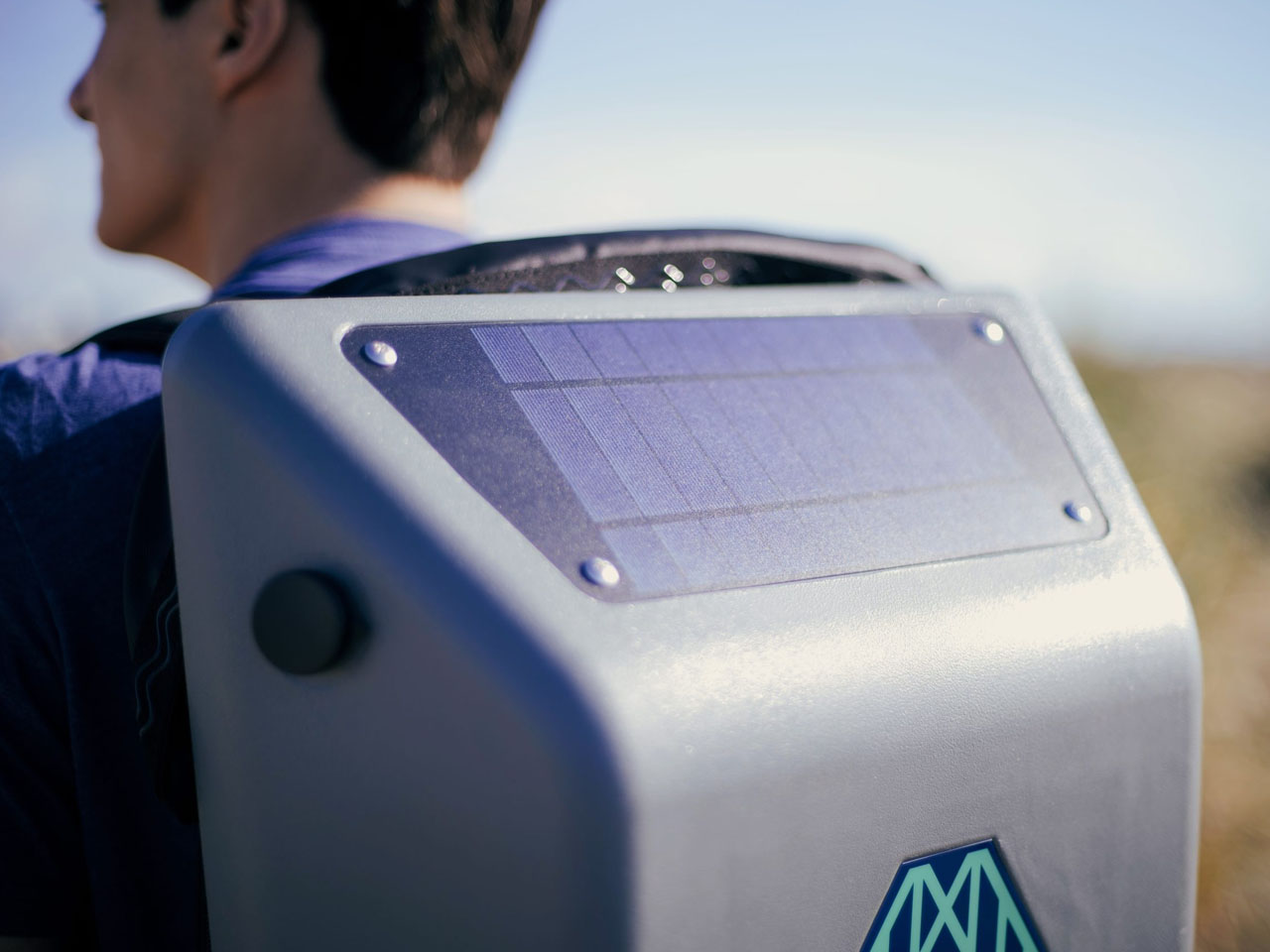
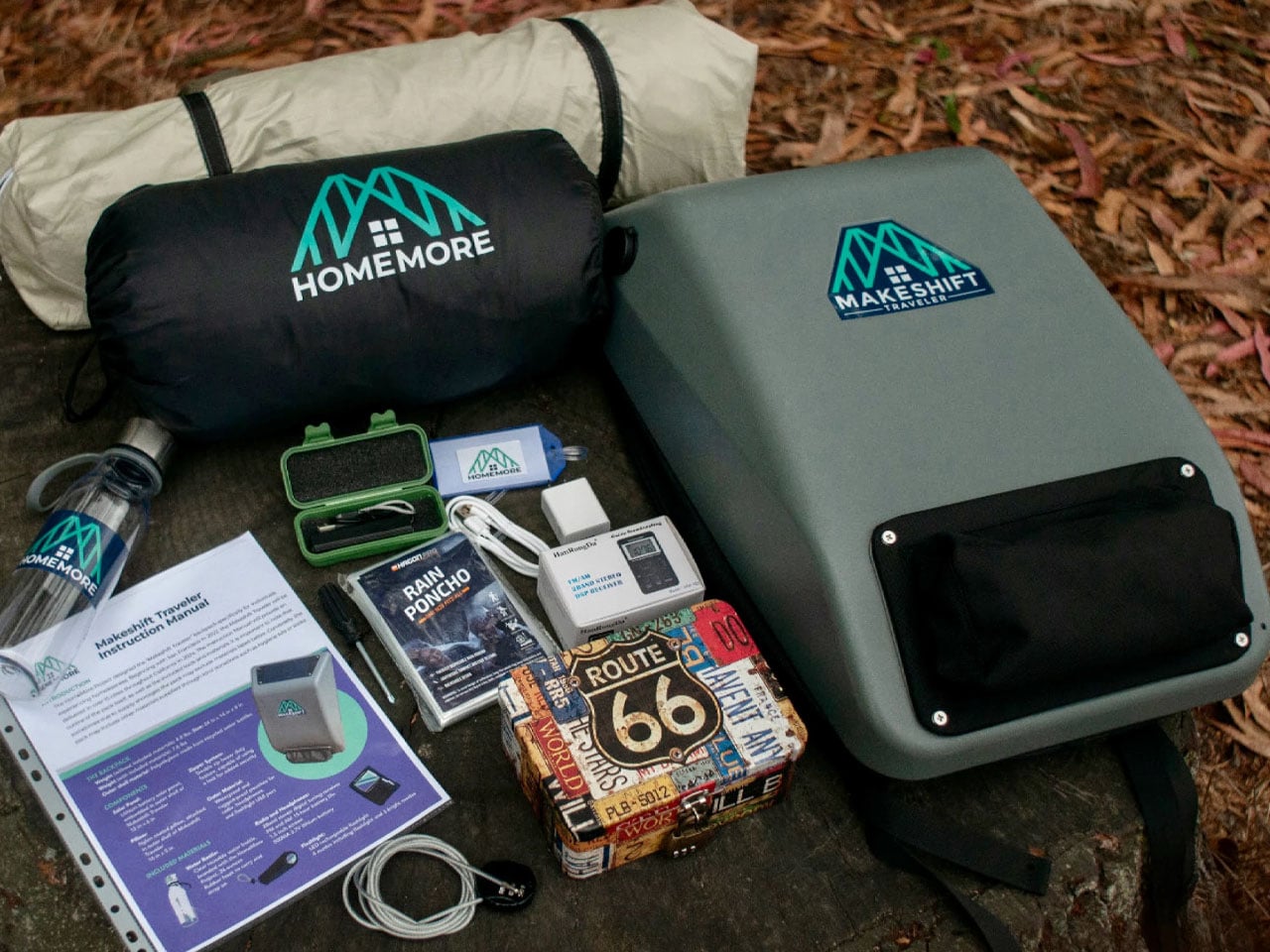
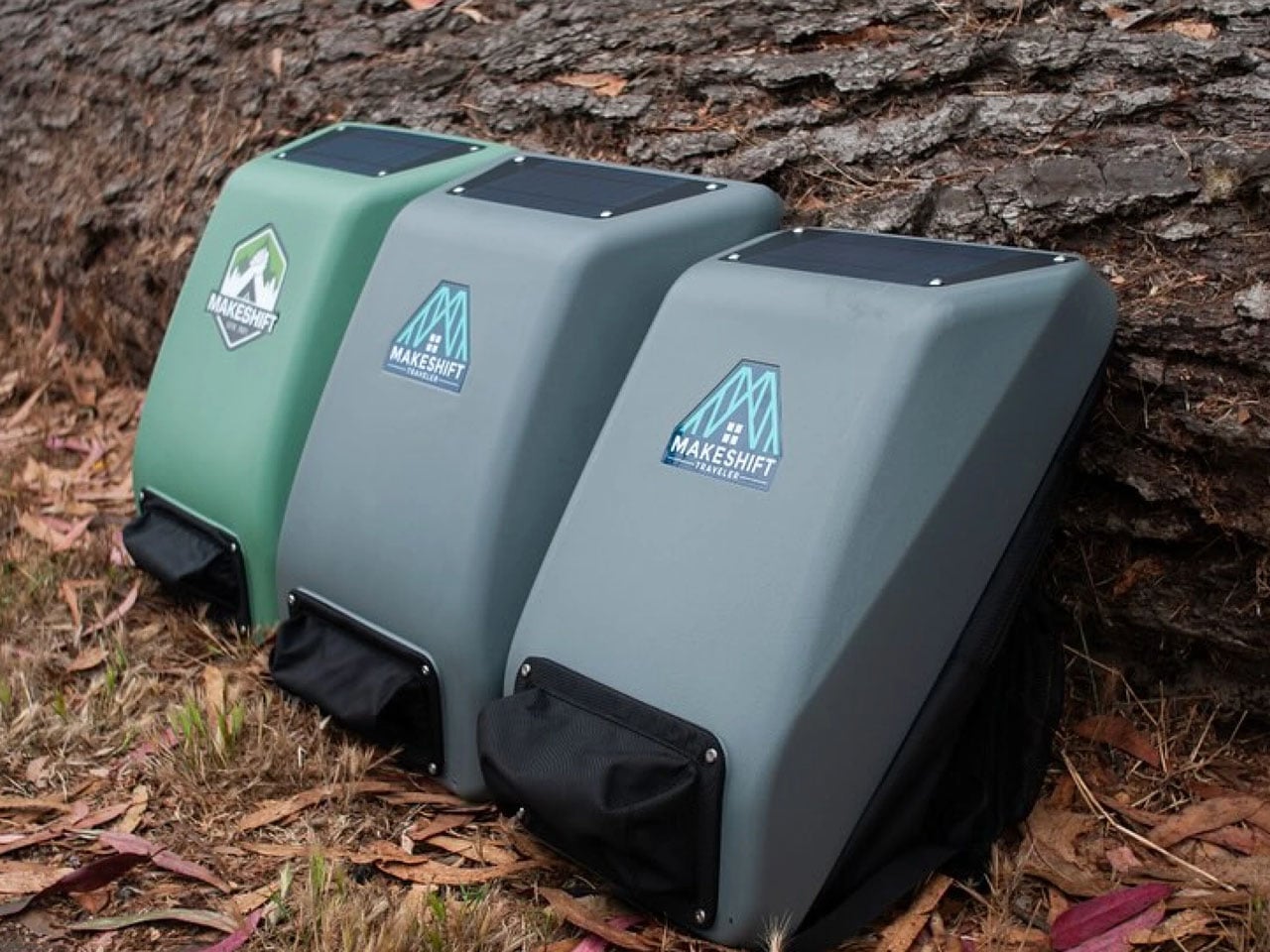
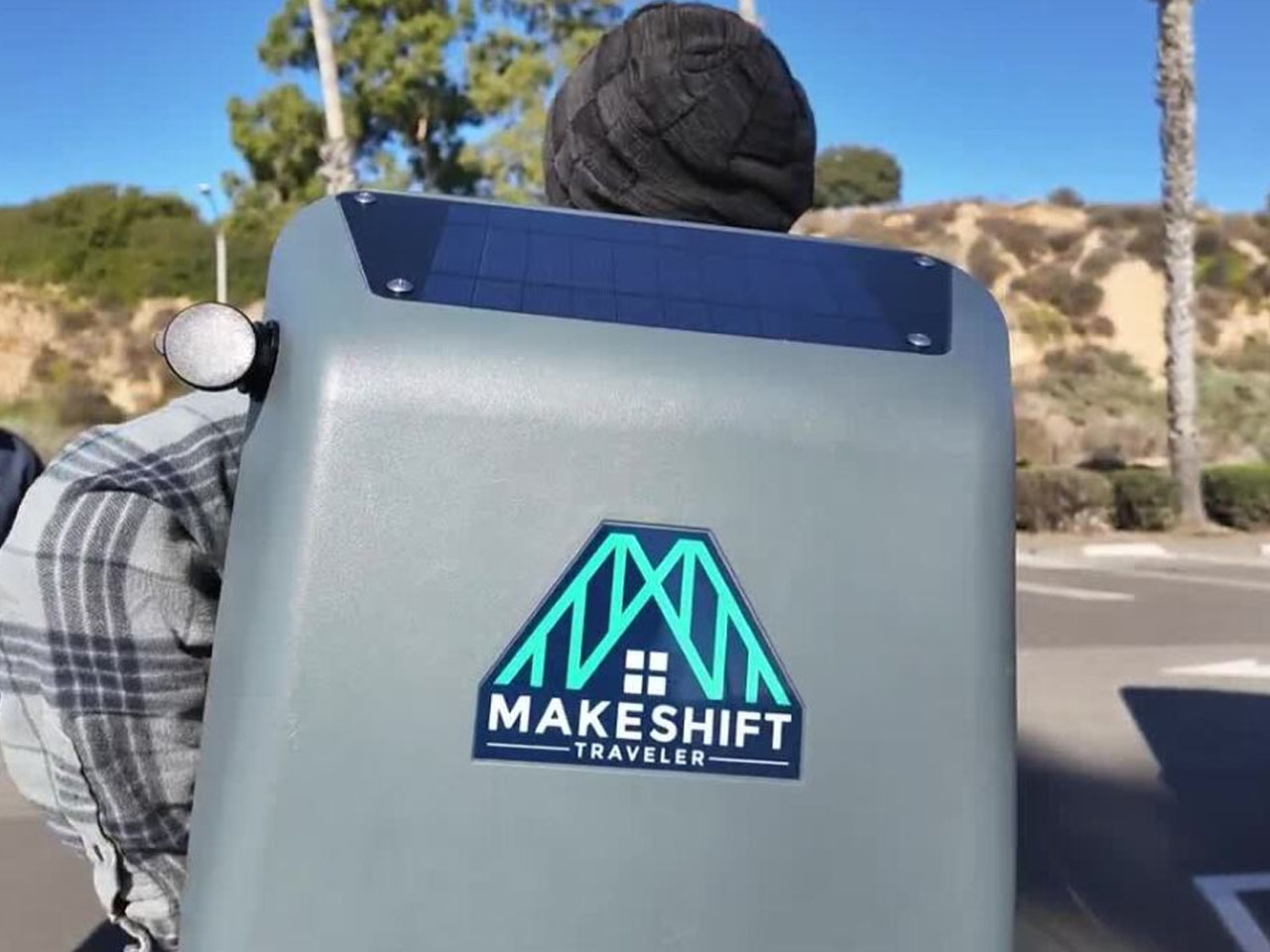
Conceived with the idea to empower the unsheltered homeless community in California, the Makeshift Traveler backpack, with an integrated solar panel, allows the owner to charge their phone and stay connected. The backpack comes integrated with a 4-watt polycrystalline solar panel connected to an internal 10,000-mAh rechargeable power bank, and allows the user to connect their mobile device through the integrated USB port. The backpack comes with many additional utilities, such as a tent and sleeping bag, and also has an FM radio and flashlight inside the pack, which can be charged directly by the power bank.

The Makeshift Traveler requires almost six hours of sunlight to juice up the internal power bank, which can deliver enough power to charge up to three standard smartphone batteries in one full charge. On overcast days or in areas of less sun, the backpack’s power station is chargeable via a wall charger.

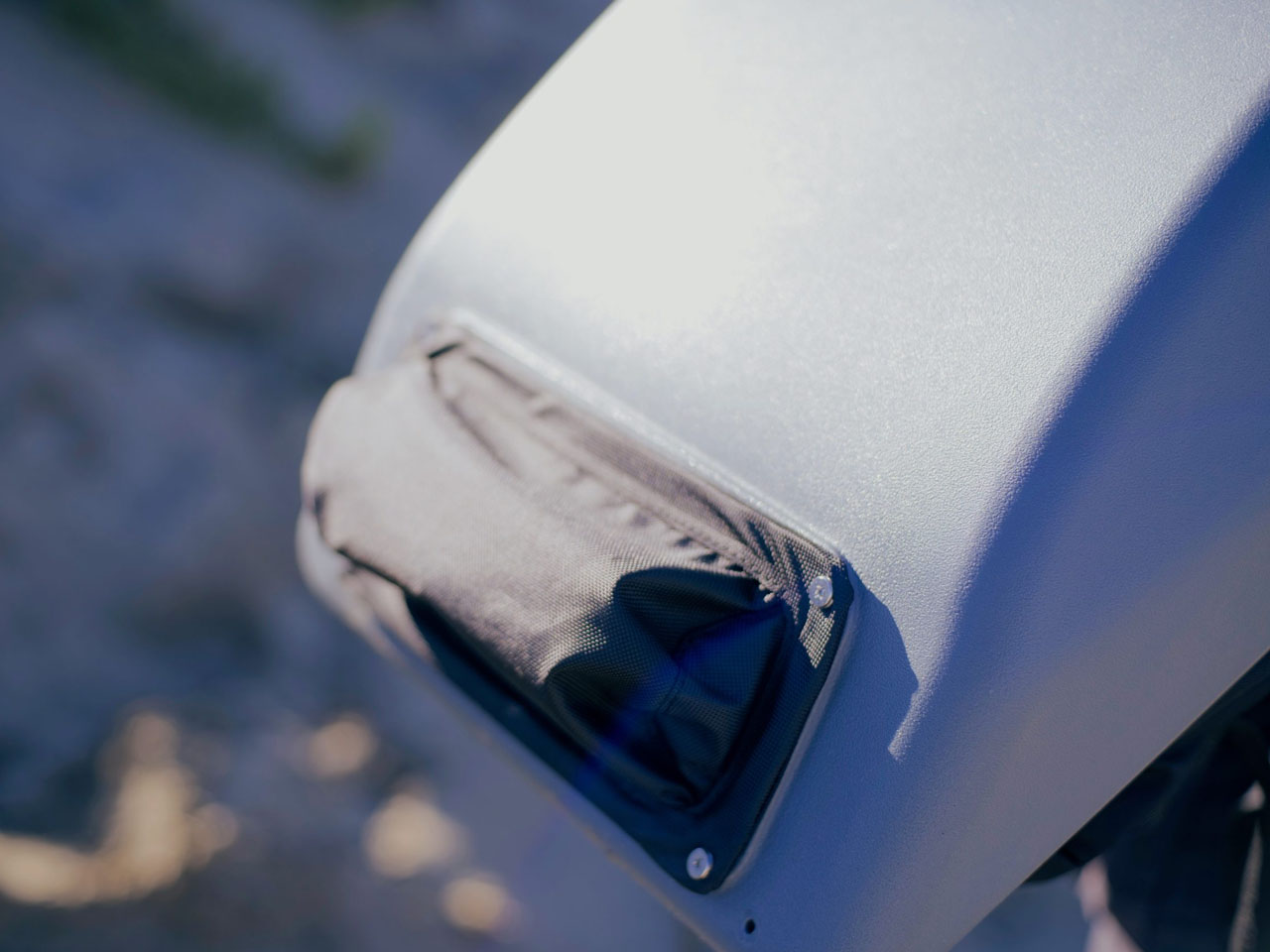
As for the construction, the outer surface of the pack is water and weather-proof and is constructed from recycled plastic bottles. With a solar panel embedded on the top and a rain poncho in the pocket at the bottom, the Makeshift Traveler backpack comes with a urethane-coated nylon pillow that can be puffed by stuffing in a piece of clothing. Along with the utilities, the backpack with an anti-theft zipper also features an ID card, a hygiene kit, a 24 oz water bottle, Bombas socks, and an informational brochure listing 15 local partner services ranging from shelter, mental health services, food distribution, wellness, and more.

Of course, this is not an open market product. You cannot get it off the shelf, but if you’re concerned and interested in donating, you can check out the HomeMore Project’s website. Or if you want to wait and ponder introducing a backpack into your community, you have about a year to do so. The fifth edition of the Makeshift Traveler is on the cusp – to release in 2016 – and it will come with reflectors on the front and rear for better nighttime visibility in the dark.

The post More than a backpack, the solar-powered Makeshift Traveler is helping California’s homeless live better first appeared on Yanko Design.
Odd backpack is designed for carrying spare bicycle tires and large objects

It’s pretty amazing how much stuff we can cram into our backpacks, from laptops to 2-liter water bottles to a bundle of chargers and cables. Of course, these are objects that were designed to be small enough to fit in bags in the first place, so that’s not exactly out of the ordinary. Unfortunately, we sometimes need to carry things larger than the largest backpacks in the market.

This bag might be designed for bicycle racing, but it can definitely do more than just carry spare wheels for an emergency. Its literally open design actually offers a bit more wiggle room that will let you carry large or odd-shaped items without breaking a sweat. Unless, of course, they’re actually too heavy to carry on your back.

Designer: Fernando A. Robert

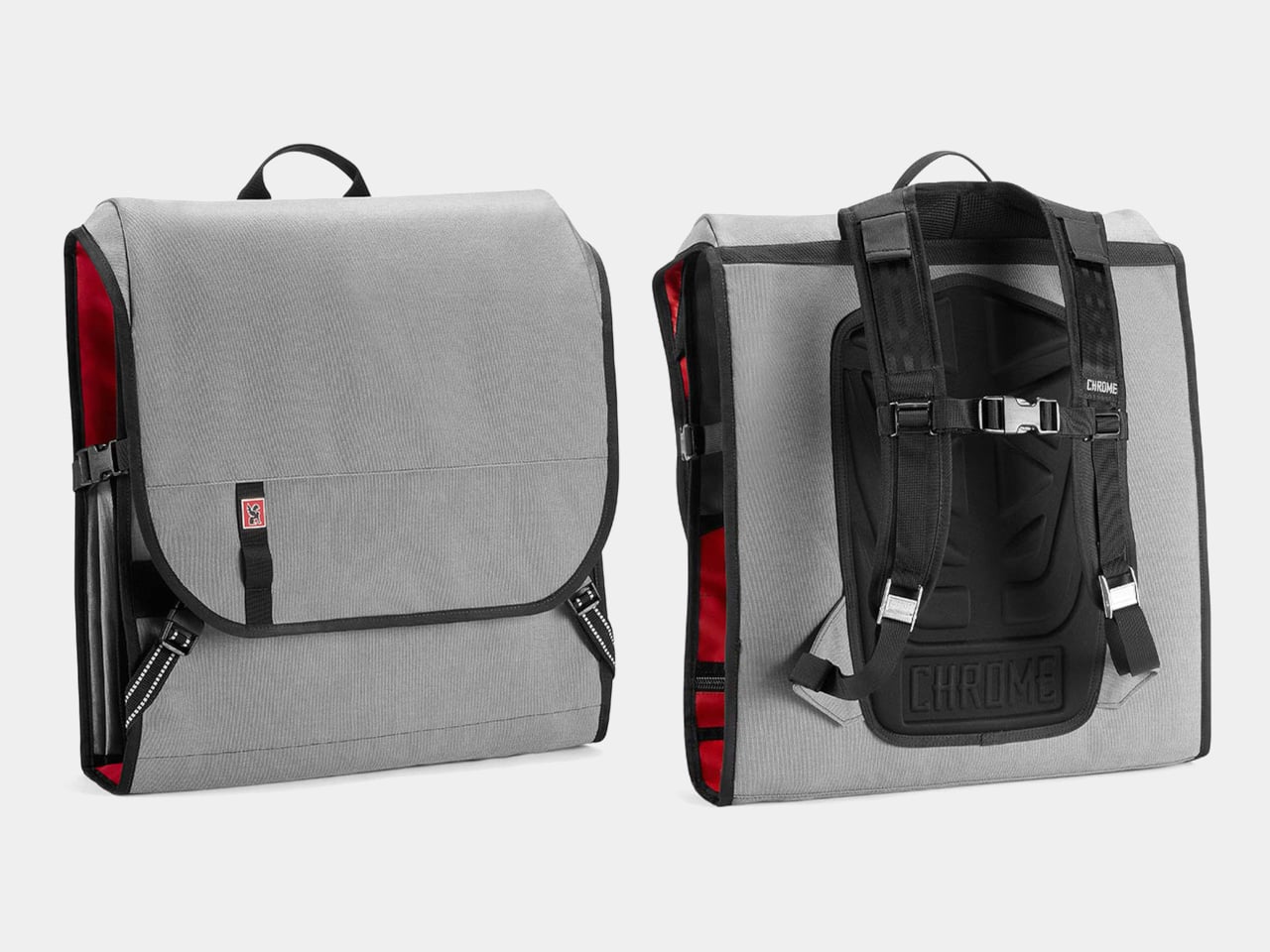
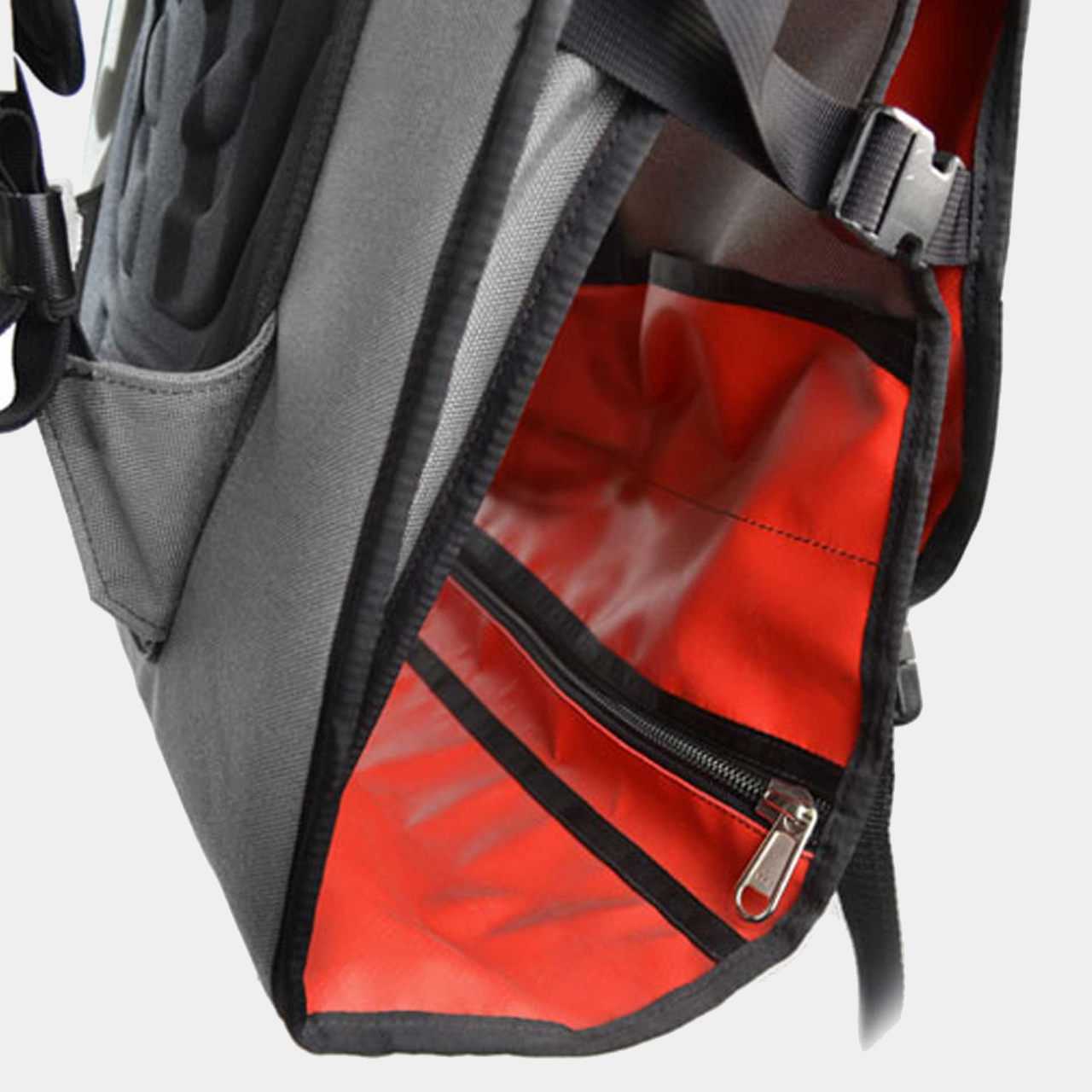
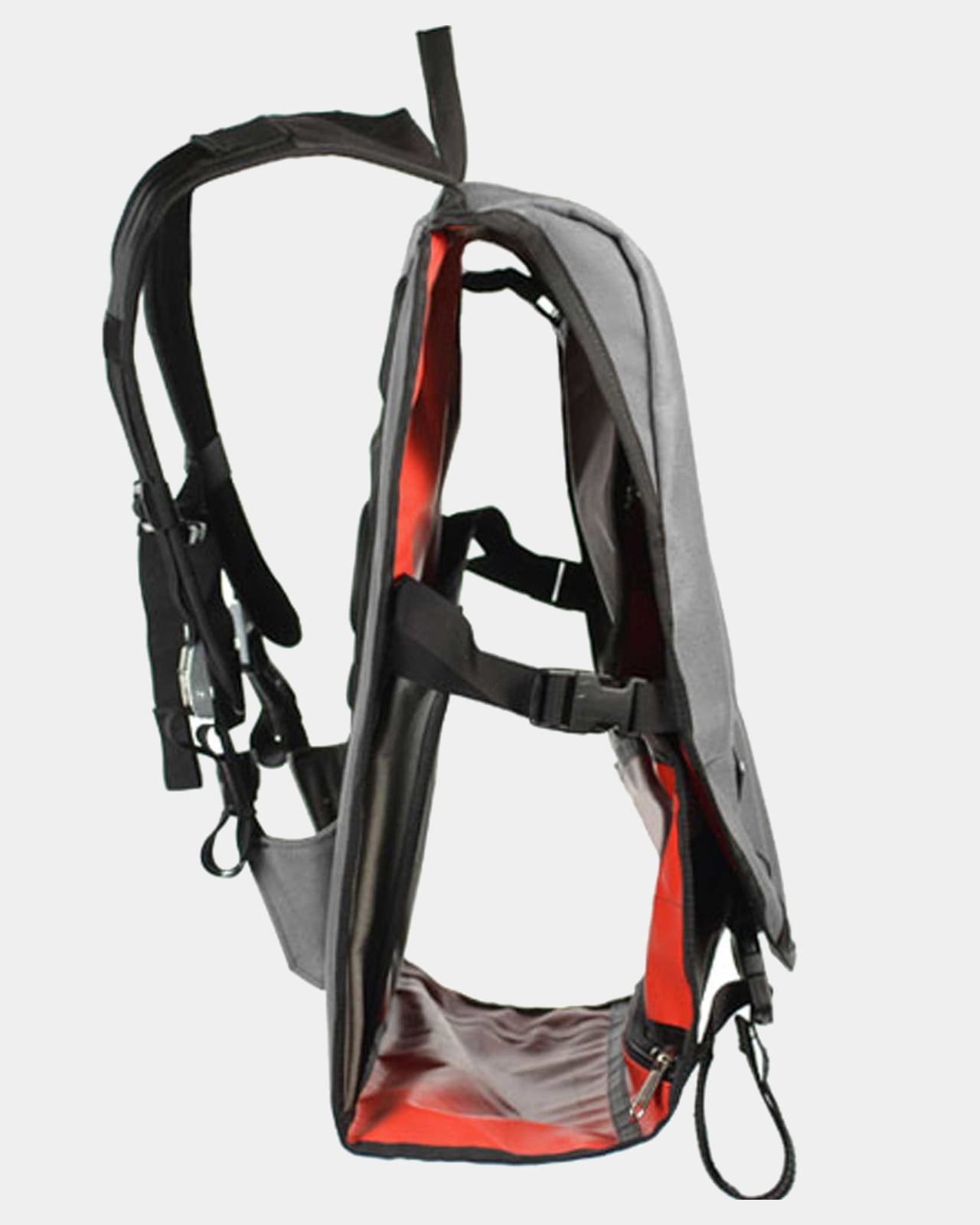
We often think of bags as enclosed containers with a single opening, but there really isn’t a formal definition of a bag’s design. This “Bike Backpack” might look like a regular backpack from the front, but its open sides definitely break the stereotype. Then again, the idea of carrying a bicycle wheel or a large box is itself already unconventional.

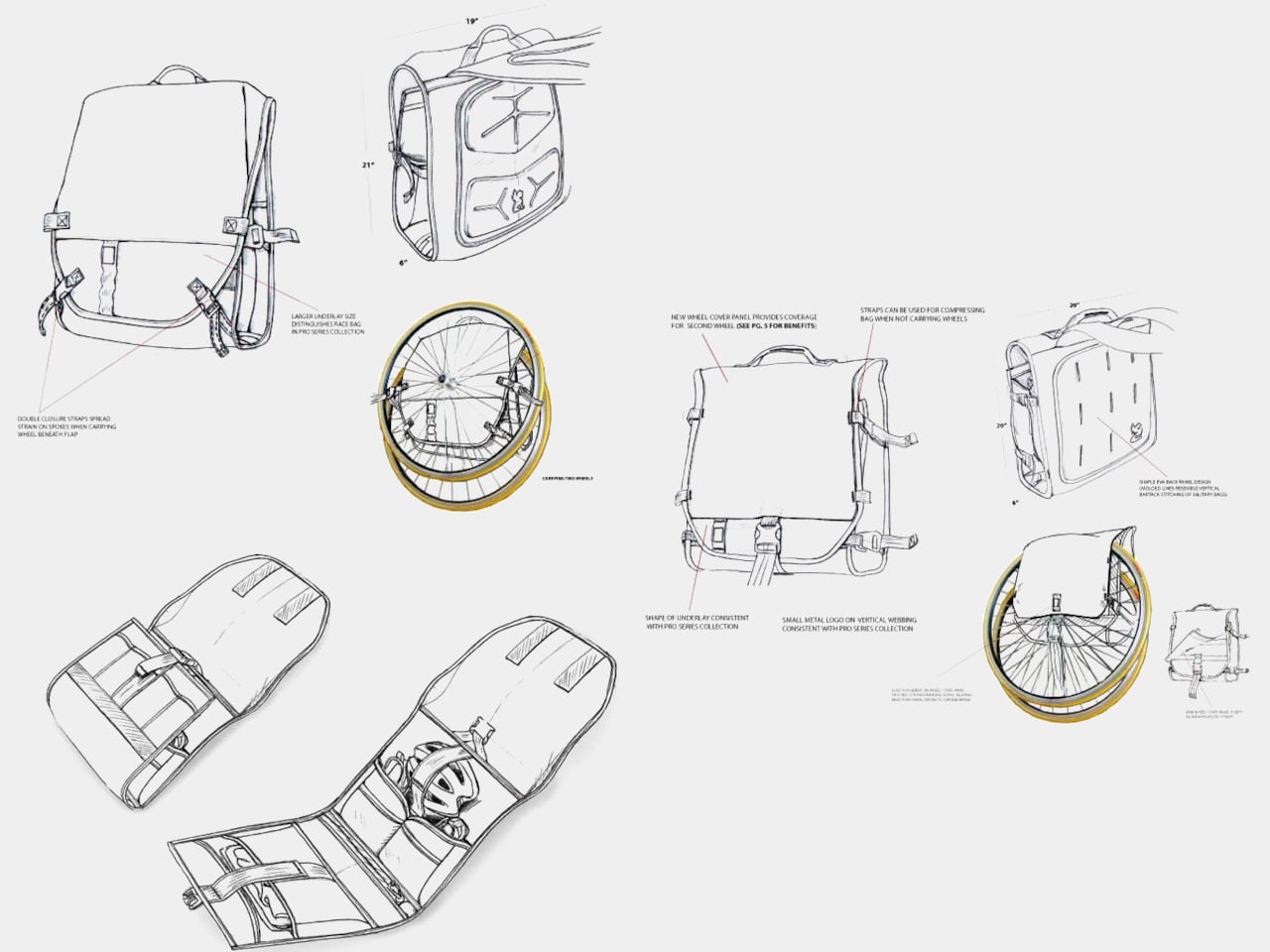
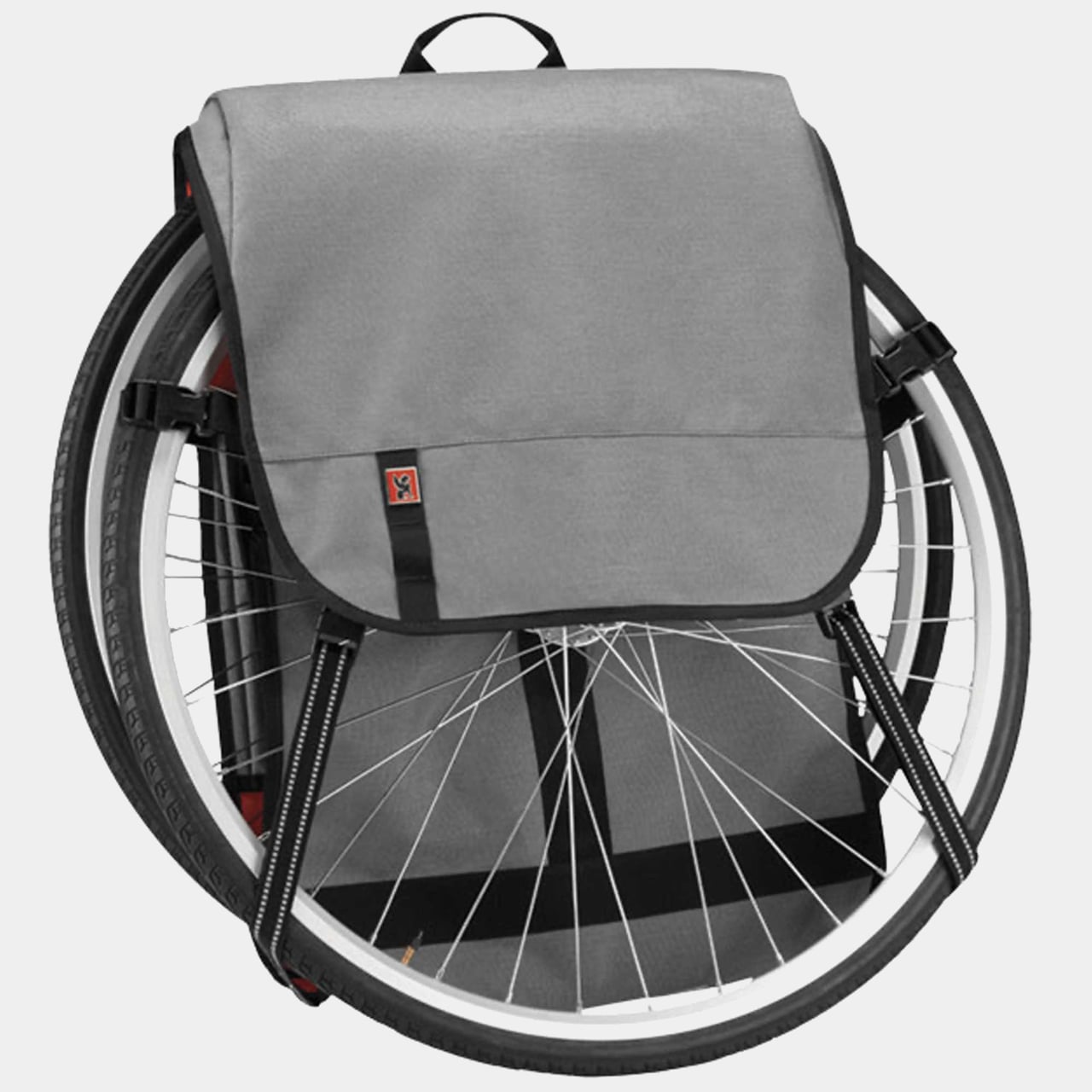
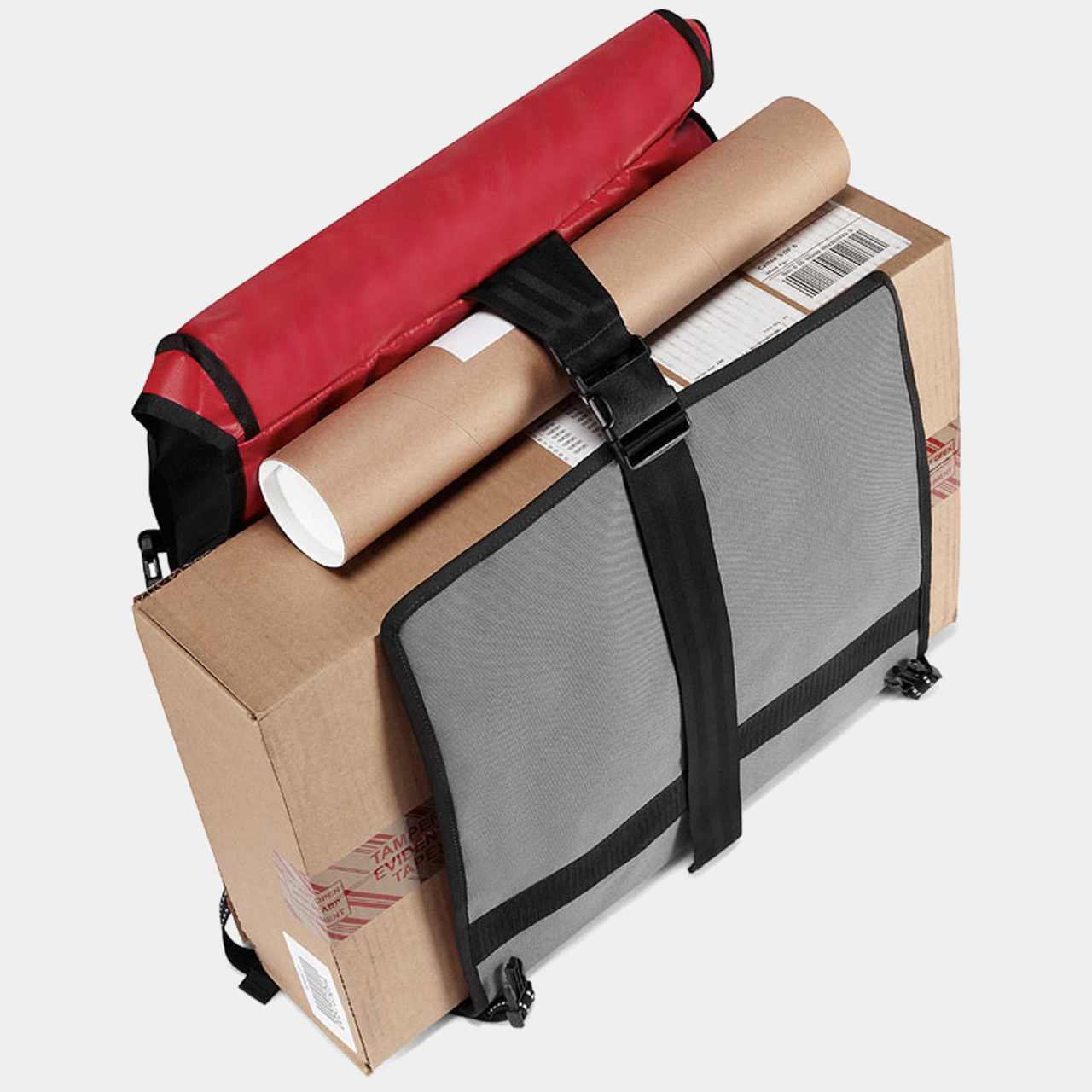
The Sherman Bike Backpack has a tri-fold design that opens vertically like a flap. The idea is that you stuff things that are too large or too wide for regular bags in between the flaps, letting the sides extend beyond the bag’s confines. Alternatively, you can also hang something outside and secure it with straps.

This is how you can carry one or two bicycle wheels that are thin and light enough to put on your back while cycling or racing. Of course, boxes, drawing boards, blueprint tubes, and other large objects are also fair game, as long as you secure them properly with straps. It definitely makes for an odd sight, but your comfort and convenience definitely outweigh any awkwardness.

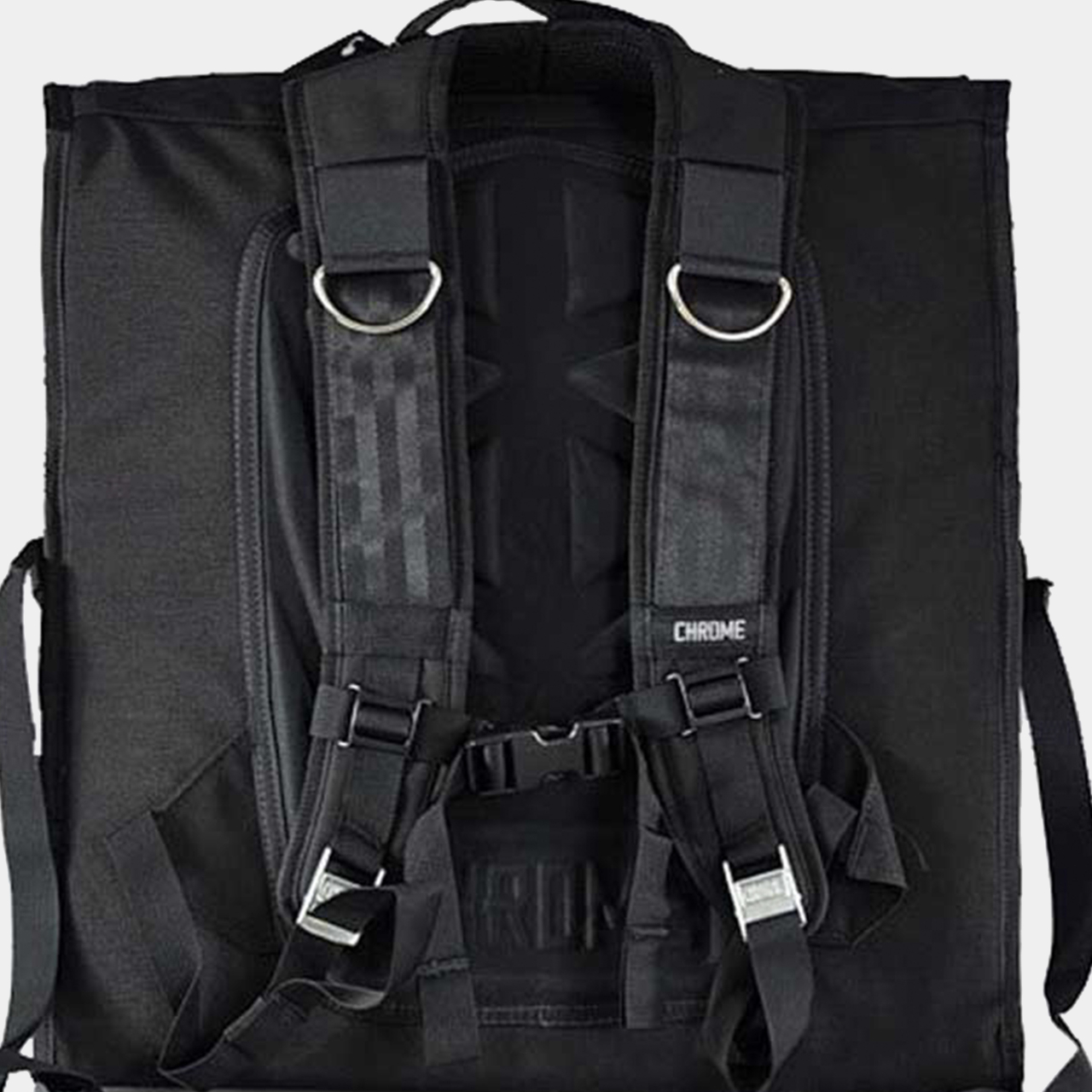
The backpack also has compartments for carrying regular stuff, and you might be able to use it for carrying laptops, tools, or even clothes. That said, it isn’t the ideal backpack for all weather conditions, since the open sides make it very vulnerable to water, snow, and even dust.

The post Odd backpack is designed for carrying spare bicycle tires and large objects first appeared on Yanko Design.
Handmade Samurai-inspired randoseru backpack looks pretty but heavy

There is a certain fascination that people have with the Japanese art of the samurai, whether it’s through movies, books, anime, and even just the accessories in general. Combining it with other Japanese cultural things will appeal to a certain market, even if those things may just be decorative and not totally functional.

Designer: Noriki Okada

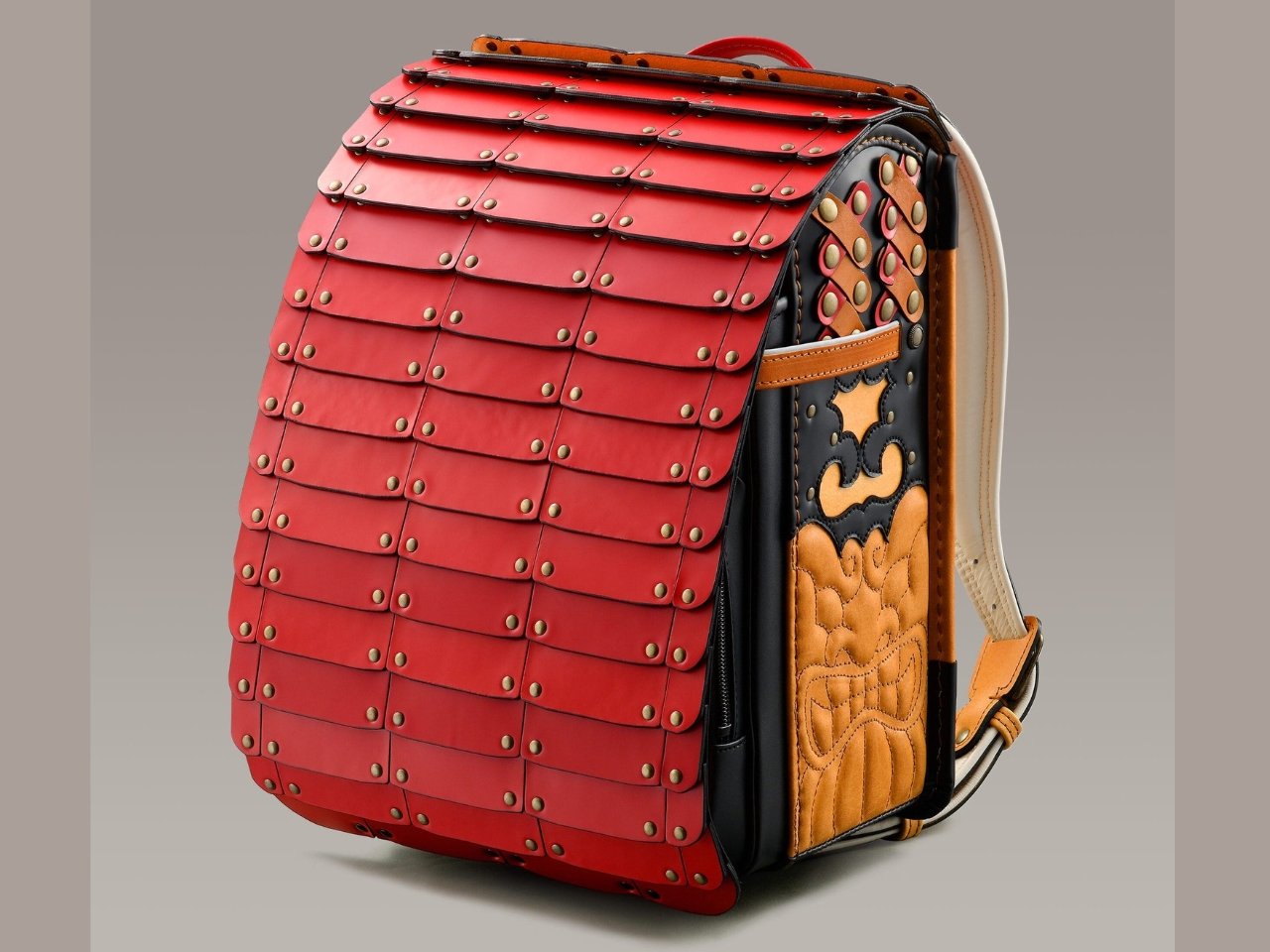
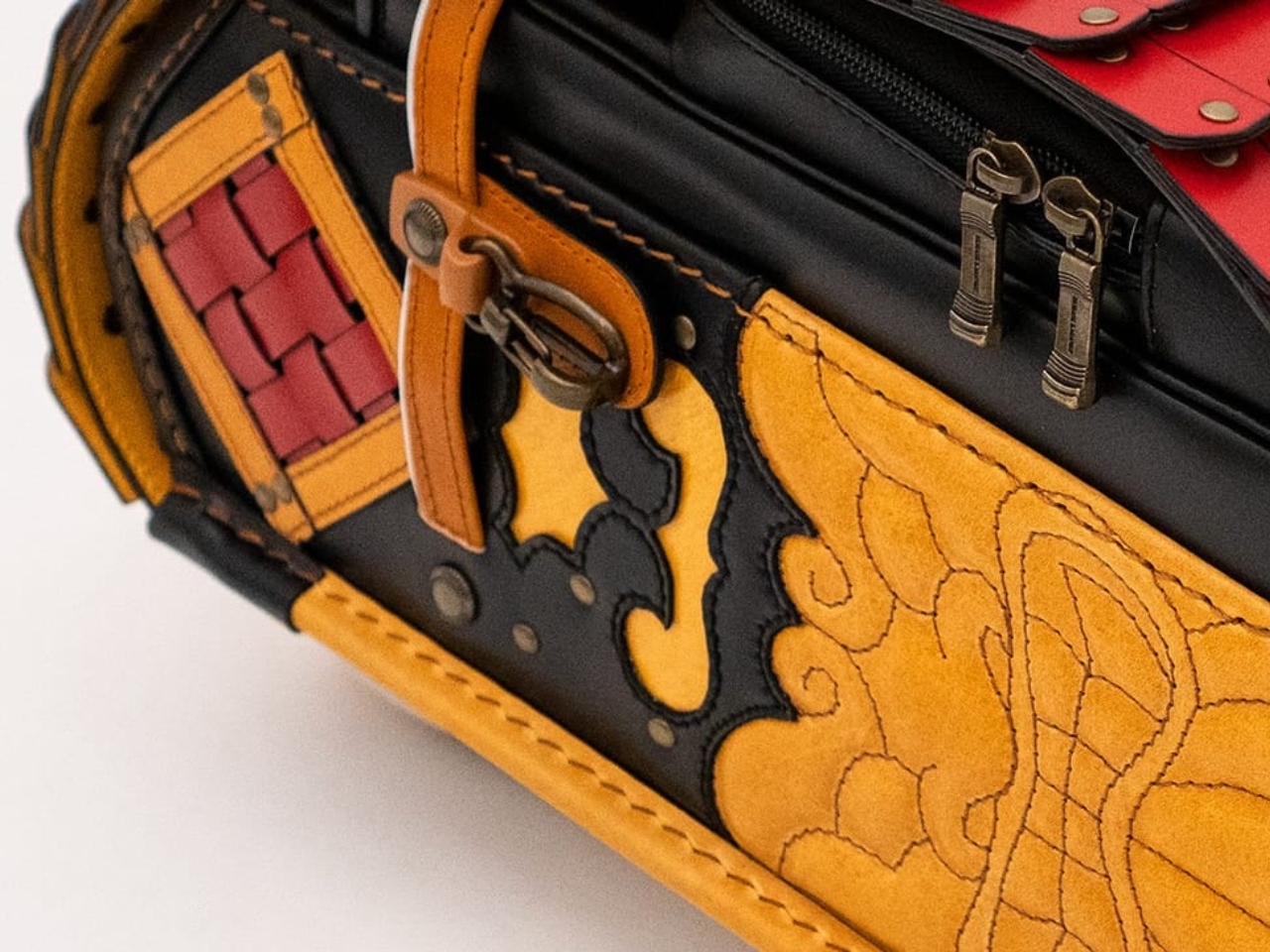
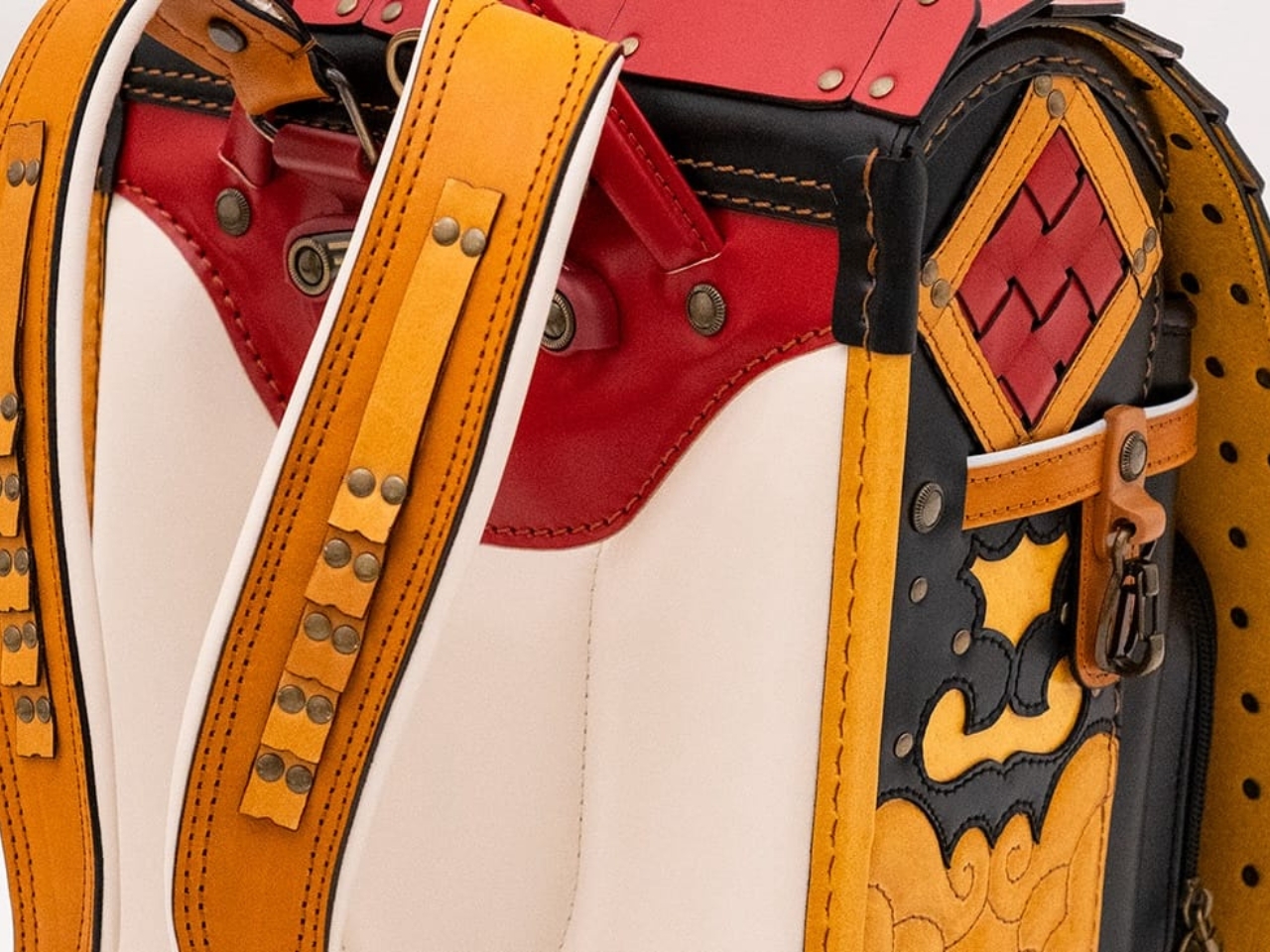
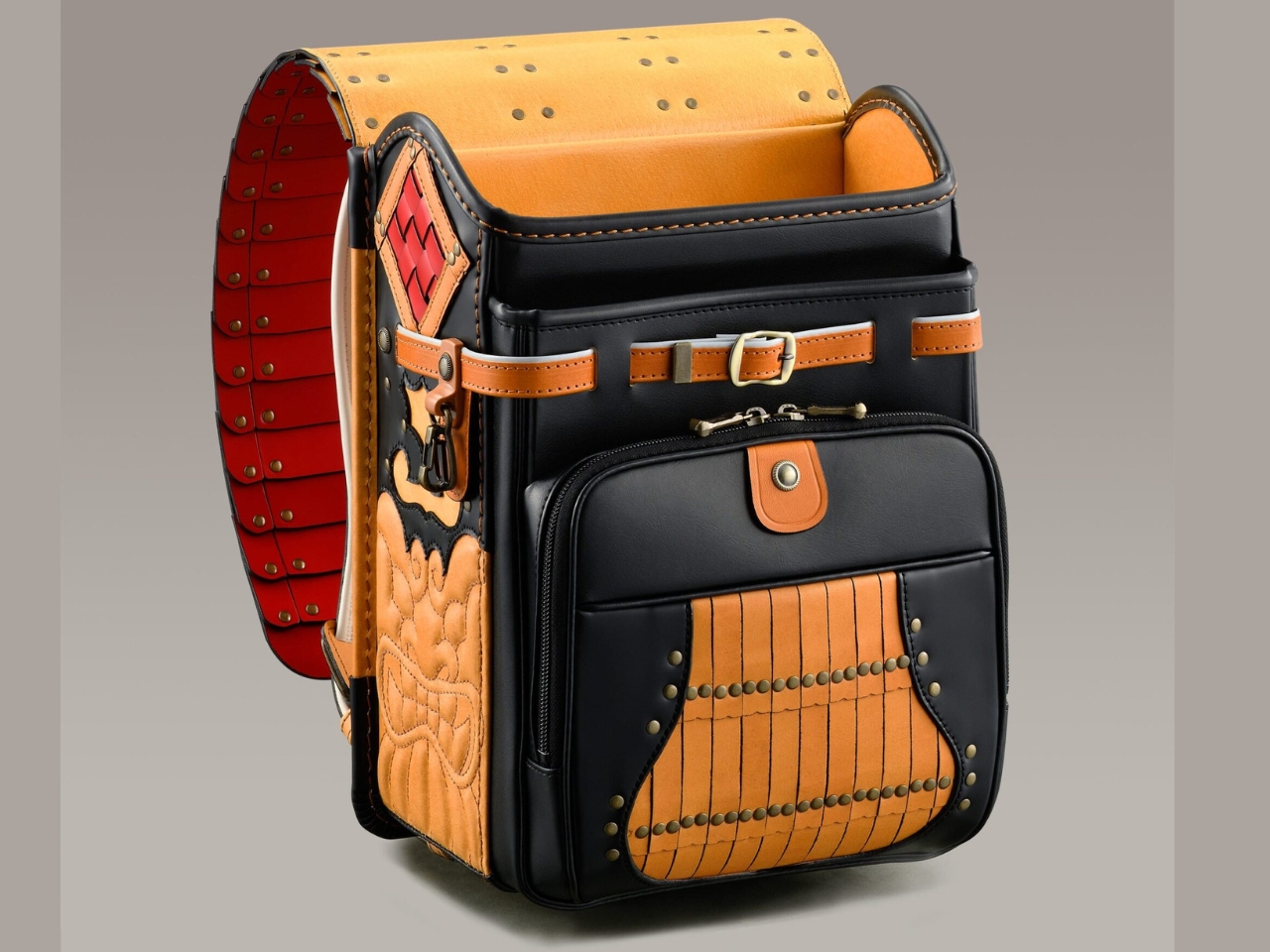
Randoseru are leather backpacks used by Japanese school children that are made to last for years. But this particular version of the backpack is probably not something you’d let your kid use or even you yourself would use. It is hand-crafted and intricately designed, inspired by the samurai tradition. The yellow, black, and red backpack would have looked right at home in the 11th century, if there were expensive, leather bags back then.

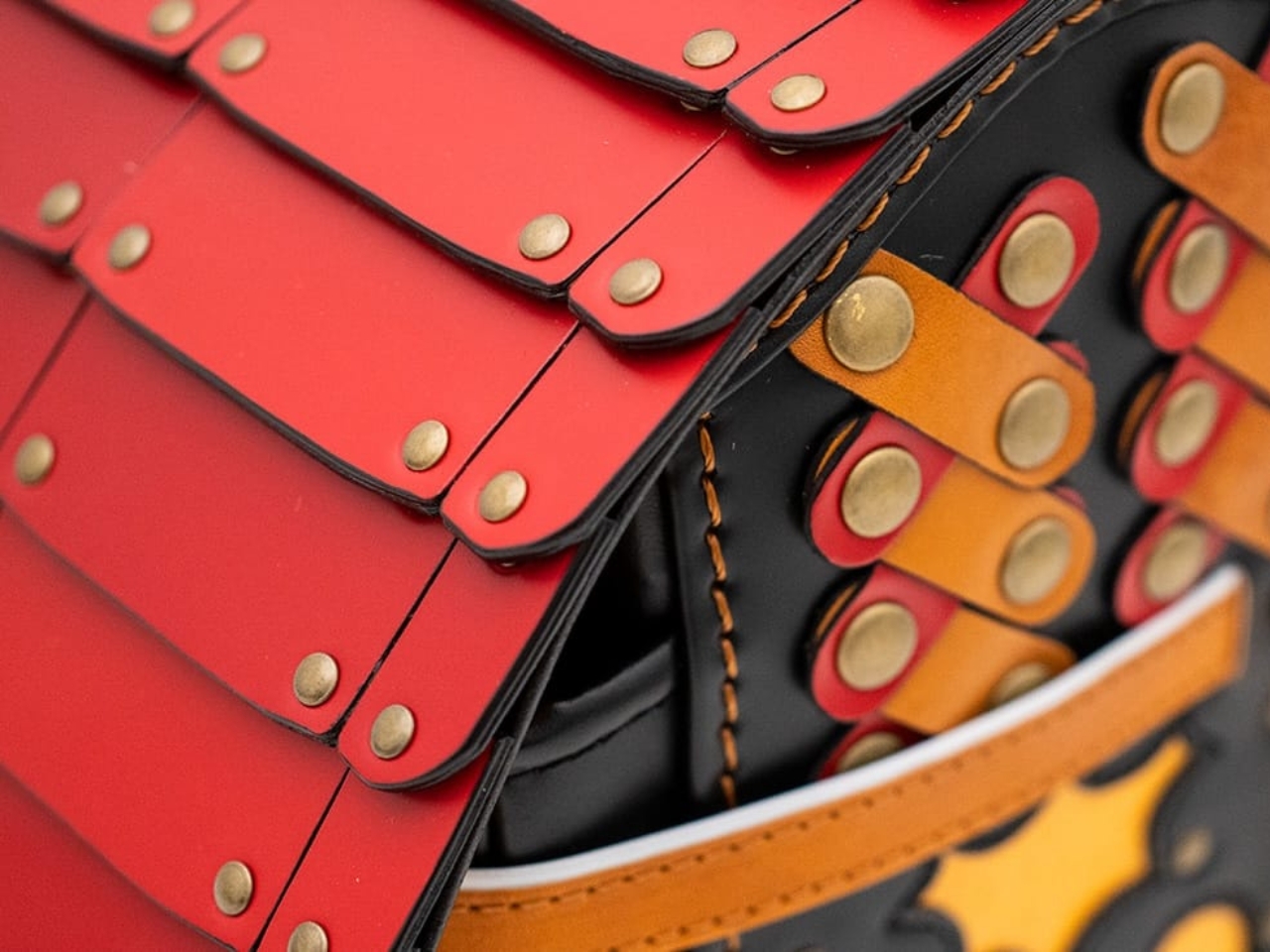
Leather craftsman Noriki Okada created this bag from scrap pieces from other bags and have some accents like small leather plates and brass rivets. There are even faces of oni demons on the sides to add to the samurai theme. The manufacturer, Murase Kabanko, says that they are recommending that you just use this for “decorative purposes” although you can of course use it if you don’t mind carrying something that looks heavy and ornate.

Each bag that they are selling is handmade so you would have to wait around 6 months for it to get to you. And of course it’s expensive given all that. If you have around $3,300 and are a collector of samurai inspired things, go for it.

The post Handmade Samurai-inspired randoseru backpack looks pretty but heavy first appeared on Yanko Design.
BLUETTI’s Backpack with a built-in Solar Generator could power your entire Outdoor Adventure Trip

BLUETTI’s Handsfree 2 Backpack might seem like an unexpected twist for a company best known for portable power stations, but it’s actually a clever next step for those who want their gear to match their sense of adventure. The company’s tagline sums it up: “Don’t just explore nature—take control of it with Bluetti’s backpack solar generators.” And honestly, that’s exactly what this thing is built to do. It’s a combination of a high-capacity power station and a rugged 60-liter backpack, designed to keep your gear charged without having to slow down.
Think of those times when you’re out in the backcountry, and every device is crucial. Your drone captures stunning aerial shots, your GPS app guides you through new trails, and your camera’s memory card fills up with breathtaking landscapes. But then, you see that low battery alert on your screen, and suddenly, your ability to capture those moments is at risk. That’s where the Handsfree 2 steps in, with a built-in 512Wh power station and a 700W inverter that keeps everything from your camera to your laptop powered up for days. And since it’s integrated directly into the backpack, it’s one less thing to juggle when you’re already navigating rough terrain.

Designer: BLUETTI

Click Here to Buy Now: Handsfree 1+PV120S solar panel $499 $629 ($130 off). | Handsfree 2+PV120S solar panel $599 $799 ($200 off). Hurry, deal ends in 48 hours!

This setup comes with five output ports—AC, USB-C, USB-A—so you can recharge multiple devices at the same time. No more carrying an extra bag just for batteries or stopping to dig through your pack for a charger. Instead, you can plug in on the go, thanks to the side-access charging port. This kind of design is all about making the outdoors easier to navigate, keeping your focus on the scenery instead of on cables and discharged batteries.

The Handsfree 2 isn’t just a power solution; it’s a capable pack in its own right. The 60-liter capacity means you can load up everything you need for a multi-day trek, and with water-resistant materials, you don’t have to stress about a little rain or mud. BLUETTI has also thought about comfort: the backpack features an ergonomic design that distributes weight evenly across your shoulders and back, making those longer hikes feel a little less grueling. Plus, the MOLLE straps and compartments mean you can customize the layout to fit your style, whether that’s packing extra clothes, camera gear, or a favorite snack stash.

If you’re a true off-grid enthusiast, the solar compatibility of the Handsfree 2 really comes into play. Pairing it with BLUETTI’s PV120S solar panel, an optional 120W foldable accessory, means you’re no longer limited by access to a wall outlet. The panel is compact and designed to work seamlessly with the Handsfree 2, making it easy to recharge the 512Wh power station directly from the sun’s energy. Just unfold the PV120 during a break, let it soak up the rays, and you’re back in business—perfect for those multi-day treks where you’re far from traditional power sources. The efficient solar charging setup helps extend your adventure without interruption, keeping essential devices like cameras, GPS units, or even your laptop powered. When you’re done, the panel folds down to a quarter of its original size, and is designed to fit right into the backpack, occupying the space of a laptop.

When you do get back to having a traditional power supply around, the Handsfree 2’s power station recharges quickly using its turbocharging capability—about 45 minutes to reach 80% from a wall outlet. That means you can get back out there faster, instead of waiting around for hours. It’s details like this that show how BLUETTI has thought through the needs of anyone using their gear, whether that’s a serious hiker, a photographer, or just someone who likes their freedom with a side of connectivity.

The Handsfree 2 with the PV120S solar panel is priced at $599 for early adopters, while the smaller Handsfree 1 + PV120S solar panel bundle is available at $499, offering a more compact solution for those with lighter power needs. Both models feature BLUETTI’s robust LiFePO4 battery technology, known for its long-lasting durability and safety. With over 4,000 charging cycles, these batteries are built to endure years of regular use without significant capacity loss, making them ideal for extended outdoor adventures. They perform reliably across a wide temperature range, ensuring that you won’t have to worry about power drops in extreme conditions.

LiFePO4 is also safer than other battery types, with a lower risk of overheating, which is a crucial consideration when exploring remote areas. To further back up their durability, BLUETTI includes a 5-year warranty on the backpack itself, adding an extra layer of assurance. This combination of a high-performance battery and a reliable build makes the Handsfree 2 a compelling option for those looking to stay powered through all their off-grid explorations.

Ultimately, BLUETTI’s shift into the backpack space isn’t as random as it might seem. They’ve taken their expertise in portable power and applied it to the way people actually live and explore life – creating a functional wearable portable power solution with 60 liters of storage, rather than a beer-cooler-shaped power station that you have to lug around with you while tailgating or camping. The result is a backpack that keeps you connected without tying you down. And that means more time to focus on the trail, the view, and the stories you’ll take home.

Click Here to Buy Now: Handsfree 1+PV120S solar panel $499 $629 ($130 off). | Handsfree 2+PV120S solar panel $599 $799 ($200 off). Hurry, deal ends in 48 hours!

The post BLUETTI’s Backpack with a built-in Solar Generator could power your entire Outdoor Adventure Trip first appeared on Yanko Design.