This Rugged Phone Ships With 2 Batteries You Can Hot-Swap

Dead battery anxiety is real, and for most people, the solution is either a power bank they forgot to charge or a desperate search for an outlet. Flagship phones have been getting faster at charging for years, but none of them have gone back to the one fix that actually solves the problem: a battery you can take out and replace with a fresh one, right there on the trail.

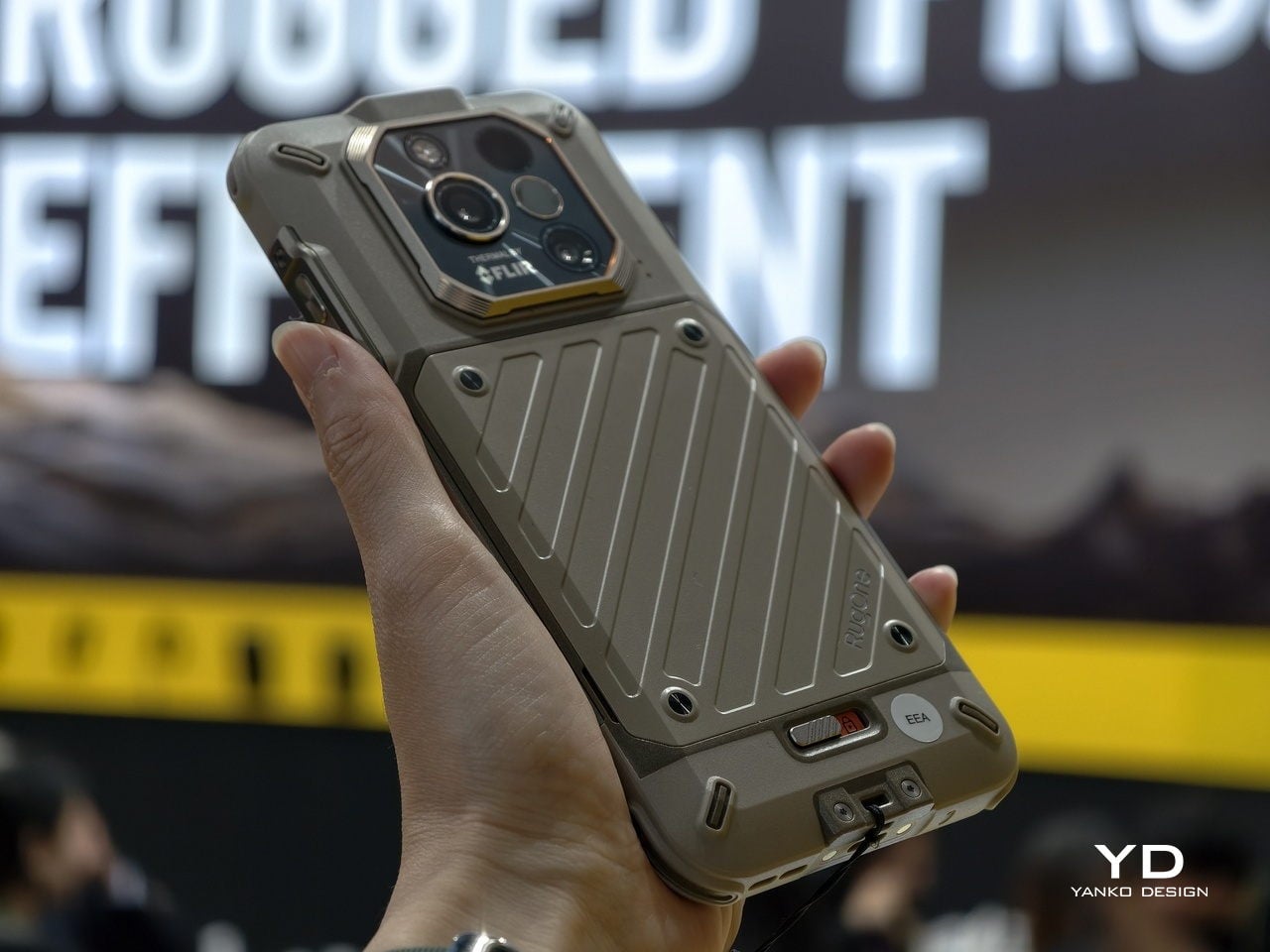
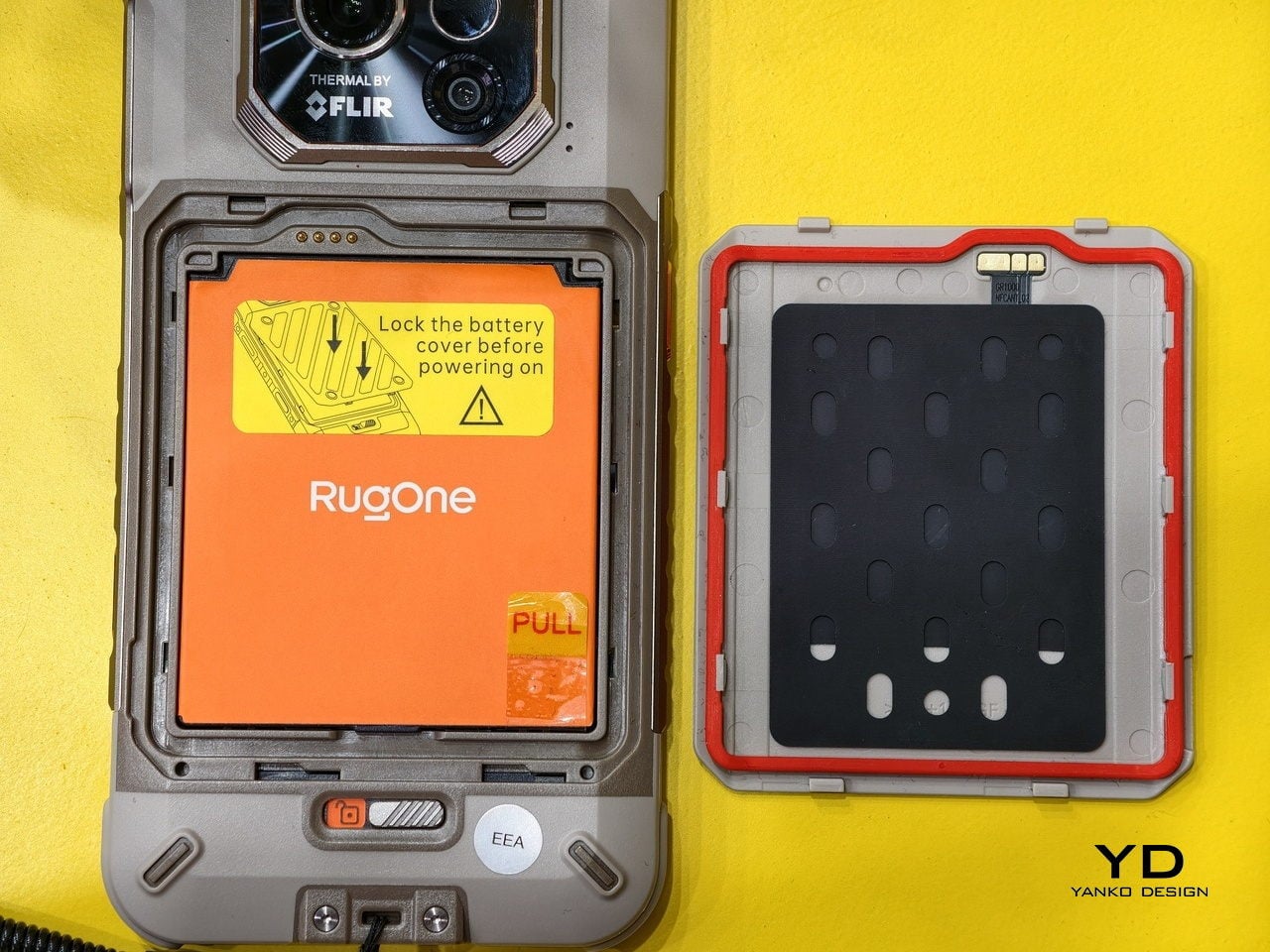
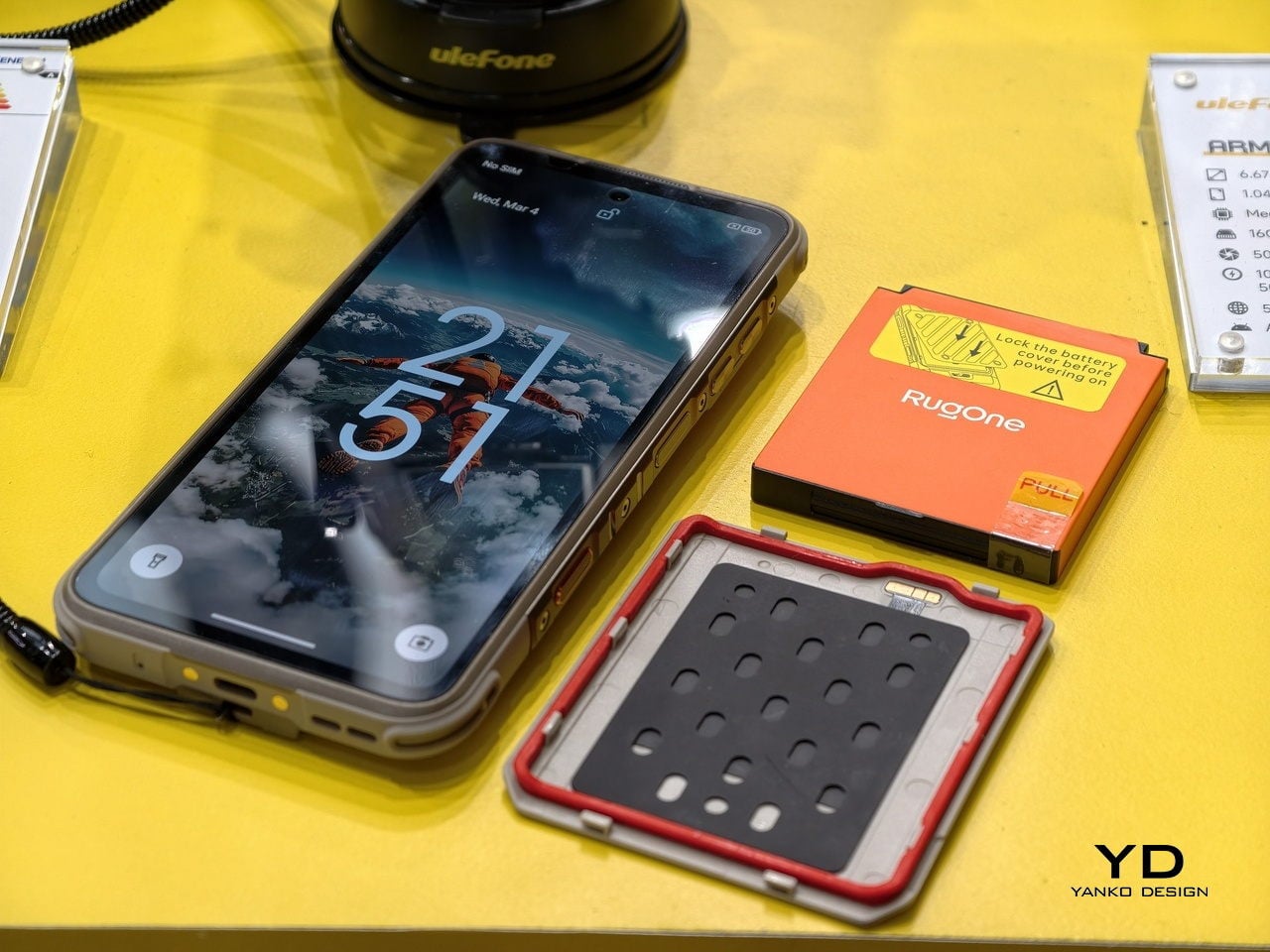
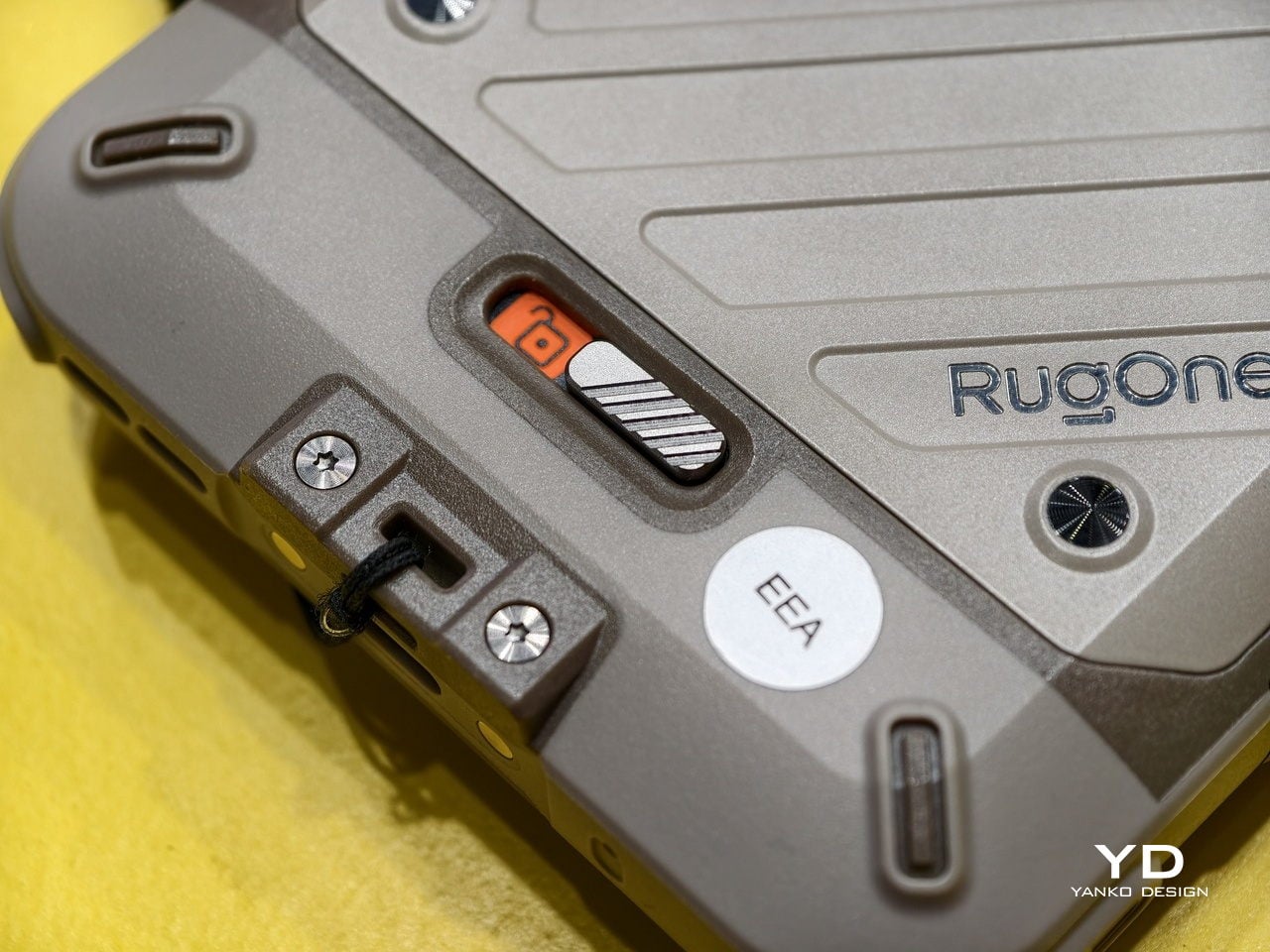
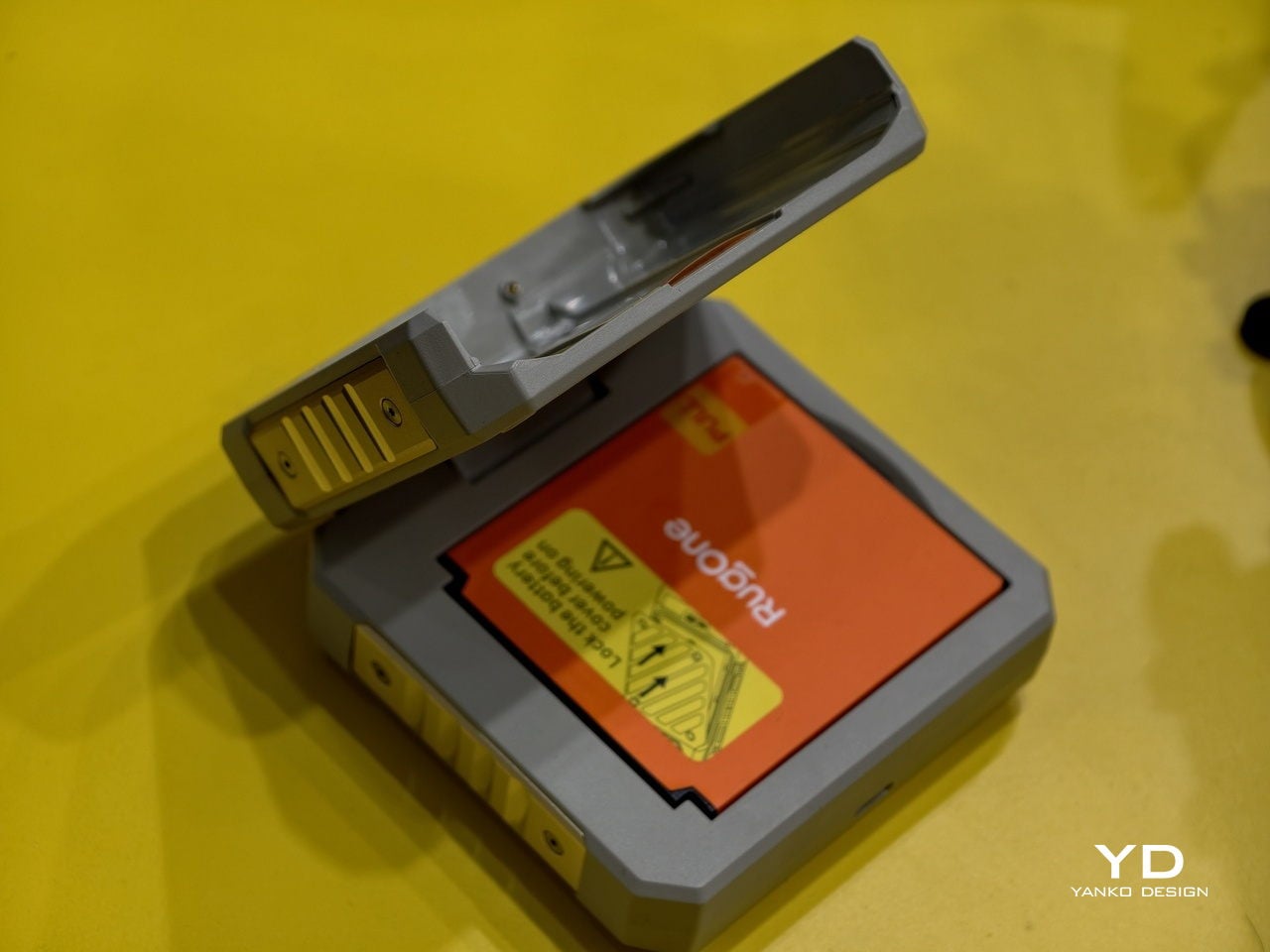
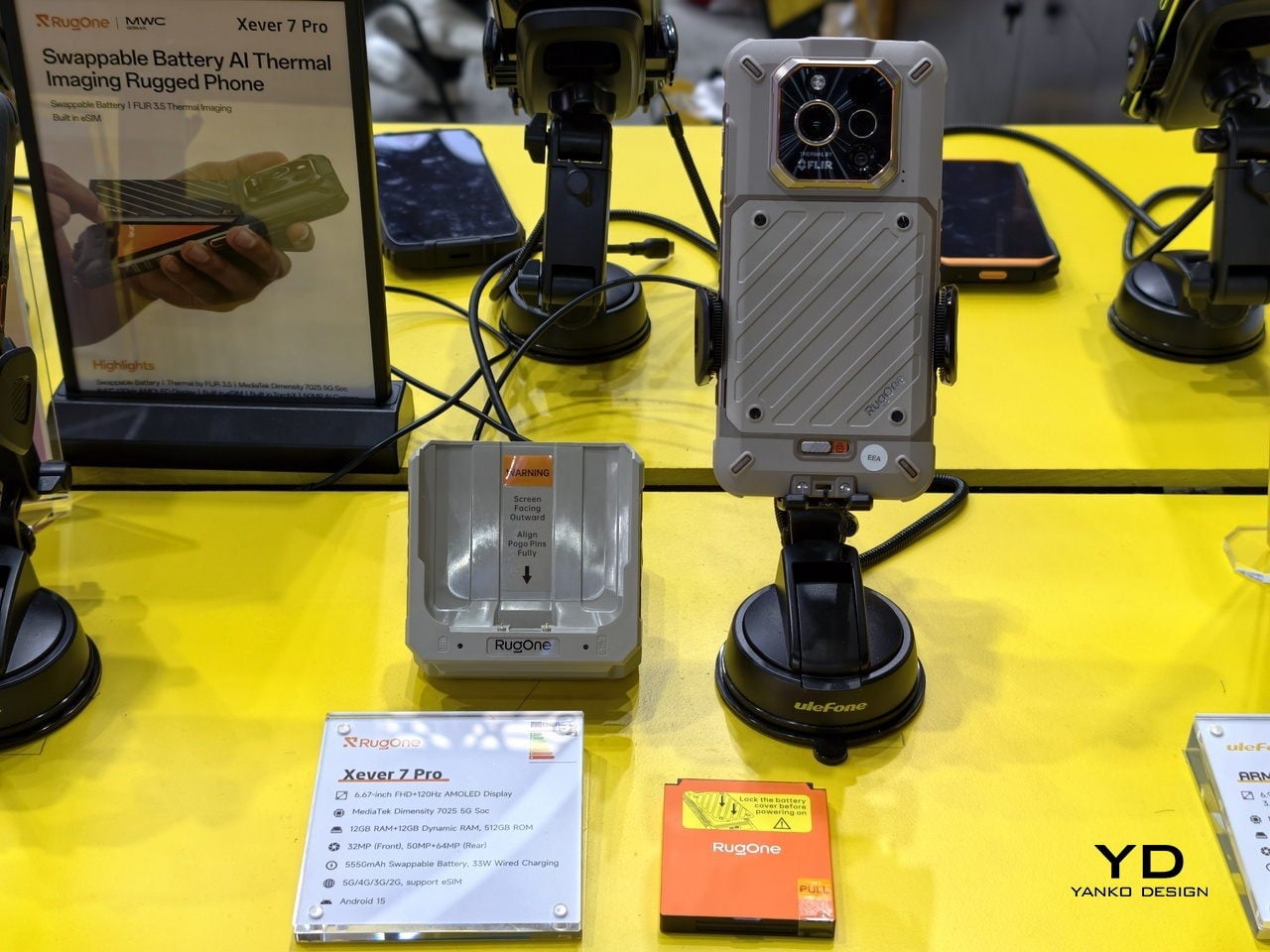
That is exactly what the RugOne Xever 7 does. It ships with two 5,550 mAh batteries and a built-in buffer cell that keeps the phone alive during the swap, so you never have to restart. The whole process takes under 180 seconds. There is no hunting for a socket, no waiting out a charging cycle, and no watching the percentage tick up while your plans sit on hold.

Designer: Ulefone

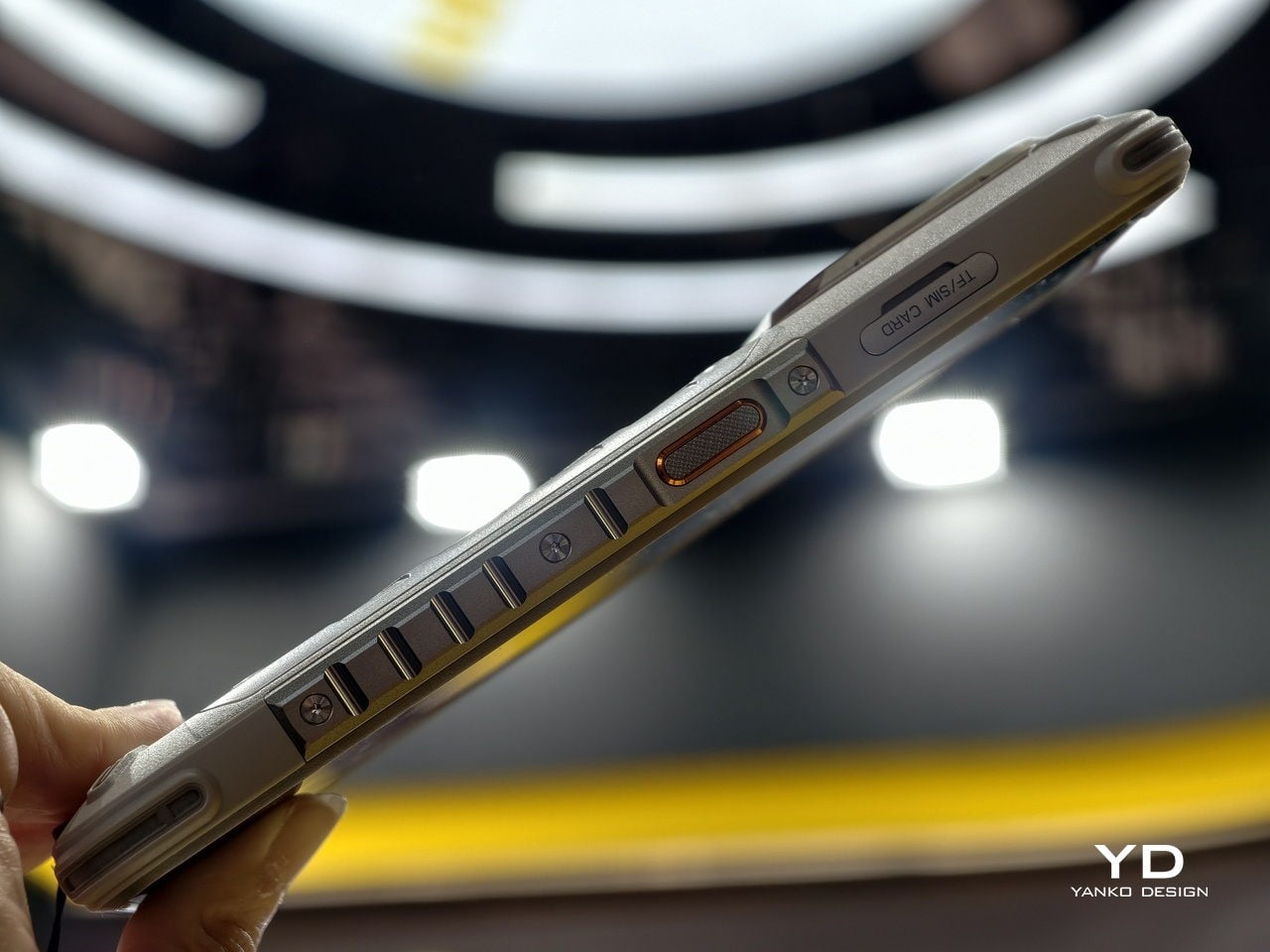
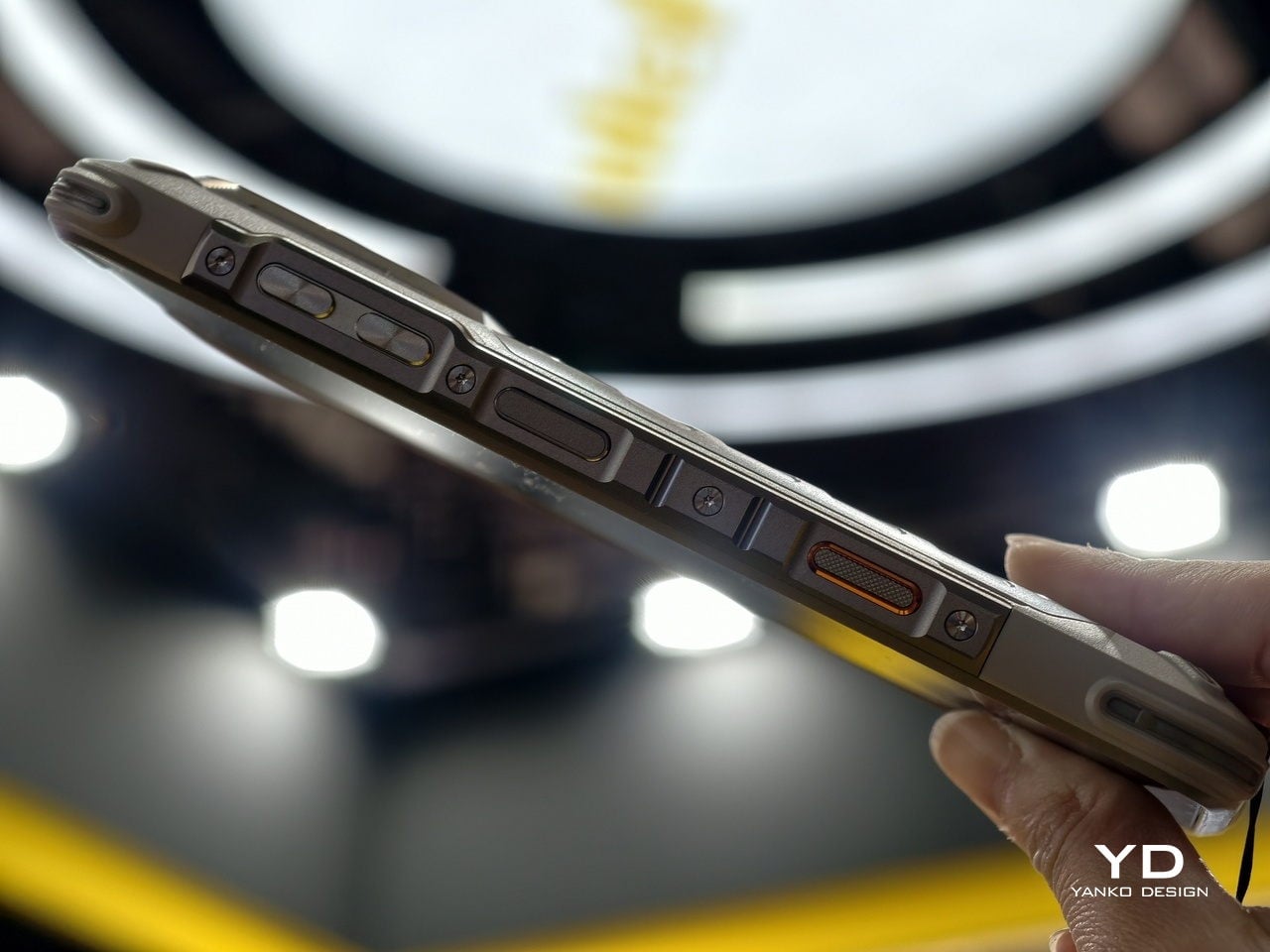
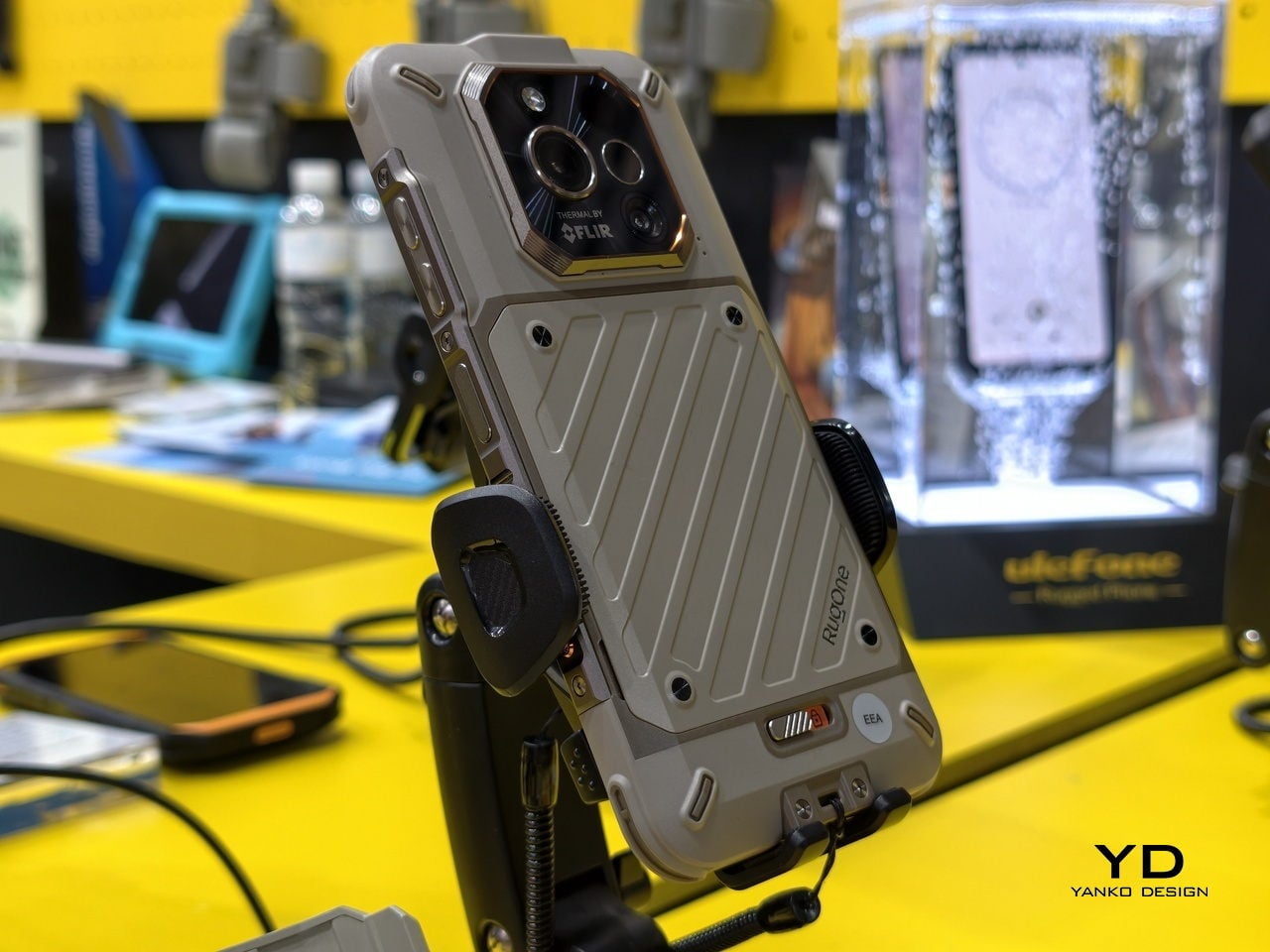
The phone is IP69K and IP68 rated, survives drops per MIL-STD-810H certification, and weighs 325 g, which is heavy but not unusual for a rugged device with this much packed inside. The 64 MP night vision camera uses four built-in infrared lights to shoot in complete darkness, which is genuinely useful if you have ever tried to photograph a campsite at 2 a.m. with a regular phone and gotten nothing.

There is also a 50 MP main camera with optical image stabilization, a 50 MP ultra-wide with a 117.3-degree field of view, and a 32 MP front camera. The phone supports underwater photography as well, with controls you can operate while submerged. Video tops out at 2K at 30 fps, which is fine for most outdoor documentation but a step behind phones at similar price points that record at 4K.

The display is a 6.67-inch AMOLED panel running at 120 Hz with a 2,200-nit peak brightness, which holds up well in direct sunlight. Inside is a MediaTek Dimensity 7025 chipset paired with 12 GB of RAM and 512 GB of storage, expandable to 2 TB via microSD. That chipset is mid-range by current standards, so this is not a performance-first phone, but it handles everyday tasks without friction.

Charging runs at 33W over USB-C or 18W through the Pogo Pin dock that comes in the box. The dock charges the spare battery simultaneously, so by the time your current battery runs low, the backup is already full and ready. That closed loop is the smartest part of the whole system, and the detail that makes the swappable battery feel like a considered design decision rather than a novelty.

Android 15 runs clean here, with Google Gemini built in, a 230-lumen flashlight, an X-axis linear vibration motor, and a 3.5 mm headphone jack that has no business still being this satisfying to find on a phone. The Xever 7 does not try to reinvent what a rugged phone is. It just fixes the one thing that frustrates people most, and lets everything else do its job quietly.

The post This Rugged Phone Ships With 2 Batteries You Can Hot-Swap first appeared on Yanko Design.

Realme P4 Power Review: Battery Anxiety is Finally Dead

PROS:


  • Massive 10,001mAh battery with 80W wired fast charging

  • Bright and vibrant display

  • Solid mid-range performance

CONS:


  • Slightly heavier and chunkier compared to many mid-range devices

  • Ultra-wide and front-facing cameras are only average for the price

RATINGS:

AESTHETICS
ERGONOMICS
PERFORMANCE
SUSTAINABILITY / REPAIRABILITY
VALUE FOR MONEY

EDITOR'S QUOTE:

Realme P4 Power proves that killing battery anxiety is more useful than chasing benchmarks, wrapping a 10,001mAh cell, tough IP69 shell, and smooth performance into an honest mid‑range package.

Realme has built a reputation for pushing smartphone battery tech forward, from faster charging to bigger and more efficient cells. Instead of treating battery life as an afterthought, the brand has consistently tried to make it a headline feature that changes how often you actually need a charger. That focus has turned power and charging from a boring spec line into one of Realme’s main selling points.

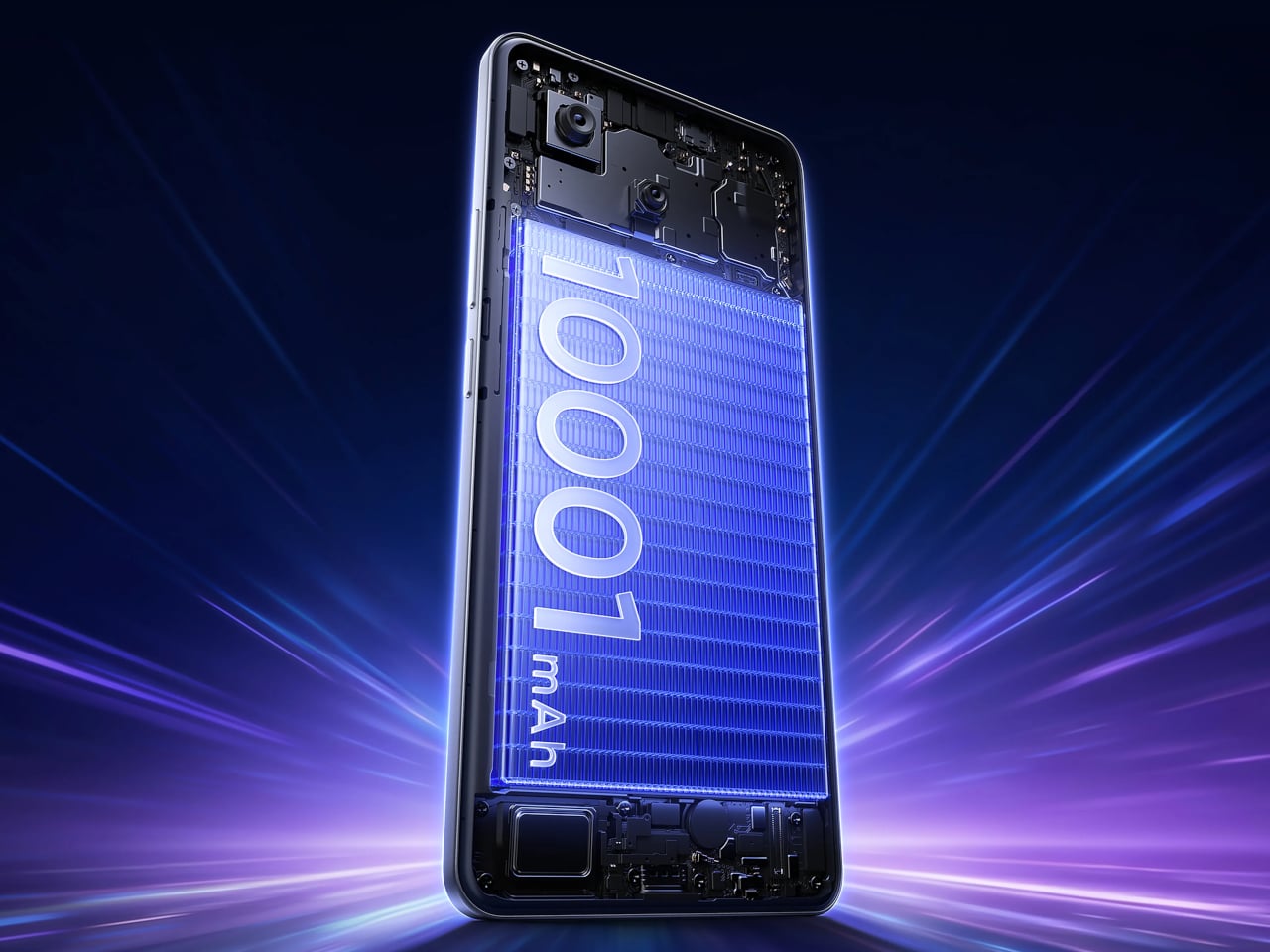
The Realme P4 Power is the clearest expression of that idea so far. It packs a massive 10,001 mAh battery into a phone that still looks and feels familiar, then backs it up with 80W fast charging, 27W reverse charging, a bright 144Hz AMOLED display, and 5G performance aimed at everyday users and gamers alike. More than just another mid‑range phone with a slightly bigger battery, it’s a device built around the promise that you should be able to forget about battery anxiety for days at a time.

Aesthetics
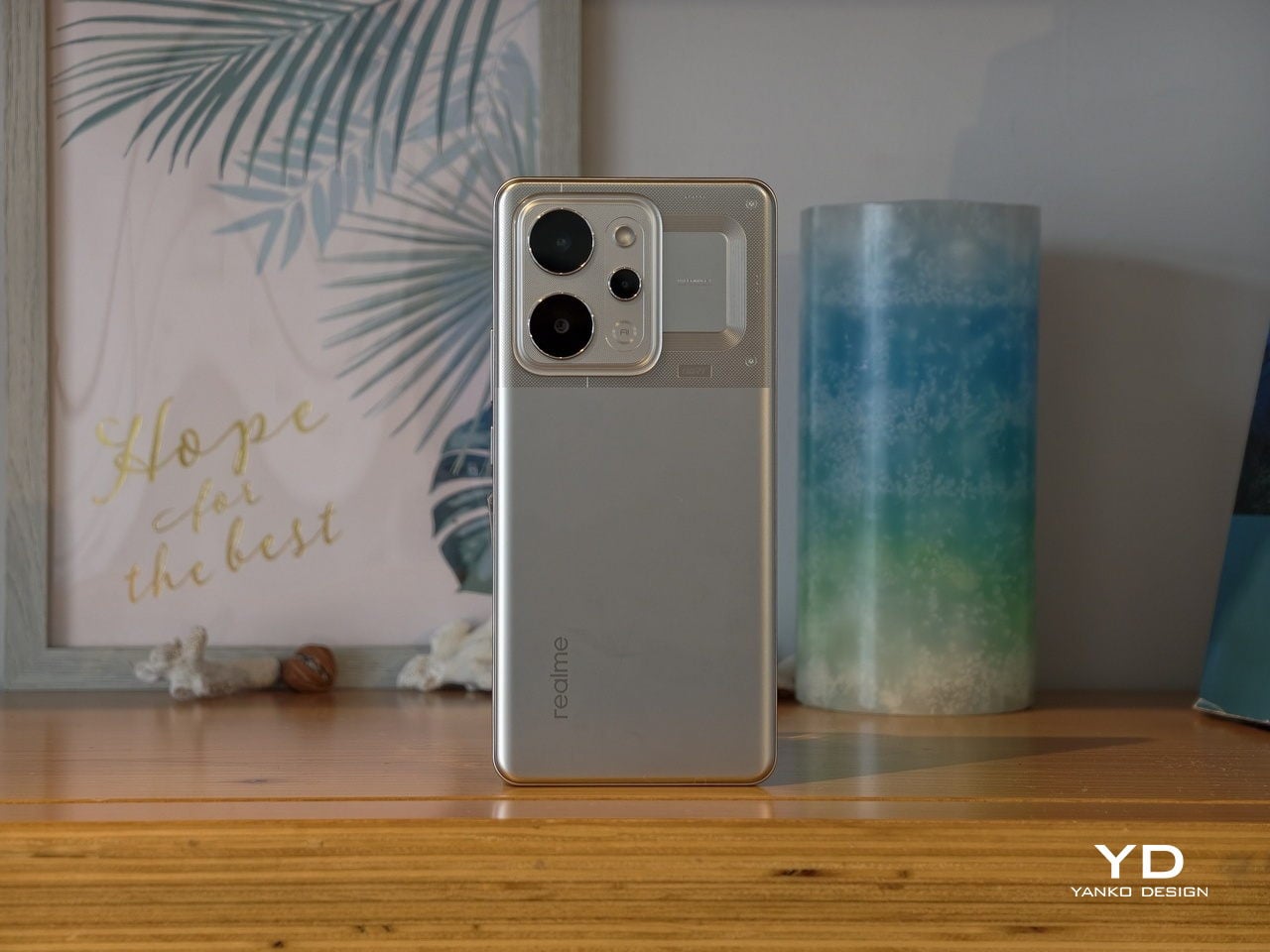
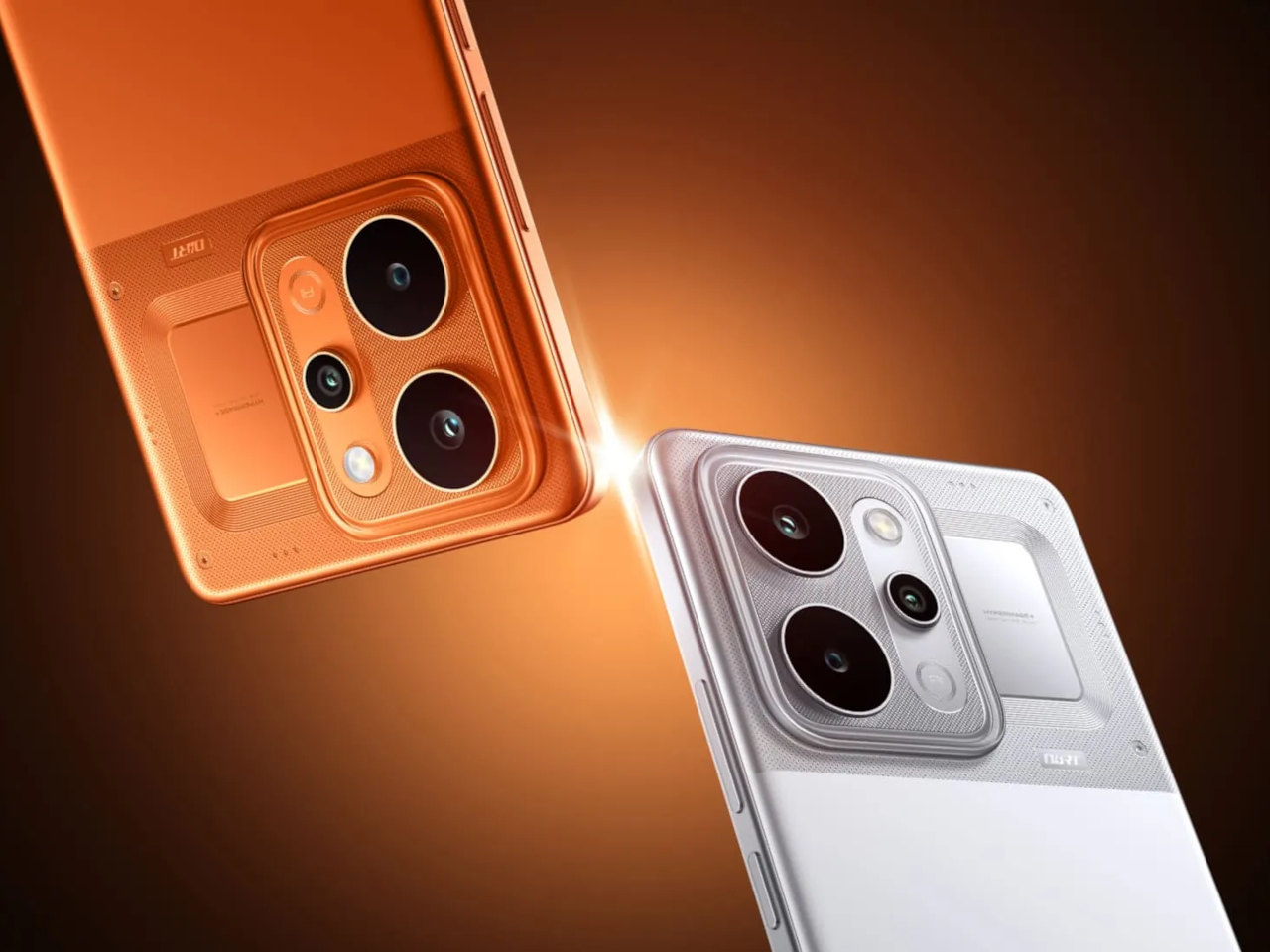
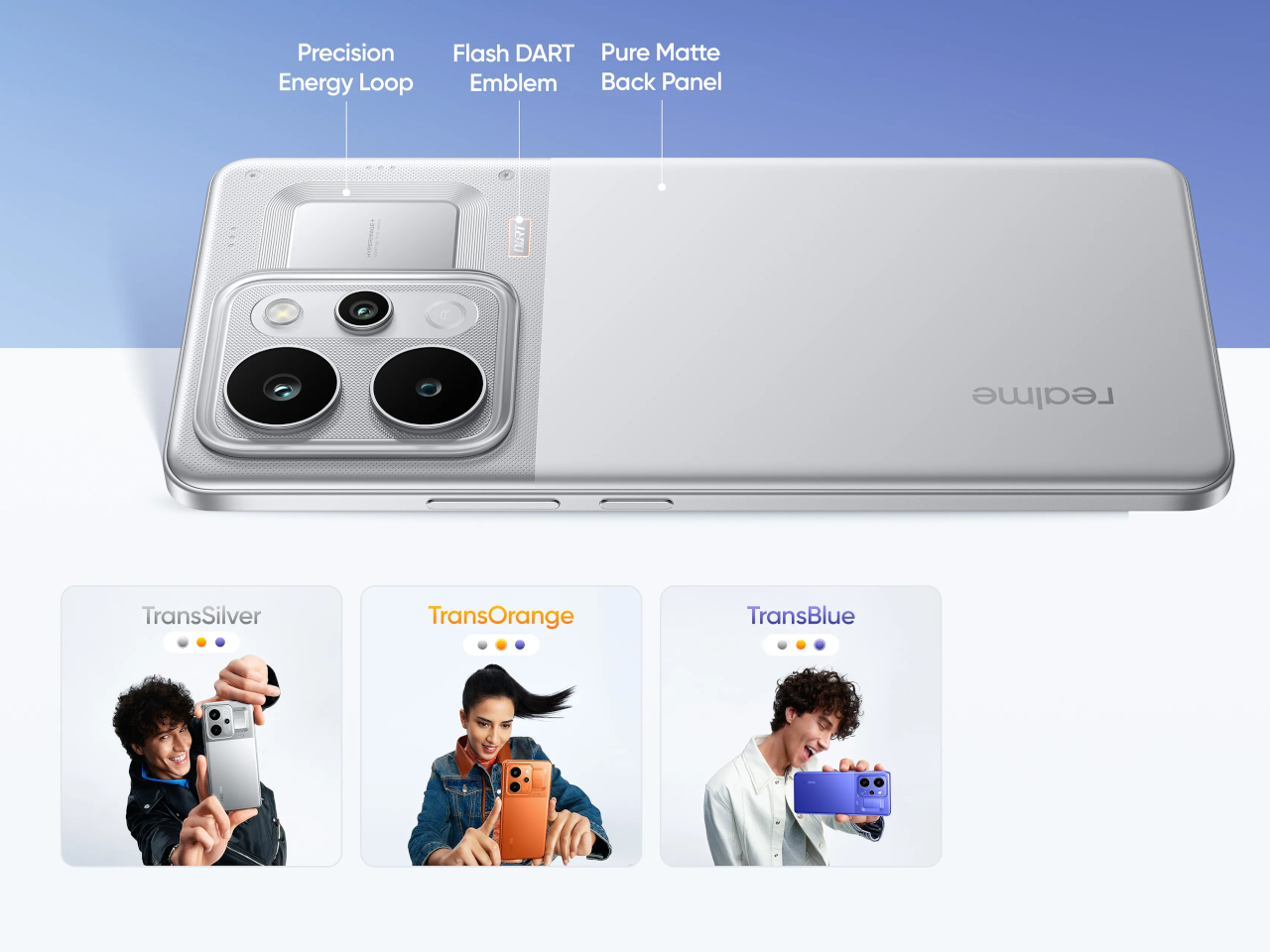
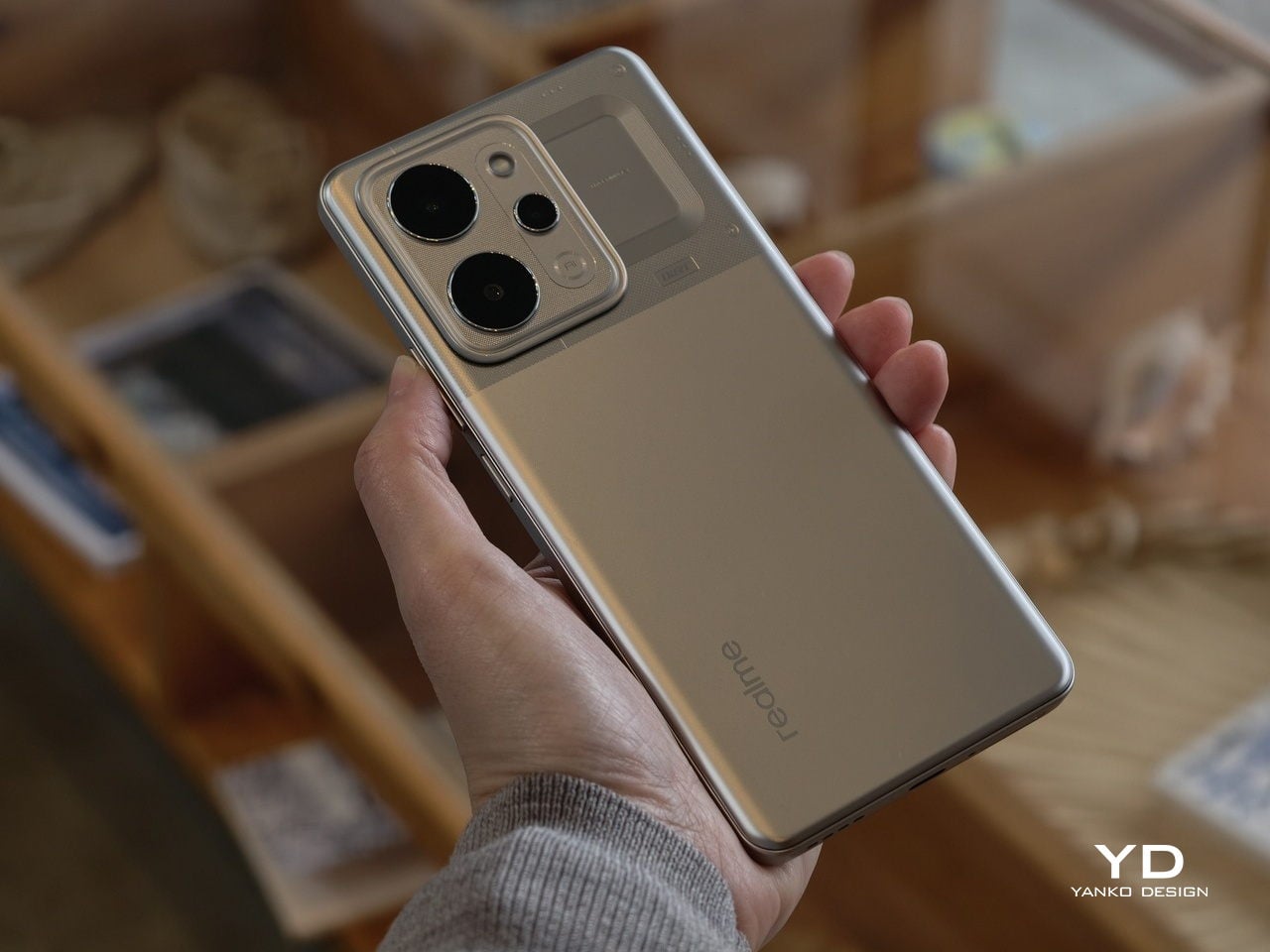
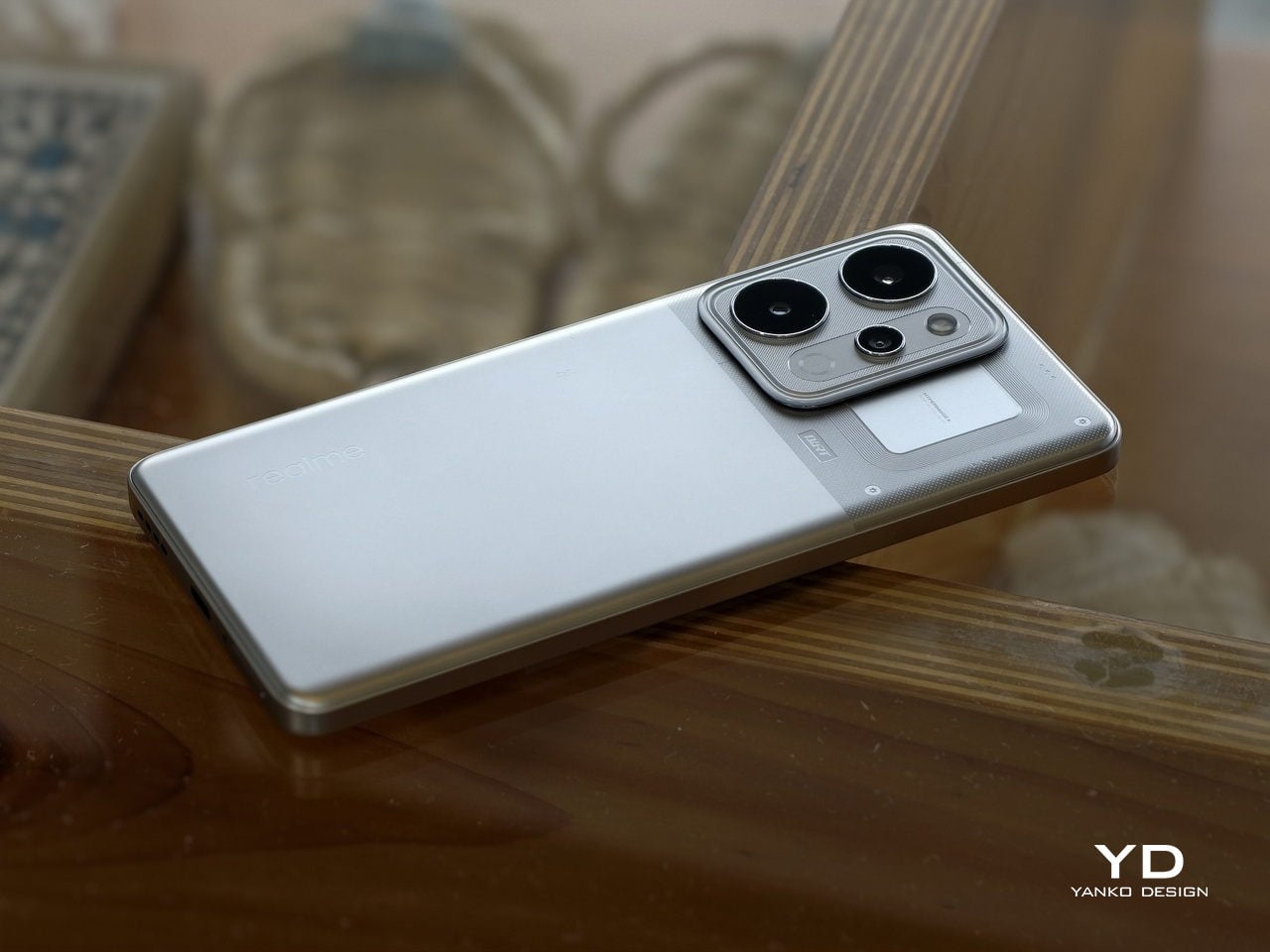
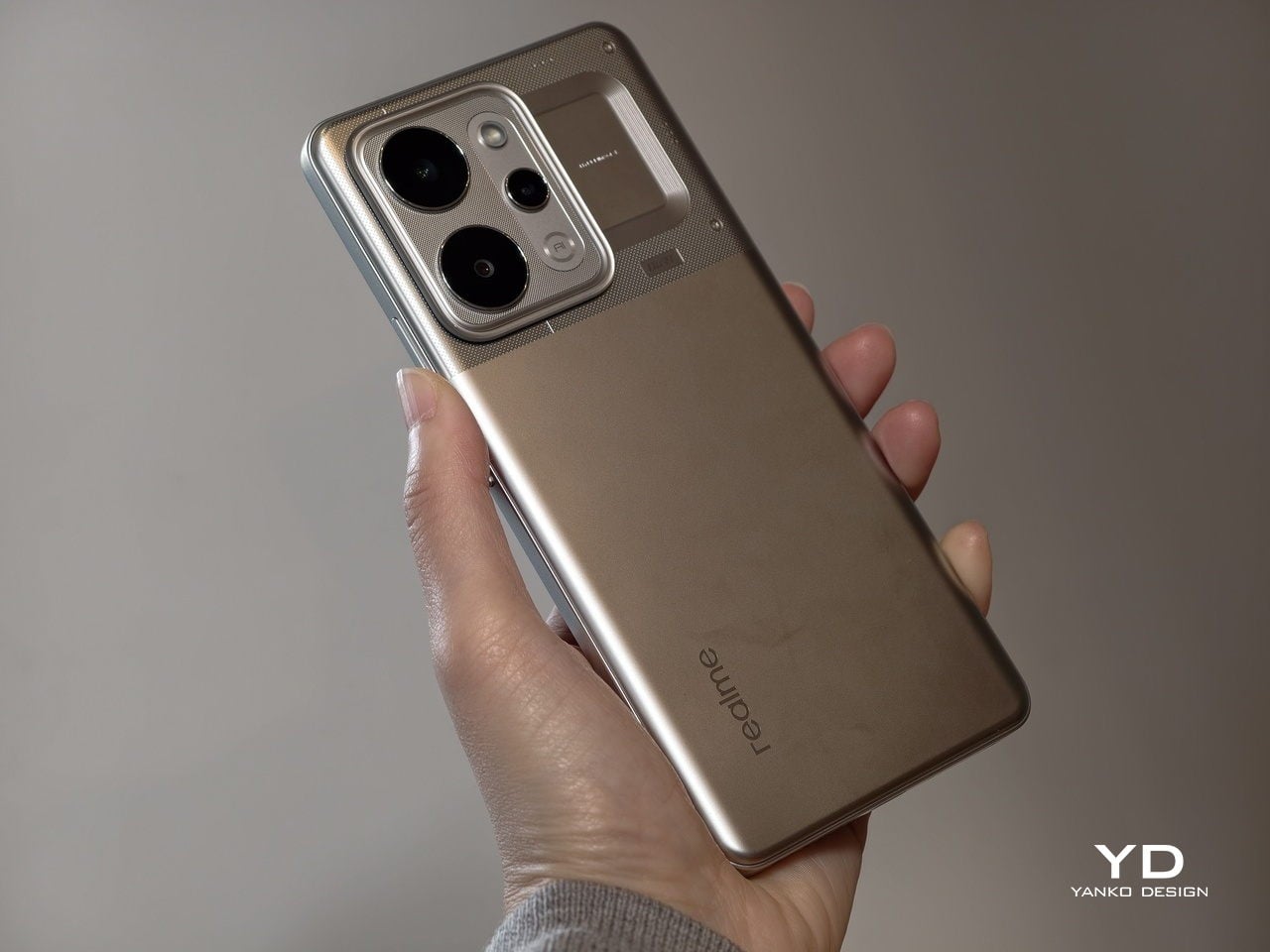
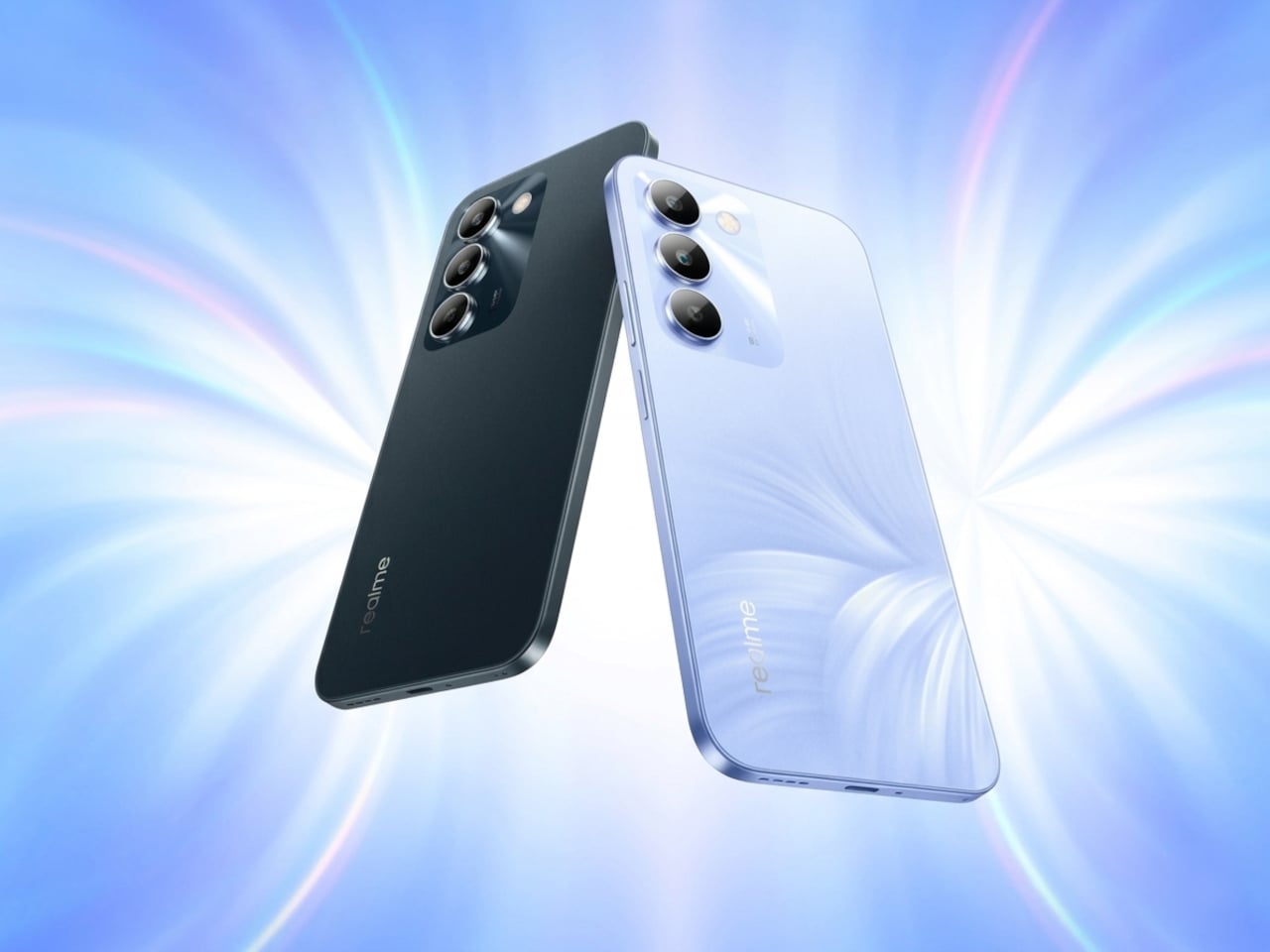
The Realme P4 Power is a battery‑first phone that does not look like one at first glance. On the table, it reads as a modern, fashion‑driven slab rather than a chunky endurance tool, which is exactly what Realme is going for. It comes in two color variations, Flash Orange and Power Silver.

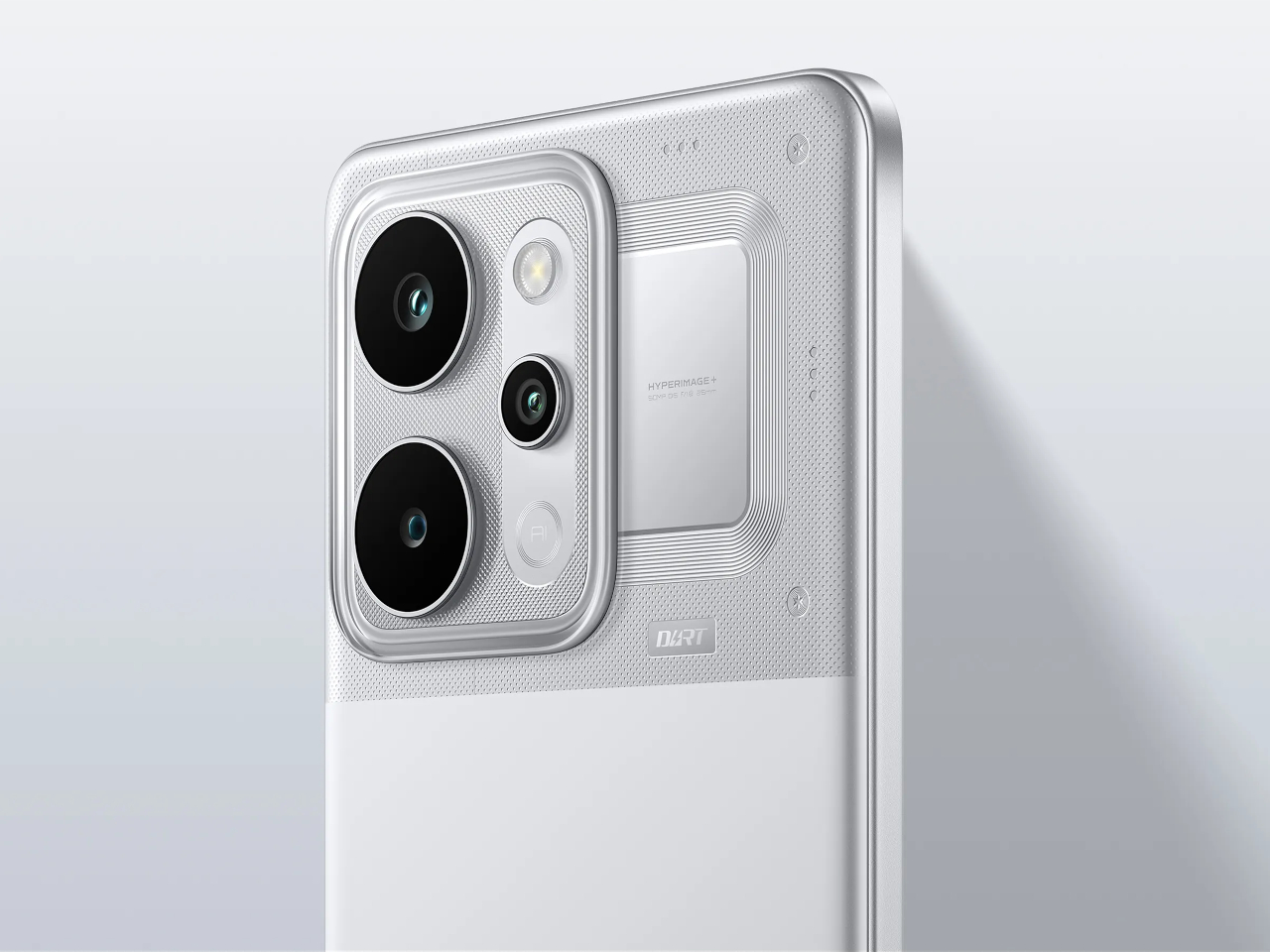
The upper third of the back panel has a distinctive pattern that creates an almost translucent effect, playing with reflections and depth when light hits it. The rectangular camera island is neatly integrated, with a clean ring‑based layout that avoids the oversized, fussy modules you see on some rivals. The overall look feels intentional and confident, not like a normal phone that accidentally got thicker to fit a bigger battery.
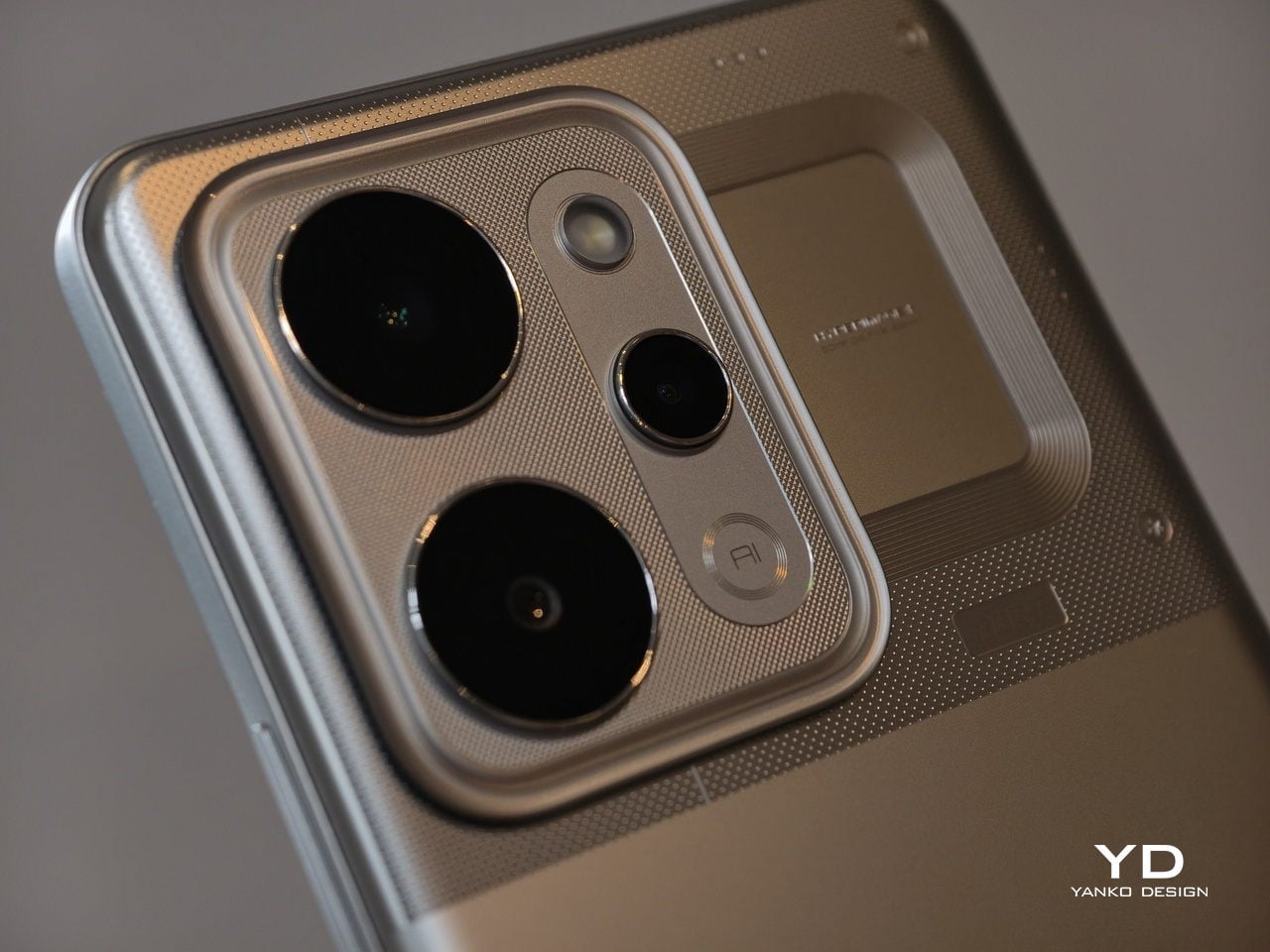
The design is more playful than minimalist, especially in the brighter Flash Orange variant, while Power Silver keeps a slightly more muted but still distinctive character. For a phone whose headline feature is a huge battery, it is surprisingly stylish and clearly aimed at people who care how their device looks on a desk or in a hand. Branding is present but not overpowering, so the rear stays relatively clean even with the layered graphics and that “under‑glass” pattern.

Ergonomics

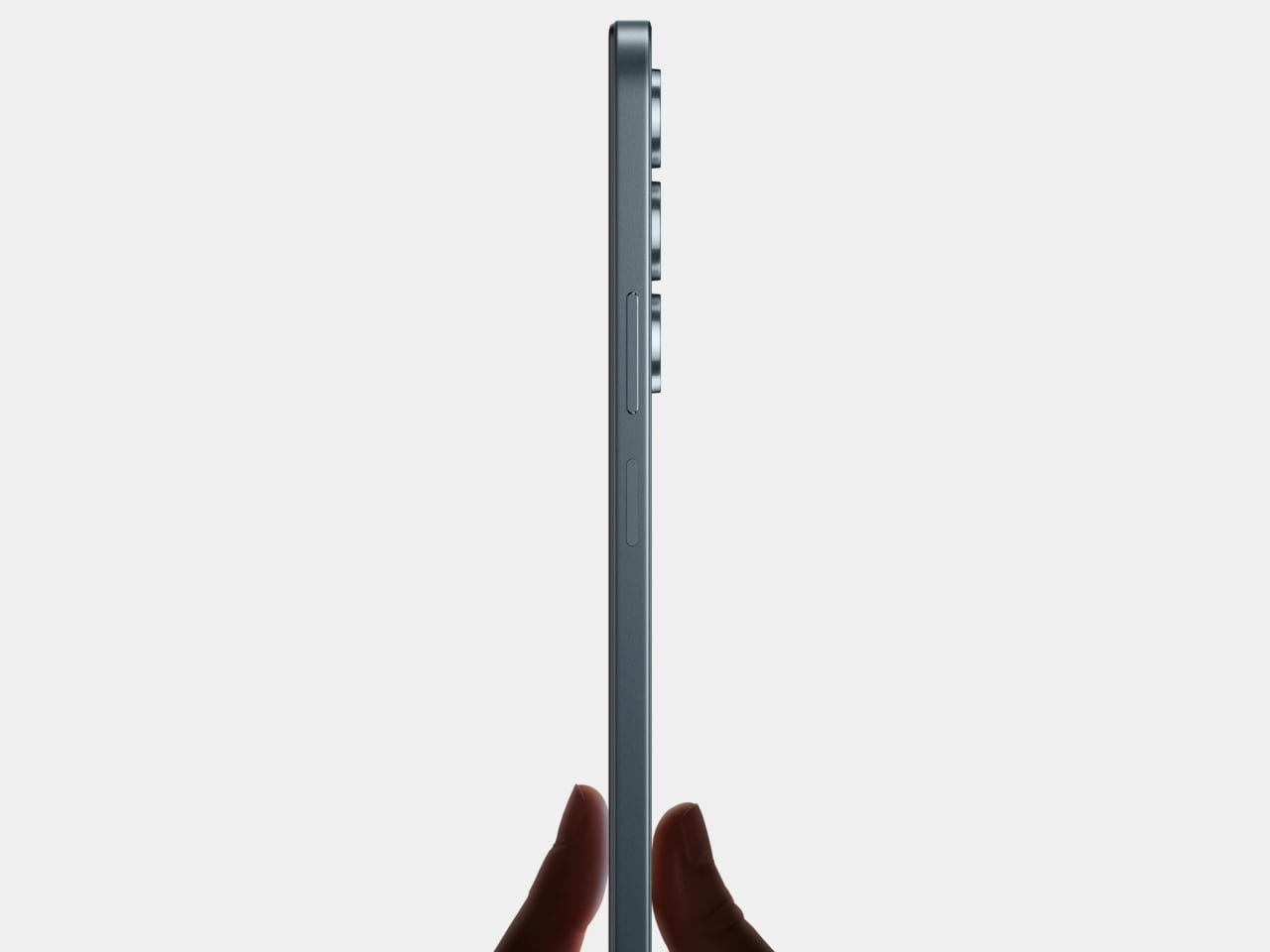
Even when you pick it up, the P4 Power feels a little deceptive. This is not a featherweight device, coming in at about 219g and measuring 162.26 x 76.15 x 9.08mm. The large 10,001 mAh battery and sturdy build give it noticeable heft in the hand, and you will feel that if you are coming from a slim device. However, Realme has done a great job of balancing the mass so it does not feel awkward during normal use. For many users, the extra grams will be an acceptable trade‑off for the freedom from constant charging.
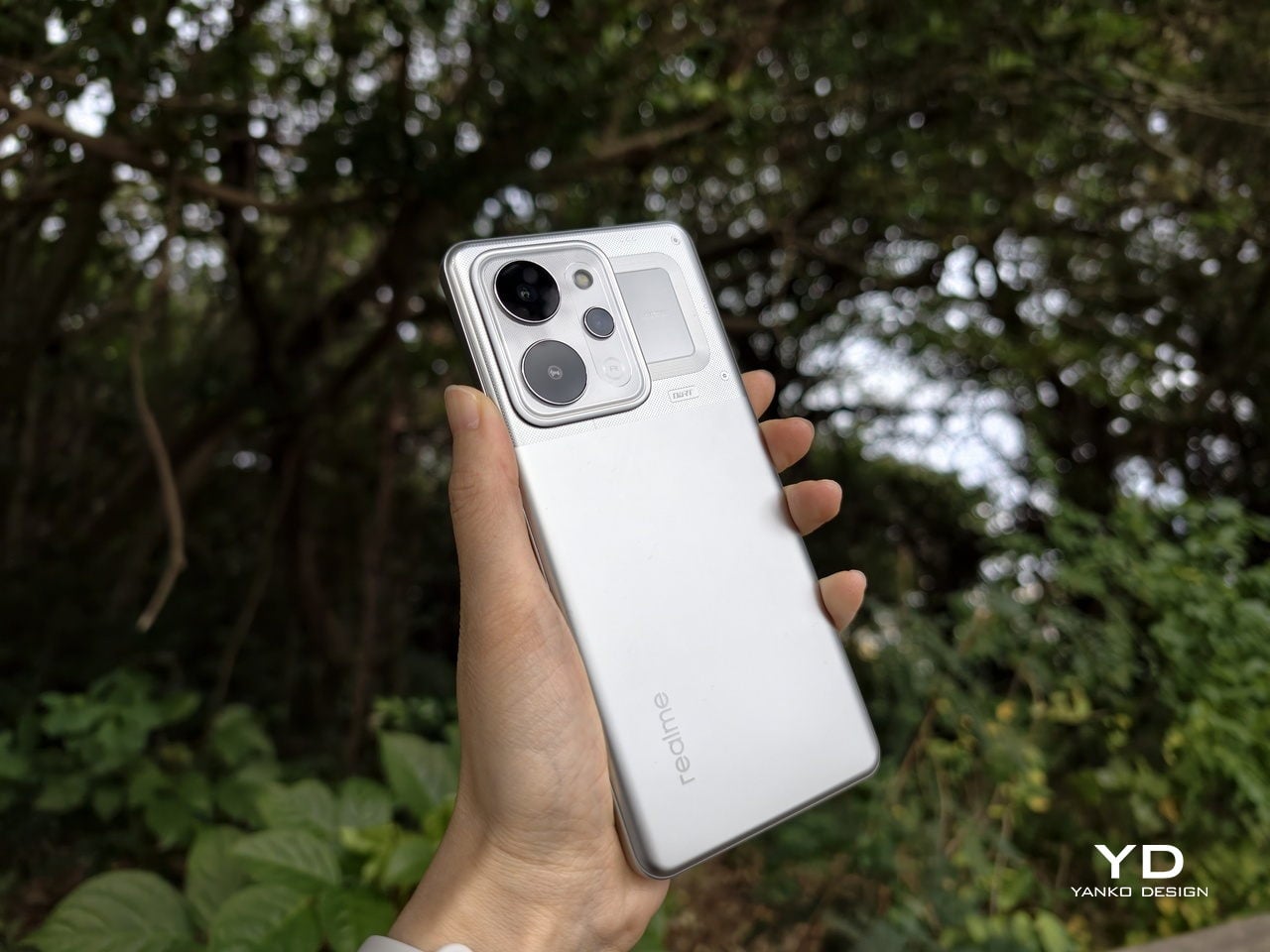
The shape helps more than the spec sheet suggests. The slightly curved 6.8‑inch display and curved‑edge back panel let your fingers naturally wrap around the device rather than pressing into a sharp edge. The matte back does a good job of hiding fingerprints and smudges, although it can feel a bit slippery, so a case might still be a smart idea.

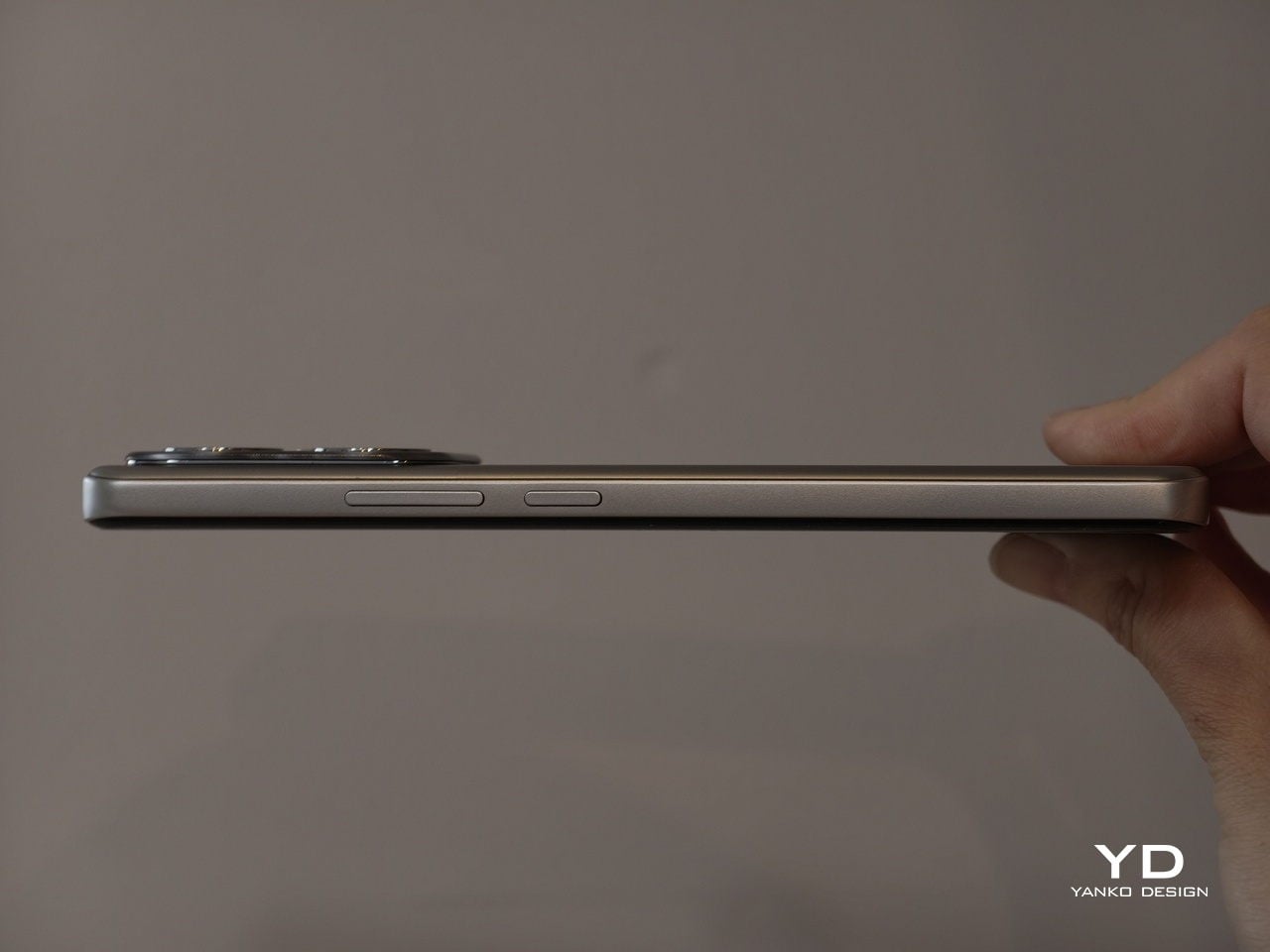
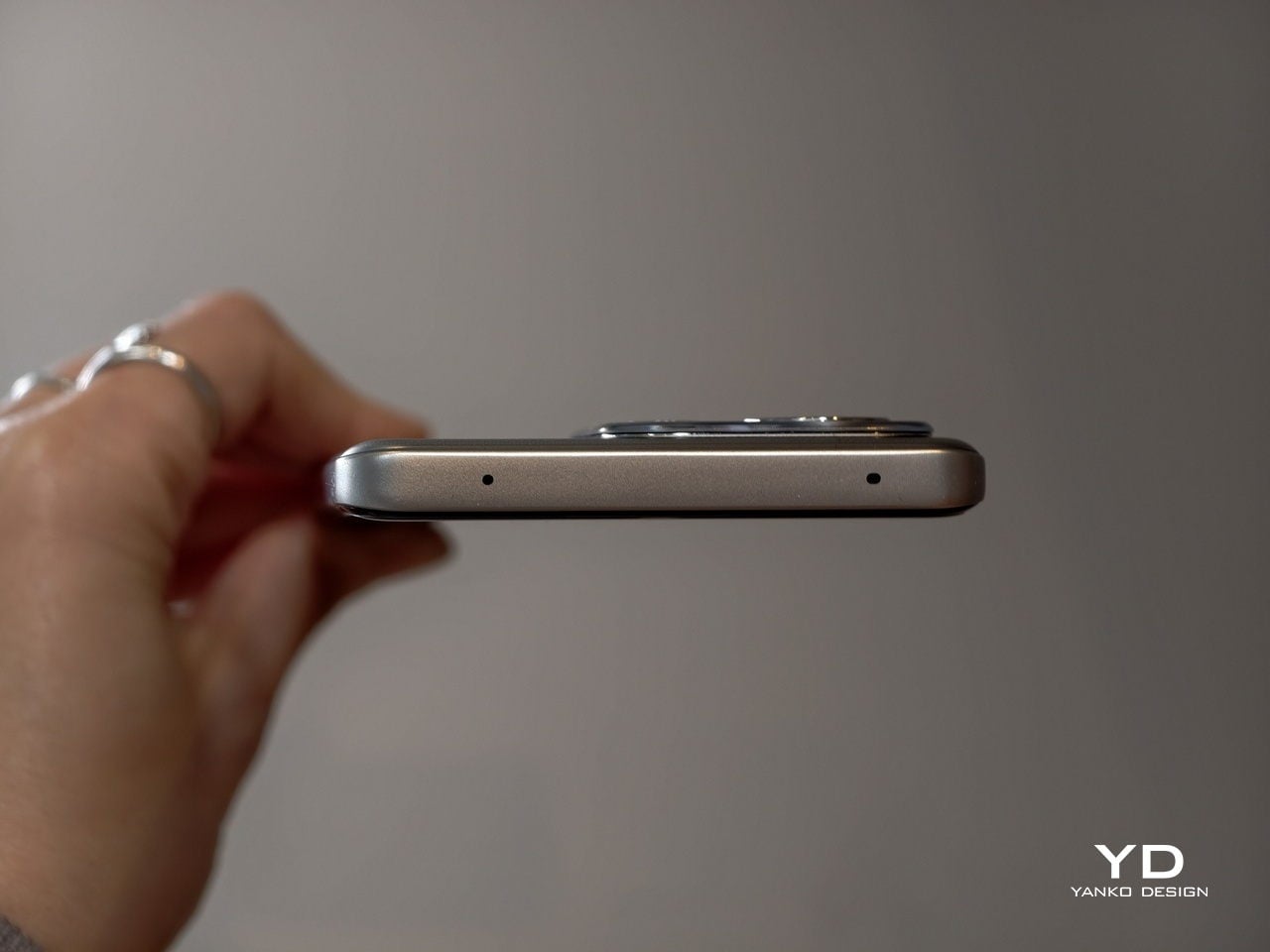
The power and volume keys are within comfortable reach on the right side, so you do not have to stretch or shuffle the phone around to adjust volume or wake the screen. The in‑display fingerprint reader, on the other hand, sits quite close to the bottom of the display, which can make quick unlocks feel a bit forced, especially in one‑handed use. Overall, the build quality feels more premium than the price tag suggests, and ergonomics are good for a device built around such a large battery.
Performance

On the front, the P4 Power offers a quad‑curved 6.8‑inch AMOLED display with a resolution of 1280 × 2800 pixels and a maximum refresh rate of 144Hz. In practice, though, only a few native apps, such as Calculator, Compass, and Recorder, actually run at 144Hz, while most of the interface and third‑party apps stick to lower refresh rates.
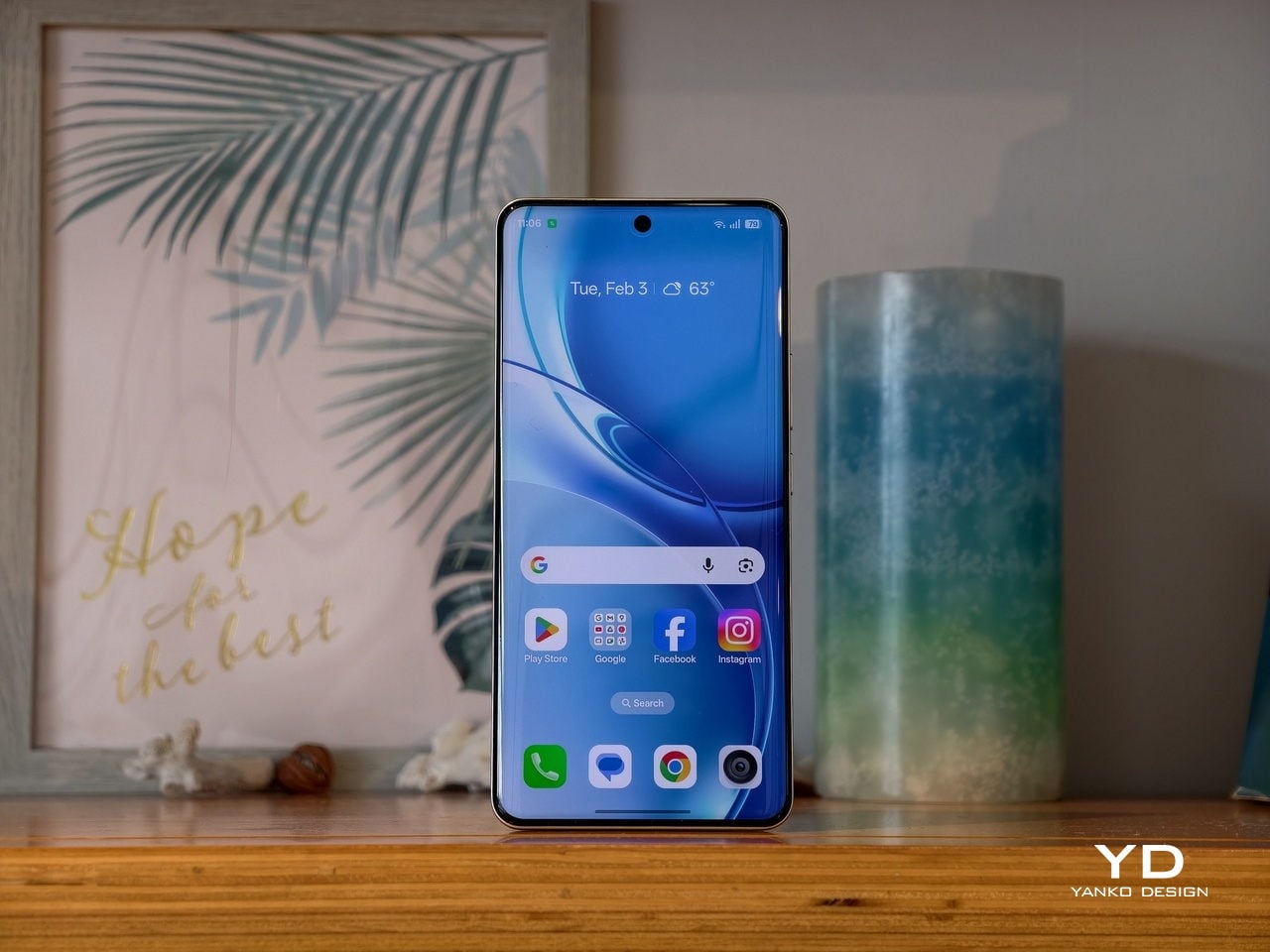
Realme quotes typical brightness around 600 nits, a boosted mode up to 1800 nits, and a local peak figure of 6500 nits for small areas of the screen. In real‑world use, the display stays readable in harsh sunlight and bright outdoor conditions. The panel supports HDR10+ and 10‑bit color, so compatible streaming content looks rich, punchy, and pleasantly saturated.
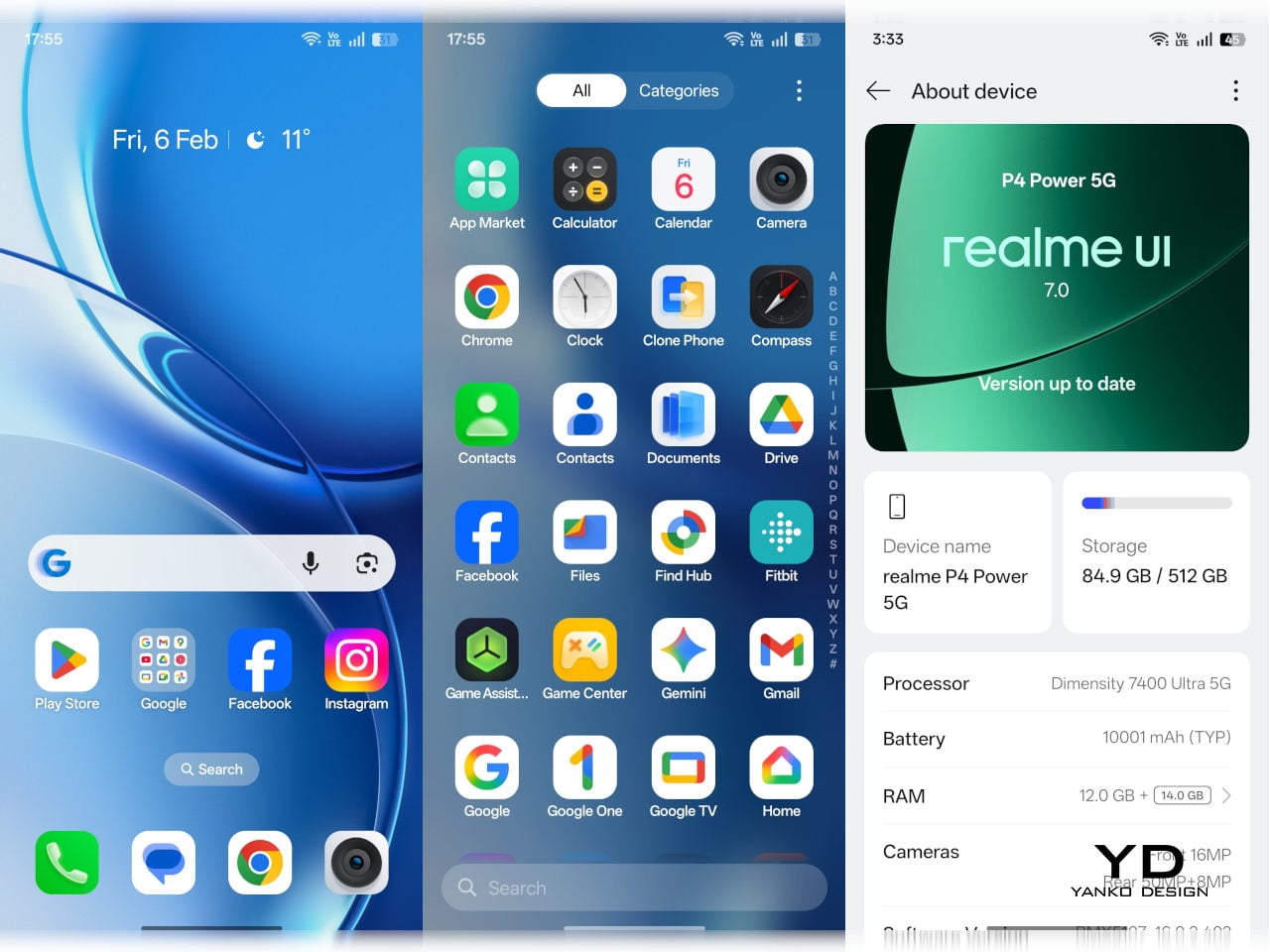
Inside the P4 Power sits MediaTek’s Dimensity 7400-Ultra chipset. It is paired with 8GB or 12GB of RAM and 128GB, 256GB, or 512GB of UFS 3.1 storage. This combination places the phone firmly in the mid‑range. It is not chasing raw benchmark records, yet it is designed to deliver smooth performance in everyday tasks and mainstream games without obvious slowdowns or stutters.

Out of the box, the phone runs Android 16 with Realme UI 7.0 on top, and Realme also uses a dual‑chip approach. Alongside the main Dimensity processor, there is a dedicated Hyper Vision+ AI chip focused on display and gaming tasks, and there are a handful of AI image features such as AI Perfect Shot and 3D emoji. AI Perfect Shot recognizes faces and can fix closed eyes or awkward expressions by swapping in better face poses from other photos of the same person in your gallery, and AI also helps during gaming by quickly generating message replies in supported messaging apps so you can respond without fully dropping out of your game.
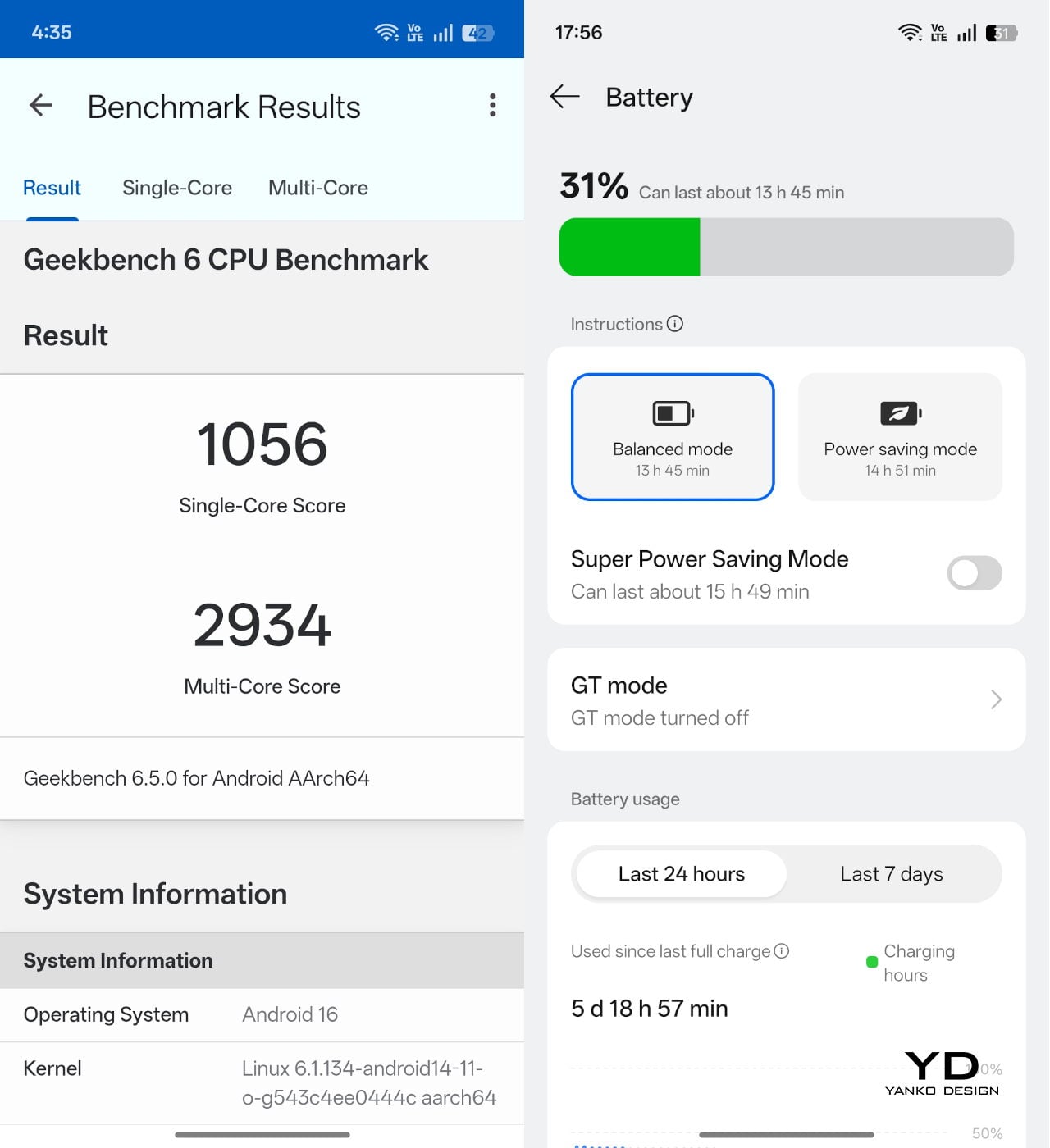
Battery life is the reason this phone exists. The 10,001mAh cell is dramatically larger than the 4,500 to 5,000mAh batteries found in many mainstream phones, and even bigger than the 6,000 or 7000mAh packs in endurance‑focused models. Realme achieves this using a third‑generation silicon‑carbon anode and a compact internal stacking design, which allows more capacity in roughly the same physical space.

In practical terms, this capacity is meant to deliver several days of mixed use. I used the Realme P4 Power as my primary device on a 3‑night, 4‑day scuba trip, with light screen time during the day, and it lasted the entire trip without a charge, still showing around 20 percent battery when I got back home. That kind of real‑world endurance is a clear step up from phones that need a nightly top‑up.
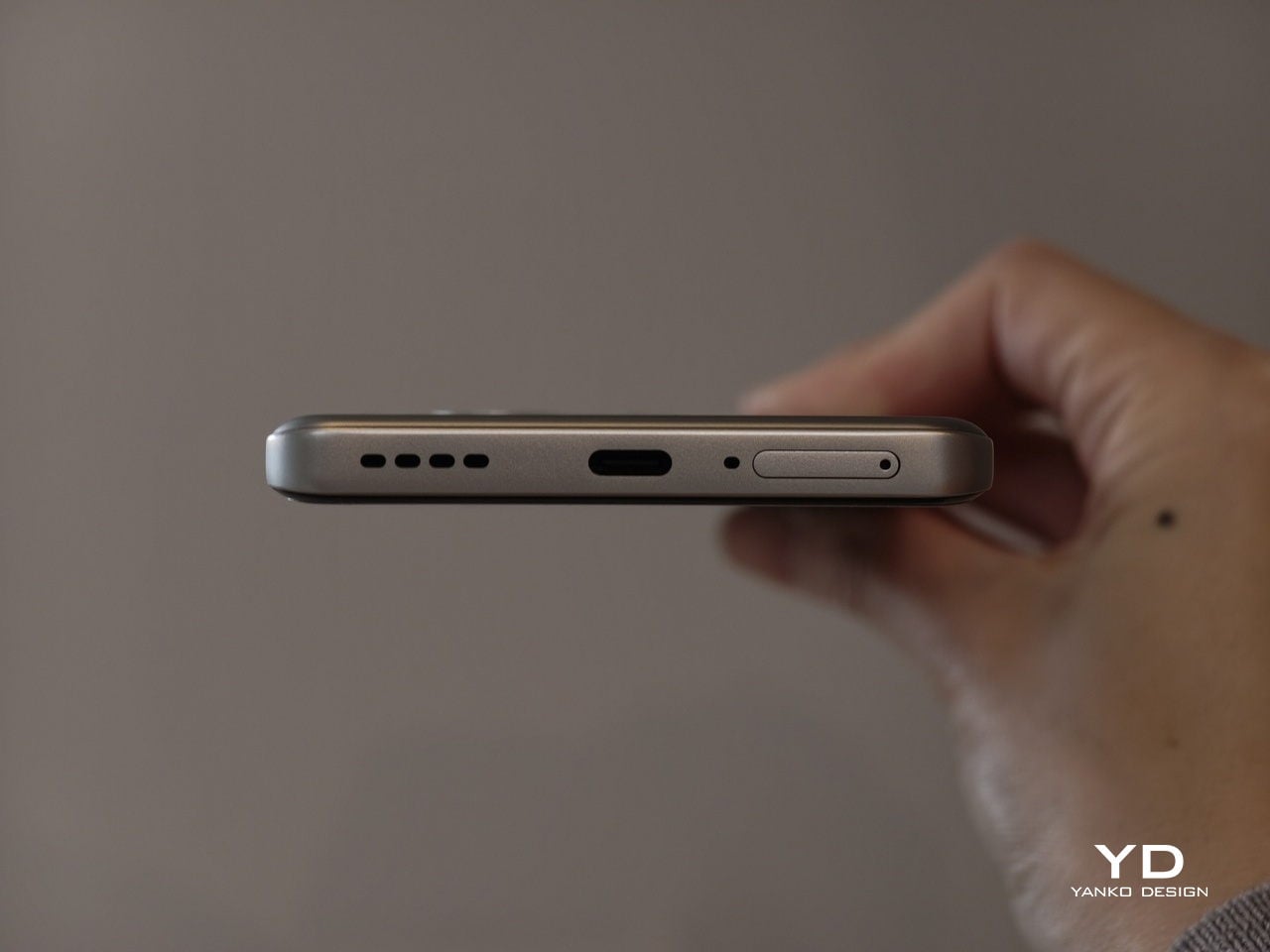
When you do need to charge, the P4 Power supports 80 W wired fast charging. It also supports 27 W reverse charging, so it can basically double as a power bank for your other gadgets when you are on the move.
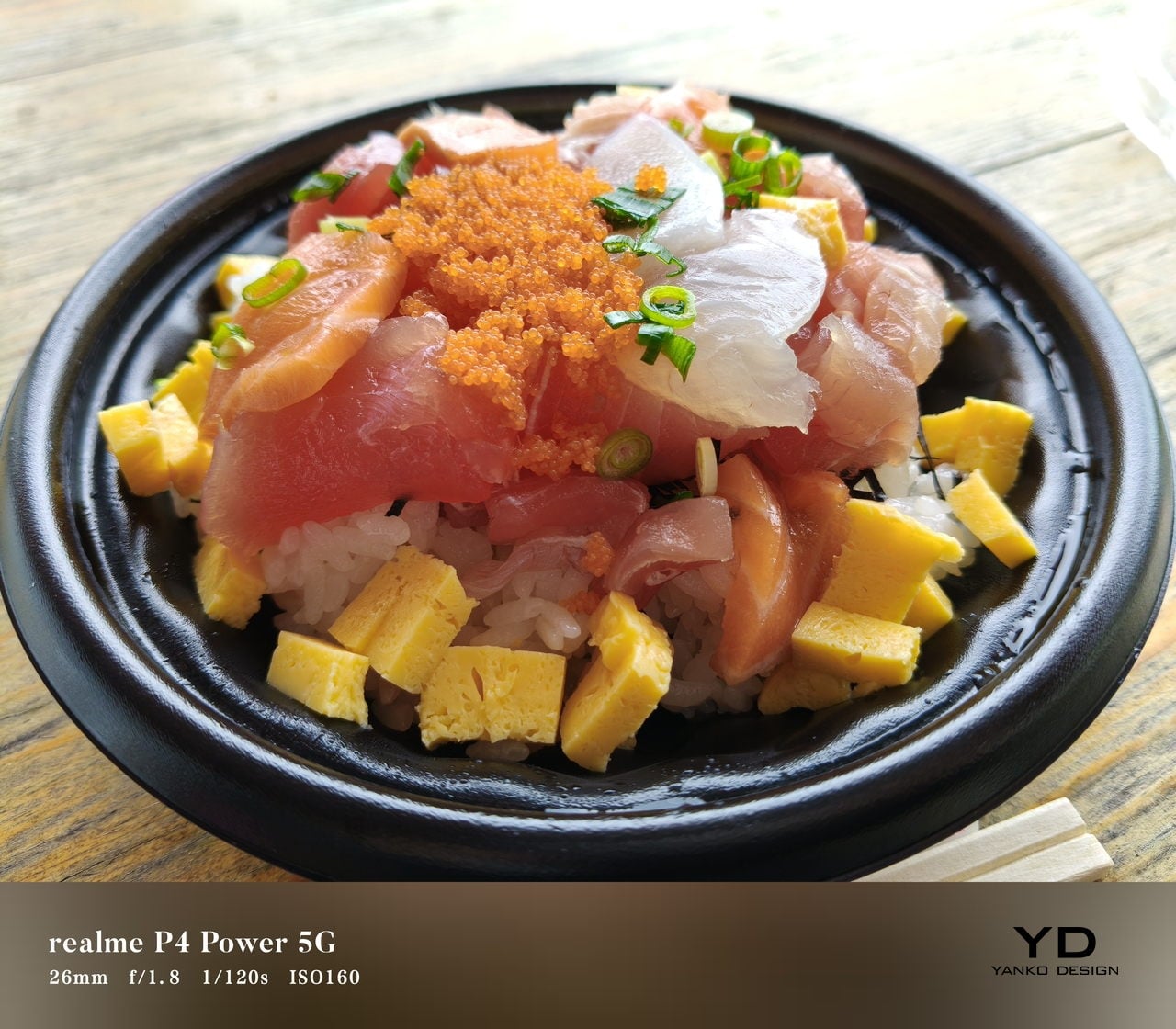
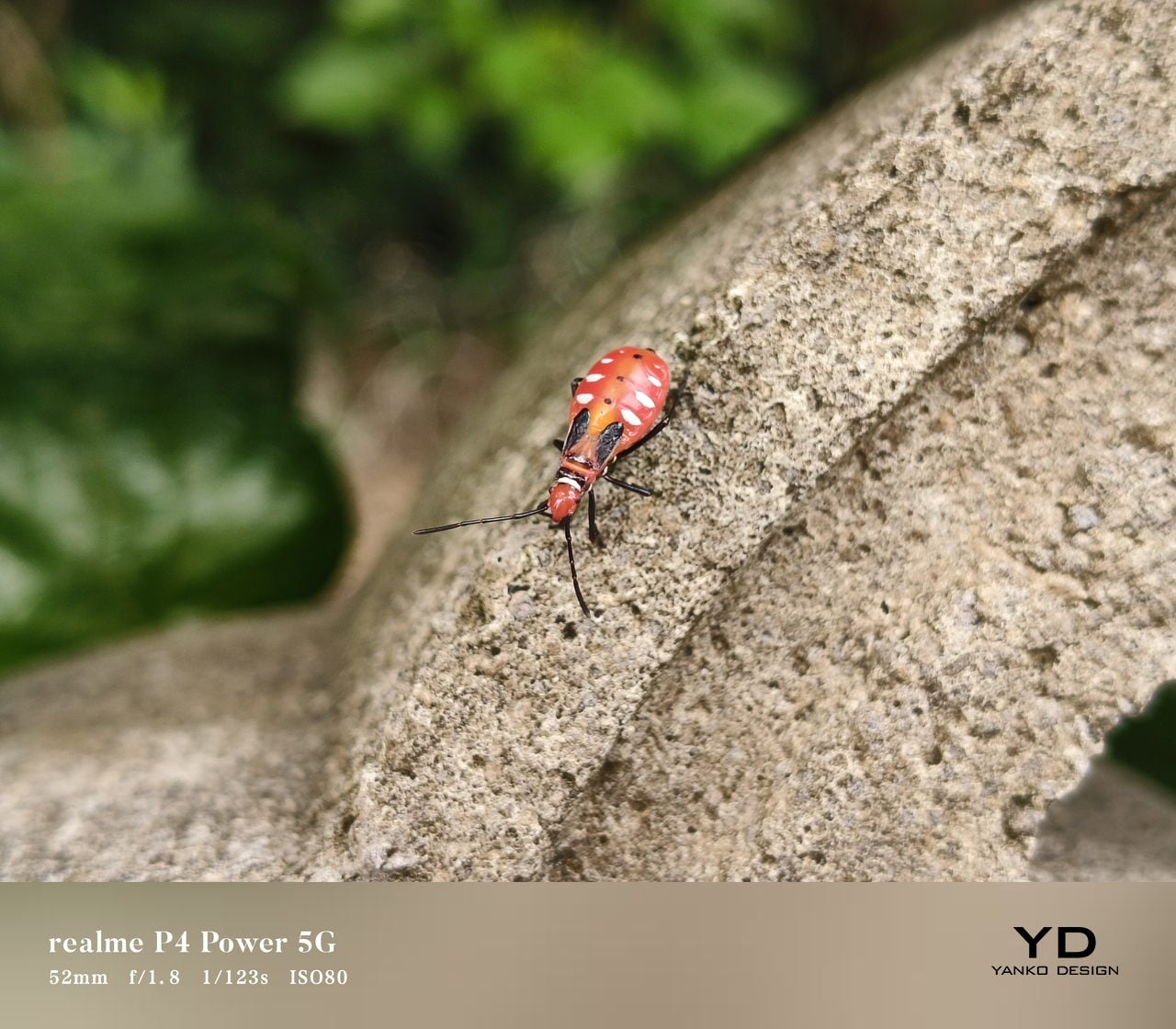
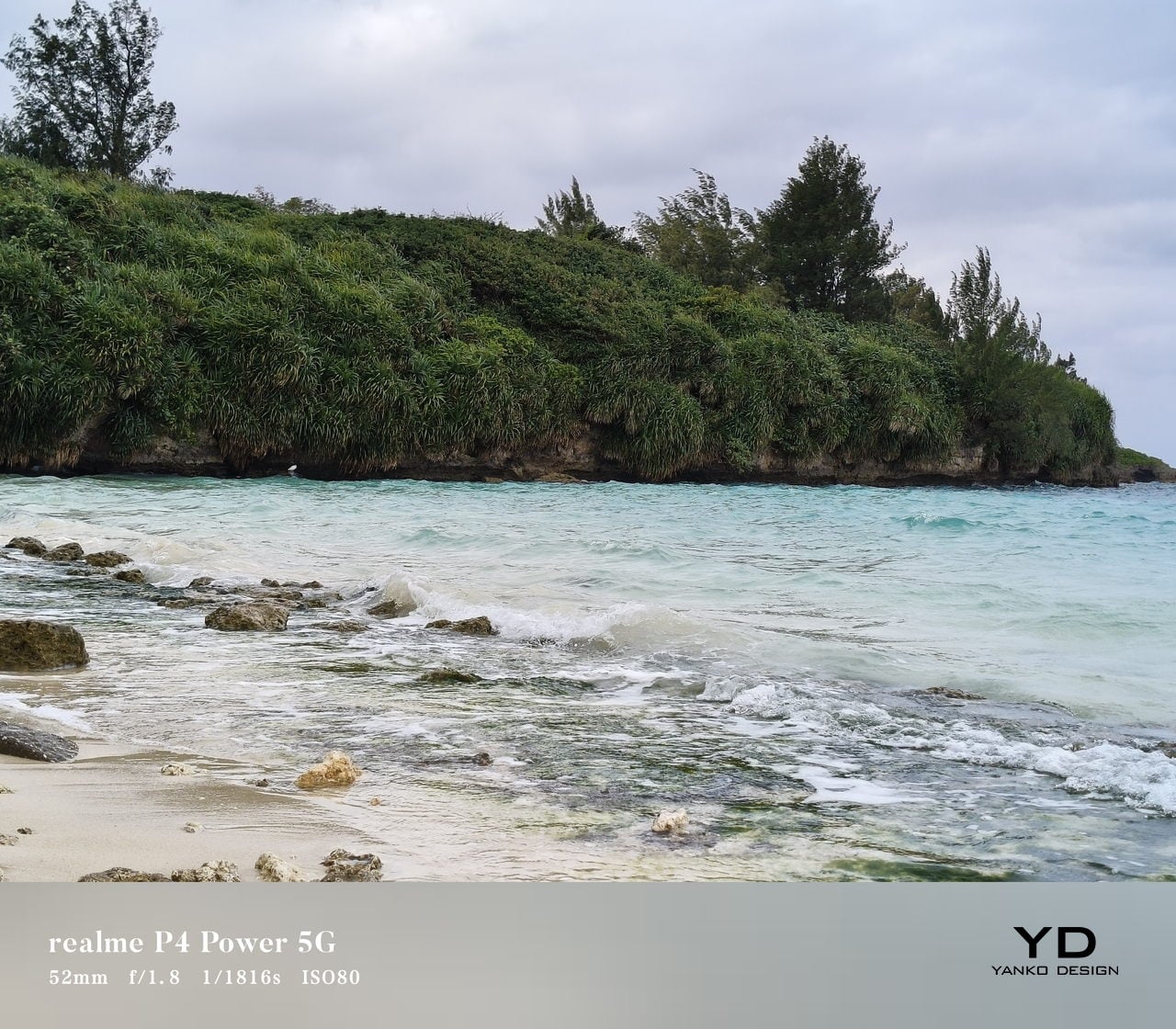
The camera system on the P4 Power is straightforward. On the back, there is a 50MP main camera using Sony’s IMX882 sensor with optical image stabilization and an f/1.8 lens, paired with an 8MP ultra‑wide camera that offers a 112‑degree field of view. On the front, you get a 16MP selfie camera. For video, the main camera can record up to 4K at 30 fps, while the ultra‑wide and front‑facing cameras are capped at 1080p at 30 fps.

You can choose between Vibrant and Natural color modes. Natural mode is essentially a toned‑down look rather than a more accurate one, so it comes down to preference more than strict realism. The main camera takes good photos with pleasing detail and contrast in daylight, while the ultra‑wide is serviceable but nothing to write home about, with softer detail and more noise. The front‑facing camera delivers decent selfies that are fine for social media, though it does not stand out in this price range.

Natural Color Mode

Vibrant Color Mode

Portrait Mode

Sustainability

The oversized battery also has a clear sustainability angle. Because the 10,001 mAh cell gives you so much headroom, you are less likely to run it close to empty every day or charge it multiple times, which reduces the number of full charge cycles. Realme’s silicon‑carbon chemistry and battery management build on that, and the company claims the battery can retain over 94 percent of its original capacity after three years of typical use and around 80 percent after eight years.

The Realme P4 Power also leans on durability and software support. It is IP69, IP68, and IP66‑rated, so it is tested for dust tightness, high‑pressure water jets, and immersion, making it less likely to die from everyday splashes or rain. On the software side, Realme promises three major Android OS upgrades and four years of security patches, which is fine for a mid‑range phone but not class‑leading, and it slightly undercuts the otherwise long‑term hardware story.

Value

In India, the Realme P4 Power starts at around ₹25,999 (roughly $310) for the 8GB RAM and 128GB storage variant. That pricing puts it in the crowded lower mid‑range segment, where a lot of brands are fighting on specs and features. The Honor Win also features a 10,000mAh battery, but it is officially only available in China, so for most buyers, the P4 Power is the more accessible way to get this kind of battery size.

The phone is aimed at people who value endurance and reliability above camera experience or absolute thinness. That can include gamers, frequent travelers, delivery workers, content creators on the move, and anyone who is simply tired of carrying a power bank. At this price level, the P4 Power tries to stand out by solving a real‑world problem in a very direct way.

Verdict

The Realme P4 Power is a very focused product. It does not try to be the best camera phone or the thinnest fashion accessory. Instead, it aims to be the phone you do not have to think about charging, even on your busiest days. For many everyday users, that single promise can be more valuable than a slightly better zoom lens or a few extra benchmark points.

If your top priority is battery life, with smooth performance and a bright display for gaming and media, the P4 Power is an easy device to recommend in its price range. If you care more about advanced photography features, ultra‑lightweight design, or wireless charging, you may want to look at other options. For everyone else, this is a rare phone that tackles a common frustration head‑on and mostly succeeds.

The post Realme P4 Power Review: Battery Anxiety is Finally Dead first appeared on Yanko Design.

Realme P4 Power Review: Battery Anxiety is Finally Dead

PROS:


  • Massive 10,001mAh battery with 80W wired fast charging

  • Bright and vibrant display

  • Solid mid-range performance

CONS:


  • Slightly heavier and chunkier compared to many mid-range devices

  • Ultra-wide and front-facing cameras are only average for the price

RATINGS:

AESTHETICS
ERGONOMICS
PERFORMANCE
SUSTAINABILITY / REPAIRABILITY
VALUE FOR MONEY

EDITOR'S QUOTE:

Realme P4 Power proves that killing battery anxiety is more useful than chasing benchmarks, wrapping a 10,001mAh cell, tough IP69 shell, and smooth performance into an honest mid‑range package.

Realme has built a reputation for pushing smartphone battery tech forward, from faster charging to bigger and more efficient cells. Instead of treating battery life as an afterthought, the brand has consistently tried to make it a headline feature that changes how often you actually need a charger. That focus has turned power and charging from a boring spec line into one of Realme’s main selling points.

The Realme P4 Power is the clearest expression of that idea so far. It packs a massive 10,001 mAh battery into a phone that still looks and feels familiar, then backs it up with 80W fast charging, 27W reverse charging, a bright 144Hz AMOLED display, and 5G performance aimed at everyday users and gamers alike. More than just another mid‑range phone with a slightly bigger battery, it’s a device built around the promise that you should be able to forget about battery anxiety for days at a time.

Aesthetics

The Realme P4 Power is a battery‑first phone that does not look like one at first glance. On the table, it reads as a modern, fashion‑driven slab rather than a chunky endurance tool, which is exactly what Realme is going for. It comes in two color variations, Flash Orange and Power Silver.

The upper third of the back panel has a distinctive pattern that creates an almost translucent effect, playing with reflections and depth when light hits it. The rectangular camera island is neatly integrated, with a clean ring‑based layout that avoids the oversized, fussy modules you see on some rivals. The overall look feels intentional and confident, not like a normal phone that accidentally got thicker to fit a bigger battery.

The design is more playful than minimalist, especially in the brighter Flash Orange variant, while Power Silver keeps a slightly more muted but still distinctive character. For a phone whose headline feature is a huge battery, it is surprisingly stylish and clearly aimed at people who care how their device looks on a desk or in a hand. Branding is present but not overpowering, so the rear stays relatively clean even with the layered graphics and that “under‑glass” pattern.

Ergonomics

Even when you pick it up, the P4 Power feels a little deceptive. This is not a featherweight device, coming in at about 219g and measuring 162.26 x 76.15 x 9.08mm. The large 10,001 mAh battery and sturdy build give it noticeable heft in the hand, and you will feel that if you are coming from a slim device. However, Realme has done a great job of balancing the mass so it does not feel awkward during normal use. For many users, the extra grams will be an acceptable trade‑off for the freedom from constant charging.

The shape helps more than the spec sheet suggests. The slightly curved 6.8‑inch display and curved‑edge back panel let your fingers naturally wrap around the device rather than pressing into a sharp edge. The matte back does a good job of hiding fingerprints and smudges, although it can feel a bit slippery, so a case might still be a smart idea.

The power and volume keys are within comfortable reach on the right side, so you do not have to stretch or shuffle the phone around to adjust volume or wake the screen. The in‑display fingerprint reader, on the other hand, sits quite close to the bottom of the display, which can make quick unlocks feel a bit forced, especially in one‑handed use. Overall, the build quality feels more premium than the price tag suggests, and ergonomics are good for a device built around such a large battery.

Performance

On the front, the P4 Power offers a quad‑curved 6.8‑inch AMOLED display with a resolution of 1280 × 2800 pixels and a maximum refresh rate of 144Hz. In practice, though, only a few native apps, such as Calculator, Compass, and Recorder, actually run at 144Hz, while most of the interface and third‑party apps stick to lower refresh rates.

Realme quotes typical brightness around 600 nits, a boosted mode up to 1800 nits, and a local peak figure of 6500 nits for small areas of the screen. In real‑world use, the display stays readable in harsh sunlight and bright outdoor conditions. The panel supports HDR10+ and 10‑bit color, so compatible streaming content looks rich, punchy, and pleasantly saturated.

Inside the P4 Power sits MediaTek’s Dimensity 7400-Ultra chipset. It is paired with 8GB or 12GB of RAM and 128GB, 256GB, or 512GB of UFS 3.1 storage. This combination places the phone firmly in the mid‑range. It is not chasing raw benchmark records, yet it is designed to deliver smooth performance in everyday tasks and mainstream games without obvious slowdowns or stutters.

Out of the box, the phone runs Android 16 with Realme UI 7.0 on top, and Realme also uses a dual‑chip approach. Alongside the main Dimensity processor, there is a dedicated Hyper Vision+ AI chip focused on display and gaming tasks, and there are a handful of AI image features such as AI Perfect Shot and 3D emoji. AI Perfect Shot recognizes faces and can fix closed eyes or awkward expressions by swapping in better face poses from other photos of the same person in your gallery, and AI also helps during gaming by quickly generating message replies in supported messaging apps so you can respond without fully dropping out of your game.

Battery life is the reason this phone exists. The 10,001mAh cell is dramatically larger than the 4,500 to 5,000mAh batteries found in many mainstream phones, and even bigger than the 6,000 or 7000mAh packs in endurance‑focused models. Realme achieves this using a third‑generation silicon‑carbon anode and a compact internal stacking design, which allows more capacity in roughly the same physical space.

In practical terms, this capacity is meant to deliver several days of mixed use. I used the Realme P4 Power as my primary device on a 3‑night, 4‑day scuba trip, with light screen time during the day, and it lasted the entire trip without a charge, still showing around 20 percent battery when I got back home. That kind of real‑world endurance is a clear step up from phones that need a nightly top‑up.

When you do need to charge, the P4 Power supports 80 W wired fast charging. It also supports 27 W reverse charging, so it can basically double as a power bank for your other gadgets when you are on the move.

The camera system on the P4 Power is straightforward. On the back, there is a 50MP main camera using Sony’s IMX882 sensor with optical image stabilization and an f/1.8 lens, paired with an 8MP ultra‑wide camera that offers a 112‑degree field of view. On the front, you get a 16MP selfie camera. For video, the main camera can record up to 4K at 30 fps, while the ultra‑wide and front‑facing cameras are capped at 1080p at 30 fps.
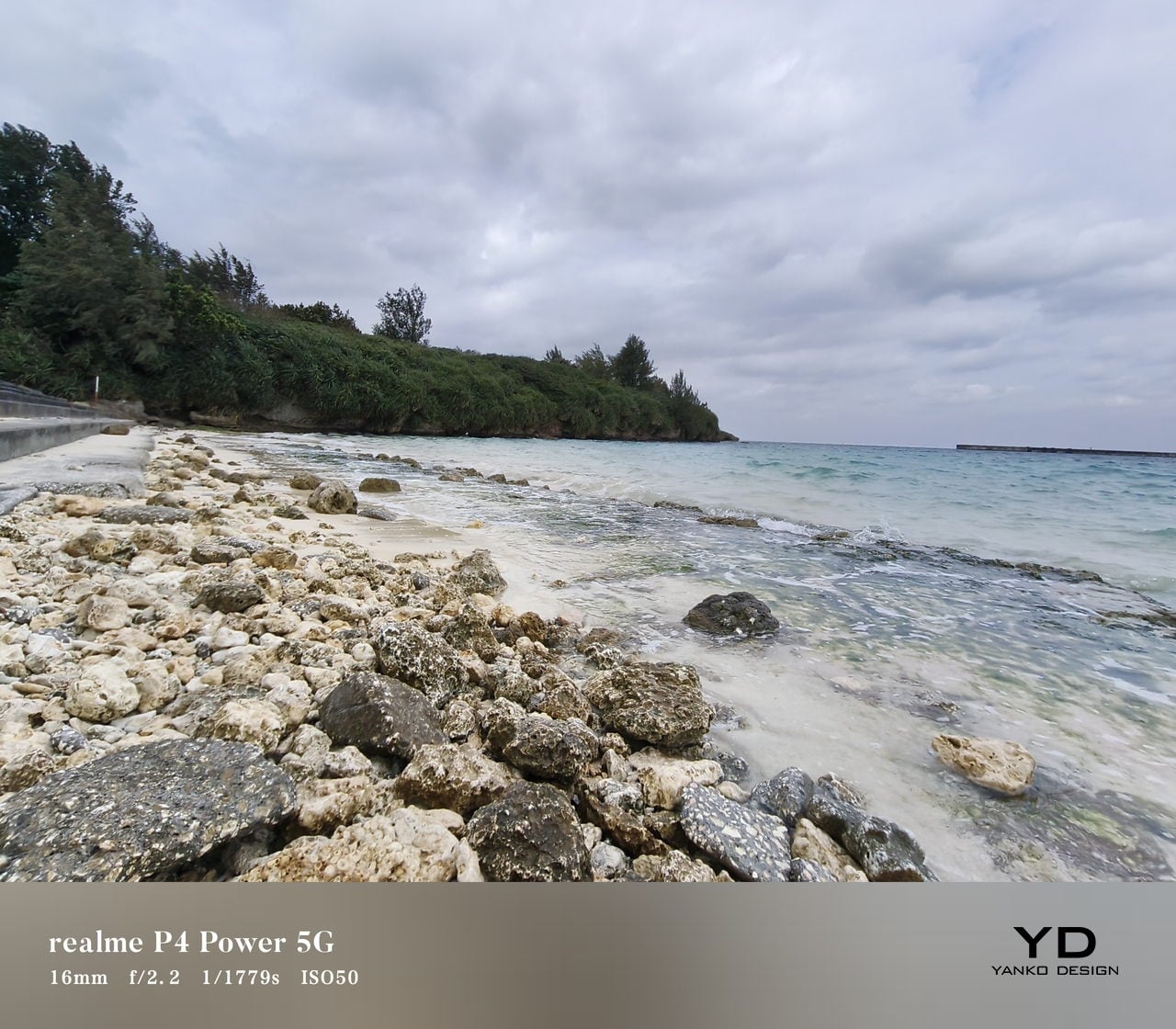
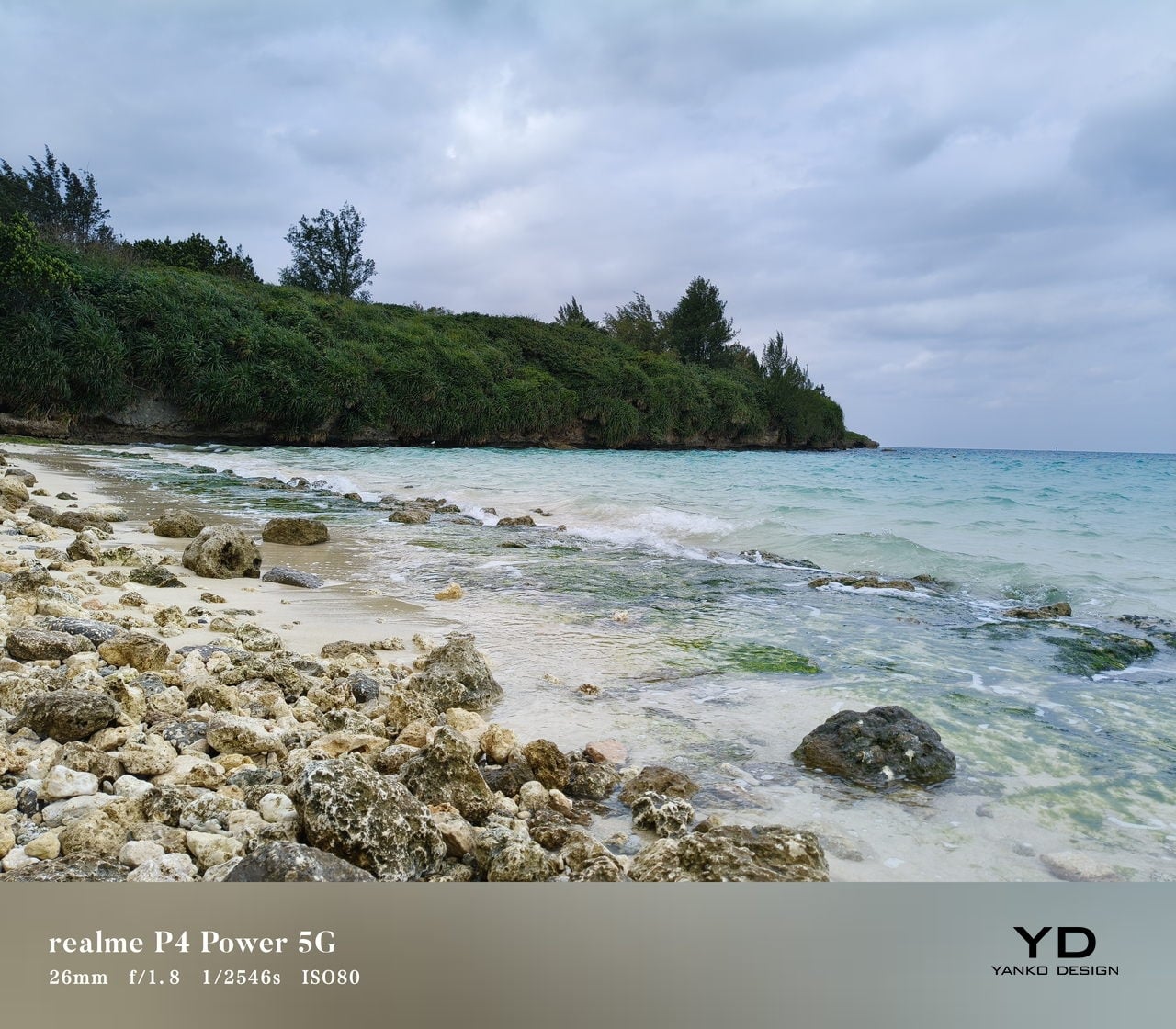
You can choose between Vibrant and Natural color modes. Natural mode is essentially a toned‑down look rather than a more accurate one, so it comes down to preference more than strict realism. The main camera takes good photos with pleasing detail and contrast in daylight, while the ultra‑wide is serviceable but nothing to write home about, with softer detail and more noise. The front‑facing camera delivers decent selfies that are fine for social media, though it does not stand out in this price range.
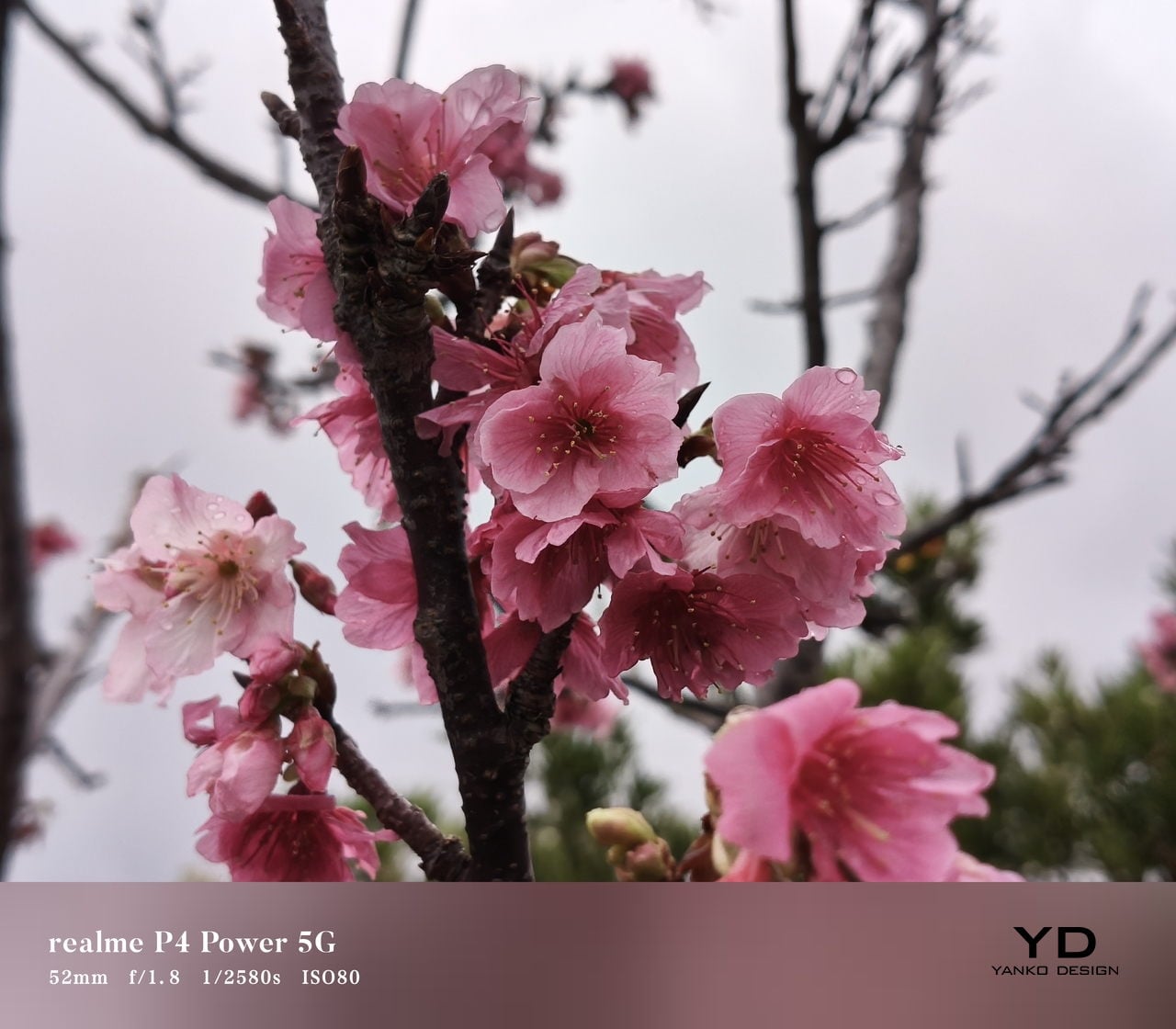
Natural Color Mode
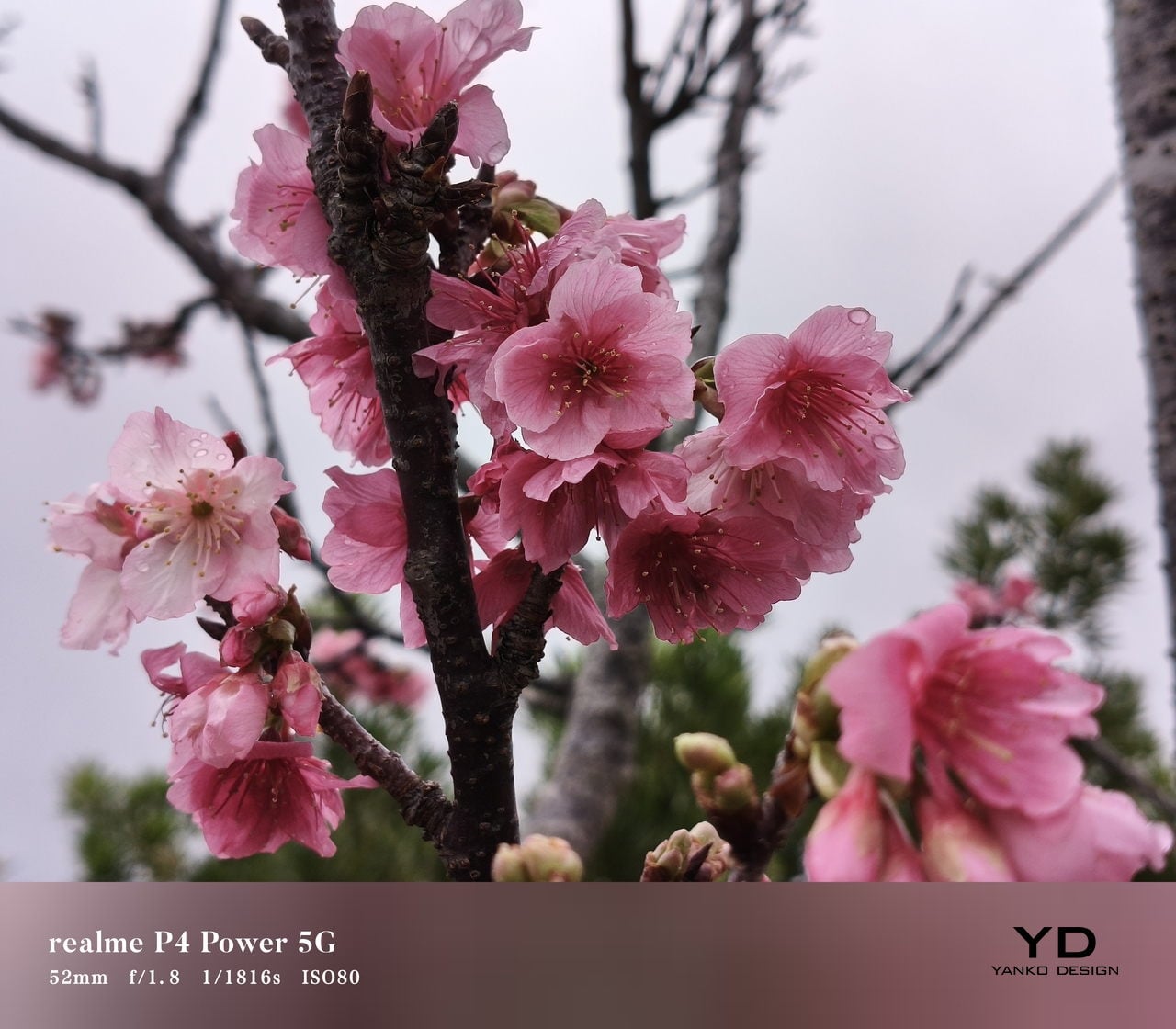
Vibrant Color Mode
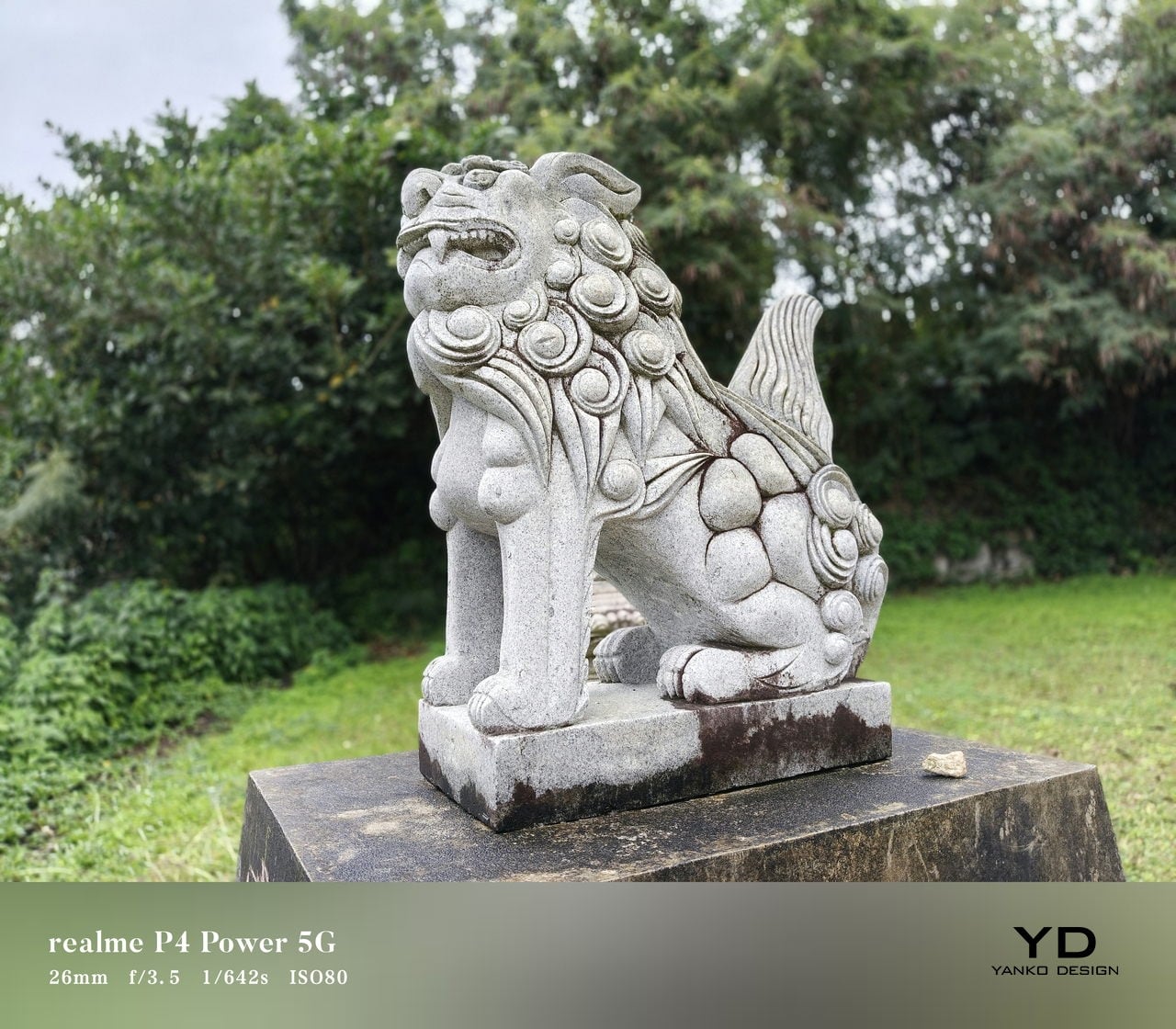
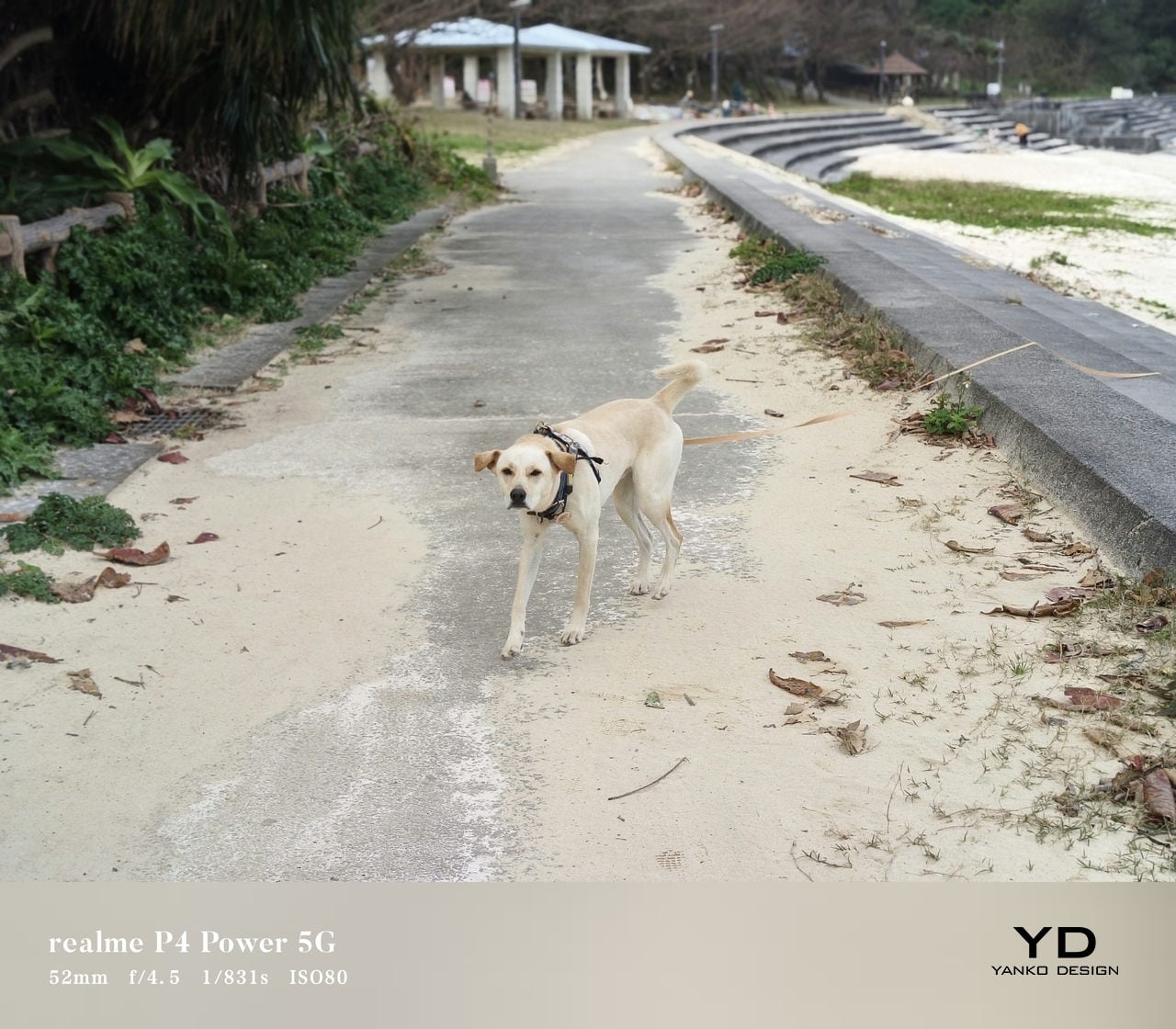
Portrait Mode

Sustainability

The oversized battery also has a clear sustainability angle. Because the 10,001 mAh cell gives you so much headroom, you are less likely to run it close to empty every day or charge it multiple times, which reduces the number of full charge cycles. Realme’s silicon‑carbon chemistry and battery management build on that, and the company claims the battery can retain over 94 percent of its original capacity after three years of typical use and around 80 percent after eight years.
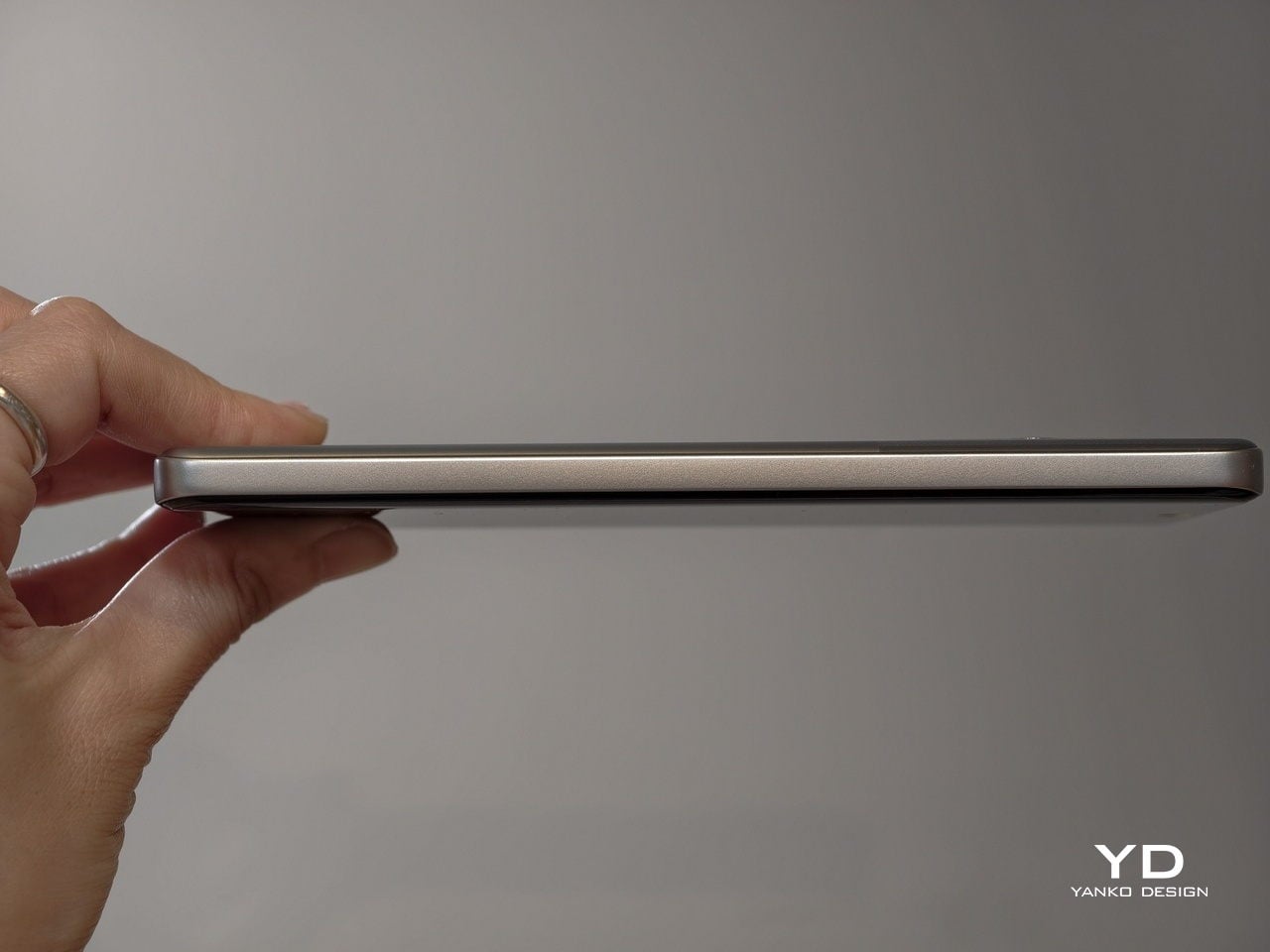
The Realme P4 Power also leans on durability and software support. It is IP69, IP68, and IP66‑rated, so it is tested for dust tightness, high‑pressure water jets, and immersion, making it less likely to die from everyday splashes or rain. On the software side, Realme promises three major Android OS upgrades and four years of security patches, which is fine for a mid‑range phone but not class‑leading, and it slightly undercuts the otherwise long‑term hardware story.

Value

In India, the Realme P4 Power starts at around ₹25,999 (roughly $310) for the 8GB RAM and 128GB storage variant. That pricing puts it in the crowded lower mid‑range segment, where a lot of brands are fighting on specs and features. The Honor Win also features a 10,000mAh battery, but it is officially only available in China, so for most buyers, the P4 Power is the more accessible way to get this kind of battery size.
The phone is aimed at people who value endurance and reliability above camera experience or absolute thinness. That can include gamers, frequent travelers, delivery workers, content creators on the move, and anyone who is simply tired of carrying a power bank. At this price level, the P4 Power tries to stand out by solving a real‑world problem in a very direct way.

Verdict

The Realme P4 Power is a very focused product. It does not try to be the best camera phone or the thinnest fashion accessory. Instead, it aims to be the phone you do not have to think about charging, even on your busiest days. For many everyday users, that single promise can be more valuable than a slightly better zoom lens or a few extra benchmark points.
If your top priority is battery life, with smooth performance and a bright display for gaming and media, the P4 Power is an easy device to recommend in its price range. If you care more about advanced photography features, ultra‑lightweight design, or wireless charging, you may want to look at other options. For everyone else, this is a rare phone that tackles a common frustration head‑on and mostly succeeds.

The post Realme P4 Power Review: Battery Anxiety is Finally Dead first appeared on Yanko Design.
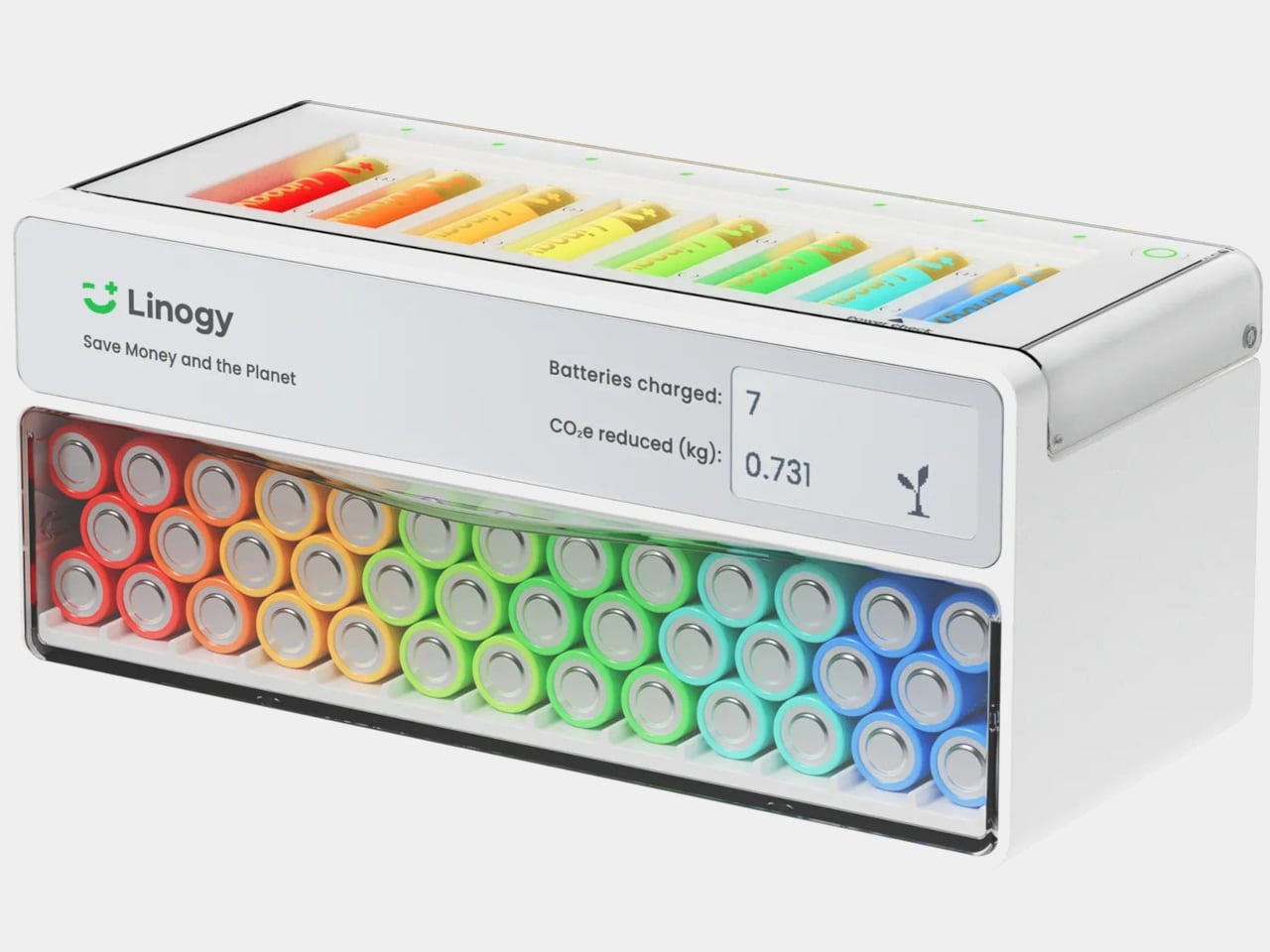
This Battery Charger Shows Which AAs Are Dead on an E-Ink Display

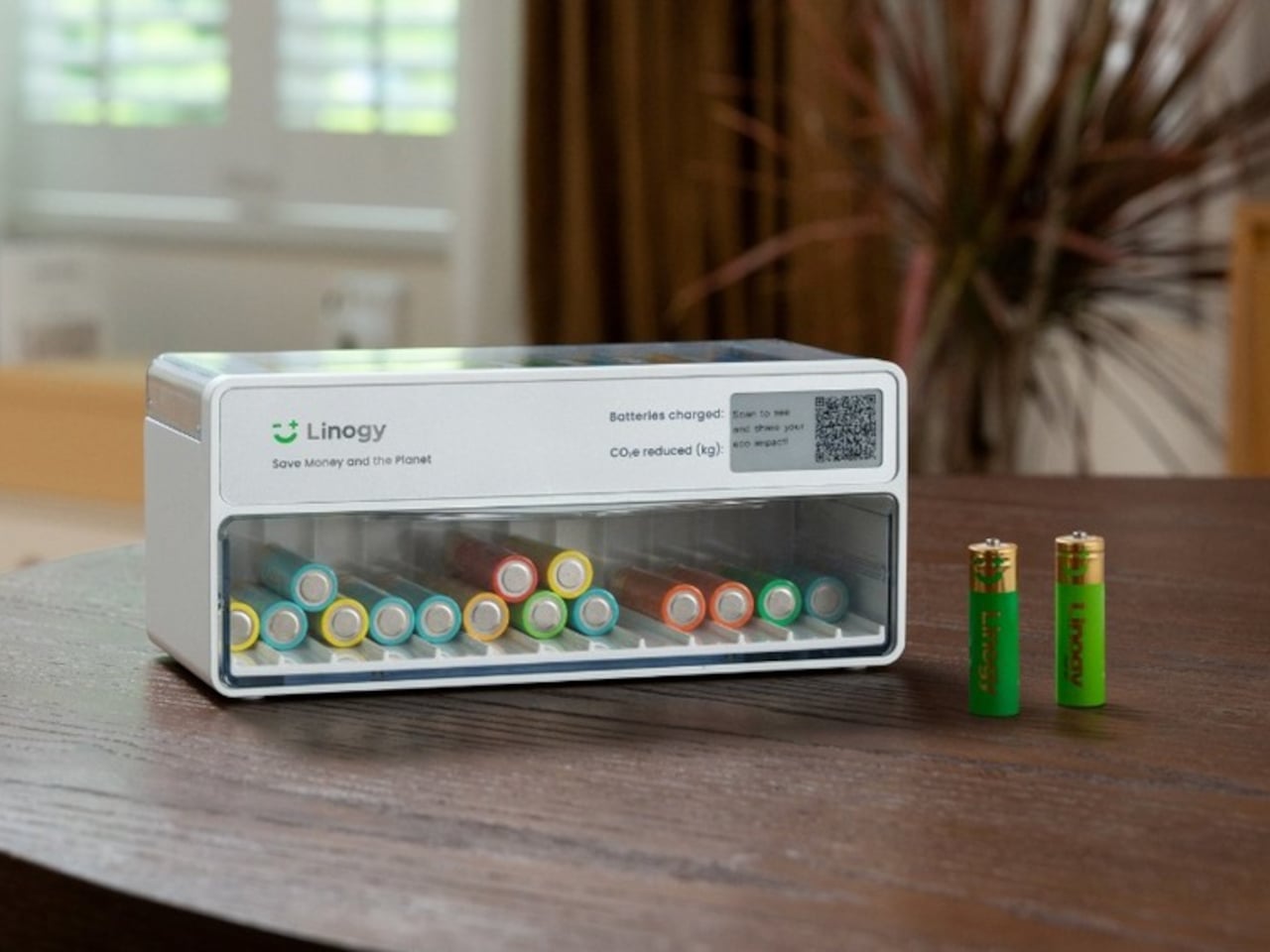
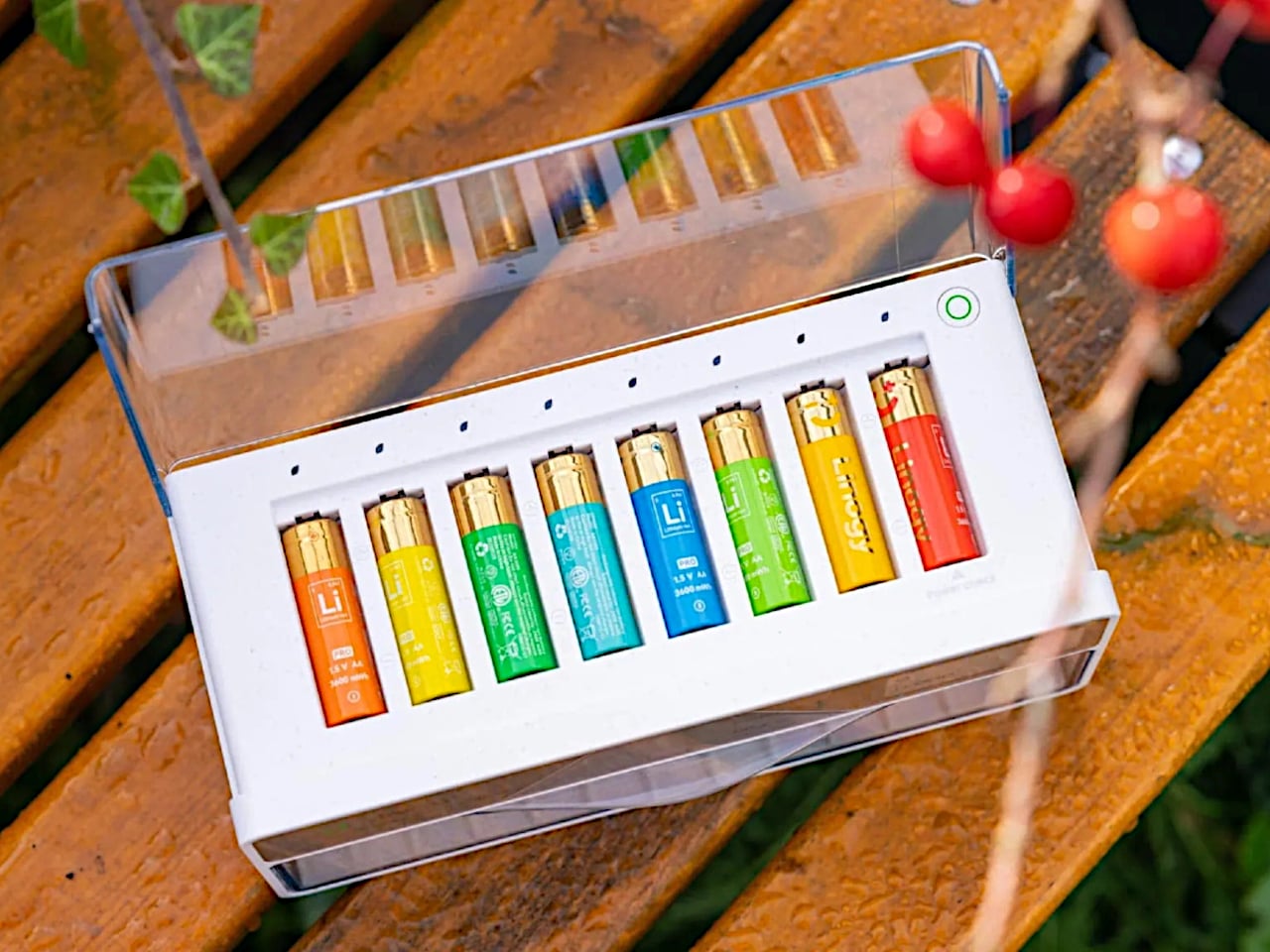
The drawer full of half-used AA and AAA batteries, some new, some dead, some leaking, is familiar. The last-minute scramble for batteries when a remote dies usually means digging through the pile, testing them one by one, and feeling uneasy about throwing spent alkalines into the trash. The problem is not just waste, it is the lack of a clear system for how we power small devices scattered around a home.

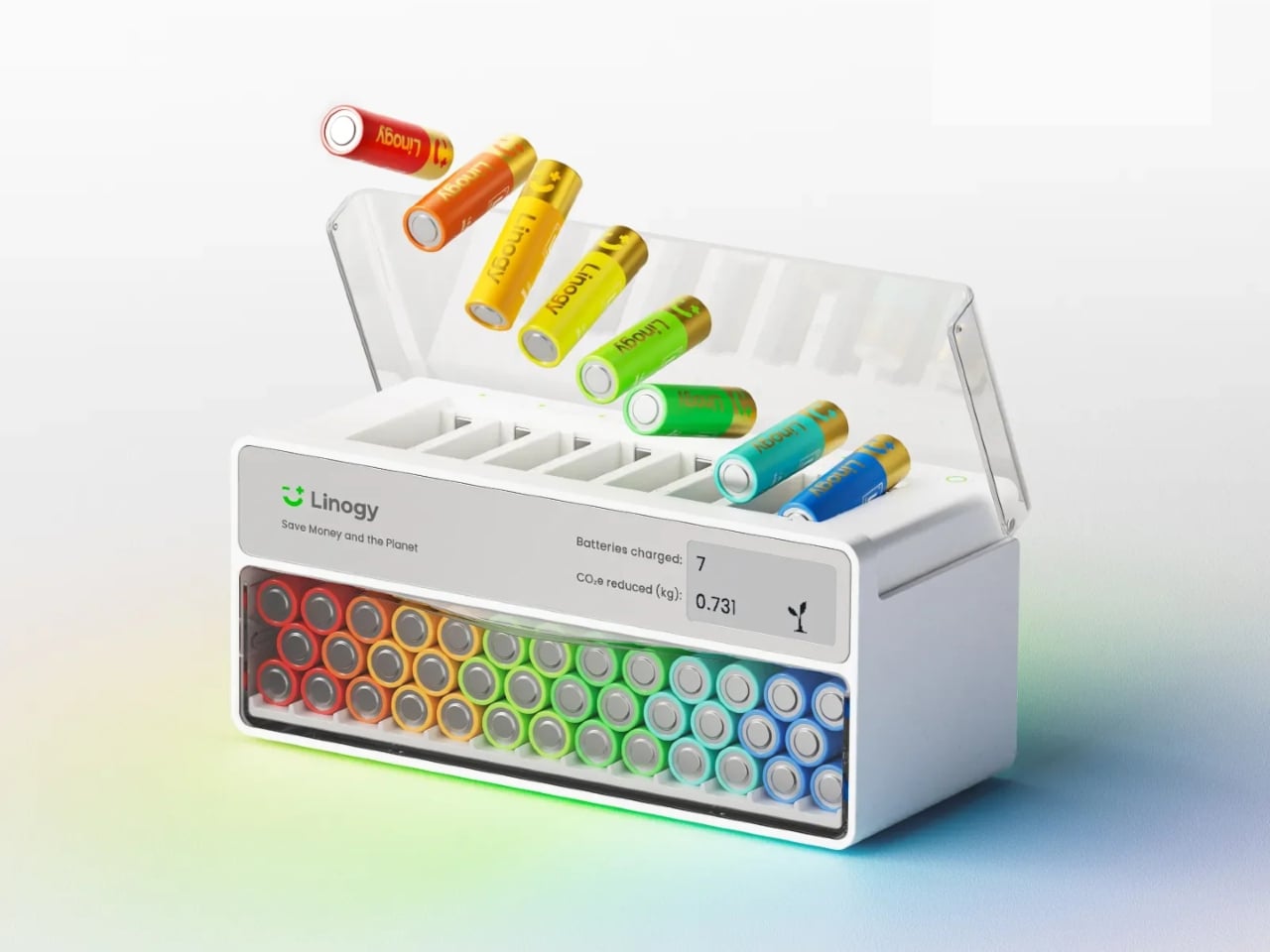
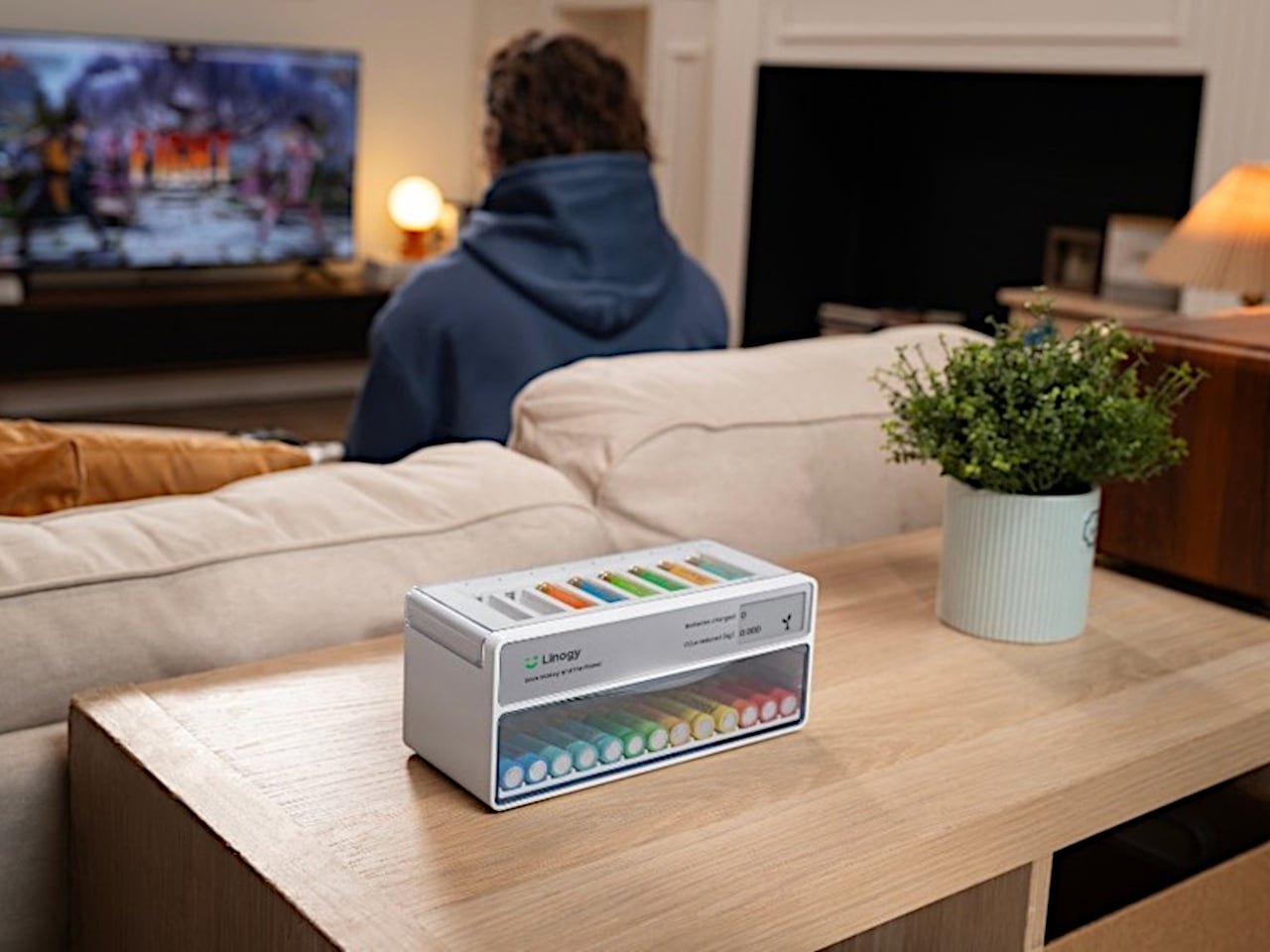
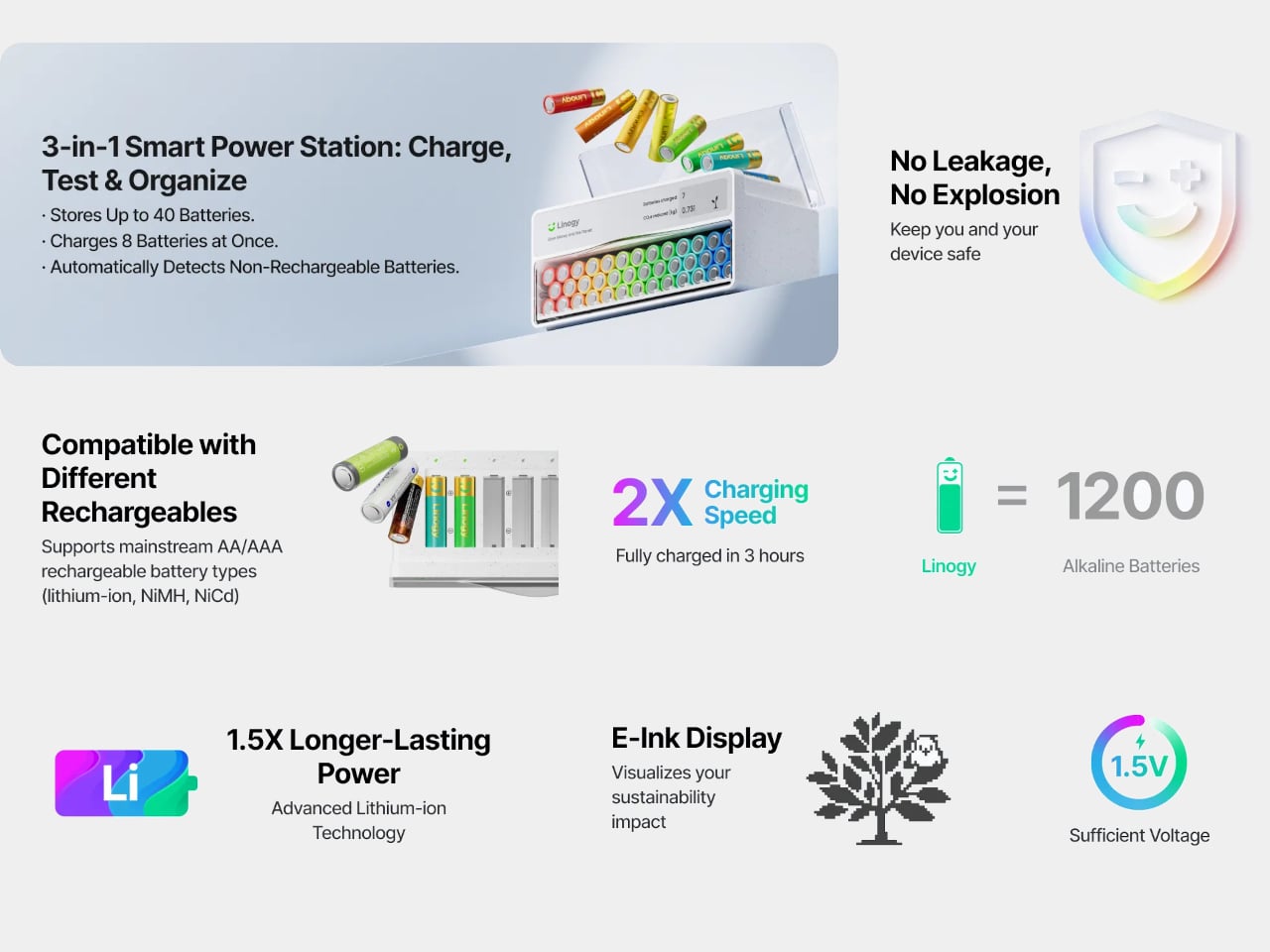
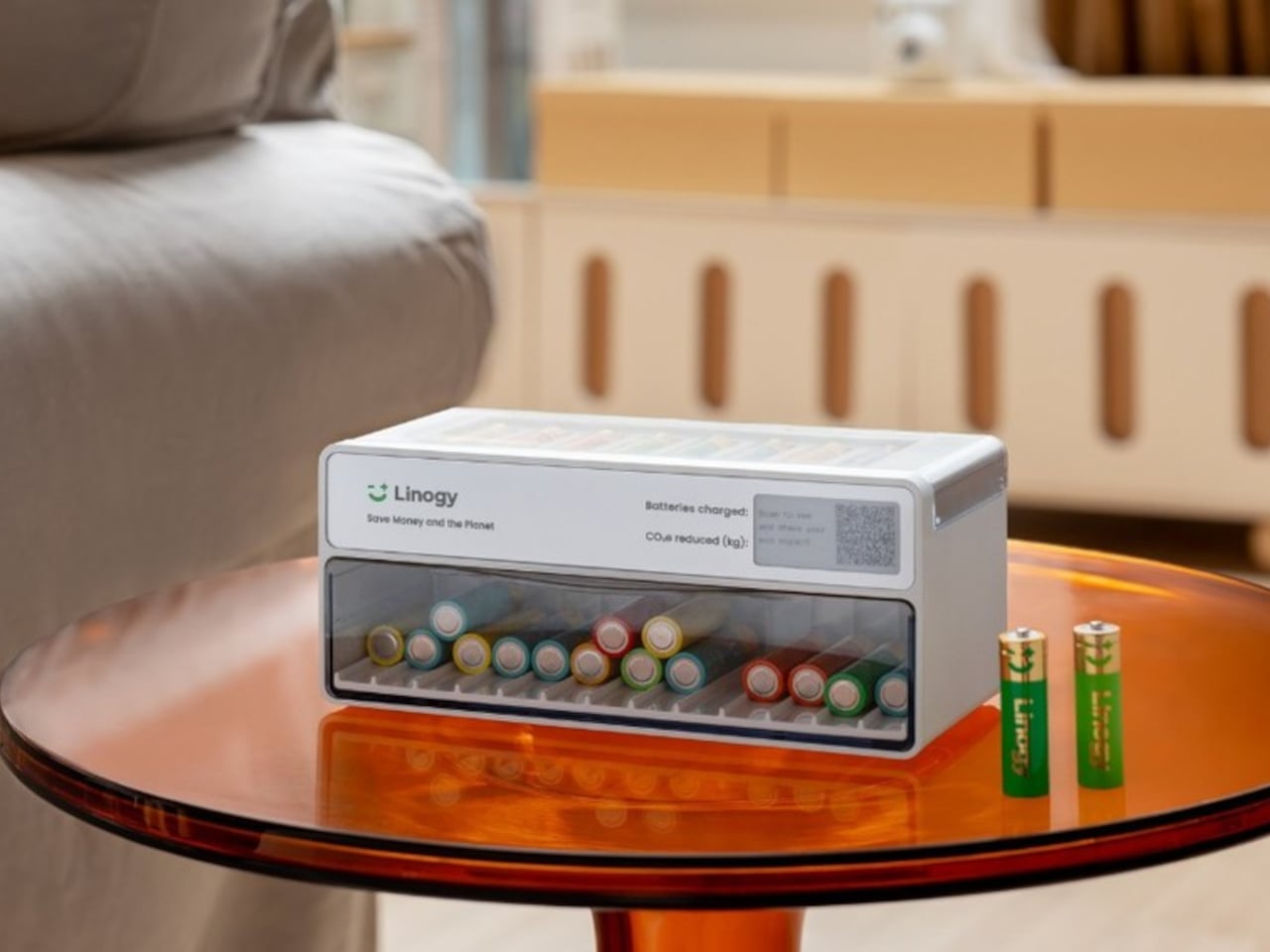
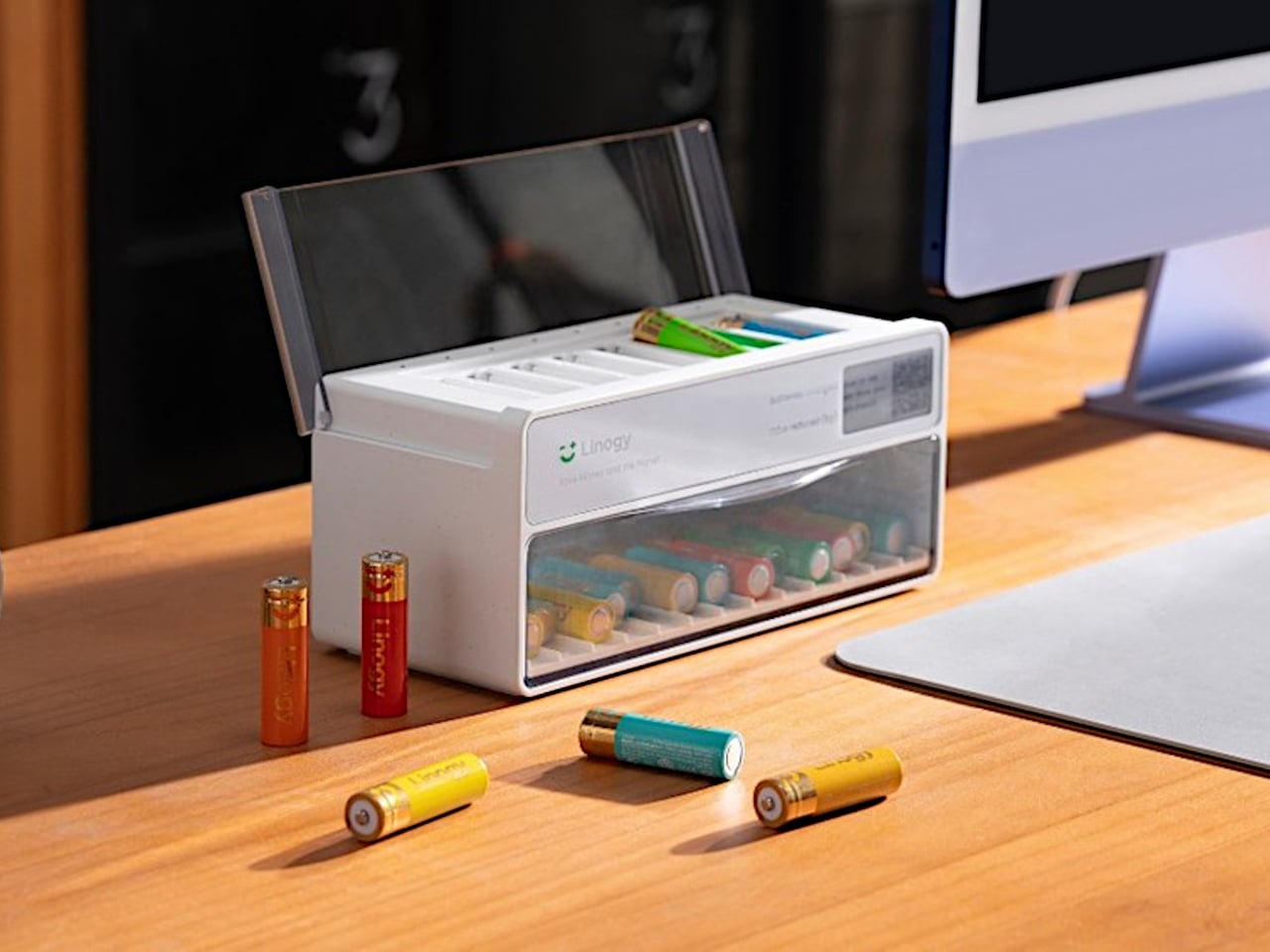
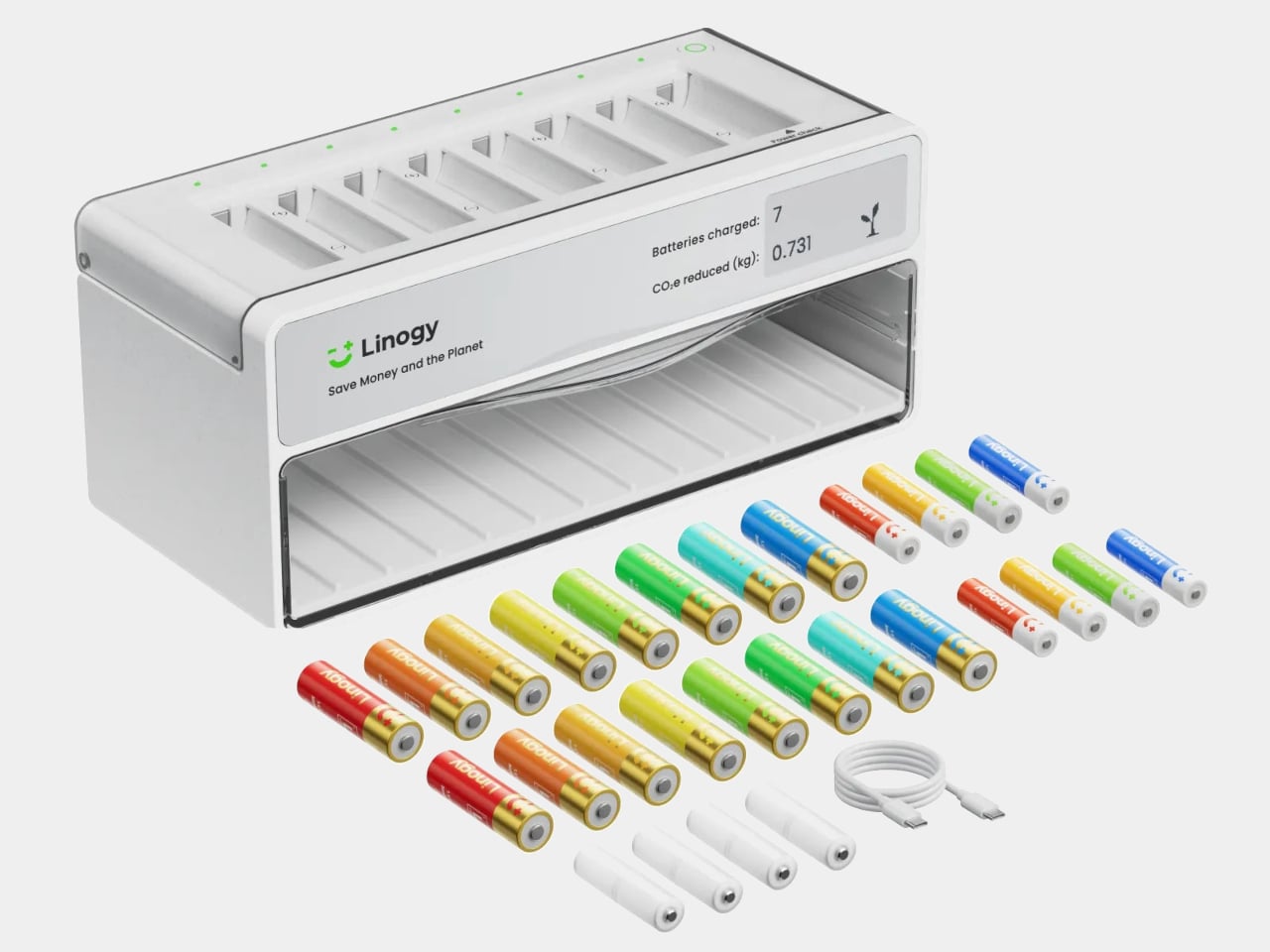
Linogy is a rechargeable battery ecosystem built around 1.5 V Li-ion AA and AAA cells plus an all-in-one smart station. The station lives on a desk or shelf, acting as a battery tester, fast charger, and organizer case that holds up to 40 cells. The goal is to replace the random drawer with a single, visible place where all your batteries live and get managed.

Designer: Linogy

Disposable alkalines are convenient but add up to billions of cells tossed each year, along with tens of thousands of tons of waste and CO₂. Ni-MH rechargeables solve part of that but bring their own quirks: 1.2V output that some devices dislike, high self-discharge, lower energy density, and slow charging that makes topping them up feel like a chore you keep postponing.

Linogy’s cells pack around 3,600mWh and deliver stable 1.5V, closer to what devices expect from alkalines, so performance and battery indicators behave more predictably. The cells are rated for up to 1,200 cycles, meaning one rechargeable can stand in for roughly 1,200 disposables over its life, and built-in protection layers handle overcharge, short circuit, and drop impacts without leaks or smoke.

Dropping a mix of AA and AAA cells into the station, it automatically detects type, health, and charge level. The e-ink display shows which batteries are full, which are charging, and which are ready to retire, without bright LEDs or guesswork. A full charge takes around three hours, and once topped up, the station stops charging and simply holds the cells until something needs power.

The station is compatible with Linogy’s Li-ion cells, Ni-MH, and Ni-Cd AA and AAA batteries. You do not have to throw out existing rechargeables; the same box can test and charge them while you gradually swap in higher-capacity 1.5V cells. Over time, the random mix becomes a more coherent set of batteries you actually trust instead of avoiding.

A simple change in how you handle AA and AAA power can reduce waste and friction. One Linogy cell replacing up to 1,200 alkalines, recyclable packaging, and a charger that looks like a small appliance rather than a tangle of cables all add up. It turns the humble battery from something you forget about until it fails into a part of the home that is designed, visible, and surprisingly satisfying to keep in order.

The post This Battery Charger Shows Which AAs Are Dead on an E-Ink Display first appeared on Yanko Design.
realme’s 10,001 mAh Phone Charges in 5 Minutes and Lasts Half a Day

Most people carry a phone and a power bank, nursing battery percentages by dimming screens and closing apps. Every café visit includes checking which table is near a socket, and late nights end early when the battery icon turns red. The ritual of charging overnight is so ingrained that a phone dying before bedtime feels like failure, even though the real issue is that most phones assume you will plug in every 24 hours.

realme P4 Power 5G flips that assumption. The phone is built around a 10,001 mAh Titan battery aimed at week-long endurance, marketed as India’s first smartphone to cross the 10,000 mAh line. realme is leaning into the idea that this pack can replace the power bank in your bag without turning the device into a brick, letting you leave the house without calculating whether you have enough juice.

Designer: realme

Living with 10,001 mAh means you stop thinking about charging for days. You can stream, navigate, and game without constantly checking the percentage. realme’s lab numbers claim over 30 hours of YouTube or double-digit hours of gaming, but the practical benefit is not hunting for outlets or dimming the display just to survive a commute or a long meeting that runs past dinner time.

realme built the battery to last, not just hold a charge. Silicon-carbon anode tech promises three to four times the life cycles compared to graphite, with 1,650 cycles claimed and TÜV Rheinland 5-Star Battery Certification. There is a four-year guarantee that health stays above 80 percent, with free replacement if it drops below that, signaling this is meant to be kept rather than replaced after two years.

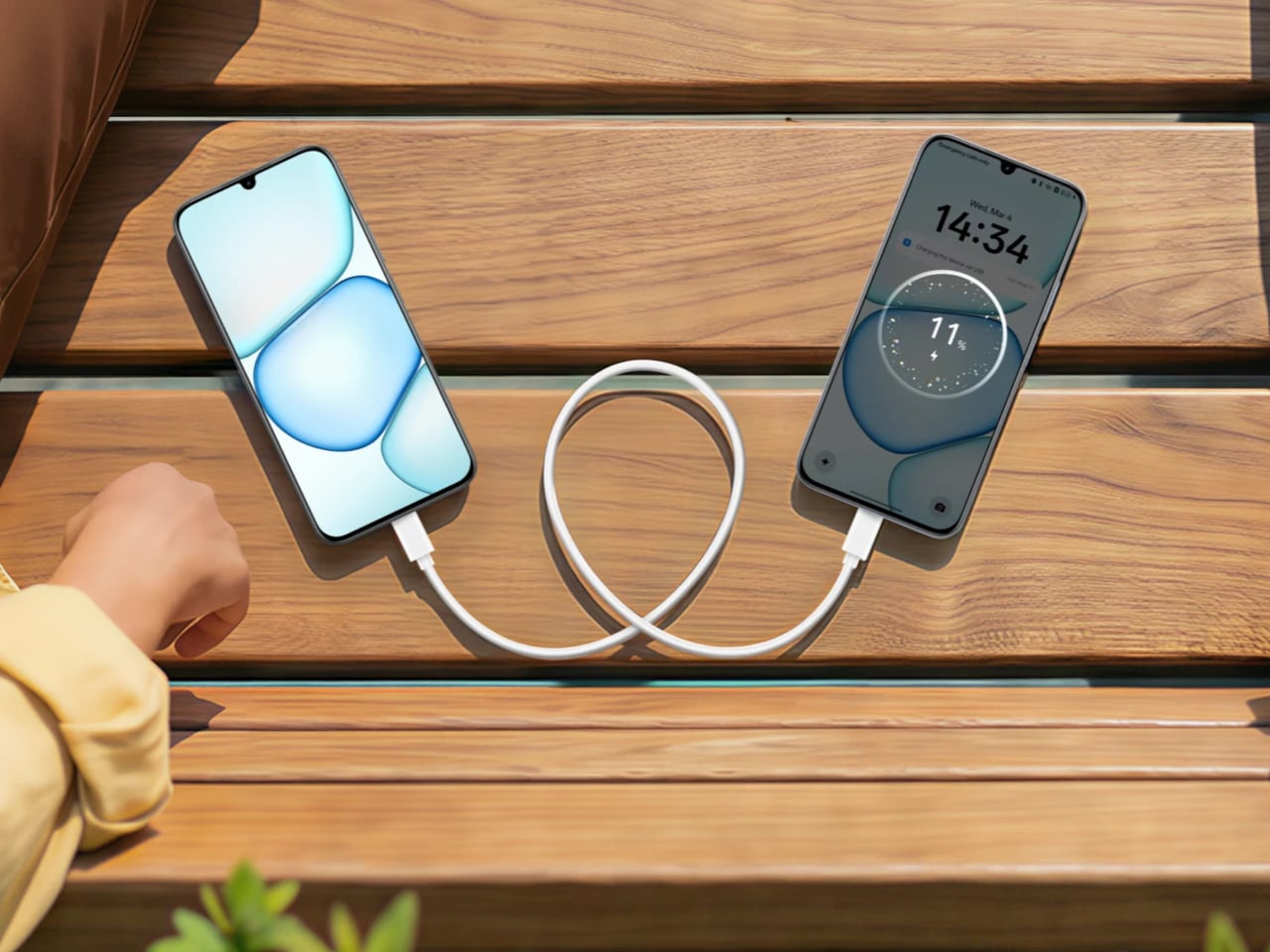
Fast charging counters the worry that 10,001 mAh would take forever to top up. realme promises 80 W wired charging, with five minutes delivering roughly half a day’s power when you are rushing out. All-scenario bypass charging lets the phone draw directly from the charger during gaming without stressing the battery, plus 27 W reverse charging turns it into a power bank for earbuds or a friend’s device when everyone else is dead.

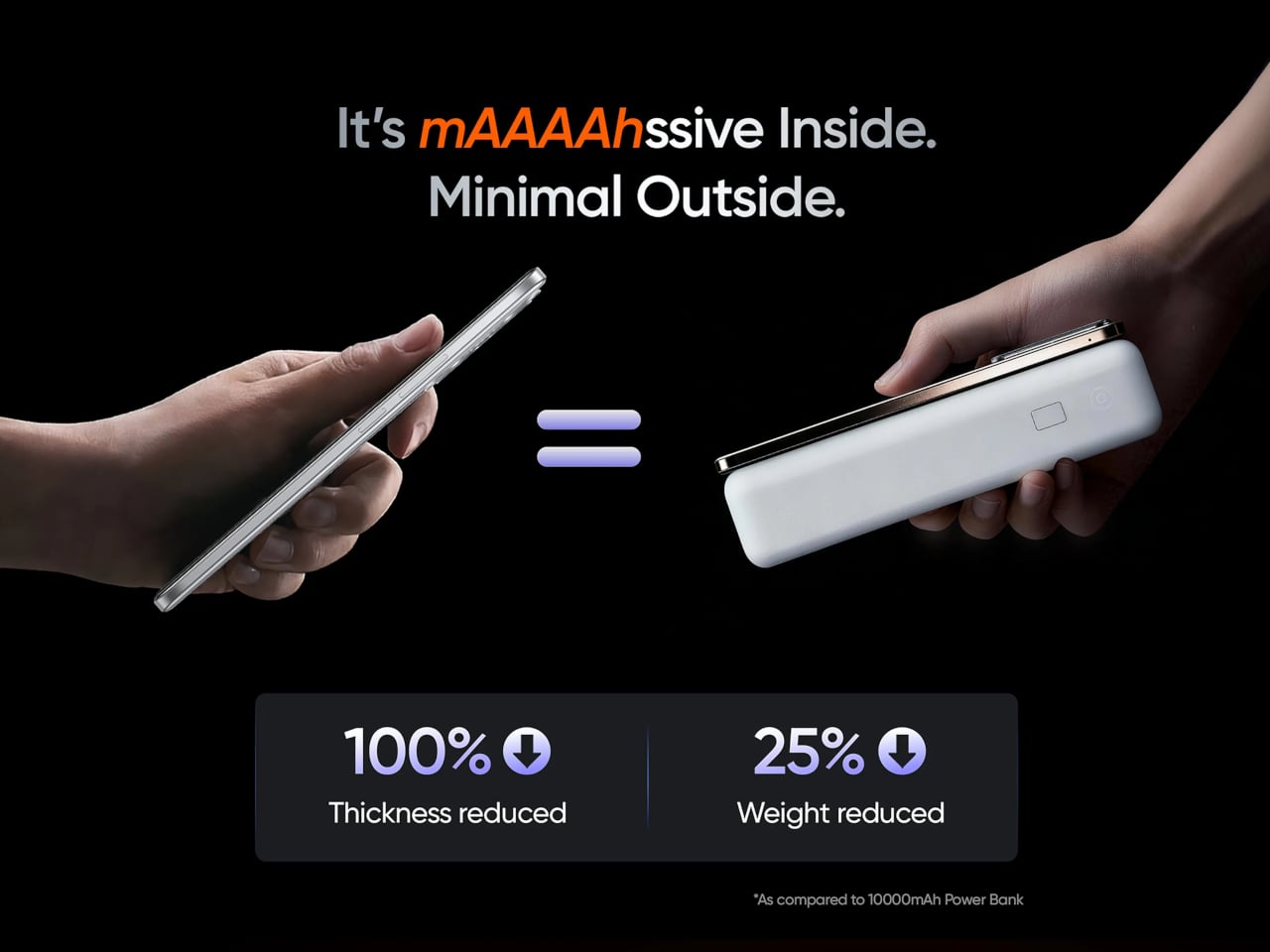
At 219 g, P4 Power is in the same weight range as many flagships with half the capacity. realme pitches this as “massive inside, minimal outside,” using the TransView design to keep the aesthetic clean rather than obviously rugged. The trade-off is carrying the equivalent of a phone plus a power bank in one device, but without separate cables, extra charging, or pocket clutter.

realme promises three years of Android OS updates and four years of security patches, aligning with the battery longevity story. P4 Power is one of the few phones explicitly designed to be kept for a full four-year cycle, both in hardware and software. For people tired of juggling chargers and yearly upgrades, that might be the most useful spec, a phone treating endurance and lifespan as features worth engineering around.

The post realme’s 10,001 mAh Phone Charges in 5 Minutes and Lasts Half a Day first appeared on Yanko Design.
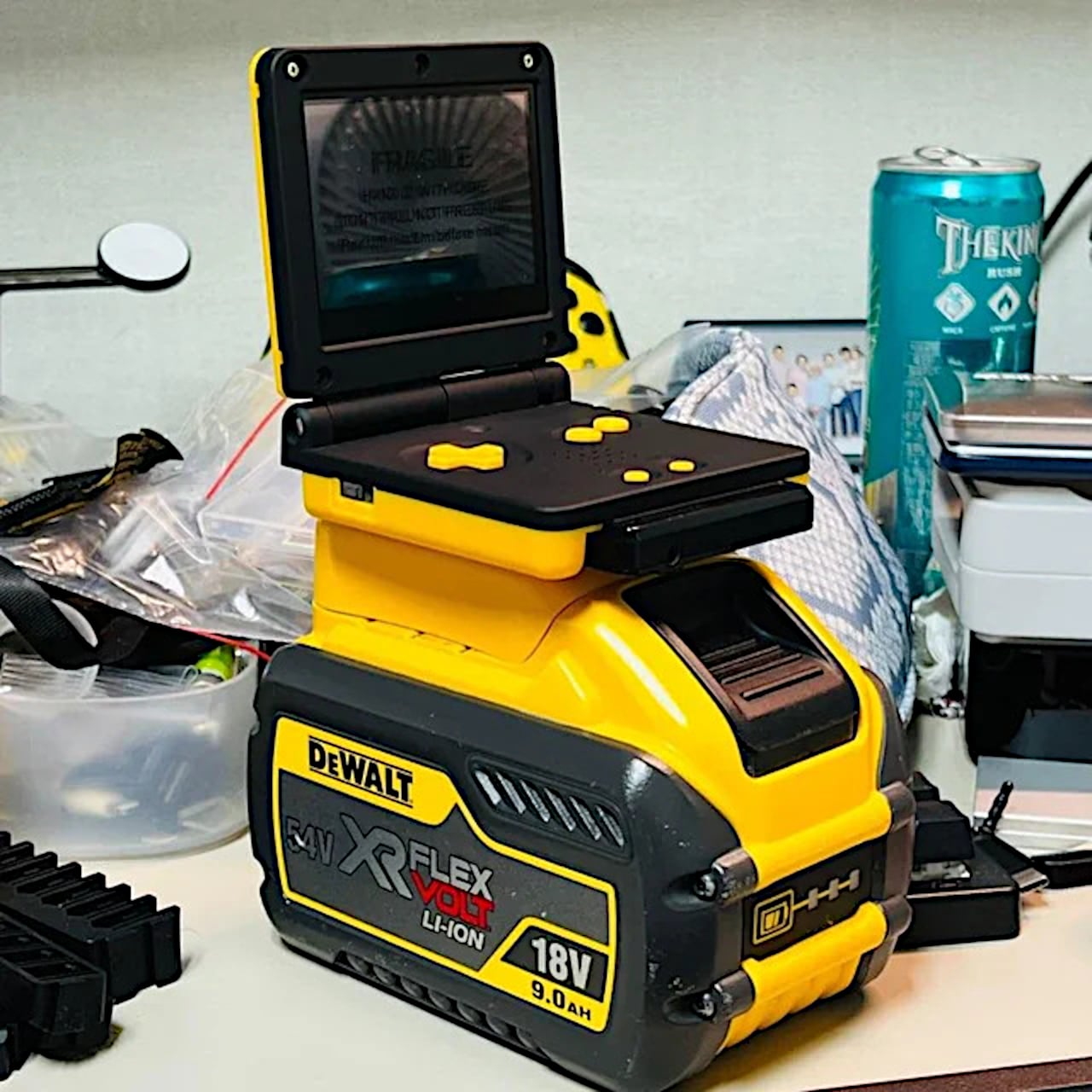
GBA SP With DeWALT Battery Will Outlast the Apocalypse

Handheld gamers obsess over battery life like it’s a matter of survival. We swap cells, carry backup chargers, and baby old consoles through one more dungeon before the screen flickers off. Battery anxiety is real, especially for something like the Game Boy Advance SP, where the original cell barely lasted through a single flight. This mod responds to that anxiety by going completely overboard, bolting a GBA SP onto a DeWALT power-tool battery big enough to run drills and apparently several full-length RPGs.

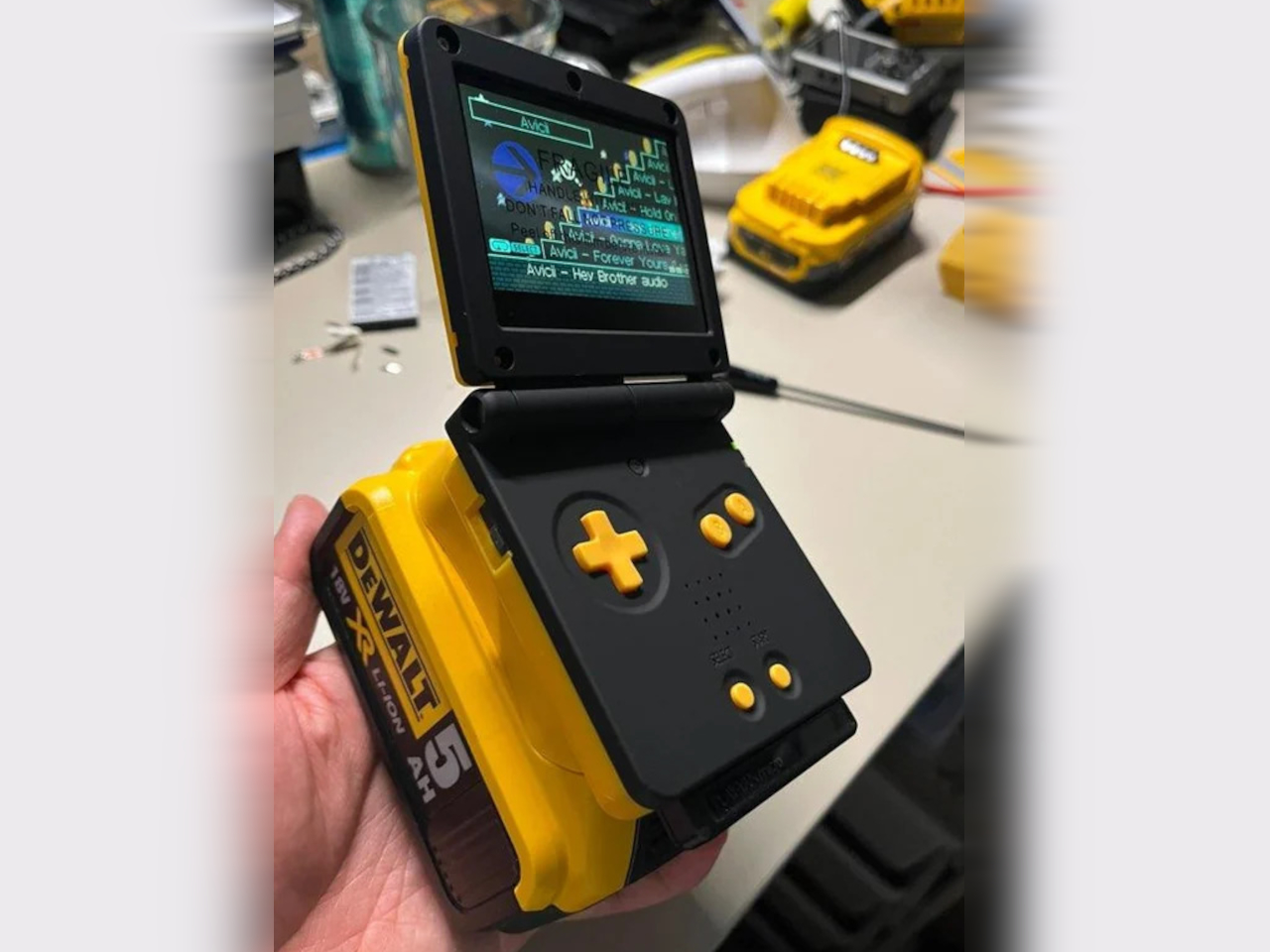
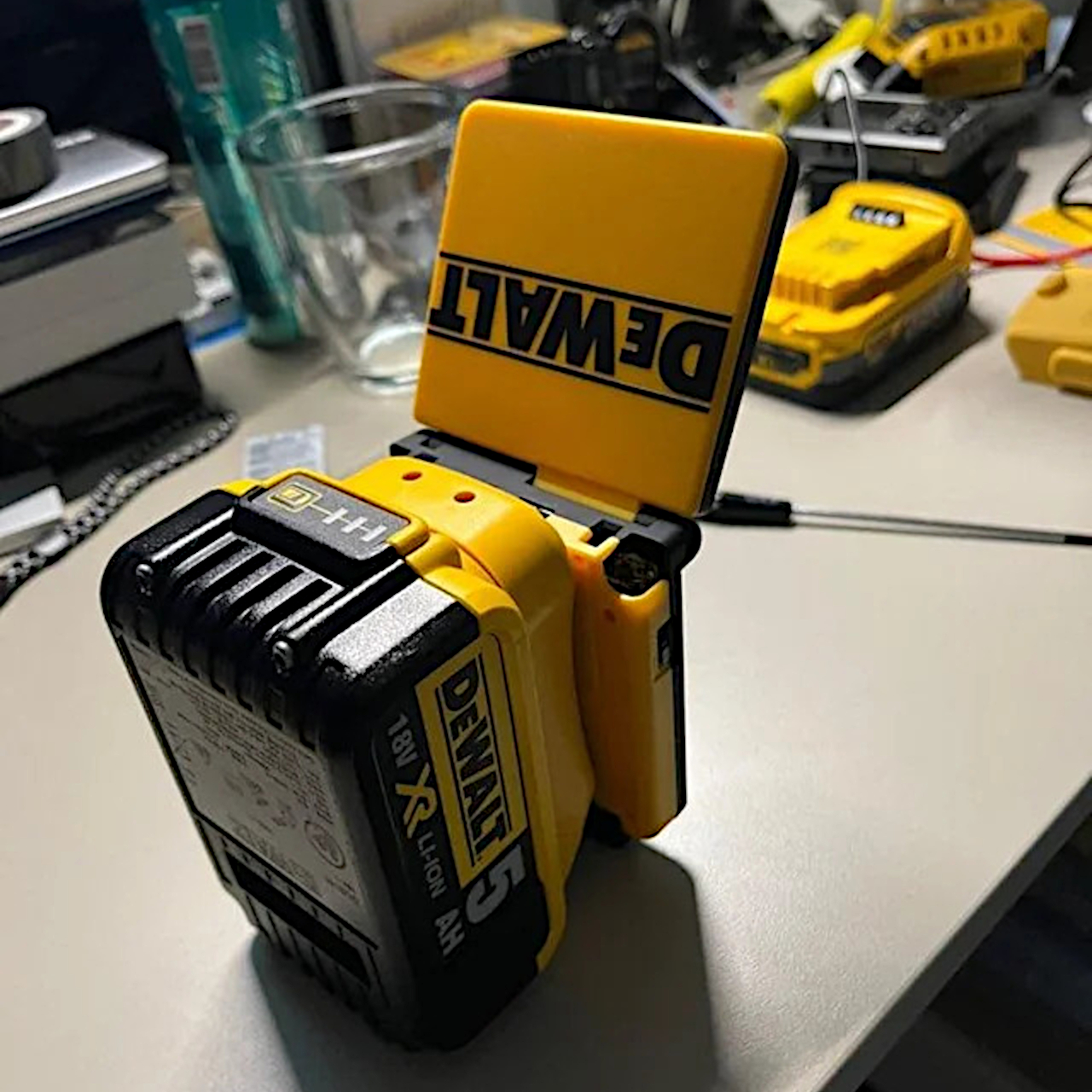
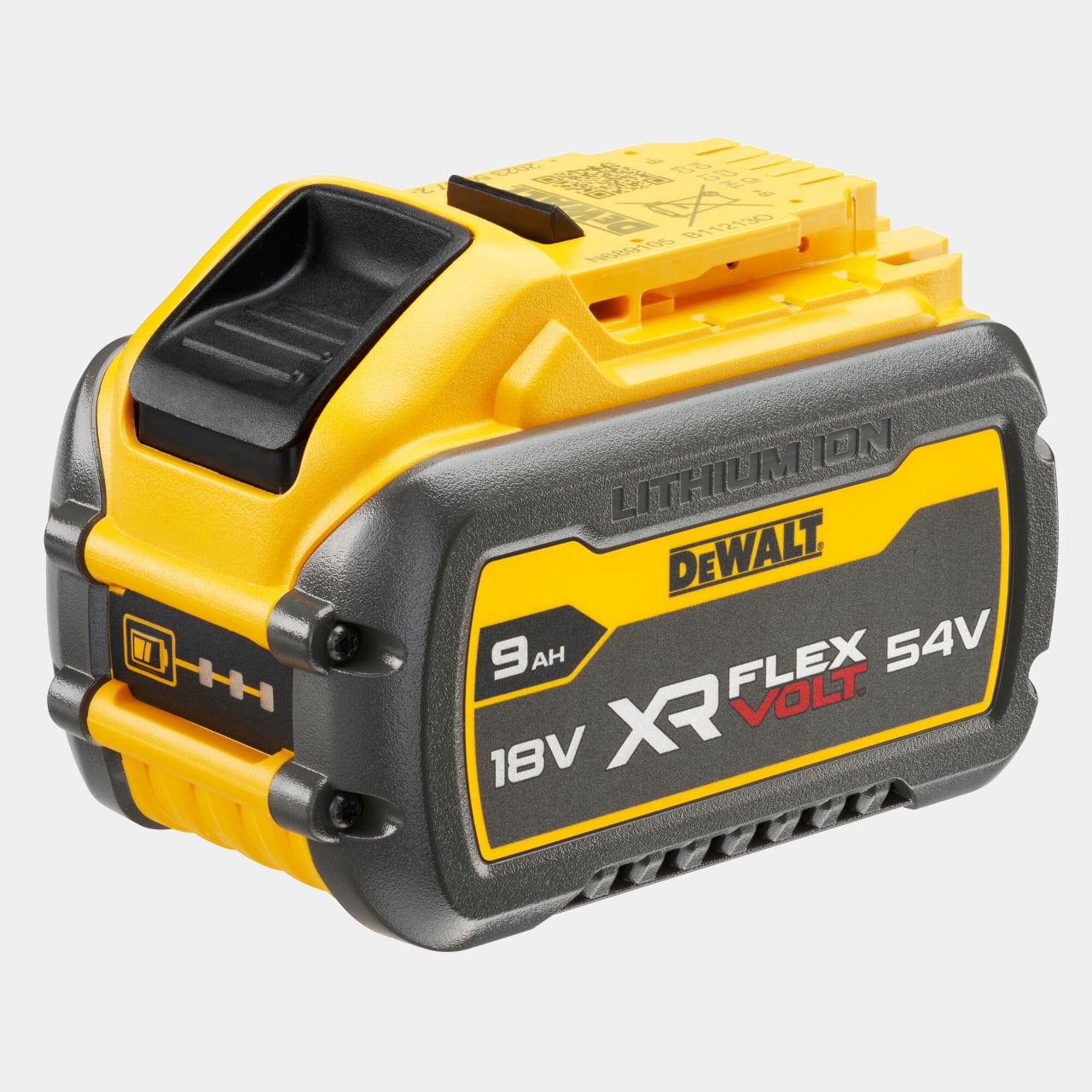
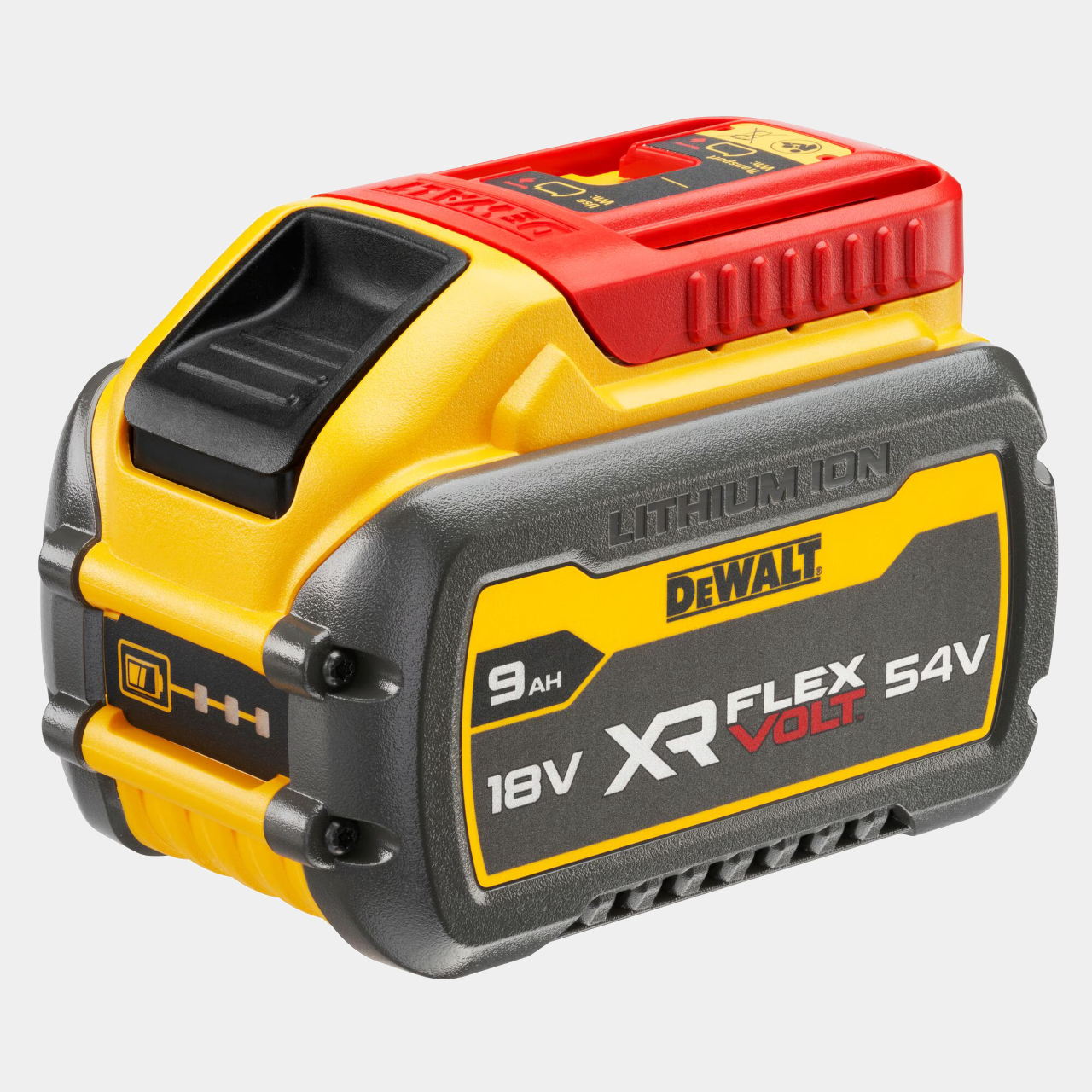
The project comes from a Reddit build where a modder mounts a GBA SP onto a DeWALT XR FLEXVOLT lithium-ion pack, creating what commenters immediately dubbed the “jobsite Game Boy.” The console’s original tiny battery is gone, replaced by a buck converter that steps down the tool battery’s eighteen volts to the four-ish volts the SP expects. The result looks like Nintendo and DeWALT secretly collaborated on a rugged portable for construction workers.

Designer: Bangoo H

The battery is rated at nine amp-hours at 18 volts, which works out to around 162 watt-hours compared to the few watt-hours of the original cell. Reddit did the math and estimated hundreds of hours of runtime, with one commenter joking that the battery might finally die fifteen minutes after the nukes start flying and another suggesting you could finish your entire childhood backlog before needing a recharge.

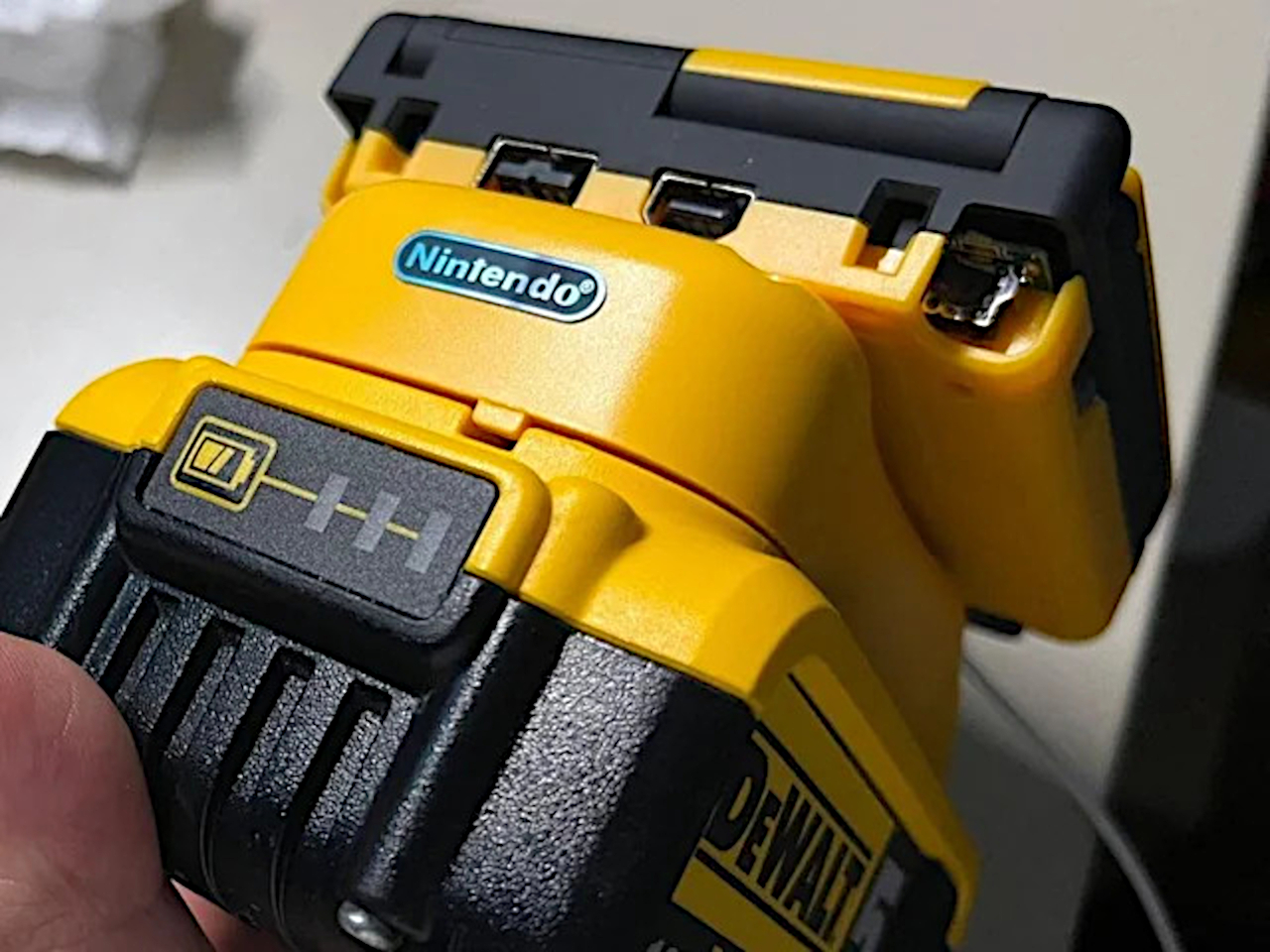
The wiring is straightforward if you squint. The modder dropped a buck converter into the SP where the original battery lived, wired it to the battery contacts via a dummy cell, then connected that to a custom holder that slides onto the DeWALT pack’s rail. Charging still happens through the regular DeWALT charger, so the Game Boy just thinks it has an absurdly large external battery that never quits.

The aesthetics are what really sell it. The SP shell has been resprayed in black with yellow buttons, and the lid wears a big DeWALT logo, so when it’s closed, the whole thing reads like a tiny power-tool accessory. Open it up, and the screen pops out of the battery like a work light. It even has a little Nintendo badge on the back, making the mashup feel weirdly official.

Of course, the DeWALT pack turns the SP from a pocketable handheld into a luggable brick. Commenters joked about dropping it on your face in bed or finally silencing anyone who says the SP is too small for their hands. It’s not exactly travel-friendly unless your idea of travel involves rolling a toolbox around, but it does give the console a much larger grip.

The DeWALT GBA SP mod turns battery anxiety into a punchline and shows how far you can push an idea just because it makes you laugh. By strapping a beloved handheld to a power-tool battery, it mixes serious electrical work with a sense of humor, reminding us that modding can be joyful and completely unnecessary in the best possible way.

The post GBA SP With DeWALT Battery Will Outlast the Apocalypse first appeared on Yanko Design.
Give Your Bike an Electric Boost with LIVALL’s PikaBoost 2 for only $298

The shift from pedal power to electric mobility has never been more straightforward. LIVALL’s PikaBoost 2 provides cyclists with an easy way to enjoy the benefits of an e-bike without purchasing an entirely new one. This compact accessory turns nearly any bicycle into an electric-powered ride, offering a simple upgrade that takes just minutes to install. From daily commutes to scaling hills, the PikaBoost 2 provides the power needed with minimal effort and maximum convenience.

Designer: LIVALL

Click Here to Buy Now: $298 $369 (19% off). Hurry, only 15 left! Raised over $953,000 raised.

Originally introduced in 2022, the PikaBoost concept has evolved with the new PikaBoost 2. The updated version features a more powerful motor, improved battery life, and a thoughtful anti-theft design. It fits neatly under the seat and just above the rear wheel. The pedal-assist motor is compatible with most bikes and can be installed in just one minute, offering a convenient, flexible solution for cyclists.

Affordable and Efficient E-Upgrade

One of the most compelling features of the PikaBoost 2 is its affordability. While traditional e-bikes can cost over $1,000, this $298 USD accessory provides a powerful, efficient upgrade to your current bike without the hefty price tag. It delivers the convenience of electric power without requiring a completely new bike purchase.

LIVALL introduced a $1.2 million stretch goal. Reaching this goal will unlock an additional one-year warranty for every backer, adding extra value and peace of mind. Sharing PikaBoost 2 with friends, family, and those who could benefit from it can help reach the milestone faster, allowing all backers to enjoy the additional rewards.

Powered by a 500W motor built with 99.99% pure copper windings and LIVALL’s proprietary magnetic core, the PikaBoost 2 can reach speeds of up to 19 mph (32 km/h). The motor adjusts to help maintain speed on city streets or challenging terrain, providing smooth performance for commutes or long rides.

Seamless Installation with Anti-Theft Design

Installation of the PikaBoost 2 is quick and easy, taking under a minute. Unlike other e-bike kits that require time-consuming setups, LIVALL’s PikaBoost 2 attaches securely to your bike using four anti-theft screws and a proprietary tool. This system makes removing and reinstalling the unit easy while preventing unauthorized removal.

The shock-absorbing spring design ensures stability even on rough terrain. It prevents the screws from loosening, keeping the motor secure and functional in all riding conditions. This reliable design adds a level of convenience and peace of mind for everyday use.

Regenerative Braking and Smart Power Assistance

LIVALL integrated its AAR 2.0 technology into the PikaBoost 2, providing power assistance that adapts to your riding style. This advanced system adjusts continuously, making each pedal stroke feel smooth and natural. The motor enhances your efforts, offering a seamless riding experience whether you’re tackling hills or cruising on flat roads.

The PikaBoost 2 also features a regenerative braking system (RBS) that captures energy when coasting or braking and converts it into electricity. This stored energy extends the battery’s range, making the PikaBoost 2 more sustainable and efficient. At 25 km/h (15 mph), the system generates approximately 100 watts of power, helping reduce your carbon footprint.

Battery Power to Last

The PikaBoost 2 is powered by a 158Wh lithium-ion battery, providing up to 43 miles (70 kilometers) of assisted riding on a single charge. For those needing more range, LIVALL offers an optional 220Wh battery that extends the range to 59 miles (96 kilometers). Both batteries recharge fully in just three hours, minimizing downtime.

For those seeking an all-in-one solution, the Endurance Bundle offers significant value at $388, a 31% discount off the regular price. This bundle includes the PikaBoost 2, a remote controller, both a 158Wh and a 220Wh battery, a PD3.0 fast charger, and two charging cables. Additionally, it comes with two replaceable bike tires (one for mountain, one for road), an installation pack, and a mudguard. With customs fees included and shipping starting in October, this comprehensive package is perfect for cyclists wanting a convenient and powerful upgrade.

In addition to powering the bike, the PikaBoost 2’s battery doubles as a portable power bank. With an output of up to 100W, it can charge your devices, including smartphones and laptops, making it ideal for commuters or travelers. The battery is built to last, retaining 80% capacity after 1000 full charge cycles.

Versatile Riding Modes for Every Cyclist

Cyclists can choose between four riding modes, each designed for different needs. Workout Mode adds resistance for a challenging ride, perfect for training sessions. Eco Mode provides assistance on inclines, preserving battery life for long-distance rides. Power Assist Mode offers balanced support on flat terrain and gentle slopes, while Cruise Mode delivers continuous, steady power for a more relaxed, leisurely ride.

Switching between these modes is easy with a remote that attaches to your handlebars. This gives you full control without needing to stop or use your phone.

Safety First with Smart Features

Safety is a priority in the PikaBoost 2’s design. The system includes fall and slip detection, automatically cutting motor power if the bike tilts or the tires lose traction. This feature helps prevent accidents in slippery or uneven conditions, ensuring safer rides.

The integrated LED rear light enhances visibility, syncing with your braking to signal stops or turns to those behind you. It can also pair with LIVALL’s smart helmets for synchronized lighting effects, improving safety in traffic.

The LIVALL app adds further control. It tracks your device, monitors performance, and adjusts motor output to comply with local speed regulations, ensuring safe and legal riding anywhere.

Ready to Transform Your Ride?

Why settle for an ordinary bike when you can upgrade to the PikaBoost 2? At just $298, you get the power of an e-bike without needing a costly new purchase. Whether for commuting, training, or weekend exploring, the PikaBoost 2 offers the flexibility and convenience of electric power in a compact, easy-to-install package.

Take your ride to the next level and experience effortless cycling with LIVALL’s PikaBoost 2. Supplies are limited, so act now to secure yours today!

Click Here to Buy Now: $298 $369 (19% off). Hurry, only 15 left! Raised over $953,000 raised.

The post Give Your Bike an Electric Boost with LIVALL’s PikaBoost 2 for only $298 first appeared on Yanko Design.
iPhone 16 iFixit teardown reveals a huge step forward in sustainability

Today’s smartphones may be more advanced and more powerful than ever, but they still suffer from the same ailments that their ancestors experienced more than two decades ago. Screens get cracked, charging ports get worn down, and batteries die. Unlike the mobile phones of the past, however, the complex designs of modern smartphones make it impossible to even just replace a bloated or dying battery. Of course, companies have always defended this practice as protecting their brand and their intellectual property, but thankfully they’ve started turning around, and Apple just made what is perhaps the biggest step in that direction, short of simply letting owners pop off the iPhone 16’s back, pop out the old battery, and pop in a new one.

Designer: Apple (via iFixit)

The new “feature” that has the Internet abuzz involves the removable of those unwieldy “pull tabs” that doubled the work since you’d often still have to resort to some isopropyl alcohol at the end of the process. Instead, Apple’s new adhesive can dissolve under low electrical current, which means you can hook up the back of the exposed iPhone 16 or 16 Plus to an ordinary 9V battery and have that adhesive go away in a minute and a half. The voltage actually determines the length of waiting, and iFixit’s test showed that a 20V charge would have the battery ready to be removed in just 20 seconds.

This makes battery replacement significantly easier and less error-prone, though you’ll still have to do some alcohol cleanup to completely remove adhesive residue before installing a new battery. Considering batteries are one of the first things on a smartphone to die from natural wear and tear, they are also the most common parts that need to be repaired or replaced. This major improvement in repairability also improves the iPhone 16’s overall sustainability, as it reduces CO2 emissions in the long run.

The catch is that this groundbreaking adhesive is only available on the iPhone 16 and iPhone 16 Plus. The more advanced Pro models, ironically, still use the pull tab system, but Apple did make a little change to make that process less nerve-wracking. The shells of these batteries are now made of hard steel instead of soft pouches, so the chances of accidentally puncturing these sensitive and volatile batteries are now lower, which is very important since you’ll still need to pry them off without that magical dissolving adhesive.

The rest of the iPhone 16 teardown is pretty uneventful, which also means that Apple has retained its improved DIY repair experience this year. This helped the iPhone 16 garner a 7 out of 10 on iFixit’s repairability scale, which is pretty high for a “regular” smartphone that doesn’t promote the same kind of repairability and sustainability as the Fairphone. Hopefully, this new material will eventually land on the iPhone Pro models next year, becoming a major sustainability feature of all iPhones moving forward.

The post iPhone 16 iFixit teardown reveals a huge step forward in sustainability first appeared on Yanko Design.
Upgrade your Regular Bicycle into an E-Bike with LIVALL’s $279 PikaBoost 2 Accessory

In 2022, the folks at LIVALL unveiled the PikaBoost, a simple battery-powered motor that could attach to any bicycle, giving it an electric upgrade. Now, the PikaBoost 2 comes with the same pitch as its predecessor, but with a power upgrade, better range, an anti-theft design, and swappable batteries. All you really do is strap the PikaBoost 2 to the back of your bicycle, right above the rear wheel and you’re good to go. The process takes under a minute, but gives your bicycle quite the upgrade, with a motor-assisted drive that can be accessed across 4 riding modes. The best part? Unlike e-bikes that can cost upward of $800-1000, the PikaBoost 2 is a simple under-$300 accessory that pretty much attaches to any existing bicycle.

Designer: LIVALL

Click Here to Buy Now: $279 $369 (24% off). Hurry, only 31 left! Raised over $320,000 raised.

Do you remember when Elon Musk put jet thrusters on the Tesla Roadster to make it go even faster? The PikaBoost 2 is sort of the same thing, but scaled down to less mad-scientist and more practical-genius levels. In essence, it just adds a motor to your existing bicycle, so that you don’t have to rely entirely on pedal power. The PikaBoost 2 outputs an impressive 500W, which when coupled with its high RPM capacity, allows cyclists to conquer steep inclines effortlessly, reaching speeds of up to 32 km/h (19mph) without rider exertion. On flat land, the PikaBoost 2 is a nice way to turn your bicycle from an exercise machine to an effortless mode of transport, allowing you to travel farther and faster without splurging for a gas-powered motorbike or an e-bike.

The slick device retrofits onto almost any existing bicycle simply by attaching itself firmly to the frame right under the seat. Traditional e-bike conversion kits often require significant time and effort to install, with many models being incompatible with a range of bike sizes. In contrast, PikaBoost 2 can be installed or removed in under a minute, thanks to its simplified design that fits most bike models and tire sizes. The system includes a proprietary tool that secures the unit with four anti-theft screws, ensuring a secure fit that’s impossible to remove without the specific tools if you’re a thief… but very easy for you to detach and take home at the end of the day by using the proprietary screw. Additionally, its shock-absorbing spring design helps maintain stability, even on rough terrain, while preventing screw loosening.

PikaBoost 2’s adjustable design seamlessly integrates with wheel sizes from 14 to 29 inches, accommodating mountain bikes, road bikes, and hybrids. LIVALL also provides its own tire designs for the PikaBoost, allowing you to adjust based on road or mountain driving. Once installed, the PikaBoost 2’s wheel rests on the top of your bicycle’s rear wheel, gripping it securely to ensure high traction so it can efficiently transfer kinetic power to your bike’s rear wheel. The V-shaped grooves on the PikaBoost 2 interlock with your bike’s treads, while also providing channels to direct water/mud when you’re riding in the rain or on wet/muddy roads.

One of the standout features of the PikaBoost 2 (and an upgrade from its predecessor) is its AAR2.0 technology, which offers personalized e-bike assistance. Unlike traditional systems that rely on torque sensors, AAR2.0 continuously learns and adapts to your riding style, providing precise power assistance that matches your needs. The regenerative braking system further extends your ride by capturing and converting kinetic energy back into electricity, adding sustainability to your journey. At 25 km/h, the RBS (regenerative braking system) can generate about 100 watts of power to recharge your battery.

Although it seems like the original PikaBoost had a bigger 234Wh battery, the one on the PikaBoost 2 is smaller but MUCH more efficient. Equipped with a 158Wh lithium-ion battery, the system offers a range of up to 70 kilometers or 43.4 miles (an upgrade over the 30 kilometers on the previous model). This size reduction comes with a good reason too, as the folks at LIVALL wanted the battery pack to be ‘airline-friendly’. For those seeking even greater endurance, an optional 220Wh battery extends the range to 96 kilometers or 59.6 miles. Both batteries support fast-charging technology, allowing for a full charge in just three hours. Beyond powering your ride, the battery can also function as a portable power station, with up to 100W of output power, making it versatile for charging everything from your phone to even your laptop.

Each PikaBoost 2 is paired with a remote controller that attaches to your handlebars, allowing you to switch between modes while riding. Notably, the 2nd gen device also gets a few nifty design and safety upgrades in the form of an LED taillight that automatically shines as you slow down or make turns (and also works as a charging status light), as well as fall or slip detection that automatically kills the motor to prevent accidents or injury. The PikaBoost 2 also comes with its own smartphone app, available for both Android and iOS devices. Aside from letting you perform actions like switching between modes, the app also lets you track your PikaBoost 2, as well as uses your location to automatically adjust its output based on riding regulations of the country you’re in (European users will see their speeds capped at 25 km/h to comply with the maximum speed limit). The entire device weighs 6.6lbs or 3 kilograms, and is IP66 water-resistant, making it fairly weatherproof. The PikaBoost 2 ships globally, along with the remote controller, the 158Wh battery, a mudguard, and the proprietary accessories for upgrading your bicycle. An upgrade gets you the 220Wh battery along with mountain and road bike tire attachments, and a fast-charging setup. Additionally, LIVALL also sells its own bicycle helmet with a built-in rear LED light that synchronizes with the PikaBoost 2 to shine automatically when you slow down, turn, or come to a stop.

Click Here to Buy Now: $279 $369 (24% off). Hurry, only 31 left! Raised over $320,000 rasied.

The post Upgrade your Regular Bicycle into an E-Bike with LIVALL’s $279 PikaBoost 2 Accessory first appeared on Yanko Design.

This Game-Changing Swappable Battery Portable Fridge Powers Up Your Adventures

It’s always exciting when a top brand like BLUETTI launches a new product, and this time, they’re bringing something unique to the great outdoors with their latest product offering, SwapSolar. Hot on the heels of their AC500’s smashing success on Indiegogo, which brought in an impressive $12 million, they’re not resting on their laurels. The SwapSolar is the world’s first LFP-powered MultiCooler portable refrigerator using an AC180T hot-swappable battery power station. Together, these two products are designed to cater to most outdoor adventures, from powering your devices to ensuring your food and beverages stay chilled, all with ease and efficiency.
Designers: BLUETTI

Click Here to Buy Now: $799 $1328 (40% off). Hurry, only a few left! Raised over $90,000.

LFP, an acronym for Lithium Iron Phosphate, denotes a specific type of lithium-ion battery renowned for its long lifespan, safety, and excellent performance at high temperatures. The energy produced from these batteries is referred to as LFP power. The AC180T outdoor power supply system guarantees you don’t have to sacrifice power, even off-grid. Its innovative hot-swappable battery design allows for uninterrupted usage. BLUETTI’s spokesperson, James Ray, confidently asserts, “We want users to savor the joy of outdoor life. SwapSolar is your ticket to 3-6 days of happy camping trip. Power up and keep your food fresh at once, it’s time to go wild with BLUETTI!”

This user-friendly design offers an easy-to-swap-out battery system that features two B70 batteries with a significant 1,433.6Wh capacity utilizing the secure LFP battery technology. These batteries are built to last, offering over 3,000 life cycles and 5,000+ swap times, enhancing their longevity and reliability. For added convenience, BLUETTI makes these batteries available for separate purchase, allowing users to tailor their power solutions with extra packs to accommodate their unique requirements. This capability is beneficial for prolonged outings or unexpected emergencies, where swapping batteries can instantly restore full power, ensuring you remain powered up in any situation.

To recharge quickly, connect the device to a wall outlet that has two charging rates. If you’re charging a single B70 battery, it will achieve an 80% charge in just 1 hour and a full charge in 1.5 hours at 850W. Alternatively, if you’re charging two B70 batteries, they will reach an 80% charge in just 45 minutes and a full charge in 70 minutes at 1,440W.

There are four different ways to power this device, depending on your situation. You can use a standard wall outlet or a vehicle power source, either at home or while traveling, even while making ice. If you’re looking for continuous operation, consider the solar panel setup. And, of course, you can always use the batteries when there are no outlets available.

The MultiCooler stands out from the crowd; it’s not just your average fridge. Think of it as the “cooler” choice among the competitors, featuring a versatile 3-in-1 design that includes cooling, freezing, and even ice-making features. As for temperature settings, the temperature ranges from a frosty -4°F to a warm 68°F (-20°C to +20°C), ensuring everything from ice cream to fresh produce stays at the perfect temperature. Its high-efficiency yet powerful compressor can quickly bring the temperature down from 86°F to 32°F (30°C to 0°C) within a mere 15 minutes, making it incredibly effective for rapid cooling. The integrated ice maker can also churn out clear, crisp ice cubes in just a few minutes, making it a go-to feature for chilling your favorite beverages and crafting the perfect cocktails.

With a capacity of 42 qt (40L), it can hold about 60 cans of soda, according to BLUETTI, making it perfect for any gathering or solo adventure. However, let’s have fun and do more real-world math since not everyone drinks only soda. When considering how to fit a mix of beer bottles, bottles of water, and soda cans into a 42-quart refrigerator, it’s essential to consider these items’ varying sizes and shapes. We can infer some approximations for the other things based on the capacity to hold 60 soda cans. Soda cans are about 12 ounces and have a fairly standard size, which allows for a certain level of efficiency in packing. Beer bottles, although also often holding 12 ounces, might pack less efficiently due to their different shape. For simplicity, we might estimate that you could fit around 55 beer bottles in the same space, assuming a slight decrease in packing efficiency. On the other hand, bottles of water commonly found in 16.9-ounce (500 ml) sizes are usually taller and narrower than soda cans and beer bottles. This difference in shape could mean that around 45 bottles of water might fit into the refrigerator.

Given these considerations, here are a couple of combinations for chilling these items in the MultiCooler. One possible arrangement is 30 soda cans, 20 beer bottles, and 15 water bottles. This mix balances the different shapes and sizes to optimize the available space. Another combination is ten soda cans, 25 beer bottles, and 20 bottles of water, allowing for more liquid in water and beer at the expense of soda can quantity. You might be wondering, “Where does the ice go?” The simple answer is that it’s a portable refrigerator, so no ice is needed to keep your drinks chilled.

Weighing in at just 52.9 lbs (25kg), the MultiCooler features ergonomic side grooves for simple lifting. When it’s packed to the brim, roll it along using its convenient wheels and telescopic handle, making transportation a breeze. It’s also built to handle the bumps and dips of uneven terrain with its 45° tilt protection. An optional sliding mount is available for those needing extra stability in their vehicle. It won’t disrupt your peace and quiet, running softly at 30dB for cooling and 45dB during ice production.

The MultiCooler boasts a sleek LCD touchscreen complemented by tactile buttons for straightforward operation. It’s also Bluetooth-enabled, allowing you to oversee and adjust settings like temperature, ECO mode, and Self-Clean mode through the BLUETTI app, all from the palm of your hand.

The SwapSolar system is designed to enhance outdoor experiences by providing a reliable and sustainable power source, ensuring convenience and peace of mind for families in nature. It is easy to use and portable, making it ideal for remote locations and enabling device charging and running essential appliances. Apart from its practical benefits, SwapSolar also serves as an educational tool, promoting the importance of renewable energy and environmental stewardship. With SwapSolar, families can enjoy the tranquility of the outdoors with the assurance of safety, self-sufficiency, and a commitment to eco-friendly practices.

Click Here to Buy Now: $799 $1328 (40% off). Hurry, only a few left! Raised over $90,000.

The post This Game-Changing Swappable Battery Portable Fridge Powers Up Your Adventures first appeared on Yanko Design.