Hand-Stitched $2,300 Sneakers With Only 2 Pairs in the World

Let’s talk about what happens when ancient Japanese craftsmanship collides with one of the most elusive sneakers in the game. The result? A pair of shoes that costs more than most people’s monthly rent, and somehow, that price tag makes total sense.

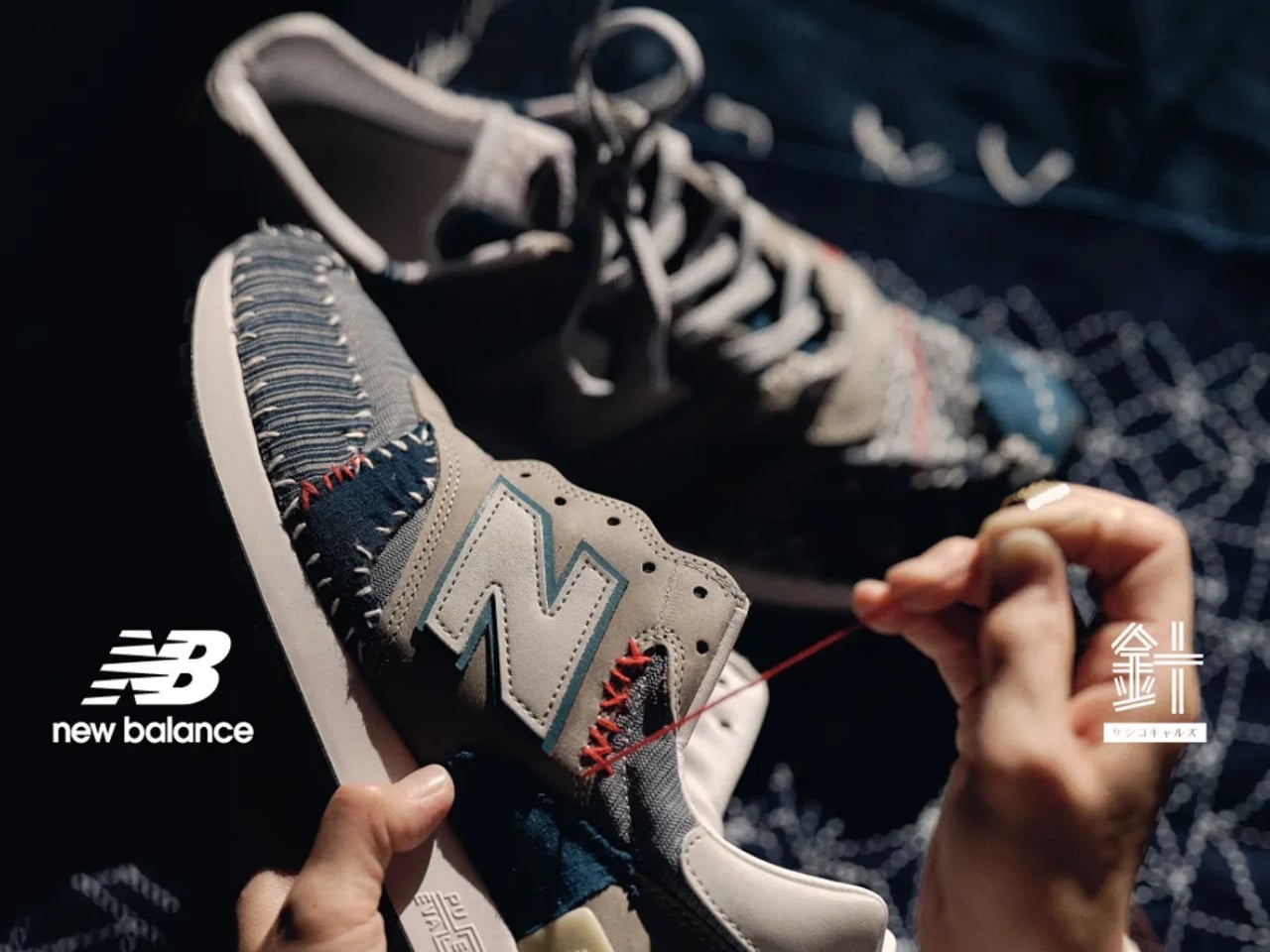
New Balance Japan just announced a collaboration with Sashiko Gals that’s turning heads for all the right reasons. They’ve taken the legendary 1300JP and transformed it into something that exists somewhere between footwear and functional art. And before you dismiss this as another overpriced sneaker collab, hear me out, because this one’s different.

Designers: Sashiko Gals and New Balance

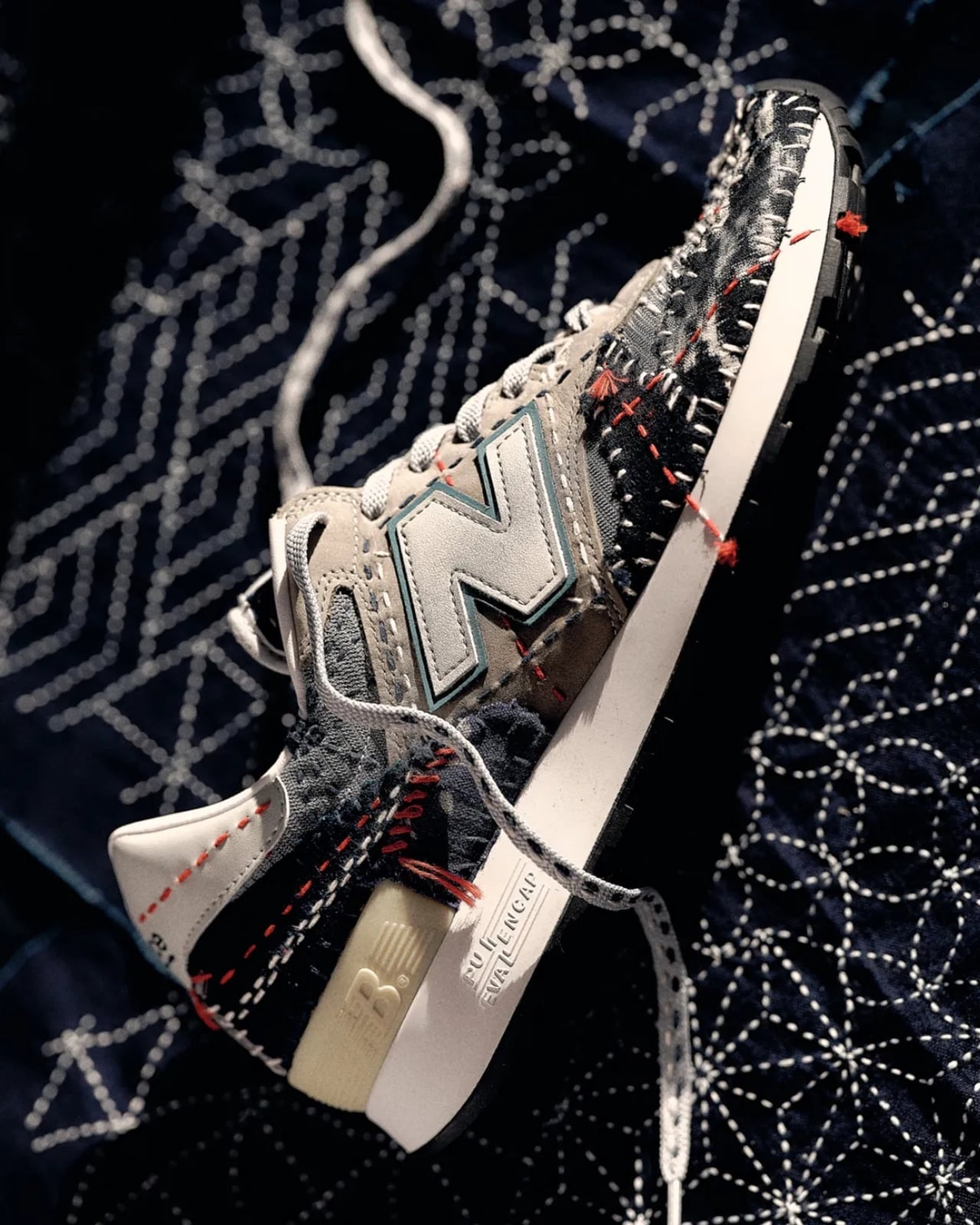
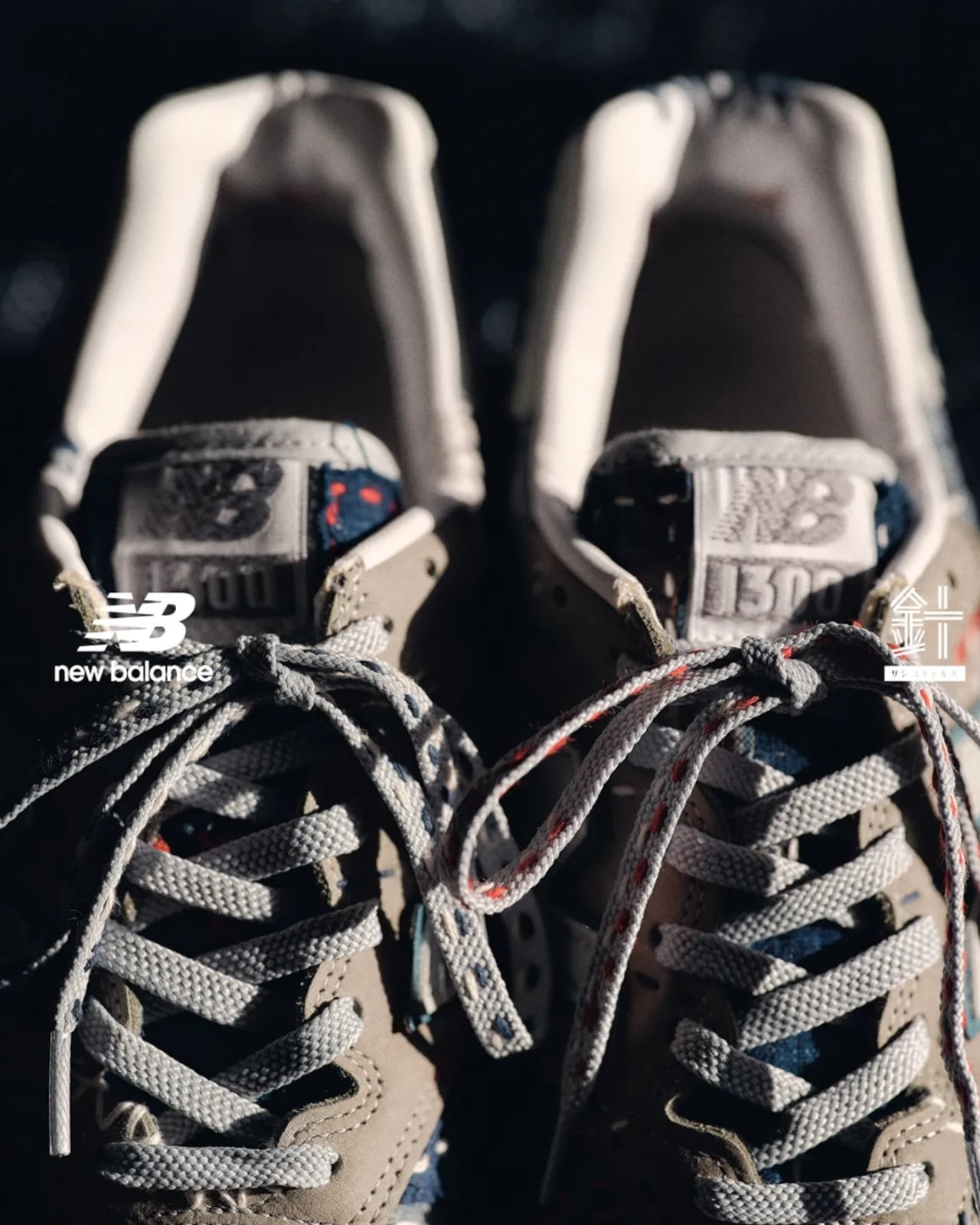
For those not deep in sneaker lore, the New Balance 1300JP is basically the Bigfoot of running shoes. Originally released in the 1980s, it only drops once every five years in Japan, making it the kind of shoe that serious collectors set calendar reminders for. It’s got that classic grey suede aesthetic and Made in USA quality that sneakerheads obsess over.

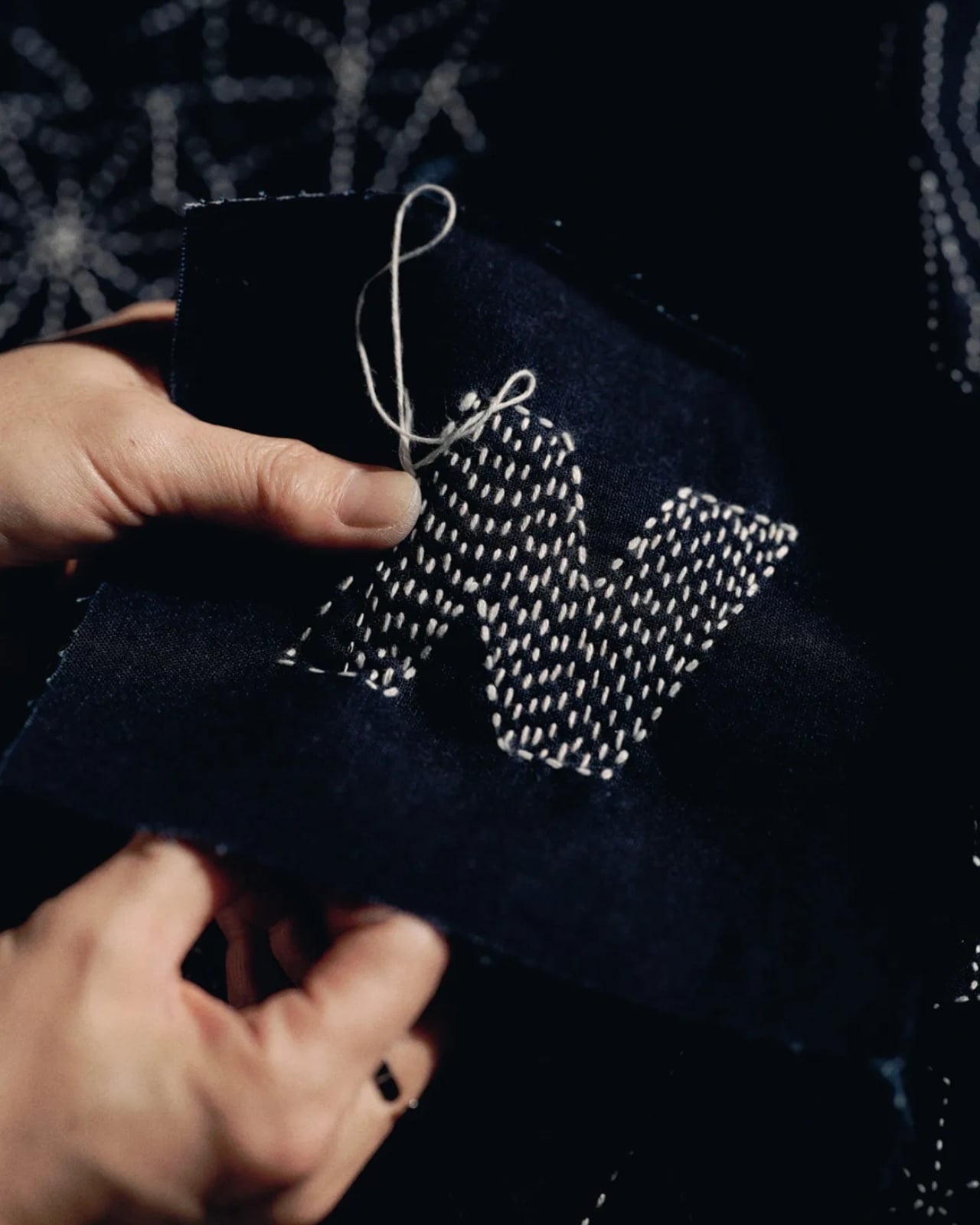
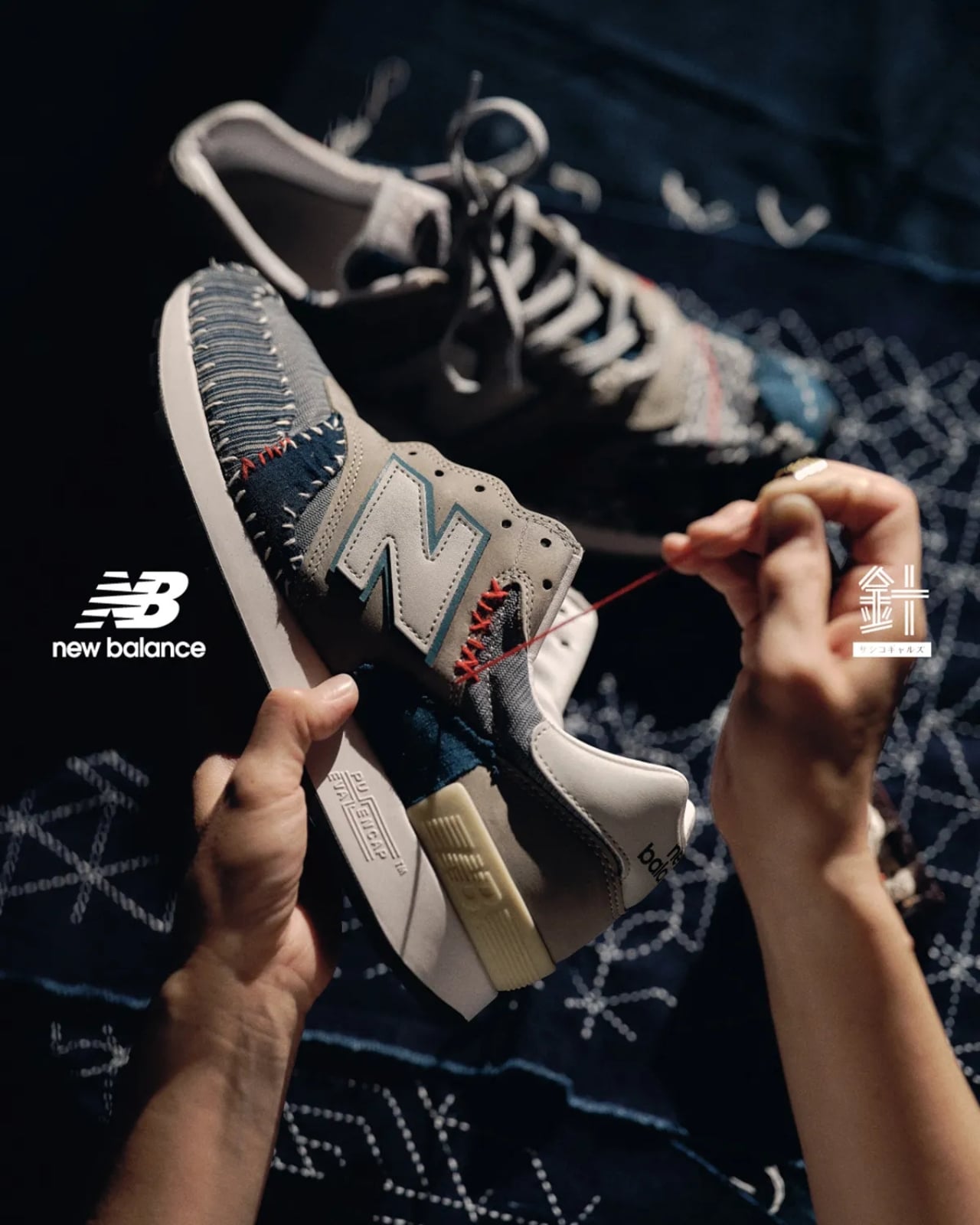
Enter Sashiko Gals, a community of Japanese artisans who are keeping the centuries-old tradition of sashiko embroidery alive by dragging it, stitch by careful stitch, into contemporary culture. Sashiko is that traditional Japanese hand-stitching technique where artisans use running stitches to create intricate patterns on fabric, typically indigo-dyed. It’s slow work. Meticulous work. The kind of craft that makes you appreciate the human hands behind every detail.

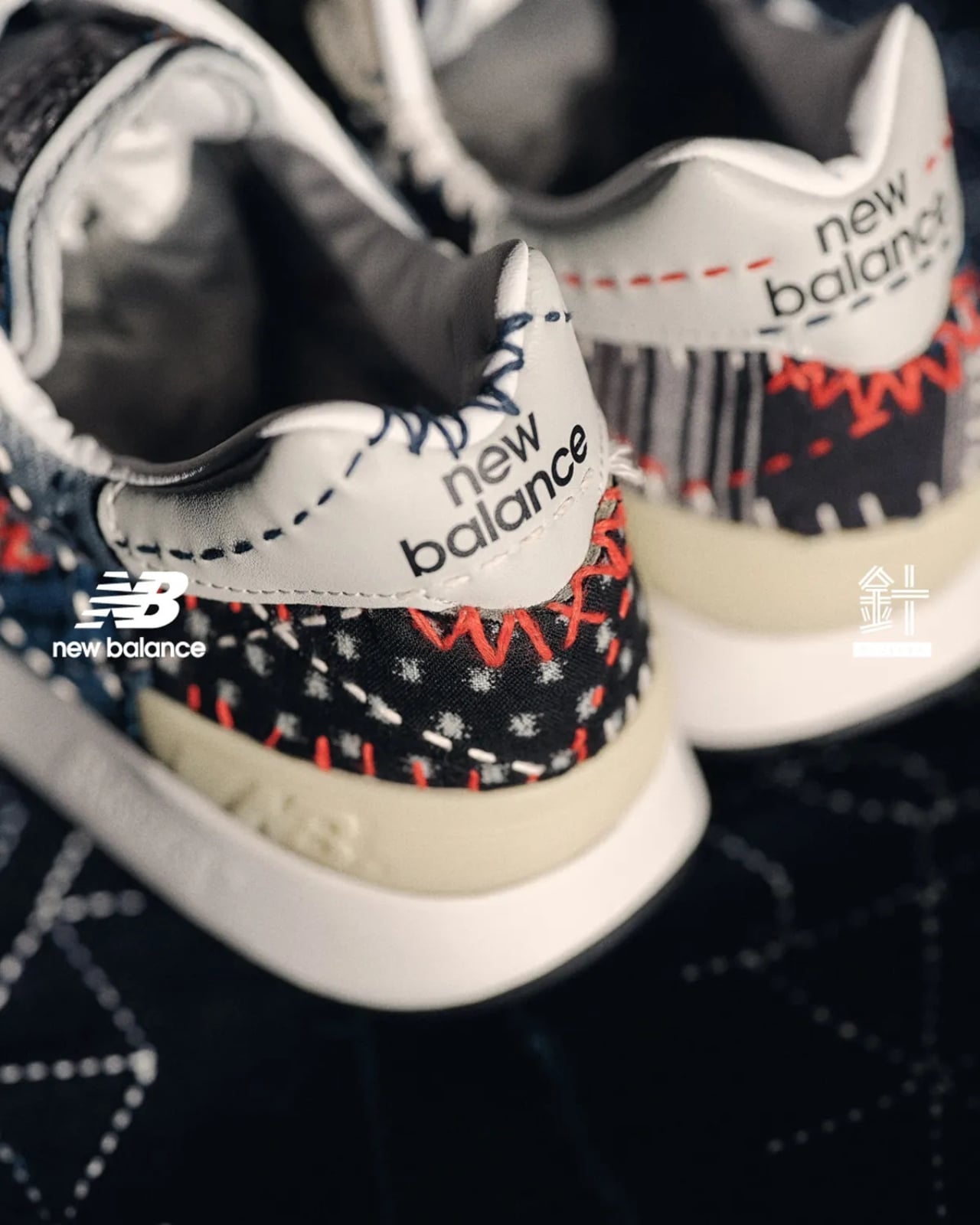
What these artisans did to the 1300JP is nothing short of remarkable. They covered the entire upper with hand-made sashiko patches, stitching them with white, orange, and indigo-blue thread. The decorative patterns create this visually rich tapestry that screams Japanese heritage while somehow still respecting the sneaker’s classic silhouette. And because these artisans apparently don’t believe in half-measures, they even stitched the running patterns onto the ends of the laces. Every. Single. Detail. Matters. The collaboration also includes a Made in USA varsity jacket that gets the same treatment, blending American sports heritage with Japanese craftsmanship in a way that shouldn’t work but absolutely does.

Now, about that price tag. The sneakers clock in at 363,000 yen, which translates to roughly $2,330 USD. The jackets? Try 990,000 yen, or about $6,300 USD. Yeah, you read that right. These numbers are stratospheric. But here’s where things get interesting. New Balance and Sashiko Gals are only making two pairs of the 1300JP and four jackets (one in each size from small to extra-large). They’ll drop via a charity-based lottery at the New Balance Harajuku flagship on December 12th, and here’s the kicker: every single yen from the sales goes to MOONSHOT Co., LTD., an organization dedicated to developing future sashiko artisans and funding the launch of something called the SASHIKO WORLD CHAMPIONSHIP.

This is what makes this collaboration actually matter. It’s not just two brands cashing in on hype. It’s a genuine effort to preserve and promote a traditional art form that’s at risk of fading away in our mass-production world. The Sashiko Gals are literally expanding the possibilities of their craft, proving that ancient techniques can still resonate in our modern, sneaker-obsessed culture. The “Crafted for the Future” partnership name suddenly makes sense. This isn’t about churning out product. It’s about creating a sustainable model where traditional craftsmanship can thrive, where artisans have platforms to showcase their work, where slow fashion and meticulous detail aren’t just marketing buzzwords but actual values worth paying for.

Will most of us ever own these sneakers? Probably not. Only two pairs exist, and the lottery system means even having the money isn’t enough. But that’s kind of the point. This collaboration is proving that sneakers can be more than just footwear or even fashion. They can be vessels for cultural preservation, fundraising tools, and tiny rebellions against our disposable culture. We’re living in an age where fast fashion dominates and sneaker collaborations drop every other week so the Sashiko Gals x New Balance 1300JP stands out by doing the exact opposite. It’s slow. It’s expensive. It’s impossibly rare. And somehow, that makes it one of the most exciting sneaker releases of the year.

The post Hand-Stitched $2,300 Sneakers With Only 2 Pairs in the World first appeared on Yanko Design.
Woven leaf lamp concept harmonizes traditional crafts and industrial production

Advancements in technology, material science, and processes have taken man’s production capabilities to a whole new level. However, with advanced manufacturing, traditional craftsmanship and values have been left by the wayside, sometimes forgotten, and other times discarded as if they were no longer important or were even counterproductive to progress. Of course, this couldn’t be further from the truth, as there will always be elements of traditional crafts and modern tooling that could be mixed in an elegant way. Such is the premise behind this rather striking lamp, highlighting not only the beauty of traditional, handmade crafts but also promoting the culture and the livelihood that also grow alongside it.

Designer: Antoni Martorell Pascual

Handmade products are admittedly not suitable for mass production. As many have realized by now, however, not everything has to be mass-produced in the first place. Simple, everyday items might be fine with generic and standardized designs, but in exchange for speed and ease of manufacturing, they often lack personality, depth, and impact. Fortunately, you don’t always have to go to either extreme and find some middle ground that showcases the strengths of both methods.

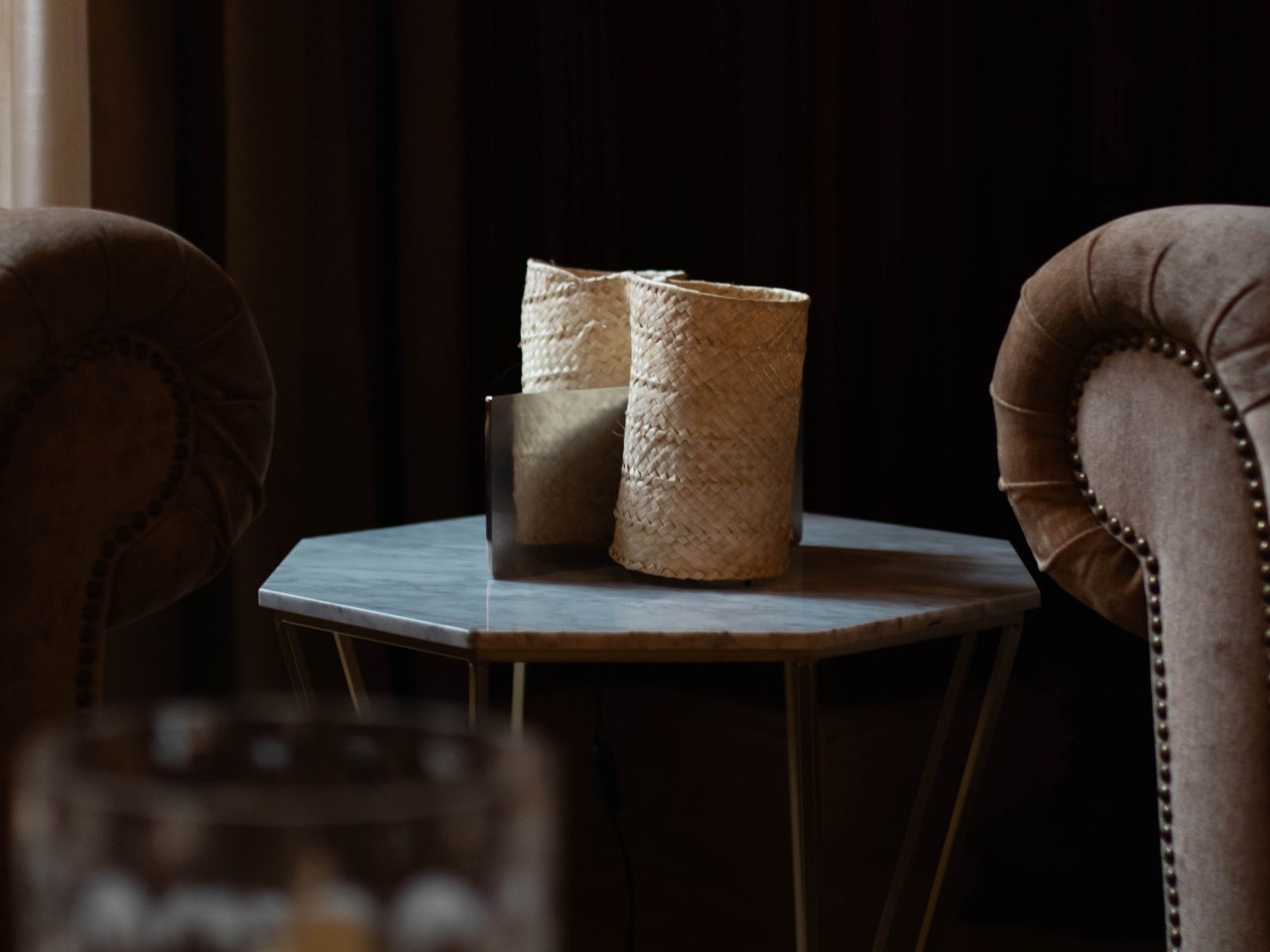
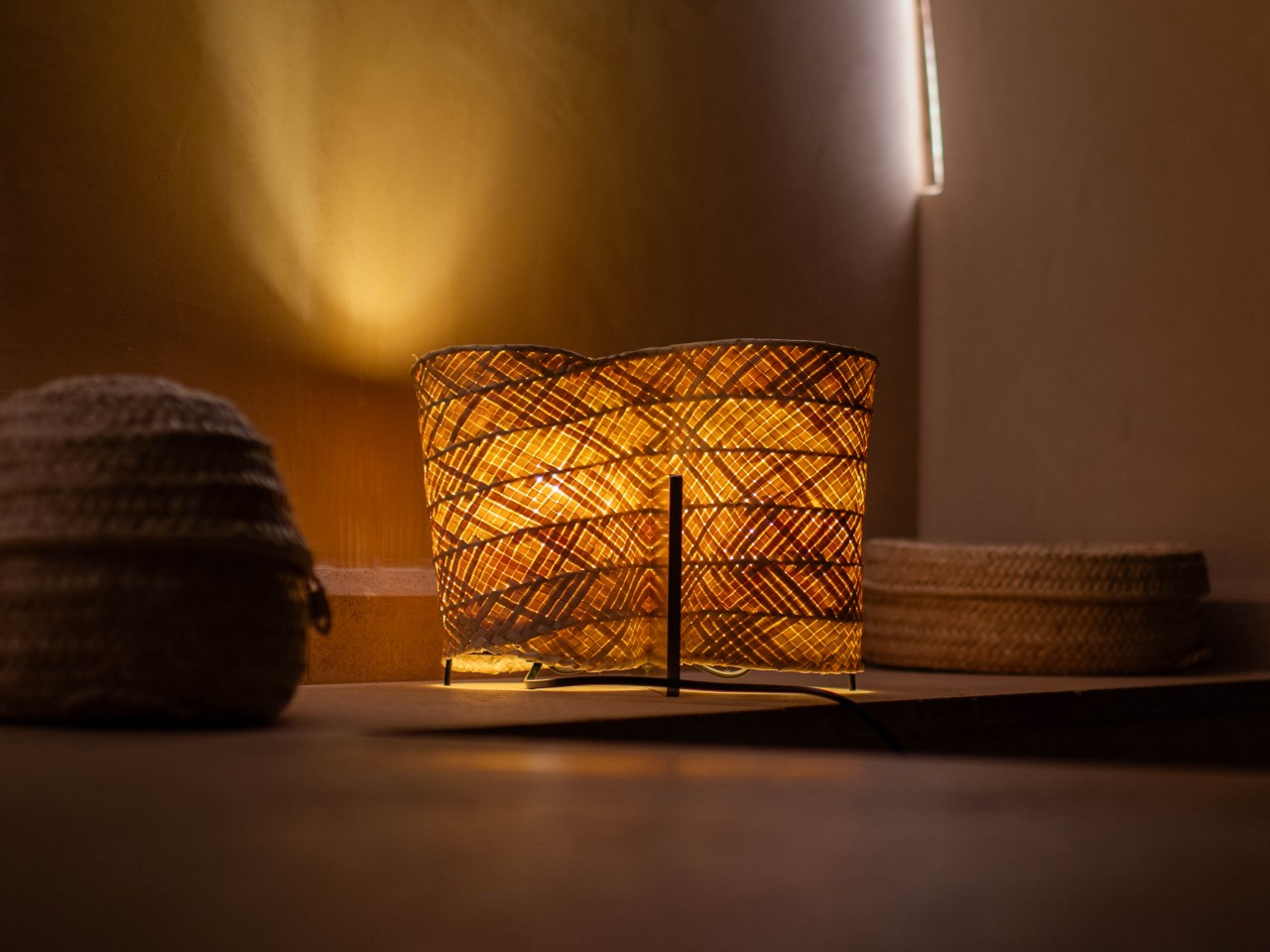
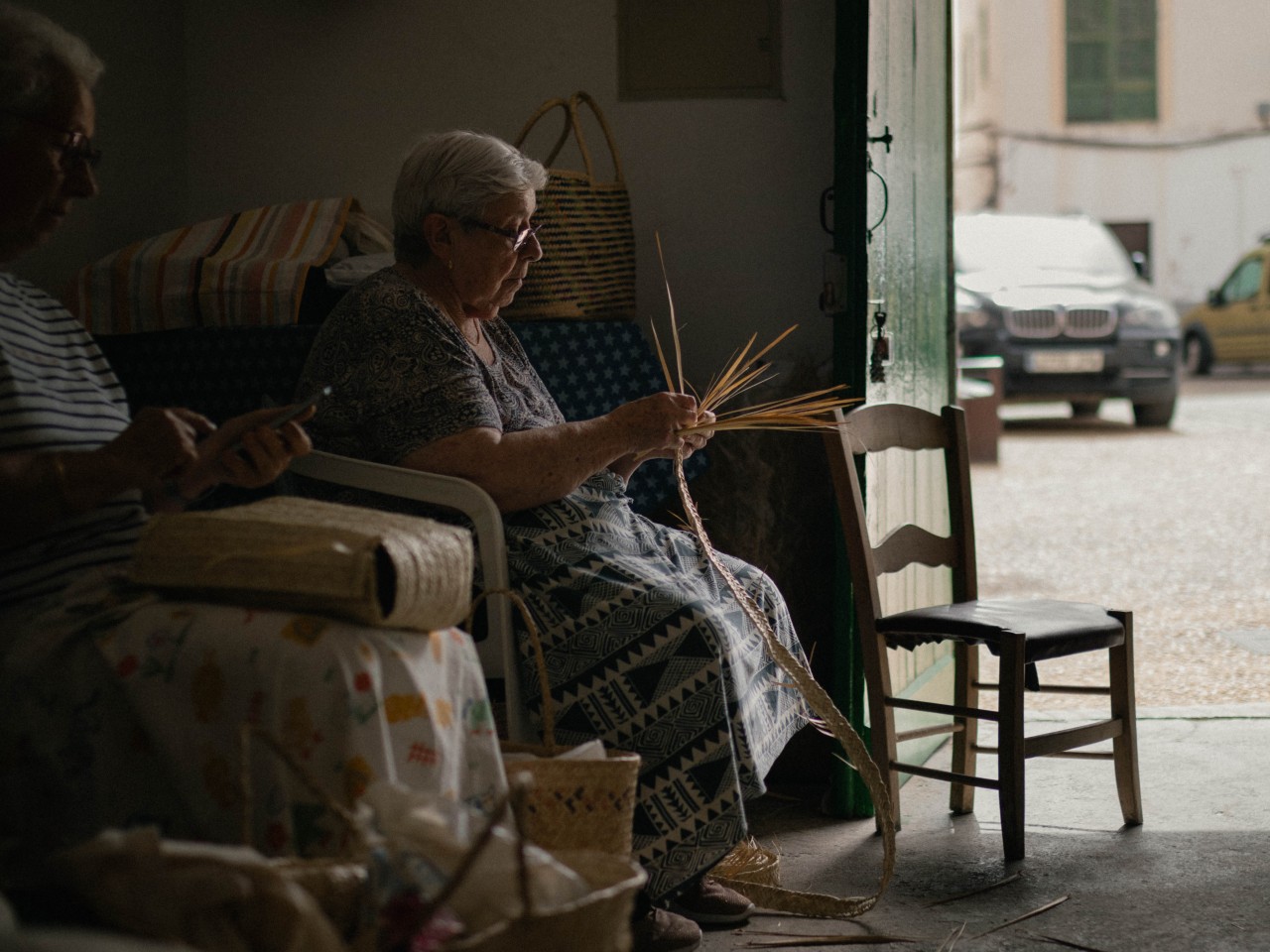
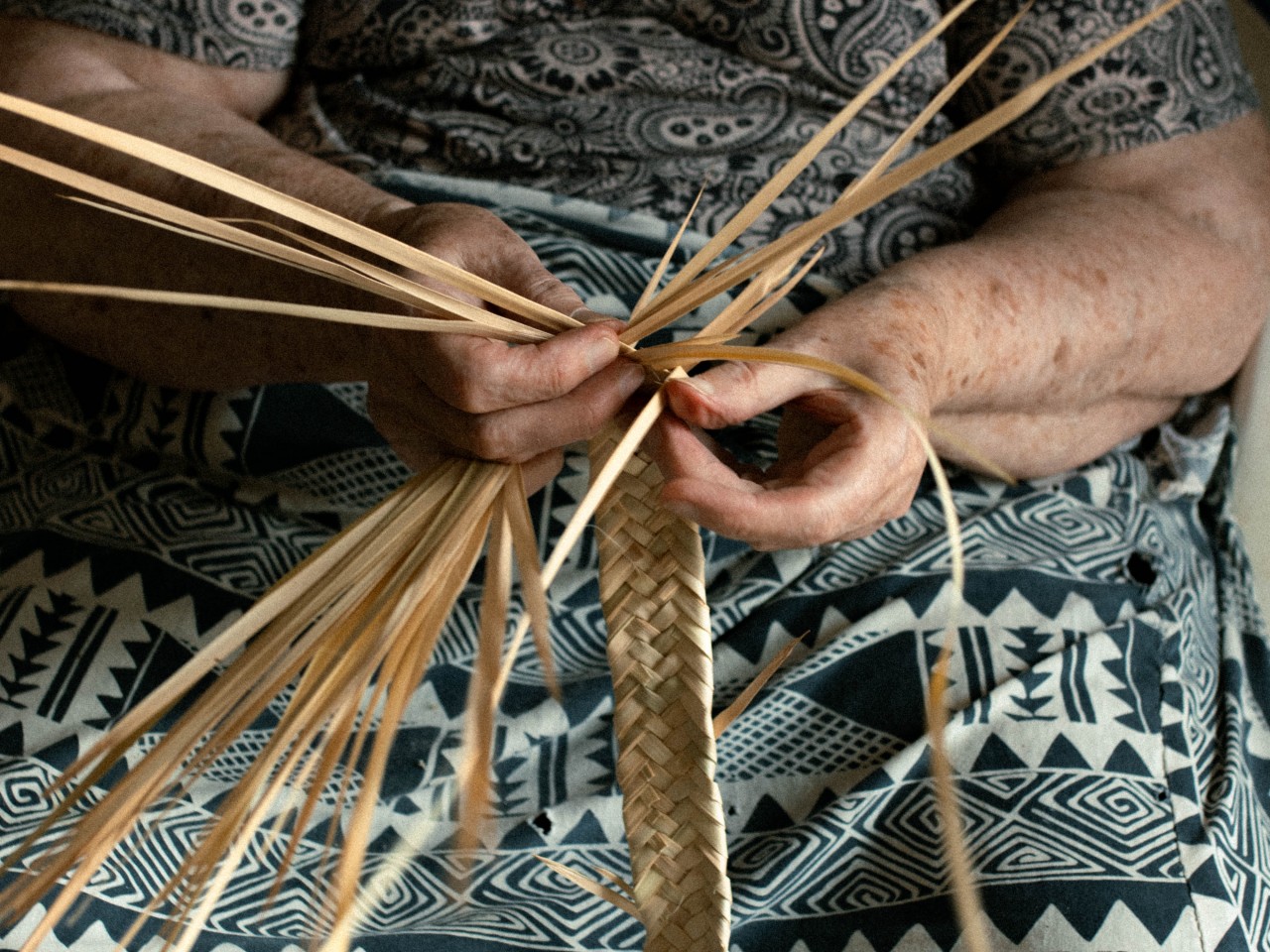
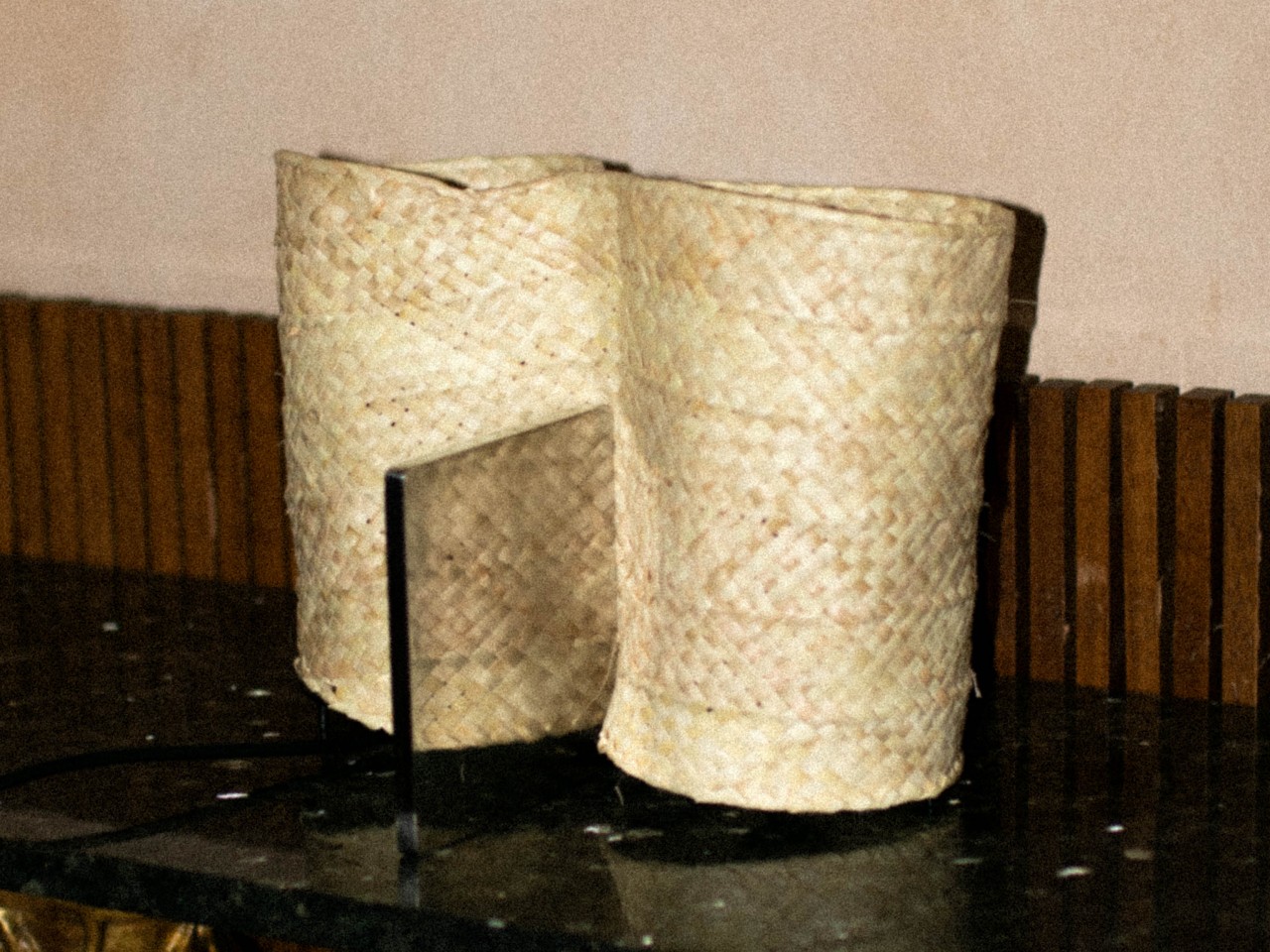
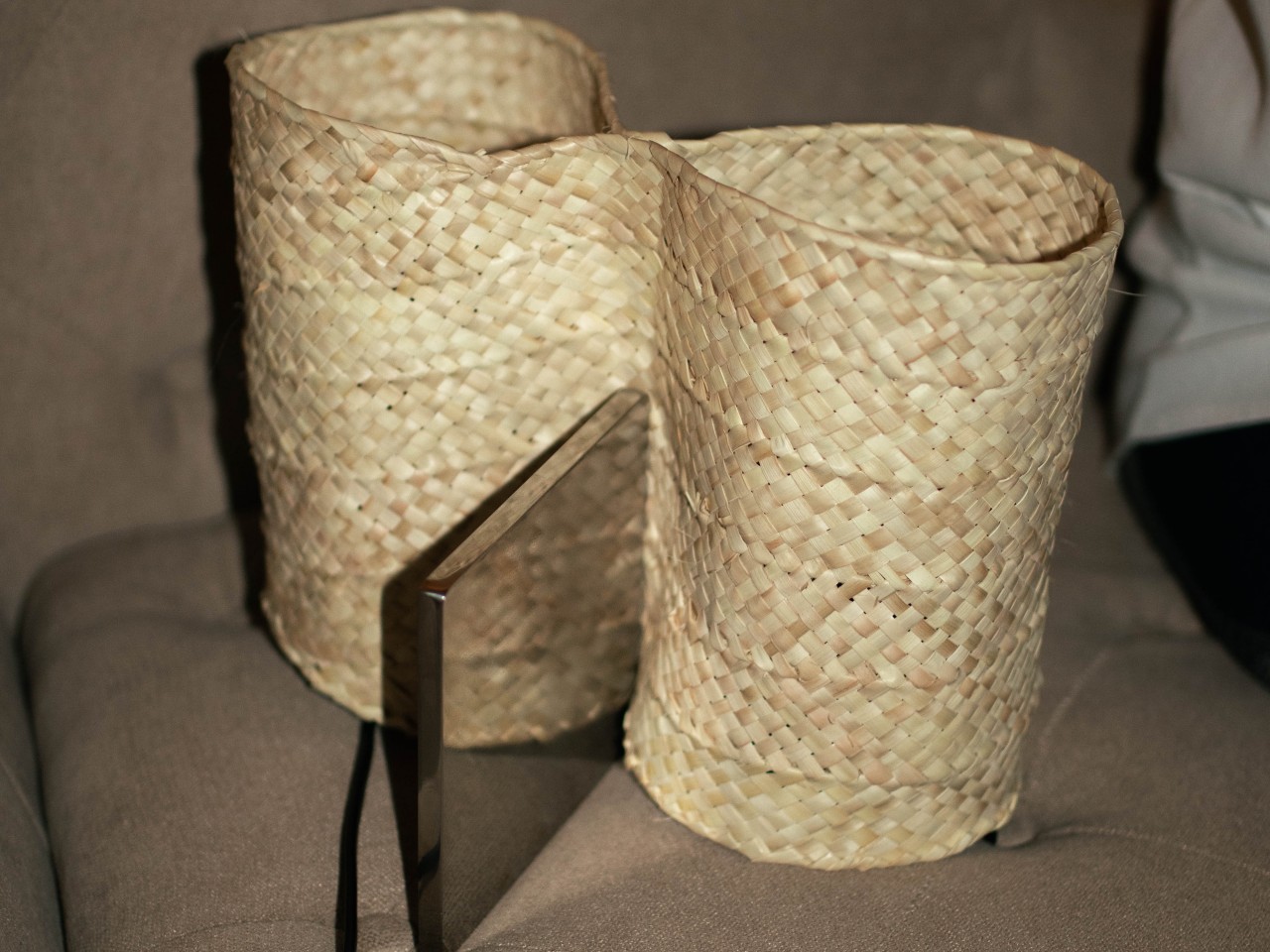
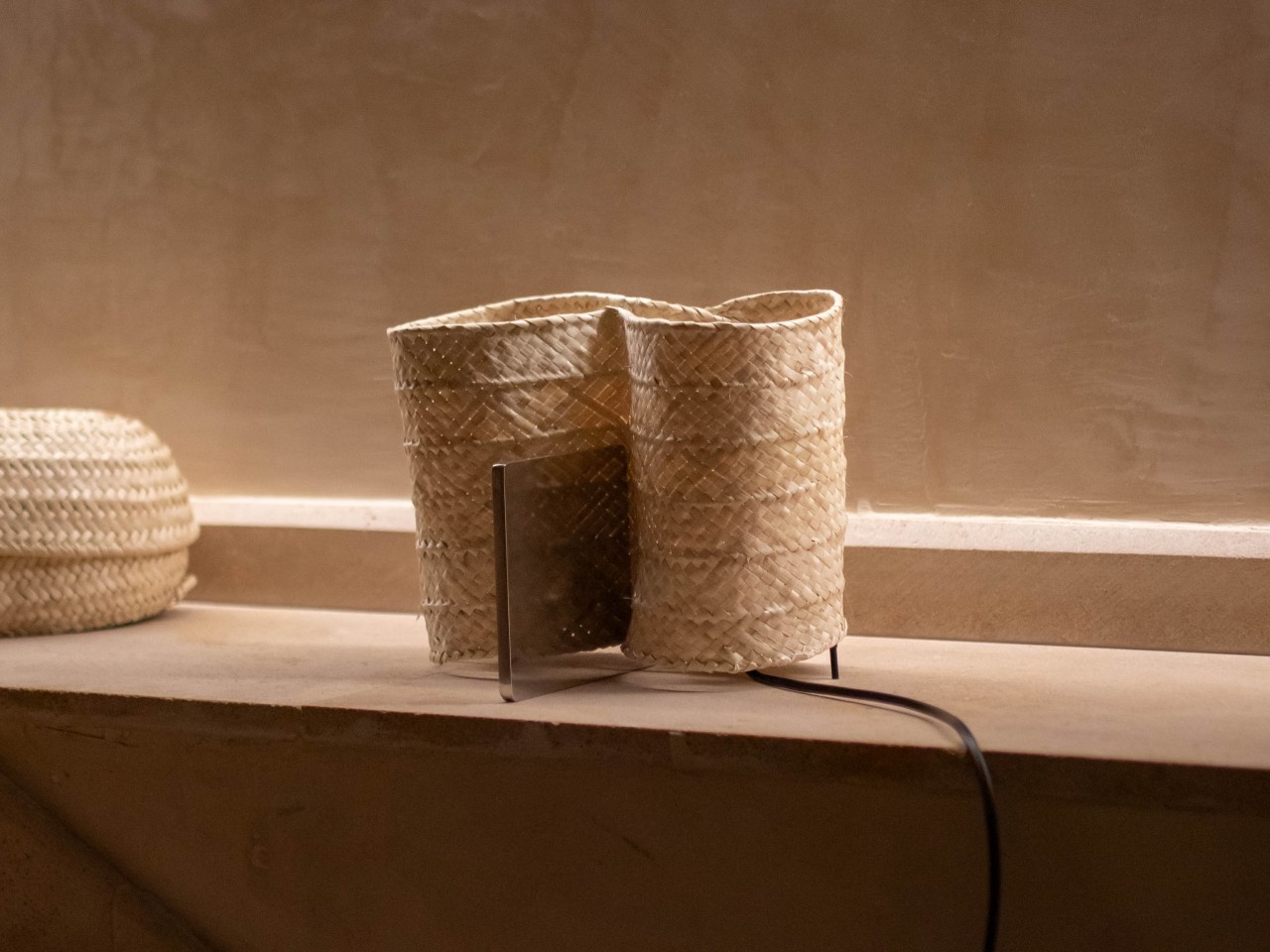
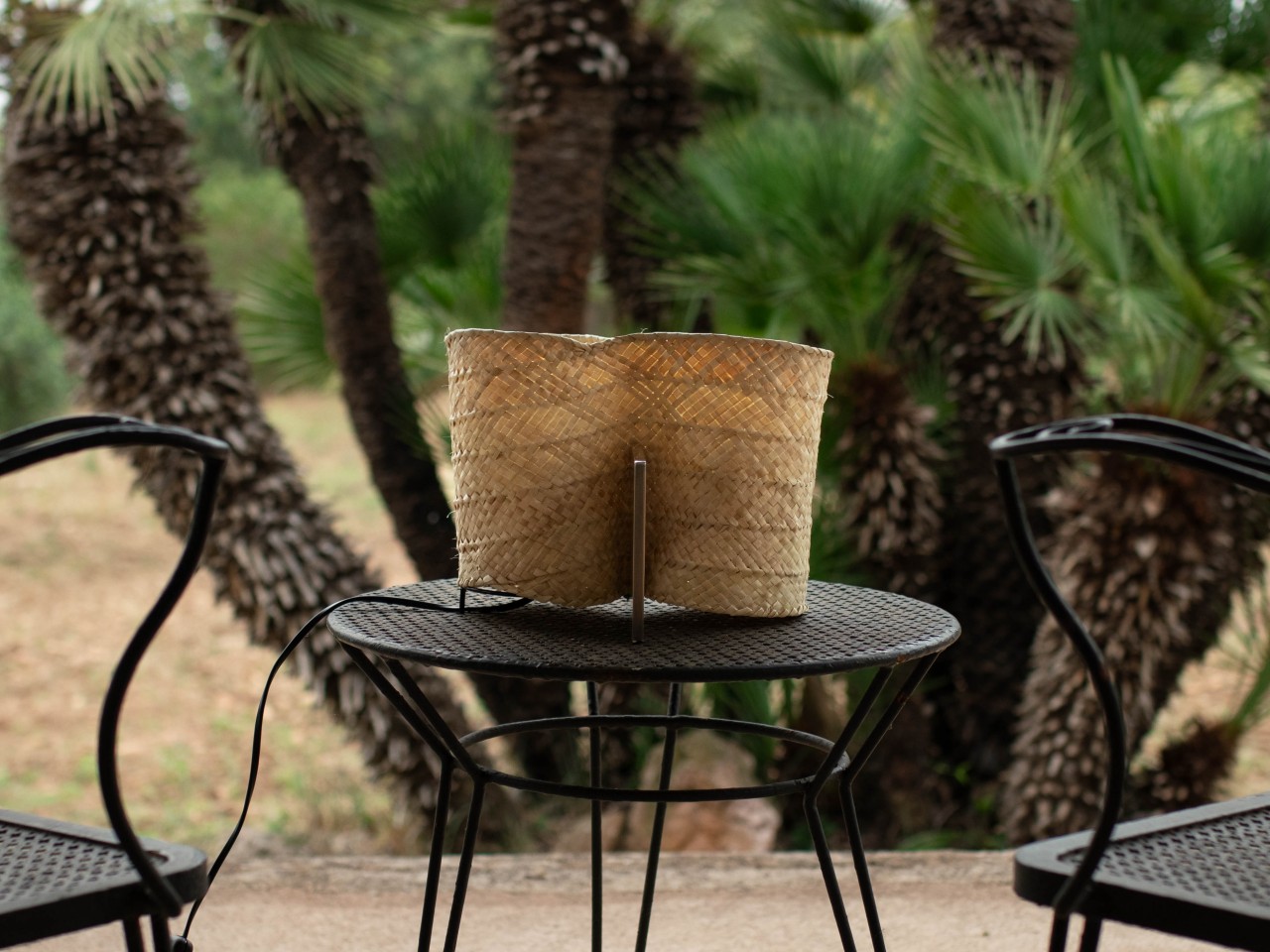
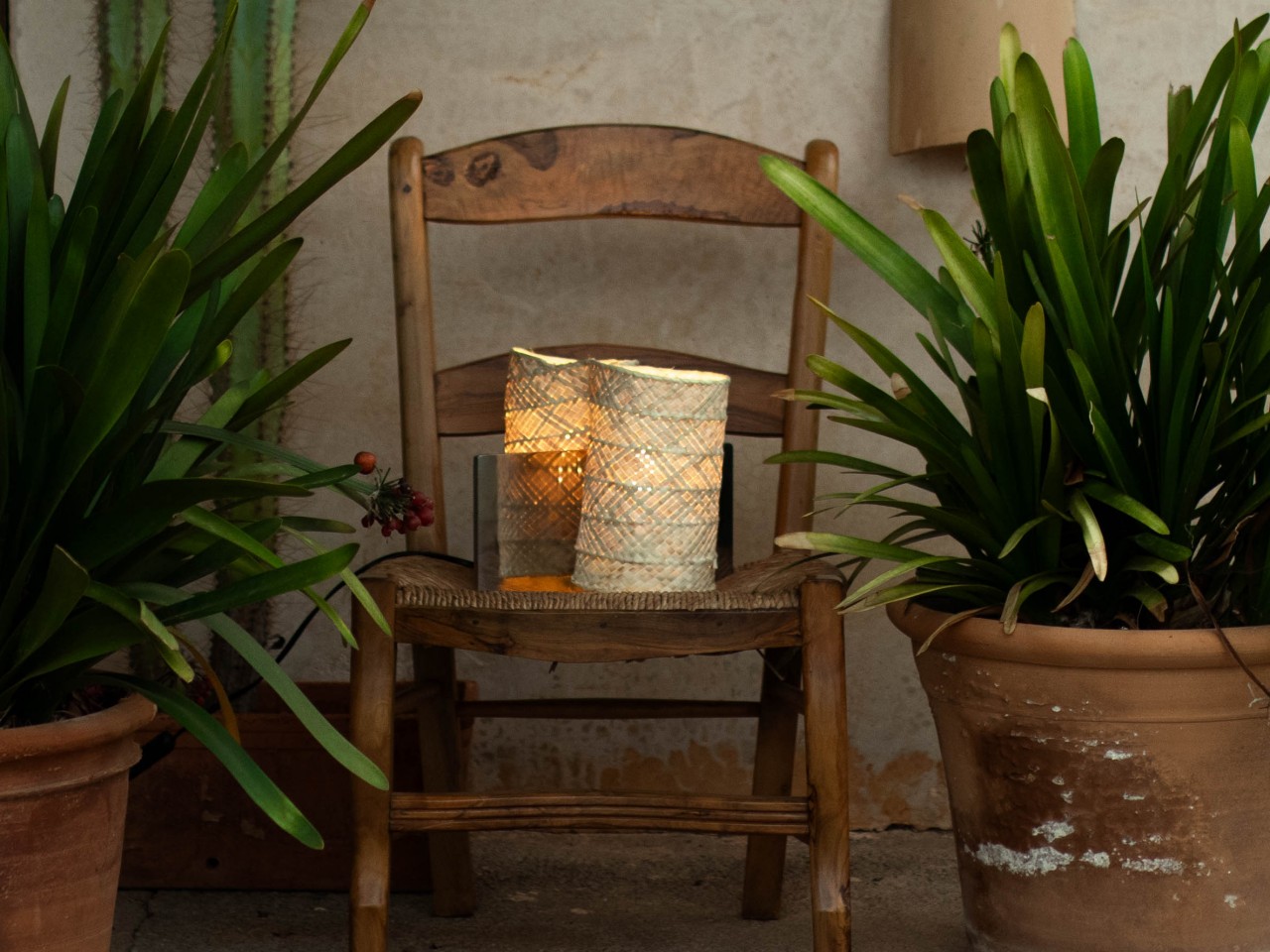
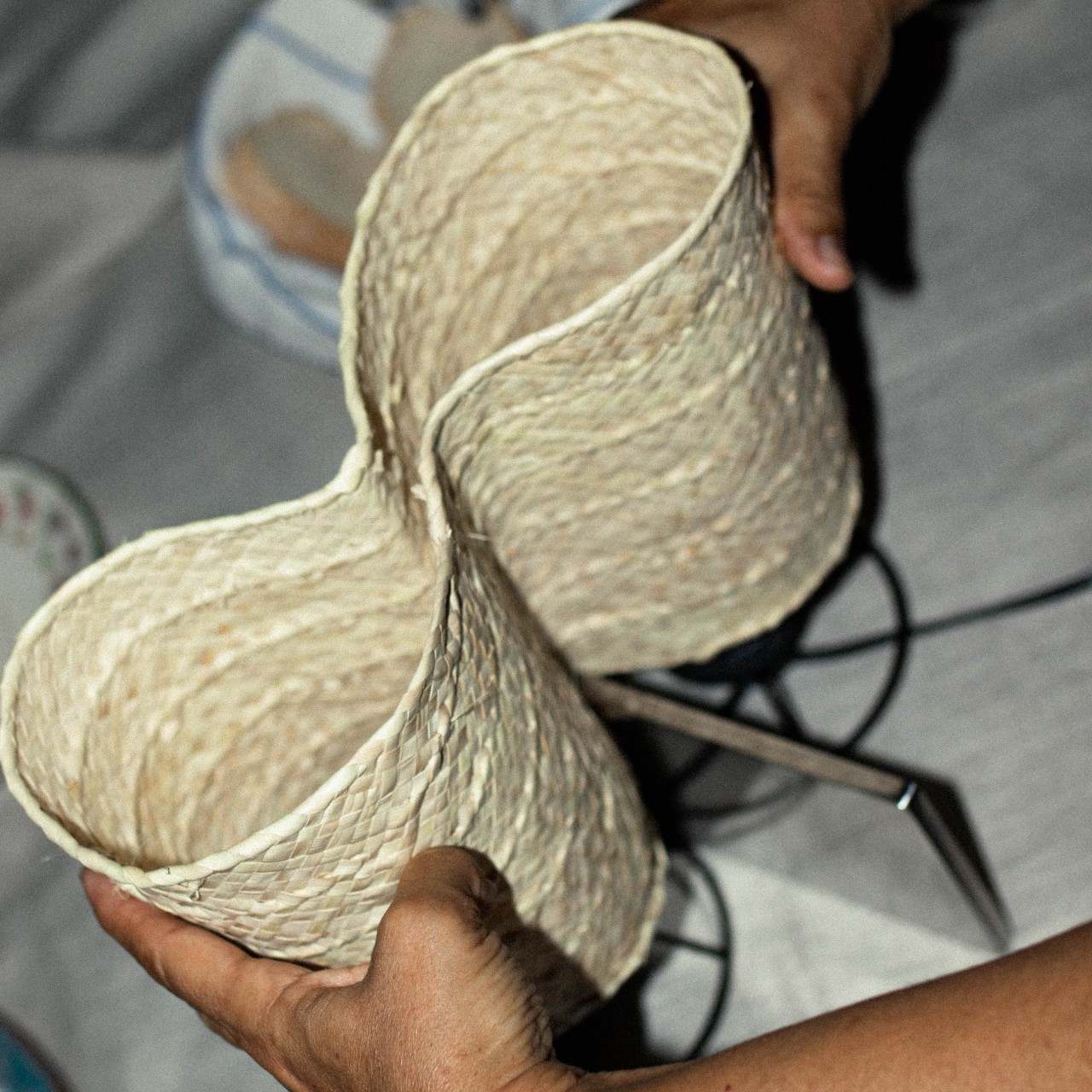
Catalina is a lamp design that does exactly this by combining ordinary lamp electronics and foundations with a lampshade that’s meticulously woven by hand. Specifically, it uses palmetto leaves and traditional weaving techniques called “llata” from Mallorca on one of Spain’s Balearic Islands. Unsurprisingly, this technique is passed down through generations and is mostly done by the women of the locale, a practice whose existence is being threatened by the rise of mass-produced furniture and lighting.

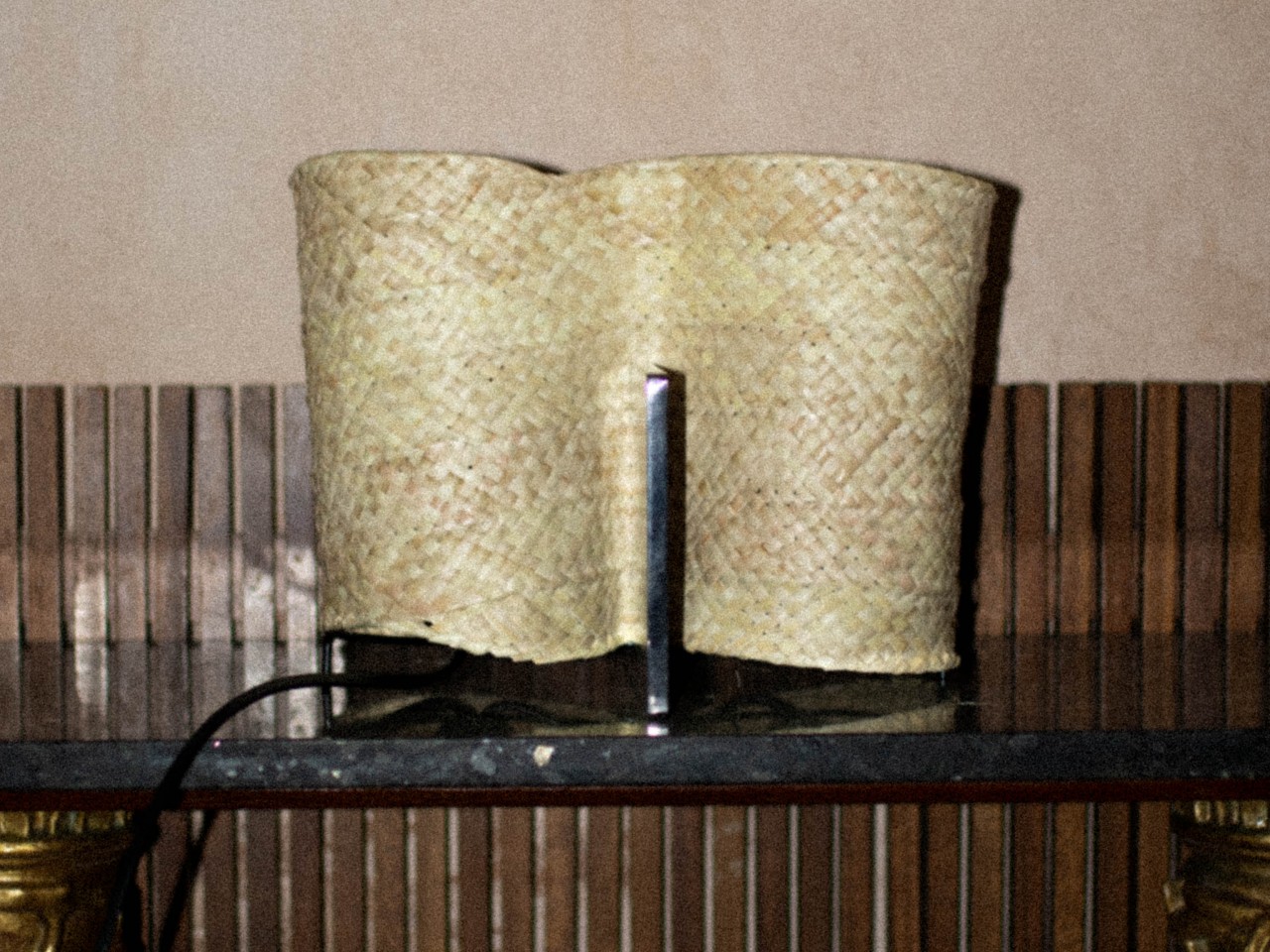
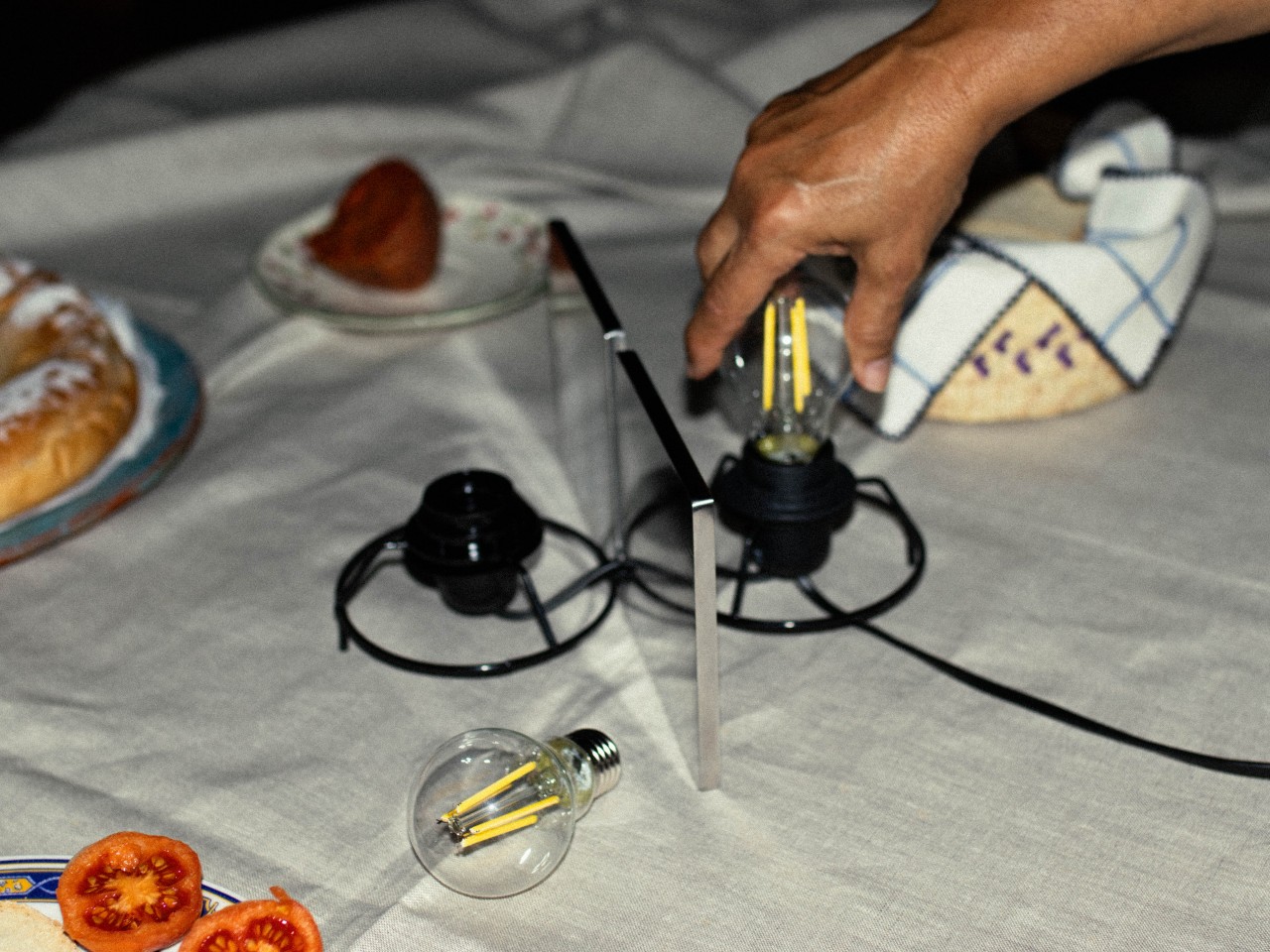
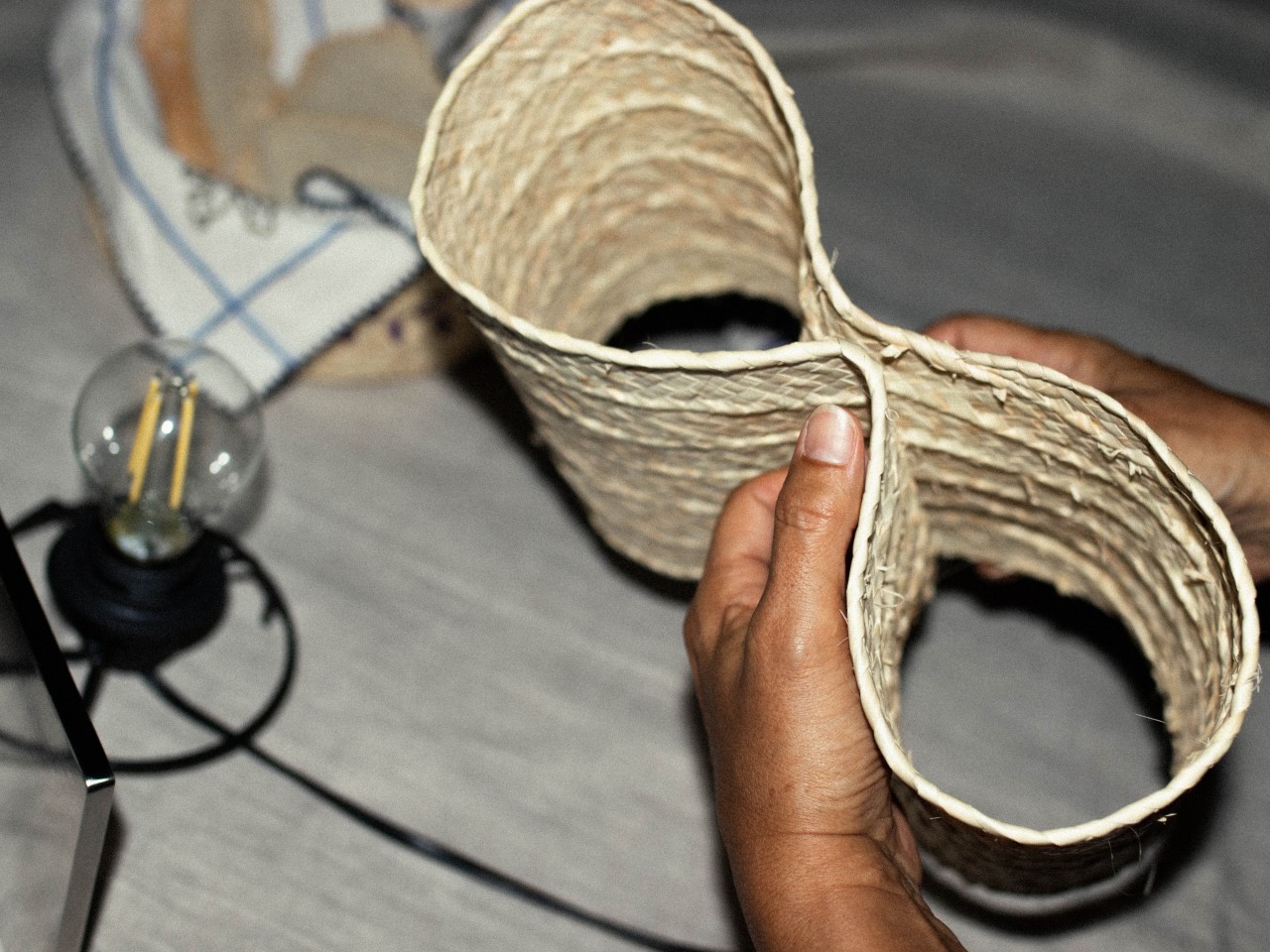
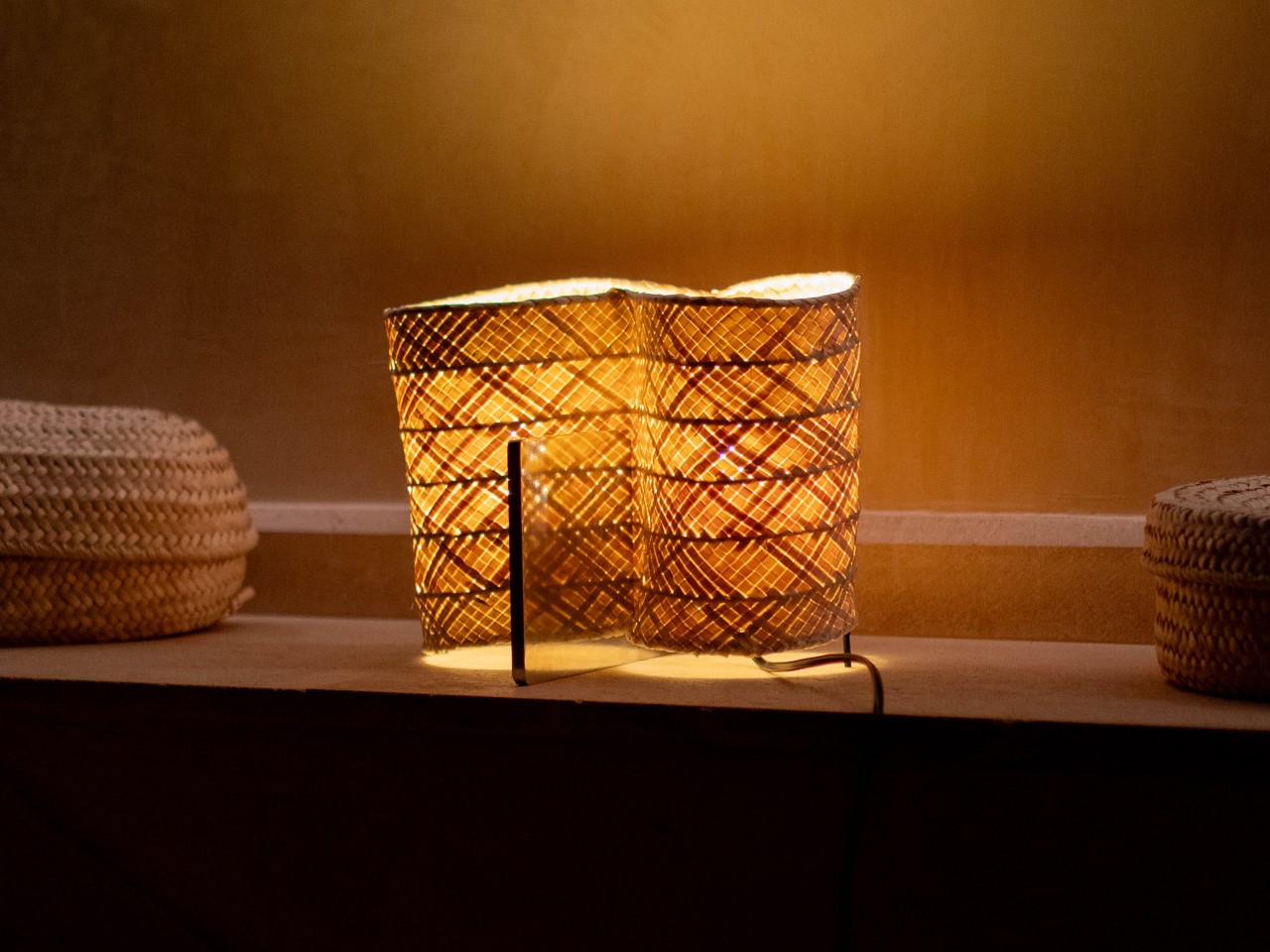
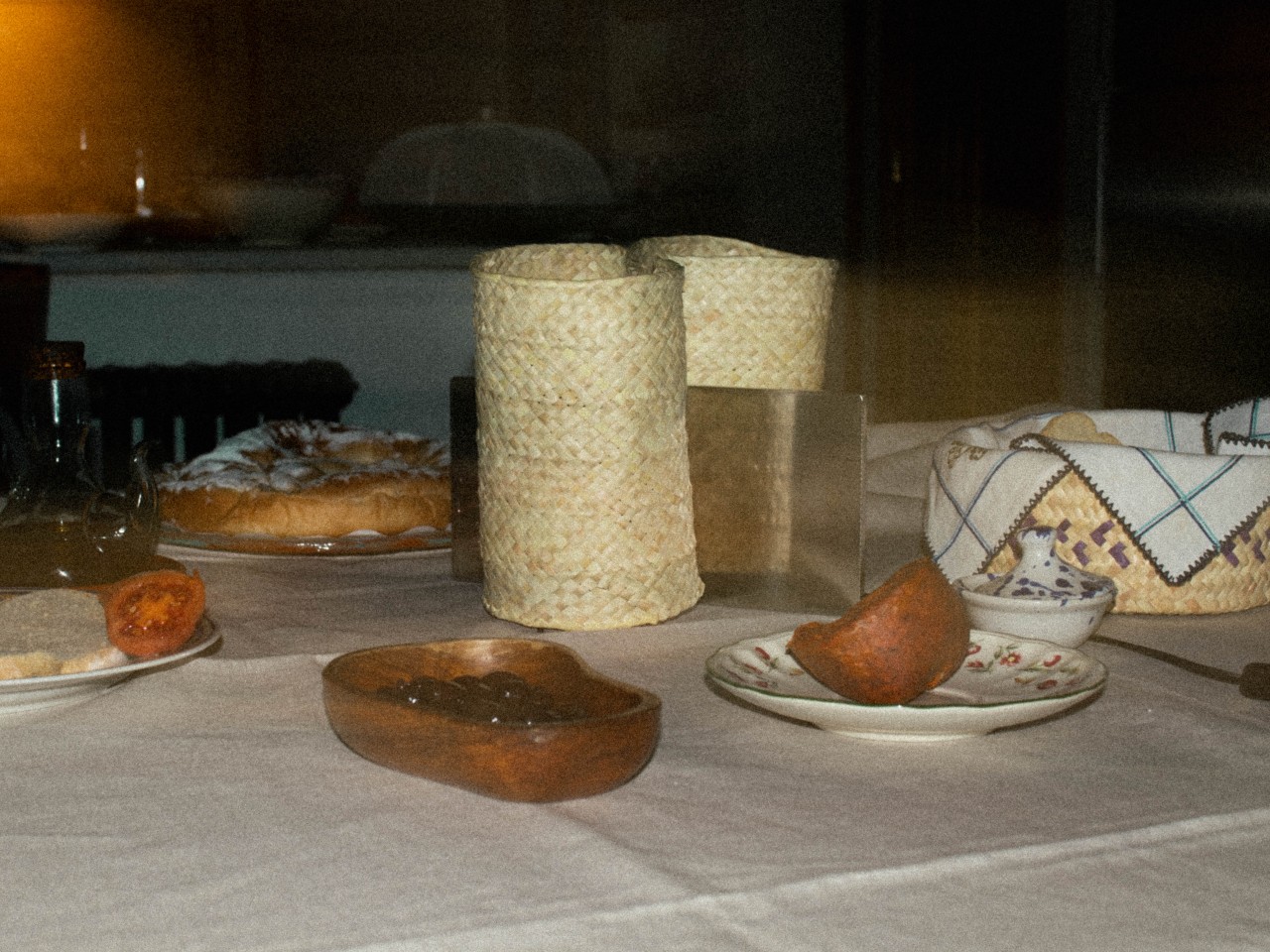
This lamp, however, illustrates the beauty that can come from the melding of past and present. The woven palm leaves form two cylindrical shapes in the form of an eight that encloses two bulbs inside each space. A gap between the two circles is filled by a transparent sheet of glass or fiberglass, serving as a diffuser for the light. The effect is a serene glow that passes through the weave like an otherworldly light.

Lamps like Catalina take time to make and are often more expensive because of the labor involved. That, however, also makes the design more special, giving it a unique character similar to a limited edition product. And unlike factory-made lampshades, these handwoven materials will have differences and imperfections, flaws that become selling points exactly because they are different from any other lamp from the same product line.

The post Woven leaf lamp concept harmonizes traditional crafts and industrial production first appeared on Yanko Design.
Mac mini wooden organizer stand uses a mini tambour door to hide your stuff

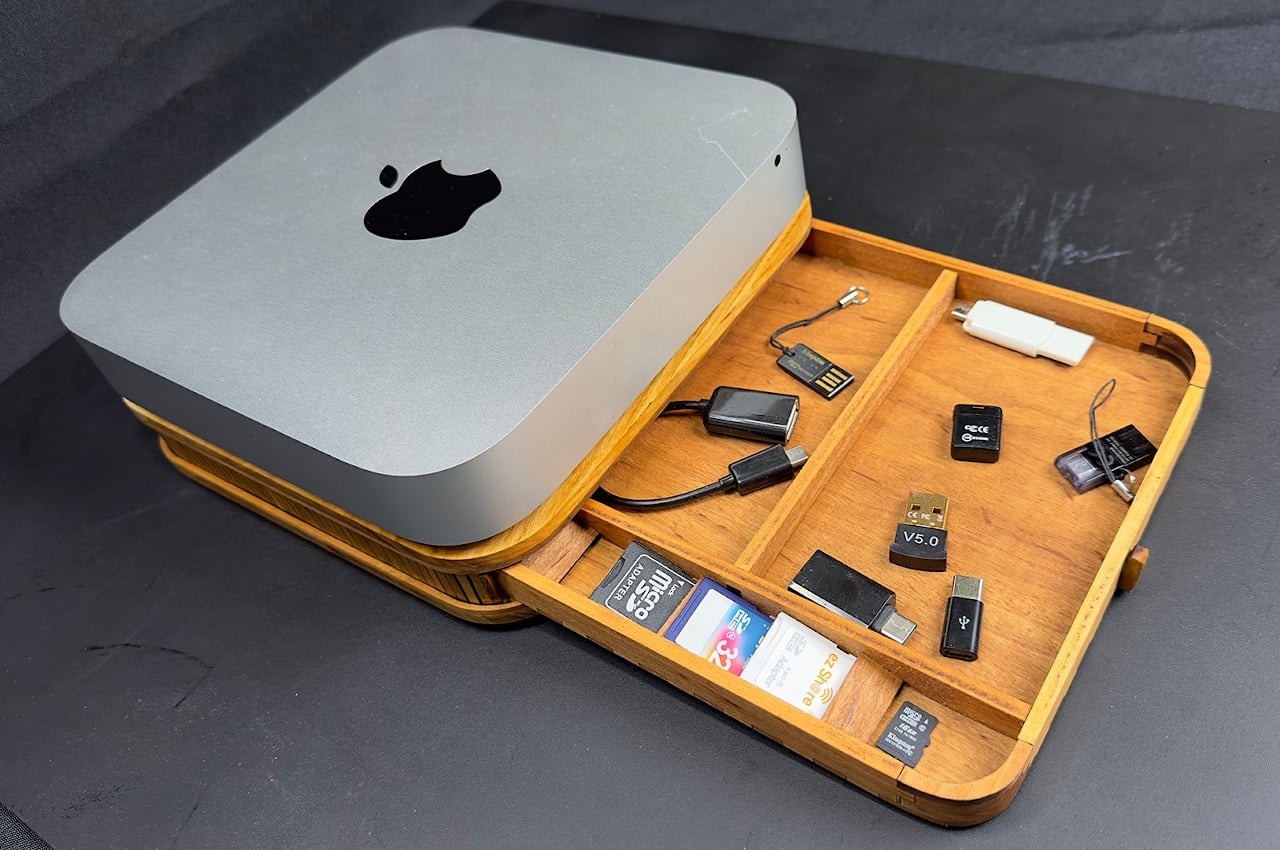
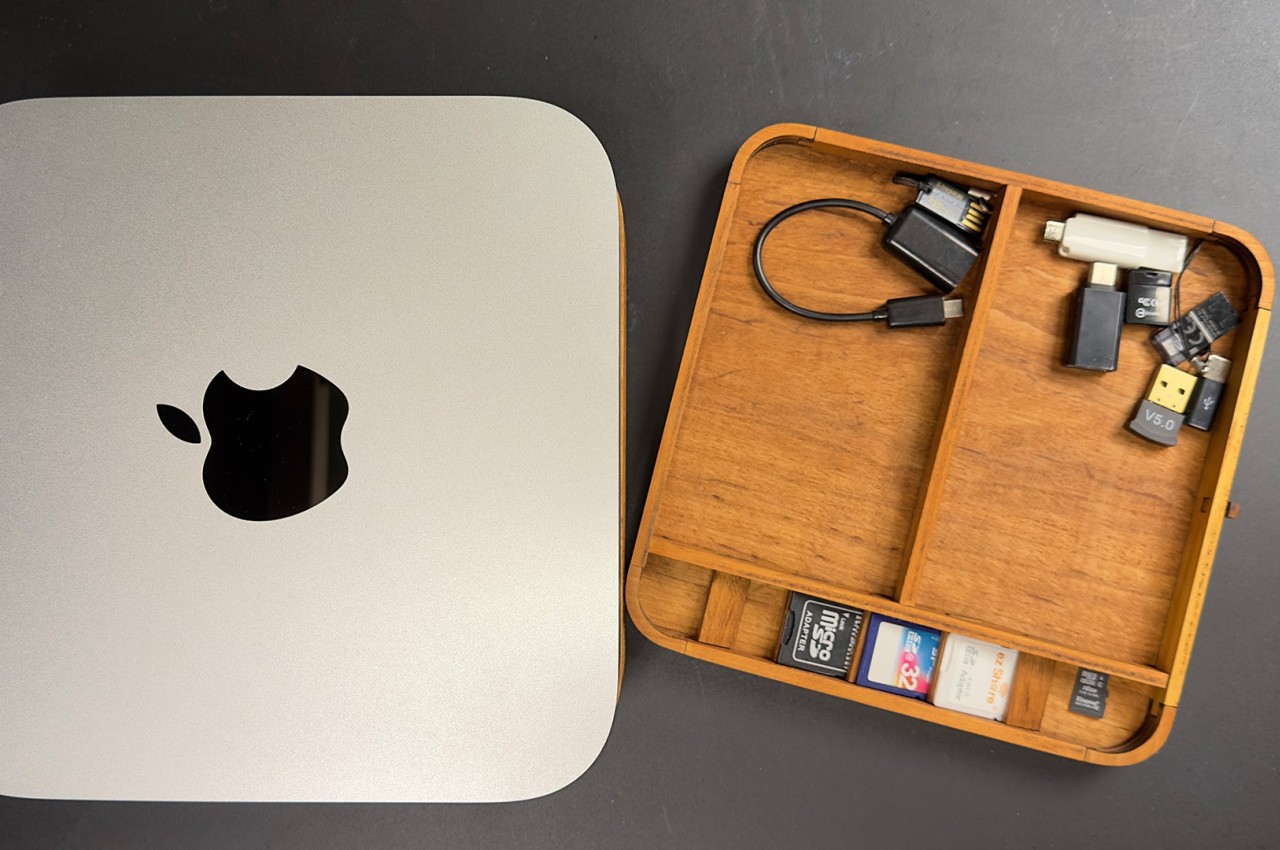
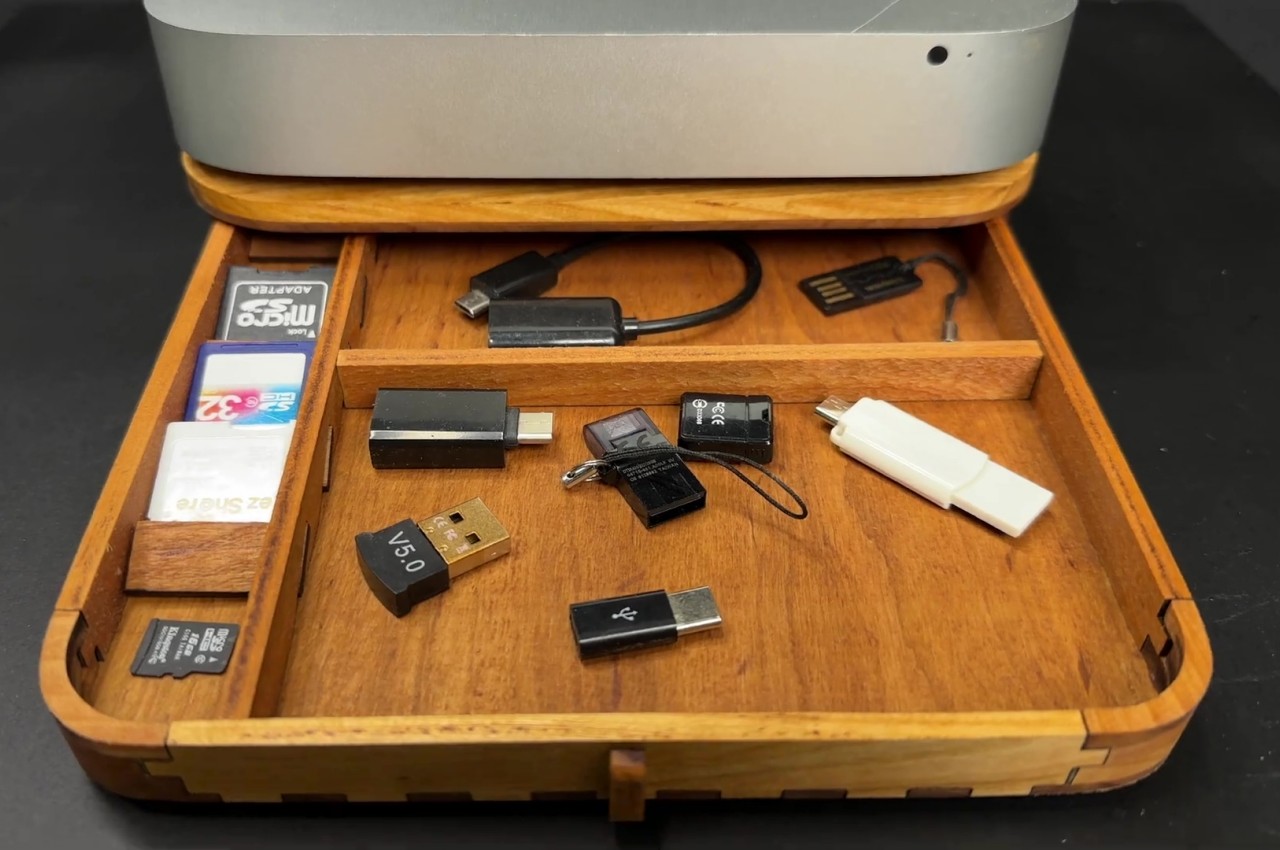
The Mac mini and its more powerful cousin, the Mac Studio, offer an Apple computing experience that prioritizes flexibility and your desk space over functionality you might not even need. Its compact form allows you to place it anywhere you want while also offering the freedom to connect any kind of monitor, keyboard, or peripheral you need to get done. At the same time, however, the mini PC form factor doesn’t have enough space to keep all these external devices always connected, and you will often find yourself repeatedly attaching and detaching bits and pieces as you work. Over time, these dongles, cards, and whatnot start to pile up and make a mess on your desk, which is where this handmade wooden organizer and riser comes in, offering a uniquely elegant solution to keep those tiny objects out of sight and out of mind.
Designer: Kostiantyn Andriiuk

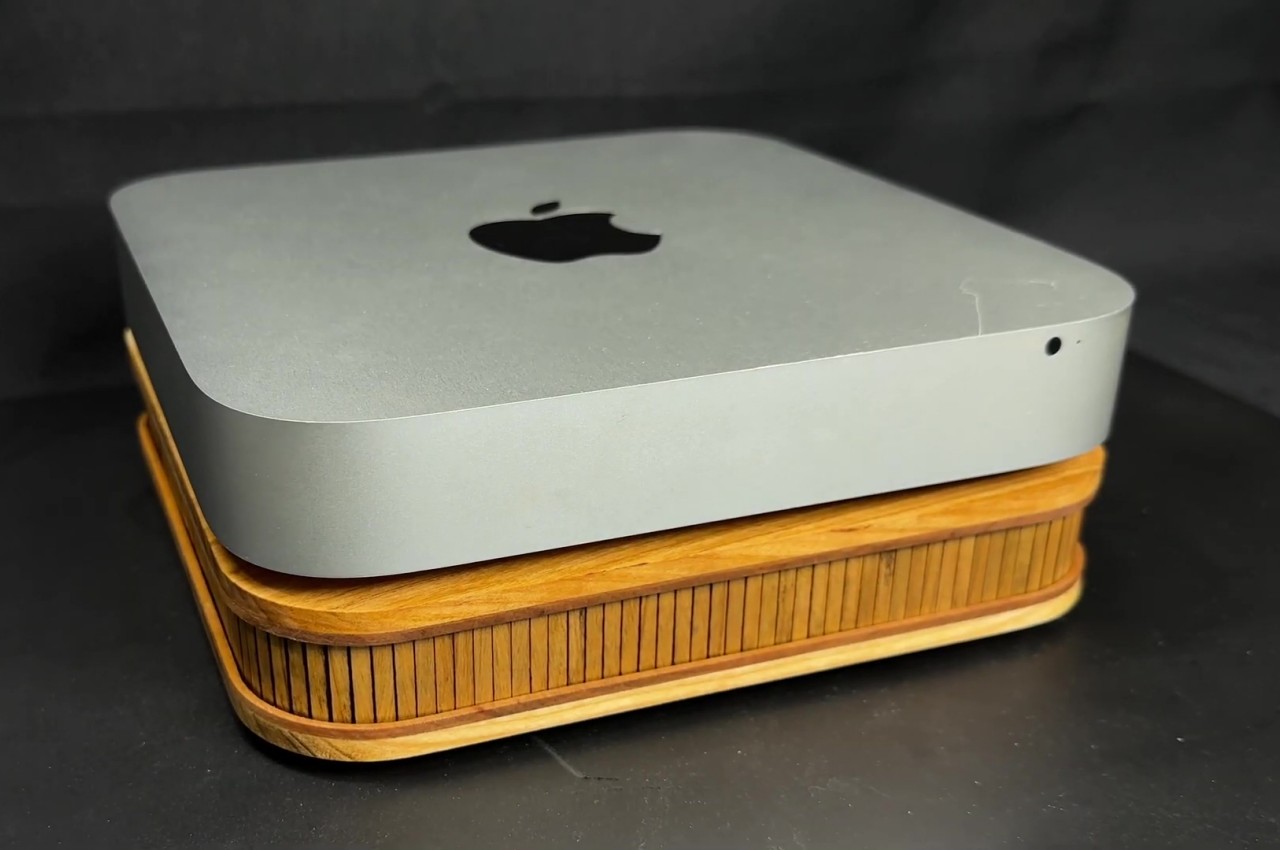
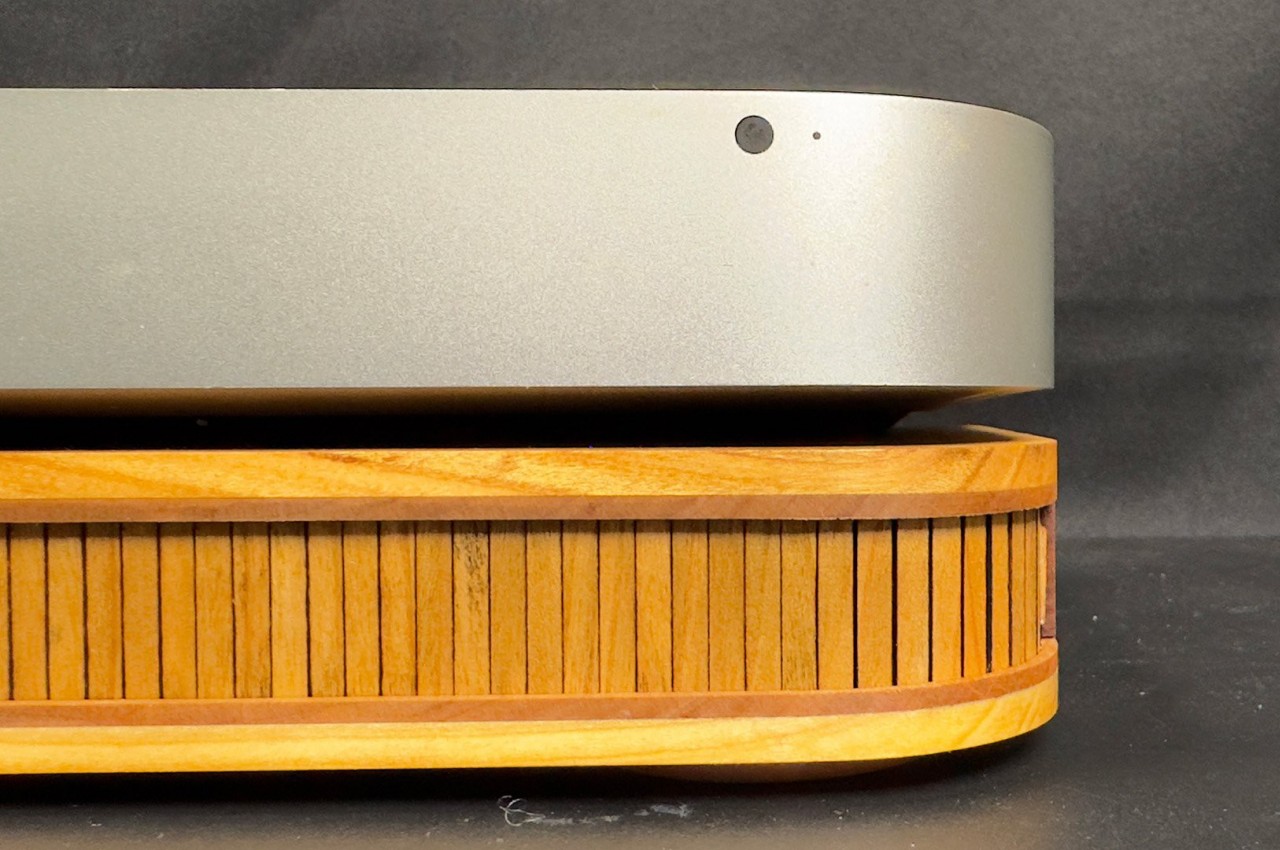
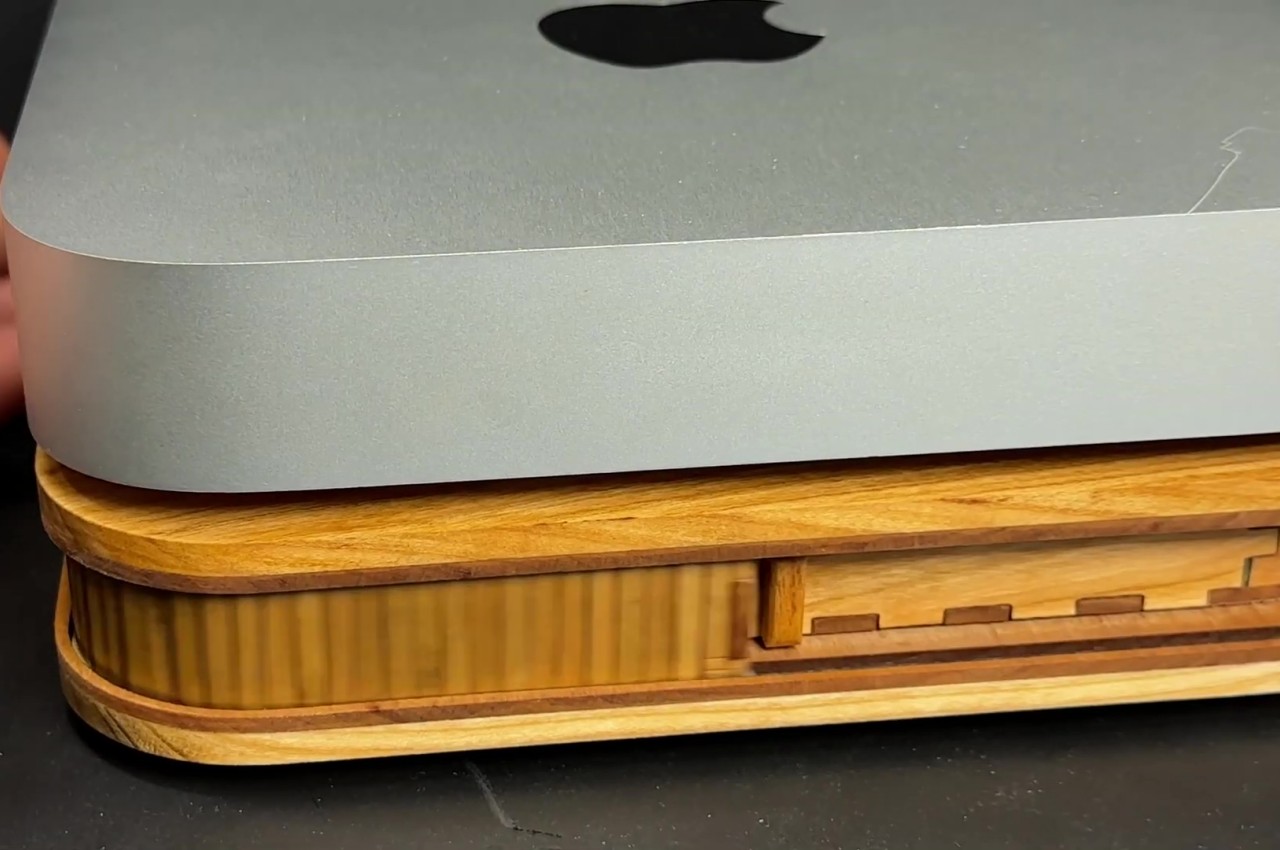
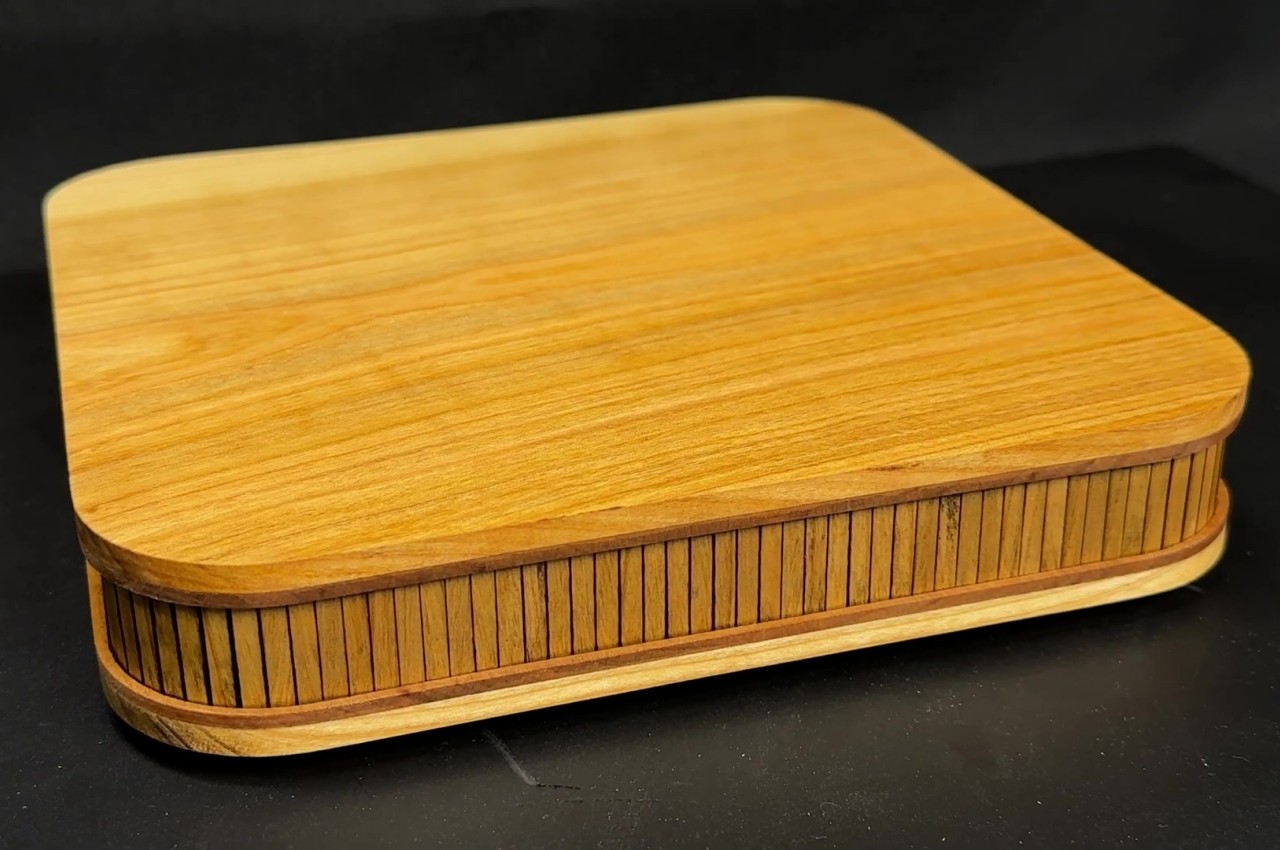
Although Apple designed the Mac Mini and Mac Studio to stand on their own, there are some desk setups and designs that require elevating these minimalist boxes a bit higher. In fact, their small bodies make it easy to place them on top of anything, but that doesn’t mean they’ll look good on it unless that “thing” was specifically made for the mini Macs. This handcrafted riser is made to match the dimensions of the Mac mini and elevates the metal box not just in height but also in style.

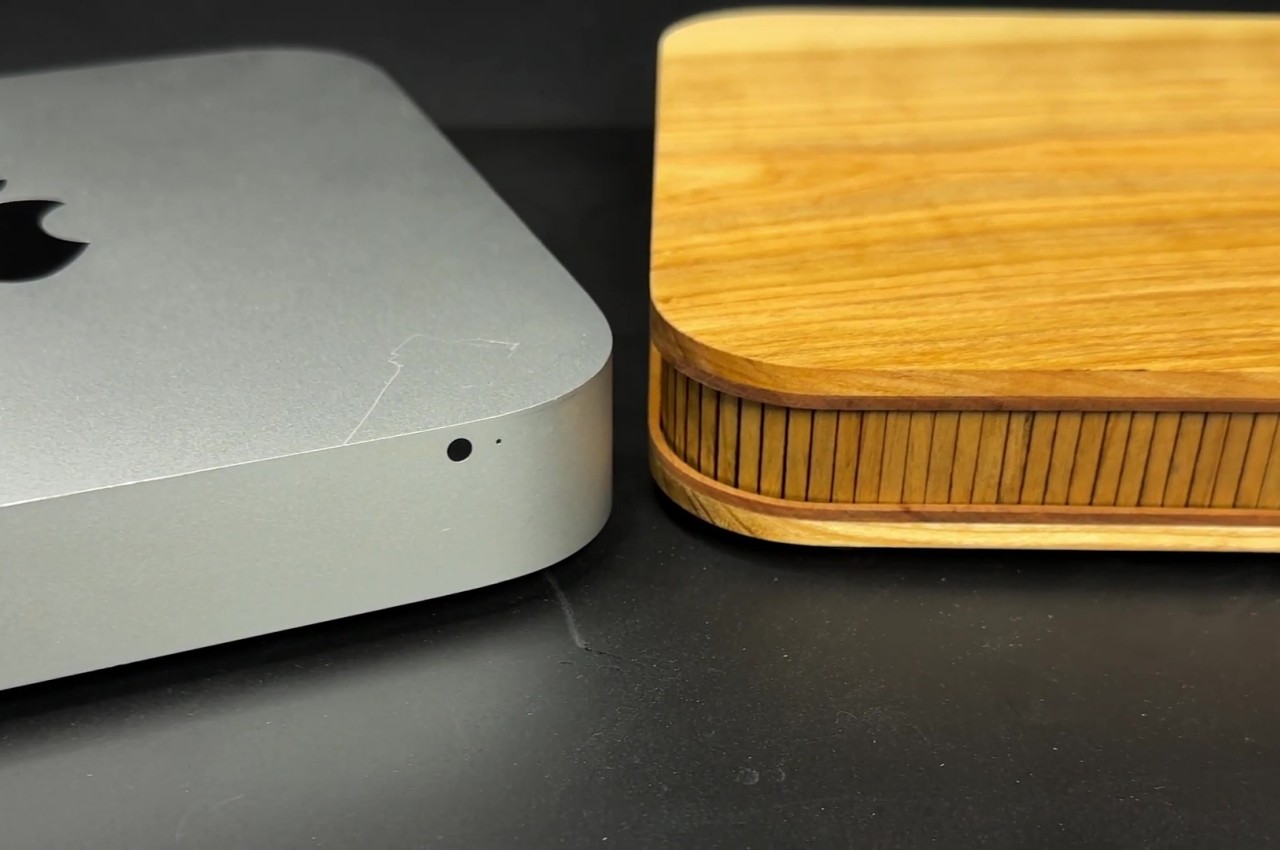
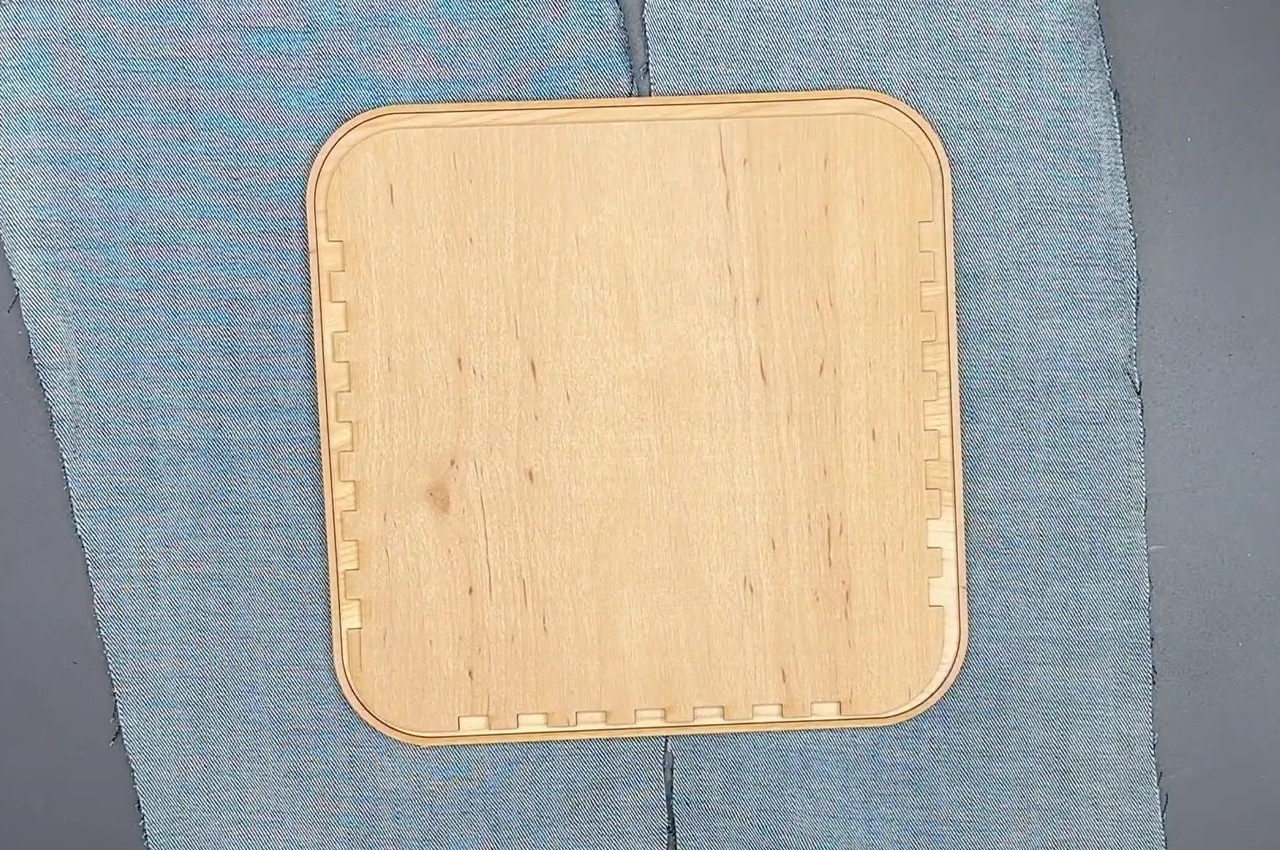
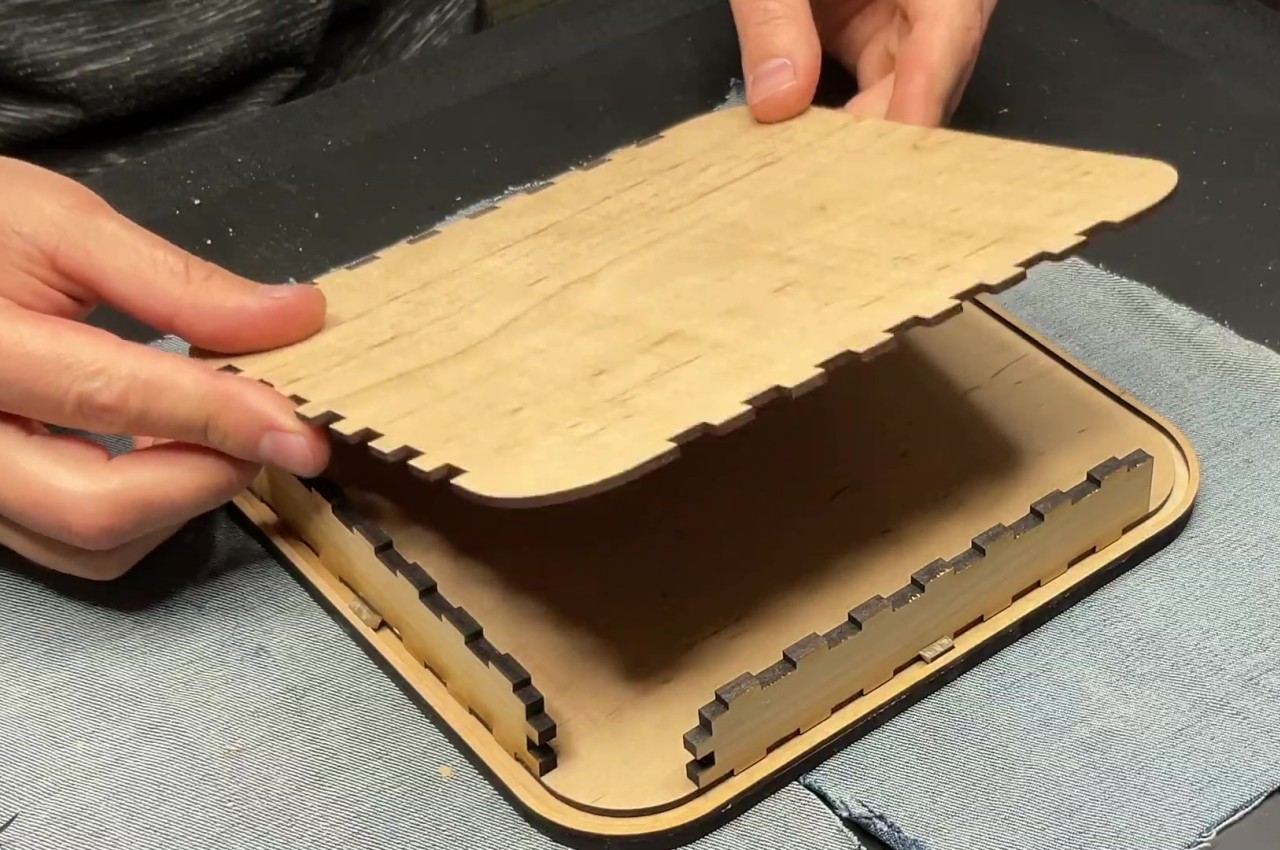
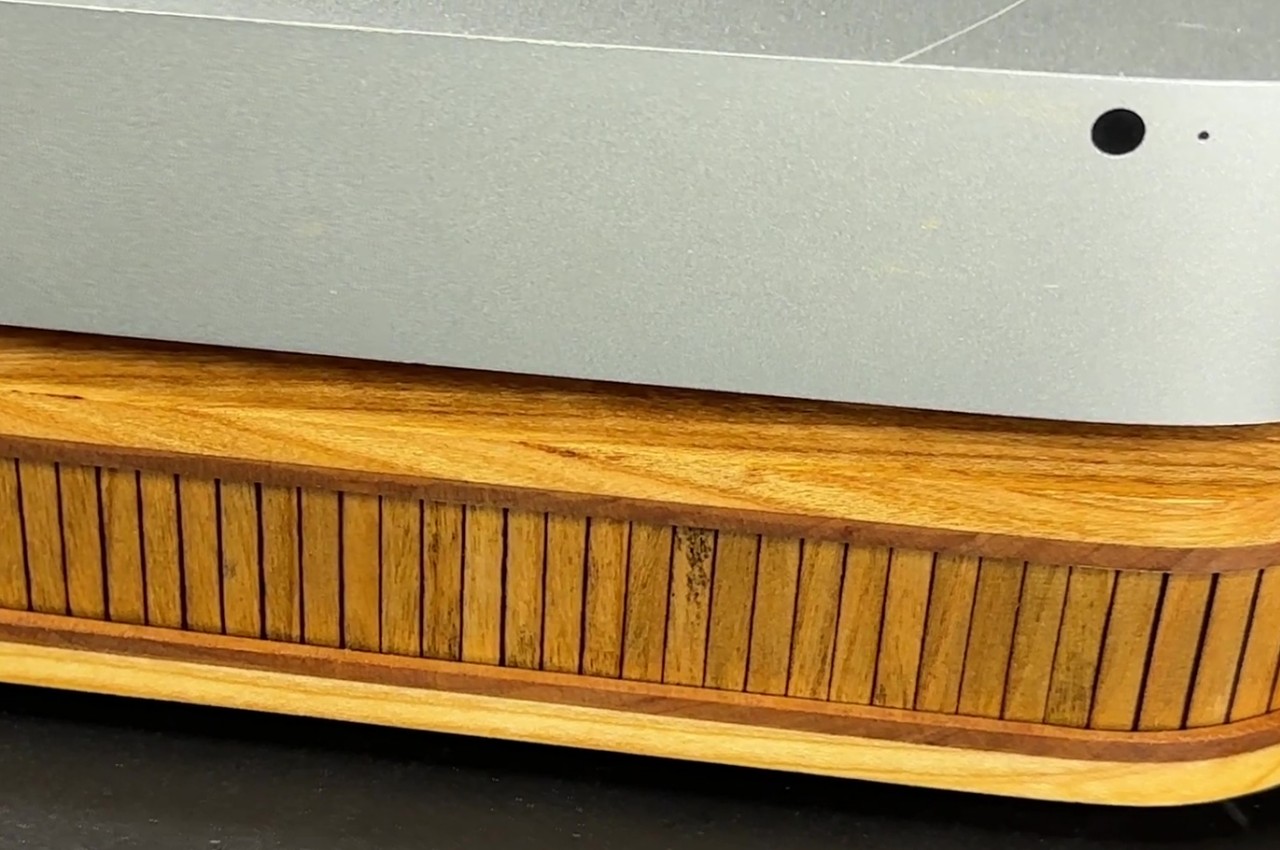
Made from Cherry and Alder veneers, the wooden stand exudes a warmth that contrasts with the cold silver exterior of the Mac mini while also perfectly complementing it at the same time. Both pieces carry an air of elegance, despite their different materials and creation processes. While the Mac mini is mass-produced in a factory, each piece of this wooden riser was measured and crafted manually.

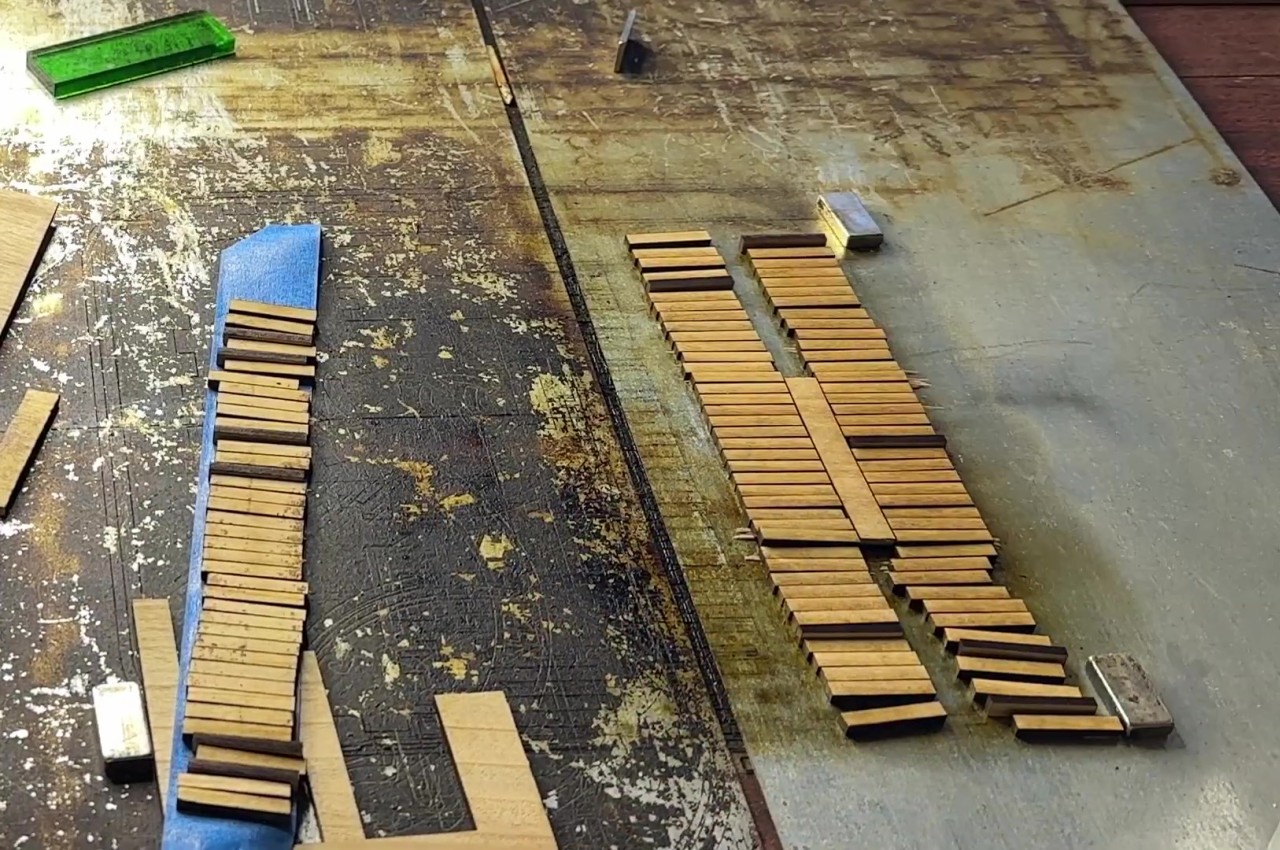
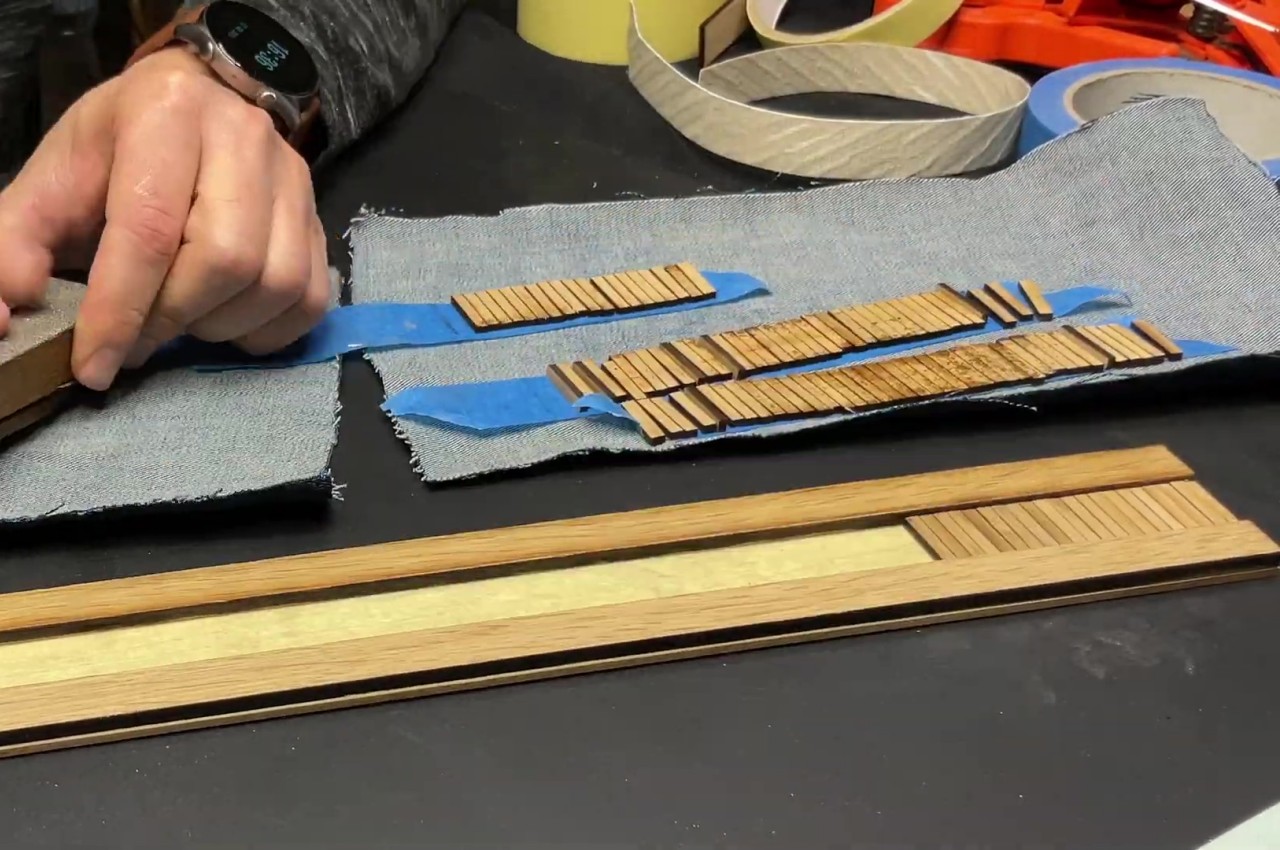
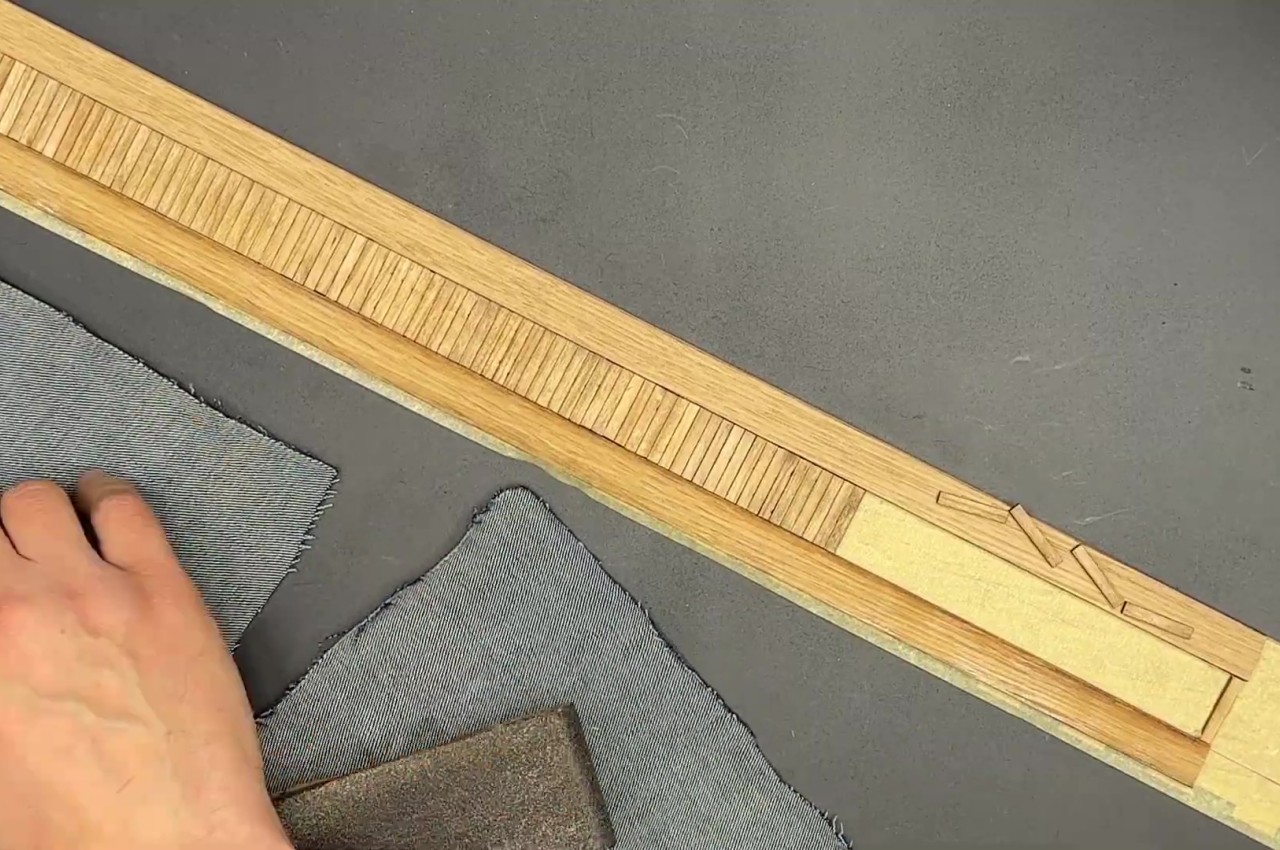
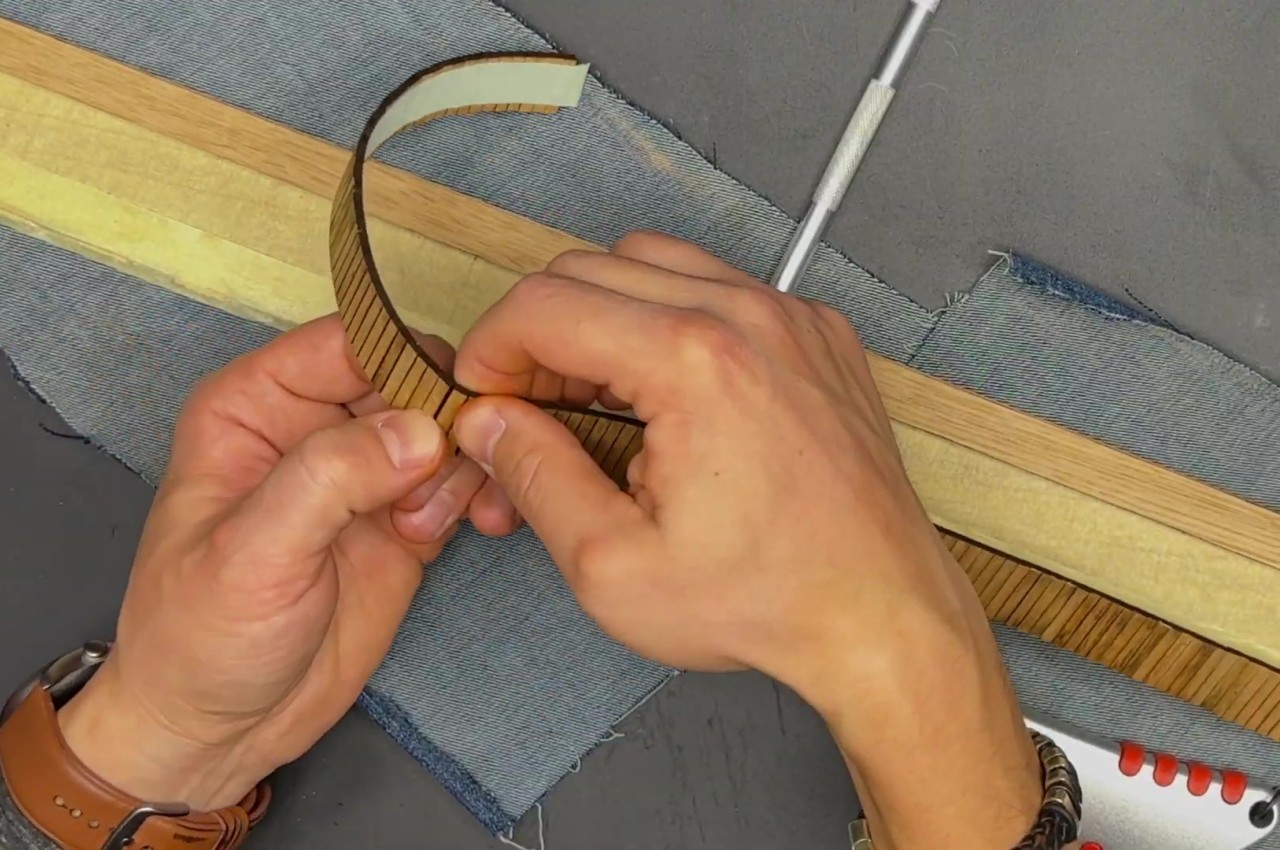
The most interesting part of the riser, however, is the drawer inside that’s hidden behind a tambour door. Unlike a simple organizer that exposes its container for everyone to see, you have to slide the row of vertical slats out of the way first before you can pull out the drawer. The mechanism offers functionality that doesn’t take away anything from the design’s aesthetics, a philosophy that is perfectly in line with Apple’s own approach to designing products.

The design for this unique and distinctive tambour organizer stand is fortunately available for everyone to follow, but the painstaking process will probably scare all but the most seasoned makers. That said, it could be a source of inspiration for other accessory makers to make their own spin on the idea, especially the brands that pay a lot of meticulous attention to details, materials, and finishes that would perfectly match an Apple product.

The post Mac mini wooden organizer stand uses a mini tambour door to hide your stuff first appeared on Yanko Design.