700 Interlocking Pieces, No Glue: The Pavilion That Quietly Disappears

Temporary architecture has a habit of arriving with a big idea and leaving behind a pile of materials. A pavilion can look thoughtful for a few weeks, then become somebody else’s disposal problem. That tension is what makes Woven, a temporary structure by Atelier DARN in Spain’s Les Gavarres landscape, worth a closer look. It treats the end of a building’s life as a design question, not an awkward detail to be handled after the photographs are taken.

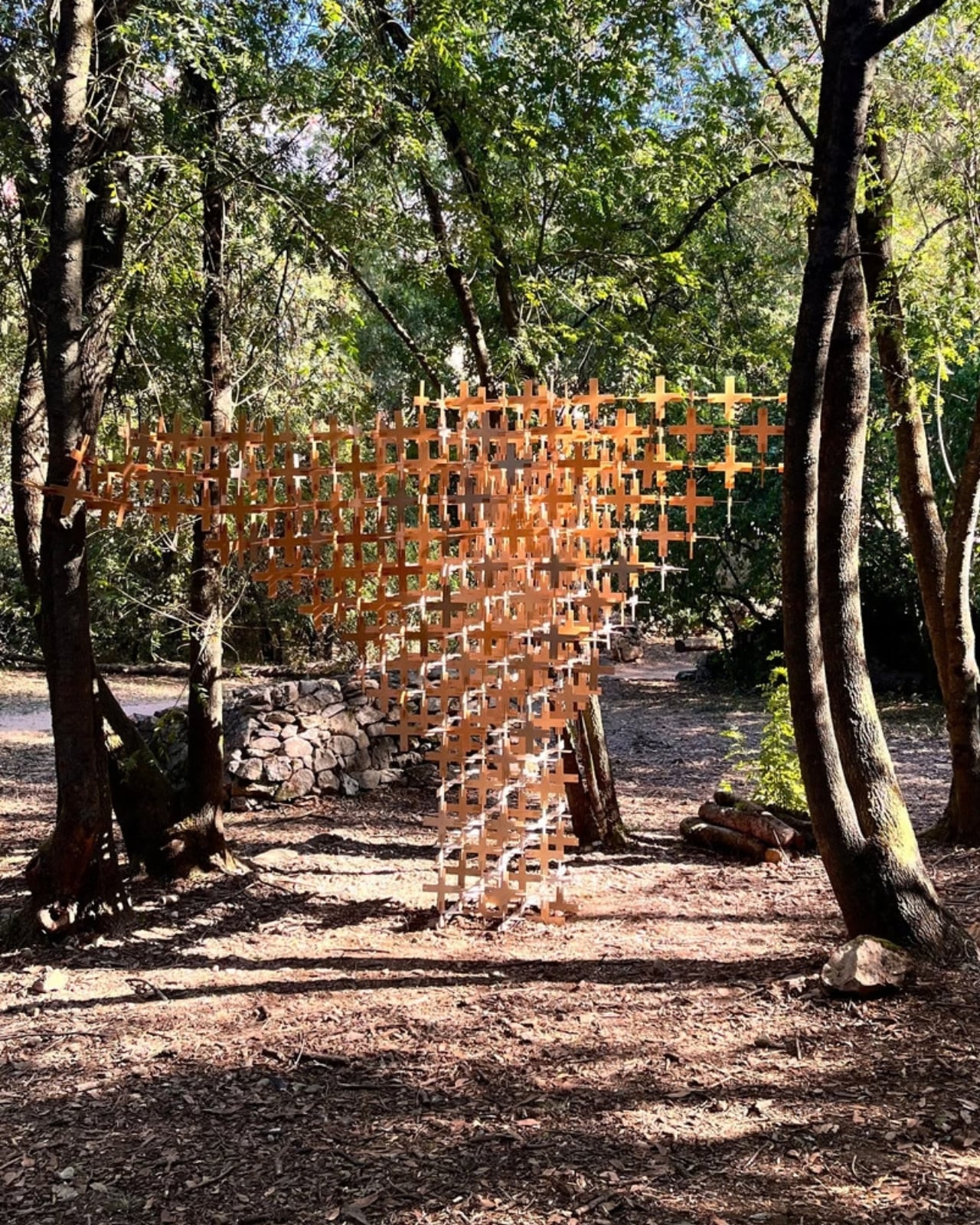
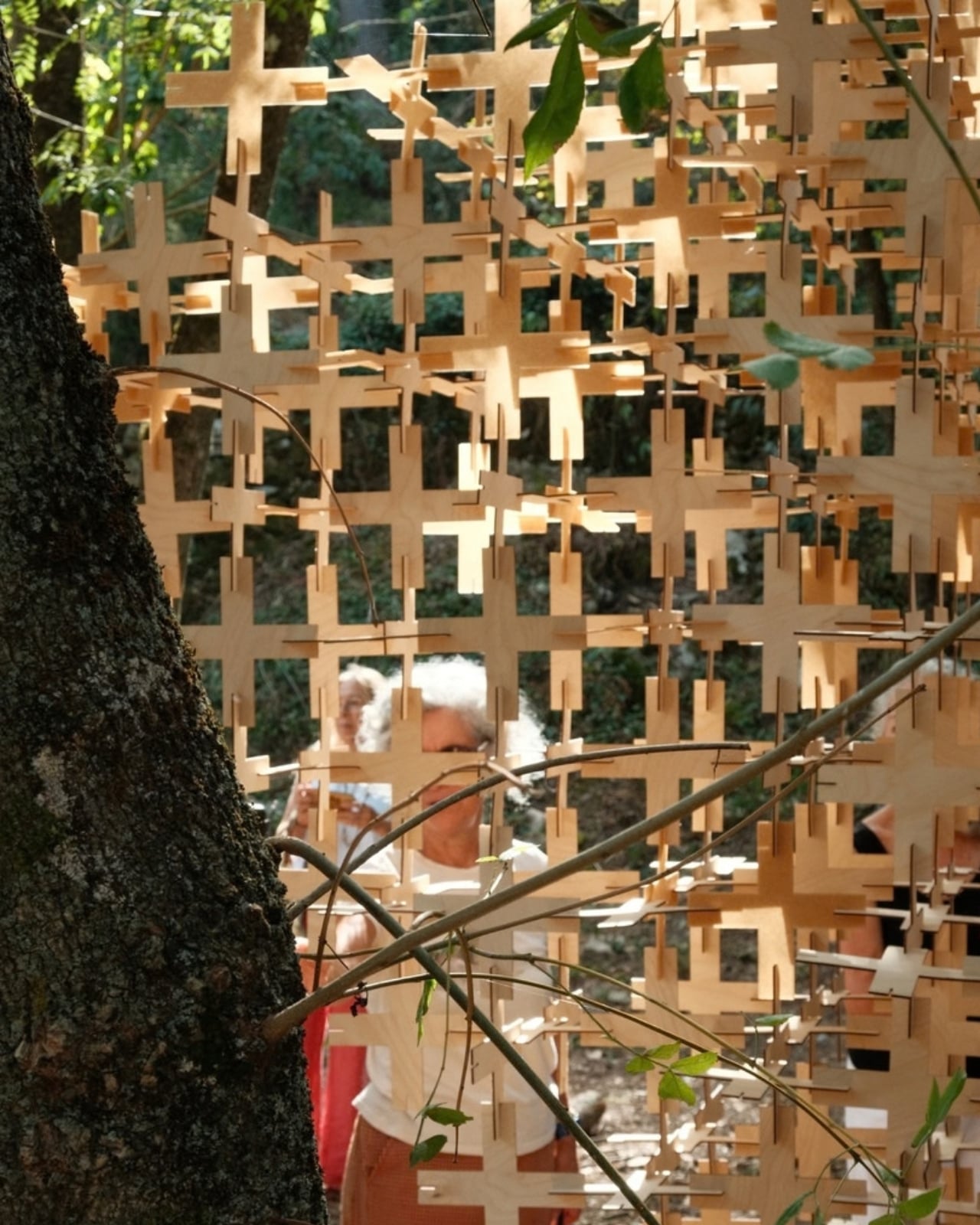
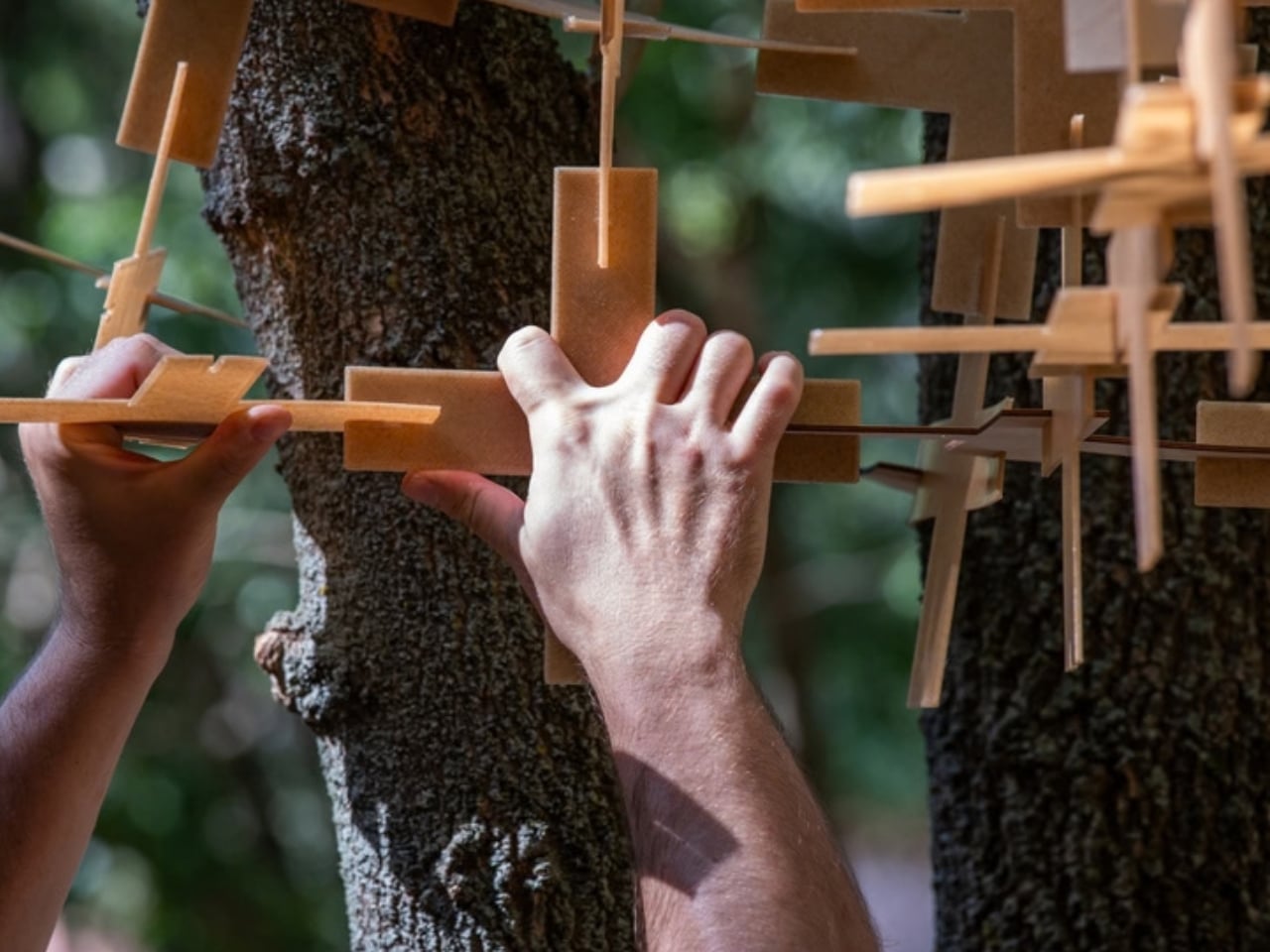
Atelier DARN’s answer is a pavilion made from wood and roughly 700 modular pieces 3D-printed with a biodegradable filament derived from miscanthus, a grass. The pieces interlock, so the structure needs no glue or rope to hold its woven form together. The design also avoids synthetic materials in its assembly. Those decisions address a practical problem: how to make a temporary place without relying on permanent bonds that complicate what happens when it comes apart.

Designer: Atelier DARN
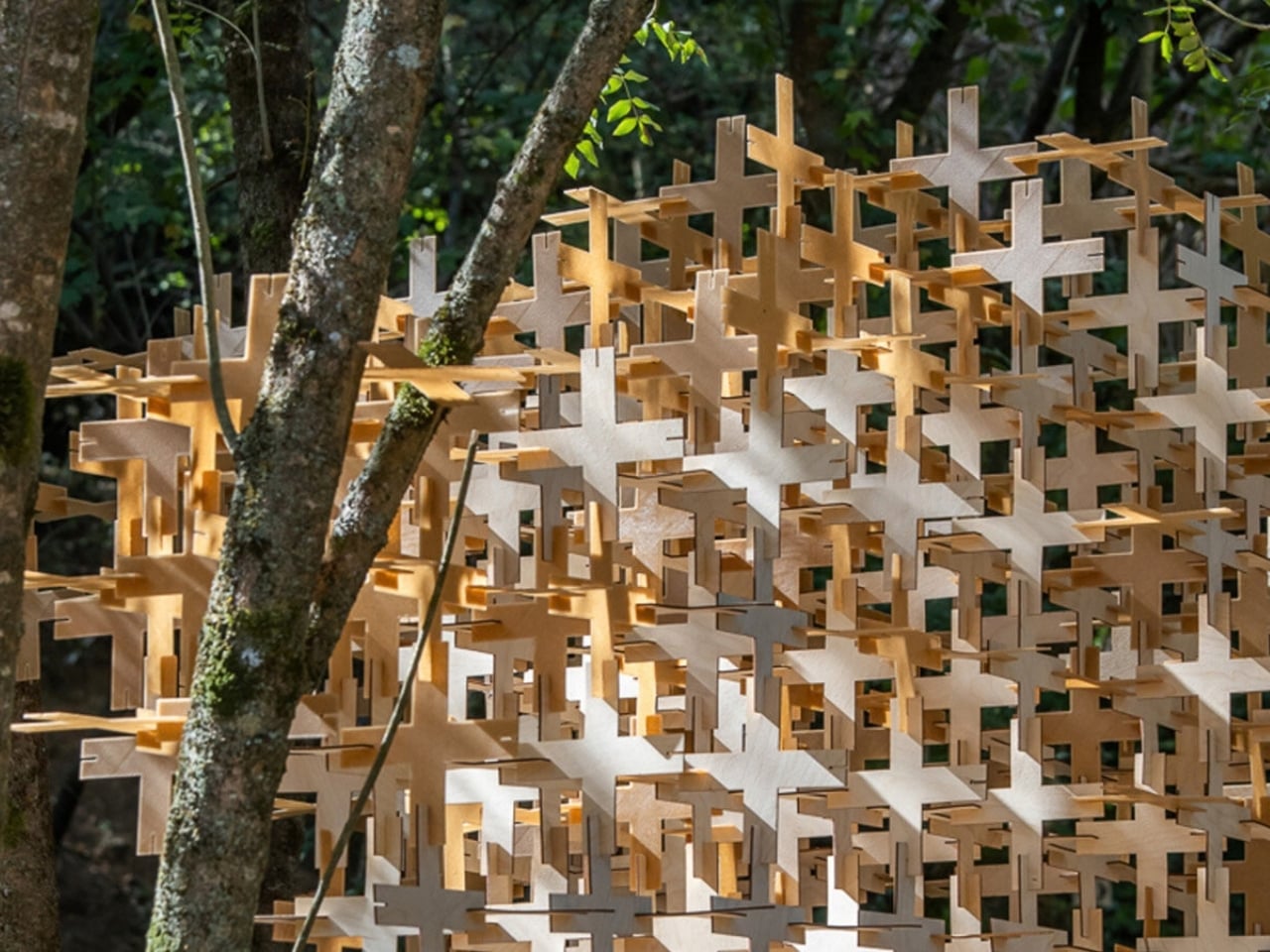
I like that Woven doesn’t appear to apologize for being temporary. Its open pattern climbs from the forest floor toward the trees, looking less like a sealed-off destination than a loose conversation with the landscape. You can see the individual pieces doing their work. That visibility matters. A lot of sustainable design asks us to trust an invisible calculation, but here the construction method is part of what you experience. The pavilion lets its joints make the argument.

The 3D printing is interesting for the same reason. It isn’t being used to produce an impossibly smooth shape that could only have come from a machine. It helps make repeated, cross-shaped components that fit together to create a larger structure. The result pairs a digital fabrication process with a familiar idea: weaving. That combination feels more useful to me than treating new technology as a spectacle in its own right. The technology earns its place by solving a connection problem.
Woven is also meant to change. Weathering and decomposition are part of its intended life cycle, rather than signs that the design has failed. That is an unusually generous way to think about an outdoor structure. We often expect architecture to keep looking like its opening-day photographs, even when it was built to stay for only a short time. Here, the passing of time gets a role in the design instead of being edited out.

That doesn’t mean the word “biodegradable” answers every environmental question. How a material breaks down depends on its conditions, and a project’s full impact includes making the parts and deciding what happens to them afterward. Woven doesn’t need to be a perfect model of sustainability to be worth studying. Its more convincing contribution is narrower: it shows how material choice and the way pieces connect can be considered together, early enough to shape the design itself.
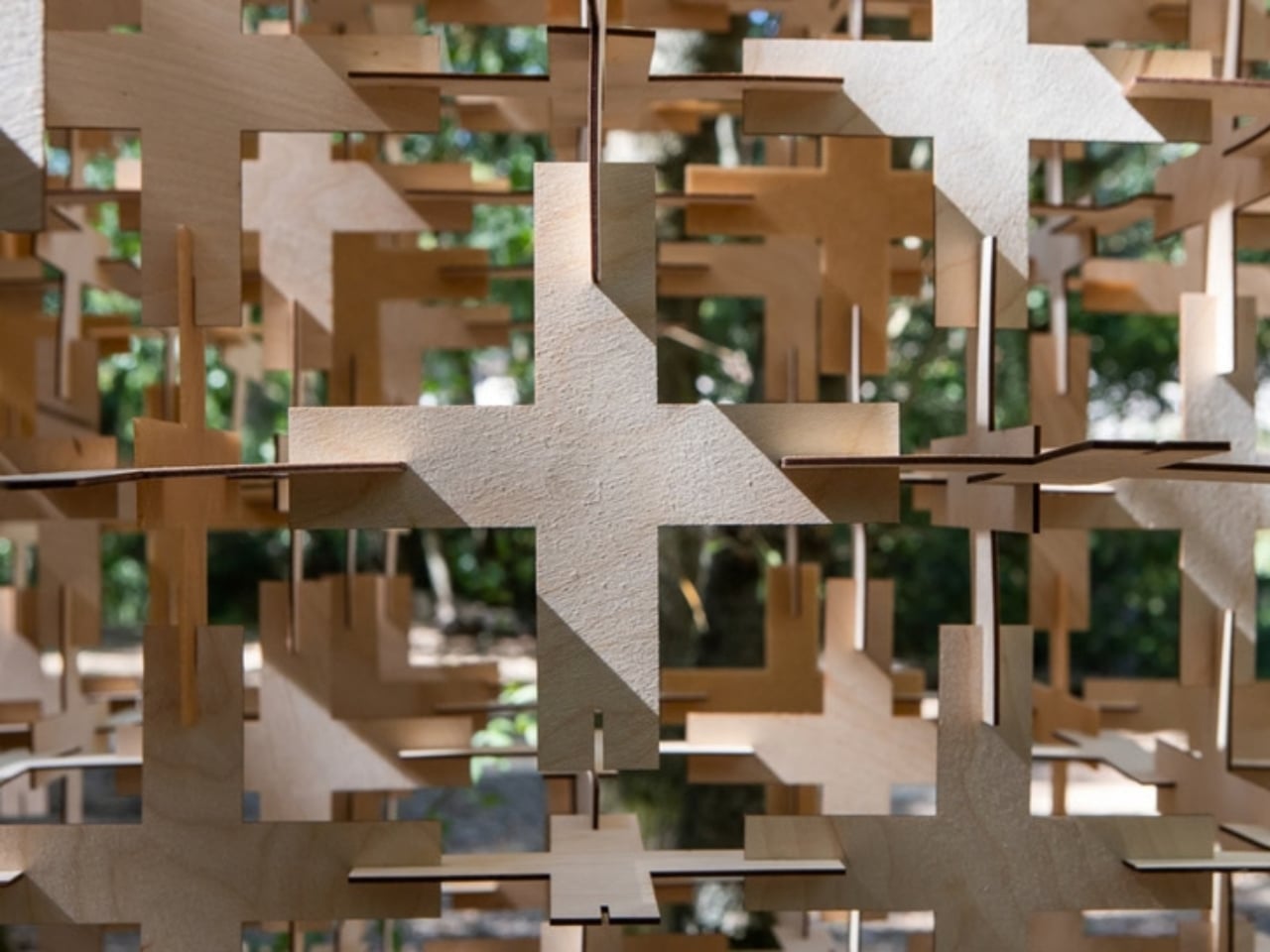
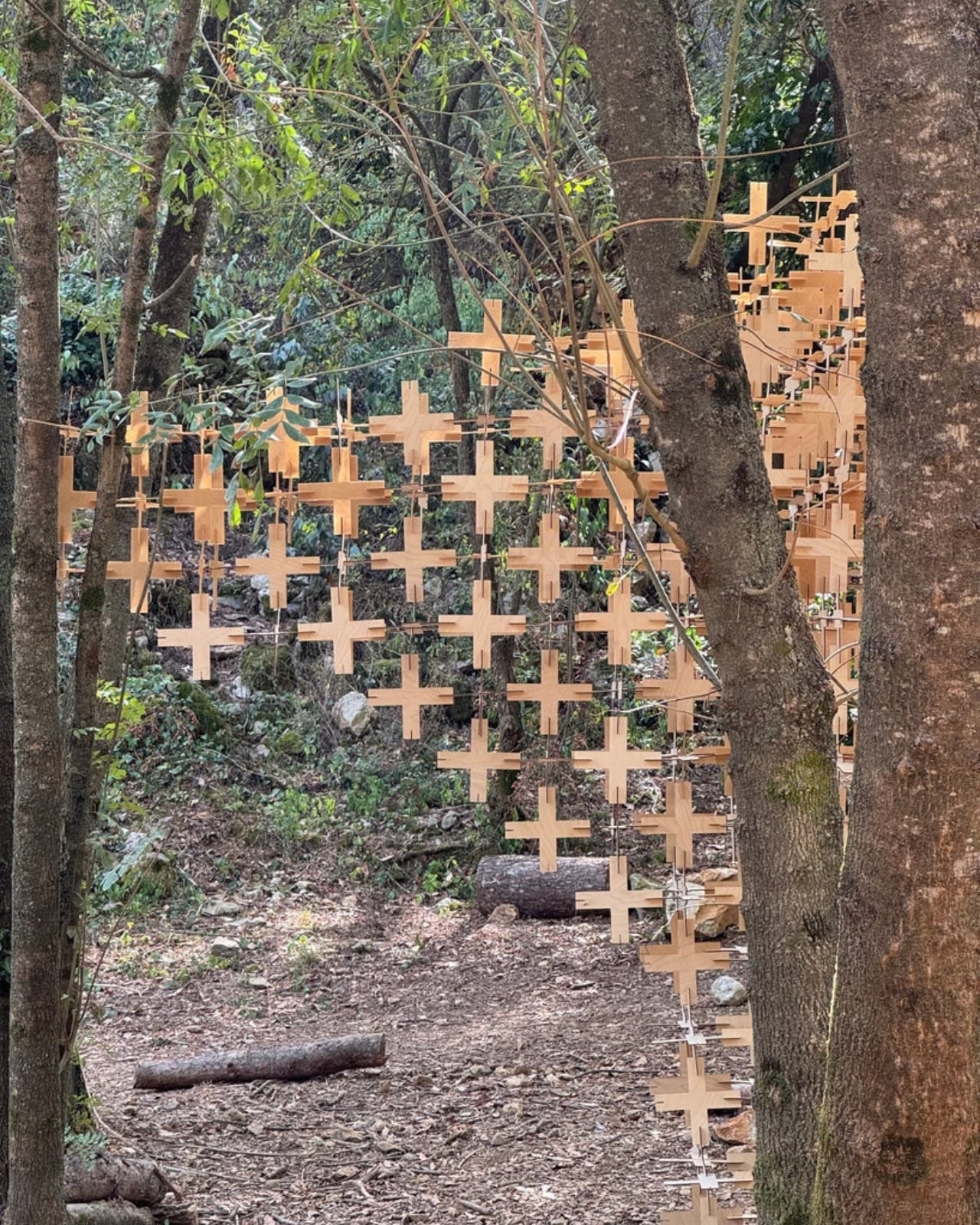
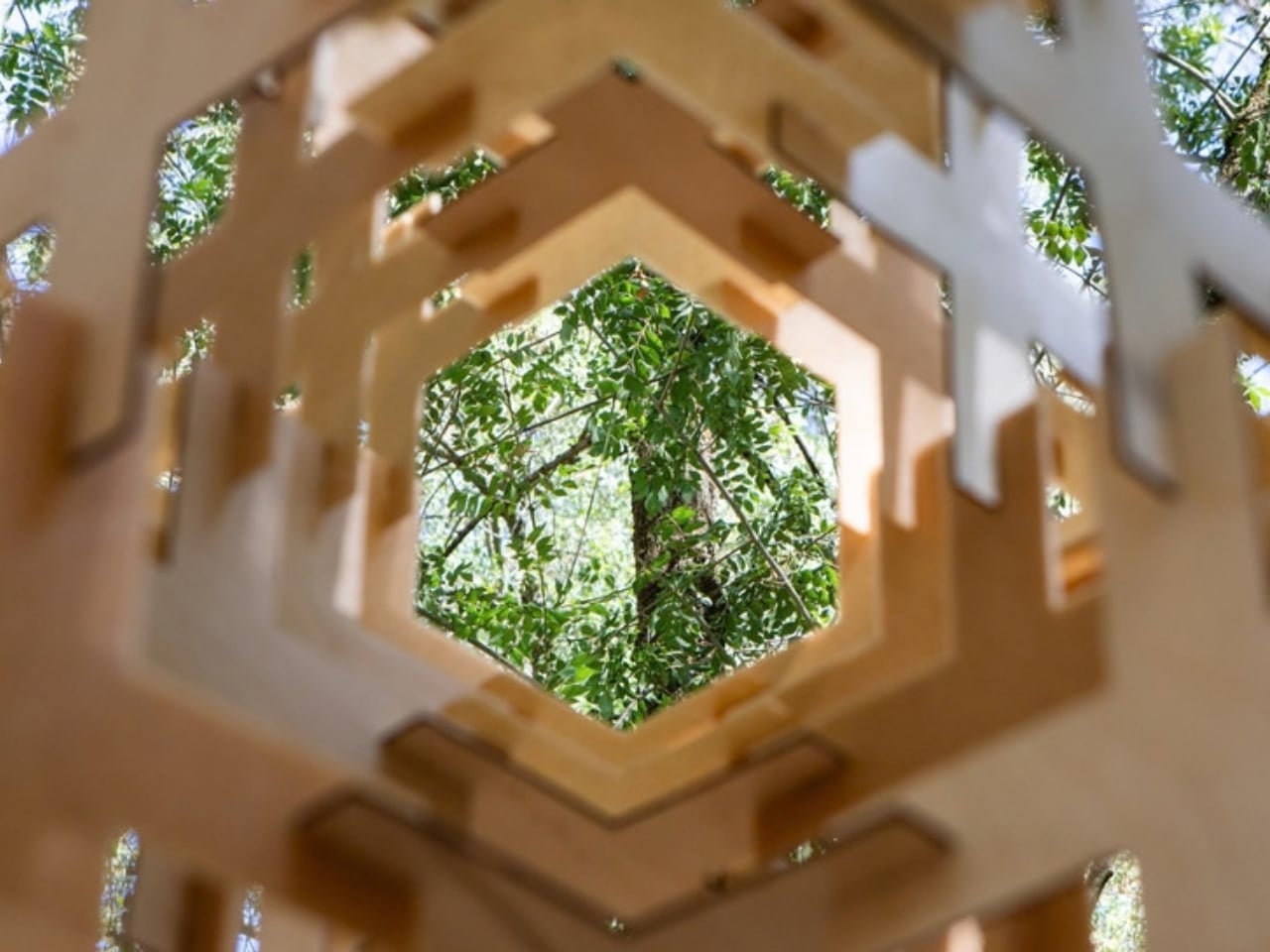
There is a welcome modesty to that approach. The pavilion isn’t asking a forest to serve as a dramatic backdrop for an alien-looking object. Its woven form leaves room for the surroundings to remain visible, while its modular construction gives the eye plenty to inspect up close. I’d want to walk around it slowly, partly to understand how it stays together and partly to see how the changing light alters its pattern. That sounds like a good reason to build a pavilion.

Not every temporary installation needs to disappear into its setting, of course. Some are supposed to be loud, strange, or confrontational. But Woven makes a persuasive case for another kind of ambition: designing a memorable experience without pretending the object must last forever. Its details are compelling precisely because they take a future dismantling or decline seriously. The question shifts from “How do we make this stay?” to “What are we leaving behind when it doesn’t?”
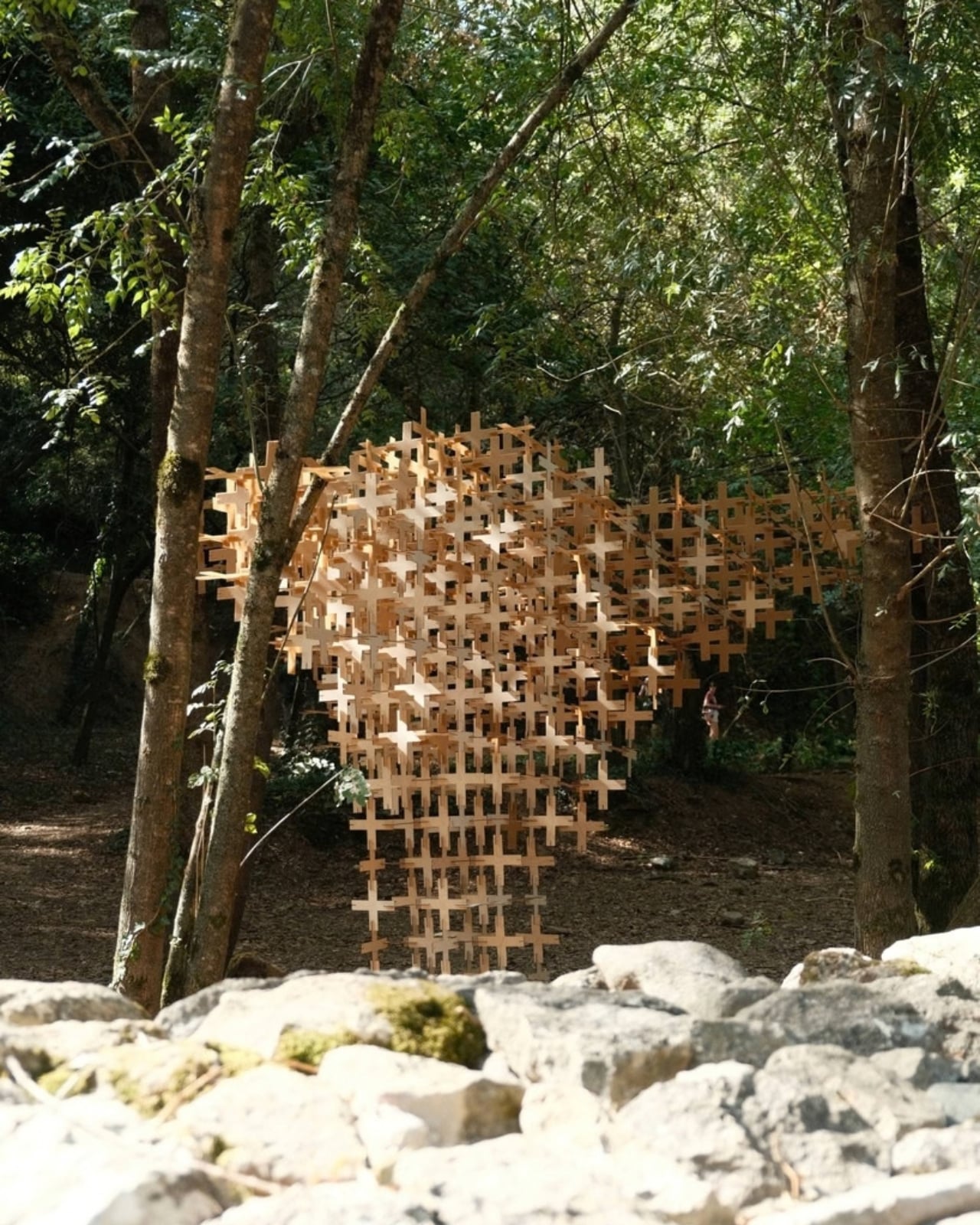
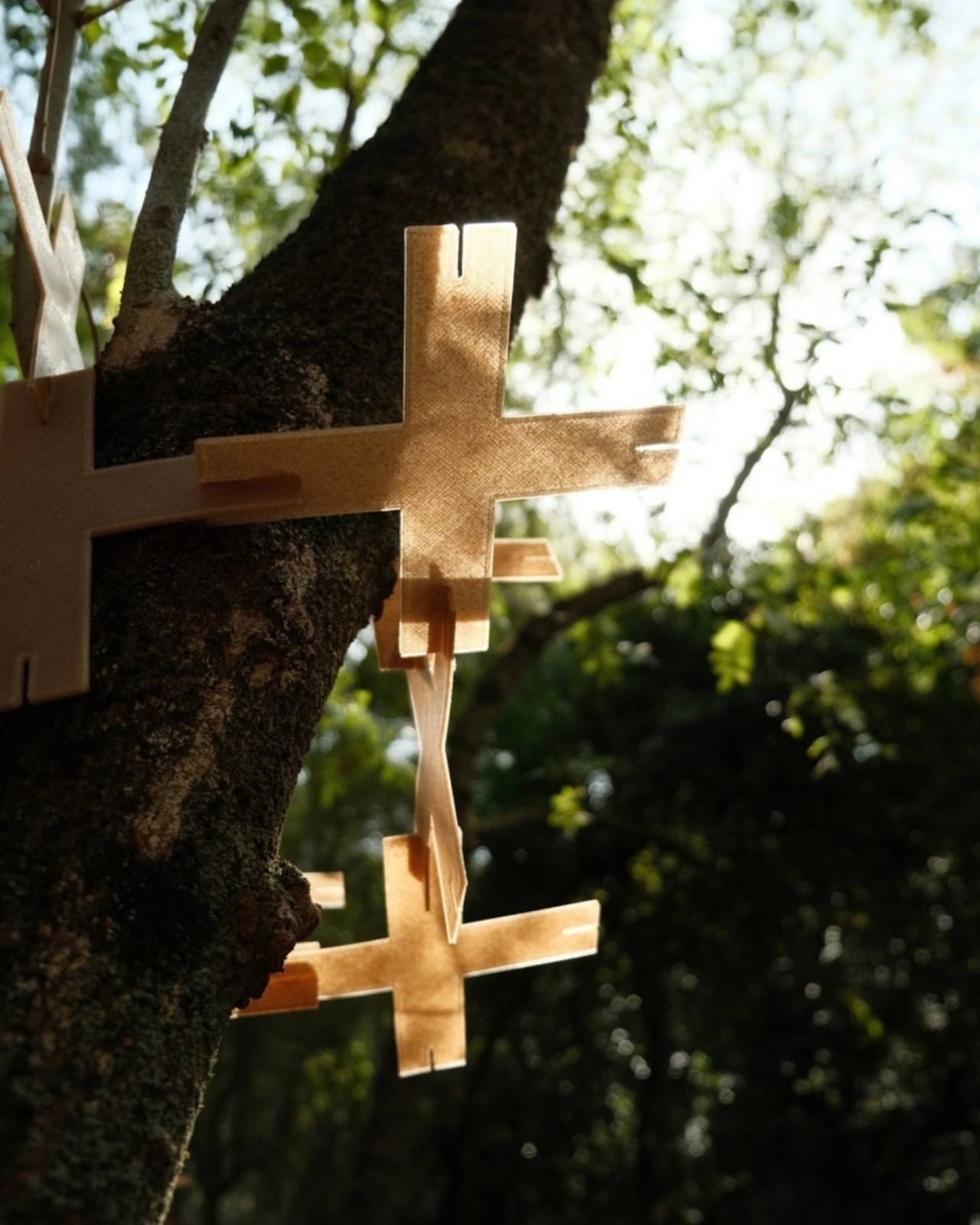
That question reaches well beyond experimental architecture. Pop-ups, exhibitions, and brand installations all have a life after the crowd goes home, whether or not anyone wants to photograph it. Woven cannot solve that larger problem by itself. What it offers is a more honest starting point. If a structure is made for a brief encounter, its departure deserves as much thought as its arrival. For a pavilion in the woods, that feels like the right measure of good design.

The post 700 Interlocking Pieces, No Glue: The Pavilion That Quietly Disappears first appeared on Yanko Design.
Ovios and Studio F. A. Porsche Just Made Their First Furniture Collection Together

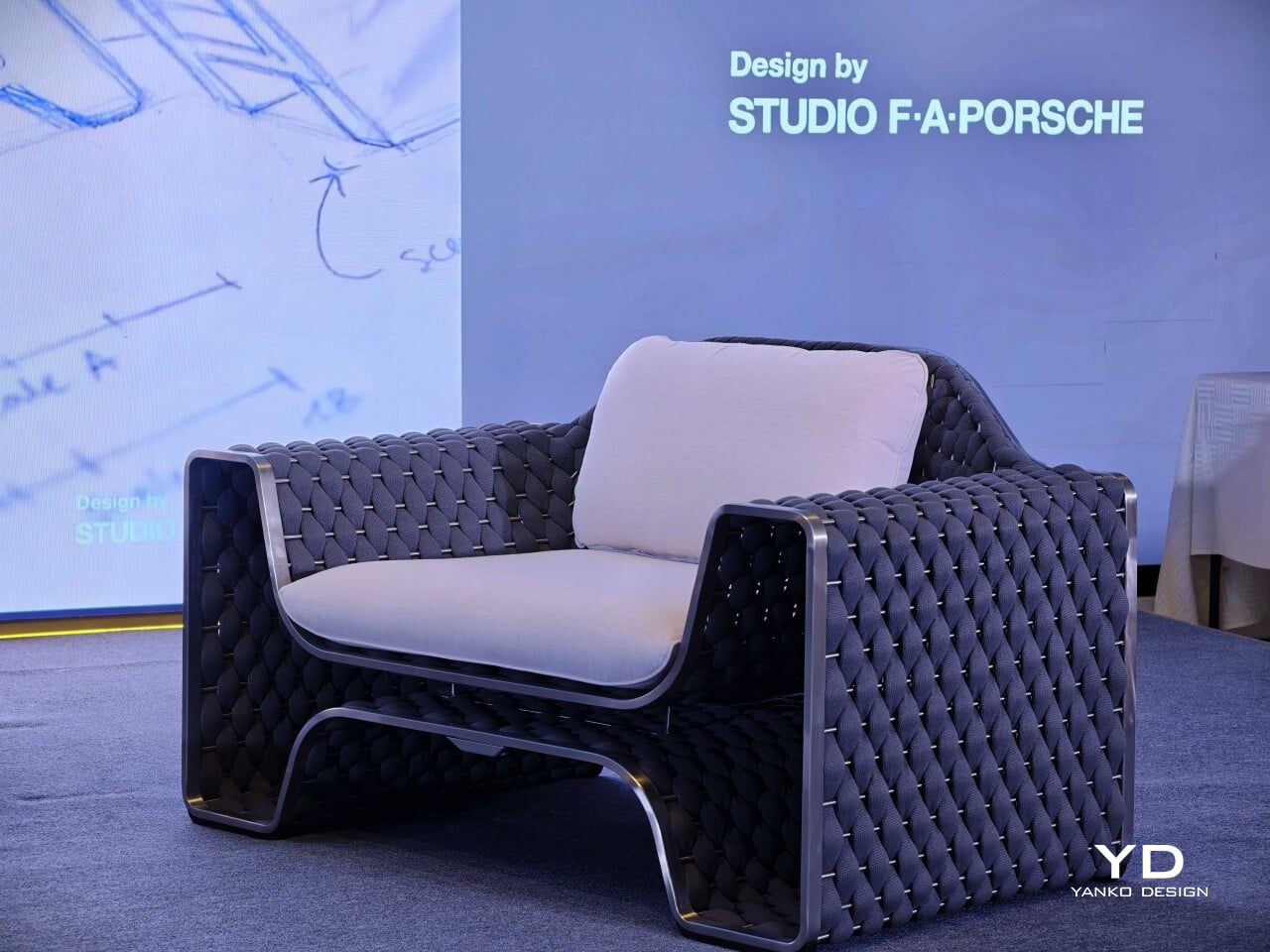
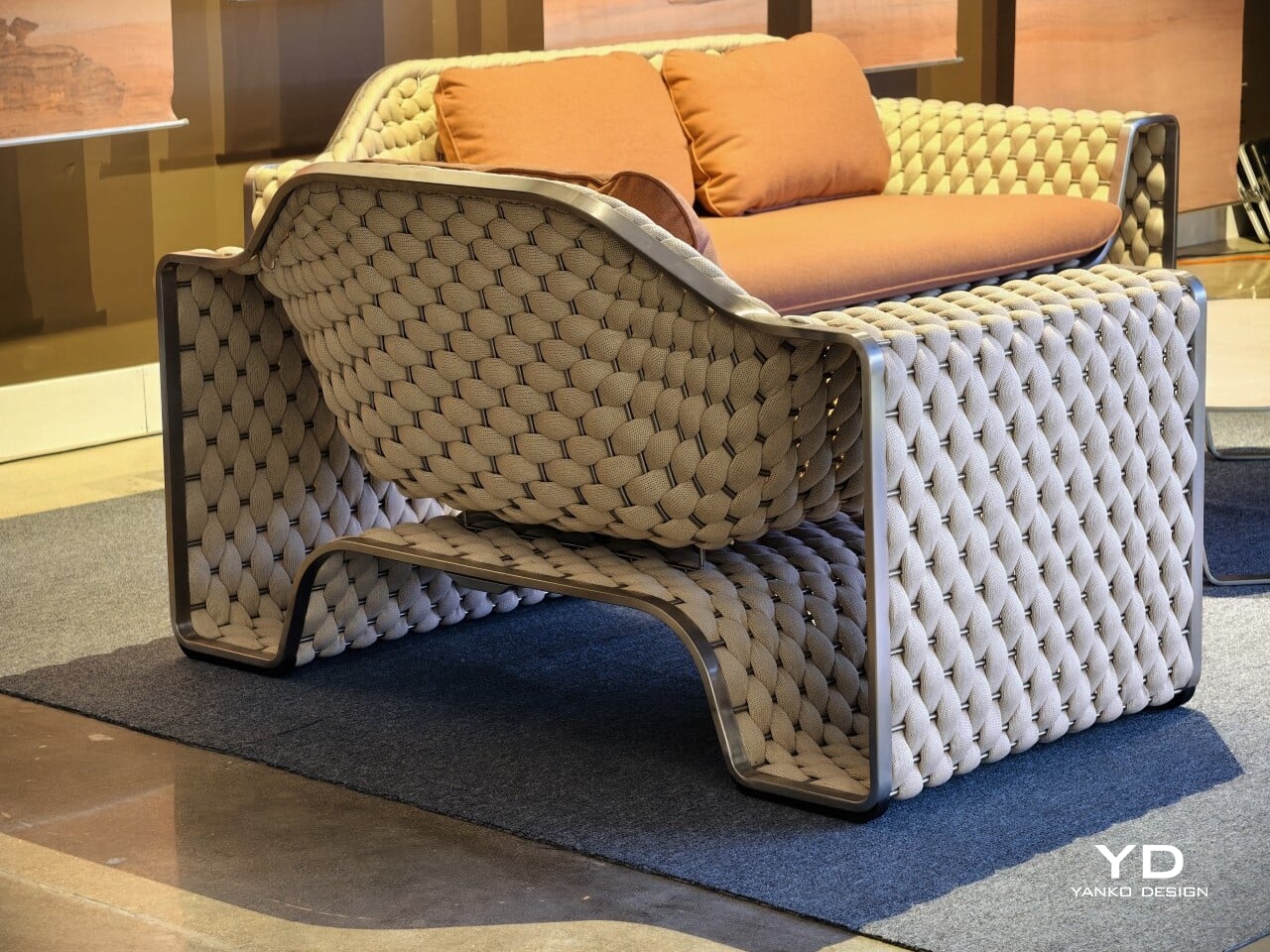
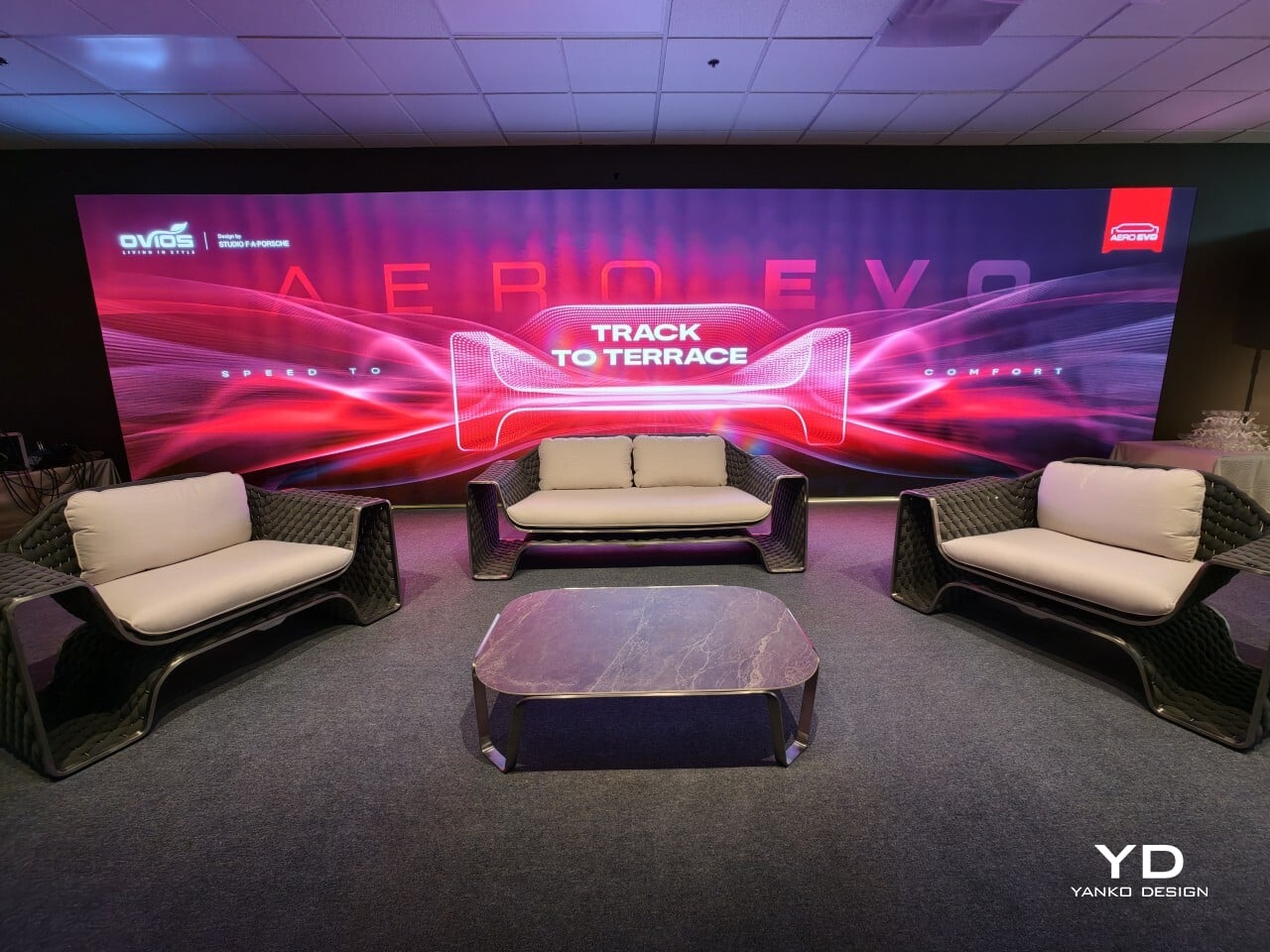
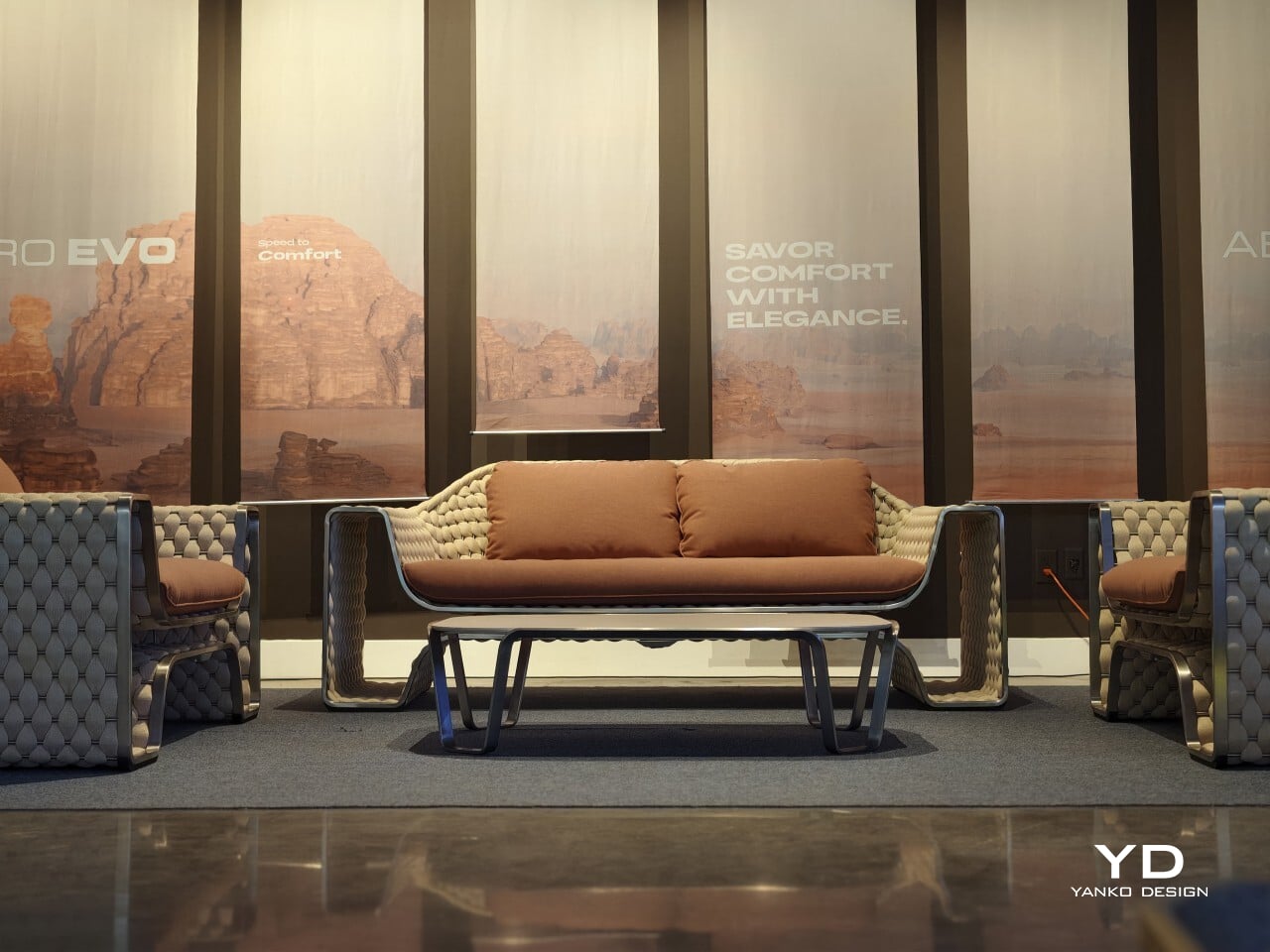
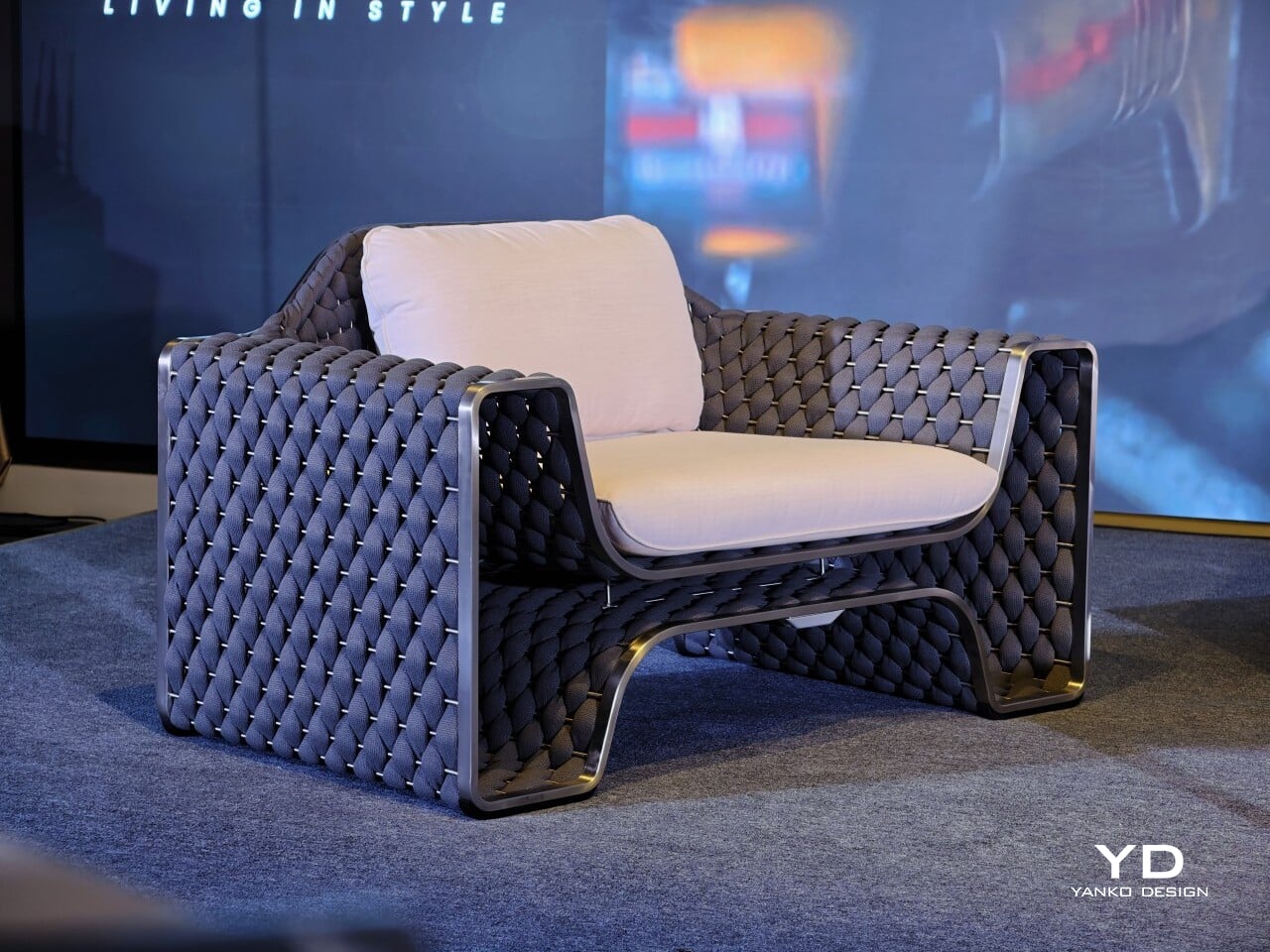
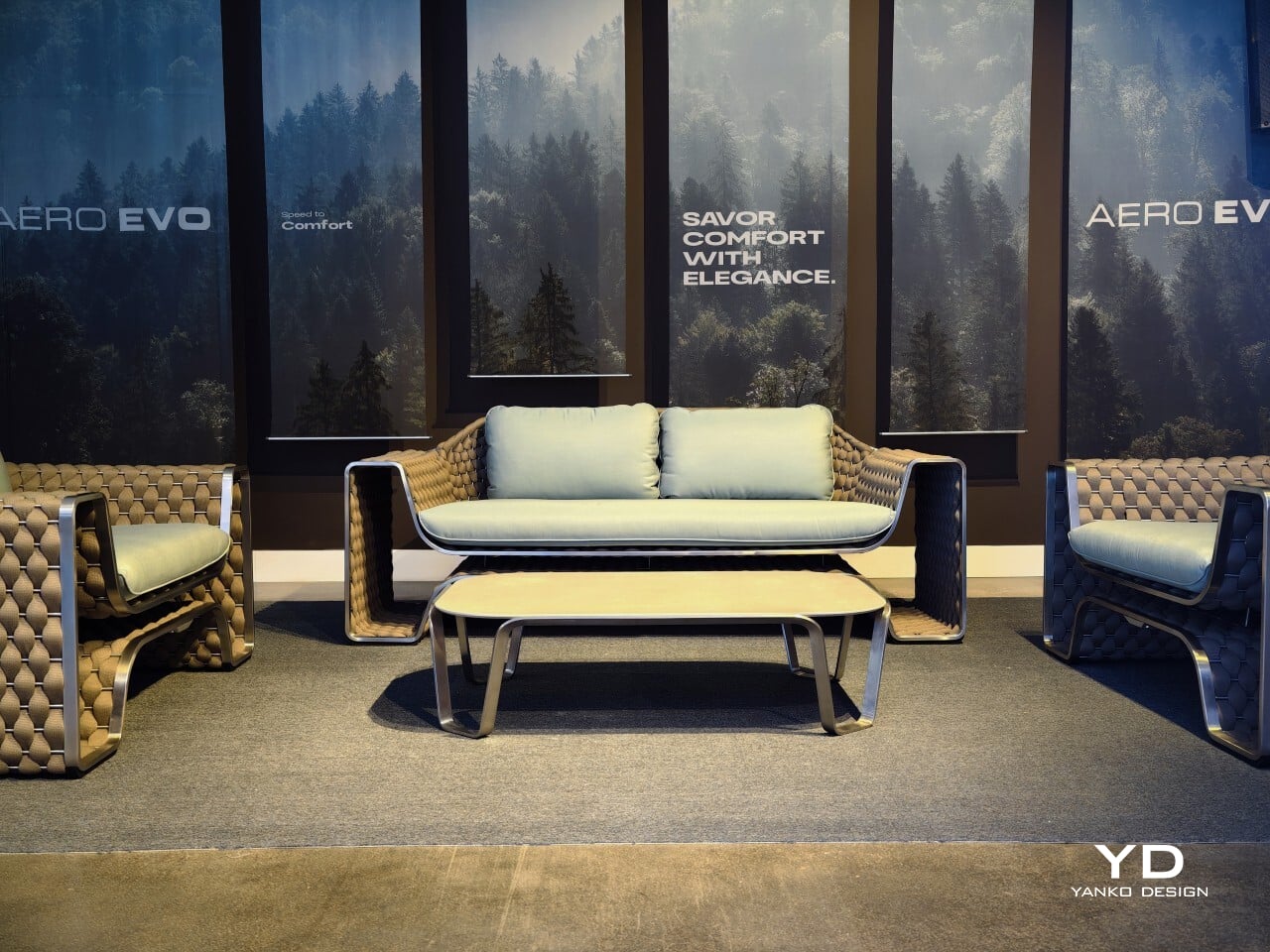
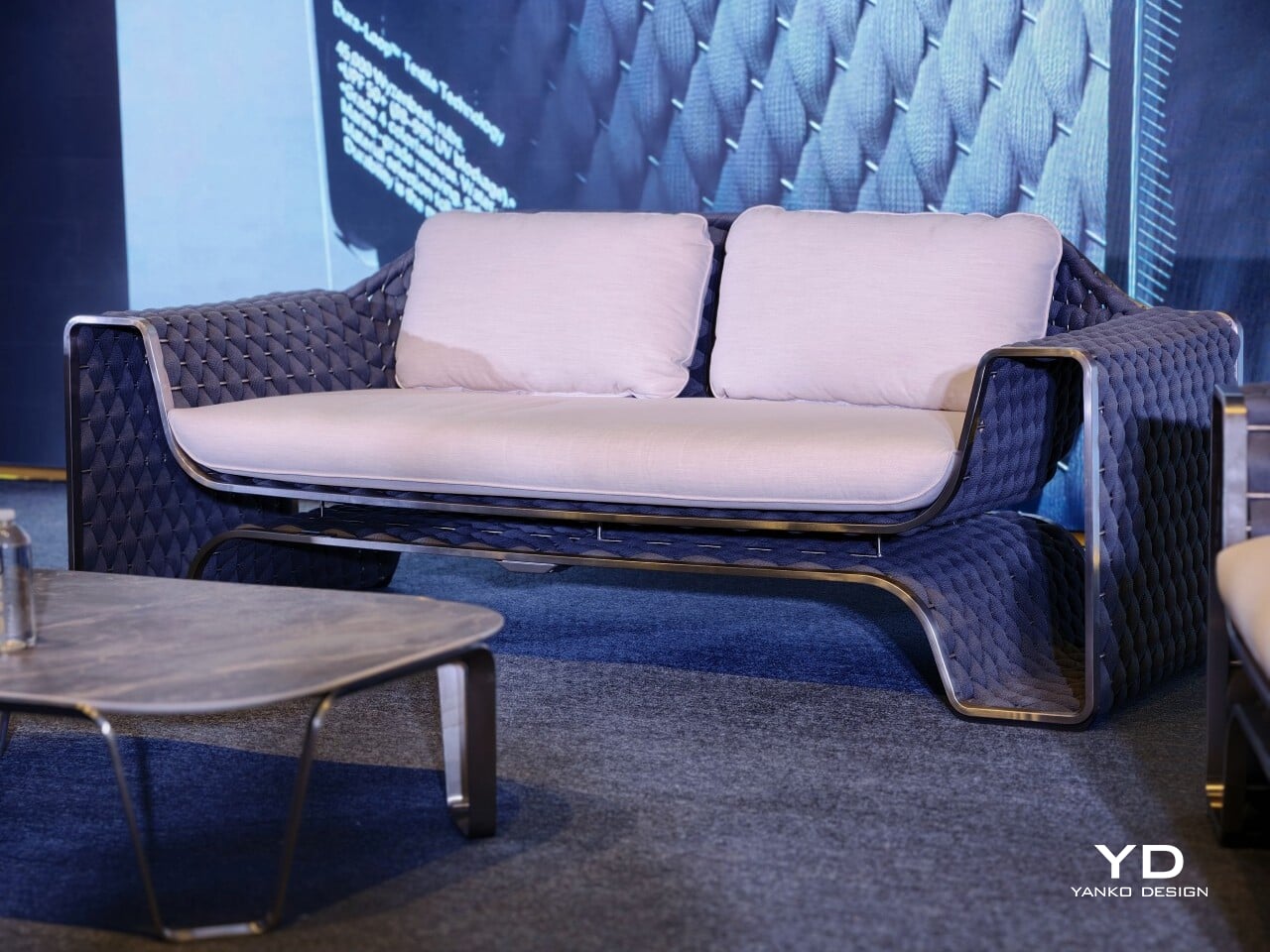
Ovios introduced Aero Evo at the launch event in California, a new outdoor furniture collection created with Studio F. A. Porsche. The line includes a sofa, lounge chairs, and a coffee table, and it marks the studio’s first outdoor furniture project. The collaboration brings together Ovios’s experience in premium furniture manufacturing and Studio F. A. Porsche’s minimalist, performance-led design approach, with comfort and function treated as part of the design rather than an afterthought.

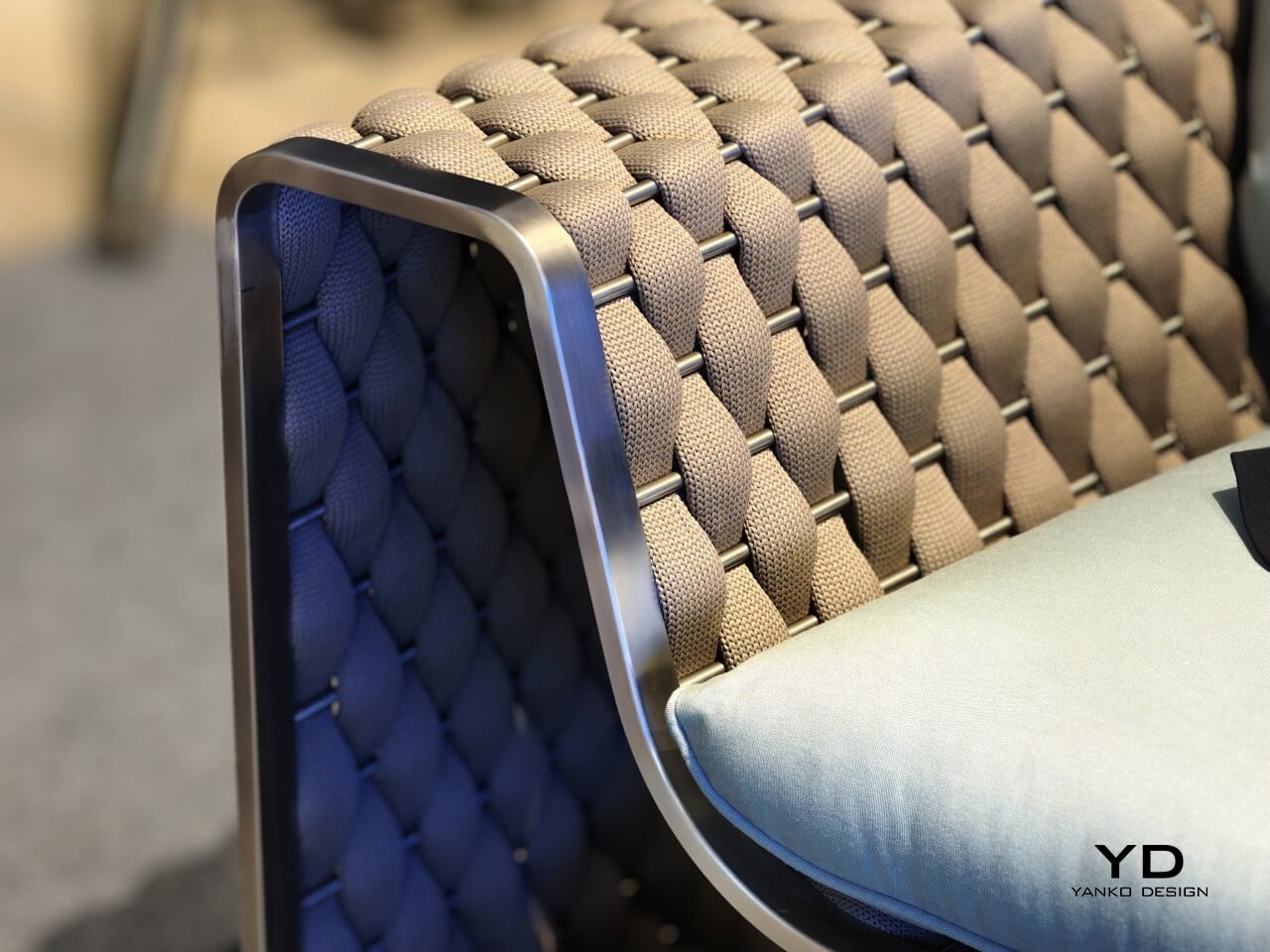
Seen in person, Aero Evo feels softer and more sculptural than the Porsche connection might suggest. The woven side and back panel give the pieces presence, while the exposed metal frame and open structure keeps them visually open. It does not read like furniture trying to imitate a car. The link is more understated than that, showing up in the control of the lines and the clarity of the structure.

Designer: Ovios x Studio F.A. Porsche

Henning Rieseler, Design Director at Studio F. A. Porsche, said the collection was developed with the American market in mind, particularly California. That lighter, more relaxed mood comes through, but the collection stops short of the usual resort furniture look. The forms are cleaner and more restrained, which gives the pieces a stronger identity.

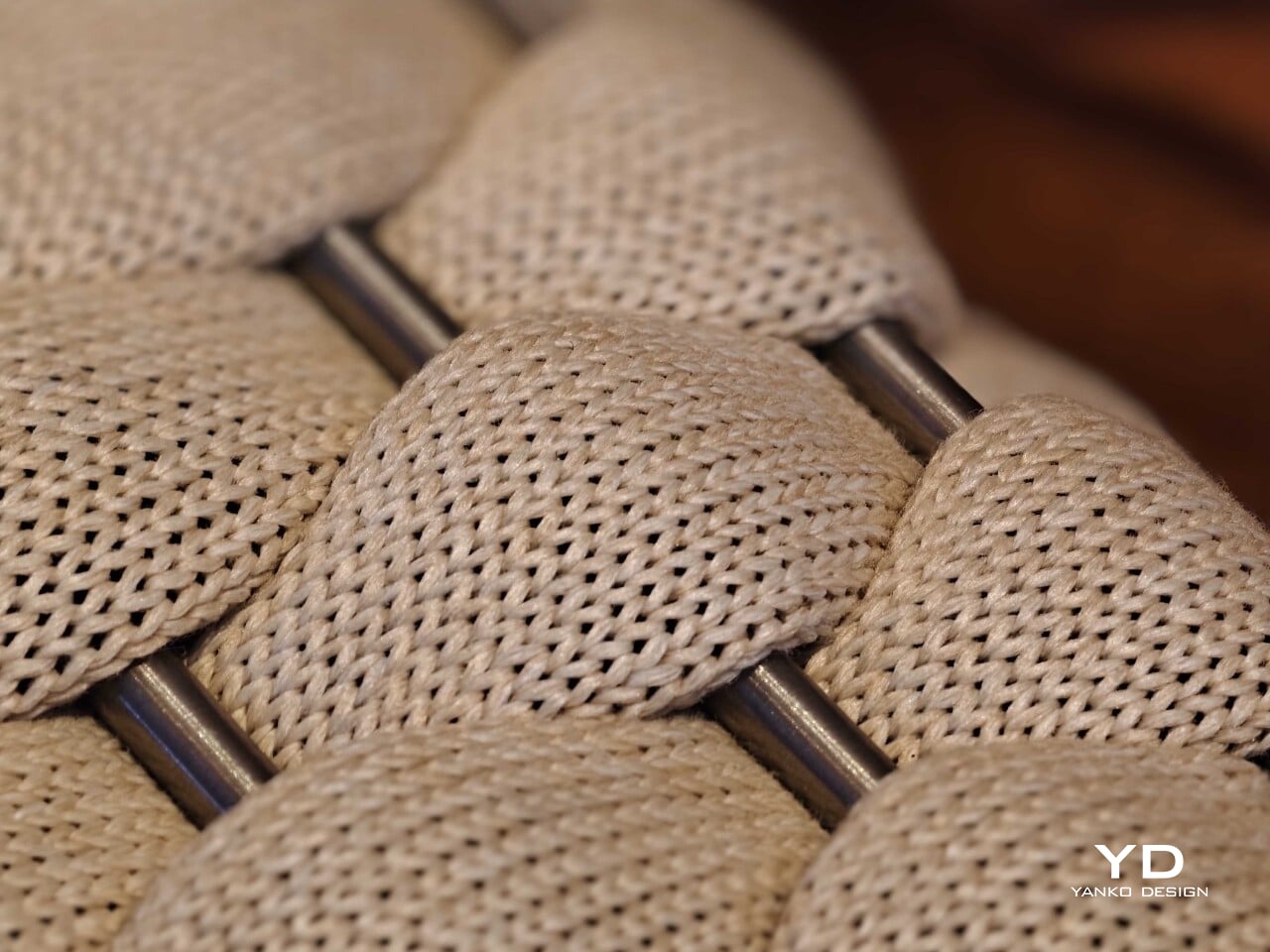
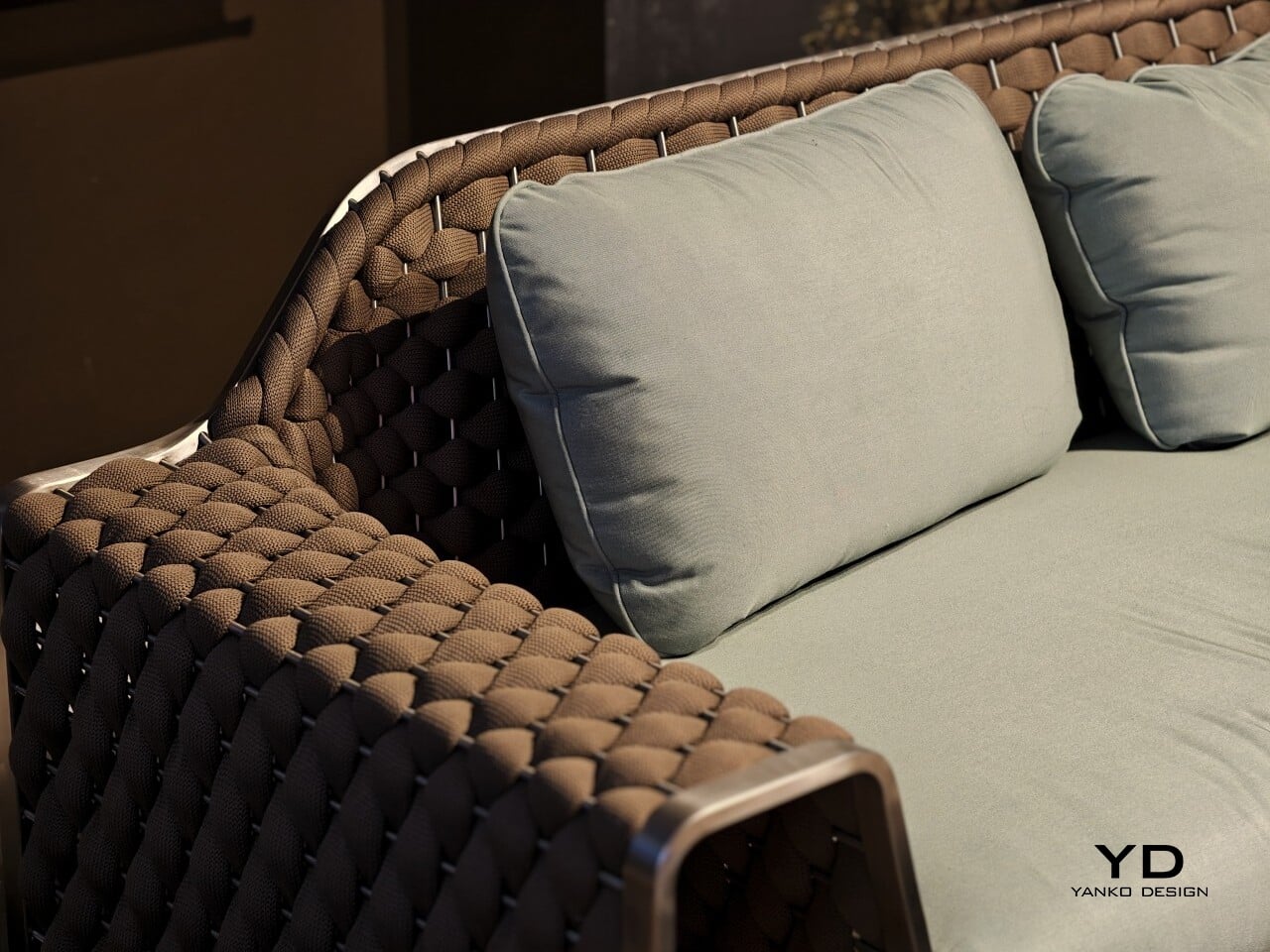
The woven rope is central to that. It is not there simply to soften the frame. It shapes the way the sofa and chairs are read, giving them texture and volume, while the visible frame keeps the overall profile open. That contrast is where much of the collection’s appeal lies.

Aero Evo works best when the frame and weave are read together. The stainless steel frame gives the collection its outline and support, while the woven rope adds warmth and softness. The raised base and open structure create a sense of airflow that keeps the furniture from feeling too solid. The pieces have enough presence to anchor a space, but they do not feel heavy.

Rieseler said the collection went through several iterations, including adjustments to the height of the back panel and the size of the cushions. The goal was to keep the metal frame and woven back visible while maintaining comfort. That helps explain why the final proportions feel so controlled. The cushions are generous, but they do not cover up the structure or blur the silhouette.

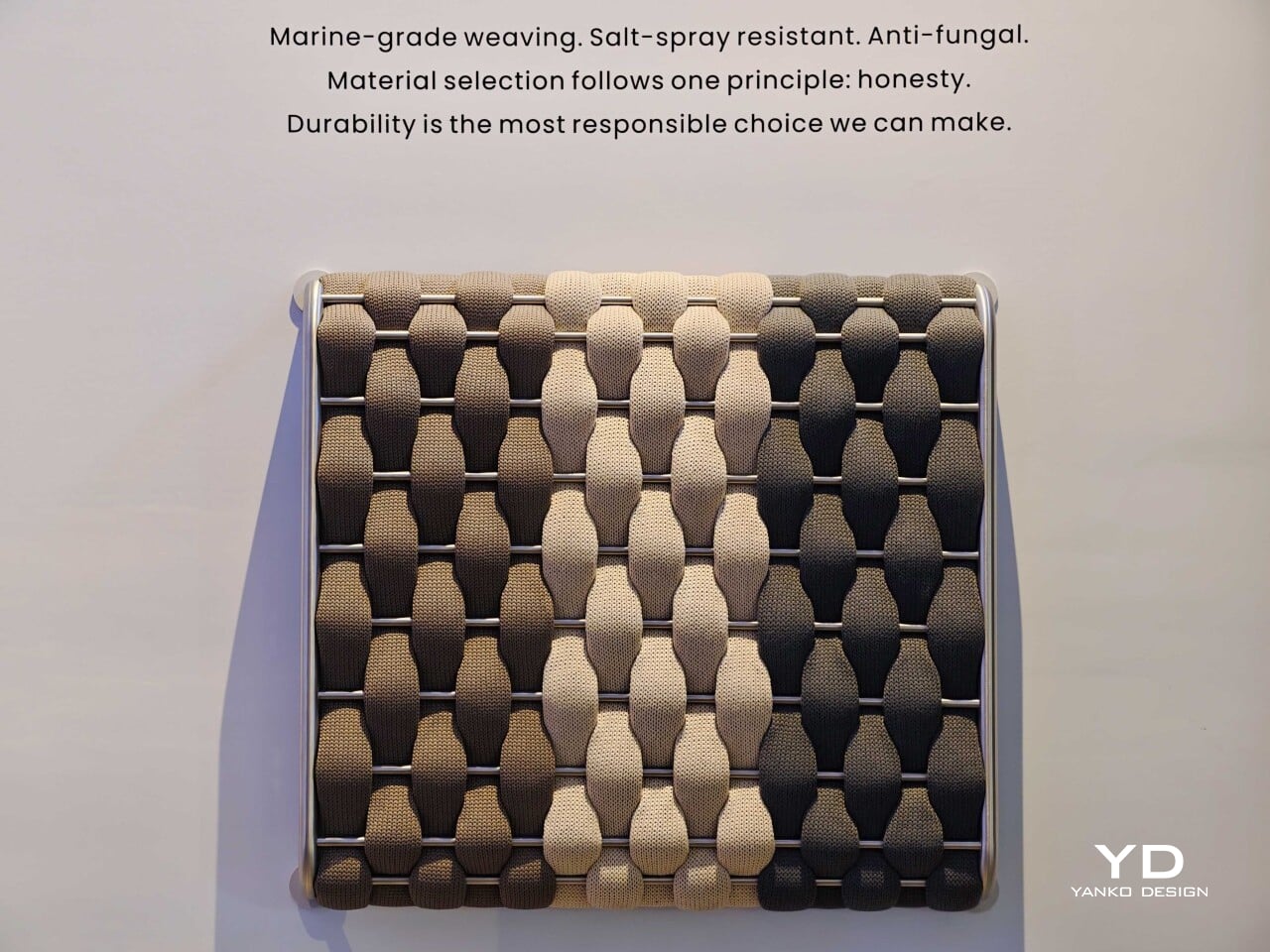
The collection comes in three woven rope colors, charcoal, brown, and beige, along with four cushion color options. The charcoal version brings out a more graphic side of the design, while the brown and beige versions feel warmer and more relaxed. The lighter combinations suit open terraces and poolside settings especially well, while the darker option gives the collection a sharper presence.

Seen together, the sofa, lounge chairs, and coffee table read as a complete outdoor setting rather than a group of separate products. The seating carries most of the visual identity, and the coffee table sits more quietly within the arrangement. That feels right for a collection aimed at terraces, patios, garden lounges, and hospitality spaces, where the atmosphere matters as much as the individual pieces.

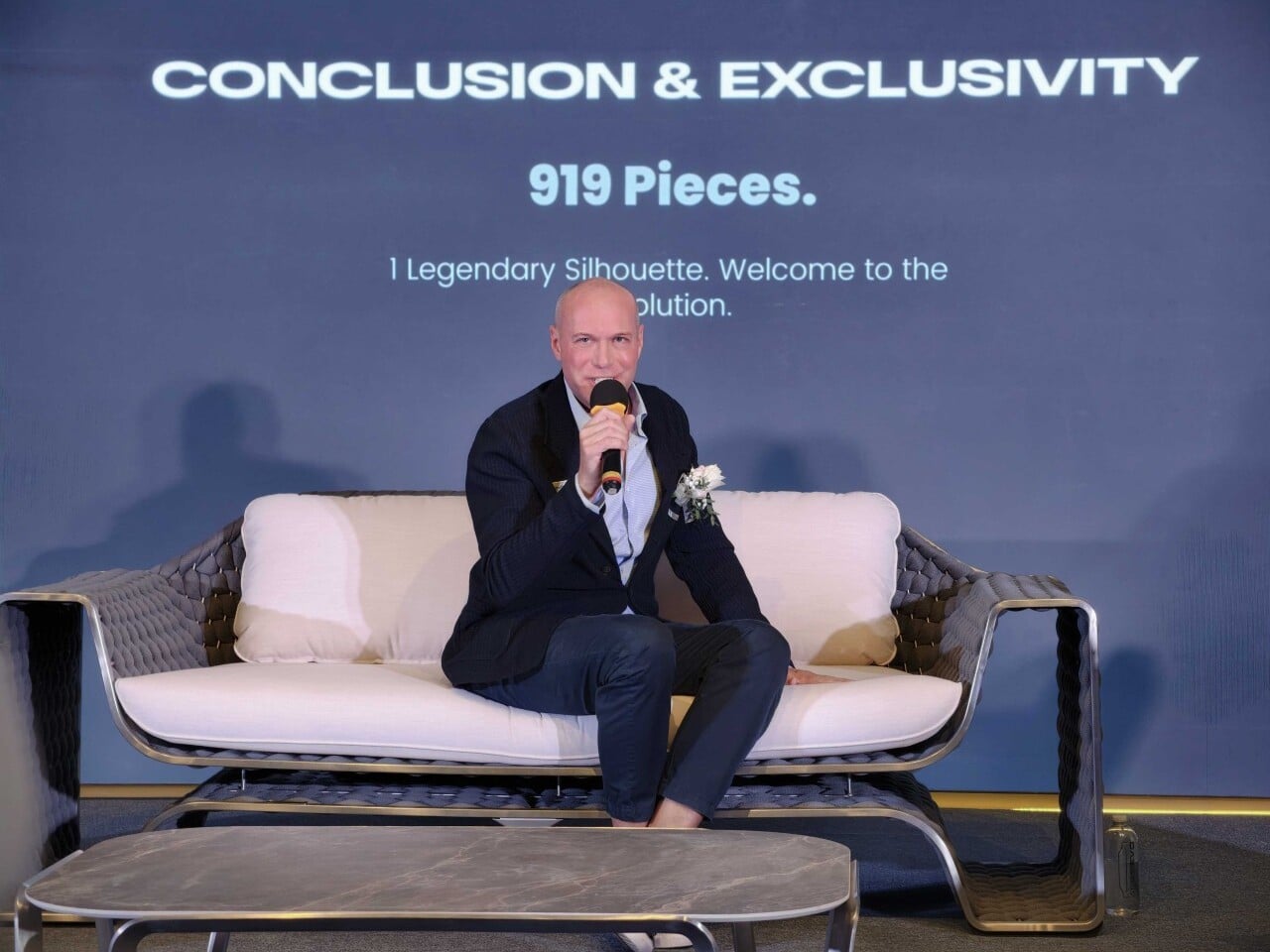
Ovios is releasing Aero Evo as a limited collection of 919 pieces worldwide, a nod to the Porsche 919 Evo that informed the project. Even so, the most convincing part of the collection is not the automotive reference on its own. It is the way the design handles structure, texture, and comfort without pushing any one idea too hard. For Studio F. A. Porsche, it is a confident first move into furniture. For Ovios, it is a collaboration that feels well matched. The result is a collection that feels considered, distinctive, and easy to imagine in use.

Click Here to Know More!

The post Ovios and Studio F. A. Porsche Just Made Their First Furniture Collection Together first appeared on Yanko Design.
Recycled Plastic Is 10x More Toxic, and This Chair Contains None

The furniture industry has been slow to reckon with its reliance on plastic. From injection-molded shells to synthetic fabrics, plastic finds its way into even the most design-forward pieces. Recycling has long been positioned as the answer, but the numbers don’t hold up. Only 19% of plastic produced globally actually gets recycled, and incineration, a practice that releases pollutants into the air, has surged 34% recently.

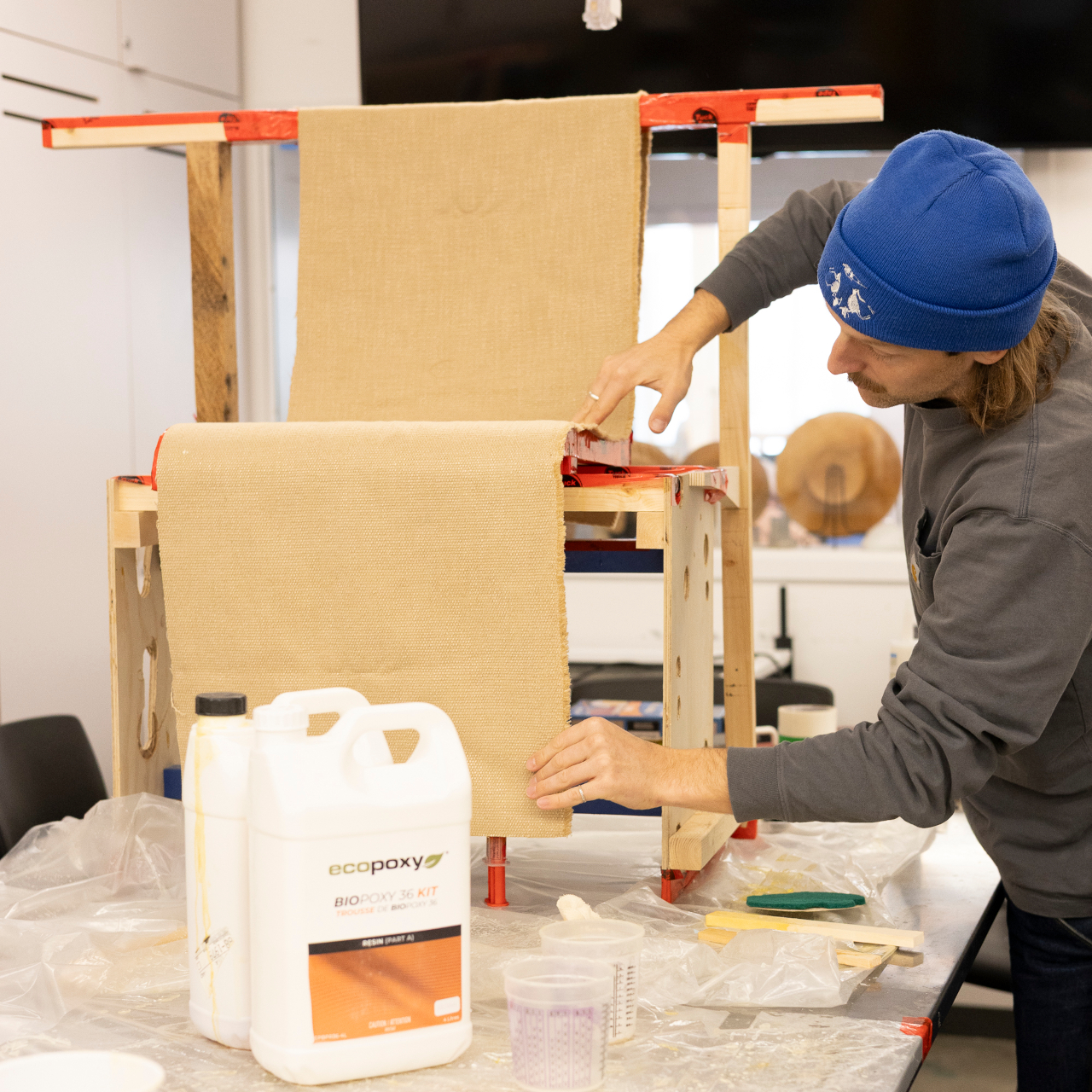
Matthew Whatley came to this problem not as a materials scientist, but as a furniture designer who’d spent a decade with his hands in the work. After years of carpentry and concrete formwork, he studied product design in Vancouver and Melbourne, and a trip through Southeast Asia, where plastic waste is impossible to ignore, pushed him toward a specific question: what if furniture didn’t need plastic?

Designer: Matthew Whatley

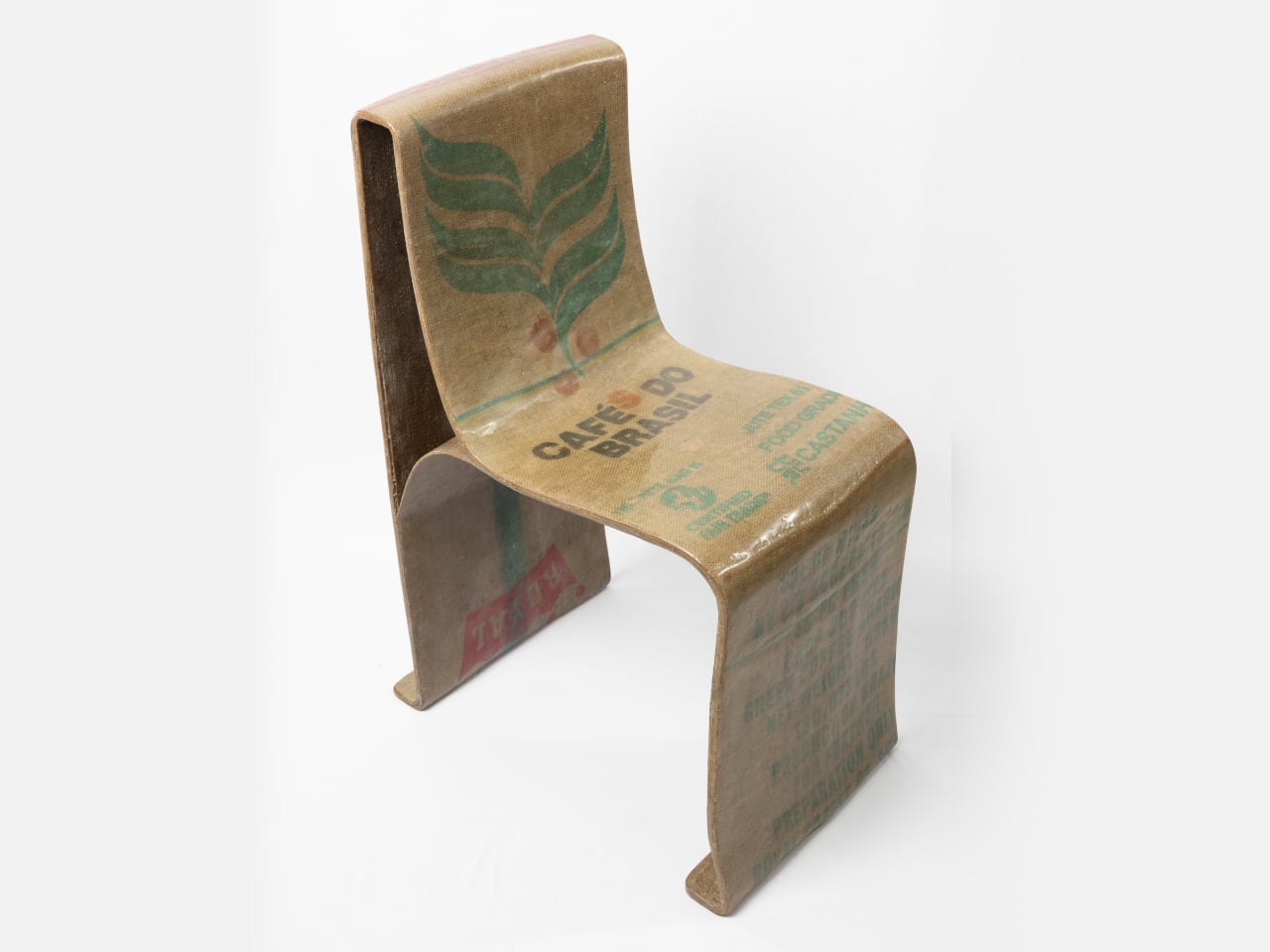
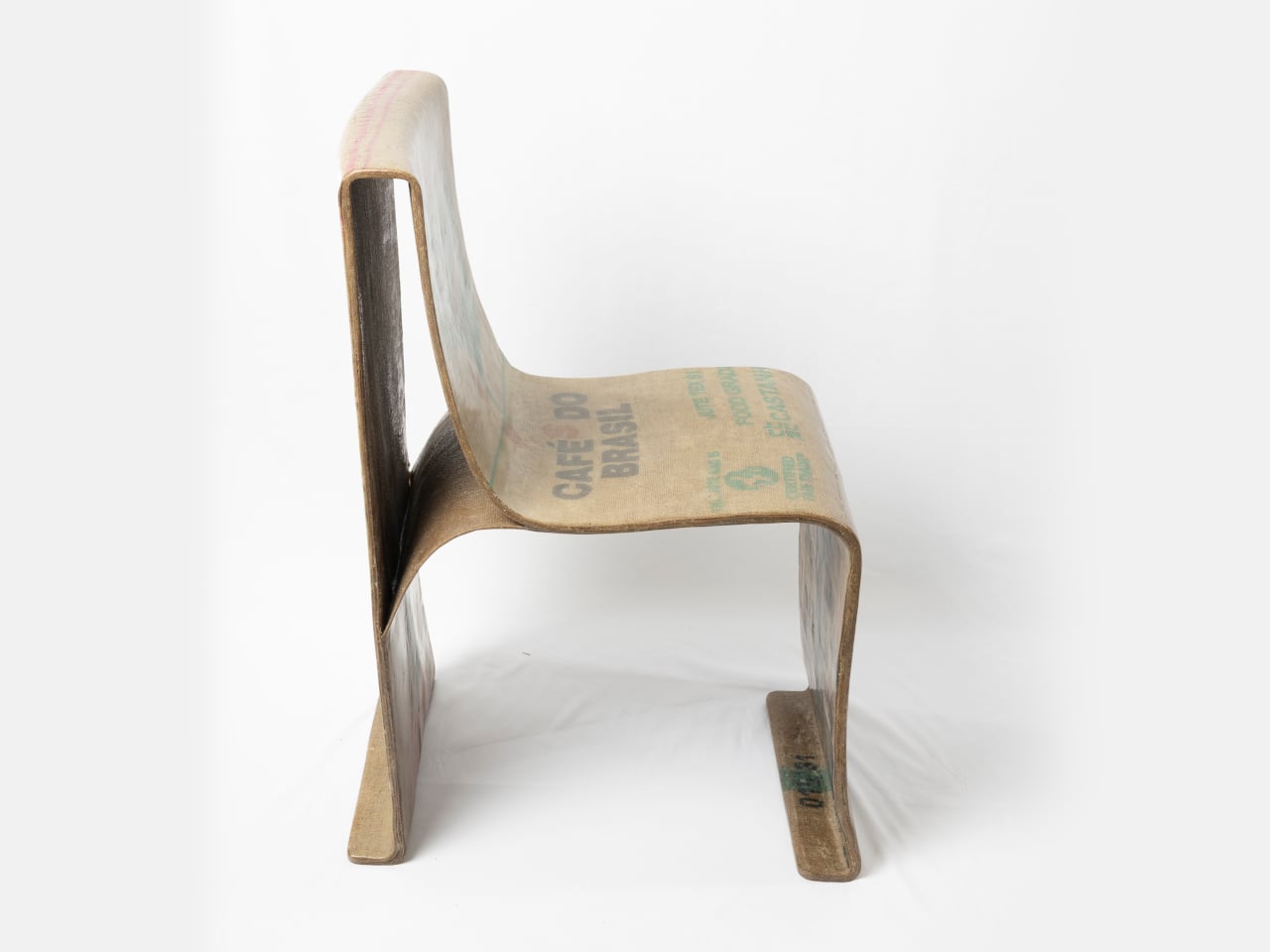
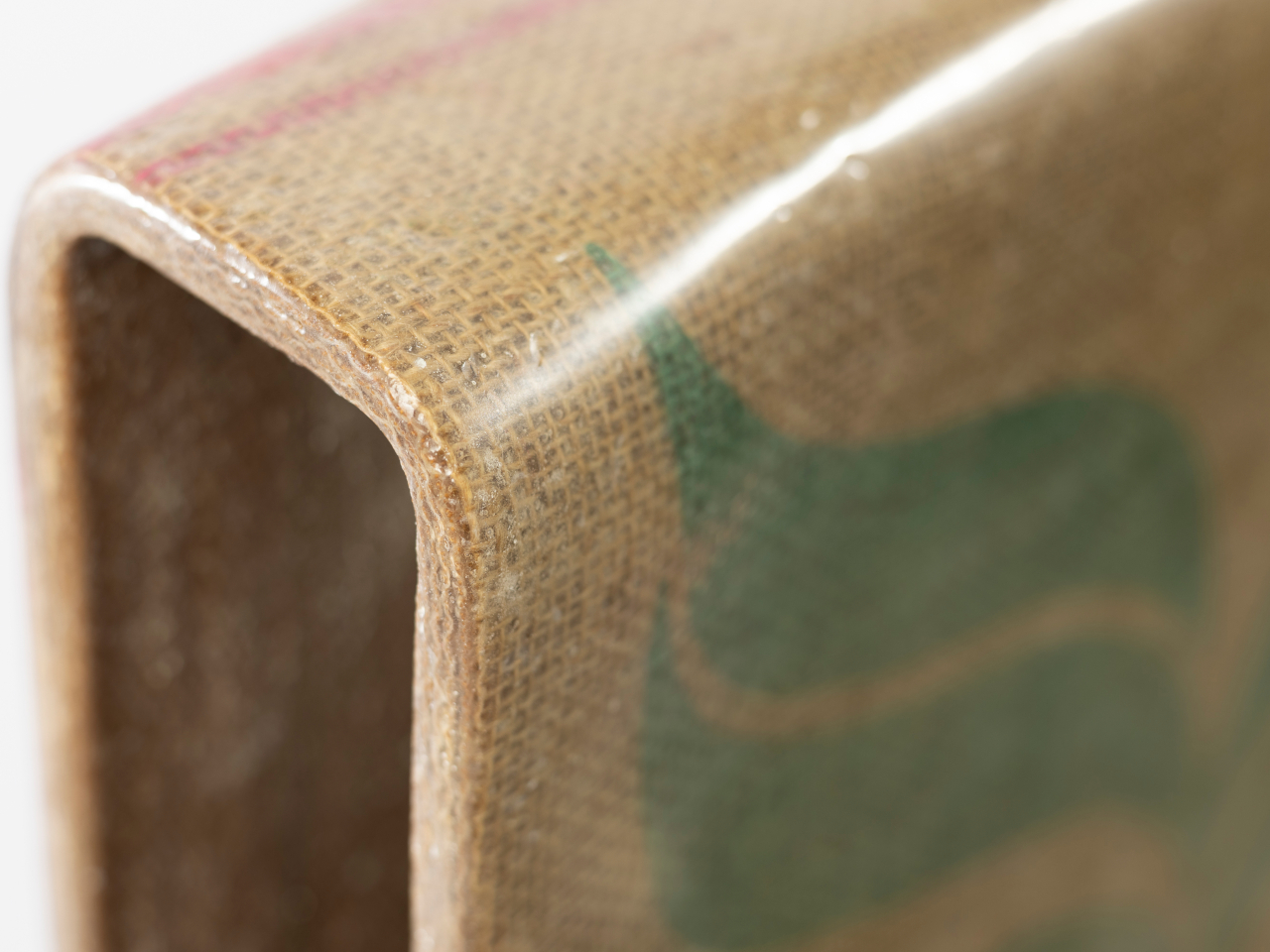
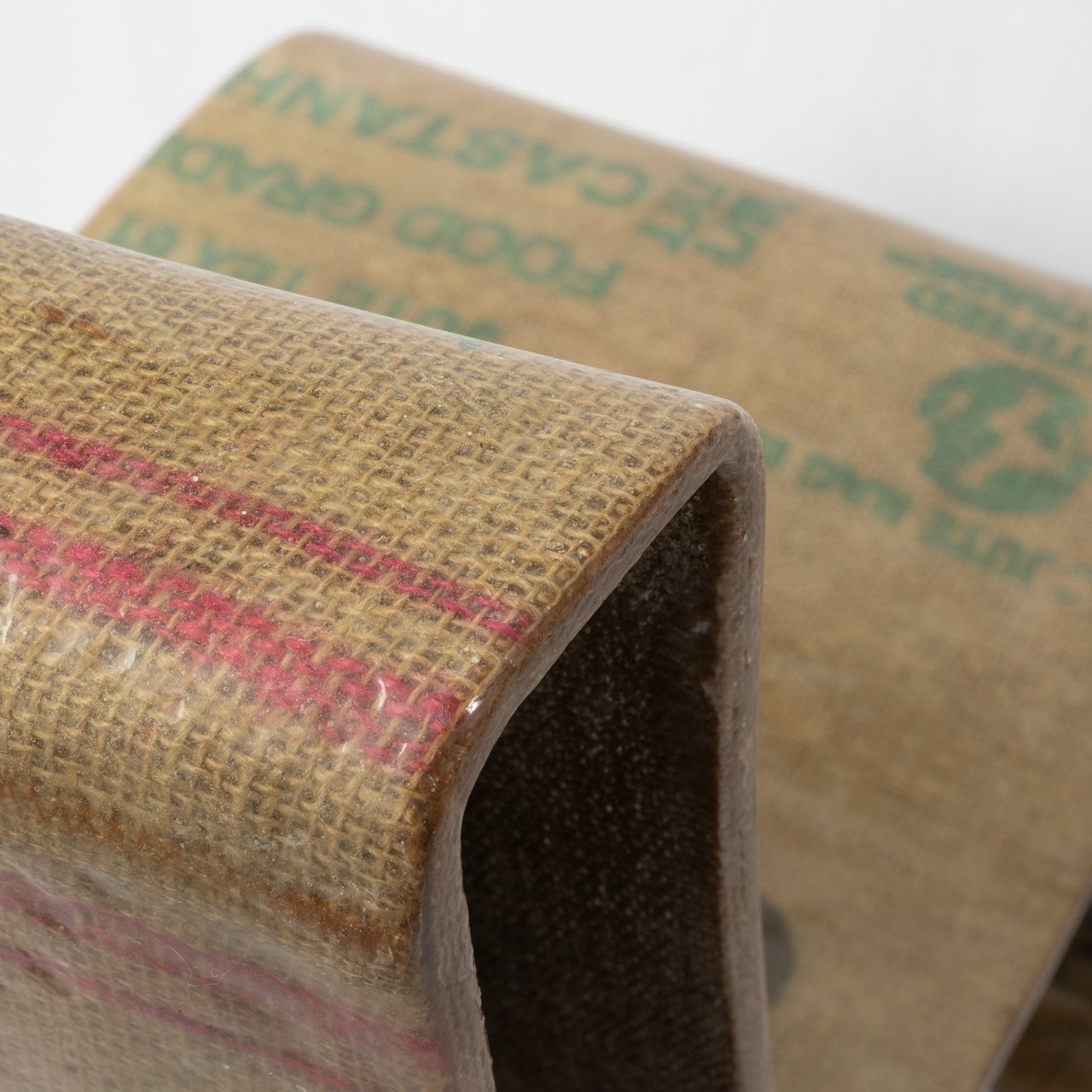
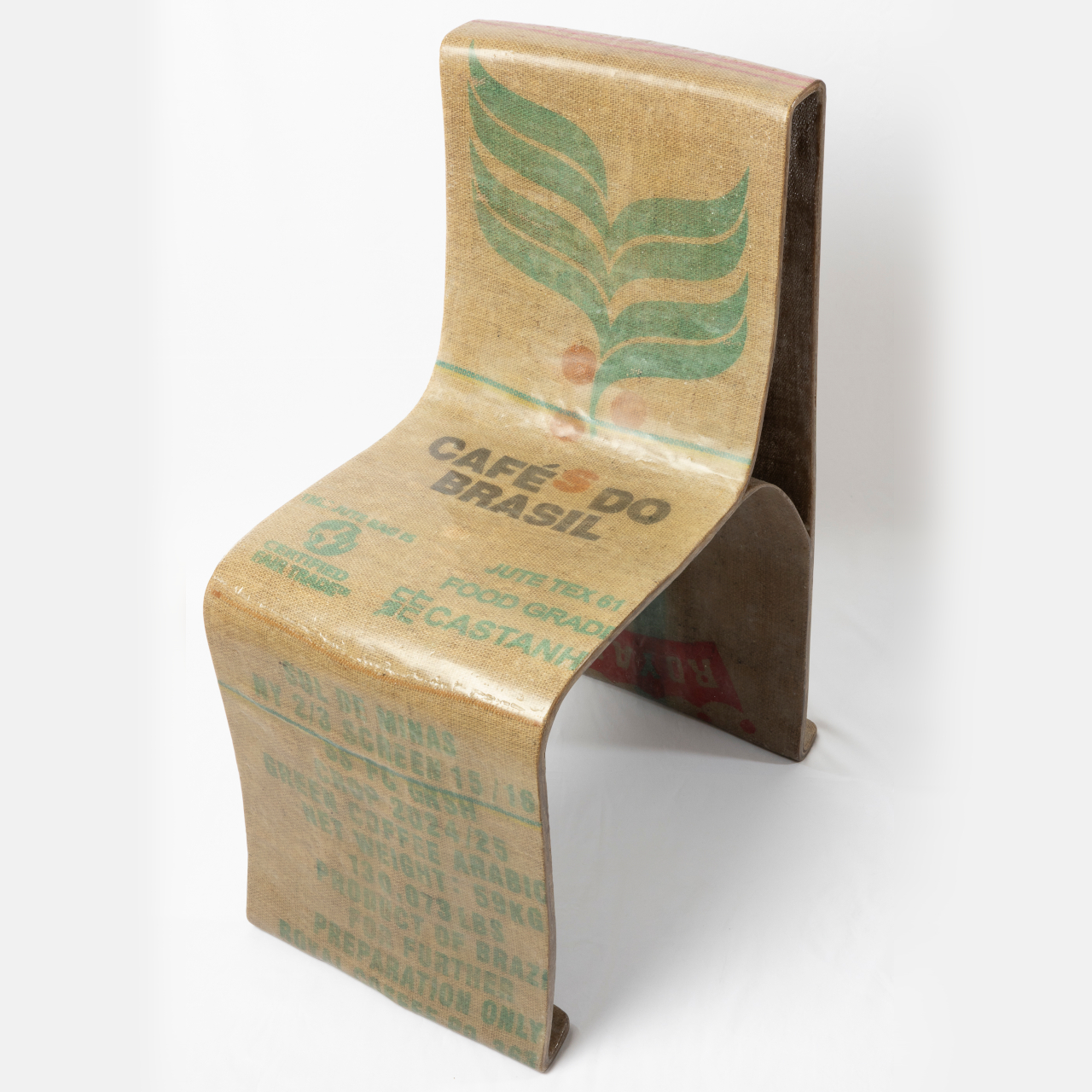
The Novum Chair is his answer, built from a combination of natural woven fiber and bio-based resin. The two materials form a composite: the fiber provides structure and texture, while the resin binds and hardens it into a rigid, load-bearing shell. It’s a relatively simple idea on paper, but getting it to actually hold a person’s weight required significant hands-on material testing.

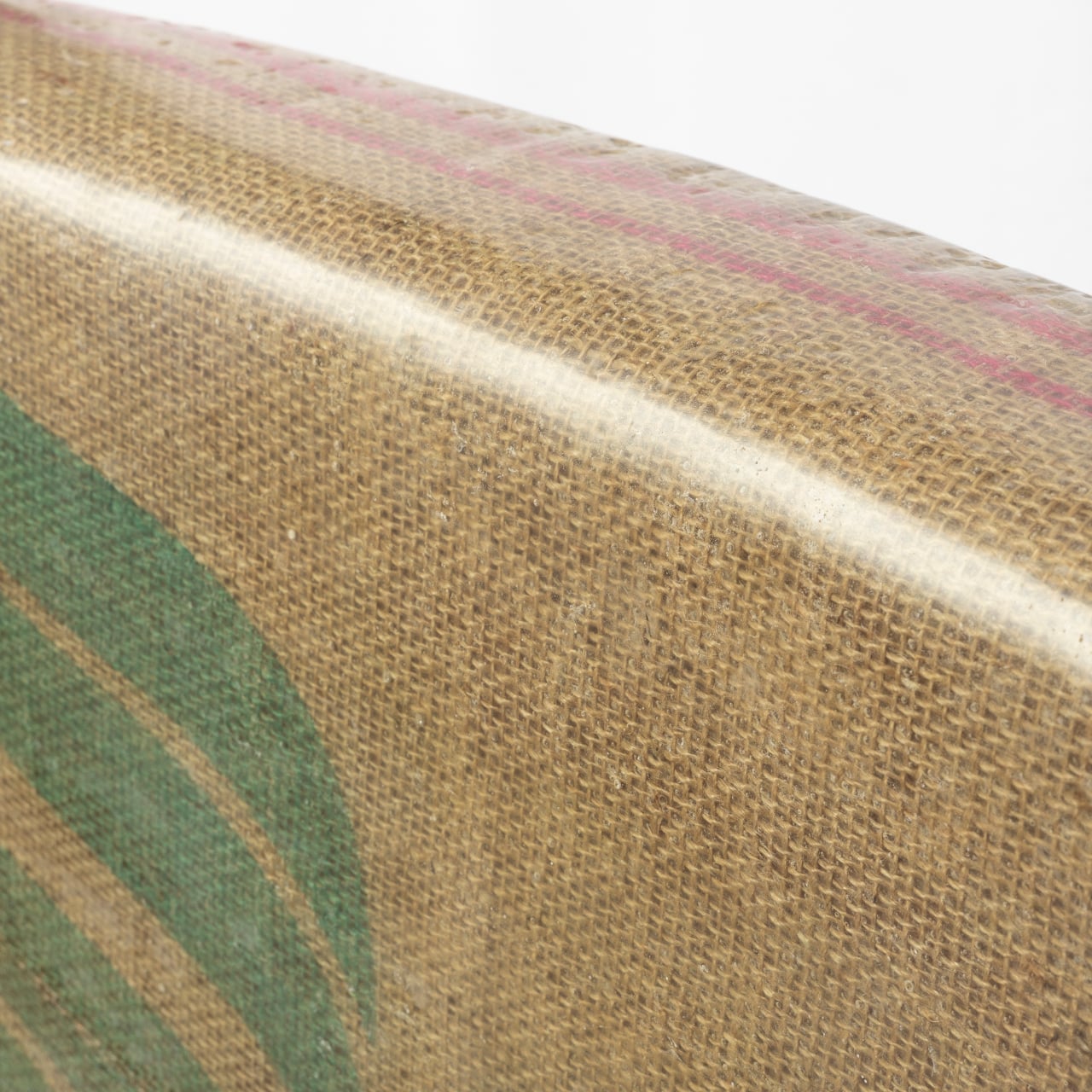
The result is a chair that doesn’t look like it’s making a statement about sustainability; it just looks good. Its form is a single, continuous shell that sweeps from the backrest down through the seat and curls beneath to cradle the sitter. The woven surface is visible through the resin coating, giving it a warm, textile-like quality that reads more like craft than manufacturing.

There’s something refreshing about a chair you could put in a design studio, a cafe, or a considered living space without it demanding attention. The Novum Chair has the kind of understated confidence that lets the material do the talking. The texture and warm amber of the resin-soaked fiber give it a character that shifts with the light, something molded plastic never manages.

Part of what makes this approach worth taking seriously is that it sidesteps one of the more uncomfortable truths about recycled plastics. Re-rendered recycled plastic isn’t the clean solution it’s often portrayed as; it can be roughly 10 times more toxic than the original material. Natural fibers and bio-based resins don’t carry that baggage, which makes this composite a genuinely different starting point.

Whatley is candid about the fact that bio-based resins aren’t perfect yet. They’re relatively expensive, not high enough in bio content, and not yet as accessible as conventional materials. But the Novum Chair isn’t presented as a finished product so much as a proof of concept that structurally sound, beautiful furniture can be built around materials that don’t depend on plastic.

What Whatley has done is take a material problem that feels overwhelming in scale and distill it into something you can sit in. That’s no small thing. The conversation around plastic alternatives tends to stay abstract, caught up in policy and data. A chair that you can actually inhabit, one that looks beautiful, pulls the conversation out of the theoretical and into the everyday.

The post Recycled Plastic Is 10x More Toxic, and This Chair Contains None first appeared on Yanko Design.
PITAKA Launches Their Latest iPhone 16 Cases: Slim, Light, Strong

Smartphones are getting more durable every generation, but there’s no escaping the fact that a single wrong fall could render it useless. Protective cases increase their chances of survival at the expense of hiding their beauty, and even those clear silicone ones can sometimes make otherwise luxurious phones look cheap. If you’re going to cover up your phone anyway, you might as well make a big splash by adopting a design that’s going to upgrade your device’s looks as well. For years, PITAKA has been pushing the envelope of phone cases by focusing on quality material that not only looks good but also feels great in your hand. With the new Apple iPhone 16 series, it is launching its next-generation woven cases to offer upgraded protection and welcome a new style that will be a feast for the eyes, even in the dark.

Designer: PITAKA

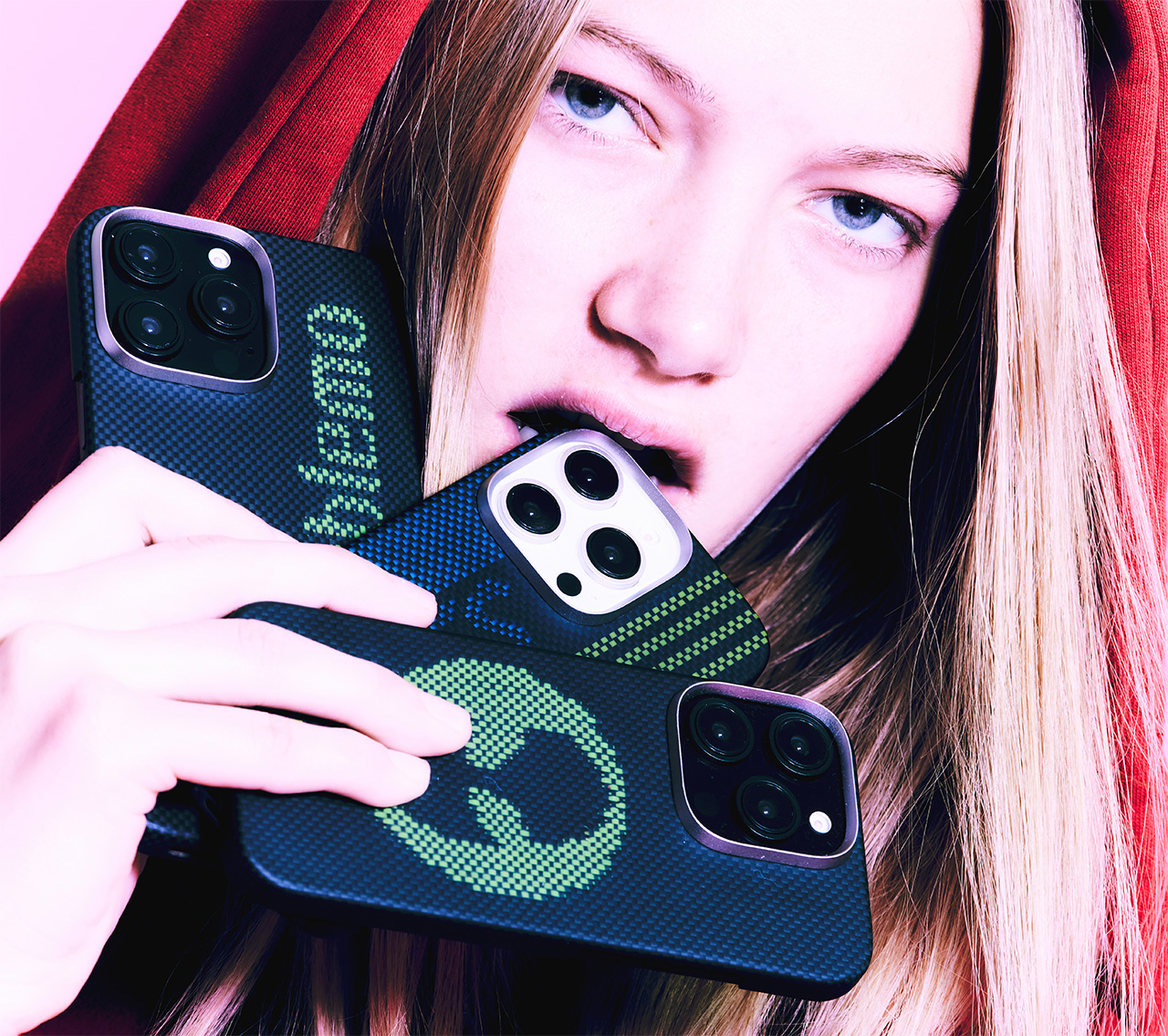
PITAKA x Aries x NoProblemo Collaboration: Light in the Darkness

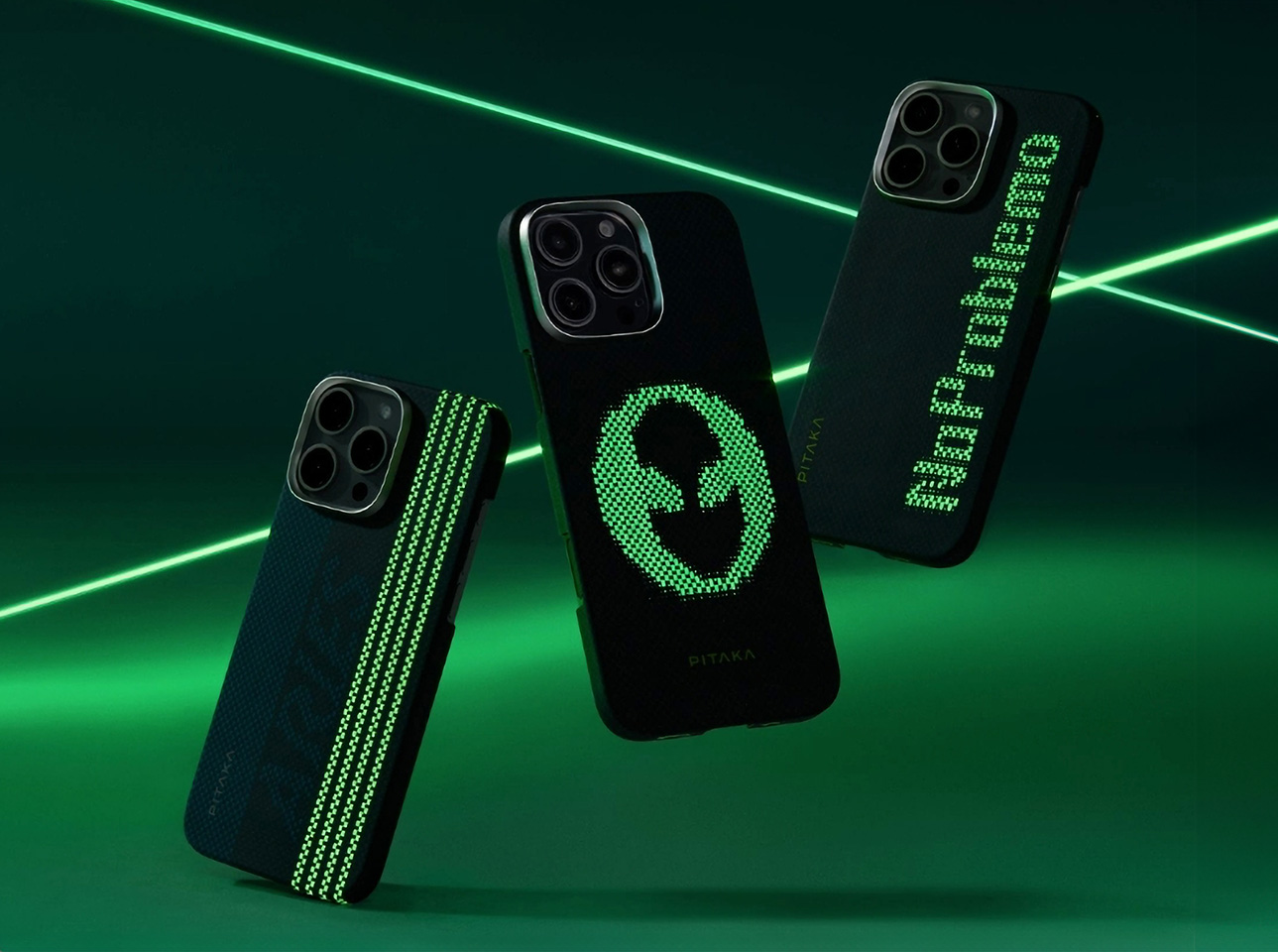
A phone case’s beautiful design becomes meaningless if you can’t see in the dark. Not so this collection of luminous designs that cast an eerie glow after the lights go out, giving them an alien, artful, and rebellious character. It’s the perfect combination for a design made in partnership with trendy UK fashion brand Aries, delivering cases that delight the eyes and the hands any time of the day. It’s a refreshing new style that adds a bit of youthful vigor to an iPhone case that’s already brimming with life.

At the heart of this luminescent innovation is PITAKA’s Lumintex™, combined with the brand’s advanced Floating Weave technique. This pairing elevates the design potential of aramid fibers, offering users a richer and more dynamic visual experience. Unlike conventional methods that simply print or paint luminous patterns that fade over time, PITAKA’s approach intricately weaves luminous fibers into the case. Lumintex™ is an ultra-thin, flexible polymer fiber, modified at the molecular level for enhanced weavability and luminescence. After absorbing light, the case emits a soft green glow for up to 20 minutes, providing a high-grade, fashionable luminescence at class D brightness.

Like any other PITAKA case, the PITAKA x Aries X NoProblemo series is made from hi-tech aramid fibers that are also used in the aerospace and military industries, giving it unbeatable protection against scratches and corrosion without weighing the phone down. PITAKA’s proprietary Fusion Weaving technology interlaces multiple colored fibers on a single loom to create eye-catching patterns that your fingers will also be able to touch and appreciate. These PITAKA iPhone 16 cases bring long-lasting beauty that shows even in the dark.

Click Here to Buy Now: PITAKA x Aries x NoProblemo Glow in the Dark Cases at $69.99

PITAKA iPhone 16 Tactile Woven Cases: Skyward Bound

Many smartphone cases try to be beautiful and stylish but tend to go overboard and end up looking gaudy and over-the-top. Nothing wrong with that if that’s exactly what you’re after, but those who want striking yet subtle designs might want to turn their eyes toward PITAKA’s heavenly Tactile Woven cases instead. Durable and elegant at the same time, these cases bring a touch of the heavens to your phone in ways that your hand can feel as well.

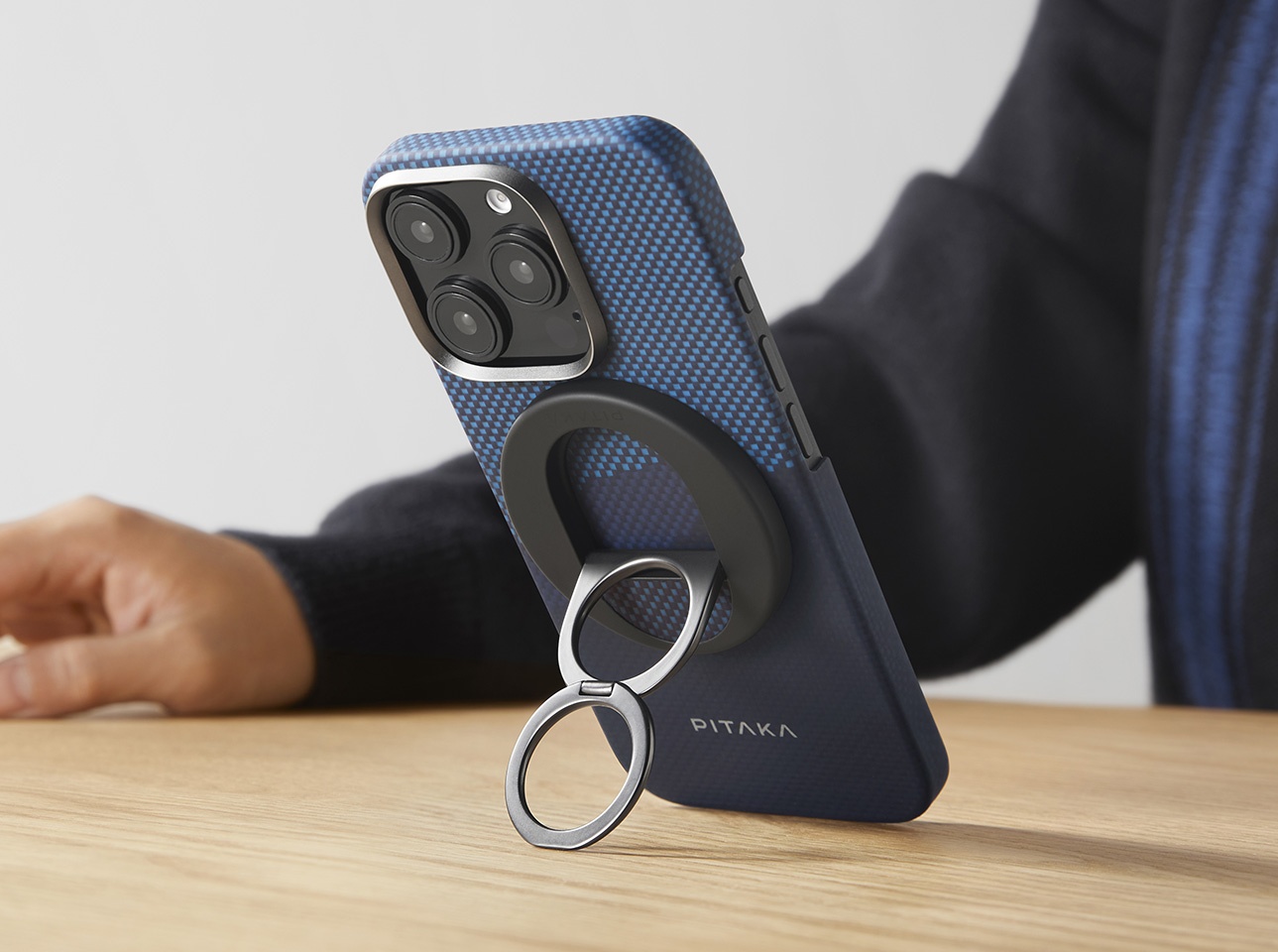
Utilizing aramid fibers known in aerospace and military circles for their light yet strong properties, PITAKA’s Fusion Weaving technique creates sophisticated patterns of colors that tell a story more than just displaying art. The alternating lines of orange or blue, for example, try to depict the magic moments during Sunset and Moonrise, while the trail of yellow dots across a field of blue tries to paint the Milky Way on the back of your phone. Finally, the rocky split between dark and light azure hues depict that enchanting view of mountains disappearing Over the Horizon.

For the iPhone 16 series, PITAKA upgraded its design to offer additional protection, especially for one of the most important parts of smartphones today: the cameras. The new camera ring not only prevents scratching by raising the lenses away from surfaces, its new titanium color also helps reduce the exposure that could ruin those perfect and ephemeral shots. Beautiful and tactile, these woven cases give your iPhone 16 some character that will surely make it stand out from the crowd.

Click Here to Buy Now: PITAKA Tactile Woven Cases at $59.99

PITAKA Military-Grade Protective Cases: Rugged Beauty

If you want some extra peace of mind, then PITAKA’s line of tough cases delivers that added layer of durability your phone needs to survive those nasty accidents with very little additional weight. It integrates light yet durable aramid fibers with shockproof TPU material, offering protection from drops that pass even MIL-STD-810G tests. And it doesn’t stop there either.

The soft Nappa leather lining inside the case also helps cushion the back of the iPhone in case of unfortunate incidents, while metal button covers minimize abrasions and damage to these crucial buttons. The subtle screen lip mitigates the effects of dropping your phone face first on the ground, while the raised camera ring protects the camera lenses from scratches when you place the phone on rough surfaces.

Despite these added layers of protection, the PITAKA military-grade iPhone 16 cases remain slim, light, and most importantly, compatible with MagSafe chargers and accessories. In fact, the new iPhone 16 line of cases boasts a 0.1-0.2 kg increase in magnetic strength, allowing it to cling securely to any MagSafe-compatible surface. Plus, these military-grade cases are now also available in PITAKA’s signature Sunset and Moonrise designs, delivering not only protection but also style in a single package.

Click Here to Buy Now: PITAKA Military-Grade Protective Cases at $79.99

PITAKA Ultra-Slim Cases: Slim, Simple, Sublime

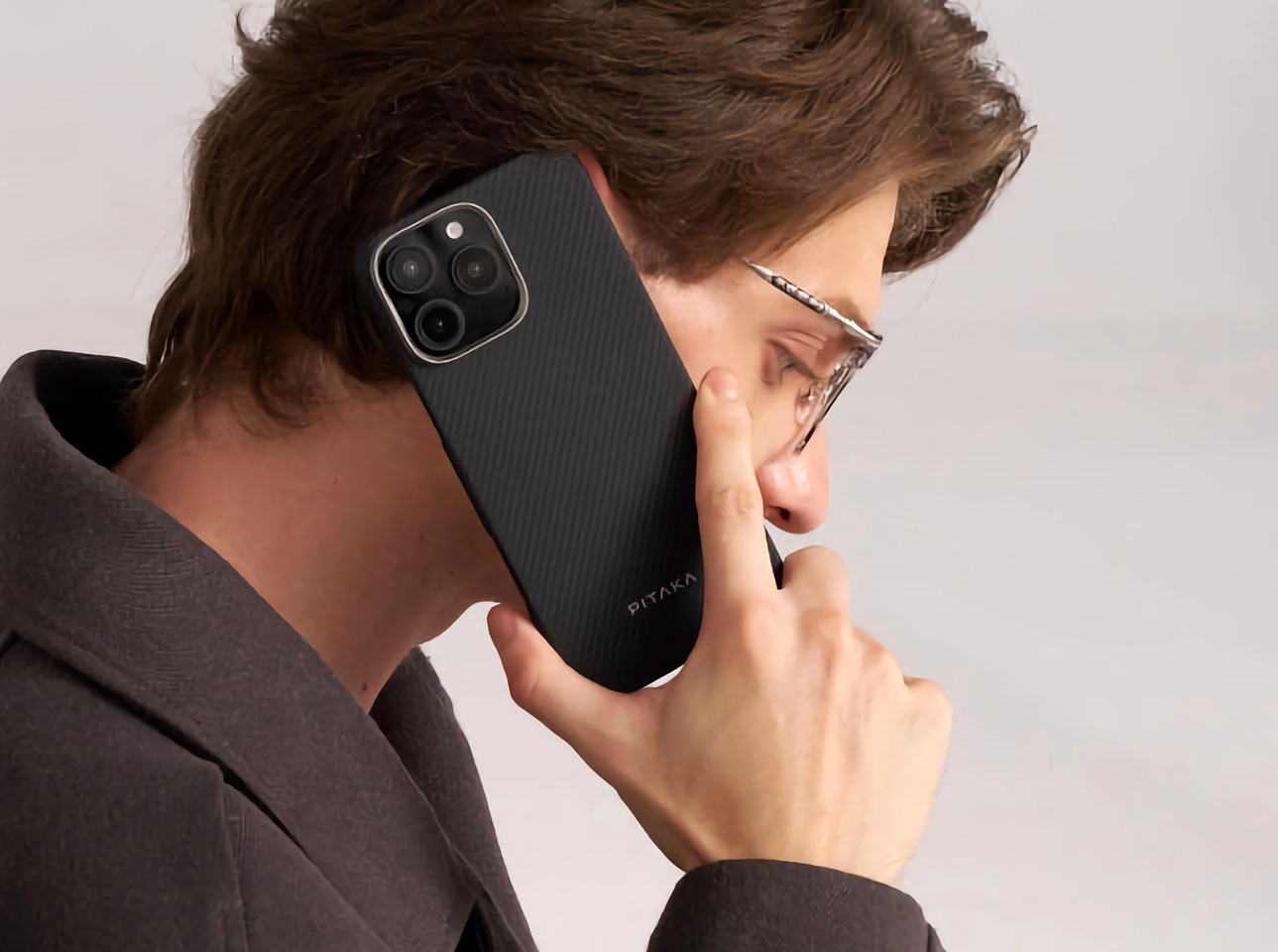
If your priority is keeping an already slim iPhone 16 as slim as it can be, then PITAKA’s selection of ultra-slim cases delivers that mixture of style and substance in a subtle design. Utilizing the brand’s MagSafe SlimBoard 2.0 technology, each case measures a mere 0.84 thick and weighs only 17.84g (0.63oz). Inside that thin body are 0.1mm thicker magnets that add 0.1kg more magnetic force, ensuring even better compatibility with MagSafe chargers, docks, wallets, and other accessories.

It doesn’t skimp on protection and beauty, however, using the same aramid fiber material and Fusion Weaving technique as any other PITAKA case, creating visual appeal and grip comfort at the same time. New to this iPhone 16 lineup are colors that add some life to your phone, adding Ocean Blue and Forest Green to the Black Grey colorway. The camera ring’s minimalist titanium color further adds to its elegance while offering additional protection as well as a reduction of exposure for that perfect shot.

Despite its slimmer build, the PITAKA Ultra-Slim cases still boast the same standard set of features, including exclusive NFC-driven experiences, like checking the authenticity of the case as well as access to games, music, wallpapers, and customer services. All of these are packed inside a box made from 100% biodegradable bagasse, a natural by-product of sugar cane processing, establishing PITAKA’s commitment to a greener tomorrow with every beautiful case sold. Stylish, strong, and sustainable, PITAKA’s Ultra-Slim iPhone 16 Cases has a design for every person, proving that phone protection doesn’t have to come at the cost of aesthetics, your bank account, or the health of the planet.

Click Here to Buy Now: PITAKA Ultra-Slim Cases at $49.99

The post PITAKA Launches Their Latest iPhone 16 Cases: Slim, Light, Strong first appeared on Yanko Design.
Heatherwick Studio Unveils Stunning Sustainable School Design for Universidad Ean in Bogotá

In an exciting blend of vibrant culture and innovative architecture, Heatherwick Studio has unveiled the stunning visuals for a new school in Bogotá, Colombia. This groundbreaking project, set to rise on Calle 72, one of the city’s bustling main arteries, promises to be a visual and functional masterpiece for Universidad Ean’s School of Sustainable Design.

Designer: Heatherwick Studio

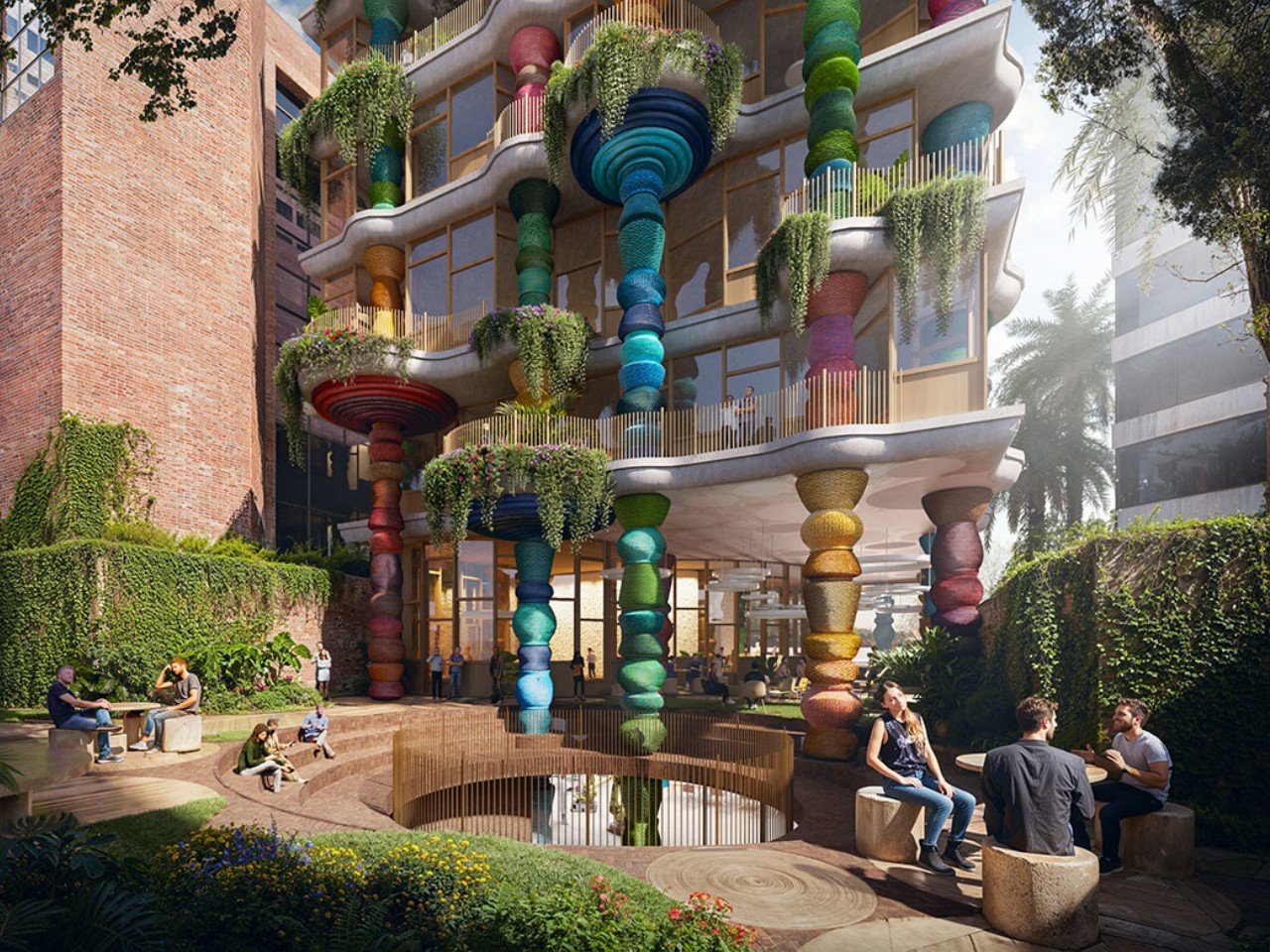
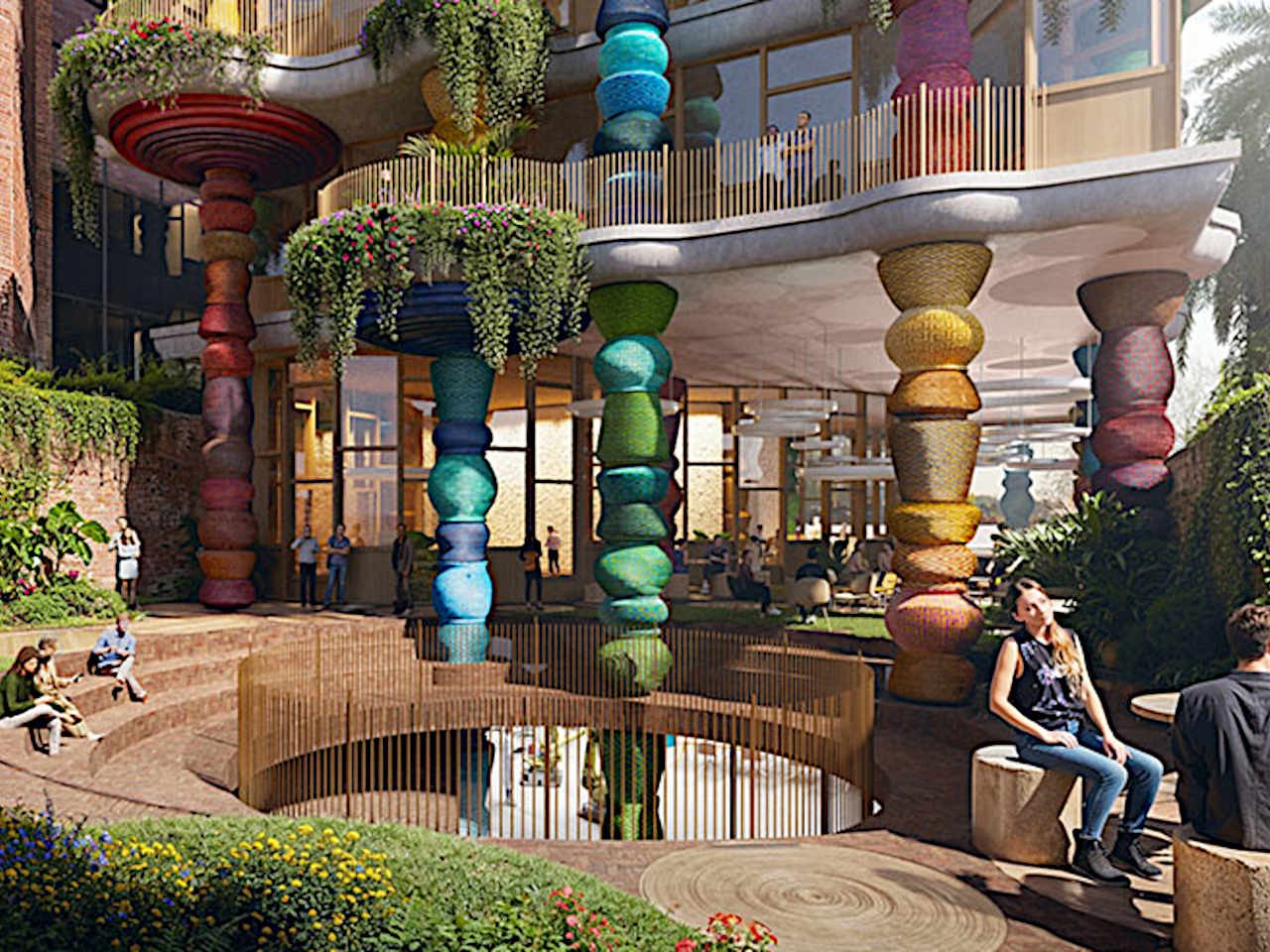
The seven-story marvel will serve as a dynamic hub for creativity and learning, adorned with colorful, basketry-formed terraces that pay homage to Colombia’s rich craft traditions. Inspired by Werregue basketry, a unique weaving technique of the Wounaan indigenous community, the building’s front façade will be a captivating mosaic of crafted columns and open terraces. This design not only celebrates local heritage but also infuses modern architectural flair, making it a standout addition to Bogotá’s skyline.

The innovative columns of the building, which denote the earthy vibe of the project, are not just regular forms seen in past structures. They resemble organic stones stacked on top of each other, supporting the balconies above. The design detailing of the joint where the balcony slab meets the column is particularly fascinating, and easily noticeable from the ground. This junction appears like ripples created when a stone touches water, adding a unique and visually engaging element to the architecture. The vibrant colors of the columns are certainly eye-catching, ensuring the building stands out in the urban landscape.

Eliot Postma, group leader and partner at Heatherwick Studio, explained that creativity is intrinsic to the city of Bogotá and evident everywhere. He expressed the studio’s desire for students to feel proud of their campus even before entering the building, envisioning a public square that would provide passers-by with a welcoming communal oasis amidst the hard urban surroundings.

Heatherwick Studio’s design goes beyond aesthetics; it aims to create a central gathering space for the Universidad Ean campus. The new building will complement existing heritage structures, introducing a rare and much-needed public space in the heart of the city. The design team is also pioneering the use of innovative façade materials to withstand Bogotá’s intense sunlight, ensuring the building’s resilience and longevity.

Colombia, celebrated as the world’s second most biodiverse country, positions Bogotá as a leader in sustainable development. Universidad Ean’s ambitious vision includes integrating elements of the surrounding cloud forest into the building, embodying the country’s natural beauty. Heatherwick Studio’s biophilic design will feature local plant species on the terraces, seamlessly merging nature with urban life and aligning with Bogotá’s commitment to the C40 Urban Nature Declaration.

The building’s design is a testament to Colombia’s weaving traditions, with columns adorned in colorful, curved lines supporting the circular terraces above. This weaving texture reflects the artistry of local practices, creating a harmonious blend of tradition and modernity.

Heatherwick Studio’s first project in South America is set to break ground in 2025. This landmark building not only stands as a beacon of sustainable design but also celebrates Colombia’s vibrant cultural and natural heritage, promising to be a source of pride and inspiration for students and citizens alike.

The post Heatherwick Studio Unveils Stunning Sustainable School Design for Universidad Ean in Bogotá first appeared on Yanko Design.
Woven leaf lamp concept harmonizes traditional crafts and industrial production

Advancements in technology, material science, and processes have taken man’s production capabilities to a whole new level. However, with advanced manufacturing, traditional craftsmanship and values have been left by the wayside, sometimes forgotten, and other times discarded as if they were no longer important or were even counterproductive to progress. Of course, this couldn’t be further from the truth, as there will always be elements of traditional crafts and modern tooling that could be mixed in an elegant way. Such is the premise behind this rather striking lamp, highlighting not only the beauty of traditional, handmade crafts but also promoting the culture and the livelihood that also grow alongside it.

Designer: Antoni Martorell Pascual

Handmade products are admittedly not suitable for mass production. As many have realized by now, however, not everything has to be mass-produced in the first place. Simple, everyday items might be fine with generic and standardized designs, but in exchange for speed and ease of manufacturing, they often lack personality, depth, and impact. Fortunately, you don’t always have to go to either extreme and find some middle ground that showcases the strengths of both methods.

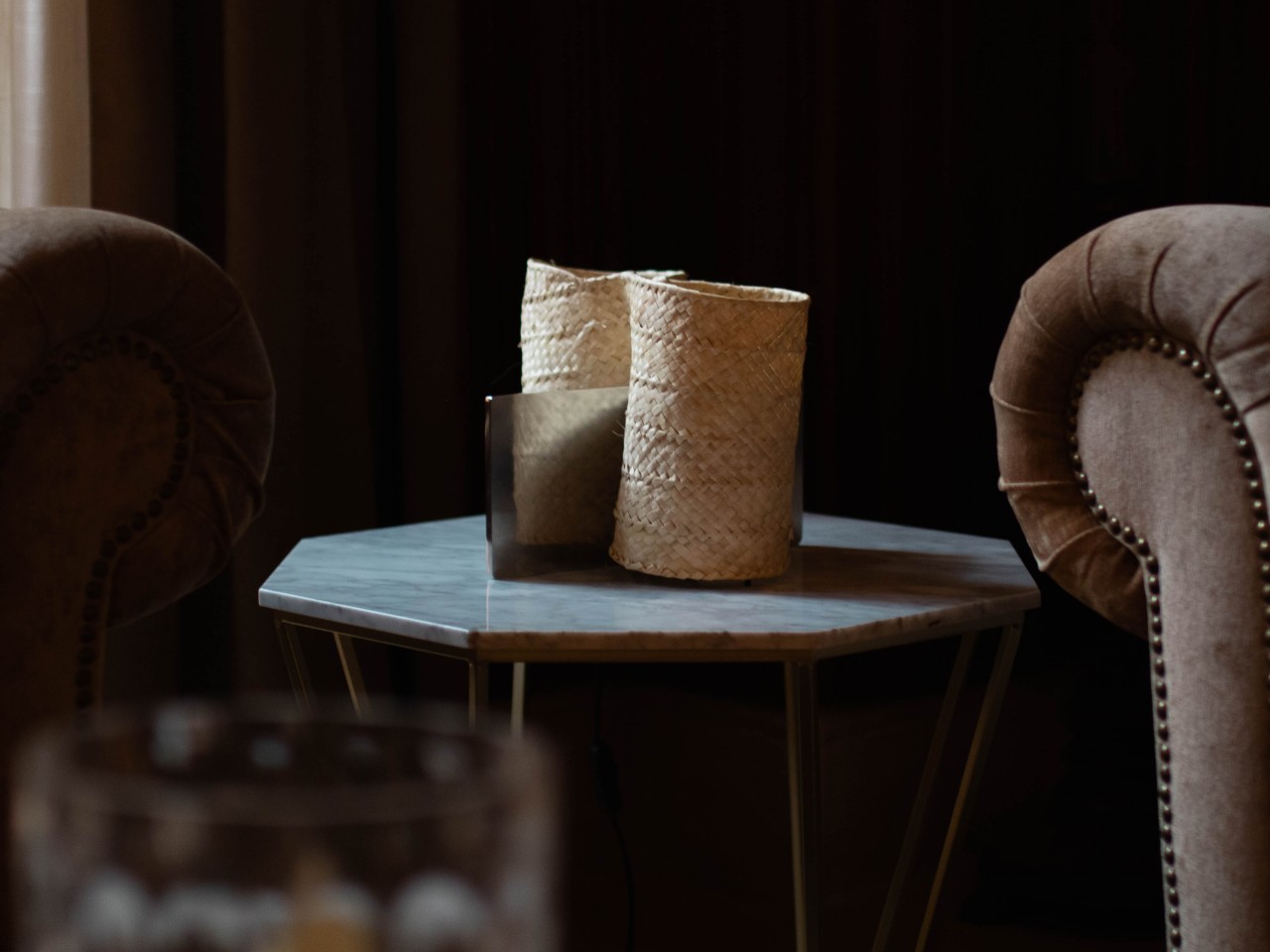
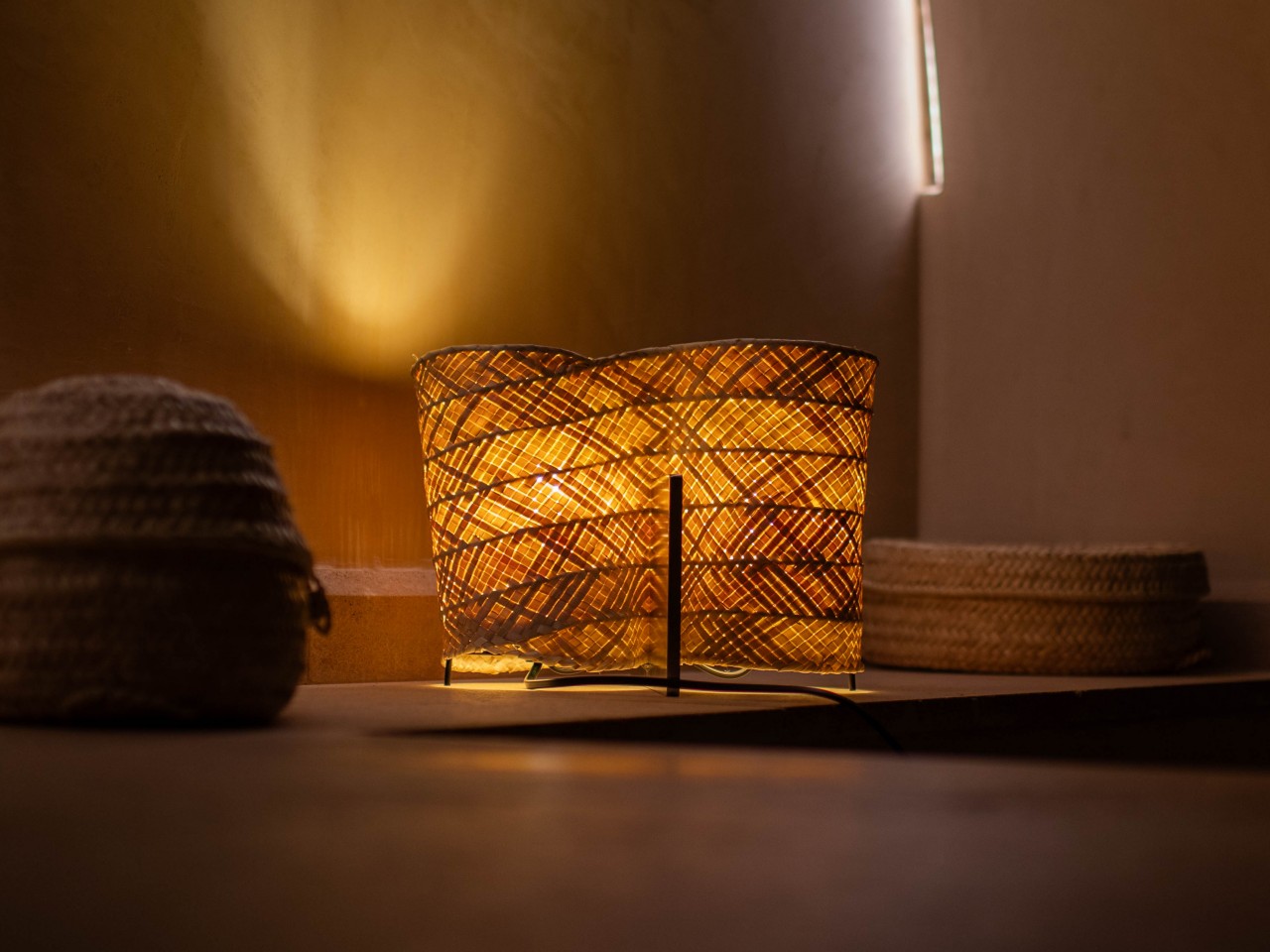
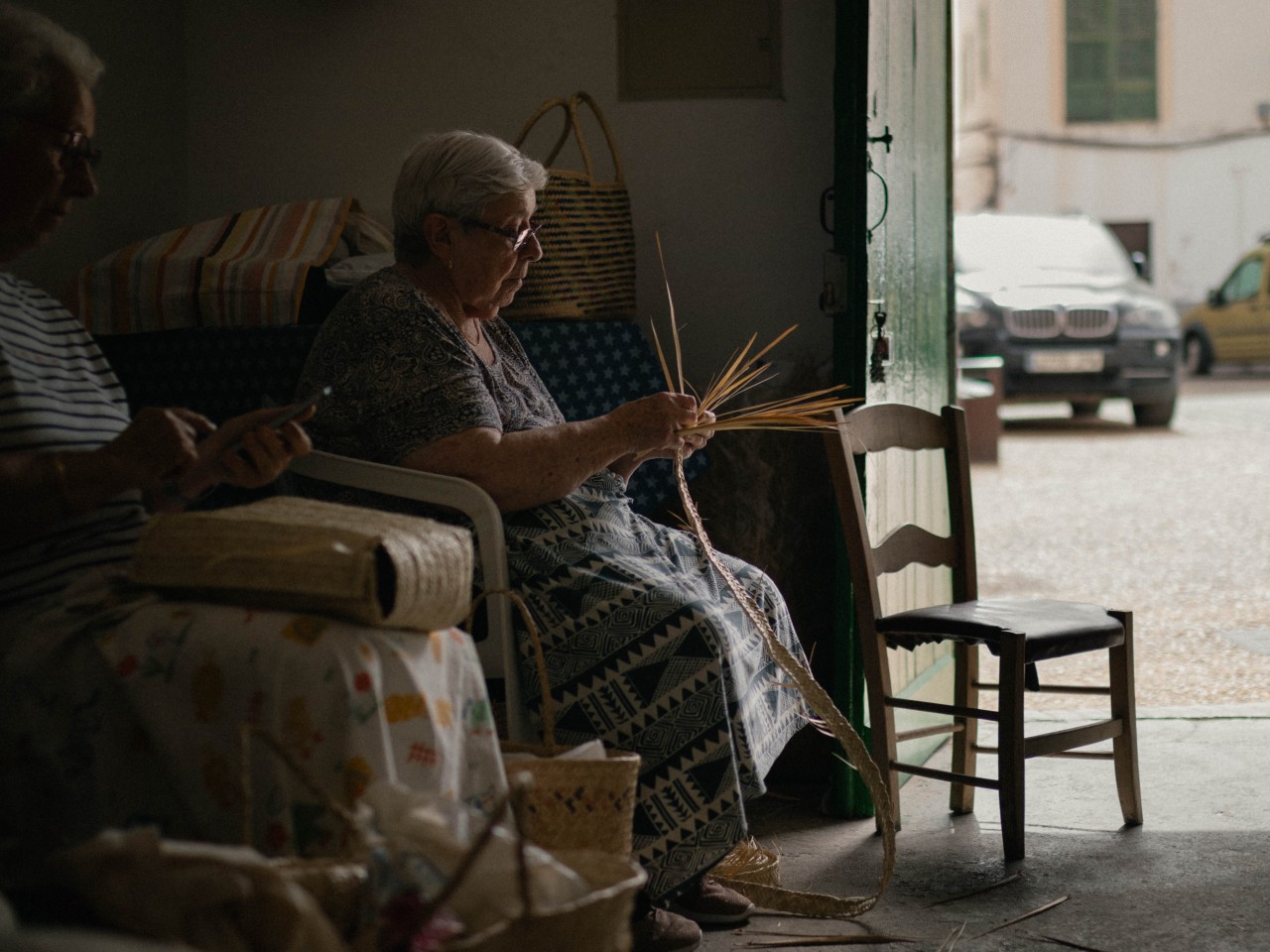
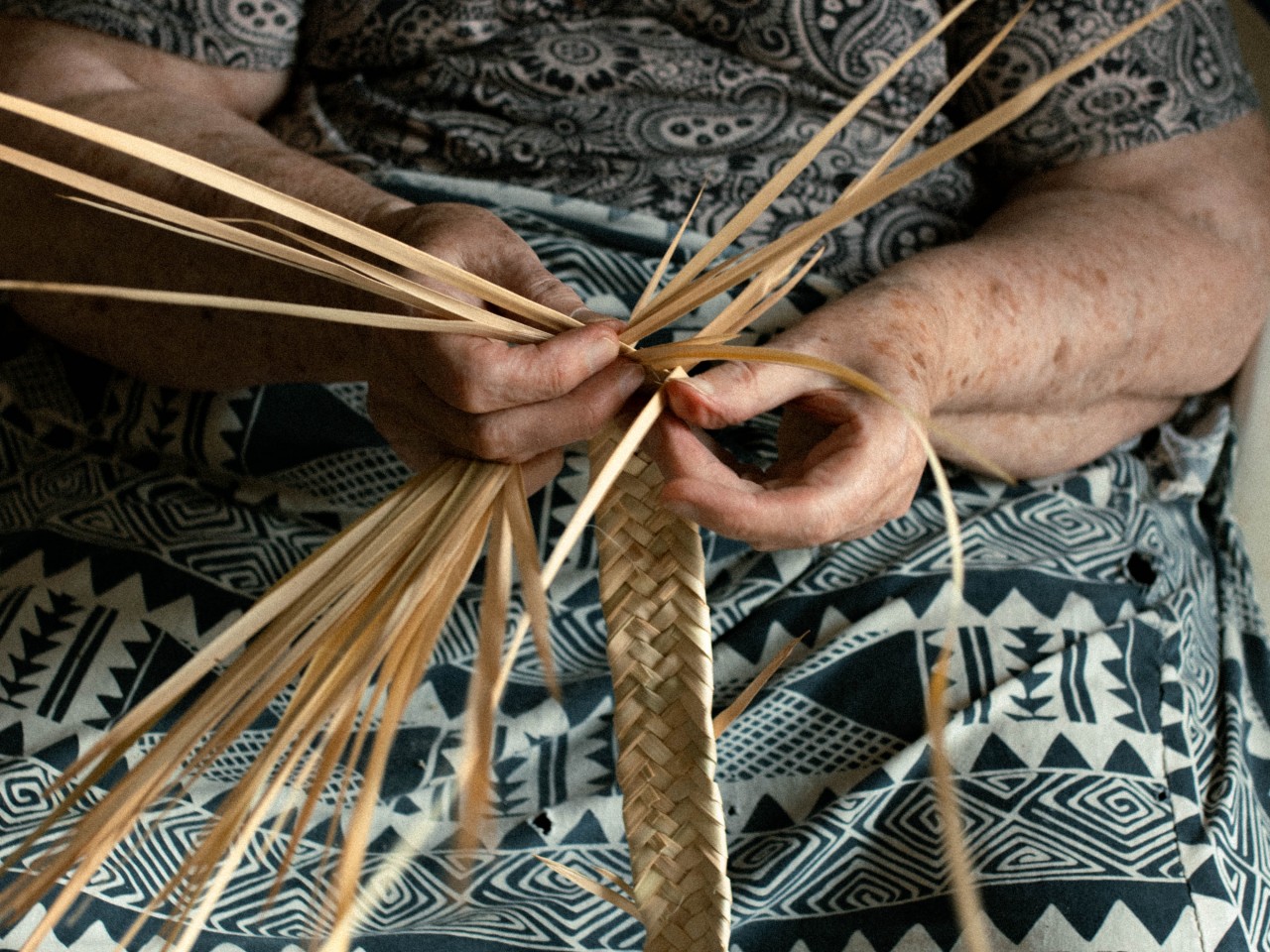
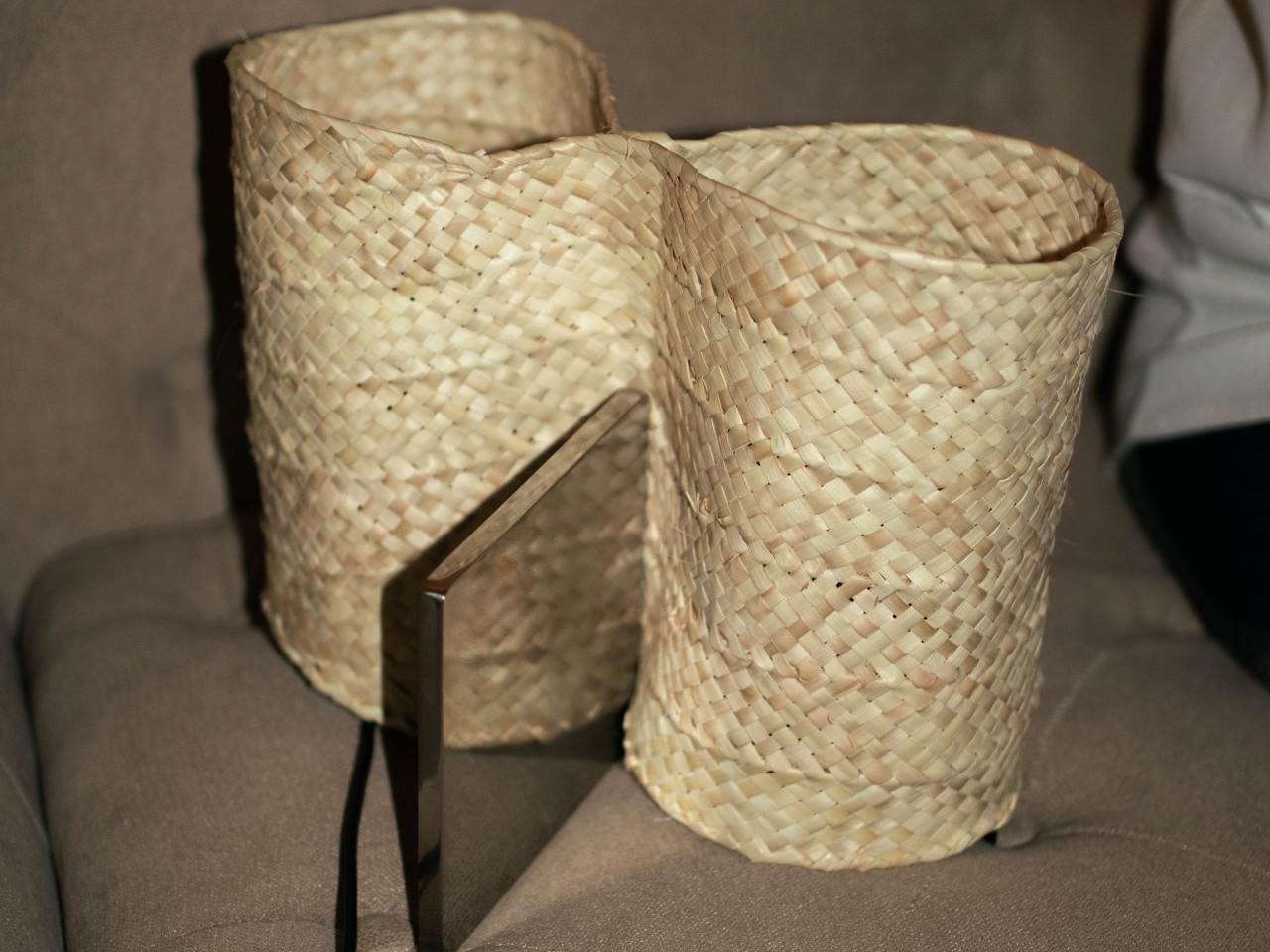
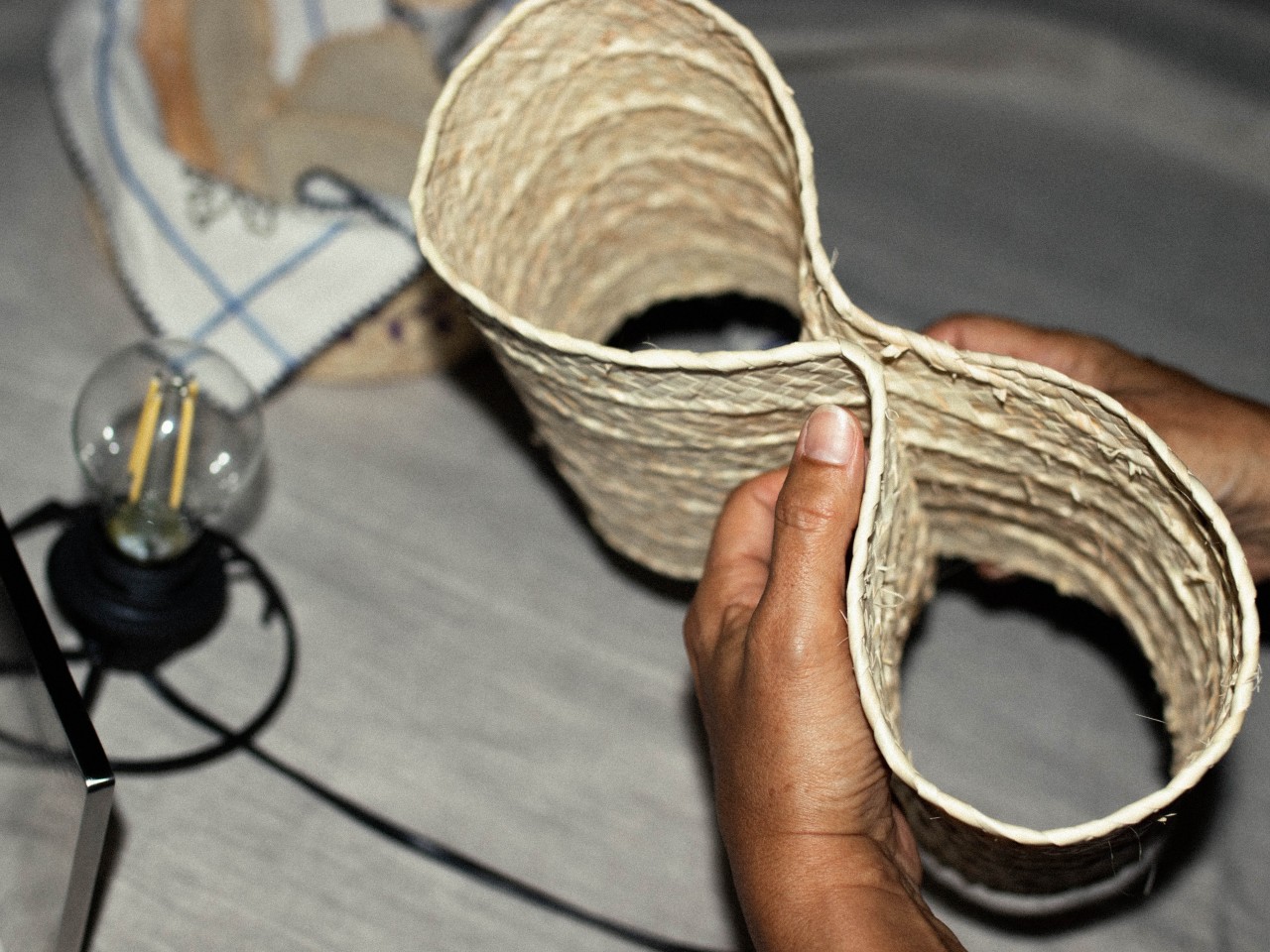
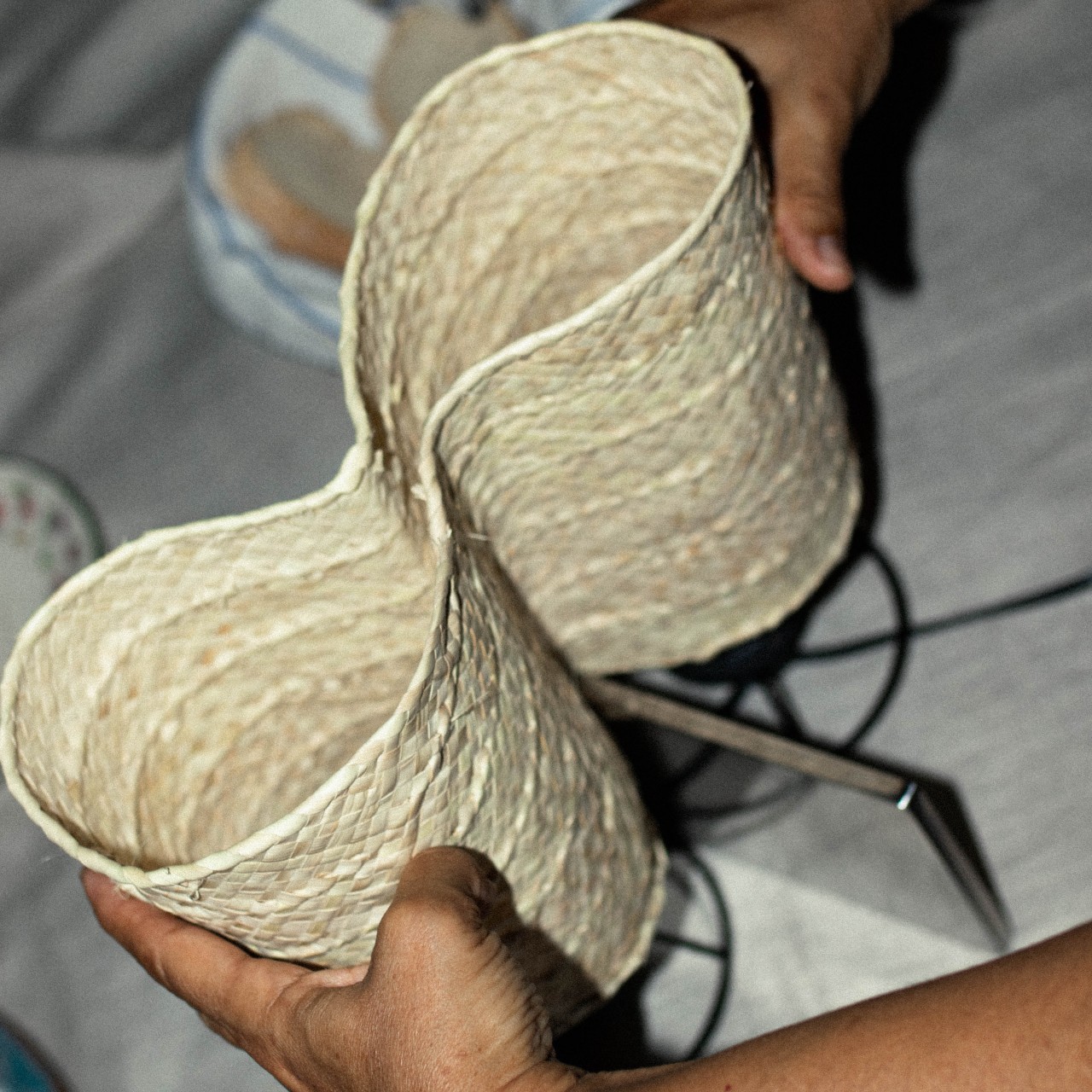
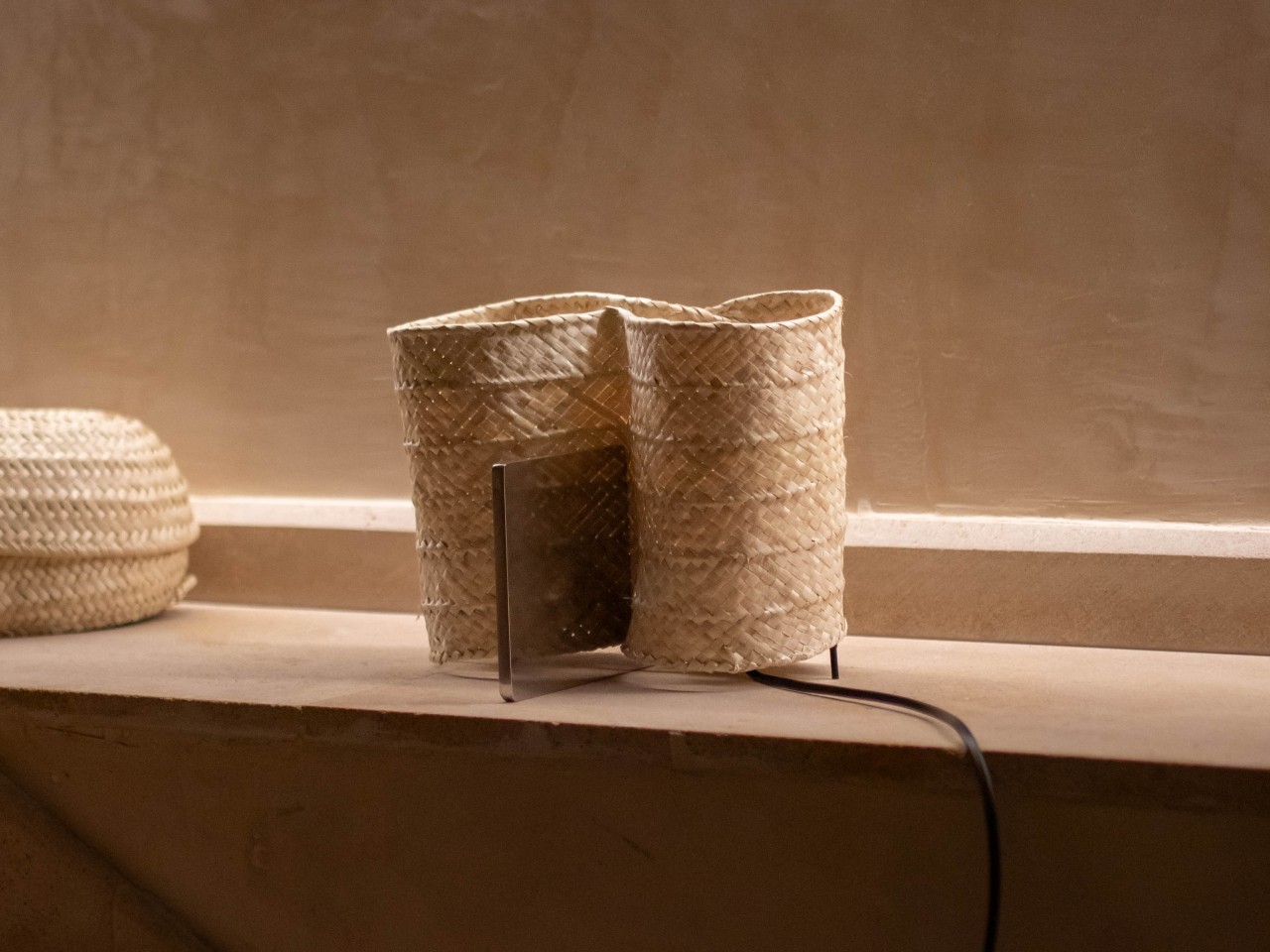
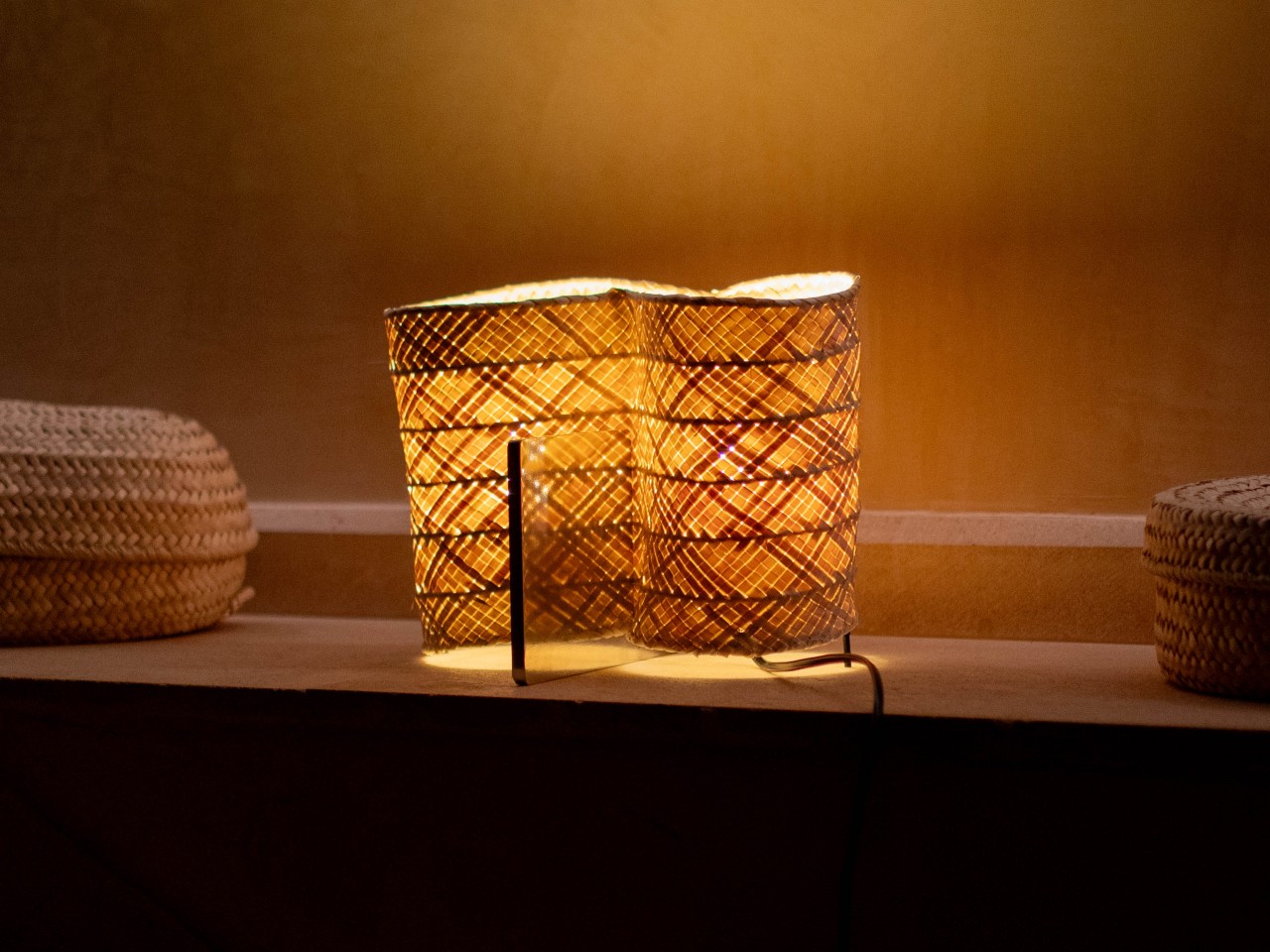
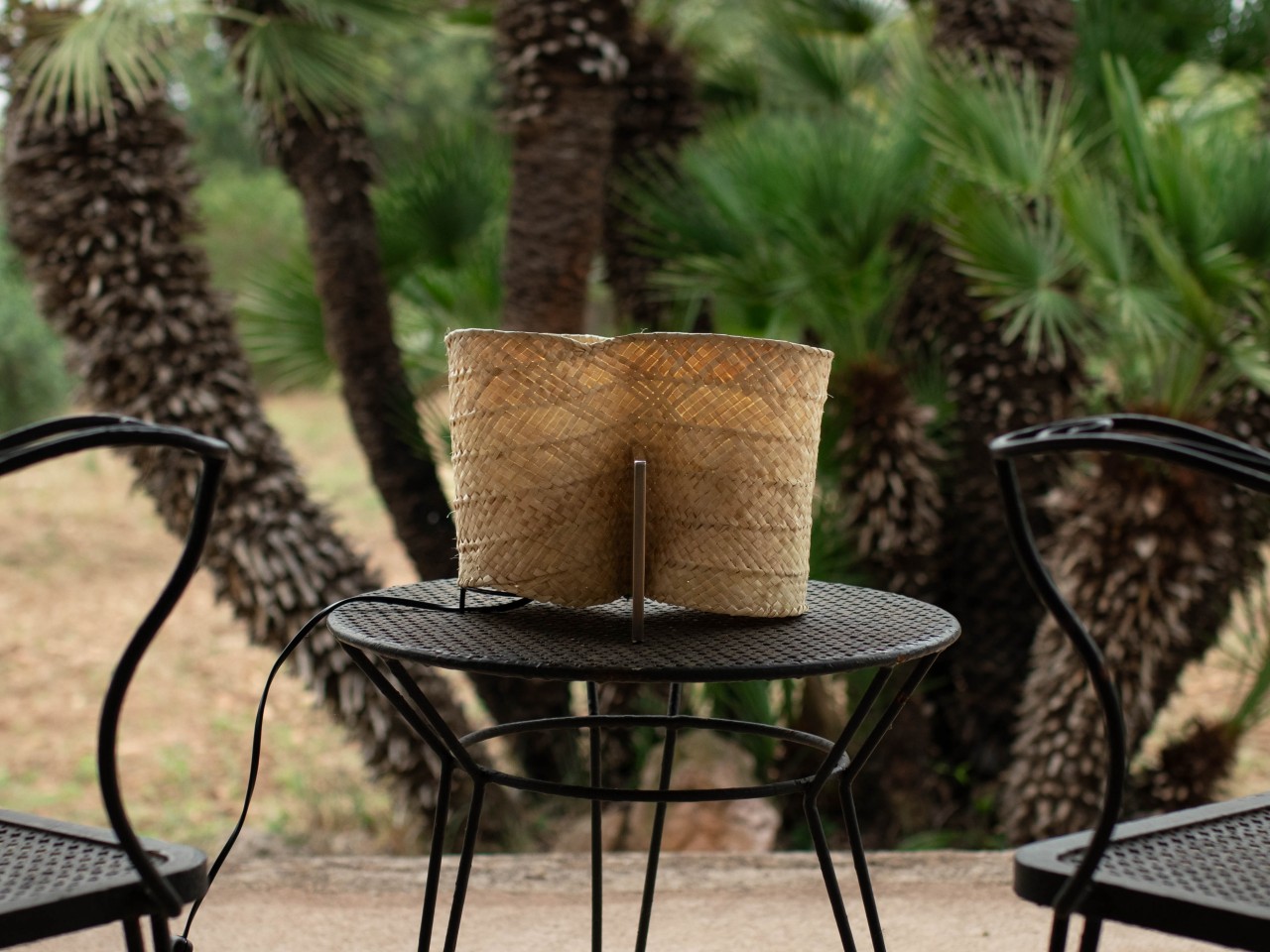
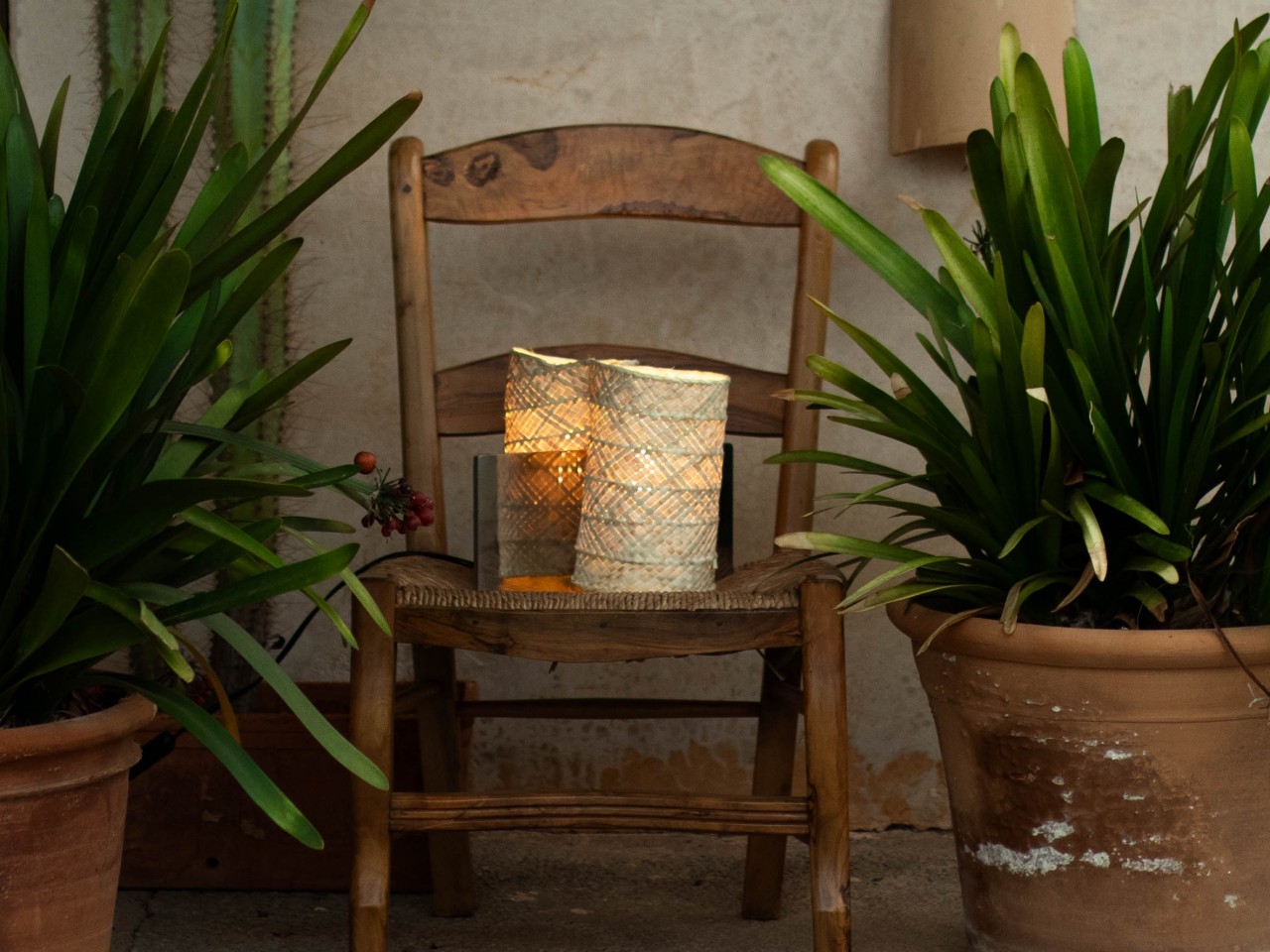
Catalina is a lamp design that does exactly this by combining ordinary lamp electronics and foundations with a lampshade that’s meticulously woven by hand. Specifically, it uses palmetto leaves and traditional weaving techniques called “llata” from Mallorca on one of Spain’s Balearic Islands. Unsurprisingly, this technique is passed down through generations and is mostly done by the women of the locale, a practice whose existence is being threatened by the rise of mass-produced furniture and lighting.

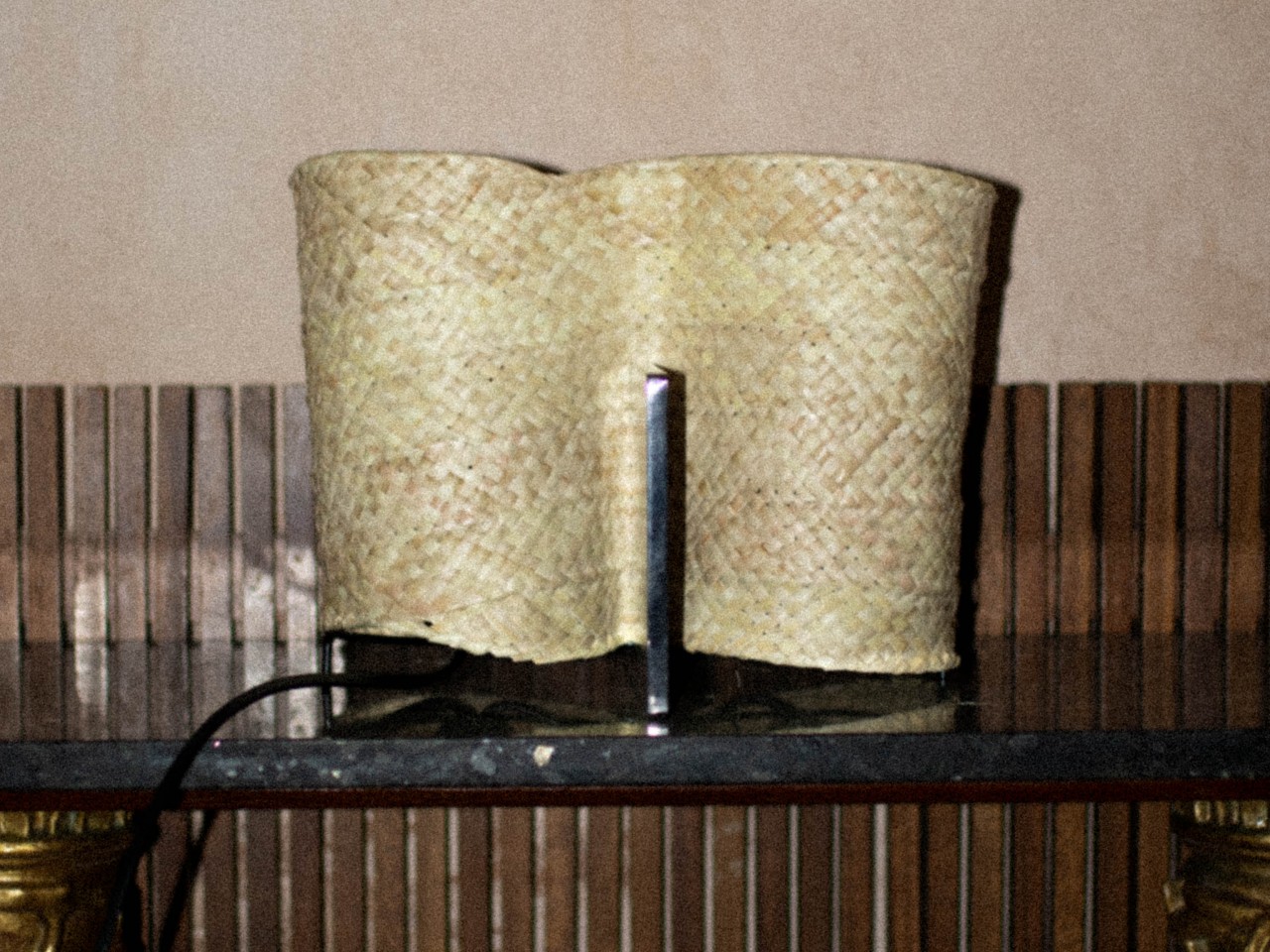
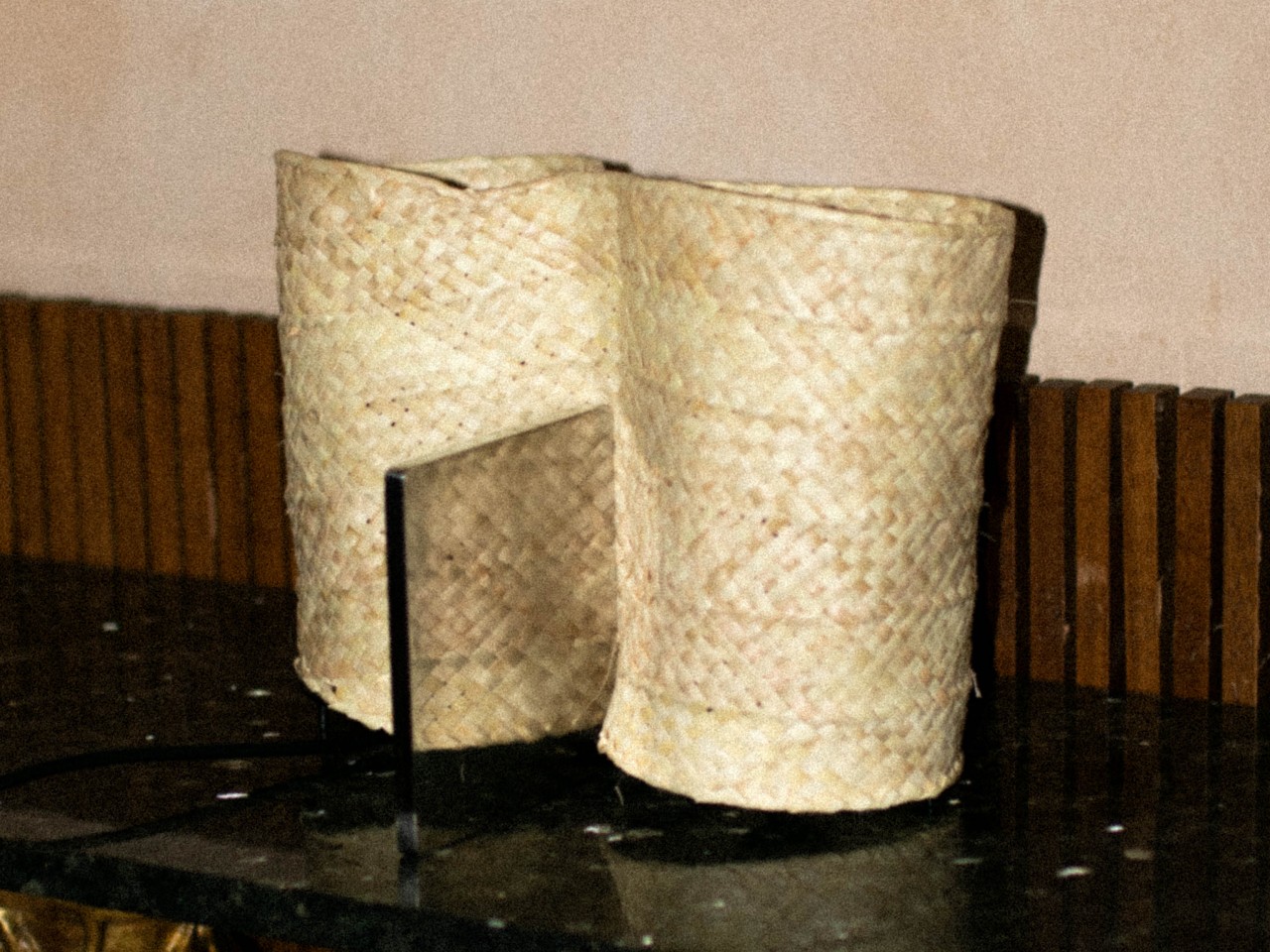
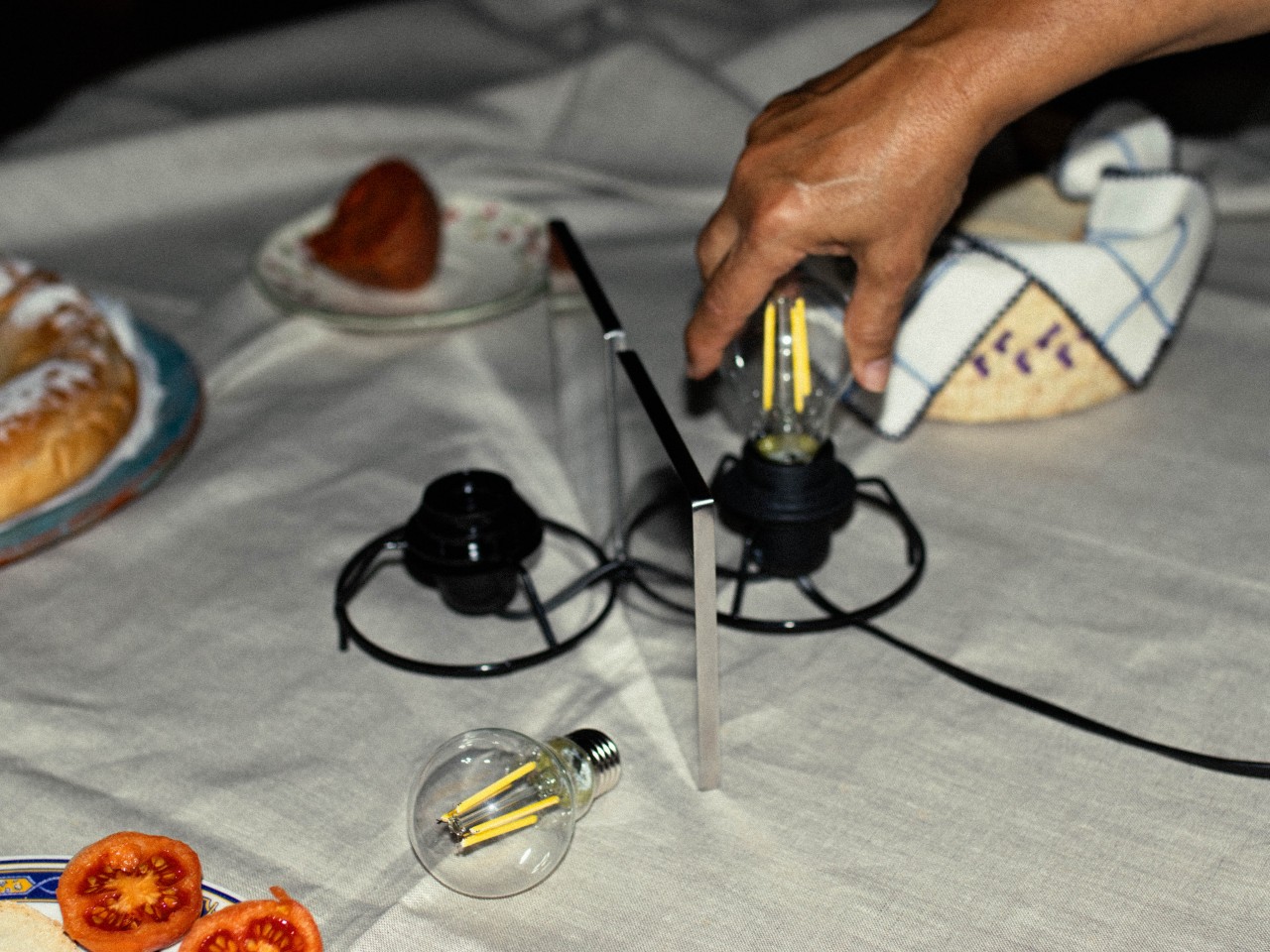
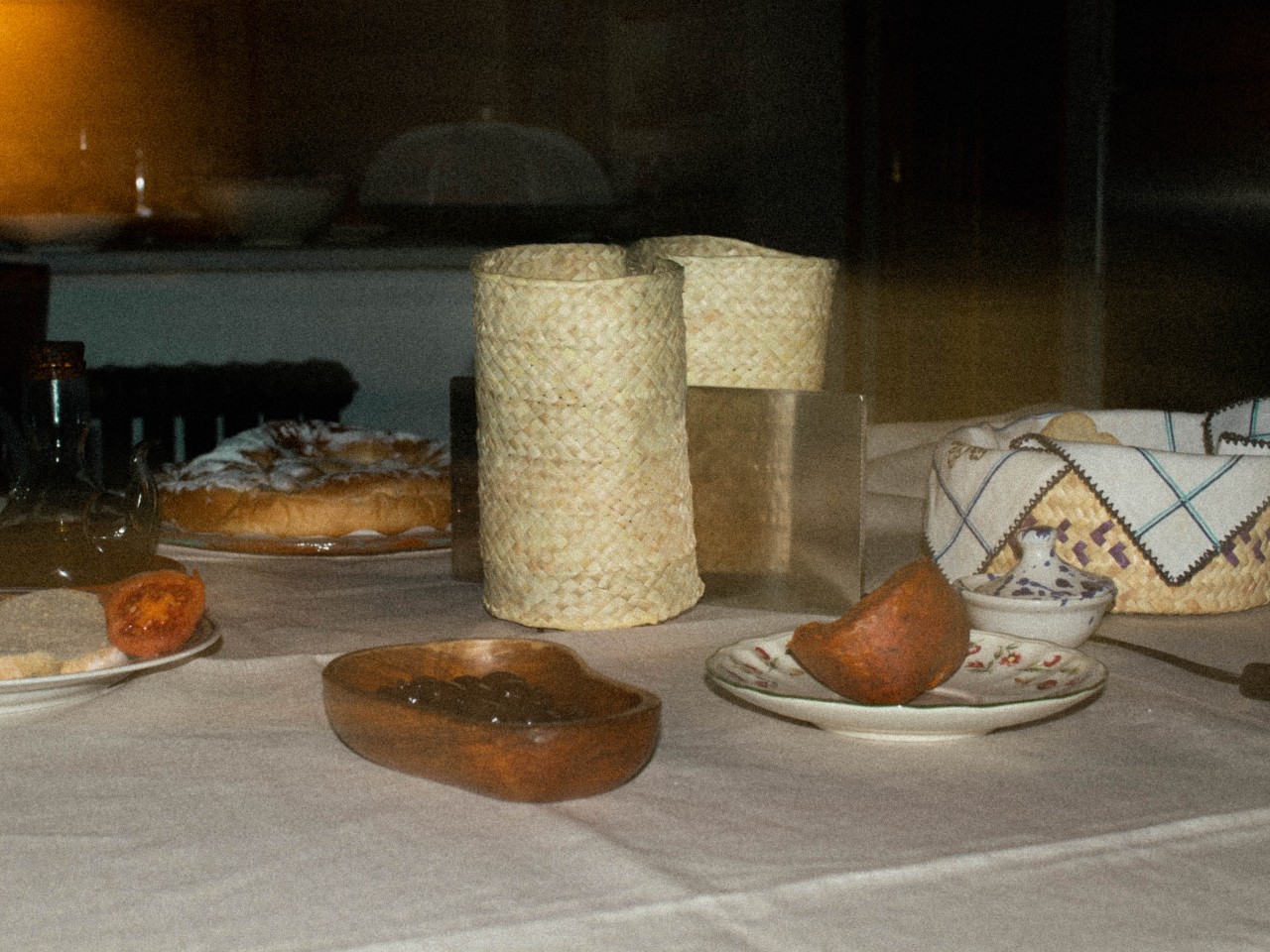
This lamp, however, illustrates the beauty that can come from the melding of past and present. The woven palm leaves form two cylindrical shapes in the form of an eight that encloses two bulbs inside each space. A gap between the two circles is filled by a transparent sheet of glass or fiberglass, serving as a diffuser for the light. The effect is a serene glow that passes through the weave like an otherworldly light.

Lamps like Catalina take time to make and are often more expensive because of the labor involved. That, however, also makes the design more special, giving it a unique character similar to a limited edition product. And unlike factory-made lampshades, these handwoven materials will have differences and imperfections, flaws that become selling points exactly because they are different from any other lamp from the same product line.

The post Woven leaf lamp concept harmonizes traditional crafts and industrial production first appeared on Yanko Design.