This Sideboard Has Lapis Lazuli and Green Onyx Hand-Set Into Marble

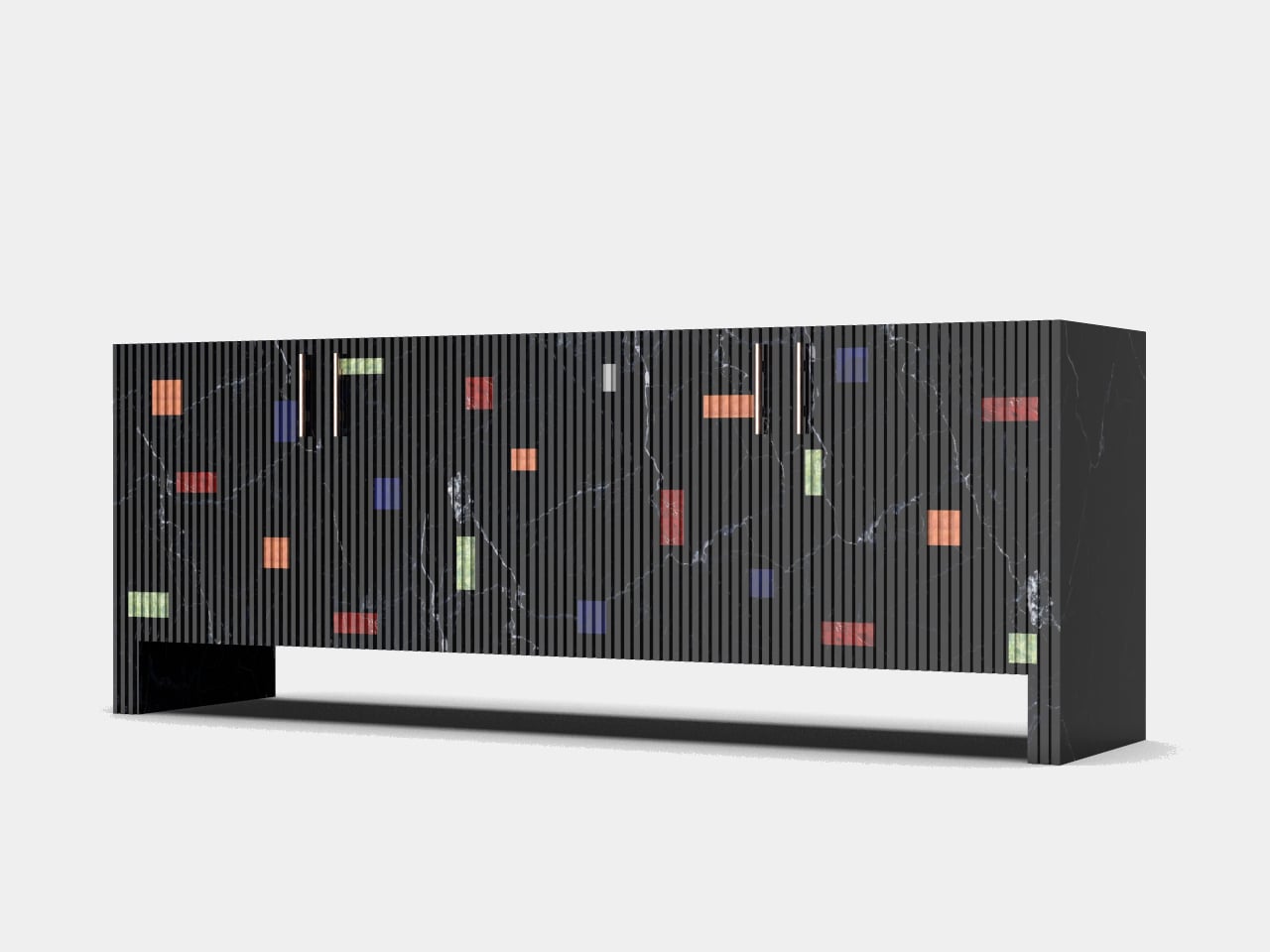
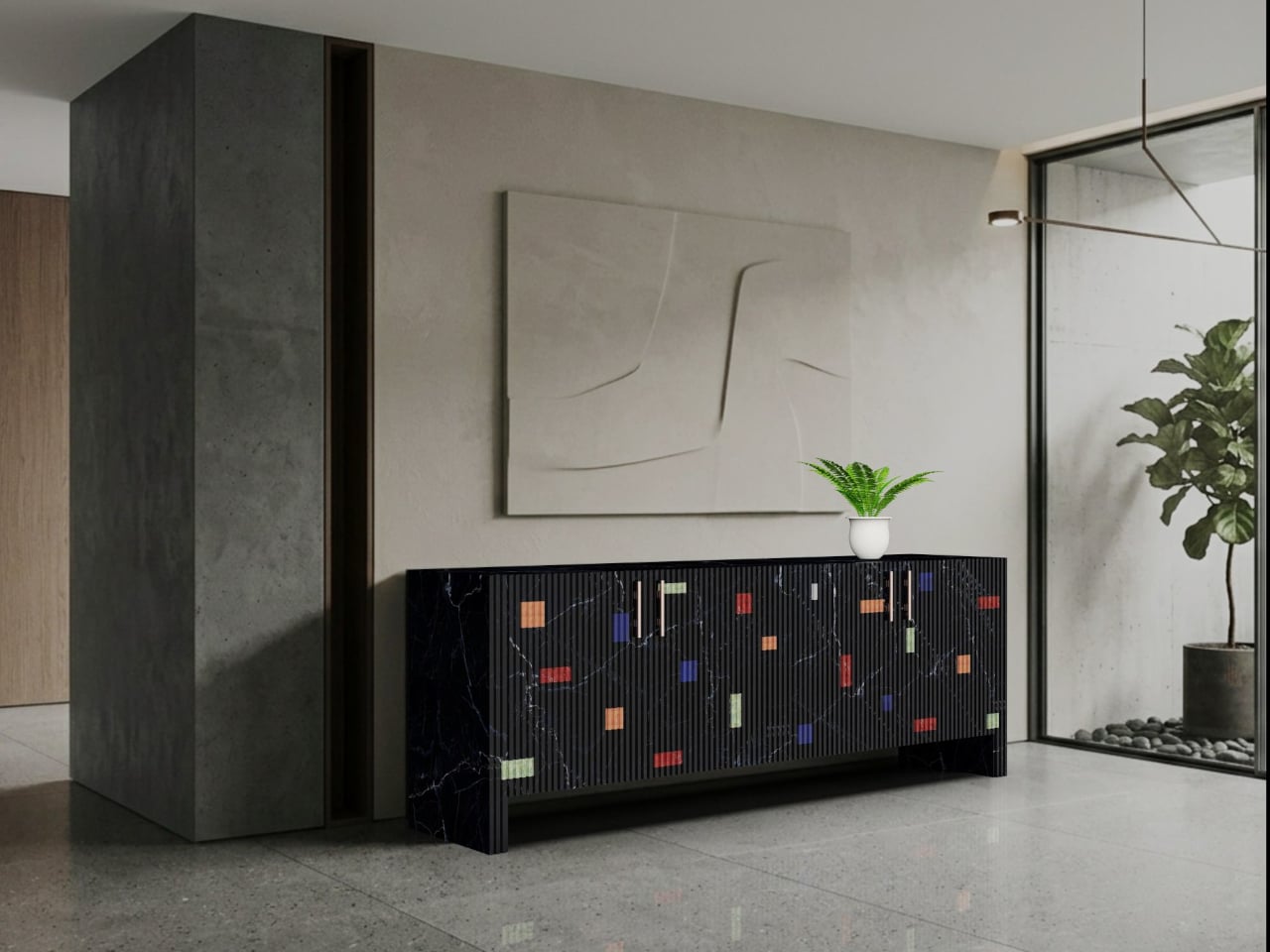
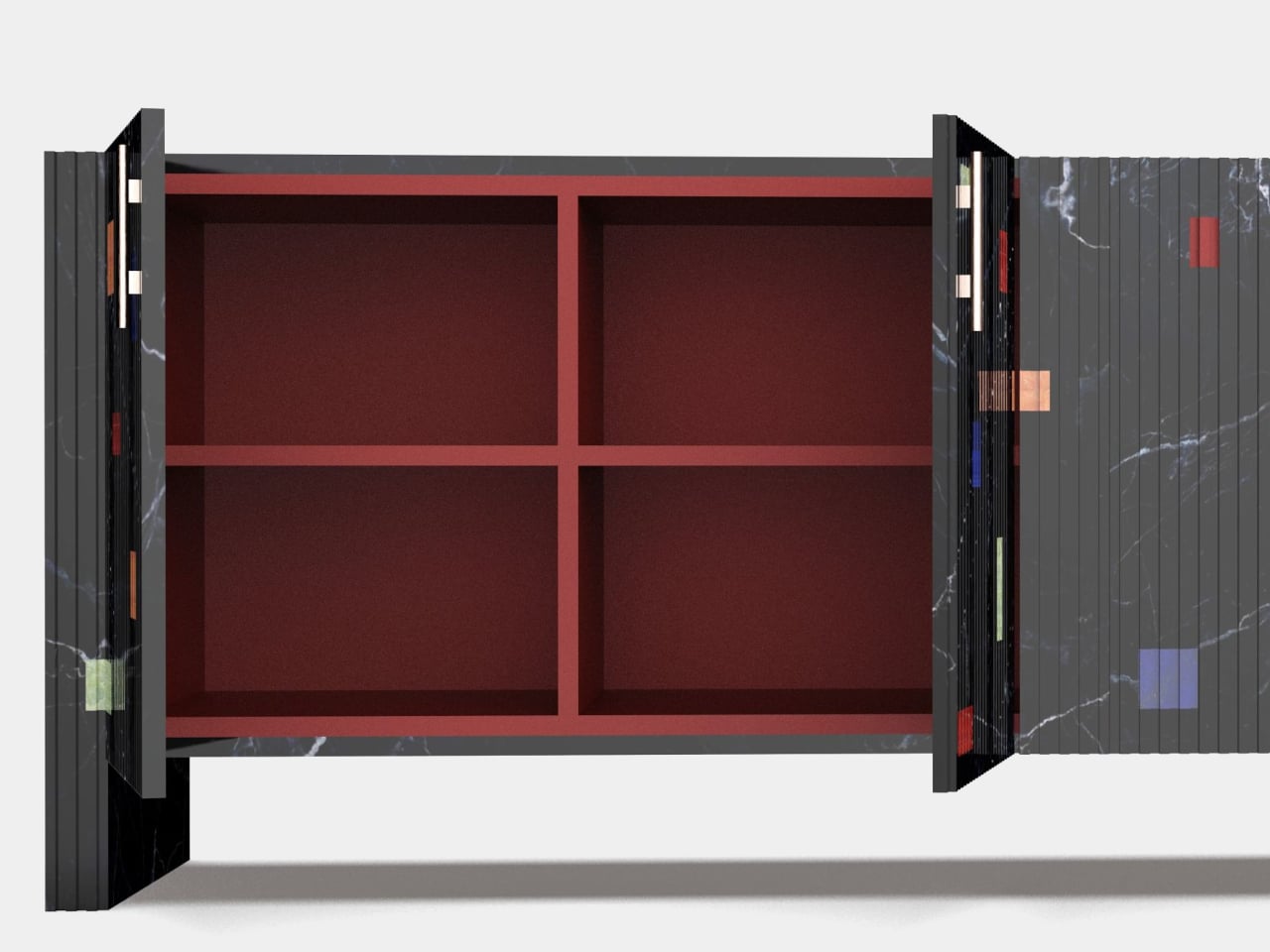
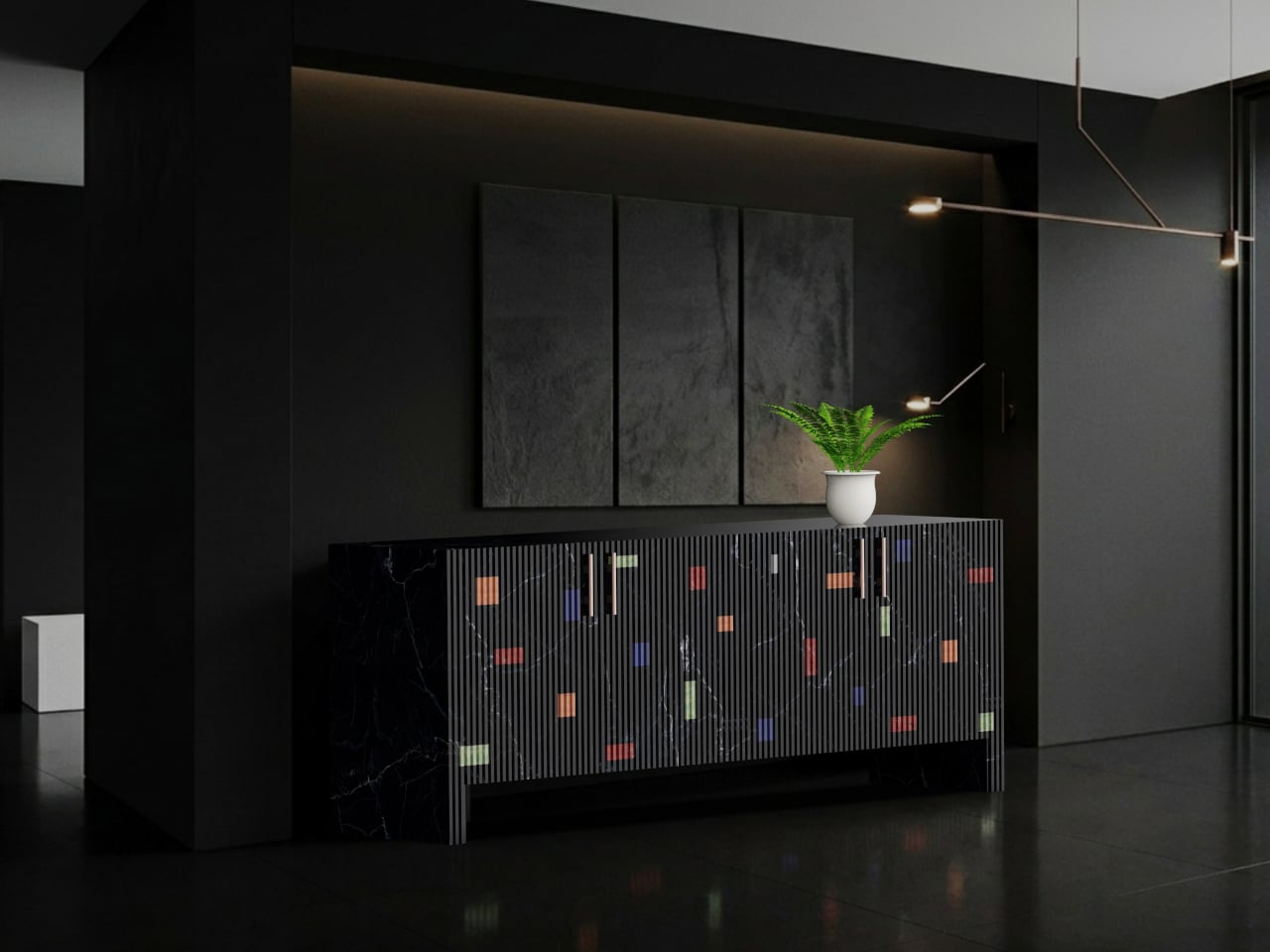
Black Marquina marble tends to command a room before anything else in it does. The material has a particular gravity, that deep, carbonized base cut through with white veining, which makes most furniture around it feel like an afterthought. Designer Himanshu Kumar Gupta leans into that authority completely with the Midnight Inlay Sideboard, then quietly subverts it the moment someone opens a door.

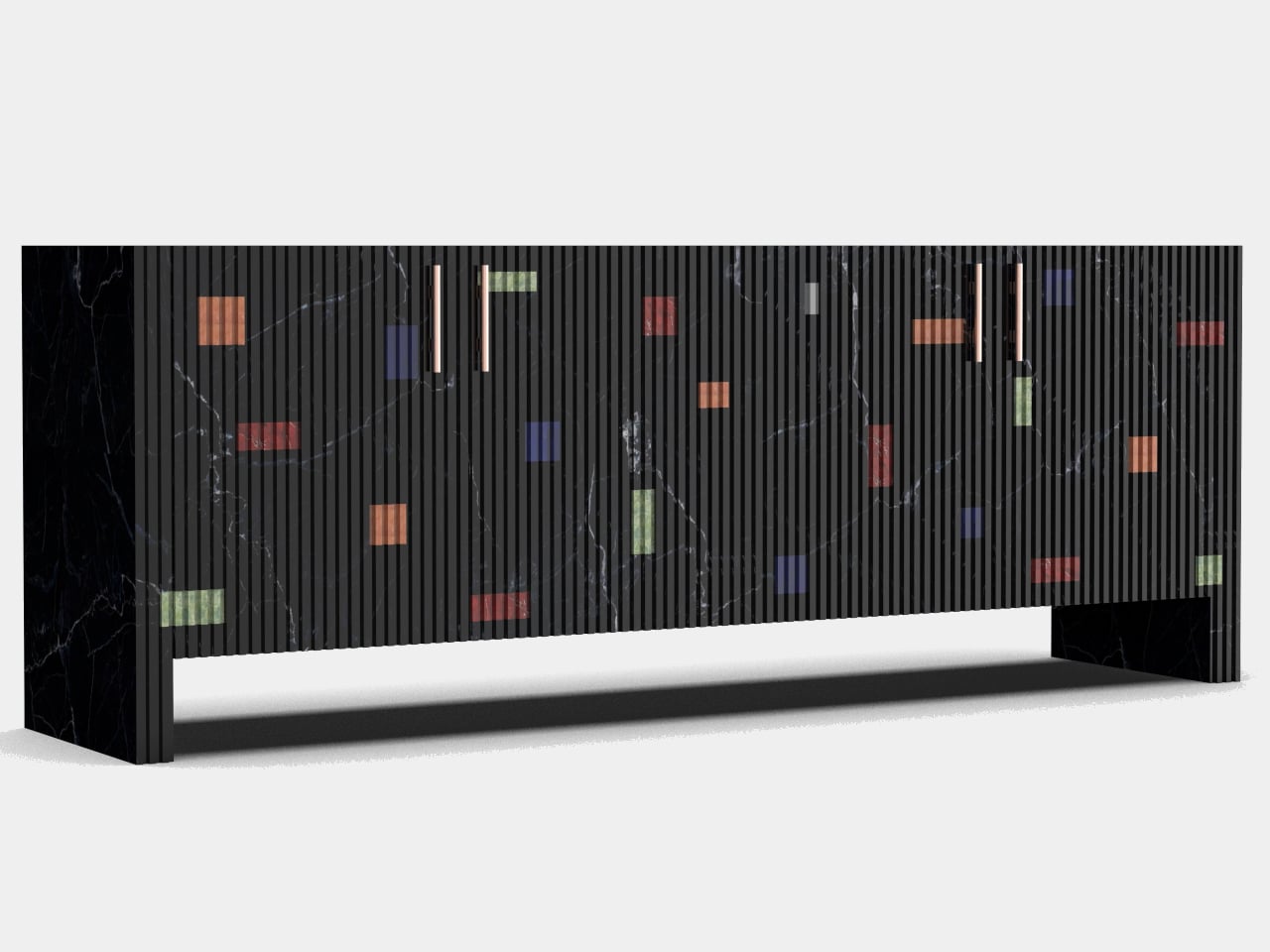
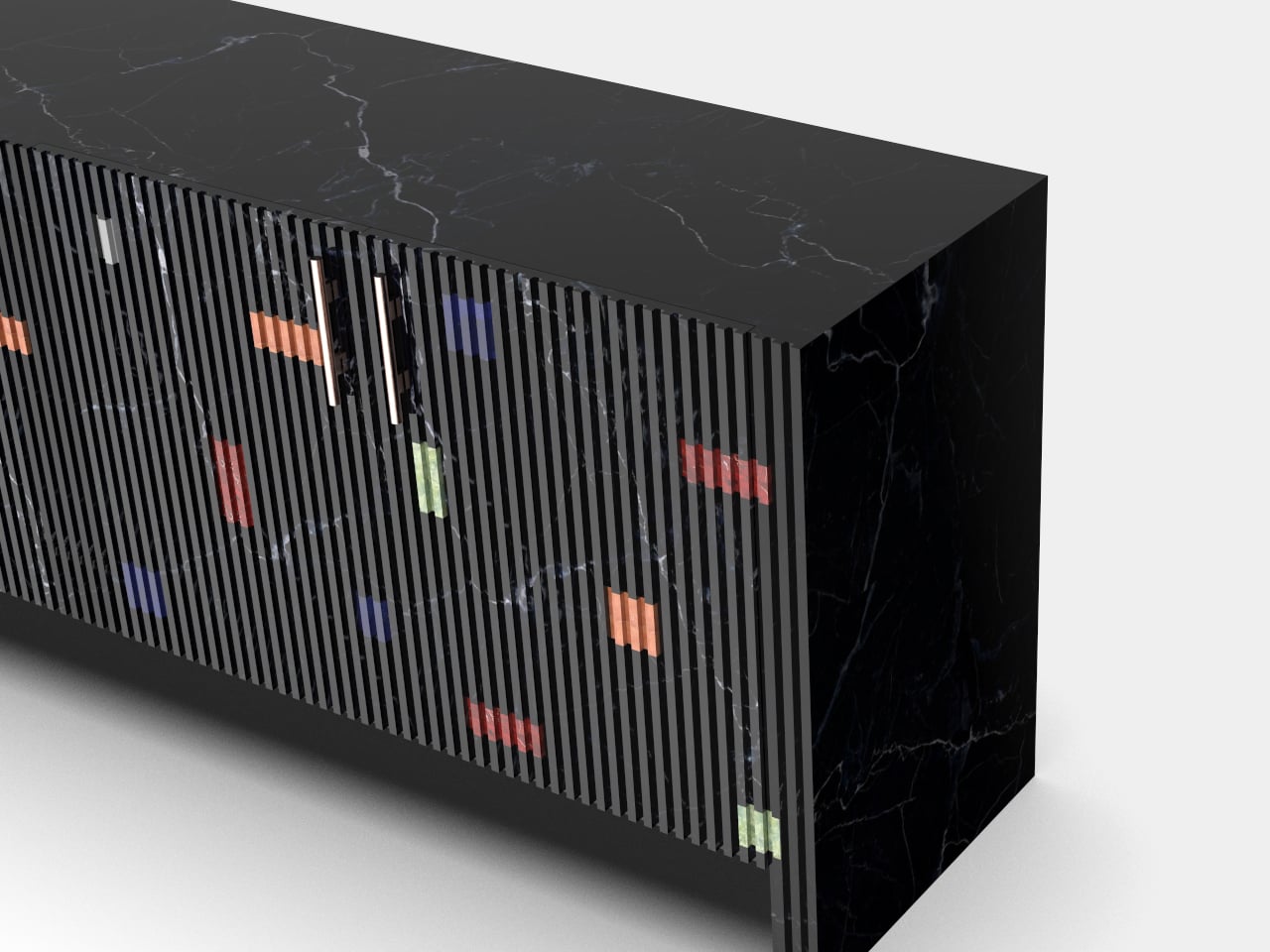
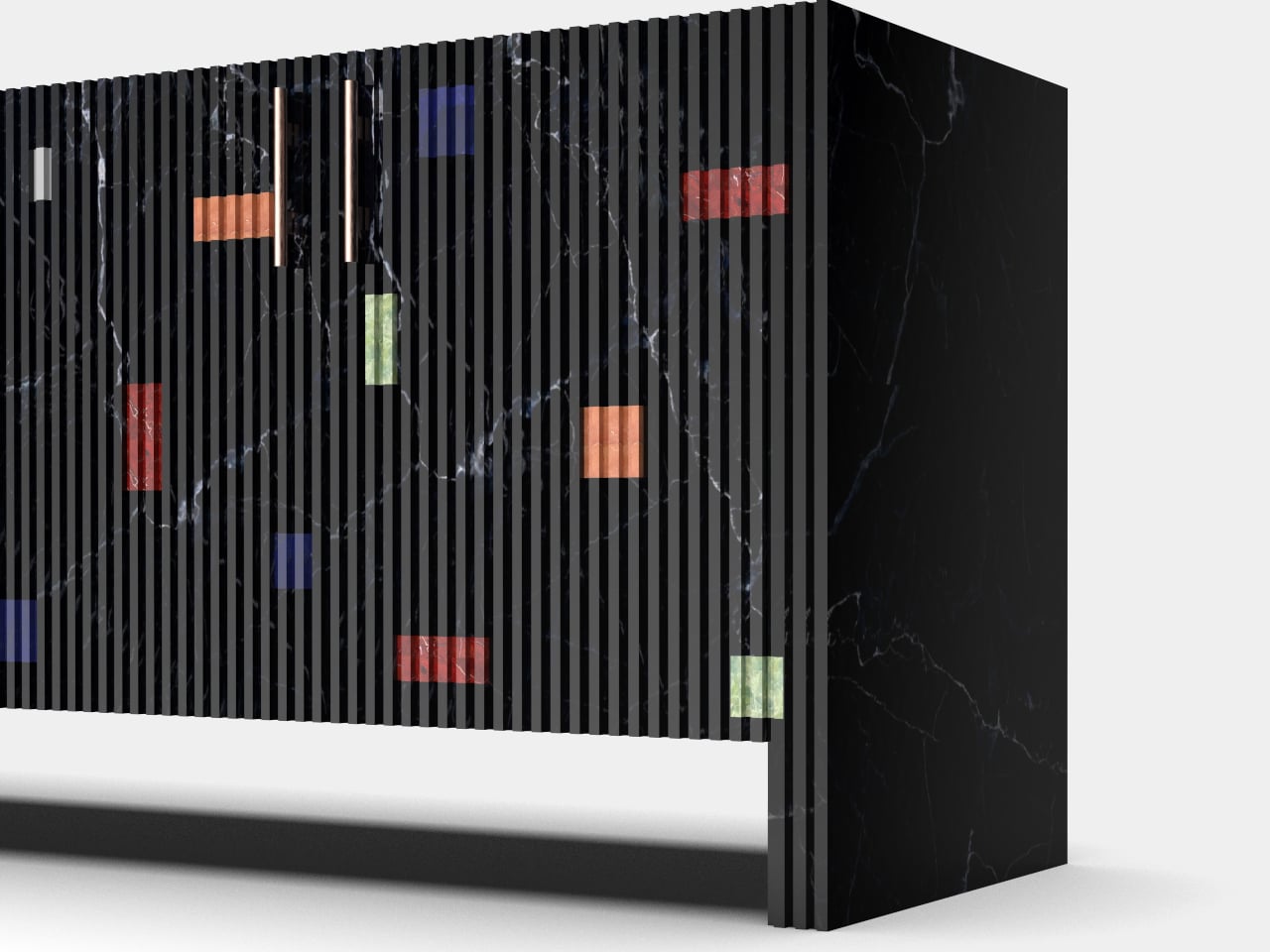
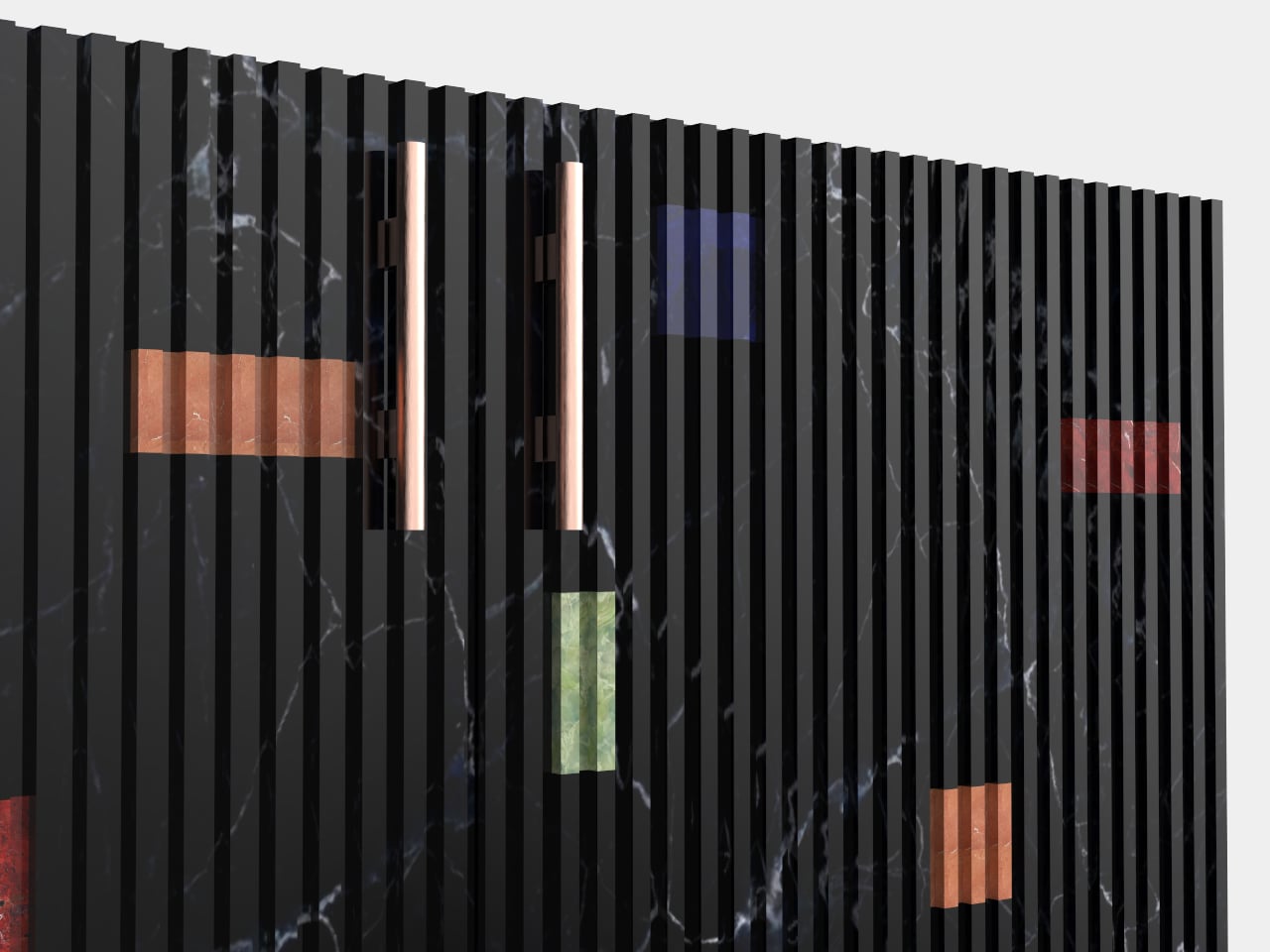
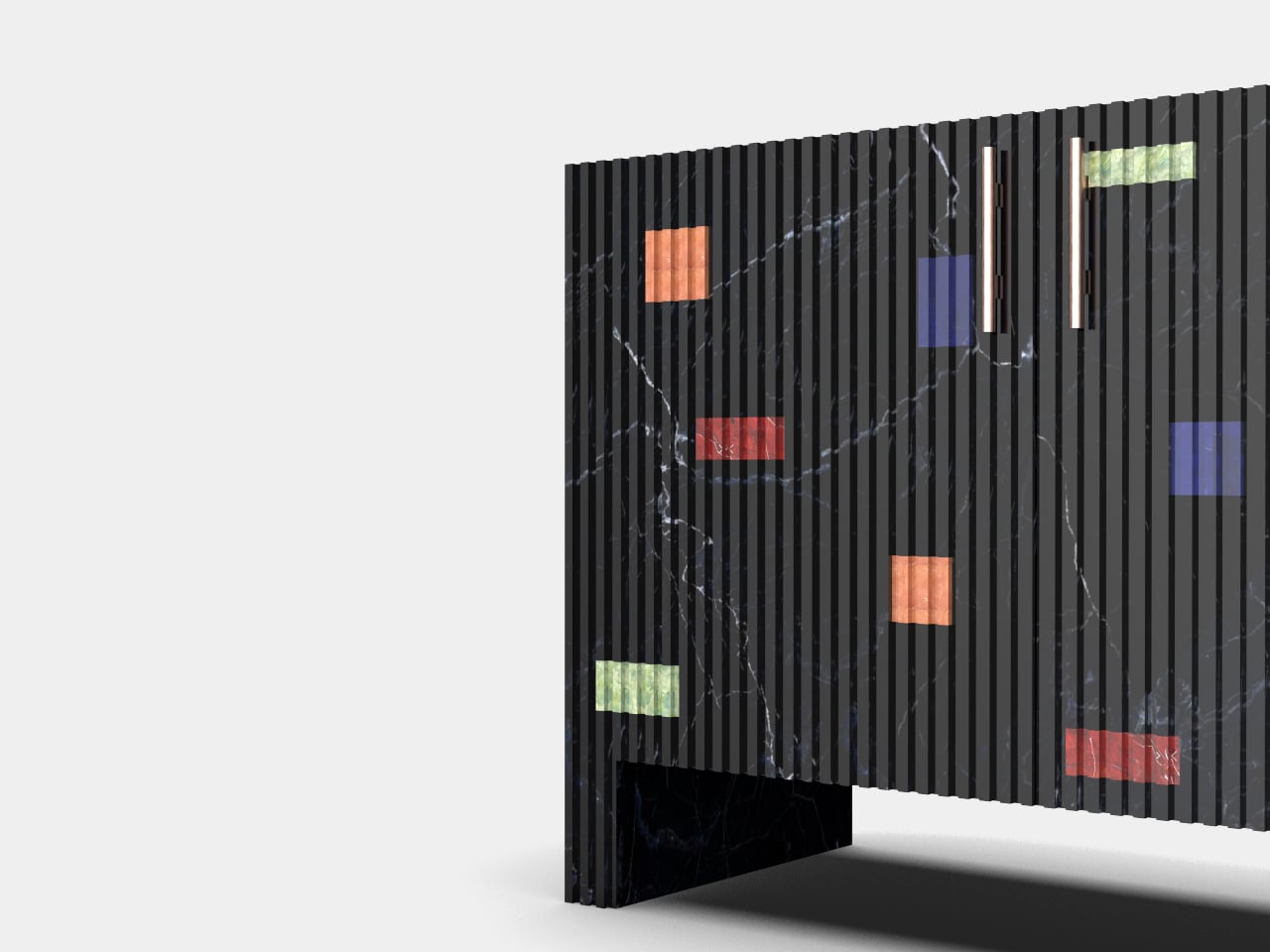
The exterior runs on strict formal logic. Vertical fluting covers the door panels from edge to edge, each ridge precisely cut into the stone so the surface ripples with shadow even under flat ambient light. On plain marble, this treatment would read as architectural severity, which is exactly the point. The fluting establishes a rhythm, almost like a grid, that makes what comes next feel genuinely disruptive.

Designer: Himanshu Gupta

Scattered across those ridged panels are rectangular inlays in Lapis Lazuli, Red Fire marble, Alikanta, and Green Onyx, appearing at irregular intervals and orientations like signals caught mid-transmission. Each inlay sits flush within the fluting, which means the stone was routed and fitted with zero tolerance for error. A slightly proud or recessed block would break the silhouette entirely. That constraint alone separates this from surface-applied decoration.

The interior is where the piece earns its sharpest contrast. Behind the cool, textured stone exterior is a cavity lined in red velvet over solid wood, a warm, almost theatrical shift in material register. Opening the doors feels less like accessing storage and more like discovering that a severe stone cabinet had a completely different personality waiting inside, the kind of detail that does not photograph well and cannot be fully appreciated without direct interaction.

Cylindrical handles in a warm copper-toned metallic finish sit vertically in the fluting, restrained enough to avoid competing with the inlays. The base is a solid slab, no tapered legs, no gap between cabinet and floor, keeping the profile ground-hugging and monolithic. The overall silhouette is low and horizontal, which helps it read as furniture rather than architecture, even with the stone’s commanding presence working against that reading.

Combining five different natural stones into a single fluted facade is a nontrivial production problem. Stone inlay of this precision typically requires hand-fitting each piece individually, since natural stone does not behave with the consistency of milled engineered material. The designer frames this as a contemporary take on traditional inlay craft, creating a beautiful tension between order and spontaneity, old and new.

The post This Sideboard Has Lapis Lazuli and Green Onyx Hand-Set Into Marble first appeared on Yanko Design.

These Perforated Marble Blocks Create Shifting Light Patterns

Stone decor tends to be heavy, polished, and a little intimidating, the kind of thing you place once and never move. Light changes in a room all day, from sharp morning angles to warm late-afternoon spreads, but most stone decor doesn’t respond to any of it. The idea that a piece of stone could feel different at different times of day doesn’t come up often in furniture or object design.

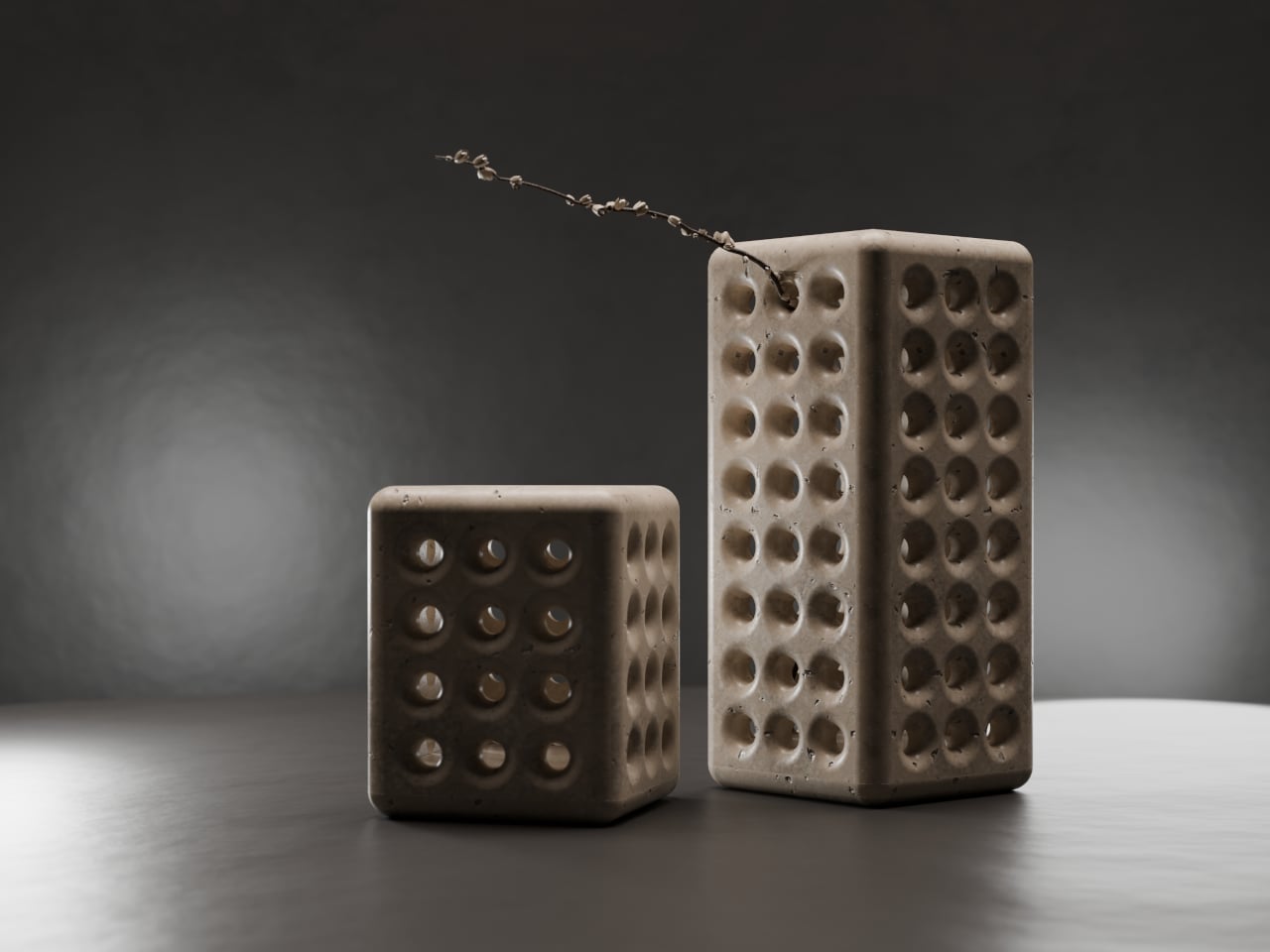
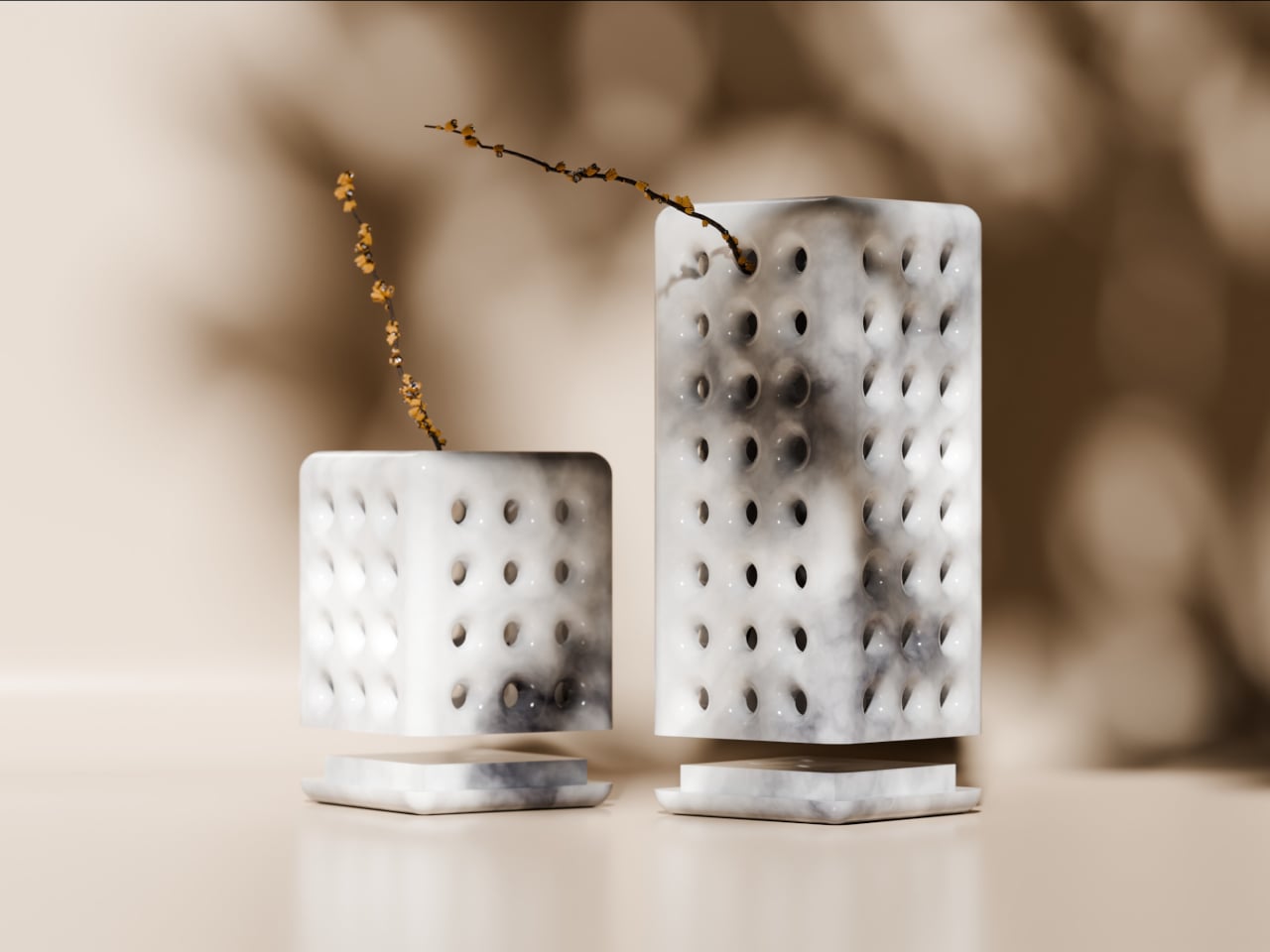
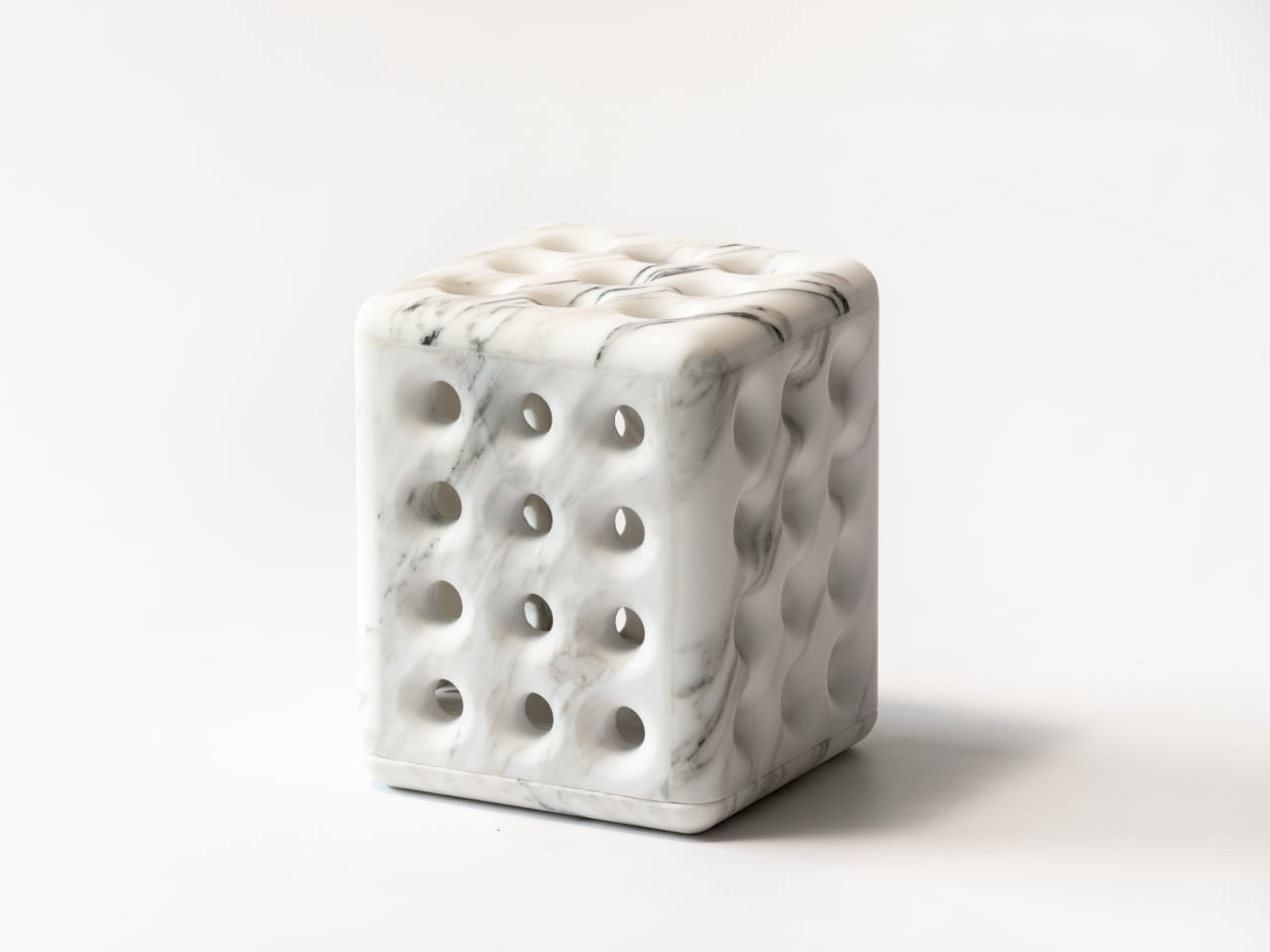
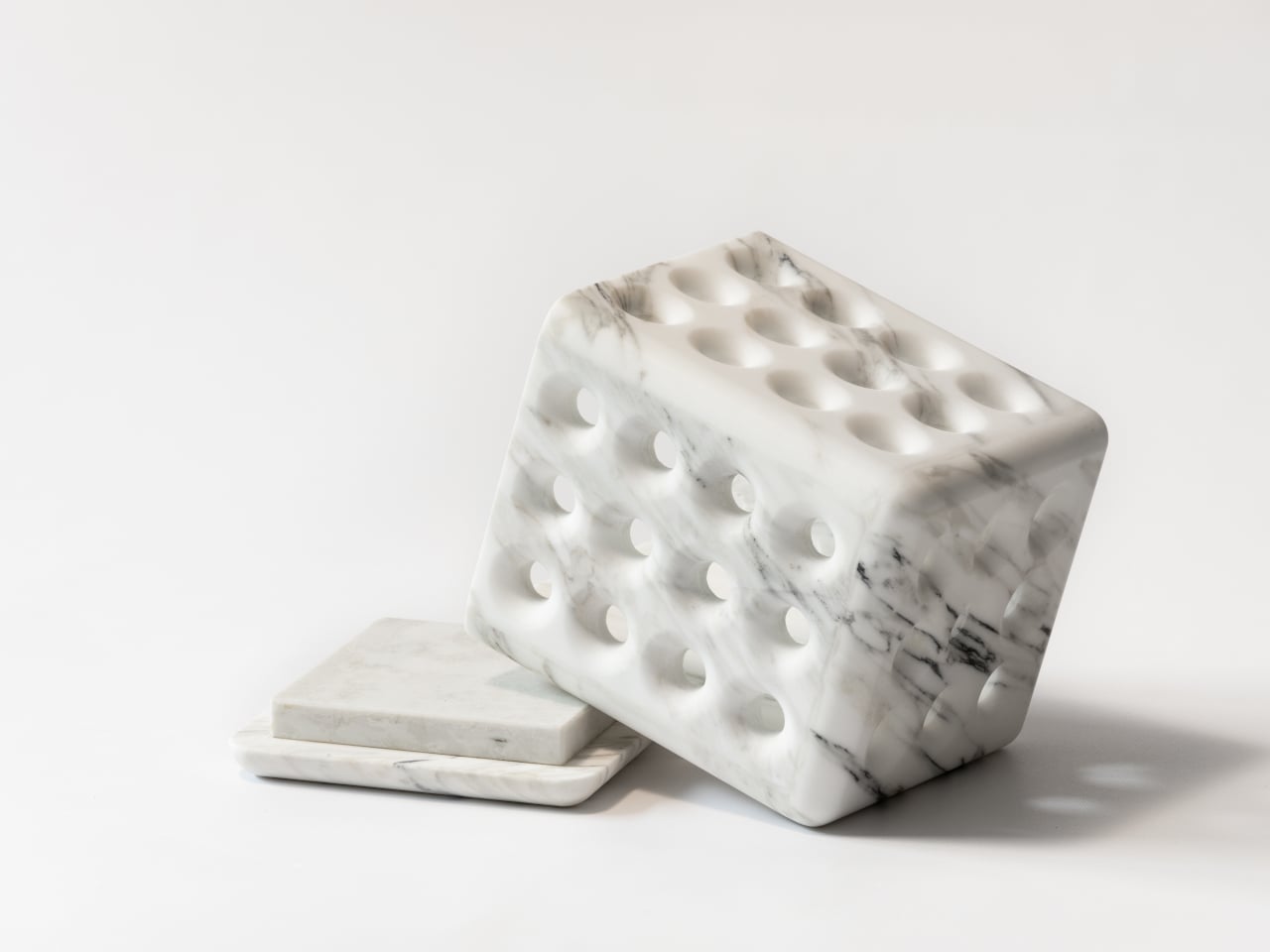
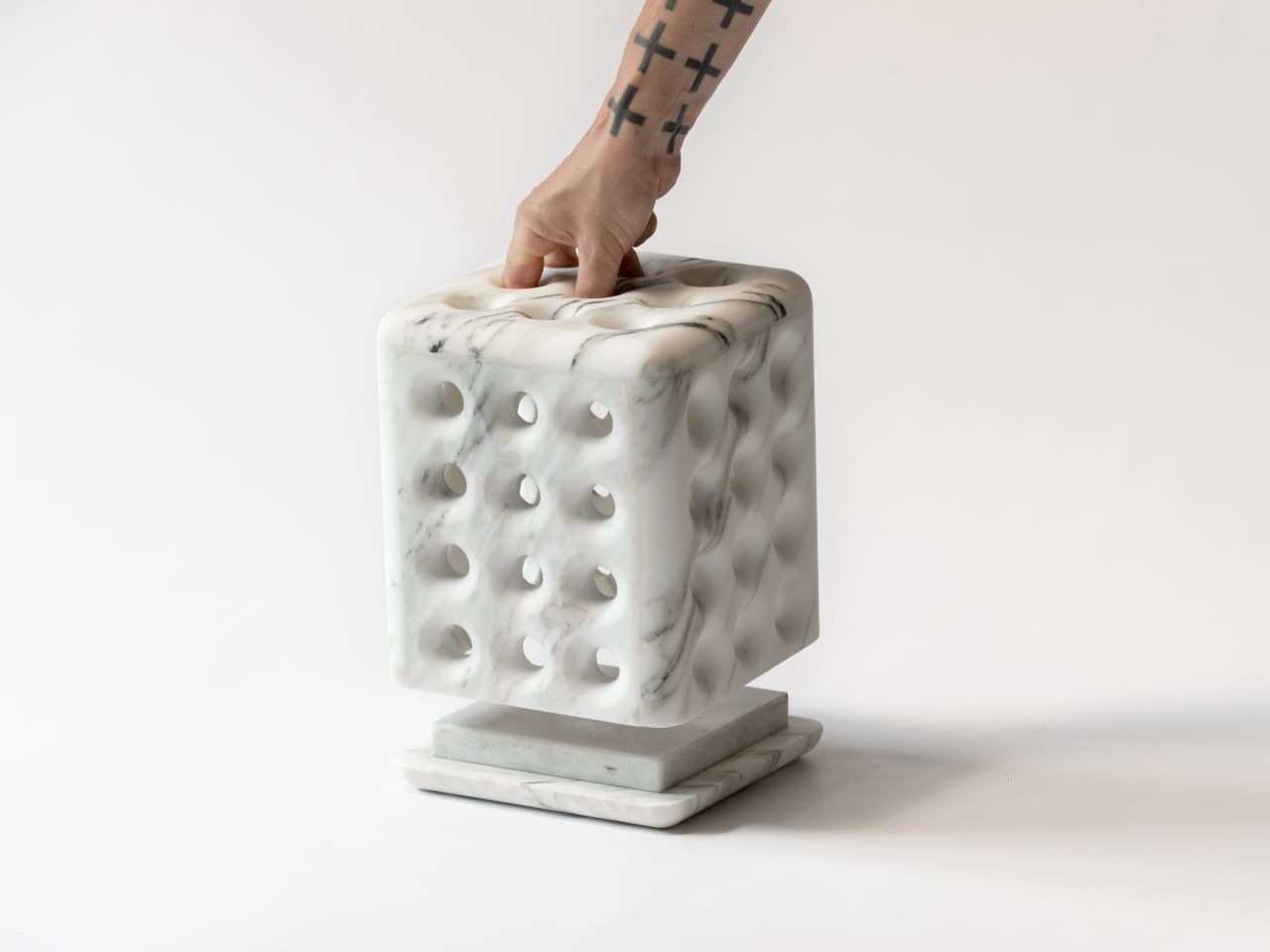
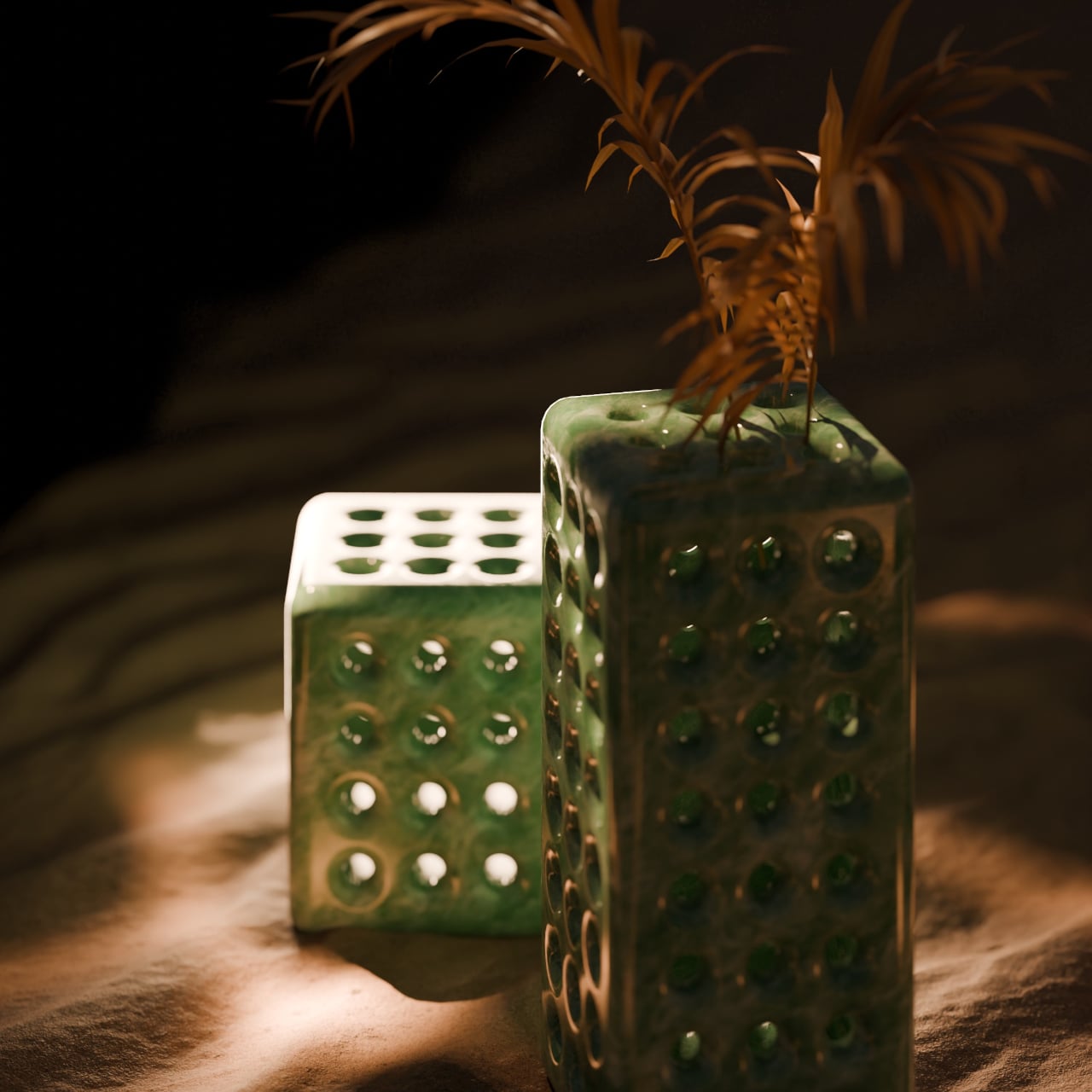
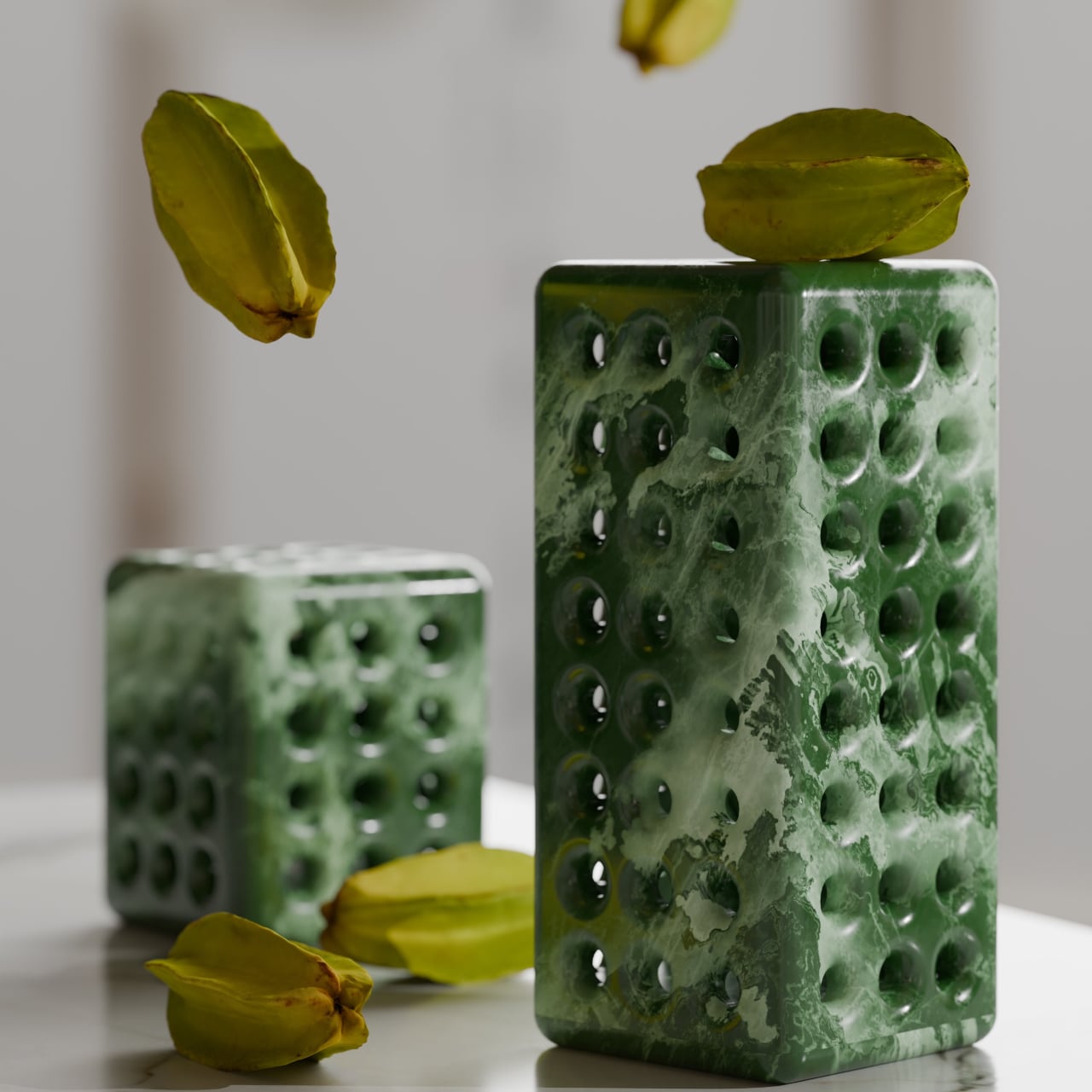
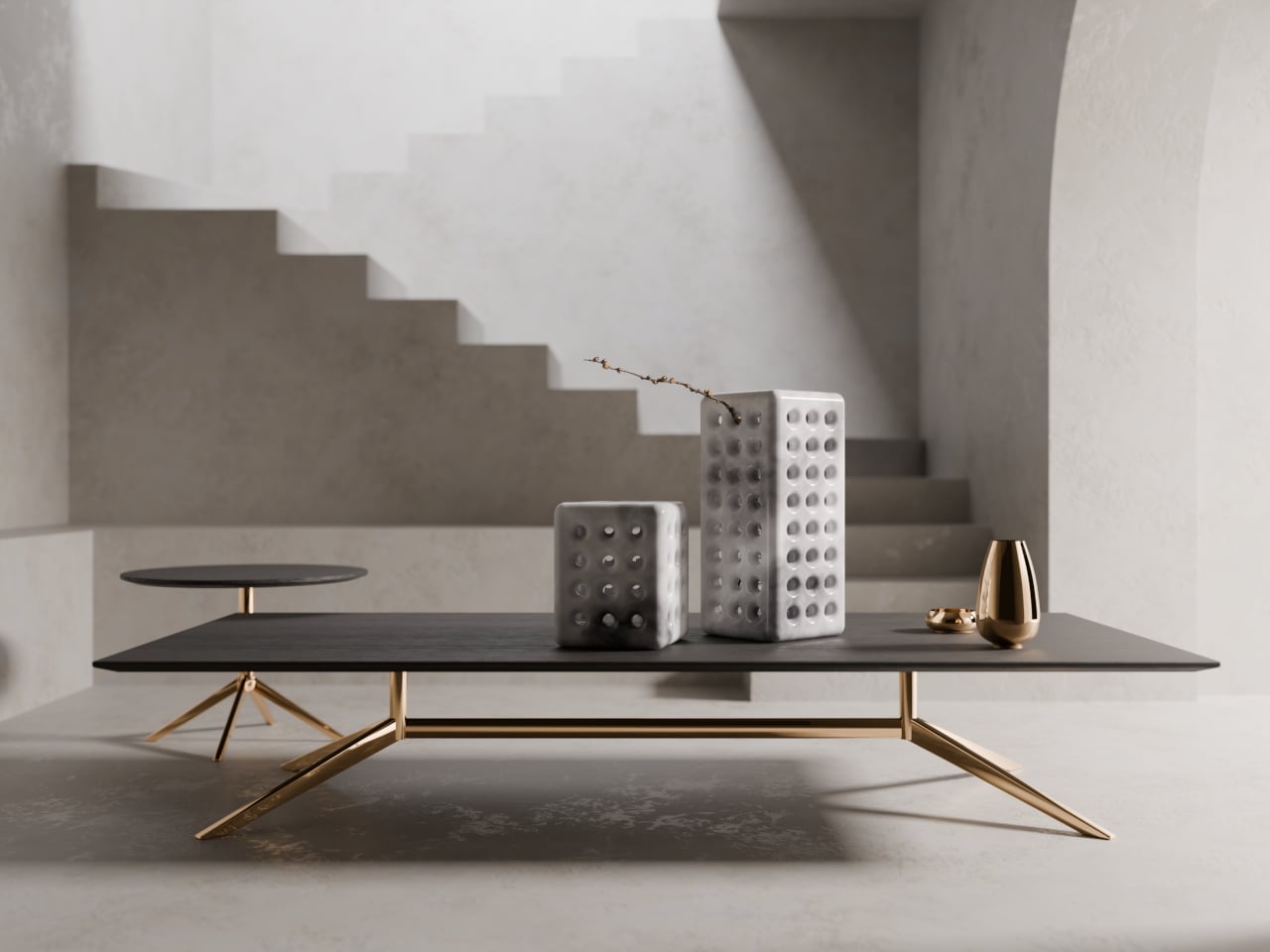
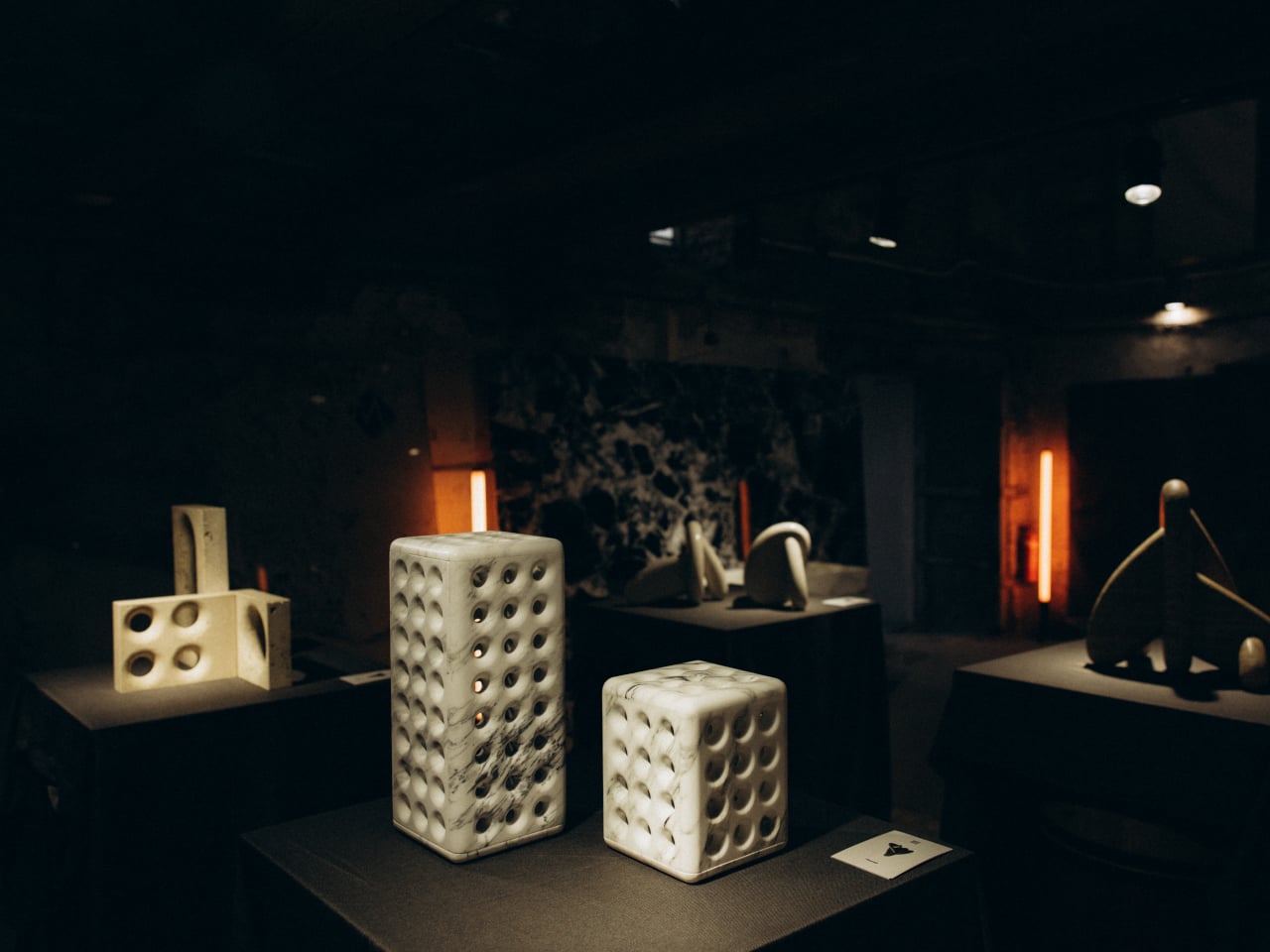
Denys Sokolov’s ZEROS collection, manufactured by MUZ STONE, a Ukrainian company known for stone processing and creative design, starts from a different premise. “Zeros are forms shaped by absence,” the collection states, and the openings across each marble block soften the weight of the object, letting light, air, and shadow become part of its design. “In their simplicity, they reveal that even the smallest void can transform the whole,” which is a surprisingly accurate description of what these pieces do in a room.

Designer: Denys Sokolov

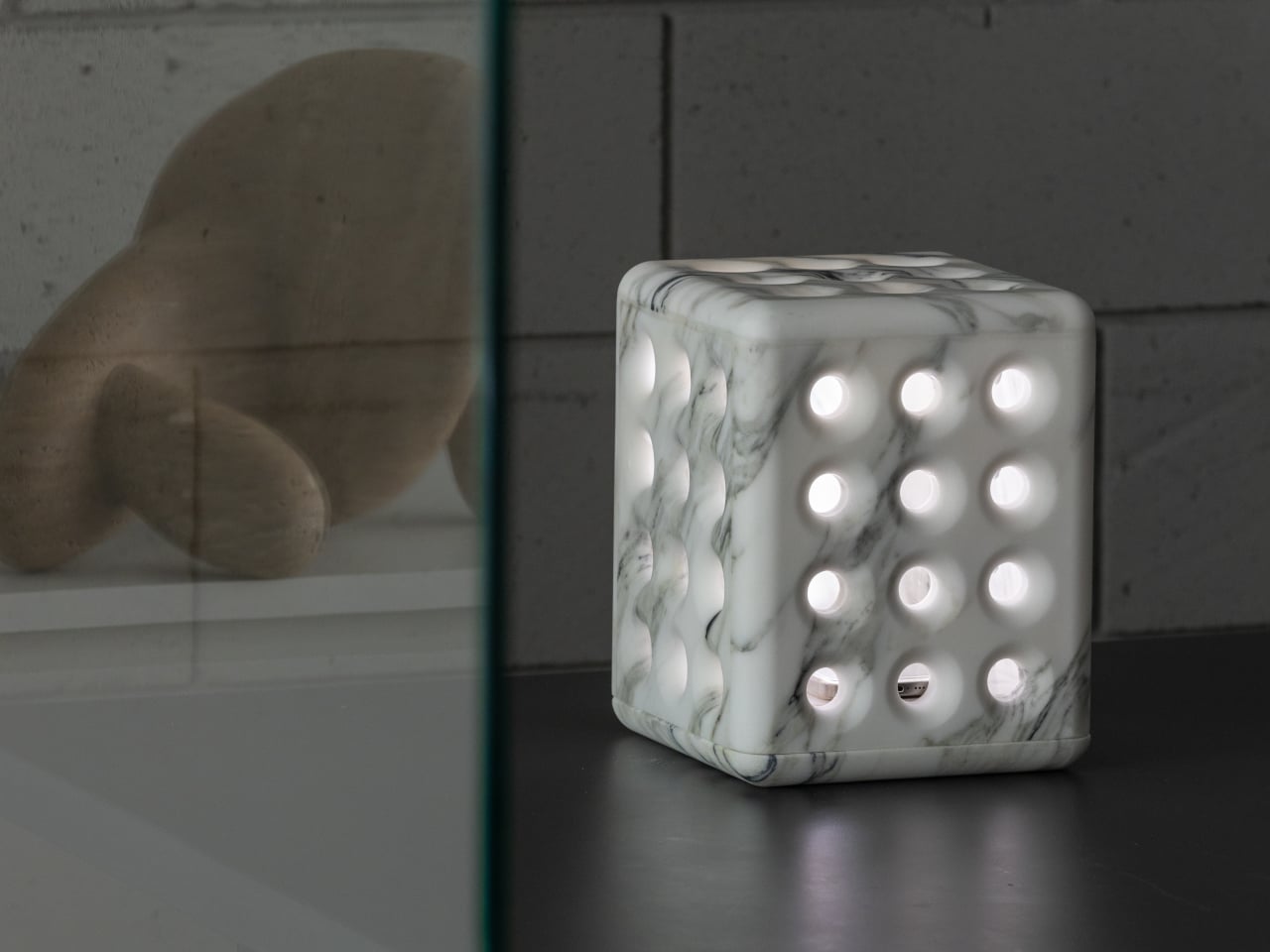
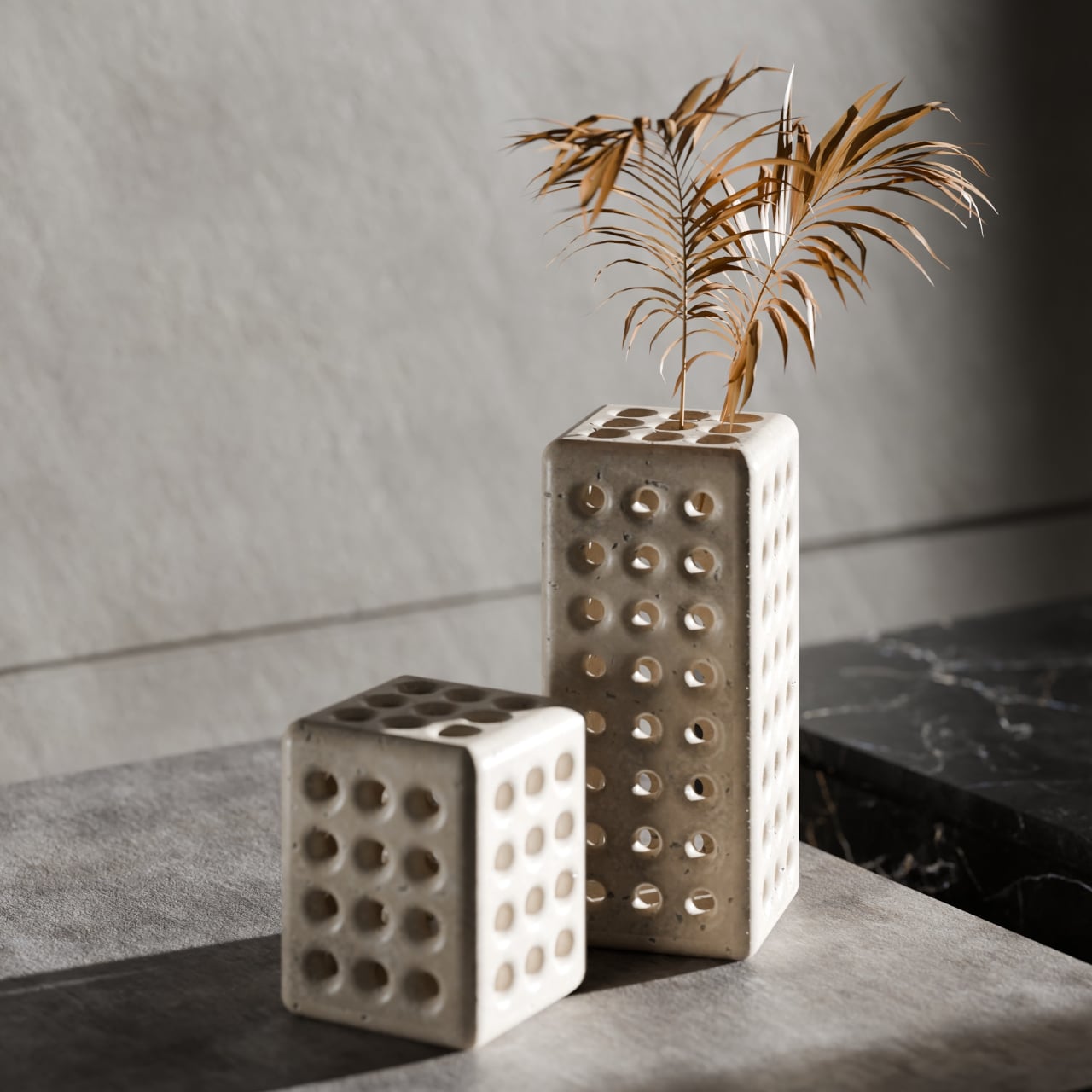
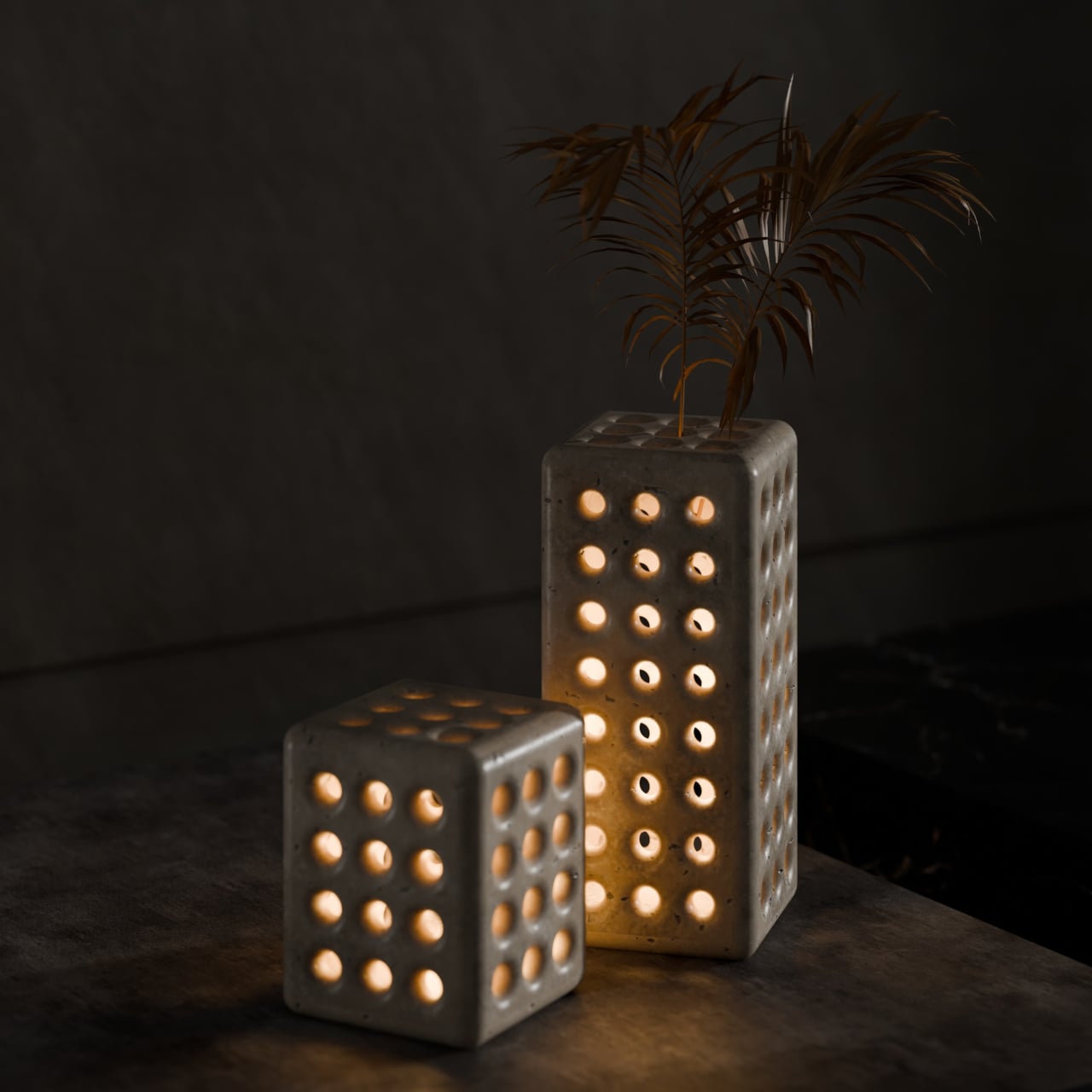
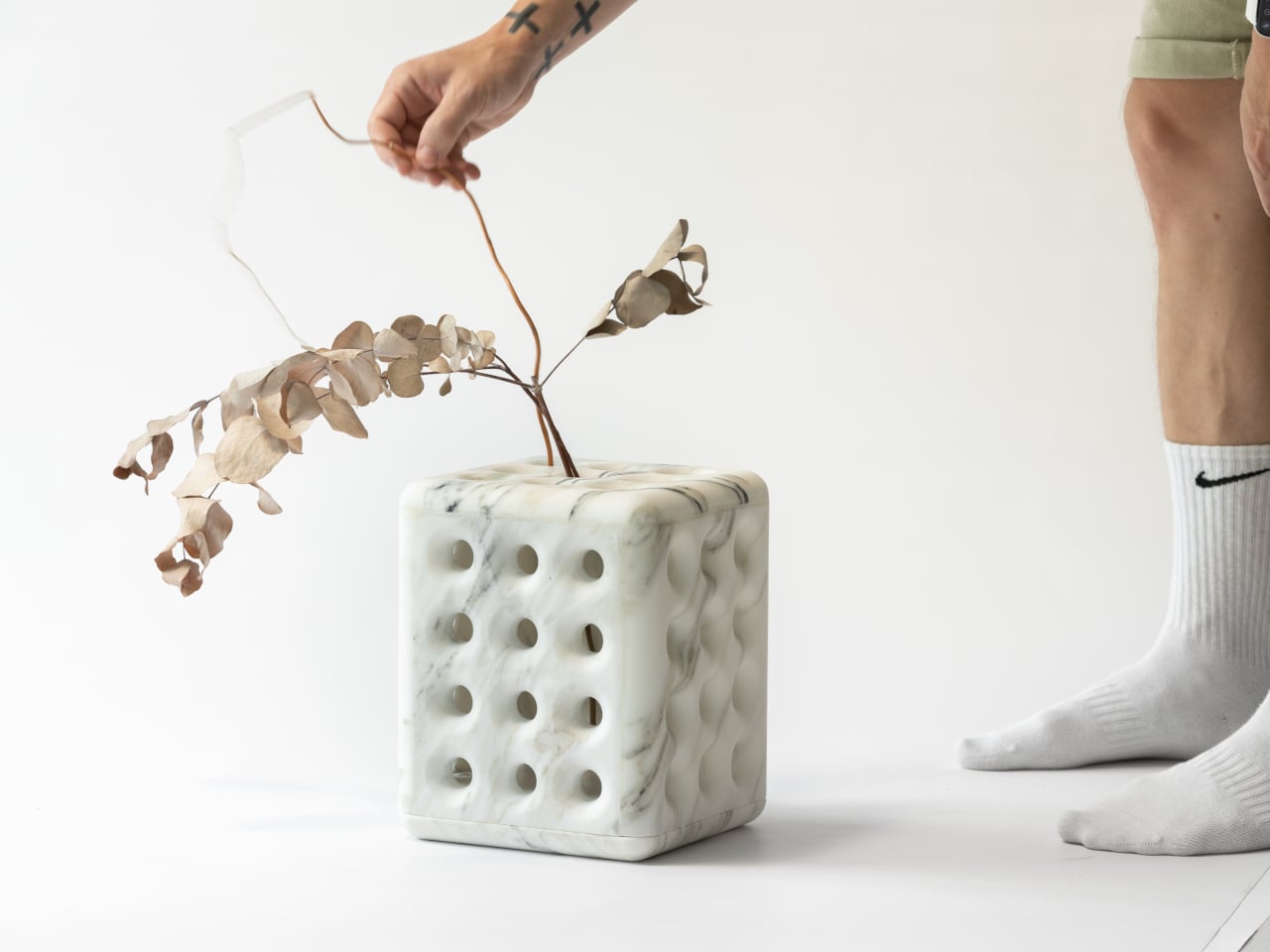
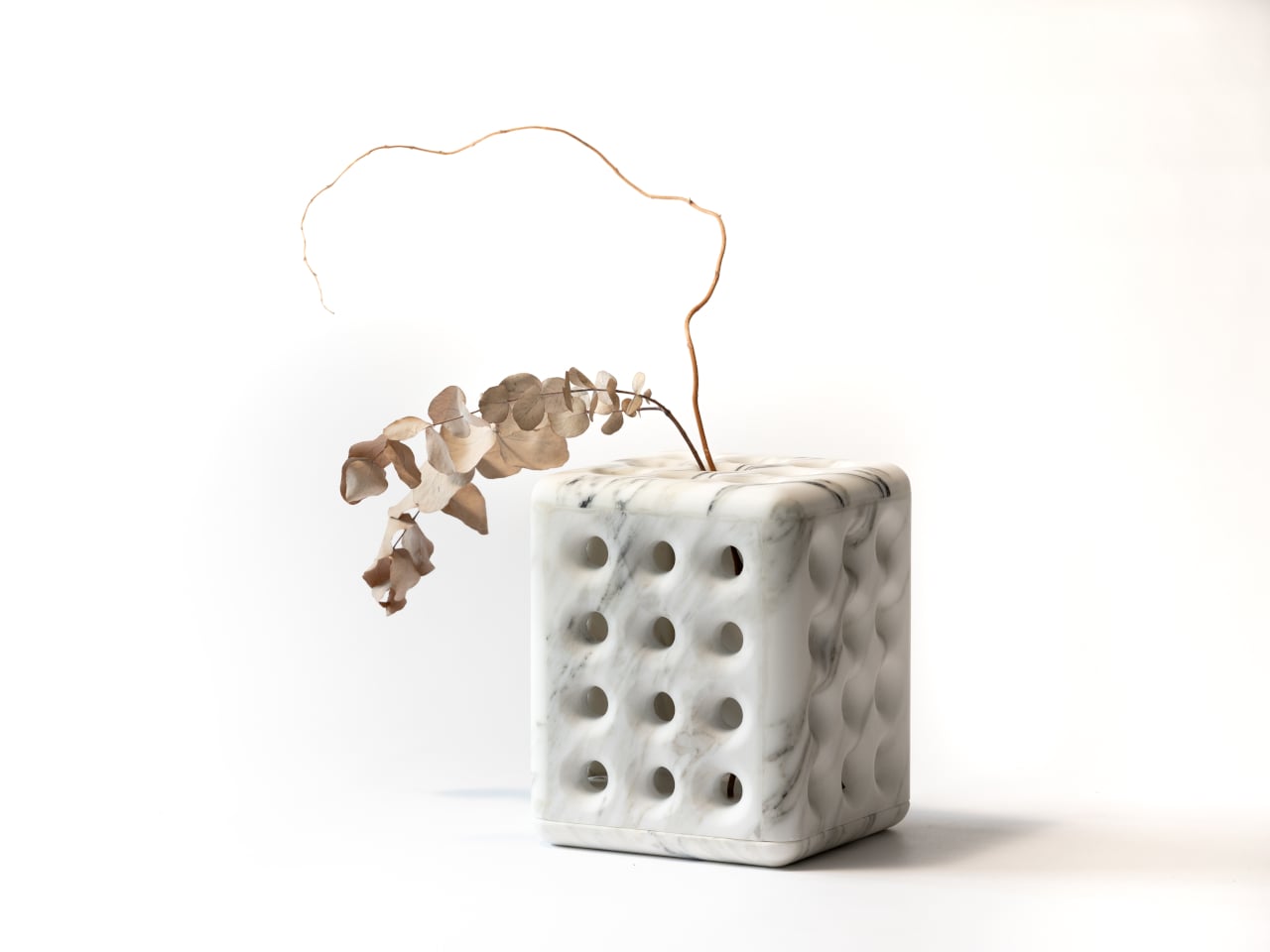
The perforations aren’t decorative in the usual sense. Repeated voids give the object its rhythm and character, and they shape not only the form itself but also the shadows around it. Standing at a slight angle, the grid of holes reads as a pattern of overlapping light and dark ovals. Move a little and the composition shifts. Repetition creates a rhythm that is both structured and organic, which is a difficult balance to strike in stone, a material that usually communicates permanence and rigidity more than fluidity.

These pieces play with the tension between mass and lightness, solidity and transparency. The marble is real and heavy, but the voids introduce a visual porousness that makes the whole thing feel less like a block and more like a porous, breathable presence. Even the smallest opening shifts how the eye reads the overall weight, which is the point the collection keeps returning to.

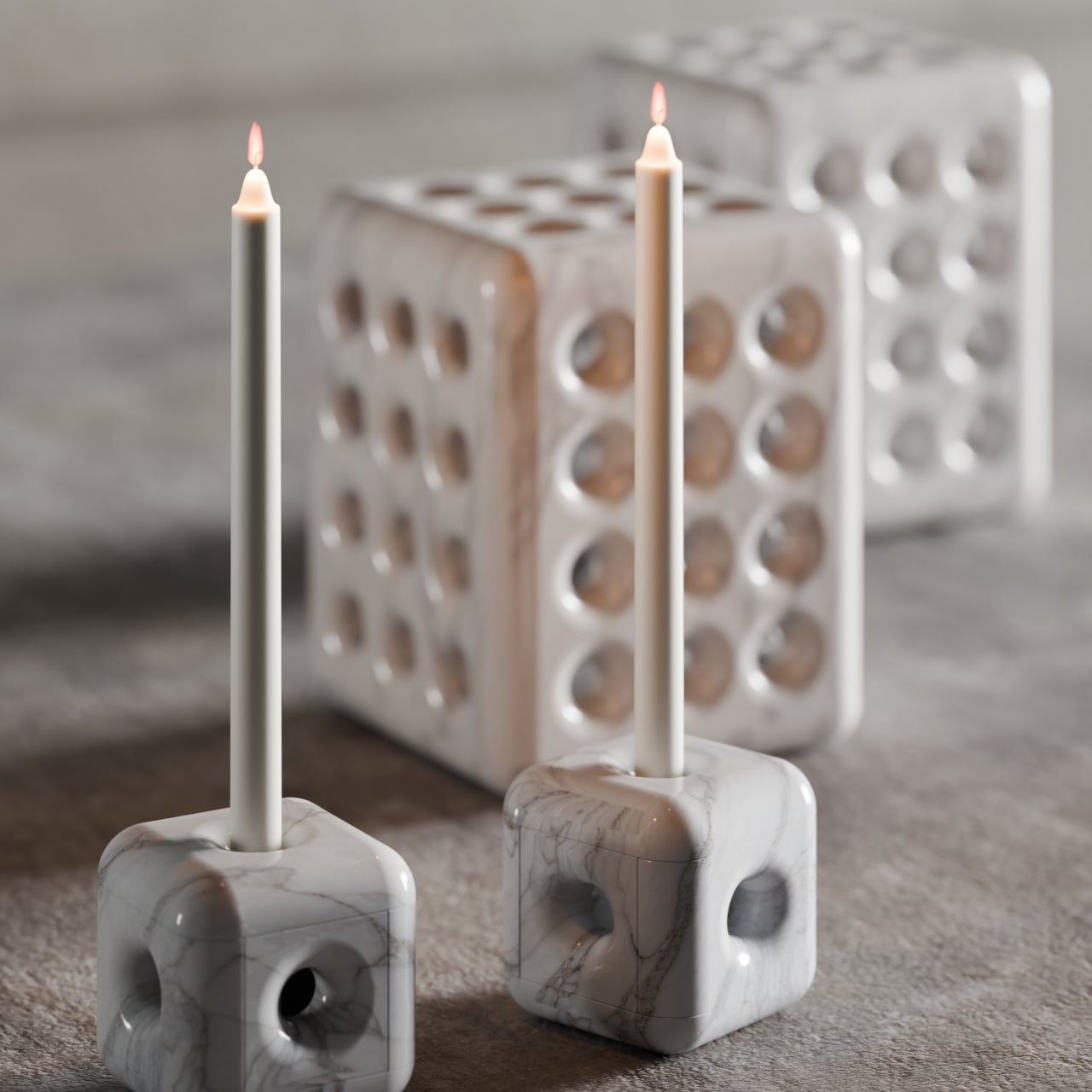
When lit from within, the openings create distinct light patterns in the surrounding space, and the effect changes depending on the angle, distance, and intensity of the light source. That turns any of the pieces into a quiet ambient light source, not a bright lamp, but a patterned glow that makes nearby walls and surfaces feel textured without adding visual clutter or another device to the room.

The pieces can hold a single stem or branch through one of the openings, making them functional as minimal vases when you want them to be. They also work on their own without needing anything inside, and different sizes can be clustered together so the grid-like rhythm becomes more architectural, a small group of perforated blocks that feel more like a landscape than a collection of objects sitting near each other.

ZEROS doesn’t try to fix a problem or optimize a category. These forms engage with their surroundings, responding to changes in light, movement, and perspective, and they’re not static, each moment revealing a new composition. Carving emptiness into marble is a quiet way to make a heavy material feel surprisingly alive, which is harder to do than it sounds and more satisfying to live with than most stone decor that just sits there looking expensive.

The post These Perforated Marble Blocks Create Shifting Light Patterns first appeared on Yanko Design.
EMIT Marble Lamp Rises for Work, Glows Green When You’re Done

The typical desk lamp is a metal stalk on a base that does nothing but hold it up, plus a switch somewhere along the cord. Most lamps are either on or off, with the base becoming dead weight that competes with notebooks, pens, and devices for space. EMIT is a concept that treats the base and the shade as active parts of how you work and how your desk feels when you are not working, giving the lamp two distinct postures instead of just one static stance.

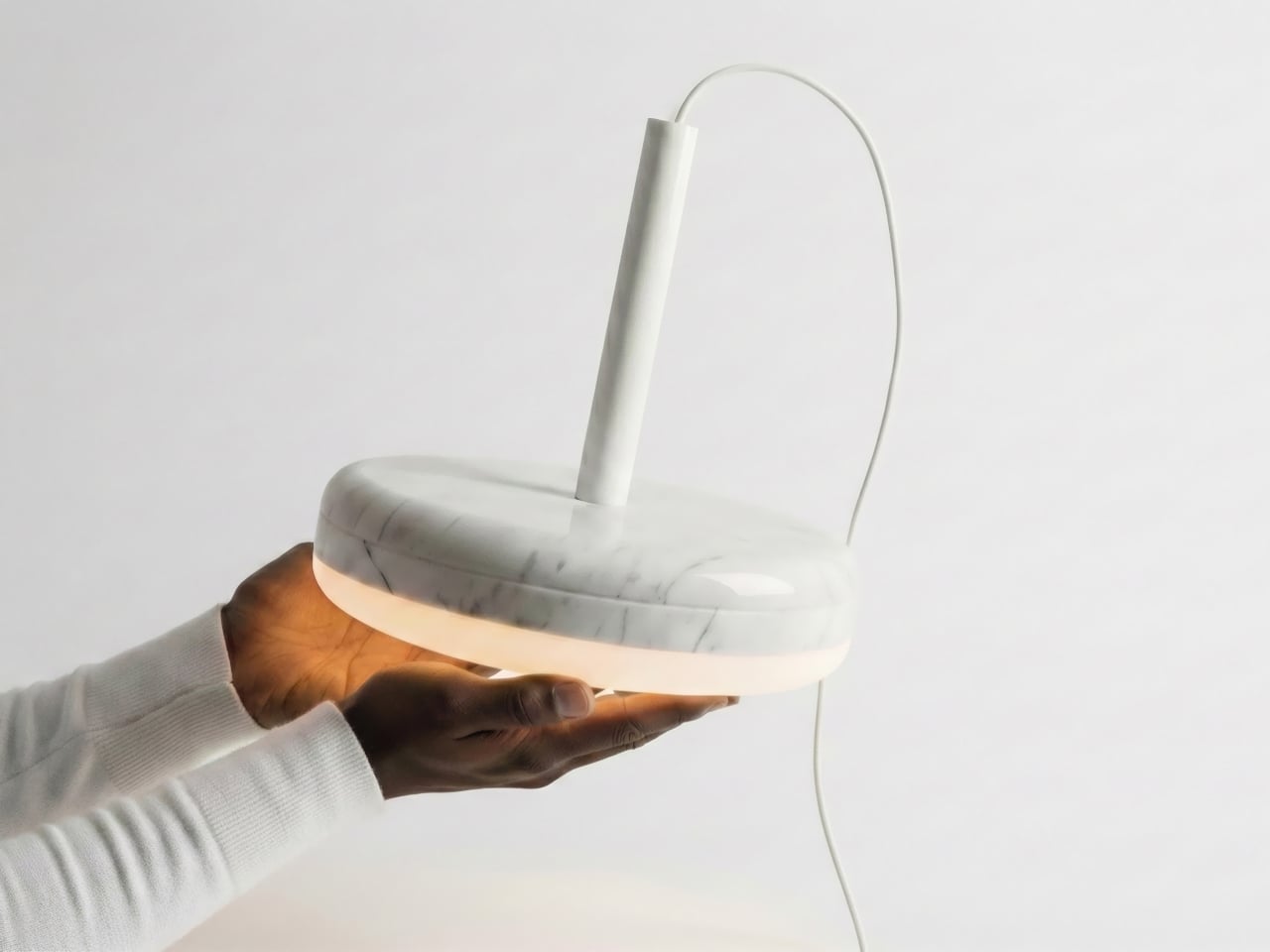
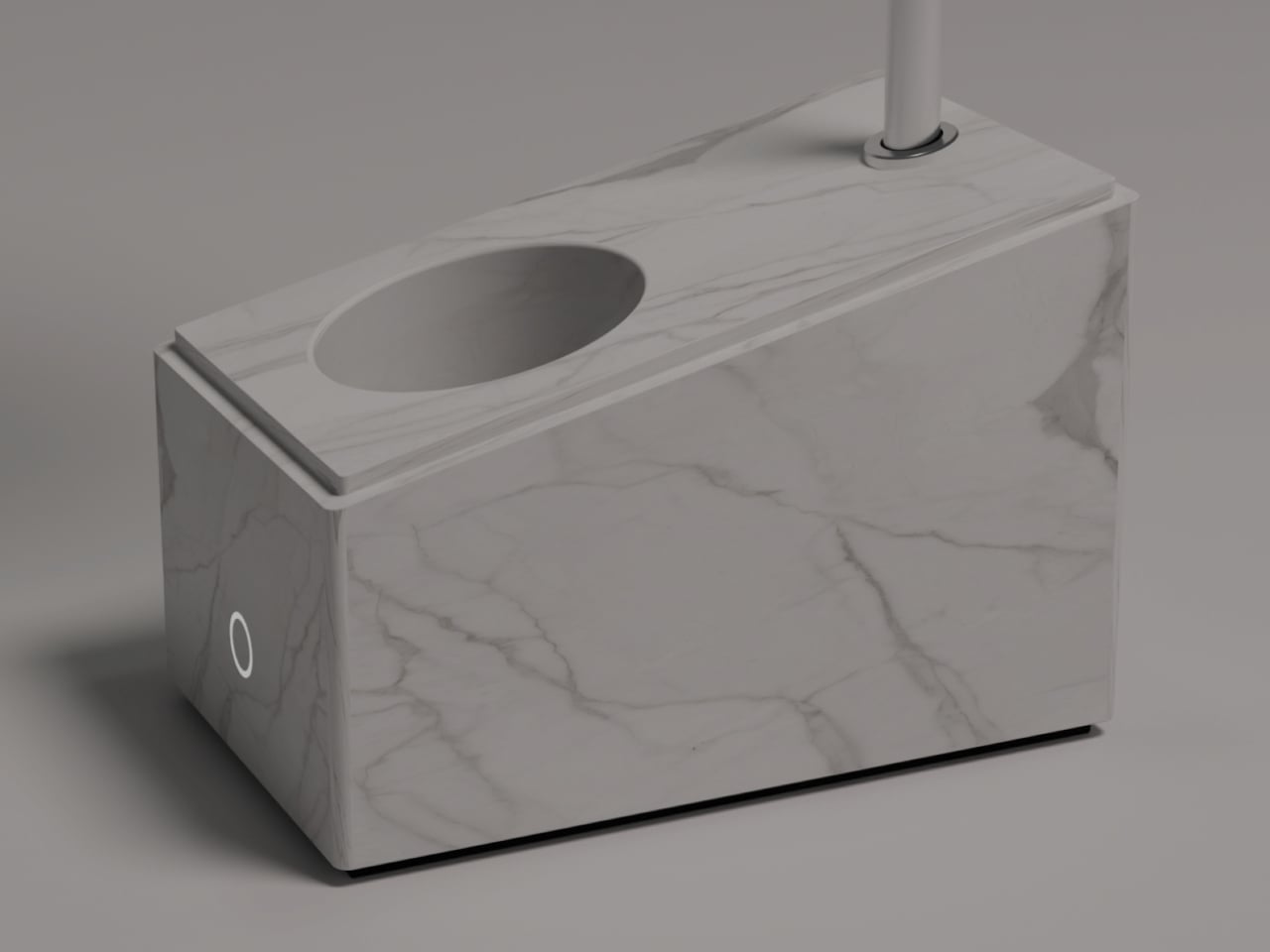
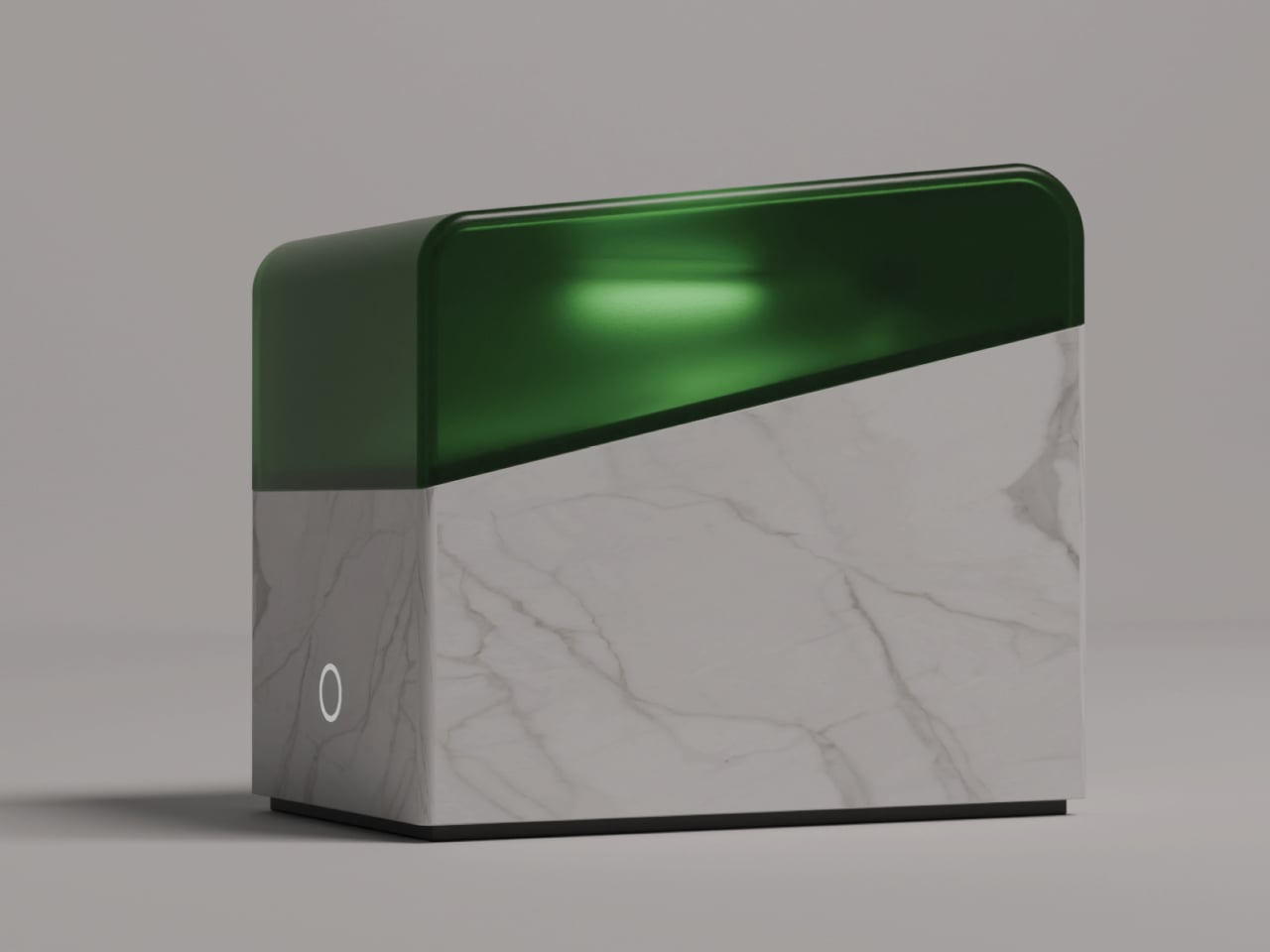
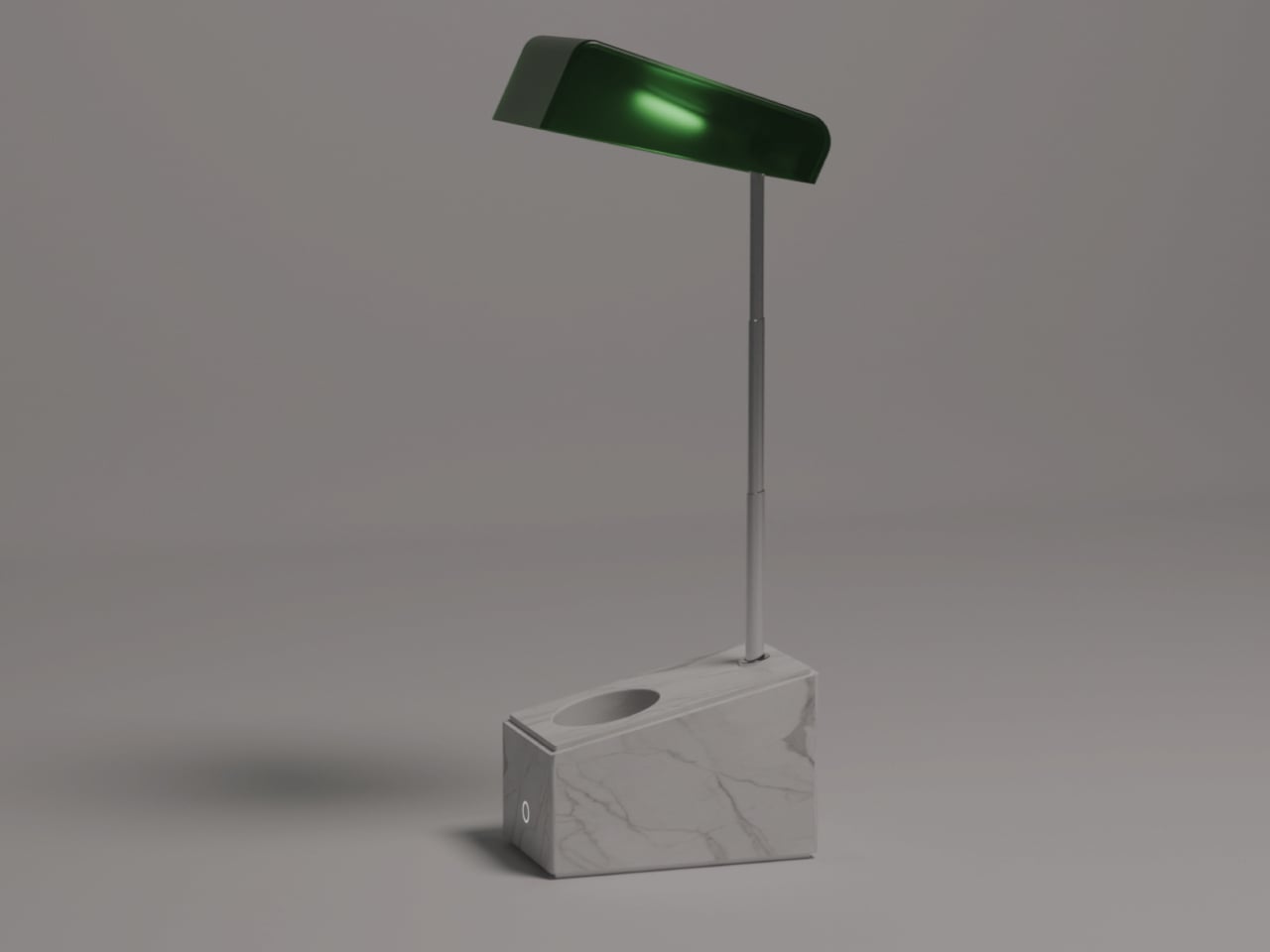
EMIT is a desk lamp concept that pairs a carved block of white Carrara marble with a translucent green shade connected by a telescopic metal stem. The name hints at emission and time, and the design leans into that by giving the lamp two distinct postures, one where it behaves like a focused task light and another where it becomes a quiet, glowing object in the corner of your eye when the work is done.

Designer: Alexios Kamaris

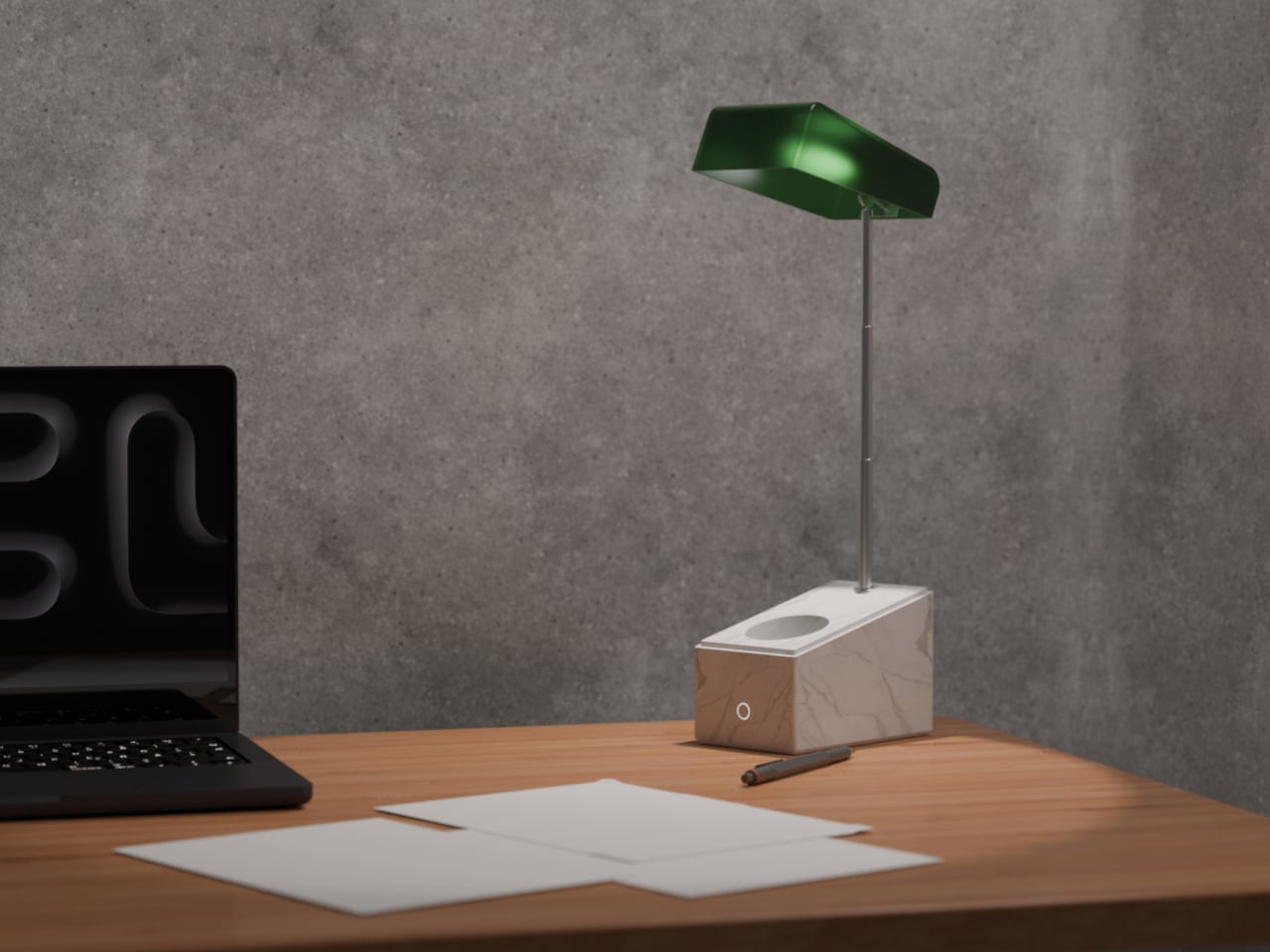
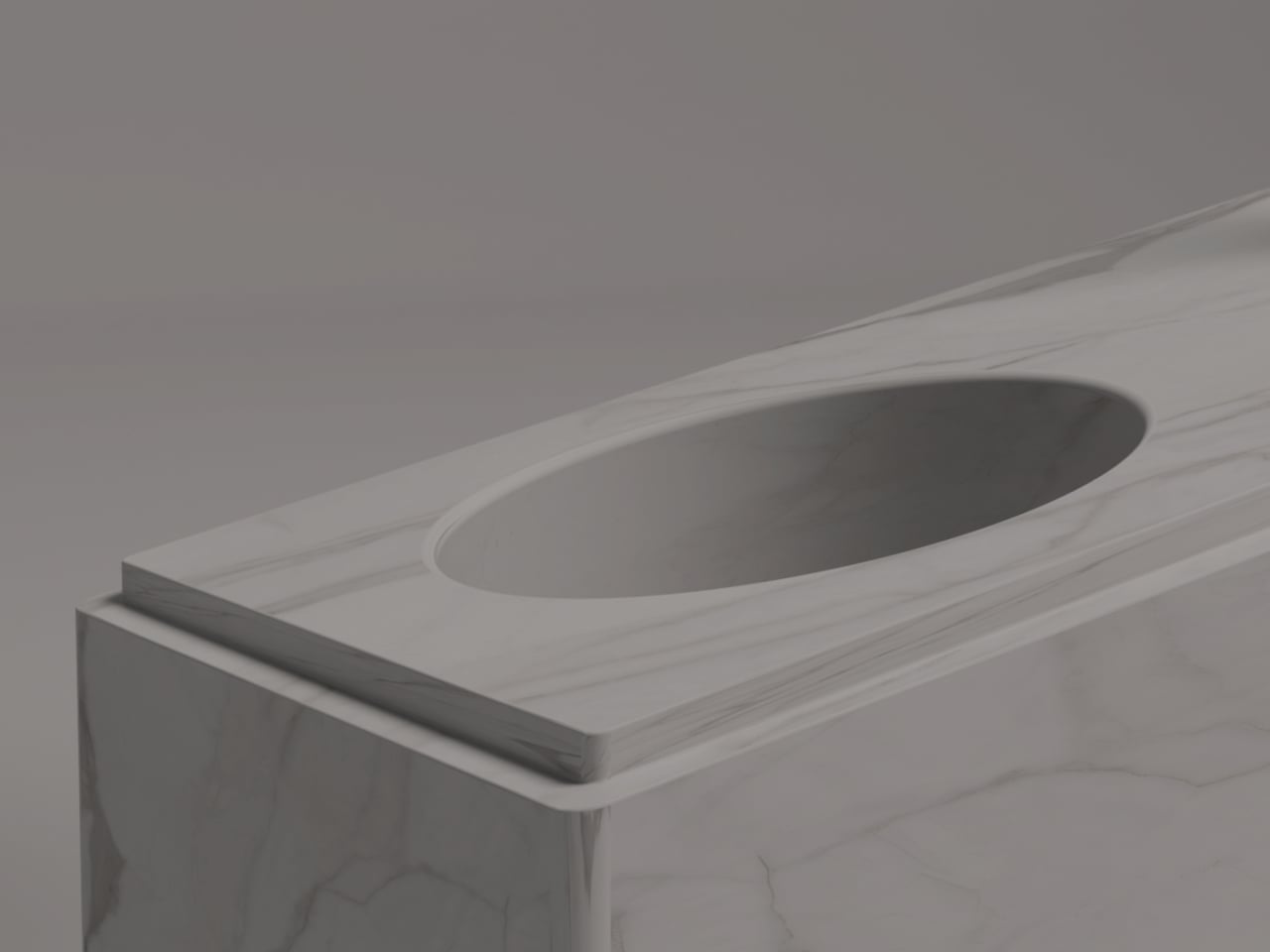
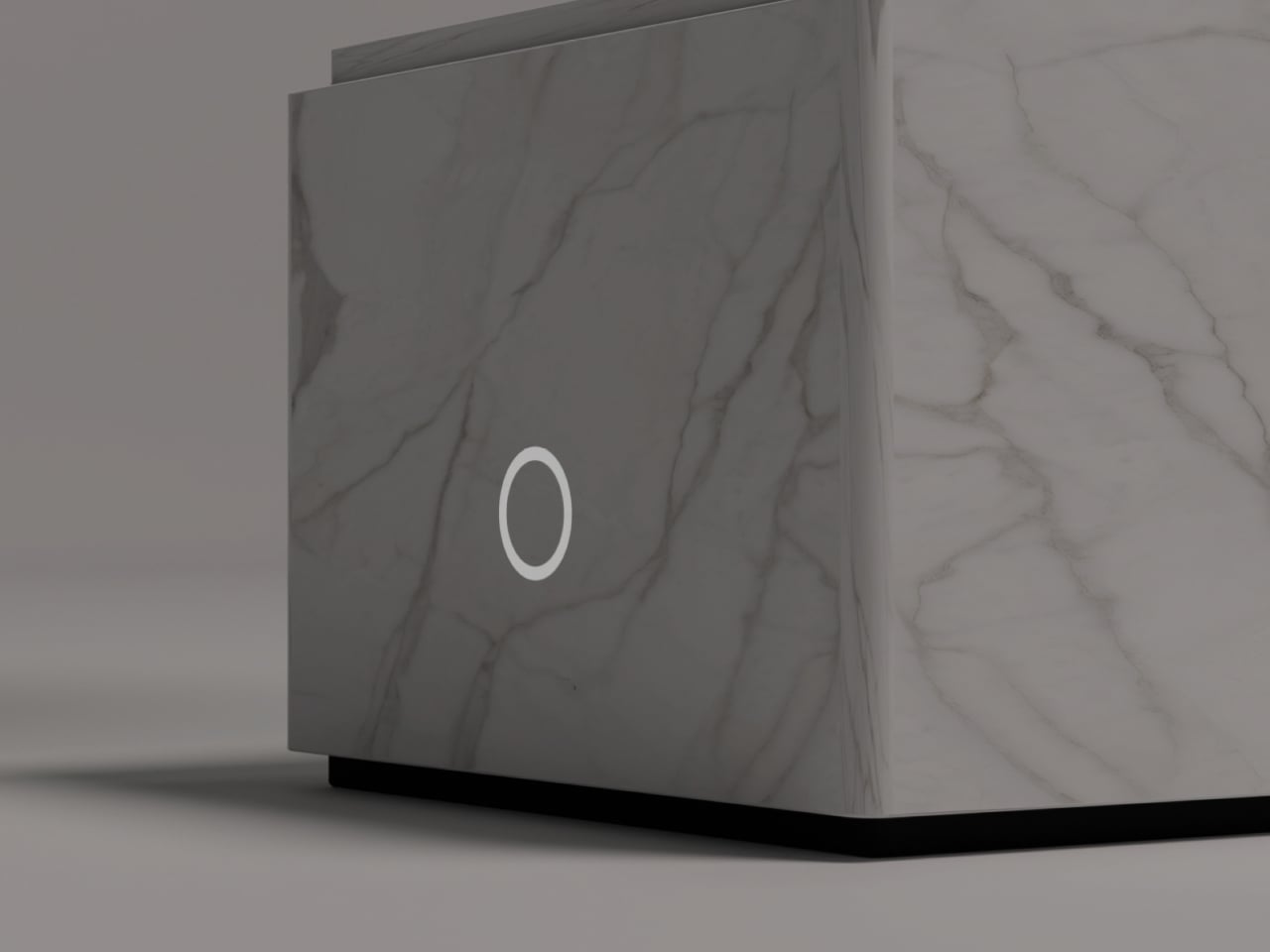
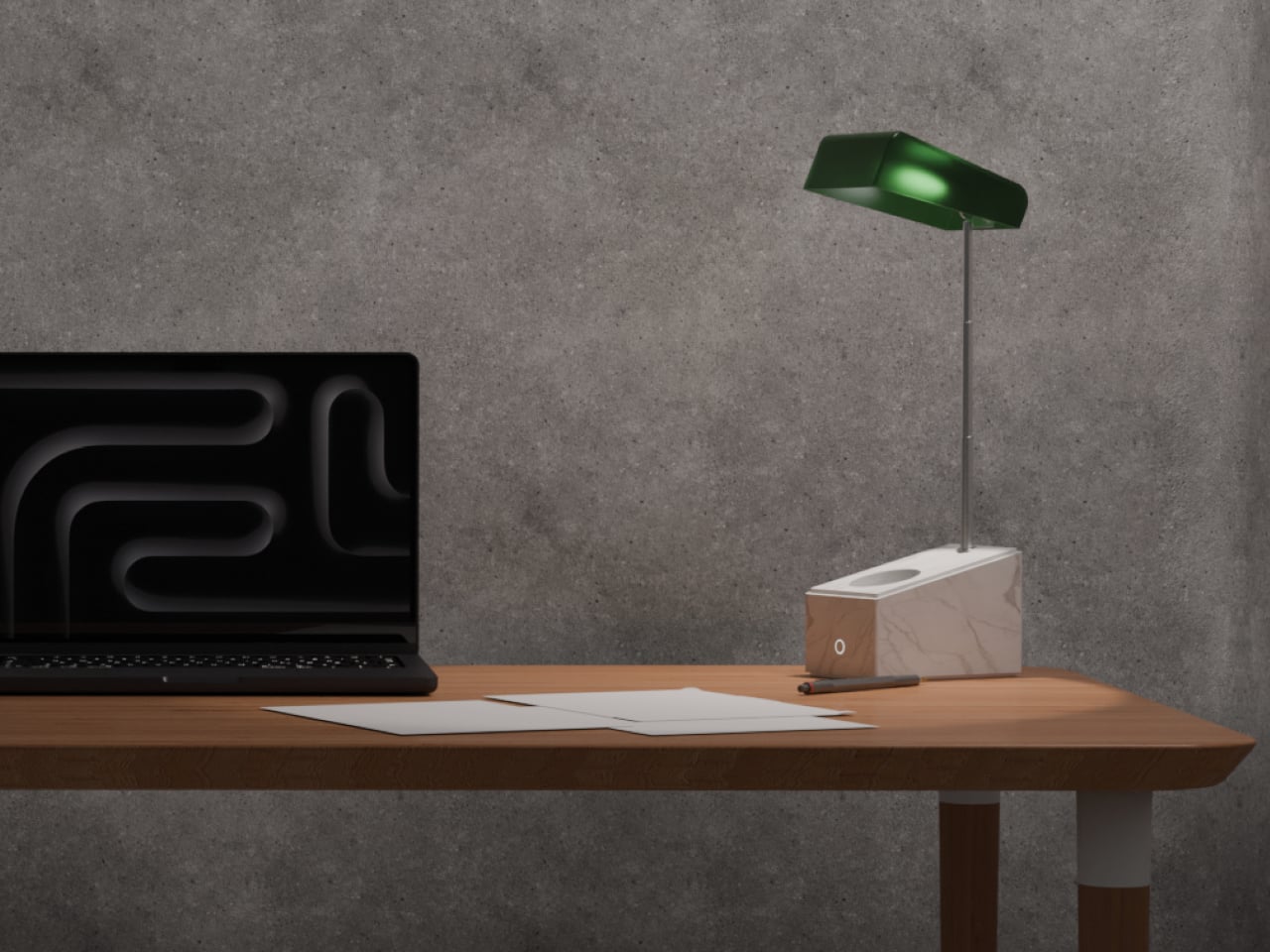
The marble base is more than a plinth. Its geometry is reduced to a simple volume with minimal machining, but a recessed pen holder is carved into the top, turning it into a small organizer. A touch sensor is integrated into the body, so you tap the stone to control the light. The base becomes a calm, heavy anchor that still earns its footprint on a crowded desk by holding pens and offering a gestural interface.

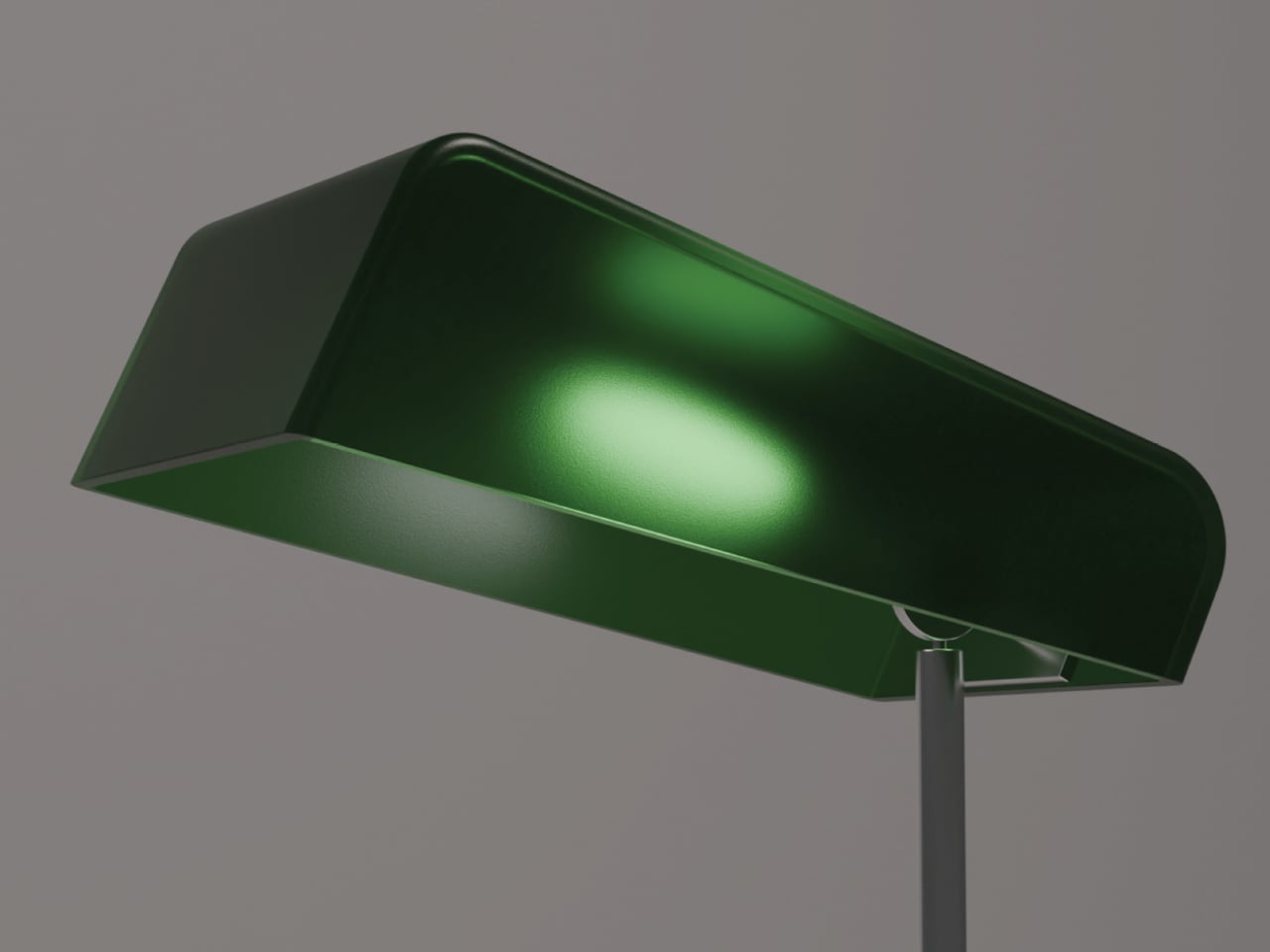
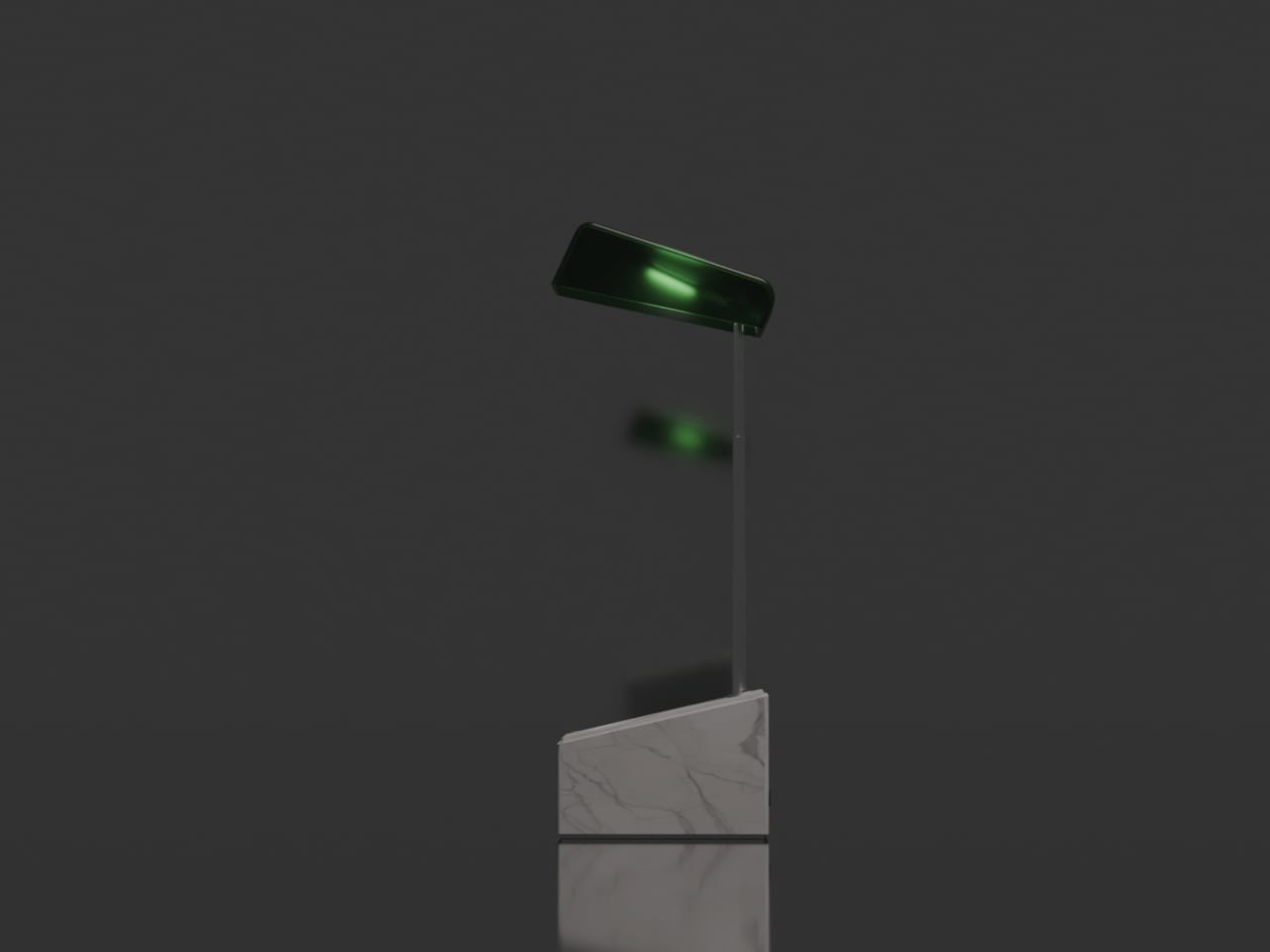
In working mode, the telescopic metal stem rises from the marble and holds the green shade above the surface. The shade references traditional desk lamps in silhouette, but is stripped down to a minimal, monolithic hood. In this posture, light is directed down onto the work area, while some of it diffuses through the translucent material, giving a soft edge to the beam instead of a harsh spotlight that flattens everything under it.

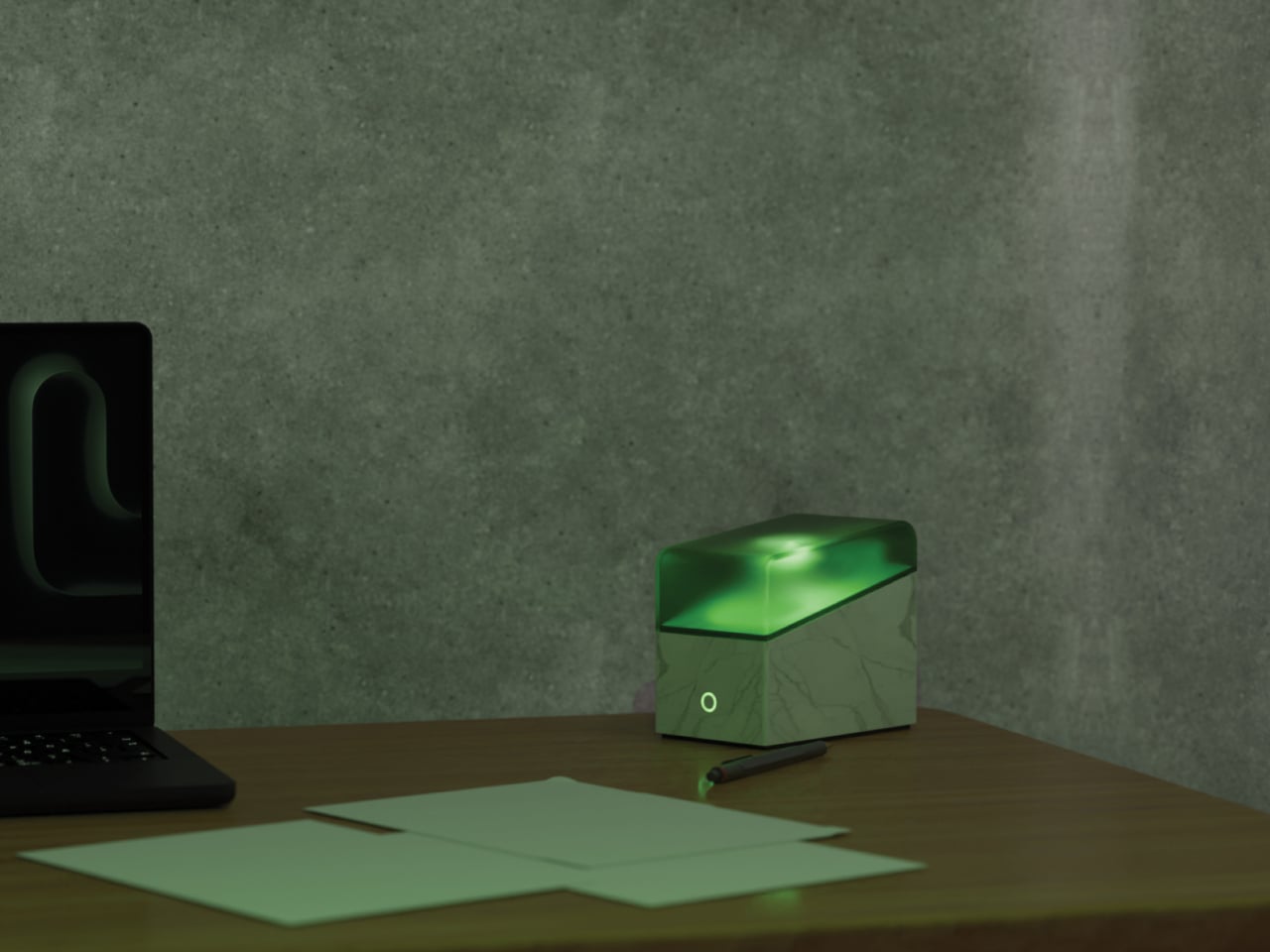
When you are done working, the stem collapses and the shade lowers until it almost meets the marble, forming a compact volume of white and green. In this closed state, EMIT switches to a dedicated mode where the translucent glass emits a soft, diffused glow. The lamp stops acting like a tool and starts behaving like a quiet presence, more sculpture than task light, adding a gentle wash of green to the room without demanding attention.

The deliberate opposition between the cold, veined marble and the soft, glowing green shade frames a small narrative about control and looseness, work and rest. The base reads as natural and solid, the shade as artificial and controlled. Together they explore what it means for a lamp to have a day self and a night self, with the telescopic stem literally mediating between the two modes.

EMIT sits on a contemporary desk next to a laptop and a notebook. During the day, it is a precise, marble-anchored task light with a place for your pen and a tap-to-wake interface. At night, it collapses into a compact green glow that keeps the room from going completely dark without feeling like you left a work light on. It is a small reminder that even a lamp can shift its personality, and that good lighting design can choreograph both focus and calm without needing to look like two different objects.

The post EMIT Marble Lamp Rises for Work, Glows Green When You’re Done first appeared on Yanko Design.
EMIT Marble Lamp Rises for Work, Glows Green When You’re Done

The typical desk lamp is a metal stalk on a base that does nothing but hold it up, plus a switch somewhere along the cord. Most lamps are either on or off, with the base becoming dead weight that competes with notebooks, pens, and devices for space. EMIT is a concept that treats the base and the shade as active parts of how you work and how your desk feels when you are not working, giving the lamp two distinct postures instead of just one static stance.

EMIT is a desk lamp concept that pairs a carved block of white Carrara marble with a translucent green shade connected by a telescopic metal stem. The name hints at emission and time, and the design leans into that by giving the lamp two distinct postures, one where it behaves like a focused task light and another where it becomes a quiet, glowing object in the corner of your eye when the work is done.

Designer: Alexios Kamaris

The marble base is more than a plinth. Its geometry is reduced to a simple volume with minimal machining, but a recessed pen holder is carved into the top, turning it into a small organizer. A touch sensor is integrated into the body, so you tap the stone to control the light. The base becomes a calm, heavy anchor that still earns its footprint on a crowded desk by holding pens and offering a gestural interface.

In working mode, the telescopic metal stem rises from the marble and holds the green shade above the surface. The shade references traditional desk lamps in silhouette, but is stripped down to a minimal, monolithic hood. In this posture, light is directed down onto the work area, while some of it diffuses through the translucent material, giving a soft edge to the beam instead of a harsh spotlight that flattens everything under it.

When you are done working, the stem collapses and the shade lowers until it almost meets the marble, forming a compact volume of white and green. In this closed state, EMIT switches to a dedicated mode where the translucent glass emits a soft, diffused glow. The lamp stops acting like a tool and starts behaving like a quiet presence, more sculpture than task light, adding a gentle wash of green to the room without demanding attention.

The deliberate opposition between the cold, veined marble and the soft, glowing green shade frames a small narrative about control and looseness, work and rest. The base reads as natural and solid, the shade as artificial and controlled. Together they explore what it means for a lamp to have a day self and a night self, with the telescopic stem literally mediating between the two modes.

EMIT sits on a contemporary desk next to a laptop and a notebook. During the day, it is a precise, marble-anchored task light with a place for your pen and a tap-to-wake interface. At night, it collapses into a compact green glow that keeps the room from going completely dark without feeling like you left a work light on. It is a small reminder that even a lamp can shift its personality, and that good lighting design can choreograph both focus and calm without needing to look like two different objects.

The post EMIT Marble Lamp Rises for Work, Glows Green When You’re Done first appeared on Yanko Design.
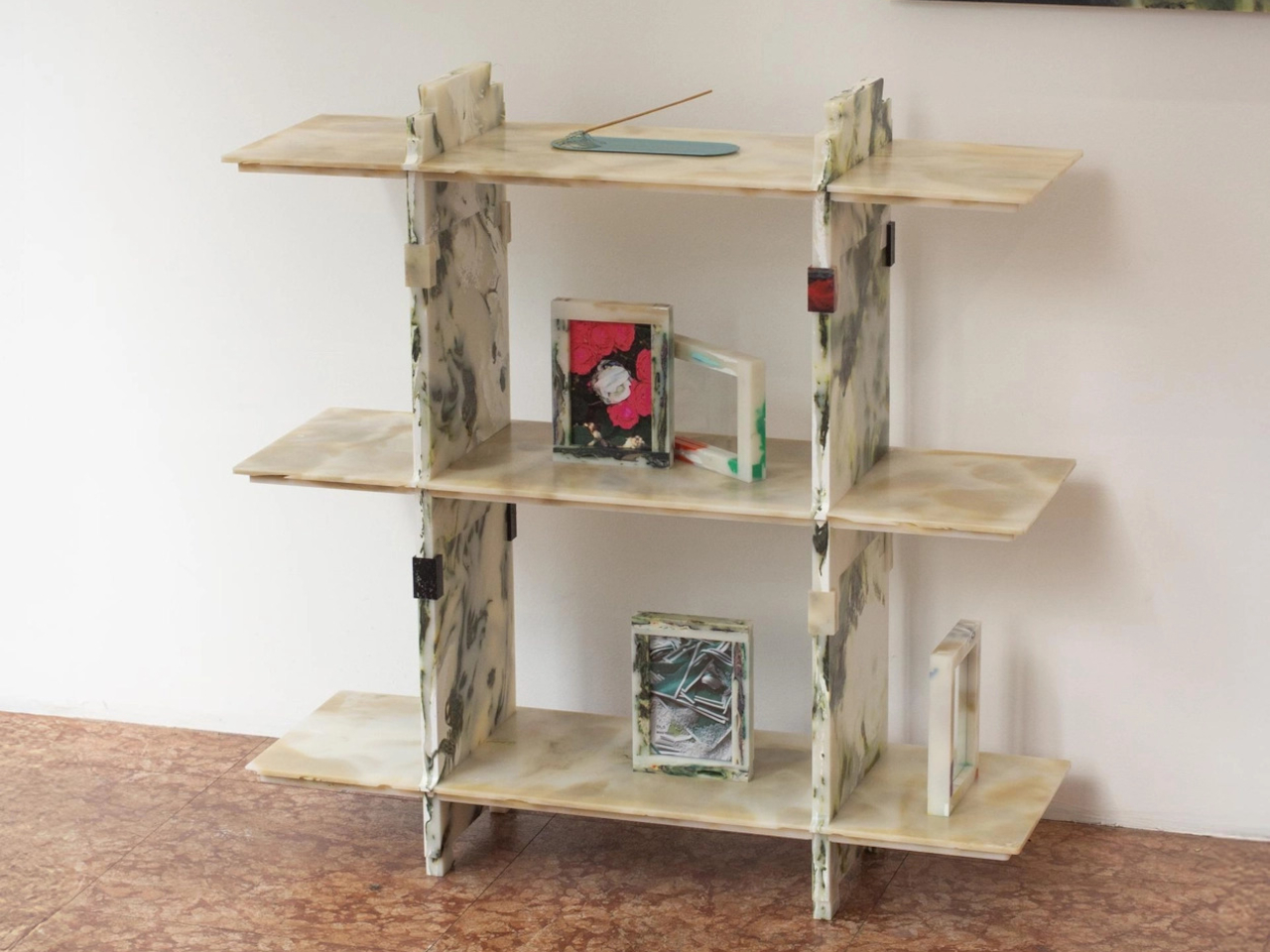
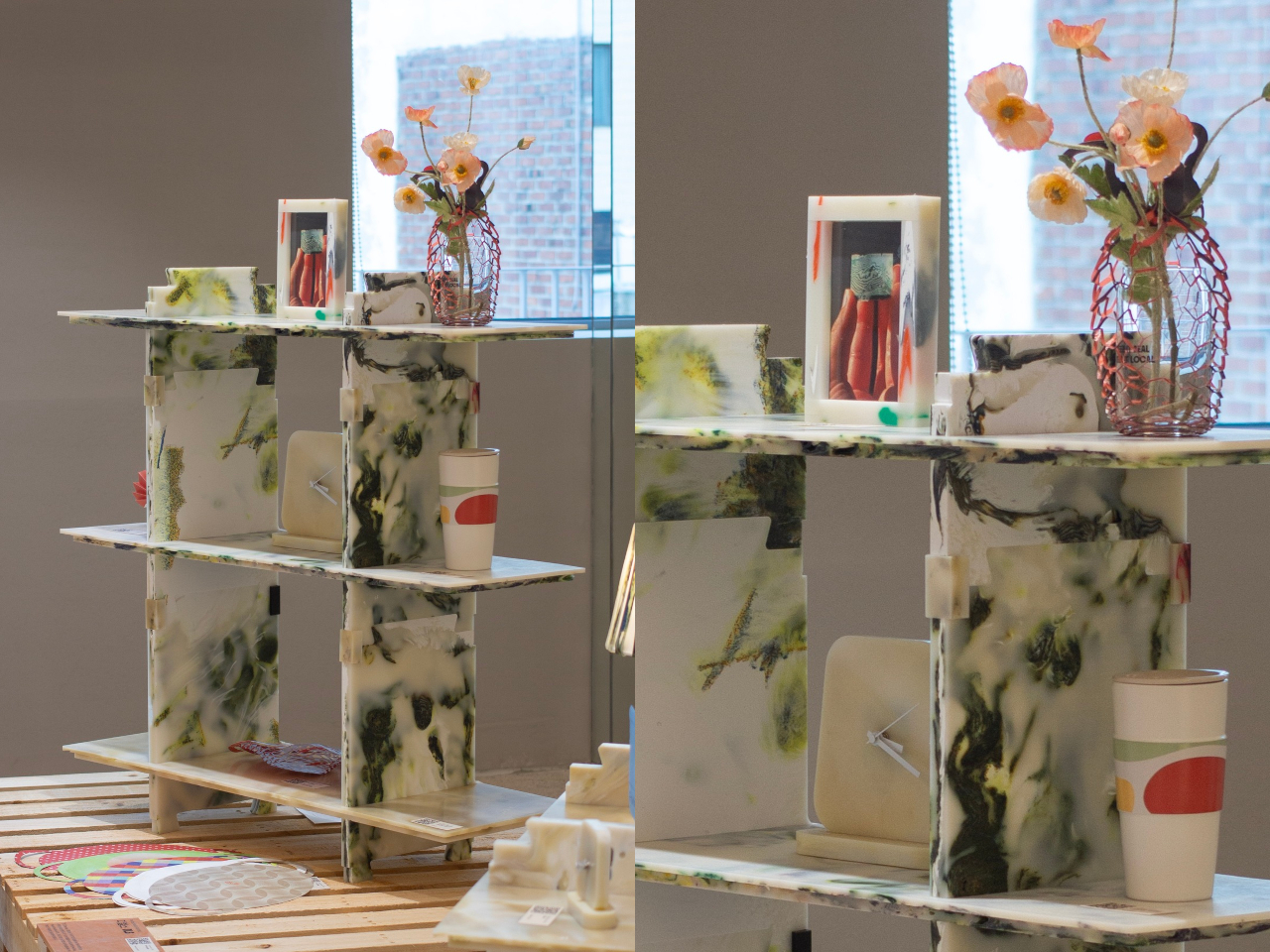
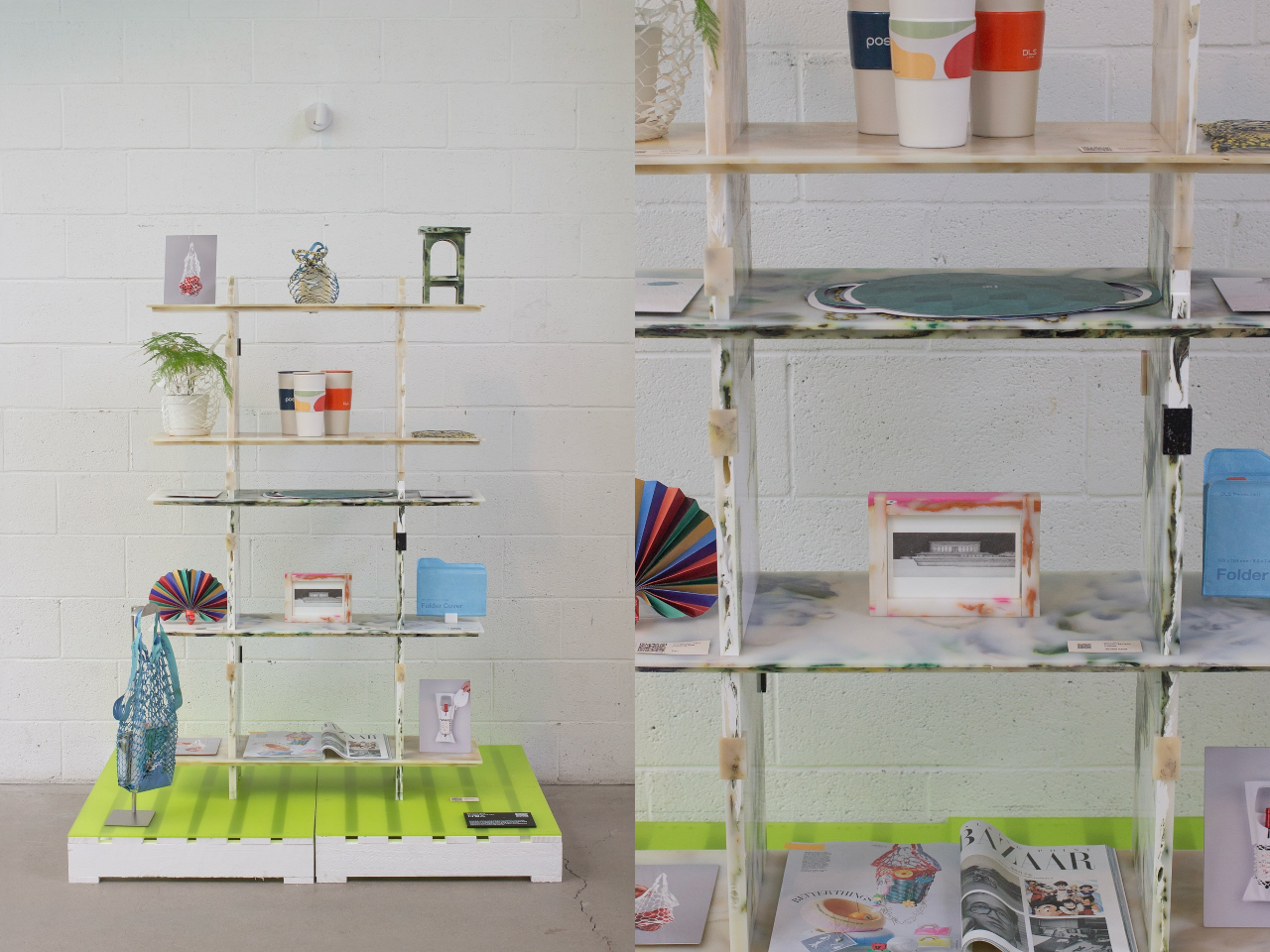
Upcycled Plastic Looks Like Swirling Marble in This Modular Shelf

Most shelves are either heavy, hard to move between rooms, or destined to clash with your evolving style as tastes change over time and seasons shift. For anyone who loves to rearrange their space frequently, collect new objects, or simply keep things fresh with seasonal updates, traditional furniture just doesn’t keep up with the pace of modern life and changing interior preferences that come with growth and discovery.

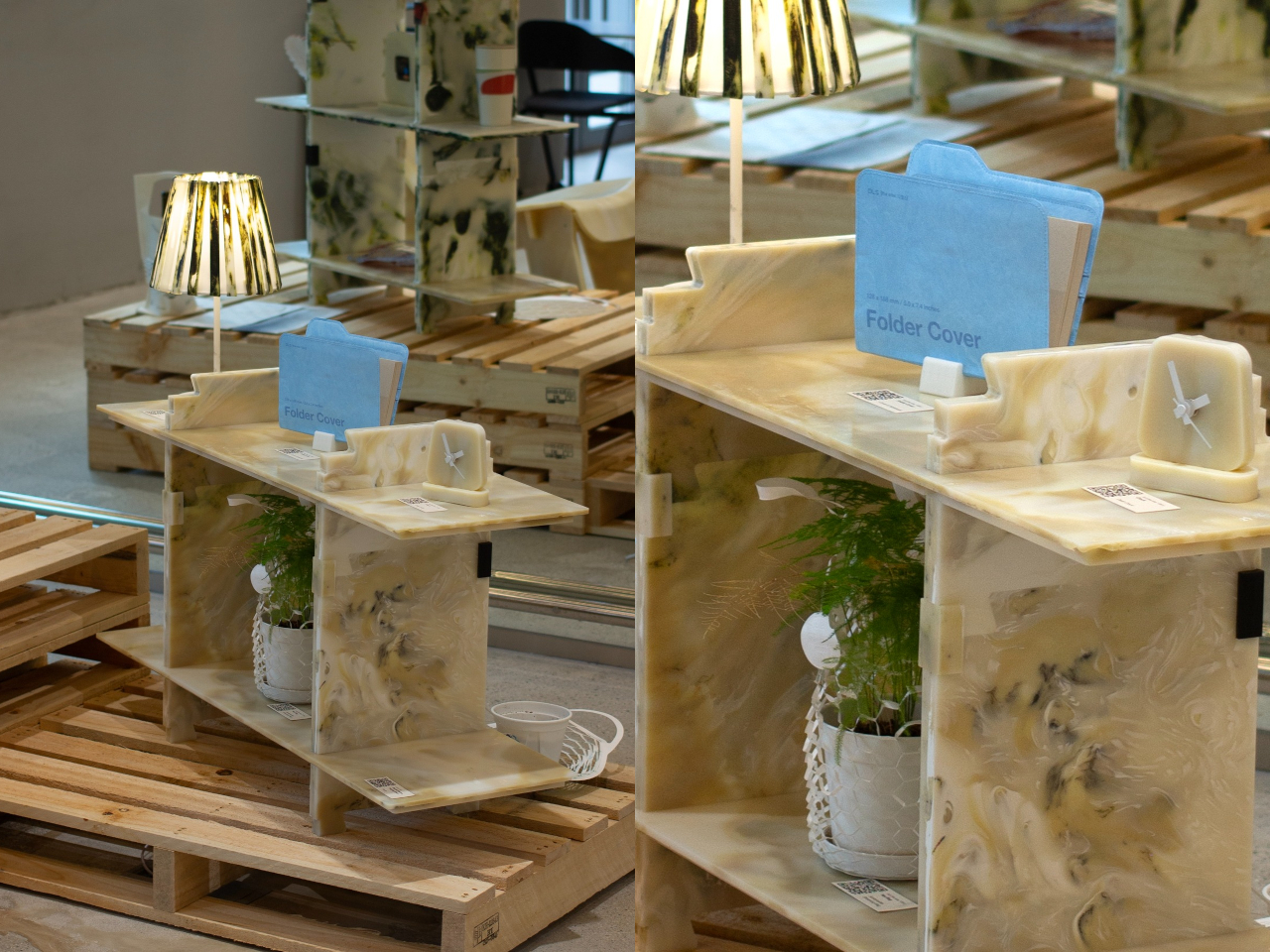
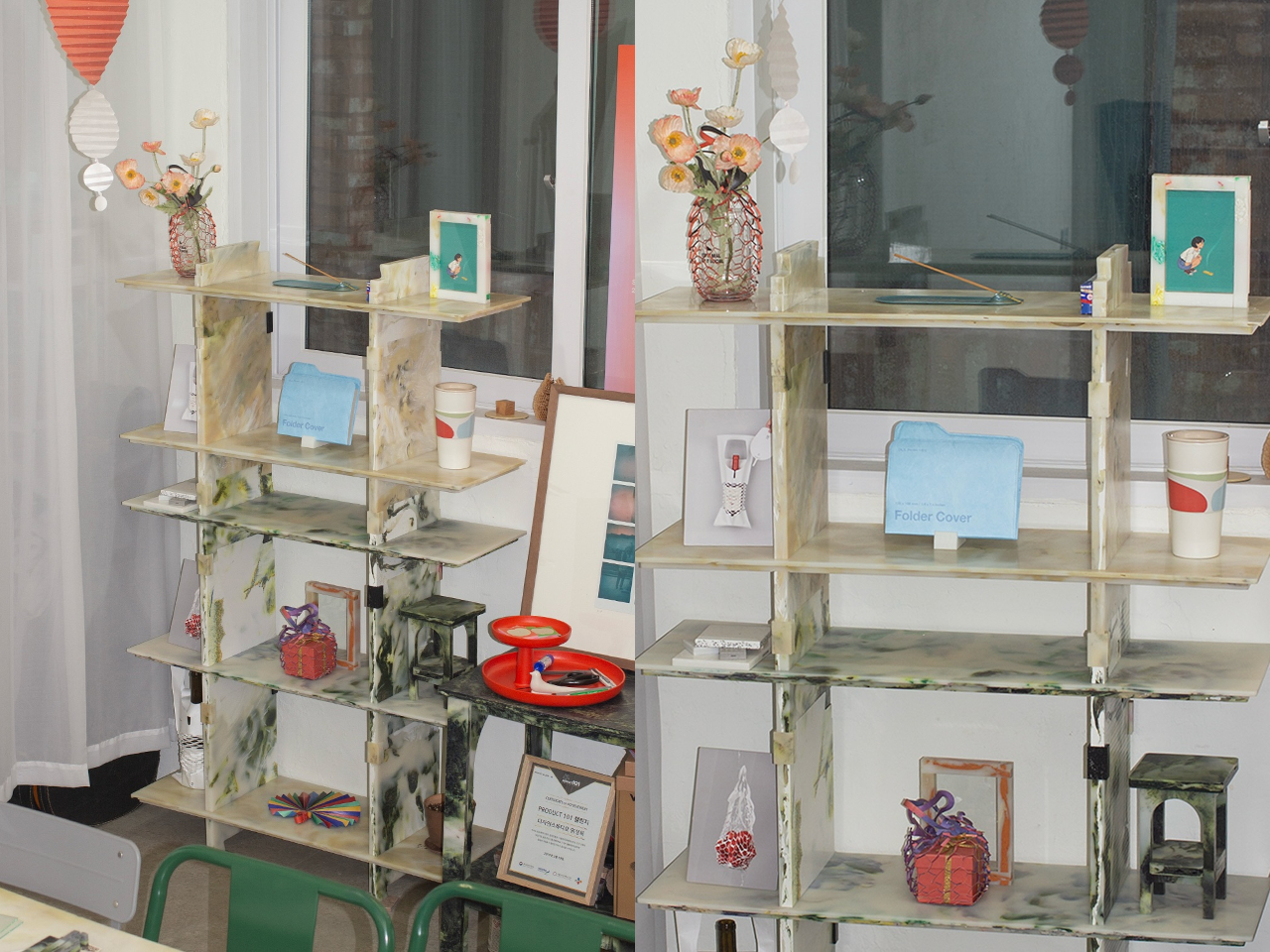
The Plastic Marble Display Shelf, from DLS World Official and WOULD YOU LOVE Seoul, offers a different approach to home storage and display needs. Made from upcycled Tyvek byproducts and designed to be as flexible as LEGO blocks for intuitive assembly, it’s a shelf that adapts to your life, not the other way around. The system’s modularity and material innovation make it stand out from conventional shelving solutions.

Designers: Lim Sungmook (DLS World Official) x Julia, Adi (WOULD YOU LOVE Seoul)

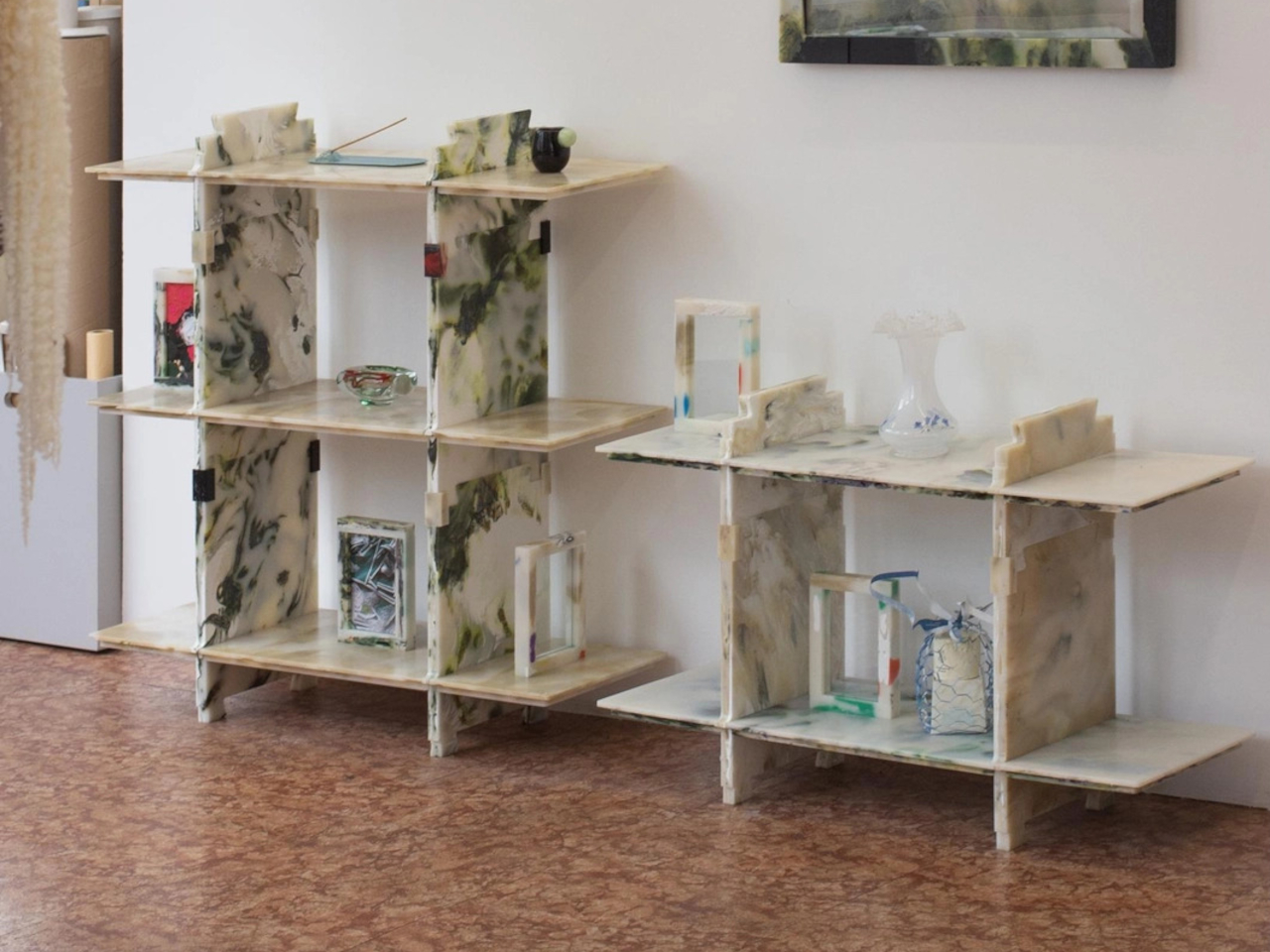
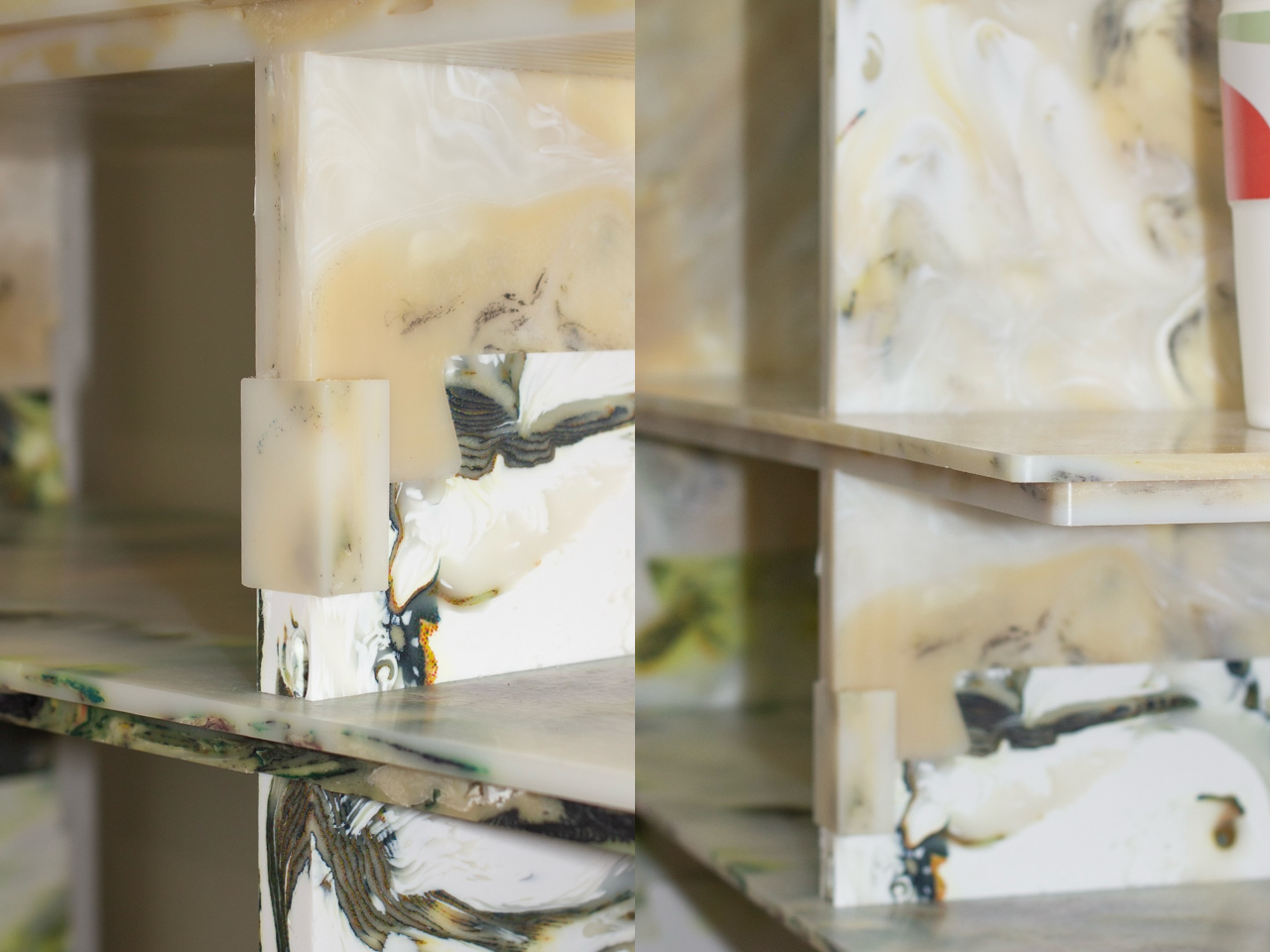
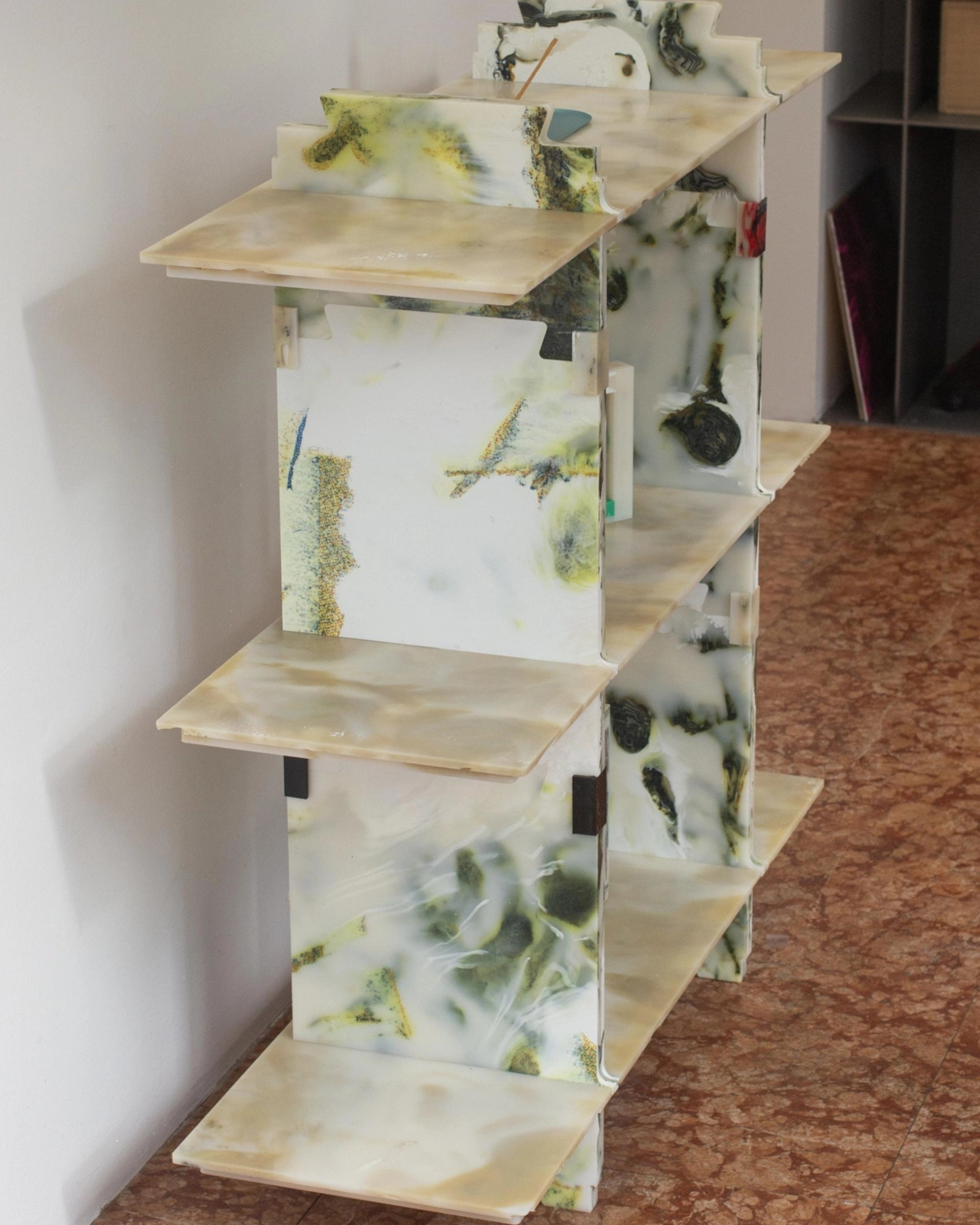
The secret is plastic marble, an upcycled material with swirling, marble-like patterns and a glossy, watery finish that catches light beautifully throughout the day. Each panel is visually unique, with colors and translucency that play with ambient and natural light to create a sculptural presence in any room. Unlike printed laminates or vinyl wraps, the marble effect is a natural result of the upcycling process itself.

The material gives the shelf a premium look while keeping it lightweight and genuinely eco-friendly throughout its lifecycle from production to disposal. The translucent quality and depth add visual interest that changes depending on viewing angle and lighting conditions throughout the day. What would otherwise be industrial waste becomes something you’ll actually want to display prominently in living rooms, bedrooms, or creative studios.

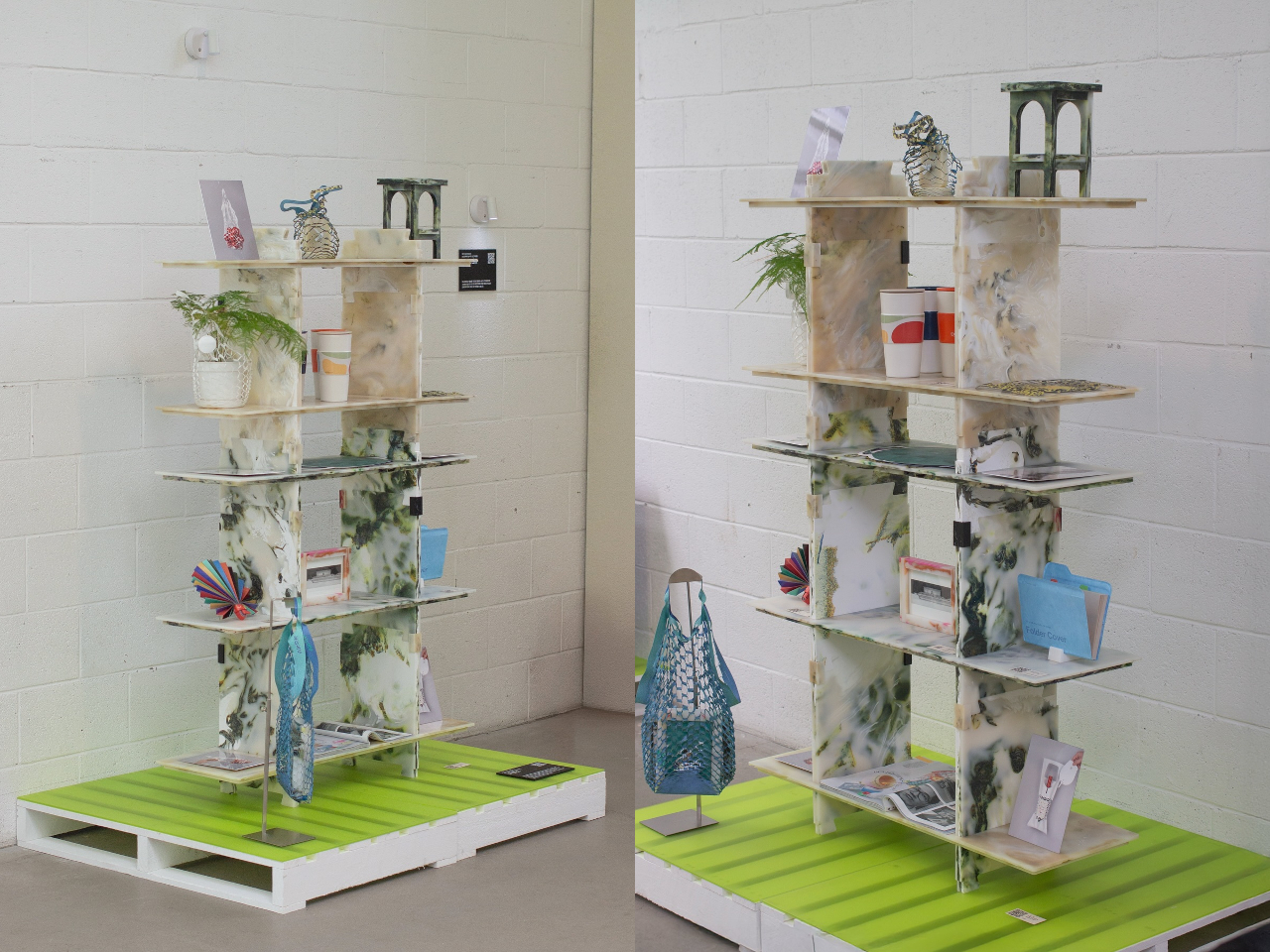
The shelf’s concise clip joint system means you can assemble, disassemble, or reconfigure the entire structure in minutes without any tools or adhesives required whatsoever. Stack modules vertically for a traditional bookshelf, build a wide display for collectibles, or create a custom asymmetrical shape for your specific space. The panels and joints are made from a single material, simplifying future recycling efforts when the shelf reaches end of life.

When you want a change in layout or need to move to a new space entirely, just unclip sections and rebuild in different configurations. The flexibility encourages experimentation with arrangements throughout seasons or as your collection of books, plants, and objects grows. The modular nature means you can start small and add modules over time as your needs and budget evolve.

Whether you’re displaying books, plants, art prints, or collectibles, the Plastic Marble Display Shelf adapts to your specific needs and aesthetic preferences without limitations. Its clean lines and minimalist silhouette blend with posters, photos, and objects to create curated gallery walls. The system’s flexibility makes it perfect for small apartments, creative studios, or retail spaces where storage needs to grow and change frequently.

By transforming Tyvek byproducts into a desirable, durable material with a distinctive visual character that rivals traditional materials, the shelf redefines what upcycled plastic can be beyond basic function. The design discovers new value in discarded materials while offering genuine beauty and practical flexibility for modern living spaces that demand both sustainability and style without compromise or apology.

The post Upcycled Plastic Looks Like Swirling Marble in This Modular Shelf first appeared on Yanko Design.
FreePower turns your beautiful stone countertop into a wireless charger

Wireless charging is finally becoming more common but despite the freedom from tangling cables that the technology offers, wireless chargers still have a few inconveniences, especially when it comes to aesthetics. Only a few of these products can be considered pleasing to look at, especially when mixed with the rest of your room decor. And they still have at least one cable snaking out of their bodies, which might be difficult to hide depending on where you place the chargers. In an ideal future, almost any flat surface can become a wireless charger, immediately juicing up your phone or device the moment you put it down, anywhere you put it down. Part of that future seems to already be here, with a creative wireless technology that can hide that wireless charging space inside stone countertops, seamlessly blending with your choice of interior design.

Designer: FreePower

Wireless chargers remove the messy cables from the charging equation, but the current state of technology requires you to still make physical contact between the device and the surface of the charger. Add to that the hard requirements on materials for the surfaces of wireless chargers and you will find yourself with a few of these products scattered around your house, often sticking out like a sore thumb. Some designs are admittedly more elegant and stylish, but they still add to the visual baggage on what would be an otherwise pristine table or countertop.

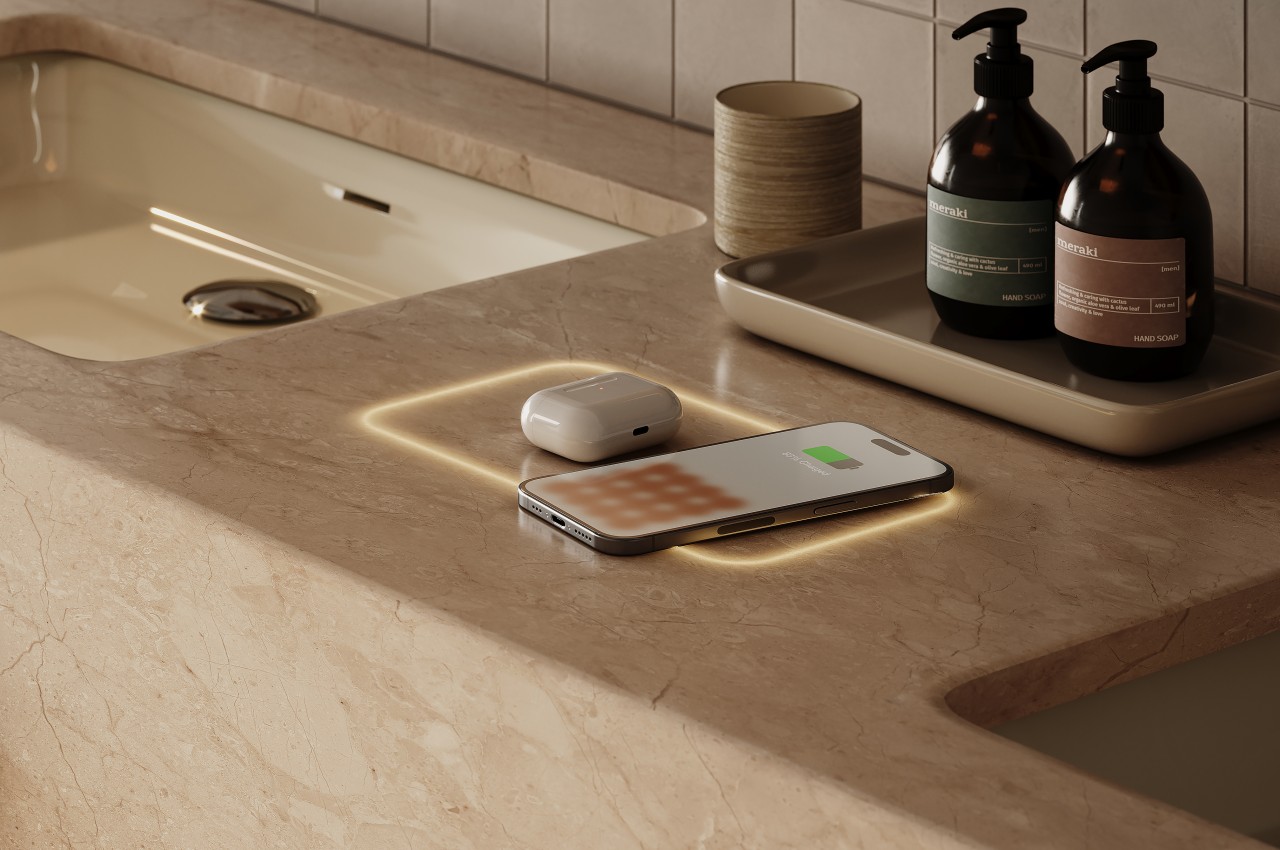
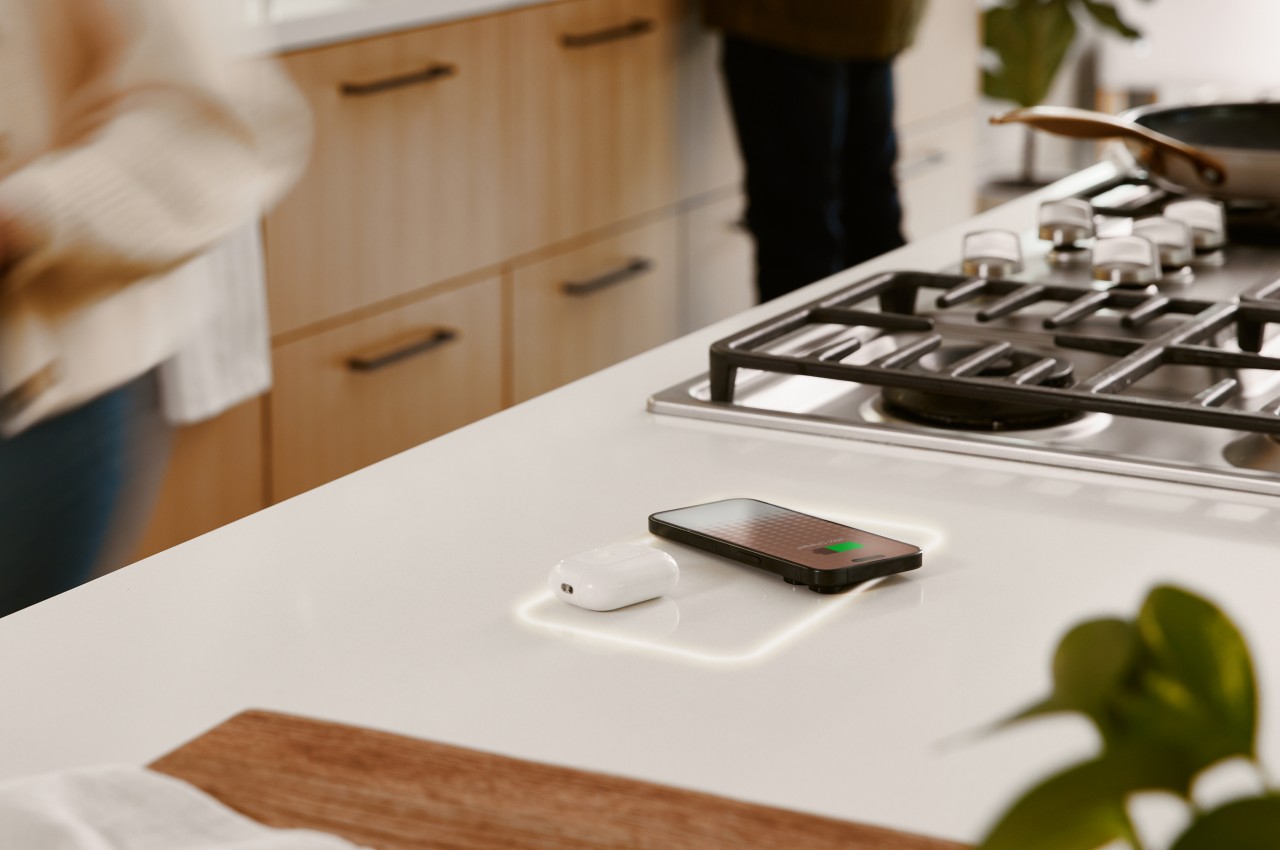
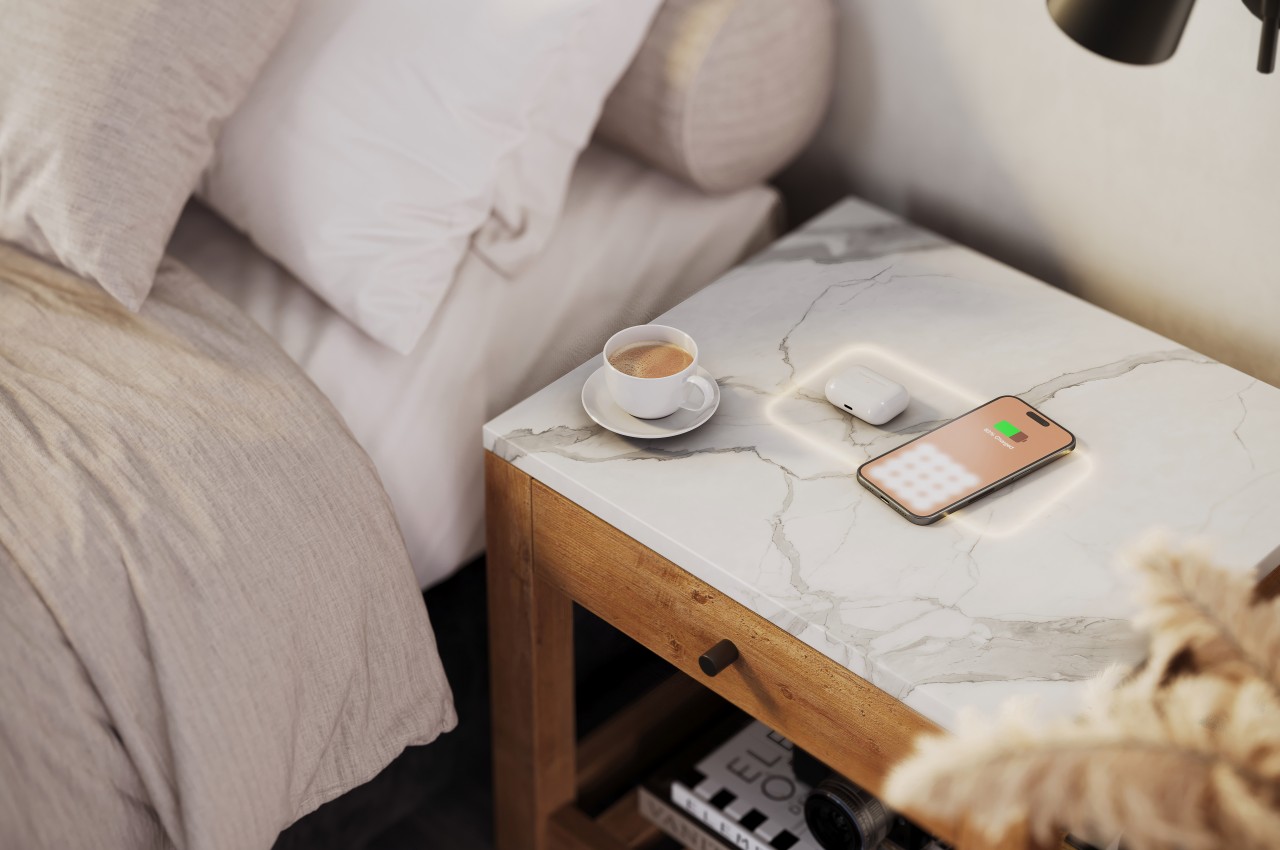
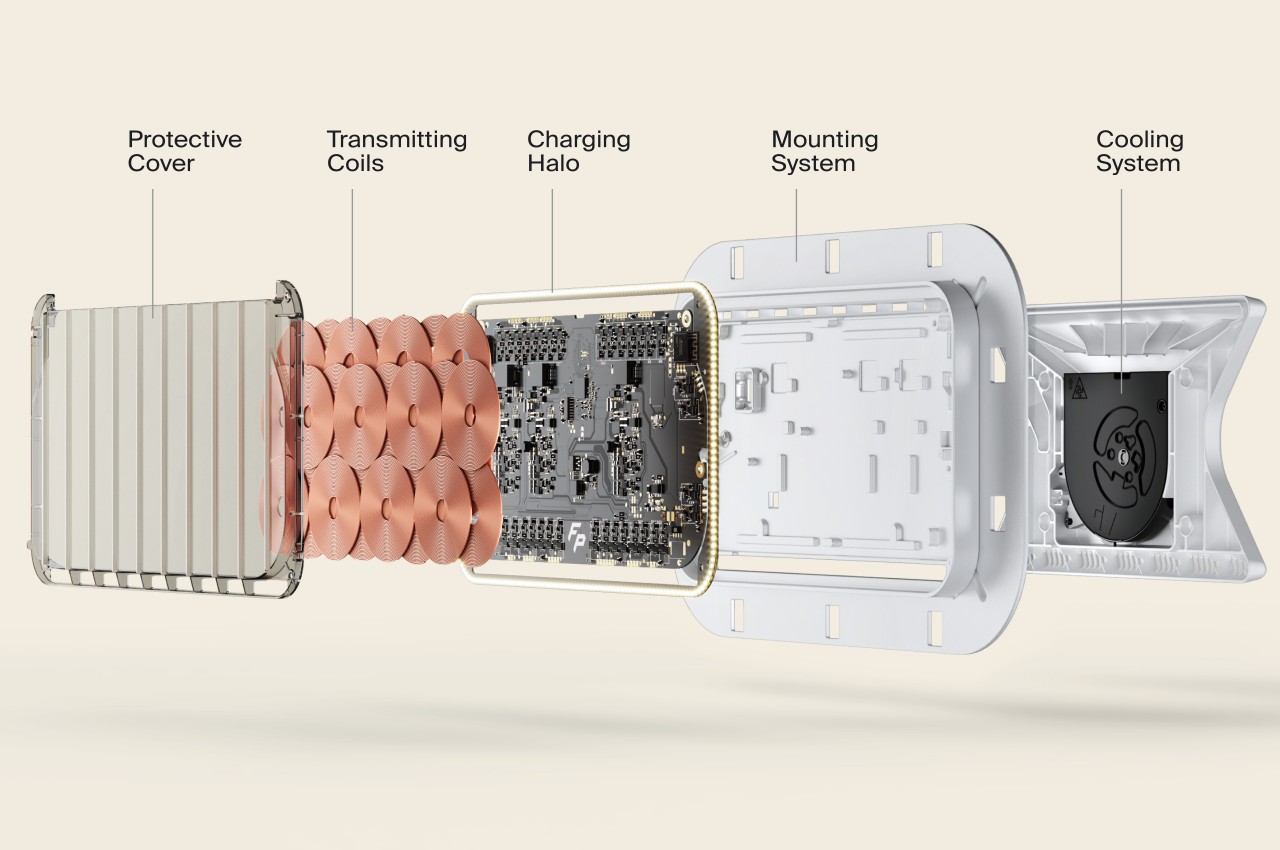
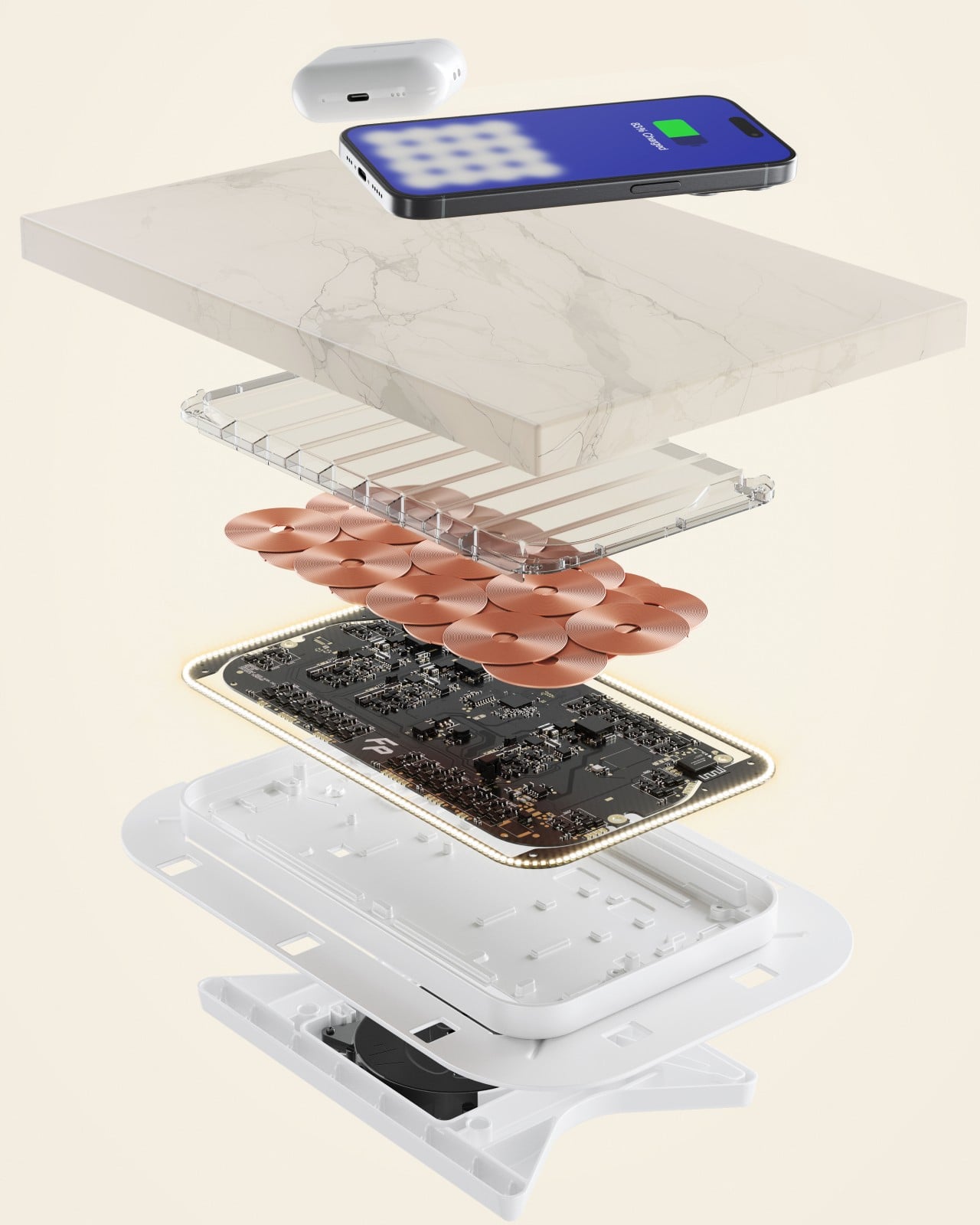
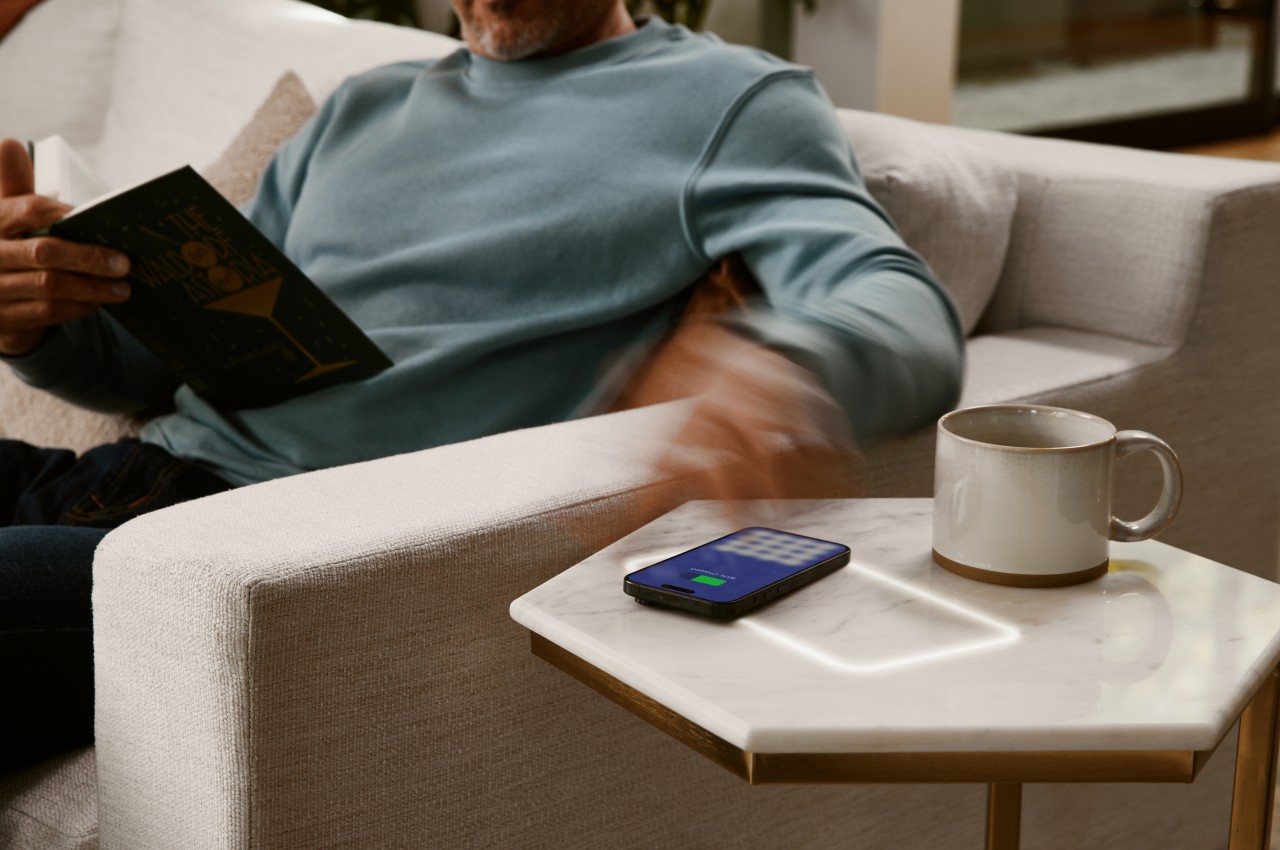
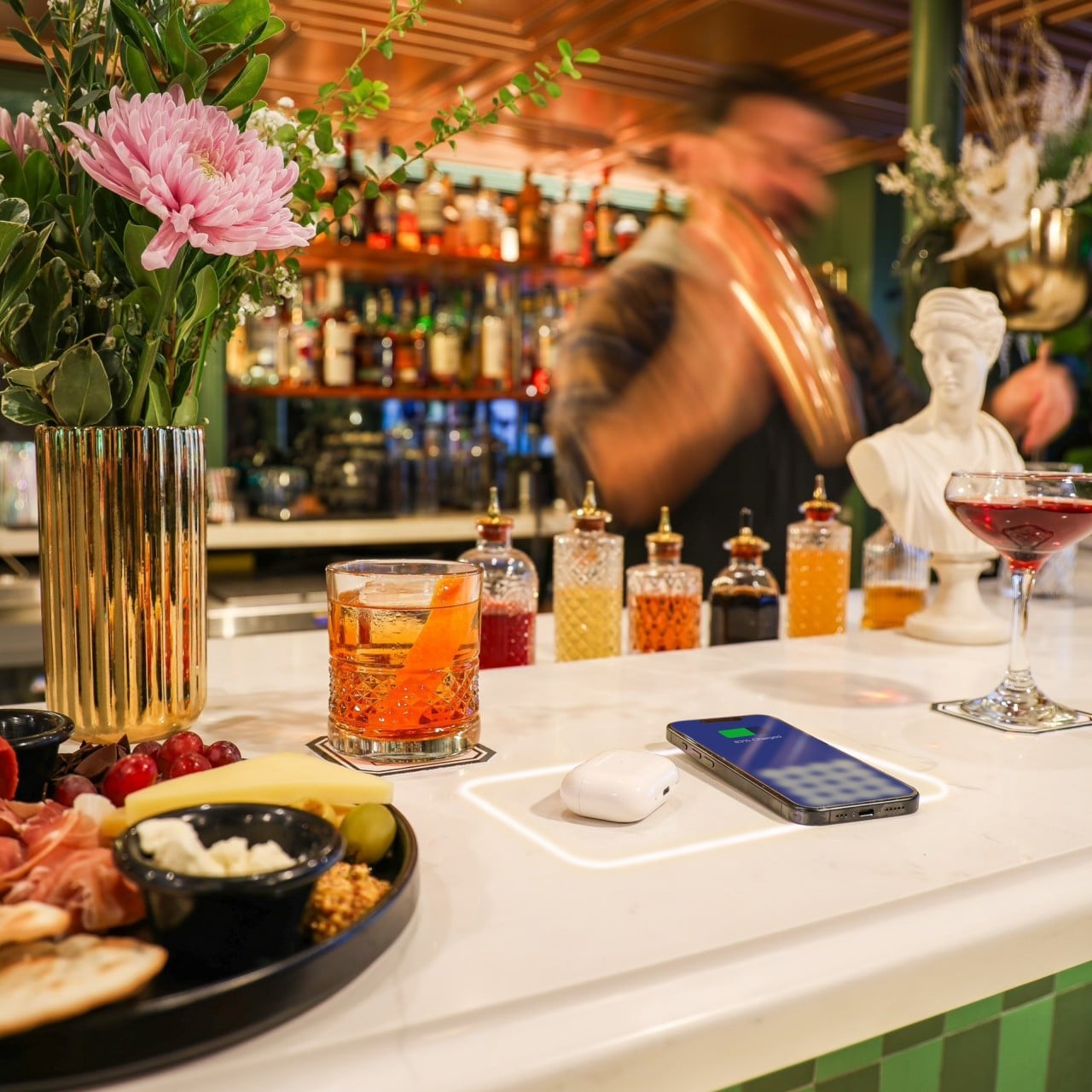
FreePower is a technology that tries to offer the best of both worlds, combining the liberating convenience of wireless charging with a clean and unblemished tabletop surface. In a nutshell, it embeds the wireless charger inside the countertop, and not just any countertop, mind you. It is compatible with different stone materials, including quartz, granite, or even marble, materials you’d never think could be used for wireless chargers. Thanks to this innovative design, you don’t need to actually put a charging mat or stand on your kitchen countertop, side table, or bedside table, because the countertop itself is the wireless charger.

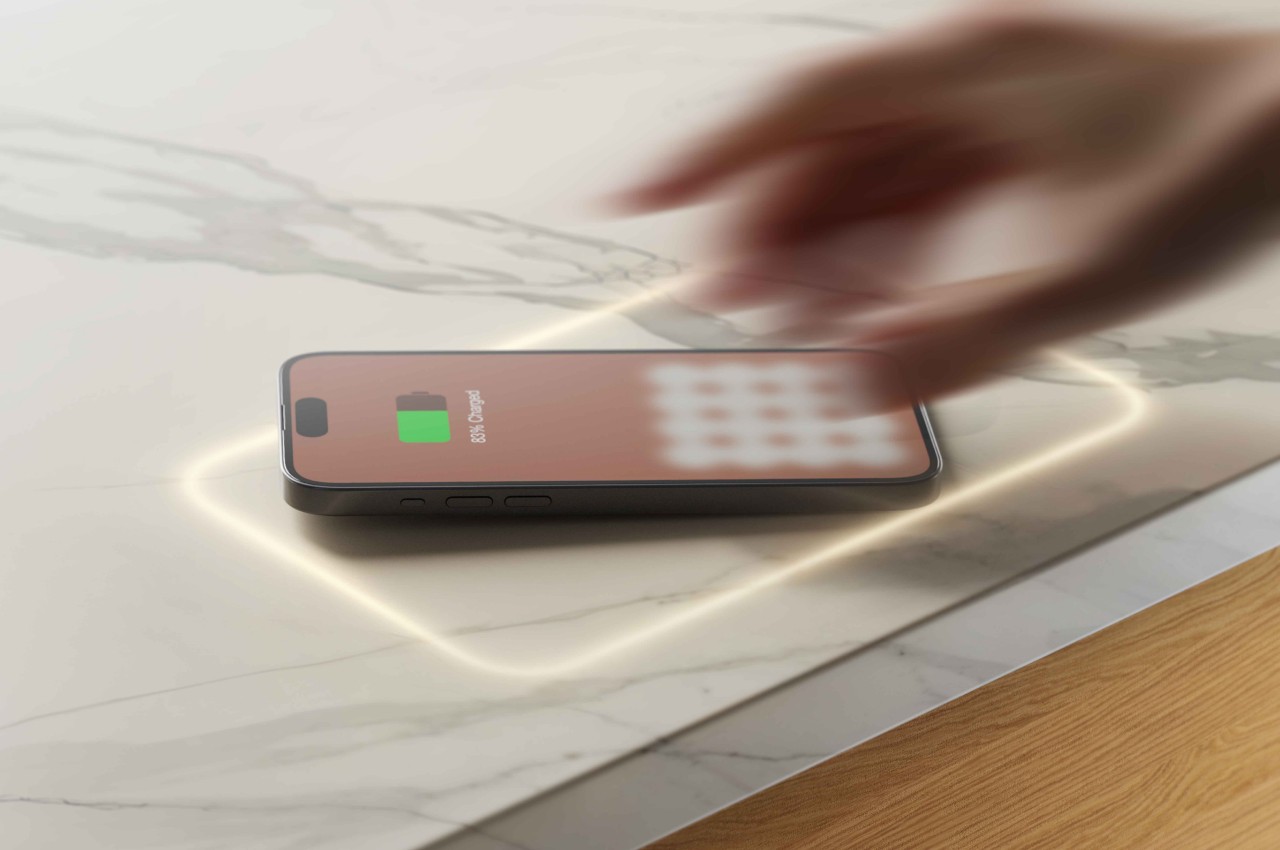
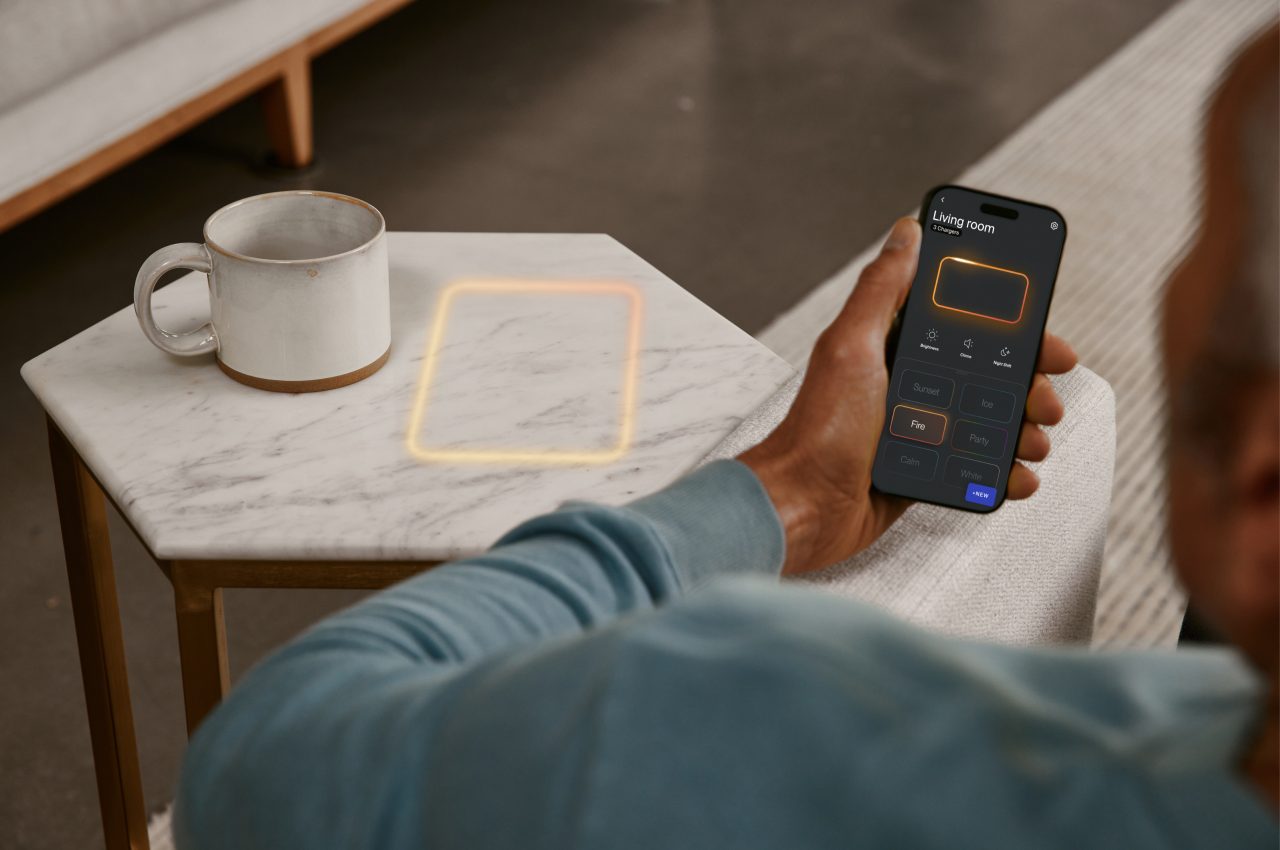
Of course, only a portion of the countertop actually functions as the wireless charging zone, but you don’t have to worry about ugly and conspicuous markings that ruin the aesthetic of your beautiful stone top. A customizable LED halo glows around the area where you can place your devices, and you can even turn this light off when it’s not in use. FreePower does even better than most wireless chargers because you can place your phone or earbuds anywhere within that zone, no need to perfectly align with markers.

FreePower is the latest in a growing number of designs that aim to integrate wireless charging technology into every surface inside your home, completely freeing you from unsightly cables. Of course, such a design is also less flexible in that you have very little choice when you want to change furniture or designs. You’ll have to hope there’s also an invisible wireless charger version available for that or else you’ll have to go back to old-school wireless charging mats.

The post FreePower turns your beautiful stone countertop into a wireless charger first appeared on Yanko Design.
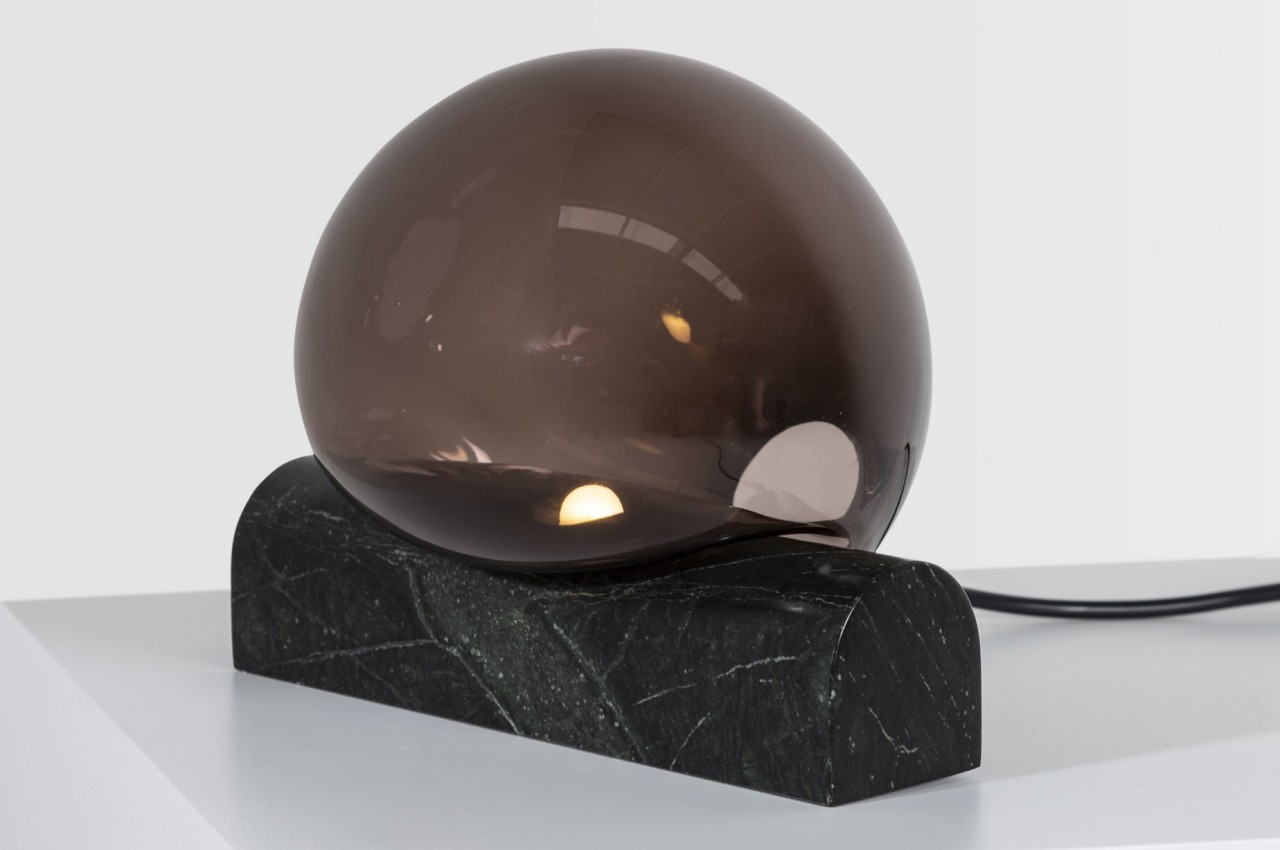
This glass and marble lamp creates an air of mystery and harmony with contrasting materials

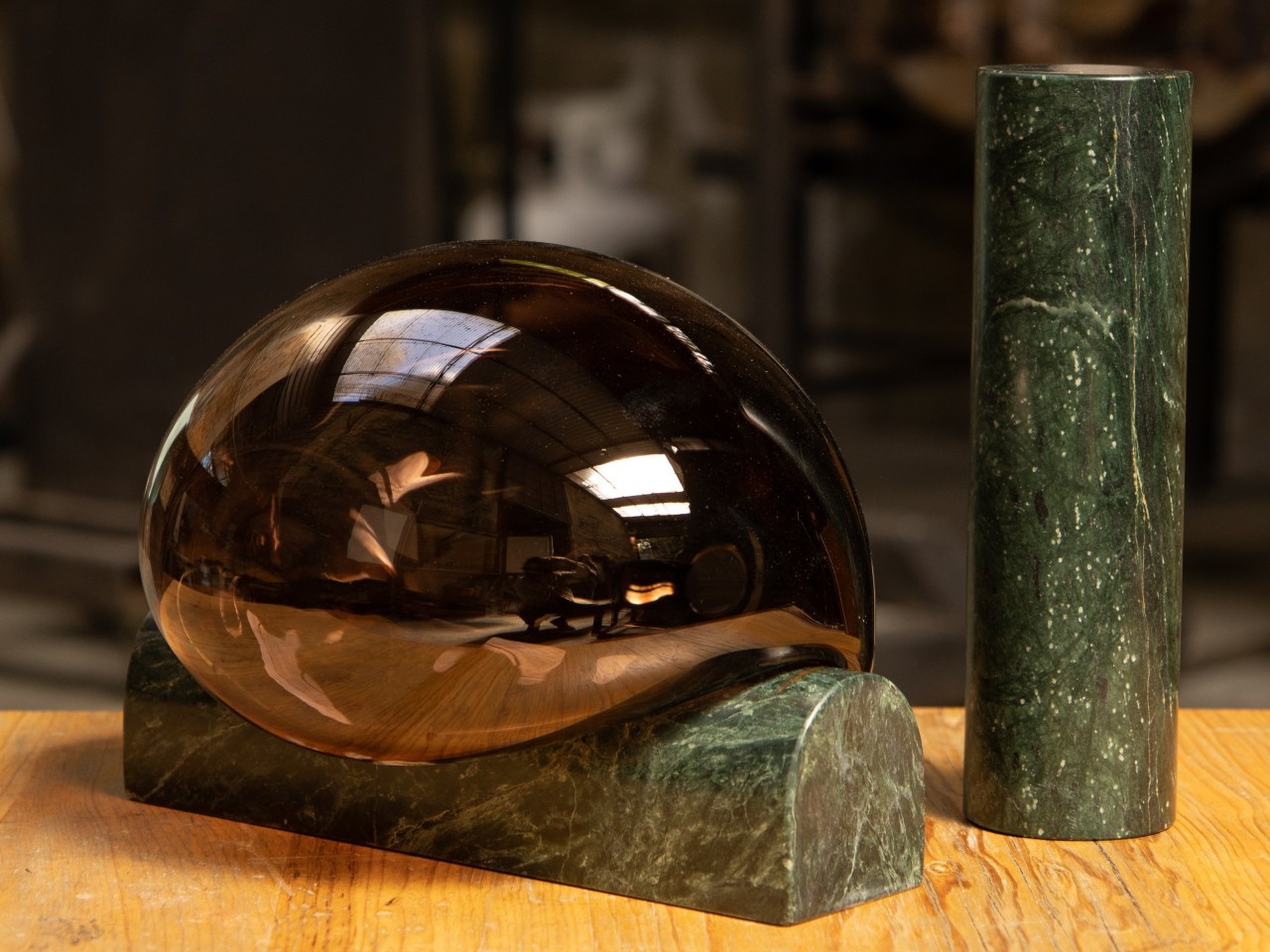
Think of a lamp and you will probably immediately imagine a bulb on a metal pole, a circular base, and a conical lampshade. More modern designs often involve simpler geometric shapes like bars with rotating arms. Of course, there’s a wide world of lamp designs that cater to an equally wide range of needs and tastes. Some even tell stories with their forms, materials, and production. This beautiful lamp, for example, exudes an ethereal character as well as a sense of timelessness, two different properties brought together in graceful harmony thanks to the interplay of contrasting elements made in very different ways.
Designer: Omar Godínez for Peca Estudio

Some materials carry a distinctive character simply by their very nature. Rock is hard and unmoving, wood is warm and tactile, and paper is light and flexible. Some materials even stand diametrically opposed to each other, but just like many things in nature, sometimes complement each other so perfectly that it almost feels like they were made for each other from the start.

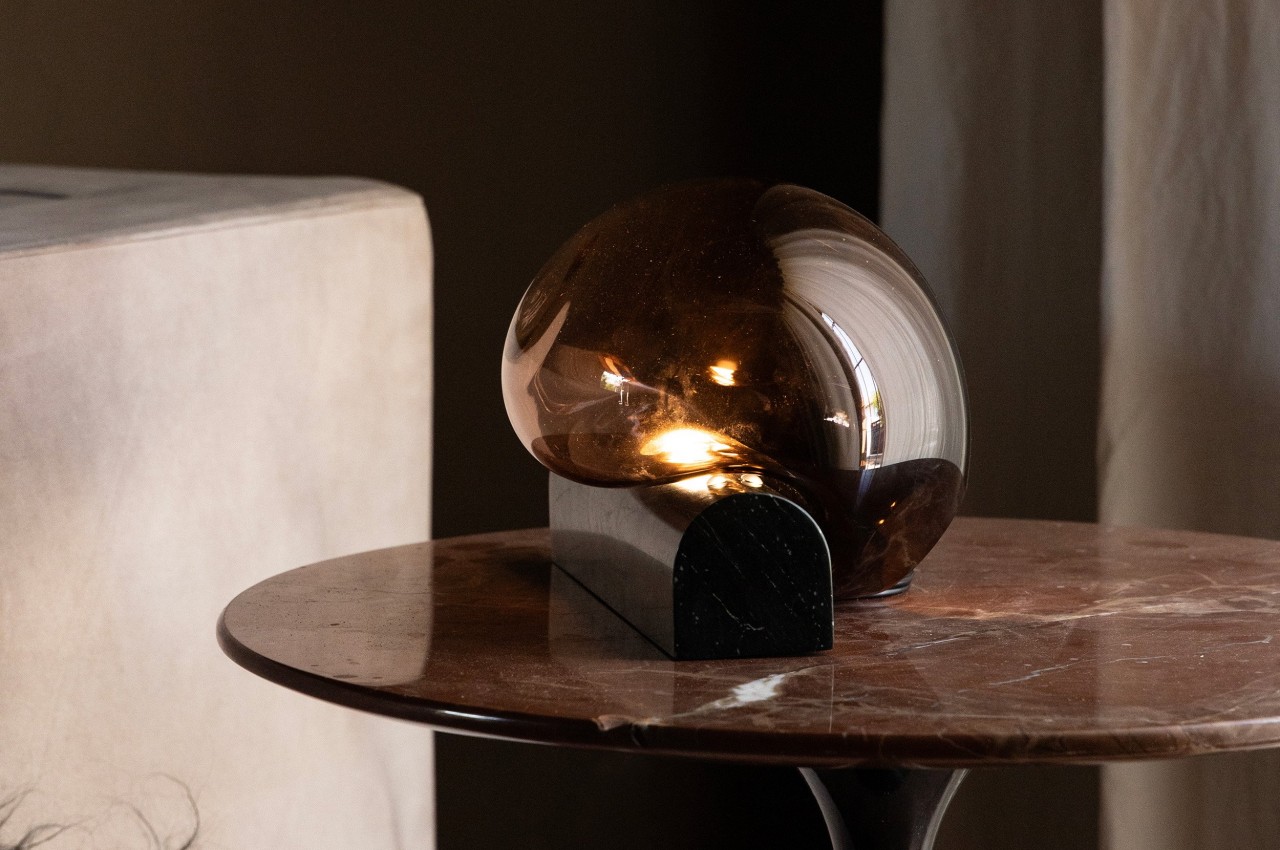
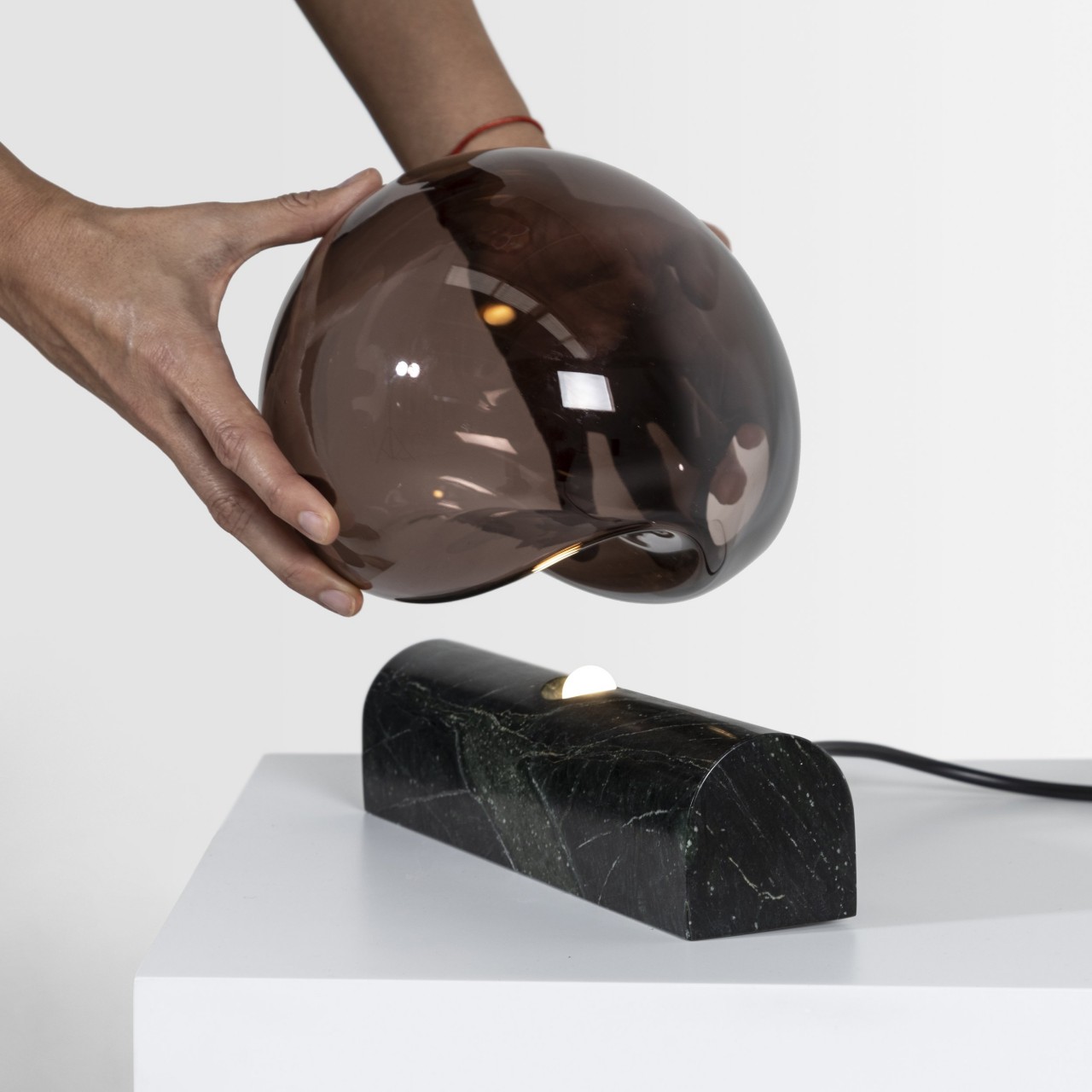
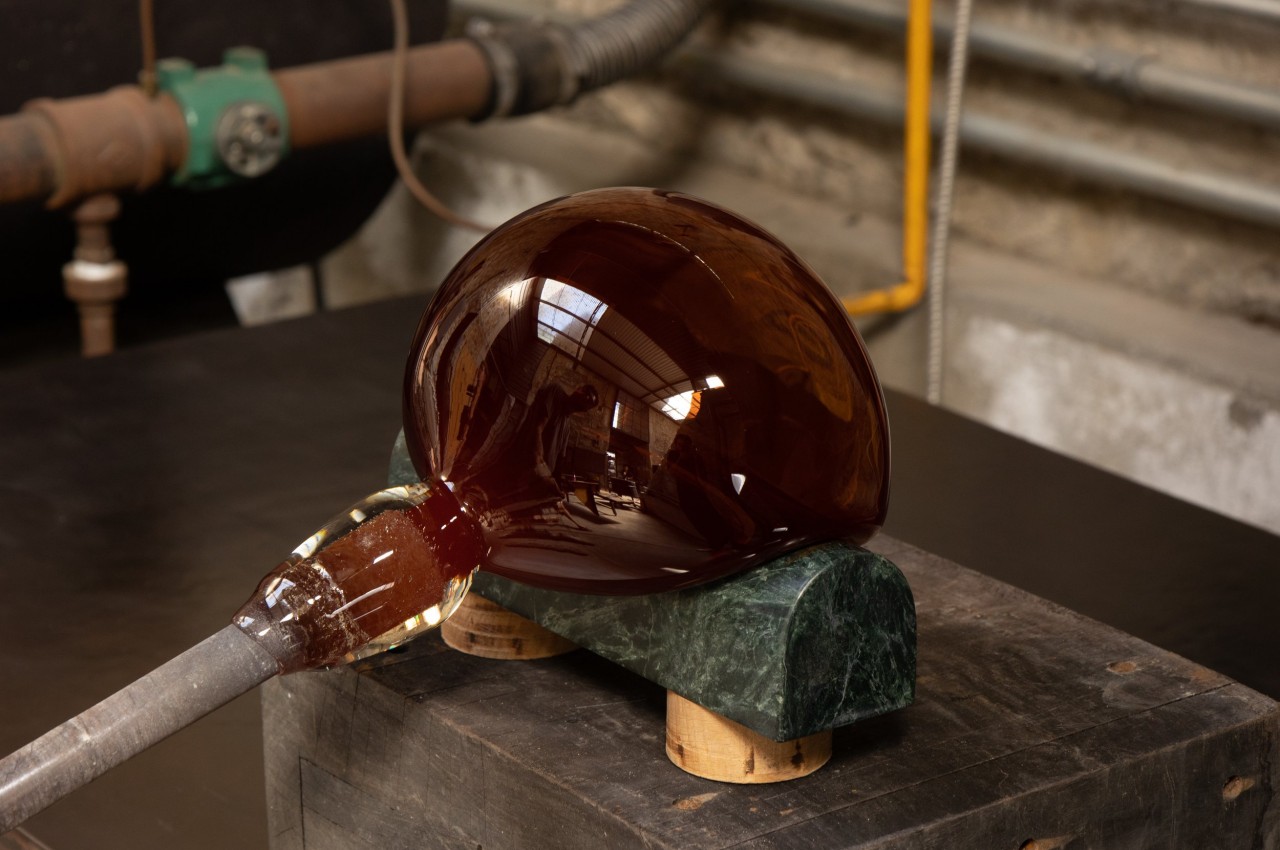
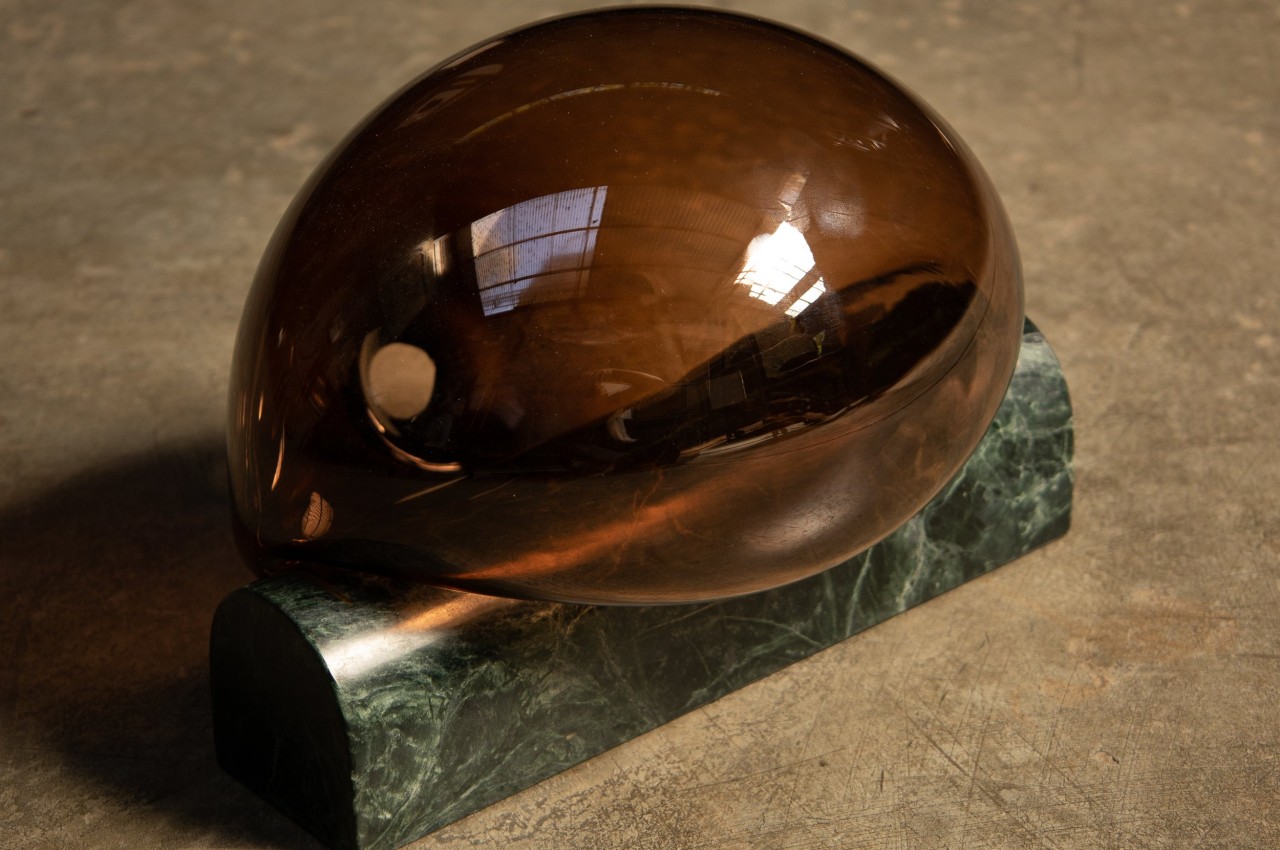
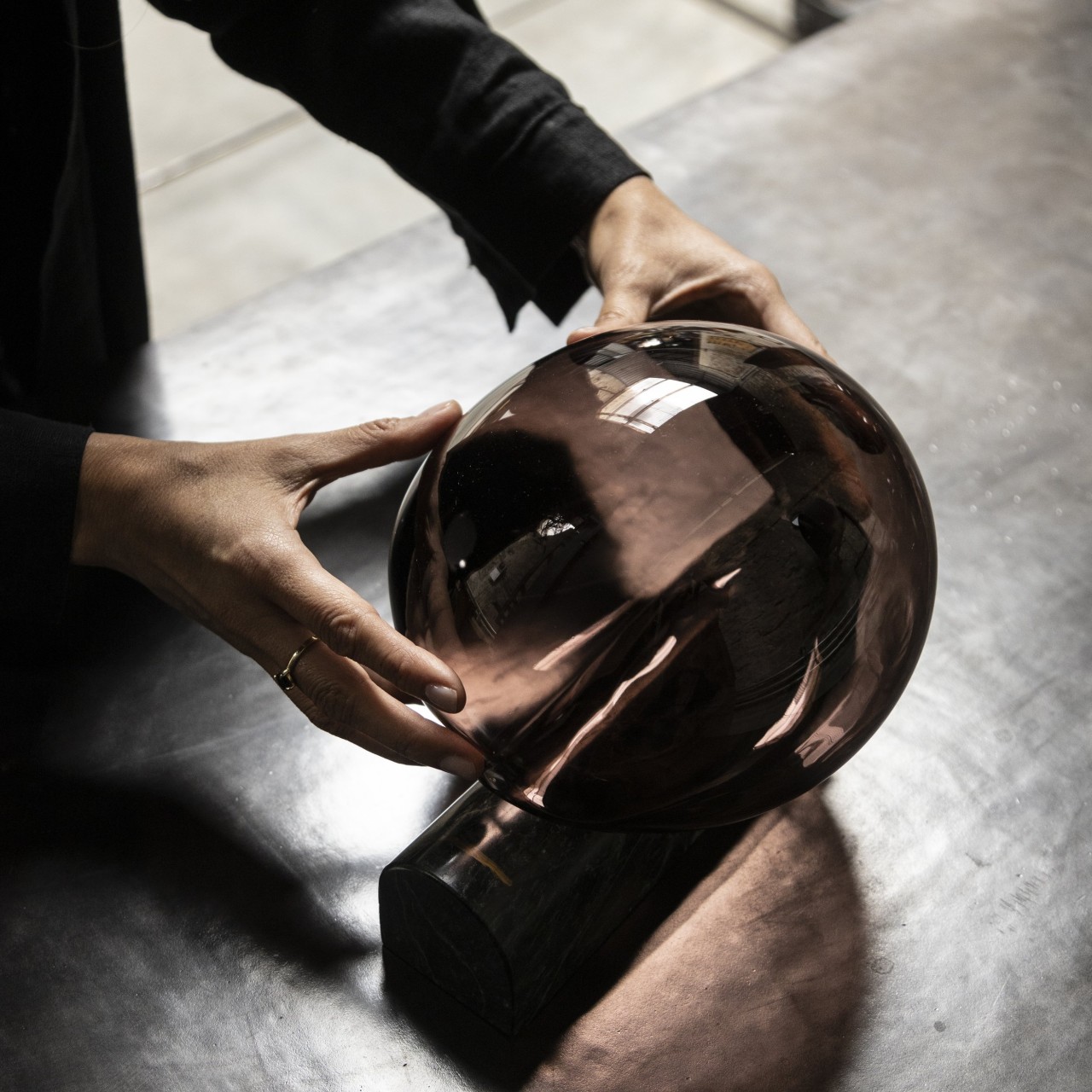
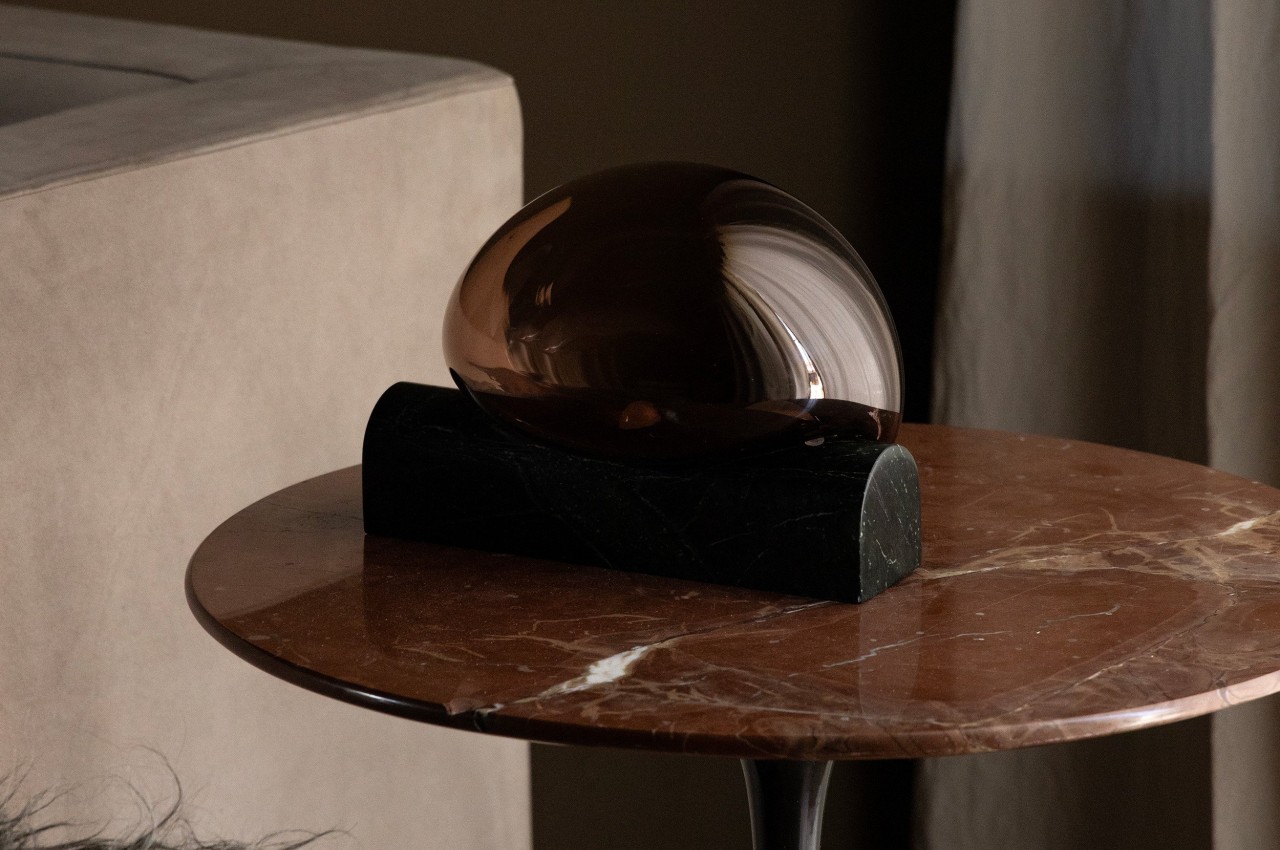
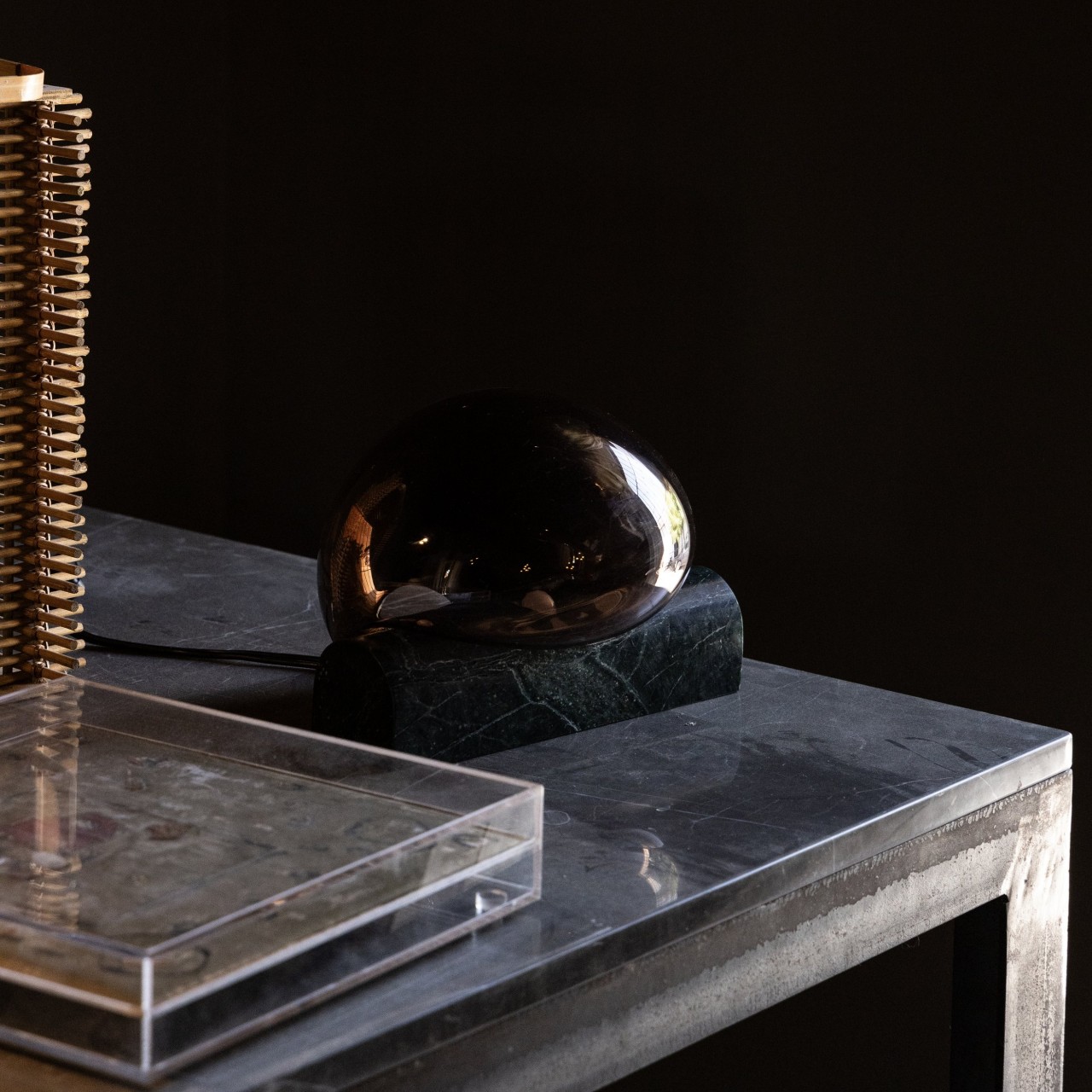
The Talla Lamp is a gorgeous design born of that duality, combining the ethereal fragility of glass with the timeless memory of marble. One feels like it would break at the slightest force, while the other would break other things instead. And yet the spherical glass sits calmly and gracefully on top of the marble prism, fitting snugly in each other’s embrace. The small bulb inside creates an otherworldly light that shines through the tinted glass and casts eerie shadows on the marble stand, illuminating and mesmerizing at the same time.

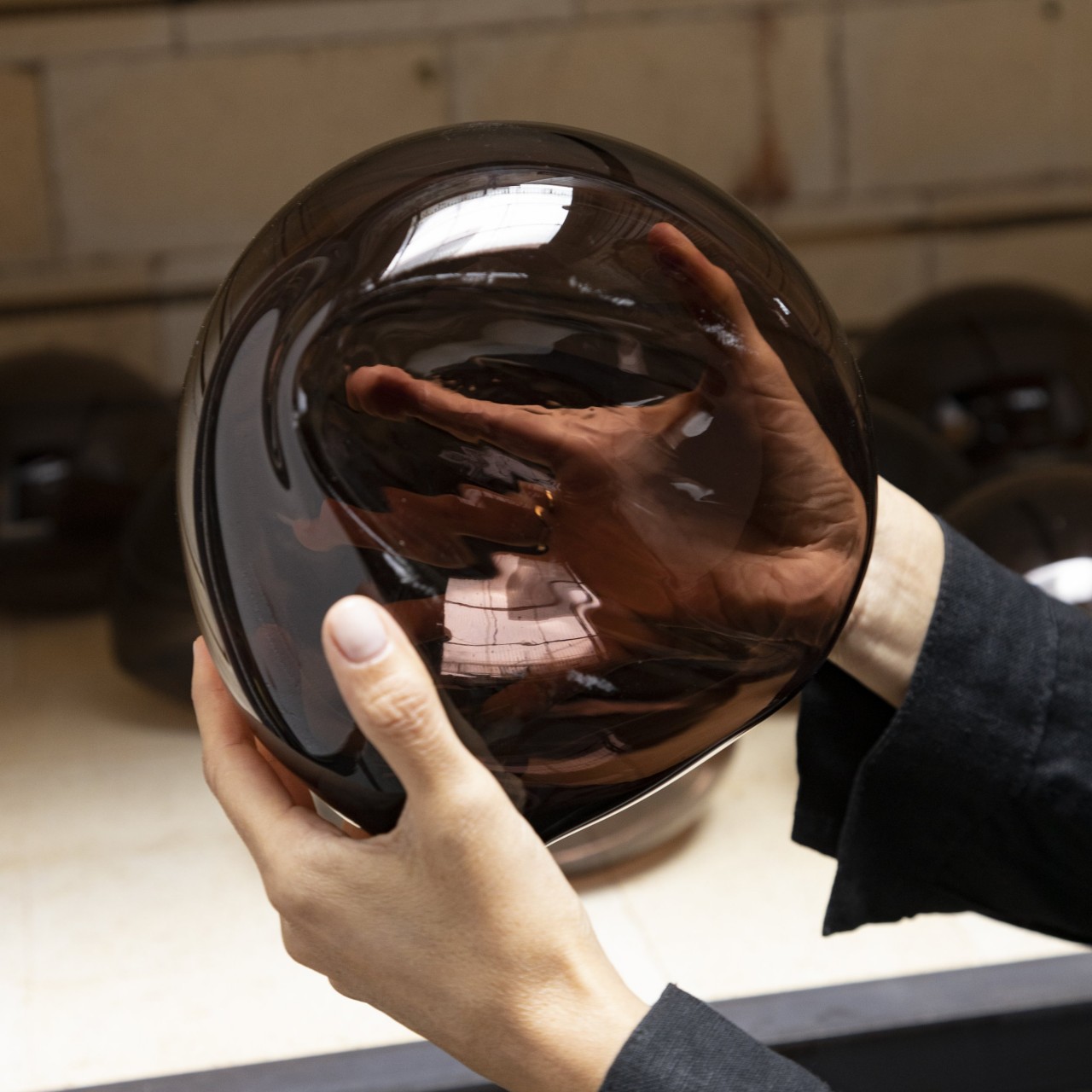
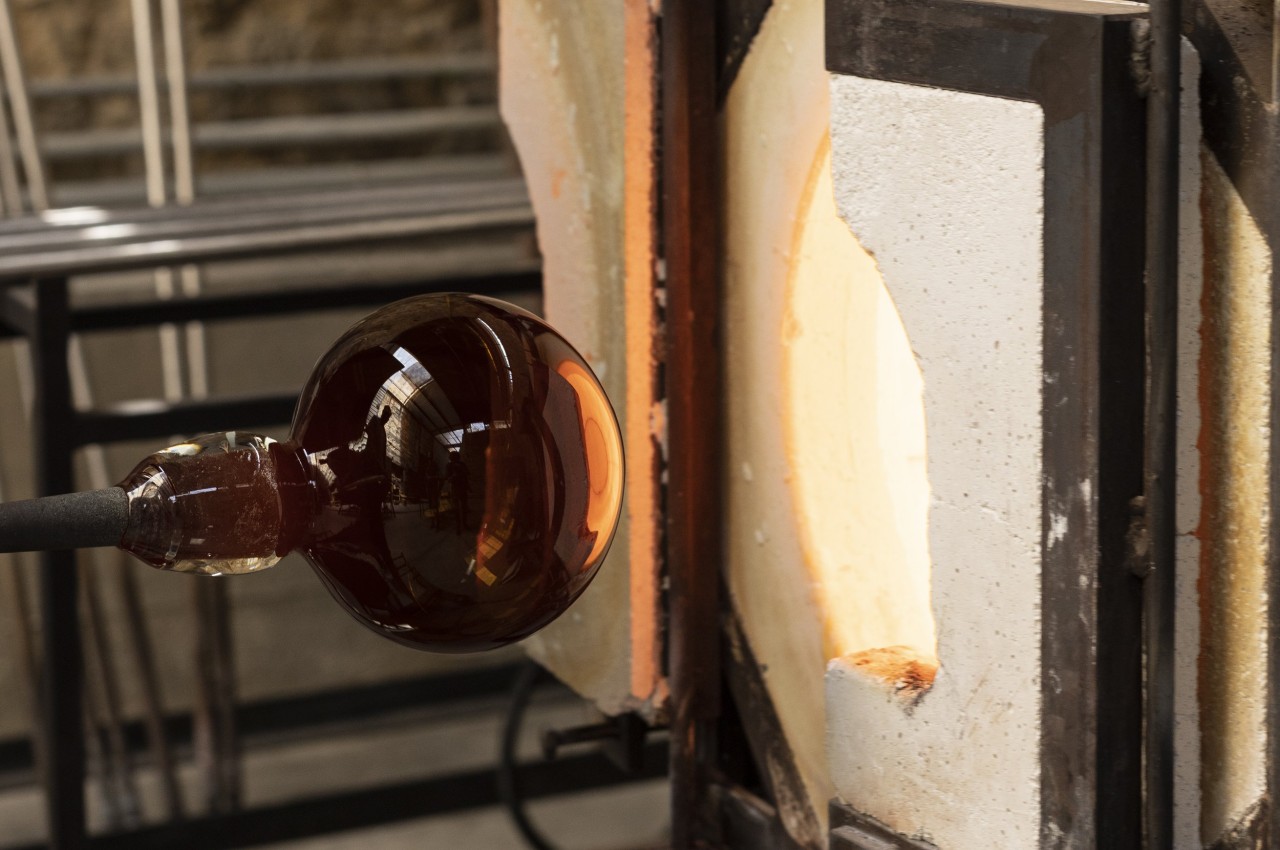
The glass half of the lamp has its own story to tell. It is made using free-blown techniques that make each piece truly unique. That complements the marble base, made using more mechanical methods, whose patterns also differ from block to block. As such, each Talla lamp carries its own character and story, a subtle nod to the personal stories we ourselves make every day in our life’s journey.

The post This glass and marble lamp creates an air of mystery and harmony with contrasting materials first appeared on Yanko Design.